


Compiled by Andrew Campbell
Spring across British farms means one thing: baby animals. March opens lambing season at family-friendly petting farms, where families can meet lambs, piglets, kid goats and calves. Bottle-feeding, farm tours and knowledgeable staff make these eight spots unmissable this season.


Baylham House Rare Breeds Farm, Suffolk Baylham House’s lambing weekends give families the chance to see newborn lambs up close and help with bottle-feeding rare breeds. Staff describe animal births and conservation efforts, while piglets and calves add to the farmyard action. Walking trails, broad picnic lawns and informative displays are great to explore between animal sessions. It’s an authentic taste of a working Suffolk farm in its busiest season. www.baylham-house-farm.co.uk
As spring begins, Reddish Vale Farm is alive with new arrivals. Watch or help bottle-feed lambs, while goat kids, piglets and calves complete the nursery menagerie. Staff happily answer questions about the care of young animals and pony and tractor rides are available for extra fun. With indoor barns and a lively play area, this is a superb, reliable family day out whatever the weather. www.reddishvalefarm.co.uk

The Big Sheep, Devon

Beetle Bank Open Farm, North Yorkshire
At Beetle Bank, spring means lambs, piglets and goat kids taking centre stage. In the lambing barn, children can meet new arrivals and bottle-feed under staff supervision. Daily sessions cover animal care and explain how the newborns are kept healthy. There’s also fun with tractor-trailer rides, a giant sandpit and picnic and café options on site. It’s a classic Yorkshire rural experience - perfect for early spring outings. www.beetlebankopenfarm.co.uk
Ash End House Children’s Farm, Staffordshire Ash End House is a favourite for hands-on lambing. Children can bottle-feed lambs, hold goat kids and see piglets nursing. Each child receives a bucket of feed and tips from the team on how to treat new arrivals gently. Egg-collecting and animal talks enrich the day and covered barns offer shelter from unpredictable spring showers. A small but welcoming café provides refreshments after animal encounters. www.ashendchildrensfarm.co.uk
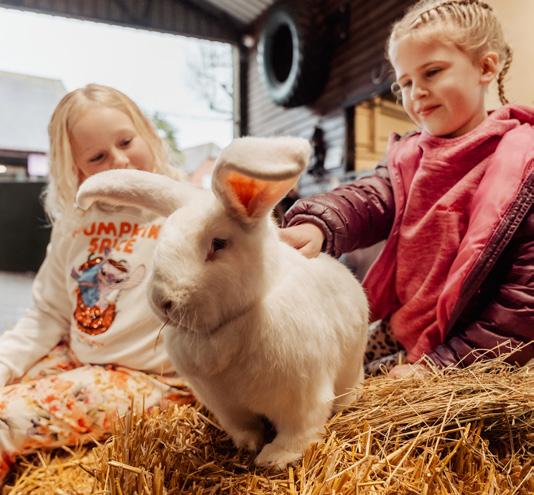
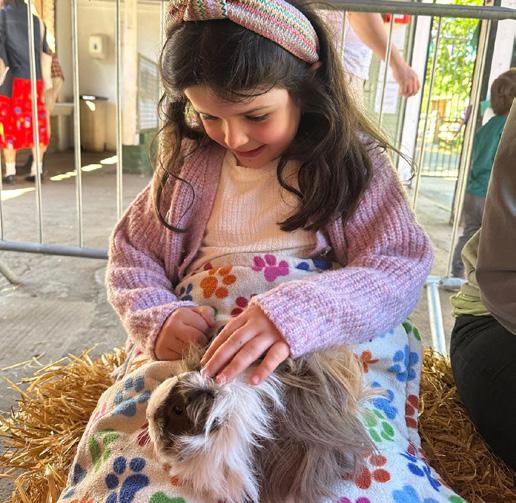

At The Big Sheep, lambing shows run daily in spring, giving children the chance to bottle-feed lambs and participate in hands-on sessions. Staff happily answer questions about animal births and routine care. Piglets and baby goats also feature, while indoor and outdoor play zones, including tractor rides and live animal races, make this a lively and educational family day out in North Devon. www.thebigsheep.co.uk
Rare Breeds Centre, Kent Lambing is the highlight at the Rare Breeds Centre. As well as Meet the Lambs bottle-feeding activities, families can watch piglets, goat kids and calves up close. Staff introduce family farming life and animal welfare, with trails and an adventure playground for burning off energy. A farm café serves local flavours and keeps the rural experience relaxed and accessible. www.canterburyoasttrust.org. uk/rare-breeds-centre
Vauxhall City Farm offers a springtime escape in central London, with friendly goats, sheep, alpacas, pigs, rabbits, guinea pigs and birds. Children can watch staff care for young animals and join Meet the Animals sessions. Knowledgeable staff explain how the farm raises its residents, while the Old Dairy Café and outdoor spaces make it an easy, family-friendly visit. www.vauxhallcityfarm.org
Chobham Adventure Farm blends animal encounters with extensive indoor and outdoor play. Families can meet friendly farm animals in the Animal Barn, while children explore large soft play zones and outdoor adventure areas. Spring visits offer a mix of hands on learning and energetic play, with staff on hand to guide young visitors. With cafés, spacious play areas and a relaxed rural setting, it’s an easy, full day family outing. www.chobhamadventurefarm.co.uk
Editor Linda Stone
info@familiesmagazine.co.uk 020 8241 0423
Next issue: May/June
Book by: 3 April
Cover image: www.depositphotos.com
Follow us on social media
www.facebook.com/FamiliesUK www.instagram.com/familiesuk
This product is made of material from well-managed, FSC®certified forests and other controlled sources.
Soon grey skies and rain will (hopefully) start to give way to the occasional mild, sunny spring day – the sign that winter is coming to an end. Embrace the new season by planning some family activities outside. Locally, you’ll find a range of outdoor activity options in our What’s On guide and we also have suggestions for gardening projects for kids of all ages, as well as eight must-visit UK petting farms in this issue.
And Easter isn’t that far away, so there are school holidays and a long weekend to plan. To get the most out of the Easter season, don’t miss our recipes for yummy Easter treats to make with the kids and a step-by-step guide to making naturally dyed Easter Eggs.
How much have you thought about what the coming AI future will demand of your kids and of their education? Find out in our Education section. In this issue, we also look at how stories can teach our kids to love solutions, tips for your child’s first residential school trip and details of the different ways in which schools try to engage children with homework.
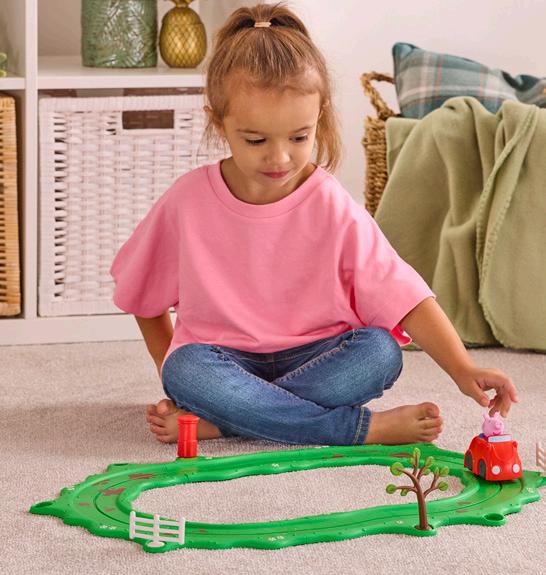
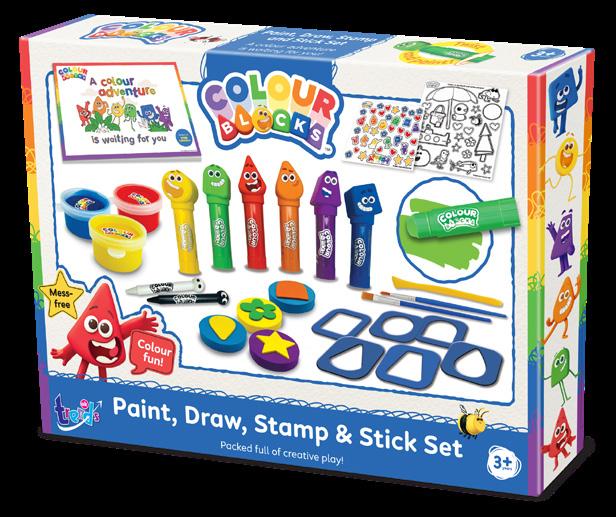
Finally, in this issue, we have three giveaways including Peppa Pig Whizz Around Cars! Apply inside. By doing so, you’ll also ensure you receive our newsletter and digital magazine with lots more content and goodies on offer.
November/December issue giveaway winners Congratulations to all our winners. You can find a list at www.bit.ly/ND25recipients
Families Magazine is a franchise of Families Print Ltd of 75 Lisbon Avenue, Twickenham, TW2 5HL. Families is a registered trademark of Families Print Ltd. All franchised magazines in the group are independently owned and operated under licence. The contents of Families Magazine is fully protected by copyright and none of the editorial or photographic matter may be reproduced in any form without prior consent of Families Magazine. Every care is taken in the preparation of this magazine but the franchise owner and Families Print Ltd cannot be held responsible for the claims of advertisers, nor for the accuracy of the contents, or any consequence thereof.


By Sarah Tucker
We’ve trained children to love the chaos in stories, not the calm that follows. When I once asked a Year 2 class their favourite part of a story, every hand shot up for the problem part: Goldilocks breaking chairs, the wolf blowing houses down. ‘The solution’s the boring bit,’ one girl said. But real growth, in stories and in life, begins when we start solving things. Those ‘what next?’ moments can teach resilience, creativity and confidence. Solutions give children tools they can carry into maths, friendships and everyday decisions.
Flip the script
What if the solution was the most exciting part? Kids love the drama of ‘uh-oh’ but it’s time they saw the ‘what next?’ as just as fun, with problem-solving an adventure in itself. Encourage children to pause mid-story and predict solutions. Their often wild, funny or clever ideas are exactly what trains flexible thinking.
A spark from Edward de Bono
Researching Edward de Bono, the father of ‘lateral thinking,’ taught me that adults often fall into fixed patterns. But fiveyear-olds? They’re natural innovators. When de Bono asked children to improve a broken wheelbarrow, their wild ideas outshone those of CEOs and engineers. The youngest thinkers are our boldest problem-solvers, if we let them remain that way. Curiosity and play aren’t distractions from learning; they’re the engine behind original solutions. Thinking sideways strengthens their ability to approach problems with confidence and creativity.
Storytime experiment: Little Red Riding Hood
Pause the story right before the woodcutter saves the day and ask: ‘What else could Red Riding Hood do?’ You’ll get chaospoison apples and superheroes - but then, something magical: ‘She could trick the wolf!’ or ‘She could turn him vegetarian!’ Suddenly, your child isn’t just reading a story, they’re rewriting it with imagination.
Breaking the parent loop
Many children inherit their parents’ patterns: fear of failure, perfectionism, even ‘I’m just not good at maths.’ Storytelling lets children imagine new family scripts. It’s a gentle way of saying: you can rewrite more than just fairy tales. By modelling curiosity instead of frustration, parents show that every problem has

Children often fear getting it wrong, so they stick to what’s ‘safe.’ Stories can help them see mistakes as invitations rather than punishments. Pause a tale when a character errs and ask: ‘How could this be fixed differently?’
Encourage three or four possibilities, even absurd ones. Soon, pupils learn that failure isn’t final - it’s a springboard for creativity. Turning errors into play fosters resilient, imaginative and willing problem-solvers, able to tackle challenges both in and outside the classroom.
more than one path forward. The earlier children experience this freedom, the sooner they internalise a growth mindset that will help them both in school and life.
Solutions classroom: small wins
It doesn’t have to be a grand plot twist. Even small, everyday problems offer opportunities for children to exercise lateral thinking. When a child figures out a new way to organise their desk, solve a tricky arithmetic problem or negotiate roles in a group activity, celebrate it. These micro-moments of problemsolving build confidence and encourage risk-taking. By valuing these ‘little victories,’ we signal that solutions are as exciting as the preceding dramas. Over time, children begin to approach challenges with curiosity rather than fear.
Try this at home:
Lateral thinking doesn’t need worksheets. Ask:
‘What’s another way to see this?’
‘What would the villain say?’
‘Can you invent three solutions, even silly ones?’
At first it feels like play - but play is the training ground for flexible thinking. Before long, your child sees every problem as an invitation, not a wall.
Sarah Tucker is the author of Size Six, Size Seven and Size Eight (Cambridge Children’s Press), a trilogy of playful, illustrated chapter books helping children think creatively about problem-solving. These books are available from www.cambridgechildrensbooks.com


Beneath the laughter lies a quiet mission: to teach children that solving problems can be joyful, creative and brave. Every resolution plants a seed of agency, showing that change begins with thought, not luck. When stories honour effort over rescue, children learn to trust their own ideas. If they grow up loving solutions as much as stories, they’ll outthink us all.
And wouldn’t that be rather wonderful?
By Erin Miller
Your child’s first residential school trip is a significant milestone both for them and you. You may have questions, a few reservations or might simply be looking forward to a quieter house for a couple of days.
Here is what you should know, the key questions you may want to ask and how you can help your child prepare.
There is no youngest legal age for residential trips in UK state schools, although most schools begin offering them around Year 3 or 4. As good practice, schools should hold a meeting with parents ahead of the trip. This meeting should cover key information such as the itinerary, supervision arrangements, behaviour expectations, safeguarding procedures, medical and dietary needs, emergency contact protocols, phone policies, room-sharing arrangements and how parents will be kept informed during the trip.
The most-often raised issues are the school’s phone policy and room-sharing arrangements. Even if the school permits children to take mobile phones, I would still advise you to consider not sending your child with one. Even knowing that a phone is nearby can be distracting and can detract from your child’s overall experience of the trip.
On the issue of room-sharing, many schools will not release details until the day of the trip or even the evening of departure. I would urge you to support this process, as children spend very little time in their rooms and tend to settle quickly once activities begin.

Hopefully your child’s school will have been forthcoming with all the key information relating to the trip but there are still some sensible questions you may wish to ask. One of the most common is about the staff-to-student ratio. Schools are required to ensure supervision is adequate and appropriate to the age, needs and behaviour of the pupils, as well as the nature, location and duration of the trip.
For Key Stage 2 residential trips, a ratio of around one adult to every ten to fifteen children is typical, although this may be higher for younger pupils or more demanding activities.
Other important questions include who the trip leader is, how safeguarding is managed away from school and what procedures are in place for medical needs, including medication and allergies. Parents may also wish to ask about communication from the school during the trip and which contingency plans are in place if activities have to be cancelled or altered due to bad weather, travel disruption or other unforeseen circumstances.

If your child has special educational needs or requires adjustments for a school trip, schools have both a legal and moral duty to plan for their full inclusion. This involves identifying individual needs in advance, carrying out appropriate risk assessments and making reasonable adjustments so that the child can participate safely and meaningfully. Schools should consult closely with parents and where appropriate, the child, to understand medical, behavioural, sensory or mobility needs.
Additional support may be put in place, such as increased staff supervision, adapted accommodation, medication plans or alternative arrangements for certain activities. These provisions ensure that trips are accessible, safe and enjoyable for all students, in line with equality legislation and good practice.
Finally, remember that no news is good news. Enjoy the break and don’t forget to thank the teachers! As a teacher myself, I can confirm that school trips are fun and valuable but exhausting in the extreme. Oh, and don’t forget to label absolutely everything.
Erin Miller is a teacher with a keen interest in how research can be used in the classroom to improve learning.

Hopefully your child is excited about the school trip but if they are feeling nervous or you anticipate potential worries, there are several simple steps you can take to help them feel more secure.
Begin talking about the trip early and encourage your child to share any concerns they may have, such as meeting new people, sleeping away from home or using the toilet at night. Reassure them calmly and realistically, emphasising that teachers are always nearby and that many children feel the same way. If staying away from home is a particular concern, organising a short sleepover with family or friends can help to normalise the experience.
Pack your child’s bag with them, not only so they know what they have brought but also to build a sense of independence and responsibility. This helps them feel more in control and confident about managing their own belongings. Finally, be mindful of your own emotions. Even well-intentioned anxieties can be picked up by children, so aim to model confidence and positivity.
By Issy Butson
Most people familiar with the AI space will tell you something that’s hard to hear and equally hard to believe - AI will likely replace a very significant amount of global entry level whitecollar jobs within the next five years. In the scale of our children’s lives, that’s effectively tomorrow.
As parents, we need to get our heads round the fact that the jobs that will be replaced will not be just low skilled jobs on factory lines, at cash registers or repetitive manual work.
We must also recognise that our education system is designed to train children for the world we have been used to - in other words, to teach them things that, now, technology has also mastered.
Preparing children for this future
Companies are already losing faith in education pipelines that aren’t producing adaptable, job-ready people. In their place, there is a rise in skill-based hiring and project portfolios that actually show what a person can do.
The future won’t care about qualifications. It will care whether you can think, build, solve problems, adapt and contribute in ways that a machine can’t.
Within the next ten years, the gap between what children are being trained for and what they’ll actually face in adulthood will just become too big to ignore.
So how do we guide children in a world that’s no longer structured around graduations, qualifications, employment, performance reviews, entry level roles and corporate ladders?
What do we build instead?
There is a tendency for our current education system to unintentionally stifle the qualities our children will most need in future – originality, independent thinking, risk taking and deep knowledge, rather than the broad, shallow knowledge needed to pass exams. We need to get serious about a different kind of preparation for adult life. One that accepts, fully, that the future will not reward people for what they memorised but for what they can build, navigate, initiate and solve.

British Science Week (6-15 March) is an annual event which offers activities, experiments and events aimed at sparking curiosity and excitement about science. It brings together schools, community groups and science enthusiasts across the UK.
This year’s theme is Curiosity: what’s your question and encourages children to discover how they might find answers to the questions they’re most curious about.
To find a local event or download a free activity pack, visit www.britishscienceweek.org

Here are five real-world capabilities which form a much more deliberate and demanding kind of education.
Self-management and personal agency
In a world where job structures and set working hours are far less prevalent, your child will need to know how to manage themselves - not just their time but their energy, attention, output and emotion. These are skills most adults were never taught. Your child should start learning them now.
Deep work and independent problem-solving
Surface-level knowledge is everywhere. What matters is the ability to go deep - to focus without distraction, to stay with complexity and to work through problems that don’t have obvious answers.
Real-world skill development
Instead of ticking boxes, help your child build tangible, functional skills. Not just academic ones - practical, creative, technical and interpersonal. The kind that lead to useful output, adaptability and confidence. A lot of those skills won’t actually be needed for employment but all the good stuff they develop internally while building them will absolutely serve them well.
Relationship-building and collaboration
The most resilient people in the future will be the ones who know how to find their people, build things together and communicate across difference.
Identity development and direction-finding
In a world of almost infinite choice and no fixed paths, children are going to need a strong sense of who they are, what they care about and how to move toward it. That kind of direction doesn’t come from outside. It gets built, internally, over time. Make sure they develop that deep, strong sense. A child raised this way will build the muscles they’ll actually need in this changing world:
Motivation without any external pressure.
Adaptability when things change, because they will, over and over again.
Confidence to try things they’ve never done before.
Patience to get good at something hard.
I believe we’re approaching one of the most fascinating periods of human history. But that we are woefully unprepared. So this is a call to parents who want to give their children a real head start. A call to step into this big unknown space and spend the next decade helping their children develop the resilience, confidence, adaptability and purpose that will serve them well regardless of where all this goes.
Issy Butson is the parent, home educator, blogger and podcaster Stark Raving Dad, as well as Head of Go To Market for a software company. To listen to Issy’s full podcast episode What every parent MUST know about the AI Generation, visit www.starkravingdadblog.com/what-every-parent-mustknow-about-the-ai-generation
By Zuzu Jordan
Your child’s school will understand that homework does not have to mean pages of writing or worksheets every time. In fact, varying how children record and present their learning can make homework more engaging, accessible and enjoyable for the whole family. When children are given choice and creative freedom, they are often more motivated and prouder of what they produce.
One simple and effective approach is using drawing and diagrams. Younger children or those who find writing challenging, can show their understanding through pictures, labelled drawings or storyboards. A child learning about plants might draw and label parts of a flower or design a comic strip showing the main events. This supports understanding without the pressure of long written answers.
Hands-on and practical tasks are another excellent option. Your child’s homework could involve building a model, cooking a recipe linked to maths or measuring and sorting objects at home. For example, children might create a model of a landmark, use Lego to show number problems or organise household items into groups. These activities make learning feel real and meaningful.
Using technology opens up many creative possibilities too. Children may be asked to take photos of their work instead of carrying bulky projects into school. This is especially useful for practical tasks such as baking, gardening or science experiments. A short video explaining what they did or learned can be just as valuable as written work. Older children might create a simple slideshow, record a voice note or type a short

Homework should support learning, not become a source of stress for children or families. If homework is regularly taking much longer than expected, pause and consider why. It could be tiredness after a long school day, especially for younger children. If so, shorter sessions with breaks can be far more effective than trying to push through in one go.
It can also help to focus on quality rather than quantity. If a child has clearly understood the task and can demonstrate this in part of the work, it is often better to stop rather than struggle on. Parents can add a short note to explain how long the task took or where difficulties arose, as valuable feedback for teachers.
Reassurance is key. Children need to know that homework does not have to be perfect and that making mistakes is part of learning. If homework continues to take an unreasonable amount of time, families should feel confident in speaking to the teacher so adjustments can be made and expectations clarified.

reflection. Technology also supports children who communicate better verbally than on paper.
Scrapbooks or learning journals are another flexible way to present homework. Children can mix writing, pictures, photos, tickets and drawings all in one place. This works particularly well for topic-based homework or holiday projects and allows children to personalise their learning.
Finally, many schools do see the value of talk-based homework. Asking children to discuss a topic with an adult, interview a family member or explain what they have learned builds confidence and understanding. Parents can jot down a few notes or the child can record their ideas using a voice app.
By offering different ways to record and present homework, schools help children play to their strengths. This reduces stress at home and encourages families to see homework as a chance to explore, create and talk together rather than just complete a task.
Zuzu is a Mastery for Maths Specialist who has taught primary for eighteen years and is Director of Arnett International. For FREE resources and tips, find her on Instagram @edumate_uk

Understanding a school’s homework policy and curriculum map can be very helpful for families. These documents are usually available on the school website and give a clear overview of how learning is organised across the year.
The homework policy explains how often homework is given, how long it should take and the types of tasks children may be asked to complete. It may also include guidance on reading, spellings, times tables and the role of parents and carers. Knowing this information can reduce confusion and help families feel confident about what is expected.
The curriculum map shows the topics children will be covering in each subject and when they will be taught. In many cases, it also outlines the key objectives and skills children are expected to develop. This can help parents support learning and make sense of the homework their child brings home. Taking a few minutes to read these documents can improve communication between home and school and support children more effectively throughout the year.
By Dr Sasha Hall
As soon as a child reaches primary school, the race is on. From SATs at age 7 to weekly spelling tests and endof-primary exams at age 11, the system is structured for one purpose: measure, compare and sort. The stakes are presented as high from the start - and parents feel it.
This pressure can spill into family life. Many parents now choose extracurricular activities for their children with an eye on the future rather than the present. Enrol them in golf, one day it might help them network in business. Teach them Mandarin, a future asset in the global market. Pick piano over drums because it looks impressive on a university application. On the surface, it is strategic. But is it really about the child’s passions and needs or about shaping them into the adult we imagine?
The irony is that research suggests real growth comes when activities build on a child’s own interests and strengths. A shy child might gain confidence in theatre; a physically restless one might thrive in sport. When choices are made for a ‘future CV,’ we risk missing the chance to nurture who our children actually are right now.
Even inside the classroom, not everything we do is supported by evidence. Spelling tests are a weekly fixture in many schools but UK research shows they do little to improve long-term spelling ability. Yet we persist, perhaps because they are easy to mark, easy to compare and they produce numbers as a result.
Even by Year 2, children age 7 are made to sit in silence during SATs tests, with teachers encouraged to cover up supportive displays on the walls and the children being told their performance matters. It is hard to imagine a more developmentally inappropriate environment. We know from child development research that learning thrives in calm, connected and supportive spaces. But the education system and increasingly, our parenting, is geared towards speed, productivity and measurable output.
This is the contradiction at the heart of modern education. We say ‘it’s the process, not the product’ that matters. We know deep learning comes from exploration, mistakes and reflection. Yet the moment the assessment measures the product with a grade or a score, this principal is sidelined. Children learn quickly

Research shows weekly spelling tests do little to help children retain spellings long-term.
Instead of rote memorisation, schools could focus instead on active teaching strategies: embedding new words into engaging writing projects, playing word games and exploring patterns and meanings.
Spelling can be taught in context, noticing tricky words in shared reading, using them in stories and revisiting them over time. This approach turns spelling into a skill children use naturally, rather than a performance they prepare for and quickly forget.

that the goal is to get it right, not to understand it deeply.
Parents are not immune to this mindset. In a culture where school league tables and social media updates make other people’s children’s achievements visible, it is tempting to feel behind if your own child is not ‘achieving’ in the same way. Productivity becomes a proxy for worth: theirs and ours.
We cannot change the national curriculum overnight. But we can decide whether we let it dictate every aspect of our child’s life. That means questioning whether an activity is for their benefit or our peace of mind. It means resisting the urge to overload evenings and weekends with the development of ‘useful’ skills at the expense of rest, play and family connection.
A childhood crammed with targets and timetables might produce impressive portfolios but it risks producing stressed, disconnected and risk-averse young adults. The true measure of education should be more than test results, it should be the ability to think, to connect and to adapt. Because a child’s school experience should not be a training ground for university or the job market. It is a crucial, unrepeatable stage of life in its own right and we owe it to our children not to rush them through it.
Dr Sasha Hall is an HCPC-registered Senior Educational and Child Psychologist and founder of Hall & Co Educational Psychology Services (www.hallandcoeps.co.uk).


Choosing an activity for your child is only the first step; the real value comes from how engaged they are. Do they talk about the activity afterwards, practise at home or look forward to going?
If they seem anxious, withdrawn or bored, the activity may be the wrong fit. Trial periods and taster sessions avoid long-term commitments until you are sure the activity really suits your child.
Encourage them to set their own small goals, such as mastering a skill or performing in a show, to boost confidence and ownership of the activity.
By Helen Davies
Bedtime during the toddler and pre-school years can feel like a completely different world compared to the days of getting your baby sleep. Even children who previously settled well can suddenly need ‘one more story,’ ‘one more cuddle’ or ‘one more drink’ the very moment the lights go out. Although it can feel frustrating or confusing for parents, rest assured most of these behaviours are rooted in normal development.
Between 18 months and age 5, children go through huge leaps in language and imagination development, independence, emotional awareness and physical ability. With all this progress comes new bedtime challenges. Many toddlers discover the power of ‘no’ while pre-schoolers become highly conversational and imaginative. Separation anxiety often reappears and a child who was once content to settle independently may suddenly now need a parent close by.
Much of this behaviour comes down to emotional regulation. Young children are still learning how to manage big feelings and bedtime is the moment the day slows down enough for everything to catch up with them. They may ask for extra cuddles not because they are being ‘difficult’ but because connection helps them switch off and feel safe enough to fall asleep. Sleep pressure also changes as children grow, meaning naps may need adjusting or bedtime may need shifting slightly later.
Parents can support calmer evenings by creating a consistent wind-down routine that meets both the child’s need for connection and their own need for boundaries. Predictability

Many parents assume bedtime battles are behavioural but they are usually developmental. Around 18 months of age, children gain a new sense of autonomy and begin asserting independence. Their use of the words ‘no,’ ‘my turn’ and ‘I do it’ are about exploring control in the safest place they know.
At the same time, emotional regulation is still developing. Young children cannot simply switch off after a busy day. They rely heavily on connection with parents to feel secure enough to settle. Asking for another cuddle or story is often their way of topping up closeness rather than manipulating the situation.
Pre-schoolers add another layer: imagination. This is the age of shadows, monsters and busy little minds. As their world expands, so can their worries and bedtime becomes a moment when those thoughts surface.
Understanding these developmental drivers helps parents respond calmly. With firm but gentle boundaries, a steady routine and a few minutes of meaningful one-to-one connection before bed, children feel more secure and settle more easily.

helps children feel safe, while gentle limits prevent bedtime from stretching indefinitely. Responding calmly, keeping routines simple and using language that’s clear and warm can make a noticeable difference.
It is also helpful to understand that bedtime delays, protests and multiple ‘get ups’ are often a sign of a child seeking reassurance or testing where the limits are. Neither is a sign of poor parenting. With a steady routine, plenty of connection and realistic expectations, most families find the bedtime wobbles pass.
The toddler and pre-school years are busy, emotional and full of growth. When parents understand the ‘why’ behind bedtime behaviour, evenings become easier to navigate and far less stressful. With calm consistency and the right support, bedtime can become a peaceful part of the day again.
Helen Davies runs Essential Parenting (www.essentialparenting.co.uk), a trusted, private health visiting service providing expert support with sleep, behaviour and early childhood development.

A smoother bedtime routine starts long before you switch off the lights. Young children feel safest when they know what comes next, so introduce a consistent wind-down sequence and stick to it. Think bath (optional), pyjamas, books, cuddles, sleep. Avoid adding too many steps, as this can make it harder for both child and parent.
Connection is a key ingredient. Even five minutes of focused, one-to-one time before bed helps reduce the bedtime clinginess many families experience. This might be a cuddle, a chat about their day or looking at a book together.
Set clear limits around the common ‘stalling’ tactics. Let your child know you will answer one more question or read one extra page, then gently stick to it. A calm and predictable response prevents bedtime from spiralling.
Finally, check sleep timings. If your child is resisting bedtime, waking in the night or taking a long time to fall asleep, they may need slight adjustments to nap lengths or bedtime itself. Small shifts often make a big difference.
By Charlotte Stirling-Reed
I LOVE Easter and all of the fun that comes around this time of year. Days are longer and warmer - and there’s all that delicious food! Here are two simple, family-friendly Easter recipes for you to enjoy making (and eating) together.

Ingredients
Dark or milk chocolate depending on your preference; small or large chocolate egg moulds.
Method
Chop the chocolate into small pieces and melt in a heatproof bowl over a small pan half full of boiling water.
Pour into Easter egg moulds, tilting so the chocolate covers the surface.
Place in the fridge until set.
Repeat the process a few times until the chocolate layer is about 1/2cm thick.
Optional: add a toy for older children (be careful with younger children and ensure they are supervised).
Brush melted chocolate around the rim before sticking both halves together.
Leave to set again - and enjoy!
With thanks to Charlotte Stirling Reed for these recipes. Charlotte is an award-winning nutritionist, author and podcaster who works with brands, celebrities and parents to share positive, evidence-based advice on giving children a healthy start in life.
More information at www.srnutrition.co.uk
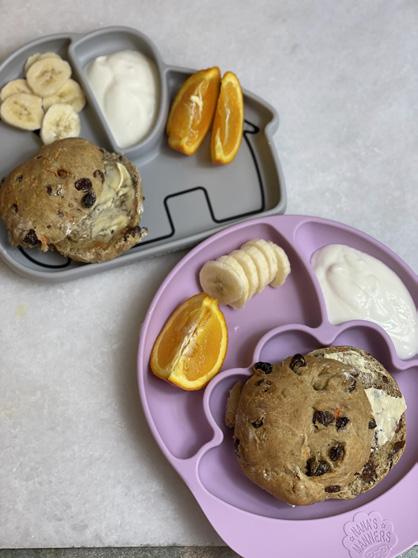
A twist on traditional hot cross buns, these are sweetened with a combination of orange juice, carrots and raisins or sultanas. They are dairy free too! And great toasted…

Prep: 10 minutes + 2-2 ½ hours proving time
Cooking: 20 mins
Makes: about 12 buns
Ingredients
250ml plant-based milk alternative
50g plant-based spread
500g strong bread flour
50ml orange juice
7g sachet fast-action dried yeast
1½ teaspoon ground cinnamon
½ teaspoon ground nutmeg
Flour for dusting
2 medium carrots, peeled and grated (dab off excess moisture if you can, using kitchen roll)
200g raisins or sultanas
Method
In a small saucepan, warm the milk and then add the fat spread. Once the fat spread has melted, turn off the heat and leave it to cool slightly.
Add the flour, yeast and spices to a large bowl.
When the milk has cooled to lukewarm, make a well in the centre of the flour mixture, then pour in the warm milk mixture along with the orange juice.
Mix well with a wooden spoon, then use your hands to bring everything together into a sticky dough. Now add the peeled and grated carrots and all of the raisins. Combine into the dough. Tip: If your mixture seems too dry and is not coming together, add more milk gradually. Or if your mixture seems to wet, then add some flour gradually until you can form a dough.
On a lightly floured work surface, knead the dough until smooth, about 5 minutes by hand (or in a stand mixer with a dough hook if you have one).
Lightly dust a bowl with flour and add the dough. Cover the bowl with a tea towel and leave to rise in a warm place until doubled in size (around 1-1 ½ hours).
Heat the oven to 200C/400F and line two baking trays with baking parchment.
Divide the dough into 12 equal-sized pieces and shape into small round buns. Place them onto baking tray, leaving space for them to expand. Leave to rise again until doubled in size (approx 1 hour).
Use a knife to slice a cross in each bun.
Bake for 20 mins or until golden brown then allow to cool on a wire rack.
Optional: To add a traditional white cross, before baking, gradually mix together 70g flour with 1 tbsp of water to create a thick, pipeable paste. Spoon into a piping bag and use a small round nozzle to pipe crosses on the buns.
By Ellie Malt
With the promise of spring all around, we don’t need science to remind us that getting hands-on in the garden is a fantastic, sensory-rich antidote to device time, which helps children reconnect with nature.
There is, actually, plenty of evidence to show how simply having access to green spaces reduces emotional dysregulation in children and teenagers. Gardening can help reduce stress, improve cognitive functioning, build self-esteem and improve physical health.¹
While the specific claim that simply touching soil is a direct ‘cure’ for mental health problems is not fully established, some studies do show associations and plausible mechanisms like serotonin release and microbiome effects.²
Keen to get them out there and digging in the dirt? The key is choosing projects and plants that suit their interests and their age while tweaking your involvement. Gardening with children isn’t about perfection. Plants will fail; seedlings may be overwatered and fairy gardens might be repeatedly rearranged. What matters is shared time, learning and the joy of watching children grow alongside their garden.
Sources: ¹ Bowler, et al., 2010; Hartig, et al., 2014; ² National Wildlife Federation, 2012.
Veggie plot

Growing food is not only biology in action but it is also a very satisfying experience. In our culture of immediate gratification, it is particularly good for teaching how rewarding a longer-term commitment can be. It can also be a great way to help younger children physically connect with where their food comes from.
Raised beds, grow bags or large containers are ideal for little gardeners. Under 5s can sow large seeds, water plants, watch for growth and taste what they harvest, with supervision. Those ages 5+ can help choose crops, plant seeds at the correct depth, label rows and maintain watering and weeding schedules. Children ages 9+ can manage a small plot independently, plan crop rotation, troubleshoot pests and take responsibility for harvesting.
Under 5s: Broad beans, peas, radishes: large seeds, fastgrowing, easy to harvest.
5-8s: Lettuce, spring onions, courgettes: quick-growing, simple to care for, visually satisfying.
9-12s: Runner beans, potatoes, strawberries, tomatoes: more complex crops that teach planning, spacing and responsibility.

A sensory garden involves touch, sight, smell and sound. This gentle exposure outdoors is especially helpful for those who are sensitive to textures or flavours. It instinctively appeals to children who enjoy hands-on exploration and is perfect for small spaces, containers or raised beds.
Under 5s can pat soil, water and smell herbs. Keep sessions very short and playful. Slightly older children can help choose plants, space seedlings and water on a routine. Ask them to observe and note changes.
Tweens can get involved in planning garden layout, researching pollinator-friendly plants and taking responsibility for deadheading and recording growth.
Under 5s: Lamb’s ear, mint, lemon balm: soft, fragrant and safe to handle.
5-8s: Sunflowers, cosmos, lavender: colourful, easy from seed, great for observation.
9-12s: Rosemary, scented geraniums, ornamental grasses: encourage planning and longer-term care.
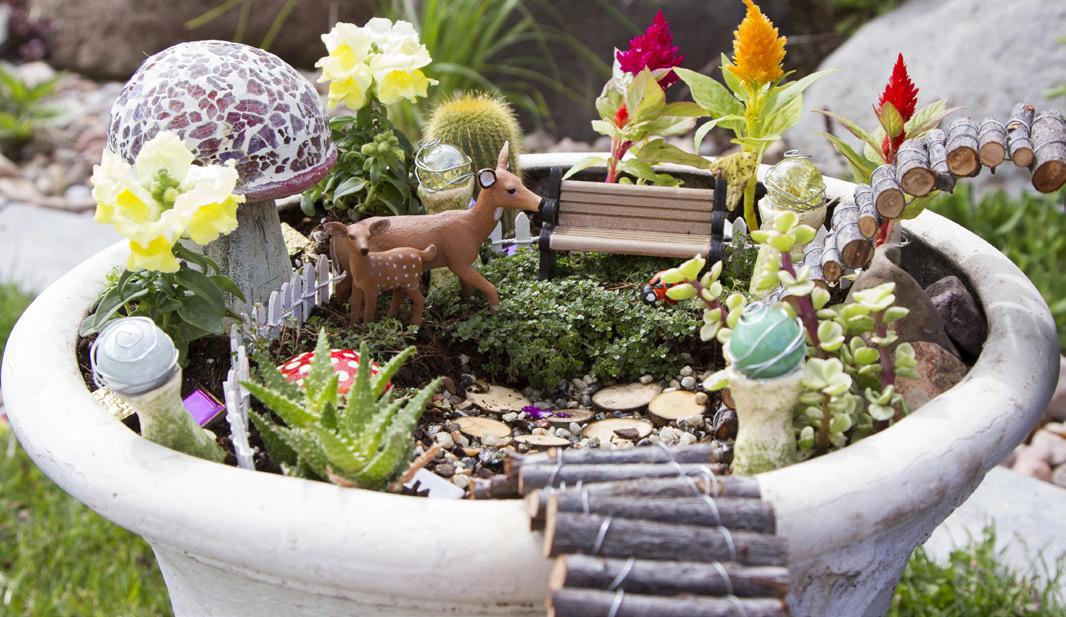
Combining horticulture with imaginative play, fairy gardens are perfect for children who enjoy storytelling and craft. They work well in pots, old containers or even sheltered corners. Let the youngest children arrange the fairy figures and natural decorations. Supervise gently to protect plants. Children can talk about their ideas, explain their garden and often play collaboratively, supporting vocabulary and co-operation.
Children ages 5+ can start designing small structures, planting, watering and adding storytelling elements as the ‘fairy garden carers.’ Tweens can branch out into planning themed gardens (not necessarily fairy-themed), learn plant requirements for shade and water and build miniature structures from natural materials.
Under 5s: Moss, thyme, small hardy flowers: easy to handle and ideal for arranging miniatures.
5-8s: Nasturtiums, marigolds, violas: colourful and edible, perfect for hands-on planting.
9-12s: Miniature ferns, cosmos, dwarf grasses: great for themed designs and more complex maintenance.
By Emma Shafqat
I have both professional and personal experience with cow’s milk allergies; when my daughter was twelve months old, we made our first attempt to climb the Milk Ladder.
Unfortunately, once past steps one and two, we couldn’t get any further. Lots of crying and vomiting prompted us to take a break. After two more attempts and feeling like there would be so many food related occasions we could never enjoy together as a family, we finally reached the top of the ladder when my daughter was three and a half… although - between you and me - she still flatly refuses cow’s milk, claiming she can’t have it, despite happily eating ice cream and drinking chocolate milkshakes!
What is a cow’s milk allergy?
Cow’s milk protein allergy (CMPA) is an abnormal response by the body’s immune system in which the proteins in cow’s milk are recognised as a potential threat. It is estimated to affect around 7% of babies under the age of one, although most children grow out of it by the age of five (NHS, 2019).
The two main types of CMPA
IgE-mediated: typically rapid onset (within minutes and up to two hours after ingestion)
Non-IgE-mediated: typically delayed onset (usually two to 72 hours after ingestion)
These two different types of allergies come with similar but slightly different signs and symptoms. They can include itchy skin, a rash, atopic eczema, abdominal pain, vomiting, diarrhoea, coughing, chest tightness, wheezing or shortness of breath.

IgE-mediated can also cause acute flare up, swelling of the lips, face or around the eyes, nausea, sneezing and congestion. NonIgE mediated can also cause gastro-oesophageal reflux disease (GORD), loose or frequent poos, constipation, redness around the anus, blood and/or mucus in the poo, colic, tiredness, food refusal or aversion and faltering growth with at least one or more gastrointestinal symptoms.
If your child has other symptoms, that does not mean they don’t have a food allergy. If you think your little one is having a reaction to cow’s milk, see your GP. Make sure you get medical advice before taking cow’s milk out of your child’s diet.


The Milk Ladder is a six-step technique of reintroducing your child to cow’s milk slowly so that their tolerance builds gradually. It is only suitable for children with mild to moderate non-IgEmediated allergies and you should always seek medical advice first. I recommend referring to the official iMAP Guide for details.
Put simply, the Milk Ladder starts with more broken-down forms of milk, like biscuits or pancakes and builds up to things like yoghurt and cheese, until eventually your child can have fresh milk. This is because when milk is heated or baked, the protein changes so it is less allergenic.
If your child has a reaction at any of the steps, stop and contact your health care professional before starting again. Once you have reached the top of the ladder, switch to cow’s milk in all food and cereals at breakfast.

Use the QR code to see the iMAP guide with the six steps on the Milk Ladder. If you are struggling with CMPA and would like more support, visit www.dietitianwithadifference. co.uk and book a customised cow’s milk reintroduction plan. With thanks to Bespoke Family (www.bespokefamily.co.uk) for this article.

By Usha Patel
As autism develops more awareness and acceptance in mainstream society, more different behaviours are observed and noted. Examples such as rocking, spinning, flapping hands, repetitive phrases and vocal sounds. These repetitive movements are all categorised as stimming.
Generally, stimming is not just performed by those with autism. We can all have bouts of stimming in certain situations, even those who consider themselves to have neurotypical brains.
What is stimming?
Most commonly, stimming is described as self-regulatory behaviour.
Dr Temple Grandin, who was born with autism, talks openly about stimming. She says in a YouTube clip: ‘As a child, I would spend hours dribbling sand through my hands to calm myself down because loud sounds hurt my ears. I was stimming to shut out the outside world.’ She goes on to say: ‘But the problem is, if a young child with autism is allowed to stim all the time, the brain becomes shut off from the world.
‘What you need to do is get the child into a quieter environment and help them take in information. ‘I was allowed an hour after lunch, where I could stim and veg out but I was not allowed to do that type of stuff at the dining room table. It’s okay to stim in private but if you let them (children with autism) stim for eight hours a day, they will not develop.’
Most definitions of stimming say it is a behaviour that regulates a child with autism and Dr Grandin is not refuting this claim at

To assess your child’s needs, seek an expert in Reflex Integration Therapy for a professional evaluation. This will provide a clear picture of any neurological and developmental challenges your child may be facing.
Various sensory factors can also impact the nervous system, affecting further developmental issues. Both immature reflexes and sensory needs result in behaviours including stimming, which are coping mechanisms in an effort to bring order to a disordered nervous system. The order being sought is never achieved but the child will keep trying.
Over time, if these developmental concerns aren’t addressed, stimming can become deeply ingrained – a pattern hard to break. The nature of the most suited therapies will have gentle rhythmic movements as part of the intervention. The idea is to create a sense of regulation, building the correct motor pattern that can be used to move to the next developmental level independently. Allowing the child who stims the opportunity to unlearn rigid behaviour and incorrect motor patterns helps remove the need to stim in the first place.

all. She is just saying it needs to be limited. She did not talk until she was almost four years old and it was through her mother’s determination to find ways to help her that she gained the skills of other neurotypical children.
In the 1950s, Carl H. Delacato, EdD, director of the Autistic Unit at the Centre for Neurological Rehabilitation, suggested that the stimming behaviour exhibited by autistic children was a clue to what their neurological system was deficient in. Dr Delacato was the first doctor to see stimming behaviours as a way to treat a child.
As a therapist deeply interested in functional neurology, my goal is to understand what is happening in a child’s brain and how to neutralise the surrounding environment to help, especially in situations where stimming appears to be self-harmful, such as banging one’s head on a hard wall.
Usha Patel is a Neurocognitive Therapist at Raviv Practice London. For advice on any of these issues, visit www.ravivpracticelondon.co.uk

I often tell parents to try to understand the multiple factors that shape their child’s needs. Such as: the gut can influence the brain, just as environmental factors including bright lights and loud sounds, can have an impact. However, every child is unique so there’s no one-size-fits-all approach when it comes to autism.
I recommend reading up on the Polyvagal Theory, which explains how humans can feel safe and regulated within their own bodies. There’s also a wealth of valuable literature on topics like the gut, reflexes and the nervous system, written by qualified professionals. Before seeing a so-called specialist, make sure to ask them for references. The more knowledge you have, the easier it will be to find the right help that truly aligns with your child’s needs.
Dr Temple Grandin advises providing a child with ‘as many different experiences as possible. These experiences offer opportunities for learning, just as they would with any other child.’ I would suggest reading all her books on autism; she is a first-hand expert.
By Dr Meredith Elkins
‘I’m an anxious parent. Are my kids doomed?’
It’s well-established that anxious parents are more likely to have anxious kids. But genetics actually only account for about thirty percent of the risk of developing an anxiety disorder. And the good news is that there are ways you can help your child manage their own anxiety more effectively.
Model healthy beliefs about anxiety
Research shows higher anxiety in kids whose parents believe that experiencing anxiety is dangerous. If you believe that your kid’s anxiety-fuelled meltdown before an exam will cause them irreparable harm and show it, your beliefs become theirs and the cycle continues.
However, anxiety is a normal emotion and not actually harmful. Anxiety feels uncomfortable - by design - because discomfort motivated our ancestors to fight or flee in dangerous situations. Anxiety in the absence of actual danger feels awful but it can’t hurt you.
Through your words, your body language and your choices, model to your children that the experience of anxiety is normal and tolerable.
Resist the urge to rescue
Parents with anxiety disorders are more likely to ‘rescue’ their children from anxiety, for example by letting them skip school on the day of a dreaded exam. It works in the moment but robs them of the chance to learn that they can cope with stressors.
It’s impossible for kids to learn how to cope with anxiety if adults are constantly shielding them in normally stressful situations.

Parents don’t always buy it when I say anxiety isn’t dangerous. I get it - it seems counterintuitive. But truly, the painful sensations and distressing thoughts that accompany anxiety can’t actually hurt us; it’s what we do because of anxiety that causes problems: avoiding our responsibilities, limiting how we spend our time or choosing problematic coping strategies.
A kid panicking over an exam may experience uncomfortable physical sensations, like a racing heart or chest tightness. They’ll likely notice distressing thoughts like ‘I can’t handle this - I’m going to fail.’ As painful as these feelings and thoughts are, they are not in themselves harmful. What can be harmful is the actions taken that often squash anxiety in the moment, but make things worse over time - school avoidance, procrastinating on TikTok, skipping meals or even self-injury.
This is why the best treatments for anxiety emphasise exposure therapy: practising doing hard things even when painful thoughts and feelings show up.

Sadly, underdeveloped bravery muscles leave kids vulnerable to greater anxiety as life becomes more demanding.
Resist stepping in immediately. Be present and encouraging, without trying to ‘fix’ the distress for them.
Practise brave behaviour
Parents with high anxiety work extra hard to avoid distress. If you are anxious about work, you might procrastinate, delegate or bail entirely. If attending a party makes you uncomfortable, you might make excuses to stay home. This avoidance only fuels anxiety further by suggesting that discomfort should be avoided rather than tolerated.
Flip the script to promote resilience instead. Share stories of when you felt anxious but persisted and what you discovered about yourself. Seeing you navigate fear and come out stronger teaches kids that they, too, can handle anxiety.
Dr Meredith Elkins is a licensed clinical psychologist specialising in the treatment of anxiety, mood and obsessivecompulsive disorders in children and young adults. She is also an author and her latest book, Parenting Anxiety, is published by Vermilion.

When kids are anxious, we often jump in with reassurance or solutions. But these well-intentioned responses can send the message that kids need us to handle hard moments, further fuelling their anxiety.
Try using supportive statements: a simple, clear way to send two powerful messages to your anxious child at once:
Validation: ‘I see that this is hard for you…’ The goal is to warmly acknowledge your kid’s experience, without minimising or ‘fixing’ it.
Confidence: ‘…and I believe you can handle this.’ This expresses faith in your child’s ability to cope with painful feelings, even when they feel overwhelmed.
Supportive statements don’t aim to erase anxiety or offer empty comfort. Instead, they are a two-ingredient formula to communicate acceptance and confidence that your child can face challenges with your support, not your intervention. As you model confidence in their abilities, kids gradually internalise that belief and begin to trust their capacity to cope.
By Ann Magalhaes
Before the start of term, a friend of mine invites her sons to what has become a ritual: their family meeting. Instigated when they were in primary school, the whole family sees the value in contributing to these get-togethers. Family life feels calmer and more predictable, with everyone on the same page.
While my friend uses family meetings mainly for back-to-school organisation, they can be useful for so much more. They cover what’s coming up, what might not be going so well and how to move forward together as a team. Meetings work well ahead of big transitions: a new school or term, an upcoming event or changes within the family.
Why are these meetings such a powerful parenting tool? Because children feel included. They’re more likely to buy into plans when they’ve had a say and even if they don’t express it, they appreciate the clarity that comes from knowing what to expect.
Family meetings reduce chaos, avoid last-minute surprises and help manage expectations around responsibilities, activities and changes of routine. We’re used to having meetings at work; this really isn’t that different.
Here are some well-tested tips:
Have an agenda
A clear agenda helps everyone see what will be discussed and creates a natural to-do list. When children contribute ideas and see them written down, they feel heard and valued and are far more motivated to follow through.

Starting family meetings on a positive note reflects what many teachers and coaches do. They understand that a warm, genuine, positive statement creates a safe space and sets the tone for everything that follows. You could begin by summing up the last meeting and praising the successes that everyone contributed to and achieved as a result.
Better this than standing over your child with your arms crossed and saying: ‘Why can’t you be more like your sister? She just gets on with everything.’ Imagine sitting down calmly and offering: ‘We had a lot of fun over the holiday. What was your favourite part?’
Nagging or negative comparisons trigger a child’s emotional brain and create a sense of being in trouble, which can lead to defensiveness or disengagement - not the attitude you’re hoping for!
Starting with a positive statement or question helps children feel safe, open and involved. It doesn’t ignore what isn’t going well; it simply creates the space needed to discuss challenges calmly and solve them together.

Create a simple monthly calendar for the term. Start with birthdays, school events, sports fixtures, playdates, assigning each child their own colour. Then invite your children to add things they’d like to do. This naturally leads to conversations about responsibilities too. Who helps with what? Who prefers feeding the dog rather than walking him? The bonus for parents: less nagging and more chances to acknowledge your children’s contributions.
Busy schedules, homework, sleep and limited downtime all add pressure. Talking through expectations for screen time, bedtimes, getting ready for school or homework helps everyone feel prepared. By planning ahead, things are more likely to go right and it’s easier for you to stay calm when they don’t. Oh – and have some favourite snacks on hand to help make the meeting a warm, inviting place for conversation.
Ann Magalhaes is co-founder of The Parent Team (www.theparent.team), parenting educators offering classes, workshops and private sessions, teaching evidence-based parenting skills and offering parents practical, effective support.

Have you ever said ‘no’ to your child, only to hear that their other parent said yes? Whether parenting together or apart, differing opinions are common. In an ideal world, everyone raising a child would share similar values, expectations and goals. In reality, we all bring our own experiences, beliefs and ideas into family life.
What helps children most is a united, authoritative parental front; one grounded in shared values, clear and realistic expectations and a warm, connected relationship. How adults handle disagreements matters far more than whether they agree on every issue.
A united front is built through solution-focused conversations rather than blame. It relies on mutual respect, appreciation for each other’s contributions and a commitment to consistency. When adults communicate calmly and stay on the same page, children feel safer and learn how to manage differences.
So, the next time you’re put on the spot, try a holding statement such as: ‘I’m glad you told me. I’ll check with dad/ mum and we’ll talk about it again after that.’
Use plants to make beautiful earthy colours in this simple Easter project. It uses the hob, hot liquids and vinegar so do make sure an adult can help and supervise the kids - and make sure they understand the eggs are to decorate and not to eat!
You will need:
Per dye colour:
• 3 cups (750ml) water
• 2 tsp vinegar
• Pinch of salt
Natural dye ingredients (choose one):
Blue: 2 cups (500ml) chopped red cabbage
Red: 2 cups (500ml) red onion skins
Yellow: ¼ cup ground turmeric
Green: dye in blue first, then dye again in yellow



Most bird eggs start white because the shell is made mainly from calcium carbonate. As the egg is formed inside the mother bird, special pigments are added to the outside of the shell, creating the colours and patterns we see. Plus:
• Eggs (hard-boiled or hollowed out)
• Saucepan
• Sieve/strainer
• Heatproof bowl or jug (for the dye)
• Glasses or small jars (one per egg)
• Spoon or tongs
• Paper towel
Optional: a little vegetable oil (for shine), apron/old clothes (turmeric stains!)
Step 1:
Prepare your eggs: hard-boil your eggs (about 10 minutes), then leave them to cool completely. For long-lasting decorations, use hollow eggs instead of hard boiled.
Step 2:
Make your dye: put your chosen dye ingredient into a saucepan. Add 3 cups (750 ml) water. Bring to the boil, then simmer for 10 minutes. Turn o the heat. Stir in 2 tsp vinegar and a pinch of salt (this helps the colour stick). Leave the dye to cool, then strain it into a bowl or jug.
Step 3:
Dye the eggs (for red, blue or yellow eggs): pour in enough dye to fully cover the egg. Leave to soak for at least 2 hours or overnight for deeper colour. Lift the egg out carefully and pat dry with paper towel. If you rinse, rinse very gently, too much water can wash o the colour. Leave the eggs to dry completely.

Red onion skins → deep rust / burgundy
Red cabbage → soft blue-grey tones
Turmeric → sunny yellow / golden orange
Blue + yellow → mossy green

Step 4:
Make green eggs (two-dye method): dye your egg in the blue (red cabbage) dye overnight. Let it dry, then dye it again in the yellow (turmeric) dye for about 2 hours. Pat dry and leave to dry fully.

Step 5:
Add a beautiful shine (optional): once your egg is totally dry, rub on a tiny drop of vegetable oil with your fingertips or a soft cloth.
With thanks to the makers of Curiosity Club (7-12yrs) & Curiosity Crew (4-6yrs) for this project. The Curiosity Club & Crew is a monthly subscription pack, filled with beautifully illustrated story-led science, hands-on investigations and creative prompts, which build knowledge, nurture creativity and grow confidence through real-world learning.
More information at www.arcanaliving.com/curiosityclub and www.arcanaliving.com/curiositycrew