


Anouska Emily Mauree offers some ideas for simple lunches for the kids, perfect for both days at home and days out.
Fancy a fun food activity with the kids? Well, look no further. Transform a boring bowl of pasta into a fun and portable lunch the kids can assemble themselves.
Makes 4
Ingredients
70g (2½oz) dried penne pasta
4–6 tablespoons tomato sauce
70g (2½oz) mozzarella cheese, grated
70g (2½oz) Red Leicester cheese, grated
Handful of sweetcorn
½ green pepper, cored, deseeded and diced
1 large tomato, diced
2 slices of chorizo, shredded
Preheat the oven to 180°C (400°F), Gas Mark 6.
Boil the pasta according to packet instructions, drain and leave to cool.
Slowly thread the penne pasta onto four skewers, a piece at a time.
Sprinkle over the toppings – we use sweetcorn, green pepper, tomatoes and chorizo. Everyone can choose their own and make their own skewers.
Place the skewers on a baking tray lined with baking paper and spread your sauce over. Mix the two cheeses together and sprinkle on the pasta.
Cook in the oven for 20–30 minutes or until the cheese is nice and golden and the veggies are soft.

Hummus & Salad
Ingredients
1 large soft flour tortilla
4 tablespoons hummus
A few salad leaves
1 small carrot, grated
½ tomato, diced
Tortilla pinwheels are a fun way to interest kids in what is essentially a healthy sandwich.
Customise them with your favourite fillings!
Makes 4 of each.
Place the tortilla on a board, spread with the hummus and top with the veggies. Roll up tightly, then slice into 2.5cm (1 inch) pinwheels.
Ham and Cheese
Ingredients
1 large soft flour tortilla
Butter
5 slices of ham
60g (2¼oz) Cheddar cheese, grated
6 slices of cucumber Mayonnaise
Place the tortilla on a board, spread with butter, top with ham, cheese and cucumber and squeeze on a little mayonnaise. Roll up tightly, then slice into 2.5cm (1 inch) pinwheels.
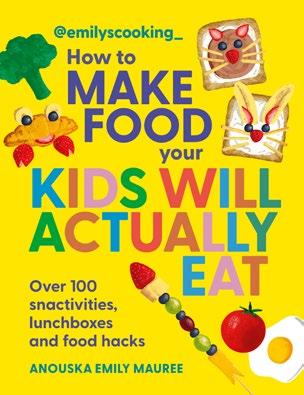
These recipes feature in How To Make Food Your Kids Will Actually Eat by Anouska Emily Mauree (@emilyscooking) and are reprinted with permission of Octopus Books.

Mix up the toppings, depending on what your children like. Try mushrooms, onions, pesto, peas, cooked chicken, ham or different cheeses.

Over forty-five million people liked my toaster pocket wrap and once you try it you’ll see why! It’s a brilliant hack that I didn’t know I needed in order to be a mum.
You fill a tortilla with your fillings, fold it three times and pop it in the toaster – it’s as simple as that!
Serves 1
Ingredients
1 soft flour tortilla
2 slices of ham
1 large slice of cheese, torn in half Butter (optional)
Get inventive with your fillings. Why not try tuna, thinly sliced mushrooms or tomatoes or hummus? Just remember not to overload it or the cheese won’t melt.
Editor Linda Stone info@familiesmagazine.co.uk 020 8241 0423
Next issue: September/October
Book by: 3 August
Cover image: www.depositphotos.com
Follow us on social media
www.facebook.com/FamiliesUK www.instagram.com/familiesuk
The kids are heading for a summer break of at least six weeks and so this issue offers parents as many options as possible for keeping them busy. These include local family events and activities in our What’s On pages, activity ideas for a day at the beach, mess-free science experiments and top UK adventure playgrounds. Plus if you are dreading having to prepare more meals when the kids are home, check out some great simple ideas for lunches they will love and can help prepare.
Summer learning loss is real so to keep your kids mentally active, find out about learning outside of the classroom, as well as how to turn summer into a season of reading. For those who have a child starting school in September, we have some fresh ideas for ensuring a smooth start as well as tips for parents with children starting a new school or simply returning to a new academic year.
Considering potty training your little one this summer? It’s the ideal season to begin (fewer clothes to wash if there are accidents!) but it’s recommended that you and your toddler work as a team to make it as stress-free as possible for all the family. Read our tips.
Finally, we have some super summer giveaways inside including bundles of Toy Story soft toys. Apply for these and others inside. By doing so, you’ll also ensure you receive our digital magazine and email newsletter with lots more content and goodies on offer.
This product is made of material from well-managed, FSC®certified forests and other controlled sources.
March/April issue giveaway winners Congratulations to all our winners. You can find a list at www.bit.ly/MA26recipients
Magazine is a franchise of Families Print Ltd of 75 Lisbon Avenue, Twickenham, TW2 5HL. Families is a registered trademark of Families Print Ltd. All franchised magazines in the group are independently owned and operated under licence. The contents of Families Magazine is fully protected by copyright and none of the editorial or photographic matter may be reproduced in any form without prior consent of Families Magazine. Every care is taken in the preparation of this magazine but the franchise owner and Families Print Ltd cannot be held responsible for the claims of advertisers, nor for the accuracy of the contents, or any consequence thereof.


fun


By Zuzu Jordan
Some of the richest and most memorable learning happens beyond the classroom. While some children enjoy the structure of desks, carpet sessions and a teacher at the front, every child gains from opportunities to explore, move, talk, question and experience the world around them.
Furthermore, learning certainly does not have to stop when the school day ends. When children are given the chance to learn through life, nature, play and hands-on experiences, they often develop confidence, curiosity and a deeper understanding of what they are discovering.
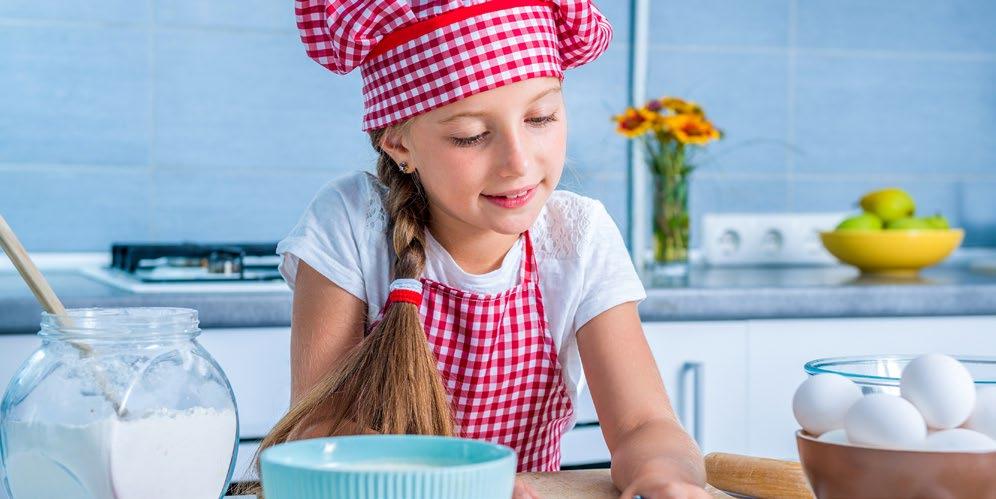
The long summer holiday is the perfect time to experience education anywhere. A walk to the park, a trip to the supermarket, baking in the kitchen or helping to wash the car can all build valuable skills. When children are relaxed and engaged, they often absorb more than we realise. They are noticing, questioning, comparing, solving problems and making sense of the world around them.
Outdoor learning is a wonderful example of this. Many schools now use Forest School approaches to give children hands-on opportunities in natural spaces. In a woodland or garden, children can identify plants, compare leaves, search for minibeasts, spot seasonal change and talk about weather, habitats and growth. Physical development is supported through climbing, balancing and lifting. Language grows through conversation and storytelling. Maths appears naturally, as children count sticks, sort stones, measure puddles or notice patterns in petals and bark.
Some families enjoy creating themed weeks during the holidays and this can be a brilliant way to immerse children in a topic.
One week might be all about volcanoes. You could visit a museum together, get them to write to a volcanologist, build a volcano at home, read related books and create fact files or drawings inspired by what they have learned. This immersive approach allows children to deep dive into a subject and make links between reading, writing, speaking, science, art and research in a way that feels exciting rather than forced.
Learning beyond the classroom feels purposeful. Children can see why they are doing something. Reading a recipe helps make lunch. Counting coins matters because they are buying an ice

Themed weeks can turn a child’s interest into a real learning adventure.
One week might focus on minibeasts, space or oceans. Families can visit a museum, borrow books, create artwork, ask questions online or build something linked to the topic at home.
A themed week encourages children to explore one idea in depth and make links across reading, writing, science, art and discussion. Because the learning feels connected and exciting, children often stay curious for longer and remember far more of what they discover.

cream. Writing a list is important because the family needs to remember what to pack. These ordinary moments help children build confidence because the learning is immediate, useful and enjoyable.
We must also remember that life skills are an important part of learning outside the classroom. How do you catch a bus or a train? How do you read a timetable, buy a ticket and know when to get off? How do you plan a meal, shop for the ingredients and then cook it safely? These experiences involve reading, sequencing, money skills, problem solving and independence. They also help children feel more capable in the world around them.
Children do not need expensive days out or perfectly planned activities. Some of the richest learning comes from simple, everyday routines. Gardening teaches patience, care and life cycles. Building a den develops teamwork, creativity and perseverance. A journey on public transport can spark conversations about directions, maps, numbers and the wider community.
Perhaps the most important thing adults can do is slow down and notice the learning already happening. Ask open questions. Wonder aloud. Give children time to think. Follow their interests, even if they seem small. When we value learning everywhere, children begin to see themselves as capable learners everywhere too.
Zuzu Jordan is a Mastery for Maths Specialist who has taught primary for eighteen years and is Director of Arnett International. For FREE resources and tips, find her on Instagram @edumate_uk

Life skills offer some of the most valuable learning opportunities of all.
Catching a bus or train teaches children how to read timetables, plan journeys and solve problems. Preparing dinner involves choosing a meal, writing a shopping list, comparing prices and cooking safely. These tasks build independence, confidence and resilience while also strengthening reading, maths and communication. When children are included in everyday routines, they begin to understand how the world works and feel more capable within it. That is powerful learning beyond the classroom.
By Usha Patel
Developmentally, children often reverse letters and numbers until around age 7. Beyond this age, it becomes a concern, though not one an optician will identify, since the eyes themselves are working perfectly well. The difficulty lies in how the brain interprets what it sees.
To understand why, consider how we perceive the world around us. Seeing a tree, a chair or another person is a threedimensional experience. We recognise these objects from every angle we view them, because this is precisely what our eyes evolved to do: identify objects in space as hunter-gatherers navigating a physical world. Humans have existed for around 300,000 years. Written language, by contrast, has existed for only about 5,000 years and it demands something quite different: a two-dimensional understanding that our brains were never originally designed for.
When young children first encounter letters of the alphabet, they apply this same three-dimensional logic. A ‘b’ and a ‘d ‘ look much the same to them, just as any two similar objects in space might. Over time and with sufficient exposure, children gradually learn that these symbols carry directional meaning, that orientation matters and that one shape facing left is an entirely different thing from that same shape facing right. This understanding unlocks phonics: a child can only assign a sound to a letter once they recognise which letter it actually is.
A second reason for reversals is the direction in which children naturally scan written information. Our writing system runs from left to right but some children are predisposed to scanning from right to left. This can lead them to write a ‘3’ when they intended
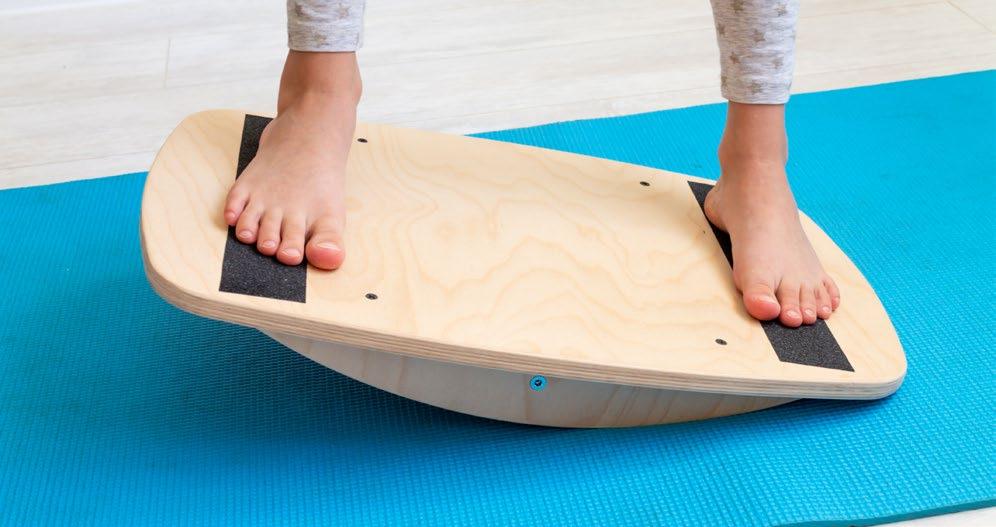
When children struggle with letter and number reversals, my first question is always about balance. Static balance, standing on one leg or walking heel-to-toe along a straight line, can be practised with eyes open, then made more challenging with eyes closed. Dynamic balance involves an unstable surface, such as riding a bike or walking across a pebbled beach.
Improving both types of balance helps a child’s body develop an implicit understanding of up and down and eventually left and right because the body naturally works to correct an imbalance. That implicit knowledge then transfers outward: which hand do they reach for when writing? Which foot do they lead with when kicking a ball?
Many children who struggle with letter reversals cannot reliably tell left from right. Body awareness is the essential first step; in other words, a physical experience shows the child that a difference between the two sides of their body exists. Without that foundation, distinguishing between a ‘b’ and a ‘d’ on the page remains an abstract concept.
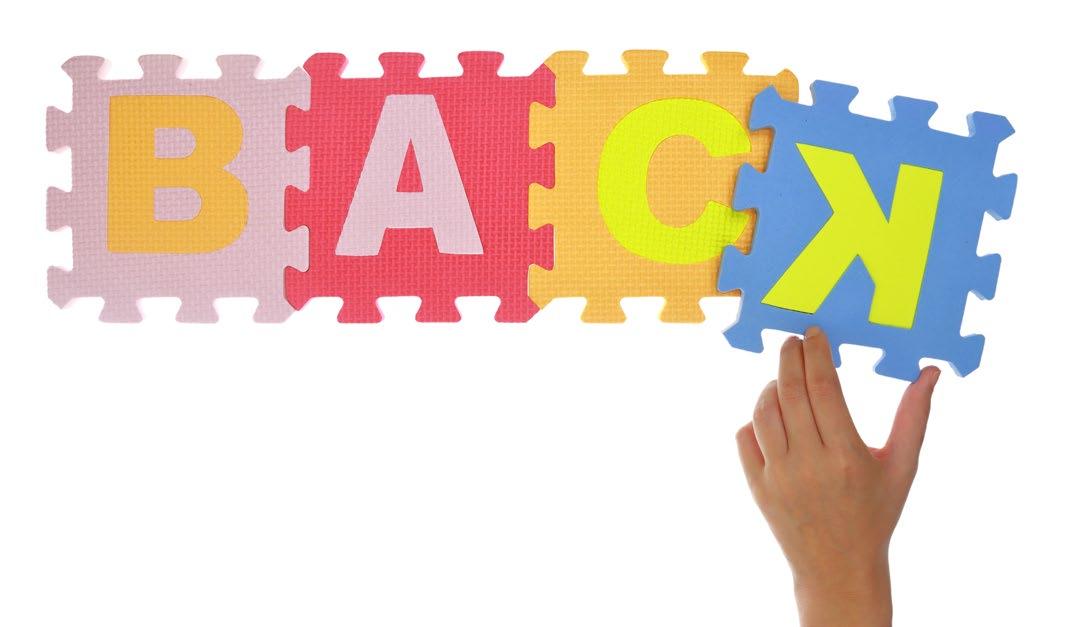
an ‘E’ or ‘21’ when they meant ‘12’ and to read words such as ‘was’ as ‘saw’.
Visual-perceptual difficulties of this kind can slow a child’s development of academic skills, confidence in writing and accuracy in reading. They may appear in isolation or as part of a broader diagnosed condition.
A neurodivergent condition such as dyslexia involves difficulties with multiple components, including auditory processing, working memory, processing speed and sequencing; visualperceptual challenges compound those difficulties. There may also be language difficulties that appear before reading even begins, such as mispronouncing words. We cannot attribute letter reversals to a neurodivergent condition but as one of many indicators. Many children with visual-perceptual challenges also struggle to distinguish left from right, which makes the picture considerably more complex.
Usha Patel is a neurocognitive therapist who specialises in visual perception difficulties. Find out more at www.ravivpracticelondon.co.uk

The most effective method I have found uses a large sheet of paper or a flexible whiteboard, fixed to a vertical surface, so that a child works at eye level.
Begin by drawing a large letter, such as a ‘C’, around thirty five centimetres wide. Draw a box around it with top, base and right side in one colour and the left side in a contrasting colour. Ask your child to rest their non-writing hand flat against the wall. Then ask them to trace the letter, showing that they are moving their writing hand towards the differently coloured side and towards their resting hand (if they are right-handed).
Staying centrally in front of the letter, repeat three times, first with eyes open, then with eyes closed.
Working at this large scale matters: the physical effort required to trace a large letter helps embed the direction of movement in a way that a small mark on paper simply cannot. The body and the motor movement, in effect, help your child learn the letter.
By Ellie Malt
Whether your child is starting school for the very first time or moving somewhere new, preparation isn’t about getting everything perfect, it’s about helping them feel secure.
Advice about uniforms, routines and packed lunches is familiar; however, there are some less obvious ways parents can help their children feel ready for change.
Starting school for the first time
Practise ‘micro-independence’
Rather than focusing only on big milestones like using the toilet or writing their name, build independence in small, everyday ways. Encourage your child to open snack packets, put on their own coat or ask for help from another adult. These tiny victories make a big difference in a classroom.
Talk about feelings in advance (not just fun)
Instead of only emphasising excitement, gently introduce the idea that it’s okay to feel nervous, shy or even a bit cross. Giving children language for these emotions helps them cope when they arise.
Create a ‘goodbye ritual’
Ritual can be a powerful tool in helping children feel secure at the start of the day. A predictable routine such as a special phrase, a quick hug, a high-five or a wave at the window helps create a clear and reassuring transition between home and school. The key is consistency, so your child can rely on it. Over

Even when children are returning to the same school there are the challenges of new teachers, classrooms, subjects and friendships to be faced. Help them settle back in smoothly:
Reset routines gradually. Don’t wait until the night before term starts. Begin adjusting bedtimes, mealtimes and morning routines at least a week in advance.
Reflect before you reset. Have a chat about last year - what they enjoyed, what they found tricky and what they’re hoping for this year. This helps children feel heard and more in control.
Small refreshes. A small ‘back-to-school refresh’ - like a new pencil case or reorganised workspace - can feel motivating. Normalise wobbles. Even confident children can feel unsettled at the start of term. Remind them that it’s normal to need time to adjust, especially with new teachers or classmates.
Reconnect socially. If possible, arrange a meet-up with friends before school starts. Getting back in the groove with friends can make all the difference to day one.

time, this small moment of connection builds emotional security and can significantly reduce separation anxiety.
Build stamina for the school day
School is tiring. In the weeks before term, gradually introduce longer periods of activity followed by rest, mirroring the rhythm of a school day. This helps avoid overwhelm in those first few weeks.
Use stories to rehearse scenarios
Use books and role play games to explore situations like making friends, asking to go to the toilet or what happens if something goes wrong. Children absorb these scripts naturally through play.
Focus on continuity
Help your child identify what will stay the same - their interests, favourite hobbies, family routines. This reinforces the idea that school is just one part of their life and not the be all and end all, making the transition feel less like a complete upheaval.
Make the unfamiliar feel familiar
Walk or drive the route to school as practice and look at photos of it online. Even small details like knowing where the toilets are can reduce first-day anxiety. It’s tempting to tell children everything at once but too much detail can increase anxiety. Offer information in small, manageable chunks and answer questions as they come.
Encourage ‘bridge friendships’
If your child knows even one person at the new school, help nurture that connection over the summer. Even if that friendship doesn’t last beyond the first few weeks, it can be really helpful in calming those nerves in the build up to starting at the school and during those first few days of term.
Make a mini break time plan
Keep expectations small by putting in place the Just One plan: smile at one person, talk to one new person and learn one new name. Encourage your child to look out for games that are easy to join, such as football or tag, which naturally welcome new players. These simple strategies give children a sense of control and make break times feel far less daunting.
Before term starts, help your child practise an easy ‘first hello’ such as: ‘Can I join in?’ or ‘What are you playing?’ so they have some words ready to fall back on.
Find your tribe
Joining clubs can make a massive difference when children start a new school. It’s often easier to make new friends outside the classroom in an environment that’s more about having fun than sitting still and listening to the teacher.
Activities with other kids who have similar interests create a sense of belonging. Ultimately, it can help children settle more quickly, by making them feel comfortable and connected.
Ellie is a writer and mother of two girls living in Surrey.
By Erin Miller
As the summer holidays approach, many parents start thinking about how they will keep their children busy, productive and entertained.
Some may also be concerned about the ‘summer slide’ – the progress lost during the summer holidays, which teachers report can be around a month, particularly if children are not regularly keeping up skills such as reading. For this reason, reading should be an essential part of any summer activity plan.
Here are some simple and effective ways to encourage reading over the summer.
In the first few days of the holiday, visit your local library and (re)introduce your child to the children’s section. Try to make this a weekly habit so it becomes a familiar and enjoyable routine. While you’re there, check to see whether the library is running any summer activities for children such as the annual Summer Reading Challenge (www.summerreadingchallenge.org.uk), as these can be motivating and make reading feel more social and engaging. Developing this habit early also helps children feel confident using libraries later in life, whether in school, university or the wider community.
Another tip is setting a reading target with rewards, which can be especially helpful for reluctant readers. Even a small incentive can be a useful starting point. Make sure the target is realistic so your child can achieve it and feel a sense of pride. This could be as simple as reading one chapter book in August or reading for twenty minutes each day.
Reading isn’t just about learning to read; it’s about reading to learn. It’s useful to recognise and exploit all the reading your child does, not just when they are curled up with a book.
Take every opportunity to encourage reading in everyday situations, whether that’s street signs, information boards, menus, recipes, adverts or food packaging. These small moments all help build confidence and fluency.
The key role for parents is to check understanding. Children can often decode words and read them aloud without fully understanding what they have read, so asking simple questions and discussing meaning is essential. If your child has an interest in another subject, such as maths, consider buying workbooks. Look for problem-solving activities that include written questions, as these encourage them to engage with reading while doing something they already enjoy.
Reading ability supports success across all subjects. By doing the above, you will be helping ensure that your child is not only learning to read but also able to read to learn.

Encouraging your child to read a book series is another easy win. Once they are hooked on a set of books, there’s no need to keep searching for what to read next. For younger readers, popular series such as Diary of a Wimpy Kid, The Worst Witch or Horrid Henry can be great starting points, while older children might enjoy Percy Jackson, The Hunger Games trilogy or Harry Potter.
You could also refresh or redecorate your child’s bookshelf by donating old books and picking up new ones from charity shops. This can become a fun, creative project, perhaps involving painting or reorganising the space, which helps make reading feel more exciting. It also keeps your child’s reading material fresh and engaging without being expensive.
Finally, try to maintain or re-establish bedtime reading routines. Lighter evenings can make bedtime more challenging, so keeping reading as part of the routine is even more important.
Erin Miller is a teacher with a keen interest in how research can be used in the classroom to improve learning.

Long summer car journeys provide a great opportunity to engage with books in a different way. While travelling, try listening to audiobooks as a family. Sharing the experience and discussing the story together can have a strong impact on your child’s interest in reading. Starting a free trial with a service like Audible over the summer can be an easy way to begin.
As a teacher, I am often met with scepticism from parents when I suggest audiobooks. While they may not support decoding skills as directly as reading print, they are highly valuable for developing a love of stories, which is especially important for reluctant readers.
Listening to stories also helps build vocabulary and background knowledge and studies have shown that strong background knowledge can compensate for weaker reading ability. It’s not just about sounding out words but about understanding and making meaning from what is read.
Finally, listening itself is an important skill that is often overlooked, so audiobooks can play a valuable role in your child’s overall literacy development.
By Emily Snape
We all want our children to feel good about who they are but for autistic children, that confidence doesn’t always come easily. One way we can support that is by understanding autism and the many amazing strengths it brings.
As the parent of a neurodivergent child myself, I’ve seen just how powerful it can be when we begin to understand and celebrate how their brains work. Those moments where something small can feel overwhelming but also the incredible focus, honesty and creativity that come with it. By noticing both sides, we can help our children do the same.
Your child might notice tiny details that others miss. They might have a brilliant memory, a deep passion for the things they love or a wonderfully creative way of thinking. They might be full of energy, honesty, curiosity or kindness. These are not small things - they are real strengths. But children don’t always see this in themselves, especially if they’re often hearing about what they find tricky. That’s where you can really help.
Try to spot and gently name your child’s strengths in everyday moments. You might say: ‘I love how you noticed that’ or ‘You worked so hard on that, your brain is amazing.’ Such repeated small comments help your child begin to recognise their own abilities.
It can also help to reframe challenges. A child who feels overwhelmed by noise might also have a very sensitive and aware brain. A child who talks a lot about their favourite topic might have a fantastic ability to learn and share information.

Sometimes the things our children find hardest are closely linked to their strengths.
A child who feels overwhelmed in busy or noisy places may have a brain that takes in lots of information at once. That can feel challenging but it also means they notice things others might miss. A child who finds social situations confusing may also be thoughtful, honest and observant. A child who prefers routine may be wonderfully organised and feel safe in structure.
Reframing these moments doesn’t mean ignoring challenges. It means helping your child understand themselves in a kinder, more balanced way.
The words we use really matter. Instead of ‘too sensitive’ you might say: ‘Your brain notices lots of things.’ Instead of: ‘You talk too much about that’ you could say: ‘You have such a strong interest - that’s amazing.’
Over time, your child begins to see themselves differently - not as ‘too much’ or ‘not enough’ but as someone with their own unique way of thinking and being.

we talk about these moments, we help our children see the full picture.
Encourage your child to follow what they love. Their interests are where confidence grows and where they feel most themselves. Invite them to reflect on what they enjoy and what they’re good at. Simple questions like: ‘What made you feel proud today?’ can build self-awareness over time.
You can also model self-acceptance by celebrating differences in everyday life. Read books together that show diverse minds, talk openly about feelings and highlight role models who think in unique ways. Invite your child to teach you about their interests so you share a connection. Most importantly, remind your child often: there is no one else in the world quite like them. When they begin to see that for themselves, it can change everything.
Emily Snape is the author of My Amazing Autistic Brain and My Amazing ADHD Brain (Summersdale). She is passionate about helping children understand and celebrate how their brains work.


Helping your child recognise their strengths can happen through small, every day moments.
Notice and name your child’s strengths in everyday situations;
Create a My Strengths space at home with drawings, photos or notes;
Share your own strengths and challenges to normalise differences;
Keep encouragement gentle and consistent;
Over time, your child begins to believe these things about themselves and builds a stronger sense of confidence.
Did you know?
Autistic brains actually process the world with a richness of observation and sensory detail that many neurotypical people miss entirely. This intense, sometimes hyper-focused depth of attention is the root of many autistic strengths.
By Amanda Jenner
The way we talk about potty training really does matter. Soft, encouraging language can turn it into something positive rather than something that feels pressured or rushed. Simple phrases like: ‘Shall we sit on the potty before bed?’ or ‘Let’s give it a try together’ feel very different from instructions or demands. They help keep the experience calm, gentle and supportive, which makes it easier for your child to relax and engage.
Consistency also plays an important role. Regular routines such as sitting on the potty after meals or before leaving the house help your child know what to expect. Having a rhythm can make the whole process feel like just another part of the day.
Some families also find simple distraction ideas helpful, such as bubbles or a toy, which can encourage children to sit for a little longer without pressure, making the moment feel more natural and unforced.
Alongside consistency comes encouragement. Celebrating wins no matter how small can make a big difference to how your child feels. Whether they sit on the potty, tell you they need to go or simply try, those moments are worth recognising. A warm: ‘Well done for trying!’ or ‘I’m really proud of you’ helps build their confidence and keeps the experience positive. It’s not about big rewards or pressure but about gently noticing effort and progress as they happen. Little prizes also can encourage the process.
Of course, accidents will happen. They are a completely normal part of learning and not something to worry about. Staying calm in those moments helps your child feel safe and supported rather than embarrassed or upset. A simple, reassuring response like: ‘That’s okay, we’ll try again next time’ can make all the difference. When children feel understood rather than corrected, they’re much more likely to keep trying without fear or resistance.
Routine can be helpful, especially around key times like waking up, before going out or after meals. But flexibility is just as important. Some days will feel easier than others and that’s perfectly normal.
Potty training is rarely a straight path and giving space for those ups and downs helps reduce stress for both you and your child. Keeping things relaxed also reminds your child that learning

There’s no perfect age to begin potty training; it’s more about child readiness.
Your child might be staying dry for longer periods, telling you their nappy needs changing or showing interest in the toilet. Some children begin to pause or hide when they need to go. These small cues are helpful signs that it’s time to gently introduce the idea.
Educate them for a week or so with a book, so they visually see what they have to do.
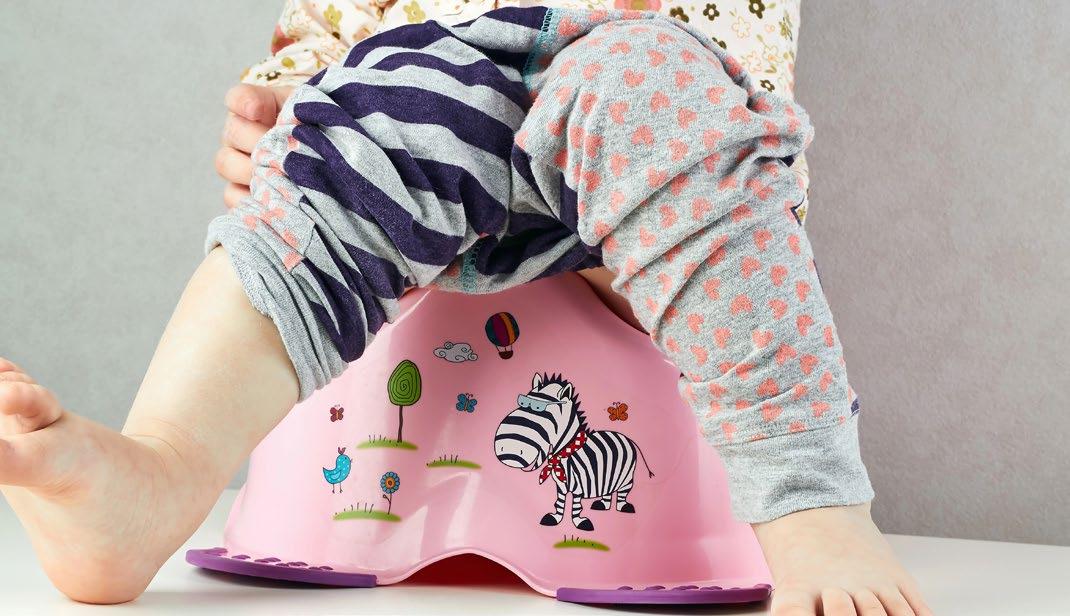
doesn’t have to be perfect to be progress.
It’s also worth remembering that big changes in a child’s life can affect how ready they feel. Things like starting childcare, moving house or welcoming a new sibling can all make them need a little more time and reassurance. During these moments, slowing down isn’t a setback; it’s simply responding with care to what they need.
You will often discover what works best for your little one through gentle trial and time. Every child is different and there is no single right way or fixed timeline. What matters most is that they feel safe, supported and understood throughout the process.
Potty training is not just about learning a new skill but about building confidence, independence and trust. When children feel that you are on their side, patient, encouraging and calm, they are far more likely to feel happy in trying.
And when the consistency and patience is there, progress tends to come naturally in its own time.
Amanda Jenner is a Child and Behavioural Expert, ITV Toddler Expert and author of Magic Milestones: Ready for my Potty, published by Simon & Schuster Children’s Books.
Did you know?

It is a common myth that boys are harder to potty train than girls. In reality, both genders achieve daytime training at similar rates. The only real difference is that teaching boys to wee standing up requires a little extra practice.

Positive reinforcement can really support your child’s confidence during potty training.
Praising effort even if they don’t quite succeed helps them feel proud and motivated to keep trying. Simple words like: ‘You did so well sitting on the potty’ can go a long way.
Some families also find small rewards helpful, like stickers or a reward jar after a successful try. The key is to keep it light and encouraging, focusing on effort rather than perfection.
By Georgina Maw

As sunshine and warmer weather arrive, it’s the perfect time to head to the coast. Beach adventures embrace a philosophy of play and exploration which encourages children to learn to take risks. Best still, they are a cheap, enriching way to enjoy quality family time together.
A scavenger hunt or beachcombing session is for everyone, regardless of age. It is pure and simple fun. All you truly need is a bucket and a good dose of curiosity. Both soft sand or rugged pebbles offer similar opportunities for awe and wonder. Head straight for the strandline, the distinct trail of debris left by the high tide, to discover nature’s hidden treasures tucked away!
As you explore, you might find scuttling crabs, beautiful shells and seaweed of all different shapes, sizes and colours. However, the golden rule is to leave the beach as you found it; avoid taking anything home so the ecosystem stays protected. To turn the adventure into a learning experience, take an identification guide or use a phone to search for what you have found. By identifying your discoveries, you will transform curious explorers into coastline experts in no time.
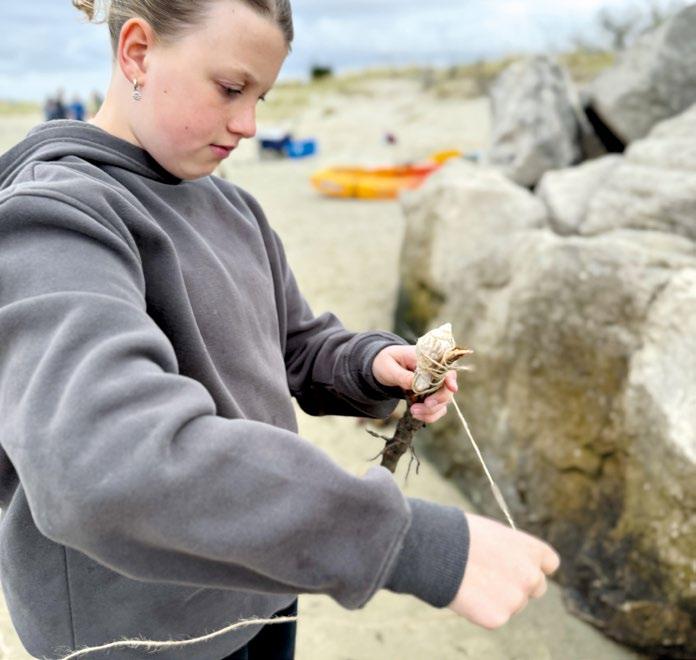
Journey sticks are a fantastic way to capture the essence of your beach walk, turning a simple stroll into a visual story. This creative activity is a secret weapon for parents; it helps distract children and motivates little legs when they start to tire, transforming the walk into an engaging mission.
All you need is a piece of driftwood and some natural twine tied securely to one end. As you wander along the shore, encourage your young explorers to pick up items of interest: perhaps a spiralled shell, a weathered bit of sea glass or a unique strand of dried sugar kelp. Simply tie each treasure to the stick using the twine to wrap around it, continuing to add new finds as you go.
Once you return to your base, the story telling begins. With a snack and a drink in hand, use the stick as a visual map to retell your journey along the shore. Each attached item serves as a memory marker, helping children retell their adventure and celebrate their coastal discoveries.




Traditional games offer a timeless way to connect with the coast, requiring absolutely no resources beyond what you find scattered along the shore. By using driftwood, seaweed, shells and pebbles, you can transform the strandline’s treasures into a natural playground.



Make the most of the shore’s driftwood to make the grid or draw the grid into flat sand. Either create the X and O using seaweed or use shells versus stones as your playing pieces.
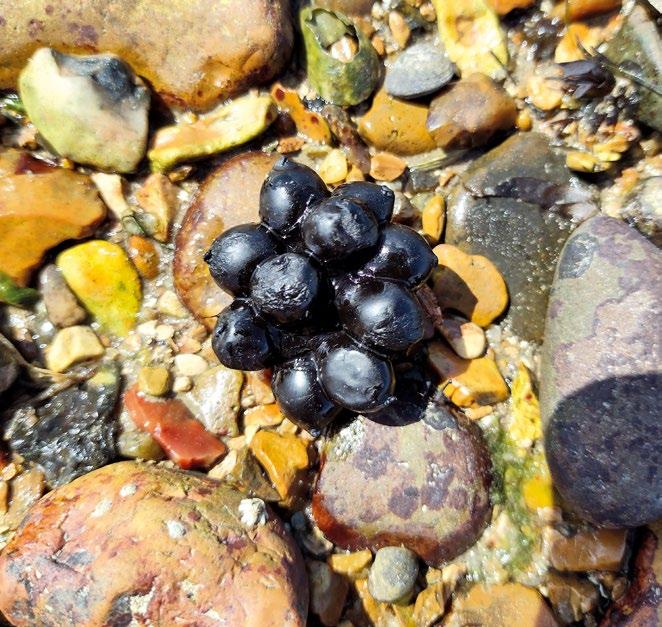



Kim’s Game tests observation and memory skills. Gather a collection of beach treasures, give players a moment to memorise the items, then cover the collection and see what they can recall. This easily adapts to suit any age; for younger children, start with three or four distinct objects. To challenge older explorers, try using six different types of seaweed or six different spiral shells to make the distinctions more subtle and remove one item - can they remember which item is missing?
Georgina Maw, author of Beach School Adventure (GMC Publications, RRP £17.99), is an experienced beach leader, educator and mother living on the south coast of England. Drawing on her expertise, she focuses on connecting children to our coastlines to inspire the next generation of ocean stewards. Her book is available online and from all good bookshops.
By Abigail White
Science experiments entertain children brilliantly during the school holidays. They spark curiosity, encourage problemsolving and offer a great mix of fun and learning.
But let’s be honest: they can also be messy, time-consuming and often require equipment you don’t have (or will only use once). And then there’s the clean-up… The good news is it doesn’t have to be that way. These four simple experiments using everyday items are guaranteed to keep your curious scientists busy this summer.
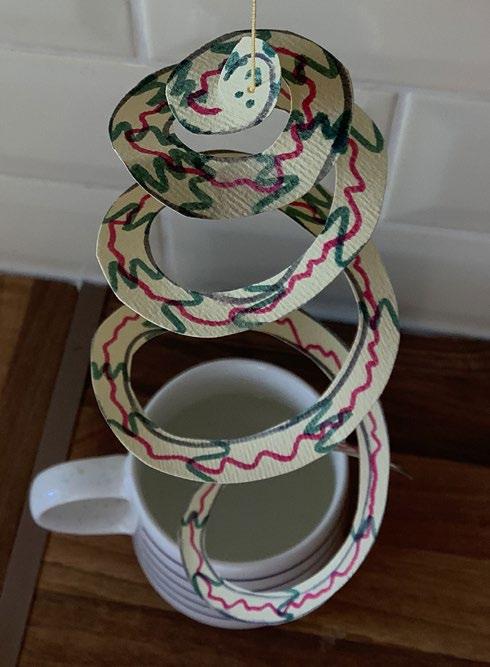
You’ll need:
Paper, scissors, pens, string, a warm drink
What to do:
Cut a circle out of the paper.
Draw a spiral starting from the centre of the paper and decorate it with a face in the middle.
Cut along the spiral, make a small hole in the centre, thread the string through it and secure with a knot.
Hold the snake over your drink and it will start to spin.
Why it works:
Warm air rises. The heat creates a current that spins the spiral.
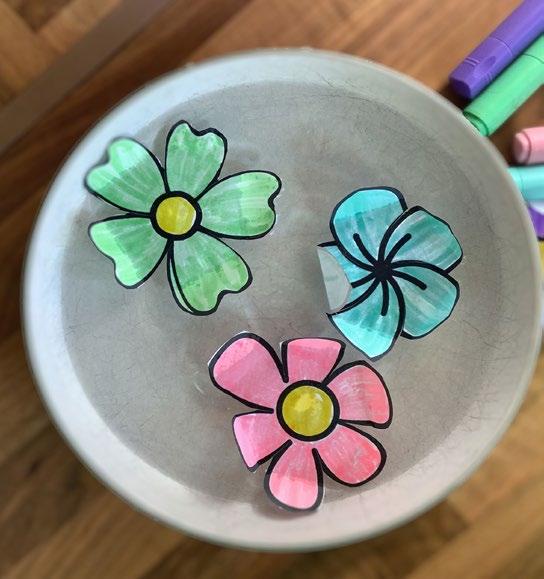
You’ll need:
Paper, scissors, pens, bowl of water
What to do:
Draw, colour in and cut out some simple flowers. Fold the petals in half towards the middle of the flower without overlapping.
Place them carefully on the surface of the water. They slowly open like they are blooming.
Why it works:
The paper absorbs the water which makes its fibres swell up and push the petals open.

You’ll need:
Two identical glasses, water, food colouring, salt, a piece of thick card
What to do:
Fill both glasses with water. Add a few drops of food colouring to one glass and two tablespoons of salt to the other, stirring until dissolved. Top up glasses so they are completely full.
Place the card over the coloured water and carefully flip it upside down, holding the card in place.
Sit this glass on top of the salty one so the rims line up. Gently slide out the card.
The water stays separate - like it’s floating! If you turn the glasses over, they mix together.
Why it works:
Water is less dense than salty water so it will float on top. When you flip them over, the salty water sinks.
Top tip: This also works with warm water in the top glass and cold water in the bottom one.
You’ll need:
A glass, jug, water, spoon, sugar, two food colourings, vegetable oil, vitamin C tablet What to do:
Fill the glass about a quarter full of water and add a food colouring with two tablespoons of sugar.

In the jug, mix a similar amount of water with a different colour.
Using the back of a spoon, pour this liquid as a layer on top of the sugar water.
Fill the rest of the glass with oil to create three layers.
Break up the tablet, drop it into the glass and watch the bubbles rise and fall.
Why it works:
The liquids sit on top of each other because they are different densities. When the tablet dissolves through the oil it releases carbon dioxide bubbles.
Top tip: Try different types of effervescent tablets to get different size bubbles.
Abigail White has twenty-four years of teaching experience and is the founder of the LoveScience franchise, delivering hands-on science activities to over ten thousand children annually. For more easy, low-prep ideas like these, see the FREE online science club at www.lovescience.co.uk/club
By Ross W. Greene
As a parent, you probably feel pretty saturated with guidance on how to handle your child when they behave badly. You might read that children should experience more consequences – in other words, punishment – in response to bad behaviour. In my opinion, this is a good example of the adage: ‘For every problem there is a solution that is simple, neat and wrong.’
We’ve been focused on the wrong thing since... forever You may have been taught that consequences – especially in the form of rewards and punishments – are the answer to misbehaviour. Things like sticker charts, time-outs, grounding and privilege gain and loss. This approach misses the fact that concerning behaviour is almost always a sign of frustration or distress; your child is communicating that they’re finding it difficult to meet an expectation. Let’s call these expectations ‘unsolved problems.’ What parents and caregivers need to understand is that rewards and punishments don’t solve any of them. There is a more effective problem-solving process. Unsolved problems arrive early... concerning behaviour arrives later
Our obsession with behaviour sets us up to be reactive. This explains the popularity and ubiquity of interventions focused on what adults should do once a child is already becoming frustrated or has already exhibited a frustration response: co-regulate, de-escalate, send them to the calming corner or, for teenagers, restrain them, seclude them or, if bad behaviour happens at school, give them a detention, suspend or expel them.

Step one: empathy. This is where caregivers gather information from a child about what’s making it hard for them to meet a particular expectation.
I’m often asked: ‘What make you think the child knows?’ My pat answer: thirty-five years of asking. I’m also frequently asked: ‘What if the child is non- or minimally-speaking?’ The answer: they can always be engaged in the problem-solving process, in one way or another. Meet them where they’re at. Listen to them. Earn back their faith. Tightening the vice grip won’t do it.
Step two: define adult concerns. This step is where caregivers tell a child why they feel it’s important that an expectation be met.
Step three: the invitation. This is where a child and their caregiver agree on a solution that addresses the concerns of both parties. If the solution doesn’t address the concerns of both parties, it’s not going to work. Not for long anyway.

If a child is exhibiting concerning behaviour, there’s an unsolved problem that preceded it. If you identify and solve that problem proactively, it won’t continue to cause a frustration response. This will avoid you getting stuck in the heat of the moment dealing, yet again, with an old unsolved problem in the middle of the grocery store or in the car.
Problems can be solved collaboratively, not unilaterally
Many parents believe it’s their job to ‘divine’ what’s making it hard for their child to meet a particular expectation and to ‘divine’ solutions, which are then imposed. The bad news: we’re wrong a lot. The good news: kids are excellent problem-solving partners, if we’re open to it. Children have critical information to offer and often excellent solutions to suggest, once we adults get over ourselves and come to recognise that there is zero downside to involving kids in solving the problems that are affecting their lives.
Ross W. Greene (Ph.D.) is a clinical psychologist, originator of the evidence-based Collaborative & Proactive Solutions (CPS) model and author of many books including the recently released The Kids Who Aren’t Okay: The Urgent Case for Reimagining Support, Belonging and Hope in Schools.

My latest book is about how to implement collaborative problem solving in schools. Yes, implementing them despite the inertia, even though being an educator has never been harder, despite structures and systems that point in other directions and even though more kids are struggling than ever before. A new normal is needed and business-as-usual isn’t going to cut it.
Parents, if what you’re doing now isn’t working, you too need to think outside the box. And if you’re thinking that power-andcontrol parenting ‘worked’ for you, that’s fine. Your child is not you. Or perhaps your view is that solving problems with your children is passive and permissive. It isn’t. Not even remotely. Are you still an authority figure when you’re solving problems with kids collaboratively and proactively? No question.
Whether you’re a parent or educator, be sure to check out all the FREE resources on the website of the non-profit website Lives in the Balance (www.livesinthebalance.org).
By Ann Magalhaes
Parenting can be emotionally draining. Sleepless nights, poorly children, squabbling siblings and endless to-do lists can leave us feeling alone and unsupported. We worry, we ruminate and we can end up in a cycle where we are tapped out emotionally. While that afternoon espresso might help, finding ways to reduce the emotional load and accompanying exhaustion is more sustainable.
Fill your cup
It’s cliché for a reason: it’s true! To be a positive presence for your child, making time to reset and refill your physical and emotional resources is a vital part of parenting.
Sleep is the obvious way but there are other ways to replenish lost energy. In time-limited days, finding small moments can make a big difference. Consider things that take anywhere from five minutes and are either free or low-cost. It could be sitting quietly in your car for five minutes, closing your eyes and taking some deep breaths; pausing to make a cup of tea and actually sitting quietly to drink it.
Time for yourself is not selfish - it’s an essential part of being ready to lead your family and it’s a great counter to feeling a growing sense of energy-zapping resentment.
Redefining one hundred percent
Sometimes getting up and getting your kids to school in time is the limit of what you can muster. You can only give one hundred percent of what you have on any given day; we all need to get better both at being okay with that and with asking for help!

A lot of emotional exhaustion comes from keeping the never-ending to-do list in our minds (or in our phones). While this might help us, it doesn’t help our kids learn about managing their time and being responsible for their own routines.
When the calendar lives in your phone, it’s likely your kids will ask: ‘what are we doing today?’ or simply wait for you to tell them. And, if they were hoping to do something different, you run the risk of pushback and the accompanying drain of your emotional reservoir.
A wall calendar gives the whole family something tangible to refer to and makes life much more predictable, which is hugely reassuring for children. They love to be able to feel independent, to know what’s coming up, to count days down and to feel a little bit in charge of their own world.
As your kids grow, you can set up for success by including what’s on the calendar as part of your weekly family chats, so everyone is on the same page!

Children get upset, jealous, afraid, angry and all the rest. When they have a physical injury, we help soothe them. With emotional upsets, we often distract or tell them to not to worry or be upset. But in doing this, their feeling doesn’t go away and often gets stronger. The fallout can then be in their behaviour which can add to your emotional exhaustion.
Emotion Coaching is a term coined by John Gottman. It is about guiding children so they feel emotionally soothed and ready to find solutions. So the next time your child doesn’t want to get out of bed, rather than saying: ‘Hurry up, we’re already late ...,’ try: ‘Looks like something is bothering you. Do you want tell me about it?’ This way, you’re inching forward, rather than stalling and building more frustration.
Ann Magalhaes is co-founder of The Parent Team (www.theparent.team), parenting educators offering classes, workshops and private sessions, teaching evidence-based parenting skills and offering parents practical, effective support.

What do your kids do to chill? Maybe they play a game, watch TV, draw or have an extra-long bath. They’re not calling it me-time or self-care so why should you? You’re allowed some fun too!
So, follow their lead and take that walk with a friend, dance to your favourite music, watch an episode of your latest show, read ... and breathe. To feel an almost instant reduction in stress, always remember to focus on your breathing, even if just for fifteen seconds. Try a slow inhale in for a count of four and a long, slow exhale for seven and see if you feel slightly better.
Hugs are another great way to boost feel-good hormones, as is laughter. Unfortunately stress and exhaustion are a normal part of parenthood but we can make time to do things that alleviate the stress, making it easier to cope with all the things that are part of family life.
So, do all those things that replenish your emotional cup because you matter. Full stop.
By Alice Sheriff
For a long time, empathy in leadership was widely misunderstood, often framed as a form of softness that sat in contrast to decisiveness, authority and control. It was acknowledged but rarely prioritised and seldom considered central to how a business should operate. That perception now feels increasingly outdated.
The most effective leaders today are recognised for their ability to understand people; with empathy less a personality trait than a strategic advantage that shapes a business at every level.
For me, that understanding has been shaped as much by motherhood as it has by business. Becoming a mother fundamentally alters how you experience responsibility, pressure and care, sharpening your awareness of other people’s needs in a way that is both instinctive and practical. Mothers become attuned not only to what is being said but to what sits beneath and that awareness carries directly into communication and leadership.
Balancing a business alongside raising children has inevitably influenced how I think about my colleagues, particularly in a team where many are women and many are mothers themselves. Within that dynamic, there is a shared understanding that often goes unspoken: a recognition of the constant negotiation between ambition and responsibility that so many are managing every day. That awareness changes how you lead so you communicate with greater clarity, plan with more intention and create an environment that allows for both flexibility and structure where needed.
This is especially significant in creative industries, where the quality of the work is inseparable from the people producing it. Ideas are shaped not only by skill but by energy, confidence and the willingness to push beyond the expected. In environments where individuals feel managed rather than understood, the tendency is to deliver only what is required. When people feel seen and respected, they are far more likely to take ownership, contribute openly and invest in outcomes in a meaningful way. Empathy is often what enables that shift.
Its importance becomes even clearer when considering psychological safety. If an environment feels overly rigid, people begin to filter themselves and it is often the most instinctive

Empathy in leadership has shifted from being dismissed as softness to a recognised strategic advantage. Today’s most effective leaders are defined not by distance but by their ability to understand people and respond with intention. For founders, empathy shapes communication, decisionmaking and culture at every level. It sharpens awareness, builds trust and enables clarity. It strengthens alignment, reduces friction and creates environments where individuals feel valued, engaged and motivated to contribute beyond expectations while sustaining term performance and resilience.

ideas that are held back first. Empathy creates the conditions in which better ideas can emerge, where individuals engage more fully without hesitation.
None of this suggests that empathy comes at the expense of standards. On the contrary, it requires clarity and intention: the ability to challenge constructively, deliver feedback with care and maintain high expectations while recognising perspective.
There is a persistent misconception that an empathetic approach slows organisations down, yet the opposite is often true. When people feel understood, communication sharpens, misalignment reduces and decisions land more effectively because they are grounded in trust.
From a founder’s perspective, this has a direct impact on how a business evolves. Leadership is not simply about making decisions but about shaping a culture that enables people to do their best work. Motherhood has made that responsibility feel more tangible, reinforcing the importance of building an environment that recognises people as whole individuals rather than defined roles or outputs.
The idea that strong leadership requires emotional distance is gradually falling away, replaced by a clearer understanding of what truly drives performance. At its core, leadership is about people and empathy remains one of the most powerful tools we have to build something that is not only successful but enduring.
Alice Sheriff is founder of Black Rabbit London (www.blackrabbit.london), BR Studios (www.brstudios. london) and co-founder of Jelly & Juice (www.jellyandjuice. uk). Alice has three children under the age of 7.

Motherhood has deepened my understanding of leadership, by revealing what people carry beyond work.
Balancing business and family requires constant negotiation between ambition and responsibility, especially within teams of working mothers. This makes purely transactional leadership impossible. Instead, it encourages clearer communication, thoughtful planning and flexible structures. In creative environments, empathy fosters psychological safety, allowing ideas to surface and people to contribute openly, taking ownership within high performing and human cultures.
By Jen Carr
You’ve booked the holiday and the countdown is on. Next step is making sure it actually feels like a holiday once you’re there! Travelling with kids isn’t about perfection, it’s about smart planning, lowering expectations (just a touch) and creating moments everyone enjoys.
Start with flexible structure
Children thrive on routine but holidays don’t need militarylevel schedules. An overpacked itinerary equals tired kids and stressed parents. Plan one key activity in the morning, keep afternoons flexible and build in downtime.
Food can make or break the day
Hungry kids equals chaos. If you’re eating out, go early to avoid long waits. Mixing eating out with simple meals (picnics, supermarket bits or self-catering) keeps things varied and more affordable. And always have snacks to hand.
Sleep matters more than you think
Late nights can be part of the fun but overtired children derail even the best plans. Pack their nighttime comforters and try to maintain at least some elements of their normal sleep routine, particularly with younger children in a new environment.
Have a ‘bad weather’ plan
Even in peak summer, things don’t always go to plan. Research a couple of indoor options before you travel. Soft play centres, aquariums, museums or even a local shopping centre can save the day.
Keep them entertained (without overthinking it)
A small selection of toys, colouring or a tablet for downtime can go a long way. Travel games, scavenger hunts or letting kids take photos on your phone can also turn ordinary moments into fun ones.

Flying with children can feel daunting but with the right prep, it’s far more manageable than you might expect. Start with seating. Booking seats together in advance avoids last-minute stress. For younger children, window seats can be a winner as they provide built-in entertainment and a clear boundary. Pack a small ‘flight kit’ for each child. Include snacks, a refillable water bottle, headphones and activities such as colouring, sticker books or downloaded shows. Don’t rely on in-flight entertainment working.
Boarding strategy matters. Families are often invited to board early but this isn’t always ideal. If your children are wriggly, letting them burn off energy in the terminal before boarding last can sometimes be better. Our family always boards last! For take-off and landing, snacks, drinks or a dummy can help reduce ear discomfort.
Most importantly, stay calm and flexible. Flights rarely go exactly to plan (again, this is where Airhelp is great) and a relaxed approach makes a huge difference to how smooth things feel.

Make sure everyone gets a say
One of the easiest ways to avoid holiday meltdowns is to involve the children in your plans. A sense of ownership in choosing even what you do for part of the day makes the experience more enjoyable for everyone.
When flying, tools like AirHelp (www.airhelp.co.uk) clarify what airlines are obliged to provide when flights are delayed or cancelled, whether meals, accommodation or even compensation. Having the basics covered and knowing where to turn when things go wrong, makes all the difference.
Remember that family holidays aren’t about doing everything, they’re about enjoying what you do manage. Lower the pressure, embrace the chaos and focus on the memories you’re creating together.
Jen Carr is a family travel expert and founder of The Travel Mum (www.thetravelmum.com) where she shares the best affordable holiday deals for families throughout the week. Jen’s new book Yes You Can Travel With Kids is available now from www.bookshop.org

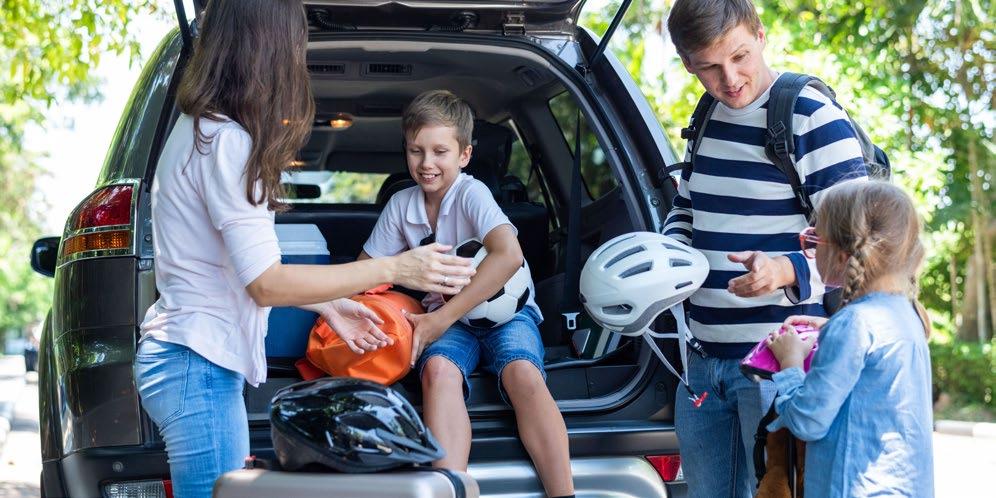
A UK holiday often means a fair bit of time in the car and a smooth journey can set the tone for the entire trip.
If you can, travel outside peak hours or plan your journey around nap times. Early starts or evening drives can make a big difference, especially with younger children.
Build in planned stops at services with play areas or letting off steam spaces. Even a twenty-minute stop can work wonders to reset everyone’s mood.
As ever, preparation is key. Pack snacks, drinks and entertainment. Audiobooks and playlists keep older children engaged, while younger ones will enjoy simple games like I spy.
Avoid overpacking the car to the point where everything is hard to reach. Keep a bag of essentials close by so you’re not constantly unpacking at the side of the road.
And finally, build in some buffer time. Rushing adds stress, whereas a more relaxed approach makes the journey part of the adventure, not just something to get through.
By Angela Youngman
Contemporary adventure playgrounds are becoming more exciting and bringing new levels of fun to children across the UK, offering imaginative adventures and new discoveries. No wonder they get very busy!
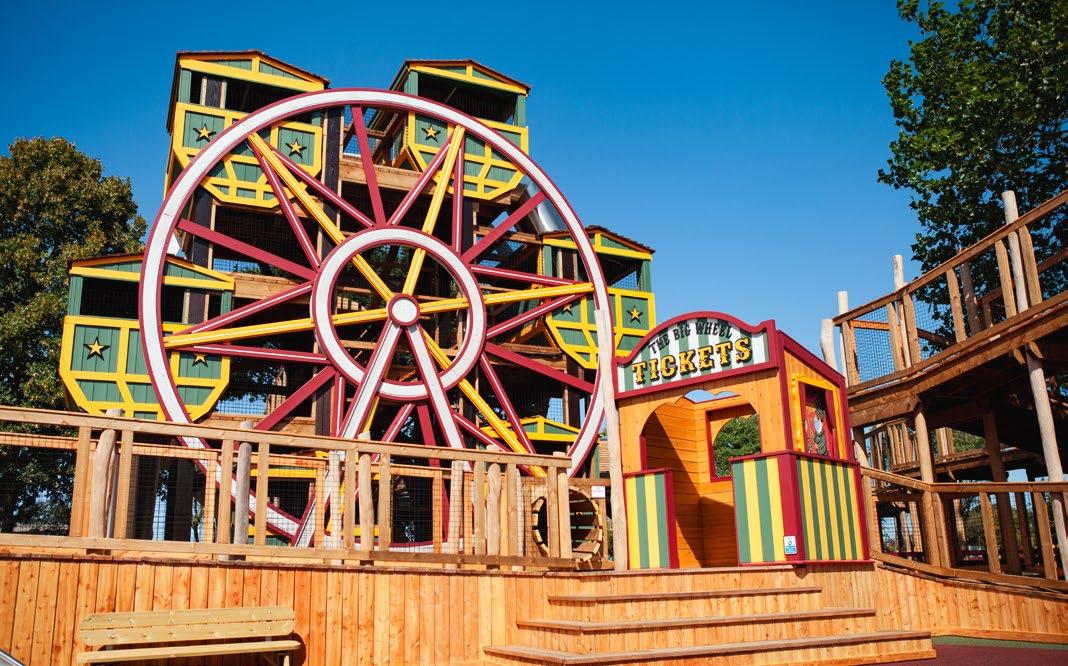
Funfair-themed playground at Thursford in Norfolk
It’s all the fun of the fair at Thursford, with a crazy carousel, Helter Skelter, Ferris wheel and spinning teacups. Climb and clamber in and around fairground stalls including a Hall of Mirrors and Hook-ADuck. Test your steering skills around a track in feet-powered cars. Pour ‘coal’ into a vintage style steam engine and let your imagination roam. Run and dodge through random shoots of water within a giant fountain – will you get soaked? Complete the day by visiting the museum, full of historic steam traction engines, a Venetian Gondola Switchback ride and a Victorian Gallopers carousel. More info at www.thursfordadventureplayfair.com
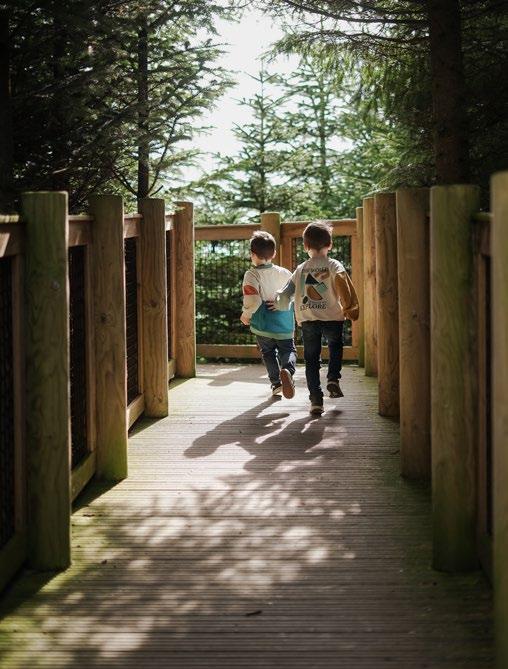
Plotters Forest at Raby Castle Park & Gardens in County Durham
Enter the towering gateway for forest trails, high walkways and towers. Spinning signposts add confusion - who can win the giant memory game? Discuss your conspiracy through the talking tubes but beware the Mischief Mirrors! Even toddlers can join in with their own mini turrets, slides and chalkboard. Stroll through the parkland where deer roam or visit the castle and its restored gardens.
More info at www.raby.co.uk

Nature-themed playground at The Savill Garden
Discover treetop views, climb ropes and zoom through sloping spaces, just like a dormouse, owl or squirrel. The Savill Garden adventure playground, located within Windsor Great Park offers lots of options depending on which creature you choose to follow. Are you small and nimble, bold and brave or simply a natural climber? Other facilities include cafes, gardens and woodland walks. More info at www.windsorgreatpark.co.uk
Castle-themed playground at Belvoir Castle in Leicestershire
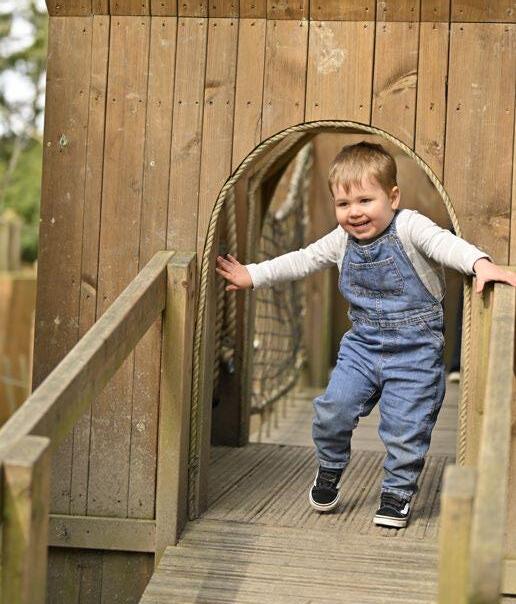
Taking inspiration from nearby Belvoir Castle, huge turrets dominate the playground. Daredevils enjoy the zip line, slides, bridges and climbing frames across multiple heights through the forest. There’s equally challenging but calmer play for toddlers. Complete the day with a walk through the grounds or visit the castle or the Animal Park within the retail village.
More info at www.belvoircastle.com

Lillidorei at Alnwick in Northumberland
Set in a forest of Christmas trees, invisible clans, some good and some troublesome, all dwell under the rule of their king living in his great tower Elfwin Drin. Interact with elves, find their houses and discover their stories. Climb the imposing twenty-six metre tower complete with bridges, ladders, swings and slides as well as navigating through small spaces. The Alnwick Estate offers a complete family day out with an ancient castle famed for its Harry Potter links, extensive gardens and landscaped grounds.
More info at www.lillidoreialnwick.co.uk
Guildenacre at Helmingham Hall in Suffolk
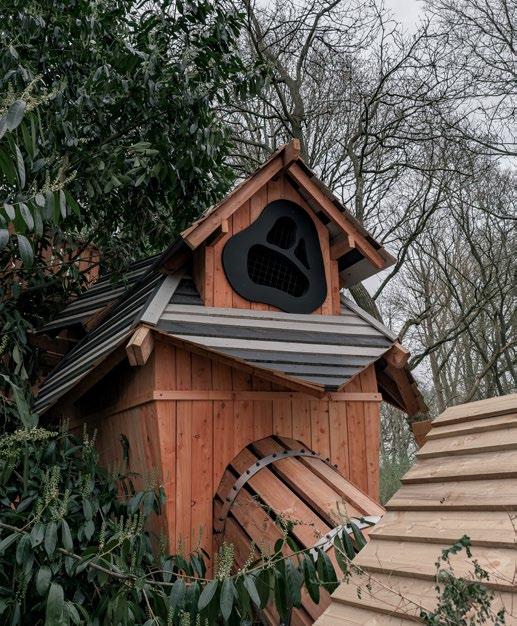
Discover the realms of the guardian animals protecting the woodland with the help of the magical Whispering Oak Tree. Home to Flint the Badger, Flints Hollow is full of tunnels, burrows and lookout spots. Woven high in the trees, Eira the Owl’s Canopy Keep has talking tubes and a stargazing deck. Atlas the Stag guards the Elderglade full of multi-level walkway, bridges and slides. Vixen’s Den encourages explorative play for older children while younger visitors can focus on ground level play trails. Other facilities at Helmingham Hall include a moated garden and woodland walks.
More info at www.helmingham.com