Families Leeds & West Yorkshire Magazine May/June 2026
Leeds & West Yorkshire
Welcome
Early summer is here, bringing with it lots of opportunities for outdoor adventure. Whether that means more walks, bike rides, trips to the park, or maybe getting your hands dirty with National Children’s Gardening Week (page 4) – enjoy!
This product is made of material from well-managed, FSC®-certified forests and other controlled sources.
In this issue we have top tips for learning times tables and why they are still important (page 6) and the role of AI in education (page 10). I vividly remember learning my times tables in primary school; using AI would have been the stuff of science fiction. As parents, we have ring-side seats on change. It’s a privilege. And also mind-boggling!
For those doing exams, I’m sending all the good vibes. And if you fancy a distraction or something to look forward to, check out our what’s on guide (pages 15-16). There are so many fabulous shows and events on in Leeds and West Yorkshire over the next two months.
Life and Work Coaching
ALL AGE CLIMBING: 4 yrs to adult Fun for beginners & more experienced climbers - families can climb together
TOTS CLIMBS: 2½ - 6 yr olds 25 mins; 10 climbers; parent stays ROCK STARS CLIMB CLUB - NEW Every Monday or Wednesday termtime. Limited availability. Fun climb every week
PARTIES: Climb + Homemade pizzas or Sausage hotdogs (minimum 10 kids), weekends or after school
ADULTS: Try our
For information on these and any other enquiries:info@clipnclimbilkley.co.uk 01943 603829 www.clipnclimbilkley.co.uk
Family fun with National Children’s Gardening Week
This summer, why not get involved in National Children’s Gardening week?
Taking place from 23-31 May in the 'warm' half term at the end of May means that pretty much throughout the UK, children can plant all their favourite plants with less fear of weather damage or the need for complicated protective growing.
As well as simply good outdoor fun, gardening has been shown to have many benefits to health and wellbeing including being more physically active and feeling happier and more connected with the natural world. There are many ways to get involved with National Children’s Gardening Week from DIY activities at home, to attending an event at a local garden centre.
More info: www.childrensgardeningweek.co.uk
Clean Air Day 2026
Participating in National Clean Air Day on 18 June allows your family to contribute to the collective effort of improving air quality and creating a healthier environment. Here are some impactful ways to get involved:
Reduce vehicle emissions: Choose alternative modes of transportation such as walking, cycling or using public transport whenever possible.
Support clean energy: Advocate for and support the transition to cleaner energy sources. Use energy-efficient appliances, promote renewable energy options and explore opportunities to reduce energy consumption in your home.
Plant trees and green spaces: Participate in tree-planting initiatives or support organisations that focus on creating and maintaining green spaces in urban areas. Trees act as natural filters, absorbing pollutants and improving air quality.
Raise awareness: Spread the word through social media, local community groups and schools.
Find free resources to help you get involved at www.actionforcleanair.org.uk/campaigns/clean-air-day
Spotlighting carers and calling for action
Foster Care Fortnight is running from 11 to 24 May and is shining a spotlight on foster carers, kinship carers and the wider fostering community under the theme This is Fostering.
Organised by The Fostering Network, the campaign combines local events, social media toolkits, a Foster Walk and an art competition to celebrate positive outcomes and share everyday fostering stories.
Campaigners will use the fortnight to press for practical reforms, highlighting pressures such as low allowances, inconsistent support and carers feeling excluded from decisions about children’s lives.
The initiative frames celebration and campaigning together, urging government and local authorities to commit to sustained funding, better training and clearer support pathways so more children can thrive in stable homes.
Visit www.thefosteringnetwork.org.uk for more information.
Walk to School Week
A generation ago, seventy percent of us walked to school – now it’s less than half. Walk to School Week was started to encourage more kids to get out of the car and walk to school.
Walk to School Week is held from 18 to 22 May and is organised by the UK charity Living Streets to celebrate the health and wellbeing benefits of walking.
Families will be encouraged to walk, cycle, scoot or Park and Stride to see the big differences that can come from small steps; from healthier and happier children who arrive refreshed, fit and ready to learn to less congestion and fewer cars outside the school gates.
Download the Family Walk to School kit, to help make the walk to school work.
Visit www.livingstreets.org.uk/walk-to-school
Band Band family music festival at Lotherton
For summer vibes and festival fun head to Lotherton Hall on Saturday, July 19 for the Baby Band Music Festival. Toddlers, teens and grown-ups can enjoy live music, interactive activity sessions, food and drinks, face painting and more. The main stage will feature acts from highenergy party to swing, soul and folk favourites – and absolutely no nursery rhymes!
Designed with families in mind, the festival is an experience that transcends generations. Expect non-stop smiles and make some magical memories.
Book tickets at www.babyband.co.uk
Ready for summer with Kings Camps
Kings Camps will be running sport and activity camps this summer at Bradford Grammar School (July 20 to August 14) and Hipperholme Grammar School in Halifax (July 27 to 21 August 21).
They offer programmes suitable for five to 17-year-olds and flexible booking of three, four or five days in the week, 8.15am to 5.30pm. With more than 30 sports and activities for children, the mission is to get children active, have fun and learning together. For more information, visit www.kingscamps.org
Little Red Riding Hood
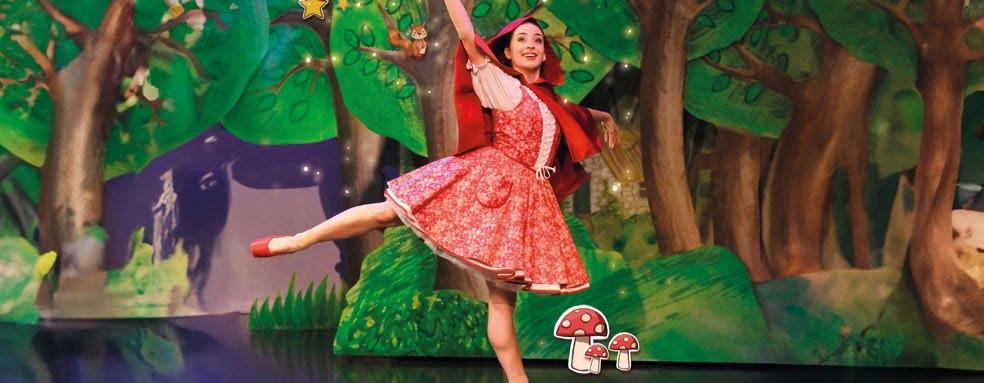
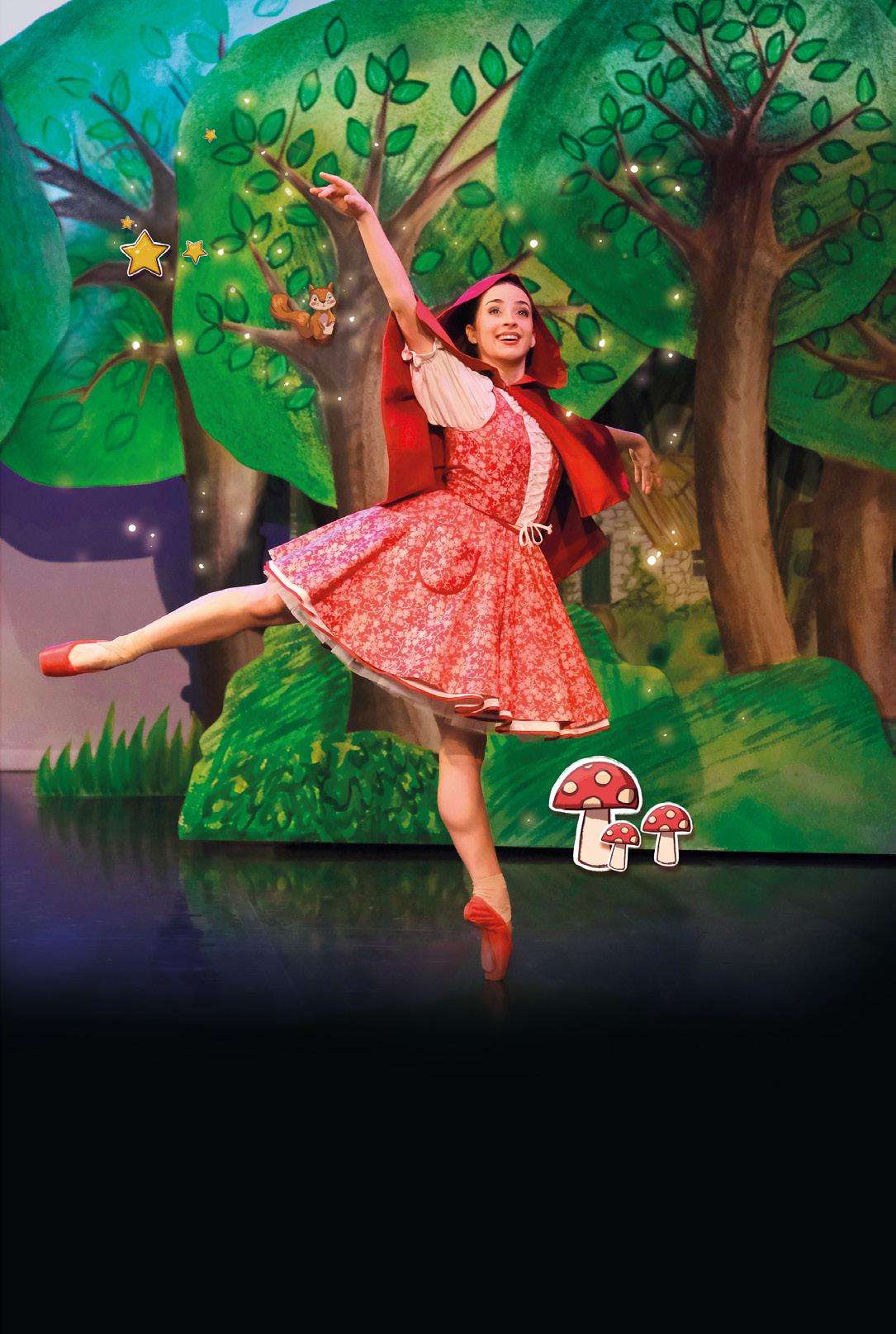
Northern Ballet’s latest retelling of a much-loved fairy tale, Little Red Riding Hood, is heading to Lawrence Batley Theatre in Huddersfield on May 26.
It’s the perfect ballet for little ones. On the way to visit her grandmother, Little Red meets a very hungry wolf in the woods - but is he really as ‘big and bad’ as the stories say? The running time is approximately 40 minutes, and relaxed performances are available.
For more information or to book, visit www.thelbt.org
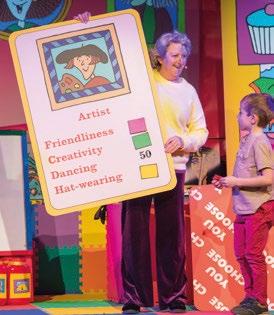
WIN a family ticket to YOU CHOOSE!
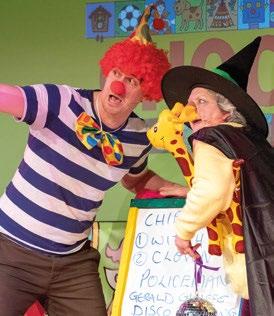
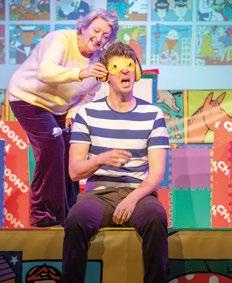
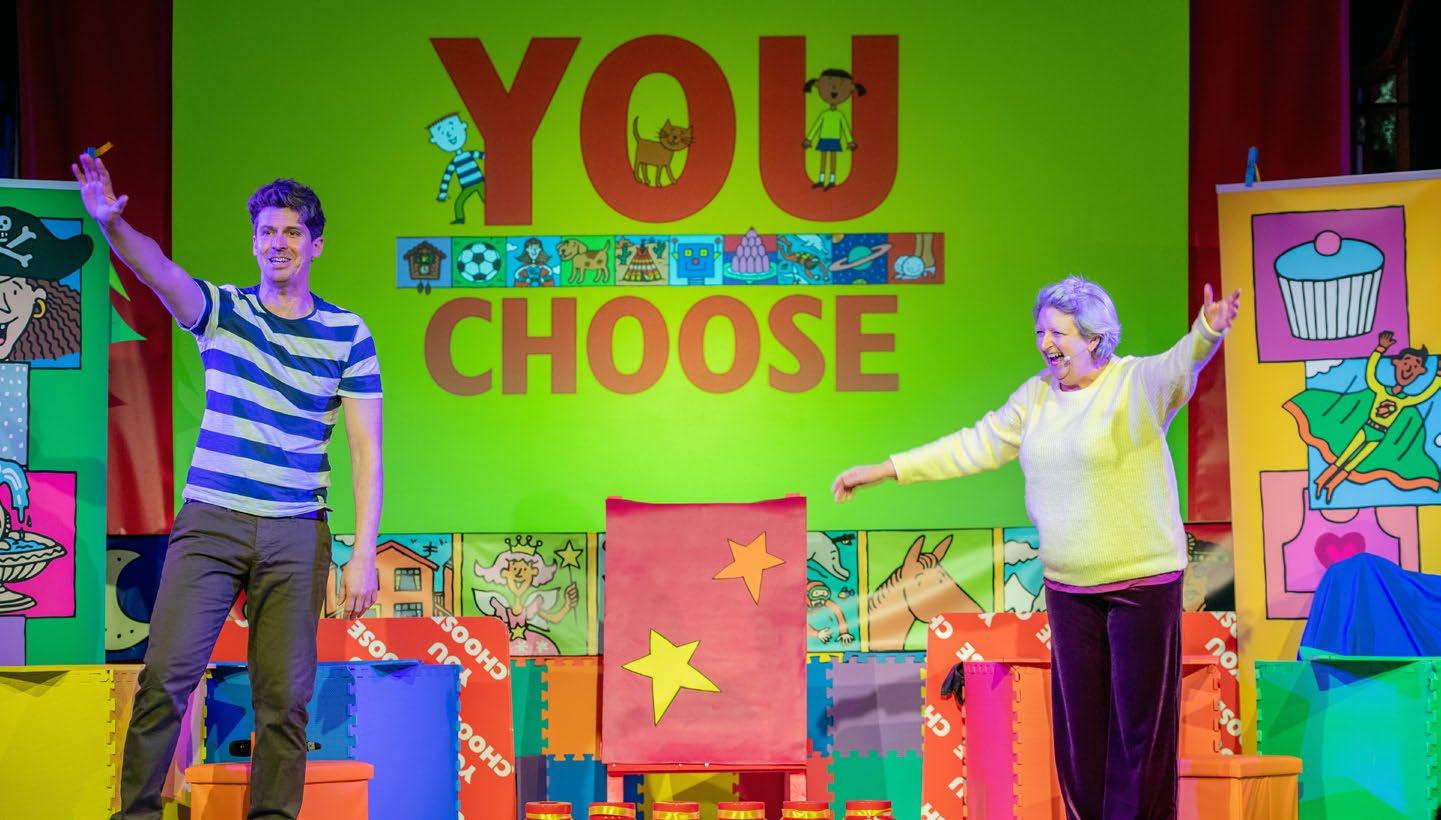
We have four tickets to this awesome show – coming to Carriageworks Theatre in May - to give away.
Based on the brilliant book by Pippa Goodhart and Nick Sharratt, YOU CHOOSE is an interactive musical show for all the family. But in this show, YOU CHOOSE what happens!
Using the picture book as inspiration, and through a series of games and challenges, each show will be unique with different characters, locations, costumes and much more every time! The ticket is for four people, on Thursday, May 28 at 4pm.
Recommended for ages 2-7 and their grown-ups.
To enter the competition, visit www.bit.ly/youchoosecomp. See www.bit.ly/youchoosecomptc for terms and conditions. Closing date: May 18, 2026.
Top tips for learning times tables – and why it’s still important
By Zuzu Jordan
In an age of AI, calculators and voice assistants, it is easy to question whether children still need to memorise times tables. After all, technology can provide an instant answer. However, fluency in multiplication remains one of the most important foundations in mathematics. When children know their times tables automatically, they free up brainpower for reasoning, problem-solving and tackling more complex concepts such as fractions, division and algebra.
In England, children begin exploring multiplication in Key Stage 1 through grouping, sharing and repeated addition. By Year 2, they learn the two, five and ten times tables. In Year 3 and Year 4, they extend this knowledge to all tables up to twelve x twelve, with the national Multiplication Tables Check taken at the end of Year 4. Schools now combine conceptual understanding with recall practice, using arrays (visual models organising objects into equal rows and columns to represent multiplication equations), practical resources and pattern spotting, alongside short, regular retrieval exercises.
Even with AI, instant recall matters. A child who quickly knows that 6 × 8 = 48 can focus on solving a multi-step problem instead of getting stuck at the first calculation. Technology should enhance learning, not replace core knowledge.
One of the most effective ways to support learning is to match practice to your child’s preferred way of learning.
For those who prefer to listen and learn, rhythm and repetition are powerful. Multiplication songs, chants and short rhymes can make facts stick. Creating a simple poem for tricky tables or setting facts to a familiar tune can transform learning into something memorable. Voice assistants such as Alexa or similar devices can also be used to fire quick questions for a fun, quizstyle challenge.
For those who like to learn by doing, try times tables snap cards, scavenger hunts where children shoot a Nerf dart at the correct answer or stick multiplication questions on the stairs so they solve one on each step. Jumping to the correct answer written in chalk outside or building arrays with Lego can also reinforce understanding through action.
For those who are drawn to colour and layout, use coloured multiplication charts, highlight patterns and encourage children
Mathematical language
The language surrounding multiplication is crucial for children’s understanding. Words such as groups of, lots of, times, multiplied by and product, all describe the same operation in different contexts.
Children also need to recognise related vocabulary including factor, multiple and array. Understanding that 3 x 4 means three groups of four helps build conceptual clarity.
Precise mathematical language supports reasoning, problemsolving and explaining answers.
When children confidently use and understand multiplication vocabulary, they develop deeper number sense and stronger mathematical communication skills overall.
to notice number relationships. For example, all multiples of five end in zero or five and the digits in the nine times table follow a clear pattern. Seeing these connections reduces the need to memorise each fact separately.
AI can also be a creative ally. Parents can use AI tools to generate personalised resources that reflect a child’s interests. For a football fan, create times tables cards featuring their favourite team colours or badge alongside multiplication facts. For a child who loves animals or space, design themed quizzes or printable posters. Personal relevance increases engagement.
Whatever the method, short and frequent practice is key. Five focused minutes each day is more effective than a long weekly session. Isolate tricky tables for a few days before mixing them back in.
Encourage children to explain how they know an answer, not just say it.
Most importantly, keep it positive. Confidence builds fluency. Times tables are not about racing against a machine; they are about equipping children with mental tools that will support them throughout their education. In a world shaped by AI, foundational knowledge is what enables children to use technology thoughtfully and independently.
Zuzu is a Mastery for Maths Specialist who has taught primary for eighteen years and is Director of Arnett International. For FREE resources and tips, find her on Instagram @edumate_uk
Times tables grab bag
A well-stocked times table homework grab bag should include quick, practical resources that make learning easy and engaging.
Add a set of flashcards, a small, laminated multiplication chart and a whiteboard with pen for quick practice. Include times table snap cards or simple dice for multiplication games.
A printed list of key facts for focus tables is helpful, along with coloured pens for highlighting patterns.
Finally, add a small reward chart to celebrate effort and consistent progress.
Navigating change with confidence
Life coaching is a rapidly growing phenomenon, used by all sorts of people to work through the challenges of our busy lives. We sat down to find out more with Beth Dawes, a Leeds-based Life and Work Coach and mum of two.
Hi Beth! What exactly do you do as a Life and Work Coach?
I support people through challenges, decisions and transitions. We work together for 2-3 months and the client gets clarity about what they want, realistic plans for change and much more confidence and motivation.
I’ve experienced the transformational impact of coaching, and I love helping others feel that impact too!
What led you to become a coach?
I had coaching through work in my marketing career, and I sought it out personally when I returned after my second maternity leave. I was completely overwhelmed by the pressures of work and kids, so I decided to be proactive and get support.
Coaching was the right fit for me, rather than therapy. I wasn’t experiencing mental health issues like anxiety or depression, but I did need to deeply think through my situation, address some unhelpful thinking patterns, and make concrete plans to get what I wanted out of life.
Honestly, those three months changed how I see the world - they equipped me to handle the inevitable ups and downs with calm and optimism. Coaching gave me the confidence to admit what I really wanted - to be a coach myself!
What do you coach about?
One of my specialties is maternity leave coaching. My ‘Return to Work with Optimism’ programme has 1-2-1 sessions before and after that unique transition, to make it positive and intentional rather than rushed and anxious.
Other clients are feeling at a crossroads in their careers, and coaching helps them figure out their path to a fulfilled, happy future. But there’s so much variety beyond that!
What actually happens in a coaching session?
Most of my coaching happens online, though I also coach for businesses at their offices. In each session, we have a
supportive conversation about an aspect of your overarching goal. I notice how you’re thinking, ask incisive questions and use creative mental exercises to open up new perspectives.
It’s an hour of deep, uninterrupted thinking time - so rare in our busy lives. It’s empowering, enlightening and often fun!
What does it cost?
It’s not true that coaching is only affordable for CEOs. It is an investment, so I remind clients that they are seeking a fulfilling life - what could be a better investment than that?
I also offer a discounted rate for freelancers and employees in lower-paid sectors, because I’d love for everyone to experience coaching.
What one thing do you want people to remember?
That whatever’s worrying you - you don’t have to be stuck there. With focused, supported thinking time, you will find a way forward.
If you’re curious about coaching, you can book a FREE 45-minute discovery call with Beth at bethdawescoaching.com
Clubs & Classes Directory
Cook Stars
Exciting and engaging children’s cookery classes, workshops and parties for 2 to 17 year olds. All the preparation is taken care of, simply turn up and enjoy. Everyone takes home their lovely dish along with a recipe card to cook again at home.
Laura.bewick@cookstars.co.uk
cookstars.co.uk
Music Bugs
Sensory, play-based music and singing classes for babies, toddlers and preschoolers.
The 40 minute sessions provide your children with a lovely opportunity to socialise and develop in a creative and stimulating environment.
Call 0844 5781043
Musicbugs.co.uk
Little Seedlings
A warm, welcoming, open-ended playspace for children from 0-5, offering something for everyone, in addition to structured separate baby sessions.
All sessions include messy and non messy play, hot drinks and support from external providers. lucy@littleseedlingsuk.com littleseedlingsuk.com
Babyballet® Leeds North
Fun and informal dance classes for ages 18 months to 6 years. Through an imaginative syllabus children are taught basic ballet steps but will have fun expressing themselves whilst developing skills such as balance, co-ordination, rhythm and more! Classes in Alwoodley, Yeadon, Bramhope and Rawdon. leedsnorth@babyballet.co.uk
Number Train
Number Train is a fun and interactive introduction to maths for preschool children designed and delivered by an experienced primary maths specialist. With a different theme each week, sessions keep your child engaged with games, action songs, art and craft.
Call 07852 989523 numbertrain@hotmail.com
numbertrain.co.uk
The Calf Shed (home to Moo Music and more!)
The ultimate venue to join classes for your little one from birth. We offer a wide range of classes; our signature Moo Music sessions are entertaining, fun and developmental. Try Baby Moo, Moo Massage, Mini Moo, Mixed Moo or even Messy Moo! Call 07932 501904 www.bookwhen.com/moomusicleeds
Rock Stars Climbing Club
An after-school climb club for ages 4 to 12 years. Book for each half-term block and become a little Rockstar!
Warm-up and exciting climbing challenges, games and activities, plus some free time to climb. Improve ability and confidence.
Call 01943 606829
clipnclimbilkley.co.uk
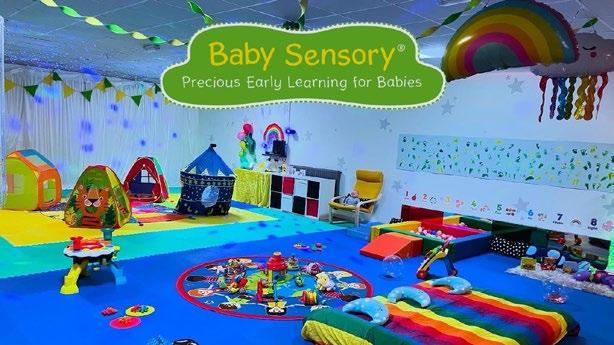
Helping you to make memories with your baby whilst supporting their cognitive development. Baby Sensory stimulates all of the senses with different weekly themes, set in a fantastic Baby Sensory Centre, the perfect place to meet others and have fun with your baby.
Call 07841437205 northleeds@babysensory.co.uk
Leeds & West Yorkshire Your Club or Class Here? Would you like to promote your club or class in our next issue and reach 1,000s of local parents?
Email Claire for more information at editor@familiesleeds.co.uk
Why climbing appeals to children who don’t like team sports
Not every child feels comfortable or confident in team sports. While activities like football, netball, hockey or rugby work brilliantly for some children, others can find them overwhelming, overly competitive, or simply not enjoyable.
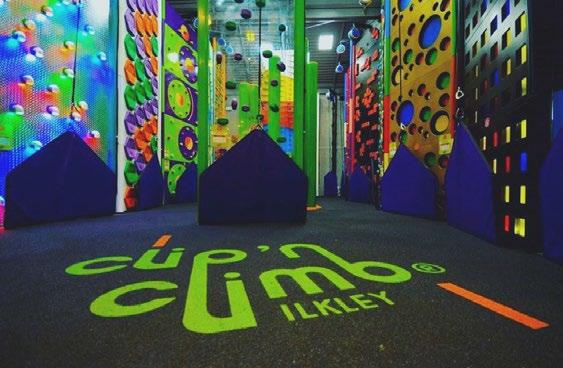
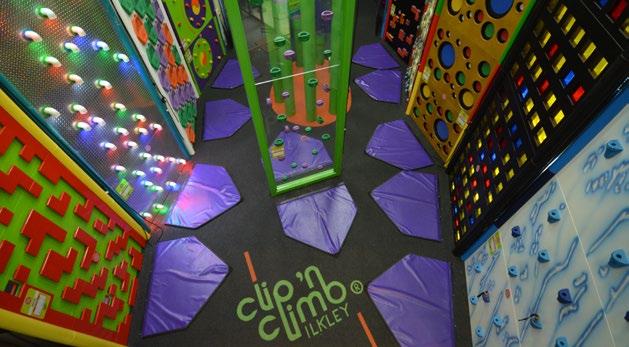
For parents, this can make finding a physical activity their child genuinely wants to take part in feel challenging. Indoor climbing offers a refreshing alternative. With its focus on individual progress, supportive environment and playful approach to movement, facilities like Clip ‘n Climb Ilkley provide a way for children to stay active without the pressures often associated with traditional team sports.
A sport without pressure or competition
One of the biggest reasons indoor climbing appeals to children who don’t enjoy team sports is the absence of direct competition. There are no teams to be picked for, no scorelines to worry about, and no pressure to perform in front of others.
Children can climb at their own pace, choose walls that feel right for them, and take breaks whenever they need. This sense of autonomy can be incredibly reassuring.
Builds confidence through small wins
Indoor climbing naturally breaks activity down into achievable steps, making it ideal for building confidence. Each hold reached, each wall completed, and each new route attempted feels like a personal success. For children who struggle in team sports, where progress can feel less visible or dependent on others, these small wins can be hugely motivating.
Engaging, fun and designed to feel like play
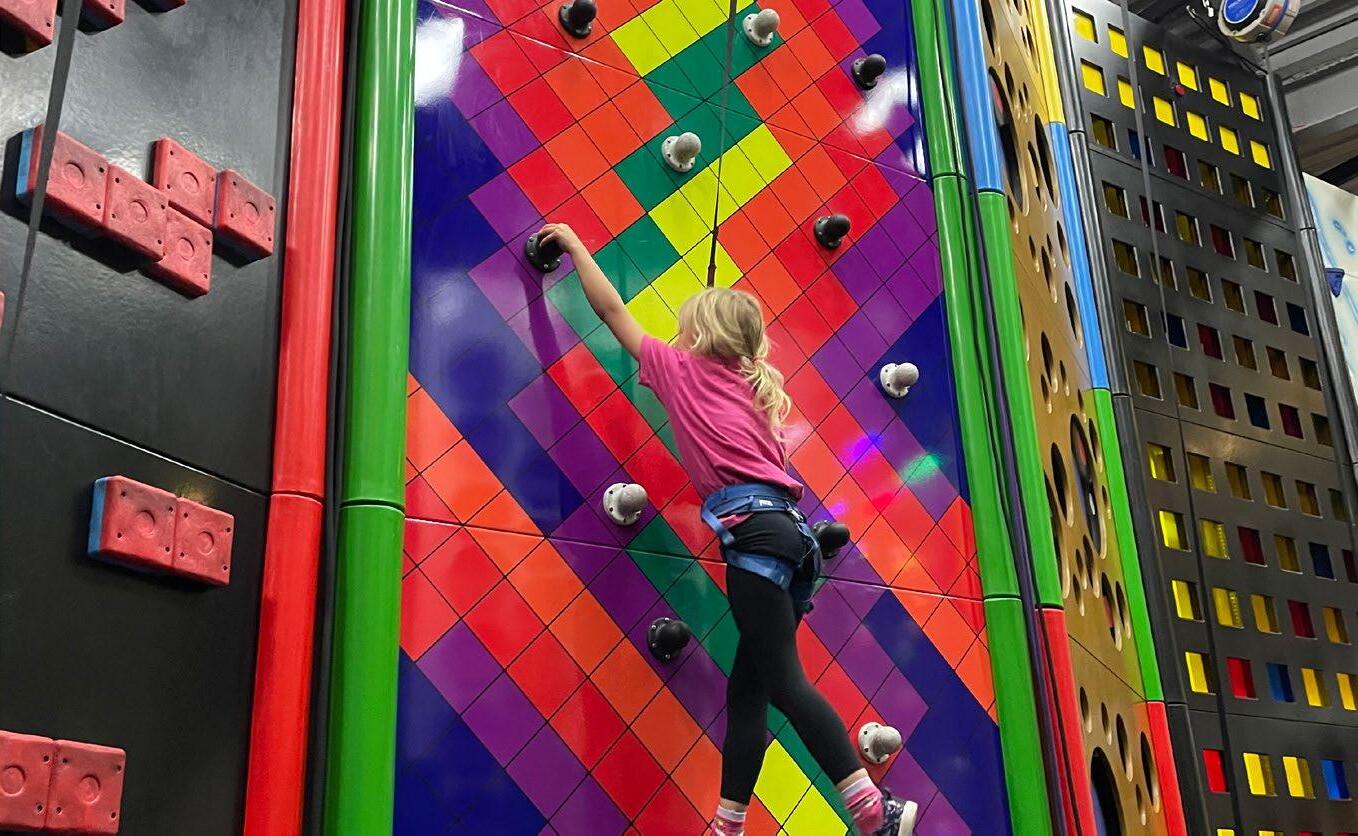
Another key appeal of indoor climbing at Clip ‘n Climb Ilkley is how fun and engaging it feels. With bright colours, imaginative designs, and a variety of themed walls that are intentionally built to feel playful rather than serious.
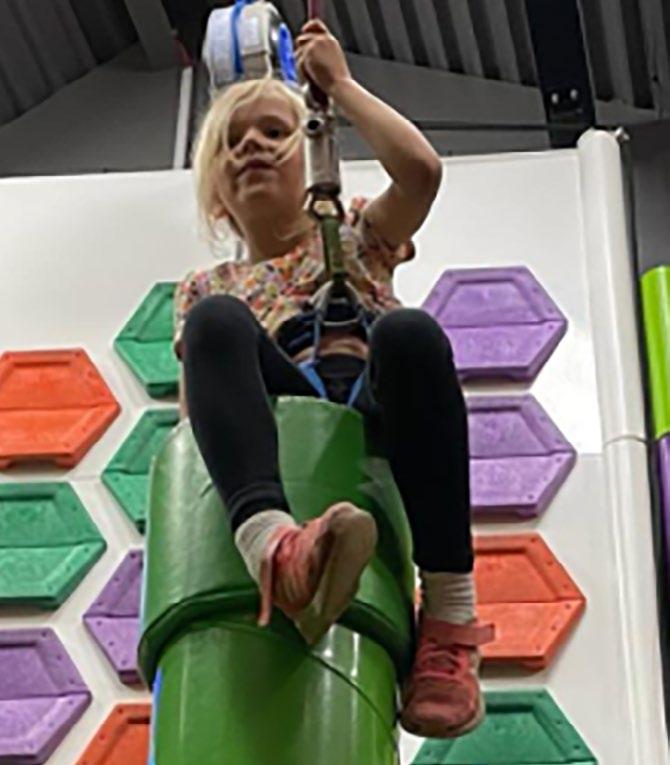
For younger children especially, sessions often feel more like an adventure than a structured sports lesson. The sense of play helps children associate physical activity with enjoyment, rather than pressure to perform.
And if they want a regular club, Clip n Climb Ilkley offers that too
If your child enjoys visiting to Clip ‘n Climb Ilkley, and wants to make it their afterschool thing, then Rock Stars Climb Club on Mondays and Wednesdays after school after perfect. Going every week really does build up their confidence and ability and is even more fun than regular climbs!
www.clipnclimbilkley.co.uk
Little Seedlings on the move!
Little Seedlings, which provides development classes for the families of young children in North Leeds, is moving to a new venue, complete with outdoor garden space.
For six years, the passionate, supportive and flexible team behind Little Seedlings has created a community that nurtures the journey of parenthood.
Now, the Little Seedlings Hub is moving across the road, to the Methodist Centre, Town Street, Chapel Allerton from September. This move will see the continuation of all the normal Open Play, Baby Play and Mini Hub sessions, in a ground floor play space, with the addition of a new outdoor garden space for play.
Little Seedlings sessions run from birth right up to five years old, with both structured, monthly blocks for babies, and more relaxed pay-as-you-go sessions, and even the option of walkins available for flexibility, to decide on the day of play.
With this move, you can expect to see a non-messy room, a designated messy play room, with monthly focuses and projects and an outdoor garden filled with natural messy and non-messy play to suit every family.
Follow Little Seedlings on Instagram and Facebook to keep up to date with the move.
www.littleseedlingsuk.com
Why AI in education is about the learner, not the technology
By Stephanie Holt & Alexander Harris
In all the buzz about AI in education, it feels like there’s a race to acquire the flashiest edtech with some schools proudly announcing their use of AI platforms, chatbot tutors or algorithmic grading tools. Yet as we enter a seismic shift in how students engage with knowledge, the truth is that AI in education is less about the technology and all about how students learn to use it.
The focus must shift from learning to use AI, to using AI for learning.
At its best, AI should function like a compass, not a crutch. When students use generative AI responsibly to draft essays, analyse historical trends or solve mathematical problems, they’re not outsourcing thinking. They’re enhancing it.
The key lies in guided, purposeful use. Research reveals that students given structured support significantly out-perform peers who use AI unguided or uncritically (Holt & Harris, 2024). When incorporated into a structured learning journey, AI prompts deeper enquiry rather than being a shortcut.
The Traffic Light System: teaching ethical and effective use
The Traffic Light System categorises AI use into three bands, providing clarity for students and teachers alike in the difference between collaboration and collusion:
Green. Enhances learning without replacing it eg brainstorming prompts, language practice, data analysis.
Amber. Risks displacing the learning process and needs monitoring eg using AI to paraphrase or summarise without reflection.
Avoiding a two-tier AI system
Another urgent issue is equity. If AI tools are only accessible to students whose families can afford subscriptions or devices, we risk deepening existing achievement gaps. We recommend school-led solutions: centralised subscriptions, in-school access and parent workshops to ensure that AI becomes a bridge, not a barrier.
Education leaders must ask: are we equipping all students, not just the privileged few, to harness AI responsibly and reflectively?
Assessing the learner, not the output
Traditional assessment often focuses on the final product. But when AI is in the mix, educators need to shift the lens. Did the student understand how to refine the AI output? Did they cross-check the facts? Did they integrate their voice, their argument, their evidence?
To support this shift, assessments shouldn’t be about just checking AI usage; they should be about checking learning through AI usage. Quality over quantity.
Red. Replaces learning or violates academic integrity eg full AIgenerated assignments.
AI is a method of teaching, not a product We need to frame AI as a way of teaching students to explore possibility. Learning objectives drive AI use, not the other way around. The most meaningful AI integration happens when:
• Teachers ask not just ‘what did you write?’ but ‘how did AI shape your thinking?’
• Students are encouraged to interrogate AI outputs, question accuracy and add their own insights, developing digital and critical literacy simultaneously.
Assessment isn’t just about measuring what students know. It’s about helping them learn through the process of enquiry, revision and reflection - with AI as a thinking partner, not a ghostwriter.
Stephanie Holt is Director of Teaching and Learning, DSB International School, India and Alexander Harris is Deputy Head Academic, Sanford International School, Ethiopia. They are co-authors of AI for Learning: 101 Assessments K-12 Unlocking Mastery of AI (Belgravia Press, 2024).
Cultivating AI fluency, not just compliance
Ultimately, schools need to prepare students not just to use AI but to thrive in a world shaped by it. This necessitates a fundamental change in how we define success in school.
We must begin by asking students if they can:
Show what they’ve learned with AI; Reflect on how they got there; Demonstrate the ability to distinguish AI’s voice from their own and use that difference to grow.
That’s what fluency looks like. It starts not with the tech but with the trust we build - in our learners’ ability to engage, critique, create and reflect.
Schools that treat AI as an add-on will never unlock its power. Schools that treat AI as a thinking partner, a means to deepen learning, will transform education. Not because of the tools but because of the thinkers they help shape.
Let’s teach our students to lead - not follow - their tools.
Holiday day camp essentials
By Tanni Haas
You’ve found a great camp for your kids, signed them up and are getting them ready for all the fun ahead. But what should you pack for them every day? Drawing on my own experiences as a seasoned parent of day campers, I’ve compiled the following list of things.
Bag
Buy a lightweight yet durable and roomy bag pack, made of fabric or nylon. It’s useful if it has many compartments, so that you can put different items in different places, including an outside pocket for the water bottle.
Hat, sunglasses and sunscreen
If they’re spending much or all of the day outside, shades and a hat will keep them cool and comfortable. Teach your kids how to apply sunscreen properly without getting it in their eyes, ears or mouth. Apply it in the morning before they leave for camp and encourage them to reapply during the day.
Food and snacks
Pack one or two sandwiches and some healthy snacks in case they get hungry before and/or after lunch. Put all the food in a thermal bag so that it stays cool and fresh all day.
Hand sanitiser and wet wipes
Let’s face it: kids get dirty, especially if they’re spending a lot of time outside. Pack some hand sanitiser and wet wipes and instruct them on how to use them properly and frequently.
Plastic or Ziploc bags
Pack a couple of plastic bags or, even better, Ziploc bags - great for any wet items like swimsuits or towels.
Prescription medication
If your kids are young, give the camp organisers any prescription medication they need. Older kids may be happy to carry the medication themselves.
Swimming gear
Many day camps include trips to the pool or other ‘wet’ activities. Always have swimming gear packed.
Free breakfast clubs expand
Water bottle
Pack a reusable water bottle, ideally in an easily accessible compartment. Put the bottle in the freezer overnight so that it stays cool.
Hoody or light rain jacket
It can get chilly – and, of course, it may rain. Pack a lightweight windbreaker or a hoody, depending on the weather forecast.
… and a little surprise
Put a little surprise item (a favourite snack or an I-love-you note) in a place where you know your kids will look, like in their lunch box. It’ll put a smile on their faces and ensure they have a great day.
Tanni Haas, Ph.D. is a Professor in the Department of Communication Arts, Sciences and Disorders at The City University of New York.
Try family camp this year
Universal free breakfast clubs are expanding across England. Another 500 schools joined the scheme in April meaning more than 1,250 schools are now offering free morning meals, benefiting an estimated 300,000 children.
The government says a further 1,500 schools will join in September, bringing the total to around 2,750 and extending provision to roughly 680,000 children by the autumn.
The expansion of free breakfast clubs aims to reduce stigma around targeted support, giving children a calmer start to the day and saving families up to £450 a year through reduced morning costs.
Early evaluations point to benefits for attendance, behaviour and attainment.
As the scheme rolls out in May, campaigners say the priority is ensuring schools have the staff, space and funding to scale up without compromising quality.
Family camps typically offer residential accommodation in cabins or tents, with sports, crafts or outdoor activities for all; including aunts and uncles, cousins and grandparents too! They’re great places to wake up together to a day of fun activities with no tight schedules, worries or distractions. What to expect
A wide range of activities for all interests and abilities and a no-electronic device policy - perfect for focusing on enjoying each other’s company. Making it work: top tips
Plan your extended family break together as a group. Think about the best time for all of you to go away and talk about the kinds of activities that you all would enjoy. Agree ahead on how mealtime shopping and prepping will work.
Factor in ‘me’ time for family members who are less gung-ho or need a quieter adult break.
Finally, look for a family camp that you can all afford and get to without too much trouble.
Cliffe House Day Nurseries
Bramhope
Baildon
*NEW* Adel
Horsforth
Cliffe House Nurseries – a home from home for every child
Cliffe House Day Nursery Ltd is a well-established provider with seven thriving settings, proudly supporting families since 1998.
The early years of a child’s life are the most important for their development, laying the foundations for lifelong learning, wellbeing, and success. Cliffe House understands the vital role it plays not only in children’s education and care, but also in supporting families during these crucial years.
Its ethos is built around creating a home from home environment, where children feel secure, valued and happy. The Cliffe House team believes that when children feel emotionally secure and nurtured, they are able to explore, learn and develop to their full potential. Strong, positive relationships between children, practitioners, and families are at the heart of everything, ensuring that every child is supported as an individual.
Cliffe House recognises that early years settings are an extension of the home and work closely with parents and carers to provide consistent care, routines and expectations that support each child’s wellbeing and development. By building these strong partnerships, it ensures children receive the best possible start in life.
Cliffe House Nurseries continues to grow, offering high-quality early years provision across West Yorkshire. Alongside the brand-new nursery in Adel, it also has established nurseries in Leeds, including Horsforth, Bramhope, Pudsey and Burley-inWharfedale. In addition, it provides an Out of School Club in Horsforth, supporting children beyond the school day.
Pudsey Shipley
Burley-inWharfedale
House’s commitment to families also extends into Bradford, where it operates nurseries in Shipley and Baildon, ensuring that more children have access to nurturing, highquality early years care in their local communities.
Across all of these settings, the team remain focused on providing safe, stimulating, and inclusive environments where children are encouraged to grow in confidence, develop independence, and build the skills they need for the future. Through a balance of play, learning and care, it aims to give every child the very best start in life.
Cliffe House doesn’t just provide childcare - it creates a caring community where children feel at home, families feel supported, and every child is given the opportunity to thrive.
www.cliffehousedaynurseries.co.uk
Cliffe House Nursery Open Day
Saturday May 30
To celebrate the opening of its newest setting, Cliffe House Day Nursery is holding an Open Day at its Adel venue on Saturday, May 30, from 9am to 12 noon.
The Adel nursery is located in a beautiful stone building full of character, conveniently situated in the heart of the village and easily accessible for families. It is open daily from 7.30am to 6pm, offering flexible, high-quality childcare to suit all needs.
Go along and explore, meet the friendly team and discover how Cliffe House can support your child's early years journey.
Cliffe
Calmer bedtimes for toddlers and preschoolers
By Helen Davies
Bedtime during the toddler and pre-school years can feel like a completely different world compared to the days of getting your baby sleep. Even children who previously settled well can suddenly need ‘one more story,’ ‘one more cuddle’ or ‘one more drink’ the very moment the lights go out. Although it can feel frustrating or confusing for parents, rest assured most of these behaviours are rooted in normal development.
Between 18 months and age 5, children go through huge leaps in language and imagination development, independence, emotional awareness and physical ability. With all this progress comes new bedtime challenges. Many toddlers discover the power of ‘no’ while pre-schoolers become highly conversational and imaginative. Separation anxiety often reappears and a child who was once content to settle independently may suddenly now need a parent close by.
Much of this behaviour comes down to emotional regulation. Young children are still learning how to manage big feelings and bedtime is the moment the day slows down enough for everything to catch up with them. They may ask for extra cuddles not because they are being ‘difficult’ but because connection helps them switch off and feel safe enough to fall asleep. Sleep pressure also changes as children grow, meaning naps may need adjusting or bedtime may need shifting slightly later.
Parents can support calmer evenings by creating a consistent wind-down routine that meets both the child’s need for connection and their own need for boundaries. Predictability
Why little ones resist bedtime
Many parents assume bedtime battles are behavioural but they are usually developmental. Around 18 months of age, children gain a new sense of autonomy and begin asserting independence. Their use of the words ‘no,’ ‘my turn’ and ‘I do it’ are about exploring control in the safest place they know.
At the same time, emotional regulation is still developing. Young children cannot simply switch off after a busy day. They rely heavily on connection with parents to feel secure enough to settle. Asking for another cuddle or story is often their way of topping up closeness rather than manipulating the situation.
Pre-schoolers add another layer: imagination. This is the age of shadows, monsters and busy little minds. As their world expands, so can their worries and bedtime becomes a moment when those thoughts surface.
Understanding these developmental drivers helps parents respond calmly. With firm but gentle boundaries, a steady routine and a few minutes of meaningful one-to-one connection before bed, children feel more secure and settle more easily.
helps children feel safe, while gentle limits prevent bedtime from stretching indefinitely. Responding calmly, keeping routines simple and using language that’s clear and warm can make a noticeable difference.
It is also helpful to understand that bedtime delays, protests and multiple ‘get ups’ are often a sign of a child seeking reassurance or testing where the limits are. Neither is a sign of poor parenting. With a steady routine, plenty of connection and realistic expectations, most families find the bedtime wobbles pass.
The toddler and pre-school years are busy, emotional and full of growth. When parents understand the ‘why’ behind bedtime behaviour, evenings become easier to navigate and far less stressful. With calm consistency and the right support, bedtime can become a peaceful part of the day again.
Helen Davies runs Essential Parenting (www.essentialparenting.co.uk), a trusted, private health visiting service providing expert support with sleep, behaviour and early childhood development.
Practical strategies for calmer evenings
A smoother bedtime routine starts long before you switch off the lights. Young children feel safest when they know what comes next, so introduce a consistent wind-down sequence and stick to it. Think bath (optional), pyjamas, books, cuddles, sleep. Avoid adding too many steps, as this can make it harder for both child and parent.
Connection is a key ingredient. Even five minutes of focused, one-to-one time before bed helps reduce the bedtime clinginess many families experience. This might be a cuddle, a chat about their day or looking at a book together.
Set clear limits around the common ‘stalling’ tactics. Let your child know you will answer one more question or read one extra page, then gently stick to it. A calm and predictable response prevents bedtime from spiralling. Finally, check sleep timings. If your child is resisting bedtime, waking in the night or taking a long time to fall asleep, they may need slight adjustments to nap lengths or bedtime itself. Small shifts often make a big difference.
What's On
We took every care in preparing these entries but sometimes events are cancelled or times change. Please double check with the organiser to avoid disappointment.
REGULAR EVENTS
Ongoing
Museums for Play and Growth at Bradford Museums and Galleries
FREE drop-in sessions for children 0–5 years old, held on: First Saturday of the month in Bradford Industrial Museum, second Friday of the month in Cartwright Hall, third Wednesday of the month in Bolling Hall and fourth Thursday of the month in Cliffe Castle.
Daily
Combats and Shows at the Royal Armouries Museum
Regular, FREE demonstrations and shows by the expert live interpretation team – check website for details.
Saturdays
Family Fun at Wakefield Museum, Castleford Museum and Pontefract Museum
Come rain or shine enjoy FREE fun crafts every Saturday. With different themed activities each week. All activities and materials are provided and they’ll even tidy up afterwards! 11am to 3pm.
Saturdays
Rory’s Saturday Club at Leeds City Museum
Looking for something creative to do with kids in the city? Go along to the museum for craft sessions for families with children of all ages. Drop-in. Pay what you can.
Second Saturday of each month
Sparky Saturdays at the M&S Archive Fun, FREE and for everyone! The interactive exhibition includes dressing up rails, a Penny Bazaar shop and mini-cinema. You can have a go at a hands-on activity and try the exhibition trails. Activities run from 10am to 4pm. There’s FREE fruit, biscuits and drinks and you can use the indoor picnic space to eat your own food.
Saturdays and Sundays
Hyde & Seek at Hyde Park Picture House
From Pixar to Ponyo, Laika to The Lion King, see family-friendly screenings of magical movies for film-fans of all ages. Many are Pay What You Can, allowing you to pay whatever you can afford. On Saturdays, enjoy FREE crafts from 10.30am before the screening and every Sunday at 11am the Hyde & Seek screening is autism-friendly.
Sundays Junior Parkrun at 15 parks across Leeds and West Yorkshire Fun, 2k run for 4 to 14-year-olds and their families. See online for details. FREE event. Pre-register.
Sundays Family Workshops at the Hepworth Wakefield Sundays during term-time and Tuesdays, Wednesdays and Thursdays during Wakefield school holidays. Get creative as a family with exhibition-inspired activities in the galleries and learning studios. Suitable for families with children aged 2 to 12.
Wednesdays in May and June (excl May 27)
Wacky Wednesdays at the National Coal Mining Museum
Explore a fun weekly theme through interactive storytelling, activities, singing and crafts. For children under 5 years only. Booking is essential to guarantee a place. Children must be accompanied.
Fridays
Tiny Tigers at Leeds City Museum
Fun, messy craft sessions for under 5s and their carers. Babies, toddlers and pre-schoolers welcome.
May 2
Bat Walk at Temple Newsam
Family friendly walk to detect bats on the estate. A half-hour natural history slide talk followed by a quiz and some videos. After an introduction to the use of Bat detectors there is a guided walk approximately two miles in length. Booking essential.
May 3
Caphouse Creators at the National Coal Mining Museum
Woodworking. Use traditional joinery tools to handcraft a classic game of quoits, once a favourite in mining villages and galas. Learn timehonoured techniques while creating your own playable piece of heritage rooted in community and craft. Perfect for ages 7-12.
May 4 to 31
Historic Hedgehogs Trail at Leeds City Museum
The popular hedgehog trail is back, with a historical makeover. See which historic hog characters you can discover together at the museum. Look high and low for hedgehogs from different periods of history. Pick up a trail sheet at the museum. Museum closed on Mondays (except bank holidays).
May 5 to 7
The Gruffalo at Lawrence Batley Theatre
Tall Stories’ much-loved magical, musical adaptation of the classic picture book by Julia Donaldson and Axel Scheffler returns by popular demand – celebrating the show’s 25th anniversary.
May 13
Toddler Raves at Leeds City Museum
Join Boomchikkaboom for singing, pom poms, shakers, dance battles and parachute mayhem. Welcoming good vibes and big energy. For 0-4-year-olds.
May 14
Home Educator Musical Museum Day at Leeds City Museum
A creative music day at the museum for home education families aged 5+. Booking essential.
May 15 and 16
A Squash and a Squeeze at Leeds Playhouse
Step into the magical world of A Squash and a Squeeze live on stage for the first time. Based on the original book by Julia Donaldson and Axel Scheffler.
May 19 to 23
The Boy at the Back of the Class at the Alhambra Theatre
After delighting audiences across the country, the smash-hit, joyful play based on the best-selling novel is back with a celebration of friendship, kindness and compassion.
May 19 to June 4
Makebeth at Leeds Playhouse
A playful, interactive, craft-along cardboard retelling of Shakespeare’s Macbeth for families and young audiences aged 7-11.
May 23 to 31
Love Your Zoo Week at Lotherton
Explore the animal trail, do hands-on quizzes and activities - find out what role you can play in conserving our natural world. Look out for keepers who can help you learn about wildlife and get creative in the zoo-themed crafts corner.
May 23 to 31
Woolly Good May Half Term at Leeds Industrial Museum
Spin your half term into something wool-derful this May. Find a new felt exhibition Untangled a new fungi trail. There'll be wet felting activities on Tuesday, Wednesday and Thursday, plus Mystery Matinees.
May 23 to 31
Bugs and Beasties Half Term at Harewood Explore Harewood’s stunning Gardens and Grounds with a Mini Beast Safari, classic lawn games including chess, Jenga and croquet, plus create a Bug Hotel to help wildlife. Young adventurers can also enjoy the Adventure Playground, Woodland Wonderland willow mazes and the Sylvascope Treehouse. Inside the House, join the Collections Care team as they talk about the bad bugs that can be found indoors and discover how conservation helps protect the collection. Families can also enjoy handson wildlife crafts, along with a spot the bug trail around the House.
May 23 to 31
May Half Term: Find Your Happy! At Temple Newsam
Step into a world of joy and creativity at Temple Newsam. Get crafty, embark on a fun-filled trail around the house and enjoy a variety of interactive experiences that are guaranteed to put a smile on your face. Head to the farm to see how the Springtime Babies are getting on and burn off some steam in the Play Barn. Crafts, activities, and trails included in normal admission fees. During normal opening hours.
May 23 to 31
Gnomes Sweet Gnome at Abbey House Museum
Cheeky gnomes have escaped and are hiding all over the Victorian Streets, grab a trail sheet and see who you can find. Join craft activities and see if you can spot all the gnome doors.
May 25 to 29
Deer Tractor Tours at Lotherton
Experience a herd of red deer up close with a Lotherton tractor trailer tour. Pre-booking highly recommended.
May 25
Natural History Museum Presents Dinosaurs Live! At Carriageworks Theatre
For the first time since 1881, the home of dinosaurs, London’s Natural History Museum, is going on tour. Watch life-like dinosaurs right on stage.
May 26
K-POP - All Stars at the Alhambra Theatre
Ride the global K-pop wave with K-POP All Stars - the explosive live celebration of the music, the artists, and the culture taking over the world.
May 26
Little Red Riding Hood at Lawrence Batley Theatre
A reimagining of the much-loved fairy tale, this is the perfect opportunity for little ones to enjoy the magic of live ballet, music, and theatre. With sell-out performances and a series of hugely successful CBeebies TV adaptations, Northern Ballet’s productions for children continue to delight audiences year after year. Ages 3+.
May 26 to 28
Everyday Heroes - May Half Term at Leeds Discovery Centre
Celebrate everyday heroes in this workshop and tour dedicated to the people who help us. Join a store tour, a self-directed craft and the opportunity to interact with historical objects representing the people who help, then and now. There are two sessions throughout the day, from 10-12pm, then 1-3pm, with 3-3:30pm reserved for SEND families.
May 26 to 28
Woolly Wonders - Wet Felting at Leeds Industrial Museum
Kick off Wool Festival week with woolly fun wet felting for all the family. Get creative as you learn to wet felt in what was once the world's largest woollen mill. Experiment with colour and texture to create a woolly beautiful work to take home.
May 26
Spiky Singing With A Side of Silliness at Leeds City Museum
Join singer-songwriter Nicky Bray for these familyfriendly interactive singing storytelling sessions.
May 27
Spiky Crafts at Leeds City Museum
Celebrating all things spiky, from hedgehogs and porcupines to armoured dinosaurs. Drop-in between 10am-12pm or 1pm-3pm.
May 27
Sensory Room for SEND Families at Leeds City Museum
Pop-up sensory room for families who might find a visit to the museum overwhelming. Pop-up sensory room for families who might find a visit to the museum overwhelming. Booking required.
May 27
Colosseum of Chaos at Carriageworks Theatre
Blending, physical comedy, and audience participation, the show plunges audiences into a gladiatorial game of silly challenges, slapstick battles, and spontaneous fun, suitable for all ages.
May 27 and 28
Bean Planting at Temple Newsam
This friendly drop-in session offers children and adults the chance to learn how to plant bean seeds whilst enjoying time together outdoors in the Walled Garden. Free, booking not required.
May 27 and 29
Half Term Store Tours at Leeds Discovery Centre
Behind the scenes tours of the Leeds Museums and Galleries collection store. Home to over 1.3 million objects. Booking required.
May 27 to 30
Malory Towers at Leeds Playhouse
Emma Rice Company’s Malory Towers is touring the UK again. Get ready for high jinks, high drama and high spirits, all set to sensational live music.
May 27 and 30
Paint, Patterns and People Workshop at the National Coal Mining Museum
Join artists Lenny and Whale for a fun painting workshop – where you’ll experiment and let your imagination run wild. Create your own colourful character to add to the sculptural village that will be exhibited at the Museum in October 2026, inspired by sculptor Betty Miller’s ‘My Village’.
May 28 and 29
You Choose at Carriageworks Theatre
Based on the brilliant book by Pippa Goodhart and Nick Sharratt, Nonsense Room Productions bring you an interactive musical show for all the family. In this show – YOU CHOOSE what happens!
JUNE
June 3
SculptED: What is sculpture made from? At Leeds Art Gallery
A series of fun and engaging workshops. For young people aged 5-12 who are currently educated outside of school and looking for an inspiring way to learn.
June 3, 4 and 5
Home Education Workshops (7-12 yrs) at the National Coal Mining Museum Science: Complete the citizen science survey Earthworm Watch in association with the Earthworm Society of Britain. Investigate earthworms and how many there are in the museum’s landscape.
June 4 to 6
Horrible Histories - Awful Egyptians and Terrible Tudors at the Alhambra Theatre
We all want to meet people from history. The trouble is everyone is dead! So, it’s time to prepare yourselves for two amazing shows with Horrible Histories live on stage. Using actors and eye-popping 3D special effects, these astounding shows are guaranteed to thrill you and your children.
June 5
Little Scientists at Abbey House Museum
Fun sessions for under 5s exploring the Victorian streets using simple science. Included in admission. Under 3s go FREE.
June 6
Muddy Boots Stay and Play for under 5s at the National Coal Mining Museum
Designed for children under 5, this activity-filled session offers a perfect blend of nature, fun and discovery.
June 6
Woolfest at Leeds Industrial Museum
Celebrate the wonder of wool with craft stalls, workshops, live demonstrations, a pop-up tea room, live music, Morris dancers, films and activities.
You Choose at Carriageworks Theatre, May 28 and 29
June 6
Flower Printing and Floral Art at Lotherton
Inspired by the exhibition Botanically Beautiful: Art and Design Inspired by Nature, create and make using natural materials in a family workshop suitable for ages 6 and above.
June 7
Caphouse Creators at the National Coal Mining Museum
Craft a vibrant rag-rugged bird using recycled, colourful textile clippings. Celebrate sustainability and self-expression as you transform fabric scraps into a one-of-a-kind piece of textile art. Perfect for 7-12 year olds.
June 10
Creatures Songtime for Under 5s at Leeds City Museum
Join singer-songwriter Nicky Bray for these familyfriendly interactive singing storytelling sessions. A musical adventure about creatures big and small, with lots of interaction and fun thrown in. These sessions are for children under 5. Book a ticket per child. Accompanying adults don't need a ticket. Each session is approximately 40 minutes long.
June 12
A Tea Party for a Tiger at Lawrence Batley Theatre
A delightful free interactive workshop inspired by The Tiger Who Came to Tea. Perfect for little people with big imaginations.
June 17 and 18
The Tiger Who Came to Tea at Lawrence Batley Theatre
Direct from the West End, the Olivier Award nominated smash hit show, The Tiger Who Came to Tea returns on tour.
June 20 and 21
Family Fun Fest at Temple Newsam
Packed with local food, artisan stalls and fun filled attractions for all ages.
June 21
Summer Picnic at Temple Newsam
Take a picnic and enjoy a special day at Temple Newsam as the House and guided Farm tour are open for £5 per person. Ages 1 and under FREE
There will be crafts and entertainment for all the family. Organisers are hoping for good weather, but if it rains all the games and fun inside!
June 26
Little Shoppers at Abbey House Museum
A fun, drop-in, 'shopping' session for under 5s in the Victorian Streets. Included in admission. Under 3s go free.
From June 26
Genghis Khan: How the Mongols Changed the World at Royal Armouries Museum
Discover the story of how the unstoppable force of Genghis Khan overcame exile, murder and betrayal to unite his people and rule over an empire that stretched from Europe to China. Until November 2026.