

- Bank Holiday WeekendSaturday 2nd - Monday 4th May 2026 Penshurst Place, Tonbridge, Kent





Editor
07789 882467 Sales
Printed
Next














- Bank Holiday WeekendSaturday 2nd - Monday 4th May 2026 Penshurst Place, Tonbridge, Kent
Editor
07789 882467 Sales
Printed
Next
By Sarah Tucker
We’ve trained children to love the chaos in stories, not the calm that follows. When I once asked a Year 2 class their favourite part of a story, every hand shot up for the problem part: Goldilocks breaking chairs, the wolf blowing houses down. ‘The solution’s the boring bit,’ one girl said. But real growth, in stories and in life, begins when we start solving things. Those ‘what next?’ moments can teach resilience, creativity and confidence. Solutions give children tools they can carry into maths, friendships and everyday decisions.
Flip the script
What if the solution was the most exciting part? Kids love the drama of ‘uh-oh’ but it’s time they saw the ‘what next?’ as just as fun, with problem-solving an adventure in itself. Encourage children to pause mid-story and predict solutions. Their often wild, funny or clever ideas are exactly what trains flexible thinking.
A spark from Edward de Bono
Researching Edward de Bono, the father of ‘lateral thinking,’ taught me that adults often fall into fixed patterns. But five-yearolds? They’re natural innovators. When de Bono asked children to improve a broken wheelbarrow, their wild ideas outshone those of CEOs and engineers. The youngest thinkers are our boldest problem-solvers, if we let them remain that way.
Curiosity and play aren’t distractions from learning; they’re the engine behind original solutions. Thinking sideways strengthens their ability to approach problems with confidence and creativity.
Storytime experiment: Little Red Riding Hood
Pause the story right before the woodcutter saves the day and ask: ‘What else could Red Riding Hood do?’ You’ll get chaospoison apples and superheroes - but then, something magical: ‘She could trick the wolf!’ or ‘She could turn him vegetarian!’ Suddenly, your child isn’t just reading a story, they’re rewriting it with imagination.
Breaking the parent loop
Many children inherit their parents’ patterns: fear of failure, perfectionism, even ‘I’m just not good at maths.’ Storytelling lets children imagine new family scripts. It’s a gentle way of saying: you can rewrite more than just fairy tales. By modelling curiosity instead of frustration, parents show that every problem has more than one path forward. The earlier children experience this freedom, the sooner they internalise a growth mindset that will help them both in school and life.




Solutions classroom: small wins
It doesn’t have to be a grand plot twist. Even small, everyday problems offer opportunities for children to exercise lateral thinking. When a child figures out a new way to organise their desk, solve a tricky arithmetic problem or negotiate roles in a group activity, celebrate it. These micro-moments of problemsolving build confidence and encourage risk-taking. By valuing these ‘little victories,’ we signal that solutions are as exciting as the preceding dramas. Over time, children begin to approach challenges with curiosity rather than fear.
Try this at home:
Lateral thinking doesn’t need worksheets. Ask:
‘What’s another way to see this?’
‘What would the villain say?’
‘Can you invent three solutions, even silly ones?’
At first it feels like play - but play is the training ground for flexible thinking. Before long, your child sees every problem as an invitation, not a wall.
Sarah Tucker is the author of Size Six, Size Seven and Size Eight (Cambridge Children’s Press), a trilogy of playful, illustrated chapter books helping children think creatively about problem-solving. These books are available from www.cambridgechildrensbooks.com
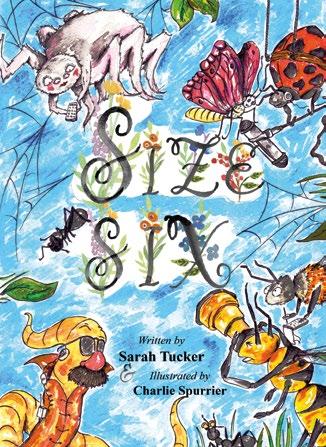
quiet revolution in storytime

Beneath the laughter lies a quiet mission: to teach children that solving problems can be joyful, creative and brave. Every resolution plants a seed of agency, showing that change begins with thought, not luck. When stories honour effort over rescue, children learn to trust their own ideas. If they grow up loving solutions as much as stories, they’ll outthink us all.
And wouldn’t that be rather wonderful?
By Zuzu Jordan
Your child’s school will understand that homework does not have to mean pages of writing or worksheets every time. In fact, varying how children record and present their learning can make homework more engaging, accessible and enjoyable for the whole family. When children are given choice and creative freedom, they are often more motivated and prouder of what they produce.
One simple and effective approach is using drawing and diagrams. Younger children or those who find writing challenging, can show their understanding through pictures, labelled drawings or storyboards. A child learning about plants might draw and label parts of a flower or design a comic strip showing the main events. This supports understanding without the pressure of long written answers.
Hands-on and practical tasks are another excellent option. Your child’s homework could involve building a model, cooking a recipe linked to maths or measuring and sorting objects at home. For example, children might create a model of a landmark, use Lego to show number problems or organise household items into groups. These activities make learning feel real and meaningful.
Using technology opens up many creative possibilities too. Children may be asked to take photos of their work instead of carrying bulky projects into school. This is especially useful for practical tasks such as baking, gardening or science experiments. A short video explaining what they did or learned can be just as valuable as written work. Older children might create a simple slideshow, record a voice note or type a short

reflection. Technology also supports children who communicate better verbally than on paper.
Scrapbooks or learning journals are another flexible way to present homework. Children can mix writing, pictures, photos, tickets and drawings all in one place. This works particularly well for topic-based homework or holiday projects and allows children to personalise their learning.
Finally, many schools do see the value of talk-based homework. Asking children to discuss a topic with an adult, interview a family member or explain what they have learned builds confidence and understanding. Parents can jot down a few notes or the child can record their ideas using a voice app.
By offering different ways to record and present homework, schools help children play to their strengths. This reduces stress at home and encourages families to see homework as a chance to explore, create and talk together rather than just complete a task.
Zuzu is a Mastery for Maths Specialist who has taught primary for eighteen years and is Director of Arnett International. For FREE resources and tips, find her on Instagram @edumate_uk




By Issy Butson
Most people familiar with the AI space will tell you something that’s hard to hear and equally hard to believe - AI will likely replace a very significant amount of global entry level white-collar jobs within the next five years. In the scale of our children’s lives, that’s effectively tomorrow.
As parents, we need to get our heads round the fact that the jobs that will be replaced will not be just low skilled jobs on factory lines, at cash registers or repetitive manual work.
We must also recognise that our education system is designed to train children for the world we have been used to - in other words, to teach them things that, now, technology has also mastered.
Companies are already losing faith in education pipelines that aren’t producing adaptable, job-ready people. In their place, there is a rise in skill-based hiring and project portfolios that actually show what a person can do.
The future won’t care about qualifications. It will care whether you can think, build, solve problems, adapt and contribute in ways that a machine can’t.
Within the next ten years, the gap between what children are being trained for and what they’ll actually face in adulthood will just become too big to ignore.
So how do we guide children in a world that’s no longer structured around graduations, qualifications, employment, performance reviews, entry level roles and corporate ladders?
What do we build instead?
There is a tendency for our current education system to unintentionally stifle the qualities our children will most need in future – originality, independent thinking, risk taking and deep knowledge, rather than the broad, shallow knowledge needed to pass exams. We need to get serious about a different kind of preparation for adult life. One that accepts, fully, that the future will not reward people for what they memorised but for what they can build, navigate, initiate and solve.
Here are five real-world capabilities which form a much more deliberate and demanding kind of education.
Self-management and personal agency
In a world where job structures and set working hours are far less prevalent, your child will need to know how to manage themselves - not just their time but their energy, attention, output and emotion. These are skills most adults were never taught. Your child should start learning them now.


Surface-level knowledge is everywhere. What matters is the ability to go deep - to focus without distraction, to stay with complexity and to work through problems that don’t have obvious answers.
Real-world skill development
Instead of ticking boxes, help your child build tangible, functional skills. Not just academic ones - practical, creative, technical and interpersonal. The kind that lead to useful output, adaptability and confidence. A lot of those skills won’t actually be needed for employment but all the good stuff they develop internally while building them will absolutely serve them well.
Relationship-building and collaboration
The most resilient people in the future will be the ones who know how to find their people, build things together and communicate across difference.
Identity development and direction-finding
In a world of almost infinite choice and no fixed paths, children are going to need a strong sense of who they are, what they care about and how to move toward it. That kind of direction doesn’t come from outside. It gets built, internally, over time. Make sure they develop that deep, strong sense. A child raised this way will build the muscles they’ll actually need in this changing world:
Motivation without any external pressure.
Adaptability when things change, because they will, over and over again.
Confidence to try things they’ve never done before.
Patience to get good at something hard.
I believe we’re approaching one of the most fascinating periods of human history. But that we are woefully unprepared. So this is a call to parents who want to give their children a real head start. A call to step into this big unknown space and spend the next decade helping their children develop the resilience, confidence, adaptability and purpose that will serve them well regardless of where all this goes.
Issy Butson is the parent, home educator, blogger and podcaster Stark Raving Dad, as well as Head of Go To Market for a software company. To listen to Issy’s full podcast episode What every parent MUST know about the AI Generation, visit www.starkravingdadblog.com/what-every-parent-must-know-about-the-ai-generation
By Usha Patel
As autism develops more awareness and acceptance in mainstream society, more different behaviours are observed and noted. Examples such as rocking, spinning, flapping hands, repetitive phrases and vocal sounds. These repetitive movements are all categorised as stimming.
Generally, stimming is not just performed by those with autism. We can all have bouts of stimming in certain situations, even those who consider themselves to have neurotypical brains.
What is stimming?
Most commonly, stimming is described as self-regulatory behaviour.
Dr Temple Grandin, who was born with autism, talks openly about stimming. She says in a YouTube clip: ‘As a child, I would spend hours dribbling sand through my hands to calm myself down because loud sounds hurt my ears. I was stimming to shut out the outside world.’ She goes on to say: ‘But the problem is, if a young child with autism is allowed to stim all the time, the brain becomes shut off from the world.
‘What you need to do is get the child into a quieter environment and help them take in information. ‘I was allowed an hour after lunch, where I could stim and veg out but I was not allowed to do that type of stuff at the dining room table. It’s okay to stim in private but if you let them (children with autism) stim for eight hours a day, they will not develop.’
Most definitions of stimming say it is a behaviour that regulates a child with autism and Dr Grandin is not refuting this claim at

To assess your child’s needs, seek an expert in Reflex Integration Therapy for a professional evaluation. This will provide a clear picture of any neurological and developmental challenges your child may be facing. Various sensory factors can also impact the nervous system, affecting further developmental issues. Both immature reflexes and sensory needs result in behaviours including stimming, which are coping mechanisms in an effort to bring order to a disordered nervous system. The order being sought is never achieved but the child will keep trying.
Over time, if these developmental concerns aren’t addressed, stimming can become deeply ingrained – a pattern hard to break. The nature of the most suited therapies will have gentle rhythmic movements as part of the intervention. The idea is to create a sense of regulation, building the correct motor pattern that can be used to move to the next developmental level independently. Allowing the child who stims the opportunity to unlearn rigid behaviour and incorrect motor patterns helps remove the need to stim in the first place.

all. She is just saying it needs to be limited. She did not talk until she was almost four years old and it was through her mother’s determination to find ways to help her that she gained the skills of other neurotypical children.
In the 1950s, Carl H. Delacato, EdD, director of the Autistic Unit at the Centre for Neurological Rehabilitation, suggested that the stimming behaviour exhibited by autistic children was a clue to what their neurological system was deficient in. Dr Delacato was the first doctor to see stimming behaviours as a way to treat a child.
As a therapist deeply interested in functional neurology, my goal is to understand what is happening in a child’s brain and how to neutralise the surrounding environment to help, especially in situations where stimming appears to be self-harmful, such as banging one’s head on a hard wall.
Usha Patel is a Neurocognitive Therapist at Raviv Practice London. For advice on any of these issues, visit www.ravivpracticelondon.co.uk

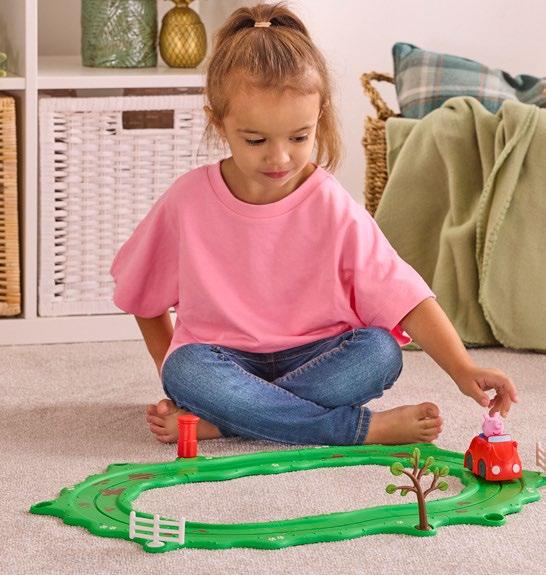

Oracy – the ability to express oneself clearly and confidently – is essential for learning, communication and building relationships. Not only do music, movement, drama, poetry, storytelling and teamwork help young learners build confidence, they also increase fluency and, in our experience, result in a remarkable development in communication skills.
Developing oracy skills
Music and movement help children develop rhythm, projection and confidence. Singing explores pitch, tone and pace, while dance links movement with speech. These activities make speaking and performing enjoyable and memorable.
Drama and role-play let children step into different perspectives, practising tone, body language and improvisation. They build empathy, critical thinking and confidence in speaking to others.
Poetry strengthens fluency and expression. Reciting and performing poems improves memory, articulation and the ability to convey emotion. It encourages playful and imaginative use of language.
Expressing themselves becomes easier through creative activities, as it offers children a safe space to be themselves. Through discussion, reflection and performance, they gain confidence and ownership of their ideas.
Storytelling helps learners structure ideas and engage with classmates as their audience. Sharing stories develops clarity, structure, listening and collaboration skills. It also builds confidence in expressing complex ideas.
Teamwork and group activities improve listening, turn-taking

Sport Sister Community is back for their Easter Girls’ Football Camp on 14 April. The camp costs just £17 for the day, or you can take advantage of the Early Bird offer available before 24 March and register for just £13! Sibling discount is also available.
Come along for a day of fun and football at Ditton Infant School, Aylesford plus lots of other activities to keep children entertained.
Booking is now open at bookwhen.com/sportsister or email natalie@sportsister.co.uk with any questions.


and communication. Children learn to respond thoughtfully and speak effectively in a group.
Bringing oracy into family life
Special equipment or plentiful spare time aren’t required to nurture oracy skills. Turn everyday moments into performing-arts moments:
Daily routines. Instructions can become rhymes or a call-andresponse, keeping communication lively and helping younger children practise clarity and rhythm.
Storytelling at dinner. Each person adds a line to a made-up story, building confidence and creativity.
Mini performances. Performing a poem, a short dance or a roleplay boosts self-belief and encourages children to speak out.
Music on the go. Singing in the car or while walking to school supports projection, breath control and emotional expression.
Oracy isn’t just about speaking – it’s about feeling heard. And the performing arts gives children exactly that: a voice that feels strong, expressive and truly their own.
With thanks to Artis Foundation for this article. Artis is a creative-learning charity working with primary schools across the UK, with their mission to nurture creativity in every child. More information at www.artisfoundation.org.uk

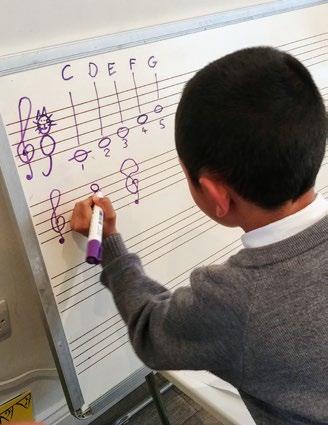
Funky Monkey Keyboard Classes ‘Cheeky Chick’ workshops (6-17 April) in Sevenoaks for ages 4-8 are a perfect opportunity to try out the keyboard and make music the fun way, all with an Easter theme!

Choose from a three hour or five morning course, from just £45. Children learn in small groups how to write and play music and try some famous tunes using electronic keyboards. It’s a wonderful, relaxed introduction to practical and theoretical music and with games, quizzes and art activities all based around music thrown in for good measure, you’ll be amazed how much they can learn whilst having fun! Maximum class size 8 and all equipment is provided. Visit www.funkymonkey.info/holiday-courses for full details and booking.
Use plants to make beautiful earthy colours in this simple Easter project. It uses the hob, hot liquids and vinegar so do make sure an adult can help and supervise the kids - and make sure they understand the eggs are to decorate and not to eat!
You will need:
Per dye colour:
• 3 cups (750ml) water
• 2 tsp vinegar
• Pinch of salt
Natural dye ingredients (choose one):
Blue: 2 cups (500ml) chopped red cabbage
Red: 2 cups (500ml) red onion skins
Yellow: ¼ cup ground turmeric
Green: dye in blue first, then dye again in yellow

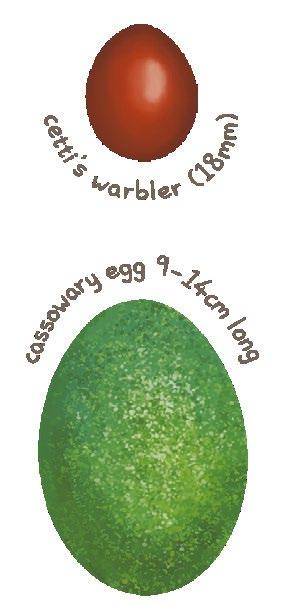
Most bird eggs start white because the shell is made mainly from calcium carbonate. As the egg is formed inside the mother bird, special pigments are added to the outside of the shell, creating the colours and patterns we see. Plus:
• Eggs (hard-boiled or hollowed out)
• Saucepan
• Sieve/strainer
• Heatproof bowl or jug (for the dye)
• Glasses or small jars (one per egg)
• Spoon or tongs
• Paper towel
Optional: a little vegetable oil (for shine), apron/old clothes (turmeric stains!)
Step 1:
Prepare your eggs: hard-boil your eggs (about 10 minutes), then leave them to cool completely. For long-lasting decorations, use hollow eggs instead of hard boiled.
Step 2:
Make your dye: put your chosen dye ingredient into a saucepan. Add 3 cups (750 ml) water. Bring to the boil, then simmer for 10 minutes. Turn off the heat. Stir in 2 tsp vinegar and a pinch of salt (this helps the colour stick). Leave the dye to cool, then strain it into a bowl or jug.
Step 3:
Dye the eggs (for red, blue or yellow eggs): pour in enough dye to fully cover the egg. Leave to soak for at least 2 hours or overnight for deeper colour. Lift the egg out carefully and pat dry with paper towel. If you rinse, rinse very gently, too much water can wash off the colour. Leave the eggs to dry completely.

Red onion skins → deep rust / burgundy
Red cabbage → soft blue-grey tones
Turmeric → sunny yellow / golden orange
Blue + yellow → mossy green

Step 4:
Make green eggs (two-dye method): dye your egg in the blue (red cabbage) dye overnight. Let it dry, then dye it again in the yellow (turmeric) dye for about 2 hours. Pat dry and leave to dry fully.
Step 5:
Add a beautiful shine (optional): once your egg is totally dry, rub on a tiny drop of vegetable oil with your fingertips or a soft cloth.
With thanks to the makers of Curiosity Club (7-12yrs) & Curiosity Crew (4-6yrs) for this project. The Curiosity Club & Crew is a monthly subscription pack, filled with beautifully illustrated story-led science, hands-on investigations and creative prompts, which build knowledge, nurture creativity and grow confidence through real-world learning.
More information at www.arcanaliving.com/curiosityclub and www.arcanaliving.com/curiositycrew
Have an egg-celent Easter holiday with our pick of the best family-friendly activities and events to enjoy around Kent.

Seek out stone dragons and grotesques, explore beautiful gardens and monastic ruins and marvel at breathtaking strained glass as you discover 1,400 years of living history at Canterbury Cathedral - one of the UK’s most-visited heritage sites.
There’s lots for families to enjoy, including free access to the many seasonal exhibitions and visitor events included with admission. You might even be lucky enough to spot the peregrine falcons that make the Cathedral their home.
Pay once and visit FREE all year. Visitor admission is valid for 12 months, meaning you can revisit as often as you want. And the Cathedral’s Kids Go FREE offer (terms apply), means you can all enjoy a historic day out without breaking the bank.
Visit www.canterbury-cathedral.org to find out more.

A special centenary calendar of major headline events at Brands Hatch launches with the British Truck Racing Championship on 4 & 5 April.
It’s a blockbuster start to the famous Kent motorsport venue’s Century of Power season, with two days of thunderous heavyweight action from five-tonne race trucks. Five races from these giants are planned across Saturday and Sunday, and a full grid is expected to hit the Indy circuit. The full race programme also includes TCR Uk Touring Cars and the Milltek Civic Cup, in addition to the Pickup Truck Championship which returns to the bill.

Truck displays, funfair rides and themed Easter activities will also feature across a super-sized weekend of family fun. Under 13s go FREE with a cut price for ages 13-15 too. All tickets discounted in advance at www.brandshatch.co.uk
See our What’s On pages for lots more local Easter family events.

Make Easter unforgettable with a family day out at Millbrook Garden Centres in Gravesend and Staplehurst, from 7–17 April.
The centres are packed with hands-on fun to entertain, inspire and delight children of all ages. Budding scientists can get stuck in with crazy chemists workshops - bursting with colourful experiments, while little ones can unleash their creativity in spring craft sessions and take home their seasonal makes.
Young artists can join comic art workshops - learning to create characters, illustrations and stories with guidance from professional artist, James Parsons. Children can also build confidence and co-ordination with lively circus skills sessions and animal lovers won’t want to miss the amazing rescued animal interactions, offering the chance to meet fascinating creatures up close and learn all about them.
Between activities, relax and refuel in welcoming restaurants – the perfect spot for coffee, lunch or a sweet Easter treat. Not all events run at both centres, so visit the website for full details and booking information. Tickets go fast so book early!
www.millbrookgc.co.uk
The Powell-Cotton Museum has everything you need for big stories, family fun and an unforgettable day out this spring.
Step inside to discover incredible animal dioramas and collections from Africa, Asia and Oceania, then head outdoors to enjoy the fresh air in beautiful Quex Gardens. Bring a picnic, follow a woodland trail or simply let the kids run free - it’s the perfect mix of learning, play and space to explore.
From Saturday 28 March to Sunday 19 April, families can take part in the Spring Eggsplorers Easter Trail. Pick up a Spring Passport and help the animals find their missing eggs as you travel through the galleries, spotting clues along the way. Once completed, children can decorate a wooden egg to take home. The adventure continues outside with an Easter egg hunt through the Woodland Walk and Victorian Walled Gardens. All activities are included in standard admission so book your visit today.
www.powell-cottonmuseum.org

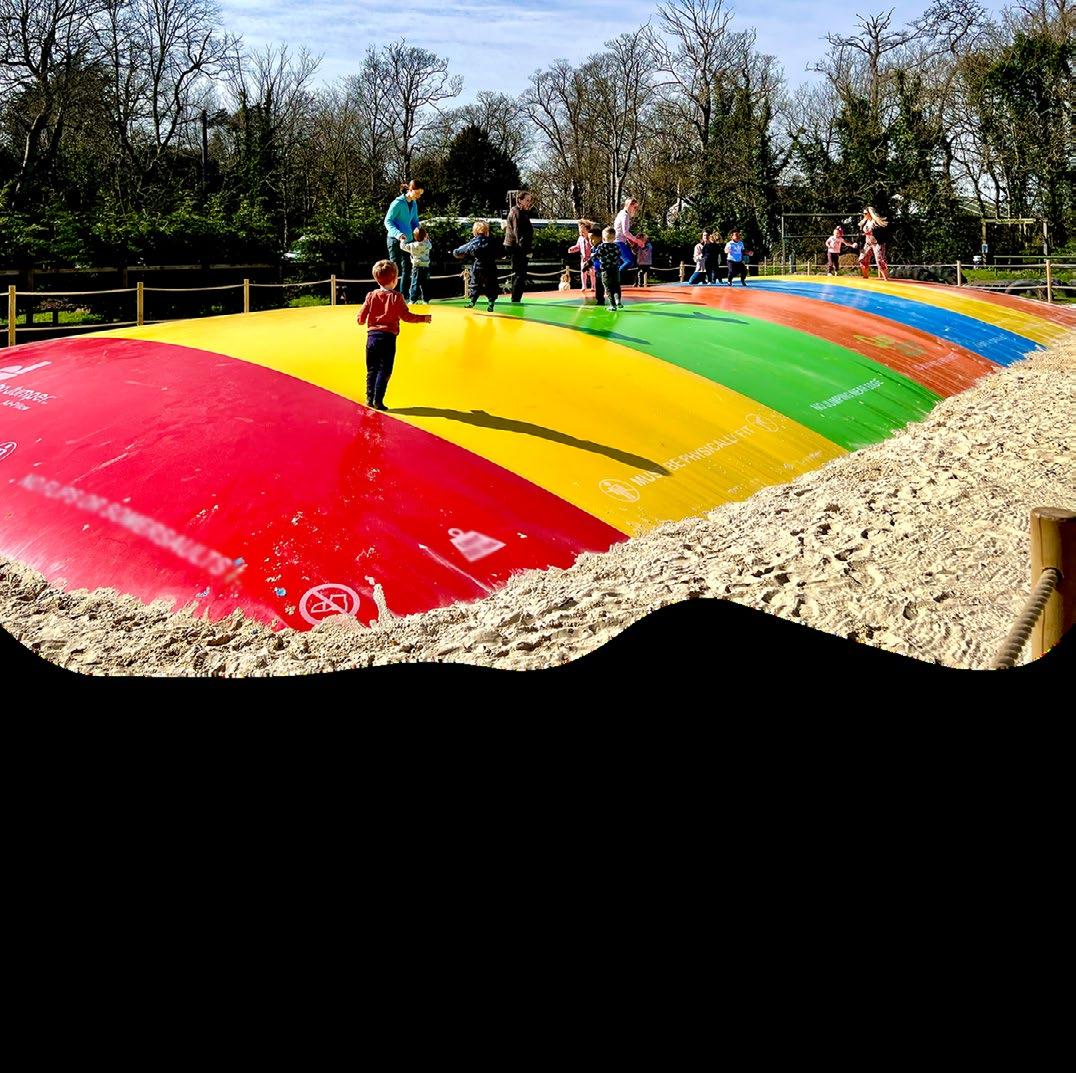
Bounce on down to Quex Adventure Farm Park this Easter and enjoy the fun from 28 March-6 April (selected dates). Come along and enjoy a chocolatey adventure fun-filled Egg-stravaganza. Follow the Bouncing Bunnies Easter Trail, munch on yummy Easter eggs and wear your very own bunny ears. Take a ride on the Bunny Express Tractor, meet the Easter Bunny and even receive a carrot seed from Farmer Quex!
Don’t forget to join the exciting Easter egg hunt - who knows what treasures you’ll find! Grab your bonnets and get ready for an egg-citing day of springtime joy.
Visit www.quexadventurefarmpark.com to book.
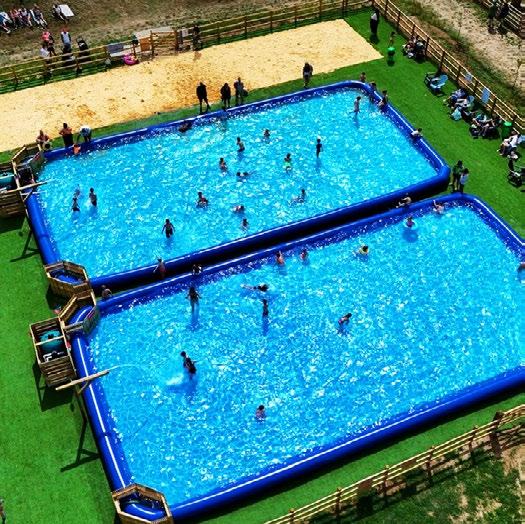
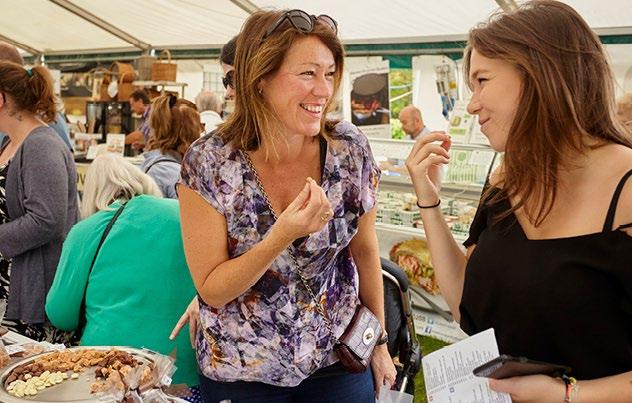
Enjoy the ultimate family day out at the Weald of Kent Country Craft & Food Show from 2–4 May at Penshurst Place, Tonbridge.
There is artisan shopping, great food, live entertainment, craft demonstrations, music and children’s rides in a vibrant outdoor setting. Hosted by ICHF Events over the Bank Holiday weekend, this three-day celebration brings together talented craftspeople and food producers for an inspiring experience for families, foodies and craft lovers alike.

Browse over 175 independent stalls across indoor marquees and outdoor markets, showcasing handmade jewellery, homeware, clothing, art and wellness products.
Enjoy gourmet street food, artisan cheeses, sweet and savoury treats and experience family-friendly entertainment including falconry displays, traditional children’s rides, live music and FREE access to the Penshurst Place’s Adventure Playground. Open daily 10am–5pm. Kids go FREE, plus there’s FREE parking too.
Visit www.thecraftshows.co.uk to book in advance and save 20%.
Set sail for a swashbuckling family day out on this world-famous ship Cutty Sark, with handson crafts perfect for little sailors.
Meet colourful characters from the ship’s past, including the fearless Captain Woodget and hear stories of life aboard the fastest ship of its time. Explore the main deck, take the helm at the wheel and enjoy interactive games charting Cutty Sark’s journeys - a perfect adventure for all the family.
Book online at www.rmg.co.uk/families


By Ellie Malt
With the promise of spring all around, we don’t need science to remind us that getting hands-on in the garden is a fantastic, sensory-rich antidote to device time, which helps children reconnect with nature.
There is, actually, plenty of evidence to show how simply having access to green spaces reduces emotional dysregulation in children and teenagers. Gardening can help reduce stress, improve cognitive functioning, build self-esteem and improve physical health.¹
While the specific claim that simply touching soil is a direct ‘cure’ for mental health problems is not fully established, some studies do show associations and plausible mechanisms like serotonin release and microbiome effects.²
Keen to get them out there and digging in the dirt? The key is choosing projects and plants that suit their interests and their age while tweaking your involvement. Gardening with children isn’t about perfection. Plants will fail; seedlings may be overwatered and fairy gardens might be repeatedly rearranged. What matters is shared time, learning and the joy of watching children grow alongside their garden.
Sources: ¹ Bowler, et al., 2010; Hartig, et al., 2014; ² National Wildlife Federation, 2012.

Growing food is not only biology in action but it is also a very satisfying experience. In our culture of immediate gratification, it is particularly good for teaching how rewarding a longer-term commitment can be. It can also be a great way to help younger children physically connect with where their food comes from.
Raised beds, grow bags or large containers are ideal for little gardeners. Under 5s can sow large seeds, water plants, watch for growth and taste what they harvest, with supervision. Those ages 5+ can help choose crops, plant seeds at the correct depth, label rows and maintain watering and weeding schedules. Children ages 9+ can manage a small plot independently, plan crop rotation, troubleshoot pests and take responsibility for harvesting.
Under 5s: Broad beans, peas, radishes: large seeds, fastgrowing, easy to harvest.
5-8s: Lettuce, spring onions, courgettes: quick-growing, simple to care for, visually satisfying.
9-12s: Runner beans, potatoes, strawberries, tomatoes: more complex crops that teach planning, spacing and responsibility.

A sensory garden involves touch, sight, smell and sound. This gentle exposure outdoors is especially helpful for those who are sensitive to textures or flavours. It instinctively appeals to children who enjoy hands-on exploration and is perfect for small spaces, containers or raised beds.
Under 5s can pat soil, water and smell herbs. Keep sessions very short and playful. Slightly older children can help choose plants, space seedlings and water on a routine. Ask them to observe and note changes.
Tweens can get involved in planning garden layout, researching pollinator-friendly plants and taking responsibility for deadheading and recording growth.
Under 5s: Lamb’s ear, mint, lemon balm: soft, fragrant and safe to handle.
5-8s: Sunflowers, cosmos, lavender: colourful, easy from seed, great for observation.
9-12s: Rosemary, scented geraniums, ornamental grasses: encourage planning and longer-term care.
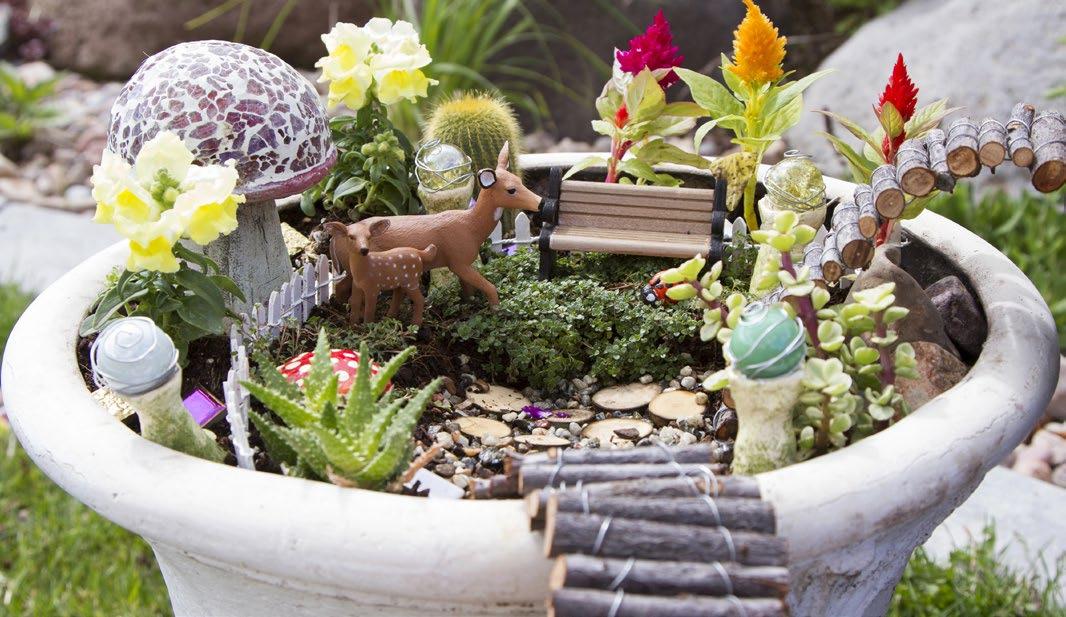
Combining horticulture with imaginative play, fairy gardens are perfect for children who enjoy storytelling and craft. They work well in pots, old containers or even sheltered corners. Let the youngest children arrange the fairy figures and natural decorations. Supervise gently to protect plants. Children can talk about their ideas, explain their garden and often play collaboratively, supporting vocabulary and co-operation.
Children ages 5+ can start designing small structures, planting, watering and adding storytelling elements as the ‘fairy garden carers.’ Tweens can branch out into planning themed gardens (not necessarily fairy-themed), learn plant requirements for shade and water and build miniature structures from natural materials.
Under 5s: Moss, thyme, small hardy flowers: easy to handle and ideal for arranging miniatures.
5-8s: Nasturtiums, marigolds, violas: colourful and edible, perfect for hands-on planting.
9-12s: Miniature ferns, cosmos, dwarf grasses: great for themed designs and more complex maintenance.
All listings correct at the time of going to print. Please check with the venue before visiting to ensure events are still going ahead and the venues are open.
The Gruffalo Trail at Bedgebury National Pinetum and Forest Daily
Funky Monkey Keyboard Classes, Sevenoaks 6-17 Apr
Cheeky Chick workshops for beginners ages 4-8. Choose from a three hour or five morning course from just £45. Children learn in small groups how to write and play music and try some famous tunes using electronic keyboards. It’s a wonderful, fun, relaxed introduction to practical and theoretical music, with games, quizzes and art activities based around music. All equipment provided. www.funkymonkey.info/holidaycourses
Covering some 128 hectares, can you find Gruffalo and his friends in the National Pinetum? Open from 8am-5pm. Parking charges apply. www.forestryengland.uk/ bedgebury/forest-walkies
Nature Trail at Bluewater Daily
Bluewater Nature Trail is made up of beautiful parkland, lakes and fun family activities. It begins on the bridge opposite Zizzi. The trail is approximately 45-minutes long. www.bluewater.co.uk/en/playlisting/bluewater-nature-trail
Conservation Volunteering in the

The HogEye Men transform the famous tea clipper’s ‘Tween Deck with the harmonies of sea shanties, traditional working songs. Come along to hear this enduring maritime tradition brought to life. www.rmg.co.uk/cuttysark
SENsory Sailors at National Maritime Museum 14 Mar
A monthly session for families with children with special educational needs and disabilities, led by a SEND specialist. www.rmg.co.uk/national-maritime-
Mothering Sunday Afternoon Tea at Penshurst Place, Tonbridge 15 Mar
Indulge in a delightful afternoon filled with love and appreciation at Penshurst Place and Gardens’ Mothering Sunday afternoon tea. Be immersed by the charming medieval atmosphere as you enjoy a delectable spread of scrumptious treats. Pre-book online.
www.penshurstplace.com/whatson/events-and-activities/2026-03

Mothering Weekend at Kent & East
Enjoy a trip by steam train through
Mother’s Day Weekend at Hever
winning extensive grounds are the perfect place both to say thank you
browse the Castle’s wide and varied selection of seasonal plants, enjoy local food and drink and let off steam


Mother’s Day Afternoon Tea at Kent Life Maidstone 15 Mar
Show your Mum how much you appreciate her with an afternoon of delicious snacks and a fun-filled day for all the family. As a bonus, this special event also includes entrance to Kent Life, with a host of activities to enjoy. From meeting adorable animals to exploring historic buildings, there’s something for everyone to discover and enjoy. www.kentlife.org.uk/event/ mothers-day-afternoon-tea
Dazzling Daffodils at Hever Castle, Edenbridge 16-22 Mar
A week-long celebration of one of the season’s most uplifting flowers. With close to 120,000 daffodils and 250,000 trumpet blooms flowering across the grounds. Family activities are also available.
www.hevercastle.co.uk/whats-on/ daffodils

An egg-citing Easter adventure awaits, with museum trails, crafts and outdoor egg hunts that the whole family will love.
Wind Festival at Betteshanger Park, Deal 22 Mar
Sit back and watch the pros from Kent Kite Flyers fill the sky with their colourful shapes and creations. Bring along the family and enjoy a sunny day of kite-flying, with kite-making and other crafts also available at a small charge. FREE. www.betteshanger-park.co.uk/ event/wind-festival
Easter Adventures at Chartwell, Westerham 21 Mar-19 Apr
This Easter, join the adventure, follow the trail through the beautiful spring gardens, taking part in family games and challenges and be rewarded with a chocolate egg. £3.50 per trail which includes a trail sheet, bunny ears and a dairy or vegan and FreeFrom chocolate egg (whilst stocks last). Normal admission applies. www.nationaltrust.org.uk/chartwell
Easter Egg Hunt at Knole, Sevenoaks 21 Mar-19 Apr
This spring, treat the whole family to a world of adventure at Knole on an Easter trail. Booking required. £3.50 per trail which includes a trail sheet, bunny ears and a dairy or vegan and Free-From chocolate egg (whilst stocks last). Normal admission applies. www.nationaltrust.org.uk/knole
Easter Adventures at Scotney Castle, Tunbridge Wells 21 Mar-19 Apr
Enjoy an eggcellent Easter adventure, packed full of fun and games for the whole family.
Hop along the trail, complete the challenges and collect your prize at the end. £3.50 per trail which includes a trail sheet, bunny ears and a dairy or vegan and Free-From chocolate egg (whilst stocks last). Normal admission applies. www.nationaltrust.org.uk/scotneycastle
Easter Adventures at Ightham Mote, Sevenoaks 21 Mar-19 Apr
Follow the Easter trail and enjoy a series of fun, family-friendly activities along the way. £3.50 per trail which includes a trail sheet, bunny ears and a dairy or vegan and Free-From chocolate egg (whilst stocks last).
Normal admission applies. www.nationaltrust.org.uk/ighthammote
Easter Adventures at Emmetts Garden, Sevenoaks 21 Mar-19 Apr
This Easter, enjoy an Edwardian Easter festival at Emmetts Garden. Follow the trail, join in with eggciting games and activities for all the family. £3.50 per trail which includes a trail sheet, bunny ears and a dairy or vegan and Free-From chocolate egg (whilst stocks last). Normal admission applies. www.nationaltrust.org.uk/emmettsgarden
Bouncing Bunnies Wonderland
Easter Trail at Quex Adventure
Farm Park
28 Mar-6 Apr (selected dates) This trail is full of sweet treats, characters to meet and outdoor fun. Ticket includes an Easter egg, Easter treat, bunny ears and access to Quex Adventure Farm Park. Book online. www.quexadventurefarmpark.com
The Great Dragon Egg Hunt at Hever Castle, Edenbridge
28 Mar-19 Apr
The Great Dragon Egg Hunt is a family-friendly adventure set within the historic Castle grounds. Take part in a daring quest to find dragon eggs hidden across the estate. Follow the trail, learn fascinating dragon themed facts and collect letters along the way to solve a secret word puzzle. www.hevercastle.co.uk/whats-on/ easter-family-fun
Spring Eggsplorers at The PowellCotton Museum 28 Mar-19 Apr
Collect your spring passport and set off on an egg-citing quest through the museum. Help the animals find their missing eggs as you explore the galleries and use your discoveries to decorate your own wooden egg to take home. www.powell-cottonmuseum.org/ event/spring-explorers
Easter Quest at Dover Castle
28 Mar-19 Apr
Enjoy a fun-filled adventure quest. Follow the Easter trail, hunt for eggs and answer questions along the way to earn a delicious chocolate reward. 10am-4pm. All ages. Book early save 15%. www.english-heritage.org.uk/visit/ whats-on/dover-easter-quest-2026
Children’s Easter Fairground at Emmetts Garden 3-12 Apr
Experience traditional rides including a carousel, swing boats and chair planes. £10 per wristband, which allows unlimited rides during your visit for one day.
www.nationaltrust.org.uk/emmettsgarden
Easter at Leeds Castle 3-19 Apr
Celebrate the magic of Easter with a fun-filled family day out at Leeds Castle. Set within 500 acres of beautiful Kent countryside, the Castle provides the perfect backdrop for a springtime adventure. Enjoy a seasonal trail through the stunning gardens and take part in a range of Easter-themed activities. www.leeds-castle.com/events/ easter-at-leeds-castle
Spring into Easter at Kent Life Maidstone 3-19 Apr
Celebrate Easter and the baby boom that comes with spring! Meet new arrivals in the farmyard and see lamb bottle feeding demonstrations throughout the day. Hop on a fun farm ride or get creative in the Paint-a-Pot studio. Enjoy indoor and outdoor play areas and more. www.kentlife.org.uk/event/springinto-easter
Family Fun Weekends at Cutty Sark 4-5 Apr
Climb aboard for family-friendly workshops and activities for all ages on the first weekend of every month. www.rmg.co.uk/cuttysark
British Truck Racing Championship at Brands Hatch 4-5 Apr
Five BTRC races will headline the weekend and the event will also feature an off-track line-up featuring show trucks, a paid fun fair and themed Easter entertainment. Under 13s FREE. www.brandshatch.co.uk
Meet Peter Rabbit™ at Spa Valley Railway, Royal Tunbridge Wells 5-6 Apr
Enjoy a train ride with a steam locomotive and meet Peter Rabbit™. Take part in the Easter egg hunt for your chance to get a chocolate egg. www.spavalleyrailway.co.uk/ events/peter-rabbit
Easter Holiday fun at Millbrook Garden Centres in Gravesend and Staplehurst 7-17 Apr
An unforgettable family day out packed with hands-on fun to entertain, inspire and delight children of all ages.
www.millbrookgc.co.uk
Easter Holidays at Kent & East Sussex Railway 8-21 Apr
Hop onboard during the Easter holidays where kids go FREE, plus during the bank holiday weekend, see the Easter Bunny. Book online. www.kesr.org.uk/easterholiday
Mischief at the Museum: The Great Plant Plot at The Beany House of Art & Knowledge Until 19 Apr
An interactive family trail. Solve puzzles around the building, explore the museum collection, collect stamps and collect a treat at the end. £6 per trail. All ages. www.canterburymuseums.co.uk/ events/mischief-at-the-museumthe-great-plant-plot
Broadstairs Food Festival 3-5 Apr
A family-friendly food extravaganza with activities, live demos, workshops, experiences and much more. FREE. www.broadstairsfoodfestival.org.uk
The Big Brick Build at Dover Castle 3-5 Apr
Join master builders and help bring history to life with LEGO® bricks. Mini builders can test their skills by building a piece of history, with expert brick builders on hand to guide them and a different challenge to enjoy. 10am-5pm. All ages. Book early save 15%.
www.english-heritage.org.uk
Punch and Judy on the Meadow at Emmetts Garden, Sevenoaks 14 & 16 Apr
Enjoy the classic and muchloved entertainment show, with a mini-magic show thrown in on the Emmetts Garden Meadow this Easter. Showtimes at 11am, 2pm and 3pm. The shows are FREE with general admission. www.nationaltrust.org.uk/emmettsgarden
Tonbridge Castle Artisan Market
25 Apr
Explore a diverse array of offerings, from culinary delights and bespoke gifts to household necessities and more. 10am-4pm. FREE. www.tonbridgecastle.org/events
Day Out With Thomas: Let’s Rock, Let’s Roll Tour at Spa Valley Railway, Royal Tunbridge Wells 25-26 Apr & 2-4 May
Hop onboard a train ride with Thomas, a REAL steam engine, watch the exciting live shows, join in the Thomas & Friends character hunt, have fun with the garden games and enjoy music-inspired fun. www.spavalleyrailway.co.uk/ events/day-out-with-thomas
Weald of Kent Country Craft Show at Penshurst Place, Tonbridge 2-4 May
A delightful weekend filled with artisan shopping, delectable street food, traditional crafts and familyfriendly activities. Kids go FREE. 10am-5pm. SAVE with early bird tickets online until 24 April. www.thecraftshows.co.uk/wealdof-kent-country-craft-food-show
ASSEMBLY HALL THEATRE, TUNBRIDGE WELLS www.assemblyhalltheatre.co.uk
The Princess Proms 15 Mar
Prepare for a show stopping concert filled with the most epic, heartwarming and nostalgic songs from magical animations, such as Moana, Wicked, Frozen, K-Pop Demon Hunters, Beauty & The Beast, Anastasia, Pocahontas, Aladdin and more.
Tales from Acorn Wood 17 &18 Mar
Julia Donaldson and Axel Scheffler’s beloved Tales from Acorn Wood stories is brought to life on stage for the first time in an enchanting lift-the-flap experience. Packed full of toe-tapping songs, puppetry and all the friends from Acorn Wood.
Unicorn Live! 4 Apr
Featuring your favourite pop and musical theatre songs, dazzling costumes, and a real unicorn called Sparkle. All ages.
Justin Live – Justin Time to Rock 8 Apr
Peppa Pig’s Big Family Show 2-3 May
Peppa Pig’s Big Family Show is packed full of music, adventure and surprises for little ones and is the perfect introduction to theatre.
THE GRANVILLE THEATRE, RAMSGATE www.thegranvilletheatre.com
Tales from Acorn Wood 15 Apr
Packed full of toe-tapping songs, puppetry and all the friends from Acorn Wood. All ages.
K-Pop All Stars Tribute 19 Apr
Ride the global K-pop wave with an explosive live celebration of the music, the artists and the culture taking over the world.
THE ORCHARD THEATRE, DARTFORD www.orchardtheatre.co.uk
Dino Tales 25 Apr
With a captivating story and an entire herd of pre-historic beasts, Dino Tales is an unforgettable family adventure starring Europe’s largest walking dinosaurs to ever roam the stage.
EM FORSTER THEATRE, TONBRIDGE www.emftheatre.com
The Very Hungry Caterpillar Show 14-15 Mar
The Very Hungry Caterpillar Show has been dazzling audiences around the globe for over ten years, bringing Eric Carle’s timeless classics to the stage. This beloved tale is brought to life by a captivating cast of storytellers, sweeping original music and stunning puppetry. Ages 1+.
GULBENKIAN, CANTERBURY www.thegulbenkian.co.uk
The Gruffalo’s Child 5-7 Mar
Adapted from Julia Donaldson and Axel Scheffler’s award-winning picture book, with songs, laughs and scary fun for everyone. Ages 3+.
Stories in the Dust 10 May
Two intrepid explorers travel across a mysterious landscape, they’re full of ideas and full of hope but dangerously low on baked beans. With live music and puppetry, this is a funny and heartfelt story. Ages 5+.
MALTHOUSE, CANTERBURY www.malthousetheatre.co.uk
Top Secret – The Magic of Science 6 Apr
Experience the non-stop actionpacked interactive magical science experiments. Top Secret will inspire and educate every young budding magician and scientist, as well as proving fun and exciting entertainment for all of the family.
THE MARLOWE, CANTERBURY www.marlowetheatre.com
Braniac Live 13 Apr
Brainiac Live! will take you on a breathless ride through the wild world of the weird and wonderful. Watch as the Brainiacs delve fearlessly into the mysteries of science. Ages 5+.
Bluey’s Big Play 15-19 Apr
Featuring brilliantly created puppets, this theatrical adaptation of the Emmy® Award-winning children’s television series is packed with music, laughter and fun for the whole family.

Get ready to sing, dance and laugh along with BAFTA award-winning Justin as he and his friends are back in a brand-new live theatre show bursting with music, dancing and plenty of giggles.