If your school or family-friendly venue would like to receive FREE copies of Families Hampshire North magazine, contact us at editor@ familieshampshirenorth.co.uk
Editor’s Welcome
The daffodils are out, and the days are getting longer. It’s time to get outside and enjoy the beginning of spring and its new growth! We’ve got a great issue that will help you make the most of springtime activities locally, along with news from our schools.
AI and how we can comfortably work with it is a hot topic at the moment, and on page 6 we look at how AI affects your child’s education. Our early years focus this time is calmer bedtimes for young children, something that many parents crave; hopefully this article will provide support and reassurance.
Neurodiversity is becoming better understood; however, as parents we continue to have lots of questions, and I’m sure you will find our article on stimming to be a helpful read in understanding this behaviour.
There’s lots going on this season – especially during the fastapproaching Easter holidays – and I hope you have lots of fun during these warmer days!
Claire on 07812 218331
We distribute 16,000 copies every issue!
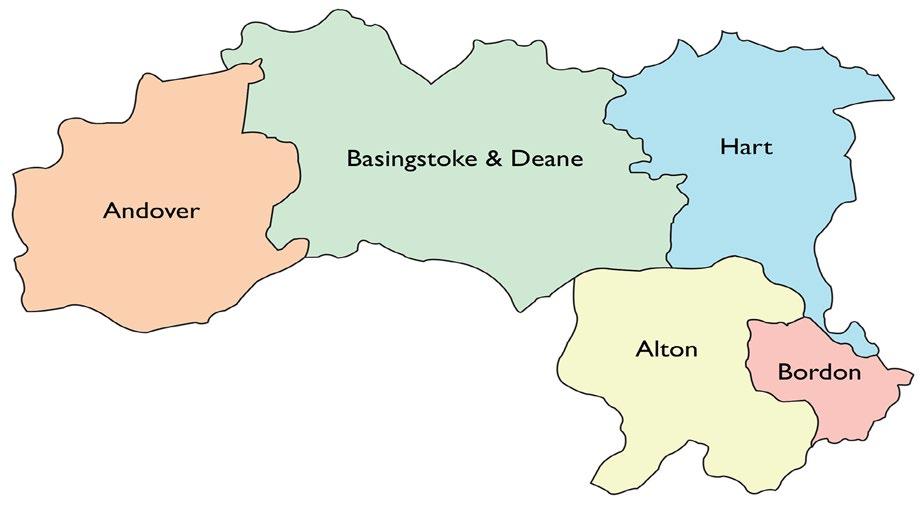
nationaltrust.org.uk/the-vyne Where is Families Hampshire North?
The Vyne
March - 6 April | 10am-4pm £3.50 per trail, normal admission applies. what3words: ///pizzeria.person.gone
Enhanced search tool for those with complex medical needs
WellChild has relaunched its digital platform In Your Area following significant investment and extensive collaboration with parents and carers of children with complex medical needs. The platform helps families find relevant local services and support through a simple postcode search.
The relaunch introduces enhanced filtering options, allowing users to refine results based on their child’s specific accessibility requirements. This helps families identify genuinely suitable services rather than relying on generic listings. WellChild believes it’s the first UK digital resource offering this level of tailored, accessibility-focused search for families with complex medical needs.
The improved platform addresses parent feedback that finding appropriate support can feel overwhelming and time-consuming alongside caring responsibilities. It also supports healthcare professionals who signpost families to local services but may lack access to up-to-date, area-specific information needed to match families with suitable support.
Easter fun and adventures at The Vyne
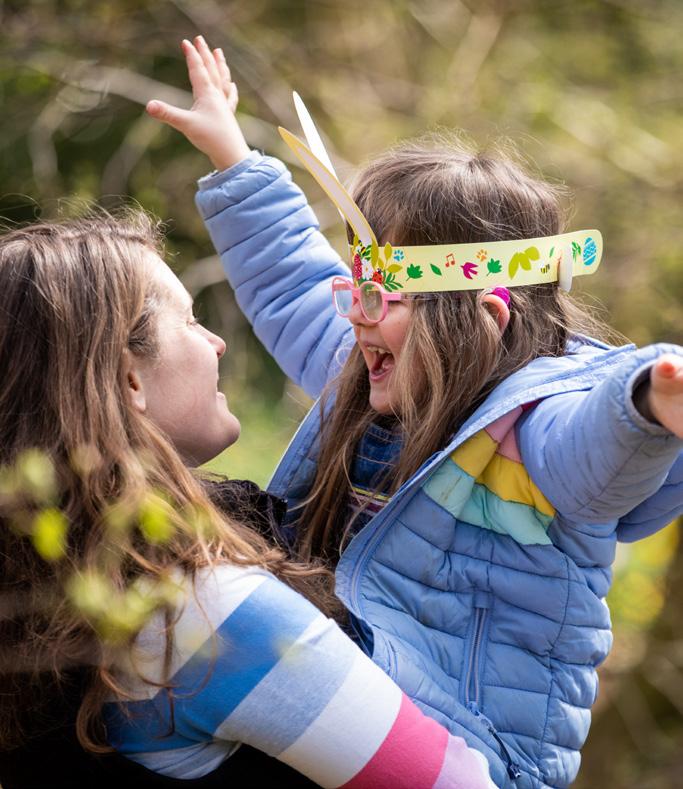
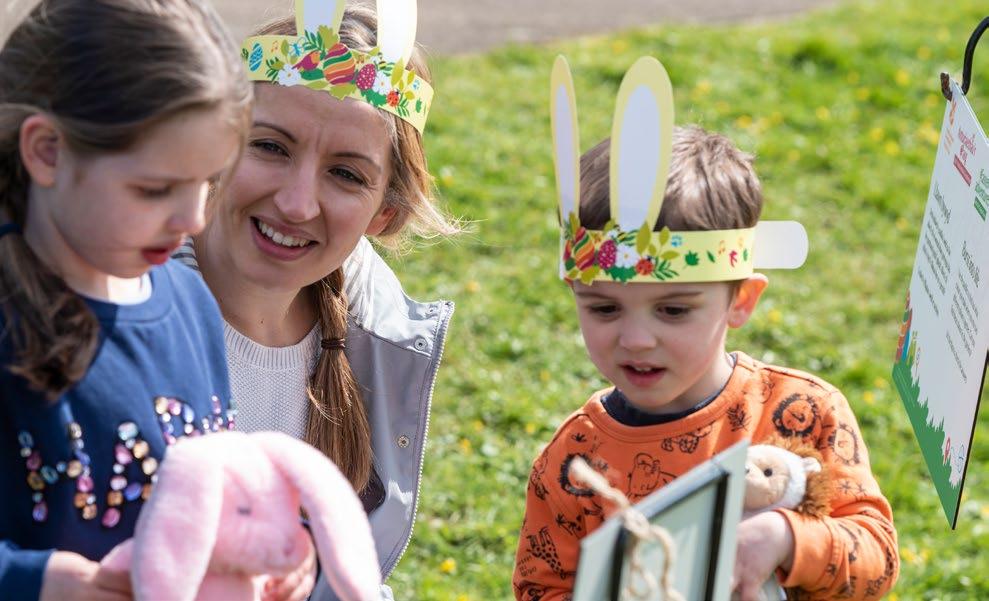
This Easter, young explorers can pull on their wellies and set out on a fun-filled adventure in The Vyne’s gardens. Look out for 10 action-packed games and challenges before collecting a chocolate egg at the end.
Prices are £3.50 per trail, which includes an Easter trail sheet, bunny ears and dairy or vegan and Free From chocolate egg. Normal admission applies.
When you get hungry, picnics are welcome in the gardens (a quick note that ball games and frisbees aren’t). The tea-room, located between the main house and the gift shop sells hot and cold drinks and handy top-up snacks.
In Morgaston Woods, longer legs can explore three circular waymarked routes under a leafy canopy. With the house open daily 11am-3pm, step back in time and discover royal Tudor guests and bold Victorian renovators. Parking is free. What3words: ///pizzeria.person.gone
www.nationaltrust.org.uk/visit/hampshire/the-vyne
National Year of Reading: inspiring a love of books
Footballer Leah Williamson and bestselling author Richard Osman are supporting the National Year of Reading 2026, launched by the National Literacy Trust to inspire children across the UK to ‘go all in’ on reading. The campaign addresses the decline in reading for pleasure, with only one in three children now enjoying books.
Throughout 2026, the initiative will feature author visits, book giveaways, and reading challenges, focusing especially on children in communities with limited access to books. Schools and libraries are encouraged to create welcoming spaces, while families are supported to make reading a daily habit.
Williamson, Osman, and other ambassadors aim to show that books can be exciting and relevant for every child. By encouraging a love of stories early on, the National Year of Reading hopes to build children’s literacy skills, confidence, and future opportunities.
More info: literacytrust.org.uk
World Autism Acceptance Month 2026
April is World Autism Acceptance Month focusing on increasing understanding, acceptance and inclusion of autistic people. Organised by charities like the National Autistic Society and supported by schools, businesses and communities, the annual campaign aims to move beyond awareness and promote genuine acceptance of neurodiversity in all aspects of life.
Activities will include educational events, social media and fundraising to support autism-friendly initiatives and resources. Many organisations will share stories and experiences from autistic people and their families, challenging stereotypes and highlighting the diversity and strengths within the autism community. Schools and workplaces are encouraged to participate by hosting assemblies, workshops or ‘Autism Acceptance’ days.
The campaign also advocates for better opportunities and support for autistic individuals, aiming to tackle barriers in education, employment and public life.
Get involved with the Great British Spring Clean
The next Great British Spring Clean, organised by Keep Britain Tidy, is scheduled for 6 to 22 March 2026. This annual campaign encourages individuals, schools, businesses, and community groups across the UK to take action against litter by volunteering to clean up their local areas.
Participants can pledge to pick up as much litter as they can, either solo, with family and friends, or as part of larger community events. The campaign emphasises the positive impact even small actions can have on the environment and local pride. In previous years, hundreds of thousands of volunteers have collected millions of bags of rubbish, highlighting both the scale of the litter problem and the power of collective effort.
The Great British Spring Clean 2026 aims to inspire even more people to get involved and help create cleaner, safer green spaces for everyone to enjoy.
More info: www.keepbritaintidy.org
UK employment law boosts rights for parents
The UK’s Employment Rights Act is now law, marking the biggest overhaul of workplace protections in decades. For the first time, new parents will gain day-one rights to paternity leave, unpaid parental leave, sick pay and bereavement leave, including for early pregnancy loss. The Act strengthens legal protections for women during pregnancy and extends safeguards after maternity leave, aiming to close gaps that have pushed many mothers out of work.
The legislation also tackles insecure employment, ending exploitative zero-hours contracts by introducing guaranteed hours, pay for cancelled shifts, and more predictable schedules. These changes promise greater stability and security for families balancing work and childcare.
Most reforms will take effect from 2026 to 2027. Campaigners hail the Act as a historic milestone for parents’ rights but emphasize that further steps are needed to eliminate workplace discrimination and achieve true equality for all working families.
Teachers to be trained to spot misogyny
Teachers in England are set to receive additional training to help them identify and address misogyny in schools, under new government plans aimed at reducing violence against women and girls. The initiative will equip teachers to spot early signs of misogynistic attitudes among boys and intervene before such views escalate.
The strategy, part of broader efforts to halve violence against women within a decade, also includes education for students about consent, healthy relationships, and challenging harmful gender stereotypes.
A new helpline will be launched to support teenagers worried about abuse in their relationships.
Polling cited by ministers shows one in six boys aged 13-15 hold positive views of Andrew Tate, a self-proclaimed misogynist influencer. Ministers say these measures will help protect girls and prevent boys from being drawn into harmful ideologies online. The government hopes early intervention in schools will stop misogyny before it leads to future abuse (The Guardian).
Families Magazine business for sale!
Would you like to try your hand at magazine publishing?
• Are you looking for a new opportunity?
• Decide your own hours and be your own boss.
• Buy an established business to run from home.
You could be the new editor of Families Hampshire North magazine!
Work around your family commitments doing something you love Full training provided
For further details email editor@familieshampshirenorth.co.uk
Educating for the age of AI
By Issy Butson
Most people familiar with the AI space will tell you something that’s hard to hear and equally hard to believe - AI will likely replace a very significant amount of global entry level whitecollar jobs within the next five years. In the scale of our children’s lives, that’s effectively tomorrow.
As parents, we need to get our heads round the fact that the jobs that will be replaced will not be just low skilled jobs on factory lines, at cash registers or repetitive manual work.
We must also recognise that our education system is designed to train children for the world we have been used to - in other words, to teach them things that, now, technology has also mastered.
Preparing children for this future
Companies are already losing faith in education pipelines that aren’t producing adaptable, job-ready people. In their place, there is a rise in skill-based hiring and project portfolios that actually show what a person can do.
The future won’t care about qualifications. It will care whether you can think, build, solve problems, adapt and contribute in ways that a machine can’t.
Within the next ten years, the gap between what children are being trained for and what they’ll actually face in adulthood will just become too big to ignore.
So how do we guide children in a world that’s no longer structured around graduations, qualifications, employment, performance reviews, entry level roles and corporate ladders?
What do we build instead?
There is a tendency for our current education system to unintentionally stifle the qualities our children will most need in future – originality, independent thinking, risk taking and deep knowledge, rather than the broad, shallow knowledge needed to pass exams. We need to get serious about a different kind of preparation for adult life. One that accepts, fully, that the future will not reward people for what they memorised but for what they can build, navigate, initiate and solve.
Get involved with British Science Week
British Science Week (6-15 March) is an annual event which offers activities, experiments and events aimed at sparking curiosity and excitement about science. It brings together schools, community groups and science enthusiasts across the UK.
This year’s theme is Curiosity: what’s your question and encourages children to discover how they might find answers to the questions they’re most curious about.
To find a local event or download a free activity pack, visit www.britishscienceweek.org
Here are five real-world capabilities which form a much more deliberate and demanding kind of education.
Self-management and personal agency
In a world where job structures and set working hours are far less prevalent, your child will need to know how to manage themselves - not just their time but their energy, attention, output and emotion. These are skills most adults were never taught. Your child should start learning them now.
Deep work and independent problem-solving
Surface-level knowledge is everywhere. What matters is the ability to go deep - to focus without distraction, to stay with complexity and to work through problems that don’t have obvious answers.
Real-world skill development
Instead of ticking boxes, help your child build tangible, functional skills. Not just academic ones - practical, creative, technical and interpersonal. The kind that lead to useful output, adaptability and confidence. A lot of those skills won’t actually be needed for employment but all the good stuff they develop internally while building them will absolutely serve them well.
Relationship-building and collaboration
The most resilient people in the future will be the ones who know how to find their people, build things together and communicate across difference.
Identity development and direction-finding
In a world of almost infinite choice and no fixed paths, children are going to need a strong sense of who they are, what they care about and how to move toward it. That kind of direction doesn’t come from outside. It gets built, internally, over time. Make sure they develop that deep, strong sense. A child raised this way will build the muscles they’ll actually need in this changing world:
Motivation without any external pressure.
Adaptability when things change, because they will, over and over again.
Confidence to try things they’ve never done before.
Patience to get good at something hard.
I believe we’re approaching one of the most fascinating periods of human history. But that we are woefully unprepared. So this is a call to parents who want to give their children a real head start. A call to step into this big unknown space and spend the next decade helping their children develop the resilience, confidence, adaptability and purpose that will serve them well regardless of where all this goes.
Issy Butson is the parent, home educator, blogger and podcaster Stark Raving Dad, as well as Head of Go To Market for a software company. To listen to Issy’s full podcast episode What every parent MUST know about the AI Generation, visit www.starkravingdadblog.com/what-every-parent-mustknow-about-the-ai-generation
How stories teach children to love solutions
By Sarah Tucker
We’ve trained children to love the chaos in stories, not the calm that follows. When I once asked a Year 2 class their favourite part of a story, every hand shot up for the problem part: Goldilocks breaking chairs, the wolf blowing houses down. ‘The solution’s the boring bit,’ one girl said. But real growth, in stories and in life, begins when we start solving things. Those ‘what next?’ moments can teach resilience, creativity and confidence. Solutions give children tools they can carry into maths, friendships and everyday decisions.
Flip the script
What if the solution was the most exciting part? Kids love the drama of ‘uh-oh’ but it’s time they saw the ‘what next?’ as just as fun, with problem-solving an adventure in itself. Encourage children to pause mid-story and predict solutions. Their often wild, funny or clever ideas are exactly what trains flexible thinking.
A spark from Edward de Bono
Researching Edward de Bono, the father of ‘lateral thinking,’ taught me that adults often fall into fixed patterns. But fiveyear-olds? They’re natural innovators. When de Bono asked children to improve a broken wheelbarrow, their wild ideas outshone those of CEOs and engineers. The youngest thinkers are our boldest problem-solvers, if we let them remain that way. Curiosity and play aren’t distractions from learning; they’re the engine behind original solutions. Thinking sideways strengthens their ability to approach problems with confidence and creativity.
Storytime experiment: Little Red Riding Hood
Pause the story right before the woodcutter saves the day and ask: ‘What else could Red Riding Hood do?’ You’ll get chaospoison apples and superheroes - but then, something magical: ‘She could trick the wolf!’ or ‘She could turn him vegetarian!’ Suddenly, your child isn’t just reading a story, they’re rewriting it with imagination.
Breaking the parent loop
Many children inherit their parents’ patterns: fear of failure, perfectionism, even ‘I’m just not good at maths.’ Storytelling lets children imagine new family scripts. It’s a gentle way of saying: you can rewrite more than just fairy tales. By modelling curiosity instead of frustration, parents show that every problem has
Silver and Bronze Medals for Sherfield School
Pupils have done Sherfield School and themselves proud - a standout moment as their athletes represented Great Britain and returned with nine silver medals and two bronze medals - a very significant achievement at the Biathle, Triathle and Laser Run World Championships!
The majority started their modern pentathlon journey at Sherfield and this will hopefully be an inspiration to those just beginning their journeys. In 2026, Europeans are in Machico, Madeira (June) and the World Championships in Funchal, Madeira (October).
Find out more at www.sherfieldschool.co.uk
more than one path forward. The earlier children experience this freedom, the sooner they internalise a growth mindset that will help them both in school and life.
Solutions classroom: small wins
It doesn’t have to be a grand plot twist. Even small, everyday problems offer opportunities for children to exercise lateral thinking. When a child figures out a new way to organise their desk, solve a tricky arithmetic problem or negotiate roles in a group activity, celebrate it. These micro-moments of problemsolving build confidence and encourage risk-taking. By valuing these ‘little victories,’ we signal that solutions are as exciting as the preceding dramas. Over time, children begin to approach challenges with curiosity rather than fear.
Try this at home:
Lateral thinking doesn’t need worksheets. Ask:
‘What’s another way to see this?’
‘What would the villain say?’
‘Can you invent three solutions, even silly ones?’
At first it feels like play - but play is the training ground for flexible thinking. Before long, your child sees every problem as an invitation, not a wall.
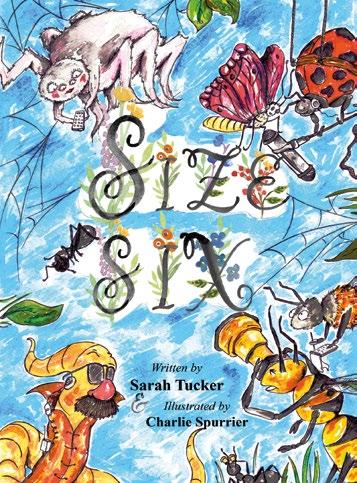
Sarah Tucker is the author of Size Six, Size Seven and Size Eight (Cambridge Children’s Press), a trilogy of playful, illustrated chapter books helping children think creatively about problem-solving. These books are available from www.cambridgechildrensbooks.com
Church Crookham, GU52 0RF 01252 850121 stnicholas.school
Friday 13 March, 9am: Reception 2026 taster event
Friday 13 March, 9am: Year 3 2026 taster event
Open days may need pre-booking. Please check before visiting.
Calmer bedtimes for toddlers and preschoolers
By Helen Davies
Bedtime during the toddler and pre-school years can feel like a completely different world compared to the days of getting your baby sleep. Even children who previously settled well can suddenly need ‘one more story,’ ‘one more cuddle’ or ‘one more drink’ the very moment the lights go out. Although it can feel frustrating or confusing for parents, rest assured most of these behaviours are rooted in normal development.
Between 18 months and age 5, children go through huge leaps in language and imagination development, independence, emotional awareness and physical ability. With all this progress comes new bedtime challenges. Many toddlers discover the power of ‘no’ while pre-schoolers become highly conversational and imaginative. Separation anxiety often reappears and a child who was once content to settle independently may suddenly now need a parent close by.
Much of this behaviour comes down to emotional regulation. Young children are still learning how to manage big feelings and bedtime is the moment the day slows down enough for everything to catch up with them. They may ask for extra cuddles not because they are being ‘difficult’ but because connection helps them switch off and feel safe enough to fall asleep. Sleep pressure also changes as children grow, meaning naps may need adjusting or bedtime may need shifting slightly later.
Parents can support calmer evenings by creating a consistent wind-down routine that meets both the child’s need for connection and their own need for boundaries. Predictability
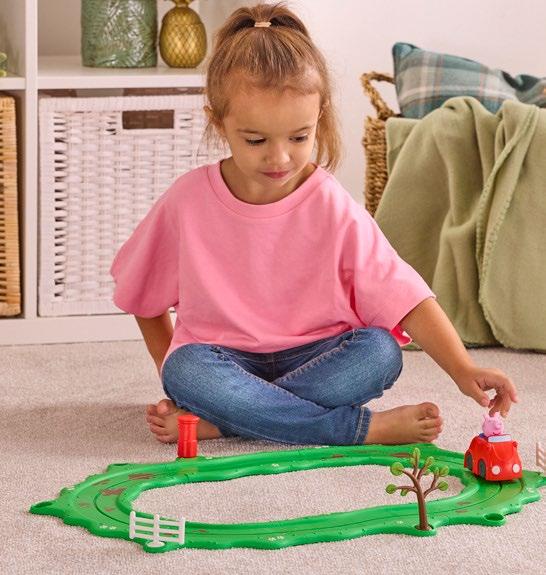
Peppa Pig WhizzAround Little Red Car Sets
helps children feel safe, while gentle limits prevent bedtime from stretching indefinitely. Responding calmly, keeping routines simple and using language that’s clear and warm can make a noticeable difference.
It is also helpful to understand that bedtime delays, protests and multiple ‘get ups’ are often a sign of a child seeking reassurance or testing where the limits are. Neither is a sign of poor parenting. With a steady routine, plenty of connection and realistic expectations, most families find the bedtime wobbles pass.
The toddler and pre-school years are busy, emotional and full of growth. When parents understand the ‘why’ behind bedtime behaviour, evenings become easier to navigate and far less stressful. With calm consistency and the right support, bedtime can become a peaceful part of the day again.
Helen Davies runs Essential Parenting (www.essentialparenting.co.uk), a trusted, private health visiting service providing expert support with sleep, behaviour and early childhood development.
Why little ones resist bedtime
Many parents assume bedtime battles are behavioural but they are usually developmental. Around 18 months of age, children gain a new sense of autonomy and begin asserting independence. Their use of the words ‘no,’ ‘my turn’ and ‘I do it’ are about exploring control in the safest place they know. At the same time, emotional regulation is still developing. Young children cannot simply switch off after a busy day. They rely heavily on connection with parents to feel secure enough to settle. Asking for another cuddle or story is often their way of topping up closeness rather than manipulating the situation.
Pre-schoolers add another layer: imagination. This is the age of shadows, monsters and busy little minds. As their world expands, so can their worries and bedtime becomes a moment when those thoughts surface.
Understanding these developmental drivers helps parents respond calmly. With firm but gentle boundaries, a steady routine and a few minutes of meaningful one-to-one connection before bed, children feel more secure and settle more easily.
What is stimming in children?
By Usha Patel
As autism develops more awareness and acceptance in mainstream society, more different behaviours are observed and noted. Examples such as rocking, spinning, flapping hands, repetitive phrases and vocal sounds. These repetitive movements are all categorised as stimming.
Generally, stimming is not just performed by those with autism. We can all have bouts of stimming in certain situations, even those who consider themselves to have neurotypical brains.
What is stimming?
Most commonly, stimming is described as self-regulatory behaviour.
Dr Temple Grandin, who was born with autism, talks openly about stimming. She says in a YouTube clip: ‘As a child, I would spend hours dribbling sand through my hands to calm myself down because loud sounds hurt my ears. I was stimming to shut out the outside world.’ She goes on to say: ‘But the problem is, if a young child with autism is allowed to stim all the time, the brain becomes shut off from the world.
‘What you need to do is get the child into a quieter environment and help them take in information. ‘I was allowed an hour after lunch, where I could stim and veg out but I was not allowed to do that type of stuff at the dining room table. It’s okay to stim in private but if you let them (children with autism) stim for eight hours a day, they will not develop.’
Most definitions of stimming say it is a behaviour that regulates a child with autism and Dr Grandin is not refuting this claim at
Which therapies help with stimming?
To assess your child’s needs, seek an expert in Reflex Integration Therapy for a professional evaluation. This will provide a clear picture of any neurological and developmental challenges your child may be facing. Various sensory factors can also impact the nervous system, affecting further developmental issues. Both immature reflexes and sensory needs result in behaviours including stimming, which are coping mechanisms in an effort to bring order to a disordered nervous system. The order being sought is never achieved but the child will keep trying.
Over time, if these developmental concerns aren’t addressed, stimming can become deeply ingrained – a pattern hard to break. The nature of the most suited therapies will have gentle rhythmic movements as part of the intervention. The idea is to create a sense of regulation, building the correct motor pattern that can be used to move to the next developmental level independently. Allowing the child who stims the opportunity to unlearn rigid behaviour and incorrect motor patterns helps remove the need to stim in the first place.
all. She is just saying it needs to be limited. She did not talk until she was almost four years old and it was through her mother’s determination to find ways to help her that she gained the skills of other neurotypical children.
In the 1950s, Carl H. Delacato, EdD, director of the Autistic Unit at the Centre for Neurological Rehabilitation, suggested that the stimming behaviour exhibited by autistic children was a clue to what their neurological system was deficient in. Dr Delacato was the first doctor to see stimming behaviours as a way to treat a child.
As a therapist deeply interested in functional neurology, my goal is to understand what is happening in a child’s brain and how to neutralise the surrounding environment to help, especially in situations where stimming appears to be self-harmful, such as banging one’s head on a hard wall.
Usha Patel is a Neurocognitive Therapist at Raviv Practice London. For advice on any of these issues, visit www.ravivpracticelondon.co.uk
Becoming knowledgeable about autism
I often tell parents to try to understand the multiple factors that shape their child’s needs. Such as: the gut can influence the brain, just as environmental factors including bright lights and loud sounds, can have an impact. However, every child is unique so there’s no one-size-fits-all approach when it comes to autism.
I recommend reading up on the Polyvagal Theory, which explains how humans can feel safe and regulated within their own bodies. There’s also a wealth of valuable literature on topics like the gut, reflexes and the nervous system, written by qualified professionals. Before seeing a so-called specialist, make sure to ask them for references. The more knowledge you have, the easier it will be to find the right help that truly aligns with your child’s needs.
Dr Temple Grandin advises providing a child with ‘as many different experiences as possible. These experiences offer opportunities for learning, just as they would with any other child.’ I would suggest reading all her books on autism; she is a first-hand expert.
Must-visit UK petting farms
Compiled by Andrew Campbell
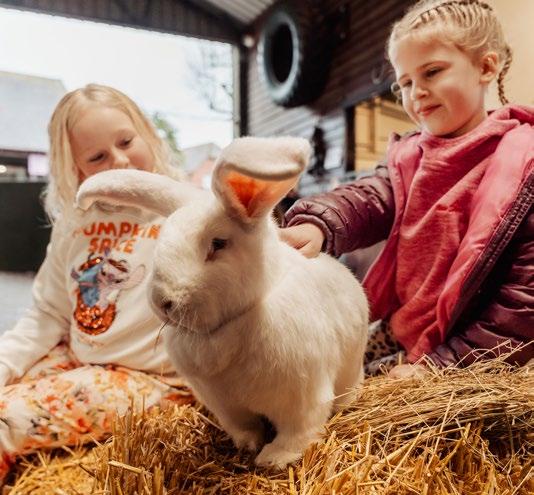
Spring across British farms means one thing: baby animals. March opens lambing season at family-friendly petting farms, where families can meet lambs, piglets, kid goats and calves. Bottle-feeding, farm tours and knowledgeable staff make these eight spots unmissable this season.
Baylham House Rare Breeds Farm, Suffolk Baylham House’s lambing weekends give families the chance to see newborn lambs up close and help with bottle-feeding rare breeds. Staff describe animal births and conservation efforts, while piglets and calves add to the farmyard action. Walking trails, broad picnic lawns and informative displays are great to explore between animal sessions. It’s an authentic taste of a working Suffolk farm in its busiest season. www.baylham-house-farm.co.uk
Reddish Vale Farm, Greater Manchester
As spring begins, Reddish Vale Farm is alive with new arrivals. Watch or help bottle-feed lambs, while goat kids, piglets and calves complete the nursery menagerie. Staff happily answer questions about the care of young animals and pony and tractor rides are available for extra fun. With indoor barns and a lively play area, this is a superb, reliable family day out whatever the weather. www.reddishvalefarm.co.uk
The Big Sheep, Devon
Beetle Bank Open Farm, North Yorkshire
At Beetle Bank, spring means lambs, piglets and goat kids taking centre stage. In the lambing barn, children can meet new arrivals and bottle-feed under staff supervision. Daily sessions cover animal care and explain how the newborns are kept healthy. There’s also fun with tractor-trailer rides, a giant sandpit and picnic and café options on site. It’s a classic Yorkshire rural experience - perfect for early spring outings. www.beetlebankopenfarm.co.uk
Ash End House Children’s Farm, Staffordshire Ash End House is a favourite for hands-on lambing. Children can bottle-feed lambs, hold goat kids and see piglets nursing. Each child receives a bucket of feed and tips from the team on how to treat new arrivals gently. Egg-collecting and animal talks enrich the day and covered barns offer shelter from unpredictable spring showers. A small but welcoming café provides refreshments after animal encounters. www.ashendchildrensfarm.co.uk
At The Big Sheep, lambing shows run daily in spring, giving children the chance to bottle-feed lambs and participate in hands-on sessions. Staff happily answer questions about animal births and routine care. Piglets and baby goats also feature, while indoor and outdoor play zones, including tractor rides and live animal races, make this a lively and educational family day out in North Devon. www.thebigsheep.co.uk
Rare Breeds Centre, Kent Lambing is the highlight at the Rare Breeds Centre. As well as Meet the Lambs bottle-feeding activities, families can watch piglets, goat kids and calves up close. Staff introduce family farming life and animal welfare, with trails and an adventure playground for burning off energy. A farm café serves local flavours and keeps the rural experience relaxed and accessible. www.canterburyoasttrust.org. uk/rare-breeds-centre
Vauxhall City Farm, London
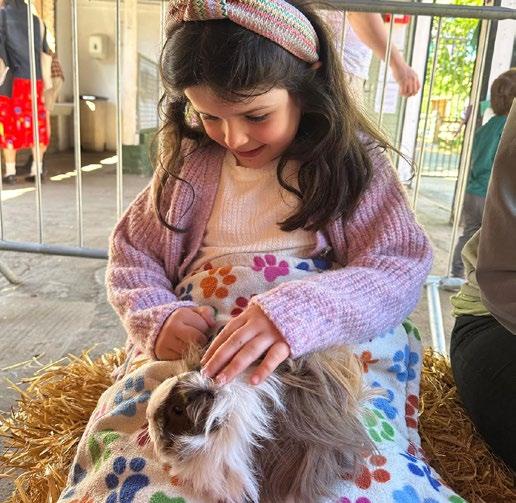
Vauxhall City Farm offers a springtime escape in central London, with friendly goats, sheep, alpacas, pigs, rabbits, guinea pigs and birds. Children can watch staff care for young animals and join Meet the Animals sessions. Knowledgeable staff explain how the farm raises its residents, while the Old Dairy Café and outdoor spaces make it an easy, family-friendly visit. www.vauxhallcityfarm.org
Chobham Adventure Farm, Surrey
Chobham Adventure Farm blends animal encounters with extensive indoor and outdoor play. Families can meet friendly farm animals in the Animal Barn, while children explore large soft play zones and outdoor adventure areas. Spring visits offer a mix of hands on learning and energetic play, with staff on hand to guide young visitors. With cafés, spacious play areas and a relaxed rural setting, it’s an easy, full day family outing. www.chobhamadventurefarm.co.uk
Beetle Bank Open Farm
Baylham House Rare Breeds Farm
The Big Sheep
Rare Breeds Centre
Vauxhall City Farm
Spring gardening projects children will love
By Ellie Malt
With the promise of spring all around, we don’t need science to remind us that getting hands-on in the garden is a fantastic, sensory-rich antidote to device time, which helps children reconnect with nature.
There is, actually, plenty of evidence to show how simply having access to green spaces reduces emotional dysregulation in children and teenagers. Gardening can help reduce stress, improve cognitive functioning, build self-esteem and improve physical health.¹
While the specific claim that simply touching soil is a direct ‘cure’ for mental health problems is not fully established, some studies do show associations and plausible mechanisms like serotonin release and microbiome effects.²
Keen to get them out there and digging in the dirt? The key is choosing projects and plants that suit their interests and their age while tweaking your involvement. Gardening with children isn’t about perfection. Plants will fail; seedlings may be overwatered and fairy gardens might be repeatedly rearranged. What matters is shared time, learning and the joy of watching children grow alongside their garden.
Sources: ¹ Bowler, et al., 2010; Hartig, et al., 2014; ² National Wildlife Federation, 2012.
Veggie plot
Growing food is not only biology in action but it is also a very satisfying experience. In our culture of immediate gratification, it is particularly good for teaching how rewarding a longer-term commitment can be. It can also be a great way to help younger children physically connect with where their food comes from.
Raised beds, grow bags or large containers are ideal for little gardeners. Under 5s can sow large seeds, water plants, watch for growth and taste what they harvest, with supervision. Those ages 5+ can help choose crops, plant seeds at the correct depth, label rows and maintain watering and weeding schedules. Children ages 9+ can manage a small plot independently, plan crop rotation, troubleshoot pests and take responsibility for harvesting.
PLANTS TO TRY
Under 5s: Broad beans, peas, radishes: large seeds, fastgrowing, easy to harvest.
5-8s: Lettuce, spring onions, courgettes: quick-growing, simple to care for, visually satisfying.
9-12s: Runner beans, potatoes, strawberries, tomatoes: more complex crops that teach planning, spacing and responsibility.
Sensory garden
A sensory garden involves touch, sight, smell and sound. This gentle exposure outdoors is especially helpful for those who are sensitive to textures or flavours. It instinctively appeals to children who enjoy hands-on exploration and is perfect for small spaces, containers or raised beds.
Under 5s can pat soil, water and smell herbs. Keep sessions very short and playful. Slightly older children can help choose plants, space seedlings and water on a routine. Ask them to observe and note changes.
Tweens can get involved in planning garden layout, researching pollinator-friendly plants and taking responsibility for deadheading and recording growth.
PLANTS TO TRY
Under 5s: Lamb’s ear, mint, lemon balm: soft, fragrant and safe to handle.
5-8s: Sunflowers, cosmos, lavender: colourful, easy from seed, great for observation.
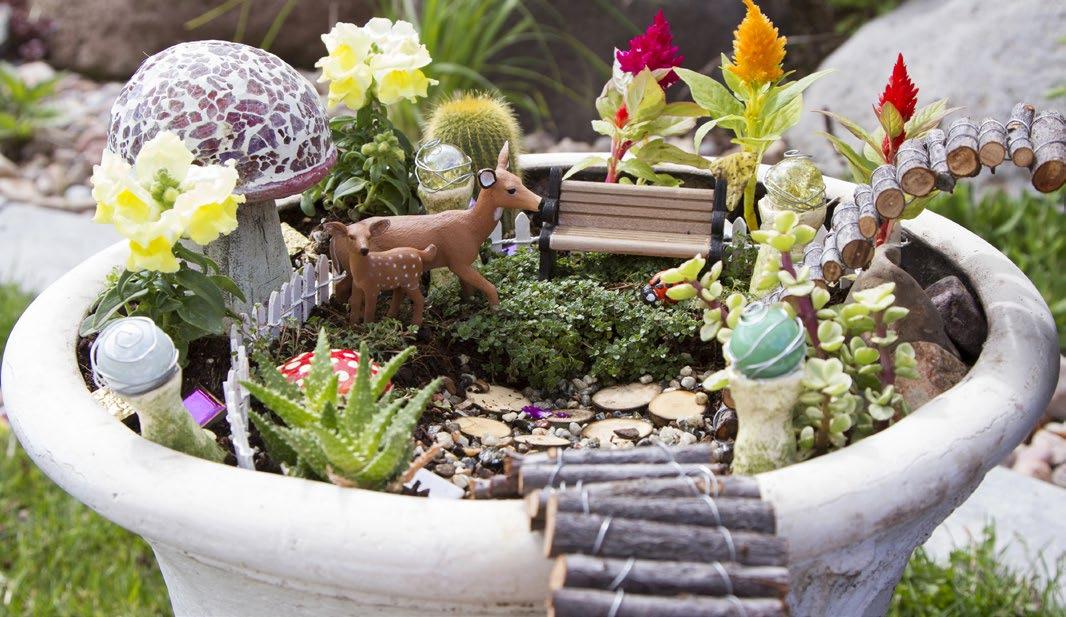
Combining horticulture with imaginative play, fairy gardens are perfect for children who enjoy storytelling and craft. They work well in pots, old containers or even sheltered corners. Let the youngest children arrange the fairy figures and natural decorations. Supervise gently to protect plants. Children can talk about their ideas, explain their garden and often play collaboratively, supporting vocabulary and co-operation.
Children ages 5+ can start designing small structures, planting, watering and adding storytelling elements as the ‘fairy garden carers.’ Tweens can branch out into planning themed gardens (not necessarily fairy-themed), learn plant requirements for shade and water and build miniature structures from natural materials.
PLANTS TO TRY
Under 5s: Moss, thyme, small hardy flowers: easy to handle and ideal for arranging miniatures.
5-8s: Nasturtiums, marigolds, violas: colourful and edible, perfect for hands-on planting.
9-12s: Miniature ferns, cosmos, dwarf grasses: great for themed designs and more complex maintenance.
Fairy garden
Ellie Malt is a mum of two daughters living in Surrey.
Easter treats to make with the kids
By Charlotte Stirling-Reed
I LOVE Easter and all of the fun that comes around this time of year. Days are longer and warmer - and there’s all that delicious food! Here are two simple, family-friendly Easter recipes for you to enjoy making (and eating) together.
Easter Eggs
Ingredients
Dark or milk chocolate depending on your preference; small or large chocolate egg moulds.
Method
Chop the chocolate into small pieces and melt in a heatproof bowl over a small pan half full of boiling water.
Pour into Easter egg moulds, tilting so the chocolate covers the surface.
Place in the fridge until set.
Repeat the process a few times until the chocolate layer is about 1/2cm thick.
Optional: add a toy for older children (be careful with younger children and ensure they are supervised).
Brush melted chocolate around the rim before sticking both halves together.
Leave to set again - and enjoy!
With thanks to Charlotte Stirling Reed for these recipes. Charlotte is an award-winning nutritionist, author and podcaster who works with brands, celebrities and parents to share positive, evidence-based advice on giving children a healthy start in life.
More information at www.srnutrition.co.uk
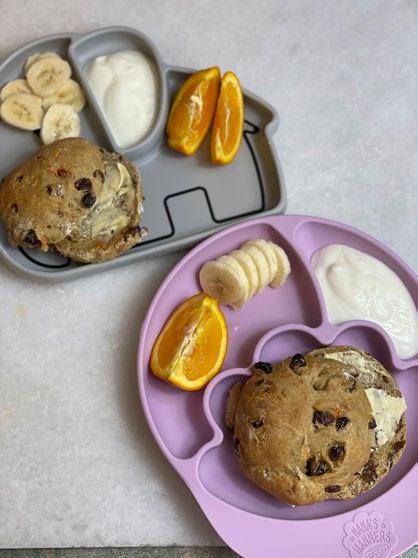
Carrot Cake Hot Cross Buns
A twist on traditional hot cross buns, these are sweetened with a combination of orange juice, carrots and raisins or sultanas. They are dairy free too! And great toasted…
Prep: 10 minutes + 2-2 ½ hours proving time
Cooking: 20 mins
Makes: about 12 buns
Ingredients
250ml plant-based milk alternative
50g plant-based spread
500g strong bread flour
50ml orange juice
7g sachet fast-action dried yeast
1½ teaspoon ground cinnamon
½ teaspoon ground nutmeg
Flour for dusting
2 medium carrots, peeled and grated (dab off excess moisture if you can, using kitchen roll)
200g raisins or sultanas
Method
In a small saucepan, warm the milk and then add the fat spread. Once the fat spread has melted, turn off the heat and leave it to cool slightly.
Add the flour, yeast and spices to a large bowl.
When the milk has cooled to lukewarm, make a well in the centre of the flour mixture, then pour in the warm milk mixture along with the orange juice.
Mix well with a wooden spoon, then use your hands to bring everything together into a sticky dough. Now add the peeled and grated carrots and all of the raisins. Combine into the dough. Tip: If your mixture seems too dry and is not coming together, add more milk gradually. Or if your mixture seems to wet, then add some flour gradually until you can form a dough.
On a lightly floured work surface, knead the dough until smooth, about 5 minutes by hand (or in a stand mixer with a dough hook if you have one).
Lightly dust a bowl with flour and add the dough. Cover the bowl with a tea towel and leave to rise in a warm place until doubled in size (around 1-1 ½ hours).
Heat the oven to 200C/400F and line two baking trays with baking parchment.
Divide the dough into 12 equal-sized pieces and shape into small round buns. Place them onto baking tray, leaving space for them to expand. Leave to rise again until doubled in size (approx 1 hour).
Use a knife to slice a cross in each bun.
Bake for 20 mins or until golden brown then allow to cool on a wire rack.
Optional: To add a traditional white cross, before baking, gradually mix together 70g flour with 1 tbsp of water to create a thick, pipeable paste. Spoon into a piping bag and use a small round nozzle to pipe crosses on the buns.
How to encourage a love of music in your child
By Jon Flinn
Listen to the stories of successful young musicians today and they will tell you that they got involved with classical music, in large part, because they were exposed to it from an early age.
It sounds obvious, doesn’t it? Yet no two musical ‘journeys’ are the same and there are many different starting points.
Cellist and former BBC Young Musician of the Year, Sheku Kanneh-Mason, says that it was experiencing live music that really spurred him on (though having five equally talented siblings learning music must have helped too!)
For 10-year-old multi-instrumentalist, Nathan-Asher Oriakhi, it was watching the drummer in his local church band every week and finally being allowed to sit next to him. Adrianna ForbesDorant first became aware of classical music because Classic FM was always on the radio at home.
The reality, of course, is that most musicians are unlikely to even remember their first exposure to music because, as the evidence clearly shows, the process of responding to music starts before we are even born. After just 25 weeks a foetus has a functioning auditory system and can respond to sound, for example, by jumping or kicking in response to a very loud noise.
So how do you as parents or parents-to-be nurture your child’s relationship with music?
Spark curiosity through music and movement!
At Vivace Music School, they turn curiosity into joyful learning with playful, movement-based classes – try a FREE class and see for yourself!
From babies to school-age children, every session is packed with singing, games, sensory play and real instruments— igniting imagination while building essential music skills. Classes are active, engaging, and rooted in the renowned Kodály approach, helping children discover their voices, develop confidence, and fall in love with learning through music.
Led by expert teachers, the curriculum supports your child from birth to senior school—nurturing creativity and musicality every step of the way. There are entry level classes for ages 0-7, and children can join at any point during the term. Older kids? Kids with SEN? Email to find out more!
Try Vivace Music School for FREE in Fleet, Farnham or Yateley! Book at www.vivacemusicschool.co.uk/book or email info@ vivacemusicschool.co.uk
The British Association for Early Childhood Education has done some great work in this area, showing how parental support for their child’s musical development is underpinned by two simple but vital principles: positive relationships and enabling environments.
Beyond giving warmth and love, relationships which encourage a child’s musical development are sensitive and responsive to the child’s needs, feelings and interests. For example, giving them access to variety of music to hear and play but acknowledging the child’s own tastes. They’re also about supporting the child’s own efforts to express themselves and being consistent in setting clear boundaries.
Creating enabling environments is about making sure that your child – whatever age – has access to appropriate stimulating resources which are relevant to a range of children’s cultures and communities, has rich opportunities to learn through play and playful teaching and is free to take risks and explore through music.
There are dozens of great tips on their website (www.earlyeducation.org.uk) – everything from copying children’s vocalisations to show that you hear and value them to using recording devices and creating ‘treasure baskets’ with items
Sign up at www.familiesmag.co.uk/go
Easter activities
This is a great time of year to rediscover the joy of being outdoors, and our fantastic local venues have loads of great family activities going on over the Easter season.
14 Mar-19 Apr
Let’s Go Bunny Hunt at Winchester Science Centre
This immersive, story-led experience invites children to explore South Downs habitats through movement, sound and imagination. Little explorers will follow a rhythmic trail through different spaces, discovering the clues wildlife leave behind. £14, under 3s FREE. winchestersciencecentre.org
21 Mar-6 Apr
Easter Adventures at The Vyne, Basingstoke
Perfect for youngsters aged 3-10, on this fabulously fun trail the whole family can dive into 10 action-packed games and challenges in The Vyne’s gardens before collecting a chocolate egg at the end. Prices are £3.50 per trail which includes an Easter trail sheet, bunny ears and dairy or vegan and Free From* chocolate egg. Normal admission applies. (*Suitable for people with milk, egg, gluten, peanut and tree nut allergies.) 10am-4pm nationaltrust.org.uk/the-vyne
21 Mar-12 Apr
Easter Egg Hunt at Hinton Ampner, Alresford
Grab your set of bunny ears and hop into the challenges Bonnie the Easter bunny has left behind. A chocolate egg awaits for the best bunnies! 10am-3pm nationaltrust.org.uk/visit/ hampshire/hinton-ampner
21 Mar-12 Apr
Easter Egg Hunt at Mottisfont, Romsey
Pop on your bunny ears, grab your activity sheet to guide the way, and follow the trail around Mottisfont’s grounds to discover the 10 awesome activity stations. At the finish line, a yummy Easter egg (choose dairy chocolate, or vegan and Free From) is waiting for you. 10am-5pm nationaltrust.org.uk/visit/ hampshire/mottisfont
28 Mar-10 Apr
Easter at Finkley Down Farm, Andover Lambs & goats’ kids will steal your heart, but Larry the Llama with steal your cup of animal feed! Be sure to check out the
timetable so you don’t miss Bunny Hop, Birds of Prey Shows and the famous goat race, Goat Gladiators! finkleydownfarm.co.uk
28 Mar-12 Apr
Spring Has Sprung at Wellington Country Park, Riseley
Celebrate all things spring with a mix of creativity, imagination, and outdoor adventure. Try your hand at circus workshops, step into an enchanting Easter garden roleplay experience and discover the magic of the season with your very own nature booklet to guide your explorations. 9:30am4:30pm wellingtoncountrypark.co.uk
3-6 Apr
The Easter Bunny Trail at West Green House, Hartley Wintney With blossom overhead and spring in flower everywhere, it is a perfect time to enjoy this most beautiful of seasons. An Easter Bunny Hunt leads the children through the 10-acre garden, with a traditional Easter treat at the end. 11am-4:30pm westgreenhouse.co.uk
3-6 Apr
Easter Eggstravaganza at Wellington Country Park, Riseley
Packed with dazzling entertainment, crafty fun and adventures for all the family. Enjoy spectacular circus performances in the big top, laugh along with panto style shows in the white tent and get creative with Junk Jodie’s crafts. 9:30am-4:30pm wellingtoncountrypark.co.uk
7-11 Apr
Alice in Wonderland – Play in a Week at Holybourne Theatre
A fun-filled week of creativity and exploration will allow children a rare chance to perform in front of a live audience and to experiment with characterisation in the most exciting way. It’ll be a thrilling challenge, beginning with nothing but a script at the start of the week and watching it grow and develop into the final product. holybournetheatre.co.uk
What’s on
March/April 2026
All listings are correct at the time of publication. Please check with the venue before you visit in case anything has changed.
MARCH
Until 9 Mar
‘Hop into the Wild’ Family Trail at Hinton Ampner, Alresford
Discover the ‘Hop into the wild’ family trail, with storytelling and outdoor play.If you’re a family (with children aged 6-11), come and enjoy the great outdoors, guided by cutouts of the “Hoppers” gang. 10am-3pm nationaltrust.org.uk/visit/ hampshire/hinton-ampner
Until 15 Mar
The Very Hungry Caterpillar Trail at Mottisfont, Romsey
This charming trail brings to life the best-selling story of the tiny caterpillar who hatches from an egg and is so hungry he eats through a variety of fruits and snacks each day. Enhanced by illustrated trail markers, activities and games, this is an activity packed trail. 10am-4pm nationaltrust.org.uk/visit/ hampshire/mottisfont
6 Mar Counting Sheeps at Phoenix Arts, Bordon Snuggle up and join two sheep on a journey through the joys and frustrations of everything bedtime. A touching, musical adventure filled with sensory play, for 0–3-year-olds and their (very tired) grown-ups. 10:30am/1pm phoenixarts.co.uk
7 Mar Family Karaoke at The Shed, Bordon Grab the mic. Make a memory. 4-7pm theshedwb.com
7-8 and 10-15 Mar
National Lottery Open Week: Enjoy FREE entry to the Whitchurch Silk Mill
On the banks of the River Test, the Mill offers a fascinating glimpse into the art of silk weaving and the operation and care of historic machinery. You will encounter skilled weavers working with original Victorian machinery, preserving centuries-old techniques in their original setting. whitchurchsilkmill.org.uk
7-15 Mar
National Lottery Open Week 2026 at The Vyne, Basingstoke Non-members enjoy free entry. 10am-5pm nationaltrust.org.uk/visit/ hampshire/the-vyne
10 Mar
Timothy’s Tots: Birds and Nests at Gilbert White’s House, Selborne Join Timothy the Tortoise for an interactive preschool session connecting your child to nature and the changing seasons. These sessions include stories, songs, craft and sensory activities exploring Gilbert’s Garden and the museum with a welcome from puppet Timothy, Gilbert White’s pet tortoise. 11am gilbertwhiteshouse.org.uk
12-14 Mar
Annie from RARE Productions at The Lights, Andover
With equal measures of pluck and positivity, little orphan Annie charms everyone’s hearts despite a nextto-nothing start in 1930s New York City. This all-time classic musical is a must for all the family, with a great soundtrack and fabulous acting parts. thelights.ticketsolve.com
14 Mar
POP! The Bubble Show at The Haymarket, Basingstoke
Starring an incredible line-up of the world’s best bubble artists, this onenight-only performance is packed with breathtaking skill, artistry, and imagination. Adding laughter and surprise, is the brilliant Bulgarian clown Kole Kitanov. 7:30pm anvilarts.org.uk
14 and 15 Mar
Mother’s Day Bubble Afternoon Tea and Sunday Roast at Oakley Hall, Basingstoke
This Mother’s Day, you can sit back and relax at Oakley Hall letting their family take care of yours. Whether you’re looking to enjoy a sumptuous afternoon tea or wanting a delicious three-course meal, there’s something for all to enjoy! lovebasingstoke.co.uk
14 Mar-28 Jun BEES! at Willis Museum, Basingstoke
From buzzing gardens to golden honey, bees connect us to the natural world in remarkable ways. This exhibition explores their world, how they live, work and communicate, sometimes even through dance! 10am-5pm hampshireculture.org.uk
15 Mar
Mother’s Day at The Malls, Basingstoke Performances from Elton Wrong and goodies for Mum. 11:30am/1:15pm/3:00pm themalls.co.uk
15 Mar
Mother’s Day Lunch at Hawk Conservancy Trust, Andover
Enjoy a delicious three-course lunch prepared by expert chefs. This special lunch will take place in-between stunning flying displays, giving you a chance to relax and enjoy watching beautiful birds soar the skies as part of your day. 12:15pm hawk-conservancy.org
15 Mar
Mother’s Day at Finkley Down Farm, Andover
Visit Finkley Down Farm over the Mother’s Day weekend for a great day out with all the family! All the marvellous Mother’s Day activities are included in the all-day entry to Finkley Down Farm. finkleydownfarm.co.uk
Mothering Sunday at West Green House, Hartley Wintney
Around the sylvan lake, the verges are filled with swathes of spring flowers, making it a most beautiful place to celebrate mother’s special day. Come to the gardens’ charming tearoom, which will be brimming with spring flowers and where a scrumptious display of homemade cakes and scones are ready for you to purchase. 11am-4:30pm westgreenhouse.co.uk
16 and 17 Mar
Shrek Junior from Rookwood School at The Lights, Andover Rookwood School are delighted to present Shrek Junior. Based on the DreamWorks Animation Motion Picture and the book. 7pm thelights.ticketsolve.com
21 and 22 Mar
The Lion, the Witch and the Wardrobe at Holybourne Theatre
Expect magic, adventure, prophecy, sacrifice, bravery, redemption, and even snow in this rip-roaring, spectacular new staging of C.S. Lewis’ classic fantasy novel. 2pm/6pm holybournetheatre.co.uk
22 Mar
Spring Market at Silchester Farm
Celebrate the arrival of spring at Silchester Farm’s Spring Market – a day of fresh finds, local suppliers, handmade gifts, and seasonal treats, perfect for enjoying great food, good company, and the first warmth of the season. 11am-4pm lovebasingstoke.co.uk
24 Mar
Timothy’s Tots: Bugs and Bees at Gilbert White’s House, Selborne Join Timothy the Tortoise for an interactive preschool session connecting your child to nature and the changing seasons. These sessions include stories, songs, craft and sensory activities exploring Gilbert’s Garden and the museum with a welcome from puppet Timothy, Gilbert White’s pet tortoise. 11am gilbertwhiteshouse.org.uk
27 Mar
Every Other Mother at Phoenix Arts, Bordon
Featured in The Guardian and the New Yorker and curated by The Phoenix’s very own Sally Mcllhone, Every Other Mother combines comedy, new writing, poetry and performance to create an hour and a half of cultural nourishment for mums of all ages. This time, it’s a comedy special, with a brilliant line-up of mummy comics ready to
make you laugh so hard you need to borrow a nappy...! 10am phoenixarts.co.uk
27 Mar Taylor Mania at The Harlington, Fleet
An award-winning extravaganza that plays tribute to one of the leading contemporary recording artists of our time. Katy Ellis, a self-obsessed ‘Swiftie’ with an incredible live band and dancers, promises to deliver the most authentic recreation of a Taylor Swift show you will ever see. 7:30pm theharlington.co.uk
29 Mar
Model Train Rides at Viables Craft Centre, Basingstoke
Public miniature train rides, run by Basingstoke and District Model Engineering Society. basingstokedmes.co.uk
31 Mar and 2 Apr
Family Easter Trail at Whitchurch Silk Mill
This spring, join us for a delightful adventure through the historic mill and its beautiful riverside grounds. Pick up your trail sheet and a pair of bunny ears at the mill reception, then set off to explore the mill, garden, and riverbanks. 10:30am-12pm whitchurchsilkmill.org.uk
APRIL
1 Apr
The Princess Proms at The Anvil, Basingstoke
Prepare for a show-stopping concert filled with the most epic, heartwarming and nostalgic songs from magical animations, such as Moana, Wicked, Frozen, K-Pop Demon Hunters, Beauty & The Beast, Anastasia, Pocahontas, Aladdin and more! Creating magical memories, sharing stunning musical moments and spreading joy, the stars have performed on the West End, ITV, for royalty and more. 1:30pm anvilarts.org.uk
1 Apr
Family Activity Day at Shaw House, Newbury
Decorate a polystyrene egg with paint pens, sequins and other craft materials so it’s ready for an Easter egg hunt! Aimed at 7–11-year-olds, but younger and older children are welcome. 10am-2pm westberkshireheritage.org
2 Apr
Messy Museum Morning at West Berkshire Museum, Newbury
Greet Spring by choosing a themed ceramic hanging decoration to decorate with porcelain pens and other craft materials. Subject to
Easter family fun at Winchester Science Centre
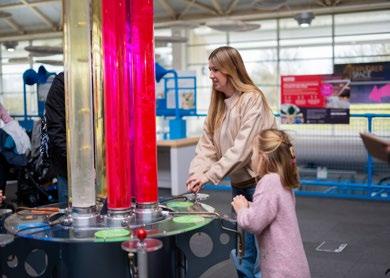
Hop into adventure at Winchester Science Centre with Let’s Go Bunny Hunt, from the 14 March to 19 April! This immersive, story-led experience invites children to explore South Downs habitats through movement, sound, and imagination. Little explorers will follow a rhythmic trail through different spaces, discovering the clues wildlife leave behind. Plus, explore two floors of interactive hands-on exhibits, blast off in an out of this world planetarium show and witness explosive don’t try this at home demos in science live! Tickets from £14, under 3s FREE.
www.winchestersciencecentre.org
availability, choose between a bunny, chick, lamb, egg or butterfly. westberkshireheritage.org
4 and 5 Apr
Petting Zoo at West Green House, Hartley Wintney
With blossom overhead and spring in flower everywhere, it is a perfect time to enjoy this most beautiful of seasons. On the Saturday and Easter Sunday as well as an Easter Bunny hunt, children will be able to visit the petting zoo. 11am-4pm westgreenhouse.co.uk
7-12 Apr
Midnight in the Toyshop at St Martin’s Theatre, London
Step inside a magical toyshop where toys spring to life as the clock strikes midnight. Packed with catchy songs, dazzling dances and heart-warming storytelling, Midnight in the Toyshop is a delightful musical the whole family will adore. perform.org.uk
8 Apr
Alice in Wonderland – a Pantomime from Hot Rock Productions at The Lights, Andover
Hot Rock Productions is excited to be bringing to stage a funfilled family pantomime, featuring stunning scenery, colourful costumes, toe-tapping songs and bucketloads of laughter. Join Alice as she falls down the rabbit hole and finds herself in the most peculiar place she’s ever seen! 2pm thelights.ticketsolve.com
8 Apr
Family Activity Day at Shaw House, Newbury
Make a rocking sheep or lamb from a paper plate, cotton wool, pom poms, wiggle eyes, markers, glue and other craft materials. Aimed at 7-11-year-olds, but younger and older children are welcome. 10am-2pm westberkshireheritage.org.
and their families the chance to get up close and personal with these fantastic, realistic beasts. 10am/12:30pm/3pm thelights.ticketsolve.com
10 Apr
Messy Museum Morning at West Berkshire Museum, Newbury
Make a rocking rooster or a pecking hen from a colourful paper plate, tissue paper, feathers, glue and other craft materials. New and complementary free trails available from the activity trolley in room 1. 10am-1pm westberkshireheritage.org
10-12 Apr
Wind in the Willows at the Corn Exchange Newbury Come along for the ride with the Corn Exchange’s Infant and Junior Youth Theatre, as they tell the wondrous tale of the Wild Wood and its inhabitants. This fun-filled adventure follows Mole, Rat, Badger, and the wild Mr Toad, whose love for fast vehicles gets him into big trouble. 1pm/6pm cornexchange.com
11 Apr
Highclere Castle’s Easter Egg Trail
Explore the gardens and woodland and discover the Highclere Castle Easter Egg Trail. At the end of the trail, each child will win a chocolate Easter Egg or an alternative dairyfree treat! 10am-2:30pm highclerecastleshop.co.uk
11 Apr
Robin Morgan: Storytime at Phoenix Arts, Bordon Using some of the most gifted young actors present in the room at the time (who will NOT be paid), Robin will tell you a story that is quite literally impossible to tell again. A brand-new family-friendly comedy show from the star of Mock The Week, BBC Radio 4’s The News Quiz, and CBBC’s The Dog Ate My Homework and Step Up To The