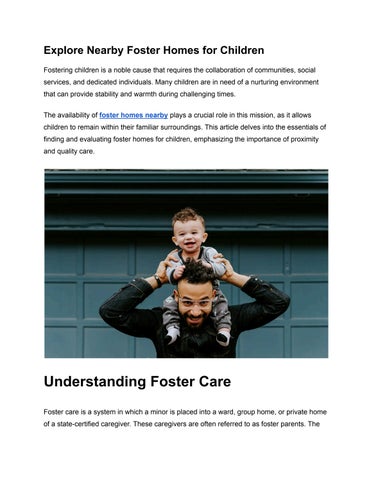
Fostering children is a noble cause that requires the collaboration of communities, social services, and dedicated individuals Many children are in need of a nurturing environment that can provide stability and warmth during challenging times
The availability of foster homes nearby plays a crucial role in this mission, as it allows children to remain within their familiar surroundings This article delves into the essentials of finding and evaluating foster homes for children, emphasizing the importance of proximity and quality care
Understanding Foster Care
Foster care is a system in which a minor is placed into a ward, group home, or private home of a state-certified caregiver These caregivers are often referred to as foster parents The
primary aim is to provide a safe and nurturing environment for children who cannot live with their biological families
Key Benefits of Local Foster Homes
Choosing nearby foster homes offers several advantages:
● Community Support: Local foster homes enable children to stay within their community, maintaining their social networks and support systems.
● Access to Familiar Resources: Children have access to familiar schools, healthcare professionals, and recreational activities.
● Reduced Trauma: Staying close to their original environment can reduce the trauma often associated with displacement
To explore advanced guides and tips on fostering, visit this resource
Criteria
for Selecting Foster Homes
When evaluating potential foster homes, several criteria should be considered to ensure the best possible environment for the child:
Safety and Security
Ensuring that the foster home is a safe place is paramount This includes:
● Background Checks: Comprehensive background checks of foster parents and other household members.
● Home Inspections: Regular inspections to ensure the home meets safety standards.
● Child Safety Measures: Implementation of child safety measures, such as secured furniture and safe play areas
For more on tailored solutions to enhance child safety, learn about our tailored solutions
Emotional and Educational Support
Foster children often require additional emotional and educational support:
● Counseling Services: Access to child psychologists and counselors.
● Educational Assistance: Support for academic needs through tutoring and specialized education plans.
● Personal Development: Opportunities for extracurricular activities and personal growth
Find out more about this approach by visiting this page
Engaging with Foster Care Communities
Engagement with local foster care communities can enhance the experience for both the child and the caregiver:
Community Events and Support Groups
Participation in community events and support groups can provide:
● Networking Opportunities: Connections with other foster parents for shared experiences and advice.
● Resource Sharing: Access to community resources and information.
● Emotional Support: A platform for sharing challenges and successes.
Discover expert strategies here: Explore the community resources
Conclusion
Finding the right foster home for children is a critical task that requires thoughtful consideration and a focus on the child’s well-being. By selecting nearby foster homes, the potential for maintaining stability and continuity in a child’s life is significantly increased. It is essential to prioritize safety, emotional support, and community engagement in the fostering process. For a deeper understanding of fostering strategies and resources, explore this comprehensive guide
Contact Us:
Primary Address: 3915 Harrison Rd SW, Suite 500
Loganville, GA 30052 United States
Phone: (770) 462-3405
Website: https://families4families cc
Hours of Operation: Monday – Friday: 9:00 AM – 5:00 PM