Persecution in Turkey Targets
Christian Missionaries
PAGE 5
A Music Teacher Faces
His Greatest Test
PAGE 7
Abortion Pill Reversal Saved My Baby Girl
PAGE 19
Persecution in Turkey Targets
Christian Missionaries
PAGE 5
A Music Teacher Faces
His Greatest Test
PAGE 7
Abortion Pill Reversal Saved My Baby Girl
PAGE 19
Senior
Art
Jonathan
Photography
Contributors
Marshéle
Liana
John
Jeremy
Kristen Waggoner


By Kristen Waggoner CEO, President & Chief Counsel
I was in New York City, five minutes from taking the stage for a panel discussion on free speech, when my communications director nudged me and whispershouted the news: “We won Chiles !”
My heart leapt. The U.S. Supreme Court had ruled 8-1 in favor of our client, Kaley Chiles, determining that her home state, Colorado, cannot ban counseling speech it doesn’t like.
Kaley is a licensed counselor who wants to help kids struggling with gender dysphoria. A Colorado law is forcing her to only push children toward transition. But with this victory, counseling conversations are now protected and can’t be limited to state-approved viewpoints.
As I exited the stage, I was delighted to text Kaley with the news. Then I texted Brian Tingley.
With this victory, counseling conversations are now protected. ‘‘
Kristen Waggoner
Brian is a Christian counselor who challenged Washington state’s similar law in 2021. At the time, challenging a counseling ban felt like a cultural “third rail” — especially for a blue-state counselor with a reputation to uphold. But Brian knew the harm that would come to children and families if these bans were allowed to stay. So — with the help of ADF — he sued.
Brian lost in Tingley v. Ferguson at the district court, then at the 9th Circuit. When ADF appealed to the Supreme Court, three justices favored taking Brian’s case — just one vote shy of the Court agreeing to hear it. Justices Thomas and Alito wrote dissents from the
Court’s denial, noting the importance of the issue. Justice Thomas added that the issue wasn’t going away. And he was right.
Less than two years later, we appealed a near-identical case: Chiles v. Salazar. This time, the Supreme Court took the case. And, in God’s providence, the Court referenced Tingley in its Chiles opinion. “The Constitution does not protect the right of some to speak freely; it protects the right of all,” the opinion states.
Kaley’s victory is a win for Brian, too. In fact, we plan to ask a court in Washington to comply with Chiles and protect Brian and the clients he serves.
The Chiles decision will help protect counselors, parents, and kids from similar censorship laws that exist in more than 20 states. What’s more, our public policy team is working with state legislators throughout the country to craft bills to protect the rights of counselors like Kaley and Brian.
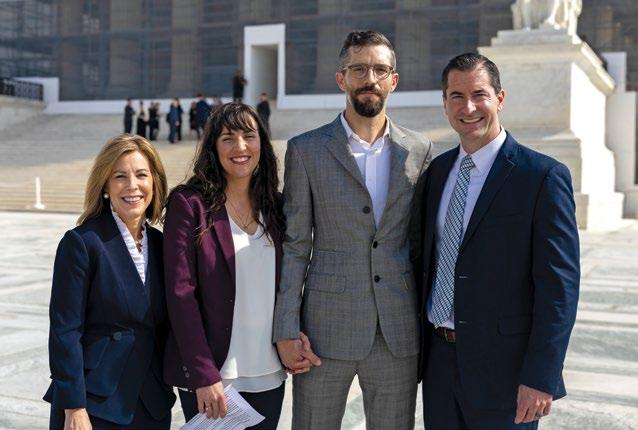
Kristen Waggoner with Kaley Chiles, her husband, James, and ADF Chief Legal Counsel Jim Campbell at the U.S. Supreme Court.
Sometimes — oftentimes — you have to lose before you can win. And no one can predict when the win will come. It’s simply a matter of stepping out in boldness and faith to do what’s right, abiding in Christ and trusting Him with the results.
I’m deeply grateful to every ADF client around the world who courageously makes that choice. Win or lose, they stand up for truth. They set their comfort aside. They challenge injustice.
It’s people like these who are ensuring that all might be free.
A former volunteer chaplain with the Austin Fire Department recently won a settlement after the city fired him for sharing his religious views on his personal blog.
Andrew Fox, an ordained minister, helped start Austin’s fire chaplaincy program and served as the city’s lead chaplain for eight years. After writing on his blog that men and women are biologically different, and that men should not compete in women’s sports, city officials demanded he apologize and then fired him.
ADF attorneys filed a lawsuit in 2022, arguing that the city had violated Fox’s First Amendment rights. As part of the settlement, city officials paid him damages and wrote a letter thanking him for his valued service.
ADF attorneys have filed a federal lawsuit against the city of Tuscaloosa after its public library denied a meeting space to a Christian organization.
Tuscaloosa Public Library permits a wide variety of groups to use its Rotary Room under its meeting room policy but denied access to Eagle Forum of Alabama solely because of its religious character and activities.
Eagle Forum had applied to host events in the Rotary Room and was approved in November 2024 for a one-year period. But after the group reserved the space for two meetings in August 2025, a library employee notified them by email that the reservations were canceled, citing “the current political and social climate.”
The lawsuit argues the library’s policy violates the Constitution by allowing secular organizations to use library meeting spaces while denying the same benefit to religious groups.
The library, of all places, should make every effort to protect a learning environment where all ideas and viewpoints are welcome.
Becky Gerritson, Executive Director, Eagle Forum of Alabama
Four months after filing a religious discrimination lawsuit on behalf of Moody Bible Institute, ADF attorneys reached a settlement allowing the college’s student teachers to train in Chicago’s public schools.
Chicago Public Schools (CPS) had previously excluded Moody students from its student-teaching program unless the college abandoned its right to hire only individuals who share its biblical beliefs and mission. The lawsuit, filed in November, challenged the Chicago Board of Education over that policy.
Under the settlement, CPS revised its agreement to acknowledge Moody’s religious hiring practices and has added the college as an approved partner for student-teaching placements.
“We sincerely appreciate ADF for their thoughtful counsel and dedicated efforts,” said Moody Provost Dr. Tim Sisk, “and we are thankful for the many prayers and support that have helped ensure this important opportunity remains available to our students.”
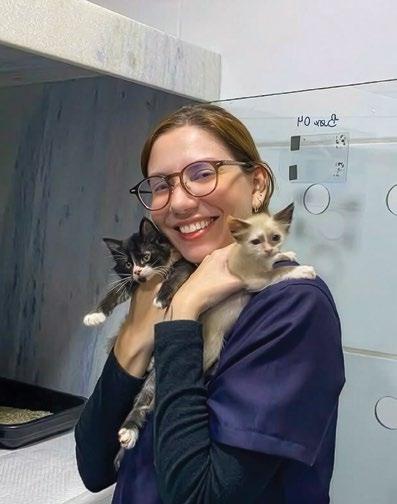
A Brazilian court dismissed criminal charges against a veterinary student who faced up to 10 years in prison for content she posted on social media.
In 2020, Isadora Borges posted two comments on X (then Twitter) expressing her views on gender ideology. One stated that people who identify as transgender women “were obviously born male.” Another said, “A person who identifies as transgender retains their birth DNA. No surgery, synthetic hormone, or clothing change will change this fact…”
The posts drew the attention of a politician who identifies as transgender and who reported Borges to the police for “transphobia,” claiming her comments violated Brazil’s criminal law.
In its ruling, the court said that Borges’ comments did not contain any attacks, threats, or hostility towards individuals who identify as transgender, nor did they incite violence, and therefore did not meet the threshold for criminal conviction.
ADF International provided legal support to Isadora, defending her right to freedom of expression.
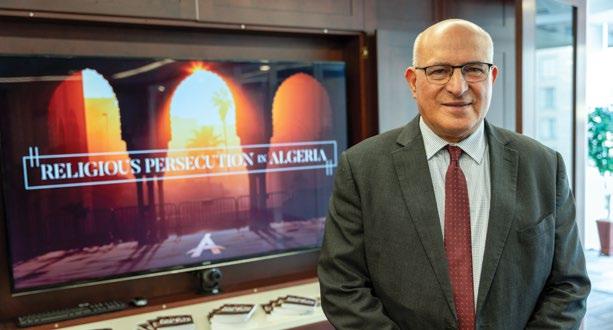
An Algerian pastor who was convicted three years ago and sentenced to prison and heavy fines for the so-called crime of “illegal worship” is now appealing his case to the Supreme Court of Algeria. ADF International is supporting Pastor Youssef Ourahmane in his appeal.
Algeria’s constitution protects religious freedom, but its laws target and violate the rights of Christians and other religious minorities. Nearly every evangelical church in the country has been shut down by the government.
Pastor Youssef, who converted from Islam to Christianity as a student, has been a church leader for more than 30 years and has faced criminal prosecutions since 2008 for his peaceful Christian activities. He is one of 50 Christians convicted under vague charges such as “shaking the faith” of Muslims — cases thought to be a reaction to the country’s large number of Christian converts.
“In the 1970s, the government gave out licenses to churches which were largely full of expats,” said Pastor Youssef. “Today, the government is concerned that our churches are almost entirely filled with large numbers of Algerian converts.”
What has happened to these
Nepalese girls exposes the dark side of the fertility industry, especially in the developing world. ‘‘
Tehmina
Arora,
Director of Advocacy
for Asia at ADF International
Reports from Nepal allege that two minor girls were coerced into egg retrieval procedures for use in assisted reproductive services, raising serious human rights concerns.
According to a petition before the Supreme Court of Nepal, the girls were identified via social media ads, approached by agents, and transported to a clinic where they underwent hormonal stimulation and invasive ova extraction without informed consent or parental involvement.
Supported by ADF International, petitioners are urging the Court to recognize these procedures as crimes against children, amounting to child trafficking, sexual violence, and reproductive exploitation.
The case is alarming due to the girls’ inability to give meaningful consent, the physical and psychological harm reported, and the apparent targeting of economically vulnerable minors. It highlights broader risks of trafficking and abuse within poorly regulated fertility industries.
By Liana Imparato
The last words of Jesus to His disciples were to “go and make disciples of all nations” (Matthew 28:19).
But what happens when the doors to those nations are shut to His workers?
That scenario is unfolding in Turkey, where Christian missionaries are facing growing barriers to remaining in the country.
The number of Christians in Turkey has fallen precipitously over the last century, dwindling to just 0.3% of the population. An estimated 99% of the population identifies as Muslim, and the government has become increasingly marked by Islamism.
Religious minorities, particularly Christians, have suffered growing hostility and persecution as a result. Turkey ranks among the top 50 worst countries for Christian persecution, according to Open Doors’ 2026 World Watch List.
The situation has escalated in recent years, with the Turkish government forcing hundreds of Christian residents out of the country — many of them foreign missionaries who have lived there for decades.
Missionary work is legal, under both Turkish law and the European Convention on Human Rights. But authorities are branding Christian workers with security codes, which label them as a “threat to public order and security” and ban them from the country.
Over 150 Christian missionaries have received these security designations since 2019, though no evidence of unlawful conduct has been found against any of them.
As a result, they are forced to uproot their families and relocate to another country. They must abandon the churches and communities in which they serve, weakening the already depleted Christian presence in Turkey.
Fields that are white for harvest are now left with few workers.
David Byle is a Christian evangelist who loves telling people about Jesus. For 19 years, he and his wife made their home in Turkey, where they raised five children.
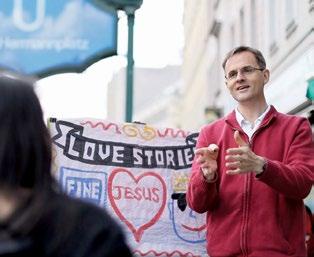
Ministering on the streets of Istanbul, David enjoyed using creative means — illustrations, puppet plays, pantomimes — to share the Gospel with passersby. People were often receptive, eager to listen and talk with him. But the government didn’t share that interest.
Officials repeatedly targeted David for sharing his faith publicly. He was arrested multiple times, held in detention cells overnight, and faced threats of deportation.
David Byle
One of those threats came in 2016, when the Turkish Interior Ministry claimed he was a “threat to national security.” He challenged the order in court and was granted an injunction that allowed him to stay.
Two years later, after a trip outside the country, authorities at the Istanbul airport refused to let him reenter, citing the security code assigned to him. He and his family were forced to relocate to Germany.
Other Christian workers are facing a similar fate.
Fields that are white for harvest are now left with few workers.
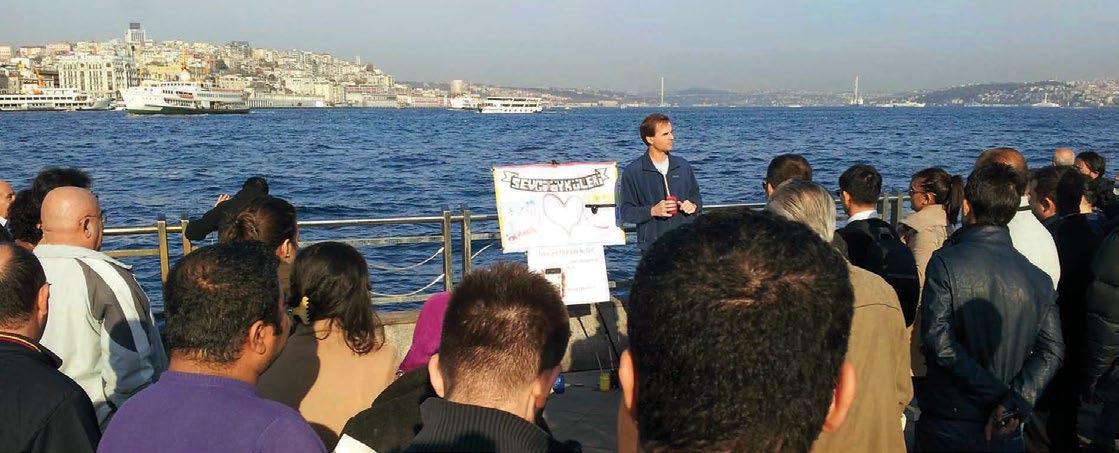
David Byle shares the Gospel with passersby in the harbor area of Istanbul.
Rachel and Mario Zalma (not their real names) moved to Istanbul in 2009 to support a new Christian church community. The British couple invested significant time in learning the language, history, and customs of the local people.
In 2019, sometime after the Zalmas attended a conference for Turkish Protestant churches, police informed Mario that he had been labeled with a security code. The couple later discovered that other conference attendees had received the same designation. Before authorities could deport them, the couple chose to return to England and take legal action to challenge the designation.
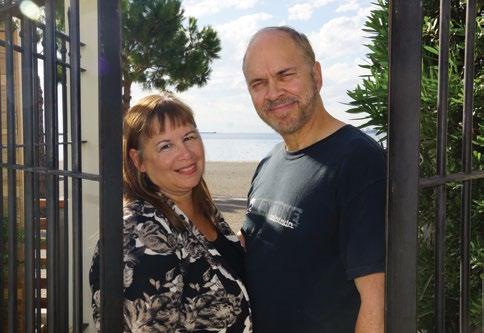
U.S. missionaries Dave and Pam Wilson ministered in Turkey for nearly 40 years — first as single adults and later as a married couple. Dave had first been involved in door-to-door evangelism, and Pam was part of a church planting team. They met in 1986 and married in 1988.
As the Wilsons ministered together in Turkey over the years, they faced several attempts by authorities to deport them because of their missionary activity. In 2019, they left the country for a holiday trip to the United States. When they returned, they faced deportation orders and entry bans.
The Wilsons and two of their ministry team members were assigned a security designation generally reserved for terrorists and have been forbidden from returning
It is shocking that a country as advanced as Turkey is now treating foreign Christians who have committed no crimes as terrorists — simply for sharing their faith,” says Kelsey Zorzi, director of global religious freedom for ADF International, which is challenging the government’s discrimination.
With the help of ADF International, David, the Zalmas, and the Wilsons have pursued various legal avenues to lift their entry bans.
For years, the Turkish government has thwarted those efforts. But this year, the European Court of Human Rights agreed to hear 20 cases involving Christians banned from Turkey, including the three ADF International cases.
Zorzi believes the Court’s decision to hear these cases all at once is a promising step.
“By examining these cases together, the Court is acknowledging that they may reveal a pattern of discrimination against Christians in Turkey,” says Zorzi. “We look to the Court to uphold the fundamental principle that governments cannot strip people of their rights simply for living out their faith.”
The Byles, Zalmas, and Wilsons long to return to Turkey — to worship alongside their Turkish brothers and sisters in the faith and build up the Christian community in a country that remains in desperate need of the Gospel.
My
By John Kluge
Iwould describe the past nine years of my life as a symphony — one that began with tension, uncertainty, and deep conflict, and built toward resolution. My legal battle and recent settlement remind me of Beethoven’s Symphony No. 9. It opens with struggle, searches for clarity, and then, in the final movement, breaks through into something entirely different: an “Ode to Joy.”
A fourth-generation musician, I started studying cello in first grade. I played in youth orchestras, performed in full symphonic ensembles, and participated in high school conducting apprenticeships. I loved every minute of it. When Brownsburg High School in Indiana hired me to teach orchestra and music theory, it was a dream come true. I could teach what I love and mentor students.
I was encouraged to see, through annual performance evaluations, that I consistently met or exceeded the school district’s expectations during my four years of employment at Brownsburg. Students had characterized me as a teacher who cared about his students, created a fun classroom environment, and was a positive influence. The biggest reason for my teaching success is that God has given me a joyful heart. I genuinely enjoyed my students. They weren’t just students to me; they were my fellow musicians.
The students were responding well to my teaching style, even eating lunch in the classroom just to hang out together. Extracurricular programs were growing, and many were receiving new awards in state competitions. One student in my music theory class even designed a T-shirt with an instrument representing every member of the class.
But even as my classes thrived, my job was about to become more difficult.
In early 2017, the administration began talking in faculty meetings about an upcoming policy change that would require teachers to use opposite-sex names and inaccurate pronouns for students who identified as transgender. Those who did not comply would be punished for harassment.
Alarmed, I drafted a letter to the district expressing my concerns not only for teachers but also for the health and well-being of transgenderidentifying students. Citing Scripture, I explained the policy’s burden on the consciences of Christian students and faculty members. Three other teachers joined me in signing the letter, asking the leadership not to force everyone down this path. But they did.
Informing teachers of the new policy, the school counselor told us to “feel free” to use students’ preferred names and pronouns. Since this was presented as an invitation and not a command, I assumed that I could continue to use my students’ legal names.
But later that day, the principal and school superintendent told me this was prohibited. I was given three choices: comply with the policy, resign, or be terminated.
We’re either going to fear God or fear man. ‘‘ John Kluge
Ididn’t want to quit on my students. But I could not violate my beliefs by speaking something I knew to be untrue. As a Christian, I believe that God created each of us as a man or a woman. It would be a sin for me to encourage students to identify as the opposite sex, causing children to stumble.
I sought counsel from my church’s elders. They suggested an option that would allow me to continue teaching without violating my beliefs: What if I used last names only? Coaches do this. Other teachers do this. It was aligned with the team environment I was already building in my classroom. I asked the administration to consider this, and the district granted the accommodation.
Eventually, a few teachers and students complained about how I now addressed my students — even though I called everyone by their last names. The principal pressed me to resign by the end of the school year. I knew I needed help.
I had heard of Alliance Defending Freedom and knew that they had defended others in religious discrimination cases. I reached out to ADF online, and they quickly connected me with a local allied attorney, Roscoe Stovall, who helped me navigate these new waters while I continued teaching.
At the end of the spring 2018 semester, the school revoked the religious accommodation and forced me to resign, ending my teaching career. With ADF’s help, I filed a lawsuit, arguing that Brownsburg’s actions violated Title VII of the Civil Rights Act, a federal law prohibiting discrimination against employees on the basis of religion.
There were times I felt weak. Early on, when many of our claims were rejected, it felt like everything was stacked against me. But God provided what I needed to keep going. During my final year at Brownsburg, I asked Him each day for the grace and strength to keep teaching and loving my students without feeling overwhelmed. I tried to be an example of steadfastness to them. Later, students said my quiet witness strengthened their faith.
In August 2025, the U.S. Court of Appeals for the 7th Circuit ruled that my case should go to trial before a jury. This was in light of the U.S. Supreme Court’s decision in Groff v. DeJoy, which affirmed that employers must accommodate employees’ religious practices unless doing so would seriously burden their overall business. As a result, the school district agreed in March 2026 to settle the lawsuit, paying $650,000.
Now that the case has been settled, a weight has been lifted off my shoulders. I’m encouraged to advocate for religious liberty even more, to embolden others to speak the truth in love, and to be a witness for Christ. Standing firm in faith is knowing what you believe and not giving up, even under pressure. We’re either going to fear God or fear man.
These days I lead worship at church and teach private music lessons. I’m learning new skills as a project consultant with a painting contractor. When this legal process started, my wife and I had one child. Today we have five, ages 9 and under. Through it all, God has been faithful.
Like Beethoven’s Ninth Symphony, I didn’t stay in that place of struggle. With ADF’s help, I moved toward a victorious resolution. Simply put, I found my way to joy.

I didn’t want to quit on my students. But I could not violate my beliefs by speaking something I knew to be untrue. ‘‘ John Kluge
Cover Story
By Chris Potts
There’s falling in love, and there’s … falling in love.
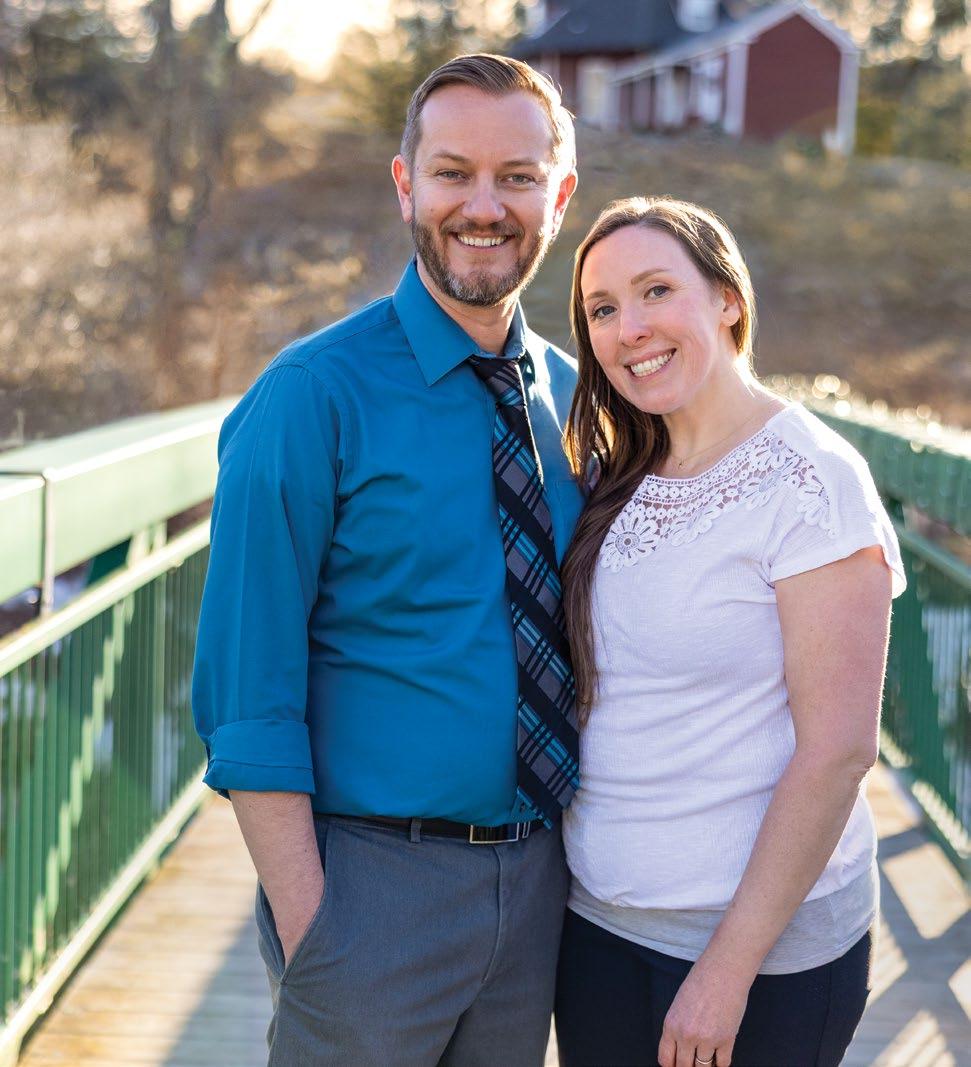
The first time Katy caught Brian Wuoti’s attention, the two 25-year-olds were both driving 45 minutes, from opposite directions, to take part in the same young adults Bible study. Katy walked in, and Brian remembers doing a bit of a double take. “Wow — who’s this?” he thought.
“The moment registered in my mind,” he says, smiling.
Weeks later, Katy came in late — and made an even stronger impression. The face that had turned Brian’s head was covered with scrapes and bruises. Out hiking on Mount Monadnock that afternoon, she’d taken a spill face-first on the rocks. Climbing back down, she patched herself up as best she could and hurried over to the Bible study.
Brian found himself more taken by the bandaged face than he had been by the pretty one.
“This time,” he says, “I saw what I identified —
correctly — as godly character. So many young women would’ve said, ‘If my face is this messed up, I’m not going out in public.’ I thought, ‘Wow, there’s something unique about this woman’ … and I could see falling in love with her.”
Out of a face plant, the interest grew — though a little slower, on Katy’s side of the garden.
The two began hiking and kayaking together, strictly as friends. “Just hanging out,” Katy remembers. But while she liked Brian well enough — “His integrity and character were just so evident” — nothing definitively clicked until she heard him preach his first sermon, a kind of try-out given by his congregation to a young layman feeling a strong call to ministry.
Listening to that fledgling homily, she remembers thinking, “I love this man.”
“He has such an incredible ability to make everything understandable when it comes to the Word of God,” Katy says. “It’s an application that’s really rare in a preacher … this gift that God has given him.”
The romance was confirmed (Brian eventually proposed up on Mount Monadnock), but full-time ministry was still a ways away. In the meantime, Brian became a high school math teacher. Fifteen years later, he’s the lead pastor in his church — and still teaching high school math.
The combination has come in pretty handy, actually, especially in recent years, as a state hostile to their faith has tried to force them to divide their biblical beliefs from their parenting goals … for reasons that don’t add up.
The Wuotis were married and expecting their first child when they moved to Wilmington, Vermont, one late summer’s day in 2011; Brian had accepted a teaching position there. The day after they unpacked, Hurricane Irene fairly drowned the town. Amid the destruction, the Wuotis saw their new community come together in remarkable ways, and forged bonds with neighbors they might never have, otherwise.
“We saw that this town was really special,” Katy says, “and we’ve loved it ever since.”
They found it a near-perfect place to raise children, reminiscent of the idyllic life each of them had treasured, growing up on small farms in rural Massachusetts — Brian, the middle of three boys in Westminster; Katy, the fourth of five girls in Concord.
Each was blessed with fields to roam, animals to care for, siblings close enough in age to share adventures, and loving parents who made sacrifices of work, time, and income to be around when their children came home from school.
“That impacted me greatly,” Katy says. “I had so many friends who came home every day to an empty house. They’d be almost like adopted children — my parents were always collecting extras. And when they came over, they’d feel that family presence that was so … palpable.”
In fact, if Katy had any frustrations as a child, they came from being a girl.
We don’t force our beliefs on our children … but we want to live our beliefs as genuinely as we can.
‘‘ Katy Wuoti

“I was quite the tomboy,” she says. “I went through that phase of gender dysphoria. I loved boy things — they were so much cooler than girl things.” Her parents let her cut her hair very short, “then I was mistaken everywhere we went for a boy.” But that was as far as her folks let it go. “My parents never let anyone call me a boy. ‘Nope,’ they’d say, ‘she’s a girl.’
“It was calm and reaffirming,” she remembers. “I didn’t ever take those comments as hateful. Nobody was pitting me against my parents, as happens so much today, where random adults will say, ‘Your parents hate you if they don’t affirm you.’ I never had those voices in my ears.
“I knew how much my parents loved me, and that bond that I had — that truth being spoken over me — helped me come out of it, eventually.” Her experience might have made her a valuable resource, later on, to Vermont’s foster family program. Unfortunately, the state had its own agenda when it came to gender dysphoria.
Brian, too, saw the increasing sexual confusion among youth, through his experiences in high school classrooms. Across 20 years, “I’ve had students of different faiths, different orientations,” he says. “Even though I wouldn’t encourage a kid into or toward homosexuality, I never allowed or tolerated kids bullying one another over those things.
“I’ve been able to build really positive connections with my students. Not every kid likes me — I’m still a math teacher.
But I’ve been able to connect with students who’ve been transgender in their identity, or homosexual or lesbian, and just be a friendly, safe teacher who holds kids to appropriately high standards and offers them support. Who believes in them and wants to equip them for their future.
“Sometimes, through the years, kids would find out, ‘Oh, he’s a pastor.’ But they’d still feel cared for by me, so that never was an issue.” Nor did fellow teachers who identified as LGBT express any qualms about his other profession, Brian says — even as that other profession was becoming a larger part of the Wuotis’ lives.
The two helped plant a church when they settled in Wilmington — something of a pioneer undertaking, in a small town in the least-churched state in America. When the church Brian was leading joined with another nearby church, three years ago, both congregations asked him to become their lead pastor.
“It’s such a privilege,” Brian says. “I grew up in a church of, like, 300, back when everything seemed to idealize megacongregations.” But, coming home from a family vacation one day, a teenage Brian’s eyes fell on a small church their car was passing. “Wow,” he thought, “what if God lets me be shepherd of a little flock?
“It was the complete opposite of what I was experiencing, but now, I’m so grateful. We have such amazing people to grow with and love God together.”
Random adults will say, ‘Your parents hate you if they don’t affirm you.’ I never had those voices in my ears.
‘‘
Katy Wuoti
For all its beautiful mountains and trees, Vermont is something of a spiritual desert, relative to the rest of the U.S. Sixtyfour percent of the population says neither personal faith nor the Bible is important — in both cases, that number is more than 20% higher than the rest of the country. Only 8% identify as evangelical Christians.
The state also has the nation’s lowest marriage rate, lowest fertility rate, and one of the highest rates of opioid use in the Northeast … the latter contributing to an overflow of children up for foster care and adoption. A few years ago, those numbers began to nag at Katy’s conscience.
“Most arrests that are on the news, there are families behind that,” she says. “Unseen kids who bear this cost of their parents’ decisions. That was so heartbreaking to me.”
She began looking into foster care after her second child was born. “‘We could do this,’ I thought.” Brian, she sensed, might
“
not be so eager, but “the Lord teaches me how to pray about things, instead of nag. If it’s His will, He’s going to let Brian know.”
He let him know. “Even the call to pastoring wasn’t as clear as the call to fostering and adopting,” Brian says. One Sunday, during a sermon he wasn’t preaching, the speaker mentioned how the Bible describes believers as being “adopted” into the kingdom of God.
“That one word,” Brian says. “I felt a weightiness — a heaviness — of just, ‘You need to adopt.’ I said, ‘No.’ We were good: a full family with two kids. Done. But the weight didn’t stop. I felt compelled by God: ‘No, you need to adopt.’ ” Eventually … “the best I could describe it is like crying ‘uncle.’ I said, ‘OK.’”
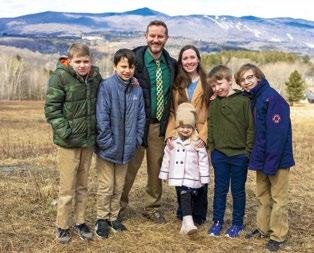
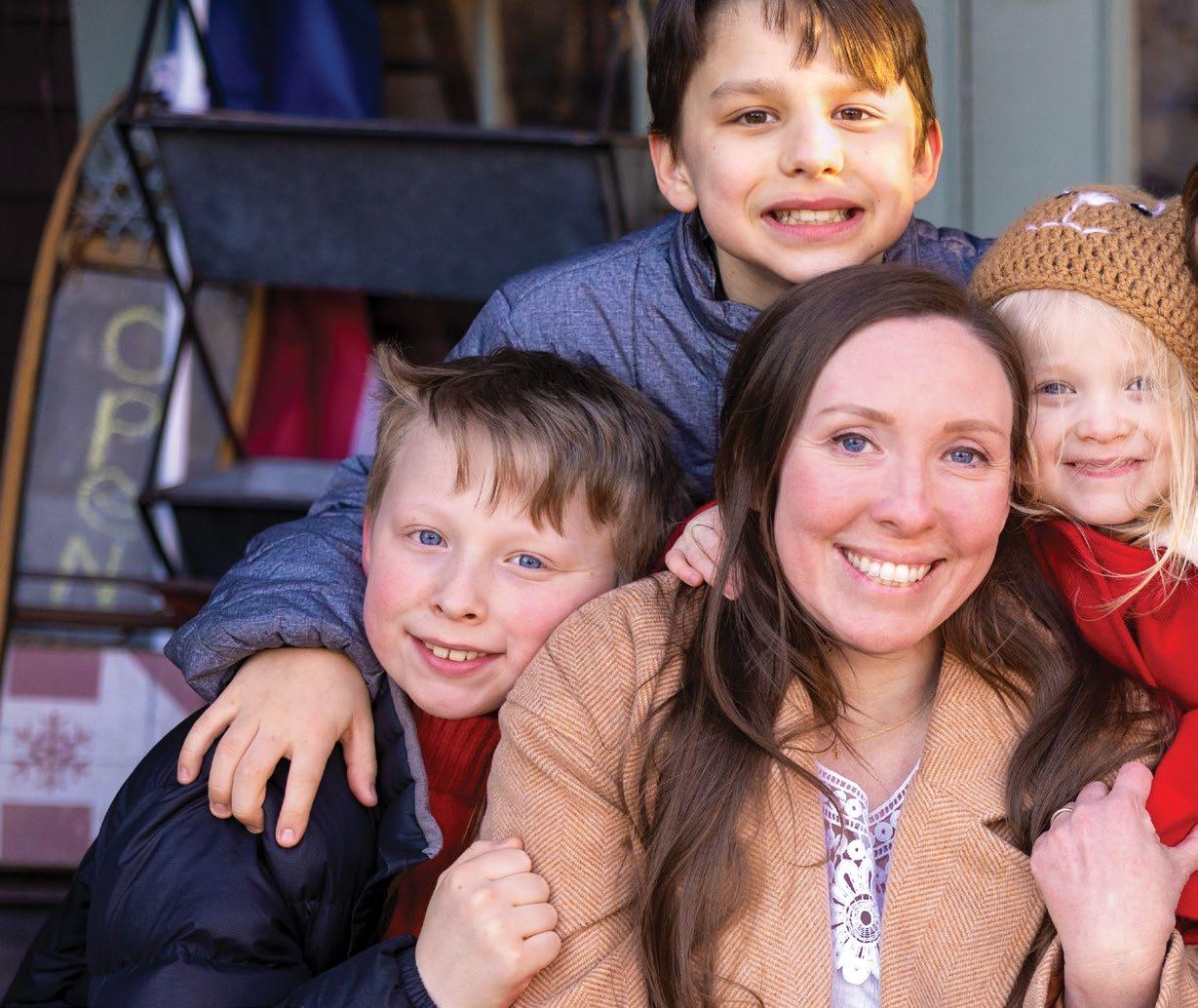
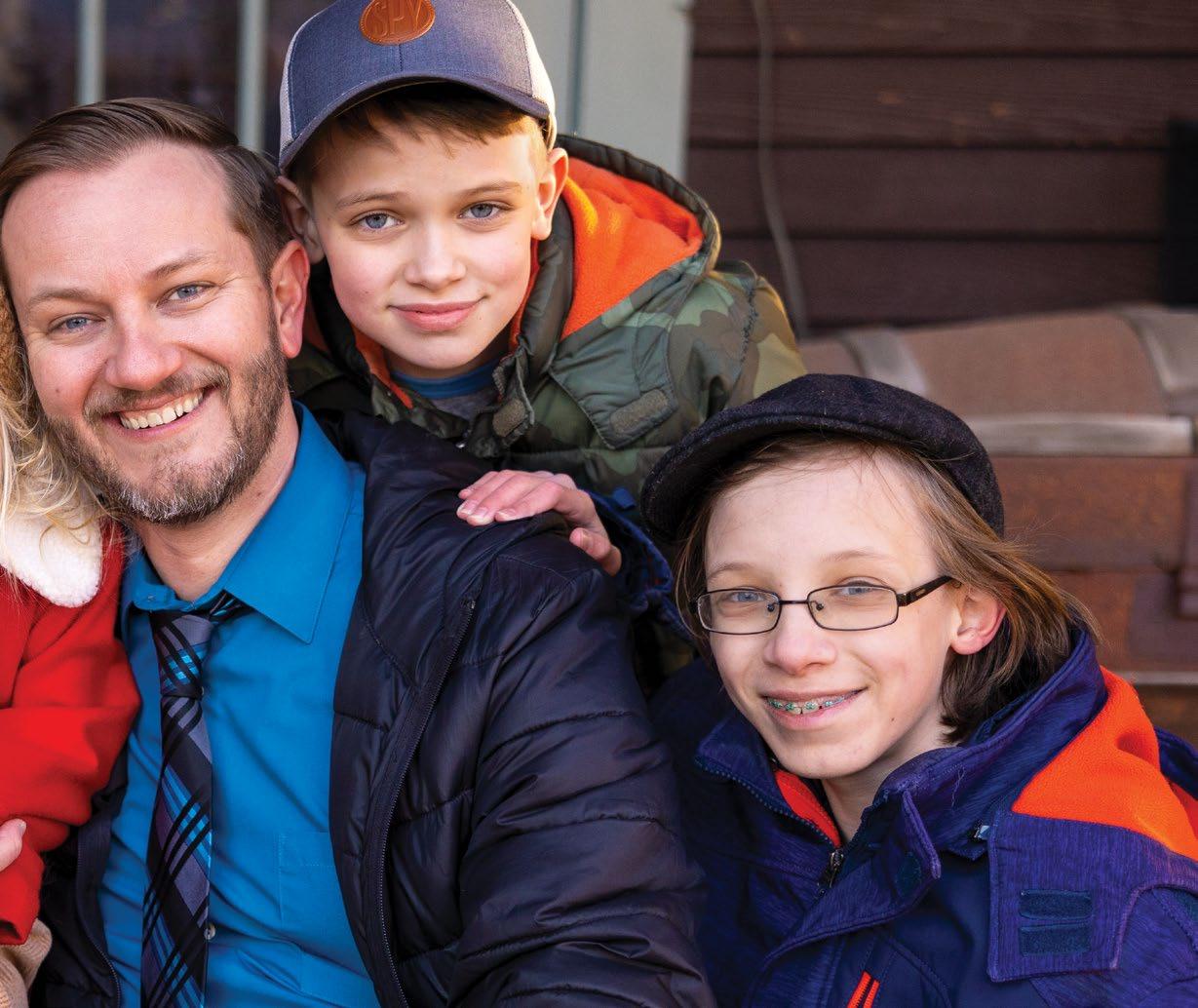
The Wuotis hadn’t even finished foster parenting classes when the state placed a newborn in their arms. Another boy, to join the two they already had. Soon after, the adopted boy’s half-brother came into the family. Then, years later, Katy gave birth to a surprise little girl to round out their brood.
Rook
Wilmington.
We can’t go around our house teaching our biological kids one thing and having to say completely opposite things to a foster child, just because the state makes us. ‘‘
Katy Wuoti
They have a really good bond,” Katy says of her children. “Most people don’t even realize that two of them have been adopted — they all kind of resemble each other.”
Everett, 14, is the logical one, who nurtures a strong sense of justice, his parents say. Griffin, now 13, was 6 when he told his parents, “I decided to trust in Jesus last night.” A week or two later, he added, “God told me He wants me to be a missionary.” Everett told his parents he’d seen a real change in his brother. “This is real,” he said. “I want to do this, too.”
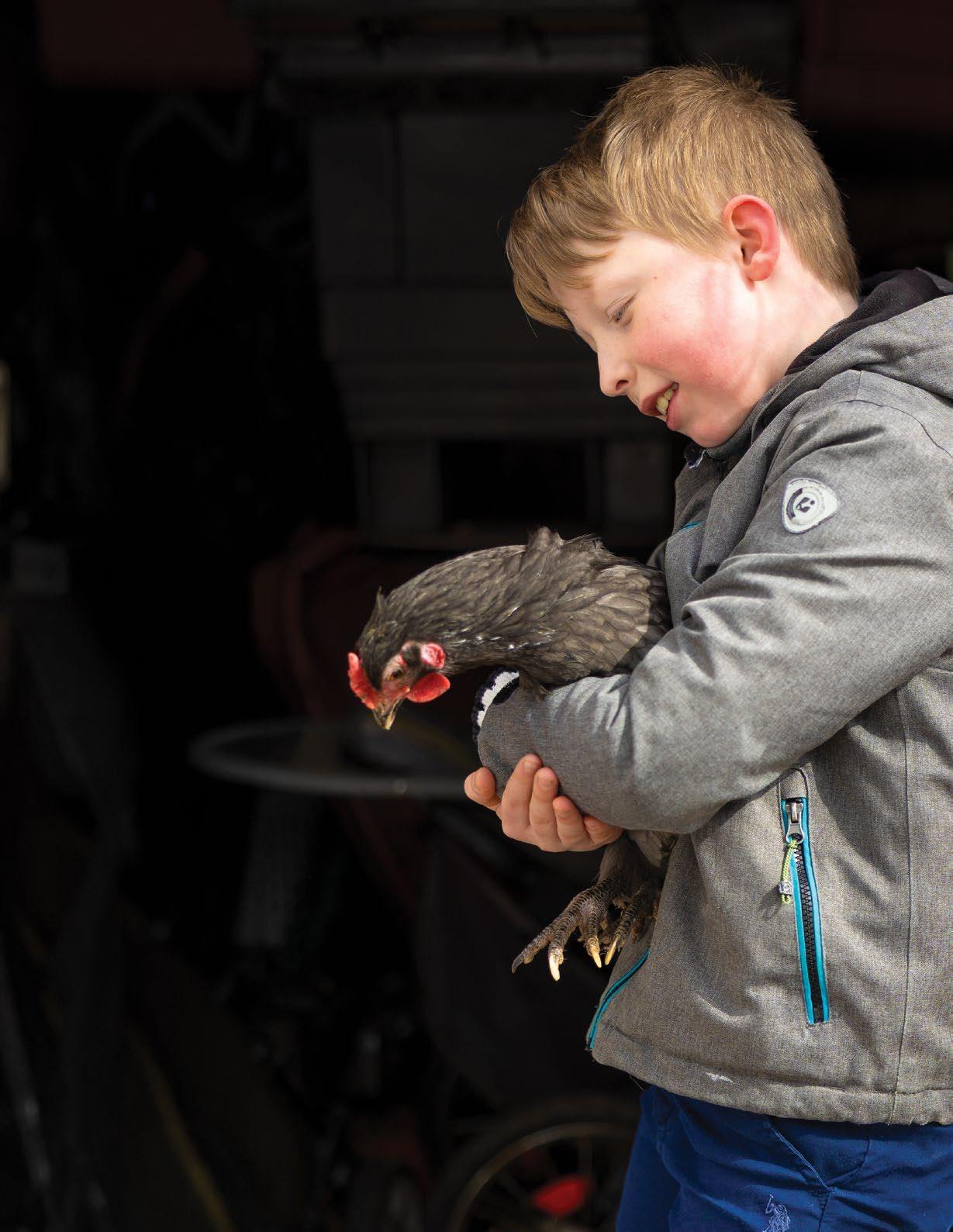
Rook, 11, “tends to be the leader.” One day, he came in from the backyard to announce, “I learned to ride a bike.” All by himself. By day’s end, all three of his brothers had followed suit.
Rowan, 10, is “the super-fast talker — and thinker.” At 4, he drew a card of himself shielding someone smaller
and wrote that, when he was older, he wanted to “protect people.” And Sylvia, 4, holds her own with her brothers. “She lights up a room,” her parents say, “and she knows it.”
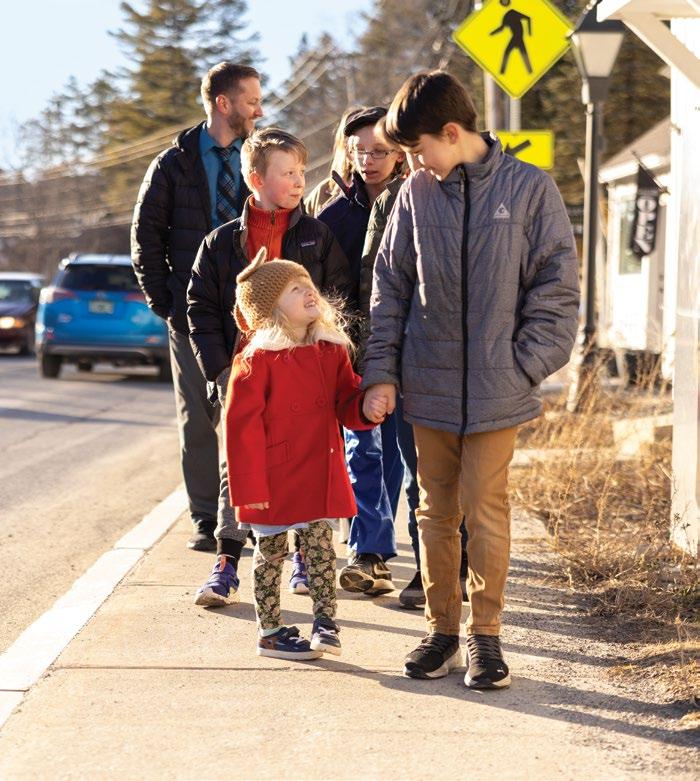
The family loves their backyard, nearby woods and lakes, and especially walking around their little town together, competing for “How many neighbors in the village can we say ‘Hi’ to?” Katy says. “They’re just really friendly, outgoing kids.”
“There’s something really special about this little pack of boys, how tight-knit they are,” Brian says. “They’ve grown up together, knowing each other as brothers all along. We used to have this song, ‘The Wise Wuoti Boys,’ and they’d sing it, walking down the street, and at the lake.”
Inspired by their good experiences, the Wuotis took part in foster awareness dinners hosted by several nearby churches to introduce local families to Department of Children and Families (DCF) workers. To the DCF’s delight,
many later signed up for foster parenting themselves.
“Those workers loved those dinners,” Katy says. Many were fond of the Wuotis, as well.
“I could not hand-pick a better foster family than [the Wuotis]!” one DCF employee wrote in a report. “They always have the child’s best interest at heart.”
Unfortunately, not all Vermont officials seemed to share that priority.
When it came time to renew their foster license, four years ago, the Wuotis filled out a new DCF questionnaire, clarifying their parenting attitudes and intentions. They were astonished when a letter came back saying their license had been revoked.
“One question had asked, ‘How would you feel about accepting an LGBT child?’ ” says Johannes Widmalm-Delphonse, senior counsel with ADF’s Center for Conscience Initiatives, who’d soon be representing the Wuotis. “They were just honest and said, ‘We would love and accept any child, but we want to be clear about what our religious beliefs are.’”
them just because they have different beliefs when it comes to sexual orientation and gender identity topics.”
Ironies abound, he points out. Infants up for foster care are too young to fathom sexual matters. What’s more, Muslim parents are not expected to promote, say, a Hindu child’s faith, nor are vegan families required to provide meat at their meals. Only traditional religious beliefs about sexual ethics seem singled out for exclusion.
“It’s only on this one topic where the state insists, ‘No, this is too far — you’re not allowed to practice your religion in your own home,’” Widmalm-Delphonse says, “when really it’s just about these families wanting to stay true to their conscience, the same as any other family does.”
It’s only on this one topic where the state insists, ‘No, this is too far — you’re not allowed to practice your religion in your own home.’ ‘‘
Johannes
Widmalm-Delphonse ADF Senior Counsel
Not good enough, the licenser told them. While DCF was confident the family would welcome any child placed in their care, state policy required that they affirm and encourage any child wanting to identify as a gender different from their sex. “While the Wuotis’ faith might preclude their agreeing with that choice,” their attorney says, “the state’s view, essentially, was ‘if you can’t lie to a child about what their identity is, then you can’t qualify.’”
The decision was based on Policy 76, a new requirement setting Vermont’s guidelines for unconditionally going along with a child’s claimed gender identity. DCF personnel — and by extension, foster parents — were required to use chosen pronouns, take children to pride parades, provide access to physical binders, and in general, do anything to support their LGBT identities.
“Vermont is one of several states where we’ve seen a lot of religious hostility toward foster parents because of their religious faith,” Widmalm-Delphonse says, “penalizing
Worst of all, he says, the policy excludes many of the parents who, historically, have been most willing to be foster parents, especially for children with serious disabilities and special needs.
“The state’s policy,” he says, “harms children by putting politics and ideology above children’s needs for love and permanency. It harms the entire state by violating the constitutional rights of foster parents, excluding them because of their religious beliefs and blocking their exercise of their right to free speech. And it’s pernicious, because a benefit that’s otherwise generally available — anyone can apply to become foster parents — is now conditioned on someone giving up their First Amendment rights.”
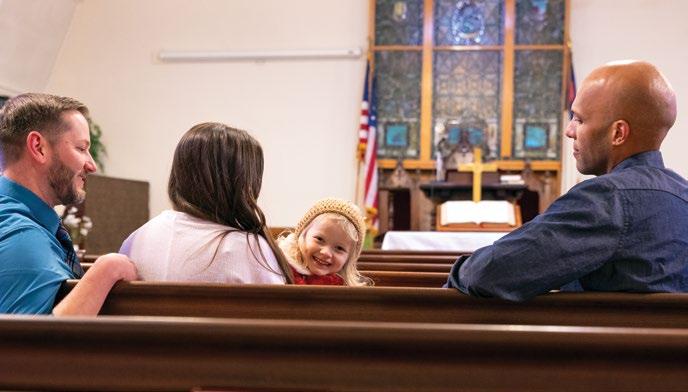
TBrian Wuoti “
he state actually asked us to back away,” Katy says. “‘Just withdraw your application, and we’ll leave it at that.’ And I thought, ‘No. We’re the same family we’ve always been. The same family we were when you let us adopt two kids.’”
“We’re not hateful toward anyone,” she later told DCF officials, reminding them of her own childhood struggle with gender dysphoria. “We love people. We want to follow God and the morality He’s given us. We can’t go around our house teaching our biological kids one thing and having to say completely opposite things to a foster child, just because the state makes us. We don’t force our beliefs on our children … but we want to live our beliefs as genuinely as we can.”
To secure that right — for themselves and others — the Wuotis decided to challenge the state’s enforcement of Policy 76.
Adoption has been a key factor of our family, and we want to preserve that possibility for other families. This is a fight worth fighting. ‘‘
ryan Gantt knew, when he walked in, that something was up. His wife and three daughters were sitting around the kitchen table, all quietly looking at him with the same odd expression.
“What’s going on?” he asked.
“What do you think about fostering,” his wife, Becca, asked, “with the idea of adopting?”
Bryan — busy raising the couple’s own four children — had never considered the possibility. Now, he did.
“Adoption has been a key factor of our family,” Brian says. “We want to preserve that possibility for other families. This is a fight worth fighting. Even if our family is full at five [children], we still think this is worth doing. We want Christians to be able to love and adopt kids in Vermont.”
The Wuotis knew they were taking some enormous risks. If they lost in court, they might never again receive their license and no longer be able to accept foster children. And, while less likely, Brian says, “It’s not a big logical leap for DCF — who separates families all the time for very difficult and legitimate reasons — to say if we’re not safe for foster kids … well, at what point might they have taken all our kids?”
The possibilities were nightmarish, but — win or lose — Brian says they were determined to follow the biblical example of Shadrach, Meshach, and Abednego. Our God can deliver us, but even if He doesn’t … we will not bow
Alliance Defending Freedom attorneys representing the Wuotis and two other foster parents, Bryan and Becca Gantt, filed a lawsuit in federal district court, contesting the constitutionality of Policy 76 and requesting a preliminary injunction that would allow both couples to continue foster parenting while the case proceeded. The injunction was denied, and ADF appealed to the U. S. Court of Appeals for the 2nd Circuit.
“Yes,” he said. “Let’s do it.”
The decision wasn’t hard, he says, because “a) we’d always wanted more kids, and b) there was such a need in our community for foster parents.” But nearly 10 years and three adoptions later, Becca — who “growing up, only wanted to be a mother” — has accumulated some perspective on the issue.
“It’s insane,” she says. “Exhausting. Not what I was expecting.” She smiles. “And a dream come true. God’s hand, with these kids coming into our family, is amazing. Yes, I’m tired. But it’s the most rewarding thing ever.”
If we don’t stand up for what we believe in, who is going to?
Bryan Gantt
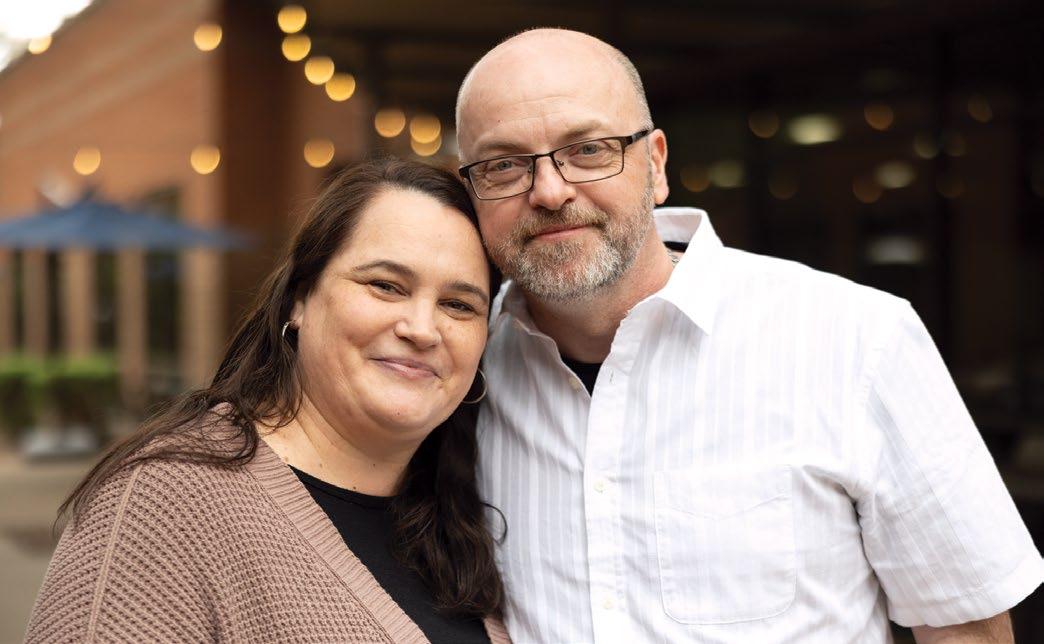
Becca was raised on Cape Cod; she and Bryan, a native of their Brattleboro, Vermont, community, met at a youth camp when she was 16. He was a pastor’s son who eventually joined the staff of his dad’s downtown church and became its lead pastor 10 years ago. The church is known for its community service, including support for a nearby pregnancy center run by ADF client Jean Marie Davis.
Though only 30 minutes away, Brattleboro is a far cry from Wilmington, the Wuotis’ charming tourist town. From his office, Bryan can see the addicts and gangs walking the city streets. One unexpected blessing of participating in the state’s foster program, he says, has been the opportunities it’s afforded him “to connect with more people out there in the world who are not part of the church, and minister to them in different ways.
“We just never would’ve imagined that God could do that through this process,” he says.
Among those he’s been able to minister to are people he’s worked with at the Department of Children and Families (DCF), many of whom have singled out the Gantts for their compassionate
adoptions. The couple has taken in children not only in need of parents, but also struggling with autism, ADHD, global delay diagnosis, and other problems.
But those social workers had little say when an email arrived announcing the DCF’s implementation of Policy 76.
became relevant. “But the state wants to know what your conduct is going to be after you adopt,” a DCF worker explained. “They don’t want to give you a child if they know, at some point, you’re going to have a different viewpoint than they do.”
Joining a lawsuit took Becca a long
God’s hand, with these kids coming into our family, is amazing. Yes, I’m tired. But it’s the most rewarding thing ever.
‘‘
Becca Gantt
It said something like, ‘Fostering licensure depends on being willing to affirm any sexual orientation or gender identity,’” Bryan remembers. “That’s not just ‘being quiet,’” he told Becca. “They’re saying we have to affirm.” Knowing they couldn’t do that and honor their faith, he thought, “We’re done.”
To the Gantts, the policy made no sense: any infant they took in would either be reunited with its parents or adopted long before sexual issues
way out of her comfort zone. But, Bryan said, “If we don’t stand up for what we believe in, who is going to?” In 2024, they joined the Wuotis to bring a successful legal action against the state.
“God has brought us through this whole thing,” says Becca, who, like Bryan, has been touched by the response of many would-be foster parents. “We’ve had so many contact us,” he says, “to say, ‘Thank you, because I can foster now.’ It’s a joyful, but very humbling, experience.”
But before that appeal could be argued, “Vermont reached out to say they were going to rescind their policy,” Widmalm-Delphonse says. “We ended up mutually agreeing to withdraw the appeal, send the case back down to the lower court — and to enter a permanent injunction against Vermont.”
Widmalm-Delphonse says several things may have contributed in part to Vermont’s decision. For one, an amicus brief filed in support of the Wuotis and Gantts by a 22-state coalition, attesting to the fact that many states don’t exclude religious families from foster parenting just because of their beliefs. “That just goes to show that this policy is as unnecessary as it is unconstitutional.”
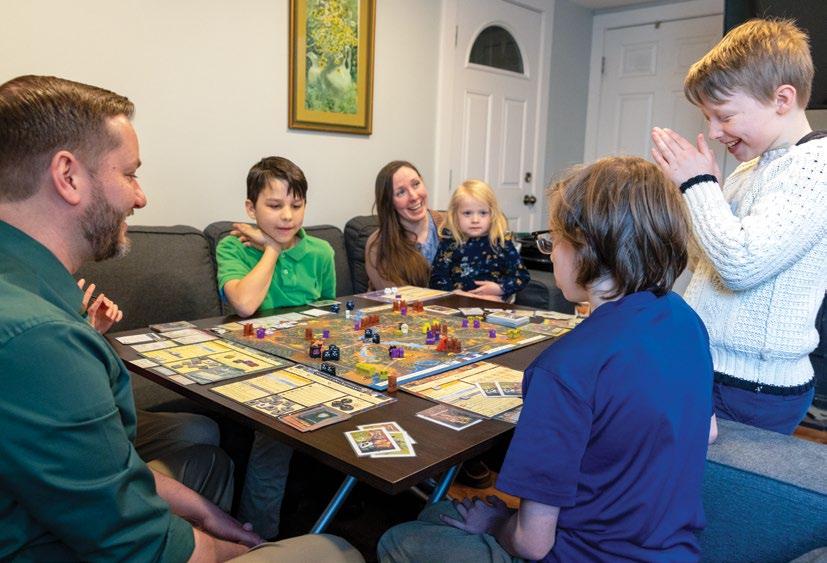
The Wuotis enjoy a lively game of Root, a family favorite.
to agree with the Wuotis’ beliefs to recognize the value of a ‘big tent’ strategy that welcomes as many religious foster parents as possible into the system.”
The Wuotis say winning a major lawsuit has changed some things. They’ve found unexpected support from some teachers at Brian’s work. They have an even greater appreciation for the privilege of raising such special children. But Katy says she’s lost something, too.
“I have no fear of the opinion of man anymore.” Even before the lawsuit, she says, she waited every day for Brian to come home jobless — fired for something he’d said in the pulpit, perhaps, that had been misconstrued online, or by a student in his class. “I’ve been afraid of people’s opinions, but God has cleared me of that. I care about His opinion, now — and that’s it. For me, that’s a beautiful thing.”
Our children’s faith will be tested and tried here, as ours has been, but that’s a good thing for them to experience. ‘‘
Secondly, while the Wuotis’ case was one of the first of its kind in the nation, a similar case was filed in Oregon shortly before theirs by another ADF client, Jessica Bates. Her case worked its way through the courts a little earlier, was decided in her favor, and the precedent, Widmalm-Delphonse suspects, nudged Vermont’s decision to settle.
Brian Wuoti
“Vermont is a beautiful place,” Brian says, “and we’re thankful we get to raise our kids here. But it’s also kind of like being missionaries, in a community where there aren’t many believers. Our children’s faith will be tested and tried here, as ours has been, but that’s a good thing for them to experience.”
Little Sylvia came in the other day, frustrated at not being allowed to do something she wanted to do. “Mom,” she asked Katy, “do you get to do whatever you want?”
In the end, Vermont officials agreed that the state could not exclude the Wuotis or the Gantts from fostering or adopting because of their religious beliefs. Both families have the option to reapply for their licenses.
Vermont’s new policy is a roadmap for other states that have discriminatory policies, Widmalm-Delphonse says, “to understand how they can safeguard children — even amid differences of opinion as to how — while still respecting religious liberty. Their new policy shows that you don’t have
“No, I don’t,” Katy told her. “Because what I want is to do what God wants me to do. So, I think about what He wants before I think about what I want.”
Sylvia mulled the idea for a moment.
“Well, I want to do that, too.”
She’s probably too young to understand all that a decision like that has meant for Mom and Dad, and her brothers. But they’re all persuaded that she meant it, with all her 4-year-old heart.
Some things just run in the family.
By Marshéle Carter
The school board meeting was about to start.
Outside, a united group of moms gathered for their first rally — part of a fast-growing parents’ advocacy network. The local chapter’s chairperson had sounded anxious and overwhelmed on the phone. So, without hesitation, Tina Descovich, the organization’s CEO, cleared her calendar, booked a flight to Washington, D.C., and took the first-available Uber to Prince William County in Virginia to support the group.
When Descovich opened the car door, she could hardly believe what she saw. Her chapter leader was standing with a Virginia candidate for governor and speaking confidently to a sea of supporters. Dozens wore navy blue T-shirts, scarves, and pins, all with one message: Moms for Liberty.
“I just stood there in awe,” says Descovich, cofounder of Moms for Liberty, a national network of parent-led chapters that empowers members to defend their rights at all levels of government. “They were all wearing the logo I designed just a few years before on a 10-year-old computer in my back bedroom.”
We aren’t angry people. We’re joyful warriors. ‘‘
Tina Descovich
Moms for Liberty began in 2021, when Descovich and fellow school board members saw parents struggling to navigate increasingly heated meetings, as agendas focused on issues such as gender identity, sex education, and Title IX protections for girls’ sports. Frustrated by unresponsive officials and what they viewed as ineffective advocacy, Descovich and co-founder Tiffany Justice launched a plan to organize parents across Florida, drawing on strategies used by national advocacy groups.
“We took a play out of that playbook,” she says. Descovich sees defending parental rights as the
final line in the sand. When the government intervenes too much in education, she says, communities — and eventually the nation — break down.
“As a parent, I have the God-given right to raise my children with my own values and to direct their education, medical care and religion,” she says. “The government didn’t give me those rights, and it can’t take them away.”
The organization focuses on mobilizing and training supporters. Its M4L Academy offers toolkits, seminars, podcasts, and book clubs designed to help parents take a more active role in local school and community matters.
Five years after its founding, Moms for Liberty reports 300 chapters in 48 states, 130,000 active members, and a mailing list of more than 300,000. What began as a statewide effort now extends into national policy conversations, including discussions with federal officials on education issues.
Descovich describes the group’s approach as energetic and optimistic.
“If you aren’t going to support parents and children, we’re going to call out the mom army, and we’re going to do it in a joyful way,” she says. “We aren’t angry people. We’re joyful warriors.”
Descovich and her husband, Derek, have five adult children, whom she describes as “his, mine, and ours.” In her free time, she enjoys researching her family’s history through genealogy. When future generations uncover her story, she hopes they will recognize the values that have shaped her work.
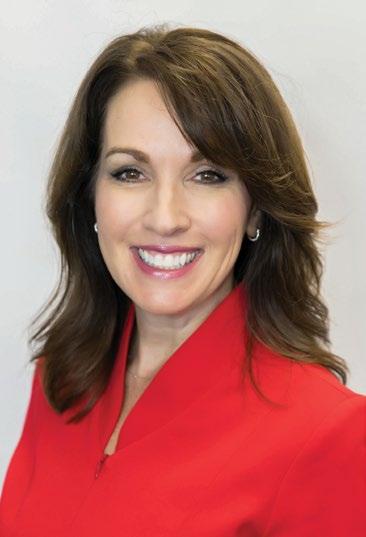
“I want them to know that I loved God, loved my family, and that I stood for liberty and truth, even at the most difficult times.”
Mackenna Greene was 25, unmarried, and starting a new career when she found out she was pregnant. It was New Year’s Eve 2023. She had faced complications during the birth of her first child — by then a toddler — and she had concerns about how a second child would affect her financial and housing situation. So, she ordered abortion drugs online.
Almost as soon as she began the two-drug regimen, Mackenna was overcome with regret. An online search led her to Chelsea Mynyk, a nurse practitioner and certified nurse midwife who operates a clinic in Colorado. Chelsea, an Alliance Defending Freedom client, responded right away, working quickly to try to save Mackenna’s baby through abortion pill reversal.
Mackenna shared her story during a panel interview at ADF Summit 2025. This Q&A is adapted from that discussion.
F&J: Take us back to New Year’s Eve 2023. You had just found out you were pregnant, and you were scared.
MG: While everybody else was ready to celebrate and ring in the new year, I was convinced I was walking into the worst year of my life. I was struck with the fear of failing my toddler, failing
my partner, and failing this new baby I was going to be having. I thought, I have to get an abortion. That’s the only choice I have. Anytime I found myself thinking about the sin I was committing, anytime I imagined what that baby would look like in the future, I would just shut my brain off. I would tell myself not to think about it and to just do it.
F&J: You ordered abortion drugs online. Talk about that process.
MG: I made a snap decision. I needed to get this done as quickly as possible so that I could continue to disassociate. I went online, found a couple of different companies, and picked the one that could deliver the fastest to me. All I had to do was give the last date of my menstrual cycle and snap a picture of myself with my driver’s license. The drugs were delivered in about two days and came in a little box. And I took the first pill.
F&J: How did you feel after you took that first pill?
MG: Immediate regret. I didn’t want to take that pill, but I kept telling myself that I was doing this for me, my toddler, my partner, my family — that this was the only decision that I could make. I thought I didn’t have an option, and I was heartbroken. I remember being at the kitchen table, taking that pill, and just going upstairs and lying in bed and crying for the night.


F&J: What happened the next day?
MG: It was Friday. I was scheduled to take the second drug roughly 24 hours after taking that first pill. I was within an hour of completing the abortion, and all of a sudden, my daughter’s guardian angel walks in the door — that’s my mom. She surprised me at my house. I’d been crying that entire day, and she walks in, she looks at me, and she goes, “You’re pregnant, aren’t you?” I just cried and said, “I don’t know if I am anymore.” She looked so confused, and she asked, “What do you mean by that?” I explained that I’d taken the first pill in the abortion protocol and that I needed to take the second one to complete it.
She just looked at me and asked, “Is that what you want?” I said, “No, it’s not.” And she said, “Well, I’m a problem solver; let’s solve this. Can we reverse it?” She guided me to Google to see what we could do, and abortion pill reversal was the first option that popped up. I just clicked the first number I found. I was shaking, waiting to see if I’d get an automated line. But a real person — a young woman — answered that call immediately. She was welcoming, she was loving, and she was nonjudgmental. That was such a warm experience compared to the sterile one I had encountered thus far in dealing with the abortion process.
F&J: How did the woman on the line help you?
MG: She told me, “I’m going to connect you with a provider as close as I can to you. They’re going to reach out.” I asked, “What does that timeline look like? Am I looking at Monday, since it’s now technically after hours?” She said, “I can’t commit to a time, but I’m going to do everything in my power to get you connected with who you need to get connected to.”
Less than an hour later, Chelsea gave me a call. Again, this was a Friday night. She could have been doing so many other things, and she called me. She was very reassuring, calming, and nonjudgmental. She just wanted to help. She wanted to save that baby. She called in a prescription for progesterone and said, “I would love to see you tomorrow morning in my clinic.”
F&J: What happened over the next few months?
MG: It was a whirlwind of emotions. I had an ultrasound, and Chelsea printed out a picture and wrote “Hope” on it so I could hang it up, look at it, and know that God would handle this process. I saw her on and off over the next few months, and she hosted a baby shower for me. She was always willing to drive down to me, to meet me where I was. She truly went above and beyond in every regard. If I was feeling down one day, she’d send me a Cold Stone Creamery gift card.
F&J: The progesterone worked, and in August you had a baby girl named Sayla. What was that moment like, when she was placed in your arms?
MG: The best way I can describe it is she was God’s gift to me. He gave me that second chance at being her mom and being able to look this little girl in the eye and say, “I’m sorry I didn’t fight for you at first, but I’m going to fight for you for the rest of your life. That is my promise to you. I’m going to raise you to love God, to know Him, because He gave me to you. He let me have you.”
ADF represented Chelsea Mynyk in a lawsuit against Colorado officials over a law banning abortion pill reversal. A federal district court permanently blocked the state from enforcing the law against Chelsea. In January, state officials agreed to pay $700,000 to settle her portion of the lawsuit.
By Jeremy Tedesco
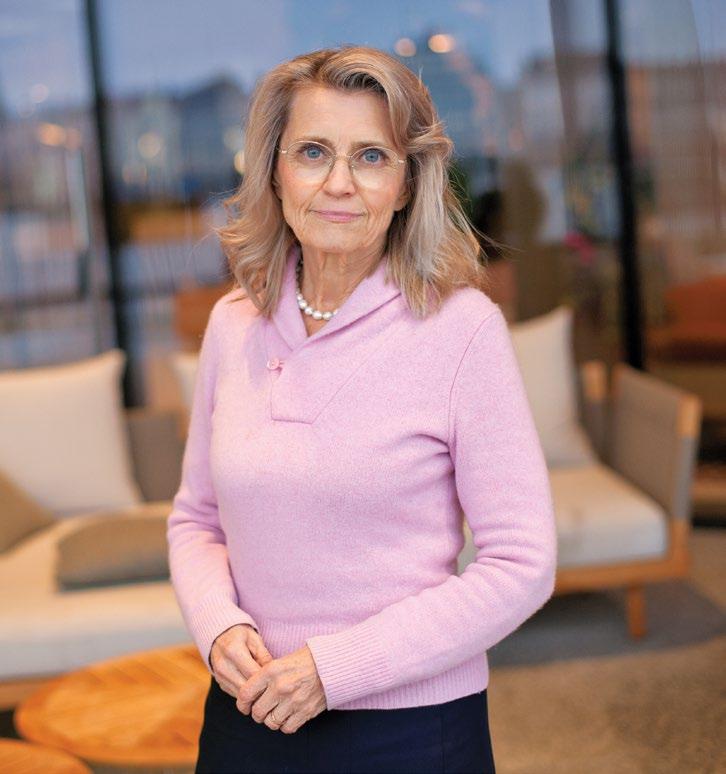
March 26, 2026, will go down in history as a dark day for free speech. Finland’s Supreme Court convicted Päivi Räsänen — a grandmother, medical doctor, and sitting member of Parliament — of a “hate crime” classified under the Finnish criminal code as a “war crime and crime against humanity.”
Her offense? A booklet she wrote more than 20 years ago for her church, and at the request of her bishop, expressing her Christian views about sexual morality.
Räsänen had been acquitted twice before. Two Finnish courts looked at the evidence and found no
We will rewrite the rules, apply them retroactively, and erase the evidence of your beliefs
This is the kind of story Americans read with a mix of horror and false comfort. Horror at the injustice. False comfort in the assumption that it can’t happen here.
It can. And the mechanism is already built.
Here is what Americans need to understand: Räsänen’s conviction is not just a Finnish scandal. It is a live round loaded into a global censorship weapon called the European Union Digital Services Act.
As of March 26, a Christian booklet expressing the biblical view of marriage is a criminal offense in Finland. ‘‘
Jeremy Tedesco
crime. So, when Räsänen got word that the Finnish Supreme Court would issue its ruling, she had every reason to expect that she could finally put the state’s long and unjustified crusade behind her.
Instead, Finland’s highest court found a creative way to convict her. It reached back 22 years, applying a law that did not even exist when Räsänen wrote the booklet. The court then ordered the booklet “removed from public access and destroyed.” The state’s message could not be clearer:
Under the DSA, “illegal content” is defined as any speech that violates the law of the EU or any of its member states. As of March 26, a Christian booklet expressing the biblical view of marriage is a criminal offense in Finland. That means this viewpoint is now “illegal content” under the DSA — and every major American platform, from X to YouTube to Instagram, can be pressured to remove it or face billions in fines.
The platforms the DSA targets are the modern public square. They are where Americans debate politics, share their faith, and hold the powerful accountable. Under the DSA, even if an American posts from his backyard in Ohio, that speech can

be subject to EU censorship standards too. In practice, EU enforcement authorities have indicated that it is “irrelevant” who is speaking or where the speech occurs. If a complaint is filed within the EU, platforms can be pressured to remove the content — placing American speech directly in the DSA’s crosshairs.
To operationalize this globally, the DSA relies on a system of “trusted flaggers” — EU-based and funded nongovernmental organizations empowered to identify and report “illegal” speech. Because these entities are recognized by EU authorities and integrated into enforcement, they can trigger content removal decisions affecting users worldwide, including in the United States. It is censorship by proxy, designed to bypass the First Amendment entirely.
This is not theoretical. Last December, the EU Commission fined X and Elon Musk $140 million — the first fine ever levied under the DSA — after Musk refused to bend the knee to European censorship demands. This is the same commission that publicly pressured Musk to censor his live interview with President Donald Trump.
Räsänen’s conviction is not just a Finnish scandal. It is a live round loaded into a global censorship weapon called the European Union Digital Services Act. ‘‘
Jeremy Tedesco
Musk and X fired back a month ago, filing the first-ever legal challenge to the DSA in European courts. My colleagues at Alliance Defending Freedom on both sides of the Atlantic were proud to support that effort. And Räsänen, with the backing of ADF International, is now weighing an appeal of her case to the European Court of Human Rights. The same censorship regime that convicted Räsänen for sharing a booklet about her faith is the regime the EU is exporting worldwide through the DSA. Every vague hate speech law in every EU member state can now be weaponized to censor your speech, on your platform, in your country. Finland proved in March that it does not matter how long ago you spoke, how many millions of people share your views, or how many times a court has acquitted you. Once the censorship machine starts rolling downhill, it won’t stop until something stands in its way.
As we prepare to celebrate 250 years of independence in July, we should remember what we declared independence from: a distant power that presumed to govern us without our consent. The EU’s Digital Services Act is that presumption reborn, and the fight against it is the free speech battle of our generation.
Jeremy Tedesco is senior counsel and senior vice president of the Counter Censorship Task Force at Alliance Defending Freedom. This is adapted from an article that appeared in the Washington Examiner on March 31.
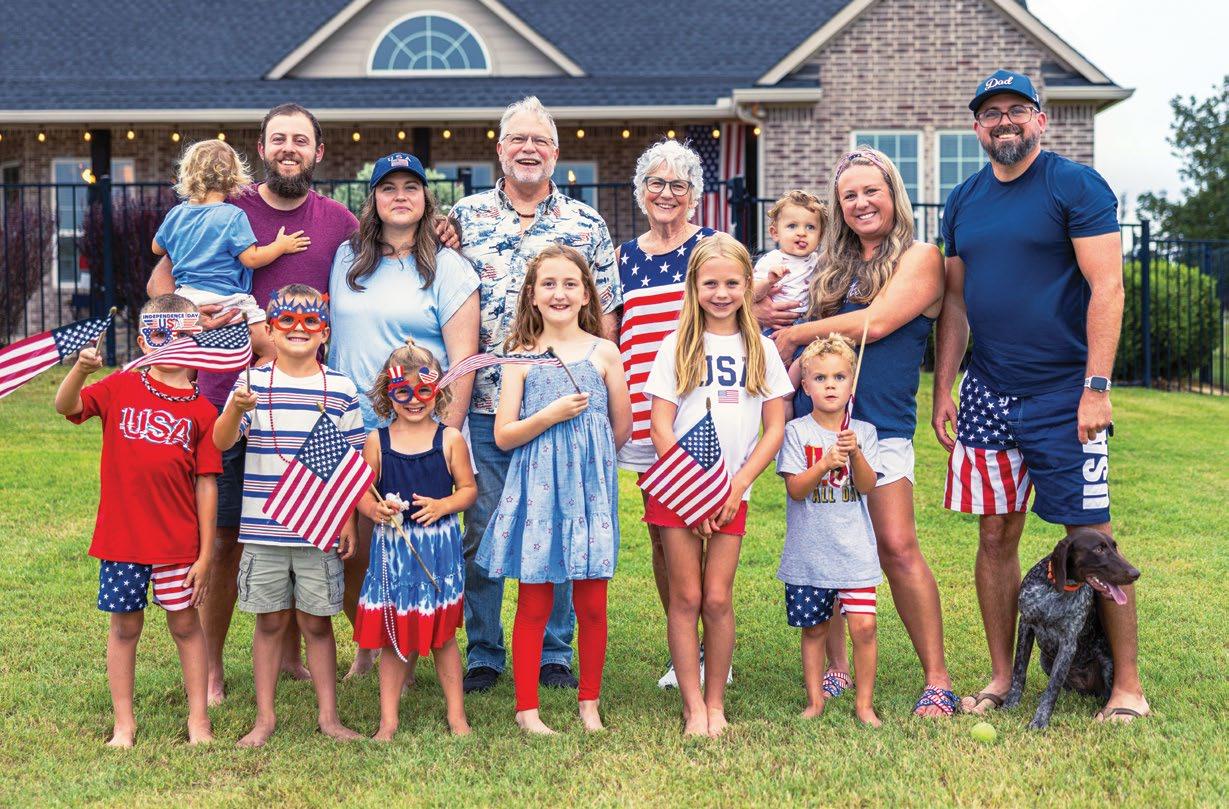

As our nation approaches its 250th anniversary, you are part of a continuing legacy of faith and freedom. As you prayerfully consider your plans, you can carry that legacy forward and uphold what matters most for generations to come.
In the words of a faithful ADF Ministry Friend couple:
“Our greatest legacy is not our financial wealth but the spiritual wealth that we have fought to establish and pass down. We are leaving a legacy gift for Alliance Defending Freedom to continue the fight for God-given freedoms for our children and grandchildren.”

To Explore Your Next Step:
Visit ADFPlannedGiving.org, call our Legacy & Planned Giving Team at 480-444-0020, or email GiftPlanning@adflegal.org.