SCHOOL
SCHOOL
OUR PURPOSE
To help our students on their path to a better future and towards becoming the best version of themselves, in service to one another and for the greater good. We do this by providing educational opportunities and by accompanying them during their personal and spiritual growth.
We remain steadfast in our purpose to provide a whole-person education infused with cura personalis anchored in the principles of Ignatian pedagogy, and inspired by the values of Catholic Social Teaching.
In this issue, I invite you to discover how deeply committed we are to this purpose—from Dr. John Drazan’s Department of State-sponsored STEM diplomacy tour across Australia, to Dr. Ana Estrada’s work modeling heart biomechanics. You will also read about our senior design projects, which focus on humanitarian engineering. Equally important is our commitment to student accompaniment, evidenced through numerous faculty-led trips to societies, expos, conferences, and national competitions. This year, we welcomed several new faculty members whose expertise strengthens our academic and research mission: Collin Beaudoin, PhD, brings expertise in the development of quantum algorithms for drug discovery. Jason Low brings more than 30 years of experience in industrial automation and robotics and will support our newest bachelor’s program in Mechatronics Engineering. Zahra Shahbazi, PhD, also joins us with expertise in AI, machine vision, vibration analysis, and nano-robotics. Dr. Shahbazi will also serve as our new associate dean, following the retirement of Dr. Harvey Hoffman this past spring after decades of dedicated service to our institution. We are deeply grateful for Harvey’s leadership and legacy and proudly stand on the shoulders of his contributions. Finally, inspired by our mission, members of our leadership team traveled to Nagasaki, Japan, as the city marked the 80th anniversary of the events that led to the end of World War II. During this visit, we retraced the footsteps of St. Francis Xavier, St. Paul Miki, and other 16th century Jesuits, and walked the path of the courageous hidden Christians of pre-modern Japan. Reflecting on this experience—and given the current climate in higher education— today, more than ever, we are reminded that our responsibility is to educate our students with ingrained values of peace, social justice, and service to one another.
I trust you will enjoy this issue of our annual School of Engineering and Computing Update and see how, in more ways than one, we continue our mission of educating engineers with a higher purpose.

Dean & Professor of Mechanical Engineering
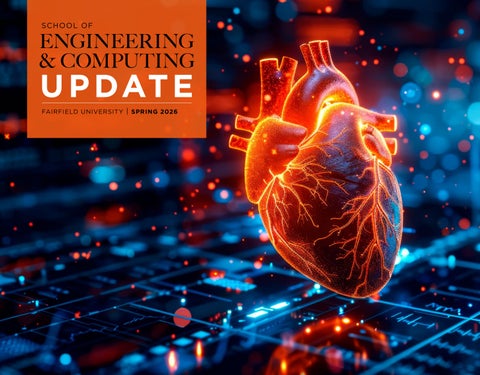
5 how cardiac biomechanics expert Ana Estrada, PhD, uses an integrative modeling approach to help students better understand how the heart reacts and adapts to its environment.
Andres Leonardo Carrano, PhD
Dean
Zahra Shahbazi, PhD
Associate Dean
Mirco Speretta, PhD
Associate Dean
Jessica Guarneri, MS
Assistant Dean
Shahrokh Etemad, PhD
Chair, Department of Mechanical Engineering
Interim Chair, Department of Electrical and Biomedical Engineering
Sidike Paheding, PhD Chair, Department of Computer Science and Engineering
Ilhan Akbil, MIM Director of Industry Relations
Phil Maroney Director of Development
Sara Colabella ’08, MA’11
Associate Director of Integrated Marketing
Bella Podgorski
Assistant Director of Integrated Marketing
Nancy (Gelston) Dobos ’91 Designer
Jeannine (Carolan) Graf ’87, MFA’25 University Editorial Director
Send Inquiries to:
School of Engineering and Computing
Fairfield University 1073 North Benson Road Fairfield, CT 06824-5195
203-254-4147
fairfield.edu/sec
Follow us on social media: FairfieldUniversitySOE @fairfieldengineering
Fairfield University School of Engineering and Computing
engineering







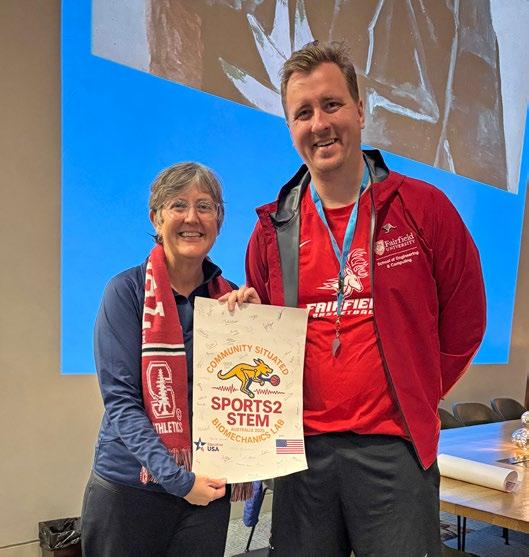







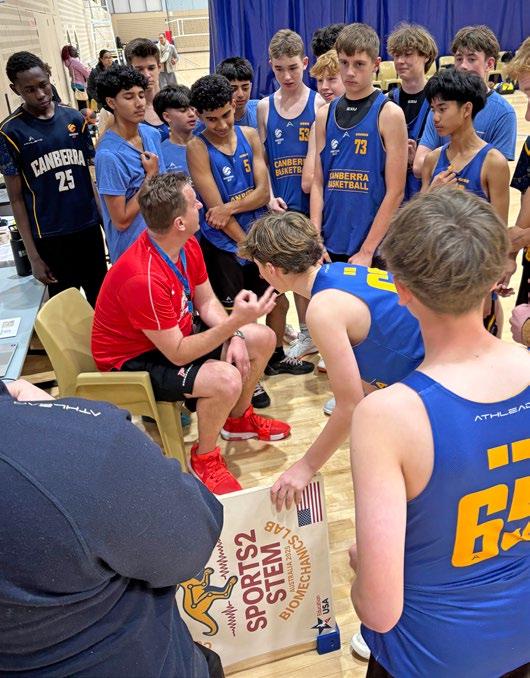
This summer, assistant professor of biomedical engineering John Drazan, PhD, was invited by the U.S. Department of State to lead a science diplomacy tour in Australia, during which he hosted workshops blending sports and STEM education. The mission: engage young Australians, particularly those from underserved communities, in hands-on, accessible STEM learning experiences.
Over two weeks, the School of Engineering and Computing professor held hands-on workshops in Sydney, Canberra, Brisbane, Launceston, and Hobart. His goal: get kids interested in STEM through sports, a model he has refined over more than a decade, one jump plate and slam dunk at a time.
Dr. Drazan’s programming in Australia was built on the same foundation he uses stateside, informed by programs conducted in communities like Bridgeport, South Chicago, and the Bronx. The tools he brought—devices such as jump plates, push-up counters, and toe tappers—were all designed or refined by senior Fairfield University engineering students in his lab. “We built the NBA rookie combine using Arduinos and 3D-printed parts,” he said.
At each stop, Dr. Drazan led interactive “sports-science combines,” which are mini basketball clinics. Participants measured vertical jump height, tested agility, and analyzed their own performance using his custom-designed low-cost tools and sensors. “What’s been absolutely amazing,” he said, “is that all Australians have really, really enjoyed it because there’s this huge culture of sports.”
Students learned to calculate shooting efficiency using fractions, explored muscle activation during push-ups, and saw how engineering concepts could be applied in real time to something they connected with.
A former college basketball player, Dr. Drazan developed his approach through years of working with student-athletes,
particularly those underrepresented in traditional STEM spaces. “I design my programs so that the main requirement is an interest in sports, not necessarily in STEM,” he said.
“Basically, we get kids who may not even know what ‘STEM,’ the acronym, means.”
In the U.S., Dr. Drazan’s summer program runs in partnership with a local high school team. “These students are not necessarily math and science kids,” he said. “They’re youth athletes from Central High School in Bridgeport.”
After a one-week research experience, a select few join his engineering lab as summer research students.
Although the technology he used in Australia was the same, Dr. Drazan said the cultural framing made his programs there unique—shaping which questions were asked and which problems were prioritized. “Science is all about asking and answering questions that you find interesting,” he said. “And similarly, engineering is about identifying, constraining, and developing solutions to problems that you find important.”
In total, his basketball clinics engaged more than 550 students and researchers across the six Australian locations. “The students were so excited about everything,” Dr. Drazan observed. “Kids are kids all across the world, and athletes are athletes all across the world.”
Though he refers to his approach as “accidental,” his impact is no accident. “I was interested in entrepreneurship and research,” he said. “But I didn’t necessarily realize that there was a need for those things until I started working with the students.” l S
TOP LEFT: John Drazan, PhD, brought his Sports2STEM Combine program to schools in six Australian cities.
BOTTOM LEFT: More than 550 Australian students and researchers participated in Dr. Drazan’s workshops. Contributed photos
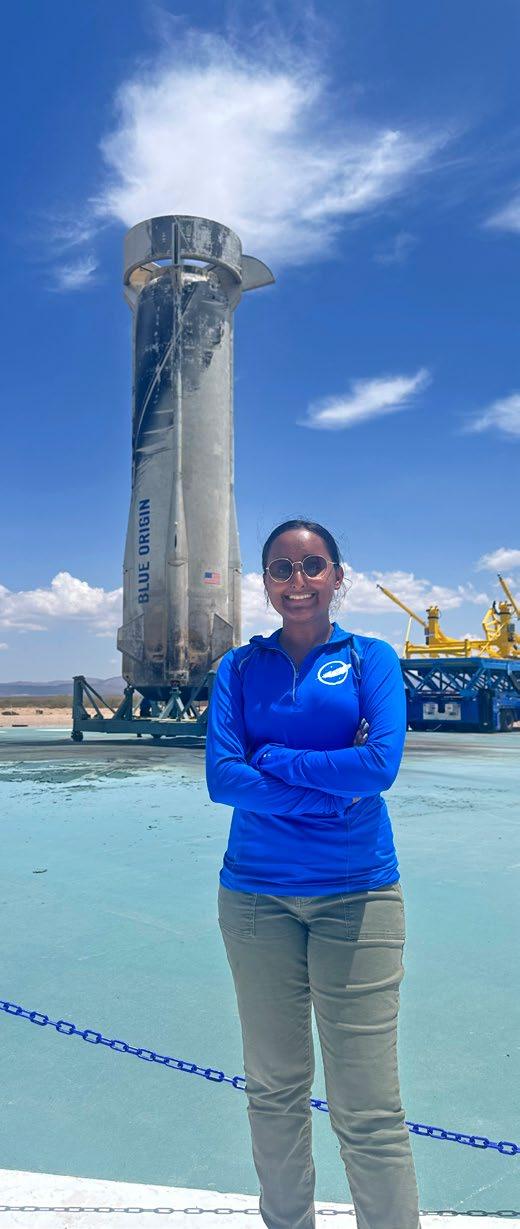
As a child, Manjot Singh ’23 was fascinated by space. “I used to watch rocket launches growing up and was always curious about how things worked, especially anything related to spaceflight,” she said. It was that childhood curiosity that drove the mechanical engineering major to pursue a career in the aerospace industry. Today she is a crew systems and payloads launch vehicle engineer at Blue Origin.
While her passion for space studies began in childhood, it really took flight during her time at Fairfield, she said, citing the engineering program’s Undergraduate Research Summer Residency as a particularly impactful experience. Under the mentorship of the School of Engineering and Computing’s Dean Andres Leonardo Carrano, PhD, she researched the optimal growth conditions of root vegetables in microgravity—a difficult but important endeavor that can help fulfill the nutritional needs of astronauts on long-duration missions. Her research was funded by both a Connecticut NASA Space Grant and an INSPIRE Hardiman Scholar’s Research grant.
As an undergraduate, Singh served on the executive boards of the Innovator’s Club, the Society of Women Engineers, and the Society of Manufacturing Engineers, experiences that extended beyond the classroom to broaden her understanding of the field.
“Fairfield gave me a strong technical foundation and taught me how to think critically and communicate effectively, both of which are crucial in the engineering industry,” she said. “The small class sizes meant I had direct access to faculty,
which helped me dive deeper into my interests. And because Fairfield emphasizes ethics and collaboration, I graduated not only as an engineer but as someone ready to work on multidisciplinary teams in high-stakes environments.”
At Blue Origin, Singh works on the New Shepard program at Launch Site One in West Texas. In her role, she focuses on the crew capsule, the section of the rocket that carries astronauts past the Kármán Line and safely back to Earth. “My role involves integrating systems that ensure astronaut safety and mission success, from seats and environmental controls to interface hardware,” she said. “It’s a mix of mechanical engineering, systems thinking, and human-centered design.”
Working on the recent NS-31 mission was one of Singh’s proudest career moments. This historic all-female crew spaceflight mission, the first in the U.S. and the second-ever (after Soviet Cosmonaut Valentina Tereshkova’s solo flight in 1963), featured singer Katy Perry, CBS Mornings co-host Gayle King, Black Ops Aviation founder Lauren Sanchez, former NASA rocket scientist Aisha Bowe, bioastronautics research scientist Amanda Nguyen, and film producer Kerianne Flynn. “NS-31 was an incredible milestone and one that I am honored to have been a part of,” Singh said. “Being part of such a historic and symbolic launch, especially one focused on representation and inclusion in space, was deeply meaningful especially as a woman in the aerospace industry.”
“Engineering often happens behind the scenes,” she continued. “To see something you’ve worked so hard on resonate with the public and especially inspire the next generation of women in STEM was an unforgettable experience. It reminds me why I chose this field in the first place: to be part of something bigger, something that pushes boundaries.”
Looking towards the future, Singh is excited about upcoming crew missions and Blue Origin’s increasing launch cadence.
“Long-term,” she said, “I’m passionate about advancing technologies that make spaceflight more sustainable and inclusive and being part of that future is what drives me every day.” l S
When assistant professor of biomedical engineering Ana Cristina Estrada, PhD, talks about the heart, she does so with the precision of an engineer and the wonder of someone who is continually inspired by nature’s design. “The heart is the body’s engine,” she said. “The way it functions throughout a person’s lifetime—with precisely synchronized mechanical and electrical signals—is truly fascinating.”
A graduate of Rice University (BS in bioengineering) and the University of Virginia (PhD in biomedical engineering), and a former postdoctoral researcher at Yale University, Dr. Estrada has devoted her career to studying how the heart and major blood vessels adapt to both health and disease. At Fairfield’s School of Engineering and Computing, she leads a research group focused on cardiac mechanics—using
computer models to examine cardiac responses to injury, high blood pressure, or therapies.
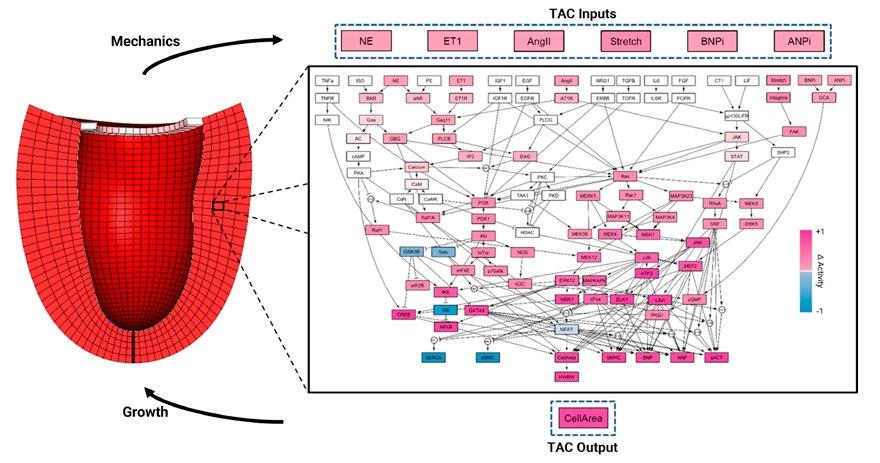
Dr. Estrada described her work as an integrative modeling approach that seeks to understand how the heart and blood vessels react and adapt to their environment. “Our models combine realistic mechanics of the cardiovascular system with individual cell signaling,” she said, “which allows us to understand adaptation across scales.”
Her multi-layered approach aims to address one of cardiology’s greatest questions: why does the heart have the ability to heal in some cases, yet it fails in others?
“After a heart attack, for example,” said Dr. Estrada, “the changes in the mechanical load experienced by the surviving muscle can trigger a maladaptive response, causing the cardiac muscle cells to get longer, the heart wall to get thinner, and
“ The heart is the body’s engine. The way it functions throughout a person’s lifetime—with precisely synchronized mechanical and electrical signals—is truly fascinating.”
Ana Cristina Estrada, PhD
the heart to eventually fail. If we can understand how this maladaptive process occurs, we can develop better therapies to prevent it.”
Dr. Estrada and her students are currently involved in two key projects: building finite element models of the injured area after a heart attack—with a particular focus on the role of inflammation, and examining how low oxygen levels (hypoxia) affect the pulmonary artery. “Students are the core of the research,” she said. “They are actively working on building and refining the different computer models that we use, from researching cell signaling pathways and gene expression changes, to running numerical analyses and optimizing the models.”
Dr. Estrada foresees her work moving into the realm of individualized patient care. “My goal is to develop useful models that can be personalized and used for clinical decisionmaking,” she said. “While the focus right now is on building the tools, I envision us going more towards refining the tools to use in personalized medicine as the next stage.” She also hopes to extend her modeling approach to other disease conditions and organ systems, including the kidneys.
At Fairfield University, Dr. Estrada said she has found both institutional backing and eager student researchers: “Fairfield provides incredible support for this work, from funding and resources to collaborative opportunities. l S
adapt to their environment.
At Fairfield University’s School of Engineering and Computing, innovation is guided by purpose. This year’s senior design teams are proving that engineering can do more than build systems, it can make a difference. From humanitarian robotics to AIpowered infrastructure and agritourism technology, students are bringing to life Fairfield’s Jesuit Catholic values of service, social justice, and global responsibility—preparing them to lead with creativity, ethics, and a desire to better the world.
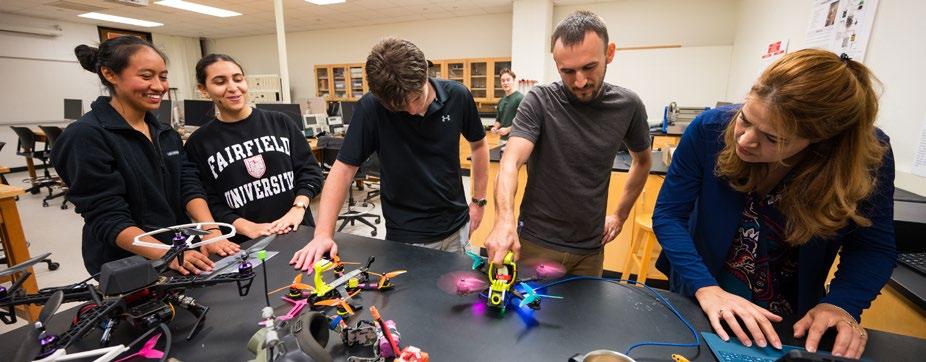
When a group of Fairfield engineering students joined an international project with IOS Co., a Japanese humanitarian demining company, they saw an opportunity to use their skills for something bigger than themselves. The company’s ground-based robot was already helping uncover buried landmines in Cambodia, but they wanted to explore how aerial robotics could make the process even safer.
Under the mentorship of Associate Professor Gigi Belfadel, PhD, and Assistant Professor David Shekhtman, PhD, students Thomas Pris ’26, Tyler Panourgias ’26, Andrew Mejia Hernandez ’26, and John McKenna ’26 are developing
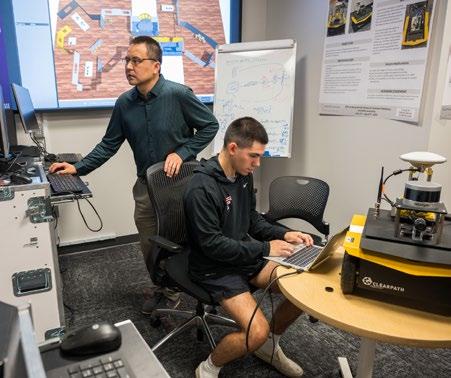
Another senior design team is tackling a challenge that affects communities around the world: water losses. Working under Sidike Paheding, PhD, chair of Computer Science, and in partnership with Recursive AI, a Japan-based startup company, students Claudia Hepfer ’26, Brayden Meech ’26, Reid VanTrieste ’26, and Lauren VonHassel ’26 are developing machine-learning models that can detect leaks and blockages in water distribution systems in developing countries.
Each week, the group refines its models, learning not just about data and algorithms, but about the responsibility that comes with engineering solutions for global needs.
Fairfield engineers are also helping local businesses thrive through innovation. Computer science majors Brooke
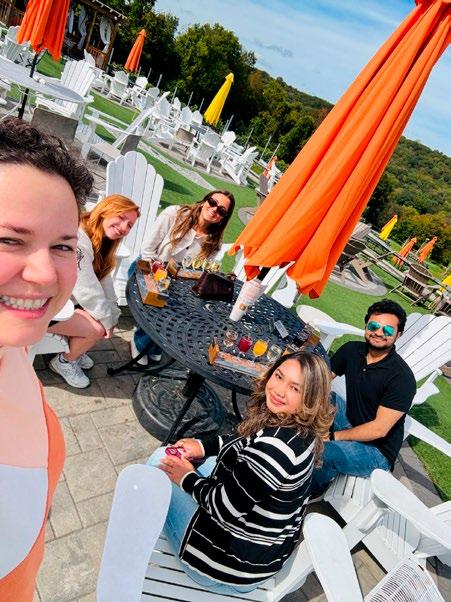
Kaplan ’26, Christina Collazzo ’26, and Tashfia Ahmed ’26 are working with Assistant Professor Akshay Mathur, PhD, and alumna entrepreneur Neviana Zhgaba ’11, MS ’13 to develop an AI-powered event and vendor management system for Aquila’s Nest Vineyard in Newtown, Conn. The platform automates scheduling, streamlines vendor coordination, and forecasts staffing and attendance, creating a scalable digital solution for agritourism and venues. For Zhgaba, who founded Aquila’s Nest after her time at Fairfield, the collaboration feels like a full-circle moment. “The students are not just coding a system for a grade,” she said, “they’re designing a solution that addresses real challenges while gaining the experience of building something ready for professional use.” The students are embracing this chance to see how their ideas can directly support local businesses and communities. l S
“ The students are not just coding a system for a grade, they’re designing a solution that addresses real challenges while gaining the experience of building something ready for professional use.”
a drone-based system equipped with a compressed air mechanism that clears dirt and debris around buried explosives, capturing detailed images from a safe distance.
“The project combines creativity, engineering rigor, and global awareness,” said Dr. Belfadel. “It gives students firsthand experience in how technology can serve humanitarian purposes.”
From designing the compressed air system to testing flight controls and planning safe, low-altitude operations, the students are leading every phase of development. Their work directly contributes to international efforts to make mine-clearing operations safer and more efficient, a mission that reminds them daily that engineering can save lives.
The team is using Graph Neural Networks (GNNs) and Physics-Informed Neural Networks (PINNs), along with PhysicsNeMo, an open-source framework developed by NVIDIA that merges physics with machine learning. While their current focus is on foundational models, their goal is to apply deep learning to predict and locate anomalies in realworld water systems.
“By identifying anomalies early, we can reduce water loss, lower maintenance costs, and improve system reliability and public health protection,” said Dr. Paheding. “It’s an opportunity to guide students in applying classroom knowledge to real-world sustainability challenges.”
FAR LEFT: Students are working with Dr. Gigi Belfadel on a drone-based system to detect buried landmines.
ABOVE LEFT: Dr. Sidike Paheding is advising students in the development of machine-learning models for leak detection in water distributions systems.
Neviana
MS ’13 and the senior design team at the project kick-off meeting at Aquila’s Nest
An administrative team from the School of Engineering and Computing recently took learning beyond the classroom and across continents, embarking on a journey to Japan that blended technical innovation with global purpose. From Tokyo’s bustling tech hubs to the historic streets of Nagasaki, faculty explored opportunities for research collaboration, student exchange, and humanitarianfocused engineering projects that reflect Fairfield’s commitment to global progress and outreach.
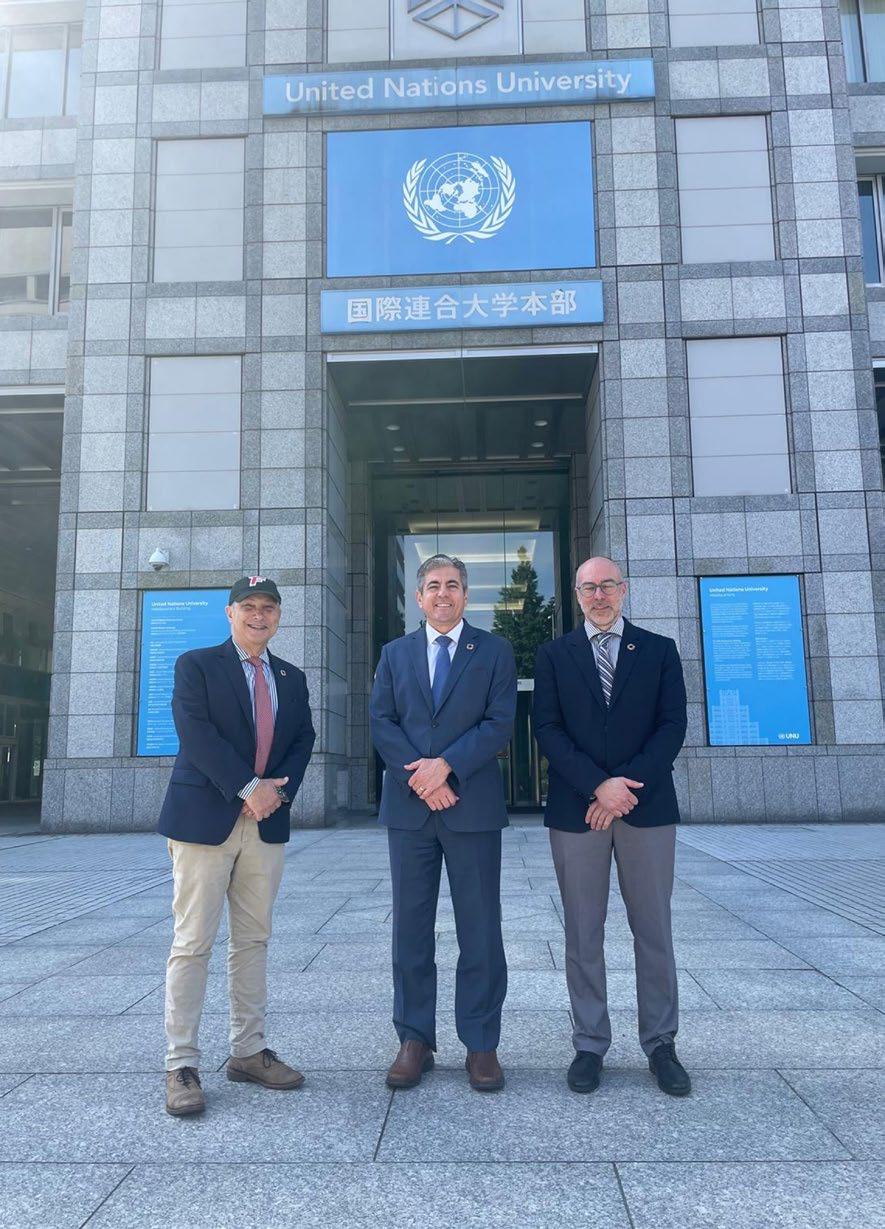
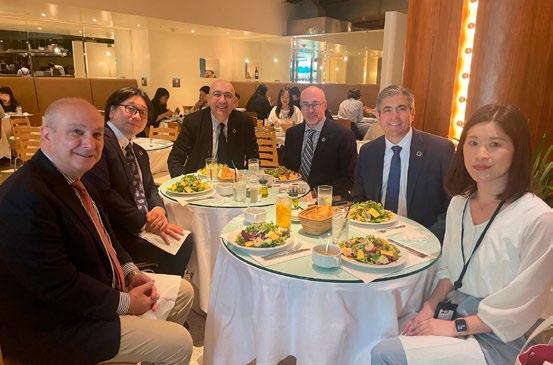
Leading the delegation were Dean Andres Leonardo Carrano, PhD; Associate Dean Mirco Speretta, PhD; Ilhan Akbil, director of industry relations; and Rev. Paul Rourke, S.J., vice president for mission and ministry. “It was incredibly productive,” Dr. Carrano said. “We met with three major universities, four companies, and had meaningful conversations with leaders from the United Nations Industrial Development Organization (UNIDO) and United Nations University (UNU).”
Their itinerary spanned a range of leading institutions including Sophia University, Japan’s premier Jesuit institution; Yamaha Musical Instruments in Yokohama; Waseda University, among Japan’s most prestigious private universities; and the International Professional University of Technology, an emerging institution founded by a former Google executive.
Throughout the week, the group engaged in wide-ranging discussions; some focused on student and faculty research exchange, while others concentrated on joint projects or global curriculum development. One of the most exciting outcomes of the visit was the launch of a new senior design project with Japanese startup IOS Co., which uses drones to detect and excavate landmines in Cambodia. The service-learning engineering focus aligns with Fairfield Engineering’s mission of “engineering with a higher purpose,” offering students handson, purpose-driven research with an international organization.
“This is exactly the kind of work we want our students doing—technically rigorous and socially meaningful,” said Dr. Carrano.
In addition, the group secured two additional senior
design projects with Recursive AI: an anomaly detection and localization of system faults in water distribution systems, and a wildlife tracking and management platform. Beyond project collaborations, Fairfield is exploring the possibility of serving as a U.S.-based hub for the United Nations University, with initiatives aligned to clean water access, food security, and global sustainability.
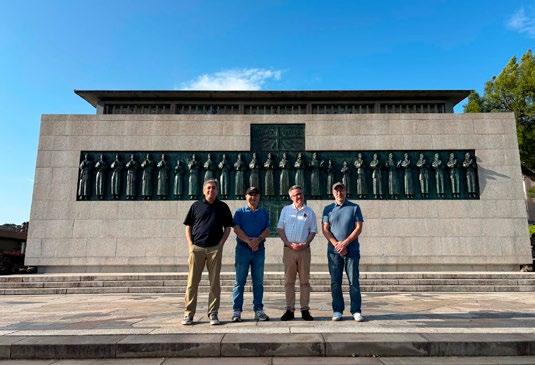
The visit concluded in Nagasaki, which was somberly marking the 80th anniversary of its atomic bombing. A city with deep ties to early Jesuit missionaries in Asia, “Nagasaki was the port of entry for many early Jesuits, including first companion St. Francis Xavier, and the site of Nishizaka Hill was where the 26 martyrs, including St. Paul Miki were executed,” said Dr. Carrano. “We were particularly inspired by the opportunity to retrace 16th-century Jesuit footprints throughout this city, and to walk the path of the courageous hidden Christians in pre-modern Japan.”
While there, the group met with Father M. Antoni J. Ucerler, S.J., a Jesuit historian and an internationally renowned expert in pre-modern Japan who serves as the director of the Ricci Institute at Boston College. Fr. Ucerler guided the Fairfield contingent through key sites and provided historical context.
Dr. Carrano described the trip as a defining moment for Fairfield’s international engagement. “We’re not just talking about expanding borders,” he said, “we’re actively forming collaborations that give our students access to real-world challenges and global perspectives that will hopefully frame their own pursuit of service and social. justice.” l S
“ We’re not just talking about expanding borders, we’re actively forming collaborations that give our students access to real-world challenges and global perspectives that will hopefully frame their own pursuit of service and social justice.”
Andres Leonardo Carrano, PhD
LEFT: While in Japan, engineering school representatives visited the United Nations University, among other institutions.
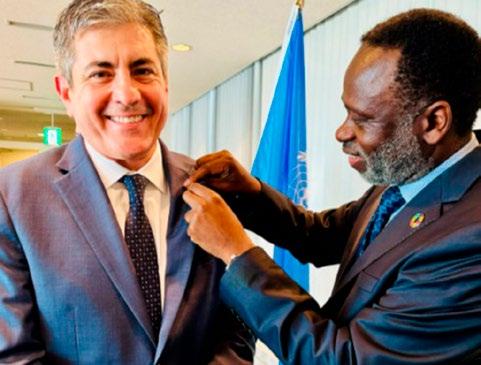
ABOVE FROM LEFT: The trip facilitated partnerships with Japanese startups for senior design projects; on behalf of his team, Dean Carrano accepted an official Sustainable Development Goals (SDG) pin from Dr. Tshilidzi Marwala, U.N. Under-Secretary-General and Rector of the United Nations University; the Fairfield group also explored Nagasaki’s Jesuit history, including the 26 Martyrs site on the Nishikaza hill.
Contributed photos
Nicholas Mercadante ’04 arrived at Fairfield University as a political science major with a passion for media. As general manager of the University’s radio station, WVOF, he relocated the student-run operation to the Barone Campus Center and expanded programming to include live sports coverage and concert broadcasts.
Studying political science sharpened his analytical skills and reinforced the importance of service. Overseeing WVOF allowed him to cultivate his entrepreneurial mindset while gaining experience in project management, business operations, and leadership. His involvement with Campus Ministry provided opportunities to give back to his community and consider solutions to challenges affecting vulnerable populations.
What Mercadante never anticipated was that his interdisciplinary passions would ultimately shape his problemsolving skills, leadership style, and sense of mission—and lead him to the technology and healthcare sector.
“The Jesuit values at Fairfield really left a lasting impression,” he said. “Solving healthcare challenges requires critical thinking, a deep sense of ethical and social responsibility, and reflection. It also requires a lot of determination and grit. These are all values that were honed at Fairfield and continue to guide my approach to missiondriven healthcare.”
Mercadante grew up in the healthcare world. His father, a pharmacist, built a national apothecary pharmacy chain. “I knew I wanted a meaningful career rooted in entrepreneurship and impact, but I wasn’t sure whether that would be in healthcare or something else,” he said. Taking courses across liberal arts disciplines at Fairfield fueled his curiosity and encouraged him to explore his interests beyond a defined professional track.
“Rather than narrowing my focus, Fairfield nurtured my curiosity and sense of purpose,” he noted. “Ignatian principles—like questioning assumptions, seeking the greater good, and applying what learn to real-world challenges— directly influenced the path I am on today.”
In 2019, Mercadante launched PursueCare, a telemedicine platform focused on virtual addiction treatment. With a goal of improving patient care through better healthcare accessibility, the company combines medical care with software solutions to offer virtual, personalized treatment. It wasn’t long before the entrepreneur’s work caught the attention of the School of Engineering and Computing (SEC) and sparked an ongoing collaboration. “They saw where was heading with telemedicine and reached out,”
Mercadante said.
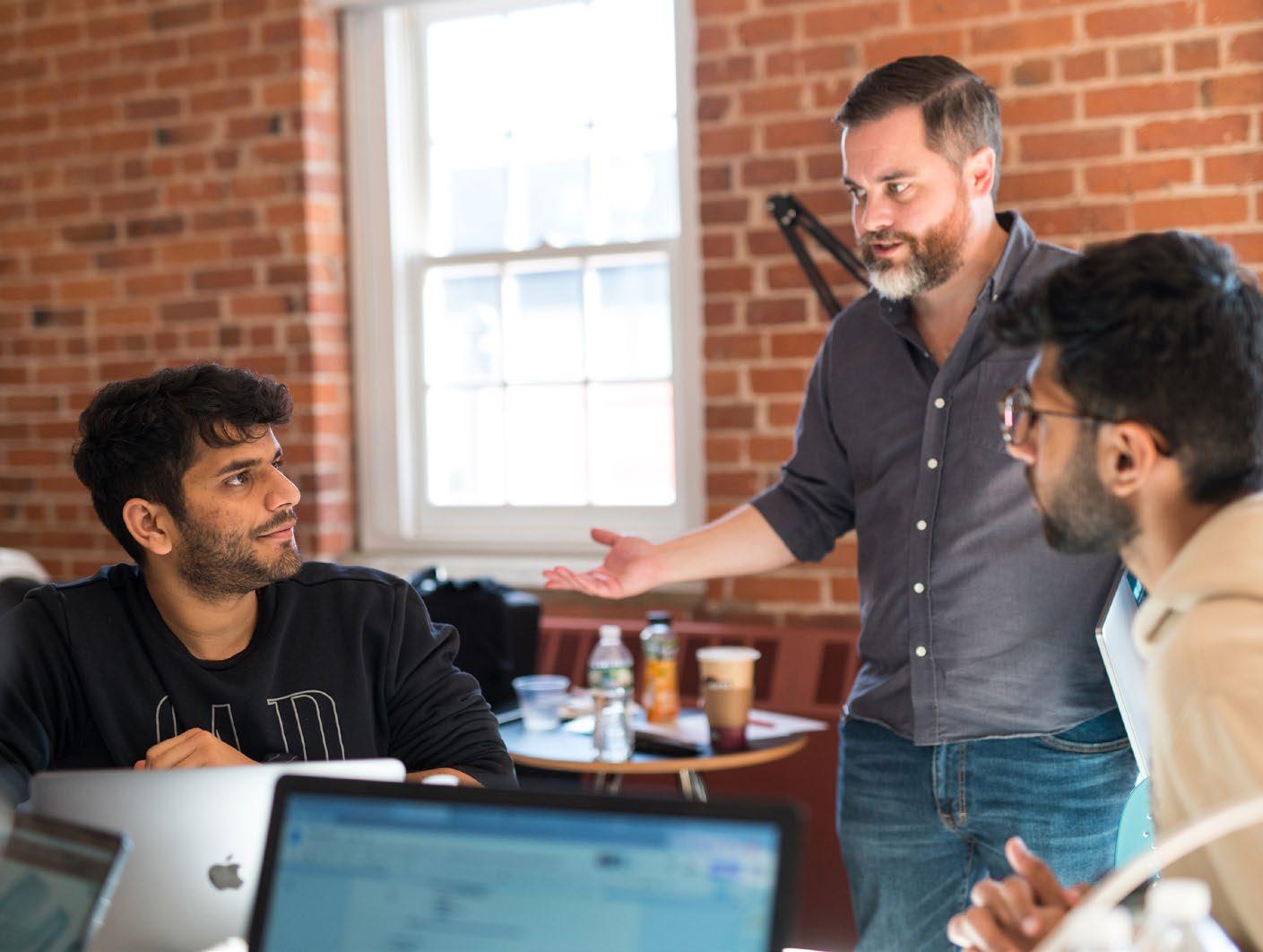
Mercadante mentors engineering students, sponsors senior design projects, and serves on the engineering school’s advisory board. As the lead sponsor of StagHack, he challenges students to solve real-world healthcare problems through this annual hackathon event. One recent student project, a provider scheduling tool, originated at StagHack and was passed along to his PursueCare team for potential implementation.
He also actively recruits Fairfield students for internships and full-time roles. Recently, alumnus Tim Gould MS’23, a data science graduate, transitioned from intern to PursueCare team member. “Many engineering programs put blinders on
students but Fairfield’s liberal arts foundation encourages broader thinking,” Mercadante said. “That perspective is invaluable in industries like healthcare, where technical skills must be applied within complex, real-world contexts.”
As an SEC Advisory Board member, Mercadante is helping to shape the school’s future, championing fields like AI and data security, and preparing students for an evolving tech landscape. One of the most exciting developments, he said, is SEC’s planned expansion and refined curriculum.
“Fairfield isn’t just preparing students for where technology is now—it’s preparing them for where it’s going.”
For Mercadante, mentorship isn’t just about giving back—it’s about shaping the future of engineers. “It’s easy to follow the traditional engineering school path… where you’re cushioned from broader challenges and focus solely on your assigned work,” he said. “But stepping into a field like healthcare, where you’re tackling complex issues like population health, requires a different mindset. It demands a mission-driven approach. I believe Fairfield uniquely prepares students for that kind of work.” l S
“ Ignatian principles—like questioning assumptions, seeking the greater good, and applying what I learn to real-world challenges—directly influenced the path I am on today.”
l
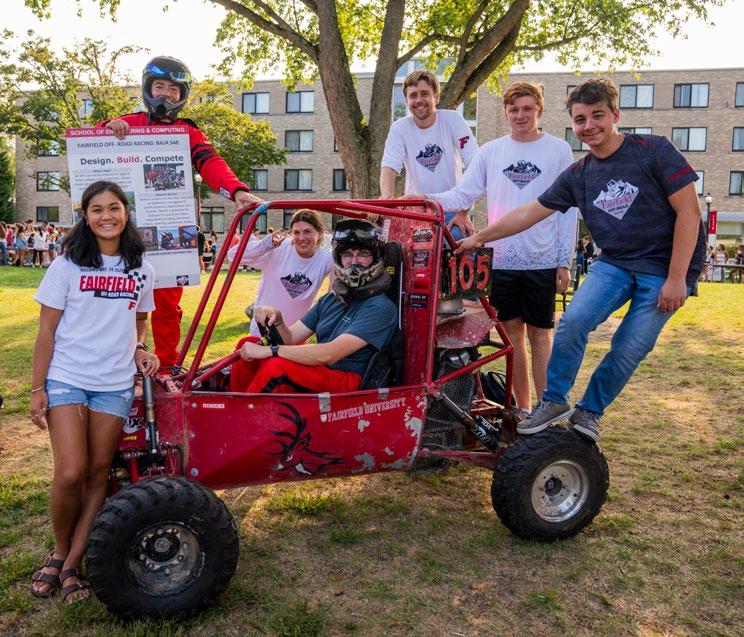
Last September, on the bucolic Seven Springs Mountain property in Colton, N.Y., the roar of studentbuilt engines echoed across the hills as Fairfield Engineering’s Offroad Racing Club put its custom Baja vehicle to the test at OktoBAJAfest.
The four-day event, hosted by Clarkson University, brought together engineering students from 15 colleges across the region for a high-adrenaline blend of design, endurance, and teamwork.
For the all-student team, the race was about more than just speed. It was the culmination of months of design work, welding, and late-night problem-solving—an opportunity to turn classroom lessons into real-world performance. Under the guidance of faculty advisor and mechanical engineering professor Sriharsha Sundarram, PhD, students built the vehicle from the ground up.
“The team is divided into subsystems, each responsible for a specific component, but all work closely to ensure the vehicle comes together seamlessly,” said Dr. Sundarram. “It’s an experience that builds both technical and teamwork skills essential to their future careers.”
Fairfield’s vehicle competed against 30 others in five events, ranging from design review and acceleration tests to the grueling four-hour endurance race, and finished 11th overall. The team placed 15th on the short track, 13th on the hill climb, 12th on Baja-cross, and 11th in endurance, completing more than three hours and 32 laps.
For club vice president and business subsystem lead student Isabella Fuierer ’26, the weekend marked a new chapter of leadership. “My goal was to make the competition memorable for our new teammates,” she said. The team now
boasts more than 30 members with participation from many majors.
“It was rewarding to help them understand what we were fixing, what tools we needed, and how we could improve.”
l 2 Alumni Drive Innovation at “American Frontiers”
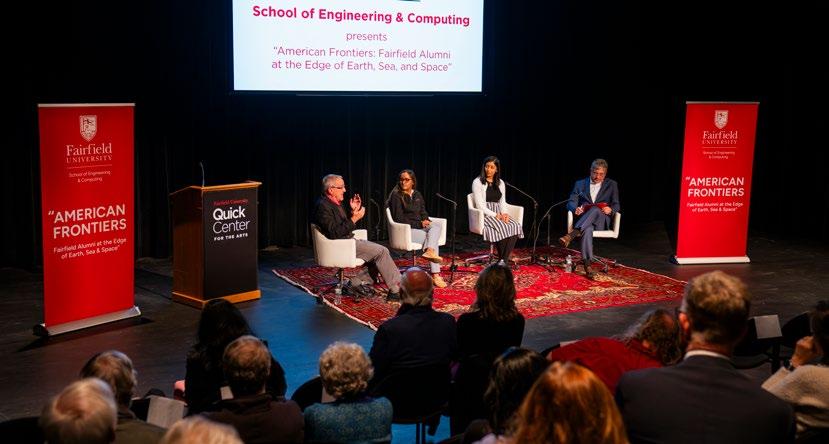
Part of Fairfield’s America250: The Promise and Paradox programming—a year-long initiative through which the University is exploring 250 years of the American experiment—a panel discussion titled “American Frontiers” showcased three Fairfield alumni making a mark in their respective fields: NASA Jet Propulsion Lab’s Joe Sauvageau ’79, PhD; Blue Origin’s Manjot Singh ’23; and Johns Hopkins University Applied Physics Lab’s Stephanie Brij-Raj ’21. The lecture was part of the Robert “Bob” Sobolewski ‘70 Family Distinguished Speaker Series.
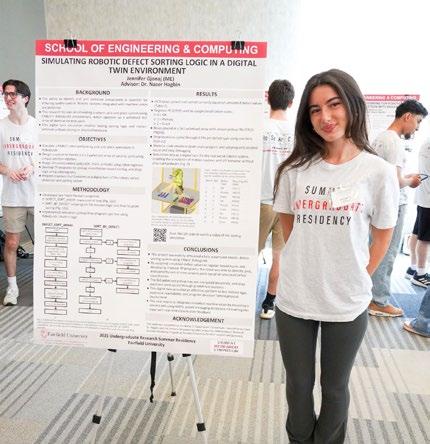
Now in its fourth year, the School of Engineering and Computing hosted its largest-ever Summer Undergraduate Research Residency, featuring more than 50 students working on 40 cutting-edge research projects across campus labs. The intensive eight-week, all-inclusive program offers undergraduates a hands-on, facultymentored research experience.
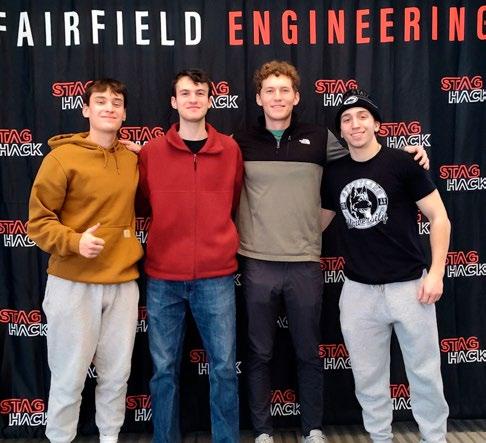
Held in February, this year’s StagHack competition featured eight teams competing to develop innovative software solutions for a complex telehealth scheduling challenge. Participants created algorithms and manipulated AI models aimed at minimizing the time it takes for new patients to reach their initial appointments for telehealth in rural healthcare settings. Working
with real data provided by sponsor PursueCare, the students developed practical solutions that could significantly impact patient care.
Of the eight teams, “Students of Speretta” emerged victorious, earning Ryan Nigborowicz ’25, Phuc Nguyen ’25, and Vishesh Patel ’25 first place in the competition.
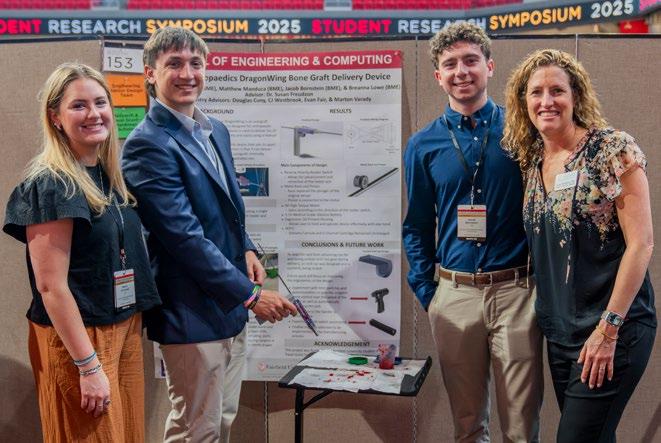
Class of 2025 biomedical engineering students Matthew Manduca, Maeve O’Connell, Jacob Bornstein, and Breanna Lowe received the top award for their research at the Annual Northeast Bioengineering Conference, hosted this year at NYU Tandon School of Engineering in New York City. Under the guidance of Susan Freudzon, PhD, the team presented its bone graft delivery device to be used in orthopedic surgery, in collaboration with sponsor Avitus Orthopedics/ Zimmer Biomet.
l 6 Industry Day at Intuitive Surgical
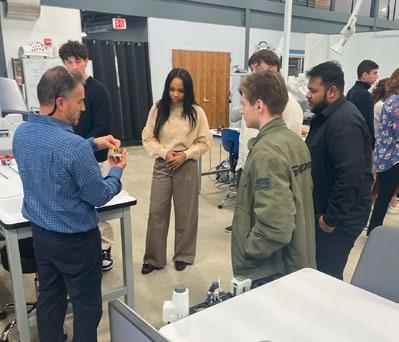
Twenty students visited Intuitive Surgical in Orange, Conn., to experience the company’s innovations first-hand as part of the School of Engineering and Computing’s Industry Day series. During the visit, students had the opportunity to try out the Da Vinci 5, Intuitive’s newest multiport robotic surgery system.
STUDENT ORGANIZATIONS AND SOCIETIES
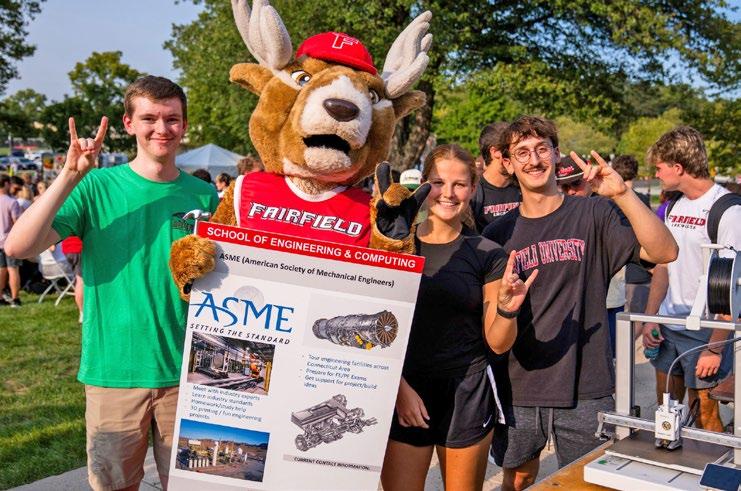
American Society of Mechanical Engineers (ASME)
Society of Manufacturing Engineering (SME)
Biomedical Engineering Society (BMES)
Computer Science Society (CSS)
Engineers Without Borders (EWB)
Engineering Student Society (ESS)
Institute of Electrical and Electronics Engineers (IEEE)
National Society of Black Engineers (NSBE)
Society of Automotive Engineers (SAE)
Society of Hispanic Professional Engineers (SHPE)
Society of Women Engineers (SWE)
Tau Beta Pi (Engineering Honor Society)
Upsilon Pi Epsilon (Computing and Information Honor Society)
Order of the Engineer
When Robert (Bob) Sobolewski ’70 reflects on his lifelong connection to Fairfield University, one word comes to mind: momentum. As both an alumnus and the chair of the Executive Advisory Board for the School of Engineering and Computing (SEC), Sobolewski takes pride in seeing that momentum grow through collaborations between students and faculty. Impressed with the school’s expanding influence across the University and the achievements of its graduates, he remains dedicated to increasing opportunities for students while elevating SEC’s visibility.
On Dec. 1, Fairfield’s School of Engineering and Computing launched the Robert (Bob) Sobolewski ’70 Family Distinguished Speaker Series with an event titled “American Frontiers: Fairfield Alumni at the Edge of Earth, Sea, and Space,” featuring Joseph (Joe) Sauvageau ’79, PhD, from the NASA Jet Propulsion Lab; Manjot Singh ’23 from Blue Origin; and Stephanie Brij-Raj ’21 from Johns Hopkins University’s Applied Physics Lab. Bringing a breadth of thought leaders, innovators, and achievers to campus, “this series is designed not only for the School of Engineering and Computing but for the entire University and beyond,” he said. “It provides a platform to showcase the caliber of the School, which I often refer to as a ‘hidden champion.’”
A quality education goes beyond coursework, said Sobolewski, “it’s about learning from others and applying those lessons in new ways.” That philosophy also guides his work on the Executive Advisory Board (EAB), which provides mentorship, internships, and guidance to help students succeed. “Our EAB brings real-world perspectives and support,” he noted. “Each member contributes in a unique and
personal way.”
Sobolewski encourages students to make the most of opportunities to engage with visiting lecturers and with board members.
“Discuss what you’ve learned with others,” he tells them. “Ask yourself: what was new or unexpected? That dialogue strengthens critical thinking and helps turn knowledge into action.”
Thirty years ago, Sobolewski began volunteering with the non-profit organization FIRST Robotics. FIRST stands for “For Inspiration and Recognition of Science and Technology;” the organization’s mission is to inspire students to pursue STEM careers.
In 2012, Sobolewski launched his own non-profit, called ingenuityNE, to support FIRST regional and chapter programs in New England. In 2014, he joined FIRST’s national executive advisory board. He retired from his role as president and CEO of ebm-papst, Inc., a privately held German manufacturing company, in 2015.
Shortly after, he formed Bob Sobolewski Consulting LLC, through which he shares valuable insights with business leaders and their management teams. l S
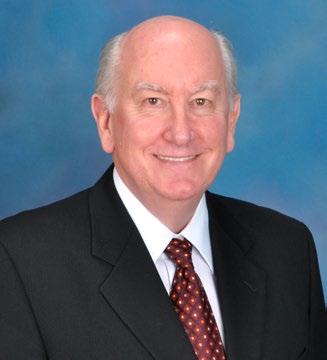
“ Discuss what you’ve learned with others. Ask yourself: what was new or unexpected? That dialogue strengthens critical thinking and helps turn knowledge into action.”
Robert (Bob) Sobolewski ’70
Vincent Masi ’54 Fellows
Luis Mendizabal ’26
Megan Rourke ’26
Caroline Gardner ’28
Reyes Huerta ’26
Accurate Lock and Hardware Cohort
Charlotte Savigny ’26
Sarah Dorgan ’26
James Bossone ’26
Society of American Military Engineers Scholarship Luke Bornstein ’26
WILLIAM J. KRAMER ’60 HUMANITARIAN AWARD
Award for Community
Volunteer Service
Alexander White ’25
Dean’s Award for Leadership
Maureen Von Hassel ’25
Dean’s Award for Best Senior Design Project
Optimized Hypersonic Nozzles
Nolan Cooper ’25
David Camayo Ocampo ’25
Gregory Eletto ’25
Automated Electromechanical
Deburring System for Nicor-Orifices
George Barlow ’25
Michael Felix ’25
Brody Matijevik ’25
CHAIRMAN OF THE EXECUTIVE BOARD
Robert Sobolewski ’70
President and CEO (retired) ebm-papst
MEMBERS
Usman Asif ’08, MS’09
Chief Engineer for the Army and Air Force Programs, Sikorsky
Michael J. Buckenmeyer ’11
Founder and CEO, EXITBio
John E. Butala
Vice President of Technology, O’Keefe Controls Co.
Peter Convertito ’89
Director of Investor Relations, ASML
Alicia J. Carroll ’10, JD
Senior Principal IP Counsel, Medtronic
Frank J. Fanzilli ’78
Senior Advisor, Credit Suisse
Melissa Fensterstock
Co-Founder & CEO, Landsdowne Labs
Andy Judge, PhD
Chief of Staff, ASML
Jenna Madigan ’22
Systems Engineer, Medtronic
Nick Mercadante ’04
Founder and CEO, PursueCare
Tim O’Neil, BEI ’84
Senior Director of Program Management, ASML
Michael Parsons ’07
Executive Vice-President, CTDI
Reed Salvatore
CEO, Accurate Lock & Hardware
Ronald M. Salvatore ’64
Chairman, Accurate Lock & Hardware
Deacon Patrick Toole, DMin
Chancellor, Diocese of Bridgeport
Mark Tuck, BEI ’85
Vice President, Cloud Ingenuity
Neviana Zhgaba ’11, MS’13
Co-Founder, Aquila’s Nest Vineyards
Tenure, Promotions, and Appointments
Sriharsha S. Sundarram, PhD, Brinkman Family Foundation Professor in Mechanical Engineering, was promoted to full professor.
Sidike Paheding, PhD was awarded tenure and promoted to associate professor of computer science. He was also appointed chair of the Department of Computer Science and Engineering.
New Faculty and Appointments
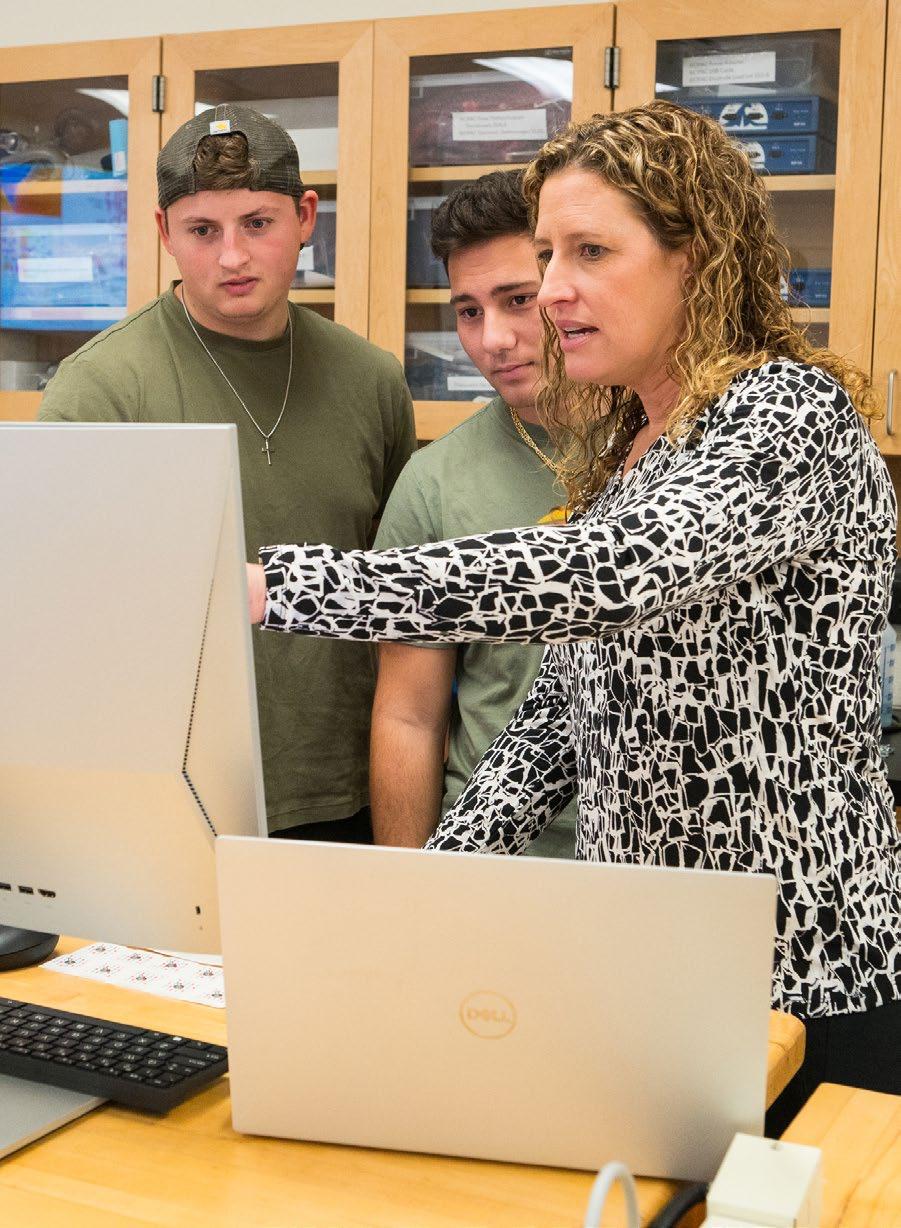
Ana Estrada, PhD, joins from Yale University as a new assistant professor specializing in cardiac biomechanics.
Collin Beaudoin, PhD, joins from Penn State University. His focus is on quantum computing and machine learning, with applications in new drug discovery.
Zahra Shahbazi, PhD joins from Manhattan University as SEC’s new associate dean. Her research centers on artificial intelligence in machine vision and nanorobotics.
Jason Low, MS, joins from North Carolina State University. He will serve as a professor of the practice in the new Mechatronics Engineering program, as well as the new director of SEC Laboratories.
Naser Haghbin, PhD was reappointed as tenure-track assistant professor. He conducts research in micromachining, robotics, and automation.
Haolin Tang, PhD, joins from Virginia Commonwealth University. He specializes in wireless communications and will support the Computer Science program at Fairfield Bellarmine in Bridgeport, Conn.
IAJU Assembly in Bogotá
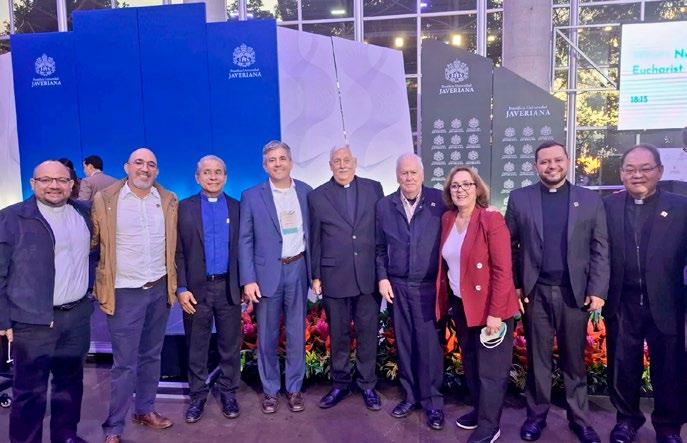
At the International Association of Jesuit Universities (IAJU) Assembly in Bogotá, Colombia, Dean Andres Leonardo Carrano, PhD, joined leaders from more than 200 Jesuit institutions worldwide in reaffirming the global mission of Jesuit higher education. The gathering brought together representatives from AJCU, AUSJAL, JHEASA, Fe y Alegría, the Kircher Network, and many others.
Susan Freudzon, PhD, Named a 2025 Woman of Innovation Finalist
Director of the Biomedical Engineering program, Susan Freudzon, PhD, was named a 2025 Women of Innovation finalist by the Connecticut Technology Council (CTC).
Dr. Freudzon is among 46 accomplished women across Connecticut who were recognized for outstanding achievements in science, technology, engineering, and mathematics (STEM) at the organization’s 20th annual Women of Innovation Awards.
John Drazan, PhD, Named Inaugural Mentorship and Outreach Fellow, Received 2025 Fred Nelson Scientific Communication Award
John Drazan, PhD, assistant professor of biomedical engineering, was named the inaugural 2025 Mentorship and Outreach Fellow by the Bethel Musculoskeletal Research Center at the University of Pittsburgh and the Orthopedic Research Society (ORC); he also received the ORC’s inaugural Fred Nelson Scientific Communication Award.
As director of Fairfield’s CommunitySituated Biomechanics Lab, Dr. Drazan develops mobile research tools that bring
biomechanics into community settings, making musculoskeletal research more accessible to the public.
1073 North Benson Road
Fairfield, Connecticut 06824-5195