WEDNESDAY, FEBRUARY 25, 2026
INDEPENDENT STUDENT NEWSPAPER
WEDNESDAY, FEBRUARY 25, 2026
INDEPENDENT STUDENT NEWSPAPER

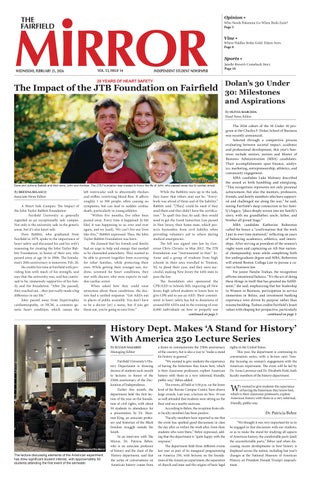
A Heart Safe Campus: The Impact of the John Taylor Babbitt Foundation Fairfield University is generally regarded as an exceptionally safe campus. Not only is the university safe in the generic sense, but it’s also heart safe.
Dave Babbitt, who graduated from Fairfield in 1979, spoke to the importance of heart safety and discussed his and his wife’s reasoning for creating the John Taylor Babbitt Foundation, in honor of their son, who passed away at age 16 in 2006. The foundation’s 20th anniversary is tomorrow, Feb. 26.
He credits his time at Fairfield with providing him with much of his strength, and says that the university was, and has continued to be, immensely supportive of his family and the foundation. “After [he passed], they reached out…they just really made a big difference in my life.”
John passed away from hypertrophic cardiomyopathy, or HCM, a common genetic heart condition, which causes the
left ventricular wall to abnormally thicken and stiffen, restricting blood flow. It affects roughly 1 in 500 people, often causing no symptoms, but can lead to sudden cardiac death, particularly in young athletes.
“Within five months, five other boys passed away. Every time it happened [it felt like] it was happening to us over and over again, and we [said], ‘We can’t live our lives like this,’” Babbitt expressed. Thus, the John Taylor Babbitt Foundation was born.
He claimed that his friends and family had an urge to help and energy that needed to be channeled somewhere. They wanted to be able to prevent tragedies from occurring for other families, while protecting their own. While getting their younger son, Andrew, screened for heart conditions, they met with doctors who were experts in sudden cardiac arrest.
When asked how they could raise awareness about these conditions, the doctors had a unified response: “Get AEDs out in places of public assembly. You don’t have to be a doctor [or] a nurse, but if you get these out, you’re going to save lives.”
Opinion •
Who Needs Pokemon Go When Birds Exist? Page 5
Vine •
Where Fiddles Strike Gold: Eileen Ivers Page 8
Sports •
Janelle Brown’s Comeback Story Page 16
By OLIVIA MARCEDA Head News Editor
The 2026 cohort of the 30 Under 30 program at the Charles F. Dolan School of Business was recently announced.
Selected through a competitive process evaluating between societal impact, academic and professional development, this year’s honorees include seniors, juniors and Master of Business Administration (MBA) candidates. Their accomplishments span finance, analytics, marketing, entrepreneurship, athletics, and community engagement.
While the Babbitts were up to the task, they knew that others may not be. “Everybody was afraid of them and of the liability,” Babbitt said. “[They] could be sued if they used them and they didn’t have the certification.” To quell this fear, he said, they would need to get the Good Samaritan Law passed in New Jersey, their home state, which protects bystanders from civil liability when providing voluntary aid to others during medical emergencies.
The bill was signed into law by Governor Chris Christie in May 2012. The JTB Foundation was “instrumental in that.” JoAnne and a group of students from high schools in their area travelled to Trenton, NJ, to plead their case, and they were successful, making New Jersey the 44th state to pass the law.
The foundation also sponsored the CPR/AED in Schools Bill, requiring all New Jersey high school students to know how to give CPR and to use an AED. Their commitment to heart safety has led to donations of around 850 AEDs and to the training of over 8,000 individuals on how to properly use
continued on page 3
MBA candidate Luke Maloney described the award as both humbling and energizing. “This recognition represents not only personal achievement, but also the mentors, professors, friends, and family members who have supported and challenged me along the way,” he said, noting Fairfield’s deep connection to his family’s legacy, “place deeply woven into my family’s story, with my grandfather, uncle, father, and brother all proud Stags.”
MBA candidate Katherine Roberston called the honor a “confirmation that the work I put in over time mattered,” reflecting on years of balancing academics, athletics, and internships. After serving as president of the women’s rugby team and captaining an All-Star national championship team while completing both her undergraduate degree and MBA, Roberston will attend Boston College Law to pursue a career in business law.
For junior Natalie Teahan, the recognition affirms intentional balance. “It’s the act of doing these things in itself that has granted me fulfillment,” she said, emphasizing that her leadership in Women in Business, participation in service immersion in Belize, and investment banking experience were driven by purpose rather than resume building. Teahan credits Fairfield’s Jesuit values with shaping her perspective, particularly
continued on page 3
By JULIAN NAZARIO Managing Editor
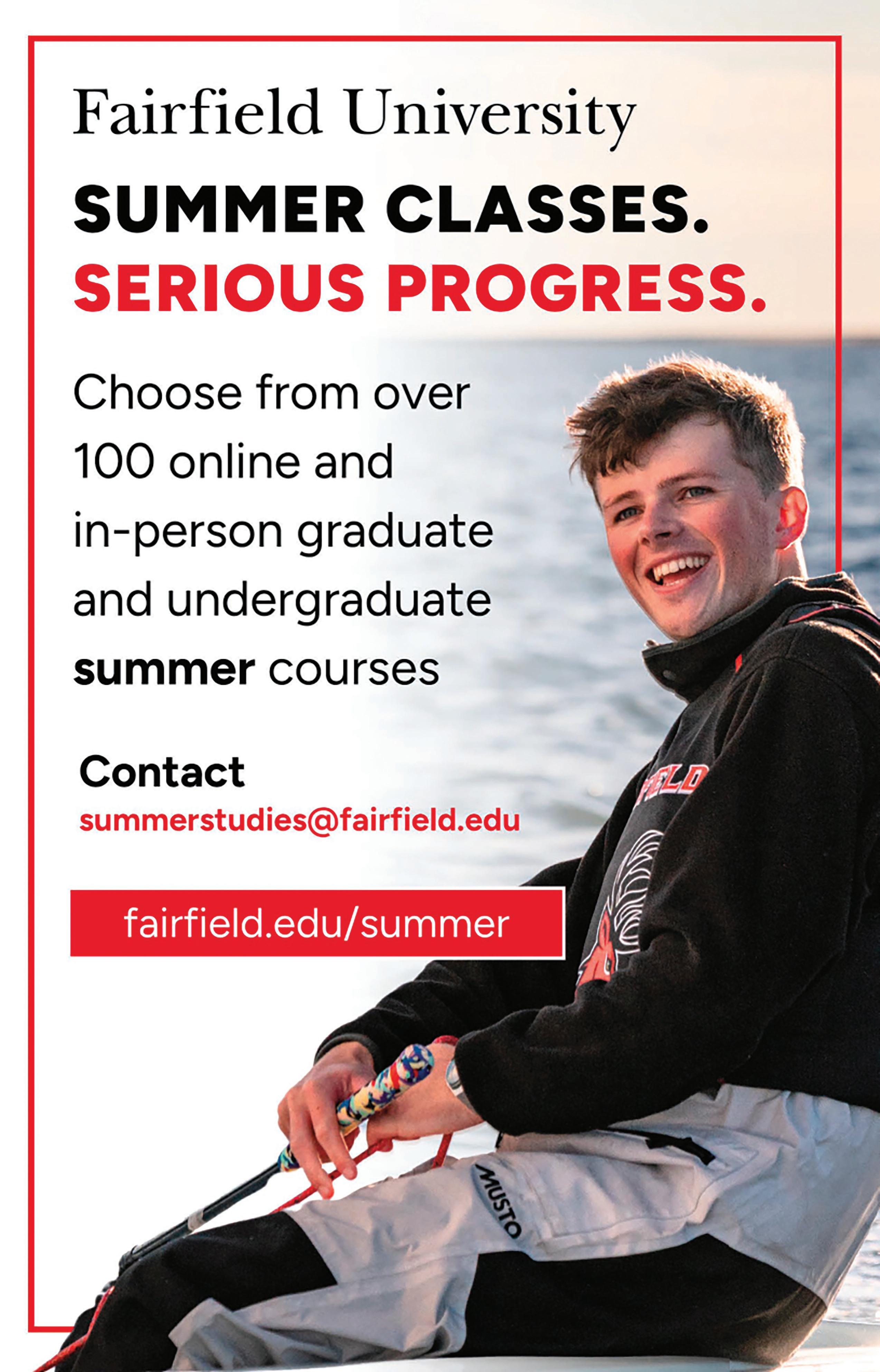
Fairfield University’s History Department is drawing dozens of students each month to lectures in honor of the 250th anniversary of the Declaration of Independence.
Earlier this month, the department held the first lecture of the year on the foundation of civil rights, with about 50 students in attendance for a presentation by Dr. Shannon King, an associate professor and historian of the Black freedom struggle outside the South.
In an interview with The Mirror, Dr. Patricia Behre, who is an associate professor of history and the chair of the History department, said that the series of conversations on American history comes from
a desire to commemorate the 250th anniversary of the country, but is also a way to “make a stand for history in general.”
“We wanted to give students the experience of having the historians they know best, which is their classroom professors, explore American history with them in a very informal, friendly, public way,” Behre added.
The events, all held at 5:30 p.m. on the lower level of the Barone Campus Center, have drawn large crowds. Last year, a lecture on Nov. 19 was so well attended that students were sitting on the floor and on a nearby staircase.
According to Behre, the reception from other faculty members has been positive.
“Faculty members have reported to me that the event has sparked good discussions in class the day after or within the week after, from their students who were there,” Behre expressed, adding that the department is “quite happy with the response.”
The department held three different events last year as part of its inaugural programming on America 250, with lectures on the foundations of the American experiment, the separation of church and state and the origins of basic legal
rights in the United States.
This year, the department is continuing its conversation series, with a lecture next Tuesday focusing on women’s engagement with the American experiment. The event will be led by Dr. Anna Lawrence and Dr. Elizabeth Hohl, both faculty members of the history department.
We wanted to give students the experience of having the historians they know best, which is their classroom professors, explore American history with them in a very informal, friendly, public way.
Dr. Patricia Behre
“We thought it was very important for us to be engaged in that discussion with our students, so as to make the stand for studying all aspects of American history, the comfortable parts [and] the uncomfortable parts,” Behre said when discussing recent developments in how history is displayed across the nation, including last year’s changes at the National Museum of American History on President Donald Trump’s impeachment.


Editorial Board
Kathleen Morris, Editor-in-Chief
Danny McElroy, Executive Editor
Julian Nazario, Managing Editor
Caitlin Shea, Head of Editorial Integration
Section Editors
Olivia Marceda, Head News
Brenna Belasco, Associate News
Conor Doonan, Head Opinion
Katherine Kilsey, Associate Opinion
Talia Scarpa, Head Vine
Lizzie Freeman, Associate Vine
Crystal Arbelo Head Sports
Georgia McDade, Associate Sports
John Malizia, Associate Sports
Sophia Haber Brock, Digital Editor
Nathanael Wilhelm, Associate Digital Editor
Advisors
David Albright
Karla Barguiarena
Tommy Xie
Contact Information Fairfield University 1073 North Benson Road, BCC 104 Fairfield, CT 06824
Printing Valley Publishing Derby, CT
continued from page 1 lessons on kindness and long term impact with finance.
MBA candidate Nicholas Condos reflected on the holistic nature of the award. “This recognition feels especially special because it values the whole person, not just accomplishments, but character, leadership and impact,” he said. A Division I student-athlete on the men’s tennis team and member of the inaugural Leashership Fellows cohort, Condos has completed a master’s degree while competing and working full-time.
Robert Villaviencio, also an MBA candidate, described the recognition as deeply personal. “It is proof that your starting point does not define your ceiling,” he said, recounting his journey from vocational school and sales into analytics and graduate study. As the first in his family born in the United States and earn a master’s degree, he views success as a responsibility. “My goal is not simply to succeed, but to make success more accessible.”
Senior Jonathon Werley framed the recognition through faith, “It is an honor to receive recognition such as this, but I attribute every opportunity and all the growth I have experienced to Christ,” he said, also crediting Fairfield professors and peers for fostering both academic and spiritual growth.
Junior Madison Ryder emphasized gratitude, noting that the award reflects the support of professors, friends, and family throughout her time at Fairfield. Senior Theodore “Teddy” Butynes highlighted the importance of pursuing excellence with humility. Senior Alexandra D’Amico expressed gratitude for being included among peers whose work extends beyond the classroom. Senior
continued from page 1
them.
The Mirror is the recognized student newspaper of Fairfield University. Opinions and ideas expressed herein are those of the individual student authors, and not those of Fairfield University or its Board of Trustees.
Molly Ryle described the recognition as “truly meaningful,” reflecting sustained commitment to leadership and scholarship.
MBA candidate Faizah Chowdhury, a first generation student and co-founder of First-Gen Stags, described the award as “an incredibly humbling recognition of the community that built me.” Through research presentations, entrepreneurship opportunities and her work as a Leadership Fellow, she hopes to continue bridging technology and business to drive initiatives centered on human impact.
At the heart of the Dolan 30 Under 30 program is societal impact. Whether through service immersion, mentorship, nonprofit engagement, entrepreneurship or advocacy for first generation students, this year’s cohort demonstrates a
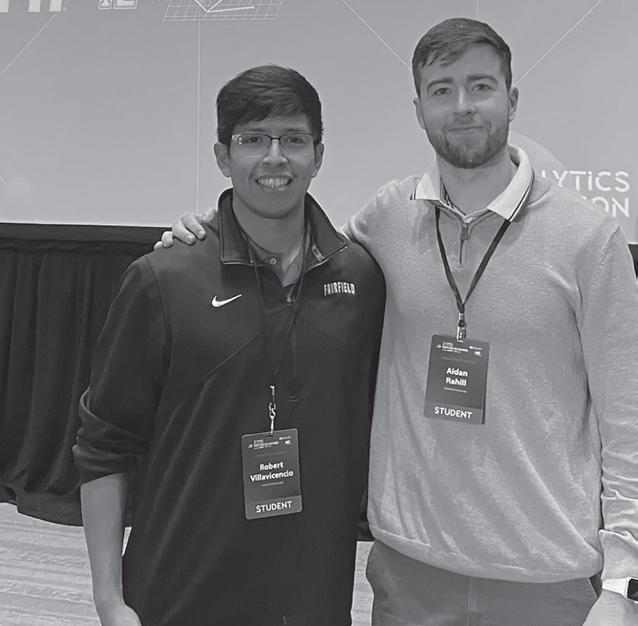
shared commitment to using business as a vehicle for positive change. “When we lead with both the mind and the heart, we can create a lasting impact,” Chowdhury said. A sentiment that resonates with the entire cohort.
Honorees will be formally recognized at the annual Fairfield Dolan Awards Ceremony this April.

In what would have been John Babbitt’s freshman year of college, students who had come from the town of Chatham and the Pingry School in New Jersey (where John grew up and attended school) matriculated at Fairfield and started a Heart Club. The Babbitts and other members of the foundation came to campus during Alumni and Family Weekend each year and set up a table.
“We would bring an AED, and we would give a tour of the campus to parents who [wanted to know] where the AEDs were located,” said Babbitt.
However, the club lost momentum about 10 years ago. According to Babbitt, “[The club needs] a faculty member or someone in administration, or a student group, who’s saying, ‘This is important.’”
He also mentioned his and other alumni’s thoughts on the importance of AED training for RAs. “One girl contacted me about two years ago; she’s since graduated, but she wanted [the training] to happen during the two weeks before school starts. It never happened, but I [feel like] we could do initiatives like that.”
To further his point, he said, “During the basketball games during Heart Month (February), we could do a five-minute presentation of CPR. We’re not trying to raise money, we’re trying to raise awareness.”
In March of 2025, Fairfield University Student Association (FUSA) organized and hosted a polar plunge to raise money to support heart health at Fairfield. They raised nearly $3,500 to put towards the purchase of additional AEDs on-campus. Currently, as presented on the LiveSafe app, there are approximately
30 AEDs. However, two of the most-used academic buildings on campus, Donnarumma Hall and Canisius Hall, don’t have any. Thus, the need for the initia-
“ We’re not trying to raise money, we’re trying to raise awareness.” -Dave Babbitt ‘79
tives Mr. Babbitt proposed is reinforced. One of the foundation’s board members is Mike Papale, a survivor of sudden cardiac arrest and the president of the foundation In a Heartbeat. He is also the basketball coach at Fairfield Prep. “He had his sudden cardiac arrest the same year that John did…and he’s very active in our foundation,” said Babbitt.
When it comes to celebrating Heart Month, the foundation spares no expense. Babbitt was eager to share, saying, “We are so busy! We went down to Philadelphia for National Youth Heart Screening Day, where they screen kids from ages 12 to 22 for [underlying heart abnormalities]. We [also] taught CPR [lessons] while kids were waiting for their EKGs.”
In addition, the Pingry School has a Heart Club, and at their recent basketball game, all who were present wore red. They also had a bake sale, raising money to buy an AED for a school in a less affluent area. “We’re just out there making sure that people are aware of what they can do to save a life,” he said.
A major facet of the work that the Babbitts do is the ability to be a part of something bigger than themselves. As members of the Smart Heart Sports
Coalition, they are able to do that. It was formed on March 27, 2023, following Buffalo Bills safety Damar Hamlin’s onfield collapse from sudden cardiac arrest earlier that year. The JTB Foundation is joined by other major organizations, such as the NFL, the NBA, the NHL and the American Red Cross.
They’ve been part of the coalition for about two years, and through their membership, they are able to truly see just how much they’ve improved New Jersey’s heart safety. JoAnne Babbitt spoke to that point, saying, “Being part of the [coalition], we started doing the investigative work. ‘How do we go about making sure all schools have AEDs [in all states]?’ ‘[Do they] have cardiac emergency plans?’ [And] of those [schools], there’s only a certain percentage of the faculty and staff that are trained.”
When looking at those three criteria, Babbitt said that at the time they joined the coalition, New Jersey was only one of seven states that had all three criteria embedded in their law. Now, however, as shown on the map on the Smart Heart Sports Coalition website, 29 states have adopted all three policies.
Sudden cardiac arrest is one of three emergencies where “...a layperson can save a life,” with the other two being Stop the Bleed and opioid overdose. When discussing how to encourage people to move past their fear and help those in need, Mrs. Babbitt said, “To get people to feel confident, they’ll never feel comfortable. If you talk to any EMT or paramedic in that situation, they never feel comfortable. But, [you need to] feel confident that [you] can do something and [you] need to act [immediately], you can’t wait for the ambulance to arrive.”
By KATHLEEN MORRIS Editor-in-Chief
To purchase 1,000 Solo Cups, one would have to shell out $216.70. The cost, however, is not limited to a financial toll.
The Guardian reported on what it deemed the “disposable cup crisis” in 2024, calculating that the emissions from a single-use plastic cup range from 10 to 30 grams of carbon dioxide.
The visible aftermath of “darties” – a colloquialism for daytime parties – localizes this predicament. At Fairfield Beach, the shorelines of the Long Island Sound are overtaken by litter following such revelry. The sand and stone are accompanied by trash, from aluminum drink cans to the ever-recognizable red plastic cups immortalized by Toby Keith.
The larger impact of these remains has been assessed by researchers at Staffordshire University, who identified microplastic “hotspots” in the Sound. Their research revealed that 97 percent of samples contained man-made particulates, with microfragments from degraded litter contributing up to a quarter of the pollution.
To combat this, Fairfield University coordinates beach cleanups following large gatherings, often alongside the student group Leaders of Environmental Action of Fairfield, or L.E.A.F. Participants are incentivized with coupons for a free breakfast sandwich and coffee from Old Post Market, a local deli on Fairfield Beach Road. While these organized efforts are on pause for the winter, administrators are encouraging students to continue the work in a self-directed manner.
Still, these strategies do not address the root of the issue. Consequently, seniors Annie Kosowsky and Clara Meehan have joined a new wave of sustainability initiatives. To turn the tide, they have joined a team that poses a fundamental question: What if plastic cups were replaced altogether?
Kosowsky is a head ambassador for Earth Cups, a role she
has held since last semester. She collaborates with a nationwide network of university ambassadors who help carry out Earth Brands’ core mission: to make sustainability accessible and cool.
Earth Brands was founded in April 2021 by Misha Vitels and Peter Frelinghuysen, who launched the venture after witnessing the ubiquity of littered cups at their small liberal arts college. They were inspired to reimagine the iconic drinking vessel, creating an alternative made entirely of corn-and sugar-based polylactic acid (PLA).
By that December, they had amassed a team of 5,000 college ambassadors. In early 2022, the co-founders announced a $2.5 million seed round led by the billionaire investor Mark Cuban. The company continues to flourish, with ambassadors like Kosowsky playing a small but integral role in its growing influence within its target demographic: college students.
“It’s a very creative, energizing community,” Kosowsky said.
She noted that whether she is speaking with her primary contact or joining a group call with the founders at the start of the semester, the message is always the same: they want to hear from the students on the ground.
“They are always saying, ‘If you guys have any ideas or thoughts, you’re more than welcome. We’re all ears,’” Kosowsky reflected.
With this support, she has plunged headfirst into the role, working alongside Meehan to reach their peers. In a message sent to a GroupMe chat of fellow seniors, Kosowsky offered an intriguing pitch. She promoted the Earth Cups Ambassadors (ECA) program, which enables students to access 1,000 sustainable cups for $30 – a fraction of the $216.70 retail price for traditional plastic alternatives. One student responded with eager enthusiasm, writing, “ANNIE. 1,000 cups for $30?? Count me in.”
Kosowsky echoes this excitement, emphasizing her belief that joining the program is simply the logical choice.
“If I were to purchase that box on my own, I think it would last me two or three years,” she explained. “It totally makes sense, as opposed to going out to buy Solo cups every time. And, just financially, I don’t know why you wouldn’t.”
The brand’s appeal extends beyond the price tag.
As ambassadors, the duo is tasked with taking photographs and creating content that integrates Earth Cups into beloved social traditions. They find fun in capturing the cups in an organic setting, honing in on the “genius marketing strategy” that centers the product within a party atmosphere.
In the fall, Kosowsky hosted a house party sponsored by Earth Cups. While she serves in a volunteer capacity, she is compensated with free supplies.
“Pretty much every time I get sent cups, they have different logos on them,” Kosowsky said. “It works for both brands. They compensate for some of the costs in order to get their brand name out. So it’s a win-win for everybody involved.”
This model has fueled Earth Brands’ expansion, allowing them to partner with a range of companies from breweries and cosmetic brands to professional sports arenas. These partnerships are the driving factor in keeping the cups affordable. For Kosowsky, the collaboration with TD Garden in Boston is a standout example of the brand’s reach.
“That’s what’s so great about this,” she expressed. “Almost every time we go home for break, one of my friends is at a Bruins or Celtics game. TD Garden is one of their partners, and they always send me photos of the cups. They’re like, ‘Hey, look, it’s Earth Cups.’”
The brand’s presence in these venues proves that its mission extends into every industry, not just the food and drink sector.
Moving forward, Kosowsky envisions a future where Earth Cups are a staple at Fairfield’s biggest events, from off-campus SantaCon celebrations to basketball games at the Leo D. Mahoney Arena.
She identifies additional gaps in sustainability practices at Fairfield, noting the use of plastic food containers at The Stag and The Levee. Moreover, Kosowsky highlights that Earth Brands offers several sustainable products beyond the cups.
“They have pretty much any kind of thing you use to eat,” she said. “They do a lot of collaborations with college campuses, like dining halls, and I absolutely think Fairfield could benefit from reducing their plastic use.”
Meehan reiterates this, stating that “there is still room for improvement.”
“The university has made progress with recycling programs, sustainability initiatives and student involvement,” she said. “However, there are gaps. For example, single-use plastics are still common in dining areas, and many students are not fully aware of sustainability efforts or how they can get involved.”
Therefore, the pair is hopeful that Earth Cups will spark change through this fresh approach to sustainability – one that reminds every student of their power to protect the coastal community they get to call home for four years.
“I think it can become an interest for people in a lot of different ways,” Kosowsky considered. “I have friends who care about sustainability, friends who care about partying, and friends who care about health benefits and microplastics. I think the company appeals to everyone, whether you really care about sustainability or not.”
This universal appeal is exactly why Kosowsky believes the movement can take root at Fairfield, as it encapsulates the shared responsibility to the shoreline.
“We only have one planet. We only have one Fairfield Beach,” she said. “It’s so special. We are so lucky to live here. And I think this is a really simple and effective way to recognize that and care about the Fairfield community.”



By Abigail Bell Contributing Writer
Hot take! Bird watching is actually really fun, and it is not just a grandma activity. In fact, I would argue it's basically just Pokémon Go without your phone.
Firstly, let me explain this opinion by first relating to my fellow college students. I am an 18-year-old girl, I like playing video games and doing crafts, and I go crazy for F@N Bingo just like all of you.
So why did I start birding? My mom is a nature photographer, but I never paid much attention to what she encountered. I only started understanding it last year, in April 2025.
I randomly started seeing these videos on Instagram that tested your knowledge on common northeastern birds, and my competitive side came out. I knew almost all the birds just from listening to my mom talk about them over the years.
I was so determined to wipe out these Instagram Reels that I started religiously learning the names of every bird we saw on our deck. That’s when I realized that I had accidentally started enjoying the activity I had been making fun of my mom for.
So what’s in birding for you?
First of all, birding is not high stakes or a big commitment. I bird all the time in my everyday life on campus, because birds are everywhere!
There are plenty of birds right on Fairfield campus; have you ever heard the shrieking, monkey-like sound coming from behind the Bannow Science Center? That sound is a sharp-shinned hawk, which I have affectionately started calling Sally.
The birds that waddle around outside the Tully and eat the apples are American herring gulls, and of course, we are all aware of the Canada geese plaguing the quad and sidewalks with poop. While these bigger birds may be pesky, there are smaller and much less annoying ones hiding in the trees, such as mockingbirds, house sparrows, and blackcapped chickadees.

Birding is also an inexpensive hobby because all you need is an identifier app! I use an app called Merlin, which is free with no ads, and you can ID birds with a photo, audio recording or description. Identifying the birds is my favorite part of birding because it is like having a collection! Every time I see or hear a new bird, I get to add it to my “life list”, which is a list of all the birds I have ever seen before. This is like catching a Pokémon for the first time and adding it to your team!
As someone who isn’t a fan of travel, I have also found that I get more excited about going to new places because every place has unique bird species that I get to add to my life list.
This summer, I went to Bermuda on a cruise and spent an entire day off the boat birding with my mom. There are birds there that I will never find anywhere else, but I know I also didn’t see every bird there is to see, so there is incentive to revisit the same place numerous times!
But you don’t have to travel out of the country to find new birds; you will also find a plethora of new birds just by traveling to more coastal or inland parts of states in the same region, or you can go to other parts of the country for even more variety. When I went to the Jersey Shore, which is only about 2 hours from where I live in New York, I added 31 new birds to my life list!
Of course, there are also the health benefits to birding, such as going on more walks and being connected with nature.
Personally, this pro isn’t huge for me because I am not a very outdoorsy person, but because there are so many birds that have adapted to more urban life, you do not have to go on intense hikes or be outside for hours at a time to find them. Of course, if you are an outdoorsy person anyway, getting to identify birds on your adventures is just an added bonus of fun!
It can also be a way to spend mindful time away from screens, which I know I definitely struggle with, alongside a lot of my classmates. Because birds are such fast-moving creatures, they tend to keep my brain stimulated enough that I can get entranced by watching them for minutes at a time. They have their own communities and dynamics too, which you get to learn about if you watch them for long enough.
Lastly, it’s just a fun party trick to know all their names. When people see a bird, you get to say, “Oh look! It’s a northern flicker!” and seem super smart because who the heck our age knows what a northern flicker is? Literally no one except me, but that could be you if you join me on the birding journey!

By Olivia Lawrence Contributing Writer
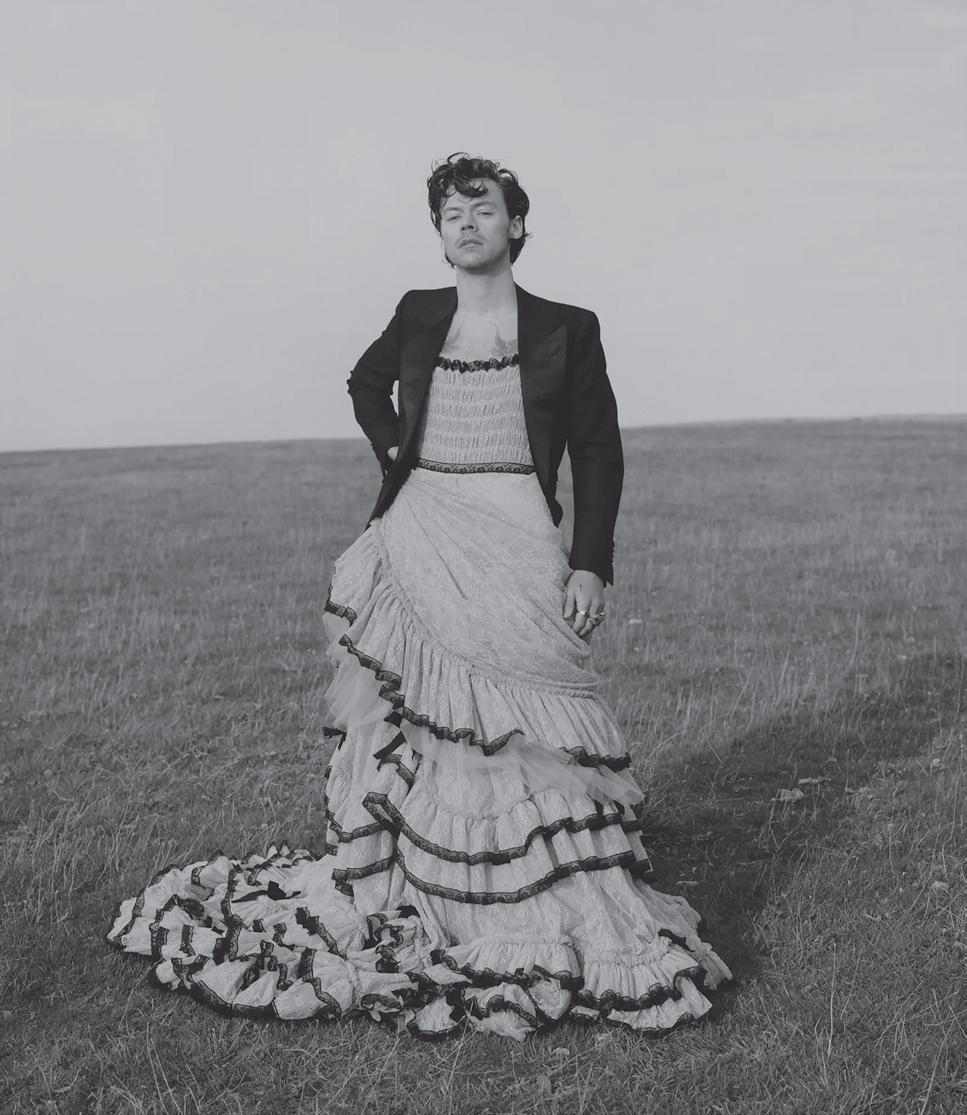
Last month, Harry Styles announced his comeback tour, Together, Together. After a few years of silence following the wrap of his last tour, Love on Tour, in 2023, America’s favorite Brit is back with more music and more live entertainment for fans across the globe.
Unfortunately, Together, Together quickly became an exclusive event for those who were willing and able to spend more than a pretty penny to go.
On Jan. 30, tickets for Together, Together went on general sale for the United States leg of the tour, following some presales that occurred a few days prior.
Before tickets went on sale, there was some backlash from fans as Styles plans to spend all 30 United States shows at Madison Square Garden. Backlash continued when tickets officially went on sale on Ticketmaster and were immediately sold out within minutes, leaving fans to have to rely on second-party sellers on platforms like StubHub, Vivid Seats and others.
As a fan of Styles’s music as well as his overall message of treating people with kindness, it was extremely disappointing to see how he has become one of the many artists trapped in the cycle of outrageously overpriced tickets with no other method or effort to make their concerts more accessible to all of their fans.
Ticketmaster has time and time again released tickets to concerts and other shows that immediately get swooped up by resellers or online bots for the cheapest price to then be resold later on second-party apps for double, sometimes triple the price.
Currently, StubHub has tickets for Together, Together that range in price from $400 to thousands of dollars. These prices are nothing but completely ridiculous and unattainable for the average person, and artists have time and time again done nothing to advocate for their fans in this way.
Live entertainment has become less about an artist performing for their fans and more about just how much ticket prices can go for.
Additionally, because all of the U.S. shows are taking place at Madison Square Garden, American fans who want to go see Styles in concert are forced to spend an additional large sum of money on flights to New York and possibly hotels to stay there overnight.
Furthermore, Styles is stopping at only seven total cities across the globe throughout the tour, meaning that fans all over the world will be forced to travel long distances, perhaps even internationally, if they want to experience the show.
Of course, no one is being forced to go to the show. But for diehard fans who maybe saved up their money to be able to afford one ticket, it is extremely disappointing to
have to drop more money on unforeseen expenses.
While of course it is easy to blame Styles himself, Together, Together is just one piece of a much larger, more problematic puzzle.
Concerts, and live entertainment as a whole, have become completely unattainable to the majority of people and are catered toward the elite population of society. It feels as though our generation has missed out on an era where the point of live music was to unite people and entertain an audience that all shared a common love for whoever was performing.
As a society and as a population of music lovers, we need to advocate for our right to enjoy music and performance the way they were meant to be enjoyed: through dancing, celebration and a community that is open to all, not just whoever has the most money.
By BrenDan HineS Contributing Writer
Director Gore Verbinski might not be a name you immediately recognize; the prime of his career being spread across the 2000’s, but his directorial work is as iconic as it can get.
From a brilliant, Oscar-winning animated western “Rango”, to his cinematic and epic “Pirates of the Caribbean” trilogy (“At World’s End” is one of the best blockbusters and trilogy conclusions ever made), Verbinski has made a career out of filming the strangest ideas and making them work.
However, after his box office flops of the 2010’s – “The Lone Ranger” (2013) and “A Cure for Wellness” (2016) – were released to mixed reception, the filmmaker has gone quiet.
Only now, in 2026, do we finally see Verbinski’s directorial return – “Good Luck, Have Fun, Don’t Die”.
Claiming to come from a future where Artificial Intelligence brings humanity to an apocalyptic state with false digital reality, a scrappy Sam Rockwell sent back in time takes an L.A. diner hostage in search of the perfect combination of patrons to prevent impending doom.
The story is told from multiple perspectives, like “Weapons” from this past summer, and intercuts flashbacks of backstories for each character with the team’s attempt to save the world.
“GLHFDD” is a riot. It’s absolutely insane. The way characters are quickly disposed

of without another thought, the outrageous dialogue is continually hilarious, and the depiction of modern tech use can be as poignant as it is excessively ridiculous.
It’s clear that Verbinski and his team have thoughts they want to make abundantly clear about A.I. and its current integration with society. Clearly made by Boomers, the film condescendingly beats down on social media, teenagers, and our current culture with little
room for subtext.
If a joke doesn’t land, the beat can sometimes be drawn out longer than needed. Michael Peña and Zazie Beetz are not giving the best performances.
Yet the film still stands strong when the credits roll, because at the end of the day, they made movies better a few decades ago than we do now.
The film properly fleshes out its ensemble cast while still retaining its unpredictable campy charm, and the characters of “GLHFDD” are exactly what they need to be: expendable. The film’s lead, played by Rockwell, doesn’t even have a name, but it doesn’t make the viewing experience any less engaging.
A seasoned veteran, Verbinski can direct with his eye for action that keeps track of scale and tone. and entertains while never letting up.
The greatest strength of this movie is its excessively over-the-top, fun presentation of an exciting story.
It's as classic as a movie experience can get. Not that “GLHFDD” is better than “Pirates”, but it stands proudly next to Verbinski’s horror classic “The Ring” as cinema that feels handcrafted and unique.
All this to say, please go see this film in theaters, or just check it out at some point.
It’ll make you think just enough to catch you off guard with its lunacy.
I promise it’s not something that you’ll regret taking a couple of hours off the phone to seek a watch.
By CaiTlin SHea Head of Editorial Integrations and Standards
One minute and forty-one seconds into overtime in the USA versus Canada men’s ice hockey game, New Jersey Devils star Jack Hughes took a shot off a pass from teammate Zach Werensk which slipped past Canada's Jordan Binnington. This goal landed Team USA gold for the first time in 46 years.
In celebration, Hughes proudly donned the American flag on the ice and, from his bloody mouth, proclaimed, “I am so proud to be American today” (in one post-game interview conducted by NBC).
In the locker room, the celebration did not end. The men cheered and drank and even received a phone call from President Donald Trump.
In this phone call, the President did nothing but praise the men for their “beautiful” and powerful representation of America. The team responded by lovingly referring to the President as “Don”.
The President then extended an invitation to the team to attend the State of the Union Speech, offering to “send a military plane or something” to ensure their presence despite recent storms. This invitation was met with nothing but excitement, anticipation and jokes about being picked up in Miami on Tuesday morning.
Towards the conclusion of the call, President Trump explained that “We’re gonna have to bring the Women’s team, you do know that,” in a mocking and humorous tone. The USA men’s ice hockey team then erupted in laughter and exclamations of “oh no.” The President then ended the call by joking that he would “probably be impeached” if he were to not acknowledge the women’s team.
After videos of the phone call began to circulate online, TikTok users commented on how these comments ruined the spark of the game. “And just like that [I] wish Canada won!” one
user @loramontoya commented, “I’m so disappointed now. I was so proud of them until this.” another user @spikedstaticwater commented.
Other commenters defend the behavior by claiming that “Trump doesn’t joke about anything,” @ksull58, and “I’m sure you were a huge fan. Cry harder,” by @tamc4892.
Is this the America we are truly proud to represent?
While within the Milano Santagiulia Arena locker room walls on Sunday Feb. 22, this appeared to be true, the athletes representing the USA in women’s sports have created a message of community, kindness and hope for the future.
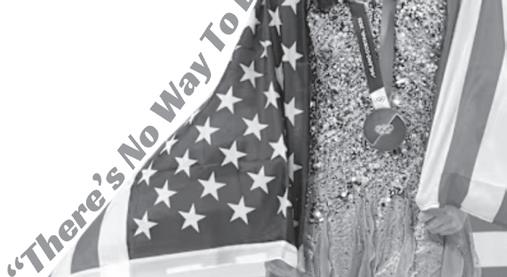
It is nearly impossible to go online and scroll through the Olympic pages without seeing the “Blade Angels”. The three strong, competitive, kind and talented athletes that represent the USA in women’s figureskating, Amber Glenn, Alysa Liu and Isabeau Levito have done nothing but show true sportsmanship and elegance in competing.
Characterized for her laid-back and joyful approach to skating, Alysa Liu shocked the nation when she took home gold for the women’s single. Moments after receiving her score, Liu could have ran to her coaches, teammates, her family or even celebrated herself. Instead, she jumped from her seat to embrace seventeen year old Ami Nakai of Japan to celebrate her bronze medal award. Against all the barriers of competition and language, Liu took the oncein-a-lifetime moment that could have been special only for her and shared the joy in another’s accomplishments.
Off-camera, fellow team USA member Amber Glenn was seen blocking cameramen from filming a very personal moment of silver medal winner Kaori Sakamoto. Glenn, who was favored to win gold, missed the podium despite her powerful programs. Instead of sitting in disappointment, she, too, was able to rise up and help others in their own moments of high emotion, despite many barriers. Later commenting
By KaTHerine KilSeY Associate Opinion Editor
With Fall 2026 course registration opening in just over a month, now is the time to start thinking about what classes to take to further your degree progress.
What will fulfill your major, your minor? Do you need any courses for the Magis core? And, another important question – what are the best class times to take?
Well, I would argue that the number one spot goes to 9:30 a.m. classes.
Now, I know that for many 18 to 21-year-old college students, 9:30 a.m. may still seem like the wee hours of the morning, but stay with me. Yes, it’s an early class, but not that early. You’re not scrambling to get to your classroom at 8 in the morning, but you still get that productivity early on in the day.
I’m an early riser – I try to get up around 6 a.m. to go to the gym and hit the Tully for breakfast around 7:30 a.m. If my first class starts at 9:30 a.m., I still have ample time to shower, get ready for the day, and also get a head start on some work or plan out my assignments before class. I definitely could make it to an 8 a.m. with some revision to my routine, but 9:30 a.m. is far less stressful.
on a TikTok of the moment, “Dude I know it’s their job but they will get all up in your business even when you clearly need space it’s wild.”
These moments were not one-off either, as each skater has shown their love on and off the ice for the women they work with and compete against as well as been very outspoken about the importance of mental health and acceptance.
At the beginning of the Olympics, Liu emphasized her love for her group and all of the women she would be competing against by stating, “I think any team with girls is special,” during an interview with NBC Los Angeles.
Figure skating is not the only women’s sport that was able to generate hope for the future of women in athletics.
Just as the men’s hockey team took home gold in an intense overtime period, the women clutched gold against Canada. With fifteen minutes and fifty three seconds left of overtime, defenseman Megan Keller of the Boston Fleet scored a break away goal to earn the women’s team their third gold medal since the sport was recognized by the Olympics in 1998.
Despite their win, there was no locker room phone call from the president, humorously poking fun at the men’s team. In fact, as of Sunday, Feb. 23, the women’s team declined Trump’s invitation to the State of the Union.
The Olympics are supposed to be a season of pride and unity within the country, and while strides continue to be made against that, there is hope, and it is embodied in the women who take the ice under the USA name.
who take the ice under the USA name.


I have also found that if I need to take back-to-back classes, I prefer the 9:30 a.m. to 12:15 p.m. stretch. Getting your material in during the day makes it so much easier to attend extracurricular meetings or sports practices, which tend to be in the evenings, and also leaves you feeling less overwhelmed by the time the sun sets.
It also works so well for a daily schedule, as you can grab lunch right after these classes if you wish.
As for my personal least favorite times to be in class? I’d go with 2:00 p.m. or 3:30 p.m.
Most high schools get out around this time or even earlier, so it just feels rather unfortunate having to sit through class at this hour when a few years ago you’d be free to do whatever you want. This also tends to be a time I experience a drop in energy, a “crash”, if you will – all I want to be doing is taking a nap, not making a trek up the hill to McAuliffe.
This semester, my first class on Mondays and Thursdays is at 2 p.m., which is far from ideal. I have such a large stretch of time in which I should hypothetically be doing work –but if plans go awry, I feel like I’ve wasted the whole day.
Later evening classes can also be annoying, especially when it gets dark so early. I genuinely feel for all those in late-night turbos; having to put in so much focus and attention when it’s been dark outside for hours is exhausting.
Of course, everyone is going to have a different ideal time to take a class.
We all have different preferences and schedules – I just happen to have a strong fondness for 9:30 a.m. So, even if you’re skeptical, opt for a 9:30 a.m. class next semester if you can (and thank me later!).

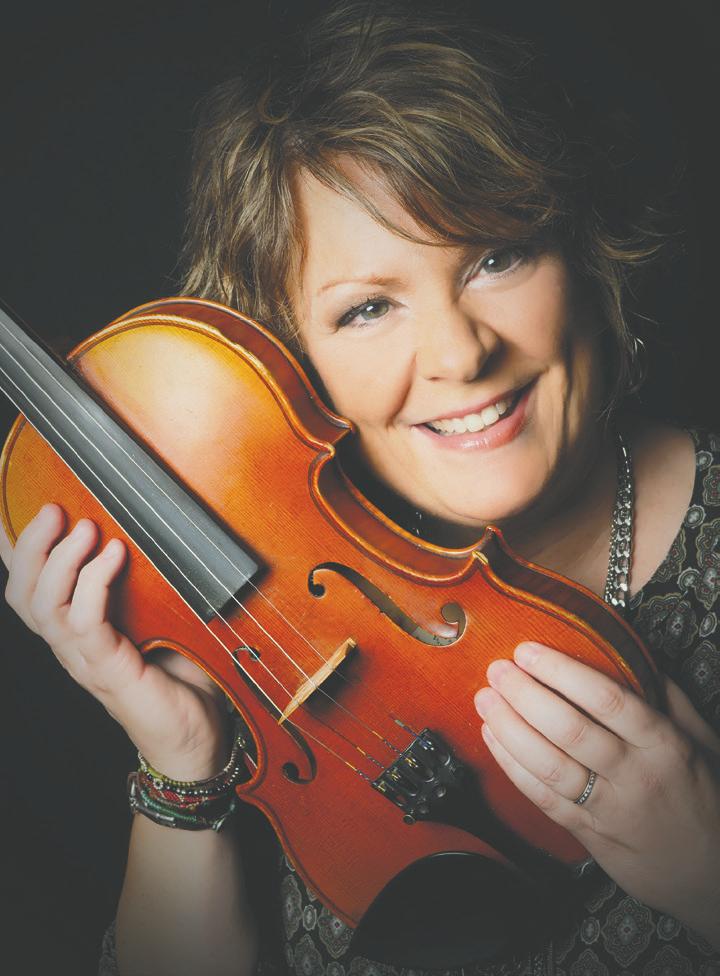
As the daughter of Irish immigrants and a proud Irish American, tradition, culture and music has been a vital part in Eileen Ivers’ career. Eileen got into music at a young age. At the age of eight, she began to play the fiddle, essentially the folk name of a violin. The violin had a hold over young Eileen, something that has brought her both fiddle and fortune in connection with her heritage.
Although she can be considered a traditional Irish fiddle player, Eileen sees herself as a musician of all kinds. She incorporates folk music, Americana elements and global fusion into her works. Because of this, the audiences at her performances will not just hear the Irish folk music genre, but also Bluegrass, Cajun and French-Canadian to name a few.
Her music career is one she never really
dreamt of. Eileen shared how she attended Iona University in pursuit of a mathematics degree. “When you’re in your college years, you think you know what you’re planning on,” she said. With the possibilities of pursuing aeronautical engineering, the musical opportunities also flourished. Multiplying the numbers led to the product of a musical career for Eileen.
Eileen explained that her math degree enhances her understanding of musical terms. Music and math are intertwined in the basics of harmony and structure within music. She finds a strong association through the octave being “a two to one ratio,” a fifth harmony being “three to two”. Eileen firmly believes that this mathematical structure fuels into a musician’s brain through both learning and composing. From arrangements for bands or orchestral settings, “all of it is mathematics.”
Eileen has had the opportunity to sing with Sting, Patti Smith, Al Di Meola, Hall and Oates and The Chieftains over the years. These experiences helped her learn how to interact with various types of artists and audiences.
Eileen has also worked on the “Back to the Titanic” and “Gangs of New York” movie soundtracks, which she has shared feels like “completely different art forms.” Through the recording process of “Back to the Titanic,” she recorded a song at the AIR Studios in London founded by Sir George Martin and played with the London Symphony.
After leaving Riverdance, a musical dance production out of Ireland, she wanted to indulge in a new, creative outlet. The Universal Roots, a band originally established in 2000, became Eileen’s personal project. However,
Universal Roots didn’t always have that name. Initially named “Immigrant Soul,” it truly became Universal Roots in 2015 when band members changed.
Eileen Ivers and the Universal Roots have performed at the Grand Ole Opry, a venue dedicated to honoring country music and its tradition. She recalls the incredible time filled with 4,000 people in the audience fondly. The legendary bluegrass singer Ricky Skaggs joined in on the performance. Eileen felt the privilege to showcase Irish music on this grand stage.
The improvisation of performing live on stage breaks down that “fourth wall” from the stage into the audience. Eileen finds joy in meeting those in attendance, hearing stories of their Irish heritage, and speaking with them in the lobby after shows. Music creates experiences and experiences create connection. “Music is a universal language. We are all more similar than not.”
Eileen just toured in Ireland on what she calls the “Wild Atlantic Music Tour,” a week all over Western Ireland. The tour does not only consist of concerts, but also working with younger musicians, indulging in the culture and speaking the native language.
Eileen feels inspired “to see Irish music coming back more and more is a great testament to the love of the land that these generations are showing.”
“Nearer My God to Thee” from “Back to the Titanic” is one of the songs included in a set of tunes about the immigrant experience that truly shows what Ireland is about in this upcoming tour. The audience can expect fresh
By Caitlin Shea Head of Editorial Integrations and Standards
Although Punxsutawney Phil emerged from his home over three weeks ago, midterm season can seem like groundhog day. With gray skies, harsh winds and even colder temperatures living each day to go to class, study and repeat can put you in a rut.
During these times, it is super important to focus on mental health and take moments to focus on yourself. For some this could mean attending a pilates class at the RecPlex, visiting the DiMenna-Nyselius Library wellness room or reading lounge events or simply making time for hobbies.
To others adding a little bit of whimsy or joy and color into their everyday routine can make all the difference.
Spirited Study Spots & Supplies:
There is nothing more boring than staring at a computer screen for hours on end completing assignments and studying for upcoming exams. Switching up a studying space can be just the thing to add spark back into a routine. Local cafes can act as a great study space and are easily accessible by the Stag bus!
The Fairfield University Store is connected to a Starbucks cafe with incredible vibes for getting work done. With lots of seating the cafe also provides the option for a fun drink or sweet treat to keep morale high and even a shopping spree once all your work is completed! Catch A Healthy Habit Cafe is just down the road and a great choice for those wishing to meet their wellness goals
in the new year! For those wanting to spice up their study space with some beautiful greenery, Candlewood Market is a great option for eating, shopping and studying!
Choosing fun and colorful study supplies can be another way to add joy to your studying habits. Adding stickers to your laptop and notebooks could help make them feel more “you”. Choosing a cute planner or even notebooks and pens could also make you excited to use them! Papier and Etsy have some incredible options, and even The Paper Store on Black Rock Turnpike!
Making Your Meals Magical:
One way to add more joy into your day is by mixing up everyday routines. Having to find a meal at least three times a day everyday can add to the trapped-living-the-same-dayforever feeling, especially if your options are limited.
To make your meals feel and look more magical there are many simple yet fun ways to add whimsy! Almost every part of a meal can be customizable, from cutting your food into fun shapes to adding food coloring and even sprinkles. Even just following one of these options can truly brighten up your morning and leave you in a happy mood for the rest of the day! The meal doesn’t have to end at the food but can even be expanded into what crockery is used! A cup of coffee can be enjoyed in a flowery mug, morning cereal in a bow themed bowl and toast on a patterned plate!
Creating a Cheerful Closet:
Wearing an outfit you feel comfortable
and new pieces performed at the Quick Center, while also being surprised with classic songs. The audience can also anticipate a violin piece into a tune called “Walk On,” mixing Irish and Cajun beats to describe the immigrant experience.
Eileen Ivers and the Universal Roots are performing at the Quick Center for the Arts on Sunday, March 1 at 3pm. Tickets cost $5 for Fairfield University students, $25 for Quick Center members, and $35 for general admission. Prepare your fiddle and be sure to get your ticket now!
and confident in is another way to have a successful and whimsical day! If you feel stuck in a loop, taking the Stag Bus downtown and shopping for a few new colorful pieces can help to bring motivation back into your life. Apricot Lane Boutique is one of the most popular picks amongst Fairfield University students.
From lacy tops to elegant dresses and trending jewelry there is something for everyone! The Two Oh Three is another incredible option for those looking to rep the east coast in colorful ways!

For hoodies and sweats dedicated to a purpose, Here For You Clothing is an amazing way to showcase your style while supporting mental health! For those looking for trendier items, Ciao Bella Fairfield is another great choice to add cheerfulness into your wardrobe. With each of these shops being local and located directly on or near Old Post Road they each provide wonderful clothing options and opportunities for a study break shopping spree just a short ride away!
Redecorating Your Room:
Having a boring room is almost as bad as failing an exam, right? Well maybe not, but having a fun and safe space to relax in during downtime can make a huge difference throughout the mid-term season.
Dedicating a corner of your space to
your favorite hobby is something that can help during stressful times. This could look like a reading corner with fun lighting, a comfy chair and all of your favorite reads. A space dedicated to creating could prove to be another great outlet. Whether this means leaving space on a desk for coloring/drawing, a recording space for those who enjoy music, or even a comfy area to wind down with a great movie at the end of the night!
A collage of hanging posters, quotes and photographs on your wall can also act as a motivator when academic life may be overwhelming. This could look like any of your role models from singers to activists or even photos with family and friends!
While a Pennsylvanian groundhog predicted six long and brutal weeks of winter, there are still many actions we can take to brighten up our lives during the rest of the winter and mid-term season! Stay colorful!

By lizzie Freeman
Associate Vine Editor
Megan Moroney released her new album “Cloud 9” this past Friday, solidifying her position as a rising country star. You may know her from hits like “Tennessee Orange,” “Am I Okay?” or “No Caller ID” as a sort of pop-princess-meetscowgirl artist, and her newest album certainly continues that trend. The bright pink album cover perfectly encapsulates the feel of the music within, where fun, high-energy songs mix with deep, sentimental tracks to create a well-rounded album that spans a wide spectrum of sounds and emotions.
Cloud 9 explores topics ranging from the sadness of a break-up to the excitement of falling in love again to the strength that comes from knowing your own worth. While the album appears to be directed toward an audience of young women, it can absolutely be enjoyed by anyone. The album arrives just in time for Moroney’s tour, which begins this March. Whether you’ve been a fan for ages and are listening in preparation for her concert or you’re just getting to know the singer, here are some of my favorite new releases.
The first and title track, “Cloud 9,” is one that will stick in your head for days. This sweet and uplifting tune is about the feeling of falling in love. The artist compares the joy she feels to “floating on air” in keeping with the aesthetic of the song and album as a whole. This is a great feel-good song for when you need an energy boost.
The next track, “Medicine,” is a witty song about giving someone a taste of their own bad behavior. Moroney’s sarcasm and sense of humor are on full display in this one, which she played at her exclusive fan event “An Evening with Megan Moroney” in New York City. Senior Caroline Krawec had the opportunity to attend this event. She described the excitement of getting to see the artist live.
“She had a Q&A about the album with some of the other songwriters,” said Krawec, “and then she also performed a few of the songs that are on the album…we got to hear a few of the new ones before it came out!”
Another of the songs that Moroney played at the event was “6 Months Later,” a spunky and energetic hit that tells the story of getting over a breakup just to have the other person come crawling right back. The artist reassures listeners that “what doesn’t kill you makes you stronger and blonder and hotter,” making this track another great mood booster for a rough day.
“Beautiful Things” slows down the tempo of the album, taking a break from upbeat tracks to delve into an anthem of self-love and confidence. She follows the example of many female singers who have come before her to remind listeners that although they may face trials or struggle with their self-image, they are beautiful exactly the way they are.
“Wedding Dress” plays into the singer’s deepest fear. Any girl who has experienced a breakup may have experienced the fear of standing on the altar on what is supposed to be the happiest day of her life and being plagued by the thought of an ex. “Let me miss him now,” the singer pleads, “but God, don’t let me miss him in a wedding dress.”
“Wish I Didn’t” brings back the fun, lively feel as Moroney ironically contrasts the cheery melody with the threatening tone of the lyrics. The music video, which features influencer and “Dancing with the Stars” contestant Dylan Efron, portrays the artist warning her love interest to treat her right or else risk her wrath.
Finally, “Who Hurt You?” is a powerful breakup anthem about the rage and reeling that follows seeing someone

you love reveal their true colors. Not only does the singer lament her ignorance of the warning signs in her relationship, she expresses her frustration at watching the same thing happen to the next girl.
Moroney’s newest album lives up to the hype, combining a classic country feel with fun pop beats. Her relatability and humor are present in each song, allowing listeners to feel exactly what she is trying to convey and giving them a glimpse into her personality through her music. “Cloud 9” is definitely worth a listen!
By Claudia Pettinato Staff Writer
Artists have been releasing album and tour announcements left and right since the new year began. “Live music is not a luxury” has been a phrase thrown around recently with the skyrocketing prices of concert tickets, dating back to Taylor Swift’s “The Eras Tour” with 149 sold-out stadium shows spanning over a year.
Although ticket prices are concerning to customers, the show must go on and people are willing to pay an arm and leg to see their favorite artists perform. Let’s take a look at the new tours that have been announced recently!
Beginning with a comeback, Harry Styles announced his fourth studio album Kiss All the Time. Disco, Occasionally coming out March 6, 2026. With the release of the album, he announced the “Together, Together” tour, which has been met with a lot of controversy regarding high ticket prices. Harry Styles has not toured since concluding “Love on Tour” in 2023 and disappearing from the public eye since, making the tickets more coveted and hard to come by.
As someone who waited in the Ticketmaster queue for tickets (being a huge Harry fan myself) I was disappointed to see the lack of ticket price versatility for
his 30-show residency at Madison Square Garden. If you can get a good ticket price to see Harry, I would 100% recommend it as he puts on an incredible show!
Next, Ariana Grande is hitting the stage since her last tour in 2019 for her “Eternal Sunshine Tour” performing the songs off her album Eternal Sunshine. With also very highly coveted tickets and prices through the roof, Ariana is touring this upcoming summer to sold-out audiences. It is exciting to see her hit the road after so long and so much happening in her life and her success within the Wicked franchise.
The tour spans from cities in North America, Canada, and England, between June and August. Fans can expect an unforgettable experience as Ariana brings her signature vocals and high-energy performances to each city, proving once again why she remains one of the biggest pop icons of this generation.
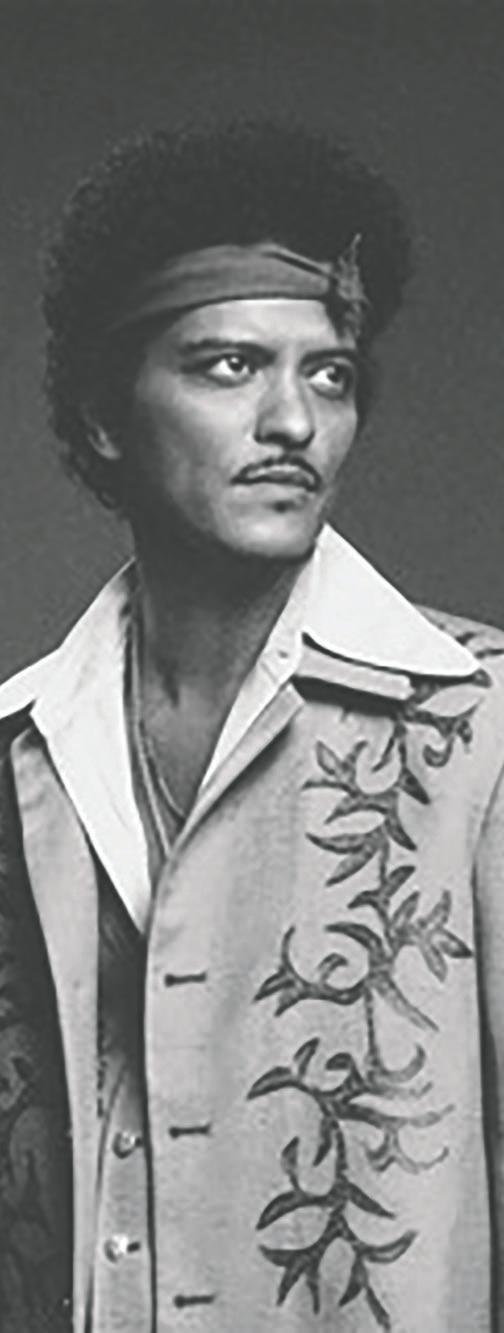
Along with the other musical pioneers listed, Bruno Mars is set to perform a highly anticipated tour starting in the spring titled “The Romantic Tour”.
Bruno will be touring his new album called The Romantic set to release on February 27, 2026 to an excited audience. Bruno Mars’ last album, 24K Magic, was released a decade ago, making it a long time since he has released music on his own.
He is performing in Las Vegas, Chicago, Toronto, Berlin, Paris, London, and other major cities. This is a highly anticipated tour so grab your tickets while you can!
Tame Impala, an artist known for their psychedelic rock and synth pop sound are going on tour this summer into the fall. “The Deadbeat Tour” featuring Djo and Dominick Fike is touring to 15 major cities in North America.
Personally I attempted to buy tickets on Wednesday February 18, to try and get tickets to see Tame Impala with Djo as the opener and was successful in getting affordable tickets! Tame Impala will be touring their fifth studio album Deadbeat that was released on October 17, 2025. Overall, 2026 proves to be the year of new music and iconic tours! As so many artists have released albums and tour dates, listeners are excited to spend plenty of money to go see the memorable performances.
Live music is something that makes the entertainment industry thrive as people are able to see their favorite artists perform new music while experiencing the energy of the crowd, creating unforgettable memories, and connecting with the music on a deeper level. With each tour and album release, fans are reminded of why live performances remain an irreplaceable part of music culture.
By Juliana Torello Staff Writer
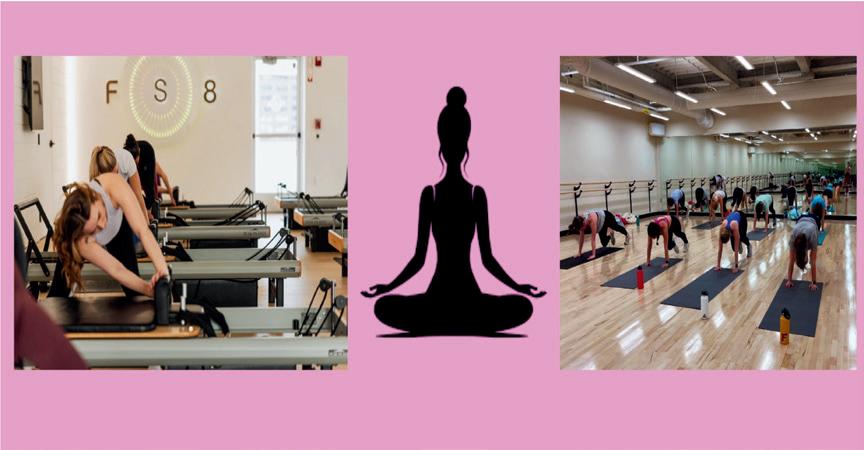
On any given afternoon, the campus RecPlex is packed. Bikes are pedaling, mats are lined up, and chances are at least one class has a waitlist. For students looking to stay active without falling into a boring routine, these workouts have become campus favorites.
On-Campus Workout Classes
Spin with Peter G
This spin class is easily one of the most in-demand classes. It regularly fills up, often with a waitlist, thanks to Peter’s background as a DJ and his high-energy teaching style. The class is fast-paced and calorie-burning, built around strong playlists that keep the room moving. You cycle alongside friends through climbs and sprints that push your
stamina while still feeling fun. It’s the kind of workout that clears your head as much as it challenges your legs.
Pilates Mat with Abby Salo If cardio isn't your thing, Pilates Mat with Abby Salo offers something more controlled but just as effective. Abby’s 45-minute class blends classical and contemporary Pilates with an emphasis on slow, precise movement. Light weights, resistance bands, rings, balls, and foam rollers are often incorporated, giving students a full-body workout that targets strength and stability. With rotating music themes and a steady, focused pace, it’s approachable for all levels but never easy. Classes are consistently full, proving that students appreciate a workout that prioritizes form and results.
Yoga
Yoga on campus meets you wherever you’re at. Yoga and Wellness with Beth creates space for students managing busy schedules, stress, and everything in between. Through movement, breathwork, and rest, the class focuses on relieving anxiety while
building strength and flexibility. It’s less about perfect poses and more about finding balance.
For those who want a stronger physical challenge, Yoga Sculpt blends yoga with strength and cardio. No experience is required, but the class delivers a serious sweat. Students move through flowing sequences while strengthening their core and increasing flexibility, all set to upbeat and mellow tracks.
And lastly, there’s Yoga with Jeannie, where students can choose between Vinyasa, Yin, or a mix of both. Vinyasa connects breath to movement in a steady flow, while Yin slows things down with longer-held poses that work deep into connective tissue. The flexibility to combine both styles makes the class stand out.
Butts and Guts
On Thursday nights, Butts and Guts keeps things straightforward. This 45-minute session targets the glutes, abs, legs, and lower back using weights and body resistance. It’s efficient, focused, and consistently full.
Off-Campus Workout Classes
FS8
Located at: 855 Post Rd, Fairfield, CT 06824
Off campus, many students head to FS8, a studio that blends Pilates, tone, and yoga into one science-backed workout. Ava Waldmann ’26 says “she enjoys the sense of community among Fairfield students and appreciates that the class incorporates barre and weightlifting movements for a more diversified experience.”
Synergy Yoga
Located at: 85 Mill Plain Rd, Fairfield, CT 06824 or 340 Post Rd, Fairfield, CT 06824
Another favorite is Synergy Yoga in Fairfield. Known for heated classes that reach up to 105 degrees, the studio combines yoga with small weightlifting movements. Josie Becker ’26 says “the 45-minute class left her sweating and feeling accomplished.”
Whether on campus or off, there is something for everyone and every kind of lifestyle. These classes prove that working out can be both effective and energizing, especially when you’re doing it alongside your community.
By Alison Sweeney Staff Writer
As an avid scroller, I find Pinterest a safe space to curate my own aesthetic. It provides a way for users to express themselves in a digital environment and has evolved into a cultural phenomenon. Major trends start on Pinterest as simple virtual scrapbooks and dream boards, where users can find, save, and organize pins into different customized boards. In 2026, Pinterest is becoming an inspirational platform where users define their identity, and “visions” can become reality. From fashion-forward trends to self-reflection, here are some pins that are defining the year ahead.
I Don’t Know What to Wear: Outfit Inspo
As we have recently seen, outfit inspiration in 2026 is shifting away from microtrends and fast fashion toward personal, intentional, and timeless looks. Popular pins feature elevated basics meant to be styled in numerous ways. Thrifted and
upcycled pieces are dominating feeds, which reflects an emphasis on sustainability and individual expression. Gender-fluid style is popular and chic, and mixed-era styling is on the rise, often challenging social fashion norms. Some 2026 fashion predictions include layering lace under shirts and sweaters, over-the-top accessories, colorful, textured bags, faux fur, colorful tights with heels, minimalist blazers and trousers, chunky jewelry and watches and ballet flats.
Bobbin’ It: Hair Insp o Hair inspiration is constantly changing according to what aesthetic is currently trending. The slick back bun was a popular phenomenon due to the “clean girl” aesthetic trend on TikTok. Now, trending pins reflect a “messy girl” aesthetic, focusing on natural textures and imperfect hairstyles. 2026 has seen an influx of curly hair routines, minimal heat styling, and low-maintenance haircuts, shifting beauty standards for women toward self-care and wellness rather than constant upkeep. In 2026, hair becomes an avenue for self-expression and a way for women to
curate their personality through hairstyle. Some 2026 hair inspo includes, my personal favorite, the bob or the “lob” (long bob), the “Chelsea Parke” hair clip, 90s layers, heatless curls, and other heatless styles, natural curls and waves and returning to your natural color.
That’s the Motto: Quote Inspo Pinterest, in my opinion, is the best way to lift yourself up through quotes and mottos. Over the years, inspiration has shifted from the traditional “Rise and Grind” with reminders to become a gogetter, set boundaries and protect your peace. Handwritten notes, typewriter fonts and journal pages define Pinterest feeds, making it a welcoming space to gather motivation for the new year. These pins often serve as reminders to relax, reflect and take a rest, reflecting a generation increasingly aware of burnout and mental health issues. What people are saving now says less about ambition and more about alignment.
Vision boards remain a Pinterest staple. Everyone should have a vision board to reflect on and serve as a visual reminder that you can achieve anything you set your mind to. A vision board is a good way to balance aesthetic imagery with emotional goals, whether that’s picking up a new hobby like journaling, stepping into a new style, finding ways to creatively fulfill oneself, or manifesting one's dream life. Vision boards help users determine not only what they want from life but also how they want to feel. Though manifestation culture has been around for years, it is especially important in 2026 as a way to keep us grounded and reflective of our lives.
Pinterest isn’t just a place to collect aesthetic images. It’s a space to grow creatively, culturally and reflect on personal growth. Try making your own Pinterest boards in 2026. And at the end of the year, notice the person you have become, and the person you still want to be.

By Olivia Marceda Head News Editor
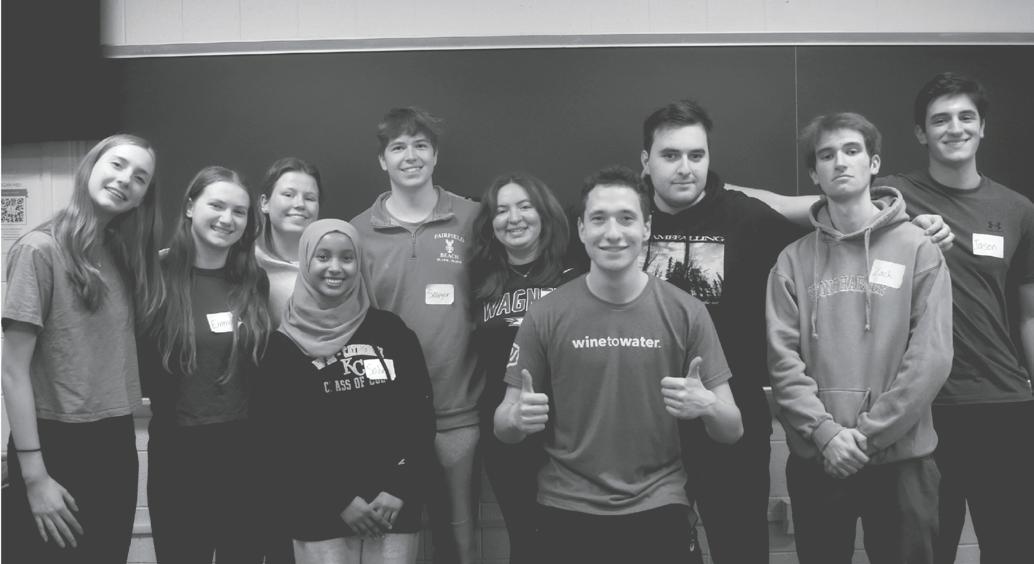
You might have seen their posters around campus, or chatter on FIZZ that there is a new club that has been stirring up some commotion at Fairfield. This past weekend, Survivor For A Cause made its debut at Fairfield as it delivered all the strategy, suspense, and social maneuvering of “Survivor,” condensed into a one day packed event.
The newly formed club invites students to pay $10 to compete in a series of challenges inspired by the long-running reality show, with a $50 prize on the line. But while the cash reward may be modest, the remaining money is sent to the charity “Wine to Water” as the cause.
For club president Dylan Lounsbury, the idea has been years in the making. He explained that what began as a high school passion project quickly evolved into something much larger.
“My senior year in high school it was a school-wide fundraiser. We presented a commercial, it was a whole assembly. I announced this master “Survivor” I was going to do. This was going to be the big thing.”
That event raised $150 for the winner and hundreds more for a local animal shelter.
His passion for philanthropy deepened during his time with Fairfield’s Humanitarian Action Club, where he was introduced to Wine to Water.
“We are in a global water crisis, one in four people are without access to clean water. Women and children travel one average 2.5 miles round trip to collect dirty drinking water. People die from water-
related illnesses everyday. It's terrible.”
Ultimately, Survivor For A Cause was born with one clear mission:
“My goal is to raise as much money for Wine To Water as possible.”
Beyond fundraising, Lounsbury emphasized the social impact of the event.
“‘Survivor' is something I’m passionate
game. It’s fun, it’s strategic, and even if you get voted out, it’s still a lot of fun.”
Participants seemed to agree.
“I’ve never watched any challenge shows so I didn’t know what to expect but overall it was so fun!” exclaimed sophomore Sabrin Abbe. Despite going in with no prior knowledge of the format, Abbe said the experience exceeded her expectations and added that she would return to compete again.
about. It’s awesome to see how this game can forge new relationships. Not only can it create new friendships where people might never interact elsewhere, they’re raising money for a great cause.”
The first event exceeded his expectations.
“I was thankful we were able to get the players for the event. I was extremely surprised at how the game played out. I thought one side was going to dominate, but it was extremely dynamic. Everyone had very equal odds of winning.”
“Despite how cutthroat it is, it’s a
The event opened with “Telecommunications,” face-paced memory game where players competed one-on-one to memorise and correctly recite alliterative phrases and racing to ring a bell at the end of the first floor hallway in Bannow. But in true “Survivor" fashion, there was a twist.
Off to the side of the main phrase sheet sat a hidden opportunity, contestants could intentionally lose a point by declaring, “I wish to sabotage my team for my own greedy gain in this game,” earning themselves an advantage for later rounds.
The decision forced players to weigh loyalty against personal strategy within minutes of the game’s start, setting the tone for the rest of the competition.
Throughout the day, advantages like Extra Vote added layers of strategy. But
unlike the island setting of the original show, this version unfolded across familiar campus landmarks, turning Fairfield into its own competitive field.
What began as a $10 buy-in event quickly evolved into a full social experiment. Alliances formed and fractured with players gambling with sabotage. And in the end, only one contestant could claim the title.
“This was organized really well,” said sophomore Jason Jennings, the winner of Survivor For A Cause on Saturday. “I liked going out for the riddles. I appreciated the community, it was a lot of fun.”
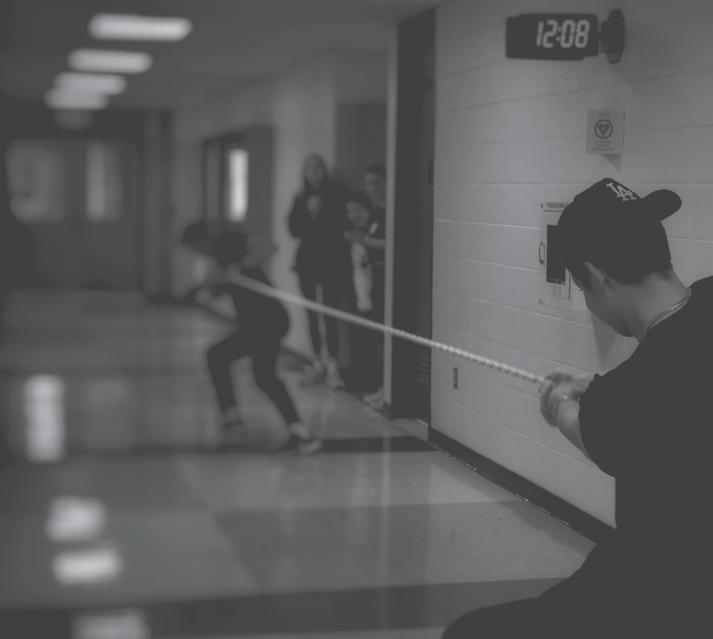
With its successful first run, Survivor For A Cause is planning its next runthrough on March 1 with 16 participants. Planning to increase the prize pot even more.
By Claire Fehlner Staff Writer
In a generation obsessed and attached to our phones, the last year has shown an increase in young people, specifically Gen Z, picking up hobbies that we once associated with generations above ours. Recently needlepointing, knitting, crocheting, baking, sewing and other “grandma” hobbies have taken the spotlight as activities for people in their twenties. As we try to distance ourselves from our phones and screen time, these hobbies provide great outlets to pass time and learn a new skill. Here is an introduction into some of these hobbies and how to start them up yourself!
Skills utilizing needles have made a huge comeback in the last year and seem to be even more at the forefront for 2026. This includes crocheting, knitting, and needlepointing. Specifically, girls in their 20s have taken up these activities to make garments for themselves. I have friends who have made laptop covers, scarves, hats, and more. Patterns and tutorials for these projects can be found online and you can buy yarn at any craft store. A sustainable way to source yarn is to buy old sweaters at the thrift store to take apart and reuse the yarn for a new project—taking recycling to a new level and including it in the learning process of a new hobby.
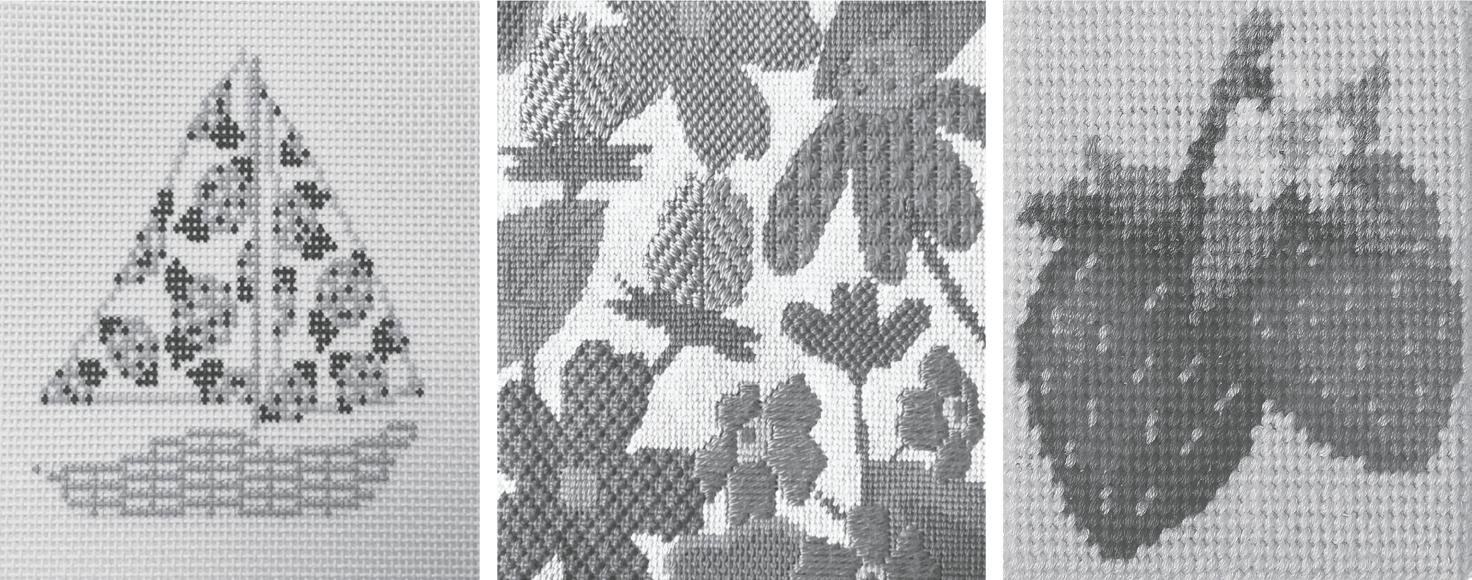
One of the rising hobbies is needlepoint or cross stitch. Needlepoint is a sort of hand embroidery in which you use colored thread to create a design on a weave
canvas. Sophomore Kaitlyn Coakley recently got back into this skill over winter break. She said “I used to knit and such in high school and kind of stopped when I got to college but this Christmas I got a needlepoint kit in a yankee swap which got me back into it over break.” She expressed how much she enjoyed doing this project over break and that she wants to continue this hobby now that we are back at school. You can buy needle point kits or designs on Etsy and can get the starter materials on amazon.
Similar is crochet which uses only one hook and yarn to create loops. This hobby is coming back, but sophomore Emma Van Wickler has “always known how to crochet because of [her] grandma.” Like others, she rediscovered this hobby in the past year, explaining, “It wasn’t until this past winter break when I was bored and looking for a new hobby that I stumbled back into crocheting”. She “started by making a couple scarfs and laptop covers, items that felt necessary for winter and school.” This hobby is one of those that you can occupy your hands with as you watch a show, chat with friends, or listen to music.
A hobby increasingly popular online is baking sourdough. There are recipes from a simple sourdough starter and loaf to specialty sourdough bagels and cinnamon rolls. This practice brings one of the most basic foods straight to your kitchen. It’s rewarding to create something so necessary and delicious.
to acquire at any fabric or craft store and
due to its prebiotic quality and fermentation process. This is another hobby we often associate with our grandmothers or elders in our family as baking used to be a skill that almost every young person, especially young ladies were equipped with. It seems to be a challenging hobby but once you get the hang of it the possibilities are endless.
Another hobby that is a valuable skill is sewing. It makes it so much easier to mend or alter clothing if you know how to hand sew and better yet if you can operate a sewing machine. I personally have altered many items in my own wardrobe within the last few years. It is becoming more popular to not only know how to alter clothing but to follow a pattern to make an entirely new garment for yourself. Fabric is very easy
patterns are easy to find for free online. There are so many great tutorials online, especially on YouTube, which make learning the skill of sewing so much easier for a beginner. You can start with something simple such as a pillow case or learning how to sew a button and work your expertise up to doing more complicated tops and pants for yourself to wear.
All of these “old fashioned” hobbies prove to be very rewarding as they often result in something of your own making that you can use or wear. This recent encouragement of creation will increase your creativity and improve your mood especially in reducing stress and anxiety. Completing projects like these and learning new skills proves to your brain that you are accomplished and capable of doing difficult tasks.












Editor: Matthew Robles

























duration of the game despite being in full uniform, with sophomore Eric Mejia getting the start instead.

Following an electric road win against instate rival Quinnipiac University, the Fair eld University men’s basketball team looks to wrap up regular-season play with just as much energy against the Siena University Saints on Friday and the Mount St. Mary’s Mountaineers on
Fair eld’s bench has been a make-or-break factor, with some impressive outings as of late, including 27 points against Quinnipiac and 23 for their victory over Sacred Heart. “We have complete con dence in our bench,” Head coach Chris Casey said. “When the bench plays really
WOMEN'S LACROSSE
Page 14
SOFTBALL Continues Its Non-Conference Schedule Against Drexel this Saturday

Sunday.
e Stags, now 18-11 overall and 10-8 in the MAAC, were led by ve di erent players who each reached double- gure scoring totals against the Bobcats. Leading the pack was senior Braden Sparks with 21 points, who claimed the 23rd 500-point season in Fair eld
well, it helps us a lot.”






Quinnipiac, and Williams

history; his current total is 511. rst-year starters, Brandon Benjamin and Tony Williams. Benjamin le the game early against stayed on the bench for the
Injuries have troubled two of Fair eld’s


Senior Braden Sparks is averaging a careerhigh 17.6 points per game this season.

against will be an the Stags, 19. Last Fair eld, Gavin







e Saints (12-6), coming o a 72-63 win Saint Peter’s on Sunday, important rematch for who lost 85-77 on Jan. time out against sophomore Doty led the contest with 24 points on 9-for9 shooting. Doty contributed 21 points in the Saints’ e orts against Saint Peter’s, followed by graduate students Anthonio Chandler and Riley Mulvey, who each added 16 and 13 points, respectively. Getting the best of the Stags, the Saints were a formidable test to Fair eld’s defense in January, which has seemingly improved since then. First-year Halon Rawlins blocked a careerbest four shots and earned three rebounds in his last outing. Wucherpfennig had six rebounds, followed by Mejia
Readies For Terapin Invitational as MAAC Play Approaches
Page 15
SPOTLIGHT
Janelle Brown's Journey Back to Basketball After Injury
Page 16
and Benjamin with ve apiece and juniors Ryan Zan and Cam Estevez with four each. “We’re pretty basic defensively, not really complicated,” Casey said. “I’d rather do three or four things really well than do 10 things halfway.”






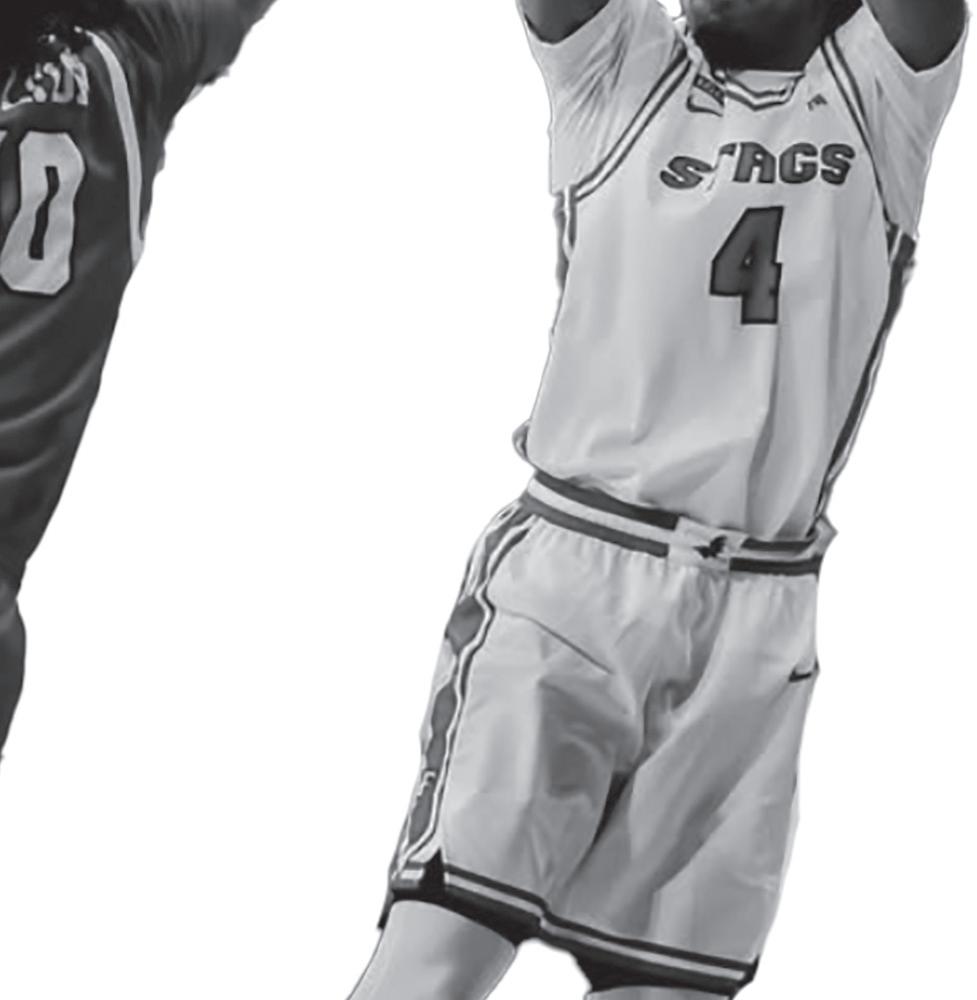







e Mount (10-8) will rst face Sacred Heart before heading to the Mahoney Arena on Sunday to challenge the Stags for the rst time this season. Defeating Canisius 68-47 on Sunday, the Mountaineers were led by senior Arlandus Keyes with 14 points and graduate student Xavier Lipscomb with 13. Currently tied with Fair eld at sixth place in the MAAC standings, a rst-round bye in the conference tournament will be up for grabs to whichever team capitalizes the most this weekend.
Scan below to purchase student tickets for the final Men's Basketball home games
Tipo against the Saints is set for 7:00 p.m. on Friday night. e Mountaineers will pay a visit on Sunday at 2:00 p.m; the Stags will also be celebrating their Senior Day.





best four shots and earned outing. Wucherpfennig had

FEB 25 FEB 26 FEB 27 FEB 28 MAR 1 MAR 2 MAR 3
No games scheduled. No games scheduled. Softball at The Terrapin Invitational College Park, Md.
@10:00 a.m. & 12:30 p.m.
Baseball at Elon University Elon, N.C.
@4:00 p.m.
Men's Tennis vs Penn State New Haven, Conn.
@5:00 p.m.
Men's Basketball vs Siena University Fairfi eld, Conn.
@7:00 p.m.
Men's Lacrosse at University of Providence Providence, R.I.
@12:00 p.m.
Baseball at Elon University Elon, N.C. @1:00 p.m.
Women's Lacrosse vs Drexel University Fairfi eld, Conn. @1:00 p.m.
Softball at Terrapin Invitational College Park, Md. @5:30 p.m.
Women's Basketball vs Sacred Heart Fairfi eld, Conn. @7:00 p.m.
Baseball at Elon University Elon, N.C. 12:00 p.m.
Softball at Terrapin Invitational College Park, Md. @12:30 p.m.
Men's Basketball vs Mount St. Mary's University Fairfi eld, Conn. @2:00 p.m.
Women's Tennis vs Hofstra University Trumbull, Conn. @5:00 p.m.
No games scheduled.
Baseball at Central Connecticut State University New Britain, Conn. 3:00 p.m.
coming weekend,” graduate student Kyleigh Tufano said. “They’ve had a great opening season, particularly winning in overtime against UConn. We’ve
Although we fell short against UConn, we played our game and learned a lot from it.”

Women’s lacrosse faces Drexel University this Saturday at 1:00 p.m. as it returns to Rafferty Stadium for its fifth non-conference matchup of the season.

had a good start to our season as well.

After the Stags battled for a 9-8 win against Hofstra University last weekend, they now stand with a 3-1 record, and are yet to begin conference play.


Fairfield and Drexel have met just three times, with Drexel holding a 2-1 edge in the series. Their first game was in 2023 with the Dragons overcoming the Stags 10-9. Drexel won the most recent bout between the sides 14-7, where the Stags were unable to hold off a late surge from the Drexel attack, leading them to be outscored 4-0 in the final quarter.


Fairfield graduate student Grace Slater scored her fourth consecutive hat-trick in that game, proving to be a fundamental part of the Stags’ attacking strength. Slater, however, is out of the Fairfield side this season with injury, creating opportunities for others to step up offensively against the Drexel defense.
Metro Atlantic Athletic Conference Preseason Player of the Year junior Kelley Haggerty leads the team with nine goals scored thus far, and graduate student Haley Burns adds eight goals of her own. Haggerty picked up a hat-trick last game against Hofstra, with Burns collecting a brace herself.
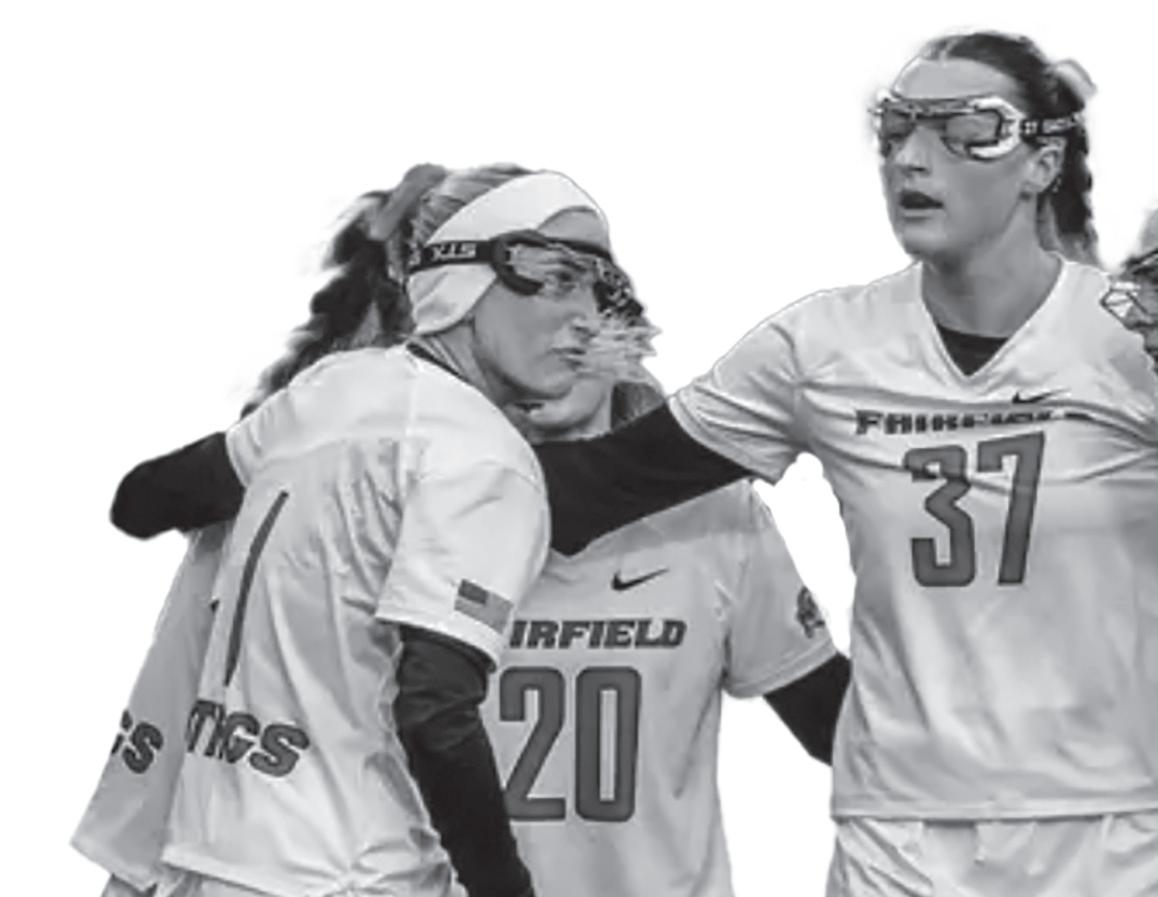


Burns has demonstrated strong form on the defensive end too. Previously named MAAC Defender of the Week for her standout performance against Boston University, she leads the team with eight caused turnovers and is second behind senior Katherine Shammas with eight ground balls.
Drexel is currently 2-2, entering this game after a heavy 16-3 loss to No. 23/21 Penn State.


Drexel senior Kate Quinn and junior Bea Buckley lead the Dragons with 10 points each - with all 10 of Quinn’s points coming from goals scored. She was one of three players to get on the scoreboard in their loss to PSU.
“We are looking forward to playing Drexel this
“Drexel is a team that we always have a tough battle with, and we’re very excited to take on the Dragons,”
with, and we’re very excited to take on the Dragons,” Tufano added.


Admission is free for all women’s lacrosse home games
this season.

Women's lacrosse will face Drexel University at Rafferty Stadium this Saturday.

Contributed by the


Who would win?
Punch the Monkey or Flaco the Owl?
Propose a new shape for a Lucky Charm Marshmallow.
Describe your semester so far using a JacksonMichael lyric.
What song should Alysa Liu use for her next routine?

I think they should form a friendship... Cue “We Are e World.”
My brain is focused on the MAAC Championship, so I’d suggest a basketball!
"I'm starting with the [wo]man in e [Faireld] Mirror."
I have a vision for a routine centered around a Britney Spears mashup.

If my boy Punch can survive the abuse he's taking from his peers in the zoo, he can survive anything.
A dodecahedron, get the kids started early on geometry
"Annie are you okay?" (No.)
I know Amber Glenn already did the Lady Gaga thing but I think Alysa Liu would COOK on Bad Romance
I would agree with Danny but I would also hope they would team up and escape the zoo bullies together.
Max Limric’s face <3

Whatever John said, he seems like he knows.
Punch, I don’t know the other guy
Marc Nemec's face, wouldn't you want to eat that?
“Beat it” as in the urge to procrastinate
If she hadn’t already done Stateside that would be my rst choice, but I know she’d eat up any Charlie xcx song.
“Okay, I want everybody to clear the area right now!”
Canadian Tears
“You’re a vegetable”
I think that Britney mashup would hit. Dreams and Nightmares by Meek Mill
Before opening MAAC play against the reigning conference champion Marist Red Foxes next weekend, Stags so ball (3-5) will head to the University of Maryland to play in the Terrapin Invitational from Friday, Feb. 27, through Sunday, March 1. ere, they will play four games against Providence, Syracuse, UMBC and host Maryland.
e invitational follows the Stags’ four games in e Spiro Classic, where Fair eld nished with a 1-3 record. ey beat Columbia 2-1 on Saturday, but lost to Appalachian State 9-1 on Friday, and fell to host UNC Greensboro twice (6-0 on Friday and 11-0 on Saturday).
While Fair eld’s o ense struggled, mustering just three runs over four games, senior third baseman Anna Paravati impressed with two multi-hit games and a go-ahead tworun single in the bottom of the h to secure the Stags’ 2-1 victory over Columbia.
“I honestly try to stick with the same mindset throughout, not changing my approach with or without success,” Paravati said. “I nd my con dence lies more within the work I put in during practice and on my own, and from the support of my teammates.”
Head coach Julie Brzezinski echoed that sentiment, highlighting Paravati’s consistency at the plate. “Anna is a ghter. She’s not going to strike out a lot, she’s gonna put the ball into play, and she battles every time she hits.”
Fresh o being named the 2025 MAAC Defensive Player of the Year, Paravati has carried that same mindset to the plate so far in 2026. rough eight games, she is hitting at an impressive .381 clip, sports an on-base percentage of .480 and is tied for the team lead with six RBI.
As a team, Fair eld owns a solid .282 batting average this season. However, a er erupting for 27 runs in four games at the

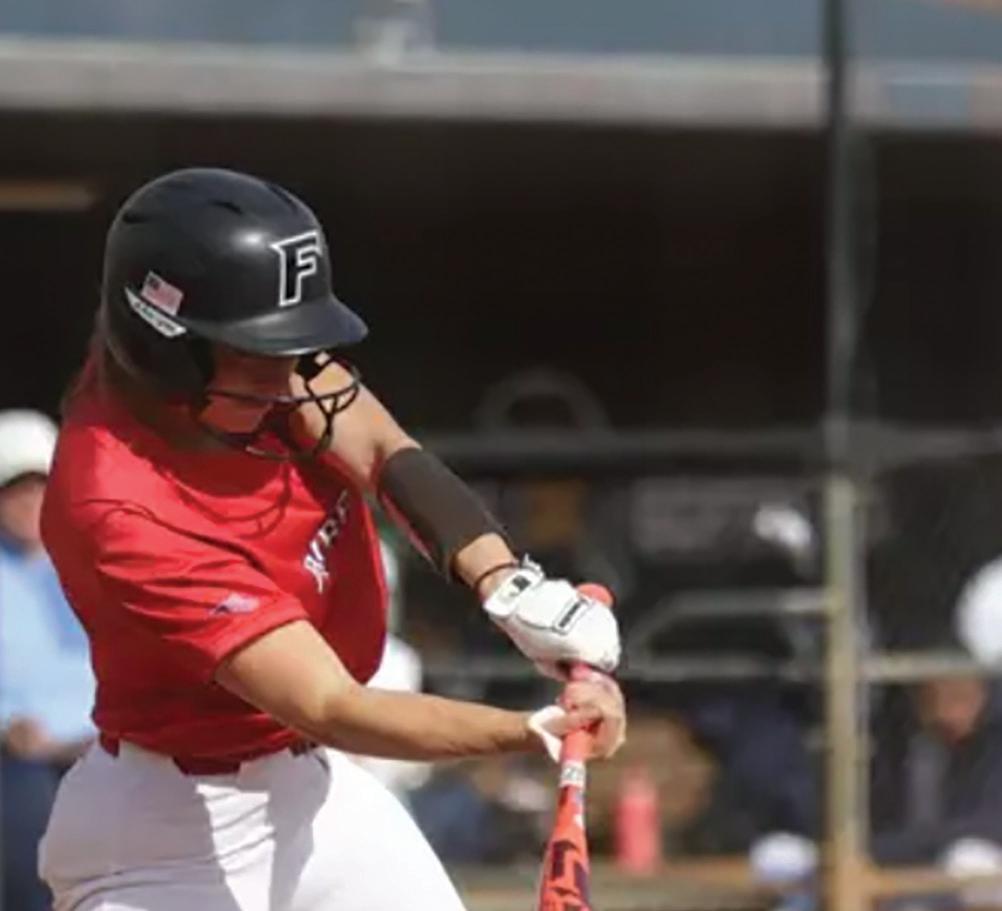
University of Houston Tournament to open the 2026 campaign, the Stags struggled to consistently generate o ense, tallying just 17 total hits at e Spiro Classic. Finding consistency at the plate remains a point of emphasis heading into this weekend.
“We’re going to increase our o ensive productivity by doing the little things right,” Brzezinski said. “Being aggressive, not shying away from swinging at rst-pitch strikes, and really just trying to have a stronger and more aggressive mindset o ensively.” at type of mentality is vital heading into a tournament where the Stags will play multiple Power Four opponents, including Syracuse and Maryland. Now in her 29th season as Fair eld University’s so ball head coach, Brzezinski understands that if you want to be the best, you have to beat the best.


“I compare the Syracuse's, Providence's and Maryland's to what we need to attain to be conference champs,” Brzezinski said. “We use it as a challenge and we don’t back down or shy away from it, and that’s really how we schedule our southern trips, so that we are going to be challenged. We want to see the best to beat the best.”
Fair eld came close to a conference championship last season, nishing 18-7 in MAAC play and earning the No. 2 seed in the 2025 MAAC So ball Championship. However, the Stags fell in the semi nals to the Siena Saints in a narrow 6-5 loss. Despite that heartbreak, the Stags remain optimistic that their challenging non-conference schedule will pay dividends come MAAC play and help them get over the hump this season.
“I think these non-conference games

against some Power Four schools will seriously aid our abilities during MAAC play,” Paravati said. “Playing some tougher pitching will really develop our o ense, and facing some tougher hitters will rmly establish our defense.”
Expectations are high for the Fair eld Stags as they were selected second in the 2026 MAAC So ball Preseason Coaches’ Poll with 144 points and even received one rst place vote.
However, Fair eld will still play nonconference games between MAAC series, so every game, at-bat, and pitch matters as the Stags look to nd their rhythm and bounce back a er losing four of their last ve contests. e Terrapin Invitational begins Friday, Feb. 27, when the Stags open play against Providence at 10:00 a.m.
Fairfield Baseball has a busy week ahead of it, traveling to Elon, North Carolina, to play Elon University in a three-game set from Friday to Sunday, before coming back home and playing Central Connecticut State away at New Britain, Connecticut, on Tuesday at 3:00 p.m.

momentum after being swept by Charleston Southern University over the past weekend. Fairfield is preparing for Elon by “focusing on intent in practice in terms of swing decisions and pitch decisions and everything involved in what we’ve lacked last weekend,” Wawruck said.
Some of the players that Fairfield needs to look out for include senior infielder Jackson Alford, who has been on a tear so far, playing in all seven games and racking up a .500 batting average with ten hits and a homer. He has also tallied four walks so far this season.

Baseball tries to pick up their first win of the season after facing tough competition to start their season.


The team is 0-5 to start this year after a three-game series against sixth-ranked Coastal Carolina University and a two-game series against Davidson University. Even though the record isn’t where the Stags want it so far this season, they have still shown promise in multiple outings where they’ve played well.
“Baseball is a game of inches; messing up one thing can mess up the entire game. We had one error at Davidson, and we lost by one run, which sucks, but we need to make it constructive,” said senior outfielder Payten Wawruck.

The Stags open up the weekend series against Elon on Friday at 4:00 p.m. They will play Elon two more times over the weekend, with a game on Saturday at 1:00 p.m. and on Sunday at 12:00 p.m.
Elon is 4-3 so far this year at the time of print. To start their season, they swept a weekend series against the University of Delaware, then won a mid-week game against Presbyterian 6-4. However, they lost their

Graduate outfielder Brian DuRoff has been another bat on fire for Elon so far this season with a .348 batting average in 23 at-bats. He currently sits at eight hits, 2 home runs, and seven runs-batted-in.
On the pitching staff, senior pitcher Sam Nomura has made four appearances, pitching 8.1 innings and not allowing any runs. Junior pitcher Mike Staiano has made three appearances with 5.2 innings pitched and has allowed zero runs.
Then Fairfield will play a midweek game against Central Connecticut State on Tuesday at 2:00 p.m. At the time of print, the Blue Devils haven’t played a game yet, opening up their season this coming weekend against Florida A&M.
The Blue Devils will be led by junior outfielder Antonio Ducatelli, who racked up a .348 batting average in 41 games last year. He also tallied 49 hits with 48 RBIs and four homers on the season. On the pitching staff, returning junior pitcher Richie Kerstetter was one of the bright spots on the team last year, ending with a 3.25 ERA in 27.2 innings pitched.
Some players on Fairfield have had their own success this season, with some of the guys winning awards already, including senior pitcher Ben Alekson winning Metro Atlantic Athletic Conference Pitcher of the Week. Against Coastal Carolina, he pitched in four innings, striking out six batters and allowing only three hits.
In the batting lineup, players like Wawruck and senior outfielder T.J. Schmalzle have come up clutch for the Stags so far this season. Schmalzle has tallied a .350 batting average with seven hits and two home runs. Wawruck is clocking in at a .333 batting average throughout this season.
The goal for the team this season is to “run it back to the regionals again this year and give coach Currier a good send-off. He's done everything for this program,” said Wawruck, showing that Fairfield is motivated this year with something more than just the game.
Fairfield will play their next game on Friday at Elon, North Carolina, at 4:00 p.m. against the Elon Phoenix.


Week of February 25, 2026
I
t’s a Sunday a ernoon in December 2024. Fair eld women’s basketball is trailing the visiting Villanova Wildcats 53-44 with just under four minutes remaining in the third quarter. Graduate guard Janelle Brown catches the ball on a pass from teammate Emina Selimovic and drives to the rim. She loses her balance in the air and comes down hard on the baseline, beneath the basket.
She doesn’t get back up.
A multitude of thoughts run through her head. She thinks of her former teammate, Mimi Rubino, who she saw go down just like this in the summer of 2023. She thinks about the game, now unfolding without her down the other end of the oor, and how she won’t be there to help her team try to stage a comeback. And as the whistle nally blows, and a deafening silence falls over the Mahoney Arena crowd, her mind wanders to one last thing.
“I’m pretty sure that I just ended my career.”
Janelle Brown, known to her teammates, coaches and community as Nellie, arrived on the campus of Fair eld in 2020 to a women’s basketball program still under the direction of since retired head coach Joe Frager. And despite a proli c career at Longwood High School in Middle Island, N.Y., where she became the all-time leading scorer, Brown still had plenty to learn at the collegiate level.
“I was immature, a little tunnel visioned with my basketball ability,” she said. “But I think I was very heartfelt, ready to go, energetic and just ready to do my job and play my role.”
She found that role as a defender and hustle player o the bench, nabbing at least one steal in limited action across her last 11 straight games. at carried over into her sophomore season, where she played in all but one game for a Fair eld team that went 19-1 in the Metro Atlantic Athletic Conference en route to a trip to the NCAA Tournament.
But Brown’s world got turned upside down soon a er, as Joe Frager retired and was replaced by current Stags head coach Carly ibault-DuDonis.
“It was de nitely scary at rst, not knowing who my next coach would be,” Brown said. “I really was debating going into the transfer portal. But in the end I was able to accept Coach Carly with open arms, and just be under her wing.”
Much like the team at large, Brown’s game ourished under ibault-DuDonis’s leadership. As a junior, she became a
full-time starter, developed into a capable and consistent three-point shooting threat, and posted career highs in almost every major statistic.

games to a brief inclusion in the university’s ‘Campus Tour’ TV spot.
Brown and her teammates also regularly participate in community service e orts, supporting local businesses and interacting with kids at nearby elementary schools and the Hall Neighborhood House in Bridgeport.


at laid the groundwork for what was a historic senior campaign in the 2023-24 season. Averaging 13.8 points, 4.3 rebounds, 3.6 assists and 2.5 steals per game, Brown also led the entire country in eld goal percentage among guards at 57.2 percent, as well as shooting a staggering 45.1 percent from three, a program record.

“We just try to reach out to the com-
to
the risk of reinjury. But when the moment arrives, those nerves give way to something di erent. Happiness. e horn sounds at the scorer’s table. e Mahoney Arena crowd roars in support. And Janelle Brown steps out onto the court once again.


ose accolades earned her MAAC Conference Player of the Year honors as the Stags put together their best season in program history.


munity, to thank them for showing up to a women’s basketball game,” Brown said. “I just love showing up for people who show up for me. We never know what might be going on in someone’s life, but you can always make an






“I think my success really came from getting downhill in the middle of the court, and then just looking for the open teammate, and making the right pass,” Brown said. “It wasn’t even a year about me, it was just a year about, okay, what else can I do to make sure that our team is the most successful we’ve been in years?”






impact in any way just by rough all her ups and downs on the court and her ght to return from injury, it’s the hard work she’s done, for herself and for others, that Brown hopes to be remembered for.

A er the season, Brown announced she would be returning for a h year, and was quickly anointed Preseason Conference Player of the Year ahead of the start of play in November 2024. But just a month later, everything came crashing down on that Sunday against Villanova.


Brown tore her ACL in her le knee, leaving her sidelined for the remainder of the year and putting her collegiate future in doubt.


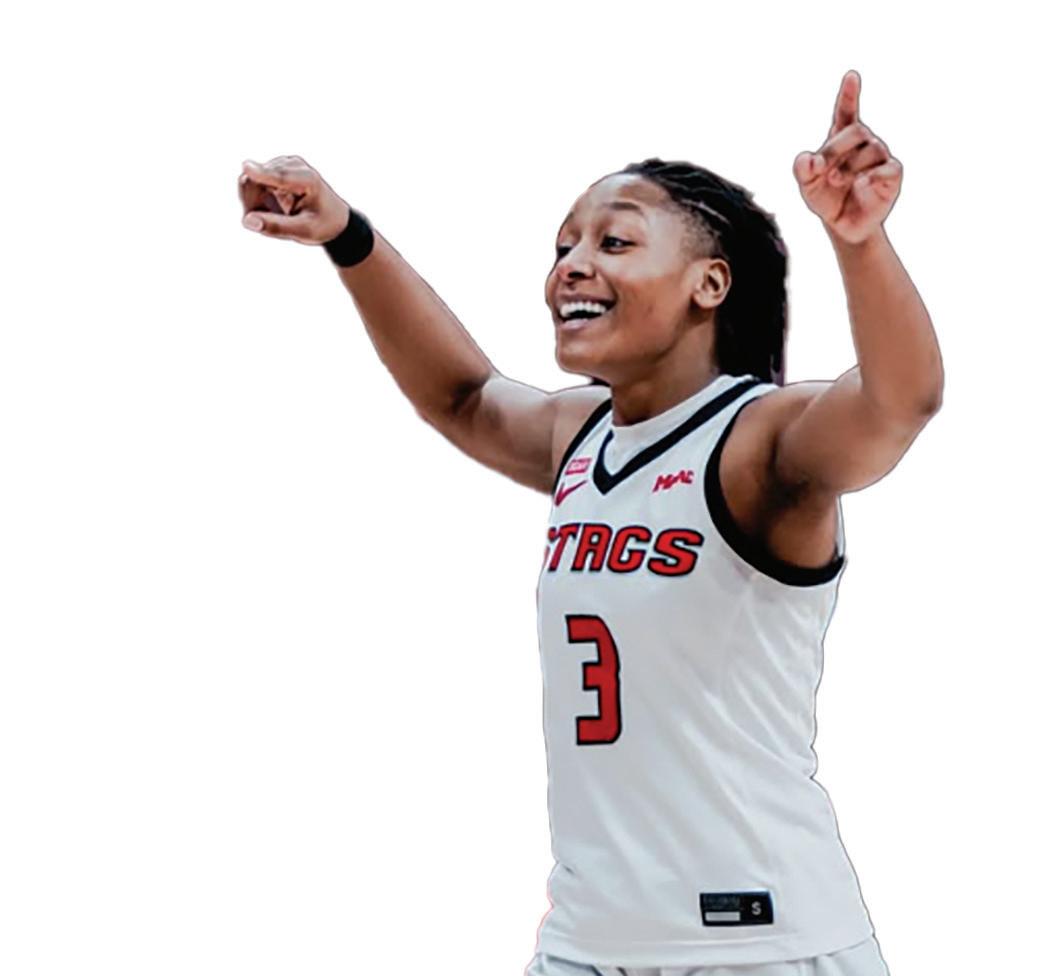

“I wanna show people that the epitome of hard work is doing all the little things, it’s doing the things that people don’t see, it’s being extra sel ess and giving to people who are less fortunate,” she said. “Just going out of your way for somebody else. at’s it, really.”
Graduate guard Janelle Brown is averaging 6.2 points and 3.2 assists per game coming off the bench for the Stags this year.


“My trainer gave me 24 hours to feel bad about myself, to cry it out, and then the next day we were right back to work,” Brown said. “I know bad things happen to good people, and it’s not how it happened but how you respond to it. So I knew I needed to be strong, not only for myself but for my teammates and my family.”



us kicked o a grueling 11 month rehab process that Brown says “took everything, every day”. She leaned on her coaches and teammates for support, reconnected with her faith and used the love of the Fair eld community to help her keep going.





“I remember when I was cleared to go to games, I still had people, fans coming up to me saying ‘I hope you know that you’re gonna come back even stronger, we can’t wait to see you back on the court,’” Brown said. “It was just a collective of the people, the people here at the university and in the community of Fair eld. I feel like I wouldn’t have been back without them.”



at love is a reciprocation of the time and energy Brown has poured into the community over the last six years. e longest-tenured Stag on the team, she has been a xture of campus culture, from getting on the mic to encourage attendance at basketball
Hobbies:
t’s a Saturday night in November 2025. Fair eld women’s basketball is leading the visiting Lehigh Mountain Hawks 8-7 with just over ve minutes remaining in the rst quarter. Carly ibaultDuDonis looks down her bench and tells a trio of players to get ready. Among them is one who hasn’t checked into a game in quite some time.

She’s nervous.





She’s nervous because her trainer, Kaila Harpin, isn’t at the game that night due to a wedding. She’s nervous because of all the strength tests she failed before nally passing one and getting cleared to play. She’s nervous about
Middle Island, New York
Maya Moore
Kendrick Lamar
Grilled Chicken
Playing video games