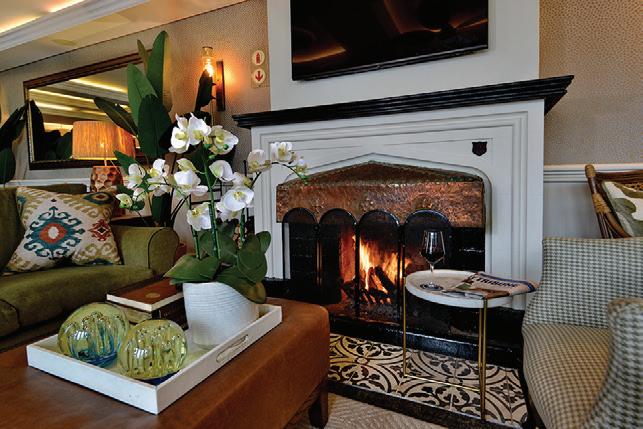
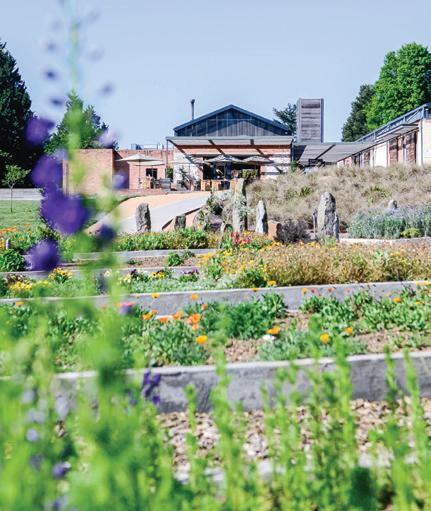
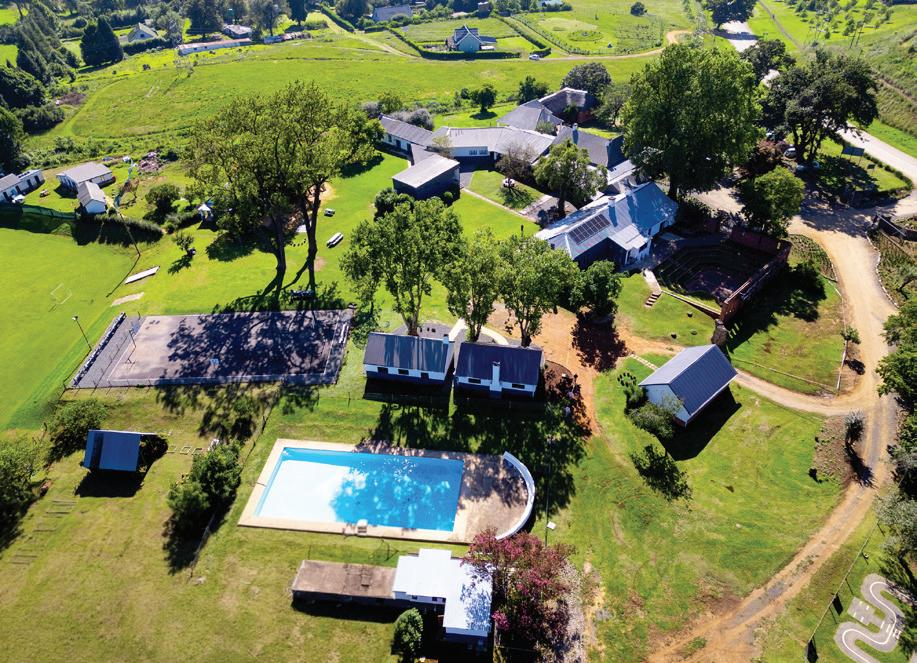
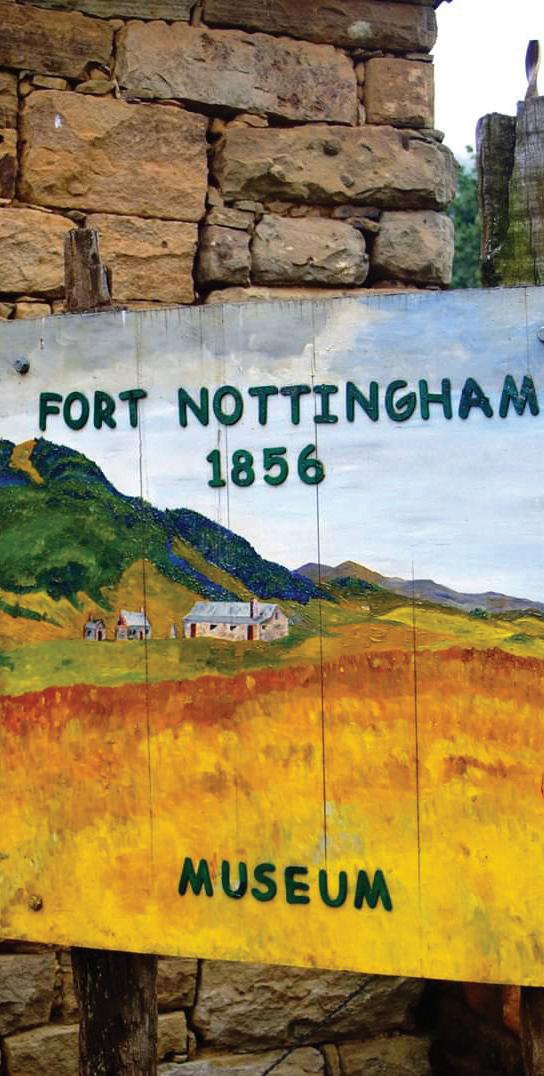
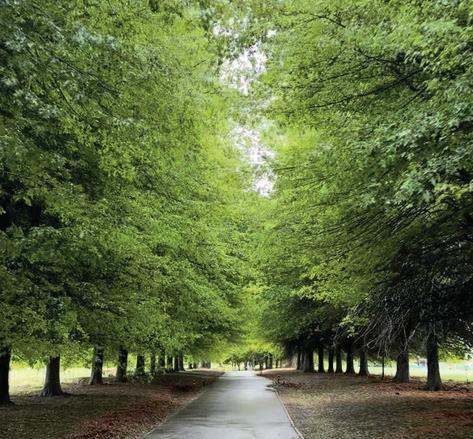
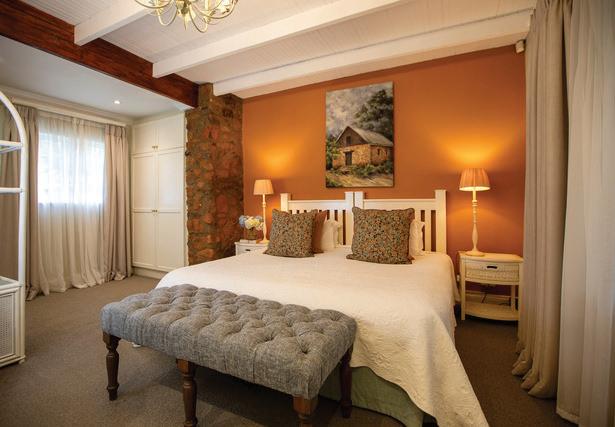
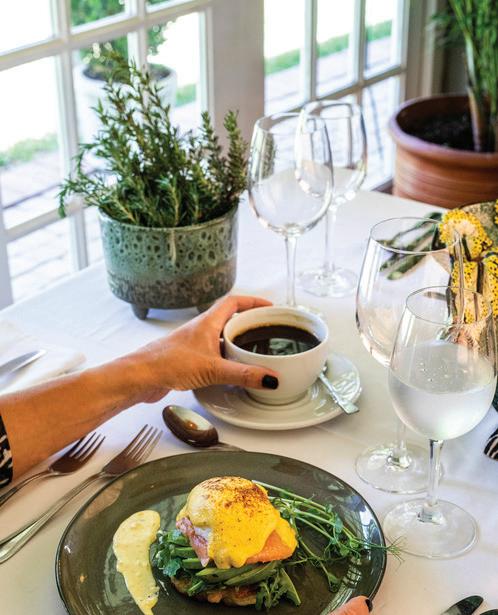
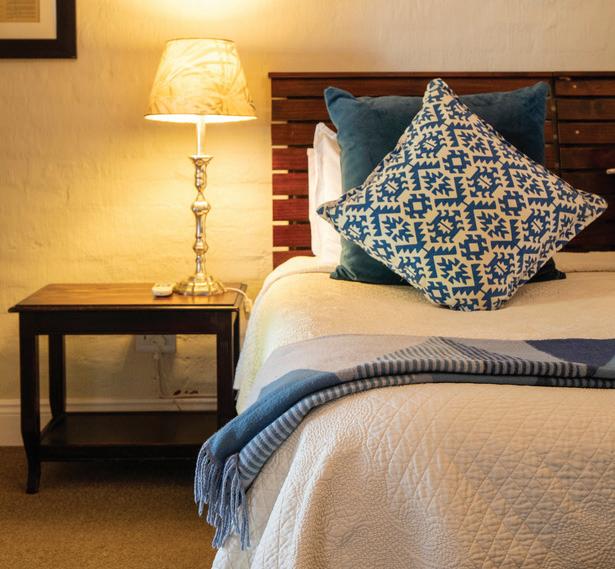
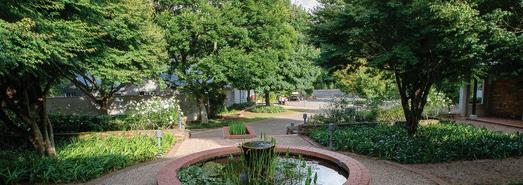
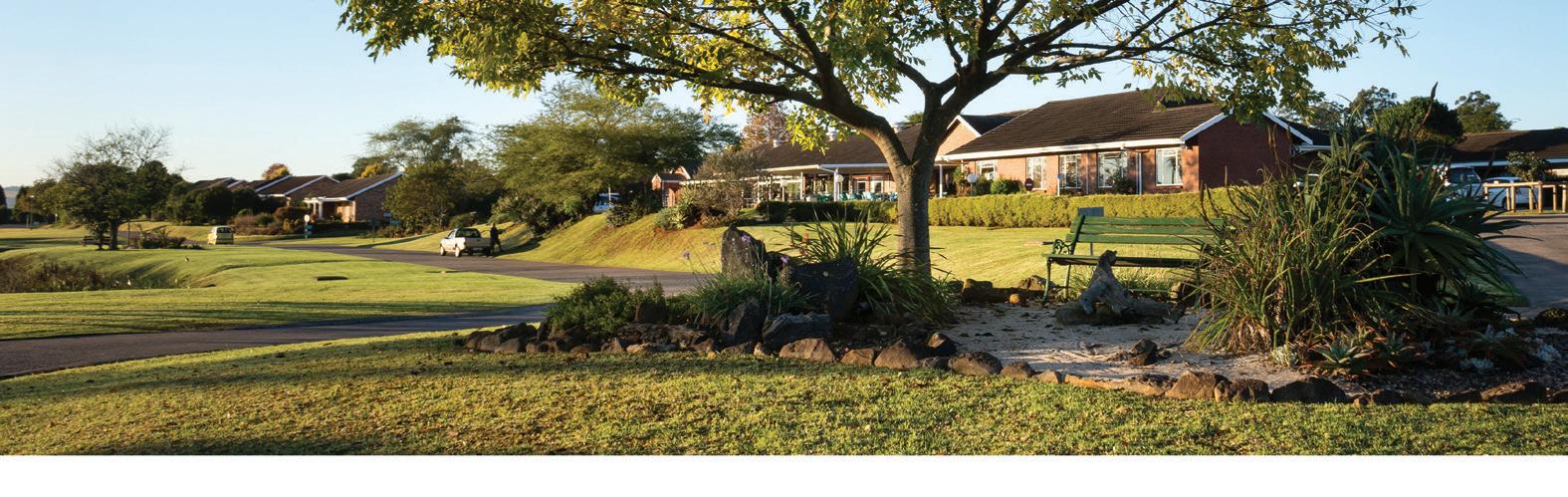
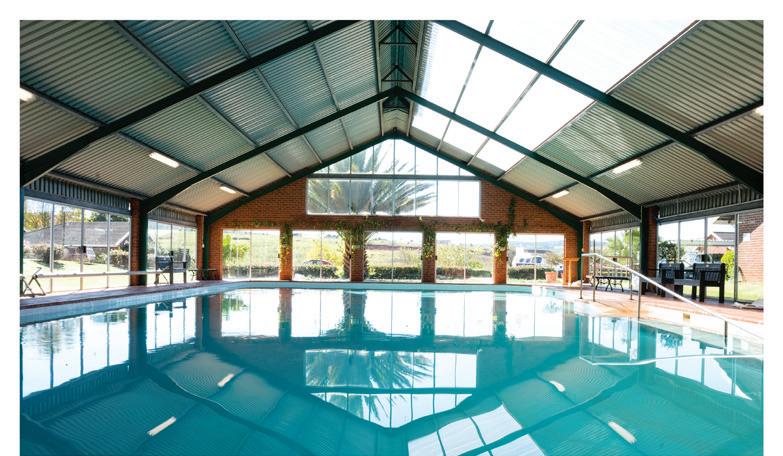
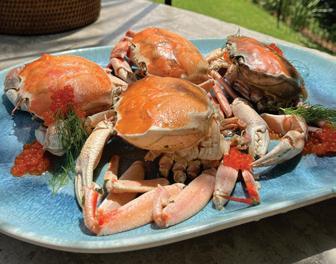
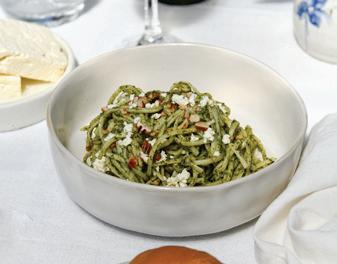
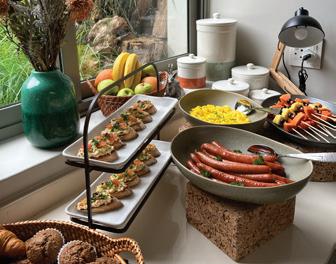
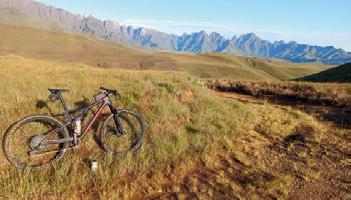
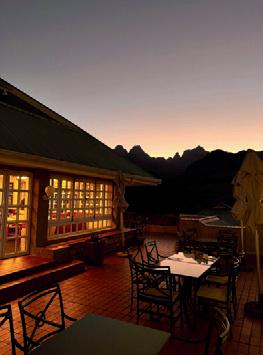
It may be a small heritage site, but it’s got a big heart, thanks to its dedicated community. History lovers, you’ve got to check this hidden gem out!
26 A FEAST FOR THE EYES
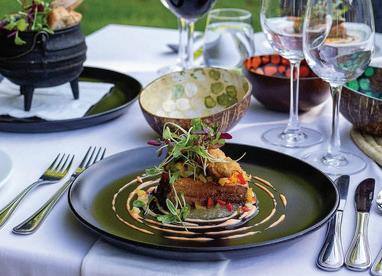
We have handpicked a few spots to unwind with great food, chill vibes, and idyllic views.
42 THE MBALI SWING
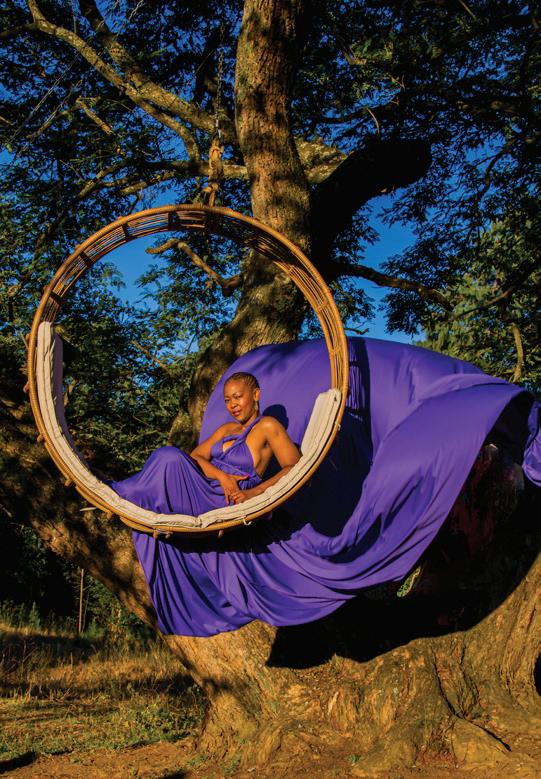
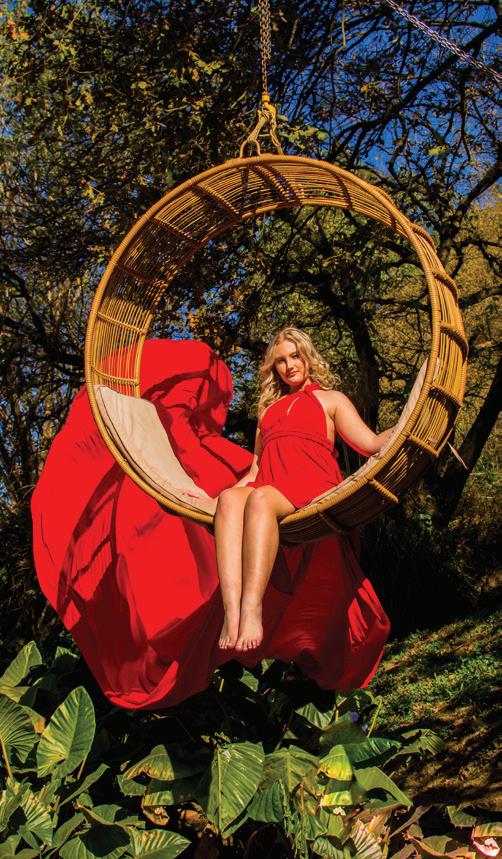
Perfectly perched for stunning photo opportunities, the Mbali Swing allows you to slow down, be present, and let your inner beauty shine.
IN THIS ISSUE
45 A YOUNG CHEF’S PASSION
Meet 19-year-old culinary extraordinaire, Anele Mncube. She shares how she has found her purpose in sharing her love of food with others.
49 THE POWER IN PEACE
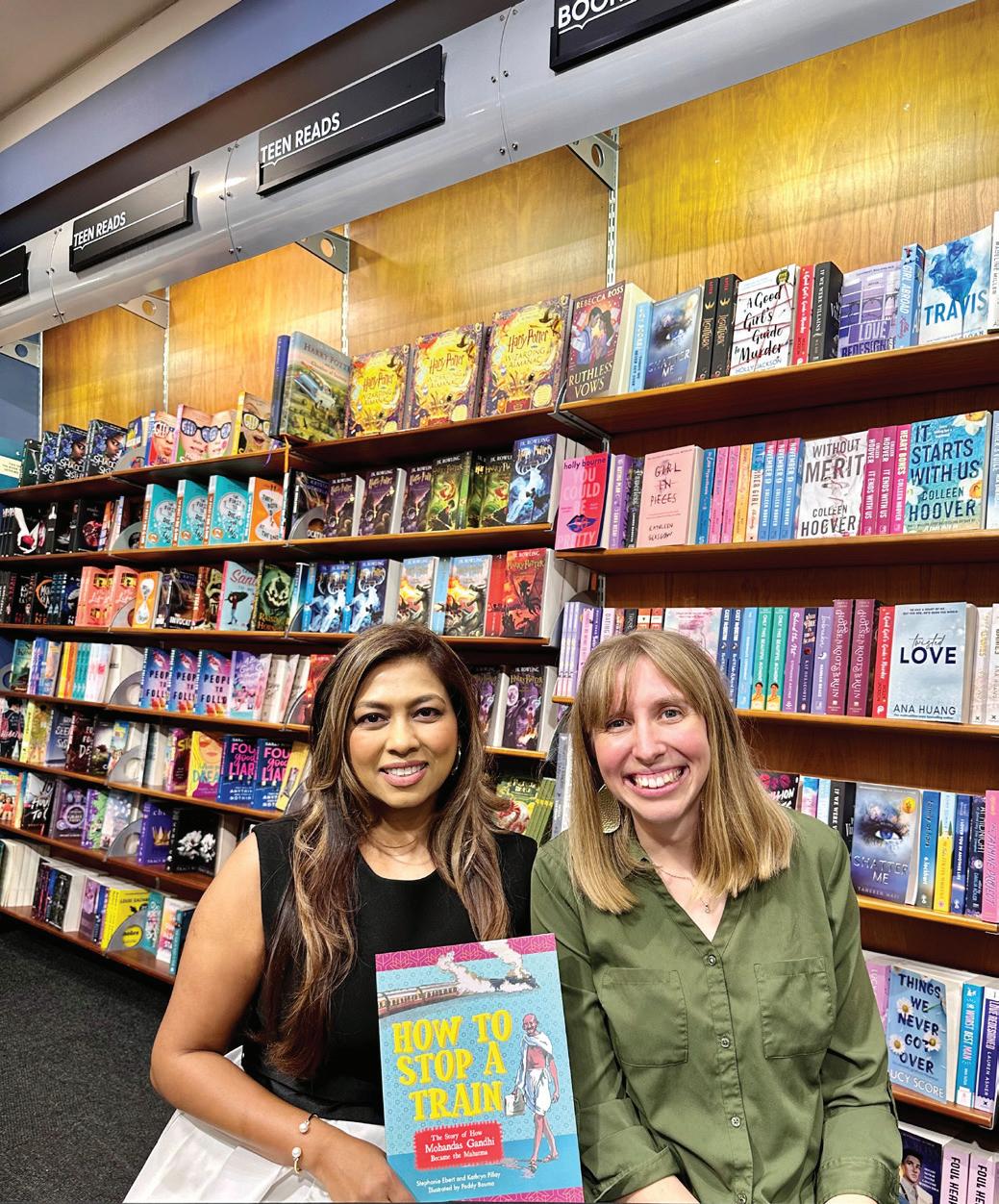
Two authors have played a pivotal role in Mahatma Gandhi’s history by bringing his story to life in their new children’s picture book, How to Stop a Train: The Story of How Mohandas Gandhi Became the Mahatma
34 A CHOCOLATEFILLED EASTER
Here’s a simple recipe to whip up your own Easter chocolates - get creative and make it your own delicious masterpiece!
46 LATE SUMMER STARTERS
What better way to celebrate seasonal change than by delighting in autumn-inspired starter recipes, shared by Granny Mouse Country House & Spa?
20 SHAPING THE SCHOOL LANDSCAPE
We take the pulse of four local schools and how they are sharing their growth and ever-evolving traditions with the community.
36 THE HEART OF NETHERWOOD FARM
From humble beginnings as a small stud farm, Netherwood Farm has evolved into a must-visit destination for over three decades.
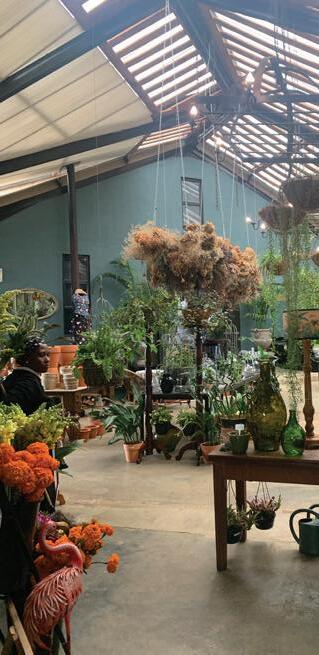
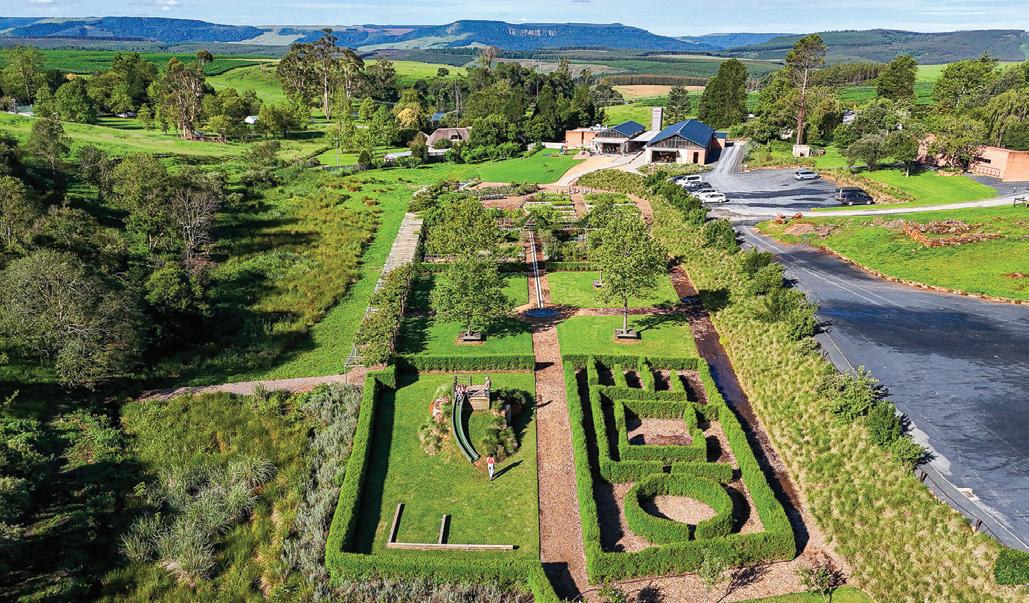
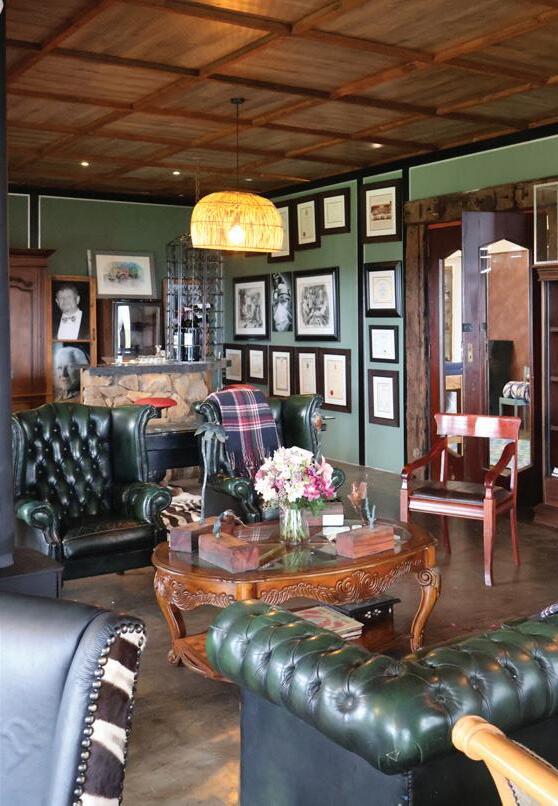
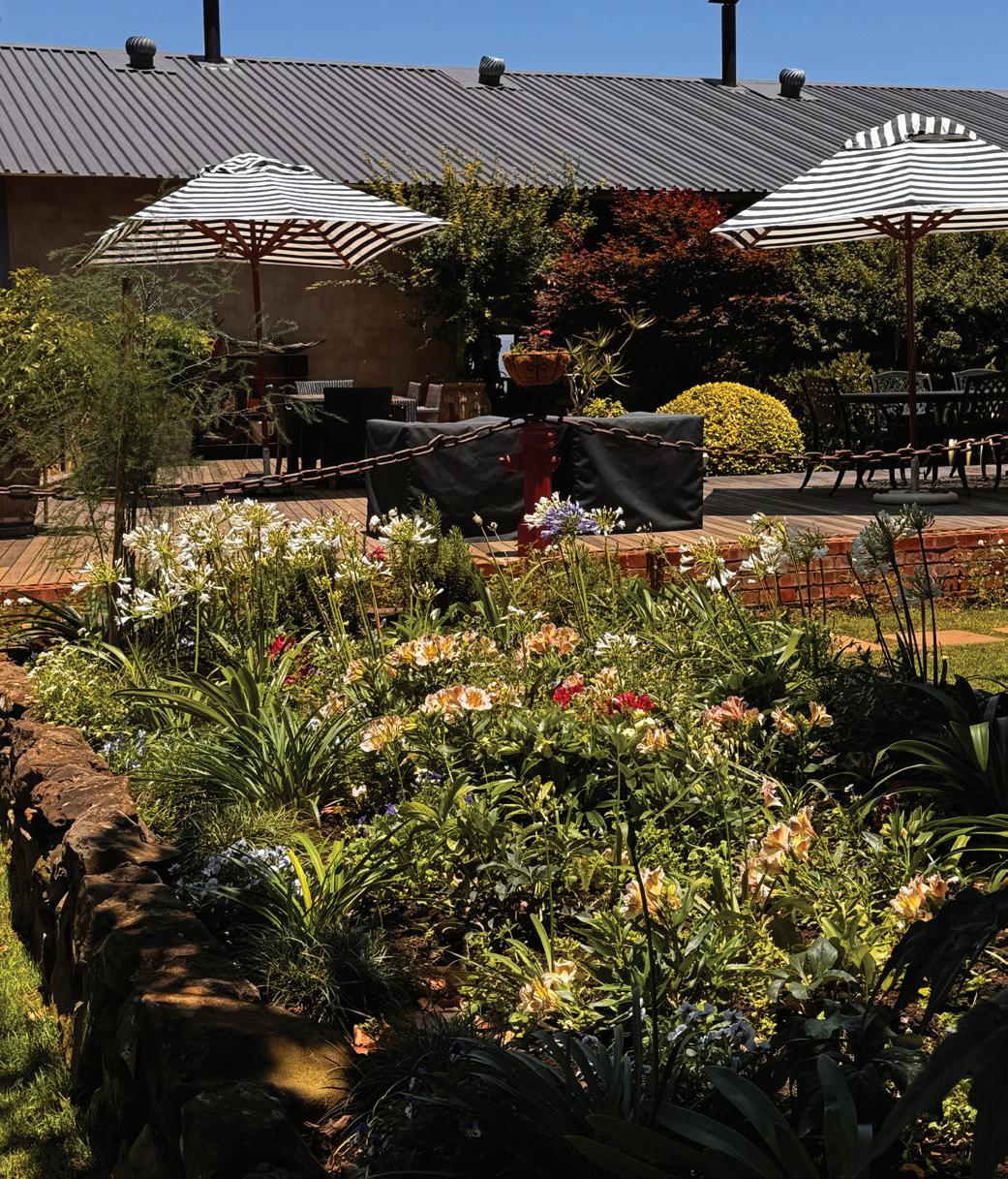
From a small café to a true country wonderland, the Midlands Fable encourages you to explore their haven of good food, beautiful gardens, and warm hospitality. Read more on page 18
PUBLISHER
Lorinda Scott
lorinda@fabmags.co.za
EDITOR
Justin Scott justin@fabmags.co.za
ONOTE EDITOR'S
ver the past two months, Lorinda and I travelled through America and China. We weren’t moving through tourist routes. We lived in the suburbs with friends and family, walked their streets, shopped at their local stores, and sat at their kitchen tables. Those experiences made me notice patterns about places and people.
One of those patterns became clear while standing on The Great Wall of China. It was impossible not to think about time. The wall was not built in a season; it represents generations who believed that protecting and strengthening their people required long-term vision. Whatever one thinks of empires, the underlying principle remains relevant: communities that endure are built intentionally, layer by layer, with a clear understanding of what they are trying to protect.
Across both countries, the similarities were striking. Look beyond scale and cultural nuance, and every city is simply a collection of neighbourhoods; clusters of connected communities. People building businesses, raising families, networking, and trying to create better lives. Everywhere we went, people shared similar rhythms: searching for a good cup of coffee to start the day, safe spaces for long walks, opportunities to exercise, schools aligned with their values, and a quality of life that felt balanced. It led me to reflect on why some local communities thrive while others do so less effectively. I feel the answer lies less in geography and more in intention. Thriving communities demonstrate longterm thinking. They invest in education as character formation, not just academic achievement. They preserve heritage not as nostalgia, but as identity. They support local enterprise rooted in authenticity rather than chasing trends. They create shared spaces where people gather, whether
around a farm table, a chapel, a school field, or a village café. They understand that wellbeing, connection, and stewardship are interconnected.
In this edition, we see those characteristics reflected across many stories. Schools reassessing how technology shapes connection, heritage sites being maintained through committed local stewardship, farms and hospitality businesses growing deliberately, anchored in principle rather than speed, and contributors reminding us that our local economies and events are interconnected systems, where individual decisions affect the broader whole.
The Midlands reflects many of these qualities. There is steady growth rather than hurried expansion. There is investment in institutions that will outlast many of us. There is a visible commitment to land, learning, health, and enterprise. These are not accidental outcomes; they are the result of collective choices made consistently over time.
History shows that communities of value endure when people act with vision and shared responsibility, building something that serves not just the present generation, but those who follow. As a magazine, we remain committed to sharing these stories, contributing in our own way to the continued strength of the communities we serve.
Enjoy the read, and until the next edition, God bless.
Stacey Armstrong, Lisa Glaister & Tim Johnson ACCOUNTS accounts@fabmags.co.za
SOCIAL/EVENTS
lorinda@fabmags.co.za
HEAD OFFICE 032 946 0357 104 San Hall Office Park Kirsty Close, Ballito, KwaZulu-Natal
PRINTED BY CTP Printers Cape Town
COVER PHOTO
Midlands Fable by Creative Co
While every effort has been made to ensure the accuracy of the contents FabMags Publications cannot be held responsible for any omission or errors, or for any misfortune, injury or damages that may arise therefrom. The Midlands is published by FabMags Publications, 104 San Hall Office Park, Kirsty Close, Ballito, South Africa 4418.
JUSTIN SCOTT,
and the FabMags team
Copyright The Midlands and FabMags Publications. All rights reserved. Reproduction in whole or any part is prohibited without prior permission of the publisher. All products and services featured in this publication are subject to availability and are not stocked by FabMags Publications.
GET CONNECTED
MISSED OUR LAST EDITION?
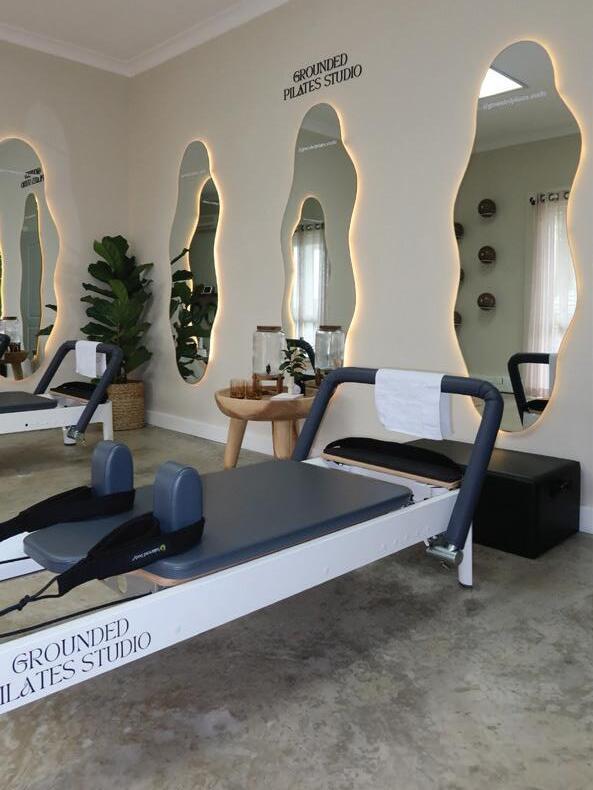
What’s Trending? @groundedpilates
Discover the world of Reformer Pilates at Grounded Pilates Studio in Hilton. It’s been open since December 2025, and owner Micaela Fouché welcomes anyone who would like to find a new sense of grounding in their life and a space for physical and emotional wellbeing. They are affiliated with Discovery Vitality and offer reformer Pilates sessions, Monday to Friday, by appointment only. Get a good stretch and be sure to enjoy the burn!
FOLLOW US!
We are ecstatic to bring you the 36th edition of The Midlands Magazine! Thanks to our supportive community, valued clients and hard-working team, we are able to deliver this magazine to our readers. Be sure to follow us on our social media platforms and websites as we uncover the very best of the countryside. Let’s keep the conversation going—we love hearing from you!
Fabstuff
1.
BLU BETTY: ONO STONE SUEDE
A strong presence of confidence is what the Ono Stone Suede stands for. Simple, beautiful lines, comfort, and durability, with great quality. You’ve got the perfect juxtaposition of functional meets funky edge. Having just introduced suede to the range, Blu Betty is on-trend! Retail price is R1,300 www.blubetty.co.za
3.
BREE PROBIOTICS: PROBIOTIC FACIAL MIST
A refreshing and revitalising skin mist that hydrates and nourishes your skin. It contains 100% natural good bacteria, and frequent use results in a balanced skin microflora and hydration. The probiotics help reduce wrinkles, breakouts, and other signs of ageing. Perfect for daily use and can be used in the morning, at night, or in between. Retail price is R274 www.breeprobiotics.co.za
FAVOURITE
Sol de Janeiro: Rosa Charmosa
This year, Sol de Janeiro’s Rosa Charmosa hands you the tools to flip the script and reconnect you with your fierce inner voice. Cheirosa 91’s scent unfurls with a burst of vibrant Rio Pink Rose, passion fruit zing, and honey caramel warmth. An infused Dewy Cream glides onto skin like a whispered promise. Delivering 72 hours of deep hydration. Available in three sizes: 75ml, 150ml and 240ml. Retail price from R560 www.takealot.com (Available at all major retailers and online)
TEAZY
2.
Instagram: tasteteazy
A proudly South African RTD brand and the country’s first Rooibos Hard Ice Tea, blending authentic rooibos, natural flavours and award-winning vodka. Locally made with quality ingredients, Teazy delivers a refined, distinctly South African drinking experience and is the most-awarded RTD brand in South Africa, with multiple international accolades. Retail price is R149.99 for a six-pack. Instagram: tasteteazy
4.
COLLECTIVE AND CO: 9KT GOLD DIAMOND CAPSULE RING
Solid 9kt gold with round brilliant lab-grown white diamonds and a 2mm ring band thickness. This classic diamond ring goes with everything, and a truly timeless design. This is an ideal wedding band to stack with your engagement ring, or a classic diamond ring worn on either hand. Available in 9kt yellow, white or rose gold. Retail price is R12,400.00 www.collectiveandco.co.za
Blind Wine Tasting!
LIONS RIVER
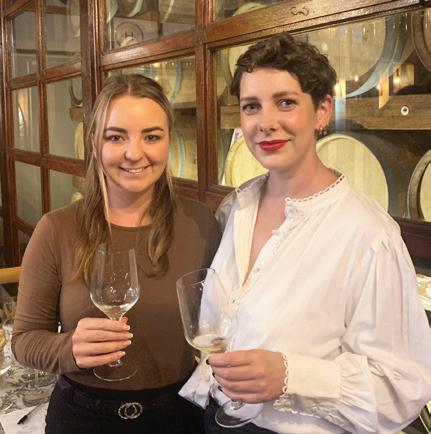
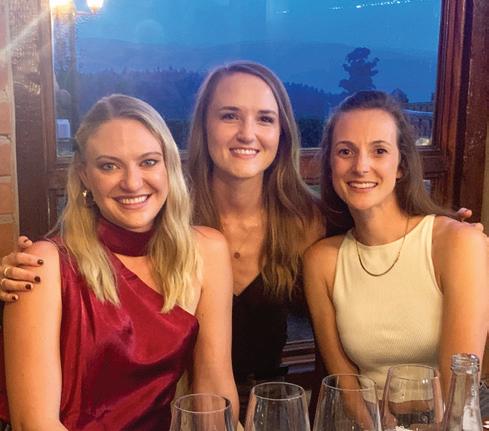
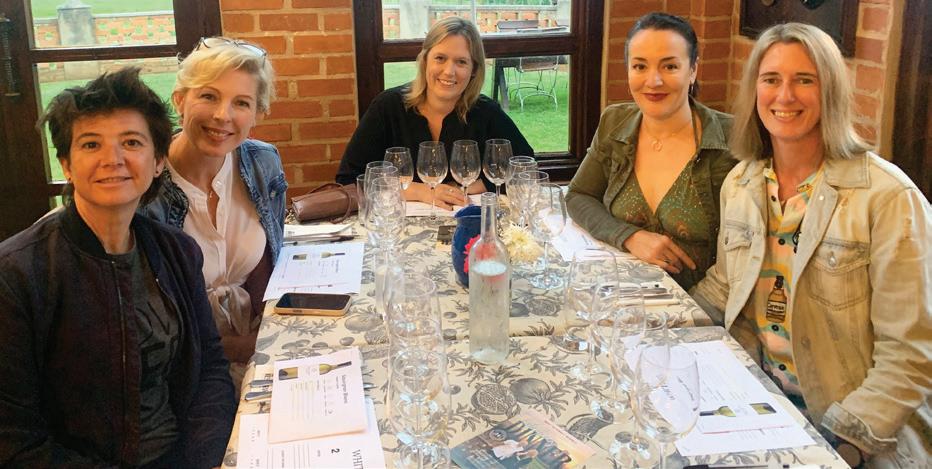
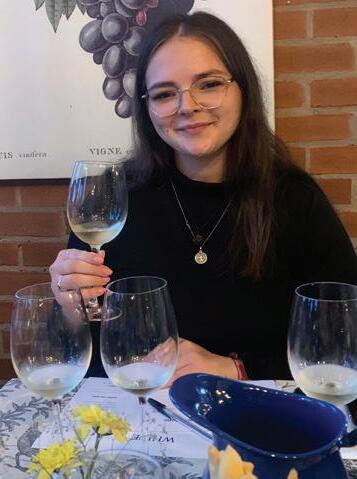
Highgate Wine Estate recently hosted an engaging ‘blind’ tasting evening at The Restaurant, drawing wine lovers for a night of flavour-discovery and friendly competition. The relaxed, fun atmosphere was complemented by the option to enjoy Highgate’s popular burgers and pasta, making for a tasty and memorable social evening.
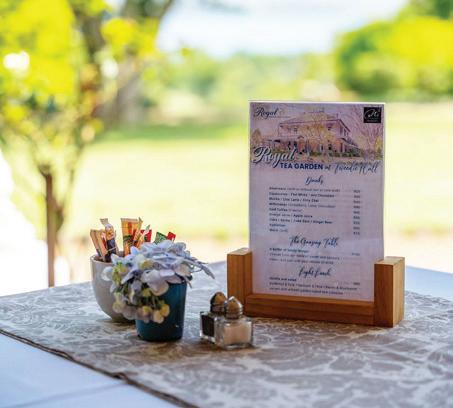
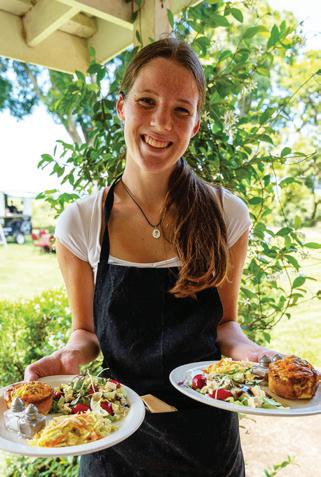
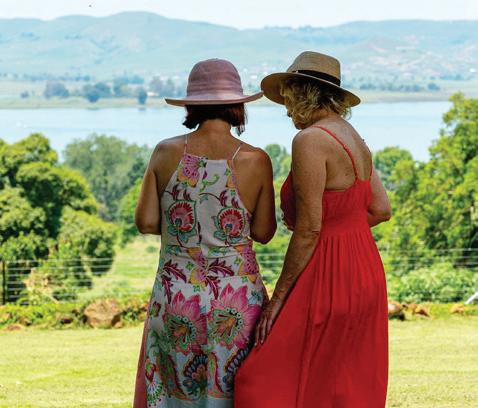
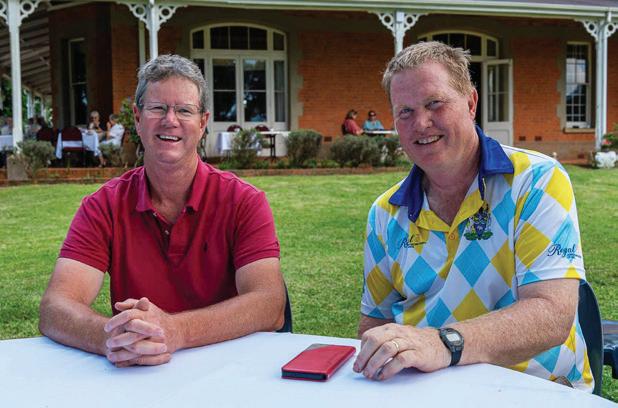
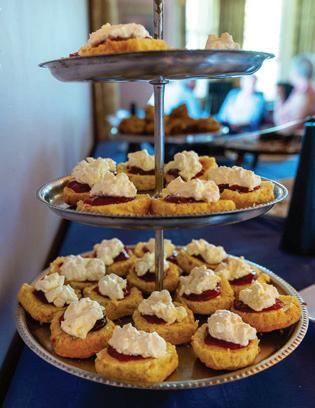
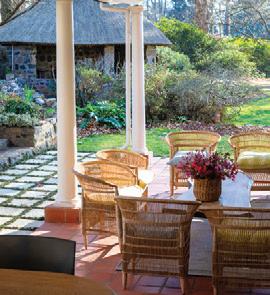
Last December, the Royal Agricultural Society (RAS) officially opened its new home at the historic Tweedie Hall, with a warm public welcome to the Royal Tea Garden. Visitors got to view some of the society’s trophies, photographs and stories spanning 175 years inside the historic hall. They also got to wander around the beautiful grounds and settle on the verandah for something delicious from Nova of N-Squared Bakery.
As part of its 175th anniversary year, the RAS invites the community to visit the Royal Tea Garden every Tuesday, to enjoy the beautiful grounds and evolving displays. Entry to the grounds is free of charge, and refreshments and light meals will be available to purchase from the Royal Tea Garden.
Power You Can Trust
Howick
MIDLANDS THROUGH THE EYES OF A LOCAL!
FAVOURITES
• Nottingham Road Garage and Lineage, with their great coffee, friendly faces, and that easy Midlands rhythm.
• The Junction is a firm favourite for relaxed, flavourful pizzas shared with friends.
• Rawdons Hotel carries old-world charm, perfect for unhurried moments on date night.
• Linga Lapa, Nottingham Road Hotel, and Bierfassl are always reliable for sweet treats.
• Long runs through winding roads, cycling along quiet trails, or working out at one of the many home gyms scattered across the area.
• Catching live music or enjoying Padel games with family and friends.
ABOUT ME
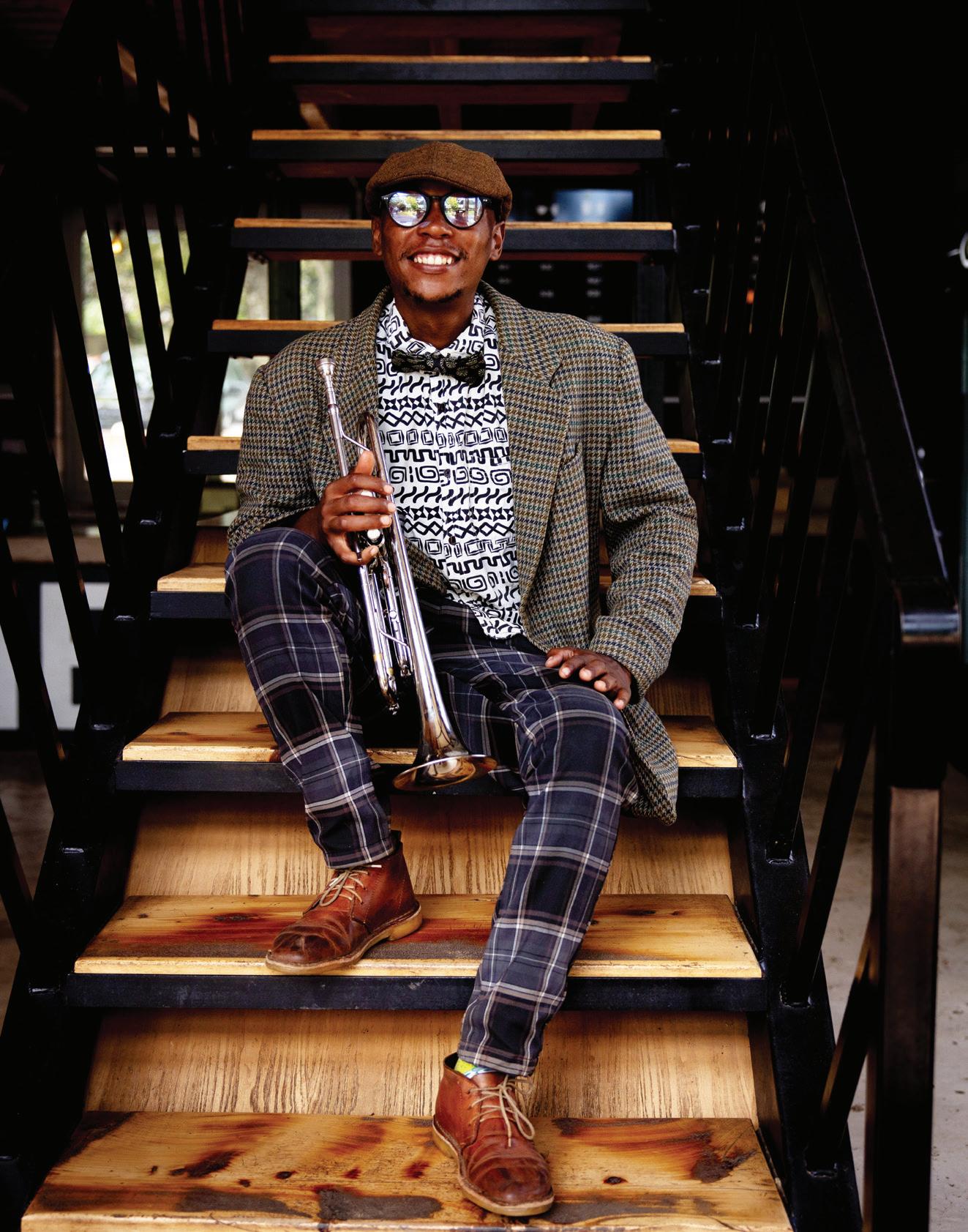
Hi, I’m Dongoodness Ayanda Mtshali - trumpet player, music educator, and performer across the KZN Midlands. I share good vibes through music, teaching, and connecting with the community.
Rawdons Hotel
Nottingham Road Garage
Linga Lapa
The Junction
PHOTO COLIN HULETT PHOTOGRAPHY
APARTMENTS NOW SOLD OUT
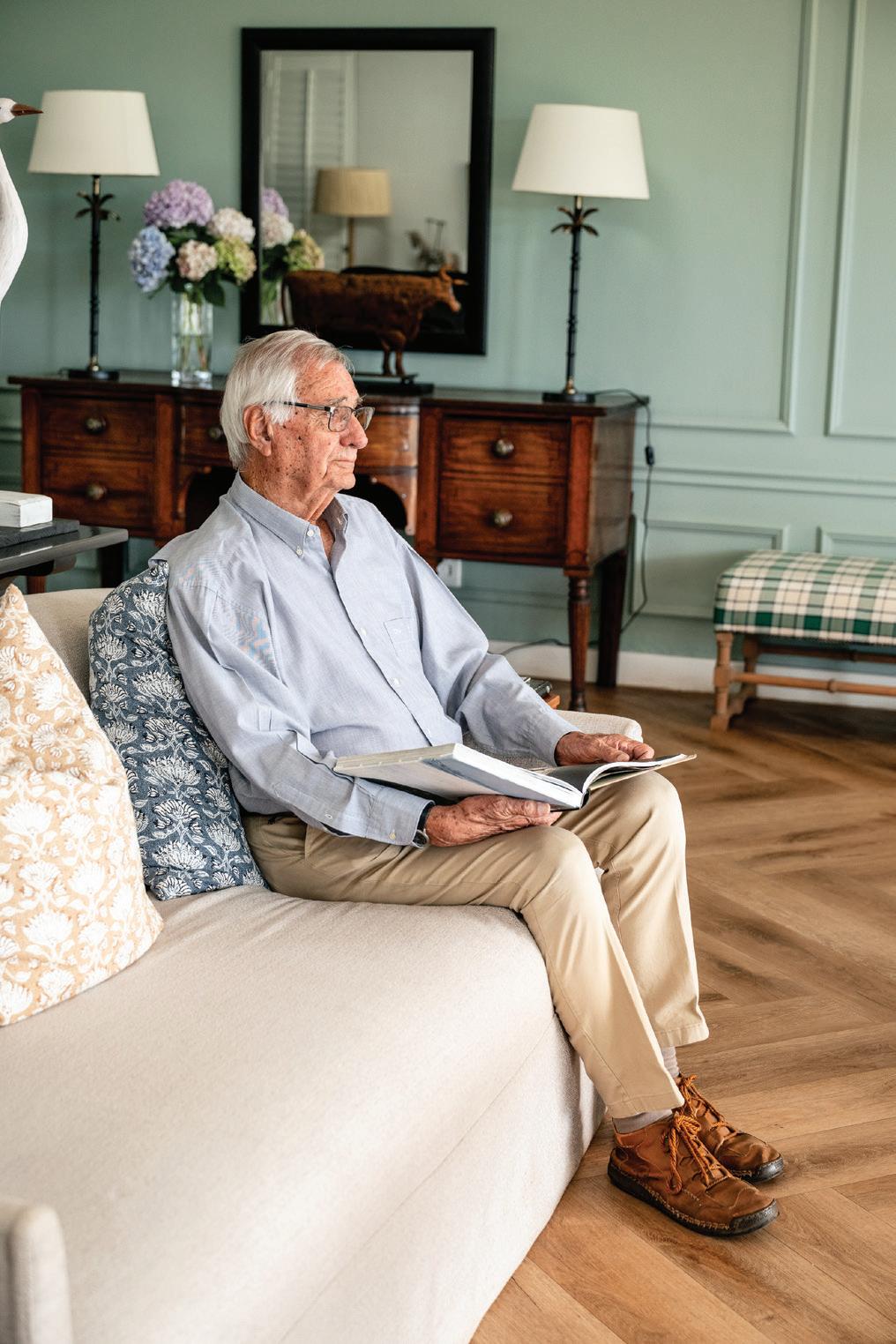
Auria Senior Living is Internationally Awarded
Busy, Bored, or Balanced?
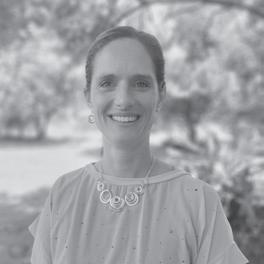
My home town, Howick, is affectionately known as home to ‘Newly Weds’ and ‘Nearly Deads’. At first glance, these two populations have nothing in common, but it struck me recently that they face the same dilemma: both are adjusting to a season marked by drastic changes to the external demands placed on their time.
I’m not a retiree, but I’ve had a season of being a stay-at-home mom. I remember well the eager anticipation of finally having time to do “whatever my heart desired”. The reality did not live up to my expectations, and very soon I found myself in a funk that took years to shake. Newbie retirees often report a similar sense of anticlimax with their newfound abundant free time.
So, how important is “free time”? Is there an optimal amount?
The research suggests two and a half hours per day of ‘discretionary time’ is optimal. Less than two hours leads to time stress, while more than five leads to feelings of idleness and lower self-reports of wellbeing.
If you’re in a season of limited free time, it may feel impossible to find “more time”. Reprioritising your or your family’s commitments may help. Most children’s schedules are over-subscribed, so keep that in mind when mom-guilt nags you to overcommit. Less is often more! As a retiree, or empty-nester, you may never have imagined there could be such a thing as too much time. You may have been shocked to find the adjustment difficult.
Bringing structure to your schedule, having a plan for each day, can help redeem the time.
Here are some ideas to keep you motivated and help make each day meaningful and productive:
• Keep a list of projects you intend to complete. Break each project into manageable steps and tackle them one at a time.
• Set your own deadlines for each step. Use a task tracking app like ‘Todoist’ for motivation and accountability. (Or a good old-fashioned Paperand-Pen list!)
• Commit to meaningful, weekly appointments.
• Choose a variety of engagements which balance health pursuits, social connection, movement, and mental stimulation.
• Volunteer work, or engaging cross-generationally through church or club involvement, adds existential meaning and an opportunity to give.
But whether you need to carve out more free time or bring meaning to the time you have, what one chooses to do has a greater impact on wellbeing than how much time one has. While doom-scrolling or TV is a ‘highly accessible’ form of leisure, being intentional about engaging in meaningful occupations will pay higher dividends in wellbeing.
If you’re in a funk, micro changes in activity may be your ticket out. Start small. Be intentional. Even minor changes tend to compound with consistency.
“Your life does not get better by chance, it gets better by change” - Jim Rohn
WORDS STACEY ARMSTRONG
PHOTO PAUL MITCHELL
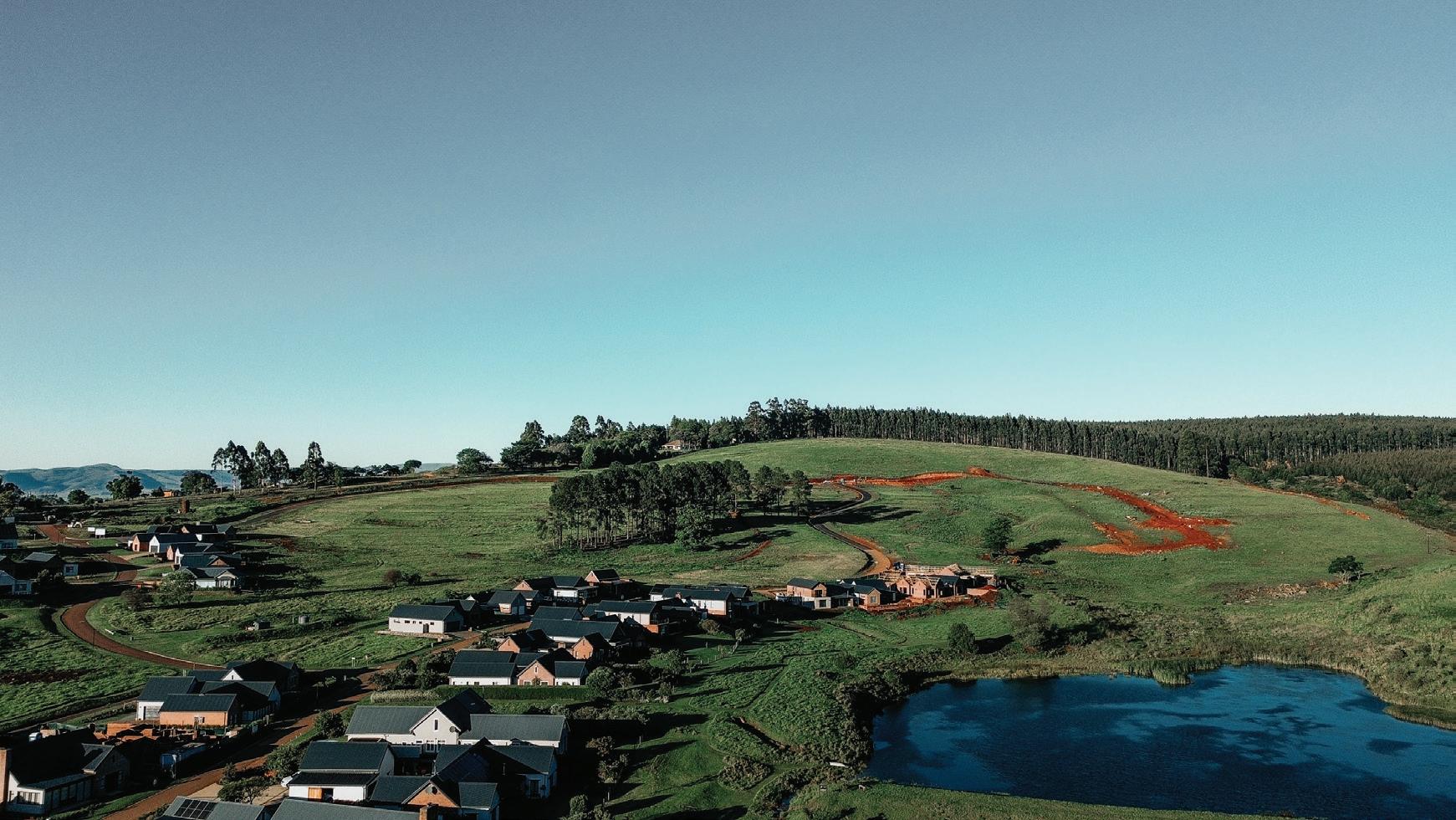
At St John’s Village, life unfolds at its own pace — grounded, considered, and beautifully connected to the land. The newly released Pinelands offers a limited collection of prime homesites set among towering pines and open skies, inviting you to design a home shaped by nature, light, and long views.
Just beyond, Phase 4 of the Jersey Cottages introduces elegant 1- and 2-bedroom en-suite homes, created exclusively for over-55s who value simplicity, security, and refined countryside living. Ready for occupation in May, these cottages offer the freedom of independent living with reassurance built quietly into the estate. This is countryside living without compromise - where every stage of life is considered.
Midlds Fable
Discover a world of exploration with Beth Kelly
The Beginning
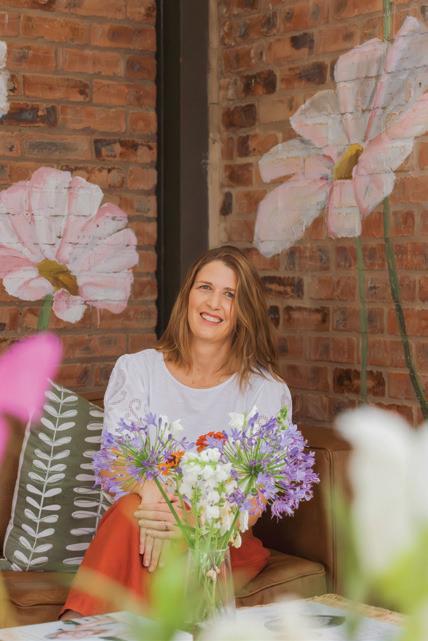
Fable started as a small café idea I had that followed me everywhere I went. It was my “one day I will…” project. In 2016, my now husband, James, encouraged me to just start. The old farm sheds seemed like the perfect place. A lot bigger than I had planned, but it just felt like home.
The Inspiration
I have been very much inspired by the places I have visited around South Africa and overseas. In South Africa, Babylonstoren is a huge inspiration, but also just the Cape in general. But what brought it together for us was the gardens in Morocco, where James and I went on our honeymoon.
The gardens and attention to detail, but also the meanings behind the waterways (“Khettaras”), the orange blossoms and the open spaces. We knew we wanted to create this feeling, if not for others but at least for ourselves.
The Name
I toyed with a few different names, but as we started really creating the spaces, I realised that we were also trying to tell a story through what we were doing. This place, though abandoned, was so full of life. “Fable” just seemed like the right name to hold space for all these stories, with the focus being on the natural wildlife that exists in the area. The longer the project took, the more
we joked and resonated with the fable of “The Tortoise and the Hare” and the moral “slow and steady wins the race”. In some way, it was comforting, allowing me to relax and enjoy the development phase.
Eat
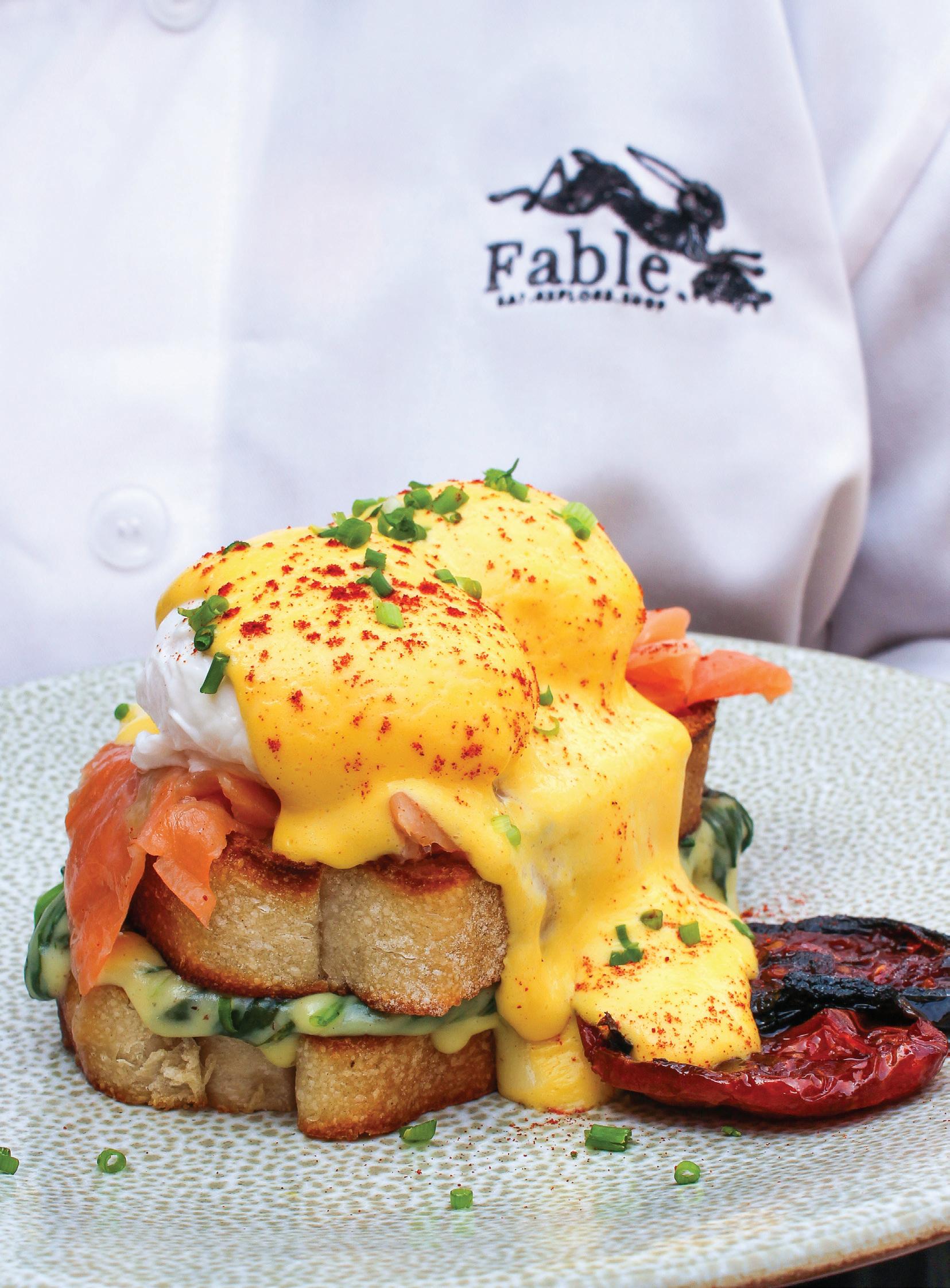
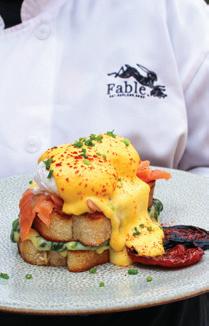
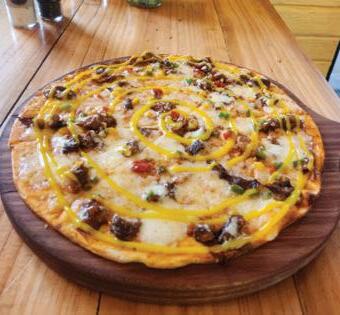
Our Eatery is a daytime restaurant serving breakfast and lunch. We are not bound to any specific cuisine, and we explore flavours from around the world. We make sure everything is homemade or locally made where possible. The Taproom opens for lunch and dinner, where we focus mostly on our Naples-style Pizzas, which is a dough that takes three days to make, which gives it a unique nutty flavour and a light and airy crust which pops up to a crisp. We also serve burgers and salads, and a few other dishes which are finished off in our woodfired oven. We have recently opened a very small deli where we offer picnics for enjoying in the garden. We also like to have some fun every once in a while and do pop-up dinners, high teas, and wine tasting/pairing evenings.
PHOTO RAW EXPOSURE
PHOTO AMANDA LE VOY
Explore
The idea behind it was that each time you visit Fable, you should be able to experience something new and different. We have built rose arches with secret gardens and a freylinea maze. Explore is also meant to encourage people to try something new off the menu, meet new people and expand your experiences.
Shop
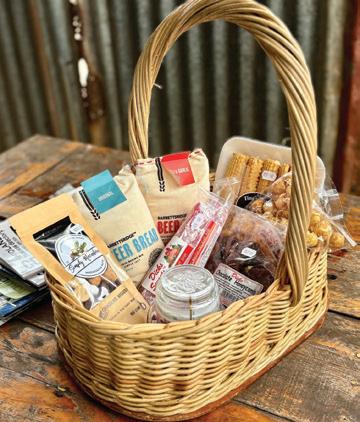
Our Market Shed is where the calf pens were originally, and they were a maze of little rooms and passages. And I can still visualise them! Similarly, one should wander through a shop in zig zags, discovering new things around each corner. I have tried to keep themes of home, garden, gifting, and making sure that they fit into our aesthetic. We also have a small wine “cellar” where we sell different bottles of unique wine. Again, I try to offer something different that you might not find at a local bottle store. We don’t just put anything on the shelves. Everything is well thought out, and we try to keep our standards high.
Stay
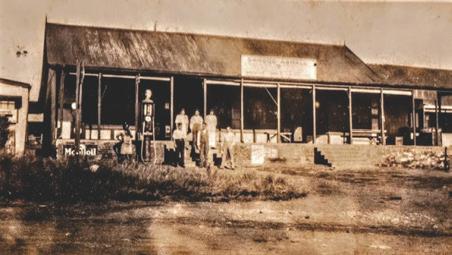
The Fable Country Stay house was the original homestead of the Curry Family, and before that, the original trading post, hotel and post office of the area. In 2024, I did a drastic interior change, and we were quite bold with our style choice and use of colour. Extravagant floral wallpapers on the ceilings, the pink and green kitchen, and a couch overstuffed and covered with a bold floral fabric, creating
addictive excitement. Although Fable Country Stay is a self-catering accommodation, we do provide the farm essentials of milk, butter, eggs, bread, homemade jam, tea and coffee, etc. Enough for a humble country breakfast.
What’s New?
Lots! I have a lot of new projects to keep me busy for the next decade! I'm going to keep my development ideas secret for now. Each year, we will work on new and exciting food offerings, expanding the retail range, and revamping the gardens and kids' play area. I am always surprised and grateful for new customers, but I definitely don’t take it for granted. I am aware that we need to keep developing, even if it's small changes. This is a tough industry to be in, and we cannot become complacent for a second. We can only keep doing what we love if we are supported by our customers.
One Last Thing
Everything we offer and do at Fable are the things I love; it is a representation of me. I get a lot of people suggesting I do this or that, but I often ask myself what I love and try to stick to that. I’ve learned so much here, and I will continue to learn. Spending so much time and putting so much love and energy into a space, I would want it to be my favourite place, staying authentic to what I love.
PHOTO AMANDA LE VOY
PHOTO RAW EXPOSURE
PHOTO AMANDA LE VOY
PHOTO AMANDA LE VOY
Shaping the School LANDSCAPE
Across the Midlands, schools continue to evolve in ways, both visible and quietly transformative. From campus improvements and new facilities to academic milestones and community initiatives, this school’s section offers a snapshot of what’s been happening on the ground over the past term.
WORDS ACCACIA FOGGIN
Choosing Connection First
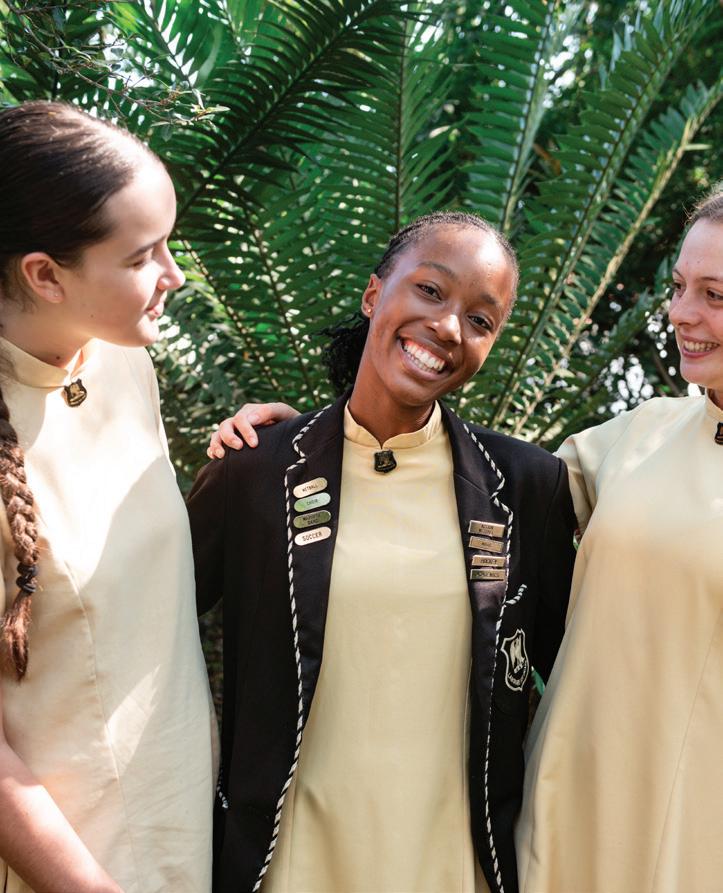
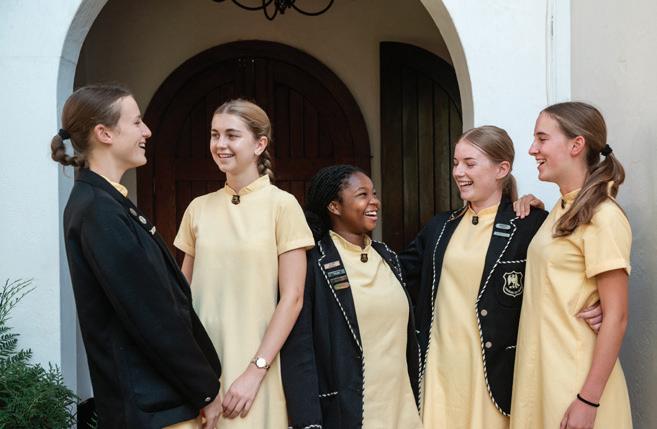
At St John’s Diocesan School for Girls, education has always been about more than academic outcomes. Rooted in values of care, connection, and personal growth, the school has recently introduced a series of considered changes that reflect a wider, global conversation around technology, wellbeing, and how young people learn best. Over recent years, like many schools, St John’s D.S.G. embraced classroom technology with the aim of equipping pupils for a world where digital fluency is essential. Laptops were introduced to enhance learning, improve access to resources and prepare girls for tertiary education and the workplace. However, ongoing reflection and observation prompted staff to pause and reassess how certain aspects of classroom technology were impacting younger pupils, in particular.
“What we began to notice,” explains Deputy Head and Head of Academics, Lisa Ackerman, “was that some of our girls, especially in Grades 8 and 9, were starting to hide behind their screens.” While digital tools offered efficiencies and innovation, they were also affecting
eye contact, classroom engagement and peer connection - elements that sit at the very heart of the school’s ethos.
Entering Grade 8 is already a significant milestone, bringing new routines, expectations and social adjustments. Adding the responsibility of managing a laptop, often for the first time, was found to create additional pressure at a stage when grounding and personal connection are particularly important. In response, the school made the collaborative decision to delay the introduction of laptops until later grades, allowing younger pupils time to develop essential soft skills, confidence and interpersonal awareness. Alongside this, St John’s D.S.G. has taken the bold step of becoming a smartphonefree campus from January 2026. Informed by research, including insights from The Anxious Generation by Jonathan Haidt, as well as wider educational discourse, the decision reflects growing concerns around screen time, social media and
adolescent wellbeing. The benefits are already clear: improved focus in class, stronger face-to-face interaction, reduced anxiety and fewer distractions during the school day. Importantly, this shift does not signal a move away from technology, but rather a more intentional approach to its use. In the higher grades, technology continues to play a role as a collaborative learning tool, supported by clear guidelines, digital citizenship education and an emphasis on balance. Teachers model purposeful tech use, while regularly incorporating tech-free activities that encourage discussion, teamwork and reflection.
At its core, the approach reflects St John’s D.S.G.’s commitment to educating the whole child-nurturing heart and mind in equal measure. In choosing connection first, the school is quietly reaffirming what has always set it apart: a belief that meaningful learning begins with human connection.
www.stjohnsdsg.com
Cultivating Curiosity
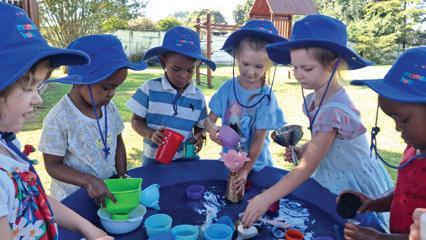
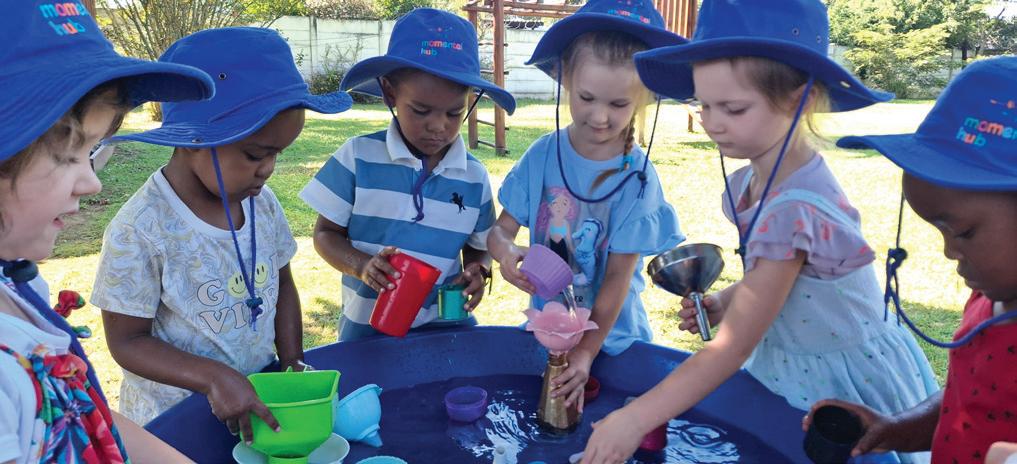
Tucked into the heart of Howick, Momentai Hub is quietly redefining education for children, families and the wider community. Known for its warm, inclusive atmosphere and play-led philosophy, Momentai has steadily expanded its vision and offerings, reinforcing its role as a neighbourhood centre for lifelong learning.
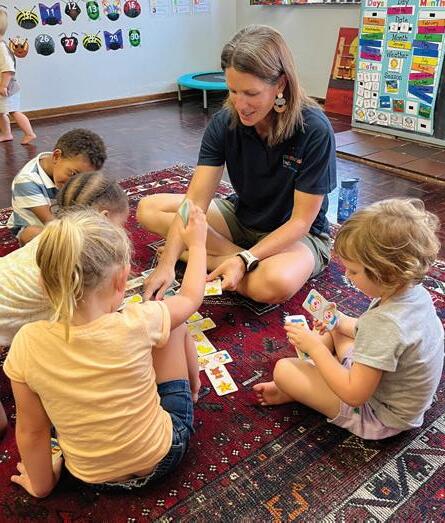
Momentai is founded on the conviction that education extends beyond age and classroom walls. Its vibrant preschool sits within a shared learning environment where curiosity, resilience and connection are cultivated from early childhood through adulthood. Spacious classrooms, generous gardens and rich outdoor learning areas give children the freedom to explore and play, while thoughtful structure and skilled guidance support development at every stage. Leading the preschool is Brigitte Köhne-Lau, a seasoned educator with more than two decades of experience in South Africa and abroad. Brigitte’s career spans classroom teaching, leadership roles and specialised programmes - from high school settings to early childhood education in Hong Kong. She brings practical skills in Kids
Zumba, yoga and rebounding, and is currently pursuing a Certificate in Play Therapy to deepen her support for children’s emotional wellbeing. Her broad experience and ongoing professional development anchor Momentai’s calm, grounded culture and its commitment to balanced, playbased learning.
Brigitte emphasises whole-child development: fostering confidence, character and collaborative problem-solving alongside academic foundations. Her hands-on approach and respect for each child’s pace shape Momentai’s everyday routines and learning rhythms. A significant recent expansion is Momentai’s School of Life, a community-focused programme offering accessible adult workshops on practical topics such as financial literacy, health and wellbeing, navigating medical aid and future planning. Delivered in approachable formats, these sessions make essential knowledge shared, affordable and immediately useful, extending
Momentai’s mission beyond childhood, and strengthening family capability and community resilience. Complementing preschool care are aftercare and holiday programmes that sustain learning and connection throughout the year. Through thoughtful programmes, partnerships and events, Momentai Hub grows intentionally, creating space to pause, learn and belong rather than racing toward the next trend.
Inspired by its name, drawn from the Cantonese word Mou-mantai - meaning “no worries” or Hakuna Matata, Momentai promotes presence, adaptability and optimism, encouraging both children and adults to engage confidently and compassionately with the world. www.momentaihub.com
A Place Renewed
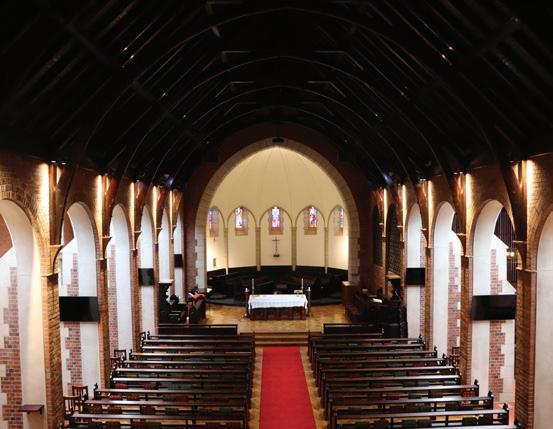
In September 2025, Michaelhouse marked a special moment with the formal rededication of its historic chapel, following a major refurbishment and expansion - the largest transformation since the midtwentieth century. The service was led by Nkosinathi Ndwandwe, Bishop of Natal, and attended by pupils, staff, Old Boys, parents, and key donors, including families who had supported the project. Hymns filled the newly enhanced space, culminating in the congregation - especially the boys - singing “Stars of the Morning”, reinforcing the chapel’s enduring role as the spiritual and communal heart of the school!
The expansion was carefully designed to maintain the chapel’s architectural character while allowing the growing school community to gather comfortably. During construction, services were held in temporary spaces on campus, making the return to the fully-restored chapel particularly meaningful. Now, the building continues to serve as a place for worship, reflection, and collective celebration, while also honouring generations of Old Boys, including those commemorated for their service in the World Wars.
Amongst the chapel’s most striking features is its stained glass, particularly the rose window at the rear. Designed by Ervin Bossányi, it depicts the head of Christ surrounded by birds native to KwaZulu-Natal, weaving together universal Christian symbolism with a connection to the local landscape. The sanctuary’s lancet windows portray figures such as Archangels Michael and Gabriel, Samuel, King David, and John the Baptist, reflecting themes of leadership, service, and compassion - values that continue to resonate deeply within the school community.
The chapel’s significance has also been expressed over the years in small commemorative touches. About 10 years ago, a series of silver pendants shaped like the rose window was created for sale at the school shop, and some remain cherished keepsakes, linking the
artistry of the building to personal and commemorative connections.
Music continues to animate the chapel. The Michaelhouse chapel choir has achieved significant success in recent years, including a Gold Certificate and second place overall at the Cantamus Festival in 2023, second place at the national finals of South Africa's prestigious ATKV-Applous competition in August 2025 following a gold regional win, and multiple top marks for its chamber choir section in mid-2025. These accolades highlight their exceptional performances across national and local circuits, bringing vibrancy and pride to the school’s spiritual life.
Together, the refurbished building, its iconic windows, and the celebrated choir illustrate a school that honours its past while nurturing presentday community, reflection, and achievement. A chapel is far more than a building - it is a space where history, faith, art, and life converge. The Michaelhouse chapel inspires connection, contemplation, and a lasting sense of belonging.
www.michaelhouse.org
Building for the Future
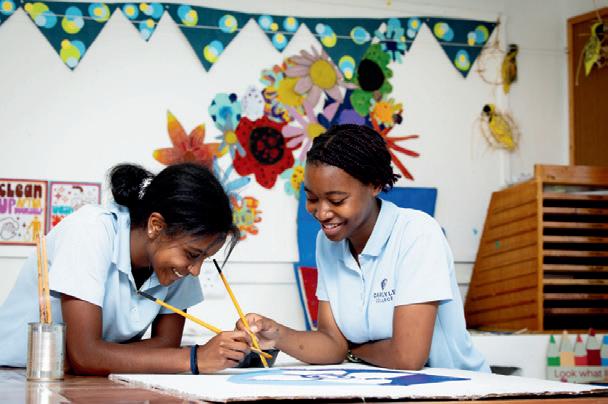
As Carlyle College enters its fourth year of operation, it can reflect proudly on a journey marked by steady, purposeful growth across the Pre-School, Primary School and, excitingly, now, the High School. What began as a shared vision to create a warm, engaging and futurefocused learning environment has quickly grown into a thriving school community, deeply rooted in Nottingham Road and its surrounds.
A major milestone in this journey is the introduction of a Grade 10 offering in 2026, a significant step that will see Carlyle College grow into its first Matric class in 2028. This marks more than just an expansion in grades; it represents a clear and intentional High School strategy designed to prepare students for a rapidly changing world. At the heart of this strategy is a carefully considered FET subject offering which is aligned to the Independent Examinations Board (IEB). Alongside core subjects such as English, Life Orientation, Mathematics, Mathematical Literacy, Afrikaans FAL and isiZulu FAL, Carlyle currently offers Geography, Physical Sciences, Consumer Studies, Visual Arts, Tourism and Agricultural Sciences. This diverse selection reflects a commitment to providing both a strong academic pathway for students
aspiring to tertiary education, and an equally valued practical pathway for those looking to enter a wide range of vocational, entrepreneurial and skills-based sectors.
The college’s location in the Midlands plays a vital role in shaping its approach. Surrounded by agriculture, hospitality, tourism, environmental initiatives and small businesses, Carlyle College is uniquely positioned to connect learning to the real world. High School students benefit from exposure to these sectors while also developing practical skills through entrepreneurial opportunities, learnerships and real-world experiences that bring learning to life.
Carlyle is a forward-thinking educational environment, keenly aware that many of today’s learners will enter careers that do not yet exist. As such, their focus
extends well beyond exams. Aiming to equip students with critical thinking, adaptability, leadership, communication skills and practical competence, the college provides the tools they will need to navigate uncertainty and lead with confidence.
Alongside academics, Carlyle continues to invest in a growing extra-curricular, sporting and cultural programme. Creativity, the arts, clubs and societies also form an essential part of the High School identity, ensuring that students can explore other interests, build character and discover their strengths and passions.
“As we look ahead, Carlyle College remains committed to growing people, building community and offering an education that is relevant, grounded and boldly future-focused,” says Tim Johnson (Executive Head of Carlyle College).
Carlyle hosts several High School Open Days throughout the year. For more information, visit their website.
www.carlylecollege.com
PRE-SCHOOL • PREP SCHOOL • HIGH SCHOOL
Located in Nottingham Road in the KwaZulu-Natal Midlands, Carlyle College is an independent, co-educational Prep and High School offering a caring, values-driven education on a 7-hectare campus. With a focus on real-world learning and personal growth, we support each child in building confidence, curiosity and a strong foundation for life.
WORDS ELVIDA SYDNEY
for the Eyes A Feast
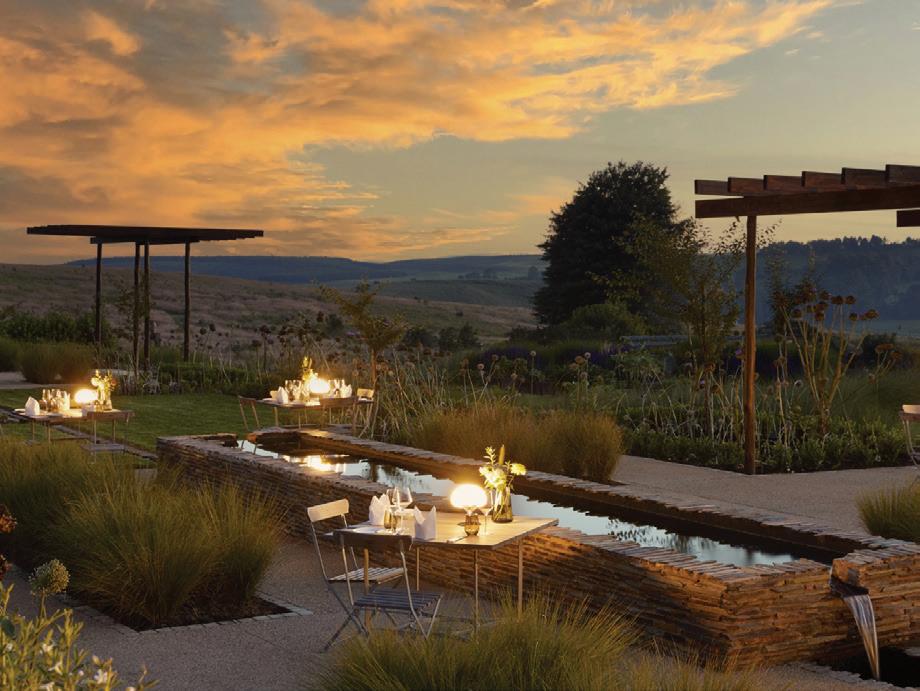
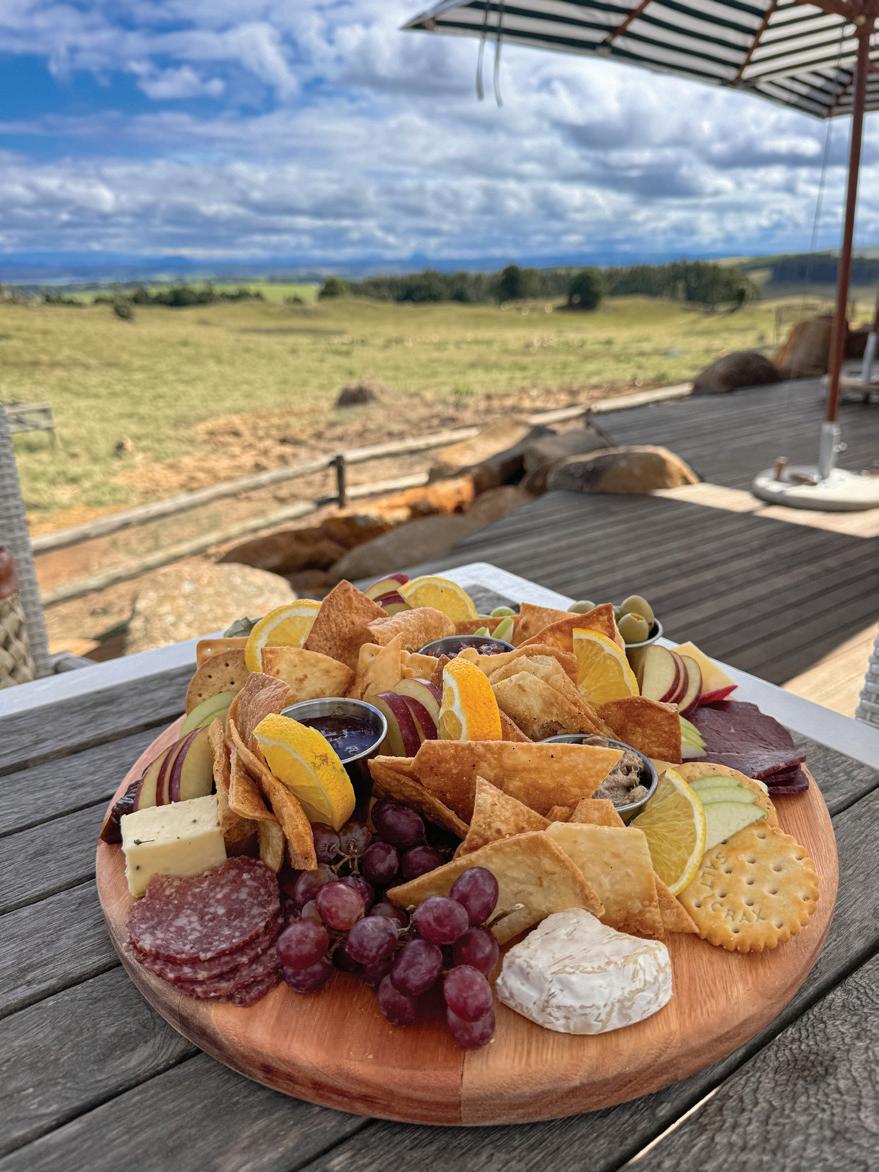
Here are your local restaurants serving up good food and delicious brews with picturesque views.
A Recipe for Relaxation
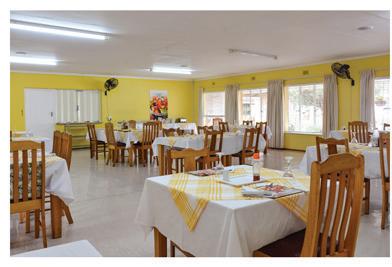
Tumble Downs Café & Restaurant is situated along Curry’s Post Road, in Howick. The original horse stables on the old farmstead have been renovated into an open, free-flowing dining space without pretence and formality. This country restaurant, with its warm and welcoming atmosphere, allows diners to relax and enjoy the beauty of the unspoilt surroundings while experiencing the fusion of flavours created in the kitchen. Whether it is tea and cake in the naturally beautiful gardens, sundowner cocktails on the deck, a light lunch under the trees, or a candlelight dinner indoors, this family-run restaurant is here to tantalise your taste buds and celebrate the local bounty.
www.tumbledowns.co.za
A Hidden Gem
Tucked beneath the rolling landscapes of Brahman Hills, Skyfall Restaurant is an intimate underground sanctuary where culinary artistry meets the quiet elegance of nature. From its secluded perch, guests dine with views of internationally award-winning gardens that inspire every plate. The atmosphere is refined yet welcoming; soft lighting, stone textures, and the gentle hum of conversation create a cocoon of calm sophistication.
brahmanhills
Moments Like These
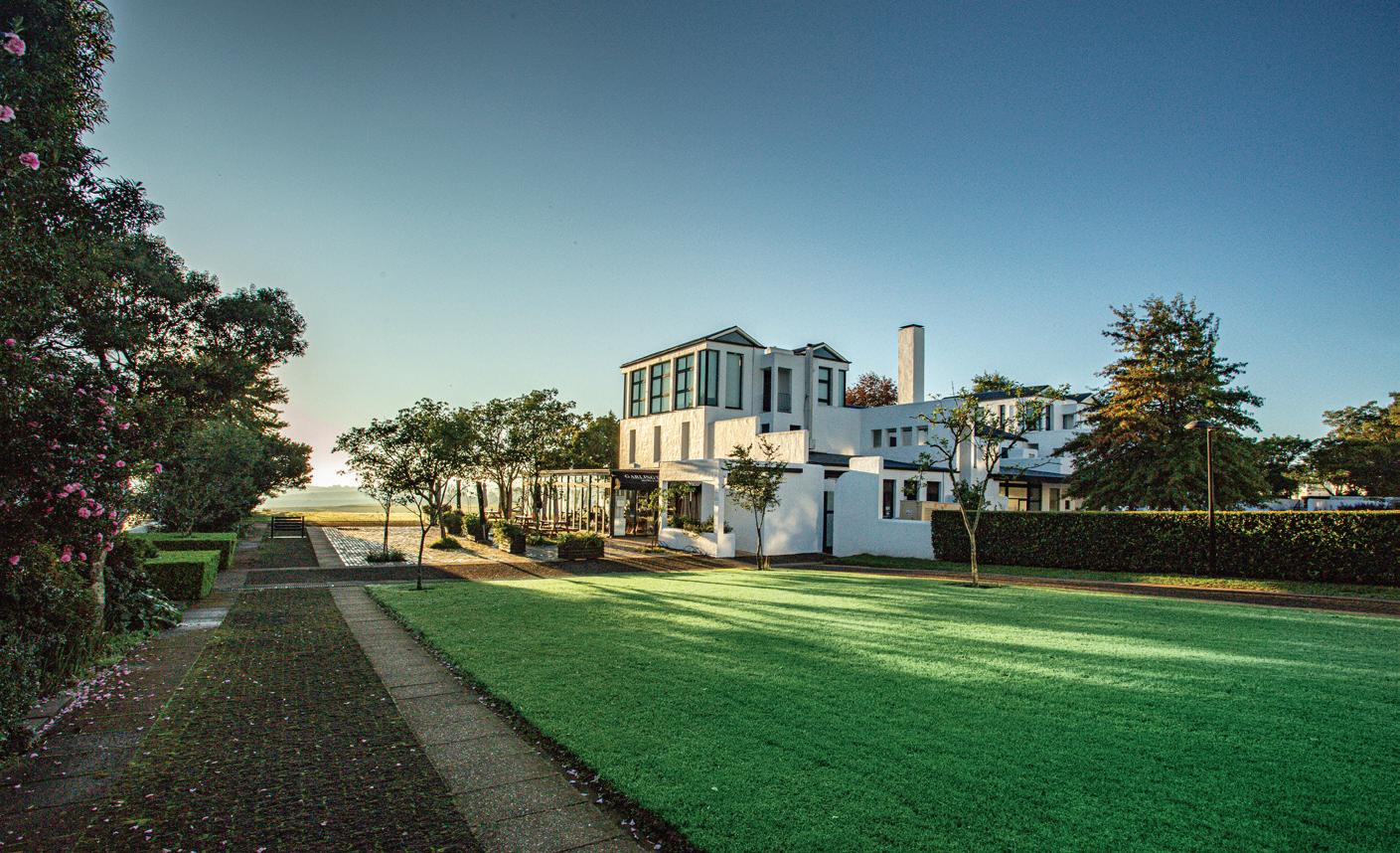
Garlington’s Bistro is a place where thoughtful dining and beautiful views come together with ease. Looking out over rolling pastures and layered hills, the outlook is expansive and calming, shifting gently with the light. The Bistro invites guests to slow down and savour the moment - whether over a leisurely family lunch, a relaxed celebration, or an intimate date night. Set within the safety of the estate, with a nearby children’s play area, it offers a setting where memorable food is enjoyed alongside a truly breathtaking view.
Local Flair & Good Vibes
Bite Society is a pizza and tapas restaurant situated within the artisan hub of The Old Mushroom Farm in Howick, with panoramic views of the gardens. They celebrate local produce and meats through flavourful, shareable dishes. Rooted in community, it is a place where you can come as you are, gather around good food, and enjoy the beauty of your surroundings. It is also BYOB and petfriendly. Open Friday to Sunday, 11:00-19:00.
bite_society_ garlingtons_bistro
PHOTO KER STANLEY
Beer, Bites & Big Moments
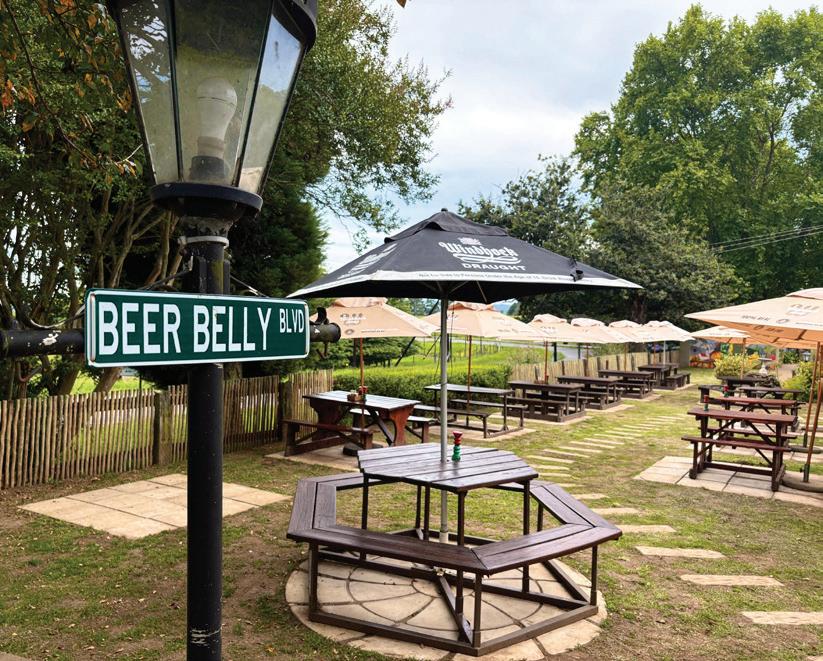
Tucked into Nottingham Road, along South Africa’s first tourist route, The Bierfassl is a standout gem, boasting stunning views with country fields all around. Established in 1999, this Austrian-inspired oasis isn’t just a pubit’s a place to indulge and let loose with your favourite people. They offer 35 different beers, the country’s finest eisbein, beer and chocolate tastings, and Midlands hospitality.
bierfasslrestaurantandpub
A Countryside Escape
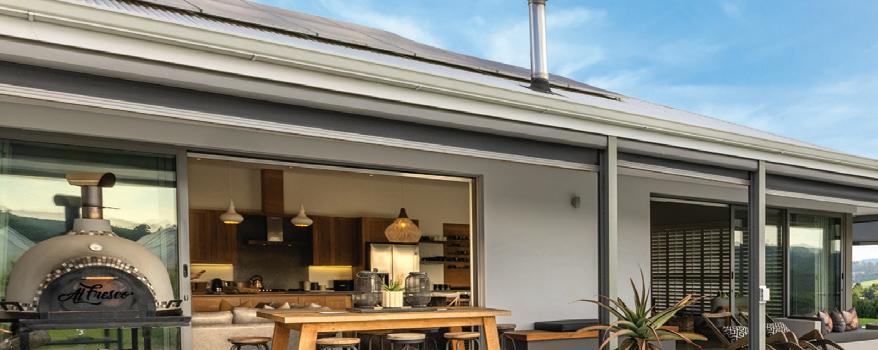
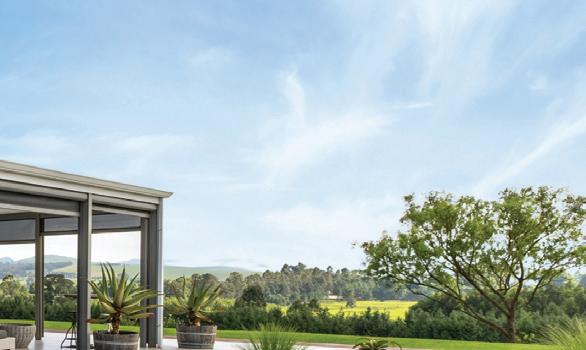
Nestled in the KwaZulu-Natal Midlands, Netherwood Farm’s Blueberry Café and Brewery is where country charm meets thoughtful hospitality. With a beautiful backdrop of the Drakensberg mountains, offering farm-to-fork dining, craft beer, beautiful stays, and slow moments in nature that invite guests to pause, connect, and create lasting memories.
theblueberry_cafe
170 FORT NOTTINGHAM at YEARS
A Living Landmark
WORDS ACCACIA FOGGIN PHOTOS HARRY LOCK & JEN MILLER
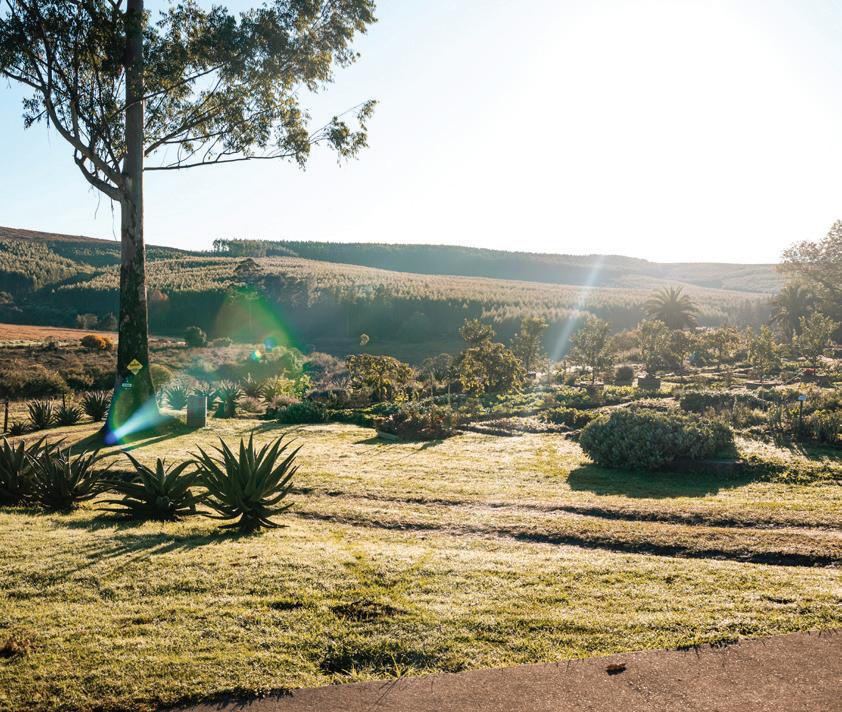
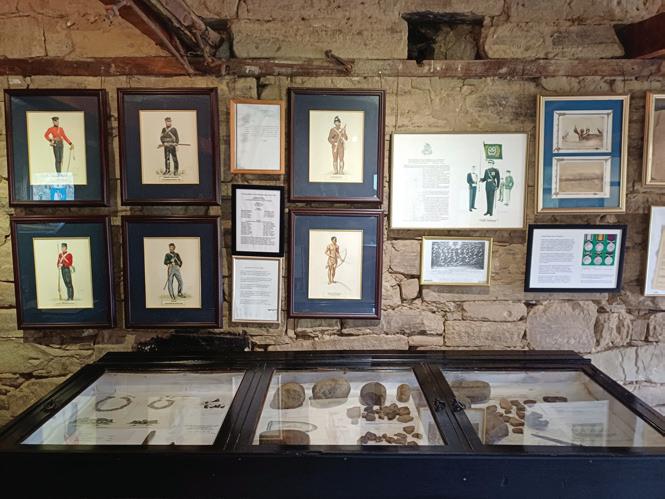
Along a quiet stretch of the R103, Fort Nottingham remains amongst the KwaZulu-Natal Midlands’ most enduring historical sites. This year marks 170 years since the fort’s establishment in 1856, offering a timely opportunity to reflect on its origins, and what exists here today; a small, yet active heritage site that continues to be shaped by the local community.
David Fox’s Book & Local History
The story of the fort is carefully documented in The History of Fort Nottingham, 1856 to 2005 by local historian David Fox, a concise but detailed account that traces the village’s development as land in the area was changing hands. Duncan McKenzie acquired the farm Lion’s Bush from Johannes Maritz, brother or close relative of Voortrekker leader Gert Maritz. Lion’s Bush lay at the edge of settlement, with the land beyond stretching toward the Drakensberg mountains; a geographic and symbolic boundary that would soon define the location of Fort Nottingham itself.
Fox’s book contains numerous maps and records that further illuminate the area’s early development and describes a landscape very different from today. “…there were no trees or fences. Apart from a few peach trees planted by the Voortrekkers around their ‘sod dwellings’, the only trees were the natural forests on the southern slopes of some of the hills. Still in existence today, these were the only sources of building wood for miles around.”
There are also pages in the book taken from John Shedden Dobie’s Southern African Journal, 1862-6. Dobie was a Scotsman whose journal records daily experiences of life on the land, observations about settlement, travel and farming conditions, and the landscapes he encountered.
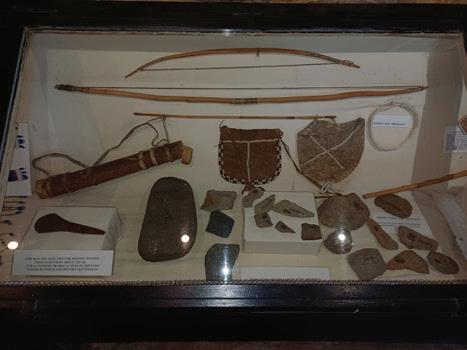
When early settlers were establishing farms, the San people continued to live in and move through the area. Many fascinating artefacts now at the museum, beads, spears, and other everyday tools, offer a glimpse into their lives and interactions with the landscape and settlers.
The Sherwood Foresters & The Fort By 1856, the British authorities stationed a detachment of the 45th Regiment (the Sherwood Foresters) in the area, and Fort Nottingham was formally established. What began as a military presence soon required permanence. A government survey followed, laying out a small village with defined roads and plots. Over time, those plans were revised, boundaries adjusted and land set aside for public use, reflecting the fort’s transition from military outpost to countryside community.
Today, this layered history is preserved at the Fort Nottingham Museum, housed within the original fort buildings. The museum is open on Saturdays, Sundays and public holidays from 10:00 to 16:00, or by appointment at other times, with a donation requested towards its upkeep. Displays include artefacts, documents and photographs that trace the site’s military beginnings, early settlement patterns and the everyday lives of the families who later lived there.
The buildings themselves remain central to the experience. Constructed from locally quarried dressed sandstone, they were built without cement, relying on mud mortar - a practical building method of the time period. While the structures remain largely intact, one of the original stone walls is now in need of repair, and those involved with the site are hoping to identify a suitable stone mason who can carry out the work and keep the fort’s historic construction techniques.
Community & Events
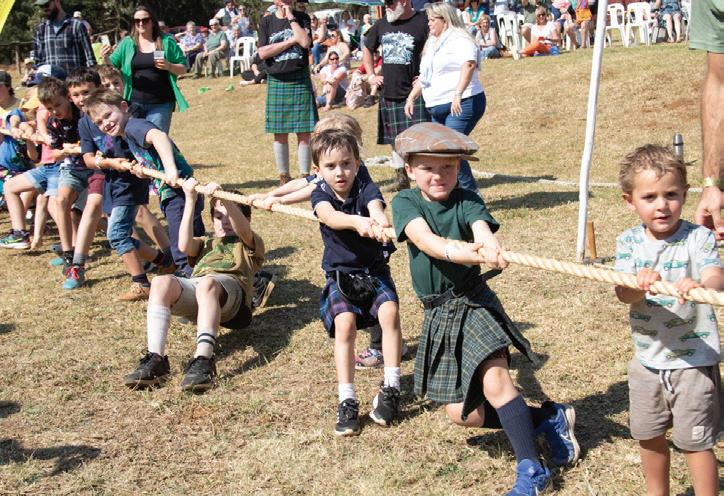
Beyond its museum role, Fort Nottingham continues to function as a place of gathering and shared heritage, most visibly through its annual Highland Games. Traditionally held in August, the Fort Nottingham Highland Gathering is a well-loved fixture on the Midlands calendar, drawing visitors for a relaxed day of sport, music and family entertainment. Events typically include Highland athletics, pipe bands, dancing, craft stalls and food vendors are hopeful that this year’s Games will go ahead as planned.
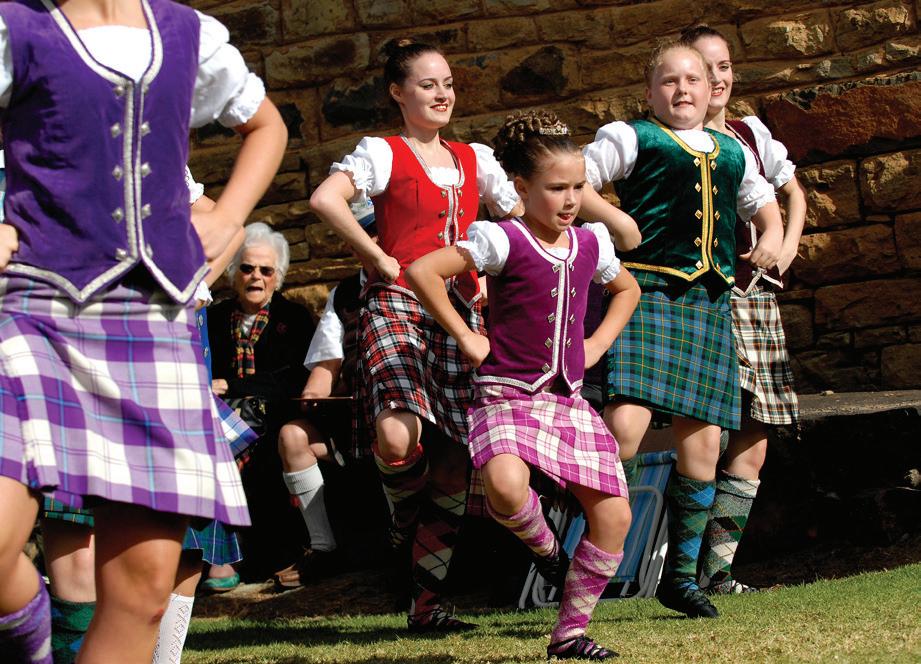
The Games reflect the strong Scottish connections that run through the Dargle area and the wider Midlands. Reeling has been popular here for many years, and the Swinging Sporrans, a group of local dancers, have featured at the Games for a number of seasons. They encourage visitors to join in on a few easy reels; a reminder that participation, rather than performance, lies at the heart of the
day. Fun is very much part of the tradition. On Saturday, 1 August 2026, the annual Fort Nottingham Highland Gathering will mark Fort Nottingham’s 170th anniversary with a lively day of traditional Highland athletics, pipe and drum performances from the Durban and Pietermaritzburg Caledonian Societies, and a festive atmosphere for visitors. What remains clear is that Fort Nottingham continues to matter.
Not simply as a historical landmark, but as a living site, maintained by those committed to preserving its story.
For locals, Fort Nottingham offers a quiet but powerful reminder that history here is etched in stone, shaped by landscape, and sustained by community.
fortnottinghamgames
*Results at 8 weeks, based on a reduction in visible signs of skin ageing in an independent clinical study with 32 subjects, 2 applications/day.
**Results on day 14 of an 8-week independent clincial study with 32 subjects, 2 applications/day.
Find us at Shop 116, Entrance 1, Liberty Midlands Mall.
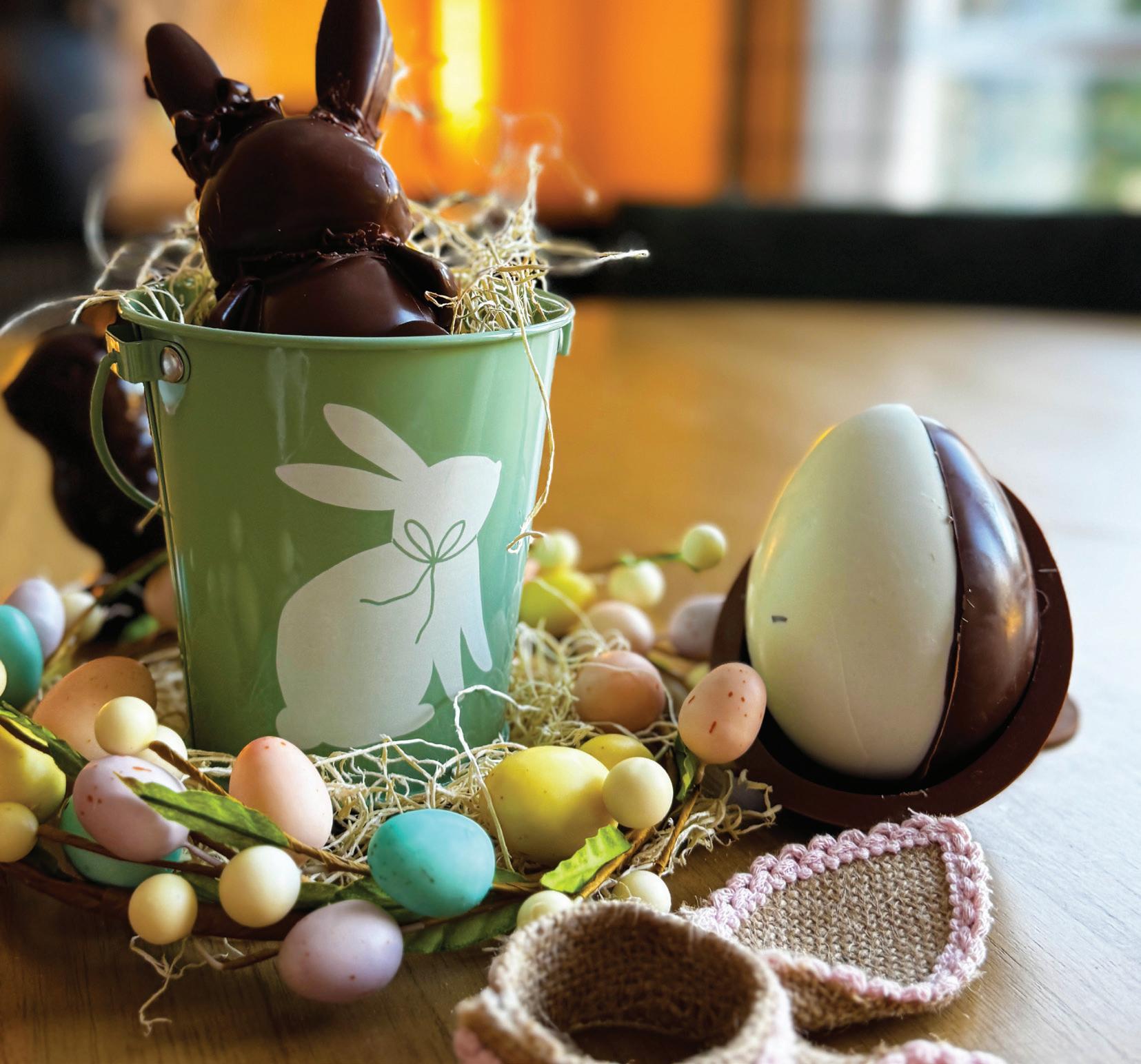
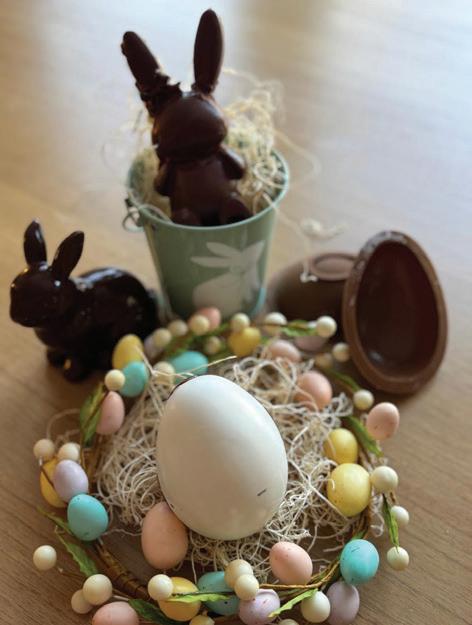
A Chocolate-Filled E a ster
If you’re tired of the same store-bought Easter eggs and want to get a little creative this year, here is an easy recipe to make your own bespoke Easter eggs. While this is a simple recipe to get started, the possibilities are endless to make it even more delicious. You can fill the eggs with a chocolate mousse, ganache, peanut butter, nuts, or any sweet treat of your desire. Or, if you like it the old-fashioned way, keep them hollow inside.
Let’s get cracking - not literally that is!
Ingredients & Utensils:
• Use about 600g of chocolate of your choice, depending on the size of the moulds. You can use cooking chocolate, standard chocolate or chocolate discs.
• Plastic or silicone Easter egg-shaped moulds.
• Pegs
Method:
1. Melt the chocolate: We have two ways: over a double
boiler (Bain-Marie method: place a pot of boiling water under a glass bowl with the chocolate in it), OR using a microwave, stir the chocolate for 20 to 30 seconds at a time until it’s smooth. Don’t microwave for longer, or the chocolate will burn and become unusable.
• Both methods take some patience and a bit of time.
2. Coat the moulds:
• Ensure your moulds are clean and dry before adding the melted chocolate.
• You can gently pour out any excess chocolate.
• Some recipes suggest coating the moulds with three layers of chocolate (this is optional, depending on your preferences).
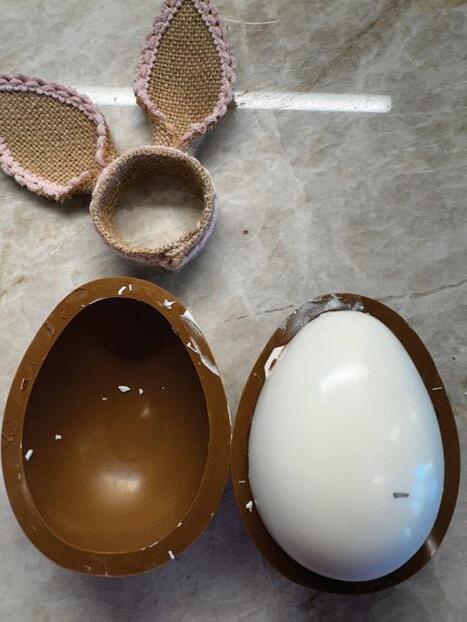
• If you are making one egg from two moulds, use pegs to hold the moulds together. Ensure the chocolate is evenly coated around both moulds, by swirling and coating both sides - you only have one shot at this as it is a sealed mould.
• Gently pour or spoon the melted chocolate into your mould(s) and swirl it until it’s even and of sufficient thickness.
3. Chill:
• Freeze the mould with the chocolate in it until it’s set or firm.
• If you coat the moulds more than once, chill the chocolate with approximately five-minute intervals in the fridge or freezer.
4. Once the chocolate is set and firm, gently remove it from the mould with a slight tap or flex to loosen it so that it pops out.
5. Once removed from the mould, slightly melt/soften the outer edges of the chocolate egg to join the two halves together. Remember to add the filling beforehand!
The kids will love helping with these too, so it can be a fun holiday and Easter activity.
FUN IDEAS
• You can also fill your chocolate eggs (one-half) with chocolate mousse and turn it into an Easter dessert.
• Add colour: To colour the white chocolate, melt it gently using the same method, then mix in oil-based candy colouring or powdered food colouring, which prevents the chocolate from seizing.
• You can make chocolate bark by spreading melted chocolate thinly on a baking sheet topped with speckled eggs.
Source: www.wearecocina.com
The Heart of Food, Family & Community
NETHE�WOOD
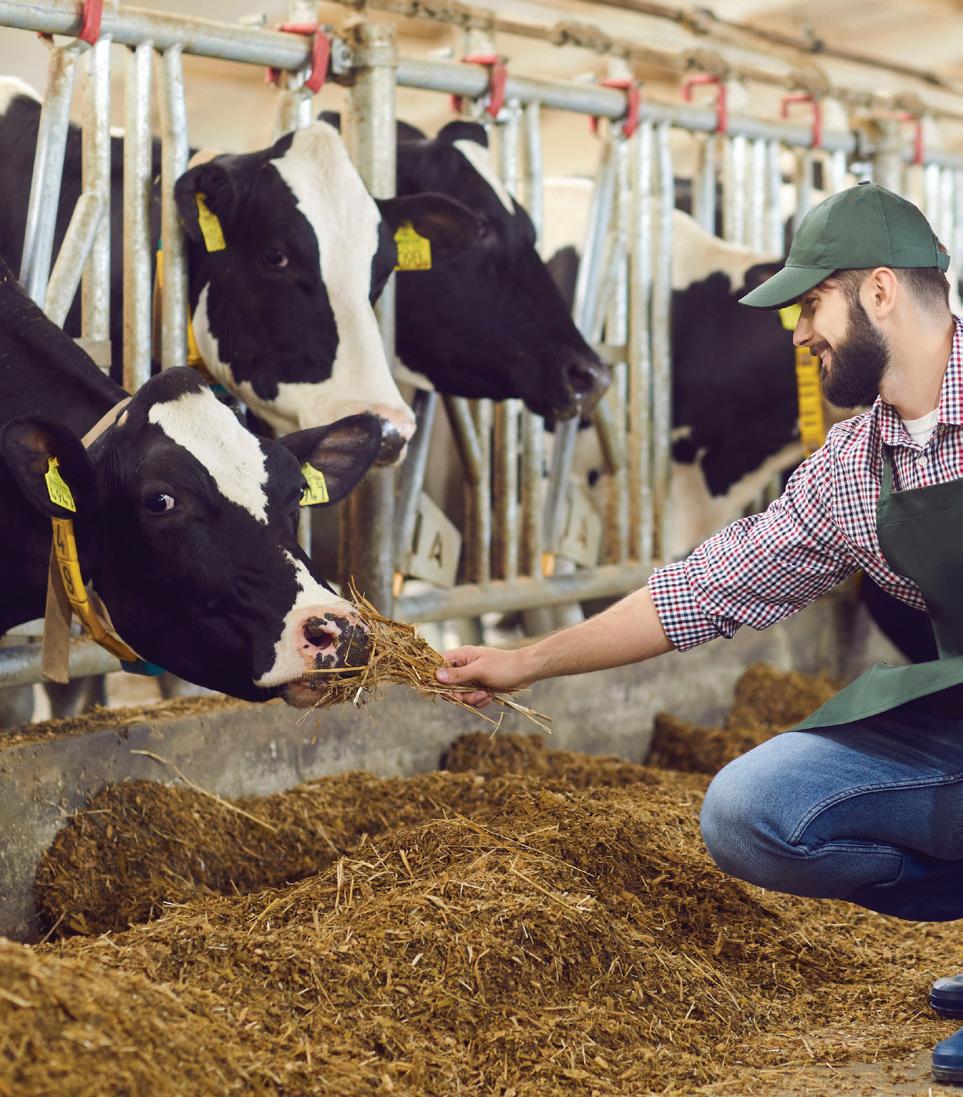
Netherwood Farm, Nottingham Road has always been far more than a working cattle farm. Many exciting developments and renovations are now complete, and the farm is poised for a great year of events, from exhibitions at the Bull Ring, to farm-to-table experiences. There will be an expanded calendar of community-focused activities with cosy accommodation available on site. Under the stewardship of Dr Rob Kleinloog, a former cardiothoracic surgeon, the farm has
become a unique fusion of sustainable agriculture and community venue. Rob’s ‘office’ area, a side section to the café, is filled with curious medical relics from his former life. You can find an embalming table layered with pacemakers, photographs of open-heart surgery, and glass cabinets of medical bottles, all kept as conversation-starting pieces that encourage genuine interaction and storytelling around the family’s work and Netherwood’s evolving history.
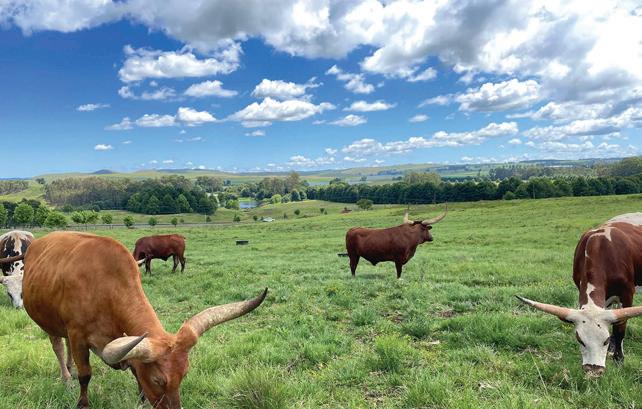
Dr Kleinloog’s medical background informs much of the farm’s philosophy. “Health is central to everything we do,” he explains. “From the way we breed our cattle to the food we serve, it’s all about doing things properly. No shortcuts, no unnecessary additives.” This ethos has shaped Netherwood’s signature “no-nonsense” beef, which is naturally raised, hormone-free, free from artificial growth promoters, and is some of the best around.
The Blueberry Café and on-site brewery provide visitors with locally inspired meals and craft beers, all under the Netherwood umbrella. Guests can explore scenic walking paths, watch cattle graze, or just gaze at the incredible views with a drink in hand. Netherwood’s menus emphasise seasonal, locally-sourced produce alongside their premium beef.
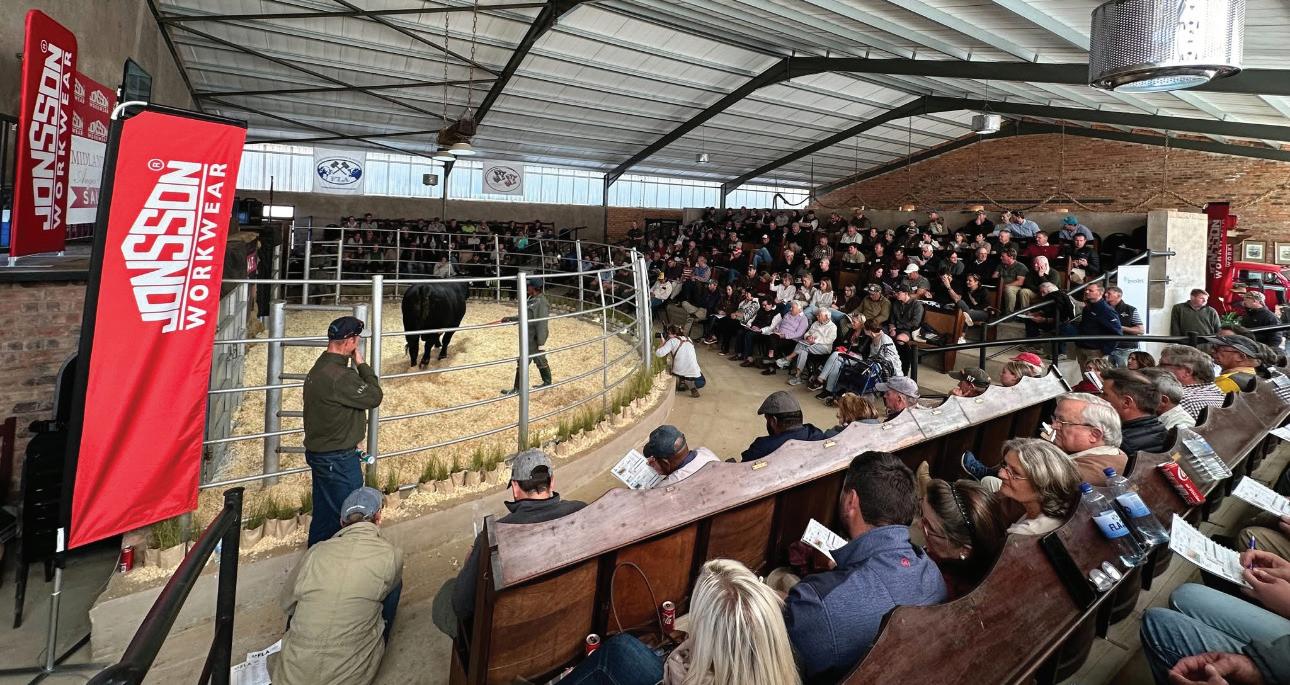
A standout feature is the Bull Ring, a multifunctional space that has become a community hub. Originally built for stud cattle auctions, the Bull Ring now hosts comedy shows, orchestra performances, family events, and even memorials, providing a quirky, adaptable venue. Guests can also extend their stay on the farm itself, with eight selfcatering cottages and a spacious 20-guest lodge available for overnight stays, making it a perfect base for weekend getaways or weddings. “It’s important to us that the farm is for the whole community,” says manager Scott.
The wedding venue is equally distinctive. Couples who book the farm gain exclusive access to this entire section of property, ensuring a private, personal celebration.
This includes fishing, walking, biking and enjoying the tranquillity, while still having the upbeat café and brewery so close at hand. “You really get the whole farm to experience! Families can gather and talk for hours over a meal, and youngsters can be free to play outdoors… even fish and explore.” Says Rob. It creates an atmosphere that’s both intimate and completely unforgettable.
Family engagement is central to Netherwood’s ethos. A dedicated play park allows children to interact safely with animals and the outdoors, encouraging hands-on learning and unplugged fun.
That same commitment to local creativity and collaboration is evident across the farm, from the local sculptor supported by Rob, to independent businesses such as The Botanist and the Gelato shop that operate on site, adding layers of craft, flavour and personality to the experience. Dr Kleinloog’s passion for excellence extends beyond food
and farming. There is a likeness to Jeremy Clarkson; the city professional falling in love with farming, operating with a straightforward, principled approach and willingness to push boundaries while staying true to his vision.
Underpinning everything is the sense that Netherwood Farm is not driven by profit, but by genuine love for the land, the people, and the simple pleasure
of sharing the Midlands lifestyle. Netherwood’s evolution over thirty years, from a small stud farm, with a café originally run by Rob’s daughter, to a multifaceted destination, reflects both personal passion and a commitment to sustainability. It’s a place where visitors can enjoy a ‘whole package’ farm experience.
www.nertherwoodfarm.com
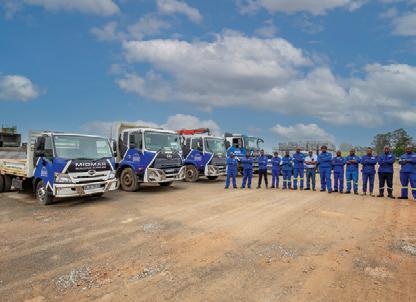
Delivery Team and vehicles that deliver anywhere in the Midlands Stone and Concrete Products Made in the Midlands
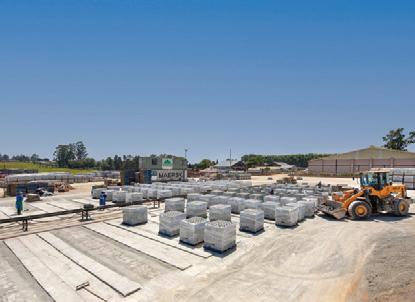
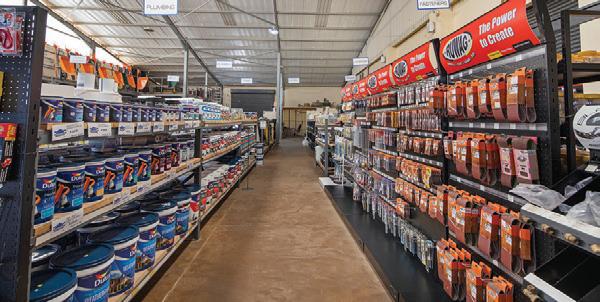
Midmar Building Supplies is a KZN Midlands-based supplier of hardware, stone, and concrete products. We quarry our own stone and manufacture a full range of concrete products, including bricks, blocks, kerbs, retainers, pavers, and cobbles - all produced locally in the Midlands. This affords our customers quality products, dependable supply, and competitive pricing. With our own delivery fleet, we supply contractors and homeowners across Howick, Hilton, Mpophomeni, Nottingham Road, Pietermaritzburg, and surrounding areas. We also offer Hardware and DIY products
THE SCHOOL SEARCH
Are You Asking the Right Questions?
WORDS LISA KATE ACKERMAN
“What school would you send your child to?” I am asked this question almost weekly in my work as a marketer focused on independent schools with a child heading to high school next year.
Having worked in an independent boarding school in the Midlands and later transitioning into a remote role supporting international and independent school admissions globally, school choice is always at the forefront of my mind.
Most people expect my answer to focus on facilities, opportunities, and impressive offerings. I agree that these elements matter; they are simply the starting point. Finding the right-fit school for your child requires a deeper conversation and a more thoughtful approach.
Your child will spend a minimum of 18,000 hours in school from Grade R to Grade 12. Those hours are spent with people you must deeply trust, individuals who have daily access to shaping and influencing your greatest investment, your child. Parents need to feel empowered to
choose a school not only for academic results or sporting success, but for the formation and protection of the individual. Education is not just about outcomes. It is about values, relationships, and influence.
Effective school research combines multiple perspectives: word-of-mouth referrals, the school’s vision and offerings, and school tours. Speak to current parents and students, then ask the same questions of staff and school leadership. Cross-reference what you hear. During visits, look beyond the polished displays and observe everyday interactions.
Lastly, my “Foundational 4 Ps Checklist” will help you deepen your understanding and work through your shortlist of schools.
Principles: Do the school’s values align with your family’s values? Look beyond the crest and ask how these values are lived out every day.
Participation: How connected is the school with its parents? What involvement is encouraged or expected? Your participation as a parent in your child’s education is crucial.
Policies: These often seem unimportant until they are not. Ask to see safeguarding and disciplinary policies and, crucially, how they are applied in real-life situations.
Peer Culture: Schools are communities, and challenges are inevitable. What matters is whether issues are addressed or allowed to persist. Problems that persist become culture. Ask what issues staff encounter most often, as this reveals the social environment your child will enter.
A well-informed decision is one of the greatest gifts you can give your child and your family.
lisakateackerman@gmail.com
The ASMALLS ASMALLS LEGACY
Celebrating 119 Years in Business
WORDS ALICIA DU PLESSIS
Asmalls is one of KwaZuluNatal’s oldest family-run companies. Deeply rooted in their commitment to serve the community with products and services at the best value for money, they have become a household name for many over the years. They are proud to be celebrating their 119th year in business, a milestone few companies can boast about. What started with one man’s determination to create a better future for his family more than a century ago has grown into a company with 16 stores throughout KwaZulu-Natal and approximately 400 staff members today.
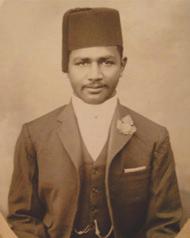
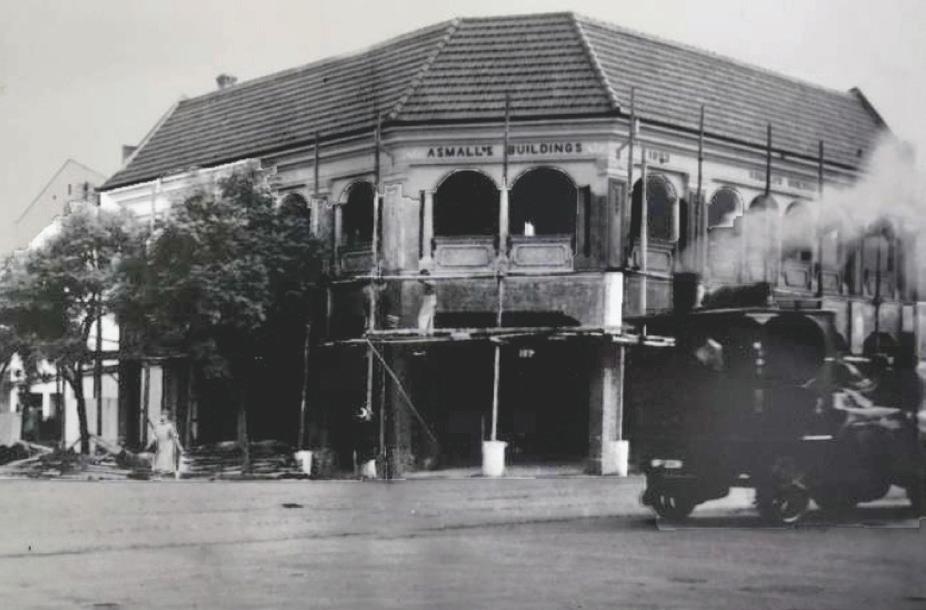
A Leap of Faith Dawood Ebrahim Asmall left his village home in Kathor, India, in 1907, and moved to South Africa to start a better life for himself and his family. He was 23 years old at the time and partnered in business with his older brother, Mahomed Ebrahim Asmall, who lived in Bulwer. With businesses in Bulwer and Donnybrook, Dawood eventually opened a store on Lufafa Road, on the R612, under the name “Dawood Asmall”. He then opened another in Elandskop under “Dawood Asmall & Co.”, when Ismail Mahomed Parak, his nephew, joined him in business. In 1932, Dawood Ebrahim Asmall put up a building at 460 Church Street, naming it “Asmall’s Building”, which still stands tall on the corner of Church and Retief Street, PMB. In 1939, Dawood established the company Asmall &
Sons (Pty) Ltd, in partnership with his nephew, Ismail Mahomed Parak. Dawood was remembered to have run successful businesses and treated his staff like family.
When he died in 1944, his nephew took over the business, and eventually Dawood’s son, Yusuf Dawood Asmall, joined in 1949 and took over the company when Ismail Mahomed Parak died in 1964. During Yusuf’s time running the business, he faced many challenges, notably the inevitable constraints of Apartheid, but these were ultimately overcome, and he grew one store into several thriving chains specialising in clothing, curtaining, and apparel. When Yusuf died in 2022, his sons Yunus and Mohammed took over. The latter passed away in 2024, and
Yunus has been at the helm alongside his two Chief Operations Officers, Saadiyah Farouk and Kantha Naidoo, ever since.
The history of the Asmalls stores, so beloved in Pietermaritzburg, runs deep within the veins of our heritage and community. Knowing that it started more than 100 years ago when one man took a leap of faith for his family and secured a business now passed down through the generations, we can rest assured that the Asmall family has been successful stewards of a thriving legacy, and continues to shape the landscape of businesses in our city.
AsmallsClothes 204 Victoria Road Pietermaritzburg www.asmallsonline.co.za
MBALI SWING THE
A Moment of Unscripted Joy
WORDS ACCACIA FOGGIN
Autumn in the Midlands looks like colourful landscapes, long lunches, and unhurried days - Easter brights flow into resplendent autumn leaves! One of the newest photo experiences to emerge is centred on a simple idea: slowing down, taking a seat, and enjoying the view.
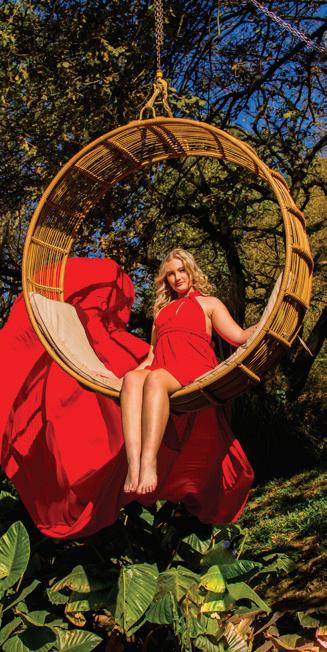
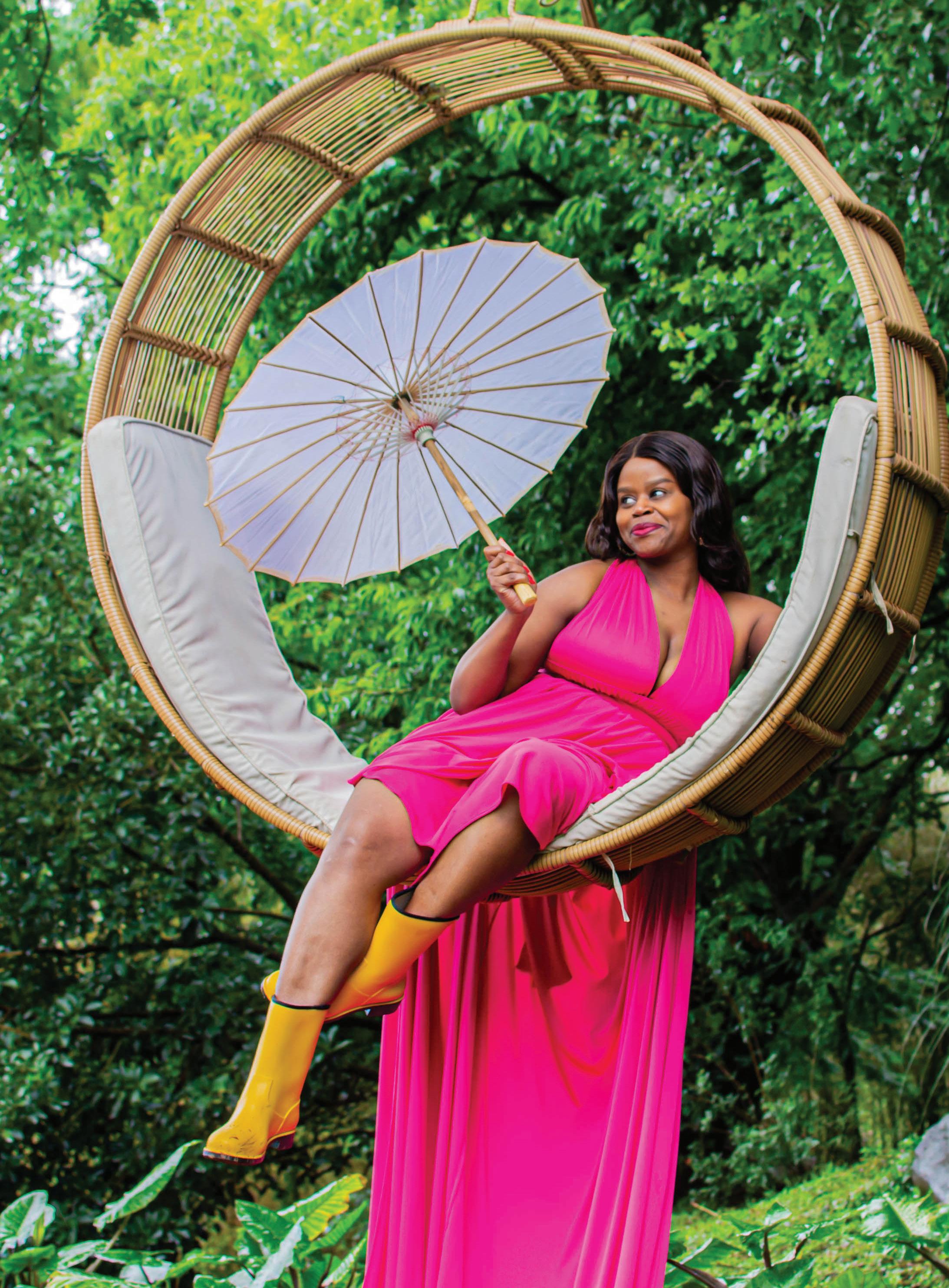
In the gardens at Pleasant Places, the Mbali Swing is a carefully considered photo opportunity that blends countryside charm with a sense of play. Suspended against sweeping views and framed by seasonal blooms, it offers guests a brief moment of lightnessboth literal and figurative - captured in a photograph that feels natural, relaxed and quite celebratory.
The concept is a local reimagining of the much-loved ‘Bali Swing’ conceptpopularised in Bali as a dramatic swing suspended over jungle landscapes and rice terraces, the original Bali Swing became a global symbol known for capturing a sense of freedom, scale and occasion in a single image.
Adapted here through a distinctly homegrown lens - its name is a play on words: Mbali, the isiZulu word for “flowers”, honours the flourishing gardens at Pleasant Places, as well as the idea that “beauty often blooms when time is taken to pause”. This fun idea feels familiar yet grounded - glamorous without being over-styled.
The intention has always been to invite people to disconnect from the noise and reconnect with themselves, with nature, and with the people they love
Behind the Mbali Swing is Masana Sangweni, an events curator and hospitality entrepreneur who opened Pleasant Places in 2022 as a space designed for celebration, connection and meaningful moments. Her earlier ‘Flying Dress’ photoshoots invited guests to step into iconic local locations, where flowing fabrics were set against open skies and landscapes. As those shoots grew in popularity, so too did the desire to create something
more permanent - an experience rooted in place rather than passing through it.
“At Pleasant Places, the intention has always been to invite people to disconnect from the noise and reconnect with themselves, with nature and with the people they love,” she shares.
The Mbali Swing is a natural extension of this philosophy. While the photograph may be a keepsake, the experience itself unfolds at an easy pace. Each shoot is paired with a leisurely two-or three-course lunch, featuring an ever-changing menu shaped by seasonal ingredients. For those marking a special occasion, the Mbali Swing & Sip Lunch adds wine pairings and one of Pleasant Places’ signature rituals - sabrage - allowing guests to open a bottle of Cap Classique in celebratory
Discover Your RetirementPerfectLifestyle
style. The experience is also deeply collaborative. Pleasant Places partners with local photographers, bringing together hospitality, creativity and storytelling in a way that feels authentic and true to its surroundings.
For guests who choose to avoid the trek and stay overnight, the Mbali Swing becomes part of the visit itself. Accommodation includes a complimentary swing experience, along with a discount on full photoshoots - an easy incentive to turn a day out into something more lasting.
At its heart, the Mbali Swing isn’t just about spectacle. It’s about creating space for joy, stillness and shared moments…pause, take in the view, and savour the moment.
PHOTO WILMA TOWELL
Amberglen Retirement Village is a vibrant and welcoming community in Howick, designed to
A Young Chef’s Pai
FINDING PURPOSE & INSPIRATION THROUGH FOOD
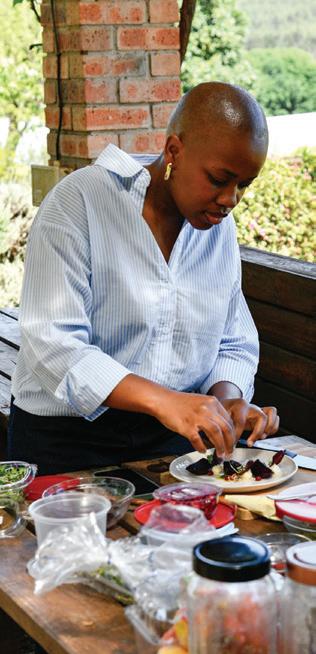
Anele Mncube always knew she wanted to be a chef. Drawn to cooking from a young age, she loved recreating dishes for her dad. The kitchen was her haven, a place where she could shine and be creative. There, she didn’t feel the pressures from school, where she often felt misunderstood and academically challenged. She was born and raised in Pietermaritzburg by her dad, a single parent, who has been one of her greatest cheerleaders, always encouraging her dreams and chasing after them right by her side. She decided to pursue culinary school after completing high school, and now, at 19 years old, Anele has become an inspiration to aspiring chefs and young people who feel they don’t fit in.
TAKING BOLD ACTION
Anele always made a conscious effort to gain practical culinary experience, working with established brands like Pick ’n Pay in Athlone and Hilton, The Gourmet Greek, Sala Beach House in Ballito during school holidays, and Yutori House in Simbithi EcoEstate as a private chef. “One of the biggest lessons I’ve taken from these experiences is the importance of putting yourself out there, especially as a young person. I approached these brands with collaboration ideas by myself, which taught me that confidence and initiative can open doors to future opportunities,” she shared. Taking bold action is also how Anele landed an interview on one of her favourite shows, Top Billing. “I honestly had nothing to lose and was simply trying my luck. A few days later, the production team responded, interested in viewing the house and, potentially, featuring me. I was absolutely over the moon. It was a surreal and affirming moment that showed me the power of initiative and believing in yourself”.
BEING A CHEF IN THE MIDLANDS
When Anele moved back home, she learnt that food has the power to bring people together. Embracing everything the Midlands has to offer, fresh and locally grown produce, and agriculture, has enabled her to better contribute to the community. “Food becomes a tool for unity, creativity, and showcasing the true potential of our region,” she shared. Anele also believes food is art, “I’m constantly drawn to the way a dish can tell a story, whether it’s through the ingredients, the presentation, or the techniques used. That idea inspires how I create and approach cooking. I want every dish to reflect thought, care, and a deeper connection,” she said.
Anele will be completing a wine course soon and would love to continue to build partnerships with local businesses and producers. She also dreams of sharing her passion for food overseas and publishing her own cookbook to celebrate food and share her and her dad’s story, including how being raised by a single father shaped her.
“Ultimately, my goal is to share my story through food and inspire people to believe that no dream is ever too big. Society doesn’t determine your future; what lives inside you does.”
WORDS ALICIA DU PLESSIS
PHOTO CHELSEA PATTERSON
LATE SUMME� STA�TERS
This season, the Granny Mouse Country House & Spa culinary artists invite you to bring sun-drenched magic into your own kitchen with dishes inspired by the heart and soul of their kitchen.
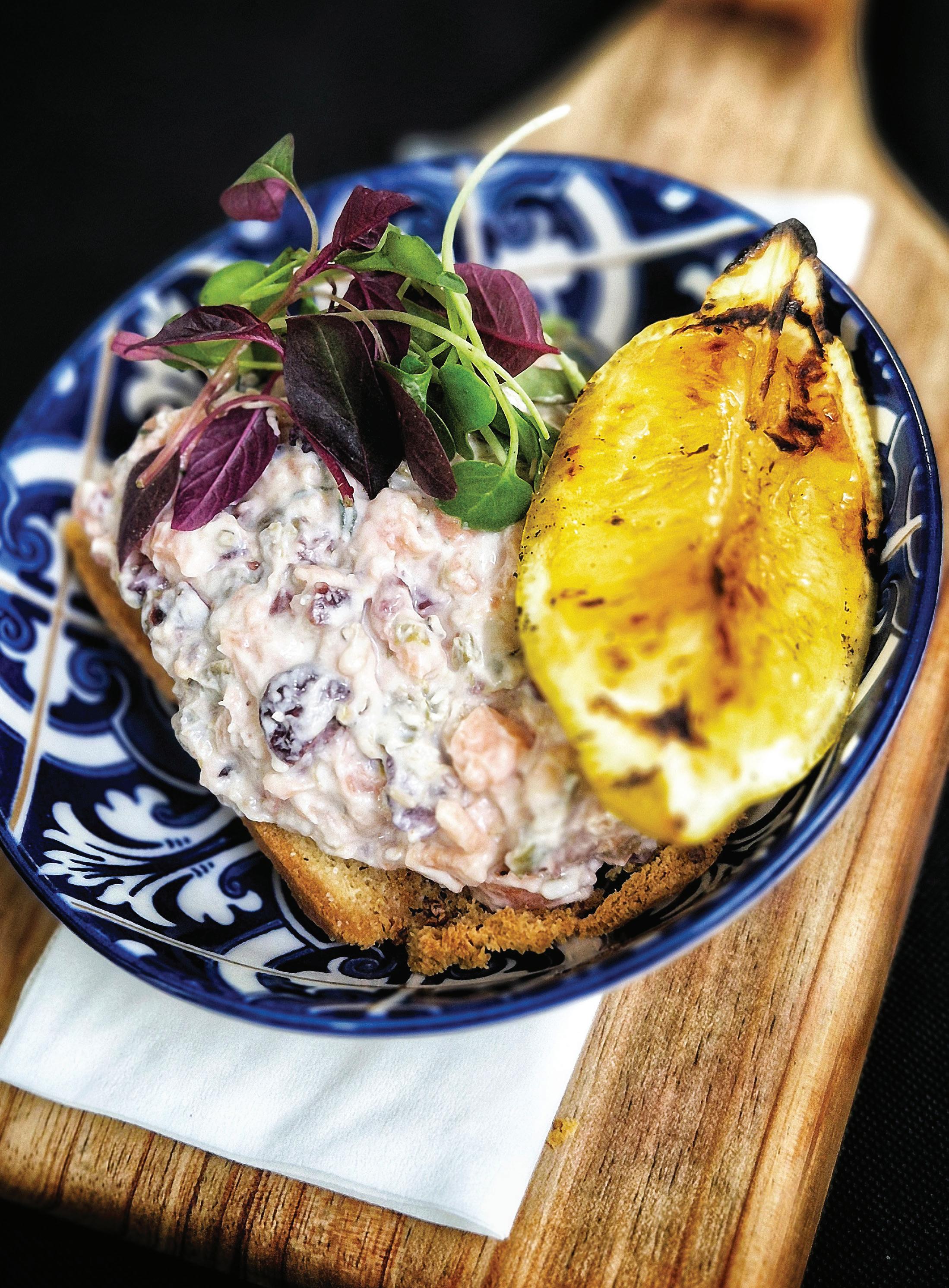
SMOKED SALMON TARTARE
with goats’ cheese caprini, capers, dried cranberries and herbs served with a garlic melba
INGREDIENTS:
• 80g smoked salmon
• 30g goats’ cheese caprini
• 4g capers
• 6g dried cranberries
• 2g of chopped herbs (rosemary/thyme/ parsley)
• salt and pepper to taste
• bread x 2 slices (any bread can be used; however, ciabatta or sourdough are preferable)
• olive oil
• garlic
METHOD:
For the garlic melba
1. Preheat the oven to around 100°C. Thinly slice two pieces of bread (should not be thicker than 2-3mm).
2. Place them onto a small baking tray and drizzle with olive oil. Lightly sprinkle over some crushed or minced garlic with salt and pepper, and pop into the oven until lightly toasted and crispy.
3. Once done, remove from the oven and set aside to cool whilst you prep the tartare.
For the tartare
1. To a bowl, add in the caprini cheese, capers, dried cranberries and herbs and mix together. Season with salt and pepper.
2. Cut up your smoked salmon into smaller pieces and add it to the goats’ cheese mixture.
3. Once combined, use a ring cutter to set into place on a plate and serve with the garlic melba.
4. To add extra flavour, you can make a lemon caper butter to drizzle over or deep fry some capers for added texture.
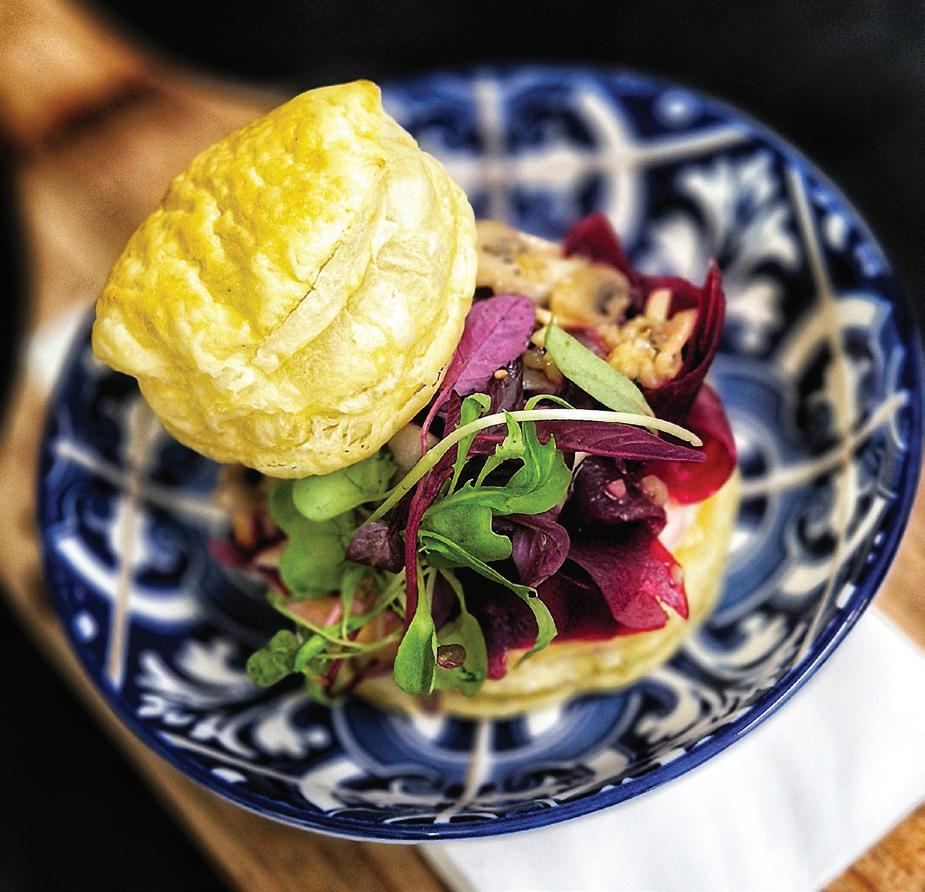
BEETROOT VOL-AU-VENTS with whipped blue cheese and garlic mushrooms
INGREDIENTS:
• puff pastry (brands like Today's Pastry are readily available at all local supermarkets)
• 100g all-purpose flour
• cooking spray
• 1 x egg (to egg wash pastry)
• 100g blue cheese
• 100g cream cheese
• 1 x large beetroot
• 8 x button mushrooms
• 20ml butter
• garlic
• salt and pepper to taste
• 2g chopped rosemary
• 2g chopped thyme
• oil for cooking
METHOD:
1. To start, grease your tray with cooking spray and set it aside, then preheat your oven to 180°C. To cut out vol-au-vent pieces, roll out the puff pastry on a board or counter, sprinkling some all-purpose flour on your surface first, so the pastry does not stick. Once rolled out to about 3mm in thickness, use a 10cm cutting ring to cut out your base layer. Once your base layers are cut, cut two additional 10cm pieces. Then cut out 9cm pieces. The outer lining must be placed on the first 10cm cut-out, and the 9cm cut-out can be placed additionally on your tray for baking. Essentially, you are creating a bowl and lid piece for your puff pastry.
2. The pastry can now be brushed with a mixture of egg and water and placed in your preheated oven to be baked. Depending on the type of oven, this should take about 15-20 minutes once preheated. Once done, set aside until you are ready.
3. While your pastry is in the oven, you
can begin your next step of boiling your beetroot with thyme.
4. In a separate pan, preheat a bit of oil and butter and pan fry your mushrooms, cut into halves or quarters, seasoning generously with garlic, salt, pepper and rosemary. Once the mushrooms start to brown, they are done, and you can set them aside.
5. Once the beetroot is boiled, slice and panfry with thyme, salt and pepper.
6. Place the blue cheese into an additional bowl with a bit of cream cheese and whip them together. The cream cheese helps smooth out the blue cheese, improving the creaminess and overall taste of the cheese.
7. To assemble, place baked vol-au-vent pieces in the centre of your plate. Next, pipe or spoon in your whipped blue cheese mixture. Once this has been generously applied, you can arrange your beetroot into your filling and top with your garlic mushrooms. Finish off your plate with some herbs, microgreens, or even edible flowers.
And if this all seems too much, and you’d rather be pampered, book your table at Granny Mouse Country House & Spa by contacting their reservations team.
reservations@grannymouse.co.za
Welcome to the Ultimate Drakensberg Experience
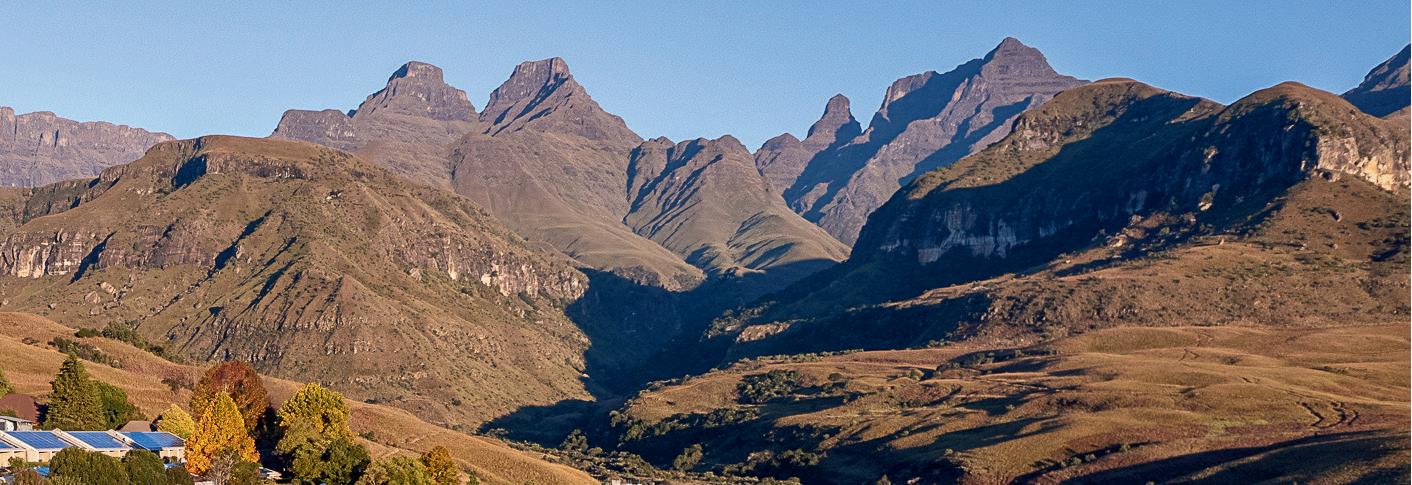
Nestled in the heart of the Drakensberg lies 4 star family-owned Cathedral Peak Hotel. For 85 years we have been providing premier accommodation, sumptuous buffet meals and an exceptional outdoor leisure experience surrounded by the magnificent peaks of some of the World Heritage Site’s most iconic mountains.
Autumn Special
Discounted rates from R1995 per adult, R1395 per teen (13–16 yrs) and R685 (8–12 yrs) / R525 (4–7 yrs) per child per night, inclusive of all meals. Valid 1 Mar ‘26 – 31 May ‘26 (excl. peak periods). Min. 2 night stay. T's and C's apply. st st
The Power in Peace
Pietermaritzburg is a city rich in cultural history, but sadly, many of its stories fall by the wayside as life keeps moving forward. One such historical tale has been safeguarded within the pages of a children’s picture book titled How to Stop a Train: The Story of How Mohandas Gandhi Became the Mahatma by children’s book author Stephanie Ebert and Dr Kathryn Pillay, Senior Lecturer in Sociology at the University of KwaZulu-Natal. The book shares the crucial
moments when Gandhi was thrown off a train at the Pietermaritzburg Railway Station in June 1893. He non-violently refused to move from a Whites-only compartment. His non-violent resistance marked a moment in South African history and continued to influence many social justice movements globally. More than just a history story book, How to Stop a Train addresses issues of inequality, injustice, and bravery. It stands as an example for children to believe in their ability to create
positive change in the world and foster a sense of agency. “We hope our own children, as well as the children of South Africa, will cultivate the moral fortitude to steadfastly hold tight to the truth, regardless of societal pressures,” shared Stephanie and Kathryn. How to Stop a Train also serves as a tool for deeper reflections that parents or educators can use with their children. It includes a timeline of Gandhi’s life and questions to prompt discussions.
The idea for How to Stop a Train was born when Stephanie took her family visiting from overseas on a tour around Pietermaritzburg and the Midlands. “Before we went, my sisterin-law asked if there was a picture book about the incident she could read to her children to help them understand the historical significance of the location. I realised there wasn’t one!” she shared.
So Stephanie asked Dr Kathryn Pillay, whom she worked with previously during her Master’s degree, to cowrite the book with her. “While Kathryn had previously published mainly for an academic audience, her meticulous research has really ensured this is a high-quality book that is captivating, yet true to the facts of history,” shared Stephanie.
The book has been well-received since its publication in 2024, reaching 24th amongst the bestselling children’s books in South Africa and 24th amongst all South African titles (both adults and children). Its themes of courage and bravery have positively impacted children and adults. Additionally, the authors both met Mahatma Gandhi’s granddaughter, Ela Gandhi, and presented her with a copy of their book. “It was really such an honour to get to chat with her about the legacy of her grandfather,” they shared.
How to Stop a Train: The Story of How Mohandas Gandhi Became the Mahatma is available from outlets like Takealot, Loot, Exclusive Books, and Bargain Books. It is also available in Afrikaans.
drkathrynpillay steph.e.writes
WORDS ALICIA DU PLESSIS
CHINA! About
This was an unexpected trip inspired by our first-born moving to China, when he and his wife were given a fabulous opportunity to work there! We had already planned a trip to Dallas (USA), and when we looked, it was easier to visit China from there. So we added a two-week visit to Suzhou, Shanghai, in early February after six weeks in America! Everything was new territory, but we were super impressed from step one, even the visa was simple to get.
Arriving in Shanghai after a pretty good flight, the kids met us at the airport, Starbucks coffee in hand and all! First surprise, it all looked completely “normal”, just in Chinese! To get to the apartment from the airport, we took two subways and a DiDi (#Uber) and two-and-a-half hours later, we were in Suzhou! Eyes
big with all the new looks and smells, and huge surprises all the way!
Exploring Suzhou
Starving, we went across to their local mall to find our first dinner. We chose to start slow and found a spot with a menu that covers a variety of options, from traditional Chinese dishes to pasta and pizza,
which was another big surprise: the variety of cuisine options available. The food was fresh, tasty, and everything came out as it was ready (it’s not all served together). You get served hot water (never cold) while eating, and at some places you get herbal tea! That was a new thing to get used to (but two weeks later, it was something we enjoyed and
WORDS LORINDA SCOTT
appreciated).
Exploring Suzhou a very cosmopolitan area, was amazing. From the simple morning walks to Lion Rock, grabbing a great coffee along the way, taking the time to appreciate the way China “just works”, while avoiding getting hit by a car or scooter, taking a minute to understand the “flow”, the beautiful gardens at Tiger Hill, finding the oldest leaning tower right there (move over, Leaning Tower of Pisa), to oldschool Chinese architecture, and understanding culture and traditions (and superstitions).
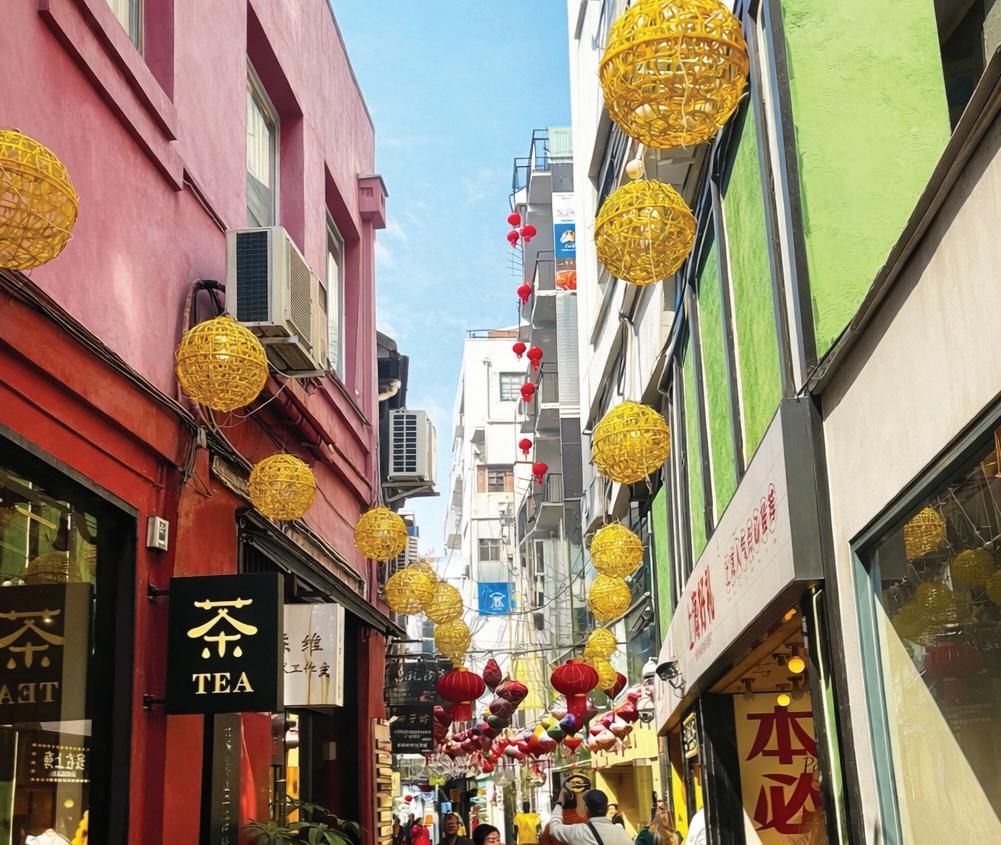
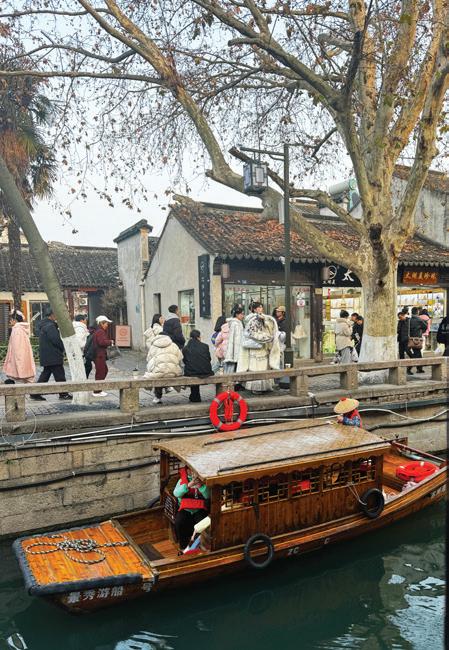
We took a stroll through the scenic canal and market in PingJiang Road. I loved stopping at every stall to try a tester of herbal teas or sweet treats. We bought street food along the way; a refreshing experience! I was mesmerised by the fashion and photography culture; it was incredibly interesting. As westerners, we were looked upon as beautiful and stopped everywhere we went! But, honestly, I found the culture and the traditional dressing more beautiful than anything we have!
The food was both incredible and scary! Translation apps had us confused and in stitches a few times, but if the picture looks good and says “chicken” or “prawn”, it is a safe choice. You will never go hungry or thirsty there! We also walked (a lot), so we were hungry for sure.
China is super clean. I was amazed at how many people are employed to maintain its appearance. It is eyeopening to see how a place can work with the right leadership and funding placed in the right places. Yes, they are “communist-focused”, but it is fluid and natural, while being very structured in the same breath. Some things are hair-raising - like missing a train with 30 seconds to go, but when they say a train leaves at 7:24, they mean it; it leaves on time! I was also surprised that English was found
easily, which made understanding things a lot easier! Instead of WhatsApp, they use WeChat, and it allows for easy label translating, too. At first, we were a little intimidated by how only Alipay and WeChat worked there (we used a VPN for everything else), but again, a well-oiled machine means that Alipay handles everything, from payments to transport, and you get anything paid for in one simple click.
Two Days in Beijing
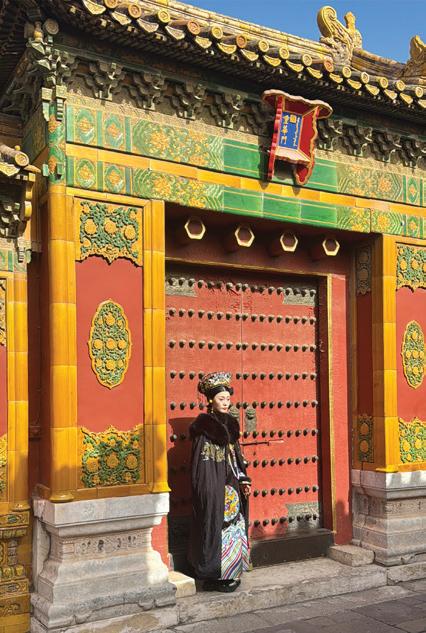
We decided to do a quick trip to Beijing, to see The Great Wall of China and the Forbidden City as these were a must do!
An early bullet train, a hotel, a walk to dinner, and an early night to bed because of a 6:00 wake-up to get our ride! Day One was loads of walking,
and The Great Wall honestly tests you on one side, but oh my hat…what an amazing experience! We walked what felt like a million stairs, up and down, we climbed some (on gloved hands and thickly covered feet). It is hard to imagine in the Durban heat, but on the day we were there, it was -7°C, and we had to stop and take a breath more than once. We had a new respect for those who had to “protect” the wall and a lot of questions about why some steps were built small and others super large. Snack packs and food stops often were essential! The view was spectacular, and I’m glad we went, but SJOE, that was a tough one. The wall was built over 2,000 years ago, and it spans 21,000 km. We did towers 1-6 (of 152) with steps that go on for days, but that climb with breathtaking views was worth it! We had an early night and a good rest as Day Two was another early start. The Forbidden City is almost incomprehensible.
We had a tour guide for this one, and Helen told us how the Chinese dynasties have shaped behaviours. It was mind-blowing how much space was given to this one family's home, and the scale was unbelievable. Another day of serious walking, and again, understanding why the Emperor had to be carried around by his servants; understandable (and the amount of little secret areas needed for his concubines, and to
ensure no one knew exactly where he was, as the fear of being murdered was the reason entry into this city was forbidden)! After a quick bite to eat at the market area outside of the city, we were ready to take the bullet train back. It was an epic trip! It’s recommended…(just do more StairMaster and treadmill sessions at the gym in preparation).
We decided to add “Shanghai for a day” to our trip at the last minute. China's transport system is so convenient that a trip into Shanghai was an easy 25-minute bullet train ride! I must mention how well this country works organisationwise. Everything is pre-booked, with strict times, and it all works perfectly (As soon as you understand the “process”, it’s truly easier than easy). We've travelled the world, but this was next-level organised. We decided to explore the French
concession district and the Bund for our day trip! It was a lot of fun, so much walking, and we even stopped in at an Irish pub for a pie, chips and beer (in China)!
All in all, China surprised us! We will be back to “see the kids” and learn more about this country and culture!
Observations
• The number of highrise buildings can be overwhelming, and then you realise 21 million people live in Shanghai, and it makes sense.
• Traffic wise: Just walk, and somehow the traffic manoeuvres around you.
• Expect to be hooted at often! It is not aggressive in use; it is a polite “I’m behind you”.
• There is a lot of police presence, giving you an immense sense of safety, whenever you are walking around.
• People are polite and friendly, even if they don’t understand a word you are saying. Wŏ tīng bù dŏng “I don’t understand” (spoken language) needs to be used often!
• China is actually “affordable”. Food, transport and hotels are very reasonable.
• Grocery and take-away delivery is SUPER fast (a 23:00 grocery order arrived in 11 minutes).
•
•
•
•
•
to all your urological conditions and renal stones and urological cancers. We also provide for elective urological procedures such as vasectomies, circumcisions, and female urological interventions. All in a welcoming and
We ensure that the latest technologies are employed in ridding you of the symptoms that accompany an enlarged prostate We a national reputation for excellence
Our cutting-edge treatments are designed
Health Beyond the Quick Fix
WORDS LISA GLAISTER
When it comes to body confidence and wellbeing, it’s easy to feel overwhelmed by trends and quick solutions. Weight-loss medications like Ozempic are making headlines, and for many, the promise of fast results sounds appealing. But health isn’t just about the number on the scale; it’s about how we feel, move, and live every day.
Quick fixes often focus on short-term outcomes, but they rarely address the bigger picture: energy, strength, and resilience. Many people who lose weight rapidly find it hard to maintain, and sometimes the weight returns along with added challenges. One hidden risk is muscle loss, which can slow metabolism and affect overall vitality. Muscle matters for everyone because it supports strength, bone health, and longevity. For women approaching menopause, this becomes even more important as hormonal changes naturally impact muscle and bone density. So, what’s the alternative? A whole-life approach that prioritises sustainable habits over shortcuts. It’s not about perfection or doing everything at once - it’s about small, consistent steps that build health from the inside out. When we focus on nourishing our bodies, managing stress, and creating supportive routines, weight often becomes a natural byproduct rather than the main goal.
Here are six gentle ways to start:
1. Begin Where You Are
Choose one simple change, like adding an extra serving of vegetables or taking a short walk each day. Small steps create momentum.
2. Protect Your Strength
Include protein-rich foods such as lean meats, poultry, fish, and eggs, along with exercises like lifting weights, using resistance bands, and bodyweight activities (e.g push-ups, squats, lunges). Muscle is your ally for energy, metabolism, and long-term health.
3. Plan Ahead for Better Choices
When life gets busy, rushed meals often lead to unhealthy options. Prepping components like grains, proteins, and veggies on weekends - or getting help with meal prep - makes balanced eating easier.
4. Think Holistically
Sleep, hydration, stress, and relationships all influence wellbeing. When these areas improve, everything else feels easier.
5. Find Your Support System
Whether it’s a friend, family member, or a health coach, having someone to encourage you and hold you accountable to the changes you want to make makes the journey lighter and more enjoyable.
6. Focus on the Future
Ask: “Will this choice help me feel healthier a year from now?” Sustainable habits take time, but they last.
Health isn’t a race; it’s a lifelong relationship with your body and mind. Quick fixes may promise speed, but true wellbeing comes from choices that nurture every part of you. If you’re thinking, “I’ll never get there,” remember this: big change doesn’t come from big leaps - it comes from tiny steps repeated over time.
Hydrangea Lodge
A Tranquil Escape in the Heart of Nottingham Road
This charming, child-friendly and wheelchair-accessible home offers a peaceful retreat for all, featuring warm interiors, spacious living areas, and lush gardens, perfect for families, travelling representatives and business professionals, and those seeking relaxation in a serene natural setting.
Come and experience the gentle rhythm of country life—Hydrangea Lodge is waiting to welcome you.
Why FMD Should matter
WORDS TIM JOHNSON
You would have heard in the news about the current Foot and Mouth Disease outbreak in South Africa and wondered what it really means for you. After all, many of us aren’t farmers. We don’t own cattle, sheep or goats, and the issue can feel distant. But the truth is, what’s happening on our farms right now affects far more than just agriculture. It touches food prices, local jobs, tourism, events, and the wellbeing of entire communities.
Foot and Mouth Disease doesn’t affect humans directly, but it spreads incredibly easily amongst livestock. Once it’s in an area, strict movement controls are needed to stop it from spreading further. For farmers, this is deeply stressful; animals can’t be moved or sold as usual, income is disrupted, and the emotional toll of caring for animals and protecting livelihoods built over generations is real. These are not abstract problems; they’re happening to families and neighbours across the country. The knock-on effects ripple outward. When farming slows down, so do many other sectors that rely on it. Local suppliers, transport services, feed stores, abattoirs and informal traders all feel the impact. Even tourism takes a knock. Rural guesthouses, hotels, events, trails and festivals often rely on visitors travelling through farming areas, and right now, that movement carries real risk.
That’s why many event organisers have made the tough but responsible decision to cancel or postpone events. These decisions aren’t made lightly. They come with financial loss, disappointment, and frustration. But they are acts of care; recognising that people moving across farmland, even unintentionally, can help spread the disease from one area to another. Choosing caution now helps protect farmers and speeds up recovery later.
This moment calls for something simple but powerful: community responsibility.
Supporting one another doesn’t always mean big gestures. Sometimes it’s about understanding why restrictions are in place and respecting them. It’s choosing patience over frustration. It’s learning a bit more about how the disease spreads, so we don’t unknowingly make things worse.
As individuals, we can help by limiting unnecessary travel through farming areas, cleaning footwear and vehicles when moving between rural spaces, and supporting local farmers where it’s safe and appropriate to do so. Buying local produce, checking in on neighbours, and sharing accurate information, rather than rumours, all make a difference.
Most importantly, this isn’t a time for blame or negativity. It’s a reminder of how interconnected we are. A challenge on the farm gate doesn’t stay there. It reaches our shops, schools, events and local economies. When we look after our neighbours, we’re ultimately looking after ourselves. South Africans are no strangers to pulling together in tough times. With care, understanding and shared responsibility, we can help our farming communities through this outbreak and ensure that our rural spaces, events and tourism can thrive again in the months ahead.
When we look after our neighbours, we’re ultimately looking after ourselves.