INDUSTRIAL SOLUTIONS AND AUTOMATION OF PRODUCTION CYCLES
LKT Group GmbH, Lindenstraße 48-52, 40233 Düsseldorf, Germany info@lkt-werke.com +49 (0) 2119891272
INDUSTRIAL SOLUTIONS AND AUTOMATION OF PRODUCTION CYCLES
LKT Group GmbH, Lindenstraße 48-52, 40233 Düsseldorf, Germany info@lkt-werke.com +49 (0) 2119891272
The creation of a new division, LKT WERKE, within the LKT Group GmbH in 2024 has expanded the opportunities to provide modern industrial solutions. The company continues to revolutionize the approach to manufacturing industrial equipment, leveraging the experience and expertise of its employees. This enables the offering of customized solutions that precisely meet specific project requirements. From designing 3D installations to commissioning, from electrical engineering solutions to service and maintenance — the company’s specialists support clients at every stage.
The equipment developed at the LKT WERKE division covers a wide range of industrial production processes: from raw material preparation and final product manufacturing to storage and packaging. Special attention is given to transportation systems, which are offered in various modifications, taking into account the characteristics of the products. Solutions from LKT WERKE ensure precise equipment selection and its optimal configuration, guaranteeing high reliability and efficient implementation of production processes, becoming a key element in the successful operation of enterprises.
The integration of the LKT WERKE division has not only strengthened the company’s market position but also opened new opportunities for comprehensive design and turnkey implementation of industrial solutions. Deep expertise, an innovative approach, and a focus on the individual needs of clients enable the company to successfully develop and implement effective solutions for the most complex and largescale projects.
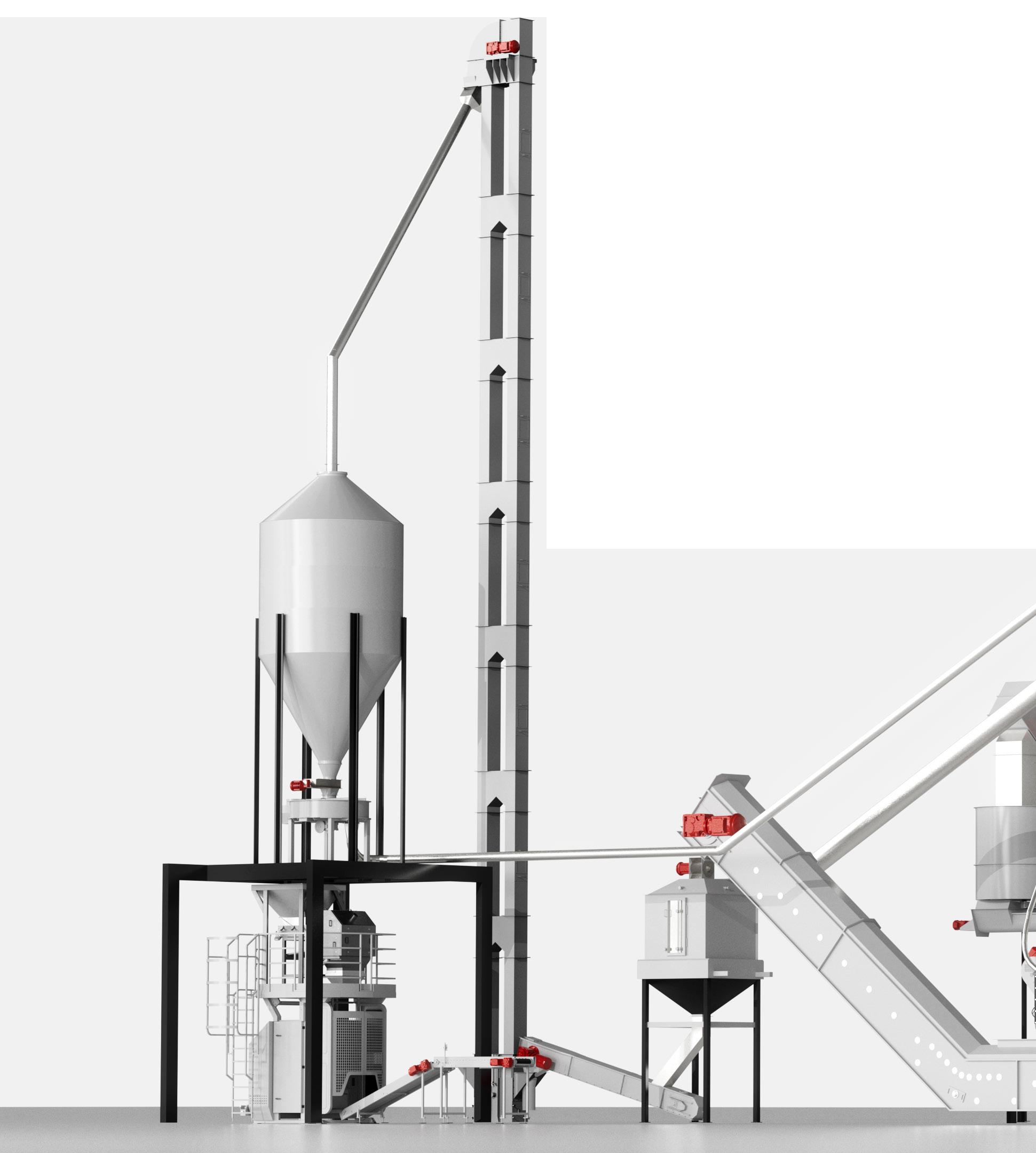
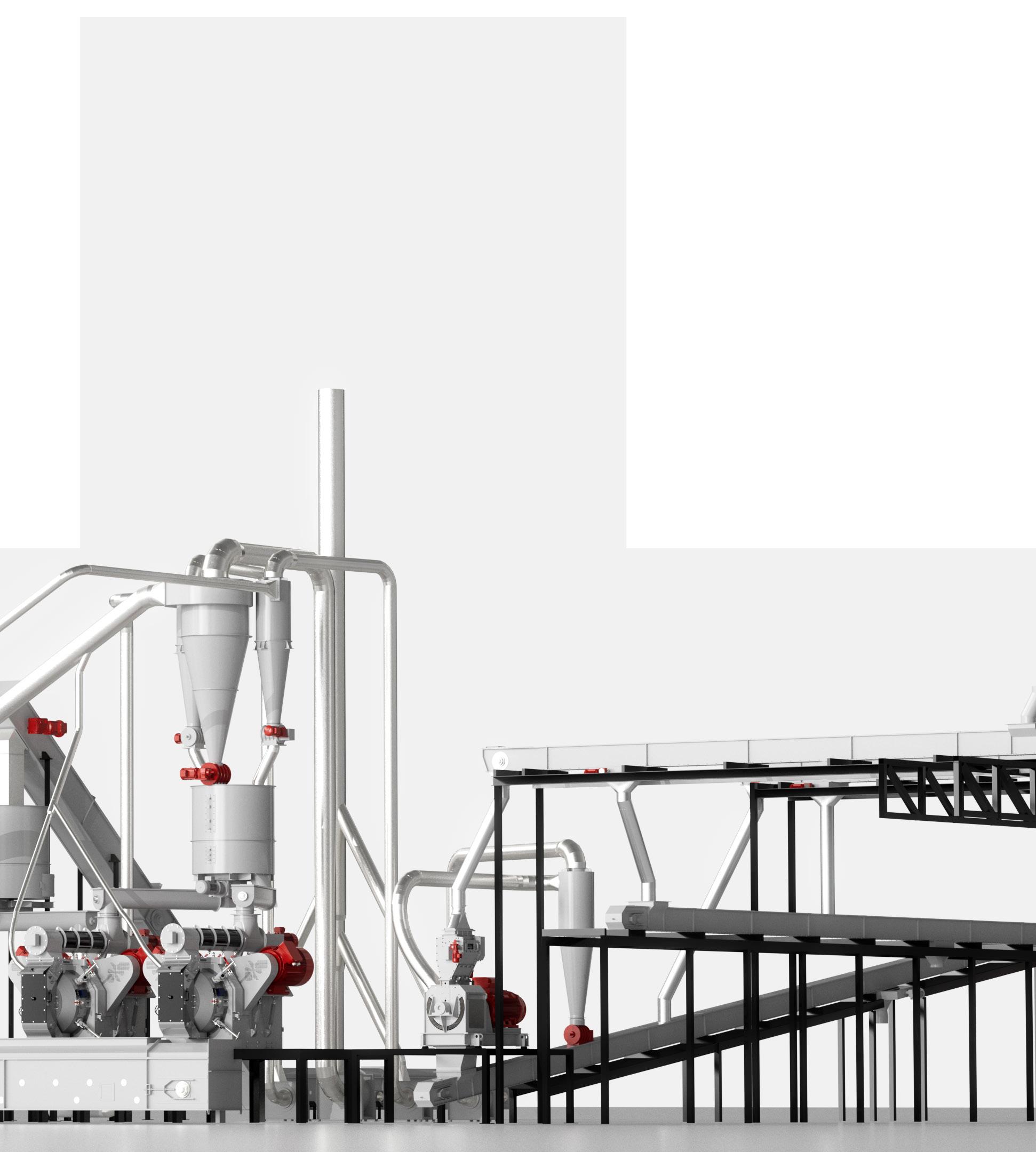
Unloading Screening Grinding Separation
5 6 7 8
Processed Raw Materials
PELLETS AND GRANULES are produced from various bulk materials, such as wood waste, grain crops, or agricultural by-products. The production process involves careful raw material preparation: controlling particle size, moisture content, and adhesiveness, as well as heating to the plasticity temperature. The result is highly stable granules, which are used both as animal feed and organic fertilizers.
EXTRUSION AND PRESSING are key material processing techniques used in pellet and briquette production. Extrusion shapes products under high pressure and temperature, while pressing compacts raw materials, increasing their density. These technologies ensure the strength and energy efficiency of the final product.
GRINDING AND SEPARATION are key processes in grain processing. Grinding produces flour and meal, while separation removes bran and other fractions. These technologies ensure high-quality products for the food and feed industries.
TRANSPORTATION AND DOSING ensure precise movement and distribution of materials. These processes are essential for optimal animal nutrition and efficient resource utilization.
COOLING AND DRYING preserve materials by removing excess moisture and preventing spoilage. These processes are essential for the quality of feed and fertilizers.
STORAGE AND PACKAGING ensure the preservation and convenient transportation of materials. These processes are essential for preventing losses and maintaining product quality.
AUTOMATION plays a key role in the production of pellets and granules by ensuring the operation of equipment such as crushers, dryers, and presses. A stable energy infrastructure and well-thought-out automation increase efficiency and safety.
Manufacturing industries
SUGAR MILLS , produce not only sugar during the processing of sugar beets, but also by-products such as beet pulp — the shredded remains of the beets. This pulp is processed into granules used as biofuel or as an additive in organic fertilizers. This contributes to greater environmental sustainability and enables the efficient use of all resources.
WOOD MILLS during the processing of wood, produce not only primary products like sawn timber, but also by-products such as wood dust and wood chips. These residues can be used to produce pellets, briquettes, or as bedding for animals. This approach reduces waste, enhances the environmental sustainability of production, and allows for the maximum utilization of raw materials.
COMPOUND FEED MILLS produce a wide range of feed for different types of animals, including pigs, poultry, and cattle. The feed can be either bulk or pelleted, depending on the requirements. The formulations include grains, bran, meals, and cake, which enrich the feed with nutrients.
OIL EXTRACTION MILLS process seeds of sunflower, soybeans, and other oilseeds. The main by-products, such as husks, soybean cake, and meal, are used in compound feeds and fertilizer production. Sunflower husks are used to create pellets, which serve as biofuel, while cake and meal become valuable ingredients in animal feed, such as feed for pigs and cattle.
MEAT PROCESSING PLANTS process by-products such as fats and bones, turning them into meat meal. These products are used in animal feed production, particularly for poultry and cattle. The meal is added to formulations as a high-value protein source, ensuring efficient utilization of all resources obtained during the meat production process.
WASTE RECYCLING PLANTS specialize in processing plastics, rubber, and other solid waste into RDF and SRF pellets. These materials are alternative fuels with high energy value, used in heavy industry enterprises.
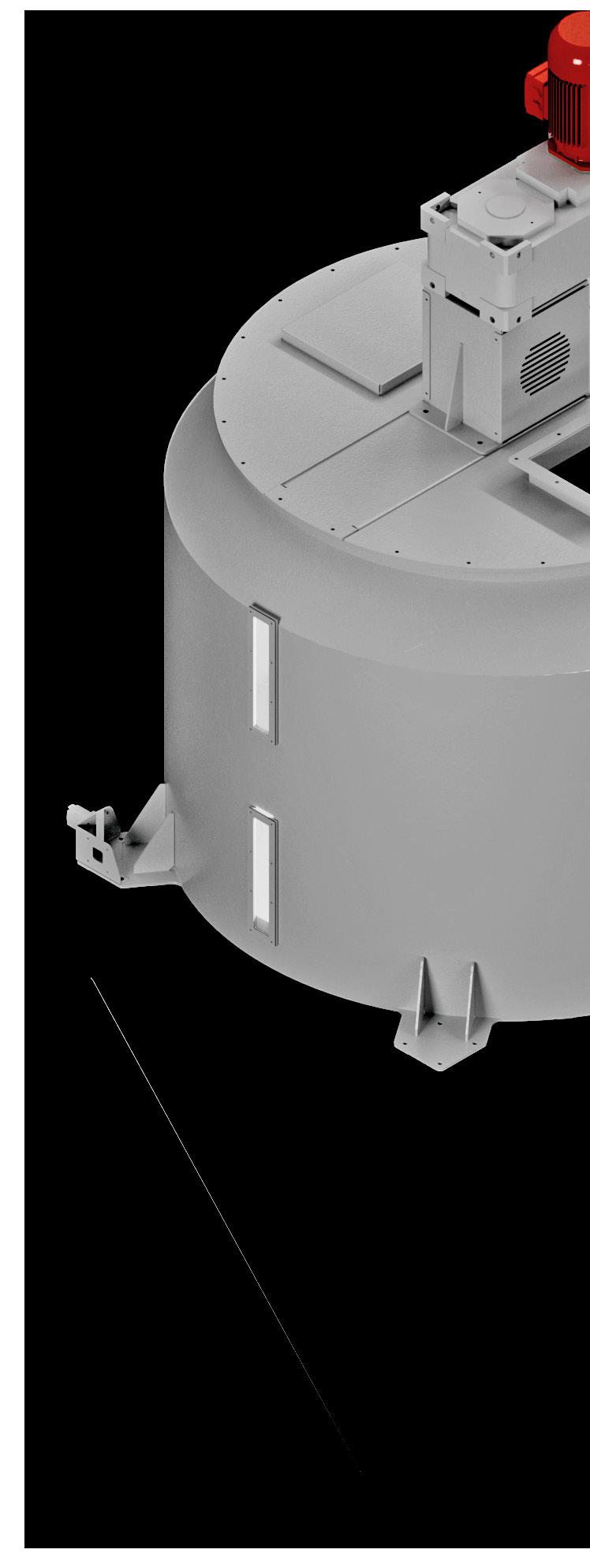
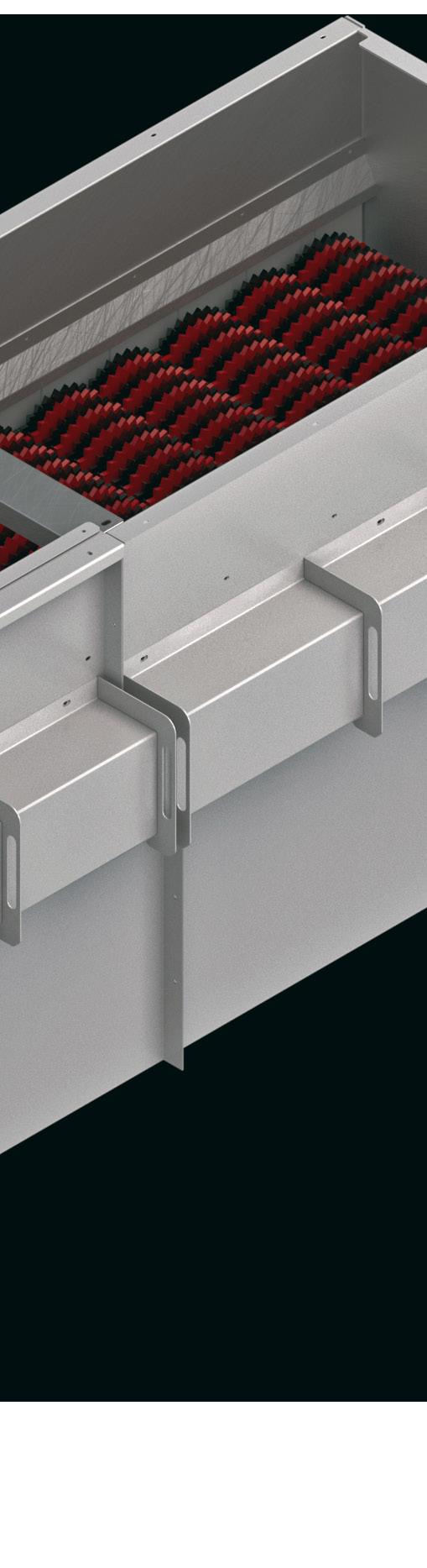
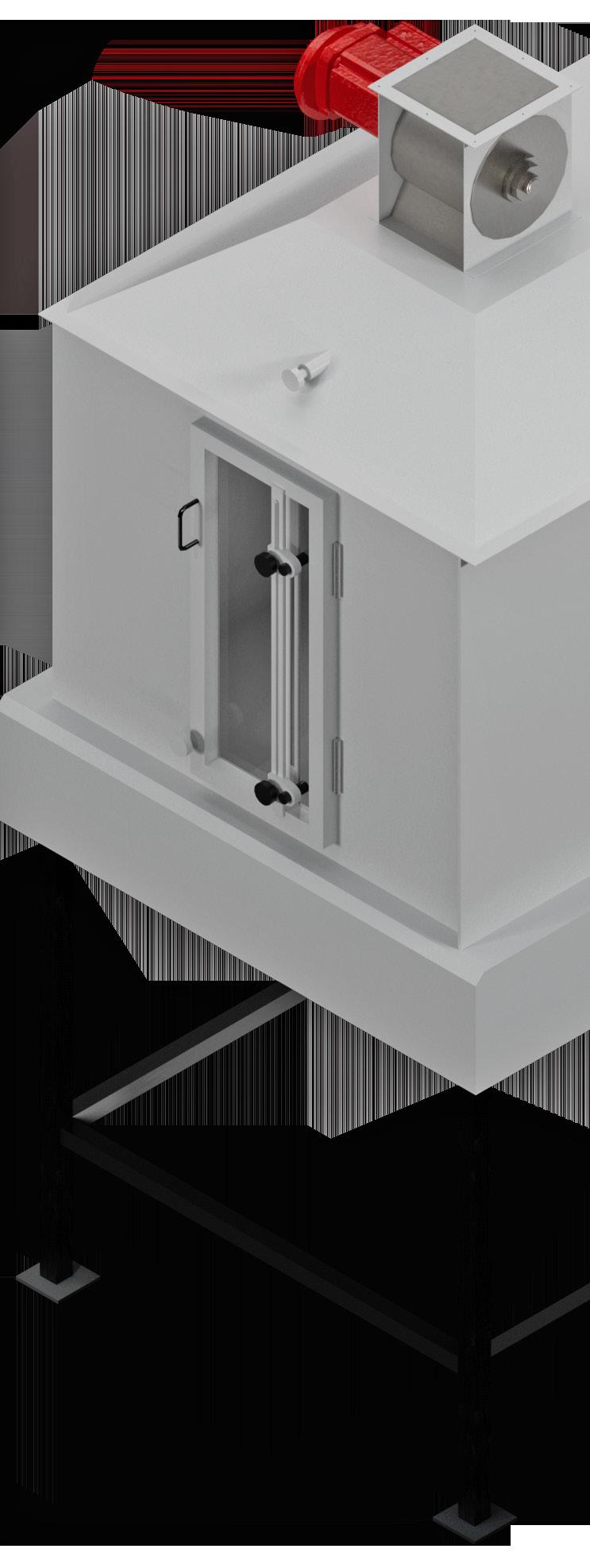
The raw material unloading is carried out using an operational hopper with a rotating discharge system to prevent material blockages and avoid clumping.
Rotary Discharge
(detailed information via QR code)
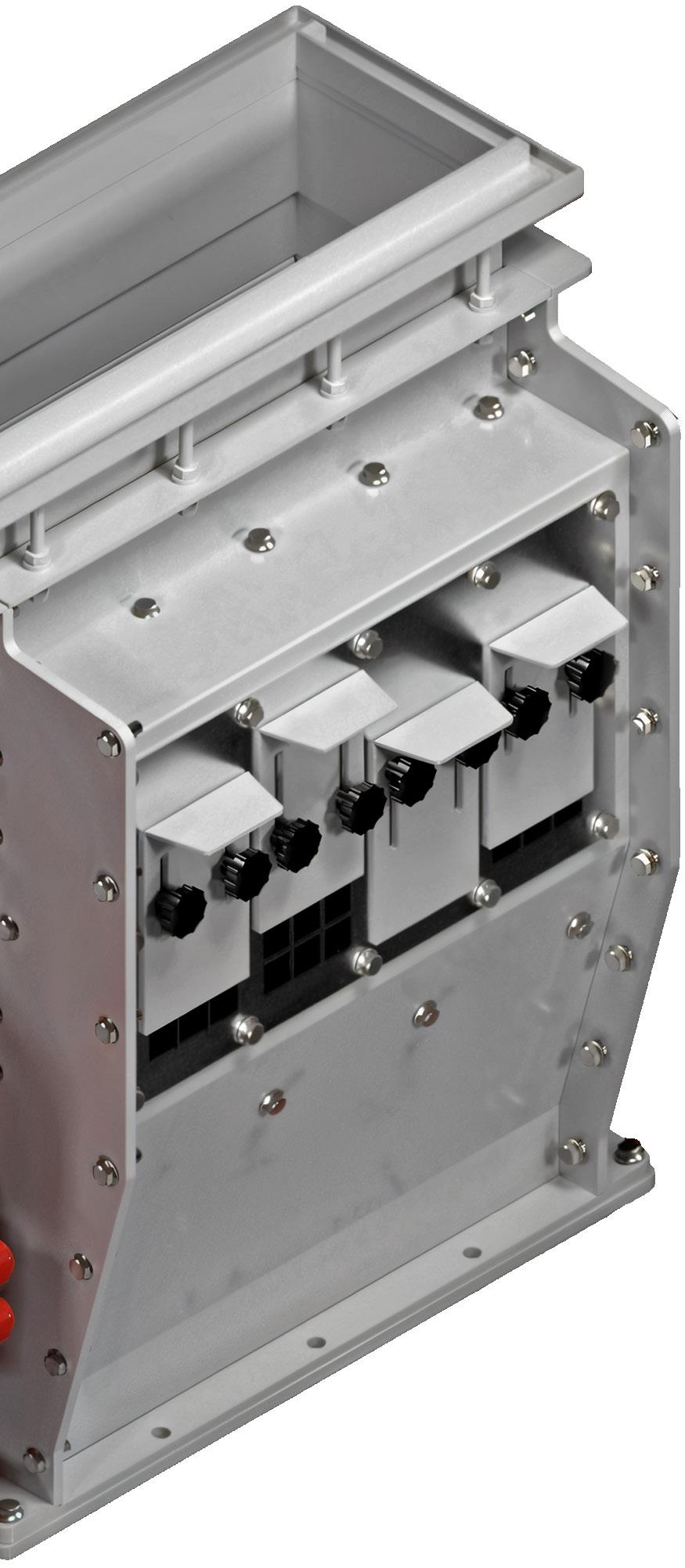
The raw material passes through a disc separator to remove large impurities and foreign inclusions.
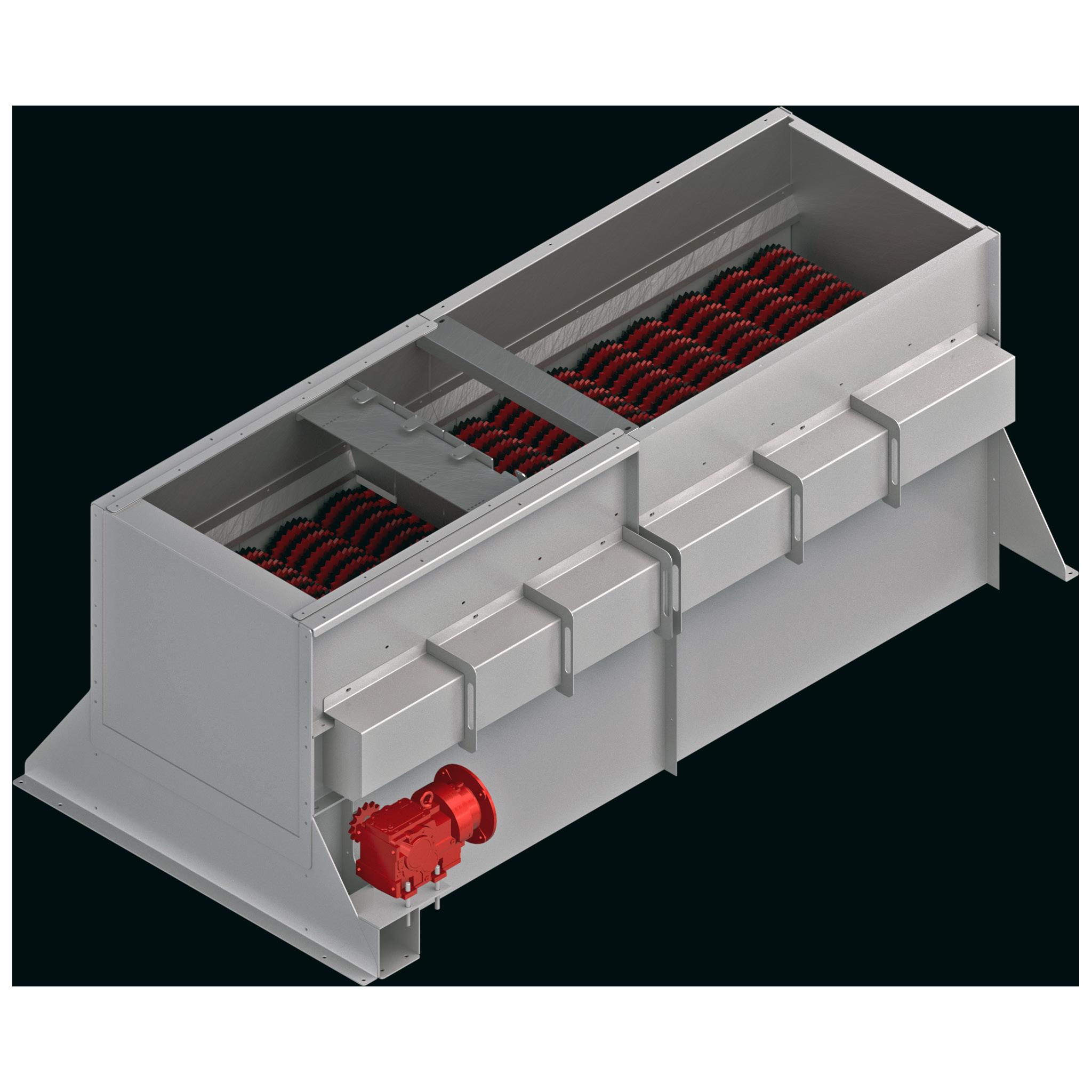
(detailed information via QR code)
The material is cleaned from metal inclusions using a magnetic separator to protect the equipment.
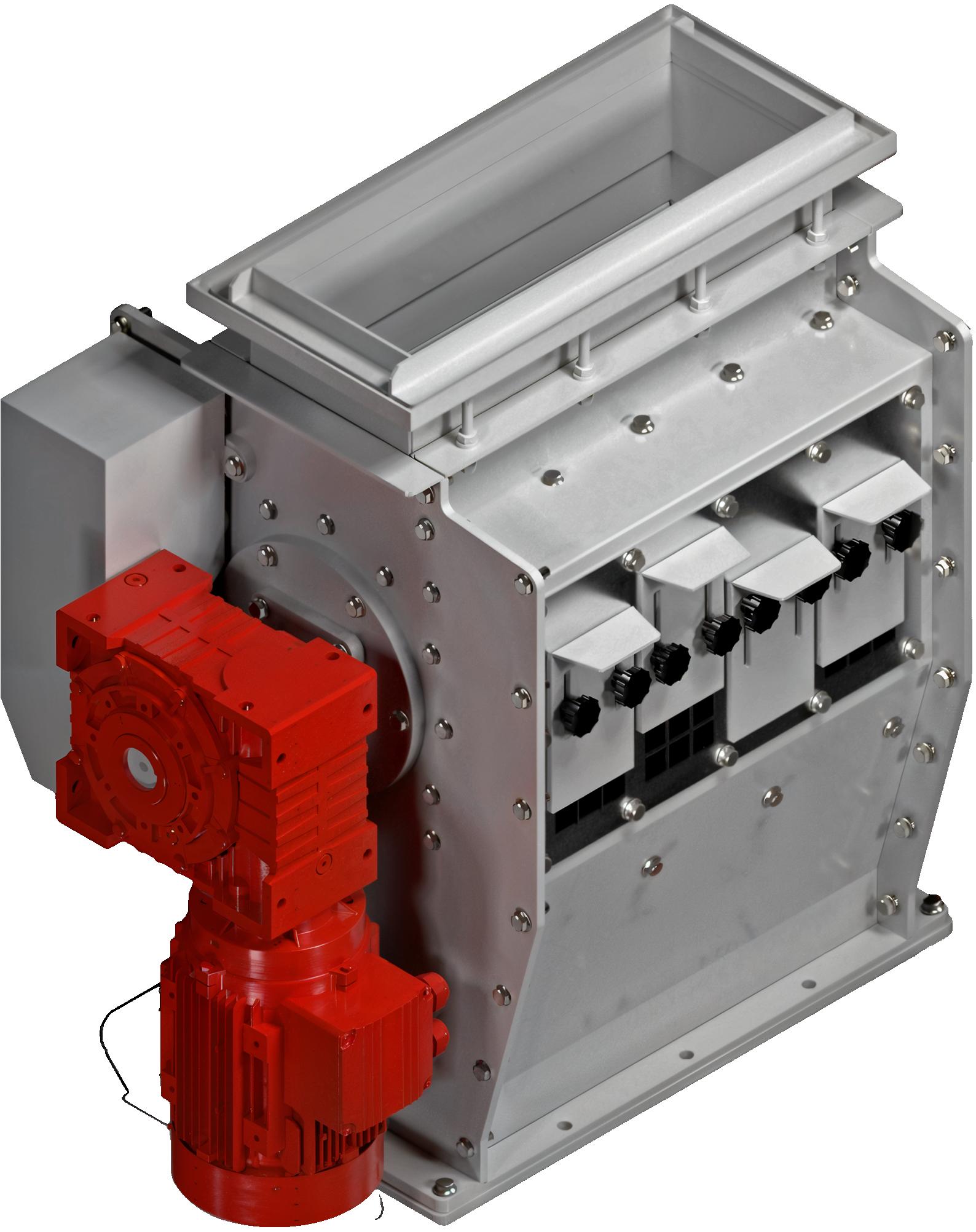
(detailed information via QR code)
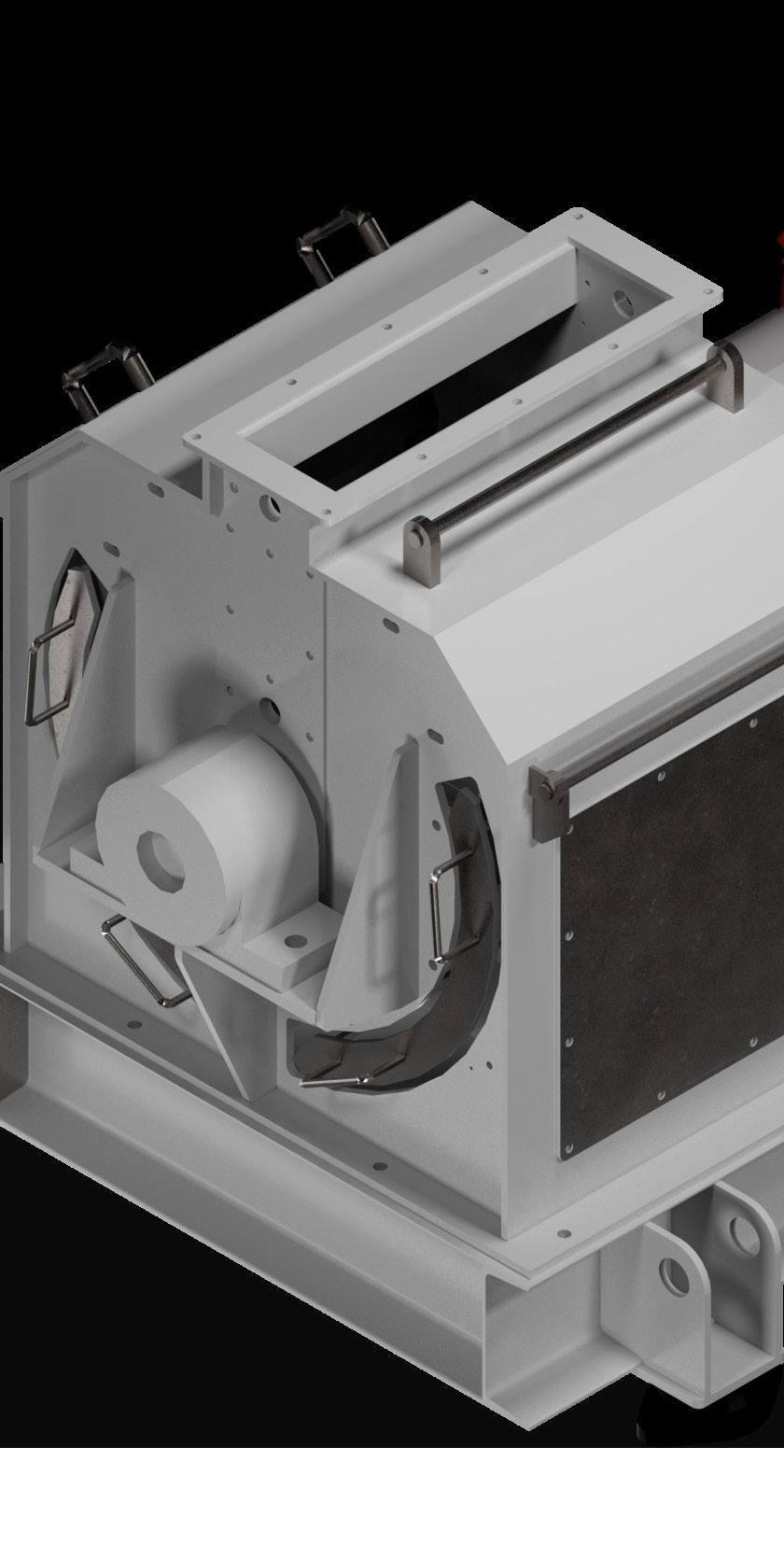
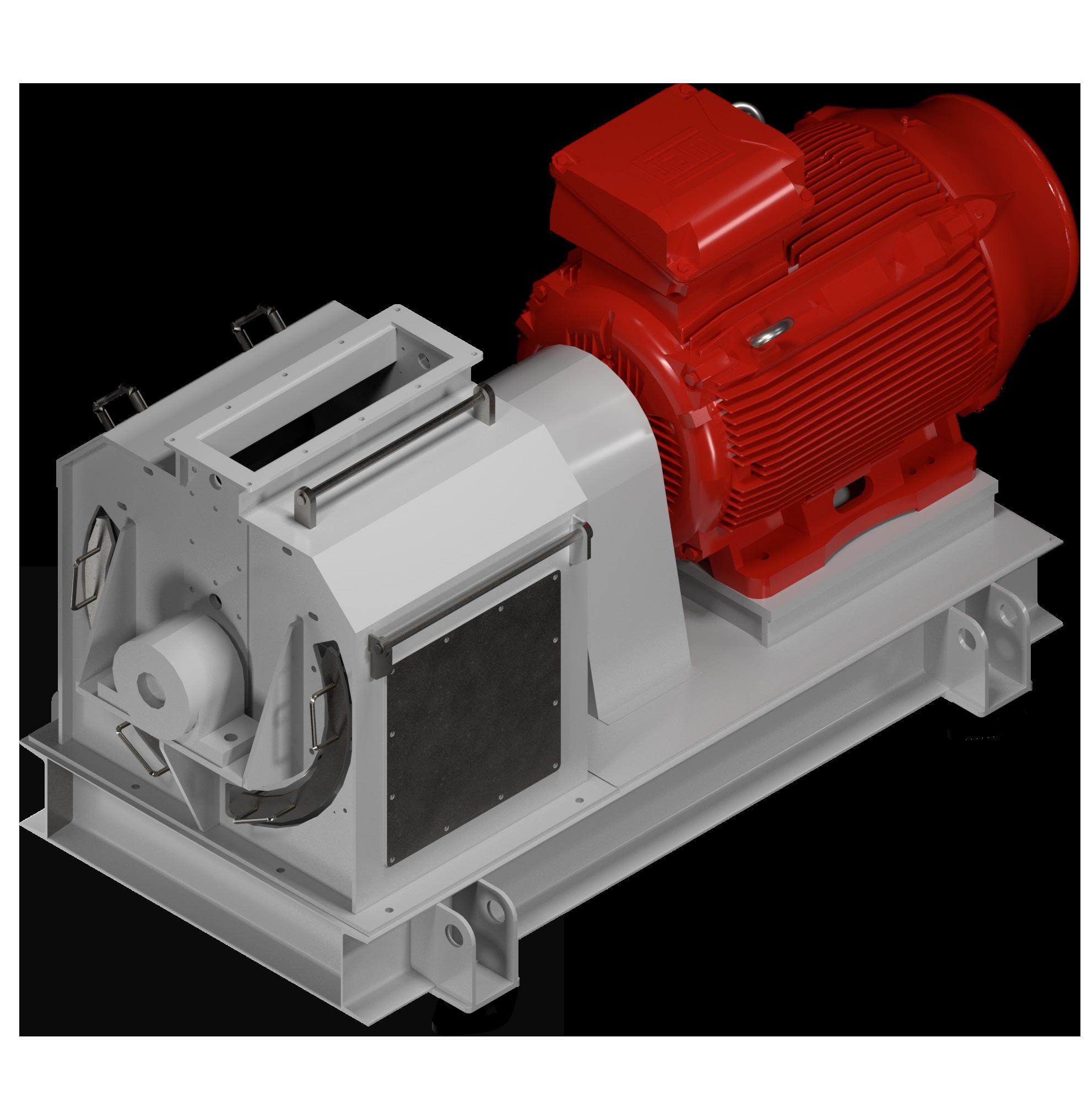
The raw material is crushed to the specified fraction in a hammer crusher for further processing.
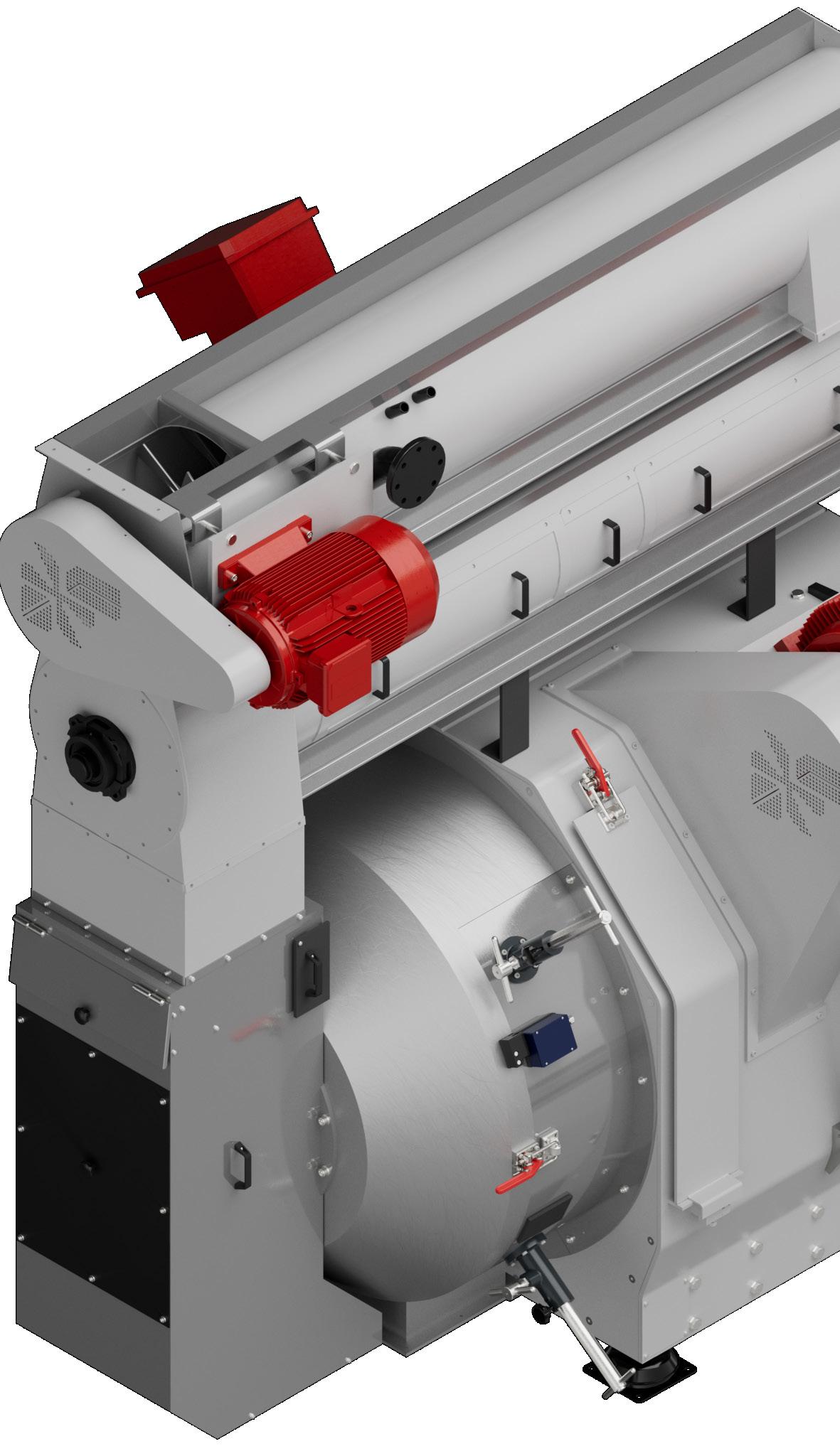
The pellet mill is the foundation of pellet production. The raw material enters the interior of the pellet mill and is pressed into pellets of the desired diameter through the die.
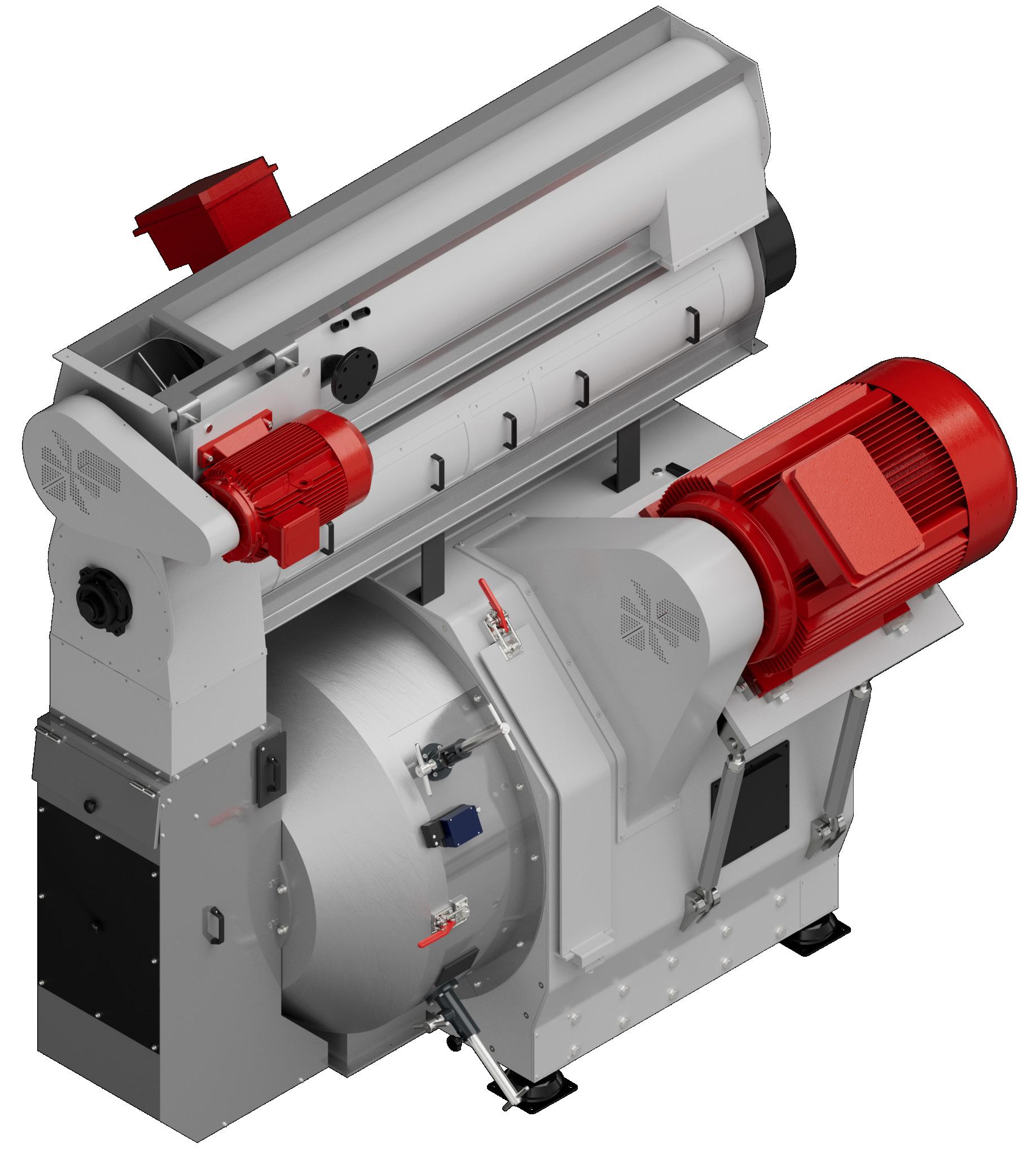
(detailed information via QR code)
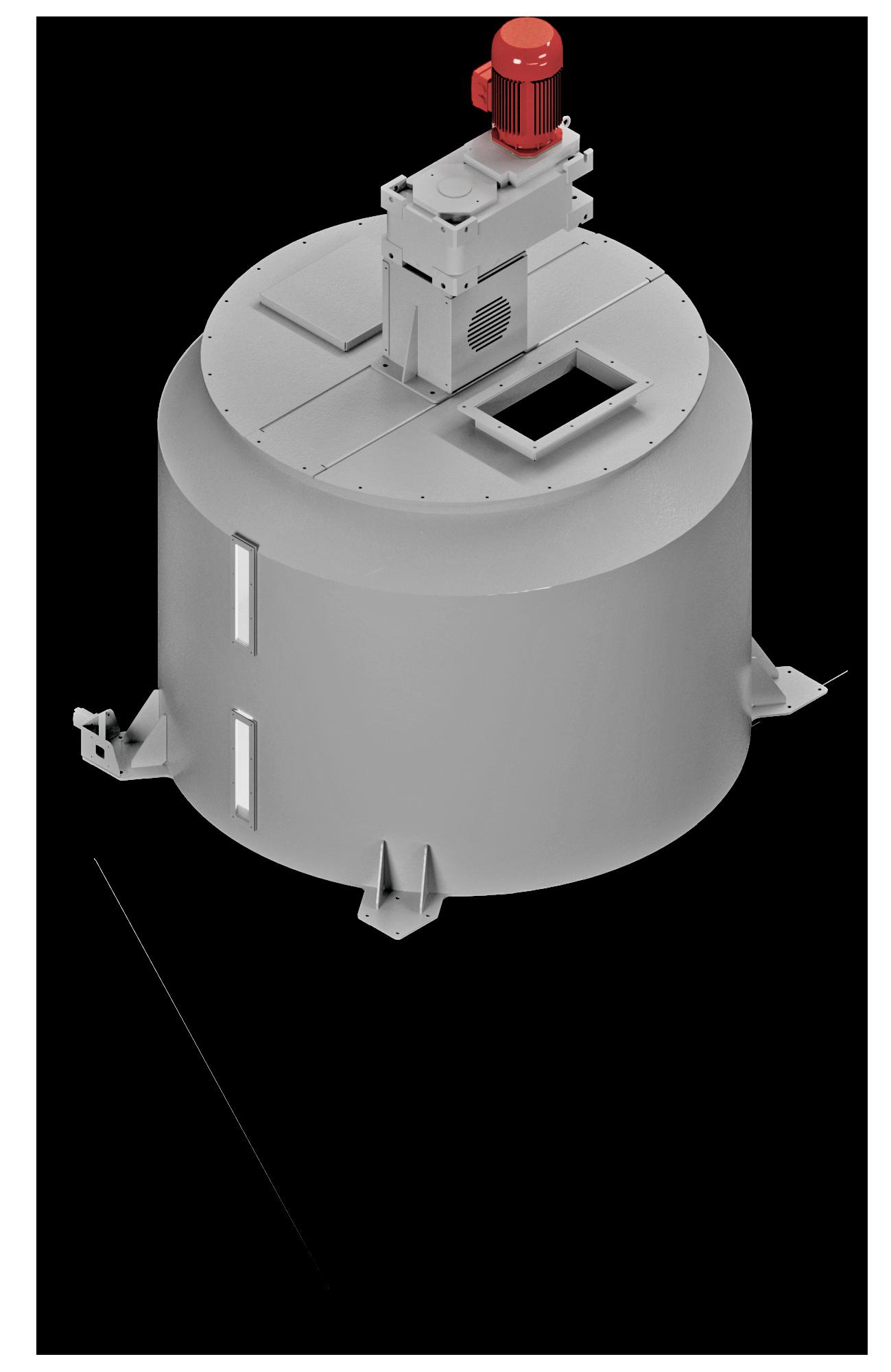
The pellet cooler is designed to cool pellets made from various raw materials after they exit the pellet mill, in order to increase their strength.
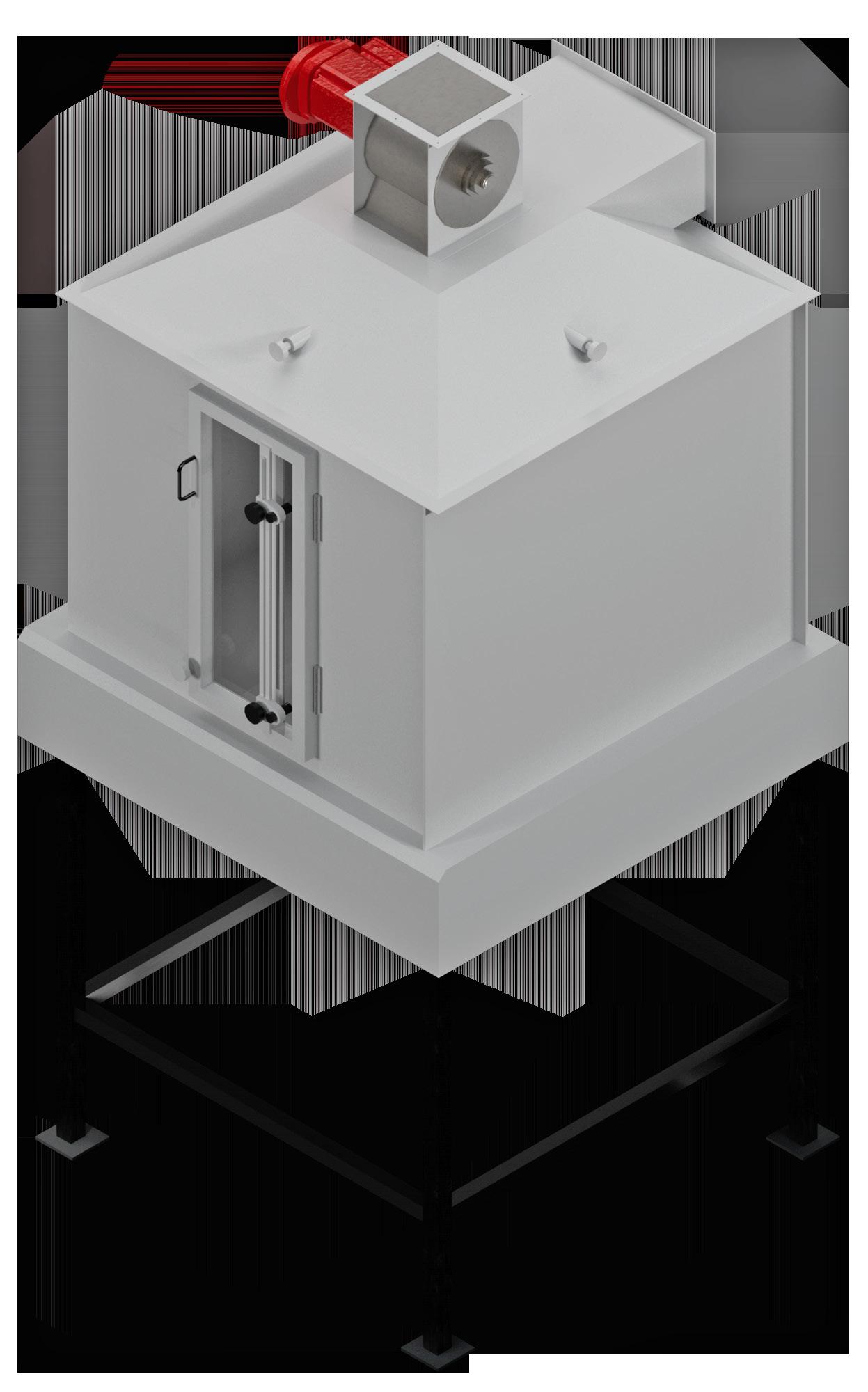
Discharge
(detailed information via QR code)
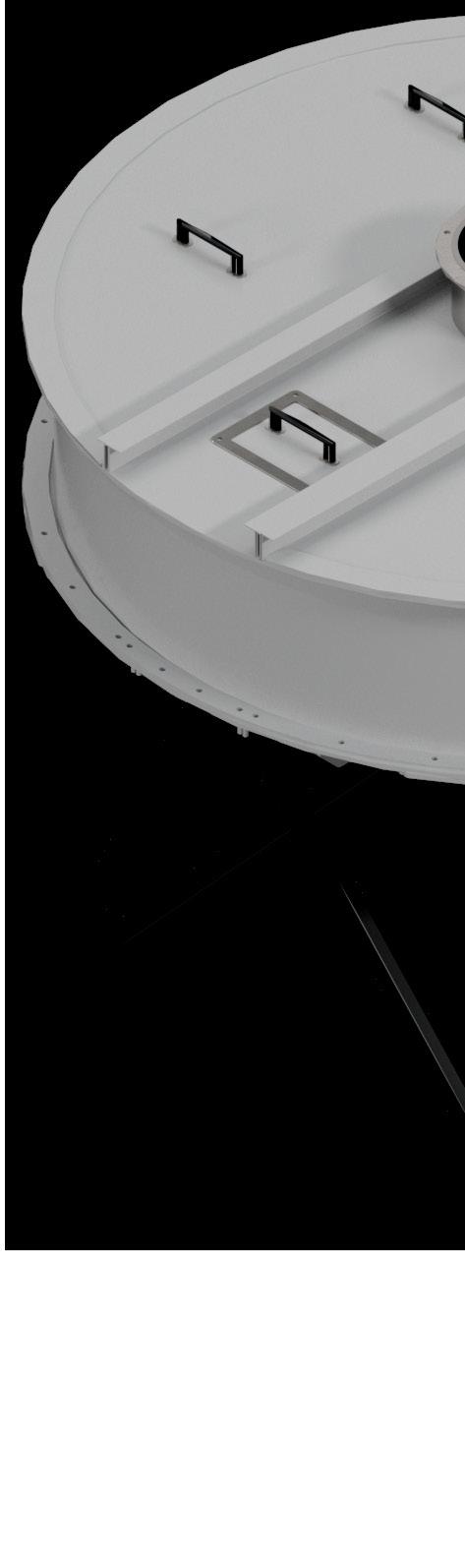
The pellets pass through a rotary screener to remove dust and off-spec particles.
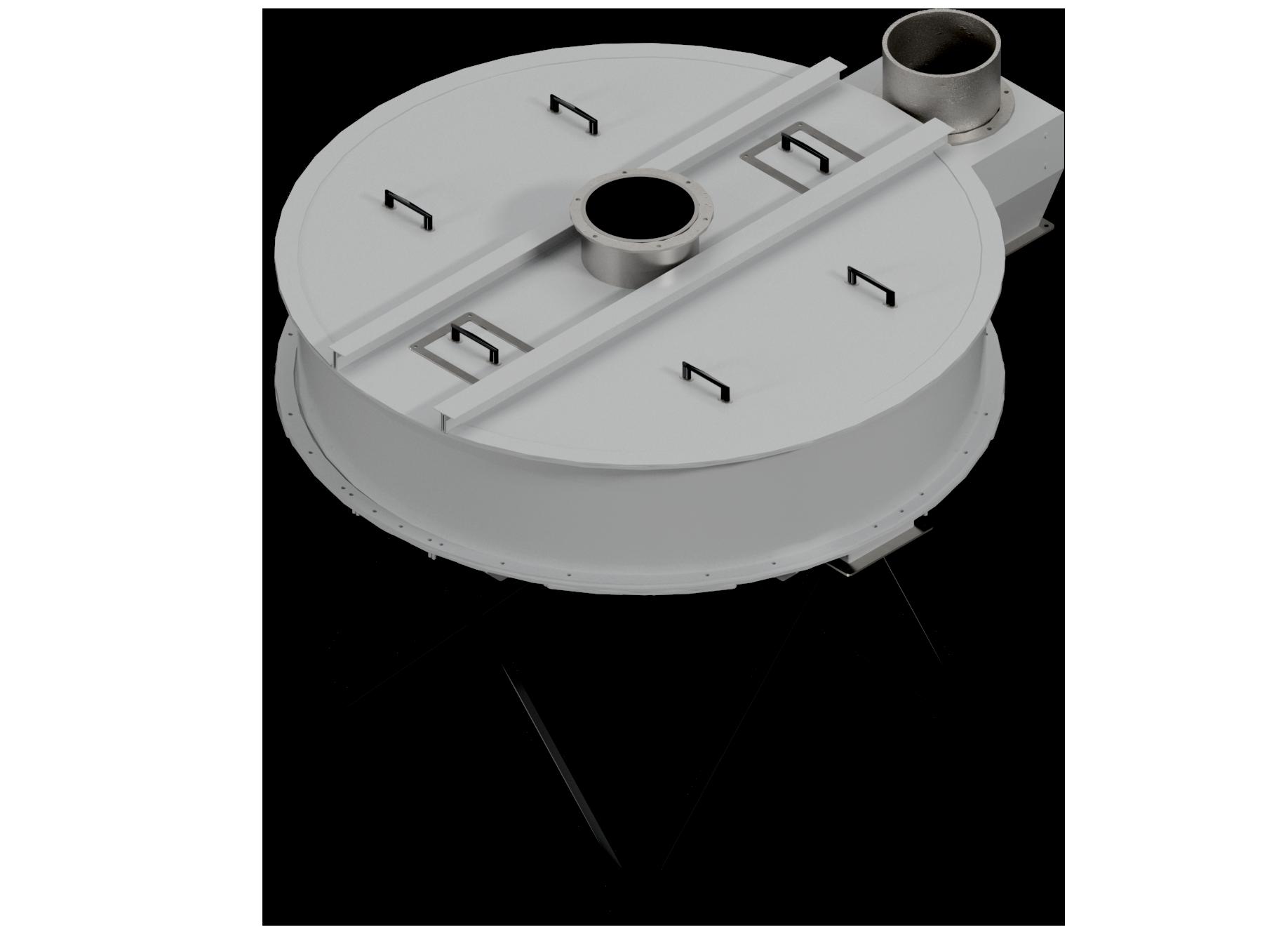
Tensioning Belt
(detailed
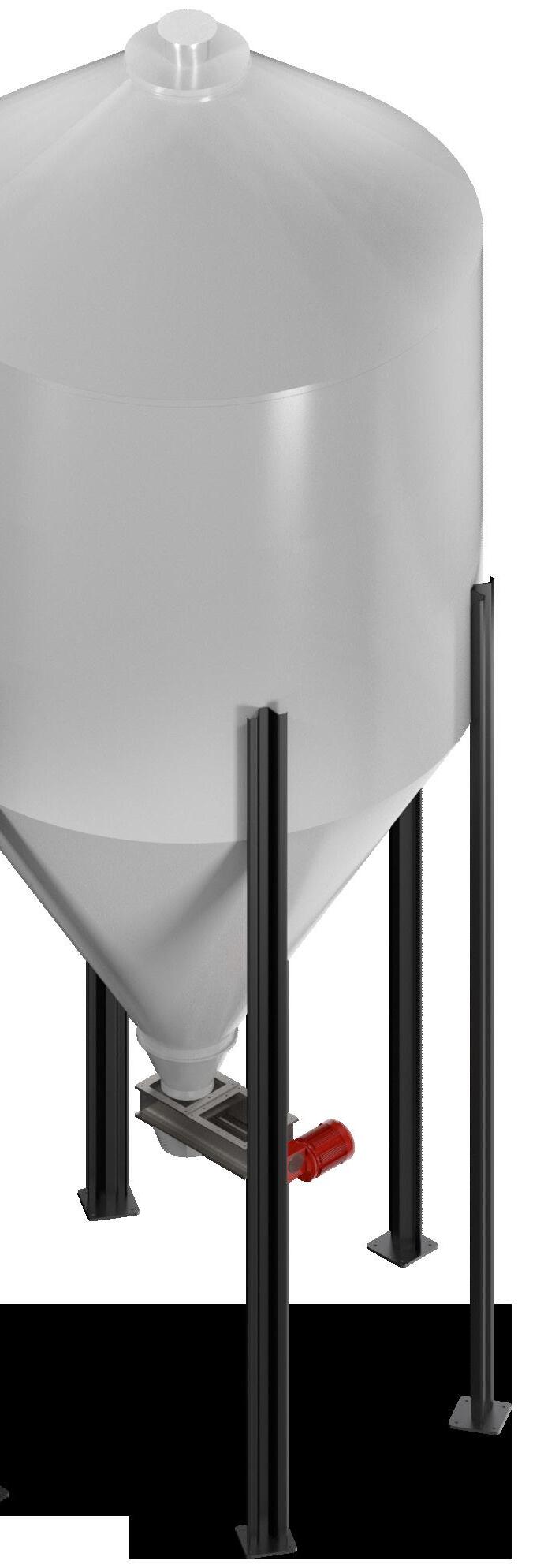
The finished product is stored in silos for subsequent packaging, transportation, or use. (detailed information via QR code)
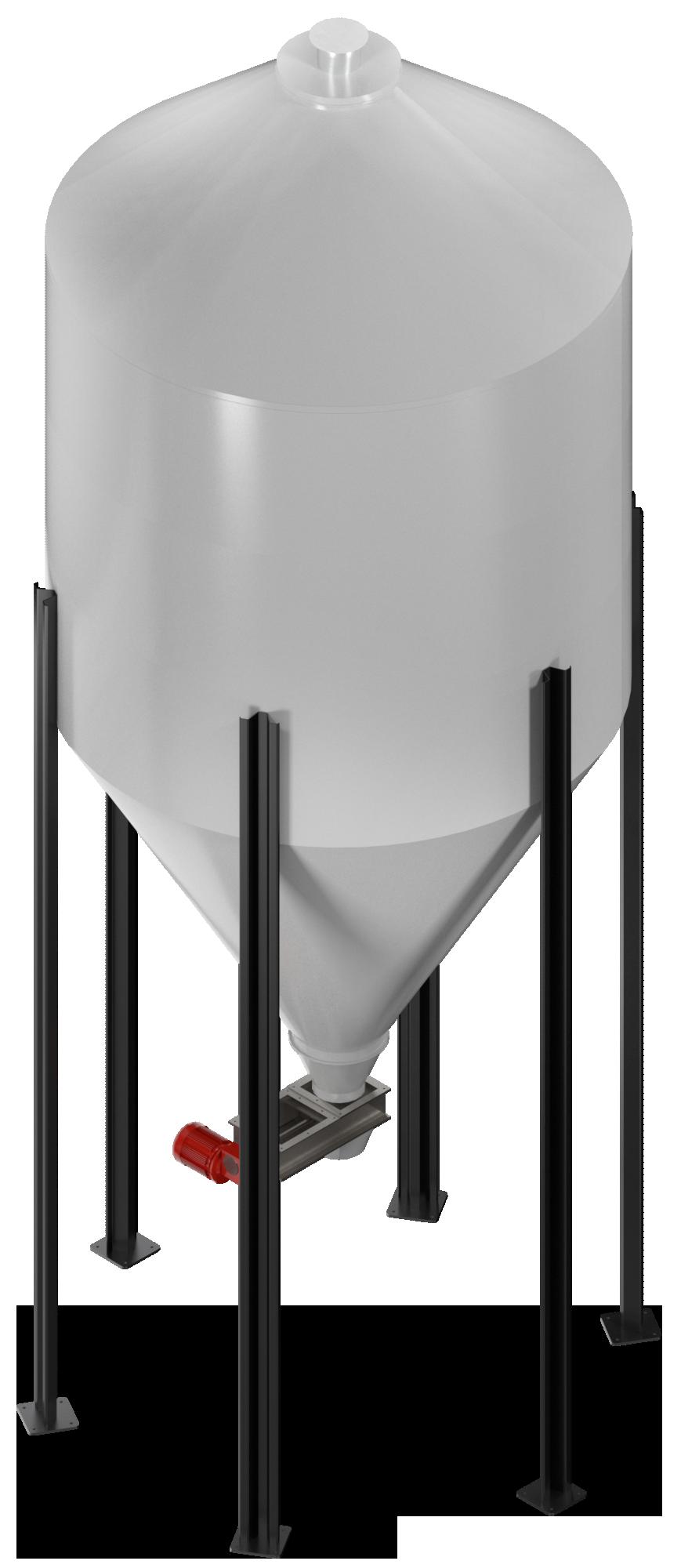
Moisture Adjustment
CONVEYING SYSTEMS
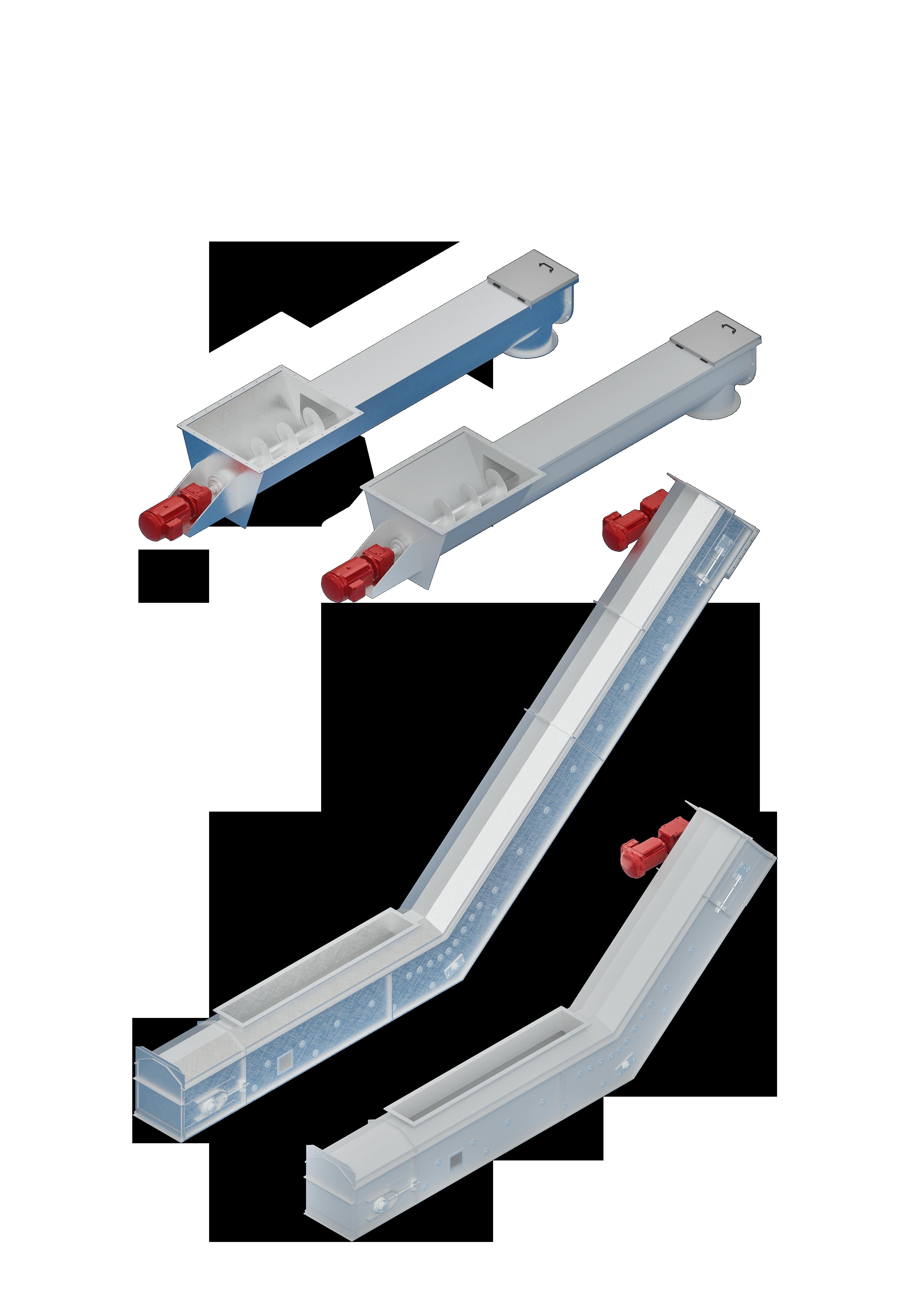
SCREW
CONVEYOR
BELT CONVEYOR
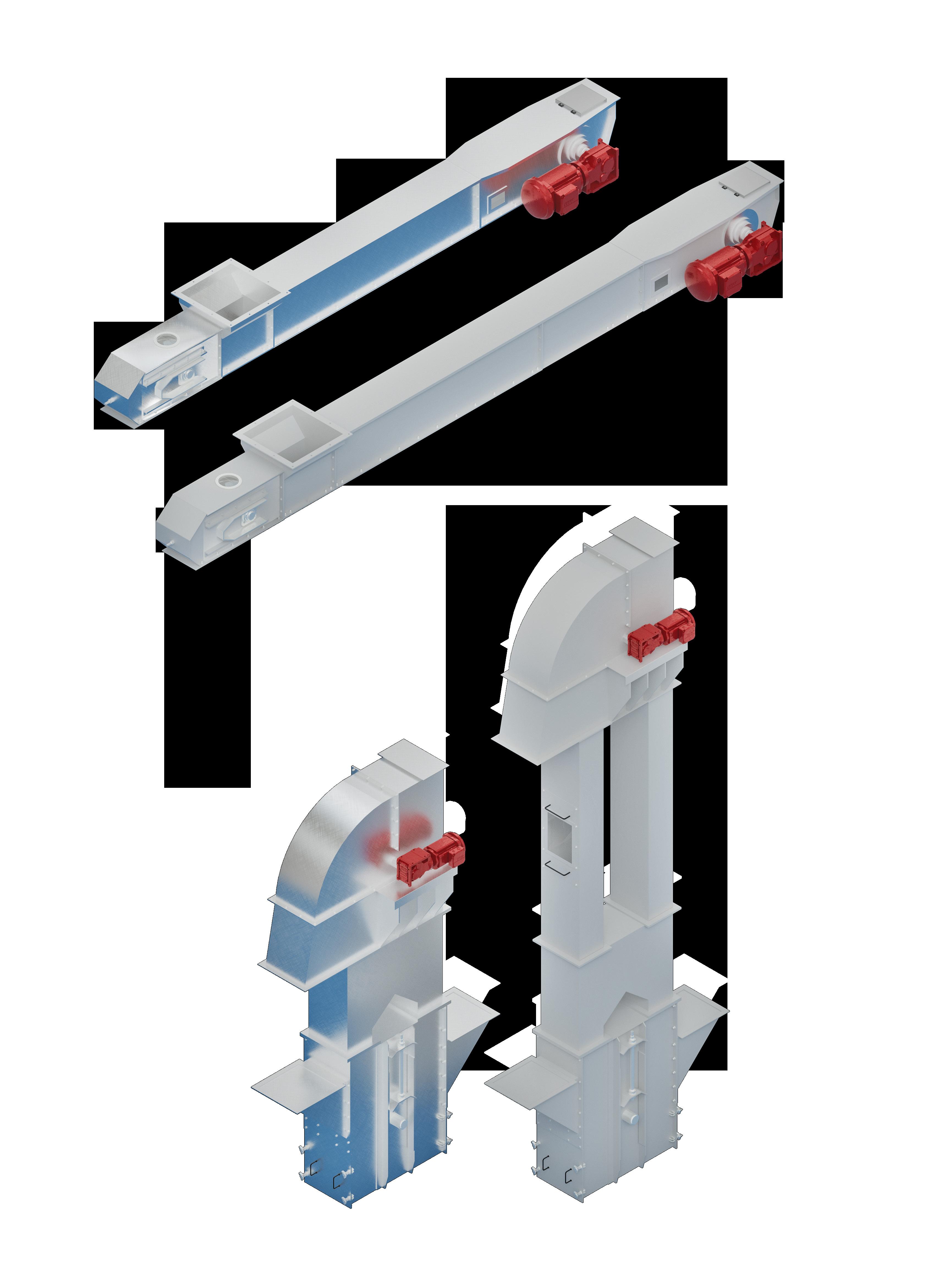
ELEVATOR CONVEYOR
SPECIFICATION
CHARACTERISTICS
* ¹ s t A nd A rd version . A ll dimensions in mm
SPECIFICATIONS TABLE
OPTION
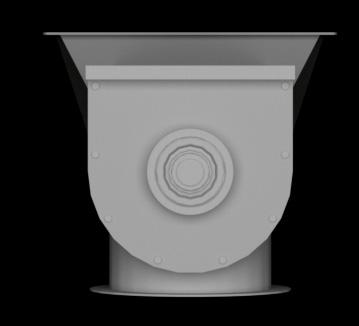

EFFICIENCY
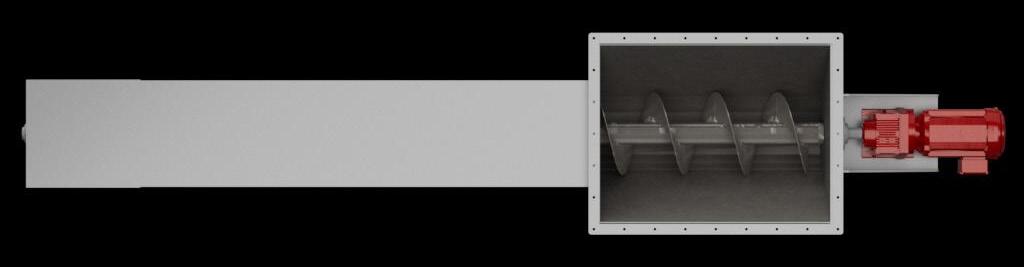
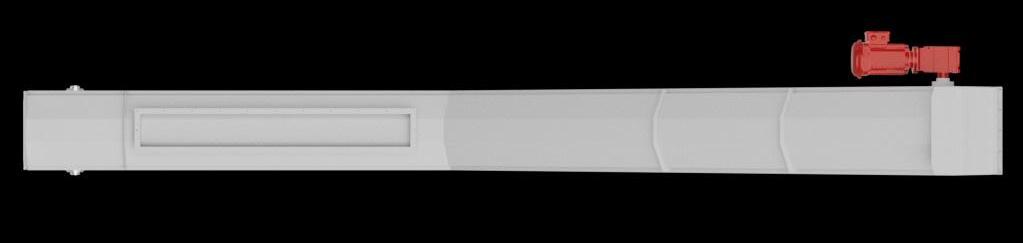
Reliable design with a minimal gap between the casing and the screw blade, preventing product adhesion to the walls of the casing.
The possibility of execution in both carbon and stainless steel to increase the service life and allow use in aggressive environments; the option to have a shaft with a wound blade and fixed paddles for difficult-to-handle bulk materials.
Optional configuration with a frequency converter and product support sensor.
* ¹ s t A nd A rd version . A ll dimensions in mm
SPECIFICATION
CHARACTERISTICS
SPECIFICATIONS
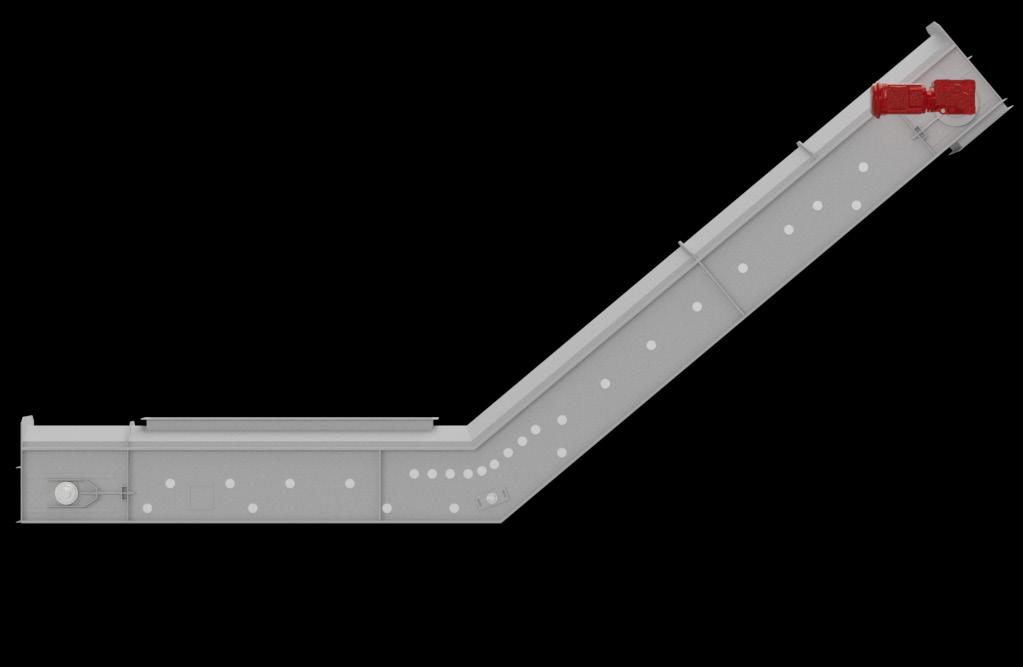
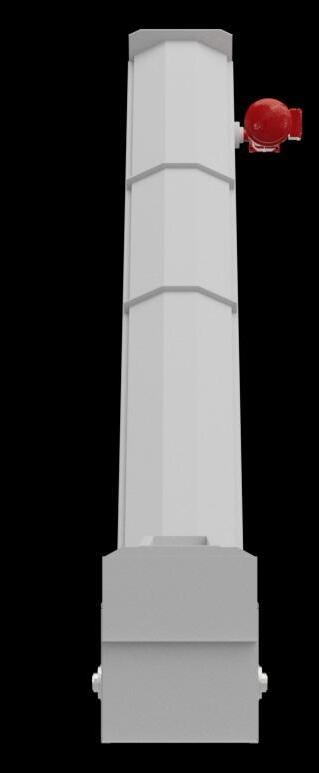
Reliable and enclosed design of all sections, preventing product spillage and dusting in the working area of the production facility.
The possibility of execution in both carbon and stainless steel to increase the service life and enable use in aggressive environments.
Option to manufacture conveyors in straight, L-shaped, or Z-shaped designs with a lifting angle of up to 450°.
The ability to equip conveyors with various types of belts, including those resistant to high temperatures.
Optional configuration with a frequency converter and product support sensor.
SPECIFICATION
CHARACTERISTICS
Sprocket teeth pitch circle
* ¹ s t A nd A rd version . A ll dimensions in mm
SPECIFICATIONS TABLE

EFFICIENCY
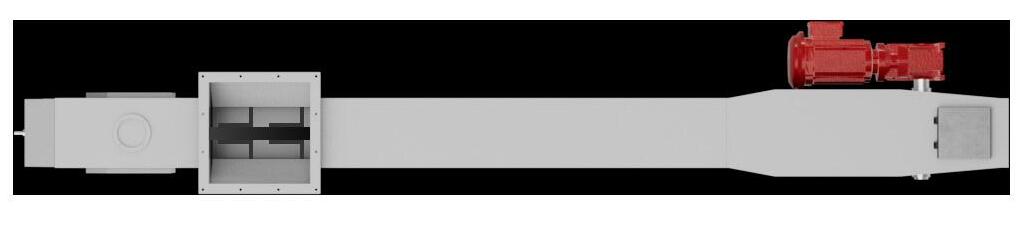
The possibility of execution in both carbon and stainless steel to increase the service life and enable use in aggressive environments.
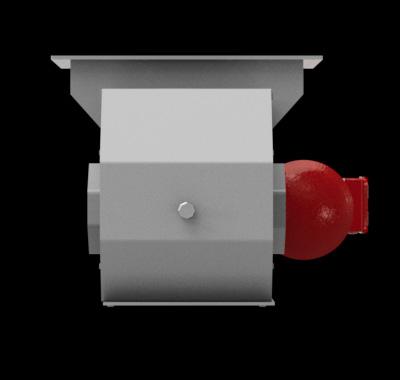
Reliable and durable construction of the section housing and traction component (chain).
Wear-resistant polymer inserts on the chain paddles, which minimize noise during conveyor operation and eliminate residue of raw materials.
Optional configuration with a frequency converter, speed control sensor, and product support sensor.
SPECIFICATION
* ¹ s t A nd A rd version . A ll dimensions in mm
CHARACTERISTICS
SPECIFICATIONS TABLE
OPTION
EFFICIENCY
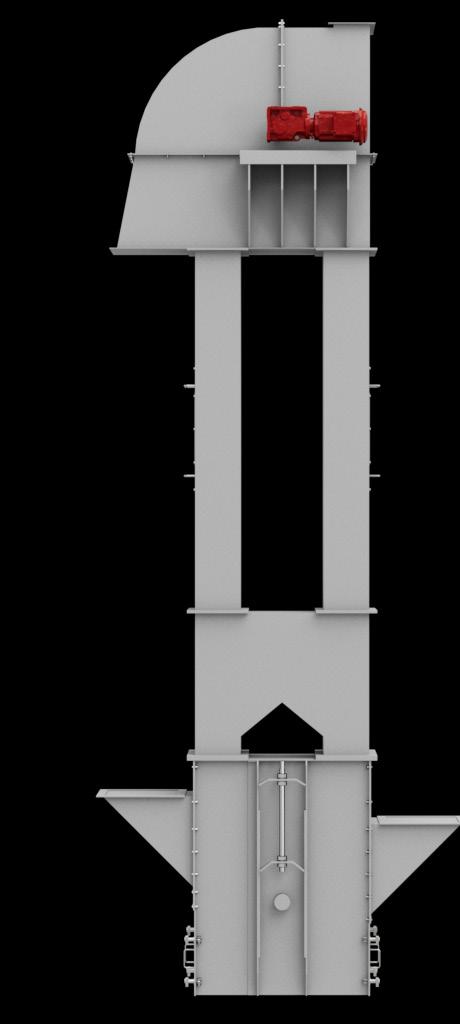
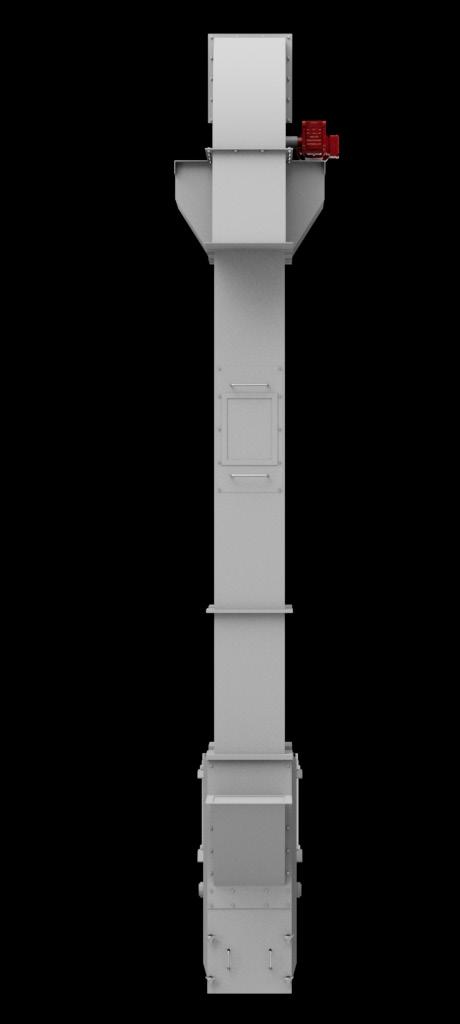
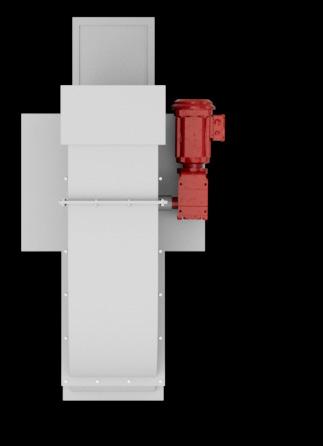
Reliable design with access hatches for easy maintenance.
The possibility of execution in both carbon and stainless steel to increase the service life and enable use in aggressive environments.
The option to equip with various types of belts and buckets (solid metal, polymer).
Optional configuration with speed control sensors, belt misalignment sensors, and product support sensors.
The LKT Group GmbH, with the division LKT WERKE, was founded in 2023 and has since strengthened its market position by offering tailored solutions for companies in the industrial sector. In addition to services and sales, the company operates contract manufacturing, specializing in the production of spare parts and machine engineering.
LKT WERKE— forms a division of the company that focuses on the planning and implementation of turnkey industrial production lines and plants, utilizing automation according to the standards of ‘Industry 4.0’.
Company’s division LKT WERKE
Today, pellet plants, sugar factories, feed manufacturers, and companies in the food industry are among the customers of the company LKT Group GmbH
Introduction of the GOLDENDIE brand
In 2024, the GOLDENDIE brand was introduced, under which the company produces spare parts for industrial equipment.
In 2024, the GOLDENMILL brand was introduced for the distribution of industrial machinery and equipment, enabling LKT Group GmbH to expand its product range and strengthen its market position.
Brand implementation GOLDENDIE
Brand implementation GOLDENMILL
The main objective of LKT Group GmbH is to ensure consistent quality of products and custom-made items in line with customer needs and market requirements. All processes are carried out by highly qualified personnel and strictly monitored by FROSIO-certified inspectors.
As mechanical engineering experts, we focus on developing industrial equipment that finds application in various industries including feed production, biomass, agriculture, chemical and food industries, and industrial waste recycling.
Through close interaction and constant exchange of experience with our customers, we are constantly developing innovative solutions to address potential problems in advance.
LKT Group GmbH, Lindenstraße 48-52, 40233 Düsseldorf, Germany
info@lkt-werke.com
+49 (0) 2119891272