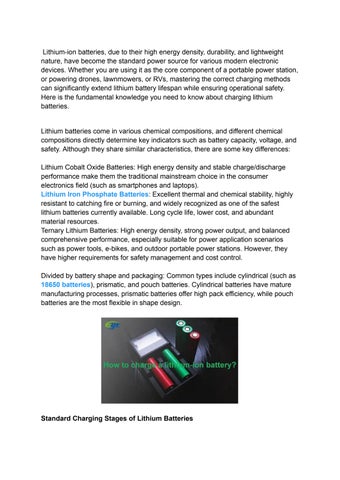
Lithium-ion batteries, due to their high energy density, durability, and lightweight nature, have become the standard power source for various modern electronic devices. Whether you are using it as the core component of a portable power station, or powering drones, lawnmowers, or RVs, mastering the correct charging methods can significantly extend lithium battery lifespan while ensuring operational safety. Here is the fundamental knowledge you need to know about charging lithium batteries.
Lithium batteries come in various chemical compositions, and different chemical compositions directly determine key indicators such as battery capacity, voltage, and safety. Although they share similar characteristics, there are some key differences: Lithium Cobalt Oxide Batteries: High energy density and stable charge/discharge performance make them the traditional mainstream choice in the consumer electronics field (such as smartphones and laptops). Lithium Iron Phosphate Batteries: Excellent thermal and chemical stability, highly resistant to catching fire or burning, and widely recognized as one of the safest lithium batteries currently available. Long cycle life, lower cost, and abundant material resources. Ternary Lithium Batteries: High energy density, strong power output, and balanced comprehensive performance, especially suitable for power application scenarios such as power tools, e-bikes, and outdoor portable power stations. However, they have higher requirements for safety management and cost control. Divided by battery shape and packaging: Common types include cylindrical (such as 18650 batteries), prismatic, and pouch batteries. Cylindrical batteries have mature manufacturing processes, prismatic batteries offer high pack efficiency, while pouch batteries are the most flexible in shape design.
Standard Charging Stages of Lithium Batteries