When Wounds Become Wisdom

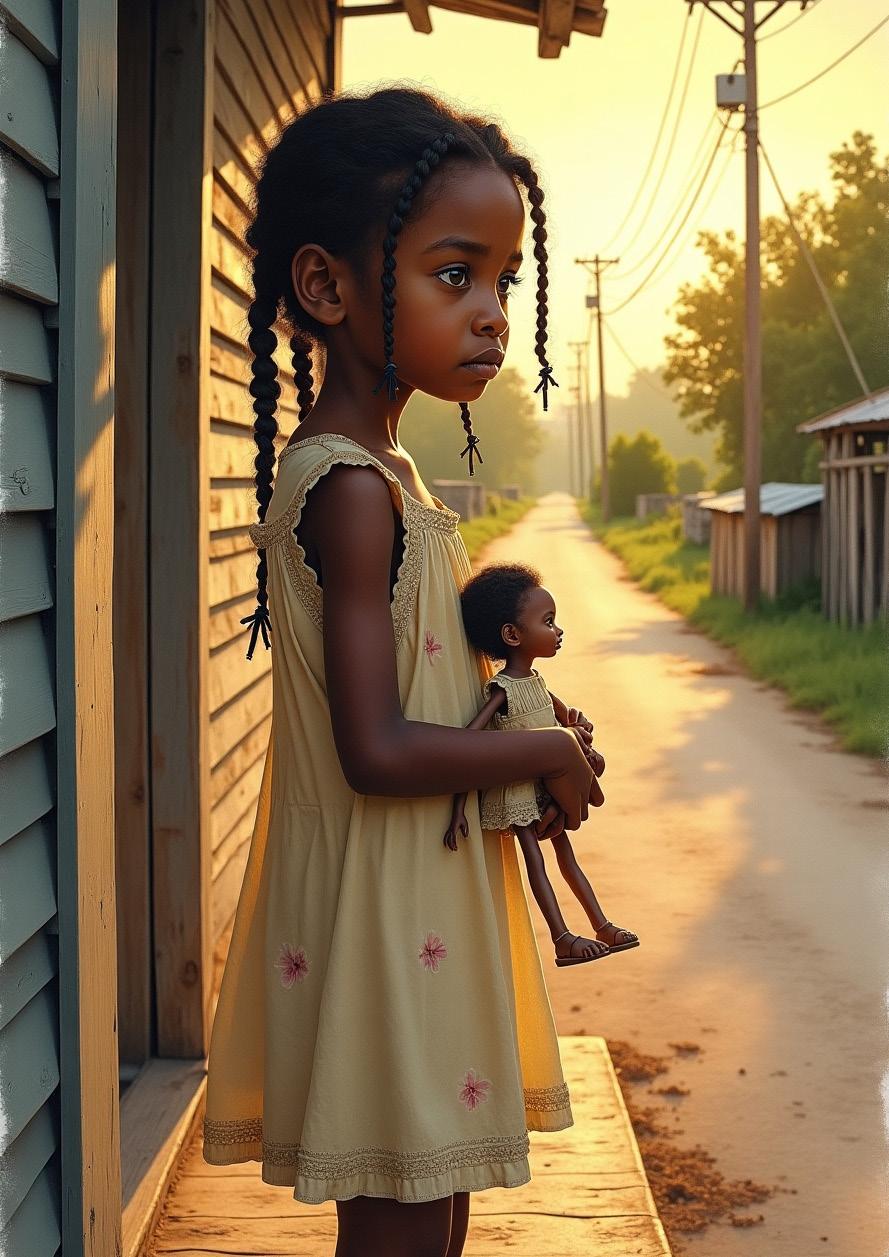
The early morning sun painted golden streaks across the tin roofs of the rural Jamaican village as six-year-old Dhollia stood on the porch of her grandmother’s wooden house, watching for a dust cloud that would signal a vehicle’s approach. Every morning for three years, she had performed this ritual, waiting for her mother to return. “Yuh still lookin’, pickney?” her grandmother’s weathered voice called from inside. “Come get yuh breakfast before it cold.”
Dhollia’s tiny shoulders slumped as she turned back toward the house. The breakfast of ackee and saltfish—Jamaica’s national dish—would taste the same as it had every morning: like abandonment. Her grandmother rarely spoke of why Dhollia’s mother had left her behind three years ago. The whispers she overheard from neighbors told fragments of a story: her mother chasing a man to Kingston, the promise of a better life, the plan to send for Dhollia that never materialized.
Life in rural Jamaica was simple but hard. Dhollia
attended the local school where the teachers were strict and resources scarce. After school, she helped her grandmother tend their small plot of callaloo, thyme, and scotch bonnet peppers. At night, with no electricity, kerosene lamps cast long shadows while her grandmother told Anansi stories—tales of the clever spider from African folklore that survived the Middle Passage and took root in Jamaican culture. “Anansi survive because him clever and patient,” her grandmother would say. “Yuh must be the same, mi love. Yuh time will come.”
The village women doted on her, calling her “the child with old eyes.” They plaited her hair on Sunday mornings before church, where Dhollia sang in the children’s choir with a voice that made even the sternest deacons dab at their eyes.
Then one humid afternoon as Dhollia was coming back from collecting water, she saw an unfamiliar car parked outside her grandmother’s house. Her heart raced as she approached, water sloshing from her bucket onto her faded dress.
A woman stepped onto the porch—elegantly dressed with straightened hair and painted nails, nothing like the village women. For a moment, Dhollia didn’t recognize her own mother.
“Dhollia, mi daughter,” the woman said, arms outstretched. “Yuh so big now. Time fi come home with yuh mother.”
Home. The word echoed strangely in Dhollia’s ears. This woman was offering home, but she was already home with Grandma. The village children played outside as they always did, their laughter carrying on the breeze. The mango tree she climbed daily stood sentinel nearby. The church where she sang every Sunday peeked through the trees.
Yet within hours, her few possessions were packed in a small suitcase, and she was in the backseat of the car, watching her grandmother’s diminishing figure through the rear window, hot tears streaming silently down her face.
Her mother spoke excitedly from the front seat about
The house in Montego Bay was nothing like Dhollia had imagined. Standing two stories tall with peeling yellow paint and a rusted zinc roof, it sat on a small plot of land in a neighborhood where music blasted at all hours and arguments spilled from windows into the street. Her mother had painted it as a palace compared to the simple country home she’d left behind, but reality proved different. Inside, the concrete floors were cracked, water stains mapped the ceiling, and the windows were perpetually shuttered against both the blazing sun and prying eyes.
Her father, a tall man with calloused hands and a permanent scowl, barely acknowledged her arrival. “This is your daughter,” her mother announced, pushing Dhollia forward.
He studied her face as if searching for proof of his bloodline before grunting, “She look like yuh side, not mine.” That first night, lying on a thin mattress in a room she shared with boxes of her mother’s clothing, Dhollia clutched her grandmother’s
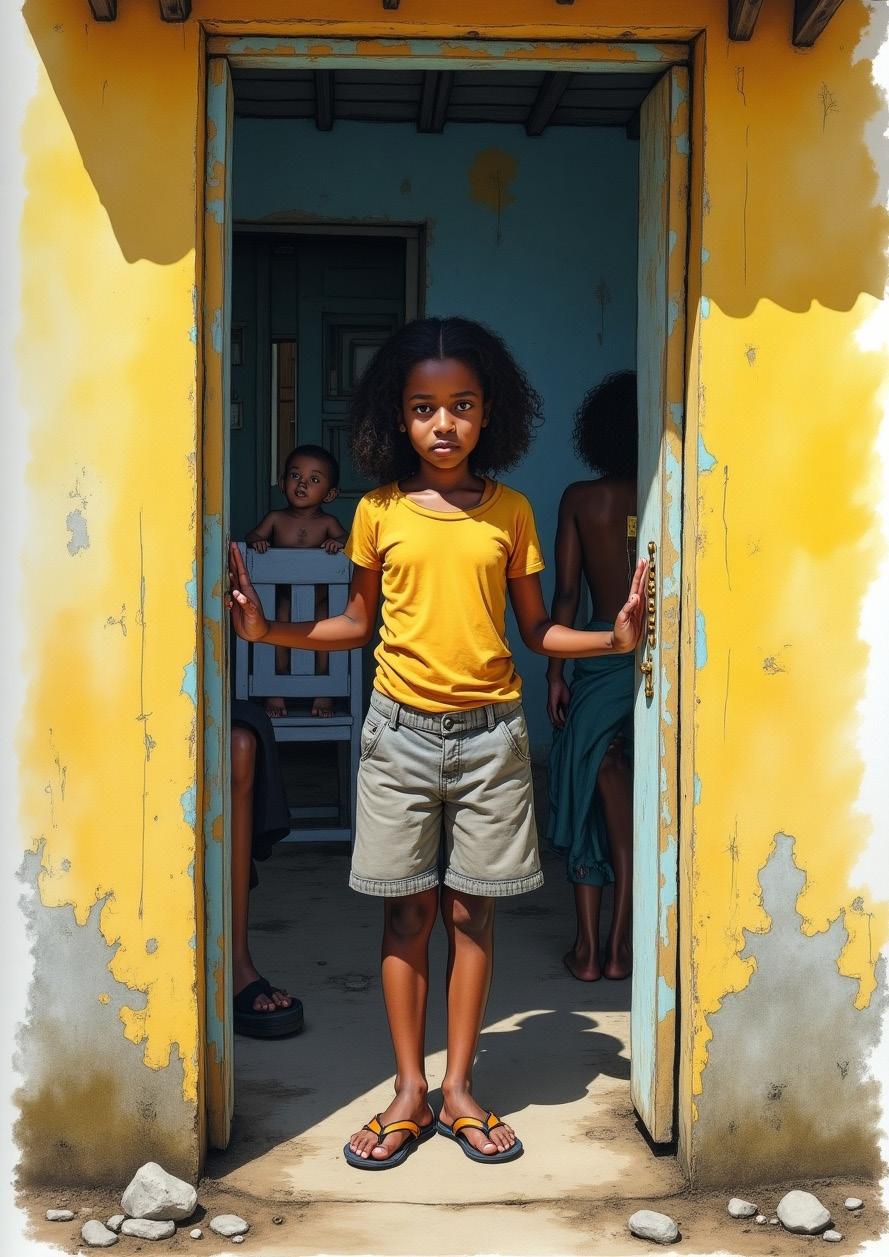
the courage to tell her mother, the response shattered something fundamental in her.
“Stop yuh lying ways,” her mother hissed. “Him is mi brother. Him would never. Is attention yuh seeking?” The betrayal cut deeper than the abuse itself. From that moment, Dhollia understood she was truly alone in this house of broken promises.
When she was thirteen, a new complication arrived—a half-brother, the product of her father’s relationship with another woman. To Dhollia’s astonishment, her mother took in the baby boy after a mysterious confrontation with his birth mother.
“Him is yuh father child, so him is family,” her mother explained, cradling the infant with a tenderness Dhollia had rarely experienced herself. As the years passed, the pattern became clear.
The half-brother could do no wrong, while Dhollia navigated a minefield of criticism and unrealistic expectations. She cooked, cleaned, did well in school despite the lack of support, handled household paperwork—all while being told it was never enough. By seventeen, Dhollia had built walls around her heart thick enough to withstand any emotional siege. She excelled academically as an escape route, pouring herself into studies with single-
minded focus. Education became her tunnel to freedom, a way to ensure she would never be trapped as her mother seemed to be.
Her hands, she discovered, held a natural gift. During a school health fair, a visiting massage therapist noticed how Dhollia intuitively found pressure points while helping demonstrate techniques. “Yuh have healing hands, young lady,” the woman told her. “Is a gift not everybody have.”
For the first time, Dhollia glimpsed a future beyond the suffocating house on the hill—a vision of independence through her own skill and talent. That night, she wrote in her journal: “Mi hands will be mi freedom.”
When Dhollia’s mother announced she was leaving for the Cayman Islands to work, nineteen-year-old Dhollia felt a complex wave of emotions—relief mingled with abandonment, freedom tangled with new responsibility.
“Yuh the woman of the house now,” her mother informed her. “Take care of yuh father and yuh brother. I sending money every month.”
With a power of attorney document hastily signed, Dhollia became the de facto head of a fractured household. Her father, increasingly bitter about his wife’s departure, spent less time at home. Her halfbrother, now eight years old and already aware of his favored status, tested boundaries constantly.
The promised money from Cayman arrived sporadically and never in the amounts promised. Bills piled up. The water department threatened disconnection over a debt dating back to before Dhollia was born.
“Is not my responsibility,” her father growled when she approached him about it. “Yuh mother handle those things.”

But her mother, when called, had ready excuses. “Times hard in Cayman too. Next month will be better.”
Next month never came. Instead, Dhollia took on extra work after graduating from high school, putting her dreams of professional training on hold. She cleaned houses in the tourist areas, saved every dollar, and slowly chipped away at the mountain of debt attached to their home.
The water bill became symbolic of everything in her life—an inherited burden she hadn’t created but was somehow responsible for resolving. Each payment felt like watching her future drain away, drop by drop. Years passed this way. Dhollia’s twenties slipped through her fingers like sand. While other young women her age were building careers or families, she was buried under property tax notices, utility bills, and the endless maintenance of a house slowly crumbling around them.
When she couldn’t afford formal massage therapy training, she apprenticed herself to the woman from the health fair, working at her small spa on weekends in exchange for lessons. Her natural talent flourished under proper guidance. Clients requested her specifically, praising her intuitive understanding of
knotted muscles and stressed bodies.
“Yuh have a gift for sensing where the pain hide,” her mentor told her. “Is like yuh hands can read what beneath the skin.”
The irony wasn’t lost on Dhollia—her ability to sense others’ hidden pain stemmed from a lifetime of carrying her own.
Her half-brother grew into a calculating young man who understood early how to manipulate her mother’s favoritism from a distance. During her rare visits home, he was the devoted son; once she returned to Cayman, he brought women to the house, threw parties that left destruction in their wake, and played innocent when confronted.
When Dhollia was thirty-five, her father suffered his first stroke. Despite years of his emotional distance, she cared for him diligently, managing his medications, cooking foods he could swallow easily, helping him relearn simple movements.
“Yuh a good daughter,” he told her during a rare moment of clarity. “Better than I deserve.” Those words—the closest thing to approval she’d ever received from him—lodged in her heart like a precious stone.
Her mother’s response to his illness was a flurry of
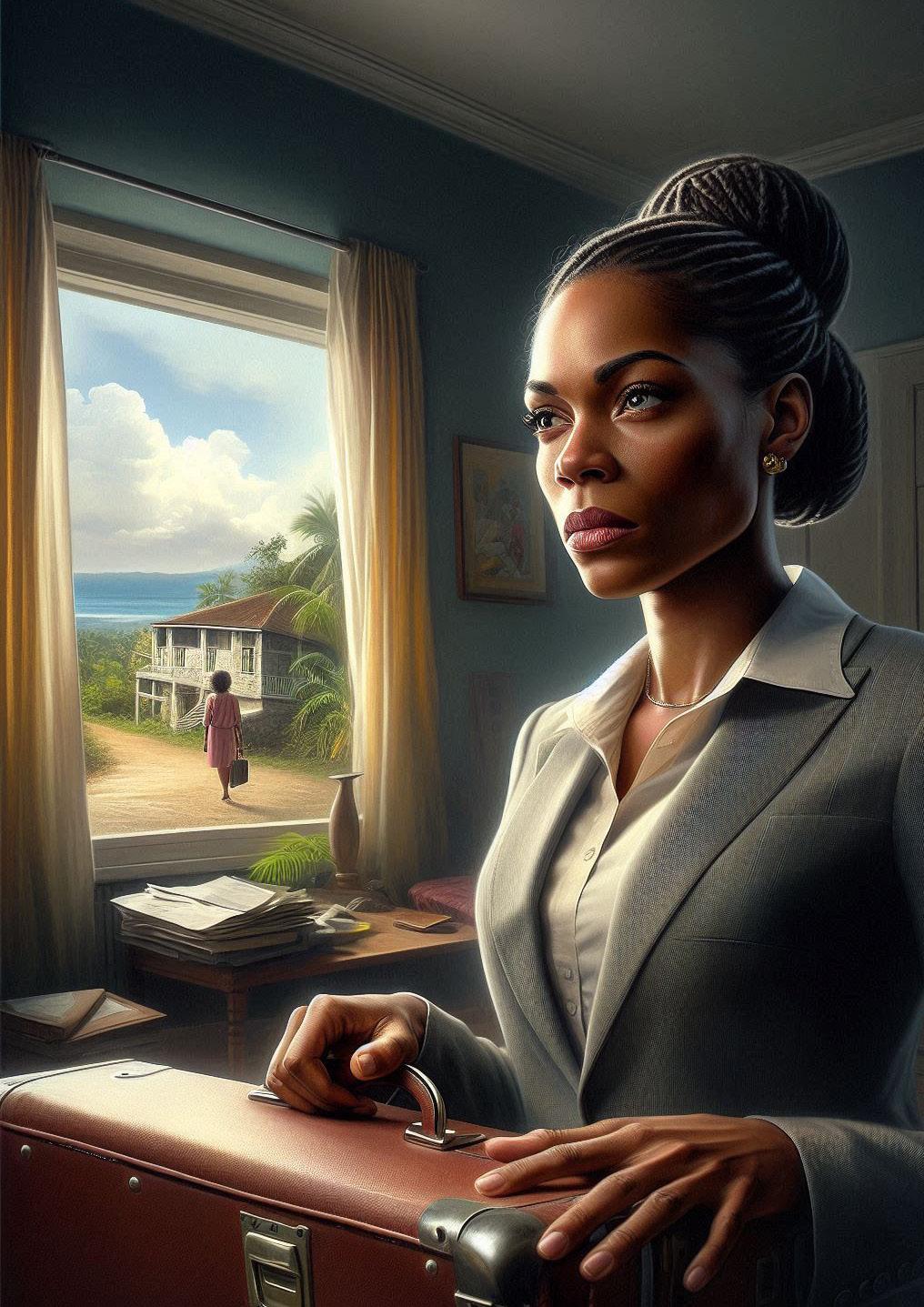
When Dhollia’s mother returned from Cayman in 2022, everything changed. Twenty-two years away had etched new lines in her face but hadn’t softened her heart. She arrived with empty suitcases and emptier promises, expecting to reclaim her position as the family’s matriarch despite her prolonged absence.
“Mi come home to put things right,” she announced, surveying the house Dhollia had maintained for decades.
Within weeks, the power dynamics shifted dramatically. Her mother revoked the power of attorney that had burdened Dhollia with responsibility without authority. Her halfbrother, now thirty-one, was suddenly elevated to trusted advisor and confidant.
The betrayal came swiftly. After years of handling every crisis, paying down debts, and caring for her ailing father, Dhollia found herself effectively demoted in her own home.
“Mi never ask yuh to pay those bills,” her mother said
when Dhollia mentioned the hundreds of thousands she’d invested in the property. “That was yuh choice.”
The court case that followed was Dhollia’s last desperate attempt to assert her rights. Despite winning a judgment that her half-brother should leave the property, her mother brazenly defied the court order, allowing him to remain.
“Blood is blood,” her mother insisted. “Him have rights too.”
When her father died following his second stroke, something inside Dhollia hardened into resolve. The funeral became a theater of hypocrisy—her mother wailing the loudest despite years of absence, her half-brother playing the grieving son when he’d barely acknowledged the old man in life.
Standing at the graveside, watching the community pay respects to a family façade they couldn’t see through, Dhollia made her final decision. She would leave the house that had consumed her youth and her savings. She would rent a small place in Kingston and pour everything into building her own business. The night before she left, her mother confronted her. “So yuh abandoning yuh family now? After all I do for you?”
The absurdity of the accusation might have broken
her once. Now, it merely strengthened her resolve. “I not abandoning anyone,” Dhollia replied calmly. “I choosing myself for the first time.”
In Kingston, she rented a tiny apartment and took a job at an upscale hotel spa while saving for her own place. Her clients—tourists seeking relief from sunburns and locals with bodies stressed from hard work—appreciated her skilled hands and quiet manner.
“You have a gift,” they told her. “Your hands know things.” Yes, her hands knew things—knew how to work until they bled, knew how to hold on when letting go would have been easier, knew how to build despite being given nothing but ruins to work with. Now, finally, her hands were working for her future instead of repairing her past.
But at night, alone in her apartment, the weight of unresolved emotions still pressed on her chest.
The house in Montego Bay represented not just property but her birthright, her investment, her claim to belonging somewhere. Walking away felt both liberating and devastating.
When her mother called months later, voice uncharacteristically subdued, Dhollia nearly didn’t
answer.
“The water cut off again,” her mother said without preamble. “Him not helping with anything. The roof leaking bad.”
The satisfaction Dhollia expected to feel didn’t come. Instead, a complicated sorrow filled her— not for her mother’s predicament, which was selfcreated, but for the broken family that could have been whole, for the love that could have flourished but was poisoned at the root. “I can’t fix it this time,” Dhollia said simply. “Those days are done.”
After hanging up, she sat at her small kitchen table, hands spread before her—the hands that had carried her family, that were now building her business massage by massage, that contained both her past and her future in their lines and calluses. For the first time, she truly understood. Her hands weren’t just for healing others— they needed to heal herself first.
Two years into her new life in Kingston, Dhollia’s small massage practice was thriving. What began as a single room rented by the hour had expanded to a modest storefront with “Healing Hands” painted in bold blue letters across the window. She’d earned her full certification and specialized in therapeutic techniques for chronic pain and trauma recovery. Word of mouth brought a steady stream of clients—from hotel workers with aching backs to professionals with stress-knotted shoulders. But it was her work with the elderly that gave her the deepest satisfaction, as if each gentle session with gnarled hands and stiff joints helped heal something in her own past.
Her apartment, once spartan from necessity, now reflected her growing security—colorful fabrics from the market, a small collection of local art, plants thriving on her balcony. For the first time in her life, she was creating rather than merely maintaining. The call came on a Sunday afternoon. Her half-brother, his voice uncharacteristically subdued, informed her that their mother
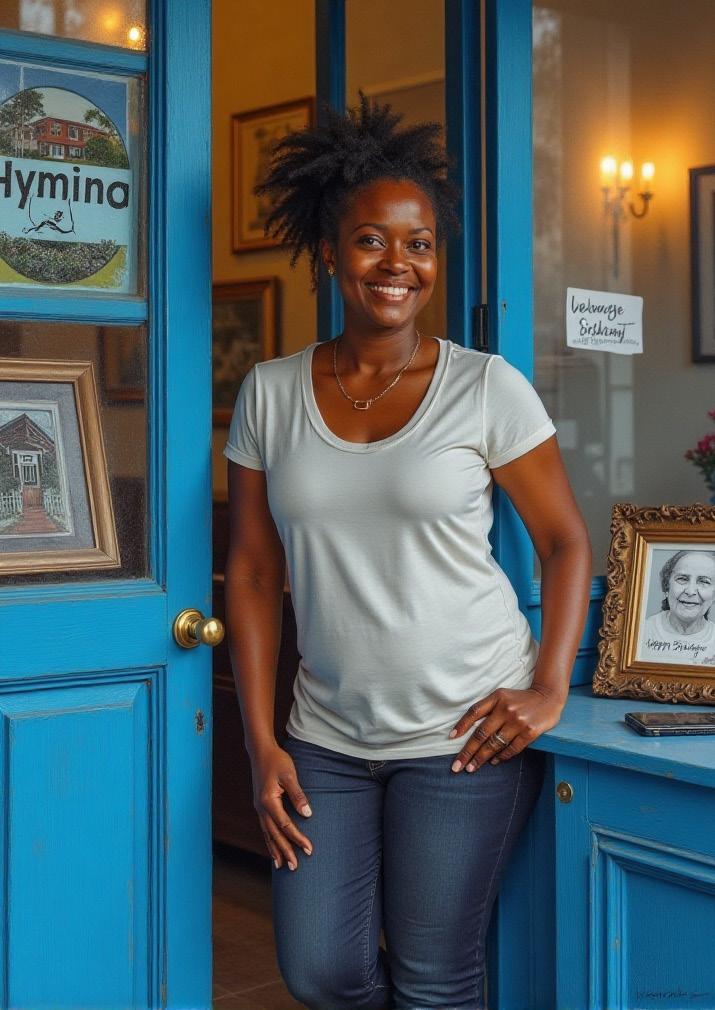
had suffered a severe stroke.
“Doctors say is bad,” he said. “She asking for you.” The hospital in Montego Bay was understaffed and overheated. Dhollia found her mother diminished in a shared room, one side of her face frozen in a permanent droop, her once-commanding presence reduced to labored breathing and halting speech. “Yuh come,” her mother managed, tears tracking down the mobile side of her face.
Seeing her mother rendered vulnerable stripped away years of resentment, leaving raw compassion in its place. Dhollia took her mother’s hand—the same hand that had both struck her and occasionally caressed her hair—and began gently massaging it, working the tension from fingers that could no longer fully extend.
“Mi hands remember how to help,” Dhollia said softly. In the days that followed, Dhollia arranged for her mother’s care, navigating Jamaica’s complex healthcare system with the efficiency she’d once applied to the family’s bills. Her half-brother, faced with the reality of their mother’s condition, revealed his limitations—unable to handle medical decisions, uncomfortable with the physical aspects of care, increasingly absent as her recovery progressed slowly.
When the doctors recommended home care, Dhollia faced her reckoning. The house in Montego Bay—the source of so much pain and conflict—was the logical place for her mother’s recovery. Returning there meant confronting everything she’d walked away from.
The property had deteriorated further in her absence. Climbing the familiar steps, she found the halfbrother had allowed friends to occupy rooms, creating a chaotic environment entirely unsuitable for a stroke patient. “This can’t continue,” she told him firmly. “If mother coming home, things must change.”
To her surprise, he didn’t argue. The reality of their mother’s condition had shaken his sense of invulnerability. For perhaps the first time, he saw the consequences of choices made for shortterm gain rather than long-term stability.
“I never think it would come to this,” he admitted. “None of us did,” Dhollia replied. “But here we are.” What followed was not a miraculous reconciliation but something more realistic—a negotiated peace. Dhollia took a leave from her business to oversee her mother’s initial recovery. Her half-brother, recognizing his limitations, agreed to help with costs rather than care. Together, they began addressing the house’s most critical repairs.
During those weeks, as Dhollia applied her therapeutic skills to her mother’s rehabilitation, conversations long overdue gradually emerged. “Why yuh leave me in the country when I was small?” Dhollia finally asked one afternoon while helping her mother perform hand exercises.
The question hung between them, heavy with decades of hurt. “I was young,” her mother said slowly, each word effortful through her strokeaffected speech. “Afraid. No money. Thought yuh better off with mi mother while I get established.” “Three years is a long time for a child,” Dhollia said. Her mother closed her eyes. “Too long. By time I come back, yuh look at me like stranger.” It wasn’t a full apology, but it was an acknowledgment—perhaps all her mother was capable of offering.
Other truths surfaced gradually. How her mother’s own childhood had been marked by abandonment. How her decision to take in Dhollia’s half-brother stemmed from complicated guilt over her confrontation with his birth mother. How fear of being alone in old age had driven many of her manipulative behaviors.
Understanding didn’t erase the hurt, but it helped
Dhollia place it in context. Her mother had been working from a broken template, repeating patterns without recognizing their damage.
As her mother’s speech improved, they addressed more practical matters. The legal status of the house. The years of bills Dhollia had paid. The court order regarding her half-brother. “The house should have been my inheritance,” Dhollia said. “Instead, it became my burden.”
Her mother nodded slowly. “We fix it now. Make it right.” A lawyer was engaged. New paperwork drawn up. The house would officially transfer to Dhollia upon her mother’s death, with provisions for her half-brother’s temporary residence provided he contributed to maintenance and respected certain boundaries.
When Dhollia returned to Kingston after two months, having arranged ongoing care for her mother, she carried something she hadn’t expected—not forgiveness exactly, but a loosening of the knots that had bound her to the past.
Her business had suffered in her absence, but not irreparably. With typical determination, she rebuilt her client base, occasionally traveling to Montego Bay to check on her mother’s progress and the house’s
repairs.
A year later, as her mother regained enough independence to manage with part-time help, Dhollia’s business had grown enough to hire an assistant. The storefront expanded to include a small training space where she began teaching massage techniques to young people from challenging backgrounds. “Healing hands can build new lives,” she told her students. “I’m living proof.”
On her fortieth birthday, Dhollia sat on the balcony of her Kingston apartment, looking out over the city lights. Her phone buzzed with a message from her mother—a simple “Happy Birthday” followed by a photo of the house in Montego Bay with a freshly painted front door.
The sight brought tears to her eyes. Not because the house represented what she’d lost, but because it now symbolized what she’d reclaimed—not just property, but narrative authority over her own life. Her hands, resting in her lap, had carried her through abandonment, abuse, exploitation, and betrayal. They had paid debts she didn’t incur and maintained a home that didn’t welcome her. They had built a business from nothing and helped heal hundreds of bodies burdened with their own pain.
Now these same hands held something new—the inheritance of peace. Not the perfect resolution of a fairy tale, but the complex, hard-won peace of a real life reclaimed from the ruins of the past.
Dhollia spread her fingers in the moonlight, examining the lines and calluses that told her story more honestly than words ever could. These hands had learned that sometimes healing comes not from holding on, but from knowing exactly when to let go— and when to reach out again on one’s own terms. This, she realized, was her true birthright— not the house on the hill, but the wisdom earned through surviving it.
She texted back a simple “Thank you” to her mother. Then she turned toward her apartment, toward the life she’d built for herself, toward the future that, for the first time, felt truly her own.
Abandoned in rural Jamaica at age three, reunited with a mother she barely knew at six, Dhollia's childhood was built on shifting foundations. In a house of broken promises in Montego Bay, she learned early that even family could not be trusted.
When her mother leaves for the Cayman Islands, twentyyear-old Dhollia inherits a crumbling house drowning in debt, a resentful father, and a half-brother who can do no wrong. For two decades, she sacrifices her own dreams to keep her family afloat, paying down a water bill that becomes the perfect metaphor for her life—an endless debt she didn't create but somehow must resolve. Her one solace? The discovery that her hands possess an intuitive gift for healing. As she develops her skill as a massage therapist in stolen hours between responsibilities, Dhollia glimpses a future beyond the burden of her family's expectations.
When her mother returns after twenty-two years abroad only to betray her in favor of the half-brother, Dhollia faces the hardest choice of her life: continue drowning in inherited obligation or finally claim the right to her own story.
From the lush hills of rural Jamaica to the bustling streets of Kingston, this moving tale explores the true meaning of inheritance—not just the property we claim, but the emotional legacies we choose to carry forward. As Dhollia builds her own business touch by touch, she discovers that sometimes the greatest inheritance is the peace that comes from knowing when to hold on and when to let go.
A powerful story of resilience, reconciliation, and the healing journey of a woman who learns that her most valuable possession has always been in her own hands.