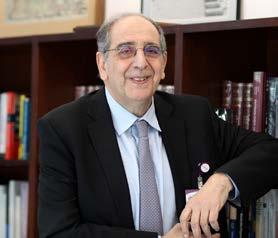
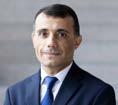
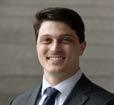
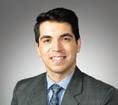
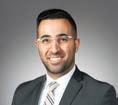
Distinguished Professor and Chairman, Department of Ophthalmology, The Eye & Ear Foundation
Endowed Chair, University of Pittsburgh School of Medicine
Director, Vision Institute, University of Pittsburgh Medical Center
Emeritus Professor of Ophthalmology, Sorbonne Université
Adjunct Professor of Robotics and Bioengineering, Carnegie Mellon University, Pittsburgh
Adjunct Professor of Ophthalmology, Hebrew University of Jerusalem, Israel
Honorary Professor, Institute of Ophthalmology, University College London
A YEAR OF BOLD VISION
The Department of Ophthalmology continues to grow its reputation. Our unique programs, recruitment of top talent, collaboration, innovation, and commitment to care for all are pillars of our success. I am grateful to everyone in the Department and the Eye & Ear Foundation for their contributions. It is a team effort.
2025 was a remarkable year of growth, innovation, and commitment to the science and community of vision care.
THERAPEUTIC INNOVATION
The Department leads gene therapy research, targeting inherited retinal diseases that previously lacked effective treatment options. By leveraging advances in genetic medicine, these trials offer renewed hope to patients and their families, transforming outcomes for conditions once considered irreversible. Advanced functional vision assessments are integrated into these studies to provide a comprehensive evaluation of therapeutic impact and patient quality of life. One such gene therapy trial for wet AMD has shown promising results.
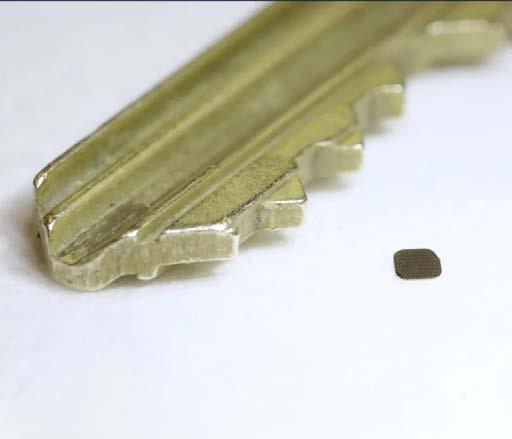
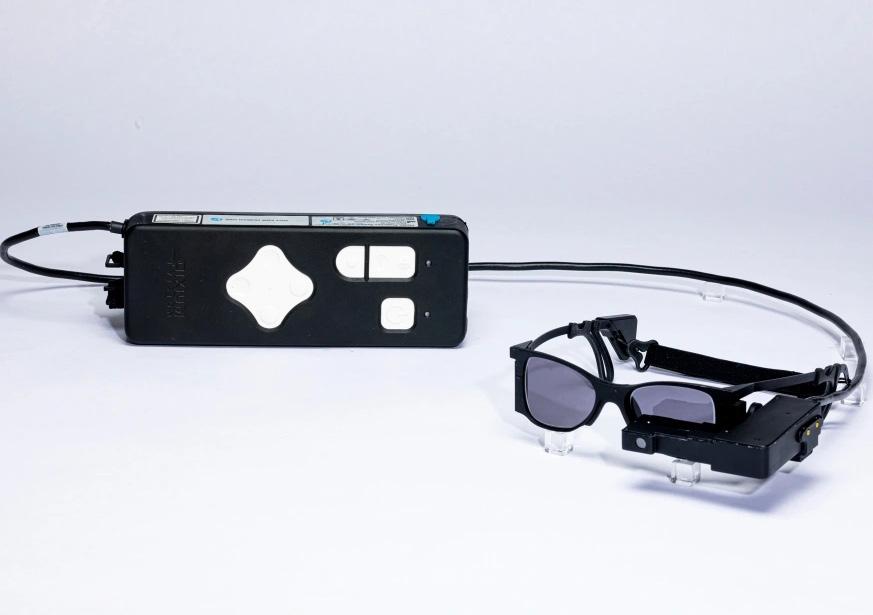
A landmark study I co-led was published in the New England Journal of Medicine about a wireless retinal implant (PRIMA) that can restore central vision in patients with advanced age-related macular degeneration (AMD).
The first artificial iris implanted in a patient was done at UPMC by Ian Conner, MD, PhD, Division Chief of the Glaucoma and Cataract Service.
COMPLEX CARE LEADERSHIP
Ophthalmology
Children’s Hospital of Pittsburgh is the leading center on pediatric corneal surgery in America. The Pediatric Ophthalmology Division performs corneal transplantation techniques including penetrating, endothelial, and anterior lamellar keratoplasty with the latest innovations in corneal neurotization (re-innervation of an anesthetic cornea), offering hope to children for better vision.
Joint teams are performing extensive eye reconstruction procedures for both the anterior and posterior segments. The Oculoplastic and Orbital Surgery Service collaborates extensively with Carl Snyderman, MD, MBA, co-director of the UPMC Center for Cranial Base Surgery, and his team. Doctors on the Orbital Service are known nationally for their leadership in the inclusion of orbital surgeons in skull base surgery teams.
RESEARCH
New talents have joined us from top institutions such as Harvard, MIT, Johns Hopkins, the Moran Eye Center, University of Utah School of Medicine, and King’s College London.
Research now spans over 40 active teams—from corneal studies to groundbreaking projects in brain-based vision restoration. Highlights include bold “moonshot” initiatives, like the world’s first eye transplantation project (ARPA-H THEA program) and development of artificial and optogenetic vision in completely blind patients. These efforts are supported by major funding agencies, world-class faculty recruits, and collaborative consortia with institutions like Stanford.
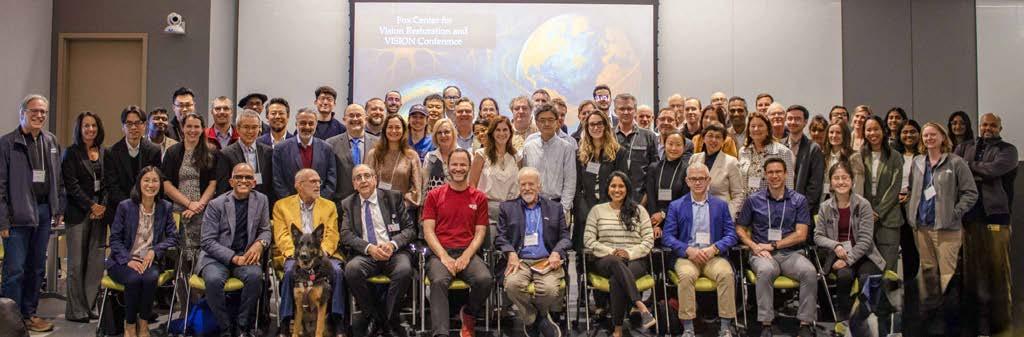
The Louis J. Fox Center for Vision Restoration has grown into a global leader in optic nerve regeneration. The Center launched a new lab, the Gilbert Family Foundation Validation Research Lab. The Center hosts annual conferences gathering the best teams from leading institutions; this year’s was focused on ARPA-H and on Neurofribromatosis.
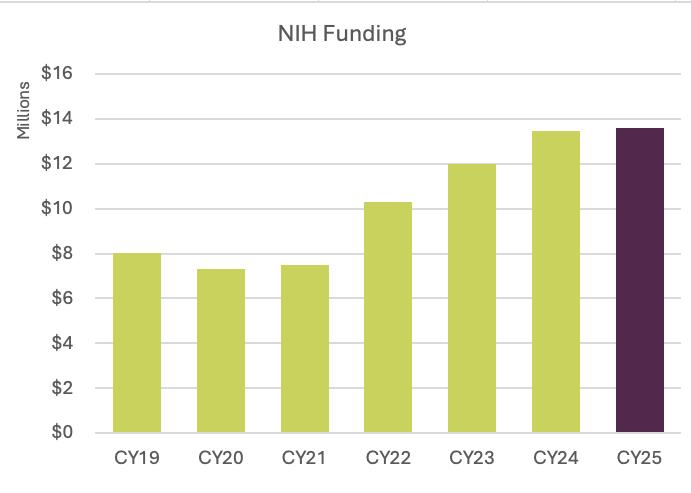
Other highlights include the Department’s leadership in artificial intelligence to predict retinal disease progression. We enhanced our NIH grant acquisition (we are now ranked 5th in the country), and technology transfer successes such as new clinical trials and spin-off companies.
PATIENT EXPERIENCE
The Vision Institute’s core mission is “retaining and regaining vision—the joy of seeing—for all.” Over the past year, the Department provided care to 155,000 patients, marking a significant increase in patient volume and demonstrating resilience amid national health challenges.
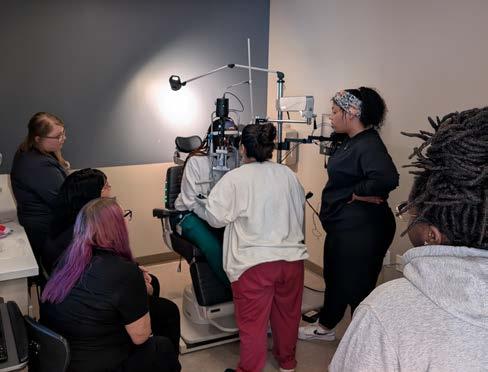
Unique programs like Advance Practice Providers, Tech Training (the only one in Pittsburgh and the only one following this particular model), Dry Eye Clinic, and the Neuro Ophthalmology Clinic were created with patients in mind. The Dry Eye Clinic and Neuro Ophthalmology Division are the only ones in the region. Strategic initiatives, such as the launch of an acute care clinic open from 8 am to 10 pm and plans for a 24/7 service, have addressed a major unmet need. The Urgent Care Clinic is one of the few in the country dedicated to the care of eye emergencies, one of only two in the state, and the only one in the region. Our clinics also have cutting-edge technology, like the Refractive Clinic, which offers the most comprehensive suite of refractive solutions in the region. It is the first in the area to offer SMILE.
In our clinics, patients undergo extensive evaluations to ensure their treatment and care are just right for them. We have a dedicated state-of-the-art suite for clinical trials, where eligible patients can potentially help their conditions and contribute to advance science.
COMMUNITY CARE
The Vision Institute is committed to reaching underserved populations.
Our one-of-a-kind patient navigator program directly addresses patients’ needs by utilizing community resources and assisting patients with transportation, insurance applications, and more.
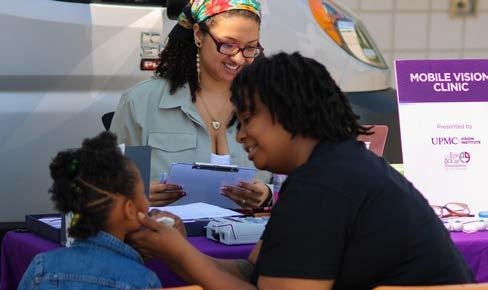
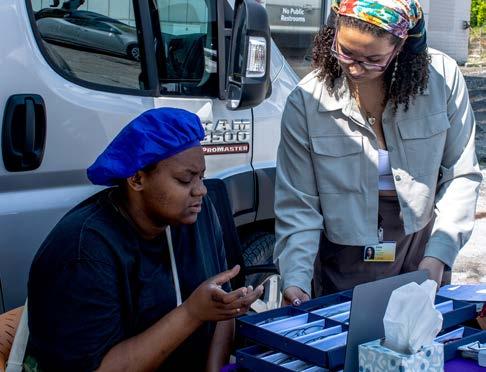
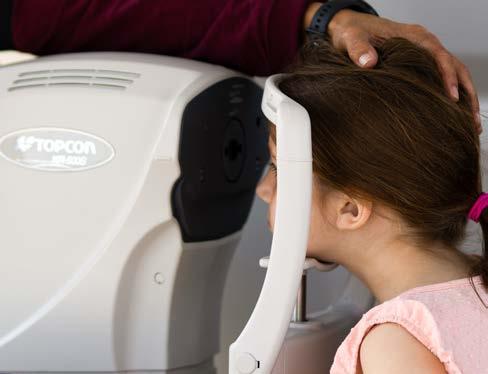
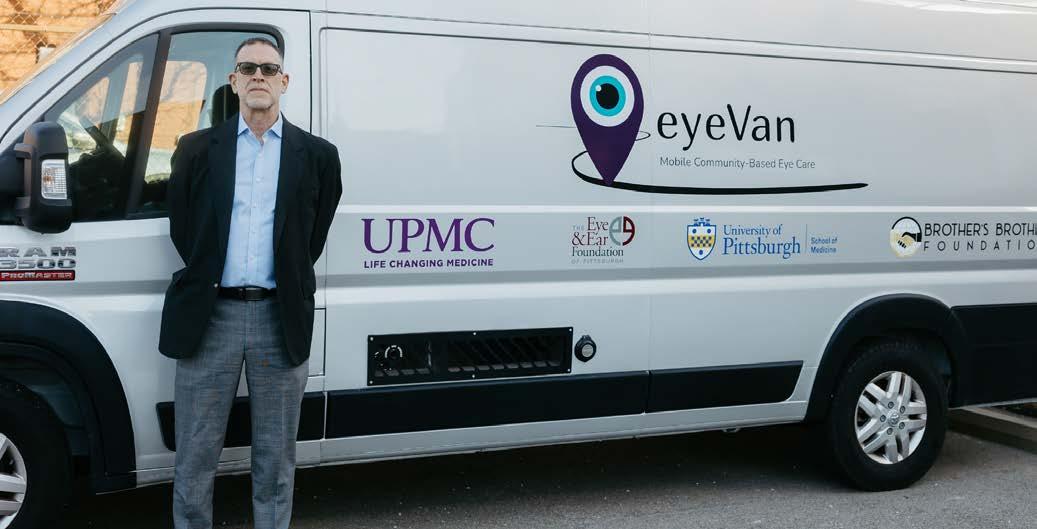
Innovations led by Jake Waxman, such as mobile care initiatives like Eyes on Wheels and the eyeVan, deliver care directly to patients, especially those who are elderly or face transportation barriers. The continued participation in the Mission of Mercy event and the success of the first Community Vision Day offering free care for all have demonstrated our dedication and ability to address community needs.
Around 50 web-connected retinal cameras in primary care clinics and community organizations throughout Pittsburgh allow onsite staff to quickly identify atrisk patients and capture retinal images that are then viewed by ophthalmologists at the Vision Institute. They then relay their treatment recommendations to the community health providers. This innovative program produces over 7,000 images annually, reaching thousands who otherwise might never see an eye doctor.
Programs targeted at social determinants of health are making a measurable difference. Research led by Dr. Andrew Williams has shown that loss to follow-up in glaucoma can triple the risk of blindness—insights that are shaping interventions for enhanced patient engagement and outcomes.
EDUCATION AND WORKFORCE DEVELOPMENT
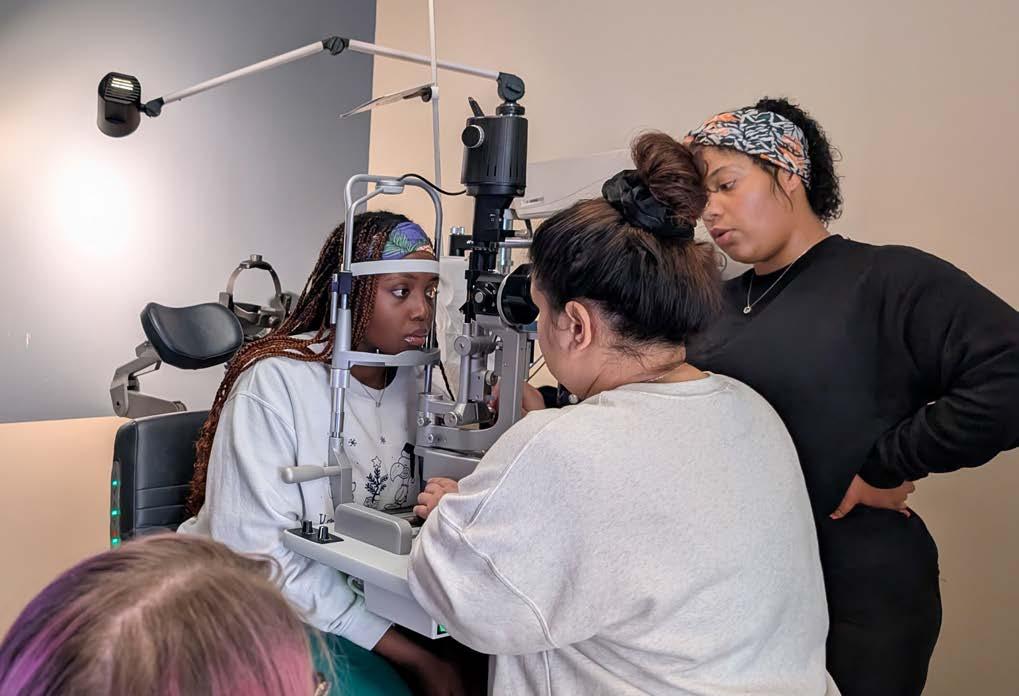
Education remains a pillar of the Department’s success. The Department hosted nearly 800 applicants for its competitive residency program and continues to offer very competitive fellowships as well as new fellowships in emerging subspecialties. New workforce training initiatives empower both clinical and community staff, including supporting students from underserved neighborhoods through summer research opportunities and nationally validated ophthalmic technician programs. Our group of 10 Advance Practice Providers is now fully trained and will continue to grow, improving access and coverage.
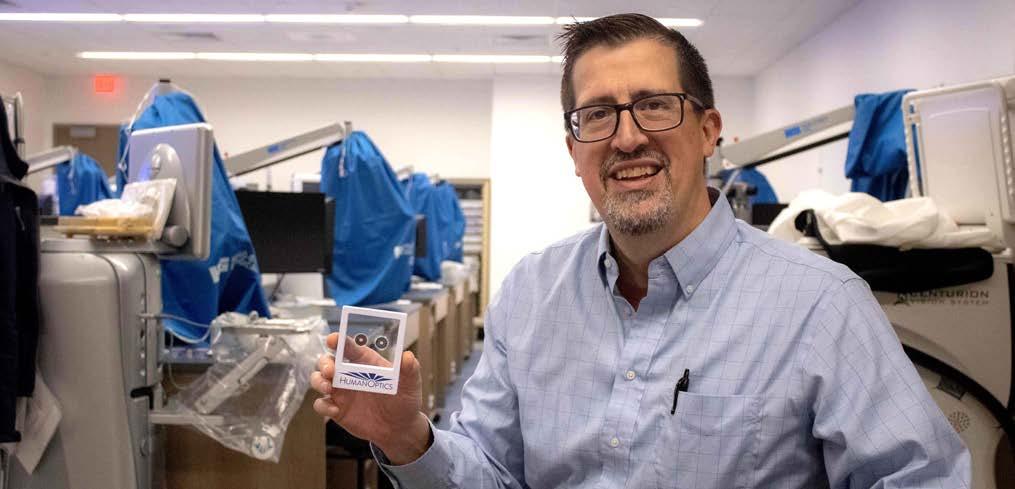
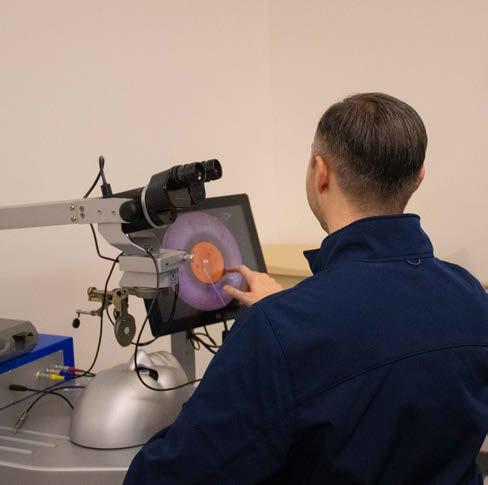
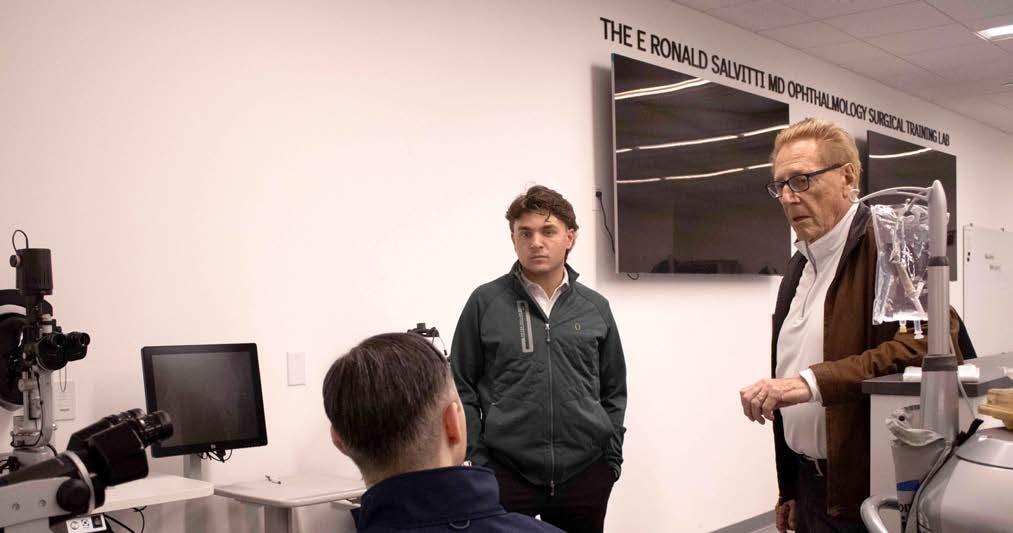
Our E. Ronald Salvitti, MD Surgical Training Lab, a state-of-the-art facility,is the hub of ophthalmic surgical education with 15 fully equipped stations and three simulators.
LOOKING FORWARD: OPPORTUNITIES AND CHALLENGES
The Department’s dynamic partnership with the Eye & Ear Foundation, community organizations, and a growing network of collaborators positions it as a leader in the fight to end preventable blindness and cure an increasing number of conditions.
Among our essential goals are to create sustainable models for chronic and rare diseases, further AI integration, and expand health literacy interventions to empower patients and caregivers.
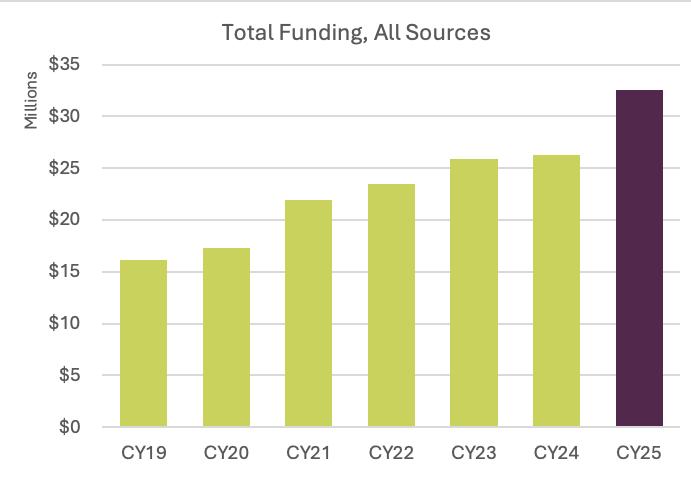
Despite impressive achievements, we are facing challenging times and are more than ever cognizant of needing continued funding as we want to attract and retain top talent.
Breakthroughs in Restoring Vision: UPMC Vision Institute
An era of innovation is underway at the UPMC Vision Institute: restoring vision to blind patients, once thought beyond the reach of modern medicine. Under the leadership of José-Alain Sahel, MD, the University of Pittsburgh Department of Ophthalmology is becoming a global leader in visionary research, developing therapies that have the potential of moving closer than ever to curing blindness.
MOONSHOT: EYE TRANSPLANTATION AND OPTIC NERVE REGENERATION
One of the most ambitious initiatives underway is the first-ever program to make whole-eye transplantation a biological reality. In collaboration between a consortium led by Jeffrey Goldberg, PI at Stanford and the Louis J. Fox Center for Vision Restoration, the team is tackling challenges once deemed impossible— such as maintaining donor eye viability, preventing immune rejection, and regenerating the optic nerve. Recent milestones include the first reported success in regrowing optic nerves, raising hopes for procedures that may restore sight to those with severe ocular trauma or disease. Team: José-Alain Sahel, MD, John Ash, PhD, Leah Byrne, PhD, Ethan Rossi, PhD, Shauhua Pi, PhD, Rakié Cham, PhD, Ian Sigal, PhD, Hēth Turnquist, PhD, Walter Schneider, PhD, Steve Badylak, DVM, PhD, MD, George Hussey, PhD, Mario Solari, PhD, Alan Watson, PhD, Yijen Wu, PhD, Silke Becker, MD, Larry Benowitz, PhD, Kun-Che Chang, PhD, Takaaki Kuwajima, PhD, Silmara de Lima, PhD, S. Tonya Stefko, MD, and Boris Rosin, MD, PhD
VISION THROUGH BRAIN STIMULATION: CORTICAL (ARTIFICIAL) VISION
For those who have lost connection between their eyes and brain, the Vision Institute researchers are pioneering technologies that restore vision directly through the cortex. Collaborating with top scientists, Dr. Xing Chen’s group has achieved the successful implantation of 1,000+ electrodes in primate studies— paving the way for human trials and partnerships with innovators like Blackrock Neurotech. These devices promise to create visual perceptions by bypassing damaged ocular pathways altogether. Team: Xing Chen, PhD, J. Patrick Mayo, PhD, James Herman, PhD, and Marlene Behrmann, MD
TURNING LIGHT INTO SIGHT
As published in the New England Journal of Medicine, a wireless retinal implant (PRIMA) has restored central
vision in patients with advanced age-related macular degeneration. It allows for use of microscopic chips implanted under the retina, allowing users to read and recognize environments previously lost to darkness.
OPTOGENETICS
Clinical trials, co-led by José-Alain Sahel, MD, have enabled blind patients to regain the ability to read text. Building on advances in molecular biology, the Department is a recognized leader in optogenetics— using gene therapy to make surviving retinal cells responsive to light. Team: José-Alain Sahel, MD, Joseph Martel, MD, Boris Rosin, MD, PhD, Leah Byrne, PhD, Morgan DiLeo, Marlene Behrmann, PhD, Or Shemesh, PhD, Valentina Emiliani, PhD (Paris), and Botond Roska, PhD (Basel)
FROM THE LABORATORY TO LIFE-CHANGING RESULTS
The most important breakthroughs are happening not just in the lab, but in the lives of real patients. Across the spectrum of strategies—from transplantation to brain-computer interfaces and cutting-edge gene therapies—our priority is to deliver hope and significant outcomes to those with vision impairment. Recent successes in patients treated with retinal prostheses or optogenetics give confidence that this is within reach.
LOOKING AHEAD
Thanks to the support of the Eye & Ear Foundation along with UPMC and Pitt leadership, the Vision Institute and its collaborators worldwide are firmly at the frontier of restoring vision. The Department’s commitment to innovation, scientific rigor, and compassion ensures this work not only pushes the boundaries of what’s possible but stands to transform lives for years to come.
CLINICAL OPERATIONS
The Expanding Role of Specialized Clinics and Programs
The Vision Institute distinguishes itself through a range of specialized clinical programs and a strong focus on patient-centered care. Clinical operations are anchored by dedicated specialty clinics that address complex and underserved ophthalmic conditions, leveraging the expertise of multidisciplinary teams and advanced technology. Among these programs, the Advance Practice Providers (APP) model stands out, with APPs integrated into urgent eye care and inpatient consult teams, ensuring timely and comprehensive management of acute diagnoses.
Additionally, the Vision Institute sustains its robust clinical research enterprise by fostering innovative projects, cultivating new leadership roles, and deepening industry partnerships. These efforts not only advance ophthalmic care but also contribute to the education and professional growth of clinical teams. By maintaining a strong focus on specialty clinics—such as the Dry Eye Clinic, which utilizes advanced diagnostic and therapeutic modalities— the Vision Institute can continue to offer highly specialized services that set it apart from more generalized providers.
Jerome I. Finkelstein, MD, FACS, serves as Executive Vice Chair of Clinical Operations, helping guide these initiatives. Through multidisciplinary expertise, advanced technology, and targeted clinical programs, the Vision Institute continues its mission to improve patient outcomes, advance the field of ophthalmology, and support the professional development of its staff.
CLINICAL RESEARCH: SPOTLIGHTING ACHIEVEMENT
Our research enterprise continues to thrive, with several individuals and initiatives deserving special recognition. Notably, the appointment of Jay Chabblani, MD, as Director of Clinical Research and the pioneering
work in oncology of Farzad Jamshidi, MD, PhD, mark significant milestones. In the coming year, we will spotlight selected research projects, major grant recipients, and innovative clinical trials. Special attention will be given to research funding sources and industry partnerships, as these are increasingly vital to sustaining our scientific leadership.
COMPREHENSIVE SERVICE: RECRUITMENT AND RESIDENT TEACHING
This year had notable recruitment efforts, and we strengthened our comprehensive service and reinforced its foundational role in education. The comprehensive team remains the backbone of our teaching program, supporting both new hires and ongoing professional development.
THE DRY EYE CLINIC
Dry eye disease is a prevalent and often underdiagnosed condition that can cause significant discomfort and visual disability. Recognizing the need for focused care, Sabrina Mukhtar, MD, MPH, helped establish a Dry Eye Clinic at the Vision Institute— an initiative that exemplifies the adaptability and responsiveness of clinical operations to changing patient demographics.
Unlike traditional ophthalmology clinics, the Dry Eye Clinic offers specialized diagnostic modalities such as tear osmolarity testing, meibography, and lipid layer analysis, as well as advanced therapeutic interventions like thermal pulsation, intense pulsed light (IPL), and autologous serum tears. The Dry Eye Clinic is the region’s only specialized clinic of its kind and often collaborates closely with other specialists, given the systemic associations and multifactorial nature of dry eye disease.
THE NEURO-OPHTHALMOLOGY CLINIC
Gabrielle Bonhomme, MD, was once the region’s only neuro-ophthalmologist, but now leads a team comprising of Drs. George Park, Peter Mortensen, and Islam Zaydan. The clinic has a 300-mile referral base and a growing reputation. Patients are referred by various specialists who trust the team’s expertise in managing both urgent and long-term complex neuro-ophthalmic cases.
Faculty members are leaders in the field, frequently contributing to national and international conferences, publishing in peer-reviewed journals, and participating in multicenter research studies. Their expertise extends beyond clinical practice into education—mentoring residents, fellows, and medical students who aspire to advance neuro-ophthalmology’s impact globally.
THE URGENT CARE CLINIC: MEETING GROWING DEMANDS
Backed by the expertise of the UPMC Vision Institute, the Urgent Eye Care Clinic specializes in sudden eye problems. Our specially trained first responders provide eye care that most Pittsburgh-area emergency rooms or urgent care centers don’t offer. The Urgent Care Clinic is one of the few in the country dedicated to the care of eye emergencies, one of only two in Pennsylvania, and the only one in the region. It is currently open from 8 am to 8 pm Monday through Friday. The goal is to eventually provide acute vision care 24 hours a day, seven days a week.
The Department’s clinical programs—including the Neuro-Ophthalmology Clinic, Refractive Clinic, Technician Training Program, and Urgent Care Clinic— reflect the Vision Institute’s unique dedication to advancing patient care, education, and innovation. Drawing on our team’s specialized expertise, state-of-the-art technology, and hands-on learning opportunities found only at the Vision Institute, we are redefining the standard for vision care in our region. Our commitment ensures every patient receives exceptional treatment, while we actively mentor and inspire the next generation of ophthalmic professionals through programs you won’t find anywhere else.
This Clinical Operations section provides a list of the clinics within the Vision Institute along with their unique services. For continual updates, please visit ophthalmology.pitt.edu.
Comprehensive Eye Service
The Comprehensive Eye Service (CES) provides high-volume, general ophthalmic care at the UPMC Vision Institute. We deliver the full spectrum of evaluation and management for common and complex eye conditions. CES serves as a clinical hub for patients who do not require subspecialty care and acts as an initial access point into the ophthalmic care system for those requiring further evaluation.
In 2024–2025, led by CES Division Chief, Dr. Evan “Jake” Waxman, the clinic was supported by Aarti Bishnoi, MD, Michael Chang, MD, Jerome Finkelstein, MD, FACS, Anna G. Gushchin, MD, Scott Portnoy, MD, and Marshall Stafford, MD, with the notable addition of Vaneet Singh, MD, who trained at the Post Graduate Institute of Medical Education and Research in Chandigarh, India, and is now serving patients at UPMC Presbyterian and Dr. Sarah Michelson, a University of Michigan Kellogg Eye Center alumna, renowned for her dedication to teaching cataract surgery to residents.
TRANSFORMATIVE ROLE IN RESIDENT EDUCATION AND SURGICAL TRAINING
CES is pivotal in shaping the next generation of ophthalmologists. Faculty members are deeply involved in resident instruction, precepting a substantial portion of cataract surgeries and providing direct mentorship in both clinical and surgical settings. They also supervise residents during critical inpatient consultations and fast-paced emergency department shifts, fostering hands-on learning and clinical acumen.
In recognition of their extraordinary commitment to education, Dr. Jake Waxman and Dr. Michael Chang received prestigious teaching awards from residents this year, underscoring CES’s dedication to nurturing surgical and clinical excellence.
EMERGENCY AND INPATIENT CARE LEADERSHIP
CES faculty deliver expert attending-level coverage for ophthalmic emergencies and inpatient consults at UPMC Presbyterian and UPMC Mercy. Their oversight ensures seamless coordination between residents, advanced practice providers (APPs), and continuity of care from acute hospital settings to outpatient follow-up, safeguarding patient outcomes every step of the way.
INTEGRATION AND INNOVATION: URGENT EYE CARE CENTER COLLABORATION
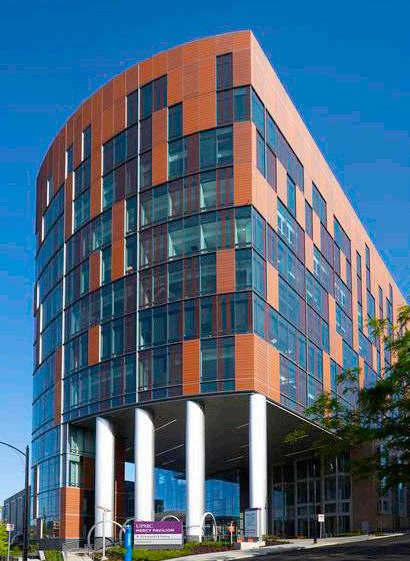
CES is intricately linked with the Urgent Eye Care Center (UECC) at the Mercy Pavilion, providing same-day diagnoses and management for urgent eye conditions. CES attendings actively supervise UECC operations, optimizing triage, diagnostics, and the transition to subspecialty or ongoing care. This partnership has streamlined urgent care pathways and broadened access for patients throughout Pittsburgh.
FACULTY DISTINCTIONS AND STRATEGIC VISION
CES faculty continue to earn local and national recognition, including appearances in Pittsburgh Magazine’s “Best Doctors” list and presentations of research and educational innovations at national conferences. The recruitment of Dr. Singh and Dr. Michelson not only enhances inpatient and surgical capabilities but also propels CES toward new horizons, with ongoing initiatives in tele-ophthalmology and improved referral pathways aiming to expand access to quality eye care across Western Pennsylvania.
Dry Eye Clinic - Cornea Service
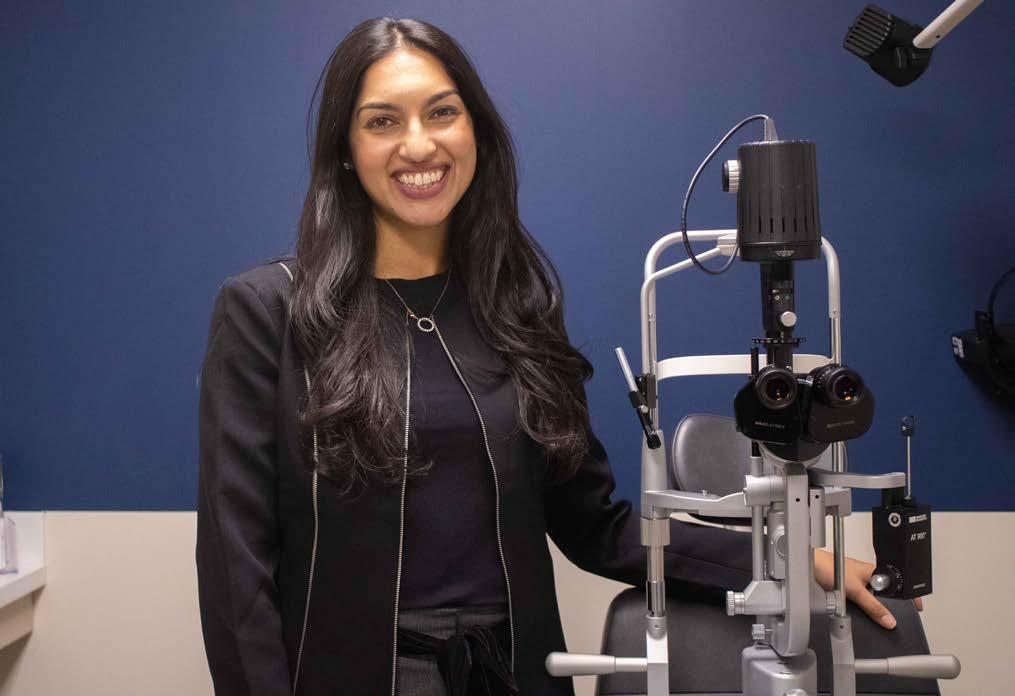
The Dry Eye Clinic at the UPMC Vision Institute was founded in 2023 by Sabrina Mukhtar, MD, MPH, Assistant Professor of Ophthalmology, who completed her residency and fellowship at the University of Pittsburgh. The Center is run by her, and Marissa Heary, OD, who are driven by a commitment to patient-centered care with a dedicated center where treatment for dry eye and ocular surface disease could be standardized, collaborative, and cutting edge.
Since its opening, the Dry Eye Clinic has been a huge success and the only such clinic in the region. Patients have voiced satisfaction in being able to receive comprehensive dry eye care and have access to all technologies in one place.
The Clinic distinguishes itself through state-of-the-art imaging and diagnostics, performed by highly trained staff who specialize in ocular surface disease. What truly sets the Dry Eye Clinic apart is its multifaceted team, blending the perspectives of ophthalmology and optometry for a holistic view of patient care. Partnerships with rheumatology and other specialties facilitate an integrated approach to cases where ocular surface disease intersects with systemic health.
Cornea Service
In the dynamic field of ophthalmology, the Cornea Service stands as a leader in clinical practice, research innovation, and community engagement. As part of a preeminent institution recognized for excellence in patient care, our Division continues to set high standards in restoring sight, advancing scientific understanding, and educating future ophthalmic specialists. This annual report highlights our achievements and strategic direction, underscoring the Division’s multifaceted strengths and ambitions for the coming year.
MEET THE CORNEA TEAM
Our Cornea Division is driven by a group of dedicated clinicians, scientists, and surgeons who exemplify leadership, innovation, and excellence in patient care, research, and education. Each team member brings specialized expertise and a deep commitment to advancing vision restoration and ocular health. Together, their collaborative spirit and diverse skill sets form the foundation of our Division’s achievements in clinical excellence, groundbreaking research, and community outreach.
Vishal Jhanji, MD, serves as the Division Chief of the Cornea Service at the UPMC Vision Institute. Dr. Jhanji leads a group of eminent corneal specialists. Other members of the Cornea Division include Alex Mammen, MD, Deepinder Dhaliwal, MD, L.Ac, Gaurav Prakash, MD, Roheena Kamyar, MD, and Sabrina Mukhtar, MD, MPH. Together, they are committed to providing excellent patient care while pursuing academic eminence.
COMMITMENT TO RESTORING VISION
Central to our mission is an unwavering dedication to clinical excellence. Annually, the Cornea Division manages thousands of patients with diverse corneal pathologies including dry eye disease, corneal infections, corneal dystrophies, corneal degeneration, and complex ocular surface disease.
• Corneal Transplantation: Our surgeons utilize the latest techniques, including Endothelial Keratoplasty (DMEK and DSAEK), Partial thickness or Lamellar Keratoplasty (DALK), and Penetrating Keratoplasty (PK), tailoring each procedure to the individual patient. We closely monitor outcomes, achieving notable success in graft survival, visual rehabilitation, and patient satisfaction. We work closely with the leading eye banks in the country to provide timely care to our patients.
• Ocular Surface Disease Management : Our multidisciplinary team addresses severe dry eye, corneal ulcers, and autoimmune ocular surface disorders such as ocular cicatricial pemphigoid. The Sjogrens Clinic is a unique setting to provide multidisciplinary care from Ophthalmology and Rheumatology during the same appointment. The Cicatricial Disease clinic provides cornea, oculoplastics and rheumatology care to our patients.
• Clinical Trials and Innovation: Dr. Jhanji serves as the Co-Director of the Clinical Trials Division. The Cornea team actively participates in pivotal clinical trials, offering patients access to emerging therapies and contributing critical data to the wider ophthalmic research community. Recent studies focus on corneal ectasia, neurotrophic keratopathy, infectious keratitis, and ocular microbiome.
Patient feedback consistently highlights the Division’s compassionate approach and clinical expertise, while referring physicians value our collaborative problem-solving in challenging cases. We prioritize patient-centered communication and empowerment throughout the care continuum.
(continued)
DRIVING DISCOVERY AND TRANSLATIONAL IMPACT
The Cornea Division boasts a robust research portfolio, spanning basic science, translational research, and clinical investigations. Our laboratories foster innovation and rigor, generating advances that inform practice worldwide.
• Funderburgh Corneal Regeneration Project : Leveraging stem cell technology and bioengineered scaffolds, our team is developing novel approaches to restore corneal transparency and function. Interdisciplinary collaborations have yielded innovative implants and wound-healing agents now progressing through clinical trials. The project has been funded extramurally by the National Eye Institute.
• Ocular Microbiome: With support from the National Eye Institute, Dr. Jhanji and Dr. Anthony St. Leger aim to map the ocular surface microbiome in health and disease, identifying microbial signatures linked to infection, inflammation, and healing. These findings promise to transform diagnostic and therapeutic strategies, moving toward precision medicine in corneal care.
• Translational Clinical Studies: Drs. Mammen, Dhaliwal and Jhanji lead the clinical arm of the Charles T. Campbell Ocular Microbiology Laboratory, a nationally renowned lab dedicated towards service and teaching in the field of ophthalmic microbiology. The Cornea team works closely with Dr. Robert Shanks, Dr. Eric Romanowski and Dr. Jonathan Mandell to advance research in ocular microbiology.
• Patient-focused care: The Cornea Clinic collaborates with colleagues in other specialties including Dermatology, Oncology and the Cardiac Amyloid Center, to provide care to patients who have complex ocular diseases due to other diagnoses. These include patients with graft versus host disease, eczema, and use of high-risk medications such as checkpoint inhibitors.
• Leadership and Collaboration: The members of the Cornea team take pride in being a part of leading ophthalmic organizations including the American Academy of Ophthalmology, ARVO, Cornea Society, and Eye and Contact Lens Association. Collaborative efforts with the ophthalmic community and our industry partners have placed our Cornea team on the world map.
• Latest technology : The clinical service is complemented by our state-of-the art machines including biomechanics, esthesiometry, and swept source optical coherence tomography. These technologies enable us to provide comprehensive corneal care to our patients.
Refractive Surgery Center
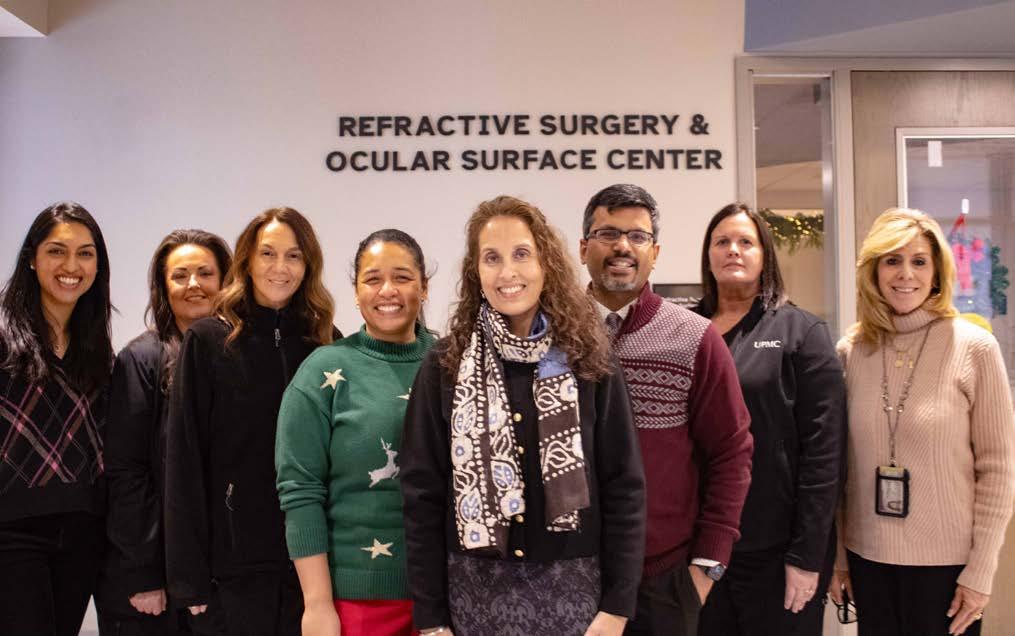
Refractive Surgery Center continues to build on its long-standing reputation as the premier destination for refractive care in Western Pennsylvania. Over the past year, the Center expanded its clinical footprint, broadened its procedure offerings, and strengthened its infrastructure to support a new era of refractive excellence. Positioned at the intersection of clinical innovation and patient-centered care, our team remains committed to elevating visual outcomes, increasing access to refractive services, and training the next generation of refractive specialists.
A UNIFIED, HIGH-PERFORMING REFRACTIVE TEAM
Our refractive program thrives on a collaborative culture led by Deepinder K. Dhaliwal, MD, LAc, Professor of Ophthalmology, and Chief of Refractive Surgery. This year Dr. Dhaliwal also served as President of the International Society of Refractive Surgery, which is a testament to our faculty’s reputation and stature in the international arena. The entire faculty team—consisting of Drs. Dhaliwal, Gaurav Prakash, Sabrina Mukhtar, Vishal Jhanji, and Alex Mammen—offers a depth and breadth of refractive expertise unmatched in the region. With a “safety-first” model, the Center continues to uphold a strict patient-selection philosophy, recommending refractive procedures only when they are safe, appropriate, and individually beneficial.
LAUNCH OF SMILE AND NEXTGENERATION REFRACTIVE TECHNOLOGIES
A major milestone for 2025 was the introduction of SMILE (Small Incision Lenticule Extraction) to the UPMC Vision Institute. With its minimally invasive profile, rapid recovery, and biomechanical advantages, SMILE now complements our LASIK, PRK, and Evo ICL offerings. SMILE is ideal for patients seeking a flapless option or those whose lifestyle demands maximal corneal stability. The first “SMILE Day” at UPMC marked a turning point for the program, reflecting both technological progress and strong patient interest. UPMC Vision Institute has the only advanced Visumax 800 laser in the entire state and is the only center offering SMILE in Western Pennsylvania.
Dr. Prakash will lead this clinic next year with an integrated approach focused on higher-order aberration analysis, wavefront-guided treatments, and therapeutic laser procedures for visual rehabilitation. The clinic will address complex conditions such as corneal scars and other challenging pathologies. Our therapeutic laser portfolio includes wavefront-guided PRK, PTK, and blended ablation techniques for irregular corneas, all enhanced by high-resolution imaging to deliver highly customized care.
(continued)
With advanced diagnostics and meticulous treatment planning, this clinic represents a forward-looking model for refractive care and provides a dedicated home for patients with complex visual needs.
PROCEDURE PORTFOLIO AND INNOVATIONS
The Center now offers the most comprehensive suite of refractive solutions in the region, but our true distinguishing strength lies in how we use them. Every patient receives a deeply individualized evaluation that integrates clinical history, visual goals, corneal architecture, ocular surface health, and long-term lifestyle needs. By combining advanced diagnostics with expert interpretation and thoughtful counseling, we ensure that each patient’s treatment plan is fully customized and never constrained by a single device, platform, or algorithm. This commitment to personalized decision-making ensures that care is tailored, precise, and uniquely aligned with the needs of every individual who comes through our doors. The following options for elective vision correction make us one of the few academic centers in the U.S. to provide this level of breadth and options to our patients:
LASIK (LASER-ASSISTED IN-SITU KERATOMILEUSIS)
All laser LASIK remains one of our most soughtafter procedures and is performed using advanced femtosecond and wavefront-guided excimer laser platforms. Customized ablation profiles are tailored using aberrometry, tomography, and wavefrontguided diagnostics, allowing precise correction of myopia, hyperopia, and astigmatism. Patients benefit from exceptional accuracy, rapid healing, and stable refractive outcomes.
EVO ICL (IMPLANTABLE COLLAMER LENS)
Evo ICL implantation provides a premium intraocular solution for patients who have myopia and astigmatism and wish to avoid keratorefractive surgery. The advanced ultra-thin, pliable collamer lens is positioned behind the iris and in front of the natural crystalline lens, preserving corneal structure and reducing postoperative dryness. The Evo ICL delivers excellent optical quality and long-term stability, even in patients with high myopia or thin or irregular corneas.
CAIRS, INTRASTROMAL RINGS, AND CORNEAL IMPLANTS
We continue to expand our capabilities in stromal biomechanical enhancement with CAIRS (corneal allogenic intrastromal ring segments), synthetic intrastromal rings, and selective implant-based procedures. These options will provide refractive and structural optimization for patients with keratoconus, post-refractive ectasia, or severe irregular astigmatism and complement our comprehensive keratorefractive strategies.
RESEARCH, EDUCATION, AND CLINICAL TRIALS
The refractive surgical faculty continue to advance innovation through:
• Participation in FDA trials, most recently, the TENEO Hyperopic LASIK clinical trial (sponsored by Bausch and Lomb)
• Early adoption and key-opinion-leader involvement in emerging refractive technologies
• Ongoing collaboration, teaching, and research with national and international faculty
• Representing the UPMC Vision Institute in international and national meetings as invited faculty including the International Society of Refractive Surgery, the American Academy of Ophthalmology, the European Society of Cataract and Refractive Surgery, the World Cornea Congress, and the American Society of Cataract and Refractive surgery meetings.
Glaucoma Service
Understanding the complexity of glaucoma and its significant impact on patients, the Glaucoma Service— led by Ian Conner, MD, PhD—takes a comprehensive approach that combines clinical excellence, community outreach, and academic research.
The Division’s philosophy is rooted in patient-centered care. Every member is dedicated to treating not only the disease but also the person living with glaucoma. This commitment shapes daily practices and longterm objectives, ensuring each patient benefits from personalized assessments, advanced treatments, and continuous support.
RESEARCH AND CLINICAL INNOVATION
The Glaucoma Service is a leader in research, partnering with Department scientists to create new diagnostic tools, treatment options, and preventive strategies. The UPMC Vision Institute at Mercy Pavilion was established to promote collaboration between clinicians and researchers. Glaucoma Service physicians regularly contribute to and recruit for research projects such as developing advanced imaging technologies with Ethan Rossi, PhD; investigating the biomechanical causes of vision loss
in glaucoma with Ian Sigal, PhD, MASc; and working with Takaaki Kuwajima, PhD, on next-generation therapies aimed at preventing—and even restoring— vision loss. These research efforts are central to the missions of both the UPMC Vision Institute and the Glaucoma Division.
Other recent projects have included the investigation of novel imaging technologies for very early glaucoma detection, studies on genetic risk factors, and the development of personalized treatment protocols. Andrew Williams, MD, and the Healthy Vision Lab study barriers to eye care in urban and suburban areas, especially since many patients stopped seeking medical help after COVID. His team aims to improve both access and quality of eye health locally and nationally.
COLLABORATION AND ENRICHMENT
A cornerstone of the Division’s work is the diverse strengths of its members:
• Patient Education: The Division prioritizes educating patients about glaucoma, its risks, and the importance of regular screenings. Through workshops, seminars, and educational materials, the team empowers individuals to take charge of their eye health.
(continued)
“What I am most proud of with this group is the spirit of camaraderie in the shared mission of delivering the highest level of care to all our patients, no matter which physician they see. Each of our doctors may have a unique personality and perspective, but our patients can be confident that we are working in concert to ensure their best outcomes. I could not be more fortunate to be able to work with this diverse, compassionate, and skilled group of doctors.” - Ian Conner, MD, PhD
• Professional Development: Two fellowship-trained glaucoma specialists graduate each year to provide care nationally (and at times internationally). By hosting conferences and lecturing, they foster a culture of lifelong learning and excellence.
MEET THE TEAM
Focusing on the surgical management of complex glaucoma and cataract cases, Ian Conner, MD, PhD, specializes in caring for patients with prior ocular trauma or surgeries, tailoring individualized treatment strategies to optimize outcomes. Dr. Conner also directs the surgical glaucoma fellowship.
The newest member of the glaucoma service, Zachary Nadler, MD, manages the full spectrum of glaucoma and cataract disease and serves as the Associate Program Director for the ophthalmology residency training program.
Bringing expertise centering on clinical and surgical management and imaging in angle-closure disease, Rajesh Sasikumar, MD, has led and collaborated on numerous international studies spanning anteriorsegment imaging, OCTA technologies, and glaucoma diagnostics. Dr. Sasikumar’s international career— spanning Singapore, India, the UAE, and the United States—has equipped him with deep clinical insight across a wide range of racial and ethnic populations, enriching both his diagnostic acumen and surgical decision-making.
With a subspecialty expertise in Neuro-Ophthalmology, cataract and refractive disease, and glaucoma, Tarek Shazly, MD, is enhancing the Division’s capacity to address complex patient needs.
Artificial Iris
Providing medical and surgical management of glaucoma and cataracts, John Swogger, DO, serves as the Director of Information Services (Electronic Medical Records). He oversees the integration of electronic medical records, streamlining clinical workflows, and supporting data-driven decision-making to advance patient care.
Lillian To, MD, provides comprehensive care for patients with glaucoma and cataracts at both UPMC and the VA Medical Center in Pittsburgh. This includes both surgical and medical management of complex diseases. In addition to patient care, Dr. To serves as VA Site director for the ophthalmology program and is a critical member on the committee for resident education for both Ophthalmology and the UPMC Transitional year programs, focused on educating the next generation of ophthalmologists to help care for the ever-increasing number of patients with glaucoma.
Delivering medical and surgical management for glaucoma and cataracts, Andrew Williams, MD, performs both conventional procedures, such as trabeculectomy and glaucoma tube shunt implantation, and state-of-the-art minimally invasive glaucoma surgeries (MIGS). Dr. Williams also founded the Healthy Vision Lab, which leverages epidemiology, big data analytics, and health services research to address public health challenges in ophthalmology—including improving follow-up for chronic eye diseases and investigating the social determinants of vision health.
In December 2025, the first artificial iris implantation at UPMC was performed by Ian Conner, MD, PhD, Division Chief of the Glaucoma and Cataract Service. The case involved a patient with a history of significant blunt ocular trauma sustained approximately 18 months prior. The patient had previously undergone two reparative procedures aimed at globe preservation. Following stabilization, Dr. Conner proceeded with implantation of an intraocular lens and a custom artificial iris to enhance both visual function and cosmesis.
Dr. Conner reported that the surgical procedure was technically successful, although optimal functional and aesthetic outcomes will require several months for full assessment.
The CUSTOMFLEX ArtificialIRIS, per manufacturer description, is a foldable, patient-specific iris prosthesis fabricated from medical-grade, colorized silicone similar to materials used in intraocular lenses. The device is individually customized to replicate the patient’s native iris morphology and pigmentation.
The primary indications for artificial iris implantation are traumatic aniridia, with a smaller subset of cases involving congenital iris defects. Long-term durability is anticipated, with the expectation that the prosthesis will provide lifelong function post-implantation.
Low Vision Service
The Low Vision Service consists of a multidisciplinary team of providers that evaluates and provides comprehensive rehabilitation to patients of all ages with all degrees of vision loss or impairment. They evaluate and address all aspects of vision loss including loss of central (detailed) vision, loss of (restricted) peripheral vision, night blindness, loss of contrast sensitivity, glare and light sensitivity, loss of color perception and many others.
LOW VISION SERVICE TEAM AND FUNCTIONAL REHABILITATION
Director and Assistant Professor William Smith, OD, leads the team which includes Kateryna Sanders, OD, Ariel Wong, OD, occupational therapist and UPMC Rehabilitation Institute Low Vision Team Leader Holly Stants, MS, OTR/L, SCLV, CLVT, and Laura Troxell, MOT, OTR/L, to assess patients’ functional visual ability and help them adapt to daily life. The Low Vision Service utilizes a Life Skills Apartment and Mobility/Sensory Garden to translate the recommended treatment plan into functional training activities.
ADVANCING RESEARCH IN FUNCTIONAL VISION LOSS AND REHABILITATION
Research regarding functional vision loss, vision rehabilitation, and vision restoration occurs in the state-of-the-art facility known as StreetLab, led by Rakié Cham, PhD, and José-Alain Sahel, MD, Chair of the Department of Ophthalmology. The StreetLab’s mission is to study individuals with vision loss to gain a better understanding of visual behaviors and mobility to enable better treatment/rehabilitation strategies for the overall improvement in independence and quality of life for people with low vision. A multidisciplinary team assesses patients’ needs and perception of their impairments.
The Low Vision Service also has active research with respect to driving. An immersive driving simulator is used to evaluate and assess vision and driving by providing feedback to the participants and evaluator. The Low Vision Service is certified by the Pennsylvania Department of Motor Vehicles to evaluate and fit bioptic spectacle mounted telescopes for patients with vision loss that qualify.
(continued)
TRAINING AND RESEARCH OPPORTUNITIES FOR RESIDENTS
Residents participating in the program gain hands-on experience working with a diverse patient population and collaborate closely with the multidisciplinary team, including optometrists, occupational therapists, and rehabilitation specialists. Through direct involvement in clinical evaluations, functional rehabilitation, and research initiatives, residents become proficient in developing personalized care plans and utilizing innovative resources such as the Life Skills Apartment, Mobility/Sensory Garden, and interactive driving simulator. This immersive training not only fosters clinical expertise but also encourages residents to contribute to ongoing advancements in low vision research and patient-centered care, preparing them to make a meaningful impact in the field upon completion of the program.
The Low Vision Service at the UPMC Vision Institute provides a comprehensive approach to vision rehabilitation by utilizing innovative resources such as a driving simulator, StreetLab, Sensory Garden, and the Life Skills Apartment. For details, visit ophthalmology.pitt.edu
Neuro-Ophthalmology Service
The Neuro-Ophthalmology Service at the UPMC Vision Institute is a specialized team devoted to diagnosing and managing visual problems that stem from the nervous system. As the only source for neuro-ophthalmic care in the Pittsburgh and tri-state region, the Division—led by Division Chief Gabrielle Bonhomme, MD—provides expert evaluation of neurological conditions that affect vision, such as brain tumors, multiple sclerosis, stroke, and disorders that disrupt the communication between the eye and brain, including optic neuritis, cranial nerve palsies, elevated spinal fluid pressure, and vascular issues. Patients benefit from the team's collaborative approach, advanced diagnostics, and strong commitment to multidisciplinary care.
COLLABORATIVE CARE AND SPECIALIZED SERVICES IN NEURO-OPHTHALMOLOGY
Dr. Bonhomme works hand in hand with the Skull Base Neurosurgery team at UPMC to diagnose and monitor patients dealing with brain and orbital tumors that affect vision. She also teams up with neuroimmunologists to help patients with
demyelinating disorders like multiple sclerosis, and collaborates with rheumatologists at the UPMC Vasculitis Center for inflammatory conditions such as giant cell arteritis. When it comes to cancer-related vision problems, the Division maintains a close partnership with the neuro-oncologists at the Hillman Cancer Center.
Dr. Bonhomme has a strong interest in tumors of the sella and skull base, conditions involving increased intracranial pressure, and vision issues linked to neuro-oncologic disorders. Since her training at the University of Pennsylvania, she has been focused on advanced neuroimaging techniques and has published on technologies like HDFT. Her research experience includes working with neurosurgeons in the Pituitary Center of Excellence on skull base tumors, and she is currently part of a multi-center study with neuroimmunology colleagues to explore early treatment for optic neuritis. She is also involved
(continued)
in the Gensight research trial, which is looking at new treatments for LHON, a hereditary cause of blindness. Beyond her clinical and research work, Dr. Bonhomme is passionate about education; she has trained many medical students, interns, and residents, and leads the Clinical Neuro-Ophthalmology Fellowship at UPMC.
George Park, DO, brings expertise in a wide range of neuroophthalmologic conditions, including optic neuritis, multiple sclerosis, idiopathic intracranial hypertension, and other causes of vision loss from optic nerve and brain problems. He is especially interested in double vision and abnormal eye movements, such as those seen in myasthenia gravis. Dr. Park also collaborates with colleagues on research into new technologies for diagnosing nystagmus and other involuntary eye movements caused by neurological disorders.
Peter Mortensen, MD, offers a fresh perspective and extensive clinical experience in treating optic neuropathy, neurological disorders, and MOGAD. He is working on gene therapy trials with Gensight and Dr. José-Alain Sahel to treat Leber Hereditary Optic Neuropathy, a condition that causes vision loss. Dr. Mortensen also plays an active role in teaching, helping to train medical students, residents, and fellows at the University of Pittsburgh.
Islam Zaydan, MD, is a board-certified neurologist and neuroimmunologist with a special focus on stroke, multiple sclerosis, NMOSD, MOGAD, and other demyelinating conditions.
One unique aspect of the Neuro-Ophthalmology Service is a weekly parallel clinic led by Emily DePew, OD, FAAO, a subspecialty-trained optometrist. She offers evaluations for therapeutic options like prisms and specialty lenses alongside Dr. Bonhomme’s diagnostic exams. This clinic gives patients access to personalized care and life-changing treatments that can dramatically improve their vision and overall quality of life.
RESEARCH HIGHLIGHTS AND ACADEMIC LEADERSHIP
The Neuro-Ophthalmology Division participates actively in advancing scientific understanding through a broad spectrum of research. Faculty and trainees contribute to clinical studies, translational science, and the development of new imaging and diagnostic tools, all directed toward improving patient care and expanding the field.
Ongoing research addresses topics such as the genetic factors behind optic nerve disorders, emerging therapies for autoimmune vision conditions, and innovative strategies for neurovisual rehabilitation. Findings from these efforts are regularly published in reputable academic journals, underscoring the Division’s role in moving medicine forward.
Oculoplastic and Orbital Surgery Service
Having the Oculoplastic and Orbital Surgery Service at the UPMC Vision Institute provides several important benefits. The Division’s expertise in complex anatomy and advanced surgical techniques ensures patients receive top-tier care for conditions involving the eyelids, orbit, and surrounding facial tissues. Led by Division Chief S. Tonya Stefko, MD, with key contributions from Pavle Doroslovački, MD, and fellow Rashad Sami Sukhtian, MD, the team is recognized for clinical excellence and procedural innovation.
A major strength of the Division is its multidisciplinary collaboration with neurosurgery, otolaryngology, endocrinology, pediatrics, and plastic surgery, allowing for comprehensive management of challenging cases. This integrated model is especially valuable for complex reconstructions, treatment of neoplasms, vascular malformations, and cranial base surgeries, promoting seamless coordination and optimal outcomes.
The Division’s national recognition for leadership in transorbital and minimally invasive approaches gives patients access to the latest surgical techniques, improving outcomes, cosmetic results, and recovery times. The team’s presence at the UPMC Vision Institute enhances care and fosters innovation across a wide range of oculoplastic and orbital conditions.
THE ROLE AND UNIQUENESS OF OCULOPLASTIC AND ORBITAL SURGERY
Oculoplastic surgery focuses on periocular structures such as the eyelids, lacrimal system, orbit, and nearby facial tissues, while orbital surgery addresses eye socket and lid disorders. The Division stands out for its seamless integration into multidisciplinary teams and its specialized anatomical access to the cranial base, which enables pivotal roles in transorbital and trans-eyebrow approaches for treating neurosurgical pathologies.
UPMC’s orbital surgeons are key members of the skull base surgery team, providing expert surgical access and management when pathology involves the orbit. Their technical proficiency and collaborative approach
(continued)
have established them as leaders in advancing minimally invasive surgical techniques and optimizing patient outcomes.
MULTIDISCIPLINARY COLLABORATION
Orbital surgery at UPMC benefits from close collaboration with multiple specialties, particularly for cranial base cases. Dr. Stefko and her team routinely partner with neurosurgeons, otolaryngologists, and endocrinologists. For example, orbital surgeons are engaged from surgical planning to postoperative care for patients with meningiomas abutting the orbit or sinonasal tumors extending toward the cranial base. UPMC-developed trans-eyebrow and transorbital approaches allow surgeons to reach complex lesions with minimal tissue disruption, reducing scarring and recovery times.
Typical collaborative procedures include resection of orbital, sinus, or cranial base tumors; management of vascular anomalies; and reconstructive surgeries following trauma or cancer. The Oculoplastic team may create surgical corridors for neurosurgeons or reconstruct the orbit after tumor removal, resulting in tailored plans and improved outcomes for patients.
IMPACT AND COMMITMENT
The Oculoplastic and Orbital Division is committed to education and advancing care beyond traditional eyecare. It serves as a training hub, providing ophthalmology residents, fellows, and visiting surgeons with hands-on experience in orbital anatomy and innovative surgical techniques. Trainees benefit from exposure to approaches intersecting with neurosurgery, otolaryngology, endocrinology, pediatrics, and plastic surgery through lectures, workshops, and multidisciplinary conferences.
The Division acts as a bridge between ophthalmology and other medical specialties, contributing vital expertise to cases such as cranial base tumor resections, traumatic injury repair, and vascular anomaly management. By providing specialized anatomical access and collaborating across disciplines, the team enables innovative solutions for complex challenges and expands opportunities for patient care and multidisciplinary training.
Optometry and Contact Lens Service
The Optometry and Contact Lens Service distinguishes itself by fostering a culture of subspecialty expertise, encouraging optometrists to go beyond routine care and pursue advanced training in specific fields. The Division is led by Ellen Butts, OD, who serves as the Division Chief and oversees all aspects of patient care and professional development. Comprehensive eye care is provided for both anterior and posterior segment conditions by a team of highly skilled optometrists and dedicated clinical staff who collaborate to deliver patient-centered, evidence-based care tailored to diverse vision needs.
This commitment to subspecialization is reflected in the Division’s integrated care model, where optometrists hone their skills and lead in distinct areas. In glaucoma care, Dr. Butts provides advanced diagnostic and medical management in clinics alongside our glaucoma surgeons. William Smith, OD, as the Low Vision Division Chief, focuses on vision rehabilitation, while Kateryna Sanders, OD, brings additional expertise after completing a residency in low vision and ocular disease, supporting patients facing profound visual impairment and helping them overcome challenges in reading, mobility, social interaction, and self-care.
The program’s dedication to interdisciplinary excellence extends to neuro-ophthalmology, with Emily DePew, OD, providing the Neuro-Ophthalmology Service with a weekly parallel clinic adding evaluation for therapeutic interventions such as prisms and specialty lenses. This allows patients access to individualized medical evaluation and diagnosis. In the Dry Eye Clinic, Marissa Heary, OD, collaborates with Sabrina Mukhtar, MD, MPH, to expand access and introduce advanced procedures, such as punctal plug insertion, amniotic membrane placement, intense pulsed light treatments, and lid exfoliation via BlephEx. Dr. Heary’s expertise in fitting scleral contact lenses further exemplifies the Division’s innovative approach, offering both refractive and therapeutic benefits tailored to patient needs.
RESIDENCY PROGRAM AND ACADEMIC INITIATIVES
The University of Pittsburgh Medical Center Optometric Residency program is affiliated with the Pennsylvania College of Optometry at Drexel University and offers two residency positions: one in ocular disease and one in combined low vision rehabilitation and ocular disease.
The ocular disease residency provides in-depth exposure to the diagnosis and management of a broad spectrum of anterior and posterior segment
(continued)
conditions, equipping residents with advanced clinical skills necessary for handling complex cases often encountered in medical optometry. Residents benefit from direct mentorship by subspecialty-trained faculty, participate in interdisciplinary rounds, and are actively involved in patient care alongside ophthalmologists and other healthcare professionals.
Both positions emphasize scholarly activity and professional development. Residents are encouraged to conduct clinical research, contribute to academic publications, and present at national conferences. These experiences not only refine clinical acumen but also prepare graduates for leadership roles in optometric education, research, and patient care. The dual focus on advanced clinical practice and academic enrichment ensures that residents emerge as wellrounded optometrists, ready to make meaningful contributions to the profession.
COMMUNITY ENGAGEMENT AND OUTREACH
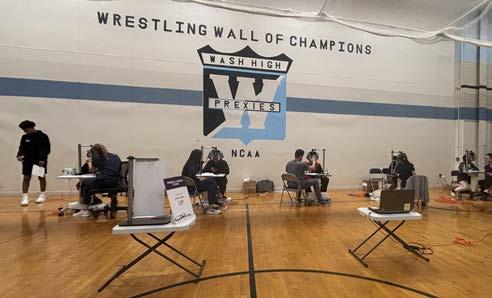
Optometrists actively engage in outreach programs such as Mission of Mercy and Community Vision Day, delivering comprehensive vision screenings to at-risk and underserved communities. A highlight of these efforts was the large-scale eyeglass drive coordinated by the UPMC Community Ophthalmology and Remote Access Programs (CORAP) team at Washington High School, where optometry volunteers provided updated prescriptions for 122 students and distributed 102 pairs of glasses through Changing Lives Through Lenses. In 2025, mobile vision clinics further expanded access by supplying 117 additional pairs of glasses to students in need. Looking ahead, CORAP and Washington High School plan to host biannual glasses drives in 2026, continuing their commitment to improving visual health and supporting the academic success of hundreds of students.
Pediatric Ophthalmology Service
The Pediatric Ophthalmology Service, under the leadership of Ken Nischal, MD, FAAP, FRCOphth, Division Chief of Pediatric Ophthalmology and Strabismus, is based at the Children’s Hospital of Pittsburgh. The Division distinguishes itself through an exclusive commitment to pediatric care, ensuring that the specific needs of children are both identified and given top priority. Because childhood represents a crucial stage in visual development, early identification and management of eye disorders can significantly influence a child’s growth, learning, and overall well-being. Pediatric ophthalmologists possess specialized training to navigate the unique challenges associated with treating young patients, combining clinical expertise with a compassionate approach that supports children and their families.
SPECIALIZED CARE IN PEDIATRIC OPHTHALMOLOGY
The specialty encompasses a wide spectrum of conditions, from refractive errors (myopia, hyperopia, astigmatism) to complex disorders such as strabismus, amblyopia, congenital cataracts, pediatric glaucoma, pediatric cornea, ocular surface disease, pediatric retina and retinopathy of prematurity (ROP) and ocular genetics. Since pediatric patients often cannot articulate visual complaints, age-appropriate examination protocols and diagnostic strategies are essential for accurate assessment and management.
ADVANCES IN PEDIATRIC OPHTHALMOLOGY
Technological and surgical innovations have greatly improved outcomes for children with complex eye diseases. For example, minimally invasive strabismus surgeries offer faster recovery and greater precision. Retinopathy of prematurity is now routinely screened with digital retinal imaging, enabling earlier and more effective treatment. Genetic testing and novel therapies are expanding the possibilities for children with inherited retinal diseases or congenital glaucoma. Corneal transplantation techniques include penetrating, endothelial and anterior lamellar keratoplasty with the latest innovations in corneal neurotization (reinnervation of an anesthetic cornea) and simple limbal epithelial transplant offering hope to children for better vision.
Telemedicine has further broadened access to pediatric eye care, particularly in rural or underserved communities, by facilitating remote consultations and screenings.
UNIQUE ASPECTS OF VISION CARE FOR CHILDREN
The management of pediatric patients requires a nuanced approach that goes beyond clinical expertise. Ophthalmologists must employ strategies tailored to the child’s developmental stage, utilizing play-based examination techniques, specialized visual aids, and active family engagement to mitigate anxiety and optimize cooperation. Effective care often involves collaboration across disciplines—including orthoptics, optometry, pediatrics, and educational specialists— to deliver comprehensive support for children with complex visual needs.
(continued)
EMERGING TRENDS AND RESEARCH IN PEDIATRIC OPHTHALMOLOGY
The Division is advancing research in gene therapy, stem cell applications, and artificial intelligence, which are shaping early diagnosis and management paradigms. Public health initiatives, such as systematic school vision screenings and education on ocular safety, are instrumental in reducing preventable childhood blindness. The Center is a leader in ocular genetics, investigating retinal pathology, anterior segment anomalies, and hereditary conditions. Protocols for chemical denervation in strabismus now incorporate both botulinum toxin and bupivacaine. Not only is the Division Pennsylvania’s highest-volume center for pediatric nystagmus surgery, it also excels in deep anterior lamellar keratoplasty, accepting referrals from major institutions. Novel treatments include pediatric endothelial keratoplasty, corneal neurotization, and alternative surgical strategies for cases lacking donor tissue.
The Division is unique in that it offers visual electrophysiological testing in children of all ages without sedation.
Collagen cross-linking services are extended to developmentally delayed adults, with national referrals, and the division performs corneal transplantation for inherited dystrophies. Diagnostic advancements for congenital anterior staphyloma have revealed previously unrecognized etiologies, such as congenital aphakia. Meghal Gagrani, MD, has assessed the global impact of myopia management webinars, and the Bodhya Eye Consortium (a network of nine eye
institutes in northern India) exemplifies the Division’s international research reach. Educational leadership is demonstrated through WSPOS.org, a charity founded by Dr. Nischal, fostering global discourse on pediatric ophthalmology and strabismus. Key contributors include Preeti Patel, MD, Amgad Eldib, MD, Matthew Pihlblad, MD, Craig Luchansky, OD, and Meghal Gagrani, MD.
Recent research by Amgad Eldib, MD, has described novel posterior segment findings in linear scleroderma. Genetic counseling, led by Hannah Scanga, provides comprehensive support to affected families. Neuro-ophthalmological services, directed by Dr. Patel, facilitate the evaluation of complex pediatric presentations such as increased intracranial pressure. Dr. Gagrani’s work in ocular surface disease and collagen cross-linking has resulted in notable publications. In regenerative medicine, autologous stem cell therapy has been successfully applied to ocular tissue restoration post-tumor excision, with three cases published, further expanding therapeutic options in pediatric ophthalmology. The complex cornea work would not be possible without an excellent contact lens service led by Dr. Craig Luchansky and Dr. Emma Smiley. The Division further benefits from the expertise of Dr. Marie-Hélène Errera, who provides complex care for children with uveitis, and Dr. Tonya Stefko, who manages patients with complex oculoplastic and orbital disease. The addition of Dr. Kiran Turaka will allow the service to offer care for patients with retinoblastoma.
Retina and Vitreous Service
The Retina and Vitreous Service specializes in the diagnosis and management of a broad spectrum of retinal pathologies, spanning inherited retinal diseases, acquired retinal degenerative conditions, and complex vitreoretinal disorders. The Division is distinguished by its commitment to clinical excellence, pioneering research, and advanced educational initiatives, positioning itself at the cutting edge of ophthalmic practice.
SCOPE OF THE RETINA DIVISION
Medical and Surgical Retina Care
The Clinic utilizes high-resolution imaging devices, functional testing, and electrophysiology to assist in the diagnosis and treatment of many different retinal conditions. The surgical suites are equipped with stateof-the-art technology for vitreoretinal surgery including lasers, 3D heads up display operating viewing systems, microscope integrated OCT imaging, and intraoperative endoscopy. The team possesses extensive expertise in managing acquired retinal pathologies, including age-related macular degeneration, diabetic retinopathy, retinal vein occlusions, ocular trauma, and complex retinal detachments. A coordinated care model along with the application of precision-driven medical and surgical techniques optimize patient outcomes.
Inherited Retinal Diseases
The Inherited Retinal Disease specialists of the Retina Division tackle some of the rarest and challenging inherited retinal disorders, including retinitis pigmentosa, Stargardt disease, Leber congenital
amaurosis, and other retinal degenerations. These conditions, resulting from pathogenic variants in retinal genes, often lead to progressive vision loss and may culminate in blindness. Our team, including José-Alain Sahel, MD, Boris Rosin, MD, PhD, and Joseph Martel, MD, employs advanced molecular diagnostics, comprehensive genetic counseling, and a multidisciplinary approach to identify affected individuals, provide prognostic guidance, support informed family planning decisions, and discuss possible treatment options including clinical trials.
Patients are seen in conjunction with low vision specialists, William Smith, OD, and Holly Stants, OTR/L. These collaborative consultations are designed to maximize the functional vision of individuals affected by retinal and vitreous diseases, particularly those experiencing significant visual impairment. Comprehensive assessments are conducted by our Low Vision Division to determine each patient’s unique visual needs and daily challenges. This integrated approach not only improves quality of life but also provides ongoing support and education, empowering patients to utilize their remaining vision more effectively.
Ocular Oncology
Ocular oncology is a key subspecialty, with expertise in diagnosing and treating intraocular tumors such as uveal melanoma, intraocular lymphoma, and retinal/ choroidal vascular tumors. Farzad Jamshii, MD, PhD, leads the efforts in early detection, molecular characterization, and precision-targeted therapies to optimize visual outcomes and overall survival.
(continued)
Uveitis and Inflammatory Ocular Disorders
Management of uveitis and related inflammatory retinal pathologies requires close collaboration with immunologists and rheumatologists. Marie-Hélène Errera, MD, PharmD, PhD, leads the effort in identifying autoimmune and infectious etiologies, customizing immunomodulatory regimens, and monitoring for sequelae, like cystoid macular edema. The Uveitis Clinic at UPMC is multidisciplinary, integrating rheumatology and ophthalmology expertise.
Retina Research
The UPMC Vision Institute is at the forefront of developing next-generation treatments for retinal diseases, with ongoing investigations into gene therapy, optogenetic therapy, artificial retina, cell-based therapy, neuroprotective strategies, and advanced drug delivery systems. Our research portfolio spans from basic science discovery to first-in-human clinical trials, positioning our team as leaders in translating laboratory innovations into clinical reality for patients with blinding retinal conditions.
RETINA FELLOWSHIP TRAINING PROGRAMS
The UPMC Retina and Vitreous Service is committed to training the next generation of retina specialists through comprehensive fellowship programs. Our training emphasizes clinical excellence, surgical proficiency, research innovation, and compassionate patient care.
Our surgical vitreoretinal fellowship is an intensive two-year training program designed to develop comprehensive expertise in advanced vitreoretinal surgery and medical retina management. Fellows gain extensive surgical knowledge of complex retinal detachments, macular surgery, vitrectomy, ophthalmic implants, and cutting-edge techniques including subretinal gene therapy delivery procedures.
Fellows also participate in clinical trials, contribute to peer-reviewed publications, and receive mentorship from world-renowned faculty in vitreoretinal disease management. The curriculum encompasses inherited retinal diseases, ocular oncology, uveitis, and complex medical retina conditions, preparing fellows for impactful careers in vitreoretinal surgery.
Medical Retina and Uveitis Fellowship (One-Year Program)
Beginning in 2026, we will launch a specialized oneyear fellowship in medical retina and uveitis. This program focuses on the diagnosis and management of complex medical retinal conditions including agerelated macular degenerations, diabetic retinopathy, retinal vascular diseases, retinal dystrophies, and intraocular inflammatory disorders. Fellows will develop expertise in advanced imaging modalities and immunomodulatory therapies for uveitis and inflammatory eye diseases.
The program emphasizes a multidisciplinary approach, with integrated clinical experiences alongside rheumatology and immunology specialists in our combined Uveitis Clinic. Fellows will gain proficiency in managing inherited retinal diseases, clinical trials, and will contribute to advancing the understanding of retinal degenerative conditions. This fellowship prepares physicians for subspecialty practice in medical retina or academic careers focused on translational research and innovative therapeutics.
COMPREHENSIVE PATIENT CARE
Beyond scientific excellence, the Division prioritizes patient-centered care throughout the continuum—from diagnosis to long-term follow-up. Clear communication, empathy, and multidisciplinary collaboration are foundational to our approach.
Patient Communication
Given the complexity of retinal disease management, effective communication is paramount. The Division leverages standardized documentation, electronic health records, and targeted counseling to ensure patients and families fully understand their diagnosis, prognosis, and therapeutic options.
Genetic Counseling
Genetic counseling is essential for patients with hereditary retinal conditions. Counselors educate patients and families about inheritance patterns, risk assessment, and facilitate access to molecular testing, while providing emotional support for managing vision loss.
Low Vision Therapy
For individuals with irreversible visual impairment, the Division offers comprehensive low vision services. Adaptive devices, skills training, and collaboration with occupational therapists and rehabilitation specialists help patients maintain independence and quality of life.
Retinal Dystrophy Clinic
The Retinal Dystrophy Clinic at the UPMC Vision Institute is dedicated to helping patients and families affected by inherited retinal diseases (IRDs). These conditions are complex and often life changing, but our team is committed to providing clarity, guidance, and access to the most advanced diagnostics and treatments available today. The clinic serves patients locally, nationally, and internationally in a state of the art facility designed for integrated ophthalmic care, rehabilitation, and clinical research.
EXTENSIVE IRD EVALUATION
The clinic aims to provide an early, accurate diagnosis using advanced imaging, genetic testing and electrophysiology. Each visit includes individualized care with a tailored review of relevant therapies based on a patient’s genetics and clinical presentation. Multidisciplinary support—including social work, low vision services, and coordinated specialty referrals— ensures that patients receive comprehensive care across UPMC.
COMPREHENSIVE GENETIC TESTING AND COUNSELING
More than 300 genes are known to be associated with IRDs, meaning individuals with similar symptoms may have very different underlying causes. Most often our clinic uses a panel based genetic testing to maximize the likelihood of identifying the correct diagnosis.
Certified genetic counselors guide patients through every step of the process, starting with gathering personal and family medical history. They assist in selecting the most appropriate genetic test, explaining the content of the test and the laboratory technology involved. Counselors also help patients navigate insurance, self-pay, and sponsored testing options, and support those interested in enrolling in national programs such as the My Retina Tracker Registry. Once results are available, counselors help patients understand their diagnosis, prognosis, implications for family members and potential eligibility for current or future treatments.
VISION REHABILITATION
Low vision specialists and occupational therapists help patients maximize remaining vision and adapt daily activities. This includes training in assistive devices, environmental modifications, and strategies to maintain independence.
LEADING THE FUTURE OF GENE THERAPY
The UPMC Vision Institute is a national leader in developing and delivering gene based treatments for retinal conditions. It is an approved treatment center for Luxturna, the FDA approved gene therapy for RPE65–related retinal dystrophy, delivered surgically beneath the retina.
Beyond approved therapies, the Department of Ophthalmology participates in numerous clinical trials targeting a wide range of IRD related genes. Under the leadership of internationally recognized clinician scientist Dr. José Alain Sahel, researchers are pioneering new insights into rod cone interactions and developing neuroprotective strategies now being evaluated in clinical trials worldwide.
RESTORING SIGHT THROUGH OPTOGENETICS
For patients with advanced photoreceptor degeneration, the Vision Institute is exploring optogenetics—an approach that uses gene therapy to make remaining retinal cells responsive to light. Early clinical studies, including one in which a participant regained the ability to locate and count objects, represent a major step toward restoring functional vision.
ARTIFICIAL RETINA TECHNOLOGY
The Clinic also collaborates on international trials of retinal prosthetics, such as the PRIMA chip—an implantable device designed to bypass damaged photoreceptors and deliver visual signals directly to the brain. Early results show encouraging improvements in visual function for individuals with advanced macular disease.
WORLD RENOWNED EXPERTISE
Care is delivered by leaders in retina research, surgery, genetics, and low vision rehabilitation. The current clinical, surgical, and research team includes: José Alain Sahel, MD, Boris Rosin, MD, PhD, Will Smith, OD, Jay Chhablani, MD, Joseph Martel, MD, Morgan Brzozowski, MS, CGC, and Ophthalmology Fellows and Residents.
OUTREACH Community Vision Day
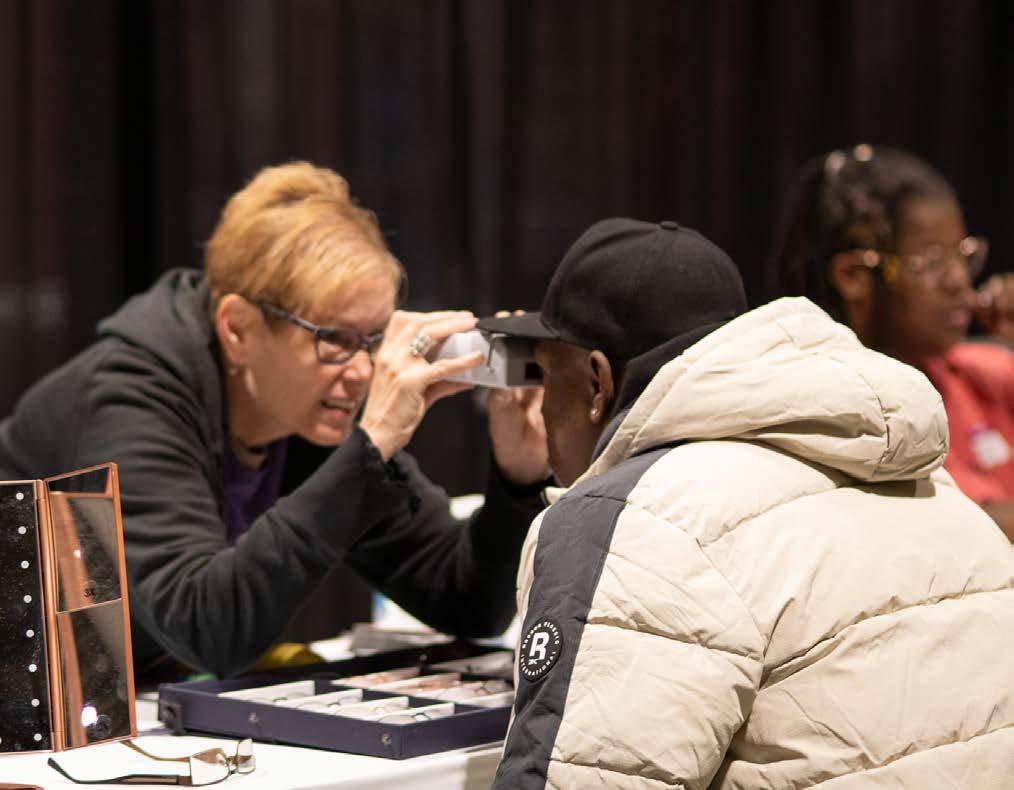
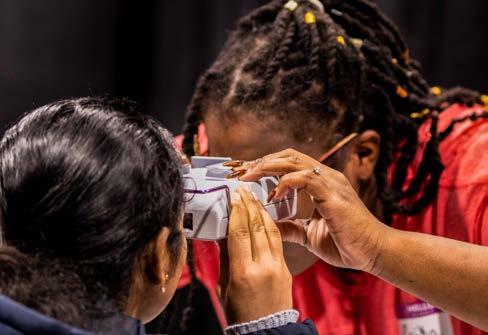
The Department of Ophthalmology held its first Community Vision Day (CVD) on December 6 at the UPMC Vision Institute. Vision screenings, eye health evaluations, and exams for vision conditions were offered for children and adults with or without insurance.
“The launch of Community Vision Days is a major milestone in the development of our efforts to address the needs of all in our community,” said José-Alain Sahel, MD, Director of the UPMC Vision Institute. “The Department of Ophthalmology has implemented multiple initiatives to offer care to all. With the ability to open our beautiful, state-of-the-art facility to our neighbors and engage all our teams, this is now integral to our philosophy: Vision for All. I am deeply grateful to UPMC leadership and to all our team members and volunteers, especially the Eye & Ear Foundation.”
Zeila Hobson, Community Ophthalmology & Remote Access Program Manager called CVD the ultimate realization of Dr. Sahel and the Eye & Ear Foundation Community Outreach Committee’s dream of providing
low to no-cost vision services for patients of all ages experiencing financial barriers to eye care.
The need for CVD became apparent as the Department embedded itself into Pittsburgh neighborhoods and built trust with local nonprofit and social work organizations, Hobson said. The demand for vision services across all patient demographics far outweighed their capacity to provide mobile clinics. As an example, Hobson pointed to the initial approach to care delivery, which centered around senior centers and elderly patients. As clinics were established in Allegheny and surrounding counties, the Department was flooded with inquiries for pediatric and family services. “We rose to that occasion and developed a pediatric schedule, even facilitating the large-scale glasses drive at Washington High School in partnership with UPMC Optometry (huge thanks to Dr. Ellen Butts!),” Hobson shared.
Thanks to the success of the annual Mission of Mercy event, the Department knew that large-scale events were a great way to reach many neighbors in need. However, “care delivery in a pop-up clinic of that scale
(continued)
does not reflect the quality of care that we aspire to,” Hobson said. “We also knew, based on our experiences with eyeVan/Eyes on Wheels, that our target demographics are ever-expanding.
“Dr. Sahel wanted to reach as many patients as possible on a regular basis beyond mobile programming. Since UPMC has a flagship eye hospital in a centralized Pittsburgh location, why not facilitate free care where there is top-of-the-line equipment, on a quarterly or monthly basis? The aim became to develop our own mass-clinic model at the VI and buy-in at every level of the institution allowed us to pull the inaugural event together quickly for December 6 and centralize our referrals from the Mission of Mercy event in October 2025,” Hobson said.
Referrals are another important brick in the foundation of CVD, Hobson added. They needed a way to treat uninsured patients referred for follow-up care from the free mobile clinic events without generating medical bills they cannot pay and to introduce them to insurance possibilities. “At CVD, we can provide continued care and resources to address housing, food insecurity, and insurance with a single event,” Hobson said.
Indeed, the hope is to build trust in UPMC Ophthalmology and optimize preventative care for neighbors in need. The Vision Institute expects to partner with community and organizational partners to further reduce barriers to care, such as food, housing resources, and on-site insurance enrollment.
Hobson called the event a game-changer because it does not require the set up and tear down of remote ophthalmic devices and caters to underserved neighbors with state-of-the-art equipment in an environment that providers and support staff are most comfortable in, resulting in the highest quality of care.
At Mission of Mercy events (not managed by UPMC), patients often wait for hours outside in the cold and experience extensive wait times. For CVD, shelter was provided for all patients, and though wait times
were not optimal, they were significantly lower than at Mission of Mercy events. A total of 135 people were served by 80 volunteers, with the majority being UPMC faculty, staff, and medical students. Multiple translators were available for non-English speakers.
Of the 135 patients seen, 49 were uninsured and 108 were new patients. CVD experienced the “good trouble” of supporting dozens more than expected, so the second floor was opened to accommodate the influx of walk-ins. This will be the blueprint for additional CVDs. Hobson said they also plan to recruit additional language support volunteers, adopt the triage protocols used for Mission of Mercy events, and tighten up communications internally and with patients before and during CVDs.
The event was a massive team effort that spanned all specialties and would not have been possible without buy-in at every administrative level. Organizers were Dr. Evan Waxman’s team, Community Ophthalmology & Remote Access Programs (CORAP), and along with Hobson, her colleague, Dr. Valeria VillabonaMartinez. Hobson collaborated closely with UPMC operations staff such as building manager Talisha Richardson, Executive Administrator Brian Rudolph, Division Administrator Mary Pitcher, patient navigator Dana McGinnis Thomas, and operational managers Margo Dominicis, Sandy Kremer, and Jennifer Craze. Additionally, UPMC Leadership, including UPMC President and CEO Leslie Davis, UPMC Mercy President Richard Beigi, and UPMC Mercy Vice President Julie Hecker were all instrumental in supporting this initiative.
“Without stakeholders earnestly supporting Dr. Sahel’s vision, none of this is possible,” Hobson said. “Managerial staff at every level should be commended, especially the pod coordinators, Erika Crenshaw and Seana Baker. Lastly, a huge thank you to UPMC Health Plan and the community resource volunteers who provided insurance and SNAP support for our patients.”
CVD will occur quarterly. Future dates are February 21, May 30, August 22, and December 5.
Identifying Loss to Follow-Up and Addressing Social Needs
Glaucoma is a challenging ailment to manage. It is typically asymptomatic but discreetly causes irreversible vision loss, usually slowly. The stability of a patient’s glaucoma must be evaluated at periodic intervals with clinical examinations and ancillary testing to assess progression and to ascertain response to treatment. These treatments typically involve some combination of office-based laser procedures, incisional surgery, or one or more eyedrop medications administered at least daily. All therapies require longterm monitoring and regular clinical care. It can be a challenge to motivate patients to keep at it. In fact, many do not.
Andrew M. Williams, MD, has dedicated his research program to understanding and addressing lapses in follow-up, particularly in glaucoma, by bringing attention to social determinants of health that affect access to eye care. As a board-certified ophthalmologist and fellowship-trained glaucoma specialist, Dr. Williams is an Associate Professor of Ophthalmology and directs the Healthy Vision Lab, an interdisciplinary group of researchers that applies epidemiology and health services research
to improve access to eye care. Much of his work has been dedicated to addressing the issues of lapses in glaucoma care, which can lead to undertreatment, disease progression, and irreversible blindness.
Funded by the American Academy of Ophthalmology (AAO) and Research to Prevent Blindness (RPB), with additional support from the Henry L. Hillman Foundation, Dr. Williams has leveraged “big data,” or large national data repositories, to demonstrate the jaw-dropping scope of loss follow-up (LTFU) in glaucoma care, often defined as a lapse of greater than 1 year without an eyecare encounter. In his preliminary research, Dr. Williams found that a third of glaucoma patients at one academic center became LTFU over 10 years, even after censoring those with documented moves or death. These findings prompted Dr. Williams to earn grant funding from the AAO/RPB to discern the prevalence of LTFU among glaucoma patients at a national level. His AAO/RPB grant gave Dr. Williams access to data from the IRIS® Registry (Intelligent Research in Sight), the nation’s largest clinical eye disease registry that receives data from across the United States. In collaboration with Hsing-Hua (Sylvia) Lin, PhD, then a data scientist at the Epidemiology Data Center at the University of Pittsburgh School of
(continued)
Public Health (Pitt Public Health), and two postdoctoral scholars at the Healthy Vision Lab, Lauren Wasser, MD, and Hai-Wei Liang, PhD, Dr. Williams and his team analyzed follow-up patterns for over half a million glaucoma patients from across the country. The results were striking. Over half of glaucoma patients lapsed by a calendar year or more over a 6-year period, and, of those who lapsed in follow-up, only a third ever returned to care after an episode of LTFU. If these IRIS Registry results are representative, half of established glaucoma patients are falling through the cracks.
Dr. Williams found that not only is LTFU highly prevalent in glaucoma care, but that it also disproportionately affects the most vulnerable patients. Moderate- or severe-stage disease severity at baseline (compared to mild-stage), visual impairment or blindness, older age, non-white race, and Hispanic ethnicity were significant risk factors for LTFU in an adjusted analysis of IRIS Registry data. These findings suggest that patients at greatest risk of glaucoma progression are the ones at greatest risk of lapsing in care. More concerning still, among the cohort of patients with LTFU, most of these characteristics were also risk factors for non-return (rather than re-establishment of care after a lapse). The glaucoma patients at greatest risk of visual disability from their disease are the ones we are losing from clinical care.
DOES LTFU MATTER?
Dr. Williams has demonstrated that lapses in glaucoma care are associated with poor outcomes. Using data from one academic center, he found that two-thirds of glaucoma patients who returned after a period of LTFU returned with disease progression or a late surgical complication. His recent article from the IRIS Registry data compares 6-year outcomes between glaucoma patients with lapses in care and glaucoma patients who completed a visit at least annually. In this adjusted analysis, LTFU was independently associated with increased risk of incident blindness. Specifically, compared to patients with consistent annual followup, patients with a lapse in care of 1-2 years had a 19% greater risk of incident monocular blindness by the end of the 6-year period, and those with a lapse of 3-4 years were 2.17-times more likely to go blind, after adjusting for other risk factors for blindness. Going a few years without glaucoma care may double the risk of going blind.
WHY DO PATIENTS BECOME LTFU?
Understanding the reasons behind LTFU is a key step in helping patients to maintain glaucoma care. Dr. Williams obtained grant funding from the American Glaucoma Society to ask patients directly about their reasons for a missed visit and their barriers to glaucoma care. He collaborated with Todd Bear, PhD, Director at the Office of Health Survey Research at Pitt Public Health, to design the outreach survey and to engage with a professional call center team to maximize potential engagement. These telephone interviews of glaucoma patients who recently had an appointment no-show, which may precede LTFU, revealed that transportation difficulty was the most commonly cited barrier to care (29%), followed by difficulty keeping track of the appointment (26%) and scheduling issues (12%). Half of respondents screened positive for at least one social risk factor — including food insecurity, housing instability, and financial instability — highlighting the underlying burden of social determinants of health among glaucoma patients with a missed appointment.
HOW CAN WE ADDRESS LTFU?
LTFU among glaucoma patients is common and consequential, but proactive engagement with vulnerable patients can reduce their risk of lapsing in care. Patient education is important to ensure understanding about glaucoma and to convey the importance of regular follow-up. For patients at risk of LTFU, Dr. Williams has found that reminder messages and outreach can help to make glaucoma care salient, and referrals to assist with social needs may address more pervasive barriers to care.
Sending reminder messages or phone calls in advance of an upcoming appointment can reduce the risk of a no-show. In the same vein, outreach after an appointment no-show can promote re-engagement in care. Specifically, Dr. Williams’s group found that sending a standardized patient-portal message through the electronic health record (EHR) within a business day of an appointment no-show doubled the odds of a patient attending a rescheduled appointment within 30 days. Similarly, phone calls or messages to reengage glaucoma patients after LTFU may motivate them to reschedule overdue follow-up visits; a medical studentled project is currently underway at the Healthy Vision Lab to do just that.
(continued)
More robust interventions could address underlying barriers to care, starting with universal screening for health-related social needs. These needs cannot be addressed if the eye care team is unaware of them. To bring social needs to ophthalmologists’ attention, Dr. Williams established an EHR-integrated screening intake for outpatient ophthalmology encounters at the University of Pittsburgh in April 2023. Research into the outcomes of this universal screening has revealed that one in seven patients indicate at least one health-related social need, such as difficulty with medical transportation. By asking about social needs, ophthalmology teams can initiate a discussion about individual barriers to maintaining eye care,
such as transportation and medical costs. Moreover, identifying unmet social needs can facilitate referrals to local resources, such as a patient navigator or social work programs. An ophthalmology patient navigator program at the University of Pittsburgh resolves about 90% of referrals to address barriers to eyecare — most commonly transportation needs or insurance issues— with high patient satisfaction. Other departments could benefit from similar models or from making available information for local resources and assistance programs. Identifying and addressing social needs in the eye clinic may reduce barriers to care and promote long-term follow-up.
Transforming Eye Care Through Remote Access
Remote care is revolutionizing eye health by making services more accessible and equitable for all.
EYES ON WHEELS
Eyes on Wheels is a dynamic, student-run mobile health clinic committed to breaking down barriers to eye care in Western Pennsylvania. Founded as Guerrilla Eye Service in 2005 by Jake Waxman, MD, PhD, and medical students at the University of Pittsburgh, the program provides free, comprehensive eye exams to those facing obstacles to care, while giving medical students invaluable hands-on experience early in their training.
Each month, Eyes on Wheels embarks on three outreach missions to local community clinics, including Birmingham Clinic, Squirrel Hill Health Center, East End Community Health Center, McKeesport 9th St. Clinic, and others in Butler, Waynesburg, and Greensboro. Sites are visited outside of regular business hours,
making vision exams more convenient to access for working professionals and parents.
REDUCING PREVENTABLE VISION LOSS
Beyond regular clinic missions, Dr. Waxman’s team has deployed around 50 web-connected retinal cameras in primary care clinics and community organizations throughout Pittsburgh. These easy-to-use devices empower onsite staff to quickly identify at-risk patients and capture retinal images. Ophthalmologists at UPMC Vision Institute review the images and relay follow-up reports and treatment recommendations to community health providers for patient discussions. This innovative program now produces over 7,000 images annually, reaching thousands who otherwise might never see an eye doctor.
(continued)
One of the most profound impacts of remote care is its potential to break down barriers to access. Rural communities, underserved urban populations, and individuals with mobility challenges often struggle to receive timely eye care. Teleophthalmology bridges this gap, enabling patients to connect with specialists regardless of location. Mobile eye units, equipped with diagnostic tools and internet connectivity, bring care directly to those who need it most.
Remote care also fosters equity by reducing the financial and logistical burdens associated with inperson visits. Patients save time and resources, while clinics can reach a broader, more diverse patient base. In addition, remote platforms facilitate interdisciplinary collaboration, allowing experts from different regions to consult on complex cases.
EYEVAN
The Vision Institute also utilizes a fully equipped mobile eyeVan that was donated in 2023 by the Brother’s Brother Foundation to assist Dr. Waxman and the
Eyes on Wheels team in providing free community vision clinics in the Pittsburgh region. Outfitted with advanced medical technology, this doctor’s office on wheels brings comprehensive eye exams, screenings, and treatments directly to individuals in underserved neighborhoods, further eliminating barriers to essential eye care.
The eyeVan partners with senior centers, federally qualified health centers, and other nonprofit facilities to deliver services to older adults. While the eyeVan was originally established to serve seniors, through getting more engaged in the community, it became apparent that there was a huge need to serve children too. The eyeVan also coordinates glasses drives.
As of early October, the eyeVan has provided eye exams to 377 patients, of whom 183 were new and 42 were returning. Seventy-four were uninsured, 87 were male and 168 were female. Sixty-four required follow-up visits at the Vision Institute while 56 received follow-up at their facility. Glasses were ordered for 281.
A Patient Navigator Program to Improve Access to Eye Care
Dana McGinnis-Thomas, MHA, CSS, joined the Department of Ophthalmology in 2020 as its inaugural Program Manager, Patient Navigation, a unique position that connects patients in need with community resources to improve access to eye care.
While the concept of patient navigation initially developed to meet needs of patients coordinating cancer care, Distinguished Professor and Chairman of the Department of Ophthalmology, José-Alain Sahel, MD, recognized the potential to expand the concept to ophthalmology. By raising support from the Henry L. Hillman Foundation, Dr. Sahel implemented his vision of a unique Patient Navigator Program to address social needs of patients who seek eye care at the UPMC Vision Institute.
Assistant Professor and glaucoma specialist Andrew M. Williams, MD, coauthored a review article with Dr. Sahel on the social determinants of vision health. Unmet social needs are a tremendous barrier to eye care. Resources such as transportation, health insurance, and financial security to afford medications are critical to maintaining care for chronic eye diseases.
With its one-of-a-kind Patient Navigator Program, the UPMC Vision Institute is directly confronting the social needs faced by patients in need. When a member of the care team identifies a patient need—such as transportation to appointments or need for assistance with insurance applications—the patient is offered a referral to McGinnis-Thomas for help. Her assistance has touched the lives of hundreds of patients. She receives over 500 referrals per year from physicians, surgery coordinators, and staff. As of December 31, 2024, among 1,294 patients, 1,730 referrals were made. The mean age was 58.1 ± 17.8 years. The most common referral needs were insurance (30.4%) and
transportation (29.0%). Overall, 95.3% of referrals were resolved. The highest resolution rates occurred for food resources (100%), home assistance/assistive devices (98.6%), and medication assistance (97.7%). The median time to resolution was six days.
McGinnis-Thomas addresses patients’ needs by utilizing community resources such as insurancesponsored or county-based medical transportation programs, guiding patients through Medicaid enrollment, assisting patients with the UPMC financial assistance applications, and collaborating with churchbased charities to find volunteers to accompany seniors needing eye surgery who lack local family support. She even found a local Boy Scout troop to assist a visually impaired patient by installing his air conditioner!
McGinnis-Thomas has collaborated closely with Dr. Williams to evaluate the outcomes of the Patient Navigator Program and to publish its unique success in academic literature. Dr. Williams, who directs the Healthy Vision Lab, an interdisciplinary research team that focuses on ophthalmology and public health, has examined the data. Research assistant Julie Cassidy and undergraduate summer student Marie Kinchington recently reviewed patient outcomes after referral to the Patient Navigator Program. Among the most striking findings is the ability of the program to provide access to outpatient ophthalmic surgery. For instance, in 2023, 64 patients were referred for surgical assistance, 50 of whom for transportation help and the others for financial assistance or insurance support. Over 80% of referred patients (52) successfully received surgery, including cataract extraction, glaucoma surgery, and retinal detachment repair, none of whom would likely have been able to access this care without patient navigation assistance.
Outreach Fall 2025
EYE GLASS DRIVE
The UPMC Community Ophthalmology and Remote Access Programs (CORAP) team facilitated a largescale glasses drive at Washington High School (WHS) on Wednesday, September 3, 2025. Supported by volunteers from UPMC Optometry, CORAP provided updated prescriptions to 122 underserved students in grades 10-12 and ordered 102 pairs of glasses for them via Changing Lives Through Lenses. Ten students flagged as needing comprehensive exams received them at a follow-up clinic at the Vision Services of Washington-Greene Counties location.
In 2025, CORAP and Changing Lives Through Lenses dispensed 117 total pairs of glasses to WHS students in need via mobile vision clinics in May and September. The school nurse at Washington High School, Ashley Brand, has identified at least 200 additional students in grades 7-12 who failed their initial vision screening and may need a pair of glasses. CORAP will work with WHS to facilitate biannual glasses drives in their auxiliary
gymnasium for 2026, guaranteeing students can clearly see their bright futures.
MISSION OF MERCY
The 2025 Mission of Mercy Pittsburgh was a twoday event held on October 24-25, hosted by the Eye & Ear Foundation in collaboration with Call to Care. This free clinic offering dental, vision, and hearing services reached full capacity by early afternoon on the second day.
UPMC Vision Institute faculty and staff in Pittsburgh provided care to 778 individuals over two days. They prescribed 645 pairs of glasses, diagnosed degenerative eye diseases, and scheduled follow-up appointments for Community Vision Day. Each patient received personalized attention.
From the moment people reached the Vision Section, they were met with kindness. Our front-line team treated every person with compassion. Our PSRs listened to and heard each person they registered.
(continued)
The pre-refraction team served as our operations hub, demonstrating phenomenal choreographic skills in addition to performing lensometry and autorefraction.
The refractionists worked tirelessly, in the dark, with no concern for the fingertip callouses they developed from perpetually spinning phoropter wheels. The diagnostics team—imaging techs and doctors—imaged, diagnosed, and empathically counseled the dozens of people for whom glasses were not enough. The exit interview team arranged follow-up, assuring people that we are there for them year-round and not just for the event.
Volunteers worked tirelessly to input orders for glasses. The set-up and cleanup crews made it all possible by ironing out kinks before we arrived and setting us up for success next year. The Topcon team deserves a shoutout for offering their time to deliver, set up, and instruct us in the use of their devices.
We are grateful, as always, to Essilor-Luxottica’s Changing Life Through Lenses program for providing hundreds of pairs of glasses, and to the UPMC Vision Institute’s operational staff for their ongoing support.
RESEARCH
Research to Enlighten Lives
ADVANCES IN GENE THERAPY AND RETINAL IMPLANTS ARE BRINGING FUNCTIONAL VISION TO PATIENTS WITH RETINAL DEGENERATION
Progress in gene therapy and retinal implants is helping people with retinal degeneration regain some vision. The Department’s faculty is strongly focused on creating new treatments for those who have lost their sight. Several research studies have provided important results from clinical trials using implant devices and gene-based therapies.
An important study highlights the development and testing of retinal implants, including a trial of a device called PRIMA, which is placed under the retina. In a major study published in the New England Journal of Medicine, co-leader José-Alain Sahel, MD, and his team found that people with severe vision loss who received the PRIMA implant regained some central vision, with their ability to see improving after 12 months.
Other research looked at using gene therapy for Leber Hereditary Optic Neuropathy (LHON), a condition affecting the mitochondria, the main cell energy factory that leads to vision loss. Scientists compared two different treatments: published data on a drug called idebenone that targets cell energy centers, and a gene therapy developed by Dr. Sahel’s team that delivers a healthy ND4 gene using a virus. They combined the published results and followed patients over time to see how their vision changed.
Two other papers focused on LHON showed that the ND4 gene therapy (lenadogene nolparvovec) can lead to real and lasting improvements in vision, especially when given early, based on both detailed reviews of existing studies and long-term patient results.
ADVANCES IN SMALL-MOLECULE
DRUG DEVELOPMENT TO TREAT
RETINAL DEGENERATION AND OCULAR INFECTIOUS DISEASES
Recent research from the Department has found new ways to treat vision loss and eye infections using
small-molecule drugs. One study showed that a drug called pyrvinium can help stop vision loss in certain eye diseases. Another found that 8-aminoguanine, taken by mouth, helps protect the eyes of older rats by reducing swelling, stress, and cell damage, which could make it useful for age-related vision problems.
Yuanyuan Chen, PhD, and her lab made an exciting discovery: they found that the medicine pyrvinium pamoate can help organize important parts inside cells and turn on genes that protect eye cells, which helps slow down vision loss. In another experiment, they showed that giving older rats a compound called 8-aminoguanine helped keep their eyes healthy, prevented stress and cell death, and improved their vision.
In addition, scientists discovered that propranolol, a common heart medicine, can also fight fungal eye infections in the lab and in mice.
Kevin Fuller, PhD, and his team tried a heart medicine called propranolol against a tough eye fungus, and it not only stopped the fungus in the lab but also protected the eyes of animals from infection. These breakthroughs suggest new and creative ways doctors might treat vision problems and eye infections in the future.
ADVANCES IN CLINICAL IMAGING AND THE
APPLICATION OF ARTIFICIAL INTELLIGENCE
PREDICTIONS
Jay Chhablani, MD, and his team are using smart technology and detailed eye scans to change how doctors detect and treat retinal diseases. By combining advanced imaging with artificial intelligence, they’ve found new ways to spot important patterns in the eye—sometimes even before a problem gets serious. Their work looks at eyes over time, especially as some people’s vision changes from mild to more serious forms of disease like neovascular AMD.
(continued)
They don’t just rely on one tool—they use a mix of 3D scans, worldwide expert opinions, and computer programs that analyze huge amounts of patient data. This helps them find early warning signs, so patients can get help sooner and treatments can be tailored to each person. For example, tracking small changes in a part of the eye called the choroid gives clues about when someone might need extra attention or a new treatment, while their computer models show how overall health can affect the eyes.
All these efforts are bringing us closer to a future where eye care is more personal, proactive, and precise. Instead of waiting for problems to get worse, doctors will be able to predict, prevent, and better manage vision loss—giving patients a brighter outlook and more control over their eye health.
OPTIC NERVE REGENERATION
Driven by a bold mission to restore lost vision, the Department has assembled a team of researchers— including Takaaki Kuwajima, PhD, Kun-Che Chang, PhD, Silmara de Lima, PhD, Issam Al Diri, PhD, Boris Rosin, MD, PhD, Larry Benowitz, PhD, and John Ash, PhD— harnessing their collective expertise to tackle one of the greatest challenges in neuroscience: regenerating the optic nerve. This nerve acts as the essential highway between the retina and the brain, transforming light into the vivid images we see. At the heart of their efforts is a suite of cutting-edge therapies designed to protect retinal ganglion cells and spark the regrowth of their vital axons. These approaches span from stimulating the body’s natural healing processes (like
those triggered by lens injuries) and fine-tuning immune cell responses, to deploying advanced biomechanical signals, electrical impulses, nerve wraps, and an array of gene therapies that target the cells at the deepest levels.
At the 2025 Fox Center Annual Conference, the team captivated audiences with their latest breakthroughs. More details can be found in the Conferences and Events section of this report.
GILBERT FOUNDATION VALIDATION RESEARCH LAB
The Gilbert Foundation Validation Research Lab, now integrated into the Fox Center for Vision Restoration, officially launched in Fall 2025 with support from the Gilbert Family Foundation’s esteemed Vision Restoration Initiative. The lab is under the leadership of Silmara de Lima, PhD, Larry Benowitz, PhD, and John Ash, PhD. Recently, the Gilbert Foundation provided new grants to Drs. de Lima and Ash to fund research on optic nerve gliomas. Both projects are being spearheaded by Dr. de Lima, who joined the Department in 2025.
ADVANCED RESEARCH PROJECTS AGENCY FOR HEALTH (ARPA-H)
The Department of Ophthalmology at the University of Pittsburgh is playing a key role in the Transplantation of Human Eye Allografts (THEA) initiative, a groundbreaking effort to make whole eye transplants that restore sight a reality. Funded by up to $56 million from the Advanced Research Projects Agency
for Health (ARPA-H), with Pitt expected to receive about $9 million, the project aims to overcome major hurdles such as removing and preserving donor eyes, stimulating optic nerve regeneration, and preventing tissue rejection. Pitt researchers in the Louis J. Fox Center, led by José-Alain Sahel, MD, Larry Benowitz, PhD, and John Ash, PhD, are spearheading efforts in donor eye removal and preservation, ganglion cell survival and regeneration, and developing methods for nerve alignment and regrowth. Teams from Duquesne University and Carnegie Mellon University are also involved. The whole Project, named VISION for THEA, is coordinated by Jeffrey Goldberg (Stanford) and JoséAlain Sahel (Pitt).
Pitt’s teams are deeply involved in all technical phases of THEA, from preserving donor tissue to stimulating nerve regrowth and addressing immune suppression to prevent rejection. Their ongoing work, which builds on decades of research, is central to advancing the science behind functional eye transplantation. While the ultimate goal of restoring vision through a full eye transplant remains challenging, The Vision Institute’s contributions are expected to significantly advance understanding of optic nerve regeneration and lay the groundwork for future clinical success.
NEUROTECHNOLOGY AND THALAMUS IMPLANTS
Xing Chen, PhD, is leading a pioneering project focused on thalamus implants, offering a glimpse into the next generation of neural interface technology. Through close collaboration with neuroscience and engineering experts, the Division is working to develop innovative treatments for neurological disorders, while also deepening our understanding of how the brain functions.
EXPANDING THE TEAM
In the ever-evolving landscape of research, the infusion of new talent is both a necessity and a catalyst for transformative change. The Research Division
recognizes the importance of diversification—not only in its research approaches, but also in its personnel. The arrival of new talent represents a commitment to fostering a collaborative environment where seasoned experts and emerging scholars work side by side. This blend of experience and fresh perspective is crucial.
Each recruit brings their own background, aspirations, and scientific focus, contributing to a mosaic of research that is as diverse as it is ambitious. The Department is blessed, receiving support from UPMC, Pitt and The Eye & Ear Foundation to attract and support these new recruits.
Alireza Chamanzar, PhD, joins the Department of Ophthalmology after previously working at the University of Pittsburgh’s Computational Pathology and AI Center of Excellence (CPACE). He has also served as a Visiting Research Fellow at Massachusetts General Hospital’s Department of Neurology and has worked in various technology positions in private industry. He holds a BS and MS in Electrical Engineering from Sharif University of Technology in Tehran, Iran, and a MS and PhD in Electrical and Computer Engineering from Carnegie Mellon University.
Dr. Chamanzar analyzes the data gathered by the EEGs using data modeling techniques, refining his problem and solution statements as he gains more information. His research focuses on using EEGs to monitor brain injuries to detect problems before they progress. Dr. Chamanzar piloted this approach in human patients with severe traumatic brain injury. He is also collaborating with faculty from the Department of Ophthalmology on treatments for stroke patients.
(continued)
Xin (Daniel) Gao, PhD, is a rising leader in genome engineering and therapeutic biotechnology. He comes to Pittsburgh from a postdoctoral fellowship in the laboratory of Dr. David Liu at the Broad Institute of MIT and Harvard. Trained as a biomedical scientist with a PhD from UMass Chan Medical School and an MS in Biotechnology from Northwestern University, Dr. Gao has developed foundational tools that advance the frontiers of genome editing. His research has led to innovations such as Twin Prime Editing, enabling precise and programmable integration of large DNA sequences, and in vivo base editing therapeutics for genetic diseases like Zellweger Spectrum Disorder.
He serves as a reviewer for journals like Nature Communications and Nucleic Acids Research. His work continues to shape the future of gene therapy, with strong implications for rare disease treatment and synthetic biology.
Pirro Hysi, PhD, joins the University of Pittsburgh after 16 years at the Kings’ College London (University of London). He received his PhD in Genomic Medicine from the University of Oxford. He also holds an MS in Environmental and Health Sciences and a BM/MD in Internal Medicine.
Dr. Hysi’s research interests include genetics and genomics, health data analysis, omics data statistical learning, applied biostatistics, bioinformatics, and medical statistics. He analyzes data related to ocular diseases including age-related macular degeneration, glaucoma, and myopia and specializes in studying large data sets provided by third party companies. He analyzes “biomarkers,” or characteristics that may or may not determine the likelihood of developing a given disease. Some of Dr. Hysi’s most impactful research identified the largest causes of disease, including a paper looking at the relationship between metabolism and glaucoma.
Bryan W. Jones, PhD, is an internationally recognized neuroscientist and vision researcher. With a career spanning over two decades, Dr. Jones has made pioneering contributions to retinal connectomics and neurodegeneration, particularly in the context of retinal remodeling in diseases such as retinitis pigmentosa and age-related macular degeneration. He earned his PhD in neurophysiology from the University of Utah, followed by postdoctoral training in cell biology and ophthalmology.
when she started her Masters in Brazil and pursued this topic during her PhD training as well.
Larry Benowitz, PhD, one of the leaders in the field of optic nerve regeneration and a part-time Professor of Ophthalmology at Pitt, was her mentor for a major part of her PhD training. In 2018, Dr. de Lima was invited to join the Vision Restoration Initiative to investigate potential neuroprotective targets to prevent vision loss. Recently, she was awarded a grant to be part of another initiative with the GFF—the next generation model for Neurofibromatosis type 1—optic pathway glioma (NF1OPG model).
Her goals are to establish a strong foundation in the research of neuroprotection, regeneration, and myelination of RCGs using NF1-OPG in vitro and in vivo models.
At the Moran Eye Center, University of Utah, Dr. Jones directed a vibrant research program that integrates high resolution electron microscopy, computational modeling, and molecular profiling to map and understand neural circuitry in the retina. His lab’s work is foundational in the emerging field of retinal pathoconnectomics—using large-scale neural circuit reconstructions to understand disease induced remodeling.
Dr. Jones is the recipient of numerous prestigious awards, a prolific educator, mentor to dozens of trainees, and a highly sought-after speaker.
Silmara de Lima, PhD, came to Pittsburgh from Boston Children’s Hospital/Harvard Medical School. She has been investigating axon regeneration in the optic nerve injury model since 2007
Rebecca L. Pfeiffer, PhD, was recruited from the Moran Eye Center, University of Utah, where she led cutting-edge investigations into retinal neurodegeneration and neural circuit remodeling. As a specialist in connectomics and ultrastructural analysis, Dr. Pfeiffer’s research has transformed understanding of how neurodegenerative processes reshape neural networks, with a focus on retinal diseases such as retinitis pigmentosa and agerelated macular degeneration.
Dr. Pfeiffer completed her PhD in neuroscience at the University of Utah, where she pioneered work on “persistent remodeling” in degenerating retinas. She then had a postdoctoral fellowship under Dr. Bryan
Jones, continuing her deep exploration into retinal pathoconnectomics. Her work has resulted in over 30 co-authored publications in high-impact journals, several invited book chapters, and a series of widely attended presentations at international symposia.
Clayton Santiago, PhD, joined the Department of Ophthalmology in September after serving as a Postdoctoral Fellow at Johns Hopkins University. He began studying ophthalmology in his PhD program at the University of Florida, where John Ash, PhD, was his mentor. Dr. Santiago specializes in using cutting-edge techniques like single-cell and spatial transcriptomics to understand retinal disease mechanisms and guide the development of targeted therapeutic approaches.
Design or “SLED,” to restrict gene expression to a specific cell type. This makes it possible to target disease relevant cells while minimizing off-target effects in healthy cells.
One of his two main projects seeks to use time course analyses to map disease stages at a cellular and molecular level across species, including human tissue. By finding conserved features of disease progression, Dr. Santiago seeks to develop interventions that target the specific mechanisms most active at each stage.
In his second line of research, Dr. Santiago uses cellspecific splicing, called Splicing Linked Expression
Liyun Zhang, PhD, joins the University of Pittsburgh after working as an Assistant Professor at Johns Hopkins University. She has a PhD in Ophthalmology and Visual Sciences from The Chinese University of Hong Kong, where she specialized in ocular genetics. She also has a clinical background, with a Bachelor of Medicine (equivalent of an MD) from Peking University Health Science Center in Beijing and Masters of Medicine from Capital University of Medical Sciences in Beijing. Dr. Zhang’s medical practice informed her decision to specialize in research related to ocular genetics.
Dr. Zhang’s research focuses on identifying potential treatments and mechanisms for genetic diseases in the retina. One goal of her research is to mimic how eye diseases progress. In the future, Dr. Zhang hopes to find combinations of drugs that will effectively treat retinal degeneration in humans and to discover what causes the degeneration to occur.
Retinal Implant Restores Central Vision in Patients with Advanced AMD
Ana Gorelova, Sr. Manager of Science Writing, UPMC Media Relations
PITTSBURGH, October 20, 2025
– A wireless retinal implant can restore central vision in patients with advanced age-related macular degeneration (AMD), according to clinical trial results published today in the New England Journal of Medicine Advanced atrophic AMD, also known as geographic atrophy (GA), is the leading cause of irreversible blindness in older adults, affecting more than 5 million people worldwide.
The international, multi-center trial was co-led by JoséAlain Sahel, MD, director of the UPMC Vision Institute, Daniel Palanker, PhD, professor of ophthalmology at Stanford University, and Frank Holz, MD, professor of ophthalmology at the University of Bonn, Germany.
Of the 32 participants who completed 12 months of follow-up, 26 (81%) achieved clinically meaningful improvements in visual acuity, and 27 participants (84%) reported using prosthetic vision at home for reading numbers or words. On average, participants improved by 25 letters—about five lines—on a standard eye chart when using the device. 81% of participants gained 10 or more letters.
“It’s the first time that any attempt at vision restoration has achieved such results in a large number of patients,” said Sahel, senior author of the study and chair of the Department of Ophthalmology at the University of Pittsburgh School of Medicine. “More than 80% of the patients were able to read letters and words, and some of them are reading pages in a book. This is really something we couldn’t have dreamt of when we started on this journey, together with Daniel Palanker, 15 years ago.”
As AMD progresses, the center of vision becomes increasingly blurry due to the irreversible damage to the light-sensing cells in the central part of the retina. In a healthy retina, those cells capture ambient light from the environment and transform it into pulses of electricity, which are then sent to nerve cells lining the back of the eye and, eventually, to the brain through the optic nerve.
The PRIMA system, originally designed by Palanker, replaces these lost photoreceptors with a 2×2 mm wireless implant that converts light into electrical signals to stimulate remaining retinal cells. A camera mounted on specialized glasses captures images and projects them onto the implant using invisible nearinfrared light. The implant then converts the light into
(continued)
“It’s the first time that any attempt at vision restoration has achieved such results in a large number of patients.”
electrical pulses, restoring the flow of visual information to the brain. Patients can adjust zoom and contrast settings to enhance functional vision.
The PRIMAvera trial enrolled 38 participants aged 60 and older at 17 sites across five European countries: France, Germany, Italy, the Netherlands and the United Kingdom.
After one year of using the system, all procedurerelated adverse events had subsided, and the majority of participants showed significant improvement in their ability to read letters on the eye chart. One participant improved by as many as 59 letters, or 12 lines.
“While we can’t yet restore full 20/20 vision with the implant alone, at UPMC we are investigating methods that could further improve people’s quality of life and take them above the threshold for legal blindness,” Sahel said.
Based on the results of the new study, the device manufacturer, Science Corporation, has applied for clinical use authorization in Europe and the United States. UPMC was the first U.S. center to implant the PRIMA device in 2020 in a study led by associate professor of ophthalmology Joseph Martel, MD.
Other authors of the study include investigators at The University of Bonn; The Adolphe de Rothschild Foundation Hospital and The 15-20 National Eye Hospital, Paris; Moorfields Eye Hospital, London; and University of Rome Tor Vergata, among others.
The study was financed by Science Corporation, Alameda, Calif., (previously Pixium Vision SA, Paris, France).
Chen Lab Receives Blackrock Neurotech Grant to Explore Thalamus Stimulation for Assistive Vision
Xing Chen, PhD, Assistant Professor of Ophthalmology at the University of Pittsburgh School of Medicine, and her colleagues have received a substantial grant from Blackrock Neurotech to explore a novel approach to brain stimulation for people with blindness.
Dr. Chen and her colleagues specialize in visual neuroscience and develop implantable devices that record from and stimulate the brain. Their research centers on how electrical stimulation can evoke visual perceptions and ultimately produce assistive vision in people with blindness.
The grant from Blackrock Neurotech, which totals $740,000 over one year, supports the Chen laboratory’s project titled Generation of Visual Percepts via Thalamic Microstimulation. Dr. Chen and her colleagues are one of only three teams in the world studying this approach.
“Most of the research in this field has centered upon stimulation of the visual cortex, a large area at the back of the brain that receives and processes visual information,” explained Dr. Chen, who earned her doctorate in Visual Neuroscience from Newcastle University in England and completed postdoctoral
research at the Netherlands Institute for Neuroscience in Amsterdam. “In our study, we’ll target a specific area within the thalamus, an area of the brain commonly described as a relay station for sensory information.”
The thalamus is located in the middle of the brain and has many functions, including receiving sensory information, which passes through specialized areas called nuclei before traveling on to other areas of the brain for further processing. The Chen team will study neuronal activity within the lateral geniculate nucleus, or LGN, which is densely packed with neurons and optical fibers.
Research has shown that stimulating the visual cortex can produce phosphenes, or artificial dots of light that can help with visual perception. Dr. Chen and her colleagues hypothesize that stimulating the thalamus will produce more uniform vision coverage and offer better control of color and motion than stimulation of the visual cortex can.
“We’re incredibly grateful to Blackrock Neurotech for their support of our project,” said Dr. Chen. “Grants like these enable us to better understand the visual system and develop better solutions for people with vision loss and blindness.”
Gene Therapy in Retinal Degenerations
Gene therapy has reached a pivotal phase in the management of retinal degenerative diseases, offering new therapeutic possibilities for inherited and acquired retinal pathologies. While recent clinical advances have enabled targeted interventions for select patient populations, therapeutic access remains limited due to the genetic heterogeneity of these conditions. This review synthesizes recent progress, persistent obstacles, and emerging strategies in retinal gene therapy, with emphasis on ongoing collaborative efforts at our institution and in the broader research community.
MECHANISMS AND VECTOR DELIVERY PLATFORMS
The core principle of retinal gene therapy is the delivery of functional genetic material to compensate for disease-causing mutations in retinal cells. This is predominantly achieved through the use of engineered viral vectors, most commonly adeno-associated viruses (AAVs), to facilitate transgene delivery and expression. Delivery approaches include:
• Subretinal injection: The gold standard for direct photoreceptor/RPE targeting, but involves surgical intervention and limited area of effect.
• Intravitreal injection: Less invasive, with potential for broader retinal exposure, though limited by inner limiting membrane penetration and immune response.
• Suprachoroidal injection: An emerging strategy allowing vector placement adjacent to the choroid, potentially balancing invasiveness and distribution.
Each method presents specific trade-offs in terms of surgical complexity, transduction efficiency, and inflammatory risk, which must be carefully weighed relative to the therapeutic target and disease stage.
THERAPEUTIC APPLICATIONS IN AMD AND INHERITED RETINAL DISORDERS
In age-related macular degeneration (AMD), gene therapy efforts aim to modulate downstream complications—such as geographic atrophy and neovascularization—rather than the core etiopathogenesis, which remains incompletely elucidated. The therapeutic objective is often to reduce the frequency of intravitreal interventions.
Current clinical initiatives at our center, including those led by Jay Chhablani, MD, focus on inherited retinal diseases (IRDs), particularly early-onset forms with aggressive progression. Early genetic correction is prioritized to preserve or restore visual function before irreversible degeneration occurs.
CLINICAL APPROVALS AND LIMITATIONS
The approval of voretigene neparvovec (Luxturna) for biallelic RPE65 mutation-associated IRDs in the U.S. (2017) and Europe (2018) represents a significant milestone, demonstrating functional gains in dark adaptation. Our clinical team and dedicated clinical support staff, has initiated treatment in eligible patients. However, the spectrum of treatable IRDs remains narrow due to the extensive allelic heterogeneity— retinitis pigmentosa (RP) alone encompasses mutations in over 70 genes, most of which lack targeted therapies.
CHALLENGES IN IRD GENE THERAPY IMPLEMENTATION
Considerable challenges persist, including incomplete identification of all causative genes (15–30% remain unknown) and the critical importance of intervention timing as therapeutic efficacy diminishes with advanced degeneration.
To address these barriers, Dr. José-Alain Sahel’s team is developing strategies to preserve central vision in advanced disease stages, focusing on mechanisms that sustain photoreceptor viability. These approaches are under evaluation in ongoing clinical trials. Concurrently, Joseph Martel, MD, is leading investigations of choroidal survival-promoting therapies, with multicenter trials spanning Paris, Pittsburgh, and additional U.S. sites.
INNOVATIONS: OPTOGENETICS AND PROSTHETIC VISION
Optogenetic approaches offer potential for patients with end-stage retinal degeneration by conferring light sensitivity to surviving inner retinal cells via gene delivery of opsins. The GS030 system, which integrates gene therapy with an external visual interface, has yielded functional improvements in a phase I/II trial (PIONEER), including object localization and navigation in a previously blind RP patient. Results published in Nature Medicine underscore the translational promise of this modality, with ongoing protocol refinements to enhance visual outcomes.
GENE THERAPY FOR PRPF31-ASSOCIATED RP
The Byrne laboratory is advancing gene-based interventions for rare IRDs, notably PRPF31-related RP (RP11), which follows a haploinsufficiency model. Their pipeline includes AAV-mediated gene augmentation and genome editing strategies, leveraging AAV’s favorable tropism, safety, and sustained expression profile.
PRECLINICAL MODELING AND TRANSLATIONAL PATHWAYS
A key obstacle is the paucity of robust animal models. Using CRISPR/Cas9 genome editing, Leah Byrne, PhD, and her team have developed murine models of PRPF31-RP, enabling preclinical validation of gene augmentation. Efforts are underway to generate analogous models in non-human primates, whose ocular anatomy more closely approximates the human retina, thereby facilitating translational studies.
CONCLUSION AND OUTLOOK
Recent advances in gene therapy—including optogenetic and genome editing modalities—are redefining the therapeutic landscape for retinal degenerations. Major hurdles remain, such as genetic complexity, model development, and optimization of vector delivery. Nevertheless, ongoing research and multidisciplinary collaboration are steadily advancing toward broader, more effective clinical solutions. Our teams remain committed to bridging the gap between laboratory innovation and clinical application, with the ultimate objective of preserving and restoring vision in patients with retinal disease.
Repigmentation in RPE cells from an OCA1 (albino) mouse retina treated with AAV-mediated gene augmentation therapy.
NHP retina injected with a novel AAV vector, leading to expression of a green fluorescent marker in transduced cells, and costained for cones (red labeling).
Transforming Functional Assessment
HOW PHENOMENOLOGY IS RESHAPING PATIENT-CENTERED APPROACHES TO VISION
LOSS
After successfully defending her 2024 dissertation, How Scientists Can Investigate Perception: Phenomenological Foundations for Qualitative Research, Dr. Kimberly Tucker, PhD, continues her innovative work as a postdoctoral researcher at the UPMC Vision Institute. Collaborating with José-Alain Sahel, MD, Chair of Ophthalmology and Director of the UPMC Vision Institute, and Jay Chhablani, MD, Director of Clinical Research, Dr. Tucker’s research focuses on individuals affected by central serous chorioretinopathy (CSCR) and extends to a range of eye diseases. Her core inquiry examines the disruptions to habitual embodiment caused by low vision, aiming to uncover new phenomena and rigorously test phenomenological methods to capture authentic patient experiences.
Dr. Tucker’s work advocates for the application of phenomenology in clinical practice, especially in vision rehabilitation. She distinguishes between traditional measures of “visual function” and the more meaningful assessment of “functional vision”—how patients use their sight in everyday life. Phenomenological methods reveal aspects of vision loss that standard assessments may miss.
Building on her pilot study with CSCR patients, Dr. Tucker’s future research will include other conditions such as age-related macular degeneration (AMD), glaucoma, cataracts, diabetic retinopathy (DR), and retinitis pigmentosa (RP). Using interviews and first-person narratives, her team seeks to deepen understanding of how individuals adapt to vision changes and embody new ways of living.
Dr. Tucker is developing a new assessment tool for low vision that integrates quantitative scales with qualitative patient stories. Unlike diagnostic tests, this tool aims to illuminate the true experience of vision loss, empowering clinicians to address both functional and emotional aspects of care.
As Dr. Sahel states: “Our overarching goal is to better understand the patient’s experience—their expectations, life with a visual condition, and the resulting visual impairment. We aim at developing an integrated approach to care, where the most advanced technologies benefit their vision, while keeping a holistic perspective of each individual who seeks our help.”
“We aim at developing an integrated approach to care, where the most advanced technologies benefit [the patient's] vision.”
Webvision
When Bryan W. Jones, PhD, joined the Department of Ophthalmology at the University of Pittsburgh this year, he brought with him Webvision, the world’s first online textbook about the retina.
Webvision was originally started by Helga Kolb, PhD.
“She is one of the gods of vision science,” Dr. Jones said, and one of the first people to do ultra structural analysis and reconstruct neuronal circuits at the electron microscopy level, for which she won the Proctor Medal from the Association for Research in Vision and Ophthalmology (ARVO) in 1993.
At the time, textbooks were large and expensive, so Dr. Kolb decided that the retina community should create an online textbook. She used her award money to hire someone to write the hand-coded HTML. It was up and running by 1995. Four years later, the Internet was already changing, and the original standards were complicating things, so Dr. Kolb asked Dr. Jones for help.
He moved Webvision from the Silicon Graphics Indigo workstation it was on to a Macintosh, where he cleaned up all the HTML. He has been running it since then. Dr. Jones called Webvision a labor of love. He bought all the computers it has run on. It has never been funded and is an entirely volunteer effort.
The textbook is updated regularly – by supplementing or replacing chapters – and has grown a lot in the last 25 years. Initially, there were just a few basic chapters. Now there are chapters on color, perception, and psychophysics. Dr. Jones likes to solicit chapters from young talent in the science field to help grow their careers.
The audience is comprised of graduate students, but also medical students, principal investigators, clinicians, and anyone who searches Google that wants information on how the retina works.
In fact, Dr. Jones has noticed that at every vision meeting or conference he has attended in the last 2030 years, someone has used content from Webvision in their presentation. “[Webvision] is big for the vision research field,” he said.
TECHNOLOGY TRANSFER
Innovative Clinical Trials and Vision Research in Ophthalmology
ADVANCEMENTS IN VISION SCIENCE AND PATIENT CARE
In the ever-evolving field of ophthalmology, few divisions stand as prominently at the intersection of research, clinical care, and community impact as the one led by Jay Chhablani, MD, Vishal Jhanji, MD, and Rajesh Sasikumar, MD. Renowned for its innovative spirit and patient-centered approach, the Department of Ophthalmology’s Clinical Trials Division has established itself as a model for advancing vision science on a global scale. Through groundbreaking clinical trials, a robust research agenda, and dynamic outreach initiatives, the Division is reshaping the landscape of eye care—offering hope and tangible progress for those facing sight-threatening diseases.
Guided by the principle that “every advance in vision science has the power to transform lives,” the trio of clinician scientists have assembled a multidisciplinary team of researchers, clinicians, and support staff who are dedicated to advancing ophthalmic science and patient care. This commitment not only drives the Division’s scientific achievements but also ensures that the highest standards of clinical care remain central to every initiative.
ADVANCING OPHTHALMIC THERAPEUTICS
A defining strength of the Division is its leadership in clinical trials, particularly in gene therapy, retina, and cornea research. By initiating and conducting studies
on emerging therapeutic modalities and interventions, the division is actively shaping future standards in ophthalmology and contributing to the evolving body of clinical evidence.
GENE THERAPY TRIALS
Clinical Trials in the Department of Ophthalmology has established itself as a leader in gene therapy research, targeting inherited retinal diseases that previously lacked effective treatment options. By leveraging advances in genetic medicine, these trials offer renewed hope to patients and their families, transforming outcomes for conditions once considered irreversible. Advanced functional vision assessments are integrated into these studies to provide a comprehensive evaluation of therapeutic impact and patient quality of life. The Cornea Division is about to start its first gene therapy trial for facilitating healing of corneal skin defects.
RETINA AND CORNEA INNOVATION
Beyond gene therapy, the Division leads pioneering research in retina and cornea, conducting trials that address both prevalent and rare ocular pathologies. Through collaboration with cutting-edge research laboratories and the adoption of novel technologies, the team evaluates promising pharmacologic and surgical approaches, facilitating their translation into clinical practice. Recently, we participated in groundbreaking research on a subretinal implant, PRIMA, for vision restoration. The clinical trial unit is actively participating in early phase clinical trials to bring innovative therapies to the Pittsburgh region.
(continued)
“Every advance in vision science has the power to transform lives."
RESEARCH LABORATORIES: FOSTERING DISCOVERY AND COLLABORATION
Each breakthrough in ophthalmology is underpinned by robust laboratory research. With dedicated teams for translational science, the labs investigate the molecular mechanisms of ocular disease and develop innovative surgical instruments and diagnostic modalities. A key feature of these laboratories is their collaborative ethos, engaging not only within the division but also with industry partners, academic institutions, and startups. This collaborative environment accelerates the translation of research findings into clinical applications, ensuring rapid patient access to the latest advancements.
INDUSTRY AND STARTUP ENGAGEMENT
The Division recognizes the importance of cross-sector collaboration in driving innovation. Active engagement with startups and established companies positions the Division as both a proving ground and launchpad for new ophthalmic technologies. These partnerships facilitate the transition from bench to bedside, while also fostering mentorship and entrepreneurial opportunities for emerging clinician-scientists. Two notable examples include NetraMind Innovations, a company founded by Dr. Chhablani, José-Alain Sahel, MD, Distinguished Professor and Chair of the Department of Ophthalmology, and Research Assistant Professors Kiran Kumar Vupparaboina, PhD, and Sandeep Chandra Bollepalli, PhD, exemplifying the Division’s commitment to translational impact and industry collaboration. Avista, co-founded by Leah Byrne, PhD, José-Alain Sahel, MD, and Paul Sieving, MD, PhD, works to restore vision through gene therapy.
Netramind is a technology-driven healthcare company focused on developing advanced artificial intelligence solutions for medical imaging and clinical research. The company specializes in AIpowered analysis of ophthalmic imaging, including automated segmentation and quantitative biomarker extraction from OCT data. Netramind has developed AI tools for detection and risk prediction of agerelated macular degeneration (AMD), supporting both early identification and disease monitoring in research settings. Its platforms are designed to enable reproducible, scalable analysis while maintaining strong standards for data security, regulatory compliance, and close collaboration with clinicians and researchers.
Avista creates gene therapies for retinal diseases, including rare conditions affecting vision. With its in vivo quantitative approach and clinical ophthalmology expertise, Avista quickly brings new gene therapies to the clinic. The company uses its scAAVengr platform to develop and validate proprietary AAV vectors. The traditional approach to evaluating AAVs is slow and imprecise, often taking years and necessitating several studies to identify promising candidates for delivering gene therapy. In contrast, scAAVengr offers a more rapid and precise method for evaluating AAVs as it directly measures the efficacy of AAV vectors in both cell entry and gene cargo expression. Avista is also utilizing intravitreal injections to broaden gene therapy accessibility beyond sub-retinal delivery, which requires invasive surgery of the retina. Avista’s novel AAVs have the potential to be administered in-office at lower doses, delivering the same or improved results as the current surgical procedure.
EDUCATION
The Foundations and Pathways of Ophthalmic Education
The University of Pittsburgh’s School of Medicine is #12 in CEOWORLD Magazine’s global rankings for 2025, reflecting the unwavering commitment of our talented faculty and staff who advance our mission every day.
The UPMC Vision Institute and University of Pittsburgh Department of Ophthalmology provide advanced education and training in eye care and research for medical students, residents, fellows, optometrists, and advanced practice providers.
Our dedication to medical student education is closely aligned with the PittMed Three Rivers Curriculum (3RC). Through a comprehensive approach, students develop essential knowledge and clinical proficiency via preclinical sessions, clinical clerkships, and targeted electives. Ophthalmology case conferences and clinical skills sessions are consistently recognized as among the most valuable components of the program by participants. Building on these outcomes, we are enhancing our involvement in the neuroscience course by introducing new classroom-based and practical activities centered on the anatomy of the eye, visual pathways, and oculomotor pathways.
Our Ophthalmology Residency Program is among the most competitive in the nation, training six residents annually through a rigorous curriculum that blends hands-on experience with expert mentorship. Zach Nadler, MD, a graduate of our residency program, serves as the Associate Program Director this year.
The Optometry Residency Program delivers comprehensive clinical and academic training across ophthalmic subspecialties, preparing optometrists for careers as leaders, educators, researchers, and clinicians. Residents can choose between two tracks: Ocular Disease or a combined Low Vision and Ocular Disease program. The Ocular Disease track develops advanced skills in diagnosing and treating ocular conditions, while the combined program emphasizes visual impairment management, rehabilitation, prognosis, and referrals.
The combined low vision rehabilitation and ocular disease residency is tailored for those interested
(continued)
in both the medical and rehabilitative aspects of optometric care. Residents in this track gain specialized expertise in low vision assessment, prescription of assistive devices, and rehabilitation strategies to enhance independence and quality of life for patients with significant visual impairment. This position also incorporates robust training in ocular disease, ensuring a well-rounded clinical foundation. The collaborative environment and access to state-ofthe-art resources enable residents to address a full spectrum of patient needs, from complex pathology to functional adaptation.
Comprehensive in scope, the Fellowship Program at University of Pittsburgh School of Medicine is recognized nationally as an outstanding educational opportunity for careers in either academic medicine or private subspecialty practice. Fellowships are offered across all principal subspecialties—cornea, glaucoma, retina, pediatrics, Neuro-Ophthalmology, oculoplastic, uveitis, and vitreoretinal—providing fellows with comprehensive experience through direct clinical practice, research opportunities, and structured mentorship.
MODERN OPHTHALMIC CARE: A COLLABORATIVE ENTERPRISE
The E. Ronald Salvitti, MD Training Lab
The E. Ronald Salvitti, MD Surgical Training Lab located in the Vision Institute, is the hub of ophthalmic
surgical education in Western Pennsylvania. This state-of-the-art facility—of which Zachary Nadler, MD, is the Curriculum Director, features 16 independent stations, each equipped with a surgical microscope, a fully operational phacoemulsification device, and an observer monitor with recording capabilities as well as broadcasting capabilities that allow for remote surgical education.
To complement the hands-on wet lab experience, the lab also houses three electronic simulators—two dedicated to enhancing examination skills and one designed for surgical simulation. Residents, medical students, and ophthalmic trainees meet once or twice a month for formal training under faculty supervision, where targeted skills are developed and refined. These include ophthalmic suturing, techniques of basic and complex cataract and vitreoretinal surgery, as well as a host of specialized procedures.
The facility is also available to community members and alumni, who can practice new techniques during designated events. In addition, the lab hosts industrysponsored programs that allow ophthalmologists to evaluate cutting-edge devices and techniques for potential incorporation into their surgical practice. A combination of animal and simulated tissue is used to support the development of safe and effective surgical skills.
The lab remains open 24/7 for independent practice, augmenting formal sessions and providing optimal preparation for real-world surgery. We believe—and evidence supports—that surgical simulation in a controlled, supervised environment fosters technical skills that translate into positive patient outcomes.
E. Ronald Salvitti, MD, a distinguished ophthalmologist and member of the Eye & Ear Foundation Board of Directors, is a generous supporter of the Department of Ophthalmology at the University of Pittsburgh. He is dedicated to the advancement of vision research and patient care.
Education Meets Remote Care
Remote care is not just about patient visits—it serves as a comprehensive educational platform for both the students and patients. By facilitating connections between medical professionals and communities, remote care programs provide invaluable opportunities for hands-on learning, especially for
students and trainees. When traveling to underserved regions, students gain practical experience in clinical assessment, diagnostics, and patient communication. This outreach not only exposes them to a wide variety of cases but also fosters cultural sensitivity and a deeper understanding of public health challenges, helping them develop skills that will benefit their future practice.
Continuing Education and Lifelong Learning
Medical knowledge is not static; it evolves in tandem with new discoveries and technological advancements. As such, continuing education is a cornerstone of the Department. Workshops, online seminars, and professional conferences allow practitioners to stay abreast of the latest techniques, research findings, and best practices. The Department fosters a culture of lifelong learning, encouraging all members of the eye care team—from physicians to technicians—to pursue growth and excellence.
Advanced Practice Providers
The Vision Institute established an Advanced Practice Providers (APPs) program to assist in providing care at the Urgent Eye Care Clinic as well as inpatient consult teams.
Initial onboarding and training are provided by the Department in an analogous fashion to resident training. Candidates that are certified and certification-eligible practitioners are recruited to be part of the Department.
APPs evaluate and manage patients with acute ophthalmologic diagnoses, round and document daily care including history, physicals, consultations, progress notes, and discharges, assist in the performance of bedside procedures and in surgery as necessary, along with other assigned tasks.
Ophthalmic Technician Assistants
The Department has a unique technician training program that is the only one in the Pittsburgh area and the only one following this particular model. Borne out of a need to increase staffing, the Department onboards candidates as Ophthalmic Technician Assistants – employees with full benefits, in addition to six months of on-the-job training, lectures, and educational materials.
After completion of the one-year program, trainees are put into technician positions within the Department. Within the next six months, they are asked to take the ophthalmic assistant certification examination. In exchange, they commit to working for the Department for at least two years.
The program has expanded and is now a recognized apprenticeship through the Commonwealth of Pennsylvania, Department of Labor and Industry. The Certified Ophthalmic Assistant position is internationally recognized through the Joint Commission on Allied Health Personnel in Ophthalmology (JCAPHO).
A Hub for Education, Health Care, and Technology Pittsburgh:
Pittsburgh is consistently recognized with accolades from major travel and financial organizations as one of the most livable cities with one of the most viable economies. For several years, it has been honored as a first-rate city for livability, culture, and economy. It was just named one of National Geographic’s Best of the World: Where to Go in 2026.
Academically, there is much to offer. The University of Pittsburgh—which is considered one of the best medical schools in the country—is located mere blocks from Carnegie Mellon University, a top computer science school. With over 30 colleges and universities in the region, it is easy for faculty to collaborate.
With six health sciences schools at Pitt and a sprawling hospital system that serves 5 million people, there is an abundance of resources, and these are just some examples. Two-thirds of Pitt graduates stay in the region after graduating. Cutting-edge industry in the region is growing, with facilities like BioForge, the biomanufacturing facility Pitt is building, as an example.
Pittsburgh ranks among the top cities in the United States for green certified building space and is consistently ranked among the top 10 tech cities in
the country, according to Visit Pittsburgh, which also calls Pittsburgh an advancing leader in aerospace, AI, medicine, education, healthcare, robotics, software engineering, and other tech-forward industries. Companies with research and development facilities in the region are here, including Apple, Disney, Microsoft, and Zoom. Duolingo is headquartered here, and Google has its regional headquarters here—just to name a few.
To support its reputation as an innovation hub, Pittsburgh International Airport’s new modernized renovation that is described as a “smart and efficient airport that advances the region’s role as a world leader” just opened. Pittsburgh is a hub for several major airlines and has at least 135 nonstop flights a day, with new ones being added all the time.
The City of Bridges—with over 446, Pittsburgh has more than any other city in the world, including Venice —also has affordable housing, major sports teams, nine theatres in the Cultural District downtown, a world-renowned symphony, a wealth of museums and galleries, and is a foodie destination.
With the addition of the Vision Institute, Pittsburgh is truly making its mark as a hub for education, health care, and technology. Come visit!
About the University of Pittsburgh School of Medicine
As one of the nation’s leading academic centers for biomedical research, the University of Pittsburgh School of Medicine integrates advanced technology with basic science across a broad range of disciplines in a continuous quest to harness the power of new knowledge and improve the human condition. Driven mainly by the School of Medicine and its affiliates, Pitt has ranked among the top recipients of funding from the National Institutes of Health since 1998. In rankings released by the National Science Foundation, Pitt is in the upper echelon of all American universities in total federal science and engineering research and development support.
Likewise, the School of Medicine is equally committed to advancing the quality and strength of its medical and graduate education programs, for which it is recognized as an innovative leader, and to training highly skilled, compassionate clinicians and creative scientists well-equipped to engage in world-class research. The School of Medicine is the academic partner of UPMC, which has collaborated with the University to raise the standard of medical excellence in Pittsburgh and to position health care as a driving force behind the region’s economy. For more information about the School of Medicine, see www.medschool.pitt.edu.
About UPMC
UPMC is a world-renowned, nonprofit health care provider and insurer committed to delivering exceptional, people-centered care and community services. Headquartered in Pittsburgh and affiliated with the University of Pittsburgh Schools of the Health Sciences, UPMC is shaping the future of health through clinical and technological innovation, research, and education. Dedicated to advancing the well-being of our diverse communities, we provide nearly $2 billion annually in community benefits, more than any other health system in Pennsylvania. Our 100,000 employees—including more than 5,000 physicians—care for patients across more than 40 hospitals and 800 outpatient sites in Pennsylvania, New York, and Maryland, as well as overseas. UPMC Insurance Services covers more than 4 million members, providing affordable, high-quality, value-based care. To learn more, visit UPMC.com.
AWARDS
CELEBRATING ACHIEVEMENTS
Student Awards:
Kimberly Guzman – 2025 Optica Women Scholars scholarship
Fellow Awards:
Aditya Uppuluri, MD – Outstanding Clinical Fellow of the Year Award, Senior Residents of the Department of Ophthalmology UPMC Vision Institute
Anna Terrarosa, MD – Outstanding Clinical Fellow of the Year Award, Senior Residents of the Department of Ophthalmology UPMC Vision Institute
Resident Awards:
Christina Kong, MD – Jay G Linn Award, Faculty of the Department of Ophthalmology UPMC Vision Institute
Faculty Awards and Recognition:
Larry Benowitz, PhD – 2024 Highly Ranked Scholar by ScholarGPS.
Alireza Chamanzar, PhD – Best Science Abstract Award, Neurocritical Care Society’s (NCS) 23rd Annual Meeting
Michael Chang, MD – Clinical Preceptor of the Year Award, Second Year Residents of the Department of Ophthalmology, UPMC Vision Institute
Jay Chhablani, MD – Top 1% of physicians by Avant-Garde Health
Ian Conner, MD, PhD
• Invited lecturer at annual symposia in San Antonio, West Virginia, and Colorado
• Instructor for resident and young eye surgeon labs at the AAO and ASCRS meetings
• Directed a course at the annual AAO meeting (Glaucoma Lasers)
• Co-Director for an annual industry-sponsored course for glaucoma fellows (Alcon Glaucoma Fellows Institute)
• 2025 Castle Connolly Top Doctors
Asad Durrani, MD – Top 1% of physicians by Avant-Garde Health
Deepinder Dhaliwal, MD
• Gifford Lecture, Chicago Ophthalmology Society
• Lindstrom Lecture, American Society of Cataract and Refractive, Surgery (Eye and Contact Lens Association Symposium)
• A merica’s Most Honored Doctors
• Dario Lorenzetti Lecture, McGill University, Montreal Canada
Andrew Eller, MD – Top 2% of physicians by Avant-Garde Health
Marie-Helen Errera, MD, PhD – Mission of Mercy Award
Vishal Jhanji, MD, FRCS, FRCOphth, FARVO – Top 1% of physicians by Avant-Garde Health
Bryan Jones, PhD – Snow Vision Accelerator Award
Alex Mammen, MD – James R. Carl, MD Clinical Instructor of the Year Award Presented, Senior Residents of the Department of Ophthalmology, UPMC Vision Institute
Zachary Nadler, MD – Clinical Preceptor of the Year Award, First Year Residents of the Department of Ophthalmology, UPMC Vision Institute
Ken Nischal, MD – Elected as Member with Thesis, CORNEA SOCIETY
George Park, DO – Top 2% of physicians by Avant-Garde Health
Scott Portnoy, MD – 2025 Castle Connolly Top Doctors
Gaurav Prakash, MD – Top 2% of physicians by Avant-Garde Health
Boris Rosin, MD, PhD – Top 1% of physicians by Avant-Garde Health
Ethan Rossi, PhD – Medical Student Research Mentoring Merit Award, University of Pittsburgh
José-Alain Sahel, MD
• Future Vision Laureate Award
• International Engineering and Technology Institute (IETI) Laureate Distinguished Fellow
• Elected to the Academia Europaea-Academy of Europe
• Elected Fellow of the Asia-Pacific Artificial Intelligence Association
• Proctor Medal and Lecture of ARVO (2026)
• Top 1% of physicians by Avant-garde Health
Robert Shanks, PhD – Thygeson Lecture, OMIG/AAO Society
Tarek Shazly, MD – 2025 Castle Connolly Top Doctors
Ian Sigal, PhD, MASc – first place scientific image competition at the Summer Bioengineering Conference
John Swogger, DO – 2025 Castle Connolly Top Doctors
Qi Tian, PhD – first place scientific image competition at the Summer Bioengineering Conference
Lingyun Wang, PhD – The Bioengineering Department’s Research Assistant (RA) of the Year.
Evan Waxman, MD, PhD
• Chief Resident’s Award for Dedication to Resident Education, Chief Residents of the Department of Ophthalmology, UPMC Vision Institute
• Top 2% of physicians by Avant-Garde Health
Susannah Waxman, PhD – first place scientific image competition at the Summer Bioengineering Conference
Andrew Williams, MD
• Top Physician Under 40, Pennsylvania Medical Society
• Ophthalmology Research All-Star, Avant-Garde Health
• Top 2% of physicians by Avant-Garde Health
CONFERENCES AND EVENTS
Fox Center Conference
The University of Pittsburgh hosted an expanded Louis J. Fox Center for Vision Restoration Conference that combined two major research focuses: studies on optic nerve gliomas linked to Neurofibromatosis 1 and the ambitious Whole Eye Transplant project. The event gathered experts to present advances in understanding and treating vision loss through molecular research, innovative therapies, and transplant technologies.
• Launch of the Gilbert Foundation Validation Lab: The conference introduced the Gilbert Foundation Validation Research lab, supporting innovative optic nerve glioma studies funded by the Gilbert Foundation.
• Keynote insights on vision diseases: Researchers Petr Baranov, MD, PhD, and Botond Roska, MD, PhD, presented on gene networks regulating optic gliomas and novel mitochondrial transplant technologies to treat blinding disorders and myopia.
• Research grants for optic nerve gliomas: New grants were awarded to faculty members Silmara de Lima, PhD, and John Ash, PhD, to advance studies on optic nerve gliomas, with multiple presentations on molecular mechanisms and therapies.
• W hole Eye Transplant presentations: Investigators from the VISION team shared 38 presentations on developing tools, technologies, and therapies to enable functional whole-eye transplants, including nerve regeneration and blood supply restoration.
• Optic nerve regeneration breakthroughs: Scientists discussed therapies promoting retinal ganglion cell protection and axon regrowth through growth factors, immune regulation, gene therapies, and precise neuronal reconnection to restore vision.
• Donor eye preservation advancements: Presenters reported progress in maintaining donor eye viability and function for up to 24 hours post-recovery, aiming for 48 hours, using transplant techniques adapted from other organs.
• Transplant protocols and immune response: Research on immune system modulation, surgical tools including robotic assistance, and gene therapies aims to improve transplant success and minimize host rejection.
• Imaging technologies for transplant success: Cutting-edge imaging methods like adaptive optics and multimodal imaging are critical for monitoring eye preservation, transplant procedures, and guiding optic nerve regeneration.
2025 Image Contest
T he Mercy Vision Institute Scientific Image Contest announced this year’s winners. Out of about 70 submissions, 12 made the shortlist, one clinched the top prize, and another was chosen as the fan favorite.
Leah Byrne, PhD, Assistant Professor, Department of Ophthalmology, started the contest last year to communicate the “amazing breadth of research conducted in Pittsburgh.” This year’s contest was organized by a committee of Department trainees, including Joao Ramos Ferreira, Bhavya Iyer, Sree Motipally, Annu Rani, Michael Ferrone, and Annika Oberdorfer, advised by Dr. Byrne and Tony St. Leger, PhD, Assistant Professor of Ophthalmology and Immunology.
The panel of judges included Nancy Washington, PhD, Eye & Ear Foundation Board member; José-Alain Sahel, MD, Department of Ophthalmology Chair; and Jennifer Lawrence, Director of Exhibitions at the Kamin Science Center. The judges were looking for “striking, beautiful, and informative scientific and clinical images related to the field of ophthalmology and vision science.” Images were evaluated on aesthetics, creativity, and demonstration of innovative science.
Any kind of image was allowed, ranging from microscopy to scientific drawings and even time lapses. The contest is open to anyone working in the field of ophthalmology and vision science at or in collaboration with the University of Pittsburgh.
TOP PRIZE WINNER REBECCA PFEIFFER, PHD, ASSISTANT PROFESSOR OF OPHTHALMOLOGY
The retina is a multilayered structure consisting of dozens of types of neurons and a few major types of glia. When the light-sensing neurons of the retina (photoreceptors) degenerate, many downstream cells respond through changes in metabolism and neural circuit wiring. In this image, the retina is labeled for the metabolites Taurine (red), Glutamine (green), and Glutamate (blue). Through the combination of these metabolites, we can see the major types of neurons and glia of the retina. The glia take on two distinct appearances. Bright green for the astrocytes running through the blue ganglion cell axons, and yellow, orange, and red for the Müller cells spanning through the rest of the retina. The multicolored Müller cells indicate diverse changes in their metabolism occurring as a consequence of the photoreceptor degeneration. The image is named for the appearance similar to an aerial photograph of waves crashing onto a beach.
THE FAN FAVORITE IMAGE BY XINYUE WANG, A HEALTH SCIENCES RESEARCH FELLOW
Collagen and cell nuclei in a tree shrew optic nerve head sample.
FACULTY DEPARTMENT CHAIR
José-Alain Sahel, MD
RETINA SERVICE
Distinguished Professor and Chairman, Department of Ophthalmology,
The Eye & Ear Foundation
Endowed Chair,
University of Pittsburgh School of Medicine
Director, Vision Institute, University of Pittsburgh Medical Center
VICE CHAIRS
John D. Ash, PhD
RESEARCH FACULTY
Executive Vice Chair of Ophthalmology and Director of Research
E. Ronald Salvitti, MD Endowed Chair Professor, Department of Ophthalmology
University of Pittsburgh School of Medicine
Jay Chhablani, MD
RETINA SERVICE
Vice Chair, Clinical Trials
Professor, Department of Ophthalmology
University of Pittsburgh School of Medicine
Deepinder K. Dhaliwal, MD, L.Ac
CORNEA SERVICE
Vice Chair, Communications and Wellness
Director, Refractive Surgery Service
Professor, Department of Ophthalmology
Director and Founder, Center for Integrative Eye Care
University of Pittsburgh School of Medicine
Jerome I. Finkelstein, MD, FACS
COMPREHENSIVE EYE SERVICE
Executive Vice Chair, Clinical Operations
Chief of Ophthalmology, Mercy and Presbyterian/Shadyside
Clinical Associate Professor, Department of Ophthalmology
Clinical Assistant Professor, Department of Ophthalmology
University of Pittsburgh School of Medicine
Peter W. Mortensen, MD
NEURO-OPHTHALMOLOGY SERVICE
Assistant Professor, Department of Ophthalmology
University of Pittsburgh School of Medicine
FACULTY
Sabrina Mukhtar, MD, MPH
CORNEA SERVICE
Assistant Professor, Department of Ophthalmology
University of Pittsburgh School of Medicine
Zachary Nadler, MD
GLAUCOMA SERVICE
Assistant Professor, Department of Ophthalmology
Associate Director, Residency Program
University of Pittsburgh School of Medicine
George T. Park, DO
NEURO-OPHTHALMOLOGY SERVICE
Assistant Professor, Departments of Ophthalmology and Neurology
University of Pittsburgh School of Medicine
Preeti Patil, MD
PEDIATRICS OPHTHALMOLOGY SERVICE
Associate Professor, Department of Ophthalmology
University of Pittsburgh School of Medicine
Rebecca L. Pfeiffer, PhD
RESEARCH FACULTY
Assistant Professor, Department of Ophthalmology
University of Pittsburgh School of Medicine
Shaohua Pi, PhD
RESEARCH FACULTY
Assistant Professor, Department of Ophthalmology
University of Pittsburgh School of Medicine
Matthew Pihlblad, MD
PEDIATRICS OPHTHALMOLOGY SERVICE
Assistant Professor, Department of Ophthalmology Director, Pediatric Ophthalmology Fellowship
University of Pittsburgh School of Medicine
Scott L. Portnoy, MD
COMPREHENSIVE EYE SERVICE
Clinical Assistant Professor, Department of Ophthalmology
University of Pittsburgh School of Medicine
Maria Constanza Potilinski, PhD
RESEARCH FACULTY
Research Assistant Professor, Department of Ophthalmology
University of Pittsburgh School of Medicine
Gaurav Prakash, MD
CORNEA SERVICE
Assistant Professor, Department of Ophthalmology
University of Pittsburgh School of Medicine
Colin Prensky, MD
RETINA SERVICE
Clinical Assistant Professor, Department of Ophthalmology
University of Pittsburgh School of Medicine
Eric Romanowski, MS
Research Instructor, Department of Ophthalmology
Research Director, Charles T. Campbell
Ophthalmic Microbiology Laboratory
University of Pittsburgh School of Medicine
Boris Rosin, MD, PhD
RETINA SERVICE
Assistant Professor, Department of Ophthalmology
University of Pittsburgh School of Medicine
Ethan A. Rossi, PhD
RESEARCH FACULTY
Associate Professor, Departments of Ophthalmology and Bioengineering University of Pittsburgh School of Medicine
Kateryna Sanders, OD
OPTOMETRY SERVICE
Clinical Assistant Professor, Department of Ophthalmology
University of Pittsburgh School of Medicine
Clayton P. Santiago, PhD
RESEARCH FACULTY
Assistant Professor, Department of Ophthalmology
University of Pittsburgh School of Medicine
Rajesh Sasikumar, MD
GLAUCOMA SERVICE
Associate Professor, Department of Ophthalmology
University of Pittsburgh School of Medicine
Robert M.Q. Shanks, PhD
RESEARCH FACULTY
Basic Science Director, Charles T. Campbell
Microbiology Lab
Associate Professor, Departments of Ophthalmology and Microbiology and Molecular Genetics
University of Pittsburgh School of Medicine
FACULTY
Tarek Shazly, MD, MSc, PhD, FRCS
GLAUCOMA SERVICE
Assistant Professor, Department of Ophthalmology
University of Pittsburgh School of Medicine
Ian A. Sigal, PhD, MASc
RESEARCH FACULTY
Associate Professor, Departments of Ophthalmology and Bioengineering
Director, Image Acquisition and Analysis
Core Module, Ophthalmology and Visual Sciences Center
University of Pittsburgh School of Medicine
Vaneet Singh, MD, MBBS, MS, FRCOphth
COMPREHENSIVE EYE SERVICE
Clinical Assistant Professor, Department of Ophthalmology
University of Pittsburgh School of Medicine
Emma Smiley, OD
PEDIATRICS OPHTHALMOLOGY SERVICE
Assistant Professor, Department of Ophthalmology
University of Pittsburgh School of Medicine
Anthony St. Leger, PhD
RESEARCH FACULTY
Associate Professor, Departments of Ophthalmology and Immunology
University of Pittsburgh School of Medicine
Marshall W. Stafford, MD, FACS
COMPREHENSIVE EYE SERVICE
Clinical Assistant Professor, Department of Ophthalmology
Director, UPMC Eye Center St. Margaret
University of Pittsburgh School of Medicine
John Swogger, DO
GLAUCOMA SERVICE
Clinical Assistant Professor, Department of Ophthalmology
University of Pittsburgh School of Medicine
Lillian To, MD
GLAUCOMA SERVICE
Clinical Assistant Professor, Department of Ophthalmology
University of Pittsburgh School of Medicine
Kiran Turaka, MD
PEDIATRIC OPHTHALMOLOGY SERVICE
Assistant Professor, Department of Ophthalmology
University of Pittsburgh School of Medicine
Kiran Kumar Vupparaboina, PhD
RESEARCH FACULTY
Research Assistant Professor, Department of Ophthalmology
University of Pittsburgh School of Medicine
Xiangyun Wei, PhD
Associate Professor, Departments of Ophthalmology, Microbiology and Molecular Genetics, and Developmental Biology
University of Pittsburgh School of Medicine
Andrew Williams, MD
GLAUCOMA SERVICE
Associate Professor, Department of Ophthalmology
University of Pittsburgh School of Medicine
Gary (Hin-Fai) Yam, PhD
RESEARCH FACULTY
Research Associate Professor, Department of Ophthalmology
University of Pittsburgh School of Medicine
Hongmin Yun, MS, MD, PhD
RESEARCH FACULTY
Research Assistant Professor, Department of Ophthalmology
University of Pittsburgh School of Medicine
Islam M. Zaydan, MD
NEURO-OPHTHALMOLOGY SERVICE
Associate Professor, Departments of Ophthalmology and Neurology
Co-Director, Multiple Sclerosis and Comprehensive Care Center
University of Pittsburgh School of Medicine
Co-Director, Multiple Sclerosis Center of Excellence
Pittsburgh VA Hospital
Liyun Zhang, PhD
RESEARCH FACULTY
Assistant Professor, Department of Ophthalmology
University of Pittsburgh School of Medicine
ADVANCED PRACTICE PROVIDERS (APPS)
Morgan Bailey, PA-C
Natalie Johnson, PA-C
Savebah Khan, PA-C
Carly Lyons, DMSc, PA-C
Angelo Marino, PA-C
PGY-2 RESIDENTS
Hamza Aweidah, MD
Thomas Bogue, MD
Richard Brown, MD
PGY-3 RESIDENTS
John Gote, MD
Brooke Marshall, PA-C
Gagan Kalra, MD
Sarah Moehring, PA-C
Ariel Norris, PA-C
Olivia Rovnak, PA-C
Lauren Russo, PA-C
Jordan Chang, MD
Leslie Huang, MD
Jordan Safran, MD
Eitan Shemuelian, MD
Colin Xu, MD
PGY-3 RESIDENTS (CONTINUED)
Haniah Zaheer, MD
PGY-4 RESIDENTS
Oliver Beale, MD
Amani Davis, MD
Aidan Dmitriev, MD
FELLOWS
Anas Abusief, MD Pediatric Ophthalmology
Ishtiaque Ahmed, MD Neuro-Ophthalmology
Gunjan Chadha, MD Pediatric Ophthalmology
Raven Diacou, MD, PhD Cornea
Mohammed Elmasry, MD Retina
Ryan Zukerman, MD
Natalie Fick, OD Optometry
Crystal Lee, MD, MPH
Samyuktha Melachuri, MD
Ryan Williamson, MD, PhD
Christina Kong, MD Glaucoma
Matthew Martin, MD Glaucoma
Marah Shelbayh, MD Cornea
Rashad Sukhtain, MD Oculoplastic and Orbital Surgery
Aditya Uppuluri, MD
Retina Binbin Xie, OD, PhD Optometry
A VITAL PARTNER to the Department of Ophthalmology
The Eye & Ear Foundation, an independent 501(c)(3) organization, was founded in 1985 to foster support for the Departments of Ophthalmology and Otolaryngology–Head & Neck Surgery at the University of Pittsburgh through the generous support of individuals and organizations.
In supporting these world-class Departments, we hold ourselves to the same high standards. The goal is to keep moving forward, expanding EEF’s support network, and helping the Departments of Ophthalmology and Otolaryngology–Head & Neck Surgery stand peerless in the distinction of research and education, and, ultimately, the highest level of care provided to our patients.
“The Eye & Ear Foundation’s support enhances patient care,” said CEO Lawton Snyder. “We do this by supporting the work of the outstanding clinical and research faculty in the Departments of Ophthalmology and Otolaryngology–Head & Neck Surgery at the University of Pittsburgh. EEF has played a major role in making these Departments worldwide leaders in the field and in research and development pathways for care.”
To learn more about the Foundation or to support the Department of Ophthalmology, please visit eyeandear.org or scan this QR code.
WAYS TO GIVE
• Bequests
• Cash
• Charitable Gift Annuities
• Charitable Trusts
• IRA Charitable Rollover Gift
• Life Insurance Gifts
• Stock Transfers
UPMC Vision Institute at UPMC Mercy Pavilion 1622 Locust Street, 5th Floor Pittsburgh, PA 15219
UPMC Vision Institute at UPMC Mercy Pavilion
1622 Locust Street, 5th Floor Pittsburgh, PA 15219 ophthalmology.pitt.edu
The UPMC Vision Institute is dedicated to advancing the understanding, treatment, and prevention of eye diseases. We invite you to explore our programs and contact us for more information.
José-Alain Sahel, MD
Distinguished Professor and Chairman , Department of Ophthalmology
Endowed Chair, The Eye & Ear Foundation
University of Pittsburgh School of Medicine
Director, UPMC Vision Institute
Brian Rudolph
Executive Administrator Department of Ophthalmology
CONTACT INFORMATION
EDUCATION DIVISION
Jake Waxman, MD, PhD Vice Chair, Medical and Resident Education waxmane@upmc.edu
OUTREACH PROGRAMS
Zeila Hobson
Community Outreach & Remote Access Program Manager
csremoteaccess@upmc.edu (412) 642-5415
BASIC SCIENCE
RESEARCH DIVISION
John Ash, PhD
Executive Vice Chair
emw241@pitt.edu
CLINICS (412) 647-2200 Scheduling
CLINICAL TRIALS
Jay Chhablani, MD Vice Chair, Clinical Trials (412) 642-7788
COMMUNICATIONS TEAM
WRITER
Lisa A. Goldstein
Senior Writer & Editor
The Eye & Ear Foundation
PHOTOGRAPHY
Kelsey K. Muchnok
Content Strategist
The Eye & Ear Foundation
COLLABORATOR
Christine L. Wilson
Operations Manager
The Eye & Ear Foundation
MANAGING EDITOR
Katherine M. Troy
Director, Communications
The Eye & Ear Foundation
katherine@eyeandear.org
School of Medicine
Department of Ophthalmology
Supporting Research to Improve how we Hear, See, and Live
UPMC Vision Institute at UPMC Mercy Pavilion 1622 Locust Street 5th Floor
More about the Department of Ophthalmology at the University of Pittsburgh and UPMC Vision Institute can be found at ophthalmology.pitt.edu or scan the QR code.