
At Extraordinary Journeys, we believe travel should be personal. While we craft itineraries to extraordinary places, it's the extraordinary people within them who often move us the most.
In many ways, the central theme of this issue isn't the remarkable destinations we feature—it's the people who lead us to their secrets. Many of the stories you're about to read were only possible because of the guides and local people involved.
To us, a good guide doesn't just pull back the curtain on a destination. They invite you in and share the experience with you. They help you navigate and understand not just the landscape, but the layered stories, traditions, and perspectives that give each destination its soul.
In Fes, Morocco's wildly immersive medieval city of artisans, a local guide opens doors on centuries of tradition. To Australia's vast and storied northern wilderness, we are led deep into ancient Aboriginal culture and introduced to the region's curious creatures. Through the untouched bush of Zambia, expert guides lead us on skin-prickling walking safaris. In Namibia, a writer returns to a place she once called home in search of memories, and finds a new friend.
Inside, you will also find an otherworldly photo essay from Northern Kenya, a journey to the edge of a continent in Chile, an Arctic adventure, and a fascinating inside look at the work of our foundation courtesy of our co-founder, Marcia Gordon.
As always, we hope these stories will ignite not just wanderlust, but a deeper appreciation for the true beauty of travel: the people we meet along the way.
ELIZABETH GORDON | CO-FOUNDER AND CEO
Editor-in-Chief
Creative Director
Image Management
Illustrations
Copy Editor
Contributing Writers
Contributing Photographers
Joey Tyson
Tēgan Wille
Georgie Wood
Beatriz Taveira
Beatriz Taveira
Jennifer Hubbert
Alexandra Owens
Alexis Buxton-Collins
Chloe Berge
Chloe Sachdev
Jennifer Hubbert
Joey Tyson
Kathryn Romeyn
Kirsten Pope
Rosie Bell
Scott Ramsay
Shafik Meghji
Adrian Morris
Diego Nahuel
Scott Ramsay
At Extraordinary Journeys, we value depth over breadth. While our map continues to expand, our expertise runs deep—rooted in relationships with remarkable guides and an intimate understanding of each destination’s hidden rhythms. We believe magic happens when you move slowly enough to truly connect with a place, its people, and its stories.
Our journeys aren’t packages— they’re personal and evolving. Seasoned travelers know that places shift, crowds move, and authentic experiences migrate. We’ll listen to your passions, but we’ll also guide you honestly—steering you toward experiences that truly resonate. If a destination has lost its soul to overtourism, we’ll reveal the hidden joy that captures what you’re actually seeking. Authenticity over aspiration, always.
Illustrations by: Beatriz Taveira
We’ve got it covered
Wild places ask something of us—a spirit of presence and attention. We handle every behind-the-scenes detail, from complex logistics to bespoke culinary surprises, so you don’t have to. What remains is pure presence—the luxury of being fully immersed, knowing everything has been thoughtfully managed.
We know it’s personal
Travel is deeply intimate. Yes, there will be extraordinary unscripted moments—hippos at sunset, the impossible blue of Arctic ice—but meaning is also found in personal details. We excel at listening: arranging private stargazing for astronomy lovers, designing safaris around toddlers’ rhythms, or making sure an ice-cold beer arrives at just the right moment. These touches transform a trip into your journey.
call +1 212.226.7331
email info@extraordinaryjourneys.com instagram @extraordinaryjourneys
Let's plan your next Extraordinary Journey
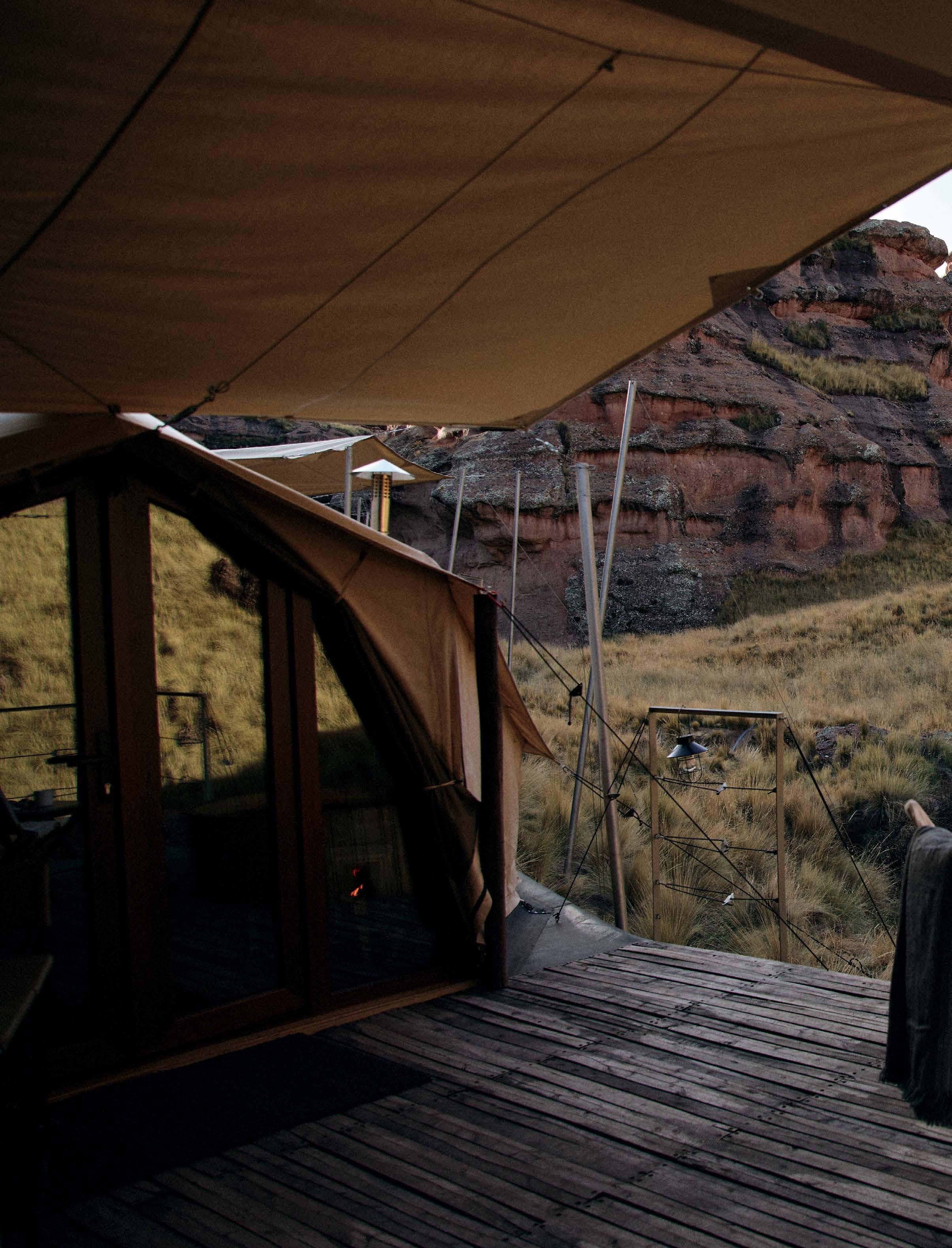
Our personal touches set us apart from the rest. Everything we do is deeply considered, intentional, and personal. When you travel with us, the following services are built into every trip.
Destination experts
Specialists with firsthand knowledge and deep local insight
Custom journeys
Every trip is designed uniquely for you
Top guides
Engaging, adaptable guides who bring each place to life
Seamless preparation
Personalized pre-trip calls and curated documentation
Always accessible
24/7 support before, during, and after your journey
Dedicated concierge team
A personal contact managing every detail on the ground
From touchdown to takeoff
Complete care, every step of the way
The world's southernmost technicolor reef, a stark and otherworldly desert escape, and the crumbled ruins of ancient empires. From contemplative to pulse-quickening, these eight less-traveled destinations spark a sense of adventure and discovery that's at the heart of transformative travel experiences.
Written by Chloe Berge
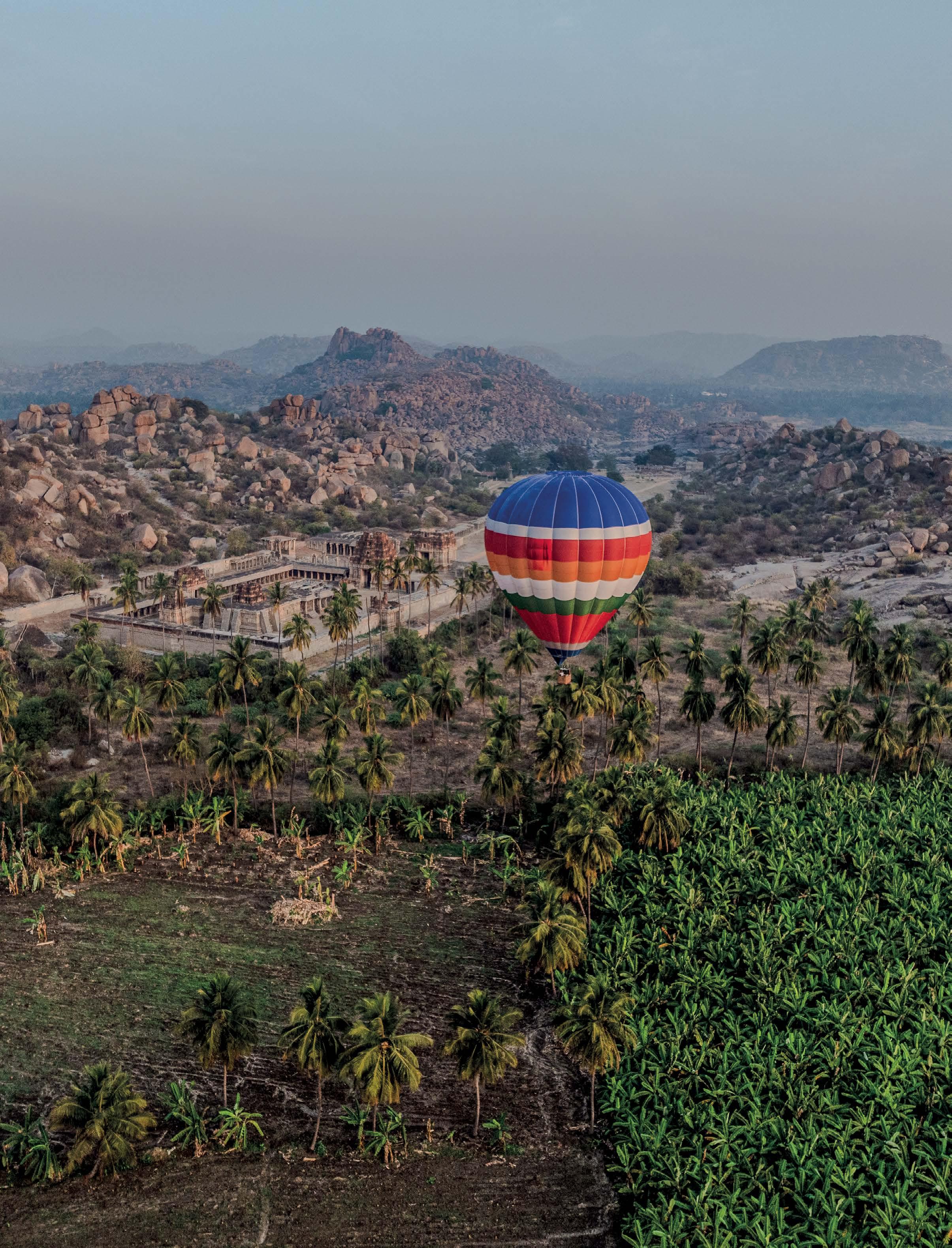
As you weave through the trails that carve through the ancient UNESCO site of Hampi, honeyed sunset light winks between the vestiges of this stone city and the melody of stringed instruments drifts out from the Holy Temple of Virupaksha. Located in a boulder-strewn landscape on the banks of the Tungabhadra River in Karnataka, the monuments at Hampi marks the capital of the Vijayanagara Empire, founded in 1336. The area is closely associated with the ancient Hindu epic of Ramayana, with nearby Anjanadri Hill traditionally believed to be the birthplace of Hanuman, the halfmonkey, half-human god of devotion and courage. Also closely related to Lord Shiva, Hampi continues to serve as an important pilgrimage site in India to this day. A sense of peace and reverence suffuses the ruins with an air of mystery and deep spirituality, making a visit here an unforgettable experience.
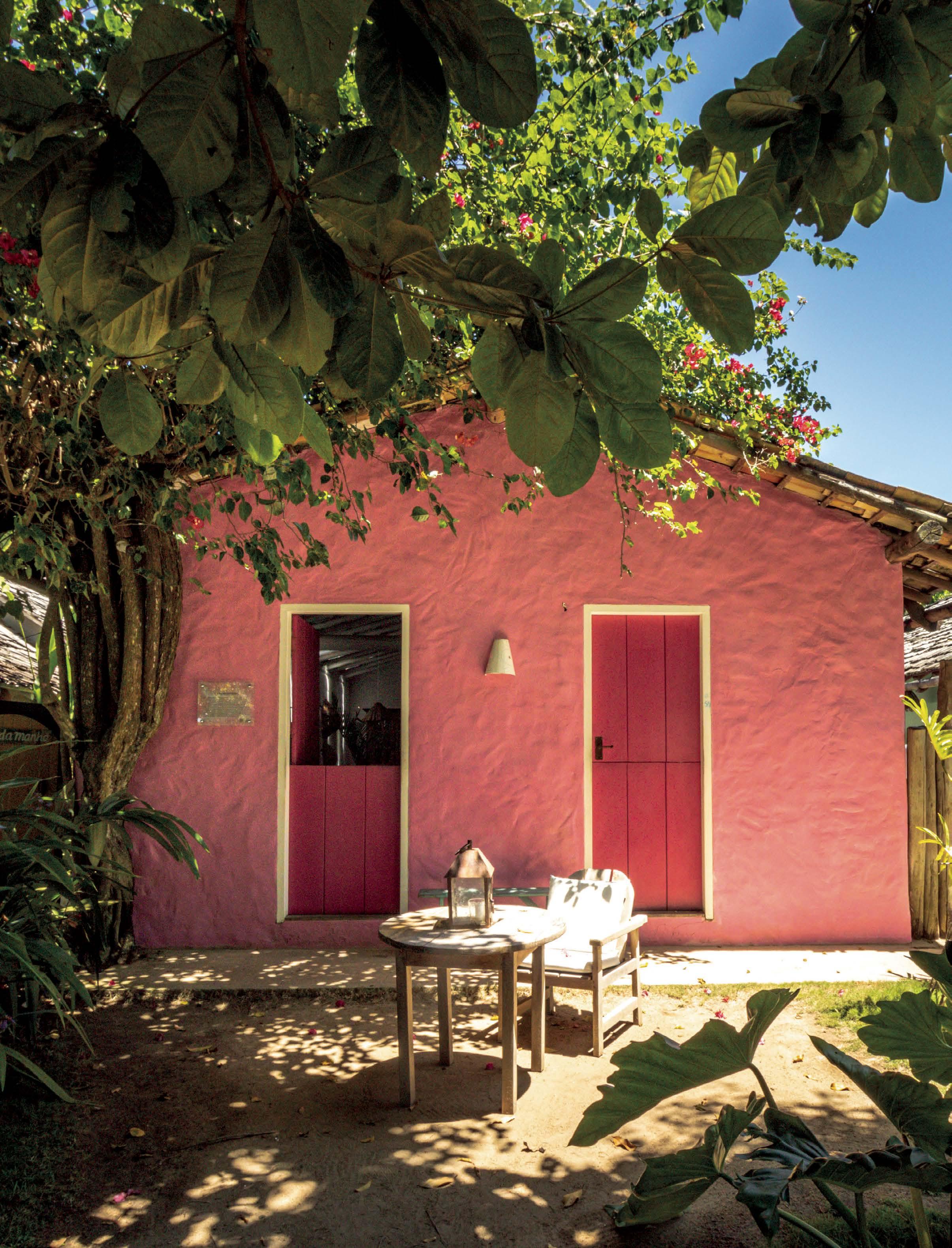
Brazil's northeastern state of Bahia is an orchestra of color, music, and lively festivals rooted in a rich AfroBrazilian heritage. While the historic cobblestone city of Salvador offers a full immersion in this riotous culture, you can get a taste for it on a smaller scale in mellow Trancoso. The fishing village has a time-worn, bohemian elegance and has somehow managed to attract a well-heeled clientele while maintaining its sleepy, under-the-radar feel. A historic white church stands sentinel over the green quadrado (village square) and the surrounding streets are home to oasis-like artisan retreats such as UXUA Casa Hotel & Spa. Away from the town center, crayonbox houses are strung together by stretches of golden sand and leafy dirt roads. Trancoso is all about slowing down to the rhythm of oceanside life, but there's plenty of adventure nearby too, from scuba diving protected reefs to rafting and hiking in Pau Brasil National Park.
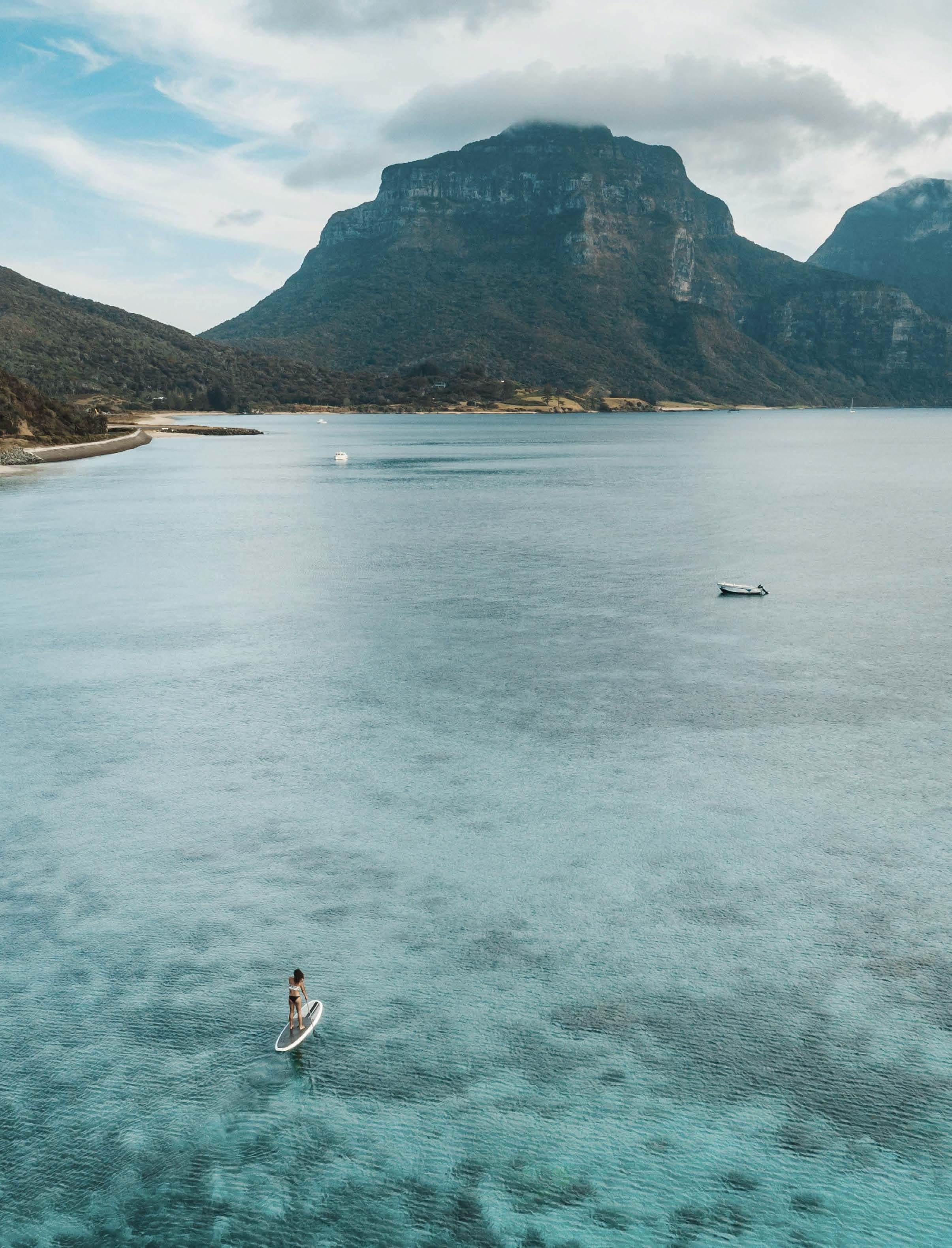
Between the coast of eastern Australia and New Zealand lies Edenic Lord Howe Island. Hemmed by platinum beaches that straddle emerald jungle and aquamarine water, this tropical paradise's unique volcanic landscape and rich biodiversity have made it a UNESCO World Heritage site. With an isolated location and limit on visitor numbers, it feels like a world unto itself, yet it can be reached via a quick two-hour flight from Sydney. Fringing the island is the world's southernmost coral reef, making this a great choice for snorkelers and divers who want to avoid the crowds—and stinger box jellyfish—of the Great Barrier Reef. Lord Howe isn't just for water lovers, though. You can also explore the island's palm forests and misty volcanic peaks on day hikes (or the multi-day guided Seven Peaks Walk, one of the Great Walks of Australia), tee off on the nine-hole golf course, or try your hand at surfing.
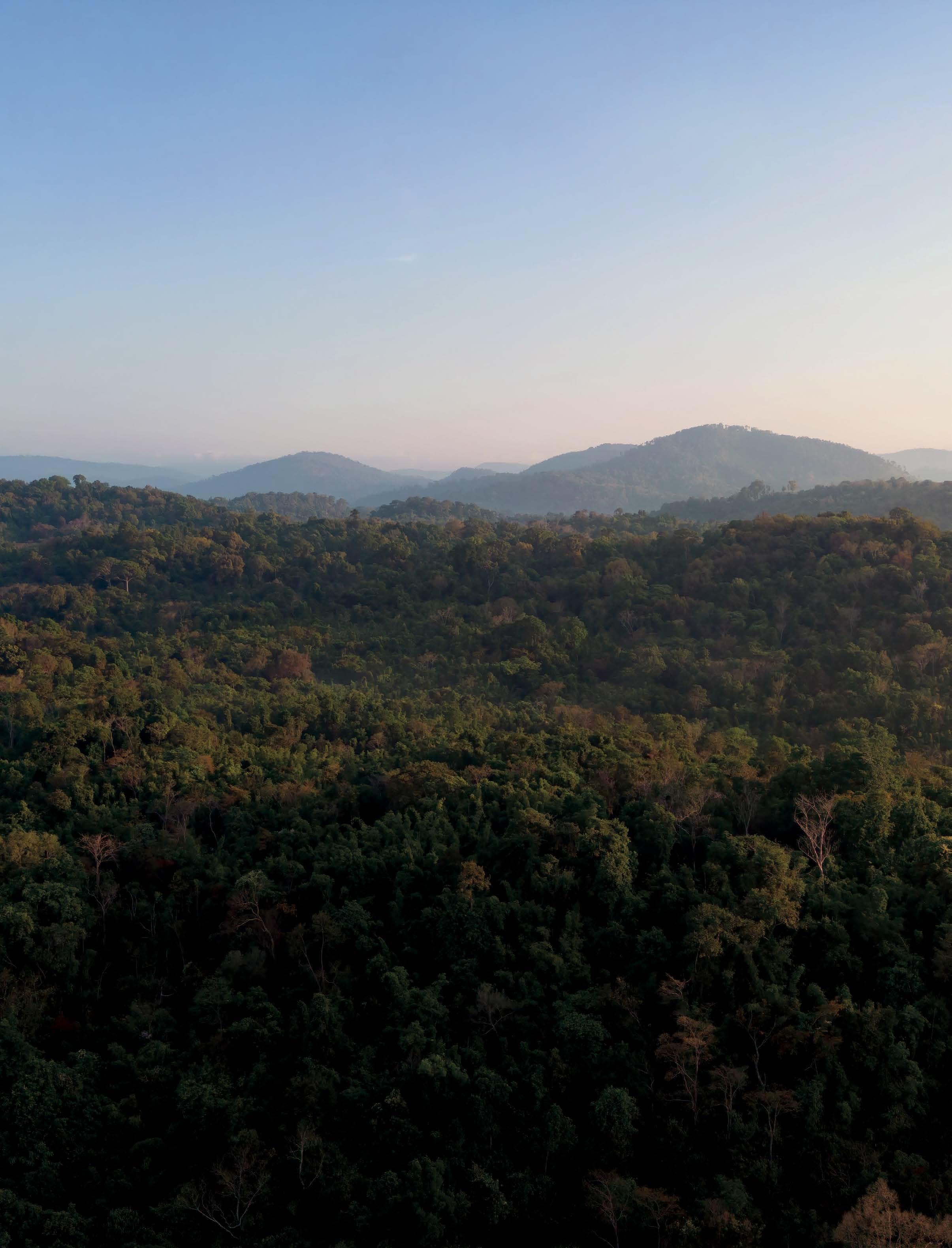
Picture a bubble bath overlooking a roaring waterfall, a trek through tangled emerald jungle, or paddling down a remote river where the only sound is birdsong. In Cambodia's Cardamom Mountains, you'll experience a wilder side of the country far from crowded historical sites. A three-hour drive west of Phnom Penh will bring you into the Cardamom Rainforest, an incredibly biodiverse protected area and the country's largest remaining tract of rainforest, covering 8,010 square miles. Head out with rangers in search of poaching activity, float down Srey Ambel
Estuary on an expedition pontoon, passing green rice paddies and crescent sand beaches, or slow down with unlimited treatments at Shinta Mani Wild’s spa. Ride a zipline through the treetops to reach the tented retreat, then enjoy days of nourishing, fresh food during picnics and cooking classes, invigorating river dips, and sunrise yoga sessions.
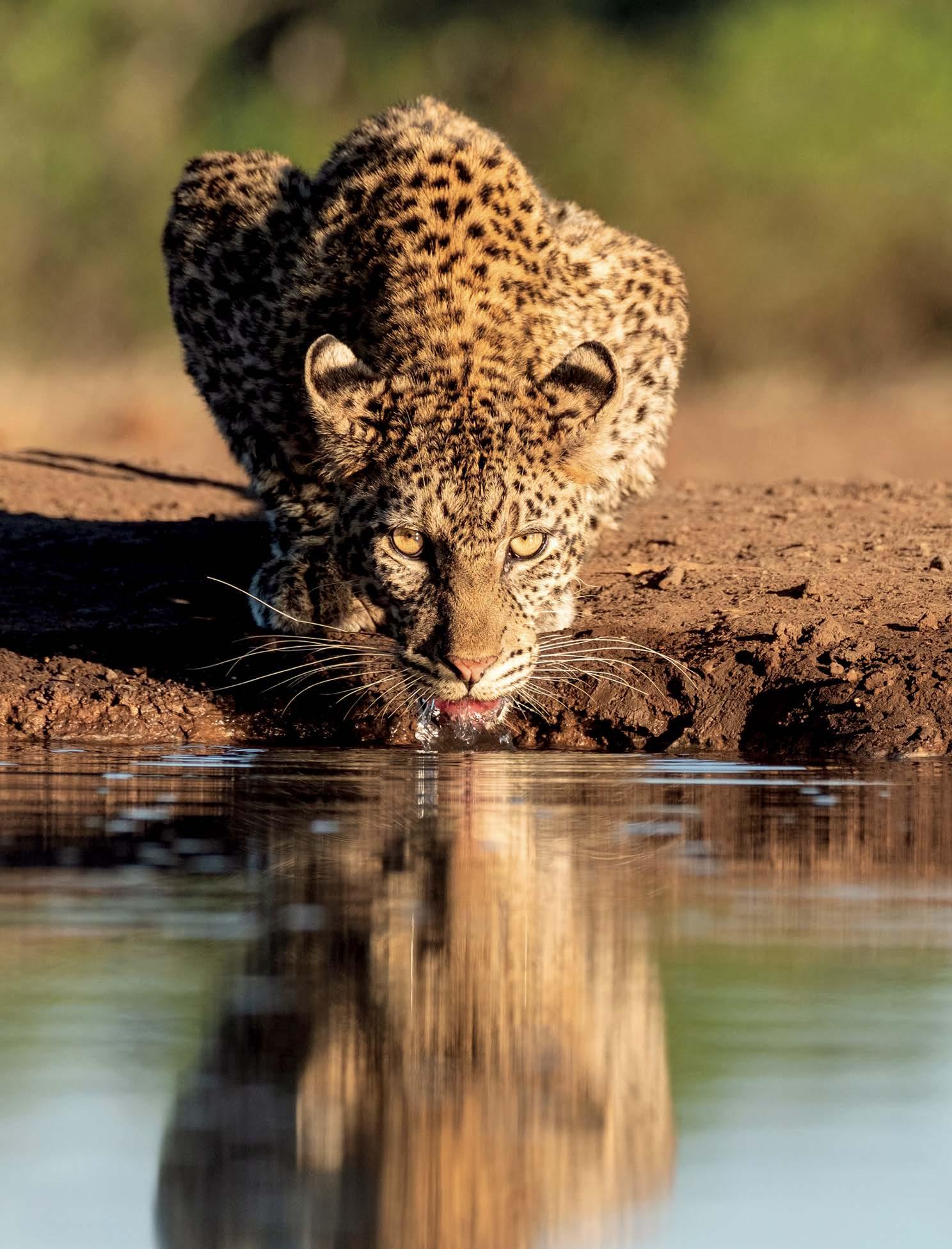
Tucked away in the far eastern corner of Botswana at the confluence of the Limpopo and Shashe Rivers, Mashatu Game Reserve is an overlooked treasure within the country. Known as the "Land of Giants" for its towering baobab trees, thundering herds of elephants, and other superlative flora and fauna, the 100,000-acre reserve on the border of South Africa and Zimbabwe is a mecca for active adventurers and photographers. A diverse landscape of craggy hills, sweeping savanna, and lush riverine forest is home to an abundance of wildlife, including leopards lounging in the treetops of the looming mashatu trees from which the reserve takes its name. In addition to classic game drives, you'll have the opportunity to spot animals on horseback and bike safaris, or by trekking between fly camps where you'll sleep next to a fire under the stars. An awardwinning photographic hide and overnight "hide suite" put you at eye level with the reserve's nocturnal predators.
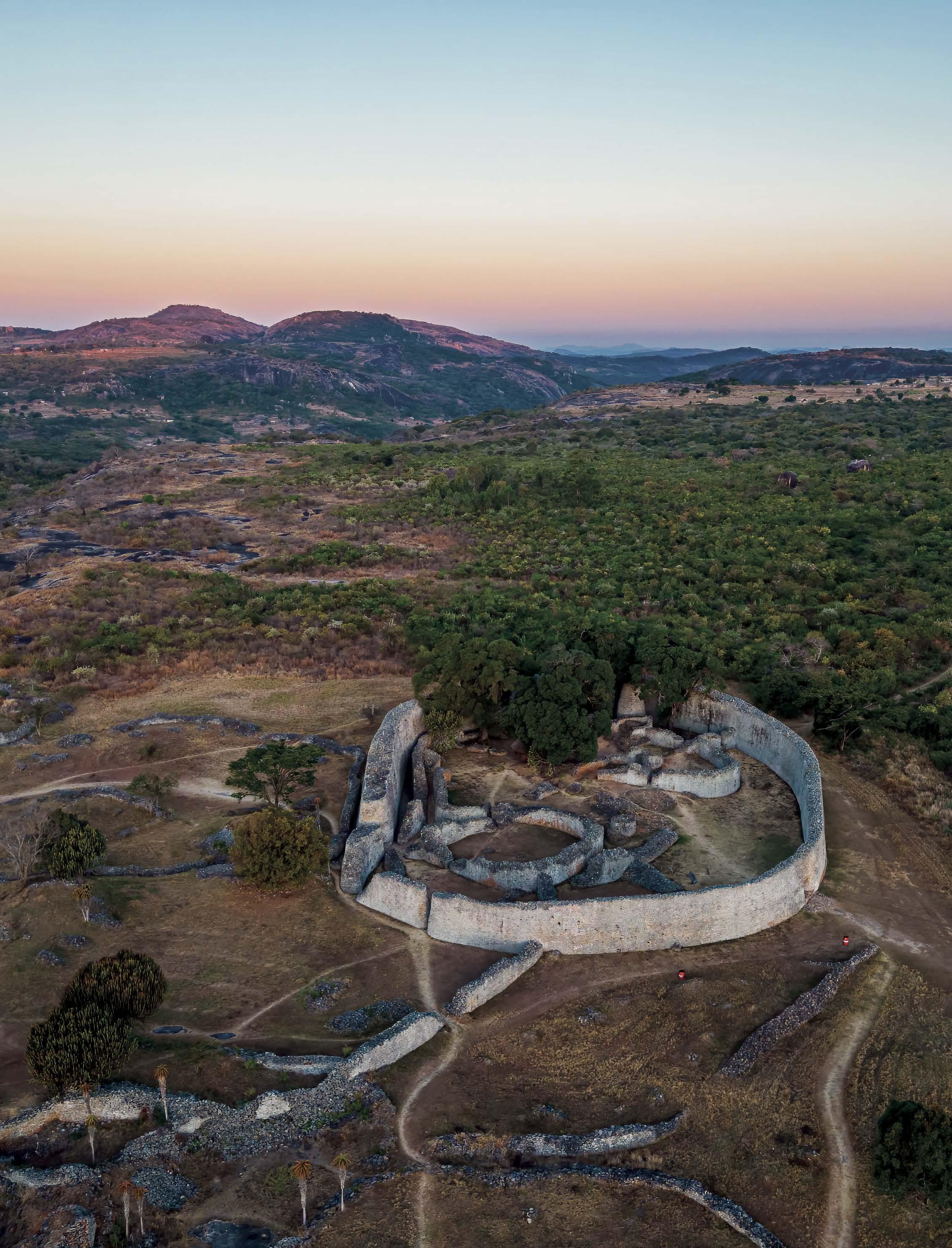
While most daydreams of Africa revolve around sun-baked savanna landscapes and iconic Big Five wildlife, a visit to Great Zimbabwe is a profound reminder of the long human history on the continent. The stone ruins of Great Zimbabwe mark the site of a vast medieval city and the epicenter of the Shona trading empire, which stretched across Africa from the 11th to the 15th centuries C.E. While the abandonment of the city in the 15th century remains a mystery, wandering the storied ruins with an expert guide offers fascinating insights into the city's past. In the soft light of sunrise or sunset, explore the three main complexes, including the Great Enclosure, believed to be a royal residence, the Hill Complex, the city's religious center, and the Valley Ruins, mud-brick houses that would have been home to the settlement's elite. Looking for off the beaten track? This is it.
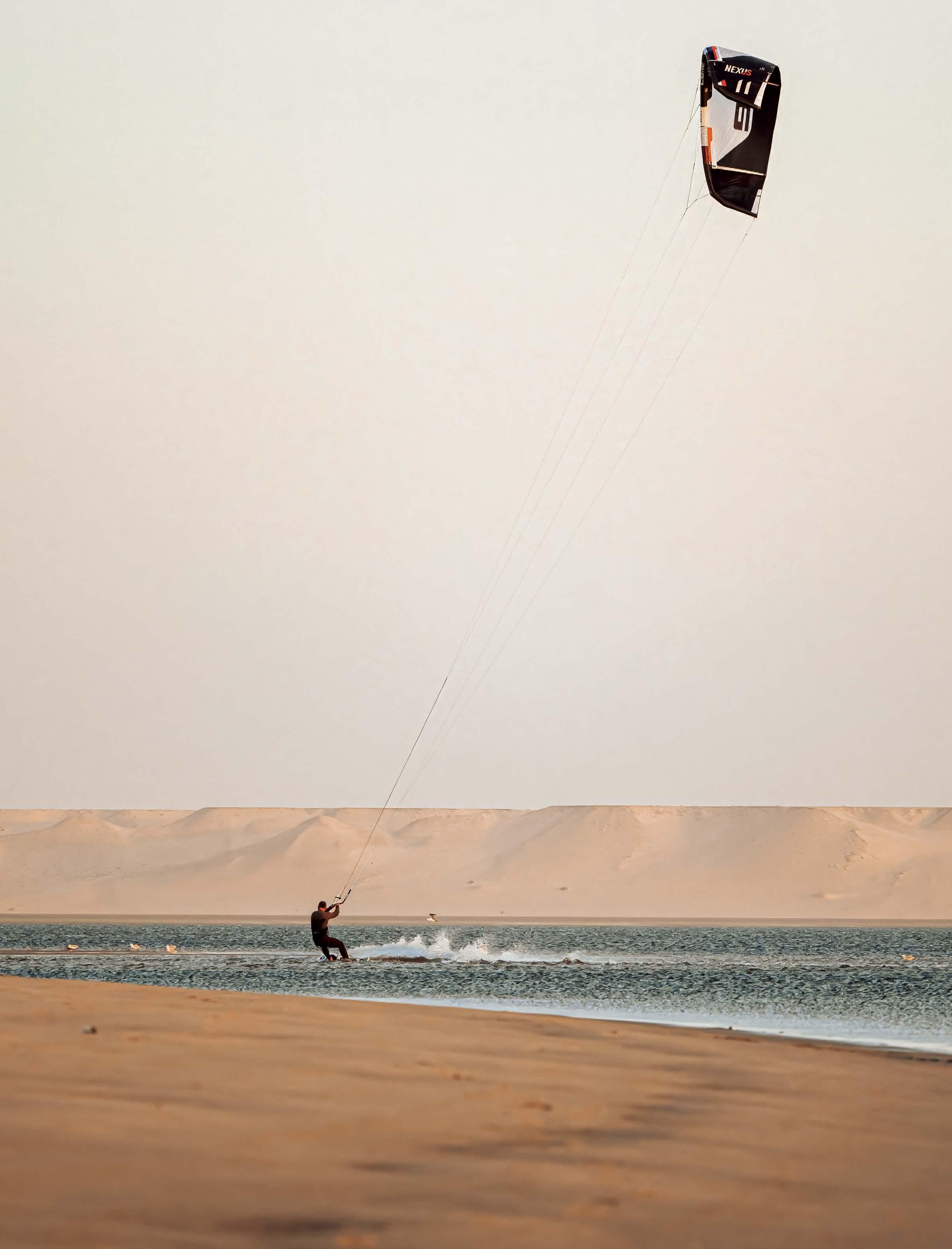
Stark and otherworldly, Dakhla is a coastal retreat for travelers who appreciate wild, remote places. Located in the far southwest of Morocco where the Atlantic Ocean kisses the Sahara, the city is marked by a palette of platinum sand dunes and turquoise water. With few other tourists in sight, you'll often have swaths of beach to yourself, where the windswept shores create perfect kitesurfing conditions. You can also surf, paddleboard, head out on a hike through the desert, or swim and sunbathe at the impossibly-blue Dakhla Lagoon. The unique end-of-the-world feel makes it well worth the trek to get here. Check in at Caravan Dakhla, the latest outpost by Habitas, set on the shores of Dakhla Bay, and get a taste of Berber hospitality and design while savoring fresh seafood and unwinding with restorative yoga.
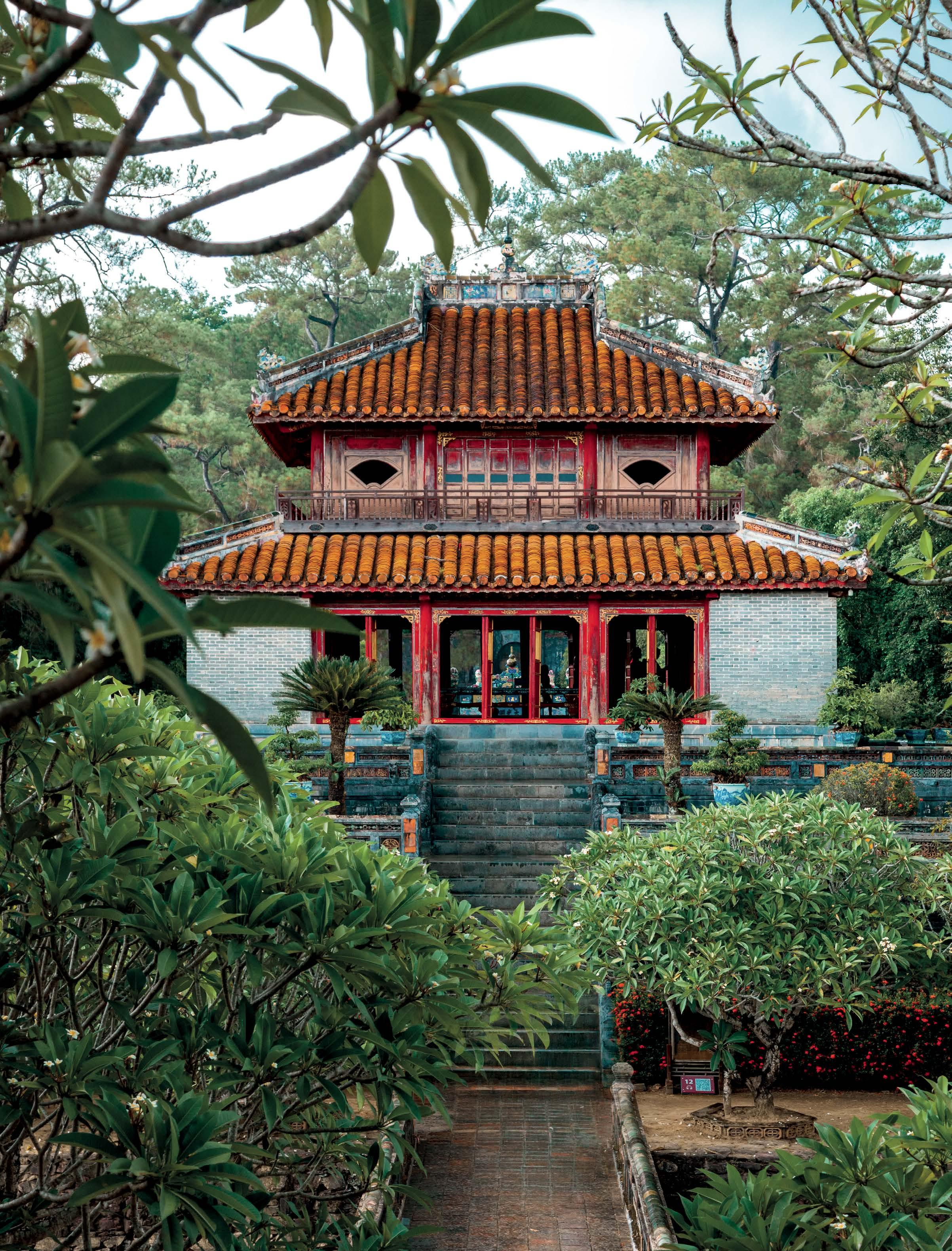
Travel back in time to Vietnam's gilded imperial past in the city of Hue. As the capital of the Nguyen Dynasty in the 19th century, Hue's green hills and romantic riverside are threaded with the vestiges of this feudal kingdom. In the Imperial Citadel, a UNESCO World Heritage site, wander through storied monuments and hallowed halls, then visit the emperors' mausoleums—impressive complexes punctuated by statues, lily-studded moats, and temples. In the evening, wander through Hue’s hidden garden houses, where fragrant courtyards and lantern-lit pavilions create an enchanting setting for dining, or savor a traditional dinner and music in the company of a princess from the House of Nguyen. With a rich cultural heritage that unravels around every corner, history and art lovers should make a beeline for Hue.

If you know someone who shares your love of adventure or you would like your own magazine, scan the QR code below to have one delivered. We created Extraordinary Moments to celebrate travel that goes beyond the ordinary.
Scan here and fill in your information

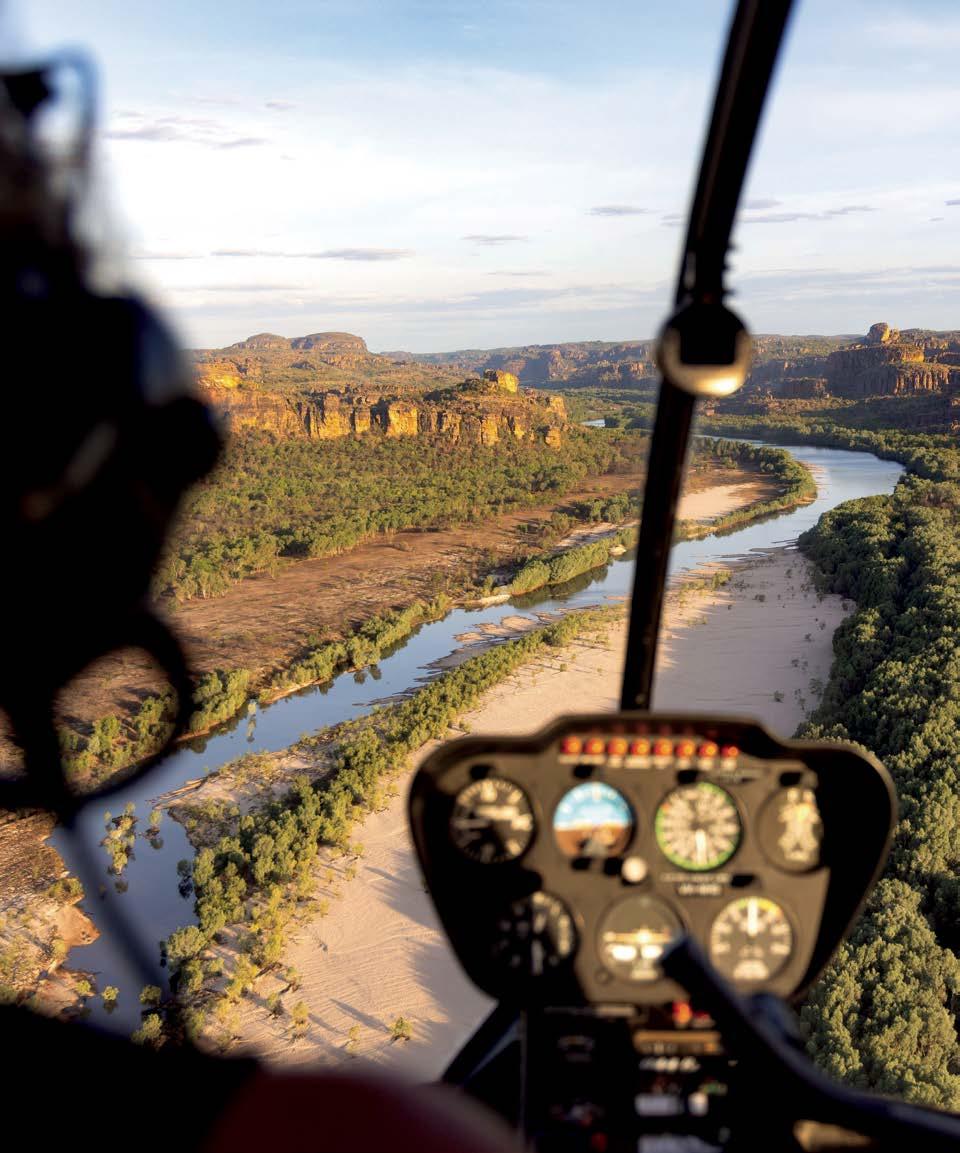
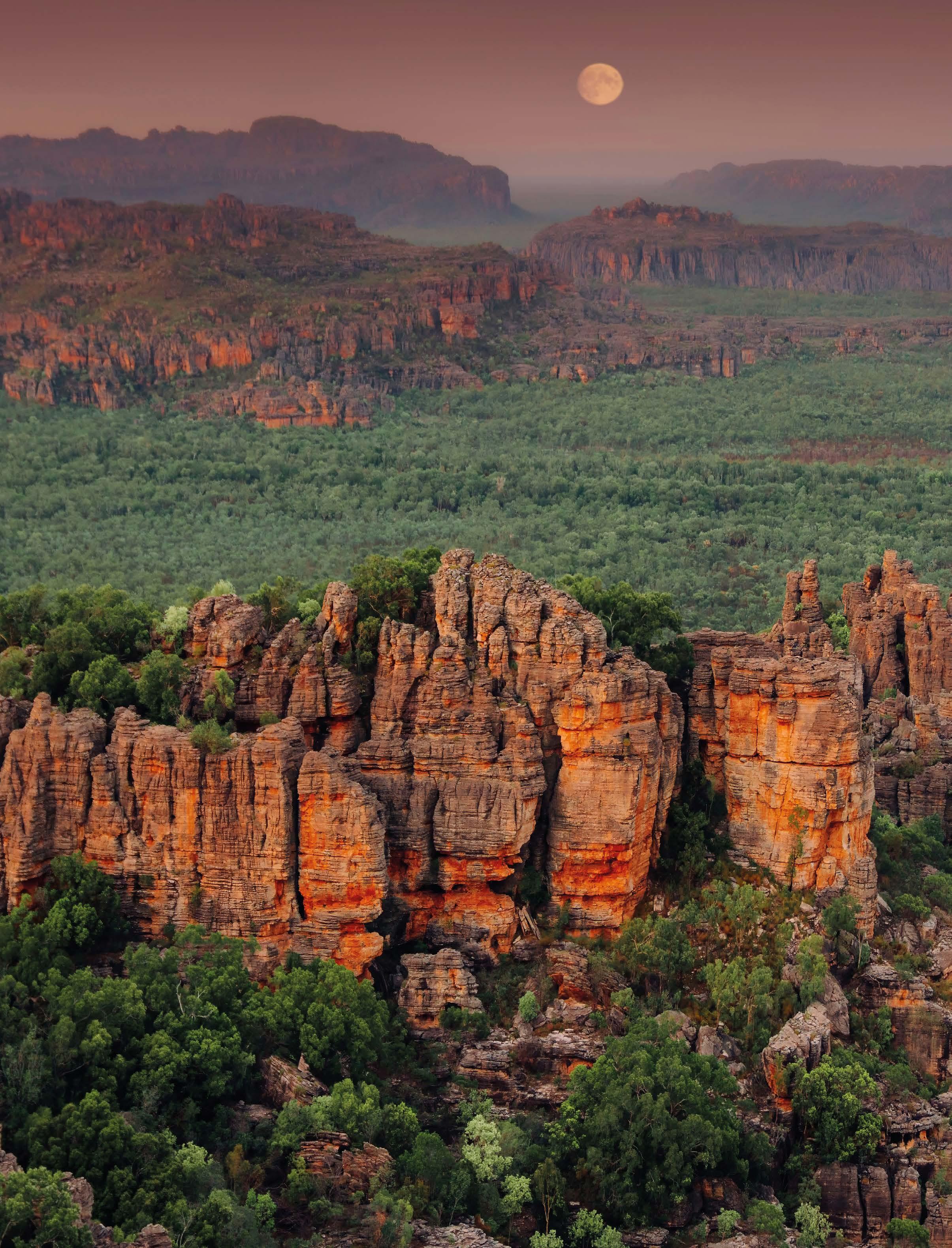
In northern Australia's remote and sparsely populated Top End, ancient stories, a canvas of era-spanning culture, and wild adventures await.
Written by: Alexis Buxton-Collins
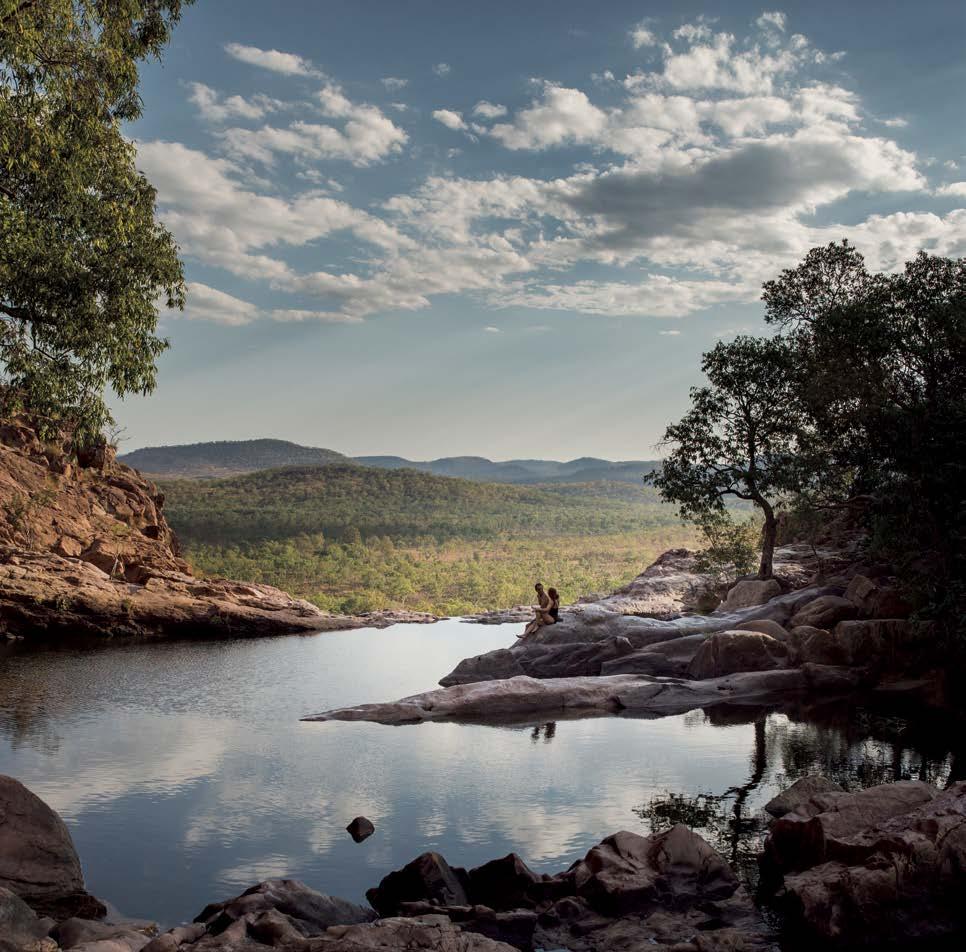
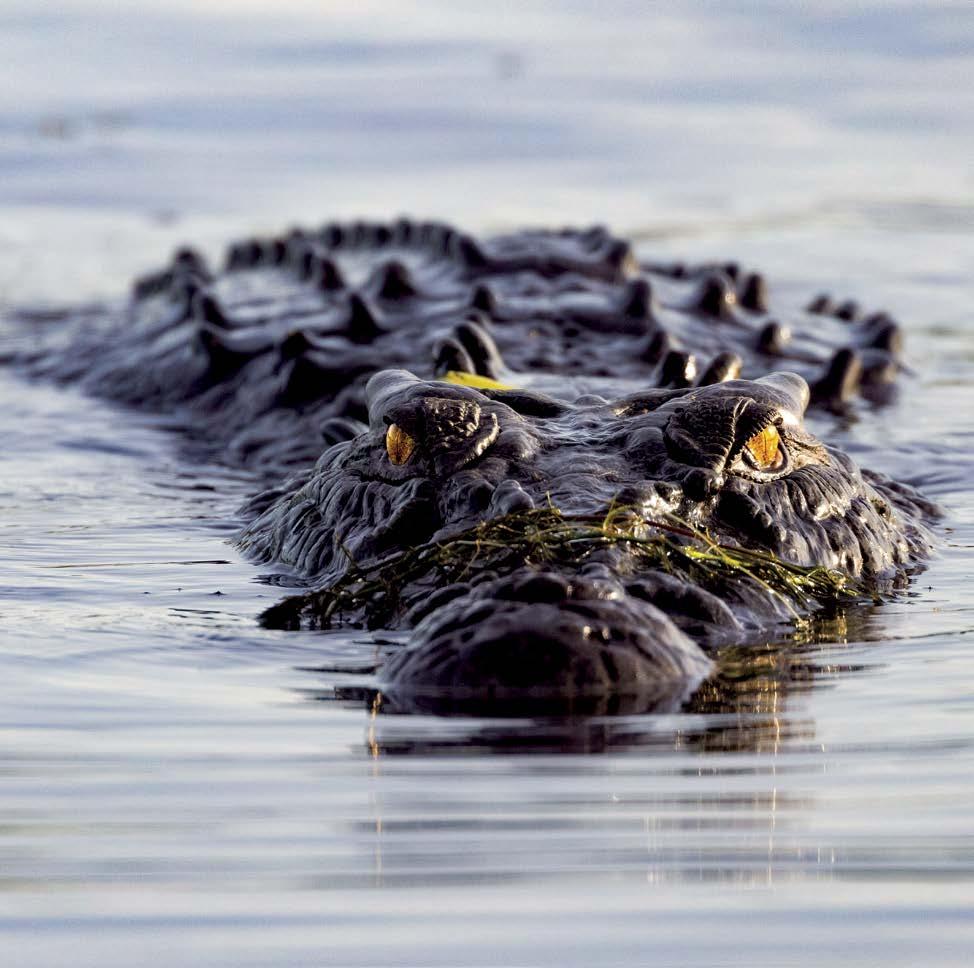

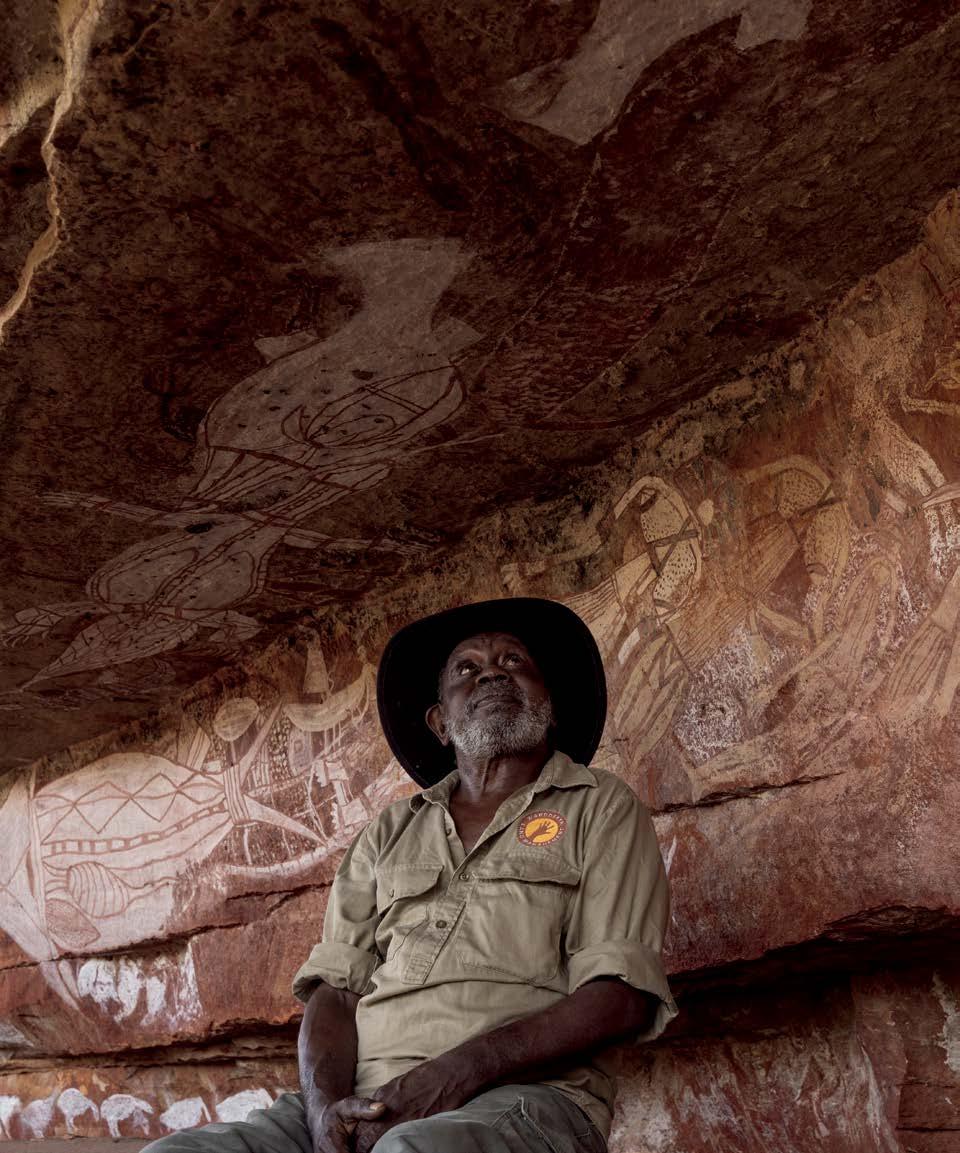
I've spent all morning surrounded by a fearsome Australian menagerie of six-foot wallabies, monitor lizards sporting blood-red talons, and stingrays with tails that end in wicked barbs. But nothing has prepared me for this. Crouching low, I gaze wide-eyed at a snake that must stretch 20 feet from tip to tail. Its ghostly white body is crosshatched with fine red markings that lead to a mouth bared wide to reveal rows of impressive fangs.
This is a cave painting of the Rainbow Serpent, a mythical creature that is said to have formed many of Australia's physical features. And though this painting is thousands of years old, the first nonindigenous person to see it was a buffalo hunter named Max Davidson, who stumbled across it in 1987. Just a year earlier, he had been invited by the Amurdak traditional owners to set up a lodge on their sacred lands in Australia's tropical Top End.
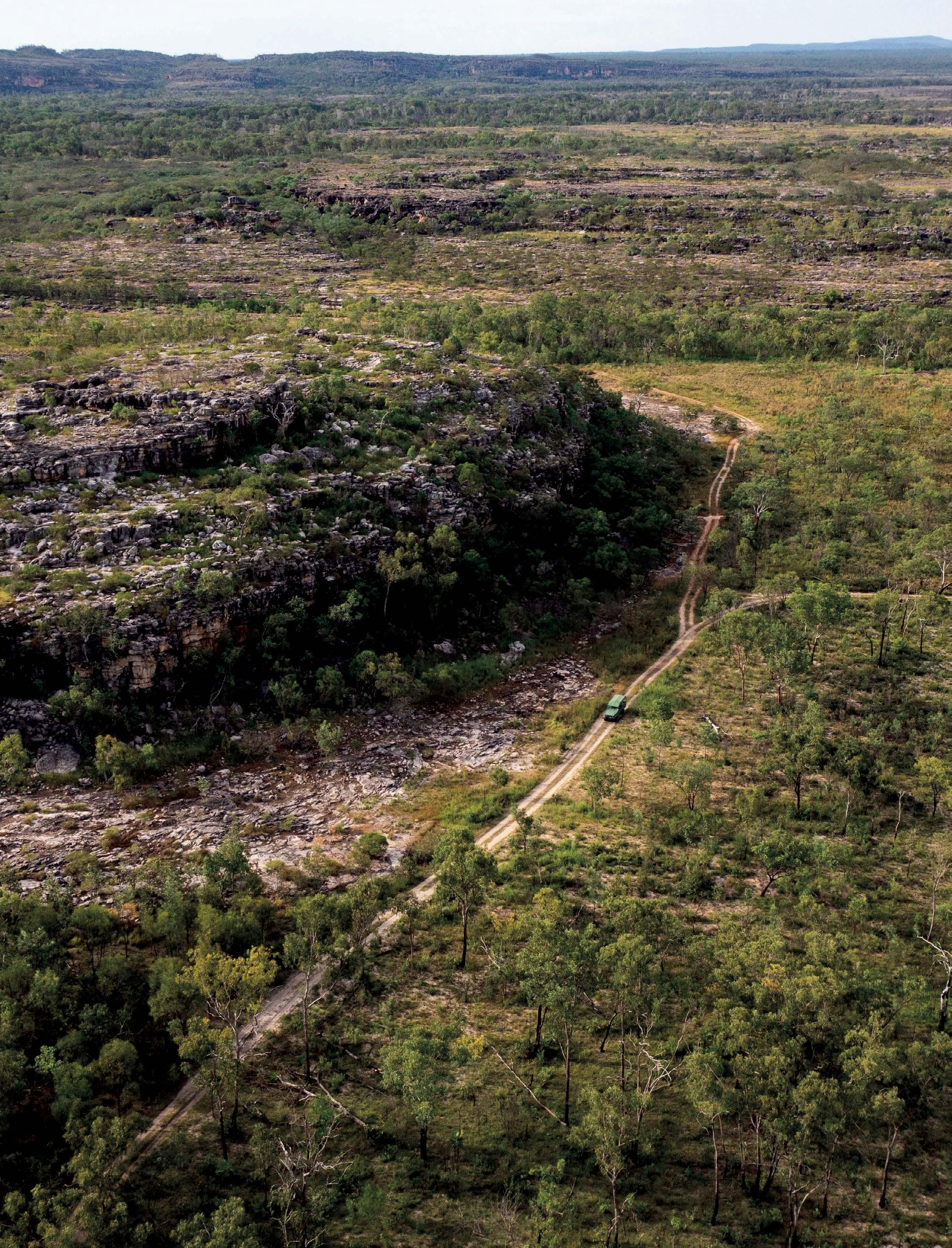
Fewer than 16,000 people live in Arnhem Land, a vast wilderness of mangrove swamps, monsoon rainforest, floodplains and tropical savanna that is larger than Maine. It's a place of abundant natural beauty, but to truly appreciate this wild region, found within Australia's Top End, I need to engage with the culture of the people who have lived here for untold generations.
Every wet season, the weathered escarpments that rise above this landscape transform into island sanctuaries, and for 50,000 years the Amurdak people have used them as classrooms, libraries, and museums by painting their stories onto the red sandstone. The result is perhaps the greatest concentration of rock art in the world, and the only way to see it is with a permit from an operator in the area.
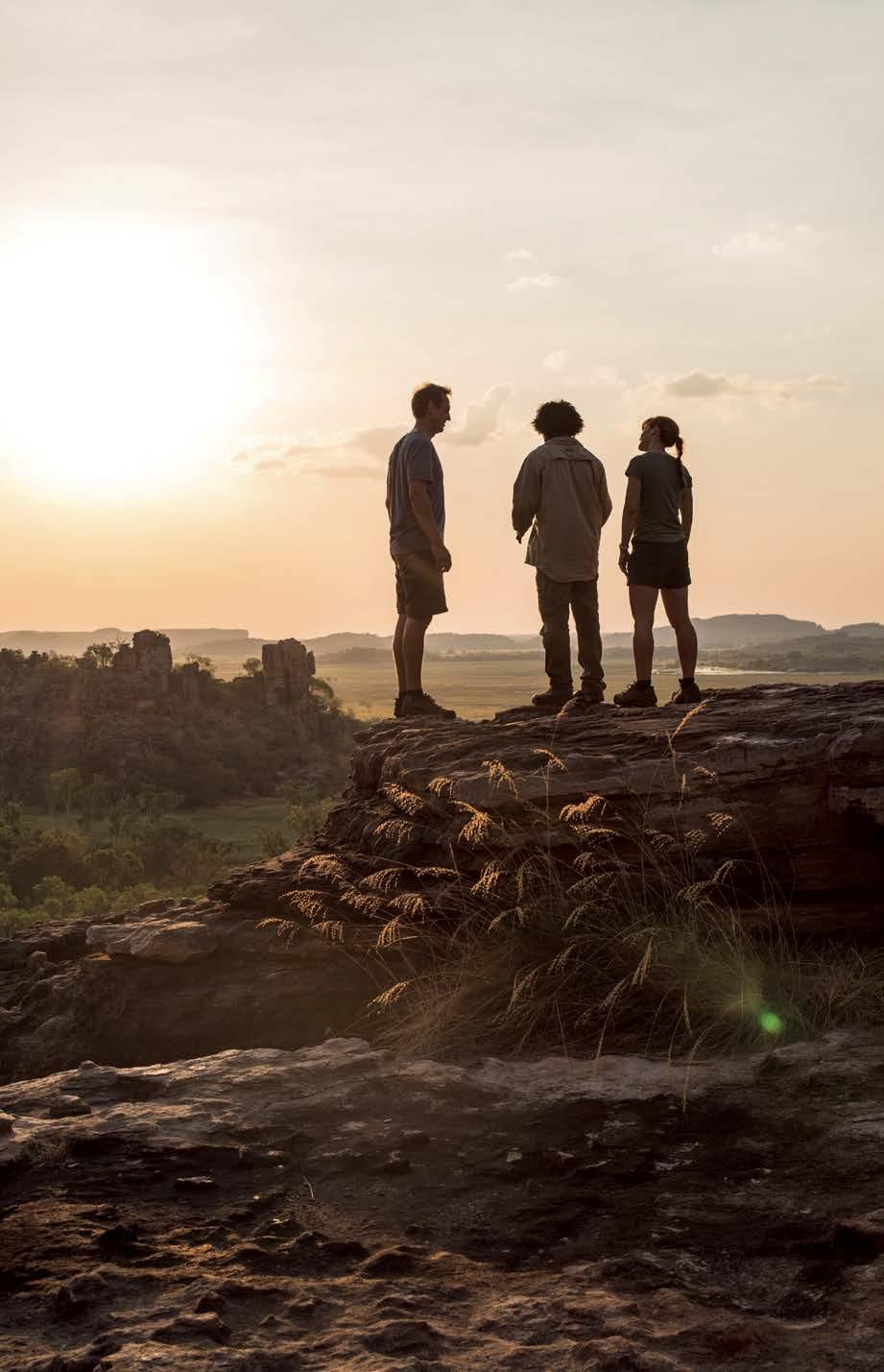
At my side is Sab Lord, a colorful character even by the lofty standards of the Australian bush, and well-known local guide. Lord, who is white, grew up living alongside the traditional owners in what is now Kakadu National Park. He can still remember the first time he encountered air conditioning on a trip to Darwin. "Me and my brother had to go to the dentist," he recalls with a throaty chuckle. "And when we felt the cold air, we ran out of the place screaming because we thought it was filled with bad spirits."
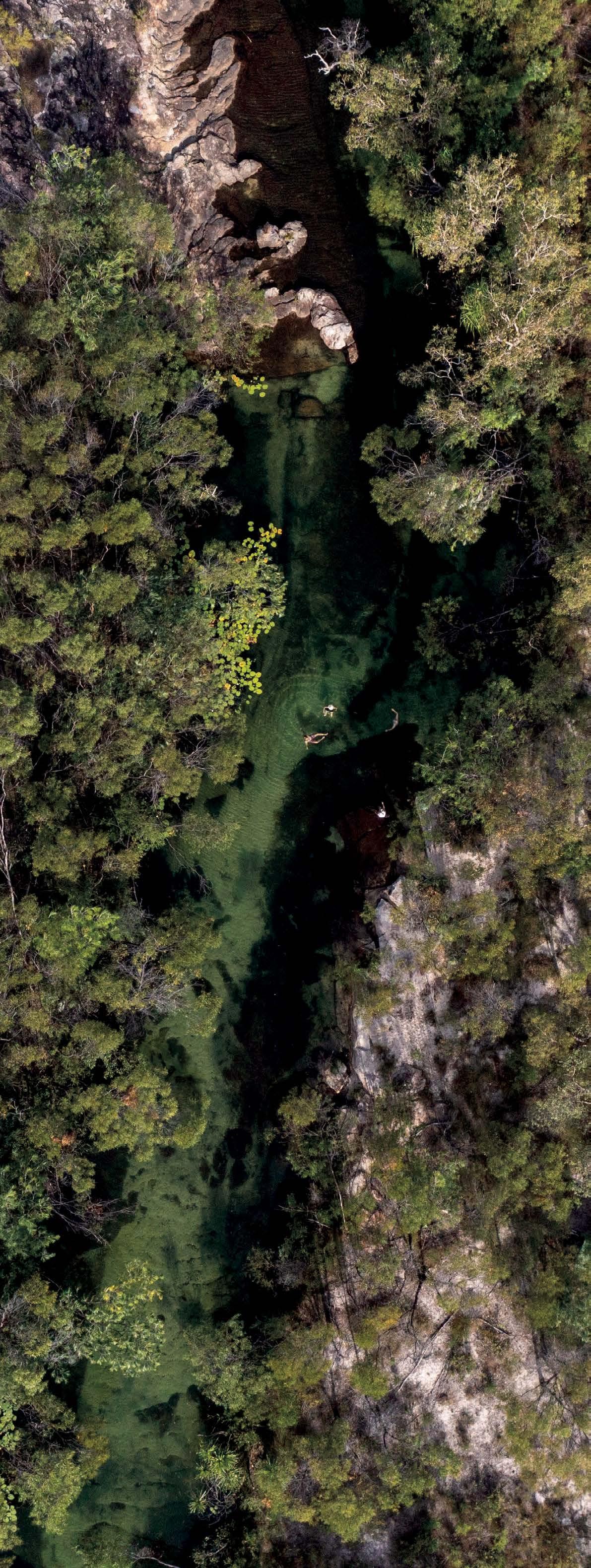
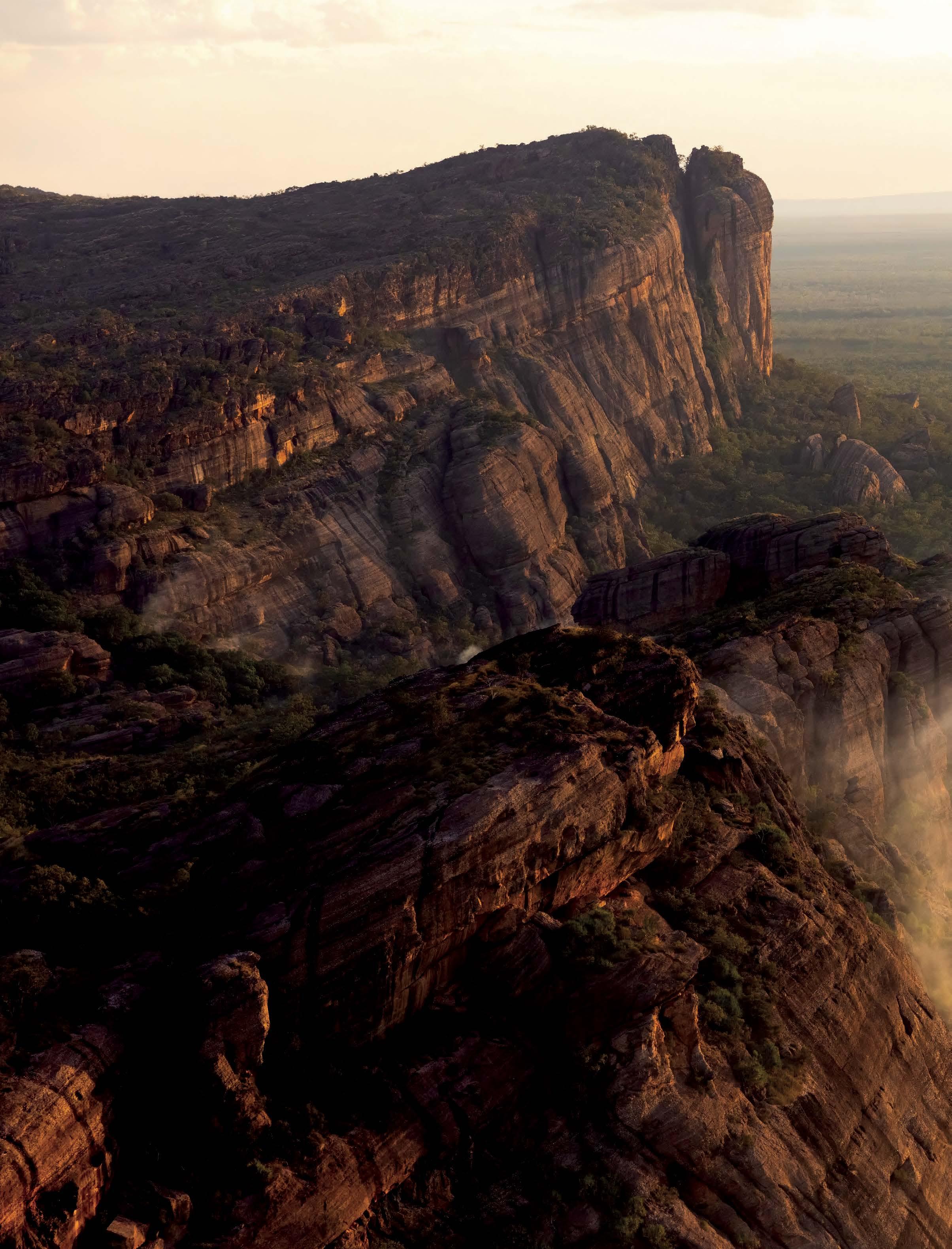
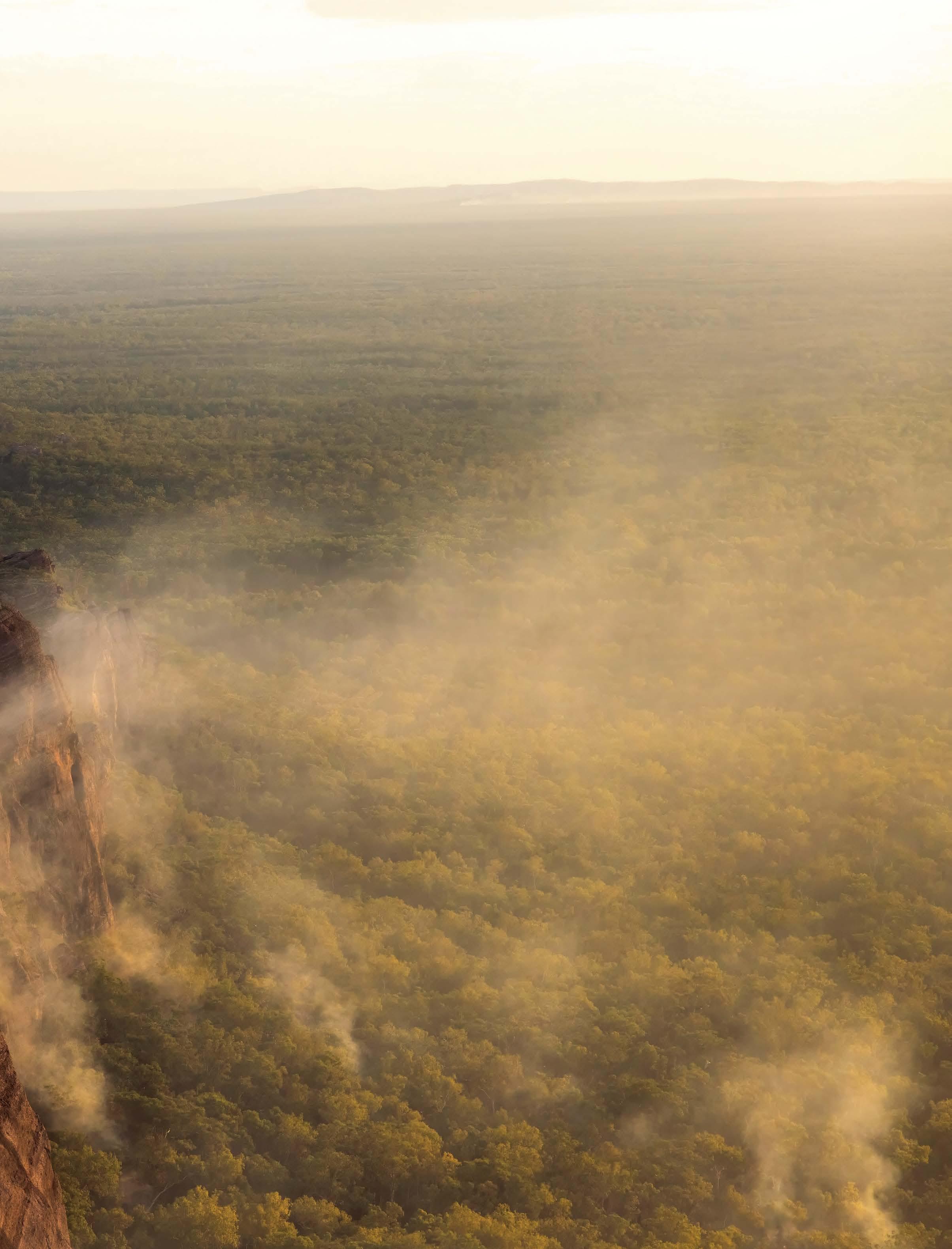
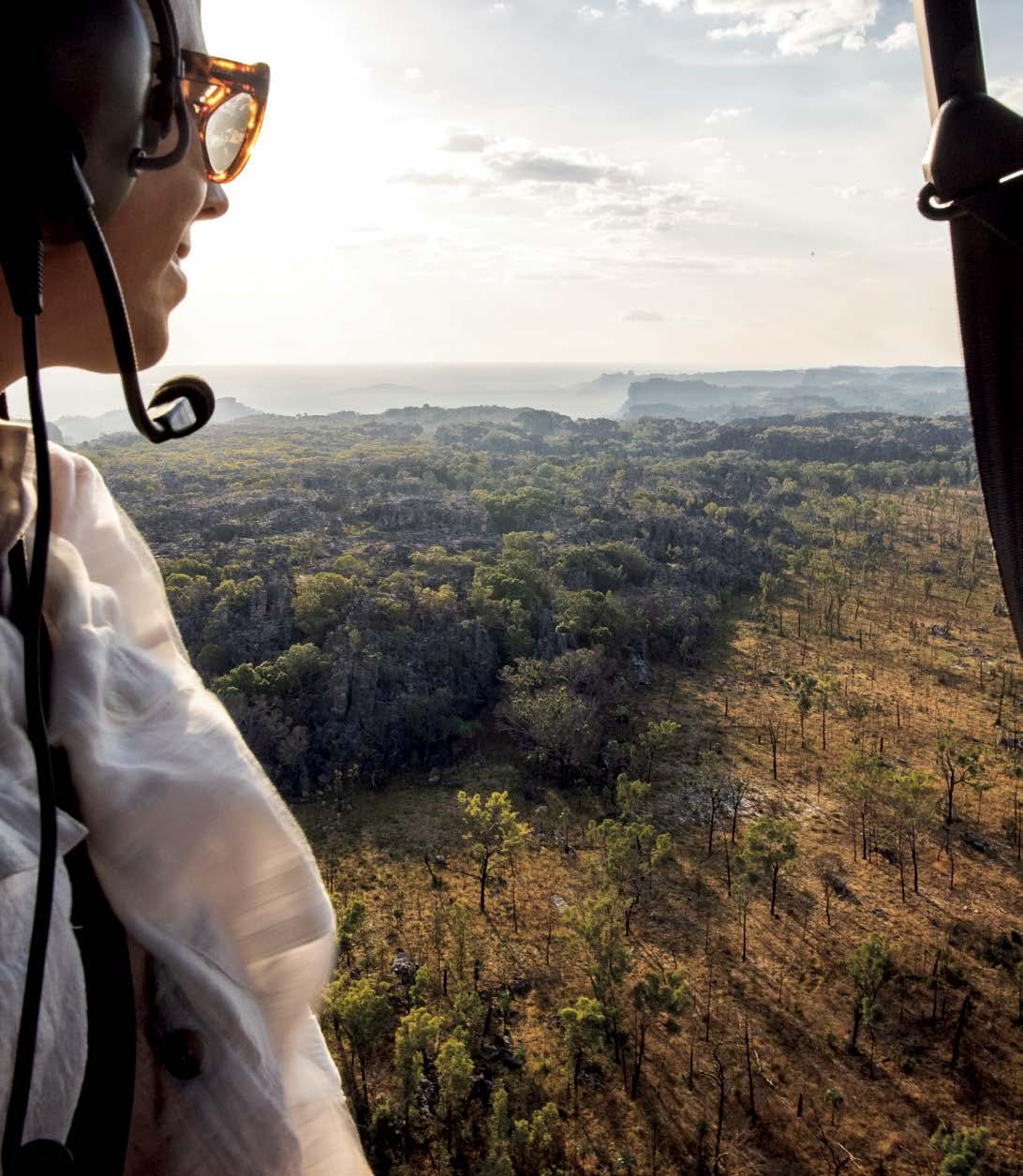
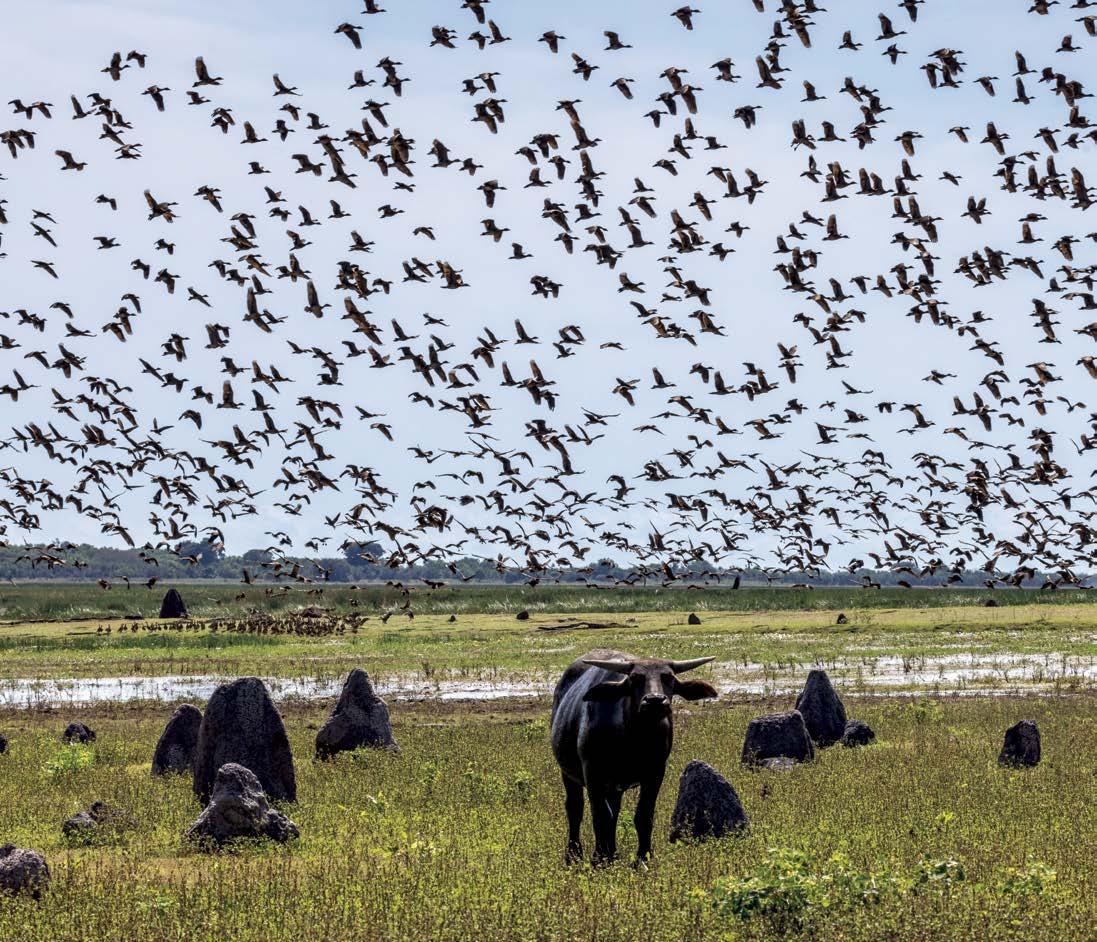
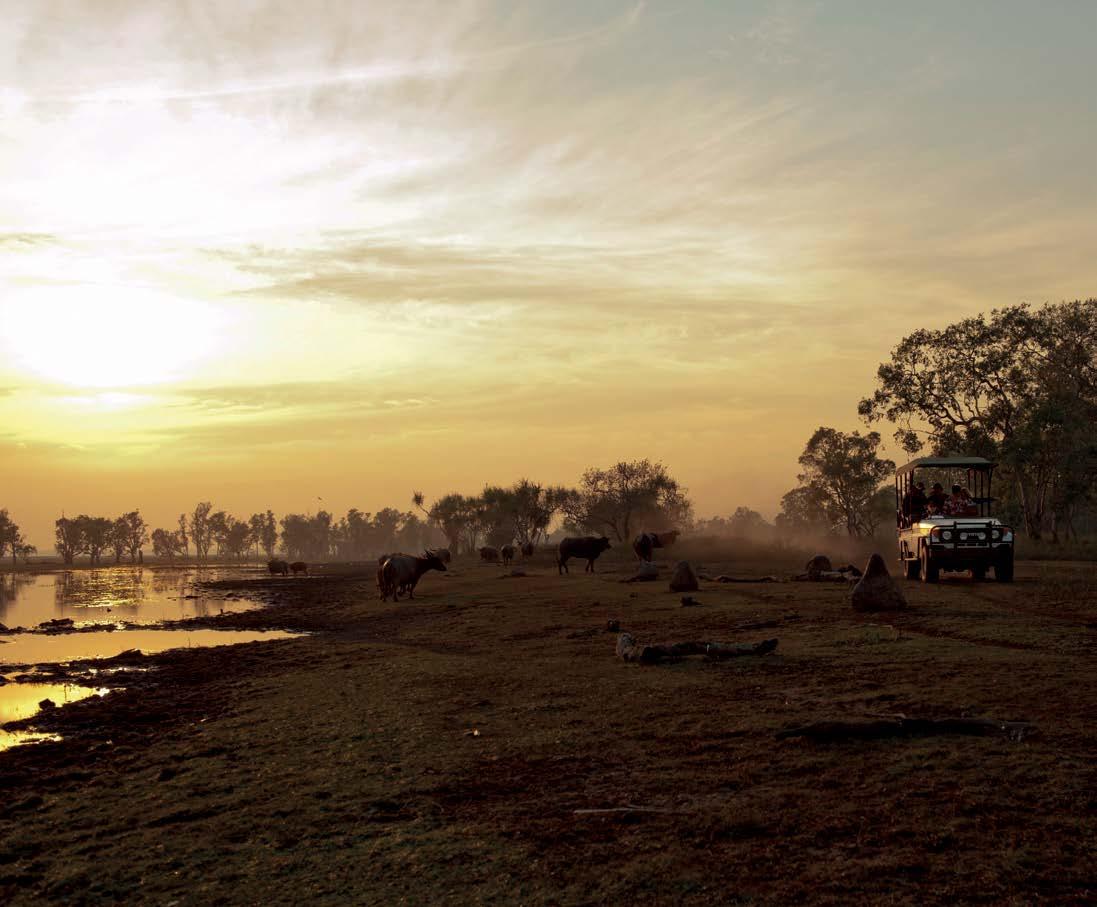
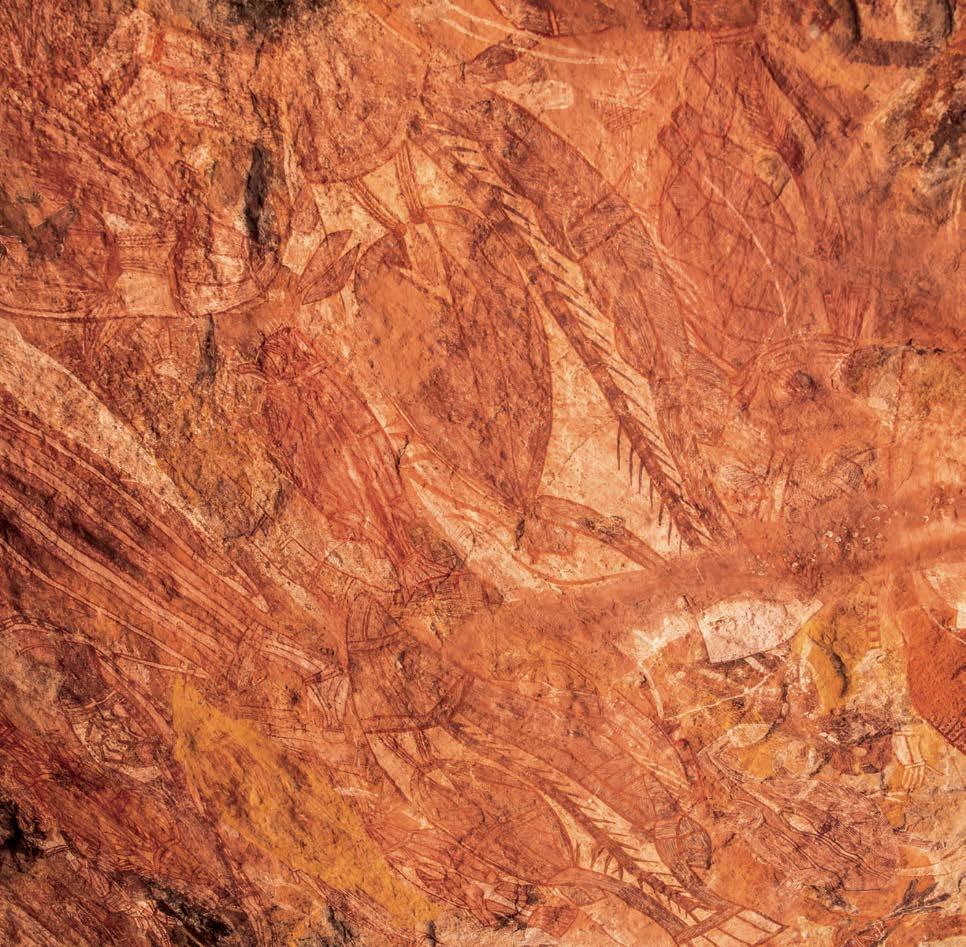
At a site called Left Hand, an exuberant parade of red, white, and yellow images covers every available surface. Mythological beings, human figures, and local wildlife dance around the walls and ceilings, the latter sometimes portrayed in an X-ray style that reveals their vital organs. For the Amurdak people, the act of painting was as important as the artworks themselves and thousands of images are layered on top of one another in a giant palimpsest.
Beneath the more recent red figures, faded mustard-colored artworks document how the environment changed when rising sea levels brought new species to the region some 8,000 years ago. Amazingly, some walls are covered in handprints that date back even further, displaying a connection between people and country that spans hundreds of generations.
After days immersed in this ancient cultural landscape, the transition to modern travel logistics feels almost jarring. It's possible to drive to Davidson's Arnhem Land lodge during the dry season, but there's no road access when I visit in March. Instead, I leave in a light plane and watch flocks of cockatoos reduced to clouds of confetti drifting over the flooded forests before landing 250 miles away at Swim Creek Station, a pastoral lease with some 10,000 buffalo.
Hidden deep in the property is Bamurru Plains, a remote luxury lodge on the edge of a broad floodplain. When I arrive, the water is completely hidden by thick spike grass and the only way to track the progress of the 2,000-pound bulls that lumber through the shallows is to follow the cattle egrets perched on their backs. Even harder to spot are the massive estuarine crocodiles that Lord refers to as "snapping handbags", though he assures me that they can see me just fine.
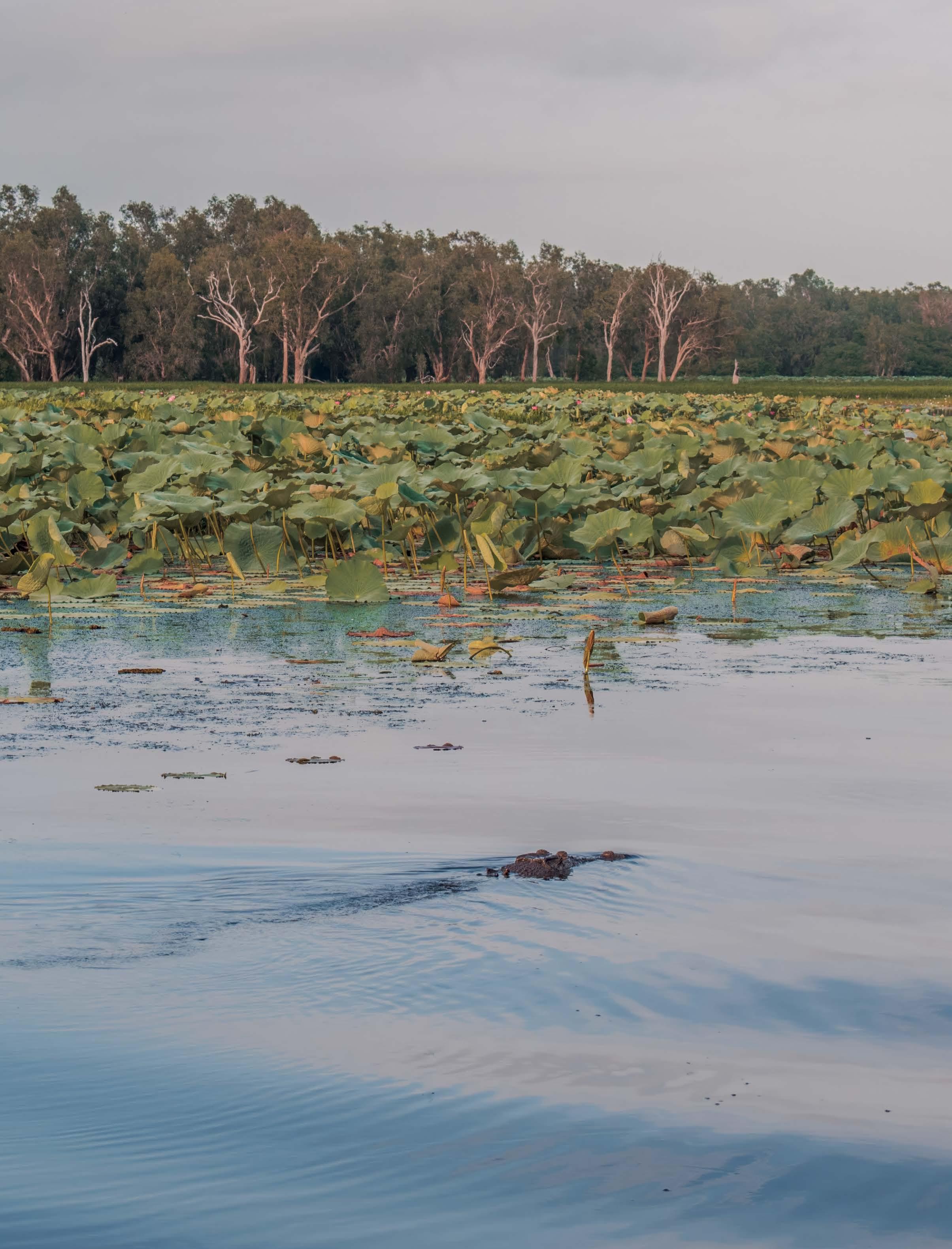
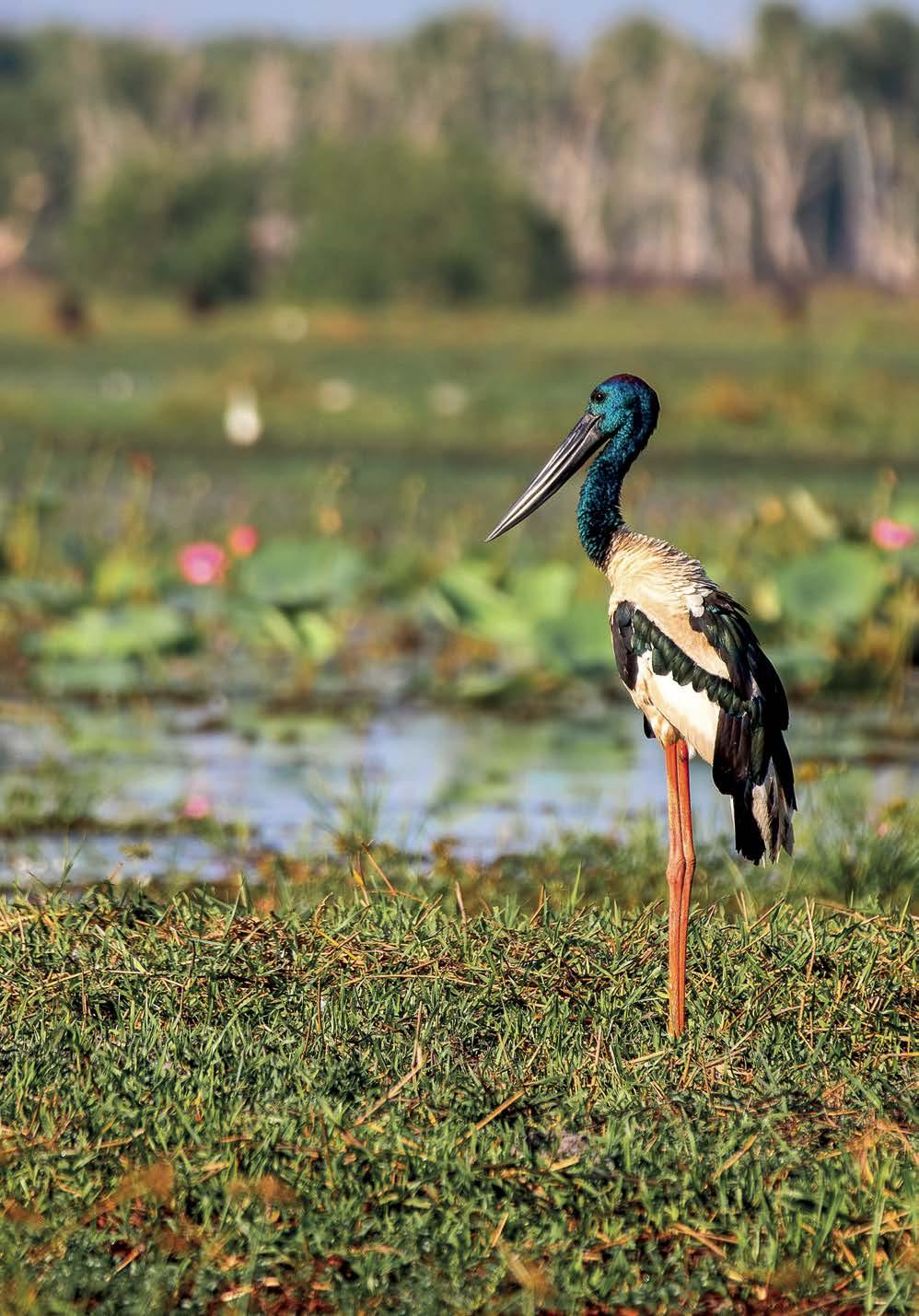
Boarding airboats that glide effortlessly over the floating mats of vegetation, we skirt eerie melaleuca swamps where azure kingfishers dart between the trees, black-necked storks patrol the water's edge on stilt-like legs, and herds of buffalo graze between fields of termite mounds that resemble oversized gravestones. When the airboat slows down, I watch out for the handsome orange and blue Leichhardt's grasshoppers that float in the air alongside us and native water lilies with delicate white, gold and violet flowers and crunchy stalks that taste like celery.
Fortunately, tastier fare awaits us at the lodge, and I spend my evenings feasting on oven-roasted red
emperor fish topped with a native succulent called karkalla, tender pearl oyster flesh with tart finger lime caviar, and ice cream made from the tangy honey of native bees. I continue the local theme with a gin and tonic featuring acid-laden green ants, then head out to the deck to watch the sunset.
Despite the lack of Wi-Fi, it's easy to feel connected here, and the modern world seems far away as the golden sun slowly descends and the silhouettes of fabulously spiky pandanus trees are reflected in a silvery pool of water. I imagine this scene playing out unchanged for millennia until Lord sidles up beside me. "Come back in a month," he tells me, "and this will be a completely different place."
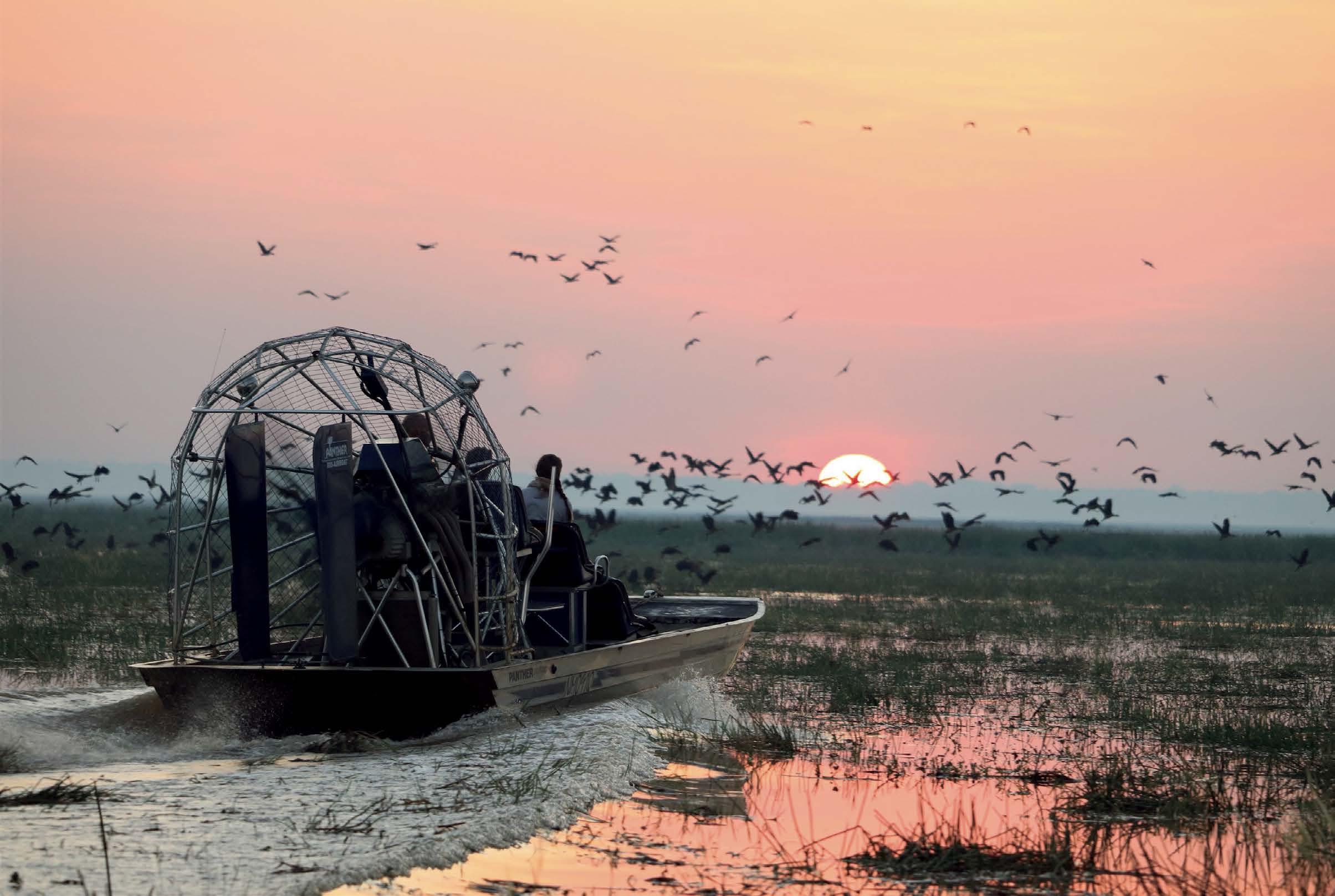
As the vegetation dries and "knock 'em down" winds flatten the glass, the smoke drifting up from countless fires will make the setting sun glow bright red. Later in the dry season, half a million migratory magpie geese will arrive and turn this shrinking wetland into Australia's biggest nursery before spectacular lightning displays herald the onset of another wet season.
These cycles of fire, flood, and rebirth play out every year, and a weeklong visit offers only the briefest glimpse into a world where entire ecosystems can transform in a matter of weeks while important cultural sites span hundreds of generations. This is a land that is at once timeless and constantly
shifting, and it's not only the physical landscape that is in flux; it's impossible to visit Arnhem Land and be unchanged by the experience.
Want to explore ancient rock art and wild wetlands in Arnhem Land yourself?
Reach out to our Australia experts to plan your journey into this timeless landscape: info@extraordinaryjourneys.com
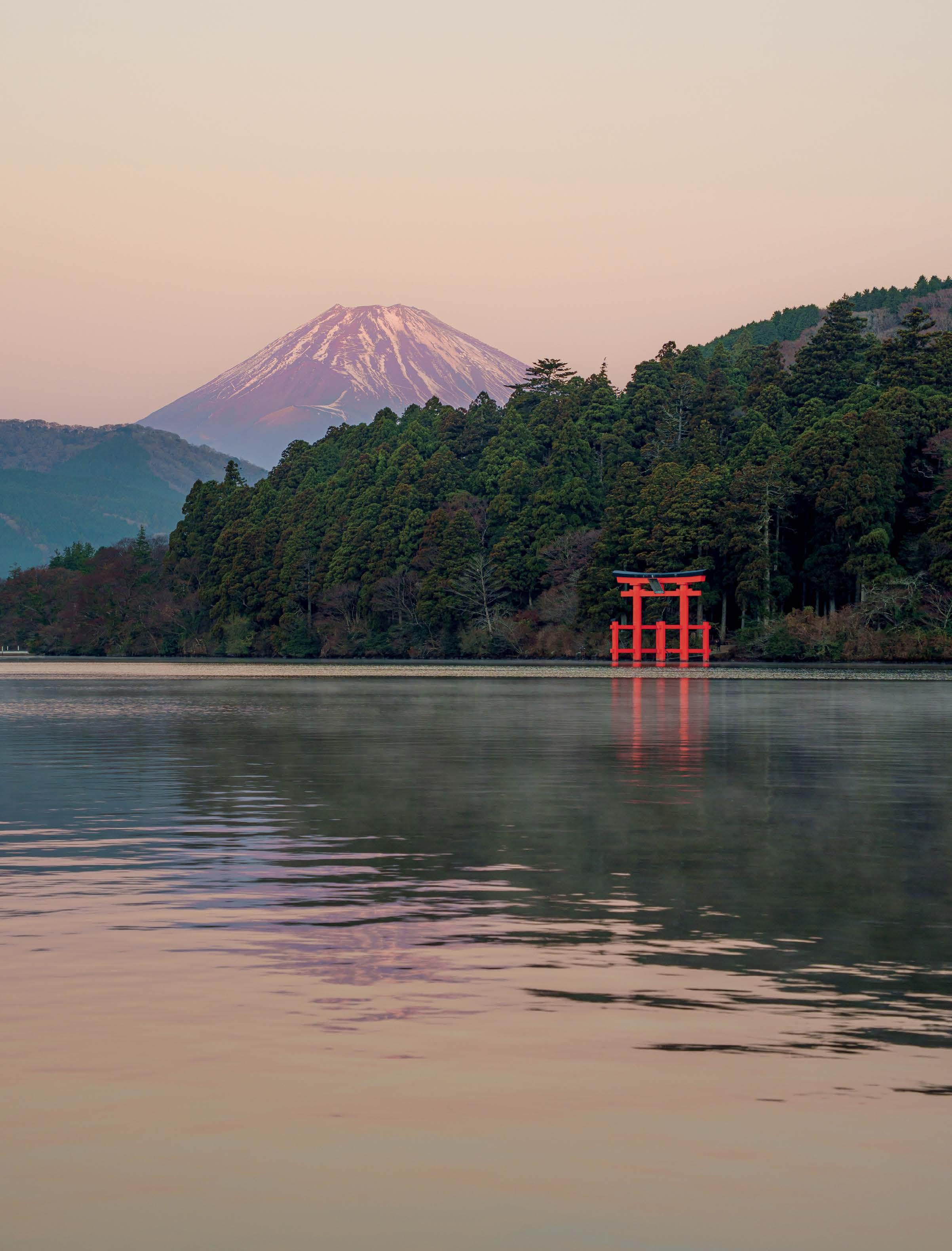
Feel your worries melt away as you soak in a steaming onsen. Marvel at Mt. Fuji’s snowcapped peak. Delight in the flavors of fresh sashimi, steaming bowls of udon noodles, and grilled yakitori at an izakaya tavern. Inhale the aroma of incense within a temple while listening to bells ring as people pay their respects.
This is Japan: hard to describe, even harder to forget.
Explore the Land of the Rising Sun's most iconic images, but not simply as a voyeur. Following our guides through locked doors that reveal hidden histories and traditions. Join a Zen monk for a meditative mountain hike incorporating the mindful principles of Soto Zen Buddhism in Shiga, or walk through Yakushima’s ancient forests, which inspired Studio Ghibli’s Princess Mononoke film. Savor sake with a certified sommelier in Tokyo, or learn how to craft traditional artistic wagashi sweets in Kyoto. Create a Japanese lacquerware maki-e tray with thinly-pounded gold leaf in Kanazawa, or learn swordsmith techniques to craft your own knife in Sakai.
Celebrate the modern and appreciate the ancient on an unforgettable journey to Japan, where the spirit of omotenashi (おもてなし) means that the guest is always taken care of. Let us show you the way.
Written by Kirsten Pope
Reach out to our Japan destination specialists and start planning a life-changing journey to the Land of the Rising Sun: info@extraordinaryjourneys.com
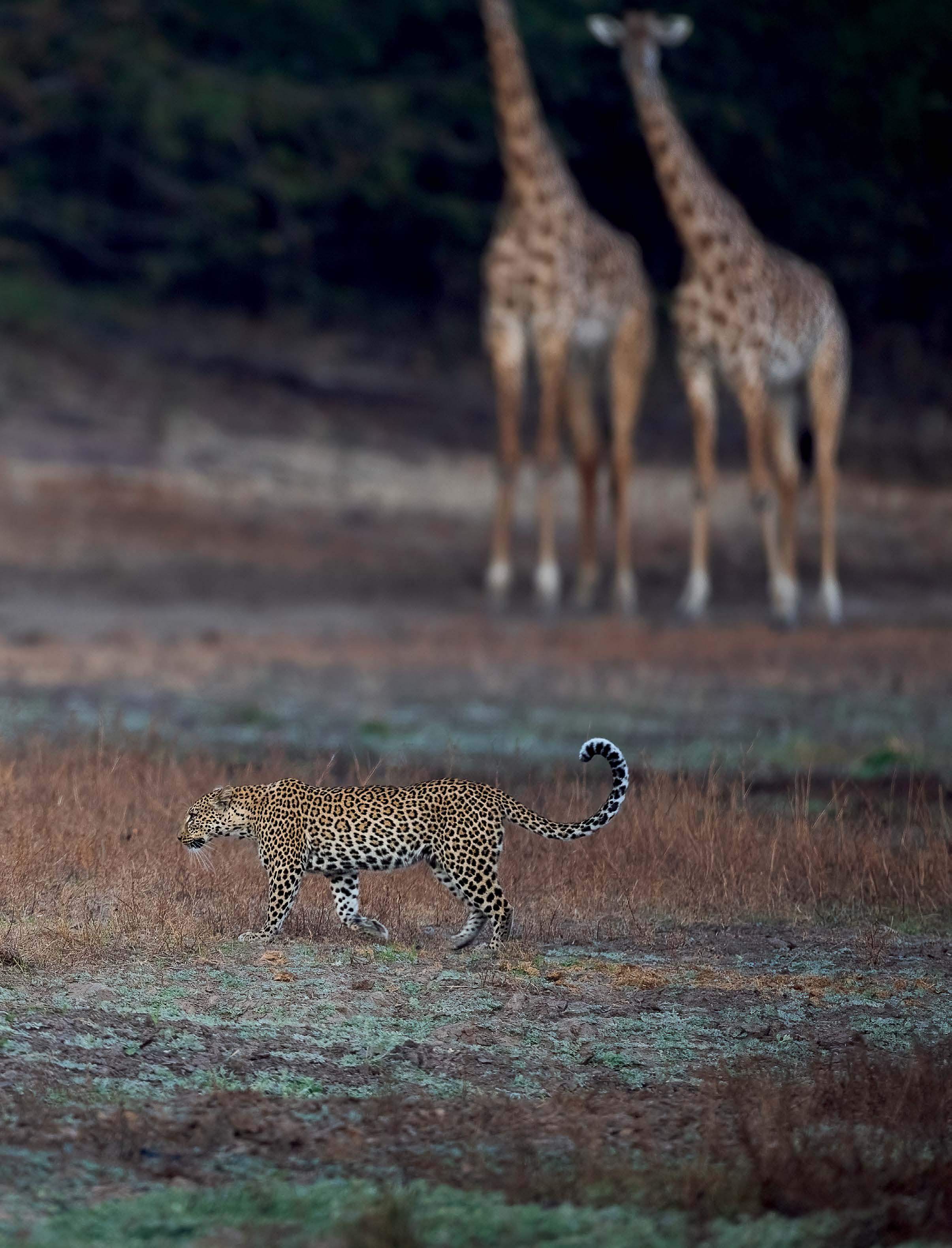
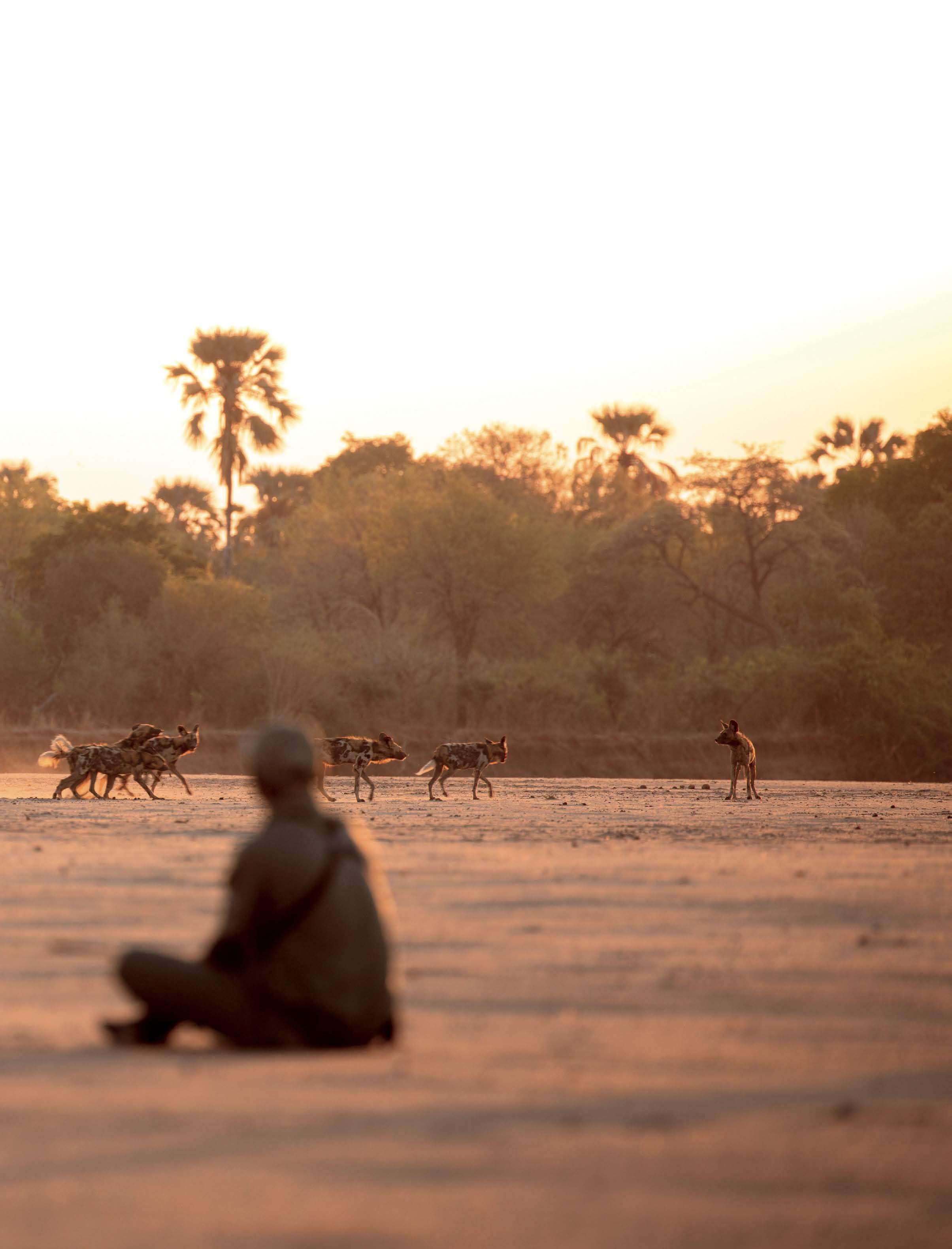
One of Africa's wildest experiences, a walking safari in Zambia shifts you from passenger to participant.
Written by Alexandra Owens
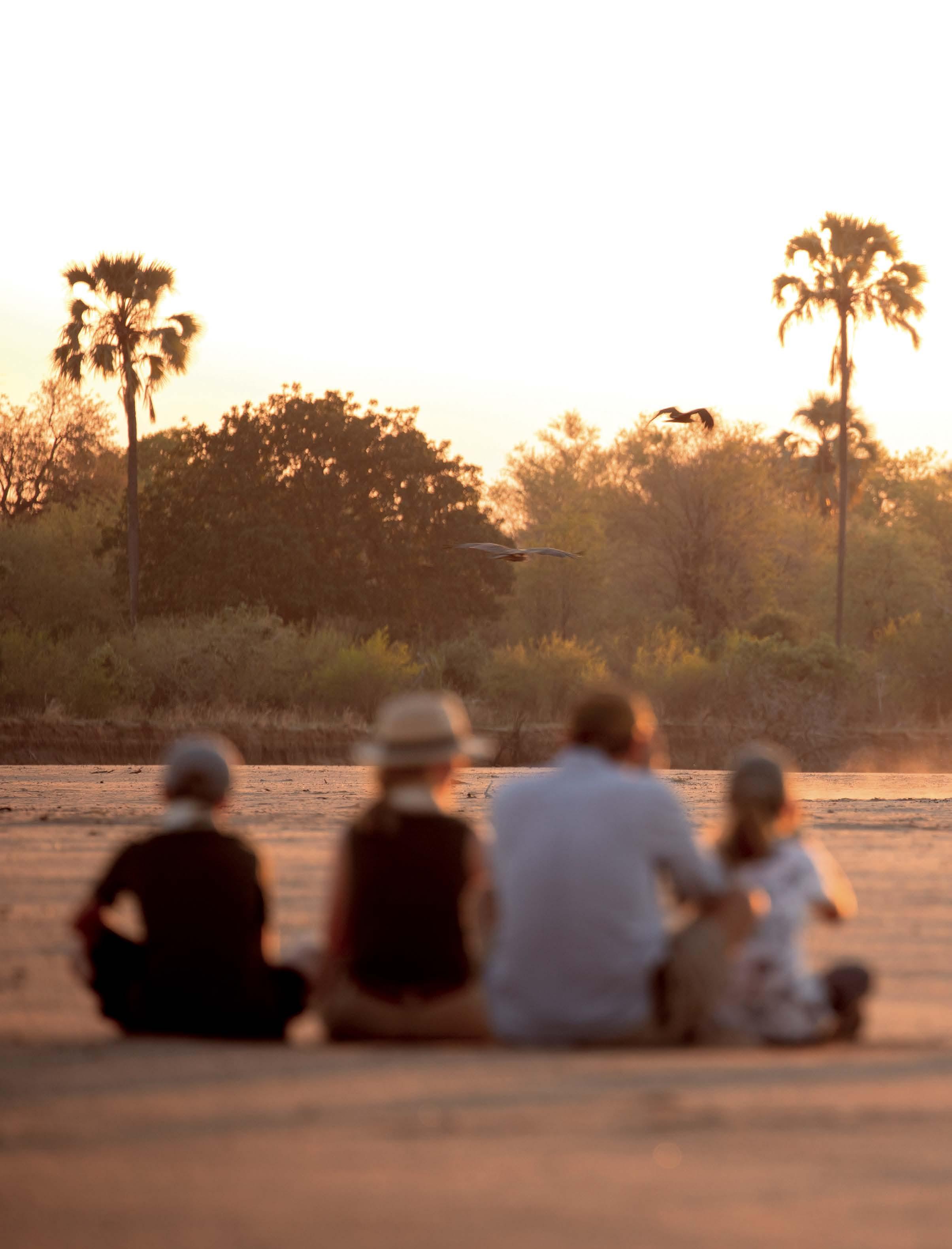
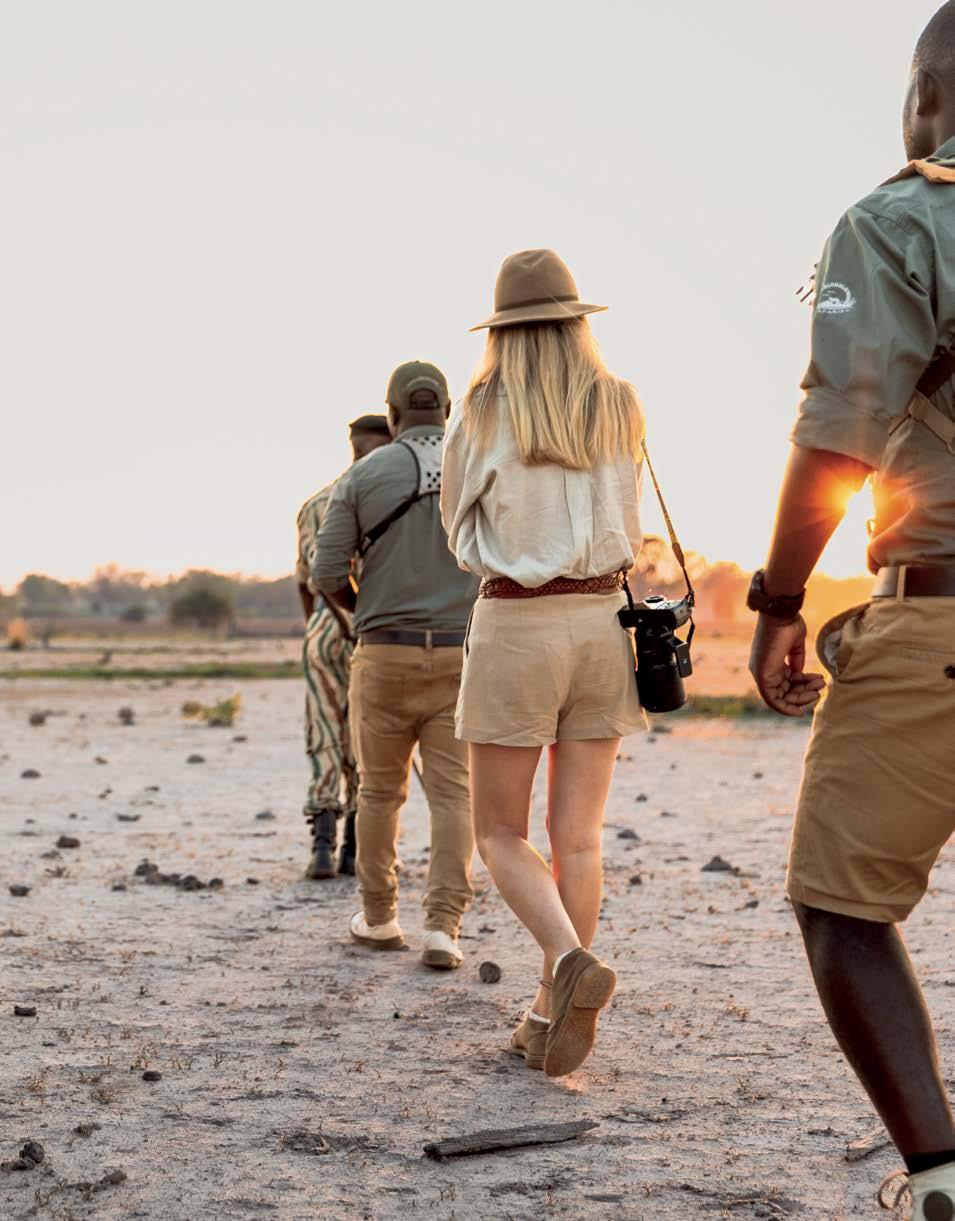
Walking ahead of me, Viato Zulu— the Wildlife Police Officer assigned to help me safely navigate Zambia's South Luangwa National Park on foot—holds up his fist. Following his cue, I freeze at once. Honed by decades of living alongside animals, his sharp hearing has picked up a noise that my duller senses completely missed. The uncertainty of quiet sets my mind racing. Could it be the two lonely lions that wandered through camp the previous night in search of females?
"Elephants." Zulu points to where, roughly 150 feet away into the dense forest of mahogany and Zambezi fig trees, a breeding herd browses the foliage, their trunks lazily picking at branches like children pushing their food around the plate. We pause, unnoticed, to watch them savor their meal before creeping onward.
South Luangwa, a protected expanse of land that covers 3,490 square miles at the tail end of the Great Rift Valley System in eastern Zambia, is renowned
as the birthplace of walking safaris, pioneered in the region during the 1960s by visionary British conservationist Norman Carr. Exploring the wilderness here is an adventurous experience that invites travelers out of the Land Cruiser and, quite literally, off the beaten path into the midst of raw nature.
At a time when hunting expeditions to Africa were still in vogue, Carr—who worked in the Luangwa Valley as an elephant control officer and game warden—saw a gap in the market. He recognized how photographic safaris could benefit both conservation and communities in the long term and encouraged Senior Chief Nsefu, the paramount chief of the valley's Kunda people, to create a reserve on his tribal land. Together, they built the first game viewing camp open to the public with profits cycling back to local communities, a responsible tourism model still used throughout much of Zambia. The idea of the walking safari sprouted from this landmark agreement, before spreading to other parts of the country, and eventually, the continent.
Thanks to these early efforts, South Luangwa remains one of the Africa's most abundant sanctuaries. With the meandering yet mighty Luangwa—the most intact major river system in Africa—functioning as a natural border, the valley offers a refuge for large concentrations of animals. Here, seasonal flooding forms tributaries and oxbow lagoons where wildlife finds much-needed relief during the dry season, and travelers, such as me, enjoy exceptional sightings.
During our next sundowner walk, we are treated to a snapshot of this immense diversity. We stumble upon a tower of 13 endemic Thornicroft's giraffes cautiously (and awkwardly) spreading their front legs to drink from the river. It's estimated that fewer than 600 of this beloved smaller subspecies survive. Meanwhile, a bloat of hippos at least 50 members strong bellows from their shallow territory, the dominant male keeping would-be rivals in check. In the distance, a hyena slinks past, pausing momentarily to give us the stink eye. South Luangwa is thriving.
Later, I wake up in the middle of the night to unrelenting barks and howls. It's not the call of endangered African wild dogs, whose numbers are believed to be increasing here, but the panicked alarm of baboons warning anyone who will listen of another rare creature the park is famous for: leopard.
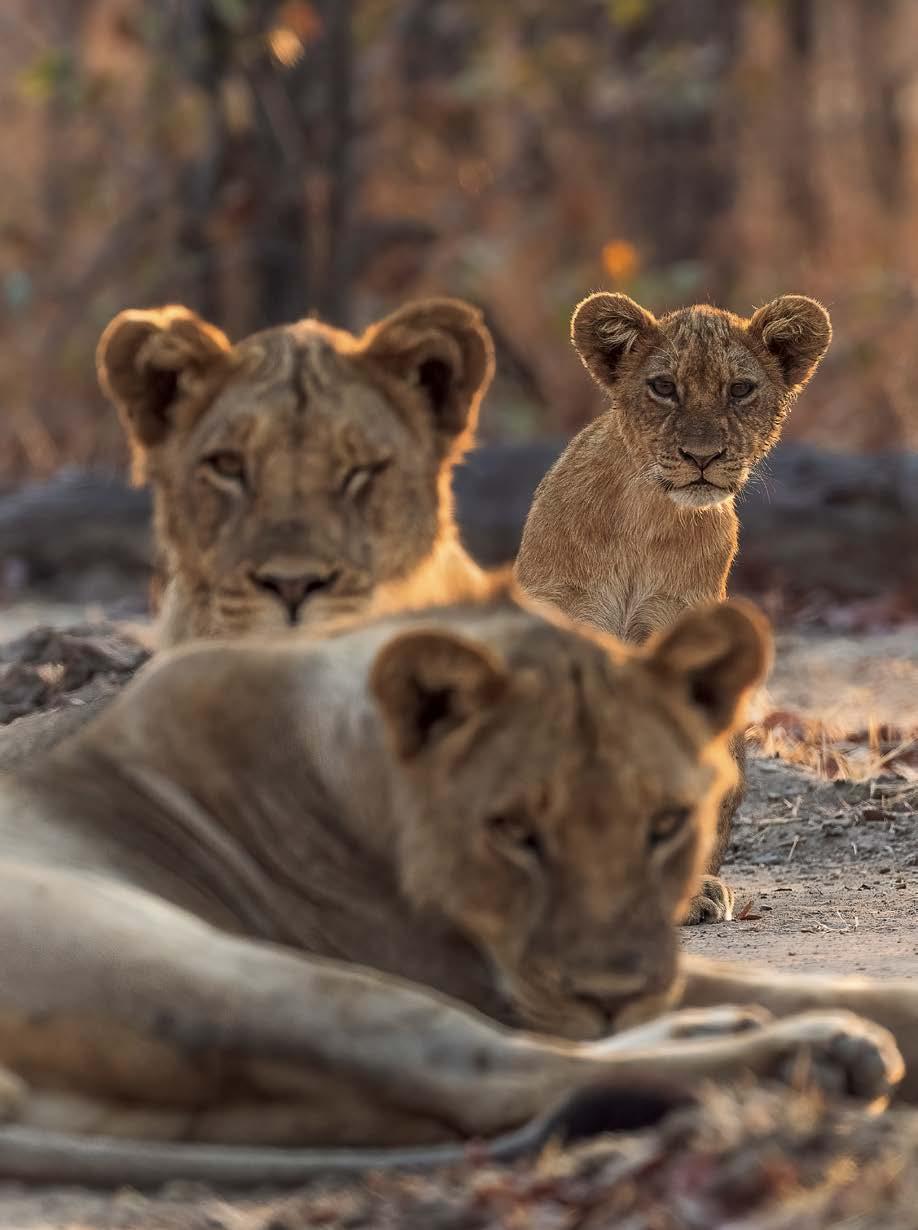
My guide, Mulenga Phiri, explains that South Luangwa's mix of habitats, such as riverine woodlands and grasslands, supports dizzying biodiversity. The variety means more food for hungry predators, including those (like leopards) that may otherwise get pushed out by competitors. While sightings of the elusive animal are never guaranteed, South Luangwa's reputation as the "Valley of the Leopard" is wellearned; it has one of the highest densities of the cat in the world. I'm lucky to see nine individuals during my trip, including a mother with two curious juveniles.

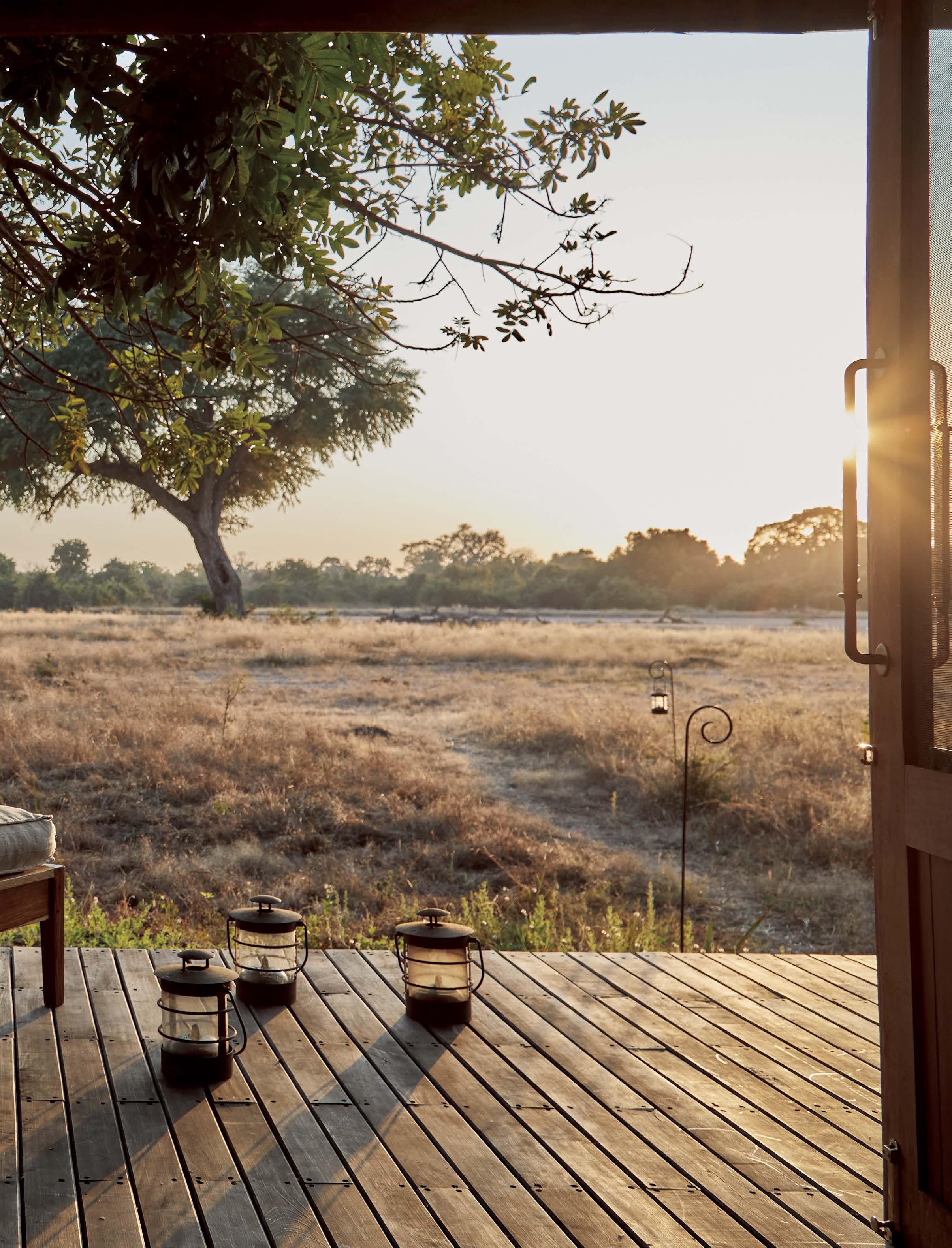
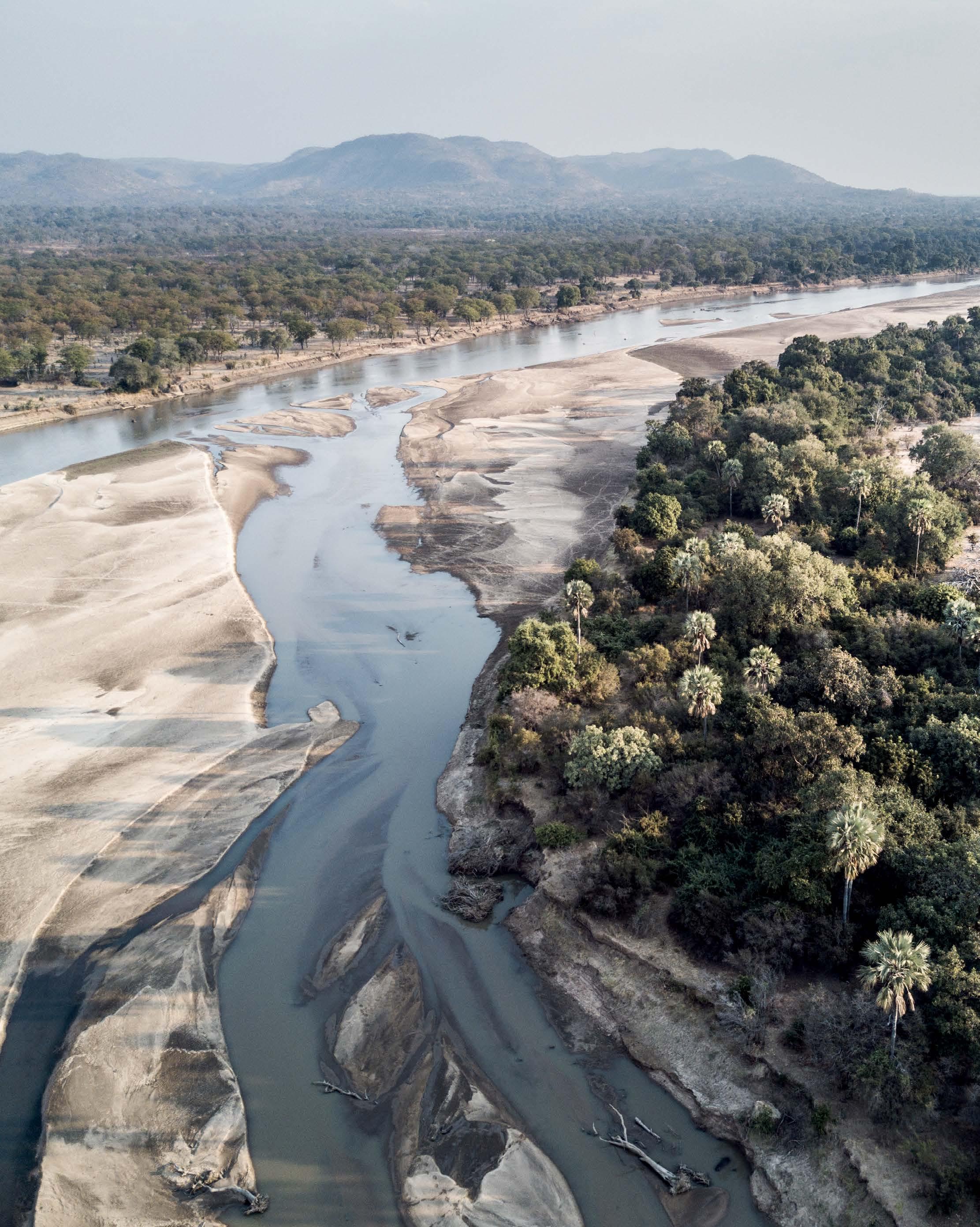
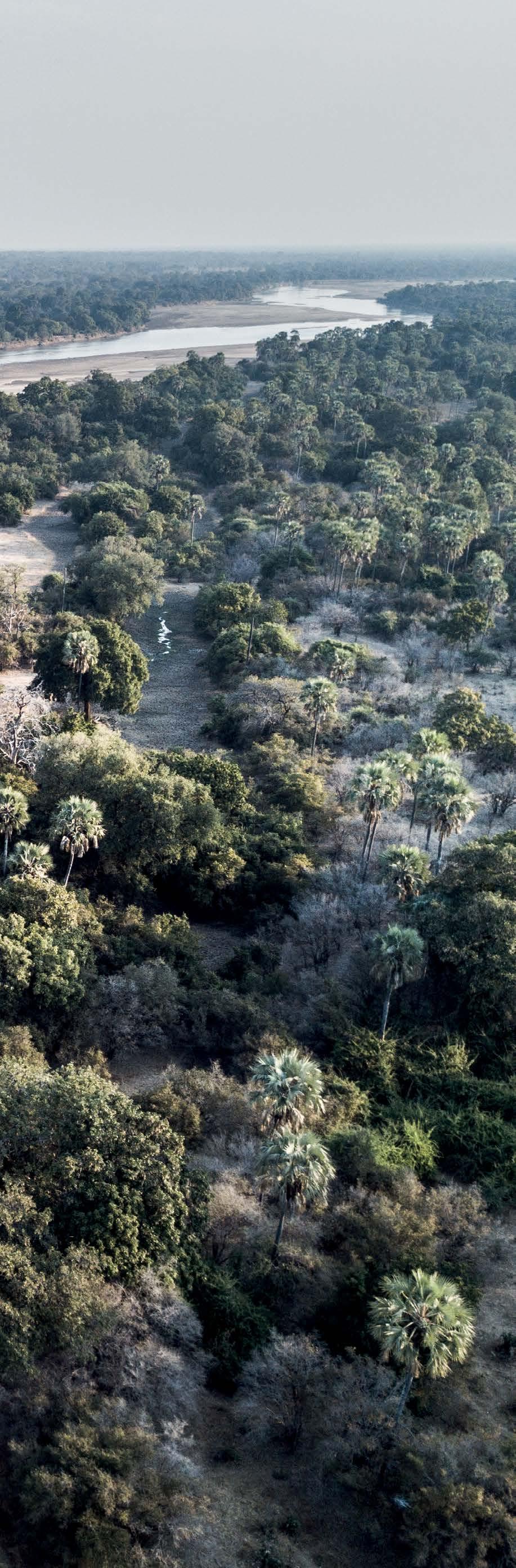
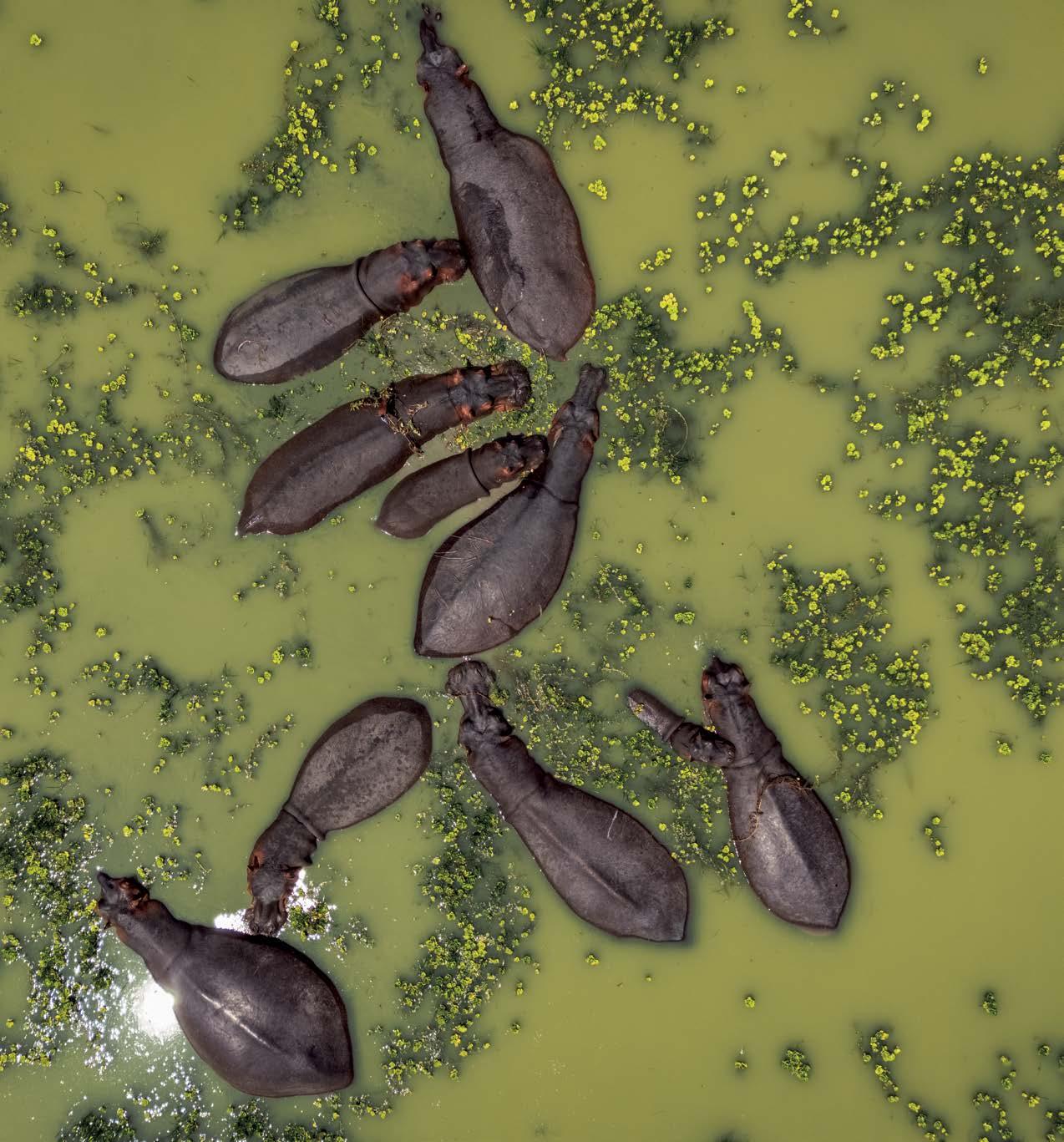
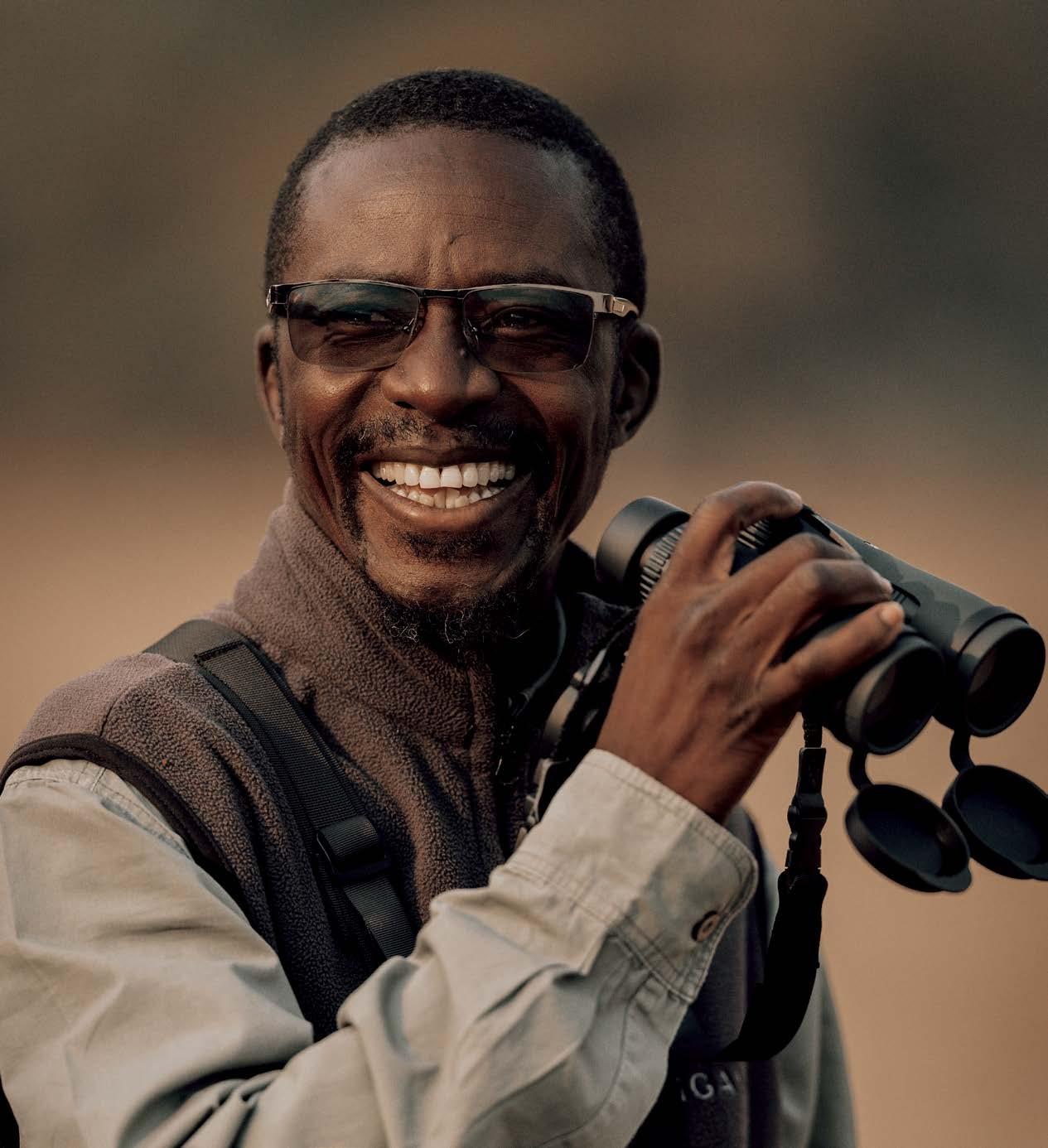
In the morning, Phiri, Zulu, and I set out on our longest walk yet: a four-hour transfer by foot from the camp I’m staying at to the next one. During the journey, we see zero signs of other humans. In South Luangwa, many accommodations are situated near the park gate at Mfuwe, but there are some nestled deeper in the heart of the park. It's not long before we discover the fresh tracks of an adult leopard, possibly the one that spooked the baboons the night before, accompanied by her cub. The little one's footprints are hardly larger than my big toe. Hopeful we might catch up, we diverge from our planned route for a spell, giving up when we realize the trail becomes trickier to follow. The thrill, after all, is often in the chase.
South Luangwa at large remains untouched by mass tourism, but this is safari at its purest and most remote. We meander through the leadwood and mopane forest, absorbing the sights, smells, and sounds of the pulsing life around us.
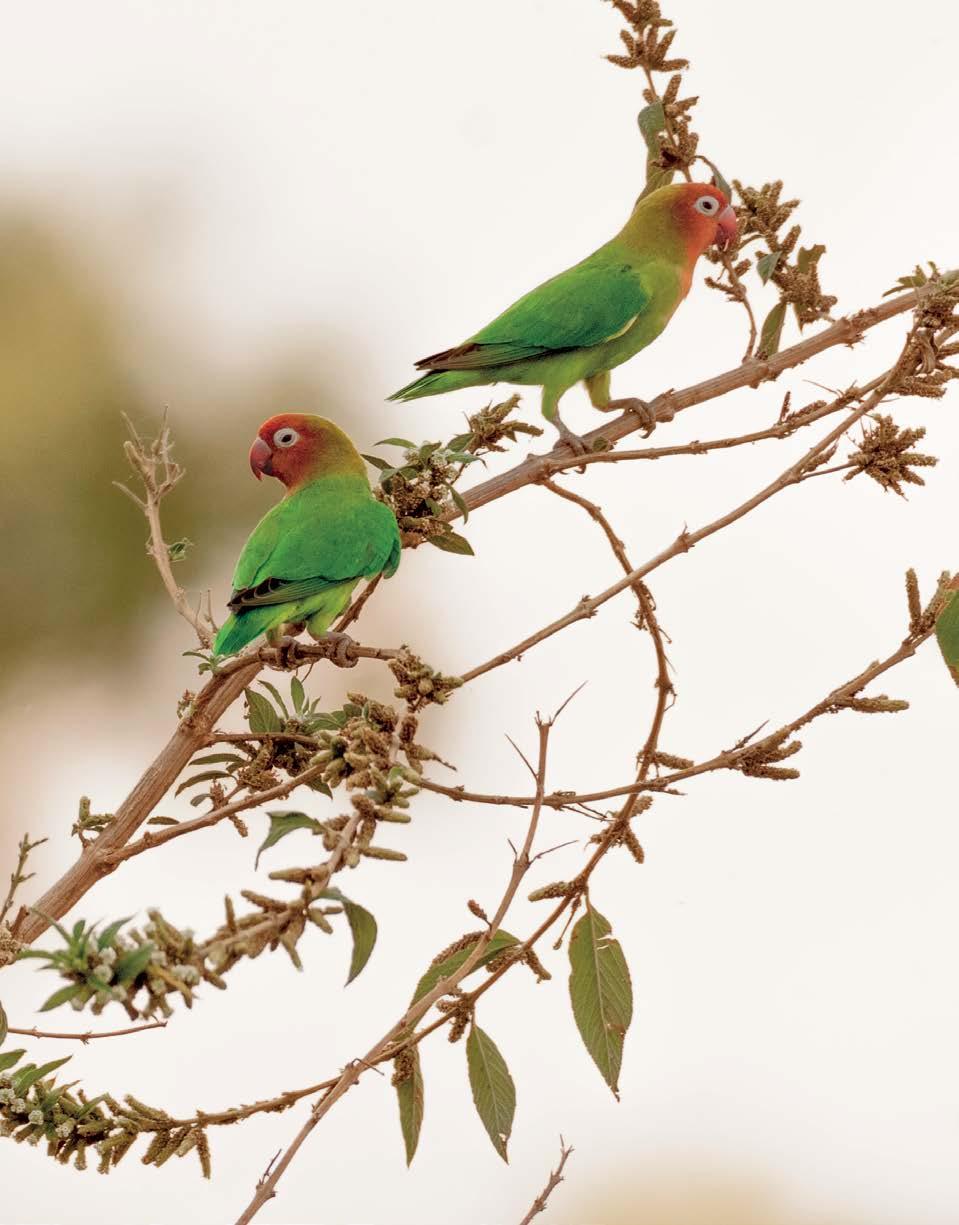
Phiri, who developed a love for the natural world when he joined his high school conservation club, excitedly points out a flock of Lillian's lovebirds. We manage to approach the playful, candy-colored parrots with a mixture of luck and patience. He reserves as much enthusiasm for a rain tree, so named because it appears like it's drizzling when sap-eating spittlebugs inhabit it and excrete fluid.
If you've never done a walking safari, you might assume that they are full of adrenaline; that predators are hiding under every woolly caper bush waiting to pounce. We do encounter our share of large game, including a wary, lone hippo that—after sizing us up
and deeming us harmless—trots off into a thicket. But in practice, spending time in the bush on foot is about so much more than pulse-racing, eye-to-eye meetings with the Big Five.
Phiri reveals details I would otherwise miss, from a rare Pel's fishing owl that favors a branch near our camp to freshwater crab tracks in the dry riverbed. Strolling past intricate weaver nests and towering termite mounds that pre-date the hardy sausage trees growing out of them, I learn more from his encyclopedic knowledge than I do when he's isolated in the driver's seat. Phiri reads the bush with forensic precision. He knows when a guinea fowl kill, little more than a pile of feathers, was made by a bird of prey because there's no saliva and hears alarming birds from what I swear must be miles away. "That's the most important thing to do as a guide: Stop, listen, and scan," he reminds me.
During our week together, my relentless questions don't stump him once. South Luangwa is known for having some of the best guides on the continent, and only those at the highest level are permitted to lead walking safaris. "We need to know everything basically, right down to the soil types and metamorphic rocks," says Phiri.
Our lessons continue during an afternoon game drive when the temperature rises. Undisturbed by other vehicles, we spend more than an hour watching a bull elephant balancing on its hind legs with shocking agility in pursuit of lofty winterthorn branches, one of their favorite treats. "Goodbye brother, thank you for giving us a show," Phiri whispers as we drive off.
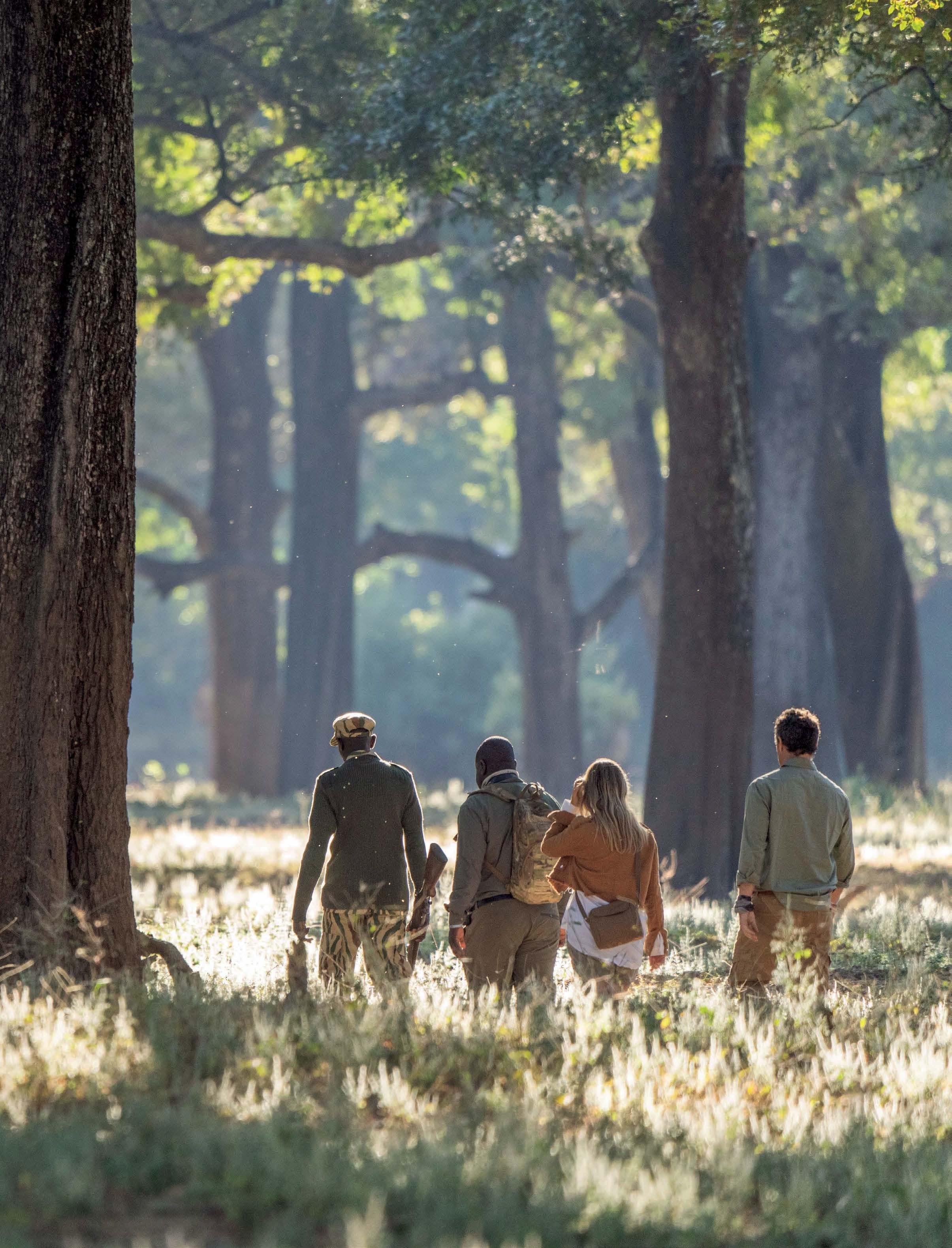
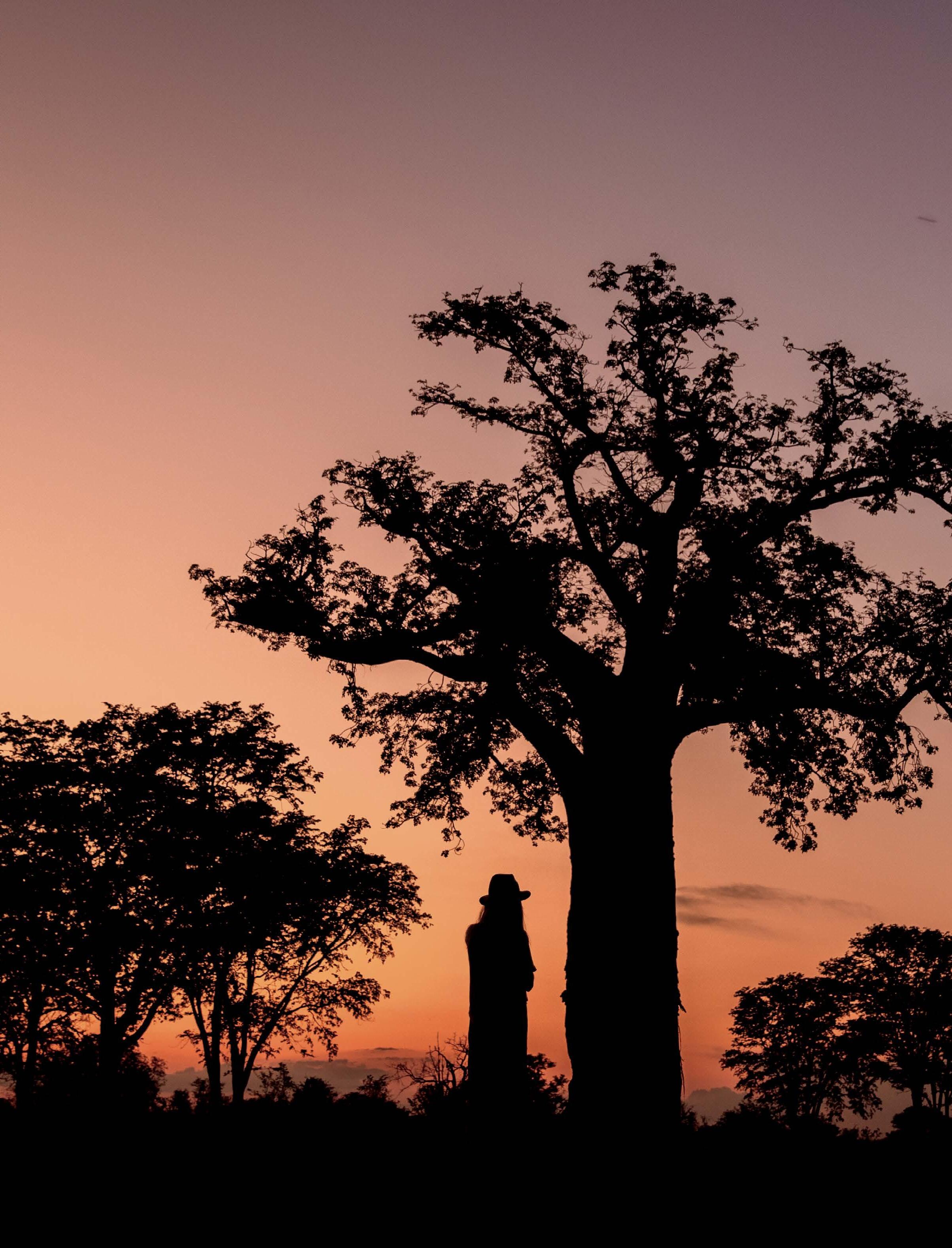
“South Luangwa, a protected expanse of land, is renowned as the birthplace of walking safaris”

At times, it can feel like you are the only person who has ever set foot in the more secluded sections of the valley—but that is far from the case. We drive to see a stately, 1,000-year-old baobab where local communities met for legal proceedings before they were relocated by the government when South Luangwa was declared a national park in 1972. Phiri later shows me the remains of a former village, now found near Mfuwe, shards of ceramic pottery wedged in the dusty ground.
It's a poignant reminder of the enduring connection between community and conservation that responsible operators since Carr's days strive to honor. Phiri himself has taken the lead on a new initiative in partnership with Conservation South Luangwa to curb human-wildlife conflict with locals who struggle with elephants venturing into their villages.
"We organize community game drives to show them the elephants in their natural habitat," he says. "One day, we had a 68-year-old lady who has known me since I was a little boy. It was her very first time in the park. She said, 'They seem so calm, but when they come into the village they cause so much trouble.' I told her it's because here we don't chase them all over the place. Here they can be peaceful."
Back near Mfuwe one morning, Phiri and I hear the unmistakable death bellows of a Cape buffalo as we start to drink our coffee on the deck of our lodge. Knowing there must be a kill nearby, we quickly hop into the vehicle and drive a couple of minutes to find 14 lions huddled around a dugga boy (an old male Cape buffalo). The pride fills their bellies, growling and snarling amongst themselves over who will get the prime cuts. We may have returned from the depths of the park, but in South Luangwa, the wild prospers everywhere you look.
South Luangwa National Park North Luangwa National Park
Liuwa Plains National Park
Lower Zambezi National Park Kafue National Park
Victoria Falls
Wild, remote, and full of soul, Zambia is the epitome of an extraordinary journey. Just ask anyone on our Africa team about their favorite safari destination—there’s a good chance it’s this unsung Southern African location.
Part memoir, part travelogue, part conservation story, The Eye of the Elephant by Mark and Delia Owens follows the two biologists in their fight against elephant poaching in the Luangwa Valley.
Can You See Us? tells the powerful story of a young boy born with albinism struggling to find his place in the world. Beyond its important theme, it made headlines upon release as the first Zambian film on Netflix.
Fast Facts:
Population: 21.5 million
· Size: 290,583 square miles
Capital: Lusaka
· Language: English; Bemba; Nyanja
Currency: Zambian kwacha
· When to go: July to October
When Zambia gained independence in 1964, a new wave of musicians began to forge Western rock with traditional Southern African music. The result was Zamrock. Recently reformed WITCH was the scene’s biggest band.
Zambia offers some of Africa’s most unspoiled wilderness, where a safari is as raw and real as they come. It is also the birthplace of the walking safari, the ultimate way to step into the bush and connect with it up close.”
—Brigid Finley, Destination Specialist
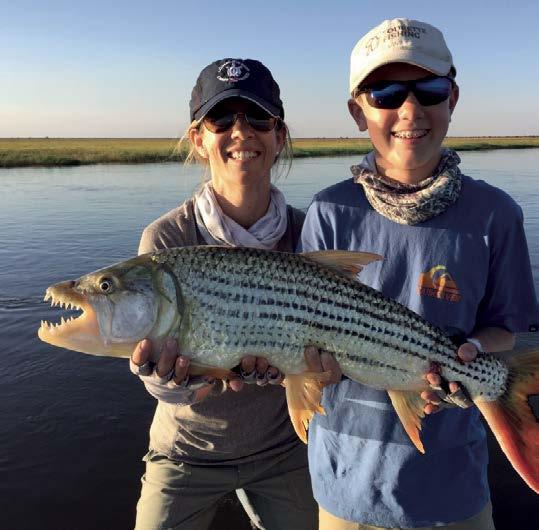
Pit yourself against the mighty tiger fish while boating along the iconic Zambezi River. Best done from September to November, this is fishing at its most atmospheric and extreme.
2
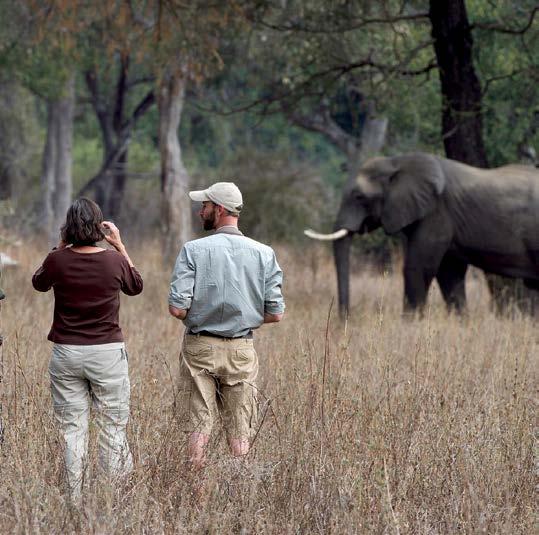
Feel the thrill of a real walk on the wild side, treading carefully through Zambia’s national parks with a walking safari. A completely immersive way to experience the bush.
3
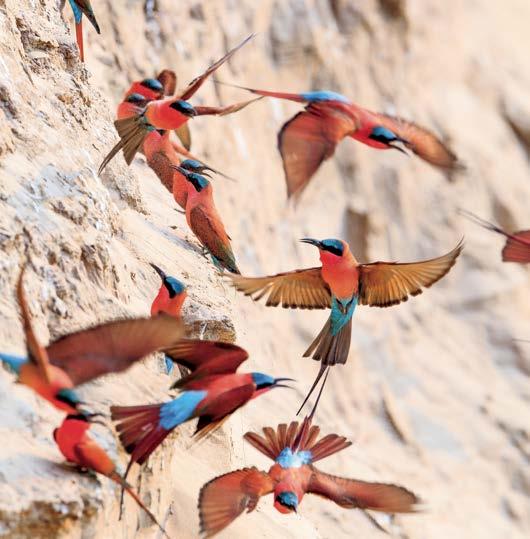
Snap one of nature’s most beautiful spectacles with a photography expedition to capture colorful carmine beeeaters as they nest in their thousands in South Luangwa.
Where to shop:
Play your part in Zambia’s conservation efforts with a visit to Mulberry Mongoose, where local artisans transform brutal poachers’ snare traps into chic jewellery. Workshops available.
Where to sleep:
Perched on the edge of a lagoon, Chindeni Bush Camp embodies Zambia’s adventurous soul with rustic-luxury tents and a focus on immersive walking safaris.
One thing not to miss:
Feel the rush of the river around you as you fish amid Zambia’s untamed wilderness. Often overlooked as an activity in Africa, fishing South Luangwa is an underrated way to connect with your surroundings.
Want to walk on the wild side of Africa? Our Zambia destination specialist is waiting to make it happen. Email us at info@extraordinaryjourneys.com
We’ve floated beside 20-foot whale sharks in Bali and trekked alongside Samburu warriors in Kenya, but no matter how often we travel, the wonder of opening ourselves up to new experiences never fades. Even though the pages of our passports are overflowing with past adventures, travel is not just a job for us; it’s a passion. We travel because we love to. Our team of experts reflects on personal discoveries in their specialist regions, and uplifting experiences they’ve had on the road.
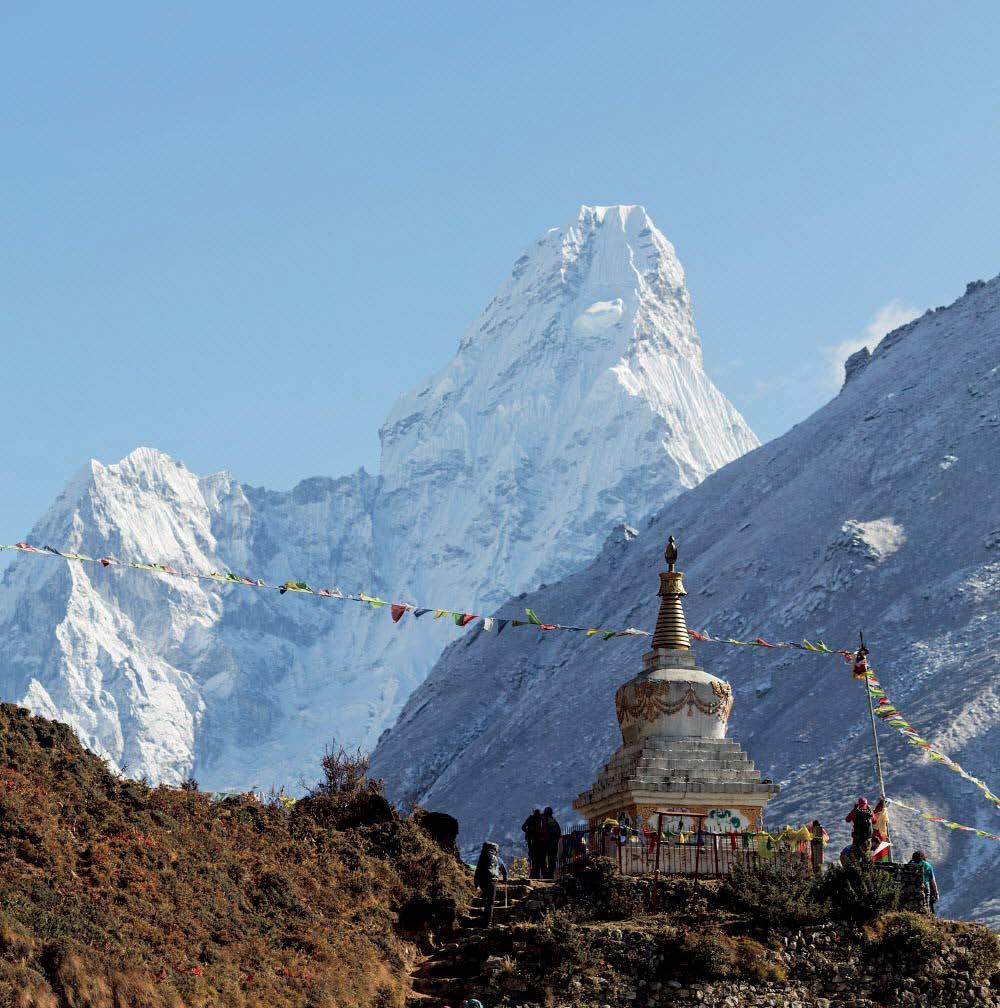
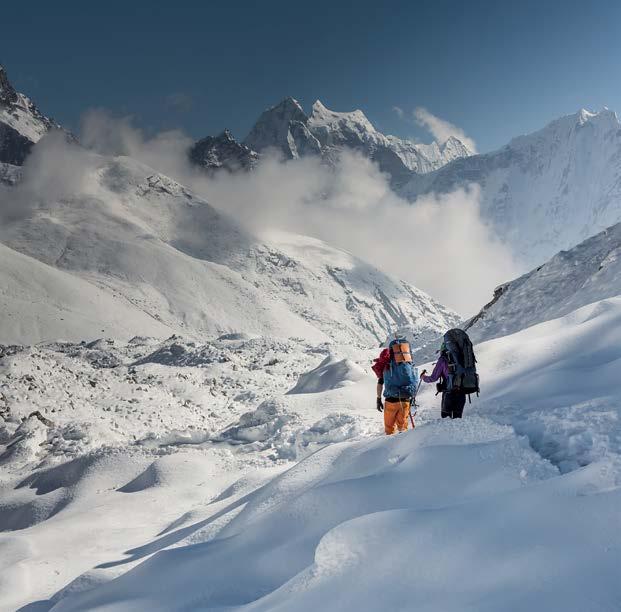
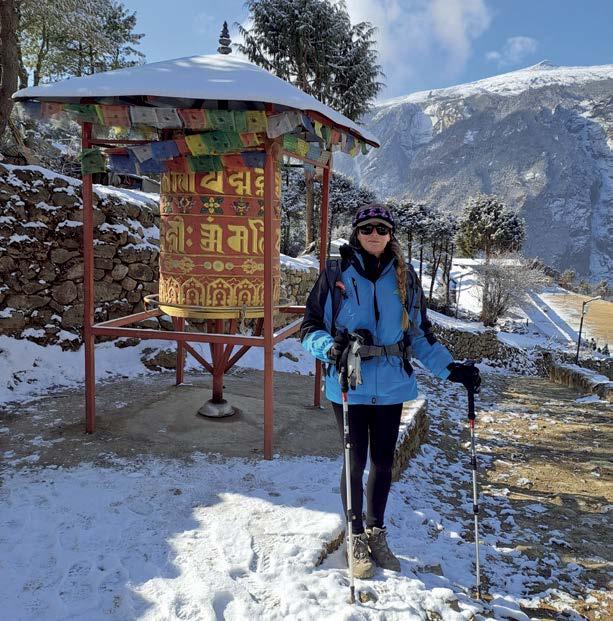
The moment you stand in front of the tallest mountain on Earth, you realize just how insignificant you are. Despite being an experienced hiker, I’d never had the chance to see Everest until I made the epic hike to Base Camp. As it was out of season, the Himalayas were submerged in cold and sprinkled with snow. It was so profoundly peaceful—a true escape into nature. But it’s not just about Everest. The whole Himalayan range of Nepal is staggering in its beauty, with hikes suited to all skill levels.
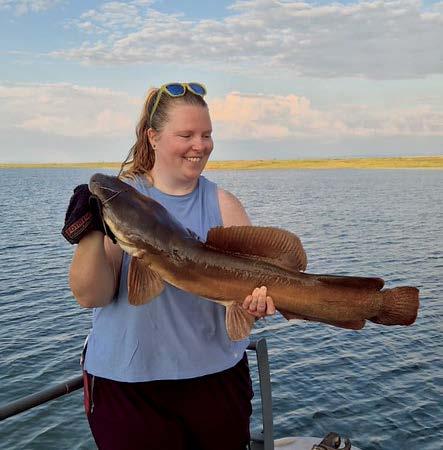
During my last trip to Zimbabwe, I spent time at Fothergill Island, where one of the unexpected highlights was fishing. It wasn’t an activity I would’ve put on my “mustdo” list, but the moment we got started, I was hooked (literally and figuratively). One morning, after an epic struggle, I landed a 12-pound vundu, an endangered species of catfish (which we released afterwards, of course). I couldn’t believe it when I pulled it out of the water, all muscle and power. It was massive, and my heart was racing. I never imagined fishing could deliver such an adrenaline rush. It was the perfect reminder that the best travel moments are often the ones you never saw coming.
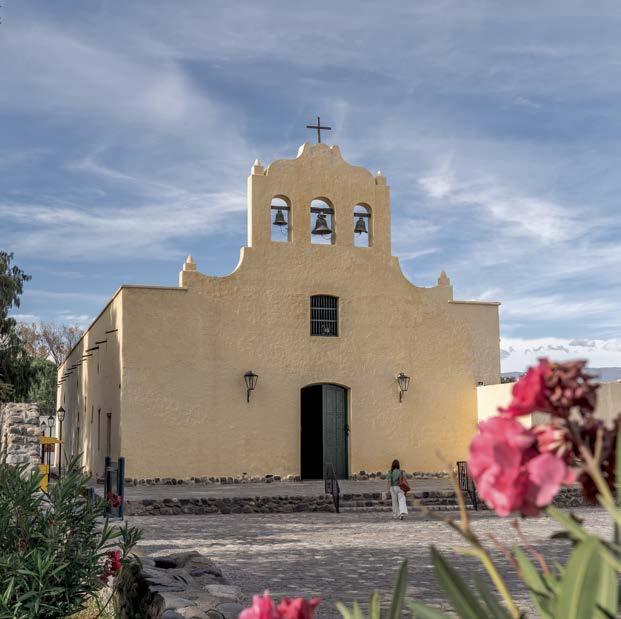
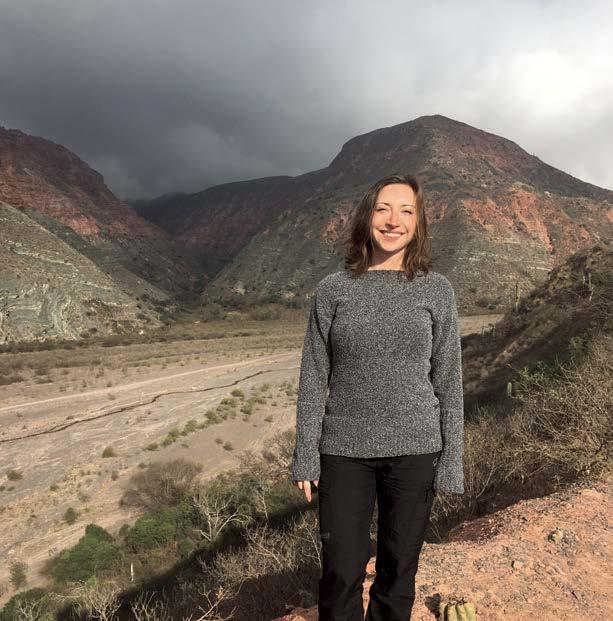
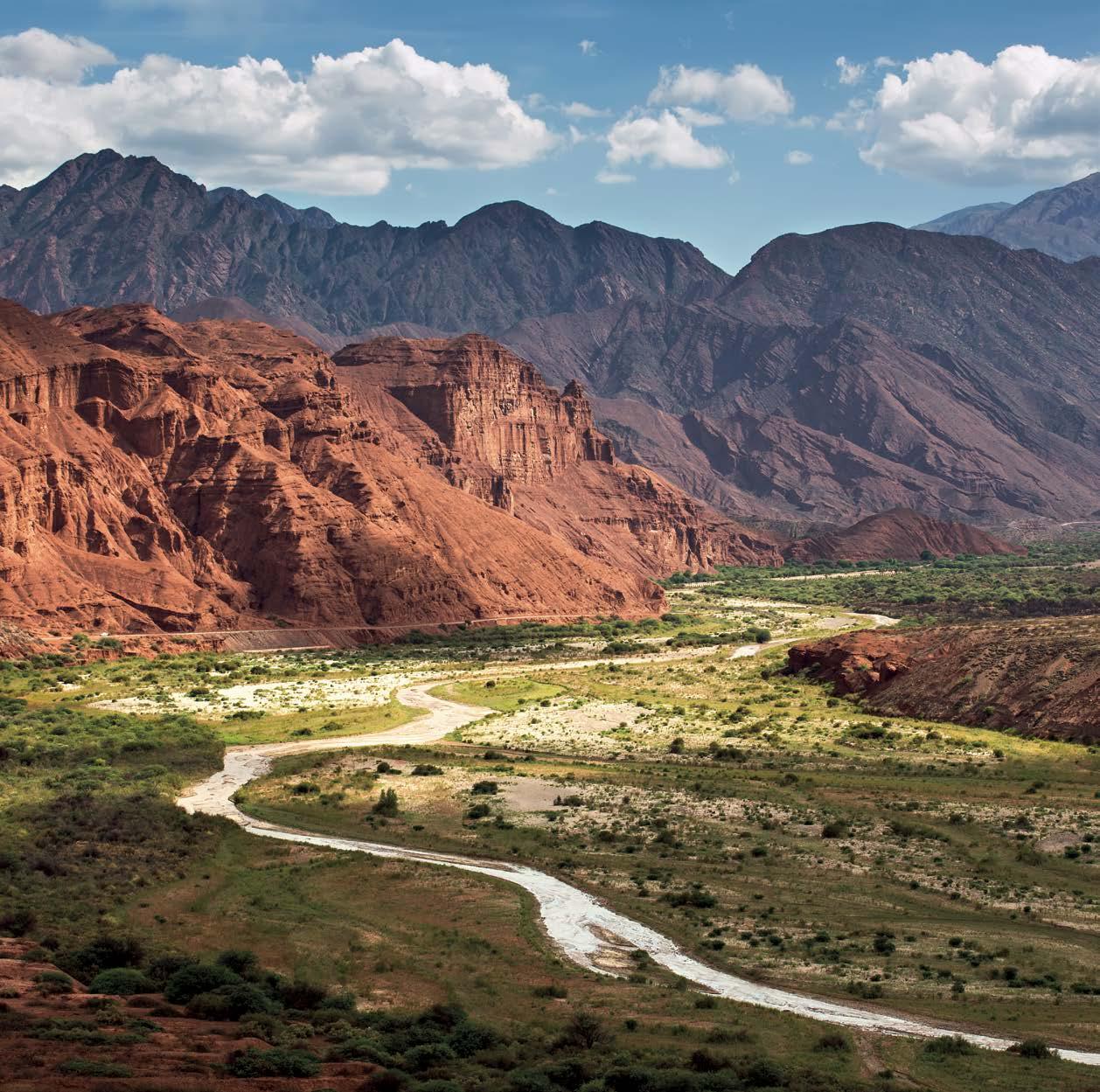
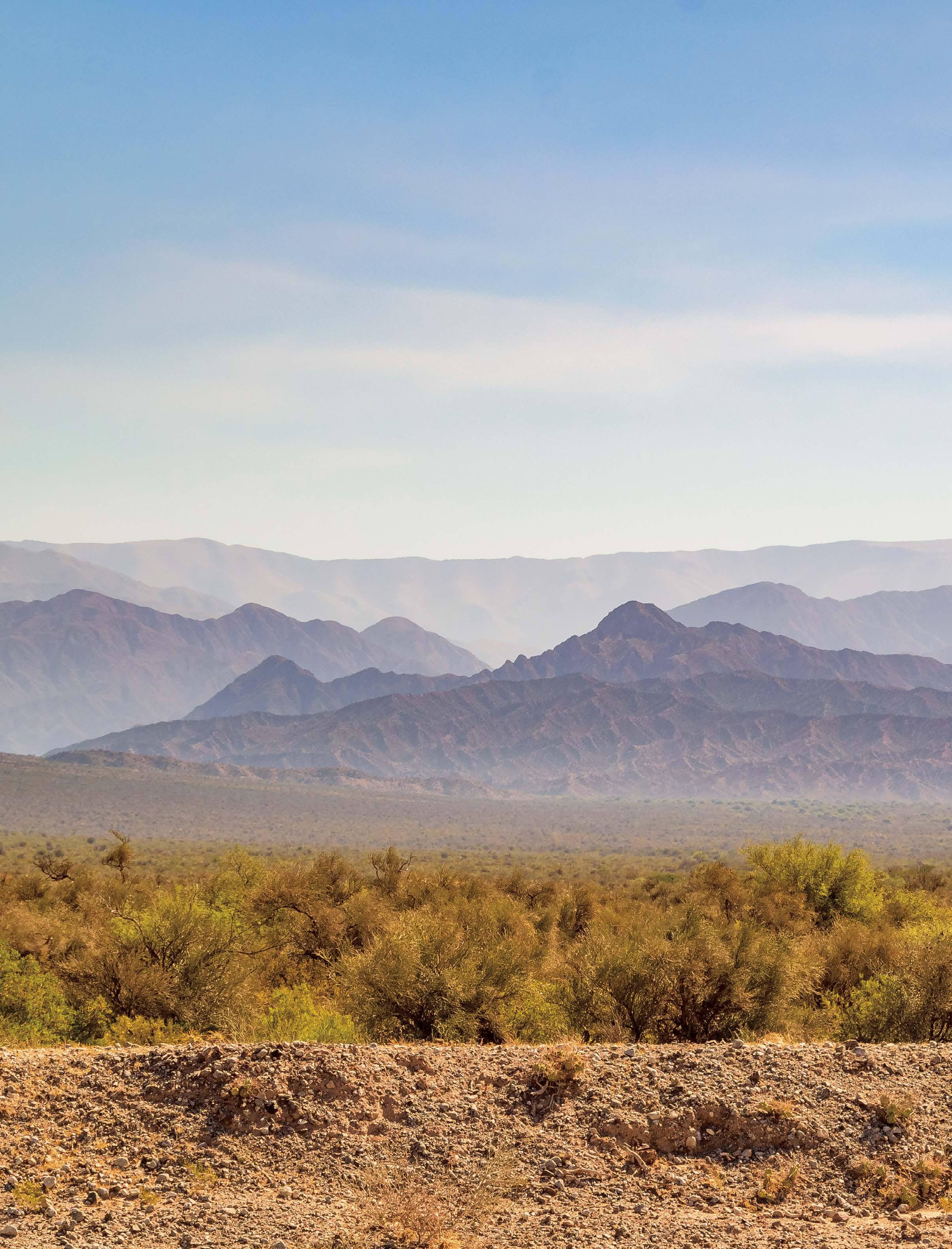
The first time I visited Northwest Argentina, I drove through the Calchaqui Valley in the Salta province, stopping in small towns such as Cachi and Molinos. All whitewashed walls, cobbled squares, and colonial-style churches, these sleepy outposts have a real frontier feel. On my return—my first time back in the Andes in years—as soon as I stepped out of the car and felt the altitude and mountain wind, it felt like a homecoming. The landscapes are striking: towering columns of rust-red rock and high-altitude vineyards backed by peaks. But it is the pace of life here that has always struck me the most. It’s quiet, understated, and uncommercial. An Argentina unhurried by the rest of the world.
Elizabeth Gordon, CEO and founder
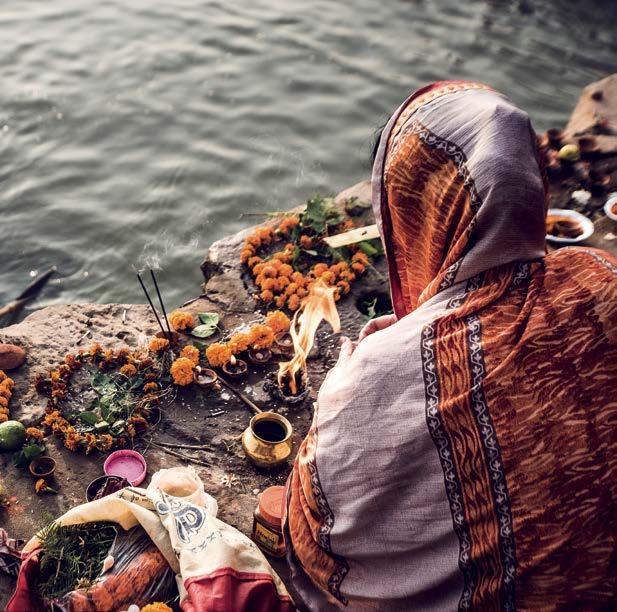
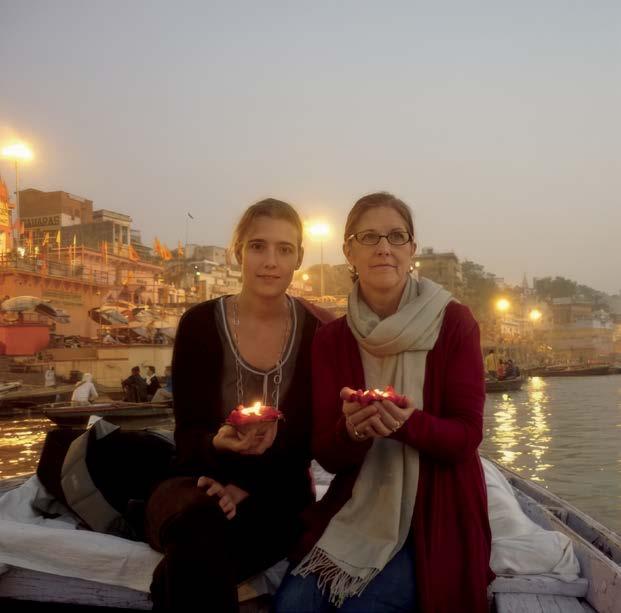
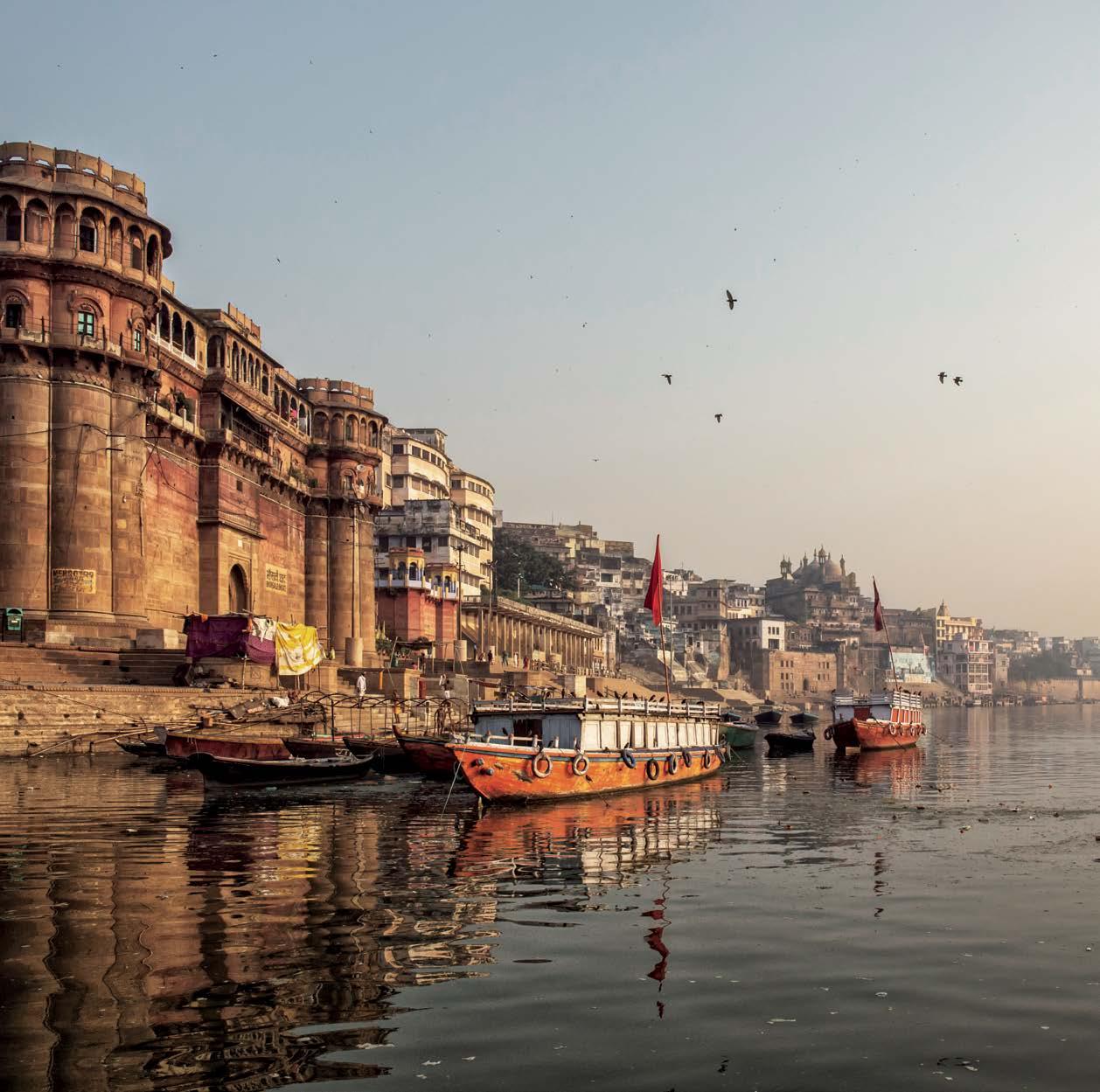
When I visited Varanasi, I had no idea how to process it. It was chaotic and overwhelming. Cars and rickshaws squeezed through crowds. Cows wandered the streets. People bathed and prayed along the Ganges as smoke drifted from the cremation ghats. It was loud, crowded, and unlike anywhere I’d ever been before. I was fortunate to have an incredible local guide to help me understand my surroundings. He didn’t try to shield us from the intensity of the city. Instead, he helped us step into it. He shared his own story of growing up in Varanasi, explained the rituals happening along the Ganges, and even gave us coins so we could look beggars in the eyes instead of looking away. He encouraged us to explore on our own, to talk to people, to walk through the streets without fear. And because of him, I saw Varanasi differently. What had at first felt like chaos became something deeply human.
Lauren Jafry, head
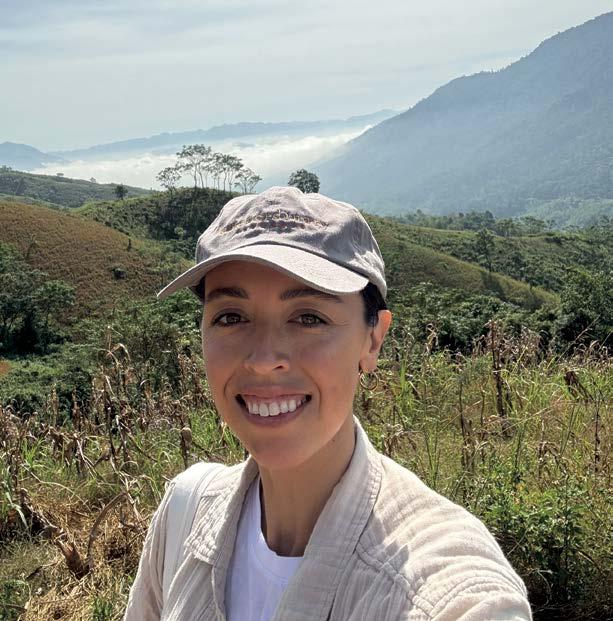
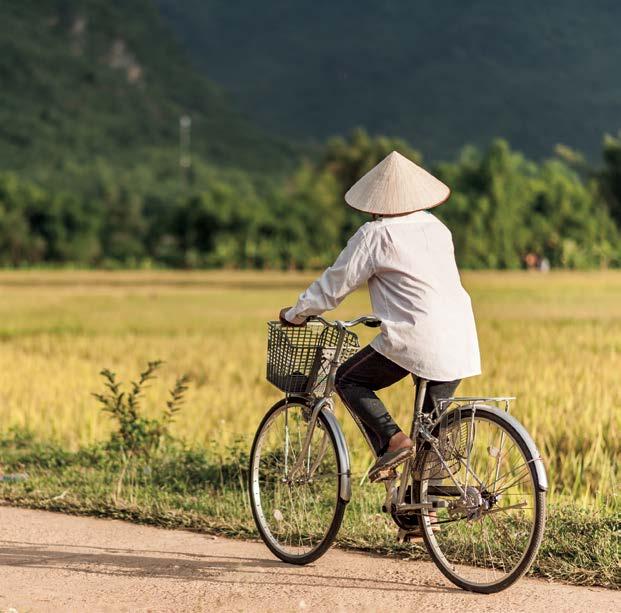
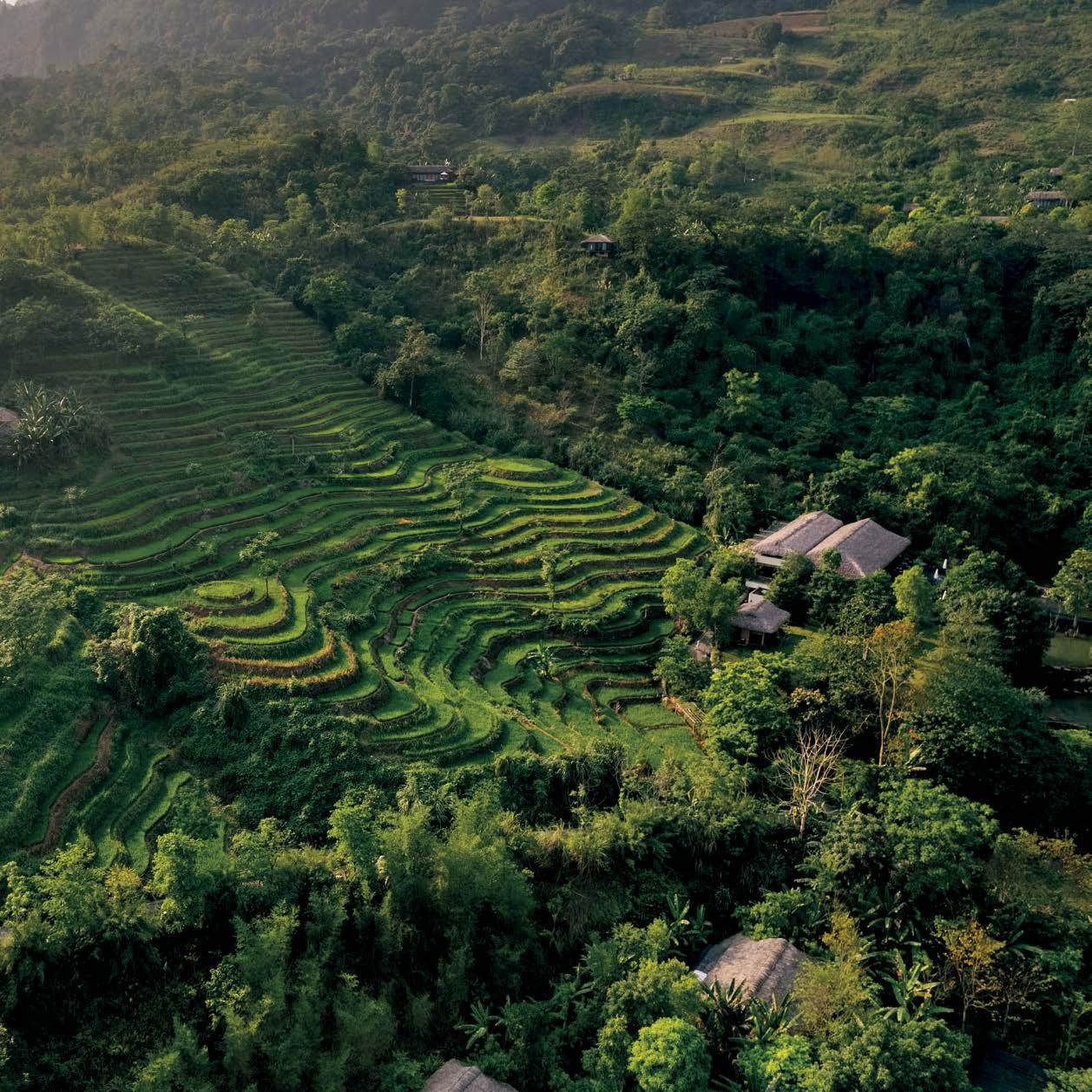
After years of traveling in Vietnam, I finally had a chance to visit Mai Chau in the country’s northwest. Immediately, I was spellbound by its profoundly serene aura. Calm seemed to settle over its patchwork of rice paddies and tree-cloaked hills. What struck me most about Mai Chau was the complete lack of other travelers. This is something you just don’t get in other hiking areas, such as Sapa. I hiked for days along red-dirt paths, through remote villages, and rice fields, and I never came across another tourist, only Hmong farmers tending their crops, water buffalo grazing, and breathtaking view after breathtaking view. With no tourists in sight, it was an authentic, serene, and truly unforgettable escape into rural Vietnam.
Written by Jennifer Hubbert
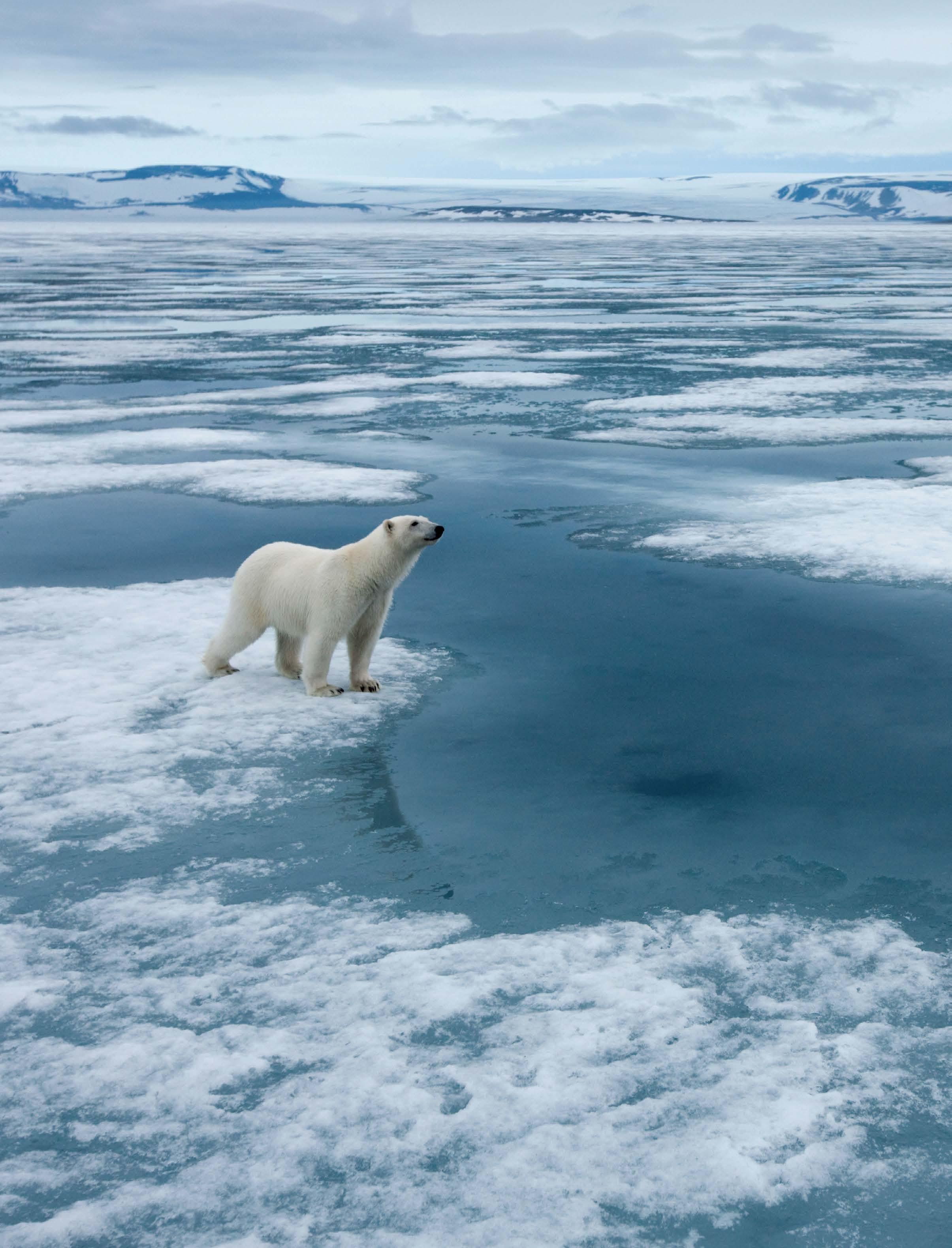
When Extraordinary Journeys’ Emma Fritz reflects on her recent Arctic expedition cruise to Svalbard, it’s not the fleecy white mountainscapes or the polar bear sightings that imprinted on her. Magical as those were, her most treasured souvenir is a feeling, embodied as she lay flat against an ice shelf, atop a polar ocean. In a profound moment of stillness, she felt the edge of the world.
In 1598, Svalbard first appeared on a map produced by Dutch explorer and cartographer, Willem Barentsz. Everything north of the archipelago was simply left blank. Parts unknown. Meaning, Svalbard truly was the edge of the world. It remained so for centuries.
Today, Svalbard and the high Arctic are precision-mapped, but the uncharted and unbounded sense of adventure that polar expedition travel affords endures.
“In the polar regions, nothing is guaranteed. Ships are at the whim of the weather and ice, so your itinerary is only theoretical. But there’s a relief in surrendering control and waiving expectations,” Emma explains.
“The Arctic demands that those who show up let Earth be Earth.”
Locked in ice for most of the year, ships journey to Svalbard, Greenland, and the Canadian High Arctic during a short summer season.
Beyond 66° north lies a pristine, but vulnerable ancient wilderness forged by stone and ice. A place of snow-capped mountains sculpted by the invisible hand of tectonics and glaciers, and where waterfalls burst off ice shelves. Offshore, icy waters teem with caravans of whales, seals, and walrus. Polar bears, reindeer, wolves, and Arctic birds navigate sea ice and terra firma. Late in the season, when the midnight sun relents, the aurora borealis hypnotizes. Remote settlements tell a human story of grit, adaptation, community, and indigenous culture.
Back on Emma’s ship, a mural in the ready room declares, "When things are easy, I hate it.” We could not agree more. If your wild heart yearns for an adventure that isn’t given, but earned, we invite you to point your compass to the Arctic.
Looking for an adventure? Contact our Arctic specialist to plan your cruise to the edge of the Earth: info@extraordinaryjourneys.com
Our featured itinerary:
If there was ever a destination built for adventure, New Zealand’s South Island/Te Waipounamu is it. Cloud-piercing mountains ripple along its entire length. Dizzying fiords shoot up from the depths, endless streams of glacial water tumble down from awesome heights. Where there are no peaks, epic lakes stretch out in shades of blue that they haven’t invented words for yet, ancient forests grow unrestrained, and remote sands make you reconsider everything you’ve ever thought about beautiful beaches. This itinerary has been crafted to explore the South Island’s natural riches in the most exciting ways possible, whether that’s on two feet, on the deck of a jet boat, or weaving through mountain summits in a helicopter. Let us show you New Zealand, the Extraordinary Way.
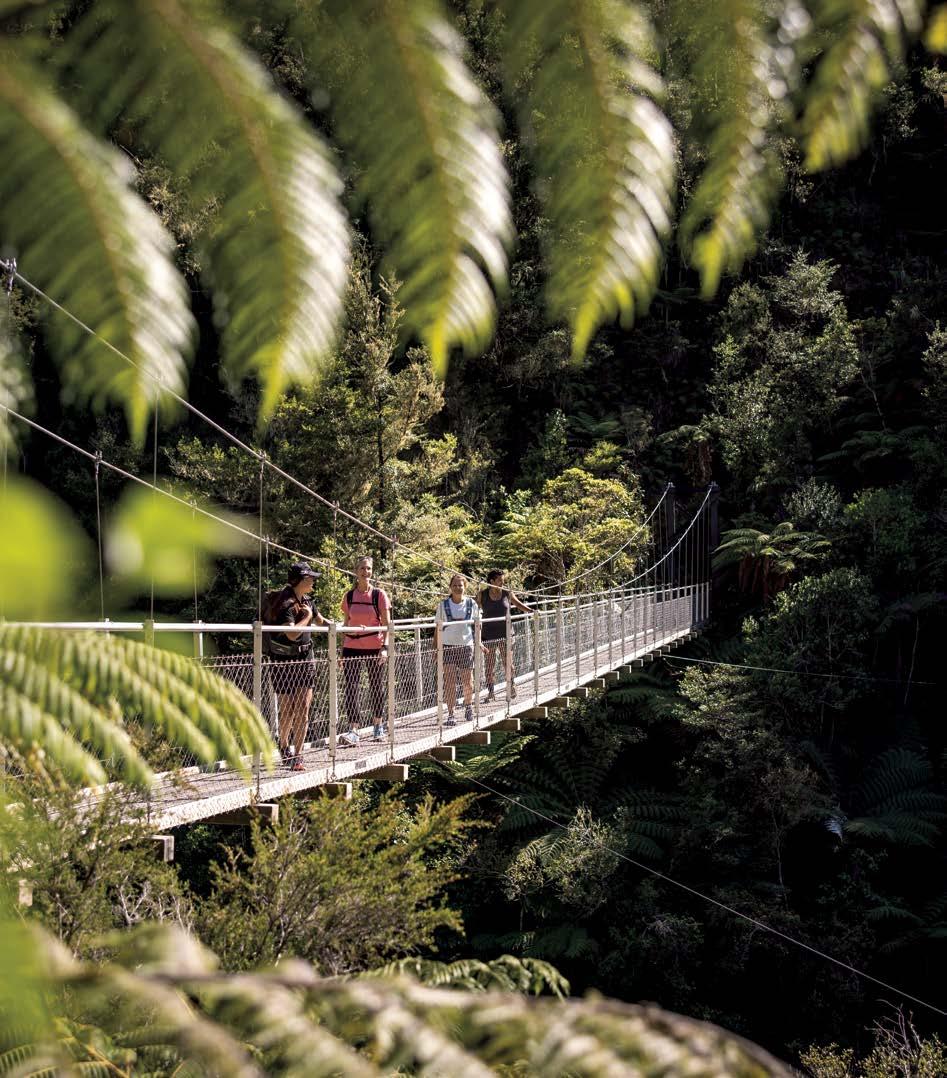
Shake off the jetlag with a couple of days in Queenstown, the island’s adrenaline-pumped adventure capital. Kickstart your Kiwi adventure with a turbo-charged jetboat trip along the mountain-fringed waters of Lake Wakatipu. Back on land, slow things down again with a private tour of Gibbston Valley’s enormous wine cave and a taster of its signature pinot noirs.
Stay: Azur Luzury Lodge
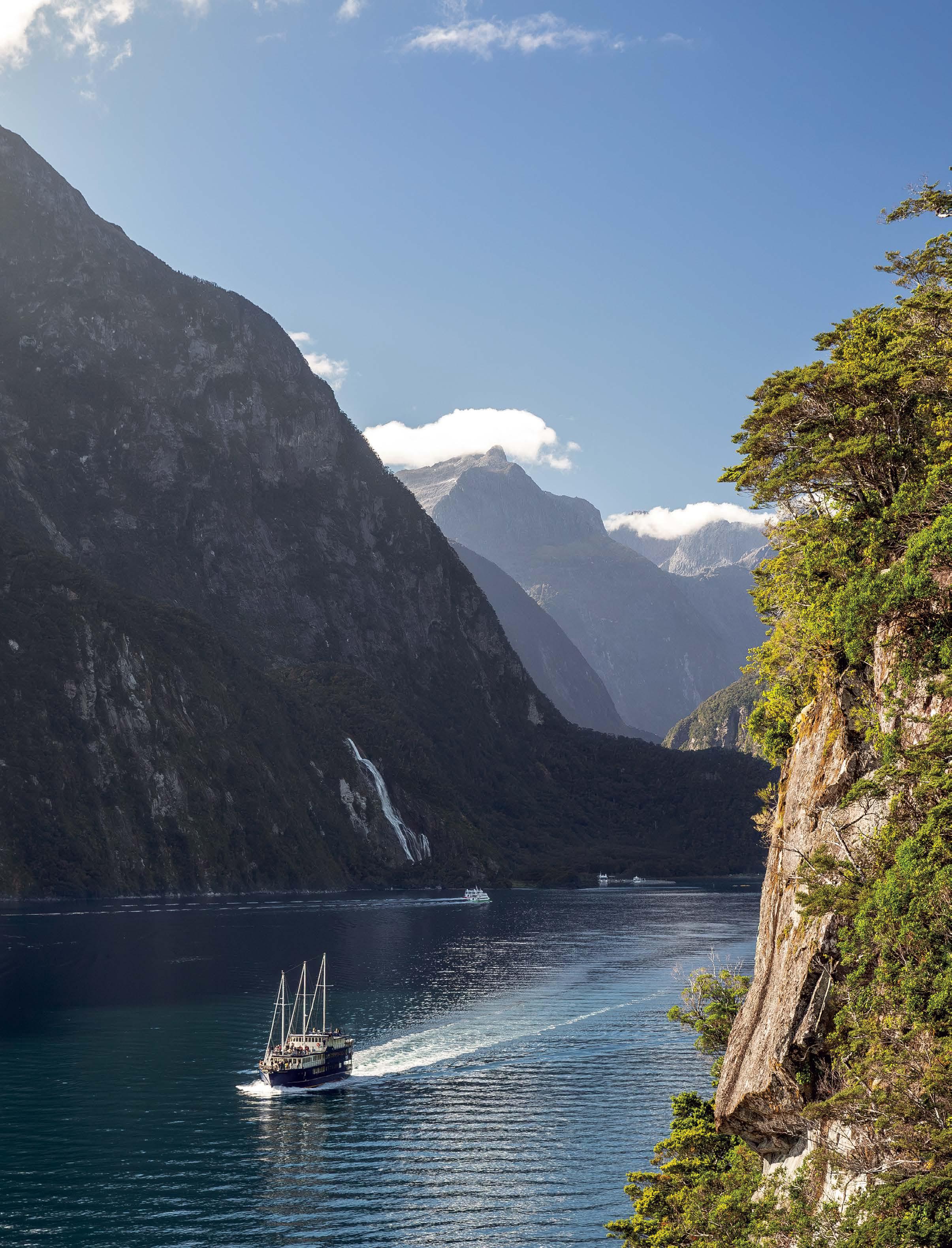
Next, soaring fiords, creaking glaciers, and ancient rainforest await in Fiordland. Set off in search of cascading waterfalls and staggering cliffs as you follow part of the iconic Milford Track with an expert guide. Aboard the Fiordland Discovery, glide past mighty peaks and dine on a seasonal gourmet two-course lunch, prepared fresh by the ship’s chef. And yes, New Zealand really does look like this.
Stay: Fiordland Lodge
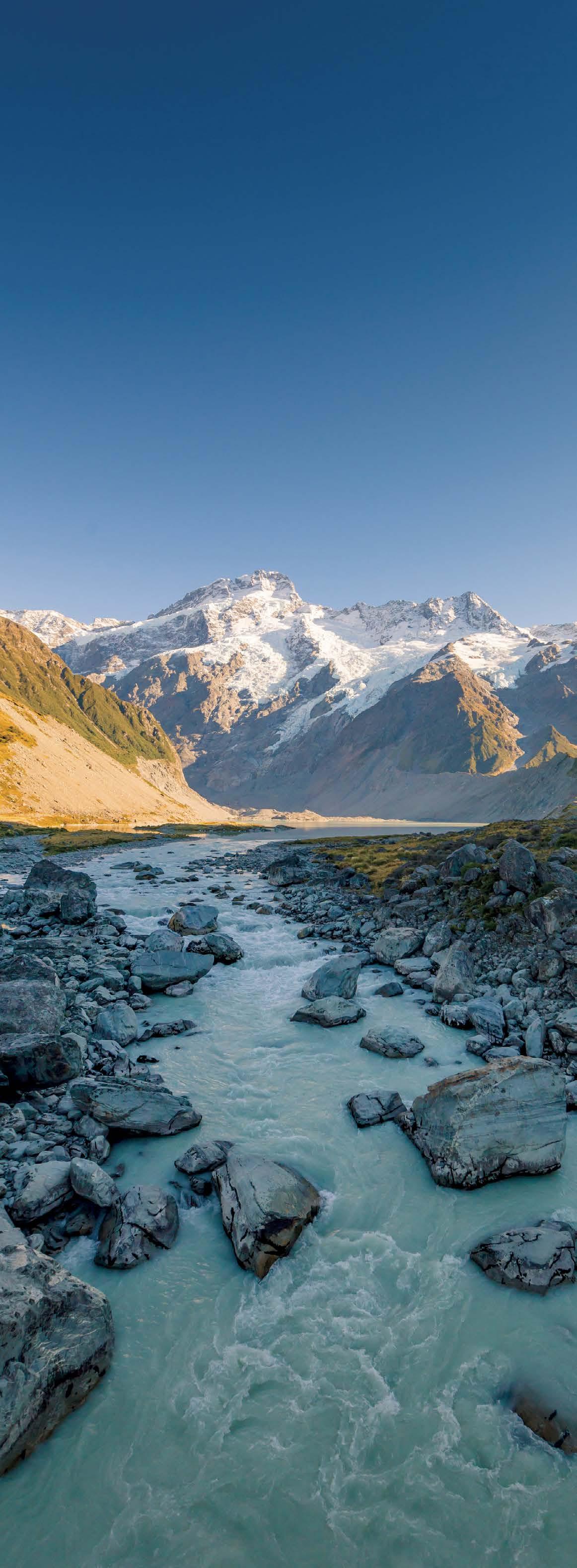
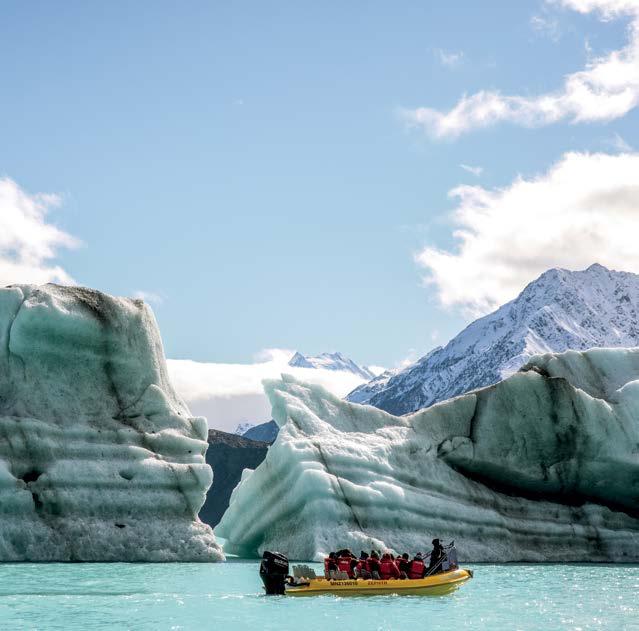
The cinematic scenery continues at Aoraki/Mt Cook, where a helicopter tour takes you above the cloud-piercing peaks of the Southern Alps. From the air, the scene feels almost surreal. Once you touch down on the mountainside, reality sinks in with untouched nature, yours to explore in solitude. From your base at Mt Cook Lakeside Retreat, set out at night for a private Dark Sky Reserve stargazing experience at Pukaki Observatory. Packing a local whiskey or wine from the observatory’s cellar, you’ll settle in for a tour of the southern stars, planets, and the Milky Way.
Stay: Lakestone Lodge
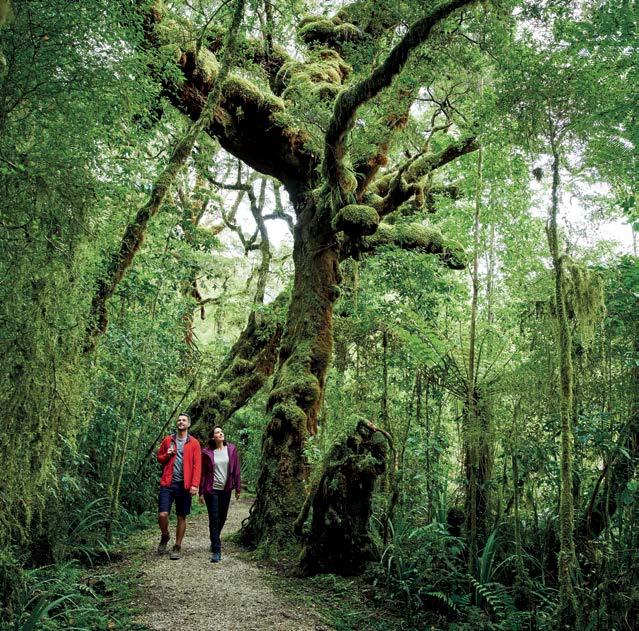
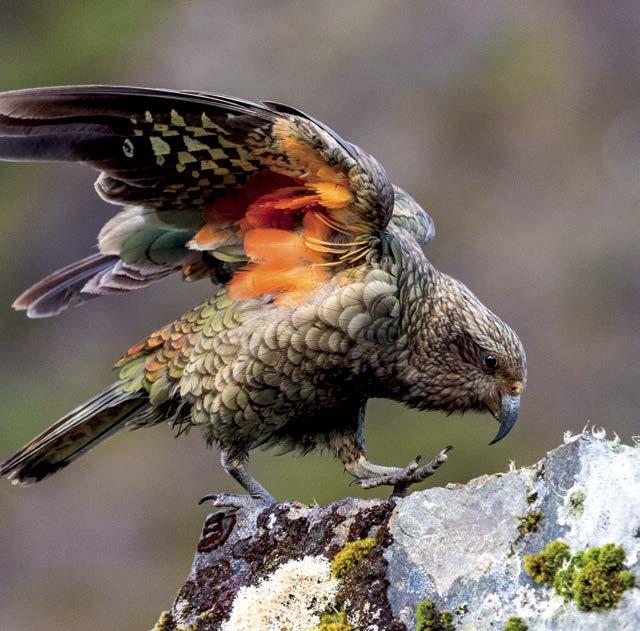
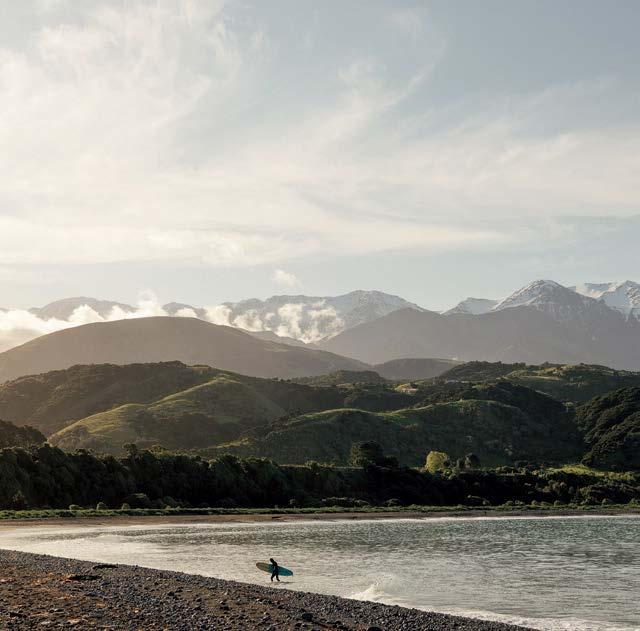
Head to Kaikoura, a beacon of marine biodiversity on the South Island’s northeast coast. Here, the great blue of the Pacific takes center stage. Take off in search of giants with a helicopter whale watching tour. From above, see enormous sperm whale, nose to tail, and marvel at their graceful movements and diving theatrics. Depending on the time of year, humpbacks, orcas, and southern right whales could make appearances, too. Back on land, tuck into crayfish and green lipped mussels at historic seafood shack, Nin’s Bin. For more wildlife encounters, visit the nearby fur seal colony, or scan the skies for albatross with an expert birder.
Stay: Hapuku Lodge & Treehouses
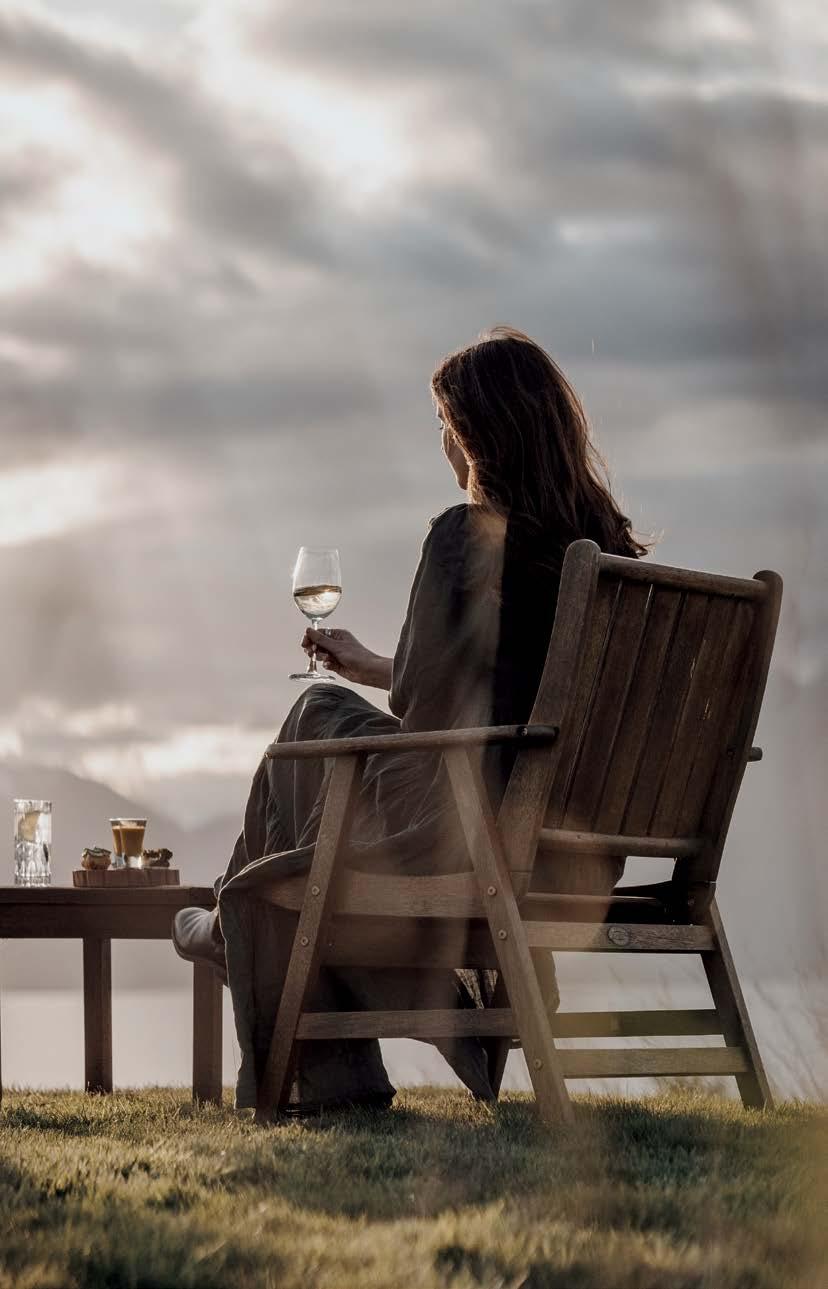
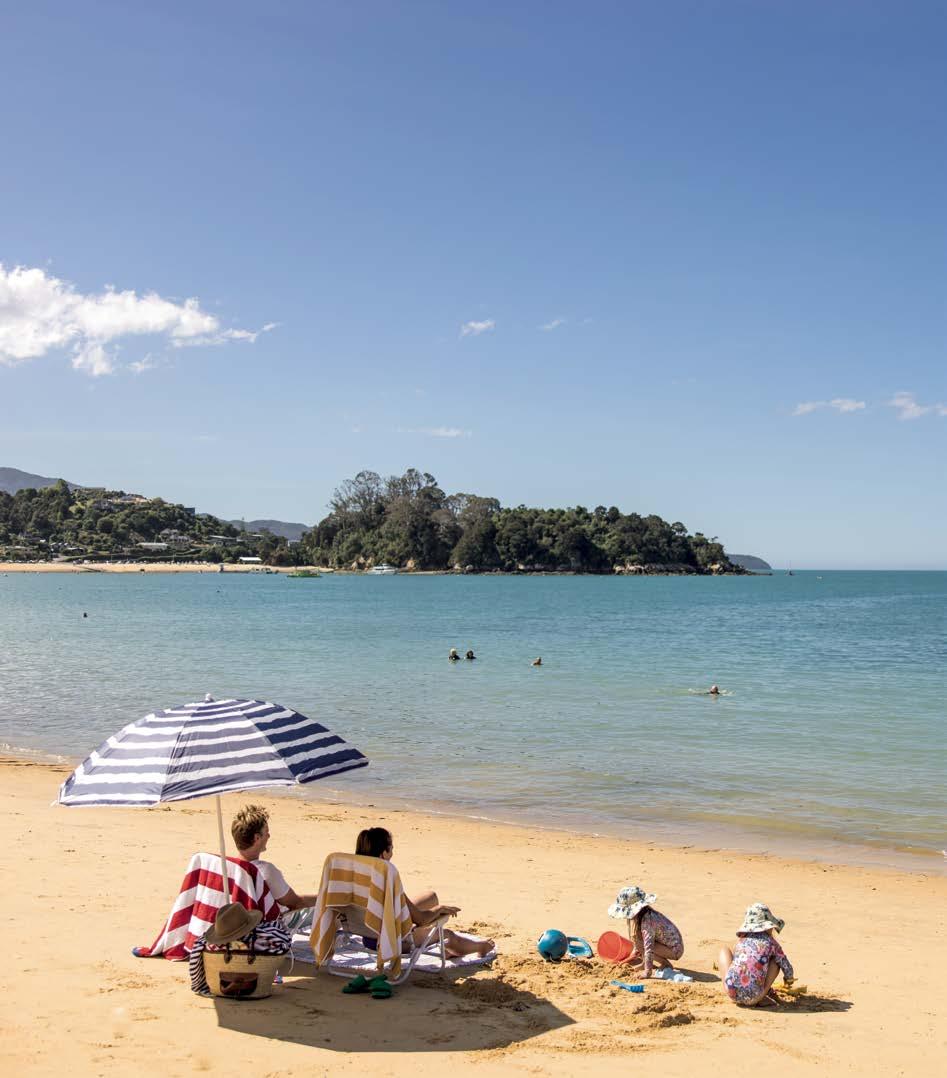
Finish up your adventure with a few days of wining, dining, and seaside reclining in Marlborough, the South Island’s postcard-pretty wine region. Kick off your stay here with a vineyard-hopping tour of some of the area’s most prestigious wineries. At Hans Herzog Estate, sip small-batch reds made from the notoriously demanding Nebbiolo grape; try the region’s signature sauvignon blancs in a white-washed wooden chapel-turned-tasting room at Clos Henri; pair juicy Marlborough oysters plucked from the Sounds with crisp whites at St Clair Estate’s seasonal vineyard kitchen. Not quite ready to go home? Head to Anchorage Bay in the Abel Tasman National Park, a dreamy golden arc of sand backed by native coastal forest. Spend a few days surrounded by nature, hiking and exploring the wilderness around the remote Awaroa Lodge.
Stay: Pihopa Retreat
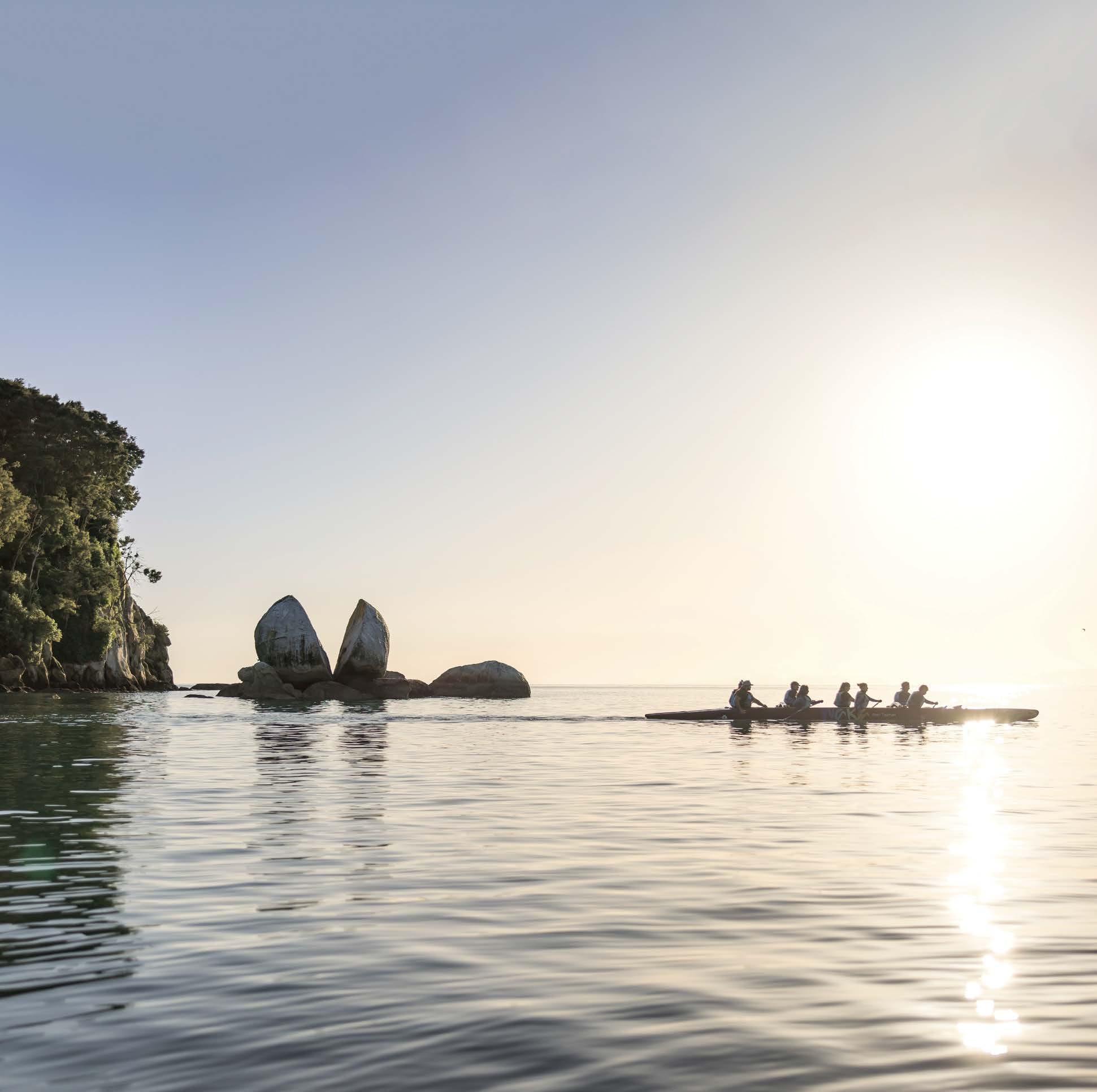
Ready for a South Island adventure tailored to your tastes and travel style?
Connect with our New Zealand destination specialist to start planning an adventure like this one, but unique to you. Email us at info@extraordinaryjourneys.com to get started.
From fairytale farm stays to cinematic Outback escapes, these remote hideaways aren't just places to sleep—they're destinations, each offering a deep sense of place and purpose.
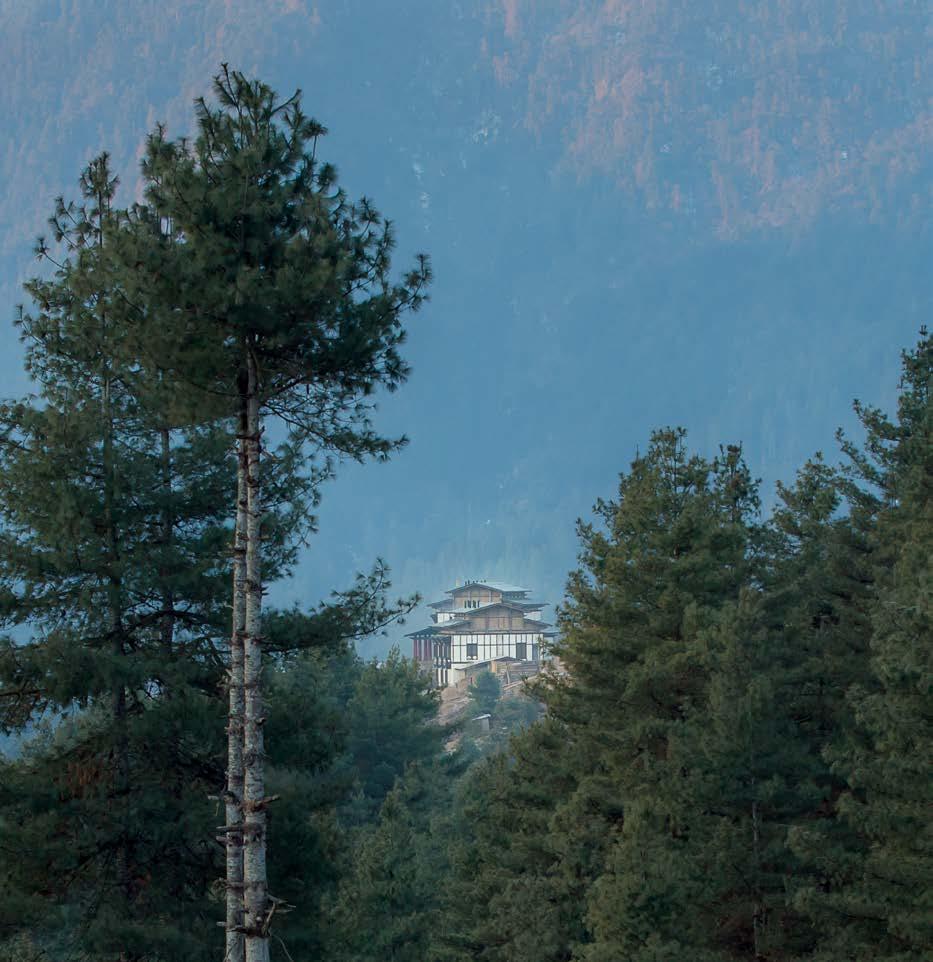
Gangtey Lodge
Perched on a forested hilltop in Bhutan's serene Phobjikha Valley, Gangtey Lodge offers a quietly luxurious escape rooted in warmth and connection. The journey winds through blue pine forests, arriving at suites crafted from hand-cut stone, warmed by wood-burning stoves, and deep soaking tubs that gaze out across the valley. With just 12 rooms designed like a reimagined ancestral farmhouse, the lodge feels like being welcomed into someone's sacred retreat with sweeping Himalayan views. The lodge centers on wellbeing, and days are shaped by monastery visits, spiritual cleansings, and slow walks through fields strung with prayer flags. At sunset, you'll want to settle by the fire, sipping tea, as the valley turns to gold.
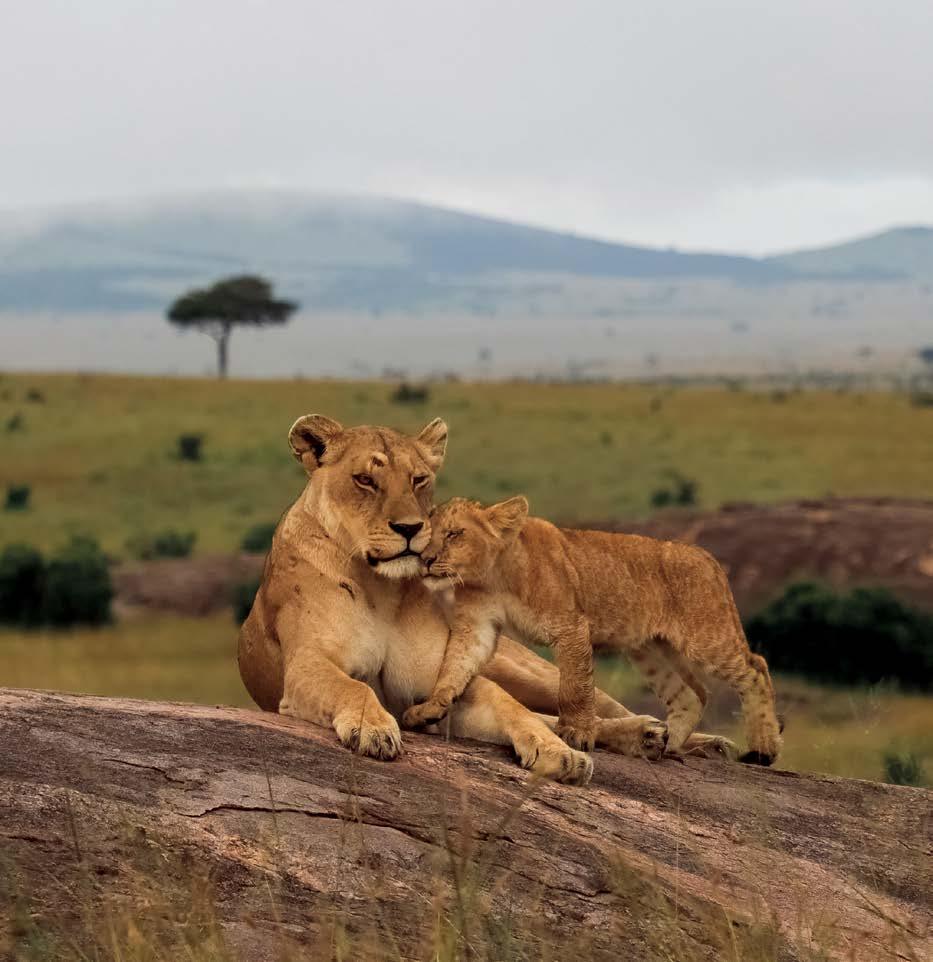
Set within the exclusive Partakilat Conservancy, in the heart of Kenya's Maasai Mara, Loirien Mara is an intimate escape where the savannah meets luxury. Guests arrive via bush plane or 4x4, stepping into a landscape alive with acacia trees and endless horizons. The three villas blend safari heritage with modern ease—stone walls, wooden decks, rattan armchairs, and handwoven Maasai textiles. All-inclusive dining showcases local ingredients from a nearby regenerative farm. Safari days are what you make of them. They can feature morning game drives, sundowners on the plains, guided bush walks, or downtime at the lodge. But its pièce de résistance is the guided rhino treks with Maasai trackers.
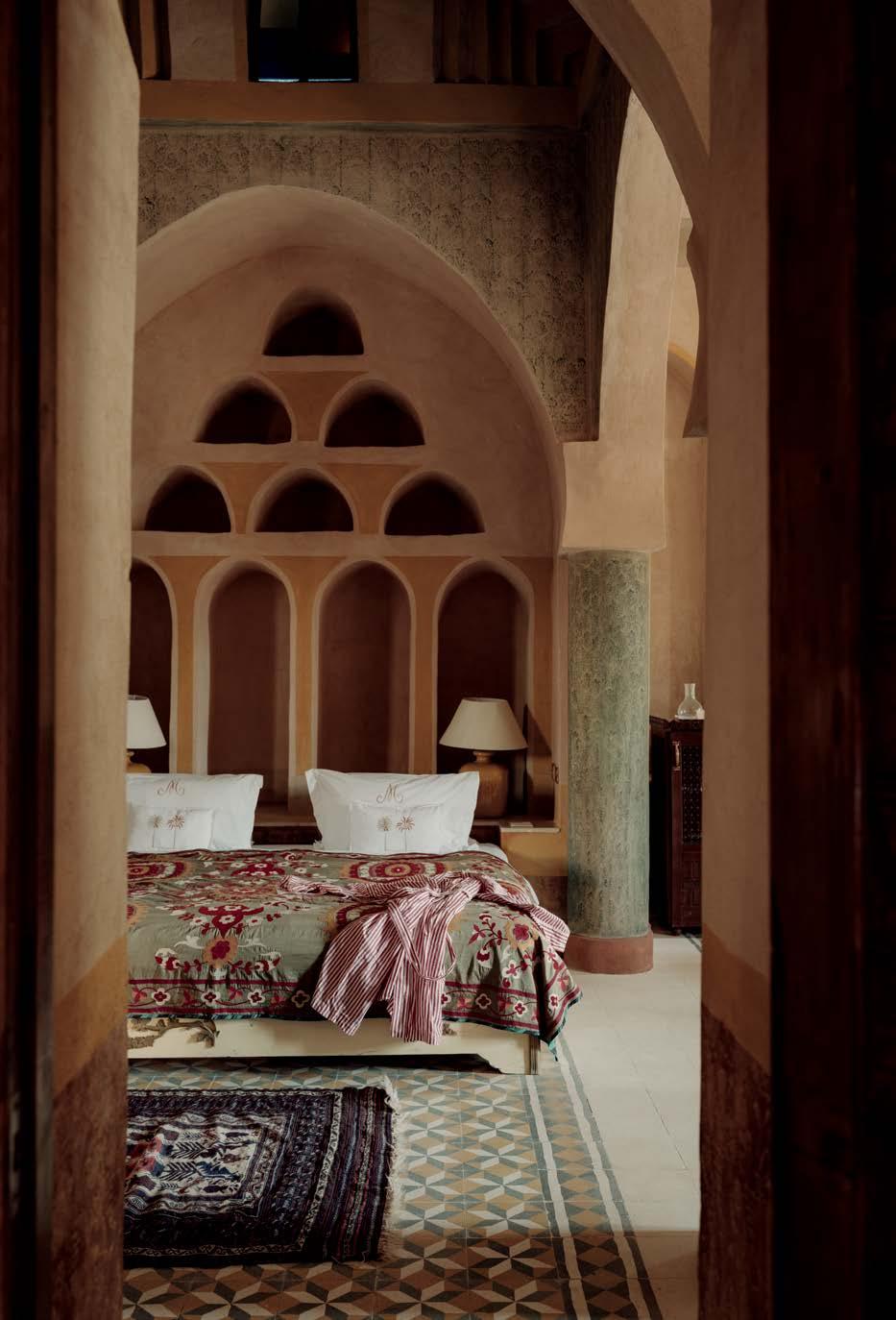
Egypt
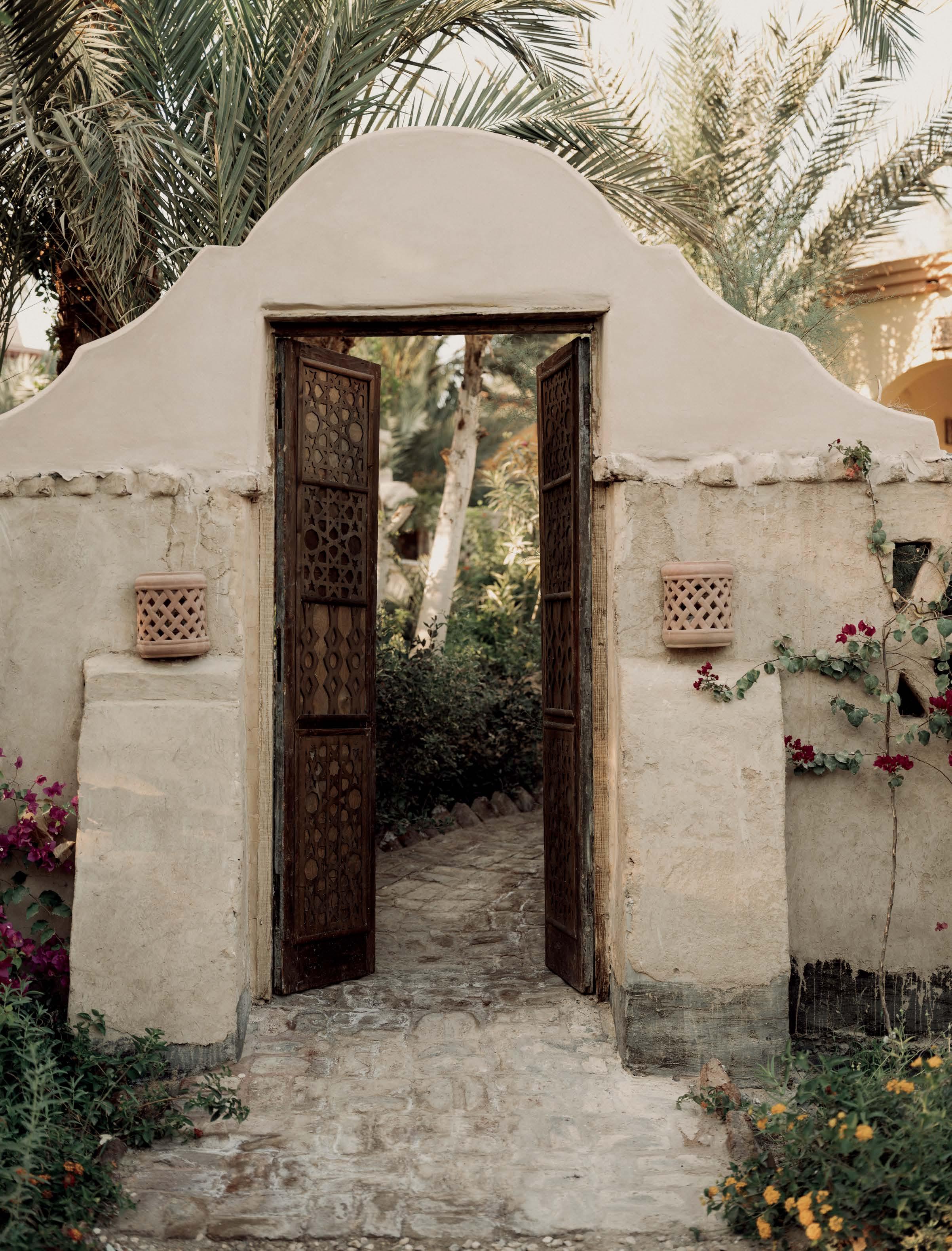
Hidden on the edge of Luxor's West Bank, Al Moudira seems like a mirage brought to life—an oldworld hideaway set within nine acres of date palms, bougainvillea, and jasmine-scented courtyards. This retreat is the only palace-style hotel near the Valley of the Kings. Each room is a world unto itself: vaulted ceilings, hand-painted murals, antique Syrian furniture, and richly embroidered fabrics that nod to Ottoman opulence. Days unfold like a slow ritual—breakfasts in tiled courtyards, dips in the mosaic pool, herbal steams in the hammam, and golden afternoons wandering through the colonnades. A blend of history, fantasy, and warm Egyptian hospitality, Al Moudira isn't just a base for exploring ancient wonders—it's a destination.
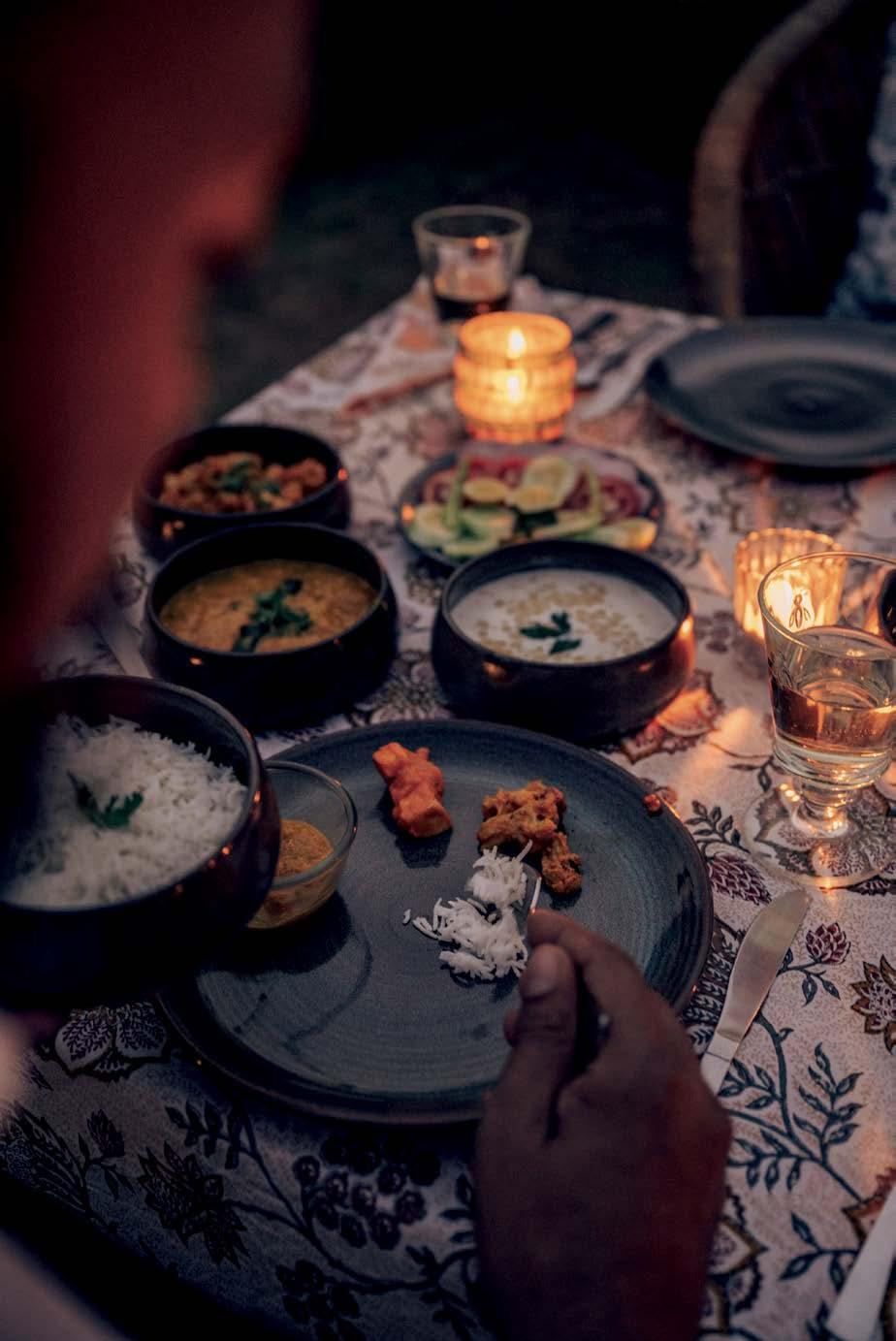
Anopura
Anopura is a rare find tucked in the countryside near Jaipur, beneath the Aravalli Mountains. It feels grounded and authentic rather than a polished palace stay. You arrive in 4x4s along dusty lanes, stepping into humble suites—think lime mortar and cement, stone pathways and Indian antiques. With only 14 rooms, this retreat is more akin to a rustic farm stay with pools, overgrown gardens and plentiful of outdoor seating. Staying here puts you within reach of local villages (which you can visit on foot), scenic hikes, and historic temples. Between adventures, there are traditional ayurveda treatments and farm-to-table meals by a Rajasthani chef using local ingredients plucked from the nearby fields or its own farm and cooked over an open fire.
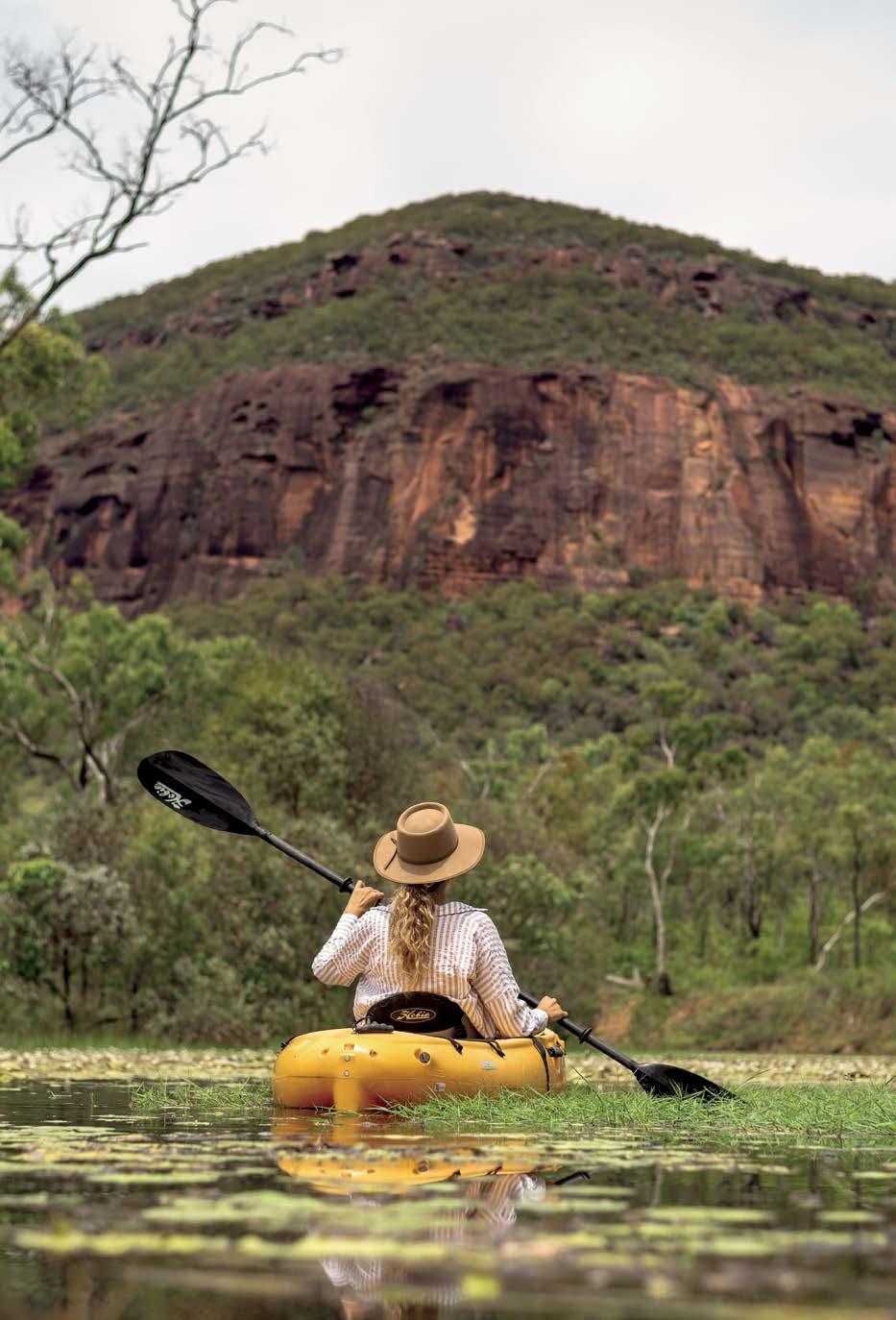
Mt Mulligan
In the shadow of Ngarrabullgan—a sandstone monolith five times larger than Uluru—on a sprawling 69,000acre cattle station in Far North Queensland, Mt Mulligan Lodge is the Outback at its remote best. Guests arrive by helicopter or by a 2.5-hour drive from Cairns to dramatic wilderness. With room for just 28 guests, the spacious bedrooms, across four pavilions, are dressed with Australian farmhouse charm: iron roofs, timber verandas, chestnut hues, butter-soft leather, and raw brass and stone. Sliding doors open to private decks with deep corrugated iron bathtubs, perfect for soaking while gazing across eucalyptus-lined weirs to the monolith beyond. Everything's included, with 80% local produce starring native ingredients like wattle seed, and kangaroo. Dine under the stars, by campfire, or in the pavilion.
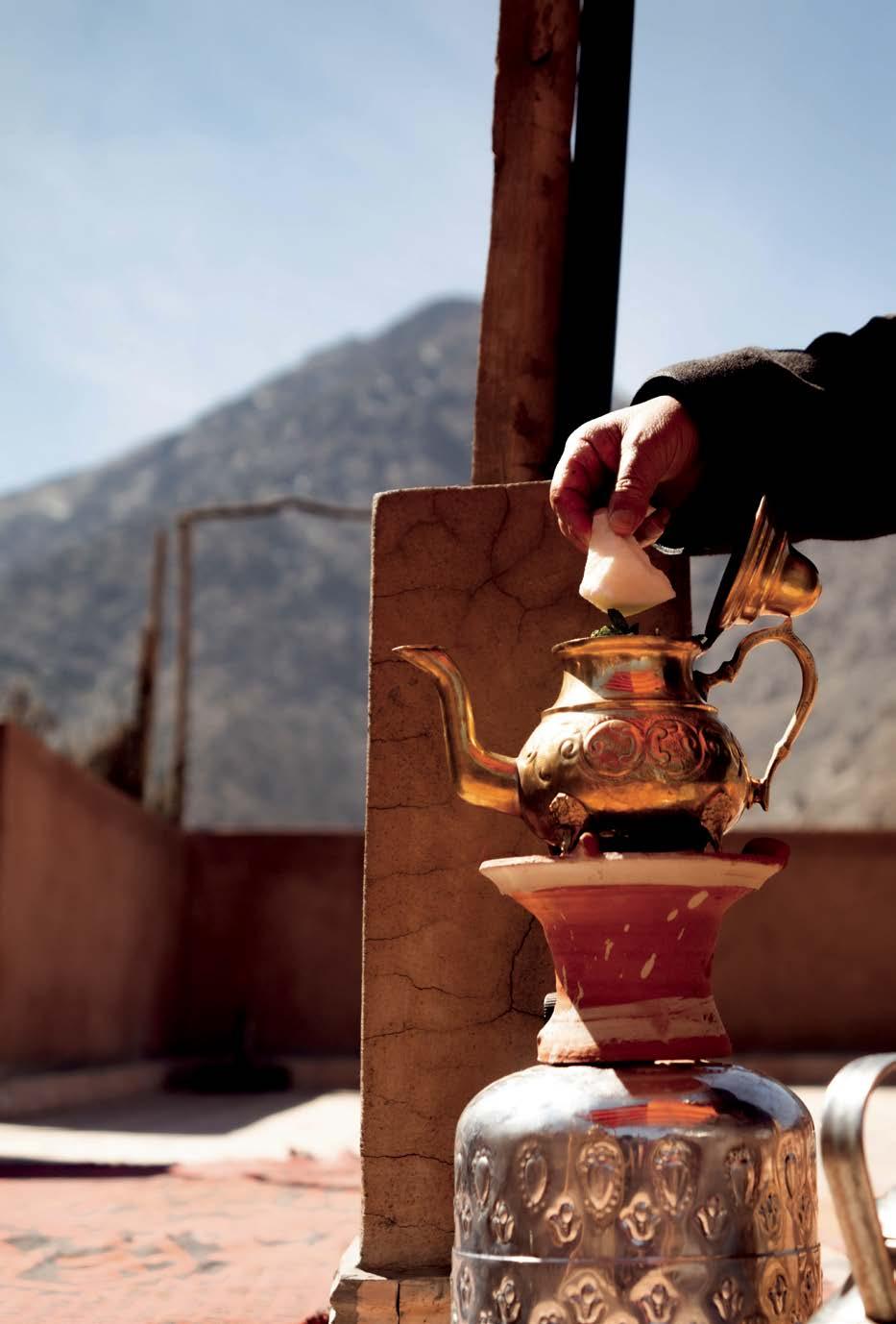
Olinto Atlas Mountain Retreat
Olinto is an elegant retreat built for rest found in the High Atlas Mountains in the Berber heartland. At the foot of North Africa's highest peak, Mount Toubkal, the drive passes olive groves and stone villages before opening onto nine pavilions surrounded by terraced rose gardens, well-kept olive trees, and endless mountain views. Owned by Prince Fabrizio Ruspoli di Poggio Suasa, the property is drenched in detail—tadelakt walls, magenta and mustard sofas, leather-paneled doors, and wood-burning fireplaces. Oversized beds sit beneath high domes; Crittall doors open to views of cypress trees and rose gardens, with some rooms featuring private courtyards and pools. Days move at your pace: a morning hammam, a guided hike, a picnic in the orchard, or a poolside nap. It is just over an hour from Marrakech but completely out of its earshot.
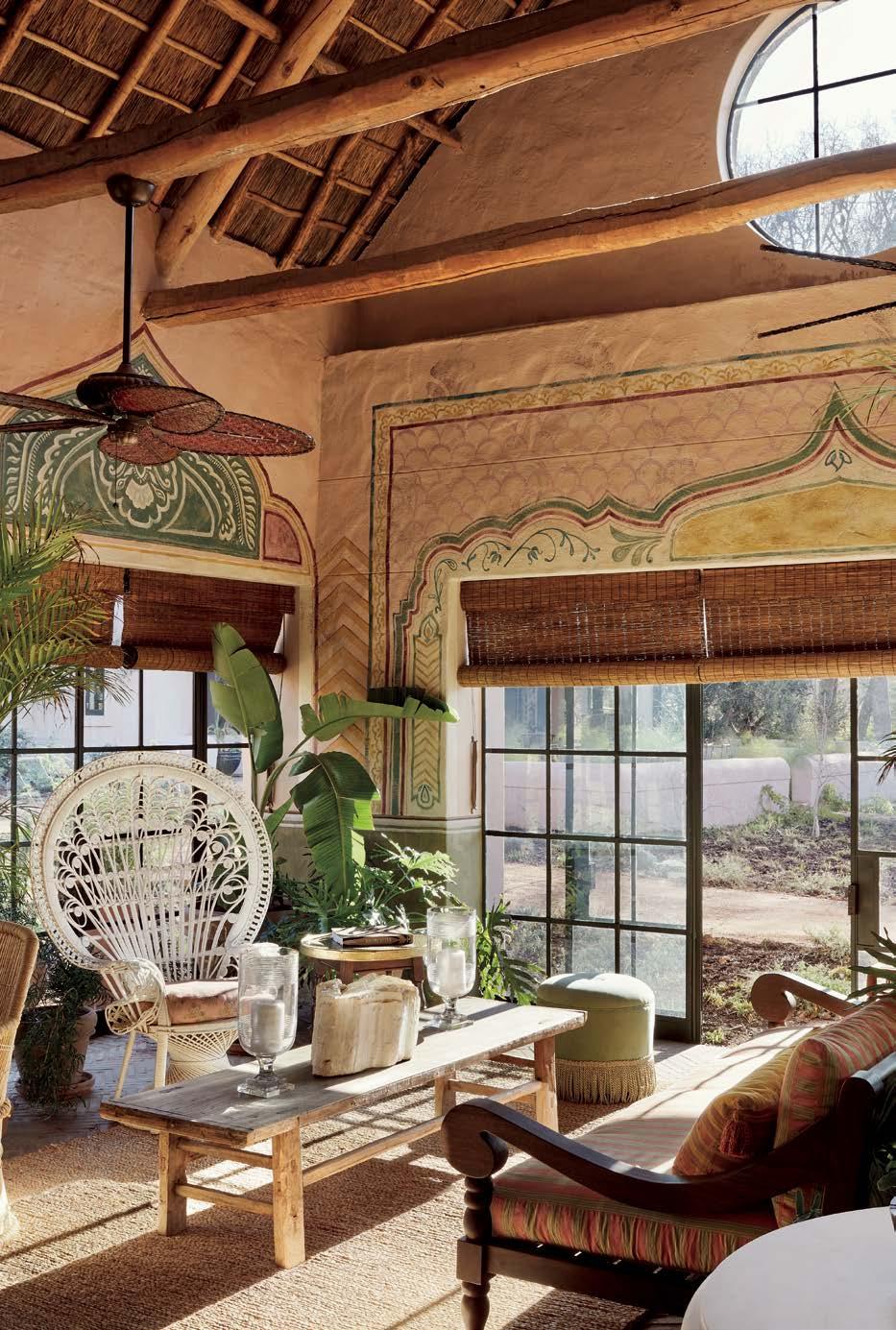
Sterrekopje Healing Farm
Set on 124 acres of wild gardens in the Franschhoek mountains, Sterrekopje Farm is a soulful sanctuary rooted in rest, ritual, and reconnection. Everything hums with life on this biodynamic farmland—wispy gardens, olive groves, and wild swimming spots that feel lifted from a fairytale. Guests sleep in dusty pink cottages and suites, each of the 11 is one-of-a-kind and otherworldly, with hand-painted murals, whimsical tented roofs, antique textiles, and earthy finishes that blur the line between art and living space. There's a marble-clad hammam, and an on-site apothecary blending herbs into teas and tinctures. Seasonal, intuitive meals are served communally, spotlighting just-picked produce, foraged herbs, and ancient grains from the farm. Creative workshops—fermenting, weaving, journaling—invite deeper engagement with the land and self.
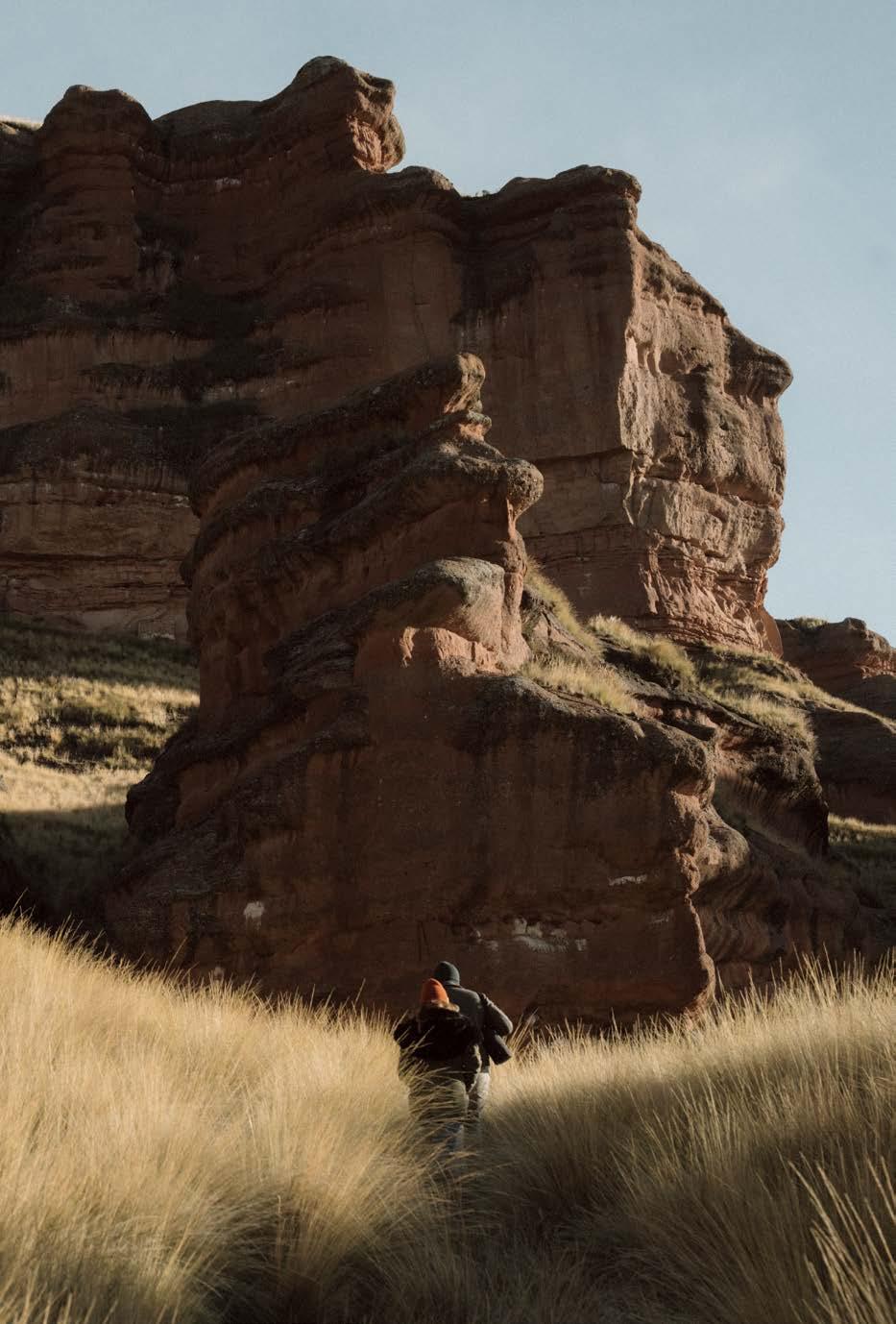
Peru
Tinajani
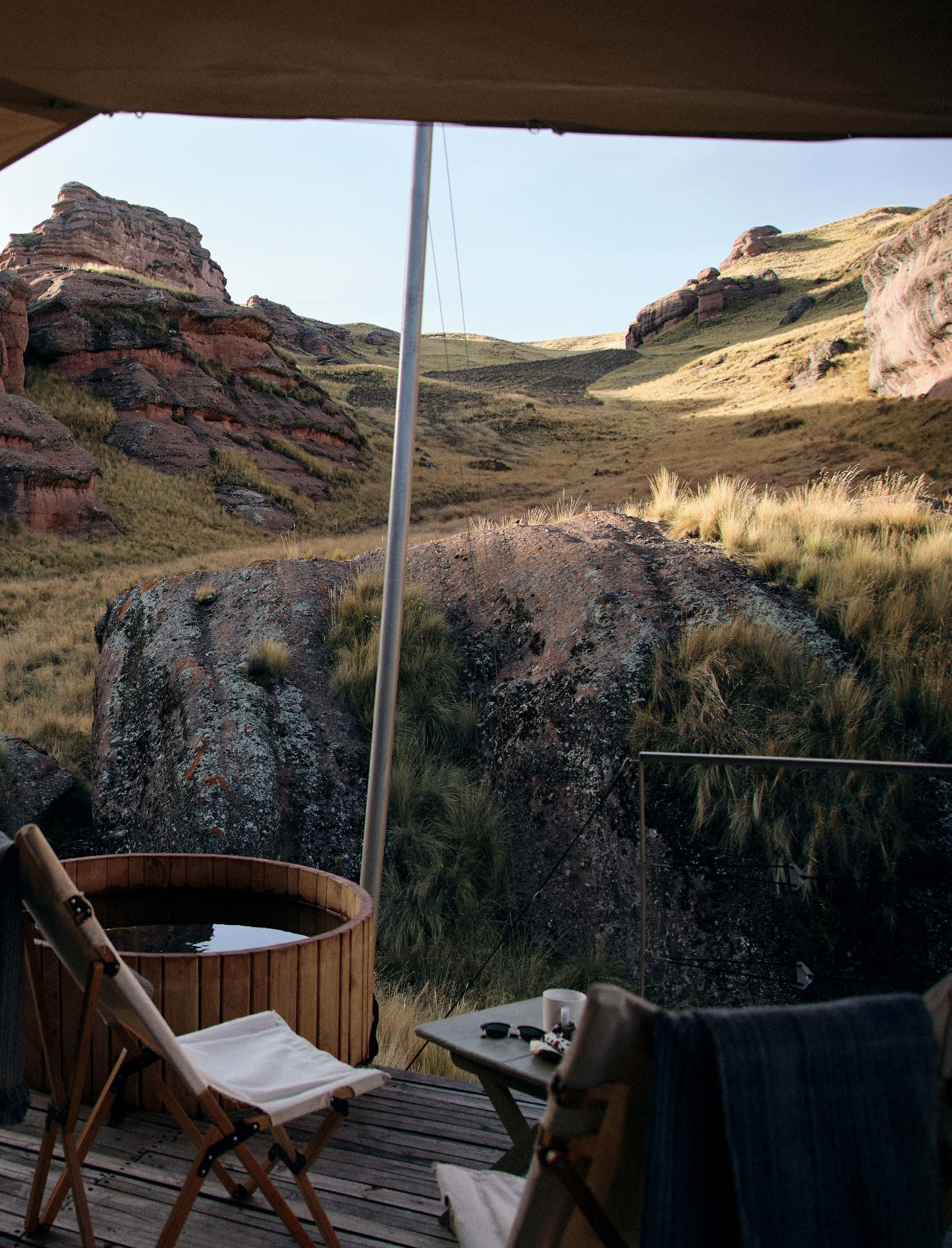
Tinajani is a tented camp that feels more like a secret base camp for the soul. At approximately 13,000 feet above sea level, the journey here is part of the experience. You'll wind through the high-altitude plains of Tinajani Canyon, past llama herds and weathered villages, before arriving at the nature reserve. The camp is anchored by a 19th-century Andean homestead, a former sheep farm, made up of adobe buildings that house the communal spaces. Its walls are lined with black-and-white family portraits, and locally sourced ceramics. Six canvas tents are outfitted with wood-burning stoves, separate living rooms, plush bedding, and hot tubs. Days revolve around guided hikes through the canyon's red rock formations, with walking poles and chaps left by the door. Evenings are spent around a communal dining table, sharing stories and ancestral meals beneath a sky full of stars.
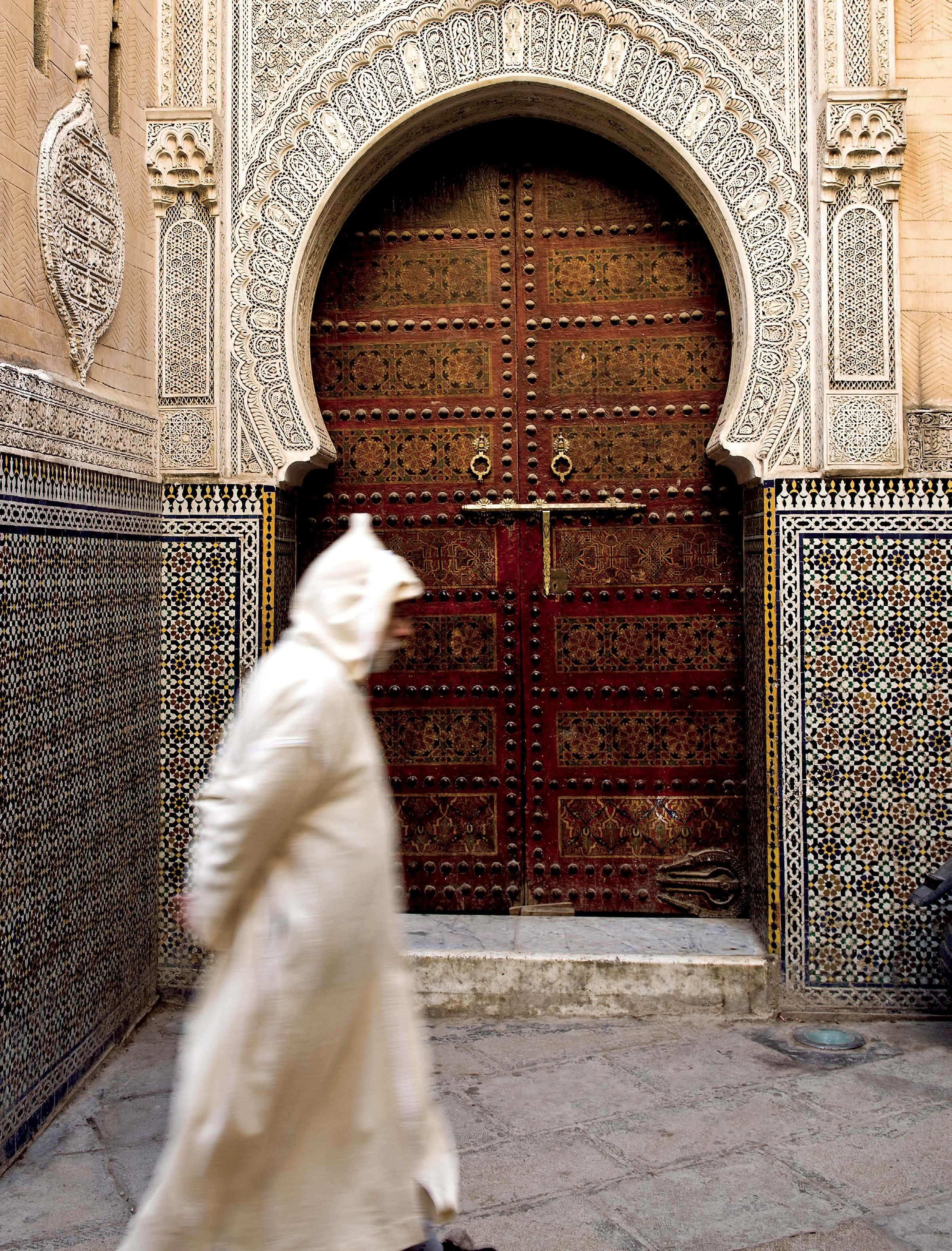
Amid the dust-blown mountains of northern Morocco, an ancient city brings past into the present.
Written by Joey Tyson
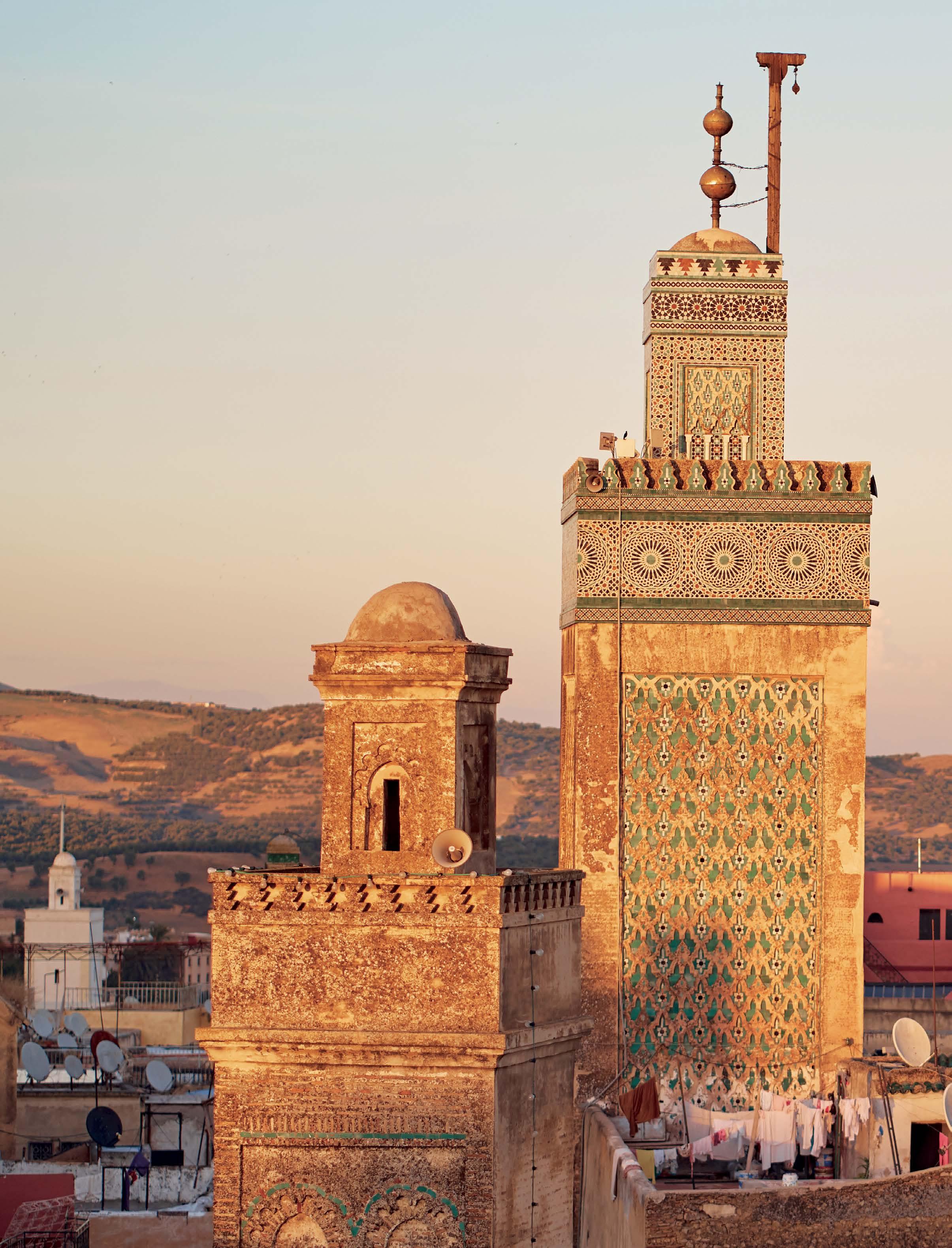
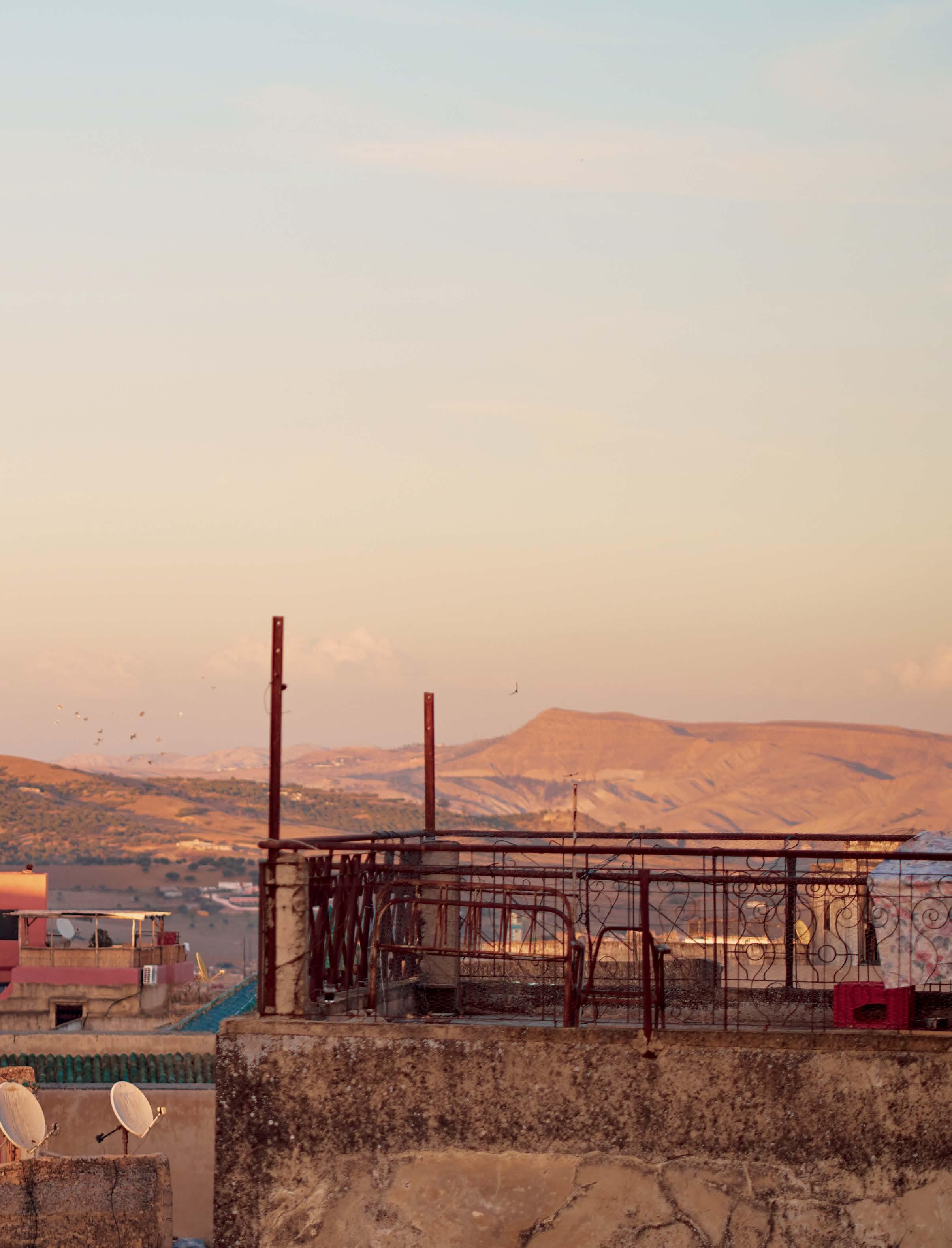
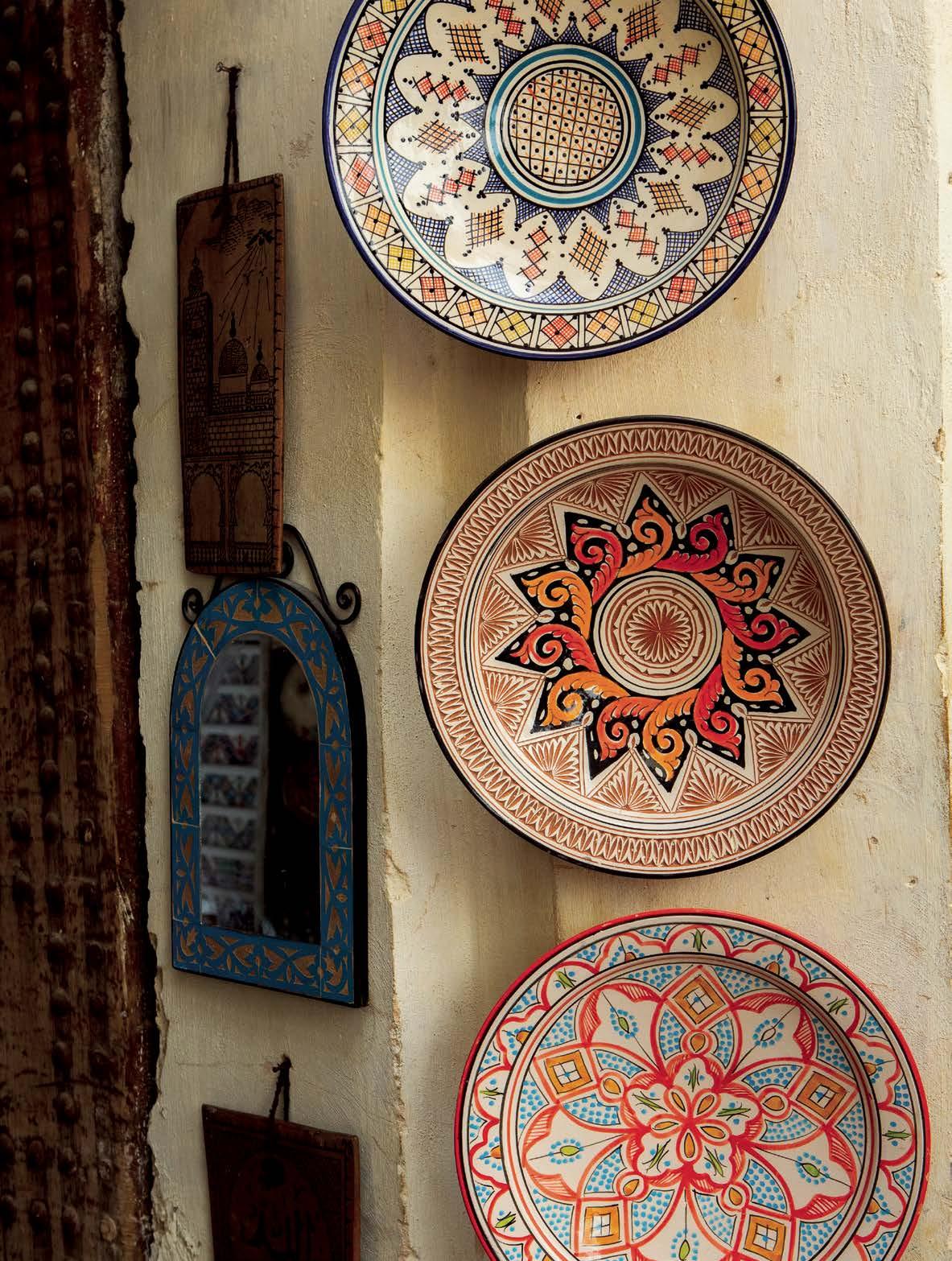
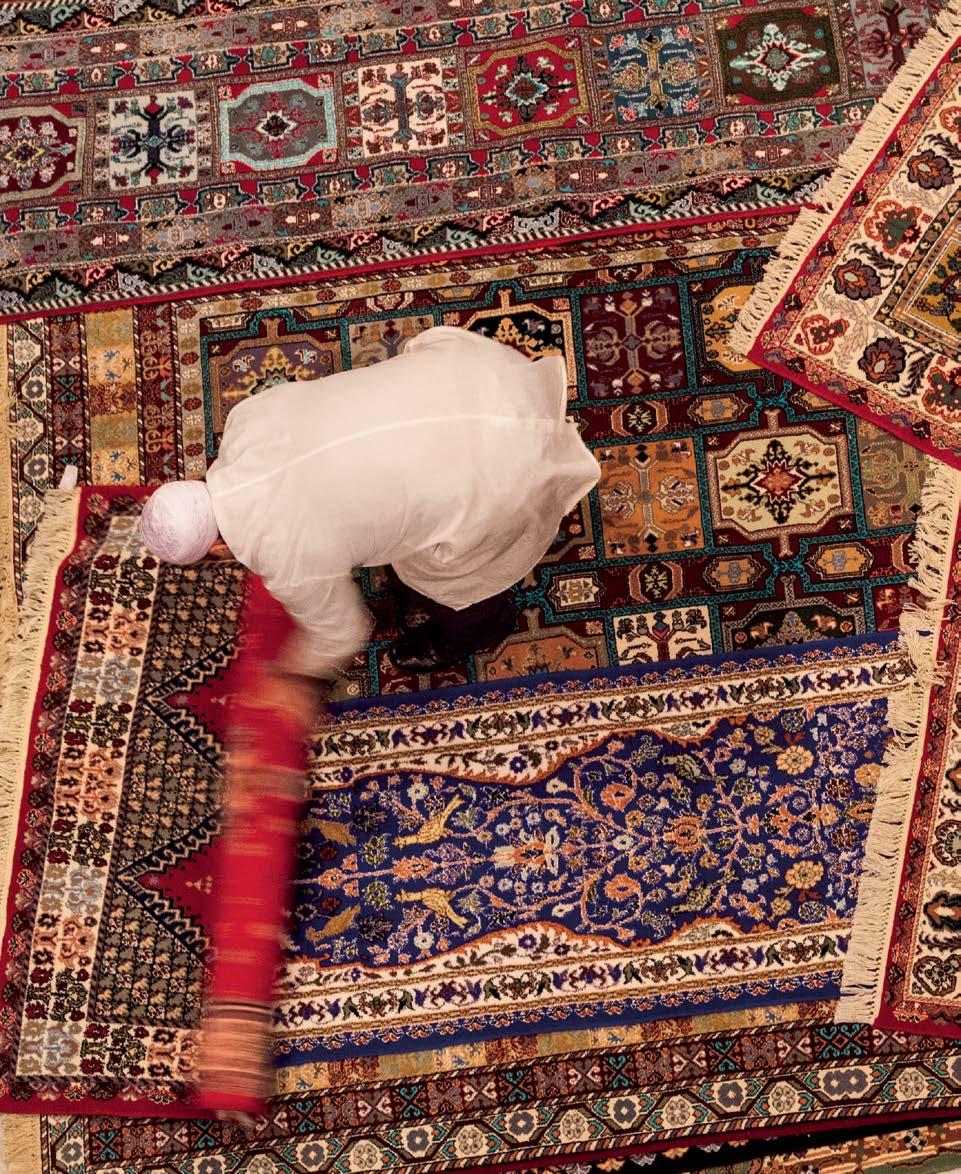
Spices and soaps; intricate carpets and innumerable slippers; the thwack of the butcher's knife and the muezzin's soaring call to prayer. A labyrinth of alleys and streets winding and contorting for miles, past camel heads dangling from meat hooks, vendors lost behind stalls overflowing with mint, and improbable mountains of powder in blazing reds, oranges, and yellows. To the visitor, the souks of Fes are a rush of bedlam and commotion; a constant rhythm of selling, buying, and making.
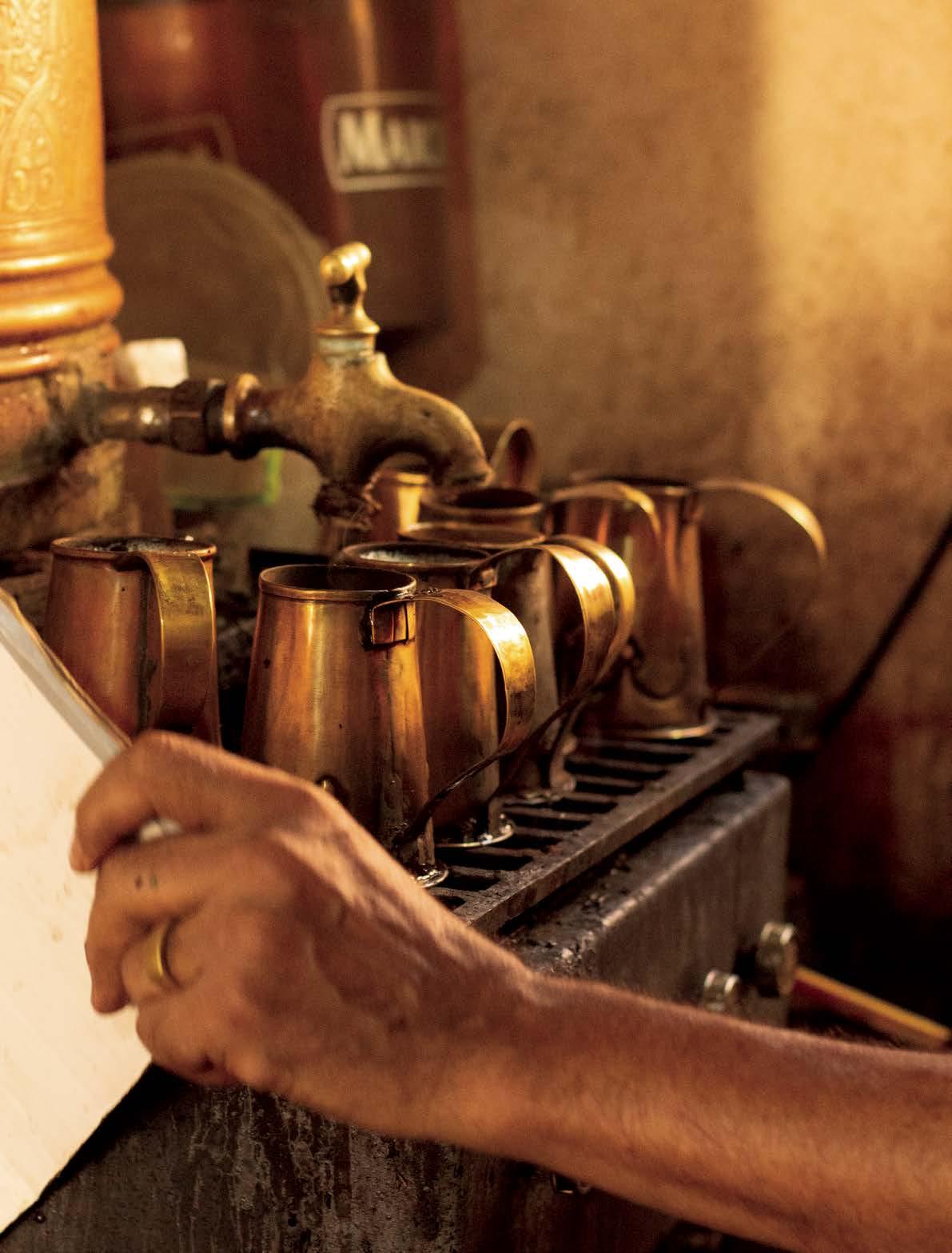
That things seemingly haven't changed in a hundred years isn't because Fes exists in a time warp: it's because some things haven't needed to change. Market sellers call out to their regulars. People stop and chat as they pick up a dozen eggs or a kilo of flour. The cafés are packed with crowds of people, catching up before the working day begins. The city's famous artisans work to order, hammering copper pots, delicately engraving brass plates, cutting elegant Islamic verse into marble gravestones.
It may seem like immersive spectacle, which, of course, some of it is—the tourist trade is an important one here, just like anywhere else—but most of what Fes reveals to visitors is simply somebody's every day. This is life happening.
I came to Fes, an ancient city in Morocco's northeast enclosed by sun-blasted mountains, intrigued by its history. Not the classic kind of dates and monuments, but the living history that makes the city so singular and fascinating. The medina, Fes' sprawling medieval core, has remained almost unchanged since the 11th century. Its narrow alleys wind and curve, navigated only by people and the occasional donkey—there are no cars within its walls, making it one of the largest pedestrian areas in the world. Beyond creating an
endlessly walkable center, the lack of cars has helped preserve many of the city's age-old customs, something my guide, Chakib, is keen to demonstrate.
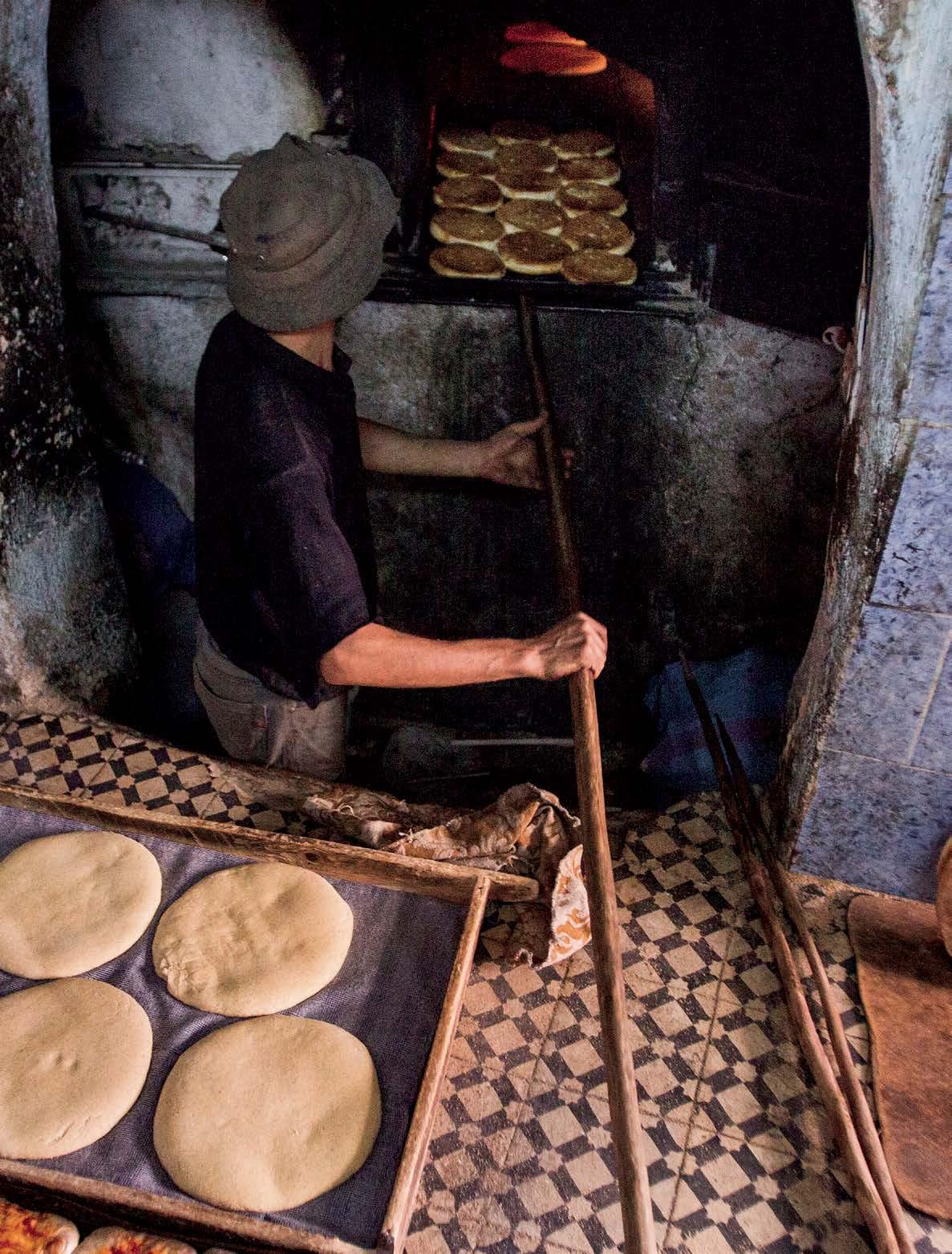
We begin to descend into the medina from the Bab Bou Jeloud—the Blue Gate, an ornate, mosaic-covered gate that serves as a main entrance into Fes el-Bali. He pulls me through an unassuming doorway into a room blazing with heat. At one end, a man dutifully shovels bread into the flames. Gently tipping each circular piece onto a large wooden spatula, before entrusting the dough to the fire. This is a community oven, something that has existed in the city for centuries. Alongside the mosque and the hammam, these small, smoke-stained rooms are the cornerstone of every neighborhood in Fes. Unseen and unknown, I would have never noticed this place on my own, but Chakib, grew up in the medina, and he knows that these ovens, where local families bring their bread to be baked, are a living part of Fes' long history.
Between upwards of 30 people visit the baker each day, carrying their freshly prepared bread swathed in patterned fabric. There are no tickets or receipts. Customers simply leave their bread with the baker, who makes a couple of marks in the dough (each pattern unique to a family) with a wooden stick. Everything he does is committed to memory, a recurring theme in Morocco's former capital. "They are the CIA of the medina—they know everything about everyone," jokes Chakib.
As we leave the baker to his work, Chakib goes on to explain how the city's medieval heart has played a part in preserving this day-to-day custom. "The alleys and stairwells are so narrow, it's difficult to move large items, like ovens, into homes. With no cars, everything must move through the medina by cart," he says.
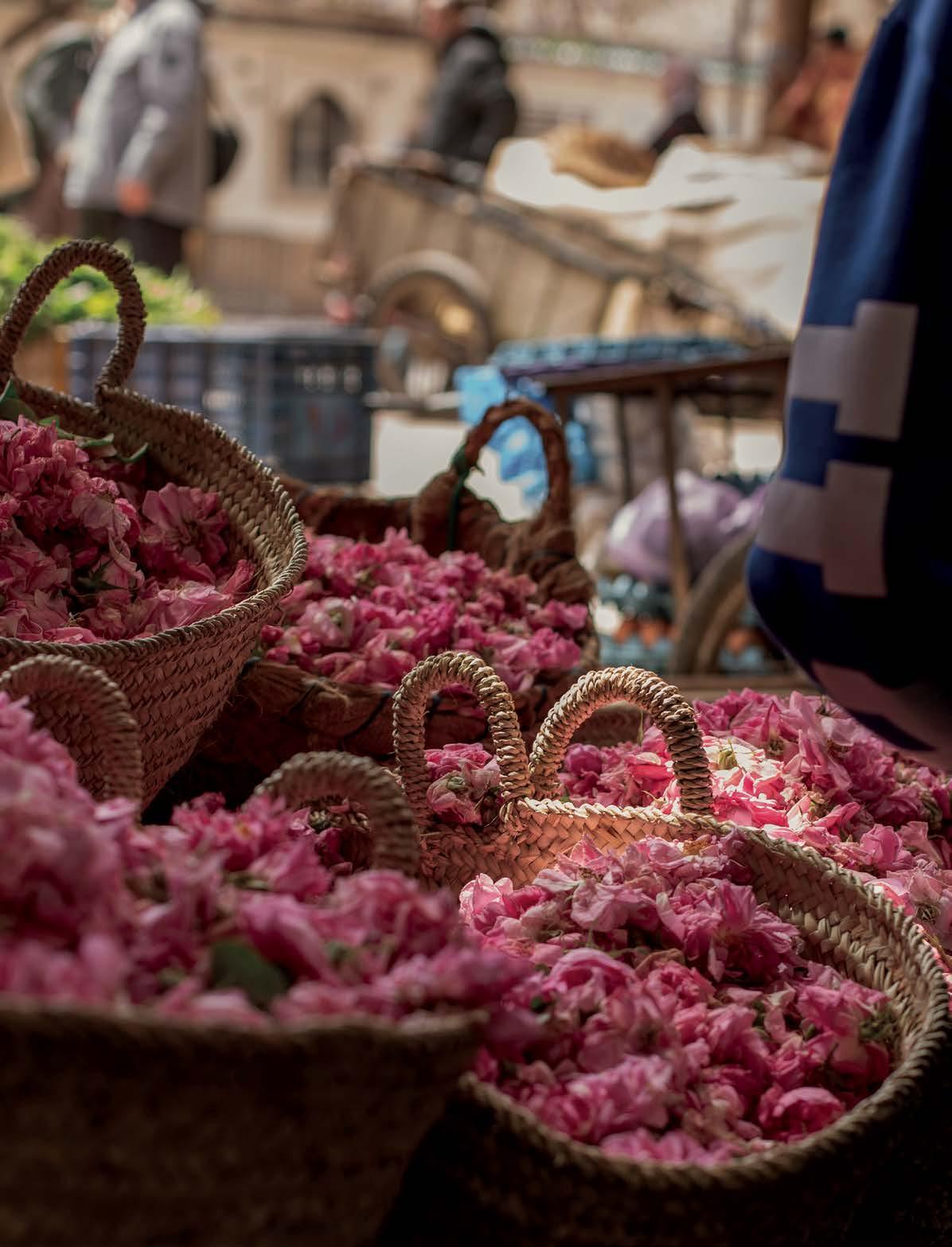
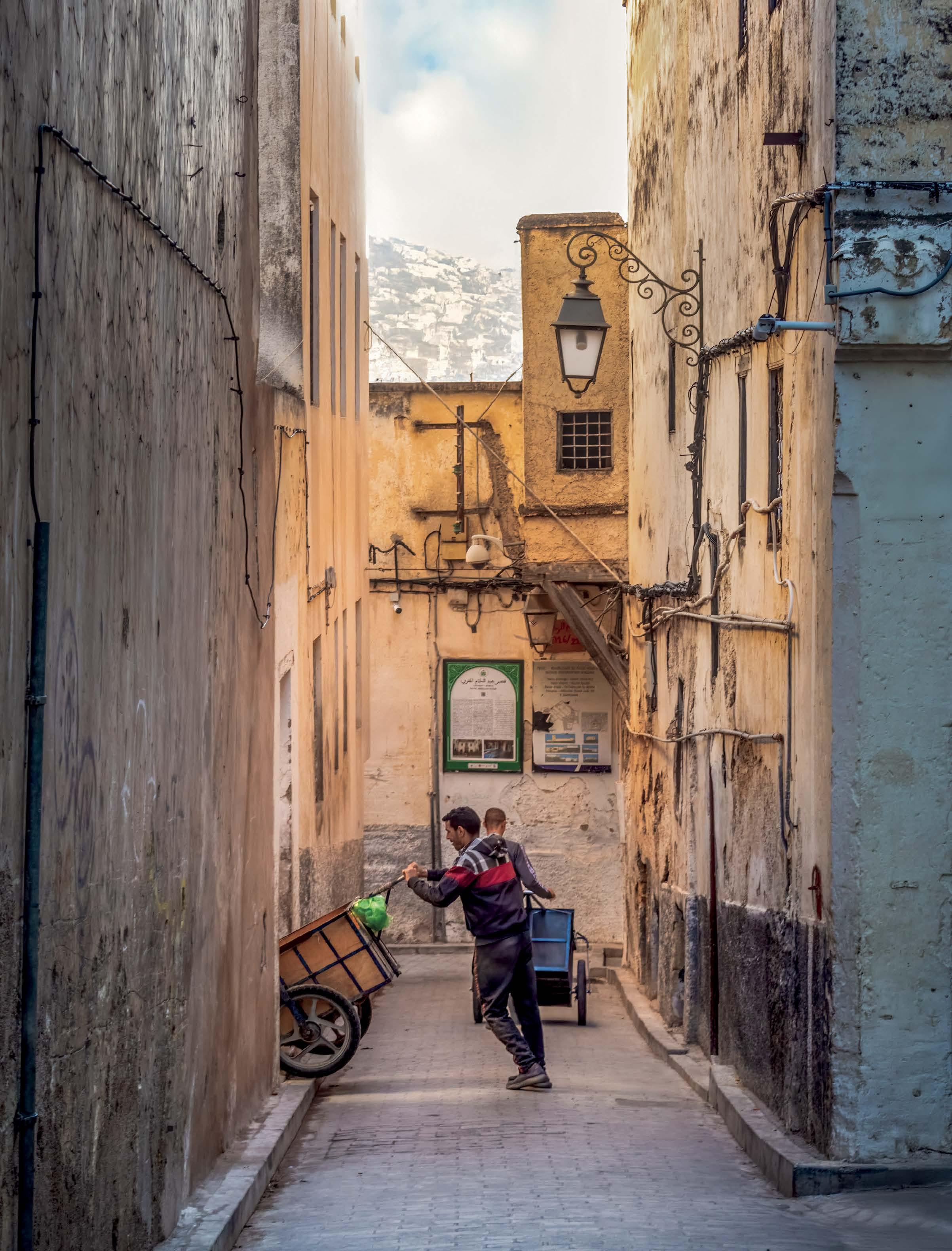
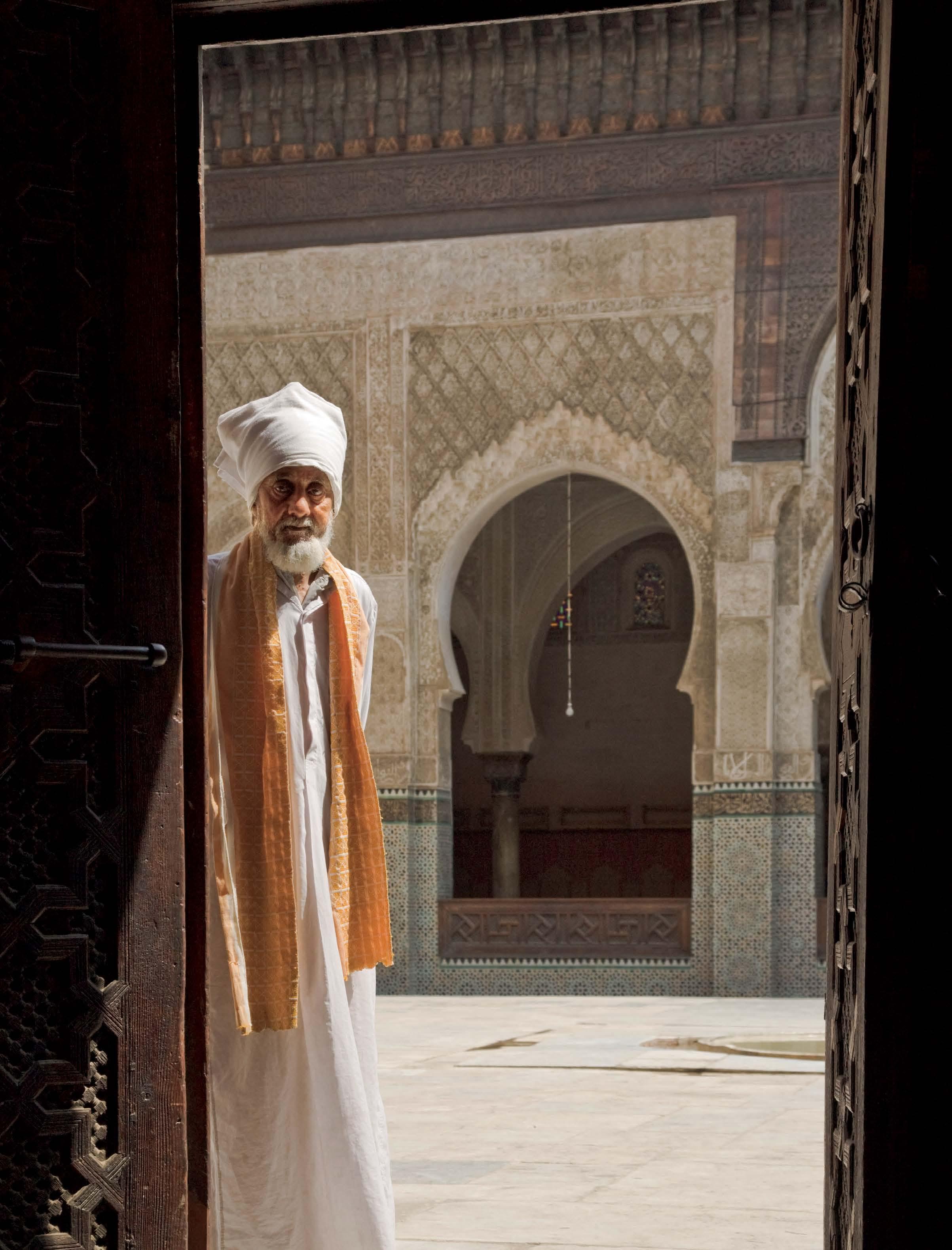

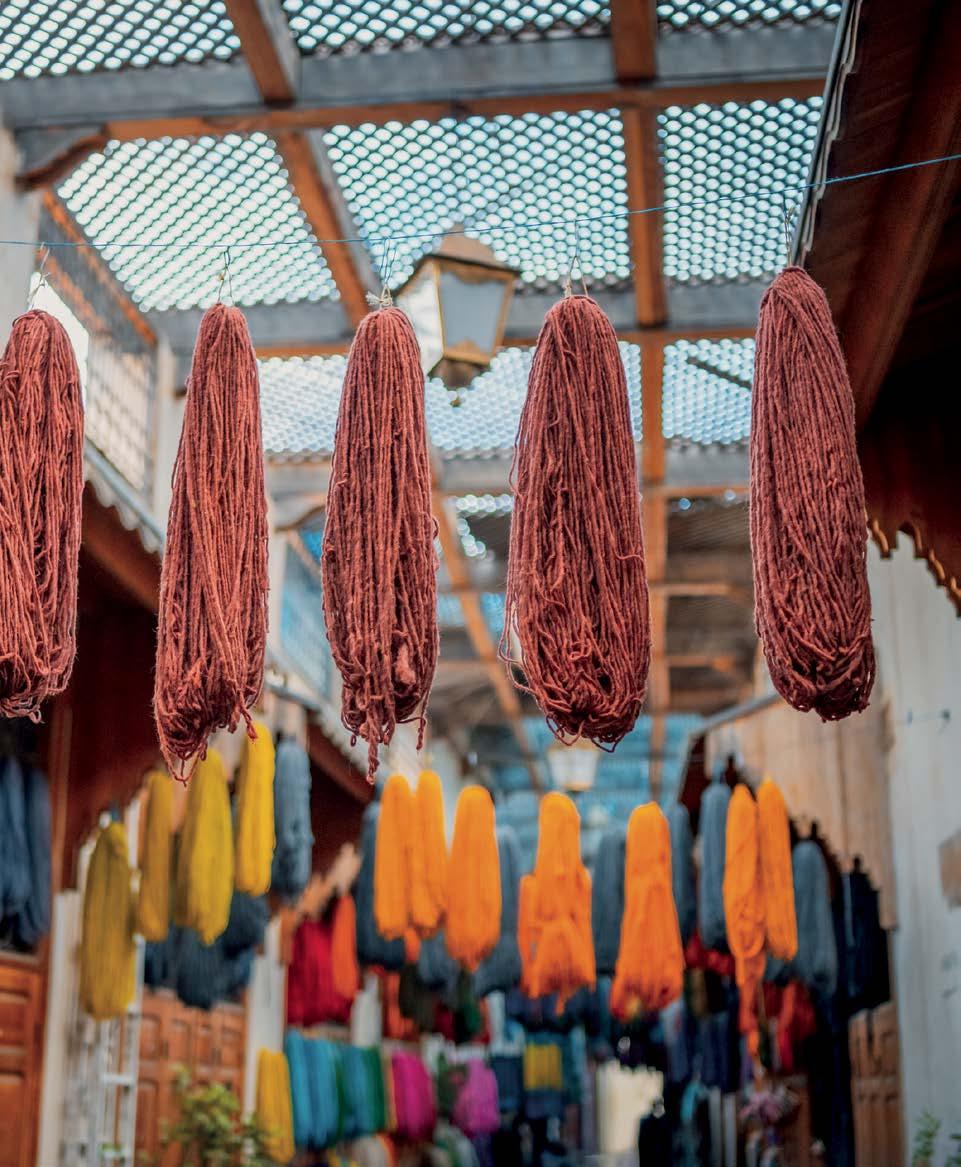
While we only lingered a moment, it felt as if one of the city's many layers had been peeled back for me. It's not only the bread of Fes that has tradition baked into it. We duck down a gloomy-looking alleyway, which, like so many in Fes, seemingly only leads to more alleyways. Before we reach the end, a doorway appears on the left and Chakib leads us inside. Every wall is draped with colorful fabrics. Paisley patterns in pink and green. Ivory-white silk sheets and curtains. Towering stacks of beautifully soft scarfs of pashmina, silk, cashmere. To one side of the room sits a large loom strung with fine white threads of linen and silk. A man sits behind it working on a large piece of fabric, the clack-clack-clock-clock sound of the shuttle being sent from one end fills the shop with a hypnotic mantra.
The man on the loom, Hamsa, was taught by his father, who was, in turn, taught by his. Weaving has been in his family for at least six generations, passed down, not just as a necessity, but through pride and love
“That things seemingly haven't changed in a hundred years isn't because Fes exists in a time warp: it's because some things haven't needed to change.”
for the craft. This is not unusual in Fes; many of the craftspeople I meet are part of a long line of artisans, with skills stretching back hundreds of years.
The loom itself is a masterpiece of engineering. A series of wooden planks and poles, strung together improbably to the untrained eye. Occasionally, the artisan halts the weaving to adjust the loom. His tinkering reminds me of a master musician tuning an instrument before the next song—only the weaver's skill is probably more impressive. It's a wonder that such a thing exists, the ingenuity that went into its creation, and more so that someone, in the time of Temu and fast fashion, still has the knowledge to use it.
Mohammed, the shop's owner and resident salesman, explains that the loom is at least three centuries old. "Once, everywhere would make fabric with this kind of handweaving loom, but today they are disappearing. Everything is made in China," he jokes.
Fes has a long history of learning and handicrafts. Some of the oldest educational centers in the world exist here, such as al-Qarawiyyin, founded as a madrasa in the ninth century, and the Bou Inania Madrasa which dates back to the 14th century. At one point, between the 13th and 15th centuries, Fes became Morocco's imperial capital under the Marinid dynasty, and the city's rise to prominence helped foster an artisanal culture, encouraging the development of specialized trades—many of which exist to this day.
We hear the artisans of Seffarine Square at work long before we see them. Famous for its coppersmiths, the methodical clang of hammer on copper rings out along the alleyway. The path opens into a small square, distinctive for the imposing hand-carved wooden doors of the al-Qarawiyyin Library and a gnarled old tree twisting upwards from its center. Around the tree, copper pots and cups, saucepans and teapots, tagines and plates dangle from the walls of workshops.
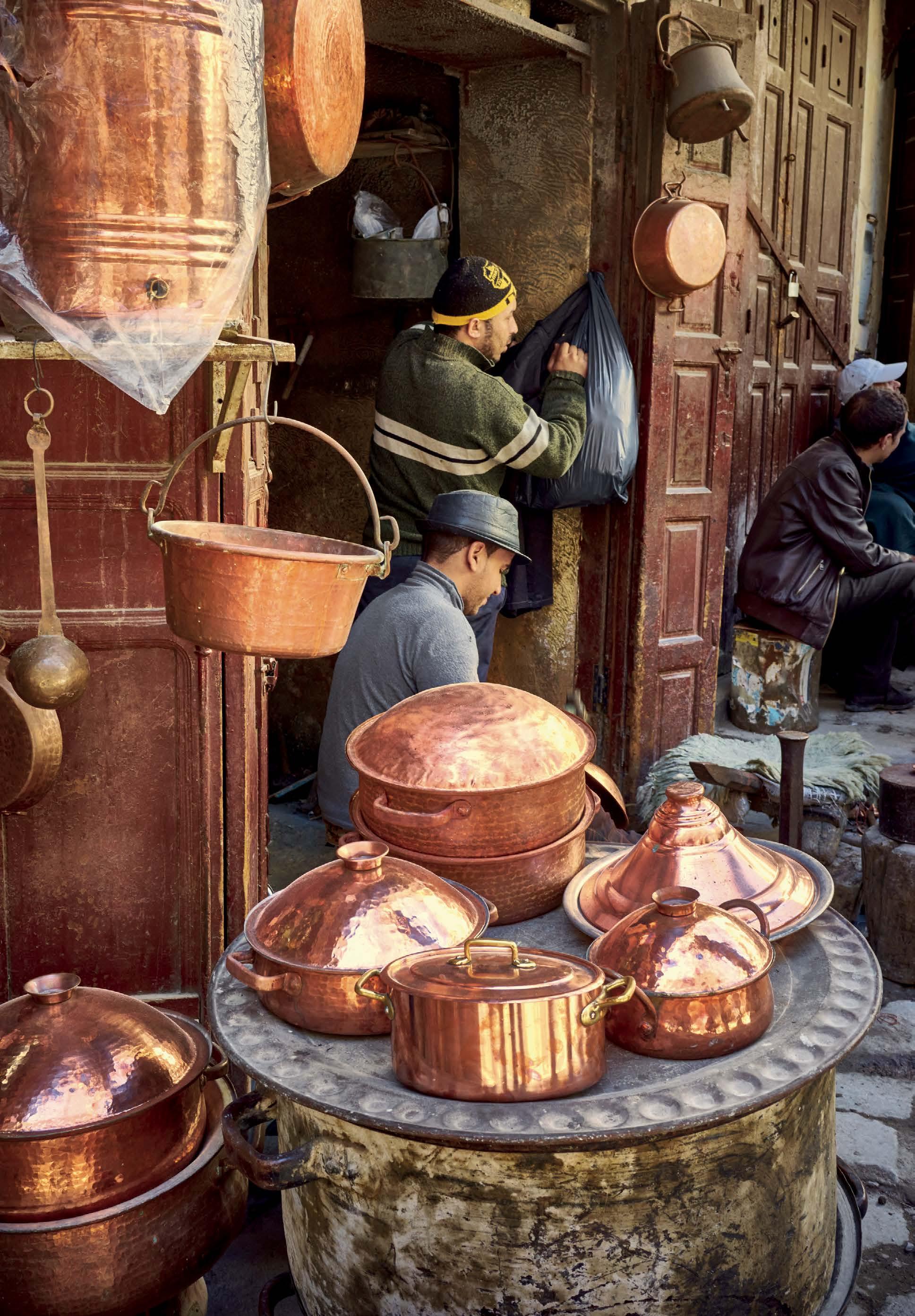
Chakib introduces me to Hamid, who has worked in the same spot for almost 50 years. With the knowledge passed down from his father, he makes beautiful cookware and decorative plates for the home. The legacy of coppersmiths in his family goes back at least six generations, that he knows of, all working the copper the same way in this very square. As he hammers the base of a cooking pot, we learn that the next generation of his family is already at work; sitting opposite, in his own workshop, his son begins work on a fresh piece of dappled copper—a 200-year enterprise passing the torch with the hammer and gong of metal. This, Chakib explains, is the real history of Fes. Not written or recorded in the vaults of a library, but skills of craft passed from one person to the next.
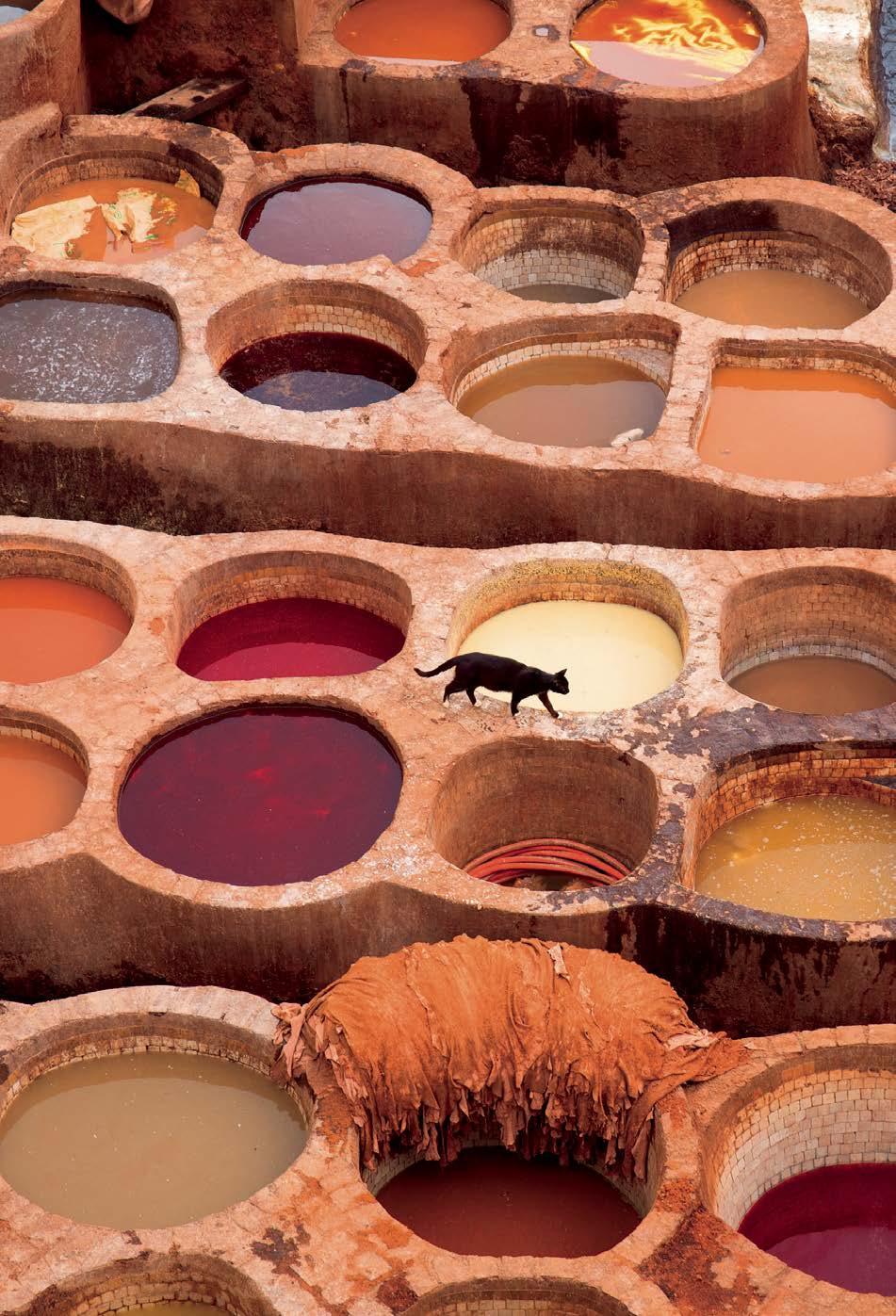
We go on to meet tailors and tanners. Master mosaic makers and crafters of fine zellige tiles (Fes’ distinctive square, gray clay tile). Metal engravers and Berber carpet weavers. With each trade, the story is the same. A family craft, generations in the making; history
unfurling in real time, stored and preserved, in the hands of artisans.
As the day draws to a close, we leave the streets of the medina behind—there is one final piece of Fes's living history that I want to see. From the Merenid Tombs, a set of hulking sandstone ruins that look out over Fes el Bali from a nearby hillside, the city’s lights begin to glimmer in the ensuing dusk. A pink-gray sky settles over the innumerable rooftops as starlings contort and weave above in a ritual end-of-day dance. Momentarily transfixed by the birds, I'm snapped back to the present as, one by one, the minarets begin to erupt; the muezzins' sonorous call to prayer join one another, swirling above the city, echoed by the surrounding hills and mountains. A profoundly powerful wall of sound, not in unison but together in its purpose, it grows and grows until finally it reaches a soul-stirring crescendo. A moment's silence follows, before the noise of the city crackles back into focus.
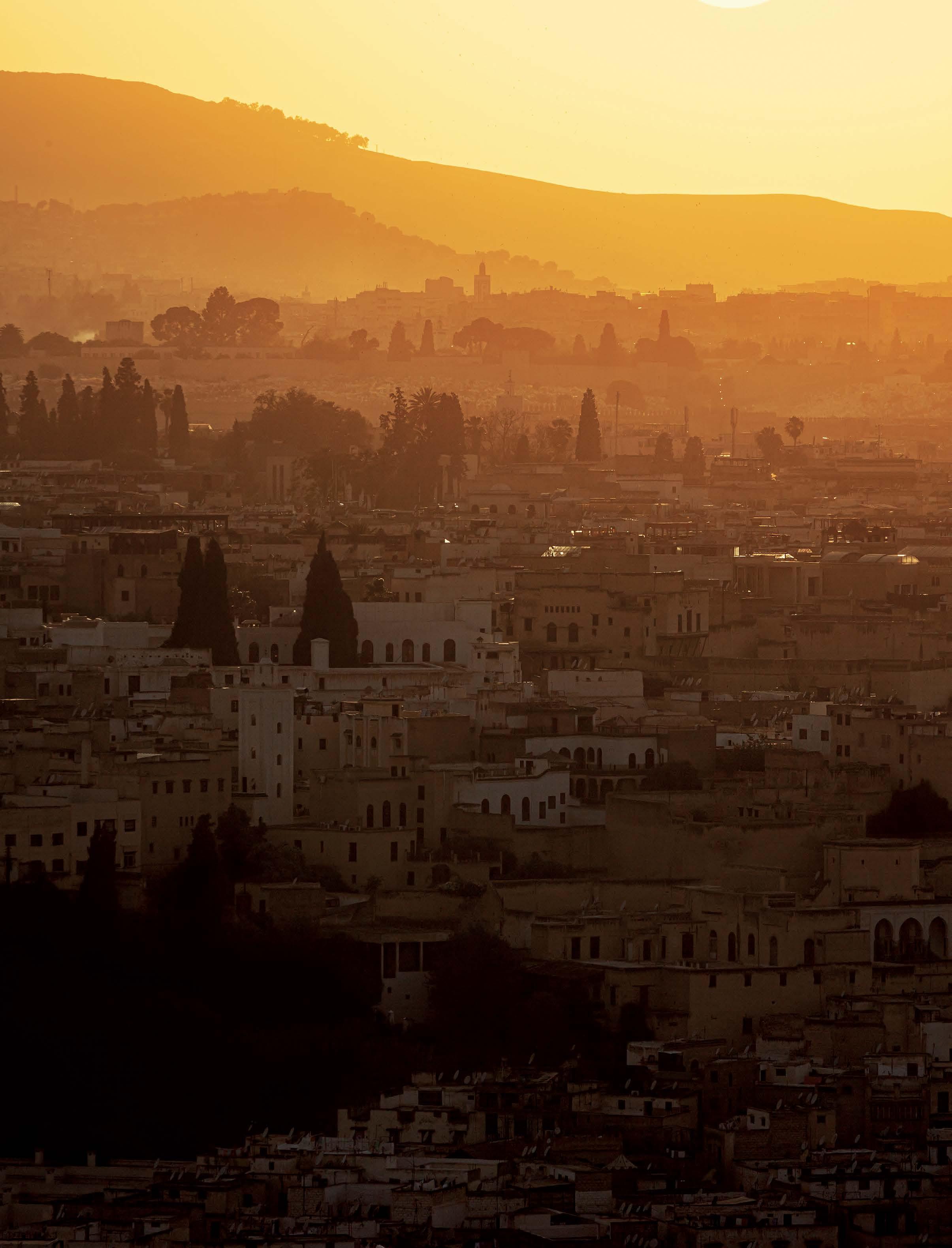
Our North Africa specialists have traveled Morocco extensively over the last 20 years, forming a tightknit network of local guides, on-the-ground specialists, and exceptional accomodations.
Fast Facts:
· Population: 39 million
Size: 172,414 square miles
· Capital: Rabat
Language: Arabic, French
· Currency: Moroccan dirham
When to go: March to May; September to November
In The Last Storytellers, Richard Hamilton ventures into the world of the hlaykia, the word-of-mouth storytellers who were once an integral part of Moroccan culture. As the tradition dies out, Hamilton records their tales.
The Blue Caftan. An unconventional love story follows a tailor, his wife, and an apprentice as the three find strength together in the face of illness and discrimination. It's drama crafted masterfully to a backdrop of artisanship.
Trance music, but not as you know it: traditional gnawa combines rhythmic chugging strings and hypnotic vocals into spiritual, soul-soothing arrangements. Start with Hamid El Kasri, a modern-day great.
Whether it’s learning how to cook using a traditional tagine or joining a Berber family for tea in the Atlas Mountains, Morocco is incredibly rich in culture and history—and so much of is it easily accessible to travelers. The guides here are truly fabulous, and the range of resplendent riads ensures a beautiful stay on most budgets.” —Lara Ray, Morocco destination specialist
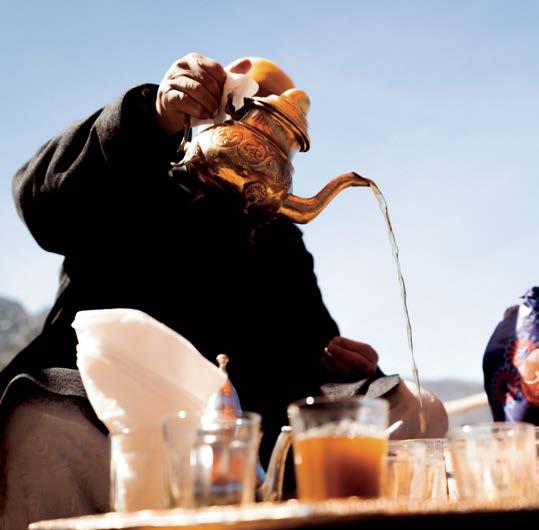
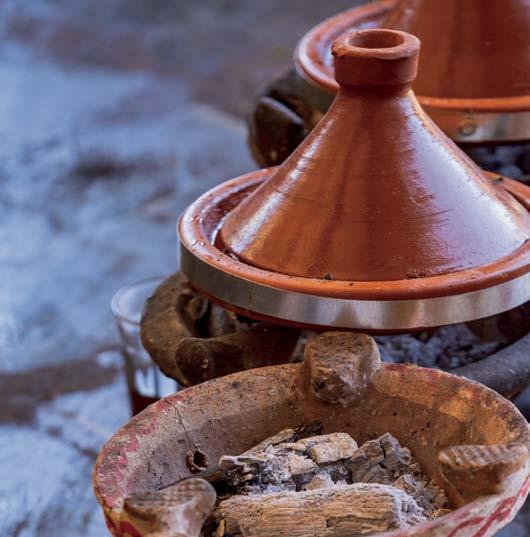
Share Morocco’s ubiquitous drink, fresh mint tea, and stories of a life at altitude with a Berber family during a hike through the ravine-riven peaks of the Atlas Mountains.
Get to know your way around a tagine, the country’s conical, ceramic cookware, with a private cooking experience. Slow cooking, meet slow travel.
3
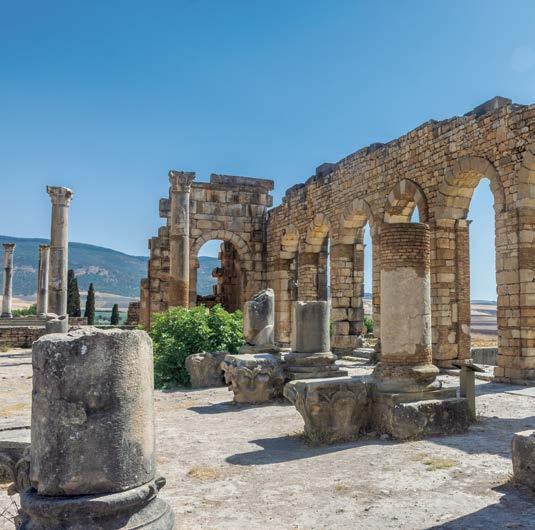
Explore the Roman ruins of Volubilis with an expert guide before lunch and a wine tasting at Château Roslane, an outstanding (and rare) Moroccan vineyard.
At Dar Roumana, celebrated Chef Younes Idrissi’s mission is to take Moroccan food beyond the tagine. The result is a creative seasonal menu where French finesse meets the culinary secrets of his homeland.
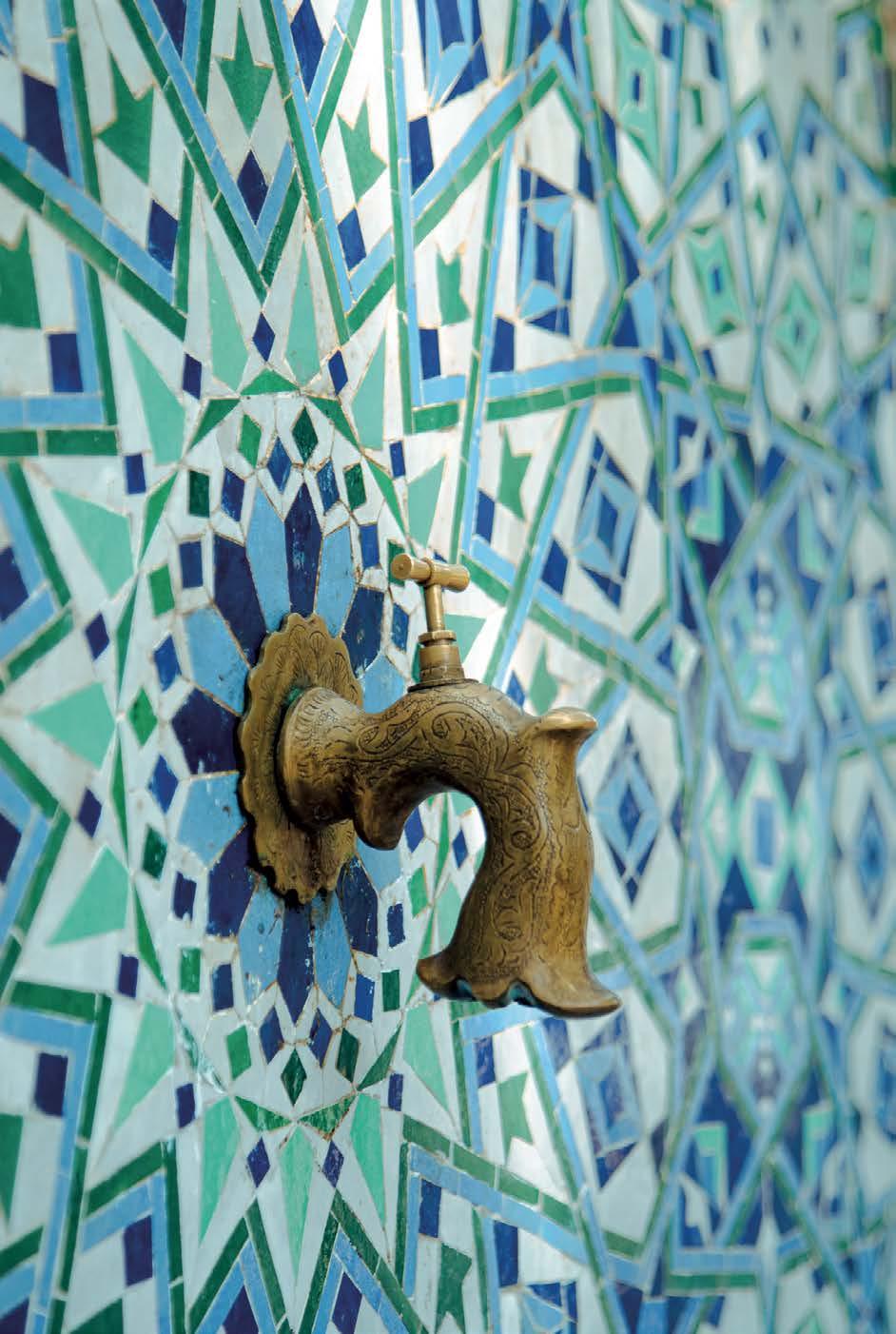
After a day of wandering Fes’ frenetic medina, Palais Amani is a bastion of serenity. Elegantly appointed rooms look out onto a central courtyard of intricate zellige tiles and fragrant citrus trees. It’s also home to one of the best hammams in the city.
One thing not to miss:
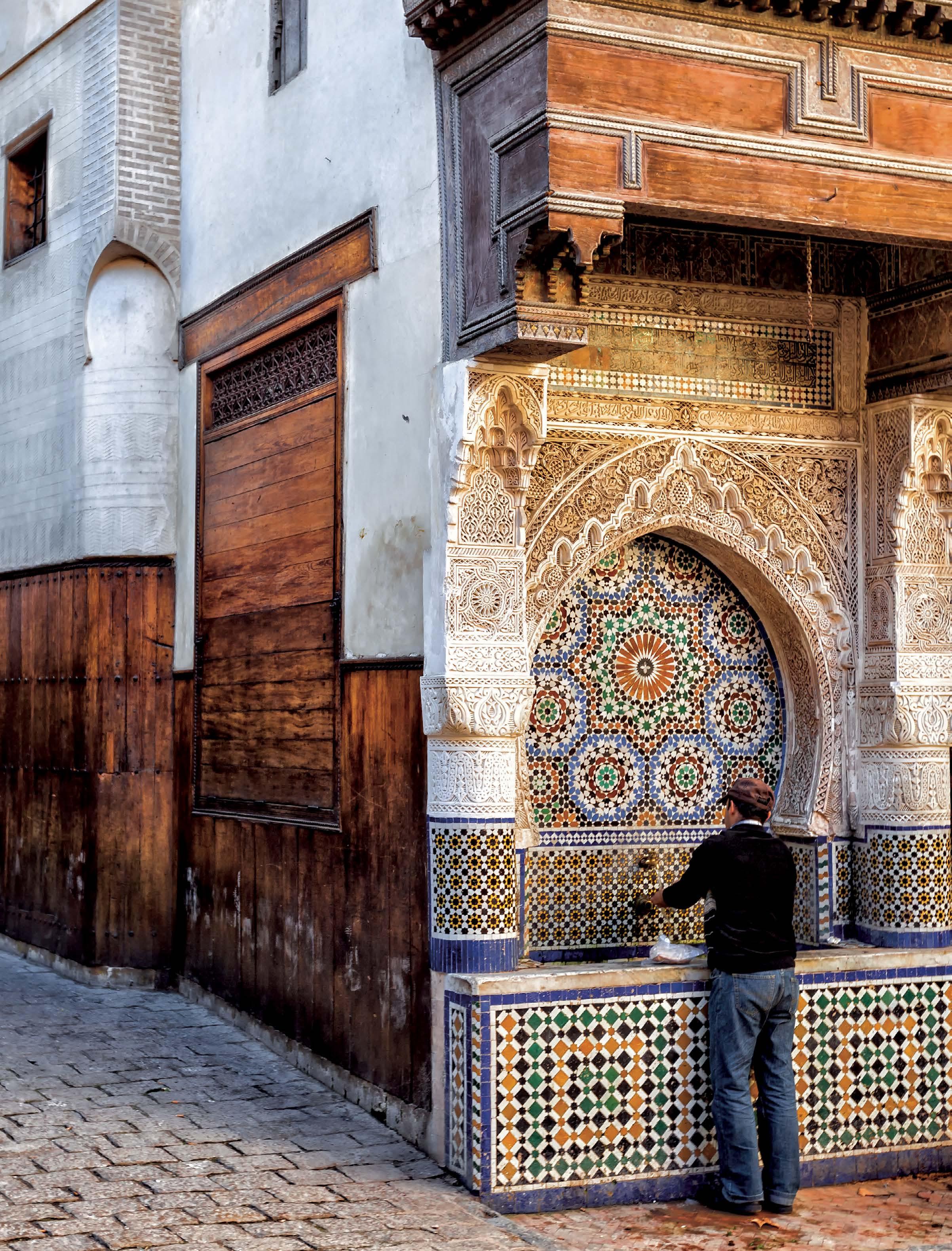
Join a local craftsman in Fes and learn how to assemble the city’s signature zellige tiles in mindbending geometric patterns.
Ready to delve deep into the medina? Reach out to our team of experts to plan your trip to Morocco. Email us at info@extraordinaryjourneys.com
Written by Scott Ramsay
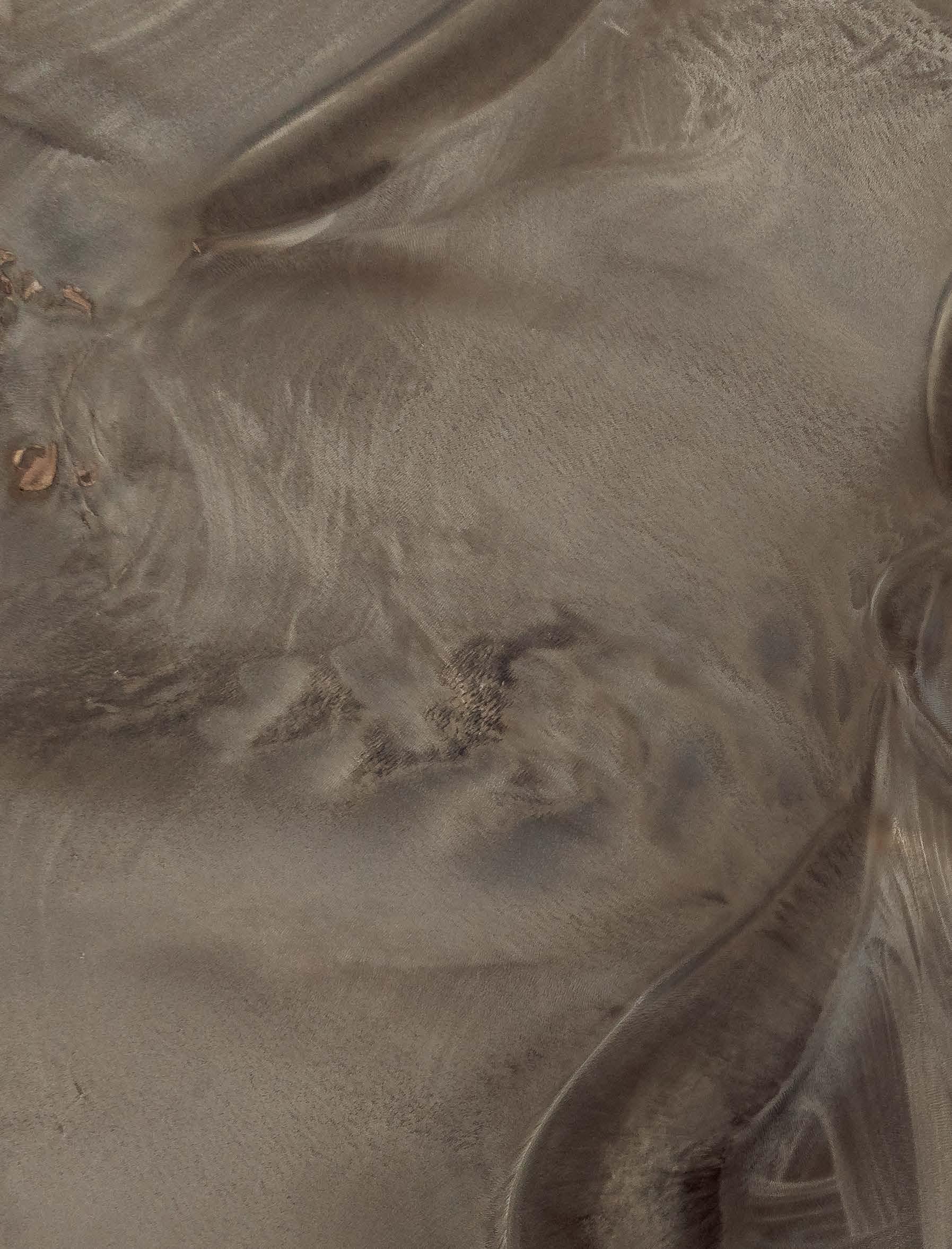
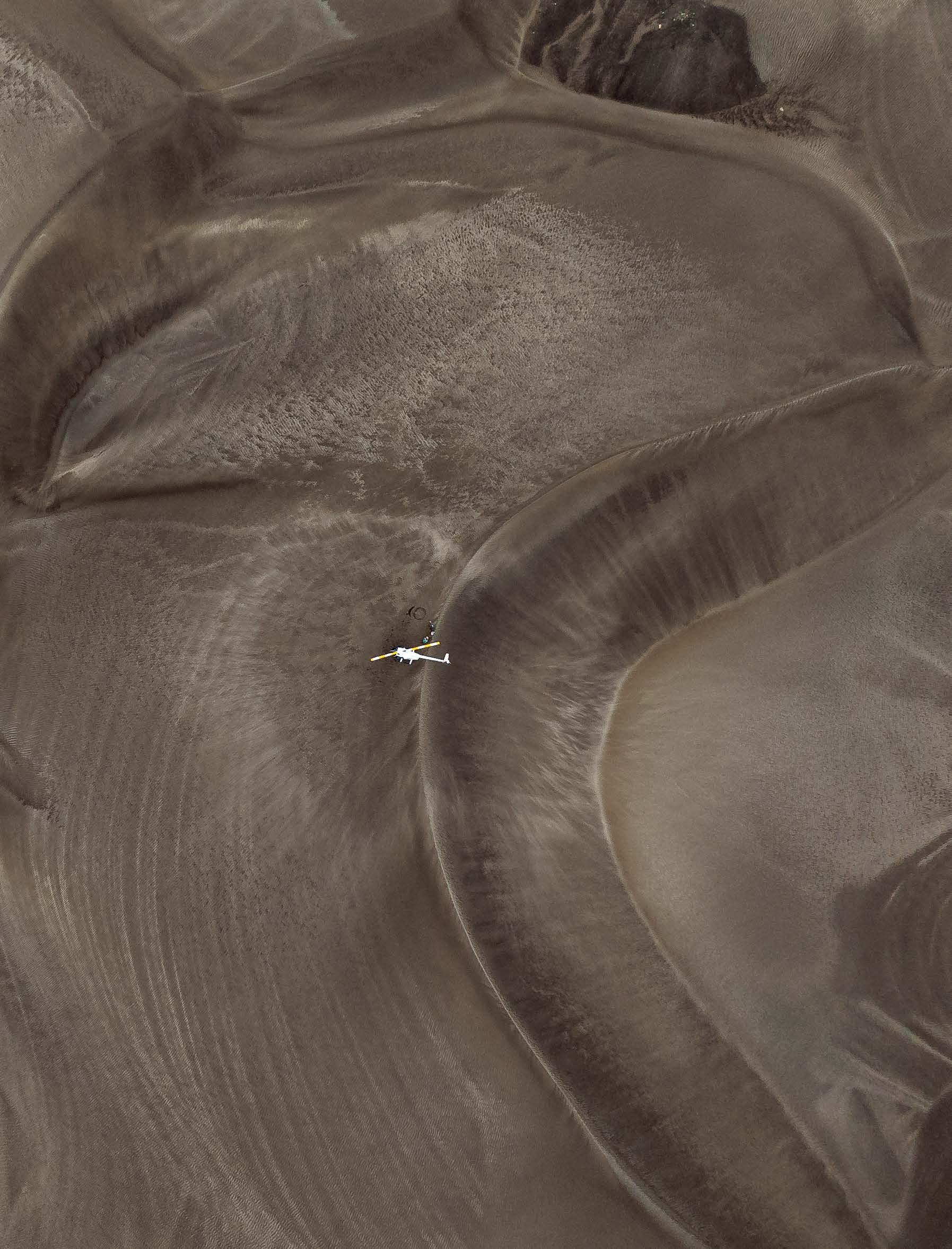
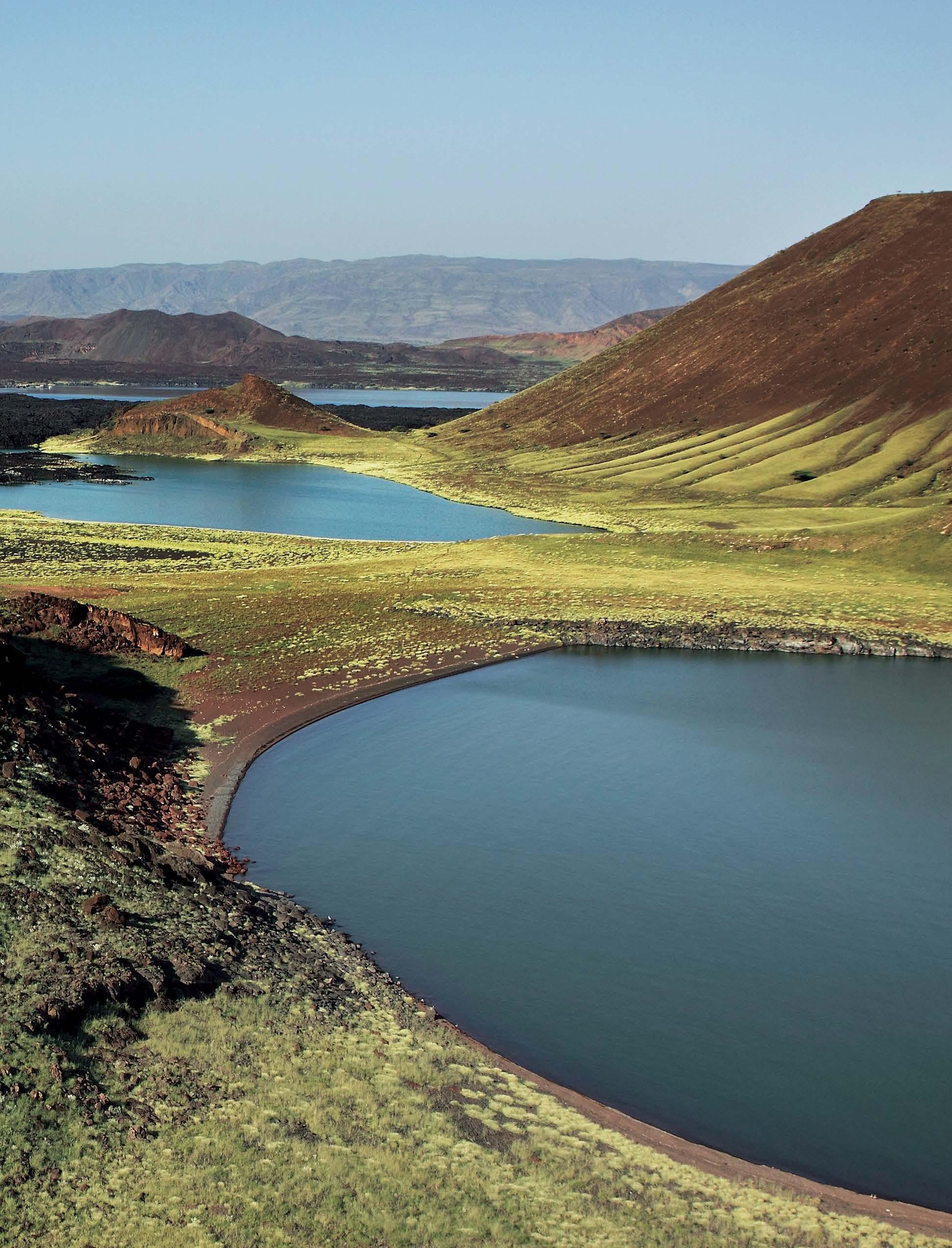
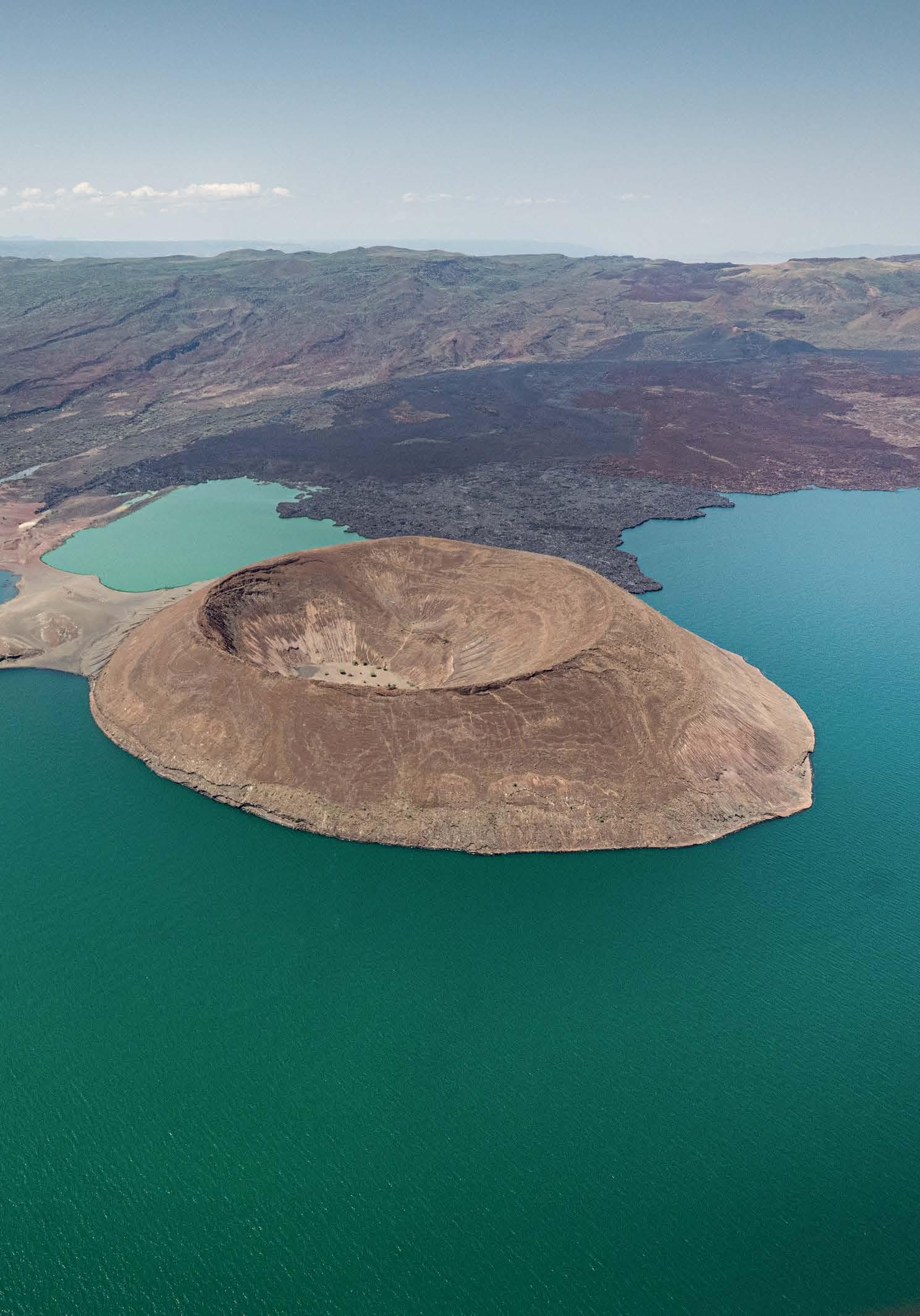
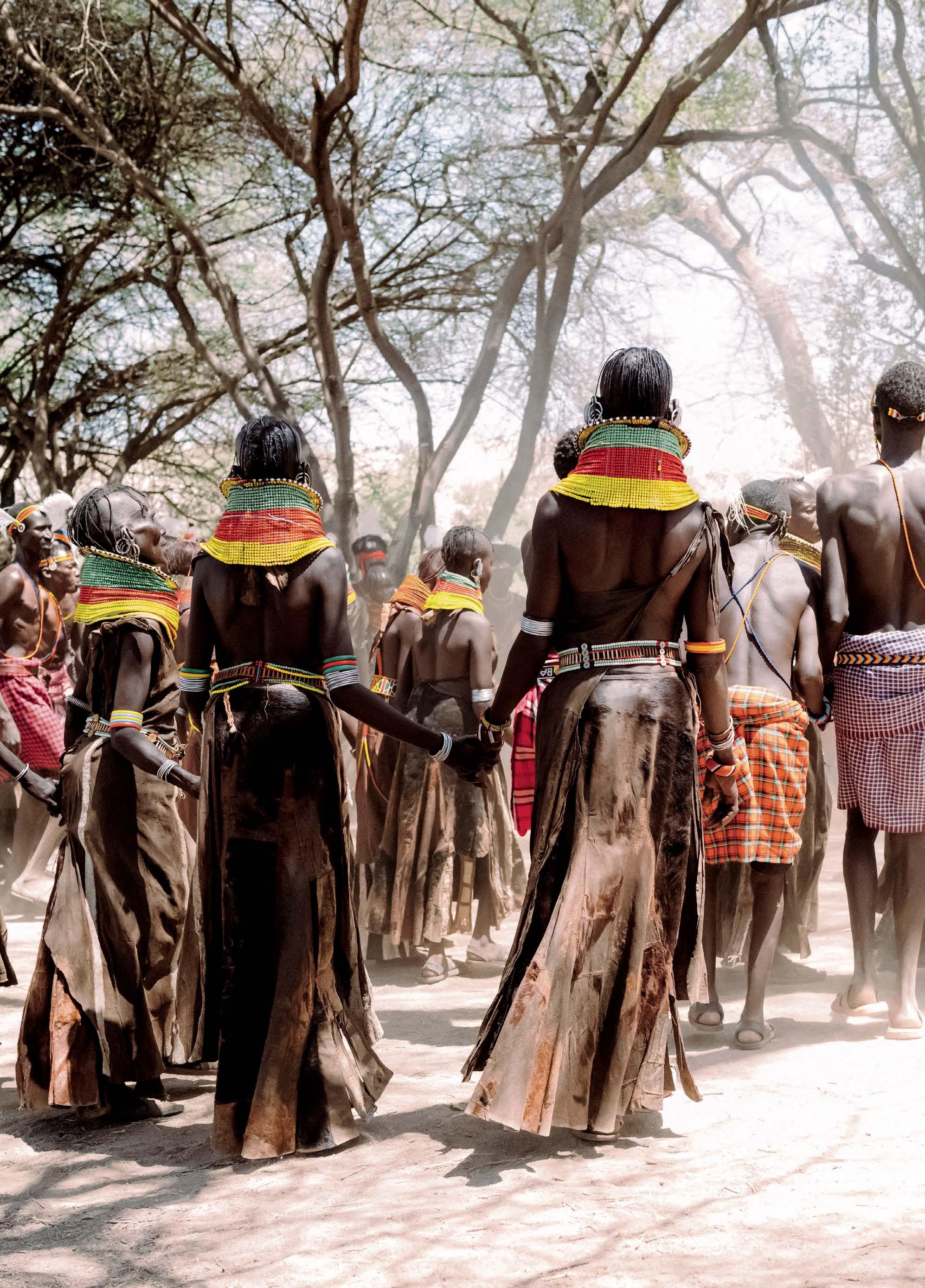
The north of Kenya feels like another planet. Powerful tectonic forces are at play, driving lunar-like mountains upwards, and tearing open space for vast alien deserts. At some point in the next 10 million years, this part of East Africa will drift off into the Indian Ocean. The geologically volatile landscape is too harsh for most humans, except for the semi-nomadic Rendille and Turkana. A day-trip in a helicopter is the easiest and most comfortable way to access this bizarre yet beautiful netherworld. Skilled pilots will fly you through the rocky canyons of Hudu Valley, over the immense desert dunes of Suguta, and on to the southern edge of Lake Turkana, to land on Nabiyotum Crater, a dormant volcano. Be prepared for visual overload as thousands of flamingos and pelicans take flight above the rift valley lakes of Bogoria and Logipi. On the way back, touch down at one of the desert springs for a refreshing swim. Embark on a heli-tour and witness a Kenya few get to experience.
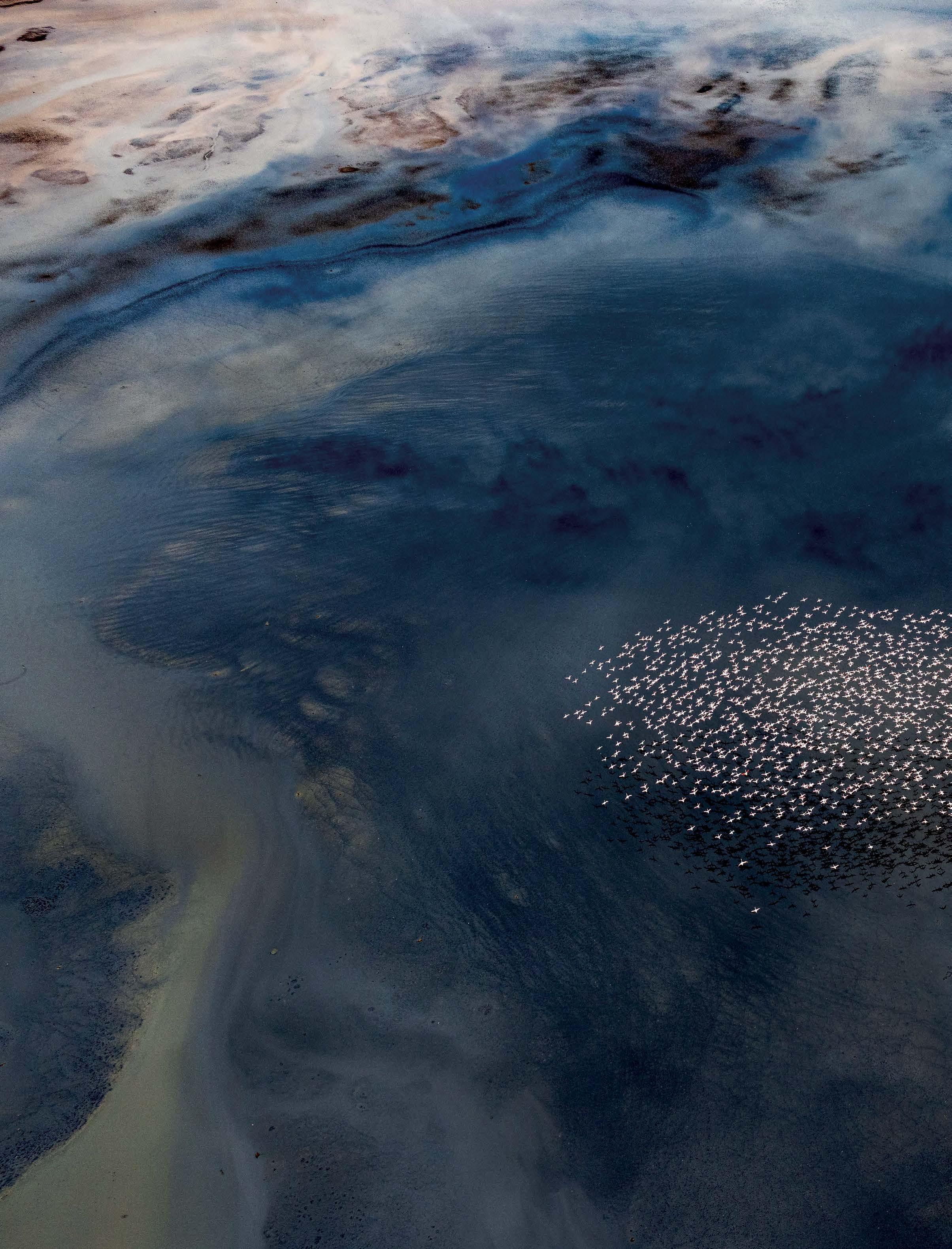
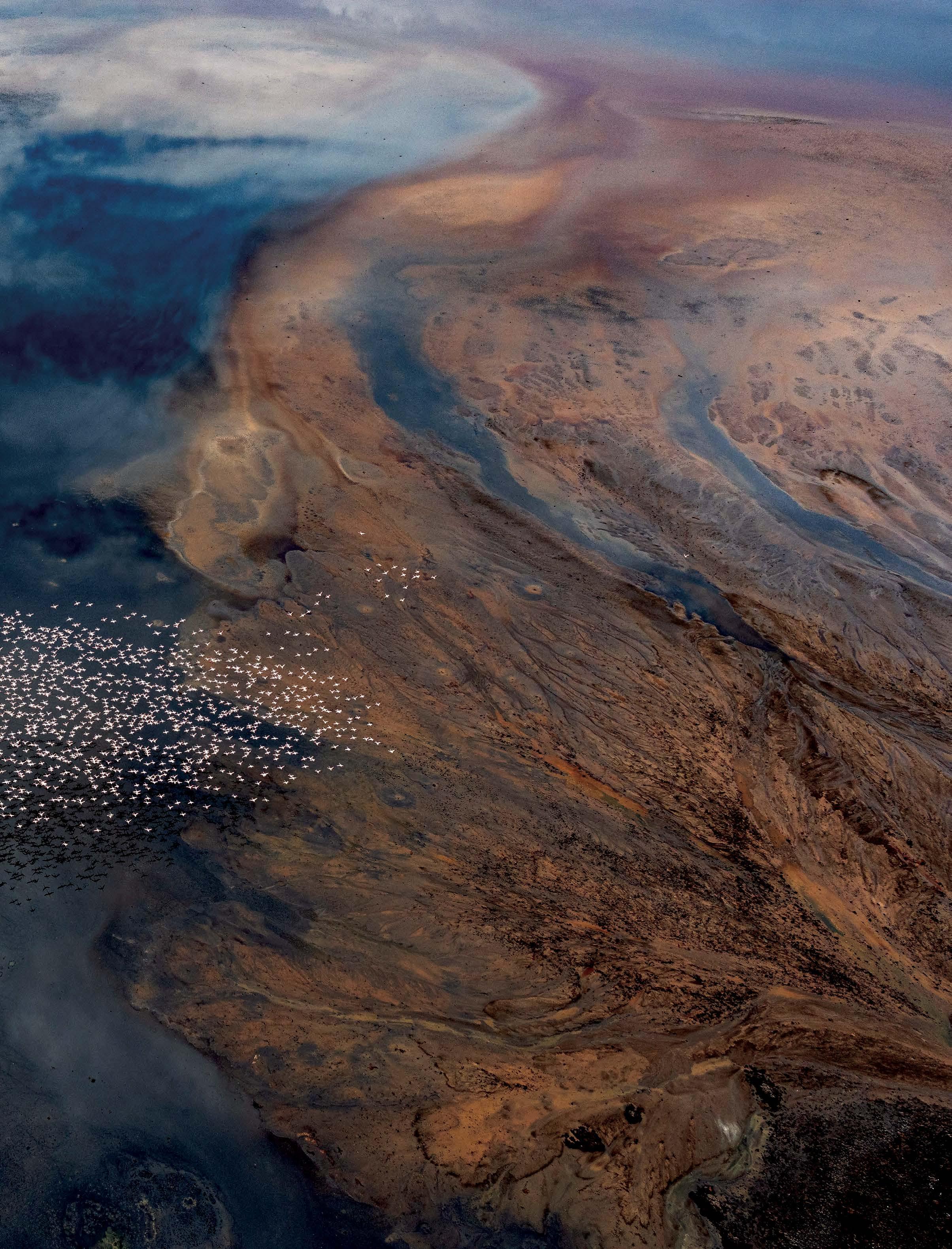
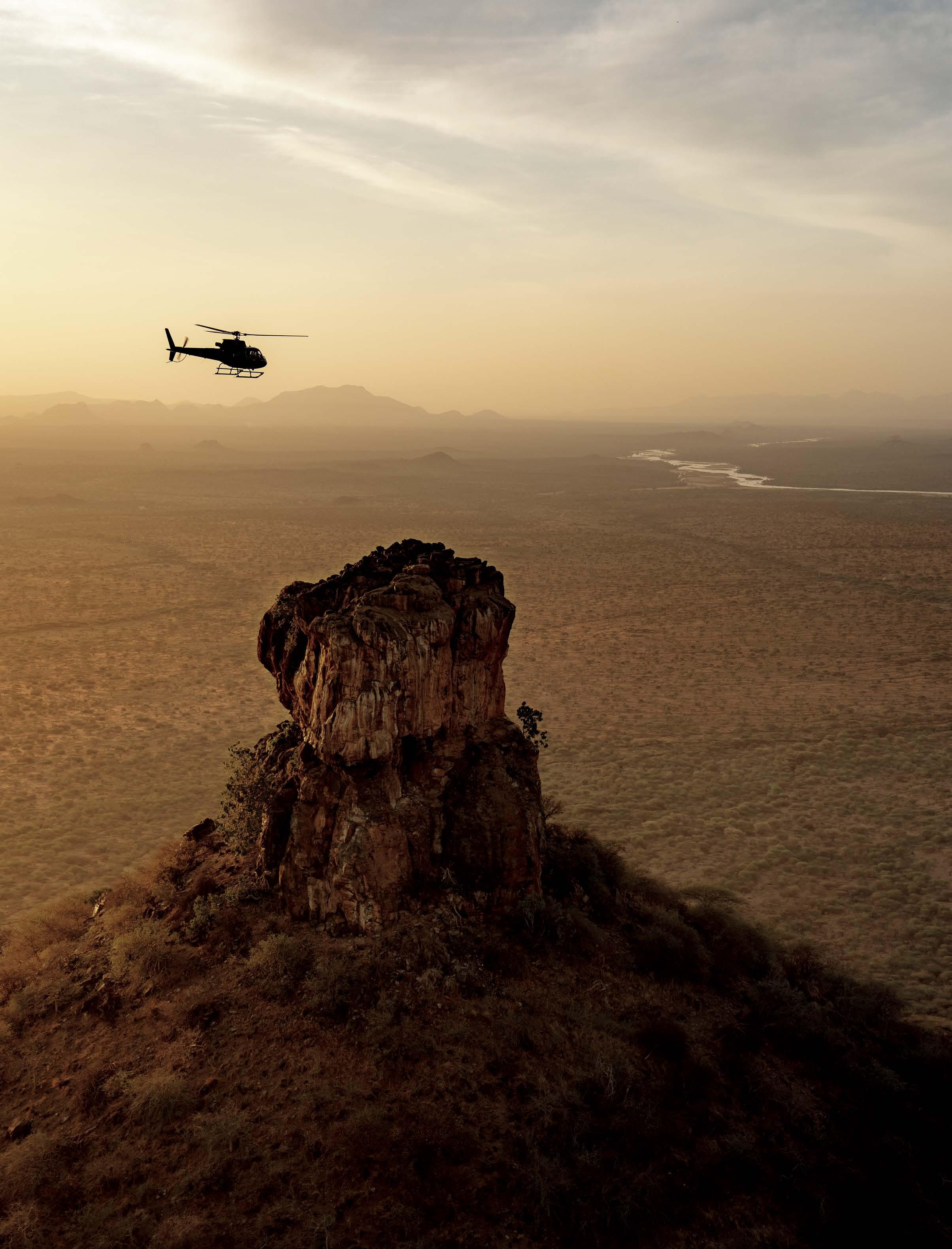
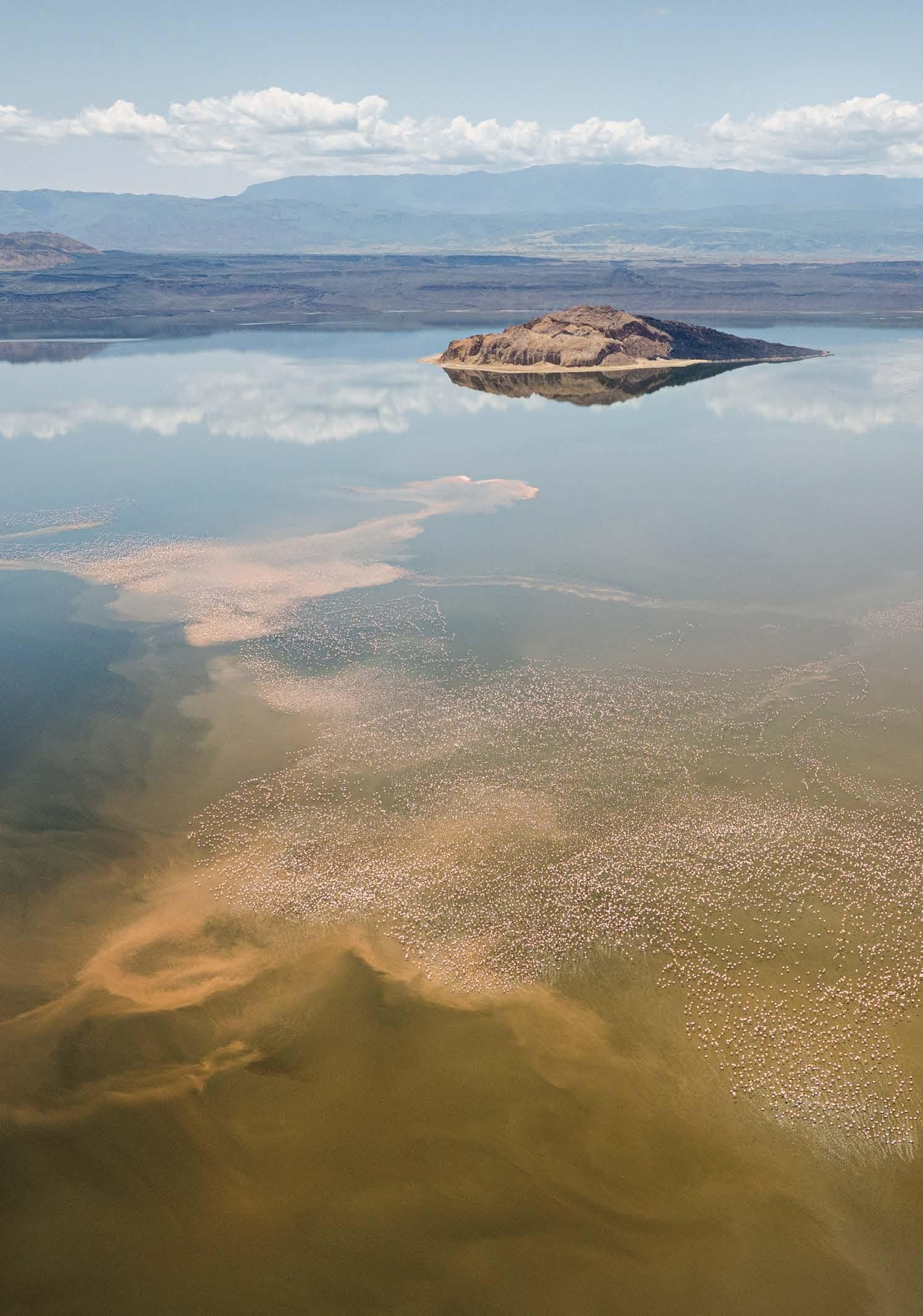
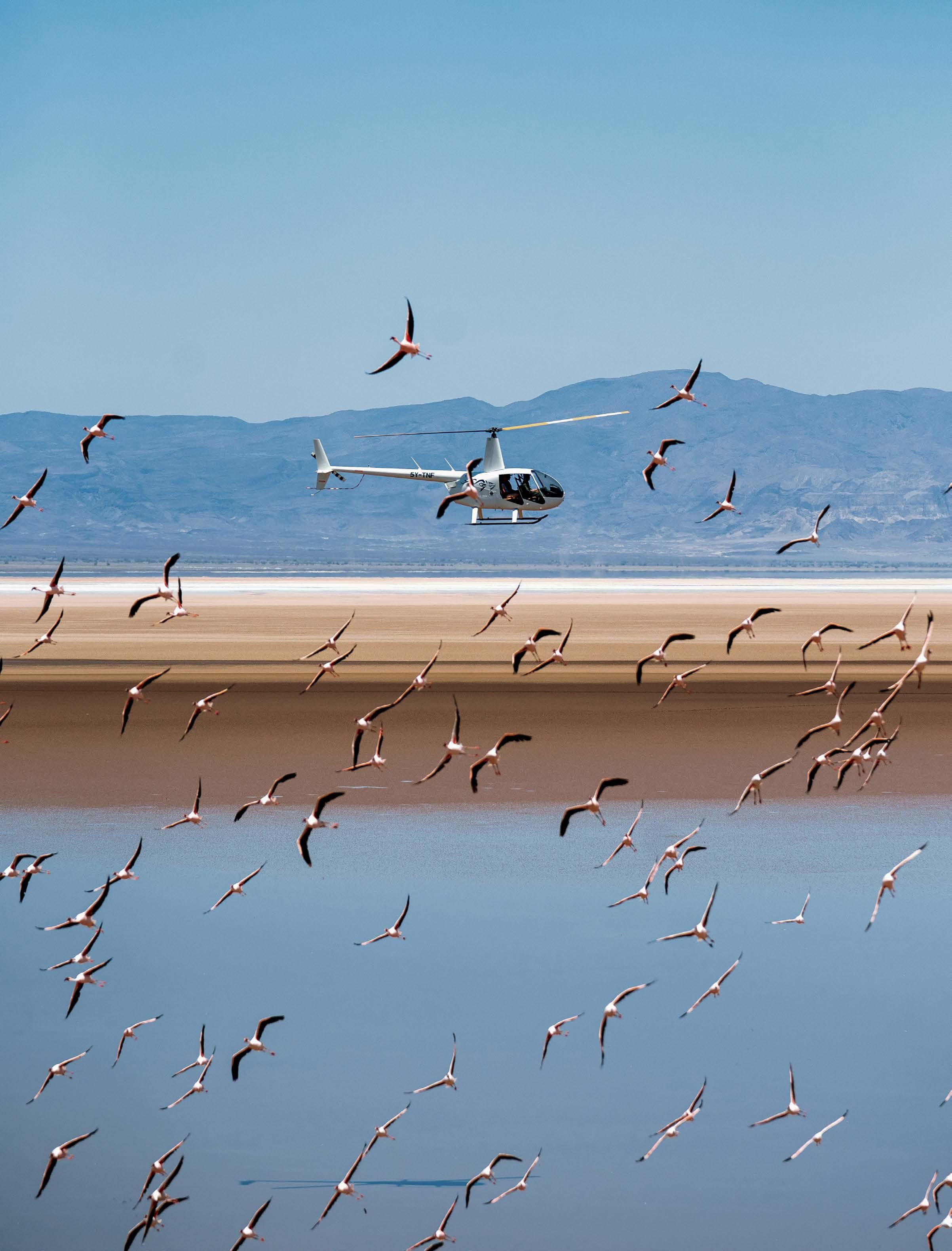
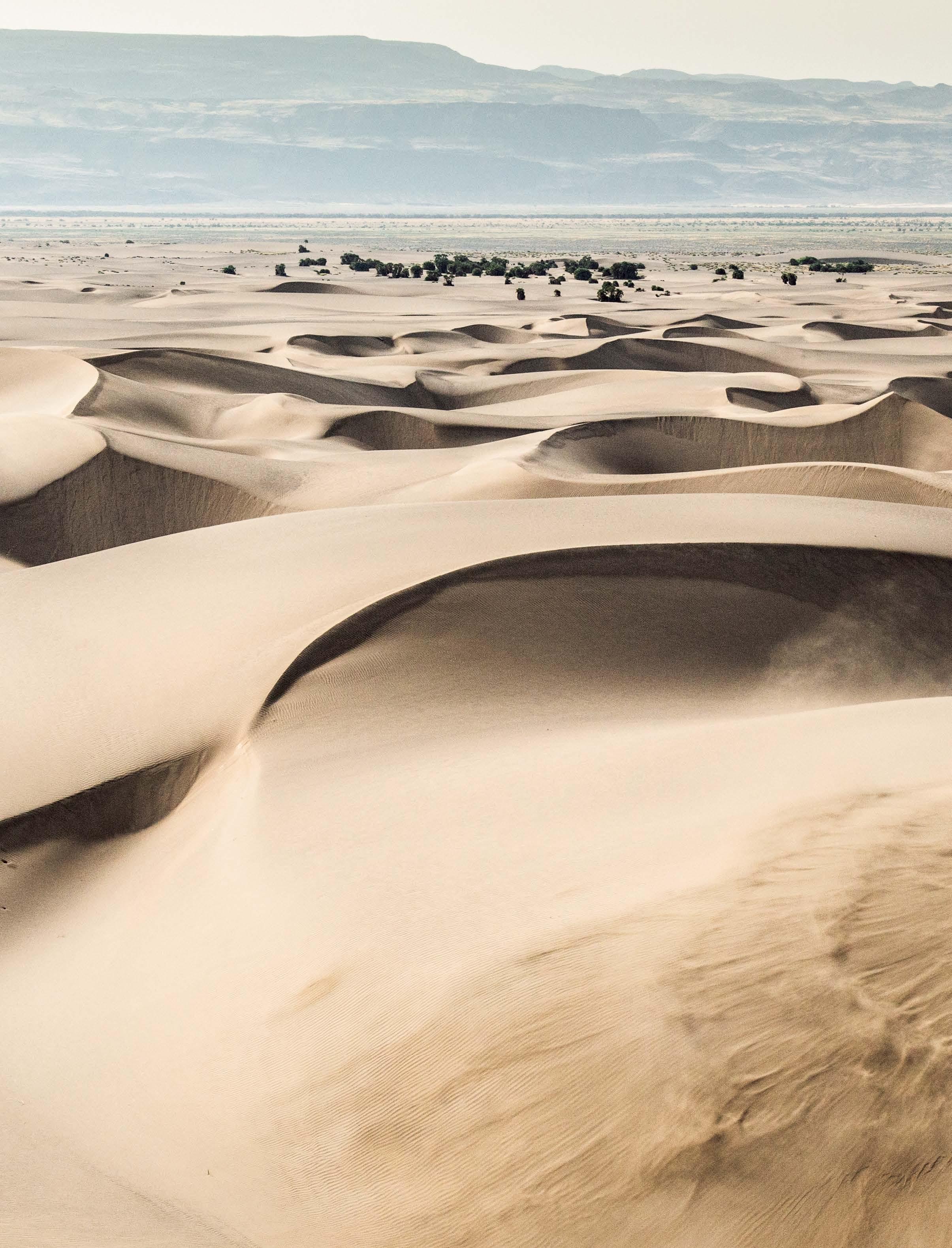
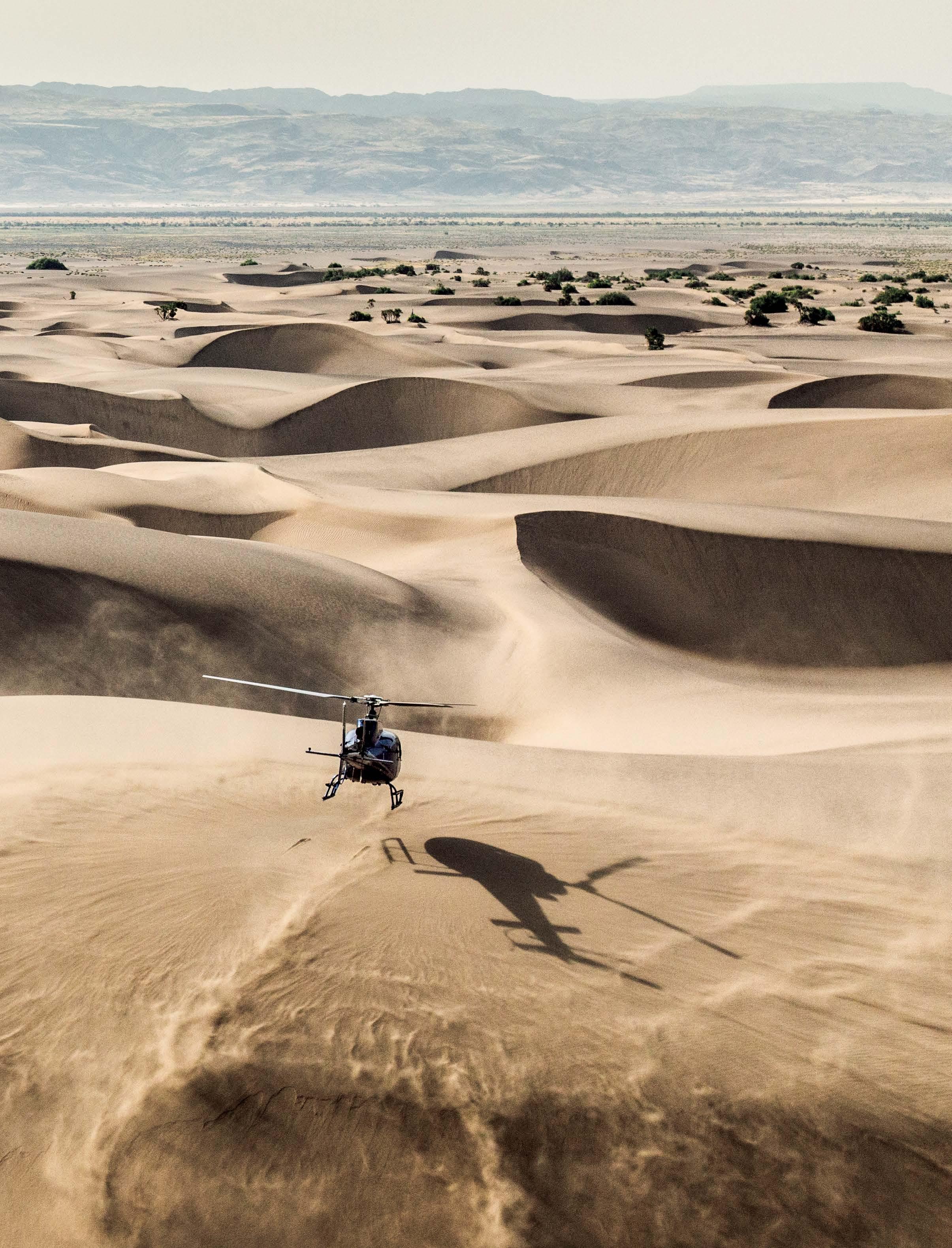

Indonesia's vast and diverse archipelago is a fantasyland for families, who discover fascinating cultures and raw, wild landscapes while perhaps even transforming themselves.
Written by Kathryn Romeyn
Jurassic jungles. Fragrant night markets. Rare wildlife. Frothy waterfalls and curling surf. Ornate Hindu temples and vast Buddhist monuments. Horses swimming in otherworldly aquamarine. Prehistoric landscapes roamed by living dragons. With such vastness and diversity, describing Indonesia and its 17,000-plus islands is almost impossible. But it's worth trying, since every attempt serves as a reminder that the archipelago is absolutely bursting with moments of wonder. Perhaps even more so for young people.
In short, it's a waking dream; a fantasy full of new tastes and textures, faces and sounds, colors and creatures and beliefs. The country is remarkably, indisputably different from the U.S., and even several hours would be enough to make a lifelong impression on a child. Imagine what a week would do.
The truth is, regardless of their age, Indonesia captivates every visitor with its idiosyncratic charms and breathless natural beauty. It's far more than a lovely destination. It's a place for transformational travel that moves and affects people long after they've flown home. The auspicious clang of a gamelan ensemble is as unforgettable as the feeling of swimming beside a
26-foot-long whale shark. The vibrance of undulating rice paddies is as indelible as the bustle of a food market.
While Bali and Sumba in particular are appropriate and super friendly stops for even the littlest ones, the full depth and breadth of Indonesia is best appreciated by families with slightly older kids who can ask questions, engage and participate wholly, whether it's in surf lessons and horseback riding through verdant foliage or multi-sensory cooking classes, and snorkeling with manta rays.
This Southeast Asian idyll might seem far-flung (there’s no denying it’s a bit of a trek to get here), but that effort is rewarded in manifold ways. When traveling such a distance, it's best to island hop via domestic flights but also on water—sailing the seas on a luxurious traditional phinisi boat—in order to experience as many of the bold and enticing environments as possible with your nearest and dearest. A meaningful immersion in Indonesia's many cultures, landscapes, and exploits are easily the adventure of a lifetime, and sharing it with one's family is the richest gift of all. Here we delve deep into six Indonesian islands ideal for a family adventure.
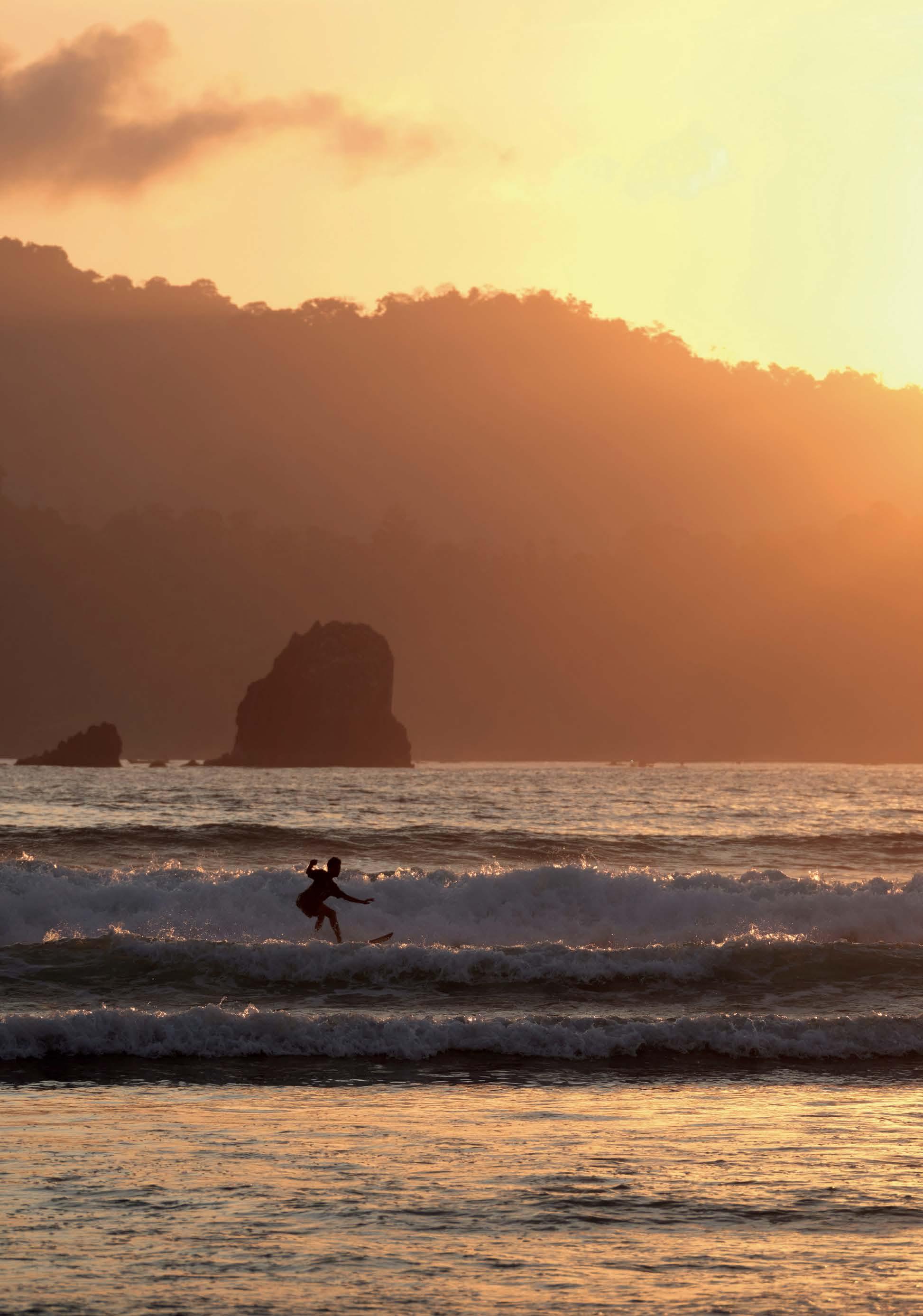
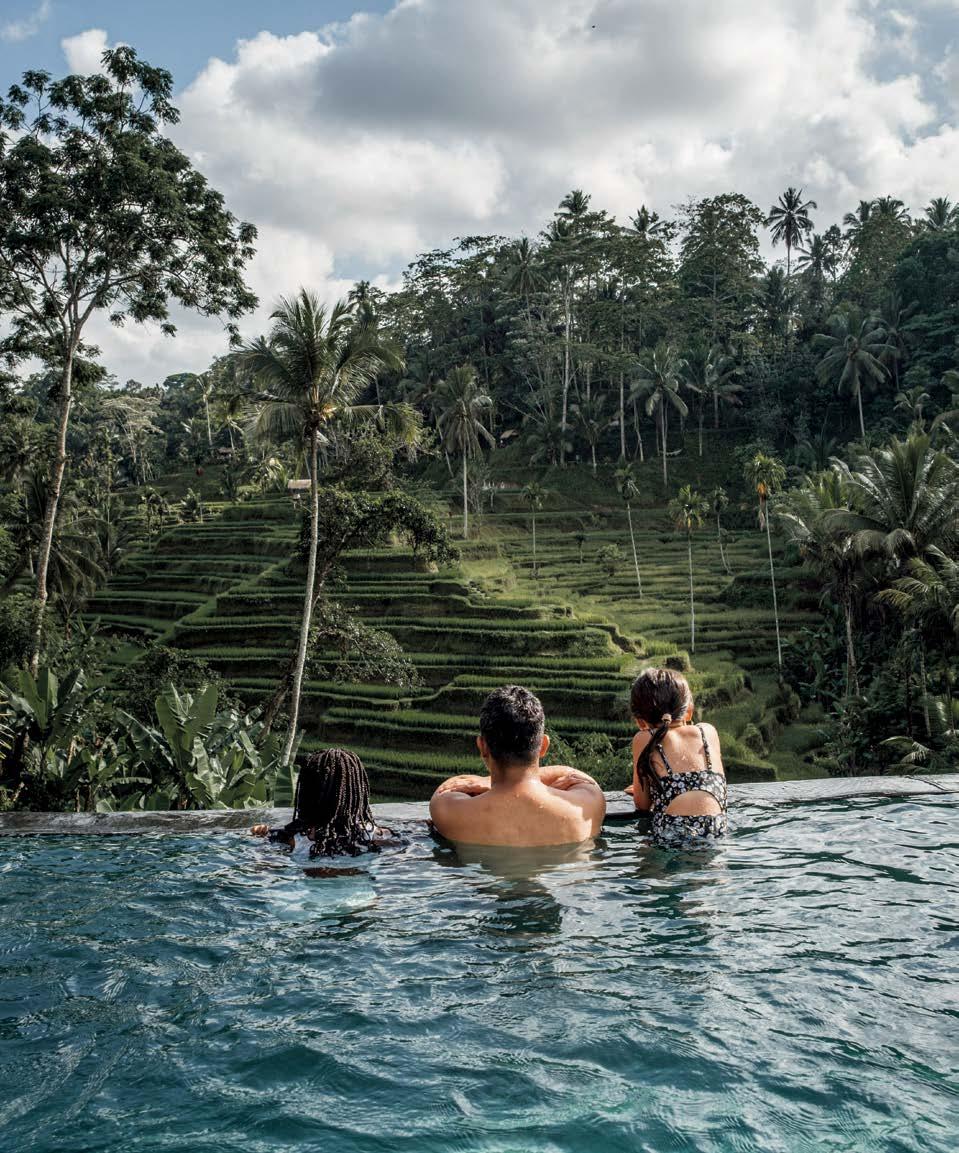
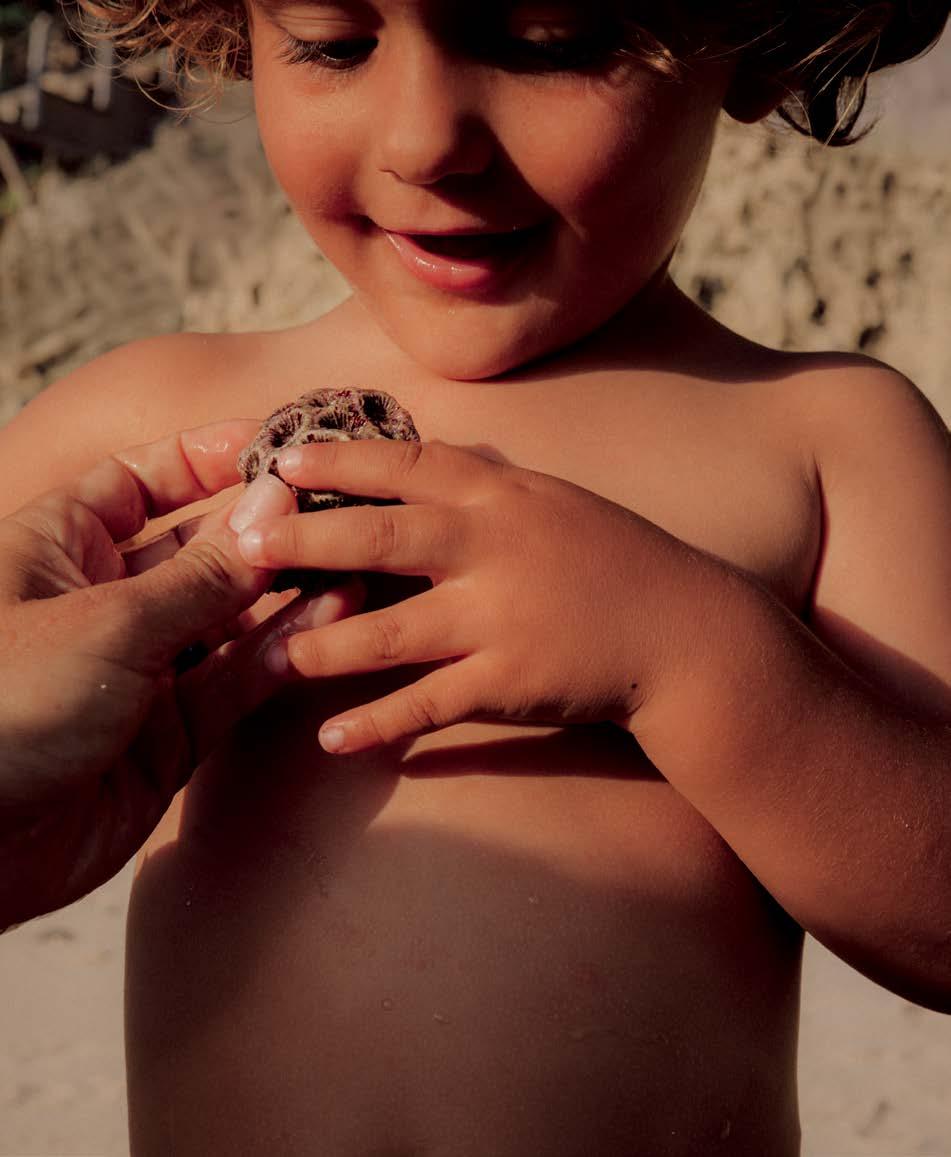
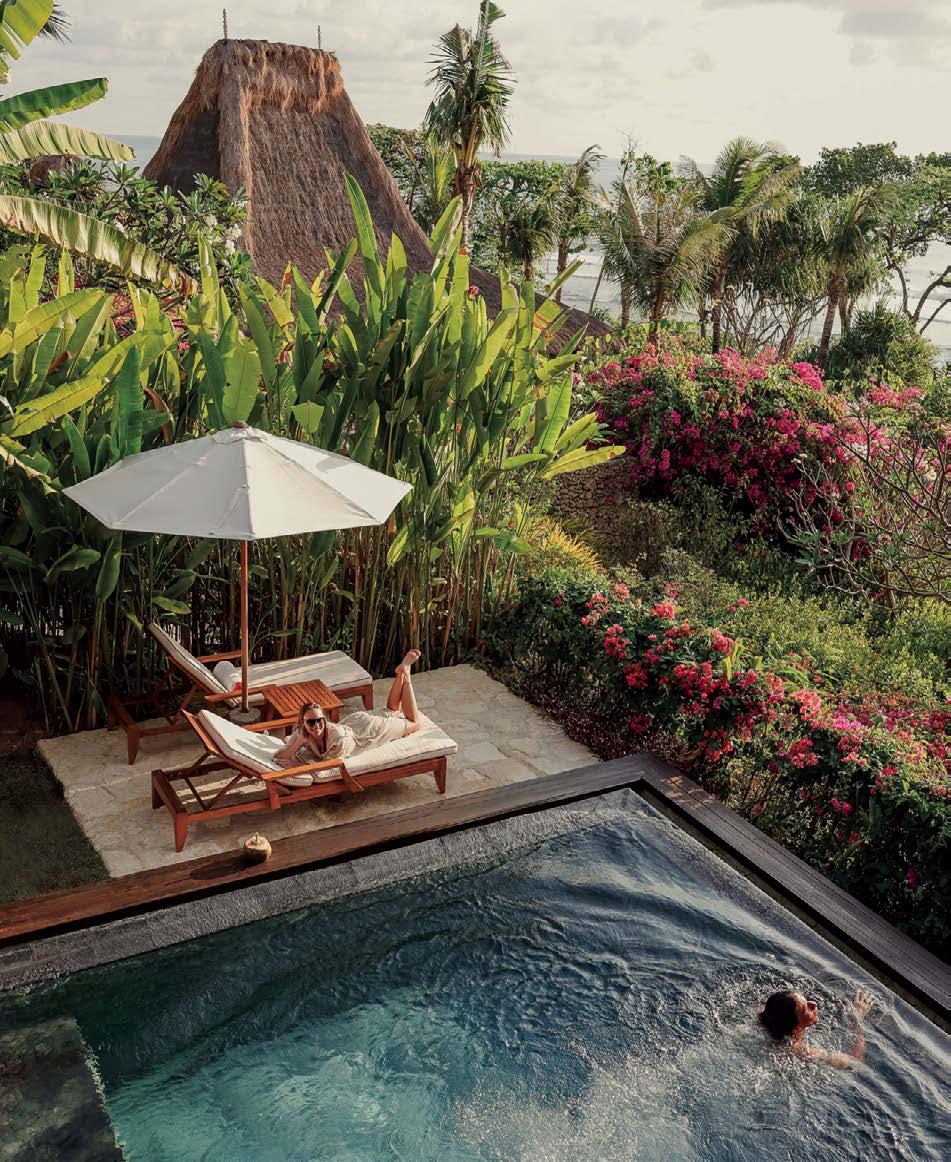
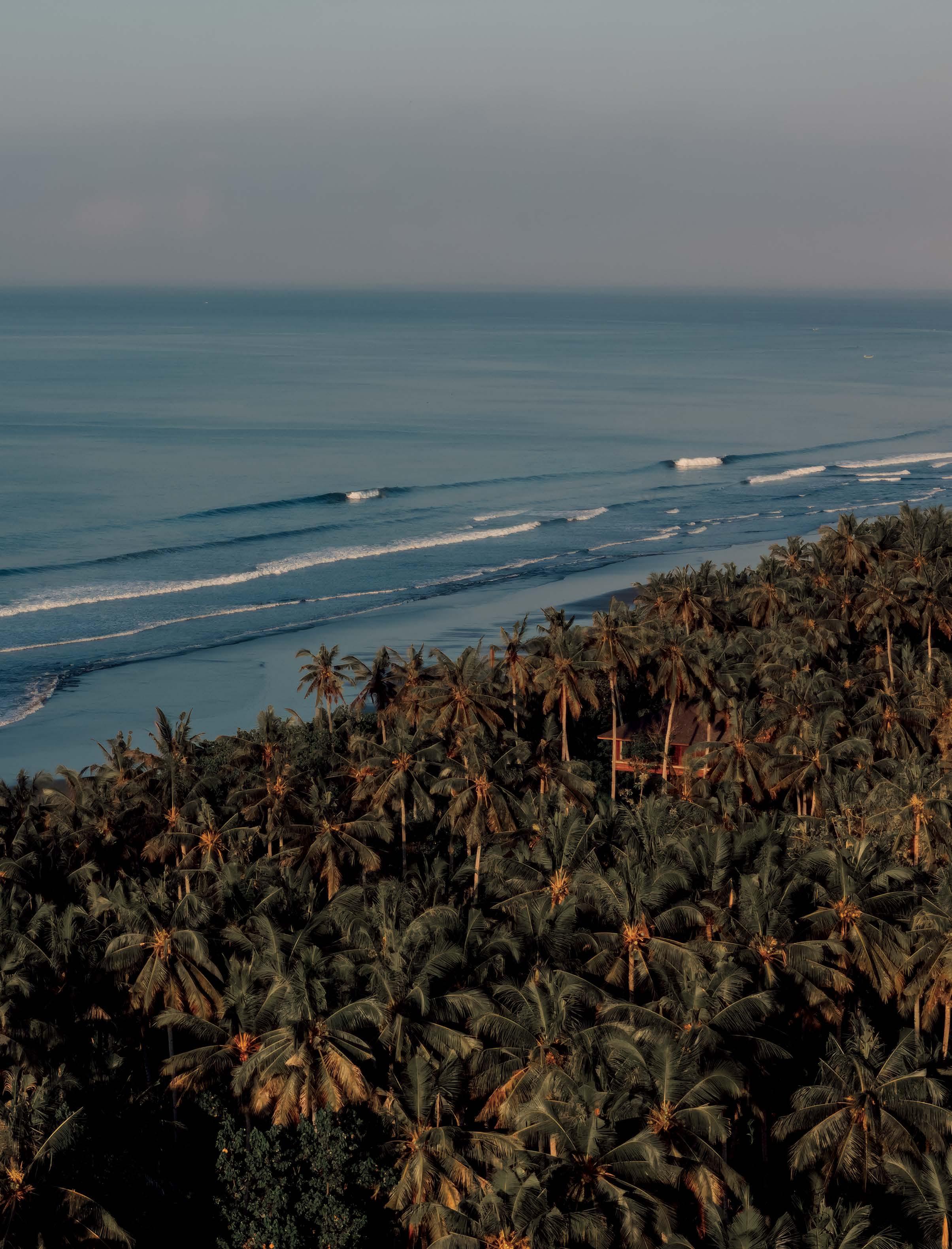
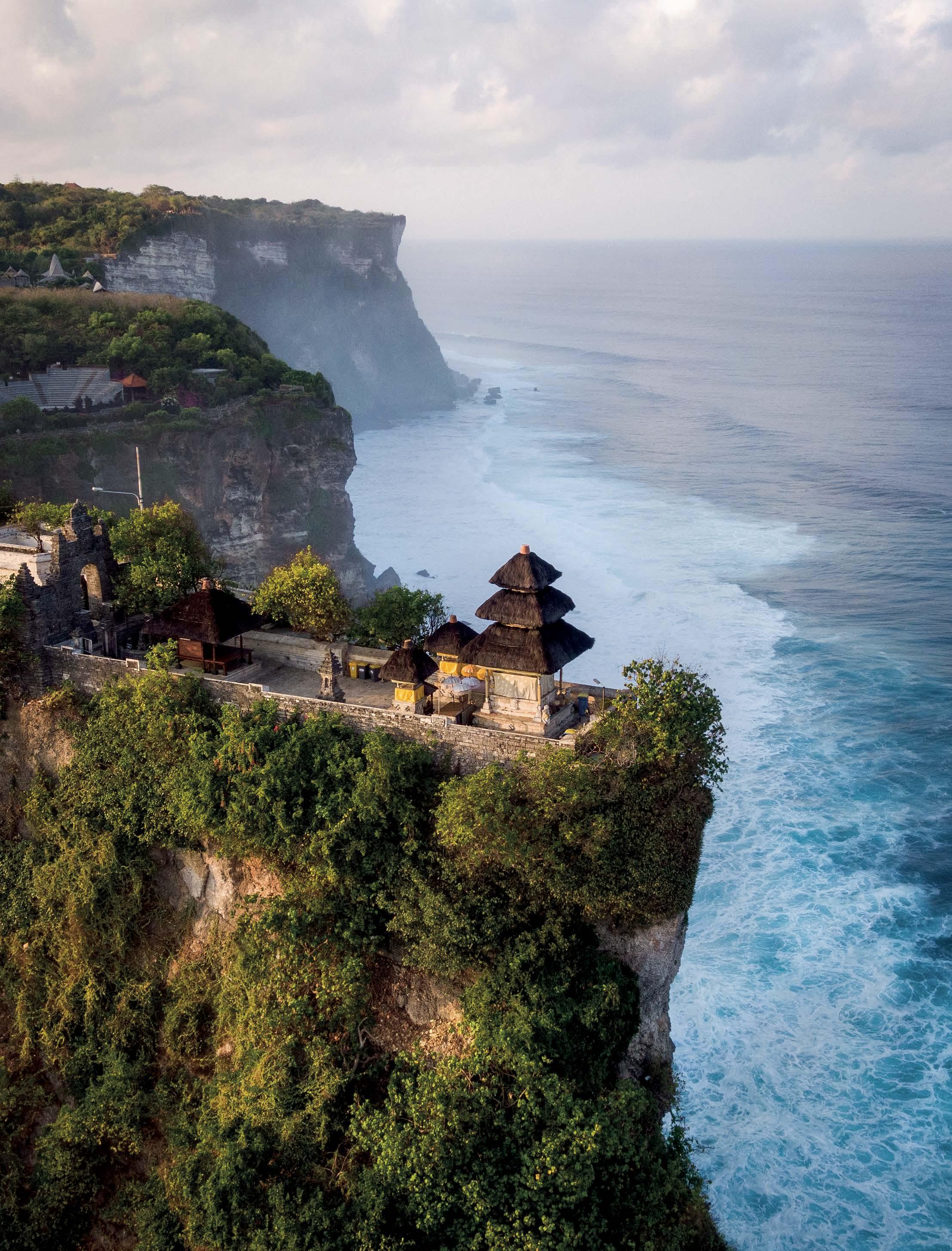
Overexposed as it can at times feel, there is truly nowhere else like the crown jewel of Indonesia: Bali— it even has its own characteristic brand of Hinduism, which colors most interactions with a hazy warmth of incense smoke and frangipani blooms. The Balinese people are notoriously affectionate and enthusiastic with children (in fact, this is true throughout Indonesia). It’s also an island practically overflowing with wild and wonderful moments. Dress in sarongs and feed tribes of long-tailed macaques in the lesserknown Sangeh Monkey Forest. Join forces with a guru-like local cooking teacher in the village of Keliki for a culinary class. Stream down the Ayung River in whitewater rafts, float in a ribbon of inflatable tubes, and dip your head in centuries-old temple fountains during a purification ceremony called melukat.
The bucolic resort of Nirjhara is an offbeat and amazing place to be based for crowd-free waterfall treks and cycling tours that thread through lush rice terraces, beach days to frolic with local youth and try beginner surf lessons on the black-sand Kedungu Beach, and mystical sunset blessings at Tanah Lot sea temple. From riveting kecak fire dances to pastoral farm visits in Sidemen, Bali offers an abundance of activities to curious families.
All Indonesian beach escapes don't look like Bali, not by far. Lombok, the slightly smaller neighbor to the east, is an experience all its own, with an even more electric blue ocean rolling ashore its whitesand beaches, Muslim calls to prayer floating over the air, and an engrained enthusiasm for both adventure and artisanship. If the south of Lombok is where
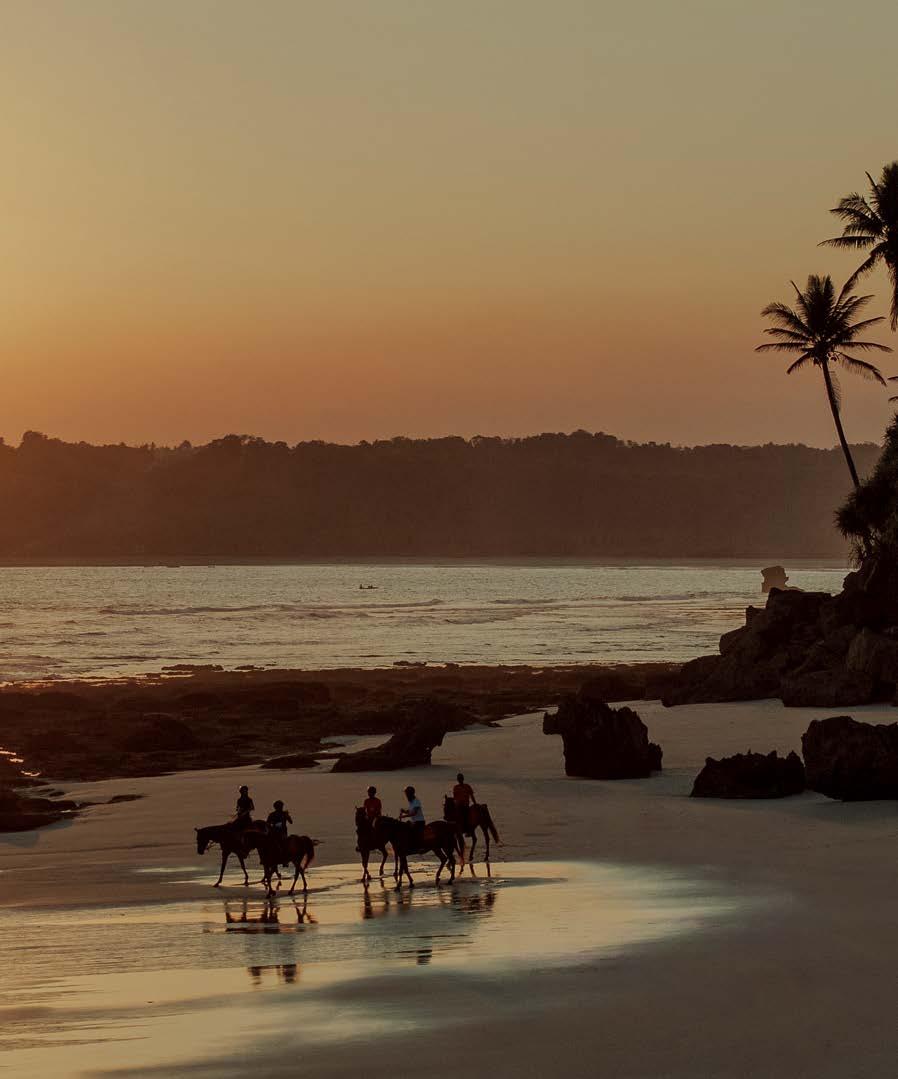
families will find fun in the sun, sand and salt—surf lessons included—the north is where you'll discover opportunities to hike in virgin forests around Mount Rinjani. Go with Rinjani Women Adventure, a local female-founded outfit with professional women trekking guides, where hiking tours include culinary immersions in indigenous Sasak traditions and splashing around in impressive waterfalls. Not too far away, Tugu Lombok sits on a white-sand beach with plentiful land and sea excursions.
Eastward still, Sumba, is even more off the tourist trail and in many ways, is the polar opposite of Bali. Where the latter has rice fields, Sumba has infinite cornstalks waving in the wind. It is populated by buffalo, not monkeys, empty beaches, and a special breed of horses—sandalwood ponies to be exact—that have become synonymous with the idiosyncratic experiences
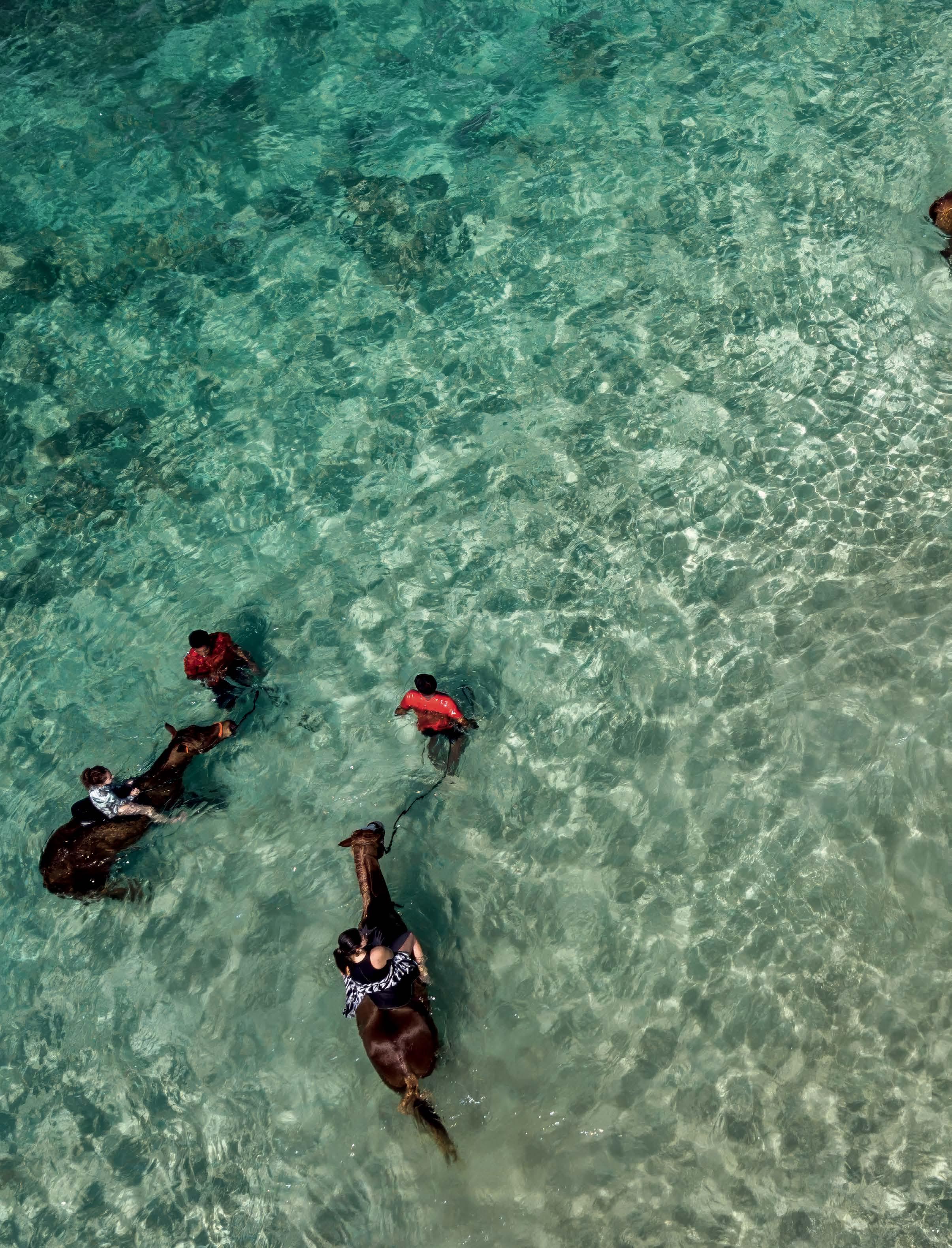
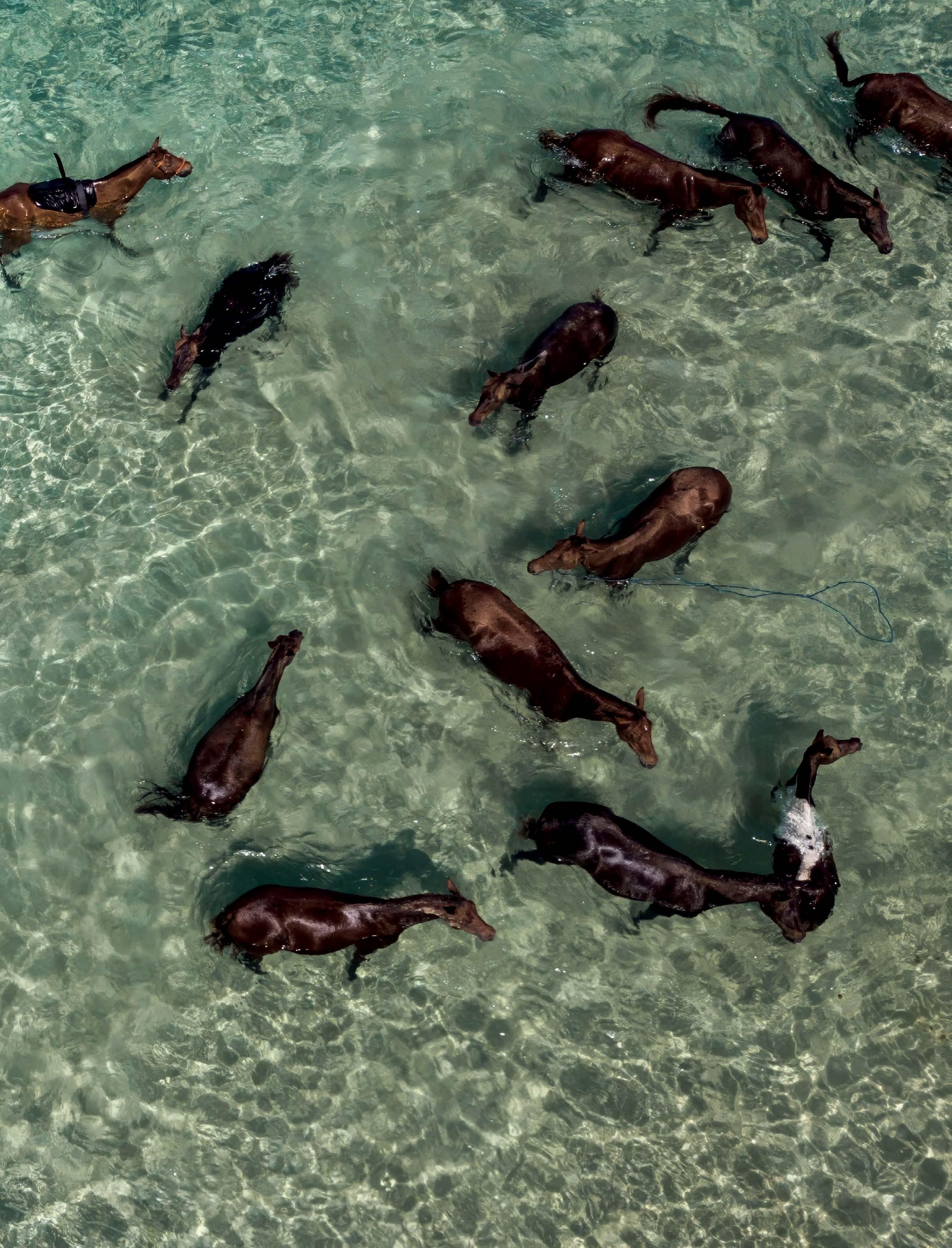
to be had on the isle. The most famous resort, NIHI Sumba's most notable feature is its gorgeous, happy herd of horses, who run wild along the beach each day and take guests of all ages on rides—swims, really— into the sparkling shallows of incandescent seafoam green. It's a non-negotiable must for families exploring Sumba. Nature here still feels endless and quiet and yet there are also fascinating local villages to witness with their soaring hat-like thatched roof houses, massive stone tombs and wide-smiling children who will surely share mutual fascination with visiting offspring. For families with older kids who seek once-in-a-lifetime experiences, plan the trip around the only-on-Sumba tradition of pasola, an intense and electric horseback jousting-like competition taking place in a variety of regions annually that is guaranteed to sear into everyone's collective memory.
“The Balinese people are notoriously affectionate and enthusiastic with children. It’s also an island practically overflowing with wild and wonderful moments.”
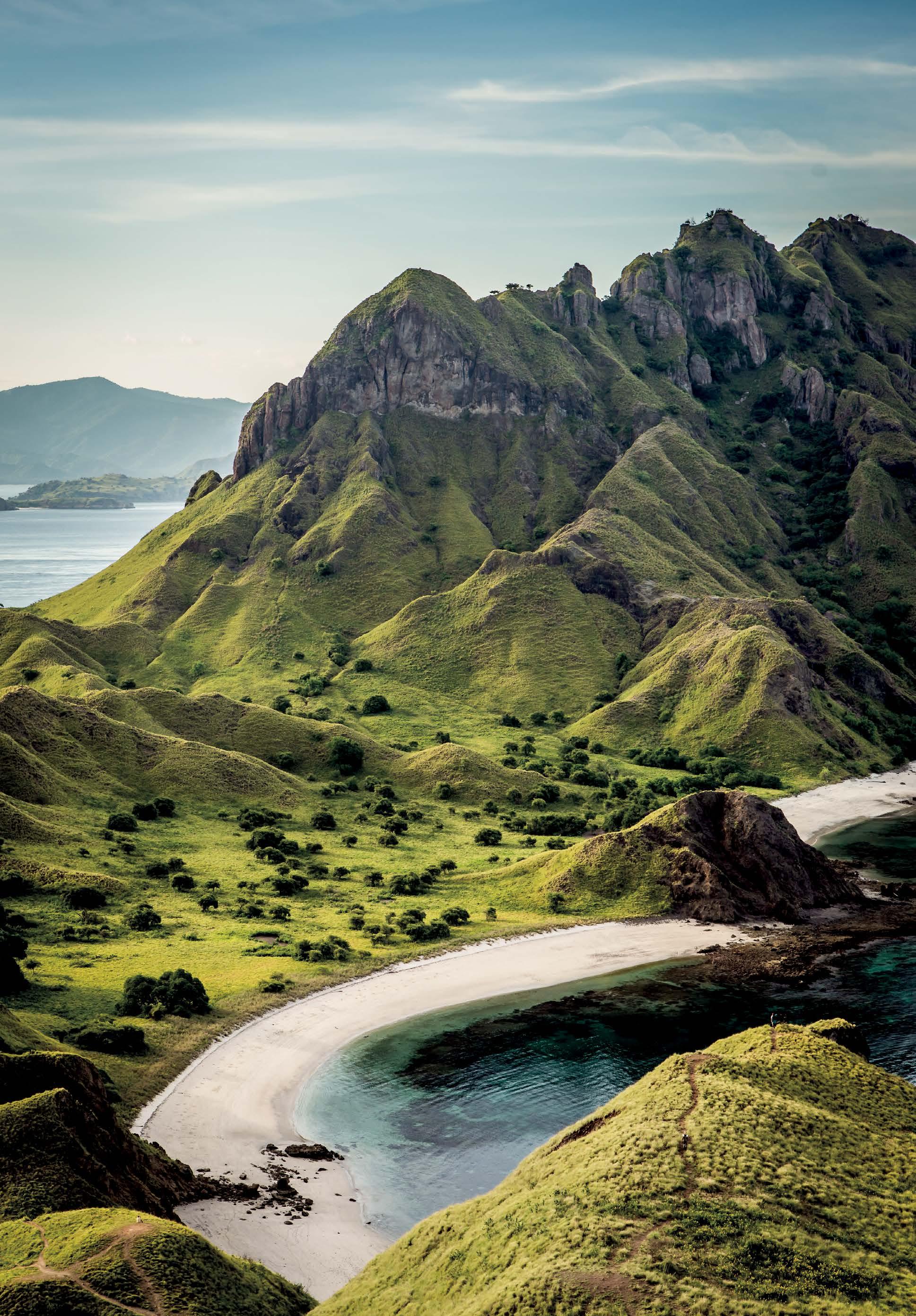
The Komodo dragons are a hallmark of the national park, the UNESCO World Heritage Site that spans 669 square miles of pristine land and water. You need only possess a childlike sense of wonder to appreciate the tongue-flicking creatures that are so fabled and fierce, yet quite docile looking. Visits to view Komodo dragons, as well as to marvel at the ultra-pink Pink Beach nearby, are most spectacular (and totally singular) when navigating the Komodo region via private chartered phinisi, a two-mast sailing boat with up to eight striking sails. The uber-luxury versions of this piece of UNESCO intangible heritage— such as the three-cabin, 98-foot Mischief—are most appropriate for children eight and older who are comfortable not just cruising from island to island, but hopping into the diamond-clear water with snorkels and all manner of megafauna, from whale sharks to manta rays. Experienced captains are constantly seeking out the most untouched sites for their guests to enjoy with few people around.
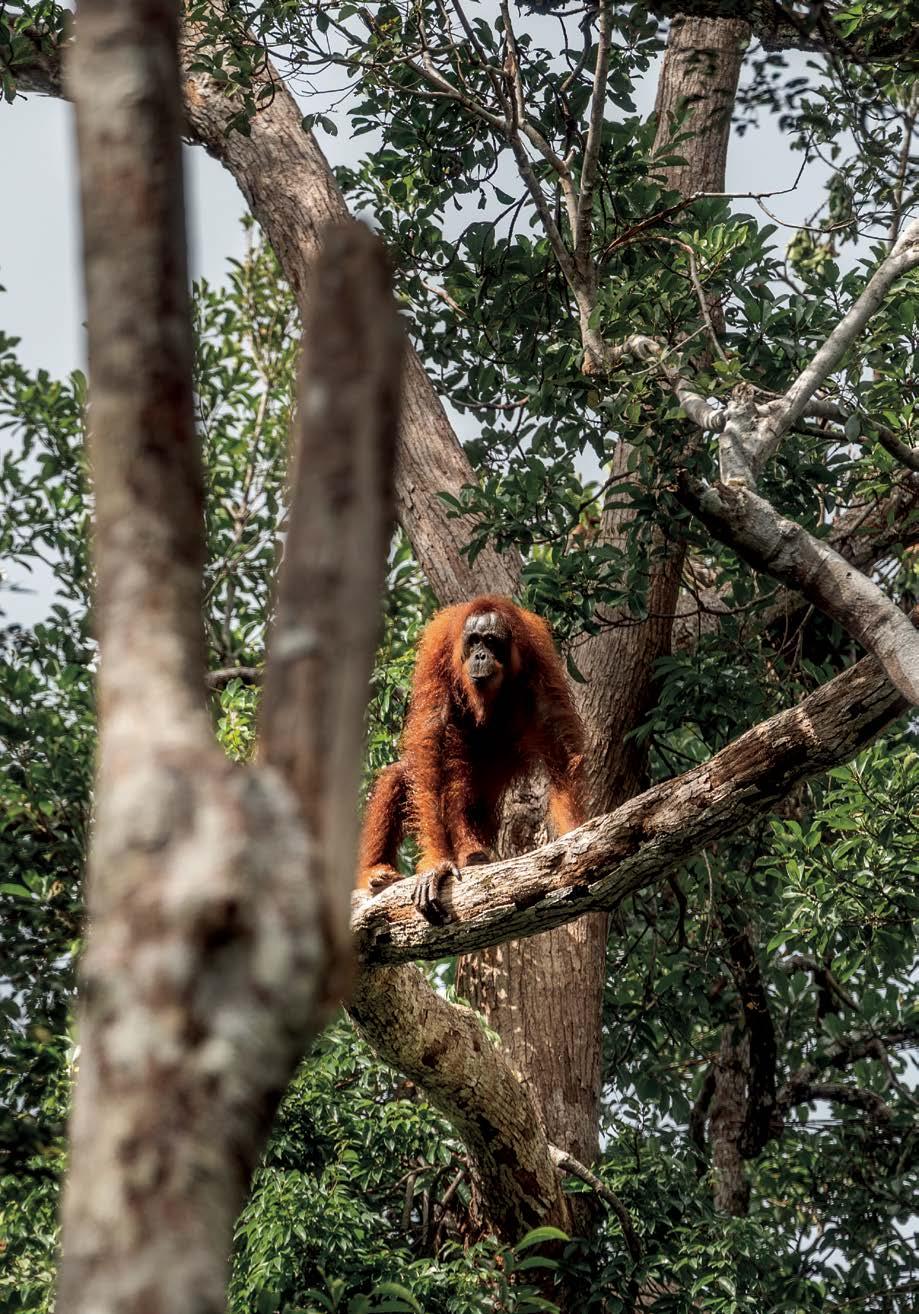
Cruising inky backwater channels lined with dense emerald rainforests while playing "I spy" with eyes peeled for exceedingly hairy orange Bornean orangutans is pretty much the definition of rare experience. It's a primate safari, in a way, that is sure to captivate parents and kids alike. The critically endangered great apes are found on the island of Borneo, a portion of which is Indonesia's Kalimantan. Typically, this adventure involves several days aboard a private klotok riverboat charter in Tanjung Puting National Park—for many, it is ultimate Southeast Asian wildlife adventure. Slightly rugged, a bit daring, and completely away from the well-trodden path, the success of a guided escapade on the Sekonyer River is not left up to chance, but includes guaranteed sightings along the way at rehabilitation centers where you will meet this playful, intelligent and surprisingly gentle species.

Nothing enlivens the senses like a slow walk through a market, piles of technicolor produce and fragrant foods sold by women with wizened smiles. This is just one of many ways family travelers are introduced to culture on Java, the most populous island in Indonesia (and actually the world), home to some 150 million people. While that number may sound shocking, one of the many joys of cultural Java is that visitors get to feel a part of humanity while touring vibrant cities. For example, Yogyakarta which has some of the most elaborate and incredible temples and mosques in existence—fantastical, intricately carved Borobudur in particular, the world's largest Buddhist monument and
a major pilgrimage point—plus learning, hands on, art forms including batik and gamelan instrumentation. In the course of this are sublimely peaceful moments, too, such as at Taman Sari water palace, and active jaunts that add even more excitement to sightseeing, whether it's horse-and-cart rides through bucolic villages to peek into local life and its many nuances, cycling trips in partnership with an NGO in Candirejo, trying your hand at traditional jemparingan archery, or hopping into a colorful human-powered becak pedicab to catch a glimpse of the city's iconic shadow puppet shows. The riverview Garrya Bianti Yogyakarta is a tranquil spot to base yourself in.
Whether it’s learning the animist Marapu traditions in Sumba or exploring the art of the Balinese flute with a renowned local musician, our destination expert Lauren Jafry (a Condé Nast Top Travel Specialist 2025) is always on the lookout for new experiences that take you to the heart of Indonesia.
· Population: 284 million
Size: 730,660 square miles
Capital: Jakarta
Language: Indonesian
Currency: Indonesian rupiah
When to go: May to September
How do you define 300 ethnic groups that live across 17,000 islands? In Indonesia, Etc., Exploring the Improbable Nation, Elizabeth Pisani looks for answers with humour and beautiful prose.
Ring of Fire: An Indonesian Odyssey, an old-school epic of a documentary, is a five-part series that takes you deep into the myriad cultures that make Indonesia so wonderfully incomparable.
The unmistakable metallic tinkling and hypnotic percussion of gamelan is a staple of Indonesia’s sonic landscape. This traditional music soundtracks everything from religious ceremonies to water puppet shows.
From one island to the next, Indonesia reshapes itself with varied histories, cultures, and landscapes. It is never one-note but infinitely layered, a destination that reveals more with every journey. While travel here can demand effort, the richness of experience makes each discovery deeply worthwhile.” —Lauren Jafry, Destination Specialist
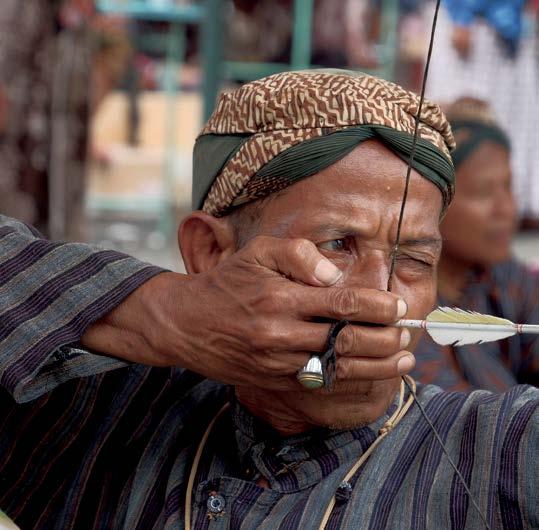
Try your hand at jemparingan archery, a challenging mix of skill, mindfulness, and heritage. Like so many of Indonesia’s cultural traditions, it is totally unique to one place.
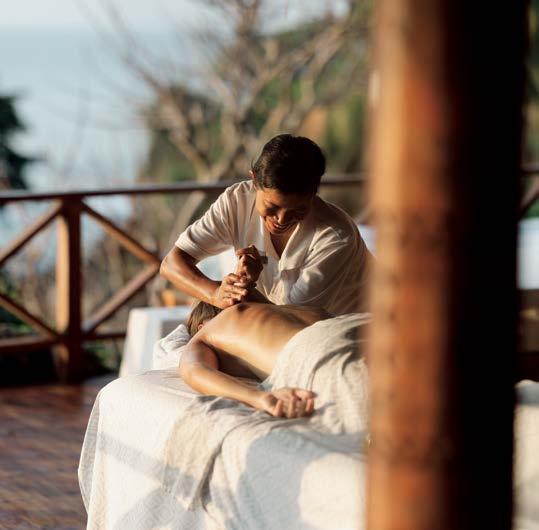
End a two-hour hike through lush jungle with a blissful spa treatment overlooking a cove so perfect you’ll pinch yourself. It's all part of the exclusive Spa Safari experience at Nihioka, Sumba.
3
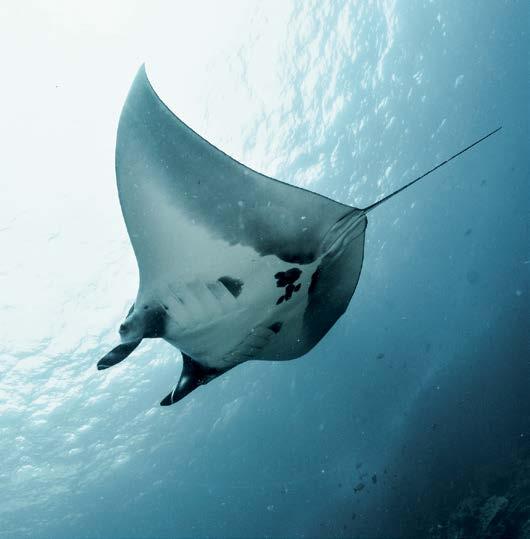
While most people come to Komodo in search of dragons, another giant awaits in the island’s surrounding waters: manta rays. Prepare to be genuinely moved as you float weightlessly beside them.
Mozaic in Ubud blends French and Indonesian influences amid the confines of its blissfully secluded tropical garden. A stand-out culinary star, Mozaic is one of Bali's most coveted spots.
At Banyan Tree Buahan, let the gentle roar of a waterfall and the chatter of the jungle soothe you to sleep. With only a roof above your head, feel the true power of nature around you.
Immerse yourself in Bali’s legendary creative scene with a private concert from celebrated local musician Gus Teja. The location for the show? Teja’s very own home.
Connect with our Indonesia destination specialist to start planning a journey that is uniquely yours. Email us at info@extraordinaryjourneys.com to begin crafting your adventure
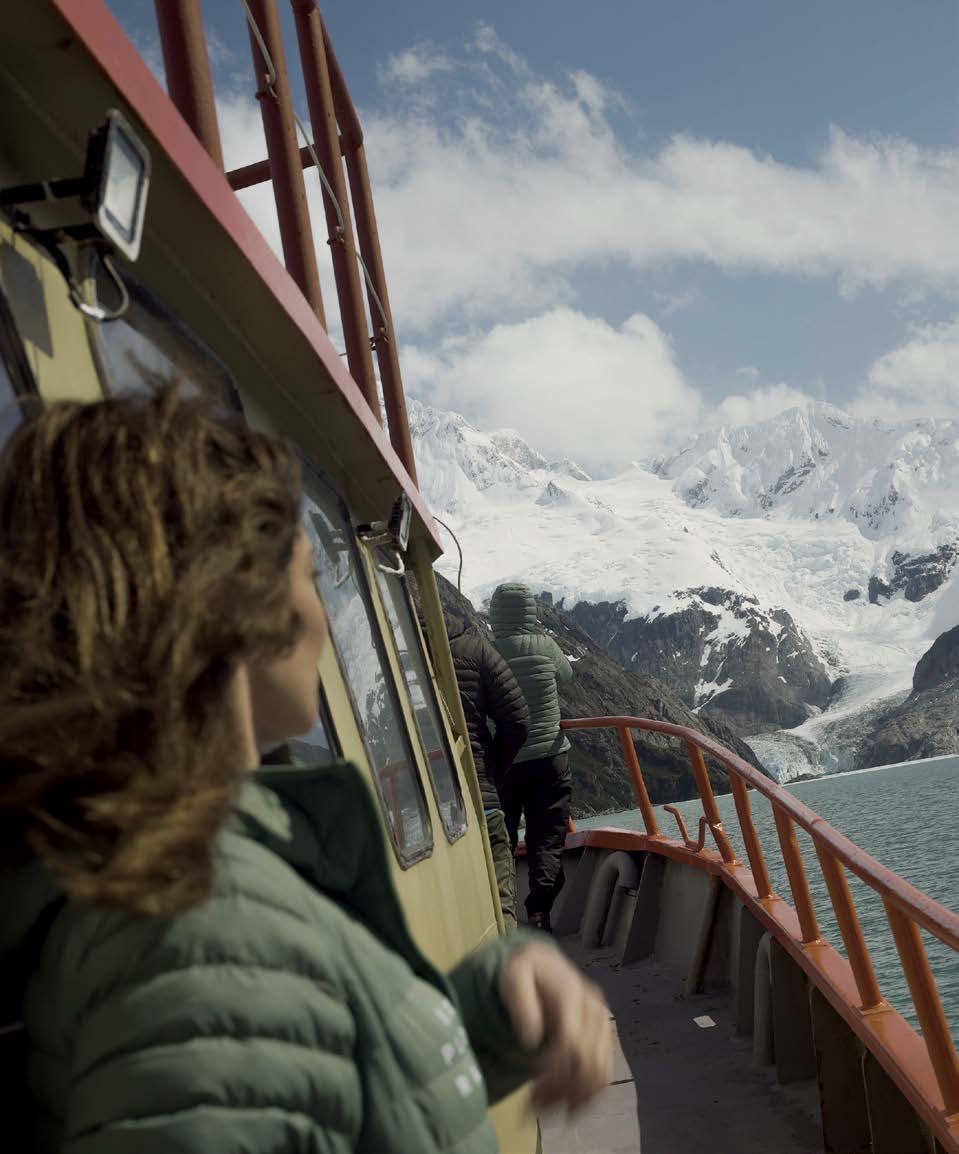
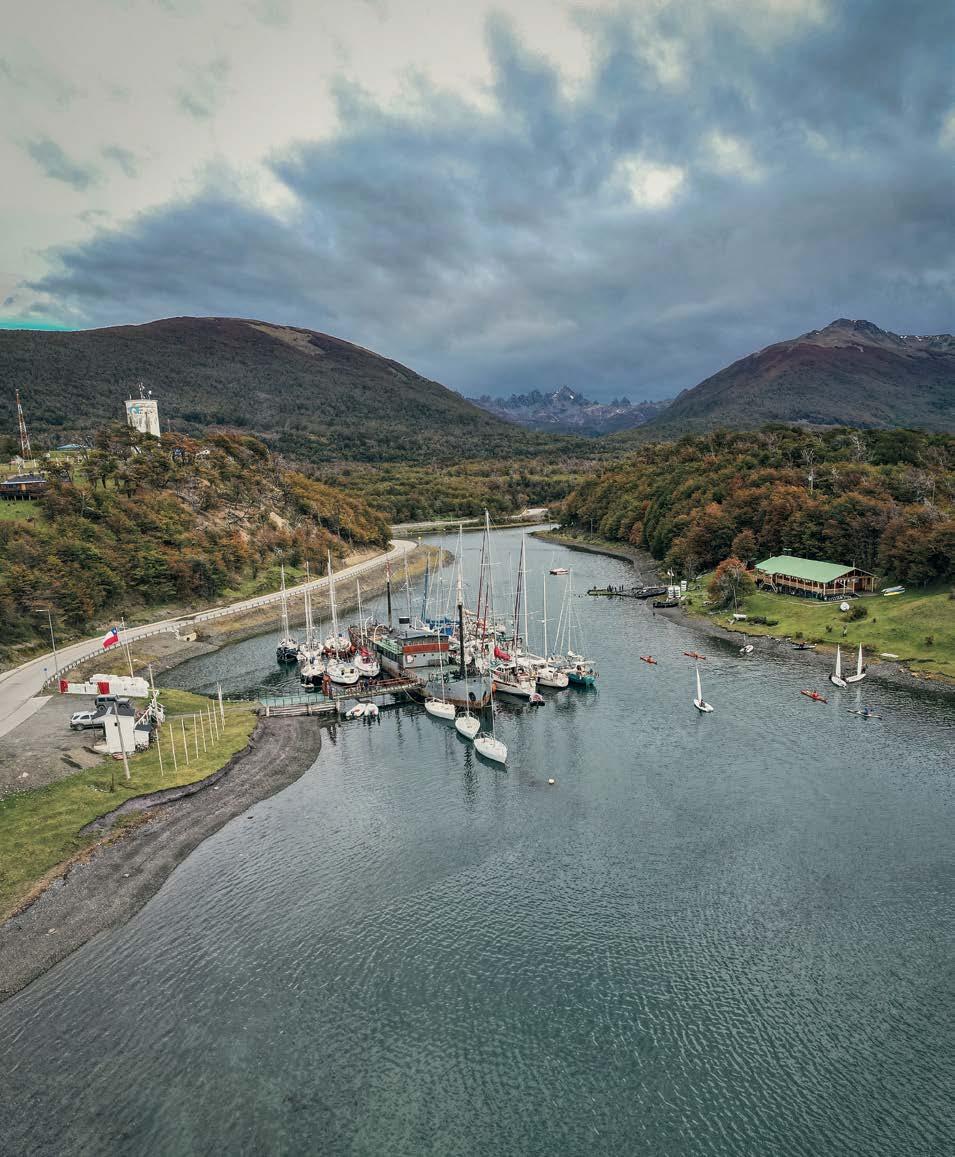
Every year, thousands of travelers head to Patagonia’s best-known parts. Adrift from the continent and shrouded in solitude, Isla Navarino offers frontier-feel adventure without the crowds.
Written by: Shafik Meghji
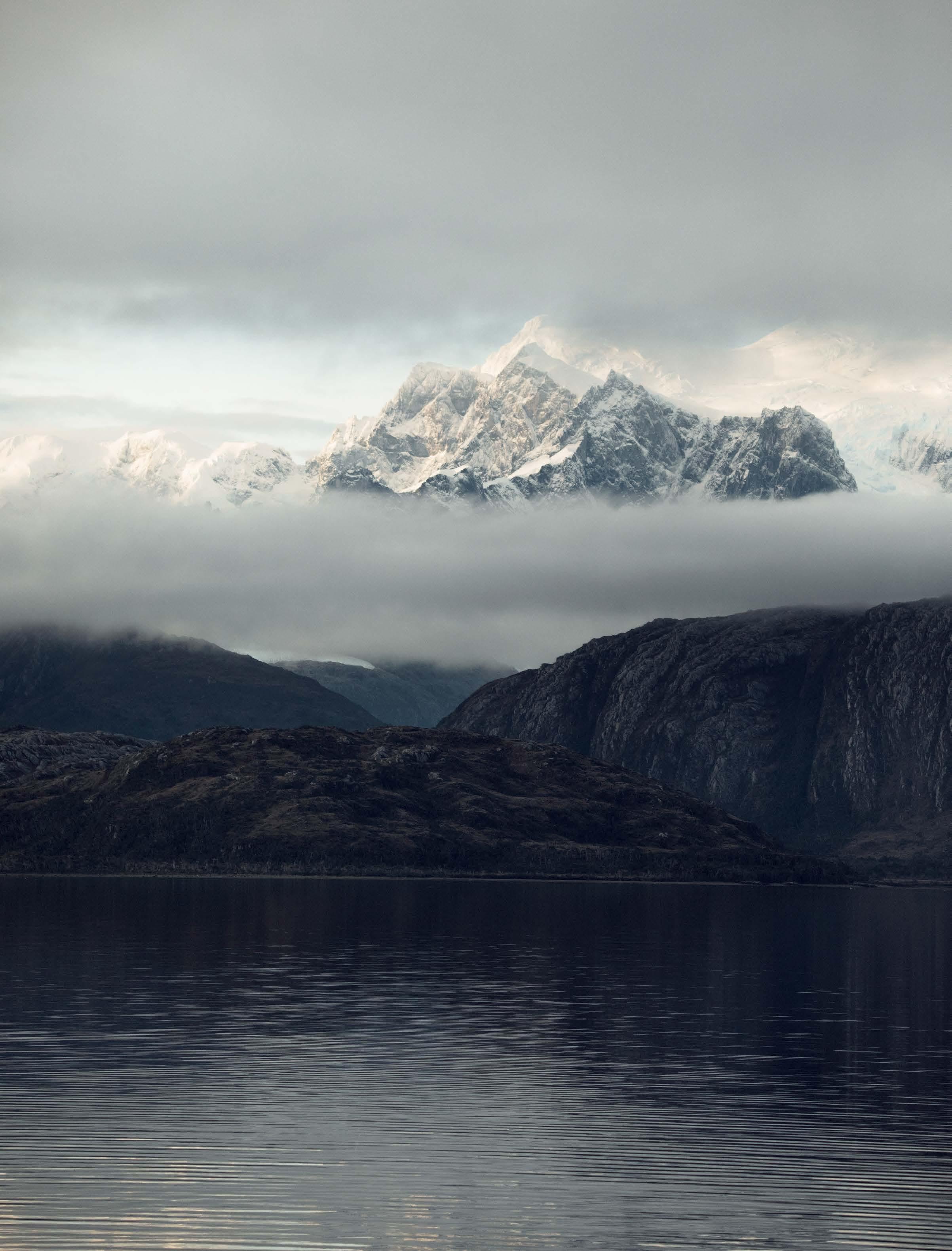
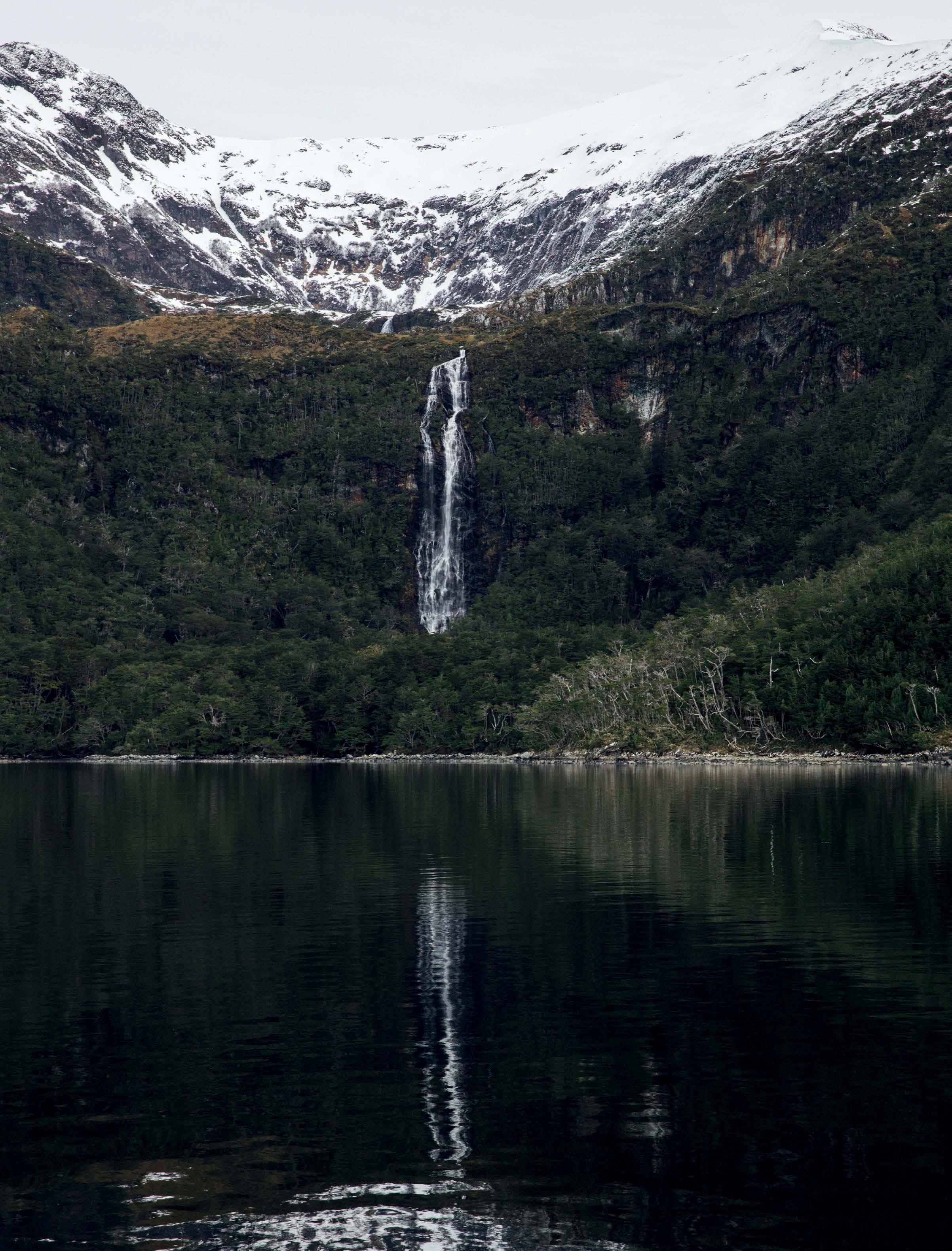
After a leg-burning, uphill hike along a twisting woodland trail, I arrived at the deserted 2,000-foot summit of Cerro Bandera. There, I found a Chilean flag straining at its pole in the famously ferocious winds of Tierra del Fuego. Beyond an expanse of sub-polar tundra riddled with icy streams, the snow-topped Dientes de Navarino mountain range rose in the distance above a glacial lake fringed with evergreen forest. Swinging round 180 degrees, I gazed down at the glinting rooftops of Puerto Williams—the southernmost city on earth—and the silvery waters of the Beagle Channel. Momentarily, the gale calmed and I was left alone in perfect silence at the tip of South America.
I'd traveled to Puerto Williams from Punta Arenas in southwestern Patagonia.
Facing the Strait of Magellan, the fading grandeur of its downtown mansions are testament to the wealth generated by a sheep-ranching boom more than a century ago, the port was busy with travelers. The vast majority were heading
to or from Parque Nacional Torres del Paine, a UNESCO Biosphere Reserve renowned for its dramatic landscapes and world-class treks. Yet the park is also struggling with the impact of overtourism, especially in the peak summer season when accommodation must be booked many months in advance and trails get uncomfortably busy.
By contrast, there were only two other travelers on my flight south to Puerto Williams, which whisked us over a swath of densely forested islands, corkscrewing waterways, and heaving glaciers. Located on Isla Navarino, barely 620 miles north of Antarctica and with no road connections to the rest of the continent, the settlement of nearly 3,000 residents was upgraded from a town by the Chilean authorities in 2019, allowing it to claim the coveted 'southernmost city' crown from its far larger Argentine counterpart Ushuaia. But it remains a sleepy place with a rustic, frontier feel: doors are left unlocked, cows and horses roam the streets, and the waterfront is scattered with large, netted pots used to catch king crabs.
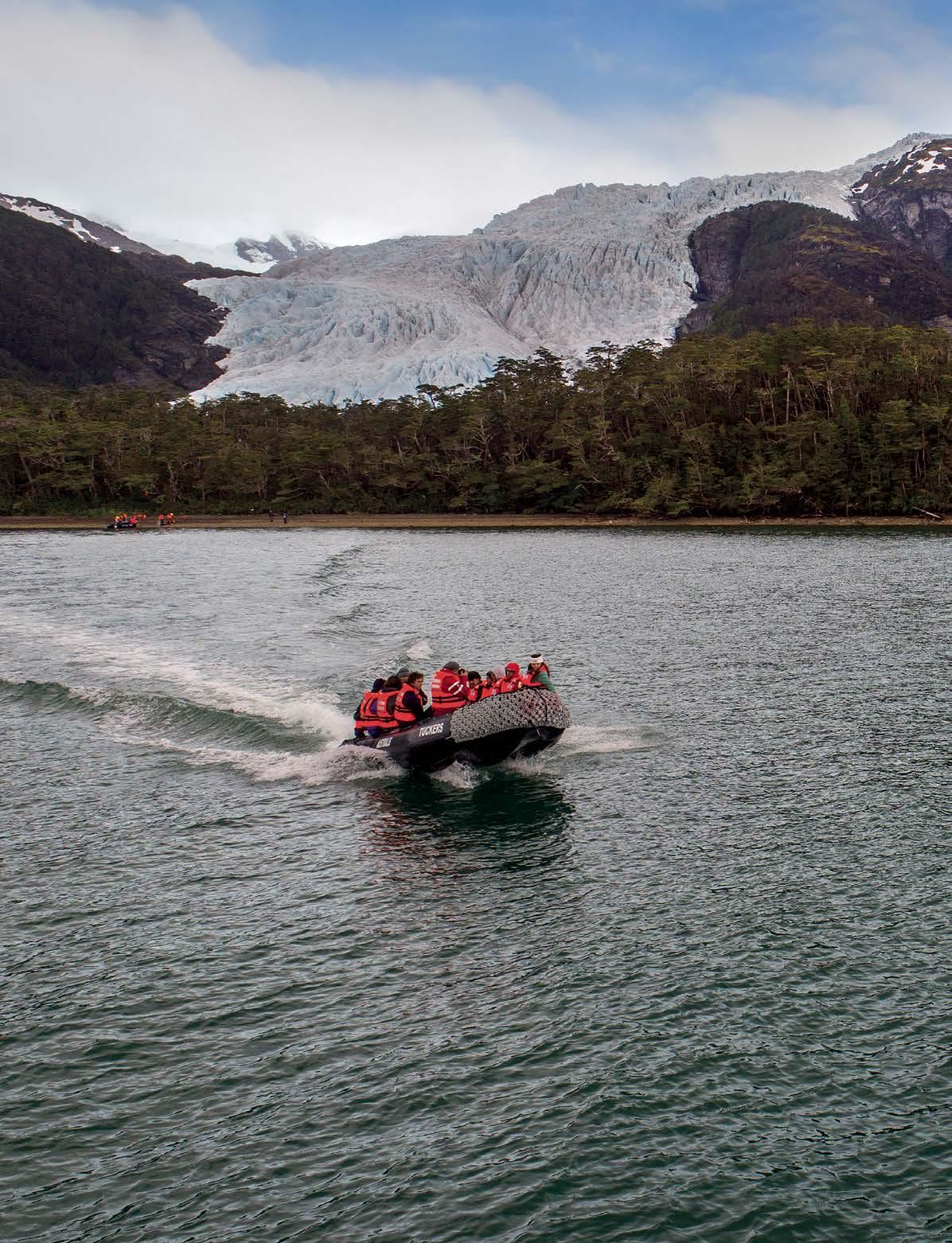
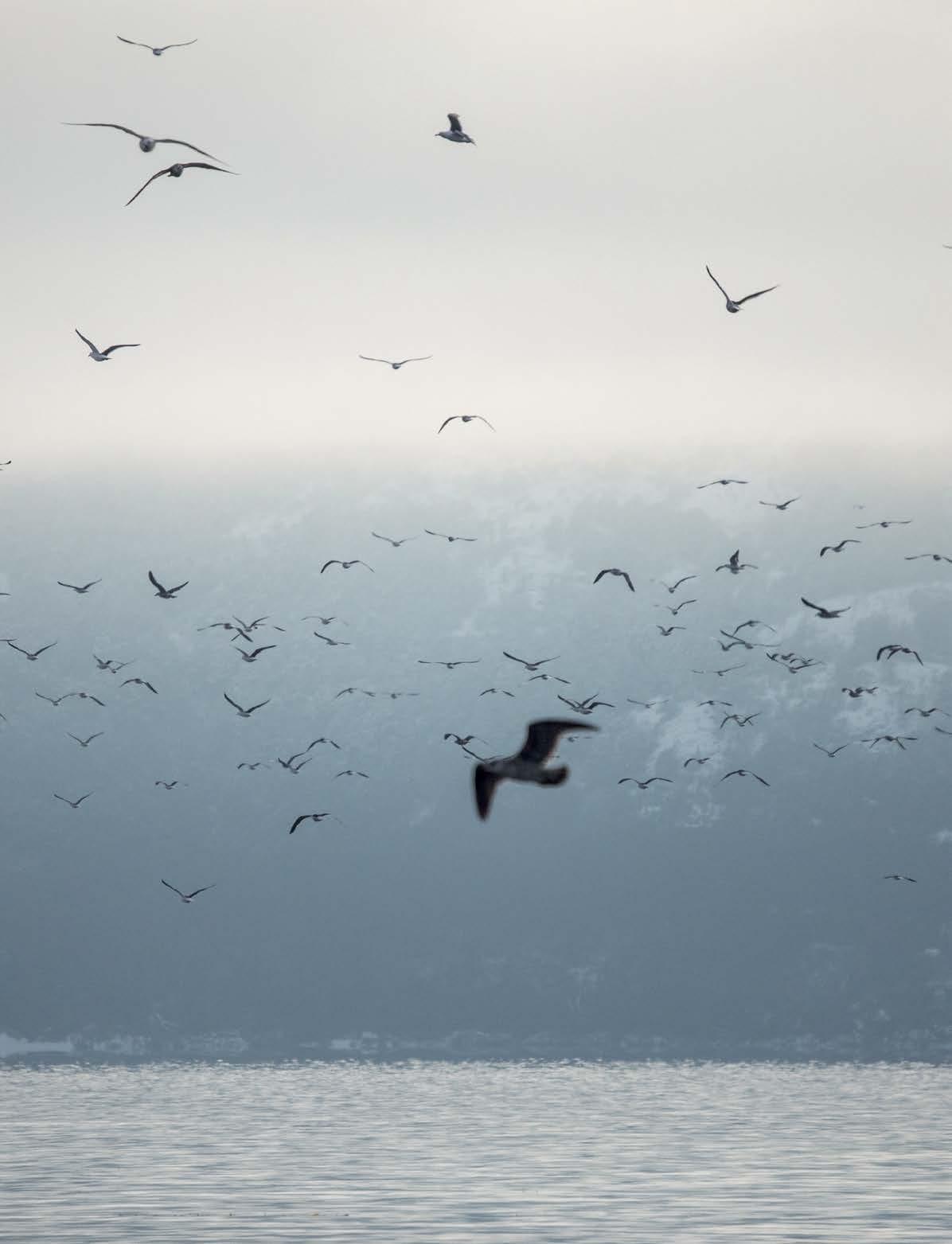
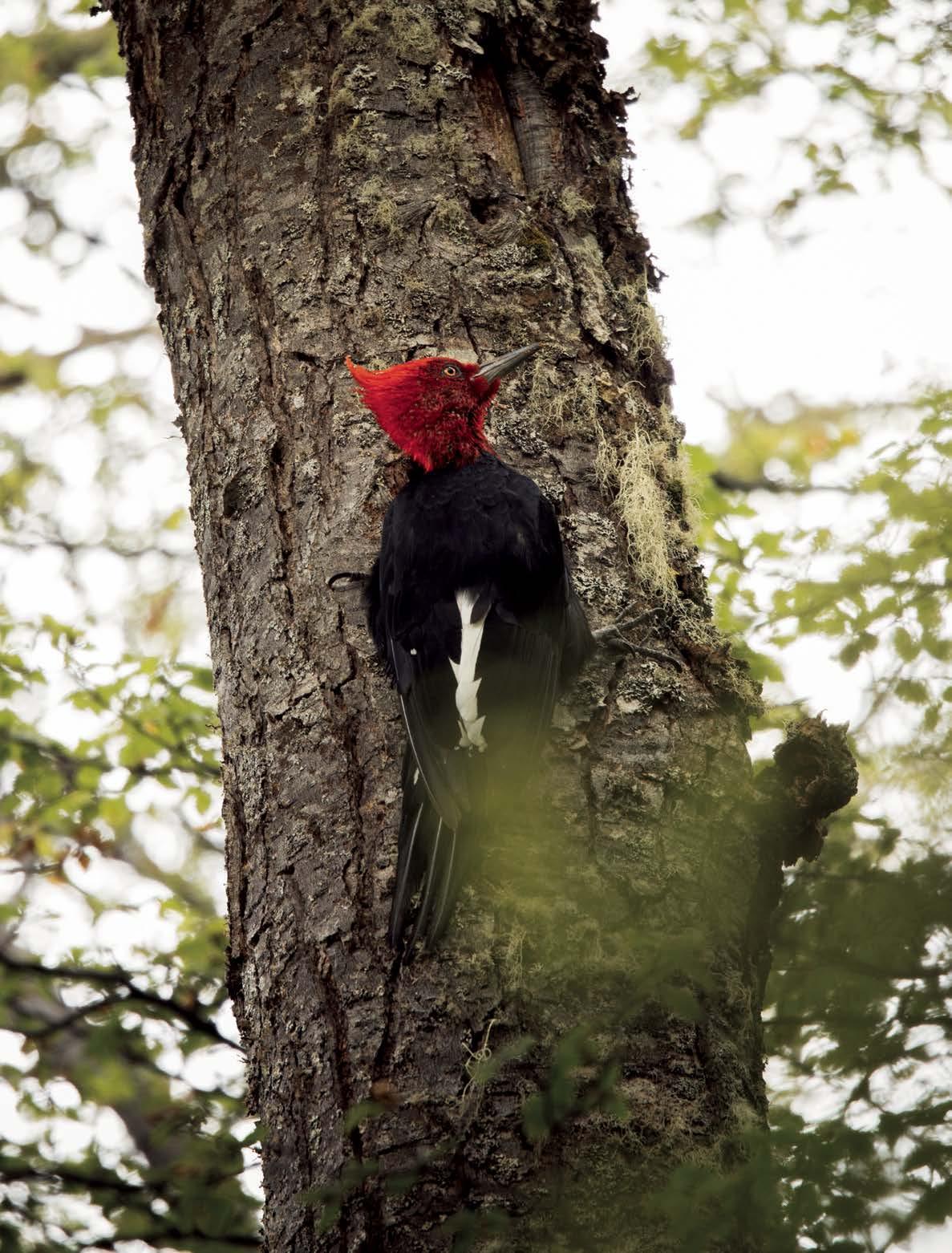
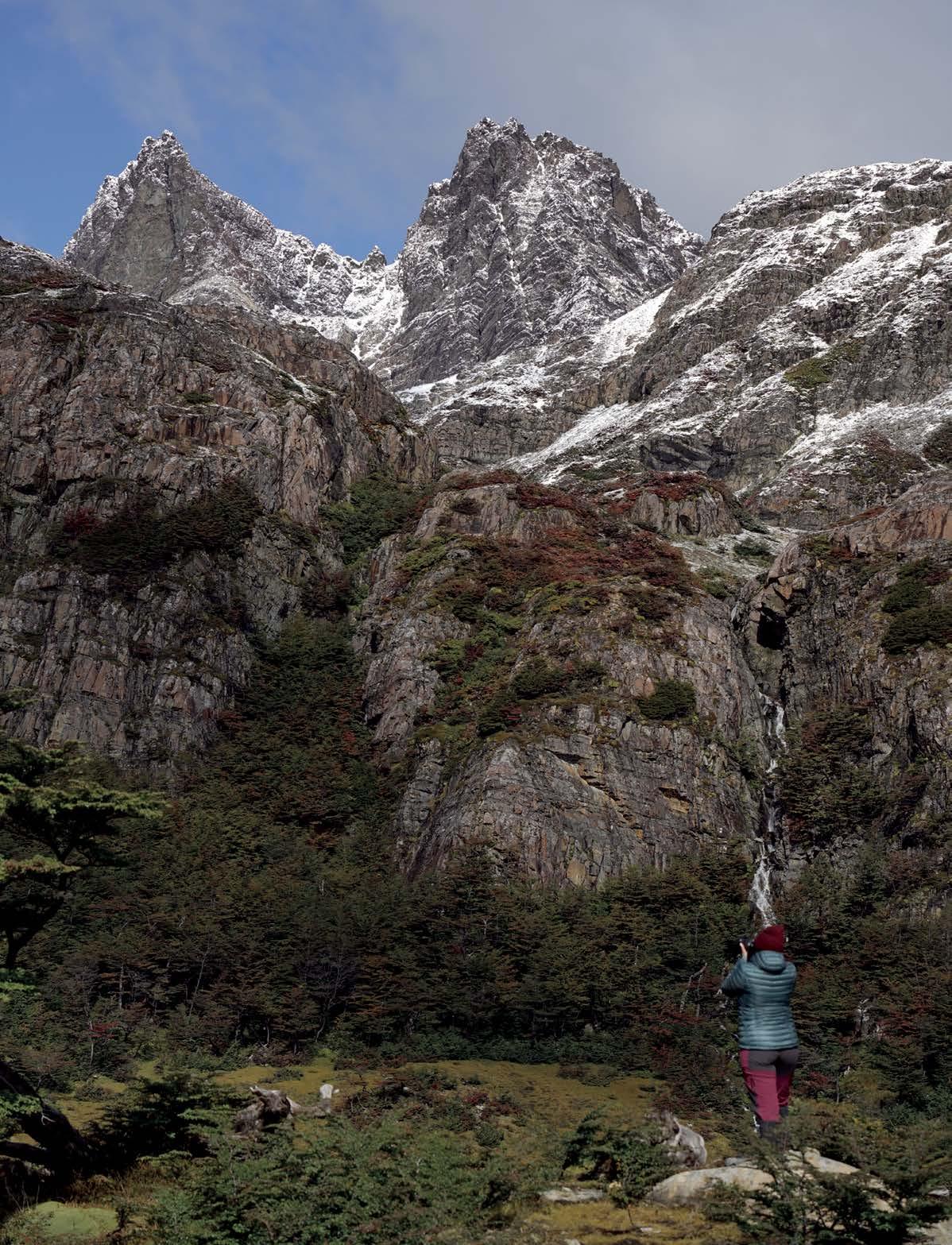
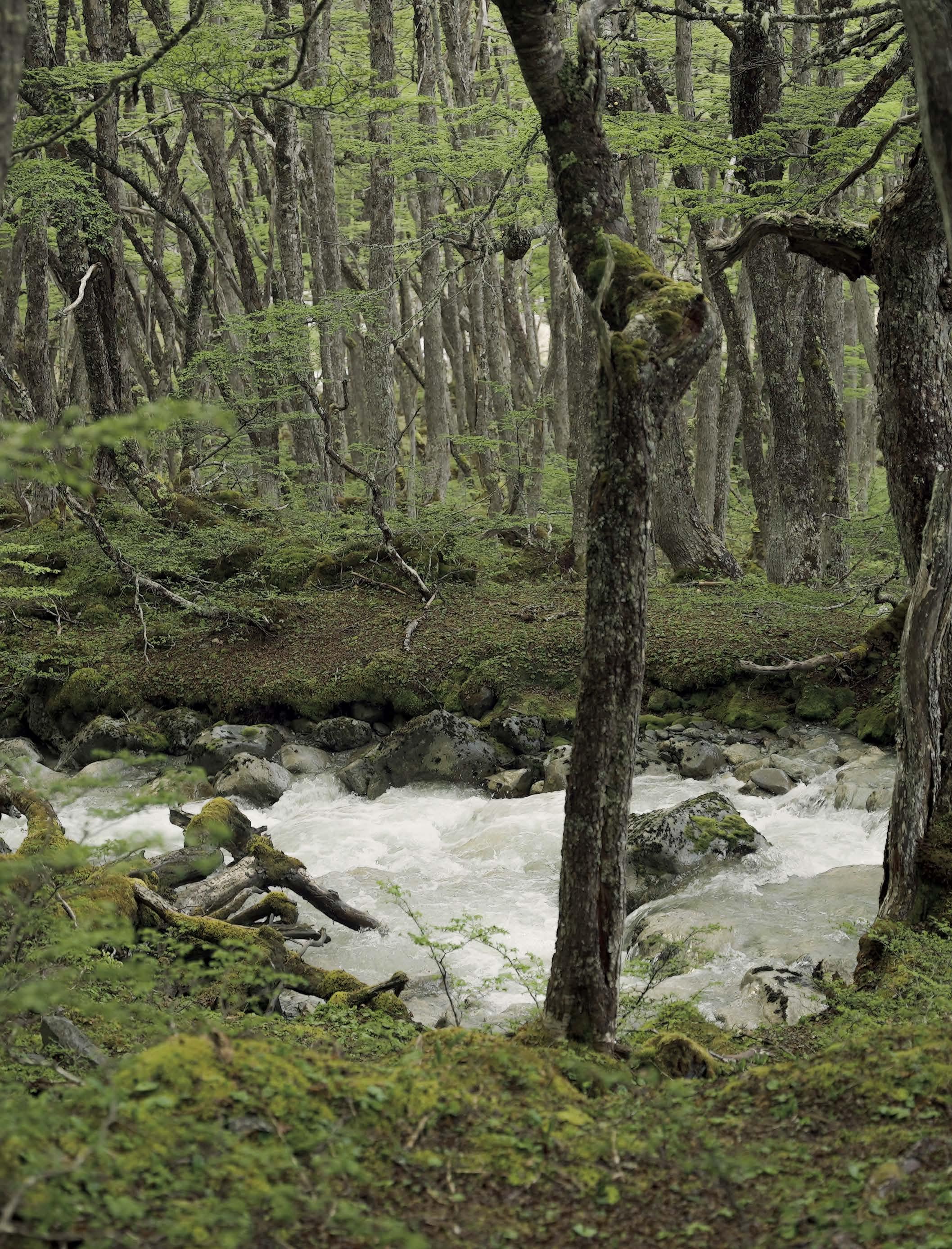
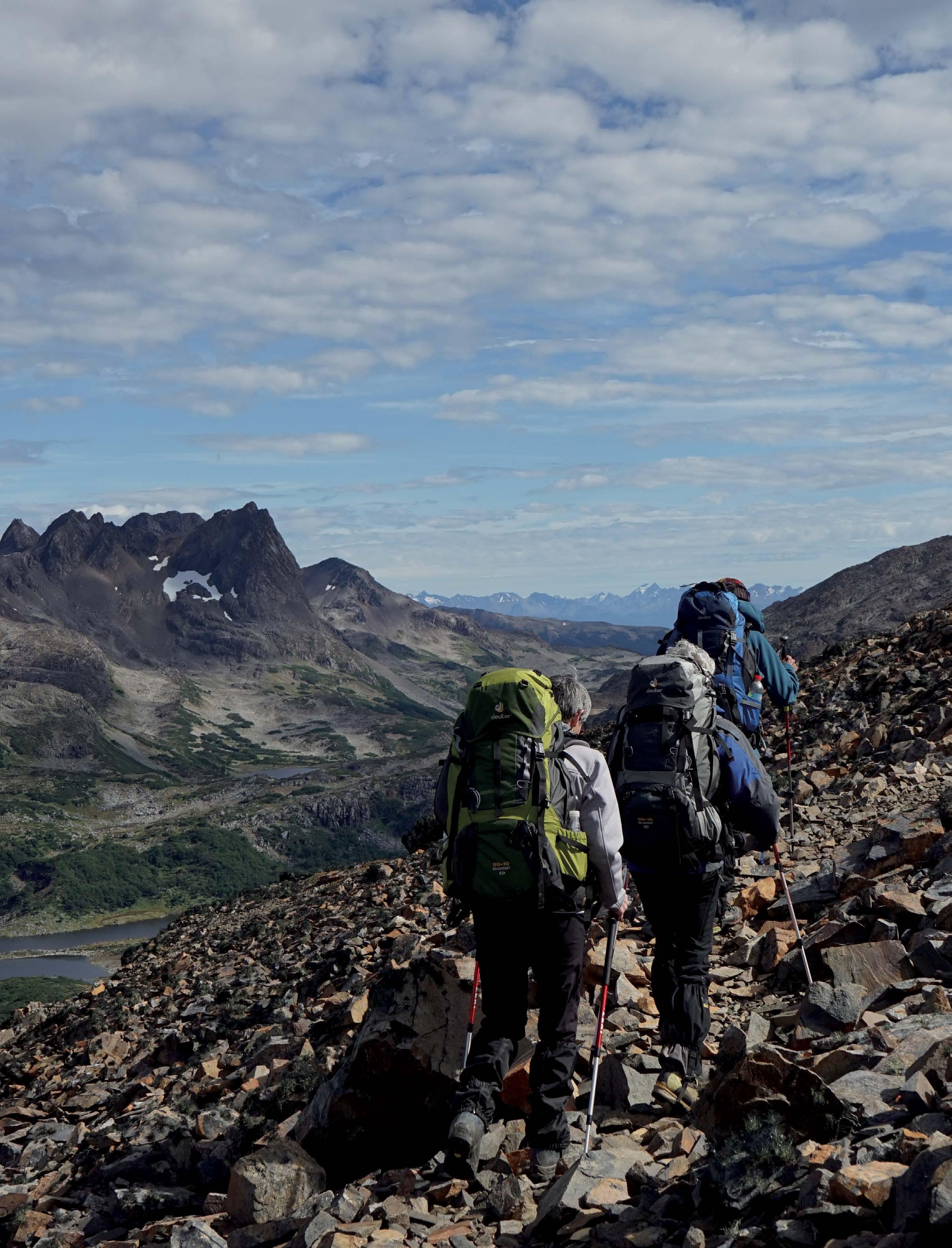
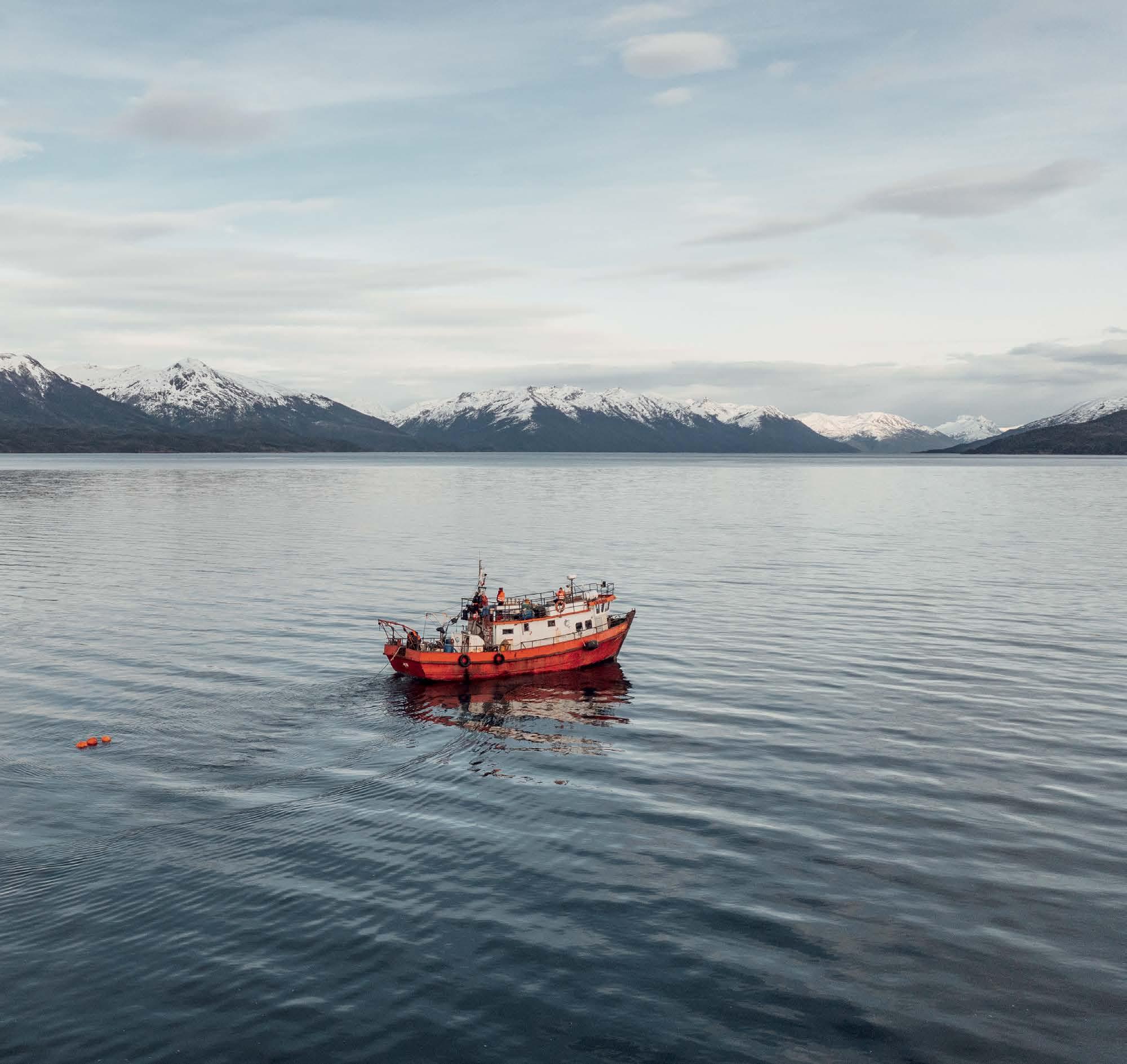

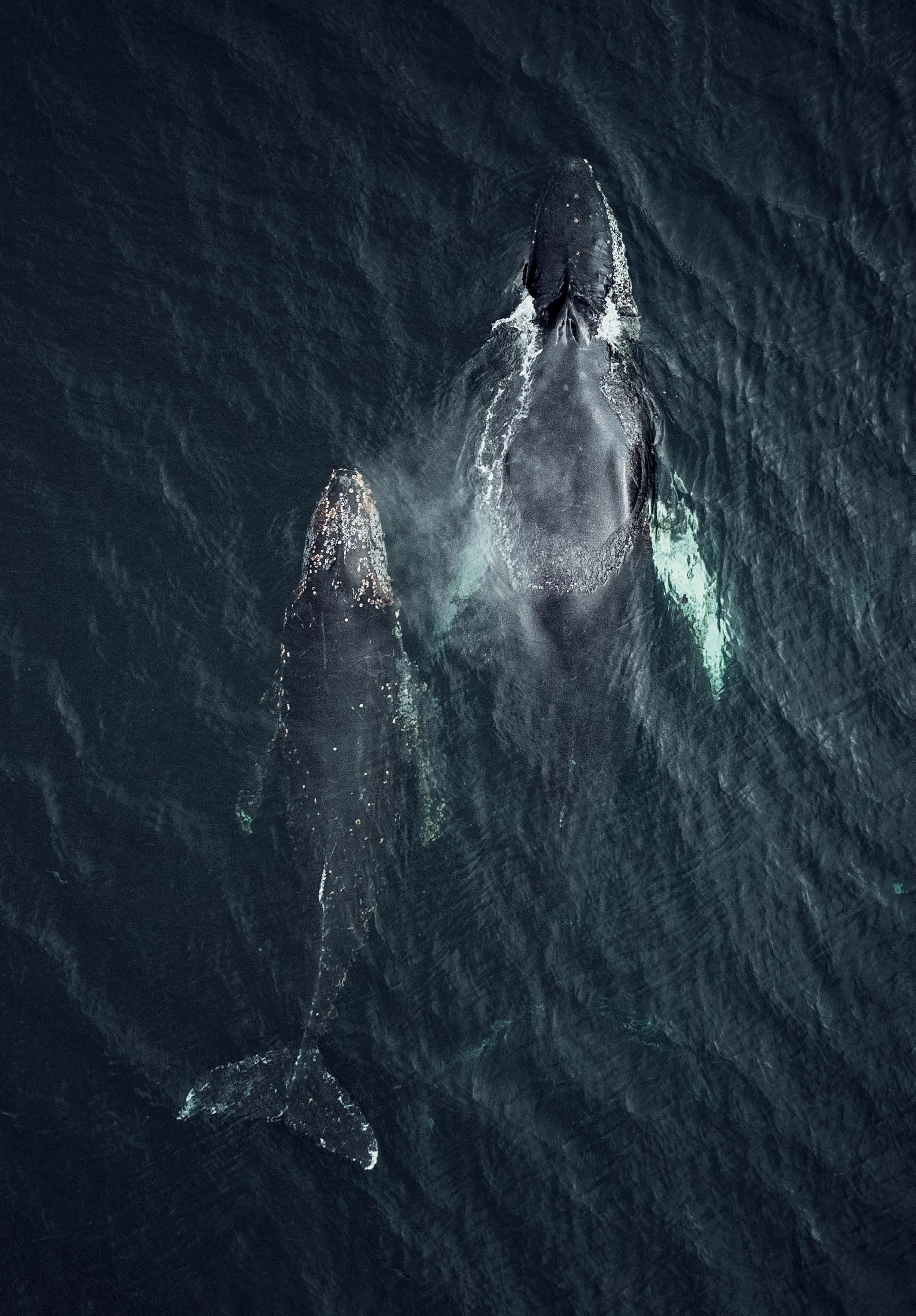
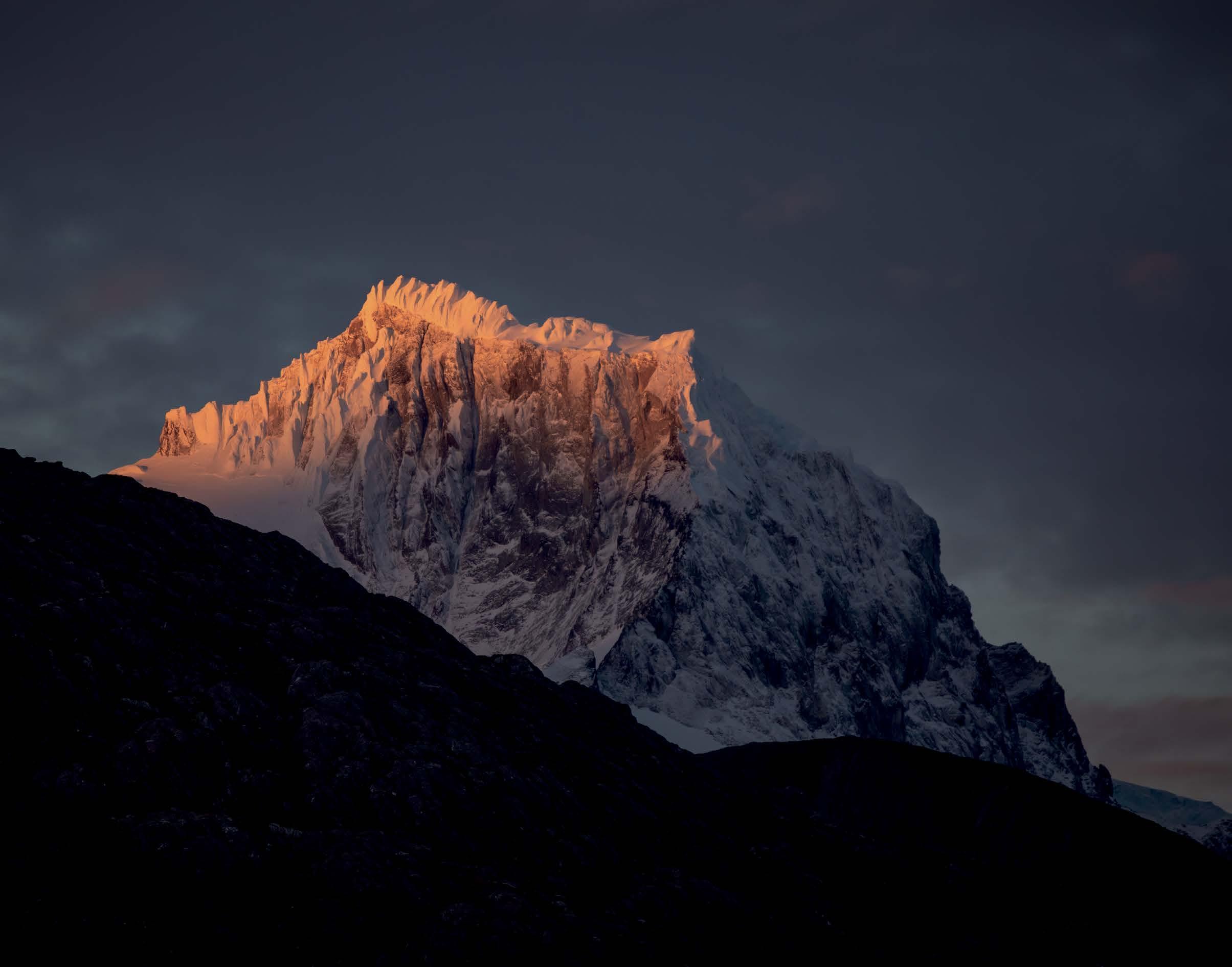
Beyond a glorious location—backed by the Dientes de Navarino and overlooking the Beagle Channel—some 1,500 miles from the Chilean capital Santiago, Puerto Williams has plenty to offer the few travelers who venture this far south in search of solitude. The hike up nearby Cerro Bandera is the first leg of a challenging multi-day wilderness trek that rivals the famous 'W' and 'Circuit' routes of Torres del Paine, minus the crowds. Boat cruises and kayak trips along the Beagle Channel—which connects the Atlantic and the Pacific—offer the chance to spot whales, sea lions, and myriads of seabirds; inland, crystalline
lakes and rivers rich in various species of trout are havens for adventurous anglers.
But for me the biggest draw was the opportunity to experience life at—to quote a sign outside one of the guesthouses—'the end of the world'. At the excellent Museo Territorial Yagán Usi, I got an insight into the tumultuous history of Tierra del Fuego, which was inhabited by Indigenous peoples such as the Yagán for thousands of years before the arrival of missionaries, gold miners, and sheep ranchers in the late 19th century.
This primed me for a road trip along the meandering Y-905, a gravel road, which soon left behind Puerto Williams and the neighboring Yagán hamlet of Villa Ukika. Skirting the coastline, we drove past a chain of empty beaches and coves, the occasional fisherman's cottage and low hills topped with trees warped into surreal shapes by the near-constant wind. We encountered hardly another soul. Periodically, we stopped to examine one of dozens of middens, grass covered mounds of mollusk shells discarded by Yagán families over the millennia. After 14 miles, the gravel road ended at a coastal ranch named Caleta Eugenia,
the southernmost point you can drive to in Chile. A fishing boat bobbed offshore while vultures and petrels spiraled above us in the late afternoon sunshine. The feeling of being somewhere devoid of others was profound; the sense of isolation creating a special kind of solitude, few places can truly match.
A spirit of adventure emanates from Isla Navarino—something particularly evident at the top of Cerro Bandera when you gaze south across the jagged, snowy peaks and realize there's no one between you and Antarctica.

Our co-founder explains how the Extraordinary Journeys Foundation is helping to fight period poverty in Kenya.
Interviewed by Joey Tyson
Original illustrations by Beatriz Taveira, with subsequent illustrations generated through Midjourney.
At Extraordinary Journeys, we’ve always believed that travel should have a positive impact on the places we visit. That’s why we go to great lengths to partner with local operators and businesses that give back to their communities.
In 2025, we decided to take this mission one step further by launching the Extraordinary Journeys Foundation, created to directly support organizations that reflect our values. One of these is Great Being a Girl (GBAG), a nonprofit working to end period poverty in Kenya through the distribution of reusable menstrual cups, educational programs, and community outreach.
Our co-founder, Marcia Gordon, has been working closely with GBAG over the past year—with wonderful results. She’ll also be leading a special trip to Kenya in 2026, connected to her work with the foundation. Here, she shares what’s been happening since the foundation launched.
Tell us a little about your work with GBAG.
I’m the major fundraiser, which is a role I never wanted—I hate asking people for money! But I’ve actually enjoyed it because I believe in this project so deeply. I think people are happy to give when they know their contribution can make such a tangible difference. Surprisingly, fundraising has come easily for someone who doesn’t like to ask for anything.
What I love most is that we can see the results firsthand. We’re not just donating money (a cup costs $2.50) and saying, “That’s it, a girl’s life is changed.” We’re constantly following up to see if the cups are being used, whether they’re working, and how we can improve.
What made GBAG such a good fit for our foundation?
As a predominantly female team, we wanted to support women’s issues. I began researching organizations and found this incredible group fighting period poverty in Kenya. GBAG operates on the ground with inspiring leadership—two women who have lived in Kenya for years. One has worked with USAID on medical initiatives and brings the experience, contacts, and expertise needed to make a real impact.
This project combines two of our concerns: helping local people benefit from tourism and protecting the environment. Sanitary pads in Kenya, particularly in rural areas, inevitably end up as litter. This creates an environmental
mess for cattle and wildlife. One menstrual cup, on the other hand, can last for 10 years.
Since we started working with GBAG, what are some of the things we’ve achieved together?
The bottom line is we’ve distributed twice as many cups this year as we did in the previous four years combined—and the year isn’t even over! We’ve also been able to hire a full-time staff member who is deeply passionate about her work.
We’re developing better feedback systems, too. I’ve been adamant about surveys and continuous testing because we’re small enough to adapt quickly. We’re gathering strong data on acceptance rates—the number of girls who use the cups—so we can measure success and improve over time.

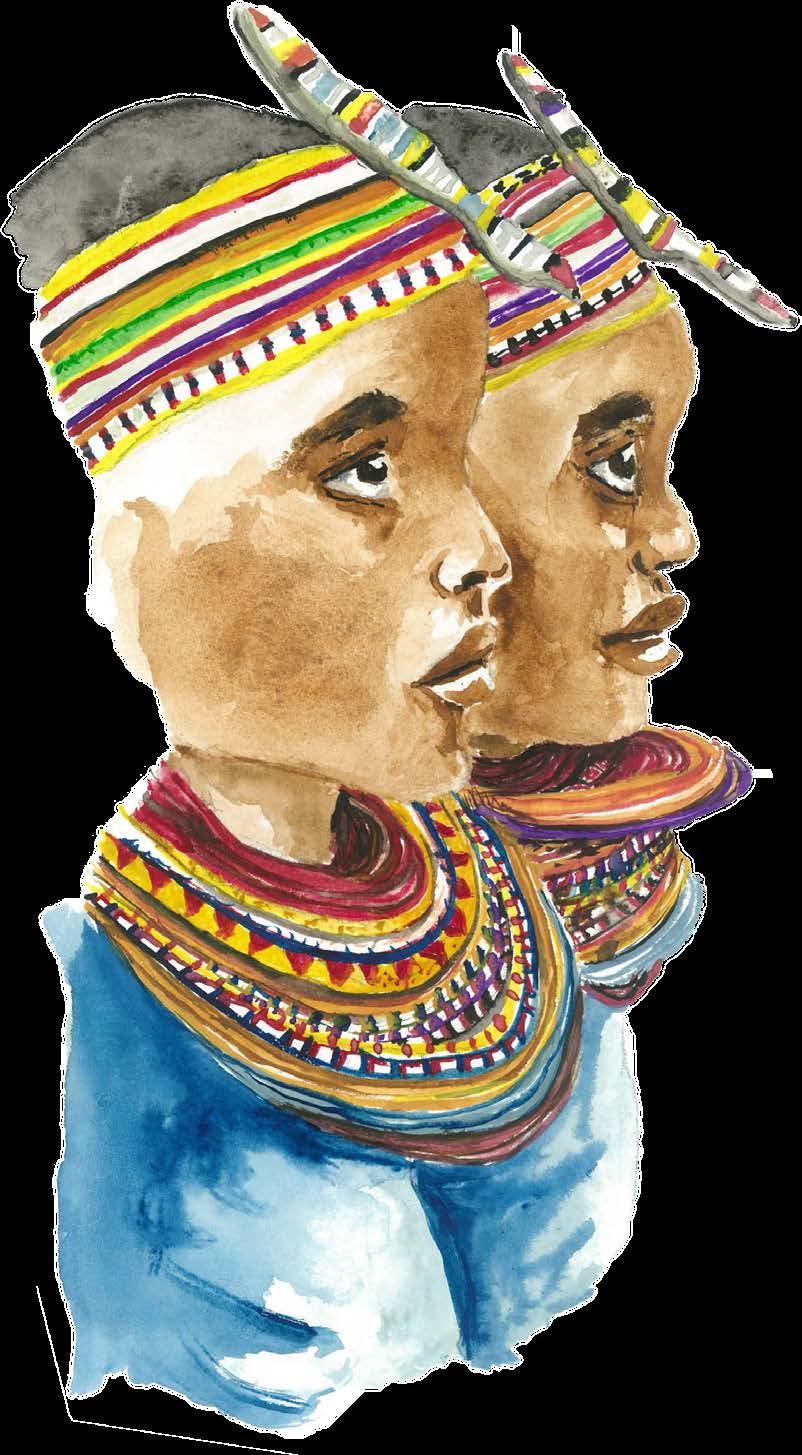
What kind of feedback are you hearing from the communities?
We receive countless testimonials. After every training session, we follow up with girls who’ve used the cups. Many admit they were hesitant at first, but once they tried them, they found them easy and effective. They love not having to buy pads anymore. It’s truly life-changing.
It’s incredibly moving work. Diana, our Kenyabased coordinator, was in tears recently after visiting a program for young, unwed mothers— most of them still children themselves.
Stories like these highlight why sex education has become such an essential part of our mission. When we teach girls how to use the cups, we also talk about their bodies, reproductive health, and empowerment.
You’re hosting a special trip to Kenya soon— can you tell us about it?
The idea came from our client, Katie Spiegel, who wanted to donate cups to a community she’d visited. When I was planning a trip to Kenya, I invited her to come along. We traveled with Mary Saruni, one of our Maasai trainers, and the experience was transformative.
Traveling with Mary brought an incredible cultural depth to the journey. We weren’t just observing communities—we were welcomed into them. Mary’s energy and warmth made it easy to connect with people. I realized that very few travelers experience Kenya this way. Most trips are focused on wildlife, but this one opens the door to authentic human connection—discussions about life, family, and community.
Because of that experience, I’ll be leading a small group to visit several of the villages where GBAG is active.
What do you hope people will take away from this experience?
My ultimate goal is to highlight our shared humanity. At our core, we’re all women, mothers, and people striving to care for our families and communities. I want participants to see GBAG’s impact firsthand and to experience the joy of connecting deeply with others—realizing how much we share despite our differences.


How are you feeling about leading this trip?
I’m thrilled! We have 14 participants, including our four team members from Kenya, which is almost the perfect size. It will be intimate and personal—a close-knit group. The American travelers will benefit from the insight of those
who’ve lived in Kenya and can share deep cultural context.
The trip will be very flexible. Some guests might prefer game drives, while others will be eager to visit villages every day. We’re tailoring it to everyone’s interests and comfort levels.
You can support Great Being a Girl and the Extraordinary Journeys Foundation by donating through the QR code.
Together, we can help girls in Kenya live healthier, more confident, and empowered lives.
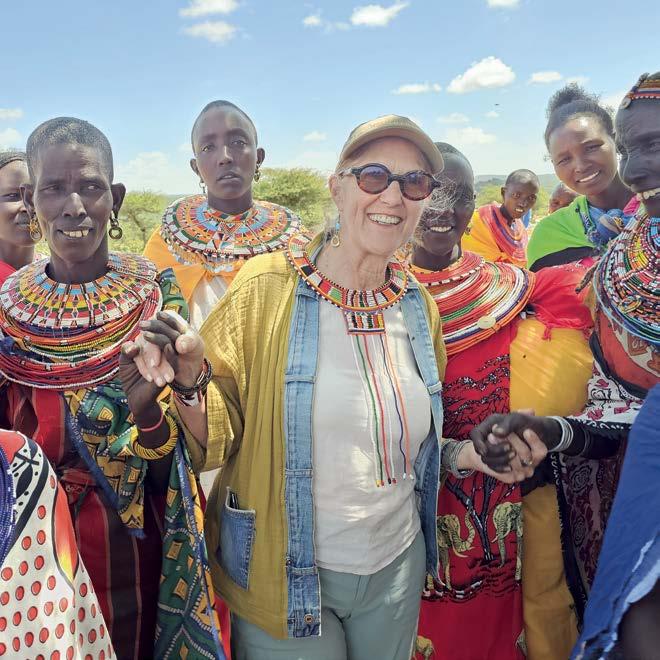
Marcia Gordon, Co-founder

Putting one foot in front of the other sounds easy, but often it leads to some of the greatest adventures. A way to escape, reset, overcome, or reconnect, the power of hiking never seems to diminish, no matter how many times we lace up our boots.
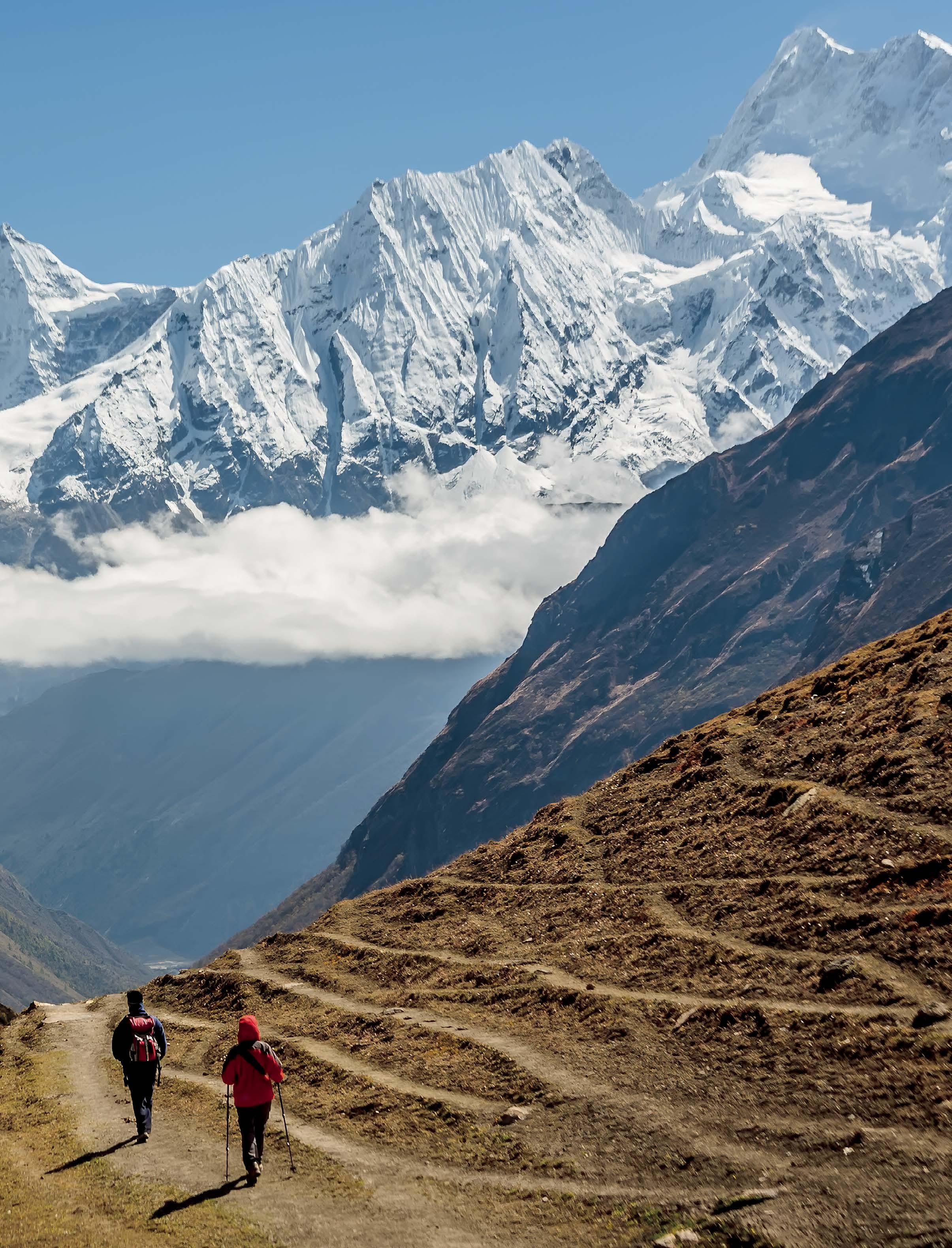
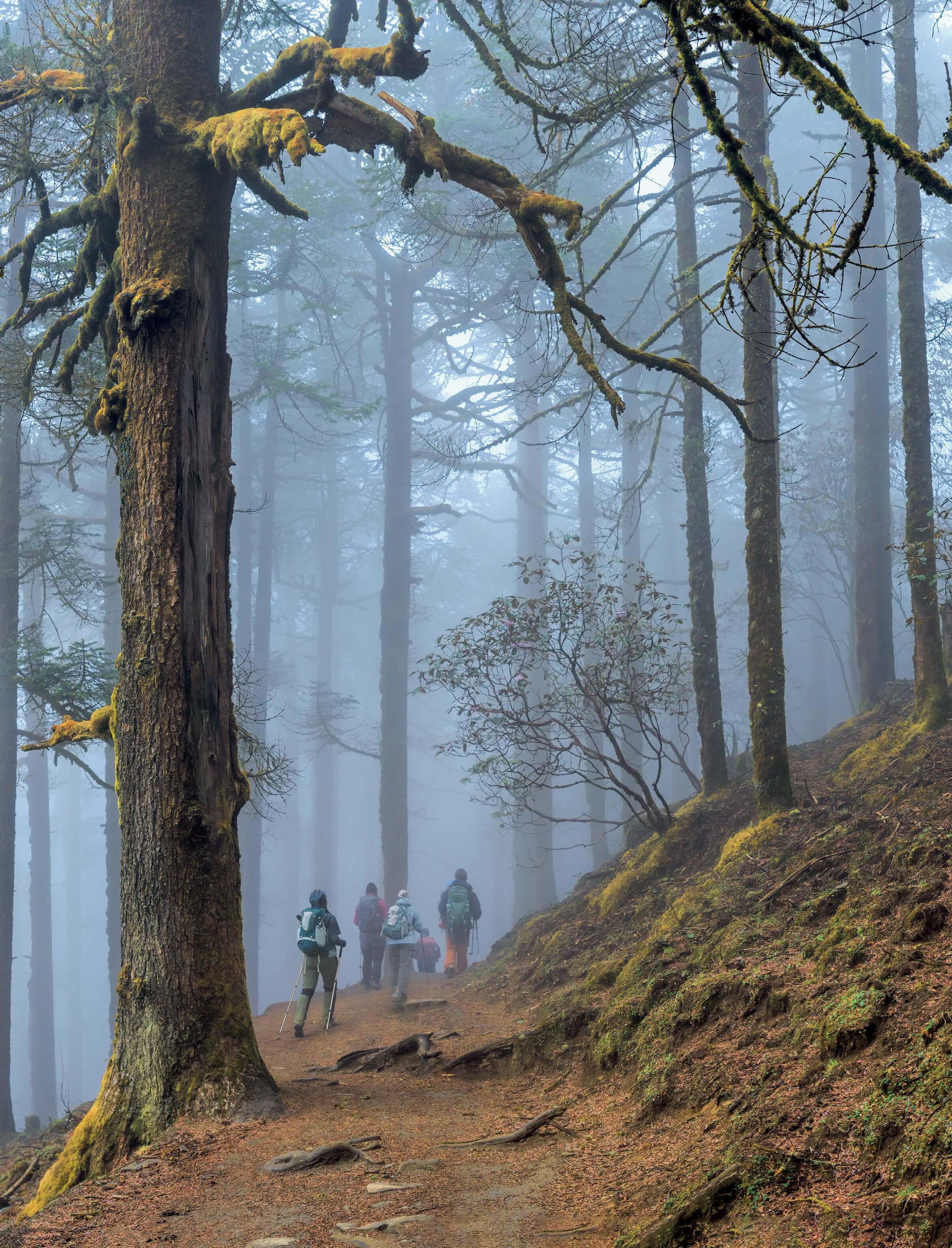
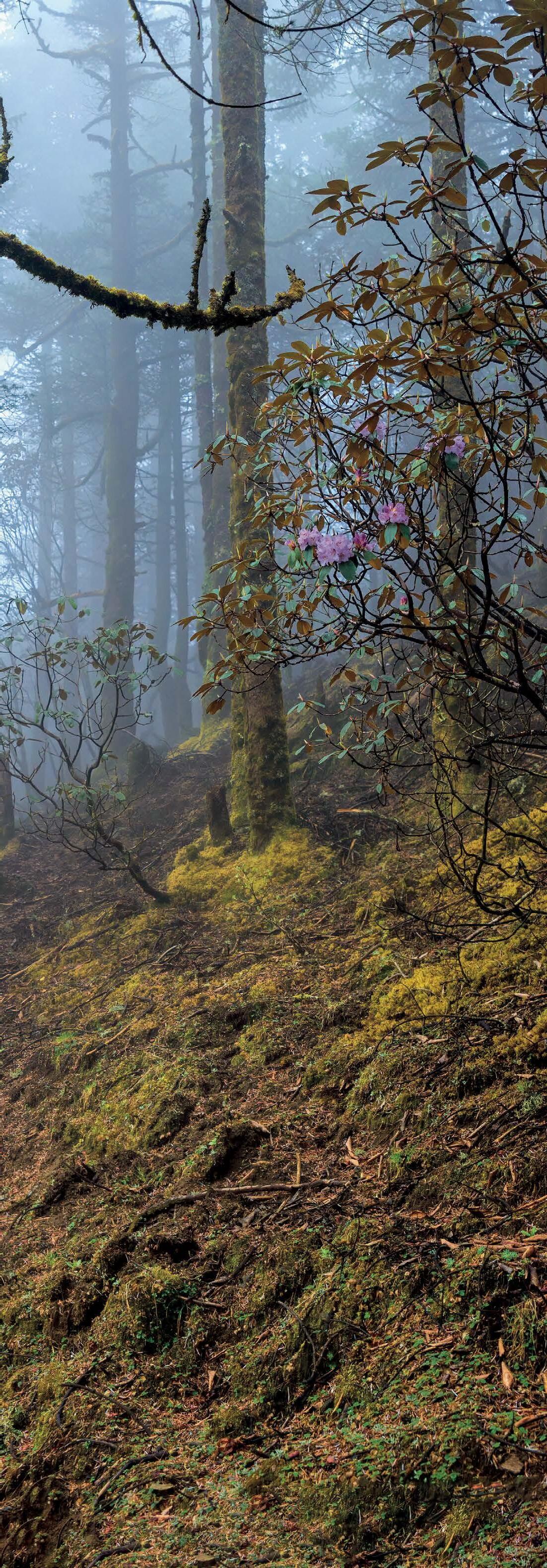
For some, it's the challenge. The rush of standing tall at the summit of a mountain after a punishing ascent. That feeling of pride sprinkled with relief at the end of days on the trail, destination reached. The feeling of fresh mountain air filling your lungs and unclouding your thoughts. Others are seeking distance— between themselves and the noise of everyday life; between an overburdened mind and a moment of clarity.
In a hyper-connected, increasingly complicated world, the simple act of walking, feeling your mind fall into sync with your feet, is less an activity, and more an act of self-care. Standing at the trail head at first light, surrounded by the smell of wet grass and birdsong, the only thing that matters is the adventure ahead.
There's a beautiful unpredictability to hiking. No two are ever the same. Your first-ever hike could change your life; so, could your one thousandth. It could be a journey years in the making, a challenge that will push you beyond what you thought yourself capable of, or a challenge still waiting to be conquered.
Sometimes, a hike is nothing more than a good walk, taken solely for the pure joy of carrying yourself from A to B. A spontaneous idea sparked the night before over dinner—often, these end up being the most rewarding of all.
Every hike has an end. But the journey is the real reason we set out in the first place.
From Himalayan Mountain passes to spiritual Outback walkabouts, we've hand-picked some of our favorite trails from around the world.
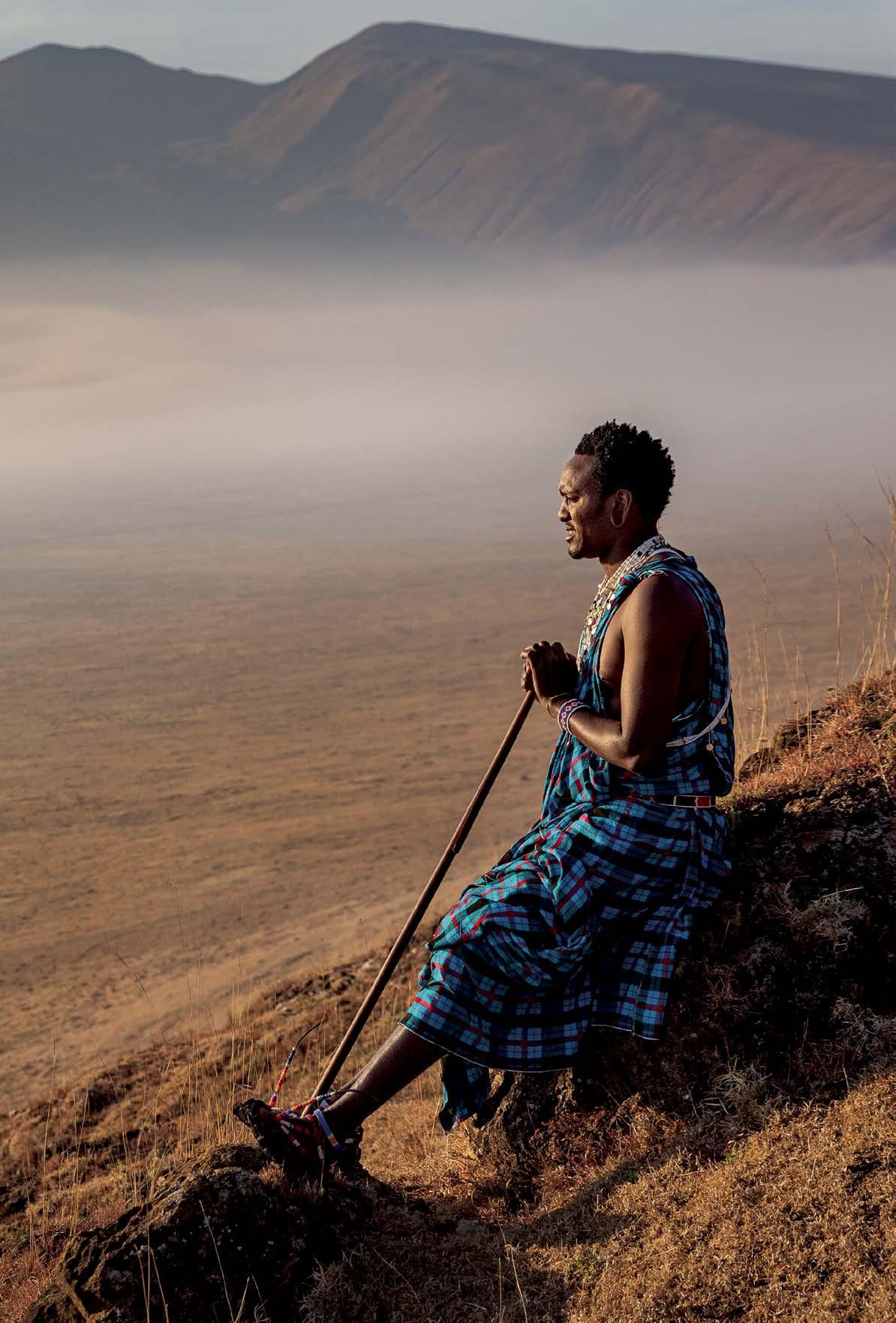
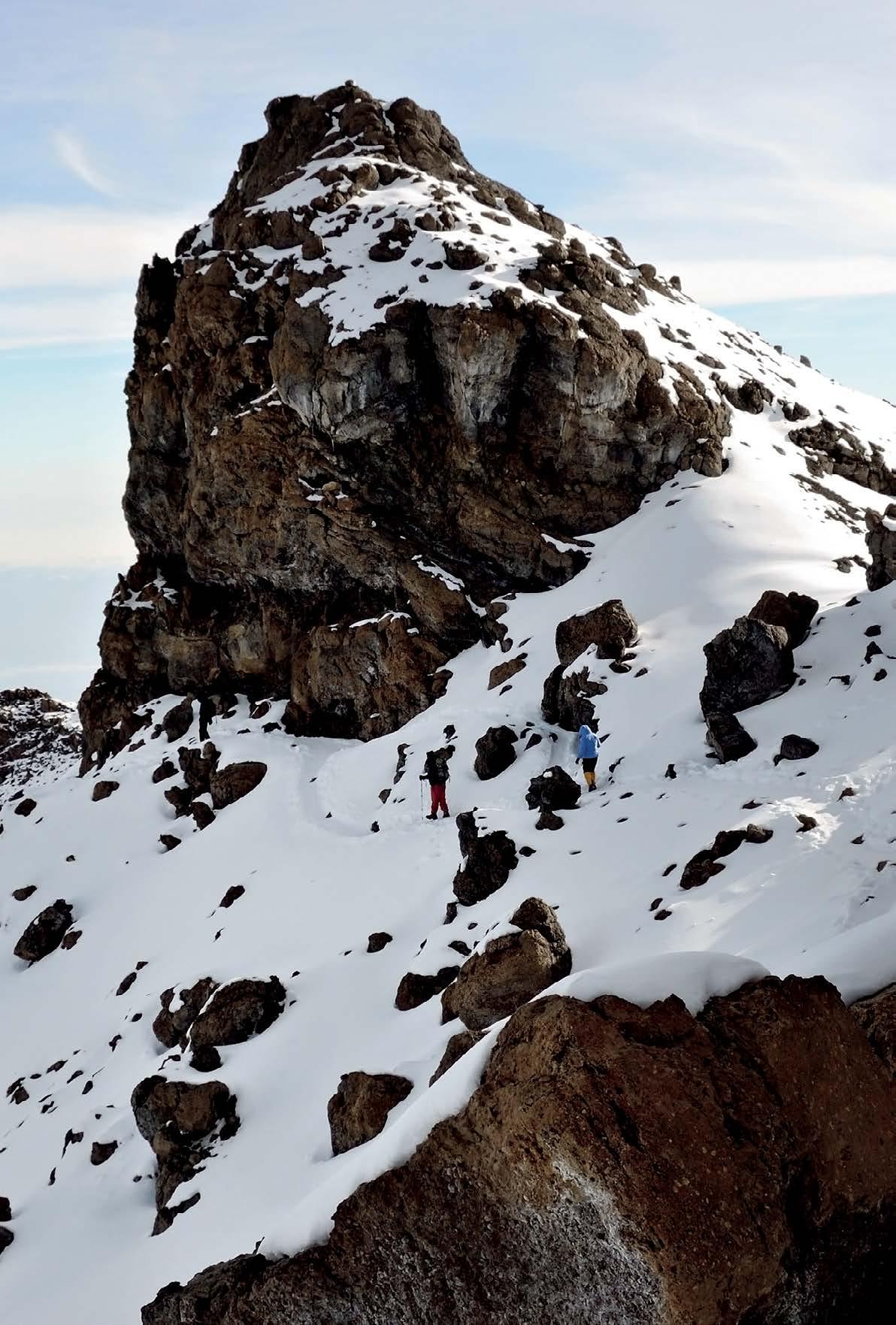
The day hike: Ngorongoro Crater towards Serengeti
An unforgettable journey from the rim of the mighty Ngorongoro Crater towards the vast plains of the Serengeti led by Maasai guides. Expect epic views and close encounters of the wild kind.
The big one: Kilimanjaro's Lemosho 8-day route
Summiting Kili is a beaming achievement, but you'll forever carry your guides and porters in your heart. On Lemosho, the route less taken, we steer you away from the shorter, steeper, crowded trails.
Sky-scraping mountains, highaltitude lakes shimmering in a thousand shades of blue, welcoming rural villages—the pristine countryside surrounding Ladakh is perfect if you want a taste of the Himalayas' beauty and culture, without spending days on the trail.
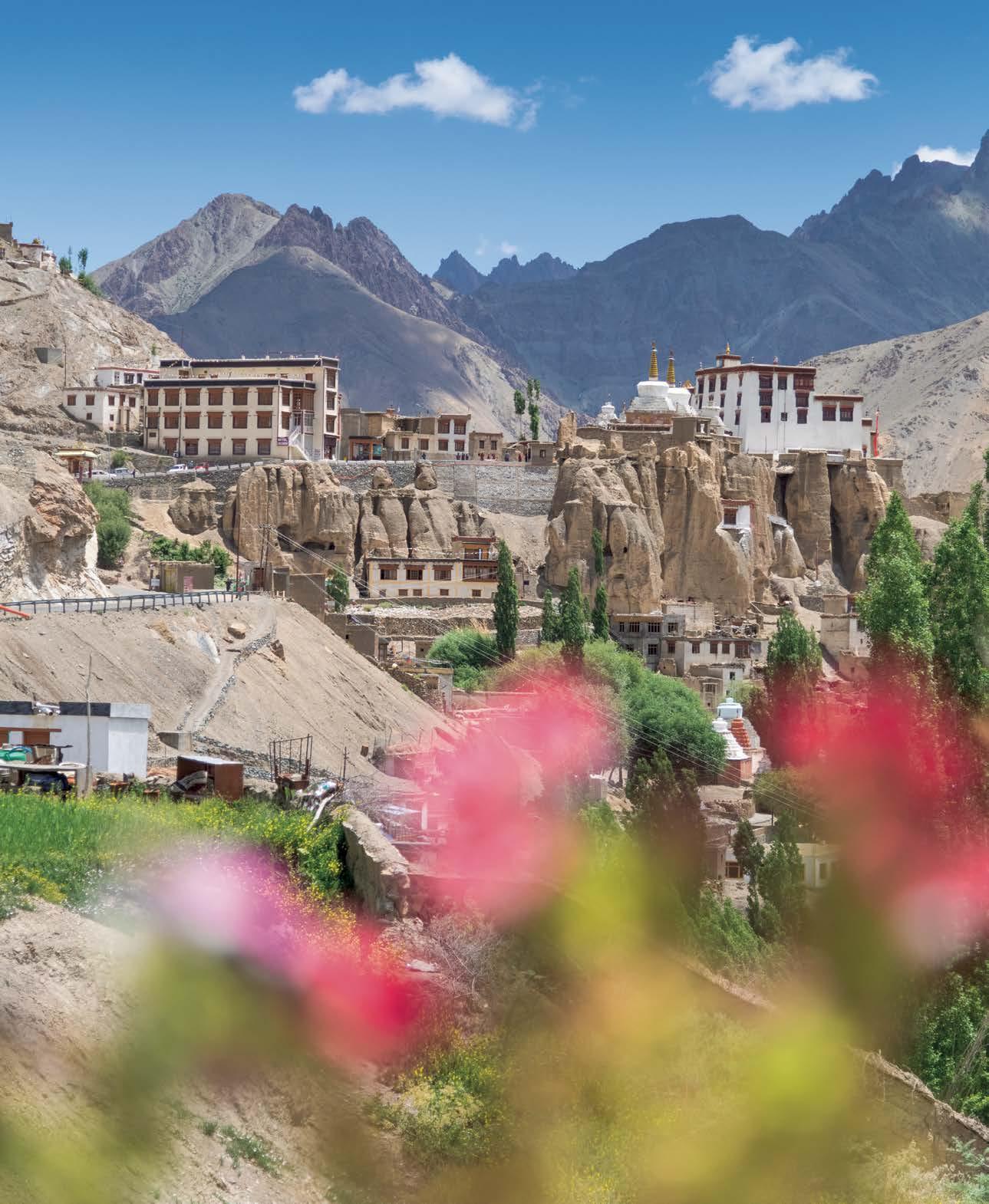
From this extremely remote guest house high in the Eastern Himalayas of Nepal, venture out onto the same untouched trails that former Happy House owner Sir Edmund Hillary (the first known person, alongside sherpa Tenzing Norgay, to scale Everest) once enjoyed exploring. Multi-day hikes with luxe camping offer the chance to go deep into Himalayan culture, explore Tibetan monasteries, and traverse centuries-old yak trade routes.
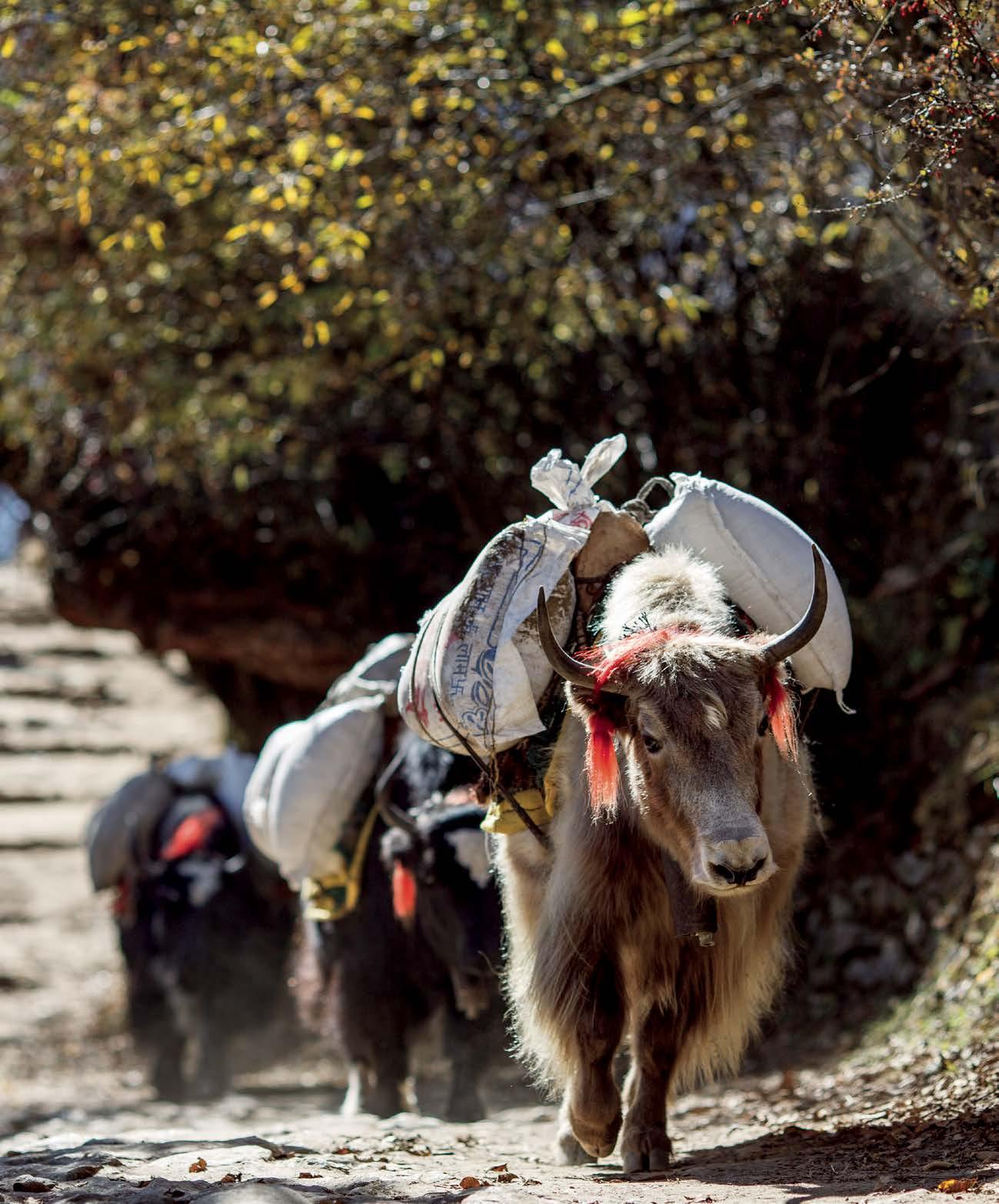
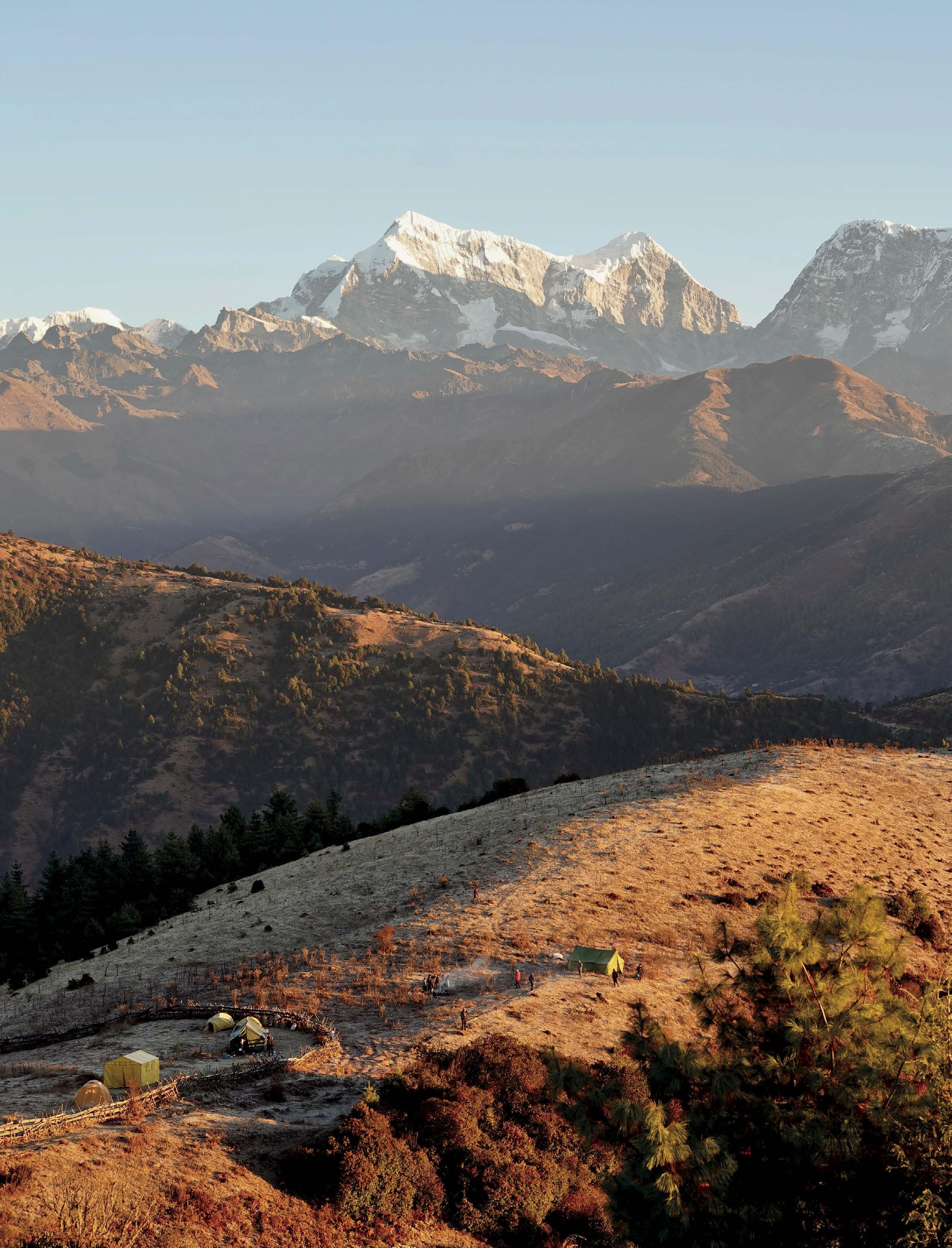
Short on time but still want to feel the buzz of that final ascent into Machu Picchu? Take the train to the trailhead and walk the final nine miles to the ancient citadel. As you enter through the Sun Gate, one of humanity's greatest mysteries unfolds beneath you.
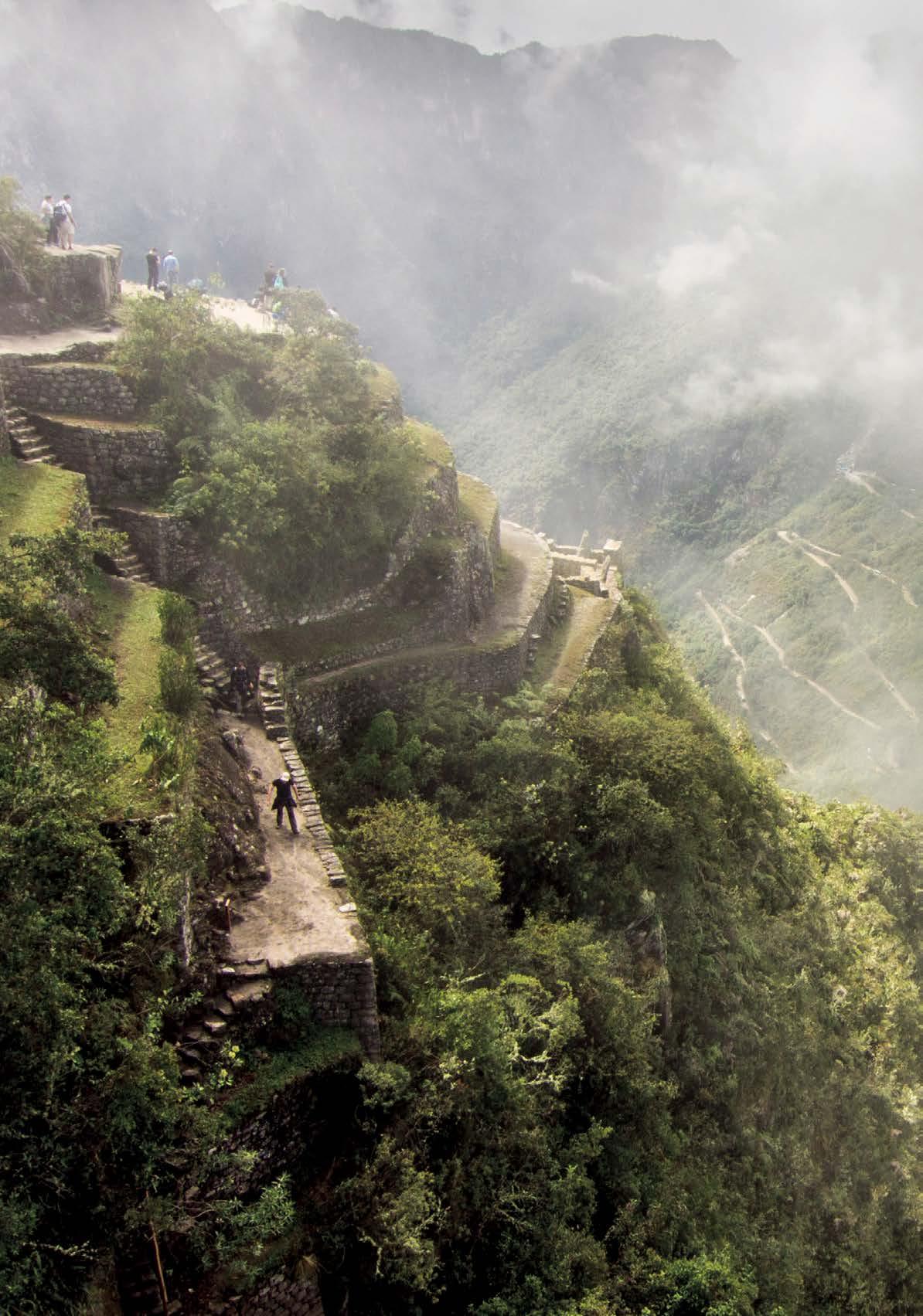
For those seeking solitude, this five-day hike takes intrepid trekkers into one of the most remote corners of the Peruvian Andes. Expect snow-capped peaks, glacier-fed lagoons, and a handful of scattered mountain communities.
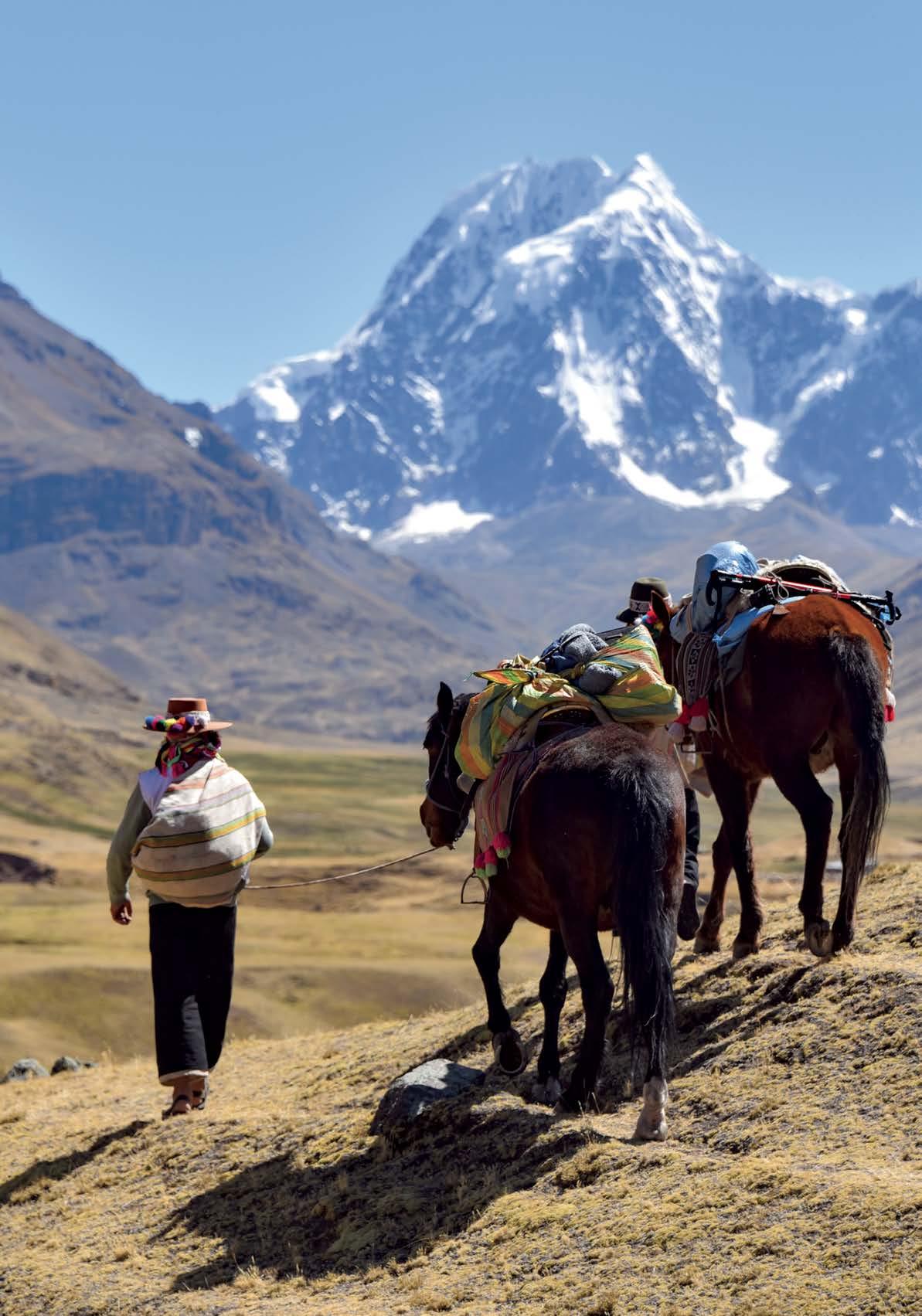
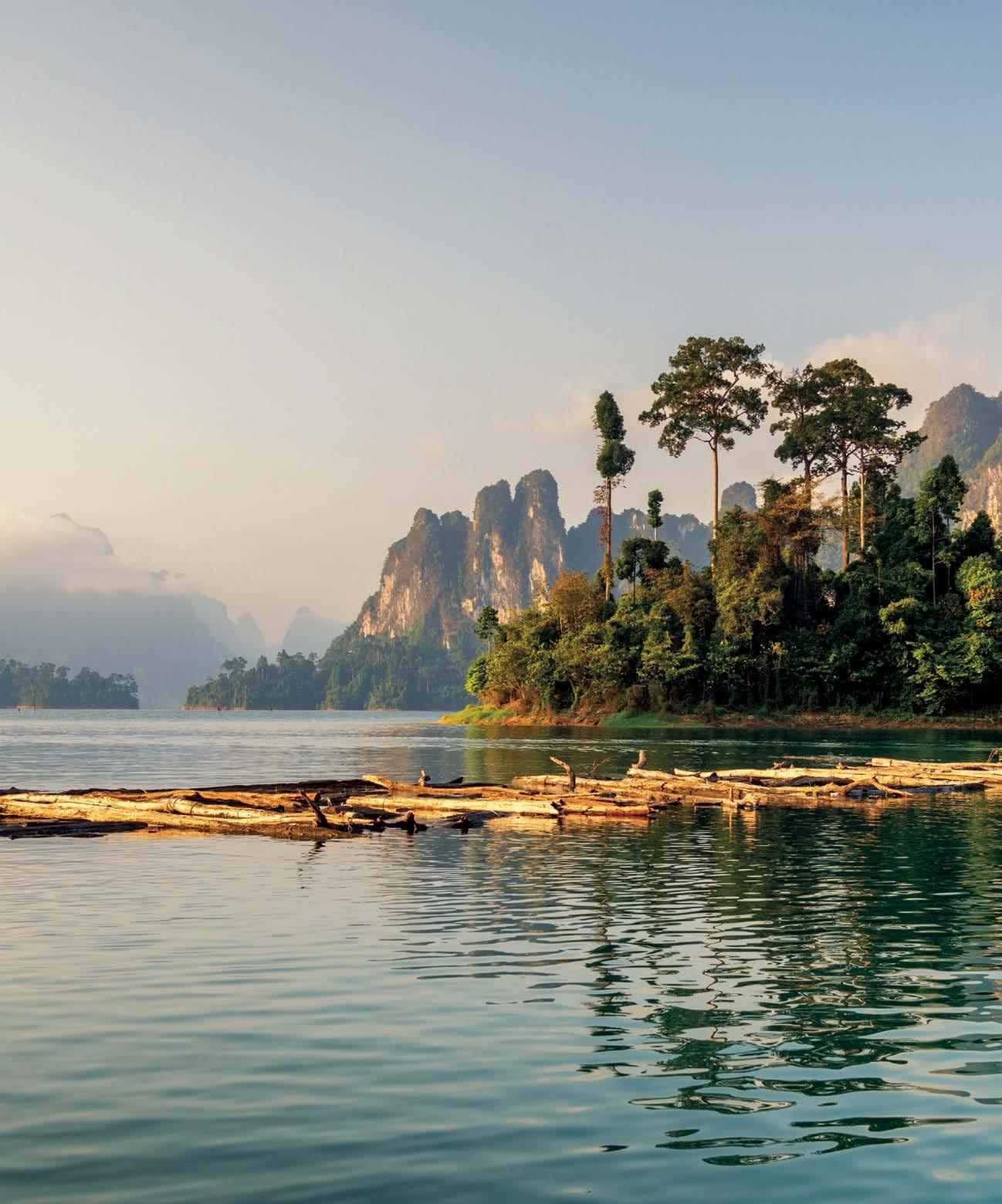
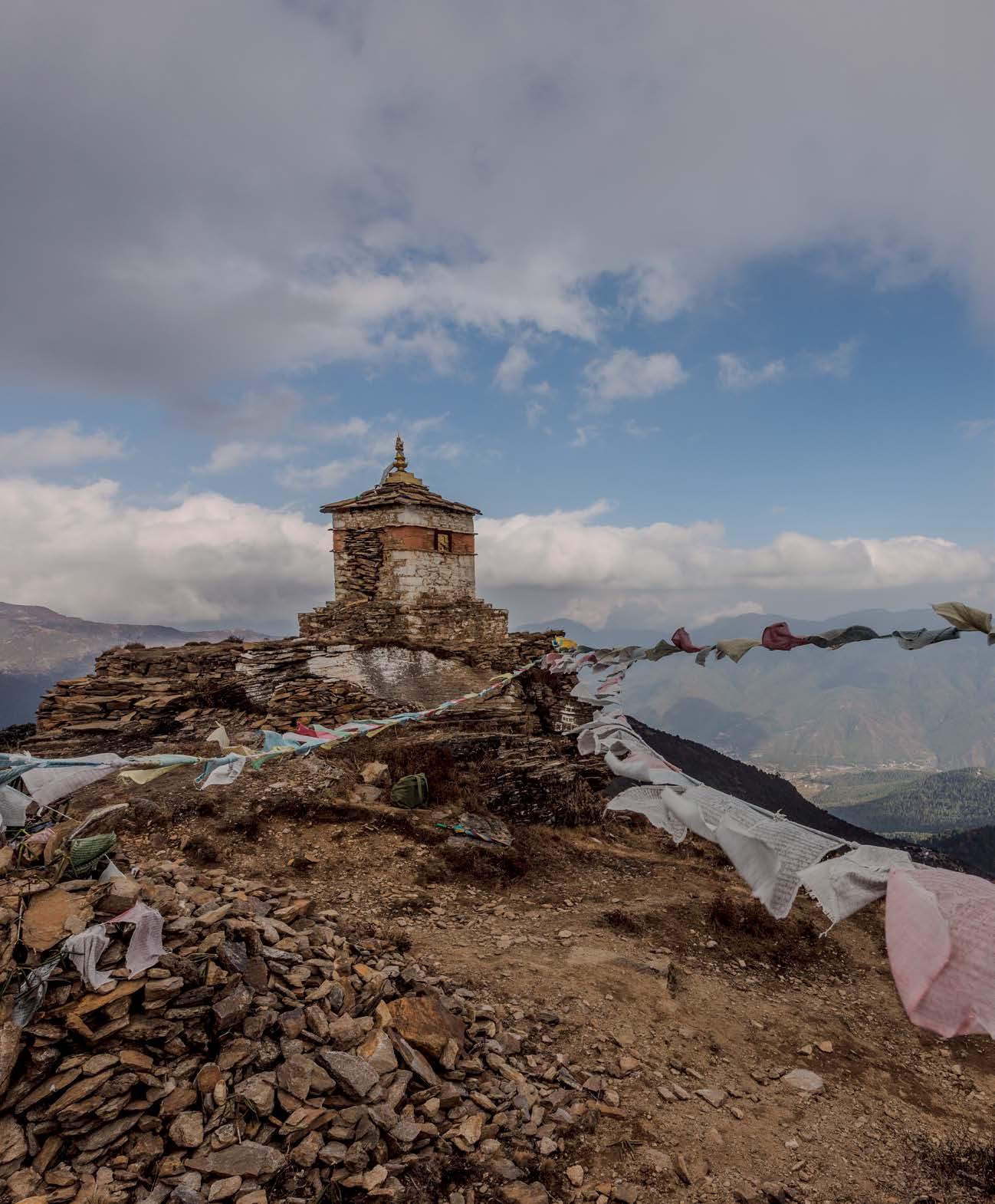
day hike: Khao
Connect with nature as you head deep into the lush jungle of Thailand's Khao Sok National Park. Guide-led treks are punctuated with cooling swimming holes, towering limestone rock formations, and ancient caves.
big one:
Weaving together deep cultural roots with its almost-mythical beauty, this 250-mile trek is Bhutan at its most epic. The whole thing takes more than a month to complete, but it can easily be portioned up into shorter multiday adventures.
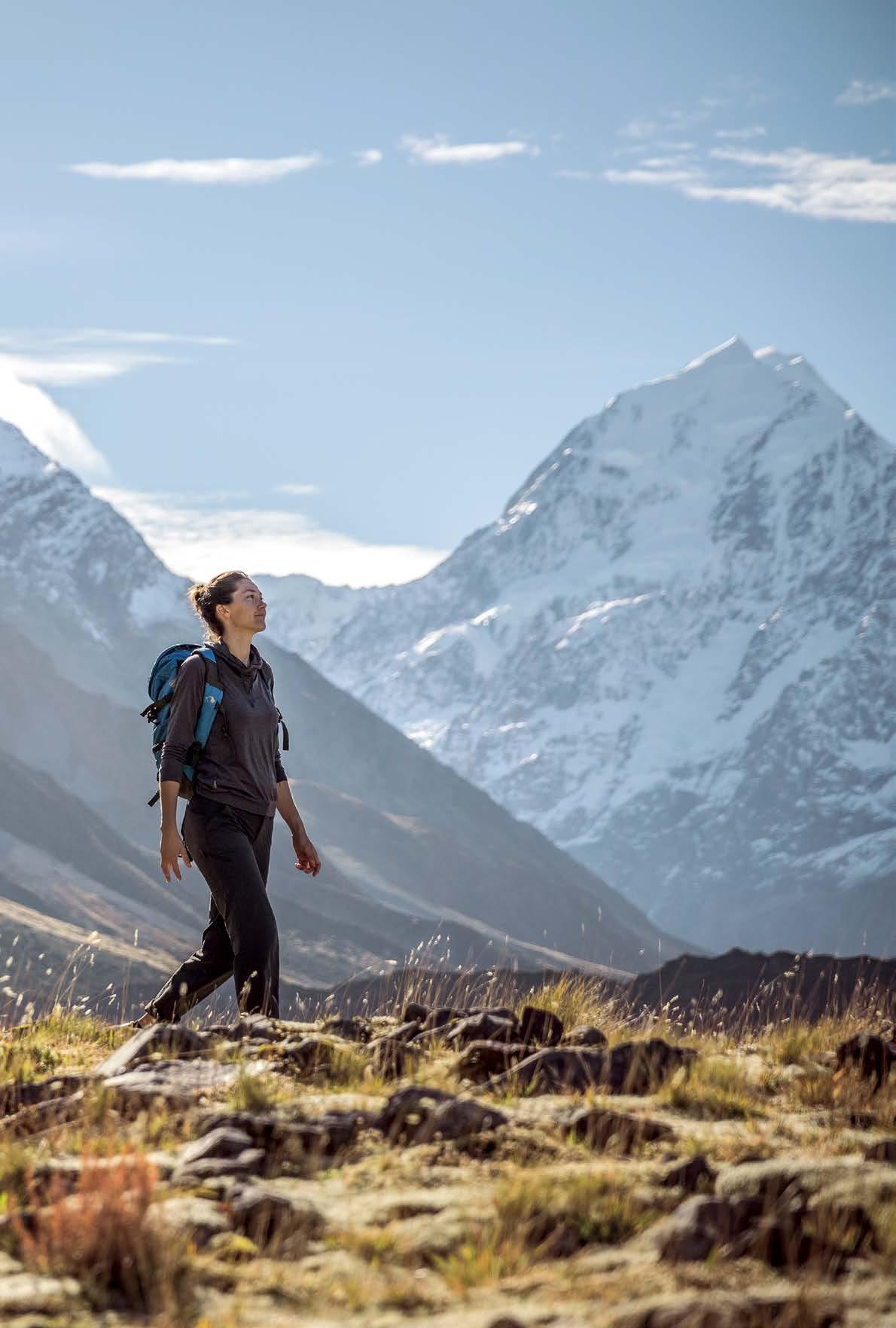
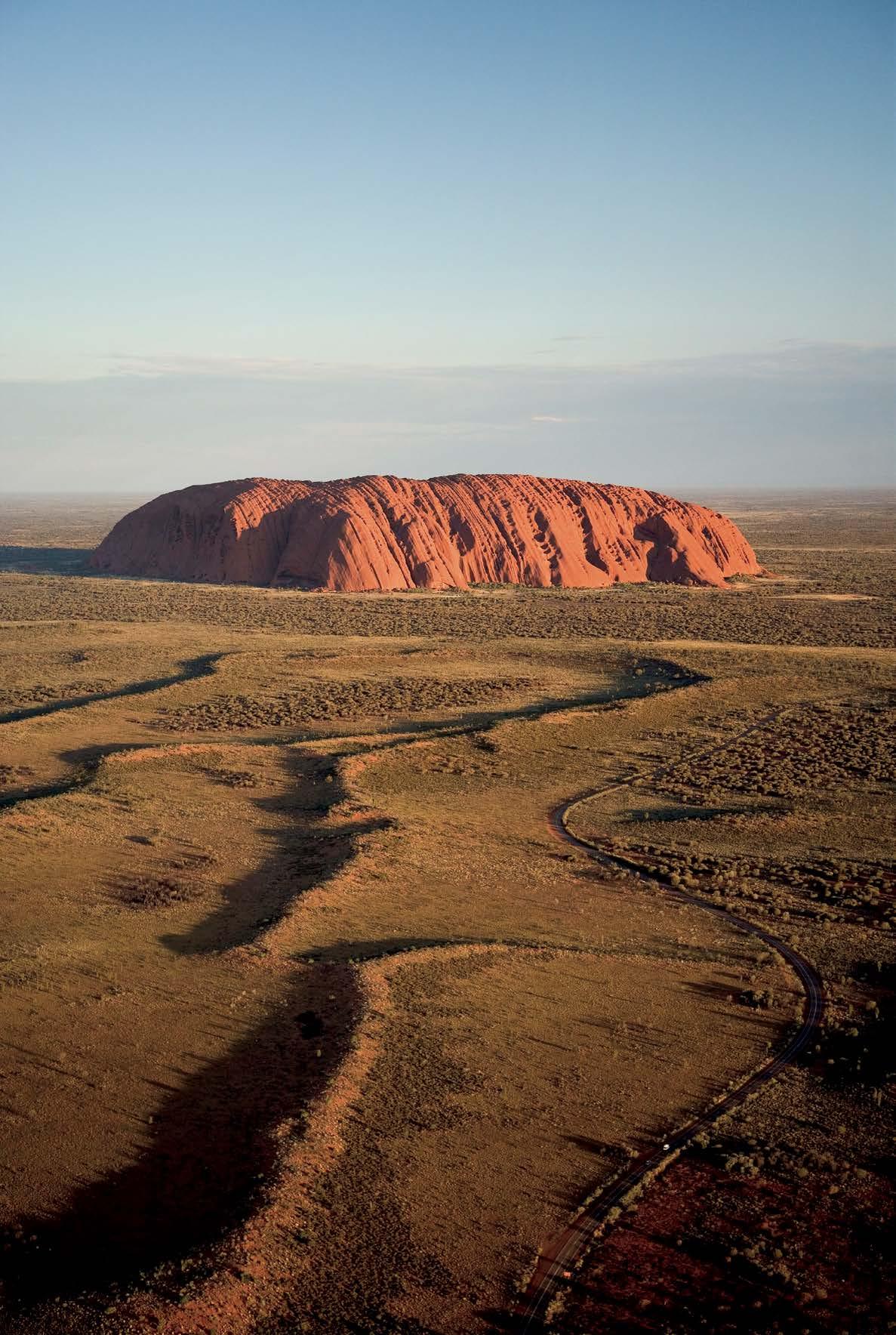
The day hike: The Hooker Valley Track, New Zealand
This six-mile trek offers a taste of New Zealand at its breathtaking best. Soaring, snowcapped mountains, gleaming glaciers, and surging rivers. If you only have time for one walk, this is the path you should take in Aoraki/Mount Cook National Park.
The big one: The Uluru Kata Tjuta, Australia
Much more than a hike, this 34-mile, fiveday journey is a meaningful exercise in understanding. The walk celebrates the connection between landscape and Aboriginal culture and passes by the sacred sites of Kata Tjuta and the mesmerizing Uluru.
Ready for mountain paths and self-discovery? Talk to our hiking specialist and start planning your next walking adventure: info@extraordinaryjourneys.com
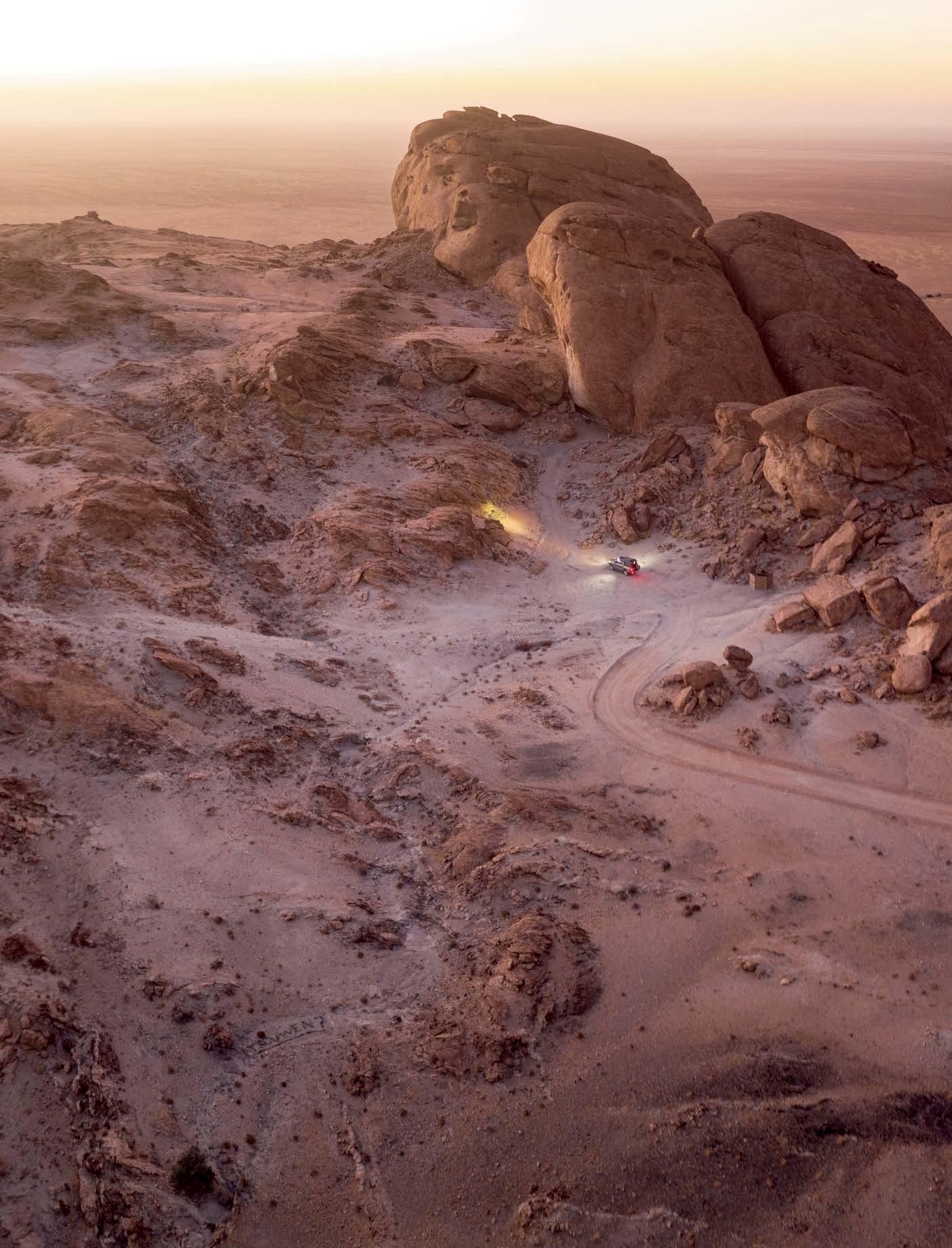
Writer Rosie Bell finds connections in a place she once called home during a life-changing journey to Namibia.
Written by: Rosie Bell
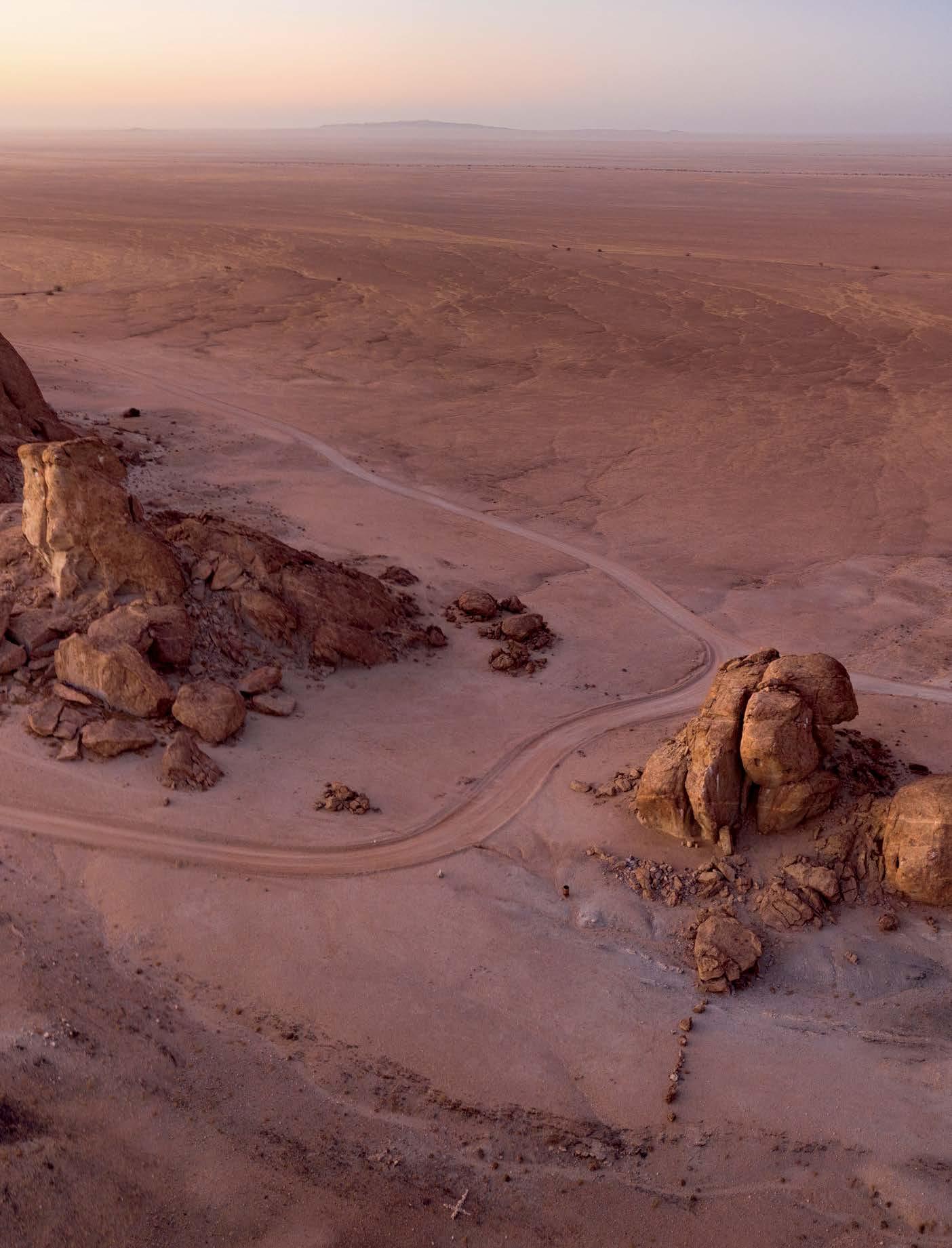
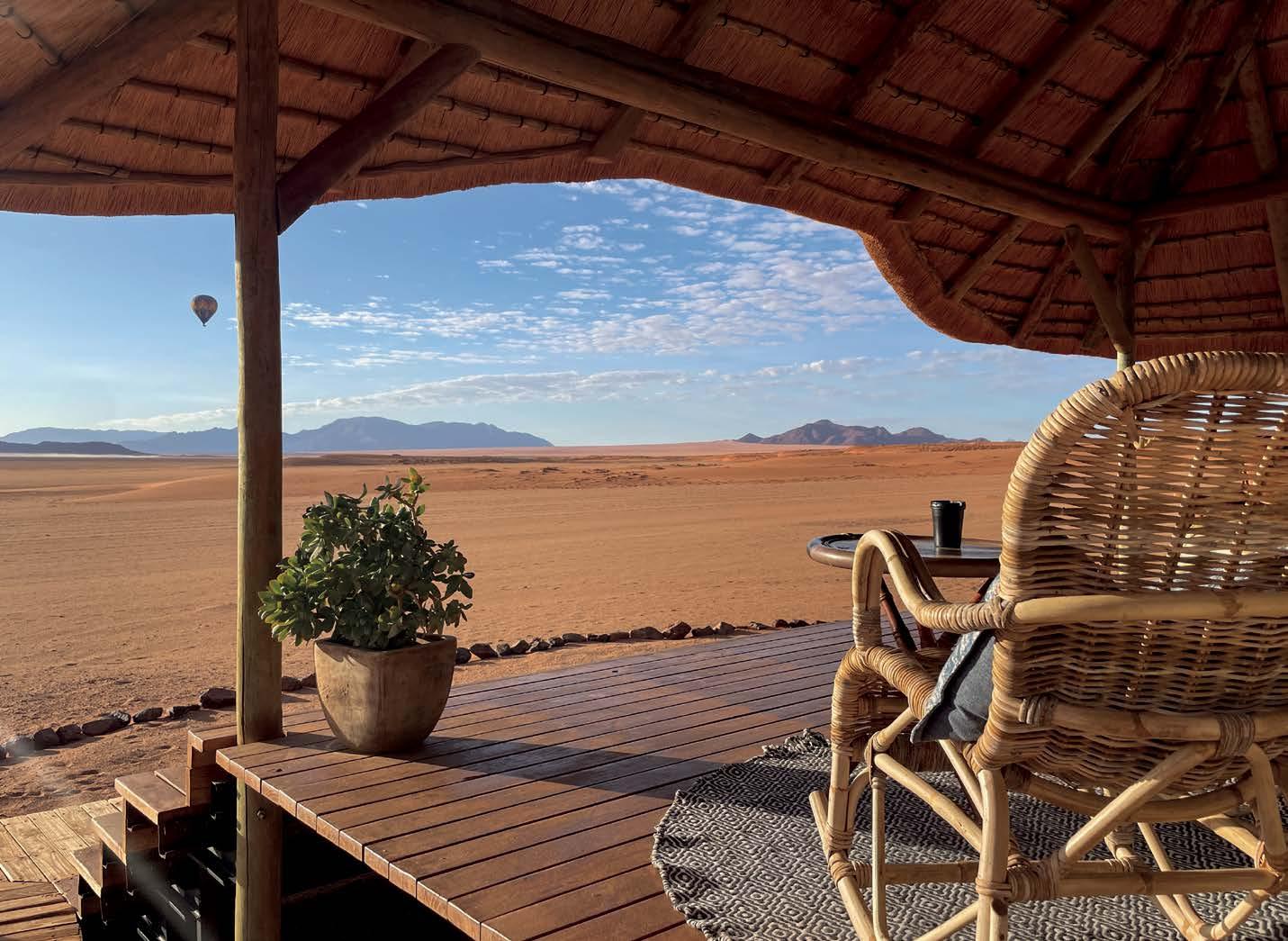
Iwas a child when I last knew Namibia. My father, a diplomat, had been posted to the capital in 1991, and thus began a formative chapter of my life. I was too young to articulate the experience, but old enough to be shaped by it. The earliest contours of my memory are drawn in Namibian light: my father drinking velvety Amarula on ice, the omnipresent whiff of biltong (dried meat) and braai (barbecue), the awe I felt seeing Herero women in their wide-brim dresses, and our palm-dotted house.
After three decades, my sister and I recently returned on a trip carefully choreographed by Extraordinary Journeys. Now two daughters without parents, we sought to reconnect with the country as it currently is, and also to meet the Namibia that had always lived inside us.
Extraordinary Journeys had listened, not just to where we wanted to go, but to why. As many Namibia pilgrimages do, ours began in Windhoek, where we met Franco, who would be our guide, fixer, philosopher, and friend for the next 10 momentous days.
The first stop was our former family home. Leaning slightly under the weight of time and abandonment, the house wasn't quite as lovely as I remembered. Thankfully, throughout the duration of our trip, we always had somewhere exquisite to rest our heads come nightfall. In Damaraland, it was Onduli Ridge, a spellbinding place where a Bond villain could confidently lay low. The lodge features rounded rooms that blend seamlessly into truffle-colored boulders as big as the desertadapted elephants the region is known for.
Starry nights, zebra encounters, and riotous sunsets were on the cards for us at Kwessi Dunes, a handsome hideaway in the NamibRand Nature Reserve with outdoor Star Gazer beds. And what I adored about Wilderness Little Kulala—besides the well-lit living room with games aplenty, private entrance to the burnt-orange dunes of Sossusvlei, and joyful song-and-dance welcome from every staff member—was our private pool from which we could watch "safari TV," with oryx and jackals wandering past.
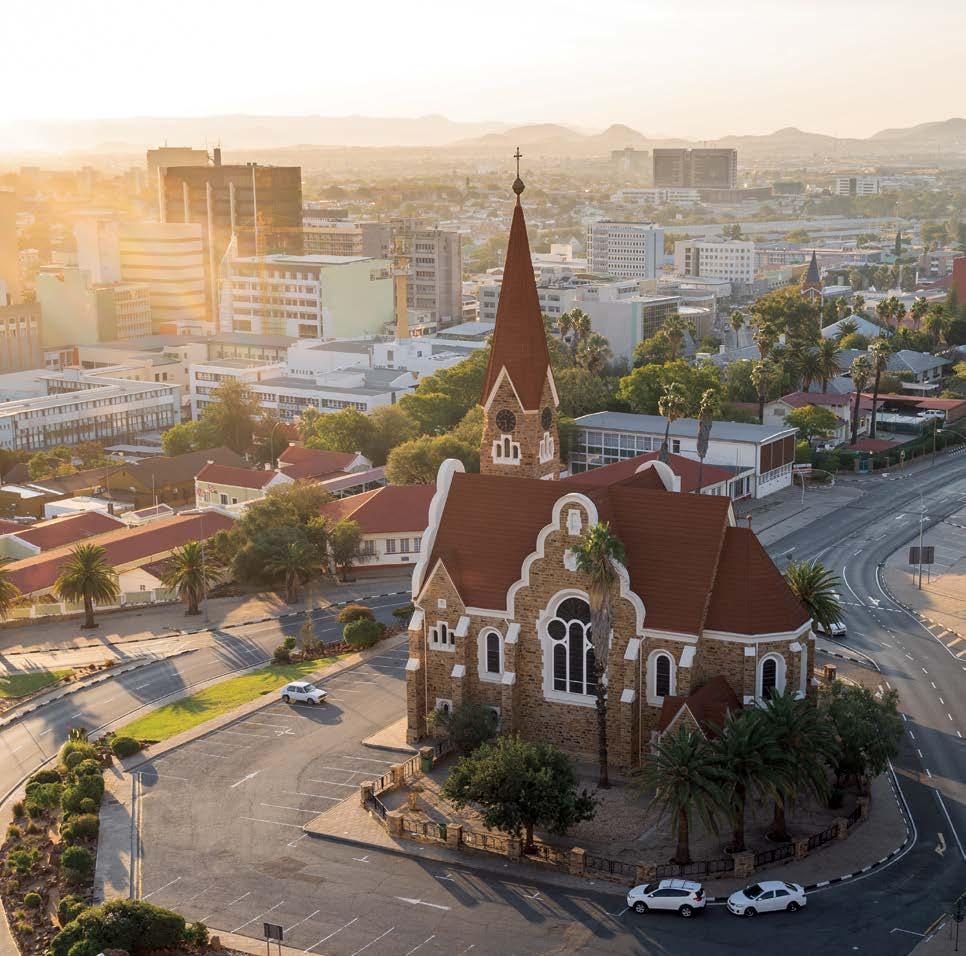
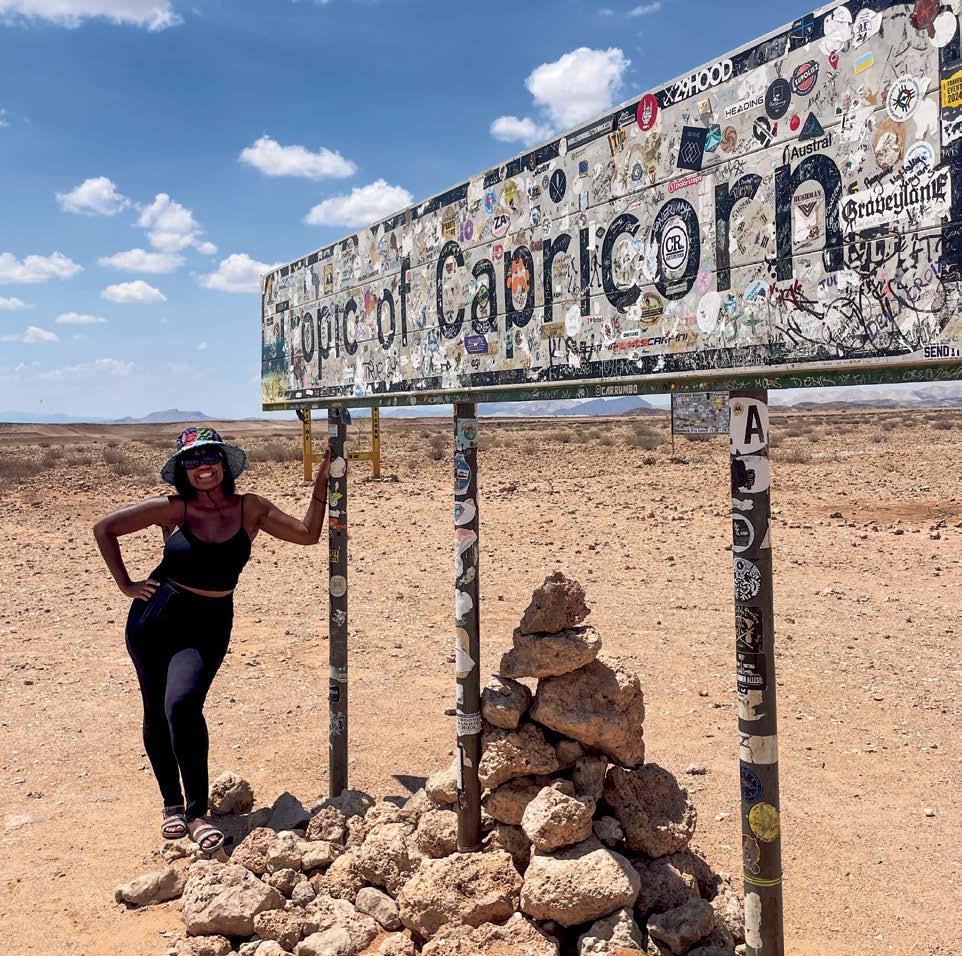
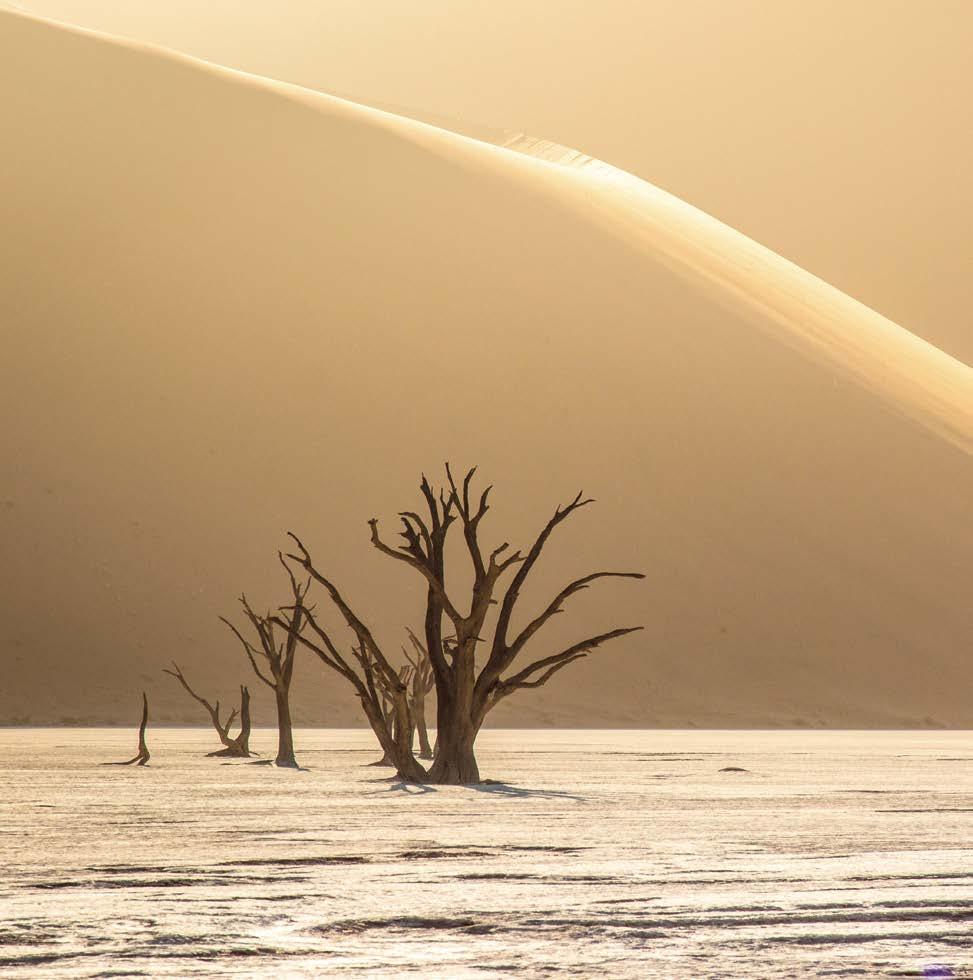
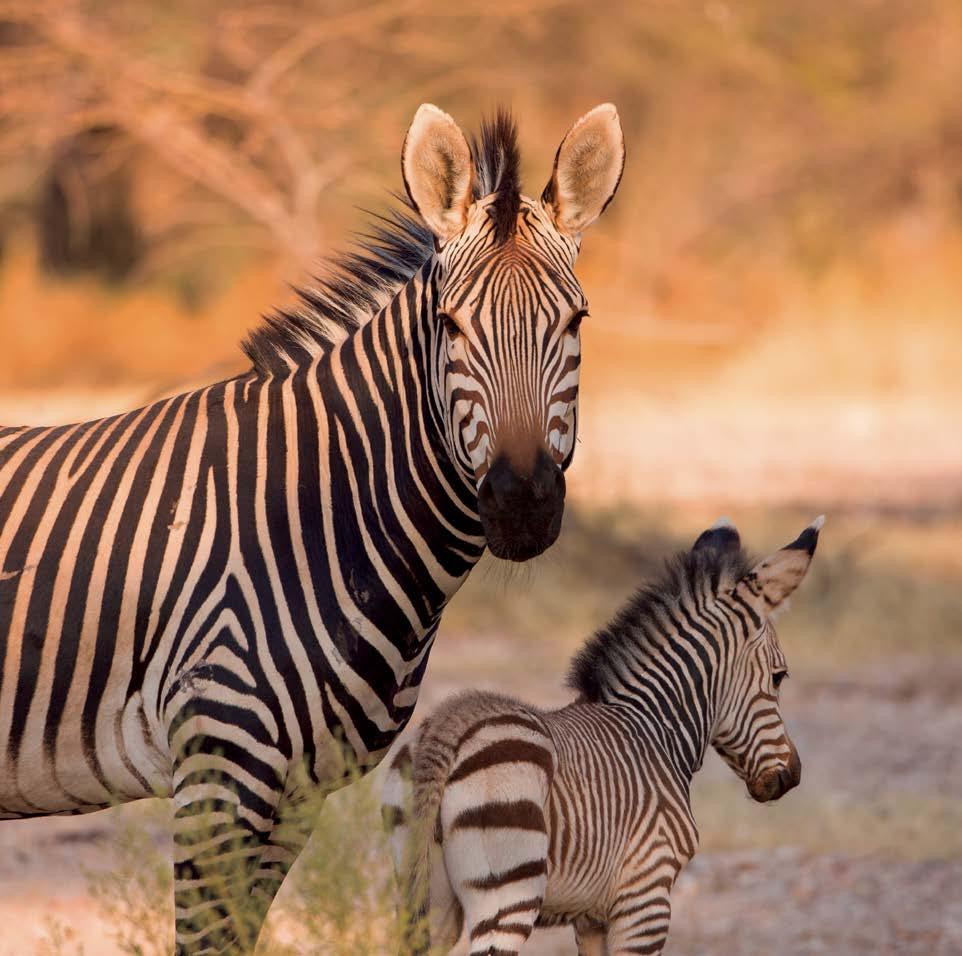
This was my very first safari, and I saw an impressive array of flora and fauna, along with some truly singular Namibian experiences, like standing before the scorched-to-death trees of Deadvlei and inspecting the Welwitschia "living fossils," found only in the Namib Desert. I built some new memories with my sister, too, like
posing for photos at the Tropic of Capricorn. Having lived in England for many years, we are conditioned to roll our eyes at rain. But in Namibia, we were struck by the near-evangelical joy of locals when a long-awaited storm spilled gallons onto parts that had been parched not for weeks, but years. This is me
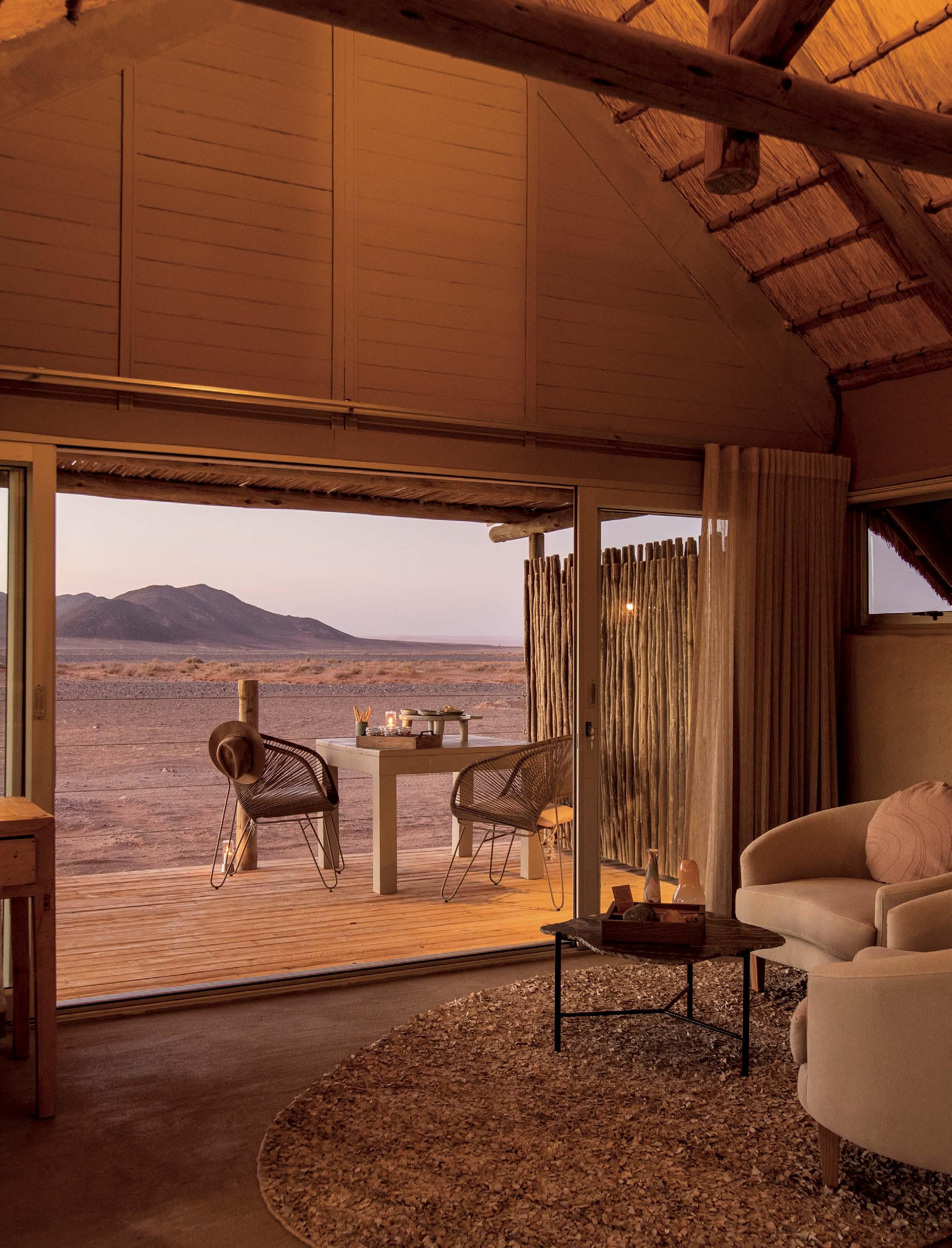
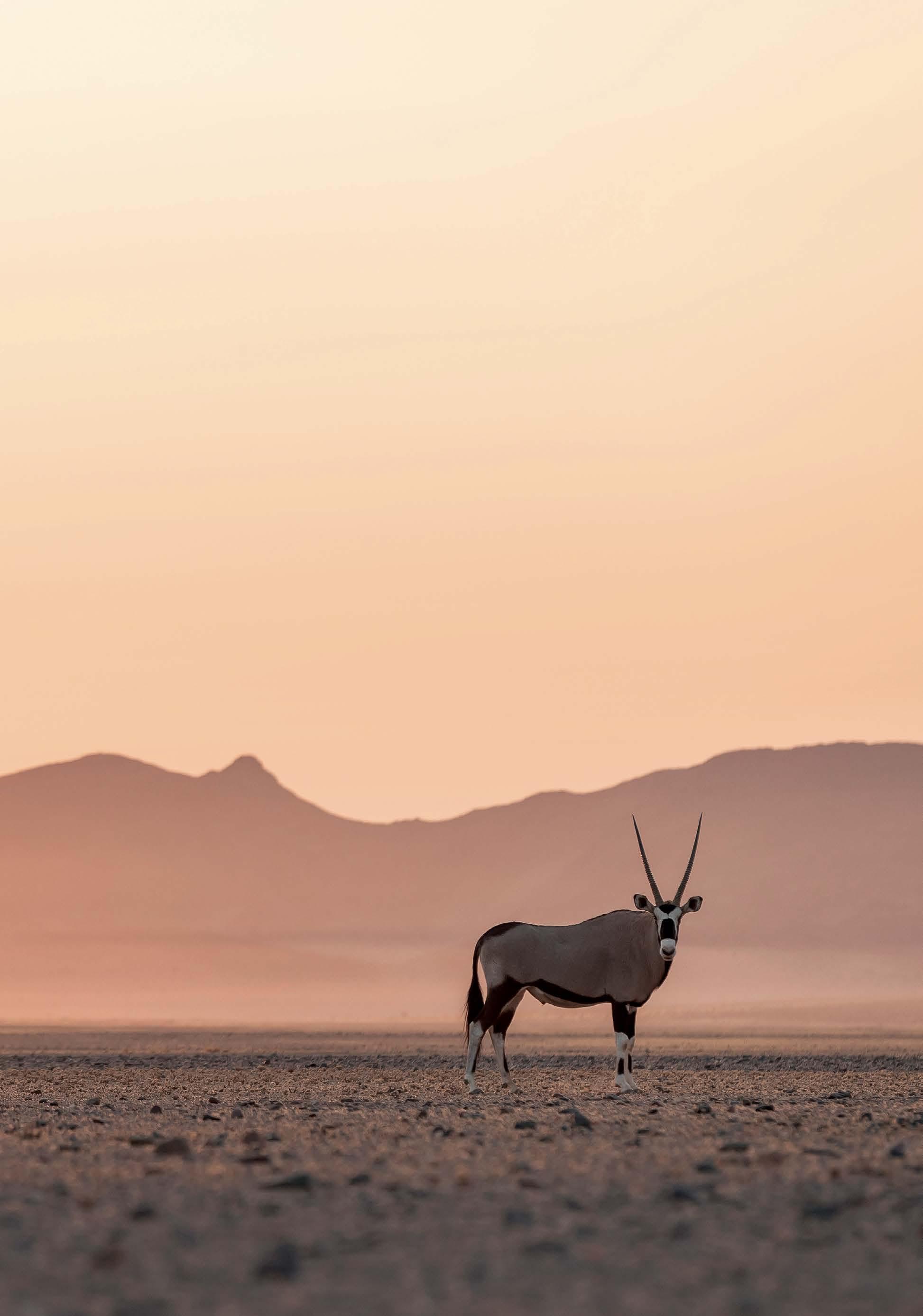
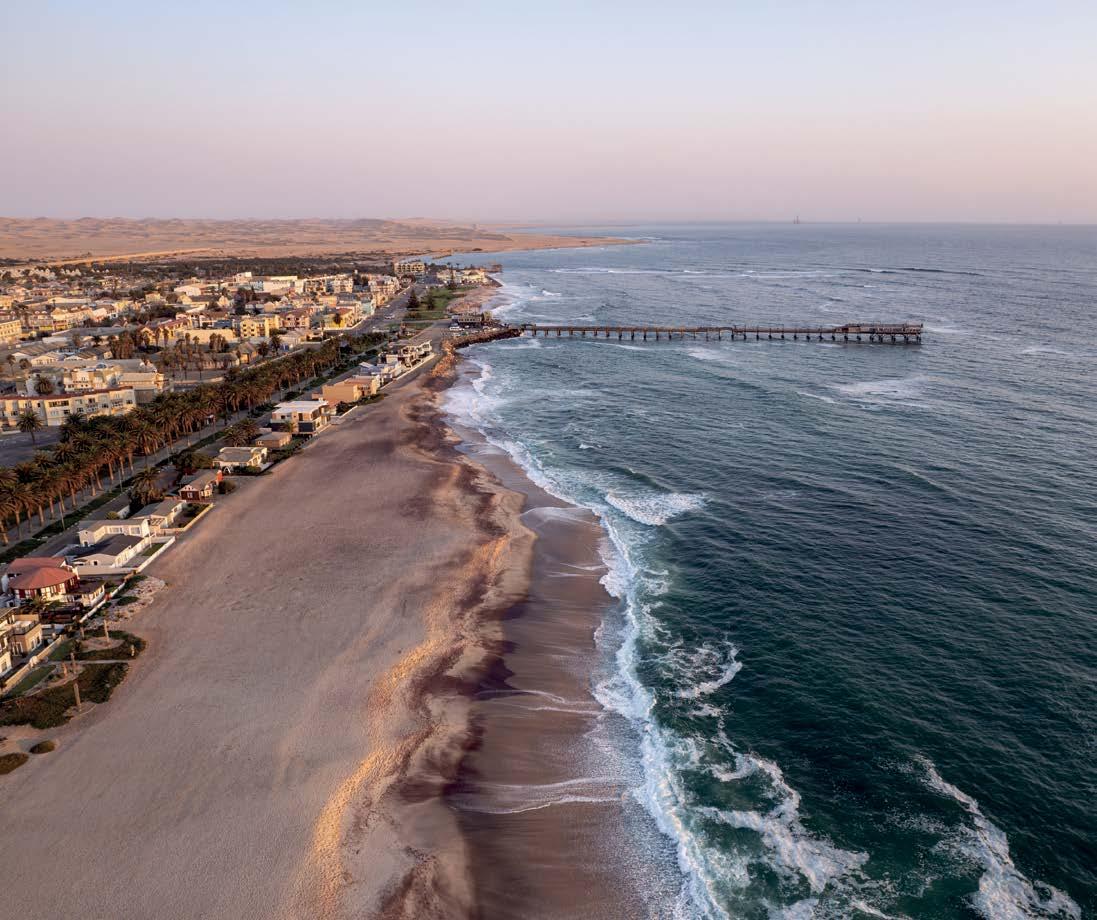
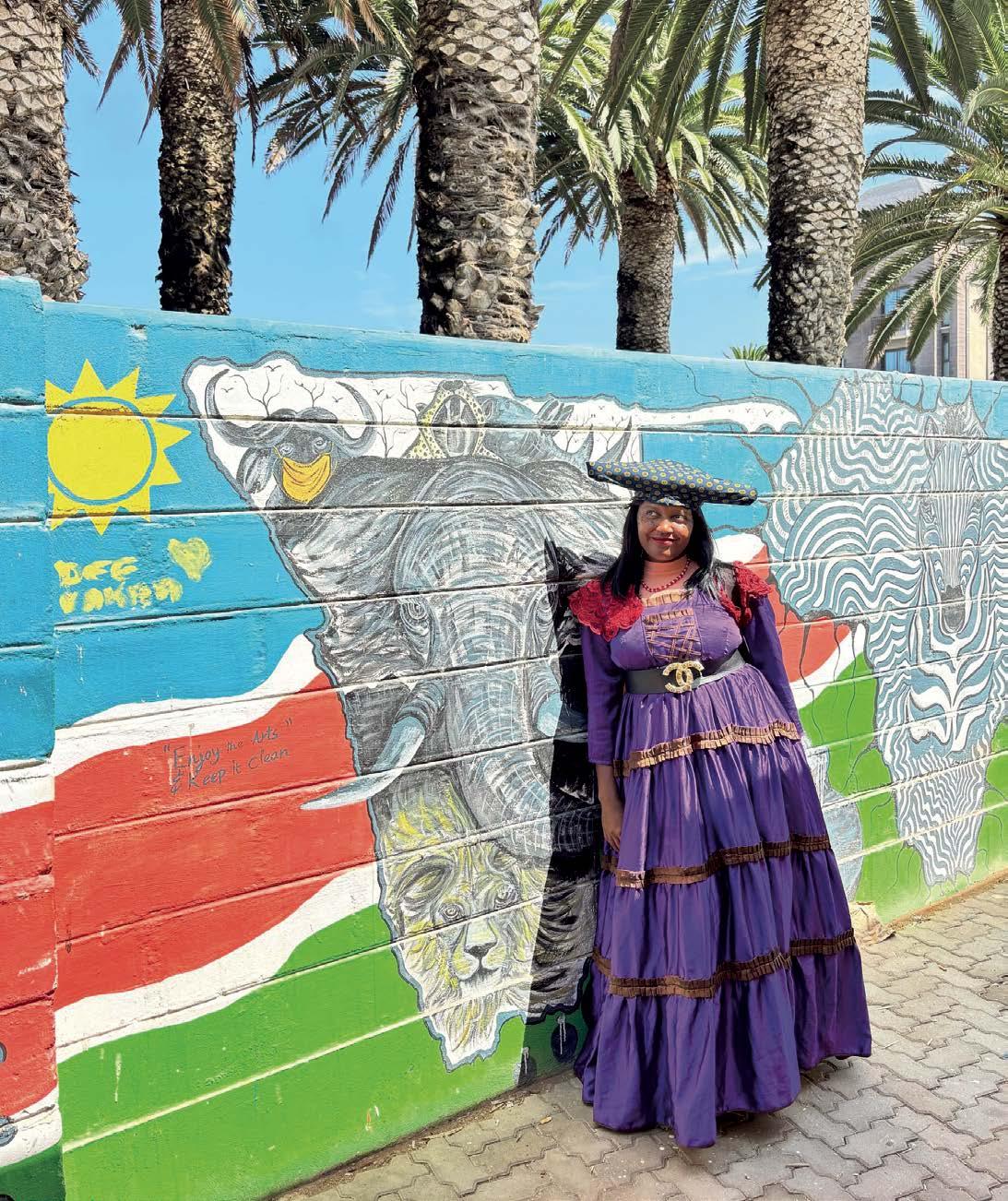
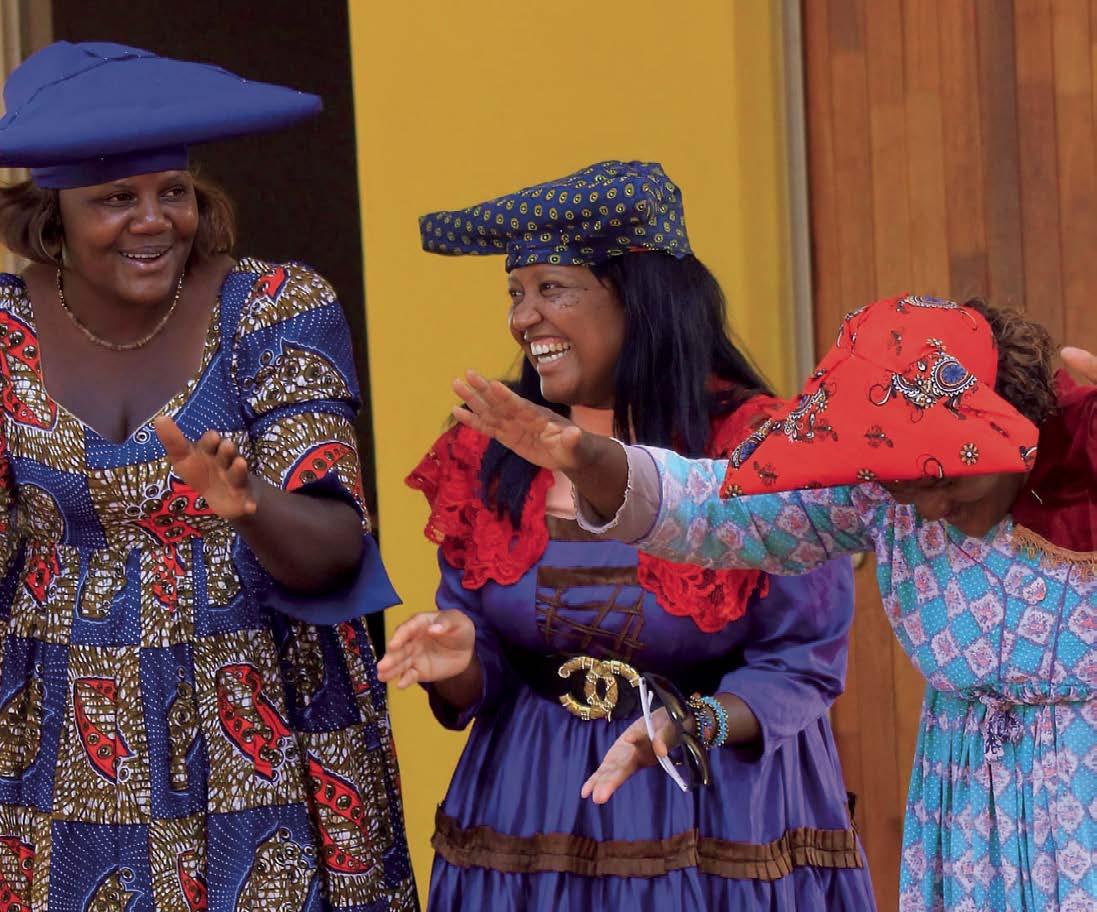
This journey was a safari of the heart and my first trip with my sister in years. Fittingly, our very first family holiday had once taken us to Swakopmund, a popular beach town, and with that in mind, Extraordinary Journeys made sure to include it.
Swakopmund is a coastal outpost of surreal contradictions. German street signs in the middle of Africa. Lutheran churches beside palms. Beer halls and bratwurst just miles from scorched orange dunes.
It was there I had my first up-close encounter with the Herero women I grew up watching from afar in their ohorokova, Victorian-era gowns layered with petticoats. These distinctive dresses, a sign of cultural preservation and resistance to colonial oppression. On a sunny sidewalk, they were selling handmade trinkets with tenacity. Curious, I asked them about the fabric, the structure, the meaning, and they answered with warmth and pride. Then, to my surprise, one of them gave me the literal dress off her back. Suddenly I was being wrapped in petticoats, buckled into a belt, and crowned with the otjikaiva, a cattle-horn-shaped headdress. Before long, we were dancing, laughing, singing, swaying, and I briefly became part of their sisterhood.
A moment both improbable and perfectly placed, this connection was beyond what I could have hoped for, but without Franco, it wouldn't have been what it was. He was our cultural interpreter, our bridge, and interlocutor of memories. Without him, we might have been voyeurs. With him, we were welcomed participants.
Me, celebrating with my Herero sisters
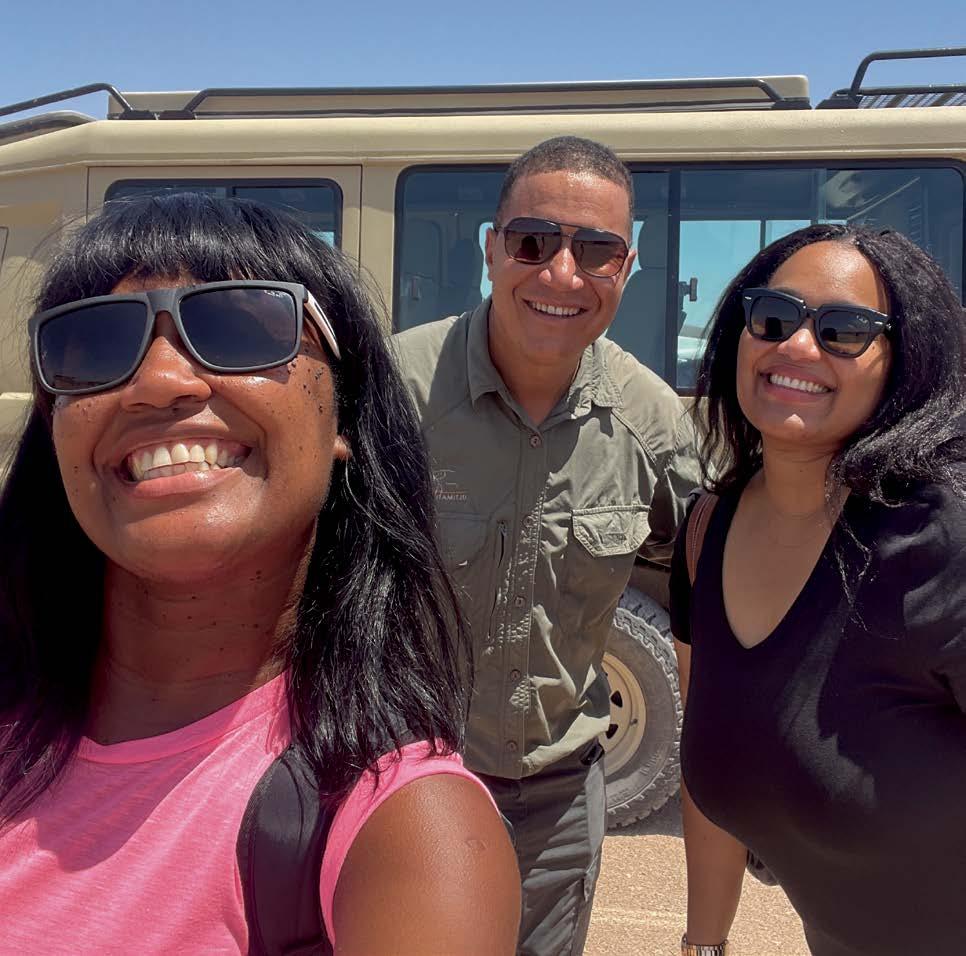
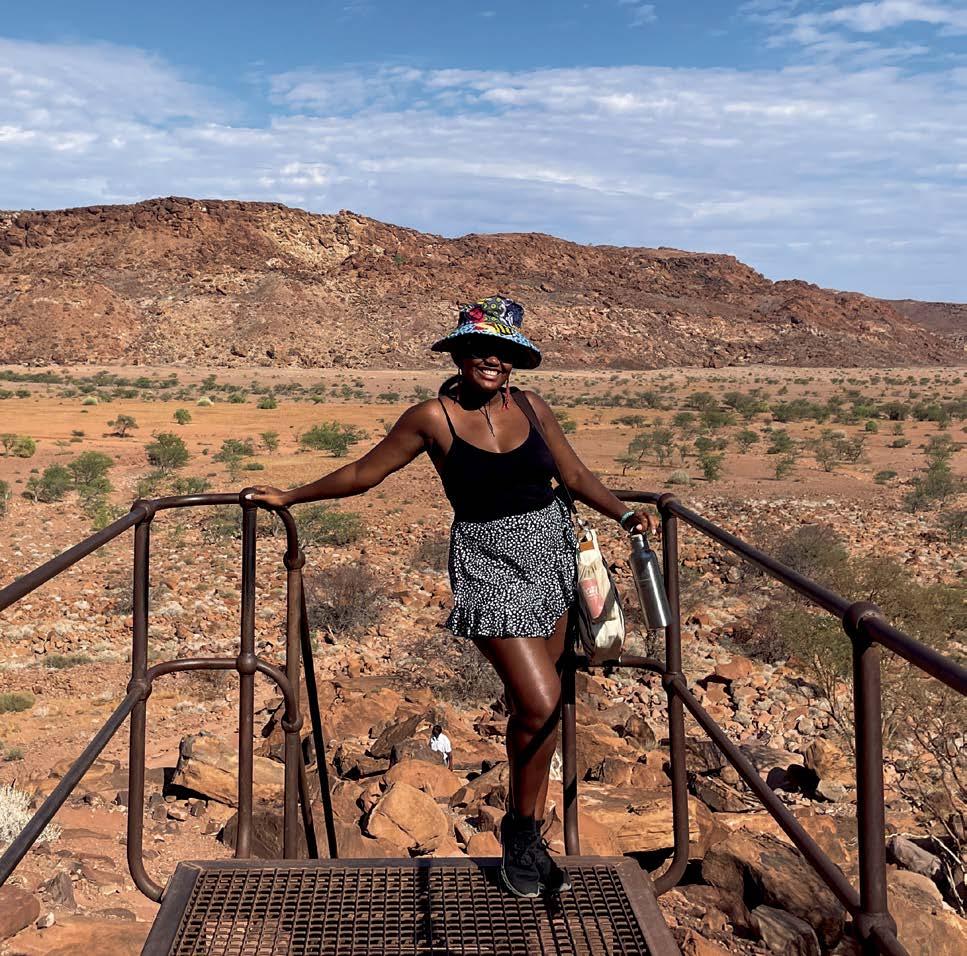
Franco was our guide, but that word hardly suffices. He didn't just steer us across Namibia's corridors of red sand and mauve rock, he joined in on our inside jokes, showed us where he grew up, added songs to our Southern Africa playlist, and devoured kapana (grilled meat street food) with us at the Oshethu Community Market in Windhoek's Katutura township. Like a natural addition to our family duo, when we saw our first elephant, his face lit up as if it were his first too. Picking up on our preferences along the way, Franco preemptively tipped off each lodge to stock chilled Amarula in rooms.
In a lifetime of travel, I've come to understand the rare and quiet alchemy of a truly exceptional guide, and it's not just about facts or fluency, though Franco's knowledge was nothing short of
encyclopedic. I am a curious traveler, prone to a rapid-fire litany of questions, and not once did he flinch. Whether it was about plumage, political history, or the botanical quirks of the desert, he always had an answer, or a tale.
To stand on Namibian soil as an adult and write new stories is something I'll forever cherish. Through this voyage, I reconnected with the place, its people, my sister, and a younger version of myself who now, at long last, is old enough for her own glass of Amarula.
Rosie Bell is a British-Nigerian travel writer who has contributed to over 30 publications including BBC Travel, AFAR, Condé Nast Traveler, Forbes, and Lonely Planet.
Inspired by Rosie’s story? Whether you would love to visit Namibia or there is another destination you would like to reconnect with, our experts are here to help: info@extraordinaryjourneys.com
Open the conversation by completing our online contact form or giving us a call. Be sure to include which part of the world you want to visit, whether your dates are precise or flexible, an approximate budget, and any special interests or celebrations we should keep in mind. With this foundation, we will match you with the right destination specialist from our team.
We'll schedule a phone call to get to know you, your travel rhythm, and what makes you tick. This step is essential to the process. We don't have a catalog of trips to leaf through, nor do we copy-and-paste itineraries. Your Extraordinary Journey will be as unique as you are. If we are a good fit for one another, we'll move forward together.
Based on your conversation, your destination specialist will distill hundreds of options into a tailor-made, multidimensional draft itinerary. Together, we'll refine the details and revise the trip to create something truly life-changing.
With your deposit in hand, we'll confirm the trip and secure accommodations, flights, and permits. We coordinate every detail so that your trip is seamless, removing any barriers to your adventure. By the time you're ready to take flight, our operations team will ensure you have your visas, travel insurance has been arranged, and documents are printed. Throughout your journey, our in-destination concierges will reach out and check in; support is never more than a quick message away.
call +1 212.226.7331 email info@extraordinaryjourneys.com instagram @extraordinaryjourneys
Let's begin your journey
AWARDED FOR
Winning awards make us feel honored, and to be recognized by our clients and peers as leading travel experts is something we celebrate. We are grateful when our passion and hard work are rewarded with these accolades—it makes us want to work even harder for you. To be acknowledged amongst the world’s leading conservation warriors and sustainable tour operators is an absolute privilege.

+ LEISURE World’s Top Travel Advisors

+ LEISURE World’s Best Awards

NAST TRAVELER Top Travel Specialists
My overall experience was amazing, and I have come home with the most wonderful lifelong memories. The trip was what I had pictured in my mind and more. I explored a destination that no one I knew had even heard of (Hampi), was sometimes out of my comfort zone, yet so confident and excited. I was in very good hands and trusted and loved my guide as well as the local team that worked behind the scenes 24/7.”
This is Extraordinary
An invitation to explore beyond the ordinary.
We partner with Hemlock Printers, a sustainable print house known for its long-standing commitment to protecting the world’s forests. Their climate-friendly operations, FSC®-certified, forest-friendly papers, and rigorous sustainability standards align with our values. Partnering with them lets us share the world while treading lightly on it.

+1