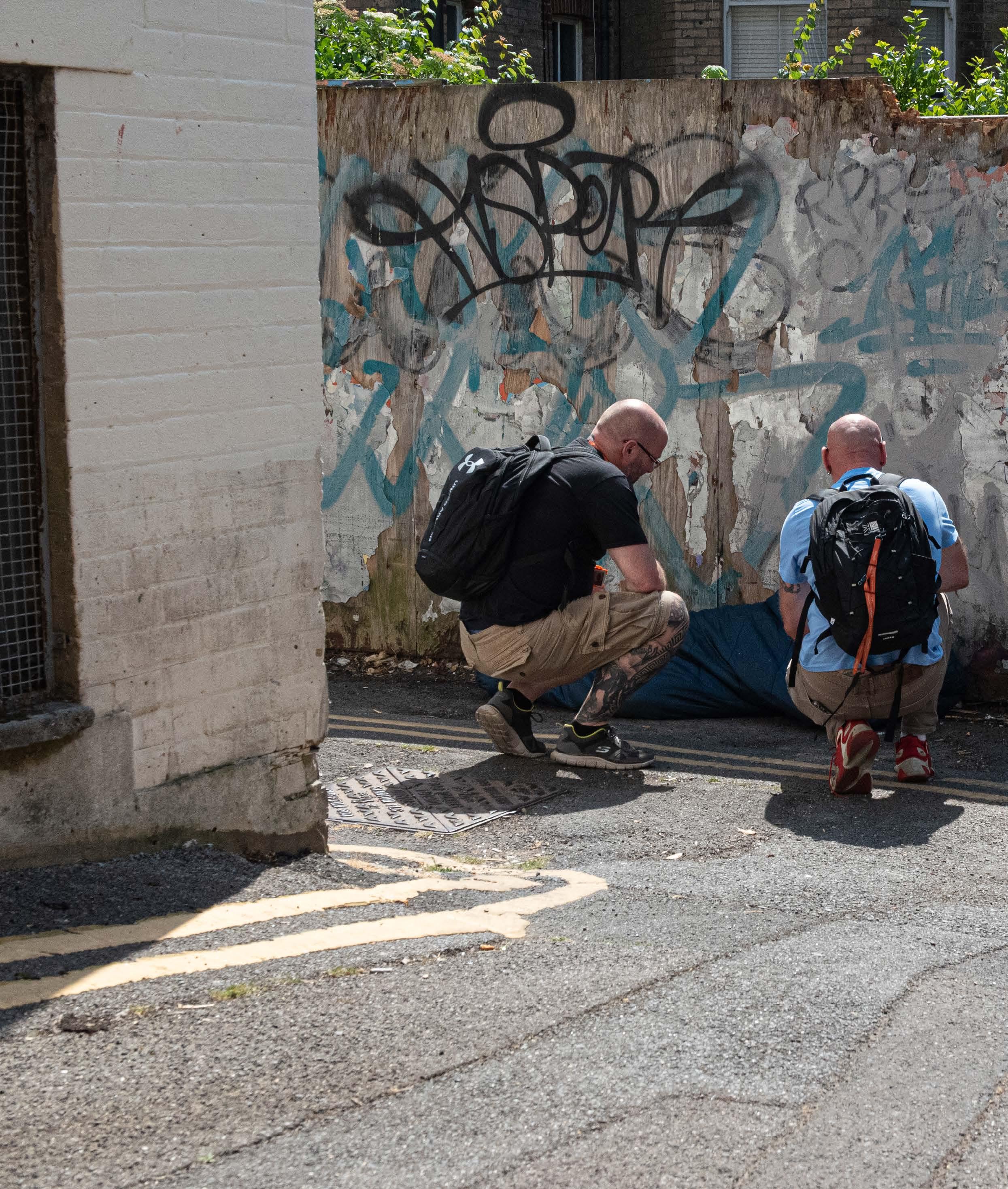
September 2023
September 2023
I’m conscious that it shouldn’t be me writing here. When our Chair, Lord Bob Kerslake, died in July 2023, we lost a staunch ally of the homelessness sector. This report is a tribute to him and his life’s work.
Lord Kerslake and St Mungo’s former Chief Executive Steve Douglas were inspired by the scale of what the emergency response to rough sleeping during the Covid-19 pandemic had achieved, and this was why the Kerslake Commission on Homelessness and Rough Sleeping was convened in March 2021. The Commission sought to ensure the new working practices that had emerged during ‘Everyone In’ wouldn’t be consigned to history, but that they would remain tangibly part of the way in which we approach tackling homelessness and rough sleeping.
As with previous reports of the Kerslake Commission, this report once again shows the unwavering commitment of people across the voluntary sector and within local authorities and Government. Partnership working was at the core of the emergency pandemic response and the spirit of working together to try and achieve the best outcomes for people facing homelessness has remained. However, what the Commission has also repeatedly warned is that upstream prevention, in particular adequate housing, is an area that has become sorely neglected. The consequences of this oversight are now clear.
We are beyond improving ways of working and this report does not shy away from the scale of the challenges we are now facing with homelessness on the rise. There are simply not enough homes which are affordable and available to people on the lowest incomes, and which have the right level of support in place.
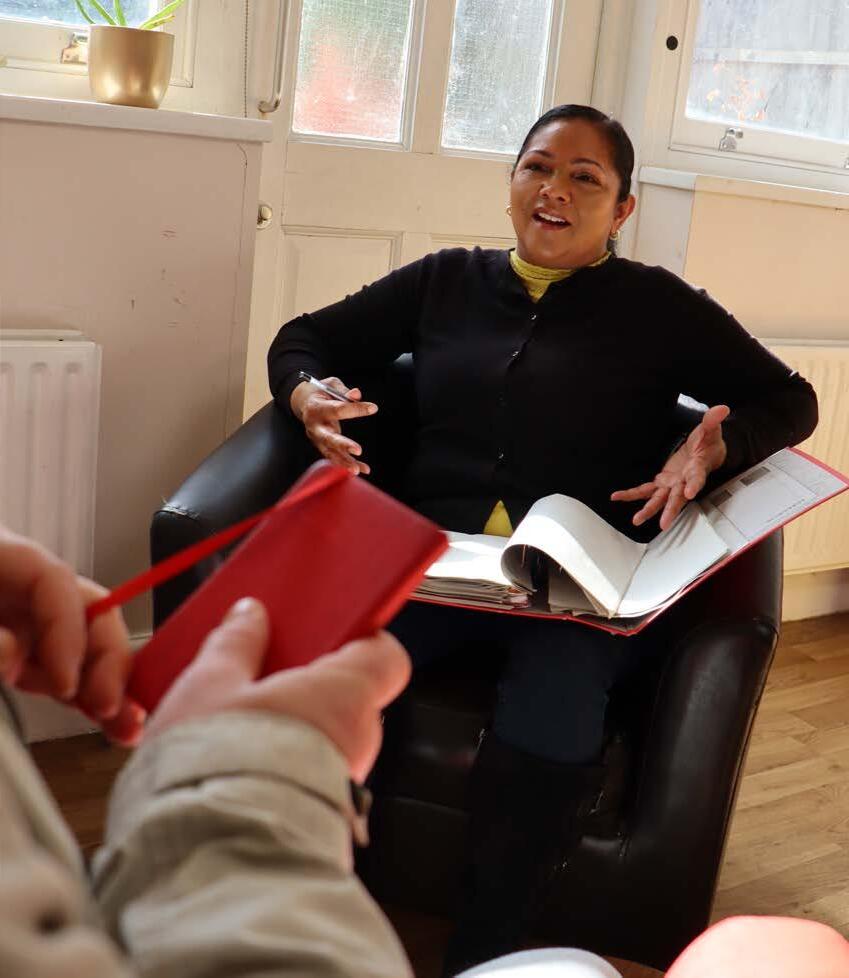
The shrinking supply of social rented and supported housing has left the country reliant on a private rented sector which is unsuitable for many people at risk of or experiencing homelessness. As a last remaining safety net, private rented accommodation is rapidly becoming inaccessible. It is this which is primarily driving record high rates of homelessness and the use of temporary accommodation, with rough sleeping at the sharp end.
At the beginning of the 20th century, the UK was facing a rapidly changing world for which its social infrastructure was ill-equipped. The findings of this report indicate we are facing a similar moment in time. Seebohm Rowntree’s seminal work on poverty in York paved the way for the modern welfare state and, in a similar way, this report is a 21st century reflection on the state of our society.
Given where we are in the Parliamentary cycle, this year’s report has been written with two main audiences in mind: the current Government and the next administration. Both have clear choices they can make on how to tackle homelessness and rough sleeping. The report makes it explicit that there is still time for the current Government to take actions that would reduce homelessness and rough sleeping, the most impactful being a restoration of housing benefit so that it covers affordable rents. For the next administration there is an opportunity to re-build our approach to homelessness based around the principles of prevention. This report recommends that three key principles should guide this approach:
• we must prevent people from getting to the brink of homelessness
• no one should need to arrive onto the streets to get help
• everyone should have a route off the streets
Lord Kerslake and Steve Douglas’s vision and ambition for the Commission has meant it has been well placed to provide this blueprint. While the sector mourns their untimely deaths, 14 months apart, we are committed to carrying on the mantle in their memories.
I would like to extend my sincere appreciation and thanks to the Commission’s advisory board members who have steadfastly guided this work, bringing with them their extensive expertise and experience. This report would not have been possible without their support and the engagement from other expert contributors.
As we look to the future, I’m conscious this Commission was convened from a spirit of optimism and positivity of what could be achieved when we worked together. Though the warnings in this report are stark, would urge that we continue to apply the same energy if we are to address the challenges that it lays out. I truly believe that together we can overcome these challenges, make fundamental and lasting systemic change, and ultimately turn the tide on homelessness and rough sleeping.
Dr Emma Haddad Chief Executive, St Mungo’s

The Kerslake Commission was convened to learn the lessons from the ‘Everyone In’ initiative which supported people who were sleeping rough during the pandemic, and which led to a 37% drop in rough sleeping. The landscape is now vastly different, with the 2022 official figures showing a 26% increase in rough sleeping and the more recent statutory homelessness figures showing the number of households who are homeless and living in temporary accommodation is the highest since records began. This report recognises where progress has been made but fundamentally seeks to explain the key challenges driving this trend. The Commission advises what measures the current Government should take to reduce the numbers and what should be the priorities of the next administration in tackling homelessness and rough sleeping. Its findings and recommendations have been developed through consultation with its Advisory Board and other key homelessness stakeholders.
Following this evidence gathering, it is the conclusion of the Kerslake Commission that the Government will not meet its goal to end rough sleeping by 2024. Rough sleeping is on the increase and at the heart of it are chronic and unresolved systemic issues, which have left the country vulnerable to new pressures.
By restoring LHA rates to the 30th percentile, enacting bridging solutions that increase affordable housing supply, and improving support for non UK nationals, the Government can lessen the immediate pressures that are driving homelessness and rough sleeping.
For the next administration, it is the lack of capacity within the system which needs to be prioritised, as many of the problems outlined in the report would be resolved if there was an increased supply of social rented housing and supported housing. Homelessness and rough sleeping should be treated as a priority across Government departments, with all sectors working together in a tailored and trauma informed way. An invest to save approach is needed, with sustainable and joined up funding programmes that are outcome-led and facilitate partnership working.
The Kerslake Commission strongly advocates that prevention and system change must form the basis of a robust response as it is through addressing the upstream causes of rough sleeping and homelessness, rather than solely responding to people in crisis, that we will end it for good. The Commission recommends three key principles should guide the next administration’s approach to homelessness and rough sleeping:
• Prevent people from getting to the brink of homelessness – We need to be preventing people from reaching crisis point and becoming homeless or at risk of homelessness.
• No one should need to arrive onto the streets to get help – Where people are at risk of rough sleeping, there should be a cross sector effort to make timely and effective interventions that prevent an episode of rough sleeping.
• Everyone should have a route out of rough sleeping – For anyone who is rough sleeping, there needs to be a meaningful and tailored offer which will take them away from the streets for good.
If the recommendations and principles outlined in this report are taken forward then there can be a return to progress being made on rough sleeping, and a future where it can be ended for good.
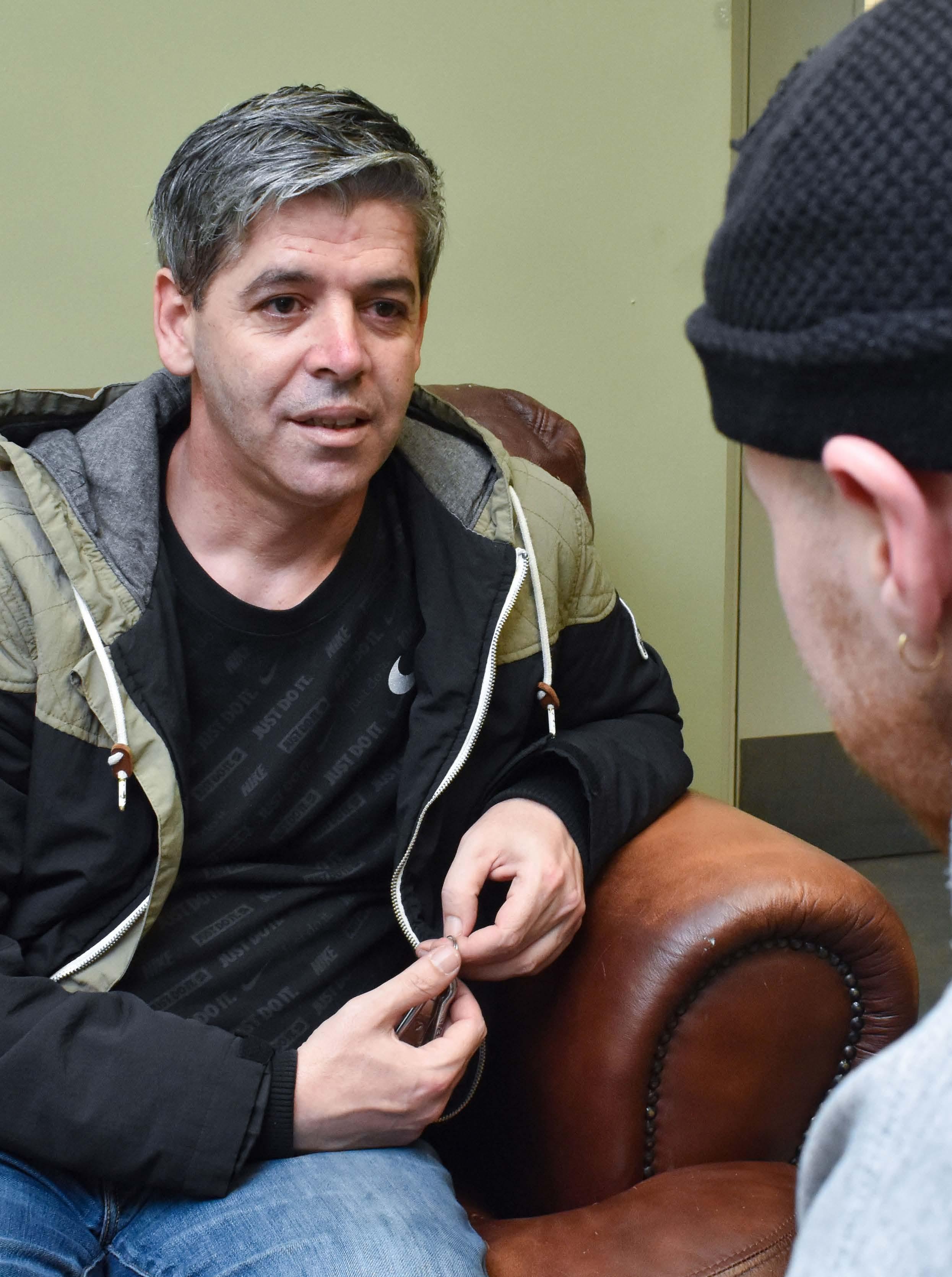
1. Large increases in private rents at a time when Local Housing Allowance (LHA) rates have remained frozen is one of the primary drivers behind the current increase in rough sleeping. The Government should restore Local Housing Allowance (LHA) rates to the 30th percentile of local rents.
2. There is simply not enough housing available that is genuinely affordable, and the Government should explore a range of options to increase supply in the intermediate term, with consideration given to: topping up existing Shared Ownership and Affordable Rent developments with grant funding to transfer them into social rent, regenerating substandard and unused housing, and building modular units. This programme should be properly funded and regulated to ensure good standards of accommodation.
3. The Home Office should use discretion to give status to people who are destitute and living on the streets and have been in the UK for a significant amount of time but have not yet reached the 20-year mark at which they can apply for leave to remain. Those with limited or unclear entitlements due to their immigration status should also be included in existing and future Government financial support packages, due to their increased vulnerability to destitution.
1. To deliver the sector recommended target of building 90,000 social rented homes a year, the next administration should commit to a 10-year plan to meet housing need accompanied by significant investment in grant funding.
2. Secure housing and high quality support can transform lives, helping people settle into a new home, maintain tenancies and improve life chances. The next administration should expand the supply of supported housing and housing-based support which is suitable for a range of needs, through increased, long term, ring fenced revenue investment. There should be alignment and join up with capital funding where the support is attached to the building.
3. A strategy is needed to accelerate and mainstream Housing First provision with sustainable funding to deliver open ended support.
4. All welfare policy change should be subject to an assessment of its impact on housing affordability.
5. Legislation should be introduced to fix Local Housing Allowance (LHA) rates at the 30th percentile of local rents and the Universal Credit standard allowance should be set by an independent process which guarantees the cost of essentials.
6. Unmet health and care needs are both a cause and consequence of homelessness and rough sleeping. Integrated Care Boards (ICBs) should be required to have a dedicated focus on tackling health inequalities for inclusion health populations, with sustainable ring fenced funding to meet this requirement.
7. The next administration should increase the supply of specialist care and supported housing available to people with care needs who experience multiple disadvantage, and resource a social care workforce who will provide a tailored and trauma informed service to this group.
8. Investment in drug and alcohol services should deliver low threshold and joined up provision.
9. Homelessness and rough sleeping should be treated as a priority across Government, with departments agreeing shared outcomes and understanding how they benefit each other. This principle of collective accountability should translate to funding programmes.
10. Long term investment in prevention will ensure that the system is reaching people before they hit the streets. There should be a default preference towards long term funding, with five year funding cycles as a minimum and flexibility to allow interventions to evolve in line with changing needs.
No one should need to arrive onto the streets to get help
11. Local authorities should be required and funded to provide a guaranteed offer of emergency accommodation to people at risk of rough sleeping.
12. A greater focus is needed on improving long term housing pathways out of prison. This should include: improving access to resettlement services in custody, consistent application of priority need status for people who are vulnerable as a result of spending time in custody, landlord engagement and tenancy support schemes to improve access to the Private Rented Sector (PRS), and longer term supported housing eligible for prison leavers, particularly those with higher support needs.
13. All local authorities should have multi-agency and planned routes into suitable housing, with relevant support, for care leavers before they are discharged. This should be accompanied by increased supply of youth-specific supported housing for multiple and complex needs.
14. The move-on period for newly recognised refugees should be extended from 28 days to 56 days to bring it in line with local authorities’ duties under the Homelessness Reduction Act, giving time for people to obtain housing and a means to support themselves.
15. The Government’s Out of Hospital Discharge Fund made significant progress in preventing people from leaving hospital into homelessness. The Out of Hospital Discharge Fund should be re-introduced with sustainable funding to enable ICBs and local authorities to continue to build on its initial successes.
Everyone should have a route out of rough sleeping
16. There should be sufficient funding and a clear directive from central Government to support non UK nationals with limited and unclear entitlements to resolve their homelessness, emphasising the importance of the provision of accommodation, independent immigration advice and support to engage in the advice. Data should be collected on the number of people affected by the No Recourse to Public Funds condition.
17. Homelessness is different for women, who face an additional burden of genderbased harassment, abuse and violence, and are often hidden from rough sleeping statistics. There should be a gender informed homelessness pathway and women only accommodation offer across the country, and local authorities should be required to deliver an annual Women’s Rough Sleeping Census.
18. Future funding streams to address homelessness and rough sleeping should emphasise and encourage the use of youth-specific homelessness services and accommodation to deliver tailored interventions for this cohort.
19. The next administration should repeal the Vagrancy Act and prioritise investment in support services which address the underlying causes of begging and anti-social behaviour. The police should be required to receive training on the needs of people experiencing and recovering from homelessness, and guidance should be introduced requiring police to develop partnership working arrangements with homelessness services.
Within a wider context of rising demand for services and a challenging fiscal environment, progress is still being made in the areas of joint commissioning, partnership working and sector-led improvement. Local authorities have reported that the new definition of ending rough sleeping, where it is “prevented where possible, and where it does occur it is a rare, brief and non-recurrent experience”, has led to a better understanding of rough sleeping and facilitated evidence-based practice sharing. Verification remains a gatekeeping tool to access rough sleeping services in many areas, however some local authorities reported that verification is being removed as a necessary step to accessing services.
The Government has sought to better understand the solutions which work to end rough sleeping through funding research and evaluations and has published new draft Consumer Standards for housing associations, setting expectations that Registered Providers engage in homelessness prevention. It has also introduced legislation to reduce homelessness upon release from prison, increase security in the private rented sector and drive out poor provision of exempt supported accommodation.
The Government has funded support packages to protect vulnerable groups from the rising cost of essentials, making targeted cost of living payments and uprating benefits in line with inflation. It has also increased its financial support for the Homes for Ukraine scheme and announced funding to enable local authorities to support Afghan households to move into settled accommodation.
NHS England has allocated additional funding to expand provision of specialist mental health services for people sleeping rough. The Ministry of Justice has continued the roll out of the CAS-3 scheme, which ensures prison leavers at risk of homelessness are given 12 weeks’ accommodation upon release, and delivered the Accommodation for ExOffenders (AfEO) programme, whereby local authorities are awarded funding to support prison leavers to access accommodation in the private rented sector.
There have been significant increases in market rents whilst Local Housing Allowance Rates (LHA), which set the levels of housing benefit, have remained frozen at 2019 levels. The decreasing proportion of affordable accommodation means the demand for these properties is far higher than supply, creating a competitive and fast moving market. The affordability crisis in the private rental sector is also driven in part by an undersupply of social housing, and alongside this there is a national shortfall of supported housing which has resulted in people being offered housing which is ill suited to their needs.
The current housing crisis is fuelling a large increase in the use of temporary and emergency accommodation by local authorities to fulfil their statutory obligations under the Homelessness Reduction Act. Local authorities are also competing against other statutory agencies, such as the Ministry of Justice and the Home Office, for a limited supply of temporary housing.
This comes at a time when people on low incomes are struggling to cover the cost of other essentials that have been impacted by record high inflation. These pressures are placing more people at risk of homelessness and making it more difficult for them to move on from homelessness services.
When non UK nationals with unclear and limited entitlements hit the streets, it has become more challenging to find routes away from rough sleeping. Since the end of the Protect and Vaccinate funding, there has been a lack of funding for emergency accommodation for this group and an absence of central Government directive to local authorities to make this offer.
Frontline homelessness services report they are increasingly seeing the rise of the ‘economic homeless’ cohort, where it is cost pressures rather than support needs that have led to a period of rough sleeping. Simultaneously, people with increasing complexity of needs are presenting to rough sleeping teams, where the impact of funding pressures on vital statutory and non-statutory support services means these needs are often not being adequately addressed at an early stage. This comes at a time when many are still coping with the mental health implications of both the pandemic and ongoing cost of living crisis.
Rental prices are likely to continue to rise over the next year and unless there is a restoration of LHA rates to the 30th percentile of local rents, the gap between housing benefit and the real cost of rent will continue to grow, leaving more households unable to afford to keep a roof over their heads. This will stoke increasing demand for local authority homelessness assistance with a subsequent further increase in the use of temporary and emergency accommodation, leading to both poorer socio-economic outcomes for households affected and higher levels of inefficient public spending.
A New Home Office Streamlined Asylum Process announced in December 2022 means asylum claims will be made more quickly for a selected list of four countries with a traditionally high grant rate of refugee status. This new process presents a risk whereby increased numbers of people are receiving decisions on their claims in a short time frame and are discharged from Home Office accommodation with little onward support. To mitigate this risk, there should be effective and prompt coordination and information sharing between the Home Office and its contracted accommodation providers, local authorities, the DWP and other relevant agencies to ensure that support begins at the earliest possible opportunity following a decision.
The Illegal Immigration Act was passed in July 2023 and defines that anyone who arrives in the UK irregularly will have their asylum claim deemed inadmissible. Many of those will remain in Home Office accommodation for extensive periods of time as the Government will not have capacity to remove people at such scale. This will leave thousands of people in limbo, as they are unable to be removed from the UK and will be ineligible for benefits. There will also be those who leave or do not enter this accommodation as they do not want to be removed to third countries, such as Rwanda, and it is likely many of this cohort will experience periods of destitution. It is the view of the Commission, alongside other leading organisations in the homelessness and migrants sectors, that the Government should repeal the Act, in light of the significant risks of destitution and homelessness and the harm this presents to individuals and communities around the UK.
Rising homelessness and rough sleeping
The 2022 national figures show a 26% increase in rough sleeping from the previous year.
Statutory homelessness figures show the percentage of households successfully accommodated at the end of a prevention duty dropped to 45%, its lowest level since 2018.
London CHAIN data shows that in the 2022-23 financial year, 6,391 people in London were recorded as sleeping rough for the first time, a 26% increase on that figure from the previous financial year (2021-22).
Tragically the average age of death for a person registered as homeless is just 45 years old.
? ? ? ? ? ? ? ? ? ?
At the end of 2022, over 100,000 households were living in temporary accommodation, up 5% from the same period the year before and the highest on record.
Data from the Office for National Statistics (ONS) shows private rents in the UK increased by 5.1% in the 12 months to June 2023, representing the largest annual percentage change since the UK data series began in January 2016.
Analysis from the Institute for Fiscal Studies has found that by the first quarter of 2023, just 5% of properties in the private rented sector were affordable at LHA rates.
Research published in March 2022 showed low-income households were facing an average £372 deficit between their Local Housing Allowance and the cost of the cheapest monthly rents in their local areas.
The Government estimates that restoring LHA rates to the 30th percentile for 2023-24 would cost £700 million. While this is a significant investment, it is much lower than the growing cost of providing temporary accommodation, which cost at least £1.6 billion in 2021-22.
Social and supported housing
The National Housing Federation estimates that around 8.5 million people in England are in housing need.
In the year to March 2021, there were only 246,000 new social housing lettings, a decrease of 20% or 60,000 lets from the previous year. 20%
92% of homelessness providers surveyed by Homeless Link said they were concerned the rising cost of living would impact their ability to maintain service and support standards. 92%
Supported housing helps ease the pressure on the NHS and care services with the National Housing Federation estimating it saves the public purse around £940 per resident per year.
Research funded by the National Housing Federation projects that by 2024-25, there will be a national shortfall of 46,771 supported, sheltered and extra care housing places.
Statutory services are stretched
Analysis of NHS data shows referrals to mental health services increased by over 75% between February 2020 and February 2022 and the NHS Confederation has pointed to ‘an increased severity of cases’.
Research from Local Partnerships in two different local authority areas found that every £1 invested in six different homelessness prevention services, resulted in savings of between £2-11 to the public purse.
Women and young people


In 2021, only 11% of homelessness service providers in England offered women only accommodation.
St Basils’ report into young people’s experiences of the ‘Everyone In’ pandemic response found that only 8% of young people in its sample were placed in youth-specific supported housing in the West Midlands. 15% 8%
According to government statistics, 15% of people sleeping rough in England on a single night in autumn 2022 were women.
The Kerslake Commission was convened in 2021 to examine the lessons from the Everyone In initiative, which supported people sleeping rough during the Covid-19 pandemic. During the first year of the pandemic, the country saw a significant fall in rough sleeping, with the Government’s annual snapshot showing a 37% decrease in the numbers on the street and reports that in the early stages numbers were even lower than that.
The Commission’s interim and final reports on the lessons from the pandemic concluded that the availability of good quality, self-contained accommodation, universally offered to people at risk of rough sleeping, and integrated with health services, made a significant difference in supporting people away from the street. The reports made a series of recommendations of how these lessons from the pandemic could be embedded in the approach to ending rough sleeping.
The Commission’s subsequent 2022 Progress Report recognised that while improvements had been made to services for people sleeping rough, and rough sleeping numbers had again declined by 9%, progress had not been made on upstream homelessness prevention, such as welfare and affordable housing, and the offer had contracted for non UK nationals. It warned that the looming cost of living crisis could threaten to overwhelm the progress that had been made during the pandemic. This warning has now come to fruition with the Government’s most recent annual snapshot showing a 26% increase in rough sleeping.1 The most recent statutory homelessness figures show the number of households who are homeless and living in temporary accommodation is the highest since records began.2
This report seeks again to assess the progress and challenges, but this time provide a sector endorsed explanation of why the numbers are moving in the wrong direction. It also assesses the future and immediate risks that could see the numbers increase further and how these can be addressed.
This Commission recognises we are nearing the end of a Parliamentary cycle and there is limited time for the current administration to act before a general election takes place next year. Therefore, the Commission is advising what measures the administration could take and feasibly implement within this Parliamentary term that would have high levels of impact. The report has also provided recommendations on the priorities of the next administration on homelessness and rough sleeping, as well as the principles which should guide its approach.
The Commission’s findings and recommendations have been developed through consultation with its Advisory Board and other key homelessness stakeholders, including people with lived experience.3 Its aim has been to find consensus and though at times the expert views of our contributors would diverge, there were clear messages on tackling homelessness and rough sleeping for the current and future Governments.
It is the hope of the Commission that all its reports to date, culminating in this report, will help decision makers understand the key priorities and what solutions are needed to help address rough sleeping in the medium and long term. By working together and tackling the systemic issues, the Commission believes a further increase can be averted, and rough sleeping can be ended for good.
The first chapter of this year’s report assesses the progress and challenges faced in efforts to end rough sleeping since the Commission’s last report in September 2022.
Whereas previous reports from the Commission had come at a time of falling numbers of people sleeping rough, the past year has seen a reversal in this trend. This report highlights some areas where progress has been made but, crucially, examines where the challenges have been and provides a sector endorsed narrative of why rough sleeping is on the rise.
Joint commissioning and partnership working
Within the wider context of rising demand for services at a time when providers are operating in a challenging fiscal environment, continued progress has been made in the areas of joint commissioning and partnership working. It is positive to see the advancements made in partnership working arrangements during the ‘Everyone In’ pandemic response have, in may areas, been carried forward with multiple examples provided to the Commission of collaborative working between local authorities and different sectors. For example, in Birmingham, funding bids for the Rough Sleeping Initiative (RSI) have been completed in collaboration with partners in health and adult social care, and a hospital discharge pathway has also been implemented to place individuals leaving hospital into specially commissioned accommodation with longer term housing needs assessments completed. Further, across London there has been sub-regional commissioning between different boroughs for specialist services such as immigration advice and women’s provision. Reports to the commission highlighted the use of regional forums where local authorities meet to discuss gaps in services and to share practice and ideas.
The new rough sleeping data framework has also presented an opportunity to develop practice in this area, as was highlighted to the Commission by participants of the early adopter pilot scheme.4 The new framework aims to improve the availability and scope of data on rough sleeping in line with the Government’s adopted definition of ending rough sleeping, which states that rough sleeping should be “prevented where possible, and where it does occur it is rare, brief and nonrecurrent”.5
Feedback from the early adopter participants suggests that having a better understanding of these indicators in their local areas has improved interventions, with collaboration taking place across different sectors. For example, the collection of data on the number of people rough sleeping from institutions has facilitated more evidence-based discussions between the homelessness sector and probation staff in London about the routes from prison into rough sleeping.
Winter 2022/23 also saw the development of greater partnership working, where extended periods of cold weather triggered frequent and prolonged activation of the Severe Weather Emergency Protocol (SWEP) in many parts of the country. The Department for Levelling Up, Housing and Communities (DLUHC) worked closely with Local Authorities to encourage good practice around severe weather provision,
sharing both NHS seasonal guidance and DLUHC Night Shelter Operating Principles. The Local Government Association (LGA) advised the Commission that many local authorities reported large numbers of people connecting with services after being brought inside through periods of severe weather, with specific partnerships being set up between authorities and support service providers to ensure emergency responses could become longer term interventions.
The 2022 Rough Sleeping Strategy provided a definition of ending rough sleeping as when it is “prevented where possible, and where it does occur it is a rare, brief and nonrecurrent experience”.6 To evidence whether this qualitative definition is being met, local authorities are now required to collect and report data against the following indicators as part of the new national Ending Rough Sleeping Data Framework:
• Number of new people sleeping rough (to measure prevention)
• Number of people sleeping rough from institutions (to measure prevention)
• Number of people sleeping rough (to measure rare)
• Number of people experiencing long term rough sleeping (to measure brief)
• Number of people returning to rough sleeping (to measure non-recurrent).
This data framework has been developed by DLUHC in partnership with the Centre for Homelessness Impact and was piloted in five early adopter areas (London, Greater Manchester, Bournemouth, Christchurch and Poole, West Midlands and Newcastle), representing around 50 local authorities across England who piloted the indicators before a national rollout.7 The purpose of the framework is to introduce a new national dataled approach to measure progress towards
ending rough sleeping. It is also intended to improve consistency and comparability of data collected by local authorities, providing a common language and data set grounded in a shared and measurable goal.
The early adopter areas have reported positive feedback to the Commission with improved data leading to a better understanding of the characteristics of rough sleeping in their area, as well as opening evidence-based practice sharing across different areas and sectors. This presents a significant opportunity to better understand the drivers of rough sleeping and the effectiveness of different interventions that are designed to address it.
Local authority rough sleeping teams have begun submitting data to DLUHC from May 2023. It is important to note that the framework does not introduce any changes to the current definition as to who is assessed as ‘rough sleeping’ used in national statistics, which means certain groups who are more likely to experience hidden forms of homelessness, such as women and non UK nationals, will continue to be underrepresented in the data.
There have been several sector-led initiatives to improve performance in the homelessness pathway.
The Kerslake Commission recommended, in its 2021 Final Report, that Homeless Link should convene a consultation on professional accreditation8 and, after completing the pilot stage, the organisation is now rolling out its level 3 qualification in ‘providing homelessness services’ for professionals in the sector across the country. The 20-week course aims to give frontline staff the skills to practically support someone who is experiencing homelessness or at risk of homelessness, whilst understanding their needs and focusing on their strengths and personal goals. The aim of this work is to develop high and consistent standards of practice in the sector; promote staff learning and development; and contribute to improved recruitment and retention.
Whilst funding from St Martin-in-the-Fields will enable a 50% discount for the first six participating cohorts, demand for the course is much larger than the number of places, with Homeless Link receiving triple the number of applications to places for the initial three cohorts. Expanding the Department for Health and Social Care’s Workforce Development Fund to include homelessness organisations could be a valuable resource in rolling out this accreditation more widely. Homeless Link is looking to evaluate the programme to better understand its impact which may present opportunities to secure further funding.
Peer review plays a crucial role in sector-led performance improvement and as such, the Commission’s Final Report recommended the LGA expand its temporary accommodation peer review model to cover the full homelessness pathway.9 Although funding
from DLUHC would have facilitated this expansion, the LGA will still be looking to facilitate several delivery and impact panels. These panels will work with a smaller number of councils to consider specific aspects of the pathway, potentially including the commissioning of prevention services; opportunities of pan-regional commissioning; provision for non UK nationals; and points of access to housing needs services.
The process of verification is one whereby people are seen and recorded as rough sleeping by outreach workers, and the definition is usually in line with national rough sleeping figures which considers a person sleeping rough if they are “sleeping, about to bed down, or actually bedded down in open air or other places not designed for habitation”.10
Being verified as sleeping rough is commonly used in local areas as a necessary step for accessing emergency accommodation services and the Commission has recommended in its previous reports that local authorities should remove this requirement.11 It acts as a barrier to preventing people from arriving onto the streets and excludes groups of people who are more likely to experience hidden homelessness, such as women, young people and non UK nationals.12
Verification remains a gate keeping tool to access rough sleeping services in many local areas, and the LGA has advised that removing verification for rough sleepers continues to be difficult in some areas due to resource limitations. The Greater Manchester Combined Authority did, however, report progress being made in some of its local authorities to ensure that verification is not a necessary step to accessing services and trusted Voluntary, Community and Social Enterprise (VCSE) organisations can support in identifying people who are rough sleeping. The LGA has also reported some local authorities are considering a trusted partner approach where other services besides outreach workers are able to refer people who are likely to sleep rough so they can access services immediately without verification.
Evidenced based approach
In the Commission’s progress report, it was highlighted that Government commitments to fund research and evaluation to better understand the solutions which work to end rough sleeping was an area of progress.13
Positively, this work has been carried forward and DLUHC is currently procuring a systems wide evaluation of the Homelessness and Rough Sleeping system, alongside a Test and Learn project intended to improve understanding of interventions are most effective in responding to homelessness and rough sleeping.
As well as a systems evaluation, the department has also commissioned research into the journeys and experiences of individuals who fall into homelessness to gain a better understanding of the drivers of rough sleeping amongst those currently hitting the streets.
Housing association performance on homelessness
In the Commission’s final report, it was recommended that the Regulator for Social Housing monitor the performance of housing associations in preventing and relieving homelessness.14 Therefore, it is positive that the Regulator’s new draft Consumer Standards include specific expectations for registered housing providers to provide services aimed at preventing unnecessary evictions and that for those who are required to move, the housing provider gives timely advice and assistance on housing options.
15
In its continued development of the Consumer Standards through the consultation process, the Commission would recommend the Regulator for Social Housing ensures there is scrutiny around how Registered Providers are preventing homelessness among their tenants, and what contribution they are making to provide homes for homeless households. This can be informed by the set of recommendations developed by the sector campaign group Homes for Cathy.16
Offenders (Day of Release from Detention)
Through the Prison Strategy White Paper, the Government committed to explore legislation to allow prison governor discretion to bring forward the release date of prisoners “where a Friday release can be demonstrated to be detrimental to an individual’s resettlement”.17
Since then, the Government has supported the progress of the Offenders (Day of Release from Detention) Bill introduced to parliament as a Private Members Bill by Simon Fell MP.18 This bill has subsequently progressed through its passage in parliament and is now on the statute book.
The Act has the potential to reduce homelessness upon release from prison, as a Friday release only gives a few hours for prison leavers to access housing and healthcare before services close for the weekend. Importantly, this legislation will not automatically bring forward the day of release for those scheduled to be released on a Friday. Instead, this measure will be dependent on an application being approved at the discretion of the prison governor, based upon the applicant having higher resettlement needs such as substance use, health needs or risk of homelessness.
Consequently, it will be important to monitor the implementation of this legislation to see both how many people apply for an early release and how often this is approved. Another factor to consider is that these applications are likely be supported by probation staff; however, His Majesty’s Inspectorate of Probation (HMI Probation) estimates that “on average, probation regions have 30% fewer practitioners than they require to carry out resettlement work with prison leavers”.19 The workforce challenges in the criminal justice sector mean it is unclear whether all those who may be eligible for this discretion will be aware and will have the necessary support to apply.
In addition to workforce challenges, the discretionary nature of these changes creates a risk of inconsistent application in different areas and different prisons. Therefore, in implementing this legislation the Ministry of Justice should ensure good practice examples inform guidance which is shared, and relevant staff receive adequate training.
Reducing the number of Friday releases is an important step towards allowing greater opportunity for prison leavers to engage with important support services directly upon release, however Friday releases are not the only barrier. Another issue is that, even when being released mid-week, people are often released late in the afternoon meaning it is difficult to access all relevant services before they close for the evening, especially as prison leavers must attend a probation appointment on the day of their release.
Despite these challenges, the Act is evidence of the Government’s recognition of the inherent link between homelessness and reoffending, and the possibility to see a significant reduction in the number of people released from prison on a Friday, especially amongst those with higher resettlement needs, represents significant progress.
In June 2022, the Supported Housing (Regulatory Oversight) Bill was introduced to parliament as a Private Members Bill by Bob Blackman MP.20 Now on the statute books, the Act makes provisions for nationally established minimum standards in supported, exempt accommodation through regulation and placebased licensing controls. The aim of the Act is to drive out the presence of poor provision of exempt supported accommodation and improve quality in the sector.
Its measures include:
• the creation of a Supported Housing Advisory panel to advise the Secretary of State;
• a duty on local authorities to carry out a review of exempt accommodation in their area and to develop a Supported Housing Strategy;
• allowing the Secretary of State to introduce National Supported Housing Standards;
• giving the Secretary of State powers to introduce licensing regulations for Supported Housing and;
• providing the option for the creation of a separate planning designation for Supported Housing.21
This Act has received support by the Government and DLUHC plan to use the powers in the bill to create National Standards for Supported Housing which will set out the Government’s expectations in respect of the type and condition of premises used for supported housing, and the provision of care, support and supervision. The National Standards will be enforced through local authority-led licensing schemes, and the Government will consult on whether any alternative forms of enforcement are required as well as the detail of both the licensing regime and the standards themselves. DLUHC expect the provisions of the bill will come into force by 2024-25 giving time to ensure the licensing regime is consistent across different areas and the local authorities are properly funded.
The Commission’s Final Report recommended the introduction of a quality assurance framework for homelessness accommodation,22 and welcomes that this bill has been introduced to drive out the provision of poor accommodation and inadequate support that is damaging to residents. The introduction of local Supported Housing Strategies will also help identify gaps in current provision and provide evidence for calls for greater funding of housingbased support services.
The supported housing sector has welcomed the powers brought in by the Act but has warned of the importance that any reforms do not have unintended consequences for good providers. The licensing framework in this legislation could represent a significant new financial and administrative burden for providers, who are already working to very tight margins and inflationary pressures.23
In May 2023, the Government introduced the long awaited Renters (Reform) Bill to parliament seeking to provide ‘a better deal for renters’ in the private rental market.24 The bill makes a landmark commitment to abolish Section 21 evictions, known as ’nofault evictions’, which are a leading driver of homelessness and contribute significantly to the lack of security faced by private renters.25
Whilst many of the bill’s provisions are positive in seeking to provide better standards and greater security for private renters, there are also some measures which have been introduced at a late stage which could dilute homelessness legislation. Firstly, the bill seeks to change the definition of being ‘threatened with homelessness’ so that it only applies to those deemed to be ‘at risk of becoming homeless in the next 56 days’ rather than applying at the point a tenant is served with a Section 8 eviction notice.26 The rationale is that due to delays in the court process the point that a person could realistically be evicted would be weeks or months after the notice had been served. The homelessness sector is concerned that changing this definition will deter local authorities from delivering a homelessness prevention service at the point a person is served with an eviction notice, leaving periods of time, for example for rent arrears to further accrue, before an intervention is made.27
A further concern is the proposed removal of the reapplication duty, which will mean all homelessness reapplications will be treated according to the current circumstances, with no distinction between those who accepted private sector or social housing offers to end their previous main duty. The homelessness sector advised against the removal of the reapplication duty as applicants given a PRS offer could still become homeless again within two years, given the removal of all fixed terms and the potential for a notice to be served within six months for all possession grounds except the moving, selling and redevelopment grounds, and the existence of mandatory grounds for possession.
Despite these concerns around protections for those who become at risk of homelessness, the Renters Reform Bill and the commitment to abolish Section 21 evictions will undoubtably give greater security of tenure for those living in the private rented sector, which will support homelessness prevention.
In the 2022 Progress Report, the Kerslake Commission warned that the rising cost of living could lead to an increased flow of people onto the streets if significant Government interventions were not taken to protect vulnerable groups from the rising cost of essentials.28 Whilst some significant interventions have not been made – namely the continued freeze to Local Housing Allowance rates – the Government has continued to target support to certain groups vulnerable to the ongoing cost of living crisis. Interventions such as targeted cost of living payments, the Household Support Fund and the uprating of benefits along with the benefit cap in April 2023 represent areas of progress in utilising Government financial support to prevent and relieve destitution, and thus reducing those at risk of homelessness.29 A clear gap however, is support with rising rental costs which can account for between 25-40% of a median income depending on the part of the country.
The past year has seen significant Government work to aid the housing-based resettlement needs of both Afghan and Ukrainian nationals in the UK.
In last year’s Progress Report, the Commission recommended the Government increase the financial support provided to sponsors under the Homes for Ukraine scheme, in light of the cost of living crisis, which might otherwise make it more difficult for sponsors to continue their housing arrangement. The Government has listened to these calls and increased host payments to £500 per month once the guest has been in the UK for 12 months, with a maximum duration of two years. In addition, £150 million of funding is also being provided to local authorities to help support Ukrainian guests and other homeless households to move into their own homes and reduce the risk of homelessness.
Despite this, local authority homeless presentations amongst Ukrainian households are still increasing with over 5,000 households now having been affected.30 A briefing from the All Party Parliamentary Group for Ending Homelessness found that when placements under the Homes for Ukraine Scheme either end or breakdown, the current housing affordability crisis makes it extremely difficult to access accommodation, especially in the private rented sector.
31
The Government has also announced £35 million of funding to enable local authorities to provide increased support for Afghan households to move from hotels into settled accommodation. However, in the context of the current housing crisis, it is extremely challenging to secure appropriate accommodation for each household before the end of August, when Afghan’s have been told they must leave Home Office accommodation32 This leaves an already vulnerable group at increased risk of homelessness if appropriate homes cannot be secured in the short timeframe.
33
In June 2023, NHS England announced additional funding of £3.2 million to be made available to expand the provision of specialist mental health services for people sleeping rough.34
The funding will create 14 new outreach teams in addition to the 23 which are already in operation, which exceeds the NHS Long Term Plan target of 20 by 2023-24.35 This expansion will continue to emphasise partnership working with outreach teams comprised of both NHS and local authority staff and a commitment to work with other local organisations.
This additional funding is welcomed by the Commission, which has recommended in its previous reports that specialised mental health workers should be embedded in outreach teams.36 Specialised and targeted outreach can provide the holistic and expert support needed to tackle the variety of different, but interconnected, problems that people experiencing homelessness and mental illness might face.
37
Across 2022-23 the Ministry of Justice has continued the roll out of the CAS-3 scheme, which ensures prison leavers at risk of homelessness are given 12 weeks accommodation upon release, alongside a small amount of housing-related support, with the aim of resettlement needs being addressed during this period.
While it is positive that CAS-3 will reduce the number of people released directly from prison onto the streets, it does little to mitigate the impact of the wider housing crisis with a lack of affordable housing options available to people after their 12-week placement in CAS-3. In fact, feedback to the Commission warned that in some cases, placements into CAS-3 were negatively impacting access to local authority homelessness assistance as local authorities didn’t deem those in CAS3 to have priority need. Further, by the end of the 12-week placement in CAS-3 enough time may have passed for that person to no longer be considered a prison leaver, further reducing their opportunities for local authority homelessness assistance. Therefore, there is still a significant question mark over the effectiveness of this intervention in preventing homelessness from institutions. Consequently, there should remain a focus on pre-release planning and housing advice in prisons to ensure, where possible, long term accommodation is arranged before release.
Many people released from prison at risk of homelessness have wider complex needs such as substance use and mental health challenges. Consequently, it is positive that CAS-3 is accompanied by some housing-based support. However, the service model and funding for CAS-3 is highly prescriptive regarding the support element meaning it is difficult to provide intensive support for those with more complex needs. CAS-3 should have greater flexibility and adequate funding to deliver different models of accommodation which suit a wider range of needs, with an improved focus on securing positive move on outcomes for individuals.
Finally, a further element of progress in preventing homelessness amongst those leaving prison has been new funding for the Accommodation for Ex-Offenders (AfEO) programme, whereby local authorities are awarded funding to support prison leavers to access accommodation in the private rented sector.
38 To date, over £15 million has been awarded to 145 local authorities across 87 schemes via the AfEO scheme and, in December 2022, an additional £26 million was confirmed to be allocated to 111 local authorities across 84 schemes over 2023-24 and 2024-25. This funding has been developed to complement the Ministry of Justice’s (MoJ) Community Accommodation Service. The Government expanded the service to Wales in June 2022, and are continuing to roll out across England over the coming months.
The AfEO scheme can be beneficial for prison leavers with lower levels of support needs, however, reports to the commission highlighted that placements into the private rented sector would be more effective if housing advice providers were able to provide pre-tenancy advice and training in custody. Further, the current pressures on the private rental market mean there is a lack of stock to place people into and consequently many people are being placed into temporary accommodation instead. Feedback to the Commission highlighted a lack of evidence on the effectiveness of the AfEO programme, emphasising that the take up and implementation of the funding has been inconsistent across the country.
There are also a significant proportion of prison leavers who have multiple and complex support needs for whom the private rented sector is unlikely to be an appropriate accommodation option and it is important to ensure an adequate supply of supported housing and Housing First placements for this group.
The Government’s rough sleeping snapshot for 2022 showed an increase of 26% in the number of people sleeping rough on a given night in autumn 2022 compared to the previous year.39 There are a number of challenges faced by the sector which have made the UK vulnerable to a rise in rough sleeping, whilst also inhibiting its ability to respond to this rising need.
Private rental market data from the Office for National Statistics (ONS) shows private rents paid by tenants in the UK increased by 5.1% in the 12 months to June 2023, representing the largest annual percentage change since the UK data series began in January 2016.40 At the same time, Local Housing Allowance (LHA) rates have remained frozen at levels set in 2019 for private renters on welfare benefits.
A survey by the National Residential Landlords Association (NRLA) found that of landlords renting to tenants on Universal Credit, only 28% are letting properties at the LHA rate.41 Analysis from the Institute for Fiscal Studies has found that by the first quarter of 2023, just 5% of properties in the private rented sector were affordable at LHA rates.42 The issue is particularly acute in densely populated urban areas, for example a report for London Councils found only 2% of private rental properties in the capital were affordable at LHA rates.43
The decreasing proportion of properties available at affordable levels means the demand for these properties is far higher than supply. A recent survey by the NRLA identified 59% of landlords who currently let a property at LHA rate said they would not rent again at the LHA rate when the current occupant moved out, and 25% said they would sell the property altogether.44
This creates a competitive and fast moving market which can distinctly disadvantage those with experience of homelessness who may lack the financial means to compete by providing rent in advance or offering to pay rent above the advertised rate. People with experience of homelessness may also face the added barrier
of stigma associated with homelessness and disadvantage as landlords can choose between a number of prospective tenants who they may deem to be more reliable.
The affordability crisis in the private rental sector is also driven in part by an undersupply of social rented homes meaning many people who would be best served by the social rented tenure find themselves unable to access it and therefore entering the private market. The National Housing Federation estimates that around 8.5 million people in England are in housing need and around half of those people would have their needs best met through social rented housing.
45 Concerningly, analysis of Government data by Shelter indicates a net loss of around 14,000 social rented homes in the 2021-22 financial year as the 21,000 homes sold or demolished is far greater than the 7,000 new homes for social rent delivered.
46 This is far below the sector recommended target of delivering 90,000 homes for social rent each year, with the challenging financial climate for social housing providers also significantly limiting their ability to deliver new units.47
There is also a national shortfall of supported housing,48 in large part due to the reduction in revenue funding over the past decade after the de-ringfencing of the Supporting People fund.49 This was raised in the Kerslake Commission Interim Report as it has led to people being inappropriately placed in the PRS or placed in unsuitable supported housing.50 Where people are offered housing which is ill suited to their needs this can result in the housing being rejected or abandoned, potentially leading to a period of street homelessness.
The current housing crisis is fuelling a large increase in the use of temporary and emergency accommodation by local authorities to fulfil their statutory obligations under the Homelessness Reduction Act. At the end of 2022, over 100,000 households were living in temporary accommodation, up 5% from the same period the year before.51 Beyond this, there is an increasing use of emergency accommodation such as hotels and B&Bs as a last resort where no other suitable accommodation is available. Data from London Councils shows that February 2023 placements into B&Bs were 167.2% higher than 12 months previously, while the number of families living in B&B accommodation for longer than six weeks had increased by 823%.52 Procuring temporary accommodation and nightly paid B&B accommodation at such a large scale comes at a significant cost to local authority budgets, leaving little scope to invest in upstream, preventative interventions.
In addition to local authorities, other statutory agencies are similarly procuring temporary housing solutions. As above, the Ministry of Justice continues to roll out the CAS3 temporary housing scheme for prison leavers and the Home Office procures accommodation to house asylum seekers whilst their claims are processed. The consequence of this is there is a lack of supply to meet the level of demand, even for temporary housing offers.
As well as the financial pressures on public services, temporary accommodation arrangements often have a negative impact on the households who are placed in them with widescale reports of overcrowding, poor quality, and unsuitable locations.53 This can result in poorer health outcomes and increasing health inequalities, difficulties in accessing and sustaining employment, and housing instability.54
In its 2022 Progress Report, the Commission warned of the potential impact the rising cost of living could have on levels of homelessness and rough sleeping as households feel the pressure of rising energy bills and high levels of inflation.55 Despite continued Government interventions through the Household Support Fund, Energy Price Guarantee, Cost of Living Payments and uprating of benefits, lower income households continue to feel the pressure of the cost of living, leaving more people at risk of homelessness. This can in part be attributed to a lack of designated support for housing costs as LHA rates have remained frozen and Discretionary Housing Payments budgets have been cut.56 Data on Discretionary Housing Payments for 2022-23 shows local authorities spent 115% of their combined allocations, indicating the need for support with housing costs is higher than what is currently available.57 As a result, the support which has been made available to households is undermined by rapidly rising housing costs that can account for between 25-40% of a median income depending on the part of the country someone lives in.58
In addition to this, the large gap which currently exists between rates of LHA and the actual cost of rents means people are having to use their income support to subsidise their housing costs and facing negative budgets where expenditure is much larger than income.59 The Trussell Trust’s ’Impossible Decisions’ campaign has highlighted that low-income households are having to make impossible choices between paying rent, bills or food due to the insufficiency of both housing and personal elements of the benefits system.60 Consequently, the lack of support available for low-income households with their housing costs means that cost of living support measures introduced by the Government are not as effective as they could be and are having limited impact in preventing people from falling into homelessness.
As well as people falling into rough sleeping directly from a private rented sector tenancy, CHAIN (Combined Homelessness and Information Network) data for London shows that 29% of people recorded sleeping rough had their last settled base when living with friends or family.61 Frontline homelessness providers have advised the Commission they are increasingly seeing people arrive onto the streets as sofa surfing or insecure housing arrangements have broken down because the people they are staying with can no longer afford to host them.
One consequence of the rising cost of living, including high rents, is an increasing number of people are experiencing homelessness and rough sleeping for the first time. London CHAIN data shows that in January to March 2023, there were 15% more people sleeping rough for the first time in comparison to the same period in 2022.62 With the cost of housing and other living essentials rising, there are reports from the Commission’s members that a broader range of people are experiencing the risk factors of homelessness such as decreasing financial resilience and insecure housing arrangements. As a result, homelessness service providers have advised they are increasingly supporting people new to rough sleeping who have no or minimal support needs and in some cases are maintaining employment through an experience of homelessness. There is a risk, however, that as people go through the traumatic experience of homelessness, more complex support needs can begin to develop which make it far more challenging for people to move on from homelessness and return to independent accommodation.
In addition to new groups of people hitting the streets, the Commission has been advised the cost of living is similarly impacting those who are returning to rough sleeping having previously moved into independent accommodation, with those placed in the PRS at particular risk. Decreasing levels of financial resilience caused by the rising cost of essentials is increasing the risk of people returning to rough sleeping, which in turn risks worsening outcomes for support needs such as mental health or substance use.
With rates of rough sleeping on the rise, increased pressure is placed on homelessness services to meet this rising level of need at a time of significant financial pressure for providers. Homeless Link’s Keep Our Doors Open campaign has highlighted the precarious situation faced by the homelessness sector as there is increased demand whilst support funding has not kept pace with inflation.63 As such many providers are facing increased costs for utility bills and trying to support their staff financially through the cost of living whilst local authority funding settlements have not been unanimously uplifted to reflect these increased costs. The impact of this is 92% of homelessness providers surveyed by Homeless Link said they were concerned the rising cost of living would impact their ability to maintain service and support standards.64
Challenges resulting from below inflation funding settlements with local authorities is reflective of the difficult financial environment that local authorities are operating in. The Commission has been advised of the risk that local authorities begin to decommission homelessness services, as has been well documented regarding Devon County Council.65 While recognising that local authorities are having to make difficult decisions over funding choices, especially for services which are non-statutory, the Commission would advise that removing funding for homelessness pathways is ineffective due to the greater pressure losing these services would place on other public sector services such as health and social care. It is vital that local authorities are adequately resourced to maintain homelessness pathways and prevention services.
Another challenge facing homelessness providers is the changing regulatory landscape, with multiple new pieces of regulation being brought in within a short time frame. New regulation includes the Social Housing (Regulation) Act, Supported Housing (Oversight) Act and additional OFSTED regulation for providers of supported housing for under 18s. While much of the regulation is needed and may help to drive improvements in the sector, there is also a challenge for providers to meet increased regulatory demands at a time when resources are already significantly stretched. In consulting on, and rolling out these pieces of regulation, Government departments must work closely with the sector to ensure regulation does not have unintended consequences that are unduly burdensome and impact the operational viability of providers.
In addition to the financial pressures faced by providers, the lack of available social housing alongside reduced affordability in the private rental sector is limiting opportunities for people to move on from homelessness services into independent accommodation. Low levels of throughput in homelessness pathways makes it difficult for services to meet the increased demand for support.
The limited opportunities for move on are leading people to fall out of the pathway and return to rough sleeping or insecure housing arrangements. With no opportunities to move forward this increases the risk of worsening mental health and substance use needs, leading to a cycle of worsening outcomes which can lead people to abandon their accommodation. This has created what one provider described as a ‘revolving door’ of people falling out of the homelessness pathway and returning to rough sleeping.
The precarious situation many migrants find themselves in as a result of Government policy has left this group particularly vulnerable to the pressures which are driving destitution, such as the cost of living and a lack of affordable housing. For example, during the current cost of living crisis many people with unclear or limited entitlements due to their immigration status have been ineligible for additional cost of living support at a time of high inflation. Praxis’ briefing on this issue highlights that those affected by the no recourse to public funds (NRPF) condition are ineligible for support such as cost of living payments, the winter fuel payment and the cold weather payment.66 This means migrants are potentially even more likely to fall into homelessness and rough sleeping as they may not have access to preventative support systems such as local authority homelessness assistance or the social security system.
When non UK nationals do hit the streets, it has become more difficult to find routes away from rough sleeping as, since the end of the Protect and Vaccinate funding, there is a lack of funding for emergency accommodation for this group and an absence of central Government directive to local authorities to make this offer. From the pandemic, the sector has learnt that the provision of a bed, alongside accessible immigration advice and support to engage in it, is paramount to progressing someone’s immigration status and resolving their homelessness for good. However, due to their ineligibility for housing benefit, this group are reliant on local authorities’ ability to use additional funding to spot purchase beds in homelessness accommodation whilst they access immigration advice.
While the availability of advice services is improving in large cities such as London, Birmingham and Manchester, the pressure on homelessness pathways is such that there is simply a lack of bed spaces and funding to accommodate the number of people with limited or unclear entitlements who are experiencing rough sleeping. In addition, the lack of specific
funding, alongside a degree of ambiguity on the issue from central Government, means this provision is dependent on the discretion and capacity of individual local authorities.
In addition to those with unclear and limited entitlements there is an another group, those seeking asylum, who are vulnerable to homelessness at the point where a positive decision is made on their asylum claim. This is because they are only entitled to 28 days of accommodation and cash support after their notification of being granted refugee status. During this period, refugees who may not have been in the UK for very long, are unfamiliar with the systems, may speak little English and will not have had access to employment and savings, must very quickly obtain housing and a means to support and feed themselves and their families before being evicted from Home Office accommodation.67
Those at risk of homelessness would be eligible for a prevention duty from the local authority, however 28 days often leaves insufficient time for the local authority to prevent their homelessness. Feedback to the Commission highlighted there is also a frequent lack of communication between the Home Office and local authorities and people are going from Home Office accommodation into rough sleeping without local authorities being made aware of these individuals’ circumstances, despite there being a duty to refer.
As many of the above challenges demonstrate, increasing numbers of people are being exposed to situations where they are reliant on statutory support services for issues relating to income, housing or mental health. However, the emphasis of the Government on limiting levels of public spending means there is little extra resource available for statutory bodies to meet this rising demand. The consequence of this in many cases is that resources are being diverted away from upstream, preventative measures towards crisis responses. Within local authority housing
departments, for example, recent statutory homelessness figures show the percentage of households successfully accommodated at the end of a prevention duty dropped to 45%, its lowest level since 2018.68
These pressures are also being felt within the health and social care system where resources are being diverted away from prevention towards crisis responses. One example of this is the cut to the Out of Hospital Care Fund which provided £16 million for pilot projects to support people experiencing homelessness after being discharged from hospital.69 Reports to the Commission highlighted how best practice had been developing through the pilots such as the Hospital Discharge Pathway in Birmingham and the London Hospital Discharge Housing Options Directory.70 This practice was leading to improved outcomes for patients so it is concerning that cuts to funding may prevent this work from being carried forward.
Within the newly established Integrated Care Systems, Commission members emphasised that tight funding settlements and a lack of central Government directive has meant many Integrated Care Boards (ICB) are lacking a focus on inclusion health within their strategies as primary attention is placed on tackling treatment backlogs and alleviating pressure in urgent and emergency care.
The situation is similar in mental health services where frontline homelessness services reported an increasing complexity of mental health needs amongst some people experiencing rough sleeping, as there is a lack of support available before someone reaches a severe mental health crisis. While NHS data shows that investment in mental health services has not decreased in most areas, the resource for these services has not kept pace with rising demand.71 Analysis of NHS data shows referrals to mental health services increased by over 75% between February 2020 and February 2022 and the NHS Confederation has pointed to ‘an increased severity of cases’.72
Through consultation with members of the Commission’s advisory board, which has representation from large local authorities, health colleagues and the homelessness sector, the Commission has identified key factors which are driving the current rise in rough sleeping, frequently described by its members as a ‘perfect storm’.73
The underlying driving force of this increase is the severe housing affordability crisis where spiralling rents and shrinking supply in the private sector, and a chronic undersupply of social rented housing and supported housing, has resulted in acute competition for homes, including from other public sector agencies. Where people do find homes, the lack of options can mean people are living in accommodation that is ill suited to their needs or unaffordable, leaving them at risk of the tenancy breaking down.
These housing pressures come at a time when people on low incomes are struggling to cover the cost of food, bills and other essentials which have been impacted by record high inflation.74 These affordability pressures are placing more people at risk of homelessness, as well as driving people into rough sleeping and making it more challenging for them to move on from homelessness services.
The cost of living crisis and an enduring lack of affordable housing led to 26% more people rough sleeping in Autumn 2022 in England, compared to the year before. It’s the first time rough sleeping has risen in four years.
We are also seeing migrants continue to find themselves up against challenging policies, which leaves this group at risk of destitution and makes it more difficult to provide assistance that would prevent and resolve their homelessness. The cost of living crisis and housing affordability pressures have made people with limited or unclear entitlements due to their immigration status vulnerable to homelessness and rough sleeping. The end to pandemic funding which provided emergency accommodation for this group has left local authorities with less capacity to support those who arrive onto the streets.
The worsening housing affordability crisis and wide impact of the cost of living has meant services are increasingly seeing the rise of the ‘economic homeless’ cohort, where it is cost pressures rather than support needs that have led to a period of rough sleeping. Frontline homelessness providers in the sector also simultaneously report increasing complexity of needs amongst those presenting to rough sleeping services, where the impact of funding pressures on vital support services means these needs are often not being adequately addressed at an early stage. Further, the current shortage of mental health support available comes at a time when many are still coping with the mental health implications of both the pandemic and ongoing cost of living crisis.
The Kerslake Commission members have advised that without significant Government intervention, rough sleeping will continue to increase.
75 26%
Rates of rough sleeping have risen over the past year due to chronic capacity and system issues which have left people on the brink and vulnerable to unprecedented affordability pressures. There are also several risk factors that threaten to worsen the current situation if urgent measures are not taken by the Government.
Whilst the macro-economic outlook has improved in recent months, this is unlikely to ease the strain felt by households, especially those on low incomes. This is because the improvement in economic outlook is due to decreasing energy prices but households have been largely insulated from large energy price rises through the Energy Price Guarantee, meaning as energy prices fall the benefits are felt at a public spending level rather than in household finances.76
Further, whilst inflation is expected to fall, the price of many essentials will remain higher than the rate at which household incomes have increased. Wages in most industries have lagged behind inflation, and the inflationary uplift to benefits in April 2023 did not address the real terms decrease that occurred between September 2021 and April 2022.77 As a result, the ongoing cost of living crisis presents a significant risk in increasing levels of homelessness and rough sleeping, especially if rates of support through LHA remain frozen.
It is unlikely rental prices will fall across the next year, and it is more likely they will continue to rise. This is the result of high borrowing costs for landlords, continued pressure on the affordable PRS market due to a lack of new social housing and the challenging environment for private renters looking to move into home ownership.78 Unless there is a restoration of LHA rates, the gap between LHA rates and the real cost of rent will continue to grow, leaving
more households unable to afford to keep a roof over their heads. This will stoke increasing demand for local authority homelessness assistance with a subsequent further increase in the use of temporary and emergency accommodation leading to both poorer socioeconomic outcomes for households affected and higher levels of inefficient public spending. An inevitable consequence of this is increasing numbers of people sleeping rough at a time when local authorities are struggling to fund homelessness pathways and service providers face a challenging financial context.79
In December 2022, the Government announced the new Home Office Streamlined Asylum Process, whereby decisions on asylum claims will be made more quickly through a questionnaire process for around 12,500 people who placed their claim on or before 28 June 2022 and are from a selected list of four countries with a traditionally high grant rate of refugee status.80 The intention of this change is positive as it seeks to improve the speed and simplify the process by which people have their claims assessed and receive their status.
This new process, however, does also present a risk whereby increased numbers of people are receiving decisions on their claims in a short time frame, placing increased pressure on local authority homelessness assistance provision that is already stretched to capacity. Frontline homelessness providers have reported to
the Commission they are already starting to see an increase in people being discharged from Home Office accommodation with little onward support.
A recent Home Office operational change risks worsening this situation as the 28-day notice period to leave asylum accommodation takes effect from the date the asylum decision is received. However, this is not clearly communicated to the household receiving the decision, nor to local authorities and partners who can start to organise support.81 Following this, a further ’notice to quit’ prompt will be issued in writing informing the household that they have seven to ten days to vacate the accommodation. In effect, this reduces the notice period to under two weeks which is insufficient to organise a transition from Home Office accommodation into the wider community. This presents a significant homelessness and rough sleeping risk as previously individuals would receive their asylum decision and later receive a separate 28-day notice to vacate upon receiving the Biometric Residence Permit (BRP). Under the current procedural changes, in practice, the 28-day period will be shortened even further and delays in BRPs being issued will present an additional barrier to securing alternative support in time to avoid homelessness and rough sleeping.
To mitigate this risk, there should be effective and prompt coordination and information sharing between the Home Office and its contracted accommodation providers, local authorities, the DWP and other relevant agencies to ensure support begins at the earliest possible opportunity following a decision. Further, local authorities should be informed at the point at which status is granted, rather than when a notice is issued. This is vital to ensure that local authorities have the full 28 days to support refugee households to access housing, benefits and employment as needed. Additionally, upon being granted status, it should be clearly communicated to refugees that they have 28 days before they will need to leave the accommodation and that they should approach the local authority and voluntary sector organisations for support.
On 7th March 2023, the Government introduced the Illegal Migration Bill to Parliament and it subsequently received royal assent in July 2023. Organisations across the homelessness and migrant sector are deeply concerned about its impact on non UK nationals, which could include homelessness and destitution.82 Having limited or unclear entitlements due to immigration status is a key risk factor for experiencing homelessness and the measures in this Act are likely to see thousands more people in this situation, causing an increase in rates of homelessness and rough sleeping and adding pressure onto the voluntary sector.83
Clause 4 of the Act defines that anyone who arrives in the UK irregularly will have their asylum claim deemed inadmissible, which the United Nations Refugee Agency has said will amount to an effective ban on asylum in the UK.84 Upon a claim being deemed inadmissible, the person may be detained by the Home Office and the Act places a duty on the Secretary of State to arrange for their removal to a safe third country, such as Rwanda to have their asylum claim decided there. The Refugee Council’s impact assessment has found the legislation could see around 250,000 people having their asylum claims deemed inadmissible over the next three years and as many as 190,000 of those would not be removed within that three-year period as the Home Office will not have capacity to remove people at such scale.85 The consequence of this is thousands of people will be left in limbo as they are unable to be removed from the UK, whilst also being ineligible for benefits, having no right to work, being unable to access local homelessness assistance and unable to legally access accommodation in the private rental sector.86

Whilst many of those whose claims are deemed inadmissible will remain in Home Office accommodation for extensive periods of time, there will also be those who leave or do not enter this accommodation as they do not want to be removed to third countries, such as Rwanda. Further, the use of large sites such as barges and barracks to provide asylum support accommodation risks being another factor which deters engagement with support services and causes people to continue to sleep rough. Without having access to support and accommodation, it is likely many of this cohort will experience periods of destitution, homelessness and exploitation. Further, the
increased fear of detention and removal is likely to deter engagement with voluntary sector services meaning many people will become dependent upon informal networks or exploitative situations with many experiencing extended periods of rough sleeping.
87
It is the view of the Commission, alongside other leading organisations in the homelessness and migrant sectors, that the Government should repeal the Act, in light of the significant risks of destitution and homelessness and the harm this presents to individuals and communities around the UK.88
The challenges faced by the sector and future risks identified by the Commission will not improve of their own accord. Improving the current outlook requires urgent interventions on the part of the Government, which must place an emphasis on preventing destitution and mitigating the risk factors which lead people to fall into rough sleeping. The Commission has identified three priority recommendations for the current Government which could be implemented and deliver impact immediately. Importantly, taking forward these actions requires urgent political leadership for the duration of this parliamentary term to give priority and accountability to tackling rising rates of homelessness.
Large increases in private rents at a time when Local Housing Allowance (LHA) rates remain frozen at 2019 levels, is one of the primary drivers behind the current increase in rough sleeping. Analysis from the Institute for Fiscal Studies has found that by the first quarter of 2023 just 5% of properties in the private rented sector were affordable at LHA rates.89 The issue is particularly acute in densely populated urban areas, for example a report for London Councils found only 2% of private rental properties in the capital were affordable at LHA rates.90 Greater numbers of households receiving benefits are being hit by rent increases, and as a result, more and more people find themselves experiencing the large discrepancy between the amount of housing benefit support available through LHA and the actual cost of rent. The consequence of this is many households are building up arrears and debt, running down limited savings, or covering the shortfall by using their Universal Credit personal allowance.
This means they have very little financial resilience to a sudden expense, which can act as the catalyst to homelessness. This is shown in the far higher poverty rates in the private rented sector compared to owner occupied housing tenure, with the poverty rate in the private rented sector at 34%.91 In addition, as rising rents filter into existing tenancies, people are having to leave their tenancies as costs become unaffordable and they then face fierce competition for available affordable homes in the PRS.
An adequate social security system which allows people to access and maintain a tenancy is a fundamental building block of any effort to prevent homelessness and rough sleeping. There are simply not enough properties made affordable to this group.92 Unable to access and sustain a tenancy in the private rental market, people are increasingly needing to turn to local authority homelessness assistance which is fuelling the large increase in the use of temporary and emergency accommodation, at a huge cost to the public purse and local authority budgets.93
By restoring LHA rates to the 30th percentile, the Government would be making an important intervention to prevent households from falling into homelessness, whilst also relieving the huge amount of pressure currently placed on local authorities. The Government estimates that restoring LHA rates to the 30th percentile for 2023-24 would cost £700 million.94 While this is a significant investment, it is much lower than the growing cost of providing temporary accommodation, which cost at least £1.6 billion in 2021-22.95 The current housing affordability crisis is such that high levels of public spending on subsidising housing costs are inevitable, however that money would be better spent on prevention interventions which support people to stay in their homes. There is growing evidence of the negative impacts temporary accommodation can have on the health and socio-economic outcomes of residents, including children and families.96 Investing in LHA rates to prevent increased use of temporary accommodation is a key part of preventing future decades of social inequalities that risk giving rise to further crises of homelessness and rough sleeping in years to come.
In the 2022 Autumn Statement, Chancellor of the Exchequer Jeremy Hunt outlined the Government’s commitment to providing support to vulnerable households during challenging economic times.97 The Government has sought to fulfil this commitment through various measures such as the Cost of Living Payments and extension of the Household Support Fund. Further, the uprating of benefits along with the benefit cap in April 2023 has provided households with important support to deal with rising living costs. However, for many, this support is being undermined by the failure to implement similar measures on housing costs, which is the largest outgoing people on low incomes are now struggling to pay.
Implementing greater support with housing costs through the social security system is a quick and effective policy lever the Government can use to support people through this crisis.
• The Government must urgently increase LHA rates to cover the bottom 30th percentile of local rents to stem the flow of people currently falling into homelessness.
While increasing LHA rates is a vital intervention in preventing more private renters from falling into homelessness, it does not fundamentally change the fact that, in many areas of the country, there is simply not enough housing available which is genuinely affordable. The level of intervention needed to address the current undersupply of housing is significant and long term, however the impacts of the current housing crisis are being felt now through rising levels of rough sleeping, increased use of temporary accommodation, and an unaffordable private rental market. Consequently, there is a need to explore more immediate measures that could be taken to ease the current crisis whilst a long term solution is enacted. The Commission offers three categories of ‘bridging solutions’ to do this.
Contributors to the Commission highlighted that, individually, each of these three bridging solutions should not be viewed as an all encompassing solution to the housing crisis, however, taken together these solutions could have a noticeable impact on increasing capacity in the system.
There is clearly a need for a long term investment in increasing the supply of social rented housing through delivering new developments, with the Levelling Up Select Committee recommending that 90,000 new homes should be built every year.98 Even if this recommendation were adopted immediately by the Government, it would take many years before the new units were delivered and the benefits felt.
As an intermediate solution to tackle this issue of undersupply, housing association members of the Commission have recommended additional grant funding, allocated by Homes England, could transform existing Affordable Rent/ Shared Ownership developments into social rent. This is a measure which could rapidly expand the supply of social rented housing, as it would not require new planning permission and could quickly translate into new homes for people in housing need.
A programme that allows existing developments to be converted into the social rented tenure will provide more genuinely affordable housing for those most vulnerable to the current affordability crisis in the private market. Funding for this programme should be considered as part of the Government’s new long term plan for housing.99
A recent joint inquiry by the All Party Parliamentary Group (APPG) for Housing Market Delivery and the APPG for Ending Homelessness highlighted the merit in exploring the expanded use of commercial to residential conversions to boost the supply of housing.100 Further, feedback to the Commission emphasised that in some areas of the country, there is a supply of substandard, unused housing that could be brought back into use if regeneration funding was made available.
Regenerating existing buildings, either through a change of use or through repairs and maintenance, is another example of a more immediate solution that could increase the supply of available housing. This can be particularly effective in urban areas where housing shortages are most acute and rates of homelessness are high. This kind of programme must be accompanied by adequate resource and regulation to ensure any units delivered or repaired are of adequate quality standards and have local amenities and services available.
Data from DLUHC shows that in November 2022, over 250,000 homes were long term vacant, meaning they had been empty for over six months.101 This includes areas with acute housing shortages, for example in Kensington and Chelsea it is estimated that one in eight properties are vacant.102 While there will be a variety of reasons for properties being vacant, there is likely a significant proportion which require some investment in refurbishment to bring them back into use.
Through the new long term plan for housing, the Government has signalled its intent to unlock new housing supply through using brownfield sites.103 This investment should include regeneration of existing buildings and residential property to bring it back into use.
A final ‘bridging solution’ highlighted to the Commission is the possibility of using modular units on underutilised, brownfield land. These kinds of projects are already taking place at small scale across the UK with successful examples in Lewisham and Cambridge.104 Best practice examples of modular accommodation are found in the supply of transitional housing for single people with some form of housing-based support available, either on-site or floating.105
Contributors to the Commission were keen to emphasise that modular units should not be viewed as an all encompassing solution to the housing crisis. However, as an intermediate solution to add additional capacity for specific cohorts of people in specific areas, this solution could add value. The Commission heard evidence of a lack of accommodation available for those ready to move on from the homelessness pathway and that single homeless people are often not deemed as having priority on social housing waiting lists.
Caution should be exercised with this approach though, as modular units will still require planning permission and the high cost aspects of new buildings will remain in place, such as installing plumbing and electrics. Therefore, a housing association or local authority may find that the time and cost of building a modular unit are not vastly dissimilar to building a new home, though this would depend on each development on a case by case basis.
The delivery of modular units, alongside funding for housing-based support services, could still offer an opportunity to provide transitional housing for those moving on from homelessness, helping them to maintain support for their needs and build skills for independent living.
• The Government should explore a range of options to increase the supply of genuinely affordable housing available in the intermediate term, with consideration given to: topping up existing Shared Ownership and Affordable Rent developments with grant funding to transfer them into social rent; regenerating substandard and unused housing; and building modular units. This programme should be properly funded and regulated to ensure good standards of accommodation.
It was frequently highlighted to the Commission that any effort to end rough sleeping would be unsuccessful without a significant shift in the approach to supporting non UK nationals with limited or unclear entitlements to public funds. There are some actions which could be taken relatively quickly to improve the situation for this cohort and the services supporting them.
to give status to non UK nationals who have lived in the UK for a long period
In many parts of the country, especially in large cities, non UK nationals represent a significant proportion of those sleeping rough. Whilst there is a lack of data on the prevalence of people with limited and unclear entitlements due to immigration status, anecdotal evidence from local authorities and homelessness providers suggests this group make up a significant proportion of non UK nationals on the streets. Within this cohort are those who have already been denied status in the UK and are left without any access to statutory support or a route out of homelessness and destitution. As a result, many end up in the shadow economy, experiencing criminal exploitation.
Due to the length of time, they have spent living in the UK, this cohort cannot realistically be removed from the UK as there would be little scope for reconnection. However, after 20 years of non-legal residence or 10 years of legal residence, non UK nationals with limited or unclear entitlements can apply to remain in the UK through a long residence application under paragraph 276ADE of the Immigration Rules.106 The Kerslake Commission would recommend discretion is used to give status to people who are destitute and living on the streets and have been in the UK for significant amount of time but have not yet reached the 20-year mark. Though this is a small cohort of people, it would make a significant difference for those who otherwise would have no route off the streets.
Recommendation:
• The Home Office should use discretion to give status to people who are destitute and living on the streets and have been in the UK for a significant amount of time but have not yet reached the 20-year mark at which they can apply for leave to remain.
Including those with limited or unclear entitlements in financial support packages
Throughout the current cost of living crisis, the Government has made targeted support interventions such as cost of living payments and the winter fuel payment to support households to cope with the rising cost of essentials. However, as highlighted by Praxis, those with limited or unclear entitlements have frequently been excluded from this support, leaving them more vulnerable to hardship and destitution due to the rising cost of living.107 As a result, this group are at higher risk of experiencing homelessness and rough sleeping and when they do hit the streets, restrictions
on the use of public funds makes it difficult for local authorities to fund interventions to resolve their homelessness. This group should be included in existing and future support payments to prevent destitution during the cost of living crisis.
Recommendation:
• Those with limited or unclear entitlements due to their immigration status should be included in existing and future Government financial support packages, due to their increased vulnerability to destitution.
The ‘Everyone In’ initiative was remarkably successful in showing how quickly progress could be made when we work together and there is the drive and ambition from central Government on rough sleeping. Though we can learn from and bottle the good practice that emerged during the pandemic, there is no ‘quick win’ to ending rough sleeping and the priority for the next administration should be to address the macro issues driving it.
Ending rough sleeping for good must be a long term goal and, no matter how much progress is made under the current administration, it must continue to be prioritised. The Kerslake Commission strongly advocates that prevention and system change form the basis of a robust response since it is through addressing the upstream causes of rough sleeping and homelessness, rather than responding to people in crisis, that we will end it for good.
The Kerslake Commission recommends three key principles should guide the next administration’s approach to homelessness and rough sleeping:
• Prevent people from getting to the brink of homelessness –We need to be preventing people from reaching crisis point and becoming homeless or at risk of homelessness.
• No one should need to arrive onto the streets to get help – Where people are at risk of rough sleeping, there should be a cross sector effort to make timely and effective interventions that prevent an episode of rough sleeping.
• Everyone should have a route out of rough sleeping – For anyone who is rough sleeping, there needs to be a meaningful and tailored offer that will take them away from the streets for good.
Achieving these principles will require partnership working across all sectors and most importantly at a cross departmental level in Government. Though there have been improvements in partnership working, particularly since the pandemic, there is still work to be done to ensure homelessness and rough sleeping is seen as everybody’s business. Therefore, to accompany these principles, the Kerslake Commission recommends that there should be shared accountability in Government to address homelessness and rough sleeping and the establishment of a cabinet subcommittee that will coordinate this work.
An effective approach to rough sleeping should be evidence based and data driven, and the next administration would do well to maintain a measurable and definable goal of what ending rough sleeping would mean, so that all stakeholders are pulling in the same direction.108 Better data and evidence must underpin our understanding of the pathways into rough sleeping and what works to prevent and sustainably relieve it.
Our understanding of what works also needs to be guided by people with lived experience of homelessness and their voices should be woven into all policy decisions and aspects of provision.
We are in the midst of a housing affordability crisis in the private rented sector, which is pushing people into homelessness and making it more challenging for them to move on from homelessness services. Due to a chronic undersupply of social rented housing, many people who would have benefitted from this type of housing have been placed in temporary accommodation or in the private rented sector, living in expensive and insecure arrangements. As supply in the PRS shrinks, rents increase at record levels and thousands of households are placed in temporary accommodation, we can no longer rely on this sector to provide housing for low-income and vulnerable groups.
This current situation has brought to a head a long standing issue of housing affordability and urgent action is needed to increase the supply of social rented housing. The work and recommendations of the Kerslake Commission focus on social rented housing as this tenure is most appropriate for people at risk of, or recovering from, homelessness and rough sleeping, with tailored support where needed. However, increasing the supply of social rented housing must sit within a large scale national programme of housing development that increases housing supply across a variety of tenures and locations. The current crisis in housing is felt by a broad spectrum of income groups and housing tenures, however it is those on lower incomes and in more insecure housing that feel the biggest squeeze. Therefore, alleviating this crisis requires solutions across the spectrum of incomes and tenures, with social rented housing being a key priority.
At its best, social housing is affordable, safe, long term and allocated on the basis of need. Although social housing tenancies are no longer always for life, they still provide significantly more stability than the PRS. Social rents have also remained consistently affordable as they are pegged to local incomes, and increases are controlled by central Government.109 Research suggests people living in the PRS were less likely than those living in social housing to have received on-going support following homelessness,110 and it is also more difficult to deliver innovative wraparound support, such as Housing First, in the PRS.111 Fundamentally, the solution to homelessness should focus on providing permanent homes rather than temporary accommodation.112
Research by the National Housing Federation (NHF) found there were 1.6 million households in need of social housing in England in 2021.113 However, in the year to March 2021, there were only 246,000 new social housing lettings, a decrease of 20% or 60,000 lets from the previous year. Most of these homes were old stock, which came up for rent as people moved out of their homes.114
The reducing supply of social housing is in part due the lack of new homes being built, as the insufficient capital funding and high cost of land make new social rent developments not financially viable. In 2019-20, only 7,528 newly built properties were available at social rent.115
The reducing supply is also due to the depletion of existing stock through Right to Buy, which allows social tenants to buy their home at a significantly discounted price. The LGA has estimated the country will lose a further 57,000 homes by the end of 2023 as the discounts leave councils without funding to replace the much needed homes on a like-for-like basis.116
The housing and homelessness sector has consistently recommended that, to meet housing need, the Government should be building 90,000 new social rented homes a year.117 Due to this year-on-year significant shortfall of social housing development, it will take time to scale up and deliver on this commitment. This is why the next
administration needs to be adopting a 10-year plan to meet housing need, built around a set of tangible outcomes which can drive real change, year on year.118 This plan should aim to build 900,000 social rented homes over the decade through significant investment in grant funding. There should be a cross-party agreement on this plan because the timeline for housing delivery will outlast any single administration.
Whilst this house building programme is upscaled, bridging solutions will be needed to expand capacity in the intermediate term, with Chapter Four of this report recommending that consideration is given to topping up existing Shared Ownership and Affordable Rent developments with grant funding to turn them into social rent, conversions of empty properties and the building of modular units. It is also crucial that further depletion of social housing stock is reduced, and the Commission recommends councils should be allowed to set Right to Buy discounts locally and retain 100% of sales receipts.119 This would give local authorities greater control over their housing stock and ensure they can replace it on a likefor-like basis.
The sector is also concerned about reforms to the existing system of developer contributions which could deplete supply. Currently, local authorities build social housing predominantly through Section 106 agreements, which require developers to provide affordable homes when building new developments. A new Infrastructure Levy will eventually replace this system, which acts as a single flat tax that will be applied to each development. The Levy will be paid once the infrastructure is complete, and will go towards locally needed infrastructure, such as affordable housing, schools, GP surgeries and roads. The reforms risk reducing supply as local authorities would have discretion to spend receipts from the Levy on infrastructure other than housing. The Commission would recommend there should be a commitment from the next administration that the Levy will deliver at least as much affordable housing as the current system and for this to be written into legislation.
Recommendation:
• To deliver the sector recommended target of building 90,000 social rented homes a year, the next administration should commit to a 10-year plan to meet housing need accompanied by significant investment grant funding, and consideration given to bridging solutions that would rapidly expand supply in the intermediate term. To prevent depletion of supply, councils should be allowed to set Right to Buy discounts locally and retain 100% of sales receipts, and it should be written into legislation that the new Infrastructure Levy will not reduce affordable house building.
Increased supply of supported housing
People also become at risk of homelessness, or stuck in the homelessness pathway, because there is not the supported housing available which is suitable for their needs. Where it is available, the combination of secure housing and high quality on-site or floating support can transform lives, helping people settle into a new home, maintain tenancies and improve life chances.
The National Statement of Expectations on supported housing recognises that supported housing provides crucial help to some of the most vulnerable people in our country. It can have an enormous positive impact on an individual’s quality of life: from their physical and mental health to their engagement with the community.120 Supported housing helps ease the pressure on the NHS and care services with the National Housing Federation estimating it saves the public purse around £940 per resident per year.121
More recent research commissioned by the NHF evidences the positive impact of supported housing on improving outcomes for residents across areas such as health and wellbeing and employment and training. The research surveyed housing key workers to assess the percentage of residents who had made progress in different areas relating to support needs:
Further, when asked “If a supported housing place was not available, what do you think would happen to the person instead?”, keyworkers responded that:
• 77% attending health appointments more consistently
• 68% showing more effective mental health management
• 38% would be homeless or sleeping rough
• 53% accessing to diagnosis/treatment for mental health
• 26% would find other accommodation but wouldn’t have the support needed to sustain it
• 42% engaging with substance misuse treatment
• 21% would find other accommodation with necessary support
• 42% accessing to diagnosis/treatment for physical health
• 6% would be at risk of prison, 3% would need registered care and another 3% would need psychiatric care.122
As a consequence of improving outcomes, many residents of supported housing are supported to a stage where they are ready to move on into independent living. Research commissioned by the National Housing Federation found 66% of those who had been in a supported housing scheme for a period of 12 months or less were ready to move on.123
• 34% reducing instances of offending behaviour
• 20% finding suitable employment.
Supported housing can bring long term stability and security to a person’s life, particularly when it is integrated with health and care, however long term disinvestment has reduced supply.
Research funded by the National Housing Federation projects that by 2024-25, there will be a national shortfall of 46,771 supported, sheltered and extra care housing places.124 A recent report found insufficient capital and revenue funding and uncertainty over funding of housing costs through housing benefit has led to the dwindling supply of supported housing schemes.125 Further, the lack of revenue funding for housing-based support has led to an undersupply of wider housing-led approaches, such as floating support, to prevent homelessness through tenancy sustainment. Feedback to the Commission emphasised that
the decline in revenue funding has also led to a reduction in the overall supply of commissioned supported housing, on which the pandemic shone a light. Whilst the Everyone In initiative was remarkably successful at helping people into emergency accommodation, for people with support needs there was then a lack of appropriate supported housing for move on. The Kerslake Commission raised concerns this group would return to the streets due to being placed in housing without support that was appropriate to their needs,126 and intelligence received from frontline homelessness organisations indicates this warning has come to fruition, with people placed in the PRS without adequate floating tenancy sustainment support returning to the streets.
Supply has reduced since the removal of ring fenced funding through the Supporting People Programme, which was launched as a £1.8 billion grant to local authorities to fund services to help vulnerable people to live independently. Once the ringfence was removed, the grant was subsequently merged into a singular area grant before being subsumed into the local authority formula grant with no specific budget line for Supporting People services. Further, this funding was gradually cut under the austerity programme from 2010.127
In combination, these two factors meant that local authorities had reduced funding to commission supported housing and floating support services, but also local authorities did not have to spend the funding on commissioning these services.128 As a result, the former Communities and Local Government Select Committee warned of a risk that funding would be diverted from ‘electorally unpopular’ groups.
129 By 2011-12, Inside Housing reported nearly 1,000 services had had their funding reduced or completely withdrawn.
130
The Commission has been advised that many providers now look to provide the support element through private fundraising due to increasing scarcity of commissioned support contracts and where commissioned contracts have been provided the level of support funding can be insufficient to effectively deliver the service.
131
There have also been problems with short term contracts, which creates inefficiencies and further dampens confidence among providers (see ‘Joined up, long term and sufficient funding’ in Chapter 5 for further information on the challenges of short-term funding). Where the support funding is not in alignment with the capital funding, this also creates risk for providers and leads to disincentives in investment.
For example, the capital funding available through the Rough Sleeping Accommodation Programme included a 30-year requirement for the scheme to be used for supported housing. However, the three-year funding for support services was much more short term than this, leaving a risk that providers would be left having to self-fund the support element or in some cases be left with an empty building.
132
The tight margins and risk associated with the supported housing model has led to providers exiting the markets due to concerns around financial viability in delivering this type of provision.
133 The Public Accounts committee reported in December 2022 that the Government will struggle to meets its supported housing targets.
134
The Kerslake Commission recommends that supported housing should be a permanent feature in every local authority and treated as an essential frontline service, much like schools or health provision. There will always be people in communities who will need housing-related support, and whilst some will move on, others will need to stay on a long term basis where they have more complex or high support needs. Through the new Supported Housing (Oversight) Act, DLUHC will resource local authorities to carry out a strategic assessment of the need for supported housing in their area. These assessments should form the basis for evidencing the need to increase the supply of supported housing suitable for a range of needs.
This will require long term and large scale ring fenced investment in supported housing that covers the true cost of provision. This funding should deliver different buildings and services that serve a range of needs and are flexible to changing circumstances, in order to effectively prevent rough sleeping. Flexible revenue funding which has consistency and longevity will support this.
There also needs to be a thriving supported housing market which can upscale this provision, and therefore there should be a focus on improving provider confidence. To reduce uncertainty and risk, there should be joined up alignment of capital and revenue funding, or at the very least flexibility in the capital funding to change the use of buildings.
Housing First is another important support model which is an internationally recognised and effective health, care and housing intervention for people with the most complex needs. It provides a tenancy first as a platform for change, with intensive, wraparound and flexible support to help clients address their needs at their pace. This support is attached to the person rather than the accommodation. Housing First will not be a suitable tenancy for everyone at risk of homelessness, as it modelled on people with higher supports needs and who are able to live safely without staff on-site, however for those whom it is appropriate it needs to become more available. The Housing First pilots were introduced in 2019 with the aim of developing the UK evidence base on delivering Housing First at scale by funding, and robustly evaluating, three pilots in the Greater Manchester, Liverpool City Region and West Midlands combined authority regional areas.135 The evaluation showed most individuals were successful in sustaining their tenancies and achieved a range of other outcomes including reduced substance use, better health and increased social integration.136
The third pilot interim report did warn though that short term funding of the pilots was creating anxiety among staff and clients that there would be a cliff edge, with the service abruptly ending. This uncertainty has impacted on staff retention and the willingness of housing providers to offer properties to Housing First clients.137
There now needs to be a strategy as to what will happen beyond the pilots and the initial pots of funding that have been allocated. There is an appetite within local authorities to increasingly commission Housing First and there is a need to escalate the programme so it becomes a mainstream and open-ended offer of support. This should be underpinned by data on the current scale of Housing First provision and levels of unmet need, as well as a fidelity framework, as was recommended in the Commission’s previous report.138
• The next administration should expand the supply of supported housing and housing-based support that is suitable for a range of needs, through increased, long term, ring fenced revenue investment. There should be alignment and join up with capital funding where the support is attached to the building.
• A strategy is needed to accelerate and mainstream Housing First provision with sustainable funding to deliver openended support.
A well functioning social security system that acts as a safety net to stop people from falling into destitution is an essential component of preventing homelessness and rough sleeping. Over the past decade, various welfare reforms have had a negative impact on housing affordability. For example, the benefit cap can prevent move on from homelessness services, by dramatically reducing the amount of Housing Benefit (or housing costs within Universal Credit) to which people are entitled. This has the negative consequence of prolonging a person’s experience of homelessness, and therefore of poverty.
Further, benefits rules around sanctions and repayments can negatively impact housing affordability as they reduce the level of a household’s income from the already low levels at which working age benefits are set. For those with low incomes, this can be the catalyst which sparks severe destitution including homelessness and rough sleeping.
• To deliver a social security system that is effective in preventing homelessness, the next administration should ensure all welfare reform is subject to an assessment of its impact on housing affordability.
Local Housing Allowance rates should be based on private market rents being paid by tenants in the broad rental market area,139 however, since LHA rates were frozen in 2020 there has been increasing disparity between local rents and what housing benefit will cover.
Research published in March 2022 showed low-income households were facing an average £372 deficit between their Local Housing Allowance and the cost of the cheapest monthly rents in their local areas.140 Since the publishing of that research, the rental market has continued to rise whilst LHA rates remain frozen.141 This has implications both for seeking to prevent homelessness and for facilitating move on and recovery from homelessness, as a smaller percentage of properties are now accessible at LHA rates142 which creates fierce competition in the market and with some inevitably locked out.
The benefit cap can then further limit people’s income and reduce their ability to cover rents at the lower end of the market.143
The Kerslake Commission would recommend LHA rates should always align with the bottom 30th percentile of local rents and should not be subject to freezes that stop housing benefit claimants from being able to cover the cost of their rent or find affordable properties.
Recommendation:
• Legislation should be introduced to fix LHA rates at the 30th percentile of local rents, in order to prevent situations where it no longer covers affordable local rents. The benefit cap should never pull people below the level of housing benefit needed to cover affordable local rents.
During the pandemic, the Government uplifted Universal Credit standard allowance by £20, to help support people during a time of unprecedented disruption to the economy. The uplift was intended as a temporary measure but due to campaigning by the antipoverty sector was extended until autumn 2021 before then being removed.144
The Joseph Rowntree Foundation and Trussell Trust have warned that the basic rate of Universal Credit (‘standard allowance’) is now at its lowest ever level as a proportion of average earnings and during the cost of living crisis more people are now at risk of destitution. The ‘Guarantee our Essentials’ campaign has called for an independent process to regularly determine the Essentials Guarantee level, based on the cost of essentials (such as food, utilities and vital household goods) for the adults in a household (excluding rent and council tax). This campaign, widely endorsed by the charity sector,145 is recommending that Universal Credit’s standard allowance must at least meet this level and deductions (such as debt repayments to government, or as a result of the benefit cap) should never pull support below this level.146
• The amount of Universal Credit standard allowance claimants receive should be based on an independent process that guarantees the cost of essentials, and deductions should not take people below this level.
The Government’s Rough Sleeping Strategy recognises that stable employment improves both the long and short-term accommodation prospects for people with experience of rough sleeping and can also improve wellbeing and motivation.147
A large proportion of people recovering from homelessness will spend time in supported or temporary accommodation where they will claim Housing Benefit to cover their housing costs, alongside Universal Credit to cover their living costs. People in supported housing and temporary accommodation claim Housing Benefit, whereas people in the PRS will claim the housing element of Universal Credit.
Current Housing Benefit rules discourage work and are often a barrier to people seeking employment. Whereas people in the PRS will become steadily better off the more they work, people in supported and temporary accommodation see their benefits taken away more quickly and can become worse off when working more hours.
This is due to a higher taper rate for Housing Benefit claimants who are working (HB 65% vs UC 55%), and the fact that under this system there are two benefits which are tapered, rather than one. Under Universal Credit, support is withdrawn via a single taper whereas under Housing Benefit, people experience a ‘double tapering’ which means both their Housing Benefit and Universal Credit Income Support is tapered, leading them to lose more of their benefit.
The rate at which Universal Credit and Housing Benefit is withdrawn for people in work means claimants quickly become liable to pay the high rents and service charges associated with supported accommodation out of their wages. This is often unaffordable as well as unsustainable and can risk a return to homelessness if people build up significant arrears.
Consequently, people living in supported accommodation are almost always better off significantly limiting their working hours, to avoid impacting their Housing Benefit and putting their accommodation at risk.

This issue is recognised by service providers, local government and policymakers across the country, as can be seen in the current work being undertaken with West Midlands Combined Authority (WMCA). As part of the Trailblazer Devolution Deal, DWP have agreed to work with WMCA Homelessness Taskforce to develop a regional pilot ‘rent simplification’ scheme for young workers in commissioned supported accommodation. The scheme is intended to support young people to gain and maintain employment whilst living in supported housing.
Through a combination of measures to improve the Housing Benefit rules, the next administration can open up greater opportunities for people recovering from homelessness to gain employment and prevent the accrual of arrears which could lead to a return to the streets.
The Kerslake Commission recommends parity in the taper rates between Housing Benefit and Universal Credit housing elements, with both at a taper rate of 55%. To solely adjust the Housing Benefit taper rate would lead to a shallower and shorter decrease in income at the point the Housing Benefit taper kicks in. Therefore, there would remain the issue that people in supported housing would be worse off in work, since both their Housing Benefit and Universal Credit is being tapered. To
ensure people in supported housing increase their income as they increase their hours, the DWP should also alter the calculations that define the amount of income that is tapered. Taken alongside a reduction to the taper rate, the Commission recommends the Housing Benefit disregard is increased to a level which guarantees people are not worse off in work.
Taken together, these two measures will remove barriers to employment that are currently experienced by people recovering from homelessness in supported housing. This will create a clear progression whereby as people work more hours, they see their income increase and can build financial resilience to move on into independent accommodation.
Recommendation:
• To ensure people in temporary accommodation and supported housing do not become worse off when they work more, the next administration should ensure there is parity in the taper rates between Housing Benefit and Universal Credit housing elements, with both at a taper rate of 55%, as well as increase the Housing Benefit disregard.
Unmet health and care needs are both a cause and consequence of an individual’s experience of homelessness, often being linked to psychological trauma and adverse childhood experiences. People with experience of homelessness are likely to have very poor health outcomes and the NHS recognises this contributes considerably to increasing health inequalities.148 Homeless Link’s Homeless Health Needs Audit gives important insight into the health challenges for people experiencing homelessness:
• 33% typically only eat one meal a day
• 63% reported a long term illness or disability
• 66% ate one or fewer portions of fruit or vegetables per day.149
Tragically the average age of death for a person registered as homeless is just 45 years old.150
The focus of our health and social care system must be on preventing people with experience of multiple disadvantage from reaching crisis point and becoming at risk of homelessness.This will require a large scale preventative infrastructure for those who have slipped through earlier support and trauma-informed practice at a system level. There will also be a need for health and care services that are more bespoke and tailored for people with complex needs and who may have previous experience of street homelessness.
• 37% reported problems with joints, muscles and bones
• 36% reported dental problems
• 82% of respondents had a mental health diagnosis
To ensure people experiencing multiple disadvantage are prioritised within the health service, the Kerslake Commission has recommended that the needs of inclusion health populations are built into the development of the new Integrated Care Boards (ICBs).
The Department of Health and Social Care (DHSC) describes inclusion health as:
• 81% of those with a mental health condition experience comorbidities
• 72% reported experiencing depression
• 45% self-medicate with drugs or alcohol to manage their mental health
• 76% reported they smoke, and 50% of those would like to stop smoking
“Action to improve health and care for people who are socially excluded, experience multiple overlapping risk factors for poor health (such as poverty, violence and complex trauma) and stigma and discrimination. They are not consistently accounted for in electronic health databases, which makes them effectively ‘invisible’ in health and care needs assessments. These experiences frequently lead to barriers in access to healthcare and extremely poor health outcomes, contributing considerably to health disparities. Inclusion health groups typically include people experiencing homelessness, including people who sleep rough, vulnerable migrants, Gypsy, Roma, and Traveller communities and sex workers, as well as victims of modern slavery, people with drug and alcohol dependency and people in touch with the criminal justice system.”151
There is widespread research showing the difficulty in accessing healthcare for people with experience of multiple disadvantage, including homelessness.152 This is due to a lack of understanding of complex needs; singular treatment pathways rather than treating people holistically; inadequate signposting; fear of stigmatisation; attitudinal issues within services; practical barriers such as paying for travel to appointments; and low self-esteem meaning some people do not think they are ‘worthy’ of help. Inflexibility in service provision in the form of strict rules around appointment slots and short windows for consultations do not work for people for whom it is particularly challenging to keep appointments.
Due to advocacy undertaken by the homelessness sector and the Kerslake Commission, current DHSC guidance recognises that “certain groups, such as inclusion health groups or people with trauma from violence or abuse … can face multiple disadvantage and strategies could include a focus on what can be done for those experiencing significant, and multiple disadvantage”.153 However, current analysis conducted by Crisis and Pathway suggests that many ICB strategies’ content on inclusion health and homelessness is brief and lacks substance in terms of how service provision or commissioning might alter to meet the needs of this population group. This evidences that when it is made optional for ICBs to have a focus on inclusion health, this group can fall down the list of priorities, despite experiencing the most severe public health inequalities.
Ensuring an inclusion health lens is embedded across all ICBs and developed through the culture of the workforce, with NICE guidelines setting the standard, would progress the accessibility of mainstream health services and support the development of bespoke in-reach and outreach health services for inclusion health groups. It would create accountability and help eradicate inequalities in access to healthcare across the country.
A requirement for ICBs to focus on inclusion health groups would be more effective if also accompanied by visible leadership on homelessness prevention and the importance of trauma-informed health services. Prioritising this work will help achieve other strategic health objectives, such as reducing the NHS backlog and addressing A&E pressures.154
A study in Birmingham, which looked at patient data from a specialist primary healthcare service, found homeless people to be 60 times more likely to visit A&E than the general population.155
Sustainable ring fenced funding would also support ICBs to implement this new requirement to focus on inclusion health, which is weighted towards communities and groups where there is greatest need and helps resource additional provision. Ring-fencing would ensure that inclusion health programmes are not swallowed up by immediate pressures in the wider health system. The use and effectiveness of this funding would need to be evaluated and monitored, much like the Mental Health Investment Standard.
• Integrated Care Boards should be required to have a dedicated focus on tackling health inequalities for inclusion health populations, including people experiencing homelessness and rough sleeping in line with NICE guidelines. This should be accompanied by sustainable, ring fenced funding to support ICBs to meet this requirement.
People with complex needs and experience of multiple disadvantage also face barriers in accessing social care. St Mungo’s Life Changing Care report highlighted challenges people with experience of homelessness face in accessing Care Act assessments, with the delay resulting in needs escalating, staff struggling to maintain clients’ engagement in the process, and increased pressure being placed on nonregistered services.
The Care Act places no duty on local authorities to process assessments to any specific timescale, and a large proportion of St Mungo’s managers described long delays in waiting for assessments and decisions for clients. More than one of its services have experienced a local authority refusing to assess a client, despite the fact everyone should be eligible for assessment under the Care Act regardless of an authority’s perception of need. Several St Mungo’s services found social care teams to be unresponsive and noted a perceived inflexibility when working with people who may struggle to keep appointments, with clients with experience of drug and alcohol use reportedly facing the most significant barriers. St Mungo’s managers also fed back that the thresholds beyond which social care can be accessed appear to be rising, leading to an increase of clients inappropriately housed in hostels.156
Non UK nationals with limited or unclear entitlements due to their immigration status also often face additional barriers in accessing support under the Care Act due to a lack of understanding of the eligibility of this cohort amongst adult social care teams. Recognition of this issue is growing, with the Association for Directors of Adult Social Services (ADASS) having endorsed guidance set out by the NRPF Network ’on assessing and supporting adults who have no recourse to public funds’.157 However, there is still a need to improve levels of knowledge and training amongst adult social care teams to ensure this guidance is embedded in local practice.
Crucially there is then a lack of appropriate care accommodation services for people with complex needs, particularly when those needs are accompanied by what may be considered challenging behaviours. Commissioners are seeing rising numbers of people eligible for care with complex needs but are finding the supply of complex care beds is not sufficient to meet this demand.158 It had been hoped that the £300 million Housing Transformation Fund would help to address this issue, however this funding was withdrawn.159
These barriers can result in either people who require care not receiving it, or the interventions available not fully meeting their needs. Improving access to both domiciliary and residential care will help prevent those with complex care needs from becoming stuck in the hostel system due to a lack of viable options, or becoming caught in a cycle of deteriorating health and falling into homelessness and rough sleeping. Increased care and support is also likely to reduce selfneglect, improve health and reduce recurrent hospital attendances and admissions.160
In the 2022 Rough Sleeping Strategy, the Chief Social Worker committed to promote best practice guidance for engaging, assessing, and providing support to someone experiencing homelessness including rough sleeping.161 It is positive to see that homelessness is being prioritised within social care, but the Commission has been advised that what is most needed to improve partnership working is a resourced workforce in social care who will work with people with complex needs, and suitable care placements to house people once they are assessed. This will require joined up funding and pooled budgets, the principles of which are discussed in ‘Joined up, long term and sufficient funding’ in Chapter 5.
• The next administration should increase the supply of specialist care and supported housing available to people with care needs who experience multiple disadvantage. Improving outcomes also requires a resourced social care workforce who will provide a tailored and trauma informed service to this group.
Low threshold and joined up drug and alcohol services
In December 2021, the Government released its ten-year Drugs Strategy accompanied by an investment of £533 million over three years for community treatment and recovery; £115 million for housing and employment support; and £120 million to support people leaving prison and serving community sentences.162 This investment was welcomed by the Commission after it recommended in its final report that there should be greater investment in drug treatment and wider recovery services following the Dame Carol Black review.163
It is vital this significant investment is matched with effective implementation that delivers high quality services in a whole system approach. In May 2023, the Government published the National Combatting Drugs Outcomes Framework which sets out how progress towards achieving the aims of the Drugs Strategy will be measured.164 This framework sets out that the Government’s three strategic priorities are to reduce drug use, reduce drugrelated crime and reduce drug related harm and deaths. It is positive that the Office for Health Improvement and Disparities (OHID) will have an additional role in measuring outcomes, signifying recognition of the need to view drug use as a public health issue.165
As highlighted in the recommendations of the Commission’s final report, this funding should deliver a joined up approach with housing and other support services, particularly mental health,166 and ensure services are accessible by delivering training to staff to increase understanding of homelessness and operating greater flexibility around appointment times.167 Further, funding should facilitate specialist workers being embedded in outreach teams to meet people where they are and ensure that support is accessible.168
Recommendation:
• The next administration should continue to invest in drug and alcohol services and ensure the funding delivers provision which is low threshold and joined up with housing and other support services, particularly mental health.

The Kerslake Commission Progress Report recommended that for public funding to have the greatest impact on partnership working and outcomes it should be coordinated, flexible, long term and sufficient. Since its inception, the Commission has seen improvements in how these principles have been adopted by the Government, most notably through the allocation of a three-year funding settlement for homelessness and rough sleeping in the 2021 Spending Review,169 which was a key recommendation of its Interim Report.170
Despite these improvements, the Commission has been advised by its members that there are still short-term ad hoc funding programmes, which can prove unpredictable, and different and conflicting funding streams which do not necessarily work together. At a local level, local authorities can also commission different services without thinking strategically about pooling resources to create an effective pathway.
The consequence of this is siloed services which struggle to cater for people with multiple support needs. The short term and unpredictable nature of funding creates a system that is not sustainable beyond the funding period, as there is not the time for the service to embed and work up to full capacity, and this also impacts on recruitment and retention.
The Commission’s members have advised there needs to be a paradigm shift in the approach to funding with the recognition that larger investment up front will make savings to public services in other areas in the long term.171 Research from Local Partnerships in two different local authority areas found that every £1 invested in six different homelessness prevention services, resulted in savings of between £2-11 to the public purse.172 Long term investment in prevention will ensure the system is reaching people before they hit the streets and complex needs develop.173 The Commission would recommend there should be a default preference towards
long term funding, with a five-year funding cycle recommended as a minimum. Long term funding should have flexibility to allow interventions to evolve in line with changing needs and have in-built evaluation procedures. There should also always be flexibility for shorter term funding to pilot new initiatives or respond to short term issues, such as hotspots in rough sleeping.
Coordination and cross departmental investment in central Government is then needed to facilitate a more joined up approach to rough sleeping. Priorities should be shared across Government, with departments agreeing shared outcomes and understanding how they benefit each other. To support coordination, the Kerslake Commission Progress Report recommended there should be a principle of collective accountability with funding programmes, whereby departments should not put out new funding programmes without discussing them with other departments to see where they may duplicate, conflict with each other, or could be better aligned to facilitate pooled budgets and joint commissioning.174 Collaborative working would be supported through a cabinet subcommittee on homelessness and rough sleeping.
The Commission’s Advisory Board members also recommended that joined up working can be facilitated through local authorities being allocated larger pots of flexible funding, rather than specific programmes, so that coordination and join-up happens at a place-based level. This could be done through devolved funding or investing in mainstream local authority budgets, such as the public health grant.
Well intentioned and joined up initiatives can also fail to deliver because they do not have sufficient funding behind them. Sufficient funding supports the delivery of quality services, and where it is insufficient there can be a danger of local authorities focusing on providing bed spaces rather than commissioning high quality service models which meet client needs.
For example, the prison leaver temporary accommodation CAS-3 service, commissioned by the Ministry of Justice, has the potential to make a significant impact on reducing reoffending and cycles of homelessness. However, the focus on high numbers of bed spaces and only one hour of support a week makes the service less efficient at achieving outcomes for people with medium-high support needs.
Service design and delivery should be outcome-led, with value placed on the quality, rather than quantity of services. In-built evaluation which takes place during the life span of a service, rather than when it finishes, will support this.
• Ending rough sleeping should be treated as a priority across Government, with departments agreeing shared outcomes and understanding how they benefit each department.
• There should be a default preference towards long term funding, with a five year funding cycle as a minimum. Long term funding should have flexibility to allow interventions to evolve in line with changing needs and have in-built evaluation procedures.
• There should always be flexibility for shorter term funding to pilot new initiatives or respond to short term issues, such as hotspots in rough sleeping, and in-built evaluation procedures to assess outcomes.
• All Government departments should endorse a principle of collective accountability with funding programmes, whereby departments should not put out new funding programmes without discussing them with other departments to see where they may duplicate, conflict with each other, or could be better aligned to facilitate pooled budgets and joint commissioning. Collaborative working would be supported through a cabinet sub-committee on homelessness and rough sleeping.
Rough sleeping services are not statutory; therefore local authorities are not obliged to provide emergency accommodation to people at risk of rough sleeping, or currently rough sleeping, apart from during periods of life-threatening severe weather known as the ‘Severe Weather Emergency Protocol’ (SWEP). There is also currently not enough capacity in the system to provide accommodation for everyone at risk of rough sleeping and during SWEP, local authorities and providers can manage these capacity issues by temporarily turning spaces, such as sports halls or offices, into emergency accommodation. An exception to this was the Everyone In initiative, where the directive from Government and plentiful supply of empty hotels meant emergency accommodation could be provided to everyone at risk of rough sleeping, regardless of local connection, priority need or immigration status.
As it is not a statutory requirement for local authorities to provide accommodation to people at risk of rough sleeping, commissioning of these services is inconsistent, and this places pressure on the local authorities which do provide emergency services. Capacity in commissioned services is further impacted by move on, as there is not enough affordable housing and supported housing available for people to move into, which creates bottlenecks in services.
To manage demand on commissioned rough sleeping services, some local authorities require people to be ‘verified’ as sleeping rough to access the service. Verification means that the person needs to be seen and recorded as bedded down on the street by an outreach worker, the consequence of which is people who are at risk of street homelessness are advised to sleep rough to access emergency accommodation.
No one should need to prove they are bedded down on the street to access emergency accommodation. This places people at further risk and pushes them away from support, with women and young people being particularly vulnerable to trauma, violence and abuse on the streets.175
Once people arrive onto the streets, and the longer they stay, the more difficult and resource intensive it becomes to support them to leave. Illustrative vignettes conducted by Crisis shows that for a 19-year-old woman who exhausted her sofa surfing arrangements, the cost to the public sector to prevent her homelessness costs an additional £1,558, whilst allowing it to persist for 12 months costs £11,733.176 In addition, evidence shows people who experience homelessness for three months or longer cost on average £4,298 per person to NHS services, £2,099 per person for mental health services and £11,991 per person in contact with the criminal justice system.177
Verification rewards people who know how to access the system and obstructs people who are more vulnerable and hidden to services, and not visibly sleeping rough. Verification is also an inefficient use of resource, as skilled outreach staff essentially become a taxi service for people who otherwise would have been able to seek out and access services.
The Commission has been advised that what prevents local authorities from removing verification is the availability of accommodation. It would not be effective to remove verification and add more people into the system without also expanding capacity for local authorities to respond. All local authorities should be required and funded to provide supported accommodation services for anyone at risk of rough sleeping, and for this to be effective it needs to be accompanied by an increased supply of social rented housing and supported housing for move on.
As removing verification will make rough sleeping services more accessible to those who are hidden homeless, it will improve the design and delivery of services and give a more realistic picture of homelessness and vulnerability which can support prevention work.178
Changing the definition so it is people at risk of rough sleeping who can access services will require an expansion of who can refer and the development of a multi-agency response that collectively builds intelligence around the at-risk individuals in the community and their needs. Outreach should become a specialised service for people with complex needs, integrated with health, social care, and drug and alcohol workers, who engage and find solutions for people who otherwise would not come inside.
• Local authorities should be required and funded to provide a guaranteed offer of emergency accommodation to people at risk of rough sleeping.
As people at risk of homelessness commonly have experience of trauma and multiple disadvantage, they are more likely to have spent time in institutions such as the care system and prisons.179
Often, the causes of rough sleeping are a few steps removed from the immediate reason given. Though people can be discharged or released from institutions straight into homelessness, it is common for people to leave institutions into inappropriate housing arrangements which then break down and result in homelessness.
To end homelessness upon release from institutions, the solution has to be based around accurately identifying people at risk of homelessness, making a timely intervention that prevents their release into homelessness, and for that intervention to facilitate access to the right accommodation, and with the right support if this is needed.
Performance on preventing homelessness at transition points may be improved by the next administration exploring the use of the Critical Time Intervention (CTI) model. CTI provides intensive casework during periods of high risk of homelessness and could be beneficial for preventing homelessness amongst prison leavers and upon discharge from hospital, for example. While there is international evidence for this model which shows positive impacts, it needs greater research and evaluation in the UK context.180
The criminal justice and homelessness sector has long campaigned for the end of Friday releases from prison as it gives prison leavers just a few short hours to find accommodation and access healthcare before services close for the weekend.
The passing of the Offenders (Day of Release from Detention) Bill offers the potential to reduce Friday releases, by giving Governors discretion to allow prison leavers at risk of homelessness to be released a couple of days early. This is significant progress though effective implementation will determine whether the legislation has impact, given its powers are discretionary.

There now needs to be focus on increasing the availability of housing options to prisoners upon release. The CAS-3 service has filled a gap by providing temporary accommodation for those at risk of homelessness upon release, but there is a need to create longer term pathways out of the service after the 12 week stay.
The social justice charity Nacro has advised the Commission there is need to open up the PRS for this group, and work with landlords to improve access and tenancy sustainment, as well as provide support with guarantors and deposits. People leaving prison should also qualify for priority need if they are vulnerable because of having spent time in custody;181 however, Nacro has advised that this often does not happen due to thresholds for priority need being very high because of the shortage of social housing. If the next administration took forward the Commission’s recommendations to expand the supply of social housing, this would also increase housing options, but only if there is greater recognition of the housing vulnerability experienced by those who are released from prison.
There is also a need to increase the supply of supported housing which is available to prison leavers, particularly for people with higher support needs. This group is currently not being served well by the CAS-3 model, which comes with minimal levels of support.
More upstream work is also needed to prevent people from being at risk of homelessness when leaving prison. This will require early identification of people at risk of homelessness so services can make a timely intervention whilst the person is still in custody. A key part of this is ensuring access to resettlement services for those on remand, which was lost as part of the unification of the probation service in 2022. Whilst it was the intention of HMPPS to update all resettlement contracts to include those on remand by April 2023, this has not yet happened across the board and progress is slow.182
• A greater focus is needed on improving long term housing pathways out of prison, which should include: access to resettlement services in custody; consistent application of priority need status for people who are vulnerable as a result of spending time in custody; landlord engagement and tenancy support scheme which improves access to the PRS, and longer term housingbased support solutions, eligible for prison leavers, particularly those with higher support needs.
Care leavers are another group vulnerable to homelessness and rough sleeping,183 and good practice has emerged at a local level to prevent young people being at risk of homelessness when leaving care and where a housing crisis does arise it is resolved quickly.
Birmingham City Council has a whole commissioned pathway for young people, which includes planned routes for care leavers and those leaving the criminal justice system. The Positive Pathway is a model developed by St Basils which applies a joint approach to homeless prevention between Housing, Children’s Services and other partners, and contains a single access point or gateway to commissioned accommodation and support.184 St Basil‘s advises it is the combining of the Children’s Services and Housing expertise which has been essential in ensuring the best chance of prevention.185
Not all local authorities have in place youthspecific homelessness prevention pathways,186 and the Commission has been advised there can be a perception within councils that there is not a problem with youth homelessness in the area. Analysis from Centrepoint has shown there are significant discrepancies in the capacity and ability of local authorities to assess and assist young people through housing options, with this discrepancy most pronounced between urban and rural areas.187
Regardless of rates of youth homelessness, all local authorities will have care leavers and should have multi-agency and planned routes into suitable housing, with relevant support, before discharge.188
Councils, even those with young person homelessness pathways, also come up against challenges when trying to find appropriate accommodation for young people with multiple or complex needs.189 This highlights the value of providing youth-specific supported accommodation pathways in each local area. It has been reported there is concern within Children’s Services, Housing Authorities and providers of supported accommodation about a rise in the numbers of young people with multiple and complex needs and the lack of provision which can cater to their needs.190
• All local authorities should have multiagency and planned routes into suitable housing, with relevant support, for care leavers before they are discharged.
• Increased supply of youth-specific supported housing for multiple and complex needs would support gaps in provision for this group.
When refugees are granted status whilst living in Home Office accommodation, they are then entitled to only 28 days of further accommodation and support before they are evicted. Further, due to recent operational changes, a household’s 28 days of notice begins at the point at which a decision is made on their status, however households are often not notified of this until they have 7-10 days before their support is removed. This places the individual at risk of becoming homeless upon being discharged, as it offers just a short window for people to obtain housing and a means to support themselves. It has also been reported to the Commission that there are problems with the Home Office not notifying local authorities when people have been given status and are due to be imminently evicted.
Even if local authorities were notified of a person imminently at risk of homelessness, this would still only leave a short amount of time for the local authority to work with the individual to prevent their homelessness. The homelessness and migrant sector have campaigned on the need to increase the notification period from 28 to 56 days for those leaving the asylum system with a positive decision, which the Kerslake Commission also recommended in its previous reports.191
This change in legislation would give sufficient time for local authorities to effectively activate their prevention duty, which the Homeless Reduction Act sets at 56 days. This must be accompanied by robust guidance setting out clear pathways of communication between the Home Office, accommodation provider, migrant support service and local authority to maximise the chances of a successful homelessness intervention.
Its effectiveness will also rely on the Home Office fulfilling its Duty to Refer duties under the Homelessness Reduction Act, and referring refugees and asylum seekers who are at risk of homelessness.
In addition to the challenges faced when moving on from Home Office accommodation, there is an opportunity for homelessness prevention work by improving access to Home Office accommodation and the level of support provided to those residing in it. Currently, accessing Home Office accommodation is challenging due to a lack of communication, especially around logistical details such as transport and accommodation locations. The Home Office should work to ensure transport and accommodation arrangements are communicated clearly, with clients and their support workers given details at least 48 hours in advance. Furthermore, in Home Office accommodation there will also be those who have support needs without meeting thresholds for support under the Care Act. In order to prevent people from returning to the streets, those with support needs around complex mental health or substance use for example, should be provided with relevant support.
• The move-on period for newly recognised refugees should be extended from 28 days to 56 days, to bring it in line with local authorities’ duties under the Homelessness Reduction Act. Its effectiveness will rely on the Home Office fulfilling its Duty to Refer duties under the Homelessness Reduction Act.
Nobody should be discharged from hospital unless they have suitable accommodation, yet a number of people sleeping rough come directly from hospital settings, as well as being discharged into inappropriate accommodation, which results in an episode of rough sleeping. The Kerslake Commission Progress report advised a key driver of this is an overloaded workforce who are grappling with shortages of space, and therefore want to move people on quickly and may discharge people without doing the appropriate checks.192 This is also exacerbated by the lack of available and appropriate housing options for people leaving hospital and variation in practice in different hospitals in relation to the Duty to Refer.
The Government’s Out of Hospital Discharge Fund made significant progress in preventing people from leaving hospital into homelessness. The purpose of the funding was to purchase bedded step-down capacity and associated clinical support for patients with no criteria to reside in hospital, but who cannot be discharged with the capacity available through existing funding routes.193
This fund was a short-term intervention to support immediate improvements and reduce pressures across the Urgent and Emergency Care pathway, in response to increases in the numbers of patients with no criteria to reside in acute beds. Recognising the potential harm and poor patient and carer experience from remaining in an acute hospital bed once clinically ready for discharge, the goal of the fund was for people’s longer-term needs to be assessed outside of an acute hospital
environment. This included monitoring patients through their pathways, and ensuring they had appropriate clinical and rehab support to begin recovery.194
Local authority members of the Kerslake Commission Advisory Board reported the fund has improved practice and partnership working around hospital discharge and the areas have seen successful outcomes in homelessness prevention. However, the funding was short term and brought to an end at the Spring 2023 Budget, and local areas no longer have the resource to continue this work.
• The Out of Hospital Discharge Fund should be re-introduced with sustainable funding to enable ICBs and local authorities to continue to build on its initial successes. This should be implemented in line with relevant NICE guidelines such as NG74 on intermediate care.195
During the pandemic, the Government directed that ‘everyone’ at risk of rough sleeping should be given an offer of accommodation and support regardless of immigration status and provided the funding to deliver it. This led to a step change in how local authorities supported non UK nationals.
Previously non UK nationals with limited or unclear entitlements had been treated as ineligible for housing assistance but during the pandemic they were accommodated in hotels, with support and independent immigration advice to resolve their status. This led to an improvement in knowledge, engagement and outcomes for this group, with the crucial learning being that it is easier and more
efficient to progress someone’s immigration status and explore their options, when they are indoors and can then sleep safely, and are provided with trauma informed support.196
The end of the Protect and Vaccinate funding in April 2022 marked the end of the pandemic enhanced offer for non UK nationals, where the Government advised that “the circumstances are such as to enable [local authorities] to exercise public health and emergency powers to provide accommodation”.197 When Covid-19 was no longer viewed as a serious enough threat to provide emergency accommodation, the Government advised local authorities ”to exhaust all options within the law to support rough sleepers not eligible for statutory homelessness assistance due to their immigration status”.198 Local authorities have since used discretion and innovation to continue to provide accommodation and support to this group, though inevitably a lack of direction from Government has rolled back progress in supporting this group in some local authorities.
A key obstacle that prevents local authorities from providing emergency accommodation is that homelessness accommodation is modelled on clients being in receipt of housing benefit which pays for the rent and some service charges. People with unclear and limited entitlements due to their immigration status are not eligible for housing benefit. However, some local authorities have circumvented this by spot purchasing supported accommodation placements, using Rough Sleeping Initiative funding or fundraised income.199
While living in supported accommodation, people can be given the support and immigration advice to resolve their status and become eligible for public funds they were previously restricted from. Where people have had a negative decision on their immigration status but face legal or practical barriers to return, they can then be supported to access Home Office accommodation or work alongside an immigration adviser to look at opportunities to end their homelessness internationally.
The Kerslake Commission has been advised that this model has not yet been more widely rolled out because local authorities can be reluctant to expand access to supported housing when there is already large demand for these services among those who are eligible for housing benefit. There should be equality of access to supported accommodation for those who need it regardless of immigration status, although capacity in the system is a barrier.
As housing benefit cannot cover the rent, securing funding to spot purchase supported housing units is needed and this can be challenging to procure. In addition, local authorities can lack confidence in whether providing accommodation falls within the parameters of the law when supporting people with limited and unclear entitlements. Local authorities should make use of Law Centre Network guidance on what it means to ‘exhaust all options’. There is still a need for clearer central Government guidance to avoid local variation in interpretation and practice.200
Supporting those people with limited or unclear entitlements to resolve their homelessness requires sufficient funding and a clear directive from central Government which emphasises the importance of the provision of accommodation, independent immigration advice, and support to engage in that advice. Central to this is ensuring that local authorities have both the necessary resource and confidence to provide an equivalent offer of support to end people’s homelessness regardless of immigration status.
Challenges in accessing legal aid act as an additional barrier to ending a person’s homelessness through resolving their immigration status, as immigration advisers will need to make an onward referral to legal aid providers to submit asylum claims. A report by Refugee Action found that from 2005 to 2018, 56% of asylum and immigration legal aid providers were lost.201
As a result, feedback to the Commission highlighted the large demand for legal aid means providers prioritise cases which are financially viable meaning obtaining legal aid for complex immigration cases can be extremely challenging. The Illegal Migration Act threatens to worsen this by only giving a window of seven days to appeal a notice of removal, which is an unrealistic time frame to get access to legal aid.
The cooperation of the Home Office to process cases quickly and efficiently while people are living in supported accommodation is also essential. Resolving immigration matters can often take a long time due to the complexity of the application and the length of time it takes the Home Office to make decisions on these matters. No data is collected on people affected by the NRPF condition. For those who are eligible for support from social services, the average number of days in receipt of local authority support for single adults with care needs is 993, and 598 days for family households with dependents.202 The Kerslake Commission progress report highlighted that the Home Office escalation process for people at risk of rough sleeping has had a positive impact in prioritising these cases.203 What is needed is wide ranging reforms to our immigration system to remove the backlog which leaves people without support for long periods of time and at risk of destitution, only for their cases to be escalated when they become vulnerable to rough sleeping.
There will then be groups of people who even after receiving immigration advice and progressing their status will have no immediate route to resolving their destitution. For EEA nationals with pre-settled status, they have the right to live in the UK but are unable to access benefits until they achieve settled status, which takes five years. They do also have the right to work but being trapped in poverty and homelessness makes accessing employment more difficult.
For non-EEA nationals with Limited Leave to Remain and the no recourse condition attached, there is a route through an immigration advisor to apply for a ‘Change of Conditions’ that would lift the NRPF condition if the individual can evidence destitution.204 This is done on the grounds of deprivation of human dignity under the European Convention on Human Rights and the equivalent should exist for EEA nationals with pre-settled status.
• There should be sufficient funding and a clear directive from central Government to support people with limited or unclear entitlements to resolve their homelessness which emphasises the importance of the provision of accommodation, independent immigration advice, and support to engage in the advice. Central to this is ensuring local authorities have the necessary resource and confidence to provide an equivalent offer of support to end people’s homelessness, regardless of immigration status.
• Wide ranging reforms should be made to the immigration system to ensure cases can be resolved quickly and fairly, including improved access to independent immigration advice and legal aid.
• Data should be collected on the number of people affected by the No Recourse to Public Funds condition to underpin the response and to give a better idea as to the resources needed.
• The ability to apply for the restrictions on accessing public funds to be lifted should be extended to all EEA nationals with pre-settled status who are experiencing destitution, as well as ability to access Home Office accommodation. This is in line with the current practice for non-EEA nationals.
• If not enacted by the current Government, the next administration should repeal the Illegal Migration Act in light of the significant risks of destitution and homelessness and the harm this presents to individuals and communities around the UK.
Homelessness is different for women, who face an additional burden of gender-based harassment, abuse and violence that is magnified when they are exposed to the harm and danger of homelessness. Women who are homeless also tend to have more severe and complex interrelated needs which make recovery exceptionally difficult, with research from Lankelly Chase finding that of the 17,000 people experiencing the most complex disadvantage at any one time, 70% were women.205
Many people’s homelessness is rooted in trauma, underpinned by common early experiences of neglect, poverty, family breakdown and disrupted education, compounded by their experiences as adults.206 The trauma women with experience of homelessness face is often rooted in gender-based sexual and domestic abuse –before, during, and after their experience of homelessness. A 2018 evidence review by the University of York reported that “experience of domestic violence and abuse is near-universal among women who become homeless.”207 This can significantly affect women’s attitudes towards, and experiences of, support services and health services, aggravating their problems further and trapping them in a cycle of homelessness and ill health.
St Mungo’s outcomes data has shown women with complex needs are more likely to make positive change when in women-only services than in mixed provision.208 This includes Gendered Housing First provision.209 The impact of austerity on the specialist women’s sector has been severe, and despite growing demand for sexual and domestic abuse services, in 2021 only 11% of homelessness service providers in England offered womenonly accommodation.210
In addition, refuge accommodation is often not accessible for women sleeping rough. Some refuges require people not to be using drugs and alcohol, and others do not have mental health specialists on their staff and so are not able to accommodate people with significant mental health challenges.
Funding for women’s specialist services is now confined to a few areas in England and much provision under the Rough Sleeping Initiative, and other specific funding programmes to tackle homelessness and rough sleeping, continues to be gender-blind.211 Most people in housing related support services are men and it is difficult for women being the minority in mixed hostels or accommodation services as they can feel unsafe in male-dominated environments. Some women will be retraumatised and placed at further risk of harm by accessing support alongside male clients if they have experienced violence or abuse from a male perpetrator.
212 The Kerslake Commission interim report concluded the Everyone In initiative was less effective at meeting the needs of women due to a lack of tailored provision.
213
Research has shown women often don’t feel safe in mixed hostels or are known to experience high levels of domestic and sexual violence from perpetrators and so will sometimes flee certain types of accommodation. Doing so continues to put women at risk of harm on the street or in public places.214
Recommendation:
• There should be a gender-informed homelessness pathway and women-only accommodation offer across the country.
Representation of women in rough sleeping statistics
According to government statistics, 15% of people sleeping rough in England on a single night in autumn 2022 were women (464 people).215 However, women are often hidden while homeless or rough sleeping: finding secluded sleep sites or using tents, staying with friends or family, sleeping on buses, or with strangers who expect sex in return for shelter, or wearing baggy clothes to hide their gender.216 Hiding from harm means women are hidden from help, missing from homelessness services and rendered statistically invisible. Further, women experiencing homelessness and sheltered in refuges are not counted as homeless.
The recently released ‘Making Women Count’ report highlights that,
“Statistics show that women’s rough sleeping is increasing over time, but that less data are collected about women who are rough sleeping as methods to estimate numbers and circumstances of rough sleepers are tailored more towards men than women. Homelessness services engage with women less frequently as they are often not set up to be women specific, tend to be overwhelmingly male attended and do not meet the needs of women. Therefore, less data is recorded about the nature and extent of women’s rough sleeping.”
The researchers aimed to address this underreporting by conducting a survey that used a broader definition of rough sleeping more relevant to women’s circumstances and how they experience rough sleeping. This included having nowhere to go at night, sleeping outside or in other places which could be considered rough sleeping such as in doorways or stairwells, public spaces and restaurants that are open late, and bus and train stations. Most surveys were conducted during specific gender-informed outreach shifts carried out during daytime hours to make it more likely to contact women.
In total, 154 responses to the survey were received for women who reported sleeping rough within the last three months, with 21 London boroughs participating. Women were reported sleeping rough on the streets and in other places such as hospital toilets, disused garages, squatting, or on public transport.217
• Local authorities should be required to deliver an annual Women’s Rough Sleeping Census and report on their findings.

St Basils’ report into young people’s experiences of the ‘Everyone In’ pandemic response found that only 8% of young people in its sample were placed in youth-specific supported housing in the West Midlands. The report also highlights young people’s negative experiences of being placed in all-age accommodation with frequent incidents of anti-social behaviour, and criminal activity and interactions with people experiencing high level support.218
LGBTQ+ young people also experience specific barriers when accessing services, with research from AKT finding that 59% of LGBTQ+ young people have faced some form of discrimination or harassment while accessing services.219
The Commission’s Interim Report similarly found the lack of tailored provision for young people was one of the limitations of the ‘Everyone In’ response to the pandemic, as it meant some young people did not access emergency accommodation due to concerns over safety or did enter and were exposed to unsafe situations. It recommended that the Government invest in tailored provision for young people.220
The Commission has been advised that good practice on addressing youth homelessness is taking place in Birmingham, which has a full pathway of youth-specific commissioned services including a specialist youth outreach team, youth hub and young people’s navigator service. The city attests the long term funding of the pathway as the reason why Birmingham has low levels of youth rough sleeping, despite being the youngest city in the UK with nearly 40% of the population being under 25.221
Research from Centrepoint into housing-based support received by young people highlights the importance of support being tailored to young people, focusing on areas of aspiration such as education and employment and support with practical skills for independent living.222
Centrepoint also highlighted to the Commission an increased number of Unaccompanied Asylum-Seeking Children (UASC) in supported housing, with the number of UASC in Centrepoint services doubling between 2018-19 and 2022-23. Support for these residents must be tailored to their specific needs of overcoming trauma while also adjusting to a new country and culture. Young people also require specific support in accessing move on accommodation from supported housing due to having lower financial means because of lower benefit levels and earnings due to their age.223 Despite these systemic barriers, organisations such as St Basil’s and Centrepoint are pioneering innovative programmes to support young people to access independent accommodation. These ’steppingstone programmes’ provide young people with housing at deflated rates while they take steps towards independent living through employment or an apprenticeship.224 Having services and staff which can deliver tailored support for young people is one of the key benefits of youthspecific accommodation services.
Recommendation:
• Future funding streams to address homelessness and rough sleeping should emphasise and encourage the use of youth-specific homelessness services and accommodation to deliver tailored interventions for this cohort.
In 2021, the Government committed to repeal the Vagrancy Act in full through the Police, Crime, Sentencing and Courts Act 2022.225 However, in May 2022, the Government consulted on proposals for replacement legislation through the Anti-Social Behaviour Action Plan. This Action Plan intends to “ensure [that] vulnerable individuals on the streets can be directed to the support they need, while cracking down on conduct that is anti-social, intimidating, or criminal”. This is a contradiction in terms as taking a punitive approach to begging and rough sleeping decreases trust in services and therefore reduces opportunities for people to access support. Also of concern is the intention to “introduce powers for the police and local authorities to address rough sleeping and other street activity where it is causing a public nuisance”.226 This kind of approach threatens to create further distrust of police and enforcement agencies among people sleeping rough.
Rather than taking an enforcement-based approach which threatens to continue to effectively criminalise rough sleeping and drive people away from support, a new administration should prioritise supportive interventions which address the underlying causes of issues such as begging and anti-social behaviour.
• The next administration should repeal the Vagrancy Act and prioritise investment in support services which address the underlying causes of begging and anti-social behaviour and support the delivery of trauma-informed policing. This can be achieved through embedding specialist workers into outreach teams or operating with greater flexibility around registration and appointment times for accessing services.
• To support the delivery of traumainformed policing, the police should be required to receive training on the needs of people experiencing and recovering from homelessness. Guidance should also be introduced requiring police to develop partnership working arrangements with homelessness services.
The Conservative Government committed in its 2019 manifesto to end rough sleeping within the life span of the next parliament. During the pandemic, significant progress was made on rough sleeping and the Kerslake Commission was convened to learn the lessons from the emergency response and drive changes that would help end it by 2024. It is unfortunately the conclusion of the Kerslake Commission that this goal will not be met by the deadline.
Rough sleeping is now on the increase and at the heart of it are chronic and unresolved system issues, which have left the country vulnerable to new pressures. There is a housing and affordability crisis, with low-income households facing unprecedented pressures with rising rents, bills, food and other essentials. This is causing new people to arrive onto the streets as well as people who were supported away from rough sleeping to return. Meanwhile, the pressure facing public services, particularly mental health, means people are struggling to get early support which would have prevented them from falling into homelessness and rough sleeping. People with unclear and restricted entitlements due to their immigration status are especially exposed to these pressures and face limited routes off the streets.
The Commission has also identified future and immediate risks which could lead to more people arriving onto the streets. Non UK nationals are the group the homelessness sector is most concerned about, as with the passing of the Illegal Migration Act there could be as many as 190,000 people with an asylum claim deemed inadmissible, leading those with no realistic prospect of return to an indefinite period of extreme hardship and poverty. The Commission is urging the Government to repeal the Act and to look at ways to prevent destitution among non UK nationals.
The cost of housing is the greatest financial pressure facing people on the brink and is likely to rise even further. The Commission has recommended aligning housing benefit with local affordable rents is the quickest and most
impactful way for the Government to support people to stay in their homes and avoid homelessness.
For the next administration, it is the lack of capacity within the system which needs to be prioritised, as many of the problems outlined in the report would be resolved if there was more supply of social rented housing and supported housing. Equally, the Commission recommends homelessness and rough sleeping should be treated as a priority within all Government departments, rather than being seen as solely the responsibility of DLUHC, and with all sectors working together in a trauma-informed way.
Finally, there needs to be recognition that the needs and experiences of people who are homeless and sleeping rough are diverse and tailored offers should be made based on support need, age, gender and immigration status.
Many of the recommendations made in this report come with a cost attached. However, what costs more are the crisis measures needed to be paid for and the pressure this puts on the wider system, such as increased urgent and emergency care and reoffending, when prevention is deprioritised. An invest to save approach is needed, with sustainable and joined up funding programmes which are outcome-led and facilitate partnership working.
If the recommendations made in this report are taken forward then there can be a return to progress being made on rough sleeping, and ultimately for it to be ended for good.
1 DLUHC, Rough sleeping snapshot in England: autumn 2022 (February 2023)
https://www.gov.uk/government/statistics/rough-sleeping-snapshot-in-england-autumn-2022
2 DLUHC, Statutory Homelessness in England; January to March 2023 (2023) https://www.gov.uk/government/statistics/ statutory-homelessness-in-england-january-to-march-2023
3 See Acknowledgments (page 73) for full list of contributors.
4 Centre for Homelessness Impact, New data points the way to ending rough sleeping for good (2023) https://www.homelessnessimpact.org/post/new-data-points-the-way-to-ending-rough-sleeping-for-good
5 DLUHC, Ending rough sleeping for good (September 2022)
https://www.gov.uk/government/publications/ending-rough-sleeping-for-good
6 DLUHC, Ending rough sleeping for good (September 2022)
https://www.gov.uk/government/publications/ending-rough-sleeping-for-good
7 Centre for Homelessness Impact, Ending rough sleeping in England: the framework, explained. https://www.homelessnessimpact.org/ending-rough-sleeping-eng
8 Kerslake Commission on Homelessness and Rough Sleeping, Final Report (September 2021).
https://www.commissiononroughsleeping.org/wp-content/uploads/2021/09/KRSC-Final-Report-2021.pdf
9 Kerslake Commission on Homelessness and Rough Sleeping, Final Report (September 2021).
https://www.commissiononroughsleeping.org/wp-content/uploads/2021/09/KRSC-Final-Report-2021.pdf
10 Homeless Link, Rough sleeping snapshot estimates.
https://homeless.org.uk/what-we-do/streetlink-and-chain/rough-sleeping-counts-and-estimates/
11 Kerslake Commission on Homelessness and Rough Sleeping, Final Report (September 2021).
https://www.commissiononroughsleeping.org/wp-content/uploads/2021/09/KRSC-Final-Report-2021.pdf
12 Kerslake Commission on Homelessness and Rough Sleeping, Final Report (September 2021). https://www.commissiononroughsleeping.org/wp-content/uploads/2021/09/KRSC-Final-Report-2021.pdf
13 Kerslake Commission on Homelessness and Rough Sleeping, Progress report (September 2022). https://usercontent.one/wp/www.commissiononroughsleeping.org/wp-content/uploads/2022/09/KRSC_Progress_ Report_0922a.pdf
14 Kerslake Commission on Homelessness and Rough Sleeping, Final Report (September 2021). https://www.commissiononroughsleeping.org/wp-content/uploads/2021/09/KRSC-Final-Report-2021.pdf
15 Regulator for Social Housing, Consultation on Consumer Standards (July 2023). https://assets.publishing.service.gov.uk/government/uploads/system/uploads/attachment_data/file/1173366/20230724_ Consumer_standards_consultation_document.pdf
16 Homes for Cathy, Our Commitments. https://homesforcathy.org.uk/commitments/
17 Ministry of Justice, Prisons Strategy White Paper (December 2021). https://www.gov.uk/government/publications/prisons-strategy-white-paper
18 Gov.uk press release, End to Friday releases to cut crime and make streets safer (June 2022) https://www.gov.uk/government/news/end-to-friday-releases-to-cut-crime-and-make-streets-safer
19 HM Inspectorate of Probation, Offender Management in Custody – post-release (March 2023). https://www.justiceinspectorates.gov.uk/hmiprobation/wp-content/uploads/sites/5/2023/03/A-thematic-inspection-ofOffender-Management-in-Custody-%E2%80%93-post-release-v1.01.pdf
20 UK Parliament, Supported Housing (Regulatory Oversight) Bill. https://bills.parliament.uk/bills/3195/stages
21 House of Commons, Supported Housing (Regulatory Oversight) Bill explanatory notes (November 2022). https://publications.parliament.uk/pa/bills/cbill/58-03/0019/en/220019en.pdf
22 Kerslake Commission on Homelessness and Rough Sleeping, Final Report (September 2021). https://usercontent.one/wp/www.commissiononroughsleeping.org/wp-content/uploads/2021/11/Kerslake_Commission_ Final_Report_21.pdf
23 https://committees.parliament.uk/writtenevidence/121802/html/
24 UK Parliament, Renters (Reform) Bill. https://bills.parliament.uk/bills/3462/stages
25 Shelter, Briefing: Westminster Hall debate on the use of Section 21 notices https://assets.ctfassets.net/6sxvmndnpn0s/ nkMOLSVBJOt8gKCqCProQ/cbb7ea89a28fc103cb08ed8fbf80c91c/Shelter_briefing_-_Westminster_Hall_debate_on_ Section_21.pdf
26 DLUHC, Technical consultation on consequential changes to the homelessness legislation (December 2022). https://www.gov.uk/government/consultations/technical-consultation-on-consequential-changes-to-the-homelessnesslegislation/technical-consultation-on-consequential-changes-to-the-homelessness-legislation
27 Shelter, Briefing: The Renters (Reform) Bill. https://assets.ctfassets.net/6sxvmndnpn0s/6EO3qlF1tjgnOARkaHn5E/ b14989516cc1c6fdc05d56952c0bda7a/Renters_Reform_Bill_-_MP_briefing.pdf
28 Kerslake Commission on Homelessness and Rough Sleeping, Progress report (September 2022). https://usercontent.one/ wp/www.commissiononroughsleeping.org/wp-content/uploads/2022/09/KRSC_Progress_Report_0922a.pdf
29 DWP, Cost of Living payments (May 2022). https://www.gov.uk/guidance/cost-of-living-payment#cost-of-living-payments DWP, Household Support Fund extended from today to help families in need (April 2023). https://www.gov.uk/government/news/household-support-fund-extended-from-today-to-help-families-in-need HM Treasury, Spring Budget (March 2023). https://www.gov.uk/government/publications/spring-budget-2023
30 DLUHC, Homelessness management information - Ukrainian nationals: England (June 2022). https://www.gov.uk/government/publications/homelessness-management-information-ukrainian-nationals-england
31 APPG for Ending Homelessness, Briefing for MPs and Peers on homelessness amongst Ukrainian refugees living in Britian (February 2023). https://www.crisis.org.uk/media/248986/briefing-for-mps-and-peers-on-ukrainian-homelessness-final.pdf
32 The Guardian, Afghan refugees face homelessness under UK plans, say rights groups (March 2023). https://www.theguardian.com/uk-news/2023/mar/28/uk-to-evict-thousands-of-afghan-refugees-from-hotels
33 LGA, Afghan homelessness fears as LGA warns of asylum and resettlement pressures (July 2023).
https://www.local.gov.uk/about/news/afghan-homelessness-fears-lga-warns-asylum-and-resettlement-pressures
34 NHS England, Rough sleepers in homeless hotspots to benefit from NHS mental health support (June 2023). https://www.england.nhs.uk/2023/06/rough-sleepers-in-homeless-hotspots-to-benefit-from-nhs-mental-health-support/
35 NHS, The NHS Long Term Plan (August 2019).
https://www.longtermplan.nhs.uk/wp-content/uploads/2019/08/nhs-long-term-plan-version-1.2.pdf
36 Kerslake Commission on Homelessness and Rough Sleeping, Progress report (September 2022). https://usercontent.one/wp/www.commissiononroughsleeping.org/wp-content/uploads/2022/09/KRSC_Progress_ Report_0922a.pdf; Kerslake Commission on Homelessness and Rough Sleeping, Final report (September 2021). https:// usercontent.one/wp/www.commissiononroughsleeping.org/wp-content/uploads/2021/11/Kerslake_Commission_Final_ Report_21.pdf
37 NHS North West London, Rough sleepers: health and healthcare A review of the health needs and healthcare costs of rough sleepers in the London boroughs of Hammersmith and Fulham, Kensington and Chelsea, and Westminster (Annex) (2013) http://www.jsna.info/sites/default/files/Rough%20Sleepers%20Health%20and%20Healthcare%20Annex.pdf
38 DLUHC, Accommodation for Ex-Offenders scheme: local authority funding allocations between July 2021 and March 2025 (March 2023). https://www.gov.uk/guidance/accommodation-for-ex-offenders-scheme-local-authority-funding-allocationsbetween-july-2021-and-march-2025
39 DLUHC, Rough sleeping snapshot in England: autumn 2022 (February 2023).
https://www.gov.uk/government/statistics/rough-sleeping-snapshot-in-england-autumn-2022
40 Office for National Statistics, Private rental market summary statistics in England (June 2023). https://www.ons.gov.uk/peoplepopulationandcommunity/housing/datasets/privaterentalmarketsummarystatisticsinengland
41 National Residential Landlords Association, In focus: 2022 Qtr 1 (September 2022).
https://www.nrla.org.uk/research/quarterly-reports/2022/qtr-1-universal-credit
42 Institue for Fiscal Studies, Housing quality and affordability for lower-income households (June 2023). https://ifs.org.uk/sites/default/files/2023-06/Housing-quality-and-affordability-for-lower-income-households-IFSReport-R300_0.pdf
43 London Councils, Supply of Private Rented Sector Accommodation in London (July 2023).
https://www.londoncouncils.gov.uk/node/40692
44 National Residential Landlords Association, In focus: 2022 Qtr 1 (September 2022). https://www.nrla.org.uk/research/quarterly-reports/2022/qtr-1-universal-credit
45 National Housing Federation, Why we need a long-term plan for housing (2023). https://www.housing.org.uk/globalassets/files/long-term-plan-2023/nhf-why-we-need-a-long-term-plan-for-housing-2023.pdf
46 Shelter, 14,000 social homes lost last year, as over a million households sit on waiting lists (January 2023). https://england.shelter.org.uk/media/press_release/14000_social_homes_lost_last_year_as_over_a_million_households_sit_ on_waiting_lists
47 National Housing Federation, Report: Capital grant required to meet social housing need in England 2021 – 2031 (June 2019). https://www.housing.org.uk/globalassets/files/resource-files/grant_modelling_report_june_2019.pdf National Housing Federation, Social housing rent increases in 2023 (October 2022). https://www.housing.org.uk/resources/social-housing-rent-increases-2023-nhf-submission/
48 Sitra, Estimating the Need for Supported Housing (2015) http://s3-eu-west-1.amazonaws.com/pub.housing.org.uk/Sitra_ Supported_Housing_Needs_Assessment_Report.pdf
49 House of Commons, Research briefing: Supporting People Programme (July 2012). https://commonslibrary.parliament.uk/research-briefings/rp12-40/
50 Kerslake Commission on Homelessness and Rough Sleeping, Interim report (July 2021). https://www.commissiononroughsleeping.org/wp-content/uploads/2021/07/KRSC_Interim_Report_0721.pdf page 35
51 DLUHC, Statutory homelessness in England: October to December 2022 (May 2023).
https://www.gov.uk/government/statistics/statutory-homelessness-in-england-october-to-december-2022/statutoryhomelessness-in-england-october-to-december-2022#temporary-accommodation
52 London Councils, London Housing Directors Group news (May 2023).
https://your.londoncouncils.gov.uk/192K-8ANZ4-77E3D579F8C3A98FD79AKJ0AC41C56C1A3F7BA/cr.aspx
53 APPG for Households in Temporary Accommodation, Call for evidence findings (January 2023).
https://householdsintemporaryaccommodation.co.uk/wp-content/uploads/2023/01/APPG-Call-For-Evidence-FindingsReport.pdf
54 House of Commons Library, Households in temporary accommodation (England) (January 2023). https://researchbriefings.files.parliament.uk/documents/SN02110/SN02110.pdf
Rice, The experiences of households in temporary accommodation in Westminster (February 2023). https://uploads-ssl.webflow.com/5f5f94ceea510f9156eba318/63f50fe846401c53cd86d36e_The%20experiences%20of%20 families%20living%20in%20Temporary%20Accommodation%20in%20Westminster.pdf
55 Kerslake Commission on Homelessness and Rough Sleeping, Progress report (September 2022). https://usercontent.one/wp/www.commissiononroughsleeping.org/wp-content/uploads/2022/09/KRSC_Progress_ Report_0922a.pdf
56 Inside Housing, Government cuts discretionary housing payment fund by £40m (March 2022). https://www.insidehousing.co.uk/news/government-cuts-discretionary-housing-payment-fund-by-40m-74693
57 DWP, Use of Discretionary Housing Payments (July 2023). https://www.gov.uk/government/statistics/use-of-discretionaryhousing-payments-financial-year-2022-to-2023/use-of-discretionary-housing-payments-analysis-of-end-of-year-returns-fromlocal-authorities-data-for-april-2022-to-march-2023
58 Office for National Statistics, Private rental affordability, England, Wales and Northern Ireland: 2021 (December2022). https://www.ons.gov.uk/peoplepopulationandcommunity/housing/bulletins/privaterentalaffordabilityengland/2021
59 Crisis, Experiences of homelessness during a cost of living crisis.
https://www.crisis.org.uk/media/248519/experiences-of-homelessness-during-a-cost-of-living-crisis_full-report.pdf
60 Trussell Trust, Impossible Decisions (June 2022).
https://www.trusselltrust.org/wp-content/uploads/sites/2/2022/06/Impossible-Decisions-Digital-Toolkit-June-2022.pdf
61 Greater London Authority, CHAIN Annual Report: Greater London April 2021 – March 2022 (2022). https://data.london.gov.uk/dataset/chain-reports
62 Greater London Authority, CHAIN Quarter 4 2021/22 report (2022). https://data.london.gov.uk/dataset/chain-reports
63 Homeless Link, Keep our doors open: The homelessness sector and the rising cost of living (2022). https://homelesslink-1b54.kxcdn.com/media/documents/Keep_Our_Doors_Open_j5pJH9b.pdf
64 Homeless Link, Keep our doors open: The homelessness sector and the rising cost of living (2022). https://homelesslink-1b54.kxcdn.com/media/documents/Keep_Our_Doors_Open_j5pJH9b.pdf
65 Homeless Link, Homelessness charities urge Devon County Council to reject dangerous funding cuts (July 2023). https://homeless.org.uk/news/homelessness-charities-urge-devon-county-council-to-reject-dangerous-funding-cuts/
66 Praxis, Cost of living and NRPF briefing (January 2023). https://static1.squarespace.com/static/5d91f87725049149378fce82/t/6 3b6c8cebafc5a36d4b52da4/1672923343008/Cost+of+living+and+NRPF+briefing_Jan+2023.pdf
67 Refugee Council, 28 days later: experiences of new refugees in the UK (2014) https://www.refugeecouncil.org.uk/wp-content/uploads/2019/03/28_days_later.pdf
68 DLUHC, Statutory homelessness in England: January to March 2023 (July 2023). https://www.gov.uk/government/statistics/statutory-homelessness-in-england-january-to-march-2023
69 DHSC, Fund to help end cycle of homelessness and hospital readmissions (October 2021). https://www.gov.uk/government/news/fund-to-help-end-cycle-of-homelessness-and-hospital-readmissions
70 NHS, London hospital discharge housing directory infographic. https://www.frontlinenetwork.org.uk/media/2646/london-hospital-discharge-housing-options-directory-infographic.pdf
71 House of Commons Library, Research briefing: mental health statistics (March 2023). https://commonslibrary.parliament.uk/research-briefings/sn06988/
72 NHS Confederation, Analysis: the rise in mental health demand (May 2022). https://www.nhsconfed.org/articles/analysis-rise-mental-health-demand
73 DLUHC, Rough sleeping snapshot in England: autumn 2022 (February 2023).
https://www.gov.uk/government/statistics/rough-sleeping-snapshot-in-england-autumn-2022
74 London Councils, London Housing Directors group news (May 2023).
https://your.londoncouncils.gov.uk/192K-8ANZ4-77E3D579F8C3A98FD79AKJ0AC41C56C1A3F7BA/cr.aspx
75 Crisis, The Homelessness Monitor: England 2022 (February 2022). https://www.crisis.org.uk/media/246994/the-homelessness-monitor-england-2022_report.pdf
76 Resolution Foundation, We’re going on a growth hunt (March 2023). https://www.resolutionfoundation.org/app/uploads/2023/03/Were-going-on-a-growth-hunt.pdf
77 Institute for Fiscal Studies, The cost of living crisis: a pre-Budget briefing (February 2023). https://ifs.org.uk/sites/default/files/2023-02/The-cost-of-living-crisis-a-pre-Budget-briefing-Institute-for-Fiscal-Studies.pdf
78 Zoopla, Why are there so few homes to rent? (January 2023). https://www.zoopla.co.uk/discover/property-news/why-are-there-so-few-homes-to-rent/ FT Adviser, Rents to rise by almost 13% this year (January 2023) https://www.ftadviser.com/buy-to-let/2023/01/04/rents-to-rise-by-almost-13-this-year/
79 Homeless Link, The I reports on councils de-commissioning homelessness funding (May 2023). https://homeless.org.uk/news/the-i-reports-on-councils-de-commissioning-homelessness-funding/
80 Home Office, Streamlined asylum processing (February 2023). https://www.gov.uk/government/publications/streamlinedasylum-processing/streamlined-asylum-processing-accessible#background Refugee Council, Supporting people through the streamlined asylum process (2023). https://www.refugeecouncil.org.uk/information/supporting-people-through-the-streamlined-asylum-process/
81 Home Office, Ceasing Section 95 Support Instruction (July 2023). https://assets.publishing.service.gov.uk/government/uploads/ system/uploads/attachment_data/file/1169981/Ceasing_Section_95_Support_Instruction.pdf
82 Home Office, Illegal Migration Bill (March 2023). https://www.gov.uk/government/collections/illegal-migration-bill
83 NACCOM, Open letter to Michael Gove: The Illegal Migration Bill risks pushing thousands more people into homelessness and destitution (May 2023). https://naccom.org.uk/open-letter-to-michael-gove-the-illegal-migration-bill-risks-pushing-thousandsmore-people-into-homelessness-and-destitution/
84 UNHCR, UK Asylum and Policy and the Illegal Migration Bill (March 2023). https://www.unhcr.org/uk/uk-asylum-andpolicy#:~:text=Illegal%20Migration%20Bill&text=UNHCR%20expressed%20profound%20concern%20in,Bill%20with%20 the%20UK%20Government
85 Refugee Council, Illegal Migration Bill - Assessment of impact of inadmissibility, removals, detention, accommodation and safe routes (2023). https://www.refugeecouncil.org.uk/wp-content/uploads/2023/03/Refugee-Council-Asylum-Bill-impactassessement.pdf
86 Praxis and NACCOM, Impact of the Illegal Migration Bill on Homelessness & Destitution (May 2023). https://static1.squarespace.com/static/5d91f87725049149378fce82/t/645a2fa367cafa19ee64bde0/1683632036208/ Joint+Briefing+for+Lords+-+Destitution+Section_May+2023.pdf
87 Praxis and NACCOM, Impact of the Illegal Migration Bill on Homelessness & Destitution (May 2023). https://static1.squarespace.com/static/5d91f87725049149378fce82/t/645a2fa367cafa19ee64bde0/1683632036208/ Joint+Briefing+for+Lords+-+Destitution+Section_May+2023.pdf
88 Praxis, Joint civil society statement on the passage of the illegal migration bill (July 2023). https://www.praxis.org.uk/news/joint-civil-society-statement-on-the-passage-of-the-illegal-migration-action
89 Institue for Fiscal Studies, Housing quality and affordability for lower-income households (June 2023). https://ifs.org.uk/sites/default/files/2023-06/Housing-quality-and-affordability-for-lower-income-households-IFSReport-R300_0.pdf
90 London Councils, Supply of Private Rented Sector Accommodation in London (July 2023). https://www.londoncouncils.gov.uk/node/40692
91 Institue for Fiscal Studies, Housing quality and affordability for lower-income households (June 2023). https://ifs.org.uk/sites/ default/files/2023-06/Housing-quality-and-affordability-for-lower-income-households-IFS-Report-R300_0.pdf
92 Crisis, Falling short: Housing benefit and the rising cost of renting in England. https://www.crisis.org.uk/media/248340/zoopla_briefingv8-1.pdf
93 Shelter, Temporary accommodation: the new social housing? (February 2022). https://blog.shelter.org.uk/2022/02/temporary-accommodation-the-new-social-housing/
94 UK Parliament, Written Question 193130 (July 2023). https://questions-statements.parliament.uk/written-questions/detail/2023-07-10/193130
95 House of Commons, Research briefing: Households in temporary accommodation. (January 2023). https://commonslibrary.parliament.uk/research-briefings/sn02110/#:~:text=Analysis%20of%20expenditure%20by%20 local,expenditure%20are%20often%20private%20providers
96 APPG for Households in Temporary Accommodation, Call for evidence findings, (January 2023). https://householdsintemporaryaccommodation.co.uk/wp-content/uploads/2023/01/APPG-Call-For-Evidence-Findings-Report.pdf
97 HM Treasury, The Autumn Statement 2022 speech (November 2022). https://www.gov.uk/government/speeches/theautumn-statement-2022-speech
98 Levelling Up, Housing and Communities Committee, Reforming the Private Rented Sector (February 2023). https://committees.parliament.uk/publications/33924/documents/185831/default/
99 DLUHC, Long term plan for housing (July 2023). https://www.gov.uk/government/news/long-term-plan-for-housing
100 APPG for Housing Market and Delivery, Joint inquiry into Housing Solutions for Homeless Households – Rethinking Conversions (January 2023). https://www.appghousing.org.uk/wp-content/uploads/2023/01/Terms-of-reference-Jan-23.pdf
101
DLUHC, Live tables on dwelling stock: Table 612 (2023) https://www.gov.uk/government/statistical-data-sets/live-tables-on-dwelling-stock-including-vacants
102 Action on Empty Homes, Nobody’s Home (August 2021).
https://www.actiononemptyhomes.org/Handlers/Download.ashx?IDMF=1da4d3b3-6012-4cab-a7f0-36e71c166a9b
103 DLUHC, Long term plan for housing (July 2023). https://www.gov.uk/government/news/long-term-plan-for-housing
104 RSHP, PLACE/Ladywell. https://rshp.com/projects/residential/place-ladywell/ Cambridge Centre for Housing and Planning Research, Modular homes for people experiencing homelessness in Cambridge: resident experiences (October 2021). https://www.cchpr.landecon.cam.ac.uk/sites/www.cchpr.landecon.cam.ac.uk/files/media/ cambridge_modular_homes_resident_experiences_1021.pdf
105 Centre for Homelessness Impact, How prevalent are modular housing solutions to homelessness in the UK (December 2022). https://www.homelessnessimpact.org/projects/modular-housing
106 Right to Remain, Applying to Stay in the UK Because You’ve Lived Here a Long Time (April 2022). https://righttoremain.org.uk/resources/toolkit/long-residence.pdf
107 Praxis, Cost of living and NPRF briefing (January 2023). https://static1.squarespace.com/static/5d91f87725049149378fce82/t/6 3b6c8cebafc5a36d4b52da4/1672923343008/Cost+of+living+and+NRPF+briefing_Jan+2023.pdf
108 Centre for Homelessness Impact, How do we measure progress towards ending homelessness for good? https://www.homelessnessimpact.org/a-framework-for-ending-homelessness
109 Ministry for Housing, Communities and Local Government (MHCLG) (2019) Policy statement on rents for social housing https://assets.publishing.service.gov.uk/government/uploads/system/uploads/attachment_data/file/781746/Policy_Statement.pdf
110 Crane et al., (2016) https://www.kcl.ac.uk/scwru/res/roles/rebuilding
111 Jones K., Gibbons A., Brown P. (2019) Assessing the impact of Housing First in Brighton and Westminster https://www.mungos.org/publication/housing-first-research-full/
112 Kerslake Commission on Homelessness and Rough Sleeping, Final Report (September 2021). https://usercontent.one/wp/ www.commissiononroughsleeping.org/wp-content/uploads/2021/11/Kerslake_Commission_Final_Report_21.pdf
113 National Housing Federation (2021), People in Housing Need: A comprehensive analysis of the scale and shape of housing need in England today. https://www.housing.org.uk/globalassets/files/people-in-housing-need/people-in-housing-need-2021.pdf
114
115
DLUHC, Social Housing Lettings: April 2020 to March 2021, England (2022) https://assets.publishing.service.gov.uk/government/uploads/system/uploads/attachment_data/file/1116490/Social_Housing_ Lettings_in_England_April_2020_to_March_2021.pdf
DLUHC, Live tables on Affordable Housing Supply (2022)
https://www.gov.uk/government/statistical-data-sets/live-tables-on-affordable-housing-supply
116 Local Government Association, Almost 60,000 homes sold through Right to Buy will not be replaced by 2030 (March 2023). https://www.local.gov.uk/about/news/almost-60000-homes-sold-through-right-buy-will-not-be-replaced-2030
117 Housing, Communities and Local Government Comittee, Building more social housing (2020) https://committees.parliament.uk/publications/2102/documents/19835/default/#:~:text=agenda%20to%20rebuild%20 the%20country%20from%20the%20impact%20of%20COVID%2D19.&text=Families%20in%20overcrowded%20 homes%20have,300%2C000%20homes%20a%20year%20target
118
NHF, Why we need a long-term plan for housing report (2023) https://www.housing.org.uk/resources/why-we-need-a-long-term-plan-for-housing/
119 Local Government Association, Almost 60,000 homes sold through Right to Buy will not be replaced by 2030 (March 2023). https://www.local.gov.uk/about/news/almost-60000-homes-sold-through-right-buy-will-not-be-replaced-2030
120 DLUCH and Department for Work and Pensions, Supported housing: national statement of expectations. (2020) https://www.gov.uk/government/publications/supported-housing-national-statement-of-expectations/supported-housingnational-statement-of-expectations
121 National Housing Federation, Supported Housing https://www.housing.org.uk/our-work/supported-housing/
122 Blood et al. Research into the supported housing sectors impact on homelessness prevention, health and wellbeing (2023) https://www.housing.org.uk/globalassets/files/resource-files/imogen-blood-research-into-the-supported-housing-sectorsimpact-on-homelessness-prevention-health-and-wellbeing.pdf
123 Blood et al., Research into the supported housing sectors impact on homelessness prevention, health and wellbeing. (2023) https://www.housing.org.uk/globalassets/files/resource-files/imogen-blood-research-into-the-supported-housing-sectorsimpact-on-homelessness-prevention-health-and-wellbeing.pdf
124 Sitra, Estimating the Need for Supported Housing. (2015) http://s3-eu-west-1.amazonaws.com/pub.housing.org.uk/Sitra_ Supported_Housing_Needs_Assessment_Report.pdf
125 National Housing Federation/Housing LIN, Supported housing for people with long-term care and support needs (2020) https://prod.housing.org.uk/globalassets/files/long-term-delivery-of-supported-housing.pdf
126 Kerslake Commission on Homelessness and Rough Sleeping, Interim Report. (2021) https://www.commissiononroughsleeping.org/wp-content/uploads/2021/07/KRSC_Interim_Report_0721.pdf
127 House of Commons Library, The Supporting People Programme. (2012) https://researchbriefings.files.parliament.uk/documents/RP12-40/RP12-40.pdf
128 House of Commons Library, The Supporting People Programme. (2012) https://researchbriefings.files.parliament.uk/documents/RP12-40/RP12-40.pdf
129 Communities and Local Government Committee, The Supporting People Programme, 2008–09, HC649, 3 November 2009, p71
130 “Services cut for 46,000 vulnerable people”, Inside Housing, 23 March 2012
131 Blood et al., Research into the supported housing sectors impact on homelessness prevention, health and wellbeing. (2023) https://www.housing.org.uk/globalassets/files/resource-files/imogen-blood-research-into-the-supported-housing-sectorsimpact-on-homelessness-prevention-health-and-wellbeing.pdf
132 Kerslake Commission on Homelessness and Rough Sleeping, Interim report (July 2021). https://www.commissiononroughsleeping.org/wp-content/uploads/2021/07/KRSC_Interim_Report_0721.pdf
133 Blood et al., Research into the supported housing sectors impact on homelessness prevention, health and wellbeing. (2023) https://www.housing.org.uk/globalassets/files/resource-files/imogen-blood-research-into-the-supported-housing-sectorsimpact-on-homelessness-prevention-health-and-wellbeing.pdf p. 8
134 Public Accounts Committee, The Affordable Homes Programme since 2015 (November 2022). https://committees.parliament.uk/publications/31847/documents/179107/default/
135 MHCLG, Housing First Pilot: national evaluation reports (December 2022). https://www.gov.uk/government/publications/housing-first-pilot-national-evaluation-reports
136 DLUHC, Evaluation of the Housing First Pilots: Third Process Report (September 2022). https://assets.publishing.service.gov.uk/ government/uploads/system/uploads/attachment_data/file/1102005/Housing_First_Evaluation_Third_process_report.pdf
137 DLUHC, Evaluation of the Housing First Pilots: Third Process Report (September 2022). https://assets.publishing.service.gov.uk/ government/uploads/system/uploads/attachment_data/file/1102005/Housing_First_Evaluation_Third_process_report.pdf
138 Kerslake Commision on Homelessness and Rough Sleeping, Progress report (September 2022). https://usercontent.one/wp/ www.commissiononroughsleeping.org/wp-content/uploads/2022/09/KRSC_Progress_Report_0922a.pdf
139 Valuation Office Agency, Local Housing Allowance (January 2016). https://www.gov.uk/guidance/local-housing-allowance
140 Crisis, A tale of two crises: housing and the cost of living. (2022) https://www.crisis.org.uk/media/249002/crisis-a-tale-of-two-crises-housing-and-the-cost-of-living.pdf
141 ONS, Private Rental Market Summary Statistics (June 2023).
https://www.ons.gov.uk/peoplepopulationandcommunity/housing/datasets/privaterentalmarketsummarystatisticsinengland
142 Shelter, Nowhere left to go for private renters receiving housing benefit (June 2023). https://blog.shelter.org.uk/2023/06/nowhere-left-to-go-for-private-renters-receiving-housing-benefit/
143 Crisis, Introducing flexibility to the benefit cap to prevent and end homelessness (September 2020). https://www.crisis.org.uk/media/243411/crisis_benefit-cap-policy-briefing-doc_final_v2.pdf
144 Joseph Rowntree Foundation, Support our ‘Keep the lifeline’ campaign by writing to your MP (July 2021). https://www.jrf.org.uk/support-keep-the-lifeline-write-to-your-mp
145 Joseph Rowntree Foundation, 90 charities unite behind essentials guarantee (April 2023). https://www.jrf.org.uk/press/90-charities-unite-behind-guarantee-essentials
146 Joseph Rowntree Foundation, Guarantee our Essentials: reforming Universal Credit to ensure we can all afford the essentials in hard times (February 2023). https://www.jrf.org.uk/report/guarantee-our-essentials
147 DLUHC, Ending Rough Sleeping For Good (September 2022). https://assets.publishing.service.gov.uk/government/uploads/ system/uploads/attachment_data/file/1102408/20220903_Ending_rough_sleeping_for_good.pdf; https://assets-global. website-files.com/59f07e67422cdf0001904c14/61d5b80b795f6c6d5e8b4045_CHI.WWC.EvidenceNotes.Employment.pdf
148 NHS England, Inclusion health groups https://www.england.nhs.uk/about/equality/equality-hub/national-healthcareinequalities-improvement-programme/what-are-healthcare-inequalities/inclusion-health-groups/
149 Homeless Link, The unhealthy state of homelessness 2022. (2022) https://homelesslink-1b54.kxcdn.com/media/documents/Unhealthy_State_of_Homelessness_2022.pdf
150 ONS, Deaths of homeless people in England and Wales: 2021 registrations. (2022) https://www.ons.gov.uk/peoplepopulationandcommunity/birthsdeathsandmarriages/deaths/bulletins/ deathsofhomelesspeopleinenglandandwales/2021registrations
151 DHSC, Guidance on the preparation of integrated care strategies (July 2022). https://www.gov.uk/government/publications/ guidance-on-the-preparation-of-integrated-care-strategies/guidance-on-the-preparation-of-integrated-care-strategies
152 St Mungo’s, Stop the Scandal (2016) https://www.mungos.org/publication/stop-scandal-investigation-mental-health-rough-sleeping/ Groundswell, #HealthNow Literature Review 2020 (2020) https://www.nice.org.uk/guidance/ng214/resources/integratedhealth-and-social-care-for-people-experiencing-homelessness-pdf-66143775200965 Trends in patient experience when experiencing homelessness https://groundswell.org.uk/wp-content/uploads/2020/12/HealthNow-literature-review-2020.pdf
153 Department for Health and Social Care, Guidance on the preparation of integrated care strategies. (2022) https://www.gov.uk/government/publications/guidance-on-the-preparation-of-integrated-care-strategies/guidance-on-thepreparation-of-integrated-care-strategies
154 Crisis, Better than cure (2016) https://www.crisis.org.uk/media/20680/crisis_better_than_cure_2016.pdf
155 Bowen et al. Multimorbidity and emergency department visits by a homeless population: a database study in specialist general practice (2019). https://bjgp.org/content/69/685/e515#xref-ref-6-1
156 St Mungo’s, Life Changing Care: The role, gaps and solutions in providing social care to people experiencing homelessness. (2022) https://www.mungos.org/app/uploads/2022/08/StM_Life_Changing_Care_Report_Final.pdf
157 NRPF Network, Essential guidance for adults with no recourse to public funds published and endorsed (March 2023). https://www.nrpfnetwork.org.uk/news/adult-guidance
158 NRPF Network, Essential guidance for adults with no recourse to public funds published and endorsed (March 2023). https://www.nrpfnetwork.org.uk/news/adult-guidance
159 National Housing Federation, We’re calling for a renewed commitment to the delivery of the Housing Transformation Fund (May 2023). https://www.housing.org.uk/news-and-blogs/news/were-calling-for-a-renewed-commitment-to-the-delivery-of-thehousing-transformation-fund/
160 St Mungo’s, Life Changing Care: The role, gaps and solutions in providing social care to people experiencing homelessness. (2022) https://www.mungos.org/app/uploads/2022/08/StM_Life_Changing_Care_Report_Final.pdf
161 DLUHC, Ending rough sleeping for good (September 2022). https://www.gov.uk/government/publications/ending-rough-sleeping-for-good
162 HM Government, From harm to hope: a 10-year drugs plan to cut crime and save lives (December 2021). https://assets.publishing.service.gov.uk/government/uploads/system/uploads/attachment_data/file/1079147/From_harm_to_ hope_PDF.pdf
Kerslake Commision on Homelessness and Rough Sleeping, Progress report (September 2022). https://usercontent.one/wp/ www.commissiononroughsleeping.org/wp-content/uploads/2022/09/KRSC_Progress_Report_0922a.pdf
163 Kerslake Commission on Homelessness and Rough Sleeping, Final report (September 2021). https://usercontent.one/wp/ www.commissiononroughsleeping.org/wp-content/uploads/2021/11/Kerslake_Commission_Final_Report_21.pdf DHSC, Review of drugs part two: prevention, treatment, and recovery (August 2021). https://www.gov.uk/government/ publications/review-of-drugs-phase-two-report/review-of-drugs-part-two-prevention-treatment-and-recovery 164 HM Government, National Combating Drugs Outcomes Framework: Supporting metrics and technical guidance (May 2023). https://assets.publishing.service.gov.uk/government/uploads/system/uploads/attachment_data/file/1158290/National_ Combating_Drugs_Outcomes_Framework_-_Supporting_metrics_and_technical_guidance_PDF__1_.pdf
165 Collective Voice, Summary: National Combating Drugs Outcomes Framework (May 2023). https://www.collectivevoice. org.uk/blog/ncd-outcomes-framework/?_gl=1*1jv5xl*_up*MQ..*_ga*MTE3NzA4Mjk0LjE2ODY2NzAxMjA.*_ga_ DS5E82FEN1*MTY4NjY3MDExOS4xLjEuMTY4NjY3MDE0NC4wLjAuMA
166 St Mungo’s, Knocked Back (2019). https://www.mungos.org/publication/knocked-back-full-research/
167 Kerslake Commission on Homelessness and Rough Sleeping, Final report (September 2021).
https://www.commissiononroughsleeping.org/wp-content/uploads/2021/09/KRSC-Final-Report-2021.pdf
168 Kerslake Commission on Homelessness and Rough Sleeping, Final report (September 2021).
https://www.commissiononroughsleeping.org/wp-content/uploads/2021/09/KRSC-Final-Report-2021.pdf 169 HM Treasury, Autumn Budget and Spending Review 2021 (October 2021).
https://www.gov.uk/government/topical-events/autumn-budget-and-spending-review-2021 170 Kerslake Commission on Homelessness and Rough Sleeping, Interim report (July 2021).
https://www.commissiononroughsleeping.org/wp-content/uploads/2021/07/KRSC_Interim_Report_0721.pdf 171 Groundswell, Systems change for people experiencing multiple disadvantage (March 2022).
https://groundswell.org.uk/wp-content/uploads/2022/03/FLLSL-Research-Partnership-synthesis-report.pdf See pp. 42-47 on the importance of long term, joined up funding 172 Local Partnerships, Making the case for investment in homelessness prevention (December 2022).
https://localpartnerships.org.uk/2022/12/13/making-the-case-for-investing-in-homelessness-prevention/ 173 Crisis, Better than cure (2016) https://www.crisis.org.uk/ending-homelessness/homelessness-knowledge-hub/cost-ofhomelessness/better-than-cure-2016/ 174 Kerslake Commission on Homelessness and Rough Sleeping, Progress report (September 2022).
https://usercontent.one/wp/www.commissiononroughsleeping.org/wp-content/uploads/2022/09/KRSC_Progress_ Report_0922a.pdf
175 Single Homeless Project, Making Women Count: Designing and conducting a rough sleeping census for women in London (2022) https://www.shp.org.uk/Handlers/Download.ashx?IDMF=63cf55d5-668a-4d9d-81ce-81bef00074a1 176 Crisis (2015), At What Cost?
https://www.crisis.org.uk/ending-homelessness/homelessness-knowledge-hub/cost-of-homelessness/at-what-cost-2015/ 177 Crisis, Better than cure (2016)
https://www.crisis.org.uk/ending-homelessness/homelessness-knowledge-hub/cost-of-homelessness/better-than-cure-2016/ 178 Crisis, Better than cure (2016)
https://www.crisis.org.uk/ending-homelessness/homelessness-knowledge-hub/cost-of-homelessness/better-than-cure-2016/ 179 National Youth Advocacy Service, Looked After Minds (November 2019).
https://nyas.s3.eu-west-1.amazonaws.com/Document%20Storage/404%20Backups/NYAS-looked-after-mind-report.pdf Oasis Community Housing, The Prevalence of Trauma among People who have Experienced Homelessness in England (September 2022). https://www.oasiscommunityhousing.org/wp-content/uploads/2022/10/The-prevalence-of-traumaamong-people-who-have-experienced-homelessness.pdf
Facer-Irwine et al., PTSD and complex PTSD in sentenced male prisoners in the UK: prevalence, trauma antecedents, and psychiatric comorbidities (January 2021). https://www.cambridge.org/core/journals/psychological-medicine/article/ptsd-andcomplex-ptsd-in-sentenced-male-prisoners-in-the-uk-prevalence-trauma-antecedents-and-psychiatric-comorbidities/07B9F 37A3AF594A41A4BCFC020487393
A 2021 study found that over 15% of male, sentenced prisoners in a large medium-security prison in south London met diagnostic criteria for Complex Post-Traumatic Stress Disorder (CPTSD)
180 Centre for Homelessness Impact, Critical Time Intervention https://www.homelessnessimpact.org/intervention/casemanagement
181 Shelter, Priority need of people who have been in prison https://england.shelter.org.uk/professional_resources/legal/ homelessness_applications/priority_need_in_homelessness_applications/priority_need_of_people_who_have_been_in_prison
182 Justice Committee, The role of adult custodial remand in the criminal justice system (January 2023). https://committees.parliament.uk/publications/33530/documents/182421/default/
183 Centrepoint, From care to where? (2017). https://centrepoint.org.uk/media/2035/from-care-to-where-centrepoint-report.pdf
184 St Basil’s, Positive Pathway Framework (January 2021).
https://stbasils.org.uk/wp-content/uploads/2020/01/Final-framework1_PositivePathway_A4.pdf
185 St Basil’s, Positive Pathway Framework (January 2021).
https://stbasils.org.uk/wp-content/uploads/2020/01/Final-framework1_PositivePathway_A4.pdf
186 St Basil’s, Young People In (March 2021).
https://stbasils.org.uk/wp-content/uploads/2021/03/Young-People-In-St-Basils-Deep-Dive-report-FINAL-pdf.pdf
187 Centrepoint, Unaccounted: The scale of youth homelessness in the UK (2023).
https://centrepoint.org.uk/media/5715/databank-report-2021-22.pdf
188 Fitzpatrick, S., Pleace, N., and Quilgars, D. Ending Youth Homelessness: Possibilities, challenges and practical solutions. York: University if York (2011). Available at: https://www.researchgate.net/profile/Nicholas-Pleace/publication/265154669_ Ending_youth_homelessness_Possibilities_challenges_and_practical_solutions_Acknowledgements/ links/546dddd50cf2193b94c5d9a1/Ending-youth-homelessness-Possibilities-challenges-and-practical-solutionsAcknowledgements.pdf
189 St Basil’s, Young People In (March 2021).
https://stbasils.org.uk/wp-content/uploads/2021/03/Young-People-In-St-Basils-Deep-Dive-report-FINAL-pdf.pdf
190 St Basil’s, Positive Pathway Framework (January 2021).
https://stbasils.org.uk/wp-content/uploads/2020/01/Final-framework1_PositivePathway_A4.pdf
191 Kerslake Commission on Homelessness and Rough Sleeping (2021), Final Report
https://www.commissiononroughsleeping.org/wp-content/uploads/2021/09/KRSC-Final-Report-2021.pdf
192 Kerslake Commission on Homelessness and Rough Sleeping, Progress report (September 2022). https://usercontent.one/ wp/www.commissiononroughsleeping.org/wp-content/uploads/2022/09/KRSC_Progress_Report_0922a.pdf
193 NHS England, Discharge funding for step down care/£200 million fund (January 2023).
https://www.england.nhs.uk/long-read/discharge-funding-for-step-down-care-200-million-fund/
194 NHS England, Discharge funding for step down care/£200 million fund (January 2023).
https://www.england.nhs.uk/long-read/discharge-funding-for-step-down-care-200-million-fund/
195 NICE, Intermediate Care including reablement (2017) https://www.nice.org.uk/guidance/ng74
196 Kerslake Commission on Homelessness and Rough Sleeping, Progress report (September 2022). https://usercontent.one/wp/www.commissiononroughsleeping.org/wp-content/uploads/2022/09/KRSC_Progress_ Report_0922a.pdf
197 DLUHC. Protect and Vaccinate - Rough Sleeping Response to the New Variant (December 2021) https://assets.publishing.service.gov.uk/government/uploads/system/uploads/attachment_data/file/1042801/Letter_from_ Minister_Eddie_Hughes_on__Protect_and_Vaccinate_.pdf
198 DLUHC. Government continues drive to end rough sleeping, building on success of Everyone In (June 2021) https://www.gov.uk/government/news/government-continues-drive-to-end-rough-sleeping-building-on-success-of-everyonein#:~:text=While%20the%20end%20of%20the,due%20to%20their%20immigration%20status
199 GMCA. A Bed Every Night (2023) https://aboutgreatermanchester.com/fairer/a-bed-every-night
200 Law Centres Network, Exhaust all options to house the homeless: our new guidance to councils (Janary 2022). https://www.lawcentres.org.uk/policy/news/news/exhaust-all-options-to-house-the-homeless-our-new-guidance-to-councils
201 Refugee Action. Tipping the Scale: Access to Justice in the Asylum System (2018) https://www.refugee-action.org.uk/wp-content/uploads/2018/07/Access-to-Justice-July-18-1.pdf
202 No Recourse to Public Funds Network. NRPF Connect data report 2021/22 (2022) https://www.nrpfnetwork.org.uk/nrpf-connect/nrpf-connect-data
203 Kerslake Commission on Homelessness and Rough Sleeping. Progress Report 2023 (2022) https://usercontent.one/wp/www.commissiononroughsleeping.org/wp-content/uploads/2022/09/KRSC_Progress_ Report_0922a.pdf
204 UK Visas and Immigration. Apply to change your permission to allow access to public funds (2023) https://www.gov.uk/government/publications/application-for-change-of-conditions-of-leave-to-allow-access-to-public-fundsif-your-circumstances-change
205 Bramley et al., Gender matters (February 2020). https://lankellychase.org.uk/wp-content/uploads/2020/02/Gender-Matters-full-report-Feb-2020.pdf
206 NPC and Fulfilling Lives Lambeth Southwark and Lewisham, Fulfilling Lives (2020) https://fulfillingliveslsl.london/trauma-informed-approaches/
207 Bretherton and Pleace, Women and Rough Sleeping: A Critical Review of Current Research and Methodology (2018) https://www.mungos.org/publication/women-and-rough-sleeping-a-critical-review/
208 St Mungo’s, Women’s strategy (2019) https://www.mungos.org/publication/women-strategy/
209 Homeless Link, Why it’s important to have a gendered approach to Housing First (June 2022). https://homeless.org.uk/news/why-its-important-to-have-a-gendered-approach-to-housing-first/
210 Homeless Link, Single Homelessness Support in England - Annual Review 2021 (2021) https://homelesslink-1b54.kxcdn.com/media/documents/Homeless_Link_2021_Annual_Review_of_Single_Homelessness.pdf
211 St Mungo’s, Women’s strategy (2019) https://www.mungos.org/publication/women-strategy/
212 St Mungo’s, Women’s strategy (2019) https://www.mungos.org/publication/women-strategy/
213 Kerslake Commission on Homelessness and Rough Sleeping, Interim report (July 2021) https://www.commissiononroughsleeping.org/wp-content/uploads/2021/07/KRSC_Interim_Report_0721.pdf
214 Bretherton, J. and Pleace, N., Women and Rough Sleeping: A Critical Review of Current Research and Methodology. The University of York.; (2018) Bretherton, J. and Pleace, N., Women’s Homelessness in Camden: Improving Data Strategy and Outcomes. The University of York.; (2021) Young, L. and Horvath, T., Promising Practice from the Front Line. Exploring support for homeless women experiencing multiple disadvantage. Homeless Link and Women’s Resource Centre (2019)
215 DLUHC, Rough sleeping snapshot in England: autumn 2022 (February 2023) https://www.gov.uk/government/statistics/rough-sleeping-snapshot-in-england-autumn-2022
216 Bretherton and Pleace, Women and Rough Sleeping: A Critical Review of Current Research and Methodology (2018) https://www.mungos.org/publication/women-and-rough-sleeping-a-critical-review/
217 Single Homelessness Project, Making women count Designing and conducting a rough sleeping census for women in London. (2023) https://www.shp.org.uk/Handlers/Download.ashx?IDMF=63cf55d5-668a-4d9d-81ce-81bef00074a1
218 St Basil’s, Young People In (March 2021).
https://stbasils.org.uk/wp-content/uploads/2021/03/Young-People-In-St-Basils-Deep-Dive-report-FINAL-pdf.pdf
219 AKT, The LGBTQ+ Youth Homelessness Report (2021). https://www.akt.org.uk/Handlers/Download.ashx?IDMF=1f989f5f-81b6-4a8b-8809-5b83273f3e69
220 Kerslake Commission on Homelessness and Rough Sleeping, Interim report (July 2021).
https://www.commissiononroughsleeping.org/wp-content/uploads/2021/07/KRSC_Interim_Report_0721.pdf
221 Birmingham City Council, Working in Birmingham. https://www.birmingham.gov.uk/info/20102/job_vacancies/490/working_in_birmingham
222 Centrepoint, What does a good professional relationship look like for homeless young people? (2018). https://centrepoint.org.uk/media/4193/9-positive-professional-relationships.pdf
223 Centrepoint, Somewhere to Call Home (2023) https://centrepoint.org.uk/media/5753/housing-aspirations-report.pdf
224 Examples include Centrepoint’s Independent Living programme and St Basil’s Live and Work scheme. https://centrepoint.org.uk/what-we-do/independent-living-programme/ https://stbasils.org.uk/projects/live-and-work/
225 Home Office, Repeal of the Vagrancy Act 1824 (2022) https://www.gov.uk/government/publications/police-crime-sentencingand-courts-bill-2021-factsheets/repeal-of-the-vagrancy-act-1824-police-crime-sentencing-and-courts-act-2022-factsheet
226 DLUHC and Home Office, Anti-Social Behaviour Action Plan (March 2023) https://www.gov.uk/government/publications/anti-social-behaviour-action-plan
The Kerslake Commission was chaired by Lord Bob Kerslake.
The Commission was steered and directed by Lord Kerslake until his untimely passing in July 2023.
Thanks go to the Advisory Board for their expert advice on this report:
Lord Victor Adebowale, Chair, NHS Confederation
Nickie Aiken MP, Member of Parliament for Cities of London and Westminster
Bob Blackman MP, Co-chair, All Party Parliamentary Group on homelessness
David Bogle, Chief Executive, Hightown Housing Association, and Chair, Homes for Cathy Andy Burnham, Mayor of Greater Manchester
Tom Copley, Deputy Mayor for Housing and Residential Development, Greater London Authority
Matt Downie, Chief Executive, Crisis
Cllr Jayne Francis, Cabinet Member for Housing and Homelessness, Birmingham City Council
Christina Gray FFPH, Director for Communities and Public Health, Bristol City Council
Dr Emma Haddad, Chief Executive, St Mungo’s
Rick Henderson, Chief Executive, Homeless Link
Cllr James Jamieson, Former Chair of the Local Government Association
Taishon Jones, St Mungo’s Client Advisory Board member
Gill Leng, Strategic Lead, Homeless & Inclusion Health Programme
Dr Bola Owolabi, Director, Health Inequalities at NHS England and NHS Improvement
Phil Parkes, Expert Citizens
Cllr Thomas Renhard, Cabinet Member for Housing Delivery and Homes, Bristol City Council
Cllr Darren Rodwell, Housing Lead and Deputy Chair, Housing and Planning, London Councils –and Leader of Barking and Dagenham Council
Alistair Smyth, Director of Policy and Research, National Housing Federation
Our thanks also go to those who contributed their insights and expertise to this report:
Francesca Albanese (Crisis), Rob Anderson (Centre for Homelessness Impact), Jasmine Basran (Crisis), Helen Berresford (National Association for the Care and Resettlement of Offenders), Michelle Binfield (London Councils), Nathan Brewster (Local Government Association), Helen Denyer (St Mungo’s), Joseph Donohue (Greater Manchester Combined Authority), David Eastwood (Greater London Authority), Jane Forrest (Greater Manchester Combined Authority), Charli Fudge (Local Government Association), Chris Hicks (Crisis), Mary Hill (NHS England), Hannah Keilloh (Charted Institute of Housing), Dr Tom Kerridge (Centrepoint), Kevin Lee (Greater Manchester Combined Authority), Dan Olney (St Mungo’s), Stephen Philpott (Birmingham City Council), Steph Ratcliffe (St Mungo’s), Sarah Rowe (Crisis), Jean Templeton (St Basil’s), Cllr Sharon Thompson (Birmingham City Council), Suzannah Young (National Housing Federation).
Report authors: Liz McCulloch and Joe Walker, St Mungo’s
Design: Barry Wilson, St Mungo’s
www.commissiononroughsleeping.org Kerslake.commission@mungos.org