

SAFE HOMES, SECOND CHANCES


September 2024
Lauren Baldwin - Changing Futures
Jason Snape – Combined Health
Peter Dartford – MaRG Independent Chair
Lee Dale – Expert Citizens
Richard Walley – Changing Futures
Matthew White – Staffordshire Fire & Rescue
A GUIDE TO EQUITABLE HOUSING PRACTICES FOR PEOPLE WITH FIRE-HISTORIES



Article I. Contents
Section 1.01 Guide Contents
1. Introduction
1. Preface and Introduction
2. Legal Literacy
2. Legal Literacy
3. GDPR and Data Management
4. Arson Flowchart
3. GDPR and Data Management
5. Presenting Case to Insurance Providers
6. Case Studies
4. Arson Flowchart
7. Fire Mitigation Measures
5. Case Studies
8. Recommendations
9. References and Resources
6. Fire Mitigation Measures
7. Recommendations
8. References
9. Appendix
Created in collaboration by the agencies of Stoke-on-Trent, with special thanks to:
• Concrete
• Brighter Futures
• Police
• Fire Services
• Probation
• Rampton High Security Hospital

1. Preface and Introduction
A key part of the Changing Futures programme in Stoke on Trent is the Multi-agency Resolution Group (MaRG). The role of the Group is to find solutions for cases where barriers to the provision of the support needed by an individual experiencing multiple disadvantage have arisen. When such situations arise, the Group, which comprises senior representatives from a range of statutory, community and voluntary sector organisations, work collectively, collaboratively, and innovatively to design and deliver bespoke support packages to help people continue their recovery journeys.
While the cases presented to the Group are unique and reflect the specific circumstances and challenges being experienced by an individual, there are some issues that are common to several cases. When these issues are identified, a ‘Community of Practice’ is established in which the issue is explored in greater depth and approaches to successfully address them are developed.
An issue that arose at the MaRG on a number of occasions was the problems some people had in accessing accommodation and other services as a consequence of an Arson conviction or fire setting behaviour in their past. A Community of Practice was held to discuss the challenges that this issue created and to explore potential solutions. This guidance provides details of the outcome of those discussions, and it is hoped that it is helpful to those who meeting similar challenges.
Peter Dartford QFSM MA BEng (Hons) FIFireE DUniv Independent Chair, Multi-agency Resolution Group
1.2 Introduction
If the management of fire is a measure of civilised society, then we live at the edge of a mystery. Fire burns throughout our history, a helper and companion to humankind since civilisations began and yet the misuse of fire remains an extraordinary and frightening behaviour. Fire safety stands beside law and medicine as an emergency service, a perpetual concern for guardians of public safety. Fire is a mystery in that there are no confident risk assessments for fire-setting, nor any absolute direction on the management of fire-setters. This practice guide focuses primarily on arson, however in the sense that large fires are often small fires left unchecked, we consider all forms of fire-setting in both nature and degree.
Arson is a legal title for purposed fires that are dangerous and destructive, where fire-setting is more nuanced and includes accident and the absence of malice. Arson convictions make reference not only to culpability, but to dangerousness and recklessness, character judgments that tend to survive well beyond the event. The conversational use of the word arson to cover all forms of fire-setting gives rise to prejudice in that most fire-setters are described as arsonists and their character is fearfully and perpetually stained.
Safety is paramount, but context is vital. Without an effort to understand and nuance the setting of fires, society is limited to outcomes of confinement or rejection, remaining anxious and impotent. Fires caused by hapless individuals involving accident, desperation or personal limitation are viewed with doubt and suspicion and their access to common welfare and human needs is unhelpfully impaired. Prejudice precludes understanding, ignorance precludes meaning and the absence of meaning precludes progress. Past, present and future are referenced through a single unhappy event from which no-one is afforded release.
Fire-setting is a complex matter, whose attempts at classification have found little success. Little is known of the character of fire-setters and it is hard to draw enlightenment from the ashes. There is no precise measure of risk or model of management and the endless variety of personal factors involved in fire-setting events have yet to produce a dedicated expert. Fire-setting is a problem across public services and little is achieved when each service limits its vision to a single jurisdiction or address. This has typically resulted in either a one size fits all approach or too much focus on a single factor, which may inform but not answer the wider mystery. While some progress has been evidenced in the rehabilitation of fire-setters, no similar progress has been made in the successful formulation of triggering causes.
Fire is difficult to predict, difficult to control and dwells forever on the cusp of harm. Likewise, those who set fires are deemed uncertain, uncontrolled and unsafe and even experienced professionals may be anxious as advocates. Prevention is our best defense, for prevention we must understand causes and to understand causes we must find meaning. The needs of fire-setters appear similar to other offenders; low economic status, poor education and employment histories. Male fire-setters are lacking in social skills and harbour grievances. Female fire-setters have histories of trauma, rejection and emotional distress. Both sexes may misuse substances and feel powerless. Generic elements are clear, what is unclear is how these elements constellate into patterns particular to fire-setting. We see in part and thus is the mirror darkened.
It is easy to see why custodial settings have chosen to treat most fire-setters via general intervention programs with specific programs for persistent offenders. From this work, much has been learned around motive and deterrent, far less on social causes and producing change. This approach is further complicated in that these settings are dedicated environments, quite different from ordinary society in their physical, procedural and relational structures. Finally, these are post-offence approaches, with little to say on early prevention, positive fire use, personal strengths or improved social capital.
Thankfully, some work has been done that considers common social environments and personal experience. In addition to considering Gannon’s Fire Intervention for Prisoners (FIPP) & Mentally Disordered Offenders (FIP-MO) and the Northgate Fire Setters Programme, we have been fortunate to learn from experts at Rampton High Security Hospital. Their excellent work on trauma, systems theory and fire-setting greatly informs our confidence in the philosophy and methodology of this guide.
Our philosophy is premised on the recognition that an offence-specific focus will be at best ineffective and at worst, exacerbate the problem. Instead, we focus on the examination of social influences and the ability of the fire-setter to learn trust, efficacy and adaptive strategies. Through developing alternative and successful means of attaining self-control and social contact, the fire-setter is more confident and capable of healthy function and ordinary goals that direct their efforts away from more dissocial and risky behaviours.
Possible areas to promote include:
1. The encouragement of purposeful activities (social, academic, vocational), which support:
2. The development of rewarding relationships.
3. Perceived self-effectiveness.
4. Autonomy and improved self-esteem.
5. Resources and support that focus on minimising the possibility of failure in these domains.
This rehabilitative approach locates fire-setting within a social, clinical and academic framework. While core risk factors are measured within the assessment matrix, we consider it more immediately important to address the client’s needs around social upheaval, emotional instability and self-worth. Strategic attention should be given to underlying functional criteria such as substance misuse, selfharm, mental ill-health and ostracism. Essential safety and security needs are general concerns, while especially disadvantaged subgroups have their more nuanced needs highlighted through referral to the panel.
The panel thus endeavours to support public welfare and safety concerns, while viewing fire setting as a symptom of complex problems, rather than a typology of behaviour or character. In doing so, we hope to offer not only guidance on management, but also confidence in rehabilitation and resolution. Successful management best rests on a multi-faceted approach; intersecting safety, social support, offending and mental health needs. Our assessments include both candour and compassion and we value both optimism and pragmatism in producing recommendations that are helpful and robust.
The reconceptualization of fire use from categorical to dimensional frees us to consider a range of recovery processes in addition to dangerous events. If progress is to be made, changes in perspective must lead to changes in policy, the inclusion of interpersonal and life-enhancing interventions and greater confidence in engagement. Fire is a common resource among human beings and the client’s fire use may be largely safe and legitimate. Fire-setting may be an isolated event or set of circumstances whose lack of qualification bars attempts at rehabilitation and their making good on a personal history fraught with difficulties.
The best-case formulations are collaborative. The client should have the opportunity to comment on whether they believe the completed assessment is a fair representation of their character and circumstances, with the panel as their compassionate witnesses. Wherever possible, fixed judgments need to be broken down and reformulated through dynamic appraisal. Some issues may need closer attention, others to be scaled back and still others to be brought into play. A multi-disciplinary
approach frees the client, the caseworker and the professional to consider new means to prevention, safety and confidence.
In summary, the authors of this document do not profess to be a body of experts and our guidance can be neither perfect nor complete. For us, this only heightens the need for an assertive approach. We are a group of professionals who combine their agency, seniority and experience, to formulate best practice from working knowledge and available resources. In short, we aspire to be useful rather than perfect. In seeking to apply what we can reasonably know to what can reasonably be done, we seek to create a space where meaning and opportunity can be transformed and tested through fair appraisal and confident action.
1.3 Overview
Jason Snape, MSc, BSc, BSc, BA, RMN, Adv. Dip, Adv. Dip. Consultant Nurse, Mental Health
Changing Futures is part of a larger initiative, jointly shared by the Department of Levelling Up Housing and Communities (DLUHC) and The National Lottery Community Fund (TNLCF). The aim of the programme is to support local people experiencing multiple disadvantage, which can include a combination of homelessness, mental ill health, substance misuse, domestic abuse, and offending behaviour. As well as supporting clients, a focus of the programme is to address local or national system barriers with the aim of improving a person’s journey through the sector.
1.4 Who Produced the Guidance
Stoke-on-Trent host a local Communities of Practice (COP) group for all local services to come together and discuss local barriers in the sector or review good practice. The topics brought to the COP for discussion are significant themes escalated at the MaRG. The COP membership is comprised of workers from a wide range of services including third sector organisations (support and housing), NHS (Health and Mental Health), Police, Probation, Citizens Advice Bureau, Stoke-on-Trent City Council (Housing, Commissioning, Public Health), Expert Citizens (lived experience group), Integrated Care Board, alongside many others working in the sector. The COP highlighted the difficulties that are encountered when people accessing accommodation have an Arson conviction, or a history of fire setting within their risk assessment.
1.5 What Is the Guidance For
Following the COP, we agreed to create a guide to support housing providers and practitioners with decision making when assessing for accommodation and supporting clients with an arson or fire setting conviction or behaviours contained within their risk assessment. It will also include guidance on what to do when a conviction has been spent and where agencies stand lawfully when sharing historic risk information. At the COP it was identified that prudent areas for inclusion in the guide
related to; Legal Literacy, GDPR, identification and management of presenting risk factors, referral process, and interaction with the insurance provider. The guide aims to address these issues in depth with recommendations, and case study examples to demonstrate areas of good practice. The ambition is for the engagement and commitment to the sector to integrate this approach within their respective departments and roles enabling a more inclusive approach to supporting and accommodating people with historic behaviours of this nature.
2 Legal Literacy
2.1 Definition
“Arson refers to a crime in which an individual willfully or recklessly sets fire to property, putting people or the property itself at risk.”
Arson is charged under the Criminal Damage Act 1971 which is the primary source of offences which involve damage to property, including arson. Offences of damage to property can vary in seriousness; from destruction by fire, which causes damage of great value and danger to life, to minor incidents of damage where replacement costs are minimal. Where property is destroyed or damaged by fire, arson is committed if a person without lawful excuse destroys or damages any property by fire, intending to destroy or damage any such property or being reckless as to whether any such property would be destroyed or damaged.
For offences involving "simple arson" the property of another must be damaged. Aggravated arson offence requires proof of an intent to destroy or damage any property or being reckless as to whether any property would be destroyed or damaged AND intending by the destruction or damage to endanger the life of another or being reckless as to whether the life of another would be thereby endangered.
For the aggravated offence it can be any property, including the defendant's own.
Section 4 of the Criminal Damage Act 1971, sets out a maximum penalty of life imprisonment for aggravated arson. The offences are only triable on indictment.
2.2 Intention Vs Recklessness Vs Negligence
Intention
Intentional arson is where the person acts with the purpose or knowledge of causing a particular result. For example, if a person lights a fire in a property with the aim to cause a death, the person can be charged with murder.
Recklessness
Recklessness is a higher degree of negligence and involves a conscious disregard for the consequences of one's actions. It refers to the state of mind where a person is aware of the risks associated with
their actions but decides to proceed with those actions regardless. For example, if a person sets a fire in a communal building, the person can be charged with reckless arson.
Negligence
Negligence refers to the failure to exercise reasonable care in one's actions or omissions. It involves a lack of foresight or carelessness, which results in harm or injury to another person. For example, if a person causes a fire due to falling asleep with a lit cigarette, this would be considered negligence.
In short, intention involves the purpose or knowledge of deliberately causing harm or commit a crime, recklessness involves being aware of the potential for harm but taking the risk anyway, and negligence involves failing to take reasonable care to avoid causing harm.
2.3 Types Of Fire Setting
ARSON
Arson is a criminal act by which an individual intentionally and maliciously sets fire to or aids setting a fire to a structure, dwelling, or property. An act can still be considered as an arson offence even if it was negligent or the person was unaware of the circumstances surrounding the fire. Fire-setting can be classified as any similar act of harm or damage by fire that does not meet the legal threshold for an arson conviction. Typologies of motive include:
1. Profitable arson: the destruction of property for financial gain, rehousing, the removal of potential criminal evidence, or the enforcement of protection/extortion crimes.
2. Political arson: as a means to provoke or aggravate distrust, hostility, or harm between social, political or cultural parties and to reduce the victim’s confidence and material resource.
3. Accidental fire-setting: in legal terms, a truly accidental fire is not a criminal act, but the difference between accident and recklessness may require criminal or professional inquiry.
4. Revenge fire-setting: relating to society, employers or personal relationships.
5. Fire-setting for pleasure, thrills and excitement: with three sub-categories:
a. Heroic fire-setting: Setting fires then providing support and rescue, to enhance status.
b. Fire-bugs: Individuals who set fires as acts of relief, satisfaction or fascination.
c. Erotic fire-setters: Persons setting fires to relieve underlying sexual difficulties.
6. Psychotic and organic fire-setters: typically in response to pathological delusions and compulsions of a persecutory nature, often co-morbid with personality disorder.
7. Pyromania: pyromania is a psychotic diagnosis and is the uncontrollable impulse to set fires for the satisfaction of setting the fire only, and not for any other purpose or intention other than the gratification of the fire itself.
8. Self-immolation and voluntary death by fire: variously a means to rapid death by suicide, a contingent threat to force submission or a statement of political protest. The fatality of outcome often frustrates the determinations of cause and motive.
9. Child fire-setters: associated with other forms of delinquency, intense anxiety and the perceived withholding of parental love and affection. Also recognized as a phase of experimentation in groups of adolescents, which may be compromised by recklessness, immaturity and dissocial group dynamics.
3 GDPR And Data Management
Under the Rehabilitation of Offenders Act 1974 customers and workers only need to disclose unspent convictions in areas such as employment, housing and acquiring insurance. Typically, customers are open to over disclosing convictions due to not knowing their rights. Even more so questions on job application forms and housing application forms can often be misleading and cause customers to over-disclose. Unfortunately, the lack of workforce knowledge can also lead to over-disclosure on the customer's behalf with sharing of historic convictions amongst organisations and statutory bodies. Referral forms that are filled in using conviction data and case notes held on customers by the workforce often create a barrier for customers trying to access housing or support if not factually correct.
If customers are unsure of what is on their criminal record they can utilize a SAR (Subject Access Request). This is for their eyes only and shouldn’t be asked for by anyone – it is a criminal offence to do so under s.184 of the Data Protection Act 2018 (previously s.56 DPA 1998 since 10 March 2015).
Requests can be made via ACRO (Criminal Records Office). using the downloadable form to make a subject access request. Home (acro.police.uk)
This information will help customers to calculate what convictions are spent/unspent.
• Under the Data Protection Act, a person can ask the police for a copy of their criminal record using a Subject Access Request (SAR).
• There is no cost for this.
• ACRO have 1 calendar month to supply this although many do it quite quickly.
• It will show all convictions and doesn’t separate between spent/unspent.
Based on the information on their criminal record they can use a spent/unspent conviction calculator to give the customer confidence on what they must disclose and what they can treat as irrelevant.
Here are a couple of links to this:
Disclosure Calculator - Unlock
Caution or conviction - Check when to disclose cautions or convictions - GOV.UK (check-when-todisclose-caution-conviction.service.gov.uk)
“Earlier this year, Hammersmith and Fulham Borough Council were found to have acted unlawfully by basing its decision not to add an individual to its housing register on the fact that the claimant (YA) had a spent conviction”
“The court have made it very clear that if you have spent convictions and are asked to disclose them, then you can treat the question as not being relevant to you.”
“In preventing themselves from future legal action, housing providers should make sure that if they’re asking applicants to disclose criminal records, they make it clear that spent criminal records do not need to be disclosed”.
Court makes it clear - spent convictions shouldn't be taken into account for housing applicationsUnlock
What if the data held isn’t accurate?
Customers can request to see the data held by them at any time through a SAR (Subject Access Request), and this data is usually presented within 30 days. If the data is not accurate, customers have the right to change it.
What is the right of access?
Customers have the right to ask an organisation whether or not they are using or storing their personal information. Customers can also ask services for copies of their personal information, verbally or in writing.
This is called the right of access, and is commonly known as making a Subject Access Request (SAR).
Why make a Subject Access Request?
Customers can make a subject access request to find out:
• What personal information an organisation holds about them
• How they are using it
• Who they are sharing it with
• Where they got their data from This information can also help them to exercise their other information rights effectively.
Customers can also request their personal records from the following organisations:
• HM Prison Service
• HM Courts and Tribunals Service
• Crown Prosecution Service (CPS)
To summarise for the individual:
• Where the conviction is unspent, by law they should disclose this information to housing providers or other relevant authorities. This will then help services to make informed decisions. Information around the context of the offence are important factors to consider to
help them assess risk. Failure to disclose could be considered fraud and may result in further action, such as eviction or implications through court.
• If the conviction is spent, the individual is not required to disclose the offence (under the Rehabilitation of Offenders Act), and can legally tick “no” for arson on any applications for housing.
To summarise for an organisation:
• For that organisation to share that information with a third party, they would need the explicit consent of the individual concerned. If the information is shared without consent (and the individual is treated less favourably as a result), then that could be a breach of GDPR and, although liability would most likely fall to their organisation, in some circumstances the individual employee may be liable for the breach.
Customers must be led by workers to understand their rights so that they can respond appropriately. Further training for staff around GDPR would be recommended, to support them in understanding clients rights and the legal responsibilities of them when disclosing information.
4. Arson Flowchart
































4.1 Flowchart Guide
1. Referral Criteria: Outlines the primary evidence and criteria for customer referral.
2. Risk and Safety Domains: Lists the environmental, welfare, interpersonal, mental health and criminal risk domains. These domains inform the case referral proforma and any associated documents.
3. Referral Process: The Formulation Process and Pathway contains four elements:
a) Satisfactory information and completion of referral criteria.
b) A narrative outline of the case, adding biographical detail and additional domain data.
c) The Expert Model informs both the presenter and the panel of standard process.
d) The Panel reviews, discusses and formulates their inter-related expert domains.
e) A concluding statement on Categories, Recommendations and Reviews.
4. Formulation of Risk and Safety Factors: The assurance panel consists of four experts from associated public sector services (Tier I), who identify role-related risks and needs. The panel then discusses the interaction of these risk domains and any interactions which aggravate or mitigate risk and safety (Tier II). The panel then considers the physical (property), procedural (service delivery) and relational (professional staff) resources that best support and provide assurances to the case (Tier III).
5. Assurance Panel Formulation: The collective findings are formulated into an action plan by supplementing the Best Practice Model with any extraordinary elements. The risks are then weighted through collective discussion, leading to a final formulation of findings (Tier I). The client-centred outcome is informed and supported by a set of objective safety factors and assurance issues for ongoing monitoring (Tier II).
6. Customer Safety Category: A provisional safety category is assigned to each case, offering guidance on both immediate risks and long-term management needs. The four categories are governed by broad thresholds for intervention and individually formulated by their respective elements. The four categories are:
a. Persons with immediate and active risks of setting fires.
b. High risk individuals not currently setting fires, but whose risks are present, relevant and urgent.
c. Persons with a Fire Setting history which is inactive but who require long-term support.
d. Persons deemed to be autonomous, responsible and responsive to safety interventions.
Formulation Elements for Individual Categories
Category I: High risk/unstable and hazardous, requiring immediate and assertive address.
1. There is immediate risk of harm to the customer, third parties and associated properties.
2. Identified risks may be active and / or the customer evidences a high degree of instability across their individual risk domains.
3. Fire setting history relates to persons / has multiple events; either chaotic or patterned.
4. There is a history of criminal / purposeful fire setting and /or disregard to fire safety.
5. There is a history of imprisonment relating to fire setting, with additional governance.
6. Fire has a fascination for the customer, fire setting is mentioned in their conversation.
7. The customer does not demonstrate remorse, concern or accountability for fire-setting.
8. Reported intelligence is of immediate concern, whether consistent or inconsistent.
9. Known fire risk factors are active or easily activated.
10. Coping strategies are limited and insufficient.
11. Substance misuse is intensive, compulsive and hazardous to stable mental health.
12. Early warning signs for mental disorder are rapid, high-risk and ignored by the customer.
13. Vulnerability / exploitation / coercion are active, destabilizing risks.
14. Professional support is refused, justice direction is not complied with.
15. Mental capacity is globally or specifically compromised / in reasonable doubt.
16. The referring professional requires urgent safety or support resources.
17. Executive powers may be necessary for global risk management.
Category II: Complex / High Dependency, for close management and additional resource.
1. There is likely risk of harm to the customer, third parties and associated properties.
2. Identified risks may not be immediately active, however unmet needs may be a concern.
3. The customer has a known history of fire setting that may include lesser criminal offences.
4. The customer has a history of unstable behaviour and poor response to past interventions.
5. Known fire risk factors are not active, but are identified, doubtful, require close monitoring.
6. Reported intelligence is a potential concern, whether consistent or inconsistent.
7. Coping strategies are chronically limited and require professional support.
8. Substance misuse is active or chronic, unsupported and likely to impair mental health.
9. Early warning signs for mental disorder are poorly understood or supported and fail quickly.
10. Vulnerability / exploitation / coercion are long-term risks.
11. Mental capacity is chronically or periodically compromised relating to personal safety.
12. A sense of responsibility / accountability is present, but limited or open to influence.
13. The referring professional requires further safety or support resources.
14. A long-term residential setting / enhanced care package is / has been recommended.
15. Executive powers may be required and agreed with regard to crisis planning.
Category III: Long-term needs with regard to safety, stability and crisis.
1. Fire-setting history is occasional / incidental / circumstantial, at least to some degree.
2. Fire risks are objectively present but not evidenced in the customer’s history or narrative.
3. Reported intelligence is only a historic concern, whether consistent or inconsistent.
4. Any history of unstable or reckless behaviour is currently mitigated by coping skills.
5. Any history of unstable or reckless behaviour is currently mitigated by a support package.
6. Substance misuse is occasional, low-level or supported and does not impair mental health.
7. Early warning signs for mental disorder are understood, accepted and planned for.
8. The customer is independent in their attachments and has positive personal relationships.
9. Mental capacity function is consistently reported not a cause for concern.
10. A sense of responsibility is present and actively addressed, but may require support.
11. The referring professional requires additional care resources.
12. A low-level support package has been beneficial for some time.
13. Supported accommodation and plans for independent living are reasonably foreseeable.
Category IV: Evidenced safety with comprehensive features of risk management:
1. Fire setting history is occasional, incidental, circumstantial and historic.
2. Fire risks appear to be accidental, exceptional, and /or largely stigmatised.
3. Any history of unstable or reckless behaviour is reliably and robustly addressed.
4. The facts relevant to the case appear to be singular, spurious and /or exaggerated.
5. Substance misuse is an incidental factor.
6. Early warning signs for low level, respond to intervention and include active self-care.
7. Mental capacity is established as present and reliable.
8. The customer is independent, with positive social capital and self-awareness.
9. A crisis plan is evidenced as effective and reliable or has no exceptional elements.
Conclusions
1. The panel completes their formulation and sets a review date for the case.
2. The panel identifies any additional resources of value for future reviews and / or learning from the case.
3. Internal auditing and review of best practice and evidence-based practice.
Fire Setting Calculus
Formulation Elements to be considered by the Assurance Panel
Arson and Fire Setting identified as serious crimes
1. Difficult to anticipate, detect, control.
2. Mass victims and casualties, lethal outcomes.
3. Common, simple, low-cost resources.
4. Harmful at one remove.
Section 1 of the Criminal Damage Act
Arson is not identified or formulated as a specific offence, it is linked to intent or consequence; recklessness, degrees of harm or damage, endangering life. Disposal is up to and including a life sentence. Sentencing also includes references to character, e.g. “With malice.”
Threat Based Factors
This section considers persons with a significant history of setting or threatening to set fires. Where a threat is communicated or a fire history is present,– to what extent are the following statements valid:
a. The individual is angry, upset or holds grievances over their beliefs. They reach out to others or engage in personal searches for evidence that their beliefs are factual and correct. This contrast with persons who are not angry, upset or grievanced and who seek a life with positive personal relationships and interests.
b. The individual describes a state of persecution in which their perception of threat is used to justify preemptive action. This sense of threat overrides any personal or lawful prohibition against fire setting.
Warning Behaviours
Items 1,2 and 3 are the most frequently validated warning behaviours for discriminating between attackers and non-attackers. They relate to all forms of violence and are relevant to expressed threats of fire setting.
Item 4 is the least frequently communicated and must always be investigated.
Item 8 is typically the first indicator to be communicated and while often a false positive by itself, always warrants investigation.
1. Pathway warning behaviour – any behaviour that is part of research, planning, preparation, or implementation to set fires.
2. Identification warning behaviour – any behaviour that indicates a psychological desire to be a “pseudocommando”, have a “warrior mentality”, closely associate with weapons or other military or law enforcement paraphernalia, identify with notorious public figures, or identify oneself as an agent to advance a particular cause or belief system.
3. Last resort warning behaviour – evidence of a violent “action imperative”, increasing desperation or distress through declaration in word or deed, forcing the individual into a position of last resort. There is no alternative other than violence, and the consequences are justified. Relationships are positioned around homicide-suicide (e.g. he goes or I go, if I don’t kill her, she will kill me, my life is in danger while they live…)
4. Directly communicated threat warning behaviour – prior communication of direct threat to a target or to law enforcement. Communication that implicitly or explicitly states a wish or intent to cause harm by fire.
5. Fixation warning behaviour – any behaviour that indicates an increasingly pathological preoccupation with a person or a cause. It is measured by:
(a) increasing perseverance in following or identifying with a person or cause
(b) increasingly strident opinion and fixation
(c) increasingly negative characterization of a targeted place or person
(d) impact on the family or other associates of the object of fixation, if present and aware.
(e) angry emotional undertone, typically accompanied by social or occupational deterioration.
6. Novel warning behaviour – a minor act of fire setting which does not appear to be targeted and which is committed for the first time. Such behaviours may be utilized to test the ability of the subject to set larger fires, measure the response of authorities or assess the material impact of fire.
7. Energy burst warning behaviour – an increase in the frequency or variety of activities related to the target, even if the activities themselves are relatively innocuous, usually in the days or weeks before the attack.
8. Leakage warning behaviour – the communication to third parties of the intent to attack and harm a target.
1. Instrumental.
a. Fire setting for criminal gain and profit.
Classification, Motivation and Management
b. The principal social antecedents are personal and environmental disadvantage, dissatisfaction with oneself and one’s life and actual or perceived ineffective social interaction and these should be given close consideration in any case.
2. Fascination and gratification.
Compulsion, fascination and fetish elements underlying a gross relapse of mental state. Affective – the release of tension and stimulation of pleasure and retribution. Cognitive –intense states of paranoia and persecution often involving feelings of powerlessness and anger. This bimodal framework has immediate limitations;
a. Mental states may influence motivation, while not being actual motives.
b. It does not identify clear typologies or sub-domains.
c. It gives no direction to interventions, boundaries or degrees of dangerousness.
3. Consideration has been given to a thematic model, with four typologies for motive and action.
a. Self-expression relating to personal feelings and rationalisations
b. Self-expression through symbolic acts of Fire Setting.
c. Personal motivation relating to the self; revenge, grievance, hostility.
d. Personal motivation relating to others; the destruction of evidence, monetary gains.
Demographic Risk Factors for Fire Setting
1. Young age at first criminal conviction.
2. Multiple arsons per index offence.
3. A history of vandalism.
4. Having an intellectual disability.
5. Poor adjustment and function at school.
6. Feelings of tension or excitement associated with Fire Setting.
7. Lower levels of violence and aggression.
8. The absence of psychosis or a delusional motive.
Functional Risk Factors
1. Low economic status.
2. Poor education and employment histories.
3. Poor social skills.
4. Expressions or reports of persistent grievance (higher risk in males).
5. Histories of trauma, rejection and emotional distress (higher risk in females).
6. Persistent misuse of alcohol.
7. Expressed feelings of powerlessness.
Primary Risk Factors for Repeat Fire Setting and Recidivism
1. Young age at first Fire Setting incident or conviction.
2. A number of previous arson offences.
3. Being single/never married.
4. Young age at time of index offence or subsequent assessment.
5. The presence of personality disorder.
Personality Disorder Factors
Goldberg’s Five Factor Model uses the acronym OCEAN to measure personality traits which negatively impact an individual’s life. This model has value in mapping attitudes and behaviours to risk assessment and management.
1. Openness: Measures of curiosity, trust and investment in new experiences.
2. Conscientiousness: Evidence of self-discipline, careful planning, strategic thinking.
3. Extraversion: The extent to which a person is outgoing, sociable and seeks the company of others.
4. Agreeableness: Friendliness and concern for others, vs. suspiciousness and antagonism.
5. Neuroticism: Being prone to unhappy emotions; anxiety, anger and depression.
Social and Interpersonal Risk Factors
1. Young adult males.
2. Relationship difficulties.
3. Alcohol misuse.
4. Misuse of accelerants.
5. Limited education, thinking skills or intelligence.
6. Personal feelings of grievance, social rejection, helplessness and economic disparity.
7. Revenge motives are an indicator of higher severity and recidivism.
8. Some grievances may be maintained or aggravated through beliefs rather than clear evidence.
9. Childhood abuse, instability and disturbance, particularly in women.
10. Female fire-setters are more likely to be given a psychiatric disposal (which may be misleading).
11. Sexual abuse is a precipitating factor, however fire setting is rarely undertaken for sexual motives.
12. Sexual dysfunction in relationships is an influence, though rarely a discreet cause.
Causal Factors
1. Financial or personal reward, consider also economic disadvantage and personal debt.
2. To conceal the evidence of other crimes.
3. Political injury, loss or sabotage.
4. Self-immolation for self-punishment, relief of overwhelming distress or to draw attention from others.
5. Serious mental disorder – psychosis and affective disorders with compulsive and grandiose elements.
6. Organic disorders: dementia, toxic confusion, TBIs that affect frustration and anger.
7. Revenge related to personal injury, grievance, humiliation, whether real or self-determined.
8. Sexual fetishism (rare).
9. Youthful vandalism; boredom, resentment, aggression, social standing, substance misuse.
10. Childhood arsonists; early disturbance, conduct disorders, hyperactivity, developmental impairments.
11. Adjustment reactions (shock), lack of safety planning, impulsiveness, no single clear motive.
12. Consider the pyromania model found in DSM-V.
Multi-Agency Management of Fire- Setting
1. No single form of management is likely to be effective, multi-agency frameworks are recommended.
2. Fire Setting behaviour should be viewed as symptomatic in terms of mood, mental state and motive.
3. Give close scrutiny to fire-setters who engage for incidental, selfish or fraudulent purposes.
4. Include both psychiatric and psychodynamic formulations of the fire-setter.
5. Formulate early warning signs, risk markers and destabilizing influences, especially substance misuse.
6. Consider a perfect storm situation for risk management and risk taking.
7. Planning should include solution-focused, problem-solving, goal-setting and personal satisfaction elements.
8. Find ways to improve social capital and inclusion.
9. Be clear with the offender over issues of mental capacity, risk-markers and criminal responsibility.
10. Provide an education, formulation and resource package for co-workers and organisations.
11. Design simple and responsive forms of communication between agencies and teams.
Fire Use Continuum
1. Functional: Cooking, welding, fuel, heat.
2. Recreational: Candles, bonfires, fireworks.
3. Vocational: Signalling, propulsion, smelting, entertainment.
4. Spiritual: Rituals, cleansing, purity.
5. Religious: Natural light for communal events.
6. Experimental Play: Children burning ordinary objects.
7. Reckless Play: Covert / provocative fire setting, running through fires, throwing burning objects.
8. Self-harm: Immolation and burning.
9. Vandalism of Public Spaces: Setting fires in parks, fields, waste ground.
10. Destruction of Personal Property: Burning cars, houses, possessions.
11. Burning of Commercial Buildings: With intent for malice, profit.
12. Burning of Residential Buildings: Hazards to human life.
Parallel Risk Elements
1. Dysfunctional experiments and misuse of non-flammable heat sources (kettles, heaters).
2. Significant use of fire related language in conversation, particularly emotional discourse.
3. Verbal threats with elements or mentions of fire.
4. Interest, reminiscence and preoccupation with news of fire and fire-related media.
5. Evidence of physiological arousal around fire stimuli.
6. Evidence of institutional Fire Setting.
7. Reliable reports of excitement in relation to ordinary interactions with fire (smoking, cooking).
8. Reliable reports of responses to the present of fire services and active fires.
9. Presence, attention and excitement around public fire displays and celebrations.
10. The presence of fire and fire related motifs in creative writing and art.
Typologies of Fire- Setting
1. Profitable arson: the destruction of property for financial gain, rehousing, the removal of potential criminal evidence, or the enforcement of protection/extortion crimes.
2. Political arson: as a means to provoke or aggravate distrust, hostility, or harm between social, political or cultural parties and to reduce the victim’s confidence and material resource.
3. Accidental fire-setting: in legal terms, a truly accidental fire is not a criminal act, but the difference between accident and recklessness may require criminal or professional inquiry.
4. Revenge fire-setting: relating to society, employers or personal relationships.
5. Fire-setting for pleasure, thrills and excitement: with three sub-categories:
a. Heroic fire-setting: Setting fires then providing support and rescue, to enhance status.
b. Fire-bugs: Individuals who set fires as acts of relief, satisfaction or fascination.
c. Erotic fire-setters: Persons setting fires to relieve underlying sexual difficulties.
6. Psychotic and organic fire-setters: typically in response to pathological delusions and compulsions of a persecutory nature, often co-morbid with personality disorder.
7. Pyromania: pyromania is a psychotic diagnosis and is the uncontrollable impulse to set fires for the satisfaction of setting the fire only, and not for any other purpose or intention other than the gratification of the fire itself.
8. Self-immolation and voluntary death by fire: variously a means to rapid death by suicide, a contingent threat to force submission or a statement of political protest. The fatality of outcome often frustrates the determinations of cause and motive.
9. Child fire-setters: associated with other forms of delinquency, intense anxiety and the perceived withholding of parental love and affection. Also recognized as a phase of experimentation in groups of adolescents, which may be compromised by recklessness, immaturity and dissocial group dynamics.
Fire Event Questions for discussion with the Client / Referrer
1. Instigation:
a. When did you first think about setting fires and why?
b. Did you consider other options and why were they discounted?
c. What was your objective?
d. How did you decide how and when to set the fire?
2. Planning:
a. How did you prepare for setting the fire?
b. What materials did you acquire and from where?
c. Tell me what you did at the scene before the fire was lit.
3. Ignition:
a. How did you light the fire (materials, fuel, work, persistence of effort)?
b. What were your thoughts as you lit the fire?
c. How did you feel when the fire took hold?
4. Action:
a. If you remained, why?
b. What did you do while the fire was burning?
c. What did you notice about the fire (likes, dislikes, sensory aspects, identification, emotions)?
d. How did you feel / what did you think while the fire was burning?
e. How did you feel about the presence of emergency services?
f. Did their presence and actions change your feelings or behaviours in any way?
g. Did you make yourself known to anyone, help or participate?
5. Aftermath:
a. How was the fire extinguished?
b. Did you offer assistance to others?
c. How / what did you feel once the fire was out?
d. What did you do afterwards (helping, clearing up, self-related behaviours)?
e. (If the customer extinguished the fire) Why did you extinguish the fire when you did?
f. How did you decide when to extinguish it?
g. How did you extinguish the fire?
DSM-V Pyromania
1. Deliberate and purposeful fire setting on more than one occasion.
2. Tension or affective arousal before the act.
3. Fascination with, interest in, curiosity about, or attraction to fire and its situational contexts (e.g., paraphernalia, uses, consequences).
4. Pleasure, gratification, or relief when setting fires or when witnessing or participating in their aftermath.
5. The fire setting is not done for monetary gain, as an expression of sociopolitical ideology, to conceal criminal activity, to express anger or vengeance, to improve one’s living circumstances, in response to a delusion or hallucination, or as a result of impaired judgment (e.g., major neurocognitive disorder, intellectual disability, substance intoxication).
6. Fire setting is not better explained by conduct disorder, a manic episode, or dissocial personality traits.
5 . CASE STUDIES
CASE STUDY 1 - HISTORIC
• Jake has experienced issues with addiction, homelessness, mental health and offending behaviour for many years of his life. He has a mild learning disability and both parents have died. His uncle was a positive influence but he has died more recently. His siblings and other family members have had a negative impact on his behaviour historically.
• 18 years ago, Jake set fire to a skip in the community. At the time he was homeless, alcohol dependent, not engaging with services and after a significant part of his life spent in prison he felt like being re called to prison was his only option. He set fire to the skip and waited to be arrested knowing that this would result in a recall to prison.
• This offence resulted in a 3-month prison sentence. It was classed as the most minor arson offence and was classed as simple arson.
• Jake has spent the last 18 years in and out of prison, largely for breach of license conditions but there has never been any further incidents of fire setting.
• Jake’s offending behaviour was linked to his alcohol use, associating with certain family members, homelessness and lack of support.
• Jake had an alcohol tag which detects any alcohol in his system
• Jake had a Case Worker which he is engaged well with

• In 2023, 18 years after the arson offence, Jake is released from prison to approved premises for 12 weeks and the conviction for arson is now spent
• There are no reported issues in the approved premises and he is engaging well with the staff and making good use of his time in their garden and looking after the chickens
• Jake is engaging with probation as an IOM nominal. It is part of his license conditions to keep away from his siblings who are perceived to have a negative impact on his behaviour and he was abiding by this

• Jake attended drug treatment services for support with alcohol use and also attended AA groups
• Jake was keen to attend volunteering and was engaging with staff to make this happen
• Jake can only stay at the approved premises for 12 weeks and professionals need to identify suitable move on accommodation.
• The support worker recognized after the referrals were made that they did not have to disclose the arson offence on the risk assessments as the conviction was spent. They felt that morally it was the right thing to do
• Faults were made on both sides as the offence should not have been disclosed but housing providers should not have declined him based on the conviction now being spent.
CASE STUDY 1 – HISTORIC
CASE STUDY 2 - INTENTIONAL
Jody has been known to services for many years, due to past traumas she suffers with poor mental health and substance misuse. Since a recent release from prison Jody has been street homeless with on/off periods of sofa surfing. Historically Jody has been aggressive and abusive towards professionals and an incident occurred a number of years ago whilst in prison when Jody learned her child was being adopted. Whilst in segregation a fire was lit in her cell which Jody states was a cry for attention and support. As a result of this a small amount of additional time was added to Jody’s sentence, however no conviction of arson was made. Jody has maintained tenancies in the past and she has never been accommodated in a hostel setting. Jody engages well with the services that are engaging with her.
Jody has stated that she would like to have stable accommodation that includes support - or put quite simply a place she can call home. Jody shows a good level of awareness stating she wishes to address her past traumas through long term therapy, seek support to manage her mental wellbeing including addressing her substance use, as well as seeking support to ensure she is in receipt of her correct benefit entitlement. Jody’s end goal is to become a peer mentor to use her experience to help others, as well as reconnecting with her family to build a positive future.
Jody is being denied accommodation within the city due to historical behaviors which date back many years. Services have raised concerns around what is believed to be an Arson Conviction, as well as aggressive and chaotic behavior. It has been established that Jody has never been convicted of Arson. When Jody is not properly medicated for her Mental health, by her own admission, her chaotic episodes increase.
Jody’s case was presented at the MaRG, the outcome of which was that she would be offered accommodation through a local provider, however concerns were raised by the provider when Jody’s risk information came through to them, specifically around the fire and aggressive behaviour previously mentioned. The housing provider stated at a follow up meeting that they would need to see a period of stability before a reassessment could take place. Weekly MDT meetings were initiated with relevant services including the Fire Service and local hostel providers, the aim of which was to temporarily accommodate Jody at a local hostel in order to show that with support Jody is stable.
A full package of support from outside agencies would be put in place, including specialist women’s workers, a tenancy sustainment worker, drug and alcohol support, and a female recovery worker with lived experience. Following further conversations at regular MDT’s professionals involved were informed that Jody could not be accommodated at the hostel as they did not feel they could manage her behavior in a hostel setting, however an appeal could be submitted to the director if we did not agree with this.
Collectively within the MDT an appeal letter was drafted and submitted, however this was unsuccessful. This decision was taken back to the MDT and Jody was informed of this outcome. Whilst we all disagreed with the decision, we were all still in agreement that the priority for Jody was stable accommodation.
Throughout this time Jody was engaging with a female recovery worker who has lived experience, the idea being to provide Jody with a positive role model and someone who could advocate for her in MDT meetings, ensuring Jody’s voice is heard. Efforts were made to ensure more accommodation providers were in attendance at the next MDT and Jody’s recovery worker encouraged Jody to attend also.
Continued
The MDT took place with Jody present, at a location where Jody would feel comfortable, and she was able to communicate where she is today, how she is engaging with support and explain her goals and aspirations for the future, to the group. Jody was able to articulate that supported accommodation is what she needs, explaining that she had not been in any trouble for a significant period of time, as well as showing real insight into the management of her mental wellbeing. As a result of this interaction a housing provider was suitably convinced (in fact, impressed), and Jody was made an offer of accommodation, so long as a support package is in place.
Outcome for Jody
By attending an MDT meeting in person Jody has found a new confidence to be able to advocate for herself, she is able to identify and articulate what her support needs are, and what she needs to live a fulfilled life. The outcome of this is that Jody has secured an offer of accommodation and support that previously seemed out of reach. Jody has also agreed to actively help services update her risk assessment, to be accurate and representative of the person she is today.
6. FIRE MITIGATION MEASURES
Introduction
To appreciate what mitigating measures may be put into place we must first understand what measures are available for the reduction of fire within a building. These measures generally fit into one of two categories – these being passive fire protection and active fire protection.
Passive measures are those within a building that are there to impede fire spread but do not physically activate if a fire occurs. This would include components such a compartment walls and ceilings and fire doors. Simply put they are generally there without being noticed and form the general fabric of the building.
Active fire measures are those in place that will physically activate when a fire occurs. This may be due to smoke or the presence of a sudden increase in heat or need human intervention to work. Examples include automatic smoke detection, fire extinguishers and sprinkler systems. As a general rule passive measures are designed to slow the spread of a fire whereas active measures are in place to alert people to a fire to ensure escape can be made or in some cases (sprinklers) suppress or extinguish a fire before it takes hold.
Active Fire Measures
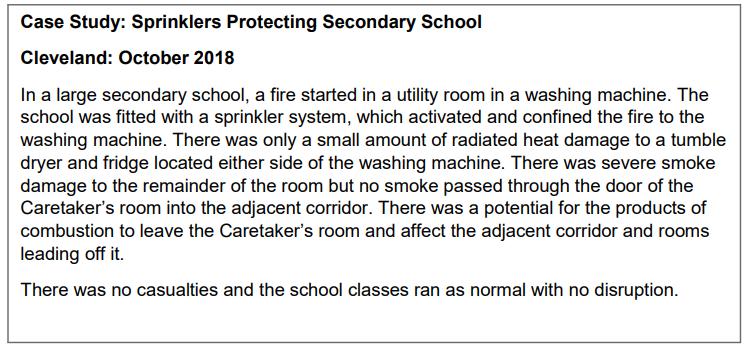
The most effective way of mitigating fire within a premises is via automatic fire suppression (sprinklers). Unlike other active and passive measures which are designed to slow fire spread and / or make people aware of the occurrence of a fire, automatic fire suppression systems are designed to suppress and at times fully extinguish a fire. In a study carried out by the National Fire Chiefs Council (NFCC) in conjunction with the National Fire Sprinkler Network (NFSN) between 2013 and 2018 it was found that there were no recorded fire deaths in none domestic dwellings fitted with sprinkler systems within this time period.
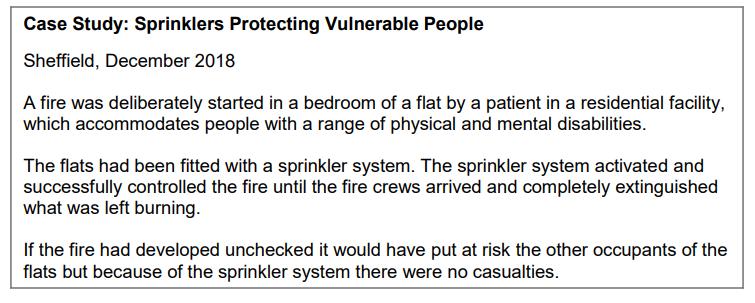
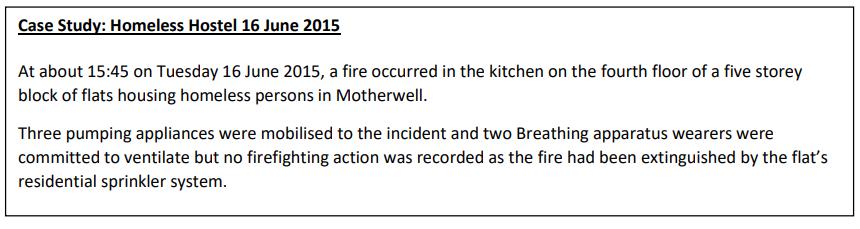
Sprinklers not only provide protection of life within the premises they’re fitted but also provide protection of the property itself. Buildings fitted with sprinkler systems generally don’t see the fire spread beyond the room of origin with sprinklers known to reduce fire damage within properties by around 90% compared to those premises which do not have sprinkler systems meaning business continuity is also improved with many instances where business’s can continue to run within days of what otherwise would have been a severe and devastating fire.
Automatic Fire Suppression can come in many forms but the main types are those of fixed or portable systems.
Portable water mist systems are a not built into the fabric of the building and can quickly be installed and removed. They are free standing systems typically provided to protect an occupant who is particularly vulnerable from fire. These are typically individuals who have mobility issues and or a dependency on alcohol or other substance abuse. The system would be located to provide protection where an individual usually sits or sleeps. A single system usually costs in the region of £5000.
A fixed system are conventional systems where a sprinkler or water-mist system has been built into the fabric of the building to a recognised standard. Typically, these systems will be fitted throughout the property. Whilst there are a number of factors effecting the cost for a fixed system including –
• Is full coverage required? In some instances, a partial system can satisfy the requirements. Whilst this may not reduce the cost associated with the water supply or storage. It will reduce the size of the system and the number of sprinkler heads required.
• Retro fit or new build? If a system can be installed at the building stage when all ceiling voids are accessible it will be much simpler and so cheaper than an existing building, especially if the building is occupied
• Scheduling flexibility If there is flexibility for example to carry out a first fix and also second fix at the same time then this can enable the team to work more efficiently and so reduce the cost of the project.
• Water supply costs Can the system be connected to the mains water supply and has the water supply been designed to cater for a sprinkler system.
• Is a storage facility required? If the sprinkler system cannot be connected to the mains then a water storage system is required, referred to as a ‘pump and tank’. This may be located in the loft, the basement or the garage depending on space and feasibility. If the storage is in the basement and the sprinkler is required to serve several floors then a larger capacity of pump will probably be required. All these variables affect the cost of the system.
• Size shape and design of the property all affect the number of sprinklers heads required. This in turn alters the amount of work involved and so the cost of the installation of the system.
Taking the above into account it is very difficult to give a specific cost for a fixed sprinkler system, however as a rough guide a figure of £35m 2 is generally used by the sprinkler industry.
7. RECOMMENDATIONS
This document has been produced to help guide and inform the risk management process adopted for people with a history of fire setting behaviour in need of accommodation, as part of support plans developed to assist their recovery journey.
It is hoped that the content will assist in defining risks and provide a clear context within which they can be effectively mitigated and managed, giving those involved the very best opportunity to access the facilities and services they need. It also recognises that there are invariably a range of factors that impact on an individual's particular circumstances, all of which need to be considered and included in developing successful support arrangements.
P3 are a Midlands based charity, supporting vulnerable people in the community, providing supported accommodation for those who are experiencing homelessness, including hostels, 24-hour staffed accommodation and self-contained flats. For over 20 years, they have housed clients who have a history of arson and fire setting. In order to manage this risk, they have a set of 8 questions they answer and a risk assessment focusing on arson (Appendix B). This is what is requested by their insurer (Russell Scanlan Insurance Brokers) to be complete before housing clients, where there is a mutual trust and understanding that P3 are able to determine whether housing them would be safe and appropriate. There have been very few occasions where the case had been seen as too high risk to house and the ones who they have supported have not had any further incidents of arson. This demonstrates that individuals can successfully be housed with support after a history of arson and fire setting.
8. REFERENCES AND RESOURCES
• Crown prosecution service, 16 th august 2023, criminal damage (online)criminal damage | the crown prosecution service (cps.gov.uk)
• Get copies of your data / your right to access information from a public authority - https://ico.org.uk/for - the - public/official - information/
• www.p3charity.org/
• Bibliography
• American Psychiatric Association, (2013). Diagnostic and statistical manual of mental disorders: DSM-5. 5th edn. Washington, D.C.: American Psychiatric Publishing.
• Aktins, C. (2021). Co-Occurring Disorders: A Whole Person Approach to the Assessment & Treatment of Substance Use and Mental Disorders, 2nd Eds. Pesi Publishing, U.S.A.
• Ayegbusi, A. (2004) Forensic Mental Health Nursing: Care with Security in Mind. Jessica Kingsley Publishers, London.
• Ayegbusi, A. and Clark-Moore, J. (2009). Therapeutic Relationships With Offenders: An Introduction To The Psychodynamics Of Forensic Mental Health Nursing. Jessica Kingsley Publishers, London.
• Blumenthal, S., Wood, H, and Williams, A. (2018). Assessing Risk: A Relational Approach. Routledge.
• Burton, P.R.S., McNiel, D.E. and Binder, R.L., (2012). Firesetting, Arson, Pyromania, and the Forensic Mental Health Expert. Journal of American Academic Psychiatry and Law 40:355– 65.
• Devon and Somerset Fire Service (2022) Integrated Risk Management Plan 2018-2022. dsfire.gov.uk/sites/default/files/2021-04/Integrated Risk Management Plan 2018-2022.pdf
• Eastman,N., Adshead, G., Fox, S., Latham, R., Whyte, S and Williams, H.K.W. (2023). Forensic Psychiatry, 2nd. Eds. Oxford University Press.
• Gannon, T.A., O’Ciardha, C., Doley, B., Alleyne, E. (2012). The multi-trajectory theory of adult firesetting (M-TTAF). Aggression and Violent Behaviour 17(2): 107-121.
• Gannon, T. A., & Pina, A. (2010). Firesetting: Psychopathology, theory and treatment. Aggression and Violent Behavior. 15, 224-238
• Gojkovic, D., Mills, A. Meek, R. (2012) Accommodation for ex-offenders: Third sector housing advice and provision. Third Sector Research Centre Working Paper 77. Uk Cabinet Office.
• Gold, S.N. (2020). Contextual Trauma Therapy: Overcoming Traumatization, Reaching Full Potential. American Psychological Association.
• Her Majesty’s Inspectorate Of Probation. (2022) Effective Practice Guide: Mental Health. HMI Probation. Effective practice guide: Mental health (justiceinspectorates.gov.uk)
• Horsley, F.K. (2022). New Perspectives On Arson and Firesetting: The Human-Fire Relationship. Routledge, U.K.
• Hughes, S.E. (2012). Adults who deliberately set fires: the utility of fire-setting intervention programmes for mentally disordered offenders. University of Birmingham. https://etheses.bham.ac.uk/id/eprint/3705/
• Kent, B. (2018). An Examination of Risk Factors and Dangerousness associated with Firesetters. University of Kent.
• Maden, A. (2007). Treating Violence: A Guide To Risk Management In Mental Health. Oxford University Press.
• National Fire Chiefs Council (2017) Fire Safety In Specialised Housing. NFCC. UK.
• National Institute for Health and Care Excellence (2017) Mental health of adults in contact with the criminal justice system Identification and management of mental health problems and integration of care for adults in contact with the criminal justice system. NICE Guideline 66. Overview | Mental health of adults in contact with the criminal justice system | Guidance | NICE
• North East Homelessness Think Tank. (2016) Submission to Work and Submission to Work and Pensions Select Committee Enquiry on Support for Ex-Offenders leaving prison. DWP, UK.
• Ciardha, C and Gannon, T.A. (2012). The implicit theories of firesetters: A preliminary conceptualization. Aggression and Violent Behavior 17: 122-128.
• Palmer, E.J. Caulfield, L.S. & Hollin, C.R. (2005). Evaluation of interventions with arsonists and young firesetters. Office of the Deputy Prime Minister: London
• Prins, H. (2022). Offenders, Deviants or Patients? An introduction to clinical criminology 4th Eds. Routledge, London.
• Pycroft, A. and Croft, D. (2019). Multi-agency working in criminal justice: Theory, policy and practice, 2nd Eds. Policy Press.
• Snape, J. and Dartford, P. (2023) Conversation with Dr. Yasmin Siddall, Consultant Psychologist and Dr. James White, Consultant Psychiatrist, Rampton Hospital. 14th November 2023.
• Staffordshire and Shropshire Fire Service, (2024). Our Safety Plan 2020-2024. Our Safety Plan 2020-2024 | Staffordshire Fire & Rescue Service
• Tharshini, N.K., Ibrahim, F., Kamaluddin, M.R., Rathakrishnan, B.and Nasir, N.C.M. (2021). The Link between Individual Personality Traits and Criminality: A Systematic Review. International Journal for Environmental Research and Public Health, Vol. 18.
• Whittington, D. (2016) Psychologically Informed Environments: Therapeutic Regeneration. AuthorHouse. UK.
• White, J., Siddal, Y., and Galway, R. (2023). Fire Setting Treatment Group For Women. Rampton Hospital, U.K.
• World Health Organization, (2022). ICD-11: International classification of diseases (11th revision). https://icd.who.int/
9. APPENDIX
APPENDIX A - A SUMMARY OF COMMISSIONED RESEARCH FINDINGS BY HM GOVERNMENT
Government commissioned research into fire safety programmes uses the accreditation criteria of the Correctional Services Accreditation Panel as the benchmark against which arson interventions are judged. These criteria, used by the prison and probation service, were formulated with reference to the literature on effective practice in reducing offending.
Programmes should:
1. Have a clear model of change underpinned by theory and empirical evidence.
2. Have clear criteria for selection of clients.
3. Target a range of dynamic risk factors.
4. Use effective methods.
5. Be skills oriented.
6. Match dosage of programmes to offender in terms of number and frequency of sessions and be appropriately sequenced with respect to offender’s needs.
7. Engage and motivate offenders.
8. Be provided within a coherent sentence planning process, with continuity of programmes and services offered.
9. Have procedures in place to ensure programme integrity is maintained.
10. Have ongoing monitoring and evaluation with respect to targets for change and reoffending.
The current CSAP accreditation criteria are informed by the research evidence relating to a utilitarian ‘what works’ and positive outcomes model, suitable for multi-agency working. The CSAP also requires programmes seeking accredited status to be fully manualized. The required manuals are:
• Theory Manual outlining the theory underpinning the programme and model for change.
• Programme Manual containing a detailed description of each programme session with links to the model of change, research evidence, and the theory underpinning the programme.
• An Assessment and Evaluation Manual is also required that describes the measures used for assessment and evaluation within the programme, including details about their administration and interpretation.
• A Management Manual is needed to describe procedures for the selection, training, and appraisal of staff, offender selection and assessment, operating conditions for the programme, monitoring and evaluation procedures for the programme, and the roles and responsibilities of all staff relating to the programme.
• Finally, a Staff Training Manual outlines the training for staff involved in the programme, procedures for assessing and assuring staff competence, and procedures for reviewing staff performance on a regular basis.
As such, the CSAP criteria set a ‘gold standard’ against which to judge initiatives with offenders intended to reduce reoffending. Past research has indicated that no single set of interventions in a single service setting met the stringent criteria for an Accredited Programme as set out by the CSAP.
The lack of a clear model of change underpinning interventions impacted on most areas covered by the criteria, particularly selection criteria, targeting of dynamic risk factors, use of effective methods, and dosage. There was also a lack of good practice with regard to monitoring and evaluation of interventions, particularly with respect to changes on risk factors and reductions in reoffending. On the positive side, the majority of interventions appeared to engage and motivate participants, as evidenced by low reported drop-out rates, and partnership working between fire and rescue services and youth offending services ensured that adolescents received interventions within a case management system. There were mixed findings with respect to manuals. Those organizations whose interventions had been established for a longer period of time tended to have more documentation, although all fell short of the documentation required by the CSAP.
The recommendations from the Deputy Prime Minister’s Office are that the development of any new programme should be informed by the principles of effective practice (e.g. CSAP criteria) and, critically, should be monitored and evaluated with respect to both process and outcome. Further, issues relating to effective implementation and delivery must be considered. The wider literature has consistently shown quality of treatment delivery to be a key issue in maximizing programme effectiveness with offenders.
Research by the US National Juvenile Fire Setter/Arson Control and Prevention Programme (NJF/ACPP), identified seven factors shared by successful fire setting interventions: these are:
1. Programme management.
2. Appropriate screening and evaluation procedures.
3. Intervention services.
4. Appropriate referral procedures.
5. Publicity.
6. Appropriate monitoring systems.
7. Developing relationships with justice services.
Conclusion
There is a great deal of good practice in a range of settings in England and Wales, with fire and rescue services and youth offending services at the forefront of arson prevention. If an offending behaviour programme is not to be developed, there are other steps to consider. Some thought might usefully be given to provision of more centrally organized assistance to those in the field running interventions. There are a number of common concerns, such as staff training, teaching materials, and organization of a central forum for practitioners to exchange ideas and knowledge about best practice, which could usefully provide a starting-point.
APPENDIX B: Arson Assessment P3
Arson Assessment Assessment Date: Version Review Date:
People At Risk:
Proposed Address:
Assessors:
When completed please return to …......... who will liaise with the insurance company and landlord
Details of Arson conviction / Fire starting History
Severity of most recent Arson / Fire incident
Likelihood of mental health factors increasing the risk of fire starting (score 0 if not applicable)
- No incident for 10+ years
Likelihood that the client will be in possession of or have access to lighters or matches
3 - Present in a staff office but not locked
2 - Present in a locked cabinet
1 - Present but secured in a locked cabinet in a staffed office
0 - None present
4 - Client is a known smoker
3 - Other clients on site are smokers
2 - Staff on site are smokers
1 - Other clients on site have been known to carry lighters or Matches
0 - No reason to suspect possession by client or anyone else on site
Score 0-4:
Accessibility to commercial waste bins / skips
4 - Commercial bins / skip storage is attached to property and not locked
3 - Commercial bins / skip storage attached to property but locked
2 - Commercial bins / skip storage is detached from property but not locked
1 - Commercial bins / skip storage detached from the property and locked
0 - No commercial waste bins or skips on site
Level of client supervision
Score 0-4:
5 - Contact likely to extend past weekly, room check likely to extend past monthly
4 - Minimum of weekly contact and monthly room check
3 - Minimum of weekly contact and weekly room check
2 - Minimum of daily contact and weekly room check
1 - Minimum of daily contact and daily room check
If the assessment indicates a high risk individual, you must put controls in place to reduce the score to at least medium risk before accepting the client. If the score is medium risk, the client can be accepted but you must still attempt to put controls in place to reduce their score. If the assessment indicates a low risk, no further action is required.
Score 1-5:
Risk Rating:
Control
Consider hostel placement, initially, rather than a dispersed property
In place / Considered? Comments
Yes/No
Client risk assessment up to date
Fire alarm system in place and regular tests to be carried out
Health and Safety / Property checks being completed
Any prescribed medication to be taken as per support plan
process in place to flag any deterioration in mental health and/or any indication of increased associated risk
Fire resistant textiles and furnishings in place
Enforcement of ‘No Smoking’ policy
The Changing Futures programme is a £77 million joint initiative by the Ministry of Housing, Communities and Local Government (MHCLG) and The National Lottery Community Fund, the largest community funder in the UK.
The National Lottery Community Fund has invested over £21 million, adding to the £55 million of Government funding, extending the length of the programme to help local partnerships develop longer term and more effective support for those in need.
Many of the vulnerable adults who will be supported through the programme also experience physical illhealth and disability, entrenched disadvantage and trauma.
They often also experience difficulties in getting the coordinated support from local services that they need, which can lead to worsening problems such as increased reoffending and greater risk of rough sleeping and illhealth.
Stoke-on-Trent will take a ‘person-centred’ and ‘traumainformed’ approach to tailor support to individuals and their needs. Changing Futures will transform how services operate by linking up support across areas such as health, employment, and drug misuse. This will make sure support services suit the needs of each individual and benefit from the staff who have first-hand experience of issues such as homelessness or drug misuse.


www.expertcitizens.org.uk/changing-futures-new/