LASTING CHANGE

An internal evaluation of the Insight Academy
Autumn 2025
Andy Meakin BA(Hons) MBA Director

Lived experience, lasting change
An evaluation of the Insight Academy
Executive summary
The Insight Academy is a co-produced learning programme that is transforming workforce development in Stoke-on-Trent’s support services sector delivered by Expert Citizens CIC. Launched in mid-2022 as part of the government-funded Changing Futures programme, the Academy builds on the legacy of the VOICES learning programme and places lived experience at the heart of training design and delivery. All training is provided free of charge to anyone living or working in Stoke-onTrent, removing barriers to access and engaging a wide range of professionals and volunteers.
In its first approximately three years, the Insight Academy delivered 283 learning sessions or events to a total of c. 4,300 attendances across dozens of topics. Through multiple attendances, this represents about 1,000 individual learners benefiting from one or more Insight Academy opportunities. Participants came from around 135 different organisations encompassing at least 150 distinct services. This broad reach, which includes health, housing, social care, criminal justice, charitable and statutory agencies, has promoted a cross-sector learning community (Atkinson et al., 2007; Sloper, 2004).
Key outcomes and impacts
Academy participants report enhanced skills, confidence, and motivation as a result of the training. Session evaluations show that 99% of learners increased their knowledge, skills, and confidence through Insight learning opportunities. Many attendees quickly apply new knowledge and tools in their work, leading to improved practice in supporting people experiencing multiple disadvantages (SAMHSA, 2014).
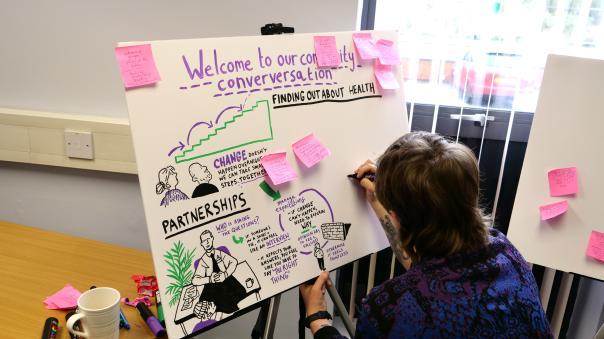
Frontline staff highlight improved communication and empathy:
“I have learnt ways of communicating with service users… I now feel I have a better understanding of how to support people encountering trauma” (training participant).
Others value the validation and refresher of good practice: “It was fantastic to refresh appropriate responses and to have validation for what I always try to provide in my role” (training participant).

Several testimonials indicate the training has reinvigorated practitioners, even preventing burnout: “I have felt burnt out for a long time and this training has really given me a reset … you have lit a fire under me again” (training participant). Such feedback underscores the Academy’s role in boosting morale, improving professional skills, and ultimately contributing to enhanced services for vulnerable people. This “reflection in action”, i.e., learning and adapting during practice, enhances people’s motivation and ability to serve their clients more effectively (Schön, 1983).
Theco-productionmodeloftheAcademy, with courses co-designed and sometimes co-delivered by people with lived experience, is a cornerstone of its success (Bovaird and Loeffler, 2012; Needham and Carr, 2009; Sweeney et al., 2018; Tew et al., 2004). Learners consistently cite the power of hearing directly from people with lived experience as a unique and impactful element: “It
wasgreattohearfromrealpeopleandhow trauma has affected their lives… it will give me a better understanding” (training participant).
This approach not only enriches the learning experience for professionals but also establishes people with lived experience as educators and leaders (Best et al., 2012; Repper and Carter, 2011). Several volunteers have completed accredited “train-the-trainer” qualifications (e.g. Award in Education and Training) through Insight, enabling them to become qualified tutors in their own right. This dual benefit, building the capacity of both professionals and people with lived experience, exemplifies the Academy’s strengths-based ethos (Gilbert et al., 2013). As one tutor noted, the Academy “offers a huge variety of training opportunities that not only meet learners’needs,itgoesaboveandbeyond what they think they need”

At an organisational and systems level, the Insight Academy is contributing to culture change and improved collaboration. Participating agencies report shifts in staff attitudes and service approaches as a direct result of training. There are key examples of new practices being implemented. For instance, after a masterclass on effective case recording, some teams improved their
documentation standards, with one local service seeing better regulatory (CQC) ratings that “we could take a bit of credit for” according to the trainer. Organisations have been inspired to commission further in-depth training and consultancy after seeing the value of the Academy’s sessions.
Crucially, the Academy’s cross-agency shared learning environment has broken down silos: stakeholders observe greater cooperation and a more solutionfocused, unified approach among services supporting people with complex needs (Atkinson et al. 2007; Sloper, 2004). A manager from the City Council noted that if each department ran its own training in isolation “they wouldn't be getting the same benefit ... What they like is going on a course with people who have [other] expertise”. This city-wide learning culture is a key legacy, indeed, evidence shows the programme has helped to develop Stoke-on-Trent as a “Skilled City” in the field of multiple needs (Stoke-onTrent City Council, 2024).
The Insight Academy has also pioneered creative and innovative learning approaches. Notably, it has harnessed the arts to engage hearts and minds: in 2020 Expert Citizens co-produced “In Plain Sight”, an immersive theatre production based on real cases, which brought to life the realities of homelessness and trauma for an audience of local decision-makers. The production’s unique, interactive format –leading the audience through different
staged environments – proved enormously impactful: attendees were “totally blown away… very powerful and moving”.
Building on that success, in 2025 the Academy collaborated with creative organisations Rideout and B’Arts on “Punishment Acts: Tales of Retribution, Reparation and Redemption”, a groundbreaking play exploring criminal justice, co-created with people who have lived experience of prison (de Dios Fisher, 2025). These innovative methods have drawn national attention and demonstrated the Academy’s commitment to engaging senior leaders and the wider public in new ways. More routinely, Insight training sessions incorporate storytelling, videos, and interactive exercises that differ from traditional lecture format, a “refreshing change to usual sessions” as one attendee remarked, “no obligatory group work… hard-hitting [content] that made me stop and re-evaluate my approach”


Sustainability and legacy
Originally established with fixed-term funding (from the Department for Levelling Up, Housing and Communities and The National Lottery Community Fund via Changing Futures), theInsightAcademyisnowatapivotalpoint Thestrongevidenceofimpact and wide uptake documented in this evaluation illustrate a compelling case for continuationandscale-up. Stakeholderswidelyagreethatlosingthisfree,high-quality training resource would leave a significant gap: “it would be a real loss if that service wasn't there going forward… I know funding is always an issue” (partner organisation feedback).

Plans are being devised to integrate the Academy’s approach into future local provisionandtoseeknewfundingstreams to sustain its activities beyond the current programme. Bovaird and Leoffler (2012) note how coproduced models can be scaled and institutionalised effectively. The Academy is well positioned strategically as it aligns with national priorities to improve multiple disadvantage outcomes and has established a model that could be replicated in other areas.
With a proven track record in Stoke-onTrent and a respected brand (Insight) known for quality and co-production, the Academy could inform similar initiatives UK-wide (Needham and Carr, 2009). However, careful planning is needed to maintain its Stoke-born ethos while adapting to new contexts, as trainers

caution that any expansion should bespoke content to local needs and preserve the lived experience leadership that underpins success.
In summary, the Insight Academy has demonstrated that “training that transforms” is not merely a slogan but can be a reality. It has transformed individuals, changed organisational cultures, and strengthened inter-agency relationships through an appreciative, strengths-based approachto learning.
By valuing lived experience as expertise and making training accessible and engaging, the Academy contributes to systemic change, supporting a more skilled, compassionate workforce and a more collaborative, learning-focused system ofsupport.
Key findings of this evaluation
Significant reach and engagement
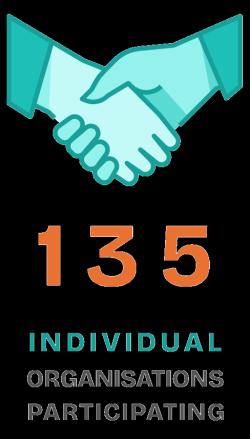
4,300+ training attendances by staff and volunteers from c.135 organisations, spanning multiple sectors, achieved in under three years. Courses are consistently fully booked, reflecting strong demand and relevance.
Positive individual impact
99% of learners report increased knowledge, skills, and confidence. Participants credit Insight training with improving their practice, boostingmorale, and equipping them with new tools (e.g trauma-informed responses, strengthsbased approaches) Several gained formal qualifications and career opportunities through the Academy.
Culture change in organisations
Evidence of practice changes (e.g new protocols, service improvements) following training Cross-sector networking in sessions has encouraged partnerships and a shared language among diverse services. Managers observe staff becoming more personcentred and proactive after attending Insight courses.
Innovative co-production model
The Academy exemplifies co-production, with individuals with lived experience involved in design and delivery. This approach enhances training quality and credibility, and positions lived experience and Expert Citizens as change agents. Their stories and contributions are frequentlycitedasthestandoutaspectof sessions.
Strategic added value
The Insight Academy supports Stoke-onTrent’s Skilled City ambitions (Stoke-onTrent City Council, 2024). By embedding a sustainable training infrastructure beyond the life of any single project this potential could be amplified. It complements higher-level system change efforts by creating a ground-up movement of skilled, motivated practitioners ready to implement new ideas.
The Academy’s success highlights a valuable funding proposition: for a modest investment, it delivers extensive social value, from improved front-line effectiveness to potentially better outcomes for citizens, and serves as a national exemplar for training in the multiple-disadvantage sector.

Recommendations
Looking forward, recommendations focus on sustaining and expanding this impact Funders are encouraged to invest in the continuation and growth of the Academy model, given demonstrable value for money and social return Local and national stakeholders should integrate the Academy’s learning approach into their strategies, champion lived experience leadership, and support Expert Citizens to replicate the model in new regions. With support, the Insight Academy can continue to thrive as a catalyst for learning and change, ensuring that the voices of lived experience remain at the centre of service improvement.

Lived experience, lasting change
An evaluation of the Insight Academy
Introduction and background
Origins in VOICES
The Insight Academy’s foundations lie in the VOICES learning programme, a project which ran in Stoke-on-Trent from 2014 to 2022 as part of the National Lottery Community Fund’s “Fulfilling Lives” initiative VOICES (Voices of Independence, Change, and Empowerment in Stoke-on-Trent) was a partnership programme aimed at improving services for people facing multiple disadvantage (i.e. combinations of homelessness, addiction, mental ill-health, or offending).

A key element of VOICES was a city-wide training offer for professionals and volunteers, co-produced with Expert Citizens CIC, a local lived experience led organisations that emerged from the programme. Overitslifespan,theVOICES Learning Programme delivered hundreds of courses and workshops, establishing
Stoke-on-Trent’s reputation for crosssector learning By 2019, VOICES was engaging around 30 different organisations annually in training, with over 2,300 attendances that year alone. Independent evaluation showed extremely high satisfaction and highlighted three critical success factors:
(i) a shared learning environment (bringing multiple agencies together), (ii) high-quality provision, and (iii) lived experience at the heart of the programme. These principles and achievements set the stage for continuation of the model through the Insight Academy. This evaluation also references the preceding learning programme in the VOICE project where relevant.
In March 2022, the VOICES programme came to its planned end, but the partners were determined not to lose the momentum and knowledge gained.
Expert Citizens CIC, the lived experienceledCommunityInterestCompanythatcodelivered VOICES training, took up the mantle to continue this work under a new banner. Around the same time, Stoke-onTrent was selected as one of 15 areas in England to participate in the Changing Futures programme, a £77 million joint initiative by the UK Government (MHCLG) and The National Lottery Community
Role of Expert Citizens CIC
Fund. Changing Futures (2021–2025) aims to improve outcomes for adults experiencing multiple disadvantage through better collaboration, system reform and person-centred support. In Stoke-on-Trent, the Changing Futures partnership (led by the City Council) recognised the crucial role of workforce development and lived experience expertise in achieving system change. The Insight Academy was launched in August 2022 as a core component of Changing Futures, carrying forward the legacy of VOICES into a new phase.
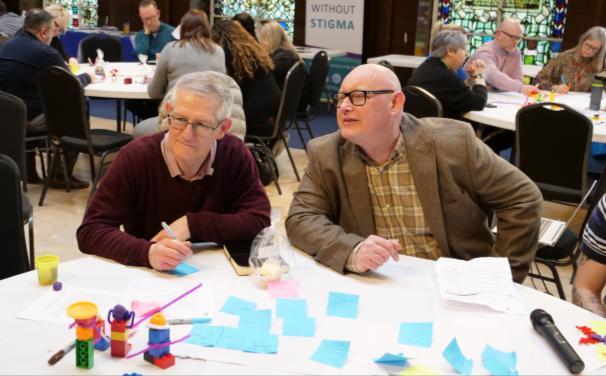
Expert Citizens is a social enterprise led by people with first-hand experience of the issues faced by service users of Changing Futures (including homelessness, mental ill-health, addiction, justice experience, domestic abuse, and poverty)
As ambassadors of lived experience, Expert Citizens use their insight to motivate change in services and communities. They were integral to VOICES and now lead the Insight Academy. Expert Citizens CIC provides a unique capacity to co-produce training that resonates with both service users and professionals. Their involvement ensures the training content remains grounded, relevant, and impactful. Some
of the Academy’s volunteer trainers and facilitators are Expert Citizens themselves, who have developed professional skills through the programme. The CIC also brings a network of relationships with local agencies,credibilityamongserviceusers, and a passion for systems change that align perfectly with Changing Futures objectives.
Strategic context
The Insight Academy sits at the interconnection of local and national strategies. Locally, it supports Stoke-on-Trent’s goal of becoming a “Skilled City” and the wider transformation of support for people facing multiple needs. Nationally, it exemplifies key themes of the Changing Futures programme: partnership working, co-production, trauma-informed practice, and workforce development. By offering free at the point or delivery, open-access training to the frontline workforce, the Academy addresses a common challenge, i.e., staff training budgets are often limited, yet there is a pressing need for up-to-date knowledge and skills to deal with complex issues.
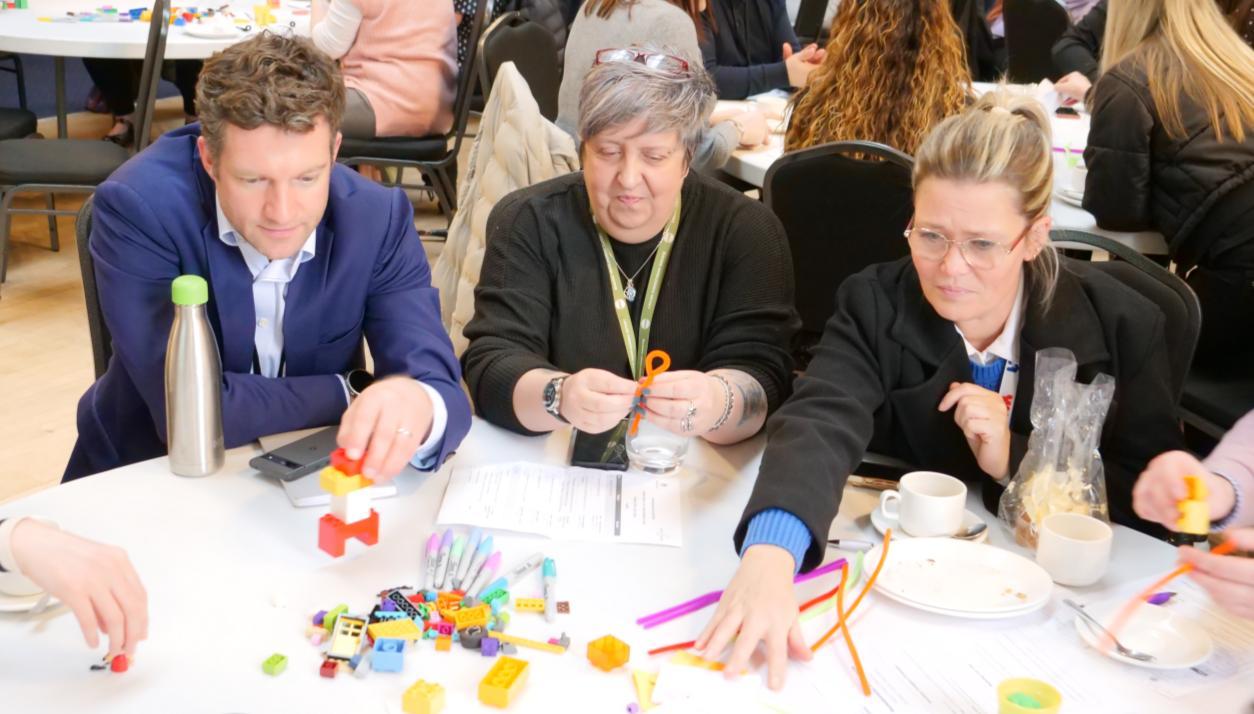
The Academy’s funding through Changing Futures has allowed it to operate at no cost to participants, thus reaching staff and volunteers who otherwise would not have been able to access such training. This aligns with the funders’ priorities of building capacity and testing innovative approaches to improve outcomes.
As Changing Futures is a time-limited pilot, a forward look is crucial. Stakeholders have been keen from the outset to embed successful elements like the Insight Academy into the local system for the long term. This evaluation therefore not only assesses the
Academy’s performance to date but also considers lessons learned and options for sustainability.
The following sections detail the programme’s design and delivery model, itsscaleandreach,theimpactobservedat individual and organisational levels, the innovative methods employed, and how the Academy establish a sustainable future. Throughout,the approachremains appreciative and strengths-based, celebrating what works and how positive change has been achieved, to inform strategic conversations about the Academy’s prospective future.
Programme design and delivery model
Co-production at the core
TheInsightAcademyisbuiltonaco-productionmodel,meaningthatpeoplewithlived experience work in partnership with professional staff to design, develop, and deliver the training. This is not a tokenistic involvement, but a defining feature of how the Academy operates From identifying training needs to shaping content and cofacilitating sessions, Expert Citizens are involved at every stage (Bovaird and Leoffler, 2012; Needham and Carr, 2009).
For example, each course delivered by one external trainer, Steven Talbot, was created with the Expert Citizens through local experts like Phil, Sophia, Charlotte, Paula and Malcolm contributing their stories to films and discussions used in training. This co-production approach ensures that content is rooted in real-life experience of navigating services, giving learners a direct line of sight into the challenges and successes of those they support.
The result is training that participants describe as “real, relevant and created by and for people of Stoke-on-Trent”, distinctly different from generic courses. Lived experience input also makes the sessions more engaging and authentic: as one trainer put it, “so much of the training is informed by the people of Stoke… highlighting [our] different approach”. Rather than abstract case studies, learners hear first-hand accounts, which multiple attendees characterised with phrases like, “[it] really hit home that there's people at the end of this”. Co-production is thus a guiding principle that enhances both the quality and credibility of the Academy’s offerings (BovairdandLeoffler,2012;Needhamand Carr, 2009; Tew et al., 2004).
Findings from the stakeholder survey confirm that this co-production model is not only valued in principle but is actively shapingpracticeinpartnerorganisations. Respondents described how lived experience “bolstered courage to continue development at the frontline” and prompted them to embed survivor and peer voices in service design and policy.
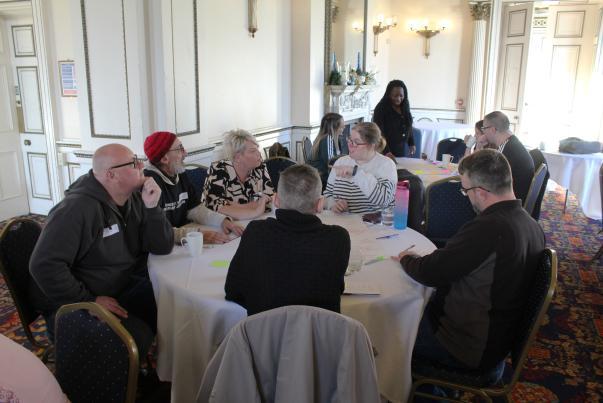
Others emphasised the role of peer mentors and liaison with lived experience groups as direct influences of their engagement with the Academy. These accounts reinforce that co-production is translating into real change beyond the training room.
Principles and ethos
Several key principles underpin the Academy’s design and delivery
• Lived experience leadership
The value of nothing about us without us is evident, those with lived experience are not just telling their stories but actively shaping and leading training efforts. This manifests in the content (which often features interviews or videos of Expert Citizens), the facilitation (with sessions often co-taught by Expert Citizens alongside subject matter experts), and even course development (where ideas for new courses emerge from issues raised by Expert Citizens in forums and networks).
The lived experience perspective keeps the training person-centred, compassionate, and strengths-focused Participants consistently highlight how hearing from Expert Citizens is the most impactful aspect: “The ‘lived experience’ videos were very helpful for developing understanding … it will make me more aware of signs and give me more confidence to start supportive discussions” (learner feedback). This principle ensures empathy and human stories remain at the heart of learning.
• Cross-organisational learning
From the VOICES learning programme through to the Insight Academy, a core design feature is bringing together learners from different organisations, sectors, and roles in the same room (Sloper, 2004). The Academy does not silo training by agency; instead, police officers train alongside social workers, charity volunteers alongside council staff, etc. This diversity enriches discussions and breaks down barriers.
A housing manager observed that staff “wouldn’t get the same benefit if it was just their team attending”, because in the Academy “they like going on a course with people who have [other] expertise”. The sharedlearning environment allows crosspollination of ideas and encourages mutual understanding between services (Atkinson et al., 2007). It also helps build professional networks as many attendees report making new contacts and better appreciating partner agencies’ roles after attending Insight sessions. This design element directly supports a more joined-up system, reflecting an ethos of collaboration.
• Responsive and demand-led content
The Insight Academy prides itself on offering a flexible, evolving programme that responds to emerging needs and participant feedback. Unlike static training calendars, the Academy’s schedule is continually updated. New courses are developed when gaps or trends are identified, often through direct conversations with stakeholders. For example, trainers and Expert Citizens identified a growing
need for training on effective case recording after multi-agency meetings (such as the Multi-Agency Resolution Group) revealed inconsistencies in practice.
In response, the Academy co-developed an “Effective Factual Recording” masterclass, which has since been delivered multiple times and led to reported improvements in recording standards. Another example is welfare benefits training:localExpertCitizenshighlighteddifficultiespeoplefaced withthebenefits appeals process, prompting a partnership with Citizens Advice to create a tailored workshop on Benefits – Appeals & Tribunals that incorporated claimants’ real experiences. The programme remains agile. If a particular organisation requests a bespoke session, the Academy will deliver it and often open it up to others to attend if extra spaces are available, maximising the benefit across the sector.
This adaptive approach means popular courses are repeated and updated, while niche or emerging topics can be introduced. One tutor noted that the Academy even delivers training learners didn’t know they needed: nobody was asking for a course on “Empathy Fatigue” until it was introduced, and now it is “incredibly popular”. The Academy’s model seeks to be needs-led rather than provider-led, constantly shaped by input from the field (including via evaluation forms, forum discussions, and direct requests).
• High quality and professional facilitation
Although driven by lived experience, the Academy also ensures that training meets professional standards. Sessions are led by a mix of Expert Citizens and subject matter experts, including qualified trainers, consultants, and practitioners with deep knowledge in their fields. A directory of over 30 training providers and facilitators has been engaged, ranging from local organisations (e.g., North Staffs Mind, Staffordshire Police, Savana, Stoke-on-Trent City Council teams) to national experts (e.g., Homeless Link, KFX Drug Awareness).
Each provider brings specific expertise. For instance, a clinical psychologist delivers trauma-informed practice training, a legal expert from Unlock delivers “Advising with Convictions” sessions, and so on. The Academy coordinates these trainers, providing the platform and co-production support (e.g., pairing them with Expert Citizen co-trainers, ensuring content includes local lived experience examples). This model maintains a high bar for content accuracy and training methodology, which participants recognise: sessions are described as “very professional, well-delivered and thought-provoking”
At the same time, trainers adapt their style to be interactive and engaging, often incorporating storytelling, Q&A, and practical exercises instead of lecture-only formats. The Academy Manager (based in Expert Citizens CIC) plays a crucial role in quality control and logistics, liaising with trainers, arranging venues, and handling bookings, while also being open to innovations and new ideas from the wider team, tutors, and participants. This ensures consistency in delivery without stifling the creative, grassroots spirit.
Types of learning opportunities
The Insight Academy offers a rich mix of learning formats to cater to different needs:
• Masterclasses
These are the core of the Academy’s offer. Typically, whole or part-day intensive sessions on specific topics, led by an expert and often co-facilitated by an Expert Citizen sharing their personal insights Masterclasses are designed to provide access to in-depth knowledge and practical skills in areas such as traumainformed care, mental health awareness, strengths-based practice, domestic abuse, substance misuse, etc.
They are also sometimes used for specialist topics like Empathy Fatigue or Motivational Interviewing, which differentiate the Academy’s offer. Masterclasses have proven to be the most frequent format, accounting for most sessions delivered (212 sessions or c.75%). They draw diverse audiences and encourage interaction across sectors.
• Accredited courses
Tosupportformalprofessionaldevelopment, Insightsometimes runssomelonger courses that lead to qualifications. For example, the Level 3 Award in Education and Training (AET) was offered in partnership with a local college, enabling volunteer educators (Expert Citizens) and staff to become qualified trainers. Additionally, certified courses like Emergency First Aid at Work and First Aid for Mental Health are provided to strengthen practical skills (these courses have external accreditation and assessment).
Accredited courses typically run over multiple days or weeks. From August 2022 to March 2026, the Academy delivered 12 accredited courses to a total of 137 attendances. Gainingqualificationssupportsparticipantswithcareerprogression. Indeed, during VOICES, 39 individuals (staff and volunteers) obtained qualificationsviathelearningprogramme,andtheAcademycontinuesthatlegacy.
• Non-accredited courses
These are multi-session training programmes or workshops that, while not formally accredited, offer a deeper dive than a one-off masterclass Examples include a multi-part Homelessness Law course delivered with housing law specialists,oraseriesonwelfarebenefits(IntroductiontoBenefits,Homelessness Applications, etc.) run with Citizens Advice. Such courses often span several halfdays or weekly sessions. They allow for more practice, reflection and progression of learning. The Academy delivered around 22 non-accredited course sessions, with a total attendance of 145 learners. These courses fill important gaps in professional training where often no formal qualification exists, but more comprehensive knowledge or skill is needed.
• Workshops
True to its responsive ethos, the Academy designs and delivers bespoke training workshops for specific organisations or audiences in response to demand. These are typically short sessions (e.g. half-days) targeting a particular issue the requesting organisation faces.
For instance, a local NHS hospital’s A&E department requested a workshop on trauma informed practice; Expert Citizens worked alongside trainer Claire Ritchie to deliver a session to meet this need for c.40 healthcare professionals from nurses to senior consultants. Similarly, the Staffordshire & Stoke Adult Safeguarding Board commissioned a series of workshops on Understanding Barriers to Engagement after a serious case review, which Insight delivered to hundreds of frontline staff across seven events.
Bespoke workshops are usually co-delivered with Expert Citizens sharing personal stories relevant to the organisation’s context, an approach that those commissioners praised as “highly effective and impactful”, with one saying the Expert Citizen presenter “was a star… it came from the heart and got really good feedback”. These tailored sessions have grown organically through word-ofmouth. From January 2022 – April 2025, bespoke workshops reached a total of around 1,000 attendees. They often serve as outreach beyond the core partners, introducing new agencies to the Academy’s approach.
• Communities of Practice
The Academy supports and facilitates Communities of Practice. These are periodic gatherings of practitioners, managers, system leaders, and people with lived experience to reflect on challenges, share experiences, and learn from each other in a semi-structured format. Changing Futures continued the Multi-Agency Resolution Group (MaRG) previously supported by VOICES. The Insight Academy complements these by hosting learning-focused Community of Practice sessions Themes emerging to date include the following:
• Arson convictions as a barrier to accommodation
• Cuckooing
• Housing gaps
• Systems change
• Challenging behaviour
• Stigmatising attitudes and behaviours
Between August 2023 and August 2025, 10 Community of Practice sessions were held under Insight, with around 160 total attendances. These sessions are less about formal teaching and more about peer learning, often facilitated by Expert Citizens and co-led by experienced staff. They generate insights that feed back into the Academy’s training content (for example, needs raised in Communities of Practice can become topics for new workshops or masterclasses). Schön (1983) argues that learning occurs through professional dialogue and real-world problem-
solving, central features of Communities of Practice, as well as more formal instruction.
• Learning events and conferences
In addition to the above, the Academy has organised larger-scale learning events. Notably,itlaunchedtheNationalInsightConferenceandAwards. Thisisanannual event to celebrate best practice and share learning nationally. In 2023 and 2024, Insight Awards events were held, each drawing up to 150 participants including delegates from across the UK. These events feature keynote speakers, marketplaces showcasing services, and “Insight Awards” presentations recognising innovative work in involving people with lived experience. They serve to raise the profile of lived experience as a valued source of knowledge and to disseminate examples of positive practice. The Insight Awards are part of Expert Citizens’ broader Insight Quality Standards programme and closely linked to the Academy’s training mission.
• Supporting relevant local projects
The Insight Academy contributed to the It Takes a Village Youth Forum, which brought together young people, parents, older residents, refugees, asylum seekers, and unemployed community members. The consultation identified ten priority issues, including mental health support, education inequality, housing insecurity, financial pressures, food deprivation, and transport barriers. Proposed solutions focused on youth-led approaches, mentorship, digital platforms, community hubs, and rapid response systems. The findings highlight the need for integrated family support, accessible services, and stronger adult–youth communication. This collaborative process ensures young voices shape programmes that build safer, fairer, and more inclusive communities.
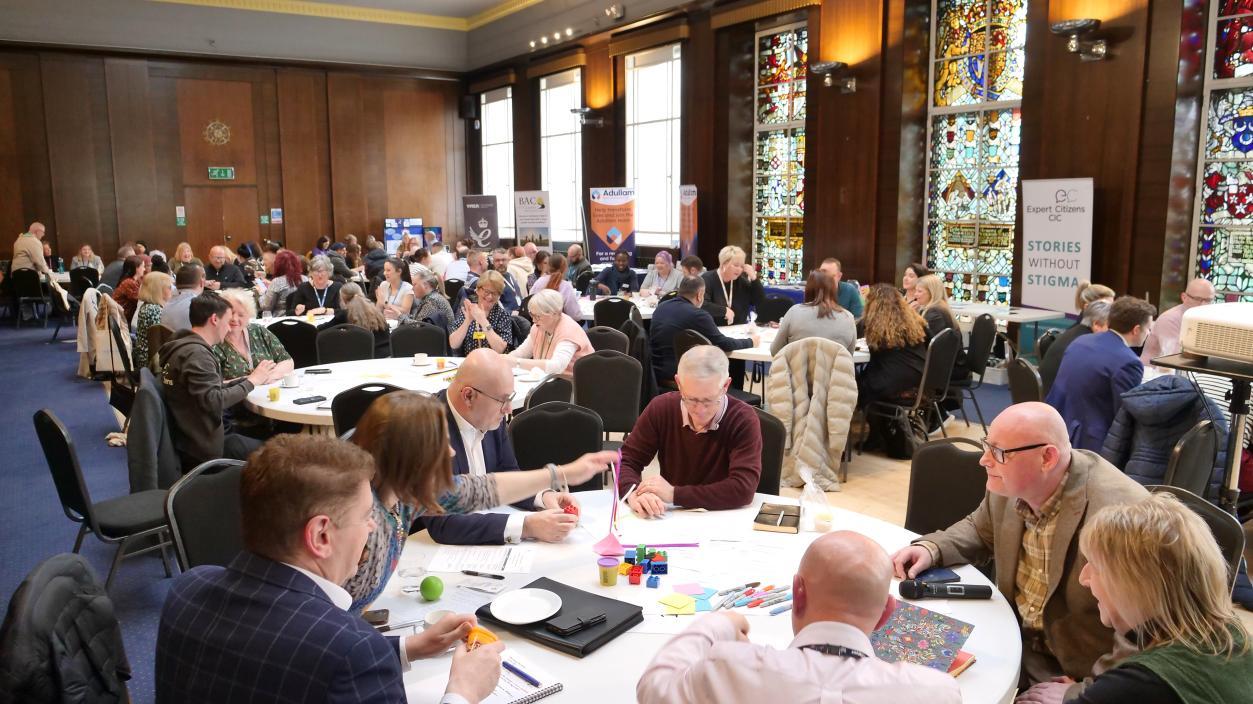
The delivery model for all these learning opportunities is coordinated by a small team within Expert Citizens CIC (currently funded by Changing Futures). This team handles scheduling, outreach, bookings, etc., as well as trainer onboarding, support, and venue logistics. Notably, the Academy operates largely through partnership goodwill, trainers sometimes provide services at a reduced cost because they believe in the Academy’s mission and value that Expert Citizens perform a service in handling the administration. Externaltrainersmaintainautonomythroughself-employedstatusbut collaboratecloselywiththeAcademycoordinatorondatesandcontent. Manytrainers have strong local ties or personal commitment, contributing to a sharing experience among the trainers themselves. The model is thus lean and collaborative, enabling a wide range of topics to be covered without a large staff team. The strengths-based philosophy permeates not only the training content but also how the programme is run. Flexibility, trust in trainers’ expertise, and focus on enabling over bureaucracy.

Evolution of course offerings
The Academy’s catalogue grew significantly from mid-2022 to 2024. In late 2022 (its firstmonths),prioritywasgiventofamiliarVOICEStopics(e.g. TraumaInformedCare, Strengths-BasedPractice,MentalHealthAwareness)andsomequickwinslikebenefit workshops. By 2023, the programme expanded to include 93 masterclass sessions and 16 bespoke workshops in that year alone.
New topics introduced in 2023–24 included Cuckooing Awareness (to address criminal exploitation of vulnerable tenants, delivered with police input), LGBTQ+ Awareness in the Workplace (with specialist trainers), Hoarding and Risk Reduction (with a social enterprise, Clouds End), and Motivational Interviewing (adapted to incorporate lived experience, making it a very popular two-day course)
This demonstrates the Academy’s breadth, tackling everything from frontline practical skills (first aid, conflict resolution) to deeper reflective practice topics (emotional intelligence, empathy, co-production). A full list of courses
delivered from 2022 – 2025 is provided in Appendix B on page 69, and it illustrates the diversity of learning opportunities made available through the Insight Academy.
As part of Insight Academy course evaluations in 2025, participants were asked what they would like to see in future training to support the continued development of their knowledge, skills, and confidence. The feedback has revealed several recurring themes, which collectively offer valuable insight into emerging training needs and opportunities. Below is a thematic analysis of these responses, with each theme illustrated by participant quotes.
Mental health and emotional wellbeing
Asignificant numberofparticipants expresseda desiretodeepen theirunderstanding of mental health. The demand included both general mental health awareness and more focused topics such as diagnosis-specific training, emotional resilience, and the impact of trauma and domestic abuse.
“”
Courses around specific mental health diagnoses, i.e., bipolar, personality disorder.



“”
“”
Empathy fatigue would be an interesting one.

Even where there is no mental health criteria in a service, does not mean they do not house those with mental health. So many services need education to support and work with the public and not compound difficulties.
Motivational interviewing and behaviour change
Motivational interviewing continues to be a valued skill, with several respondents expressing interest in more advanced or applied sessions. There is a particular appetite for courses that connect these techniques with lifestyle changes or client engagement strategies.
“”
I’m interested in the advanced motivational interviewing course.


“”
Motivational interviewing with an emphasis on lifestyle changes possibly.
Trauma-informed practice and recovery
Participants welcomed previous training that explored trauma and brain function, and many would value further exploration, both through refreshers and deeper dives into trauma’s effects on engagement and relationships.
“”
Impact of DV, trauma on relationships and engagement.
“”
Refresher of trauma.
“”
I enjoyed the mix of learning about the brain functions as well as the real-life stories from those who shared.


Addiction and substance use
There is a clear interest in training that addresses addiction and its impact on service engagement. Participants wish to better understand how to support people dealing with substance misuse.
“”
More about addiction with drug and alcohol, how these can affect individuals and their ability to engage in services.

Equality, diversity, and inclusion (EDI)

Courses about addictions.
“”
Calls for more LGBTQ+ awareness training were frequent, particularly in relation to trans identities and lesser-understood orientations. There is a clear desire to provide inclusive support and foster understanding across teams and services.
“”
More info on gender fluidity, e.g., pansexual, asexual, to further understand.

“”
More LGBTQ+ training please!
Confidence building and client empowerment
Several responses emphasised the need for training that boosts professional confidence whether for practitioners themselves or in helping clients take ownership of their journey.
“”
Supporting client empowerment, instead of doing for service users. Being able to allow someone to fail safely to support their learning.


“”
Confidence building.
Evaluation, impact, and creative engagement
Some participants expressed interest in developing their ability to evaluate impact, plan engagement activities, and host co-production spaces. These learners are looking for tools to embed more participatory and measurable practice.
“”
Further in-depth into creative tools and ideas. Getting participants involved in shaping ideas. Something specific to causal attribution.

“”
I would like to learn more about some of the formal evaluation styles, but appreciate this wasn’t the training for this.
“”
I would like to learn more about some of the formal evaluation styles, but appreciate this wasn’t the training for this.
Management and career progression
A smaller group voiced interest in training that supports management responsibilities or progression in their current roles.

“”
Anything management related.
“”
Any training that would help me develop within my current role. I would be willing to attend and complete.

Shaped by lived experience and sector input
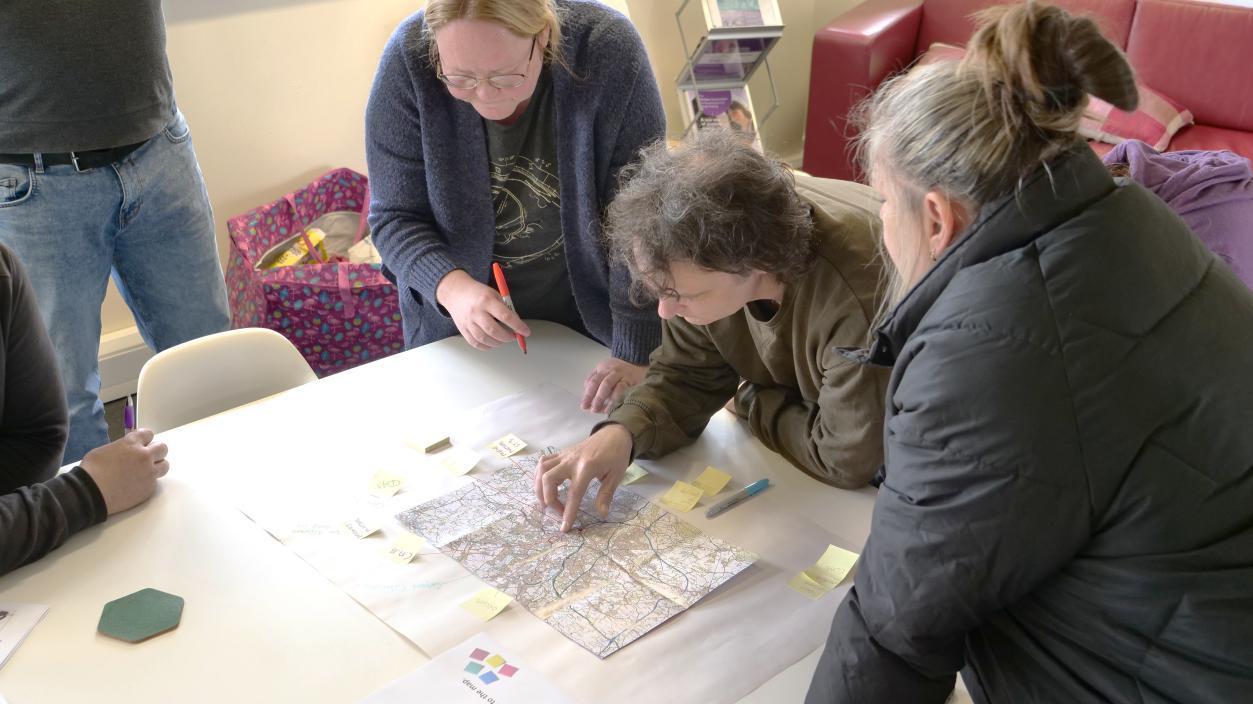
It is important to emphasise how learning needs are identified in this model. One channel is direct feedback from session evaluations. For example, recurring comments in 2018 about wanting more on combatting a “lifestyle choice” narrative led to creative responses like the “In Plain Sight” theatre production in 2020.
The Academy coordination team regularlysurveysparticipantsandpartner organisations to gather suggestions. Another channel is multi-agency meetings (like the MaRG and Communities of Practice), where systemic challenges are discussed. The
Academy is plugged into these forums andcanrespondbyidentifyingorcreating training solutions. For example, discussions in the Homelessness Summit highlighted knowledge gaps around the Domestic Abuse Act’s housing provisions. The Academy
brought in a trainer to run a masterclass on that topic.
Additionally, Expert Citizen insight from theirpeersupportworkoftenflagsissues that translate into courses. Malcolm’s story of experiencing “cuckooing” (where drug dealers exploit and take over a vulnerable person’s home) directly informed the creation of a community awareness workshop on that issue.
Jason, an Expert Citizen volunteer, had a transformative journey through the Academy, starting as a learner with a sceptical view of services, he gained
Scale and reach
knowledge and eventually contributed to training others; along the way his perspective “mellowed”, and he became an advocate for collaboration.
His experience pointed to the need for moreopportunitiesforvolunteerstolearn side-by-side with professionals, something the Academy facilitates effectively.
In summary, the programme design is dynamic and co-created, with content evolving from the continuous dialogue between those delivering and those attending the training.
Since its inception in August 2022, the Insight Academy has achieved a remarkable scale of delivery and engagement across Stoke-on-Trent and beyond. This section presents the quantitative overview of its reach, as well as the breadth of sectors and geographic spread involved.
Number of learning opportunities
Ina period ofaround2.5years (August2022 – April 2025), theAcademyhasdelivered nearly 300 learning sessions of various types. This includes 212 masterclasses, 29 workshops, 22 non-accredited course sessions, 12 accredited course sessions, 10 communities of practice, 1 theatrical production, and 3 events, conferences and awards
Participant attendances
Attendance data indicate an extensive reach into the workforce Across all sessions, there have been more than 4,300 attendances by learners (note: this count includes repeat attendance by individuals who took multiple courses).
Thebulkofthesearefrommasterclasses (c.2,600 attendances) and workshops (c.1,000 attendances), reflecting the popularityofthoseformats. Toputthisin perspective, the VOICES programme over 2015–2019 had engaged ~2,300
attendees in its final year. The Insight Academy’s annual reach has been c.500, c2,200, and c.1,600 for the years 2022 to 2024 inclusive. Given Stoke-on-Trent’s size, reaching over four thousand training slots filled is a substantial penetration
into the local service workforce. Many practitioners have attended multiple sessions, which is a testament to the Academy’s reputation and the appetite for ongoing learning An analysis as of early 2025 showed that about 1,000 unique individuals had participated (approximation, given some regular attendees), which still represents a significant portion of frontline staff across agencies in the city.
In addition to high attendance, the Academy has earned strong endorsement from its stakeholders. In an
Organisational reach
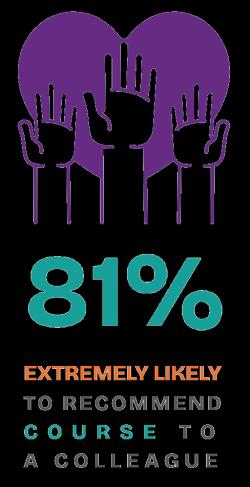
August 2025 survey, 12 respondents rated their likelihood of recommending the Academy to colleagues, giving an average score of 8.9 out of 10 (where 10 was ‘extremely likely’) Two-thirds of respondents gave the maximum score of 10, with only one outlier giving a low score.
This indicates that while the vastmajority of participants are strong advocates, there remain occasional dissenting views. Overall, this quantitative measure reinforces the widespread satisfaction already evident in qualitative feedback.
The Academy’s free and open model attracted attendees from c.135 different organisations by March 2025. These organisations collectively run more than 150 distinct services (since some large agencies have multiple departments or teams that engaged).
The breadth of organisational types is impressive and indicates cross-sector buy-in:
• Criminal Justice, 6 (including police, probation, prisons)
• Central government departments, 1 (including DWP)
• Education and training, 10 (including schools, colleges, universities, educational trusts)
• Funders, 2 (including charitable trusts)
• Health organisations, 17 (including NHS trusts, treatment services, regulators)
• Housing, 23 (including registered providers, private sector landlords)
• Local Authority, 21 (including adult social care [4], children and families [10], housing [2], public health [1], unknown [4])
• Private sector, 18 (including self-employed people, commercial organisations, private social care providers [4])
• Unknown sector, 3 (organisations where this information was not recorded)
• Voluntary, Community, Charity, or CIC, 52 (including support, advice, campaigning organisations)
This list demonstrates that the Insight Academy successfully engaged all major sectors involved in supporting people experiencing multiple disadvantage. Notably, it went beyond the core Changing Futures partnership, drawing in agencies that were not originally part of the programme. For instance, prisons and police participated afterhearingaboutrelevantworkshops;educationinstitutionsjoinedtobettersupport students with complex needs, etc. This expansion beyond core partners is a hallmark of the Academy’s reach. It magnifies the programme’s impact: by influencing practitioners in large systems like healthcare or criminal justice who may encounter multiple-disadvantage clients infrequently, the Academy amplifies the ethos of person-centred, trauma-informed practice into those systems.


”I have worked using drama and theatre in prisons for nearly 40 years and the system is in as worse a state that I have ever seen it. This play sets out to get audiences to think about punishment and how we use it. Is prison always the answer or might there be other ways to help victims achieve ‘justice’? We have been making the play with people who have lived experience of multiple disadvantage including custody, some of whom have never done drama before. Their ideas have very much informed the content of the play.”


Geographic reach
While the training is based in Stoke-on-Trent and primarily serves the local area, its reachhasnotbeenstrictlylimitedtothecity. Thefreeonlinebookingapproachmeant that a few attendees from neighbouring areas (e.g. Newcastle-under-Lyme, Staffordshire) also took part. Furthermore, Insight’s involvement in national events effectively projected its influence beyond Stoke. During the period, Expert Citizens delivered presentations at conferences of bodies like the Local Government Association and Homeless Link, reaching national audiences.
The In Plain Sight (2020) theatre production and Punishment Acts (2025) play drew attendees from across the region and even national interest (including coverage by BBC News). These instances position Stoke-on-Trent asaleaderin innovativetraining, andthey
have sparked interest from other localities. While the day-to-day sessions predominantly benefit the Stoke-on-Trent workforce, this geographical ripple effect means the ideas and practices promoted by the Insight Academy travel further.
Rideout Director Saul Hewish said:
Attendance trends and patterns
The Academy has seen consistently high demand Many sessions reach maximum capacity quickly once advertised. In fact, trainers have noted that courses often fill up so fast that some professionals contact them directly hoping to get a spot when official bookings are full.
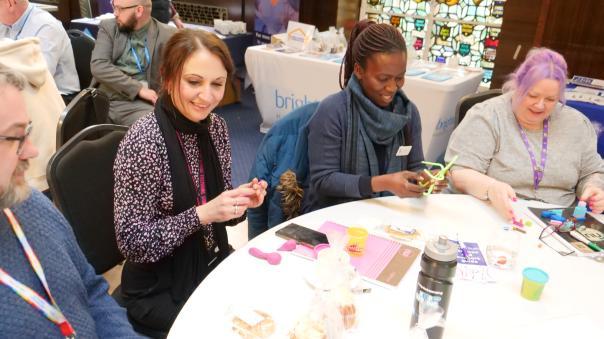

On average, masterclasses have 15 – 25 attendees, workshops up to 50 (depending on topic and venue), and larger events and conference tend to exceed 100 The flexible mix of in-person and online delivery helped maintain accessibility For example, an online Communities of Practice session could draw participants from multiple agencies without travel barriers. However, most sessions continue to be in-person, as the Academy values face-to-face interaction
for sensitive topics and networking benefits. The attendance feedback indicates not only large numbers but also deep engagement. This is shown by the high completion of evaluation forms (over 1,900 forms were analysed in the VOICES era, and similarly strong response rates continue with the Insight Academy) and qualitative comments that are overwhelmingly positive with almost 1,200 satisfaction survey responses in less than half the time.
Sectoral reach in detail
It is worth highlighting a few sectors to illustrate the reach:
• Health
Both mental health services and physical health providers (like A&E staff, community nurses) participated. This is significant because historically, health sector attendance in cross-agency training was a challenge. Through Changing Futures and targeted outreach, the Academy managed to engage the local NHS –an A&E consultant even helped initiate bespoke training in the department to improve how staff respond to patients with complex needs Also, the Board of the Combined Healthcare NHS Trust requested an Insight workshop after their Chair attended one session and found it valuable. By 2024, health professionals were regularly present in sessions like Trauma Awareness and Dual Diagnosis. This indicates a breakthrough in cross-sector learning, as health services traditionally have their own training but saw added value in the Academy’s approach.
• Housing and homelessness
Given Stoke’s focus on homelessness (with VOICES and Changing Futures heavily geared to that), engagement from housing providers and homelessness charities was strong Homelessness organisations (e.g., local hostels, outreach teams) were among early adopters of the Academy The City Council’s Housing Solutions team not only attended but helped champion courses to partner landlords and agencies. One housing manager’s quote encapsulates the benefit: “The benefits are that you learn about other people's service area … in a way you wouldn’t if it was just your team”, emphasising again the value of cross-service learning (this quote is from a Housing Options Lead, underlining inter-agency insight gained).
• Criminal justice
Engagement here grew over time Initially, probation and police sent a few representatives to relevant topics like Trauma and Offender Rehabilitation As word spread (and after successful bespoke sessions, e.g training delivered inside a prison), more justice agencies became involved By 2024, the Staffordshire Police were not only attendees but also training providers for the Academy. This reciprocity, where agencies that benefit also contribute expertise, widened the Academy’s reach and credibility further.
• Voluntary and community sector
ManysmallcharitiesandgrassrootsgroupstookadvantageofInsighttraining. For instance, volunteer-run organisations addressing issues like hoarding, peer mentoring, or community inclusion attended sessions to build capacity The Academy effectively became an equaliser in training access, enabling microorganisations with little or no training budget to upskill alongside larger agencies Over a dozen Community Interest Companies (CICs) and charitable organisations feature in the attendance records. Their presence also enriched the discussions with on-the-ground perspectives.
Partner and participant growth
It is notable that some organisations became heavy users of the Academy. A few key partners enrolled dozens of staff across different courses. For example, a large supported housing provider had nearly all its frontline staff attend at least one Insight session over the period
These organisations often report a cumulative impact: their teams share a commonlanguagefromtraining,andnew practices take root more firmly because multiple colleagues learned together. One manager mentioned the Academy “has shown thestaff that wehaveinvested in them… we do need to invest in training
and[Insight]hasenabledustoinvestinour staff”, especially at a time when internal training budgets were cut. This suggests that the free at the point of delivery provisionnotonlyattractsattendancebut also positively influences staff morale and organisational commitment to learning.
Widening reach through innovation
The Academy’s special events (Insight Awards conferences, theatre productions) served as outreach to audiences who might not normally attend a training course
Almost 300 people saw In Plain Sight in February 2020, including council members, commissioners, and public attendees who would not be likely to attend a typical training session. Likewise, Punishment Acts in 2025 drew arts audiences and criminal justice
stakeholders into the conversation on prison, punishment, and rehabilitation.
These events, covered in local press and social media, effectively spread Insight’s messages to the broader community. They complement the core training reach by aiming to sensitise civic leaders and
the public to the issues of multiple disadvantage and the value of lived experience insight. For instance, an audience member’s feedback from In Plain Sight was: “Great way to get a message out! Amazing!”, indicating the resonance of these methods (de Dios Fisher, 2025).
In summary, the Insight Academy has achievedextensivescalelocallyinashort
Impact on individuals
time, touching a wide spectrum of services and professionals in Stoke-onTrent and even influencing beyond the local area. Its reach is characterised not just by numbers, but by diversity. Cutting across sectors and hierarchies (from frontline workers to senior managers), this widespread engagement lays a strong foundation for systemic change, as described in the next section.
The Insight Academy’s most immediate impact is on the individuals who participate in its training. This includes frontline staff, managers, volunteers, and the Expert Citizens themselves. This section examines how the Academy has influenced learners’ knowledge, skills, confidence, attitudes, and professional development. The evaluation finds overwhelmingly positive outcomes for individuals, often described in enthusiastic terms by the participants.
Enhanced knowledge and skills
Virtually all learners report that attending Insight sessions increased their knowledge in the subject area. In the VOICES era, quantitative feedback collected via evaluation forms shows that 99% of participants agreed their knowledge and skills grew as a result of the training. Many respondents highlighted specific new insights or practical techniques they gained.
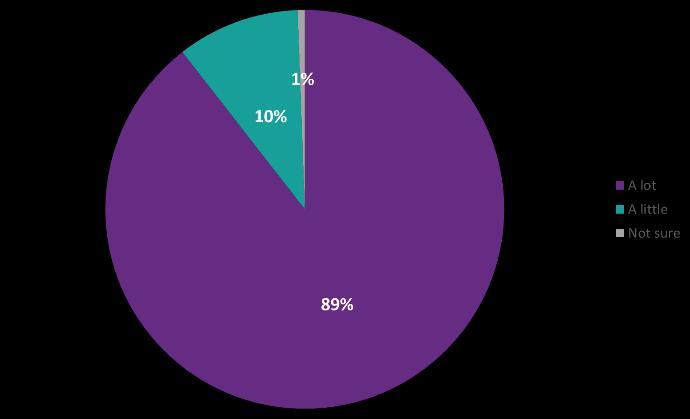
For example, learning about the psychological impact of trauma, understanding how to apply motivational
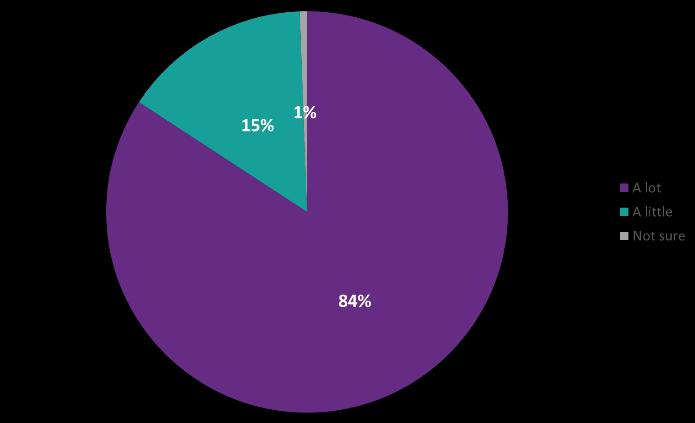
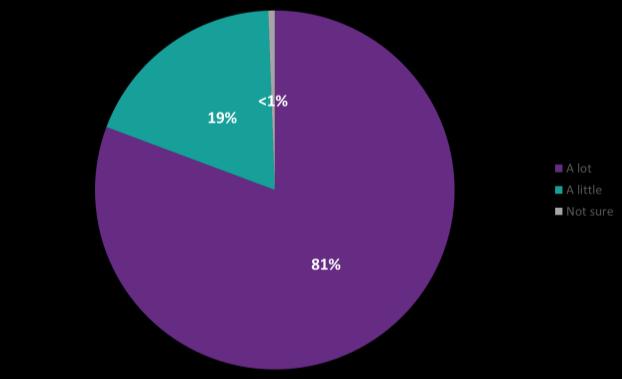
interviewing strategies, or acquiring upto-date information on welfare rights. In one survey item, 99% of learners agreed their confidence in their abilities grew after the training, indicating not just passive learning but an empowered readiness to act on the knowledge. This confidence boost is critical in services dealing with complex cases, where staff often face uncertainty. Comments such as “I feel I have more tools in my toolkit now” or “I would feel more confident to question decisions after this course” were common in feedback forms (e.g. one
Figure 1: Learners reporting increased knowledge
learner noted being more prepared to advocate within multi-agency meetings after a course on legal rights). The shared learning format also demystified other agencies’ roles, which increased practitioners’ confidence to coordinate and refer appropriately. For instance, a support worker said: “I now know what
Changed attitudes and approaches
Adult Social Care can do, so I’m more confident to approach them for my client” (paraphrased feedback from a multiagency masterclass). These data and anecdotes reinforce that the Academy effectively helps to build both improved competence and self-assurance among its learners.
Beyond factual knowledge, the training often leads to shifts in mindset. A vital outcome in a field where values and attitudes directly affect service quality. Many participants described experiencing a renewed sense of empathy and reflection on their practice. As one attendee put it, “it was a reminder of the privilege we have in our roles … and a reminder that working with the most challenging clients is where we can make the biggest difference”
This reflective impact is echoed in others’ comments: “Hard hitting, made me stop and think and re-evaluate my work and approach”.
“”
This session has helped me reflect on how I should take mine and my team's wellbeing more a priority. Shutting down people's negativity and find the positive in things. Learning to say no and identifying triggers of empathy fatigue.


Several long-standing professionals mentioned the training reconnected them with why they entered the field, combating jadedness or burnout. One particularly powerful testimonial came from a support worker who confided, “I know for a fact that I was judging people. I have felt burnt out fora longtimeand this training has really given me a reset. … you have lit a fire under me again”.
This indicates a profound personal impact. The Academy’s grounded model not only imparts knowledge but also reinvigorates passion and compassion in those who may have been struggling.
Figure 2: Learners reporting increased skills
Figure 3: Learners reporting increased confidence
Such attitude shifts can translate into more patient, person-centred interactions with clients.

I
These self-reported changes suggest the Academy is succeeding in its aim to instil the values of empathy, strengths-based practice, and understanding of multiple disadvantage.
“”
will apply compassion even to those I don't like when dealing with them. I will not allow other people's actions to trigger me and make me low like them.

Indeed, some learners explicitly noted changes in how they relate to service users: “I have learnt … how the simple act of listening can help steer people into improving their mental wellbeing”; another said, “I now understand how someone’s past trauma might explain their current behaviour – I’ll be more patient and trauma-informed going forward”
These individual accounts are echoed in the 2025 stakeholder survey, where 10 out of 12 respondents agreed that the Academy had contributed to positive changes in their own professional practice or that of their staff.
Eight of these strongly agreed, underscoring the depth of perceived impact. However, two respondents strongly disagreed, showing that while most experience tangible benefits, the outcomes are not universally felt which would be worthy of further investigation
I
“”
will prioritise the important work and not stress about things
I
can't control.


“”
I feel so much more aware of the signs of empathy fatigue and what I should do to try and combat the issues before I reach burnout.



Immediate application and behaviour change
Astrikingfeaturereportedbyparticipantsisthattheycanimmediatelyputthelearning into practice. According to evaluation surveys learners felt equipped to “deploy knowledgeandskills…acquired” straightawayintheirjobs. Manygaveexamples:after attending a mental health awareness session, housing officers felt better able to identify signs of mental distress and adjust their communication style; after a workshop on psychologically informed environments (PIE), a hostel manager rearrangedaspacetobemorewelcoming;followingatraumatraining,asocialworker revised their assessment questions to be more sensitive.
SAMHSA (2014) and Sweeney et al. (2018) recommends revising interactions and procedures to reduce retraumatisation.

“”
I have already started to think about how to apply my new skills and knowledge to my work – making adjustments where necessary for our client group.


One delegate wrote, “it will enable me to be a more effective practitioner and to assist people the best way I can based on evidence-based practice, good knowledge and experience”, adding that it could even apply to situations outside work. The practical focus of many Insight sessions (e.g. learning motivational interviewing techniques, or how to administer naloxone for overdoses, or how to conduct a strengths-based assessment) means participants leave with concrete tools. For example, attendees of a Motivational Interviewing masterclass practiced skills during the session and reported they felt confident to “immediately use these techniques with clientstohelpmotivatechange”(feedback excerpt).
100% will be used in our work.
“”
Similarly, a frontline officer who took the Effective Factual Recording training noted afterward: “Having a greater understanding [of good recording] has enabled me to ensure I share with peers what actions are appropriate to safeguard and prevent harms”, directly translating learning into improved team practice.
These accounts show that Insight training is action-oriented, not just theoretical, leading to a greater likelihood of tangible changes in day-to-day work behaviours.
“”
I intend on using some of the activities with our young people. You have helped design our next co-production session with young people on the prevention of child sexual abuse!

Professional development and career progression
The Academy also contributes to individuals’ career growth Through its accredited courses and the broadening of skillsets, participants enhanced their resumes and, in some cases, progressed to new roles. Under VOICES, 39 people earned qualifications (e.g. in education & training, peer mentoring, leadership) which helped some move into new jobs or take on new responsibilities. The Insight Academy has continued offering similar pathways.
For example, volunteers from Expert Citizens who completed the Award in Education & Training have gone on to become facilitate sessions.
“”
I have found it beneficial to know the correct terms for different parts of evaluation which will guide me in future work.
“”
I create and implement learning at my workplace and knowing how to show the impact will help me feedback to the management team.

One such volunteer, after gaining experience co-delivering courses at Insight, was hired by a partner agency as a Lived Experience Trainer – a direct career outcome attributable to the Academy (Gilbert et al., 2013; Repper and Carter, 2011). Additionally, several frontline staff have cited Insight training in their CPD (Continuing Professional Development) portfolios for professional accreditation or promotion processes.
A social worker who attended multiple Insight courses mentioned using the knowledge gained to achieve a senior practitioner status, crediting the Academy for broadening their perspective beyond their statutory role. The free access is crucial here; one attendee noted: “I have attended Insight academy training multiple times and shared this with my colleagues. Almost all attended… it really is amazing!”, implying that without Insight they wouldn’t have had those opportunities.

The Academy thus acts as a capacitybuilderforthelocalworkforce:enhancing qualifications, enabling peer learning (staff often encourage colleagues to attend, as seen in that quote), and potentially helping to retain staff (by improving job satisfaction and confidence).
“”
This training has taken place at a good time for me and has helped me to reflect and rethink ways to manage my emotions / fatigue.
As evidence of potential retention, one participant shared, “I was on the verge of quitting so you may never know just how gratefulIam…NowIfeellikeI’mnotalone. Thank you”. This powerful statement suggests that the training’s supportive environment can re-engage staff who felt isolated or demoralised, potentially reducing turnover in hard-pressed services.
Amplifying voices of lived experience
A distinctive aspect of Insight’s individual impact is on the Expert Citizen volunteers who often help deliver and also attend training. In many evaluations, their experience is considered separately, and here it is a clear success. By taking on roles as cotrainers, facilitators, or simply as learners in a mixed group, Expert Citizens gain skills, confidence, and validation.
One Expert Citizen, after co-presenting in a series of workshops, reflected: “It’s shown me that my experiences can educate others, that makes me feel proud and more confident in myself.”
The VOICES evaluation noted positive outcomes for Expert Citizen volunteers, including increased self-esteem, acquisitionofteaching skills,andasense of ownership of the programme.
The Insight Academy has strengthened that effect by formally investing in their development (e.g. through the Train-theTrainer programme).
“”became involved in co-producing a training film about his experiences (with support from an Expert Citizens mentor). His involvement not only contributed to a highly impactful training tool, “Malcolm’s filmhashadaHUGEimpactonpeoplewho attended the training” (author’s emphasis) according to the trainer, but also boosted his personal growth. Malcolm gained confidencetospeakpubliclyandsawthat his story could influence positive change, reinforcing his recovery and skills.

The videos from Ryan and Charlotte were incredible, they spoke with such honesty and authenticity ... So articulate. I know ‘inspirational’ can be overused, but in this instance it is absolutely the right thing to say about them both.
Another volunteer, Jason, started by attending trainings and eventually was supported to lead parts of sessions, dramatically improving his communication. Histransformationfrom someone with a “skewed view of support services” to an “exemplary learner” who now collaborates with professionals is a testament to empowerment through learning.
“”The use of genuine life stories is inspiring and helpful to apply theory to practice.

It’s reminded me to be mindful of trauma that people may have faced and take the time to talk to them. This was highlighted in the clip with Ryan when he was asked by a couple … if he was OK, and he wasn’t.
For instance, Malcolm’s journey is often cited: initially a beneficiary of services, he


These examples illustrate how individuals with lived experience move from themargins to the role of educators, shifting their identity in a positive way (Best et al., 2012; Gilbert et al., 2013; Repper and Carter, 2011; Tew et al., 2004). Additionally, Expert Citizens attending training as participants benefit
from the knowledge (just as other learners do) but also often act as bridges in discussions, bringing in service user perspectives that enrich everyone’s learning This dual role can be very powerful in validating lived experience as expertise, not only in the minds of professionals but also the individuals themselves.
TheAcademy’sinclusiveapproach,where volunteers and professionals learn together, encourages mutual respect and breaks down “ us and them” dynamics, contributing to personal healing and growth for those with lived experience (Repper and Carter, 2011). Schön (1983) notes that reflection is often deepened through dialogue with others, especially in diverse communities.
“”
If ever we needed hope in challenging times, then these two bring that hope to us as professionals. It's a heartfelt reminder that we are working with hearts, sometimes broken ones, and we should never forget our role in helping to be a part of positive change.”

Indeed, one Expert Citizen said about training alongside professionals: “Sometimes you just need to be reminded you are actually doing some really good work and to keep going”, expressing how the environment uplifted them as much as it did the practitioners.

Testimonials of changed practice
Testimonials provided to this evaluation illustrate how individual practice changed after Insight training.
• A mental health support worker: “[The course] affirmed the ways I already work with my hoarding clients … I feel I would be more assertive now, with the validating knowledge from today”. This indicates reinforcement of good practice and increased assertiveness to implement it.
• A social care practitioner: “Really good refresher of the importance of empathy and being non-judgmental … a reminder of the privilege we have … and that with the most challenging clients is where our skills are most needed”. This shows a shift to a more reflective, client-centred stance.
• A charity project worker: “I think it is amazing that this training is so accessible … it willenablemetobeamoreeffectivepractitioner…basedonevidence-basedpractice and good knowledge”. Here the emphasis is on improved effectiveness and appreciation of accessibility.
• A manager in a housing service: “I have already recommended [the session] to our team. Packed full of information and first-hand experience. The audience were gripped. Such a refreshing change … Hard hitting, made me stop and think and reevaluate my approach”. This captures not only personal impact but also advocacy, the participant is spreading the learning to colleagues.
• A probation officer (after a trauma training): “It’s not just for the customers, but for the staff in their roles. Sometimes you need to be reminded that you are doing good work and to keep going”. This indicates improved self-efficacy and morale which potentially translate into better client service.
These qualitative accounts suggest that the Insight Academy’s influence on individuals is deep and meaningful. People leave the training not only better informed but often transformed in their outlook: more empathetic, more confident, and more connected to a community of practice. The experience can rekindle passion for their work, provide tools to handle stress and complexity, and inspire them to implement changes in their daily work routines that benefit service users.
In conclusion, the individual-level impact of the Academy is overwhelmingly positive and far-reaching. By investing in people, whether a frontline support worker or a volunteer with lived experience, the Academy yields dividends in the form of high potential for improved practice, professional growth, and personal confidence. These individual changes are the building blocks for broader organisational and system changes, which we explore next.
Organisational and systems-level change
One of the ultimate goals of the Insight Academy is to catalyse wider change in organisational culture and local service systems. While individual training outcomes are important, the Academy aspires to influence how organisations operate and how the system supports people facing multiple disadvantage. The evaluation found emerging evidence of such organisational and systems-level impacts, often traced to the Academy’s activities. In this section, we discuss these higher-level changes, including shifts in practice and policy within agencies, increased inter-agency collaboration, and Stoke-on-Trent’s development as a Skilled City.
Changes in organisational culture and practice
Multiple organisations report that involvement in Insight training has led to tangible changes in the way they deliver services or approach their work. Because the Academy often engages whole teams or multiple staff from the same agency over time, the learning can permeate the organisation.
Some examples include:
• A Housing provider implemented trauma-informed approaches across its hostels after several staff attended the Academy’s Trauma and Psychological Informed Environment courses. They reviewed their policies on client engagement, removing unnecessarily punitive rules and introducing more flexible, personcentred practices, which were a direct influence from principles learned in training. SAMHSA (2014) notes that trauma-informed approaches require whole organisation adoption rather than just individual knowledge.
• In a healthcare context, after the bespoke A&E workshops on working with homeless patients, the hospital introduced a protocol to routinely involve a specialist homelessness worker when frequent attenders come to A&E. The A&E manager cited the training as eye-opening for many staff, leading to more compassion at triage and better referrals to community services (an outcome corroborated by internal hospital audits post-training).
• The Staffordshire & Stoke Adult Safeguarding Board, as mentioned earlier, coproduced a series of engagement workshops with the Academy. As a result, member organisations (spanning local councils, NHS, police) collectively adopted new guidelines on improving engagement with reluctant service users. The Board’s manager described the sessions as “highly effective and impactful”, particularly crediting the lived experience input for shifting professionals’ mindsets. This led to a more unified approach in dealing with self-neglect cases, indicating a system-wide practice change.
• A charitable support service for addiction revised its staff induction and ongoing training plan to incorporate content from Insight courses, essentially institutionalising that learning. A manager said that after consistently positive feedbackfromstaff,theydecidedanynewemployeemustattendcertainAcademy courses (like trauma awareness) within their first 6 months, making it part of organisational policy.
These examples illustrate how organisations are embedding lessons from the Academy into their standard operations. It is important to note that these changes often require management support. Indeed, managers themselves have been among the trainees or have taken notice of their staff’s experience.
Moreover, the evaluation noted a change in overall culture: an increasing openness to learning and reflection in participating organisations. Stakeholders describe how there is now “a culture of embedded shared learning” across Stoke-on-Trent organisations. Staff expect to attend multi-agency training regularly and share insights back at the workplace. This is a shift from the past when training might have beenmoreinfrequentandsiloed. Indicationsarethatcontinuouslearningisbecoming part of the expectation.
Schön (1983) argued that when reflection becomes embedded into organisational culture, it supports continuous professional development and institutional learning. This cultural shift is evidenced by phrases like “we will learn lessons” turning into concrete follow-up after incidents, rather than just rhetoric. Another manifestation is that organisations are more proactive in identifying their own training needs and seeking solutions (sometimes commissioning the Academy for bespoke input), indicating a learning-oriented mindset taking root.
The August 2025 survey provides additional perspective on system-level change. Six respondents strongly agreed and three agreed that the Academy was contributing positively to long-term change in Stoke-on-Trent’s support system. One was neutral, while two strongly disagreed. This indicates a majority perception of system impact but also highlights that some stakeholders remain unconvinced of the Academy’s broader influence.1 Including these perspectives strengthens the balance of this evaluation.
Bespoke training leading to service changes
The responsive bespoke workshops have had immediate and potentially far-reaching effectsonthecommissioningorganisations. Forexample,aprisonintegratedcontent from the Novel Psychoactive Substances workshop into their inmate education programme, after seeing the impact on the 50 prisoners who attended the Insight session in 2018. The prison’s management reported improved engagement from
1 It is worth noting that the “strongly disagree” responses for one of these respondents was inconsistent with their other responses in the survey which were very positive.
those prisoners and requested follow-up sessions in subsequent years, showing a change in how the prison addresses drug issues (a small but notable systems change within that institution).
Commissioning of further training and consultancy
Several organisations, after experiencing Insight sessions, decided to invest in their own extended training programmes, often hiring the same trainers or Expert Citizens in a consultancy capacity. The VOICES evaluation noted this: “Several organisations have recognised the value of commissioning in-depth training … following attendance of Learning Programme sessions”. This trend continued with the Insight Academy
For instance, a regional housing association, impressed by a half-day hoarding awareness course, contracted the trainer (in partnership with an Expert Citizen) to deliver a tailored series for all their housing officers across the Midlands. Not only does this demonstrate the quality and credibility of the Academy’s training, but it also means that Insight’s influence extends into
Improved inter-agency collaboration
bespoke interventions that are paid for by organisations themselves, which is a clear sign of perceived value. It also bodes well for sustainability; organisationsareeffectivelysayingthese methods are worth investing their own budgets in, not just attending when free. In strategic terms, this indicates mainstreaming of what began as a pilot or externally funded activity.
One of the most frequently mentioned system-level outcomes is that Insight has strengthened cross-agency relationships. By training together, staff from different organisations get to know each other, which in turn smooths cooperation outside the training room (Atkinson et al., 2007).
An example is the formation of informal peer networks. People who regularly attended multiple sessions formed relationships, sharing emails, etc., circles to continue sharing resources and support. Stakeholders suggested that the Academy’s “shared learning experience” contributes to a “more flexible and solutions-focused approach to service delivery by organisations”, because staff are no longer working in such isolation. They now have contacts in other agencies to call upon for advice or jointly resolve a client issue. This kind of informal network can be invaluable in
complex cases. Effectively, the Academy has helped knit the system together on the ground. Several participants commentedthatInsightsessionscreated a sense of “all of us in this together” across agencies, breaking down the distrust or lack of understanding that sometimes hampers multi-agency work.
Additionally, because the Academy includes not just frontline staff but also some managers and even executives in certain events, it has created spaces for vertical integration, e.g., a team leader from the council might hear directly from
a service user in training and from a supportworkerinanotheragency,gaining insights that inform how they manage their team or shape strategy.
One outcome is that some senior leaders who engaged with Insight have become champions for cross-agency initiatives. For instance, a senior police officer who
Policy and service design changes
attended a lived experience-led substance misuse session later advocated for police involvement in a multi-agency case panel, citing the understanding gained from the training. This suggests a shift toward more joinedup approaches at higher decision-making levels as well.
While it is early to measure large policy changes attributable directly or otherwise to the Insight Academy, there are indications of influence. The Stoke-on-Trent City Council’s homelessness strategy refresh in 2023 included a commitment to ongoing staff training in trauma-informed care and lived experience engagement, a direct nod to the kind of work the Insight Academy does (and likely informed by the positive reception of that work).
This approach is supported by Sweeney et al. (2018) on the need for strategic whole system approaches to trauma informed care. On a service design level, one charity redesigned a program (for female survivors of abuse) to incorporate co-production and peer mentoring after seeing the effectiveness of those
Contribution to a skilled city
elements in Insight courses. The evaluation also heard that the city’s new Drug and Alcohol Strategy references learningfromtheInsightAcademy inhow it plans workforce development. Thus, Insight’s philosophies are seeping into official documents and plans, which is an early marker of systemic influence.
Perhaps the most overarching impact is how Stoke-on-Trent is now viewed (internally and by others) as a place that prioritises learning and development in tackling social issues The concept of a “Skilled City” (Stoke-on-Trent City Council, 2024), where continuous learning is part of the city’s identity and approach to improvement, has been embodied in the multiple disadvantage sector largely thanks to VOICES, Changing Futures, and the Insight Academy.
Evidence in the VOICES evaluation explicitly stated: “the Learning Programme has contributed to Stoke-onTrent becoming a learning city in the field of multiple needs”, due to its reach, scale, co-production, and breadth. The Insight Academy continued this legacy and arguably amplified it, given it also
operated at a time of active system change efforts (Changing Futures). Stakeholders frequently used language like “culture of learning” and “city-wide shared knowledge” when describing the Academy’s impact
For example, practitioners noted that it is becoming normalised in Stoke for agencies to come together for training highlighting a potential cultural shift.
The Academy’s high visibility events like the Insight Awards help cement this reputation by elevating Stoke as a hub of shared innovation and learning
This contributes to civic pride and momentum. Local leaders can point to the Academy when speaking about Stoke’s strengths in local, regional, or national forums There is a sense that
workforce development and lived experience are now firmly on the agenda of city leadership due to the Academy’s influence.

Cross-sector buy-in and sustainability implications
The broad range of organisations engaged (as detailed in the scale and reach section) also has system-level significance. It means that insights and good practice disseminated through Insight have reached almost every corner of the system, e.g., from grassroots community groups to major statutory agencies. Such saturation increases the likelihood of consistent approaches and language across the system. For instance, terms like “traumainformed”, “psychologically informed environment”, or “strengths-based” are now commonly understood across agencies in Stoke, whereas a few years ago they might have been jargon known only to a few.
This shared understanding is fundamental for cohesive multi-agency work. In effect, the Academy has been a vehicle for standardising certain positive practices city-wide, without imposing them top-down but by generating buy-in through training (Atkinson et al., 2007).
Sloper (2004) argues that service consistency and mutual understanding improve when multi-agency partners use the same language and frameworks.
This informal standardisation is a subtle but powerful systems change. It aligns values and methods across different organisations, which improves coordination and reduces friction when clients move between services.
Influence on senior leaders and decision-makers
Another aspect of system change is getting the attention and support of those in leadership positions The Academy has made deliberate efforts to engage senior decision-makers. For example, through inviting them to events like In Plain Sight and Punishment Acts The VOICES evaluation noted some success: a Trust Board Chair commissioning training after attending a session
During Changing Futures, senior local government officials and politicians have also been exposed to the Academy’s work (the presence of city councillors at Insight conferences, MPs attending theatrical performances, etc.). This has helped secure high-level awareness. A concrete result was that the City Council management allow staff work time to attend Insight courses, treating it as official training, an important sign that demonstrates positive impact.
Additionally, by exemplifying a well-functioning model, the Academy is more likely to influence funding conversations (for example, local commissioners or national funders discussing how to sustain beyond Changing Futures). As one tutor put it based on their experience, “ask anyone in higher management at Stoke Council or [the local NHS partnership] about Insight and you’ll get a glowing recommendation”. Having senior decision-maker awareness and endorsement is crucial for the Academy’s integration into the system moving forward.
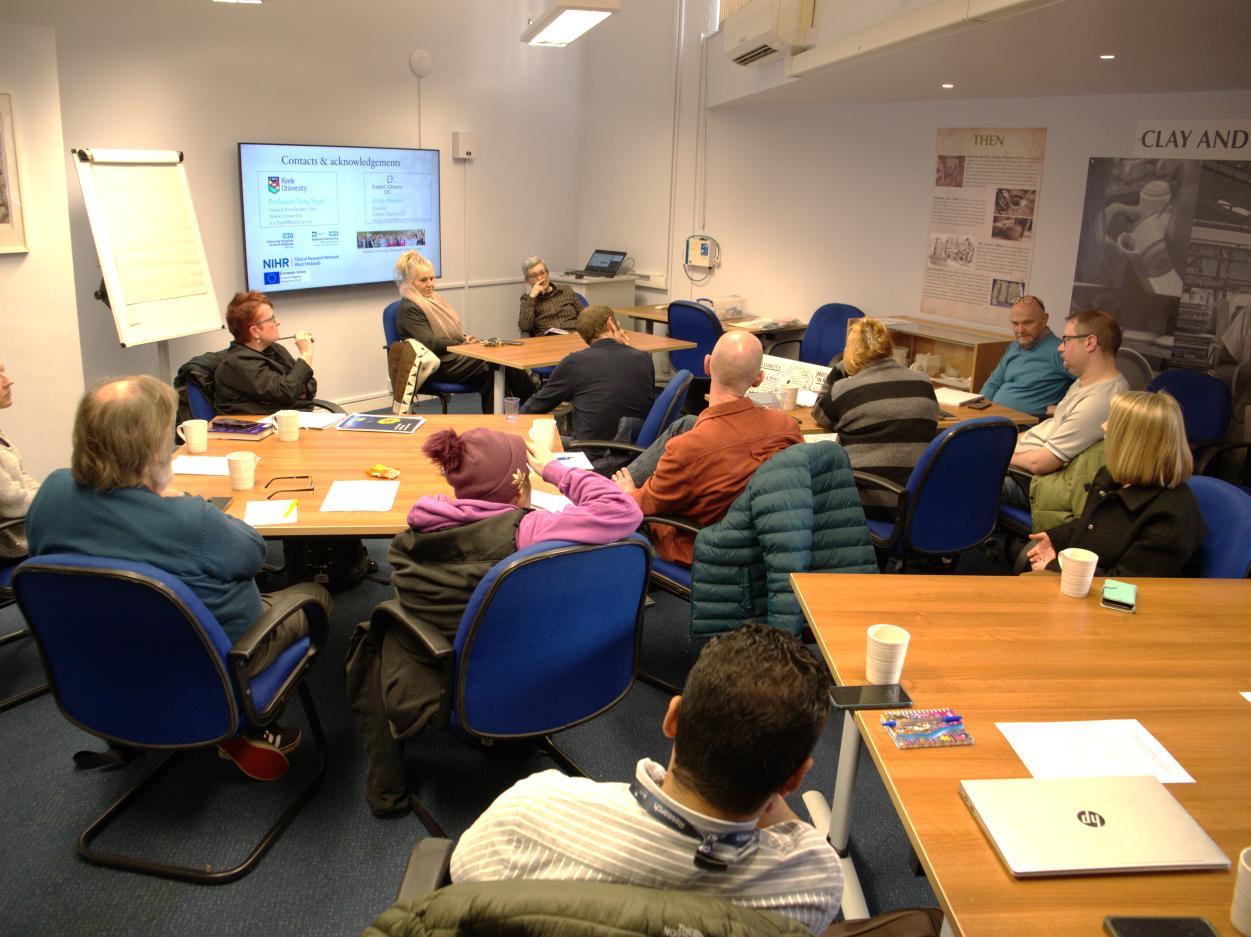
Systems change and legacy
Bringing these threads together, it’s clear the Insight Academy supports what is often called “ground-up systems change” (Best et al., 2012). Rather than a top-down reorganisation, it is changing the system by equipping the workforce with new mindsets and tools, developing relationships, and modelling co-production This complements strategic level changes pursued by boards and planners. Indeed, the synergy is evident: the Changing Futures programme’s systems reform initiatives (like creating new multi-disciplinary teams, data-sharing agreements, etc.) are more likely to succeed because the people involved have gone through Insight training and thus share a collaborative, informed approach. The Academy, in effect, creates the human capital and culture required for system change. It is a form of capacity building that yields sustainable change because even when a project ends, the learned attitudes and connections remain in the system’s people. As one Expert Citizen observed, “It’s not just the clients who change, it’s the workers and the system that changes slowly when everyone learns together.” That encapsulates the systems-level vision of Insight. In conclusion, the Insight Academy has made progress in influencing organisational behaviours and the broader system in Stoke-on-Trent There is evidence of changes in policies, practices, collaboration, and culture that can be traced back to the Academy’s influence as well as its predecessor through VOICES. These changes contribute to a more flexible, compassionate, and effective system of support – one that is increasingly characterised as a learning system Ensuring these positive shifts endure and expand will depend on sustaining the Academy’s work and continuing to engage all levels of the system in the learning journey.
Creative learning approaches
From the outset, the Insight Academy set itself apart through innovative and creative approachestolearning. Recognisingthattraditionaltrainingmethodsalonemightnot fully engage or influence entrenched attitudes, the Academy has experimented with novel formats, arts-based methods, and immersive experiences. This section highlights some standout innovations and their impact, particularly on engaging decision-makers and enhancing the learning experience.
Arts-based and experiential learning
One of the most notable innovations has been the use of theatre and performance art to convey messages that conventional training might struggle to impart. A key example is “In Plain Sight: The Lives and Hopes of Invisible People”
This production, co-produced in February 2020 by Expert Citizens with local arts companies B’Arts and Rideout, was an interactive theatre piece dramatising real stories of people with multiple needs Instead of a lecture on systems barriers, the audience walked through a series of staged scenes – a home, a street, a hostel, a hospital – encountering actors, projections, music, and recorded voices that brought to life the journeys of individuals facing homelessness, addiction, and recovery.
The format allowed the audience (which included service managers, frontline staff, and public attendees) to feel the realities rather than just hear about them The response was overwhelmingly positive and emotional. Attendees described that they had “never been touched by anything so much” in their
careers It sparked deep discussions and personal reflection. Crucially, it engaged some senior leaders who might not have attended a standard training day but were drawn to a unique event
In Plain Sight succeeded in raising awareness and empathy among influential figures, e.g., MPs, senior Councillors, and CEO’s of local organisations attended, potentially making them more receptive to conversations about change. This creative approach demonstrated that the arts can be a powerful tool for professional learning and advocacy. It essentially functioned as an alternative “training session” on multiple disadvantage, one that people remember viscerally through emotional engagement.
Building on that, in April 2025 came “Punishment Acts: Tales of Retribution, Reparation and Redemption”, another groundbreaking co-production involving Expert Citizens, Rideout, and B’Arts (de Dios Fisher, 2025). This was a play exploring themes of crime and justice, informed by workshops with people who had lived experience of the criminal justice system and inspired by Michel Foucault’s writings on punishment.
Performedina formerwarehouse-turnedtheatre, it invited the audience to reflect on how society punishes and whether there are more rehabilitative ways to achieve justice. By including voices of those who had been in custody, it humanised a topic often driven by punitivenarratives. Sweeneyetal.(2018) recognises that narrative-based and storytelling approaches are central to understandings of trauma and traumainformed care. Punishment Acts had a run of performances open to both professionals and the public (with subsidised tickets for people working in relevant sectors).
This creative initiative again received attention, even garnering national media coverage for its innovative public engagementon an importantsocialissue (Lawson, 2025; de Dios Fisher, 2025). Its associative partnership with the Insight Academy is clear. It is part of the same ethos of public, experiential learning. As noted on the B’Arts website, Punishment Acts explicitly “draws on the ideas of people with lived experience of multiple disadvantage including custody” and was a direct continuation of the partnership developing from In Plain Sight and previous work.
The production also set an ambitious standard for co-production with lived experience, not just as inspiration, but engaged in genuine authorship with professional artists. People with lived experience were involved from the start, devising stories, characters, and scenes drawing on their own experiences. The play’s development was deliberately paced. A series of informal workshops in familiar, welcoming spaces gave way to more intensive rehearsals at B’Arts premises, where the provision of shared meals, transport, and compensations for people’s time through £25/day vouchers
helped overcome practical barriers to involvement.
The experience was empowering: several participants described the process in terms like “bringing me back to being myself again”, and one summed up the transition by saying they had gone from “crab to kraken” (de Dios Fisher, 2025). A metaphor that suggests a profound gain in confidence and agency.
The final production combined professional and non-professional performers in ways that did not silo or tokenise. Instead, it created a single ensemble cast, supported by high-quality technical and creative production. The show employed puppetry, song, physical theatre and devised dialogue to tell stories ranging from 18th-century deportations to contemporary scenes of restorative justice. Audience feedback was striking. It included five-star reviews, emotional responses, and sustained applause from near sold-out performances. For many audience members, it challenged assumptions about punishment and prompted new questions about systemic justice. One commented:“Icriedandlaughedandhave been left with a lot to think about.” Others recognised that this production achieved something academic seminars often do not: it made structural injustice feel real
The impact extended beyond the stage. Relationships between Expert Citizens and their key workers were strengthened; families expressed pride and renewed understanding. Participants credited the project with helping them sustain recovery or move away from toxic environments. More than one described it as “giving me a purpose in life”. As a member of staff put it, “they’ve seen something from beginning to end … a completely different person in terms of having that desire to be engaged”.
The success of these creative ventures underlines a key Insight principle: training and learning does not have to be confined to classrooms. It can happen in theatrical spaces or any setting that best conveys the message. In Plain Sight and Punishment Acts stand as a clear demonstration of how public, arts-based learning can inform, engage, and transform, not only for those who watch, but also for those who create.

Interactive techniques in regular sessions
Even outside fully coproduced theatre productions, Insight courses often use creative and interactive methods Trainers have been encouraged to incorporate role-plays, simulations, and storytelling. For instance, a course on Coercive Control (delivered by a specialist charity) used anonymised real-life scenarios and had participants step into the shoes of both survivor and practitioner to understand the complexities.
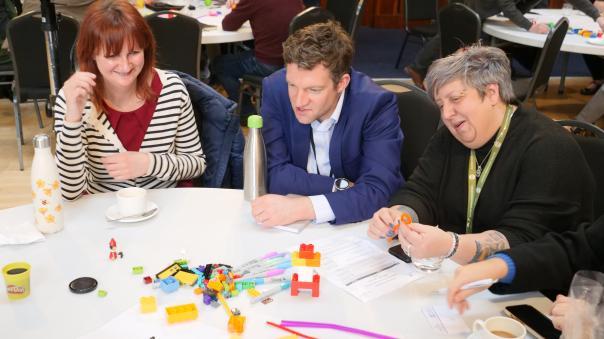
Asessionondrugand alcoholawareness included a mock “walk in the footsteps” exercise where learners followed a timeline of a fictional service user’s day, encounteringvarioussystemtouchpoints (benefits office, GP, support group) to illustrate the challenges and bureaucracy individuals face. By all accounts, these kinds of exercises made a strong impression, one participant from a council team said it was the first training where “I actually felt what our clients feel navigating the system – that will stay with me”
Moreover, visual and multimedia elements are frequently used. Many courses feature short films or video clips of Expert Citizens telling their stories or demonstrating practices. For example, in the Trauma andChange coursedeveloped by Steven Talbot, high production value short films of local Expert Citizens narrating their trauma and recovery journey are shown. These films are carefully crafted to be life-affirming and hopeful (as opposed to simply harrowing), emphasising people’s strength and change. Participants often
cite these as highlights, with comments like “the videos of real people’s experiences were incredibly powerful –hearing directly rather than stats”. Using mediainthiswaykeepslearnersengaged and emotionally connected, likely enhancing retention of information.
Insight sessions also avoid overused pedagogical methods. One quote from a participant appreciated that there was not too much of the “obligatory 'split into groups' exercises that not many enjoy”, pointing out that the Academy’s trainers strive to make activities meaningful and voluntary. Instead of forced breakout tasks, they often use open discussions, quizzes, or problem-solving of real case studies, which learners find more relevant. Gamification has even made an appearance: a workshop on GDPR and information sharing turned an ordinarily dry topic into an interactive quiz and scenario game, which participants surprisingly enjoyed and remembered (feedback indicated they found it fun and now were clearer on the regulations).

Building on the preceding work, Stepping Up is a structured 12-week training programme designed to build the confidence, skills and readiness of people with lived experience of social issues, disadvantage or exclusion. The programme focuses on supporting participants to recognise the value of their personal insights and to
translatetheseintoeffectivetrainingforprofessionalswhoworkinhealth, socialcare, and other public services.
At the time of writing, the course is taking place weekly from September 2025 and finishes in December. Sessions are interactive and use drama-based exercises, individual and group activities, and reflective discussion. Participants are guided to develop a positive sense of capability and purpose, supported by trained facilitators from Rideout and B’Arts. Lunch is provided at every session and participants receive a £25 shopping voucher for each session completed, in recognition of their contribution and commitment.
Completion of the 12-week programme leads directly into a final applied learning opportunity. In December 2025, participants will co-design and deliver a training session for frontline workers and staff from local services. This final component is intended to demonstrate the authority and value of lived experience in shaping more empathic, responsive and person-led practice across the system.
In the context of the Insight Academy, Stepping Up forms an important developmental pathway. It builds the capabilities, confidence and voice of community members who have first-hand insight into local systems. This helps ensure that the Academy’s training offer is grounded in real experience, and that lived experience leaders are supported to become skilled facilitators and change agents within service improvement work.
Innovation in content
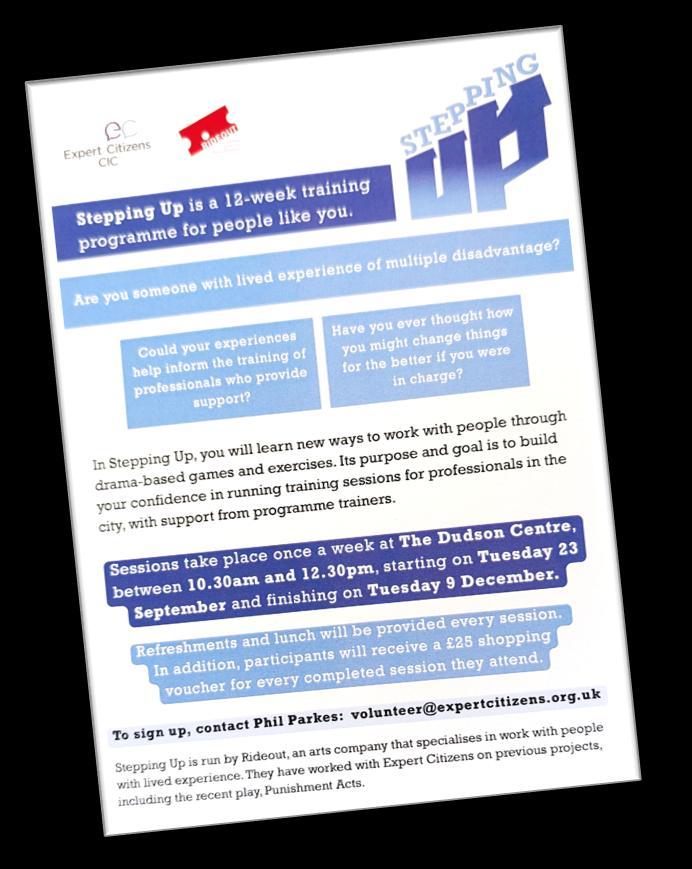
The Academy has also been innovative in topic selection, offering courses that are cutting-edge or seldom covered elsewhere. For example, Empathy Fatigue, which dealswiththeemotionaltollonstaff,wasanunusualtopicthatInsightincludedahead of the curve, acknowledging staff wellbeing needs. Another innovative session was It Takes AVillage,exploringcommunitysupport networksthroughasimulationexercise. Attendees worked in groups representing a “village” responding to a resident’s crisis, encouraging out-of-the-box thinking about collaborative support The Academy’s willingness to pilot these novel topics is a form of innovation that keeps learning relevant to practitioner’s needs and experiences
Impact of innovative and creative methods
The creative and innovative approaches have had several impacts:
• They increase engagement and make learning stick. Participants recall experiences like the plays or interactive exercises vividly, meaning the lessons have a lasting impact. This is reflected in subsequent practice changes, and the enthusiasm participants express in feedback.
• They help in reaching different learning styles. Some people learn better through doing or seeing rather than listening. The Academy’s variety of methods helps to ensure that everyone can connect with the material in some way.
• They generate wider interest and positive coverage. Innovative events get talked about within agencies, on social media, and sometimes in the mainstream press. This raises the Academy’s profile, attracting more participants and demonstrating to funders and stakeholders that this is a modern,dynamicprogramme. Forinstance,thenationalBBCwebsitecoverage of Punishment Acts portrayed Stoke’s work in a very progressive light.
• They challenge and change perspectives at a deeper level. Particularly, artsbased methods can confront biases and evoke empathy beyond what a PowerPoint slide could. As one audience member of In Plain Sight said, “very powerful and moving – great way to get a message out”, indicating a potential shift in how they view the issues. These shifts in perspective are critical for system change, especially among those who shape policy.
• They strengthen lived experience leadership. Creative projects like the plays and other training delivery methods involve Expert Citizens not just as storytellers, but as co-creators, actors, and facilitators This elevates their role and showcases their talents in new domains It is helping people to recognise and access their power and also sends a message to audiences: lived experience voices are not only present, they are leading the narrative.

50
In conclusion, the Insight Academy’s commitment to innovative and creative learning has significantly enriched its impact. By employing arts, interactive techniques, and novel content, it keeps the training engaging and relevant, ensuring that learning outcomes are not only cognitive but also affective (i.e., emotional) and even transformative. These approaches have been instrumental in engaging a broad range ofparticipants,includingsomestrategicapexstakeholders,andinreinforcingthecore message that lived experience, combined with creativity, can drive change. As the Academy looks to the future, maintaining this innovative edge will be important for continuing to captivate audiences and catalyse change.
Sustainability and legacy
As the Insight Academy nears the end of its current funding period under Changing Futures, questions of sustainability and legacy come to the forefront. This section discusses how the Academy could be integrated into future plans, lessons learned that will inform ongoing efforts, and how the Academy’s impact can be sustained and scaled for the long term. It also considers the strategic positioning for future funding and potential scaling beyond Stoke-on-Trent.
Integration into local systems
From the beginning, a conscious effort was made to align the Insight Academy with existing structures to pave the way for continuity The Academy is embedded within Stoke-on-Trent’s Adult Social Care “Changing Futures” programme alongside case coordination and social work This integration means that, rather than being a standaloneproject,theAcademyoperatesintandemandsupportsfrontlineservicedelivery. As Changing Futures evolves or winds down to March 2026, the aim is for the Academy’s functions to be mainstreamed into the local partnership structures.
Council officers and partner agencies have indicated interest in continuing a central learning hub for multiple disadvantage beyond the life of the grant. Indeed, the idea of an academy or similar is reflected in local piloting of the Staffordshire and Stoke-on-Trent Social Care Academy, launched in 2024.2 Based on a similar model to the Insight Academy but with broader themes and
placement opportunities for social workers
One avenue for sustainability is through Changing Futures legacy funding or spinoff projects. The government’s evaluation of Changing Futures may identify successful elements to carry forward nationally. This opens possibilities: either continued central funding to maintain or expand it, or support for Stoke to integrate it into local
2 See: https://www.local.gov.uk/casestudies/staffordshire-and-stoke-trent-social-careacademy?utm_source=chatgpt.com
budgets via the evidence base. The Academy has been proactive in documenting outcomes to feed into those conversations.
Locally, there could be discussions about the Academy becoming a permanent part oftheAdultSocialCaretrainingbudgetor a shared cost among key partners, e.g., the Council, NHS, and maybe the Police each contributing to keep it running, recognising the cross-cutting benefits The fact that around 135 organisations
have engaged provides a strong argument. The Academy is not serving one department but the whole system, so a collaborative funding solution could be appropriate. While no final decisions are made at the time of writing, there is clear good will towards a sustainable future for the Academy
One stakeholder noted, “It would be unthinkable to let this momentum go; we finally have a joined-up training model and we must find a way to continue it.”
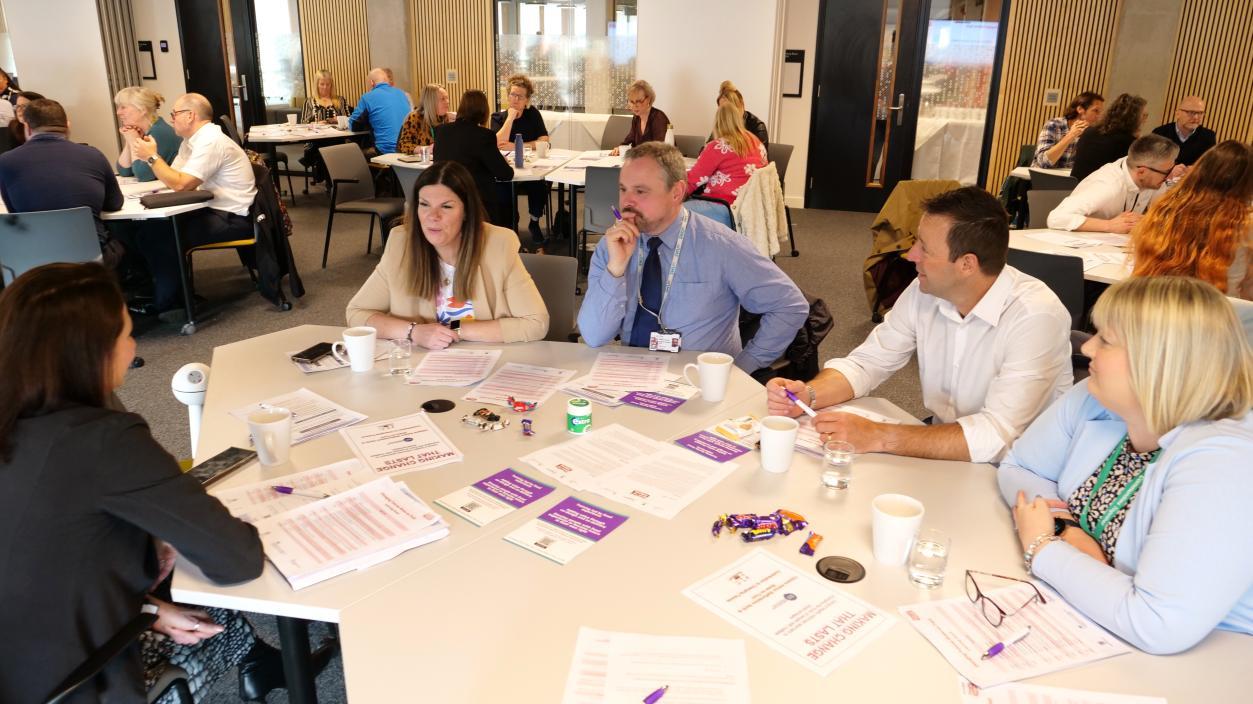
Lessons learned informing future initiatives
The journey from VOICES to Insight Academy has yielded rich lessons that inform any future incarnation:
• The three key success factors identified earlier – shared learning environment, high-qualityprovision,andlivedexperienceattheheart –mustremaincentral. Any future programme should preserve these, as they have been validated by outcomes. They are also transferrable to other contexts (e.g., if Expert Citizens develops an academy in another area, focusing on cross-sector participation, topnotch trainers, and co-production will be a formula for likely success).
• Ongoing consultation is vital. One recommendation from VOICES was to continually consult services and customers to identify emerging learning needs. The Academy’s responsive model validated this, by regularly gathering feedback and intelligence from forums like MaRG, the Academy stayed relevant Future efforts should formalise this feedback loop, perhaps via a steering group of
stakeholder representatives and Expert Citizens that meets quarterly to review trainingneedsandshapestheAcademyoffer. Essentially,listenandadapt remains a core lesson.
• Avoiding duplication with in-house training. The VOICES experience taught that a shared programme works best when it complements, not duplicates, training that individual organisations do internally. Insight navigated this by focusing on either advanced topics or those requiring multi-agency perspective, leaving basic mandatory trainings to employers. Going forward, maintaining clarity on this delineation will keep the Academy’s offer unique and necessary. For instance, it might not spend resources on generic health and safety training (which agencies handle individually), but rather on topics that benefit from lived experience perspective or collective discussion.
• Logisticalconsiderations. Practicalaspectslikepromotion,bookingtools,venues, admin support can make or break a training programme’s efficiency. Insight faced minor challenges such as Eventbrite bookings filling fast and some smaller agencies not hearing about courses in time A lesson is to perhaps invest in a dedicated communication platform or a calendar system that all agencies subscribe to, to ensure equitable access to information. A tutor suggested listing training opportunities on the website or even developing a smartphone app for easy access For sustainability, exploring these tech solutions could be wise, so the programme doesn’t rely solely on emails or word of mouth. Additionally, ensuring there is adequate administrative capacity to handle the coordination is a lesson, as the Academy has grown, so did the workload of managing it. Future funding models need to account for a team that is sized to the task.
• Trainer arrangements. Giving trainers autonomy (to choose dates, bring their materials, etc.) not only provided a service which supported tutor’s needs, but also ensuredtheyfelt andretainedflexibility andownershipofmaterialstheyproduced. Any continuation should maintain this flexibility to keep quality trainers on board This is a subtle operational lesson that has big implications for sustaining the network of trainers.

Long-term ambitions and systems change
The Insight Academy is positioned as a potentially key contributor to lasting systems change. How can its legacy be ensured? One way is through embedding learning structures permanently into the system.
For example, Stoke-on-Trent could establish a “Learning Partnership” that outlives individual programmes, with the Academy’s functions housed under it. This would institutionalise the crossagency training platform as part of the city’s infrastructure, much like a local training consortium, but focused on public and voluntary sector needs.

The multi-agency buy-in is already there operationally as evidenced by participation. Now it may be about formalising governance and funding. A legacy ambition could be to expand the model beyond multiple disadvantage too, i.e., apply the co-produced, cross-cutting trainingapproachtoothercomplexsocial
issues (mental health, youth services, etc.), thereby enriching Stoke’s capacity as a Skilled City more comprehensively.
Another ambition is to continue empowering leadership through lived experience. The Academy has shown the valueExpertCitizensbringastrainersand consultants to the system. Ensuring that Expert Citizens CIC and its members remain supported and central in future training or service design will be an important legacy. Expert Citizens themselves see the Academy as part of their legacy from VOICES, and they have aspirations to take their insight to new arenas (contributing to national research, policy forums, and programmes in other geographies).
The legacy of the Academy is thus tied to the legacy of lived experience involvement in Stoke. Ideally, in the years ahead, one measure of success would be seeing people who were volunteer trainers now in paid roles influencing strategy, and a continued pipeline of lived experience voices shaping learning.
Strategic positioning for future funding
To sustain and potentially scale the Academy, a clear value proposition for funders is essential. Fortunately, the evaluation evidence provides much to build on. Funders (be they government departments, local authorities, health bodies, or philanthropic) will be interested in value for money and social return on investment (SROI).
The Academy’s figures can be translated into a compelling story For a relatively modest investment, the return was more than 4,000 learning opportunities filled, benefiting over 150 organisations, which in turn contributed to services for countlessindividuals. Onecanarguethat each training spot, if itprevents a crisis or
improves an intervention for even one service user, has a ripple effect far exceeding its cost. As one manager noted, the Academy “has enabled us to invest in staff at a time when training

budgets were hit”, meaning the funders’ money filled a crucial gap and arguably multiplied its effect through improved staff performance and potentially better outcomes (like tenancy sustainment, recovery rates, etc.).
Quantifying social return is complex, but anecdotes like “I was on the verge of quitting [before the training]” suggest the Academy even saved on human resource costs by keeping experienced staff in post and avoiding costly turnover.
Forfuturefundingbidsorbusinesscases, the Academy can also position itself as scalable and replicable. The fact that the model was pioneering among Fulfilling Lives areas and now within Changing Futures gives it a potential edge. There is interest in other regions to emulate Stoke’s approach, and Insight could attract funding to export its model (e.g., through consultancy or a national centre of excellence idea).
Strategically, Expert Citizens CIC might seek funding to develop an “Insight
Academy Network”, supporting other cities to launch similar academies, perhaps with a central toolkit or trainingthe-trainers program (there’s precedence in other sectors for this kind of capacitybuilding approach). This could appeal to funders aiming for national impact: by funding Stoke to disseminate its model, they indirectly improve systems elsewhere. Indeed, the presence of “Insight” branding in things like the national Insight Awards suggests the potential to take the concept UK-wide.
Additionally, local strategic alignment is key for unlocking funds. Stoke-on-Trent has strategies around health inequalities, community learning, etc., where the Academyfitswell. Bydemonstratinghow it contributes to outcomes in those strategies (like better trained workforce leading to more effective intervention, thereby reducing costly reactive measures such as emergency hospital admissions or repeat homelessness), the Academy team can make a case for funding from those budgets. For example, health partners might invest if they see training reduces “did not attend” rates or use of emergency services by improving community engagement. Gathering any data on such outcomes could strengthen the case.
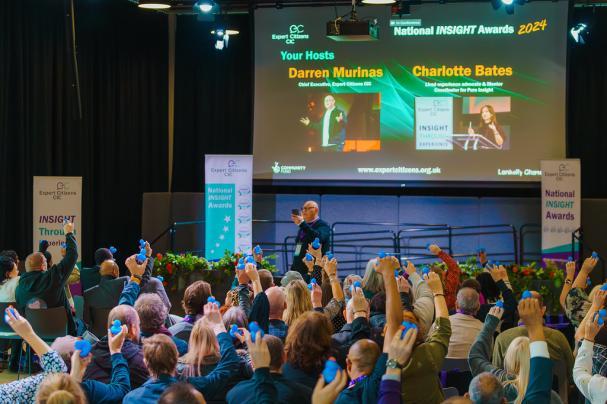
National scale-up considerations
If scaling beyond Stoke, it’s important to consider adaptation. As Steven Talbot pointed out, “If you go nationwide, the Stoke-centric model would need to shift and change … courses have to be bespoke to the area”. This means the core principles can travel, but content must be locally tailored
A potential strategy is to keep lived experiencelocal,i.e.,in eacharea,partner with local Expert Citizens or similar groups to co-produce relevant training (the way Stoke used local stories) The Academy’s methodology, co-production, cross-sector, free access, etc., is most likely the exportable piece, while the stories and context remain local This approach would also support other localitieslivedexperiencecommunities,a positive externality and network development opportunity

Maintaining momentum during transitions
As the current funding cycle ends, one risk is a gap in provision if new funding doesn’t immediately kick in This evaluation recommends prioritising a transition plan that identifies which high-impact activities must continue (perhaps at a minimum level) so that goodwill and networks aren’t lost

The trust and expectation built among organisations is an asset, if the Academy disappeared even for a year, it could be hard to rebuild that engagement from scratch Therefore, even in a worst-case scenario of a funding gap, stakeholders could act to keep elements alive (maybe fewer sessions or quarterly learning events, supported collaboratively). This demonstrates the local commitment to the Academy’s legacy.
Legacy beyond training, influence and practice
The Academy’s legacy also lies in intangible changes made. As described in previous sections, it has contributed to a developing learning culture and improved practice across Stoke Ensuring legacy means reinforcing those changes so they endure independent of the Academy
One idea is to embed certain practices into organisational policies permanently, for instance, making trauma-informed training a requirement for newstaff in key agencies, or including lived experience speakers in all induction programmes. Another is to formalise the networks that have arisen, maybe create a Community of Practice group that continues to meet even without formal training sessions, sustaining peer learning informally. ExpertCitizensCICcouldfacilitatesucha network as part of their ongoing mission, which would keep the flame of the Academy alive in spirit if not in its full structure while alternative funding is sought.
Lastly, it is worth noting the national policy environment. Government agendas around rough sleeping, mental
health, and multiple disadvantage increasingly acknowledge the importance of workforce training and lived experience. The Academy is well aligned with these trends. For instance, the Rough Sleeping Strategy (2022) calls for better trained staff in traumainformed care; Stoke’s Academy is a perfect example of delivering that.
This alignment can attract future government funding targeted at those aims. The Academy should actively participate in national conversations (like MEAM – Making Every Adult Matter –networks, or the Changing Futures national evaluation sharing) to showcase its results. By shaping the narrative on what effective workforce development looks like, it can set itself up as a go-to model to fund.

In summary, the sustainability and legacy plan for the Insight Academy revolves around integrating it locally for continuity, applying lessons learned, leveraging its success for future funding, and considering broader replication. The Academy’s legacy will be seen in a more skilled, compassionate workforce and a collaborative system that continues long after the initial programme. As one funder remarked in a meeting, “This shouldn’t just be a project, it should be how we do business in Stoke.”
Achieving that means embedding the Insight ethos into the fabric of local practice and securing the resources to keep the engine running. The evidence to justify this is strong, what remains is to translate it into action through strategic partnerships and investment. The next and final section provides specific recommendations to support this goal.
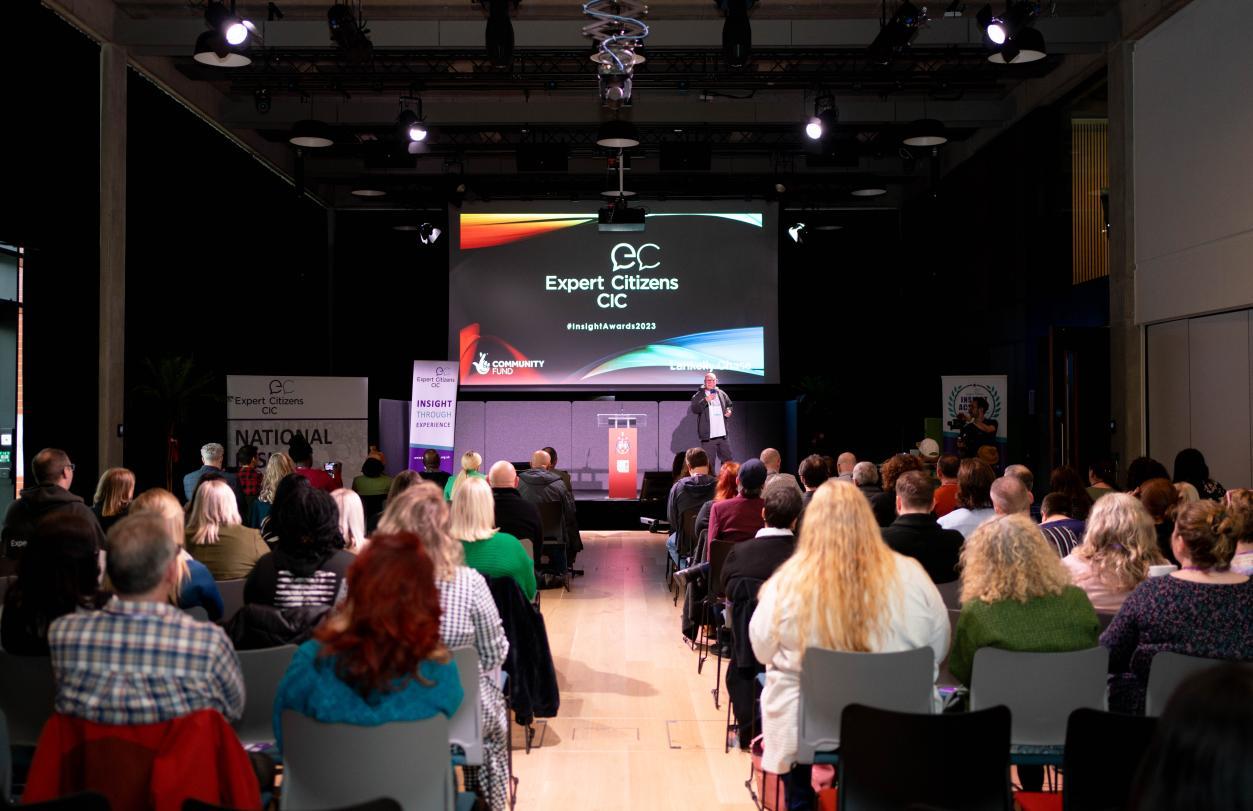
Recommendations
Drawing on the findings ofthis evaluation, thefollowing recommendations are offered for different stakeholder groups to ensure the ongoing success, expansion, and impact of the Insight Academy. These recommendations are formulated in a strengths-based manner, building on what is working well and suggesting ways to amplify it They are intended to support strategic funding conversations and guide stakeholders in leveraging the Academy’s value.
For funders and other decision-makers:
1. Invest in sustaining the Insight Academy model
Secure multi-year funding to continue the Academy’s operations in Stoke-onTrent beyond the initial programme period. The evidence shows the Academy delivers exceptional value for money, providing thousands of training opportunities and demonstrable improvements in services and staff capability for a relatively modest cost. Funders (local or national) should view this as a cost-effective intervention with a high social return. Consider collaborative fundingstreams(e.g. jointcontributionsfromhealth,council,police,etc.)since the benefits are cross-sector. By investing in the Academy, funders invest in the foundation of system change, i.e., a skilled and motivated workforce
2. Support scalability
Leverage Stoke-on-Trent’s success by exploring a scale-up of the Insight Academy model to other areas or nationally. This could involve funding Expert Citizens to pilot in another locality, or resourcing it to act as a centre of excellence that provides guidance and training to set up similar academies elsewhere. Anyscalingshouldmaintainthecore principles(co-productionwith lived experience, cross-agency participation, free access) while adapting content to local contexts. Funders with a national remit (e.g. Lottery, central government)shouldconsidertheInsightmodelinfutureprogrammestargeting multiple disadvantage or workforce development, as it has proven itself as an innovative solution.
3. Recognise and reward lived experience leadership
Ensure that future funding and policy support continues to embed lived experience at the heart. This means not only funding the training delivery but also continuing to invest in the Expert Citizens themselves, through fair compensation for their contributions, capacity-building (like the Train-theTrainer programme), and involvement in governance. The Academy’s success shows lived experience leadership is a key to cultural change but maintaining that will require ongoing commitment. Funders can also encourage other programmes to adopt similar co-production approaches, using Insight as a positive practice example.
4. Integrate Insight into strategic plans
Incorporate the Insight Academy’s approach and goals into local strategic documents and commissioning plans. For example, Stoke’s Health and Wellbeing Strategy, Community Safety Plan, and Homelessness Reduction Strategy should explicitly reference workforce development via co-produced training as a tactic to achieve their outcomes This creates policy backing for funding and partnership support. At a national level, policymakers should note how Insight contributed to outcomes of Changing Futures and consider referencing it in guidance for future multiple disadvantage initiatives. The Academy aligns with national priorities like trauma-informed care and collaboration, so it should be upheld as a model in relevant policy forums.
5. Evaluate and demonstrate social return
Commission a Social Return on Investment (SROI) or cost-benefit analysis to quantify the wider impact of the Academy This evaluation provides qualitative and quantitative evidence (e.g. improved confidence 97%, staff retention stories, practice changes leading to better client outcomes). Translating these into economic terms, for instance, reduced staff turnover costs, better tenancy sustainment reducing homelessness costs, etc., although challenging, will further strengthen the case It is recommended that within the next year, an analysis be done to calculate, for example, how many downstream interventions might have been prevented or improved by the training Use positive testimonials, like services avoiding costly mistakes or crises due to what staff learned, as case studies in these analyses.
For participating organisations and other stakeholders
6. Embed Academy learnings into organisational practice
Take deliberate steps to incorporate what staff learn from Insight sessions into everyday practice and policy. For instance, organisations should review their internal procedures, training manuals, and supervision practices to ensure they reflect the trauma-informed, person-centred approaches championed by the Academy. Encourage staff who attend to share their knowledge in team meetings or mini workshops, thereby multiplying the effect internally. Some agencies have done this informally; making it a standard expectation will help solidify the Academy’s impact and create learning organisations where continuous improvement is the norm.
7. Champion the Insight Academy and advocate for its continuation
Stakeholders who have benefited could actively advocate within their networks and upwards to leadership about the importance of the Academy This could mean writing emails, letters, or articles in support, providing testimony at funding meetings, or offering in-kind resources (like venues or staff time) to ease operational costs. Organisations might also consider pooling some
resources to sponsor specific courses that are crucial to them to share ownership By showing willingness to co-invest or vocal support, stakeholders strengthen the case that the Academy is valued and needed This collective advocacy echoes the sentiment “we do need to invest in training and [Insight] enabled us to invest in our staff”, emphasise that message to funders and decision-makers.
8. Expand and diversify participation
Ensure that all relevant staff and volunteers take advantage of the Academy and identify any gaps in participation For example, if health colleagues were under-represented in the past, make a concerted effort to send more health staff to future sessions perhaps by recommendations for adjusted timing or content to suit them. Likewise, engage service user representatives or volunteers to attend applicable sessions, as mixing perspectives has proven valuable. The more diverse the participation, the richer the shared learning. Also, consider inviting service leaders to key sessions (or bespoke ones), having managers and frontline together can accelerate implementation of ideas. As part of this, continue to encourage senior leadership attendance at major events or showcases, their ongoing exposure will maintain high-level buy-in.
9. Leverage Academy resources for induction and ongoing training
Make Insight sessions a formal part of staff induction for new employees in relevantroles Thisensuresthenextgenerationofworkersimmediatelyadopts the system-wide perspective and values. Also, use the Academy as the go-to source for relevant ongoing professional development: rather than commissioning separate standalone trainings, look first to Insight’s offer or collaborate with it for new needs This not only supports the Academy through demand but ensures consistency in training messages across the city. Some organisations already do this, but expanding the practice would mean, for example, that a new support worker in any local charity will reliably get foundational knowledge from Insight’s core courses within their firstyear Over time, this creates a baseline competency across the workforce that is part of the Academy’s legacy.
10.Contribute to content and innovation
Stakeholders should view themselves not just as consumers of training but as co-creators Continue to propose new topics or emerging issues to the Academy. If your service develops an innovation or a best practice, consider offering it as a case study or new workshop through Insight to share with others. For instance, if a GP practice figured out a great approach to engaging rough sleepers, that could become a micro-learning session hosted by Insight. Similarly, skilled staff within agencies could become trainers for the Academy in their expertise areas as some staff have already done which has proved
mutually beneficial. This peer learning and teaching strengthens the local expertise pool and keeps the programme dynamic It also reinforces that the Academy is a community effort, psychologically “our Academy”, rather than an external entity.
For Expert Citizens CIC and the Academy
11.Maintain the co-production and strengths-based ethos
As the programme evolves or potentially expands, guard the core ethos that has made it special. Namely, that people with lived experience are equal partners in design and delivery, and the approach focuses on strengths and solutions, not just problems Every new course or initiative should continue to answer: Where is the lived experience insight here? and How does this empower participants? This ethos has yielded dividends in participant engagement and impact, so it should remain non-negotiable. It will also be your distinguishing feature in any competitive funding environment As one trainer eloquently put it, “The fact that so much of the training is informed by the people of Stoke… highlights the different approach”, keep that difference alive.
12.Develop a sustainability plan and explore diverse funding
Use the evidence from this report to create a sustainability plan. Identify potential funding sources: local authority budgets, health budgets, charitable grants, social enterprise models (could the Academy charge nominal fees for certain attendees or premium bespoke services to generate income, while keeping core offerings free?). Perhaps explore a hybrid model where basic trainingremainsfreeforfrontlinestaff,butif,say,aprivatecompanyorexternal areawants tosendpeople,there’safee,generatingrevenuethatgoesbackinto supporting free local spots Additionally, consider aligning with regional or national initiatives (like NHS workforce programmes or skills funds) to tap into those resources The plan should include a timeline for applications and stakeholder engagement to secure commitments before current funding lapses.
13.Enhance monitoring and storytelling
Continue to strengthen the monitoring of outcomes, both quantitatively (evaluation forms, attendance data, follow-up surveys to see how training was used) and qualitatively (collecting success stories, quotes, case studies). In particular, try to follow up with participants after some months to gather concrete examples of changes they made, or outcomes achieved thanks to the training These stories are powerful for illustrating impact to funders For example, if a housing officer prevented an eviction because of skills learned, document that narrative Also, capture more instances of system change, like improved partnership working, and attribute part of the credit to the Academy whereappropriate(asStevenTalbotsaidregardingimprovedlocalCQCratings, “We could take a bit of credit for that…”). With even better data and stories, you
can more easily defend and promote the Academy’s value. Publishing an annual impact report, using much of the content here, and circulating it widely is recommended.
14.Strengthen communication and access
Make it as easy as possible for people to know about and join Insight opportunities. Implement improvements such as an online calendar of upcoming sessions on the Expert Citizens website, noting that some have suggested this already, and consider a mailing list or text alert system so that no one misses announcements Explore alternatives to Eventbrite if needed, somefeedbacksuggestednoteveryonehasaccessorhearsintime. Ifcourses fill quickly, maybe set up a waitlist system or prioritise ensuring a fair spread of places across organisations. Increasing the reach through better comms will reinforcestakeholdertrustandensuremaximumuptake Additionally,promote the Insight ethos via social media, local press, etc., to keep visibility high, celebrate successes like the Awards winners or any positive outcomes to build public and political support.
15.Future-proof through partnerships
Finally, embed the Academy’s future by formalising partnerships. Perhaps create a steering or advisory board with representatives from key sectors and ExpertCitizenstooverseetheAcademy Thisnotonlysharestheresponsibility, preventing burnout on a small staff team, but gives partners a stake in guiding it, which can help with resources and continuity Also, explore partnership with formal education institutions, for instance, the University of Staffordshire, University of Keele, or local colleges who might collaborate on accreditation or research around the Academy. Partnerships with national bodies may be possible if the Academy model is demonstrably contributing to wider sector knowledge. Essentially, don’t go it alone. Use the goodwill generated to bring others into the fold in a structured way, so that the Academy becomes a fixture supported by many.
These recommendations aim to ensure that the Insight Academy survives beyond Changing Futures in the coming years, expanding its positive impact on individuals, organisations, and systems. By acting on these suggestions, stakeholders can collectively safeguard the legacy of this innovative programme and continue the journey toward a more learning-driven, compassionate system of support.
Appendix A: List of participating organisations
A list of 119 organisations has been specifically confirmed as having participated in Insight Academy training and conference events August 2022 to March 2025. It is estimated that staff from at least 135 organisations have taken part, as some individuals corresponded using personal email addresses and are therefore classified under the “Unknown Organisation” category below (which includes no fewer than 20 unique participants). This category also comprises organisations identified solely by an individual’s name, which have been aggregated to protect privacy.
The following list is in alphabetical order:
About Better Care
Adullam Homes
All the Small Things CiC
Allerton Care and Support
Alzheimer's Society
ASIST
Aspire Housing
BAC and O’Connor
Beats Bus
Better Together
Birmingham Housing Services Limited
Blinded Faith
Brighter Futures
British Ceramics Biennial
Broad Oak Properties Ltd
Catch 22
Changing Lives
Cheshire East Council
Citizens Advice Stoke and North
Staffordshire
CNWL
Community Pride CIC
Concrete (Honeycomb Group)
Coventry Mind
Creating Change Housing Management
Creative Studio
Denbighshire Youth Service
Despina Rose Counselling
DWP
EMH Homes
Emmaus North Staffs
Engaging Communities Solutions
Expert Citizens CIC
Expert Link
Families in Harmony
Fegg Hayes Futures
Gingerbread Centre
Glow (Honeycomb Group)
Green Shed Counselling
Hawkesley Church Primary Academy
Haywood Academy
Healthwatch Stoke-on-Trent
Hillswood Care Ltd
HM Prison Service
HMPPS (Probation)
Home Group Limited
Homeless Link
Homelessness Best Practice CIC
Human Kind
Inspired Film & Video
Jane Turner Solutions
Jigsaw Recovery Project
Keele University
Kensington Care
Khai Tzedek CIC
Lankelly Chase
Lisa Newman Coaching UK
LJW Productions Limited
Midlands Partnership Foundation Trust
Morgan Hunt
Mothers Uncovered
Newcastle-u-Lyme Borough Council
North Staffordshire Combined
Healthcare Trust
North Staffordshire Mind
North Staffs Carers
North Staffs GP Federation
NSCG
NSPCC
Number 11
One Million Mentors
Orchard Community Trust
P3 Charity
Peninsula Dental Practice
PJS Machinery Ltd
Places for People
Practice Plus Group
Reaching CIC
Revival (Honeycomb Group)
Ride Out
Salford Loaves and Fishes
Saltbox
Salvation Army
Savana
Shaw Education Trust
Shaw Trust
Sound Delivery
South Yorkshire Housing Association
St Giles Trust
Staffordshire Council of Voluntary Youth Services
Staffordshire County Council
Staffordshire Housing Association (Honeycomb Group)
Staffordshire Police
Staffordshire Sexual Health Charity
Staffordshire University
Starfish Health & Wellbeing
Steven Talbot Consultancy
Stoke-on-Trent City Council
Stoke-on-Trent Foodbank
Stoke-on-Trent Schools
StreetVet
Support Staffordshire
T3 Staffordshire Treatment and Recovery System
Ten Count Boxing
The Gingerbread Centre
The Little Fidget Theatre Company
The Maggie Oliver Foundation
The Potteries Centre
Turning Point
Ulysses Youth
Unknown Organisation
VAST
Victim Support
WEA
Wells
Whispers of Hope
With You
X-conversation
YGAM
YMCA North Staffordshire
Your Community Cast
The following list is in descending order of the number of attendances at Insight Academy opportunities (ranked 1 as the most attendances):
1. Stoke-on-Trent City Council (183)
2. Honeycomb Group (128) (Concrete, Glow, Revival, and Staffordshire Housing Association combined)
3. Citizens Advice Stoke and North Staffordshire (106)
4. Expert Citizens CIC (105)
5. Concrete – Honeycomb Group (97)
6. BAC and O’Connor (74)
7. Brighter Futures (59)
8. North Staffordshire Combined Healthcare Trust (44)
9. Human Kind (30)
10. Saltbox (28)
11. Unknown Organisation (26)
12. YMCA North Staffordshire (25)
13. Staffordshire Police (24)
14. Number 11 (24)
15. Creating Change Housing Management (20)
16. Glow – Honeycomb Group
17. Savana
18. With You
19. Turning Point
20. Revival – Honeycomb Group
21. P3 Charity
22. North Staffordshire Mind
23. Victim Support
24. NSPCC
25. Changing Lives
26. Staffordshire County Council
27. Staffordshire University
28. Midlands Partnership Foundation Trust
29. Whispers of Hope
30. HMPPS (Probation)
31. Catch 22
32. Reaching CIC
33. British Ceramics Biennial
34. Kensington Care
35. Inspired Film & Video
36. Salford Loaves and Fishes
37. Alzheimer's Society
38. Beats Bus
39. VAST
40. Engaging Communities Solutions
41. Home Group Limited
42. Adullam Homes
43. PJS Machinery Ltd
44. The Potteries Centre
45. Khai Tzedek CIC
46. Blinded Faith
47. Hillswood Care Ltd
48. All the Small Things CiC
49. Coventry Mind
50. ASIST
51. Homeless Link
52. StreetVet
53. Homelessness Best Practice CIC
54. Ulysses Youth
55. Better Together
56. WEA
57. Denbighshire Youth Service
58. Peninsula Dental Practice
59. Jane Turner Solutions
60. Stoke-on-Trent Foodbank
61. Shaw Trust
62. Ten Count Boxing
63. South Yorkshire Housing Association
64. Families in Harmony
65. Jigsaw Recovery Project
66. Community Pride CIC
67. Staffordshire Housing Association – Honeycomb Group
68. HM Prison Service
69. Keele University
70. One Million Mentors
71. Staffordshire Sexual Health Charity
72. Xconversation
73. Emmaus North Staffs
74. Steven Talbot Consultancy
75. Mothers Uncovered
76. North Staffs Carers
77. Stoke-on-Trent Schools
78. Despina Rose Counselling
79. CNWL
80. Haywood Academy
81. Broad Oak Properties Ltd
82. Creative Studio
83. Ride Out
84. Places for People
85. Aspire Housing
86. Support Staffordshire
87. Expert Link
88. The Little Fidget Theatre Company
89. Salvation Army
90. NSCG
91. Allerton Care and Support
92. Orchard Community Trust
93. Shaw Education Trust
94. EMH Homes
95. Fegg Hayes Futures
96. Practice Plus Group
97. Sound Delivery
98. Hawkesley Church Primary Academy
99. Gingerbread Centre
100. T3 Staffordshire Treatment and Recovery System
101. St Giles Trust
102. The Gingerbread Centre
103. Staffordshire Council of Voluntary Youth Services
104. The Maggie Oliver Foundation
105. Cheshire East Council
106. North Staffs GP Federation
107. Lankelly Chase
108. Healthwatch Stoke-on-Trent
109. Lisa Newman Coaching UK
110. Birmingham Housing Services Limited
111. LJW Productions Limited
112. Wells
113. Green Shed Counselling
114. DWP
115. Starfish Health & Wellbeing
116. YGAM
117. Morgan Hunt
118. Your Community Cast
119. About Better Care
120. Newcastle-u-Lyme Borough Council
Appendix B: Summary data on sessions and participants
Learning opportunities by type
The Insight Academy has offered 103 different learning opportunities between January 2022 and April 2025. These opportunities have been delivered by 40 different trainers. Some of these have been repeated numerous times.
Table 1: Summary – number of learning opportunities by type (January 2022 – April 2025)
Table 2: Detail - learning opportunities by type (January 2022 – April 2025)
Learning opportunity Type
Award in Education & Training
Accredited Training
Emergency First Aid at Work Accredited Training
First Aid for Mental Health Accredited Training
Insight Awards 2023 Events, Conferences, & Awards
Insight Awards 2024 Events, Conferences, & Awards
Confronting Grooming & Sexual Exploitation Events, Conferences, & Awards
3 in 1: TIC | PIE | Strengths-based Masterclasses
Adult Survivors of Childhood Sexual Abuse Masterclasses
Advising with Convictions Masterclasses
Alcohol Awareness Masterclasses
Anxiety Awareness Masterclasses
Bipolar Affective Disorder Masterclasses
Bitesize Trauma & How to Respond Masterclasses
Body Image and Eating Disorder Masterclasses
Communicating Effectively Masterclasses
Compulsive Hoarding Masterclasses
Conflict Resolution Masterclasses
Co-production - Nuts & Bolts Masterclasses
Coproduction: What works? Masterclasses
Core Drugs Awareness Masterclasses
Cross Addiction Masterclasses
Disability Awareness Masterclasses
Domestic Violence Awareness Masterclasses
Drugs & Premises -The Law and Good Practice Masterclasses
Learning opportunity Type
Drugs and Brain Chemistry Masterclasses
Drugs Awareness - Enhanced Skills Masterclasses
Drugs Updater Masterclasses
Effective Factual Recording Masterclasses
Effective Prevention, Intervention & Management of ASB Masterclasses
Emotional Intelligence Masterclasses
Empathy Fatigue Masterclasses
Employability Skills Masterclasses
Female Genital Mutilation Masterclasses
Gambling Addiction Masterclasses
Harmful Sexualised Behaviour in Young People Masterclasses
Hate Crime Awareness Extended Masterclasses
Hoarding & Risk Reduction Masterclasses
Hoarding Awareness Masterclasses
Housing and the Domestic Abuse Act Masterclasses
Inspiring Change Motivational Interviewing Masterclasses
Introduction to Homelessness Law Masterclasses
LGBTQ+ Awareness Masterclasses
LGBTQ+ In The Workplace Masterclasses
Mental Health Awareness Masterclasses
More Than What Went Well Masterclasses
Recognising & Responding to People with Learning Disabilities Masterclasses
Respect & Inclusion Masterclasses
Speaking up Using Creative Engagement Masterclasses
Suicide & Bereavement Masterclasses
Suicide Awareness and Prevention Masterclasses
The Wealth Within Masterclasses
Trauma & Drug Induced Psychosis: Creating a Safe Space for Customers Masterclasses
Trauma and Drug Induced Psychosis: The Skilled Helper Masterclasses
Trauma Informed Care Masterclasses
Understanding & Facilitating Groups Masterclasses
Understanding Self-Harm Masterclasses
We Can Do It Better - Trauma and Change Masterclasses
Wellbeing & Resilience in the Workplace Masterclasses
What is FASD? (Foetal Alcohol Spectrum Disorder) Masterclasses
What You Always Wanted to Know About Autistic Spectrum Conditions Masterclasses
Visual Awareness Masterclasses
An Introduction to Benefits Non-accredited Training
Benefits - Appeals & Tribunal Process Non-accredited Training
Disability Benefits Non-accredited Training
Homelessness & Housing Applications Non-accredited Training
How Immigration Status Affects Benefit Entitlement Non-accredited Training
Info Sharing & Customers Rights under GDPR Non-accredited Training
Introduction to Employability Benefits Non-accredited Training
Introduction to Health Benefits Non-accredited Training
Learning opportunity Type
Rough Sleeper Verification Training
Train the Trainer
Understanding Universal Credit Payments
Homelessness Journey
Punishment Acts: Tales of Retribution, Reparation, and Redemption
Non-accredited Training
Non-accredited Training
Non-accredited Training
Non-accredited Training
Arts & Theatrical Productions
Changing Futures - Stoke on Trent - Launch Event Workshop
Changing Futures - Stoke on Trent - Learning Event Workshop
Coercive Control Workshop
Community Connection Workshop
Cuckooing Awareness for Anyone Workshop
Cuckooing Awareness for Professionals Workshop
Hate Crime Awareness Workshop
Homeless Summit Workshop
Introduction to Coproduction Workshop
Introduction to MaRG Workshop
Introduction to Peer Mentoring Workshop
It Takes A Village Workshop
Making Every Contact Count Workshop Workshop
Thinking Restoratively Workshop
Valdo Calocane Workshop
Arson convictions as a barrier to accommodation
Cuckooing
Housing gaps
Systems change
Challenging behaviour
Stigmatising attitudes and behaviours
Accommodating additional care and support needs (planned)
Evaluation feedback summary
Community of Practice
Community of Practice
Community of Practice
Community of Practice
Community of Practice
Community of Practice
Community of Practice
In April 2025, the participant survey was revised to incorporate a broader range of quantitative questions focused on satisfaction with the training course. The updated survey now gathers more detailed feedback on participants’ perceived gains in knowledge and skills, as well as their confidence in applying what they have learned. In addition to assessing overall satisfaction, the survey also includes targeted questions about the quality of course administration and organisation, ensuring a more comprehensive understanding of the participant experience.
The results of the participant surveys (n = 172) are summarised below in Figure 4 to Figure 15.
Figure 4: Satisfaction with the overall course content
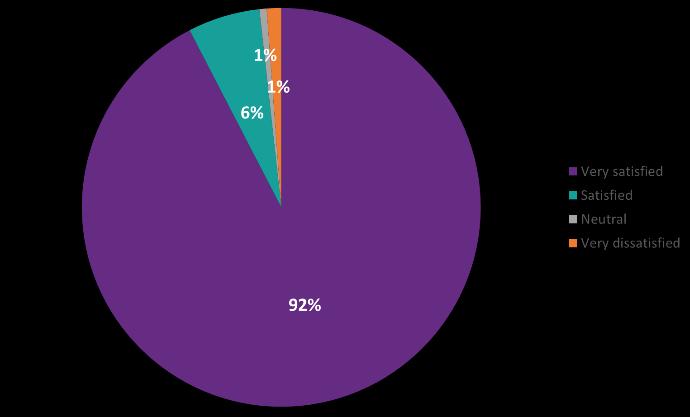
Figure 5: Satisfaction with the learning activities, exercises, and discussions
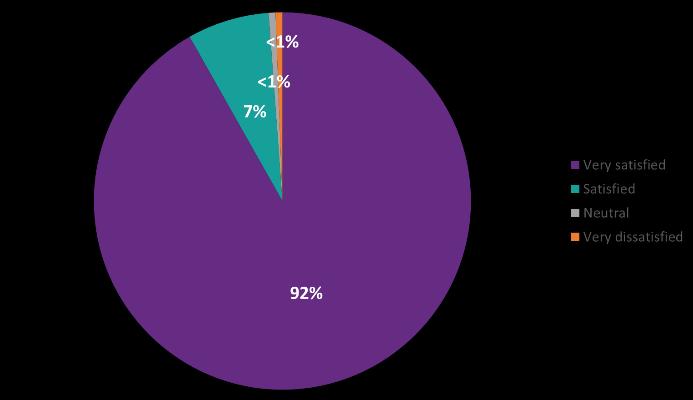
6: Satisfaction with your tutor, their knowledge, and answers
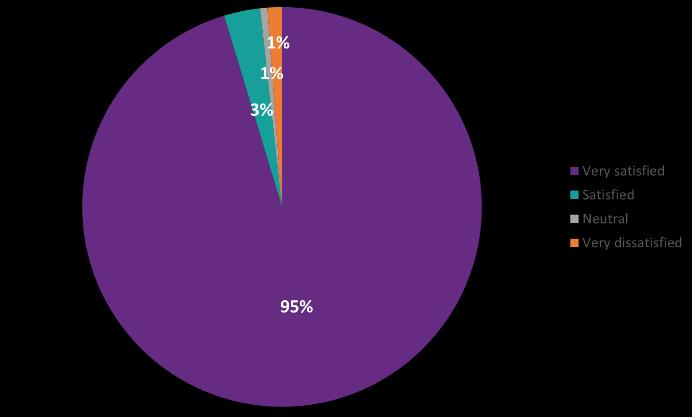
7: Satisfaction with the venue accessibility and comfort
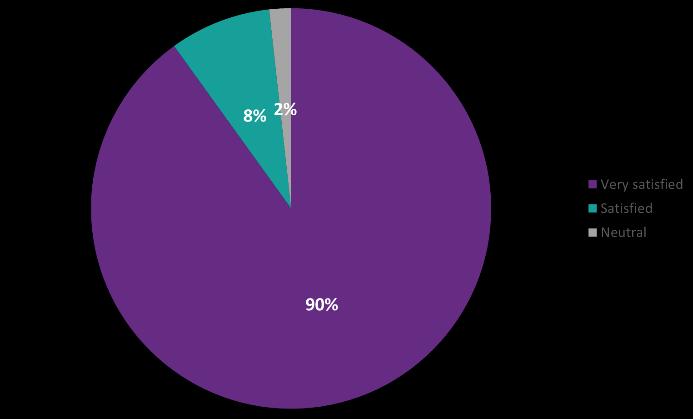
the visual aids and presentation
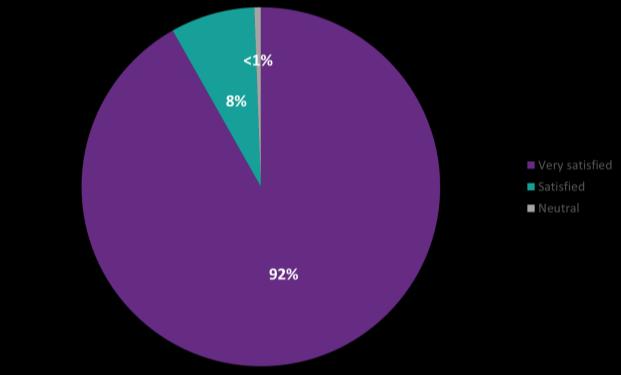
with the environment (e.g., lighting, technology, temperature)
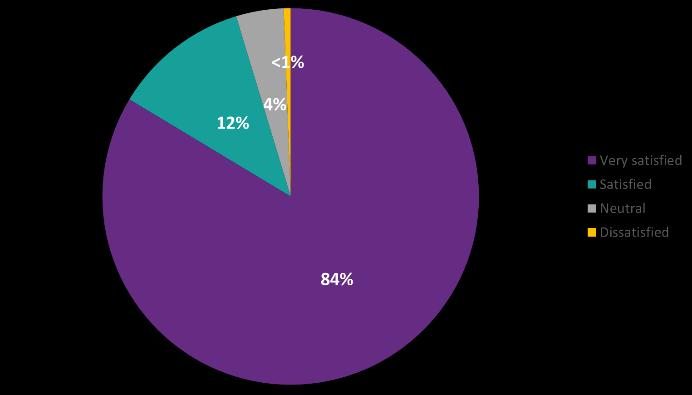
Figure
Figure
Figure 8: Satisfaction with
Figure 9: Satisfaction
Figure 10: Satisfaction with the ease of booking
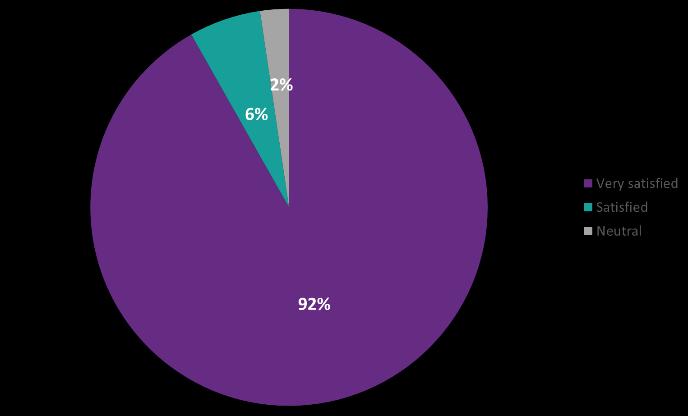
12: Likelihood of recommending this tutor (where 0 is "not at all" and 10 is "extremely likely")
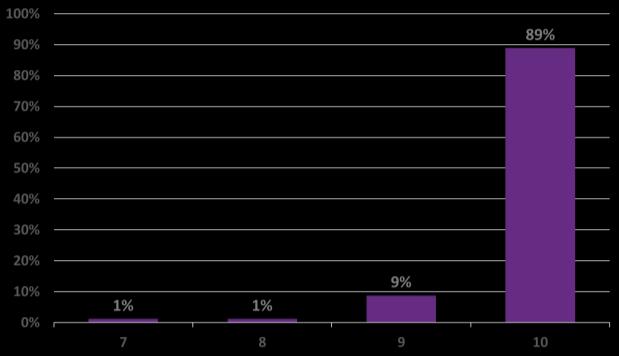
Figure 11: Satisfaction with the joining instructions
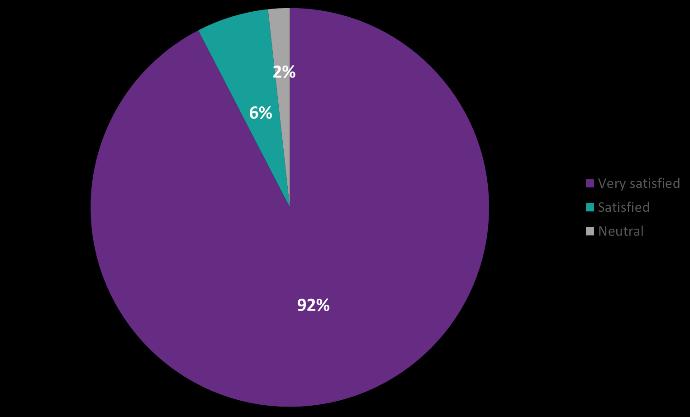
13: Likelihood of recommending this course (where 0 is "not at all" and 10 is "extremely likely")
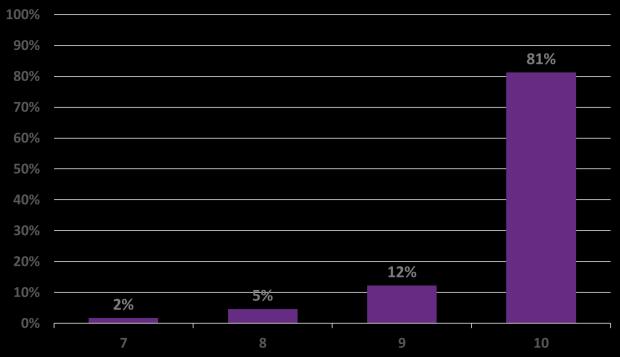
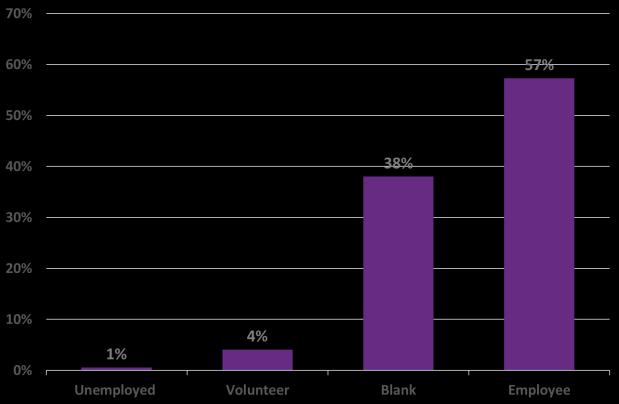
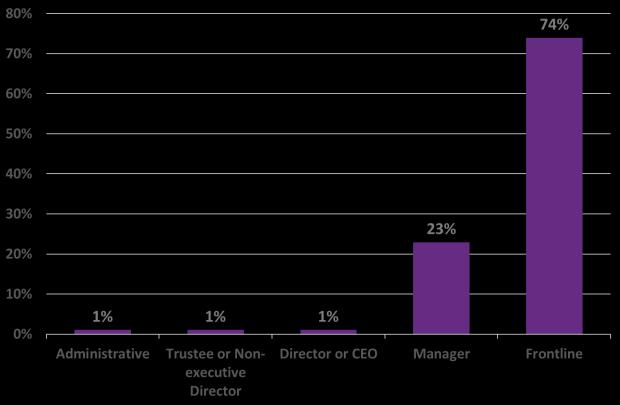
Between June 2022 and April 2025, the participant survey focused on a limited set of questions that could be quantitatively assessed. These questions asked whether participants felt their knowledge or confidence had increased as a result of the course, whether they believed the tutor was knowledgeable and able to answer their questions, and whether the course was delivered face-to-face or online. It is important to note that the feedback has not been separated according to delivery format, as analysis showed no significant difference in results between online and face-to-face sessions.
Figure
Figure
Figure 14: Capacity in which the participant attended the training course
Figure 15: Self-described position within the organisation
The results of the participant surveys prior to April 2025 (n = 997) are summarised below in Figure 16 to Figure 19
Figure 16: Participants reporting knowledge increased
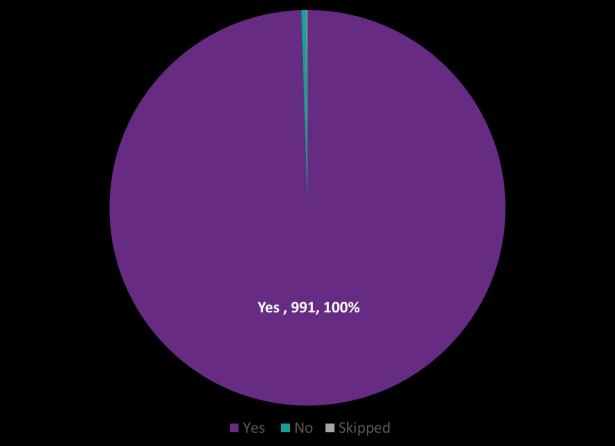
Figure 17: Participants reporting confidence increased
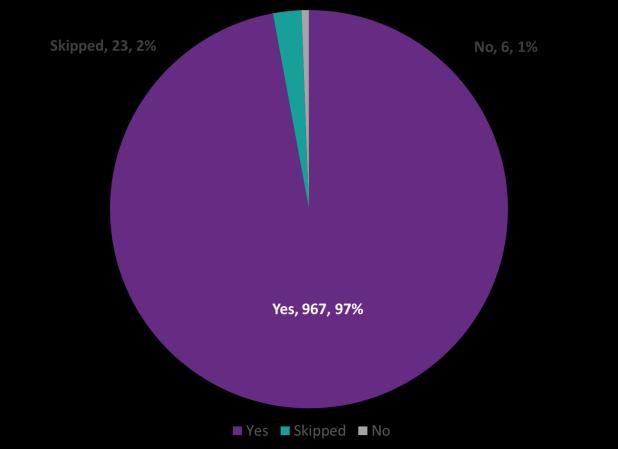
Figure 18: Participants reporting the trainer as knowledgeable and able to answer questions
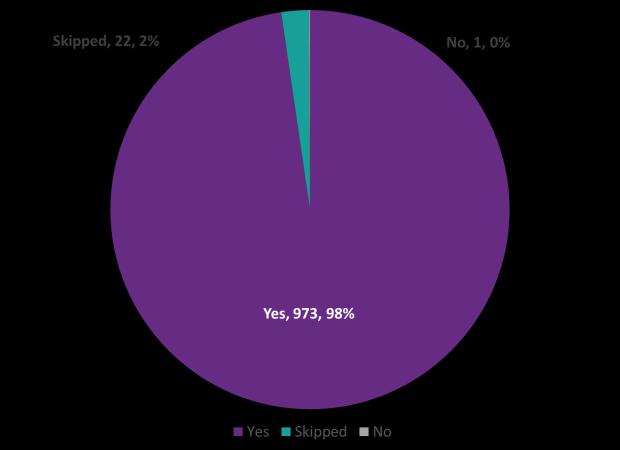
Figure 19: Whether the session experienced by the participant was face-to-face or online
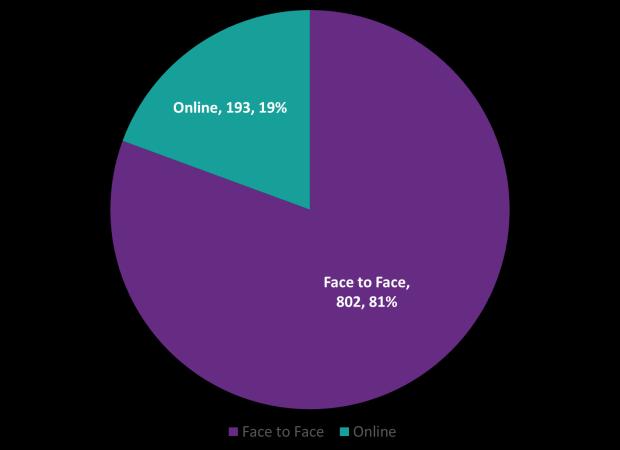
Appendix C: Stakeholder survey
Introduction
To complement session-level evaluations, an online survey was conducted in August 2025 with stakeholders of the Insight Academy. The survey gathered views on the Academy’s impact, co-production model, and areas for development. Responses were received from practitioners and managers working across housing, homelessness, criminal justice, advice, and other sectors.
Overall satisfaction and advocacy
The Academy achieved a high satisfaction score. Twelve respondents rated how likely they were to recommend the Academy to colleagues (0–10 scale). The average score was 8.9. Eight participants (67%) gave a score of 10, three gave 9, and one gave 0. This indicates that while almost all respondents were strong advocates, one dissenting response pulled the average down. On balance, however, the Academy is viewed very positively by those who engage with it.
“”
The variety of courses that they provide which are relevant and helpful.


Impact on practice
Most respondents reported that the Academy has changed their professional practice. Eight respondents strongly agreed and two agreed that the training had contributed to positive change in their own work or that of their staff. Two respondents strongly disagreed, suggesting that while the majority experience tangible benefits, there are some for whom impact has been less visible.
“”
The training and awareness sessions have improved case recording and practice.


Impact on the wider system
“”
Using the learning from courses such as trauma-informed approaches in my daily work.
When asked about long-term change in the Stoke-on-Trent support services system, six respondents strongly agreed and three agreed that the Academy is contributing positively. One was neutral, while two strongly disagreed This shows a majority view that the Academy is driving systems change, though not universally accepted.
“”
Hearing from Grooming Survivors –really empowering and informative.
“”
It is beneficial for a number of services to have a shared understanding and language.
“”
Being able to look past the behaviour and trying to understand the trauma.
Participation levels
Most respondents had attended between three and five learning opportunities (6 people), with others reporting one to two sessions (2 people), six to ten (1 person), or more than ten (1 person). This demonstrates repeat engagement and an appetite for continued learning. A minority preferred not to state attendance.
Valuing co-production and lived experience
The Academy’s emphasis on co-production and lived experience was widely recognised as a distinctive strength. Respondents described how survivor and peer voices had shaped their thinking and practice, giving them “bolstered courage to continue development at the frontline” and encouraging them to embed lived experience in policy and service design. Several highlighted practical changes, such as engaging peer mentors to support clients or creating new opportunities to liaise directly with people with lived experience. This input was seen as both validating existing good practice and inspiring innovation, helping staff to “look past the behaviour and try to understand the trauma” behind it. Overall, the co-production model is perceived not just as a training feature but as a cultural shift that builds empathy and strengthens professional resolve.
“”
We try and incorporate lived experience into our policies where possible.
“”
Bolstered courage to continue development at the frontline.
“”
We have peer mentors who with their lived experience have supported others.
“”
We have started to liaise with people with lived experience more directly.
Qualitative insights
The free, high-quality training offer was praised for expanding staff knowledge and improving service delivery. Respondents highlighted:
• The value of lived experience and survivor voices in building empathy and courage to innovate.
• Improved awareness and communication in frontline work (e.g. drug strategy, probation, housing advice).
• A sense of renewed motivation and validation of good practice.
Examples included training that improved case recording standards, increased confidence to embed lived experience in design, and better trauma-informed approaches.
Suggested improvements
Respondents called for:
• More training on trauma recovery and healing.
• Expanded focus on equality, diversity and inclusion, especially LGBTQ+ awareness.
• Continued flexibility in responding to sector needs.
Appendix D: Testimonials
Selected quotes to provide qualitative depth.
• Learner testimonials
Impactful quotes from 2022 – 2024 survey (997 responses)
Theme: Gaining knowledge
“I learnt a few new things and refreshed knowledge I already had.”
“Absolutely! David was a fantastic trainer who is engaging and knowledgeable.”
“I would recommend this course to everyone! It was brilliantly facilitated, lots of useful information and definitely gives you more confidence to help others.”
“The knowledge gained will support me to support others in the future.”
“A lot of interesting facts. It will help me to help my colleagues.”
“I now know more support numbers that I can give to clients in crisis / struggling with their mental health.”
“It has increased my knowledge of what signs to look out for with someone who may be the victim of cuckooing.”
“I feel that this course has expanded my knowledge over talking to future clients.”
“I learnt about different eye conditions and how it impacts the individual also about terminology and also how to guide through narrow spaces, doors, up and down stairs and also to a chair.”
“Yes – very useful and interesting. Well delivered.”
Theme: Gaining skills
“Learned lots of tools to use for myself and others.”
“I have learnt a lot about myself & others, I hope that I can implement this training in my future endeavours.”
“Tools to use to appreciate skills / talents.”
“The most important aspect was stepping back from being judgmental and the detail on responses to behaviours.”
“I learnt how to correctly listen and understand what and then how to respond effectively.”
“How to support my clients more effectively.”
“Will be mindful of the things I say, how I say them, mindful of active listening, background noises, body language – definitely will shape my practice.”
“Active listening, note recording, verb – active not passive, describe doer at beginning of sentence.”
“How to talk to clients correctly … how to get the best out of them for them.”
“Helped me to understand strength-based assessments.”
Theme: Gaining confidence
“It has given me the confidence to apply this approach and guide others to do this also.”
“I would recommend this course to everyone! It was brilliantly facilitated, lots of useful information and definitely gives you more confidence to help others.”
“It will help me to approach situations I may encounter in the future with a wider perspective, confidence and empathy.”
“Will be more confident about how to approach a person with a problem.”
“I will feel more confident on how to approach conversations around depression and possible suicidal thoughts.”
“Makes you think about processes… has increased my confidence that I am incorporating the right things when listening / supporting customers.”
“I feel more equipped to spot possible suicide, also I realise now how people may be feeling and why they may not want to discuss their feelings.”
“Trainer made me feel at ease and listened. Made me realise not to be so hard on myself.”
“Confidence.”
Theme: Application to practice
“I intend to engage with Expert Link resources following this training. I will also implement a lot of what I’ve learned today into my everyday practice.”
“It will help me to approach situations I may encounter in the future with a wider perspective, confidence and empathy.”
“I will be putting the skills into practice at work and hopefully be able to give better support.”
“It will help me to include the trauma from childhood sexual abuse in how I advise my clients.”
“To be more strength-based, be positive, lead with a positive and listen!! Don’t use labels – use describing words.”
“It has given me further language and understanding to support the work of our independent advocacy service.”
“Helped me to understand strength-based assessments.”
“Will be mindful of the things I say, how I say them, mindful of active listening, background noises, body language – definitely will shape my practice.”
“I will bare in mind what I have learnt today when communicating with service users, particularly males.”
“I will continue to support people with the skills and information learnt from today.”
Theme: Value of lived experience integration
“A hugely validating and human experience.”
“The use of lived experience and Mark telling his own story was very powerful and had much more impact than it would if it was being told by a third party.”
“I thought Jane did a good job … the lived experience aspect was also useful and the videos used were great.”
“Very informative and the lived experience was really insightful.”
“I would like to thank Steve for his excellent delivery of the workshop, & Ryan, Charlotte, Colin, Gwen & Christine for their honesty and brilliant performances. It really does help with the training.”
“Best training I have had so far, I would deeply recommend it.” (a quote referencing a facilitator with lived experience)
“The training was very informative, allowing time for the discussions means lots of thought-provoking questions were discussed.” (Refers to discussions sparked by lived experience that added depth to the content)
“It has validated my existing practice, which I can sometimes feel alone in. Thank you – I was on the verge of quitting so you may never know just how grateful I am to feel like I’m not alone.”
“Understanding more about childhood sexual abuse and the impact… I am better informed.”
Theme: emotional impact
“The training was amazing — very insightful… I was on the verge of burnout. Now I feel seen and supported.”
“It has made me think twice about how I come across with people who access our services.”
“Very powerful personal testimony.”
“To be more strength-based, be positive, lead with a positive and listen!!”
“Great understanding of the impact of child sexual abuse… will help me to be aware of trauma-informed approaches when dealing with survivors.”
Theme: coproduction
“I loved that this course was co-produced and facilitated so well!”
“Co-production is a commonly shared goal/process within Changing Futures… We are quite a success usually. Comprehensively covered.”
“Will communicate as effectively as possible and promote co-production on practice in agencies where not working.”
“Excellent principles and processes for effective co-production.”
“Overcoming barriers to co-production. The importance of co-production.”
“There is a huge co-pro community that I can become a part of. That messy is okay. That it’s actually quite simple.”
“Working ‘with’ someone. The statement that has stayed with me and I will carry with me to remind me of the importance of thinking restoratively is ‘no decision about me without me.’”
“I will apply and ensure it is applied as appropriate.”
Appendix E: Case studies
Selected case studies to provide further qualitative depth.
• Case study: Punishment Acts – Creative learning methods in practice
In spring 2025, Rideout (Creative Arts for Rehabilitation) and Expert Citizens CIC co-produced Punishment Acts: Tales of Retribution, Reparation and Redemption. This innovative theatre project was devised with people who had lived experience of prison and multiple disadvantage, and it exemplifies how creative learning methodologies can transform both participants and audiences.
Over four months, Expert Citizens worked with professional facilitators through drama workshops exploring Michel Foucault’s Discipline and Punish. The group co-created scenes drawn from personal experiences and historical material, blending shadow puppetry, ballads, and physical theatre. The play was performed by a mixed cast of professionals and Expert Citizens in Stoke-onTrent.
For participants, the process was transformative. By removing barriers such as transport costs and ensuring meals were shared, the project created a safe, supportive atmosphere where Expert Citizens could thrive despite ongoing personal challenges. The devising approach gave them genuine ownership where jokes and reflections from workshops became lines and motifs in the final performance, and participants described the process as “seeing it all come from nothing” and “freedom and adventure”. Relationships within the group encouraged trust, confidence, and joy, with one reflecting that the project “brought me back to being myself again”.
The play ran for seven sold-out performances at B Arts in April 2025, drawing in broad audiences and receiving BBC media coverage. More than 210 audience feedback cards were collected, demonstrating high levels of engagement. Reviews were overwhelmingly positive, with many describing the work as powerful, thought-provoking, and emotionally moving. The cast’s stated aims, to leave audiences empathetic, shocked, and questioning assumptions about justice, were widely reported as achieved.
Crucially, the impact extended beyond the stage into participants’ personal lives. Several Expert Citizens reported feeling proud that friends and relatives came to watch them perform, which boosted their motivation and self-esteem. One participant reflected: “Felt great that I knew my people were coming to see me, made me feel more motivated. They loved it.” Family members also highlighted the positive ripple effects: “This is the first thing that has supported them as an individual and us as a family… I cannot begin to explain how much respite this has given their father. We really enjoyed the show. Tears, laughter and proud moments.” Such moments illustrate how creative projects can strengthen bonds with families, key workers, and wider support networks, inspiring pride and hope.
Audiences, too, were deeply affected. Feedback described the play as “one of the most outstanding shows I have seen for a long time” and “an entirely new perspective on our justice system and punishment as a whole”. Others noted how vividly the performance captured the cycle of disadvantage, “It could not have been expressed any better what individuals are faced with in the loop of the system – in, out, in, out.” Many described being moved to tears, with one saying, “I cried and laughed and have been left with a lot to think about.” One professional even reported feeling anger at the injustices depicted, showing how lived experience expressed through theatre can provoke empathy and challenge assumptions in ways that more conventional formats rarely achieve.
Punishment Acts demonstrated how co-produced creative learning not only validates lived experience and challenges audiences, but also strengthens relationships and restores confidence for participants, leaving a legacy that reaches far beyond the performance itself.
Further case studies can be found on-line via the Expert Citizens website at www.expertcitizens.org.uk
Appendix F: Theory of change
Rationale for the Insight Academy
People experiencing multiple disadvantage often find themselves navigating a fragmented support system that is not always equipped to meet their complex needs. Professionals working across services frequently face challenges in understanding and responding to the trauma, systemic barriers, and lived realities these individuals carry. Traditional training approaches tend to lack relevance, exclude voices of lived experience, and are often inaccessible due to cost or availability, particularly for voluntary sector organisations and under-resourced teams.
At the same time, support services across sectors, including but not limited to health, housing, justice, social care, and the voluntary and community sector, are under increasing pressure. Staff burnout, high turnover, and the emotional demands of the work can leave frontline workers feeling unsupported and isolated. There is a clear need to equip professionals, practitioners, and volunteers with the confidence, compassion, and skills to work effectively with people facing severe and multiple disadvantage.
The Insight Academy was developed in response to these challenges. It recognises that genuine improvement in outcomes must begin with how people are supported on the ground and that meaningful change requires a shift in culture, not just in practice. By placing lived experience at the heart of training design and delivery, the Academy offers a model of workforce development that is both humanising and effective. It provides accessible and co-produced learning opportunities that break down silos, bring sectors together, and create a shared language for change. In doing so, the Academy addresses the gap in trauma-informed, person-centred training, while also elevating the role of people with lived experience as leaders and educators.
This approach is not merely about improving individual knowledge and skills. Although that is important. It is about creating a compassionate, collaborative, and continually learning system. A system in which people are supported not just to survive, but to thrive.
Summarised theory of change
If people with lived experience co-design and co-deliver high-quality and accessible training across sectors, then frontline practitioners, professionals, and leaders will gain the knowledge, confidence, and empathy to better support individuals facing multiple disadvantage. This will lead to improved practice, organisational culture change, and systemic collaboration. Over time, these changes will contribute to a more inclusive, effective, and person-centred system of support, both in Stoke-onTrent and potentially beyond.
Figure 20: Insight Academy theory of change
Inputs
Resources used to deliver the programme
Activities
Actions taken using those resources
Outputs
Immediate products of those activities
Outcomes
Tangible short to medium term achievements
Impact
Long-term systemic benefits
Funding
Expert Citizens coordination team
Partnerships with training providers and tutor
People with lived experience to coprodcuce
Venues and digital platforms for delivery
Evaluation platforms and marketing distribution network
Masterclasses
Accredited and nonaccredited short courses
Bespoke workshops to meet ad-hoc needs
Communities of Practice
Creative learning events (arts based)
National Insight Conference and Awards
Coproduction activities
Evaluation, marketing, and administration
Number of masterclassess
Number of short courses
Number of workshops
Number of Communities of Practice
Number of creative learning sessions
Number of learners
Number of organisations (by sector)
Number of market and satisfaction evaluations
Number of Insight Conference and Awards
Regular marketing and communications
Short-term
95%+ learners report increased knowledge, skills, and confidence
Learners report apllication of learning in practice
Medium-term
Insight Academy is integrated into induction programmes
Organisations commission further training
Cultural shifts reported
Longer-term
Improved interagency working
Shared language across sectors
Insight Academy embedded in strategies
A more skilled, empathetic, and collaborative support workforce, improved outcomes
Systemic improvements in outcomes for people facing multiple disadvantage
A sustainable model of co-produced training that can be replicated and adapted nationally
People with lived experience are shaping services and influencing policy
Reduced staff turnover, better retention, better career prospects
Appendix G: References
Atkinson, M., Jones, M., & Lamont, E. (2007). Multi-agency working and its implications for practice: A review of the literature. CfBT Education Trust. https://www.nfer.ac.uk/media/qy5hccud/mad01.pdf
Best, A., Greenhalgh, T., Lewis, S., Saul, J. E., Carroll, S., & Bitz, J. (2012). Large-system transformation in health care: A realist review. The Milbank Quarterly, 90(3), 421–456. https://doi.org/10.1111/j.1468-0009.2012.00670.x
Bovaird, T., & Loeffler, E. (2012). From engagement to co-production: The contribution of users and communities to outcomes and public value. Voluntas: International Journal of Voluntary and Nonprofit Organizations, 23(4), 1119–1138. https://doi.org/10.1007/s11266-012-9309-6
de Dios Fisher, M.(2025, July 25). Punishment Acts: Evaluation and reflection. Rideout (Creative Arts for Rehabilitation).
Gilbert, E., Marwaha, S., Milton, A. et al. Social firms as a means of vocational recovery for people with mental illness: a UK survey. BMC Health Serv Res 13, 270 (2013). https://doi.org/10.1186/1472-6963-13-270
Lawson, E. (2025, April 6). New play explores modern prisons and justice BBC News. Accessed August 5, 2025, https://www.bbc.co.uk/news/articles/cy48n37ek9po
Needham, C., & Carr, S. (2009). Co-production: An emerging evidence base for adult social care transformation. Social Care Institute for Excellence. https://www.researchgate.net/publication/237126419_Co_production_An_Emerging_Evidence_Base_for_Adult_S ocial_Care_Transformation
Repper, J., & Carter, T. (2011). A review of the literature on peer support in mental health services. Journal of Mental Health, 20(4), 392–411. https://doi.org/10.3109/09638237.2011.583947
SAMHSA. (2014). Trauma-informed care in behavioral health services. Treatment Improvement Protocol (TIP) Series 57. Substance Abuse and Mental Health Services Administration. https://store.samhsa.gov/product/TIP57-Trauma-Informed-Care-in-Behavioral-Health-Services/SMA14-4816
Schon, D. A. (1983). The reflective practitioner: How professionals think in action. Basic Books. https://www.taylorfrancis.com/books/mono/10.4324/9781315237473/reflective-practitioner-donaldsch%C3%B6n
Sloper, P. (2004). Facilitators and barriers for co-ordinated multi-agency services. Child: Care, Health and Development, 30(6), 571–580. https://doi.org/10.1111/j.1365-2214.2004.00468.x
Stoke-on-Trent City Council (2024). Our City, Our Wellbeing: Creating Shared Wealth, Reducing Inequality. Corporate Strategy 2024 – 2028. https://www.stoke.gov.uk/download/downloads/id/2488/our_city_our_wellbeing_corporate_strategy_202428.pdf
Sweeney, A., Filson, B., Kennedy, A., Collinson, L., & Gillard, S. (2018). A paradigm shift: Relationships in traumainformed mental health services. BJPsych Advances, 24(5), 319–333. https://doi.org/10.1192/bja.2018.29
Tew, J., Gell, C., & Foster, S. (2004). Learning from experience: Involving service users and carers in mental health education and training. National Institute for Mental Health in England (NIMHE).
About Expert Citizens CIC
Expert Citizens CIC is a lived-experience-led social enterprise working to inspire lasting change in services and communities across the UK Our mission is simple yet powerful We aim to ensure that the voices of people with lived experience of multiple disadvantage are heard, valued, and acted upon.
We believe that lived experience is expertise By drawing on personal insight, we work alongside organisations, professionals, and communities to improve support for people facing complex challenges such as homelessness, mental ill-health, addiction, offending, domestic abuse, and poverty. Our approach is rooted in co-production by designing and delivering solutions in partnership with those who have experienced the very systems we seek to improve.
Our portfolio of services reflects this ethos:
The Insight Academy
A pioneering learning programme offering accessible, co-produced training and professional development. With lived experience at its heart, the Academy equips practitioners, managers, and volunteers with the knowledge, skills, and empathy to make a real difference.
Insight Quality Framework & Awards
A unique quality benchmarking and recognition scheme that celebrates organisations committed to embedding lived experience into their culture, practice, and governance
Research, consultancy, and evaluation
Bespoke services to help organisations understand impact, strengthen practice, and design better systems. Our research is informed by lived experience, ensuring recommendations are both credible and grounded.
Membership & volunteering
A growing community of people with lived experience who contribute their skills, insight, and passion. Members are at the heart of all we do, shaping programmes, delivering training, and acting as ambassadors for change.
Across all our work, we champion collaboration and strengths-based approaches that improve not just individual practice, but whole systems. Organisations that work with us tell us they become more person-centred, empathetic, and effective. Volunteers and members describe finding confidence, purpose, and a renewed sense of belonging.
Expert Citizens CIC is proud to have earned a reputation for innovation, authenticity, and impact. Whether through training, evaluation, or partnerships, we help services to listen differently, act differently, and achieve better outcomes.
Find out more
To explore our work, discover opportunities to collaborate, or get involved as a volunteer, please visit our website at www.expertcitizens.org.uk.