Staff INSET days: Wednesday 2 and Thursday 3 September
Start of term for all sixth form pupils and all pupils new to the junior and senior schools: Friday 4 September, 8.35am
Start of term for all other pupils: Monday 7 September, 8.35am
Open event preparation: Friday 25 September for open morning on Saturday 26 September: school finishes at 2.50pm in the senior school and 3.45pm in the junior school with no after school activities
Half term: Two weeks beginning Monday 19 October
End of term: Friday 18 December, 12 noon
Spring term 2027
Staff INSET days: Monday 22 and Tuesday 23 February
Start of term: Wednesday 6 January, 8.35am
Half term: Week beginning Monday 15 February
End of term: Thursday 25 March, 4pm
Summer term 2027
Staff INSET day: Monday 7 June
Start of term: Monday 12 April, 8.35am
Half term: Week beginning Monday 31 May
End of term: Wednesday 7 July, 4pm
Parents are asked to ensure that family holidays are arranged during the school holiday periods
insurance, other payments and contractual matters 31
information, administration and routines 32
and other payments 23
information
and governors 38
Welcome
As we begin a new academic year at Exeter School, I am delighted to welcome you to our community, both as the incoming Head and, importantly, as a parent. This September, my own son joins the school, and like so many of you, my family and I are about to place deep trust in the care, ambition, and values that define this remarkable and distinctive school.
What first drew me to Exeter School was its unique balance: a community that is proudly ambitious and intellectually rigorous, yet never at the expense of the individual child. Academic excellence is pursued alongside a genuine commitment to character, kindness, and service. Curiosity is encouraged, independent thinking is nurtured, and learning is taken seriously, but always within a culture of strong pastoral care and thoughtful support.
As a parent, this balance matters enormously. I want my child to be challenged and inspired, both inside and beyond the classroom, while also growing into a person of integrity, empathy, and resilience. It is reassuring to know that Exeter School shares these aspirations: that our children will leave not only well-qualified, but as thoughtful, grounded, and responsible young people, ready to take their place in the world.
The richness of life beyond the classroom is another defining strength. Sport, music, drama, and the arts are integral to a truly holistic education here. The arrival of the Exeter Cathedral choristers is a particularly exciting development, bringing with it a partnership of real distinction and further enriching the cultural life of the school at a time of wider change in the local educational landscape.
There is also a palpable sense of energy at Exeter School: a community alive with ideas, where young people are encouraged to engage with the world in all its complexity, to think deeply, and to approach learning with both rigour and joy. It is exactly the kind of environment I want for my own child, and one I am immensely proud to lead.
Central to this is the strong connection between pupils, staff, and families. We place great importance on working in partnership with parents and look forward to collaborating closely with you throughout your child’s journey. Positive, supportive relationships, underpinned by a firm commitment to excellent pastoral care, ensure that each young person feels known, supported, and confident as they progress through school life.
This handbook is intended as a helpful introduction, outlining key information to support you and your child as you become familiar with the routines and expectations of daily school life. Further details and regular updates will be shared through our newsletters and via MySchoolPortal (MSP), where important information and reports can also be accessed.
On a personal note, my family and I are delighted to be returning to Exeter, a city we know and love, and to becoming part of this community. We look forward to putting down roots here and contributing to the life of the school in the years ahead.
I very much look forward to working in partnership with you.
With best wishes,
Dr Adrian Rainbow Head head@exeterschool.org.uk
01392 307080
A School of Great Character
At Exeter School our commitment to developing the character of our pupils underpins all that we do. Drawing on the ideas of Aristotle, our school ethos is rooted in virtue ethics and promotes aspiration and flourishing in all. Our aim is to equip pupils with the practical wisdom they will require to navigate the challenges and opportunities of our fast-paced and ever-changing world, whilst celebrating their unique talents and individuality. Our expectation is for pupils to embody the school virtues through their time at Exeter School, embracing the rich and varied opportunities on offer.
• Through our intellectual virtues of inspire and challenge curious minds we consider how pupils develop as independent thinkers, creating space both inside and outside of the classroom for pupils to embark on journeys of discovery.
• Kindness and integrity are our moral virtues, through which we encourage pupils to care for those around them and the school community as a whole. Within the busyness of school life, we ensure pupils have chances to contribute in a meaningful way and to stand up for what is important to them.
• Stepping out of our school community, pupils are expected to practice the civic virtues of welcome and serve, recognising a world bigger than themselves and understanding their potential to make a difference within it through partnerships, charity work and volunteering.
• In all that they do, our pupils are encouraged to use our performance virtues of endeavour and collaborate, drawing on the support of all those around them, in addition to their own resolve, in order to achieve their full potential.
Character education is both an implicit and explicit part of school life, influencing our approach to learning and teaching, our pastoral care, and our co-curricular programme. Pupils are taught about character through allocated time in the curriculum, exploring the origins of virtue ethics and using role models and moral dilemmas to enhance their understanding of our school virtues. Each half term sees a focus on a different school virtue, with assemblies, form time and house meetings considering this theme with pupils. We also take time to celebrate the character development of pupils regularly, both within house meetings and assemblies. As a school of great character, it is our hope for every pupil that they will aspire and flourish, both in their time at Exeter School and throughout their life.
Academic matters
Curriculum 2026-2027
Third Form (Year 7), Fourth Form (Year 8) and Lower Fifth (Year 9)
The aim of the curriculum in these years is that pupils with a diverse range of educational backgrounds and abilities are given an equal chance to sample the full range of subject options. Pupils are set by ability for mathematics but are taught in mixed prior attainment teaching groups for all other subjects. The setting in mathematics is initially done after autumn half term in Third Form (Year 7). Pupils will need a graphical calculator, we recommend an Aurora AX595 which can be purchased from the reprographics department. Pupils will also need a pair of wired USB-C earphones.
In all three years, pupils will study English, mathematics, modern foreign languages and/or classical studies (see below), physics, chemistry, biology, history, geography, art, design technology, religious studies, computer science, music, drama, physical education, and games.
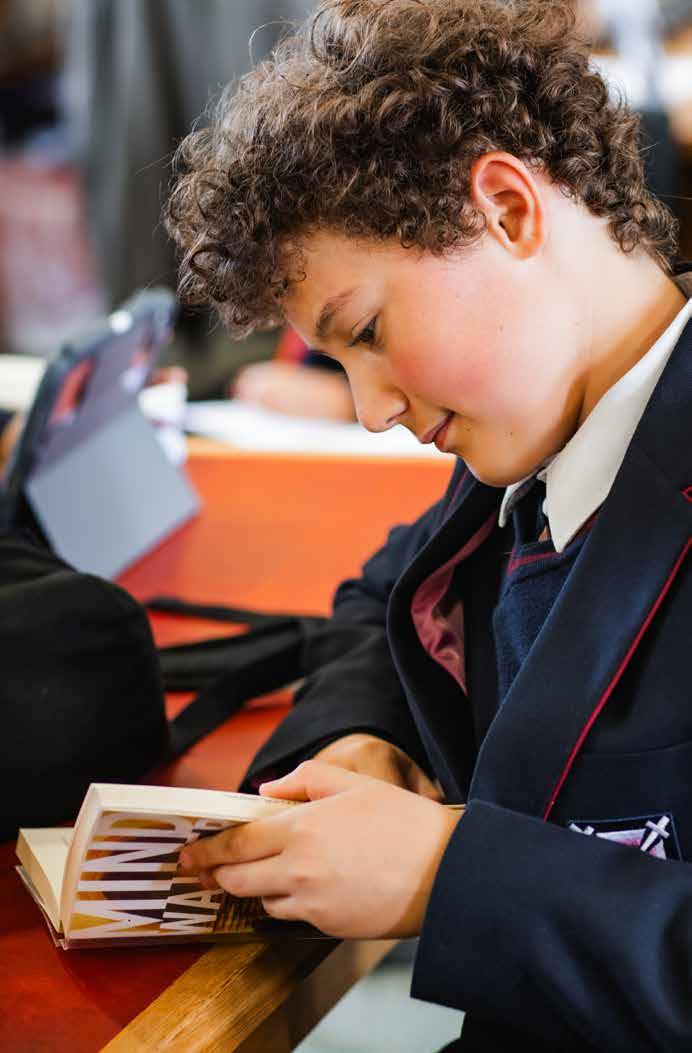
The School House Library is a great place to spend some time. With the assistance of all teachers and the librarian, we look to cultivate a love of reading amongst our pupils together with a sense of its importance and the enjoyment that can be had through reading. Pupils in Third Form (Year 7) to Lower Fifth (Year 9) will have one lesson a fortnight in the library. Pupils should also have a reading book with them each day.
In addition to these subjects, in Third Form (Year 7) there is a single period a week of Character and Practical Wisdom (CPW) which includes PSHE. In Fourth Form (Year 8) and Lower Fifth (Year 9) it is a single period every two weeks. In modern foreign languages and classical studies, Third Form (Year 7) pupils study classical studies together with a languages curriculum in two modern languages chosen from French, German and Spanish. In Fourth Form (Year 8) and Lower Fifth (Year 9), pupils opt to study two subjects from French, German, Spanish and classical studies.
Middle Fifth (Year 10) and Upper Fifth (Year 11)
Middle Fifth (Year 10) and Upper Fifth (Year 11) are the two years of GCSE courses. The process of choosing GCSE options starts at Christmas in the Lower Fifth (Year 9) and every effort is made to ensure that parents and pupils are given clear and individual advice.
Academic Matters
For the latest information and advice, please see the GCSE options booklet available on the school website. Pupils should have a reading book with them each day.
Sixth Form (Years 12 and 13)
Lower Sixth (Year 12) and Upper Sixth (Year 13) are the two years of sixth form study. In the Lower Sixth (Year 12), most pupils study four subjects and in the Upper Sixth (Year 13) most pupils continue with three subjects, although some pupils opt to continue with four. All sixth formers also take part in the school’s Futures programme, which focuses on developing three key strands essential for future success: employability, careers, and university. This includes the option to work towards the extended project qualification (EPQ). For the latest information and advice, please see the sixth form options booklet available on the school website.
Daily routines
Registration and pastoral time including assemblies
8.35-9.05am Movement time 9.05-9.10am
Period 1 9.10-10.10am
The school bell rings to announce the start of registration and each new period.
Homework
Third Form (Year 7) to Upper Fifth (Year 11)
The Deputy Head (Academic) publishes a homework timetable for each year group in September detailing the day of the week of each homework and the maximum length of each homework. The total maximum number of hours per week increases from Third Form (Year 7) to Upper Fifth (Year 11) to support pupils in developing their organisation skills and independence. Homework is issued via Microsoft Teams for all year groups.
Sixth Form
In the sixth form, work done outside lessons is a more essential element of the study process and the aim is to plot a progression from the structure of the homework timetable in early years to the less imposed structure that will build the skills they will need for university. As such, greater responsibility is placed on the pupil to organise their time during the week, both at home and at school. There is no published timetable, but there is an expectation of three hours study per subject per week, making a total of 12 hours per week for four subjects and 9 hours for three subjects.
Internal exams
Pupils in the Upper Fifth (Year 11) undertake GCSE trial exams at the start of the spring term and pupils in the Upper Sixth (Year 13) undertake A Level trial exams in the week immediately following the spring half term break.
Monday, Tuesday and
Form time, PSHE, assembly or chapel Wednesday
Whole school assembly House meetings
* Friday 5 (2.55-4.30pm)
For Middle Fifth (Year 10) to Upper Sixth (Year 13)
• CCF (Army, Navy and RAF)
• DofE (Gold)
• Community service
• SWUNK (swing and funk band for jazz musicians)
All Third Form (Year 7) to Middle Fifth (Year 10) and Lower Sixth (Year 12) pupils undertake end of year written exams, and these usually take place over a week before the May half term holiday. If pupils in the Lower Fifth (Year 9) or Middle Fifth (Year 10) perform at a level significantly below what their teacher would expect from them, they may be required to re-sit papers at the beginning of the autumn term to help provide as positive a start to the new academic year as possible.
The end of year exam period, including the two weeks following the exams which are used for feedback, is an important time and it is crucial that pupils do not miss any school during this time.
Learning support
On application to Exeter School, you will have been asked to send any previous information regarding specific educational needs. All new pupils also sit an online screener during their first term to highlight any specific needs. If any concerns are raised, then a learning support coordinator will contact you and, in collaboration with you and the form tutor, ensure that any necessary further action is taken so that pupils can receive the support they need. Further information on the learning support provision at Exeter School is available on the school website and will also be shared with you if appropriate.
Parents’ meetings
These are held to provide an opportunity for parents and pupils to discuss pupil progress with staff in individual subjects. All pupils are encouraged to attend meetings with their parents. We have a mixture of parents’ meetings across year groups, with some held online (with pre-booking of meetings essential) and others held in-person (no pre-booking). In both cases, meetings are typically available from 5pm to around 7.30pm. The pattern of parents’ meetings through the year is:
Third Form (Year 7): 10 November (in-person) and 13 May (online); full reports 12 March.
Fourth Form (Year 8): 23 March (online); full reports 7 July.
Lower Fifth (Year 9): 21 January (in-person); full reports 7 July.
Middle Fifth (Year 10): 19 November (online) and 17 June (in-person); full reports 4 March.
Upper Fifth (Year 11): 28 January (in-person); full reports 10 December and 25 March.
Lower Sixth (Year 12): 10 December (in-person) and 22 June (online); full reports 12 March.
Upper Sixth (Year 13): 15 October (online) and 11 March (in-person); full reports 21 January and 30 April.
Personal, social, health, and economic (PSHE) education
PSHE education at the school aims to provide opportunities for pupils to explore and understand a wide range of social and emotional issues. Our aim is for pupils to develop personal resilience, learn to question global issues and critically assess information and experiences, so that they feel equipped to make good decisions at any given moment.
Our PSHE curriculum is broad and responsive to the challenges and issues relevant to our pupils in the world today. We focus on four core themes: health and wellbeing, relationships, online safety, and living in the wider world. These themes are explored through formal PSHE or Character and Practical Wisdom (CPW) lessons, assemblies and workshops, whole-school events and cross-curricular opportunities in subjects such as computer science, biology and religious studies.
Relationships and sex education (RSE) is taught within both PSHE and Character and Practical Wisdom lessons. It is important that our pupils understand how
Academic Matters
to enjoy positive and healthy relationships as they grow up, and in later life, and that they know how to keep themselves safe. Our Relationships and Sex Education Policy can be found on the school website and we consult parents on this policy periodically.
Post-18 pathways advice
The school provides pupils with high quality careers information, guidance and post-18 advice from the Third Form (Year 7) onwards. This allows our pupils to access relevant information on careers, the labour market and post-18 options, alongside opportunities to develop and nurture key transferable skills so that they are ready and equipped to create their own pathways. This is delivered in a variety of ways during their time at school through assemblies, tutor activity sessions, events, and one-toone guidance. There will be opportunities to take part in mock interviews, to discuss goals, to listen to guest speakers working in a variety of sectors, and to attend our successful careers convention. The careers pages on the pupil SharePoint are an excellent resource, and oneto-one guidance is available throughout a pupil’s time at Exeter School from our qualified Career Pathways Advisor.
In Middle Fifth (Year 10), all pupils will take part in our careers psychometric profiling (Morrisby). This gives them access to an interactive careers and post18 database that allows them to explore options and provides them with a wealth of information, including A Levels needed for careers, degrees, degree apprenticeships, and labour market information.
In the sixth form (Years 12 and 13), pupils take part in our ‘Futures’ programme which centres around employability, careers, and higher education, delivered through a series of talks and workshops during the school week. Topics include enhancing interpersonal skills, writing CVs, improving time management, developing self-awareness and resilience. It includes a Futures Conference with the opportunity to talk to professionals from a range of sectors, a Futures Week including enrichment sessions on transferable skills, gap years, and super-curricular courses, an internal UCAS preparation day offering further guidance about higher education and degree apprenticeship applications, and an interview scheme with the opportunity to be interviewed by professionals. There are also specific support groups for our aspiring medics and Oxbridge candidates.
Pupil voice
We consider our pupils to be bright, articulate individuals whose opinions we respect and value. Our school councils meet every half term to explore and discuss different topics, such as pupil wellbeing, rewards and sanctions, sustainability, inclusivity, and anything else that the pupils feel is important. Opportunities for pupils to represent the views of their peers and discuss important issues include the school council, Q&A (LGBT+) group, the EDI committee, EcoSoc, charity committee and through the senior prefect team. The school uses Whisper, an anonymous reporting app, which gives pupils the opportunity to ask a question or raise a concern anonymously if they wish to.
Religion, philosophy and ethics
Within the curriculum, religion, philosophy and ethics are delivered in two periods a week of religious studies through Key Stage 3. We also tackle ethics and moral education through Character and Practical Wisdom lessons for all pupils in Third Form (Year 7) to Upper Fifth (Year 11) and in the Sixth Form Futures sessions.
School reports
For each year group there is a combination of reports that are accessible through the year on MySchoolPortal and parents’ meetings. The times that reports are released at the beginning of the academic year are communicated through the weekly newsletter.
Within reports, there are three type of grades that are used. ‘Approach to learning (class)’ indicates the teacher’s assessment of the level of engagement, perseverance and curiosity that the pupil shows in lessons. ‘Approach to learning (homework)’ is a similar grade but covers the work produced by the pupil outside of class, and in the sixth form is referred to as ‘approach to learning (independent work)’. Approach to learning grades range from ‘excellent’ to ‘below expectation’. The attainment grade in Third Form (Year 7) to Lower Fifth (Year 9) is based on the pupils’ understanding and quality of work. The attainment grade in Middle Fifth (Year 10) to Upper Sixth (Year 13) is predictive of the grade the pupil is likely to get if their work over the last report cycle continues to develop at the same rate over the GCSE, Lower Sixth (Year 12) or Upper Sixth (Year 13) course.
In the last few years, we have recently moved away from a report at the end of each half term to a more
fluid process, with more parents’ meetings (eleven of them in a child’s journey through the senior school) and reports released at different points through the three terms. Please remember that your child’s form tutor can help you with any queries you might have at any time, without needing to wait for a particular report cycle to finish.
Each academic year, for most year groups, there are two reports that include the approach to learning grades, two reports that include the approach to learning grades and attainment grades, one full written report and then either one or two parents’ meetings. Upper Fifth (Year 11) receive their last report at the end of the spring term and Upper Sixth (Year 13) at the start of the summer term.
An additional report is published during the year giving the grades achieved and predicted grades from trial exams in Upper Fifth (Year 11) and Upper Sixth (Year 13) and from the end of year examinations in Lower Sixth (Year 12). The full list of report times for each year group will be accessible through MySchoolPortal.
Form tutors will read school reports and add their comments throughout the year. They should be the first point of contact to discuss a report further. The Deputy Head (Academic) is also happy to answer any questions relating to options, academic reporting, and assessment.
Exeter Cathedral Choristers
From September 2026, we have the great privilege of being the school of Exeter’s young choristers, working in partnership with Exeter Cathedral. Rehearsals take place in our music department each morning, with choristers being collected from school at 4.00pm on their given Evensong days (alternating between boys and girls). Various weekend commitments are also required. Current Exeter School pupils are eligible to apply to be choristers in January of Form One (Year 3) for the following academic year. Pupils may also apply to join the chorister programme in Upper One (Year 4), Lower Two (Year 5) and Upper Two (Year 6). Once appointed, pupils remain choristers until the summer of Fourth Form (Year 8). Please contact our Head of Chorister Care, Mr Titchin (JPT@exeterschool.org.uk) if you have any queries about being a chorister at Exeter School.
Morning Rehearsals
7:45am: Choristers are dropped off at the music school where a member of the Cathedral team will take a register of the pupils.
8:30am: Choristers will head back to the junior or senior school to begin their school day.
Afternoon Rehearsals
15:45/15.55: The school day ends in the junior/senior school. Choristers will stay in school where they can have their snack and toilet break before being collected by the Cathedral staff who will take a register and confirm with the junior/senior school reception teams any choristers that may have gone home. Choristers will then be escorted to the Cathedral to begin Evensong rehearsals.
Co-Curricular Matters
Clubs and societies
There are many clubs and activities at lunchtimes and after school. Details of these are published each term and are summarised in the co-curricular booklet available early in the autumn term on MySchoolPortal, along with a weekly timetable of clubs on offer.
Cultural life of Exeter School
Art, drama, music
The school offers a wide range of art, drama and music activities and pupils thrive through their participation in these activities outside of the classroom. More information can be found in the co-curricular booklet available early in the autumn term on MySchoolPortal.
Field day
This occurs twice a year, in October and June, and engages all pupils in a special programme of educational visits and activities. Pupils in Middle Fifth (Year 10) and above are engaged in their Friday Period 5 activities. These include the CCF, Duke of Edinburgh’s Award, community service, The Exonian magazine, a sports leader programme, Arts Award (gold) and SWUNK music.
The lower years: Third Form (Year 7), Fourth Form (Year 8) and Lower Fifth (Year 9), have a special programme of off-site activities led by subject departments.
House days
We have two house days each year, one at Christmas and another in the summer term. These days act as a catalyst for those all-important support networks and long-lasting friendships, as well as fun opportunities for competitions and the development of house identity and spirit within our five houses, Acland, Crossing, Dowrich, Goff and Walker. Pupil leadership opportunities (such as taking responsibility as a house captain or a house rep) are also available.
Library
School House Library
The library is a welcoming place, which promotes reading for pleasure and supports pupils in their academic work and in their co-curricular activities
and interests. It extends over two floors to provide a spacious, light, airy study space.
The library’s normal opening hours are 8.45am until 5.15pm, Monday to Friday term-time only. Pupils may use the library freely during break, lunchtime and after school. During lesson times they may sometimes be sent to the library to undertake independent learning, or they may come with their class to take part in a research-based task or for a reading lesson. Pupils in the sixth form have timetabled private study periods and may also use the library during their free periods.
All new pupils receive a library induction, and further information on skills such as using online resources, referencing, and avoiding plagiarism as they progress through the school.
Music lessons
The school accommodates approved instrumental teachers within the music department and liaises with these teachers over the provision of lessons
Curriculum
for our pupils. The instrumental teachers are selfemployed, and music lessons are a matter of agreement between parents and music teachers. Once lessons have begun parents and music teachers should liaise directly. The cost of music lessons is set by the individual music teacher and are broadly aligned with rates charged by music teachers regionally. Parents apply for lessons by means of the application form found on MySchoolPortal.
Lessons are provided on the following instruments: Piano, organ, violin, viola, ‘cello, double bass, guitar*, bass guitar, flute, recorder, oboe, clarinet, bassoon, saxophone, French horn, trumpet, cornet, trombone, euphonium, tuba, orchestral percussion, kit drumming and singing.
*Please specify choice of acoustic or jazz/rock guitar on the application form for music lessons. Lessons on acoustic guitar can incorporate a classical style of learning as a starting point before moving on to contemporary/electric styles.
We have a limited number of orchestral instruments for hire. Devon and Torbay Music Hub offer an extensive instrument hire scheme. Second-hand instruments are often good value. We strongly recommend that the advice of an instrumental teacher is obtained before purchase or hire, especially in the case of string instruments which tend to be much better value when purchased second-hand.
Please contact Mr Tamblyn (pt@exeterschool.org.uk), Director of Music, if you have any queries about lessons or instruments. If you would like lessons arranged for your son or daughter, please fill in the details on the form available on MySchoolPortal.
Service activities
Middle Fifth (Year 10) to Upper Sixth (Year 13)
On Friday afternoons all pupils in the Middle Fifth (Year 10) and Upper Fifth (Year 11) are required to join in the Duke of Edinburgh’s Award (DofE) at silver level, or the Combined Cadet Force (CCF). In the sixth form the range of options for the Friday Period 5 Programme is expanded to typically cover community service, Arts Award (gold) with drama or art routes available, sports leader programme, The Exonian magazine and SWUNK, as well as DofE and CCF. These activities take place from 2.55pm until around 4.30pm and on field days. DofE at bronze level is open to all pupils in Lower Fifth
(Year 9) and is completed in a lunch time club, and three weekends across the year.
Physical education, games and sport Department philosophy & aims
Our aim is to ensure that every pupil has a positive experience of sport and physical exercise during their time at Exeter School. The four foundations when delivering our curriculum are Active, Enjoy, Understand and Achieve. We want our pupils to be active and engaged in weekly physical activity and to enjoy participating in their PE and games lessons as well as their sport clubs and teams.
Curriculum PE and games
During the Third Form (Year 7) and Fourth Form (Year 8) pupils rotate through a variety of PE modules including invasion games (such as basketball and handball), aesthetic and creative activities (dance and parkour/gymnastics), swimming, and athletic development. In the summer term, the emphasis shifts to athletics and striking and fielding games. The aim is to introduce pupils to sports that they might not experience beyond Exeter School.
Pupils in the Lower Fifth (Year 9) follow a curriculum designed to help them take ownership of their personal fitness and sporting journey. The programme includes structured use of the fitness suite, where pupils build their own training programmes and explore spin, core cardio, and bodyweight exercises inspired by healthclub classes. Alongside this, they take part in activities such as badminton, basketball, handball, short tennis, and broader “Sport for Life” rotations. This phase encourages self-motivation, healthy lifestyle choices, and long-term engagement with physical activity.
The games programme provides an opportunity to introduce the schools’ core sports of rugby, hockey, netball and cricket. All pupils in Third Form (Year 7) and Fourth Form (Year 8) are expected to participate in these sports, nevertheless, groups are differentiated and monitored to cater for a pupil’s previous experience, confidence and progress. All senior school pupils benefit from a double period of games each week. For pupils wishing to progress with the core sports there is the chance to do so throughout their time at the school. However, for those who have not enjoyed the traditional team sports the games curriculum offers a breadth of variety with a greater
focus on health and fitness and exposure to other sports as pupils move into the middle school. Options include health and fitness, basketball, badminton, football, swimming as well as tennis and other summer sports in the final term.
Extra-curricular sports and fixtures
Sports clubs and practices
Co-curricular sports clubs and practices are plentiful and take place after school and at lunchtimes each day. Some clubs act as additional practices for their teams whereas others are an opportunity to participate in recreational sport or fitness with friends. A list of clubs on offer is published ahead of each term.
Missing games
Parents of pupils who are unable to participate in their PE or games lesson due to injury or for other medical reasons should email registration@exeterschool.org. uk ahead of their session. This message will be passed on to the relevant teacher. Where possible, pupils are encouraged to bring their kit so that they can take on alternative roles such as coach or referee.
Sports locker
All pupils are allocated a sports locker in their respective games changing rooms. Each locker has a unique combination code. The PE department will inform all new pupils of the location of their locker and the combination code at the beginning of the school year. After which, any queries with the lockers or combinations should be raised at the bursary.
Sports fixtures
The school supports many sports teams throughout the school year, and pupils can represent the school in the core sports each term. The school endeavours to field an A and B team each weekend and, when this is not possible, mid-week fixtures or internal matches will be scheduled to provide opportunities for pupils who wish to participate. Wherever possible we will provide those wishing to represent a school team an opportunity to do so each term.
There is also the opportunity to represent the school in its competitive sports of athletics, cross country, football (Year 11 to Upper Sixth), golf, squash, swimming and tennis. The school enters district, county, regional and national competitions in numerous sports and many of our pupils get selected for county, regional or national squads.
Team sheets and communication
Team sheets are produced using SOCS. SOCS is an online platform available from MySchoolPortal, which aims to provide our PE and games department several useful tools to help perform their duties. Most notably it allows staff to create fixtures, team sheets, and share this information to all parties involved. SOCS allows staff to upload team sheets and enables parents to select the teams their child/ren are involved in and download fixtures into a calendar (e.g., on your personal mobile phone or iPad) if you wish. There is a guide and video that can be found on MySchoolPortal which helps with subscribing to notifications and downloading the shortcut to your device.
Selection and availability
While we are a day school and the mid-week fixture card is significant, most of our school fixtures are on Saturdays and there is an expectation that pupils will make themselves available to represent the school. Team sheets are published well in advance of the scheduled fixtures and, if a pupil is unavailable for a valid reason, parents/pupils are asked to email the team coach or head of sport a minimum of a week in advance to let them know that their daughter/son is unable to play. We actively encourage parents to come and support the school teams and refreshments are available for parents and spectators after sports fixtures.
Kit and uniform
Further information on all aspects of PE, games and sport at Exeter School can be found on MySchoolPortal and in the uniform guide at exeterschool.org.uk/schoollife/school-uniform
Pastoral Care
The wellbeing of our pupils is central to all that we do, and we place great emphasis on pastoral care.
We understand that happy and confident pupils flourish and positive relationships between pupils and staff are key in a supportive senior school environment. The form tutor is the first point of contact for pupils and parents. Form tutors advocate for the pupils in their care and monitor academic progress and co-curricular endeavour. Mr Glanville is our Acting Deputy Head (Pastoral), leading our pastoral care provision. There are three Assistant Heads (heads of sections): Mrs Daybell (Lower School), Mrs Culley (Middle School), and Mr Chu (Sixth Form) who oversee the pastoral care and academic monitoring of the pupils in their respective sections. They work closely with their tutor teams to support and guide pupils as they move up through the school, facilitating assemblies and talks from visiting speakers as well as giving opportunities for pupils to discuss and explore a wide range of issues regarding their wellbeing and personal development.
Our pastoral assistant is based in our dedicated wellbeing room (Room 3) and offers practical advice and support to any pupils in need.
We believe that the most effective way to support pupils through their education is to communicate openly and to work closely with families. Parents’ meetings provide an opportunity to meet your child’s teachers. We extend invitations to a range of school events and functions throughout the year, and we openly invite parents to join us on the sidelines at sporting fixtures.
Please do contact your child’s form tutor should you have any queries or concerns, and we encourage you to share any information with us regarding family or personal circumstances that may have an impact on your child in school.
Behaviour
Our community is based upon kindness, respect, and good manners. We expect our pupils to treat members of staff with courtesy so that they can learn in a positive, orderly, atmosphere. All pupils should care for and support each other.
We are committed to providing a safe and nurturing environment that is free from disruption and any form of harassment so that every one of our pupils can feel safe and happy in school. More information is available in our Anti-Bullying Policy which is published on the school website. Parents/guardians have an important role to play in supporting the school in maintaining high standards of behaviour. Acceptance of our Anti-Bullying Policy forms part of our standard terms and conditions.
Chapel and spirituality
We are lucky to have a chapel and a Church of England chaplain, Rev Close. Pupils have time in the chapel in their year group approximately once every two weeks. The chaplain welcomes all into the chapel, regardless of faith, and we aim to be inclusive and welcoming for families who follow another religion, for example with space being made available for prayer and contemplation.
The school chaplain plays an important role in supporting the wellbeing of all pupils at the school regardless of their faith, offering confidential listening and guidance.
Pastoral Care
Health
The school nurse is based in the bursary and provides immediate care and ongoing support for all Exeter school pupils with long term health conditions, mental wellbeing needs and health promotion.
The school nurse’s office is open throughout the school day from 8.30am until 4.00pm and has two drop-in clinics for senior school pupils at break and lunch time. In addition, many of our school staff are paediatric first aid trained. The school nurse can be contacted via the main school switchboard or by email: schoolnurse@ exeterschool.org.uk
Before your child starts at Exeter School, it is important to complete the confidential health questionnaire and special dietary needs form. Only once this is submitted can the school nurse flag important medical data, allergies and dietary needs to the appropriate staff using the school record system and staff briefings as appropriate. This ensures school staff can support your child at school. Please only complete the form again if there are any changes to your child’s health needs, or changes to medication.
We ask for your support with the following:
• Pupils who are unwell should not be sent to school. If you have any questions on this please do not hesitate to contact the school nurse or attendance officer who will help clarify for you: registration@exeterschool. org.uk; schoolnurse@exeterschool.org.uk
• Pupils with diarrhoea or vomiting must not return to school until 48 hours after the final episode of diarrhoea or vomiting. This enables pupils and staff who are immunosuppressed to safely attend school.
• Pupils who become unwell during the school day are advised to let school staff know and report to the bursary. They should not call home and arrange to be collected from school without first reporting to the school nurse or bursary reception.
• School attendance is important and pupils are not allowed to go home without the permission of the school nurse, a bursary first aider, their form tutor, head of year, or head of section.
• Pupils attending medical appointments in school time should let the attendance officer know in advance if possible: registration@exeterschool.org.uk. Pupils will need to sign out and back in again with the attendance officer at the Head’s reception.
• Pupils can carry prescribed medication for a condition
the school is aware of. To support pupils with this, the school nurse will complete an individual health care plan for those pupils and their families. This is the same for any medication which pupils require support with, such as course of antibiotics or medications associated with long term conditions such as asthma, diabetes and epilepsy.
Over the counter medication such as paracetamol, ibuprofen, antihistamines and throat lozenges can be supplied by the school nurse as needed if parents have consented to this on the confidential health questionnaire. They can also be provided by school staff on trips if parents have consented.
• If your child is unable to play sport you should email registration@exeterschool.org.uk and the attendance officer will let teaching staff, games staff and the school nurse know.
Please let the attendance officer know if your child has sustained an injury outside of school so the school nurse, teaching and games staff can support your child’s return to education and sport: registration@ exeterschool.org.uk.
• Injuries that are sustained outside school hours should be assessed by an NHS health professional and not wait for the school nurse to assess on the pupil’s
return to school. Please call 111 or access online if you need health advice for your child.
• Pupils prescribed an Adrenaline Auto-Injector (e.g., EpiPen) should always carry two with them, plus any of the other medication on the Allergy Action Plan, such as inhalers. Trip leaders and sports coaches will check senior school pupils have their prescribed autoinjectors with them prior to any off site activity, if pupils do not have these, they may not be able to attend the trip.
• Pupils who uses an inhaler for asthma must carry one with them and may keep a spare in the medical room.
• Pupils who require rescue medication i.e. medication for asthma, epilepsy, migraine or diabetes, can safely store these with the school nurse. The school nurse will ensure your child has an individual health care plan and staff are aware of your child’s needs.
The school has spare EpiPens (Adrenaline Auto Injectors), Salbutamol inhalers and 5 Automatic External Defibrillators on site. All school staff have been trained in where these medical devices are. There are always paediatric first aid trained staff on site, and all staff have allergen training and how to identify anaphylaxis and use an EpiPen.
Pastoral Care
Houses at Exeter School
We have a carefully interwoven network of support for pupils, encouraging them to interact with a wide range of pupils and staff. An integral part of this is our house system. Upon commencing their journey at Exeter School, each pupil is allocated a house – Acland, Crossing, Dowrich, Goff or Walker – named after some of the most important characters in our school’s long and rich history. Houses stretch vertically across the seven-year groups of the senior school, granting pupils the opportunity to develop ‘house families’, getting to know those in the years above and below their own.
Heads of house are there to monitor the co-curricular engagement of pupils and to support them in embracing all the opportunities our school has to offer. Houses meet weekly to play games, listen to talks, plan events and organise charitable endeavours. The house system also offers pupils an array of leadership opportunities, from representing their house at school council, charity committee or EcoSoc, to eventually become a house captain or a mentor for younger pupils. Furthermore, our regular interhouse competitions help pupils to
develop a sense of pride in their house and provide a chance to get involved in something different, as well as being a lot of fun.
House
Acland
Crossing
Dowrich
Goff
Walker
Safeguarding
Head of House
Mr Richard Baker
Mrs Emily Kimberley
Dr Matt Commin
Mrs Mel Sheehan
Mr Rob Charters
Mr Glanville, Acting Deputy Head (Pastoral) is the designated safeguarding lead. He is responsible for safeguarding and child protection. The Child Protection (Safeguarding) Policy is published in full on the school website and his contact details, along with those of the whole safeguarding team, can be found in the policy and on safeguarding posters around the school site.
Pastoral staff teams
If you have a question or concern about your child’s education or any aspect of life at school, please contact their form tutor in the first instance. Staff email addresses can be found on pages 38 to 42. Head of section
House
Mr E Jones Acland
Miss M Reeve Crossing
3F (Year 7)
4F (Year 8)
Mrs D Masters Dowrich
Mr M Davies Goff
Mr A Luscombe and Miss L Reeves Walker
Mr S Larkham Acland
Mr T Maidment Crossing
Mr L McMenamin Dowrich
Mr A Reynolds Goff
Mr J Leach Walker
Mrs N Atkinson Acland
Mr K Whitehead Crossing
L5 (Year 9)
M5 (Year 10)
Mr M Joyce Dowrich
Mr G McGrath Goff
Ms A Pinches and Mrs E Stone Walker
Mr P Bell and Mrs J Seaton-Burn Acland
Ms J Wilson and Mr C Harknett Crossing
Mr P Hyde and Mr R Murphy Dowrich
Mr B Hall and Mrs D Edmonds Goff
M A Collard and Mrs C Sewell Walker
Mrs K Milton Acland
Mr S Fox Crossing
Dr G Robb
U5 (Year 11)
6F (Years 12&13)
Mrs Y Osborne and Mr J Wylde Dowrich
Miss L Barnes Goff
Mr H Drew Walker
Mrs J Metcalf L6 Acland
Mr P McCormack U6 Acland
Mr S Mackintosh L6 Crossing
Mr M Latimer U6 Crossing
Dr L Bell L6 Dowrich
Ms C Brownsey and Dr E Keane U6 Dowrich
Mr C O’Rooke L6 Goff
Mr S Munday U6 Goff
Mr J Gooddy L6 Walker
Mr M Worthy U6 Walker
Mrs S Trica
Mr E Seaton-Burn
Ms M Montagu
Mrs K Ridler-Murray
Mr D Trim
Mrs F Tamblyn
Mr L Chu
Mrs A-J Culley
Mrs J Daybell
Uniform and Sixth Form Dress
Our school uniform is part of our ongoing commitment to fostering a strong sense of identity and pride among our pupils. It reflects our school virtues – such as collaboration, integrity, and service – and supports our shared aspiration for high standards in all areas of school life. Wearing the uniform well is one way our pupils demonstrate these virtues in their day-to-day conduct, helping to strengthen the sense of belonging that lies at the heart of our school community.
To support families with purchasing the school uniform, which was introduced in September 2025, we have put in place a phased approach:
• If you are a family joining Exeter School for the first time from September 2026, your child should wear the new uniform from the start.
• If your child is joining Exeter School from Exeter Cathedral School, they may continue to wear their ECS uniform or our ‘old’ uniform until September 2028.
• If your child is a current pupil in September 2026, or a new joiner with an older sibling whose uniform can be reused, they may wear the ‘old’ uniform until September 2028.
• During this transition period, mixing and matching old and new styles of uniform and sports kit is acceptable.
• The most important thing is that pupils look smart and well-presented. Skirts must be worn no more than three centimetres above the knee and blazers must be smart. If a skirt, blazer, or any other item of uniform doesn’t meet our requirements, it will need to be replaced with a compliant item from the new uniform range.
Please note that the new uniform will become compulsory for all pupils from September 2028.
You can read the full uniform guide at exeterschool. org.uk/school-life/school-uniform
Shoes
We appreciate that buying appropriate school shoes is not always easy, with high street retailers increasingly marketing less formal and trainer-style footwear as ‘school shoes’, which do not meet our standards. All pupils must wear smart, formal shoes that can be polished and have sensible soles and heels suitable for school. For pupils in Third Form (Year 7) to Upper Fifth (Year 11), school shoes must be black. Canvas shoes and trainers of any kind (even black leather) are not permitted. Trainer-styles with small holes across the top, visible logos/ tags and brands such as Nike, Adidas, Reebok are not permitted. Boots may be worn if there is a medical need, supported by a medical note. For further clarification please contact your child’s form tutor in the first instance.
Hair
Further guidance on acceptable styles can be found here:
Hair should be smart and styled in a modest way. Excessively long, short, eccentrically styled, or dyed hair is not acceptable. Long hair should be tied up and off the face.
Jewellery
Third Form (Year 7) to Upper Fifth (Year 11) Jewellery is limited to a pair of stud earrings, worn in the earlobe.
Labelling
It is essential that all items of clothing and portable property, including footwear, belts, bags, books, lunch boxes, water bottles and sports equipment are clearly marked with the owner’s name.
Make-up
Make-up and nail polish are generally not suitable for school and where worn should be discreet. Any pupils wearing heavy or ostentatious make-up will be asked to remove it. In the sixth form nail polish is allowed.
Senior School Uniform
Uniform A (boys)
Senior (Year 7 – Year 11): schoolwear
Item
Should you have it?
Navy crested blazer Compulsory
Navy crested V neck jumper Compulsory (either/or quarter zip jumper)
Navy crested quarter zip jumper Compulsory (either/or V neck jumper)
Mid grey school trousers Compulsory (either/or shorts)
Mid grey school shorts Compulsory (either/or trousers)
Purchased from
Schoolblazer
Schoolblazer
Schoolblazer
Schoolblazer or other retailer
Schoolblazer or other retailer
Senior tie Compulsory Schoolblazer
Long/short sleeved white shirts Compulsory
Navy crested puffer coat
Optional but if a coat is worn to school it must be this one
Grey ankle socks Compulsory with trousers and shorts
Navy crested bobble hat
Schoolblazer or other retailer
Schoolblazer
Uniform B (girls)
Senior (Year 7 – Year 11): schoolwear
Item
Navy crested blazer
Navy crested V neck jumper
Navy crested quarter zip jumper
Should you have it?
Purchased from
Compulsory Schoolblazer
Compulsory (either/or quarter zip jumper) Schoolblazer
Compulsory (either/ or V neck jumper)
Checked skirt Compulsory (either/ or trousers/shorts)
Mid grey school trousers Compulsory (either/ or skirt/shorts)
Mid grey school shorts
Long/short sleeved white revere collar blouse
Navy crested puffer coat
Schoolblazer or other retailer
Optional Schoolblazer
School scarf Optional Schoolblazer
Sportswear
Item Should you have it?
Navy crested active jacket
Purchased from
Optional Schoolblazer
Burgundy crested midlayer Compulsory
Navy crested fitness t-shirt
Compulsory
Reversible games shirt Compulsory
Navy crested training pants Compulsory
Navy crested PE shorts Compulsory (either/ or rugby shorts)
Navy crested rugby shorts Compulsory (either/ or PE shorts)
Navy base layer top Optional
Compulsory (either/ or trousers/skirt)
Schoolblazer
Schoolblazer
Schoolblazer or other retailer
Schoolblazer or other retailer
Compulsory Schoolblazer or other retailer
Optional but if a coat is worn to school it must be this one
Navy opaque tights Compulsory with skirt only
Navy ankle socks Compulsory with skirt/shorts/trousers
Navy crested bobble hat
School scarf
Sportswear
Item
Schoolblazer
Schoolblazer
Schoolblazer
Schoolblazer
Schoolblazer
Schoolblazer
Schoolblazer or other retailer
Navy base layer leggings Optional Schoolblazer or other retailer
Navy swimming jammers (trunks)
Schoolblazer
Schoolblazer or other retailer
Schoolblazer or other retailer
Optional Schoolblazer
Optional Schoolblazer
Should you have it?
Purchased from
Navy crested active jacket Optional Schoolblazer
Burgundy crested midlayer
Navy crested fitness T-Shirt
Compulsory Schoolblazer
Compulsory Schoolblazer
Reversible games shirt Compulsory Schoolblazer
Navy crested training pants Compulsory Schoolblazer
Navy crested PE shorts Compulsory (either/or skort/running short)
Navy crested skort Compulsory (either/or PE shorts/ running short)
Schoolblazer
Schoolblazer
Compulsory
Schoolblazer or other retailer
Games socks Compulsory Schoolblazer
Navy crested medium games bag Compulsory Schoolblazer
Navy running short Compulsory (either/ or skort/PE short)
Navy base layer top
Navy base layer leggings
Schoolblazer
Optional Schoolblazer or other retailer
Optional Schoolblazer or other retailer
Navy swimming costume Compulsory Schoolblazer or other retailer
Games socks Compulsory Schoolblazer
Navy crested medium games bag
Compulsory Schoolblazer
Sixth form dress
These (abridged) expectations are designed to allow pupils in the sixth form reasonable freedom to express themselves, whilst ensuring they are smartly dressed for a professional, working environment.
1. A business-like suit (or smart trousers and blazer combination), with formal shirt and tie, OR
2. A business-like skirt, trouser or dress suit (or smart skirt/trousers/dress and tailored jacket combination), with formal collared shirt or blouse, or smart woollen top
3. Skirts/dresses that are formal and smart for a professional workplace in terms of fabric, fit and length; they should hang freely and finish closer to the knee than the hip
4. Smart, formal shoes, with soles/heels that are sensible for school. No trainers (even if black leather), canvas shoes (even if black) or Ugg-styles. Smart, formal boots; no mid-calf lace-ups
5. Dresses/blouses/tops with formal neckline and that fully cover the midriff; no thin/spaghetti straps, camivests, crop-tops, etc.
6. Plain/lightly patterned woollen pullovers worn over a shirt, blouse or dress. These must be smart in appearance and fit comfortably under a formal jacket, without noticeably hanging below
7. Smart, business-like, woollen tops worn without necessarily a collared shirt/blouse underneath
8. No denim, clothing with large logos/slogans or bold patterns, sweatshirts, fleeces, baggy/chunky-knit jumpers or hoodies (including leavers’/trip hoodies)
9. Jewellery that is discreet and not ostentatious; earrings should be small
10. No nose piercings; no body-piercing jewellery to be worn visibly, or beneath clothing. No tattoos
11. Smart, neatly styled hair; may be worn down (but must be off the face). Not shaven or extremely short, eccentrically styled or noticeably dyed. Not with significantly different lengths and no mullets. Facial hair that is well established and well groomed
We appreciate that some of the expectations above may be open to interpretation and therefore the school’s view and decision will always be final. The expectations of dress do not discriminate on grounds of religion or ethnicity; individual requests will be considered on this basis and allowances made as appropriate. If in doubt, parents and pupils should always ask before purchasing new shoes or items of clothing specifically for sixth form, as any wasted expenditure cannot be taken into consideration.
Senior School Uniform
Sixth form uniform
Sixth form: Girls
Item
School scarf
Sixth form: Boys
School scarf
Girls sportswear
Should you have it?
Purchased from
Schoolblazer
Schoolblazer
All pupils participating in games on a Wednesday afternoon will require a navy t-shirt, shorts/skort and burgundy midlayer.
Pupils who will be representing the school teams in cricket, football, hockey, netball or rugby please contact the sports administrator on ejww@exeterschool.org.uk to find out what is required as training/playing kit before purchasing.
Navy crested active jacket
Burgundy crested midlayer
Navy crested fitness t-shirt
Reversible games shirt
Navy crested t-shirt
Navy crested training pants
Navy crested PE shorts
Navy crested skort
Navy running short
Navy base layer top
Navy base layer leggings
Navy swimming costume
Games socks
Navy crested medium games bag
Boys sportswear
Optional
Compulsory
Compulsory (either/or crested t-shirt)
Optional
Compulsory (either/or fitness t-shirt)
Optional
Compulsory (either/or skort/running short)
Compulsory (either/or PE shorts/running short)
Compulsory (either/or skort/PE short)
Optional
Optional
Optional
Optional
Optional
Schoolblazer
Schoolblazer
Schoolblazer
Schoolblazer
Schoolblazer
Schoolblazer
Schoolblazer
Schoolblazer
Schoolblazer
Schoolblazer or other retailer
Schoolblazer or other retailer
Schoolblazer or other retailer
Schoolblazer
Schoolblazer
All pupils participating in games on a Wednesday afternoon will require a navy t-shirt, shorts and burgundy midlayer.
Pupils who will be representing the school teams in cricket, football, hockey, netball or rugby please contact the sports administrator on ejww@exeterschool.org.uk to find out what is required as training/playing kit before purchasing.
Navy crested active jacket
Burgundy crested midlayer
Navy crested fitness t-shirt
Reversible games shirt
Navy crested t-shirt
Navy crested training pants
Navy crested PE shorts
Navy crested rugby shorts
Navy base layer top
Optional
Compulsory
Compulsory (either/or crested t-shirt)
Optional
Compulsory (either/or fitness t-shirt)
Optional
Compulsory (either/or rugby shorts)
Compulsory (either/or PE shorts)
Optional
Navy base layer leggings Optional
Games socks
Optional
Navy crested medium games bag Optional
Schoolblazer
Schoolblazer
Schoolblazer
Schoolblazer
Schoolblazer
Schoolblazer
Schoolblazer
Schoolblazer
Schoolblazer or other retailer
Schoolblazer or other retailer
Schoolblazer
Schoolblazer
Uniform supplier
Uniform may be obtained from the school’s outfitters, Schoolblazer. Uniform is purchased online at www.schoolblazer.com
Schoolblazer FAQs (from their website)
How do I know what sizes to order?
We ask you to input your child’s measurements and our intelligent sizing system will indicate the recommended size on the shopping page.
However, this is a suggestion only, based on the measurements you have entered. Should you wish to choose an alternative size, you can use the drop-down menu to select this.
What if I need to return an item?
We offer a free returns service so please return any item unsuitable using our online returns tool, and we will either refund or exchange as required.
Do I have to pay for name tapes?
We only charge for the cost of the name tapes and sew them in free of charge.
How long will my order take to be dispatched?
We promise to dispatch orders within 3 working days, and more swiftly than this wherever possible. FastTrack delivery is also available.
I need an item that is showing as out of stock on the website, what should I do?
As an online retailer we typically hold much higher levels of stock than a high street store, but if an item you require is showing as out of stock, please place your order and we will work to supply this as quickly as possible.
What if I need further information or help with my order?
Our Schoolblazer website features lots of useful information including a How to Shop video and more frequently asked questions. Alternatively, you can call our customer services team on 0333 7000 703 and they will be happy to help.
Administrative Information
Fees, insurance, other payments and contractual matters
Credit cards
The school does not accept debit or credit cards for the payment of fees.
Dental insurance
This covers dental treatment arising because of a dental accident or emergency. This insurance is provided by Hayes Parsons, as an extension to the personal accident insurance, and is included in the termly fees. A brochure on the policy is available from the bursary.
Electronic payments
Parents who wish to pay the school fees via an online banking or similar service may do so by quoting the school’s bank details (Sort Code 2088-44; Account No. 13227359). For payment to be acceptable by this method, it is essential that the account number shown at the top of the fees invoice you receive, is quoted as the reference for our payment. Without this information, your payment may not be able to be allocated to your account, which would then appear to be overdue.
Fees and charges
Parents are notified by letter of any alteration to fees and charges in advance. Tuition fees do not include the charges for external examinations, whether modular or linear. These are paid in advance by the school on behalf of the pupil and shown separately on fees invoices. It is a condition of acceptance that all fees’ invoices should be paid by the first day of term, unless otherwise agreed by separate contractual arrangement. In the event of late payment, the rate of interest charged will be 1.5% per month accruing on a daily basis. This late payment charge will be added to subsequent invoices.
Notice of withdrawal of a pupil
The notice period for pupils in Upper Fifth (Year 11) is one and a half terms. The notice period for pupils in all other years is one term.
Pupils wishing to leave at the end of the Upper Fifth year may be withdrawn from the school either by
giving notice in writing to the Head by the end of the first half of the spring term (for the academic year 2026/27 this is Friday 12 February 2027) or, subject to a payment of an amount equal to 1½ term’s fees, on giving notice in writing at any time before the commencement of the next following term.
Pupils wishing to leave at the end of any other year may be withdrawn from the school either by giving notice in writing to the Head by the end of the spring term (for the academic year 2026/27 this is Thursday 25 March 2027) or, subject to a payment of an amount equal to one term’s fees, on giving notice in writing at any time before the commencement of the next following term.
Notice if not acted upon will be deemed to have lapsed. Provisional notice is not accepted.
Personal accident insurance
This covers serious injury of a lasting nature occurring during term time or holidays. This insurance is provided by Hayes Parsons and is included in the termly fees. A leaflet on the policy is available from the bursary.
School fees refund scheme
Please see the separate document on MySchoolPortal.
Security of personal effects
The school’s insurance policy covers loss or damage which is attributable to neglect on the part of the school. However, the cost of a comprehensive premium to cover theft, loss or damage in all circumstances would be prohibitive. Parents are therefore strongly urged to ensure that their own policies cover these contingencies adequately, including expensive clothing, sports kit, school bags and contents, mobile phones, watches, calculators, bicycles, and musical instruments.
Termly instalment scheme
The school also offers parents, at its discretion, the option to pay a particular term’s fees by direct debit in instalments under our termly instalment scheme. Under the termly instalment scheme the dates and amounts of each instalment for the three terms’ fees will be set out on each invoice. Providing the payment terms of the scheme are adhered to, there are no additional administration or interest charges added.
Administrative information
The school reserves the right to withdraw or amend the terms of the termly instalment scheme at any time by giving you notice in writing before the beginning of a new school term.
No agreements to accept payment on deferred terms will be valid unless it provides for no more than four payments within a 12-month period. Full details are available on request from the finance office.
Textbook payments
The cost of providing most textbooks is included in the fees. The textbooks are loaned to pupils by the school. Any loss or damage will be charged for according to the condition of the books when issued. Textbooks and materials are normally required to be handed back by the penultimate week of the summer term. Occasional charges may be levied for books or materials connected with specific projects where the items concerned are to be retained by the pupil.
Trip payments
No pupil is under an obligation to participate in any cocurricular activity involving extra expense without prior parental agreement. Theatre visits, foreign exchanges and similar school organised outings are the financial responsibility of parents, though application can be made in difficult financial circumstances, via the Bursar, for help from one of the school’s modest trust funds.
General information, administration and routines
After-school provision
Pupils on school premises after 4.15pm should be in a designated area set aside for study e.g. the library or Wolfson Suite, which are available until 5.15pm, or taking part in a supervised co-curricular activity. This includes those who use the school buses.
Attendance and absence
Good attendance is essential for all pupils to thrive. Pupils may not be absent from school, except through illness or for compassionate reasons, unless the Head’s permission is obtained beforehand. Leave of absence is normally given for educational purposes only. If a pupil is unwell (or absent for compassionate reasons), the parent/guardian must inform the attendance officer by phone (01392 307080) or by email
to registration@exeterschool.org.uk on the morning of illness before 9am.
The school will seek to contact parents if a pupil has an unexplained absence. Parents should update the school daily for continued absences.
For full details, including how the school manages attendance, please see our policy which is available on the website.
Book lockers
All pupils in Third Form (Year 7) to Upper Fifth (Year 11) are allocated a book locker in or adjacent to their form rooms. Sixth form book lockers are in the sixth form centre. Pupils must provide a combination padlock for their locker, and these can be purchased (added to the school bill) from the reprographics department. All pupils are required to make use of their sports locker and book locker to reduce the weight of items carried in school bags, to store their mobile phone if brought to school and to minimise the risk of items being lost.
Box office
The box office is in the bursary. Parents are notified well in advance via MySchoolPortal of what ticketed events are coming up, e.g. concerts and plays.
Tickets should be ordered through the box office on MySchoolPortal. Payment can be made either through PayPal or debit or credit card. Tickets are available for collection from the bursary a week before any event; pupils will be notified through the registers and asked to collect them from the bursary. Any tickets that are not collected in advance can be collected at the event.
Bursary
The bursary is located and accessed from Victoria Park Road and provides many of the non-academic facilities of the school. The office is open from 8am to 5pm during term time and 9am to 4.30pm during the holidays. Services provided include:
• Medical room
• Box office
• Daily lunch tickets
• General enquiries by telephone and in person
• Lost property
This is also where parents should leave items to pass on to their children, e.g. forgotten lunches, books or sports
kit. Items will not be accepted at the main reception or Head’s reception.
Buses
The Exeter School bus network serves all major population centres within our catchment area, including Exmouth, Dawlish, Newton Abbot and Okehampton.
Our bus service is a more sustainable option for the journey to and from school, enabling a reduction in both our carbon footprint and on-site traffic congestion. We hope that you will find the service a convenient alternative to driving to and from Exeter School. All routes run subject to demand and early booking to secure a place is recommended.
We work in partnership with Vectare, a specialist school transport management company. Vectare provide an online booking system and real time vehicle tracking, along with ongoing customer services support to assist parents and pupils who wish to use the service. Their team are the principal point of contact for any queries in relation to the service and can be contacted by email at exeterschool@vectare.co.uk. To find out more or make a booking, please visit: exetermaynard.vectare.co.uk.
Communications (MySchoolPortal and Website) www.exeterschool.org.uk @ExeterSchoolUK
Parents are given access to MySchoolPortal. This portal displays information relating to your child(ren) and will be the standard method for the school to communicate important information to parents.
Every week during term time the Head sends a newsletter which reports on events that have taken place during the previous week and highlights some of the many achievements of our pupils. All other notices, such as parents’ evening booking, school reports, signing up for school trips and other activities and documents will be found on MySchoolPortal, and highlighted in an email which is sent on a Thursday afternoon. Please check MySchoolPortal on a regular basis to keep up to date.
New parents are sent a letter (one letter for each household) detailing how to create a logon in MySchoolPortal. Parents may allow other relatives to create a logon if they choose but are always wholly
Administrative information
responsible for the security of the information contained in the system. In the event of any concerns about, or suspected breaches of security they should contact the school immediately. Likewise, if parents would like a logon to be cancelled, they should inform the school. Accounts will be disabled once the last child of a family has left the school. The school reserves the right to cancel a logon.
The website contains a variety of news stories, useful information and certain legal policy documents, e.g. the Child Protection (Safeguarding) Policy. Any very urgent notices, such as temporary school closures, will be posted on the front page of the website as well as on MySchoolPortal and social media.
Parent WhatsApp groups
We are aware that each year group has parent WhatsApp groups; however, these are informal groups created and managed by parents and are not organised, monitored, or controlled by the school. Parents should exercise care and discretion when sharing information, remembering that not all families may wish to participate for a variety of personal reasons. Important school communications should always be obtained through official school channels rather than relying solely on WhatsApp messages. Parents are also reminded to be mindful of the school’s Terms and Conditions and community expectations when discussing the school, its staff, pupils, or other families online.
ICT facilities
As part of our wider ICT strategy, we operate a 1:1 pupil owned, school-managed iPad scheme for pupils in Third Form (Year 7) to Upper Fifth (Year 11). New pupils receive their iPad along with a thorough induction, when they join the school, most commonly in September. There is more information on the scheme along with a comprehensive set of frequently asked questions available on MySchoolPortal.
We operate a ‘bring your own device’ scheme for pupils in the sixth form to ensure each pupil has a suitable device with them to participate fully in all lessons. There is a guide on MySchoolPortal containing more information on specific device requirements, a set of frequently asked questions and links to manufacturers providing an education discount for pupils.
In addition to mobile devices, the school has a large well-equipped computer suite containing a network of high-quality computers used for computer science classes for all age groups. The suite consists of three computer rooms available to the whole school including lunch times and after school. The design technology building has its own computer aided design system, and the music department has a computer suite for music technology. All classrooms and departments in the school have their own networked computers. The internet, which is under supervision and is filtered for pupil use, is available in the teaching day and at lunch time in designated rooms.
All pupils and staff must adhere to an acceptable usage policy that promotes a mature use of ICT facilities.
Lost property
The lost property room is located behind the bursary and is accessible to pupils at lunchtimes, 1.15-1.45pm. Parents can also request the key from the bursary between 8.30am and 4.30pm, Monday-Friday. Parents are strongly advised to discourage pupils from bringing high value items or large sums of money into school.
Lunches
School lunches feature well-balanced menus with plenty of choice and variety. The school recognises the need to educate and encourage young people to eat sensibly, and the governors deliberately subsidise school lunches and set prices below the true economic cost. It is the policy of the school that pupils are encouraged to take school lunches.
Pupils in the senior school may subscribe for lunch on a termly basis. Refunds are not payable for part of a term. Occasional daily tickets can be purchased from the bursary.
You are requested to complete the form on MySchoolPortal indicating whether you wish your son/ daughter to have school lunches by 1 August. If we have not received the form by this date lunches will be billed on your termly school invoice. Cancelling school lunches is not possible during a term; cancellations must be received by the end of the previous term.
Mobile phones
We understand that mobile phones are an important part of daily life for some pupils and that there are
benefits to having access to one, but we also believe that pupils should be focused on their learning and wellbeing whilst at school. Our mobile phone policy is designed to create a safe, respectful, and distraction free environment whilst pupils are at school or engaged in school activities. Our goal is to support pupils in making positive choices while maintaining a productive and harmonious school atmosphere. You can view our full mobile phone policy on our website.
Third Form (Year 7) to Upper Fifth (Year 11)
Pupils must not use their phone once they have entered the school gates. They may use them again once they have left the buildings to leave site at the end of the day. If a pupil does bring a phone into school, it must be stored in their book locker, where it must remain, switched off, until the end of the school day. All book lockers must be securely locked with a combination padlock, the code of which must be shared with the school (via the form tutor). Combination padlocks can be purchased (added to the school bill) in the reprographics department. Phones may only be visible when being transferred to or from a book locker at the start and end of the school day. Failure to comply with these conditions will result in a sanction as listed
in our mobile phone policy. Exceptions will be made for any pupil with a medical condition that requires the use of their phone (e.g., diabetes). This must be discussed and agreed with the pupil’s form tutor.
Sixth Form
Pupils may use their phones exclusively in the sixth form centre, in the gym or art department (when supervised), in the sixth form area of the library, or on occasion in certain lessons or assemblies with the teacher’s permission. Pupils may not use their phone in any other location, and phones must always be kept out of sight moving around the school.
Sixth form pupils must recognise their position as role models in their use of phones, so that younger pupils are not tempted to follow their behaviour. Sanctions will apply to sixth form pupils who abuse the privilege to have access to their phones during the school day.
Photography, video and use of pupil images
Photographs and video recordings of pupils participating in school life help us celebrate achievements, document important events, and provide a valuable record of the Exeter School community. From time to time, the school
Administration and Routines
may take photographs and video recordings of pupils during lessons, activities, trips, performances, sporting events, and other school-related occasions.
Subject to the preferences you provide, Exeter School may use your child’s image and first name in school communications and promotional materials. This may include, but is not limited to:
• School publications, newsletters, and prospectuses;
• Displays and presentations within the school;
• The school website;
• Official school social media channels; and
• Other marketing, publicity, or fundraising materials produced by or on behalf of the school.
You can manage your preferences for the use of your child’s image through MySchoolPortal and may update your choices at any time.
When using pupil images, the school will:
• Select images carefully and use them in an appropriate and respectful manner;
• Ensure images are relevant to the context in which they are used;
• Not identify pupils by their full name alongside images without specific permission from the parent, guardian, or pupil (where appropriate);
• Store and process images securely in accordance with applicable data protection legislation and the school’s policies.
The school may also retain photographs and video recordings as part of its historical archive, preserving a record of school life for future generations of Exonians. Further information about how the school takes, stores, uses, shares, and retains images of pupils, including the legal basis for processing and your rights under data protection law, can be found in the Taking, Storing and Using Images of Children Policy, available on the website and MySchoolPortal.
Policies
The school has a comprehensive suite of policy documents and guidelines by which it operates to follow accepted good practice and to be consistent in its dealings with pupils, parents, staff, and other agencies.
Key policies are available on the school’s website www. exeterschool.org.uk/about-us/policies. Please contact headspa@exeterschool.org.uk if you have any queries.
Data protection policy
Please see the Privacy Policy on the school website for details on how we process your data.
ICT Acceptable Use Policy
The school has an ICT Acceptable Use Policy which was written by the digital forum made up of staff and pupils from across the school.
Reception
The main reception to the school is signposted from the gate at Manston Terrace; please use the intercom to gain entry. The reception is located to the right as you enter through the gates. Visitor parking is available by the reception building.
This reception area does not have the facility to receive items from parents to pass to children, e.g. forgotten lunches, books, homework. These should be taken to the bursary on Victoria Park Road.
Visitors to the school wishing to see the Head, the Director of External Relations or members of the teaching staff, usually by appointment, should sign in with the receptionist. This office is open from 8.30am until 4.45pm.
Pupils who need to deliver letters, messages, or work to members of staff should report to the Head’s reception which is in School House Tower and is entered through the large door below the blue clock. This is also where pupils should register when arriving late or if they are leaving early for an appointment.
Stationery list and shop
The stationery shop is in reprographics and stocks a limited range of items which pupils can purchase, including combination padlocks and calculators.
Pupils should bring the following items to school each day:
• Black, blue and green pen
• HB pencil
• Pencil sharpener
• 30cm ruler
• Eraser
• Protractor
• Compass
• Highlighter
Recommended Additional Equipment
• Glue stick
Optional Equipment
Pupils may also wish to bring:
• Coloured pencils
Please note that felt-tip pens are not permitted in school.
Recording of meetings
To maintain a professional, respectful and confidential environment, parents/guardians must not make audio or video recordings, take photographs, or capture screenshots during parents’ evenings, meetings, telephone or online discussions, or any other interactions with school staff without the prior explicit consent of the staff member(s) involved. Any such unauthorised recording or photography may be treated as a breach of the code of conduct for parents. We ask all parents/guardians to respect the confidential nature of these discussions so that everyone can speak openly and work together in the best interests of the pupil.
Visiting the site
The school’s perimeter gates are locked for the pupils’ safety. Access to the school site is controlled by gates with PIN codes. Parents can use the parental access code when accessing the site during term time via the perimeter gates between the hours of 8–9am and after 3.45pm Monday to Friday, and 10.30am-6.45pm on Saturdays.
The parent code is also available in the school information section of MySchoolPortal or if you have an iPhone we have created a simple digital card for Apple Wallet. This card is stored in the wallet and, depending on your phone/settings, a quick link will appear on your home screen when near the school. The card can be downloaded to your iPhone from September. The code must not be shared with members outside of the school community and is for entry onto the site only.
Should you require access to any school buildings, please report to reception or the bursary and staff will be happy to assist you. The Manston Terrace entrance and main reception are closed during school holidays; instead please use the bursary entrance on Victoria Park Road.
When driving on site the speed limit is 5mph. Gates will open at the end of the day at 3.45pm. Please do not arrive early and block access to the site or Manston Terrace.
Staff Information
Governors
Claire Baillie
Adrian Burbanks
Howard Dyer
Catherine Gibaud Vice-chair
Gillian Hodgetts
Ikenna Iroche
Mike Johnson
Dominic Kalantary
Gregory Lachas
Katherine Lloyd-Clark
Richard May
David McGahey
Leadership Team
Head Adrian Rainbow
Bursar
Head, Junior School
Senior Deputy Head
Acting Deputy Head (Academic)
Acting Deputy Head (Pastoral)
Deputy Head (Enrichment, Character and Community)
Deputy Head, Junior School
Assistant Head (Sixth Form)
Acting Assistant Head (Middle School)
Assistant Head (Lower School)
Director of External Relations
Head of Human Resources
Pastoral
Head
Pastoral
School
Head
Teacher
Teacher of biology, medical applications co-ordinator
Teacher of biology and Head of PSHE
Teacher of biology
Teacher of biology, Head of Year (Third Form)
Teacher of biology, teacher of physics, teacher of chemistry
Miles MacEacharn
Saskia van Schalkwyk
Paul Fennemore
Mike Glanville
Bethan Rose
Rhys Evans
Luigi Chu
Aoife-Jane Culley
Julia Daybell
Elizabeth Williams
Jane Stephenson
Julia Metcalf
Monette Montagu
Ryan Murphy
Head of Biology, subject team leader for science, timetable manager Jade Seaton-Burn JMSB
Chaplain
Chaplain, teacher of religious studies Rev Mark Close
Chemistry
Head of Chemistry, CCF Contingent Commander
Teacher of chemistry, teacher of physics, teacher of biology
Teacher of chemistry, Head of Year (Upper Sixth)
Teacher of chemistry
Teacher of chemistry, teacher of physics
Classical subjects
Head of Classics, cultures and communications team leader
Teacher of classics, teacher of maths, Oxbridge applications coordinator, Crossing Club co-ordinator
Simon Smale
Ryan Murphy
Fiona Tamblyn
Paul McCormack
Teacher of classics and Head of Year (Lower Sixth) Stephanie Trica
Computer Science
Head of Computer Science
Teacher of computer science
Teacher of computer science, Head of Technology for Learning Siobhán Morgan
Teacher of computer science, teacher of maths
Design Technology
Head of Design Technology
Teacher of design technology
Teacher of design technology, teacher of physics, Head of Year (Middle Fifth), Head of Army section, CCF
Teacher of design technology, teacher of maths
Drama
Head of Drama
Teacher of drama
Head of English, teacher of drama
Electronics
Head of Electronics, teacher of physics
Teacher of electronics, teacher of physics, Head of Dowrich
English
Head of English, teacher of drama
Alex Collard
Brough
Harknett
Mark Schramm
Jenni Wilson
Teacher of English Natalie Atkinson
Teacher of English, Assistant Head (Lower School)
Teacher of English, Head of Classics, cultures and communications team leader
Teacher of English, Acting Deputy Head (Academic)
Teacher of English, teacher of psychology
Teacher of English
Julia Daybell
Paul Fennemore
Marie Godfroy
Ciaran O’Rooke
Teacher of English Martha Reeve
Teacher of English
Teacher of English, Head of Year (Fourth Form)
Teacher of English
prefix@exeterschool.org.uk
Kat Ridler-Murray
Ed Seaton-Burn
Elinor Keane
Staff Information
Geography
Head of Geography, acting humanities team leader Sebastian Munday
Teacher of geography
Simon Fox
Teacher of geography, ECT and new teacher induction coordinator Phil Hyde
Teacher of geography, teacher of history
Teacher of geography, DofE coordinator
History
Head of History, humanities team leader
Teacher of history, Head of Politics, Head of Acland
Teacher of history
Teacher of history, and teacher of religious studies
Teacher of history and Assistant Head (Middle School)
Rachel Randle (maternity cover)
Amanda Roff
Angela Harris (maternity leave)
Richard Baker
Sarah Bartholomew
Chelsea Butler
Aoife-Jane Culley
Teacher of history Michael Joyce
Teacher of history, teacher of religious studies Ali Marsh
Teacher of history, and teacher of geography Rachel Randle (maternity cover)
Teacher of history, Head of Politics and Head of Goff
Library
School librarian
Learning support
Learning support
(Middle Fifth to Upper
Learning support teacher (Third Form, Fourth Form and Lower Fifth)
Head of Mathematics, mathematics and computing team leader
Teacher of mathematics
Teacher of mathematics Annabelle Blackmore (maternity
Teacher of mathematics Emma Cartwright
Teacher of mathematics and Acting Deputy Head (Pastoral)
Teacher of mathematics, Ten Tors co-ordinator
Teacher of maths, teacher of classics, Oxbridge applications coordinator, Crossing club co-ordinator
Teacher of mathematics, teacher of economics
Teacher of mathematics
Teacher of mathematics
Teacher of mathematics
Teacher of mathematics
Teacher of mathematics, teacher of design technology
Teacher of mathematics, teacher of computer science
Modern foreign languages
Head of Modern Foreign Languages
Teacher and second i/c of modern foreign languages
Mike Glanville
Hall
Elinor Keane
Alex Luscombe
Maggie McCluskey
Yvonne Osborne
Al Reynolds
Tim Reynolds (maternity cover)
Keith Whitehead
Joseph Wylde
Claire Sewell
Milton
Teacher of modern foreign languages and Head of Walker Rob Charters
Teacher of modern foreign languages and Assistant Head (Sixth Form)
Teacher of modern foreign languages
Teacher of modern foreign languages
Teacher of modern foreign languages
Teacher of modern foreign languages
Luigi Chu
Michael Latimer
Delphine Masters
Luka Reeves
Samantha Wilson
Music
Director of Music
Peter Tamblyn
Assistant Director of Music Matt Davies
Head of Physics
Teacher of physics, Senior Deputy Head
Teacher of physics
Teacher of physics, teacher of chemistry, teacher of biology
Teacher of physics, Head of Year (Upper Fifth)
Teacher of physics, Head of Electronics
Teacher of physics, teacher of design technology, Head of Year (Middle Fifth), Head of Army section, CCF
Psychology
Head of Psychology
Teacher of psychology, teacher of English, teacher of religious studies
Religious studies
Head of Religious Studies
Teacher of religious studies, chaplain
Dominic Tuohey
Graham Bone
Sam Larkham
Ryan Murphy
Gary Robb
Mark Schramm
Trim
Gooddy
John Gooddy
Rev Mark Close
Teacher of religious studies, teacher of English, teacher of psychology Marie Godfroy
Teacher of religious studies, teacher of history
Teacher of religious studies, Deputy Head (Enrichment, Character and Community)
Social studies
Head of Economics, Head of Business
Teacher of economics, teacher of business
Teacher of economics, teacher of maths
Head of Politics, teacher of history, Head of Acland
Ali Marsh
Bethan Rose
Stuart Mackintosh
Paul Bell
Alex Luscombe
Richard Baker
Head of Politics, teacher of history, teacher of geography, Head of Goff Mel Sheehan
Director of Sport
Head of Netball, teacher of PE and Games
Head of PE and Games, Head of Hockey
Head of BTEC Sport, teacher of PE and games, Head of Crossing
Head of Rugby, teacher of PE and games
Head of Cricket, teacher of PE and games
Teacher of PE and games
Teacher of PE and games
Teacher of PE and games
Brittany Johnson (maternity leave)
Ed Jones
Emily Kimberley
Jack Leach
Tom Maidment
Catherine Baden (maternity cover)
Laura Barnes
Hetty Hayden (sabbatical)
Staff Information
Operations and professional services – members of the team who you may need to contact
Admissions Manager
Academic and exams administrator
Attendance officer
Bursar, Clerk to the Governors and Company Secretary
Bursary Manager and PA to the Bursar
Bursary assistant
Career Pathways Adviser
Combined Cadet Force SSI
Director of Development and Alumni Relations
Director of External Relations
Drama and AV technician
Exams officer
Head of Finance
Head of Human Resources
Head of IT Services
Head’s PA
Hiring and events co-ordinator
Applications and Data Manager
Marketing Manager
Music administrator
Head of Operations
Senior finance officer
Sixth form study supervisor
Sports administrator
prefix@exeterschool.org.uk
Alex Irons AOCI
Emily Buchanan ECSB
Karen Gratton KAG
Miles MacEacharn bursar
Lisa Stewart LMS
Ariel Friend AF
Melanie Szender careers
David Jones SSI
Alice Holohan (maternity leave) ASAH
Elizabeth Williams ESW
Caitlin Smith CSS
Stephen Butler SRB
Anya Rowley AFR
Jane Stephenson JLS
Anthony Martin ALM
Kim Leach headspa
Helen Didon HD
Alan Carter ADRC
Lucy Bates LKB
Sally Daldorph SD
Craig Stewart CAS
Jamie Wilkins JCEW
Laura Bell LB
Emily Warburton Watson EJWW
Index
Academic matters 6
Administrative information 30
After school provision 32
A school of great character 4
Attendance and absence 32
Behaviour 19
Book lockers 32
Box office 32
Bursary 32
Buses 33
Careers 10
Chapel and spirituality 19
Clubs and societies 15
Co-curricular matters 14
Communications 33
Credit cards 31
Cultural life at Exeter School 15
Curriculum 2026-2027 7
Curriculum PE and games 16
Dental insurance 31
Daily routines 8
Data protection policy 37
Electronic payments 31
Exeter Cathedral Choristers 12
Extra-curricular sports and fixtures 17
Fees, insurance and contractual matters 31
Field day 15
Governors 38
Hair 25
Head’s welcome 3
Health 20
Homework 8
House days 15
Houses at Exeter School 22
ICT Acceptable Use Policy 37
ICT facilities 34
Internal exams 8
Jewellery 25
Labelling 25
Learning support 9
Library 15
Lost property 34
Lunches 34
Make-up 25
Missing games 17
Mobile phones 35
Music lessons 15
Notice of withdrawal of a pupil 31
Parents’ meetings 9
Parent WhatsApp groups 34
Pastoral care 18
Pastoral staff team 23
Personal accident insurance 31
Personal, social, health and economic education (PSHE) 9