The Future of Self-Care Merging Technology with Traditional Wellness Practices
Dr. James Fedich: Leading an Innovative Path for Wellness
The Future of Self-Care Merging Technology with Traditional Wellness Practices
Dr. James Fedich: Leading an Innovative Path for Wellness
BUILDING PRACTICAL WELLNESS

exeleon_magazine
exeleon_magazine
exeleon_magazine

exeleon_magazine



exeleon_magazine




exeleon_magazine

exeleon_magazine
exeleon_magazine


exeleon_magazine



600 N Broad St 5 Middletown, DE 19709, United States +1 302-907-9110 Embracing Excellence
Editor-in-Chief –
Art Director –
Managing Editor -
Creative Director –
Daryl Yeung
Naomi Lam
Matt Reis Akshay Panzade
Project Manager –
Marketing Manager –
Customer Relationship –
Business Development –Richard Dann Sofia Brown
Natasha Green Hitesh Patil, Josh Wilder, Anish Miller
Copyright © Exeleon Media LLC. All rights reserved. The design, images, and content in this issue should not be reproduced in any manner or by any means, i.e. mechanical, electronic, recording, photocopying, or otherwise, without any permission from Exeleon Media.
There is no shortage of advice in the wellness industry. Plans, programs, and promises arrive faster than most of us can absorb them, each claiming to hold the key to a healthier, more balanced life. And yet, for all the information available, so many of us nd ourselves stuck in the same place: knowing exactly what we should be doing, and still struggling to do it.
That gap between knowledge and action is the starting point for this issue.
As we set out to explore what “practical wellness” really means in 2026, we kept returning to one idea: sustainable change isn't a matter of willpower or information. It’s a matter of capacity. Careers have grown more demanding. Ambiguity has become a constant companion in the modern workplace. Caregivers, professionals, entrepreneurs, and parents alike are being asked to absorb more change, faster, than perhaps any generation before them. Under those conditions, even the best-designed plan can quietly fall apart, not because people lack discipline, but because they've run out of room to carry one more thing.
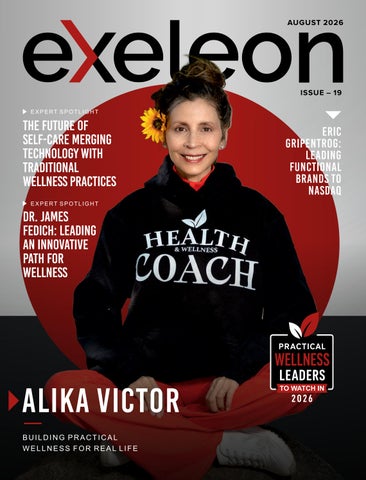
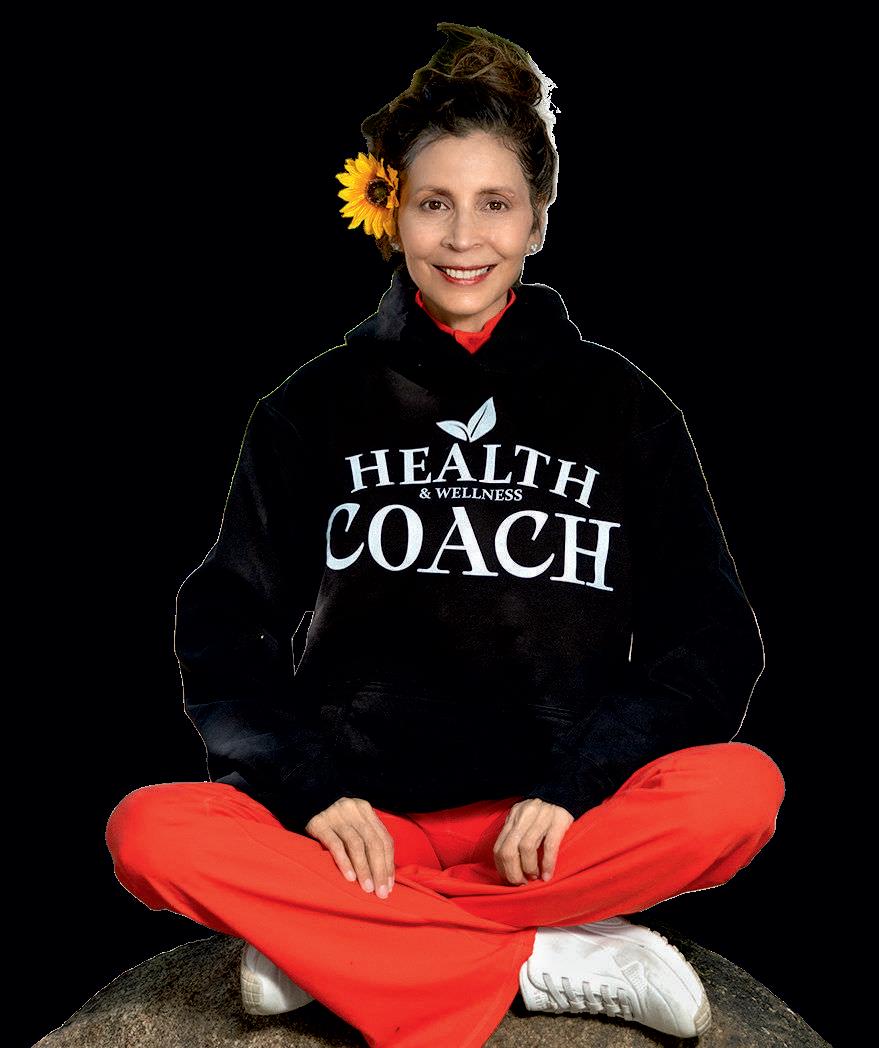
It’s tting, then, that this issue’s cover feature belongs to Alika Victor, the creator of The Practical Wellness Method™, founder of Thrive Now Wellness, author of Becoming Better, and the visionary behind WellXchange™.
Drawing on more than a decade in corporate leadership and change management, alongside her credentials as a Board-Certied Health & Wellness Coach, Alika has built something the wellness space badly needed: a framework that assumes life won’t cooperate, rather than one that hopes it will. As she puts it, “Most coaching gives you a plan. I give you a process.”
This issue is dedicated to leaders like Alika, who are reshaping wellness into something less aspirational and more achievable, something built for real people navigating real, complicated lives.
DarylYeung Editor-in-Chief



DR. JAMES FEDICH



Photography Credit: Rick Pascale
How a former corporate leader turned wellness expert is helping professionals navigate burnout, uncertainty, and sustainable change throughThe Practical TM Wellness Method





The wellness industry is lled with plans, programs, and promises. New strategies emerge constantly, offering solutions for everything from productivity and stress management to tness and personal growth. Yet despite the abundance of information available today, many people continue to struggle with creating lasting change.
The wellness industry is lled with plans, programs, and promises. New strategies emerge constantly, offering solutions for everything from productivity and stress management to tness and personal growth. Yet despite the abundance of information available today, many people continue to struggle with creating lasting change.
For Alika Victor, the reason is surprisingly simple.
Most people do not have a knowledge problem. They have a capacity problem.
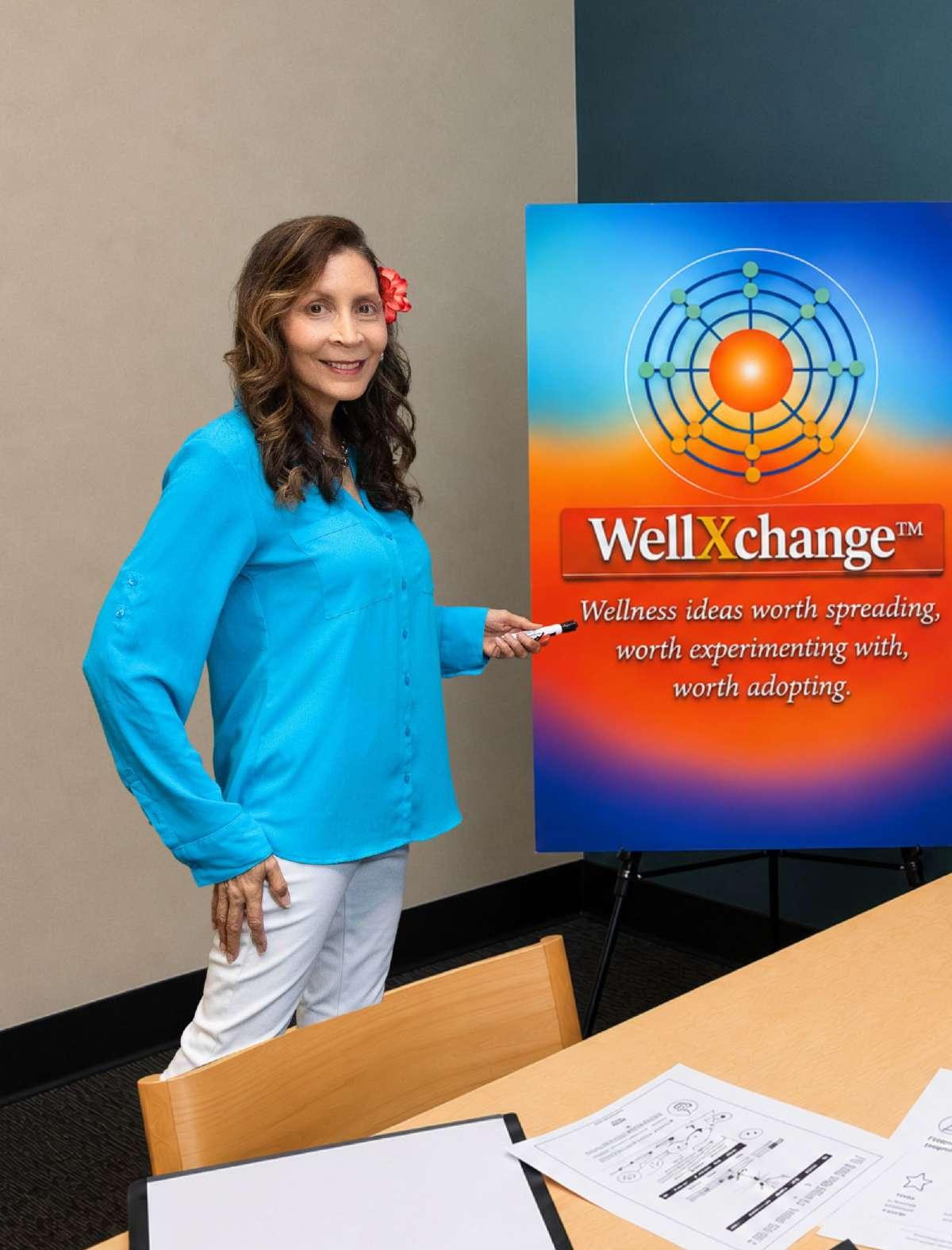
As the creator of The Practical Wellness Method™, founder of Thrive Now Wellness, author of Becoming Better, and visionary behind WellXchange™, Alika has built her work around helping people close the gap between knowing what is good for them and actually being able to do it consistently.
Drawing from more than a decade of corporate leadership experience and her work as a Board-Certied Health & Wellness Coach, she has developed a practical approach to wellness that resonates with busy professionals, entrepreneurs, caregivers, and parents who are trying to balance demanding responsibilities with their own well-being.
Her mission is not about helping people become perfect. It is about helping them become better, one practical step at a time.
Alika’s journey into wellness did not begin with a major life event or dramatic transformation. Instead, it started with a simple experiment.
In 2015, she decided to stop replenishing the candy in her desk drawer for one week.
“There was no dramatic overhaul. No strict diet. Just one small change,” she recalls.
That single decision eventually turned into nearly seven years without rened sugar. More importantly, it sparked a deeper understanding of behavior change.
Years later, during a period of intense work demands and competing priorities, she found herself reaching for candy again. Rather than viewing the experience as a failure, she examined it more closely
“Looking back, I don’t see that as a failure of willpower or resilience,” she says. “I was resilient. I continued

showing up and doing what needed to be done. What I lacked was capacity.”
That realization would become one of the dening ideas behind her future work.
Alika recognized that many people blame themselves for struggling with healthy habits when the real issue is often exhaustion, stress, and depleted mental resources. The challenge is not always motivation. Sometimes people simply do not have enough capacity left to support meaningful change.
That insight would eventually become a cornerstone of The Practical Wellness Method™.
Before entering the wellness space full time, Alika spent more than twelve years working in leadership and change-related roles with organizations including CVS Caremark, Conduent, and symplr.
One of the accomplishments she remains most proud of was helping build a Product Management PMO from the ground up at CVS Caremark.
While the work involved strategy, systems, and organizational transformation, it also taught her lessons that would later shape her coaching philosophy.
“What I learned is that even the smartest strategy can fail if you don’t account for the humans expected to execute it,” she explains.
Organizations often devote signicant resources to planning, technology, and process improvement. Yet many initiatives fail because leaders underestimate the impact of stress, fatigue, and change on employees.
Alika observed that sustainable transformation depends on more than good ideas. It depends on people’s ability to absorb, adapt, and perform within changing environments.
That lesson applies just as strongly to personal growth as it does to organizational change.
Whether someone is trying to implement a new business strategy or establish healthier habits, success ultimately depends on their capacity to sustain the effort over time.
One of Alika’s most recognizable statements is simple but powerful:
“Most coaching gives you a plan. I give you a process.” The distinction lies at the heart of her approach.
Many wellness programs assume that people can follow a structured roadmap if they simply stay motivated enough. Alika believes that assumption ignores the realities of everyday life.
Careers become demanding. Family responsibilities shift. Unexpected challenges arise. Stress levels uctuate.
“A plan assumes life will cooperate. A process assumes it won’t,” she says.
Her background in product management, process improvement, and change management inuenced how she approached wellness coaching. Instead of creating another wellness framework focused solely on goals and accountability, she designed a system that could adapt to changing circumstances.
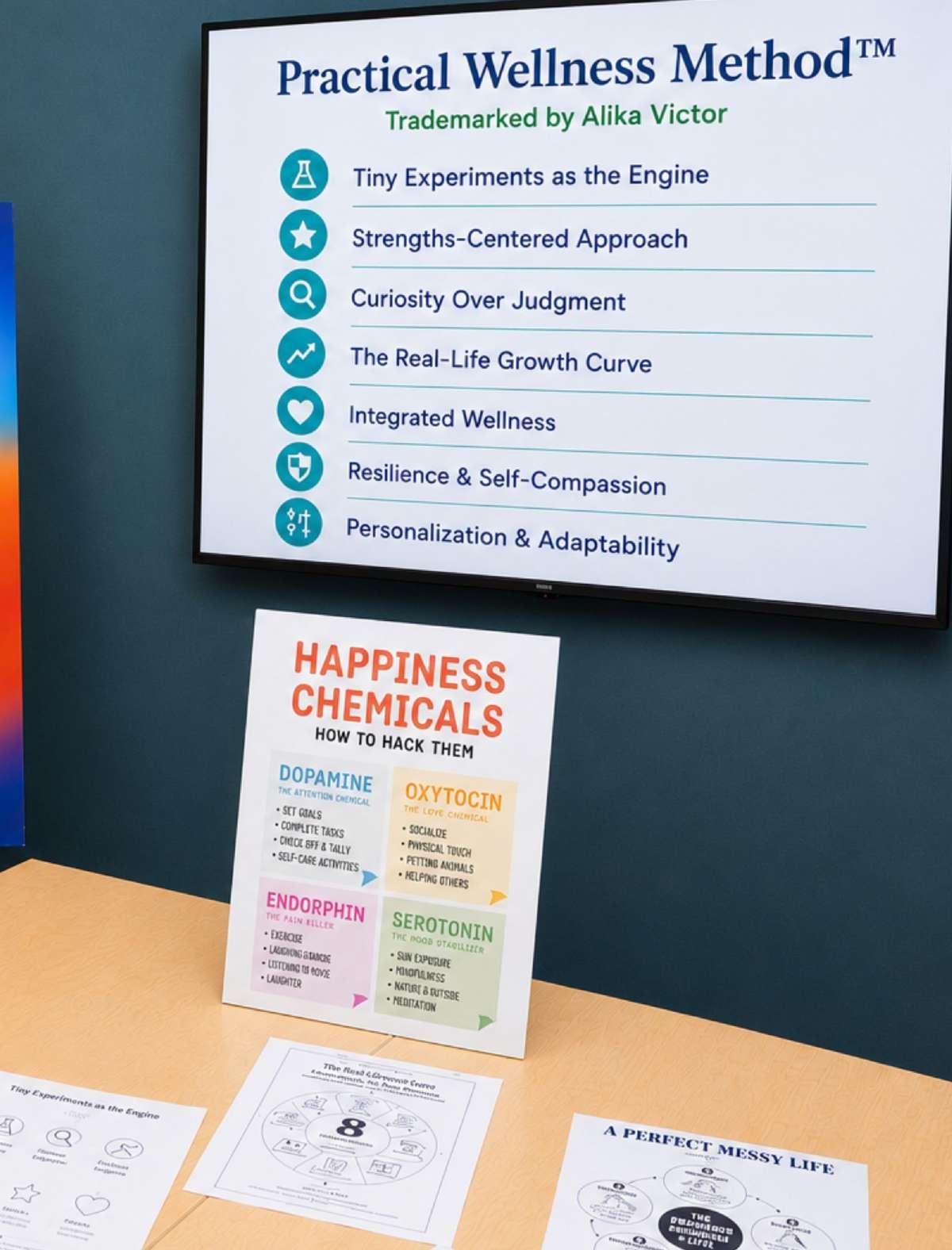
The Practical Wellness Method™ is built around seven principles: Tiny Experiments, Strengths-Centered Growth, Curiosity Over Judgment, the Real-Life Growth Curve, Integrated Wellness, Resilience and SelfCompassion, and Personalization and Adaptability
At the center of all seven principles is the belief that capacity matters.
The method encourages people to experiment, learn, and adjust rather than striving for perfection. Progress is measured not by awless execution but by sustainable growth over time.
Alika believes this approach is what allows wellness practices to remain effective even when life becomes complicated.
“People don’t need another overwhelming plan,” she says. “They need a process that works when life doesn’t.”
Today’s workplace presents challenges that previous generations could scarcely have imagined.
Articial intelligence, organizational restructuring, leadership changes, remote work dynamics, increasing workloads, and shifting priorities have become part of everyday professional life.
For Alika, these issues share a common underlying theme: ambiguity.
“If I had to name one challenge, it would be constant change,” she explains.
Professionals are not only managing their responsibilities. They are also trying to make sense of uncertainty surrounding them.
Alika believes ambiguity has become one of the most signicant wellness challenges facing modern workplaces. When people spend large amounts of mental energy trying to understand
changing expectations and uncertain circumstances, their capacity begins to erode.
The result is often burnout, disengagement, reduced performance, and chronic stress.
What makes this particularly challenging is that many of the professionals she works with are highly capable and deeply committed individuals.
“They know they should exercise, manage stress, sleep better, and take care of themselves. Knowledge isn't the issue.”
The issue, she argues, is that work is changing faster than many people can process.
As a result, practical wellness today must extend beyond traditional health advice. It must help people preserve their capacity, maintain resilience, and remain adaptable in environments characterized by constant uncertainty.
As a Board-Certied Health & Wellness Coach with certications in behavior change, nutrition, weight management, and group tness, Alika places signicant value on evidence-based practice.
She stays informed about research involving habits, neuroplasticity, self-compassion, and sustainable behavior change.
Yet she is equally committed to recognizing the uniqueness of each individual.
“I think of it as two sides of the same coin,” she says.
Scientic evidence provides valuable guidance, but people do not experience research studies. They experience real life.
Alika believes the emotional side of coaching is where evidence becomes meaningful action. Curiosity replaces judgment.
Self-compassion replaces shame. Small experiments replace perfectionism.
While writing her book Becoming Better, she asked friends and colleagues what practical wellness meant to them. Their responses varied widely
For some, wellness meant movement and tness. For others, it meant sleep, time outdoors, meaningful relationships, or maintaining independence.
The exercise reinforced a lesson she sees repeatedly in her work: wellness is deeply personal.
There is no universal blueprint for wellbeing.
The role of coaching is to help people translate evidence into actions that align with their unique circumstances and goals.
Alika’s personal approach to wellness reects the same principles she teaches.
Rather than following rigid schedules, she structures her days around anchors.
Most mornings begin with a walk before engaging with screens. Throughout the day she intentionally incorporates movement, mindfulness, and recovery practices.
Her work includes coaching, speaking, content creation, program development, caregiver support groups, and growing both Thrive Now Wellness and WellXchange™.
Like many entrepreneurs, she acknowledges that some days are more balanced than others.

Instead of chasing perfection, she focuses on understanding her energy, capacity, and rhythms.
Creative expression also plays an important role in her life. She regularly explores movement and ow artistry, develops movement-based content, and collaborates on creative storytelling projects with photographer Rick Pascale.
For Alika, creativity is not separate from wellness. It is one of the ways she stays engaged, curious, and grounded.
She also nds meaning in simple daily practices, including a gratitude ritual shared with her partner and caring for their two cats.
Since 2019, she has spent time caring for community cats near Arizona State University’s Research Park, an experience that continues to remind her that wellness is often found in small acts of consistency and compassion.
Looking ahead, Alika is particularly excited about the growth of WellXchange™.
The idea emerged from a simple question she began exploring in 2025:
“What if wellness ideas deserved their own stage?”
That question evolved into a platform dedicated to sharing practical wellness ideas from experts, researchers, practitioners, and everyday people.
Alika believes conversations about burnout, caregiving, resilience, loneliness, and workplace stress deserve greater visibility.
Her vision is to create a global exchange where evidence-based wellness ideas can be shared, explored, and adopted in meaningful ways.
Alongside WellXchange™, she continues to expand her speaking engagements and help organizations address burnout, workplace ambiguity, and sustainable performance.
Ultimately, her mission remains grounded in the same philosophy that inspired her work from the beginning.
She wants to help people navigate real life with greater resilience, adaptability, and self-compassion.
In a culture that often celebrates perfection, Alika Victor offers something more practical and far more sustainable. She reminds people that growth does not require awless execution. It requires curiosity, consistency, and the willingness to keep moving forward.
By helping people protect their capacity and create change that ts the realities of everyday life, she is reshaping the conversation around wellness for a generation that needs practical solutions more than ever.

Ready to fuel your ambition and receive your dose of inspiration directly to your digital doorstep? Subscribe to Exeleon Magazine today, and enjoy the following perks:
• Convenience at Your Fingertips
• Exclusive Extras
• Community Connection




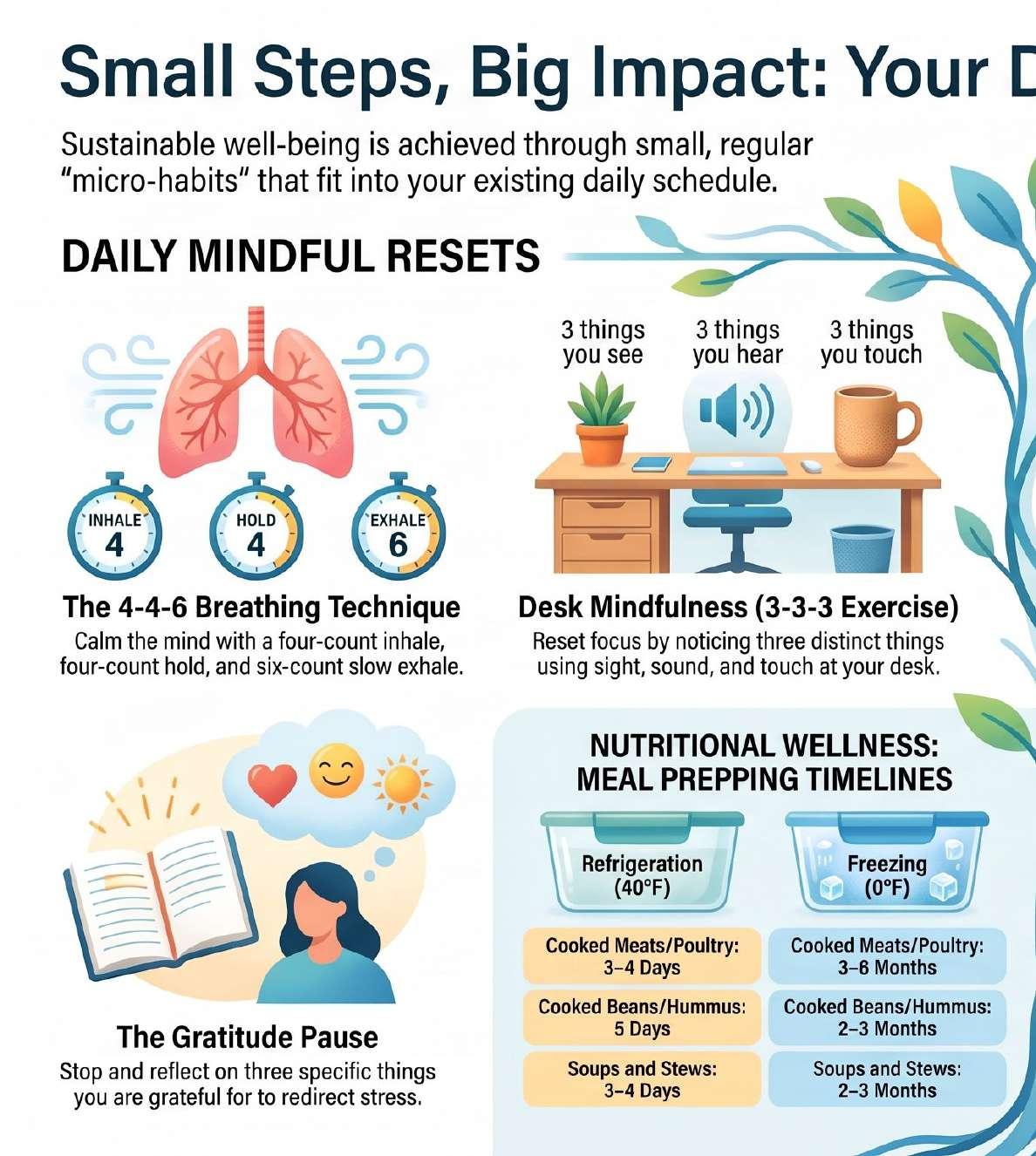
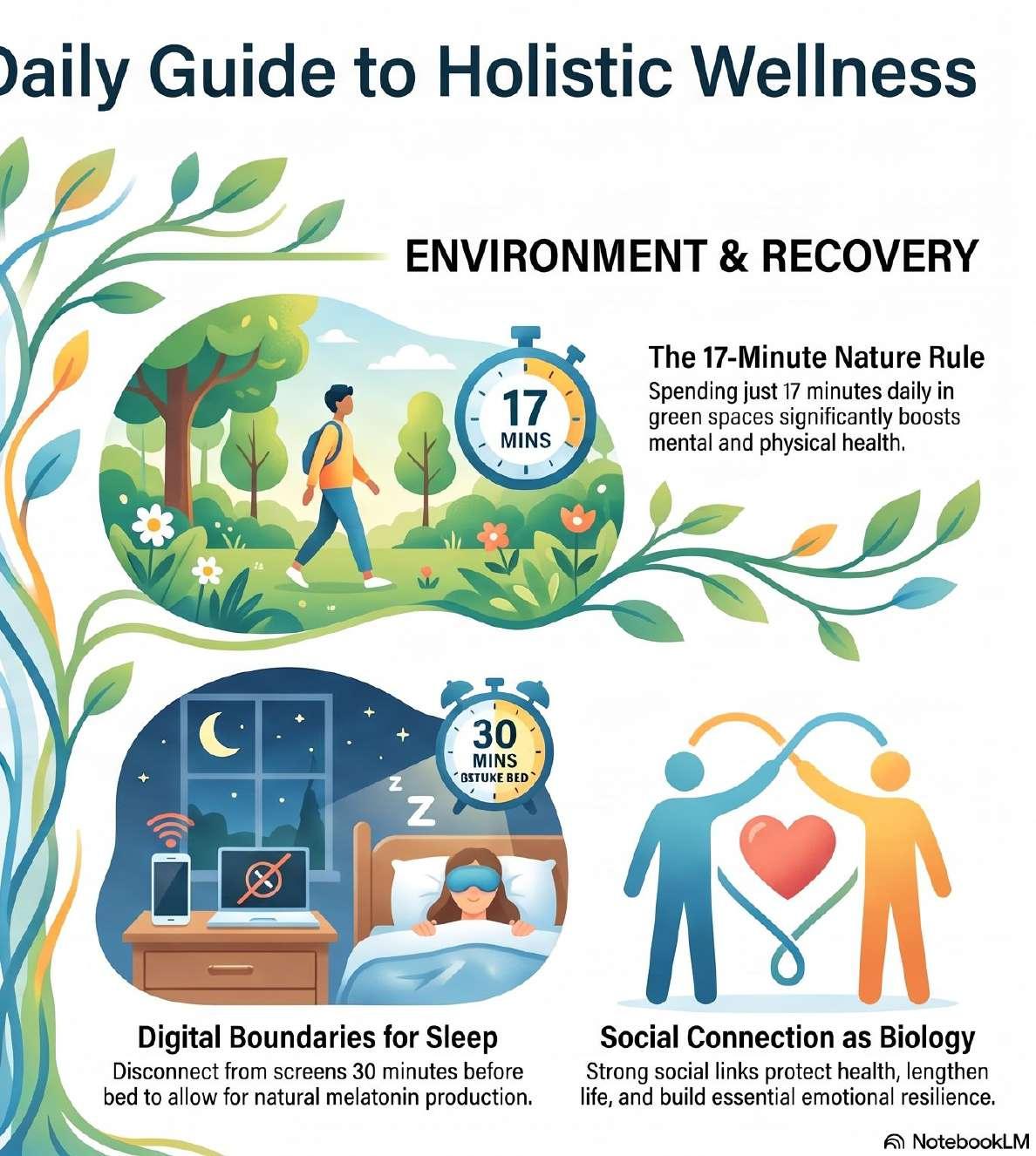
Small, research-backed habits that compound into better sleep, calmer minds, and sharper focus—no extremes required.

Sleep moves in 90-minute cycles through light sleep, deep sleep, and REM. Waking mid-cycle causes grogginess, regardless of total hours slept. Waking at a cycle's end—even after less total sleep—leaves you sharper. This is why 6 hours (4 full cycles) can feel better than 7 hours (mid-cycle wake-up). Time your sleep in 90-minute blocks, not arbitrary hours.
Calculate backward from wake time in 90-minute blocks, not just 'get 8 hours.' Cycle completion matters more than duration.

Stanford neuroscientists identified the quickest way to reduce stress in real-time: two inhales through the nose (one short, one long), followed by a long exhale through the mouth. This double-inhale pattern reinflates collapsed lung sacs and rapidly shifts your nervous system from fight-or-flight to calm. Works faster than meditation apps or breathing exercises requiring counting.
Next time you're stressed: two quick inhales through nose, one long exhale through mouth. Repeat 1-3 times.

Getting sunlight within 30-60 minutes of waking sets your circadian rhythm for the entire day—regulating cortisol, melatonin production, and energy levels 12-14 hours later. Even on cloudy days, outdoor light is 10x brighter than indoor lighting. This single habit improves sleep quality, mood, and metabolic health more than most supplements combined.
Step outside for 5-10 minutes within an hour of waking, no sunglasses. This is free, immediate, and compounds daily.

Cities demand 'directed attention'—constantly filtering traffic, people, decisions. This depletes mental energy. Nature requires 'soft fascination'—effortless attention that restores cognitive resources. Studies show just 20 minutes in a park measurably improves focus and reduces mental fatigue, even without exercise. This isn't about escaping—it's giving your prefrontal cortex a genuine rest.
Schedule 20 minutes in green space during your workday, not just weekends. Treat it as cognitive recovery, not leisure.

Research shows one hour of gym time cannot offset eight hours of sitting—these are separate health variables, not opposites. Prolonged sitting slows metabolism and increases disease risk independent of exercise habits. Marathon runners who sit all day still carry elevated health risks. Movement frequency throughout the day matters as much as intensity during workouts.
Stand or walk for 2-3 minutes every 30 minutes, regardless of how much you exercised today. Frequency beats intensity here.
UCLA research found simply naming an emotion—'I feel anxious' versus suppressing it—reduces activity in the brain's fear center (amygdala) within seconds. The act of putting feelings into words engages the prefrontal cortex, which calms emotional intensity. This isn't just talk therapy folklore—it's measurable neural circuitry. Silence amplifies emotion. Language regulates it.
When overwhelmed, literally say or write the emotion’s name. 'This is anxiety’ calms faster than trying to push it away




CEO and Director of Functional Brands Inc.
Functional Brands is a health and wellness
company with headquarters in Lake Oswego, Oregon. The company specializes in the production and distribution of nutritional supplements for various health concerns, including prenatal wellness and autism. All products under the Functional Brands umbrella are made in the USA, in an FDA-compliant, cGMPcertied facility. Some of the brands in their portfolio include Kirkman®; P2i™ by Kirkman®; and Tru2u.health. The Kirkman® brand has a 75-year legacy available in 35 countries.
On November 5, 2025, Functional Brands ofcially began trading on the Nasdaq Capital Market under the ticker symbol MEHA, which stands for “Make Everyone Healthy Again”. In this interview, CEO Eric Gripentrog reects on the company’s path to this milestone and its decision to go public.
Q: Functional Brands started trading on Nasdaq in early November 2025. What did that moment mean to you personally and professionally?
Eric Gripentrog: It was a meaningful moment for the team and me. There's a big feeling of responsibility that comes with
going public. It puts a spotlight on our operations and how we execute our plans. I saw it as a moment to pause, reect on the years of hard work that got us here, and focus on what comes next. It also reinforced the importance of being open and consistent in how we lead the business. That mindset guides my decision-making process going forward.
Q: The company chose a direct listing instead of a traditional IPO. Why was that the right path for Functional Brands?
Eric Gripentrog: Our choice to execute a direct listing was based on our existing shareholder base, and NASDAQ guidelines. We were expecting to execute an IPO earlier in 2025, but for reasons outside of our control, the IPO did not occur So, we decided to pivot towards direct listing because we met the NASDAQ criteria. That choice helped us correspond with how we think about progress and accountability.
Q: The mission behind the MEHA ticker is “Making Everyone Healthy Again.” How does that concept guide leadership decisions?
Eric Gripentrog:That mission forms how we think as a team
We pause to reflect on how far we’ve come, but our focus is always on what comes next. “
every day. It's a reminder that our work impacts real people and families. When we review products or plans, we ask if they support healthier results clearly and honestly. It keeps us focused on quality, transparency, and trust. Those values help create consistency in teams and leadership, and they guide how we prioritize projects and resources. When choices become complex, the mission offers clarity and direction. It encourages us to think about the future and pay close attention to the impact of our decisions.
Q: Kirkman is a big part of the Functional Brands portfolio. Why is that legacy so important as the company grows?
Eric Gripentrog: Kirkman represents years of trust built with families and practitioners. That trust didn't happen in one day. We pay close attention to the manufacturing process so that every product has consistent quality. Having our own facility allows us to stay closely involved in how products are made. As the company grows, that level of control helps us stay in tune with the standards people expect from the brand. It also supports condence as we expand into new channels.
Q: What is something curious investors and customers know about the next chapterforFunctional Brands?
Eric Gripentrog: The next chapter will involve steady progress. We are growing our reach through digital channels and improving how we connect with customers. We are also being thoughtful about how we invest and grow. Being a public company adds responsibility, and we take that seriously. Our focus remains on building trust, supporting health, and delivering long-term value through consistent work.That method forms how we measure success over time.
“



















































Prebiotic sodas have exploded in popularity as a
“healthier” alternative to regular soft drinks, promising gut-friendly ber with a fraction of the sugar. But a new analysis suggests the marketing may be outpacing the reality. Researchers who tested a range of popular prebiotic soda brands found that many contained more added sugar than their labels implied, while delivering less ber than advertised. The gap between what’s on the can and what’s actually inside raises questions about how tightly these claims are regulated, especially as functional beverages have become a fast-growing and lightly scrutinized category of the drinks aisle.
For consumers who have swapped traditional soda for these newer options specically to cut sugar or boost digestive health, the ndings are a reminder to check nutrition labels closely rather than relying on front-of-package wellness branding. Experts note that “prebiotic” and “gut health” claims aren’t always backed by the ber content needed to meaningfully affect the microbiome, and that whole-food ber sources, vegetables, legumes, whole grains, remain a more reliable way to support digestion.
The research adds to a broader pattern seen in the functional food and beverage industry, where health halos can outpace scientic substantiation. As more brands enter the space chasing the wellnessconscious consumer, dietitians are urging shoppers to treat “betterfor-you” soda as a treat rather than a health strategy, and to look at total sugar grams and ber grams directly rather than trusting packaging claims alone.



New research suggests that a coordinated global shift toward healthier eating
patterns could dramatically reduce the environmental footprint of agriculture. According to the analysis, prioritizing diets richer in fruits, vegetables, nuts, and legumes, while reducing reliance on livestock farming, could cut land-use-related farm emissions by as much as 85% by 2050, while simultaneously freeing up signicant amounts of agricultural land currently used for grazing and feed production.
The study frames dietary change as a dual-benet strategy: better health outcomes for individuals paired with a substantial reduction in agriculture’s contribution to climate change. Livestock farming is a major driver of land-use emissions, and researchers found that redirecting agricultural priorities toward plant-based staples could allow fruit, vegetable, nut, and legume production to expand substantially without requiring more land overall.
The ndings arrive amid growing global interest in “planetary health” diets that aim to align personal nutrition with environmental sustainability. Researchers caution that achieving this shift at scale would require signicant policy support, agricultural investment, and changes in consumer behavior, rather than relying on individual choices alone. Still, the study adds to a growing body of evidence that the foods best for human health, largely plant-forward diets, tend to align closely with the foods best for the planet, reinforcing the case for public health and climate policy to be designed together rather than separately.
Source: —ScienceDaily —Top Health News



The health and wellness business world saw notable movement this week. Sports nutrition brand
Puresport launched a new ultra electrolyte product in partnership with athlete Amy Hunt, entering the increasingly crowded hydration and performance supplement market that has grown alongside rising consumer interest in sweat, recovery, and sauna-based wellness routines.
Separately, STRONG Pilates announced an acceleration of its U.S. expansion plans, opening new studios across nine states as it continues eyeing further growth heading into 2027. The expansion reects the continued boom in boutique tness studios, and specically Pilates, which has seen sustained growth in popularity over recent years as a low-impact strength and mobility-focused workout option appealing to a broad range of ages and tness levels.
Both developments point to a wellness and tness industry that remains highly active from an investment and expansion standpoint, even as consumer attention shifts increasingly toward science-backed, functionrst wellness products like electrolyte and hydration solutions rather than purely aesthetic tness trends.
For consumers, the electrolyte product launch adds to an already saturated market of hydration supplements, making it worth comparing ingredient lists and sodium/potassium content against needs, while the Pilates expansion means more accessibility to a workout style researchers have linked to improved core strength, exibility, and reduced injury risk for people of varying tness backgrounds.
Source: —Fitt Insider Health and Wellness News