Most Transformational Leaders of the Year Edition III | Karen Mangia
Editor-in-Chief –
Art Director –
Managing Editor -
Creative Director –
Contributing Editors –
Content Curator –
Daryl Yeung (Story-Tailor)
Naomi Lam (Design Ninja)
Matt Reis (Wordster)
Adam Waring (Grafista)
Ian O'Shea, Matt Hale, &
John Riggs (Three Musketeers)
Cathy G. (Explorer)
Sales
Project Manager –
Marketing Manager –
Josh Wilder (Cultivator)
Mike Jackson (Marketeer)
Katherine Price (Sustainer)
Richard Dann (Facilitator)
For any advertising related information, please contact info@exeleonmagazine.com. Submissions as well as contributions to the magazine are welcome.
Take
KAREN MANGIA
i t l s S u s
KAREN MANGIA
BESTSELLING AUTHOR | SALESFORCE EXECUTIVE
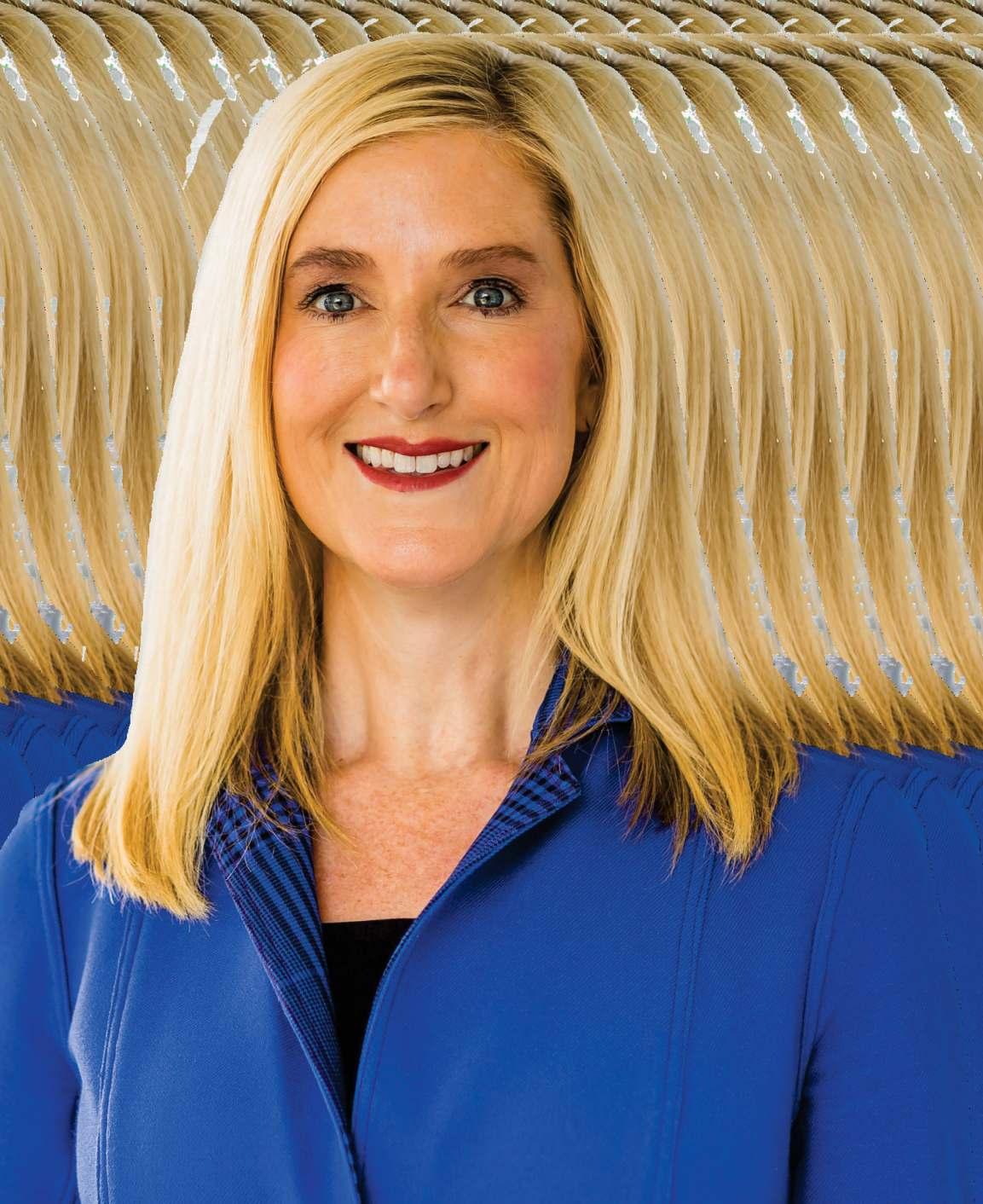
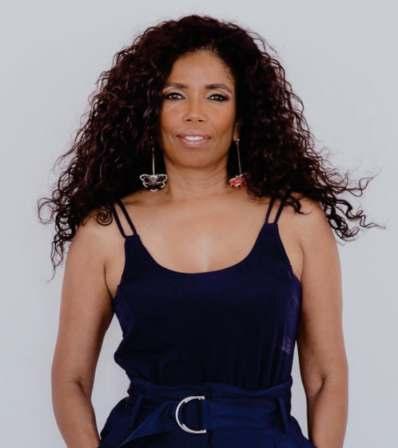
SSuccess means many things to many people. More often than not, success is equated with 'more'. People buy into the belief that there is a pressing need to do more, have more and be more to accelerate their life. This can then seep into the hunt for more money, more recognition, and more opportunities.
But one transformational leader is on a mission to decode and inspire what it means to be more. In her WSJ Bestseller - Success from Anywhere, Karen Mangia leans into the power of abundance and redeines what success means to you.
Karen is also an international keynote speaker, author, and business personality whose mindset embodies the three dynamic A'sAccept, Adapt and Accelerate. This mindset has laid the foundation of countless training, keynotes, and conversations that has helped her to lead through change.
She believes that when it comes to transformation, “these three concepts create a powerful playbook of new possibilities.” Moreover, she also resonates with a quote from Michael J. Fox, actor and advocate, “Acceptance doesn't mean resignation; it means understanding that something is what it is, and there's got to be a way through it.”
Perhaps, accepting what it is opens new doorways to success and leads to what you could be. “Without acceptance, you're solving imaginary problems while denying the real ones,” she remarks.
A BEAUTIFUL SYMPHONY OF MUSIC AND FOOD
Karen's childhood is best summarized as Midwest, Mangia, and Music. She grew up in three different cities in the Midwest and her bustling childhood reads like a cookbook, seasoned with nostalgia, passed down from generation to generation. “I treasure the handwritten, food splattered recipes I inherited from both of my grandmothers,” she fondly recalls.
Going down the memory lane, Karen's happiest childhood snippet was walking through the backdoor into her grandparents' kitchen and smelling sauce simmering on the stove. “That smell is more than spaghetti sauce. That smell is love. That smell is happiness and belonging,” she remarks.
Additionally, music had an imposing role to play in her early years. She had a rare talent as she taught herself to play the piano by ear as a child. “Santa gifted me a toy piano with 25 keys. There was a color strip that rested between the keys and the music stand. The songbook was color coded to correlate. After I learned the songbook by heart, I started playing by ear,” she said. She recollects hearing a tune on TV or on the radio and then diligently decoding it using her out of tune toy. In the same manner, Karen has always been able to play the soundtrack for her life.
Karen was an enthusiastic soul and her yearly summer visits to her grandparents' house is a testament to that. She would spend the entire week writing plays for her cousins. “I was the playwright, casting director, rehearsal director, backstage coordinator, costume designer, set designer and occasional actress,” she reminisces. Although they didn't win a lot of Academy Awards, they did garner a lot of applause and built ever-lasting memories.
And inally, her earliest leadership memory is playing ofice. Since her brother is four years younger than her, she donned the role of an employer while her brother played the part of employee. “He's held distinguished titles in my imaginary school systems, ofices and banks. If you ask him now, he'll tell you performance reviews were rough,” she jokingly remarks.
CREATING WORLD-CLASS EXPERIENCES
Over the years, Karen has become a pioneer when it comes to customer success and experiences. But it has taken several years to garner and build this expertise.
The beginning of this journey was when her college professor, Bob Papper, inspired her love of qualitative research, quantitative research, and storytelling. “I was a student in his Telecommunications news classes and worked for him as a research assistant. My job was to administer the annual survey he sent to members of the Radio & Television News Directors' Association (RTNNDA),” she mentions.
Her daily tasks would be to call nonrespondents and administer surveys
“THE FUTURE OF WORK IS LESS ABOUT HOW WE RECONFIGURE CUBICLES AND MORE ABOUT HOW WE REDESIGN OUR RELATIONSHIP WITH WORK.”
over the phone. She would then correlate responses, analyze trends and search for the storyline. Later, Karen also got a chance to co-author an article with her professor about trends in television internships where the focus was both on the employer and employee experience.
After achieving this milestone, Karen's post-graduate goal was to work for Nielsen Ratings doing experience research only to later discover that they were headquartered in Iowa. But that didn't discourage her will as she decided to take up sales and sales leadership for Fortune 100 tech companies instead.
Karen feels, “Frontline action is fertile ground to discover what customer experience and customer success are really like and the glaring gap between companies' stated experiences vs. customers' lived experiences.”
After some time through a series of happy accidents, she landed a dynamic role in leading the global Customer Experience portfolio for Cisco. About a year into that role, she had an epiphany. She recalls, “I was living my dream deferred. Essentially, I was running the Nielsen Ratings portfolio for Cisco.”
Hereafter, there was no stopping this success train. Karen's Customer Experience blog created an opportunity for her to join the Market Strategy team at Salesforce.
In due course, the Market Strategy role at Salesforce created more writing opportunities, including an entire book dedicated to Customer Experience and Customer Success: Listen UP!: How to Tune in to Customers and Turn Down the Noise.
BUILDING HER POWER OF RESILIENCE
Karen's approach to provide optimal client satisfaction is simple yet signiicant. Her philosophy hinges on the fact that everyone wants to feel seen and heard.
According to her, the three most powerful words in leadership are, “I hear you.” She says, “I used to think being a great leader meant being the one with all the answers. Now I understand that leadership is listening. And that listening begins with asking better questions. Because every great discovery begins with a great question.”
“I USED TO THINK BEING A
GREAT LEADER MEANT BEING THE ONE WITH ALL THE ANSWERS. NOW I UNDERSTAND THAT LEADERSHIP IS LISTENING. AND THAT LISTENING BEGINS WITH ASKING BETTER QUESTIONS. BECAUSE EVERY GREAT DISCOVERY BEGINS WITH A GREAT QUESTION.”
“I USED TO THINK BEING A
GREAT LEADER MEANT BEING THE ONE WITH ALL THE ANSWERS. NOW I LEADERSHIP IS LISTENING. AND THAT LISTENING BEGINS WITH ASKING
BETTER QUESTIONS.
BECAUSE EVERY GREAT
DISCOVERY BEGINS WITH A GREAT QUESTION.”
engage in a dialogue that lets your customers feel heard, listened to, and understood. A good leadership team takes ego out of the conversation so that the customer can hear what needs to be said.
Listening without defensiveness leads to a deeper understanding of what it really takes to do what your competition won't or can't. Ultimately, she concludes, “listening is the most important connection in the customer.”
While building a strong client experience is absolutely pivotal, Karen ensures that her professional and personal lives are well-balanced. For her, routines, rituals, and boundaries set the tone of her entire day.
“Establishing a schedule is the irst step in setting the routines and rituals that matter. I get up at the
same time every day and start my day the same way - with music, mindfulness, movement and gratitude,” she says.
In order to complete her most critical deliverables, her irst work task is always deep work - whatever she needs to create that adds value; whether that's a book chapter, a blog, or another creative task.
Additionally, she also sets a inish time each day and signals that inish time to herself with an alarm clock.
“After the closing bell rings, I power down all of my devices. Then I listen to one song for ive minutes to transition into my evening,” she remarks.
One of her most striking realizations has been - if everything is important, then nothing is important. These three questions - and a bonus question - help her distill what's most important in any given moment:
Ÿ Does it have to be?
Ÿ Does it have to be me?
Ÿ Does it have to be right now?
Ÿ Bonus: Does it have to be a meeting?
FEARLESSLY BATTLING CHALLENGES
From starting out as an account manager to becoming a globally recognized leader with multiple awards to her name, Karen's journey has been nothing short of a blockbuster movie.
In her own words, “The journey has been an unpredictable adventure. From setbacks to comebacks. From despair to discoveries. From breakdowns to breakthroughs. I am grateful for the people who have supported me through my personal
and professional crossroads.”
Karen feels that one should befriend discovery and explore each nook and cranny of your life. “If I had known where I was going all along - or been attached to a single outcome - I would have missed the joy of discovering new people, new places and new perspectives,” she adds.
And when quizzed about the one thing that she would do differently if she could go back in time, she answers in a heartbeat: I'm not one for regrets.
She believes we're all doing the best we can with what we have and what we know and where we are in our journey at any given moment. But, if she could whisper one critically important message in the ear of my younger self, it would be “Fewer obligations, more joy.”
POWERFULLY LEANING INTO
“MORE”
changer activities throughout the book and the bonus playbook guides readers through reconnecting with and making room for what matters most.
HER PROFOUND ADVICE
Karen has a world of wisdom to offer, especially for aspiring and emerging business leaders. Her carefully curated advice would be to create a beautiful future based on your set of values.
Through Karen's WSJ BestsellerSuccess from anywhere, she shows how to move into the abundance that you deserve. She also delves into the meaning of success and guides you to assess your past patterns to create better and sustainable results.
While sharing about her book, she emphasizes on The Great Resignation. With employees sending a clear and urgent signal that more pay or more perks isn't summing up success for them, Karen's mind got ticking with a different question. “More… of what truly matters?”
Her book is an invitation to freedom. The freedom to choose the work model that makes the most sense. The freedom to choose your own values. And the pathway to bring your values to life, as you make new discoveries around the true nature of success.
There is also a series of game
She further elaborates, “The future of work is less about how we reconigure cubicles and more about how we redesign our relationship with work.” The beginning of redesign, in part, starts with an examination of your values. And extends into the values of your organization.
Success happens one individual - one person - at a time. And when there is a change in our relationship with work, everything changes. She adds, “It's time to change the game. Because organizations win when people win. When the players see a new game is possible, new results follow.”
Karen's radiant experience is truly captivating. She emphasizes on the thought - The future belongs to those who create it and is thrilled to discover what the future holds for her.
She is conident that her future journey is brimming with ininite possibilities.
Christina Flach President & CEO | Pretty Girl Makeup
Embr a ci n g B ea u t y...
In this Exclusive Interview, Christina Flach shares about her journey, her beliefs, and Pretty Girl Makeup.
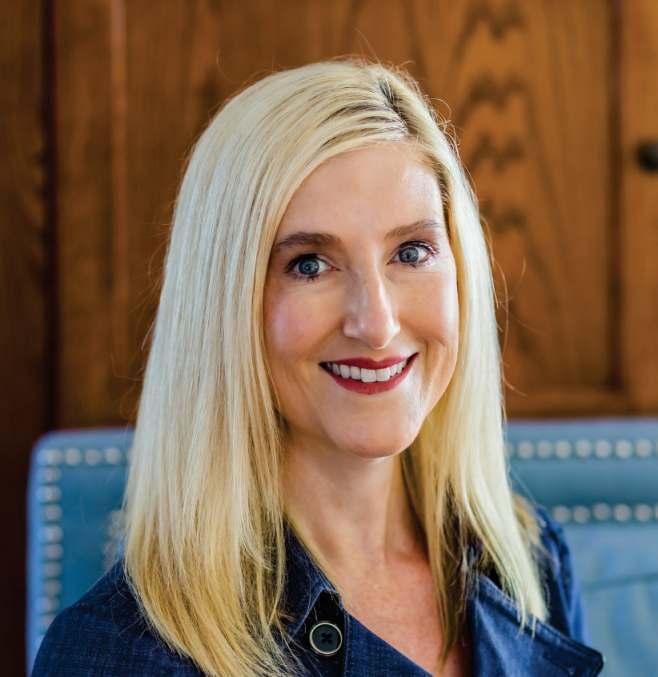
Christina forayed into the beauty and fashion industry because she wanted to witness all the fun, excitement and glamour that comes with it, while overcoming her own challenges and struggles. Christina Flach is the President and CEO of Pretty Girl Makeup — her celebratory shoutout to all the girls to make them feel beautiful.
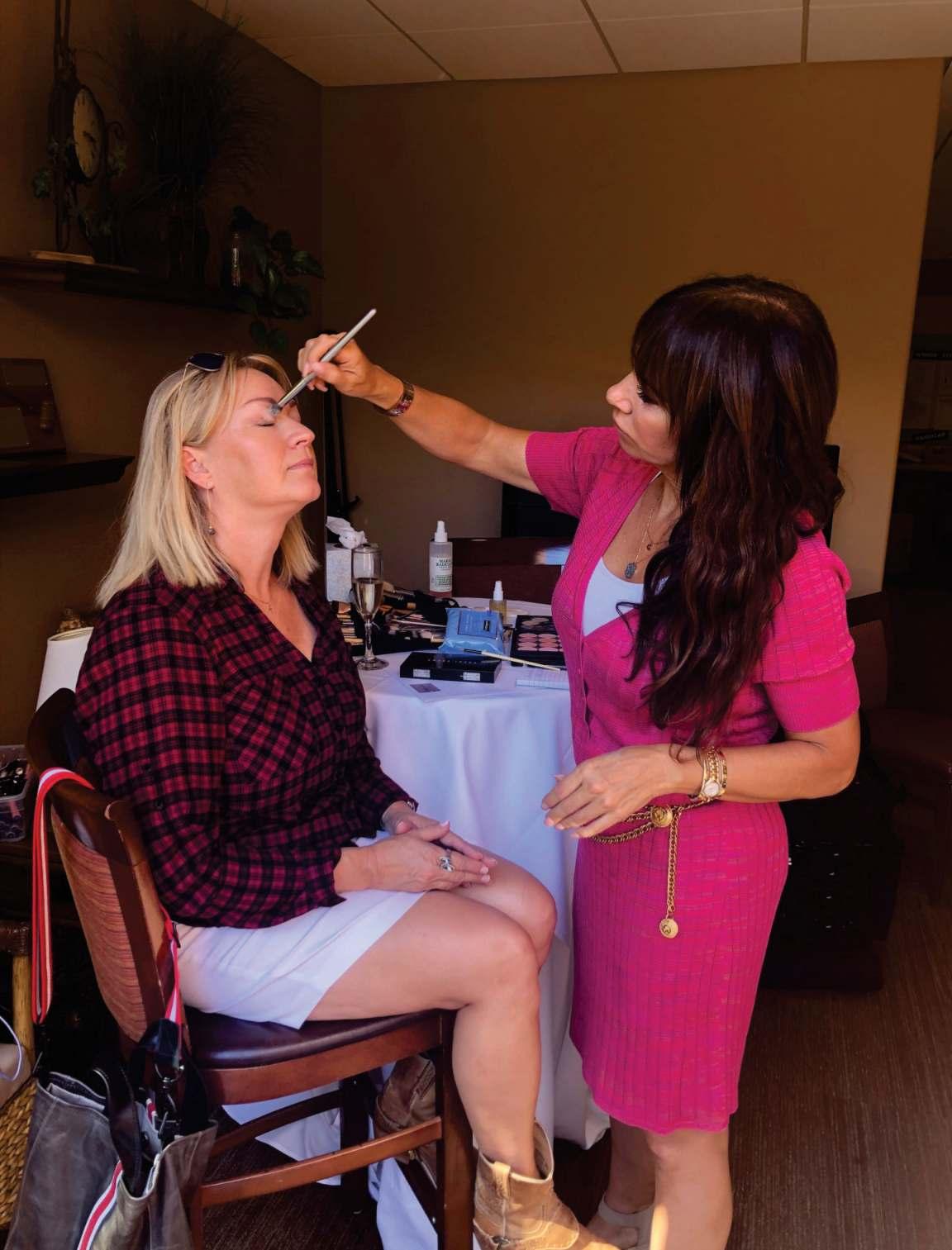
With more than 20 years of experience in the business, Christina uses her knowledge to create stylish and trendy lip, eye, and face products. She is passionate to deliver one-of-a-kind high-end beauty products that are mixed and matched with natural ingredients, and other essential oils.
Besides creating luxurious beauty experiences, Christina dons' multiple hats gracefully. She is a Sepsis Awareness Advocate, grief expert and shares her experience across various platforms like magazines, podcasts, blogs. She also successfully runs her own blog — Love, Life, Laugh and Lipgloss and is thrilled to start a new skincare and makeup line with her partner, Jordan.
What according to you makes one a transformational leader? How do you integrate the same thought into your leadership?
I think a transformational leader selects a team of experts that can come together and work as a highly functioning team. I try to integrate that thought process into my leadership, by having open dialogue with my team, respect for what they do, and most importantly letting them have the creative freedom to excel in their speciic area of expertise.
Talk to us about your growing up years. What is your earliest memory as a leader that you can remember?
My childhood was interrupted by my mother being diagnosed with brain cancer when I was eight years old. As the oldest child, I had to step up, to help around my home with cooking and cleaning. Not having a mom that was physically and emotionally available because of her disease, was challenging as I was going through my teenage years and wanted a mothers' guidance.
I think that as the oldest child of a terminally ill parent, it forced me to take charge to support my dad and my sister and my mother as best I could, which I think helped me later in my life. I have not let these tragedies make my life tragic, rather it made me stronger and resilient when faced with bumps in life's road.
What prompted your interest and subsequently your foray into the beauty and fashion industry?
I have always had a love of fashion and beauty products. Looking forward to the latest magazines to see what the latest trend was. Watching celebrities on television and looking at all the beautiful faces at the award shows deinitely trained my eye for beauty.
I'm a very visual person so I think I wanted a life that was full of beauty, not just with clothes and makeup, but also my home being decorated, clean, organized but at the same time cozy and inviting for my family and friends.
What led to the formation of Pretty Girl Makeup? What was the idea behind its name?
As a mother of 5 that was constantly in a battle of drinking water and putting lip gloss on while I drove my kids to school and all their activities. I could not ind a lip gloss that lasted long enough that was not matte or drying out my lips. I decided to contact a beauty chemist to formulate my own lip gloss that was long lasting, hydrating, and good for my skin.
The name Pretty Girl came about when I was in Hawaii with my family and friends sitting by the pool. My kids had inally gotten to an age where I didn't need to be in the pool with them, my friend Claudia made the funniest comment," Honey, we're just sitting here looking at magazines, lying in the sun acting like Pretty Girls!"
That made me laugh so hard, but I also thought every mother that is working and trying to get everything done in her day, is a Pretty Girl and deserves to be made to feel like one. I thought that was the perfect name for my company and being inspired by the creators of Beneit cosmetics. They had fabulous packaging and very whimsical names. I remember making lists and lists of funny names like Private Jet, Let's Go Shopping, Soulmates, Love of my Life, Day at the Spa, that I wanted to name my products.
Being the CEO and Founder, what role do you play in the day-to-day proceedings of the company?
The irst thing I do when I wake up is check in with my amazing assistant Mayah, who keeps my calendar organized with meetings, documents to look over, interviews I may have. Next comes checking in with my partner Jordan, followed by checking in with the marketing team and sales. I want everyone on my team to feel like they have access to me when they need it. But I also want them to have the freedom to do their job. I know what's going on with everyone and get inal approval, but I always think it's best to let the experts on my team do what they do best.
What is the approach followed by you and your team in order to ensure optimal client satisfaction?
We are constantly watching industry trends and listening to our clients via email and social media. My agents still book me on photo shoots, which helps to keep me in a creative mode and not just being a CEO. I love having my artistic outlet, working on these shoots and being able to work with my team at Pretty Girl to run at the highest level possible, being proitable and we are very proud of the products that we sent out into the world.
What has the journey been like for Christina Flach over the years? Looking back, what would you have done differently if you were to start again?
My journey over the years has deinitely had its ups and downs. My son Beau passing away on Christmas day when he was 4 1/2 months old 15 years ago deinitely affected my career professionally but also personally. I went through a divorce and learning to grieve my child while still being a mother and trying to run my business was really tough. Then my husband Ken Flach passing away in 2018 from Sepsis, and dealing with the pandemic, have been more obstacles that I have learned to ride the waves of. If I look back on what I would do differently, I would be a lot gentler on myself. Looking back, I know I did the best I could with the situations I was dealt with. I beat myself up emotionally, not feeling I did enough each day and feeling like a failure when in reality I was still just going through emotional turmoil and grief.
What would be your advice for emerging women leaders in the beauty space?
The best advice that I could give anyone in the beauty industry or in any other space is that if you love what you're doing so much, you won't mind working the long hours, seven days a week and not earning a ton of money at the beginning. But if you love what you're doing and are passionate about your goals, I know that hard work pays off and you will be successful. Loving what you're doing is contagious and people can feel your positive energy.
What has been the biggest roadblock during your journey? What has been your biggest learning?
I think the biggest roadblock I've had was not getting a business plan sooner and getting investors to expand. I have learned that being uncomfortable is actually part of the process, will only make you stronger and more conident in the end.
Finally, what does the future look like for you, both personally and professionally?
My future is looking very exciting, my partner Jordan and I are going to be partnering with two other investors to create a new line skincare and make up line. I am open and excited about all new adventures in my business and personal life. Having balance in my life is key for me being successful in my professional life. My heart is full, and I am very happy!
Do Your Company’s Hiring Practices (Still) Exclude Women?
AREVA
MARTIN, ESQ.
Diversity and inclusion statements are the flavor of the week, particularly for companies looking to showcase their commitment to workplace equity. But the reality is—despite decades of promises in response to well-deserved scrutiny—the world's leading brands continue to fall far short of building diverse, inclusive workplaces. In fact, of all Fortune 500 companies, only 41 are led by women, and only eight are led by women of color.
How do your own company's hiring practices measure up? Asking these three simple questions will help you gauge if you're truly working toward a more equitable work environment, or if your hiring practices are simply lip service.
1. What percentage of your senior leadership roles are held by women?
Lean In and McKinsey and Company's latest report, Women in the Workplace 2021, found that more than 90% of companies track gender representation. While this sounds like a positive sign, only 65% of companies track promotion rates by gender. Worse, only 35% track promotions for women of color.
I recently had the occasion to look at the website of a firm I worked for as a summer associate back in law school. My class of associates included some of the most talented women and people of color I'd ever encountered. But when I look at the firm's leadership page today, it appears exactly as it did 30 years ago, with white men claiming all senior partner positions.
2. Is women's pay equal to that of their male counterparts?
Female MBA graduates earn $11,000 less than their male peers, according to findings from the Forté Foundation. If that's not startling enough, this gap becomes a gulf as their careers progress:
the disparity increases to more than $60,000 after a decade.
A woman I interviewed for my book, Awakening: Ladies, Leadership, and the Lies We've Been Told , shared a story of how thrilled she was to finally earn a long-awaited promotion—and how devastated she was to discover that not only was she offered far lower pay than a man serving in an equivalent position, but that she'd also been underpaid throughout her career with the company. She fought for a fair compensation package but ultimately left the organization, feeling she'd been exploited beyond repair.
3. Do company leadership positions come with true power?
All too often, the “real” decision-making is funneled to men at the top, with female leaders relegated to the sidelines. Meanwhile, these same women are weighed down by extraordinary pressures their male peers don't face, including the pressure to be the face of inclusion while proving themselves above and beyond what's expected of their male counterparts.
Earlier this year, I participated in a high-profile conference for a leading global organization. The person who brought me on, a Black woman, had recently been promoted to her organization's director of talent. I quickly felt tremendous pressure from her regarding my performance, even though I have a long and successful track record of presenting to similar audiences.
I soon learned that she was passing on the stress she was feeling herself. She was struggling under the unbearable weight of impossible expectations and the fear that even a minor misstep could derail her career.
This personal anecdote is echoed in the stories of
countless women I've met with and interviewed over the years. And the data tells the same story. As women ascend to positions of power, they find themselves under the microscope and discover an impressive title doesn't bring the clout—or perks or paychecks—it would if they were white men.
If your commitment to equity is real, your organization needs to follow the data and look closely at the culture the women in your workforce encounter. When women are standing alone and apart at the top, outworking their peers and gathering more critiques than kudos, you can be certain you're setting them up to fail.
AREVA MARTIN is one of the nation's leading voices in the media. An awardwinning attorney, advocate, legal and social issues commentator, talk show host, and producer, she is a CNN/HLN legal analyst, former co-host of The Doctors and Face the Truth, and a regular contributor on Good Morning America, ABC World News Tonight, and Dr. Phil. She currently hosts The Special Report with Areva Martin and the radio talk show Areva Martin Out Loud. A Harvard Law School graduate, Martin founded Martin & Martin, LLP, a Los Angeles–based civil rights firm, and is the CEO of Butterflly Health, Inc., a mental health technology company. A bestselling author, Martin has dedicated her fourth book, Awakening: Ladies, Leadership, and the Lies We've Been Told, to helping women worldwide recognize, own, and assert their limitless power. Learn more at arevamartin.com.
Enabling Networking Success
Enabling Networking Success
It is true that we humans form a bond with those we
trust, and in the process, help each other to connect. While its essence is discussed in several streams of social theories, the connections and networks forged in the business fraternity are no less signiicant.
The importance of network building in business cannot be underlined enough because it is a cornerstone for companies and entrepreneurs to develop lasting relationships and achieve new levels of success. A wellrounded, powerful network can help a business weather the storm in times of need and serve as a valuable resource in times for growth.
Ali Scarlett is one personality who understands the importance of forming a network very well. Ali is a national bestselling author, entrepreneur, and avid researcher of networking sociology and is the founder of The Clever
Connector. Using the wisdom and helpful information he's gained over the years as the pathway to achieving more, Ali has embarked on a journey of helping others attain personal empowerment.
LEARNING FROM FAILURES
Ali can trace his irst memory of being an entrepreneur back to when he was 15 years old. It was when numerous online gurus were selling digital courses on how to make easy money and lourish in the business world. The advertisements claimed that one can learn about the secrets of entrepreneurship by joining free live webinars.
One of those days, Ali decided to take the leap and joined one of these courses. The catch was a business model named “freelance digital marketing” which he later learned was only a fancy term for “afiliate marketing”. He got scammed out of all the money he had, and experienced his irst business failure.
However, the silver lining that came out of that failed business was that Ali had to ind it within himself to get back up and try again. He got a job to make that money back and found that the grit to get back on track was a far more valuable gain than anything those online gurus would have taught him. From that point on, Ali Scarlett sought out more valuable pathways to his entrepreneurship.
OWNING HIS COMMITMENT
In his early professional days, Ali looked upon and studied entrepreneurship viewing it as some kind of a game. To him, running a business was a level where a particular style of play and tweaks would bring in twice as much money compared to the previous month. He says, "I loved the whole idea of it as a kid." He also cites how the whole experience was better from an employees' perspective. "I didn't feel like you could play that game as much—or have as much fun playing it—if you were playing it as an employee."
However, as things progressed down the line, the circumstances around Ali changed. He found himself in a place where he lost everything. "I was in a very dark place, and I didn't know what to do."
Ali found refuge under the guidance of mentor Lucio Buffalmano, the owner of the website The Power Moves, who helped him stand up from the ground and change his life. This guidance, support, and eyeopening moment inspired him to do for others what Buffalmano did for him.
Thereon, the transformational leader has embarked on a new journey of enlightening others with motivation, introducing The Clever Connector to the world. "I wanted to teach people how to ish. Except, instead of ishing for ish, it was ishing for health, wealth, love, and happiness."
Such a development is also the reason why Ali's deinition of a transformational leader spreads across a broad spectrum. According to him, there are many kinds of leaders, but the type he respects the most is one that embodies that of a servant leader. He describes such a leader as one who helps themself
and others so that everybody else can grow. He has always loved this idea, and that's why he prefers to go by such a leadership class and do his best to embody that style in his own life.
CONNECTING THE WORLD
While the irst professional touchpoint of Ali's entrepreneurship was being scammed by falsely advertised courses, he experienced the power of being connected when he was in high school, helping his friends with their relationships. While it felt good when everyone turned to him for advice, the whole experience
helped him become better at mentoring others and helped him learn from their mistakes as he was learning from his own.
Fast forward to today, Ali still believes that, at its core, networking is simply relationshipbuilding. According to him, while it can undoubtedly help in personal things, it can do wonders for a professional life. He says, "Outside of what networking can do for your social life, networking cannot be emphasized enough as important for business growth."
Ali further clariies how many businesses owners network by looking for client relationships, leads, and sales. In his dictionary, that's low-level networking because it only results in the linear growth of the business.
Hence, if one seeks exponential growth, then the focus must be on
two main areas; leadership development and innovative campaigns. In his own words, "If you're a business owner, you should really be focusing on networking with the people who hold inluence over large pools of your target market. And, build relationships with the mentors who can make you into the kind of leader who can build a company that scratches off your business and life goals."
ACKNOWLEDGING THE WEAKNESS
While the path and motivation to make the world a better place came to him with some obstacles, his biggest hurdle was his internal battle. Ali names his struggle “nice guy syndrome” where he thought he could be an all-around nice guy and still make it. However, it was never the case, and he often found himself at the helm of others at a disadvantage. "The person I was
Spilling the Secrets
While aspiring and upcoming entrepreneurs can certainly learn to stand up for themselves, there are some other aspects that can also be learned from Ali's professional journey. There are three core areas where Ali would want newcomers to focus.
The irst one is to avoid bad debt, waiting too long to build credit and everything they need to know which is not taught in school.
Secondly, some circumstances in life are unavoidable, and that's where one needs to focus on things that can be changed. He says, "You can't
didn't receive respect or fairness from others and got taken advantage of," he explains.
Unfortunately, the most challenging part of this struggle was witnessing people close to him behaving in a similar way because they watched Ali accept that kind of behavior, which led them to feel like it was acceptable to take that kind of behavior as well. "I hated watching that," he recalls.
Hence, Ali acknowledged his weakness and decided to carry himself with more balance between his friendly and assertive attitude. He chose to present himself to the world as someone worthy of fair treatment and respectful communication. "Hopefully, anyone who looks up to me will do the same and avoid being treated terribly."
snap your ingers and change where you are, of course, but I believe you can change where you're going so you can be in a better place tomorrow."
Ali was able to mold his way through guidance and feels privileged and blessed enough to help others create better tomorrows for themselves as well.
And, lastly, Ali wants aspiring entrepreneurs to learn from their mistakes and apply what they know. "Always go for it and do your best, no matter the situation. And, use what you learn to make your best better."
Powering Unconventional Business Growth Alessandro Bertoldi
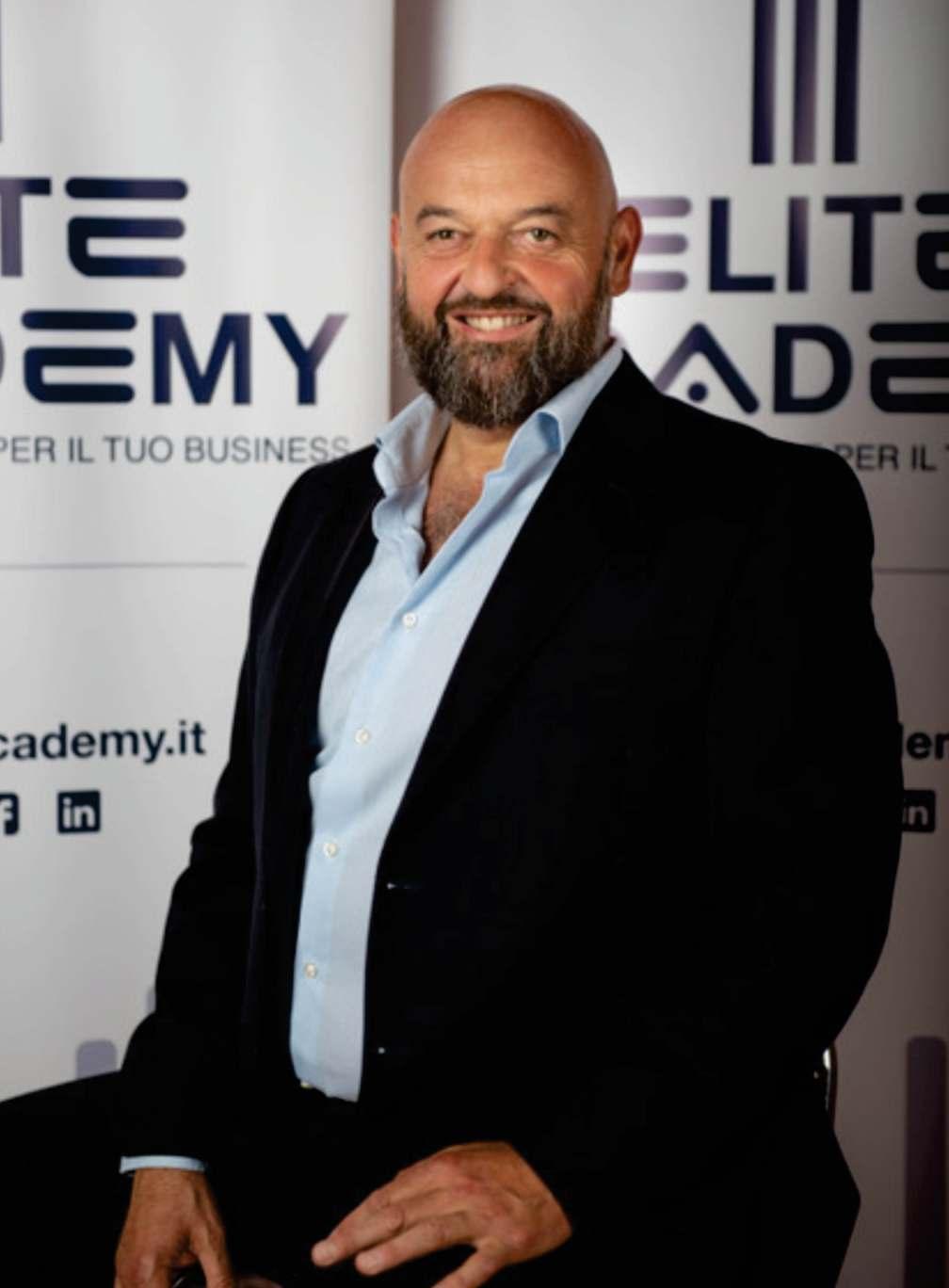
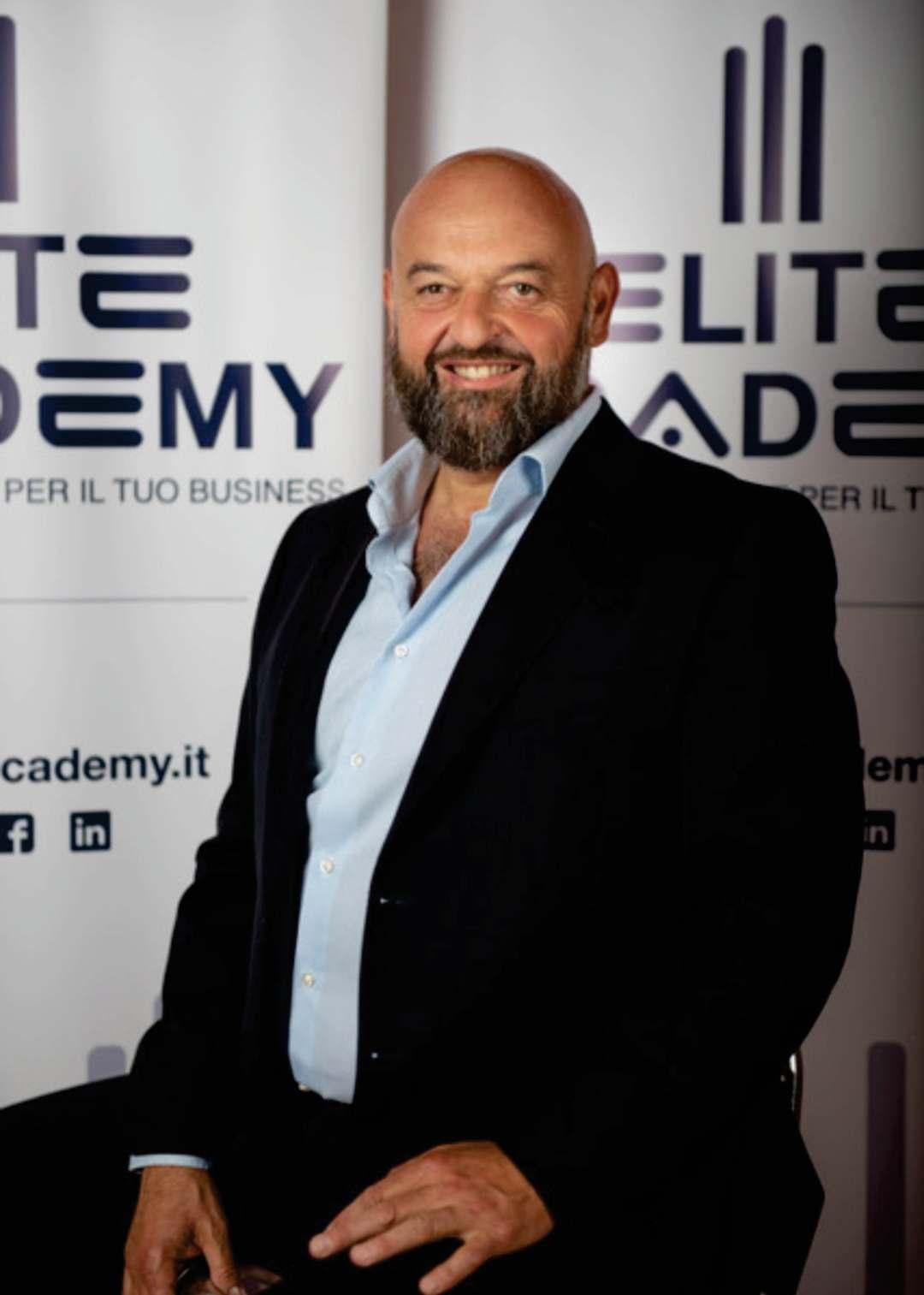
According to Alessandro Bertoldi, businesses are founded on three basic elements: People, Ideas and Capital. Among which, one of the most striking elements to ensure the success of any business is its People.
To make the most out of every individual's untapped potential, Alessandro Bertoldi launched Elite Academy. Thus far, the transformational leader has trained and coached countless people in many small and medium-sized companies. His vision is to create a multicultural and multinational company where individuals from all walks of life — different ethnic groups, religions, and cultures — are encouraged to put their best foot forward.
Founder & CEO | Elite Academy
Alessandro's ambition is to imbibe different sources of knowledge and spread it among people who share values such as freedom, respect, solidarity, and trust by generating the right economic return for those who are a part of it.
In this Exclusive Interview, Alessandro talks about his journey, Elite Academy, and shares his invaluable ideas on leadership.
What do you think makes someone a transformative leader? How do you integrate the same thinking into your leadership?
The Transformative Leader is the one who adapts to the environment in which he lives,
making his skills compatible and required by the environment itself or, even better, creates and transforms the environment around him in order to make it compatible with his desires, ambitions, Vision.
In my opinion, there are two types of leaders from this point of view, someone adapt to the environment, and someone generate, by inluencing it, the right environment for themselves.
The second is the real Transformative Leader, the one who impacts on his environment, transforming it and, of course, evolving in turn.
Talk to us about your growing up years. What is your earliest memory as a leader that you can remember?
My irst manager experience goes back In 1990, when I was 22 years old. I was invited in the plenary manager meeting of the company for which I was working as a salesperson located in Florence.
After a few months of activity, I was invited to participate as a guest.
I was very nervous, I had never attended a meeting of this type, all the best were present and I, as a newcomer, felt out of context.
At one point I felt called, in front of everyone, by the President of the Company, he invited me to stand up and comment on my promotion, in record time, to Sales Manager.
My blood ran cold, I was afraid, but I got up and spoke. My intervention was bad, but I remember with pleasure the moment when I got up
and spoke, I felt like a Leader for getting up, despite the fear.
What prompted your interest in training and coaching? What was the idea that led to the formation to Elite Academy?
The truth is, as a boy, I was very shy with women; I just couldn't communicate with them and it frustrated me.
To overcome my dificulties I started reading, the irst book I bought was by Alexander Lower, "The language of the body", then I bought the irst training course, it was 1989, for over thirty years I have been reading, studying, participating in developmental courses and I use other Coaches to improve myself, despite this I believe I am at 20% of my potential, perhaps.
Being the Co-Founder of the organization, what is the role played by you in the day-to-day proceedings?
I am very focused on the activity related to establishing and maintaining a privileged relationship and developing PR with clients who, despite being a company, are always made by men and women.
I constantly try to get to know People of value on Linkedin, I love this Social, which has allowed me to start over or to start new initiatives several times, thanks to the ease with which it allows you to ind the right Person. Thanks to this tool I was able to internationalize my activities in Malta, Serbia, Montenegro and Bulgaria.
I am also involved in selling; I love selling and I consider it an extraordinary moment to apply and reine Leadership.
Finally, when I follow a client directly, as Project Manager of the planned consultancy, I am obsessed with understanding what to manage, how and what results to produce, I immerse myself in the client's business reality and experience the company as if it were mine.
Being a global leader, industry expert, serial entrepreneur, trainer, and coach, how do you ensure work-life balance?
I have the privilege of having my partner Ana M. Alvarez as the wife and mother of our daughters, she is worth 60% of my ability to produce and remain in partial balance.
In December 2021 I discoverednever had this happened to me - the disease. Without her I would not have gone anywhere, I am extremely grateful to have known her and to have been lucky enough to have her close for these 27 years.
Today I am much more aware of the value of creating a Family that shares a Vision, it is an incredible strength.
I admit that what has happened in these two years has allowed me to focus more on myself, so the health crisis was - for me - an advantage from this point of view.
Precisely due to the fact that this aspect is not my strong point, I cannot claim to be balanced, but I am working on it.
What has the journey been like for Alessandro Bertoldi over the years? Looking back, what would you have done different if you were to start again?
My journey has been a constant battle, irst against my behavioral limits, then against my father, then against my mother, then against the market and, ultimately, against anyone.
If I could, I would change, in my past, my management of aggression towards the environment around me, I have spent a lot of energy in useless or counterproductive battles, harming myself or others.
What has been the biggest roadblock during your journey? What has been your biggest learning?
My behavioral limitations were the biggest obstacle; the fact that I could overcome them the best learning.
Not knowing how to relate to my father and mother marked me a lot. Today, being a father myself, I realize that what I have endured can be an advantage in better understanding my daughters, Isabel, aged 16 and Eleonor, aged 7. I ind myself today, in reversed roles, living moments similar to those I lived as a child or a boy. I have so much to learn in this area and I am grateful for the opportunity to do so!
Looking at the changing work environment and trends globally, what would be your advice for emerging business leaders?
Businesses are founded on three basic Elements: People, Ideas and Capital.
In my opinion, today people are the most important element to ensure the success of your business, focus on this ingredient!
Particularly created conditions where each individual belonging to the company can be valued for what it is and not just for what it is for.
Finally, what does the future look like for you and Elite Academy?
I imagine that I am creating a multicultural and multinational company, able to support Entrepreneurs in managing their business development.
I want to be able to help Entrepreneurs make their businesses prosperous.
Consequently, making Elite Academy a unique company desired by those who are looking for an unconventional, politically incorrect, and effective partner in managing the growth of their businesses.
As far as I am concerned, I want to create a condition of my life where I am not free to live and work anywhere, feeling myself as a citizen of any place where I decide to live a shorter or longer period of my life, obviously without having to worry about my income, which is guaranteed by the work of wonderful people who work primarily to achieve their goals and who, by achieving their results, allow me to reach mine and those of my family.
An Entrepreneur’s Four-Step Guide
Entering the Educaon Market
More than ever, smart companies are entering or expanding in the education market, many of them in unexpected and proitable ways From creative start-ups to architects to huge tech names such as Dell and Epson, they realize that this multi-billion-dollar market is part of a potentially lucrative future-forward marketing strategy.
In the past 18 months, education as an industry has grown signiicantly with the inlux of additional state and federal funding to meet the new demands created by the COVID-19 pandemic. Many businesses are sensing this opportunity, but how and where to start?
As you consider this market, keep in mind both the larger institutions and the premium value of teachers as an individual consumer target audience. In the next year, 85 percent of teachers are planning to make some large purchase decisions, such as a vacation of a week or more (61%), according to an August 2021 survey of teachers from Harris Poll and sponsored by Agile Education Marketing and SheerID. To help with their purchase decisions, nearly all teachers (97%) say they proactively research brands through online reviews (80%) and online searches (71%).
Understanding teachers' interests and spending patterns can give you the insight you need to break into the education market and amp up your revenue.
With that in mind, let's get started:
Step 1: Learn the market.
How do you know if this is the space for you? The world of education is a highly fragmented, ever-changing place, unlike any other market out there. The largest segment—and probably the one most impacted by COVID—is Kindergarten through 12th Grade. The K-12 system is the most dependent on government funding, so it's always looking for innovative services and products to serve more than 56.6 million students in public and private schools Savvy entrepreneurs need to identify key factors:
Ÿ The speciic purchasing patterns of target school districts or education systems.
Ÿ The key decisionmakers and the process for the major purchasing decisions.
Ÿ The size of the school budgets, broken down by strategic categories.
It's important to remember that virtually all
school and district purchasing decisions are made collaboratively by groups of educators. This means that you usually cannot just target one job title. You need to familiarize yourself with the various roles and responsibilities to determine all the key players.
Step 2: Understand these key players.
Digging deeper, there are approximately 4.3 million educators and school staff in the U.S. in K-12 alone. Collectively, they account for 3.4 percent of the American working population and represent up to $15.8 billion dollars in spending in key consumer spending categories.
Pay particular attention to their buying persona. Teachers tend to have a higher discretionary spending budget and, on average, have a higher earned income than comparable non-educator households.
Understanding the speciic buyer personas can help you tailor your approach and determine which districts and which job categories you should target.
Speciically, you should keep in mind:
Ÿ The education market outperforms the general public, government aside, in direct marketing campaigns. They are active, loyal, and highly inluential consumers, especially for companies that provide them discounts.
Ÿ They have relative inancial stability and high education levels. Roughly 75 percent are female, and women traditionally hold a considerable portion of household buying power.
Ÿ Teachers are generally well-respected members of the community and are often looked to for advice, both inside and outside the classroom.
Ÿ They are among the irst to identify what
Ÿ resources are needed in schools, even the non-traditional products or services.
Step 3: Provide speciic solutions.
Many companies are inding their way into the education market, including irms not traditionally linked to classrooms, such as food service, transportation, software, local attractions, security, janitorial services, and more.
This means that if you carefully examine all the possibilities, there's probably a spot for your company or product. Using strategic audience segmentation is the key to sharper messaging and higher response rates. The more you align
your message to the needs of the person on the other end, the more likely they will listen.
For each potential product or service, remember to drill down deep in considering:
Ÿ Who has used our product or service before, and how did it work?
Ÿ How is it going to solve the problem and need of those I'm contacting?
Ÿ How can schools or individual consumers pay for this?
Step 4: Timing is everything.
Connecting with the consumer at the right time is essential, especially in the K-12 sector, where understanding the purchasing cycle is a key component in achieving success. Most schools inalize their budgets during spring to early summer. This means that the start of the calendar year (or maybe even earlier) is the optimal time to be in front of educators. They can't budget for your products if they don't know about them.
Paving the way for a smooth sales process starts with carefully tailoring your marketing communications to provide what educators need at every stage of the decision-making process. With billions lowing into this market, now is the time to assess your potential.