EXELEON FITNESS
By Carissa Johnson
By Sean Barker

By Carissa Johnson
By Sean Barker
600 N Broad St 5 Middletown, DE 19709, United States +1 (302) – 569 – 9387
Editor-in-Chief –
Art Director –
Managing Editor -
Creative Director –
Contributing Editors –
Daryl Yeung (Story-Tailor)
Naomi Lam (Design Ninja)
Adrian Reyes (Wordster)
Adam Waring (Grafista)
Ian O'Shea, Matt Hale, & John Riggs (Three Musketeers)
Content Curator –
Cathy G. (Explorer)
Project Manager –
Marketing Manager –
Senior BDM –BDM –
Josh Wilder (Cultivator)
Mike Jackson (Marketeer)
Katherine Price (Sustainer)
Richard Dann (Facilitator)
Exeleon has always made sure to focus on stories of individuals and entities who are an example of excellence. And this is not limited to any industry to any particular ield.
Following its rousing success in the business magazine space, Exeleon is now introducing Exeleon Fitness Magazine.
Through this magazine, we aim to showcase the world of itness in a light never seen before. Exeleon Fitness Magazine will include stories and journeys of inspiring individuals from the itness space. It will comprise expert opinions from itness experts. It will also feature exclusive interviews of prominent industry personalities and many more.
With Exeleon Fitness, our focus is not limited to only itness, we are looking into focusing on aspects related to nutrition, health, mental wellbeing, and lifestyle.
In this inaugural issue, our focus centers around stories of itness models. The issue features various itness models who have inspired many with their journey and philosophy on health and itness.
For any advertising related information, please contact info@exeleonfitness.com. Submissions as well as contributions to the magazine are welcome.
Take a moment and let us know about our magazine; whether it be about the design or a possible mistake, we would appreciate any feedback from your end. You can reach out to adrian@exeleonfitness.com.
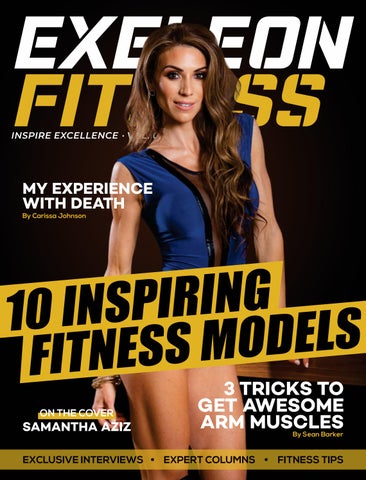
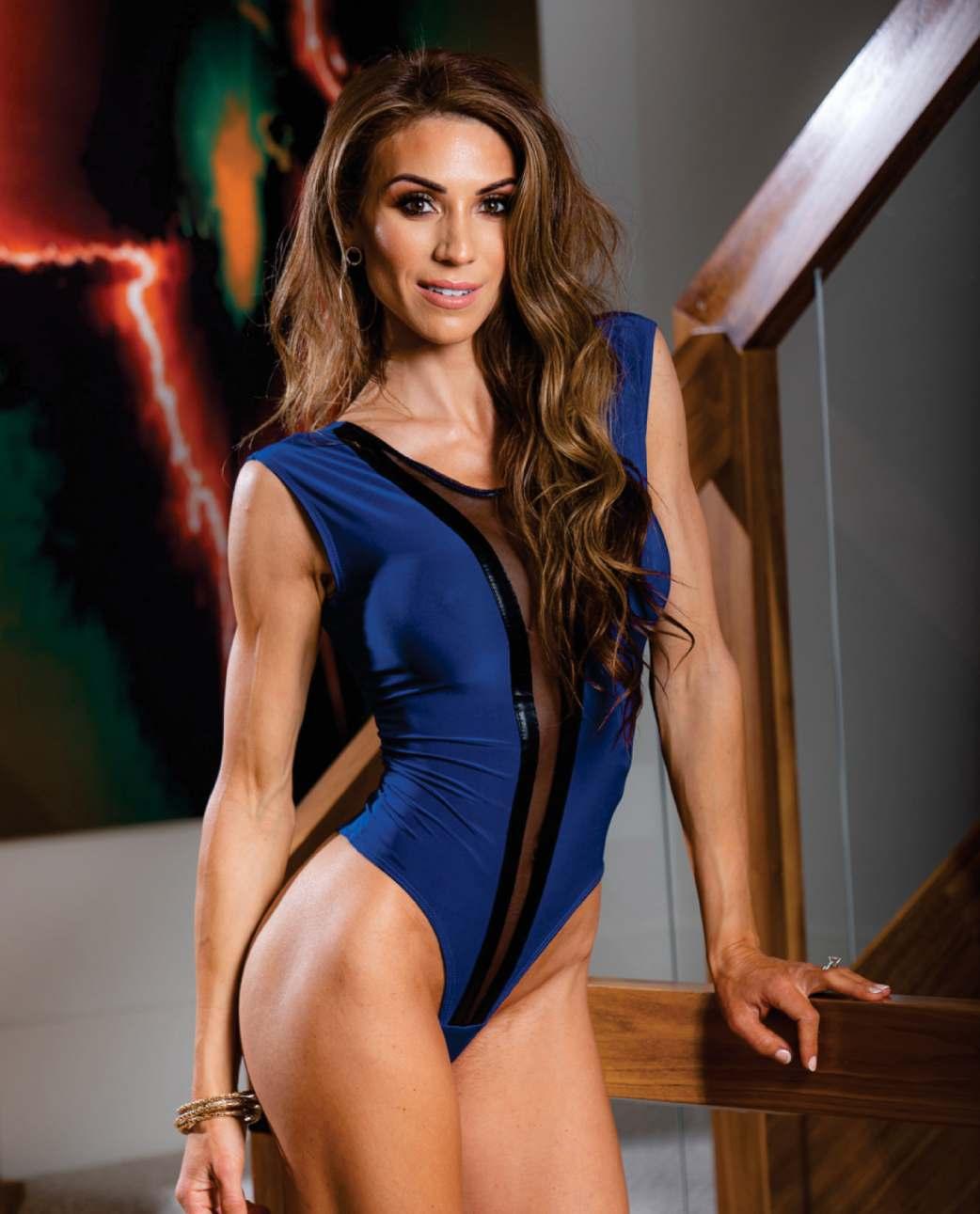
One such personality is our Cover Feature, Samantha Green Aziz, itness model and premium itness trainer. Samantha embodies the phrase – 'in top shape' and strives to enthuse young mothers and itness enthusiasts to eat right, work out regularly, and lead balanced lives.
Moreover, we have an inspiring personal story of Carissa Johnson, articles by industry experts, and interviews of models Karina Basacchi, Debbie Sergue, and Summer Jacobs and more.
Read our inaugural magazine and be prepared to inspire excellence!

Carissa Johnson: My Experience with Death 20.
Interview with Super Model Summer Jacobs 28.
Debbie Sergue: Making Consistency a Lifestyle 36.
Faith Foster: My Journey with Weight Loss and More 32.
Karina Basacchi: In a Continuous Pursuit of Attaining Growth and Success 46.
I’m a Personal Trainer and Maybe You Need to Stop Exercising 40.
3 Training Tricks to Sculpt and Shape Awesome Arm Muscles in Minutes 24.
Understanding Trauma will Help You Grow as a Fitness Professional 62.






When you see a it and fab person, what is the irst thought that crosses your mind? “Poor thing, must be starving herself” or “So much of effort to build a physique like that!” Doesn't a mix of envy and wistfulness cross your mind? The itness wave has caught on, real and proper, with the world and its cousin training a close lens on what they eat and how long they work out.
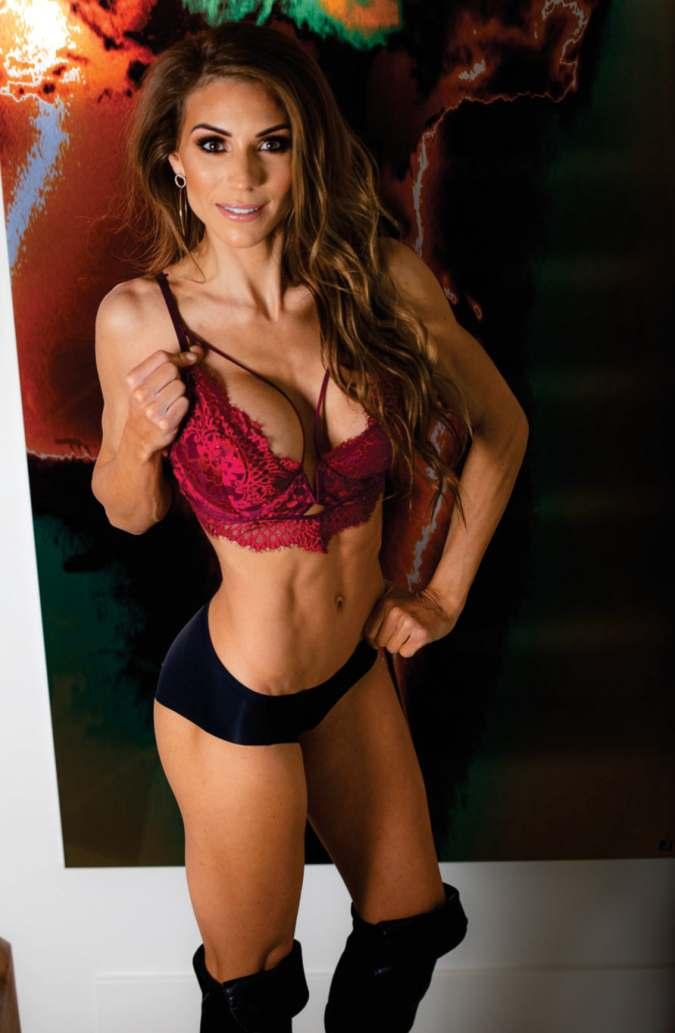
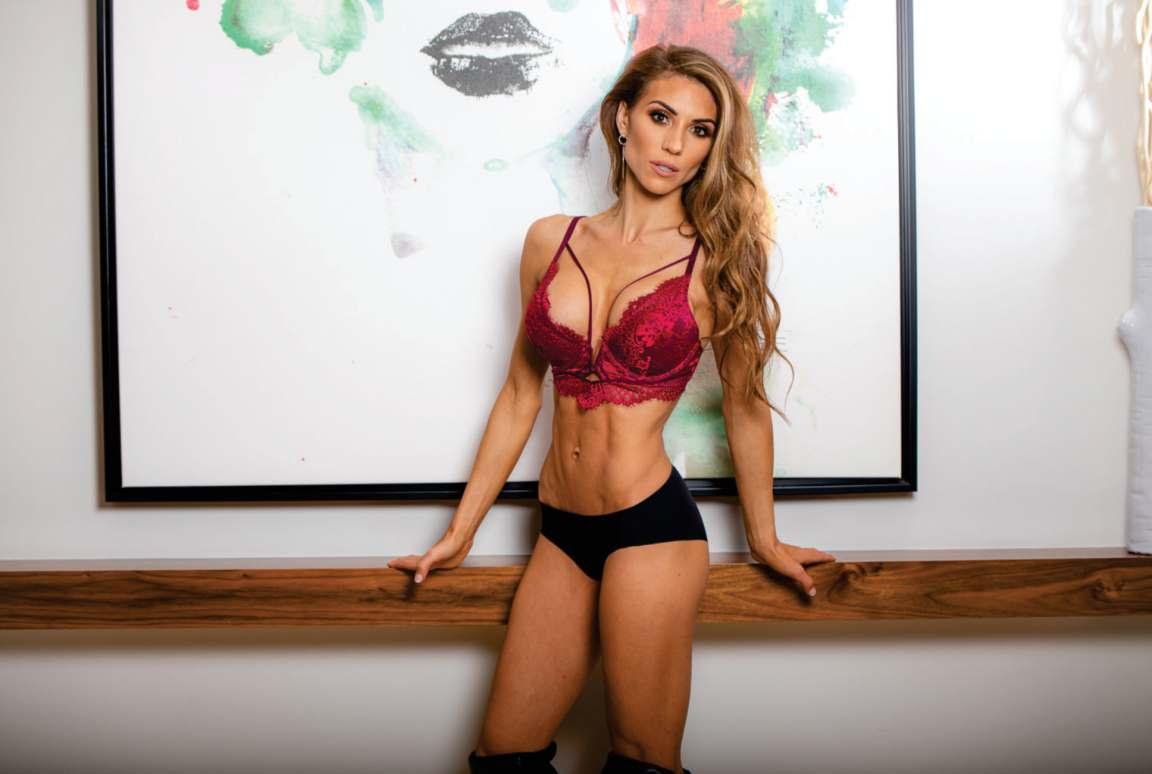
Take a itness cue from our cover girl, Samantha Green Aziz, ex-itness model and premium itness trainer. For her, itness is not a choice, it is the only way to live.
Samantha embodies the phrase – “in top shape” herself, and strives to enthuse young mothers and itness enthusiasts to eat right, work out regularly, and lead balanced lives.
Her Fitness Journey – A Lifelong Commitment
“Fitness has been a passion of mine since I irst competed in a WBFF

‘‘
The most freeing thing you could ever do for yourself when it comes to battling with food, is learn to understand it, don’t fear it.
Bikini Competition in 2010, where I rd placed 3,” says Samantha. “This experience taught me how effective it was to transform one's physique, simply by fuelling your body with the right nutritious foods and exercise in place.”
This was the start of a lifelong relationship with itness for Samantha. As a certiied personal trainer, she inspires people to stay in shape and take good care of their bodies. In her own words, she “became fascinated with sculpting and transforming (her) body, (and) felt compelled to help others do the same.”
She acknowledges the role her mentor, Kendra Dietrich, played in ably guiding her, and credits her contribution in attaining success.
Kendra mentored her on proper form, technique and nutritional advice and gave Samantha a signiicant direction in her itness journey.
Samantha's commitment to itness started some years after she took part in the bikini contest. Preparing for the competition made her literally starve herself. She admits. “It took me some time after my competing years to study, learn and understand nutrition. Restricting yourself while doing a contest prep can be mentally hard… while creating an unhealthy relationship with food.”
Most contestants, Samantha mentions, either continue with the unhealthy diets prescribed during the competition, or give in to binge
eating once everything is over.
Her own tumultuous relationship with food and eating forced her to learn nutrition to take back control of her life. She strove to have more balance in what she consumed, and learnt to understand and respect food rather than fear it.
SAMANTHA'S ADVICE FOR BEING FAB AND FIT
She lists three essentials of sticking to itness goals for a healthy, happy life – Consistency, Moderation and Accountability.
This is how she sees it:
The irst rule is Consistency in having a workout plan and scheduling time to work out. “Treat
BBeing consistent, no matter how short or long your workouts are, is the biggest key to creating healthy habits and implementing fitness as part of your lifestyle.
- Samantha Green Aziz
it (the workout plan) like a meeting, cross off that time as if it's booked.”
She suggests having a backup plan for days when things go haywire. If you can't workout, “at least do 100 squats and 50 abs a day to make up for missing out that day. This way, you don't have to beat yourself up because you missed a workout and you can still count the day as a success.”
In Samantha's view, consistency is vital to creating healthy habits and implementing itness as part of one's lifestyle.
The next rule she suggests to her clients is Moderation. She tells them to follow the 80/20 rule (80% healthy nutritious foods / 20% not so healthy foods to give in to cravings) for diet and nutrition. That way, she feels, you cut yourself some slack. “It allows you to not have to restrict yourself while trying to reach your itness goal.”
Even for sticking to workout plans, she suggests moderation. It is better, she says, to ix a time span for working out, something that suits that individual's lifestyle. “It has to make sense, or it won't last. Something is always better than nothing.”
The last rule for an effective itness plan is Accountability. Motivation to stick to your itness routine, and taking responsibility for following it are absolute
musts. She suggests trainees join a group challenge and train with other itness enthusiasts.
Bonding with a community, laughing together, giving encouragement to each other, and sharing workout experiences go a long way in making one's workout plan a success. Here's what she suggests for making things more exciting in a itness plan. “Challenge a friend/partner for 30 days in a group chat.” Or, alternatively, “use a workout app from the comfort of your home, (or) create and use an accountability weekly chart and hang it on your fridge.”
Samantha has been keeping a laminated accountability chart taped to her own fridge for the past couple of years. She gets motivated comparing a week's workout chart with another's. This comparison fuels her up and eggs her to do more.
She insists on illing in this chart every day, even on days when things aren't perfect and she doesn't work out that much, so that progress can be tracked accordingly. Her determination and commitment to the itness routine gets a much-needed kick from this activity.
“It's very crucial that you celebrate the small victories as it builds a solid foundation for healthy habits long term,” she insists.
Samantha learnt from her own pregnancy how important and
beneicial it was to stay active. She designed e-books to share itness tips with other expecting moms. She explains, “Each EBook is designed with all considerations of each trimester. As an example, the 1st Trimester is where most (mothers) are exhausted and possibly lethargic and battling morning sickness. So, it's a short circuit with no jumping and up and down movements.”
The second trimester, when a mother feels more energized, a more vigorous and challenging workout plan is suggested. And in the last trimester, when the pregnant lady's movement slows down, the more strenuous exercises are removed for safety. She has designed workout circuits with a recommended number of laps, and the expecting mother can choose to do more or less as her health permits. She advises on consulting a doctor before starting the programs.
As with everything else, there are pros and cons of technology usage in itness, Samantha emphasizes.
During her initial days into the itness journey, she herself had used an app to track and understand her food intake. That had helped her take her commitment to itness and nutrition seriously.
Samantha acknowledges the role of apps and social media in building communities and also in
making itness popular. These apps, according to her, raise the accountability factor for those who work out alone. Also, she admits that sometimes you get genuine good advice from itness experts and gain free access to useful contents.
However, she warns against being unduly swayed by social media inluencers and untrained itness “experts” who dole out unscientiic advice. She is put off by the promised miraculous effect of pills the inluencers claim to be using and post about. These are touted as the “key” to achieving an ideal body, which is totally misleading.
Favorite Exercise- HIIT workouts.
Ideal Breakfast- SmoothiesBlueberry/banana/ French vanilla protein powder.
Favorite Cheat Meal- Popcorn. Always.
Fitness in One Word- The Antidote
Favorite Quote - Being fit is hard. Being overweight is hard. Choose your hard.
As an experienced trainer, she insists, “I believe we should….encourage a natural diet and more movement. Focus on fueling your body with nutrients, and (with) less illers which make your body crave more and more food, because it's consuming empty calories and not able to attain a sense of nourishment or satisfaction.”
Eating right and healthy is the key to itness, and it is essential to consult a nutritionist for
proper advice. She warns itness enthusiasts against taking all suggestions given on social media apps seriously, and advices against religiously following unsubstantiated hacks doled out by inluencers.
PERSONAL MOTIVATION – THE KEY TO PROGRESS
Not all days are equal, says Samantha. There can be unproductive or lazy days, but she insists on making commitment to itness a regular affair.
She admits, “Some mornings I don't feel like working out, but I get up and go downstairs and wait for my body to wake up and the motivation (to) sink in. For over 10 years now, I work out irst thing in the morning, then my day starts after that. It's not something I have to think about. I just do it out of pure habit. I also want to, even when I don't feel like doing it. I know that it's my medicine for clarity, energy, mood and it kickstarts my morning productivity.”
As for the way ahead, Samantha is upbeat. Though her training programs have been kept on hold due to her own motherhood journey, she promises to come back with a bang. “Nothing makes me happier than helping other woman feel their best and love the skin they are in. Conidence is everything. And I believe everyone should feel that way,” is what she irmly believes.
She has imbibed itness and nutrition into the lives of her own family members. Have fun while taking care of yourself, is what she suggests. She wants her kids to willingly work towards being active and it, not because they have to conform to some ideal of a perfect body, but just because they enjoy being it.
That is what makes us the best versions of ourselves, Samantha signs off.

Written by Carissa Johnson
If you've heard my story before, I
wouldn't be surprised. I'm shameless about sharing and honestly cannot shut up about it as my fitness journey is also my testimony of miracle after miracle and proof that God cares about every detail of your life even when the world as you know it is turned upside down. When you see what I've seen, and experienced the undeserving goodness and graciousness of Jesus first hand in both spiritual and physical ways, the last thing I can do is to keep quiet.
It'll be 10 years since I achieved my dream of becoming a WBFF fitness Pro 4/16/11, and 10 years since I survived the unthinkable and my life was turned upside down exactly one month after turning Pro with the WBFF.
Becoming a fitness pro was a literal dream come true as fitness has always been my passion. I had transformed from a skinny soccer playing, endurance bunny high-school teen to a much healthier, stronger version of myself in my 20's. I was on a mountaintop, ready to work towards continuous improvement with my physique, in my personal training career and in life, in general, when I was nearly stopped dead in my tracks.
It was as if one of the Final Destination films had come to life. A situation I could have never imagined in my wildest of nightmares was unfolding right in front of my eyes.
It was the morning of the 2nd day of a promotional modeling job in downtown Denver. I was handing out
promotional materials for a Doctor's convention, standing stationary, on a Segway, on a sidewalk when I heard metal crashing.
I looked up only to see a giant SUV heading straight toward me. Time seemed to slow down as the SUV raced towards me and life flashed before my eyes as I shot up a prayer knowing in the next moment I would likely meet Jesus.
I closed my eyes only to feel the violent impact of the SUV traveling at full speed causing me to fly and then a second impact as the SUV managed to pin me against a steel rail fence, snapping both legs in half as the vehicle was finally forced to stop only by slamming into myself and the strong rail I was pinned against. It can
only be considered a miracle. I know for a fact the hand of God saved me that day.
Not only was I alive, I was incredibly alert, feeling the cold wind on my broken bones and the scolding heat from the vehicle on my shattered legs that remained trapped between the SUV and the fence. I was in excruciating, unbearable pain and experienced both fight and flight modes encouraging me to scream for
help at the same time. I fought to bend over the fence in an effort to escape the vehicle that nearly killed me - even if in my adrenaline infused body at the time - it meant pulling off my legs in the process. I was determined to escape as I felt this was the only way to survive at that point.
Thankfully, before I had the chance to rip off my legs or have them burned or severed off by the sheer force and unrelenting pressure of the SUV, an ER
doctor who was attending the convention narrowly missed getting hit. He managed to get the driver of the vehicle to back off my legs and caught me, placing me on the frigid sidewalk.
I looked up at the sky...feeling beyond helpless and vulnerable, angry towards the carelessness of the individual that nearly cost my life, but at the same time grateful and humbled to know that God saved my life; thankful for each breath, yet terrified as I lay there at the

mercy of others, unable to move my legs and uncertain of the extent of the damage.
My legs felt as if they were on fire, while at the same time feeling the chilly wind hit my exposed bones creating an achiness and indescribable pain I wouldn't wish upon my worst enemy. I cried in pain for someone to knock me out or give me absolutely anything to help me endure the excruciating pain I was experiencing as it honestly felt like I wouldn't be able
to survive and suffer through it. I wanted a moment of peace, a break from the pain even if for a moment but the pain was constant even with medication. Only with time did I finally experience some relief.
I suffered compound (through the skin) tib/fib breaks on both legs, plus a compound left ankle fracture. The skilled ER doctors flushed my legs out then inserted rods and pins as we all hoped and prayed for healing, as the risk of non-union of my bones and infection was high. I lived on the couch for 2 months, relying 100% on others (aka my mom, my angel) for everything as I was unable to do anything other than some arm exercises I would attempt to do after some time daily off the side of the couch in order to feel some sense of normalcy.
Due to the extensive nerve damage, my legs continued to feel like they were burning for months. My days would consist of trying to sleep (as much as I could as it was my only escape from the pain, massive migraines and the torment in my mind from the uncertainty of my future), upper body exercises, and doctors' appointments to try and begin recovery - physically, mentally, and emotionally.
Of course hindsight is 20/20...
But my reality and future outlook was not looking bright, as you can imagine.
I was in a wheelchair, uncertain if my bones would ever fuse. My PTSD from the crystal clear vision of what could have been my last moment on earth haunted me.
My career in fitness was obviously questionable.
My unrelenting migraines led to not only a post concussive diagnosis three months after the accident, but I was also diagnosed with a low grade glioma and advised to have brain surgery. Thankfully, after prayer I sought opinions from other neurosurgeons and didn't go through with the surgery. Since 2011, I've had countless MRIs to watch the spot which could, instead of a glioma - be scarring from the impact of the accident or trauma from birth. It is unknown but unnecessary to operate unless the spot grows or I have additional symptoms. Unfortunately that same week in August 2011, my brother in law was diagnosed with a low grade glioma as well - but sadly, he lost his life to the tumor less than a year later. The survivors' guilt I faced was intense.
Recovery was not an easy or quick journey. It took 6 months for my bones to fuse. I was unable to flex my ankles or walk downstairs for an entire year. I lost a significant amount of muscle as it felt like my legs were being smashed anytime I'd try to walk.
I walked with a limp for longer than I even know. As soon as I could flex my ankles I wanted to get back on stage and did...although with very little muscle. But for me, it was a win as I had fought through the darkest time in my life to see the other side when I was uncertain if I'd ever make it out.
I'd be lying if I told you I'm at 100% now 10 years later. I have significant weaknesses and PTSD like I can't even begin to explain, but my scars help remind me of how blessed I am and how far I've come.
No matter your storm, there is hope in Jesus.
MMost of us busy parents and professionals with real lives, don't have the luxury to follow the latest “muscle and iction” magazine arm workout. Workouts that only work for genetic freak bodybuilders who spend hours in the gym every day and many using chemical assistance. Arm workouts that take an hour or more using complicated machines and leave you unable to comb your hair for days due to the intense muscle soreness that follows.
To get maximum results in minimum time with your workouts and not spend an hour of your day training muscles the size of baseballs, here are three training tricks to sculpt and shape awesome arms.
Insert one of these methods into your regular upper or lower body workout, do all three methods as a standalone arm workout in less than 30 minutes or just add one method to the end of your main workout as a inisher to add some muscle to your arms without adding much time to your workouts.
1
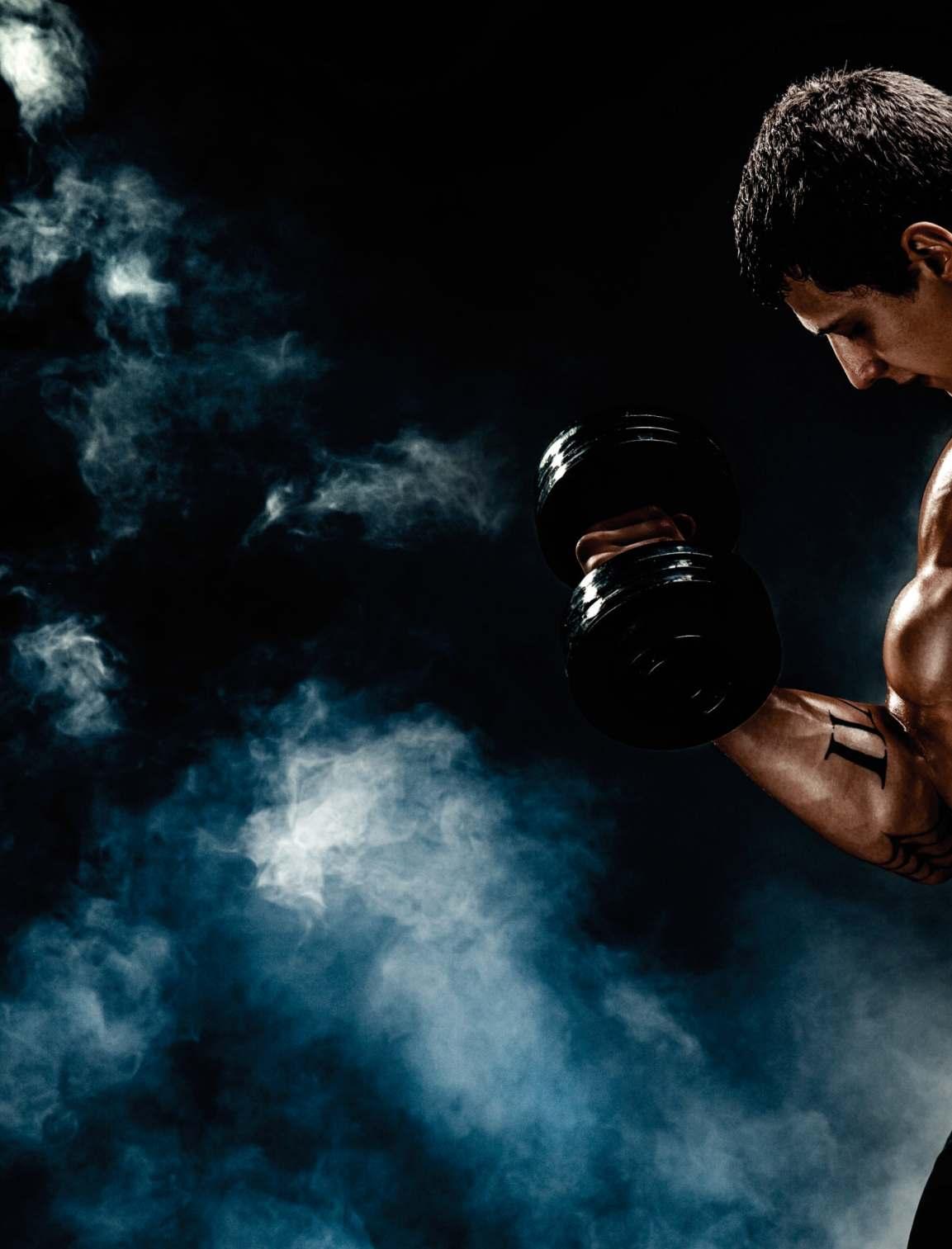
If you want some new bicep growth, use this old-school training trick that saves you time in your workout but blasts and burns your biceps. It's called “Run the Rack”. You will need a selection of heavier to lighter dumbbells, but you can do similar with a selection of barbells, bands, or a cable machine.
Pick a set of dumbbells “off the rack” or off the loor is ine if you don't have a rack at home (we are working out arms here not semantics). After a proper warmup, perform 8 reps of standing two-arm dumbbell curls with both palms facing up. No rest
•Move down 5lbs for the next set and perform another 8 reps. No rest
•Move down another 5lbs and perform another 8 reps. No rest
•Move down another 5lbs and blast out another 8 reps, if you can. Rest for 2 minutes.
•Repeat one more time through if you dare but start your second set with 5lbs less weight because it will feel a lot heavier in the second round due to immense muscular fatigue!
Here's an example of this training trick to “run the rack”.
Set 1: 35lbs, 8 reps
Set 2: 30lbs, 8 reps
Set 3: 25lbs, 8 reps
Set 4: 20 lbs 8 reps
2
Want to instantly blow up your arms from the front and back with a pulse-pounding pump in just minutes with one set of dumbbells?
First, take off your watch as it might begin to stretch and you won't need it anyway, because you won't be counting time for your rest period in this superset, because there isn't any!


Written by Sean Barker
•Half-Kneeling 2-Arm Dumbbell Bicep Twist Curl for 8–10 reps. No rest
This position prevents swinging and cheating that is common while standing up while you curl and allows you to transition to the second exercise faster on the loor. Kneel halfway up from the loor holding two dumbbells by your sides with your core and glutes tensed tight. Your palms should face in towards your hips at the bottom stretch position of the curl and rotate and face up at the top while you curl. This twisting or supination of your bicep is the other function of your upper arm and wrist besides the basic curling or lexing motion of straight up and down, so you hit both angles of the biceps.
•Lying 2-Arm Dumbbell Tricep Extensions for 8–10 reps. No rest.
Lie back on the loor (or a lat bench) and hold the dumbbells above your chest, bend at the elbows without moving them out of position while lowering the dumbbells slowly behind your head to softly touch the loor or slightly behind a bench. Raise them back up to lock out your arms straight above your chest. Keep
your palms facing towards each other and your thumbs facing behind your head.
Move back and forth through 3–4 sets of both exercise #1 and #2 with minimal to no rest until you fatigue and can't perform at least 6 reps in each exercise.
By rotating between these two exercises, you are working antagonist or opposite muscle groups of the biceps and triceps with minimal technical rest in between but just enough rest to continue through fatigue as one side of your upper arms gets a little rest while the other side does the work.
3
You don't have to waste your time hammering out separate exercises for each part of your forearm extensors (top) and forearms lexors (bottom) if you want Thor-like forearms.
Despite its name, the angled (easy) EZ curl bar at your gym or if you have one at home, might be designed to be easier on your wrists — but don't think it's easier on your arm muscles.

Try this exercise variation of the Reverse Curl- Curl to fry your forearms and blast your brachialis. Which is the muscle that lies underneath your bicep, connecting your forearm to your bicep in your upper arm.
Start standing and holding an EZ Curl Bar or even one connected to a cable machine, that you can do 8–10 reps with for a reverse or palmsdown grip. Choose a weight a little lighter than you would curl with palms facing up on the bar.
Then with your palms facing down and thumbs wrapped around the bar, lower and straighten your arms at the bottom and before you curl back up, curl your wrists in towards your thighs while lexing your forearms lexors (the bottom belly of your forearms). Then before you curl back up, curl your wrists in the opposite direction, up and away from you, working the forearm extensors (the top of your forearms). Perform 3–4 working sets of 8–10 reps with 60 seconds rest in between sets.
So give these arm training tricks a try to blast your arm muscles in minutes and let me know what you think by leaving a comment below — that is, if you can type afterward.
AUTHOR BIO:
Sean Barker, Owner and Operator of KV FIT, is a husband, father of two, foodie and experienced itness coach. Sean is a contributing writer for many mainstream itness publications, including Men's Health and Inside Fitness Magazine.
Sean believes “Every day is a chance to get better,” for himself as a coach, as well as his clients. He continues to be driven to succeed in spreading his passion for achieving health and happiness.

From having self-doubt to building a reputed career in the modelling space, read the exclusive interview by Exeleon Fitness of Summer Jacobs.
How would you describe your philosophy on health and itness?
For me, it's most certainly interlinked. Not just being physically it but also mentally. How I feel or perceive a day helps me push harder. I see itness as an escape and also working towards a future for your body and mind.
What prompted your interest and subsequently your foray into the modelling space?
I was an extremely conident child. But growing up I was told negative things about myself that never came to my mind. It created a lot of selfdoubt, a sense of not being good enough or the misconception that the industry just wants white pretty
girls. I started my training to be a model just to irst build my conidence, which would also be a grooming for life. Little did I know that I'd fall in love with the camera and the camera with me. After my irst few shoots there was no stopping my ambitions and the rest is history.
What was impact in your career after winning the World Super Model India competition in 2017?
Representing your country in any ield brings about a lot of pride. It's not all glam. There's a lot of hard work and responsibility that comes with it. I knew I was on the right path after winning world super model India in 2017. After which I represented India in Macau amongst
20 countries and got selected for MTV India's next top model that very year.
What has the journey been like for you over the years?
Not going to lie, it wasn't all easy. You have to work hard and smart. I'm someone who's done everything by myself since I was 18. I didn't have a lot of support inancially but that didn't get in the way of my dreams. Yes it made it hard, there were days where I would feel like things aren't working out or I'd doubt myself, and that's completely ine we must take our time off, it happens a lot with everyone who moves all the way to Mumbai (India) to follow their dreams. But the fact that I get to wake up every day and do what I





love is a blessing in itself. And once things been certain, I have never quit. “Nothing in life is easy, if it was easy then everyone would be doing it.”
What has been the biggest roadblock during your journey? What has been your biggest learning?
I think the biggest roadblock during my journey would be me getting into my head sometimes. I've had my partner by my side to always cheer me on and be there for me, but facing the world and learning everything by yourself deinitely made me question if my life would've been easier if I had a stable family, but then again we're all dealt different cards and we work with what we get. I don't know if I have a biggest learning, because growth and educating yourself must never stop. You must grow every day.
What would be your advice for someone aspiring to enter the modelling space?
Everything is available online. Whether it's how to walk, posing, a lot of modelling camps. It's so much easier than the time I started off. Click a few normal pictures (polaroids) and send them to agencies and hear what their response is. Agencies go for diverse looks, or people that have their own uniqueness.
You have to have talent, be professional. It's not the easiest ield. If you want to get into the industry you have to move, because one of the ways to actually get work is to irst establish yourself. Clients work with people with portfolios or if you it their brand or if you're with a good agency, but they prefer for you to be at a model-centric location. Having a good agency can guarantee

you working with the right people, great budgets, no shady work and they also deal with all the formalities. The fashion industry in particular only works with models from agencies
Networking in this industry is the key. The industry is built on relations and word of mouth. Be good at your job and don't give anyone a chance to point ingers at you.
What does a typical day look like in the life of Summer Jacobs?
Since the lockdown I think we all have got ample of time to introspect. Investing our energy in the right places, yoga is something I've been doing for a while now. I love
watering my plants, I'm a crazy plant lady. Spending time with my dog. Checking up on the people I love. Now with COVID our audition methods have adapted. So thankfully auditions happen from our homes. I am personally happy auditions haven't stopped even though work has slowed down. I've started making videos on Instagram just for fun, sometimes making certain video because I relate to them makes me feel good about myself. And I think self-love is so important, one of the things 2020 has taught us.
How do you ind balance in between modelling, itness and life?
Everything in life requires a balance
you can't do too much of something. However modelling and itness are part of my life. Fitness as it plays an important role in modelling. And my life would be nothing without modelling so they're all pretty interconnected.
What keeps you motivated to train and work hard?
You can never stop working on yourself. There's always going to be someone better at something. Your competition is YOU, keep pushing your limits. Keep your mind and body strong. You might just surprise yourself. What motivates me is knowing that I only have me, and I have to be strong for myself to ight for myself. And I don't mean getting into physical ights.
Moving forward, what does the future hold for you personally and professionally?
It's great if you're someone who can make a 5 year plan, personally that's not me. I've come to realize that living each day, embracing everything I do one step at a time is so much more important. As long as I am on the right path, and I enjoy my journey. Where I'm headed doesn't scare me. I want to be someone who is content over being happy. The highs and lows are always going to a part of everyone's life, I don't think anyone's life is as perfect as they show it. And I don't want to be a part of any rat race.
It's been 6 years in this industry and I've loved every second of it. The good and the bad. It's taught me a lot about myself and the industry. I guess no matter what happens I'm always somehow going to be a part of the industry, I've found my love in it.
Exeleon speaks with Faith Foster to talk about her inspiring journey towar ds reaching her itness goals and reducing her weight.
What was life like for you before you began your itness journey? What prompted your interest for the itness space?
Growing up, I lived a very active healthy lifestyle. However, I struggled badly with mental health due to severe bullying throughout all years of school. Sports was my only escape. After I graduated high school, and my access to sports became limited, my mental health started to really take a toll on me. I lost myself and stopped doing the things I loved. I felt alone, and empty. My battle with severe depression and anxiety had me fall into a bad habit of emotional eating and never wanting to get out of bed. When that happened, I started to gain weight quite quickly. I could see it happening, I could feel it happening. But I struggled to do anything about it, and I absolutely hated myself for it. I just could not gain any motivation to help myself.
Eventually I wound up moving to a new city, where I found myself in a very kind, loving, motivating environment. This new environment gave me hope. I felt excited, accepted, loved. It motivated me to want to try and ind myself again. This new environment helped me get back into living a healthy active lifestyle, and I couldn't be happier with the way things have turned out.
Talk to us in detail about your weight loss transformation and how you attained your goal.
In July of 2020, I was the heaviest I had ever been. My self-esteem and self-conidence were non-existent. I felt desperate to lose it all. At irst, I wanted to ind the
fastest, easiest way to lose weight which at the time I thought it meant eating the minimal amount and avoiding all foods considered “bad.” I felt I had to lose the weight FAST. But the more I started to understand about nutrition and physical activity, the more I realized it's not a race. It's about health. I decided I wanted to lose weight in a healthy, proper, gradual way.
I started with my diet. I ate properly proportioned, nutritious meals, without restricting myself of my favorite foods/snacks. Monday-Friday I would try to eat healthy, nutritious foods. When the weekend came along, I would enjoy my favorite snacks.
Once I had established a good eating habit, I started to progress with the itness side of things. I would set weekly, attainable goals for myself. At irst my goal was just to lose as much weight as possible, and as fast as I could. However, my main goal turned out to be the easiest for me to achieve, and that is being healthy! I realized I don't need to be a certain number on the scale, and I don't need to look a certain way in order to be healthy, and for me that's the biggest achievement.
What was the contribution of F45 Training and Samantha Green in helping you through this journey?
Samantha has deinitely been my biggest supporter. She's helped to guide me through everything from nutrition to physical activity, to motivation. Her motivation to live a healthy active lifestyle really inspired me to get back into that lifestyle.
Samantha one day decided to sign us up for the F45 challenge 30, which was a 45-day HIIT workout and nutrition challenge. It deinitely played a huge role in my weight loss, along with my mental health. If it weren't for Samantha Green and her guidance and support, along with the guidance and support from the F45 trainers and program, I deinitely would not be where I am today.
What would be your advice for someone starting to lead a healthier lifestyle and trying to lose weight?
My biggest piece of advice would be to take your time. Don't rush things. I know that weight loss can make you feel that you need to ind the fastest shortcut to being a desired size and shape. But if you focus on doing things properly and making good habits for yourself, you'll be far more successful in achieving your goals. Focus on what you put into your body and moving your body.
What has been the impact of itness in your life? What keeps you motivated to train and work hard?
Fitness has played a large role in who I've become over the last year. Not only do I feel better physically, but I feel better mentally too. I have always had a struggle with mental health, and when I started my itness journey, I felt happy. I felt motivated. I felt excited. My motivation stems from myself, because I know what it feels like when I'm not working towards a healthy better version of myself. I know how I feel mentally and physically after working out, and it makes me want to continue with my itness journey each day.
How would you describe your philosophy on health and itness?
I think movement quality is important for optimal results in training sessions, in any case I want to see people active. I don't like to box myself into any particular category because health and itness isn't just about how you look on the outside. Training: I will always encourage people to pay attention to their Cardiovascular health, lexibly, mindfulness as this is just as important as Muscular Strength or Muscular Endurance. I personally do bodybuilding as my main sport, but I don't just lift weights.
I have an all-round approach that I want to sustain long-term, I have always been very health focused
myself & how energetic and well I feel day to day is a top priority. If you don't have super precise goals for your health and itness. I believe keeping it simple and sustainable is important. Consistency is KEY! The small daily habits compound over time so doing what you can EACH day makes a massive difference. The food I eat is 80% whole foods 20% Soul foods and that is generally how I manage my body composition yearround. I think you need to be aware that your body requires quality nutrition. Give it the best chance to thrive.
What prompted your interest and subsequently your foray into the itness and modeling space?
My life plan is simple. I break my life
into 10-year phases. 10-20 (School/uni) 20-30 These are my years where I go for things that are speciic to my age category and life before kids, settling down etc. are my priority. The goal in these years is to be a little bold, a little more selish, take risks, do bikini comps and embrace my youth. I am in the phase where all I do is TRY, TRY, TRY AND I am not afraid to FAIL + start over. This is a period of learning, having fun and again just appreciating my age bracket. I want to look back at myself during these years and feel really grateful that I embraced these years to the Max!
Right now, I do anything that I may not possibly want to do at a later time in life & I've always LOVED the idea of being on stage and working

so hard for that place on stage. It is very me!
Looking back what would you have done differently when starting out?
I think we have more science-based research openly available now, cutting the BS on bro-science like: fasted cardio being optimal for fatloss and cutting certain food groups out of my diet at the start was a massive myth. You can eat carbs, fats and protein and still loose body fat. You don't need to be fasting in the morning on the stepper to lose more body fat. These myths have since been proven by science as unnecessary for optimal body composition results. You don't need to suffer when you have the correct education.
From being a WBFF Athlete to being the host of a noted podcast, what has the journey been like for you over the years?
It has been amazing. Challenging like any journey. However, I am a longterm girl, I think more of life as a timeline, so I am happy to go through the waves and ride them all. I commit to things long-term from the start like I am embracing on a growth timeline, absorbing all steps carefully. I only start goals I am really passionate about and only do things I am I can submerge myself into from the soul. I feel like the real win in life is how you feel in the process of doing anything. A lot of people would say I am driven and relentless on my mission to achieve but I simply love to dedicate myself to whatever I've allowed into my timeline. So personally, my summary would be that this is the right time and the right thing for me.
What has been the biggest roadblock during your journey? What has been your biggest learning?
Oh my, I would say that many goals require capital. I think roadblocks will forever pop up. I had a mini stroke in 2018 the year before WBFF GC 2019. These were my comeback shows in 2019. It was sudden and gave me a fresh perspective on the importance of DOING… instead of being 100% ready always. This was a major setback for me. I was building a business at the time, and it was consuming 16 hr. days which eventually lead me to having a TIA. It was the early wakeup call I needed to remind me to our health irst or everything stops. So, I lost a lot of work I put into my muscle development after that and since that I still have veins that broke out in my legs… my circulation is something I have to really work on and again that changed how I prioritize things again.
What approach do you follow in maintaining your itness level? What does a typical day look like in the life of Debbie Sugrue?

Well, I am an athlete and currently on my show prep. I wake up about 6am, make a coffee, sit outside, journal, write my list of tasks and gratitude list, I shower, eat and take my morning supplements, record a podcast for Girlboss Podcast, post on my social media accounts, do some emails and then I get my steps or cardio in for the morning and do some mediation. I get back shower again and get ready for the day. I run my business all day it's called Giveaway Collabs International it is my B2B marketing and media company. We help brands and businesses grow their social media and database though audience conversion campaigns. This can take up most days full time, but I have to update my socials and take content 3-5 days a week.
My YouTube channel following my WBFF prep will be live next week so that will be another massive project added to the day. I have a recovery session most days like an infrared sauna, massage, Chiro, ice-bath depends on the day. I will also eat a few clean meals off my diet plan during the day and take my mid-day vitamins, about 5:30pm-7:30pm I am in the gym again doing my bodybuilding session, after that I practice posing and then return

home for shower #3 and make dinner + catch up with my partner Adam. I wind down about 9:3010pm depending on work timing. I feel like I don't get enough hours but it's fun.
What would be your advice for someone just starting to lead a healthier lifestyle and incorporate itness?
I would say just start, start with tracking your steps reach a min of 10k each day. Look at hiring a PT and start to look at your food choices. Don't push extremes immediately, ease into it and be patient results do
not happen overnight. Just start and aim to progress, keep learning, ind support, and get it DONE!
What keeps you motivated to train and work hard?
I would hate to feel like I'm not trying, or I am being lazy. Doing my best makes me happy, giving my body every opportunity to be better is enough and appreciating the fact that I can get up and go to the gym. I take this as a blessing daily and I make the most of it.
Moving forward, what does the future hold for you, both personally and professionally?
This is something I can already know; however, I won't spoil it early…. I have visualized everything coming 1000000 times. If you want to know this, I urge you to keep an eye out on all of my socials @debbie_sugrue or @debbiesugrue2 to see where I head in the coming years. All I can say is I am not slowing down, never holding back and I'm sure this will be the intro to the future I am currently creating. Sky's the limit personally and professionally.
Fitness seems so basic. We were born with
our bodies, and we innately know how to use them. Don't you just move your body in some direction or another and become it? How could movement be complicated? Even amoebas and Republicans know how to move. Isn't moving the most intuitive thing we do? The answer is yes. Movement is beautifully innate.
Every type of movement is useful in some way for us and our bodies. All movement is essentially equal in this way. When it comes to health, you can beneit from anything you like to do, whether that's wearing high heels, Jazzercise, crawling on the loor, or archery.
But there is an important caveat to this. While all movement is essentially equal, all programming is not . Ignoring programming is a critical miss for anyone who has any kind of goal.
So let's talk about Finding Nemo for a minute. If you prefer to lit around like Dory with no particular direction or destination (and many people do), then random movement is perfect. Just keep swimming somewhere. You'll get some good health outcomes from it.
But if you'd like a particular outcome — get stronger, faster, or live without pain — then you
Written by Mia Lazarewiczis
need a plan, no matter what athletic ocean you're trying to navigate.
And this is where you might need to stop exercising.
In my deinition of itness, there are three levels. They are, in order from least to most speciic, Exercise, Working Out, and Training . The irst two are the ones that make intuitive sense. Move in some way, at some intensity, for some length of time, and get some results. Most people live their lives somewhere between Exercise and Working Out.
But it's level three, Training, that people forget or ignore.
And it's level three, Training, which brings all of the speciic outcomes that people crave for their bodies.
Let's take a look at these levels as if they were ish, turtles, and birds.
To me, Exercise is just moving your trunk and limbs. You could be grocery shopping, folding laundry, or pacing back and forth in your house
after yet another infuriating email from your boss. Maybe you're spending a few minutes trying to loosen the crink in your neck, or playing tug of war with your dog. Poor Dory was perpetually Exercising, because she couldn't remember anywhere she needed to go.
The Outcomes of Exercising: All movement is good movement, so yes, random moving around is good for you. Being on your feet all day chasing a two-year-old is deinitely hard work. So is cleaning your house. Dory was it as hell. She swam across the entire ocean on a whim!
But Exercise deined this way is highly unspeciic. It comes with random health outcomes. You can't predict what will and won't improve. For anyone who has a goal to get out of back pain, to lose weight, to improve their blood counts, to get bigger muscles, this will never do it.
You gotta level up.
Level Two: Working Out (Crush and Squirt)
Working Out is the next level up from Exercise. I think of Working Out as a choice to move with some direction, effort, and intention. You're not happening to move on your way to doing something else; you're choosing to set time aside for an athletic purpose. Working Out is how I categorize going for a walk, taking a HIIT class on YouTube, and riding the East Australian Current. Crush and Squirt had some gnarly place to be, but they were
also perfectly happy to loat haphazardly towards their target while eating a bunch of gummies and high-iving each other.
The Outcomes of Working Out: Working Out is more speciic than Exercise, so we end up with more speciic outcomes than Exercise. Again, all movement is super. If you're happy here, beautiful. But if every workout is random, then every outcome will be random. It's not great for targeted goals.
Think of Working Out this way: If Monday is yoga, Tuesday is mobility, Wednesday is cardio, Thursday is upper body, Friday is running, Saturday is pilates, and Sunday is leg day, then you've got a person who is exercising SEVEN DAYS A WEEK and might not see much change in anything. Nothing could be more discouraging to someone who is working tirelessly to improve their body.
Working Out will get you to some goals, no doubt. Just like how the EAC will be a perfect pathway, so long as your goal is “somewhere in the southeast Paciic.”
If you need more speciicity than that, then you need the next four paragraphs.
Level Three: Training (the seagulls who say “Mine!”) Training is the third level of itness. Like Working Out, it is a chosen, deliberate workout. The difference is that it is one of twenty or ifty deliberate workouts. Training is almost never random. You're only Training if you have a starting point, a plan, and an intended inishing point.
Mia Lazarewicz is a Boston-based personal trainer, strength coach, and adult gymnast who picked up American Ninja Warrior on the way. She has worked with a host of individuals from high-level athletes to itness enthusiasts who are just starting out. Moreover, she has featured across various publications and shares her knowledge and insights through her writings.

Those points can be anything you want them to be, but the pathway should be speciic to those points.
Those seagulls? They were laser-focused. They had one goal (ish) and one way to get it (unrelentingly demand it). They swooped, swarmed, dove, and chased even just two tiny ish at full speed. Such commitment! If you have goals, be a seagull, although maybe a little smarter.
The Outcomes of Training: When it comes to clear, observable change in the human body, we need Training. Goals can span an ininite range, but almost everyone wants to get something out of all their work. Whatever your something is, it probably lies at the end of a Training cycle.
Don't know how to do this? That's what coaching is for. Get a personal trainer, in person or online, and get some individual attention. Movement is intuitive, but Training is not. Ask for help!
Training is not only for elite athletes. It's a misconception that programmed itness is for running marathons, competing in the Olympics, or rowing in the Head Of The Charles.
This is wrong. You can Train anything. All it means is having a plan for a couple months, evaluating how you're doing, and then adjusting what needs adjusting.
It's also a misconception that if you're not Training then you suck and everything is garbage. I am not saying that, and it's not correct. Many people are happy simply being on their feet most of the day, and being happy is targeted goal #1.
But if you feel constantly frustrated by trying everything you can and not feeling any closer to your goals, your approach might need adjusting. It might be time to stop Exercising, maybe even to stop Working Out, and to start Training instead. Choose a goal, ind a coach, and then seagull the shit out of it.

How would you describe your philosophy on health and itness?
My philosophy is body, mind, & soul. Health and itness are not only for the body, it’s also nourishing for our mind and soul. When we incorporate these three into our health and itness practice, we become whole.
What prompted your interest and subsequently your foray into the itness space?
Fitness has always been a part of my life. Growing up, my father would brag to my brothers and I about his success in bodybuilding. He would teach us the importance of healthy nutrition and regular exercise – however I only started taking his advice seriously as a late teenager when I began training with him in our home gym. I fell in love with itness, and it has been a passion of mine ever since.
Looking back what would you have done differently when starting out?
There is not much I would change to be quite honest. I believe that everything happens with divine timing, and the lessons learned through my experiences have shaped me into the person I am today. If anything, I would have started my nutrition education much earlier as that would have saved many years of trial an error and would have optimized my health sooner.
From falling in love with itness to becoming the UFE Bikini World Champion to becoming a reputed coach, what has the journey been like for you over the years?
The journey has been surreal. There have been so many opportunities presented to me, along with plenty of setbacks – as the road to success is never linear. It hasn’t been perfect, but it has been beautiful – I have learned so many life lessons along the way. It is very humbling to look back to the start of my journey and see how far I have come over the years. I am honored that I now get to share my passion with others and help them reach their goals. It is very fulilling for me.
What has been the biggest roadblock during your journey? What has been your biggest learning?
My biggest roadblock was learning to drop the ego. Like most of us starting on our journeys, my primary focus was only on my body and what my body looked like. It wasn’t until I learned that the journey includes our mind and soul that I began to experience a whole new level of self-love. I saw myself differently and had more of a holistic approach to health and itness. Learning this completely transformed my journey.
What approach do you follow in ensuring optimal client satisfaction through your training services?

Every client has their own unique goals and with that requires unique needs. I do not provide a “one-size-its-all” program for my clients. I try to honor their individuality and stay within their itness levels with programs that are challenging and fun. As a trainer it is my job to build a foundation of trust and understanding – I want my clients to know that I have their best interests forward and their success is my end goal.
What would be your advice for someone just starting to lead a healthier lifestyle and incorporate itness?
The best advice I can give is to take things one day at a time and be forgiving of yourself. This journey is not going to be perfect, but it should be consistent. Focus on small daily tasks to help build the habits you need for lasting results, and do not hesitate to ask for help when you need it. Hiring a trainer/coach can be very beneicial for you, especially when starting your journey, because they have been in your shoes before. The knowledge, accountability, and extra motivation they provide will help prevent injuries from happening and create lasting results.
What does a typical day look like in the life of Karina Basacchi?
A typical day for me starts with gratitude and journaling upon waking up. I will spend 5-10 minutes every morning writing in my journal of the things I am grateful for, and what I have planned for the day.
After my morning routine, I take my dog out for a fasted 30-minute morning walk, followed by breakfast right after.
I start my workday at 8:30am with my morning clients and that will go until 11:30am. After that, I take a lunch break and get my own training session in before my afternoon clients start at 1:30pm-4pm.
I will take another 30-minute walk with my dog, and then have dinner with my husband before my evening clients stary at 6pm-8pm.
After my evening clients, I like to unwind and have downtime with my husband before heading off to sleep.
Talk to us about your Empowered Program and what it entails.
I created my Empower program during the pandemic lockdowns to entice others to take care of their mental and physical health. The goal was to create a community where others can be motivated to stick to their goals during these unprecedented times with no excuses. Everyone deserves to take care of their health, and with gyms being closed in the lockdown, many people did not know what to do or what was possible when exercising from home.
Empower is an online personal training program that can be done with bodyweight, or dumbbells/equipment (depending on what you have at home). It includes 4 workouts/week + 1 stretch day, daily check-ins from me, progress photos and measurements to track progress, and an online community of others in the program for extra accountability and motivation. We are currently 6 months into the program, and the community is strong and growing!
What keeps you motivated to train and work hard?
Other than I love to challenge myself through training and hard work, my family is my #1 driving force. It is important to me that I take care of myself, so that I can take care of my family.
Moving forward, what does the future hold for you, both personally and professionally?
The future is very exciting - I am committed to growth; as an athlete, a business owner, and a soon to be mom. I am excited to be on the beautiful journey to motherhood, and plan on competing in shows again starting late 2022. Professionally, I look forward to the continuing growth of Basacchi Fitness and plan on expanding my studio.







If you're reading this, chances are you're a itness professional interested in the ways in which psychology intersects with your work. Perhaps you want to help clients with behavioral change, or maybe you're looking to balance your own self-care with caring for your clients. In either case, you understand that wellness requires a holistic approach, incorporating both the mind and body.
traumatic event experience symptoms like these in the days following the incident. For many people, these symptoms eventually pass. But for others, symptoms linger, compound, and don't resolve themselves. When this happens, a person could beneit from mental health services to process the trauma.
In my practice, I provide adjunctive

My work is at the intersection of mental and physical health. I'm a trauma-informed personal trainer. You know how sometimes a friend, loved one, or client struggles in the aftermath of an overwhelming experience? Maybe they develop insomnia, aches and pains, or panic attacks. Or perhaps you notice they have new and distorted beliefs about themselves, diminished selfconidence, lethargy, spaciness, irritability, or withdrawal. These are common responses to trauma and can be addressed, in part, through movement.
Trauma is more common than you think
Many people who are exposed to a

Written by Laura Khoudari
services to clients processing trauma in therapy. It's certainly a itness niche. It's also my calling. I combine exercise science with trauma healing modalities, polyvagal theory, and mindfulness to help clients build skills they can use in therapy — and in the world at large.
While I certainly don't think every personal trainer and movement instructor needs to be “trauma informed,” I know from experience that having a basic understanding of trauma will make you better at what you do.
Understanding trauma allows you to help your clients
If you work with people, you're going to encounter trauma. And if you plan to stick with clients for the long haul, you're going to be training them in good times and bad. With a fundamental understanding of how trauma impacts your clients' physiology, you'll be better equipped to help your clients meet their goals and keep training even when they're going through challenges in their personal lives.
How trauma affects your clients' performance and recovery
One in 11 people will be diagnosed with post-traumatic stress disorder (PTSD) in their lifetime. Many of these people want to work out, but ind that trauma, which is usually relegated to the purview of therapists, is keeping them from pursuing their itness and movement goals. So, while most itness professionals don't need to be qualiied to help with trauma healing, you do need to be able to recognize the signs of trauma, PTSD, and a distressed nervous system. This will allow you to write a program that's best suited to your
clients' needs and the state of their body's systems.
Remember, trauma is physical. It affects the endocrine, cardiovascular, musculoskeletal, and nervous systems. Trauma can result in:
•A diminished work capacity
•Poor recovery
what to do when:
•A client conides in you about a potentially traumatic experience
•A client discloses a trauma disorder, such as PTSD
•A client with chronic stress has stalled out and is no longer making progress
•A client has a panic attack or lashback during training
boundaries with clients.
Additionally, a trauma-sensitive approach will better equip you to work with clients who struggle with chronic stress. Chronic stress compromises the nervous system in similar ways to trauma, making the programming skills offered here relevant to those needs as well.
A trauma practitioner, and certiied personal trainer, Laura Khoudari is passionate about giving people the tools they need to heal from trauma and cultivate mental health and wellness. Her work has been widely recognized by the trauma and itness community, and she has been featured on Buzzfeed, UpWorthy, Outside Online, Medium, Vice, Nike, and Girls Gone Strong. She lives in New York City with her family and two cats.
•Changes in posture
•Decreased body awareness
•Anxiety triggered by speciic movements and positions
When this happens, your clients need support that they feel is safe. You'll need to intentionally work with nervous system arousal in a titrated way.
The beneits of becoming trauma-sensitive
Beyond knowing how trauma affects movement, itness professionals could go on to become trauma-sensitive. A trauma-sensitive itness professional receives training in
A trauma-sensitive approach to these scenarios will allow you to:
•Recognize the signs of a distressed nervous system in someone currently living with trauma or chronic stress, even if your client has not selfidentiied as such.
•Write a program suited to the state of your client's movement system.
•Provide unique programming, so your clients with less tolerance for stress can still work toward their goals with reduced risk of setbacks from injury or overwhelm.
•Understand your scope of practice and how to have
If your goal is to help clients show up and train in a sustained fashion — even when life throws them curveballs — familiarizing yourself with how trauma impacts the mind and body beneits everyone involved. Here is a list of books I share with movement practitioners who want to learn more about working with trauma. These books will give you some of the basics. And if you feel inclined to go deeper by getting professional guidance and mentoring or taking some professional training, you'll have a nice foundation to start from.
Lifting Heavy Things: Healing Trauma One Rep at Time by
Laura Khoudari
In my irst book, I give readers insight into how trauma “shows up” in the gym and everyday life and how to turn a movement practice into a healing practice. Fitness professionals will learn more about my approach to working with clients through my own story, research, and practical tools.
The Body Keeps the Score: Brain, Mind, and Body in the Healing of Trauma by Bessel van der Kolk, M.D.
This is an essential book for individuals interested in working with trauma. Dr. Bessel van der Kolk, a clinician, researcher, and teacher, has contributed tremendously to the ield of trauma study. The Body Keeps the Score explores how trauma literally changes the brain and body and presents a number of promising body-based trauma treatments — explaining not only the treatments, but also why they work. Be forewarned: this is a challenging read that many people with trauma (and even those without) may ind triggering.
In an Unspoken Voice: How the Body Releases Trauma and Restores Goodness by Peter Levine
Peter Levine, the creator of Somatic Experiencing, is a psychologist with a background in biophysics. He has spent over 40 years studying stress. In an Unspoken Voice explains his indings in biology, neuroscience, and body-oriented psychotherapy and provides a framework for understanding and working with trauma through the body.
Overcoming Trauma through Yoga: Reclaiming Your Body by David Emerson
David Emerson is the founder of Trauma Center Trauma-Sensitive Yoga (TCTSY), an evidence-based practice for healing psychological trauma. In Overcoming Trauma through Yoga , Emerson explains TCTSY forms and the rationale behind the practice, which has many parallels to the trauma-sensitive approach I've put forth here.
The Deepest Well: Healing the Long-Term Effects of Childhood Adversity by Dr. Nadine Burke Harris
Dr. Nadine Burke Harris is the current surgeon general for the state of California. The Deepest Well explores how childhood trauma has long-lasting effects on our physical health. Through skillful storytelling, Harris shares how she came to understand untreated childhood trauma as a public health issue.