AKHIL
LAD’S
JOURNEY TO COMMUNICATION, COLLEGE, AND BEING UNDERSTOOD

YOUR CHILD’S BREAKFAST MIGHT BE MISWIRING THEIR BRAIN
HELPING YOUR CHILD FIND THEIR CALM
THE VALUE OF PROPRIOCEPTION FOR SENSORY NEEDS
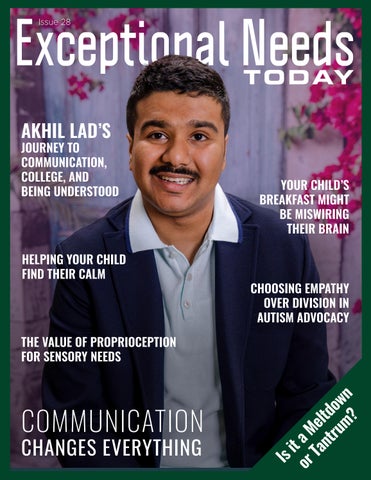
AKHIL
JOURNEY TO COMMUNICATION, COLLEGE, AND BEING UNDERSTOOD
YOUR CHILD’S BREAKFAST MIGHT BE MISWIRING THEIR BRAIN
HELPING YOUR CHILD FIND THEIR CALM
THE VALUE OF PROPRIOCEPTION FOR SENSORY NEEDS
CHOOSING EMPATHY OVER DIVISION IN AUTISM ADVOCACY


14 DECISIONS, DECISIONS, DECISIONS, AND DEAFNESS
Dr. Ronald I. Malcolm, EdD
This guide walks parents through key decisions for children with hearing loss, from diagnosis to communication choices, empowering families to find the right path forward.
18 RELEASING RESPONSIBILITY: SEPARATING THE CHILD FROM THE CAREGIVER ROLE
Nicole Dauz
With many caregivers carrying silent blame for their children’s challenges, this piece explores releasing that burden, separating identity from behavior, and embracing a more compassionate way to parent.
OUR COVER STORIES
BEYOND SPEECH: MY JOURNEY TO COMMUNICATION, COLLEGE, AND BEING UNDERSTOOD
Akhil Lad
A minimally speaking student shares his powerful journey from silence to self-expression, while challenging assumptions about intelligence, communication, and what it means to be heard.

12 JOINING TOGETHER: CHOOSING EMPATHY OVER DIVISION IN AUTISM ADVOCACY
Jeanetta Bryant
A divided autism community faces growing tension across diverse experiences— this piece explores how empathy, respect, and understanding can bridge differences and strengthen advocacy.


YOUR CHILD’S BREAKFAST MIGHT BE MISWIRING THEIR BRAIN
Dr. Kimberly Idoko, BS, MBA, JD, MD
Could your child’s breakfast be shaping their behavior? This article explores how blood sugar swings and poor nutrition may drive emotional dysregulation—and what simple changes can help.
50 ALL THINGS OT HEAVY WORK: THE VALUE OF PROPRIOCEPTION FOR CHILDREN’S SENSORY NEEDS
Laura Ryan, OT, OTR, OTD
Discover how proprioception, also known as heavy work, can support regulation, behavior, and body awareness in children.

60 EXPLORING PERSONAL POWER FROM OVERWHELMED TO REGULATED: HELPING YOUR CHILD FIND THEIR CALM
Yasmine White, MT-BC, VMT
Learn how to help your child recognize triggers, build coping tools, and confidently find their way back to balance.
20 SAFETY GOALS WITH NICOLE THE POWER OF COMMUNICATION FOR INDIVIDUALS WITH DISABILITIES
Nicole Moehring
Open communication empowers individuals with disabilities — building confidence, safety, and connection by being truly heard and understood.
22 EXCEPTIONAL ADVICE FROM MESHELL RAISING AN EXCEPTIONAL CHILD INTO AN EXCEPTIONAL ADULT
Meshell Baylor, MHS, MSW
A look at how raising an exceptional child into adulthood requires resilience and evolving support, exploring strategies for confident, supported independence.
27 EXCEPTIONAL BOOKS THE MISWIRED CHILD
Dr. Kimberly Idoko, BS, MBA, JD, MD
What if the earliest signs of neurological stress show up long before diagnosis—and we’re missing them? This unique book challenges how we think about behavior, biology, and delay.
28 THE FRIENDSHIP & DATING DUO WHEN EVERYTHING GOES WRONG: WHAT TRAVEL CHAOS TEACHES US ABOUT BUILDING A SOCIAL LIFE
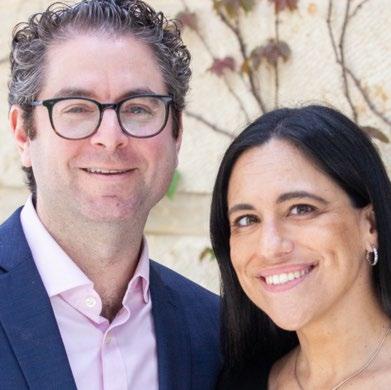
Jeremy and Ilana Hamburgh
A travel disaster turns into a powerful lesson: social success isn’t about things going right, it’s about how you adapt when they don’t.
32
JENNIFER'S JAM UNDER THE RADAR: WHY FEMALES WITH AUTISM OFTEN GO UNDIAGNOSED
Jennifer McAvoy, Med
This article explores masking, misdiagnosis, and gender bias— revealing how subtle autism traits in females often go unseen until adulthood, leaving many misunderstood for years.
34 WHAT IS MY CHILD TRYING TO TELL ME? COMMON WAYS CHILDREN EXPRESS THEMSELVES THROUGH BEHAVIOR
Dr. Brett J. Novick, MS, EdD, LMFT
Behind every behavior is a message; learn how to understand meltdowns, emotions, and overload to better hear what your child is trying to say.
39 EXCEPTIONAL TOOLS & PRODUCTS LINA
For anyone who’s ever typed, deleted, and overthought a message, discover the LINA app, which introduces a new way to decode tone, intent, and social nuance before you hit “send.”
40 START WITH THE FUTURE: WHY FINANCIAL CLARITY MUST COME FIRST IN YOUR CHILD’S SPECIAL NEEDS PLAN
Kristin Carleton
Overwhelmed by daily demands, many parents delay long-term planning—this article reveals why financial clarity is the foundation for securing your child’s future and guiding every major decision.
46 THE CHILD WITH AUTISM WASN'T IGNORING YOU: THEY WERE BUFFERING
Sarah Ragab
Learn how to understand when your child is “buffering”, their processing delays, and how patience can unlock your child’s voice.
52 MY PERSONAL LIFE HACKS I NEVER KNEW WERE ADHD SUPPORT
Stephanie Scheller
What Stephanie thought were personality quirks were actually coping tools. Discover how hidden ADHD strategies shaped her success through structure, self-awareness, and adaptation.
56 NATURE NOTES NOURISHING NEARLY EVERY SENSORY SYSTEM IN A FAIRY GARDEN
Amy Wagenfeld, PhD, OTR/L, SCEM, FAOTA
Step into a magical fairy garden where nature, imagination, and sensory play come together to inspire creativity and connection.
64 KATE MAKES IT GREAT WHEN EXCEPTIONAL NEEDS
CHILDREN PUSH OUR BUTTONS: WHY IT HAPPENS AND WHAT TO DO
Kate C Wilde
When children push your buttons, it’s not defiance—it’s communication. Discover how changing your response can transform behavior and connection.
66 HOW GRANDPARENTS CAN SUPPORT THEIR EXCEPTIONAL FAMILIES
Karen Kaplan, MS
Small, thoughtful actions can make a big difference. Discover practical ways grandparents can support both their grandchildren and the parents raising them.
68 PARK CIRCLE PLAYGROUND: THE WORLD’S BIGGEST INCLUSIVE PLAYGROUND
Miriam Edelman
Discover how the world’s largest inclusive playground is redefining play by breaking barriers, fostering connection, and creating a space where children of all abilities can thrive together.
73 REFLECTIONS
BRAVO, DEAR FOSTER PARENTS
Gary Shulman, MS Ed
A poet pens a heartfelt tribute to foster parents, honoring their compassion, resilience, and the life-changing love they offer vulnerable children
74 FINANCIAL FOCUS SPECIAL NEEDS TRUSTS –REVOCABLE OR IRREVOCABLE?
Ryan F. Platt, MBA, ChFC, ChSNC, CFBS Compare revocable and irrevocable special needs trusts options to protect assets, preserve benefits, and plan for long-term security.

NEEDS TODAY
Our mission is to educate, support, and energize families, caregivers, educators, and professionals while preparing all families for a healthy future.
exceptionalneedstoday.com
Founder/Publisher
Amy KD Tobik, BA
Founder | CEO Lone Heron Publishing, LLC
Magazine Staff
Editor-in-Chief: Amy KD Tobik, BA
Copy Editor: Emily Ansell Elfer, BA Digital Marketing Coordinator & Social Media: Dione Sabella, MS Graphic Designer: Annie Rutherford, BA IT & Digital Solutions Specialist: Jared Cochran Intern: Abigail Schreiner
Professional Consultants
Jeanetta Bryant
Dr. Stephanie C. Holmes, BCCC J. Edwards Holt
Dr. Ronald I. Malcolm, EdD
Ryan F. Platt, MBA, ChFC, ChSNC, CFBS
Ron Sandison, M Div
Amy Wagenfeld, PhD, OTR/L, SCEM, EDAC, FAOTA
Contact Us
editor@exceptionalneedstoday.com advertising@exceptionalneedstoday.com submissions@exceptionalneedstoday.com
Exceptional Needs Today is a bimonthly publication produced by Lone Heron Publishing.
Disclaimer: Advertised businesses and products are not endorsed or guaranteed by Exceptional Needs Today, it’s writers or employees. Always follow medical advice from your physician.

had the pleasure of meeting Akhil Lad at an autism conference many years ago. I have known his family for about a decade, and it has been a privilege to watch him grow into an extraordinary young man. After Akhil was diagnosed with autism at 18 months, his family was determined to help him face his challenges directly. Akhil’s trajectory changed dramatically once he used a letterboard and later a keyboard with a communication partner, along with supports such as reflex therapy. In this issue, Akhil shares his inspiring personal journey from silence to self-expression while challenging assumptions about intelligence, communication, and what it means to be heard. Today, this trailblazer is working toward an Associate Science Degree at Rowan College of South Jersey. His thoughtful piece, “Beyond Speech: My Journey to Communication, College, and Being Understood,” is a must-read for everyone.
Also in this issue, Dr. Brett J. Novick, MS, EdD, LMFT, emphasizes that meltdowns, tantrums, and other behaviors are forms of communication. They are the simplest way to express needs or feelings, and every behavior carries a message. Read his article “What is My Child Trying to Tell Me? Common Ways Children Express Themselves Through Behavior,” where he offers advice on how to better understand what your child is trying to communicate.
Our “Safety Goals with Nicole” columnist, Nicole Moehring, additionally focuses on communication in this issue. She believes that open communication empowers individuals with disabilities by building confidence, safety, and connection. Don’t miss her article, “The Power of Open Communication: Why It Is Essential for Individuals with Disabilities,” where Nicole reminds us that when individuals with disabilities feel genuinely heard, they can shine. When they know their voice matters, confidence increases. And when they trust the people supporting them, they feel safe, valued, and empowered.
Dr. Ronald I. Malcolm, EdD, has also contributed to this issue with two informative pieces. He shares insights into what genuine school support looks like for a child with vision loss, as well as how parents can navigate important decisions for children with hearing loss. Don’t miss “Assisting My Child with Vision Loss in Being Successful at School” and “Decisions, Decisions, Decisions, and Deafness,” where he offers useful roadmaps for advocacy, independence, and achievement.
We are proud to share 24 articles in this issue that cover a wide range of special needs. For example, columnist Yasmine White, MT-BC, VMT, offers ways to help a child find their calm by recognizing triggers and building coping strategies. Jennifer McAvoy, Med, shares an article that explores masking, misdiagnosis, and gender bias—showing how subtle autism traits in females often go unnoticed until adulthood. Autism advocate Jeanetta Bryant has written a personal piece illustrating the division the autism community faces and the growing tension across diverse experiences. Be sure to read as she discusses how empathy, respect, and understanding can bridge differences and strengthen advocacy.
One of our goals at Exceptional Needs Today is to unite the special needs community. We hope our subscribers also read articles that may not directly relate to them. We can learn from understanding each other's challenges, whether we are selfadvocates, caregivers, educators, or medical professionals.
Let's continue to work together to understand, support, and guide one another.
Best,
Amy KD Tobik Editor-in-Chief, Exceptional Needs Today Publisher, Lone Heron Publishing
By Akhil Lad


My name is Akhil Lad. I am a minimally speaking college student, and I type to communicate. Before I could type, I had no reliable way to show my thoughts, but my mind was always there. People often think that if someone cannot speak, they cannot understand, but that is not true. I understood everything around me. I was aware of conversations, emotions, and people. I could think, process, and form ideas clearly. The difficulty was not in thinking. The difficulty was in showing what I knew. I was not silent inside. I was only silent outside.
It is very difficult to explain what it feels like to understand but not be able to respond. I had thoughts, answers, and opinions, but my body did not follow my mind. When people spoke to me, I understood them, but I could not answer. When questions were asked, I knew the answers, but I could not show them. Because of this, people made assumptions about me. They believed I did not understand. This created frustration and isolation. The problem was never my intelligence. The problem was access to communication.
The biggest challenge in my life has been the disconnect between my mind and my body. My mind works fast and forms concepts, ideas, and connections. But my body does
For many years, people believed I did not have a voice. But that was not true. My voice was always there. I just did not have a way to show it. I was never silent. I was unheard.
not always cooperate with those thoughts. To communicate, I need to guide my body step by step. I cannot simply say what I want. I must spell each letter one at a time. This takes effort and control. Sometimes I know exactly what I want to say, but my body cannot respond correctly. Other times, my body moves in ways that do not match my thoughts. This creates confusion for others, but inside my mind, I am clear.
My thinking is not always based on words. I think in pictures, patterns, and concepts. Sometimes I understand a full idea at once instead of step by step. My mind forms meaning first, and then I work to translate that meaning into words. This process takes time. People may think I am slow, but my thinking is not slow. My body's response is slow. There is a difference between thinking and showing.
Before I had communication, people judged me based on my behavior. They saw a lack of response, difficulty focusing, and movements that seemed uncontrolled. But what they did not see was the effort behind those moments. What appears to be inattention is often a coordination challenge. What looks like behavior is often frustration or sensory overload. What looks like a lack of understanding is often a lack of access. This misunderstanding affects many people like me and limits opportunities.
One important part of my journey was supporting my body. Communication is not only about language. It is about the body being able to respond. My family worked on improving my overall health, including nutrition, gut health, immune support, and reducing inflammation. These changes helped my system become more stable. When my body became

more regulated, my focus improved, my responses became more controlled, and my ability to learn increased. When the body improves, communication improves. This is very important to understand.
Another important part of my journey was reflex integration. Some early reflexes that should have gone away during development were still active in my body. These reflexes affected my posture, coordination, attention, and emotional responses. Because of this, I had difficulty controlling my body. Through therapy and consistent practice, I worked on integrating these reflexes. Over time, my coordination improved, my focus increased, and my body became more responsive. This process required patience and repetition, but it helped me gain control.
For a long time, I had no way to express my thoughts. Then I was introduced to the Rapid Prompting Method. This was a turning point in my life. At first, I responded by choosing answers. Then I began pointing to letters on a board. Slowly, I started spelling words and sentences. This required focus, practice, and patience. This method did not give me intelligence. It helped me show what I already knew. For the first time, people could see my thoughts.
People speak, and that is considered the standard form of communication, but my communication is different. I use a letterboard and now a keyboard with a communication partner. I point to letters one at a time to form words. This is how I express my thoughts. Many minimally verbal and nonverbal individuals communicate this way. It may look different, but it is real communication and should be respected.
One of the most important parts of my journey was being believed. When people presumed competence, everything changed. They asked me meaningful questions, gave me learning opportunities, and expected real answers. And I responded. When people believe in our ability, they create opportunities. When they doubt us, they create barriers. Belief is very important for growth.
The college experience is important for everyone. I always wanted to go to college, but being minimally verbal, I thought it would not be possible. Communication is required in college, and my communication was different. I used a letterboard and later a keyboard. I was not sure if a college would accept this form of communication. But
my college accepted me. They allowed a communication partner as an accommodation. They understood that intelligence is not judged by speech. This changed my life.
My communication continued to grow in college. At first, I selected answers. Then I spelled responses. Now I type full thoughts. Through this process, I learned math, science, and language. I took college courses like algebra and English composition. I could express my opinions and ideas. My communication partners support me, help me stay focused, and manage anxiety. They must be patient and trained, because some days are more difficult than others.
In college, I enjoy thinking and learning. My mind understands concepts deeply. I analyze problems and apply ideas to real-life situations. I can think critically and connect information. This is what I always wanted—to show my thinking and participate like other students.
College life includes stress, anxiety, and pressure. I have explored mental health challenges as part of my experience. For students like me, communication itself requires effort, which adds to stress. Support systems are important. Colleges should provide mental health resources, awareness, and inclusive environments so that all students can succeed.
My communication depends on my environment. Too much noise or sensory input can make it difficult for my body to respond. To regulate myself, I go to quiet spaces, reduce noise, and slow my surroundings. When my body is calm, my mind can guide it better. This is why sensory support is very important for communication.

My journey is personal, but it also helps others understand communication. I do not represent organizations, but my experience has inspired work like the Akhil Autism Foundation and the Sensory Pathway Center. These efforts focus on communication access, awareness, and support for individuals and families. Many people are still misunderstood, and awareness can help change that.
Communication is not only speech. There are many ways to communicate. Projects like The Telepathy Tapes are helping people understand that non-speaking individuals have thoughts, intelligence, and inner lives. This shift in understanding is important for inclusion.
If I could share one message, it would be this: do not judge intelligence by speech. Presume competence. Support the body. Look beyond behavior. Create access. When people take the time to understand and listen differently, they can see what was always there.
For many years, people believed I did not have a voice. But that was not true. My voice was always there. I just did not have a way to show it. I was never silent. I was unheard.
My journey is still continuing. I am still working to connect my mind and body. I am still improving my communication. I am still growing. But now I know something important. I have a voice. And when people take the time to listen, they can hear it.
Akhil Lad is a passionate advocate for neurodiverse learners and a trailblazer in the autism community. Minimally speaking, Akhil communicates by spelling on a letterboard and typing on a keyboard, sharing his profound insights with the world. Currently pursuing his Associate of Science degree at Rowan College of South Jersey, Akhil exemplifies the capabilities and untapped potential of non-speaking individuals. His journey is marked by perseverance, innovation, and a deep belief in presumed competence — the idea that all individuals have meaningful thoughts and ideas, regardless of how they communicate. Akhil has presented at several national conferences, including the US Autism Association (USAAA) Conference, the Milestone Autism Conference (Michigan), and the Masgutova Foundation Conference. He is also one of the trailblazers featured in The Telepathy Tapes, a groundbreaking project highlighting the experiences and voices of minimally speaking individuals. As a speaker, Akhil shares his experiences navigating education, communication, and self-advocacy, inspiring audiences to rethink assumptions about ability, intelligence, and voice. Through his talks, he empowers families, professionals, and policymakers to foster more inclusive and supportive environments where every mind is recognized and valued. �� akhillad.com
By Jeanetta Bryant

The autism community was never meant to feel this divided.
And yet here we are.
When the DSM-5 consolidated all autism-related diagnoses under one umbrella known as autism spectrum disorder, it was intended to simplify and expand access to diagnosis. In many ways, it did. It opened doors for individuals who may have gone unseen for years and created a shared language for understanding autism.
But it also created something far more complex.
Today, the spectrum spans such a wide range of lived experiences that it can feel less like a unified community
and more like a collection of entirely different realities. Individuals with significant support needs, who may be nonverbal or require lifelong care, now share a diagnosis with those who live independently, advocate publicly, and may not view autism as a disability at all.
Both experiences are real.
Both deserve to be acknowledged.
But the tension between them is growing.
Within the autism community, conversations that should bring us together are increasingly pulling us apart. There is a quiet but persistent comparison of who has greater needs, whose voice carries more weight, and who has the
authority to speak on behalf of others. Language that is meant to empower, phrases like “speaking as someone who is autistic,” can at times unintentionally silence families or individuals whose experiences look very different.
For some adults, autism is an identity that does not need to be fixed. For many parents who are navigating profound disability, distress, or safety concerns, that message can feel disconnected from their daily reality. These perspectives are not wrong, but they are often in conflict. And when that conflict becomes personal, the space for understanding begins to shrink.
We have reached a point where even the symbols we use are debated. Conversations about puzzle pieces versus infinity symbols, or identity-first versus person-first language, can become stand-ins for deeper disagreements about what autism is and what it is not.
And while those debates continue, the larger challenges remain. Access to services, support systems, education, and long-term care does not improve simply because we are having louder conversations. In fact, when the community becomes fragmented, progress often slows.
So, the question becomes: where do we go from here?
We cannot undo the breadth of the spectrum. We cannot simplify the vast differences in lived experience. And we will not all agree. That part is inevitable.
But division does not have to be.
What if the goal is not agreement, but understanding?
What if we allowed multiple truths to exist without requiring them to compete?
Because the reality is that autism holds all of it. Autism holds the adult who embraces it as an identity and the family seeking intensive support. It holds independence and dependence, communication and silence, confidence and vulnerability. No single perspective cancels out another, but when we dismiss each other, we all lose something important.

Moving forward requires a shift, not in what we believe, but in how we engage with one another.
It asks us to listen without immediately correcting. To recognize that someone else’s experience, even when it challenges our own, is still valid. It asks us to speak from our own lens without positioning it as the only one that matters.
We do not need to walk the same path to move in the same direction.
There is space within this community for different priorities, different needs, and different voices. But that space only works if we respect the boundaries of one another’s experiences. Advocacy does not need to become competition. Progress in one area should not come at the expense of another.
Autism is not a single story.
It is layered, complex, and often contradictory. It is moments of brilliance alongside moments of struggle. It is independence for some and lifelong care for others. It is resilience, confusion, growth, and perseverance, sometimes all at once.
To honestly represent this community, we must accept its complexity without simplifying or controlling it.
The path forward is not about perfect alignment. It is about something much more attainable and much more powerful. Kindness.
Grace.
And a willingness to see beyond our own experience. Because, at the end of the day, we are still connected by something real. A diagnosis that may be broadly defined but deeply lived in very personal ways.
And if we can choose empathy over division, we do not just strengthen our voices. We make space for all of them.
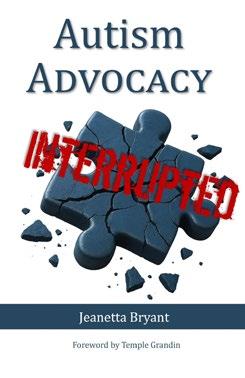
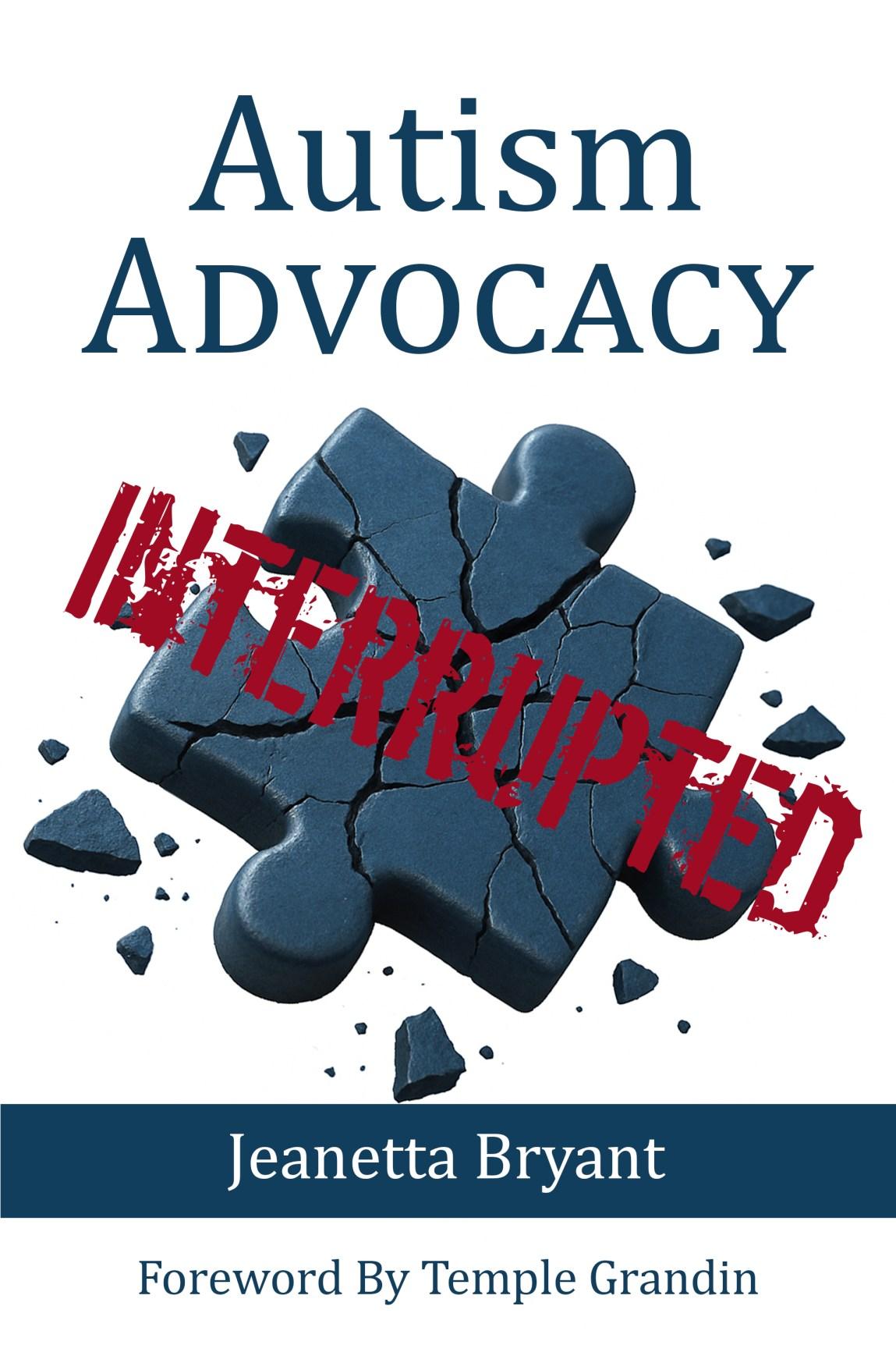
Jeanetta Bryant is Founder and Executive Director of Abilities Workshop, Inc. She is dedicated to helping special needs families find answers and children impacted by a special needs diagnosis be their best. Jeanetta is an author, developer, and advocate. As a mom of two children, one with autism, she finds no greater joy than watching them develop and achieve their dreams. Her interests include family time at home or at a theme park, college football, and making memories. Jeanetta is the author of the book Autism Advocacy Interrupted.
abilitiesworkshop.com
amazon.com/Autism-Advocacy-Interrupted-Jeanetta-Bryant
abilitiesworkshop.com/advocacy

By Dr. Ronald I. Malcolm, EdD
You just learned that your child has hearing loss, and you don’t know where to begin. There will be many professionals, members of the Deaf Community, parents of deaf children, and others willing to openly share their opinions. The problem is that no one seems to agree on the best approach to educating your deaf child. Everyone appears to have taken different paths or approaches to educating their deaf children. So, what should you do?
It is always good to begin with your pediatrician. This will allow you to discover the etiology or cause of your child’s hearing loss. Were they born deaf? Did they lose their hearing because of a medication they needed? Did they contract measles or spinal meningitis? Is the hearing loss hereditary? These are all questions that a
pediatrician can assist you with. A pediatrician will also determine if your child has any additional disabilities that can be a result of a syndrome.
You need to know the degree of hearing loss your child is experiencing. This will require you to get a full audiological examination for your child. Hearing is measured in decibels (dB). The results of the evaluation will inform you as to whether your child has a mild (30-50 dB), moderate (50-70 dB), severe (70-90 dB), or profound (90-120 dB) hearing loss. If your child has a mild or moderate hearing loss, they will be considered “hard-of-hearing.” If they have a severe or profound hearing loss, they will be considered “deaf.”
In addition, the audiologist will also determine if your child has a unilateral hearing loss (hearing loss in one ear) or a bilateral hearing loss (hearing loss in both ears). The audiologist will also determine if the hearing loss is a conductive hearing loss (a hearing loss due to impacted wax or fluid in the middle ear that might be able to be medically corrected), a sensorineural hearing loss (a hearing loss due to damage to your child's inner ear/cochlea), or a mixed hearing loss (both conductive and sensorineural).
The world is not equipped for deaf individuals.
Helping your child develop appropriate coping skills will support their self-advocacy.
Children with hearing losses do best when offered early intervention services. It will be important for you to enroll your child in an Early Childhood Program as soon as possible to help them develop their communication skills. This may mean beginning services in your home due to early intervention opportunities. It could also mean attending an early childhood program at your local school district when they turn three years old, or at a School for the Deaf.
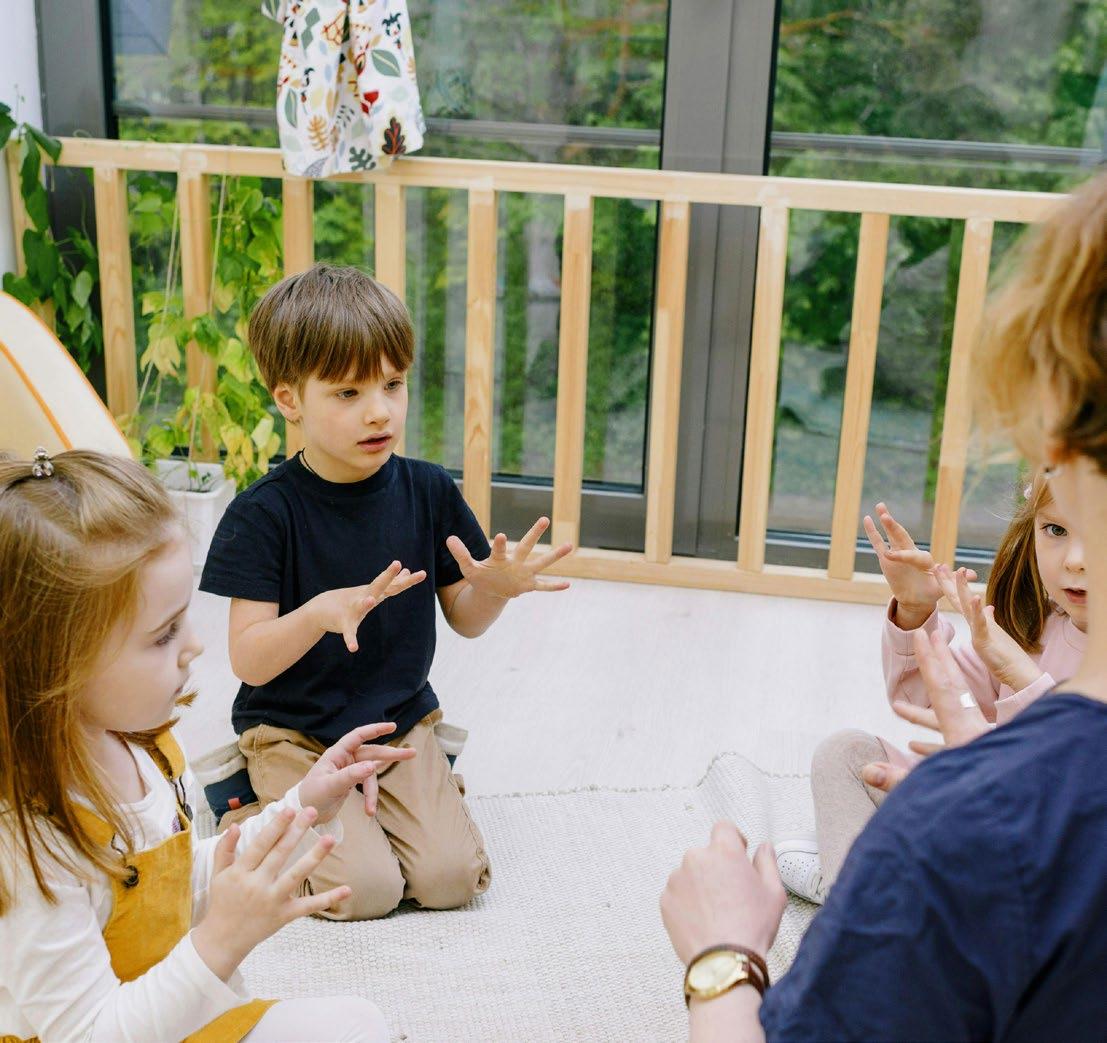
You need to begin to decide how you want your deaf or hard-of-hearing child to communicate. Deafness is a spectrum, and all deaf children are not the same. Some deaf children only sign, others use no sign language and just speak orally, and then there are deaf children who have learned to speak and sign. Educating yourself on the different approaches available for your deaf or hardof-hearing child will help you make the right decision for your family.
There are many different types of programs available to deaf and hard-of-hearing children. Each parent and child is different, but it is important to know what each program provides.
• Auditory-Verbal Programs. This type of program emphasizes the use of your child’s residual hearing. There is no sign language involved with this program. Spoken language is emphasized. Often, the therapist or teacher will cover their mouth with their hand to encourage the child to strengthen their auditory skills by using whatever residual hearing they have left.
• Aural/Oral Programs. These programs also provide no access to sign language. They focus heavily on speech therapy, lipreading, and amplification.
• Cued Speech Programs. This program also provides no access to sign language. However, they have developed a cueing system using hand signals that allows the child to understand which speech sound they want produced. Students in this program use their residual hearing, lipreading, and hand cues to develop oral speech.
• Total Communication. This approach allows students to use both sign language and oral speech in combination to communicate. Students use their residual hearing, sign language, lipreading, and oral speech production to meet their communication needs.
• Bilingual Approach. Students in this program will use their American Sign Language Skills daily while developing their English language skills.
Amplification is a personal choice most deaf and hard-ofhearing adults make. It is important to remember that not all deaf children benefit from hearing aids. As you decide what type of amplification might benefit your child, seek the advice of both your pediatrician and audiologist.
• Behind-the-Ear Level Hearing Aids. These are hearing aids that are often referred to as “BTEs.” Your child will wear an earmold in their ear canal, and the mechanical part of the hearing aid will be placed behind their ear. Your audiologist can assist you with determining if your child will need one or two BTE hearing aids.
• In the Ear Level Hearing Aids. Some children benefit from a fully placed hearing aid in their ear canal. This would mean that there is no mechanical portion of the hearing aid placed behind their ear. These hearing aids are often referred to as “ITEs.” This type of hearing aid is generally worn by individuals who are hard-of-hearing.
• Cochlear Implants and Bone Anchored Hearing Aids. These types of hearing devices will require your child to have surgery. With a cochlear implant, a surgeon will place an electrode in your child’s cochlear nerve, and a speech processor will be attached to the outside of their head above their ear with a magnetic device. A BTE is then placed behind the child’s ear. Some children who have received cochlear implants and undergone intensive surgery have achieved significant improvements in hearing and spoken language skills. Others who have received cochlear implants have not benefited from them.
The bone-anchored hearing aid (BAHA) functions much like a cochlear implant. However, when wearing a BAHA, your child will not have a device behind his ear.
While many children will benefit from cochlear implants or BAHA devices, it is important for parents to understand that these devices do not make their deaf children “hearing.” Cochlear implants and BAHAs are another tool for your child to access to assist them with navigating a hearing world.
Many parents of deaf and hard-of-hearing children struggle with the decision of a school placement. There are several choices available to children with hearing loss. They include:
• Mainstream Classrooms. This program is offered by your local public school system. Your child would be in a regular education setting with their
hearing peers. Services provided to your child in this environment could include a sign language interpreter, speech therapy, tutoring, notetaking, captioning, etc.
• Day Classes for the Deaf. Some public schools offer deaf educational classrooms within the public school. Some deaf students may access the deaf classroom for part of their school day, while others may spend most of their educational day there.
• Schools for the Deaf. Almost every state has a residential School for the Deaf. Some students attend this type of program and then return home to their parents at the end of the school day. These programs offer American Sign Language (ASL) as well as services for speech and language development in English. Students attend classes with other deaf and hard-of-hearing students. Emphasis is also on learning about Deaf Culture and a sense of Deaf Community. Other students attending this school may need to live in the school's dorms, as their homes are too far to travel to each night. They generally go home each weekend.
Regardless of what educational setting you decide to place your own child in, it is always a good idea for you and your child to visit these programs before making a final decision.
Not all forms of sign language are the same. You’ll need to be exposed to each method to help you make the right choice for your own child. Some of these methods include:
• Signing Exact English (SEE): When students learn this form of sign language, they sign English in the exact order it is presented when spoken. It is not considered a “language,” and it is not widely used among deaf individuals in the Deaf Community.
• Pidgin Signed English (PSE): Students using PSE are using a form of sign language that does not always follow the same syntax as spoken English. While English is incorporated into PSE, it is not a direct translation.
• American Sign Language (ASL): Students using ASL will discover that this is the language of choice for individuals in the Deaf Community. It does not rely on the syntax and semantics of the English language; instead, it incorporates body movement and facial expressions to be understood. Most individuals in the Deaf Community consider ASL to be their “native language.”

Many students with hearing loss attending public schools may feel isolated. They may be the only deaf or hard-ofhearing child at their school. It is important for students with hearing loss to socialize with one another to develop a healthy sense of self-esteem. Even if your child does not attend a residential School for the Deaf, they can still participate in their after-school activities and events. Athletic programs, social clubs, and fine arts programs can all be accessed at the School for the Deaf and offer your child the opportunity to make new friends with others who have hearing loss. Of course, this will only be possible if the School for the Deaf is located close to your home.
The world is not equipped for deaf individuals. Helping your child develop appropriate coping skills will support their self-advocacy. Your home should be equipped with a flash smoke alarm, means for your child to

wake themselves up in the morning (a bed shaker or vibrating wrist alarm, flashing devices that indicate when someone is at the door, captioning devices on their television, etc.). These devices will allow them to develop their own level of independence as they continue their journey into adulthood.
It is not important that everyone you interact with agrees with the decisions that you have made for your deaf or hard-of-hearing child. As a family, you’ll need to determine what is in your child's best interest by becoming educated about the programs and devices available. If your child does develop sign language skills, it is equally important for you to develop your own sign language skills. You don’t have to be “perfect” with your ASL skills, but you do need to demonstrate that you are willing to communicate with them and understand them when they sign.
Dr. Ronald I. Malcolm, EdD, is an Assistant Director of Student Services and Special Education for a public school district and a Special Graduate Faculty member at the University of Kansas. He has Bachelor level Degrees in English and Special Education. He holds Master level Degrees in Counseling, Special Education and School Administration. His Doctorate Degree is from Northern Arizona University in Educational Leadership. His Post Graduate Degrees are in Positive Behavior Supports and Autism Spectrum Disorders. He has worked for the past 41 years with students between the ages of 3-21 with autism and various medical needs in various school and community-based settings

By Nicole Dauz
Ioften carry an unspoken weight—the belief that I am responsible for my child’s behavior, progress, or outcomes. It’s a quiet narrative that builds over time, often reinforced by calls from the school, public moments, and the constant evaluation of what is “working” and what is not.
But imagine how much easier my caregiving journey would feel if I could gently release that responsibility? Can you relate?
For many of us, it starts with that phone call. The one from the teacher. The one that immediately tightens your chest. And if your child is in a specialized classroom, there’s often an assumption about what the call will be about: behavior.
Why does it feel like a reflection of our parenting?
Why does it land on us as if we must have done something wrong?
Without realizing it, many of us have internalized the belief that our child’s behavior is a direct result of how well we are doing as caregivers. And when challenges arise, so does the shame.
This is where caregiving enters its most complex space, the one that is anything but black and white.
As someone who appreciates clarity, I’ve had to come to terms with the reality that special needs parenting rarely offers it. It is layered, nuanced, and often uncertain.
It’s a delicate dance—figuring out which behaviors require therapy and which are simply expressions of who our child is.
There have been moments in my own journey that felt more “black and white.” For example, my daughter went through a phase where she would take off her clothes for attention, announcing it loudly in public or appearing unexpectedly undressed at family gatherings. Easy decision, this behavior clearly required support.
And then there are other behaviors—quirky, resistant, or seemingly oppositional—that sit in a more ambiguous space.
Not every behavior needs to be corrected. Not every moment defines who your child is—or who you are as a parent caregiver.
When your child has a diagnosis, whether autism, a rare genetic disease, or an intellectual disability, you become familiar with a wide spectrum of behaviors, delays, and differences.
You learn to celebrate small wins. You learn to adjust expectations. And over time, you begin the ongoing process of acceptance—not just of the diagnosis, but of the child in front of you.
But somewhere along the way, many caregivers begin carrying responsibilities that were never theirs to bear.
Your child’s behavior is not a reflection of your worth.
Their challenges are not proof of your failure.
There is a difference between supporting your child and believing you are responsible for everything they do.
Some days, acceptance comes easily. Other days, it doesn’t.
There are moments when the internal dialogue is raw and honest: I love my child. I hate the diagnosis.
And both can be true.
Separating behavior from identity is part of this work. Not every behavior needs to be corrected. Not every moment defines who your child is—or who you are as a parent caregiver.
This distinction softens the need to control and creates space for understanding.
Releasing responsibility doesn’t mean disengaging. It doesn’t mean lowering expectations.
It means shifting from self-blame to self-awareness.
From control to connection.
From reacting to responding.
When caregiving is rooted in love and awareness—not self-blame—it becomes more grounded, more human, and something that feels kinder to live inside of.
What if being a “good caregiver” wasn’t measured by your child’s behavior?
What if it was measured by your presence, your effort, and your willingness to keep showing up—even on the hard days?
What if success looked like pausing instead of reacting?
Like offering yourself grace after a tough moment?
Like continuing to love your child exactly as they are, while also learning, adjusting, and growing alongside them?
Because, at the end of the day, your role is not to control your child. Your role is to support them. And to offer yourself that same grace along the way.
Nicole Dauz is a self-care coach, speaker, and author who inspires others to find daily joy. She has supported thousands worldwide to prioritize self-care for better mental health and well-being. Since 2023, Nicole has delivered the keynote presentation at the Autism Home Base caregiver retreat; presented a self-love webinar for the CGD Association of America; given an interactive presentation to government employees and the Leadership Enablement Connected Community at Microsoft; and spoken at the Canadian Caregiving Summit. She uses humor and storytelling to promote well-being, drawing from her experience as a mother to a neurotypical son and a daughter with a rare genetic disease and profound autism. Nicole is a certified meditation teacher and the founder of Nicole Dauz Coaching, where she supports caregivers in reconnecting with themselves and navigating the emotional weight of care
�� nicoledauz.com

By Nicole Moehring
Open communication is one of the most powerful gifts we can give any individual. For individuals with disabilities, it is not simply helpful; it is essential. Communication is the bridge that connects an individual’s inner world to the people around them. It allows them to express their needs, share their feelings, ask questions, build relationships, and, most importantly, feel seen, heard, and valued.
Too often, individuals with disabilities are spoken about instead of spoken with. Decisions may be made around them, routines may be created for them, and assumptions may be formed without ever taking the time to truly understand their thoughts or feelings. When this happens, an individual can begin to feel invisible. Open communication changes that. It reminds them that their voice matters, no matter how they communicate.
Communication does not always look the same for every individual. Some individuals use spoken words. Others may communicate through sign language, gestures, facial expressions, communication devices, pictures, or behaviors. The key is to recognize that every individual communicates in some way. Our responsibility as adults is to listen, watch, learn their language, and meet them where they are.
When adults create open lines of communication, younger individuals with disabilities can gain confidence. They learn that they are worthy of being heard. They become more comfortable expressing preferences, setting boundaries, and sharing concerns. Confidence grows when an individual realizes, “What I say matters.” This sense of empowerment can positively affect every part of their life, from education and friendships to future independence.

Open communication is also critical for safety. Individuals with disabilities are at increased risk of abuse, neglect, bullying, and exploitation. An individual who has been taught they can talk openly with trusted adults is more likely to report when something feels wrong. They are more likely to ask questions, describe uncomfortable situations, or seek help. This is why it is important to have conversations about body safety, boundaries, consent, and feelings. These discussions must be adapted so the individual can understand, using clear, respectful language. When individuals know the proper words for body parts, understand the difference between safe and unsafe touch, and know they can tell a trusted adult anything, they become safer and stronger.
Open communication can also reduce frustration and behavioral challenges. Many behaviors serve as a form of communication. An individual who cannot express pain, fear, confusion, overstimulation, or disappointment may show those feelings through actions instead of words. When adults slow down and ask, “What is this individual trying to tell me?” rather than simply reacting to behavior, everything changes. A meltdown may be exhaustion. Aggression may be fear. Withdrawal may be sadness. Resistance may be confusion. When communication improves, misunderstandings decrease. Individuals feel less frustrated because they know someone is trying to understand them.
Families benefit deeply from open communication as well. Strong communication builds trust between parents and their children. It creates emotional connections and helps individuals feel secure. A child who knows they can speak honestly without shame or punishment is more likely to come to their parents in difficult moments later in life. This means creating homes and classrooms where questions
are welcomed, emotions are validated, and differences are respected. Sometimes the most meaningful communication is not in grand conversations but in small daily moments, asking how their day was, noticing changes in mood, listening patiently, and responding with compassion.
Professionals and educators also play a vital role. Teachers, therapists, aides, and caregivers should never underestimate the intelligence or emotional awareness of a person because of a disability. Every individual deserves to be included in conversations about their own life in developmentally appropriate ways. Asking for their input teaches autonomy and respect.
Open communication requires patience. It may take extra time, repetition, creativity, and consistency. But the reward is immeasurable. When an individual with disabilities feels understood, they flourish. When they know their voice matters, they grow stronger. When they trust the adults around them, they feel safer.
We must move beyond merely caring for individuals with disabilities and commit to truly listening to them. Their thoughts matter. Their feelings matter. Their experiences matter. Their voice matters.
The goal should never be perfection in communication. The goal is connection. When we create space for open communication, we do more than help an individual express themselves; we help them build identity, confidence, safety, and a sense of belonging. We show them that they are not a problem to be managed, but a person to be known, loved, and respected. And every individual deserves that.
Nicole Moehring is a devoted mother, international award-winning author, and nationally recognized disability advocate. Her work is not theoretical; it was born from lived experience and unimaginable pain.
Nicole’s journey into advocacy began after both of her children were victims of sexual abuse and assault. Her daughter, who is neurotypical, was believed, protected, and supported through the systems meant to provide justice and healing. Her son, who has autism and Fragile X syndrome, was not afforded the same compassion or protection. Instead, Nicole watched as bias, disbelief, and systemic failure denied him the dignity, safety, and resources he deserved. In fighting for his recovery, she encountered barriers at every turn, revealing a painful truth about how society treats individuals with disabilities.
Out of that injustice, Nicole chose action.
Alongside her daughter Maci, she co-founded Voices of Change 2018 (VOC18), a disability-led national nonprofit currently piloting its groundbreaking programs in Ohio. VOC18 is dedicated to preventing abuse before it occurs by educating, empowering, and protecting individuals with disabilities. Grounded in lived experience and strengthened through partnerships with law enforcement, medical professionals, mental health experts, and community organizations, VOC18 is helping build a national framework for prevention, accountability, and change.
Nicole is also the author of Evan’s Voice and Evan Says, using storytelling as a powerful tool for truth, healing, education, and systemic reform. Through her advocacy, writing, and leadership, Nicole is changing how the world sees and safeguards individuals with disabilities, ensuring their voices are not only heard, but believed, protected, and empowered.
�� voicesofchange2018.org
Follow VOC18 on Facebook, Instagram, LinkedIn, and Pinterest: Voices of Change2018

By Meshell Baylor, MHS,
MSW
"Independence for our exceptional children does not mean absence of support—it means building a bridge sturdy enough for them to cross into adulthood with confidence.” Unknown
When you are a mother raising an exceptional child, life comes with profound ups and downs. You learn to navigate the special education system. You learn the language of Individualized Education Program (IEP) meetings, accommodations, and transition plans.
Then one day, you realize you are entering a new chapter: adult services.
You begin maneuvering through regional centers, vocational programs, and employment pathways. You start planning not just for school success—but for lifelong independence. And while there are beautiful moments of growth, there are also moments of overwhelm. Moments filled with questions. Moments where you wonder how to support your child without standing in their way.
Across the United States, more than 61 million adults live with a disability—representing about 1 in 4 adults, according to the Centers for Disease Control and Prevention. As our children age into adulthood, they become part of that larger community: capable, determined, and deserving of opportunity.
Yet employment remains one of the biggest hurdles. According to the U.S. Bureau of Labor Statistics, in 2023, the employment rate for persons with disabilities was 22.5%, compared to 65.8% for persons without disabilities. That gap tells a powerful story. It shows both progress and the work that still needs to be done.
As parents, we want the best for our children. We want them to thrive. We want them to be safe. But we also want them to experience the dignity of independence.
Most recently, my son enrolled in a new adult program focused on job development. As a parent, you just cannot sit still. I found myself asking questions:
• What is he working on?
• Where do you see him applying?
• What vocational skills are you teaching?
• How are you preparing him for interviews?
For a moment, I questioned myself: Am I being a helicopter parent?
But then I reminded myself: when your child needs support, advocacy is not interference—it is partnership.

Many of my sisters have struggled with learning how to “cut the thread” and let go. But when you have an exceptional child, you understand something deeper. Independence does not eliminate support. It transforms it.
In fact, nearly 7.6 million people with disabilities were employed in 2023, the highest number ever recorded. That is a positive and powerful shift. However, research also shows that many individuals benefit from structured support, such as:
• Job coaching
• Transportation assistance
• Communication development
• Time-management training
And there is no shame in that.
There are obstacles that look small to the outside world but feel enormous in practice, such as:
• Ordering your first meal independently
• Filling out your first job application
• Speaking confidently with a job developer
• Navigating transportation to and from work
• Managing a paycheck and opening a bank account
Sometimes our children need a tweak, a reminder, or a practice run. And sometimes, supporting them gives us the opportunity to brush up on our own skills—updating resumes, practicing interview responses, or learning new workforce systems.
We grow alongside them.
A job coach can assess strengths, interests, and support needs while guiding them toward meaningful employment. Research shows that supported employment programs significantly improve job retention for individuals with developmental disabilities.
Many individuals benefit from structured communication coaching. Whether through speech therapy, social skills groups, or vocational workshops, building communication confidence can open doors in interviews and workplace interactions.
3. Prepare for Presentation and Professionalism
Success preparation matters. Whether it’s a grocery store interview or a vocational training class, teach them about appearance, punctuality, and workplace expectations. These soft skills are often just as important as technical ability.
4. Build the Resume from Life Skills
Review everything they have done:
• School garden work
• Cafeteria tasks
• Volunteer roles
• Classroom responsibilities
Those experiences represent transferable skills—teamwork, time management, and responsibility. Help them place those experiences proudly on their resume.
5. Secure Supportive Services
Ensure your child is connected to local organizations, vocational rehabilitation services, and regional centers such as the Department of Developmental Services (DDS). Studies show that individuals who receive structured vocational rehabilitation services have significantly higher employment outcomes than those without access to support.
By Meshell Baylor, MHS, MSW
The Balance Between Protection and Empowerment
As parents, we want the best for our children. We want them to thrive. We want them to be safe. But we also want them to experience the dignity of independence.
Watching them:
• Clock in to their first job
• Cash their first paycheck
• Walk into a bank and speak for themselves
• Navigate public transportation
These are victories. Not small ones—monumental ones.
At the end of the day, our exceptional children are not fragile. They are resilient. They are capable. They are part of a growing workforce that is reshaping what inclusion looks like in America.
And while they may always need guidance, that guidance does not limit them—it strengthens them.
Because independence is not about doing everything alone. It is about having the right support while doing it yourself.
And as parents, we remain what we have always been: their foundation, their advocate, and their steady place to land— while they rise.

Meshell Baylor, MHS, is a mother of four children—two of whom are on the autism spectrum. She serves her community as a social worker and advocate in the Los Angeles area. She has a Bachelor’s degree in human services from Springfield College and a Master of Science degree in human and social services. Meshell continues volunteering and giving within her local area while serving the special needs community.
�� meshellbaylor.wixsite.com INSTAGRAM @imalittlebigb
�� Center for Autism and Developmental Disabilities

By Dr. Kimberly Idoko, BS, MBA, JD, MD
Adeeply informative book on what unfolds in a child’s brain before a neurodevelopmental diagnosis, and how modern systems turn delay into injury.
For parents who know something is wrong and refuse to wait for proof.
Your child didn’t change overnight. The systems didn’t fail all at once.
Before diagnosis, there’s load. Loss of rhythm. Narrowing tolerance. A developing brain forced to expend more energy to achieve the same function. These early shifts are biological warning signs of a nervous system under pressure.
In The Miswired Child, Dr. Kimberly Idoko exposes what unfolds beneath symptoms that are routinely misread. She traces how neurological load accumulates inside the developing brain, then shows how modern systems compound it: Big Food that destabilizes physiology. Big Pharma that suppresses signals without asking why. Big Medicine that waits for collapse. Big Government that enforces delay. Big Media that profits from confusion.
Clear-eyed and unsentimental, The Miswired Child reveals why delay is never neutral, and why a parent’s noticing of pattern and loss may be the only data that arrives in time


Dr. Kimberly Idoko, BS, MBA, JD, MD, is a Yale-, Penn-, Columbia-, and Stanford-educated neurologist and attorney who works with families navigating neurodevelopmental differences. She brings a rare combination of clinical neuroscience, systems literacy, and lived experience as a mother to the question parents are rarely given time to ask: What is actually happening inside my child’s brain? She is a board-certified physician who cares for thousands of patients each year. She is also the founder of Special Parent Coach, where she helps parents interpret early neurological signs and understand how modern systems shape outcomes. She lives in Los Angeles with her family.
By Jeremy and Ilana Hamburgh

For those of you who are reading this and picturing us in a polished office, let us set the scene a little differently. We’re actually writing this from Ilana’s childhood bedroom in Edison, New Jersey.
We’re on a family trip that didn't go according to plan… at all. But we’ve learned a lot from the travel chaos, we’ve used it to teach our clients about social success, and now we’re sharing it with you.
We had been planning this trip for months. Our flight was scheduled for Sunday at 12:30 p.m., and, like many families, we did what we thought was the “right” thing by arriving at the airport more than two hours early to avoid any stress with the Transportation Security Administration (TSA).
Preparation, right? It’s what we write about all the time in this column. And it’s what we talk about all the time when we’re helping autistic and neurodivergent adults build social confidence and social lives. Except this time, preparation wasn’t the story.
We flew through TSA in under 90 seconds. Everything felt easy. We grabbed a relaxed brunch at the airport. We were thinking, “This is going to be an unusually smooth trip.”
We boarded the plane on time. The flight attendants closed the doors. And then we sat there.
And sat there some more.
And it was hot on that plane. Uncomfortably hot. Eventually, the captain announced there was an issue with the air conditioning (AC), but they were trying to fix it.
We sat there some more… and, unfortunately, eventually we were told we had to get off the plane. The AC wasn’t working – it was truly broken.
So, now we’re back at the gate, and no one from the airline is telling us anything. And when people don’t have information, what happens?
Rumors.
“This flight is going to be canceled.”
“We’re going to be rerouted through Chicago.”
“They’re bringing in a new plane from LAX.”
No one knew what was happening. So, Ilana and I made the decision that we weren’t going to sit around and wait for things to fall apart. Instead, we rebooked our entire family on an evening flight through Denver.
What followed was hours of entertaining our kids at the airport, an evening flight, a three-hour layover chasing them up and down the “people movers,” and finally, a midnight flight to New Jersey.
We landed in the morning…and immediately, Ilana got hit by a stomach bug.
A few hours later, I got hit by a stomach bug, too. The next day, our daughter got sick.
And the day after that, my parents were in a minor car crash on the New Jersey Turnpike (everyone is okay!).
So no, this was not the smooth, relaxing trip we had envisioned. And yet, through all of it all, we smiled, we adapted, and we made the most of it.
That experience reinforced for us something we see every day in our work with the Social Life 360 program: Social success isn’t about things going right. It’s about how you respond when they don’t.
When we think about social skills, we often think about conversation. Like, how to start a conversation, keep it going, and read and react to body language and social cues. All of those things matter a lot when you’re building a social
life. But there’s another skill – one that’s less visible but arguably just as important: Flexibility.
Because living socially is unpredictable. Plans fall through. People cancel. Conversations don’t go the way you expected.
For autistic adults and some individuals with disabilities, this unpredictability can be especially challenging. Many rely on structure, planning, and predictability to feel comfortable and confident. So, when something goes offscript, it’s not just inconvenient – it can be dysregulating.
That’s why flexibility isn’t just a “nice-to-have” skill. It’s foundational.
In our travel situation, we had a choice: wait at the gate, get frustrated, and hope the airline figured things out. Or we could take control of the situation and pivot.
We chose to pivot.
The same is true socially.
If someone cancels plans at the last minute, one person might think: “This always happens. I give up.”
Another might think: “Okay, what’s my next move?”
That ability to adjust – to pivot rather than shut down – is often what separates people who build social momentum from those who feel stuck. That’s why teaching social skills is often not enough – teaching the skill to adapt to fluid situations is such an important part of social success.
Here’s another thing we teach our clients all the time: When something crazy happens, use it to your advantage rather than just complain about it.
That entire trip? It’s now a story. A great one.
In fact, we’ve already used it multiple times in conversations and coaching sessions. It’s now part of what we call a “Mental Library” – a collection of experiences you can draw from when you’re talking with other people.
Because there’s a big difference between saying: “This trip was a disaster.”
And saying, “You won’t believe what happened to us getting here!”
Complaining has a way of pushing people away. Great stories have a way of pulling people in.
This is especially important for autistic and neurodivergent adults, who are often told what not to say but rarely taught what to do with their experiences.
Every unexpected moment is either something you can complain about or something you can use to connect with people. The latter is a skill, and, like any skill, it can be learned and developed.
If you look at our trip objectively, there were plenty of reasons it could have been miserable: flight delays, uncertainty, illnesses, a car accident… and that was before our kids flew home by themselves and got rerouted to Cleveland!
We could have spent the entire time focusing on what went wrong. But we didn’t because we made a choice: We chose to stay positive. We chose to deal with challenges one at a time. And we chose to focus on what was working – family time, good food, and our oldest daughter riding the Zamboni between periods of a hockey game at Madison Square Garden.
That choice shaped the entire experience. The same principle applies directly to building a social life because you cannot control what happens at a social event, or how someone responds to you, or where the conversation goes, or whether someone texts you back.
But you can control how you interpret and respond to those moments. That’s what shapes your experiences and confidence over time.
As we often say in the program: “Sometimes you win, and sometimes you learn.” When that’s your perspective, there’s no such thing as failure.
If you’re supporting an autistic or neurodivergent adult, or an adult with a disability, here’s the takeaway: The goal is not to create perfect social outcomes. The goal is to build the ability to handle imperfect ones.
That means helping them practice “Plan B thinking,” normalizing that things will go off-script, reinforcing effort and adaptability – not just outcomes, and teaching that setbacks are part of the process, not evidence of failure.
Because the truth is, no one has a perfect social life. The people who succeed socially are not the ones who avoid challenges – They’re the ones who recover from them quickly and keep going.
At the end of the day, flexibility is what allows someone to stay in the social game.
Without it, every disruption feels like a dead end. With it, every disruption becomes a story-worthy detour. And that’s a very different experience in life.
Because life is going to throw curveballs. Flights will get canceled… Plans will fall apart… People will get sick… and moments you planned long and hard for won’t go as expected.
And in those moments, the question isn’t: “Why is this happening?”
The question is: “What’s my next move?”
That’s the skill. That’s the opportunity. That’s what “rolling with the punches” is really about. And that’s what we can work towards – together.
Jeremy and Ilana Hamburgh are friendship and dating coaches who empower autistic and neurodivergent adults to find community, form friendships, start dating, and build meaningful relationships. With Ilana's 16 years of experience as a special education teacher in New York City and Jeremy's 15 years as a social coach, their clients benefit from their depth of knowledge and an unparalleled sense of compassion.
Their cutting-edge program, Social Life 360, teaches clients how to meet new people in new places with more confidence by decoding social situations for their clients in an innovative way: They break down the complexities of social and dating strategies into formulas, diagrams, checklists, and step-by-step processes that are more intuitive for people with neurodivergent minds.
The Social Life 360 program also provides its clients with a warm, inclusive, and vibrant online community of other clients and graduates from all across the United States, and different corners of the world, so clients feel embraced on their social journey from day one.
Learn more and take their free training at MyBestSocialLife.com.
Parents can schedule a complimentary family Strategy Session here
Autistic and neurodivergent adults can schedule a complimentary family Strategy Session here

Autism Advocacy Interrupted is more than a book it’s a wake-up call for anyone who cares about the autism community.
In today’s advocacy landscape, families often face a storm of competing voices: infighting, ego-driven agendas, and fragmented messages that do little to meet real needs. Jeanetta Bryant, both a mother and seasoned advocate, has lived through the confusion, frustration, and heartbreak this division causes. With unflinching honesty and compassion, she lifts the veil on the hidden fractures in the movement, introducing four distinct advocate types Revolutionists, Trailblazers, Mavericks, and Disruptors.
Through these portraits, Bryant invites readers to examine who they follow, why their message matters, and whether the noise is helping or hurting the very people we claim to serve. She challenges us to trade division for unity, volume for vision, and personal agendas for purpose.
This is not a call to choose sides it’s a rallying cry to rebuild the foundation of autism advocacy so that dignity, wellbeing, and future opportunity for those on the spectrum come first.
If you’re ready to reflect, engage, and make a difference, Autism Advocacy Interrupted will give you the insight, courage, and clarity to be part of lasting change.





By Jennifer McAvoy, MEd
was diagnosed with autism spectrum disorder (ASD) at age 45. For a long time, I believed that made me an outlier—that being identified so late in life was unusual. I am now learning that this is far from the case and just how common late diagnosis is for women.
Pinpointing exact statistics is difficult. Estimates suggest that somewhere between 35-65% of autistic women are not diagnosed until adulthood, though the variability reflects differences in methodology and gaps in research. Even without a precise number, the broader pattern is clear: a significant number of females go unrecognized in childhood, quietly navigating the world without a framework to understand themselves.
One of the most direct reasons for this lies in how autism presents differently across individuals—and, importantly, across genders. As a child, I wanted to connect with others. I was socially motivated, even if I struggled to do so effectively. I was not isolated in the way many diagnostic models expected. My early verbal delays gave way to an expansive vocabulary that eventually surpassed many of my peers. My sensory sensitivities were present, but subtle. In many ways, my traits blended into the background.
I did not match the “classic” profile of autism. At the time, that profile was largely based on studies of males. Girls like me, whose traits were less obvious or differently expressed, were easy to overlook.
Many autistic females become highly skilled observers. Social interactions are studied, broken down, and reconstructed into patterns that can be imitated. This process—often referred to as masking—allows us to approximate neurotypical behavior. It is a learned performance, one that can be remarkably effective.
It is also exhausting.
Research suggests that as many as one in three autistic women receive an incorrect psychiatric diagnosis prior to being identified as autistic.
I have spent much of my life masking: suppressing natural responses, rehearsing social interactions, and closely monitoring the cues of others. While this can create the appearance of competence, it comes at a cost. My ability to “blend in” is often followed by periods of deep exhaustion. After social interactions, I may need days to recover. Masking conceals difficulty, but it does not eliminate it.
For many women, the ability to maintain this mask changes over time. Hormonal shifts—such as those that occur during pregnancy or perimenopause—can disrupt previously reliable coping strategies. Traits that were once manageable become more pronounced. In some cases, it is only when masking begins to break down that autism is finally recognized. This was true in my own experience; it was during perimenopause that my traits became more visible, ultimately leading to diagnosis.
Social expectations further complicate identification. Many traits associated with autism in females are interpreted through a different lens. As a child, I was described as “sensitive,” even “thin-skinned.” My emotional intensity was seen as typical for a girl, rather than as a sign of neurological difference. My anxiety was framed as a tendency to worry— something culturally normalized in women. My reluctance to initiate conversation was labeled as shyness, not as a communication difference.

In each case, the behavior was noticed—but misinterpreted.
This pattern of misinterpretation persists into adulthood, often leading to misdiagnosis. Research suggests that as many as one in three autistic women receive an incorrect psychiatric diagnosis prior to being identified as autistic. These diagnoses may capture real experiences—anxiety, depression, emotional distress—but fail to address the underlying cause.
I know this pattern well. Over time, I accumulated diagnoses that never fully explained my challenges. Treatments followed, including medications that were intended to help but often left me feeling sedated and disconnected. In some cases, these interventions dulled not only my distress but also my ability to advocate for myself. I found myself caught in a system attempting to treat symptoms it could not fully understand.
The cost of misdiagnosis is significant. It can lead to years of ineffective treatment, unnecessary medication, and a growing sense that something is fundamentally wrong, without clarity as to why. Resources are spent but needs remain unmet. The longer this pattern continues, the more difficult it becomes to disentangle.
At its core, this is not simply a diagnostic issue; it is a systemic one. Research has historically shaped how autism is defined, and much of that research has excluded or underrepresented females and other marginalized groups.
As a result, the criteria used to identify autism have not fully captured the diversity of its presentation.
There are signs of progress. Increasingly, researchers are turning to the experiences of those diagnosed later in life, using these perspectives to refine understanding. This shift holds promise, but there is still considerable work to be done.
A more accurate and inclusive understanding of autism requires looking beyond stereotypes. It requires recognizing masking, listening to lived experience, and questioning longheld assumptions about what autism “should” look like. It also requires a willingness to see what has been overlooked.
For those of us diagnosed later in life, there is often a mix of clarity and loss. Clarity in finally understanding ourselves; loss in recognizing how much went unrecognized for so long. Late diagnosis can bring validation, but it also highlights the gaps in the systems that were meant to support us.
We were not invisible. We were simply misunderstood.
If there is a path forward, it lies in expanding awareness, improving research, and ensuring that future generations are not left to navigate the same uncertainties alone. Progress is happening, but slowly. For many of us, that progress comes too late to change the past—but not too late to shape what comes next.
Jennifer McAvoy, MEd, earned a Master’s Degree in Education from Arizona State University. She has also obtained a graduate-level certificate in Positive Behavior Support from Northern Arizona University. She has spent more than 20 years working to support individuals with unique needs. She has worked as a classroom teacher, behavioral consultant, and clinical liaison. Currently, Jennifer works to assist in the oversight of behavior treatment planning in her home state.

By Dr. Brett J. Novick, MS, EdD, LMFT
Asparents, we know that meltdowns and tantrums can be both frustrating and embarrassing. When we're in the middle of Walmart or our local grocery store, it can be especially hard to watch our child drop to the ground, crying and screaming, while ignoring our repeated pleas, commands, or redirections to stop causing a scene. Sometimes, we feel like we would do anything, give anything, or say anything to end this behavior.
However, when we think about meltdowns, tantrums, or other behaviors, it’s important to remember that they are forms of communication. They are the simplest way to show needs or feelings. As infants, our main way of requesting things was to cry. Only after we learned language could we
interact more effectively. Even today, when we’re cut off on the highway or at our limits, we sometimes react with our behavior instead of words.
Therefore, when we see tantrums or meltdowns as a form of communication, the question becomes, “What is my child trying to tell me?” Let’s look at some common ways our children try to express themselves through their behavior.
Many of us assume that meltdowns are the same as temper tantrums, as they often involve a person screaming or crying. However, although they look similar, they are quite different. For example, a temper tantrum is usually triggered by a
need not being met, such as wanting a toy, needing to go somewhere, or being unable to play video games. Meltdowns, on the other hand, are typically sensory responses that happen when children become overwhelmed.
If you've ever seen a tantrum, it often seems to stop immediately once the child's need is satisfied. Not so with a meltdown, as the child's emotions have hijacked their brain, making it difficult for them to control their feelings for a while. Some children will have tantrums in public, or when they have an audience, and when these are removed, the behavior seemingly disappears. In a true meltdown, a child is unaware of the audience or does not seem to care. Usually, the meltdown ends with the child emotionally and physically exhausted, whereas the tantrum stops when they get what they wanted. Interestingly, these behaviors involve different parts of the brain. Tantrums are focused in the prefrontal cortex, where logical thinking occurs, whereas temper tantrums occur in the amygdala (which houses our fight-or-flight and survival instincts).
The world is full of sensory stimuli: sights, sounds, smells, tastes, and choices. Going to a grocery store is a sensory explosion of images, food odors, and the loud intercom overhead. In fact, stores use this overload and understand the consumer psychology needed to sell items. Need proof? Think about where the candy is. It’s at the checkout, at eye level for children. Why? Because the store expects you to buy a candy bar for your child rather than face the possibility of a public tantrum.
The easiest solution is to avoid situations that trigger sensory overload. However, this isn't always possible, so it’s important to prepare in advance when entering a space that might cause sensory overload. For example, wearing glasses to block bright fluorescent lights in stores, using noisecanceling headphones to reduce overwhelming sounds, eating crunchy foods for oral stimulation, or using a fidget toy for tactile grounding can all be helpful. Additionally, being aware of whether your child is hungry, angry, lonely, or tired can help assess how ready they are for potentially overstimulating situations.
Research suggests it takes about 20 minutes for people to calm down after a meltdown. This is because when a child (or anyone else) gets triggered, two hormones are released into their system. One is adrenaline, which speeds up our heartbeat and breathing. The other is cortisol, which prepares our body for “fight or flight” (more on that below). It takes 20 minutes for the mind and body to return to

normal. If you can wait 20 minutes before engaging your child to let these emotions settle, it will greatly help prevent multiple meltdown cycles.
Similar to a computer, our children have a limited amount of cognitive energy. When asked to do too much in too little time with restricted processing capacity and energy, it can cause a sort of neurological short circuit.
When our children experience brain overload, the simplest solution is to stop giving them more information. Using fewer words and emotions helps reduce overload. Additionally, providing a quiet, calm space helps prevent external stimuli from overwhelming their brains. Breaking tasks into no more than three steps can also help avoid confusion and overload. Furthermore, when we make a request, giving our children 6-10 seconds to process the information and let it “soak in” helps them fully understand it before we make another request or statement.
We've all felt an emotion, like rage, that overwhelms our emotional system and makes it hard to express ourselves calmly and clearly. This is often called “fight or flight.” In this
process, our body and brain prepare us to fight or run away. As a result, blood that helps us think rationally and talk gets redirected away from the brain and toward the arms and legs, which are used for fighting or escaping. So, when we're in this state, we tend to think emotionally and react impulsively rather than respond calmly and logically.
Often, the emotions of anger and rage (the “biggest emotion of all”) involve many underlying feelings. These are often called the “anger iceberg” because, like an iceberg, most of these feelings lie below the surface, with only a small part visible. So, when we see anger in our children, it’s our job to help them recognize the emotions beneath that are being communicated. For example, if our child is angry because their friends outside are not kind to them, several emotions may be at play, such as sadness, disappointment, and frustration. As parents, we can help them express feelings beyond anger and discuss how to address them.
Additionally, when our child is angry and throwing tantrums, it can be very easy for our own emotions to pull us into a tantrum or rant as well. Try to remember what I call the “pilot’s voice.” If you have ever been on a plane or seen footage of an aviation emergency, you will notice one thing: the pilot's calm, steady, and professional demeanor. That is intentional because, if the pilot shows fear or anxiety, passengers are more likely to panic, which can make the situation even worse. Use your pilot voice, remain calm and even-tempered, and tell your child exactly what you want them to do. Be careful not to tell them what not to do because the assumption is that they will know when they are melting down, which can be difficult in the fog of anger and frustration.
Another possible reason a child might be displaying meltdown behavior is fear and the perception that their surroundings are out of control. When we feel scared, it triggers the same “fight or flight” response as anger or rage. Children have a very good reason for feeling out of control:

they often lack control. When you think about it, children lack control over almost everything. Adults tell them where they are going, what they are going to eat, when they are going to go to bed, and regulate virtually every aspect of their lives. Thus, they do not have much control.
Giving a child a sense of security involves a few simple steps. First, proactively tell them what to expect. For example, if you're going into a convenience store, clearly explain the plan: “We are going in to get mom a cup of coffee, take some money out of the ATM, and then go back to the car.” The more they understand about what is coming, the less anxiety they might have. Additionally, the more choices a child is offered in a given situation, the more in control they feel and the less anxious they become. This means providing them with options. Sometimes, however, there may be no choice but to do a particular activity. In this case, give them two items that provide the illusion of choice that you can live with. For example: “Do you want to go to the store now or in two minutes?”
It's important to remember that when we see meltdowns, tantrums, or any other behaviors, we should recognize that our child is trying to communicate something. Sometimes they do this verbally; other times, we might need to pause and ask ourselves, “What is this behavior for? What function does it serve? And what is my child trying to tell me?”
References:
Dysregulation station: Meltdowns and shutdowns. Dysregulation Station: Meltdowns and Shutdowns. (n.d.). https://www.safelydivergent.com/blog/ meltdowns&shutdowns
FocusOnYourChild.com, FocusOnYourChild.com, & grad, FocusOnYourChild. com L. H. (2025, June 18). Tantrum vs. meltdown (know the difference). Focus on Your Child - Sound Parenting Help. https:// www.focusonyourchild.com/tantrum-vs-meltdown-know-the-difference/ Sensory meltdown vs temper tantrum. Brain Balance Achievement Centers. (n.d.). https://www.brainbalancecenters.com/blog/sensorymeltdown-vs-temper-tantrum
Sussex Publishers. (n.d.-c). What is the difference between a meltdown and a tantrum?. Psychology Today. https://www.psychologytoday.com/ us/blog/what-to-say-next/202105/what-is-the-difference-between-ameltdown-and-a-tantrum?msockid=277bec47dfe769a73fc9fc88de80681a
Dr. Brett J. Novick, MS, EdD, LMFT, holds a master’s degree in Family Therapy and has certification in School Social Work and Educational Administration. He earned his EdD in Educational Leadership. He has worked as a School Social Worker and Counselor for the past 23 years and is an adjunct instructor at Rutgers University and Stockton University. He has authored seven educational and self-help books, written two SEL (social and emotional learning) and CBT (cognitive behavioral therapy) children's books, and developed four therapeutic games for youth. Additionally, he has contributed to several national magazines on education, parenting, and mental health. His latest book, Beyond Academic Success: Creating SocialEmotional Learning Balance in Elementary Students, has been awarded the 2024 National Book of the Year by the School Social Worker Association of America (SSWA).




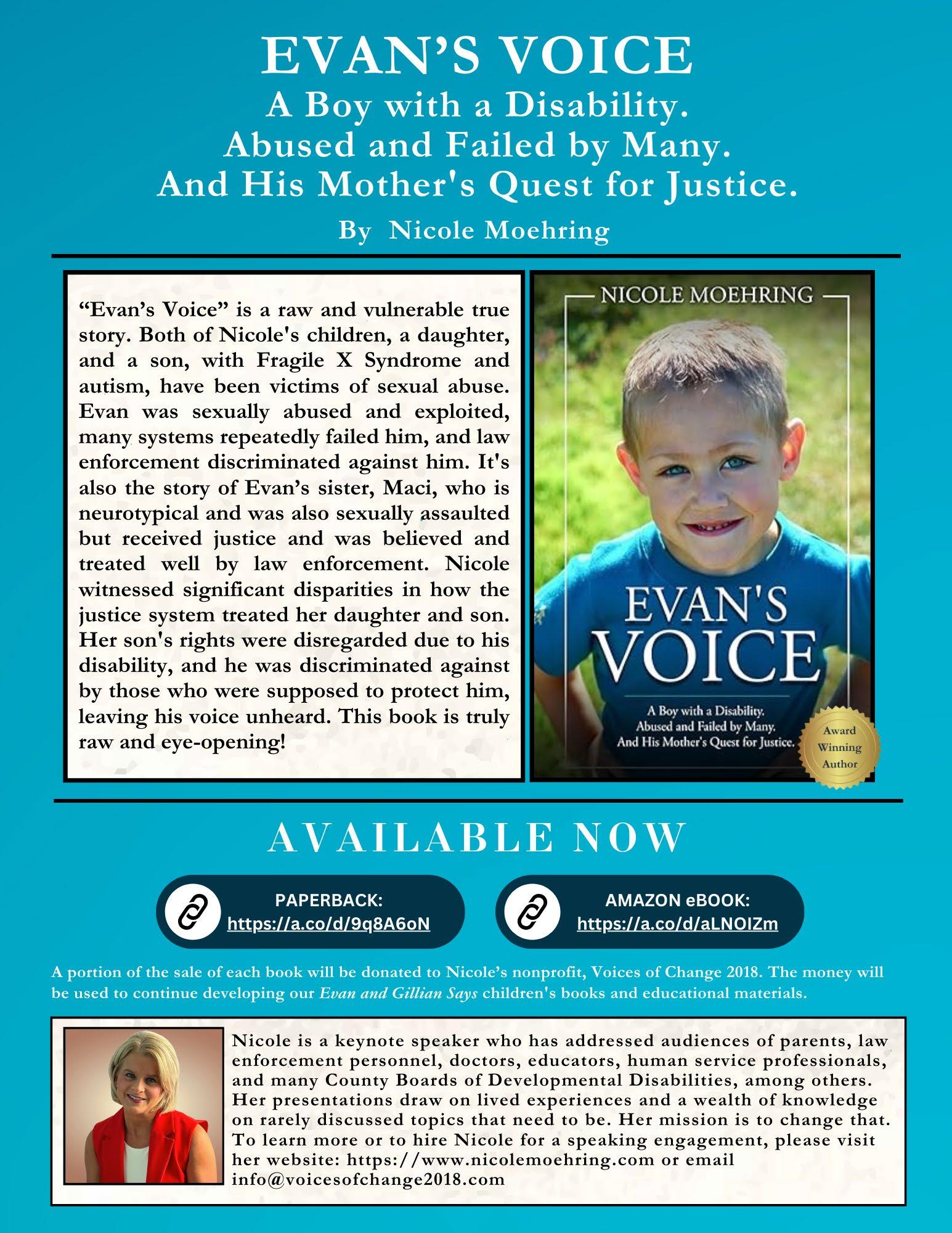
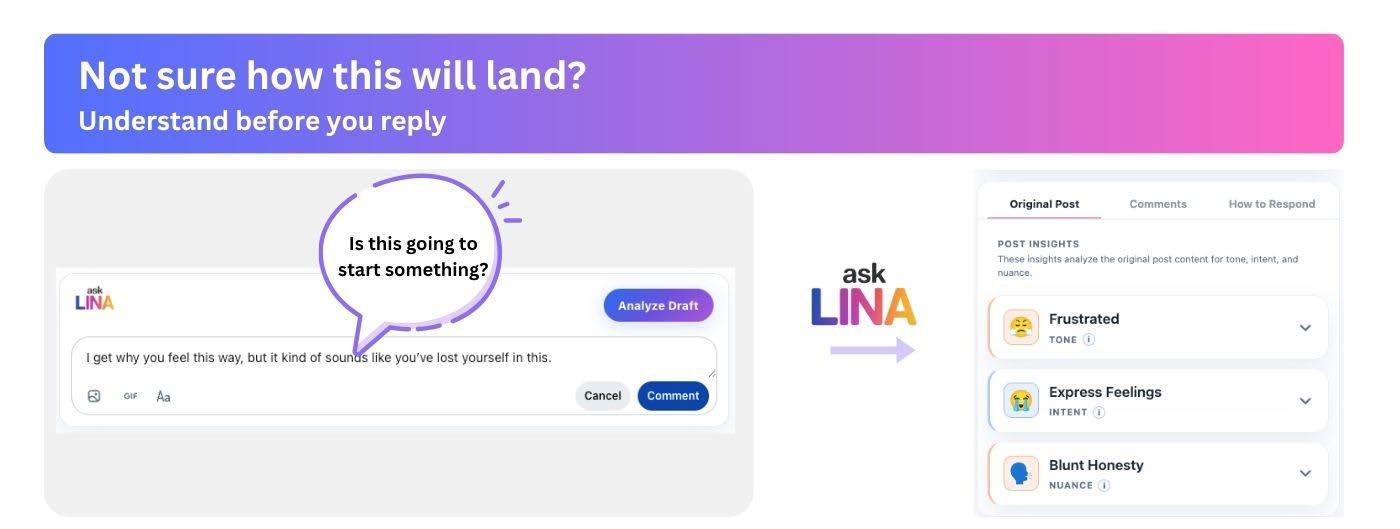
I used to be terrified to hit “Send.”
I used to type out replies and then delete them.
Not once. Sometimes five or six times.
I would read what I wrote over and over, trying to figure out how it might come across. Was it too blunt? Too much? Did I miss something in what they said?
Eventually, I would just give up and not respond at all.
A few years ago, I was diagnosed with autism and ADHD. After that, a lot of things started to make sense.
I’ve always struggled with communication, especially online.
I would overthink everything I wrote. Rewrite messages over and over again. I would tell myself I’d respond later… but later never came.
And that meant I ended up ghosting people, even though I didn’t want to.
At the time, the best way I could describe it was “response anxiety.” I tried looking for tools that could help, but nothing really seemed to understand how I communicate.
So I went to my dad, who has experience building software and AI tools, and explained my idea.

What if something could help you understand what’s actually going on in a conversation before you respond?
Because for me, communication was never just about the words. It was everything underneath them. Tone. Intent. What people actually meant.
We realized this wasn’t just my experience.
A lot of people, especially neurodivergent people, deal with this every day. The hesitation. The second-guessing. The stress of getting it wrong. So, we decided to build something to help.
We created LINA, which stands for Language Insights and Nuance Analyzer.
LINA helps you understand tone, intent, and nuances such as sarcasm and passive aggression. It shows how people react, so you understand the room before you speak. And if you want, it can review your response before you hit send.
The goal isn’t to tell you what to say. It’s to help you understand, so you can respond in your own words with confidence. For me, that changes everything.
If you’ve ever found yourself typing and deleting, you can try LINA at uniquelynd.com/autism-community
Erica Hayes is the co-founder of UniquelyND and the visionary behind LINA. After being diagnosed with autism and ADHD, she set out to build a tool that helps people better understand conversations before responding. Ian Hayes, co-founder, brings decades of experience in software and product development. �� uniquelynd.com

When your child has a disability, life has a way of pulling you into the present moment. There are therapies to schedule, school meetings to prepare for, behaviors to troubleshoot, and paperwork that never seems to end. Planning is often a reaction to immediate demands rather than a focus on long-term goals.
And yet, beneath it all, there’s a quiet, persistent question many parents carry: “Will my child be okay—financially and otherwise—when I can no longer do this? Who will do this when I am no longer here?”
The truth is that every strong special needs plan starts with that question. Not because finances are the most important part of your child’s life, but because financial clarity is what allows every other support system to work. When you understand what your child’s future may cost— and how it can realistically be funded, everything else begins to align: legal planning, therapies, school supports, and government benefits.
Planning flows better when you start with the future and work backward.
Talking about money can feel uncomfortable, especially when it’s tied to something as personal as your child’s future. Many parents worry that focusing on finances means losing sight of joy, connection, and presence. Actually, it’s the reverse.
When you don’t understand the financial picture, every decision feels heavier. You hesitate longer. You wonder if you’re doing the “wrong” thing. You second-guess whether you can afford the supports your child truly needs. But when you start with a clear understanding of the lifelong cost of care, money stops being a source of fear and starts becoming a tool. A tool that gives you permission to move forward with confidence rather than scarcity.
Planning financially first doesn’t mean locking yourself into a rigid path. It means creating a framework sturdy enough to support flexibility, advocacy, and growth—over decades, not just years.
At the center of future-focused planning is one essential exercise: estimating your child’s lifetime cost of care. This isn’t about predicting the future perfectly. It’s about developing a realistic range that can guide decisions today. Start by stepping beyond current expenses. What you

pay now reflects a point in time when you are providing enormous unpaid support. Over a lifetime, costs often shift— and usually increase.
A thoughtful cost-of-care analysis looks at several categories:
• Housing: Will your child live at home, independently, or in supported housing? What happens when you can no longer provide care?
• Support services: Personal care aides, job coaches, transportation, life skills support
• Medical and therapeutic costs: Including therapies not covered by insurance or Medicaid
• Social and recreational life: Camps, travel, activities, memberships—these matter
• Oversight and management: Trustees, care managers, guardians, advocates
When families add these categories together and factor in life expectancy and inflation, many are surprised by the final number. It can feel overwhelming at first. But knowing the number is empowering—it turns uncertainty into strategy.
You don’t need to fund everything yourself. But you do need a clear sense of what needs to be covered, and by whom.
One of the biggest misconceptions in special needs planning is that only the “big” decisions matter. In reality, even minor financial decisions can significantly impact the future. Consider a question many parents face early on: “Should we prioritize saving for our retirement—or an ABLE account for our child?”
It might feel like a values question, but it’s actually a planning question. ABLE accounts are incredible tools for
flexibility, autonomy, and daily quality-of-life expenses. But they are not designed to replace long-term funding. Retirement accounts, on the other hand, play a dual role: they secure your future and often become part of your child’s financial safety net later.
Consider the order of operations:
• Should you fund a Roth IRA before adding more to an ABLE account?
• Is employer retirement matching more valuable than taxable savings?
• When does it make sense to fund life insurance versus increasing contributions elsewhere?
Each of these decisions influences taxation, benefit eligibility, and how long money will last. None of them is a trivial decision. The goal isn’t picking the “perfect” tool—it’s choosing intentionally, with an understanding of how each decision ripples forward across decades.
Once financial clarity is established, the rest of your child’s plan can be coordinated around it—each component reinforcing the others.
A special needs trust, powers of attorney, guardianship alternatives, and estate planning decisions should never exist in isolation. They should reflect how money will be used, which benefits need to be preserved, and who will manage funds when you can’t. Good legal planning protects eligibility and ensures money is used efficiently. Without

understanding future funding, even the best-drafted documents can fall short.
Families frequently experience financial strain when starting therapies. Questions like: “Can we afford this long-term?” are unavoidable. When you know which supports can be covered by government programs—and which will require private funding—you can pursue therapies based on need, not fear. Financial planning helps distinguish between services worth fighting for coverage, supports best supplemented privately, and areas where future needs should be anticipated, even if they don’t exist yet.
Education planning is advocacy-heavy and energy-intensive. Financial clarity shifts your posture.
When you understand how school services influence longterm independence and employability, IEP goals become more than academic and become part of a broader life plan. Decisions about transition planning, vocational supports, and accommodations are stronger when connected to a clear financial vision.
Supplemental Security Income (SSI), Medicaid, waivers, and state programs often provide the backbone of long-term support—but only when planning aligns correctly.
Financial planning helps answer critical questions:
• What will benefits realistically cover?
• Where are the gaps?
• How do private funds supplement without disrupting eligibility?
Rather than seeing benefits and personal savings as competing systems, a coordinated plan allows them to work together.
One of the hardest—yet most important—truths in special needs planning is this: your financial stability is inseparable from your child’s future security. It can feel counterintuitive to prioritize your own retirement when your child may need support for life. But if you run out of resources later, the consequences don’t just affect you.
Planning for your retirement reduces the likelihood of needing to rely on your child’s funds. It allows you to preserve money intended for their lifetime of care,
understanding the role and purpose of every dollar. It also creates stability during transitions, illness, or loss.
This is not selfishness. It’s responsibility. A strong plan ensures that you are supported so your child never experiences an avoidable crisis.
Special needs planning can feel like juggling dozens of disconnected systems. When finances are addressed first, something shifts. Instead of asking: “What should we do next?” You begin asking: “What fits into the plan we’re building?”
That shift—from reaction to coordination—is transformative. You don’t need perfect projections or unlimited resources. What you need is a centered plan, built thoughtfully, and revisited as life evolves. One that acknowledges both realism and hope.

Because when finances are grounded, legal planning becomes clearer, advocacy becomes stronger, and decisions feel less emotional and more intentional. And perhaps most importantly, you gain the freedom to enjoy your child today, knowing you’ve taken meaningful steps toward protecting their tomorrow.
Planning for your child’s future isn’t about removing uncertainty. It’s about building enough structure so that uncertainty doesn’t define the outcome. And that work— done with care, warmth, and clarity—is one of the most loving things a parent can do.
Investment Advisory Services are offered by Sound Income Strategies, LLC, an SEC Registered Investment Advisory firm. All Needs Planning and Sound Income Strategies, LLC, are not associated entities.
Kristin Carleton is a financial planner who specializes in helping families plan for the lifelong needs of a child with disabilities. She works with parents who want clarity—not just about money, but about how financial decisions connect to education, benefits, legal planning, and day-to-day life. Kristin's work is rooted in the belief that thoughtful planning brings peace of mind. She is passionate about helping families feel confident in their decisions, even when the path forward feels uncertain. Kristin is the lead author of Care, Protect, Grow (Wiley, May 2026).
�� careprotectgrow.com

By Dr. Kimberly Idoko, BS, MBA, JD, MD
Every day in clinics and classrooms across America, children are being evaluated for attention problems, irritability, and emotional dysregulation. We reach for behavioral interventions and medication reviews; we refer to specialists; we adjust school supports. What we rarely ask is: what did this child eat for breakfast?
That question is bigger than it sounds.
The developing brain is the most metabolically demanding organ in the human body. During childhood, it consumes enormous amounts of energy while simultaneously building the circuits that will govern attention, emotional regulation, and stress response for decades. That construction project depends on a steady supply of fuel and tightly regulated blood sugar. When glucose spikes and crashes repeatedly—several times a day, every day— the brain activates its stress response.
Here’s the mechanism: when blood sugar drops sharply after a rapid rise, the body releases cortisol and adrenaline to stabilize it. In a single instance, that’s a normal adaptive response. But the developing nervous system learns from repetition. When stress-response pathways fire repeatedly, they consolidate. The brain gets better at vigilance, faster at reactivity, and slower to return to calm. Over time, recovery from frustration or overstimulation takes longer and longer. What looks like a behavior problem may be a brain that’s been trained metabolically to stay on high alert.
Ultra-processed foods now make up more than half of the daily calories consumed by American children. Most are built around refined carbohydrates: sweetened cereals, flavored crackers, packaged snacks, juice drinks. These foods digest rapidly and produce exactly the kind of sharp glycemic swings that drive stress-circuit activation. An
occasional treat is beside the point. The problem is that for millions of children, this pattern is breakfast, snack, lunch, and snack again, repeated daily across the entire span of neural development.
The micronutrient picture compounds it. Ultra-processed foods deliver calories without the nutritional density the developing brain needs. Iron supports dopamine synthesis and the insulation of neural pathways. Zinc and magnesium regulate the signaling systems that govern learning and emotional control. When these nutrients are chronically marginal, the brain’s buffering capacity shrinks, and each glycemic swing hits harder.
None of this is a moral indictment of parents. Ultraprocessed foods are cheap, fast, portable, and engineered to be accepted by kids who reject almost everything else. For families managing tight budgets, long commutes, and the ordinary chaos of raising children, convenience is a necessity rather than a choice. The food environment shapes behavior long before any individual parent makes a single decision.
This needs to be addressed as a public health issue, not just a parenting topic.
The interventions that help aren’t radical. Pairing carbohydrates with protein or fat slows glucose absorption and moderates the spike-and-crash cycle. A predictable meal schedule reduces the frequency of stress activation. Screening young children for iron deficiency, still underutilized in primary care, protects dopamine signaling during the years when it matters most. All of these are available upstream of any diagnosis. They simply require recognizing that what children eat is shaping the architecture of their brains in real time.
We’re spending enormous energy debating how to treat childhood dysregulation after it’s entrenched. We’re building longer waitlists for behavioral services, expanding school mental health programs, and writing more prescriptions. Those responses can be necessary. But we’re largely
skipping the upstream question: what metabolic conditions are children’s brains consolidating under?
In neurodevelopment, architecture follows exposure. The circuits a child uses most become the circuits that define them. If we keep normalizing the conditions that push those circuits toward stress and reactivity, we shouldn’t be surprised when that’s what we get.

Dr. Kimberly Idoko, BS, MBA, JD, MD, is a Yale-, Penn-, Columbia-, and Stanford-educated neurologist and attorney who works with families navigating neurodevelopmental differences. She brings a rare combination of clinical neuroscience, systems literacy, and lived experience as a mother to the question parents are rarely given time to ask: What is actually happening inside my child’s brain? She is a board-certified physician who cares for thousands of patients each year. She is also the founder of Special Parent Coach, where she helps parents interpret early neurological signs and understand how modern systems shape outcomes. She lives in Los Angeles with her family.
INSTAGRAM @drkimberlyidoko
TIKTOK @drkimberlyidoko

By Sarah Ragab

"She always has the answer. It just gets to her about a minute after the conversation has moved on."
"His teacher emailed me to say he doesn't participate in class. He came home and told me the words show up at recess."
"My mother-in-law thinks he ignores her. He told me afterward he was finding the right word and gave up before he got there."
One and a half seconds. I did not expect the number to be that small. I kept reading it, thinking I had misread it. A researcher named Mary Budd Rowe spent years sitting in classrooms with a stopwatch, measuring the gap between when a teacher asked a question and when the teacher called on someone else, rephrased the question, or just moved on, and the number she came back with was 1.5 seconds. I cannot even register that silence has started in 1.5 seconds. The idea that a person could hear a silence,
interpret it as meaningful, and then decide to fill it in one and a half seconds is something I am still turning over.
When Rowe got teachers to extend that pause to three seconds, which is still not a long time by any measure, student responses got 300-700% longer. Not because the children suddenly knew more. Because the answer was allowed to finish loading.
I build focus tools for attention deficit hyperactivity disorder (ADHD). That is how I came into this, not through research but through conversations, hundreds of conversations with parents who use the thing I built and who, toward the end of a call, start talking about something that has nothing to do with focus.
They described the morning question that went unanswered. The after-school “how was your day?” that landed like a door closing. The dinner-table sentence arrived 20 seconds after the topic had already moved somewhere else. I started writing these down because I kept hearing the same story. Three different families told me almost the exact same version of it in a single month, one child, one silence, one adult in the room who read the silence wrong, and the child who knew it had been read wrong. I did not understand what I was looking at until I started reading about the people who study it for a living.
A 2023 meta-analysis of 18 studies involving 1,842 people found that autistic children and adults score within the typical range for verbal and nonverbal reasoning. The reasoning is intact. What drops is processing speed, which I think has something to do with how fast the brain converts input into output under timed conditions. I am not entirely sure I am describing this correctly, but the scores on that specific subskill fall about one standard deviation below the population mean. Thirteen IQ points or so below. And I keep holding that number next to one and a half seconds, and I cannot bridge the two in a way that makes the math feel anything other than cruel.
The answer is not missing. The answer is there. It is just not finished yet.
A mother told me a story. She came home from work, and her seven-year-old was on the kitchen floor with a bowl of Cheerios, half eating them and half arranging them by color, and she asked how his day was. He did not look up. She asked again. She crossed the room to put her bag down and said something about traffic. Twenty seconds later, while she had her back to him at the sink, he said the substitute teacher let him draw the periodic table on the windows. She turned around, and he was watching her face to see if the answer had been worth the wait. He had been building it
the whole time. She just could not see it from where she was standing because nothing visible was happening.
A 2018 study used a modified version of the Trier Social Stress Test. The researchers gave people a word-retrieval task and told some participants they were still being observed and evaluated while they did it. Those participants produced significantly more tip-of-the-tongue states than the participants who believed the observation had ended. Same words. Same task. The only variable was whether someone was watching. Being watched, or believing you are being watched, was enough by itself to cause words to vanish midreach. And then a 2014 study found that adults under socialevaluative stress produced speech that was measurably simpler than the same adults' speech under neutral conditions. I did not go looking for this research expecting it to describe a kitchen at six in the evening, and then it did.
So, the parent hovering in the doorway waiting for the answer is not a neutral presence. The eyes-on is itself a variable. The child is already doing the cognitive work, and then they become aware of someone standing there watching them not finish, and the work gets harder, and the sentence they were building collapses. Not because they stopped trying. Because the room changed on them.
Damian Milton, an autistic researcher, described something he called the double empathy problem in 2012. The way I understood it, and I want to be honest that I may not have this exactly right, is that when autistic and non-autistic people misread each other, the failure is not flowing in one direction from the autistic person outward. It runs both ways at once. The parent reads the silence as refusal. The child reads the parent reading it that way and understands that the listener stopped waiting before the sentence was done. The rush is not just a missed beat. It is, from where the child is sitting, evidence that you gave up on them before they finished.
Not every silence is buffering. Three very different things can sit inside the same pause, and they need different responses. Buffering is active, the brain is processing, and what it needs is more time and less audience. A shutdown is different; it is sensory or emotional overload that has temporarily taken language offline, and it needs space, not patience. Sometimes silence simply reflects that there is no answer yet; "I don't know" is honest, best followed by moving on. Naming which one you are looking at is most of the work.
The first thing I keep coming back to is what I think of as 'ask and walk.' You ask the question. You give a small visible signal that you are not going to stand there watching. You move. You start doing something else in the same room.
You look out the window, pour yourself a drink, or put your phone face down and look at the dog. The question is still in the room. What you removed is the eyes-on, which was the variable. Parents who try this for even one week tell me the same thing almost every time: the answers come, the answers are longer, the child sounds more like themselves and less like someone trying to get through a checkpoint.
The second thing is to open a written channel when the spoken one is stalling. A 2021 study of 245 autistic adults ranked six communication modes across seven scenarios, with email and text message ranked first, so overwhelmingly that the researchers titled the paper Anything but the Phone. The study is of adults, not children, so I handle it carefully, but the mechanism transfers in a way that feels right to me. Written language removes the ticking clock. There is no audience watching for you to hesitate. A note in a lunchbox. A shared note on a phone. Texting your 12-yearold from across the house, which feels strange until it works, and then you wonder why you did not try it sooner.
The third thing is to receive, I don't know yet, a complete and honest answer. Not a placeholder. Not evasion. A full report from a brain that has not finished the work. When the adult treats it as stalling and pushes for something faster, the child learns that incomplete answers are not safe and starts producing quick, wrong ones to relieve the pressure. If you start treating yet as real information the temperature in the house changes.
The fourth thing is a script for the grandmother, the substitute teacher, and the neighbor at the school gate. Six words: He is still thinking, wait for him. That is the whole script. It does not ask anyone to understand the research on processing speed. It names what is happening and what to do.
One more number I did not know until I went looking. A 2023 meta-analysis of 5,772 participants found that pragmatic language, which I understand to be the social and timing layer of speech, is significantly impaired in ADHD, with a very large effect size. The buffering is not only an autism thing. It is happening at a lot of tables; nobody has put a label on.
One in 31 eight-year-olds in the United States has been identified with autism, which is the current CDC (Centers for Disease Control) figure. Add the ADHD population. Add the Gestalt language processors. Add the kids still learning

English. Add the kids who are just careful with words. The number of children for whom one and a half seconds is not enough time is an enormous fraction of every classroom and every dinner table I have ever thought about.
I keep coming back to the mother at the sink with her back turned, and the 20 seconds she gave him without meaning to, just by being unable to see his face. And the answer did come. And it was specific, and it was good, the periodic table on the windows, and it was not the kind of thing that survives being rushed. She would not have gotten that answer in 1.5 seconds. Nobody would have.
I am still thinking. Wait for me.

References:
Damian. M. On the ontological status of autism: the ‘double empathy problem’. University of Kent. https://kar.kent.ac.uk/62639/
James. E. L. et al. Tip of the Tongue States Increase Under Evaluative Observation. J Psycholinguist Res. https://pubmed.ncbi.nlm.nih. gov/29019103/
Shaw. A. K. et al. Prevalence and Early Identification of Autism Spectrum Disorder Among Children Aged 4 and 8 Years — Autism and Developmental Disabilities Monitoring Network, 16 Sites, United States, 2022. Surveillance Summaries. https://www.cdc.gov/mmwr/volumes/74/ss/ss7402a1.htm
Wait Time: Making Space for Authentic Learning. Kent State University. https://www.kent.edu/ctl/wait-time-making-space-authentic-learning
Sarah Ragab is an AI product design lead at Microsoft and a parent. She has spent her career making technology human and empowering, from designing her first game teaching kids to code to shaping Copilot experiences. She is the cofounder of Habi, a habit tracker and focus timer app for people with ADHD. Habi's guide to ADHD executive dysfunction is the companion to this piece.


By Laura A. Ryan, OT, OTR, OTD
Ifyou have a child with sensory needs, you have likely received a multitude of recommendations around heavy work. Heavy work, also known more formally as proprioceptive work, is an effective regulator of a variety of sensory needs. However, like all sensory recommendations, proprioception and the input it provides are nuanced and should be used specifically to fit your child’s unique sensory profile and thus their unique sensory regulating needs.
To understand why proprioceptive work is so effective, it is helpful to understand the neurobiological underpinnings of proprioception.
Researchers have been studying proprioception for a long time. Proprioception has been referred to as the 6th sense since the 17th century. Although still under study, we now know that proprioception arises from receptors in muscles that are sensitive to stretch. These receptors sense movement of the body, such as limbs or muscles. Uwe Proske and Simon C. Gandevia state that proprioception contributes to motor control, as you need to know where your muscles are in order to move them effectively toward a goal.
However, proprioception doesn’t stop with just muscle and body awareness. Proprioception also contributes to your sense of your body and its position in space. Gerardo Salvato and the researchers on his team state: The primary function of proprioception is to stabilize and protect the body.
However, its role may extend beyond this fundamental function. Proprioceptive signals have been hypothesized to contribute to the emergence of body awareness (i.e., sense of ownership) and motor awareness (i.e., sense of agency).
Having a conversation when your child is happy and relaxed will help you build a toolbox for the times they need input but cannot express themselves.
Mick Olds (Kelsie Olds), an occupational therapy practitioner who runs the blog The Occupational Therapist, expands on proprioception and the different types of proprioceptive input an individual may need to regain or remain regulated. They explain that there are three types of proprioception: exertional, impact, and pressure. Depending on what type of proprioceptive input your child needs will dictate the best sensory input to provide. On the next page is a table outlining each type, the behaviors you may see, and some sensory activities to engage in.
Internal Exertion: this is a high energy need that seeks increased pressure internally (heart, lungs, stomach, etc.)
External Exertion: this is a high energy need that seeks increased pressure externally (muscles and joints)
Chewing, screaming, shouting, spitting, whining
Pushing and/or pulling
Impact: this is a high-energy need that seeks tight contact to the joints
Hitting, kicking, jumping, flopping, crashing
Chew toys/necklaces, shouting or whining into a bucket to provide reverberating feedback, brushing teeth and spitting toothpaste in the sink, shouting into an echo microphone
Wall pushups, wall squats, pushing a heavy object along the floor, using resistive bands (with supervision), pushing against another person, squats while holding a weighted ball
Clapping games or clapping to music, jumping on a trampoline, flopping/crashing into crash pads or mattresses, kicking a weighted ball
Pressure: this is a low energy need that seeks low impact
Crying, restlessness, low-grade agitation
When you look closely at the variety of proprioceptive input and relate proprioceptive needs to what could be seen as behavior, a new understanding of that behavior emerges. For example, for a child seeking internal exertional proprioceptive input, screaming, yelling, or shouting could be viewed as destructive or blocking behavior, but this behavior may be an unmet sensory need with no other ulterior motive! A child who has difficulty waking up and getting ready for school may be seeking proprioceptive input through pressure and could benefit from deep morning hugs to get going.
So how do you determine exactly what your child needs? It is essential to start by asking your child that very question. Often, young children may have difficulty putting words to what they are feeling and thus to what they need, so some guided questions can help them verbalize the next step. Additionally, children who are already dysregulated will have more difficulty verbalizing their needs. Having a conversation when your child is happy and relaxed will help you build a toolbox for the times they need input but
Tight hugs and squeezes to the muscles, wrapping in a blanket or lying under a weighted blanket, and steamroller input via a therapy ball
cannot express themselves. As always, visuals are incredibly helpful, so it’s a bonus if that toolbox contains pictures of their chosen activities. Another way to determine the best proprioceptive strategies is to observe your child's activities, both during regulation and especially during dysregulation.
Heavy work is always a supportive choice, especially in times of dysregulation. Knowing exactly what type of heavy work is most beneficial is the next best step in staying happy, regulated, and engaged!
References & Resources:
The OccuPLAYtional Therapist. https://www.occuplaytional.com/ Droske, U. and Gandevia, S.C. Physiological Reviews 92 (4).
Salvato, G., Casile, G., Squarza S.A.C., Piano, M., Sessa, M. and Bottini, G. (2025). Proprioception as a sensory root for body and motor awareness. Brain Communication 7 (5)
Moon, M.M., Kim, J., Seong, Y., Suh, B-C., Kang, K.J., Choe, H.K., and Kim, K. (2021) Proprioception, the regulator of motor function. BMB Reports 54(8), pp. 393-402
Laura A. Ryan, OT, OTR, OTD, is an occupational therapist who grew up on a large horse farm in Massachusetts. She has been practicing for over 30 years and has been using hippotherapy as a treatment tool since 2001. She enjoys seeing the happiness and progress each person has achieved through the therapeutic impact of the horse. Laura has also developed a program for breast cancer rehabilitation using therapeutic input from the horse.
✉ hooves4healingot@gmail.com

By Stephanie Scheller
Life-changing information doesn’t always come in big flashes.
Mine came at 28 years old in a coffee shop, sipping on some drink I don’t even remember and cracking a joke I’d made too many times to count: “Maybe I should get tested. I think I’m a little ADHD.” This was followed, of course, by an obligatory, nervous laugh.
This time, though, my colleague, a trained clinician who diagnosed neurodivergent children for a living, smiled and commented that she didn’t need a test for me. She’d been watching me for months. As she put it, “You’re so ADHD, you are the test, Stephanie.”
Color me surprised!
I laughed it off and put it aside – completely unaware of how much of my life would change as a result. Learning how much that insight mattered took nearly six years, but once I started to see how attention deficit hyperactivity disorder (ADHD) had impacted my life, I couldn’t unsee it.
As I began to embrace it more, I found mostly skepticism. The production company I founded, Grow Disrupt, creates events, experiences, and products “by an ADHD entrepreneur for ADHD entrepreneurs.”
Even with that, I still get sly chuckles and comments that, “There’s no way you have ADHD.”
What many don’t realize is that I have a brain that has worked overtime since junior high to understand and adapt within a system that wasn't built for it.
The cliche response to overcoming any obstacle is, “I didn’t succeed in spite of it, I succeeded because of it.” I would argue that I didn’t succeed because of my ADHD, but because I learned to work with it.
Without insight into my day-to-day struggles, I’ve always come across as organized and composed. Teachers, employers, and colleagues have seen a responsible and
diligent Type A overachiever. I was the top producer at my corporate job and was promoted to running an entire department in my first year. I graduated summa cum laude with straight As, while working two to three jobs simultaneously since I was 15 years old.
What no one saw – unless something messed up my systems and caused a meltdown – were the rituals and structures that could have put sports fans to shame.
What I didn't notice was how my brain kept finding creative solutions, even when I couldn't explain its needs.
In an unexpected turn of events, the fact that I was such a difficult child to teach through junior high while homeschooled turned out to be key to understanding how to work with myself.
After one particularly explosive afternoon where I literally flung the math book at my mother, she left the room and returned not long later with the teacher’s manuals. Stacking them next to me, she suggested that, since I had it all figured out, perhaps I could teach myself and let her know what my grades were at the end of the year.
I doubt she intended for me to take her up on it.
But I did.
While I know this won’t work for everyone, it did for me. For the first time, I not only had good grades in math and science, but I also understood what I was learning. Because, as it turns out, having to figure out how something works is how I learn. Being able to reach out to my mom for help when I couldn’t figure something out or wanted to know more (and move quickly past the items that I did get or found boring) went a long way towards keeping my brain engaged.
The next year, I learned more about myself when I received the entire year’s worth of books up front. Ecstatic, I dove headfirst into the subjects I loved most and finished everything related to language arts in two weeks.
I then spent the rest of the year laboring through biology and math. It was a hard-learned lesson to use the “fun” work as a reward and an interest bridge when motivation was harder to find.
When I got to college, I often became frustrated by the convoluted processes and habits that propped up my success – even if I couldn’t seem to let them go either.
One of my clearest memories is keeping two physical planners. Mostly because I questioned myself multiple
times per semester about why I kept two planners. And yet, when the next semester started, I would buy two planners once again.
I never once gave myself credit for listening to what I needed and giving my brain the support it craved.

In one, I wrote out my entire class schedule, major assignment due dates, and estimates for when I should start each assignment. The second planner was more detailed, and I used it day-to-day to manage time blocks for classes, commitments, appointments, work schedules, planning what I wanted to work on each day, etc. Without realizing it, I was giving myself an overall structure to work within, while maintaining freedom to rotate my daily focus for variety.
Another area of consistent exasperation with myself was how I prepared for classes and tests.
Despite telling myself multiple times that typing my notes would be faster, I preferred taking them by hand. Which meant that, before each class, I would skim the section to be covered in our books. If my syllabus didn’t tell me what we were going to cover, I’d reach out and ask. Then I’d create headers for my note-taking.
During class, I always sat near the front despite my 20/20 vision. At the time, all I knew was that I needed to be close enough so that, if I had a question, I could get the teacher’s attention before I spiraled and lost the plot. I took near transcription-level notes during class. Afterward, I re-wrote
them, color-coding and re-arranging anything that felt like it made more sense next to other information.
Any time I strayed from my tried-and-true methods, it felt like everything fell apart.
I am older now, and with years of studying every piece of research I can get my hands on about the ADHD brain, I can look back and understand what was happening.
The explosive afternoons in junior high were due to emotional dysregulation paired with boredom and sensory overwhelm. Interest-based motivation leading to an everpresent need for variety and fun – as well as a desperate urge to avoid lingering on the stuff I “got” so I could have time to dig into the stuff I didn’t.
Visual cues and framing to compensate for time blindness with my planners and notetaking methods – which also helped immensely with my auditory processing challenges. Pairing tasks I wanted to do with those I didn't helped overcome task initiation freezes. Giving myself a sandbox of structure to play in with one planner, while allowing myself the freedom to hold on to variety and honor my mental rhythms with day-to-day flexibility.
None of these were words I had at the time. I didn’t know about dopamine dysregulation, hormone cycles, and how they affect ADHD or executive dysfunction. I just knew that I had to plan to start working on projects sooner than I thought I’d need, because there was a solid chance I’d struggle to “show up” some days.
And I did know that my brain was somehow figuring out what I needed to show up as the high performer everyone saw me as. As long as I listened.
Recently, I spoke at an event and shared that some of my most incredible accomplishments came when I gave myself the support I didn’t think I was supposed to need.
Throughout my life, I have been unfairly hard on myself for needing support that no one else appeared to need. I

convinced myself that everyone else dealt with everything I did – they were just better at it.
No one else needed to leave a water bottle at the top of the stairs, so they couldn’t walk downstairs without remembering to hydrate. No one else needed to use two planners or obsessively rewrite their notes.
I never once gave myself credit for listening to what I needed and giving my brain the support it craved.
The systems we build are not random. We are not overachieving, overthinking, or being extra. When the brain keeps reaching for something, it’s trying to solve a problem. While the instinct to redirect or correct is understandable, a better question is: what problem is it solving?
I still use two calendars. They’re digital now, but having one for the minutiae and one for the big picture is still how I juggle writing books under three pen names, inventing products that do not exist to help other ADHD entrepreneurs, producing multiple events per year, and maintaining a personal life.
Our brains build and adapt the support systems we need – if we stay curious about what we’re doing and listen to what is being said beneath the surface.

Stephanie Scheller produces events and experiences to help ADHD entrepreneurs grow. She is also the creator of the 7-Day Sprint Adventure Kits — a first-of-its-kind, neuroscience-informed at-home module that combines physical anchors with field guides built for the ADHD brain. A TEDx speaker, three-time bestselling author, and winner of multiple entrepreneurial awards, Stephanie is also a classic ADHD-er who has executive-produced a pop-ballad and music video, paints, plays the violin, and created both a custom coffee blend and a custom scent to support ADHD brains. She lives in San Antonio, where she is a regularly featured ADHD advocate in local and national media. �� thestephaniescheller.com CALENDARS growdisrupt.com


By Amy Wagenfeld, PhD, OTR/L, SCEM, FAOTA
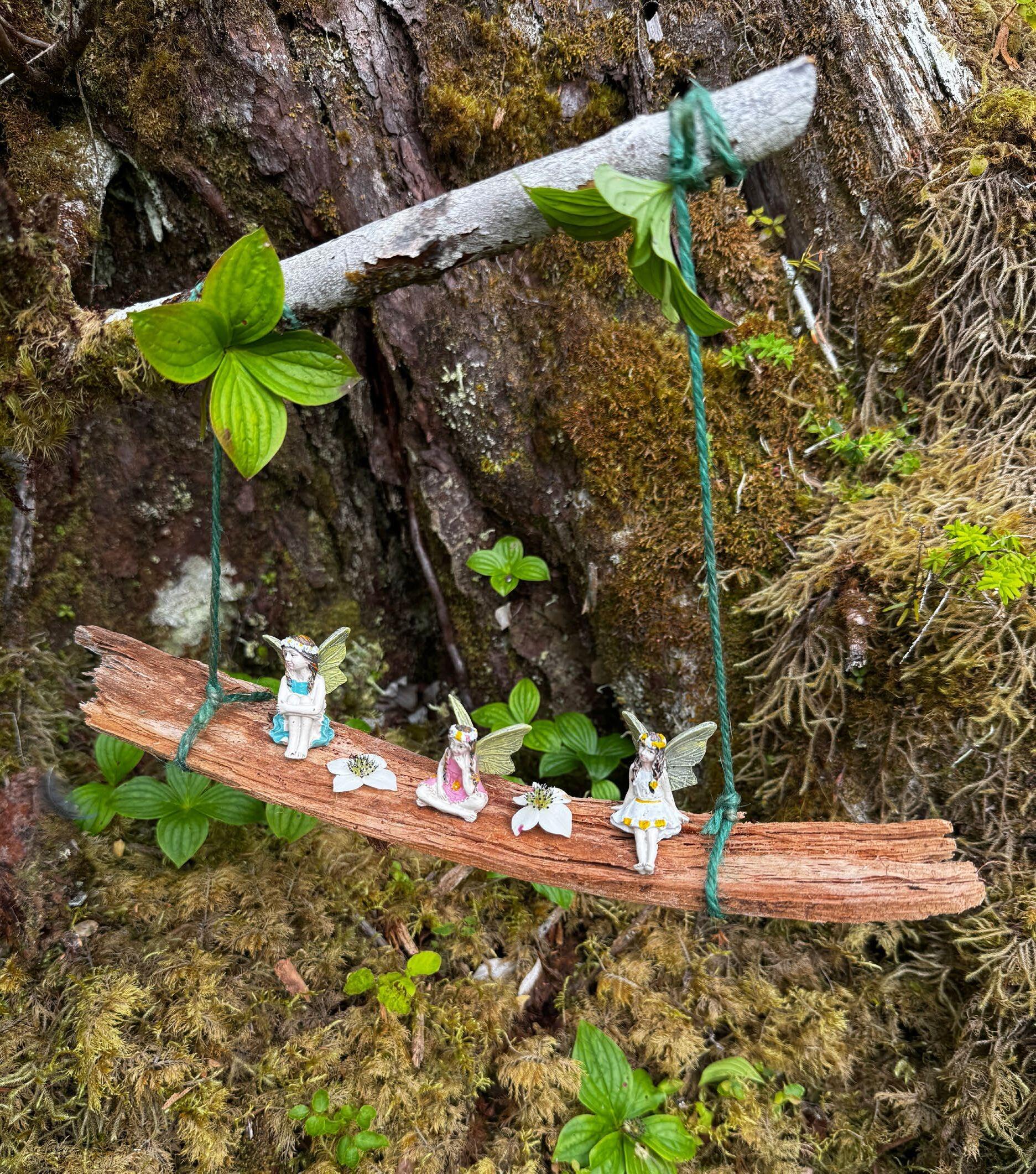
Acouple of years ago, I wrote a Nature Notes column about fairy gardens, noting that they are delightful, creative, and immersive for anyone who wants to try them. Creating a fairy garden is also a lovely nature-based sensory activity that is not just child’s play! Making a fairy garden nourishes every sensory system except taste, but I think of it mainly as a tactile experience, involving the textures, shapes, and temperatures of the objects in the fairy garden and the environment where they are located.
Made of natural materials gathered and, if desired, embellished with small figurines or other miniature objects, a fairy house or neighborhood is a whimsical residence for imaginative fairies or other sprites. A fairy garden often brings together houses and other neighborhood features, usually in a quiet, hidey-hole place tucked away in the garden, where the magic awaits. Fairy gardens can also be assembled in the woods, a back or side yard, on a tabletop for those who need it to be there and accessible for interaction, or even near a window if getting outside is a challenge.
An Internet search will lead you to many websites that provide directions for creating fairy gardens. I don’t think those directions are necessary; instead, I suggest allowing your imagination and creativity to guide the process from start to finish, through renovations, as a fairy garden is never truly done. There is always something fun to add or adjust to make it “just so.”
This column features a breathtaking fairy garden that my dear friend, Paul Dick, made for his granddaughters. The fairy garden is located deep in Paul’s yard in Juneau, Alaska. I had the pleasure of visiting Paul’s garden, and aside from the awe-inspiring, it was the most gorgeous garden I had ever seen. When I arrived, I was entranced by the fairy garden and knew it was time to revisit it with you, our dear readers. Today, I share six magical stories and photos of what it feels like to be creating fairy gardens in a special, hidey-hole place in “Pa’s” garden in Juneau. Paul is an award-winning primula expert and gardener extraordinaire, and a wonderful photographer, as the images that accompany these stories are his. Enjoy the stories and photos, and I hope you are inspired to try out a fairy garden with the important people in your lives!
“Over the years of topping and pruning hemlocks in the forest around my house, I (Paul) observed hollows in the trees that would make an ideal place for my five granddaughters to play in nature. These hollows provide a niche under the trees' canopy, and in a rainforest, the forest floor provides a soft covering of moss, ferns, and small forest plants. These hollows provide a setting that evokes a place of fairies and gnomes. With that, I bought some garden fairy figurines and accouterments to build a “fairy garden” for
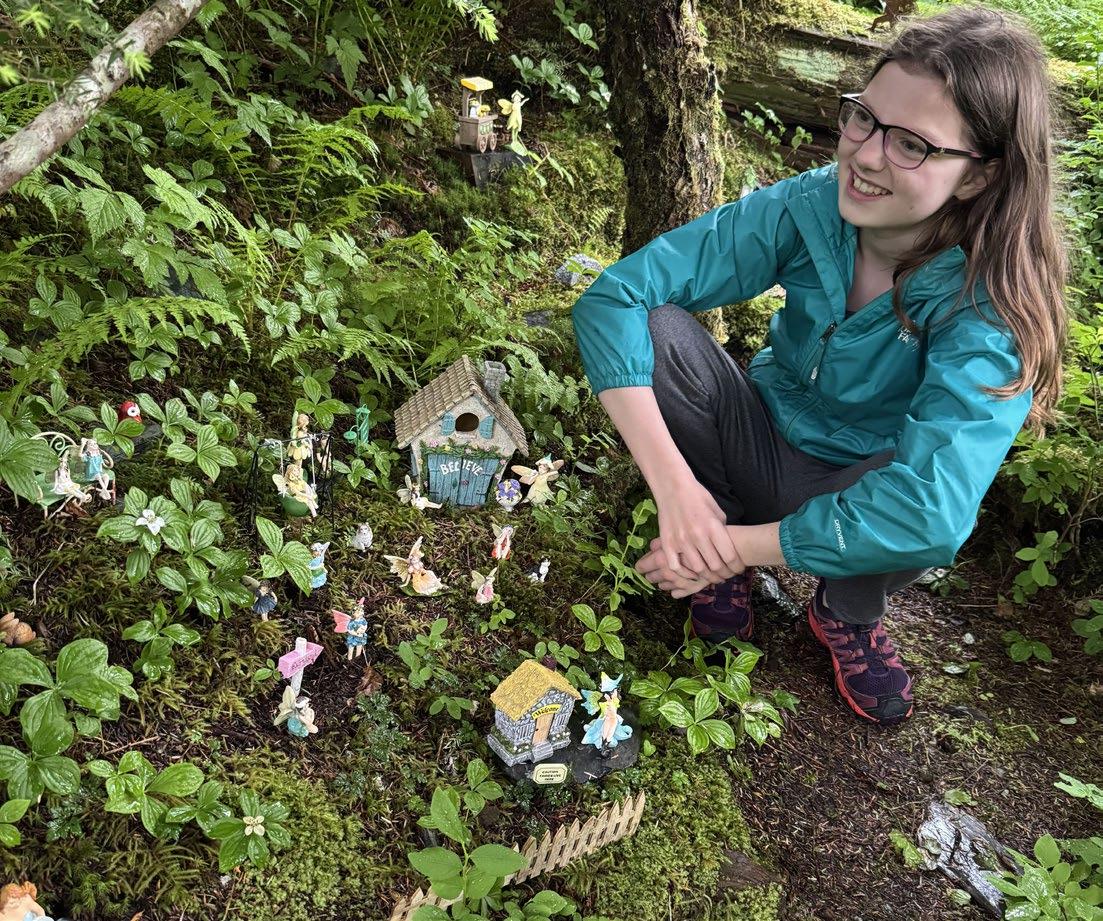
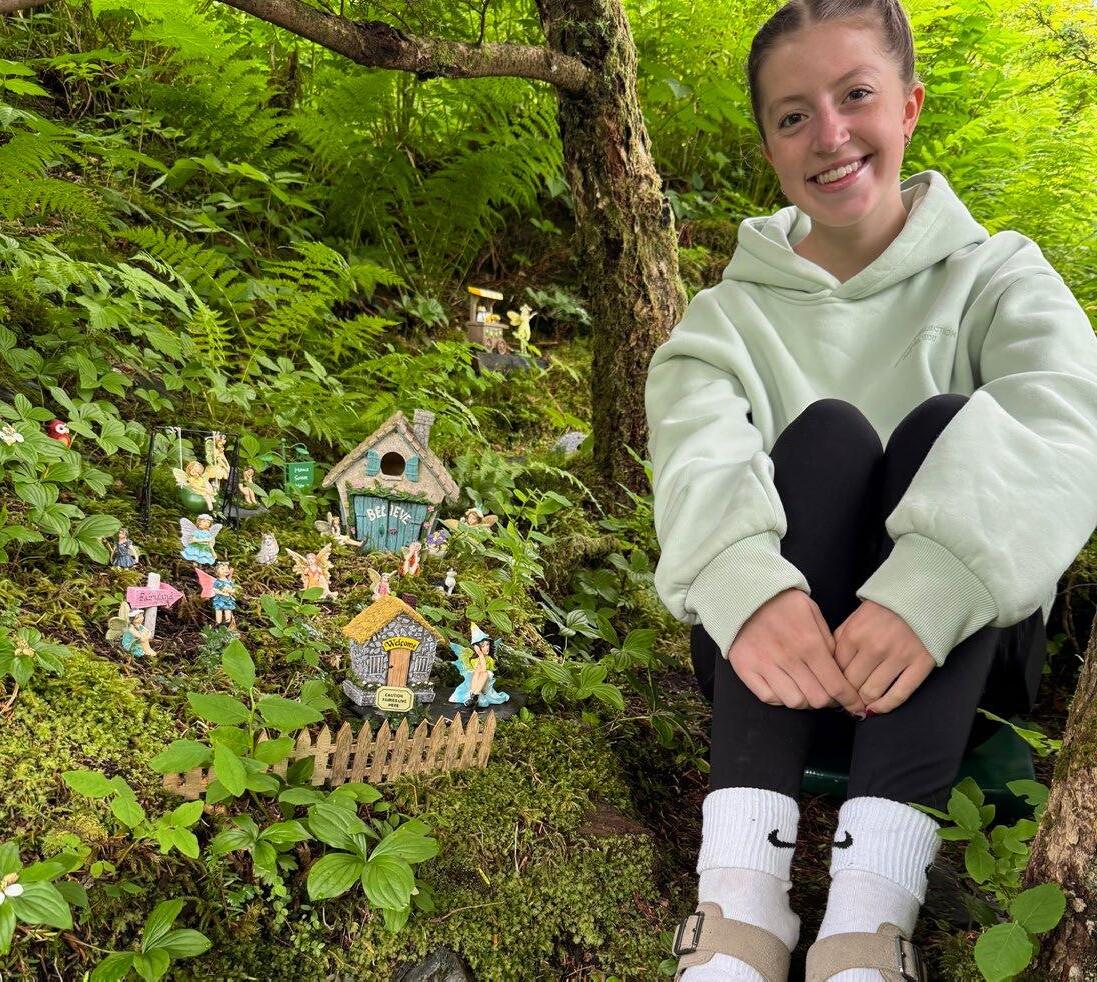
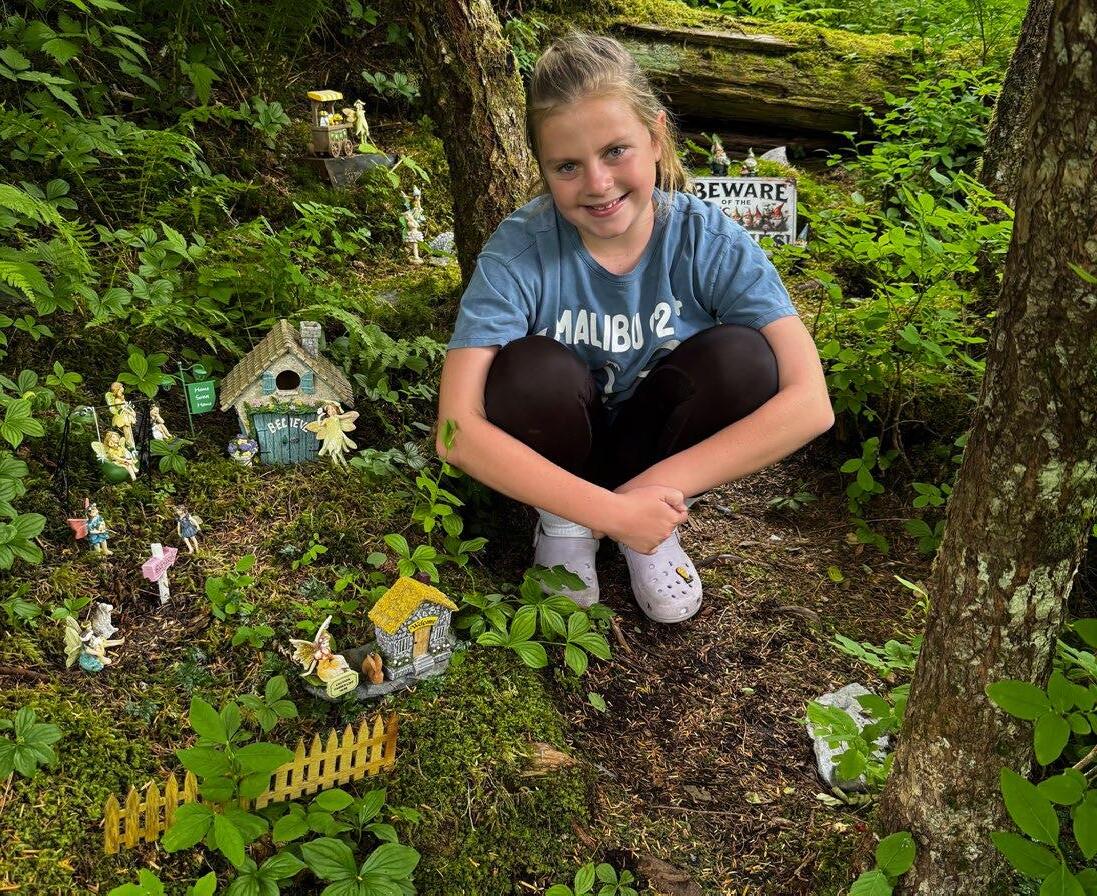
the girls. Over the years, I’ve added to the garden, and my granddaughters have spent countless hours playing in the fairy garden. The fairy garden has been a highlight of their visits to our home. My granddaughters love being in nature and having it to be creative and use their imagination.”
Pa’s granddaughters each shared stories about their love and connection with Paul’s fairy garden. For Addie, “My Pa’s fairy garden is so magical, that every year when I’m in the garden, I’m not in Juneau, Alaska, I’m in a world with princesses, fairies, gnomes, mermaids, and unicorns! Every year, I don’t see just some fairies and unicorns here and there; I see a world where anything is possible and where any wish can come true, no matter the size.”
Makenzie mused, “Some people say the most magical place on Earth is Disney World, but I would rather be sitting in the rain surrounded by flowers and fairy dolls. The fairy garden is a beautiful place where the coveted wonders of childhood imagination come to life.”
Hannah said, “The main reason why the fairy garden is so special to me is because of all the memories I have made playing fairies with my grandpa throughout the years. Ever since my first time in Alaska, [playing in] the fairy garden has always been a tradition that me, my grandpa, and sisters get to do, and will hopefully carry on forever!”
Emma shared: “My favorite time at the fairy garden was making homes for the fairies out of fern logs and tree trunks. Another one of my favorite memories was playing Is it Cake? with our fairies and making cakes out of nature. I love the fairy garden and look forward to going every summer!”
Mia said, “I love the fairy garden so much, and it is so fun to play in. I look forward to it every time I go to Alaska. My favorite part is making cafes and restaurants and making food and treats for the fairies. To make the food, I use leaves, blueberries, and salmonberries. Overall, I love it so much and am so thankful we have it.”
And we are thankful to have firsthand accounts of how these magical fairy gardens grace the girls’ lives and bring them all joy and happiness!

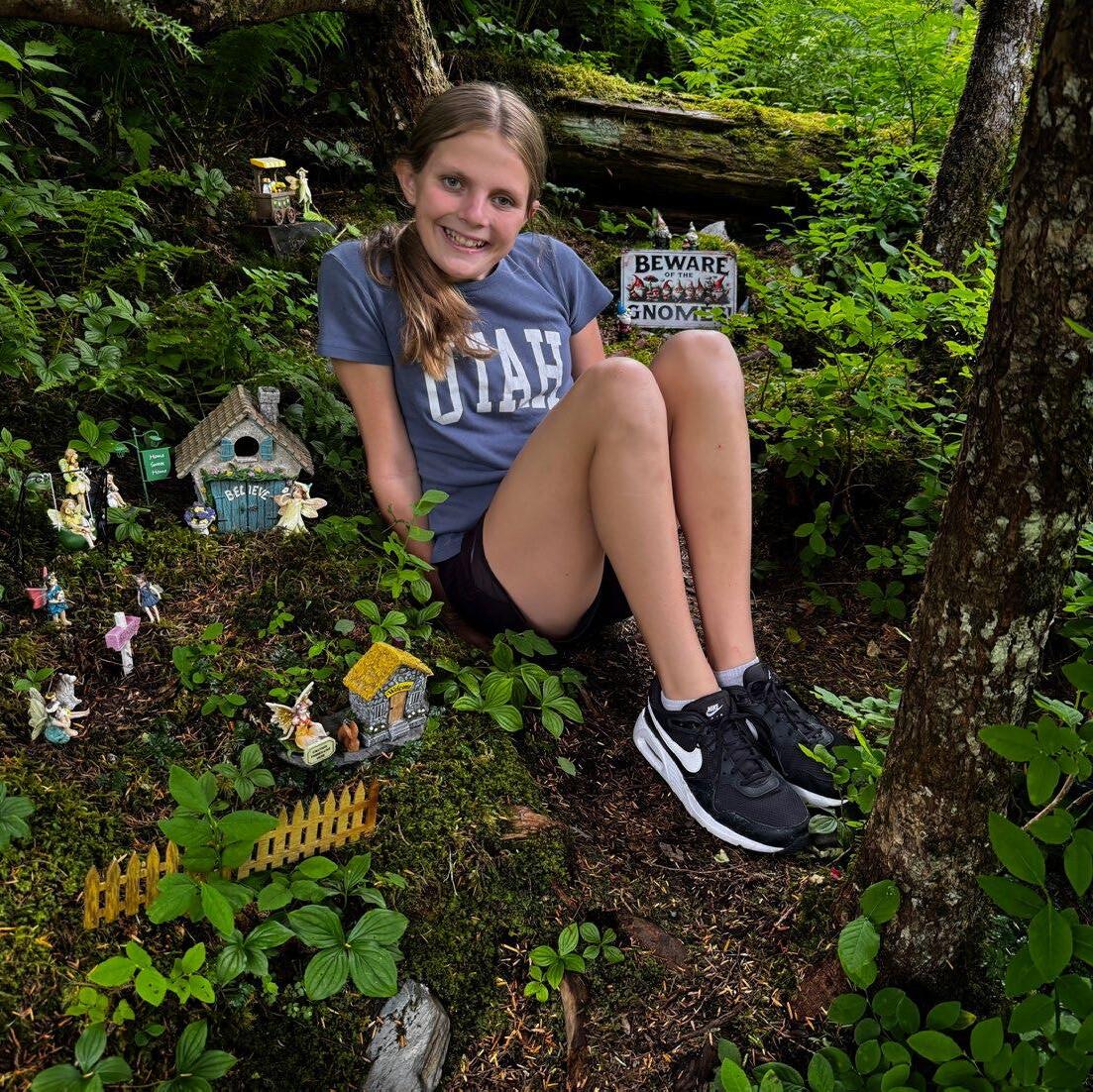
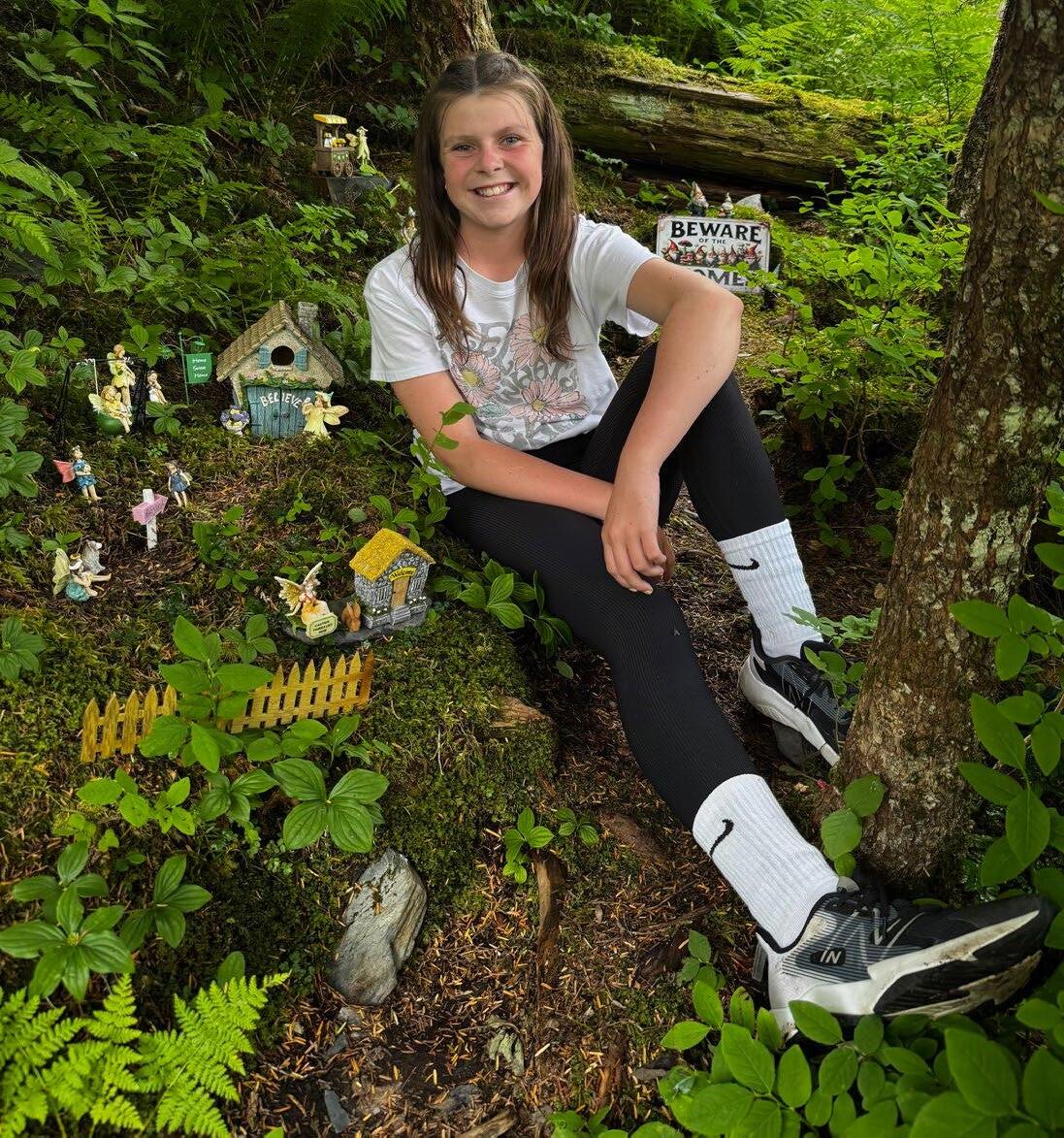
Amy Wagenfeld, PhD, OTR/L, SCEM, EDAC, FAOTA, is Principal of Amy Wagenfeld | Design and Lecturer in the PostProfessional Occupational Therapy Doctoral Program at Boston University. She is a Fellow of the American Occupational Therapy Association and the Center for Health Systems and Design at Texas A&M University and holds evidencebased design accreditation and certification (EDAC) through the Center for Health Design, specialty certification in environmental modifications (SCEM) through the American Occupational Therapy Association, and certification in healthcare garden design through the Chicago Botanical Garden. Amy presents and publishes widely on topics relating to access to nature and is co-author of the award-winning book Therapeutic Gardens: Design for Healing Spaces, published by Timber Press. When not designing gardens, researching, or developing garden and nature programs, Amy can be found happily digging in the dirt. �� amywagenfelddesign.com ✉ amy@amywagenfelddesign.com


By Yasmine White, MT-BC, VMT

People who know me would call me social. I genuinely love getting to know others, being in a room full of energy, and sharing conversation. And yet, after a while, I need to step away. I need to find a quiet place to decompress. I need what I have come to call “going into my cave.” It’s my quiet, personal space where I can recharge.
Sound familiar? Most of us know what it feels like to go from overwhelmed to calm — that shift from too much back to steady ground. For children on the spectrum, that journey can be far more urgent, more intense, and far harder to navigate without the right tools and support.
Over the years, I’ve seen sensory overstimulation in many forms — in my own family and in the children I’ve worked with. What I’ve learned is this: techniques and strategies are only part of the answer. If a child isn’t part of building those strategies, we’re not truly paving the way for their self-awareness, independence, or ability to advocate for themselves.
So how do we help them begin that journey of selfknowledge? Well, it starts with you — watching, listening, and being present. You know your child. You notice when something shifts. The very first step is making sure they know you see them when they’re struggling. A simple phrase, “I can see you’re having a hard time,” or “Do you need some help?” can be a game-changer. That kind of validation gives children the confidence to eventually take ownership of their own challenges.
How much is too much? The answer looks completely different for every child. The first step is understanding your child’s limits and honoring them without judgment.
Your child is already capable of beginning this process of self-discovery. Even if they’re young or still developing their communication skills, they’re still sending signals. The goal is to help them notice what “too much” feels like for them, and to let them know that they have a way to take back control before panic sets in.
Letting your child know you see them — and that they have choices — is where everything begins.
We all have physical and emotional cues that tell us we’re approaching our limit: a tightening in the chest, a sudden irritability, the feeling that every sound is just a little too loud. Most adults have learned to read these signals in themselves over years of experience. Children have the
same signals — they simply haven’t had the time or guided support to name and understand them yet.
Some children respond well to a simple 1–10 scale to describe the intensity of an overwhelming moment. Others can’t put words to it at all, and may do better with visuals, picture cards, or emotion charts that let them point rather than speak. Finding simple words such as “It's too much” or “I need a break” can give your child a way to begin to communicate out. “The goal is to find the tool that helps your child begin to own their experience.
Have a plan before you need it
When a child is already overwhelmed, even gentle questions can feel like too much. That’s why the best time to plan is when everyone is calm. In a quiet, easy moment, your child can help build their own support strategy: which tools feel helpful, what they want you to say, what they want to do when things get hard.
Then, when a difficult moment comes, you’re both simply following a plan you already made together — rather than trying to figure it out in the thick of it. A few consistent phrases, like “Do you need a break?” or “Should we find a quiet spot?” can give your child something familiar to hold onto.
Sometimes overstimulation builds gradually, with early signs that are easy to miss. Other times it seems to come from nowhere. Knowing your child’s personal triggers — certain sounds, crowds, transitions, bright lights — helps you anticipate and prepare rather than simply react.
Early signals to watch for
• Body tension: Are their shoulders creeping up? Are they clenching their hands or jaw?
• Shifts in expression: Do they look panicked, glassyeyed, or like they’re trying to disappear?
• Protective behaviors: Are they covering their ears, turning away, or pulling back from the group?
Be proactive
Before a busy event, prepare your child by letting them know what to expect: the noise level, how many people will be there, and how long you’ll stay. Make a plan together for how and when they can take a break. Establish a signal — a word, a gesture, even just a look — that means “I need out.”
When children know there is always an exit available, they often feel safer walking in the door.
Once your child begins to recognize overstimulation and understand their triggers, the next step is to build a toolkit—a set of go-to strategies they can reach for when they need to regulate and recover.
Non-musical tools
• Deep breathing: Simple, portable, and powerful. Bubble breathing, lion’s breath, or breathing with a visual timer can all help calm the nervous system.
• Movement breaks: Jumping, swinging, or wall pushups help the body discharge excess energy through proprioceptive input.
• Weighted blankets or lap pads: Deep pressure can have a naturally calming effect on many children.
• A calm-down corner: A cozy, designated space stocked with a few comfort items gives children a reliable place to retreat and reset.
• Fidget tools and sensory toys: Stress balls, textured objects, or chewable jewelry can offer just the right sensory input to help a child return to center.
Music-based tools
Music is especially close to my heart as a support strategy. Here are a few ideas that may help:
• A personal playlist: Work with your child to find the songs or sounds that feel like a warm blanket to them. Let them own it. It might be favorite tunes, classical music, nature sounds, or lo-fi beats.
• A music calm-down corner: Low lighting, a comfortable bean bag, a good pair of headphones, and maybe a favorite book nearby. This combines the power of music with a contained, safe space.
• Rhythm and drumming: When a child is dysregulated, tapping a simple beat can restore a sense of order. Rhythm is organizing to the brain and body, and the physical release of drumming can move stuck energy.
• Music and movement: Find the songs your child loves to move to and build a short routine around them. Structured movement paired with familiar music can help bring order back to an overwhelmed mind.
The key to all these tools is to practice them in calm moments, not in the middle of a crisis. That’s the only way your child will be able to access them when it counts.
Validating your child’s experience is one of the most powerful gifts you can offer. Let them know it is okay when things get to be too much. That moving from overwhelmed to regulated — finding that steadiness again — is not weakness. It’s wisdom. And they are not alone in it, because all of us, in our own ways, sometimes need a little help finding our way back.
Mostly, this work is about listening and being present. It is about watching for the cues that tell you whether they need your help or simply need you to hold space while they find their own way back.
As layered and individual as all of this is — that’s really the point. Each one of us is layered and individual. Figuring out the what and the why is lifelong work for all of us.
But if a child grows up knowing that someone truly believes in their ability to figure it out — and that they are held in love and support along the way — that is more than enough to begin the journey.
How much is too much? The answer looks completely different for every child. The first step is understanding your child’s limits and honoring them without judgment.
Yasmine White, MT-BC, VMT, is the CEO & Founder of Voices Together, as well as an author and songwriter with over 30 years of experience in the field of music therapy. Yasmine developed the Voices Music Therapy™ (VMT) model that the organization uses to serve thousands of people across North Carolina each year. A thought leader in the world of autism and music therapy, Yasmine is moving Voices Together forward to deliver a technology-enabled music therapy platform to reach individuals across the country. �� voicestogether.org LINKEDIN linkedin.com/in/yasmine-white-3229796/

By Kate C. Wilde
Happy July! As the English countryside bursts into color, I’m reminded of another kind of creativity— how our special children, teenagers, and adults can light up a room by finding very precise, very creative ways to get a reaction from us. Even children with complex needs, whether speaking or non-speaking, are often highly perceptive. They quickly learn what shifts our tone, changes our expression, or pulls us off balance. So, this month, we’re not focusing on changing our special loved ones. We’re focusing on something far more powerful: our response.
Jana, Czech Republic, asks,
“My 8-year-old will touch my hair like she’s about to pull it, or pick something up in a store, and slowly move to bite it. As she does these actions, she is intently watching me. It feels ominous, quite intense, like she’s controlling me. I’ve told her not to a million times, but she just laughs. It’s infuriating, and if I am honest, a little creepy. How do I get her to stop this?”
Jana, I understand why this feels unsettling. But what you’re describing isn’t threatening or creepy—it’s something I call “button pushing,” and it’s a very common part of development. Many of us did our own version of this as children.
I remember long, boring car journeys during my childhood when I’d slowly move my finger toward my brother’s shoulder as if I were going to poke him. He’d react instantly
by saying in a hugely annoyed tone, “Don’t touch me!”—and that reaction was exactly what I was looking for. The more animated he became, the more entertaining it was. I would laugh uncontrollably with great joy at the power I was wielding over my brother. The more annoyed he got, the more I would do it.
The important note here is that I never actually touched him. I was not interested in touching him; I was just curious about his reaction to the thought of me touching him.
Your daughter is most likely doing something very similar. She isn’t interested in pulling your hair or biting objects; she’s interested in your reaction to the possibility that she might. That’s why she watches you so closely.
If what she wants is your reaction, then removing that reaction removes the motivation.
Please do note that non-reaction doesn’t mean ignoring your child. It means staying steady and unchanged:
• Keep your facial expression the same
• Continue what you’re doing or saying
• Maintain a calm, neutral presence
• Avoid sudden shifts in tone, posture, or attention
Equally important is what’s happening internally. Try anchoring yourself with thoughts like:
• She’s looking for a reaction, not trying to harm me
• This is just pushing buttons; this is not something ominous
When your body stays relaxed, your child has nothing to “hook into.” Over time, the behavior loses its appeal.
When
our loved ones
are pushing
our buttons,
they’re rarely trying to upset us. More often, they’re experimenting, exploring cause and effect, or simply entertaining themselves.
“My 17-year-old son, who is highly verbal and autistic, says things that upset people—like telling someone they look homeless or that a teacher doesn’t know their subject. He gets negative reactions from them and from me if I am there, and that seems to make him want to do it more. Why is he seeking this?”
Ray, there’s a good chance your son is responding to the impact he can create. Strong reactions, especially emotional ones, can be highly stimulating. But there are a few deeper factors worth considering:
It could be a sign that he is under stimulated. It is often the case that even well-meaning educators and therapists underestimate their autistic students’ intelligence by a lot. I would check in with what is being offered to him in any school or therapy program. It may need revamping and rethinking so
that it matches above, not below, his age level and cognitive abilities. If your son isn’t sufficiently challenged, he may create his own stimulation by provoking reactions.
It’s worth reviewing whether his educational or therapeutic environment truly aligns with his cognitive abilities and interests.
Social interactions can feel unpredictable. Provoking someone guarantees a response—and that can create a sense of control. If this is part of the picture, increasing his autonomy in everyday decisions can help reduce the need to control interactions in this way.
If your son enjoys eliciting strong reactions, you can use that to your advantage.
Choose a few things he does that you want him to continue to do, and respond with deliberately exaggerated enthusiasm:
• Animated facial expressions
• Playful gestures
• Silly voices or accents
• Dramatic tone changes
The key is to make your response memorable and engaging. At the same time, remain neutral when he makes provocative comments. Over time, when he wants to solicit a big reaction, he will do it by doing the actions you want him to continue.
When our loved ones are pushing our buttons, they’re rarely trying to upset us. More often, they’re experimenting, exploring cause and effect, or simply entertaining themselves. When we change our reactions to it, we change this pattern. And sometimes, the most powerful shift isn’t in what we say—but in what we don’t.
As always, thank you so much for your questions. Keep sending them in! I wish you and your loved ones a great couple of months, and I look forward to seeing you in the next issue.
Kate C. Wilde has spent the past 30 years working with children and adults on the autism spectrum and their families, as well as with therapists, educators, and schools. She is the author of the acclaimed books Autism Abracadabra: Seven Magic Ingredients to Help Develop Your Child's Interactive Attention Span, Autistic Logistics: A Parent's Guide to Tackling Bedtime, Toilet Training, Tantrums, Hitting, and Other Everyday Challenges, and The Autism Language Launcher: A Parent's Guide to Helping Your Child Turn Sounds and Words into Simple Conversations, and is renowned for the well-attended courses she teaches throughout the U.S., Europe, and Asia. Her YouTube autism quick-tip videos, delivered with her trademark infectious enthusiasm, have garnered a worldwide following. �� www.katecwilde.com �� www.safetoconnectapproach.com
By Karen Kaplan, MS

Aswe think of grandparents and how important they are in the lives of all children, I reflect on the workshop I facilitated for grandparents of children with autism, some time ago. These grandparents were so open to acquiring understanding, and to hearing ways they could help support their grandchild as well as their son or daughter. So, if these ideas resonate, send them to grandma and grandpa and reach out for support.
Grandparents were excited with all the ideas, such as:
1. Hire a housekeeper to clean the house, or a gardener to do the lawn, so their son or daughter could have more time with their child
2. Offer to watch their grandchild to provide a date night
3. Offer to do the grocery shopping
4. Share their own hobbies with their grandchild, find out their grandchild’s favorite interest, and see how to support them
When connecting in person is reduced due to distance, illness, or circumstance, grandparents can still consider:
1. Calling their grandchild on the phone or via FaceTime
2. Sending their grandchild a card or email with a picture
3. Sending a meal to the family, a favorite dessert, or some yummy beverages
4. Sending a package that can be opened (a favorite game or book) by their grandchild
5. If their grandchild collects things, send something for their collection
Overall, my message to all grandparents with exceptional grandchildren is to ask your child how you can help them make the day go a little more easily.


Resources:
Here are some sources for grandparents and parents to make use of:
• American Association of Retired Persons: www.AARP.org
• www.bellaonline.com (Grandparents & Childhood Disability)
• Full Circle Care: www.fullcirclecare.org
• Grandparents.com: https://www.nextavenue.org/partner/ grandparents.com
• GKSN (Grandparents for Kids with Special Needs): www.gksn.org
• Foundation for Grandparenting, OJA, CA 93023: www.grandparenting. org
• American Association for Marriage & Family Therapy (AAMFT): www. aamft.org
• Grandparents Guide to Autism: Making the Most of the Time at Nana’s House by Nancy Mucklow https://www.aapcpublishing.net/book/ view/702/grandparents-guide-to-autism-spectrum-disorders-makingthe-most-of-time-at-nanas-house-coming-soon-new-book-save-20
• Autism & the Grandparent Connection by Jennifer Krumins: http:// www.amazon.com/Autism-Grandparent-Connection-UnderstandGrandchild/dp/0969582633
• Grand Parenting a Child with Special Needs by Charlottee E Thompson: http://www.amazon.com/Grandparenting-Child-With-Special-Needsebook/dp/B0033PRKXE
• Inside Kinship Care by David Pitcher: http://www.amazon.co.uk/ Inside-Kinship-Care-Understanding-Providing/dp/1849053464/ ref=sr_1_1/278-4557573-8996249?s=books&ie=UTF8&qid=1388181284 &sr=1-1&keywords=kinship+care
• Your Special Grandchild by Josie Santomaur: http://www.jkp.com/ catalogue/author/1950
• Empowering Grandparents Raising Grandchildren by Carole Box: http://www.barnesandnoble.com/w/empowering-grandparentsraising-grandchildren-b-carole-cox/1101665414?ean=9780826197054
• The Sacred Work of Grandparents Raising Grandchildren by Elaine Williams: http://www.elainekwilliams.com/book/
Karen Kaplan, MS, is a native San Franciscan. She completed her bachelor’s and master’s degrees in speech pathology and audiology at Arizona State University, Tempe, Arizona. She minored in special education and obtained her speech therapist and special education credentials in California. Karen worked as a speech therapist for schools for 20 years before opening her own residential and education program for students with autism. She worked in credential programs at Sacramento State University as well as UC Davis and spent 20 years directing private schools for those with autism and similar learning challenges.
Karen founded a non-profit, Offerings, which helps cultures globally to understand those with developmental challenges. For seven years, she founded and facilitated an autism lecture series and resource fair in Northern California. Karen still facilitates an annual Autism Awesomeness event. She is currently consulting and helping families, schools, and centers for children, teens, and adults. Karen has authored three books: Reach Me Teach Me: A Public School Program for the Autistic Child; A Handbook for Teachers and Administrators, On the Yellow Brick Road: My Search for Home and Hope for the Child with Autism, and Typewriting to Heaven…and Back: Conversations with My Dad on Death, Afterlife and Living (which is not about autism but about having important conversations with those we love).
�� karenkaplanasd.com

By Miriam Edelman
Playgrounds can benefit child development by providing places for children to play and interact with others. Socialization skills developed through play have lifelong effects, and the failure to learn them could hinder how children relate to others as adults. Outside play increases cooperation and reduces conflict between children. Playgrounds can also improve health by increasing physical activity and decreasing time spent in front of screens.
Park Circle Playground (PCP), known as the world’s biggest inclusive playground, won South Carolina’s Parks Excellence Award as the best “facility or park” in December 2024. The PCP features many playground pieces not found in other South Carolina playgrounds. It can serve as a model for other playgrounds and recreation areas on how to be more accessible to children of all abilities.
Playgrounds should be, but are not always, inclusive of people with disabilities. According to Discover Inclusive
Playgrounds: A Guide for Playground Users, “Inclusion assumes that all children, regardless of ability or disability, have the right to:
• Be respected and appreciated as valuable members of the community
• Fully participate in all activities
• Interact with peers of all ability levels in opportunities to develop friendships and learn and respect differences”
Inclusive playgrounds are particularly crucial for children with disabilities and their loved ones. They remove barriers, allowing children of all abilities to enjoy outdoor play and gain lifelong benefits. They also give all children the opportunity to interact with many types of people, developing skills that can help them throughout their lives.
An inclusive playground should be welcoming and accepting of children of all abilities. Features that help certain disabilities may not assist individuals with other disabilities, but they can still benefit others. For example, musical
instruments and play features with water could stimulate some autistic children who have sensory issues, while they could also be enjoyed by other children.
Although a 2018 poll by the National Recreation and Park Association found that almost 90 percent of Americans believe every playground should be inclusive, many schools/ organizations are unsure how to build inclusive playgrounds.
ADA.gov, discussing the Americans with Disabilities Act (ADA), stipulates that “Children with disabilities must be able to participate in play without barriers. The design standards detail how play structures, including soft play environments, water features, and play tables, should be accessible.”
Relevant “Sections” are 240 and 1008. ADA requirements are very detailed. For example, parts of Section 1008 are “1008.3.2.1 Size. Transfer steps shall have level surfaces 14 inches (355 mm) deep minimum and 24 inches (610 mm) wide minimum.” and “1008.3.2.2 Height. Each transfer step shall be 8 inches (205 mm) high maximum.”
People may think that following Americans with Disabilities Act (ADA) guidelines (as most do, according to playworld. com) is sufficient to make playgrounds accessible, but complying with the guidelines is just the bare minimum. More needs to be done to make playgrounds fully inclusive.
Inclusive playgrounds look like traditional playgrounds. Both types of playgrounds may include equipment (e.g., swings), areas for running and jumping, toys, a sandbox, water fountains, picnic areas, restrooms, and sporting fields/courts. However, inclusive playgrounds feature additional or modified features that are not typically found in traditional playgrounds. For example, they may have accessible paths and surfaces (i.e., using turf), larger and wider areas for wheelchairs and other mobility devices, wheelchair-accessible seats, ramps, swings for larger children, sensory play equipment, extra employees, events and activities geared towards certain disabilities, seating for caregivers, and more.
Inclusive playgrounds support a variety of play styles. Children should be able to play with grown-ups and other children, as well as engage in solitary play. Autistic children may especially prefer to play alone rather than with others.
North Charleston’s Park Circle neighborhood completed a $20 million redevelopment project called Park Circle Reimagined. The new Park Circle includes spaces and activities appealing to wide swaths of the population:
• A new community building with classrooms, meeting rooms, and a theater
• Flexible event space
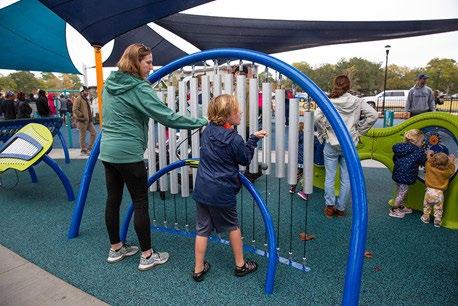
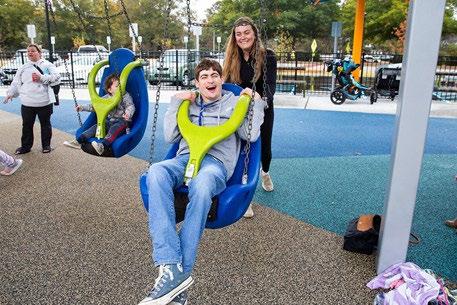

• A history and archives repository
• An artist-in-residence studio
• An inclusive playground [PCP] and baseball field
• A farmers' market pavilion
• A nature garden, open green space, and walking trails PCP was developed with input from the disability community. Jill Moore, who uses a wheelchair, assisted

with PCP. She is an inclusive play specialist at Landscape Structures, a company that designs playgrounds. She says, “When I see an inclusive playground, I feel welcome there. Someone has thought of me and decided that I matter and have something to add.”
PCP opened in North Charleston’s Park Circle neighborhood in November 2023. This 55,000-square-foot playground includes:
• “Tot Spot” for young children. This includes “We-Saw” (a wheelchair-accessible seesaw) and “Cozy Dome” (a dome that provides spaces to get away from the busy area and to climb).
• “Inclusive Kids Island” for children between the ages of five and 12 years old – This area includes “Hedra Towers” and “Super Netplex” (structures that children can climb and slide down) and “Zipkrooz” (a two-way zip line with comfortable seating)
• "Tune Lagoon” for children over two years old – This musical section contains percussion instruments, including drums and chimes.
• “Ninja Warriors Course” for children over 13 years old – This part includes “Extreme A-Frame Cargo Net” (a rope climb) and “Extreme Angled Overhead Ladders” (advanced monkey bars).
The playground is geared toward people aged six months to adulthood. Every part of the playground has accessible features. It welcomes people with different disabilities, saying: “All children means everyone. The need for play does not distinguish between children who are typically developing and children with disabilities. Everyone of all abilities needs play.”
PCP’s play structures are accessible and interspersed with
typical equipment, ensuring that children with disabilities play with, or at least near, other children instead of in a separate area. For example, in PCP, metal slides (that do not interfere with cochlear implants) are located close to plastic slides. The playground includes features for children with autism, visual impairments, and other disabilities. People in wheelchairs can access almost all the equipment. PCP’s accessible play features include a multi-colored sensory tunnel that is accessible for children in wheelchairs, “swings with wheelchair ramps,” accessible zip-line swings, domes for children who need quiet areas, and musical instruments. Stories about different abilities are on multiple signs.
The playground is accessible in additional ways. The nocurbing parking can be accessed without going behind parked cars. Walking routes are wider than typical. PCPs’ rubber surfaces make it easier for children, people in wheelchairs, people with canes, and autistic individuals than pieces of wood and sand. Since most of the playground is shaded, people are exposed to less sun in hot South Carolina. Visitors to the park can also cool off at the water misters. At “transfer stations,” caregivers can also move children from wheelchairs. People can also charge motorized wheelchairs and communication devices and use handicap-accessible, gender-neutral, single-stall bathrooms, two of which have “an adult-size changing station.” Furthermore, they can also use the playground’s communication board, permitting them to communicate without their own devices. The playground also features an inclusive baseball field.
Parents and others can work out in exercise areas, enjoy picnic tables, and visit the farmers market, the nature garden, and more.
PCP has brought many people to North Charleston. Around
81,000 visitors came to PCP in its first 60 days. About 11,000 of the 81,000 were from more than 250 miles away, making PCP a destination playground. During the first six months, half a million people came to PCP.
The playground has received positive feedback from the disability community. For example, Layla Luna, a parent of an autistic child and founder of Just Bee, which develops autismfriendly areas, said: “All playgrounds from this starting point need to be like this. We cannot go back to the status quo.”
Other jurisdictions can be inspired to create their own indoor and outdoor inclusive playgrounds and venues. Everyone would benefit. No longer would people experience problems like Alison Harding's, whose son cannot walk by himself. Harding said, “We’ve really struggled to find a playground where he could easily access in his chair and be able to play with other kids his age.”
PCP has free admission and is open every day.
Photos Courtesy of City of North Charleston Park Circle Playground
References:
“2010 ADA Standards for Accessible Design.” ADA.gov, 2010. https://www.ada. gov/law-and-regs/design-standards/2010-stds/#240-play-areas
“Areas To Explore: Park Circle.” Charlestoncvb.com, n.d. https://www. charlestoncvb.com/areas-to-explore/park-circle/?neighborhood=park-circle/ Ashbaugh, C. “Park Circle welcomes play space for all: ‘Inclusion is growing like wildfire’.” Live5news.com, 2023. https://www.live5news.com/2023/11/12/parkcircle-welcomes-play-space-all-inclusion-is-growing-like-wildfire/ Blair, M. “Excitement builds for North Charleston inclusive playground.” Live5news.com, 2023. https://www.live5news.com/2023/07/21/excitementbuilds-north-charleston-inclusive-playground/ “Celebrating Inclusion at Park Circle Playground.” Facebook.com, n.d. https://www.facebook.com events/1984989275649253/?rdid=UQ9hITkxlogRKGq5&share_ url=https%3A%2F%2Fwww.facebook.com%2Fshare%2F17KCEf84o2%2F# Coe, K. “'This is the future': Park Circle's inclusive playground for kids of all abilities.” The Post and Courier, 2023. https://www.postandcourier.com/news/ park-circle-inclusive-playground-opens/article_97c00180-734f-11ee-8a3f532826d84fa9.html
Coulter, L. “Designing Play Spaces for All: Expert Jill Moore on the value of play and how to build accessibility and inclusivity into any project.”

School Instruction News, 2025. https://issuu.com/wmhmedia/docs/school_ construction_news_march_april_2025/21
“Designing Play Spaces for All.” landscape structures, n.d. https://www.playlsi. com/en/our-story/news-events/news-2025/designing-play-spaces-for-all/ “Discover Inclusive Playgrounds.” National Center on Health, Physical Activity and Disability, n.d. https://www.nchpad.org/resources/discover-inclusiveplaygrounds/
Gibson, A. “Lowcountry Parks & Playgrounds: Park Circle Playground (Inclusive).” Charlestonmoms.com, 2024. https://charlestonmoms.com/ in-around-charleston/lowcountry-parks-playgrounds-park-circle-playgroundinclusive/?utm_source=chatgpt.com
Hernandez, K. “Park Circle: The World’s Largest Inclusive Playground is in Charleston, SC.” Kiddingaroundcharleston.com, 2026. https:// kiddingaroundcharleston.com/park-circle-playground-charleston-sc “Inclusion In Playgrounds: Why Is It Important?” kit, 2022. https://www.kit.org/ inclusion-in-playgrounds/
“Inclusive Playgrounds: 5 Ways to Design Accessible Spaces for All Abilities.” Voice of Play, n.d. https://voiceofplay.org/blog/2025/03/07/inclusive-playgrounds/ “Inclusive Playgrounds vs. Accessible Playgrounds.” Playworld, n.d. https:// playworld.com/blog/inclusive-playgrounds-vs-accessible-playgrounds/
James, M, et al. “Children’s Usage of Inclusive Playgrounds: A Naturalistic Observation Study of Play.” Int J Environ Res Public Health, 19(20), 21 October, 2022. https://pmc.ncbi.nlm.nih.gov/articles/PMC9602768/
Lyderson, K. “From Accessible to Inclusive: A New Era of Play.” City Parks Alliance, 2025. https://cityparksalliance.org/from-accessible-to-inclusive-a-new-era-ofplay/
“Park Circle Facility Wins State Parks Excellence Award.” City of North Charleston, n.d. https://www.northcharleston.org/news_detail_T13_R115.php
“Park Circle Playground.” Carolina Parks and Play, n.d. https:// carolinaparksandplay.com/project/park-circle-playground/
“Park City Playground.” City of North Charleston, n.d. https://recreation. northcharleston.org/parks_facilities/park_circle_playground.php
“Park Circle Playground North Charleston, SC USA.” landscape structures, n.d. https://www.playlsi.com/en/commercial-playground-equipment/playgrounds/ park-circle-playground/
“Play and leisure for children with ASD.” Evallies Rooms, n.d. https://www. evallies.com.au/autism-assessment-melbourne/autism-asd-play
“Public Service Category: City of North Charleston - Park Circle Reimagined.” Municipal Association of South Carolina, n.d. https://www.masc.sc/achievementaward/2025/public-service-category-city-north-charleston-park-circlereimagined
“Spotlight on Accessible Recreation Spaces.” ADA.gov., n.d. https://www.ada.gov/ ada-standards-highlights/
“World’s Largest Inclusive Playground: Park Circle, North Charleston, NC.” Whirlix Design, 2023. https://blog.whirlix.com/worlds-largest-inclusive-playground-parkcircle-north-charleston-nc
“World's Largest Inclusive Playground, world record in North Charleston, South Carolina.” Worldrecordacademy.org, 2024. https://www.worldrecordacademy. org/2024/4/worlds-largest-inclusive-playground-world-record-in-northcharleston-south-carolina-424225
Miriam Edelman, MPA, MSSW, is a Washington, D.C. -based policy professional. Her experience includes policy work for both the Senate and House of Representatives. Miriam’s undergraduate degree is from Barnard College, Columbia University, with majors in political science and urban studies and a concentration in history. She has a master’s in public administration from Cornell University, where she was inducted into Pi Alpha, the national honorary society for public administration, and was awarded the Cornell-wide Distinguished Leadership Award. She also has a master’s of science in social work (focusing on policy) from Columbia University. She is a commissioner on the DC Commission on Persons with Disabilities. Miriam aims to continue her career in public service. She is especially interested in democracy, civic education, District of Columbia autonomy, diversity, health policy, women’s issues, and disabilities. LINKEDIN linkedin.com/in/miriamgedelman
By Gary Shulman, MS Ed
You take into your lives the most vulnerable children
Trauma has already assaulted their soul
You certainly aren’t doing it for the financial gains
You do it to make them feel whole
Their difficult, traumatic journey in life
Has been a wild roller coaster ride for sure
Until you take them into your haven of love
And offer your understanding, pristine and pure
Not saying you know exactly what to say or do
Disabilities often come along with the child
So, you train, you learn, you improve with each day
Some days bad, some a miraculous success
You learn just who this unique child is
And realize that your life that child did bless
So, this is just a pat on the back
A recognition of your passion and dedication
Thank you for all that you do for these children
For every child deserves a life of celebration


Gary Shulman, MS. Ed., has spent a lifetime supporting vulnerable families and children. He began his career working with children with and without disabilities in an inclusive Head Start program in Brooklyn NY. He then transitioned to become the Special Needs and Early Childhood Coordinator for the Brooklyn Children Museum for 10 years. His passion for advocacy grew as he worked more and more with parents of children with disabilities. For over 24 years he passionately advocated for the needs of these parents as the Social Services and Training Director for Resources for Children with Special Needs, Inc. in NYC. During the last years of his working life, Gary served as a private Special Needs Consultant conducting hundreds of training sessions throughout NYC and beyond to help parents and professionals find and access the services and systems required to facilitate maximizing the potential of their children with disabilities. Now retired in Arlington VA but still supporting vulnerable families serving as an Advisory Commissioner for the Partnership for Children, Youth and Families, Gary continues his workshop presentations and now also enjoys sharing his poetry that he passionately writes with the goal of leaving this world a better place one word at a time.
✉ shulman.gary@yahoo.com
garyshulman.jimdo.com
By Ryan F. Platt, MBA, ChFC, ChSNC, CFBS

During my years serving families and ensuring they have proper Special Needs Plans for their loved ones, I have always had questions about Special Needs Trusts and how best to design and establish them.
One of those questions is: “What is the difference between a Revocable and Irrevocable Third-party Supplemental Needs Trust?”
The difference comes down to control, flexibility, and how the trust is treated for benefits (such as Medicaid or Supplemental Security Income [SSI]). With Supplemental Needs Trusts (SNTs), those distinctions really matter.
Let’s first define a Third-party Supplemental Needs Trust.
A Third-party SNT is funded with someone else’s money (not the beneficiary’s). For instance, a parent or grandparent sets
aside their own money for a disabled child and funds the Third-party SNT with those resources.
That’s important because Third-party SNTs:
• Do NOT require Medicaid payback after the beneficiary dies (in most cases)
• Are generally more flexible than First-party SNTs
A parent or grandparent who is setting up a Third-party SNT can choose to set it up as Revocable or Irrevocable. It is important to understand the differences.
• The person who created it (grantor) can:
• Change it
• Add and remove assets
• Revoke (cancel) it entirely
• Assets are still considered owned and controlled by the grantor
• All assets are still part of the grantor’s (i.e., parent’s) estate
• For benefits like SSI and Medicaid:
• Typically, this design is fine as long as distributions are discretionary
• But since it’s revocable, it’s not a “locked” protection structure. Think of this as: flexible, but not fully protective
• Once a grantor (parent) passes away, the trust will become irrevocable and will need its own tax identification number from the Internal Revenue Service (IRS), called an Employer Identification Number (EIN).
A grantor (parent) can decide to design the Third-party SNT as Irrevocable from its creation. This means that:
• The grantor (parent) gives up control of the assets that are placed into the trust. This is usually not an issue because the assets that are contributed to the trust have been designated to fund the support needs of their loved one. The grantor (parent) can still be the Trustee, which allows them to make decisions regarding how those assets are used for the benefit of their loved one.
• The assets that are contributed to the Irrevocable trust are now outside of the grantor’s estate, which can be
helpful in estate planning and long-term care planning for the grantor.
• Since these assets are no longer part of the grantor’s estate, they are also protected from the grantor’s creditors.
• They cannot be easily changed or revoked (except under limited circumstances)
• Typically, it is considered a stronger structure for longterm planning and preserving eligibility for SSI and Medicaid.
• An important element to know is that the grantor (parent) can still change the trustee, if necessary, in an irrevocable trust.
Even though revocable trusts are allowed, most standalone Third-party SNTs used for planning are irrevocable, because government benefits programs (like SSI and Medicaid) look closely at control and access, and irrevocable structures are more predictable and protected.
Contact a financial advisor who specializes in serving families with special needs for more information on how to prepare for the future. The team at A Special Needs Plan is driven by their purpose of Leading Families to Independence through an ongoing, multi-generational plan. We are passionate about families confidently moving forward.

Autism Advocacy Interrupted is more than a book it’s a wake-up call for anyone who cares about the autism community.
In today’s advocacy landscape, families often face a storm of competing voices: infighting, ego-driven agendas, and fragmented messages that do little to meet real needs. Jeanetta Bryant, both a mother and seasoned advocate, has lived through the confusion, frustration, and heartbreak this division causes. With unflinching honesty and compassion, she lifts the veil on the hidden fractures in the movement, introducing four distinct advocate types Revolutionists, Trailblazers, Mavericks, and Disruptors.
Through these portraits, Bryant invites readers to examine who they follow, why their message matters, and whether the noise is helping or hurting the very people we claim to serve. She challenges us to trade division for unity, volume for vision, and personal agendas for purpose.
This is not a call to choose sides it’s a rallying cry to rebuild the foundation of autism advocacy so that dignity, wellbeing, and future opportunity for those on the spectrum come first.
If you’re ready to reflect, engage, and make a difference, Autism Advocacy Interrupted will give you the insight, courage, and clarity to be part of lasting change.