
[Continued
I started to be interested in education when I was a junior in high school. I was taking AP Language at the time. And my AP Lang and Comp teacher asked me to teach Camus’ The Stranger…And I led discussion in that class. I had so much fun. I felt so at ease in leading a conversation that I decided that maybe I should become a teacher.
As Marcus Campbell steps into the role of District 202 Superintendent, the Evanstonian spoke with him about his passion for education, his vision for ETHS, and his hopes for his time as superintendent.

Superintendent Marcus Campbell Photo courtesy of ETHS Illustration by Ahania Soni

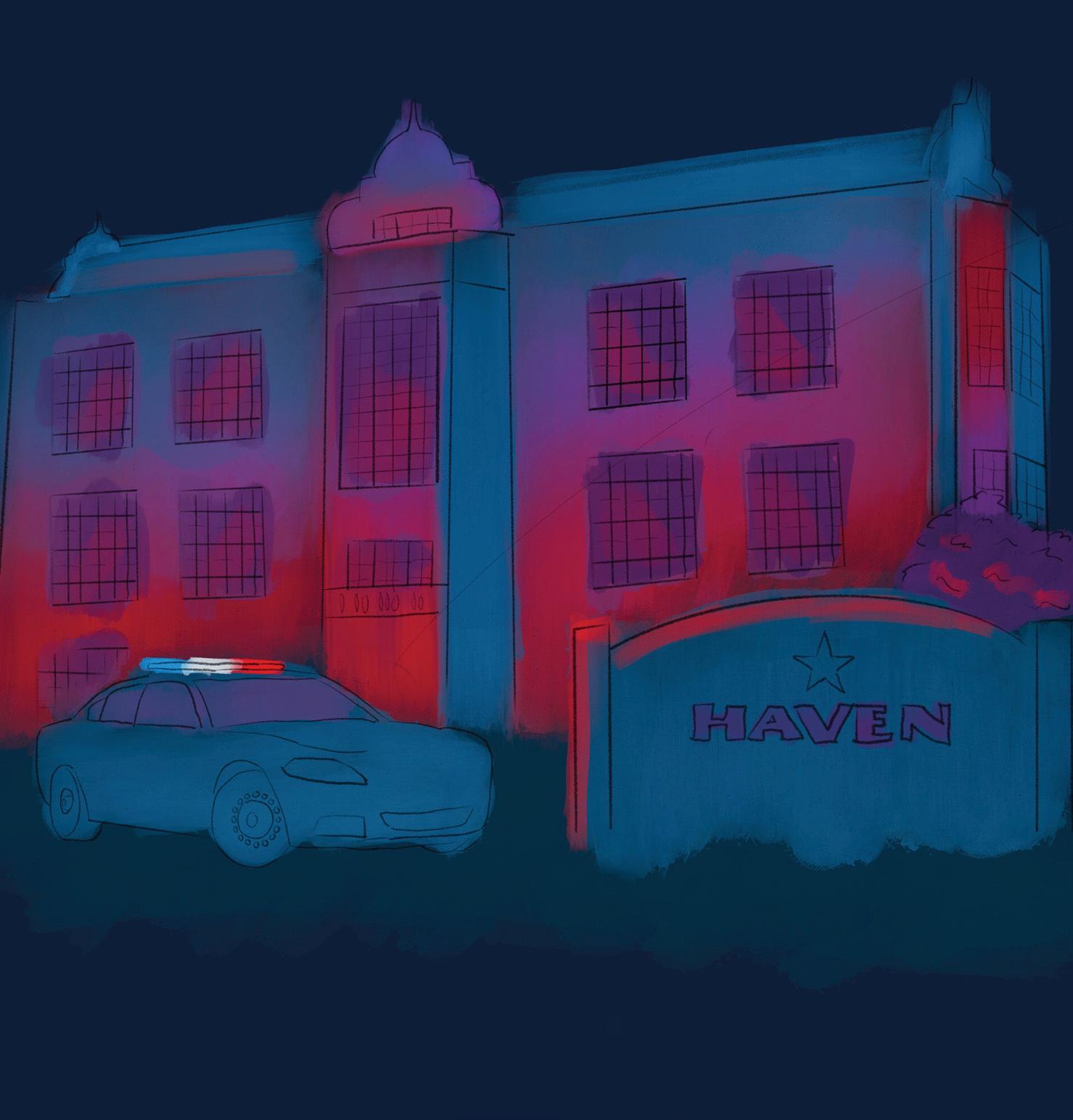
The 2021-2022 school year bore hardships for students across the country. Returning to a full-fledged school schedule after a year of isolation proved to be challenging for various reasons, and student behavior was representative of this difficulty. A July report by the National Center for Education Statistics revealed that 84 percent of public schools believe that the pandemic negatively affected student behavior, and 87 percent of public schools reported that the pandemic took a toll on student socio-emotional development. The Evanston community was no outlier in the midst of this trend. “[With COVID-19] and being remote and coming back to school [in] August and September, [there] was a lot of readjustments, both for us as teachers and for the students,” one District 65 teacher, Riley*, shares. “For many of [students,] being away for those 16-18 months, they hadn't really interacted with a peer in front of an adult, maybe at the park or online, but never face to face, and never certainly with [school rules] like, ‘No, we don't use that kind of language here at school,’ or ‘No, you cannot touch them,’ ‘No, you can't fight.’ They really struggled with getting socialized and normalized back into what a real school day looks like.” *The teachers in this article spoke to the Evanstonian despite a rumored mandate from District 65 that prohibited employees from talking to the press about some of the events that made headlines during the 2021-22 school year. As such, these teachers’ names have been changed to provide anonymity. In alignment with Riley’s perspective, some students noticed their peers struggling to adjust to the behavioral standards of in-person school. When two recent graduates of Haven Middle School considered their time in eighth grade, they both separately described this past year as “crazier” than previous years. One of those students, freshman Paula Hlava, recalls the increase in physical altercations amongst students.
I really like working with teachers to create the kind of environments that they need to be successful with students. And then [I like] to create the conditions that are ready for school, to set the culture, to climate, to be able to talk about instruction, to be able to coach teachers, to be to have conversations with safety, whomever it is, [I like] having teaching and learning at the center of that. So I really appreciate those aspects of the job.
I think that being visible, being proximate, being responsive to phone calls, emails, going to games and other things that are happening in town is really important. Because it shows that the leadership at the high school showed up to this particular event because it matters to the community. And I think that's how we strengthen our bonds, by being proximate and showing up and having genuine and authentic conversations with people.
There was some grief associated with that transition. And there's still grief, I still hold grief around teaching, which is why I try to connect with students as much as I can whenever I can. But the loss of not having a classroom and curriculum and doing that thing, it still exists. But I teach now at Northwestern, and [I’m] teaching in preparation classes, because it's still very much a part of who I am. I see myself more as a teacher that happens to be an administrator, instead of an administrator who used to teach. I am very much connected to teaching, learning and connecting with students, and so I still carry some grief around not being a classroom teacher.
What do you like about your job as an administrator?
Campbell talks new role, fresh vision
“There [have always been] fights at Haven—like that’s just always been a thing,” she prefaces. “But it got a lot more violent and more intense this year and more frequent. On the first day of school, there was already a fight, and I remember thinking, ‘Oh my God, this school’s crazy’ … That [became] a constant thing—the fights.” In late March, a Haven staff member required an ambulance after being punched by a student for attempting to break up a fight. In early April, a Haven teacher was sent to the hospital after her attempt to deescalate a student fight resulted in injury. The altercation caused the school to enter a soft lockdown, and Evanston police officers and paramedics were called to the scene. At the following Evanston/Skokie School District 65 Board of Education meeting, parents and guardians rallied for stronger safety precautions and protocols in District 65 schools.
Did you have any difficulty giving up your job as a teacher for that of an administrator?
By Jessica Sehgal, Bridget Baker, Marin Ubersox, Sophie Milner-Gorvine, Zoe Kaufman Executive Editor, In-Depth Editor, Assistant In-Depth Editor, Staff Writers

What I don't like is when we're just faced with tough decisions, decisions that have all of these unintended consequences. You want to do a good job, and you want people to feel supported, but a lot of times there are decisions that have to be made that I would rather not have to make. And sometimes you have bad and worse decisions to make. The pandemic really showed us that.
By Ahania Soni, Ethan Ravi Executive Editor, Assistant News Editor
How do you try to stay involved in the ETHS community and Evanston in general?
While I was teaching in Evanston, I noticed that I had a lot of students of color, and I had a lot of white students. And I just felt at home. I felt like this engagement and interaction that I had with students matched my sentiments as a teacher, and the engagement and interaction that I had with the staff matched my sentiments as a young teacher. I had a lot of people here looking out for me, taking care of me as a young kid starting my career here. So I felt right at home. The school really embraced me. People that have been here for decades really extended themselves to me to show me the ropes, to give me some good pointers as far as how to start class, how to end class. All of those are things that were really, really very important to being a successful teacher. How do you plan on working towards racial equity at ETHS? So we’ve had a lot of professional development, a lot of conversations about it. There’s training that our new teachers go through for three years that is central to their instructional practice. I [have filled] a position that I’ve created as the equity director, who would be responsible for more equity programming, professional development, opportunities to talk about race and other aspects of identity that come along with that, because we’re intersectional beings. And so there will be more to come. There’s a lot of history that has to be confronted, as we move forward to create a new way forward. And I think the only way we do that is to understand our past, to understand our present, and then to move forward. So that comes through a lot of conversation, observation, a lot of vulnerability, a lot of holding up mirrors. on page 6]
New award shakes the children’s book scene Page 2 The controversy with college Pageapplications7
What was your experience starting as a young teacher at ETHS?
“We, as a District 65 Board, share a concern for safety at Haven. Physical and emotional safety are a top priority given that it’s foundational to the ability to learn. We have made sure that we are fully up to date and are authorizing and encouraging the necessary deployment of resources,” Board President Anya Tanyavutti responded at the meeting.Weeks later, in early May, Nichols Middle School temporarily locked down after a student became violent with a staff member. Various reports disclose that the student was allegedly involved in a sexual assault case that occurred off campus, and the staff member sustained injury when confronting the student about the case. [Continued on Page 8]
What don’t you like about your job as an administrator?
After year in isolation, student discipline plagues District 65
What prompted your interest in education?
Evanston Township High SchoolEvanston, IL. Vol. 106, Issue 1 vanston i an August 15, 2022E
One of the greatest things about the Evanston community is its public library system. With over 4,000 new library cards issued and 1.2 million books, magazines, movies, and DVDs circulated in just one year, the EPL has touched nearly everyone in some way. Whether you were raised by the ice cream gift cards of the summer reading program, if you find your solace in the teen-only loft space participating in the STEM and GSA activities in your free time, or even if you simply just love reading, the public library has become a beloved place within Evanston. On March 21, the library launched a new program to entice and educate young readers about nature and the climate crisis.
the fields of children’s literature, neuroscience and marine biology, as well as Evanston’s own city sustainability coordinator, have been able to spread their 25 honor books, six changemakers, and the powerful winner of the 2021 Blueberry award, How to Find a Fox, nation, written by Kate Gardner and photographed by Ossi Saarinen, was able to take away the title of the first ever Blueberry award winner because of its photographyremark-andintergenerationalappeal.“Youcanap-proachthatbookfrom almost any age and learn something about foxes. But it’s accessible to three year olds. And that [accessibility] seems like a miracle to me, that you could be presenting ideas that are sophisticated enough that adults want to learn about them, and yet you’re doing it with language that is accessible to three year olds,” Meyer said. Meyer and the rest of the Blueberry team have tremendous hope for the future of the Blueberry and what it could mean for climate education in Evanston and beyond.
By Sophia Siddiqui Staff Writer
Every year, Evanston residents look forward to going to the beach on hot days to cool off, hang out with their friends and listen to the sound of Lake Michigan. This year, the water has been an especially important refuge with the summer’s record-breaking temperatures. In addition, for the first time in many years, the beaches are free to all EvanstonLastresidents.year,Evanston beach staff were heavily criticized after reports of abuse and assault came out against Evanston’s lifeguards.
news
Top priority and first on the agenda are meeting with our energy providers to discuss receiving our electricity from renewable/carbon free emission sources.”
By Roselyn Witt Staff Writer
Sustainability coordinator hopes to lower ETHS’ carbon emissions
It is a unique position where I can help ensure that the capital projects we tackle each summer as well as how we operate the facility are in line with our sustainability goals and initiatives.” Crawford says.
“Kids are suffering from the mess that we’ve created. And so they deserve to have the very, very best information, the very best books available to help mitigate that anxiety by giving them clear science-based direction on what would make the most effect,” Meyer said.The Blueberry award is one of the many wonderful things that the EPL has implemented as a way to have children fall in love with the worlds of reading and nature. Because after all, “You don’t save something unless you love it.”
But, sustainability is a community effort, and with new information coming out, an ever changing goal. So Crawford plans to work with the evanston community. “I’m very excited to start my new role. I know with the collaboration of administration, staff, students and community members we can accomplish great things at ETHS.”
New start, new season, same old closings
By Tarek Anthony Staff Writer to perts in wide. How to Find a Fox remarkable photography intergenerationalandappeal.“Youcanap-proachthatbookfrom

Illustration by Kupunoli Sumi
the mitteeherMeyerberry,Blue-andcom-ofex-


2 - news A local award with worldwide significance
ETHS has hired its first full-time sustainability coordinator following months of outcry and protest from ETHS students imploring the ETHS administration to act upon the current climate crisis our planet is facing. Local climate activist group, E-town Sunrise, a division of the national climate activist group Sunrise Movement, led the charge in the fight for a sustainability coordinator. The student-run group led a walkout of approximately 150 students on April 29, marching over a mile from the school to Fountain Square in downtown Evanston and gathering with fellow Evanston residents and Northwestern students, chalking the sidewalks with demands for a full-time coordinator whose sole responsibility is creating and managing the schools sustainability initiatives. In light of former superintendent Eric Witherspoon’s retirement and the recent climate controversy, ETHS has promoted John Crawford to be the new Director of Operations and Sustainability under newly appointed Superintendent Marcus Campbell. Crawford formerly served as the Lead Power Plant Engineer at ETHS for 25 years. “As Director of Operations and Sustainability along with overseeing apital improvements, I will be wearing a few different hats.
The Blueberry award was created as a resource for preschool and elementary teachers to use to find new, educational and powerful books that could be used to help better their lessons relating to nature and our planet. “I find that teachers tend to go back to the same books over and over again because they don’t have time to search through all the new ones,” Meyer said, “So I made it my job to make sure the kids won’t miss out because their teachers don’t have time to be a librarian and read every new book in order to find the bestThroughone.”
“During the pandemic, a lot of people took stock of their lives and one of the things I took stock of was, ‘What am I doing to save the planet?’ We’re about to fall off the precipice here and what is this little librarian doing? And I thought, ‘I want to help kids, young kids, in particular, get connected to nature,’” said EPL library assistant Martha Meyer, and thus, the Blueberry award was born.
According to the Report to the City of Evanston Regarding Allegations of Misconduct Within the Parks and Recreation Department, the lifeguard program recommended, “A complete overhaul of the way the city runs the lakefront, and also urges officials to consider the discipline of those responsible for the Unfortunately,failures.” another issue has come up in terms of Evanston’s lifeguards. It’s simple: there aren’t enough of them. This lifeguard shortage isn’t just in the Chicago area; it’s nationwide, and it’s been the cause of many beach closings. Locally, 23 new certified lifeguards joined the Evanston lifeguarding team, but that number was still not enough to keep all of the local beaches open Because of this, Greenwood Street beach was closed for the second year in a row. Last summer, Greenwood was closed because of shifting shorelines. In recent years, rising tides have continuously erroded beaches, not only in Evanston, but also all along the shore of Lake Michigan. Although it used to be one of the city’s most popular beaches, now Greenwood consistently has the fewest number of people visiting, and is the smallest beach in Overall,Evanston.Evanston’s beaches have had both environmental and political hardships in the past couple of years. Hopefully for residents, by changing the culture for those that work on Evanston beaches as well as hiring lifeguards earlier, the city’s beaches will overcome these obstacles and finally be a safe place for everyone in the community.
The focus of environmental groups has been on reducing the school’s carbon emissions. As he enters the position, Crawford has plans that will hopefully help ETHS reach these goals. “We will continue to lower our energy consumption. LED replacement, tighter optimization of mechanical run time, shutting down certain parts of the building for after hour, weekend, summer usage are all part of that plan. Old windows and roofs replaced with energy efficient products that help keep the heat/cooling in the spaces.

In-Depth Editor Bridget Baker News Editor Clara Gustafson Opinion Editor Sophia Sherman Sports Editor Christopher Vye Photo & Art Editor Kupu
Jehan Assistant Arts & Entertainment Editor Sam
Since Wally Bobkiewicz left the position in 2019, the job of City Manager in Evanston has been a revolving door of people being chosen for the position, then stepping down and rejecting the job. On May 23, the city council voted to authorize the appointment of John Fournier as the City Manager. However, Fournier fought to reopen contract negotiations, and ultimately ended up declining the council’s offer. In a letter sent to Mayor Daniel Biss and shared with the Evanston Roundtable, he described his reasoning for not taking theFournierposition.explained that after the contract was approved, he noticed flaws in the terms of the contract and asked the council to amend them. “They were not able to reach an agreement to do so in a meaningful way. As a result, I notified the City of Evanston [May 27] that I would be withdrawing from the position. I asked for no increase in salary, allowances or other benefits.” Fournier was the second candidate within four months to decline an offer for the role of city Continuingmanager.thesearch for city manager, on Monday, July 11, the Evanston City Council voted unanimously to appoint Luke Stowe, Interim Deputy City Manager and Chief Information Officer, as interim City Manager. Stowe has been working for the city since June of 2012 and has overseen multiple different departments. He has plenty of government experience, and played a very important role in the Emergency Operations Center during the pandemic. However, Stowe did not have the responsibilities of city manager for long. After $95,000 spent on search firms, City Council had a single candidate for the job—Carol Mitten, the city administrator for Urbana. Mitten has over 35 years of management experience, and according to the city’s news release, a “deep passion and appreciation for local government.” A town hall was hosted on Thursday, July 28 where Mitten addressed many questions from Evanston residents. The meeting was monitored by Mayor Daniel Biss and had many attendees, virtually and in person. “To have people that are willing to engage and come out and make that contribution to civic life is really important, and it’s essential to good decision making,” Mitten explained during the town hall. “I think that Evanston is a place that reflects the way that I want to live and engage in the community.”However, residents raised concerns about Mittens’ record on important issues such as police accountability, affordable housing and public safety. They urged the city council not to approve her because of this. And, as of Aug. 2, Carol Mitten announced that she will not be taking the position as the next City Manager. So the search continues, with, as of now, no new candidate for the job.
Community reels following Highland Park shooting
Assistant Feature Editor Izzy Rudolph Assistant In-Depth Editor Marin Ubersox Assistant News Editors Annabelle Harris Ethan Ravi Assistant Opinion Editor Maddie
By Annabelle Harris Assistant News Editor
Video Editor

3 - news
Assistant Sports Editor Owen Chiss Alexis Rogers Podcast Editor
Social Media Editor Amy Grill
Junior Monroe Stroth, shares her experience on the fourth. “I was working at the beach when we found out about the shooting in Highland Park. We didn’t know very many details, so a shooting happening in Evanston was definitely possible in our minds,” Stroth says. “We closed the beaches a few hours after the incident, and [lakefront manager] Tim Carter made us leave the beach office as fast as possible.” Despite the disappointment that the fourth of July was canceled for the third year in a row, Evanston residents understand why it needed to happen and are grateful that Evanston remained safe. “I think it was good that the parade and fireworks were canceled because all the violence around the fourth is a concern that shouldn’t be taken lightly,” Stroth shares. Parade closings are surely the least of Evanston residents’ worries in comparison to the devastation experienced by the Highland Park community.
For the past 14 months, the City of Evanston has spent a lot of time and money searching for a new city manager but has been unable to find someone for the job. In a recent letter, Mayor Biss called the effort to find a City Manager “long and confusing with multiple rounds of finalists and the need to start over more than once (in fact, more than twice).” The job of the city manager is one of the most important in local government, and encompasses many responsibilities, such as advising the city council on things like financial needs,city goals and policies.
E Executive Editor Meg
City struggles to fill city manager position
Arts & Entertainment Editor Mae Luning Feature Editor Jilian
With COVID-19 putting a pause on many social gatherings over the past two years, this summer’s annual Fourth of July parade down Central Street was highly anticipated by many Evanstonians.However, this anticipation faded quickly when news of a shooting at the Highland Park parade reached Evanston. The city quickly decided to cancel Evanston’s parade and fireworks display since it was unknown if the shooter was still a threat to other North Shore towns. Later, the beaches were also closed for the day.With cancellations in place, Evanstonians were unsure of what to do, and how they would continue their fourth of July celebration. Many were scared and didn’t want to put themselves or their families and friends at risk, but still searched for ways to safely spend time with their family and communities.
vanston i an
By Clara Gustafson News Editor
A city manager leads initiatives across city government. Evanston continues its search for a candidate to fill the role. Infographic by Ahania Soni

Writers, Artists, Photographers: Tarek Anthony, Eli Bachochin, Zoe Kaufman, Antonia Lagunilla, Benjamin Levy, Sophie Milner-Gorvine, Charlotte Murray, Olivia Ohlson, Romel Rojas-Leon, Sophia Siddiqui, Eva Sondgeroth, Jared Tucker, Elizabeth Wenning, Rosie Witt Adviser John Phillips Houseworth, Jessica Sehgal, Ahania Soni Denlow Sumi Aiyana Froum Molotla Saliha Ansari Sadie Dowhan

4 - feature
A: I do believe that schools can make a difference in shaping our learning, and reshaping our learning. And that’s what schools are about, providing an opportuni ty to come to know things and to reframe things and to hopefully create a more just world. We certainly need justice in our world.
Q: What difference in your responsibil ities do you anticipate for your new ad ministrative position?
By Ethan Ravi, Ahania Soni News Assistant Editor, Executive Editor [cont. from pg. 1]
“I grew up sailing in Argentina, my family always had a sailboat, a small one. I’d always gone sailing with my father” said Sebastián Koziura at the beginning of our interview. He had been close with his family ever since he was a little kid. He described where he grew up, a town called Puerto Madryn, as very welcoming. The houses were clean-cut and organized, with the appeal of the water so close by. As a teenager, he started working at a local gelato shop that supplied their gelato to other businesses and restaurants in the area. The experience would later influence his decision to co-found the well-known and successful Frio Gelato, an Argentinian gelato shop in Evanston with his cousin, Enrique Schcolnik. At the age of 17, he began his first business, a motorcycle messenger service. “I always liked to create a product and a brand. For me, it’s a lot of fun. It’s chal lenging and definitely not easy. There’s stress and a lot of headaches.” Sebastián explained to me a little bit about his family history and the history of Argentina. At the beginning of the 20th century, there were a lot of immigrants coming to Argentina from Europe. Se bastián’s family, more specifically, came from Ukraine and Poland. Along with his family, many Italians also immigrated, and with them came their Italian gelato. The gelato was adapted to Argentina’s land and natural resources, and the result? Argentinian gelato! In 1999, a young Mr. Koziura immi grated to the Southside of Chicago to work for his uncle. He eventually moved to Evanston to be closer to his wife Karla. “In Argentina, I grew up in a pretty similar city to Evanston… They are both close to a lake. We enjoy going to the lake but also going sailing, and have a group of friends who we sail with. I can offer my kids a similar water experience”. At first, Sebastián started a real estate business that he is still running today, but opening a gelato shop was always in the back of his mind ever since he was a child. When I asked him about his favorite memory of Frio Gelato, he told me about how building it from the ground up was the most satisfying. “From coming up with the idea, and from the idea to the product, and from the product to the licenses and so on… It’s hard, a lot of work, but looking back, it’s fun.” He explained how much detail went into perfecting the shop. The goal was to create a look that would best represent Argentin ian culture. He and his cousin wanted the shop to have a very clean and welcoming atmosphere. He visited many Italian ge lato workshops to perfect his recipes and went through a lot of trial and error. His wife especially contributed a lot to the de sign. She worked on the color scheme of the shop, the layout, and even the style of the “It’saprons.very rewarding to make a product and see other people enjoying it.” For him one of the most fulfilling parts of his job is seeing the residents of Evanston enjoy the gelato, specifically the younger gener ation in his family. “Like any immigrant, we move to the States, but we still feel like in my case, that I am from Argentina. I love the States and this is my home now. I feel good liv ing here, but my culture is Argentinian. I’m showing the rest of the world that I am proud of where I am from…. Argen tina has a lot of neat things in their cul ture like tango and gelato and, through the business, there is a lot we can show to the world about our country.” He told me about how everyone is more similar than we realize, how we all want basic needs like a safe place, food, water, and other necessities. He believes we become more welcoming and accept ing when we are exposed to other cultures. That is why he thinks it is so important to bring his culture and the culture of others intoForEvanston.thepast two years, Frio has taken a sudden hit due to the pandemic. They had to close down the shop to ensure the safe ty of their customers and staff. When they slowly started to reopen their doors, they faced frustration from a few of their cus tomers about the new regulations in place. Now as COVID-19 cases are down, their regulations are back to normal for every thing except their free sample policy. The shop is continuing to improve and modify its recipes with new aller gy-friendly products and exciting bold flavors. They are enhancing the Argentini an gelato experience by using fresh ingre dients prepared in-store and are follow ing their reputation of having the highest quality gelato in the area. Frio is a fami ly-run business to this day where you can see cousins and other family members of Sebastián working at the shop. Even from my short time talking to Mr. Koziura, I can tell he is a true entre preneur. He is passionate about everything he makes and takes time to perfect it. His favorite flavor in the shop is Dulce de Leche, a milk caramel dessert that reminds him of when he was a boy in Argentina.
A: I will be working with the com munity, working with other community organizations and elected officials to re ally represent ETHS in the local area. And also, making sure that we’re complying with procedures from the state of Illinois and federal procedures; that’s a really big part of my job, compliance. Also, a huge part is working with our Board of Educa tion, working with our elected officials, making sure that ETHS is run well, and that our budgets are balanced and that we are doing the things that we said we’re go ing to do. So that’s my role now. Some one else is going to be running the day to day. I’m not going to be doing lockers and things like that, although I still could do that. I’ll be in the halls for sure and in the cafeterias for sure. Because that’s just who I am as well. But I’ll also be focus ing on some other things that keeps ETHS front and center, keeps us afloat so that our students continue to have a positive experience here.
A: I’m so happy to be their superin tendent, I am really excited about getting to know them. And having fun in the role. So I’m looking forward to getting to know the kids in this role. I knew them as a prin cipal. I want to get to know the students as a superintendent, so I’m excited about that. It’s still a great day to be a Wildkit!
A: I’ve always thought that I would just be myself. I’ve learned who I am and I’ve learned how to be me. And I have never struggled outside of that. What I mean by that is, as long as I am my most authentic self, everything else is gonna come with that, right? People are gonna see me, they’re gonna know me, and they will have respect for me being who I am.
Bikini body or body issues? Myth of the ‘summer body’ adds anxiety
From Argentina to Evanston: a local business owner talks about his roots
‘Still a great day to be a Wildkit’ with Campbell as superintendent
And he really showed me all of the ins and outs of the world. I don’t really feel like, ‘Oh, I want to be superintendent.’ I’ve never felt that. What I did feel was this is the next progression of the work. So that’s why I’m here.
By Isabella Martinez Staff Writer
Q: Is there anything you would like to tell the students going into the next school year?
A: Dr. Witherspoon was my teacher.
feature
As the weather gets warmer, students shed their sweatshirts and long pants in order to switch to attire better suited for the hot summer climate. We awaken the tank tops and shorts that have been hibernating in our closets and start to see more of ourselves in the mirror when throwing pieces around to create an outfit. For just three months of the year, Mid westerners get a glimpse of life on the warmer side. Many just aren’t really used to it; the unfamiliar nature of summer weather sneaks up on everyone. While summer is a cause for celebration for many, wearing more revealing clothing and the pressure to have the perfect “summer body” can cause others to feel insecure and worry about their body “Summerimage.clothing, especially swimsuits, make me feel anxious. Personally, I’m al ways super self-conscious when wearing swimsuits, because I feel like everyone is looking,” says senior Winter Dreller. Shorter clothing worn over the sum mer to help fight against the heat can make people worry about unwanted attention, as well as lack confidence about their body and weight. Shorts and tank tops expose more of a person’s body, leading to many people being insecure over areas of their body that are usually covered in the winter. “I tend to feel more confident in fall and winter clothing. While I enjoy shorts and tank tops and summer staples, I find my self having a harder time trying to feel cute, comfortably,” senior Kodie Winkler shares. Social media is also a big contributor to summer body image issues. When scrolling on social media, we begin to see the idea of the “perfect body” being broadcasted and praised heavily, as it is seen as the only way to be confident during these tropical feeling months.
“I see a lot of social media posts that promote diets or exercise plans or whatev er to get the ‘ideal summer body’ or ‘biki ni body,’ and I feel like that can be really damaging, since it spreads the message that only certain body types are allowed to wear revealing clothing when it really should be that a person wears whatever they’re most comfortable in,” states Winkler. Social media often encourages people to diet or exercise in order to attain a “bi kini body”—or an unrealistic, convention ally attractive body. This idea makes peo ple think they need to change their body in order to be “summer ready,” which can be detrimental to one’s mental health and body image. This can also promote disor dered eating by encouraging diet culture and pushing the idea that a natural body isn’t good enough. Social media can also lead many to compare themselves to edited celebrity photos, which creates unrealistic beauty standards, especially for a young audience. Body confidence issues are something that happens to almost everyone. Although this happens year round to many, the sum mer months highlight it in a different way.
Q: What are your thoughts on filling the shoes of someone as well-known and re spected as Dr. Witherspoon?
By Elizabeth Wenning, Hazel Hayes Staff Writers
“I see my friends comparing themselves to edited and filtered pictures of people who are already conventionally attractive,” DrellerOveradds.thesummer, it’s important to know how to cope with anxieties over body im age.“One way to cope is to realize what you think about other people wearing certain clothing. When I’m at the beach and see someone wearing a bikini, I’m not judging them,” says Dreller. It’s important to remember that every body is a beach body. If you are struggling with your body image, you can reach out to the ETHS social workers at W121 or at (847) 424-7230.
Q: Do you think that education has the power to change people’s biases to cre ate a more just world?
Q: Did you know you wanted to be a superintendent from the start of your career?
“I’ve learned a great deal about com munication. I learned a great deal about process, and a lot of critical thinking. I learned a lot more about myself—that I want to get it right, and even when I don’t get it right, I can own that, and that’s growth. And I continue to learn and be empathetic.”So,ashe begins his term, Campbell plans to initiate and continue programs that will further the ideals he’s held throughout his career. “This summer, we’ve been talking about four things, and that is racial eq uity, social emotional learning, post high school planning and literacy.”
feature - 5
Student, teacher, superintendent
Illustrations by Aiyana Jehan
Campbell
By Ahania Soni Executive Editor
In the end, it’s all about students, and helping them learn and succeed while at the same time learning about who they are as people.“I’mso happy to be their superinten dent. I am really excited about getting to know them, and having fun in the role.” Campbell says, “I knew them as a princi pal. I want to get to know the students as a superintendent.”
In his junior year of high school, Dr. Marcus Campbell had his first experience in education. His teacher asked him to take over class for a day, to lead a dis cussion on Camus’ The Stranger , but that day would spiral into an entire career ded icated to education. From that point on, Campbell knew teaching was his path. “I had so much fun,” he says. “I felt so at ease leading a conversation.” His natural ability to foster discus sion and engage his peers was recognized by those around him. Later that year, the same teacher who pushed Campbell to lead the class nominated him for a Gold en Apple scholarship, an Illinois program which aims to prepare college students for a career as a teacher. Campbell won the scholarship, and almost immediately stepped into the classroom. “I was in classrooms as soon as I grad uated from high school,” he says. “It just seemed to come well and connect well with me as the person, who I was at that time, and who I continue to be. And so I never questioned my decision to be a teacher.”But as college years ended, Camp bell was unsure of where to go. Despite his experience in the classroom, his focus had been on his own education—learning about literature and teaching—and he had yet to consider possible job opportunities. But at just the right time, the Golden Apple Foundation called him with a job opening: a position teaching English at ETHS. Campbell spent the next 10 years of his life in room W328, teaching Frankenstein, Invisible Man, A Raisin in the Sun, and Cat on a Hot Tin Roof, and he intended to stay there for the rest of his career. He had wanted to be an English teacher, and that’s what he was. But his skills in lead ership and connecting with students—the same skills which years earlier caught the attention of his English teacher—were no ticed by former superintendent Eric With erspoon, and Campbell was asked to take a job in administration. “I see myself as more of a teacher that happens to be an administrator, instead of an administrator who used to teach. I am very much connected to teaching, learn ing and connecting with students. And so I still carry some grief around not being a classroomCampbellteacher.”worked briefly as the Direc tor for Student Supports and Racial Equi ty before taking the position of assistant superintendent. In this position, Campbell faced a plethora of challenges, including the schoolwide lockdown which rocked the Evanston community last year, a num ber of highly controversial policy shifts, and of course, a global pandemic. During events like the December 2021 lockdown and the early days of COVID, Campbell describes the intense pressure of making decisions that will affect so many people in the community, often in unforeseeable ways. “I went to bed every night thinking ‘I hope this all works out, I hope we’re making the right decision. We’ve never been here before. There’s no playbook for this.’”On top of this, ETHS had its fair share of controversies while Campbell was assistant superintendent. In fact, many of the policies that Campbell says he’s proudest of (dress code reform, gender neutral locker rooms, and less harsh grad ing practices) were the same policies that drew heat from the Evanston community and national media outlets. The dress code policy specifically has been cited as one of the most progressive in the country. But of course, this sparked pushback. “When you know that what you’re doing is fair and is right, the pushback is okay. And oftentimes the pushback can sometimes push you into a better place,” CampbellLearningsays.from the community, dealing with these difficulties and working close ly with Witherspoon has pushed Campbell to develop a new skill set. Controlling a classroom and communicating with stu dents have evolved into quick decision making and community outreach skills. These strengths, much more geared to wards administrative work, are hopefully the skills that will help Campbell as he steps into the role of superintendent.
“We want to make sure that we work with regard to racial discrimination, and work to make sure that when people leave here, they will be successful adults. And that’s embedded in those four priorities.”

By Meg Houseworth, Simone Jacot-Bell Executive Editor, Guest Writer
most research suggests that SROs are entirely ineffective in responding to the conflict they are supposed to be used for. One study by the Annenberg Institute at Brown University found that SROs have not been successful in preventing shootings or gun-related violence in schools. Another by the University of Albany saw the same result: SROs just aren’t that useful. African-American junior Aliya Gillon finds that the school safety personnel are already responsible for the work of an SRO.
Illustrated by Kupu Sumi
opinion
***
“Students that attend schools with SROs are significantly more likely to be arrested for discretionary criminal violations . . . Once an SRO has been notified, police actions, such as arrests and juvenile justice referrals, are determined by the SRO not the school.”
“I definitely feel like there is a lot of performative activism in our school, and there’s a lot of people that join clubs or do stuff locally to try and boost their college applications,” says incoming African-American senior Brooke Banks. Banks has been involved in social justice groups within the school and recognizes insincerity when she sees it. “There have been instances where people create clubs or foundations trying to help other people of different ethnicities, but it feels a little fake because they started it right before junior year, and they’ve never shown any interest [in that issue prior]. [Additionally,] even when the club is running, they still don’t show a lot of interest.”
“I understand [SROs are] trying to keep us safe, but I see safety doing that work,” junior Aliya Gillon notes. “[The safety officers] actually build bonds with the students, while [the student resource officers] just make me feel uncomfortable.”Of course, removing SROs from ETHS will not eliminate conflict, so instead, ETHS should hire more safety personnel, social workers and administrators who are better informed at providing disciplinary advice through a holistic and restorative lens. Instead of punitive punishments that might ruin a student’s life, ETHS might finally allow students to repair their mistakes and seek support by enlisting these positions to take on the responsibilities of SRO’s.However, this problem doesn’t end with SROs. Between disciplinary policies and school environment, ETHS has a long way to go in terms of dismantling the school-to-prison pipeline. “Students of color at ETHS usually receive worse consequences than white students because we’re looked at differently,” Gillon concludes. “We usually have to go above and beyond just to be treated fairly.”
As high school seniors who are also in the midst of the college application process, we understand how stressful it can be. It feels as though your self worth is determined by an admissions board who does not know you on a personal level. While we understand the anxiety that this process may bring, it is not an excuse to use the struggles of disadvantaged populations to your advantage by creating a facade of activism for an application. During my freshman year of high school, I (Simone Jacot-Bell) was asked to participate in a program created by white students my age that granted free tutoring services to students of color who were affected by the opportunity gap. My role in the program was to tutor Evanston children who were in need. After several weeks of hearing no response from the creators of the organization, I reached out and asked when I would be assigned someone to tutor. In response, I received assurances that everything would be assigned soon, I just had to wait. Over two full school years later, I have yet to receive a message from them, or a student to tutor. However, my picture remains on their site. The racial and economic opportunity gap is an issue that disproportionately affects Black and Brown communities. As a Black girl (Simone Jacot-Bell), it meant a lot to me to give aid to the students in my community that needed it, but to my white peers, it clearly did not hold the same weight. They use the oppression we face, copy and paste it on to a non-profit with no real evidence of impact, then receive a Harvard University acceptance letter in the mail. Even if they do not use our (BIPOC) oppression, there is also the issue of ‘faking oppression’ to receive a pat on the back from a prestigious university. I’ve had conversations with a variety of white individuals that have spoken to me about hyperbolizing an oppression they experience and/or completely fabricating oppression based on stereotypical experiences of a particular group to get a better grade on an essay or to get accepted into a scholarship. Certainly, there are levels of oppression, and everyone (including white folks) can experience it in different ways. With that being said, it is especially important to be truthful about the ways in which you are experiencing it. To exaggerate the reality of your hardships as a white person is extremely disheartening, particularly when so many people in the world are navigating very real struggles and don’t get to decide they’re done playing dress up when applications are Whilecomplete.students are responsible for contributing to a culture of performativity within college applications, parents and guardians, college counselors and academic institutions themselves are also culpable. In American society, there is a predisposition to viewing college as the only career option for high schoolers. And, particularly within Evanston, students generally feel that out of the nearly 6,000 colleges and universities that exist in the U.S., only a handful–often those with a 30 percent acceptance rate or below–are respectable schools. Having internalized this thinking, many students become fixated on getting into a ‘good’ school and are willing to do anything and everything to be accepted. But the problem with this is that, more often than not, students’ desire to get accepted into college comes at the expense of Black, Brown and low-income folks, whose lived experiences are weaponized by white students and turned into a “passion project”—an independent student-led initiative meant to enhance an applicant's resume. If you’re going to create an initiative, be genuine about it. Ask yourself, am I doing this because I care, or because it is self-serving? Answering that question is the first step in making your application honest. Activism is not something that you can simply dabble with until you receive an acceptance letter. It’s a lifestyle.
Stop exploiting peoples’ oppression for college applications
Student Resource Officers jeopardize students’ safety
By Sophia Sherman Opinion Editor With college application season fast approaching, many high school seniors are beginning to wipe the summer dust off their Chromebooks and start the Common App: a process which requires students to summarize their life story into a few hundred-word excerpts. These rigid word counts force students to consider what makes them a unique and desirable applicant, and as college becomes increasingly more difficult to get into, students are left anxiously scrambling to highlight the best parts of themselves. To avoid this internal brawl, many students begin preparing for college applications during their junior or early senior year by investing in a number of extracurriculars in an effort to appear well-rounded and involved. For instance, students may decide to become president of a social justice club or create a non-profit that benefits people in need. While participating in these forms of activism may be beneficial in some ways, it inevitably becomes performative when students partake in them solely for the purpose of getting into college.
6 - opinion

that attend schools with SROs are also significantly more likely to be arrested for discretionary criminal violations, such as disorderly conduct or battery, than those at schools without SROs,” the Moran Center report reads. “Without police proximity and involvement, these behaviors could be calmly and routinely deescalated and resolved by school staff. However, when SROs observe this behavior or when an SRO can easily be called on by school staff due to their proximity, routine school discipline issues can quickly escalate into police matters … Once an SRO has been notified, police actions, such as arrests and juvenile justice referrals, are determined by the SRO—not the school.”Thus, the very thing that should be there to protect students is the very thing putting them in harm’s way. “I would feel a lot safer if the police were removed from the building,” Cocrane Insays.fact,
When considering taking part in social justice clubs, you must understand that it is not simply a school activity. Banks highlights the ways this work can have different levels of significance for BIPOC than for white folks.“[White people] show interest for a little bit, and then it’s just like another thing to them within their school life. It shouldn’t be disregarded like that, because [people of color] have to go through so much, and it’s not just an everyday thing for us,” Banks says. She recommends that, when starting a club or initiative—especially as a white person—you have to “put in the hours first,” meaning that you must have a real drive to make change within the community, with or without receiving credit for doing so. Caring about the cause is not the only aspect that should go into creating an initiative, it is also important to be aware of the real impact that your project has the capability to create. “A lot of them act like because they’re in a club that racism magically has gone away now and that they’re a better person than other white people, when that is not a reality,” Banks remarks.

Sixteen years ago, ETHS took a step backwards. What was once an environment to learn became an environment ruled by stringent punishment and prison-like circumstances. That year, Evanston introduced the first of its Student Resource Officers to the hallways of ETHS, and since then, the officers’ presence has contributed to a culture of racial profiling and unrest.“There’s always that fear that a police officer will mistreat me. I shouldn't have to feel that way anywhere, let alone at school,” African-American senior Ashley CocraneDuringexplains.passing periods, students’ only worry should be making it to class on time, but for the last 16 years, with such a daunting police presence, that focus has shifted into something entirely worse: their safety.“Because they’re known for not being really protectful, it’s a bit scary to see [SROs] with loaded guns and bullet-proof vests,” African-American senior Eric Kasule elaborates. “And, yes, in the case that there is a shooter, [they] would probably be helpful, but when there isn't, it's kind of like, ‘Oh, hey, police in my school hallway. Please don’t shoot me.’” Cocrane and Kasule’s fears are not unjustified. According to a report published by the Moran Center in December of 2021, while Black students make up a quarter of ETHS’ population, they account for 77 percent of arrests made by student resource officers. Meaning, Black students are literally 300 percent more likely to be arrested while at school than their whiteOncepeers.detained, many of these students are referred to the juvenile justice system, ultimately creating a direct pipeline from ETHS to prison—all for a conflict that could have been resolved without police interference.“Students

By Antonia Lagunilla
the long term,” says freshman Nicole Barros Saenz.The justices who voted against upholding Roe v. Wade were overwhelmingly white men, yet this feels like nothing new. “Roe v. Wade is extremely important to me, because it gives women rights to their own reproductive systems. Due to the fact that it’s now overturned in some states, the government now has control over what happens in a pregnant person’s body, which is extremely violating and immoral,” sophomore Vedah Sims states. Overturning Roe means that a woman’s right to choose is left up to the states, since it is not nationally protected anymore. So far, 17 states have banned abortions while three states are actively deciding on banning abortion and the remaining states are keeping abortion safe and legal, with Illinois being one of dren’sfutureandimpactwasaboutIwascamethethem.“Whenrulingout,Iscared.wasscaredhowthisgoingtomyfuturemylovedone’sandmychil-future.Thisaffects way more than women who choose to get abortions. This affects where I choose to go to college, because I want to have civil and human rights when and where I go to school. This affects other laws in play right now,” says Broughton.
Highland Parks victims who have survived to tell their stories. One of the injured survivors shares her story and says it was “a miracle she even survived.” Lorena Rebollar Sedano reports that after she was shot amongst the crowd, she ran into a store for safety with her family. While in the store she recalls strangIn “devastating”.
On May 24, America was faced with yet another story regarding gun violence. This time, children were the victims. Forty one days later, our neighbors in Highland Park were also victims of a mass shooting. In Uvalde, Texas, at Robb Elementary School, we lost 19 students and two teachers. In Highland Park we lost seven possible mothers, fathers, grandparents, husbands, wives, neighbors, friends and so much more. We’ve lost people with bright futures and bigDismay,dreams.hopelessness—those are the only words I could use to describe the feeling of hearing about yet another mass shooting in America. However, I also couldn’t help but feel like this is unsurprising. In my short 16 years of life, I have arguably seen more mass shootings in the U.S. than my parents did growing up. School shootings between 2020 and 2021 skyrocketed to the highest number in two decades. This cannot be our new norm.
“I think this affects women’s bodies in ways that are hard to understand. This impacts low-income families so much more and in so many more ways [because] some of these people don’t have the [financial means] to support a child or [to] give [their] child a life it should have. [In no way] is that [the] woman’s fault and she should not be punished for that,” Broughton states. According to recent data from the CDC in 2019, Black women had the highest rate of abortions with 23.8 abortions per 1,000 women. Hispanic women had 11.7 abortions per 1,000 women. White women had the lowest rate with 6.6 abortions per 1,000 women. It’s not hard to realize why Black and Hispanic women are receiving abortions at a higher rate than White Women. Due to years of racism and prejudice that has been ingrained in society, Black and Hispanic communities are often in a financially lower ranking than their white counterparts, meaning supporting a surprise baby cannot be an option at times. This new ruling is infuriating. Men who don’t know what the abortion process is like are now forcing women to experience it. The fact that the ruling is simply limited to the court’s “moral standing” and “personal opinions’’ is disgusting. No thought was put into how this ruling would affect already existing people. They are only thinking about how it would affect the soon-tobe life of a clump of cells. Despite this disappointing and life-altering court decision, hope is not lost for reproductive rights. This is the time where we all need to step in and fight. Bans off our bodies.
opinion - 7
Staff Writer


By Romel Rojas Leon Staff Writer While we were all enjoying our summer and preparing to celebrate one of the most monumental holidays in the country’s history, July 4th, the last thing we expected was terror to strike on a day that is typically synonymous with joy and relaxation.. During this year’s July 4th parade in Highland Park, a suburban city roughly about a 20-minute drive from Evanston, experienced a mass shooting that went viral around the nation. On that day, the 21-year-old Robert E. Crimo wore women’s clothing to disguise himself and hide himself amongst crowds of people. Shortly after he fired multiple rounds at the crowds from a building perch, he ran alongside with the unsuspecting innocent spectators to “blend right in”, says County Major Crime Task Force spokesman Christopher Covelli. Crimo, who has been accused of taking the lives of seven people and injuring about 30 more, sat in court on Aug. 3 and pleaded not guilty on all 117 counts: 21 counts of first-degree murder, 48 counts of attempted murder and 48 counts of aggravated battery with a firearm. According to the Lake Counties Sheriff’s Office, Crimo had been planning the attack for several weeks. Many of the people who attended the parade reported on articles describing the event as “heartbreaking” and “devastating”.Whilemany of the families grief for the loss of their loved ones, we can also support ers asking her if she was okay and she replied with “yes.” Despite her shoe being filled with blood, she insisted that she was fine, worrying about the ones around her. Four of her other family members that she was with were also harmed and are all recovering safely to this day. Bystanders on the internet, news reports and neighboring suburbs still share their support for the victims on that day. On this day, I remember opening my phone to articles about another tragic event and, deep down, I immediately thought, “This happens every other day.” In a way, I had gotten used to mass shootings—feeling almost numb to seeing articles upon articles about how much harm people cause due to the country’s relationship with guns. But my attention changed once I found out how close this incident was to Evanston. Once news outlets started reporting on the incident, I remember the effect it had on our community—seeing annual events, cookouts, etc. being canceled all because of something that didn’t personally affect us. Even though we were lucky enough to not undergo such a tragedy, we were still hit with a big wave of sympathy, which forced us to reflect on our own community. In a way, I saw the cancelation of these events as Evanston not only keeping us safe, but as an avenue to show our support towards Highland Park. When I think of guns and the people who fight for the Second Amendment to stay strong I think of the classic patriotic American, and their argument for protecting guns feels ironic. On July 4th, we celebrate the founding of the United States. While some people like to scream, “It’s a free country,” once mass shootings occur, their responses remind us what Modern America is really all about. Modern America is presented as the ideal dream and “The Land Of The Free,” but events like these bring to light what we have done with our freedom.In some ways, I can see the logic behind why people would question why we were given the freedom to bear arms, yet have gun reform bills which appear to be rescinding that right. Our lack of strictness towards these laws has not only shown in our area but around the United States as well. But when the Highland Park tragedy occurred, just as so many other mass shootings have in recent years, we were reminded exactly of why we need gun reform bills in place and why we need to keep pushing for reform that is palliative rather than yet another bandaid that fails to address the underlying problem.
my heart breaks for the families, the people whose lives were lost and those closest to the victims,” Robles says. Disappointment is a mutual feeling. As a student in America, it’s almost as if you’re one of the least cared for groups in this country. Guns are more protected than we are, and we’re supposed to just be ok with it? Other countries are flabbergasted by how neglected and unprotected children are in American schools. School is a place where kids should feel the most safe and the most protected. We’ve failed at this. “I do not think Evanston does a better job of handling gun violence than other cities,” points out Robles, “We may be a small suburban city, but it does not change the fact that we are not doing enough.” Is Evanston not doing enough to protect its students? Sure, there have not been any school shootings in our community, but it doesn’t hide the fact that maybe we do need more protection in our schools. Back in December of 2021, I’m sure we can all remember the nearly three-hour lockdown that occurred. For hours, students and teachers were left without a clue as to what was going on within ETHS. It was petrifying to sit in silence crouching against a classroom wall, and even though we all left the school unharmed, I couldn’t help but wonder if there were other times when students carried guns into our high school but didn’t get caught. How many other people are carrying guns into our high school? It’s a fearful question that remains in my mind, and it won’t be going away as long as I remain a student in the U.S. I hope that we’re all able to see what’s desperately needed in a country like ours. Children should be protected, and Americans should not live in fear. Whether it’s going to the grocery store, attending school, attending a parade, nobody should be terrified to do so. Things like this should never be up for debate.
Reflecting on life in a post-Roe v. Wade world
“Land of the free:” US’s ironic relationship with guns
The issue with the abortion ban is that it will do nothing to stop abortions, it only stops safe abortions. The abortion ban not only targets reproductive rights, it also targets low-income marginalized groups.
Illustration by Leah Brieva Students have no reason to feel safe from gun violence while in school
As a high school student, I can easily say that I live in fear while at school due to the threat of gun violence. But I’m not scared to admit this because I am well aware that others share the same feeling. In 2020, the U.S. had a total of 10 school shootings with injuries or deaths. In 2022 so far, the U.S. has had a total of 27 school shootings with injuries or deaths, and this number is still sadly rising considering the year is not over. I wanted to point out specifically the years 2020 and 2022, because 2020 was the year when quarantine began, and 2022 is the year when youth were fully in-person for school. To think that the only time we’ve been safe from school shootings in the 21st century occurred when a global pandemic began is just so frustrating to even think about.
Junior Sophia Robles voices her thoughts and feelings on gun violence within the Evanston community and outside of it. “It’s extremely disappointing and saddening. You hear about these shootings on the news, and the lives that are lost, and

By Maddie Molotla Assistant Opinion Editor
whattry’sbackwardtrulysotakearchalobviouslowwouldn’tthisthoughtbecauseshocked,Icountryal-suchanpatri-lawtocontrolovermanylives.Wearetakingstepsinthiscoun-future,andit’sscarythisactwillpromotein
Norma McCorvey, also known by her legal pseudonym “Jane Roe,” became pregnant with her third child in 1969. McCorvey wanted to obtain an abortion; however, she lived in Texas where abortion was illegal. In turn, her attorneys Sarah Weddington and Linda Coffee would end up filing a lawsuit on McCorvey’s behalf on her local district attorney, Henry Wade, claiming that Texas’ abortion laws were unconstitutional. This event led us to Jan. 22, 1973, in which the Supreme Court issued a majority decision that women in the United States would attain the right and abortions. This ruling led to a long line of discussions and arguments on the morality of abortion, whether it should be accessible, what the extent may be, and who should have a say on the legality of abortion. Almost 50 years later, on June 24, I remember exactly where I was when I saw the news. I was woken up at 9:49 a.m. by a text message from my mom. Her message read in bold lettering, “Supreme Court overturns Roe v. Wade, elimination constitutional right to abortion,” accompanied by another message from her stating, “[if] they want to save babies, they need to start with saving all the children that are dying to gun violence and abuse.” Before the end of the school year, there were murmurs of the Supreme Court potentially reversing Roe v. Wade, and subsequently, there was outrage from the Evanston community. Towards the last weeks of school, there were women standing outside the ETHS building holding a mountain of neon green flyers that read “Overturn Roe? HELL NO!” along with a message in smaller text reading “Forced Motherhood = Female Enslavement.” Once the Supreme Court decision flooded our devices in late June, that amount of community frustration from May carried over. “I was at home scrolling through social media when I was given the news of the ruling. I honestly felt
I hope that, one day, we come to a realization that a life is the most precious, most valued thing one can obtain, and we certainly cannot continue to take them away.
Illustrations by Kupu Sumi
At Haven Middle School, this sudden move-
Continuing after crisis: District 65 regroups
“It will be necessary to reduce 22 teaching positions for next school year; however, we are pleased that there will be no loss of educator jobs. While this will largely be accomplished through natural attrition (retirements, resignations, and leaves of absence), it will not be without impact,” District 65 administrators wrote in a published letter. “In order to keep our teaching core intact and better align staffing to enrollment, it will require the transfer of some educators to other positions within their school or to another in the district.” A total of 40 teachers were to toregardsteacher,Districtlievetooverwhelmingwassaytheleast.it,”a65the
ferred.tarilyun-invol-werewhich33ferred,trans-beof“That


Last School Year Tensions continued to rise in the beginning of May, when it was also announced that several teachers were being transferred to teach at different schools, meaning they would also have to potentially teach different grades and subjects. to say the least. it’s horrible, because the teachers that they did move had already been working at [these schools] for a long time,” says Hlava.On Friday, May 13, Haven students organized a protest in response to the teacher transfers. Freshman and Haven graduate Devon Cravens describes the build-up to the “Beforeprotest. [the protest] happened, it was Monday, and a couple students and a couple teachers were talking about how they wanted to get together and do silent, peaceful protests on the first floor around the office. That’s what I heard.” When the protest eventually came to life, it began as peaceful protest as intended. Reports of the protest recount that students exited their classrooms and quietly sat in the hallway. However, the original vision for the protest quickly became skewed when the tranquility shifted into disarray. Hlava recalls her experience that school“Onday.the announcements, they were like, ‘Everybody go back to class,’ but nobody listened, and you couldn’t get up or down the stairs, because there were so many people,” she shares. “Then, it turned into a lot of chaos, because people were been chanting and bringing ropes towards the area where the nooses were found, and Evanston police officers were called to investigate the scene. “This is a hate crime and a deliberate and specific incidence of an outwardly racist act. It resounds with a tone of hate and hurt that will impact members of our entire community, namely Black and African American students, staff, and families who have experienced generations of harm. What began as a peaceful protest by students is now tainted with hate and is part of a string of racist actions that continue to be directed at district and school administrators,” District 65 Superintendent Devon Horton wrote that evening in a letter addressed to the District 65 Community.
“They’reschools.moving all the teachers that have been there and successfully worked there for a long time,” Hlava says. “But a lot of those teachers were the reason [why] Haven didn’t completely fall apart because they were [so helpful]. I think


In the days following this upsetting turn of events, Haven students were provided with various resources to help them process and learn from what had happened. District 65 organized sharing circles for students to express their feelings during the school day, and teachers led lessons on the historical meaning of nooses in America. Despite these efforts, students were left unsatisfied with the administrative “Whenresponse.Ifirst heard about [the nooses that were found], I was in disbelief. I was like, ‘This isn’t actually real,’” Hlava describes her reaction. “We had like a couple days worth of lessons [regarding the occurrence], and then right after the lessons that we had, [the school] never talked it again [with us]. I feel like me dents were left without answers and confused, because [the school] never told us anything. They educated us on what a noose [is] and the history behind it, but they never really addressed the event itself. Which was more confusing for students, because we weren’t actually being told what was happening within our community.”Cravens reinforces this feeling of confusion surrounding the events that took place.“The day [we got] back [after the protest], we had a sharing circle in almost every class, and [this happened] every couple of days,” she recalls. “For a lot of us [students] it was annoying. [The school was] having us talk about it over and over again, but there’s no answers. We have a lot of questions, and [the school] had us ask a lot of questions, but we never got any answers back. It was really frustrating.”The answers that these students crave regarding what exactly took place between Haven and Kingsley on May 13 didn’t come until over a month later. In late June, the Evanston Police Department concluded their investigation of the incident and reported that a Haven student was accountable for the nooses. District 65 declared that it would hold a separate investigation that could result in disciplinary consequences for the student, but the police stated that “the actions and motive of the involved juvenile did not meet the legal, statutory elements of a hate crime.” In short, the student will not be Despite all of the adversaries this past school year has held for District 65, the community still has hope entering next “I’ve seen District 65 at its very best, and I’ve also struggled at District 65—it does come and go in waves,” Riley shares. “I think, while this was a painful year, I do ter times and better years are selveslittleabitof grace and a lot of re I think it definitely As those events make clear, throughout the 2021-22 school year, District 65 faced many challenges and controversies. One of the longest lasting decisions on the community was the 40 teacher relocations that occurred mid-school content amongst parents, students and teachers. The impact of these relocations created a negative ripple effect throughout the community, leaving many questions unanswered. One District 65 teacher Tanner sums up the events of the past year in a concise manner. “What I’ve learned,” Riley says, “is that a system where words and actions among leaders don’t support each other leaves only skepticism, unease and insecurity in those that are being led.” Hlava agrees and sees the teacher reassignments as removing some of the stability within District 65
“I think it’s horrible that teachers that have worked [in the district] for so many years and have had a good reputation out here are getting moved to completely different grades and subjects from what they’re [most] qualified to teach. I think throwing cups of water and people were slipping and doing backflips. It was kind of crazy. Then, the police cars came, and I don’t think the police actually went into the school, but they were outside of the school.”Thepolice were called during the protest but didn’t take any action when arriving on the scene. While Haven staff members were filtering all of their attention towards attempting to regain control over the student population, three nooses were being tweenbe-treeonhunga Haven and Kingsley Elementary School, but they weren’t found until hours after the protest when Kingsley parents reported the scene to the police and the District 65 administration. At the time, it was rumored that, during the protest, Haven students had about and aoflot other stubecause of convicted of a Hate Crime Offense. school year for a better experience. believe wholeheartedly that betto come. If we just give selvesour-alittlebitof spect, and just give our selves a chance to have a great school year, can happen.”
Aside from just the staff, students were equally as upset by the news of the transfers.
8 - in-depth Cont. from page 1
9 - in-depth
By Jessica Sehgal, Bridget Baker, Marin Ubersox, Sophie Milner-Gorvine, Zoe Kaufman Executive Editor, In-Depth Editor, Assistant In-Depth Editor, Staff IllustrationsWritersby Kupunoli Sumi


regroups and rebounds for next school year it's not fair, and it's really just terrible.” Riley was involuntarily transferred and recalls their reaction to hearing the news. "It broke my heart; I'm leaving my homeschool. I'm leaving a community that I helped build, that I think I'm a big part of. I'm going to a new school…not by my choice but by someone else's choice. I'm heartbroken,” RileyStudentsexplains.at Haven have not been informed of plans or programs for change in place for the next school year despite the events of last year and their concerns. When asked if she had any knowledge of any future plans in place, Hlava wasn’t aware of any future plans that Haven had put into place. “I know that it's the same administration,” Hlava says, “so I don't know if they have plans, or if they're just kind of going to go into [next school year] acting like nothing happened, but I haven't heard of anything.” Hlava proceeded to mention that the school’s response to the events that occurred at Haven last year weren’t sufficient in changing how stakeholders felt about the direction of the school. “I mean, [the Haven administration] tried to have assemblies and lessons and stuff—I think there was an attempt—but it wasn't very well thought out. I feel like the stuff they did do was more so that they could say that they did something and less less to actually help the students,” Hlava continues.
Hlava believes that, for change to occur, the school’s staff must be fully committed to its vision for improvement. “I understand restorative justice, and I understand how that can be a more beneficial solution than punishing students, but I think that if they're going to use that curriculum, they need to really enforce it. I would say enforcing that way of teaching and learning more, instead of just letting [students] get away with anything—actually using restorative justice and not just saying that you're using it—is Restorativeimportant.”justiceis an alternative tactic to traditional disciplinary measures that was implemented by District 65 this past year. Elements of the restorative justice model are seen at ETHS as well. The idea is that instead of simply punishing students with traditional methods, students who’ve broken rules would partake in constructive problem solving. However, as Hlava points out, this can only work if the practice is one to which all parties are fully committed.Inaddition to full buy in, the preparation for new teachers and staff members must be stronger, Hlava believes. “For the new teachers that they're hiring, actually telling them what they're in store for, because I know for my English teacher last year, they kind of painted a completely different picture for her,” Hlava mentions. Hlava hopes that teachers will also receive better instruction on how to deal with student tensions.“[The school needs to train teachers] on how to handle [difficult] situations,” Hlava says. “[The school should train teachers] on what actually is a beneficial way to deal with…the fights.” Despite the general uncertainty in the student body, teachers are hopeful that next year will be a blank slate for the district, and that teachers, administrators and students can move forward positively. “I think they have some recovery, and some healing to do there as well. So, I think across the district, we're trying to put the last year behind us and sort of start fresh with this year,” Riley says. “We can reset the rules and expectations, we can build our own community. So I think, every school year, you have a chance to start afresh, and I think that'll happen this year.” When asked specifically about how the district should approach the rising tensions and fights that have been happening at Haven, Riley says, “I don't think it's about discipline. I think it's about accountability and character. So I think we've got to say that we are Evanston, and this is how we act. And we're gonna hold each other accountable—all of us.” While staff and students had many ideas about how to build a sense of community this school year, Horton explains some programs being implemented that are designed to foster academic success as well as healthy relationships. This year, a program dubbed the Academic Skill Center will be used to help students improve their standardized test scores. Students that tested between the 25-50 percentile on standardized tests are eligible for this program; their parents would sign a waiver to allow them access to 40 minutes of tutoring a day during school hours. Students would also take practice tests during this time. While COVID-19 affected students socially, the pandemic also led to challenges for many students’ ability to engage academically at the same level as before, and additional time working on material is one way to build their academic skills up. According to Horton, “Especially in African American and LatinX communities, we’ve seen improvements.” ASC isn’t the only helpful program available to students this year, Horton explains. “We're actually launching AVID here in the middle schools,” he says. AVID is a program currently being used by ETHS to prepare students for their post-high school careers. It focuses on studying and executive function skills. Horton hopes that by encouraging student success in these areas, the school environment will improve. “AVID is designed to really target middle ground students … and give them access to tutoring during the school day,” Horton says. “It also gives them all of these different resources that allow them to excel and meet the mark for success when they go into high school.”“Sometimes, when students struggle and get disconnected from the learning, it frustrates them as well as staff, and so it creates some tension,” he explains. One other program being implemented this year will hopefully build on this idea of connecting academic and social success. “Groups of about 10 to 12 students that may have had some struggles will be given mentors, who'll work with these students to serve as a voice for them at the school, when they're having issues in the classroom. We also bring the families of these students to workshops around opportunities to create businesses, opportunities to know how to do credit repair for their families, opportunities, how to do job interviews, or just some of the other resources that some of our students or families may need,” Horton explains. The hope is that these programs, as well as better communication between everyone in the District 65 community, will create a better school experience in years to come. “[What we've added] is going to be pretty significant, and [have a large] impact on the culture here.”

One of our favorite parts of the show were the personal elements the comedian threw in. Being born and raised in Chicago, Mulaney made jokes about the United Center and said how much he loved this city. There were two audience members who were called on, one of whom was Will, a ten year old boy in the fifth row who Mulaney referenced throughout the night, apologizing for the content of his jokes and giving advice on how not to be like him. Secondly, the former SNL writer asked the audience how many of them have been to rehab and called on a woman sitting many rows back to share her story. While Mulaney was cracking jokes about himself, it was also a heartfelt moment for the two of them to connect on a deeper level. He took the time to listen and made her feel“Itappreciated.wassogreat.” said Teresa Waterkotte, a rising senior at ETHS, and my friend who came to the show with me. “You can tell how much he trusts his audience to be able to talk so openly about his struggles.” On the ride home, Teresa and I shared a McDonald’s Happy Meal and our favorite moments from the evening. We were so pleased with how the night went and how Mulaney is doing.The comedian will continue to make stadiums full of people laugh globally with his “From Scratch” tour until February of 2023 at earliest, but will continue that laughter for the rest of his career. Myself, along with the rest of the world is eager to see what John Mulaney will do next.
e term “earworm” doesn’t come close to describing this song. Another TikTok hit, it deserves every ounce of virality. e chorus sticks inside your brain like gum, while Dua and Meg seem to surf across the bouncy pop beat. Megan balances her sexual, cocky ow, with a suave, boss demeanor while Dua Lipa gives the performance of a lifetime, showing o every second of the bridge and hook. e bridge is a perfect break from the high tempo of the track, while the hook does exactly that: ensnares you, refusing to leave your brain for weeks. is song is the textbook de nition of a summer anthem.
With his new tour titled “From Scratch,” John Mulaney is turning his public hardships into an hour and a half of constant entertainment and laughter. When Mulaney announced the full U.S. tour in February, my friend and I quickly purchased tickets for July 16, the date that was supposed to be his final show of the tour. As stadiums keep getting sold out, the comedian has added dozens of more cities and shows across the country to his Explainedcourse.throughout his set, Mulaney dives into the struggles of his past two years. He focuses on his divorce and his drug addiction, tells stories of rehab as well as the joy he’s found of having a son. One of his best jokes of the night though was about his star-studded drug intervention including Bill Hader, Seth Meyers, Fred Armisen and many more, including Nick Kroll, who was no help to the evening.
Steve Lacy made the song of the summer. The second of three singles for his July project Gemini Rights, ‘Bad Habit’ shines as an anthem of missed opportunities. Fusing Alt-Rock, RnB and Funk, the song is musically consistent with his style, only boasting a very noticeable quality improvement (probably because he stopped using Garageband). Lyrically though, the song and album show a vast leap from his previous projects. On collaborative tracks, he avoided the spotlight, usually opting to produce or harmonize, and even his earlier solo works traded bar for guitar, focusing less on a concise theme or story.Here, the narrative is unmistakably clear: Lacy failed to recognize signs of interest from a prospective partner, and he mourns the one that got away. The beat is simple, repeating until the outro, where it shifts, becoming reminiscent of his older work. The guitar notes rise and fall, echoing his melancholy. His voice spans a wide range, from low to high, crooning to nearly speaking. He also employs his own voice, and a sharp synth lead, all amalgamated into a beautiful tale. Above all, the song is inescapably catchy. The simple lyric, “I wish I knew you wanted me” is just perfect; a summation of the entire song, the line urges another listen, dutifully balancing replayability with substance. Lacy’s unconventional style proved remarkable and gave us one of the best songs of the year.
A&E - 10 Die KendrickHardLamarfeat. Amanda Reifer, Blxst As It Was Harry Styles Is It SteveSunshineDevinAllTameTrueImpalaOnMeDawsonLacyfeat. Foushee Cruel Summer Taylor Swift Bad Habit Steve RunningLacy Up That Hill Kate BREAKBushMY SOUL J-ColemArloTooBeyoncéGoodParksy.lifefeat.21 Savage, Morray Summer ‘22 the evanstonianGeorgiaPhoebeBridgersSweetestPieDuaLipafeat.Meghan Thee Stallion Broken ClocksTheseSZA Days MacDang!WallowaMiller deat. Anderson .PaakSWEETDrakeBestFrankNovacanePaulBandMazzyFadePeachOmarKamikazeApolloTommy’sPartyPitintoYouStarSanteriaSublimeOntheRunMccartney&WingsOceanIEverHad/ITHOUGHTYOUWANTED TO Tyler,DANCEThe Creator feat. Brent Faiyaz, Fana Hues OneOliviaDirectionTheSpinsMacMillerOrangeMoonErykahBadu
By Ben Levy Staff Writer Bad Habit by Steve Lacy


This summer was filled with a new variety of music. Of the vast selection of music that I had the pleasure of hearing this summer, at beaches and pools, parks and parties and just around the web, these four tracks seem to have an important place in the summer. Both fun and relevant, these songs seem to be everywhere, and for good reason. They span generations and genres, but all perfectly encapsulate the summertime.
Mulaney turns hardship into humor with new stand-up tour
Images courtesy of Pitchfork, Soundcloud BREAK MY SOUL by Beyoncé Running Up That Hill (A Deal With God) by Kate Bush Sweetest Pie by Dua Lipa (feat. Meghan Thee Stallion)

House music is in, and Beyoncé could not have made it any better. This surprise June single served as the first song from her newest album Renaissance As usual, the song is incredible. The lyrics are empowering, beautiful and true to her character. The instrumental is subtle and almost entirely based around the 1992 hit ‘Show Me Love’ by Robin S, also employing a sample from the legendary Big Freedia, a four-on-the-floor kick, and sparse cymbals—all in traditional house fashion. She conveys an aura of sheer power, with the simple repetition of “You won’t break my soul”. Meaning aside, the song is irresistible and so catchy. Beyoncè never fails to captivate.

Kate Bush was popular long before Stranger Things Hounds of Love is widely regarded— and for good reason— as one of the best albums of all time. And ‘Running..’ charted long before this year, when many of our parents were our age. The song carries so much strength, a motivational anthem for anything you do, even if it’s fighting interdimensional monsters. So it’s not only understandable, but so great, that this song is back in the mix. She floats over the drums, which are filled with suspense, and sings of making a proportionally suspenseful deal, with God, of course. If one song could save me from Vecna, it’s probably this one.

A summer-y of music:
By Sadie Dowhan Video Editor
By Mae Luning Arts & Entertainment Editor

Whilewhatsoever.mostofthe relationships that were built up in the earlier seasons are spread apart in season four, the best ones remain in Hawkins. Episode four proves that. ‘Dear Billy’ showed the talent that could have been present throughout the whole season. With great action, emotion and plot, episode four is one of the best episodes in the entire series. After an excellent ending in the mid-season finale that tied lots of dragged out plot points together, the payoff in the final two episodes, while entertaining and with plenty of good action, felt like it could have been much better. The overuse of CGI and a predictable death after a two-and-half-hour long episode made me miss the low stakes and emphasis on friendship that seasons one and two had mastered.Overall, Stranger Things 4’s thrilling action, massive reveals, many jumpscares and gruesome deaths are enough to make a satisfactory season, but it didn’t truly lift off without the relationships and atmosphere that were built up over the first three seasons. Hopefully with all of the characters reunited, season 5 will be able to better toe the line between epicness and relationships to create a great finale to one of the most popular shows of all time.


By Mae Luning, Charlotte Murray, Jared Tucker Arts & Entertainment Editor, Staff Writers


YAMO is back in full swing this year for the 65th-anniversary edition of the classic Evanston tradition. The completely student-run comedy sketch show/musical extravaganza never fails to knock the socks off its audience, and after talking to some of the 2022 YAMO Board, I’m confident that this fall’s show is going to be one you won’t want to miss. Since last year’s YAMO was shut down mid-way through due to a COVID outbreak, and YAMO 2020 was completely online, I think it’s safe to say that everyone—from the student body to the YAMO cast—is eager to get the show fully back on its feet. The YAMO board has been hard at work since May getting the show ready for the cast and then—in late September—for the audience.
By Jared Tucker Staff WriterStranger
The Gray Man Joe and Anthony Russo are at it again. The brother duo behind Avengers Endgame and Infinity War are out with a new movie: The Gray Man. This Netflix movie follows CIA agent Sierra Six (Ryan Gosling) who, during a mission, learns that the new head of the CIA (Regé-Jean Page) is looking to get rid of the Sierra program completely. On the run with intel that could take down the director, Six is tasked with outsmarting the CIA hired contract killer Lloyd Hasen; a campy, psychopathic “business man” played by Chris Evans, and his mustache. Unsurprisingly in a Hollywood Reporter interview, the brothers admitted that The Gray Man for them is “business-focused content”, made so they can work on personal projects such as Everything Everywhere All at Once. With soso action, a thin plot, and characters that have less personality than a slice of white bread, it’s agreed. Consumers should stay far, far away from “business-focused content.”
Photo courtesy of YAMO Board.
Top Gun: Maverick did not disappoint. The long overdue sequel to the classic 1986 Navy pilot movie hit theaters at the beginning of this summer and went viral. Tom Cruise and Miles Teller star in the reboot and–dare I say–carry the movie to heights that not even the original reached.
YAMO board works hard to prepare for fall show

A&E - 11
Top Gun: Maverick manages to pull this off by paying a respectable homage to its predecessor while also making sure to give the film a life of its own. It did not fall into the trap of “a bad remake” that many sequels often do. From breathtaking action sequences, to emotional moments and just enough cheesiness to satisfy the average viewer, Top Gun: Maverick tops the charts of this year's summer movies and is one you definitely don't want to miss.
Things amps up the stakes in its fourth season but ultimately fails to find the charm that helped the previous seasons succeed. Without the sets, music or dialogue that helped create the 80s feel of the earlier seasons, season 4 decides to focus more on horror, which makes it feel larger but not much like the show that everyone fell in love with in middle school. With the characters split up among states and even continents, the small town feel has completely vanished into a CGI-filled conclusion with overly long episodes that have gone from a story about friendship to a story about monsters. However, despite its turn away from what it once was, Stranger Things season four manages to do what the show has always done best: it entertains. With Joyce and Murray off to the Soviet Union to rescue Hopper, and the Byers living a peaceful life with El in California, the remaining crew in Hawkins has to work together to defeat the new big bad Vecna without the help of their superpowered friend. While the Hawkins plot manages to be the most entertaining and best written part of the season, the other storylines feel left out to dry as they drag on for more than half a season. It felt like the writers had no idea what to do with certain characters and gave them nothing to do for multiple episodes while writing some of the worst dialogue seen so far on the series. Mike spends the entire season worrying about his relationship with El only for the payoff to be a cheesy monologue in a pizza restaurant, and Jonathan stresses about his relationship with Nancy only for there to be no payoff
Let’s take a look behind the curtain of YAMO. What really happens before the show meets our “We'veeyes?spent our entire summer working on this,” says General Director and senior, Eleanor Hutchinson. “That's months of preparation we're putting in.” From writing scripts to choreographing dances to composing music and so much more, the board has a lot to do before the cast even comes into the picture. “Our goal for working over the summer is to have everything as prepared as it can be before the actors come in, because we have such a short timeline for putting the entire show together,” Hutchinson explains. After the actors do join, it’s only a mere month before the show takes to the stage. The board consists of nearly 20 upperclassmen, each with their own specialized position (writers, directors, composers, etc.) and each with a commitment to making the show great and keeping the longstanding tradition“It'salive.almost like the New Trier vs Evanston game,” board member, Heath Grossman, compares. “Everybody goes.” But it’s not just the laughs that keep people coming back for more; it’s the community. “There's just something special about YAMO,” Hutchinson describes. “You're with all these different people, and they all have different passions and different interests, but you come together to create one cohesive show. It’s magical.” “I mean, there's a reason why this show is known for what it is,” says Grossman, “it’s because people count on it every year.” That’s a lot of pressure, but the board is enthusiastically up to the task. “YAMO is a really awesome way for students to be able to express themselves and write things that they're excited about,” senior and board member Casey Bond explains. “It's a huge tradition in Evanston. It's been around forever and has always allowed students to have a voice.” While they can’t reveal too much yet, the board wants everyone to know that they’re really excited about how this year’s theme and overall show is turning out. “It's gonna be really fun,” predicts Grossman. “We have a lot of pop culture references. We have a lot of jokes about the school. We have a big theme. We're excited.” Keep an eye out for tickets for the September and October shows, because they sell out fast! You can get your tickets at ethsfinearts.com as well as at the door. Parking is available in the lot behind the school. Guests may enter through Door #2 and proceed to the Upstairs Theatre. If you have any questions please call the Fine Arts Office at 847-424-7130.
Stranger Things season 4 turns the usual format upside down
Illustration by Aiyana Jehan


Top Gun: Maverick
Everything Everywhere All at Once As Chinese immigrant Evelyn struggles to keep her laundromat afloat while simultaneously becoming more distant from her husband and daughter, she’s brought into a multiversal adventure where she tries to save her family by accessing her other lives that exist in the multiverse. The Daniels summer hit combines phenomenal acting, writing, cinematography, action and emotion to create one of the most spectacular and jaw-dropping movie experiences ever. Its uniqueness and creativity are unchallenged by any other film this century, and it’s beauty, comedy, emotion and thrills are rivaled by just a few. Everything Everywhere All at Once is not just the best movie of the year, but one of the best movies of all time.
Screen or skip: the best and worst movies of the summer
By Meg Houseworth Executive Editor
As nice as it would be to pretend that summer is longer than three measly months, it is in fact, coming to an end. And with it goes the ability to truly enjoy a beach read, well, on the beach. Whether you’re a fan of mystery, sci-fi or even a good rom com, here is a list of recent releases that should be on your radar as we soak up the last bits of summer, before the school year completely hijacks our free time and makes running away to make believe worlds a little harder.
The BLM Witness Quilt project was showcased in June 2017 at the Frances Willard Museum House in Evanston. Detailed on the quilt were 56 hand-stitched squares to represent and specifically name the Black woman who died from domestic violence or violence by association in Chicago from 2016-May 2017. The project, although an impetus of bringing unaddressed issues forward, was “really difficult” for Blount emotionally. As a result, Blount began another artistic endeavor, the ABC’s of Black Girl Magic, to highlight 27 historical black women. She describes the importance of balancing heaviness with joy when doing artwork. “When you’re navigating these really hard issues as an artist, you have to be really careful that you also balance it out with joy. The BLM quilt project was really difficult, [because] I was reading about women being murdered in different kinds of ways, and out of that sense of despair birthed the Black Girl Magic [textile project]. The story can’t just be how Black women being murdered; we need to also pay attention to the women who, historically and in current times, are doing incredible things, and [how] we’re experiencing the benefits of some of their accomplishment. That project just bought this sense of awe and wonder and [also] made me more conscious of how I have to protect my heart [because] when I’m navigating these issues [they] can be so awful andIndark.”herprofessional life, Blount incorporates art into her therapeutic practice. She frequently uses music, television, books and her own journey with art to connect with her clients. “I have to be careful [with my clients] because I don’t want to muddy the therapeutic alliance when I bring up myself, but I have one client who was horrified that I hadn’t listened to Beyoncé’s Lemonade , and so music, as well as [the show] Lovecraft Country, are huge points of conversation with my Black clients, and especially with Black men. I do talk about my sewing circles and the healing that happens in community [because] when you bring people together in an intentional way, [healing happens]. I [also] recommend books [to my] clients, by authors [such as] bell hooks [with her book] ‘All About Love’. Art in all forms is a huge part of my therapeutic practice.” Blount also spoke to the importance of art in mobilizing polarized audiences to support social justice movements. When asked to elaborate on this thought, she referenced the Civil Rights Movement in the 1960’s, when conservative audiences were rebelling against a national incentive to provide Black, Brown and low-income people with equal rights. “[If you look at] the history of the Civil Rights Movement, artists [were] at the forefront of that movement [because] they provided encouragement and sustenance to people when they were feeling hopeless or struggling with despair and overwhelm . . . When you use art . . . it softens people in a way that they can digest, or hear things differently—that’s been my understanding of the use of art.” Just as so many have before her, Blount sees art as essential to how she lives. “[Art] keeps me grounded. I have ADD, so it’s very hard for me to sit still and sustain focus, so I started knitting. Knitting, especially for a person who has attention issues, is a way of grounding [myself].
Image courtesy of Dr. Melissa Blount
Local artist, Melissa Blount, uses art to heal during challenging times

The Best Books for Closing your Summer Chapter


A&E - 12
Art is more than materials, melodies or words conglomerated together to form intricate designs–it is an agent of healing. If it weren’t for Van Gogh’s time at the psychiatric hospital of Saint-Rémy-DeProvence, the world would have never seen Wheat Field With Cypresses, a painting inspired by the views outside his bedroom window. It was healing for him–to practice his craft despite the restrictive nature of the institution—and it’s healing for us, the viewers, to stare at a painting so beautiful whilst understanding the context of his struggles. Art is necessary for overcoming traumatic life events, and as a result, it is becoming increasingly necessary in Evanston, where gun violence and death are plaguing our community. “The level of trauma that we’ve all encountered with COVID, and with the civil and social unrest [within our city and country] has been so devastating and so pervasive that just talking about things, or bringing them to the forefront, isn’t enough. When you have hurt that goes this deep, you have to do something that moves that trauma around, so dancing, massage, coloring, sewing, anything that provides movement and has a sense of focus and intention, helps to get to those places where you can’t really put words to that level of pain and hurt,” says Dr. Melissa Blount, a clinical psychologist and activist in BlountEvanston.hasbeen involved in several community social justice art projects since moving to Evanston. Her first introduction into the town’s activist art scene was through the Unitarian Church on Ridge Ave. “When we first moved here, I was really touched by the Unitarian Church with their big Black Lives Matter sign, so I started going [there, and] they do a lot of anti-racist education. I [also] started going to the YWCA Daily Race Talks, and as I got to know people and think [more deeply about racialized issues I became passionate about] the school-to-prisonpipeline, and [how there are] higher suspension rates for black students than white students,” Blount explains. Inspired by the conversations with her peers about educational injustices, Blount co-founded Making Evanston Equitable Together (MEET) and Organization for Positive Action and Leadership (OPAL), two non-profit organizations dedicated to tackling local issues relating to race through political and social action. Both organizations laid the groundwork for Blount to explore the relationship between art and healing, which crystallized into a later project in 2016 titled the Black Lives Matter (BLM) Witness Quilt project. She describes how it began: “Ben [Blount’s husband, who is also an artist] did a calendar project in 2017 called 275 holidays . And that calendar project was inspired by a racist comment that a white co-worker made to one of his black co-workers [pertaining to how black men and boys are disproportionately shot and killed]. . . So Ben was like the men and boys that are being killed matter, and we need to honor them, so he did a memorial of over 700 people who were shot and killed that year, and he showcased it in 2017,” Blount explains. “[When he was doing research on who to include in the piece in 2016,] he saw that there were many black women who had been shot and killed, but the way they died was [oftentimes] at the hands of their partner, or they were in proximity to men who were the target, and they were killed. So [that] just made me think about how there was very little conversation about how black women were dying, so I created the Black Lives Matter Witness Quilt project to get people to come together to talk about these issues and how it impacts us all—not just Black women on those south and west sides of Chicago, but how that kind of vulnerability impacts their lives and our lives too.”
The Maid By Nita Prose: While this book isn’t a true Agatha Christie whodunit—it’s too mundane for that—it can be classified as a well-written murder mystery. The Maid by Nita Prose follows Molly, a maid at the Regency Grand Hotel. When Molly finds one of the hotel’s most distinguished guests murdered, she becomes a pawn in a scheme much larger than herself. Molly is someone who struggles reading social cues and can often misinterpret others’ intentions, so after losing her Gran, she is left to navigate the world by herself. While, yes, this book is a mystery, that’s not the main point of the story. With ‘ah ha’ moments that are much quieter than those of a classic murder mystery, it’s really about people who are often discarded and invisible getting a chance to be in the spotlight.
Illustration by Sophie Yang
Book Lovers By Emily Henry: Emily Henry does it again. It’s a rom com that sort of makes you question rom coms. Book Lovers is Emily Henry’s newest release, and suffice to say, it’s a success. Nora Stephens is the classic villain. Dubbed “The Shark,” she’s a literary agent who’s supposedly coldhearted and completely focused on her clients. She abides by checklists and sleeps next to her phone; ringer turned up. But when her little sister asks to get away, what can Nora say but yes? The continuous small town runins with her nemesis, Charlie Lastra, may look like a budding romance, but since it’s already known this coldhearted agent isn’t anyone’s idea of a heroine, we know she won’t get her happy ending right? Reading about Nora felt like looking in the mirror, and all of her personal struggles felt absurdly relatable. Feeling inadequate? Check. Imposter syndrome? Check. Feeling lost? Check. It’s chick-lit, but not really.
By the same author who penned The Martian, Project Hail Mary has the same magic, but with stakes that are somehow even higher. The book follows Ryland Grace, who wakes up with amnesia on a spaceship millions of miles from Earth to find his two other crew members dead. Ryland’s mission is a last-ditch effort by every space agency to save Earth before it perishes. While not knowing his name is a problem, now he’s got to single-handedly try and save Earth… But is he really alone? All of Andy Weir’s characters have some type of dry humor and Ryland is no different. He’s an entertaining character to read, and the action scenes are well written. Once this book gets its hooks in you, it’s hard to put down. Make sure the edge of your seat is comfortable, because you’ll be spending a lot of time on it.
By Charlotte Murray Staff Writer
Project Hail Mary By Andy Weir:
That’s why I go to art, especially embroidery or drawing or coloring because it’s a way of grounding and settling myself when I’m struggling.”
arts & entertainment

Are you someone interested in writing, photography, or art? Join our community by attending our first All-Staff meeting of the school Thursday,year!August 18th AM Support in A252


14 - sports

Badminton smashes expectations, sends three girls to state
The badminton team sent three seniors to state this spring: Catherine Hanson in singles and Ella Berkowitz and Lula Garfield as a doubles team. The athletes won two matches apiece before elimination on May 13, the sec ond day of competition. Hanson began the tournament with a 21-4, 21-2 loss to Clarissa Chen of Aurora (Wau bonsie Valley), bouncing back to squeeze narrow victories against Alisa Hilaly of Hoff man Estates (22-20, 24-22) and Avaniajoy Rava of Carol Stream (21-12, 24-22). A third-round consolation match loss to Maya Edrada of Romeoville (21-11, 21-15) rounded out Hanson’s performance. She fin ished her season with an overall record of 20-12. Berkowitz and Garfield won their first round against Grace Sternes and Sara Krueger of Tinley Park (21-18, 21-13), followed with a loss to Vivian Kok and Sophia Wang of Me tea Valley (21-9, 21-4). They rebounded by eliminating Amelia Gesicki and Emma Rat tana of Willowbrook in second round conso lations (21-10, 21-18), only to fall in the third round to Angela Liang and Bethany Liang of Buffalo Grove (21-19, 21-7).
Boys gymnastics boasts successful season despite recent rocky years
By Olivia Ohlson Staff Writer
Class of ‘22 team captain Aryeh Lesch left the IHSA state championships with a sec ond place metal in floor, while junior Xavi er Probst, left with a matching second place metal for vault. This was the first time two male Evanston gymnasts have earned state medals in the same season in over 35 years. Lesch and Probst were two of three Evan ston’s players to compete in the state champi onships. Freshman Erik Van Leer qualified in the floor event. This made Evanston the only team to have three athletes qualify to com pete in the state finals.
By Alexis Rogers Assistant Sports Editor
“A lot of the seniors wanted [this season] to be more competitive than last year, which they didn’t really get. We definitely made it a com petitive season. But we also had a lot of fun… we were bonded together as a team,” Rudolph remarks.Oneof Rudolph’s favorite parts of the season was that while they did well on the field. They managed to do that while spreading around play ing time amongst all players. Rudolph also credits the team’s wins to the coaches. The coaching staff, led by head coach Sarah McKenna, gave the players good scouting on opponents, making them ready for each and every“Ourgame.coaches were really good about watch ing other plays or videos of other teams playing, so they would tell us what to watch out for.” Rudolph hopes that in the upcoming season, all levels of the girls lacrosse program could be more connected. “I think we could work together with JV and frosh soph a little bit more, rather than being separated; we all play lacrosse, but we’re on different teams, and I don’t think [our individual teams] have to necessarily identify us complete ly. Everyone in lacrosse should be working to gether.” Other than that, Rudolph thinks that the season was extremely successful. The Kits had a strong season, and with new players planning to join the team as seniors de part, Rudolph hopes for a season that tops the season they just had.
Leadership, camaraderie guides girls lacrosse towards success
At the state sectional held in Buffalo Grove on May 5, both Hanson and the Berkow itz-Garfield double act placed third in their respective categories to qualify for IHSA states.The trio of seniors not only played a key role in the Kits’ success but were huge role models for some of the underclassmen and newer members on varsity.
“It was so great to be on varsity for the first time and work with the best players in the school. I really feel like I improved just watching and learning from them,” shares in coming senior Alicia Frajman. “ETHS badminton is so special because we have fantastic coaches that really know what they’re doing and an amazing support system that comes from teammates and friends. I re ally love my team, and I am so excited for my last season of ETHS badminton.”
ETHS hosted the Central Suburban League (CSL) conference meet this year, and the Kits won for the first time since the 1988 season, over 34 years ago. Coach Erwin views this as the overall highlight of the season. “[It] doesn’t get any better [than] when you can win conference at home,” Erwin re marks.Over the past seven years that Erwin has led the boys gymnastics program, the team hasn’t exactly had a positive record, but this losing streak wasn’t started by Erwin but rather inherited. The boys gymnastics team has not won state since the 1966-67 school year and has not placed in state as a team since the 1977-78 school year, but after this unprecedented season, a state championship may not be far off. Coach Erwin is looking forward to build ing off of the success of this season and for him that means ensuring that the team has a strong freshman turnout. He believes though that the returning players will be able to re peat the success of this year and maintain the team’s strengths.
By Eli Bachochin Staff Writer Evanston’s girls lacrosse program has histori cally been a winning one. This past year was no different. Led by a strong senior class, the Kits had an incredibly successful 6-1 conference re cord.Senior Leah Rudolph attributes a good part of this success to a balance of intensity and fun that the Kits put in, game in and game out.
Girls track fights the rain to secure school relay record at state meet
The girls track team proved its talent and determination at the IHSA state championship meet this spring, where the squad brought home multiple medals and a team place of fourth. The particularly rainy setting for the event finals proved a challenge beatable for the Wildkits. Scoring a total of 41 points, Evanston trailed behind Mount Prospect (43 points) to land just shy of the podium. Strong performances from relay teams as well as individual qualifications in the 200 meter, 400 meter and 300 meter hur dles catapulted the team ahead of Huntley (33 points). A highlight of the meet was the 4x400 meter relay, where seniors Abrielle Artley, Dystonae Clark, Rikki Gray and Jacklynn Okereke took a first-place medal with the ETHS-record-break ing time of three minutes, 47.45 seconds. “I was super grateful to break the record with Abrielle, Rikki and Dystonae, because as a re lay, we worked really well together and during workouts we pushed each other so much,” Okereke shares. “It just made sense that we would go all out at state and we did. Everyone knew their job and role and did just that, if not better. I’m definitely going to miss them a lot.” Though Clark dealt with a recurring ham string issue that reared its head after the earlier 4x200, she persevered to take to the track as the anchor of the outstanding 4x400 team. The previous record was set in both 1997 and 2007 at three minutes, 48.67 seconds. As well as being remarkable at ETHS, the time places the team as the fifth-fastest all time in Illinois. Out of every state competitor, the only re maining for the 2022-2023 school year is ris ing senior Abrielle Artley. After a second place finish in the 300 meter hurdles, only held back from the gold due to a stumble, Artley is eager to return to next year’s state and continue her improvement.SeniorMadison Hardamon contributed substantial points through personal records in both the 200 and 400 meter events, as well as the 4x100 relay. A single-year transfer from Lincoln Park, Hardamon thrived on the Evan ston team and proved a valuable asset to their success.Preliminary races on Friday, May 20 elim inated senior Jasmine Wright from the 100 and 200 meter events, as well as senior Olivia Whatley from both the shot put and discus.
By Alexis Rogers Assistant Sports Editor
Boys gymnastics coach Frank Erwin had only one word to describe the 2021-2022 spring season: “Excellent.” Over the course of this past season the program sent four boys to state in 16 events, and that was just a frac tion of their overall success.
‘Expected:’ baseball fulfills high expectations for season
Boys volleyball closes season confident in team’s direction

By Eva Sondgeroth Staff Writer With the 2022 varsity girls soccer team season coming to a close with a 2-0 loss in the state semifinals against Barrington on June 3 the Kits are looking forward to replicating their success next season. This past season made ETHS history, with the varsity team winning the Central Suburban League (CSL) for the first time, finishing with a 21-4-1 record. In addition, Evanston won the super sectional for the first time in 20 years, securing their spot at state for the second time.
By Christopher Vye Sports Editor Road to state: girls soccer faces fierce competition after winning super sectionals

Over the past few years, ETHS tennis has rapidly increased in popularity across the ETHS student body, and in parallel with this trend, the team’s success has prospered at a growing rate. Last season, ETHS sent three players to state—class of '24 singles player Finn Pollard and class of ‘22 doubles teammates Jake Chiss and Chauncy Wadsworth. “We haven’t done that in a long time, proba bly 10 years,” explains varsity head coach Mar cus PriorPlonus.to competing for the state champion ship, Pollard faced off with New Trier sopho more Stan Okesson at the sectional semifinals. Pollard rained victorious, securing his spot at the state tournament. Plonus, an ETHS tennis alum who is entering his thirteenth year coach ing for Evanston, estimated that it was the first time that ETHS had beaten New Trier in a sin gles match at sectionals in over 40 years. “There was a lot of pressure, because the whole New Trier team was cheering against me, but I had to stay focused and play my best,” Pollard recalls. “After the match, it was a great feeling, because every year New Trier dominates us and they were the reigning state champs, so to beat one of their top players in the sectional semifinal was a really big deal.” Aside from the tennis accomplishments, this spring saw record-breaking behavior in terms of weather as well. Stretching from March to May, it was one of the rainiest seasons Evan ston has seen in decades, posing obstacles for the “Thereteam. were so many different times where we’d be ready to play a match, and all of a sud den, it’d be raining, and you can’t play tennis in the rain. About a third of our matches got can celed, which sucked,” says class of ‘22 varsity player Axel Mueller. Despite the rainy roadblocks, tennis made the best of their season, finishing second in sec tionals and 22nd in state, and the team aims to only keep “[Nextimproving.season],I think we’re going to im prove and hopefully get three teams to state,” Ponus shares. In an effort to elevate from their 22nd state ranking, he remarks, “We’re hoping to be in the top fifteen finishers.”

On March 30, varsity boys volleyball had its first game of the season at home against Loyola Academy, and the energy was electric. Fans filed into the stands of Beardsley Gym to watch the gripping match in which ETHS took the win in the third set. Varsity coach Stanley Antoine de scribed defeating Loyola as one of the season's highlights. Although the season started on a high, the team struggled to make strides as it entered its conference matches—finishing with a record of 15-20 overall and 0-10 in conference. Although their record doesn’t reflect what the Wildkits had hoped for in the beginning of the season, coach es and players alike agree that their season flour ished in other “Personally,ways.Ihad a very fun time [this season]. I think our record wasn't as good as we wanted it to be, but [we] built strong bonds between a lot of the players on the team,” expresses class of ‘22 varsity player Isaac Clay-Barbour. “I think we had fun, regardless of our record, so it was still a successful season in my eyes.” In addition to establishing camaraderie, the team also scored a first place victory after beat ing Loyola Academy for the second time that season in their Mike Hulett Spring Fling tour nament hosted at home on Friday May 13 and Saturday May 14. ETHS met Loyola one final time for their second playoff game on Tuesday May 24. After a close match, Evanston lost in the third set 2325, consequently ending their season at the same stage in the playoffs as the previous year’s var sity team. “I had confidence that we could win,” Clay-Barbour says, referring to the Loyola play off game. “Things just didn't go our way. It was a great game, [and] it was a hard loss. If I wanted something to go different [about last season], I think I would have wanted that game to go dif ferent.”
After a season ending, 18-5 loss to Maine South, the boys lacrosse team is ready for its comeback.Theboys lacrosse team had a bit of a rough start, going 2-2 in its first four games, but quickly picked up the pace, going on a four-game winning streak. The 20-1 win over Taft during the playoffs was the boost that the team“Beatingneeded.Taft by that large of a margin was a huge confidence booster for the team and a great last home game for the seniors,” senior Jude Foran remarks. Next season, the Kits are hoping to go even further than they did this past season, which is the goal for every season, of course. “In order for us to go further this year, I believe that we need to be quicker on our feet and move the ball a bit better, make less self ish plays,” junior Michael Singer comments. With the loss of so many important players graduating, more athletes are going to have to step up and take the place of the seniors. “Every year, another class graduates, which means younger guys are gonna have to step up. That new responsibility and seeing guys in new roles is an exciting part coming into next season,” Foran remarks. Although the 2022 season ended with the loss to Maine South, the Kits had a great season, finishing with a 9-8 record. Players have already started off-season training, and with more players stepping up to fill the roles of the graduating seniors, this next season should be a great one to watch for fans.
This year’s regional championship game may very well have been the craziest match-up in ETHS boys baseball history, consisting of 11 innings, three ejections and a walk-off single. Things tensed up early in the 1st inning when senior pitcher Hank Liss let up two hits, including RBI double and failed to strike out even a single batter. But aside from that, it was smooth sailing for Liss on the mound that day. He struck out sev en batters and only allowed two additional hits before being pulled in the 4th. E-Town tied things up in the bottom of the second after Class of ‘22 senior Ben Gutowski started things off with a lead-off walk, advanced to third when junior Eron Vega doubled and scored thanks to a sac rifice fly from Class of ‘22 senior Heath Ballard. From there on out, the game was tied 1-1 for the next nine innings; high school baseball games are only supposed to lastTheseven.closest either team came to scor ing before extra innings happened when Prospect managed two runners in scoring position with just one out in the top of the 4th. But in the end, nothing came of it, just like nothing came of either team’s offense almost all game. That was, until, junior Charlie Kalil broke it open with a single in theOnce11th.Kalil was on first, he quickly advanced to second after a sacrifice bunt and was joined by Liss on the basepath when he was intentionally walked. Now up to bat was senior Sam Sheikh. The very first pitch Sheikh saw, he singled on a line drive to left. Kalil rounded third as the ball touched the ground and charged toward home at lightning speed. After four extra innings, the game had finally been brought to a close. For the second year in a row, ETHS boys baseball were crowned Regional champions. “We expected to win the regional,” says Sheikh. “We had high expectations as a team last year.” Although Evanston dropped its next game, the Sectional semifinal, 5-0 against Loyola, bringing back a championship plaque for the trophy case means that ex pectations were most definitely met this year. And with all but three of E-Town’s starters returning for next season, the sky is truly the limit for what might be accom plished this year.
Photos courtesy of (left to right) Johnson Adekunle, ETHS Boys Varsity Tennis, Syd ney Ross, ETHS Boys Lacrosse
By Eva Sondgeroth Staff Writer
Boys tennis pulls off unexpected wins resulting in successful season
sports - 15
Moving into next season, Antoine has confi dence that the program will achieve their goals through hard work and devotion. “[Next season will be] different in the sense of we will be more competitive. We definitely liked the growth that we made as a program last year and the effort that the guys are showing in the offseason,” Antoine shares. “[Next] season is far off, but we’ve got most of our program doing what they need to do to improve [and] ensure that we continue to make those positive steps.”
By Jessica Sehgal Executive Editor
Junior Sydney Ross believes that it is due to the ability for the team to bond and take part in a “regular season”. “[This past season,] we were able to travel to Iowa before State, make memories in the lock er room and constantly play teams once with the exception of playoffs.” Ross remarks. “This past season was very memorable, and I’m so honored to be a part of this amazing team.” However, there will be a massive change heading into next season. With a strong senior class leaving for college, lots of younger play ers must step up and take the legacy left by this past year’s team, be the role models and team leaders that the Kits need. “The culture that [the seniors] created, it really set a nice foundation, so I’m really ex cited about who we have returning [and] really excited to see other players stand out and step up,” head coach Stacy Salgado comments. With the Kits coming off a spectacular year, and athletes already training in the offseason, this next season should be a dominating sea son for the 2023 ETHS girls soccer team.
Boys lacrosse already looking forward to dominating during next season
By Jessica Sehgal Executive Editor

A tough season for the girls softball team culminated in a similarly tough firstround playoff loss against Lane Tech.
“Lane Tech is one of the best teams we played this season, and I think we put our best foot forward for that final game, even if it didn’t end the way we were hoping,” says senior team member Kelsey Blicken staff. After Evanston went three up, three down against Lane to start the game off, the Kits roared back with two up, two down in the bottom 1st, but that third out proved illusive. Back-to-back singles, a walk and a three-run homer would have to be given up first before the Kits returned to theNowdugout.chasing a 4-0 deficit, Evanston put up one in the top of the second after a pair of walks by Class of ‘22 player Ka tie Patton and sophomore Aayna Ghose, a bunt by sophomore Maya Nelson that loaded the bases and a passed ball that scored Patton. But unfortunately for the Kits, both Ghose and Nelson were left on base that inning after a pop out and strike out rendered them stranded. As the Indians tacked runs onto their lead—three in the 3rd, two in the 4th, two more in the 5th and one in the 6th—the Kits struggled to put up any offense. In fact, E-Town was only able to score one more run that day largely thanks to a dou ble by sophomore Delila Liston in the top of the 5th. In the end, all those runs added up to a final score of 12-2. While the loss was definitely a tumul tuous one, it wasn’t exactly unprecedent ed—the Wildkits were only able to win just two games this season. And because the team’s sole wins came against Lake Forest and DePaul Prep, the Kits’ con ference record included zero wins. That being said, there were a handful of con ference games that could have easily went the other way had just a few things gone differently, like a 4-3 loss to Maine West, an 11-10 loss to New Trier and a 7-6 loss to Glenbrook North. If there’s any silver-lining to softball’s performance this year, it’s that the team improved as the season went on; both of its wins came in the last five games and its two biggest losses were in the sea son-opening double-header.
By Christopher Vye Sports Editor
By Christopher Vye Sports Editor
The first time the two teams met on April 7, Evanston narrowly nudged out a 10-8 vic tory. This practically ensured Evanston’s place in the conference championship at the end of the season and also gave the Kits a nice confidence boost for future games against the “SomethingTrevians.thatI had come up with af ter all the years of struggling to beat [New Trier] at the end of the season was you had to beat them before the end of the year.” says varsity head coach Andy Miner. “You couldn’t just turn it out at the end of the season and hope that you would.”
The next time Evanston faced New Trier was at the Water Polo Classic tournament held at Stevenson High School. The mar gin of victory was slightly wider this time, at 11-7, and the win propelled the Orange and Blue to the tournament championship, which was ultimately lost to the host team, 10-1.Finally, almost a month later on May 7, the Wildkits defeated New Trier to win the conference championship, 8-6. Evanston’s goals were scored by Class of 2022 seniors Ava Santos-Volpe, Hilda Arellano, Morrig an Bushroe-Stumpf and sophomore Zayra Arellano that day. “Going into the conference game, we fully believed in what we were doing as a staff and a team. We didn’t really want to change anything—just trust in the work that we’ve done and our abilities that we have and hopefully it’ll carry us through again,” says Miner. “And for conference it did.”Once conference was secured, it was smooth sailing through the Sectional tour nament for Evanston. After a first round bye, E-Town trounced Maine South, 17-3, in the quarterfinals and Loyola Academy, 11-4, in the Accordingsemifinals.toArellano, one of the big gest reasons girls water polo achieved so many wins this season was by focusing on the first goal each game. “First goal matters, one-hundred per cent,” says Arellano. “Every game that we played this season we always shot the first goal, including the three wins against New Trier.”But when the Kits went head-to-head against the Trevians for the final time in the Sectional championship, New Trier shot first. “It wasn’t very visible, but you could just tell off your own teammates because you get so close to them that they were like ‘whoa, they shot first,’” says Arellano. Going into the fourth quarter, Evanston was faced with overcoming an improbable, but not impossible, 6-2 deficit. But every goal the Kits scored in the fourth, the Tre vians matched. With a 9-5 final score, it might not have been the biggest loss of the season, but it was most definitely the worst. “[New Trier’s] intensity was at a level that we hadn’t seen anything remotely close to the entire season,” says Miner. “They came out and took over the game right out of the gate. And then we just couldn’t find a rhythm.”Whilethe season may have ended in the traditional sense with that heartbreaking loss, there was still one more duty for girls water polo to fulfill. For the past two sea sons, the team has come together for one last practice a week after the final game. The coaches jump in the pool, the seniors say their goodbyes and everyone walks out together.“For years, we were always losing in the Sectional finals. That’s such a crappy way to end your time together,” says Min er. “There needs to be something better that allows allows closure. That’s what we’ve done the last two seasons, something I will continue doing and something I think every program should do.”
“Over the course of the season we learned to work as a team,” says Blicken staff, “and that’s what made this year fun.”
sports - 16
Team mottos write the way forward for boys track & field
Teamwork brings girls softball closer together on, off the field
“Matt Cless is one of the best young people that I’ve had an opportunity to work with,” said Michelin. “I’ve been doing this sinceThe1980.”team scored seven more points when Cless combined forces with fellow class of 2022 senior Vorn Ellis, as well as fellow classmates Miles Granjean and Skyler Lee in the 4x400 meter relay. The squad’s final time of 3:21.42 was a massive improvement off their prelim time of 3:24.82, and an im provement off their sectional championship effort of 3:22.70. However, Evanston’s per formance in this event still came in slightly below expectations—-the Kits were seeded first coming into state but ended up settling for third.“Iwas happy that we placed third, but I was also a little bit disappointed, because I feel like we had the ability to get first,” said Granjean. While they did not make it to the final, Cless, Ellis, Granjean and Lee competed in the 4x100 meter relay as well. Their prelim time of 43.31 earned them 19th place. It took a 42.84 to make it back—notably slower than the 42.65 the Kits ran at Sectionals. The final three of Evanston’s twenty points came when Ellis placed seventh in the indi vidual 400 meters. His time of 49.44 knocked nearly a quarter second off of his sectional championship time of 49.68 and was also a new personal Interestingly,best.this was only Ellis’s second year running varsity track after missing both his sophomore and junior seasons. “Vorn Ellis showed how special he was when he was a freshman,” said Miche lin. “But then after that, he started having leg problems with his shin and we kind of lost track. Sophomore year, he didn’t come back. Junior year [was] COVID. So now he comes in his senior year, he’s missed, ba sically, two and a half years of reps. That is hard to do. And then he comes back and picks up where he left off and was just out standing all year.” Although neither scored points, class of ‘22 seniors Tim Russell and Jalen James also competed in individual events at state. Russell finished 28th in the Shot Put with a distance of 14.73 meters, slightly off his per sonal best of 16.06 meters, and James took part in the Triple Jump, but unfortunately committed a foul and did not make it out of prelims. Had James matched his sectional performance of 13.35 meters, he would have tied for seventh place. For a program that’s accumulated eight state titles over the years, 14th place may appear to be an underwhelming finish, but it was essentially what Michelin expected. “We just couldn’t hold it down the stretch,” said Michelin. “That’s the season in a nutshell. We were right there, and just didn’t quite have enough to grab it.” And the motto for next season? You get what you put in.
By Christopher Vye Sports Editor Girls water polo made sure its presence was known every single time the team took to the pool last season. Before each game, the team hyped itself up with its signature war“We’dcry. all take deep breaths and just yell as loud as we could just to get the nerves out,” said Class of 2022 senior and girls water polo captain Hilda Arellano. Ultimately, the war cry strategy proved to be an effective one. The team boasted an impressive 24-7-2 record and was un defeated in the CSL. In fact, most of the conference matches weren’t even close— Evanston defeated Glenbrook South, 12-0, Glenbrook North, 21-4 and Maine South, 17-0. But the one CSL team that always proved to be an uphill battle for E-Town was, of course, New Trier. Though Evanston beat New Trier three times in-season, games between the pow erhouses were exceptionally competitive.
Boys water polo started the season off hot with a seven game win streak. The team cooled off a little bit after losing five of the next six, and then proceeded to never streak longer than three games for the rest of the season.“We suffered a lot when it came to hav ing a consistent offense and having players who could really finish a goal,” says Class of 2022 senior captain Phillip Keith. The need for more of this sort of con sistency last season could most especially be seen in playoffs. At the Conference tour nament, Evanston faced Glenbrook South in a repeat of the first game of the season.
Every season, boys track & field team fol lows a different motto. This year, that saying was this: Your best ability is your availability. “It means being there each and every day, not letting your obstacles get in the way of your success,” said coach Don Michelin. By adhering to this phrase, the team was able to run, jump and throw their way to 14th place at state out of more than 100 Class 3A schools. The Kits’ finish was highlighted by an individual state title from class of '22 senior Matt Cless in the High Jump. Cless jumped a personal best height of 2.02 meters that day—the only athlete in the state who cleared two meters—netting 10 points towards Evan ston’s team score.
By Christopher Vye Sports Editor
Despite the fact that almost two months had elapsed between game one and conference, Evanston’s 12-6 win against GBS turned into a 5-4 “Whenloss.it came to opponents who we saw as less skilled and coordinated, we of ten tended to play down to their level,” says Keith. “This ended up in either games that were way too close or outright losses.” That being said, it wasn’t all bad news for the Kits. In the first round of the state tour nament, Evanston went up against Loyola, a team they had not yet played this year. “Playing Loyola was the penultimate game for our varsity team,” says Keith. “The energy was really there and we were all very hyped to play. The focus, serious ness and intensity tells you that it was by far the best game that Evanston boys water poloInplayed.”whatvery well could have been the last game of the season, and in front of a packed crowd of fans that included ETHS water polo alumni, the Kits made sure to de liver. Largely thanks to a lead-taking goal scored by Keith, E-Town was able to per severe through the Sectional quarterfinals, taking it in a 4-3 nailbiter. “One of my fondest memories from this season is our bench and crowd absolute ly roaring when I gave us the lead against Loyola,” says Keith With the Loyola conquest in the books, next up on Evanston’s playoff horizon was Maine South. Though the game was far from lost at the start, it was sure to be an uphill battle for the Kits after having already lost to the Hawks twice in-season by secure margins. And in the end, the story pretty much wrote itself. “In all honesty, Maine South was a team that just wanted the game more than we did,” says Nevertheless,Keith. Keith leaves Evanston with a bold prediction. “As a senior who has now graduated, I feel very confident with the team I’m leaving be hind,” says Keith. “In two years, Evanston will be the state championship team.”
Mixed results for boys water polo point to need for increased consistency
Tricky trifling Trevians trip-up Evanston girls water polo