
Sun, school and success
LIFE on the Costa del Sol has a way of reshaping daily routines. Long evenings, sunlit playgrounds, and the gentle hum of the coast create a backdrop that feels very different from home. For families settling here, international schools become more than places of learningthey are a meeting point for curiosity, friendship, and discovery.
In towns such as Marbella, Estepona, and Sotogrande, these schools are full of energy and diversity. Classrooms bring together children from many countries, while playgrounds and sports fields echo with a mix of languages and laughter. Lessons are serious, but the experience goes far beyond textbooks. Children pick up Spanish phrases effortlessly, learn how to navigate different perspectives, and carry a sense of independence from the friendships and challenges they encounter each day.
It is not just academics that define life here. Music, theatre, and sport are woven into everyday school life. Pupils experiment, perform, and compete, often alongside classmates from very different backgrounds. Teachers and staff become familiar faces, guiding students through both challenges and triumphs, and many families find themselves forming connections that extend beyond the classroom.
What truly stands out is how children absorb life lessons alongside their studies.
They leave school not just with recognised qualifications, but
School














The International School Estepona
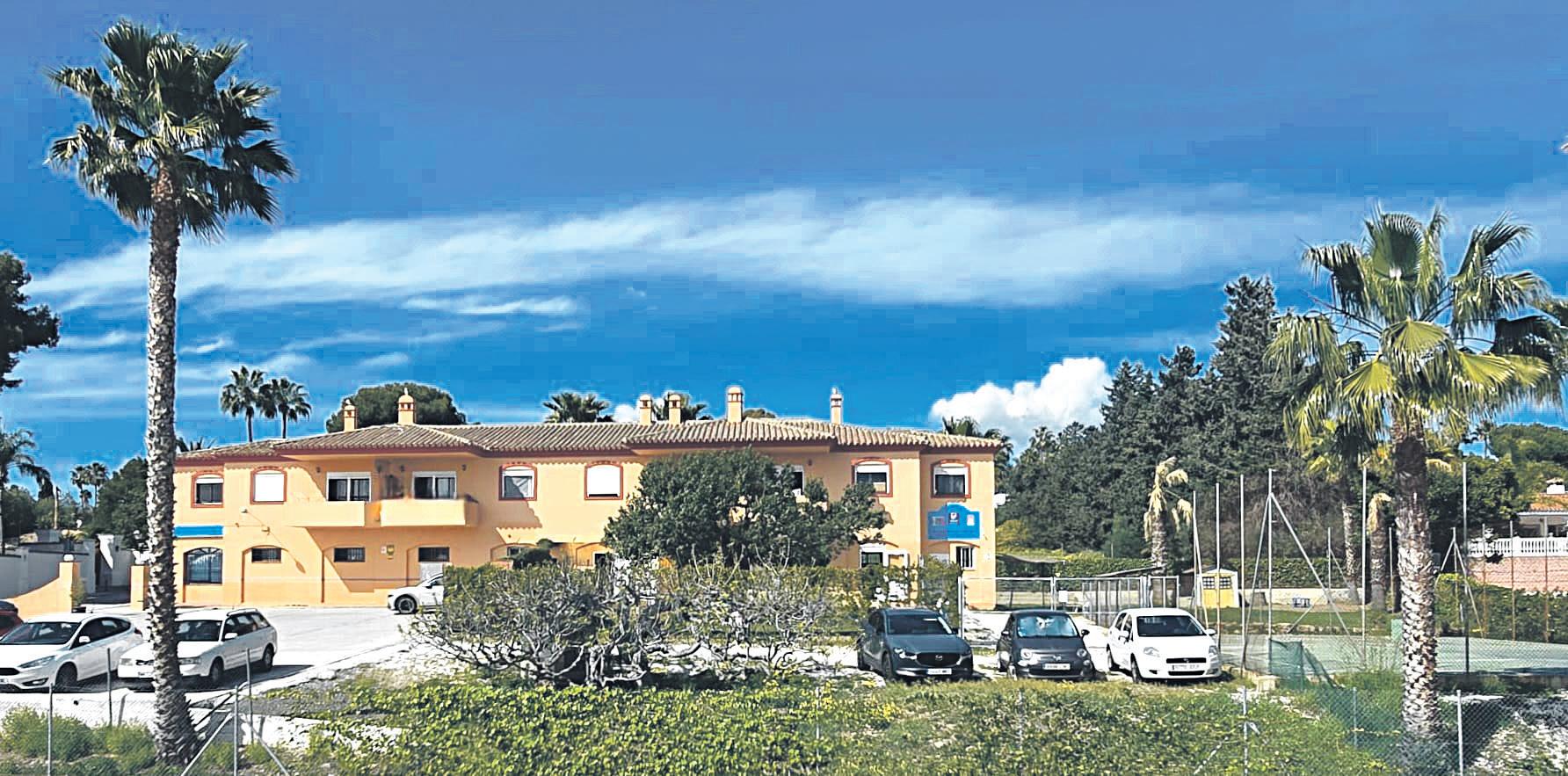
THE International School Estepona was established in 2004 and is located in El Paraiso, Estepona and is currently home to just over 100 children from two-12 years. The School has its own car park. The ISE follows the National Curriculum of England and Wales with English being the first language. It is monitored by The British Council on a regular basis.
The School is the only member of the National Association of British Schools in Spain (NABSS) in Estepona and is fully approved as a British School by the Junta de Andalucia Education Department. Spanish is taught as a second language
with lessons lasting one hour per day.
The School prides itself in being a welcoming nurturing environment for children from all over the world. The ‘Community Spirit’ is very noticeable especially during major events such as ‘the School Play’ and annual ‘Sports Day’ which all parents and relatives are invited to.
All staff are fully qualified and there are class room assistants to help in the delivery of the Curriculum. Children’s progress is closely monitored and a termly report is provided on a regular basis. Extra help with the English Language can be provided if required.
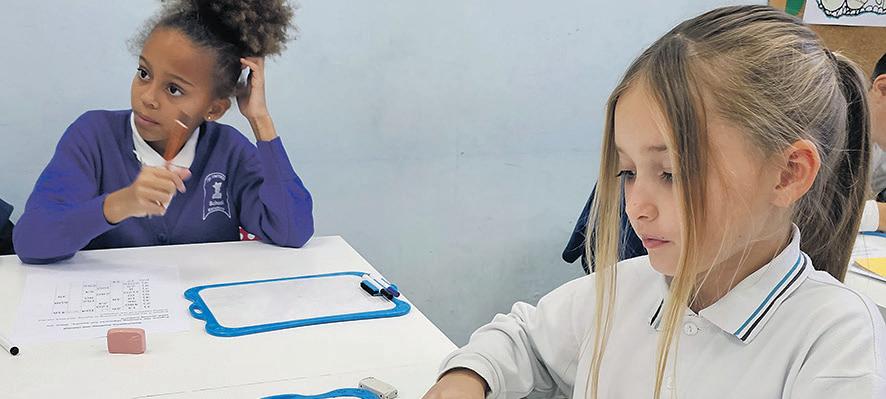
SPAIN continues to emblazon its path as a European powerhouse of education, particularly in the British school sphere: in total, the country boasts an impressive 143 British schools spread across 180 campuses - almost twice that of France, Italy, and Portugal combined - and teaches around 75,000 students, the vast majority of whom are Spanish-born. Spain has the highest number of British schools of any European country.
In fact, the number of British schools across Spain has only been rising, with a documented increase in students of 16 per cent in just the last five years, according to a report by the ISC Research. The report, which was presented by the British Council (the UK’s organisation for cultural relations and educational opportunities), the National Association of British Schools in Spain, and the British Chamber of Commerce in Spain, demonstrated that British schools represent over 40 per cent of all international education in Spain. Not only this, 87 per cent of the students at these British schools are Spanish-born.
In terms of cities, Madrid is the centre of British schools, with nearly 25 per cent of the students situated in the capital. Valencia follows with 7 per cent, and Barcelona, Las Palmas, Palma, Marbella, and Malaga all have between 4 and 5 per cent of the total number of students.
The School also has regular field trips to local places of interest which the children thoroughly enjoy. Sport and PE is a regular part of the School week on Tuesdays and Thursdays. This includes sports such as Football, Rounders and Cricket to name but a few.
The older children in Year 6 are adequately prepared for Secondary School to ensure a smooth transition into their next phase of education.
The teachers are constantly available to discuss concerns and progress by making an appointment. All parents have their class teacher’s direct email address.
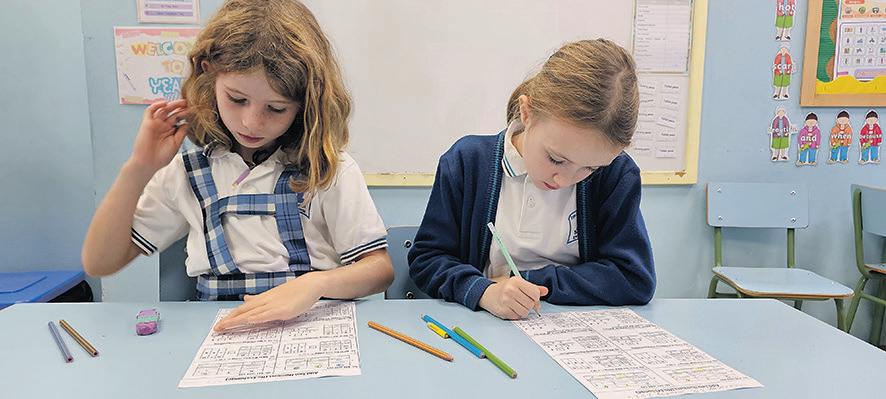
Please feel free to visit www.marbellaschool.com for further information and also Facebook and Instagram to see recent news at the School. The School also uses the ‘Konvoko’ App to keep parents up-to-date on important announcements. Just Search ‘International School Estepona’ on the app.
The School has holiday clubs every school holiday including half term.
More information can be found at marbellaschool.com and click contact us or WhatsApp +34 635 347 023

British boom
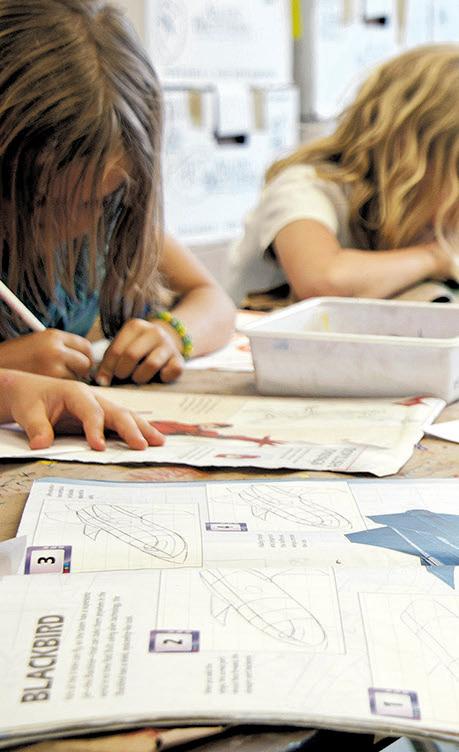
In terms of the number of pupils, the British School of Barcelona is considered the biggest. Their fees can range from €6,500 to €11,500 per year.


On average, British schools in Spain tend to have around 400 pupils enrolled, although there are some outlying
cases: there are around 20 schools in the country with fewer than 100 students, and one with more than 2,000.
Families routinely choose these British schools not only for their students’ propensity to learn fluent English, but for their focus on the British curriculum, which is regarded highly in Spain and in other European countries. The British curriculum is heavily focused on critical thinking, problem-solving, and creativity, contrasting with the Spanish curriculum, which has more of a focus on memorisation and a large amount of content.
The increased presence of British schools has also served to attract expatriate families, boosting the local economies by uplifting businesses and increasing demand for housing and services in local towns. Of course, they jumpstart local economies by contracting suppliers for transportation, food, and materials. They also create stable employment opportunities, attract qualified international teachers, and enrich the capital of the towns where they are based. British educational institutions, in and of themselves, are a local pillar for the socioeconomic reality of many areas in Spain.
Spain leads Europe with booming British schools and rising enrolments.
Photo Credit: CDC on Unsplash


Discover excellence at Laude San Pedro International College
State-of-the-art facilities
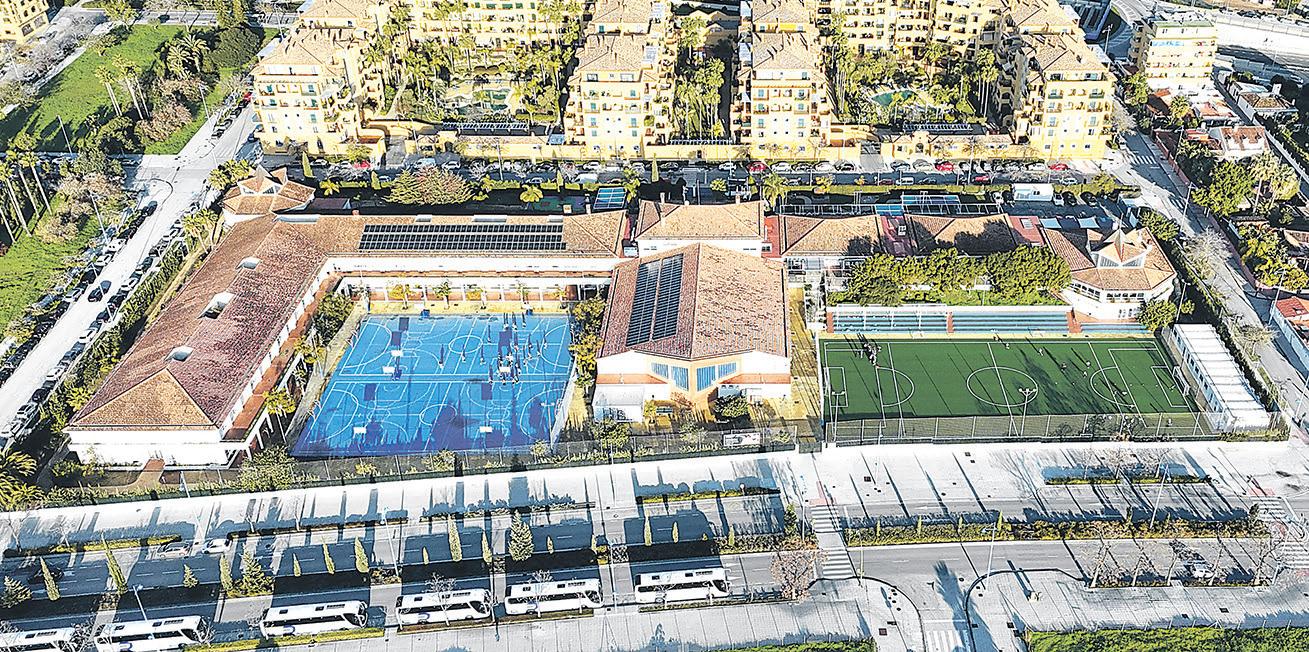
Our campus is designed for active and inspiring learning. Sports enthusiasts enjoy an artificial turf football pitch, multipurpose courts, and an indoor gym with seating for over 400 spectators. Students also have access to innovative digital classrooms, science laboratories, a multimedia lab, a graphic design studio, and dedicated spaces for drama, music, and food technology. A spacious dining hall with an on-site kitchen and a well-stocked library further support students’ holistic development.
A unique and comprehensive curriculum
Laude San Pedro is proud to be the only school in the region offering both the English National Curriculum (Cambridge IGCSEs and A Levels) and the Spanish Secondary Curriculum (ESO and Bachillerato). This dual system provides families with unparalleled flexibility and choice, allowing students to pursue the educational path that best fits their goals. In addition, our Extended Curriculum includes enrichment subjects, extracurricular opportunities, and peripatetic music, sports clubs, creative
Located in the scenic surroundings of San Pedro de Alcantara, near Marbella, Laude San Pedro International College offers a world-class education for students from three to 18 years old. With a sprawling 18,000m² campus and breathtaking views, the school combines modern facilities, expert teaching, and a supportive community to ensure every student thrives academically, socially, and personally.
mindfulness, languages, and STEM-focused programs, helping students explore interests beyond the classroom. Supporting every student
We pride ourselves on personalised support and regular teacher feedback, enabling students and families to track progress, celebrate achievements, and
identify areas for growth. Small class sizes, pastoral care, and mentoring ensure each student receives the attention and guidance they need to succeed.
A vibrant, inclusive community
Our school community is international, welcoming families from diverse backgrounds. Students learn not only academic skills but also values such as resilience, creativity, and collaboration. Cultural events, sports competitions, and community initiatives enrich school life and foster lifelong friendships.
Preparing for the future
At Laude San Pedro, we aim to develop confident, well-rounded young people ready to thrive in further education and beyond. With a combination of academic excellence, innovative learning, and broad personal development opportunities, our students are equipped to meet the challenges of the modern world.
Discover more about our school and join a community where learning is an inspiring journey: www.laudesanpedro.com
Why choose a private school
EVERY year, parents face the decision regarding whether they should send their children to private school, which, of course, is an added expense to the family budget, but has many benefits to consider.
No-one left behind
Class sizes in private schools are generally smaller, allowing teachers to give more individual attention. This supports children who excel in certain areas with challenging tasks while also helping those who find subjects difficult by providing work suited to their level.
In Early Years, Teaching Assistants can focus on small groups or individual students, while the teacher continues with the class. Smaller classes also foster a nurturing environment, enabling teachers to notice any issues affecting students’ well-being.
Above and beyond
Teachers in private schools are typically well-qualified and dedicated, often designing spe-

cialised lesson plans to make learning engaging and effective. Access to advanced resources and technology allows them to combine traditional and interactive methods, giving children a strong educational foundation.
Safe as houses
cation and opportunities to meet teachers more frequently. Private schools often foster a strong community, with events, concerts, exhibitions, and collaborative projects. Older and younger students interact freely, supported by student mentors, creating a welcoming and inclusive atmosphere.
An investment for the future
Private school students are also more likely to attend highly rated universities, achieving higher grades and benefiting from being surrounded by motivated peers who often pursue activities beyond the classroom, such as sports, music, or art.
Get involved
Parental involvement is encouraged, giving families a clearer understanding of their child’s edu-
Safety is another priority. Private schools often have stricter measures, including controlled pick-up procedures, vigilance against cyber-bullying, more staff on site, and close supervision of playgrounds to ensure a secure environment.
Investing in private education supports a child’s intellectual and social development, preparing them for academic success and life beyond school. In Spain, there are many excellent private schools, some offering instruction in English or other languages, others following the Spanish curriculum. The key is finding the school that best meets the needs and priorities of your family.
Credit: Monkey Business Images / Shutterstock
A Swedish education in the heart of Marbella
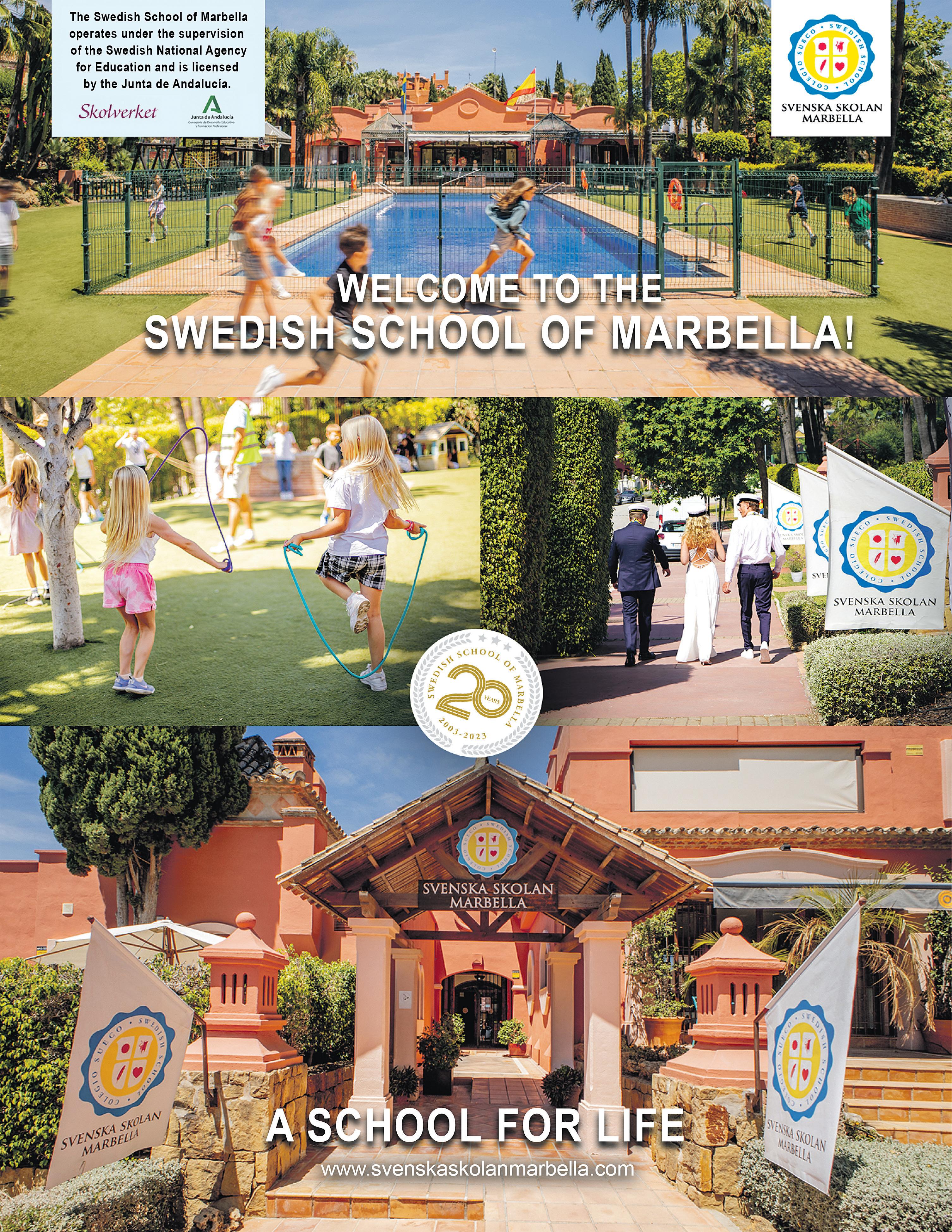
LOCATED in the leafy La Alzambra / Nueva Andalucia area, just minutes from Puerto Banus, Svenska Skolan Marbella offers families a truly unique blend of Scandinavian values and Mediterranean charm. Since opening its doors in 2003, the school has grown from a small, pioneering project with 15 pupils to a thriving international community of around 200 students today - a testament to its outstanding reputation.
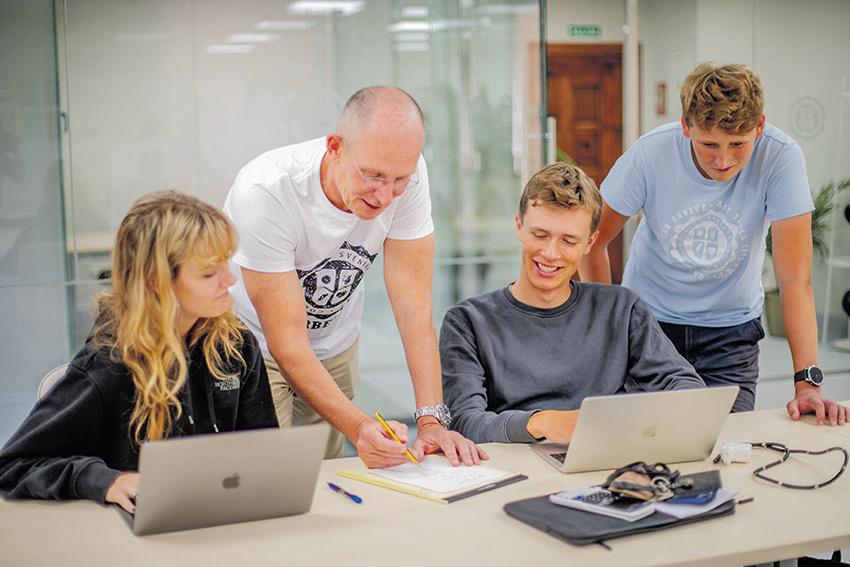
This accredited Swedish school provides education from preschool (ages three to five) through primary, following the Swedish national curriculum. For older students, the school combines Sofia Distans and Hermods Distansgymnasium programmes with on-site support, ensuring a seamless continuation of academic excellence.
One of only 14 Swedish schools abroad approved by the Swedish National Agency for Education, Svenska Skolan Marbella is also fully authorised by the Junta de Andalucía, ensuring both international standards and local recognition.
This dual accreditation gives fa-
Supportive schooling
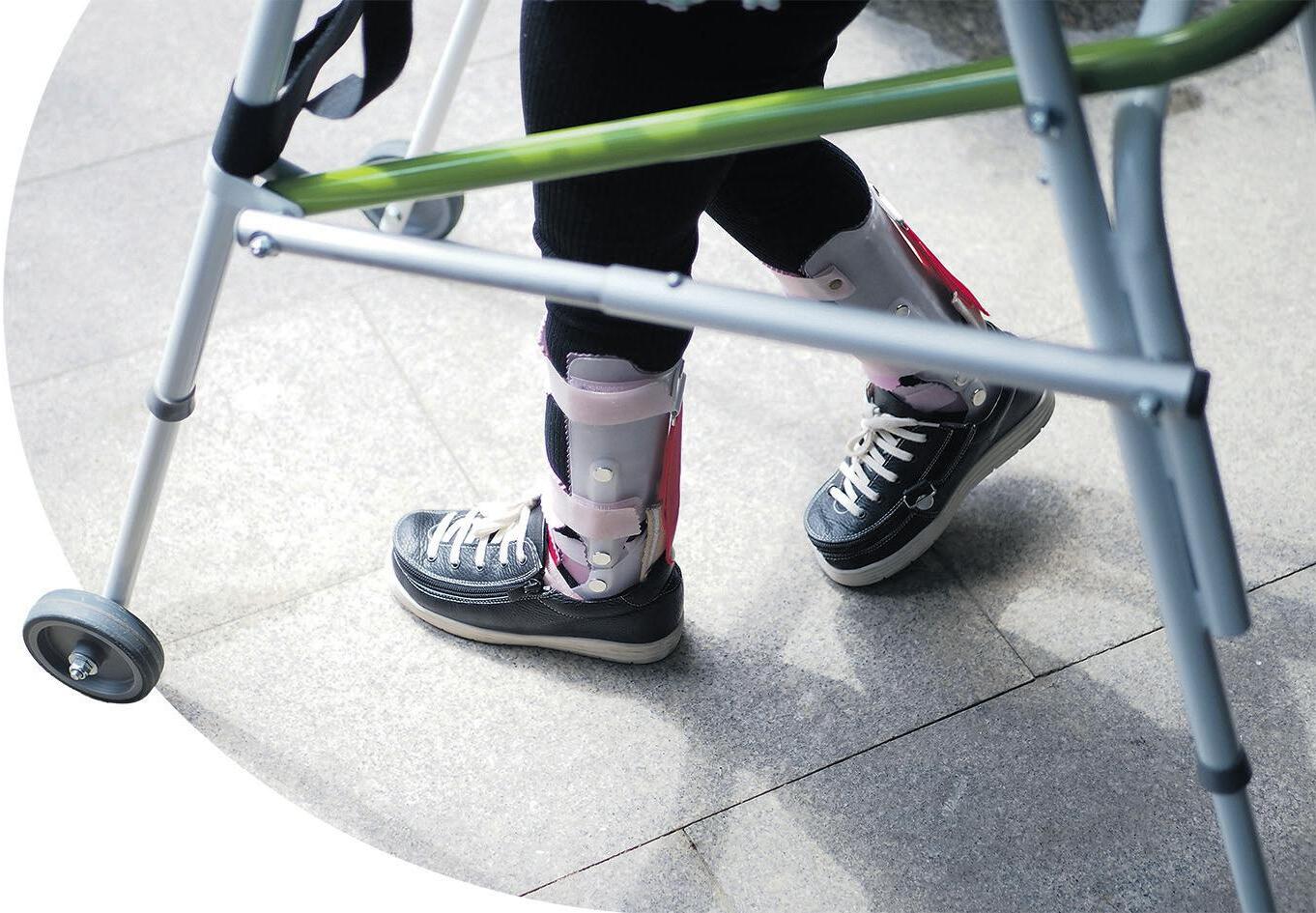
FOR parents of a child with special needs in Spain, the task of finding a school or services to accommodate the child’s requirements for education can seem daunting. With overwhelming paperwork, many options to choose from, and specific needs for a particular child, parents can easily begin to feel pressured to find the right establishment for their child.
However, a simple breakdown of the documentation and options parents need may go a long way towards making sure their child gets the education - and supportthey need. Firstly, it’s important for expatriate parents of children with Necesidades Educativas Especiales, or NEE, as it is known in Spain, to have any documents on hand when looking for schooling options. It helps to take any existing diagnosis papers and have them translated to Spanish, or make an appointment with a doctor to get
a Spanish diagnosis of the child’s disability.
After getting diagnosed, the parents can apply for official disability recognition with the local Social Services or town hall, in order to get a Disability Card. The card and diagnosis will help schools and centres know the best options for the child depending on their specific needs.
Parents can also make an appointment with local schools and centres to discuss the child’s needs in-depth. There are many specialised schools in Spain, often called Aulas Abiertas, which specifically accommodate children with special needs. Expatriates can also go to the local Centro de Valoración y Orientación de Discapacitados, which help to determine the level of the child’s special needs and provide information for parents regarding their education.
Encouraging learning and play.


milies peace of mind, whether they plan to stay in Spain long-term or eventually return to Sweden or move elsewhere.
The school embraces a trilingual approach from the earliest years. Swedish remains at the heart of daily life, while English and Spanish are integrated naturally into the curriculum.
This multilingual foundation equips students to flourish in a global world.
The campus itself is bright, modern and designed to inspire.
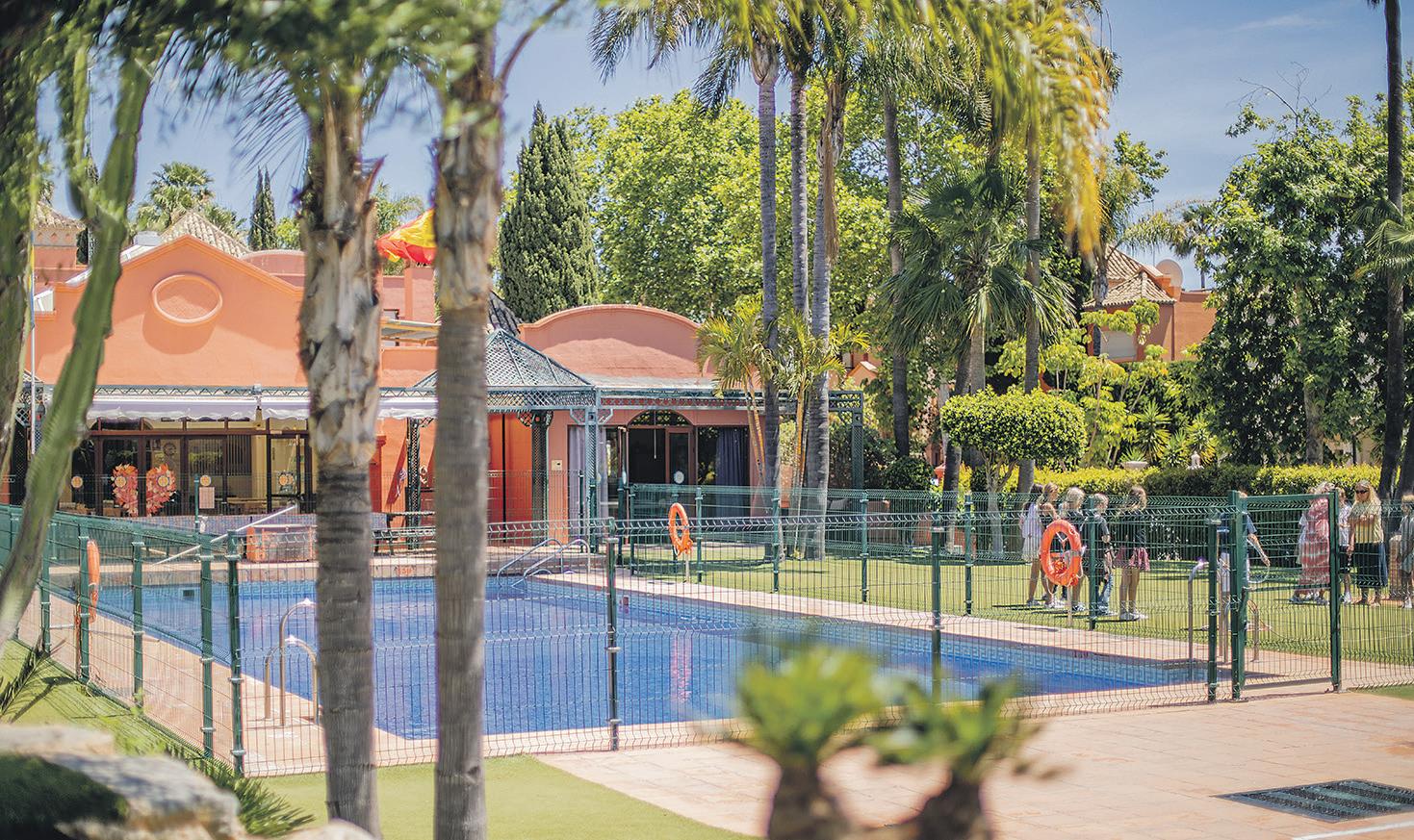
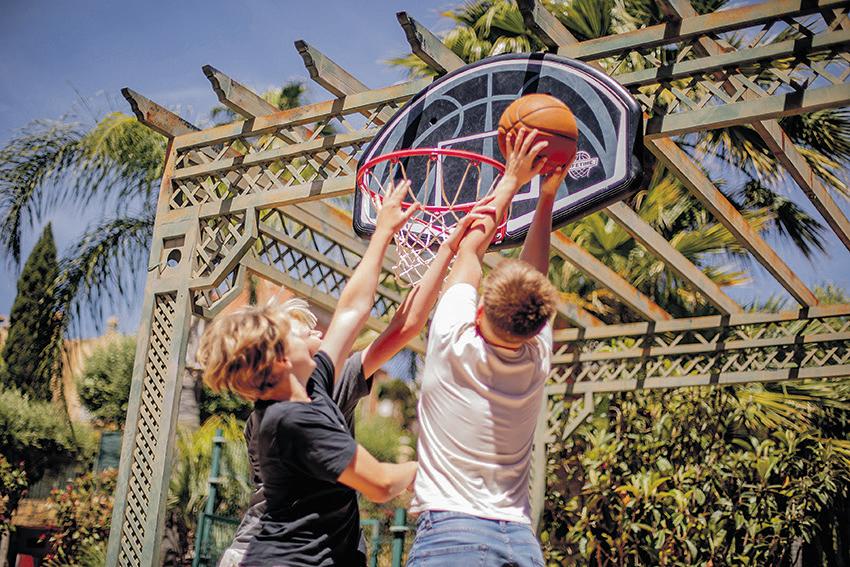
Classrooms are spacious and filled with natural light, complemented by gardens, a swimming pool, a football pitch, padel courts and generous play areas surrounded by greenery. It’s a setting that encourages both learning and play, within walking distance of parks and the beach.
Above all, Svenska Skolan Marbella stands out for its warm, community-centred atmosphere.
Every child is valued as an individual, supported to grow with confidence, curiosity and respect for others - key pillars of the Swedish educational ethos.
Discover more at www. svenskaskolanmarbella.com
social workers, and once completed, the professionals evaluate the child and discuss results with the parent.
Once the child is diagnosed and the documentation is in order, parents may be eligible to receive financial benefits, called the ayuda por hijo a cargo. These include grants for school transport, therapy, or materials, and any tax de-
ductions related to the child’s disability, among other benefits.
It is also invaluable to join Facebook groups for expatriate parents with children with special needs. These can be a great tool for finding information about specific towns, schools, and centres, and asking any specific questions not readily available by simply Goo-

gling.
Though the task of finding a school with specialised education in Spain might seem confusing and even frustrating at times, once parents have the documentation and information they need, their child can receive the best education possible, in order to flourish along with their peers.
Expat parents navigate Spain’s special needs education system for children.
Photo Credit:
Towfiqu barbhuiya via Unsplash
Come join us! The Benalmadena International College
IF you are looking for a great school for your child, look no further than The Benalmadena International College - we are now currently enrolling new students for September 2026 and have some availability for immediate starts.
Why us?
We are one of the most established British owned and managed schools on the Costa del Sol. We have been delivering a high quality British curriculum to young people from all over the world, for almost 30 years. We are truly international and are proud that our students are able to adapt so easily given the high levels of intercultural understanding, acceptance of new students and general welcoming atmosphere. Given our experience and small class sizes, we are used to receiving students with many different starting points and can boast year on year about fantastic results.
Our academic curriculum offer is wide. We follow the English National curriculum which enables our students to access internationally recognised and respected qualifications, with a trouble-free transition between other British and International schools. We are also UK inspected by ISI which conducts inspections of all private schools within the UK, therefore, we operate to the highest possible
EXPATRIATES in Spain getting ready to enrol their children in schools in a new country may be torn as to whether they should choose a British educational institution, or a Spanish one. After all, with fundamentally different curriculums and different focuses when it comes to education, choosing an ideal school is essential for the students’ academic career, as well as their personal growth and even outlook on the world.
For those whose children are a bit older, it can be a real option - with fewer growing pains - to put them in a British institution, which tend to be monolingual. If they already speak English, this could seem like the logical decision. However, the ability to speak Spanish may be better developed in a Spanish institution, which are typically bilingual and will encourage children to learn Spanish without leaving them completely in limbo with a new language.
It can be an important asset to read testimonials from parents whose children went to the local institutions being con -
standards and offering the highest quality of education to our students. Equally we also offer accredited Spanish qualifications to enable homologation of UK qualifications within Spain at the end of your child’s studies with us. Whilst our academic offering is extremely important, we are always striving to offer our students the best experiences to enables them to be even more internationally minded and culturally aware.
Some of our recent school trips have included our annual year 6 residential in El Chorro, study trips to Amsterdam, London and as far as New York! Looking ahead we have plans to extend our offer further via our Erasmus educational links. Exciting opportunities are certainly ahead for our students!
Our facilities are fantastic and we have always invested heavily in school infrastructure including most recently a new primary building. Why? Because the environment where young people learn is key to ensuring that our students are comfortable in their learning ensuring that they have every opportunity available to them whilst at school.
Our sports programme includes a wide range of activities. We regularly host inter sports competitions with our competitors. Looking ahead we are currently developing a
Curriculum
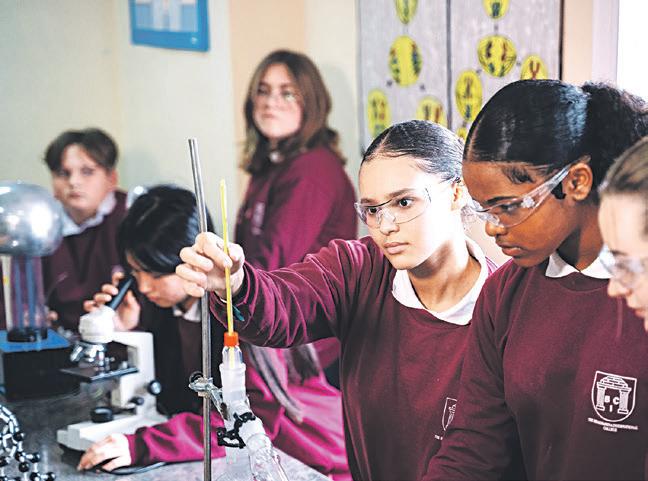
large multipurpose sports complex, including gymnasium, swimming pool, spa and restaurant facilities. We do not stop in our quest to provide the best for our young people and families! So, if you are looking for a truly pupil centred environment for your child, please look no further than The Benalmadena International College.
Don’t believe us?
Come and see for yourselves and speak to our outstanding students and teachers. You will not fail to be impressed by our fantastic school. Simply drop in or make an appointment.
Nueva Torrequebrada, C. Catamarán, s/n, 29630 Benalmadena, Malaga 952 561 666 bic-benal.com
clash
titutions), has a strong focus on creativity and practicality, whereas
lum is more focused on theory and
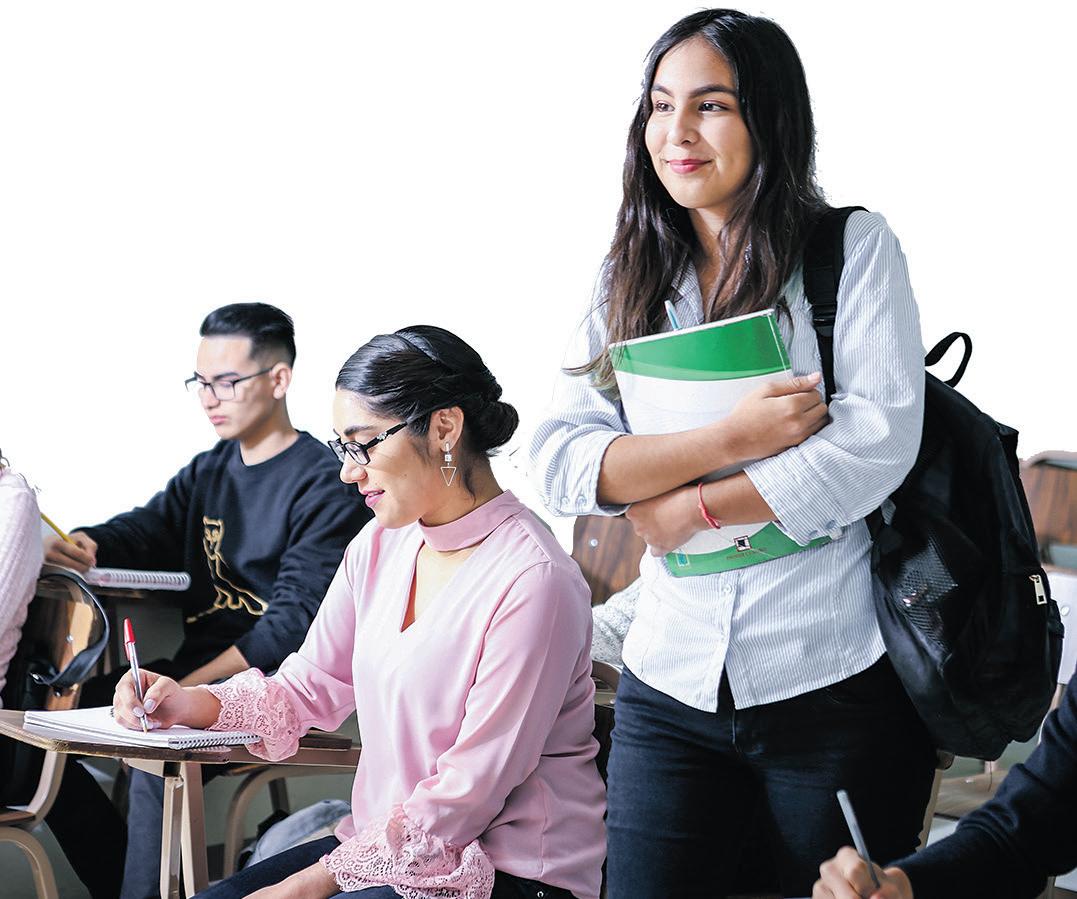
The British system has more of an emphasis on learning by doing: designing projects, experimenting in labs, participating in historical reenactments, or creating different campaigns. The British system also places less of an emphasis on final exams and leans more towards weekly projects and assessments.
On the other hand, the Spanish system is more homogenous, with all students receiving the same content at the same pace. Spain’s educational institutions tend to focus more on repetition, memorisation, and grammar rather than practical applications. The classroom is more focused on exams, and is a more formal atmosphere, with formality as a major core value. The curriculum is also more homework-heavy, and very dependent on textbooks.
All in all, there are a great number of excellent schooling options in Spain, and when it comes to choosing a school, the most important thing is assessing what would be right for one’s family and for each child.

The Ark Christian School
Academic excellence rooted in Christian values
WE’RE unique! Choosing the right school is one of the most important decisions a family can make. The Ark Christian School offers a unique combination of strong academic standards, Christian values and a welcoming, international family environment for children aged three to 18. Values. At the heart of the school is its Christian ethos. Daily school life is permeated with values such as respect, equality, compassion, thankfulness, justice and forgiveness. These principles guide relationships between pupils, staff and families, creating a culture of mutual care and responsibility. While the school’s foundation is Christian, it warmly welcomes children from all backgrounds and cultures, promoting understanding and community spirit.
Curriculum. The Ark Christian School follows the British National Curriculum, providing a clear and internationally recognised academic pathway. From Early Years (ages 3-4) through Primary and Secondary education, students benefit from a structured programme designed to develop both knowledge and critical thinking skills. In Year 11, pupils prepare for Cambridge IGCSE examinations, followed by A Levels in Sixth Form. These prestigious qualifications open doors to British, Spanish and international universities, giving graduates flexibility in choosing their future academic and career paths.
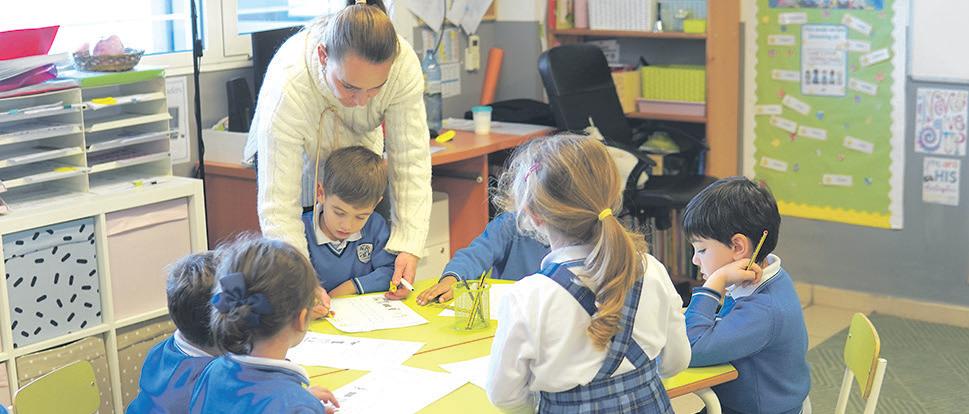
Priorities. As a non-profit-making organisation, the school is fully dedicated to educational excellence. Every resource is directed towards improving teaching, facilities and student opportunities. Any surplus income is reinvested back into the school, ensuring continuous development and enhancement of programmes. This structure reflects a clear priority: the success and wellbeing of each child.
Governance. Strategic direction is provided by a committed Board of Trustees working closely with senior management. Together, they ensure high standards, strong governance and a forward-looking vision. Their collaboration guarantees that academic quality remains high while preserving the school’s distinctive Christian cha-
Schooling in Spain
IN Spain, schooling is state-funded and compulsory for children aged three to 16.
However, parents or guardians are responsible for covering the costs of books, materials, and sometimes uniforms.
The Spanish education system is divided into three main types of schools: public (colegios públicos), private (colegios privados), and semi-private (colegios concertados), which receive partial funding from both the state and private sources.
Preschool education, known as educación infantil, is divided into two cycles.
The first cycle, for children aged 0-3, is optional and usually requires payment, though financial aid may be available for eligible families. The second cycle, for ages 3-5, is mandatory and free at public preschools.
Primary education, or colegio, spans six years, covering ages six to 12.
The curriculum focuses on a broad range of subjects including culture, oral expression, reading, writing, and mathematics, while fostering cognitive and social development.
After primary school, students enter Compulsory Secondary Education (Educación Secundaria Obligatoria or ESO), which serves students aged 12 to 16.
This stage blends elements of middle and senior school, and its completion is mandatory.
However, students who turn 16 before finishing can choose to leave school.
Bachillerato is a non-compulsory stage for students aged 16 to 18, akin to A’ Levels in the UK.
Though optional, many students pursue it. Bachillerato allows students to specialise in areas such as art, science and technology, or humanities and social sciences.
After completing Bachillerato, students have several options, including taking a university entrance exam or pursuing higher vocational training, among others.
Beyond the classroom. The Ark Christian School provi des a safe and suppor tive environment where pupils grow in confiden ce and character. A strong sense of community en courages students to de velop leadership skills, take responsibility and contribu te positively to society. A new play area for younger children further enhances the school environment,

while an on-site music school offers lessons from top professionals within the timetable and as an optional extracurricular activity.
Continuity. From the age of three through to 18, students experience stability and security in both education and values. This consistent foundation helps young people mature academically, socially and spiritually.
We’re different! By combining academic rigour with moral guidance and international opportunities, The Ark Christian School prepares students not only for examinations, but for life. For families seeking a nurturing yet ambitious educational environment, it represents a distinctive choice within the international educational landscape. As part of our extracurricular activities we offer as well, a full music school, offering most musical instruments. The pupils will have opportunities to try out different instruments to find that which suits them the most. There is also a full scout group registered with the British Scouts Overseas, and running the UK system. Going from six years to 18 (Beavers, Cubs, Scouts and Explorers).
For more information, to arrange an appointment to visit the school, or a trial day for your child contact us on 952 588 255.
Educational transformation
ANDALUCIA is reshaping how state schools are evaluated in Spain, becoming the first region to measure education using ESG (environmental, social, and governance) criteria. Until now, school performance was judged almost entirely on grades and curricula, leaving the wider influence of education on communities largely unexamined. This new framework changes that, shining a light on the real impact schools have on society.
The initiative is led by the Universidad Pablo de Olavide (UPO) and EducAcción, with support from Fundación Unicaja. Their report, Education ESG Impact Index: The Invisible Impact of Education, goes beyond exam results to assess how schools contribute to student well-being, social development, and community life.
Laura Gómez, UPO vice-rector for Culture and Social Policy, highlighted that education must produce measurable benefits beyond the classroom. Sonia Diez, president of Fundación EducAcción, explained that clear, reliable data is essential to reveal the true influence of schools. She said the research demonstrates

how purpose, commitment, and human engagement in education can shape towns and neighbourhoods. The study uses ESGrade, a cutting-edge tool combining artificial intelligence with ESG criteria tailored for schools. It evaluates aspects often overlooked, including school
climate, democratic participation, well-being, leadership quality, and organisational coherence. Maria José Gil-Delgado, creator of ESGrade, noted that the tool allows schools to present clear, comparable evidence of their contributions to society.
The project brings together researchers from UPO’s Faculty of Business Sciences and the Faculty of Education at Universidad Autónoma de Madrid, blending education and economic expertise. Findings show that governance, sustainability, and community engagement strongly influence school impact. Lead researcher Jesús Manso explained that the report makes visible “the benefits of well-managed, sustainable school environments that engage the whole educational community.”
With a population larger than many European countries that once led educational change, Andalucia is set to become Spain’s first region to fully implement this model. By providing solid, evidence-based insights, it positions itself as a reference for measurable, accountable, and socially meaningful education.
racter.
Andalucian schools to measure beyond grades.
STEM vs STEAM: Why the arts still matter
ACROSS international schools on the Costa del Sol, there is a growing emphasis on STEM - Science, Technology, Engineering and Mathematics. These subjects are rightly celebrated for preparing pupils for a fast-changing world driven by artificial intelligence, renewable energy and digital innovation. Yet an important question remains: where do the arts fit in?
Enter STEAM - the same core disciplines, but with Arts included. Advocates argue that creativity is not a luxury add-on, but a vital component of modern learning. In fact, many of the world’s most influential innovators have combined technical expertise with artistic thinking.
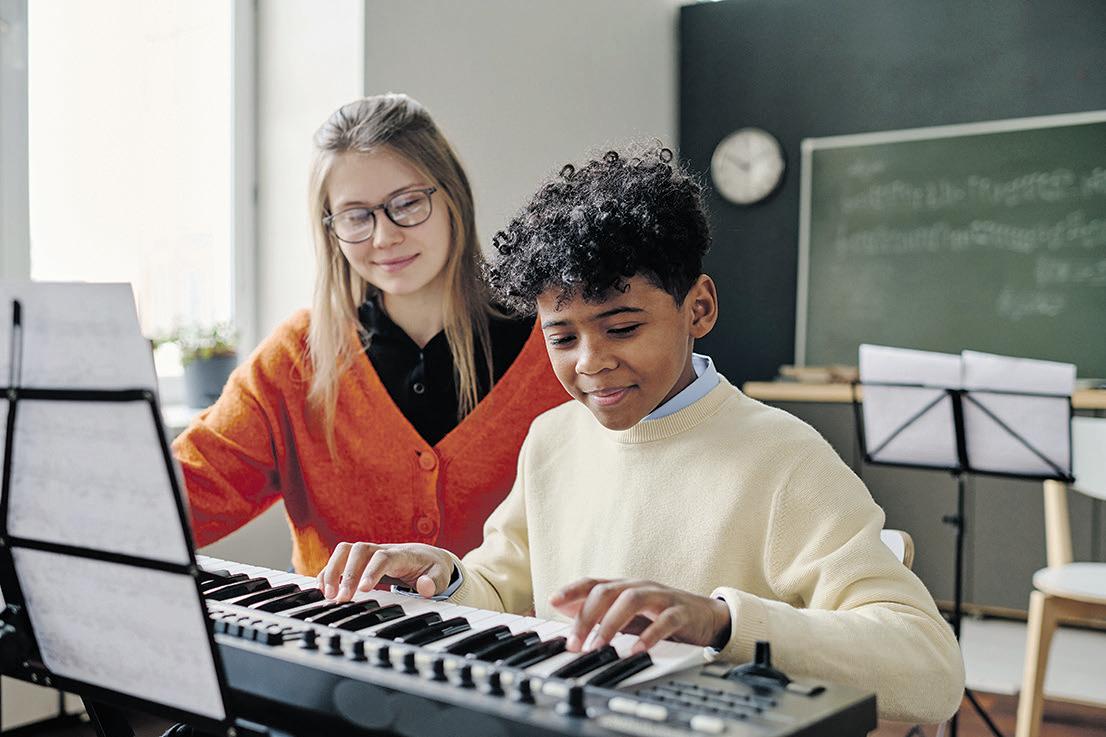

Leonardo da Vinci seamlessly blended art and engineering centuries ago, while Steve Jobs famously insisted that technology alone was not enough - it was technology married with the humanities that produced truly inspiring products.
For expatriate families in Spain,
this debate is particularly relevant. International schools often pride themselves on strong exam results in maths and sciences, opening doors to universities across the UK and Europe. However, employers increasingly value skills such as creativity, collaboration and adaptabilityqualities often nurtured through music, drama, visual art and design.
Not just a dance
school - A second home
SINCE 1996, ITS Dance Studios has been inspiring young performers and building bright futures. Created with passion and purpose, ITS is where talent is nurtured, confidence blossoms and friendships last a lifetime. Because at ITS, your dance friends really do become your best friends. From first steps at age five to show stopping main stage moments at 18, every student is encouraged to shine. With small, inspiring classes led by IDTA qualified, passionate teachers, dancers grow not only in skill but in confidence, resilience and lifelong friendships. The atmosphere is warm, supportive and proudly family focused.
Training includes Showdance, Acrobatics, Jazz, Tap, Ballet, Lyrical, Drama and Singing, offering a complete performing arts experience. For those dreaming bigger, we offer specialist IDTA training programmes to prepare and support the next generation of qualified instructors.
Research supports this balanced approach. Studies suggest that engagement in the arts enhances problem-solving abilities and supports emotional well-being. Drama builds confidence in public speaking; music strengthens pattern recognition; visual arts encourage experimentation and resilience. These are not ‘soft’ skills - they are transferable competencies essential in
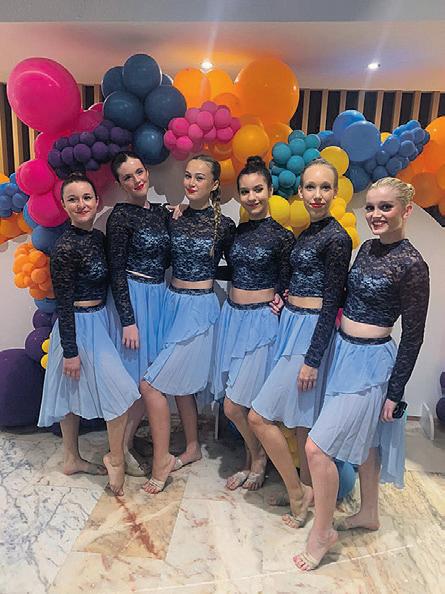
Our competition teams proudly hold the title of Showdance Champions of Spain, performing at regional and national level. Every student stars in spectacular productions and ITS dancers have even wowed audiences on Spain’s Got Talent, Tú Sí Que Vales, Disney and more.
Our mission is simple. To create amazing, confident, talented young people who love to perform and embrace every opportunity.
Book your free trial today. WhatsApp 671 082 429 • www.itsdancestudios.com
careers from engineering to medicine.
Moreover, creativity drives innovation. Designing sustainable cities or developing life-saving medical devices requires imaginative thinking as much as technical knowledge. When pupils are encouraged to sketch ideas, prototype solutions and think divergently, they learn to approach scientific challenges with originality.
In an era where automation may replace routine tasks, human creativity becomes even more valuable. By embracing STEAM rather than STEM alone, schools signal that imagination and logic are partners, not rivals.
For families along the Costa del Sol seeking a holistic education, the message is clear: the arts still matter - not instead of science,
Relocation mid-school year
MOVING to a new country is challenging at any time, but relocating mid-school year presents its own unique set of hurdles - particularly for families settling on the Costa del Sol. Understanding what to expect can make the transition smoother for both children and parents.
Firstly, prepare for an adjustment period. Children may arrive mid-term feeling anxious, missing friends, or unsure of the new curriculum. Schools on the Costa del Sol, especially international and British institutions, are experienced in welcoming students mid-year.
Many offer induction programmes, buddy systems, or extra support in core subjects to help children settle quickly. Parents should communicate openly with teachers about any concerns, from language barriers to learning gaps, ensuring tailored support.
Administrative requirements can also be complex. Families should ensure that
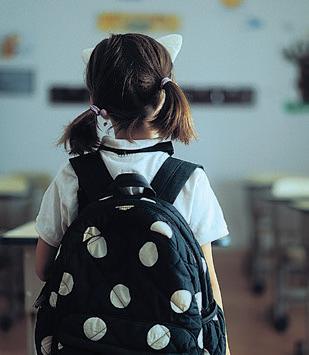
Settling into a new school mid-year can bring challenges.
all necessary paperworktranscripts, vaccination records, and proof of residency - is in order before arrival. Some schools may require placement tests to identify appropriate class levels, particularly for children entering secondary school. Being proactive can prevent delays and ease anxiety for children.
Finally, manage expectations. Academic systems, school schedules, and even classroom routines may differ from those in the UK or other countries.
Patience is essential, and recognising small milestones - such as your child making their first friend or comfortably navigating their new timetable - and provide reassurance during the initial months.
While relocating midschool year is undoubtedly a challenge, it can also be a rewarding experience. With careful preparation, open communication, and a willingness to embrace new opportunities, families can help children adapt, thrive academically, and enjoy life on the beautiful Costa del Sol.
Social integration is another key consideration. Encouraging your child to join extracurricular clubs, sports teams, or language support groups can help them make friends faster and feel part of the community. Similarly, parents can benefit from connecting with local expatriate networks or school parent associations, which provide practical advice and social support.
Balancing science and creativity in modern education.
SCHOOL SPECIAL II euroweeklynews.com
Help or hindrance?
ACROSS Spain, classrooms are changing rapidly. Tablets are increasingly replacing traditional textbooks, interactive whiteboards have become commonplace, and AI tools are starting to find a role in lessons. For parents, teachers, and students, these developments bring both opportunities and challenges.
In recent years, the use of digital devices in schools has become a major topic of discussion. The debate centres on how to balance the educational advantages of technology with concerns about screen time, well-being and traditional learning methods.
The Spanish government has been moving towards more structured regulation of technology in schools. A draft of the Ley de Protección de Menores en Entornos Digitales approved by the Cabinet obliges all non university schools to
regulate the supervised use of computers and tablets, adapt digital usage to pupils’ ages and link device use to the digital competences students are expected to achieve under the national education law (LOMLOE). Each school must prepare a digital plan that reflects these requirements. Parents can expect teacher supervised, pedagogical use rather than unrestricted access to personal devices.
Regional authorities have taken distinct approaches. In Madrid, a new decree will sharply reduce individual screen use in early years and primary education from the 2025-26 academic year. Devices will be banned for children under three, and pupils aged up to 12 will have restricted, supervised access capped at no more than two hours per week in primary school. The policy also bans screen based homework for these age groups
Over 10 years of inline hockey behind us and the journey continues
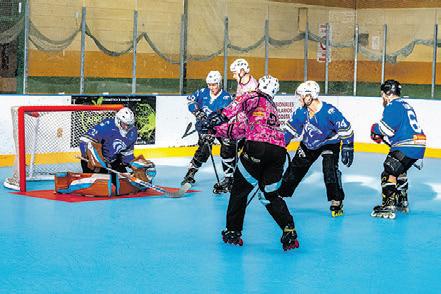
SINCE 2014, Fuengirola LIONS has been building a genuine passion for hockey on the Costa del Sol. What started as a local initiative has developed into a thriving, multi national and multi cultural club where hockey is open to everyone, regardless of age or experience.
The philosophy is clear. Everyone plays. With structured junior age groups and competitive opportunities for adults, the club provides a pathway for development at every stage. From young beginners discovering the sport for the first time to experienced players competing in regional and national leagues, the focus remains on inclusion, teamwork and personal growth.
Schools are warmly invited to be part of this journey. Dedicated skating and hockey

and aims to encourage traditional learning methods alongside digital competence goals. Secondary schools retain autonomy to set their own technology rules.
Similarly, the Balearic Islands will prohibit electronic devices in classrooms from early years up to fourth year primary; only later years will permit digital tools for explicit pedagogical reasons. There are exemptions for medical and specific tea-

ching needs. At a national level, education administrations from several regions have stressed that the focus of the discussion should not be simply on whether screens are used, but how they are used within learning environments. Teacher training in digital skills and involvement of families in responsible use are elements highlighted at recent conferences on educational innovation.
Parents and educators are therefore navigating a period of change. Policy decisions reflect concerns about excess screen time while also recognising that digital literacy and AI related competencies will be central to learning in the 21st century. How schools implement these changes - and how pupils respond - will shape classroom life long after the current debates have moved on.


confidence, coordination and resilience while learning valuable life skills such as respect and collaboration.
Specialised goalie coaching is available from a professional coach with four decades of experience, delivering expert level training that promotes individual excellence while strengthening overall team performance and unity.
Whether living locally or visiting the area, Fuengirola LIONS welcomes new players to experience the energy and excitement of inline hockey.
Training Hours: Every Tuesday and Thursday from 16.00 to 22.00 Fuengirola LIONS Hockey Arena, Av. Las Salinas, Fuengirola For more information contact: fuengirolalions@gmail.com or visit www.fuengirolalions.com
FACEBOOK: www.facebook.com/ LionsHockeyFuengirola
INSTAGRAM: www.instagram.com/ lionsinlinehockey
TIKTOK: www.tiktok.com/@ lionsinlinehockey


Screens in the classroom.
Coping with change
NO matter where your country of origin is, for a child making the transition to living in Spain, there are a number of difficulties which may vary depending upon their age and family circumstances.
For very young children, it is possibly easier to make the transition to a new country because they invariably don’t have the inhibitions that older children have and whilst they may initially miss friends and some family members, they are able to adapt as long as they see their parents settled and happy.
Learning a new language is much easier as is making friends and despite Aristotle’s statement ‘Give me a child until he is seven and I will show you the man’ (or of course woman) there is little doubt that most young children will find it easier to adapt to new surroundings than those who are older.
Learning to live in a new culture which may be quite different from that which you are used to can come as a major shock to older children, especially if they are not fluent with the language and as well as struggling to come to terms with missing their
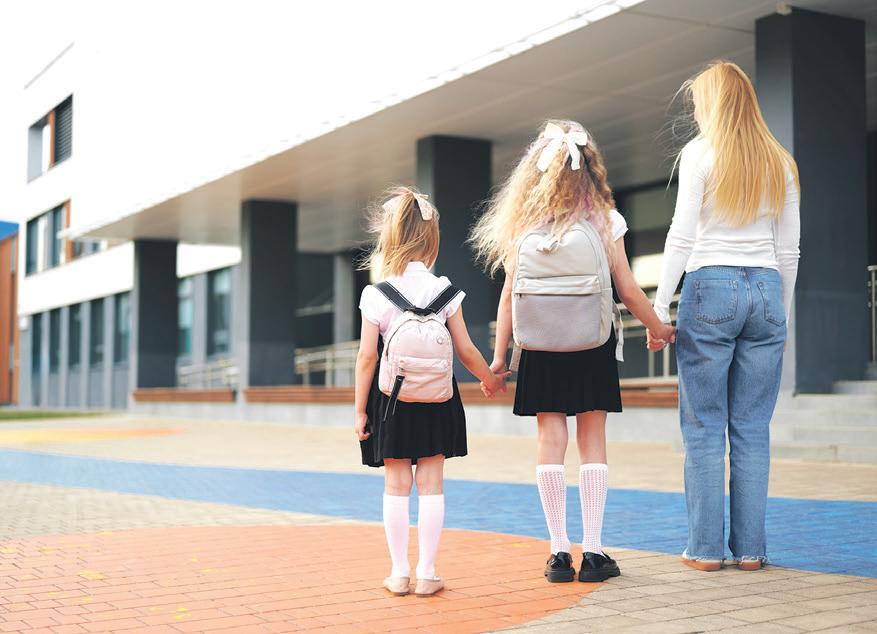
friends, they also have to learn Spanish.
Naturally, their school will do all that they can to help them but one useful tip for parents is to not give in to the temptation to exclusively screen TV in their language as it is far better to insist on a set time watching Spanish language TV with subtitles.
Also, parents should spend time studying the language with their
children as why should the child be committed to learn when the parents aren’t?
There will always be stumbling blocks as youngsters settle in, but remember that in some cases they may harbour resentment against their parents for uprooting them, so the parents need to be seen to be committed to this new life and supportive of the struggles that the child may have.
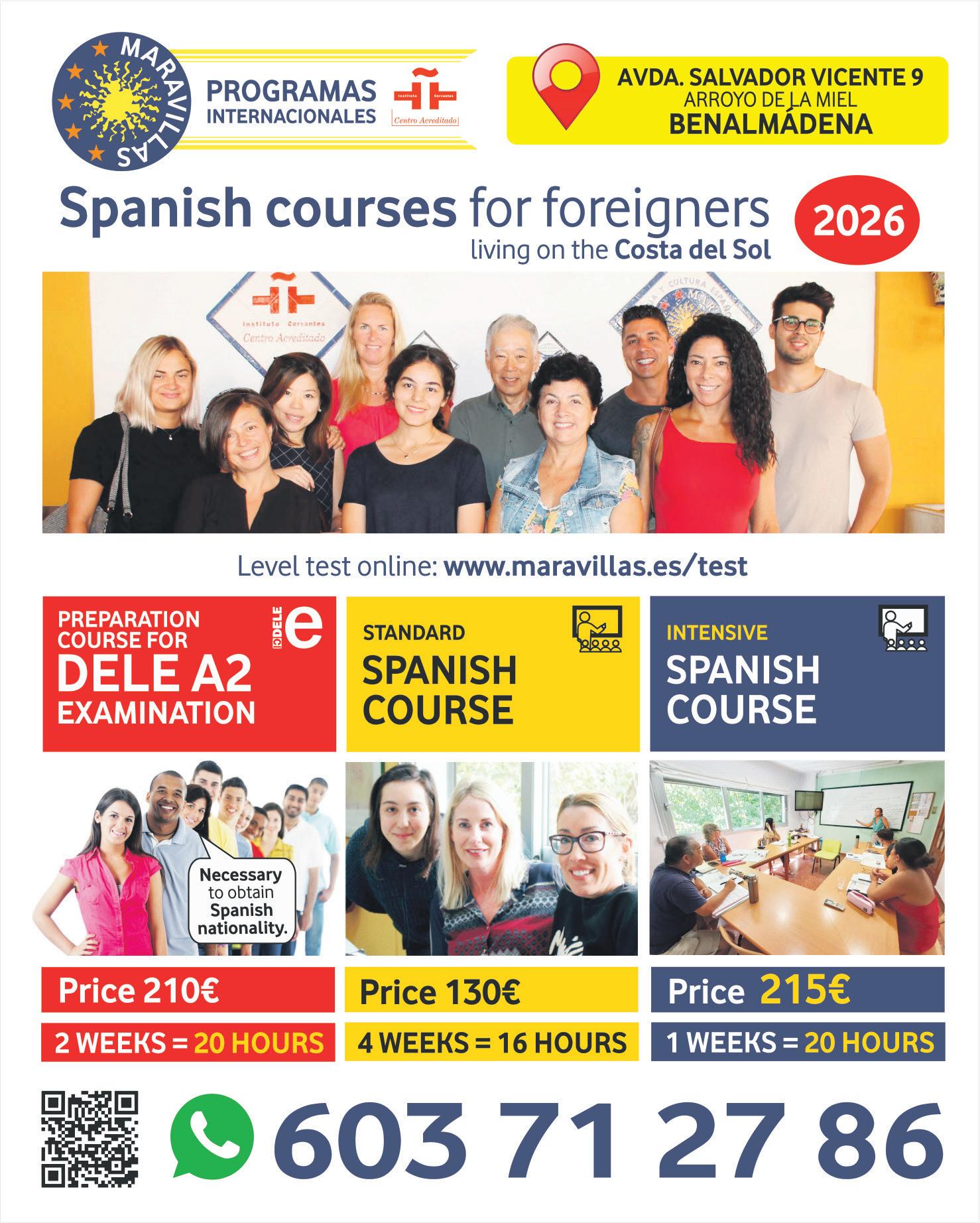
Small class, big impact
RESEARCH seems to suggest that smaller classes generally improve student success, though not always for obvious reasons. Studies suggest an ideal class size of around 18 pupils, with younger children benefiting most. At the early stages of learning, children are building the foundations of language and mathematics, and fewer pupils allow teachers to give the individual attention needed to secure these basics.
As students get older, class size matters less for learning, but it still affects behaviour. Smaller groups make it easier for teachers to spot and address disruptions, helping all pupils stay focused.
Both state and independent schools face the challenge of balancing educational goals with financial realities, making very small classes impractical. By secondary school, a difference of five to 10 pupils per class has little effect on academic progress.
That said, committed teachers can deliver excellent results even in larger classes. Parents can assess a school’s effectiveness through past performance and examination outcomes. While small classes are ideal, professional teaching remains the most important factor in student achievement.
Maravillas Spanish School: a Spanish experience for adults in Benalmadena
WE spoke with Paola Vecchi, director of Maravillas Programas Internacionales, a leading school on the Costa del Sol with more than 40 years of experience bringing Spanish language and culture closer to international students.
- What programmes do you offer and who are they aimed at?
We offer Spanish courses for adults of all ages, including intensive courses, longterm stays, private lessons and official exam preparation. We also run programmes for foreign residents who wish to integrate better into daily life in Spain. Each programme is adapted to individual goals, level and availability. Students progress at their own pace, without pressure.
- What advantages do adult students find?
Flexible schedules, small groups and personalised support from the first day. Students learn alongside people from different countries who share the same motivation to learn Spanish and experience the culture, creating an international and dynamic environment. Accommodation with
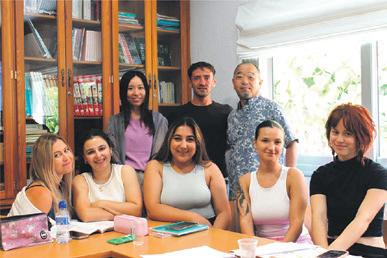
host families or apartments is available to encourage immersion and ease adaptation.
- What is the methodology like?
Learning by living it. Communication is encouraged from day one through practical, dynamic classes and real-life situations, complemented by cultural activities that help students understand the local environment and gain confidence step by step.
- A final message for those thinking about learning Spanish.
Do not be afraid to try. At Maravillas, adults can start or continue learning Spanish in a supportive environment, progressing at their own rhythm, without worries or pressure. In addition, if you come to our office with this press article or a photo of the advertisement, we will offer you one free class.
Web: https://maravillas.es/ Facebook: https://www.facebook.com/maravillasSchool/photos?locale=es_ES
Credit: Aleksandr Khmeliov / Shutterstock
Brave Generation Academy:
Education that adapts to life, not the other way around
IN a rapidly changing world, traditional schooling often struggles to keep pace with the needs of today’s young peopleespecially those whose talents, passions and personal circumstances don’t fit neatly into a one-size-fits-all model. That’s where Brave Generation Academy (BGA) comes in, offering a bold alternative rooted in flexibility, individuality and real-world readiness.
At its heart, BGA is about empowering learners to take ownership of their education, rather than forcing them to conform to an outdated system. With hybrid learning, personalised pathways and a global network of Hubs, students can shape a learning experience around their lives - not the other way around.
What makes BGA particularly relevant to families in Marbella and beyond is its flexible timetable and self-directed learning philosophy. Whether a learner is training for elite sports, pursuing artistic passions, managing anxiety, or simply thrives outsi-
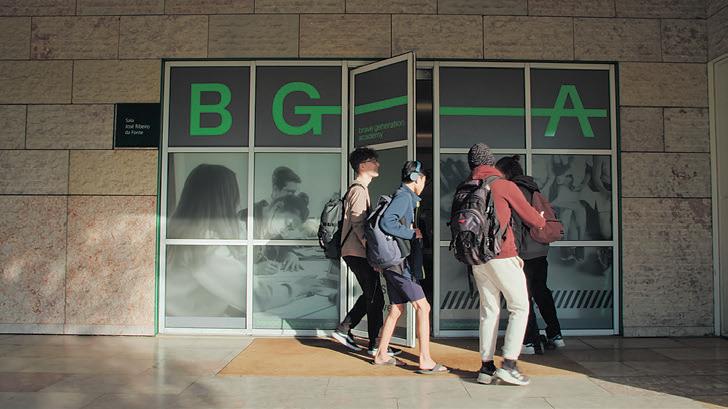
de conventional classrooms, BGA creates space for each journey. Learners progress at their own pace, supported by Learning Coaches who help them set goals, manage time and stay motivated.
For student-athletes and performers especially, BGA offers a way to excel both academically and personally. Its hybrid model means study isn’t restricted to fixed school hours, allowing learners to train intensely in the mornings, afternoons or eve-

nings without losing academic continuity. Coupled with recognised international curriculum - including British IGCSEs and A-Levels, American diplomas and the Portuguese+ programme - this ensures learners earn qualifications accepted around the world while nurturing their passions.
But BGA’s commitment goes beyond academics. It welcomes learners with ADHD, anxiety, depression or other challenges, offering a supportive environment
that prioritises well-being and individuality. Its community of coaches, peers and mentors fosters belonging, resilience and confidence in learners for whom traditional schooling can feel restrictive or stressful.
In a world where education needs to evolve, Brave Generation Academy is leading the way - proving that learning should adapt to life’s demands, and that every learner deserves a path that honours who they are and where they’re headed.
For general inquiries about BGA please reach out to our admissions team at: Email: contact@bravegenerationacademy.com • Phone: +34 691 789 661
Centro Comercial La Colonia S. Pedro de Alcantara, Marbella
IN this day and age, most of us have heard the name Montessori, even if we are not entirely sure what it involves. The Montessori method of education was developed in the early 1900s by Italian physician Maria Montessori. It is based on the belief that, within a supportive and well-prepared environment, children are capable of initiating their own learning, driven by a natural eagerness to acquire knowledge. Today the method is used in many public and private schools worldwide, including in Spain.
A central feature of the approach is allowing pupils to choose their activities within a carefully prepared setting. In Primary classrooms, there are typically 20 to 30 children aged two and a half to six, guided by a trained teacher and assistant. Furniture is child-sized, arranged in clusters, with materials placed on low shelves. Teachers present activities, after which children decide what to work on. Daily routines such as snack time and tidying up are also treated as learning opportunities, fostering social and organisational skills.
At Elementary level, chil-
to Learn
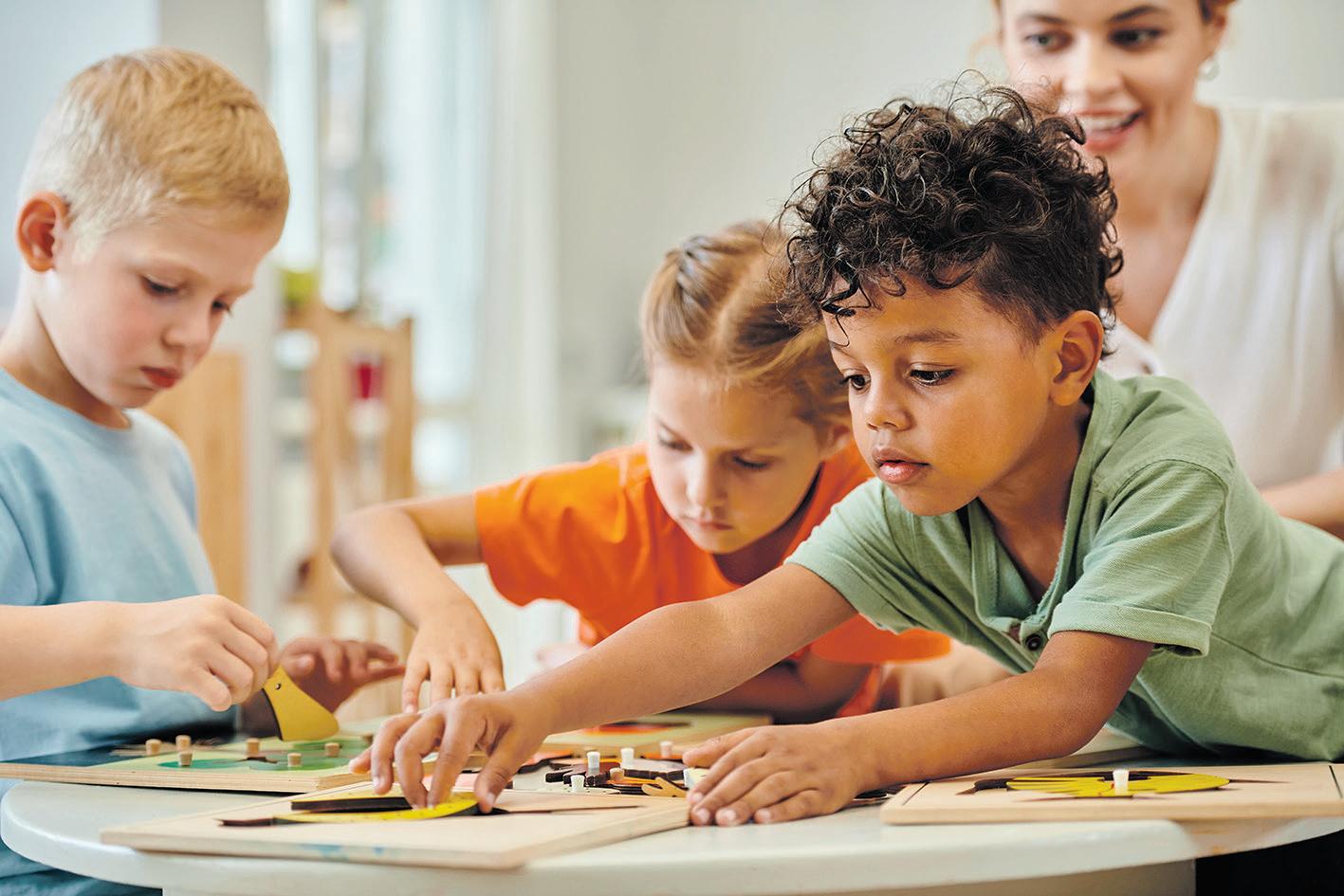
dren are grouped aged six to nine and nine to 12. Lessons are given to small groups before pupils work independently, guided by interest and personal responsibility, a core principle of the method. Teaching is interdisciplinary, covering language, maths, sciences and the arts. Montessori provision for middle and high school is less developed, though many schools are adapting her educational philosophy for older students.
Montessori materials are designed to engage the senses. So-called Montessori toys aim to encourage creativity and experimentation without a fixed outcome. Simple items such as building bricks, crayons, phonetic games, an abacus, peg boards, play dough, stacking toys or sand trays support imagination and learning through trial and error. Toys designed for a single predetermined result do not fit the approach.
While some Montessori materials are costly, often due to quality craftsmanship rather than mass production, the principle remains simple: provide children with the freedom and space to create, and they will do the rest.
students the freedom to choose how they learn.