
Royal honour awarded Nadal tees up for charity
Joined other sporting legends for a good cause
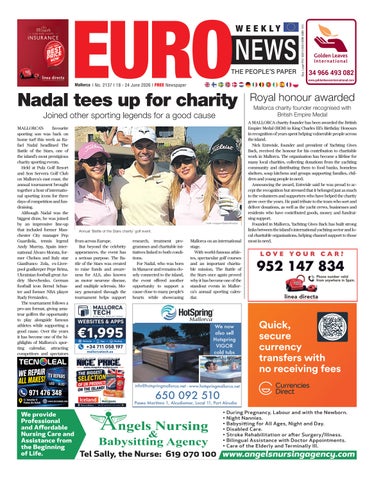
MALLORCA’S favourite sporting son was back on home turf this week as Rafael Nadal headlined The Battle of the Stars, one of the island’s most prestigious charity sporting events. Held at Pula Golf Resort and Son Servera Golf Club on Mallorca’s east coast, the annual tournament brought together a host of international sporting icons for three days of competition and fundraising.
Although Nadal was the biggest draw, he was joined by an impressive line-up that included former Manchester City manager Pep Guardiola, tennis legend Andy Murray, Spain international Álvaro Morata, former Chelsea and Italy star Gianfranco Zola, ex-Liverpool goalkeeper Pepe Reina, Ukrainian football great Andriy Shevchenko, German football icon Bernd Schuster and former NBA player Rudy Fernández.
The tournament follows a pro-am format, giving amateur golfers the opportunity to play alongside famous athletes while supporting a good cause. Over the years it has become one of the highlights of Mallorca’s sporting calendar, attracting competitors and spectators


from across Europe. But beyond the celebrity appearances, the event has a serious purpose. The Battle of the Stars was created to raise funds and awareness for ALS, also known as motor neurone disease, and multiple sclerosis. Money generated through the tournament helps support


research, treatment programmes and charitable initiatives linked to both conditions.
For Nadal, who was born in Manacor and remains closely connected to the island, the event o ered another opportunity to support a cause close to many people’s hearts while showcasing
Mallorca on an international stage.
With world-famous athletes, spectacular golf courses and an important charitable mission, The Battle of the Stars once again proved why it has become one of the standout events in Mallorca’s annual sporting calendar.



Mallorca charity founder recognised with British Empire Medal
A MALLORCA charity founder has been awarded the British Empire Medal (BEM) in King Charles III’s Birthday Honours in recognition of years spent helping vulnerable people across the island.
Nick Entwisle, founder and president of Yachting Gives Back, received the honour for his contribution to charitable work in Mallorca. The organisation has become a lifeline for many local charities, collecting donations from the yachting community and distributing them to food banks, homeless shelters, soup kitchens and groups supporting families, children and young people in need.
Announcing the award, Entwisle said he was proud to accept the recognition but stressed that it belonged just as much to the volunteers and supporters who have helped the charity grow over the years. He paid tribute to the team who sort and deliver donations, as well as the yacht crews, businesses and residents who have contributed goods, money and fundraising support.
Founded in Mallorca, Yachting Gives Back has built strong links between the island’s international yachting sector and local charitable organisations, helping channel support to those most in need.

Mallorca
Credit: Instagram/Battleofthestars
Annual ‘Battle of the Stars charity’
Radiothon raises €13,004
MALLORCA’S English-speaking community has once again shown its generosity after Wave Mallorca’s annual Radiothon raised €13,004 during a 36-hour live broadcastwith organisers expecting the total to climb further as donations remain open for another week.
The fundraising marathon took place on June 5 and 6, bringing together listeners, local businesses and volunteers from across the island. Led by Wave Mallorca founder and breakfast show host Richie Prior, the event featured live entertainment, song requests, raffles, auctions and fundraising challenges designed to encourage donations throughout the broadcast.
Broadcast continuously from 7am on Thursday until 7pm on Friday, the Radiothon supported a number of causes, including the children’s ward at Son Espases Hospital, Great

Ormond Street Hospital, Cancer Support Mallorca, Yachting Gives Back and the 6 Points Cycling Challenge initiative. Prior has been involved with the Radiothon since it launched in 2015, helping turn it into one of Mallorca’s best-known community fundraising events. While the current total stands at €13,004, orga-
A TOURIST remains in a serious condition after falling several metres onto rocks at one of Mallorca’s most famous beaches.
The accident happened on Sunday June 14 at Es Calo des Moro, a small cove near Santanyi that has gained international recognition for its turquoise waters and dramatic natural se-
nisers have stressed that the figure is not yet final, with donations still being accepted for a further week. The station thanked everyone who donated, volunteered and tuned in, saying the event once again demonstrated the strength of Mallorca’s community spirit when people come together to support good causes.
tting. Emergency services were alerted at around 12.30pm after reports that a man had fallen in a rocky area close to the beach.
According to emergency responders, the 27-year-old plunged between five and seven metres, suffering multiple injuries when he struck the rocks below. Due to the difficult terrain and
Doctors walk out

THOUSANDS of patients across the Balearic Islands are facing disruption this week as a new round of doctors’ strike action is expected to force the cancellation of around 15,000 medical appointments.
The industrial action forms part of a nationwide dispute over proposed changes to Spain’s healthcare employment rules. Medical unions argue that the planned reforms fail to address long-standing concerns over working conditions, career progression and recognition of on-call hours worked by healthcare professionals.
Balearic Health Minister Manuela García said the impact of the strike could cost the region’s public health system around €2.5 million. She described the ongoing dispute as deeply concerning and warned that patients
Beach fall horror
the seriousness of his condition, a large-scale rescue operation was launched.
Paramedics treated the injured man at the scene before stabilising and immobilising him.
would bear the consequences if a solution is not reached.
While emergency services, urgent care, oncology treatments and other essential healthcare services will continue to operate, many routine consultations, specialist appointments and non-urgent procedures are expected to be postponed. Health authorities have said affected patients will be contacted and offered alternative dates where necessary.
The strike comes at a particularly challenging time for the Balearic healthcare system, which is already facing staff shortages and increasing pressure ahead of the busy summer tourist season. Concerns have also been raised about the recruitment and retention of healthcare workers on the islands due to the high cost of living.
Firefighters and medical teams then coordinated with the Council of Mallorca’s rescue helicopter to airlift him from the cove.
He was flown to the helipad at Son Espases Hospital in Palma and admitted as an emergency patient with a serious prognosis.
Es Calo des Moro attracts thousands of visitors every
summer and is often featured in international rankings of Europe’s best beaches. However, its rugged cliffs and rocky access routes can present risks for visitors exploring beyond the main beach area. Authorities have not released further details about the circumstances surrounding the fall.

An amazing fundraising effort by Wave Mallorca Radio.
Strike action effecting 15k medical appointments in the Balearics.
Community fees deadline COURT ISSUES WARNING

SPAIN’s Supreme Court has ruled that homeowners’ associations cannot wait indefinitely to recover unpaid community fees after a case in which more than €4,800 became legally unrecoverable because of time limits.
The dispute involved two property owners who accumulated €6,497.30 in unpaid community charges between 2007 and 2014. The homeowners’ association sought to recover the full amount, but the Supreme Court applied current legislation establishing a five-year limitation period for
such claims. As a result, only around €1,696 plus legal interest remained recoverable, while debts dating from 2007 to 2013 were ruled time-barred.
The decision is attracting attention across Spain as it affects thousands of apartment blocks, residential complexes and urbanisations that rely on community fees to fund maintenance, cleaning, repairs and shared services.
Legal experts warn that communities often delay action against non-paying owners in the hope debts will be settled voluntarily, but waiting too long
can mean losing the legal right to recover older amounts.
The court based its decision on Law 42/2015, which reduced the limitation period for community fee claims from 15 years to five years. Specialists recommend starting formal recovery procedures promptly, beginning with written payment demands and, if necessary, using Spain’s simplified ‘monitorio’ court process. The ruling does not erase unpaid debts automatically but highlights that legal claims have a strict time limit.
Knocking on trouble
SPAIN is warning companies that aggressive doorstep sales tactics can lead to fines reaching up to €1 million as complaints rise over unwanted visits linked to energy contracts, internet services and home alarm systems.
While door-to-door sales remain legal, authorities say the situation changes once pressure, persistence or harassment become part of the conversation. Under Spanish consumer protection and unfair competition laws, companies can face serious penalties if representatives continue insisting after someone has refused, repeatedly return to a property or pressure vulnerable residents. Officials say the law protects consumers from aggressive behaviour that limits their ability to make calm decisions inside their homes. The warning follows growing frustration among re-
sidents over intrusive, unexpected visits. Complaints often involve representatives comparing electricity bills, pushing urgent discounts or refusing to leave. Spanish legislation also covers repeated unwanted contact through phone calls or emails once consumers request that companies stop.
Penalties vary depending on the severity of the infringement. Smaller violations result in fines worth thousands of euros, while the most serious cases can reach between €100,000 and €1 million. Authorities can increase penalties further depending on the profits generated. Consumer organisations say older residents are particularly vulnerable to these face-to-face tactics. Spanish authorities insist companies must respect a consumer’s decision, warning that persistence alone can become illegal.
Bottle return rules
Recycling made easier
SPAIN’S new drinks container deposit scheme could change the way millions of people recycle bottles, cans and cartons from August 2026. Under the Deposit, Return and Refund System (SDDR), consumers will pay an extra 10 cents when buying certain beverages and receive the money back when returning the empty container.
One of the least known aspects of the system is that shoppers will not necessarily have to return containers to the place where they bought them. Participating supermarkets, shops, bars and restaurants will be expected to accept eligible containers even if they were purchased elsewhere.
This means someone could buy a bottle of water in one supermarket and return it to a different participating business to recover the deposit. Authorities believe this flexibility will make the system easier to use and encourage higher recycling rates.
The scheme aims to improve the collection and recycling of single-use drinks containers across Spain, with officials targeting a 90 per cent recovery rate for eligible packaging before 2029.
The new rules will also bring added responsibilities for businesses. Supermarkets, convenience stores, bars and restaurants must manage returned containers regardless of where they were sold. Larger retailers are expected to use reverse vending machines, while smaller establishments may face storage and handling challenges.
The system is expected to cover plastic bottles, cans and beverage cartons of up to three litres, including bottled water, soft drinks, juices and canned beverages. Authorities insist the extra 10 cents is not a tax but a refundable deposit reclaimed through the approved collection network.

euroweeklynews.com
Spain is warning companies over aggressive doorstep sales and repeated unwanted home visits.
Spain’s Supreme Court has ruled that unpaid community fee debts generally become time barred after five years.
Credit : FERNANDO VALERO LOPEZ, Shutterstock
Credit : New Africa, Shutterstock
Solar park freeze
THE BALEARIC GOVERNMENT has announced a temporary freeze on new solar park developments on rural land across the Balearic Islands while it prepares a new renewable energy strategy for the region.
The move places a moratorium on fresh applications for large-scale photovoltaic projects and is expected to remain in force for up to two years.
According to the regional government, the pause is designed to ensure future renewable energy projects are developed in a way that balances the need for clean energy with the protection of agricultural land, landscapes and environmental values. Officials say the new framework will establish clear rules on where solar parks can be built and how large they can be.

Tourist eco tax rises
HOLIDAYMAKERS visiting Mallorca and the other Balearic Islands this summer will pay higher tourist taxes as regional authorities press ahead with changes designed to tackle overtourism and promote more sustainable travel. The increase applies during the peak summer months and will affect visitors staying in hotels, apartments, holiday rentals and other tourist accommodation.
The freeze will not affect projects that have already secured the necessary permits, and self-consumption installations such as rooftop solar panels are excluded from the restrictions.
Large solar developments have become increasingly controversial in parts of Mallorca and the wider Balearics, with some re-


sidents and environmental groups arguing that renewable energy expansion should not come at the expense of rural landscapes or productive farmland. The government acknowledged that several proposed projects have generated significant local opposition.
During the two-year planning period, authorities will draw up a comprehensive renewable energy and energy storage plan intended to identify the most suitable locations for future projects and provide greater certainty for developers, landowners and local communities.


Under the revised system, the lowest rate is expected to rise from €1 to €2.50 per person per night, while the highest rate will increase from €4 to €6 per night, depending on the type and category of accommodation.
Cruise ship passengers are also facing a sharp rise, with charges increasing from €2 to €6 per night.
The eco tax, officially known as the Sustainable Tourism Tax, is charged to most visitors staying

confirmed to increase in June, July and August.
overnight in the Balearic Islands. Revenue generated from the levy is used to fund environmental projects, conservation initiatives and improvements to public infrastructure across Mallorca, Menorca, Ibiza and Formentera.
Supporters argue the higher charges will help offset the impact of record visitor numbers and provide additional funding for projects that benefit
both residents and tourists. Critics, however, warn that the increases could make holidays more expensive for families already facing rising travel costs.
The new rates come as the Balearic Islands continue to debate how best to balance a thriving tourism industry with growing concerns about housing, congestion and pressure on local resources.

























Amount
Pause on solar park developments on rural land.


MALLORCA has passed historic legislation to cap the number of vehicles entering the island, making it the first territory in mainland Spain to do so.
The Consell de Mallorca (the island’s governing council) voted in favour of the law on Friday June 6 during an extraordinary plenary session. It now moves to the Balearic Parliament for processing, with full approval expected between December 2026 and February 2027.
Mallorca car cap law
The law sets an annual ceiling on non-Balearic-registered vehicles arriving by ferry and introduces a separate quota for hire cars. Entry fees will be charged and fines for violations will range from €300 to €30,000.
The Council’s own traffic study found between 93,599 and 122,397 too many cars cu-















rrently on the island. A second study, using more recent data, will determine the precise cap figure.
Exemptions apply for property owners - limited to one vehicle - seasonal workers with employment contracts, people with reduced mobility and commercial vehicles.
This summer is unaffected. However, from 2027 anyone planning to hire a car or arrive with their own vehicle will need to check authorisation requirements before travelling. Ibiza operates a similar system already, with permits managed through ferry operators at the point of booking.
As previously reported in the Euro Weekly News, the Council had been working on plans for vehicle restrictions since at least 2025.
Infinity drops anchor

ONE of the world’s largest superyachts has officially arrived in Mallorca, drawing attention in Palma’s harbour after completing its latest Mediterranean voyage. The striking vessel, Infinity, is regarded as one of the most impressive private yachts afloat and is estimated to be worth more than $300 million.
executive of Harbor Freight Tools, one of the largest tool retailers in the United States. Smidt is estimated to be worth tens of billions of dollars and is known for his philanthropy as well as his extensive art collection.
On board, guests have access to a swimming pool, spa, gym, cinema, beach club, beauty salon and two helicopter landing pads. The yacht is also accompanied by its own 69-metre support vessel, Intrepid, which carries tenders, water toys, diving equipment, a helicopter hangar and even a small hospital.
Measuring 117 metres in length, Infinity was built by Dutch shipyard Oceanco and delivered in 2022. At the time, it became the largest yacht ever launched in the Netherlands. The vessel spans seven decks and can accommodate up to 16 guests in eight luxury suites, supported by a crew of more than 30.















The yacht is owned by American billionaire Eric Smidt, founder and chief
The arrival of Infinity further reinforces Mallorca’s reputation as one of the Mediterranean’s premier superyacht destinations.




















































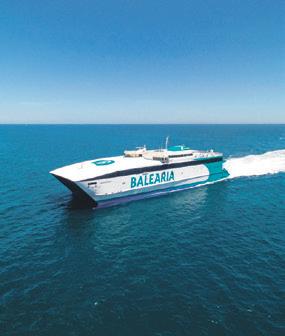






















































One of the world’s largest super yachts is docked in Palma.
Illegal rental crackdown
OWNERS of illegal holiday rentals in Mallorca could face fines of up to €5,000 per day under new measures approved by the Balearic Government as part of a wider effort to tackle unauthorised tourist accommodation.
The changes strengthen powers available to island councils when dealing with properties being marketed without the necessary licences. Until now, enforcement procedures could take months or even years to complete, allowing some owners to continue advertising and renting out properties while investigations were ongoing.
Under the new rules, once a cease-and-desist order has been issued, owners who continue to offer illegal holiday lets can be fined between €500 and €5,000 for every day the activity continues. These penalties will be added on top
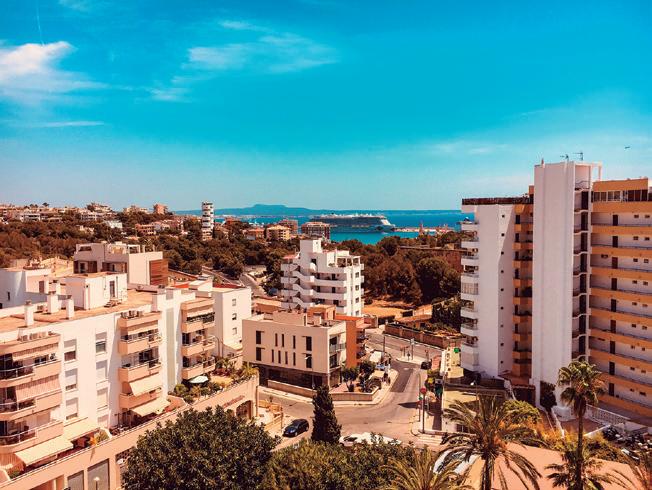
of any existing sanctions rather than replacing them.
The reform also increases the maximum penalties for tourism-related offences. Minor infractions can now attract fines of up to €5,000, serious breaches up to €50,000, and the most severe cases as much as €500,000.
Authorities have also warned that repeat offenders could find themselves facing crimi -
nal proceedings if they ignore repeated enforcement notices.
However, the government has included an incentive for property owners willing to return homes to the residential market. Those who stop illegal tourist rentals and make their properties available through approved affordable housing schemes may qualify for reductions of up to 80 per cent on their fines.

A 34-YEAR-OLD man has died following a serious road traffic collision on the outskirts of Palma in the early hours of Tuesday June 16.
The fatal crash happened shortly before 6am on the MA-30, near the Mercapalma wholesale market, on the stretch of road linking Coll d’en Rabassa with the MA-13 motorway. According to emergency services, the collision involved a van and an SUV and was described as a head-on impact.
The younger driver died at the scene despite the efforts of emergency responders. A second man, aged 68, was trapped inside one of the vehicles and had to be freed by firefighters before being transported to hospital. He was taken to Palma’s Son Llàtzer Hospital suffering from multiple injuries and remains under medical care.
Fatal crash
Emergency crews, including firefighters, medical teams and officers from the Guardia Civil, attended the scene. Traffic in the area was disrupted while rescue operations were carried out and investigators examined the crash site.
The exact cause of the collision has not yet been established. Investigators are working to determine how the crash occurred and which vehicle may have crossed into the opposite lane before the impact.
The incident is the latest in a series of serious road accidents reported on Mallorca’s roads this year and serves as a stark reminder of the dangers motorists face, particularly during the early morning hours.

Fines of up to 5k per day.
Credit: Pexels/ReubenKSam
Happened on the MA-30.
Looking at eye level
ECONOMIST Gabriel García has suggested that Mercadona shoppers may be spending more than necessary because of how products are arranged on supermarket shelves. He argues that items placed at eye level are often higher-priced or higher-margin products, while cheaper alternatives may be positioned higher or lower on the same aisle.
According to García, consumers tend to focus on the middle shelves, which are the most visible and accessible. This can lead to overlooking lower-cost options placed outside the direct line of sight.
Retail specialists note that supermarkets use shelf placement to influence purchasing behaviour. Eye-level positions are considered premium space, often used for products retailers want to promote or sell in greater volume. This strategy is widely used across gro-
International Day of Yoga

cery chains, not only Mercadona.
García advises shoppers to compare all products within a section, including checking unit prices such as cost per kilogram or litre. He suggests that small savings per item can accumulate over time in regular household shopping. The comments have circulated widely online, with some consumers saying
Photo credit:Veja/Shutterstock
THOUSANDS of wellness enthusiasts are preparing to gather as the Indian Embassy launches its 12th annual International Day of Yoga across Spain and Andorra. Organised with local town halls and cultural groups, this year’s tour spans 33 locations under the global theme, ‘Yoga for Healthy Ageing’, focusing on long-term mental and physical well-being.

they will change how they shop.
Mercadona has not commented on the claim, and the remarks reflect general retail practices rather than company policy. Experts also emphasise that shoppers should not assume price based on shelf height alone, as product range and promotions vary between stores and categories each week.
All events are free, open to all ages, and require no prior experience. The national schedule features major gatherings on the official UN global day, Sunday, June 21. In Madrid, a massive open-air session will take place at Plaza de Oriente from 9am to 11am. Simultaneously, Barcelona will host its primary gathering at Parc Joan Miró from 8.30am to 10am.
Southern Spain will host several coastal and inland sessions. Malaga holds a sunset event on Saturday, June 20 at 9.30pm, followed on Sunday, June 21 by an afternoon session in Torremolinos at 4pm and a morning gathering
in Cordoba.
The tour reaches across the country, from Bilbao to the Canary Islands. Specialised sessions include a youth event in Valladolid on Friday, June 12, a women’s evening class in Madrid on Thursday, June 25, and an inclusive session with sign language translation in Tenerife on Saturday, June 27. Attendees should bring a mat, water, and sun protection. For all information, visit the official page on the Embassy of India in Madrid website.


Spain is different



















BRITS abroad often assume holiday destinations share the UK’s legal approach to childcare and other laws, but assuming British rules apply in Spain can lead to severe consequences. This reality was demonstrated at a resort in Benalmadena on the Costa del Sol, where a British couple left their three young children unsupervised to visit an adult bar.
The 41-year-old man and 28-year-old woman received a suspended prison sentence of one year and four months.
They were also disqualified from exercising parental authority, and Andalucian social services took the children into care.
In Spain, leaving children unsupervised in dangerous circumstances is a specific criminal offence under the Criminal Code. While the UK
approach under the Children and Young Persons Act is often welfare-led initially, Spanish authorities intervene sharply in high-risk situations. Claiming ignorance of the law is not an acceptable defence.
Tourists frequently misjudge Spanish regulations, assuming they mirror home rules. However, local expectations regarding family responsibility
and public behaviour are strictly enforced.
For instance, walking shirtless or in swimwear away from beach areas can attract fines between €120 and €750 in regions like the Costa del Sol, Barcelona, and the Balearics.
Visitors must understand local laws rather than assuming UK standards apply, as parental responsibilities do not end at the border.
Spain celebrates International Yoga Day. Credit:Marcos
Supermarkets use shelf placement to influence purchasing behaviour.
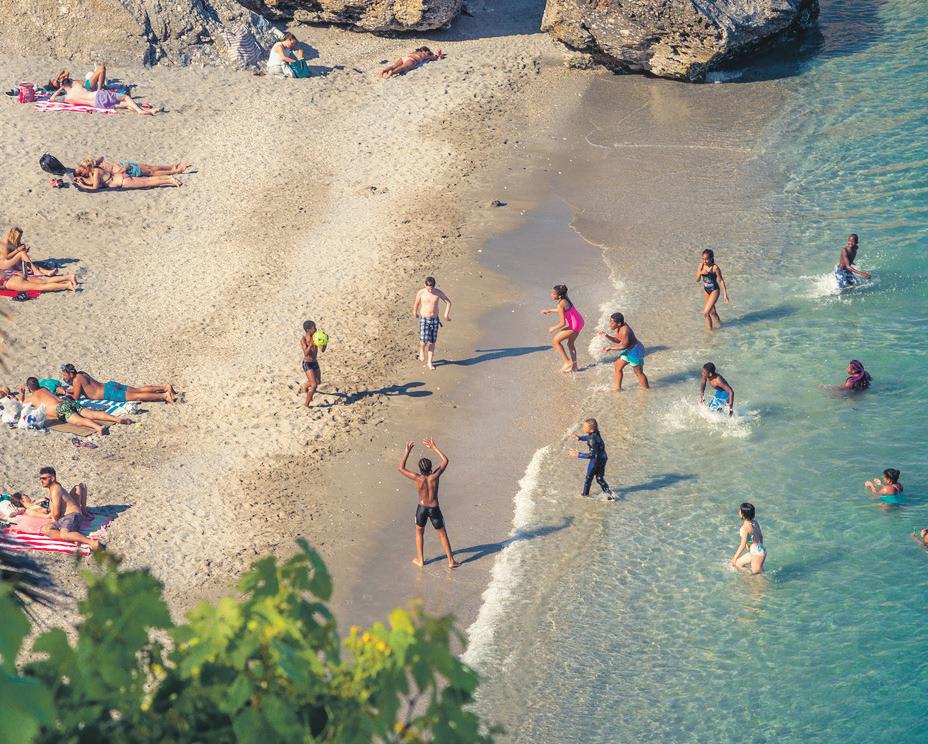
Families on the beach in Nerja.
AC/DC fined for noise
MADRID City Council fined the AC/DC concert at the Metropolitano stadium €80,800.80 after Municipal Police recorded night-time noise levels between five and 10 decibels above permitted limits. Municipal regulations classify exceedances of more than seven decibels at night as very serious infringements, which applied in this case and led to the highest penalty issued for stadium events in 2025.
Other events at the venue also faced sanctions. An Imagine Dragons concert received a €500 fine for a four-decibel breach classified as minor, while a youth football tournament was fined €180 for a similar daytime exceedance.
Across 29 inspections during 2025, 14 events complied with noise limits, four recorded breaches, and

the remainder were invalid due to procedural errors. Residents living near the stadium have repeatedly raised concerns about noise, traffic, litter, and the building design, which they say allows sound to escape into surrounding residential areas.
The city has introduced mitigation measures including sound-absorbing panels, speaker direction controls, and façade monitoring. Events are generally required to end by midnight, with limited
extensions at weekends.
The Ombudsman has withdrawn from the case as prosecutors continue environmental investigations.
Authorities said enforcement will continue as large-scale concerts remain under scrutiny in densely populated areas of Madrid. Officials maintain that the aim is to balance cultural events with legal noise limits and protect residents living near the stadium environment long term.
Pope’s royal jet rescue

POPE LEO XIV’s visit to Spain ended with an unexpected travel drama after a technical fault grounded his aircraft in Tenerife, forcing Spain’s King Felipe VI to step in and help get him home.
The Pope had been preparing to fly back to Rome from Tenerife North Airport following a six-day tour of Spain when problems emerged with the plane before departure. Reports said engineers were unable to resolve the issue immediately, leaving the pontiff and his entourage
stranded on the ground.
With the flight unable to continue as planned, King Felipe, who had travelled to Tenerife to bid farewell to the Pope, offered the use of his official Falcon jet. The Pope was then able to continue his journey to Rome aboard the Spanish government aircraft.
The remainder of the papal delegation and the journalists travelling with him stayed behind to await a replacement aircraft.
The disruption came
at the end of a busy visit that took Pope Leo to Madrid, Barcelona and the Canary Islands. During the trip, he met political and religious leaders, celebrated Masses attended by thousands of worshippers and focused on issues including migration and social inclusion.
One of the most symbolic moments of the visit came in Barcelona, where the Pope took part in celebrations linked to the completion of the final tower of the famous Sagrada Família.

Other events at the venue also faced sanctions.
Photo credit: Ben Houdijk/Shutterstock
King Felipe saved the day.
Rocio festival
SANTA PONSA is preparing for one of its most colourful weekends of the year as the Fiestas del Rocío return from June Friday 19 to Sunday June 21, bringing a lively celebration of Andalucian culture to Mallorca’s southwest coast.
Held at the Jaume I fairground and organised by the Casa de Andalucia en Calvia with support from Calvia Town Hall, the annual festival combines music, dancing, religious traditions and family-friendly entertainment. Entry is free, making it one of the area’s most accessible summer events.
The celebrations begin on Friday evening with a traditional procession carrying the Virgen del Rocío from Santa Ponça church to the festival grounds. The arrival of the image officially opens the festivities, which continue with performances from local dance groups and musicians.
Over the weekend, visitors can enjoy flamenco shows, live music, traditional Andalucian dress and a festive atmosphere inspired by the famous El Rocío pilgrimage in southern Spain. Food stalls and market


Credit: YouTube/AjuntamentdeCalvia

stands will also be on site throughout the event.
One of the highlights takes place on Saturday with the traditional romería, or pilgrimage, through the municipality. The celebrations conclude on Sunday with a Misa Rociera, a special mass accompanied by traditional singing and music.
The festival has become a firm fixture in Calvia’s cultural calendar, attracting residents and visitors alike who come together to celebrate Andalucian heritage.
Village bistro charm
RESTAURANT REVIEW
A NEW bistro in the heart of Alaro is reminding us that the best restaurants are often the ones that quietly become part of everyday life. L’eau à la Bouche has recently opened its doors, bringing a mix of Mediterranean comfort food, Frenchinspired classics and takeaway favourites to one of Mallorca’s most charming villages. More than just a place to eat, it feels designed to fit naturally into the routines of local residents.
The cosy spot offers everything from morning coffee and freshly baked croissants to bagels and omelettes, making it an easy stop for breakfast or a relaxed lunch. Locals can also pick up one of the



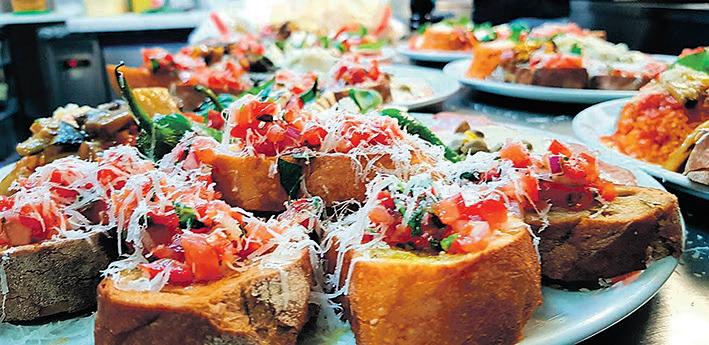

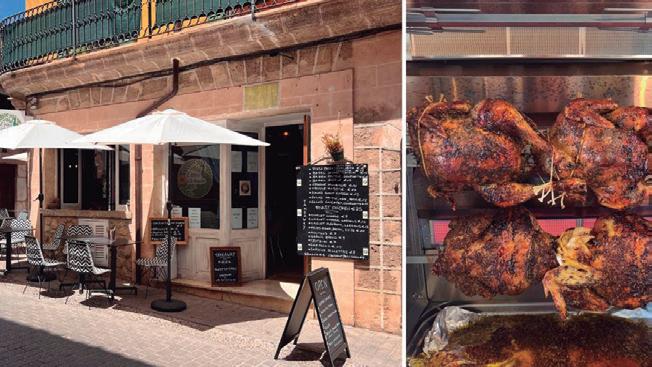
bistro’s golden rotisserie chickens to take home, while visitors may find themselves making a special journey just to try them.
The menu extends well beyond the roast chicken. Light options include goat’s cheese salad, melon, ham and feta salad, and a chickpea and courgette salad.
French café favourites such as croque monsieur and croque madame sit alongside cheese and ham omelettes, while Roman-
inspired pinsas come topped with ingredients including manchego, chorizo and cured ham. Sharing dishes such as home-made houmous, sardine rillettes and garlic bread add to the appeal. It’s no doubt an excellent addition to the famous village; offering good food, local produce and a welcoming place for the community to gather.
Carrer d’Alexandre Rosselló 1, 07340 Alaro, Mallorca +34 711 270 696
Calling all burger lovers
BURGER lovers in Mallorca will soon have the chance to sample some of Spain’s most celebrated creations as The Champions Burger arrives in Palma later this month.
The travelling food event, billed as Europe’s largest gourmet burger festival, will take over the grounds of Estadi Mallorca Son Moix from Friday June 20 to Sunday July 5. The festival brings together award-winning burger restaurants and street food specialists from across Spain, all competing to impress visitors with their signature recipes.
Festival-goers can expect everything from classic cheeseburgers to more inventive creations featuring premium beef, artisan breads and home-made sauces. Many of the participating brands have previously won national burger competitions or built loyal followings through Spain’s growing gourmet burger scene.
A new addition for 2026 is The Champions Cheesecake, which will showcase a selection of gourmet cheesecakes from specialist pastry makers. Visitors will be able to try a variety of flavours and styles, adding a sweet option alongside the festival’s main attraction.

Europe’s largest burger festival lands in Palma.
Entry to the event is free, with visitors paying only for the food and drinks they choose to purchase.
Opening hours will be from 6pm until midnight Monday to Thursday, while Fridays, Saturdays and Sundays will run from midday until midnight. The festival officially opens at 7pm on June 20.
Celebrating Andalucian culture.
French-inspired home cooking with rotisserie chickens.
Credit: L’eau à la Bouche
Photo credit: Pics721/Shutterstock

SARDINIA’S Punta Molentis beach has introduced restrictions on umbrella use as part of measures to protect the coastal environment and manage visitor numbers. Under the rules, only families with children under 10 and people aged 65 and over are allowed to use a single umbrella. Visitors between the ages of 10 and 65 are not permitted to set up umbrellas.
The beach is located in Villasimius and is a protected coastal area that has faced overcrowding and environmental pressure in recent years. Local authorities said damage
Umbrella ban
from extreme weather and a 2025 wild re contributed to the decision to tighten controls. In addition to the umbrella policy, access to the beach requires a €10 entry fee per person.
Visitor numbers are regulated through a controlled entry system, and booking may be required during busy periods.
Tents and gazebos are also banned.
O cials say the measures aim to reduce congestion and protect dunes and natural habitats. Similar restrictions, including vi-
sitor caps and reservation systems, have been introduced at other beaches in Sardinia. The rules have generated debate among visitors, particularly regarding enforcement and sun exposure during hot weather.
Authorities maintain that the regulations are necessary to preserve the beach for future use. Sardinia continues to expand environmental controls as tourism demand increases across its most popular coastal destinations each summer season annually.

Designer dinosaur
RUNNING experiments with dinosaur DNA is the plot of an iconic franchise, but has now become a 21st century reality. Learning from the films, real-life scientists did not try to bring dinosaurs back from extinction (not yet, anyways), instead they paired science with fashion to create a leather bag made from T-Rex skin.
Twenty-five years ago, a T-Rex femur was discovered in the state of Montana in the United States. Using advanced technology, scientists harnessed the traces of collagen remaining on the bone to create a replica of T-Rex skin, which scientists claim to be an accurate replica of what would have existed over 67 million years ago.
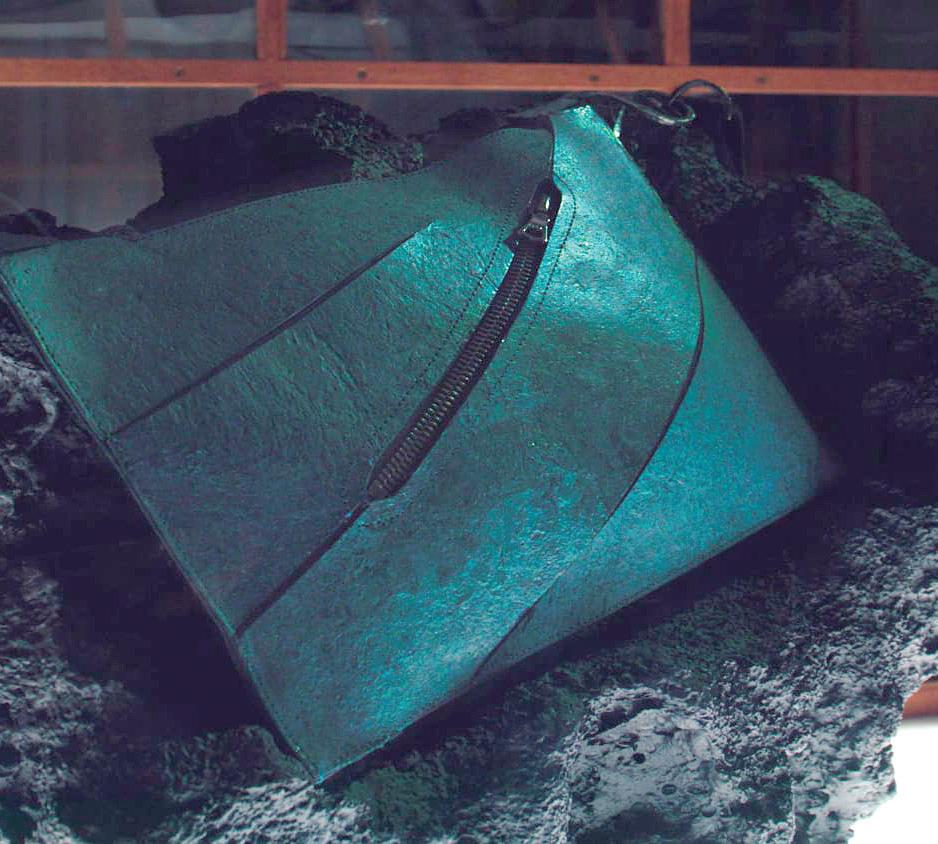
The T-Rex skin was then used to create a leather handbag, possibly the most luxurious accessory to ever exist.
In what is a first for science and fas-


hion, the bag recently went up for sale. With no previous precedent, auctioneers at the Parisian auction house Giquello had to come up with a price. Ahead of its June 13 sale, auctioneers anticipated bids as high as €500,000 for the ‘one of a kind’ piece. Even the richest among us were not convinced, however, as the T-Rex bag peaked at €150,000 during the auction, and ultimately failed to sell.











The beach is a protected costal area.
Bag made from dinosaur skin up for auction
Answer the phone

I SOMETIMES wonder if I accidentally slept through a meeting where everybody agreed to abolish customer service. It clearly happened. There was a time when, if you had a problem, you picked up the telephone, dialled a number and, after a reasonable interval, another human being answered. You explained the issue, they attempted to solve it, and everyone went away relatively satisfied. Simple.
Today, before you’re even allowed to describe your problem, you’re interrogated by a machine with all the warmth and charm of a parking ticket. ‘Please listen carefully, as our options have changed.’ Then begins the obstacle course. Press 1 for this. Press 2 for that. Press 3 if you’ve forgotten why you called in the first place. By the time you’ve navigated 12 separate menus, you’ve reached a department that has absolutely nothing to do with your enquiry. Which is when the recording cheerfully informs you: ‘Your call is important to us.’ No, it’s not.
If my call were important to you, Doris from Accounts would have answered 10 minutes ago instead of me ageing visibly while listening to an utterly boring flute rendition of Greensleeves.
Then there is the modern miracle of customer support websites. Remember when companies used to publish a telephone number? Now they send you to a website containing pages of Frequently Asked Questions. The trouble is, the question you want answered is never one of the frequently asked ones.
You spend half an hour clicking through pages entitled ‘Helpful Resources’, ‘Customer Journey’ and ‘Support Hub’. Eventually you find a tiny link marked ‘Contact Us’. You click it, which takes you to another page explaining that most enquiries can be answered by visiting the Help Centre. Which is exactly where you have spent the last half hour. It’s like asking a passer-by to go back and ask the passer-by.
I truly do suspect the entire system was designed by someone whose main ambition in life was never to speak to a customer. Then there are the self-checkouts which are springing up everywhere. We’re told these exist for
our convenience. Funny sort of convenience. You do all the scanning, all the packing, all the work. Then a machine accuses you of placing an unexpected item in the bagging area. The unexpected item is a loaf of bread. Mmm! How can it be unexpected if I put it there? At this point, a weary (superior) assistant wanders over and taps a secret code into the machine as though defusing a bomb. Progress, apparently.
The strange thing is that all this technology was supposed to simplify life. Yet somehow every transaction now involves passwords, verification codes, security questions and enough online forms to apply for planning permission. Perhaps I’m old-fashioned. Perhaps this really is the golden age of customer service. But I can’t help feeling that if a company genuinely wants to stand out from the crowd these days, it should try something radical. Answer the phone. Employ human beings. Solve the problem. And stop telling me how important my call is while leaving me on hold long enough to qualify for a state pension.
Keep the faith, Love Leapy leapylee2002@gmail.com
Lee’s opinions are his own and are not necessarily representative of those of the publishers, advertisers or sponsors.

Spain’s transplant loophole
SPAIN’S organ transplant system is widely regarded as one of the most successful and tightly regulated in the world. Managed by the National Transplant Organisation (ONT), it allocates donor organs according to medical need and generally limits access to Spanish citizens and foreign nationals who are legally resident in the country. These restrictions are designed to prevent transplant tourism and ensure scarce organs are distributed fairly.
The system came under scrutiny following a Guardia Civil investigation into a network that allegedly helped Bulgarian kidney patients gain access to Spain’s healthcare system through fraudulent registrations. Investigators found that fictitious employment contracts and false Social Security enrolments were used to obtain Spanish health cards for people who did not meet residency requirements.

designed to prevent transplant tourism.
Authorities concluded that 14 Bulgarian citizens received healthcare access through the scheme and that six ultimately underwent kidney transplants. The operation is estimated to have cost Spain’s public healthcare system more than €1.5 million. The case raised concerns because donor organs remain in short supply, meaning every transplant performed for an ineligible recipient potentially affects patients legitimately waiting for treatment. Officials stressed that the financial cost was less significant than the potential impact on fairness and public trust. These

Leapy
ADVERTISING FEATURE
Every journey matters: The story behind Happytrailz Pet Transport Ltd
HAPPYTRAILZ Pet Transport is about so much more than simply moving pets from one place to another. It is about providing exceptional care, comfort, and reassurance for pets and their owners every mile of the journey.
I started Happytrailz because I truly believe pets deserve to be treated with patience, kindness, and compassion when they travel. As a pet owner myself, I understand how important trust is when placing your animal in someone else’s care. That understanding is the foundation of everything I do.
Every pet that travels with Happytrailz is cared for as if they were my own. Their comfort, well-being, and happiness always come first. From calm surroundings and attentive care to regular updates and personalised attention, I pride myself on offering a luxury VIP service where dedication and trust are paramount.
My passion for animals has been li-


felong. I have worked with animals for over 35 years and come from a family deeply connected to animal care. My father and sister were dog groomers, my brother owned a pet shop, and I spent many years working as a trusted pet sitter before taking my Type 2 licence in both the EU and UK to provide professional, fully compliant pet trans-
Fence comes down
CONSTRUCTION crews have begun dismantling frontier structures in Gibraltar ahead of historic border changes. The visible works signal major transformations before a provisional EU-UK agreement takes effect on Tuesday, July 15, 2026.
The current phase reshapes daily crossings. Workers have fenced off shelters near the Verja and prepared materials for removal. To keep the crossing open during the day, planners scheduled temporary night-time traffic diversions between 9pm and 6am.

Vehicles must divert through the goods access towards Eastgate, redirecting flows to the Kingsway Tunnel, the airport, or Four Corners. Outbound traffic follows the same route via the Eastgate roundabout. Pedestrian access at Four Corners remains uninterrupted.
Spanish authorities plan parallel dismantling on the La Linea side, where a council plot will widen the road linking customs to airport facilities. Once the fence is removed, routine physical
checks at the land border will end, moving controls to Gibraltar Airport and Port. This change should provide quicker daily commutes for roughly 15,000 frontier workers.
Adjustments will accompany the fluid movement. Spanish residents employed in Gibraltar will pay taxes in Spain.
Additionally, whilst businesses anticipate smoother goods flows, Gibraltar will introduce a 15 per cent transaction tax. These developments look set to conclude years of post-Brexit uncertainty, opening a new chapter for cross-border life.
port services.
One thing that is extremely important to me is that I always travel with a second person. This not only assists with the driving, but also ensures every pet receives constant care, attention, monitoring, and comfort throughout the journey. Having two experienced people onboard means pets are never left wi-
thout support, reassurance, or supervision, giving owners even greater peace of mind.
This experience has given me not only extensive knowledge of animal care, but also a genuine understanding of how to help pets feel relaxed and secure while travelling. Every animal is different, and I take the time to ensure each journey is tailored to their individual needs.
The happiness of both pets and owners is something I take enormous pride in, and you only have to look at my Google reviews to see how much customers value the care and attention their pets receive with Happytrailz
At Happytrailz Pet Transport, luxury means more than comfortable travel, it means peace of mind, compassion, reliability, and knowing your pet is being cared for by someone who truly loves what they do.
Because pets are family, and they deserve nothing less.
Managing city crowds

AMSTERDAM could become a more expensive destination for visitors under new proposals unveiled by the city’s coalition government. Plans currently under discussion include gradually increasing the tourist tax from 12 per cent to 20 per cent by 2030, closing the city’s cruise terminal, reducing tourism promotion, and introducing measures aimed at easing pressure caused by mass tourism. City leaders argue that millions of annual visitors place growing demands on public services, transport, cleaning, and local infras-
Amsterdam is considering major tourism changes, including higher visitor taxes and restrictions on cruise arrivals.
tructure. To help cover those costs, Amsterdam is considering raising its tourist tax to 16 per cent in 2027, followed by an annual one percentage point increase until it reaches 20 per cent.
The proposals go beyond taxation. The coalition wants to end cruise ship arrivals by closing the city’s cruise terminal, subject to further discussions and external approvals. Officials are also exploring higher charges for canal cruises, boat tours, and rental vessels to ensure day visitors contribute more financially.
Another major objective is reducing tourism pressure in the historic city centre. The plan includes purchasing buildings and buying out businesses in heavily touristed areas to balance residential life and tourism. Furthermore, the coalition proposes cutting support for Amsterdam&Partners, the organisation behind the ‘I amsterdam’ brand, to scale back certain promotional campaigns.
The proposals will be discussed further in June and require political approval before becoming official policy.
Gibraltar border changes.
Credit: Luis Alabares X
Credit : crbellette, Shutterstock
FINANCE
BUSINESS EXTRA
Sterling gains
THE British pound strengthened against both the euro and the US dollar as improving global risk sentiment boosted investor confidence. Markets reacted positively to easing trade tensions and stronger economic signals, supporting sterling gains. Analysts also pointed to expectations around interest rates and resilient UK economic data as factors helping the currency outperform the euro.
Mascot marketing
SOME of the biggest companies are switching tactics, now relying on adorable mascots to gain global recognition and entice customers. Mascots give brands a personality and can create instant brand recognition. According to 2019 research, marketing campaigns featuring cute mascots are 37 per cent more likely to be successful.
Parental leave
SPAIN’S Supreme Court has confirmed that single-parent families are entitled to an additional 10 weeks of birth and childcare leave, increasing total leave from 16 to 26 weeks. The ruling follows a Constitutional Court decision aimed at preventing inequality between children in single-parent and two-parent households, while strengthening treatment rights.
Housing gap
BUYING a home in Spain now requires 8.4 years of gross salary on average. House prices rose 20.5 per cent in 2025, while wages increased just 1 per cent. Around €230,000 is needed for an 80m² property, based on an average annual salary of €27,336.
Fresh produce
DESPITE rising prices, Spaniards are still prioritising healthy eating, with 35 per cent of their shopping basket made up of fresh produce. According to a recent study, Spanish families allocate 44 per cent of their food budget to fresh produce.
STAT OF WEEK 38.5%
In the first quarter of 2026, foreclosures on homes in Spain belonging to individuals increased by 35.8 per cent, according to the INE.
Robotaxis hit the road
AS if driving in Spain wasn’t chaotic enough, self-driving robotaxis could soon be hitting the streets. Robotaxis are expected to begin operating across the country by the end of 2026 as Uber, which will invest an additional €430 million in the self-driving service, recently approved its first robotaxis in the Community of Madrid.
In the United States, autonomous vehicles are already up and running. Alphabet-owned Waymo has quickly become the leading robotaxi company in the US, but its rollout has not been without issues. Passengers have shared accounts of taxis driving erratically, running red lights, and stopping on train tracks and in the middle of busy intersections. As a result, thousands of vehicles have been recalled, and several lawsuits are pending.
One seemingly overlooked flaw is that robotaxis can’t close their

own door. To fix this inconvenience, companies are paying food delivery drivers to close the doors for them. One driver was reportedly paid €9.74, while another was offered up to €20 to do so.
But while delivery drivers are getting paid to close doors, what about taxi drivers? Driving is one of the largest employment categories in many counties, with a relatively low
barrier of entry. As of March 2026, 62,406 taxi licences and 24,764 VTC licences were registered in Spain. While robotaxis may be marginally cheaper for passengers, they could potentially wipe thousands of jobs. And with the majority of taxi drivers being self-employed, this could in turn impact consumer spending, tax revenues, and local economies across Spain.
Pay transparency
MANY job-seekers are currently applying for jobs, not knowing how much they’ll actually be earning if they succeed. In Spain, only 17 per cent of job listings are advertised with salary expectations included. Even once a salary is agreed upon, not everybody earns the same wage for the same work.
According to Eurostat, women’s gross hourly earnings are 11 per cent lower than men’s. ETUC estimates this costs women €4.8 billion a year - around €465 and €700 per woman. However, new EU rules aim to change that.
The Pay Transparency Directive that came into effect on Sunday June 7 promotes full pay transparency and shrinking the gender pay gap. It will ensure equal pay for equal work across the sexes, and make sure current and potential employees know the going rate for their role.
Lucrative trades
DURING the World Cup, collecting trading cards is just as important as the game itself. And just as lucrative. During the World Cup, upwards of 500 million sticker packets and around 35 million albums will be sold around the world. The urge to collect the full 2026 set will likely generate €1.4 billion. Morgan Stanley estimates the global collectibles industry to earn €86 billion annually as fans crave keep-sakes, even fans whose countries are absent from the tournament.

Several EU countries have already established legislation, but others have failed to meet the deadline.
Infrastructure improvement
DUE to immigration Spain is nearing a population of 50 million, with another 100 million tourists visiting annually, and now its infrastructure is crumbling, not prepared for the sudden expansion. The only way to improve is through investment. Estimates suggest €127 billion is needed for maintenance, and another €280 billion for new developments and improving existing infrastructure. However, public investment has been at an all time low, close to net-zero, since the 2010 debt crisis.
WIZZ Air is set to become the first low-budget European airline to provide inflight Wi-Fi. Having recently signed an agreement with Elon Musk’s Starlink, Wizz Air will beat industry leaders like Ryanair and easyJet to implement the technology, giving Wizz Air a market advantage. What has typically been treated as a luxury perk will be offered across Wizz Air’s entire fleet by 2027, although it’s yet unclear if this will be a free service or a paid add-on.
Staying sober
DRINKING is going out of style, at least among the younger generation. A recent study by the Spanish Ministry of Health found that there has been a reduction in regular alcohol consumption in the 15-24 age group. In the last 10 years, their alcohol consumption dropped from 43.8 per cent in 2006, to 17.9 per cent. Whether because they’re adopting healthier habits or simply saving money, Gen-Z staying sober is affecting corporations. AB InBev, Heineken, and Diageo reported declining sales volumes, with AB InBev falling for three consecutive years, including a 2.3 per cent drop in 2025, highlighting industry-wide challenges.
Travel data
Housing waitlists
THE waiting list for social housing in the UK is long, and there’s no sign of it going down anytime soon. In fact, the housing charity Shelter predicted it would take 119 years to shrink the list at the rate homes are being built. In 2025, 1.3 million households were on the waitlist, but only 12,198 homes were completed. The construction of new social rental homes has decreased by 64 per cent in the last 15 years. And not because people don’t need them. On the contrary, the number of homeless households living in temporary accommodation increased by 155 per cent.
BBVA Research’s first-quarter tourism data shows that Spain’s tourism activity is becoming more geographically diversified, with travellers increasingly choosing secondary destinations over traditional hotspots. Provinces such as Ciudad Real and Guadalajara recorded stronger domestic and international tourism activity, while Castilla-La Mancha, Murcia, La Rioja and Asturias saw notable increases in tourist spending. Although part of the spending growth reflects higher prices, transport, accommodation and hospitality sectors also expanded, indicating a real increase in tourist numbers.
Robotaxis could soon be driving on Spanish roads.
EU ensure equal pay for equal work.

3I Group 2.369,00 2.378,00 2.330,00 86K
Admiral Group 3.450,0 3.476,0 3.449,7 8,15K
Airtel Africa 368,00 374,20 368,00 60,45K
Anglo American 4.131,6 4.150,0 4.114,0 132,18K
Antofagasta 4.332,00 4.355,90 4.253,00 77,65K
Associated British Foods 1.967,5 1.974,0 1.959,6 30,09K
AstraZeneca 13.516,0 13.524,0 13.418,0 67,97K
Auto Trader Group Plc 470,60 473,80 470,60 146,34K
Aviva 629,40 634,97 629,20 394K
B M European Value Retail 197,02 201,20 196,70 162,31K
BAE Systems
1.884,50 1.920,75 1.863,50 927,59K
Barclays 484,15 488,55 482,80 2,71M
Barratt Redrow 255,10 257,00 251,90 275,2K
Beazley 1.283,00 1.283,50 1.282,50 40,09K
Berkeley 3.504,0 3.536,0 3.452,0 6,01K
BP 514,10 518,70 511,70 2,59M
British American Tobacco 4.618,0 4.640,0 4.600,0 74,27K
BT Group 206,70 210,00 206,30 418,22K
Bunzl 2.596,0 2.634,0 2.570,0 96,59K
Centrica 184,40 187,10 184,30 1,18M
Coca Cola HBC AG 4.620,0 4.636,0 4.596,0 9,64K Compass 34,56 34,60 34,04 41,21K ConvaTec Group 205,22 207,60 205,00 102,99K Croda Intl 3.130,0 3.138,0 3.084,0 13,19K DCC 6.160,0 6.195,0 6.150,0 11,07K Diageo 1.535,5 1.544,0 1.530,5 109,74K Diploma 7.025,00 7.051,02 6.970,00 7,73K


BUSINESS EXTRA
Pope in Spain
POPE LEO XIV’s visit to Spain was a resounding success. Not only did millions turn out to see him in person, filling the streets and football stadiums, but his visit generated approximately €120 million. Around €25 million was invested in the Pontiff’s seven-day tour around Spain, but his visit generated five times the cost.
Mobility costs
SPAIN’S public transport network is facing some serious challenges, and will reportedly need to generate €12 billion annually until 2030 to tackle them head on. One looming issue is the increase in passengers due to immigration and the continued tourism boom which creates the need for more mobility. Another is electrifying the fleet as sustainability becomes more of a priority.
Oil stockpile
IT’S human nature to hoard essentials, especially after a shortage, but experts warn that a rush to stockpile oil will only keep prices higher for longer. Almost 500 million barrels of crude oil needs to be replenished once the Strait of Hormuz reopens. This total grows by 5.8 million for every day it remains closed.
SpaceX stocks
AHEAD of its first IPO, SpaceX valued its shares at £100 each, skyrocketing the valuation of the firm to over a trillion dollars. SpaceX is hoping to raise £55 billion, a record IPO high. Whether shares sell for such a high amount waits to be seen. If they do, that will skyrocket SpaceX into becoming one of the most valuable companies in the world, and turn Musk into a trillionaire.
Britain’s dying industry
BRITAIN was once a foodie hotspot, but in recent years the scene has dropped off, and in some places disappeared entirely.
The hospitality sector is losing three establishments a day. Bars and restaurants are drowning under rising taxes, high overheads and production costs. The reinstatement of 20 per cent VAT and the abolishment of the 40 per cent business rate discount severely impacted restaurants that were only just recovering from the pandemic.
The USA-Israeli war is also exacerbating the problem as the cost of raw ingredients is forcing restaurants to choose between adapting the menu, upping the price or taking the loss.
It doesn’t help that wouldbe customers simply can’t afford to dine out. Money is

being spent on essentials or saved for a rainy day, not spent on eating out. Even if they wanted to, many can’t afford the high prices restaurants are chargeing to stay afloat.
Award-winning spots are just as susceptible to closure. Since 2021, London
Disney in debt
MORE than 30 years since the glittering gates of Disneyland Paris first opened its doors, and Disney is still in the black. A total of €5.7 billion has been invested in the park, but Disney has only recouped €3.6 billion.
The park has been victim to bad luck, with real world events impacting travel and decreasing visitor numbers. For example, its second park opened in 2002, in the wake of 9/11 when tourism was down. Visitor numbers also suffered following the 2016 Paris attack, Covid pandemic and now the USA-Israeli war.
That doesn’t mean it’s not a lucrative investment. Outside of the US, Disneyland Paris is the company’s most successful attraction, welcoming 15 million visitors annually. In 2025,
Youth poverty
LIVING costs are at an all-time high, and with wages not rising to match, one in three young people are at risk of poverty.
According to reports, 34 per cent of under-30s in Spain face poverty or social exclusion, while housing costs consume more than 40 per cent of income.
Average rents have risen by almost 13 per cent in a year, far outpacing salary growth. Youth unemployment also remains above 26 per cent, leaving many trapped in insecure or temporary work. Experts warn that without urgent action, financial insecurity among young people will continue to deepen.
has lost 24 of its 112 Michelin-starred restaurants. In total, Michelin-starred restaurants have reduced by more than 20 per cent across the whole of England and Wales since 2020.
With each closure, a whole cohort of staff is left unemployed from award-winning
Banking price hike
BANKING services are becoming more expensive as inflation rises. According to Asufin, Spanish bank fees for account and debit card maintenance increased by 10.84 per cent over the last three years. In 2021, major banks charged an average of €110 annually, but this year the average cost has risen to €167.27.
Irish expansion
chefs to busboys and front of house personnel. Hospitality has typically been a reliable entry-level job, a chance for young people to get their foot on the career ladder. But with establishments closing at an extreme rate, job security is feeling like a thing of the past.

the park generated a record €3.4 billion, beating every other non-US park.
What’s more, Disneyland Paris’ very existence promotes Disney’s products and movies, keeping the magic alive on and off screen.
Temporary employment
GETTING a job in the UK is becoming increasingly difficult, especially for young people. But even once they find employment, job security is not always guaranteed as many UK companies are only offering temporary contracts.
Additionally, the number of people working zero-hour contracts reached 1.23 million by 2026. While zero-hour contracts are not inherently temporary, there is no guaranteed minimum hours that employers can plan for, personally or financially.
The only sector with a high demand for permanent staff was in nursing, medical and care. Meanwhile, permanent job offers fell the most in retail.
Charity closure
THE British Heart Foundation is facing 150 shop closures over the next two years. Through a combination of rising costs, changing consumer habits and a decline in the high street retail scene, fundraising efforts through a physical shop network have become unsustainable. The number of staff impacted remains undisclosed.
SHEIN is strengthening its European logistics network by opening a new centre in Ireland. The move aims to improve delivery efficiency, support growing demand, and expand regional operations. The facility reflects Shein’s wider strategy to build local infrastructure and enhance its supply chain across Europe.
Minimum wage
SPAIN’S labour market is becoming increasingly low-paid, with one in three young workers earning minimum wage. Around 2.5 million employees receive the SMI (€1,180) while temporary contracts remain widespread. Economists warn that stagnant salaries and rising living costs are leaving younger generations with weaker purchasing power and fewer opportunities.
Regularisation effect
THE planned immigrant regularisation in Spain is expected to have only a limited effect on GDP growth in 2027. Studies suggest it may increase formal employment and tax contributions by 17 per cent, but the overall macroeconomic impact will be small, with only a marginal improvement in GDP.
Restaurants are closing at an alarming rate.
Disneyland Paris, Disney’s biggest non-US attraction.










• News from Our Other 6 Newspapers •
Costa del Sol Mercadona breaks tradition
SPANISH supermarket chain Mercadona is breaking with tradition by opening selected branches on Sundays and extending its evening hours during the busy holiday season. The company, which has historically remained closed on Sundays and bank holidays, is introducing the changes to keep pace with competitors such as Lidl and Aldi.
From Saturday, June 22 until Sunday, August 30, affected stores will operate under a summer timetable, trading from 9am until 10pm. This adds an extra half an hour to the usual closing time of 9.30pm. Management introduced the shift to respond to altered summer buying patterns, as holidaymakers and families frequently make later grocery trips during the warmer months.
The Sunday trading rules and extended hours apply only to coastal branches with high visitor numbers or strong local demand. Costa del Sol locations include Estepona, Fuengirola, Malaga, Manilva, Marbella, Mijas and Torremolinos.
Costa Blanca North 88k pints predicted
BENIDORM’S bars and pubs are preparing for a beer sales boom during the 2026 FIFA World Cup, with hospitality leaders predicting that as much as 50,000 litres could be poured in a single day during the tournament’s biggest matches.
The figure, revealed by local hospitality association ABRECA, is the equivalent of almost 88,000 pints and highlights the huge impact football is expected to have on the resort’s food and drink trade this summer.
More than 500 bars, restaurants and entertainment venues across Benidorm are expected to screen matches throughout the tournament. According to ABRECA, the average establishment typically serves around 80 litres of beer per day, but demand rises sharply when major international fixtures are taking place.
Across the resort, beer consumption is expected to reach around 40,000 litres on a normal World Cup match day.
Almeria
Medieval Mojacar
A SEA of purple filled the streets of Elche on Sunday morning, June 14, as 1,380 runners and walkers took part in the city’s first-ever Race of the Cities Against Pancreatic Cancer.
Participants gathered in Plaça de Baix before setting off on the 4.5-kilometre route through some of Elche’s best-known landmarks, including the Palmeral and the banks of the River Vinalopó.
The event raised funds for pancreatic cancer research, with all proceeds going towards leading research projects aimed at tackling one of the deadliest forms of cancer.
According to organisers, more than 10,000 people in Spain are diagnosed with pancreatic cancer each year and only around 10 per cent survive beyond five years.
Participants travelled from across Spain to take part, with competitors arriving from locations including Valladolid, Villajoyosa, Aspe and San Vicente.
Axarquia Malaga land for €1
PROPERTY developers can snap up valuable buildable land rights in Rincon de la Victoria through a new online auction starting at a symbolic €1. The relaunch on specialist platform Escrapalia follows a previous round last month that failed to attract any bids at a starting price of over €33,000.
Auctioneers value the asset, tied to Finca Registral 3219 in the Los Algarrobos sector of Malaga Province, at €63,700. The rights cover more than 360 square metres of floor area dedicated entirely to free housing, with no social housing quota. This status increases its appeal compared to other zones on the coast. Authorities handled the portion through economic reparcelling because the original 1,796-square-metre plot fell short of the minimum size for an independent site.
The successful bidder will assume proportional urbanisation costs estimated at over €33,700. The bidding window closes at 12.30pm, Tuesday, July 7. Interested buyers must register on Escrapalia and provide an €8,000 guarantee deposit.
MOJACAR underwent an incredible transformation at the weekend when colourful banners were strung from facades, knights rode on horseback and local residents ditched their 21st century clothes for elaborate Medieval costumes. Mojacar celebrated its Moors and Christians festivities in style, in what has become one of the most anticipated weekends of the year,
For over 30 years, Mojacar has gone all out on its annual celebrations. The festival has garnered attention, not just for honouring the town’s history, but for fostering strong community ties, no matter religious relief.
In honour of the celebrations, the townspeople dressed accordingly in detailed costumes inspired by Arab, Christian and Goya styles. It wasn’t just the home-grown locals who took part. Members of Mojacar’s thriving expat community were eager to participate and marched proudly alongside their neighbours in honour of the town that has become their home.
Costa Calida Rojo & Red revamp
DURING the first days of June, Puerto de Mazarron became the epicentre of fine gastronomy on the Costa Calida with the special Rojo & Red Gastronomic Days 2026 event, a programme that brought together three talented, Michelin-starred chefs from the Basque Country in the idyllic southeastern municipality.
The 2026 edition of the event took place on the Paseo Agustín Herrerín. Already established as one of the great gastronomic events of the Region of Murcia, this year was dedicated to the vibrant and savoury Basque cuisine and brought together industry-leading chefs, producers, wineries, and hospitality establishments.
One of the main draws was the participation of three renowned chefs from the Basque Country, all of whom were awarded the coveted and prestigious Michelin star: Sergio Ortiz, from Restaurante Zarate in Bilbao; Julen Bergantiños, from Restaurante Islares in Bilbao; and Fernando González, from Restaurante La Revelia in Amorebieta.
Costa Blanca South Purple power
Fancy a new adventure? Why house-sitting is the ultimate expat travel hack
MEET Carla. Since before the pandemic, Carla has been house-sitting with us at HouseSitMatch, exploring beautiful pockets of Spain, France, and beyond. For Carla, house-sitting in retirement is the perfect recipe for adventure: she gets to travel, discover new places, and indulge her love for animals, all while staying in comfortable homes.
If you love travel and pets, why not follow in her footsteps?
Travel with a heartbeat
Imagine trading expensive, soulless hotels for a beautiful home in Spain, the UK, or elsewhere in Europe, complete with a furry temporary best friend.
Through HouseSitMatch.com, we connect homeowners with trustworthy sitters. Homeowners get peace of mind knowing their animals and property are safe while they travel, avoiding eye-watering kennel fees. In return, house-sitters get free accommodation and the ultimate insider experience. It’s affordable travel

Meet Carla, who loves housesitting in retirement, it means she can travel.
with a heartbeat - allowing you to live like a local, one house-sit at a time. How it works: Your next step to adventure
Joining our network is simple, secure, and collaborative:
1. Register at HouseSitMatch.
com.
2. Create Your Profile with photos highlighting your experience and love for pets.
3. Match & Explore with your perfect house-sitting partner and start planning your next trip!
For a small annual registration fee (and zero ‘per-sit’ fees), you access a secure, vibrant community. Pets get to stay at home routines intact, properties remain secure, and you get a budget-friendly way to travel.
“This site is definitely the best... Lamia and her team provide such a personal approach and will talk you through any problems.” - Kay Lattimore
Claim your Exclusive Reader Discount
Ready to start your next chapter? We would love to welcome you to our community.
Register today at HouseSit Match.com and use code WELCOME50 to receive 50 per cent off your first year.
15 Million Pets
SPAIN has published its first comprehensive national data on domestic animals, revealing more than 15 million pets living in households across the country. Dogs and cats dominate the figures, with approximately 7.56 million dogs and 5.62 million cats accounting for the vast majority of registered animals. Smaller species such as rabbits, birds, reptiles and other exotic pets make up the remaining population.
The data shows a 14 per cent increase in pet ownership since 2021, with regional concentrations highest in Andalucia, followed by Cataluña, Madrid and the Valencian Community. Despite rising ownership, Spain continues to face high levels of animal abandonment. Around 292,000 dogs and cats were collected by shelters or rescue services in 2024, averaging roughly 800 animals per day. Animal welfare organisations warn that numbers remain persistently high, particularly during the summer months
when abandonment rates typically rise due to travel and housing pressures.
Spain’s 2023 Animal Welfare Law introduced stricter identification requirements, breeding controls and penalties for neglect, aiming to improve standards nationwide. However, enforcement
progress, while charities call for stronger enforcement and funding. Overall, the data highlights both the growing popularity of pet ownership and the ongoing challenge of managing abandonment and ensuring adequate welfare systems across Spain nationally to-

were collected by shelters.
World’s weirdest dog
THE Norwegian Lundehund is largely considered to be the weirdest dog in the world due to its bizarre, extreme anatomy. It naturally possesses six toes on each paw, can bend its head backwards to touch its spine and can close its ears like trap doors.






22 CLASSIFIEDS
CAR HIRE
LEO, CAR HIRE. Free airport service and competitive rates! 3,5 KM from the airport www.leocar.com. Mobile 0034 609 622 746 (312353)
MOTORING
WE ARE currently the market leader in our country in the sale of direct car, motorbike, home and company fleet insurance. Since we started out in 1995, our philosophy has always been to offer an excellent service with the best prices in the market. For the most competitive quotes in English, call Linea Directa on 952 147 834. (200726)
OTHERS
EDS? We have the solution, Kamagra pills & jells, Cialis, Sidenafil, over 7 products for men & ladies, mixed trial packs. Available by mail-order. WhatsApp or call 603 117 394







MOTORING

Sports scheme grows
MORE than 42,000 pupils have taken part in the Consell de Mallorca’s ‘Súma’t’ sports promotion programme during the 2025-26 academic year, with climbing and GR trail activities joining the list of workshops available to schools. The initiative reached 42,302 pupils from more than 260 primary and secondary schools through 1,700 sessions combining practical sport with healthy lifestyle education.
Designed for the final year of each educational cycle, the programme provides innovative activities, teaching support materials and workshops lasting between 90 and 120 minutes. Registration is completed through GESTIB and the sessions complement physical education lessons.

New additions this year include Introduction to Climbing and A pas de GR, while fencing returns for a second consecutive year. Water-based activities remain the most popular among teachers, including Dracs a la mar, where pupils learn dragon boat rowing techniques, Navega a tota vela in Cala Gamba and
Port d’Andratx, and the long-running A l’aigua en piragua workshop. The programme also introduces lesser-known sports, practical healthy habit sessions, mindfulness and first aid workshops, alongside visits from top-level athletes representing several Mallorca sports clubs.


Alaro mountain race
THE 22nd Crono Cas Secretari mountain race officially returns on Saturday June 27, bringing a highly competitive athletic challenge to the municipality of Alaro.
This intensive 6km run demands significant physical endurance from participants, forcing them to tackle 474m of accumulated elevation gain. Competitors will push their physical limits across the technical course, climbing from a baseline altitude of 245m up to a maximum peak of 621m. The entire event schedule unfolds from the central staging area at Plaça Cabrit i Bassa, located in the Los Damunt neighbourhood, which serves as the official start and finish line. Securing a place on the starting line requires rapid action, as organisers have capped total entry at 200 participants. The minimum age to compete is 15, and minors must provide a signed parental consent form.

The online registration portal closes on Wednesday June 24 at 23.59 for non-federated athletes and Friday
THE third edition of the Run Fest takes place in Petra on Saturday, June 27. Organised by GOR2 alongside the Ajuntament de Petra and Petit Studio Publicitat, this event blends athletic competition with a multicultural food and music festival.
The event features two distances: a five-kilometre race and a 10-kilometre race. Both routes begin at 19.00 outside the Estació Vella de Petra, taking runners through urban streets and rural paths within the municipality. Participants in the shorter event complete a single lap, whilst 10-kilometre runners complete two laps. The minimum age for entry is 16 years, and the course has a strict twohour time limit.
Registration is managed via Elitechip,
June 26 at 23.59 for federated runners. Entry fees are priced at €15 for federated runners and €18 for non-federated competitors, alongside a mandatory €2 timing chip rental fee. Crucially, the race route crosses private estates that have granted strict access permissions for race day only. Landowners reserve the right to withdraw these permissions if runners trespass on their properties to practise before the event. Race day begins with number collection at 17.00, a technical briefing at 17.45, and the official start at 18.00, concluding with post-race refreshments and podium awards.
Beer and run
costing €10 for the 5km race and €15 for the 10km race, with an additional €2 timing chip rental fee (these must later be returned at the finish line). The first 250 registered runners will receive a complimentary official race t-shirt. Competitors must present their DNI to collect race numbers at the station between 17.30 and 18.30.
The evening concludes with a festival arranged by the Petra Youth Association (Ass. de Joves de Petra). This post-race entertainment features food trucks, a dedicated beer fair, musicians, bands and DJs. Further updates are published across official Run Fest social media channels.

Petra run and beer festival.
Sports councillor Pedro Bestard visited the new climbing workshop at Palma’s Sant Ferran Sports Centre. Credit: Consell de Mallorca
The 22nd Crono Cas Secretari Race in Alaro.
Credit: kovop / Shutterstock