




COSTA DEL SOL is reaping major rewards from its efforts to attract German tourists, with strong growth in visitor numbers, longer stays, and significant economic benefits.
At ITB Berlin, Turismo Costa del Sol marked its fourth consecutive year with a dedicated 235-square-metre stand, investing nearly €450,000 in the fair presence and a month-long promotional campaign in the German capital.
The initiative, featuring large-format screens, is projected to deliver over 7.2 million impacts, strengthening visibility in this key market.
President Francisco Salado highlighted Germany’s strategic value, noting upcoming connectivity gains: 421,000 air seats from Germany between March and June 2026, linking 14 cities via six airlines.
In 2025, the region welcomed over 812,00 German visitors, generating €1.409 billion in economic impact. These ho-
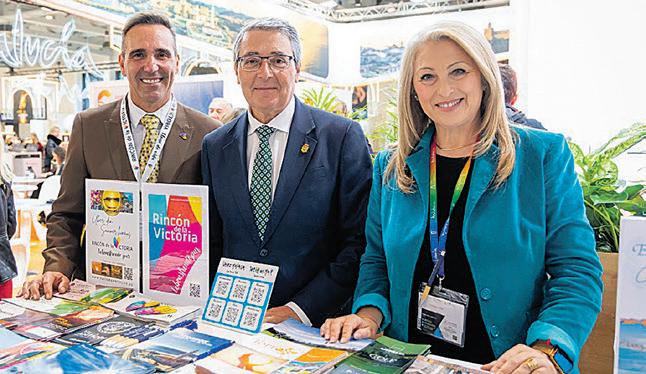


lidaymakers spent an average €176 daily and stayed over eight days, with over one million arriving at Malaga Airport for the first time.
Torremolinos leads the province in German overnight stays with over 366,000 in 2025 and 60,000 visitors, representing +20 per cent of German holidayers in Spain.































The expansion adds 40,000 square metres across two new buildings, bringing the total site to 90,000 square metres. These facilities house 16 operating rooms, a medical day hospital, and specialised departments for radiotherapy, nuclear medicine, and assisted reproduction.
The administrative wing, functional since Tuesday, January 2, 2024, has already freed up space for expanded
ANDALUCIAN President Juanma Moreno has officially inaugurated the expanded Hospital Universitario Costa del Sol in Marbella, marking the end of a long-delayed infrastructure saga. The project represents an investment of more than €100 million, sourced from regional funds and European support. Originally approved in 2007, construction famously stalled in 2010, leaving the facility frozen for 11 years. This hiatus caused severe service shortages as the local population grew by 3 per cent annually. Until now, many patients were forced to travel to Malaga City for essential diagnostics and oncology treatments.
emergency rooms and laboratories.
President Moreno described the opening as part of a broader ‘Plan Renove’, a €360 million initiative to modernise Malaga’s health network after decades of chronic underinvestment. Marbella mayor Ángeles Muñoz praised the resilience of healthcare professionals who endured the pandemic and facility constraints.
The upgrade is expected to serve nearly half a million residents, ending the era of long-distance travel for life-saving care.



FUENGIROLA is stepping up its hygiene standards with a new mandate requiring dog owners to dilute pet pee on public pavements. The local council has amended its civic coexistence rules to ensure the town remains a fresh and inviting environment for residents and tourists.
Under the new regulations, dog walkers must carry a bottle containing a mixture of water and cleaning vinegar to rinse away urine immediately. This simple measure neutralises odours, prevents pavement staining, and protects urban infrastructure from corrosive residues. The initiative follows years of awareness campaigns and free bottle distributions ai-
med at promoting responsible pet ownership. While the focus remains on community education, the stakes are high. Non-compliance could result in fines of up to €750 - the same penalty currently enforced for humans caught taking a tinkle in the street. Promotional efforts will intensify for the remainder of the year, before full enforcement in 2027. Other than the ‘bottle rule’, owners are reminded of existing obligations. All dogs must be microchipped, registered, and vaccinated against rabies. In public, pets must remain on leads, with muzzles required for dangerous breeds or those over 20 kg.

SPAIN faces a significant rental market disruption in 2026 as 632,369 rental contracts signed during the Covid-19 pandemic reach their five-year terms, impacting more than 1.5 million residents. Tenants are confronted with steep rent increases or non-renewal, as landlords seek to align contracts with current market rates or convert units into short-term tourist rentals. Many urban areas have already seen cumulative rent hikes exceeding 20 per cent since 2021, reducing tenants’ bargaining power.
Individual cases illustrate the sharp rise: in Malaga, a tenant faced a 36 per cent increase from €400 to €800 monthly, with few alternatives available. Spain’s Ley de Arrendamientos Urbanos offers limited protection, applying only during contract terms, leaving tenants vulnerable post-expiration. High-de-
mand zones benefit from ‘zona tensionada’ controls, but these do not compel renewals. Experts attribute pressure to limited housing supply, tourism-driven competition, and scarce public housing development.
Advocacy groups, like the Sindicato de Inquilinas de Madrid, argue that extending renewal rights or capping increases could stabilise housing access, though reforms remain politically contentious.
Without intervention, widespread displacement and inequality in housing access are expected. Analysts warn that the ‘great renewal’ may permanently reshape urban rental markets, emphasising the urgent need for policy action to protect vulnerable tenants and maintain social stability amid ongoing affordability challenges.
SPAIN’S minimum wage has risen again in 2026, bringing a modest but meaningful boost to millions of workers. The government approved a 3.1 per cent increase in the Salario Mínimo Interprofesional (SMI), setting it at €1,221 gross per month over 14 payments, or €17,094 annually.
The rise is retroactive to January 1, so eligible workers will receive back pay. The change amounts to about €37 extra per month, or roughly €518 more per year in gross income, offering some relief as living costs remain a concern. Around 2.5
million workers are expected to benefit. Women account for about two-thirds of minimum wage earners, around 1.6 million people. Under-25s are also disproportionately affected, as they are more likely to earn the minimum wage than older groups.
Agriculture and services have the highest concentration of beneficiaries, with nearly 28 per cent of agricultural workers and more than 14 per cent in services receiving the SMI, while industry and construction are less affected. Andalucia, Madrid,
Valencia and Catalonia have the largest numbers of minimum wage employees.
Hourly and short-term contract rates have also been updated. Domestic workers must now receive at least €9.55 per hour, and temporary contracts under 120 days require a daily minimum of €57.82. A deduction of up to €591 will prevent SMI earners from paying IRPF, with reduced relief up to €20,000. Trade unions backed the move; employer groups criticised costs. Since 2018, the minimum wage has risen 66 per cent.
THE High Court of Justice of Madrid has ruled in favour of two British pensioners resident in Spain, cancelling a €48,956.59 income tax assessment issued by the national tax authority. The court found that the pensions concerned were exempt from Spanish taxation under binding international agreements, making the assessment unlawful.
The case arose after the Agencia Tributaria inspected the pensioners’ 2018 tax return and classified their pension income as taxable employment income. The pensioners contested the decision, arguing that Spain had no taxing rights over either payment. One pension was paid by the World Tourism Organisation, headquartered in Madrid, while the other originated from public sector employment in the United Kingdom.
An administrative tribunal initially upheld the tax authority’s position, interpreting treaty exemptions narrowly. However, the High Court overturned that ruling, stressing that international treaties take precedence over domestic tax law. It held that pensions paid by the World Tourism Organisation qualify as exempt ‘benefits’ regardless of whether they are paid periodically or as a lump sum.
The court also applied the Spain-UK double taxation convention, concluding that the UK public service pension was taxable only in the UK. It rejected arguments that taxpayers should pay first and claim refunds later, stating that treaty rules must be applied correctly from the outset.

COSTA DEL SOL music community is reeling after a devastating theft in the early hours of Saturday, February 28, left several prominent musicians without the ‘tools of their trade’.
Members of the popular local bands including The Blue Stompers Jump Review, discovered their van had been ransacked near the Tivoli area of Benalmadena, with a large amount of professional equipment stolen.
Brothers Bobby and Ben Bergquist, much-loved fixtures of the local scene, lost an extensive collection essential to their livelihood. The stolen gear includes a Gretsch guitar, a Fender Stratocaster, an Ampeg bass amp, a modified Fender Blues Junior amp, and a 3/4 double bass marked by visible sticker residue.
Known for their high-energy boogie and rock ’n’ roll across Fuengirola and Mijas, the Bergquists are equally famous for their selflessness, frequently per-
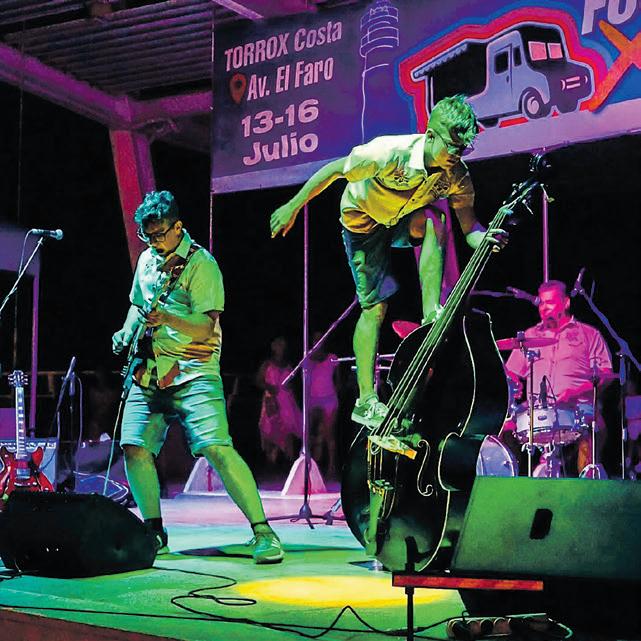
forming for local charitable causes. Now, the community they have long supported is fighting back. A fundraising appeal has been launched to help the brothers replace their gear and get back on the road.
“These aren’t just instruments; they are the backbone of every charity fundraiser they generously
support,” organisers stated. While police are investigating, the public is urged to monitor Wallapop and Facebook for suspicious listings. Supporters are encouraged to donate or report sightings to the Benalmadena police to help these ‘selfless boys’ return to the stage. At GoFundMe.com, look out for ‘Bergquist Brothers’.


FUENGIROLA’S Lux Mundi Ecumenical Centre, located at Calle Nueva No 3, has a packed calendar for March, offering a range of activities and services for English-speaking residents. It is advisable to phone ahead to arrange an appointment (Tel: 0034 606 568 145, email: luxmundifuengirola@lux-mundi. org).
The Centre runs English Alcoholics Anonymous meetings throughout the week, including a women’s session on Wednesdays at 12.00. Families affected by alcohol are also welcome to a dedicated Friday evening meeting at 20.00. Narcotics Anonymous meets every Tuesday at 19.30 and Friday at 20.00, with a support helpline available on 711 010 401.
Lux Mundi’s boutique, located at Calle Nueva No 7, is open the same days and hours. Visitors can browse autumn and winter clothing, shoes, jewellery, and household items. Donations of clothing and household goods are accepted during opening hours.
Special events in March include the World Day of Prayer at the Swedish Church on Thursday March 5 at 16.00, an excursion to Antequera and the Dolmens on March 11 with English guided tours (tickets €28-€32), and the monthly lunch at Bar Restaurant El Mirador on March 26 at 13.30. The Intercambio English-Spanish sessions take place on March 19, and Taizé prayer at San Jose Parish Church is scheduled for March 26 at 18.00. For further details, visit www.lux-mundi.org.

































SPAIN’S Directorate-General for Traffic (DGT) has intensified its road safety campaign by activating 33 new speed cameras across the country. The rollout, which began on Friday, February 27, is part of a strategic 2025–2026 plan to deploy 122 new monitoring points, primarily on conventional roads and high-occupancy lanes.
In the Malaga region, the DGT has focused on the A-355, introducing two major ‘average speed’ stretches. The road, between Coin and Marbella through the mountains has become known as ‘The Road of Death’ in recent years. These cameras calculate a vehicle’s pace between two points rather than at a single moment.

Speeding remains a critical concern for authorities, accounting for 24 per cent of fatal accidents in 2024. The DGT reports that fixed camera initiatives have contributed to a 75 per cent reduction in road deaths since 2005.
To assist motorists with the transi -

tion, a one-month grace period is in effect throughout March 2026. During this time, drivers caught exceeding the limit will receive informational warning letters instead of financial penalties. However, standard fines will be issued automatically once this period concludes at the end of March.
All new camera locations are clearly signposted and integrated into navigation apps. Drivers are urged to observe these limits to improve safety on Malaga’s road network.

Tradition and identity in Mijas.


ON Saturday, February 28, the Peña Caballista de Mijas celebrated the Day of Andalucia with a lively equestrian excursion through the local countryside. More than 60 horses and riders participated in the event, taking advantage of the lush landscape revitalised by recent rainfall. The route commenced at Parque El Esparragal, winding through the Rengo area and across the Gomenaro River, which flowed with ample water for the first time in years. The trail
continued through Cerro del Águila and the Gran Parque zones, offering a mix of open fields and shaded groves. Organiser Sebastián Moyano designed the loop to be accessible for all skill levels, ensuring a focus on fellowship rather than competition.
After a midpoint rest at Rengo, the group returned for a communal celebration. The festivities featured traditional Andaluz dances by Academia Expresión and music from Fátima Burgos and her
group, Regalo. Ana María Guerrero, the newly appointed president of the Peña, praised the event’s success in uniting locals and expatriates. The association remains dedicated to safeguarding equestrian customs while innovating with new activities. Looking ahead, the group is preparing for a coastal ride scheduled for Saturday, March 14, which will see participants tackle the unique challenges of Mijas’ sandy beaches and ocean breezes.






A LUCKY ticket holder in Benahavis is celebrating a significant windfall after winning a ‘Sueldazo’ prize in the ONCE Weekend Coupon draw. The winning ticket, sold at the Repsol petrol station on Sunday, March 1, wins the recipient €2,000 per month for the next 10 years, totalling €240,000.
The draw, which coincided with Baleares Day, was dedicated to the Parliament of the Balearic Islands. This latest win continues a
fortunate streak for the region, highlighting the popularity of ONCE’s social lottery initiatives.
Founded in 1938, ONCE (Organización Nacional de Ciegos Españoles) is a renowned social enterprise designed to support individuals with visual impairments. Its
MARBELLA Council has announced a major €1 million investment into the Virgen del Carmen Marina.
The five-year maintenance plan aims to modernise infrastructure, ensuring the site remains a premier destination for nautical activities and tourism.
Central to the project is a complete overhaul of the electrical system. This upgrade will provide a safer, more efficient power supply for vessels and public areas, reducing the risk of outages.
Furthermore, the council will repave docks, piers, and pedestrian zones to improve durability and accessibility for residents and visitors.
Other than just functional repairs, the initiative includes replacing outdated furniture and handrails, alongside essential masonry work to bolster structural integrity. By prioritising

preventive maintenance, the city intends to respond more effectively to coastal wear-and-tear and weather-related incidents.
Officials believe the project will bolster Marbella’s international reputation, stimulating the local economy by increasing foot traffic to nearby shops and res -
taurants.
This proactive approach ensures the facility operates seamlessly throughout the year.
This investment underscores a long-term commitment to preserving public assets while enhancing the safety and aesthetic appeal of one of the city’s most vital coastal landmarks.
name, the Spanish word for ‘11’, refers to the original 11-digit coupon used in early draws. Today, the organisation employs more than 21,000 vendors, many of whom have disabilities, providing them with dignified employment and social integration.
All profits from ticket sales are reinvested
into education, training, and accessibility programmes across Spain. While this winner enjoys their monthly payout, the Weekend Sueldazo offers even larger prizes, including a top award of €300,000 plus €5,000 a month for 20 years.
ONCE remains committed to responsible gaming, maintaining strict controls to prevent excessive play and prohibiting sales to minors.



MALAGA is accelerating its transition toward sustainable urban mobility, aiming to meet European targets to slash net emissions by 55 per cent by 2030. The city council is developing a strategic ‘crown’ of dissuasive car parks on the periphery to intercept traffic before it reaches the urban centre. This initiative supports the 437-hectare Low Emissions Zone (ZBE), which restricts



polluting vehicles. On Sunday, March 1, officials highlighted the network’s potential to provide up to 5,000 spaces across the city. The plan focuses on key hubs, including a 1,500-space site at Arroyo de Totalan to capture eastern traffic and a 1,000-space facility at Guadalhorce Station.
The flagship Martín Carpena hub in the west will offer 467 daily spaces, situated just 100 metres from Metro Line 2 and major bus routes. Estimated costs for this site reach €23 million, with additional funding required for road upgrades. To ensure success, experts suggest parking should remain free for public transport users. These hubs are designed as multi-modal centres, featuring electric vehicle chargers, secure bike storage, and parcel lockers. Mayor Francisco de la Torre has called for regional government partnership to fund the scheme, which remains vital for reducing congestion and fostering a cleaner, more accessible Malaga.



TWO towns in the Malaga Province, Rincon de la Victoria and Alhaurin el Grande, have approved a ban on full-face coverings, such as the burka and niqab, inside all municipal buildings.
The measures were passed during plenary sessions held in February. Under the new by-laws, the restriction applies to town halls, administrative offices, schools, police stations, libraries, and local courts. Individuals wearing garments that prevent visual identification will be denied entry to these facilities.

Council leaders stated the decision is rooted in security and administrative efficiency. By guaranteeing officials can identify service users, the councils aim to maintain the ‘normal functioning’ of public services. A spokesperson for Alhaurin el Grande emphasised that the motion was designed to protect the safety of both ‘officials and residents’. In Rincon de la Victoria, one councillor described the garments as a ‘textile dungeon’ that would no longer
be permitted.
The ban is limited strictly to indoor municipal premises; it does not extend to public streets, private businesses, or general outdoor spaces. While these two towns moved forward with the prohibition, a similar proposal was voted down in Malaga City.
Implementation is immediate. Residents who wear full-face veils must remove them to enter or use alternative remote channels to conduct their business.








Looking for cuddles.
FOR over 25 years, the ACE-SHIN animal rescue centre in La Cala de Mijas has served as a vital sanctuary on the Costa del Sol. Founded by Fabienne Paques, the shelter currently provides refuge and rehabilitation for hundreds of neglected dogs and cats awaiting their forever homes.
To enhance its mission, the charity has launched a heartwarming new initiative: ‘cuddle rooms’. These dedicated sensory spaces are designed to help shy or traumatised dogs build confidence through gentle social interaction. The shelter is urgently calling for volunteers to spend time in these rooms, offering a calm presence to help animals adjust to human contact.
The role requires no prior experience or financial commitment - only a willingness to provide companionship. While many holidaymakers integrate volunteer sessions into their trips, local residents are also encouraged to join. Beyond the cuddle rooms, volunteers can assist with dog walking, which offers both physical exercise and therapeutic benefits for the animals and humans alike.
ACE-SHIN remains a community-driven project, thriving on local fundraisers and educational visits. By giving just a few hours a week, supporters play a crucial role in preparing these animals for successful adoption.
Those interested in volunteering can contact Fabienne or Marti on 666 860 637.
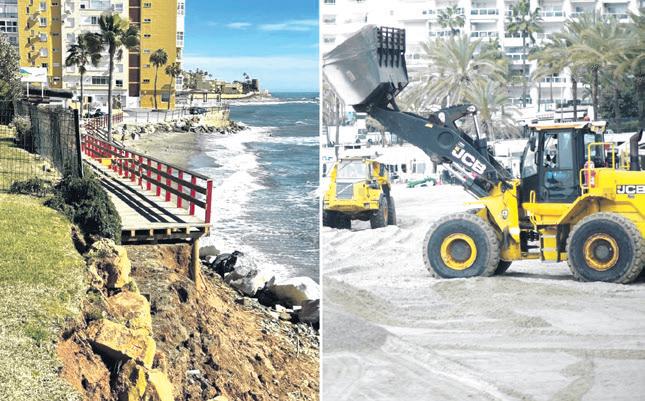
TOWNS across the Costa del Sol have launched emergency repairs to restore storm-battered coastlines ahead of the Semana Santa tourist surge. Recent tempests caused significant erosion and infrastructure damage, prompting local councils to fast-track works in Marbella, Benalmadena, Torremolinos, and Mijas.
In Marbella, crews are working from dawn until dusk to restore El Faro and La Fontanilla beaches, where erosion has narrowed the sands to just three metres. Heavy machinery is currently redistributing local sand to stabilise the shoreline before holidaymakers arrive.
Benalmadena’s mayor, Juan Antonio Lara, has called for urgent central government intervention to install semi-submerged dikes. Following storms that uprooted palms on Playa de Los Melilleros, the town is investing in new boardwalks and cleaning equipment to ensure safety for the spring season.
Further along the coast, Torremolinos is progressing with a €13.6 million ‘water highway’ project to overhaul ageing supply lines. To minimise disruption, partial traffic closures which were sche-
duled to begin on Monday, March 2 will be paused during the Easter period.
Meanwhile, Mijas has issued an emergency €223,000 contract to repair a collapsed coastal walkway at El Capricho.
Work begins next week to install marine pilings and restore the wooden path damaged during February’s storms. With hotels forecasting high occupancy, officials are determined to ensure the region’s famous promenades and processions remain uninterrupted.

Vault: For that signature item
ALONG the western Costa del Sol, new home developments often feel generic. For homeowners looking to escape the ‘flat-pack’ aesthetic, the challenge is finding items with genuine soul and history. Hidden in an industrial estate on the edge of Manilva, Furniture Vault offers a refreshing solution to mass-produced decor.
Owned by Mark and Sandra, this curated warehouse is a far cry from a typical furniture or antiques shop. Mark, who started in the trade at age 15, uses 30 years of expertise and European connections to handpick every item. From Italian mushroom lamps to Georgian mirrors, the stock is sourced directly from Belgium, Portugal, and Northern Spain.
“A single piece can transform a room,” Mark explains. “It becomes the heart of the space.” Despite the gallery-quality curation, prices re-

Easy to explore, Furniture Vault’s collection.
main very accessible; for example, a set of six pristine antique chairs is currently priced at just €400.
The stock evolves constantly, making it a primary destination for interior designers to villa owners. New arrivals are ready for viewing on Thursday, March 5, and Friday, March 6, from 10am to 3pm, and Saturday, March 7, from 10am to 4pm.
Located at Poligono Industrial La Dehesilla, Calle del Constructor, Unit 11D, (next to Bo Frost and opposite Muled), Manilva, this warehouse is where your house finally starts feeling like a home.
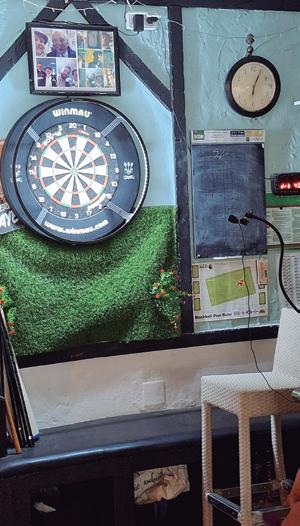
WHAT began as a casual idea over a drink at Dixies Bar has become one of Fuengirola’s most compelling new sporting stories.
Formed last year at the bar, the Dixies Demons were complete newcomers to the local darts circuit. Under captain Pete Ottaway - who had never previously pla yed competitive darts - the team defied expectations by winning the third Division Championship in their debut season.
Ottaway built his squad close to home, recruiting his mother Belinda, who works at Dixies, along with his sister Jess and her partner Ella Stewart. Experienced local player Agnes Fryer, long established on the Fuengirola darts scene, added valuable know-how.


trade but does not play darts, helped advertise for recruits. Emilio Eneman answered the call.
Still one player short, landlord Steve Lewis, who has spent 50 years in the
Originally from Belgium, Eneman lives near Antequera and travels two hours each way every week to represent the team. He also returns to Belgium four times a year to compete internationally for the Demons.
He later proposed a monthly international match via satellite link against his younger brother’s team, t’ Dartsputje, based in Kruiseke near Wervik. What began as a novelty is now a regular fixture, uniting supporters in Spain and Belgium. Later this year, four Belgian players will travel to Fuengirola to compete in person, turning a virtual rivalry into a live international contest.


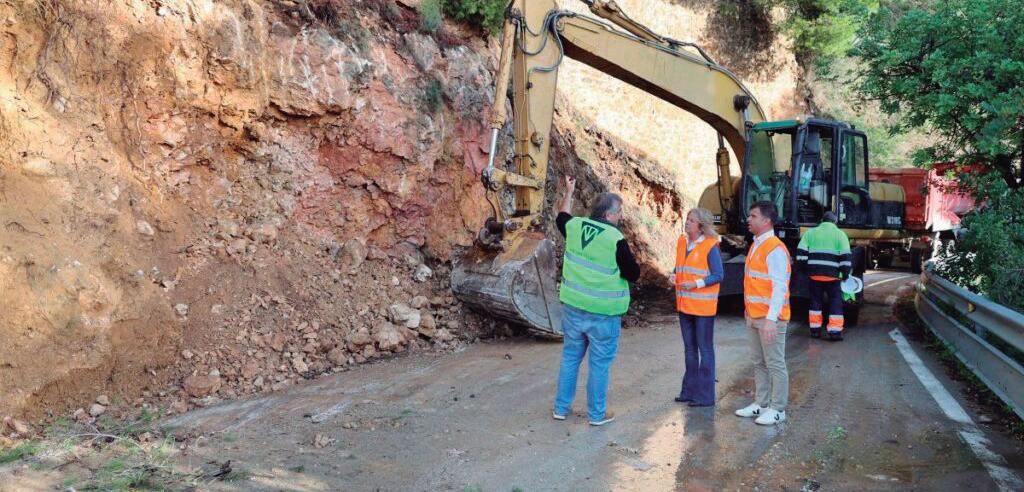
MARBELLA’S Calle Chorreadero has officially reopened to traffic after urgent slope stabilisation works, restoring normality to a key local route. Marbella Council invested over €130,000 in the emergency project to address significant safety risks following a partial landslide that had blocked the road.
The instability was triggered by heavy rainfall and dense overgrowth during intense weather episodes in late 2025 and early 2026. To secure the area, crews carried out a comprehensive cleanup of approximately 2,500 square metres of terrain.
The project also included the installation of specialised protective mesh designed to prevent future rockfalls and provide longterm structural stability.
Council officials stated the intervention
was essential for the peace of mind of residents and commuters. The road section had been temporarily closed during the operations, causing unavoidable local disruption. Now fully operational as of Sunday, March 1, the street meets all modern safety standards.
The local government praised the swift efforts of municipal services, particularly given the challenges posed by adverse conditions. With further heavy downpours predicted for the Costa del Sol as Easter approaches, the council pledged to continue monitoring vulnerable infrastructure.
The completion of these works marks a successful return to everyday movement for the neighbourhood, ensuring the road remains resilient against increasingly unpredictable weather patterns.
AFTER 14 years as a mainstay of the Costa del Sol entertainment circuit, singer Ben Nelm, formerly known on stage as Ben James, is stepping out of the tribute spotlight to embrace a more personal creative chapter.
The Gloucestershire-born artist moved to Spain at 17, finding his footing at the Salon Varietes Theatre in Fuengirola. Despite early struggles with depression, the stage became his lifeline. His career skyrocketed after winning a Benalmadena talent competition, eventually leading to a decade of success fronting The New Jerseys. However, the relentless schedule of a touring Jersey Boys tribute act eventually prompted a shift in priorities.
“It was going phenomenally well, but it was time for downtime with family and friends,”
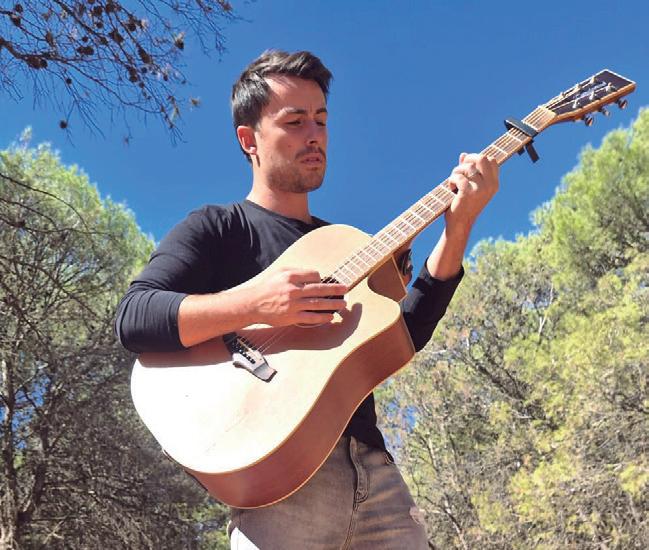
Nelm explains. Now a dedicated father of two, he has swapped nightly performances for his purpose-built home studio. A versatile professional, Nelm is currently recording original material, playing every instrument and producing the tracks himself. His influences range from 1990s punk to the genre-varied approach of Ed Sheeran, and his vocal range even extends to opera. With upcoming recording dates scheduled in the UK, Nelm is transitioning from a ‘number one’ tribute act to a serious independent producer. While he remains a respected actor and vocalist, this new era is defined by authenticity and a long-awaited return to his own music.























HOLIDAYMAKERS flying into the Canary Islands recently faced unexpected disruption after a passport control bottleneck reportedly left nearly 90 Ryanair passengers stranded at Lanzarote Airport. The incident reignited concerns about staffing levels at Spanish border checkpoints especially as travel demand continues to surge ahead of the summer season.
According to reports published on Saturday February 28, around 89 passengers were unable to board flight FR4756 to Bristol due to long queues and processing delays. While individual disruptions are not uncommon at peak times the episode has drawn attention because it highlights a recurring issue affecting non-Schengen travellers. The delays appear to stem from congestion
at border control desks rather than airline issues. Airports in tourist hotspots such as the Canary Islands rely heavily on manual passport processing for non-EU arrivals a category that now includes UK travellers following Brexit. British passport holders must often undergo manual checks and stamping which creates longer queues when multiple flights land or depart within a short window.
Spanish airport operator Aena has previously acknowledged that passenger flows are heavily influenced by staffing at police-run passport control desks. For travellers the result is unpredictable arrival and departure times even when flights are on schedule. This latest bottleneck serves as a reminder that airport delays are not always caused by airlines or security checks.
THE Spanish government is considering holding an official ceremony in the Campo de Gibraltar to mark the permanent removal of the border fence separating La Linea de la Concepcion from Gibraltar. The event, which could be attended by Prime Minister Pedro Sánchez, would take place once the legal framework governing Gibraltar’s post-Brexit relationship with the EU is finalised.
The proposal was confirmed by First Vice-President María Jesús Montero, who described the dismantling of ‘la Verja’ as a symbolic milestone. Under the negotiated arrangements, border controls would shift to Gibraltar’s port and airport, enabling free movement across the land border while complying with EU regulations.
Spanish officials ar -

Sánchez’s attendance would underline the political significance Spain attaches to the deal.
gue the change would reduce congestion and improve economic and social integration in a region heavily dependent on cross-border work. Local authorities have welcomed the prospect, though they caution that the practical impact will depend on implementation.
No date has been set, as the ceremony de -
pends on the publication and entry into force of the EU-UK-Gibraltar agreement. If confirmed, Sánchez’s attendance would underline the political significance Spain attaches to the deal, which officials frame as both a diplomatic achievement and a boost for the Campo de Gibraltar’s longterm development.


AUTHORITIES across Spain are warning residents about the early appearance of pine processionary caterpillars, a seasonal but hazardous insect whose ground activity poses risks to people and pets. The caterpillars, native to Mediterranean regions, descend from pine trees in single-file lines to pupate underground, releasing toxic hairs that can cause severe reactions.
Experts stress that the timing of their emergence varies by region, altitude, and colony, meaning early sightings do not necessarily indicate unusual weather. High-risk areas include parks, forest paths, school grounds, and private gardens with pine trees. While councils monitor infestations and remove nests where possible, caterpillars can still appear unexpectedly.
Their microscopic hairs contain thaumetopoein, a toxin that can cause skin rashes, eye irritation, and respiratory discomfort in humans. Direct contact is not required; hairs can become airborne or settle on clothing and grass. Veterinarians emphasise that dogs are especially vulnerable. Sniffing or licking caterpillars can cause rapid swelling, drooling, vomiting, and in severe cases, necrosis of the tongue or mouth. Suspected exposure is considered a veterinary emergency.
Authorities advise avoiding contact, keeping dogs on leads, supervising children, washing clothing after visits to pine areas, and reporting nests to local councils. Awareness and precaution are seen as essential to reducing health risks during processionary season.
SPAIN has launched extensive financial incentives to encourage the renovation of homes in small rural municipalities, offering grants of up to €60,000 per property in some regions. The measures aim to combat depopulation, improve housing quality, and stimulate local economies as part of broader national and regional rural development strategies. Applications are open from January until September 2026 under programmes running throughout 2027, with an overall budget of around €5 million at national level. Grants are targeted at individuals rather than investors and support renovations that improve energy efficiency, accessibility, and habitability. Support varies significantly by region. Galicia covers up to 75 per cent of costs (max €30,000) for homes in towns under 5,000 residents. Casti-

lla-La Mancha offers up to 80 per cent of costs, capped at €60,000, but only for regulated rental housing. Andalucia provides a standard 40 per cent subsidy, rising to 75 per cent for low-income households, people with disabilities, or residents over 65. Extremadura offers lower caps, topping out at €14,000 for detached houses.
Aragon’s long-running
Programa 700 focuses on villages under 3,000 inhabitants, with grants of €50,000-€66,000 per home, often for public or social housing use. Legal residents of Spain, including expatriates, may apply if they own or intend to occupy the property. Authorities see these grants as a key tool in addressing ‘España vaciada’ by making rural living more viable and attractive.

AS more tourists blend business with pleasure, Barcelona has topped Europe’s ‘bleisure’ ranking.
For many visitors to Spain, the line between a work trip and a short holiday has long been blurred. Now data confirms the trend. A study by BCS Bus analysed 94 European cities across 30 countries and found Barcelona to be Europe’s leading ‘bleisure’ destination, where work trips feel more like a holiday.
The study assessed business-friendliness, leisure activities and tourism appeal. Barcelona achieved a Bleisure Index score of 79.5, ahead of Amsterdam and Munich (both 75), Vienna (75.7) and London (64.8). Paris ranked 66th, largely due to high costs and relatively low sunshine.
A key factor is infrastructure. Barcelona has become southern Europe’s start-up hub, expan-

ding coworking spaces and conference facilities.
The city offers 32.4 coworking spaces and 166 conference venues per 100 km², many within walking distance of major attractions. In practice, meetings can end mid-afternoon and be followed by time on a Mediterranean beach within the hour.
Connectivity also plays a major role. Barcelona airport provides 224 di-
SPAIN is preparing for an unusually early and potentially severe mosquito and sand fly season following weeks of heavy rainfall that have created widespread standing water.
Health authorities warn that conditions are ideal for rapid mosquito breeding, particularly in southern provinces such as Sevilla, Almeria, and Cadiz.
rect routes to major business centres. The city also boasts 142 bars and cafés and 75 attractions per 100 km², plus 2,591 annual sunshine hours.
Visitors should plan carefully, keeping in mind that large coaches face restrictions, the two Fira Barcelona venues on Gran Via are in different locations and major events can push up prices and congestion.

Officials are concerned about mosquito-borne diseases, especially West Nile Virus, which has caused outbreaks in southern Spain in recent years. While most human cases are mild, severe neurological complications can occur. Pet owners are also urged to take precautions against leishmaniasis, a parasitic disease transmitted by sandflies that poses serious risks to dogs.
Authorities recommend eliminating standing water, using repellents, installing screens, wearing protective clothing and following local health alerts. Veterinarians advise pet repellents, vaccinations where appropriate, and limiting outdoor exposure during peak
Photo credit: Kwangmoozaa/Shutterstock
sand fly activity.
Local councils are stepping up surveillance, applying larvicides in public areas and launching awareness campaigns.
Officials stress that community participation is crucial, as household-level actions can significantly reduce mosquito populations.
With warmer temperatures arriving early, experts warn that mosquito and sand fly numbers could exceed those of previous years.
Preventative measures taken now, they say, are key to reducing health risks for both people and animals.


SPAIN is seeing a rapid expansion of lowcost retail chains beyond well-known names such as Ikea and Primark, reflecting a structural shift in consumer behaviour driven by inflation and tighter household budgets. Shoppers are increasingly prioritising price across a wide range of categories, from furniture and fashion to household goods, toys, and personal care, without necessarily sacrificing quality.
Chains like Jysk have positioned themselves as direct competitors to Ikea by offering affordable furniture and home décor in city centres. At the extreme discount end, Sqrups! attracts customers with sub-€1 everyday items, reviving the ‘everything for 100’ concept in a modern
format.
Spanish-founded MGI has diversified from toys into home and garden products, while Poland’s Half Price focuses on discounted branded goods from previous seasons. Ale-Hop, meanwhile, emphasises variety and design over extreme discounts.
In fashion and homeware, Pepco and KIK appeal to budget-conscious families, while Action, Normal, and Miniso underline the popularity of broad assortments at low prices.
Together, these chains signal that value-driven shopping has become a lasting feature of Spain’s retail landscape rather than a temporary response to inflation.
NEW demographic data highlight a widening age gap between urban and rural Spain.
Nationwide, the most common age is 49, reflecting the large generation born in the mid-1970s.
As of January 1, 2026, more than 838,000 residents were aged 49, making it the statistical mode across much of the country.
This pattern contrasts sharply with depopulated regions. In areas such as Castilla y Leon and Extremadura, the most frequent age rises to 61, while Zamora records the highest figure, reaching 62-63 years.
These figures illustrate the long-term effects of younger residents moving to cities for work and education, leaving rural communities with ageing populations. Provincial data reveal wide variation shaped by migration and birth ra-

tes. Major urban provinces cluster around ages close to 49, while others diverge significantly, including Melilla, where the most common age is just 11 due to higher fertility.
An ageing rural population presents economic and social challenges, including shrinking labour forces, increased demand for healthcare, and reduced viability of
MOVING to Spain often begins with excitement and the hope of a simpler, cheaper, more relaxed life. While the lifestyle benefits are real, many expatriates quickly encounter a gap between expectation and reality. The challenges usually arise not from Spain itself, but from misunderstandings about how things work. Longterm expatriates consistently say that those who settle successfully are not the ones who avoid difficulties, but those who adapt early and stop comparing Spain to their home country.
A common misconception is that Spain is simply a lower-cost version of home. Life can feel slower, communication less direct, and everyday processes unpredictable. Frustration eases once newcomers accept that relationships, flexibility, and quality of life take priority over efficiency.
Bureaucracy, from obtaining an NIE to healthcare paperwork, is manageable but demands patience; using a gestor can significantly reduce stress.
Housing can also surpri-
se. In cities such as Barcelona, Malaga, or Valencia, rentals are competitive and often expensive. Being flexible, realistic, and viewing properties in person avoids disappointment. Limiting oneself to English-speaking circles can hinder integration; even basic Spanish and
local engagement greatly improve everyday life. Work culture may be slower, but building trust and staying adaptable pays off. Establishing a local support network also smooths legal, financial, and medical matters. Ultimately Spain is not difficult - just different.
schools and transport services.
Government programmes offering tax incentives and relocation support aim to reverse these trends, but progress has been limited.
According to the Instituto Nacional de Estadística, the data underline a persistent structural divide that will shape Spain’s policy priorities for decades.

FOUNDED in 2015, Progibe Spa has established itself as a trusted specialist in premium wellness solutions for discerning homeowners and professionals across southern Spain. With showrooms and points of sale along the Costa del Sol and the Costa Blanca, the company serves a growing international community seeking to enhance their lifestyle through high-quality spa and hydrotherapy products.
At Progibe Spa, wellness is more than a trend - it is a way of living. The company offers a carefully selected range of products, including saunas, spas, mini pools, hammams and cold-water bathtubs, designed to transform private homes into personal wellness retreats. Whether clients are looking to create a relaxation space in their garden, terrace or indoor area, Progibe Spa provides tailored solutions adapted to each project’s unique characteristics.
What truly distinguishes the company is its comprehensive, client-focused approach. Every project is studied in detail to ensure that the proposed solution perfectly matches the customer’s needs, available space and technical




requirements. All quotations include transport, professional installation and full commissioning of the products, offering clients complete peace of mind from the outset.
Progibe Spa accompanies its customers throughout the entire process. From the initial consultation and product selection to on-site visits for technical advice regarding pre-installations, the team ensures that every detail is carefully planned. The company also coordinates crane services when requi-
red, guaranteeing smooth and secure deliveries even in complex locations.
Beyond private clients, Progibe Spa actively collaborates with interior designers, architects, property developers, building companies and real estate agencies who wish to add value and exclusivity to their projects. By integrating wellness areas into villas, high-end apartments and new developments, professionals can significantly enhance both lifestyle appeal and property value. The company works closely with project teams, providing technical guidance, detailed planning and reliable execution from concept to completion.
In addition, Progibe Spa offers dependable after-sales technical support, including product commissioning, fault diagnosis, maintenance services, spare parts and specialist care products. With a strong commitment to quality, professionalism and personalised service, Progibe Spa has become a reference point for international residents in Spain with medium to high purchasing power who value comfort, design and well-being, as well as for industry professionals seeking a trusted wellness partner.


INTERNATIONAL WOMEN’S DAY will be celebrated on Sunday, March 8, and Spain is preparing cultural events, social gatherings and large demonstrations ahead of the annual observance. But how did the day originate, and what can expatriates expect from March 8, also known as 8M, in Spain?

Large demonstrations are now a central feature of International Women’s Day worldwide, and Spain is no exception. Major protests and marches are expected across the country, particularly in Madrid, Barcelona, Valencia, Bilbao and Sevilla. Demonstrators typically highlight issues such as violence against women, unequal pay and women’s health.
Marches on 8M also address broader social and political concerns, including racism, general violence and labour rights.
The largest demonstrations are set for Madrid, starting at 12.00pm on March 8 from Atocha station, and Barcelona, where events will take place across neighbourhoods, with major
marches in Plaza Catalunya, Las Ramblas and Passeig de Gracia. Both cities are expected to attract crowds of hundreds of thousands.
Strikes may disrupt traffic in some areas, and transport hubs have warned of possible interruptions to public transport and metro services.
International Women’s Day is not a national public holiday, though some autonomous communities or local authorities may mark it differently.
Purple, the emblematic colour of feminism and solidarity, will dominate streets and plazas. Participation ranges from joining marches to wearing purple in support.

ONCE an industry leader, Novo Nordisk’s stocks plummeted 16.4 per cent following its most recent weight-loss drug failure. Since mid-2024, the pharmaceutical group has lost 75 per cent of its value. Despite success with its Ozempic product, the company has not been able to compete with next-generation obesity treatments.
A REPORT from Eurostat revealed that 28.9 per cent of people under 34 do not work in their field of study. This represents the highest percentage in the EU. Spain is experiencing significant overqualification, creating a disconnect between the education system and professional sector, as young people struggle to integrate.
IMPROVED mobile connectivity could add £6.6 billion annually to the UK economy, enabling approximately 49,000 new businesses to launch, particularly in areas previously held back by poor signal. These research findings are linked to VodafoneThree’s £11 billion programme to expand nationwide 5G coverage and eliminate coverage gaps.
IN a momentous €84,718m deal, Meta will purchase six gigawatts of AI processing power from AMD. The deal will also include a stock purchase, with Meta gaining a 10 per cent stake in AMD. Following the announcement, AMD’s stock jumped 15 per cent in pre-market trading.
DESPITE the US and EU signing a trade deal in July 2025, the agreed upon 15 per cent tariff on EU goods didn’t extend to steel. As the US’s tariffs rose to 50 per cent, EU’s steel exports to the US fell 30 per cent in 2025, damaging the industry.
UK’S watchdog, the Information Commissioners Office (ICO), has come down hard on Reddit, fining the social media platform £14.47 million for failing to protect underage users.
The company has been accused
Overnight stays in hotels increased by 3.4 per cent in January 2026 compared to 10 years prior, with hotels generating an average revenue of €116.0 per occupied room, according to the INE.
Act. This system requires users to self-declare their age when creating an account, solely relying on the user to provide accurate information.
ble to potentially harmful content on the site.

ACCORDING to the CCOO, Spanish employees worked a total of 2.5 million overtime hours each week in 2025, affecting 441,000 workers weekly. The total of unpaid hours is equivalent to if 62,000 full-time jobs were created to fill the labour demand.
Most notably, 47 per cent of workers received no compensation for their overtime, not financial or in the form of additional time off. CCOO estimates that, on average, each of these workers have lost out on €141 a week, approximately €7,355 a year.
This phenomenon was most prominent in the Education sector, with 444,706 unpaid overtime hours, followed by Transportation and Storage (270,013 hours) and Manufacturing (255,289 hours).
ASTON MARTIN is cutting 20 per cent of its workforce in an effort to save £40 million. The car manufacturer will soon reduce the workforce by approximately 500 employees, on top of the 170 jobs cut in 2025. This announcement comes after the car maker reported pre-tax losses of £363.9 million for 2025, as US tariffs rose and demand fell. In an attempt to reduce the losses, Aston Martin sold the permanent naming rights to its Formula One team.
What’s more, according to Reddit’s terms of service, under-13s were not allowed on the site. Yet with no way to effectively verify age or limit their access to the site, a significant portion of their user base is made up of children under 13. This led to the platform unwittingly processing children’s data.
Reddit defended their actions in a statement released to the BBC, saying it “didn’t require users to share information about their identities, regardless of age, because we are deeply committed to their
The ICO are currently intensifying regulations to protect online

The CCOO has been vocal in fighting against this blatant example of labour exploitation. The union emphasises the effect these illegal practices have on the workforce, serving only to increase stress, exhaustion and burnout in employees.
FOLLOWING the devastating Adamuz accident, rail travel in Spain has dropped 30 per cent, according to Trainline. Major companies like Renfe, Iryo and Ouigo are experiencing reduced booking figures, as 40 to 50 per cent of passengers are wary of train travel following the accident. Operators are adjusting prices to compete against alternative travel options. However, this lack of confidence will have a major financial impact on the sector, which lost approximately €1 million each day of disrupted service.
UNITE, UK’s biggest student housing provider, has been rocked by the fall in international enrolment. Ahead of the upcoming academic year, only 68 per cent of Unite’s beds are reserved. As more students choose staying home over moving into halls, Unite are having to launch cost-cutting measures, including the £186 million sale of a 571-bed London property.
Additionally, Unite has had to reduce rents and tenancy lengths in many places to entice students. Unite’s chief executive said, moving forward, they should focus their attention on high tariff universities with higher entry requirements as they’ve seen little change in those marketplaces.
THE Bank of Spain has issued a warning, reminding those with joint accounts that if one account holder dies, the other cannot withdraw money without permission of their heir. This is to prevent inheritance disputes and the misuse of funds. The key is to read the fine print of the contract. Determine whether the account is ‘solidaria’, meaning all authorised parties can operate freely, or ‘mancomunada’, a more restrictive model where all transactions require permission, no matter how small.
SPANISH fashion retailer Desigual are expanding their international presence, debuting their newest retail location in Shanghai, China. This marks Desigual’s ninth storefront in Asia, a feat it has accomplished in two years since first attempting an expansion into Asian markets.
Focusing on Asian markets has been especially lucrative, as Desigual experienced a 113 per cent growth in sales at the end of 2025 compared to 2024. Desigual’s expansion efforts are expected to continue, as the company looks to establish around 60 shops across China’s main cities. They expect to reach a €40 million turnover in Asia by 2027.
AENA’S net profit increased by 10.5 per cent, rising from €1,934.3 million in 2024 to €2,136.7 million in 2025. This was made possible partially by a recovery in traffic, with a total of 384.8 million passengers passing through Aena’s expansive airport network. Forecasts estimate a further 1.3 per cent increase in passenger volume in 2026. Aena commits to distributing 80 per cent of net profit, with €872 million allocated to the Treasury, and the remaining €837 million distributed to shareholders.

3I Group 3.257,00 3.278,00 3.228,00 71,12K
Admiral Group 2.950,0 2.956,0 2.928,0 22,04K
Airtel Africa 353,60 354,20 343,80 327,18K
Anglo American 3.782,0 3.842,0 3.777,0 246,89K
Antofagasta 4.357,00 4.450,00 4.324,00 71,01K
Ashtead Group 5.318,0 5.400,0 5.292,0 51,81K
Associated British Foods 1.959,0 1.961,5 1.939,5 165,49K
AstraZeneca 15.304,0 15.324,0 15.172,0 75,31K
Auto Trader Group Plc 490,93 493,60 486,10 264,06K
Aviva 679,80 681,00 672,20 437,78K
B&M European Value Retail SA 189,10 191,50 188,10 191,69K
BAE Systems 2.118,00 2.131,00 2.110,06 212,1K
Barclays 469,25 469,90 454,60 6,3M
Barratt Redrow 368,20 370,00 366,90 289,71K
Beazley 1.256,00 1.256,00 1.245,00 320,2K
Berkeley 4.352,0 4.384,0 4.344,0 9,36K
BP 473,70 476,10 467,10 1,64M
British American Tobacco 4.614,0 4.636,0 4.604,0 188,17K
BT Group 210,97 211,60 206,00 480,84K
Bunzl 2.164,0 2.172,0 2.152,0 33,47K
Centrica 195,05 195,80 193,40 593,49K Coca Cola HBC AG 4.812,0 4.812,0 4.764,0 19,13K Compass 2.244,00 2.250,80 2.228,00 232,86K
ConvaTec Group 254,40 257,20 254,40 366,91K Croda Intl 3.135,8 3.168,0 3.123,0 34,98K DCC 5.205,0 5.230,0 5.155,0 57,41K
1.583,0 1.597,0 1.575,0 568,01K
5.685,00 5.700,00 5.635,00 8,51K
473,00 475,40 470,00 282,73K
8.398,0 7.838,0 51,55K
718,50 731,50 716,00 11,7K
4.244,00 4.352,00 4.222,00 113,45K
532,60 539,70 532,30 4,34M
plc 2.182,00 2.187,00 2.153,00 482,95K
398,00 399,90 393,80 543,16K



Euro

EUR/GBP: Up from £0.86 to £0.87
EUR/USD: Down from $1.19 to $1.17
The euro remained well supported over the past month, buoyed by robust Eurozone GDP figures and the European Central Bank’s (ECB) hawkish policy outlook.
However, the single currency’s upside potential was ultimately capped amid a lack of progress in Ukraine-Russia peace talks. Looking ahead, the euro may continue to move higher through March if Eurozone data remains broadly upbeat, although Ukraine risks are likely to persist.
Pound
GBP/EUR: Down from €1.15 to €1.14
GBP/USD: Down from $1.37 to $1.34
The pound faced notable selling pressure through Fe -

bruary, primarily driven by a dovish repricing of Bank of England (BoE) rate cut expectations, following the bank’s first policy meeting of the year.
Additional headwinds resulted from UK political uncertainty, amid growing questions over the future of Keir Starmer’s premiership.
Turning to March, the initial
focus for GBP investors will likely be the Chancellor’s Spring Statement, with the pound poised to strengthen if the Office for Budget Responsibility’s (OBR) latest forecasts paint a more positive picture of the UK’s economic outlook.
US Dollar
USD/GBP: Up from £0.72 to
£0.74
USD/EUR: Up from €0.83 to €0.84
The US dollar trended broadly higher over the past four weeks, as the currency bounced back from the multi-year lows struck at the end of January.
This recovery was supported by strong US economic indica-
tors, which prompted a further trimming of Federal Reserve interest rate cut bets in recent weeks.
However, it hasn’t all been plain sailing for the US dollar, with its recovery being marred by fresh tariff uncertainty after the US Supreme Court struck down the previous IEEPA tariff regime, leading President Trump to retaliate with a new global levy.
Geopolitics will likely act as a key catalyst for the US dollar in the coming weeks, particularly amid the threat of a rumoured US military strike on Iran.
Currencies Direct have helped over 500,000 customers save on their currency transfers since 1996. Just pop into your local Currencies Direct branch or give us a call to find out more about how you can save money on your currency transfers.


I TRULY am sick to death of machines that have muscled their way into what used to be perfectly normal human communication. Remember when ‘customer service’ actually meant service? You walked into a shop. You explained your problem to a human being, and it was sorted. Often with a smile. Occasionally with common sense, without having to prove you were born, baptised and fully vaccinated by 1963. Today?
Customer service has been replaced by what I can only describe as a slow-motion endurance test. It starts with that syrupy recorded voice thanking you for calling and assuring you, repeatedly, that your call is important. (If that were true, someone might actually answer it). It then continues as follows. Press 1 for accounts. Press 2 for billing. Press 3 if you’ve already pressed the wrong button, and are beginning to question your entire life. Eventually, and I use the word optimistically - you reach a human being, who immediately
asks for every single piece of information you have already given to the robot. Twice. Then comes the silence. You can sometimes hear faint typing. A cough. What sounds very much like a sandwich being unwrapped, or perhaps a crisp packet. When the voice returns, you are told your issue is ‘being escalated’. Now in my day, escalation meant ‘I’ll get the manager’. Today it means your problem has been strapped to a rocket and launched into orbit, where it will circle the earth indefinitely with several thousand other unresolved complaints. Shops are no better. You queue patiently while three members of staff rearrange hangers, discuss last night’s television, or stare into a handheld device with the concentration of a heart surgeon mid-transplant. When one finally looks up at you, you feel as though you’ve interrupted something critical. Like oxygen intake.
And don’t talk to me about self-service checkouts. These were apparently designed for ‘convenience’. Oh really?
On one of the very few occasions I have succumbed to the practice, mine usually greets me like a prison warden. It beeps. It sighs. It judges. It freezes. Then
it summons a human being (another warden) who looks at it, looks at me, and presses a button with all the confidence of someone derisively disarming a bomb. And then we have ‘online help’.
According to the internet, every possible problem in the known universe can be solved by reading 12 answers written by someone who clearly misunderstood the question. If that fails, you are invited to chat with a ‘virtual assistant’. Which is a polite, modern way of saying: ‘You’re on your own, sunshine’. What has vanished is responsibility. Nobody is allowed to say, ‘Leave it with me, I’ll sort it’. And absolutely nobody appears to be actually in charge of anything. We were promised progress. What we’ve got is automation - without accountability. So, here’s the ol’ Leaper’s advice. Next time that velvety recorded voice tells you how important your call is, don’t be fooled. If it really mattered, someone would already be on the other end saying: ‘How can I help?’ Now wouldn’t that be revolutionary progress? Dream on everyone. Keep the faith.
Love Leapy leapylee2002@gmail.com
Leapy Lee’s opinions are his own and are not necessarily representative of those of the publishers, advertisers or sponsors.


A DRAMATIC false start at the 10K FACSA race in Castellon de la Plana left several elite female runners trampled and sprawled across the road just seconds after the gun.
The incident unfolded at the very front of the women’s field as athletes accelerated off the line on the famously fast course. Confusion over the start signal caused a sudden check in pace, and within moments one runner stumbled. With competitors packed tightly together and moving at speed, others were unable to avoid her.
What followed was a domino-style pile-up, with multiple athletes crashing to the asphalt. Some were briefly stepped on as runners behind tried to regain balance and avoid the chaos. Despite the frightening scenes, reports indicate there were no serious injuries. Several competitors were seen adjusting shoes and race bibs before continuing.
Belgian distance runner Jana Van Lent was among those caught up in the fall but managed to rejoin the race and finish.
The Castellon 10K is regarded as one of Europe’s quickest road races, attracting international elites chasing fast times. While the event continued without major medical incidents, the chaotic start sparked renewed discussion around safety at high-speed, tightly packed race launches.
A RULE limiting the weight tourists can place on working donkeys in Greece has reignited a fierce debate over the ethics of animal-based tourism. Originally introduced to protect animals on steep, historic routes, most notably in Santorini, the guidance recommends a maximum rider weight of 100kg (approximately 15.7 stone).
The limit follows veterinary advice which suggests that working animals should carry no more than one-fifth of their body weight, particularly when navigating demanding terrain in Mediterranean heat. While supporters view this as a vital step towards preventing injury and exhaustion, critics argue the measures don’t go far enough, questioning whether such traditional rides have any place in modern travel.

Long-standing weight limits on donkey rides in Greece have reignited debate about animal tourism across southern Europe.
and overwork are overshadowing ‘charming’ local customs.
The scrutiny extends beyond Greece. In Spain, the ‘donkey taxis’ of Mijas face similar pressure, reflecting a continent-wide shift in traveller expectations. As holidaymakers become more ethically conscious, issues such as dehydration, lack of shade,
For local communities, these animals represent both heritage and a primary source of income. However, as tourism numbers surge, the tension between cultural preservation and animal welfare intensifies. Whether through stricter enforcement or a transition to alternative transport, the message from animal welfare groups is clear: tradition should never come at the cost of cruelty.

LIFE on the Costa del Sol has a way of reshaping daily routines. Long evenings, sunlit playgrounds, and the gentle hum of the coast create a backdrop that feels very different from home. For families settling here, international schools become more than places of learningthey are a meeting point for curiosity, friendship, and discovery.
In towns such as Marbella, Estepona, and Sotogrande, these schools are full of energy and diversity. Classrooms bring together children from many countries, while playgrounds and sports fields echo with a mix of languages and laughter. Lessons are serious, but the experience goes far beyond textbooks. Children pick up Spanish phrases effortlessly, learn how to navigate different perspectives, and carry a sense of independence from the friendships and challenges they encounter each day.
It is not just academics that define life here. Music, theatre, and sport are woven into everyday school life. Pupils experiment, perform, and compete, often alongside classmates from very different backgrounds. Teachers and staff become familiar faces, guiding students through both challenges and triumphs, and many families find themselves forming connections that extend beyond the classroom.
What truly stands out is how children absorb life lessons alongside their studies.
They leave school not just with recognised qualifications, but



















THE International School Estepona was established in 2004 and is located in El Paraiso, Estepona and is currently home to just over 100 children from two-12 years. The School has its own car park. The ISE follows the National Curriculum of England and Wales with English being the first language. It is monitored by The British Council on a regular basis.
The School is the only member of the National Association of British Schools in Spain (NABSS) in Estepona and is fully approved as a British School by the Junta de Andalucia Education Department. Spanish is taught as a second language
with lessons lasting one hour per day.
The School prides itself in being a welcoming nurturing environment for children from all over the world. The ‘Community Spirit’ is very noticeable especially during major events such as ‘the School Play’ and annual ‘Sports Day’ which all parents and relatives are invited to.
All staff are fully qualified and there are class room assistants to help in the delivery of the Curriculum. Children’s progress is closely monitored and a termly report is provided on a regular basis. Extra help with the English Language can be provided if required.

SPAIN continues to emblazon its path as a European powerhouse of education, particularly in the British school sphere: in total, the country boasts an impressive 143 British schools spread across 180 campuses - almost twice that of France, Italy, and Portugal combined - and teaches around 75,000 students, the vast majority of whom are Spanish-born. Spain has the highest number of British schools of any European country.
In fact, the number of British schools across Spain has only been rising, with a documented increase in students of 16 per cent in just the last five years, according to a report by the ISC Research. The report, which was presented by the British Council (the UK’s organisation for cultural relations and educational opportunities), the National Association of British Schools in Spain, and the British Chamber of Commerce in Spain, demonstrated that British schools represent over 40 per cent of all international education in Spain. Not only this, 87 per cent of the students at these British schools are Spanish-born.
In terms of cities, Madrid is the centre of British schools, with nearly 25 per cent of the students situated in the capital. Valencia follows with 7 per cent, and Barcelona, Las Palmas, Palma, Marbella, and Malaga all have between 4 and 5 per cent of the total number of students.
The School also has regular field trips to local places of interest which the children thoroughly enjoy. Sport and PE is a regular part of the School week on Tuesdays and Thursdays. This includes sports such as Football, Rounders and Cricket to name but a few.
The older children in Year 6 are adequately prepared for Secondary School to ensure a smooth transition into their next phase of education.
The teachers are constantly available to discuss concerns and progress by making an appointment. All parents have their class teacher’s direct email address.

Please feel free to visit www.marbellaschool.com for further information and also Facebook and Instagram to see recent news at the School. The School also uses the ‘Konvoko’ App to keep parents up-to-date on important announcements. Just Search ‘International School Estepona’ on the app.
The School has holiday clubs every school holiday including half term.
More information can be found at marbellaschool.com and click contact us or WhatsApp +34 635 347 023


In terms of the number of pupils, the British School of Barcelona is considered the biggest. Their fees can range from €6,500 to €11,500 per year.


On average, British schools in Spain tend to have around 400 pupils enrolled, although there are some outlying
cases: there are around 20 schools in the country with fewer than 100 students, and one with more than 2,000.
Families routinely choose these British schools not only for their students’ propensity to learn fluent English, but for their focus on the British curriculum, which is regarded highly in Spain and in other European countries. The British curriculum is heavily focused on critical thinking, problem-solving, and creativity, contrasting with the Spanish curriculum, which has more of a focus on memorisation and a large amount of content.
The increased presence of British schools has also served to attract expatriate families, boosting the local economies by uplifting businesses and increasing demand for housing and services in local towns. Of course, they jumpstart local economies by contracting suppliers for transportation, food, and materials. They also create stable employment opportunities, attract qualified international teachers, and enrich the capital of the towns where they are based. British educational institutions, in and of themselves, are a local pillar for the socioeconomic reality of many areas in Spain.







State-of-the-art facilities
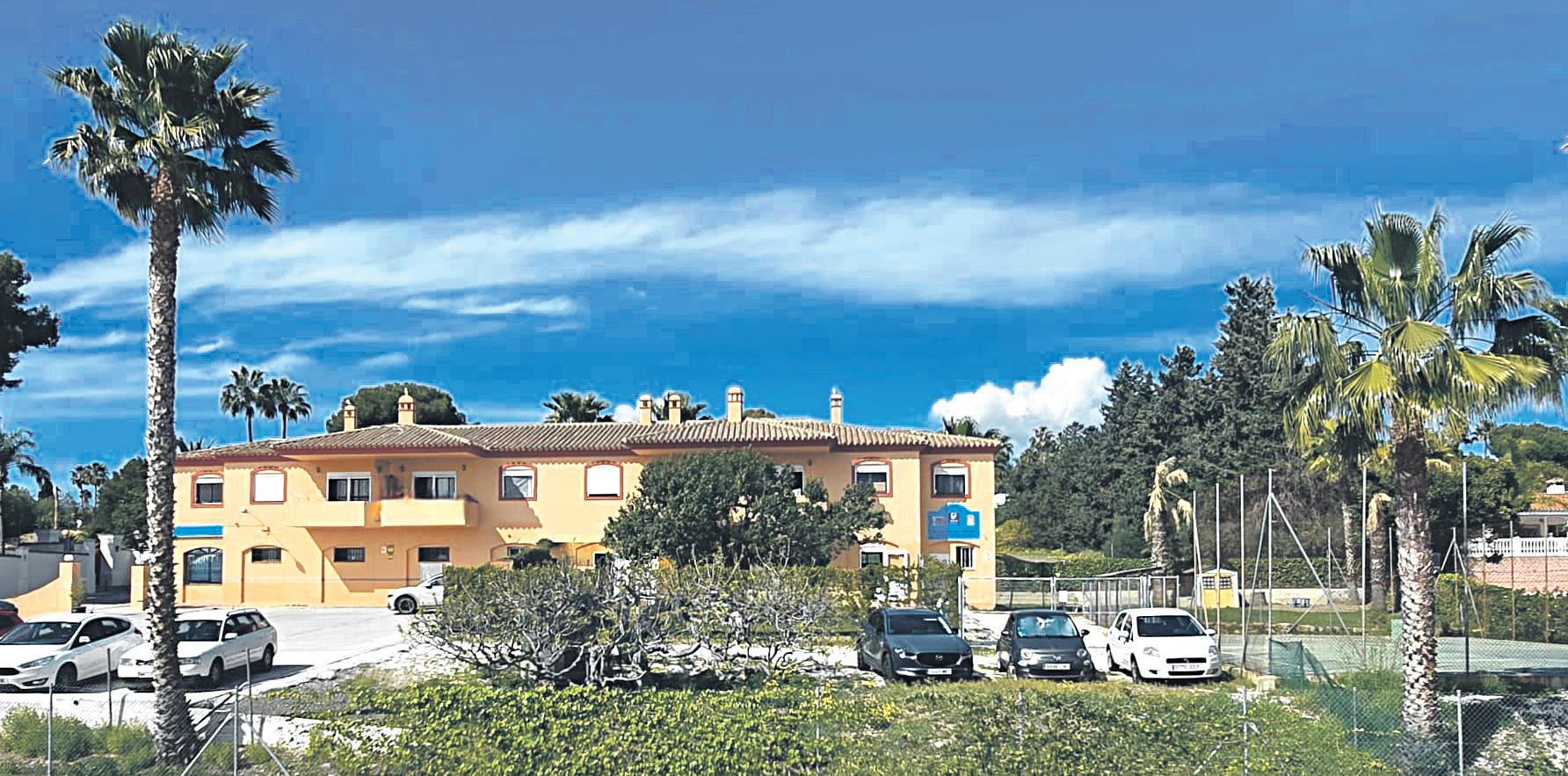
Our campus is designed for active and inspiring learning. Sports enthusiasts enjoy an artificial turf football pitch, multipurpose courts, and an indoor gym with seating for over 400 spectators. Students also have access to innovative digital classrooms, science laboratories, a multimedia lab, a graphic design studio, and dedicated spaces for drama, music, and food technology. A spacious dining hall with an on-site kitchen and a well-stocked library further support students’ holistic development.
A unique and comprehensive curriculum
Laude San Pedro is proud to be the only school in the region offering both the English National Curriculum (Cambridge IGCSEs and A Levels) and the Spanish Secondary Curriculum (ESO and Bachillerato). This dual system provides families with unparalleled flexibility and choice, allowing students to pursue the educational path that best fits their goals. In addition, our Extended Curriculum includes enrichment subjects, extracurricular opportunities, and peripatetic music, sports clubs, creative
Located in the scenic surroundings of San Pedro de Alcantara, near Marbella, Laude San Pedro International College offers a world-class education for students from three to 18 years old. With a sprawling 18,000m² campus and breathtaking views, the school combines modern facilities, expert teaching, and a supportive community to ensure every student thrives academically, socially, and personally.

mindfulness, languages, and STEM-focused programs, helping students explore interests beyond the classroom. Supporting every student
We pride ourselves on personalised support and regular teacher feedback, enabling students and families to track progress, celebrate achievements, and
identify areas for growth. Small class sizes, pastoral care, and mentoring ensure each student receives the attention and guidance they need to succeed.
A vibrant, inclusive community
Our school community is international, welcoming families from diverse backgrounds. Students learn not only academic skills but also values such as resilience, creativity, and collaboration. Cultural events, sports competitions, and community initiatives enrich school life and foster lifelong friendships.
Preparing for the future
At Laude San Pedro, we aim to develop confident, well-rounded young people ready to thrive in further education and beyond. With a combination of academic excellence, innovative learning, and broad personal development opportunities, our students are equipped to meet the challenges of the modern world.
Discover more about our school and join a community where learning is an inspiring journey: www.laudesanpedro.com
EVERY year, parents face the decision regarding whether they should send their children to private school, which, of course, is an added expense to the family budget, but has many benefits to consider.
No-one left behind
Class sizes in private schools are generally smaller, allowing teachers to give more individual attention. This supports children who excel in certain areas with challenging tasks while also helping those who find subjects difficult by providing work suited to their level.
In Early Years, Teaching Assistants can focus on small groups or individual students, while the teacher continues with the class. Smaller classes also foster a nurturing environment, enabling teachers to notice any issues affecting students’ well-being.
Above and beyond
Teachers in private schools are typically well-qualified and dedicated, often designing spe-

cialised lesson plans to make learning engaging and effective. Access to advanced resources and technology allows them to combine traditional and interactive methods, giving children a strong educational foundation.
Safe as houses
cation and opportunities to meet teachers more frequently. Private schools often foster a strong community, with events, concerts, exhibitions, and collaborative projects. Older and younger students interact freely, supported by student mentors, creating a welcoming and inclusive atmosphere.
An investment for the future
Private school students are also more likely to attend highly rated universities, achieving higher grades and benefiting from being surrounded by motivated peers who often pursue activities beyond the classroom, such as sports, music, or art.
Get involved
Parental involvement is encouraged, giving families a clearer understanding of their child’s edu-
Safety is another priority. Private schools often have stricter measures, including controlled pick-up procedures, vigilance against cyber-bullying, more staff on site, and close supervision of playgrounds to ensure a secure environment.
Investing in private education supports a child’s intellectual and social development, preparing them for academic success and life beyond school. In Spain, there are many excellent private schools, some offering instruction in English or other languages, others following the Spanish curriculum. The key is finding the school that best meets the needs and priorities of your family.


LOCATED in the leafy La Alzambra / Nueva Andalucia area, just minutes from Puerto Banus, Svenska Skolan Marbella offers families a truly unique blend of Scandinavian values and Mediterranean charm. Since opening its doors in 2003, the school has grown from a small, pioneering project with 15 pupils to a thriving international community of around 200 students today - a testament to its outstanding reputation.
This accredited Swedish school provides education from preschool (ages three to five) through primary, following the Swedish national curriculum. For older students, the school combines Sofia Distans and Hermods Distansgymnasium programmes with on-site support, ensuring a seamless continuation of academic excellence.
One of only 14 Swedish schools abroad approved by the Swedish National Agency for Education, Svenska Skolan Marbella is also fully authorised by the Junta de Andalucía, ensuring both international standards and local recognition.
This dual accreditation gives fa-


FOR parents of a child with special needs in Spain, the task of finding a school or services to accommodate the child’s requirements for education can seem daunting. With overwhelming paperwork, many options to choose from, and specific needs for a particular child, parents can easily begin to feel pressured to find the right establishment for their child.
However, a simple breakdown of the documentation and options parents need may go a long way towards making sure their child gets the education - and supportthey need. Firstly, it’s important for expatriate parents of children with Necesidades Educativas Especiales, or NEE, as it is known in Spain, to have any documents on hand when looking for schooling options. It helps to take any existing diagnosis papers and have them translated to Spanish, or make an appointment with a doctor to get
a Spanish diagnosis of the child’s disability.
After getting diagnosed, the parents can apply for official disability recognition with the local Social Services or town hall, in order to get a Disability Card. The card and diagnosis will help schools and centres know the best options for the child depending on their specific needs.
Parents can also make an appointment with local schools and centres to discuss the child’s needs in-depth. There are many specialised schools in Spain, often called Aulas Abiertas, which specifically accommodate children with special needs. Expatriates can also go to the local Centro de Valoración y Orientación de Discapacitados, which help to determine the level of the child’s special needs and provide information for parents regarding their education.

Encouraging learning and play.


milies peace of mind, whether they plan to stay in Spain long-term or eventually return to Sweden or move elsewhere.
The school embraces a trilingual approach from the earliest years. Swedish remains at the heart of daily life, while English and Spanish are integrated naturally into the curriculum.
This multilingual foundation equips students to flourish in a global world.
The campus itself is bright, modern and designed to inspire.
Classrooms are spacious and filled with natural light, complemented by gardens, a swimming pool, a football pitch, padel courts and generous play areas surrounded by greenery. It’s a setting that encourages both learning and play, within walking distance of parks and the beach.
Above all, Svenska Skolan Marbella stands out for its warm, community-centred atmosphere.
Every child is valued as an individual, supported to grow with confidence, curiosity and respect for others - key pillars of the Swedish educational ethos.
Discover more at www. svenskaskolanmarbella.com

social workers, and once completed, the professionals evaluate the child and discuss results with the parent.
Once the child is diagnosed and the documentation is in order, parents may be eligible to receive financial benefits, called the ayuda por hijo a cargo. These include grants for school transport, therapy, or materials, and any tax de-
ductions related to the child’s disability, among other benefits.
It is also invaluable to join Facebook groups for expatriate parents with children with special needs. These can be a great tool for finding information about specific towns, schools, and centres, and asking any specific questions not readily available by simply Goo-

gling.
Though the task of finding a school with specialised education in Spain might seem confusing and even frustrating at times, once parents have the documentation and information they need, their child can receive the best education possible, in order to flourish along with their peers.

IF you are looking for a great school for your child, look no further than The Benalmadena International College - we are now currently enrolling new students for September 2026 and have some availability for immediate starts.
We are one of the most established British owned and managed schools on the Costa del Sol. We have been delivering a high quality British curriculum to young people from all over the world, for almost 30 years. We are truly international and are proud that our students are able to adapt so easily given the high levels of intercultural understanding, acceptance of new students and general welcoming atmosphere. Given our experience and small class sizes, we are used to receiving students with many different starting points and can boast year on year about fantastic results.
Our academic curriculum offer is wide. We follow the English National curriculum which enables our students to access internationally recognised and respected qualifications, with a trouble-free transition between other British and International schools. We are also UK inspected by ISI which conducts inspections of all private schools within the UK, therefore, we operate to the highest possible
EXPATRIATES in Spain getting ready to enrol their children in schools in a new country may be torn as to whether they should choose a British educational institution, or a Spanish one. After all, with fundamentally different curriculums and different focuses when it comes to education, choosing an ideal school is essential for the students’ academic career, as well as their personal growth and even outlook on the world.
For those whose children are a bit older, it can be a real option - with fewer growing pains - to put them in a British institution, which tend to be monolingual. If they already speak English, this could seem like the logical decision. However, the ability to speak Spanish may be better developed in a Spanish institution, which are typically bilingual and will encourage children to learn Spanish without leaving them completely in limbo with a new language.
It can be an important asset to read testimonials from parents whose children went to the local institutions being con -
standards and offering the highest quality of education to our students. Equally we also offer accredited Spanish qualifications to enable homologation of UK qualifications within Spain at the end of your child’s studies with us. Whilst our academic offering is extremely important, we are always striving to offer our students the best experiences to enables them to be even more internationally minded and culturally aware.
Some of our recent school trips have included our annual year 6 residential in El Chorro, study trips to Amsterdam, London and as far as New York! Looking ahead we have plans to extend our offer further via our Erasmus educational links. Exciting opportunities are certainly ahead for our students!
Our facilities are fantastic and we have always invested heavily in school infrastructure including most recently a new primary building. Why? Because the environment where young people learn is key to ensuring that our students are comfortable in their learning ensuring that they have every opportunity available to them whilst at school.
Our sports programme includes a wide range of activities. We regularly host inter sports competitions with our competitors. Looking ahead we are currently developing a

large multipurpose sports complex, including gymnasium, swimming pool, spa and restaurant facilities. We do not stop in our quest to provide the best for our young people and families! So, if you are looking for a truly pupil centred environment for your child, please look no further than The Benalmadena International College.
Don’t believe us?
Come and see for yourselves and speak to our outstanding students and teachers. You will not fail to be impressed by our fantastic school. Simply drop in or make an appointment.
Nueva Torrequebrada, C. Catamarán, s/n, 29630 Benalmadena, Malaga 952 561 666 bic-benal.com
titutions), has a strong focus on creativity and practicality, whereas
lum is more focused on theory and

The British system has more of an emphasis on learning by doing: designing projects, experimenting in labs, participating in historical reenactments, or creating different campaigns. The British system also places less of an emphasis on final exams and leans more towards weekly projects and assessments.
On the other hand, the Spanish system is more homogenous, with all students receiving the same content at the same pace. Spain’s educational institutions tend to focus more on repetition, memorisation, and grammar rather than practical applications. The classroom is more focused on exams, and is a more formal atmosphere, with formality as a major core value. The curriculum is also more homework-heavy, and very dependent on textbooks.
All in all, there are a great number of excellent schooling options in Spain, and when it comes to choosing a school, the most important thing is assessing what would be right for one’s family and for each child.





WE’RE unique! Choosing the right school is one of the most important decisions a family can make. The Ark Christian School offers a unique combination of strong academic standards, Christian values and a welcoming, international family environment for children aged three to 18. Values. At the heart of the school is its Christian ethos. Daily school life is permeated with values such as respect, equality, compassion, thankfulness, justice and forgiveness. These principles guide relationships between pupils, staff and families, creating a culture of mutual care and responsibility. While the school’s foundation is Christian, it warmly welcomes children from all backgrounds and cultures, promoting understanding and community spirit.
Curriculum. The Ark Christian School follows the British National Curriculum, providing a clear and internationally recognised academic pathway. From Early Years (ages 3-4) through Primary and Secondary education, students benefit from a structured programme designed to develop both knowledge and critical thinking skills. In Year 11, pupils prepare for Cambridge IGCSE examinations, followed by A Levels in Sixth Form. These prestigious qualifications open doors to British, Spanish and international universities, giving graduates flexibility in choosing their future academic and career paths.

Priorities. As a non-profit-making organisation, the school is fully dedicated to educational excellence. Every resource is directed towards improving teaching, facilities and student opportunities. Any surplus income is reinvested back into the school, ensuring continuous development and enhancement of programmes. This structure reflects a clear priority: the success and wellbeing of each child.
Governance. Strategic direction is provided by a committed Board of Trustees working closely with senior management. Together, they ensure high standards, strong governance and a forward-looking vision. Their collaboration guarantees that academic quality remains high while preserving the school’s distinctive Christian cha-
IN Spain, schooling is state-funded and compulsory for children aged three to 16.
However, parents or guardians are responsible for covering the costs of books, materials, and sometimes uniforms.
The Spanish education system is divided into three main types of schools: public (colegios públicos), private (colegios privados), and semi-private (colegios concertados), which receive partial funding from both the state and private sources.
Preschool education, known as educación infantil, is divided into two cycles.
The first cycle, for children aged 0-3, is optional and usually requires payment, though financial aid may be available for eligible families. The second cycle, for ages 3-5, is mandatory and free at public preschools.
Primary education, or colegio, spans six years, covering ages six to 12.
The curriculum focuses on a broad range of subjects including culture, oral expression, reading, writing, and mathematics, while fostering cognitive and social development.
After primary school, students enter Compulsory Secondary Education (Educación Secundaria Obligatoria or ESO), which serves students aged 12 to 16.
This stage blends elements of middle and senior school, and its completion is mandatory.
However, students who turn 16 before finishing can choose to leave school.
Bachillerato is a non-compulsory stage for students aged 16 to 18, akin to A’ Levels in the UK.
Though optional, many students pursue it. Bachillerato allows students to specialise in areas such as art, science and technology, or humanities and social sciences.
After completing Bachillerato, students have several options, including taking a university entrance exam or pursuing higher vocational training, among others.
Beyond the classroom. The Ark Christian School provi des a safe and suppor tive environment where pupils grow in confiden ce and character. A strong sense of community en courages students to de velop leadership skills, take responsibility and contribu te positively to society. A new play area for younger children further enhances the school environment,

while an on-site music school offers lessons from top professionals within the timetable and as an optional extracurricular activity.
Continuity. From the age of three through to 18, students experience stability and security in both education and values. This consistent foundation helps young people mature academically, socially and spiritually.
We’re different! By combining academic rigour with moral guidance and international opportunities, The Ark Christian School prepares students not only for examinations, but for life. For families seeking a nurturing yet ambitious educational environment, it represents a distinctive choice within the international educational landscape. As part of our extracurricular activities we offer as well, a full music school, offering most musical instruments. The pupils will have opportunities to try out different instruments to find that which suits them the most. There is also a full scout group registered with the British Scouts Overseas, and running the UK system. Going from six years to 18 (Beavers, Cubs, Scouts and Explorers).
For more information, to arrange an appointment to visit the school, or a trial day for your child contact us on 952 588 255.
ANDALUCIA is reshaping how state schools are evaluated in Spain, becoming the first region to measure education using ESG (environmental, social, and governance) criteria. Until now, school performance was judged almost entirely on grades and curricula, leaving the wider influence of education on communities largely unexamined. This new framework changes that, shining a light on the real impact schools have on society.
The initiative is led by the Universidad Pablo de Olavide (UPO) and EducAcción, with support from Fundación Unicaja. Their report, Education ESG Impact Index: The Invisible Impact of Education, goes beyond exam results to assess how schools contribute to student well-being, social development, and community life.
Laura Gómez, UPO vice-rector for Culture and Social Policy, highlighted that education must produce measurable benefits beyond the classroom. Sonia Diez, president of Fundación EducAcción, explained that clear, reliable data is essential to reveal the true influence of schools. She said the research demonstrates

how purpose, commitment, and human engagement in education can shape towns and neighbourhoods. The study uses ESGrade, a cutting-edge tool combining artificial intelligence with ESG criteria tailored for schools. It evaluates aspects often overlooked, including school
climate, democratic participation, well-being, leadership quality, and organisational coherence. Maria José Gil-Delgado, creator of ESGrade, noted that the tool allows schools to present clear, comparable evidence of their contributions to society.
The project brings together researchers from UPO’s Faculty of Business Sciences and the Faculty of Education at Universidad Autónoma de Madrid, blending education and economic expertise. Findings show that governance, sustainability, and community engagement strongly influence school impact. Lead researcher Jesús Manso explained that the report makes visible “the benefits of well-managed, sustainable school environments that engage the whole educational community.”
With a population larger than many European countries that once led educational change, Andalucia is set to become Spain’s first region to fully implement this model. By providing solid, evidence-based insights, it positions itself as a reference for measurable, accountable, and socially meaningful education.

ACROSS international schools on the Costa del Sol, there is a growing emphasis on STEM - Science, Technology, Engineering and Mathematics. These subjects are rightly celebrated for preparing pupils for a fast-changing world driven by artificial intelligence, renewable energy and digital innovation. Yet an important question remains: where do the arts fit in?
Enter STEAM - the same core disciplines, but with Arts included. Advocates argue that creativity is not a luxury add-on, but a vital component of modern learning. In fact, many of the world’s most influential innovators have combined technical expertise with artistic thinking.


Leonardo da Vinci seamlessly blended art and engineering centuries ago, while Steve Jobs famously insisted that technology alone was not enough - it was technology married with the humanities that produced truly inspiring products.
For expatriate families in Spain,
this debate is particularly relevant. International schools often pride themselves on strong exam results in maths and sciences, opening doors to universities across the UK and Europe. However, employers increasingly value skills such as creativity, collaboration and adaptabilityqualities often nurtured through music, drama, visual art and design.
SINCE 1996, ITS Dance Studios has been inspiring young performers and building bright futures. Created with passion and purpose, ITS is where talent is nurtured, confidence blossoms and friendships last a lifetime. Because at ITS, your dance friends really do become your best friends. From first steps at age five to show stopping main stage moments at 18, every student is encouraged to shine. With small, inspiring classes led by IDTA qualified, passionate teachers, dancers grow not only in skill but in confidence, resilience and lifelong friendships. The atmosphere is warm, supportive and proudly family focused.

Training includes Showdance, Acrobatics, Jazz, Tap, Ballet, Lyrical, Drama and Singing, offering a complete performing arts experience. For those dreaming bigger, we offer specialist IDTA training programmes to prepare and support the next generation of qualified instructors.
Research supports this balanced approach. Studies suggest that engagement in the arts enhances problem-solving abilities and supports emotional well-being. Drama builds confidence in public speaking; music strengthens pattern recognition; visual arts encourage experimentation and resilience. These are not ‘soft’ skills - they are transferable competencies essential in

Our competition teams proudly hold the title of Showdance Champions of Spain, performing at regional and national level. Every student stars in spectacular productions and ITS dancers have even wowed audiences on Spain’s Got Talent, Tú Sí Que Vales, Disney and more.
Our mission is simple. To create amazing, confident, talented young people who love to perform and embrace every opportunity.
Book your free trial today. WhatsApp 671 082 429 • www.itsdancestudios.com
careers from engineering to medicine.
Moreover, creativity drives innovation. Designing sustainable cities or developing life-saving medical devices requires imaginative thinking as much as technical knowledge. When pupils are encouraged to sketch ideas, prototype solutions and think divergently, they learn to approach scientific challenges with originality.
In an era where automation may replace routine tasks, human creativity becomes even more valuable. By embracing STEAM rather than STEM alone, schools signal that imagination and logic are partners, not rivals.
For families along the Costa del Sol seeking a holistic education, the message is clear: the arts still matter - not instead of science,
MOVING to a new country is challenging at any time, but relocating mid-school year presents its own unique set of hurdles - particularly for families settling on the Costa del Sol. Understanding what to expect can make the transition smoother for both children and parents.
Firstly, prepare for an adjustment period. Children may arrive mid-term feeling anxious, missing friends, or unsure of the new curriculum. Schools on the Costa del Sol, especially international and British institutions, are experienced in welcoming students mid-year.
Many offer induction programmes, buddy systems, or extra support in core subjects to help children settle quickly. Parents should communicate openly with teachers about any concerns, from language barriers to learning gaps, ensuring tailored support.
Administrative requirements can also be complex. Families should ensure that

Settling into a new school mid-year can bring challenges.
all necessary paperworktranscripts, vaccination records, and proof of residency - is in order before arrival. Some schools may require placement tests to identify appropriate class levels, particularly for children entering secondary school. Being proactive can prevent delays and ease anxiety for children.
Finally, manage expectations. Academic systems, school schedules, and even classroom routines may differ from those in the UK or other countries.
Patience is essential, and recognising small milestones - such as your child making their first friend or comfortably navigating their new timetable - and provide reassurance during the initial months.
While relocating midschool year is undoubtedly a challenge, it can also be a rewarding experience. With careful preparation, open communication, and a willingness to embrace new opportunities, families can help children adapt, thrive academically, and enjoy life on the beautiful Costa del Sol.
Social integration is another key consideration. Encouraging your child to join extracurricular clubs, sports teams, or language support groups can help them make friends faster and feel part of the community. Similarly, parents can benefit from connecting with local expatriate networks or school parent associations, which provide practical advice and social support.
ACROSS Spain, classrooms are changing rapidly. Tablets are increasingly replacing traditional textbooks, interactive whiteboards have become commonplace, and AI tools are starting to find a role in lessons. For parents, teachers, and students, these developments bring both opportunities and challenges.
In recent years, the use of digital devices in schools has become a major topic of discussion. The debate centres on how to balance the educational advantages of technology with concerns about screen time, well-being and traditional learning methods.
The Spanish government has been moving towards more structured regulation of technology in schools. A draft of the Ley de Protección de Menores en Entornos Digitales approved by the Cabinet obliges all non university schools to
regulate the supervised use of computers and tablets, adapt digital usage to pupils’ ages and link device use to the digital competences students are expected to achieve under the national education law (LOMLOE). Each school must prepare a digital plan that reflects these requirements. Parents can expect teacher supervised, pedagogical use rather than unrestricted access to personal devices.
Regional authorities have taken distinct approaches. In Madrid, a new decree will sharply reduce individual screen use in early years and primary education from the 2025-26 academic year. Devices will be banned for children under three, and pupils aged up to 12 will have restricted, supervised access capped at no more than two hours per week in primary school. The policy also bans screen based homework for these age groups
SINCE 2014, Fuengirola LIONS has been building a genuine passion for hockey on the Costa del Sol. What started as a local initiative has developed into a thriving, multi national and multi cultural club where hockey is open to everyone, regardless of age or experience.
The philosophy is clear. Everyone plays. With structured junior age groups and competitive opportunities for adults, the club provides a pathway for development at every stage. From young beginners discovering the sport for the first time to experienced players competing in regional and national leagues, the focus remains on inclusion, teamwork and personal growth.
Schools are warmly invited to be part of this journey. Dedicated skating and hockey

and aims to encourage traditional learning methods alongside digital competence goals. Secondary schools retain autonomy to set their own technology rules.
Similarly, the Balearic Islands will prohibit electronic devices in classrooms from early years up to fourth year primary; only later years will permit digital tools for explicit pedagogical reasons. There are exemptions for medical and specific tea-

ching needs. At a national level, education administrations from several regions have stressed that the focus of the discussion should not be simply on whether screens are used, but how they are used within learning environments. Teacher training in digital skills and involvement of families in responsible use are elements highlighted at recent conferences on educational innovation.
Parents and educators are therefore navigating a period of change. Policy decisions reflect concerns about excess screen time while also recognising that digital literacy and AI related competencies will be central to learning in the 21st century. How schools implement these changes - and how pupils respond - will shape classroom life long after the current debates have moved on.


confidence, coordination and resilience while learning valuable life skills such as respect and collaboration.
Specialised goalie coaching is available from a professional coach with four decades of experience, delivering expert level training that promotes individual excellence while strengthening overall team performance and unity.
Whether living locally or visiting the area, Fuengirola LIONS welcomes new players to experience the energy and excitement of inline hockey.
Training Hours: Every Tuesday and Thursday from 16.00 to 22.00 Fuengirola LIONS Hockey Arena, Av. Las Salinas, Fuengirola For more information contact: fuengirolalions@gmail.com or visit www.fuengirolalions.com
FACEBOOK: www.facebook.com/ LionsHockeyFuengirola
INSTAGRAM: www.instagram.com/ lionsinlinehockey
TIKTOK: www.tiktok.com/@ lionsinlinehockey



NO matter where your country of origin is, for a child making the transition to living in Spain, there are a number of difficulties which may vary depending upon their age and family circumstances.
For very young children, it is possibly easier to make the transition to a new country because they invariably don’t have the inhibitions that older children have and whilst they may initially miss friends and some family members, they are able to adapt as long as they see their parents settled and happy.
Learning a new language is much easier as is making friends and despite Aristotle’s statement ‘Give me a child until he is seven and I will show you the man’ (or of course woman) there is little doubt that most young children will find it easier to adapt to new surroundings than those who are older.
Learning to live in a new culture which may be quite different from that which you are used to can come as a major shock to older children, especially if they are not fluent with the language and as well as struggling to come to terms with missing their

friends, they also have to learn Spanish.
Naturally, their school will do all that they can to help them but one useful tip for parents is to not give in to the temptation to exclusively screen TV in their language as it is far better to insist on a set time watching Spanish language TV with subtitles.
Also, parents should spend time studying the language with their
children as why should the child be committed to learn when the parents aren’t?
There will always be stumbling blocks as youngsters settle in, but remember that in some cases they may harbour resentment against their parents for uprooting them, so the parents need to be seen to be committed to this new life and supportive of the struggles that the child may have.

RESEARCH seems to suggest that smaller classes generally improve student success, though not always for obvious reasons. Studies suggest an ideal class size of around 18 pupils, with younger children benefiting most. At the early stages of learning, children are building the foundations of language and mathematics, and fewer pupils allow teachers to give the individual attention needed to secure these basics.
As students get older, class size matters less for learning, but it still affects behaviour. Smaller groups make it easier for teachers to spot and address disruptions, helping all pupils stay focused.
Both state and independent schools face the challenge of balancing educational goals with financial realities, making very small classes impractical. By secondary school, a difference of five to 10 pupils per class has little effect on academic progress.
That said, committed teachers can deliver excellent results even in larger classes. Parents can assess a school’s effectiveness through past performance and examination outcomes. While small classes are ideal, professional teaching remains the most important factor in student achievement.
Maravillas Spanish School: a Spanish experience for adults in Benalmadena
WE spoke with Paola Vecchi, director of Maravillas Programas Internacionales, a leading school on the Costa del Sol with more than 40 years of experience bringing Spanish language and culture closer to international students.
- What programmes do you offer and who are they aimed at?
We offer Spanish courses for adults of all ages, including intensive courses, longterm stays, private lessons and official exam preparation. We also run programmes for foreign residents who wish to integrate better into daily life in Spain. Each programme is adapted to individual goals, level and availability. Students progress at their own pace, without pressure.
- What advantages do adult students find?
Flexible schedules, small groups and personalised support from the first day. Students learn alongside people from different countries who share the same motivation to learn Spanish and experience the culture, creating an international and dynamic environment. Accommodation with

host families or apartments is available to encourage immersion and ease adaptation.
- What is the methodology like?
Learning by living it. Communication is encouraged from day one through practical, dynamic classes and real-life situations, complemented by cultural activities that help students understand the local environment and gain confidence step by step.
- A final message for those thinking about learning Spanish.
Do not be afraid to try. At Maravillas, adults can start or continue learning Spanish in a supportive environment, progressing at their own rhythm, without worries or pressure. In addition, if you come to our office with this press article or a photo of the advertisement, we will offer you one free class.
Web: https://maravillas.es/ Facebook: https://www.facebook.com/maravillasSchool/photos?locale=es_ES
IN a rapidly changing world, traditional schooling often struggles to keep pace with the needs of today’s young peopleespecially those whose talents, passions and personal circumstances don’t fit neatly into a one-size-fits-all model. That’s where Brave Generation Academy (BGA) comes in, offering a bold alternative rooted in flexibility, individuality and real-world readiness.
At its heart, BGA is about empowering learners to take ownership of their education, rather than forcing them to conform to an outdated system. With hybrid learning, personalised pathways and a global network of Hubs, students can shape a learning experience around their lives - not the other way around.
What makes BGA particularly relevant to families in Marbella and beyond is its flexible timetable and self-directed learning philosophy. Whether a learner is training for elite sports, pursuing artistic passions, managing anxiety, or simply thrives outsi-

de conventional classrooms, BGA creates space for each journey. Learners progress at their own pace, supported by Learning Coaches who help them set goals, manage time and stay motivated.
For student-athletes and performers especially, BGA offers a way to excel both academically and personally. Its hybrid model means study isn’t restricted to fixed school hours, allowing learners to train intensely in the mornings, afternoons or eve-

nings without losing academic continuity. Coupled with recognised international curriculum - including British IGCSEs and A-Levels, American diplomas and the Portuguese+ programme - this ensures learners earn qualifications accepted around the world while nurturing their passions.
But BGA’s commitment goes beyond academics. It welcomes learners with ADHD, anxiety, depression or other challenges, offering a supportive environment
that prioritises well-being and individuality. Its community of coaches, peers and mentors fosters belonging, resilience and confidence in learners for whom traditional schooling can feel restrictive or stressful.
In a world where education needs to evolve, Brave Generation Academy is leading the way - proving that learning should adapt to life’s demands, and that every learner deserves a path that honours who they are and where they’re headed.
For general inquiries about BGA please reach out to our admissions team at: Email: contact@bravegenerationacademy.com • Phone: +34 691 789 661
Centro Comercial La Colonia S. Pedro de Alcantara, Marbella
IN this day and age, most of us have heard the name Montessori, even if we are not entirely sure what it involves. The Montessori method of education was developed in the early 1900s by Italian physician Maria Montessori. It is based on the belief that, within a supportive and well-prepared environment, children are capable of initiating their own learning, driven by a natural eagerness to acquire knowledge. Today the method is used in many public and private schools worldwide, including in Spain.
A central feature of the approach is allowing pupils to choose their activities within a carefully prepared setting. In Primary classrooms, there are typically 20 to 30 children aged two and a half to six, guided by a trained teacher and assistant. Furniture is child-sized, arranged in clusters, with materials placed on low shelves. Teachers present activities, after which children decide what to work on. Daily routines such as snack time and tidying up are also treated as learning opportunities, fostering social and organisational skills.
At Elementary level, chil-

dren are grouped aged six to nine and nine to 12. Lessons are given to small groups before pupils work independently, guided by interest and personal responsibility, a core principle of the method. Teaching is interdisciplinary, covering language, maths, sciences and the arts. Montessori provision for middle and high school is less developed, though many schools are adapting her educational philosophy for older students.
Montessori materials are designed to engage the senses. So-called Montessori toys aim to encourage creativity and experimentation without a fixed outcome. Simple items such as building bricks, crayons, phonetic games, an abacus, peg boards, play dough, stacking toys or sand trays support imagination and learning through trial and error. Toys designed for a single predetermined result do not fit the approach.
While some Montessori materials are costly, often due to quality craftsmanship rather than mass production, the principle remains simple: provide children with the freedom and space to create, and they will do the rest.




ADANA, the volunteer-run charity dedicated to rescuing and rehoming abandoned dogs on the Western Costa del Sol, is celebrating the return of its popular coffee mornings.
These events offer a relaxed way for the community to support life-saving work while enjoying delicious treats and meeting some of ADANA’s four-legged alumni. The next gathering takes place on Friday, March 6, from 11am to 1pm at Frankie’s Bar in Sabinillas. Located on the
Paseo Marítimo, the venue provides a welcoming seaside setting for supporters. Attendees can enjoy excellent coffee and a variety of home-made cakes, with all proceeds benefiting the dogs at ADANA’s shelter. Based in Estepona, the Association for the Rights of Abandoned Animals (ADANA) has cared for sick, injured, and abandoned dogs for over two decades. The charity is run entirely by volunteers and maintains a strict no-euthanasia policy for healthy animals.
THE Costa del Sol and Guadalhorce communities are rallying to support the three children of Victoria Hart, who was tragically killed in an act of domestic violence on Friday, January 24. Friends and family have organised a special fundraiser at Lauro Golf & Bowls Club to provide vital financial assistance for her children, aiming to turn a local tragedy into a powerful demonstration of solidarity.
The event, scheduled for Saturday, March 7, features a packed lineup of the region’s finest performers. Artists including Ricky Lavazza, Emma Luisa, and the CellarBand are all donating their time to the cause. Local host Brian Piccolo will lead the proceedings, which begin at 2pm following doors opening at 1pm. Attendees can expect an afternoon of live music, hot food, and an extensive raffle.
Funds raised during these ‘cake mornings’ help cover essential costs, including food and veterinary treatments.
The event features ADANA merchandise, raffles, and bargain stalls. It is also a favourite spot for former shelter dogs to visit with their new families. Whether you are interested in adoption, volunteering, or simply enjoying a lively atmosphere, all are welcome. Every euro raised helps give a deserving dog a second chance at a forever home.

Located at Cortijo El Paredón on the A-404, the venue has a strict limit of 200 places. Organisers are urging the community to secure tickets quickly to maximise the funds raised for the family. Tickets are priced at €15 and must be purchased in advance by contacting 633 495 214 via WhatsApp. This gathering serves as both a heartfelt tribute to a much-loved mother and a poignant reminder of the strength found in community support during times of devastating loss.

AS International Women’s Day approaches on March 8, communities across the Costa del Sol are preparing a diverse programme of events to celebrate female achievement and advocate for gender parity. Torremolinos begins its core activities on Friday, March 6, with a manifesto reading at the ‘Árbol de las Mujeres’ at midday.
On Saturday, March 7, a public march departs Plaza Costa del Sol at 11am, leading to an awards ceremony at the Isabel Manoja Community Centre. Six local women will be honoured for their leadership and contributions to equality. In Fuengirola, the ‘Fuengirola por Ellas’ initiative features over 20 events. Highlights include a manifesto reading and discussion on Friday, March 6, at the Salón Real. This culminates in a central gala on Sunday, March 8, at 6pm to recognise outstanding local figures. Further coastal celebrations include a feminist book club in Estepona on Monday, March 9, and a
RETIRING to the sun-drenched Costa del Sol is a dream for many, but Steve, a member of Age Concern Marbella-San Pedro, warns that the reality can be jarring without proper preparation. In a poignant letter to the Euro Weekly News on Tuesday, March 3, Steve asks: “Will these truly be the best years of your life?”
While trading the boardroom for the beach sounds idyllic, Steve cautions that losing professional structure often results in a lost sense of purpose. Beyond the monthly salary, work provides a built-in social network and shared goals. Without it, retirees must create their own targets to avoid isolation.
The shift also impacts domestic life. Spending 24/7 with a partner requires significant adjustment, as both individuals must adapt to a new, constant presence at home. Steve

comprehensive women’s health summit, ‘FemSalud360º’, in Marbella on Friday, March 20. Inland, Alhaurin el Grande hosts its institutional act on Thursday, March 5, at the Casa de la Cultura. For those seeking professional networking, the bilingual ‘Women Lead Malaga 2026’ event takes place in Malaga City on Saturday, March 7, focusing on leadership and empowerment. These regional initiatives offer residents numerous opportunities to engage with the ongoing global movement for equality.







TORREMOLINOS has launched a cultural season with the inauguration of two distinct art exhibitions. Featuring the works of Ana Ropa and Juan José Díaz, these showcases invite residents and visitors on a journey through diverse coastal landscapes and the evocative streets of Morocco.
At the Pablo Ruiz Picasso Cultural Centre, local artist Ana Ropa presents ‘A Grandes Trazos’ (Broad Strokes). Hosted in the centre’s cafeteria, this collection of oil and acrylic paintings spans an impressive iconographic range, from serene beach vistas to bustling urban panoramas. Ropa, a self-taught artist with more than 20 years of experience, is celebrated for her spontaneous style and





an artistic vision defined by vitality and optimism. The exhibition remains open until Friday, March 7, with visiting hours from 9am to 10pm on weekdays and 9am to 2pm on Saturdays.
The artistic focus shifts to the first floor of Torremolinos Town Hall for ‘Marruecos bajo la mirada de Juan José Díaz’. This collection consists of 45 oil paintings inspired by the artist’s personal experiences living in Morocco. An award-winning fine arts graduate and retired teacher, Díaz captures the human element through intimate portraits and everyday scenes. This exhibition is available to view until Saturday, April 4, from 9am to 1.30pm, Monday to Friday. Admission to both exhibitions is free of charge.
SINCE its debut in 2017, Restaurante Marabierta has established itself as a favourite destination on the San Pedro de Alcantara beachfront.
Combining modern Mediterranean innovation with a relaxed coastal elegance, the venue has earned a 4.0 TripAdvisor rating, drawing locals to its sun-drenched terrace.
The kitchen, visible through an open-plan interior, focuses on high-quality seafood with contemporary flair. Signature starters include pil-pil prawn cro-


quettes and crab-stuffed artichokes. For mains, the menu shines with traditional rice dishes, such as señorito paella, together with fresh catches like sea bass in suquet sauce or sea bream baked in salt.
While seafood is the protagonist, the menu remains inclusive, offering beef sirloin and lamb chops alongside vegan and gluten-free options. The experience is rounded off by an inventive dessert list featuring coconut flan and apple tartar. For drinks, guests frequently opt for generous
jugs of house wine or a refreshing lemon sorbet infused with cava.
Despite its prime location and breathtaking Mediterranean views, Marabierta offers notable value. A three-course meal with wine typically averages €30 per person, with paella for two priced at €28. Located at Avenida de los Ángeles 197, the restaurant is open daily from 12.30pm to 11.30pm. Advanced booking is recommended, particularly for Sunday sittings. Book on (34) 952 799 837.


























































SITUATED on a quiet pedestrian street in the heart of Fuengirola, Thai Garden invites guests into a serene tropical sanctuary where the aromas of authentic Thai cuisine gently drift through the air. Recently refurbished, the restaurant’s lush greenery, warm lighting and elegant décor evoke the tranquil beauty of Thailand, creating a peaceful oasis just moments from the town’s vibrant centre.
The restaurant features an open kitchen where Thai chefs with over 40 years of experience prepare every dish fresh to order. To maintain true depth of flavour, many key ingredients are imported directly from Thailand. The menu celebrates regional specialities, including a fragrant, home-made Chiang Mai sausage - a rare find in Spain.
The menu caters to all palates, offering:
• Signature Starters: Hand-ro-

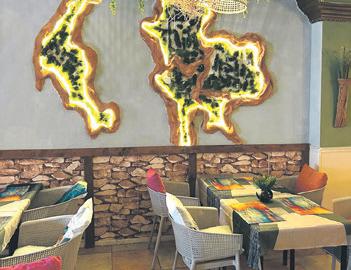

lled spring rolls and aromatic Tom Kha soup.
• Classic Mains: Expertly balanced Pad Thai, Pad Kee Mao, and the national favourite, Pad Krapow.
• Seasonal Salads: New additions include a warm lemongrass pork salad and a daily ‘market-fresh’ special.
• Handcrafted Curries: A wide selection of rich sauces made entirely from scratch.
• For dessert, the ‘Grandma’s secret recipe” Saku Khao Podtapioca and sweet corn in coconut milk - provides a comforting conclusion alongside the classic mango sticky rice.
Thai Garden balances tradition with modern hospitality. The venue is dog-friendly and recently inaugurated an outdoor terrace for the warmer months. For those dining at home, delivery is available via Glovo and Uber Eats, while a 10 per cent discount is offe-
red for direct collection orders.
The beverage list is extensive, featuring quality wines, draught beers, and a unique Hotel Chocolat chilli hot chocolate, which can be spiked with spiced rum for an indulgent finish.
The establishment has quickly gained a reputation within the local Thai community, receiving more than 50 five-star reviews in its opening month.
Current Schedule: Until Easter, the restaurant is available for private event bookings on Mondays and Tuesdays. Post-Easter: Open seven days a week, from 1pm until late.
Recruitment: Vacancies are currently open for experienced Thai chefs and waiting staff. Looking forward, the owners plan to cultivate their own local produce to ensure sustainable, farm-to-table freshness. Due to high demand, booking ahead is strongly recommended.
Plan Your Visit : Introductory Menu: €16 including a drink Calle del Castillo 12, Fuengirola (Convenient parking at Plaza de la Constitución or Paseo Marítimo) / Open Wednesday to Sunday from 1pm until late / Reservations: +34 614 040 420 / ThaiGarden@gmx.es / Instagram: @ThaiGardenFuengirola













MALAGA’S culinary scene is reaching new heights as the acclaimed Sevillian chain, Street Burger, opens its first permanent location in the city. Renowned for its gourmet offerings, the brand arrives with a formidable reputation, having secured the title of Spain’s Best Hamburger in 2024 and Andalucia’s Best Burger in 2025.
The new restaurant is strategically situated at Alameda Principal, 17, placing it in the heart of the city’s competitive ‘burger district’. This marks the eighth venue for the expanding empire, which already boasts successful sites in Sevilla, Madrid, Cadiz, and Jerez.
To celebrate the grand opening on Thursday, March 5, Street Burger is hosting a massive giveaway. Doors open at 6pm, and the first 500 customers will receive a free hamburger. To qualify for the promotion, diners must follow specific requirements



detailed on the chain’s official social media channels.
While the brand previously appeared in the province during temporary food tours, this move signals a long-term commitment to the region. With fresh ingredients and innovative recipes now a permanent fixture, Malaga’s burger enthusiasts have a new heavyweight contender to consider.









COSTA DEL SOL rock legends Tabletom are set to bring their iconic fusion sound to Estepona on Saturday, March 7, for a highly anticipated performance at the renowned Louie Louie.
Formed in 1976, the band is a cornerstone of Andalucian music history. Their eclectic stylea seamless blend of rock, jazz, flamenco, blues, and reggae, predated the modern ‘mestizaje’ movement and earned them a loyal cult following.
Originally emerging from a hippie commune, the group became famous for their instinctive, ‘lysergic’ journeys and distinct regional accent.
The band entered a new era following the 2015 death of charismatic frontman Rockberto. Today, core members and brothers Perico Ramírez (guitar) and Pepillo Ramírez (sax and flute)

lead a revitalised line-up. Featuring the powerful vocals of Salva Marina together with Jorge Blanco, Manuel Nocete, and Carlos Campos, the current formation delivers a high-energy show that pairs Zappa-esque technical precision with soulful improvisation. Tabletom’s enduring influence is reflected in the documentary ‘Todos somos estrellas’, which features tributes from

stars like Kiko Veneno and Robe Iniesta. This concert promises a night of timeless classics, celebrating nearly 50 years of musical innovation.
Doors open at 10pm, with the show starting at 10.30pm. Tickets are priced at €16, with advance options at €15 or €20 on the door. Early booking is advised for this unmissable date. Louie Louie is opposite Estepona Harbour.



TIRELESS local fundraiser Alan Boardman is set to host another of his popular charity fun quizzes, combining social entertainment with vital philanthropy. The event kicks off on Monday, March 9, at 2.30pm at Fibbers Irish Bar, located on the Torreblanca promenade in Fuengirola.
With a modest entry fee of €2 per person, the afternoon offers participants the chance to test their trivia knowledge while supporting ADIMI (Asociación Para Personas Con Discapacidad De Mijas).
Founded in 1999, ADIMI is a non-profit organisation dedicated to providing essential care, therapy, and inclusion programmes for more than 100 individuals with intellectual disabilities.
Alan Boardman is a well-known figure in
the community, having previously raised more than €29,000 for various Costa del Sol causes through his quizzes and guided Mijas walking tours. His recent efforts in January and February successfully raised €1,028 for the equine sanctuary SEARCH, helping provide care for nine rescued horses.
This upcoming quiz promises a lively atmosphere of competition and generosity. Residents and visitors are encouraged to arrive early at Fibbers, as these events consistently draw large crowds and spaces fill up fast. Whether you are a trivia enthusiast or simply looking to support a worthy cause, your contribution will directly benefit ADIMI’s specialised care services in Mijas.














MARBELLA’S Premiere Club is preparing for a high-octane weekend of live music, featuring three local favourites across Friday, March 6 and Saturday, March 7 Located in the heart of the city at Plaza de los Olivos, the iconic venue continues its tradition of hosting free-entry events for locals who like to dance.









The entertainment begins on Friday, March 6 at 11.30pm with ‘Not Yet’. The energetic rock and pop covers band is renowned for delivering high-octane English-language hits. Their set promises a mix of classic anthems and modern favourites designed to ignite the dancefloor.
The music continues on Saturday, March 7 with a double-bill of talent. Starting at 7.30pm, Alokados will bring a taste of the Mediterra-
nean to the stage. The Fuengirola-based group specialises in nostalgic Spanish pop, rock, and indie tracks from the 2000s onwards, offering a perfect opportunity for a late-afternoon singalong.
Closing the weekend at 11.30pm on Saturday, March 7 is the Wall Street Band. A regular fixture at the club, this powerhouse four-piece
delivers a versatile repertoire of international soul, rock, and dance classics. With an intimate 200-capacity setting and a reputation for an electric atmosphere, the Premiere Club remains a cornerstone of Costa del Sol nightlife. Guests are encouraged to arrive early to secure a spot for this weekend of nonstop entertainment.

BY NICOLE KING MARBELLA MOMENTS

REMEDIOS DEL RÍO, José Luis Yagüe and Princess Beatriz of Orléans were the main gures honoured at the 2026 City Medals Awards ceremony. The event took place, as is tradition, on Andalucia Day at the Marbella theatre. It is the city’s most important institutional recognition and serves to highlight careers, commitment and connection with Marbella through solidarity, journalism and the promotion of the city.
I had the honour of knowing and interviewing Remedios on several occasions, once in her home in Guadalmina Baja where she lived with her family for more than 60 years.
She was intelligent, bright, humourous, glamorous and equally down to earth. We were all shaken by the news of her passing last year.
Remedios studied Pharmacy at the University of Granada at a time when very few women were pursuing scienti c degrees or professional careers. She ran her own pharmacy in San Pedro Alcantara, even competing professionally with her

husband’s pharmacy for many years.
The Del Río pharmacy, opened in San Pedro in 1957 by pharmacist Juan del Río, became one of the town’s most important local institutions and not only still thrives but has ourished into the Del Rio clinics.
Remedios also co-founded ASPANDEM in 1979, a major organisation supporting people with intellectual disabilities and she consistently promoted projects connected with social inclusion and community support. She has undeniably been a key gure in the social and economic development of San Pedro and Marbella and it’s only just that the city recognises her legacy. It is a shame she wasn’t given this honour earlier.
Remedios was truly a force of nature and for those of us who met her, it has been a real privilege.


PRESIDENT:

I SPOKE with a vinyl collector todayand she made me rethink everything I know about music. For her, collecting is not a hobby - it is a ritual that shapes her existence. I avoided asking obvious questions like, ‘ How many LPs do you own? ’ or ‘ Which is your favourite album? ’ For a serious collector, those questions are irrelevant. Music is not counted; it is lived - from humble folk songs to classical masterpieces.
Streaming music accelerates everything. Songs ow instantly. We skip, shu e, fast-forward - sometimes within the rst 15 seconds. Convenience has replaced anticipation, and even our emotions feel fast-tracked.
Do you remember the four-track player? The cassette? Then the infamous CD - the ‘compact disc’. I remember being a teenager dreaming of a portable stereo - that was high tech enough. Then came the Walkman… oh la, la! And finally, the crème de la crème: the MP3 player. Wowo! Oh boy, what we went through!
We didn’t know which device to buy - we were like headless chickens, running from one gadget to the next. A little like today with cars: hybrid, fuel, petrol, electric… solar, you name it. Each new device promised freedom… yet somehow, part of the music’s soul kept slipping away.
When analogue turned digital, I feel part of that soul was left behind - the harmonics, ultrasounds, and infrasounds not merely heard but felt through the vibrations of the room. Digital is cleaner, more efficient, portable - but sometimes perfection
Why your music needs you to sit still
sounds a little too perfect.
Playing a vinyl record requires intention. You choose the album, remove it from its sleeve, place it on the turntable, lower the needle, and wait. In that waiting, something shifts. Listening becomes an act of presence. The artwork, the crackle, the artists’ intention - they imprint emotion on your heart. Vinyl is alive.
And speaking of ‘alive’, I think of the old red phone in my office. Placed strategically, its short cable practically enforces mindfulness. When it rings, I cannot multitask. I hold the handset, feel its weight, and give undivided attention to the person on the other end.
Call me nostalgic - or stubborn - but sometimes old devices win. They demand presence.
Perhaps that is why vinyl feels therapeutic. It transports you to a world that says, Leave me alone. I am listening. The crackle, the warmth, the ritual - it reminds us that beauty is not in flawless delivery, but in presence.
Vinyl carries warmth, depth, and soul - the parts of music that get lost when sound is reduced to invisible streams. In a world that moves too fast, perhaps holding a record, listening fully, and feeling every crackle is the closest we come to reclaiming that lost soul.
Maybe analogue music is not nostalgia. Maybe it is a quiet rebellion. A small act of resistance against distraction. In a world that moves too fast, attention itself might be the real cure.

IF you’re noticing that more and more hair is falling out of your head, there’s no reason to panic. Instead of rushing of to buy every branded hair-loss formula you can find, give this simple tonic a try. Easy to make at home, this natural remedy only requires two ingredients: water and rosemary. All you need to do is bring water to boil, add three sprigs of fresh rosemary and let it simmer for at least 15 minutes. Once it’s cooled and strained, you’re good to go.
Applying it is just as easy. Simply drench your hair in the rosemary-infusion, making sure it reaches every inch of your scalp. From there, leave it to soak for at least 30 minutes before washing it out. For the best result, experts recommend using rosemary water two to three times a week. While every hair type is different, rose-
MEDITERRANEAN
LIFESTYLE EXPERT
MIGUEL FRANCO

LAST week I was invited to join a team getaway called the Mediterranean Golf Experience. I had heard the concept was already popular in parts of Europe, but this was my first time experiencing it in Spain and it surprised me in the best way. The idea was simple: colleagues stepping outside the office for a relaxed day together. No pressure, no competition just light activity, fresh air and shared time. Some had played golf before, others had never tried it, but that didn’t matter. Within minutes, people relaxed. Laughed. Encouraged each other. Roles faded and people connected naturally.
What struck me most was that the day contained everything that makes Mediterranean living so powerful for well-being: movement outdoors, daylight, calm pace, shared food and social connection. These elements aren’t luxuries they are human needs. When they come together, energy rises and stress drops.

After the activity, we gathered for drinks, tapas and a relaxed meal. You could feel the shift in the group, lighter, closer, more connected. The kind of shared experience that strengthens teams and motivates people who carry the daily work of an organisation.
I left thinking: this wasn’t just a team outing. It was the Mediterranean lifestyle applied to modern work life.
To read the full article and explore Mediterranean lifestyle guidance, visit www.casamiguel.life
SUGAR makes most things taste great, but it’s not so good for the body. Weight gain or tooth decay are two of the well known side-effects of excessive sugar, but it can also affect the skin. Experts have attributed a high-sugar diet to accelerated ageing, making fine lines and wrinkles appear much earlier than expected.
The main reason for this is because of a natural process called glycation. When there’s too much sugar in the bloodstream it attaches to proteins and forms harmful substances called advanced glycation end products. Collagen and elastin, the fibres that keep the skin firm and springy, are especially vulnerable. If those are damaged, they become fragile, meaning the skin loses elasticity and begins to sag. Sugar also encourages inflammation and oxidative stress, both of which weaken the skin’s ability to repair itself. Over time the complexion may look dull, thinner and less hydrated. The good news is that small dietary changes can help. Limiting fizzy drinks, sweets and refined carbohydrates, while eating more vegetables, berries, nuts and oily fish, supports healthier skin. Staying hydrated and using daily sun protection are equally important. Reducing sugar intake can’t stop the ageing process, but it can slow it down.
mary oil is proven to work wonders for many people. It’s not all magic. Rosemary oil stimulates blood flow to the hair follicles, promoting growth and essentially strengthening the strands.
Some also notice that rosemary oil helps to soothe an itchy scalp, reduces dandruffs and makes hair look shinier.

UNBELIEVABLY, dance is an excellent way to maintain physical and mental health. Even if you have two left feet. Unlike conventional workouts, dance combines aerobics with creativity and achieves the impossible: it makes exercise enjoyable.
Regular dancing improves cardiovascular fitness, strengthens muscles and enhances flexibility. If you want to get fancy, you can add twists and jumps to tone the entire body, promoting better posture and balance.
Dance is also a very accessible form of exercise. While there are plenty of classes you can attend, all you really need to get started is music. From there you can pick any dance style you want, from ballet to hip-hop. If you’d prefer a structured routine to

follow, there are plenty of routines to follow for free online, with cheery instructors encouraging you through the screen.
Beyond developing physical strength, dance is also beneficial for mental health. Dancing stimulates the brain, encourages relaxation, reduces stress and helps
boost your moods. It’s almost impossible to feel sad while dancing, even if you’re doing it alone in your living room. Joining dance classes also serve as a great way to foster social bonds, helping fight loneliness and build confidence. Dance exercises the












































JAVEA is rapidly becoming one of Spain’s top property hotspots for foreign buyers. Once known primarily as a holiday favourite, this Alicante Province town is now attracting a growing number of expats choosing to relocate permanently rather than invest in second homes.
Market data by Bolsamania shows Javea ranks among the Spanish locations with the highest proportion of international home purchases. Buyers from the UK, Germany, the Netherlands and Scandinavia are leading the demand, drawn by more than 300 days of sunshine, coastal scenery and a slower pace of life.
Unlike high-rise resort destinations, Javea has retained its identity as a town. Strict planning rules have preserved its low-density landscape of villas, sea views and residential neighbourhoods. This balance of Mediterranean charm and modern infrastructure is proving especially appealing to remote workers, retirees and families.
Motril cruise boom
THE port of Motril is set for a historic 2026, with projections confirming an unprecedented boom in cruise tourism. Local authorities announced that 73 ship calls are scheduled between April and December, representing a 73.8 per cent increase over the previous record set in 2025.
Passenger numbers are expected to skyrocket by 211 per cent, bringing more than 126,000 visitors to the region. This growth is driven by 14 cruise lines, featuring 12 new itineraries. A significant highlight includes weekly calls every Tuesday by the Norwegian Dawn, ensuring a consistent stream of international travellers.
The economic impact is estimated at €30 million, supporting local employment with approximately 95 workers required per ship call. Beyond the financial windfall, the season aims to ‘deseasonalise’ the economy by boosting activity during the quieter spring and autumn months.
Unlike larger hubs, Motril attracts medium-sized vessels to prevent overcrowding.
A BRITISH woman has been found dead aboard a luxury superyacht moored in Mallorca, with Spanish authorities launching an investigation into the circumstances surrounding her death.
Emergency services were called to the vessel, docked in Palma’s marina, after crew members raised concerns about a colleague who had not been seen. She was discovered unresponsive in her cabin and was pronounced dead at the scene despite efforts to assist her. The woman is understood to have been working on the yacht at the time. Her family has been informed, and formal identification procedures are continuing.
The vessel has been widely reported as the Lind, a high-value superyacht said to be worth around £27 million and owned by German businessman Peter Alexander Wacker. The yacht is part of the Mediterranean luxury charter circuit and regularly docks in Mallorca.
Spain’s Guardia Civil has confirmed that an investigation is under way.
ALICANTE, recently experienced an incredible weekend with its 30th Meridiano International Half Marathon and 10K Aguas de Alicante, which brought together 7,250 athletes from 48 different Spanish provinces. Not only this, the major sporting event boosted hotel occupancy in the area and generated an economic impact of €1,580,000, according to sources from the Montemar Athletic Club.
The group of athletes that generated the largest impact on Alicante’s economy were the 3,300 international runners, hailing from 55 countries. During the race weekend, hotel occupancy reached 98 per cent, considered technically full in the tourism and hospitality sector.
These athletes required flights, food, accommodation and transportation, meaning that each international runner’s expenses reached an average of €300. In addition, a total of 925 Spanish runners from 48 provinces across the country participated.
THE people of Mojacar gathered together to bond as a community to celebrate their roots on Andalucia Day. Locals and visitors convened in the town square for the flag raising ceremony. They watched on with pride as the green and white striped flag was lifted into the air.
A lively, exciting afternoon followed, with El Pimiento flamenco group providing excellent entertainment. They demonstrated their artistry through a powerful and passionate performance. All dancers wore traditional flamenco attire. Their bright and bold dresses made from polka-dot and floral prints made them stand out from the crowd. Those in attendance worked up an appetite simply from watching the stunning performance. Thankfully, a steaming pan of paella was served at 2.00pm.
More than just a delicious plate of food, the giant paella doubled as a fundraising effort. In total, €810 was raised for the MACS Association, providing oncology support for the Mojacar Area.
Costa Calida ‘Freak’ festivities
THE nerds of the Murcia region experienced a fun weekend with the incredible 11th edition of the Winter Freak Show, a convention taking place at the IFEPA event venue in Torre Pacheco that saw thousands of attendees, including artists, cosplayers, comic book fans, gamers, and anime lovers.
The Winter Freak Show developed a programme of activities focused on different facets of nerd culture, including manga and anime, video games, film, television, pop culture, comics and Korean pop music. Over the weekend, Torre Pacheco became the Murcia hub for all things alternative, and saw a healthy turnout of fans, content creators and interested visitors.
Cosplay, the practice of dressing up and roleplaying as famed characters from media, also took centre stage at the Winter Freak Show 2026. Last year, the Winter Freak Show saw more than 14,000 participants, reaffirming its position as one of the leading cultural and entertainment events for young people on a nationwide scale.

A green cat was born in Denmark in 1995. She was named ‘Miss Greeny’ and had emerald green fur and claws. Some people believe that high levels of copper in the water pipes nearby may have given her fur a verdigris effect. However the older she got the colour gradually faded.


PET-SITTERS will love and care for your pets in your absence HouseSitMatch pet-sitters will care for your pets. Within a few days they will be trusted by your animals and create a bond that is for mutual benefit.
You can relax on holiday knowing your pets are being cared for in their own environment, at no cost to you. The pet-sitters will offer their time and service in exchange for free accommodation.
It allows the sitter to discover a new location from the comfort of your home. It’s like old fashioned barter.
Everyone wins, especially the pets because they get to stay home and their routines are maintained, safe and sound. Just register as a homeowner and pet owner and build an advert. It’ll take a few minutes.
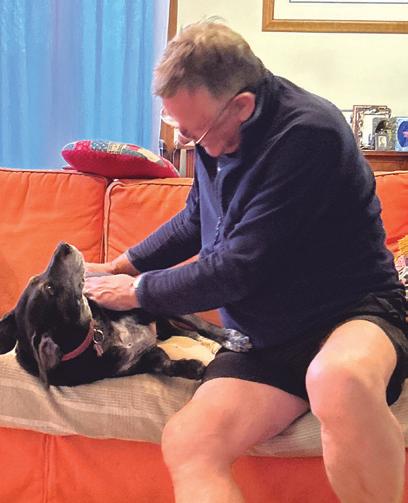
Most pets love a playmate, at whatever age.
How it works
1. Register at HouseSitMatch. com as a homeowner
2. Create your profile with photos of your home and pets
3. Review applications and video chat with potential house-si-
tters
4. Match with the perfect petsitter and enjoy your holiday worry-free
Real savings, real peace of mind
Every house sit benefits everyone. Your pets receive one-on-one attention at home, your property stays protected, and you avoid expensive kennel fees. Take Lucy - she saves over €1,500 annually using house-sitters instead of boarding kennels.
For a small annual registration fee, you can connect with verified house-sitters willing to provide free pet care and home security. Your pets deserve the comfort of their own home, and you deserve an affordable holiday.
Join today Register at HouseSitMatch. com and use code WELCOME50 for 50 per cent off your first year.
Lamia Walker, Founder. Call: +44 (0)7772 142742
Rated Excellent on Trustpilot - 4.9/5




IF you share your home with a cat, you’ve probably been woken once or twice to the unmistakable sound of paws thundering across the hallway. This midnight sprint or ‘zoomies’ is a perfectly normal feline behaviour.
Cats are crepuscular animals. This means they’re most active at dawn and dusk, prime look.
It’s in their nature to prowl and pounce during the early hours of the morning, just as it’s in your nature to yell at them for waking you up. Zoomies are also a re-
spend a lot of time napping during the day.
By night-time, they’re well rested and ready to cause mischief. Without sufficient stimulation to keep them entertained, they go on a rampage. To prevent this, schedule playtime throughout the day but especially before bed. You can simulate the natural hunt-eat-sleep cycle the cat would live in the wild by playing with lasers or wand toys, then feeding them a small

Hopefully, this will help both you and your cat settle in for a full
CRATE training has a bad reputation. Some see it as a cruel punishment when in actuality, it can give your pup a safe space of their own. Dogs are naturally den animals, they will instinctually seek small, secure spaces and a crate can provide exactly that.
When looking for a crate for your own dog, start by choosing one with plenty of space for them to stand, turn and lie down. It needs to be a snug fi t, not a tight fi t. Once acquired, place it in the family room, somewhere quiet but not isolated. Dogs want their own space, but they don’t want to be separated from the family completely.
Think of the crate like your dog’s bedroom and decorate accordingly. Add soft bed-


RESCUING animals in Spain is driven by compassion, but the reality is far harsher than most imagine. Spain has one of the highest rates of abandoned animals in Europe, with thousands of dogs, cats and other animals left on the streets each year, often sick, injured or starving. Shelters are overcrowded and underfunded, and volunteers are stretched to breaking point.



Good intentions without realism lead to burnout and harm. While the instinct to save is strong, unplanned rescues frequently result in fi nancial instability, emotional collapse and overwhelmed households. Veterinary bills, specialist food, behavioural care and medication quickly become unmanageable, particularly for those surviving on limited incomes.
Spain’s animal welfare law limits
ding, a pillow, chew toys and teddys. To make the transition smoother, many experts recommend adding a blanket or item of clothing that smells like you.
Don’t force your dog into the crate, let them explore freely. If they’re reluctant to go inside, throw treats into the crate so they associate it with good things. From there, close the door for a minute, gradually increasing the time each they’re inside.
The key is to go slow. Through patience and consistency, your pup will soon see their crate as a safe space to rest without fear.
mals unless registered as
private ownership to five animals unless registered as a professional centre, yet many ignore this until they are already drowning.
The emotional toll is just as severe: for some, repeated exposure to cruelty hardens the heart; for others, it becomes deeply painful and consuming. The painful truth is that you cannot save them all, and attempting to do so can destroy your health, your finances and your stability.
Sustainable rescue requires preparation, boundaries and responsibility.
Fostering, volunteering, donating and supporting existing shelters creates real change without sacrifi cing your own well-being. True compassion is not measured by how many you take in, but by how wisely and sustainably you choose to help.
































WINDOWS



WINDOWS












SPAIN’S driving theory test has been updated in 2026 with a more practical, safety-focused approach aimed at improving hazard awareness among learner drivers. Introduced by the Dirección General de Tráfico (DGT) on February 5, the reform moves the exam beyond memorising rules towards real-world understanding of road risks. The test’s core structure remains, but new evaluation methods reflect a broader European trend emphasising perception, judgement and safer driving behaviour.
The most notable change is video-based questions simulating realistic traffic scenarios. Candidates must watch a short clip and identify potential hazards, testing their ability to interpret evolving situations and apply safety principles. Authorities believe this better prepares learners for real driving,

exam changes.
where quick decision-making and situational awareness are vital. Similar video elements in Germany, France and Finland have been linked to improved risk perception among new drivers.
The overall exam format is familiar: 30 multiple-choice questions with three possible answers, though the duration may be slightly longer to allow for the video. Time management remains important, with candidates
advised to review uncertain responses if possible. Administrative rules are unchanged. Theory results remain valid for two years, and the official €94.05 fee (2025) covers two attempts. Local demand may affect appointment scheduling.
The 2026 reform marks a shift towards intuitive driver education, prioritising hazard perception, practical understanding and safer behaviour - skills extending beyond the test itself.
ELECTRIC scooter riders in Spain must prepare for major regulatory changes in 2026. Under new rules from the traffic authority (DGT), scooters must be officially registered before use on public roads, and registration will be required to obtain mandatory insurance. The measure affects millions of riders and reflects a broader push to treat personal mobility vehicles like conventional vehicles in terms of identification, responsibility and road safety.
The requirement covers standard single-seat scooters with speeds of 6-25 km/h, which make up most city models. Authorities say registration will link scooters to their owners, aiding accident investigations, theft recovery and insurance claims. Riders must complete this administrative step to remain compliant and avoid
LENDING your car to a partner, relative or friend is common in Spain, but complications can arise if traffic fines arrive. By default, the Dirección General de Tráfico (DGT) sends penalties to the registered owner, even when someone else was driving. Spain offers a little-known tool, the Declaration of Consent as Regular Dri-
ver, which allows owners to officially register another person as the habitual driver.
This does not transfer ownership but identifies who uses the car most frequently, ensuring fines and notifications go directly to the right person. It can prevent unnecessary paperwork, delays and penalties for failing to identify the

driver within legal deadlines.
The form is useful where ownership and daily use differ, such as couples sharing a vehicle, parents whose children drive regularly, or when a car is lent for an extended period. Once registered, authorities contact the habitual driver directly regarding speeding tickets, parking fines or other traffic matters, eliminating the need for the owner to explain who was driving each time.
Many drivers only discover this option after receiving a fine and completing the process retroactively. Registering a habitual driver in advance simplifies communication and reflects actual usage. The procedure is straightforward: owners can download and submit the declaration via the DGT, confirming con-

fines or legal issues.
Registration is simplest online via a recognised digital ID system such as Cl@ve Móvil, DNIe or a digital certificate. Applicants provide personal details, confirm ownership - including for minors - and enter scooter information, including make, model and serial number. Supporting documents, like the technical sheet or a clear image of the serial number, must be uploaded. After paying €8.67, approved


sent and providing the driver’s details. For expatriates, this small step can prevent unnecessary stress while ensuring responsibility follows the person driving the vehicle.


applicants receive a certificate with a unique ID number for the scooter.
In-person registration is also possible at DGT offices, usually by appointment, with the same documentation and fee. Exceptions exist for those over 65 or with mobility issues.
Early registration is advised, as insurance checks are expected to become routine, ensuring uninterrupted and legally compliant scooter use.











Over 150 cars attended the ‘Cars and Coffee’ meeting at YANX American Diner in Centro Plaza, Puerto Banus on a warm sun-drenched Sunday morning just recently.

THERE were cars of all shapes, sizes and values. All of them interesting and with a story to tell. In fact, there was a fascinating representation of all things motoring through the ages. Performance cars such as Porsches and Ferrari were well represented and about a dozen, stunning 911 variants were provided by the local Porsche Owners Club of Andalucia. Bright red Ferraris came via the Ferrari Owners Club which were much appreciated by the enthusiastic crowd that came to enjoy the show. One of the stars of the day was a beautiful Isetta ‘Bubble Car’ something not seen very often in this part of the world but, just to show off a second three-wheeled ‘Bubble Car’ was also present and thoroughly enjoyed by everyone. American muscle cars made a welcome appearance sitting alongside Rolls Royce and Bentley models and of particular interest were American cars of the 1950s and 1960s. Causing a stir was the huge Tesla Electric Truck which must be unique in this part of the world. Even a 1960s VW Camper sat proudly and received a lot of attention from the crowd. Many rare cars were in attendance with a 1970s Clan Crusader that had been lovingly restored with an equally lovingly restored 1973 V12 Jaguar E-Type in the best colour, Carmen red!





A much needed (and enjoyed) rest day followed so that people could see and enjoy Jerez. Trips to a Sherry Bodega, a Vineyard and and an Equestrian Centre were on offer to those wanting to see them whilst many chilled and ladies shopped! Day three was a most enjoyable and fast run through the countryside to a fish lunch at the famous Cantina Marinera in the port of Chipiona followed by a short 30km run down to Puerto de Santa Maria and a night stop at the fabulous, 5-Star Palacio de Medinaceli in the town. Then, on to some fine wining and dining and a bit of a late night in the hotel bar!


llowed so that peo-







On the subject of rare cars and Jaguars, a superb 1992 6.0 Litre V12 XJR-S sat next to its younger sibling, a Supercharged V8 Jaguar XKR from 2003. Both cars resplendent in British Racing Green! So many cars and so little time! This unique event runs now monthly from 10.00am until 1.00pm, the next edition being on Sunday, March 15. It’s fast becoming a terrific gathering point for enthusiasts and spectators of all ages with displays of cars difficult to get close to in normal everyday life!
The Classic & Sportscar Club is always very busy and, as I write this on the last days of February, the Club is away enjoying it’s five-day Tour de la Luz. This superb Tour started in Marbella on the 23rd from Venta Los Almendros and, despite numerous road closures causing re-routes and headaches for the organisers, Day one took crews up through Ronda and on past the beautiful lakes at Zahara, skirting Algodonales where the main RondaSevilla road is still closed, before heading down to Arcos de la Frontera with a lunch stop on the side of the lake. After such a dreadful winter it was such a joy for all participants to be able to sit and dine outside on the terraces and in full, warm sunshine! How we’ve all missed that! After lunch was over, there was a short run in to stay two nights in Jerez at the super Hotel Jerez Spa and enjoy the Gala first night dinner where traditions are upheld and the dress code is ‘Black Tie and Posh Frocks’. The very international and cosmopolitan group was welcomed by Ian Giles prior to a fun bout of cross toasting, all delivered in great humour. Another tradition revived by this fun and well organised group.
Day four started with a run-out to join the coast at Conil de la Frontera before the route headed to Barbate and a coffee stop at the famous Trafalgar, site of the historic naval battle that saw Nelson meet his sad end. Lunch was taken in Zahara de los Atunes, famous of course for its ‘Almadraba’ Tuna, the town itself packed full of restaurants and quality tapas bars, something much enjoyed by all participants….
That night was passed in the marvellous Hotel Meson de Sancho near Tarifa where the ‘last night’ dinner and party celebrations took place. It was a super night and just the right way to finish off such a brilliant Tour with revellers staying up rather late into the night…
More photos and information on this terrific event can be found on the Classic & Sportscar Club’s website which is www.csccspain.com.



Next on the agenda of this vibrant and active group, other than a one-day Run and lunch on Saturday March 7 will be a ‘Lake Vinuela’ weekend’ on March 27 to 29. There will be a car run on the Friday with a dinner at the stunning Lake Vinuela Hotel followed by another shorter car run the following day, Saturday, and a dinner with everyone together that night. This is a really beautiful, luxury, lakeside hotel of a 5-star standard which will provide a super focus for this terrific two-night weekend.
More info on the website www.csccspain.com.


JUST to remind all you F1 fans out there that the Netflix TV series ‘Drive to Survive’ is now showing and it’s a terrific account of the 2025 season which resulted in the crowning of Britain’s Lando Norris from Glastonbury as World Champion. Then, at long last, the new season gets underway in Melbourne, Australia on March 8 with all new regulations, new cars and even new teams appearing. Not much is known about who is expected to be the most competitive, but a look at recent testing in Bahrain suggests that the top four teams are likely to be Mercedes, McLaren, Red Bull and Ferrari. It’s going to be a fascinating and, hopefully, exciting new season which ought to produce some good racing. Watch this space!

That’s it for now, more news as usual in the first week of next month.




By Mark Slack
YOU may have noticed, not just on the road but from advertisements, every new car brand that’s launched seems to emanate from China. Although not all, most are EVs and one of the most aspiring entrants is XPENG. They arrived in the UK back in 2024 and have launched a nicely compact yet comprehensive line-up of vehicles.
Their G6 mid-size coupe SUV has just received some subtle external changes, but lots more, 20,000 changes according to XPENG, under the skin. Tweaks to the equipment, suspension, steering and technical side of the car. However, one of the major changes is the addition of a performance model, the 480 bhp, all-wheel-drive, dual motor, Black Edition.

• Model: XPENG G6 Performance
Black Edition
• Engine: Dual motor –358kW/480bhp – 660N-m torque
• Gears: Automatic/All-wheel-drive

Priced at €57,128/£49,990 the G6 Performance offers an excellent array of standard features and passes the benchmark 100kph/62 mph in a whisker over four seconds. The all-important range is listed as 508km/316 miles, which from past experience of a G6 suggests in the real world 450km/280 miles is achievable


Exploit your right foot thougheasily done - and the range will sink! In the overall car park of such brands the G6 range isn’t at all bad and very useable. Charging time is excellent, it can charge from a 450kwh charger from 10 to 80 per cent in as little as 12 minutes, and few if any EVs can match the XPENG at the moment. This makes it eminently more practical and useable. However, there’s always a ‘but’! You’ll struggle to find a 450kwh charger here in the UK, certainly for the time being at least. If the lack of infrastructure, not to mention the extremely
high cost here in the UK, annoys you as a customer, then just think how the car makers feel about it.
On the road the G6 Performance model rides well, arguably more settled than the long-range model, and although no sports machine it’s surprising just how nimble it can be on a more twisting road. It’s certainly better on A-roads and dual carriageways, and a very pleasant drive. Comfort is faultless and equipment levels generous. Despite my disapprobation for touchscreen and tech-mania, XPENG’s ‘Hey XPENG’ voice command system actually works rather well. It saves dipping into numerous menus. You can also move command icons from any screen to fea-
• Price: €57,128/£49,990
• Performance: 0 – 100kph/60 mph 4.1 seconds
• Range: 508km/316 miles
• Emissions: 0 g/km
Model tested was UK-specification and equipment levels and prices may vary in other markets
ture on the ‘home’ screen by dragging them as if on your laptop. A nod to the fact that tech features in cars do need to be made easier, quicker and safer to access when driving.
A Standard range G6 model will join the range later, priced at €45,697/£39,990 with a 470km/292-mile range and the benchmark 100kph/62 mph passed in a respectable 6.9 seconds. Pick of the crop for this writer though is the Performance Black Edition.
Its sparkling performance, creature comforts and excellent build quality might tempt even Tesla drivers.
TORREMOLINOS is set for a vibrant, colourful makeover as the seaside town prepares to host the ninth Colours for Peace race on Saturday March 14. For the ninth year in a row, the streets of Torremolinos will come alive as excited participants of all ages race along the beachfront, stopping at colour stations along the way.
Organised by the Parish of Santa Maria del Mar and the Los Alamos neighbour’s association, the race is designed to be a oneof-a-kind event, with as much focus on fun as fitness.
Runners and walkers will set off from the Torremolinos seafront



promenade, near the Aldemar. Participants are taking part, not in a competitive sprint, but a lively gathering meant to promote joy and community spirit. Colourful powders will be thrown at run -

FUENGIROLA’S Sports Department has unveiled a programme of seven events for March to mark International Women’s Day on March 8. The initiative, called ‘Fuengirola por ellas’, combines tournaments, workshops, and talks aimed at promoting equality.
The events start on Saturday March 7 with the third Women’s Squash Tournament at the Elola Sports Complex from 11.00 to 13.00. Pedro Ríos and the Fuengirola Squash Club are also offering free squash classes on Thursdays to encourage female participation.

ners along the route, incorporating a fun artistic twist. However, because of this, all participants under 10 must wear protective goggles provided in the race pack, and other participants are required to wear sunglasses or some other form of eye protection to avoid injury.

Registration for the event is open until the day before, on Friday March 13. Sign-up fees cost €10 for individuals, €10 for groups.

From March 20-22, the Elola Complex will host a women’s padel tournament, with proceeds going to the fibromyalgia charity Apaffer.
Other events include a talk on Thursday March 12 at the Palacio de la Paz, titled ‘Communication, Equality and Sport’, aimed at 13-17-year-olds but open to all. Speakers include Esther Sanz, Elena Moreno, and María
Farfán, notable figures in women’s sport in Malaga.
Two workshops follow: a self-defence session for women on Friday March 13 and a pelvic health and strength workshop on Wednesday March 18. The programme concludes with a school obstacle course on Wednesday March 25 at the Juanito Pavilion.