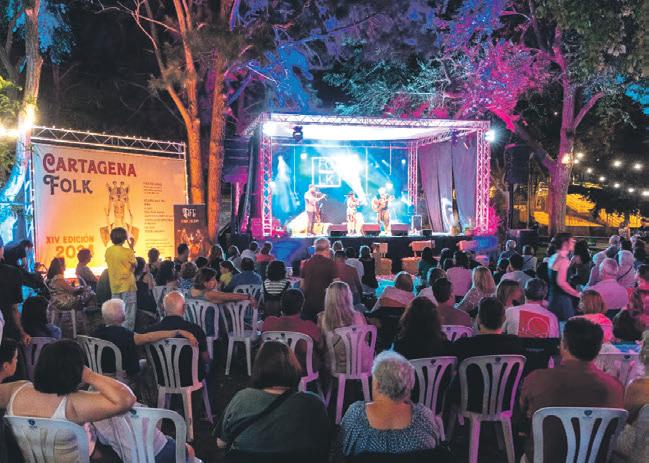
ONCE more, the Parque de la Rambla in the beautiful Costa Calida city of Cartagena was transformed into a hub for music and folk culture with the arrival of the Cartagena Folk Festival, now in its incredible 16th edition.
The event, organised by the Cartagena City Council, lit June up in the city with three vibrant days of folk music, and nearly 7,000 attendees.
The event saw thousands of people attend and enjoy a special programme combining concerts, workshops, delicious food, crafts, and family activities that brought both folk fans and new-
Folk festivities Royal recognition
THE Princess of Asturias, Leonor de Borbón y Ortiz, received the Gold Medal of the Region of Murcia, the highest honour awarded by the region. The Princess was welcomed at a ceremony held in the Church of San Esteban, in the coastal city of Cartagena.
In addition to this high honour, the Princess was also named the ‘Adoptive Daughter of San Javier’, the town near the Mar Menor where she received a municipal gold medal. During her speech, the heir presumptive to the Spanish throne made a reference to local Cartagena
comers to the genre closer to the latest trends in folk music, as well as popular and long-standing traditions.
Taking the stage were
some of the most popular acts on the current folk scene, including De Ninghures, one of the most promising emerging bands in Galicia;
Barrio Mudéjar; Casa Palma, a group that reinterprets northern Spanish folk music; and Mixtura, a band that specialises in the fusion of tradition and contemporary sounds.
But the Cartagena Folk Festival is not only about the music. The festival is also known for its participation in fun and family-oriented activities, including workshops focused on traditional dance, esparto grass weaving, and Cartagena bowling.
Once more, the Cartagena Folk Festival has turned the city into a hub to attract both longtime fans of the genre as well as newcomers.
band Arde Bogotá: “Like a cowboy on the A-3, I will miss that route I have travelled so many times on my way to the
Gift for Greta
Generous golf club donation changes shelter dog’s life
A LOCAL golf club fundraiser in Murcia has helped to change the life of a 12-year-old rescue dog, after raising enough money to cover her vital surgery. Greta is a long-time shelter resident at the PAPS animal shelter in San Javier, Murcia, and is deeply beloved by the workers at the shelter.
Greta, a gentle and affectionate dog, has been at the PAPS (Protectora de Animales Perros del Sol) animal shelter since 2018, and needed a vital surgery.
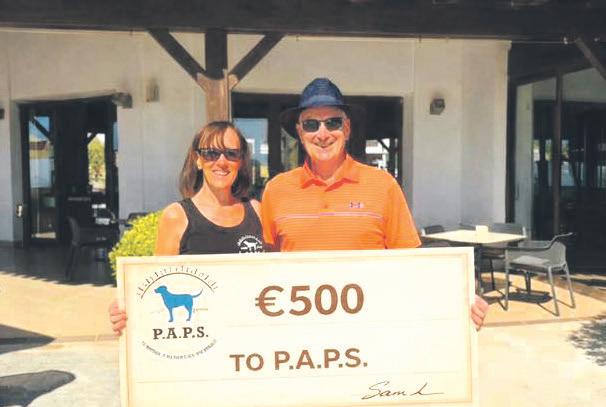
After local golf society, the El Valle Golf Club, hosted a fundraiser, an astounding €500 was collected and donated to PAPS. The cheque was presented to the animal shelter by former club treasurer Sandy Clare.
The animal shelter stated that the funds went directly towards Greta’s surgery and offer her a better quality of life in her later years.
“I’m pleased to report that Greta has made a full recovery and is now back at PAPS,” the shelter stated.
bid farewell to the Region of Murcia.
The Princess expressed deep appreciation for the municipality of San Javier, stating that it had “enhanced and broadened my understanding of camaraderie, because to fly in formation one must be very aware of the importance of having complete confidence in one’s own abilities and those of one’s wingman.”
sea,” she said, echoing the lyrics to one of their songs.
To close out her speech, the Princess thanked the people of Murcia “for opening the
Golf fundraiser funds surgery, giving rescue dog Greta new life.
Photo Credit: Cartagena City Hall
Photo Credit:
Cartagena Folk Festival attracts thousands with music, culture, workshops.
Princess Leonor honoured in Murcia, marking symbolic end of training.
Inventor’s imprint
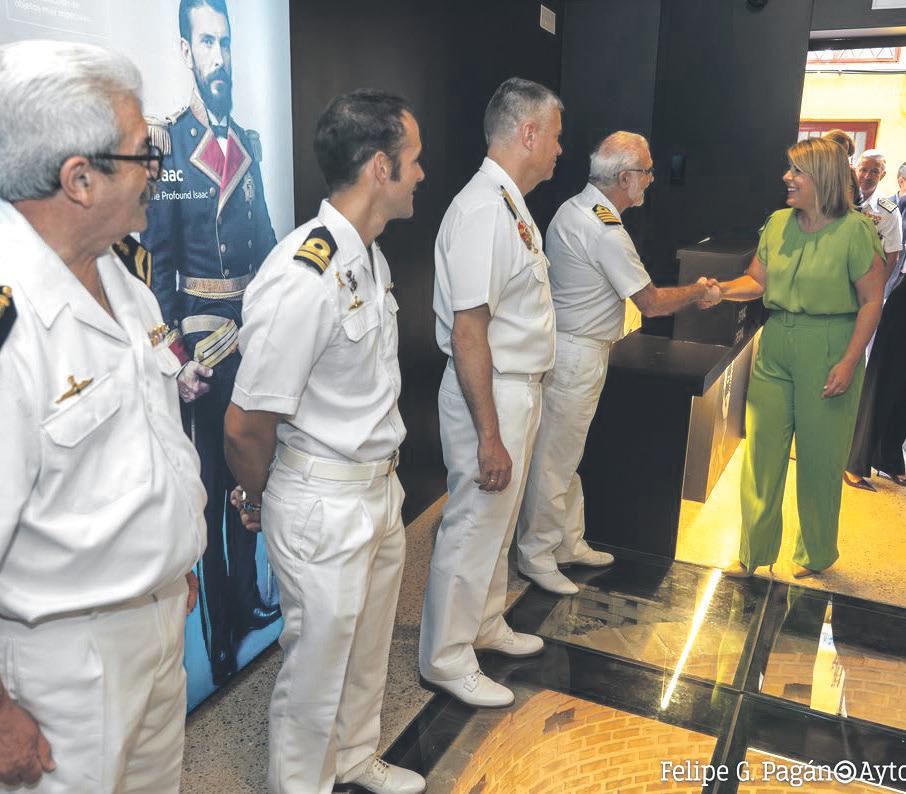
CARTAGENA has added a new cultural and heritage space with the inauguration of the Isaac Peral House Museum, an establishment dedicated to the legacy of the sailor and inventor, born in the coastal municipality.
The inauguration of the space coincides with the 175th anniversary of Isaac Peral’s birth, and will allow visitors to learn more about his incredible life and career.
The Isaac Peral House Museum is located in the heart of Cartagena’s historic centre, at Callejón Zorrilla, 3.
The museum is actually located in the house where Isaac Peral was born, which has been carefully restored and transformed into an exhibition space, forming part of the Cartagena Puerto de Culturas network.
Isaac Peral was the inventor of the torpedo
submarine, and during his life, made invaluable contributions to science. He was also an engineer and a naval officer.
In the museum, guests can traverse through the exhibitions which represent different stages of Peral’s life, from his childhood and family life to his scientific and engineering achievements.
In a city known for its stunning museums, Cartagena, with the inauguration of this project, has reinforced its position as a historical hotspot on the Costa Calida, and given history buffs and newcomers a reason to stop by and learn about the incredible and lasting legacy of this great Costa Calida naval engineer.
Sonic boom shock
THE Lorca Town Hall has alerted the residents of the Murcia municipality that they can expect loud sonic booms until mid-June, as military aircraft carry out a series of training exercises over the area. The drills are being carried out by the Spanish Air and Space Force, and form part of the Tactical Leadership Programme, an advanced international training course that prepares pilots for complex missions.
These drills are be-
ing done at the Albacete Air Base and will be in effect until Friday, June 19. The training flights will take place between approximately 3.30pm and 5.30pm on weekdays, with no training scheduled for the weekends.
During the series of exercises, residents of the Lorca area can expect to hear sonic booms, even at ground level. They are described as sudden, short-lived, loud noises, and may be powerful enough to rattle doors or
windows, or cause a brief vibration in the air. These loud and sudden sounds are produced when aircraft exceed the speed of sound.
Both the volume and the sound of sonic booms are often mistaken for explosions or even earthquakes, but residents may rest assured that the cause of the sounds is standard aircraft drills. Authorities have issued this warning in order to prevent unnecessary alarm among Lorca residents.
E-bike scheme
CARTAGENA recently launched its municipal electric bicycle service, introducing 120 e-bikes across the urban centre. The fleet is set to expand to 300 units in the coming weeks. Additionally, a coastal extension starting July 1 will add 70 bicycles and 20 parking zones in La Manga and Cabo de Palos.
Mayor Noelia Arroyo announced the rollout on World Bicycle Day alongside local health, maritime, university, and neighborhood representatives. The initiative integrates with the city’s existing 35-kilometre cycle lane network.
Operated by Hoppy Mobility, the system functions via a mobile application linked to Cartagena Viva. Users locate, reserve, and unlock vehicles using a QR code. Unlocking is free, and usage rates range from €0.02 to €0.25 per minute based on the selected pass. Available packages include a single hour for €4.95, 24 hours for €9.95, a week for €19.95, a month for €29.95, and a full year for €295.
Cartagena opens museum honouring submarine inventor Isaac Peral’s legacy.
Photo Credit: Cartagena City Hall
Military drills over Lorca to cause loud sonic booms.
Photo Credit: Tactical Leadership Programme
IBI tax warning
NEW PROPERTY SURCHARGES
SPANISH homeowners are being warned that some properties could face an IBI surcharge of up to 150 per cent under Spain’s Housing Law, though many second homes and holiday properties are exempt. The measure targets certain long-term vacant properties to encourage owners to return empty homes to the housing market, but it affects far fewer properties than headlines suggest.
To qualify as a permanently vacant dwelling, a property must generally
have remained unoccupied for more than two years without a valid reason, and the owner must possess at least four residential properties. Local councils must also choose to adopt the surcharge through municipal tax regulations before it applies.
Authorities may use municipal registration records and low utility consumption to determine if a property is empty. Councils must follow a formal administrative process, giving owners an opportunity to present evidence
before a property is declared vacant. The surcharge increases based on duration. Councils can add up to 50 per cent to the standard IBI bill, rising to 100 per cent if vacant for over three years. An extra 50 percentage points can apply if the owner has multiple vacant properties in the same municipality, totalling 150 per cent. Crucially, exemptions cover holiday homes, second residences, renovations, legal disputes, work, education, or health reasons.
CHANGES FOR EXPAT HOMEOWNERS
THE ‘junta de vecinos’, or neighbourhood community meeting, is one of the most dreaded aspects of property ownership for expats in Spain. These compulsory annual meetings require homeowners to vote on community fees, renovations, and local rules.
Historically, these sessions required physical attendance, which meant holiday home owners often missed crucial votes, leaving them to accept cost increases and rule changes. Furthermore, the debates can be fast-paced and dominated by native speakers, leaving non-Spanish residents struggling to follow along.
Spanish lawmakers have now advanced a reform of the horizontal property law to allow these meetings to take place online or in a hybrid format. Digital
notifications and electronic minute books would also become standard practice.
This change allows foreign property owners to participate live from anywhere in the world, saving them from booking expensive flights. Additionally, modern online meeting platforms offer real-time translation and live captions. This technology means expats can select their preferred language, hear translated audio instantly, and understand complex property terms. While the change is still a proposal facing debate in the Spanish parliament, the idea is gaining widespread popularity. If passed, the law will give international owners proper voting power, improve financial transparency, and remove the language barriers that have long complicated foreign property ownership.
Deposit deadline
Changing rental dynamics
MANY tenants in Spain are only now discovering that landlords cannot indefinitely delay returning a rental deposit without facing consequences.
Under the Urban Leases Act, landlords generally have one month after the keys are returned to inspect the property and refund the deposit. If the money remains unpaid without a valid reason, legal interest begins to accrue.
This issue has become increasingly important as rental prices rise. In cities like Madrid, Barcelona, Malaga, and Palma, deposits often exceed €1,000, making delays a significant financial burden for tenants needing funds to secure a new home.
Spanish law allows landlords to retain part or all of a deposit for unpaid rent, outstanding utility bills, or damage beyond normal wear and tear.
However, landlords must provide supporting evidence, such as invoices or repair estimates.
Everyday wear from normal use is excluded from deductions.
Once the one-month period passes, tenants can formally request repayment of the deposit and accumulated interest. For 2026, Spain’s legal interest rate stands at 3.25 per cent.
While this interest may not be a large amount, it encourages landlords to resolve disputes faster.
To protect themselves, specialists recommend tenants take photographs and videos before leaving and keep written communication records, which prove valuable if disagreements arise.
Online voting euroweeklynews.com
information on this page is intended for general guidance only, and should not be
the neighbours, but only online.
Some homeowners could face higher IBI bills under rules targeting long term vacant properties.
Credit : Maksim Safaniuk / Shutterstock
Credit: Ale apriana - Shutterstock
Boasting Blue Flags
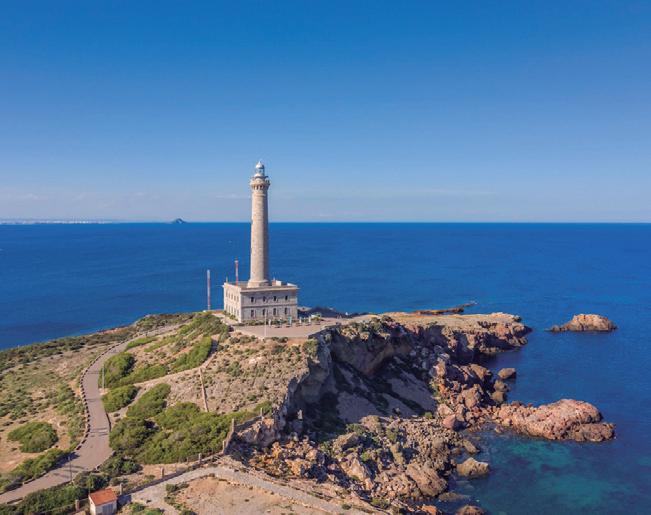
THIS summer, the Costa Calida city of Cartagena promises to be the hub of beach activity in the region, as the city will boast an incredible 12 Blue Flags. This honour is awarded to some of the world’s best beaches and marinas, depending on a number of criteria, including sustainability, pollution management and water quality, and accessibility.
This summer, Cartagena has added a new site to the list of its areas with the Blue Flag distinction, La Azohía-El Cuartel. With the new addition, the municipality ranks fourth in the whole country for the most
Blue Flags, trailing only behind Vigo, Sanxenxo and Aguilas, the latter of which is also located in Murcia. This honour also re-establishes Cartagena as one of the national leaders in environmental quality, services,
and coastal management.
To be specific, the municipality has received 12 Blue Flag awards, 13 flags for Tourism Quality (Q Flags) and 12 flags for Sustainable Tourism (S Flags). The beaches with both distinctions are: Barco Perdido, Cala Cortina, Galúa, Levante, and San Ginés.
Blue Flags are awarded based on a number of criteria that the beaches, marinas, and ports must strictly meet, including cleanliness, accessibility, safety, environmental management, continuous improvement, and even the availability of education on the beaches.
Secretive shores
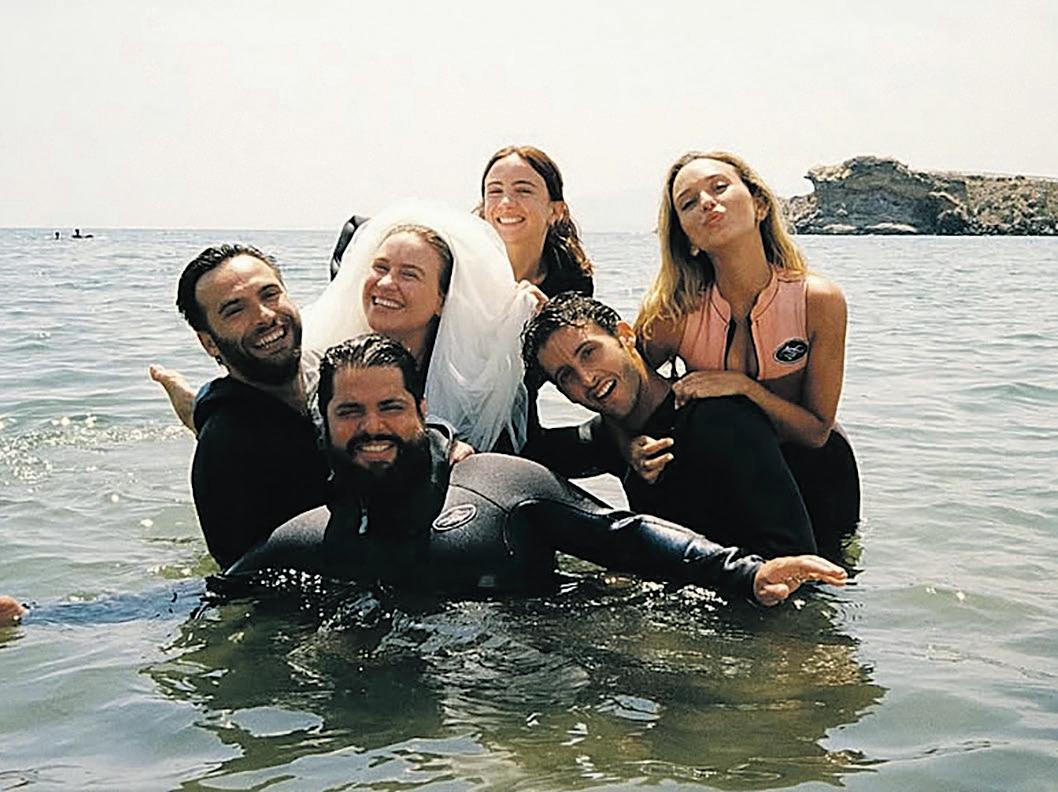
MAZARRON’S stunning coastline is set to take the spotlight, after it has become one of the key filming locations for Netflix’s new miniseries, ‘Toda la verdad de mis mentiras’ (‘All the Truth of My Lies’), an exciting and dramatic production that blends romance, friendship, and betrayal, all against the backdrop of one of the most beautiful towns in southern Spain.
The miniseries, based on the novel by bestselling author Elísabet Benavent, will have five episodes and is expected to continue the streak of Netflix’s successful adaptations of her work, following smash hit titles like ‘Valeria’ and ‘Un cuento perfecto’.
The story revolves around Coco and Marín, two lifelong friends who share a home and a close-knit group of friends. What begins as a carefree caravan trip to celebrate a friend’s bachelorette party gradually unravels into a tense, dramatic, and emotional journey as long-
time secrets come to light, testing the group’s relationships and friendships.
The filming for the miniseries took place over more than two weeks, across several of the municipality’s most recognisable and idyllic coastal locations, including Playa de Percheles, Rihuete Beach, Bahía Beach, and the Calas de Bolnuevo.
‘Toda la verdad de mis mentiras’ is set to release on Netflix on August 28, and it is expected to showcase not only a story of friendship, lies, betrayal, and secrets, but also to display Mazarron’s cinematic beauty.
Cartagena earns 12 Blue Flags, boosting status as top beach destination.
Photo Credit: Cartagena City Hall
Mazarron beaches feature in Netflix series about friendship and secrets.
Photo Credit: Netflix España
Parachuting princess
PRINCESS LEONOR of Asturias has officially completed her parachuting course, taking place at the Alcantarilla air base in Murcia, as part of her military training at the General Air and Space Academy. The heir presumptive to the Spanish throne completed the course, called the Basic Parachuting Course, at the Méndez Parada Military Parachuting School, alongside about 50 of her peers from the academy.
During this course, the princess learned to perform automatic mode parachute jumps, which are common among different units with parachuting capability of the Air and Space Army, the Army, the Navy, and the Guardia Civil. Leonor is the first member of the royal family to have trained for this exercise, as neither her father nor grandfather did so
during their time at the academies.
As a distinction for passing the course, Princess Leonor, along with the rest of her classmates, received the accreditation diploma and a parachutist badge.
The Royal Household also released photos of the princess taking her first parachuting jumps,
typically made at a height of around 400 metres, and which included one that was carried out at night.
After her military training is officially completed, the princess will begin her Political Science degree next September at the Getafe campus of the Carlos III University of Madrid.
Murcia merriment
THE Costa Calida celebrated the annual Day of the Region of Murcia, one of the most important dates in the social and festival calendar for the southeastern Spanish area. The holiday commemorates the approval of the Region of Murcia’s autonomy in 1982, and since then, has become a key annual celebration, a reminder of Murcia’s self-governance and identity, and a reason to take part in social activities and events.
Across the region, the day, celebrated on Tuesday, June 9, was marked by a vibrant mix of ceremonies, cultural events, and leisure activities, drawing both residents and visitors into the celebrations. Concerts, exhibitions, and gastronomic events were a major highlight of the day, as well as open-air performances in the towns and cities throughout the region.
One of the highlights of the day was the opportunity to explore the Region of Murcia’s cultural heritage, with many museums, galleries, and attractions opening their doors to residents and visitors
Wildfire evacuates homes
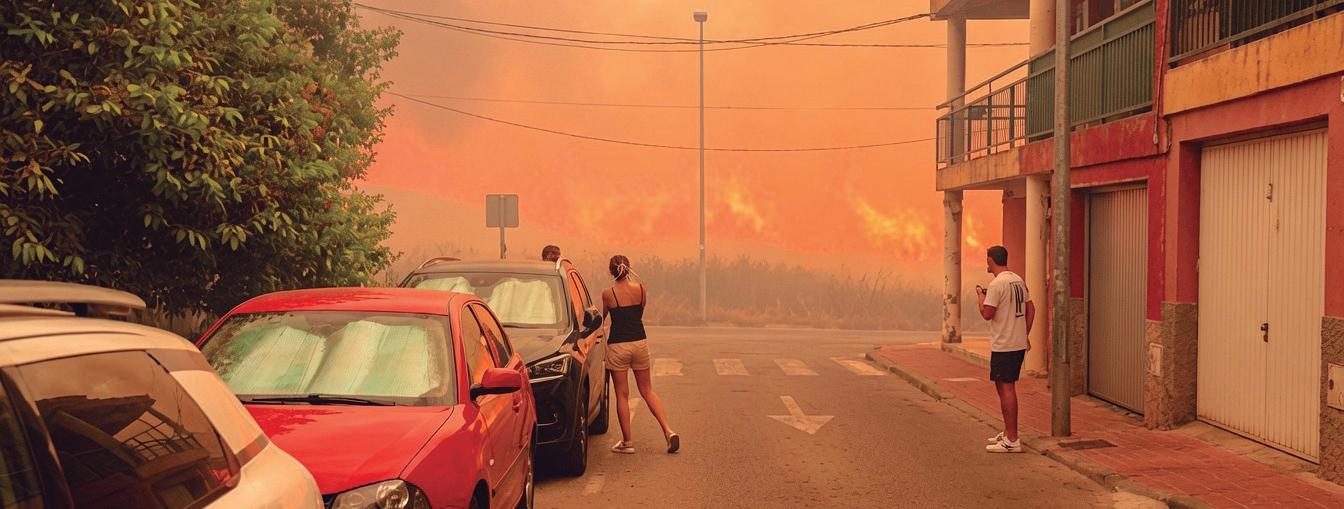
A WILDFIRE in the village of Los Garres y Lages in Murcia forced the evacuation of around 100 homes and prompted deployment of Spain’s military emergency unit, the UME. The fire broke out in mountainous terrain near the El Valle-Carrascoy regional park and spread rapidly through dry vegetation and agricultural land. Authorities escalated the response to Level 2 of the regional emergency plan, allowing national military support to be deployed.
More than 200 to 300 personnel were involved, including firefighters, forest brigades, Guardia Civil officers, and Local Police. Air resources such as helicopters and water-dropping aircraft were deployed to slow the advance of the flames. Residents were evacuated as a precaution due to shifting winds and the rapid spread of the fire. Several roads
were closed, and access to surrounding hillside areas restricted. Temperatures approaching 40°C and dry vegetation intensified the fire’s behaviour, increasing operational difficulty. No casualties were reported, although officials say the situation remains unstable.
Overnight operations focused on building containment lines and protecting residential zones. The cause of the fire is still under investigation, with both natural and human factors not ruled out. Authorities have warned that early-season wildfires can be particularly volatile due to dry ground conditions.
Emergency services continued working to stabilise the perimeter and prevent further spread into nearby communities while monitoring wind changes closely throughout ongoing containment efforts overnight and into the next operational phase.
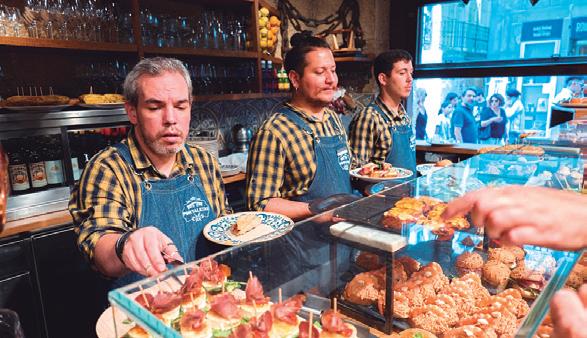
for free. These included the Salzillo Museum, the Archaeological Museum, the Museum of Fine Arts, and the MUBAM. Gastronomy also played a central role in the celebrations, with local restaurants and bars showcasing the Region of Murcia’s renowned gastronomy. Establishments offered both traditional dishes and quick, savoury tapas, reflecting Murcia’s agricultural roots and Mediterranean gastronomic influences. Some more famous Murcian dishes being offered included zarangollo, michirones, meat pies, and paparajotes.
Murcia celebrates regional day with culture, food and festivities.
Photo Credit: Region of Murcia Department of Tourism
Princess Leonor completes parachuting course during final phase military training.
Photo Credit: Royal Household of Spain
More than 200 to 300 personnel were involved.
Photo credit: Servicios de Emergencia y protección Civil de Lorca
Sandy snoozing
SLEEPING under the stars on a Spanish beach sounds idyllic, but it could land you with a hefty fine.
While Spain’s national Coastal Law (Ley de Costas) prohibits organised camping, it remains silent on bivouacking, sleeping in the open on a towel or in a sleeping bag.
Because national law leaves this grey area, councils set their own rules. Most tourist beaches are strictly regulated, largely because heavy tractors clean the sand between 2am and 6am, making sleeping visitors a severe safety hazard.
Local Police enforce three levels of penalties. Minor offences, like staying on restricted beaches overnight, draw fines between €100 and €750. Serious violations, which usually include
€2 cinema tickets
unauthorised overnight sleeping, carry fines from €751 to €1,500. In popular destinations like Benidorm, the average fine is €1,200.
Pitching tents or lighting fires are deemed very serious, risking fines up to €3,000. These penalties can skyrocket even further in protected natural parks.
Active recreation re -
Credit: gogonokicha/shutterstock
mains perfectly legal. Visitors are welcome to walk along the shoreline, sit up to stargaze, or do night photography. However, night swimming and fishing depend entirely on local bylaws. To avoid a four-figure penalty, travellers should always check beach signage or local town hall websites before settling down for the night.
THE Council of Ministers of Spain has approved the renewal of the Senior Cinema programme, which offers cinema tickets for €2 on Tuesdays to people aged 65 and over. The scheme will begin in July 2026 and remain in place until June 2027.
The initiative is open to Spanish residents aged 65 or older who can prove their age with a DNI, passport, residence card or another valid form of identification.
To access the discount, moviegoers should first
check whether their local cinema is participating. Once confirmed, tickets can be purchased either online or at the cinema by presenting the required identification.
With a budget of around €11.5 million, the measure aims to boost cinema attendance among older audiences and support local cinemas. It was first introduced by the Ministry of Culture in 2023, following a sharp decline in cinema-going after the Covid-19 pandemic.
The programme encou-
rages seniors to stay active, enjoy new film releases and participate in cultural activities.
The scheme has already proved highly successful. During its second edition, which ran from May to December 2024, almost 1.7 million senior citizens attended the cinema, generating more than 764,000 additional visits compared with the first edition. In the current campaign, around one and a half million seniors have already gone to the cinema.
Ryanair to return to regionals
RYANAIR has said it may restore capacity at Spanish regional airports if Aena adopts tariff reductions recommended by Spain’s competition authority, the CNMC. The dispute centres on Spain’s upcoming airport pricing framework, DORA III, covering 20272031, which will determine
how airport charges evolve across the national network.
The CNMC has proposed an average annual reduction of around 0.59 per cent in airport fees, arguing this would better reflect demand conditions and support competitiveness.
Aena, which manages
most Spanish airports, instead supports increasing charges to fund infrastructure and operational costs. The disagreement has created uncertainty for airlines, particularly low-cost carriers heavily dependent on regional routes.
Ryanair has linked its network decisions in Spain directly to airport pricing and says lower fees would allow it to reinstate services previously reduced or suspended at smaller airports. While it has not released a formal list or timeline, airports potentially affected include Jerez, Valladolid, Zaragoza, Santander, Asturias, Girona, and Santiago de Compostela, where capacity has fluctuated in recent years.
Any restoration of routes could improve connectivity for regional Spain, increasing access to European destinations, boosting tourism, and reducing reliance on major hubs like Madrid and Barcelona. However, Ryanair’s commitment remains conditional on regulatory outcomes.
Night beach rules.
Spain extends €2 cinema tickets for seniors to boost attendance.
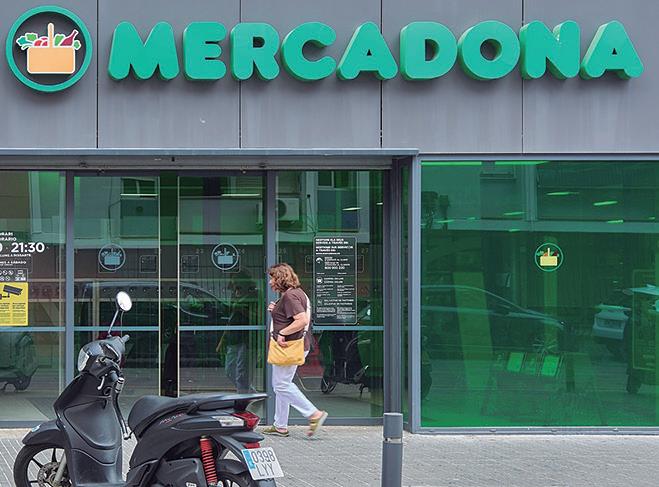
Mercadona summer hours
MERCADONA will once again open hundreds of stores on Sundays during the summer season, offering shoppers greater flexibility in many of Spain’s busiest holiday destinations. The supermarket chain has confirmed that around 320 stores, mainly in coastal and high-tourism areas, will operate under extended opening hours between June 22 and August 30.
The main change is the return of Sunday trading. While most Mercadona supermarkets remain closed on Sundays for much of the year, selected stores will open until 3pm during the summer months. Participating branches will also extend weekday hours, operating from 9am to 10pm.
The seasonal schedule is intended to meet increased demand in tourist areas, where populations rise significantly
Credit : Mundofoto, Shutterstock
during the holiday period as Spanish and international visitors arrive.
Popular destinations included in the programme are Benidorm, Denia, Javea, Cullera and Orihuela Costa in the Valencian Community, as well as major tourist hotspots such as Marbella, Ibiza, Salou, Lloret de Mar and Sanxenxo.
Mercadona says the decision reflects chan -
ging summer shopping habits, with customers often requiring groceries later in the day. However, not all of its more than 1,600 stores will follow the summer timetable, so customers are advised to check opening hours before visiting. The company says Sunday opening remains a seasonal exception, while regular Sunday closures support employee work-life balance.
Fire, water and traditions
SAN JUAN is one of Spain’s most widely celebrated summer festivals, taking place on the night of June 23 to 24 and marking the symbolic start of the summer season. Although now closely associated with beach gatherings, bonfires and nightlife, its origins lie in ancient pre-Christian solstice rituals focused on fire and water as symbols of purification and renewal.
These traditions were later blended with the Christian feast of Saint John the Baptist, resulting in a festival that varies significantly across Spain. The most common practices include lighting bonfires, jumping over flames for good luck, and writing down negative experiences to symbolically burn them away. In coastal areas, midnight sea bathing is also popular, while inland regions incorporate
fountains, rivers and local water traditions. Regional variations are strong, with Alicante hosting the large-scale Hogueras de San Juan festival, featuring elaborate sculptures burned in public ceremonies, while Galicia and Catalonia emphasise beach celebrations and fireworks.
Andalucia includes both coastal and inland festivities, such as water-based street events in some towns. The festival is widely open to public participation, although safety rules and local restrictions apply, especially regarding fires and beach use. San Juan remains a cultural marker of transition into summer, combining ancient symbolism with modern celebration and reflecting Spain’s regional diversity and shared festive heritage across the country today now.
Mercadona will reopen selected stores on Sundays and extend opening hours in tourist areas for summer.
Andalucia includes both coastal and inland festivities.
HOMES across Spain are adopting a simple, chemical-free trick to combat the summer influx of houseflies. As temperatures rise, these frustrating pests multiply rapidly, posing serious health risks by carrying diseases such as salmonella.
To build a classic, cost-effective trap, cut a clean plastic bottle roughly 10 centimetres below the cap. Invert the top section to form a downward-poin -
Plastic bottle pests trick
ting funnel inside the base, leaving a small gap at the bottom, and secure the rim with adhesive tape. Flies are lured in by the scent but cannot escape. Choosing the right bait is essential. For outdoor areas like terraces, a pungent mixture of water, sugar, and
vinegar works best. For indoor kitchens, skip the vinegar, which repels large houseflies, and use warm water with dissolved sugar instead. Adding a piece of overripe fruit or a pinch of yeast creates an irresistible, lowodour fermentation.
Alternative natural deterrents in -
clude home-made sticky fly paper coated in a boiled glaze of water, sugar, and honey. A diluted vinegar spray applied to window frames and bins also acts as an effective barrier. Finally, placing potted aromatic plants like mint, basil, sage, and bay leaves on windowsills helps repel insects. Gently rustling their leaves releases the defensive essential oils, keeping homes peaceful and fly-free.
Summer holiday survival
they offer structured activities and excellent Spanish immersion.
AS Spanish state schools prepare to close around Friday June 19, parents face the daunting challenge of a 10 to 12-week summer break. With international schools also closing in late June, summer camps have become essential for working families trying to balance childcare.
When choosing a programme, logistics are key. Parents must navigate peak coastal traffic, intense afternoon heat, and hidden costs for meals or uniforms. Language focus is another major factor, some run in Spanish, other options are bilingual, and many camps are entirely English-led.
Fortunately, there are options to suit different budgets. Local town camps are the most affordable at €30 to €100 per week. Held at local sports centres and schools,
For €150 to €350 per week, independent day camps offer specialised bilingual activities like sailing, coding, or dance. At the higher end, international camps cost over €500 per week, featuring air-conditioned campuses and professional sports coaching.
For the upcoming holidays, fresh trends like eco-sustainability, mindfulness, cooking, and teen leadership are also gaining popularity. Options are widely advertised on town hall websites and social media.
Whether needed to cover full-time working hours or simply to allow parents a peaceful afternoon, these camps offer a solution for everyone.
Plenty of options to suit.
The beautiful game
LEAPY LEE SAYS IT
OTHERS THINK IT
THE beautiful Game? Don’t make me laugh. With the World Cup fast approaching, we once again find ourselves subjected to the usual, so-called ‘preparation football friendlies’. Well, I say football. What I’ve actually witnessed is something that looks suspiciously like a cross between a fashion parade, a theatrical audition and a rehearsal for Swan Lake.
Whatever happened to footballers?
Remember, when players looked like blokes you’d happily have a pint with?
Men who’d run through a brick wall for their club, get kicked from one end of the pitch to the other, pick themselves up and carry on regardless? Not anymore.
Today, many of our highly paid superstars seem more concerned about their hairstyles than their heading ability. Haircuts now appear to require a team of architects, a landscape gardener and possibly a structural engineer.
We have colours that would make a tropical parrot blush and styles that appear to have been inspired by a colli-
sion between a lawnmower and a paint factory. Then there are the fashion statements. Good heavens! Designer handbags worth €60,000 dangling from the arms of millionaire footballers as they parade through airports like contestants on a celebrity catwalk. Sunglasses large enough to block out a solar eclipse, trousers apparently purchased two sizes too short, and jewellery that could finance a small country’s annual budget. Of course, appearance is only half the performance.
The real artistry begins once they step onto the pitch. Hours must surely be spent practising dramatic collapses. A gentle brush on the shoulder now produces reactions previously associated with being hit by a runaway bus. Players clutch their faces when nobody touched them above the waist.
They roll over three or four times, screaming in agony, only to make a miraculous recovery the moment the referee produces a card. Medical science should be studying these people. Imagine the benefits to humanity. Broken legs healed in 12 seconds. Life-threatening injuries cured by the sight of a free kick.
The irony is that the game itself remains wonderful. Football is still capable
of producing moments of genius, excitement and pure sporting drama. Unfortunately, those moments are increasingly interrupted by endless posing, preening and theatrical nonsense. VAR doesn’t help much either. What once flowed naturally now resembles a committee meeting. Players stand around waiting for officials to spend five minutes examining a toe nail that may or may not have been offside. Progress?
The ol’ boy is definitely not convinced. As the World Cup approaches, I can only hope that somewhere beneath the hair gel, designer labels and Oscar-winning performances, there are still footballers who remember what the game is actually about. Running. Tackling. Passing. Shooting. Competing.
You know - football. And if they could stay on their feet for more than 30 consecutive seconds, that would be a welcome bonus too. Ah well. I will once again be watching very little of this fabricated nonsense. Bring back my much-loved teammates in the Show Biz Eleven I say. Now that was the type of football everyone enjoyed.
Keep the faith Love Leapy.
Leapy Lee’s opinions are his own and are not necessarily representative of those of the publishers, advertisers or sponsors.
Spanish stereotype busted
SPANIARDS have garnered a reputation for being “lazy”. Many believe the long-held belief that people in Spain live a laid-back lifestyle, spending all their time at the beach or by the pool, prioritising siestas or fiestas. A recent report however, puts that stereotype in jeopardy.
New figures from Eurostat reveal employees in Spain worked an average 36.3 hours a week, above the European average of 35.9. While this is not the highest in Europe, it’s certainly not the lowest.
Greece had the longest average work week at 39.6 hours, while Belgium had the lowest with 34.3 hours. The report highlighted a stark difference in work culture in Northern Europe, where the average working week rarely exceeds 35 hours, compared to countries in the south.
The figures are also influenced by how common part-time employment is in each country. Spanish part-time workers are employed for 20.2 hours, below the EU average of 21.8 hours, highlighting an ongoing issue in Spain’s labour market. With daily costs rising, many part-time employees are seeking more work. In fact, 45.7 per cent of part-time workers would like to work more.
Your cruise questions answered by a former senior ship’s officer
YOUR friends aren’t wrong. And they aren’t right either.
I spent 15 years working on cruise ships, and for part of that time my job involved encouraging guests to book their days ashore through the ship. Now I can speak candidly: the answer is more complicated than either side admits.
The real question isn’t price. It’s who holds the clock.
When you book through the ship, you’re buying a guarantee. If the ship docks late, the tour adapts. If your group returns behind schedule, the ship waits. Independent travellers don’t have that safety net. I’ve made calls no officer enjoys, to guests already ashore who weren’t going to make it back in time.
But look at the port before you decide anything else. Some ports you walk straight off the gangway
into the city. Others are tender ports, where a small boat ferries you ashore, and ship excursion passengers typically board first. Going independent in a tender port means waiting your turn before your day has even started.
There’s also a strong case for going independent, and it goes beyond price. A good private gui -
de gets you to the old town or the viewpoint before the ship’s coaches have finished loading. You can linger where something surprises you and skip what doesn’t. You return on your own schedule, with no queue at the gangway.
A regional example makes it concrete. If the ship docks in Malaga and you want to visit Antequera,
Have a cruise question? Write to contact@theofficersdesk.com.
the road is straightforward and the risk of running late is low. Go independent. But if you want Puerto Banus, the coastal highway between Malaga and Marbella is notorious for traffic. A delay that felt manageable inland becomes a real risk with a departure waiting. In that case, I’d book through the ship.
Weather adds another layer. In tender ports especially, rough seas can halt small boat operations entirely. Book through the ship and you’ll be refunded. Book independently and you’re subject to the operator’s policy.
The short version: when the port is simple and the road is forgiving, go independent and go well. When the logistics are complex, let the ship carry the risk. Often, that’s exactly what the premium is for.
Spanish employees work
FINANCE
BUSINESS EXTRA
Temu fined
TEMU has been fined €200 million by the EU for selling illegal products on its site. The retailer’s biggest failure was selling unsafe baby toys that contained high levels of illegal chemicals and proved to be a choking hazard. Temu has until August to prove the issues have been resolved.
Green grows
THE UK’s green economy is benefiting more than just the environment. Recent research finds the industry to be worth more than £100 billion. Not only that, but the industry has generated more than a million jobs, with many employees earning a higher than average salary of £43,000 a year.
Streaming surge
ACCORDING to the CNMC, more households than ever subscribe to streaming services, with 65.7 per cent of households with access to the internet subscribing to at least one platform. CNMC revealed 59.8 per cent subscribed to the services directly, while 44 per cent had access through bundled services.
Made in Europe
THE EU’s proposed ‘Made in Europe’ policy, aimed at favouring European-made products, has triggered fierce lobbying from member states and foreign partners. Critics call it protectionist, while supporters see it as vital against Chinese and US competition. Disputes over definitions, trade impacts, and industrial policy have delayed the plan repeatedly.
Everyday needs
IN an effort to help households, the UK government recently released a list of over 100 ‘everyday essentials’ targeted for tariff reductions. The list includes a wide variety of healthy foods and pantry staples. Chancellor Reeves also recently announced a cut to VAT on children’s restaurant meals and attraction admissions.
An estimated 13.5 per cent of all people aged 16 to 24 years in the UK were not in education, employment or training (NEET) in January to March 2026, according to the ONS.
Black market bets
IN May, an alleged unlicensed gambling venue was raided in Manchester. The operation was carried out by the Greater Manchester Police in cooperation with the Gambling Commission. Gambling paraphernalia was found on the premises, as were records and account books which Financial Crime and Money Laundering teams are now combing through to support the inquiry.
The raid comes just weeks after the launch of a dedicated illegal gambling taskforce, as the UK crackdown on unregulated betting. The taskforce has been given £24.5 million in funding, and will be active for 12 months. Its three main objectives include: preventing or reducing payments to and from illegal gambling operators, tackling online advertising of illegal gambling, and enhancing cross-agency collaboration against remote and land-based
illegal gambling.
A recent H2 Gambling Capital report suggests that illegal gambling operations are capturing a larger share of the UK’s gambling activity. Tighter restrictions haven’t necessarily stopped illegal gambling, it’s simply pushed them further into the shadow of the black market. In fact, forecasts predict the UK’s illegal gambling market stakes could dou-
ble from £17 billion in 2025, to more than £33 billion by 2028. Illegal gambling offers none of the safeguards of the regulated sector. The UK’s legal gambling industry employs 109,000 people, contributes £6.8 billion to the UK economy and generates £4 billion in tax revenue, all of which is at risk if policymakers don’t stop consumers migrating to the black market.
Child poverty in Spain
DESPITE being one of the leading economies in the EU, Spain has one of the highest child poverty rates, a problem that has plagued the country for years. Recent data reveals 29 per cent of children and adolescents live in monetary poverty, while a total of 34.6 per cent experience severe material and social deprivation.
Child poverty has lasting consequences, affecting an individual’s health, education and social standing which creates an intergenerational cycle. So, while reducing child poverty is costly, not acting is even more detrimental to the country’s future. In fact, child poverty already costs €63 billion annually, due to medical costs and lost productivity.
To combat child poverty, Yolanda Diaz recently proposed an automatic €200 per month child benefit for
Ditching savings
TRADITIONALLY, young people would set aside their savings in an account for a rainy day. However, technological advancements have made investing easy and accessible to almost anyone, and young people today are taking advantage.
Approximately 70 per cent of MyInvestor’s €17 billion in assets correspond to investment products. What’s more, their client base is primarily aged between 20 to 40 years old. Young people aren’t just improving their financial literacy, they are changing the financial culture.
all families, regardless of income. Many believe this direct approach to be the best solution, potentially slashing Spain’s child poverty rate by 50 per cent.
Menswear evolution
ASOS is shifting its business strategy, focusing on enhancing its menswear catalogue through partnerships with nine new labels.
Menswear is quickly evolving. The global menswear market was valued at €581 billion in 2025 and is projected to grow to €622 billion in 2026. According to market research, 40 per cent of men now seek outfit inspiration online, signalling a major shift in how male consumers make purchasing decisions. ASOS’s renewed focus suggests the retailer sees longterm growth potential.
RENTERS are now spending more of their monthly pay cheque on rent than ever before. On average, 50 per cent wages go on rent, with that figure rising to as high as 70 per cent in cities like Madrid and Barcelona.
The rapid rise of rental prices is alarming. In 2019, rent accounted for only 38 per cent of earnings. The fact that rental prices have vastly outpaced wage growth has only exasperated the issue.
Disruption predictions
THE OECD recently ran a ‘prolonged disruption’ scenario in which they predicted the consequences if the US-Israeli war on Iran extends into 2027. The analysis predicts the global GDP growth will drop from 3.4 per cent in 2025, to an estimated 2.1 per cent in 2026, forcing countries into a recession. As for gas and oil, shortages could prompt an ‘enforced rationing’. Additionally, the lack of access to fertiliser will see food prices surge. Energy shortages also puts the booming AI business at risk which, in turn, threatens economies that have invested heavily in the technology.
Patagonia v Pattie Gonia
Rental spending Vaccine investment
CEPI, the global health organisation, has committed over €50 million to three pharmaceutical groups to accelerate the development of Ebola vaccines. Reinvigorated efforts to find an effective Ebola treatment come after more than 300 cases were confirmed in the Dominican Republic of Congo. In an effort to control the spread before it becomes an outbreak, the global vaccine alliance Gavi has contributed €50 million and the World Bank’s Pandemic Fund announced upwards of €189 million in grants.
CLOTHING company Patagonia is suing environmental activist and drag queen, Pattie Gonia for trademark infringement. The company is suing for the sum of $1, with the stipulation the drag activist cease using the name ‘Pattie Gonia’. The two parties have been in negotiations for three years to find a beneficial solution. However, the situation escalated when Pattie filed a trademark in 2025 for exclusive rights to the name. While Patagonia says the lawsuit is to protect brand identity, Pattie claims they are trying to ‘erase an activist’.
UK cracks down on illegal gambling.
A universal child benefit could reduce child poverty in Spain.
3I Group 2.190,00 2.212,00 2.139,00 2,62M
Admiral Group 3.262,0 3.280,0 3.200,0 404,93K
Airtel Africa 341,00 341,00 332,00 7,29M
Anglo American 4.066,0 4.099,0 4.012,0 3,81M
Antofagasta 4.210,00 4.275,00 4.128,00 1,02M
Associated British Foods 1.874,0 1.889,5 1.864,5 532,03K
AstraZeneca 13.554,0 13.594,0 13.168,0 973,24K
Auto Trader Group Plc 459,60 464,20 450,00 14,12M
Aviva 608,00 609,80 605,20 5,75M
B M European Value Retail 208,20 214,60 199,10 15,31M
BAE Systems 1.916,00 1.923,00 1.883,50 4,41M
Barclays 463,90 466,85 453,20 27,7M
Barratt Redrow 262,60 265,20 257,70 9,98M
Beazley 1.283,00 1.284,00 1.281,50 2,91M
Berkeley 3.480,0 3.490,0 3.410,0 184,13K
BP 544,70 544,70 536,20 19,55M
British American Tobacco 4.320,0 4.373,0 4.294,0 1,99M
BT Group 201,60 207,20 201,40 12,56M
Bunzl 2.420,0 2.446,0 2.384,0 1,43M
Centrica 188,25 189,35 186,05 7,26M
Coca Cola HBC AG 4.236,0 4.320,0 4.188,0 426,53K Compass 32,51 33,00 31,87 2,65M ConvaTec Group 204,20 204,20 197,00 5,4M Croda Intl 2.938,0 2.947,0 2.903,0 224,46K
6.025,0 6.075,0 5.975,0 354,56K
1.473,0 1.502,5 1.468,5 4,44M
7.130,00 7.130,00
Beat the heat
Cool your beer in minimum time.
WITH the scorching high temperatures, staying cool during the heatwave is essential. These six cheap, viral life hacks will keep you, your food, and your tech cool without expensive spending.
To chill drinks fast, submerge warm cans in a bucket of ice water mixed with half a cup of table salt. Salt lowers the water’s freezing point, pulling heat from aluminium cans in five minutes and glass bottles in 10.
If you are plagued by humid nights, place lightweight cotton sheets in a sealed plastic bag and freeze them for two hours before bedtime for an instant chill.
For picnics, layer ice packs at the bottom of your cooler, add food, and
pack gaps with a beach towel to eliminate warm air, using pre-frozen water bottles as extra ice packs. You can also store sun lotion in the fridge or cooler bag; the chilled cream feels refreshing on hot skin, but never freeze it, as extreme cold breaks down the protective SPF structure.
Meanwhile, pre-chilling an insulated flask in the freezer allows you to pack it with ice lollies, keeping them frozen for up to six hours. Finally, remove phone cases to prevent overheating. If a device crashes, place it in a cooler bag briefly, never the freezer. Alternatively, hiding valuables inside a clean, unused disposable nappy on your towel keeps out sand and acts as a brilliant thief deterrent.
Spanish home invaders
COCKROACH sightings are rising across Spain as warmer weather arrives, causing residents to spot the pests inside homes and on pavements. Experts state that prevention is achievable through consistent cleaning routines, physical barriers and natural repellents.
Thorough cleaning serves as the primary defence against infestations. Wiping floors, worktops and bathroom surfaces with cleaning vinegar creates an environment that insects actively avoid due to the strong scent. Property owners should conduct deep cleaning sessions at least once weekly during spring and summer. Sealing entry points is equally essential to block access. Residents must close every crack in walls or floors and place plugs in unused drains. Ground floor properties require extra vigilance, meaning windows and external doors need screens or careful monitoring during ventilation periods.
Natural remedies offer additional protection without harsh chemicals. Placing bowls of bay leaves and cinnamon in problem areas or spraying peppermint oil around skirting boards discourages cockroaches. Households can also sprinkle diatomaceous earth in hidden corners to damage insect exoskeletons safely. Finally, keeping food in sealed containers and removing waste daily removes what attracts the pests. If sightings continue despite these efforts, local pest control services provide targeted treatments. Taking early action and maintaining these hygiene habits helps families keep their homes clear.
• News from Our Other 6 Newspapers •
Costa del Sol Beefed up security
TORREMOLINOS has launched a major security operation to manage the summer influx of tourists and maintain order along its coastline.
The local council activated the safety initiative on Monday, June 1, deploying 15 beach auxiliaries, 12 bicycle-mounted police officers, and a new drone unit to monitor crowded coastal zones and the promenade. Unlike in previous years, the beach auxiliaries will continue their duties past September to maintain safety levels throughout the year. These staff members provide information and enforce local bylaws, focusing particularly on stopping unauthorised street vending.
Meanwhile, the mobile bicycle teams will provide a fast, approachable presence in high-traffic pedestrian areas to assist everyone. Aerial surveillance from the new drone unit will further assist police coordination. This approach connects the auxiliaries, Local Police, and lifeguard services to handle the sharp rise in the summer population.
Axarquia
Ship-shape house repairs
WORKERS have started maintenance on a locally loved landmark, the ship house in Almuñecar. A team of specialists from Cordoba is carrying out painting and repair tasks on the exterior of La Casa Meu Barco. This distinctive property sits at Avenida del Mediterraneo 34, near Playa de San Cristobal. Family members of the late owner Pepe Pérez are directing efforts to refresh its nautical appearance and preserve its character.
José María Pérez Ruiz constructed the home dring the early 1970s. A former merchant marine engineer, he shaped the building like a motor ship around 75 metres in length. Salvaged ship elements, including portholes, masts, wheels, and ropes, feature throughout the structure.
Many locals and holidaymakers regard the house as a recognisable sight on the seafront. Pepe passed away in January 2025, yet his vision continues through family care.
These activities require vehicles to use alternating directions and expect minor delays.
Mallorca
Georgina brings the glamour
MALLORCA’S reputation as a celebrity hotspot continues to grow, with Georgina Rodríguez becoming the latest star to be spotted enjoying the island’s stunning scenery.
The model, influencer and fiancée of football legend Cristiano Ronaldo was photographed trecently during a glamorous swimwear shoot believed to be linked to her recent collaboration with Spanish fashion brand Calzedonia.
Rodríguez was seen posing aboard a luxury yacht in the crystal-clear waters off Mallorca’s southwest coast, using the island’s dramatic cliffs and turquoise sea as the backdrop for the campaign. Dressed in a series of elegant swimwear looks, she appeared relaxed as photographers and crew captured the images under the Mediterranean sun.
The 32-year-old announced earlier this year that she had joined forces with Calzedonia, becoming one of the faces of the brand’s latest swimwear collections.
Costa Blanca South Sea access
MORE than 1,500 people came together in Alicante for the eighth La Mar Solidaria, an annual event aimed at making water sports accessible to people with disabilities.
The initiative welcomed more than 300 participants with a range of physical and intellectual disabilities, supported by volunteers, family members, sports clubs and local organisations.
Held along Alicante’s waterfront, the event offered opportunities to take part in activities including sailing, paddle surfing, swimming and adapted diving.
Specialist equipment and trained instructors ensured that participants could enjoy the sea safely, regardless of their individual needs.
Organisers said the event was designed to remove barriers and encourage greater inclusion in sport and leisure activities. Many participants were experiencing some of the activities for the first time.
Almeria
Celebrating history
SPIRITS were high and the streets were alive at the weekend, when Vera celebrated its momentous Moors and Christians parade. Celebrating its 13th edition, the parade was truly a standout celebration of Vera’s tradition and history, proving why it continues to be one of the most anticipated events of the year.
For three hours, hundreds marched through the streets of Vera in a parade that felt more like a performance. Every performer was dressed in authentic replica costumes made from vibrant fabrics and shiny metals. Some carried swords, others sat tall on horseback and a couple of the troupes wore towering headpieces that made them seem larger than life. The attention to detail didn’t stop there, banners and bunting were draped across buildings, adding to the immersive experience.
Every year, the Moors and Christians parade serves as a way to not just connect the community with the past, but with each other. Thousands gathered to watch and cheer every step of the way.
Costa Blanca North
Benidorm
braces for footie fever
BENIDORM is preparing for a major influx of British football fans as the World Cup gets underway, with local authorities stepping up security measures and planning for a busy summer season.
The popular Costa Blanca resort, long regarded as a favourite destination for UK holidaymakers, is expecting thousands of additional visitors during the opening stages of the tournament. Officials have been working with police, emergency services and tourism representatives to ensure the town is ready for the increased demand.
According to reports, flights from the UK to Alicante Airport are up by more than 16 per cent during the early weeks of the competition, highlighting the expected surge in football supporters travelling to Spain.
While many fans will be visiting specifically to watch matches in bars and fan zones, local businesses are also anticipating a significant boost in trade.
Could you pet-sit somewhere for six months?
MEET Obi, he is a discerning cat who lives with some other pets in Manilva.
Obi, a Maine Coon who likes to relax, lives with two dogs, two birds and a collection of pond fish, all of whom need a house-sitting couple in 2027 for a period of six months from January to July. Could you care for a Maine Coon, a St Bernards’ dog, a Belgian Malinois, a cockatoo, a parrot and some fish?
You’d live in a beautiful home with a ready-made pet family in exchange for caring for the pets. If you’re interested get in touchcontact details below.
Fancy a new adventure?
Imagine trading expensive, soulless hotel rooms for a beautiful home in Spain, complete with a furry temporary best friend. Through HouseSit Match.com , homeowners get trustworthy, free care for their
animals and property while they travel. In return, house-sitters get free accommodation and the ultimate insider experience. It’s affordable travel with a heartbeat - allowing you to live like a local,
one house-sit at a time. How it works:
1. Register at HouseSitMatch. com.
2. Create your profi le with photos of you and your pets.
3. Match with your perfect house-sitting partner and start saving!
For a small annual registration fee (and zero ‘per-sit’ fees), you can connect with verified members. Pets stay in their routines, properties remain secure, and owners dodge eye-watering kennel fees.
“This site is definitely the best... Lamia and her team provide such a personal approach and will talk you through any problems.” - Kay Lattimore
Join today Register at HouseSitMatch. com and use code WELCOME50 for 50 per cent off your fi rst year.
Growing up with pets
BRINGING a pet into the family can be an exciting experience for children, but it also comes with valuable life lessons. From feeding a hungry cat to walking the dog before school, pets help children understand the importance of responsibility in a natural and rewarding way.
Caring for an animal teaches children that another living creature depends on them every day.
Simple tasks like filling a water bowl or cleaning a fish tank encourage routine and consistency. Over time, children begin to understand that responsibilities cannot simply be ignored when they feel tired or distracted.
Pets also help children develop empathy and patience. Animals cannot always communicate what they need, so children learn to pay attention to behaviour and body language. This can strengthen emotional awareness and encourage kindness towards others.
Of course, parents still play a major role in pet care, especially with younger children. However, involving children in daily tasks gives them a sense of achievement and confidence. Many families find
Hot dogs
WHEN the temperature rises, our dogs can struggle far more than we do. Unlike humans, dogs cannot cool themselves efficiently through sweating, which means hot weather can quickly become uncomfortable and even dangerous. Thankfully, a few simple habits can help keep your four-legged friend safe and happy during summer.
Fresh water should always be available, both indoors and outside. Adding a few ice cubes to the bowl can make it even more refreshing on particularly warm days. Walks are best taken early in the morning or later in the evening when pavements are cooler and
the sun is less intense. A quick test is to place the back of your hand on the pavement for five seconds. If it feels too hot for you, it is too hot for your dog’s paws.
Shade is equally important. Whether you are in the garden, at the park or on holiday, make sure your dog has a cool place to rest. Cooling mats, damp towels and paddling pools can also help lower body temperature.
Most importantly, never leave a dog in a parked car, even for a few minutes.
Temperatures can rise rapidly and become life-threatening surprisingly quickly.
that pets do far more than provide companionship.
They quietly teach important values that children carry into adulthood, including commitment, compassion, and reliability.
Growing up with pets creates responsible children.
Help your dog stay cool this summer.
Meet Obi who likes occasional company.
CLASSIFIEDS
CHARITY
ALCOHOLICS ANONYMOUS IS ALCOHOL COSTING YOU MORE THAN MONEY? Drinking to excess not only affects your health it can spill over into every other aspect of your life - damaging everything that is important to you. English-speaking AA meetings are held throughout the Costa Blanca from Valencia City to Murcia. Anyone wishing to attend a meeting or discuss a possible drinking problem contact Costa Blanca North: 648 169 045 or Costa Blanca South: 625 912 078 or Costa Calida 679 385 105 All calls are treated in the strictest confidence. AA in German: 645 456 075; Spanish: 679 212 535; Flemish: 635 047 053; and Scandinavian: 659 779 222. www.aa-costablanca.org (93323)
CANCER SUPPORT GROUP (MABS) MURCIA/MAR MENOR
Help and support is just a phone call away, Avda Rio Nalón, Tel: 693 275 779 (95462)
MASSAGE
ELEGANTE, slim Sophie. Experienced in a large variety of full body massages. Villamartin apartment or can
travel to all areas. 693 357 526 (314062)
INSURANCE
WE ARE currently the market leader in our country in the sale of direct car, motorbike, home and company fleet insurance. Since we started out in 1995, our philosophy has always been to offer an excellent service with the best prices in the market. For the most competitive quotes in English, call Linea Directa on 952 147 834. (200726)
OTHERS
EDS? We have the solution, Kamagra pills & jells, Cialis, Sidenafil, over 7 products for men & ladies, mixed trial packs. Available by mail-order. WhatsApp or call 603 117 394
MOTORING
Honda Prelude - the right way to bring back a sporting coupe from the past
ROAD TEST
By Mark Slack
REVIVING old motoring names has become a bit of a fashion of late, often in a completely different guise to their original, but can prove a tricky task for car makers. People of a certain age may well remember those originals and almost inevitably view them through somewhat rose-tinted glasses.
Honda have been rather clever though with their relaunch of the Prelude name in that it’s not an SUV with electric power, as certain other car makers have done, the Prelude has been relaunched as original, a coupe. In this new guise the Prelude, to most of those who commented on my test model, is a handsome looking car. Power comes from a 2.0-litre petrol engine with dual electric motors mated to an e-CVT automatic gearbox. On the road the Prelude is a smooth and refined drive. Even the characteristic rise in engine revs of the CVT transmission, and a consequent increase in noise, is more subdued than
usual in the Prelude. The handling is assured and the ride compliant enou gh to soak up the tortuous bumps and potholes in our roads. There are four driving modes - Custom, GT, Sport and Comfort - and S+Shift which si mulates gearchanges from the CVT transmission.
As ever with Honda the build qua lity is superb and although the Pre lude isn’t a luxurious interior it feels suitably premium and tactile. Space for front seat occupants is excellent, ditto the seat comfort, and there’s a decent range of adjustment. Even in the rear it’s not as constricted as you might imagine. It’s only headroom that causes potential issues for taller occupants.
Facts at a Glance
• Model: Honda Prelude
Standard equipment is good, there’s a single model, with smart entry and start, rear view camera, front and rear parking sensors, adaptive cruise, auto lights with high beam assist, auto wipers, Bluetooth, Apple CarPlay and Android Auto and a pretty decent sound system with Bose speakers. Performance-wise the Prelude isn’t especially quick, albeit certainly quick enough, with the benchmark 62 mph
Car grant update
DRIVERS in Spain could soon save up to €5,500 on electric or low-emission vehicles following the launch of Plan Auto 2030. This new government initiative replaces the previous MOVES III scheme with a significant change in how grants are administered. Rather than paying the full price and waiting months for reimbursement, buyers now receive an instant discount at the dealership. This reduction appears directly on the purchase invoice, removing much of the bureaucracy that frustrated drivers under earlier programmes.
For passenger cars, the maximum support of €5,500 includes up to €4,500 in public aid and a compulsory €1,000 dealership discount. The final amount varies based on the vehicle type, energy efficiency, and whether it was manufactured in Europe. The scheme primarily targets vehicles with the CERO environmental label, though electric motorcycles and quadricycles may also qualify for grants up to €1,100 and €1,500 respectively. Authorities have allocated approximately €400 million to the
2026 scheme to modernise one of Europe’s oldest vehicle fleets. Crucially, the programme applies retroactively to eligible purchases made from January 1, despite the online platform not being fully operational yet. While private buyers are limited to one subsidised vehicle, businesses may apply for support covering multiple units. This shift aligns with the expansion of Low Emission Zones across major cities, making the transition to cleaner transport more immediate and financially accessible.
reached in just over eight seconds. As with many interesting cars speed doesn’t necessarily equate to enjoyment and the Prelude is a perfect example of this, it’s a car that’s more than capable of putting a smile on your face but at the same time has great useability for everyday travels. Good looks, excellent build quality, practicality and enjoyment aplenty behind the wheel. It’s rare to find a car that ticks all these boxes and it’s a credit to Honda that despite the recent loss of the Civic Type R they can still produce a car that stands out from the crowd of rather homogeneous models we tend to see nowadays.
• Engine: 2.0-litre, 4-cylinder petrol with twin electric motors and electric, hybrid or petrol drive modes
• Gears: e:CVT automatic with four selectable drive modes
• Price: €48,076/ £41,595
• Performance: 0-100kph/62mph
8.2 seconds - 188kph/117 mph
• Economy: 5.2l per 100km/54.3mpg
Emissions: 117 g/km
Model tested was UK-specification and equipment levels and prices may vary in other markets
ITV twice yearly
Some vehicles may face more frequent ITV inspections once they are 10 years old.
THOUSANDS of camper van owners in Spain could face higher costs and more frequent vehicle inspections once their vehicle turns 10 years old. A clarification issued by Spain’s Directorate General of Traffic (DGT) confirms that certain camper vans will require ITV inspections every six months after reaching the decade mark, instead of the annual check many drivers expect.
The rule does not apply to all recreational vehicles, as the key factor is how the vehicle is classified. Traditional motorhomes registered as category M vehicles follow a different schedule. After four years, they require an ITV every two years, and once they reach 10 years of age, inspections become annual. Conversely, camper vans classified as category N vehicles face stricter requirements. They must pass an ITV every year
until they turn 10, after which inspections are required every six months.
The financial impact could be significant. ITV inspection costs often range between €120 and €150, depending on the region and testing station. While an older motorhome needs just one inspection per year, a category N camper van requires two, doubling annual ownership costs.
This clarification arrives as many vehicles purchased or converted during the post-pandemic surge in road travel now approach the decade threshold. Drivers can reduce costs by comparing ITV prices, as inspections can be carried out in any autonomous community regardless of where the vehicle is registered. Checking official classifications may now be essential for owners.