




THE Costa Blanca town of Javea is rapidly becoming one of Spain’s top property hotspots for foreign buyers. Once known primarily as a holiday favourite, this Alicante Province town is now attracting a growing number of expatriates choosing to relocate permanently rather than invest in second homes.
Market data by Bolsamania shows Javea ranks among the Spanish locations with the highest proportion of international home purchases. Buyers from the UK, Germany, the Netherlands and Scandinavia are leading the demand, drawn by more than 300 days of sunshine, coastal scenery and a slower
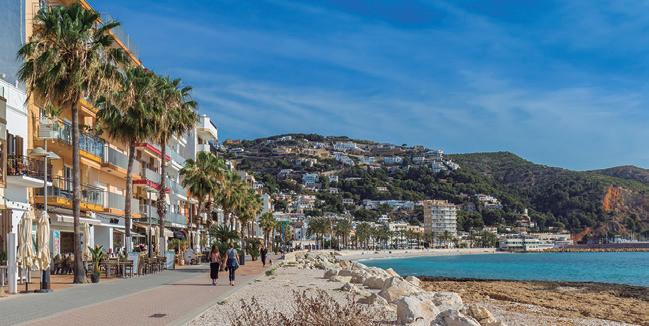
pace of life.
Unlike high-rise resort destinations, Javea has retained its identity as a town. Strict planning rules have preserved its low-density landscape of villas, sea views and residential neighbourhoods. This balance of Mediterranean charm and modern infrastructure is proving especially
appealing to remote workers, retirees and families seeking long-term stability in Spain.
Property prices have risen as demand increases, particularly in sought-after areas near Arenal beach and hillside communities with panoramic views. However, compared to larger cities and island markets, many expatriates
still see relative value, especially for detached homes with outdoor space.
For those already living in Spain, or considering the move, Javea represents more than a lifestyle upgrade. It reflects a wider trend: international buyers prioritising quality of life, community and climate when choosing where to put down roots.
















EL POBLE NOU DE BENITACHELL has paid tribute to its Civil Protection volunteers in an emotional ceremony recognising their efforts during the devastating DANA floods that hit Valencia in October 2024.
The event, held to mark International Civil Protection Day, brought together local officials, residents and members of the volunteer unit to acknowledge the team’s rapid response and solidarity when severe storms caused widespread destruction across the Valencia region.
Mayor Miguel Ángel García, councillor for Public Safety María José Ivars and
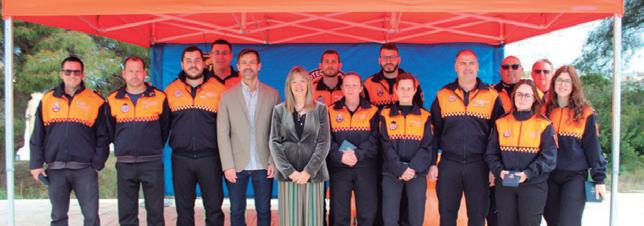
Civil Protection coordinator
Arturo Esteve led the ceremony, which began with a minute’s silence for those who lost their lives in the floods. Speakers highlighted the commitment shown by volunteers who quickly organised collections of essential supplies, including food and water, before travelling in convoy to assist affected
communities.
Sixteen members of the Benitachell unit received the official Distintivo Honorífico de Participación DANA 2024, a national recognition awarded for outstanding service during the emergency. Volunteers not only delivered humanitarian aid but also helped with clean-up efforts in flood-damaged areas.
Local associations and residents were also praised for their support, contributing donations and logistical assistance.
The ceremony concluded with a gathering in honour of the volunteers, celebrating what town leaders described as a powerful example of community solidarity in action.


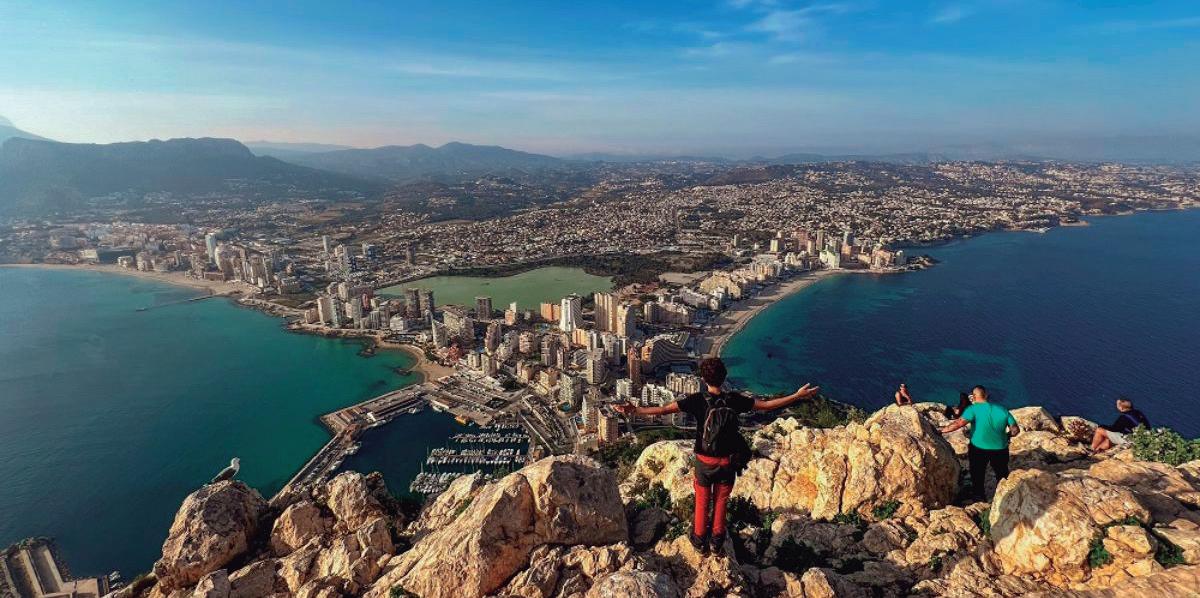
A 52-YEAR-OLD woman was airlifted to safety on Friday February 27 after suffering a serious leg injury just metres from the summit of the Peñón de Ifach in Calpe.
Emergency services were alerted at 11.36am when reports came in that the hiker had fallen approximately 70 metres below the peak of the towering limestone rock, one of the Costa Blanca’s most visited natural landmarks. Due to the steep terrain and difficult access, a helicopter rescue was immediately deployed.
The operation was coordinated by the Alicante Provincial Fire Consortium, which mobilised its specialist Mountain Rescue Group alongside the Alpha 01 he
licopter. Rescue personnel were winched down to reach the injured woman, who is believed to have sustained fractures to her lower leg.
After stabilising her injury at the scene, crews secured her on a stretcher and lifted her by winch into the aircraft. She was flown to a nearby helipad, where a Basic Life Support ambulance was waiting to transfer her for further medical treatment.
The rescue concluded shortly after 1pm. Authorities continue to remind walkers that the final stretch to the summit is steep and exposed, requiring suitable footwear and caution.










































SPAIN faces a significant rental market disruption in 2026 as 632,369 rental contracts signed during the Covid-19 pandemic reach their five-year terms, impacting more than 1.5 million residents. Tenants are confronted with steep rent increases or non-renewal, as landlords seek to align contracts with current market rates or convert units into short-term tourist rentals. Many urban areas have already seen cumulative rent hikes exceeding 20 per cent since 2021, reducing tenants’ bargaining power.
Individual cases illustrate the sharp rise: in Malaga, a tenant faced a 36 per cent increase from €400 to €800 monthly, with few alternatives available. Spain’s Ley de Arrendamientos Urbanos offers limited protection, applying only during contract terms, leaving tenants vulnerable post-expiration. High-de-
mand zones benefit from ‘zona tensionada’ controls, but these do not compel renewals. Experts attribute pressure to limited housing supply, tourism-driven competition, and scarce public housing development.
Advocacy groups, like the Sindicato de Inquilinas de Madrid, argue that extending renewal rights or capping increases could stabilise housing access, though reforms remain politically contentious.
Without intervention, widespread displacement and inequality in housing access are expected. Analysts warn that the ‘great renewal’ may permanently reshape urban rental markets, emphasising the urgent need for policy action to protect vulnerable tenants and maintain social stability amid ongoing affordability challenges.
SPAIN’S minimum wage has risen again in 2026, bringing a modest but meaningful boost to millions of workers. The government approved a 3.1 per cent increase in the Salario Mínimo Interprofesional (SMI), setting it at €1,221 gross per month over 14 payments, or €17,094 annually.
The rise is retroactive to January 1, so eligible workers will receive back pay. The change amounts to about €37 extra per month, or roughly €518 more per year in gross income, offering some relief as living costs remain a concern. Around 2.5
million workers are expected to benefit. Women account for about two-thirds of minimum wage earners, around 1.6 million people. Under-25s are also disproportionately affected, as they are more likely to earn the minimum wage than older groups.
Agriculture and services have the highest concentration of beneficiaries, with nearly 28 per cent of agricultural workers and more than 14 per cent in services receiving the SMI, while industry and construction are less affected. Andalucia, Madrid,
Valencia and Catalonia have the largest numbers of minimum wage employees.
Hourly and short-term contract rates have also been updated. Domestic workers must now receive at least €9.55 per hour, and temporary contracts under 120 days require a daily minimum of €57.82. A deduction of up to €591 will prevent SMI earners from paying IRPF, with reduced relief up to €20,000. Trade unions backed the move; employer groups criticised costs. Since 2018, the minimum wage has risen 66 per cent.
THE High Court of Justice of Madrid has ruled in favour of two British pensioners resident in Spain, cancelling a €48,956.59 income tax assessment issued by the national tax authority. The court found that the pensions concerned were exempt from Spanish taxation under binding international agreements, making the assessment unlawful.
The case arose after the Agencia Tributaria inspected the pensioners’ 2018 tax return and classified their pension income as taxable employment income. The pensioners contested the decision, arguing that Spain had no taxing rights over either payment. One pension was paid by the World Tourism Organisation, headquartered in Madrid, while the other originated from public sector employment in the United Kingdom.
An administrative tribunal initially upheld the tax authority’s position, interpreting treaty exemptions narrowly. However, the High Court overturned that ruling, stressing that international treaties take precedence over domestic tax law. It held that pensions paid by the World Tourism Organisation qualify as exempt ‘benefits’ regardless of whether they are paid periodically or as a lump sum.
The court also applied the Spain-UK double taxation convention, concluding that the UK public service pension was taxable only in the UK. It rejected arguments that taxpayers should pay first and claim refunds later, stating that treaty rules must be applied correctly from the outset.





DENIA is best known among expats for its beaches, marina and relaxed Mediterranean lifestyle. But this year, the Costa Blanca town earned recognition for something very different: a win at Spain’s prestigious Goya Awards.
At the 40th Premios Goya, held in Barcelona on February 28, filmmaker Carlo D’Ursi won the Goya for Best Documentary Short Film for El Santo.
The 23-minute documentary tells the story of Don Carlo Fortunato, a rural Italian doctor remembered for his compassion and dedication to his community.
While the story itself is rooted in Italy, the project has strong links to Denia. D’Ursi has lived and worked in the Marina Alta region for years, and parts of the film were shot locally. The documentary was produced by
A successful year.


Montgó Films alongside other Spanish collaborators, bringing a touch of the Costa Blanca to Spain’s biggest night in cinema.
The win highlights the growing strength of regional filmmaking in Spain. While Madrid and Barcelona remain industry hubs, independent pro-
ductions from smaller cities are increasingly gaining national recognition.
For expatriates living in the Valencian Community, it’s a reminder that cultural life here extends far beyond sun and sea - and that world-class storytelling can emerge from right on your doorstep.
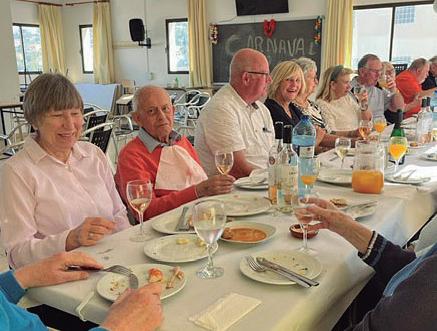
THE Valleys International Bridge and Social Club recently held their annual AGM, followed by a delightful tapas lunch to celebrate another well-supported and successful year.
This friendly and welcoming group meets at Orba Pensionistas every Monday and Thursday at 10.00am to indulge their shared passion for bridge in a relaxed and sociable atmosphere.
For more information, visit their website: bridgewebs.com/valleysin ternationalsocial/





A HUGE thank you to everyone who attended and supported the Country & Western Line Dancing afternoon at The Comm in Alfaz del Pi which recently took place.
Thanks to your generosity and enthusiasm, the event raised an impressive €1,460 for MABS Cancer Support.
Wonderful host and instructor, Gemma Bailey, brought incredible energy, expertise, and humour to the floor - kindly giving her time completely free of charge. Her fantastic teaching and fun atmosphere kept everyone smiling (and dancing!) all afternoon.
Alongside the dancing,

guests enjoyed a lively mini-quiz, with Team ‘Six Horse’ taking the top spot. There was also a Best Dressed Lady and Gent competition, though it had to be said that everyone went above
and beyond to embrace the Country & Western spirit with their brilliant outfits and a raffle added even more excitement, helping boost the fundraising total.
A special thank you also
goes to Susan Ellison, who raised a further €70 by raffling a beautiful hand-knitted dolly.
Area coordinator Irena Bodnarec said “To each and every one of you - thank you.
“Without your support, participation, and good spirit, events like this simply wouldn’t be possible. We appreciate you all and look forward to the next onewhich is an Easter quiz at Champions Pub in Albir on Friday March 27.”
Tickets, priced at €15, which includes tapas are available at the MABS shop in Alfaz, open Monday to Friday, 10.00 - 13.00 or by WhatsApp on 634 374 765.
THE Hospital de Denia has recorded a 200 per cent increase in organ donors over the past four years, effectively tripling its figures and strengthening its role wi-

thin Spain’s transplant network. The growth reflects sustained improvements in coordination, clinical protocols and specialist training rather than a single short-term initiative.
Hospital teams have refined the process of identifying potential donors, particularly within intensive care and emergency departments.
Dedicated transplant coordinators now oversee each stage, ensuring families are supported sensitively while medical procedures are handled swiftly
and in line with national guidelines. This structured approach has significantly improved outcomes.
The hospital’s progress also reinforces its integration into the wider system across the Comunitat Valenciana, one of Spain’s leading regions for organ donation and transplantation. Strong collaboration between hospitals ensures that donated organs are allocated efficiently, maximising the number of lives saved.
Healthcare leaders attribute the rise to multidis-
ciplinary teamwork and ongoing professional development. Surgeons, anaesthesiologists, critical care specialists and nursing staff work in close coordination to guarantee that each donation opportunity is managed effectively.
Ultimately, the dramatic increase highlights both medical commitment and growing public awareness. By tripling its donor numbers, Hospital de Denia has positioned itself as an increasingly vital contributor to regional and national transplant success.


DUTCH-BORN artist Ernst Kraft (Bloemendaal, 1952), who has lived and worked in Spain since 1989, presents Campo abierto (Open Field), a new body of paintings and works on paper at La Barbera in Villajoyosa.
The exhibition brings together recent medium and large-scale canvases alongside a selection of works on paper. Kraft’s paintings move between abstraction and landscape, where horizons, fields and architectural traces emerge through layered gestures rather than descriptive representation.
Working with a restrained palette - raw and burnt ochres, earth pigments, Prussian blue and English red - Kraft builds his compositions through successive strata. Drawing plays a central role: black graphic structures anchor the surface and introduce tension. The image is not planned in advance; it develops through process, revision and removal.


ces of previous states - residual images that remain embedded beneath the final layer.
In Open Field, the horizon often appears fractured. Light is not declared but negotiated. Landscape becomes less a depiction of place than a field of memory and structural tension.
THE Athenea Taekwondo Club of Calpe delivered a strong performance at the Valencian Regional Championships, earning a silver medal and securing a coveted place in the regional pre-selection squad.
Competing at the Campeonato Autonómico de la Comunidad Valenciana, a key qualifying event for the 2026 Spanish National Championships, the Calpe-based club fielded three athletes in the advanced Category A division.

Strong performance.
potential sports grants.
There was a strong showing across divisions.
For Kraft, painting is physical as well as reflective. The canvas is stretched by hand, and each work is repeatedly re-evaluated over time. The visible surface contains tra-
The exhibition runs from Friday March 6 to May 4, 2026 Ernst Kraft Espacio de Arte Contemporáneo La Barbera, Villajoyosa

Thiago González emerged as the standout competitor, claiming silver in the Cadet -57kg category after a series of confident and technically sharp bouts. His podium finish not only underlined his growing potential but also earned him a place in the Valencian pre-selection team, keeping his hopes alive of representing the region at national level. Pre-selection status may also open the door to elite athlete recognition and
Unai Clemente (Cadet -53kg) and Lilia Mobtil (Junior -52kg) also impressed despite narrowly missing out on medals. Both demonstrated resilience and competitive spirit in closely fought matches, reflecting the depth of talent within the club.
Guided by national coach Nora Ruiz Alcázar, Athenea continues to build its reputation within the regional taekwondo circuit. As the only officially recognised taekwondo club in Marina Alta, its latest results confirm Calpe’s growing presence in high-level competition.

EXPATRIATES living in Costa Blanca North are increasingly paying attention to rental trends across the Valencian Community as demand rises sharply in several well-connected cities. Recent market figures show that Paterna, Torrent and Gandia are among the most sought-after rental locations outside the provincial capitals, highlighting a shift in where tenants are choosing to live.
As rental prices continue climbing in Valencia City and Alicante, many residents are looking further afield for better value, more space and improved quality of life. Paterna and Torrent, both within easy commuting distance of Valencia, are attracting strong interest from professionals and families who want access to the city without paying premium urban prices. Good transport links and established infrastructure make them practical alternatives.
Gandia is also seeing significant demand. While long known as a popular summer destination, it is increasingly appealing to long-term renters seeking coastal living with year-round services. Its rail and road connections to Valencia make it especially attractive for commuters.
For expatriates in areas such as Javea or Denia, these trends signal growing confidence in secondary coastal markets. Strong demand in cities like Gandia suggests continued rental competitiveness through 2026, particularly in well-connected locations that balance lifestyle appeal with affordability and convenience.














THERE is one final opportunity to experience an uplifting evening of musical theatre as TheatreSong Collective presents Curtain Up at The Comm, Alfaz del Pí on Thursday March 5 at 7pm.
TheatreSong is proud to be the Costa Blanca’s dedicated musical theatre choir, specialising exclusively in the songs and stories of the stage.
Combining rich vocal harmonies with characterful presentation and an engaging, theatrical style, the group offers something more dynamic than a traditional choir concert.
Produced by Philip Ashley, Curtain Up features a varied and crowd-pleasing programme drawn from some of musical

theatre’s most beloved shows. Audiences can look forward to favourites including The Impossible Dream from Man of La Mancha, I Could Have Danced All Night from My Fair Lady, and the powerful Anthem from Chess. The evening also includes much-loved numbers such as Razzle Dazzle from Chicago, Pure Imagination from Willy Wonka, and the ever-popular hits Sherry and December ’63 (Oh What A Night) from Jersey Boys. Adding emotional depth to the programme is the moving Tell Me It’s Not True from Blood
Brothers.
From uplifting ensemble pieces to heartfelt solos and playful smaller group numbers, Curtain Up offers a rich mix of drama, humour and nostalgia - perfect for dedicated theatre fans and anyone looking for an entertaining night out locally.
Tickets are priced at €10 and are available by phone on 965 581 483 or online at www.philip ashley.com/boxoffice.php.
For those who love the magic of live musical theatre, this Alfaz performance is not to be missed.

FIREFIGHTERS were called to a dramatic blaze in the historic centre of Denia on Monday March 2 after a fire broke out in a first-floor apartment in a multi-storey residential building. Thick black smoke quickly filled the narrow streets, drawing a major response from local emergency services as crews worked to contain the flames and prevent the fire spreading to neighbouring properties.

The incident began in the early afternoon, with initial reports indicating the fire started in the living room of the property.
Although the exact cause has not yet been officially confirmed, investigators are expected to examine the scene once conditions are deemed safe. Flames and smoke were visible from outside the building, alarming residents and passersby in the busy central area.
Police cordoned off surrounding streets, temporarily stopping traffic through parts of the old town while firefighters operated hoses from both inside and outside the building. Access
to nearby homes and businesses was restricted as a security perimeter was established.
Several residents were evacuated as a precaution. Emergency medical teams treated five people for smoke inhalation at the scene, and two were taken to hospital for further assessment. Fire crews remained on site for hours to fully extinguish the blaze and secure the structure.
Authorities are continuing to assess the damage as the investigation into the cause of the fire moves forward.
THE Club Gimnasia Calpe delivered an impressive performance at the Provincial Base Individual Championship held in Alcoy, walking away with four provincial titles and securing places for all nine of its competing gymnasts in the upcoming Autonomous Phase.
Competing against rhythmic gymnasts from across the province, the Calpe club stood out for its technical skill and consistency throughout the event. At the top of the results was Yulia Gavrilova, who claimed the provincial championship in the Juvenile (2010/2009) clubs category, earning the club its first gold medal of the day.
Medal success continued with Varvara Kovalenko, who finished second in the Benjamín free hands category, and Ariana Yakubovska, who also took silver in the Infantil 2014 ribbon division. Adding to the tally, Eva Langinen achieved a third-place finish in the Ca-

det 2011 class, rounding out the quartet of podium performances.
Beyond those who reached the rostrum, several more gymnasts delivered strong routines and valuable experience. Lana Lebedeva narrowly missed a medal, finishing fourth in the Alevín 2016 category, while Ana Crespo, Alessia María Diaconescu, Alexandra Llopis
Chupryna and Zaira Bessa Mincheva also represented the club with competitive showings in their respective divisions.
The biggest takeaway from the weekend was that all nine gymnasts from Club Gimnasia Calpe earned qualification for the next stage of competition, which will take place in Benidorm in two weeks.


WHEN a debtor has no assets in Spain, getting your money back can feel almost impossible.
However, the situation changes if the debtor has bank accounts or assets in another EU country. In these cases, as a creditor, you are not left unprotected: it is possible to carry out Recovering debts across EU countries. This week, we take a look at the European Account Preservation Order (OERC), a powerful tool that allows you to freeze funds in banks located in another EU member state, helping you secure the recovery of your debt.
What is the European Account Preservation Order (OERC)?
The OERC, regulated by Regulation (EU) No 655/2014, allows a creditor
to take action for recovering debts across EU countries. How? By blocking the debtor’s funds in foreign bank accounts held in any EU member state. The OERC only applies in cross-border situations: the court handling the case or the creditor’s residence must be in a country different from where the debtor holds the account.
How does Recovering debts across EU countries work?
The creditor starts by applying to a Spanish court, which evaluates the application. If the application meets all requirements, the court will issue the European Account Preservation Order. Once issued, the order is sent to the country where the debtor’s bank is located, and the bank is legally obliged to






comply.
The result: the debtor’s funds are frozen, preventing them from being transferred or hidden while the claim proceeds.
However, at the same time, debtors retain the right to defend themselves. Meaning they can challenge the account freeze before the authorities in the country where the account is located.
Key features and limitations of the EAPO
The European Account Preservation Order allows a creditor to freeze funds in banks in another EU country, ensuring that the money cannot disappear while the debt claim is pending.
Although the funds are not automatically transferred, the EAPO guarantees that the assets will be available for
collection once the judicial process advances.
This is especially useful when there is a risk that the debtor may move or hide their assets in other EU countries.
However, not all EU countries apply this mechanism - Denmark, for example, is excluded. In addition, to request an EAPO, the creditor must hold an enforceable judgment or otherwise sufficiently prove the existence of the debt.
Advantages for creditors in Recovering debts across EU countries
The OERC offers several advantages:
• Speed and efficiency: Funds can be frozen in another country quickly and securely.
• Legal certainty: Foreign banks are required to com -
ply, protecting the creditor from delaying tactics.
• Facilitates debt recovery: Ensures that funds are available for future judicial enforcement.
Conclusion
If you suspect that a debtor with no assets in Spain may have funds in another EU country, do not hesitate to contact us. At White & Baos Lawyers, we will review your case and provide expert legal advice to help you recover your debt.
The information provided in this article is not intended to be legal advice but merely conveys information relating to legal issues.








FOUNDED in 2015, Progibe Spa has established itself as a trusted specialist in premium wellness solutions for discerning homeowners and professionals across southern Spain. With showrooms and points of sale along the Costa del Sol and the Costa Blanca, the company serves a growing international community seeking to enhance their lifestyle through high-quality spa and hydrotherapy products.
At Progibe Spa, wellness is more than a trend - it is a way of living. The company offers a carefully selected range of products, including saunas, spas, mini pools, hammams and cold-water bathtubs, designed to transform private homes into personal wellness retreats. Whether clients are looking to create a relaxation space in their garden, terrace or indoor area, Progibe Spa provides tailored solutions adapted to each project’s unique characteristics.
What truly distinguishes the company is its comprehensive, client-focused approach. Every project is studied in detail to ensure that the proposed solution perfectly matches the customer’s needs, available space and technical




requirements. All quotations include transport, professional installation and full commissioning of the products, offering clients complete peace of mind from the outset.
Progibe Spa accompanies its customers throughout the entire process. From the initial consultation and product selection to on-site visits for technical advice regarding pre-installations, the team ensures that every detail is carefully planned. The company also coordinates crane services when requi-
red, guaranteeing smooth and secure deliveries even in complex locations.
Beyond private clients, Progibe Spa actively collaborates with interior designers, architects, property developers, building companies and real estate agencies who wish to add value and exclusivity to their projects. By integrating wellness areas into villas, high-end apartments and new developments, professionals can significantly enhance both lifestyle appeal and property value. The company works closely with project teams, providing technical guidance, detailed planning and reliable execution from concept to completion.
In addition, Progibe Spa offers dependable after-sales technical support, including product commissioning, fault diagnosis, maintenance services, spare parts and specialist care products. With a strong commitment to quality, professionalism and personalised service, Progibe Spa has become a reference point for international residents in Spain with medium to high purchasing power who value comfort, design and well-being, as well as for industry professionals seeking a trusted wellness partner.




IN the heart of bustling Madrid, a quirky campaign is turning heads by paying a local man to nap in a shop window. Colours of Madrid, a store on Calle Carretas, launched the ‘Siesta’ initiative to champion

the traditional afternoon snooze as a vital cultural value.
The campaign offered one lucky participant €300 to spend two hours napping in the shopfront each day. What began as a crea-

tive stunt inspired by endurance art exploded in popularity, attracting more than 1,200 applications from students and retirees.
The winner, 56-year-old Arturo Sánchez from Talavera de la Reina, was chosen for his authentic passion for rest. Store director Arturo de Diego noted that Sánchez simply “had the look of someone who takes great siestas.” Clad in comfortable attire, Sánchez occupied a cosy bed within the window display, mimicking a home environment amidst the city’s rush.
While Sánchez earns €50 per hour for his slumber, passers-by are encouraged to join the fun. Spectators can photograph themselves in the set for a secondary contest, with the prize being a traditional cocido meal and a premium hotel stay. By monetising rest, the store has successfully sparked a viral conversation about heritage, proving that in Spain, a good nap is always headline-worthy.
VALENCIA has once again transformed into a lively and loud openair gallery for Las Fallas, a UNESCO-recognised festival blending satire, tradition, and fire. Rooted in medieval carpentry rituals marking the spring equinox, the event officially commemorates Saint Joseph.
Throughout March, the city vibrates during the Mascletà, a daily 2pm pyrotechnic display focused on rhythmic thunder rather than colour. The heart of the event occurs between Saturday, March 15, and Wednesday, March 19, during the Plantà, where more than 700 elaborate sculptures, or ninots, are erected. These towering monuments, some reaching 30 metres, offer biting social commentary on everything from local politics to global celebrities.

Beyond the smoke, the Ofrenda de Flores sees thousands of locals in traditional silk dress process through the streets to clad the Virgin of the
Defenceless in a massive floral mantle. However, the festival is not without friction; residents often cite concerns over noise and overcrowding, while the satirical nature of the sculptures occasionally sparks heated political debate. The spectacle concludes on the night of Wednesday, March 19, with La Cremà. In a dramatic display of renewal, every sculpture is reduced to ashes in synchronised bonfires, leaving the streets clear for the arrival of spring.

A DRAMATIC police pursuit across the Spanish capital ended with two arrests after a stolen van tore through major thoroughfares in a high-risk chase.
National Police con rmed the incident began when the vehicle was reported stolen in Fuenlabrada. Ocers later intercepted the van in northern Madrid, triggering a fast-moving operation that escalated into a full-scale pursuit. Aerial footage released by authorities show the vehicle weaving through heavy tra c on key ring roads, making erratic lane changes to evade capture.
The police helicopter played a pivotal role, tracking the suspects from above as ground units maintained a strategic distance to mitigate risks to the public. This seamless coordination allowed patrol cars to reposition e ectively as the van transitioned between access routes.
The chase reached a violent conclusion when the driver lost control, crashing the van into a building façade within a local business district. Following the impact, the two occupants attempted to ee on foot. However, guided by real-time updates from the airborne unit, o cers quickly converged on the scene and detained both men.
Remarkably, no serious injuries were reported. The suspects remain in custody on charges of vehicle theft and dangerous driving. Investigations continue as police work to establish the full timeline of the robbery.
POPE LEO XIV will visit Monaco, four African nations and Spain during the first half of 2026. The programme begins in March and concludes in June with a six-day visit to Madrid, Barcelona and the Canary Islands.
The June trip to Spain is the Pope’s most prominent European engagement of the year, taking him to the capital, Catalonia and the Atlantic archipelago at a moment of both religious and social significance.
From June 6 to 12, Pope Leo XIV will begin in Madrid before travelling to Barcelona, where he will inaugurate the newest and tallest tower of the Sagrada Familia, the basilica that has reshaped the city’s skyline. The visit coincides with the centenary of the death of Antoni Gaudí, the architect who began building the basilica and was declared a Venerable Servant of God last year.
After Barcelona, he will visit Tenerife and Gran Canaria. The Canary Islands lie along a major migratory route from Africa to Europe, with tens of thousands of

arrivals each year. By visiting the islands, the Vatican highlights communities that regularly receive newcomers and those engaged in humanitarian support.
The visit is expected to bring a lively atmosphere. Airports, rail services and inter-island
connections may see increased passengers, while hotels and restaurants may benefit from higher bookings. Clear guidance from authorities will help residents plan and enjoy a week that places their communities in the international spotlight.



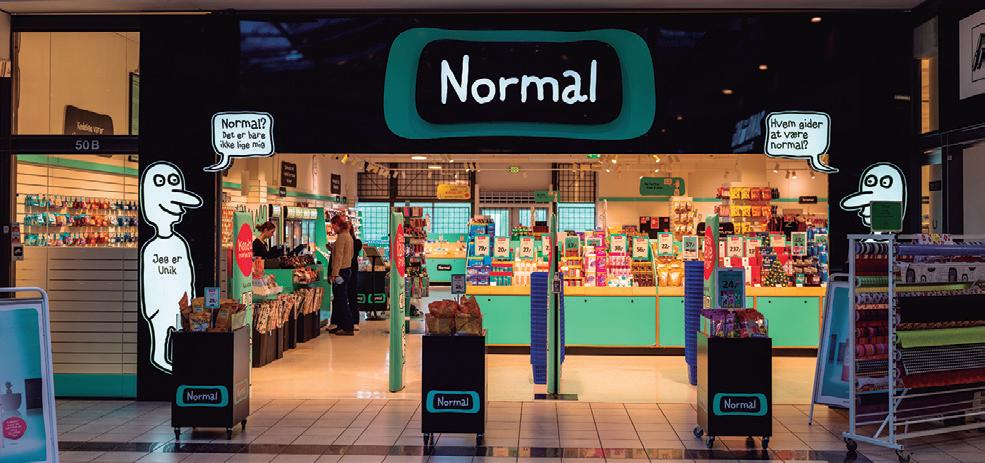
Shoppers are increasingly prioritising price across a wide range of categories.
SPAIN is seeing a rapid expansion of lowcost retail chains beyond well-known names such as Ikea and Primark, reflecting a structural shift in consumer behaviour driven by inflation and tighter household budgets. Shoppers are increasingly prioritising price across a wide range of categories, from furniture and fashion to household goods, toys, and personal care, without necessarily sacrificing quality.
Chains like Jysk have positioned themselves as direct competitors to Ikea by offering affordable furniture and home décor in city centres. At the extreme discount end, Sqrups! attracts customers with sub-€1 everyday items, reviving the ‘everything for 100’ concept in a modern
format.
Spanish-founded MGI has diversified from toys into home and garden products, while Poland’s Half Price focuses on discounted branded goods from previous seasons. Ale-Hop, meanwhile, emphasises variety and design over extreme discounts.
In fashion and homeware, Pepco and KIK appeal to budget-conscious families, while Action, Normal, and Miniso underline the popularity of broad assortments at low prices.
Together, these chains signal that value-driven shopping has become a lasting feature of Spain’s retail landscape rather than a temporary response to inflation.
NEW demographic data highlight a widening age gap between urban and rural Spain.
Nationwide, the most common age is 49, reflecting the large generation born in the mid-1970s.
As of January 1, 2026, more than 838,000 residents were aged 49, making it the statistical mode across much of the country.
MOVING to Spain often begins with excitement and the hope of a simpler, cheaper, more relaxed life. While the lifestyle benefits are real, many expatriates quickly encounter a gap between expectation and reality. The challenges usually arise not from Spain itself, but from misunderstandings about how things work. Longterm expatriates consistently say that those who settle successfully are not the ones who avoid difficulties, but those who adapt early and stop comparing Spain to their home country.
A common misconception is that Spain is simply a lower-cost version of home. Life can feel slower, communication less direct, and everyday processes unpredictable. Frustration eases once newcomers accept that relationships, flexibility, and quality of life take priority over efficiency. Bureaucracy, from obtaining an NIE to healthcare paperwork, is manageable but demands patience; using a gestor can significantly reduce stress.





This pattern contrasts sharply with depopulated regions. In areas such as Castilla y Leon and Extremadura, the most frequent age rises to 61, while Zamora records the highest figure, reaching 62-63 years.
These figures illustrate the long-term effects of younger residents moving to cities for work and education, leaving rural communities with ageing populations.
Provincial data reveal wide variation shaped by migration and birth ra-

tes. Major urban provinces cluster around ages close to 49, while others diverge significantly, including Melilla, where the most common age is just 11 due to higher fertility.
An ageing rural population presents economic and social challenges, including shrinking labour forces, increased demand for healthcare, and reduced viability of
schools and transport services.
Government programmes offering tax incentives and relocation support aim to reverse these trends, but progress has been limited.
According to the Instituto Nacional de Estadística, the data underline a persistent structural divide that will shape Spain’s policy priorities for decades.
Housing can also surprise. In cities such as Barcelona, Malaga, or Valencia, rentals are competitive and often expensive. Being flexible, realistic, and viewing properties in person avoids disappointment. Limiting oneself to English-speaking circles can hinder integration; even basic Spanish and local engagement greatly improve everyday life. Work culture may be slower, but building trust and staying adaptable pays off. Establishing a local support network also smooths legal, financial, and medical matters. Ultimately Spain is not difficult - just different. Expats who adjust expectations and embrace the local rhythm tend to find life easier and more rewarding.
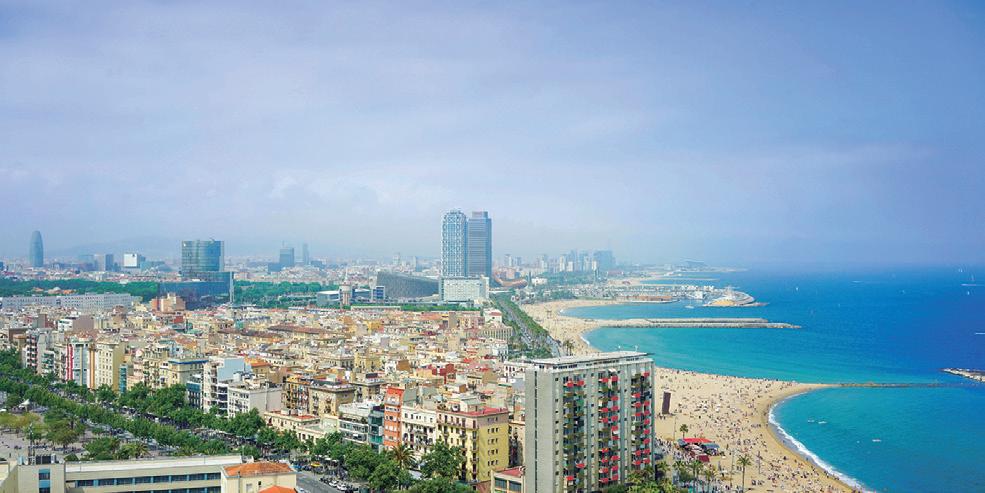
BARCELONA is set to become even more expensive for visitors after Catalonia’s lawmakers approved doubling the regional tourist tax from April, making it one of the highest in Europe. Holidaymakers could pay up to €15 a night.
From April 1, 2026, to March 31, 2027, holiday rental guests will face a progressive tax up to €12.50 per night, up from €6.25. Hotel guests will pay between €10 and €15, depending on the hotel’s category, up from €5-€7.50. Luxury establishments may charge more per guest, while cruise passengers will continue paying around €6.
This regional tax is separate from the Barcelona City Council tourist tax, which visitors must also pay. The law allows the
city to raise its maximum tax from €4 to €8.
The hike aims to fund affordable housing and curb overtourism. Barcelona hosts roughly 15-16 million tourists annually, with locals complaining that holiday lets inflate housing prices. A quarter of revenue from the tax increase will target the city’s housing crisis, with the remainder funding the Tourism Promotion Fund.
The rise has been opposed by hotel owners, who warn it may deter visitors. Barcelona ranks among the world’s top four cities for conventions and conferences, usually held in hotels, according to 2024–25 data from the International Congress and Convention Association.
TWO British tourists have been arrested in Benidorm after allegedly faking their own kidnapping to extort £725 from a relative to fund an extended holiday. The men, aged 37 and 51, triggered a major international police operation involving Interpol and specialist units from Madrid.
The plot took place in February, when a relative in the UK received a disturbing video. It reportedly showed one man covered in blood while the other threatened him with a knife. Follow-up audio recordings warned the ‘hostage’ would be killed unless the ransom was paid.
Spanish National Police launched an urgent investigation, suspending other cases to prioritise the suspected abduction. However, the scheme unravelled when surveillance officers spotted
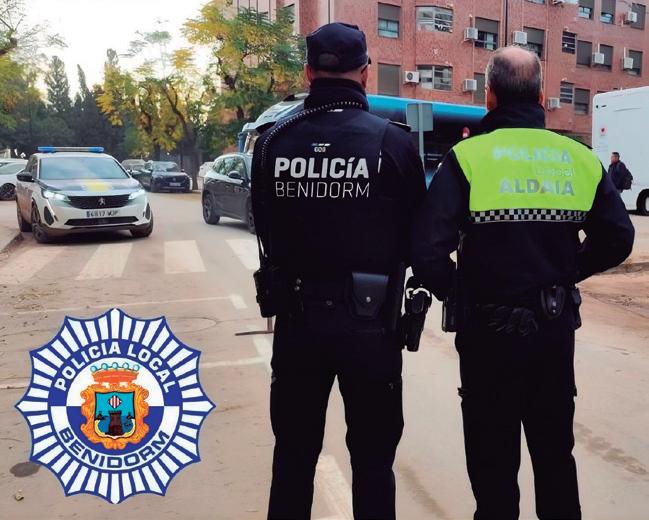
the pair strolling out of their hotel together, chatting amicably and appearing perfectly relaxed.
The men were intercepted and arrested on suspicion of simulating a crime and fraud. Officers discovered the ‘kidnapper’ had checked into the hotel using a false name, leading to further charges of identity fraud.
A police spokesperson confirmed the arrests, saying the pair staged the incident to make ‘quick cash’.
The tourists now face potential prison sentences and significant compensation claims for wasting emergency resources. While they sought to prolong their stay on the Costa Blanca, they will now likely do so behind bars.




MEN’S DAY will be celebrated on Sunday, March 8, and Spain is preparing cultural events, social gatherings and large demonstrations ahead of the annual observance. But how did the day originate, and what can expatriates expect from March 8, also known as 8M, in Spain?

Large demonstrations are now a central feature of International Women’s Day worldwide, and Spain is no exception. Major protests and marches are expected across the country, particularly in Madrid, Barcelona, Valencia, Bilbao and Sevilla. Demonstrators typically highlight issues such as violence against women, unequal pay and women’s health.
Marches on 8M also address broader social and political concerns, including racism, general violence and labour rights.
The largest demonstrations are set for Madrid, starting at 12.00pm on March 8 from Atocha station, and Barcelona, where events will take place across neighbourhoods, with major
marches in Plaza Catalunya, Las Ramblas and Passeig de Gracia. Both cities are expected to attract crowds of hundreds of thousands.
Strikes may disrupt traffic in some areas, and transport hubs have warned of possible interruptions to public transport and metro services.
International Women’s Day is not a national public holiday, though some autonomous communities or local authorities may mark it differently.
Purple, the emblematic colour of feminism and solidarity, will dominate streets and plazas. Participation ranges from joining marches to wearing purple in support.
SPAIN has become the only eurozone country to miss submitting its national draft budgetary plan to the European Union for two consecutive years, highlighting ongoing political paralysis in Madrid. Under EU rules, member states must submit draft budgetary plans each autumn, but Spain failed to deliver plans for both 2025 and 2026.
The omission stems from the absence of a new national budget.
Prime Minister Pedro Sánchez’s government has been operating under extended 2023 accounts due to an unstable
parliamentary majority. Without an approved national budget, Spain has been unable to send the required documents to Brussels.
The European Commission relies on these plans to assess compliance with fiscal rules under the Stability and Growth Pact. Spain’s failure limits Brussels’ ability to evaluate its public finances, leaving it an outlier in eurozone oversight.
Spain’s fiscal watchdog, AIReF, has warned that the absence of budgets and EU submissions makes meaningful fiscal supervision ‘particular -
ly difficult’ and reduces transparency. It also noted delays in setting fiscal targets and spending limits.
Domestically, opposition parties argue that reliance on outdated budgets undermines accountability and planning. Internationally, analysts see Spain’s situation as a stress test for eurozone fiscal coordination, with no clear timeline for resolution as political negotiations continue.

SPAIN has expelled nearly 21,000 people in an irregular administrative situation since 2019, a figure representing less than 7 per cent of the roughly 305,000 irregular arrivals recorded during the same period. Data from the Ministerio del Interior shows 20,682 enforced removals between 2019 and 2025.
Expulsions peaked in 2019 before falling sharply during the Covid-19 pandemic. Although numbers have risen again, with 3,398 expulsions in 2025, they remain well below pre-pandemic levels.
Officials cite legal safeguards, difficulties identifying countries of origin, limited cooperation agreements, and logistical constraints as key barriers.
Spanish law and EU rules require compliance with human rights standards, meaning not all irregular migrants can be expelled. Pressure points during the period included the Canary Islands and land borders in Ceuta and Melilla.
The figures have fuelled political debate, with critics questioning effectiveness and the government arguing that expulsions are only one part of a broader migration strategy involving asylum, humanitarian reception, and cooperation with origin countries.
Spain’s return rate broadly mirrors trends across the EU, where enforced removals typically represent a minority of irregular arrivals.





SPAIN is preparing for an unusually early and potentially severe mosquito and sand fly season following weeks of heavy rainfall that have created widespread standing water.
Health authorities warn that conditions are ideal for rapid mosquito breeding, particularly in southern provinces such as Sevilla, Almeria, and Cadiz.
Officials are concerned about mosquito-borne diseases, especially West Nile Virus, which has caused outbreaks
in southern Spain in recent years. While most human cases are mild, severe neurological complications can occur. Pet owners are also urged to take precautions against leishmaniasis, a parasitic disease transmitted by sandflies that poses serious risks to dogs.
Authorities recommend eliminating standing water, using repellents, installing screens, wearing protective clothing and following local health alerts. Veterinarians advise pet repellents, vaccinations
where appropriate, and limiting outdoor exposure during peak sand fly activity.
Local councils are stepping up surveillance, applying larvicides in public areas and launching awareness campaigns.
Officials stress that community participation is crucial, as household-level actions can significantly reduce mosquito populations.
With warmer temperatures arriving early, experts warn that mosquito and sand fly num -



bers could exceed those of previous years.
Preventative measures taken now, they say, are key to reducing health risks for both people and animals.

AS more tourists blend business with pleasure, Barcelona has topped Europe’s ‘bleisure’ ranking.
For many visitors to Spain, the line between a work trip and a short holiday has long been blurred.
Now data confirms the trend. A study by BCS Bus analysed 94 European cities across 30 countries and found Barcelona to be Europe’s leading ‘bleisure’ destination, where work trips feel more like a holiday.
The study assessed business-friendliness, leisure activities and tourism appeal. Barcelona achieved a Bleisure Index score of 79.5, ahead of Amsterdam and Munich (both 75), Vienna (75.7) and London (64.8). Paris ranked 66th, largely due to high costs and relatively low sunshine.
A key factor is infrastructure. Barcelona has become southern Europe’s start-up hub, expan-

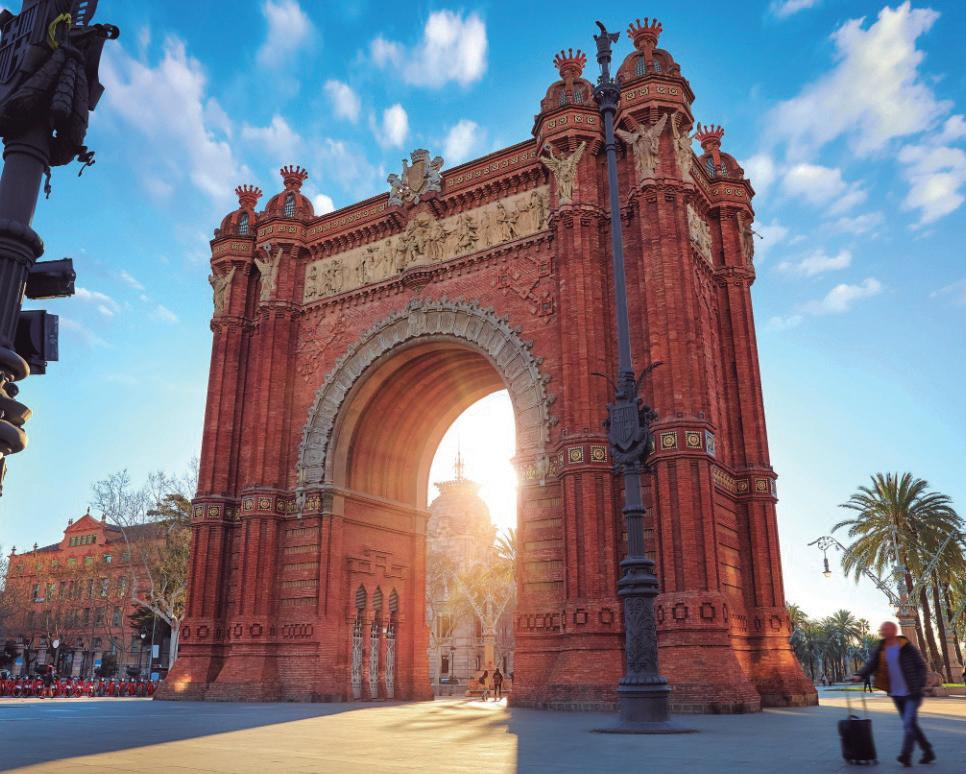
ding coworking spaces and conference facilities. The city offers 32.4 coworking spaces and 166 conference venues per 100 km², many within walking distance of major attractions. In practice, meetings can end mid-afternoon and be followed by time on a Mediterranean beach within the hour.
Connectivity also plays a major role. Barcelona airport provides 224 di-
rect routes to major business centres. The city also boasts 142 bars and cafés and 75 attractions per 100 km², plus 2,591 annual sunshine hours. Visitors should plan carefully, keeping in mind that large coaches face restrictions, the two Fira Barcelona venues on Gran Via are in different locations and major events can push up prices and congestion.








AUTHORITIES across Spain are warning residents about the early appearance of pine processionary caterpillars, a seasonal but hazardous insect whose ground activity poses risks to people and pets. The caterpillars, native to Mediterranean regions, descend from pine trees in single-file lines to pupate underground, releasing toxic hairs that can cause severe reactions.
Experts stress that the timing of their emergence varies by region, altitude, and colony, meaning early sightings do not necessarily indicate unusual weather. High-risk areas include parks, forest paths, school grounds, and private gardens with pine trees. While councils monitor infestations and remove nests where possible, caterpillars can still appear unexpectedly.
Their microscopic hairs contain thaumetopoein, a toxin that can cause skin rashes, eye irritation, and respiratory discomfort in humans. Direct contact is not required; hairs can become airborne or settle on clothing and grass. Veterinarians emphasise that dogs are especially vulnerable. Sniffing or licking caterpillars can cause rapid swelling, drooling, vomiting, and in severe cases, necrosis of the tongue or mouth. Suspected exposure is considered a veterinary emergency.
Authorities advise avoiding contact, keeping dogs on leads, supervising children, washing clothing after visits to pine areas, and reporting nests to local councils. Awareness and precaution are seen as essential to reducing health risks during processionary season.



SPAIN has launched extensive financial incentives to encourage the renovation of homes in small rural municipalities, offering grants of up to €60,000 per property in some regions. The measures aim to combat depopulation, improve housing quality, and stimulate local economies as part of broader national and regional rural development strategies. Applications are open from January until September 2026 under programmes running throughout 2027, with an overall budget of around €5 million at national level. Grants are targeted at individuals rather than investors and support renovations that improve energy efficiency, accessibility, and habitability. Support varies significantly by region. Galicia covers up to 75 per cent of costs (max €30,000) for homes in towns under 5,000 residents. Casti-

lla-La Mancha offers up to 80 per cent of costs, capped at €60,000, but only for regulated rental housing. Andalucia provides a standard 40 per cent subsidy, rising to 75 per cent for low-income households, people with disabilities, or residents over 65. Extremadura offers lower caps, topping out at €14,000 for detached houses.
Aragon’s long-running
Programa 700 focuses on villages under 3,000 inhabitants, with grants of €50,000-€66,000 per home, often for public or social housing use. Legal residents of Spain, including expatriates, may apply if they own or intend to occupy the property. Authorities see these grants as a key tool in addressing ‘España vaciada’ by making rural living more viable and attractive.


I TRULY am sick to death of machines that have muscled their way into what used to be perfectly normal human communication. Remember when ‘customer service’ actually meant service? You walked into a shop. You explained your problem to a human being, and it was sorted. Often with a smile. Occasionally with common sense, without having to prove you were born, baptised and fully vaccinated by 1963. Today?
Customer service has been replaced by what I can only describe as a slow-motion endurance test. It starts with that syrupy recorded voice thanking you for calling and assuring you, repeatedly, that your call is important. (If that were true, someone might actually answer it). It then continues as follows. Press 1 for accounts. Press 2 for billing. Press 3 if you’ve already pressed the wrong button, and are beginning to question your entire life. Eventually, and I use the word optimistically - you reach a human being, who immediately
asks for every single piece of information you have already given to the robot. Twice. Then comes the silence. You can sometimes hear faint typing. A cough. What sounds very much like a sandwich being unwrapped, or perhaps a crisp packet. When the voice returns, you are told your issue is ‘being escalated’. Now in my day, escalation meant ‘I’ll get the manager’. Today it means your problem has been strapped to a rocket and launched into orbit, where it will circle the earth indefinitely with several thousand other unresolved complaints. Shops are no better. You queue patiently while three members of staff rearrange hangers, discuss last night’s television, or stare into a handheld device with the concentration of a heart surgeon mid-transplant. When one finally looks up at you, you feel as though you’ve interrupted something critical. Like oxygen intake.
And don’t talk to me about self-service checkouts. These were apparently designed for ‘convenience’. Oh really?
On one of the very few occasions I have succumbed to the practice, mine usually greets me like a prison warden. It beeps. It sighs. It judges. It freezes. Then
it summons a human being (another warden) who looks at it, looks at me, and presses a button with all the confidence of someone derisively disarming a bomb. And then we have ‘online help’.
According to the internet, every possible problem in the known universe can be solved by reading 12 answers written by someone who clearly misunderstood the question. If that fails, you are invited to chat with a ‘virtual assistant’. Which is a polite, modern way of saying: ‘You’re on your own, sunshine’. What has vanished is responsibility. Nobody is allowed to say, ‘Leave it with me, I’ll sort it’. And absolutely nobody appears to be actually in charge of anything. We were promised progress. What we’ve got is automation - without accountability. So, here’s the ol’ Leaper’s advice. Next time that velvety recorded voice tells you how important your call is, don’t be fooled. If it really mattered, someone would already be on the other end saying: ‘How can I help?’ Now wouldn’t that be revolutionary progress? Dream on everyone. Keep the faith.
Love Leapy leapylee2002@gmail.com
Leapy Lee’s opinions are his own and are not necessarily representative of those of the publishers, advertisers or sponsors.


Start-line chaos.
A DRAMATIC false start at the 10K FACSA race in Castellon de la Plana left several elite female runners trampled and sprawled across the road just seconds after the gun.
The incident unfolded at the very front of the women’s field as athletes accelerated off the line on the famously fast course. Confusion over the start signal caused a sudden check in pace, and within moments one runner stumbled. With competitors packed tightly together and moving at speed, others were unable to avoid her.
What followed was a domino-style pile-up, with multiple athletes crashing to the asphalt. Some were briefly stepped on as runners behind tried to regain balance and avoid the chaos. Despite the frightening scenes, reports indicate there were no serious injuries. Several competitors were seen adjusting shoes and race bibs before continuing.
Belgian distance runner Jana Van Lent was among those caught up in the fall but managed to rejoin the race and finish.
The Castellon 10K is regarded as one of Europe’s quickest road races, attracting international elites chasing fast times. While the event continued without major medical incidents, the chaotic start sparked renewed discussion around safety at high-speed, tightly packed race launches.


HOLIDAYMAKERS flying into the Canary Islands recently faced unexpected disruption after a passport control bottleneck reportedly left nearly 90 Ryanair passengers stranded at Lanzarote Airport. The incident reignited concerns about staffing levels at Spanish border checkpoints especially as travel demand continues to surge ahead of the summer season.
According to reports published on Saturday February 28, around 89 passengers were unable to board flight FR4756 to Bristol due to long queues and processing delays. While individual disruptions are not uncommon at peak times the episode has drawn attention because it highlights a recurring issue affecting non-Schengen travellers. The delays appear to stem from congestion
at border control desks rather than airline issues. Airports in tourist hotspots such as the Canary Islands rely heavily on manual passport processing for non-EU arrivals a category that now includes UK travellers following Brexit. British passport holders must often undergo manual checks and stamping which creates longer queues when multiple flights land or depart within a short window.
Spanish airport operator Aena has previously acknowledged that passenger flows are heavily influenced by staffing at police-run passport control desks. For travellers the result is unpredictable arrival and departure times even when flights are on schedule. This latest bottleneck serves as a reminder that airport delays are not always caused by airlines or security checks.
THE Spanish government is considering holding an official ceremony in the Campo de Gibraltar to mark the permanent removal of the border fence separating La Linea de la Concepcion from Gibraltar. The event, which could be attended by Prime Minister Pedro Sánchez, would take place once the legal framework governing Gibraltar’s post-Brexit relationship with the EU is finalised.
The proposal was confirmed by First Vice-President María Jesús Montero, who described the dismantling of ‘la Verja’ as a symbolic milestone. Under the negotiated arrangements, border controls would shift to Gibraltar’s port and airport, enabling free movement across the land border while complying with EU regulations.
Spanish officials ar -

gue the change would reduce congestion and improve economic and social integration in a region heavily dependent on cross-border work. Local authorities have welcomed the prospect, though they caution that the practical impact will depend on implementation.
No date has been set, as the ceremony de -
pends on the publication and entry into force of the EU-UK-Gibraltar agreement. If confirmed, Sánchez’s attendance would underline the political significance Spain attaches to the deal, which officials frame as both a diplomatic achievement and a boost for the Campo de Gibraltar’s longterm development.

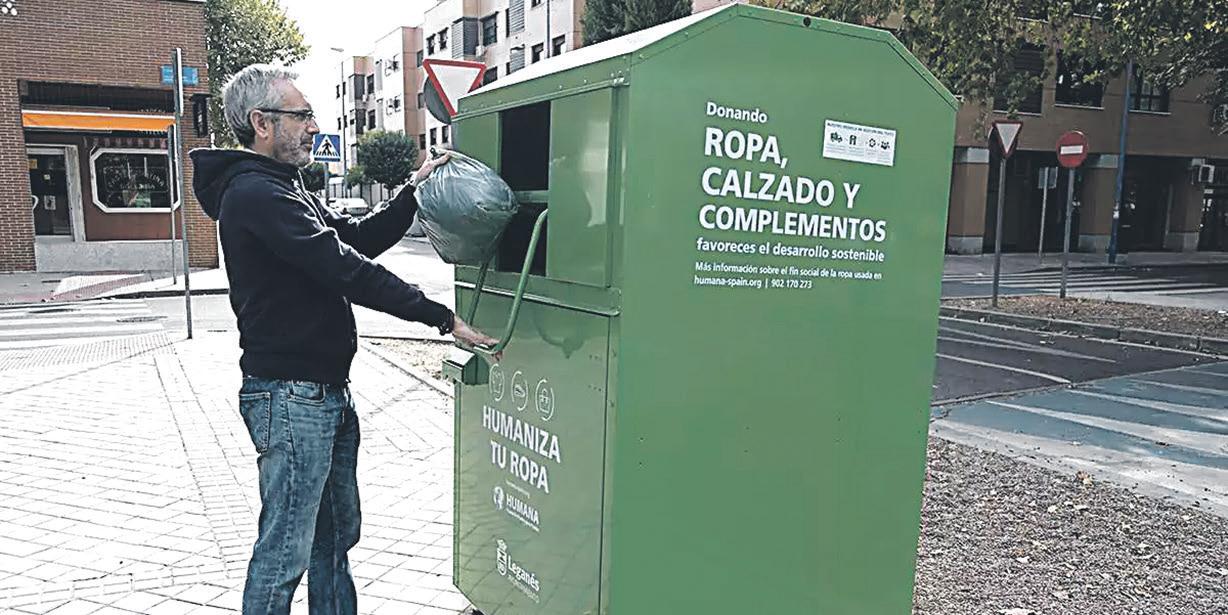
A GROUNDBREAKING European initiative, TexMat, is piloting an automated deposit-return system for used textiles, mirroring successful bottle-return schemes. The project aims to revolutionise waste management by using ‘smart’ containers to assess and sort unwanted garments instantly. These high-tech units evaluate item quality and pre-classify materials for reuse, recycling, or disposal. By integrating with the EU’s emerging digital product passport, the containers capture vital data on material composition and production history to ensure optimal handling.
Pilots have been launched in Spain and Finland to test the technology in both urban and rural environments. To encourage participation, donors receive rewards for reusable items. Higher-value pieces,
such as durable, eco-designed, or designer garments, may earn greater financial incentives. Beyond consumer perks, TexMat strengthens Extended Producer Responsibility (EPR). The system alerts manufacturers to items requiring specific waste management, fostering greater accountability within the supply chain. Automation also reduces the reliance on manual sorting, increasing speed and accuracy for waste operators.
Project leader Elina Llén, from the VTT Technical Research Centre, noted that the system relieves consumers of complex sorting decisions while boosting the resale of valuable clothing. As these trials progress, TexMat signals a significant shift towards a sustainable, incentive-driven circular fashion economy across Europe.
SWEDEN will offer up to 350,000 Swedish kronor, around €35,000, to refugees who voluntarily leave the country and renounce their residence permits, marking one of the most striking migration policy shifts in Europe. Announced by Prime Minister Ulf Kristersson’s government, the new scheme raises the previous voluntary return payment from around €900 per adult, with additional support for children. The measure forms part of a broader reset of Sweden’s migration strategy, signalling a tougher stance on long-term settlement and integration. Eligible refugees who choose to return to their country of origin, or move to another country where they have legal residency rights, can apply for the payment, but must formally give up their Swedish residence permit.

The government says the initiative is voluntary and aimed at those who have struggled to integrate or prefer to restart their lives elsewhere. Officials argue the financial incentive could ease transition costs and support reintegration. The scale of the increase has sparked debate. Supporters see it as a pragmatic solution for those dissatisfied in Sweden, while critics warn a large sum may undermine integration or discourage
belonging. Migration Minister Johan Forssell stressed the policy is optional, forming part of a wider reform agenda.
Since 2022, Sweden’s conservative-led coalition has tightened asylum rules, citing integration challenges and social cohesion concerns.
Once launched, the scheme’s impact will be closely watched, already positioning Sweden at the centre of Europe’s migration debate.


RECENT events have once again placed the United States under intense international scrutiny. In the wake of controversial foreign policy decisions and renewed debate over accountability, reactions across Europe have been deeply divided.
A poll asking whether Trump’s actions have altered perceptions of the USA reveals a complex picture: for some, his leadership represents strength and decisive action; for others, it reinforces concerns about instability, morality and America’s standing on the global stage.
Among those supportive of the president’s approach, there is a sense that his actions demonstrate resolve. Angela Edgley wrote: “Despite his sometimes-bumbling demeanour the man has a backbone of steel. Unlike Starmer who doesn’t have one. A frightening few days, it’s not over but - a start in freeing people from tyranny and persecution. My views on the USA haven’t changed though. Still slightly backwards and not an attractive country to visit.” Similarly, Gary Benjamin stated bluntly: “Trump has done the World a favour.”
However, many respondents voiced deep unease. Gray Salt warned: “Everyone praising him should pause. He has put British citizens in the firing line across the Gulf. The plan
is too off the cough, no vision of a future for Iran or the region. Make no mistake this could escalate very quickly indeed.” Valeria Olivares Piñeiro was equally stark: “By electing this lamentable clown, America has shot itself in the foot. No one in their right mind would voluntarily go there. Unfortunately, this is extremely dangerous for the whole world.”
Others focused on personal and legal controversies. Linda Still suggested: “He’s taking the heat off of himself with the Epstein files.” Martin Rooms remarked: “Trump smells, don’t forget he’s a draft dodger.” John Pattison declared simply: “He’s a war criminal.” Owen Phillips offered perhaps the harshest criticism: “As bad a human as has existed. America is no longer on the side of Europe. Plus, Trump’s a nonce. There’s no other Western country where even the allegation of paedophilia would enable a man to keep his office and he’s already been found guilty of sexual offences.”
Overall, the poll suggests that most people felt Trump’s actions have damaged the United States’ image in Europe, reinforcing perceptions of division, unpredictability and declining moral authority, even as a vocal minority continues to view him as a decisive force on the world stage.

NORWAY’S 89-year-old monarch, Harald V, was admitted to a hospital in Tenerife, on Tuesday February 24 while on a private winter vacation with his wife, Queen Sonja. The Royal House of Norway said he was taken to Hospital Universitario Hospiten Sur after falling ill with an infection and dehydration, and that his condition was described as stable and ‘good under the circumstances’.
Palace officials confirmed that his personal physician travelled to Tenerife to assist local medical staff and that further updates would follow after additional assessment. The king, who celebrated his 89th birthday shortly before his hospitalisation, is Europe’s oldest reigning monarch and has served as Norway’s ceremonial head of state since ascending the throne in 1991.
This was not Harald’s first health scare while travelling abroad; he was hospitalised in Malaysia in 2024 for a prior infection and had a permanent pacemaker fitted after that episode.
Despite various health challenges in recent years, including earlier hospital stays, the king has not abdicated, and his son, Crown Prince Haakon, has occasionally stood in during periods of ill health.
Norwegian Prime Minister Jonas Gahr Støre publicly wished him a quick recovery. Ongoing comments from health officials noted that infection and dehydration can be serious in someone of Harald’s age, even when initial treatment responses are positive and stable.
POLISH content creator Marek Hoffmann, known online as AdBuster, has attracted international attention after demonstrating that discounted supermarket donuts can be burned as a heat source. The experiment, conducted as a commentary on fuel costs, took advantage of heavy price reductions on unsold pastries during Poland’s Fat Thursday celebrations.
Hoffmann bought 133 donuts from Lidl, calculating that their high fat and sugar content gave them an energy value comparable to some wood briquettes. Burned in a small cast-iron stove, the donuts reportedly produced sustained heat for several hours, with temperatures near the stove reaching several hundred degrees Celsius.
The experiment illustrates a basic principle:
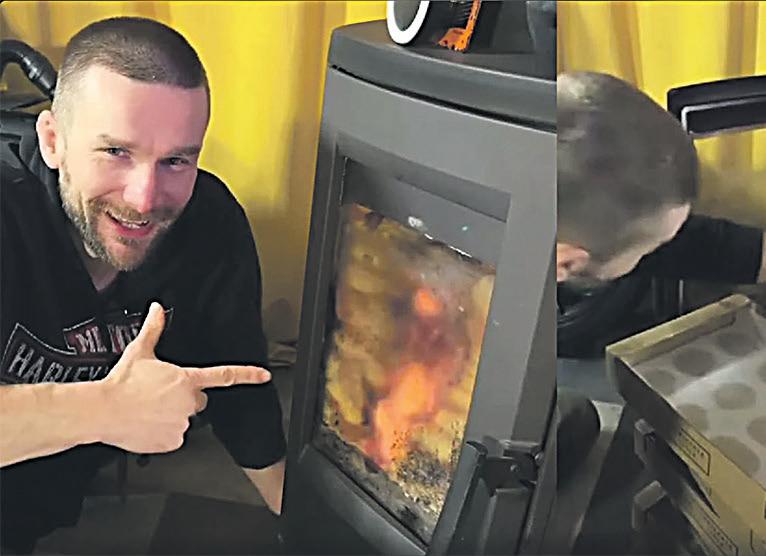
materials rich in organic compounds contain combustible energy.
However, Hoffmann and energy experts stressed that the stunt was not a practical or ethical heating solution. Burning food can produce unpleasant smoke and residues, increase chimney fire risk, and raises concerns about wasting edible products.
The video resonated amid ongoing debate about rising energy
costs across Europe, where households continue to seek alternatives. Specialists caution that unconventional fuels are unsafe outside controlled demonstrations and that long-term solutions lie in efficiency improvements and sustainable energy planning.
The donut experiment ultimately served as a provocative reminder of the energy embedded in everyday items rather than a serious proposal.










ONCE an industry leader, Novo Nordisk’s stocks plummeted 16.4 per cent following its most recent weight-loss drug failure. Since mid-2024, the pharmaceutical group has lost 75 per cent of its value. Despite success with its Ozempic product, the company has not been able to compete with next-generation obesity treatments.
A REPORT from Eurostat revealed that 28.9 per cent of people under 34 do not work in their field of study. This represents the highest percentage in the EU. Spain is experiencing significant overqualification, creating a disconnect between the education system and professional sector, as young people struggle to integrate.
IMPROVED mobile connectivity could add £6.6 billion annually to the UK economy, enabling approximately 49,000 new businesses to launch, particularly in areas previously held back by poor signal. These research findings are linked to VodafoneThree’s £11 billion programme to expand nationwide 5G coverage and eliminate coverage gaps.
IN a momentous €84,718m deal, Meta will purchase six gigawatts of AI processing power from AMD. The deal will also include a stock purchase, with Meta gaining a 10 per cent stake in AMD. Following the announcement, AMD’s stock jumped 15 per cent in pre-market trading.
DESPITE the US and EU signing a trade deal in July 2025, the agreed upon 15 per cent tariff on EU goods didn’t extend to steel. As the US’s tariffs rose to 50 per cent, EU’s steel exports to the US fell 30 per cent in 2025, damaging the industry.
UK’S watchdog, the Information Commissioners Office (ICO), has come down hard on Reddit, fining the social media platform £14.47 million for failing to protect underage users.
The company has been accused
Overnight stays in hotels increased by 3.4 per cent in January 2026 compared to 10 years prior, with hotels generating an average revenue of €116.0 per occupied room, according to the INE.
Act. This system requires users to self-declare their age when creating an account, solely relying on the user to provide accurate information.
ble to potentially harmful content on the site.

ACCORDING to the CCOO, Spanish employees worked a total of 2.5 million overtime hours each week in 2025, affecting 441,000 workers weekly. The total of unpaid hours is equivalent to if 62,000 full-time jobs were created to fill the labour demand.
Most notably, 47 per cent of workers received no compensation for their overtime, not financial or in the form of additional time off. CCOO estimates that, on average, each of these workers have lost out on €141 a week, approximately €7,355 a year.
This phenomenon was most prominent in the Education sector, with 444,706 unpaid overtime hours, followed by Transportation and Storage (270,013 hours) and Manufacturing (255,289 hours).
ASTON MARTIN is cutting 20 per cent of its workforce in an effort to save £40 million. The car manufacturer will soon reduce the workforce by approximately 500 employees, on top of the 170 jobs cut in 2025. This announcement comes after the car maker reported pre-tax losses of £363.9 million for 2025, as US tariffs rose and demand fell. In an attempt to reduce the losses, Aston Martin sold the permanent naming rights to its Formula One team.
What’s more, according to Reddit’s terms of service, under-13s were not allowed on the site. Yet with no way to effectively verify age or limit their access to the site, a significant portion of their user base is made up of children under 13. This led to the platform unwittingly processing children’s data.
Reddit defended their actions in a statement released to the BBC, saying it “didn’t require users to share information about their identities, regardless of age, because we are deeply committed to their
The ICO are currently intensifying regulations to protect online

The CCOO has been vocal in fighting against this blatant example of labour exploitation. The union emphasises the effect these illegal practices have on the workforce, serving only to increase stress, exhaustion and burnout in employees.
FOLLOWING the devastating Adamuz accident, rail travel in Spain has dropped 30 per cent, according to Trainline. Major companies like Renfe, Iryo and Ouigo are experiencing reduced booking figures, as 40 to 50 per cent of passengers are wary of train travel following the accident. Operators are adjusting prices to compete against alternative travel options. However, this lack of confidence will have a major financial impact on the sector, which lost approximately €1 million each day of disrupted service.
UNITE, UK’s biggest student housing provider, has been rocked by the fall in international enrolment. Ahead of the upcoming academic year, only 68 per cent of Unite’s beds are reserved. As more students choose staying home over moving into halls, Unite are having to launch cost-cutting measures, including the £186 million sale of a 571-bed London property.
Additionally, Unite has had to reduce rents and tenancy lengths in many places to entice students. Unite’s chief executive said, moving forward, they should focus their attention on high tariff universities with higher entry requirements as they’ve seen little change in those marketplaces.
THE Bank of Spain has issued a warning, reminding those with joint accounts that if one account holder dies, the other cannot withdraw money without permission of their heir. This is to prevent inheritance disputes and the misuse of funds. The key is to read the fine print of the contract. Determine whether the account is ‘solidaria’, meaning all authorised parties can operate freely, or ‘mancomunada’, a more restrictive model where all transactions require permission, no matter how small.
SPANISH fashion retailer Desigual are expanding their international presence, debuting their newest retail location in Shanghai, China. This marks Desigual’s ninth storefront in Asia, a feat it has accomplished in two years since first attempting an expansion into Asian markets.
Focusing on Asian markets has been especially lucrative, as Desigual experienced a 113 per cent growth in sales at the end of 2025 compared to 2024. Desigual’s expansion efforts are expected to continue, as the company looks to establish around 60 shops across China’s main cities. They expect to reach a €40 million turnover in Asia by 2027.
AENA’S net profit increased by 10.5 per cent, rising from €1,934.3 million in 2024 to €2,136.7 million in 2025. This was made possible partially by a recovery in traffic, with a total of 384.8 million passengers passing through Aena’s expansive airport network. Forecasts estimate a further 1.3 per cent increase in passenger volume in 2026. Aena commits to distributing 80 per cent of net profit, with €872 million allocated to the Treasury, and the remaining €837 million distributed to shareholders.

3I Group 3.257,00 3.278,00 3.228,00 71,12K
Admiral Group 2.950,0 2.956,0 2.928,0 22,04K
Airtel Africa 353,60 354,20 343,80 327,18K
Anglo American 3.782,0 3.842,0 3.777,0 246,89K
Antofagasta 4.357,00 4.450,00 4.324,00 71,01K
Ashtead Group 5.318,0 5.400,0 5.292,0 51,81K
Associated British Foods 1.959,0 1.961,5 1.939,5 165,49K
AstraZeneca 15.304,0 15.324,0 15.172,0 75,31K
Auto Trader Group Plc 490,93 493,60 486,10 264,06K
Aviva 679,80 681,00 672,20 437,78K
B&M European Value Retail SA 189,10 191,50 188,10 191,69K
BAE Systems 2.118,00 2.131,00 2.110,06 212,1K
Barclays 469,25 469,90 454,60 6,3M
Barratt Redrow 368,20 370,00 366,90 289,71K
Beazley 1.256,00 1.256,00 1.245,00 320,2K
Berkeley 4.352,0 4.384,0 4.344,0 9,36K
BP 473,70 476,10 467,10 1,64M
British American Tobacco 4.614,0 4.636,0 4.604,0 188,17K
BT Group 210,97 211,60 206,00 480,84K
Bunzl 2.164,0 2.172,0 2.152,0 33,47K
Centrica 195,05 195,80 193,40 593,49K Coca Cola HBC AG 4.812,0 4.812,0 4.764,0 19,13K Compass 2.244,00 2.250,80 2.228,00 232,86K
ConvaTec Group 254,40 257,20 254,40 366,91K Croda Intl 3.135,8 3.168,0 3.123,0 34,98K DCC 5.205,0 5.230,0 5.155,0 57,41K
1.583,0 1.597,0 1.575,0 568,01K
5.685,00 5.700,00 5.635,00 8,51K
473,00 475,40 470,00 282,73K
8.398,0 7.838,0 51,55K
718,50 731,50 716,00 11,7K
4.244,00 4.352,00 4.222,00 113,45K
532,60 539,70 532,30 4,34M
plc 2.182,00 2.187,00 2.153,00 482,95K
398,00 399,90 393,80 543,16K



Euro

EUR/GBP: Up from £0.86 to £0.87
EUR/USD: Down from $1.19 to $1.17
The euro remained well supported over the past month, buoyed by robust Eurozone GDP figures and the European Central Bank’s (ECB) hawkish policy outlook.
However, the single currency’s upside potential was ultimately capped amid a lack of progress in Ukraine-Russia peace talks. Looking ahead, the euro may continue to move higher through March if Eurozone data remains broadly upbeat, although Ukraine risks are likely to persist.
Pound
GBP/EUR: Down from €1.15 to €1.14
GBP/USD: Down from $1.37 to $1.34
The pound faced notable selling pressure through Fe -

bruary, primarily driven by a dovish repricing of Bank of England (BoE) rate cut expectations, following the bank’s first policy meeting of the year.
Additional headwinds resulted from UK political uncertainty, amid growing questions over the future of Keir Starmer’s premiership.
Turning to March, the initial
focus for GBP investors will likely be the Chancellor’s Spring Statement, with the pound poised to strengthen if the Office for Budget Responsibility’s (OBR) latest forecasts paint a more positive picture of the UK’s economic outlook.
US Dollar
USD/GBP: Up from £0.72 to
£0.74
USD/EUR: Up from €0.83 to €0.84
The US dollar trended broadly higher over the past four weeks, as the currency bounced back from the multi-year lows struck at the end of January.
This recovery was supported by strong US economic indica-
tors, which prompted a further trimming of Federal Reserve interest rate cut bets in recent weeks.
However, it hasn’t all been plain sailing for the US dollar, with its recovery being marred by fresh tariff uncertainty after the US Supreme Court struck down the previous IEEPA tariff regime, leading President Trump to retaliate with a new global levy.
Geopolitics will likely act as a key catalyst for the US dollar in the coming weeks, particularly amid the threat of a rumoured US military strike on Iran.
Currencies Direct have helped over 500,000 customers save on their currency transfers since 1996. Just pop into your local Currencies Direct branch or give us a call to find out more about how you can save money on your currency transfers.

NORA JOHNSON BREAKING VIEWS

rather misses the point. A noble title’s not a gold medal or a plaque on a street corner - its whole purpose is to pass down through generations.
RAFAEL NADAL retired from tennis with 22 Grand Slams tucked under his belt, but the King of Spain has ensured the Mallorcan legend won’t be fading into the background.
His Majesty recently elevated Nadal to the rank of Marquess of Llevant de Mallorca - a title that comes with no castle, moat and certainly no free entry to Palma Cathedral, but with plenty of pomp. Nadal was one of six Spaniards honoured as part of celebrations for King Felipe VI’s first decade on the throne.
Some mutter darkly that making Nadal’s title hereditary contradicts the idea of rewarding his ‘personal’ achievements. But that complaint’s a bit like criticising Wimbledon for serving strawberries and cream - it
GORDON RAMSAY is no stranger to the spotlight. The star of many culinary-focused shows, Gordon Ramsay invites audiences into the one place he’s never taken them before: his own personal life.
After all, the monarchy itself is hereditary and, by ennobling Nadal, King Felipe lends the institution a dash of modern sparkle - and borrows some of Nadal’s sporting glory for the Crown.
In turn, the aristocracy looks rather shinier for having a Marquess capable of a killer topspin forehand.
And it isn’t just Nadal’s tennis. His discipline and philanthropy make him as suitable a marquess as David Beckham is a knight for his services to sport and charity - minus, of course, the tats!
Thanks for emails to my website! Thrilled you enjoy my novels too!
Nora Johnson’s 14 critically acclaimed psychological suspense crime thrillers, including the latest ‘The House of Secrets’ (www. nora-johnson.net), all available online at Amazon etc. Profits to Cudeca cancer charity.
brought to you by Revolution Technology


Net ix’s newest reality show follows a year in the life of the world-famous chef, as he balances family life, fame and getting his newest project up and running.
The six-part series depicts Ramsay as authentic and endearing, and con rms he is nowhere near as scary in real life as he is in the kitchen.

THE Night Agent returns for its third and arguably its best season yet. Move over Bond, step aside Bourne, a new secret agent is taking over.


One of the best thrillers currently airing, The Night Agent is a frantic, fast-pace action packed adventure. However, what makes the show such a success is not just its thrilling action scenes or shocking twists, but the three-dimensional characters. The Night Agent doesn’t rely on tired caricatures and doesn’t shy away from making the character grapple with the consequences of their high-stakes decision.

I SPOKE with a vinyl collector todayand she made me rethink everything I know about music. For her, collecting is not a hobby - it is a ritual that shapes her existence. I avoided asking obvious questions like, ‘ How many LPs do you own? ’ or ‘ Which is your favourite album? ’ For a serious collector, those questions are irrelevant. Music is not counted; it is lived - from humble folk songs to classical masterpieces.
Streaming music accelerates everything. Songs ow instantly. We skip, shu e, fast-forward - sometimes within the rst 15 seconds. Convenience has replaced anticipation, and even our emotions feel fast-tracked.
Do you remember the four-track player? The cassette? Then the infamous CD - the ‘compact disc’. I remember being a teenager dreaming of a portable stereo - that was high tech enough. Then came the Walkman… oh la, la! And finally, the crème de la crème: the MP3 player. Wowo! Oh boy, what we went through!
We didn’t know which device to buy - we were like headless chickens, running from one gadget to the next. A little like today with cars: hybrid, fuel, petrol, electric… solar, you name it. Each new device promised freedom… yet somehow, part of the music’s soul kept slipping away.
When analogue turned digital, I feel part of that soul was left behind - the harmonics, ultrasounds, and infrasounds not merely heard but felt through the vibrations of the room. Digital is cleaner, more efficient, portable - but sometimes perfection
Why your music needs you to sit still
sounds a little too perfect.
Playing a vinyl record requires intention. You choose the album, remove it from its sleeve, place it on the turntable, lower the needle, and wait. In that waiting, something shifts. Listening becomes an act of presence. The artwork, the crackle, the artists’ intention - they imprint emotion on your heart. Vinyl is alive.
And speaking of ‘alive’, I think of the old red phone in my office. Placed strategically, its short cable practically enforces mindfulness. When it rings, I cannot multitask. I hold the handset, feel its weight, and give undivided attention to the person on the other end.
Call me nostalgic - or stubborn - but sometimes old devices win. They demand presence.
Perhaps that is why vinyl feels therapeutic. It transports you to a world that says, Leave me alone. I am listening. The crackle, the warmth, the ritual - it reminds us that beauty is not in flawless delivery, but in presence.
Vinyl carries warmth, depth, and soul - the parts of music that get lost when sound is reduced to invisible streams. In a world that moves too fast, perhaps holding a record, listening fully, and feeling every crackle is the closest we come to reclaiming that lost soul.
Maybe analogue music is not nostalgia. Maybe it is a quiet rebellion. A small act of resistance against distraction. In a world that moves too fast, attention itself might be the real cure.

TRAVELLERS planning to depart from Brussels Airport on Thursday March 12 face major disruption as a nationwide general strike threatens to halt almost all departing flights for 24 hours. Belgian trade unions have issued a strike notice affecting multiple sectors, with aviation expected to be among the hardest hit. Airport authorities warn that widespread staff participation could force a near-total suspension of departures, leaving thousands facing cancellations, delays and uncertainty.
Essential airport operations including security screening, baggage handling and ground services are expected to be affected. Without these roles, flights cannot depart safely even if aircraft and crews are ready.
Departures are therefore likely to be cancelled throughout the day, while arrivals may continue

in a reduced and delayed capacity. Around 65,000 passengers typically pass through Brussels Airport on a comparable day. Belgium’s second major hub, Charleroi Airport, may also see cancellations based on previous nationwide strike patterns.
The industrial action forms part of a broader protest against government reforms related to pensions, wage indexation and public finances. The main union confederations are coordinating
A RULE limiting the weight tourists can place on working donkeys in Greece has reignited a fierce debate over the ethics of animal-based tourism. Originally introduced to protect animals on steep, historic routes, most notably in Santorini, the guidance recommends a maximum rider weight of 100kg (approximately 15.7 stone).
the strike alongside a demonstration in Brussels, with rail and public transport also expected to be disrupted, potentially complicating airport access.
Airlines are preparing contingency measures, including flexible rebooking options and, in some cases, vouchers. Travellers are urged to monitor airline communications and remain flexible, as both airport operations and ground transport may be significantly affected.

The limit follows veterinary advice which suggests that working animals should carry no more than one-fifth of their body weight, particularly when navigating demanding terrain in Mediterranean heat. While supporters view this as a vital step towards preventing injury and exhaustion, critics argue the measures don’t go far enough, questioning whether such traditional rides have any place in modern travel.
The scrutiny extends beyond Greece. In Spain, the ‘donkey taxis’ of Mijas face similar pressure, reflecting a continent-wide shift in traveller expectations. As holidaymakers become more ethically conscious, issues such as dehydration, lack of shade,
and overwork are overshadowing ‘charming’ local customs.
For local communities, these animals represent both heritage and a primary source of income. However, as tourism numbers surge, the tension between cultural preservation and animal welfare intensifies. Whether through stricter enforcement or a transition to alternative transport, the message from animal welfare groups is clear: tradition should never come at the cost of cruelty.










THE Marina Alta orchestra is set to turn its focus to Antonio Vivaldi’s The Four Seasons on Sunday March 15, presenting one of classical music’s most recognisable masterpieces at the Teatre Auditori de Beniarbeig.
Part of the orchestra’s 2026 season, the concert forms part of its distinctive La música y la palabra series - a format that blends live orchestral performance with spoken word. Rather than simply performing Vivaldi’s celebrated violin concertos, the evening will also bring to life the evocative sonnets traditionally associated with the work, offering audiences deeper insight into the imagery of storms, birdsong, harvests and icy winters woven through the score.
dimension to the musical experience. By pairing text with sound, the orchestra aims to illuminate the storytelling embedded within Vivaldi’s composition, highlighting how nature and emotion intertwine across the four movements.
THE historic centre of Calpe will glow once again as La Nit Encesa returns for its second edition, transforming the old town into a sea of candlelight for one magical evening on Saturday March 7.
The poetry will be recited by Tomàs Llopis, a respected Valencian rhapsode and native of Beniarbeig, whose narration is set to add a literary
Following a successful season opening by the Three Tenors, the March 15 performance promises a richly layered cultural evening - one that combines baroque brilliance with spoken artistry, inviting audiences to rediscover The Four Seasons in a fresh and immersive way.

Public streetlights will be dimmed across the casco antiguo, allowing thousands of candles to illuminate cobbled streets, balconies and hidden corners. Landmarks including the Torreó de la Peça and the Ajuntament Vell will shine beneath a warm, flickering glow, offering visitors a rare opportunity to experience the town’s medieval architecture in an entirely new way.
Organised by Calpe Town Council, the event aims to celebrate local heritage while boosting cultural tourism and supporting businesses

Thousands of candles will glow.
in the old quarter. Restaurants and bars are expected to extend their terraces, creating an inviting atmosphere for an evening stroll.
A major highlight is ‘The Street of Art’, where local painters and creatives will produce and display work live, turning the historic streets into an open-air gallery. Live theatre performan-
ces and music in key plazas will further enhance the enchanting ambience.
Residents and shop owners are encouraged to decorate façades and balconies with candles, helping create a shared, community-driven spectacle that is quickly becoming one of Calpe’s most atmospheric cultural celebrations.
























IF you’re looking for a light bite, this isn’t it. In Calpe, Taco del Paco has built its reputation on one simple promise: come hungry. Very hungry. In fact, their exact words are ‘not suitable if you’re not very hungry’.
This is taco dining turned into a fullblown feast. The showstoppers are the sharing boards - generous spreads designed for two but easily stretching into a table-wide event.
The birria-style beef board arrives with tender, slow-cooked beef in a smoky, deeply flavoured broth, ready to be piled into warm tortillas with melted cheese, pico de gallo and sharp pickled onions. It’s messy, hands-on and completely satisfying.
The pork board, inspired by cochinita pibil, delivers meltingly soft meat with guacamole, beans and salsa verde for balance. It’s rich but never heavyespecially with a squeeze of lime to cut through.
Beyond the boards, tacos range from crispy king prawn with black garlic mayo to slow-cooked chicken topped with an unexpected crunch of popcorn.
Add corn ribs, loaded patatas bravas and sizzling steak fajitas, and suddenly the table is full.

Light, airy interiors make it an easy meeting spot, while a €16 lunch menu and children’s options keep it versatile.
But the rule remains: this is a taco feast - not a snack stop.
www.tacodelpaco.com
(+34) 615 278 935



ONDARA is set to commemorate International Women’s Day 2026 with a dynamic programme of activities spanning the entire month of March.
Branded locally as Purple March, the initiative blends sport, culture and community engagement to highlight equality and celebrate the contribution of women across society.
The central date, Sunday March 8, will feature the popular sixth Volta FèminesVila d’Ondara Trophy, a women’s race that has become a symbol of empowerment and solidarity. Designed to encourage participation and visibility in sport, the event brings together runners of all ages in a strong show of community spirit.
Cultural events will also play a major role. A group exhibition by female artists will open at the town hall cloister, offering creative reflections on identity and experience.



Music lovers can enjoy a choir performance dedicated to women’s voices, while theatre will take centre stage at the Municipal Auditorium with a production exploring memory, resilience and tradition.
Throughout March, libraries and public spaces will host storytelling sessions for children focused on equality, alongside talks and discussions addressing gender violence and social change.










BENIDORM’S much-loved Jornadas de la Cuchara is back for 2026, bringing a celebration of hearty, spoon-served dishes to restaurants across the city. Running up until Sunday March 8, the annual event forms part of the wider Benidorm Gastronómico calendar and shines a spotlight on comforting winter recipes rooted in Spanish culinary tradition.
The festival centres on ‘platos de cuchara’ - the slow-cooked stews, broths and rice dishes that define homestyle Mediterranean cooking. Think rich lentils, flavour-packed chickpeas, warming seafood broths and deeply





satisfying meat casseroles, all prepared with seasonal ingredients and plenty of care. Each participating restaurant creates a special set menu for the occasion, typically including a starter, a signature spoon dish, dessert and a drink at a fixed price.
This year, 16 local establishments are taking part, offering diners the chance to explore different interpretations of classic recipes across town. From longstanding favourites to contemporary kitchens, the event reflects the diversity and creativity of Benidorm’s food scene while honouring traditional flavours.
WHEN the world feels heavy, I look for something elemental - sun, soil, patience. Few places offer that more honestly than Castilla-La Mancha, the vast, high plateau south of Madrid.
This is windmill country, the landscape that stirred Miguel de Cervantes - wide skies, relentless heat, and vineyards that have learned resilience over centuries. Once known primarily for quantity, the region has quietly shifted toward quality, with winemakers focusing on old vines, lower yields, and native grapes.
Airén, long underestimated, is now crafted into fresh, textured whites with notes of green apple and wild herbs,
perfect alongside salty island breezes and a wedge of nutty Manchego. Tempranillo (locally called Cencibel) delivers generous reds layered with plum, tobacco, and sun-warmed earth.
In our shop, we’re fortunate to carry a thoughtful variety of Spanish wines from Castilla-La Mancha - bottles that offer authenticity, character, and remarkable value.
On Martha’s Vineyard, where weather shapes both land and livelihood, these wines feel especially resonant. They don’t chase fashion.
They endure - and in uncertain times, that feels like something worth pouring.
Cheers.
martha@marthasvineyard.es

IF you’re noticing that more and more hair is falling out of your head, there’s no reason to panic. Instead of rushing of to buy every branded hair-loss formula you can find, give this simple tonic a try. Easy to make at home, this natural remedy only requires two ingredients: water and rosemary.
All you need to do is bring water to boil, add three sprigs of fresh rosemary and let it simmer for at least 15 minutes. Once it’s cooled and strained, you’re good to go.
Applying it is just as easy. Simply drench your hair in the rosemary-infusion, making sure it reaches every inch of your scalp. From there, leave it to soak for at least 30 minutes before washing it out. For the best result, experts recommend using rosemary water two to three times a week.
While every hair type is different, rose-
UNBELIEVABLY, dance
is an excellent way to maintain physical and mental health. Even if you have two left feet.
Unlike conventional workouts, dance combines aerobics with creativity and achieves the impossible: it makes exercise enjoyable.
Regular dancing improves cardiovascular fitness, strengthens muscles and enhances flexibility. If you want to get fancy, you can add twists and jumps to tone the entire body, promoting better posture and balance.
Dance is also a very accessible form of exercise. While there are plenty of classes you can attend, all you really need to get started is music. From there you can pick any dance style you want, from ballet to hip-hop. If you’d prefer a structured routine to follow, there are plenty

of routines to follow for free online, with cheery instructors encouraging you through the screen.
Beyond developing physical strength, dance is also beneficial for mental health. Dancing stimulates the brain, encourages relaxation, reduces stress and helps boost your moods. It’s almost impossible to
feel sad while dancing, even if you’re doing it alone in your living room. Joining dance classes also serve as a great way to foster social bonds, helping fight loneliness and build confidence.
Dance exercises the body and mind, proving that keeping fit can actually be fun.
mary oil is proven to work wonders for many people. It’s not all magic. Rosemary oil stimulates blood flow to the hair follicles, promoting growth and essentially strengthening the strands.
Some also notice that rosemary oil helps to soothe an itchy scalp, reduces dandruffs and makes hair look shinier.








DARK circles and under-eye bags can be a real confidence-killer. They’re a symptom of a busy life, although genetics, ageing and certain lifestyle choices can worsen the issue. While it’s easy to hide the imperfections under a layer of foundation, there are some easy at-home solutions to consider. A good sleep schedule can drastically reduce under-eye puffiness. If you manage to sleep the recommended seven to eight hours and are still seeing no improvement, try keeping your head elevated while sleeping to prevent fluid build-up.
Some simple home remedies include placing cold compresses, chilled tea bags or cucumber slices over your eyes to help reduce swelling. Gently massaging the un-

der-area can also help improve circulation. It’s both relaxing and productive.
Skincare solutions make a difference too. Eye creams with caffeine, retinol, hyaluronic acid, or vitamin C can reduce puffiness, boost collagen, and brighten the skin. Daily sunscreen is essential to protect delicate under-eye skin from darkening.
There are also medical options for eyebags that just won’t budge. Fillers, laser treatments, or microneedling can restore volume and improve skin texture.
Ultimately, a combination of healthy lifestyle habits, targeted skincare, and professional treatments delivers the best results. With patience and consistency, brighter, fresher eyes are easy to achieve.


SUGAR makes most things taste great, but it’s not so good for the body. Weight gain or tooth decay are two of the well known side-effects of excessive sugar, but it can also affect the skin. Experts have attributed a high-sugar diet to acce -
lerated ageing, making fine lines and wrinkles appear much earlier than expected. The main reason for this is because of a
natural process called glycation. When there’s too much sugar in the bloodstream it attaches to proteins and forms harmful substances called advanced glycation end products.
small dietary changes can help. Limiting fizzy drinks, sweets
carbohydrates, while eating more vegetables, berries, nuts and oily fish, supports healthier skin.




Collagen and elastin, the fibres that keep the skin firm and springy, are especially vulnerable. If those are damaged, they become fragile, meaning the skin loses elasticity and begins to sag.
Sugar also encourages inflammation and oxidative stress, both of which weaken the skin’s ability to repair itself. Over time the complexion may look dull, thinner and less hydrated. Some people also notice more breakouts, which can leave uneven texture as the skin matures.
The good news is that
drated and using daily sun
tion are equally
cing sugar intake can’t
ing process, but it can slow

LIFESTYLE EXPERT











CHRONIC pain affects millions of people, often becoming a lifelong condition rather than a problem with a clear solution. Back injuries, arthritis, spinal damage and ligament issues are frequently managed with painkillers, steroid injections or, in severe cases, surgery. For many patients, these approaches provide limited or diminishing relief. In Spain, the challenge is often greater, as access to newer or complementary pain treatments within the public healthcare system can be restricted. Against this background, ozone therapy is emerging as an alternative option, largely accessed through private clinics. The treatment uses a controlled mixture of oxygen and ozone, delivered through injections or blood-based techniques, with the aim of improving oxygen use, reducing inflammation and supporting tissue healing. Unlike conventional pain management, which focuses on suppressing symptoms, ozone therapy is presented as working on the biological conditions that allow pain to persist. Many patients discover the treatment only after years of unsuccessful pain management, often through personal recommendations rather than medical referrals.
A relaxed day together.
However, ozone therapy remains controversial. It is not universally accepted in mainstream medicine, regulation varies, and it may not be suitable for everyone.



LAST week I was invited to join a team getaway called the Mediterranean Golf Experience. I had heard the concept was already popular in parts of Europe, but this was my first time experiencing it in Spain and it surprised me in the best way. The idea was simple: colleagues stepping outside the office for a relaxed day together. No pressure, no competition just light activity, fresh air and shared time. Some had played golf before, others had never tried it, but that didn’t matter. Within minutes, people relaxed. Laughed. Encouraged each other. Roles faded and people connected naturally. What struck me most was that the day contained everything that makes Mediterranean living so powerful for well-being: movement outdoors, daylight, calm pace, shared food and social connection. These elements aren’t luxuries they are human needs. When they come together, energy rises and stress drops.



After the activity, we gathered for drinks, tapas and a relaxed meal. You could feel the shift in the group, lighter, closer, more connected. The kind of shared experience that strengthens teams and motivates people who carry the daily work of an organisation.
I left thinking: this wasn’t just a team outing. It was the Mediterranean lifestyle applied to modern work life.
To read the full article and explore Mediterranean lifestyle guidance, visit www.casamiguel.life




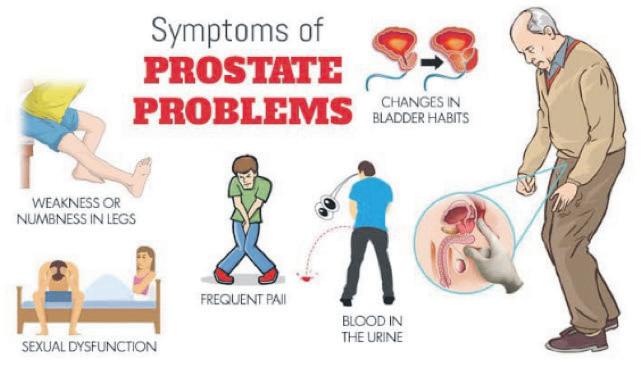









A LUCKY ticket holder in Benahavis is celebrating a significant windfall after winning a ‘Sueldazo’ prize in the ONCE Weekend Coupon draw. The winning ticket, sold at the Repsol petrol station on Sunday, March 1, wins the recipient €2,000 per month for the next 10 years, totalling €240,000. The draw, which coincided with Baleares Day, was dedicated to the Parliament of the Balearic Islands. Founded in 1938, ONCE (Organización Nacional de Ciegos Españoles) is a renowned social enterprise designed to support individuals with visual impairments. Its name, the Spanish word for ‘11’, refers to the original 11-digit coupon used in early draws. Today, the organisation employs more than 21,000 vendors, many of whom have disabilities, providing them with dignified employment and social integration.
All profits from ticket sales are reinvested into education, training, and accessibility programmes across Spain.
Motril cruise boom
THE port of Motril is set for a historic 2026, with projections confirming an unprecedented boom in cruise tourism. Local authorities announced that 73 ship calls are scheduled between April and December, representing a 73.8 per cent increase over the previous record set in 2025.
Passenger numbers are expected to skyrocket by 211 per cent, bringing more than 126,000 visitors to the region. This growth is driven by 14 cruise lines, featuring 12 new itineraries. A significant highlight includes weekly calls every Tuesday by the Norwegian Dawn, ensuring a consistent stream of international travellers.
The economic impact is estimated at €30 million, supporting local employment with approximately 95 workers required per ship call. Beyond the financial windfall, the season aims to ‘deseasonalise’ the economy by boosting activity during the quieter spring and autumn months.
Unlike larger hubs, Motril attracts medium-sized vessels to prevent overcrowding.
Mallorca
Brit found dead on superyacht
A BRITISH woman has been found dead aboard a luxury superyacht moored in Mallorca, with Spanish authorities launching an investigation into the circumstances surrounding her death.
Emergency services were called to the vessel, docked in Palma’s marina, after crew members raised concerns about a colleague who had not been seen. She was discovered unresponsive in her cabin and was pronounced dead at the scene despite efforts to assist her. The woman is understood to have been working on the yacht at the time. Her family has been informed, and formal identification procedures are continuing.
The vessel has been widely reported as the Lind, a high-value superyacht said to be worth around £27 million and owned by German businessman Peter Alexander Wacker. The yacht is part of the Mediterranean luxury charter circuit and regularly docks in Mallorca.
Spain’s Guardia Civil has confirmed that an investigation is under way.
ALICANTE, recently experienced an incredible weekend with its 30th Meridiano International Half Marathon and 10K Aguas de Alicante, which brought together 7,250 athletes from 48 different Spanish provinces. Not only this, the major sporting event boosted hotel occupancy in the area and generated an economic impact of €1,580,000, according to sources from the Montemar Athletic Club.
The group of athletes that generated the largest impact on Alicante’s economy were the 3,300 international runners, hailing from 55 countries. During the race weekend, hotel occupancy reached 98 per cent, considered technically full in the tourism and hospitality sector.
These athletes required flights, food, accommodation and transportation, meaning that each international runner’s expenses reached an average of €300. In addition, a total of 925 Spanish runners from 48 provinces across the country participated.
THE people of Mojacar gathered together to bond as a community to celebrate their roots on Andalucia Day. Locals and visitors convened in the town square for the flag raising ceremony. They watched on with pride as the green and white striped flag was lifted into the air.
A lively, exciting afternoon followed, with El Pimiento flamenco group providing excellent entertainment. They demonstrated their artistry through a powerful and passionate performance. All dancers wore traditional flamenco attire. Their bright and bold dresses made from polka-dot and floral prints made them stand out from the crowd. Those in attendance worked up an appetite simply from watching the stunning performance. Thankfully, a steaming pan of paella was served at 2.00pm.
More than just a delicious plate of food, the giant paella doubled as a fundraising effort. In total, €810 was raised for the MACS Association, providing oncology support for the Mojacar Area.
THE nerds of the Murcia region experienced a fun weekend with the incredible 11th edition of the Winter Freak Show, a convention taking place at the IFEPA event venue in Torre Pacheco that saw thousands of attendees, including artists, cosplayers, comic book fans, gamers, and anime lovers.
The Winter Freak Show developed a programme of activities focused on different facets of nerd culture, including manga and anime, video games, film, television, pop culture, comics and Korean pop music. Over the weekend, Torre Pacheco became the Murcia hub for all things alternative, and saw a healthy turnout of fans, content creators and interested visitors.
Cosplay, the practice of dressing up and roleplaying as famed characters from media, also took centre stage at the Winter Freak Show 2026. Last year, the Winter Freak Show saw more than 14,000 participants, reaffirming its position as one of the leading cultural and entertainment events for young people on a nationwide scale.
PET-SITTERS will love and care for your pets in your absence
HouseSitMatch pet-sitters will care for your pets. Within a few days they will be trusted by your animals and create a bond that is for mutual benefit.
You can relax on holiday knowing your pets are being cared for in their own environment, at no cost to you. The pet-sitters will offer their time and service in exchange for free accommodation.
It allows the sitter to discover a new location from the comfort of your home. It’s like old fashioned barter.
Everyone wins, especially the pets because they get to stay home and their routines are maintained, safe and sound. Just register as a homeowner and pet owner and build an advert. It’ll take a few minutes.
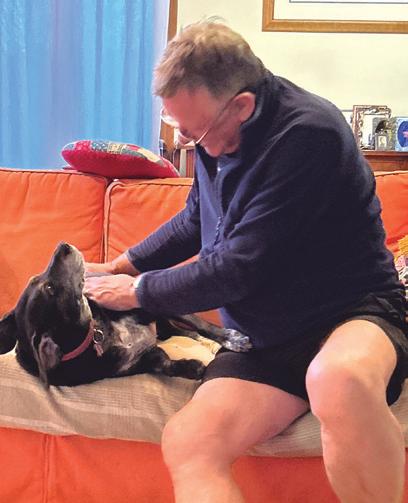
Most pets love a playmate, at whatever age.
How it works
1. Register at HouseSitMatch. com as a homeowner
2. Create your profile with photos of your home and pets
3. Review applications and video chat with potential house-si-
tters
4. Match with the perfect petsitter and enjoy your holiday worry-free
Real savings, real peace of mind
Every house sit benefits everyone. Your pets receive one-on-one attention at home, your property stays protected, and you avoid expensive kennel fees. Take Lucy - she saves over €1,500 annually using house-sitters instead of boarding kennels.
For a small annual registration fee, you can connect with verified house-sitters willing to provide free pet care and home security. Your pets deserve the comfort of their own home, and you deserve an affordable holiday.
Join today Register at HouseSitMatch. com and use code WELCOME50 for 50 per cent off your first year.
Lamia Walker, Founder. Call: +44 (0)7772 142742 Rated Excellent on Trustpilot - 4.9/5
IF you share your home with a cat, you’ve probably been woken once or twice to the unmistakable sound of paws thundering across the hallway. This midnight sprint or ‘zoomies’ is a perfectly normal feline behaviour.
Cats are crepuscular animals. This means they’re most active at dawn and dusk, prime look. It’s in their nature to prowl and pounce during the early hours of the morning, just as it’s in your nature to yell at them for waking you up. Zoomies are also a re-
spend a lot of time napping during the day. By night-time, they’re well rested and ready to cause mischief. Without sufficient stimulation to keep them entertained, they go on a


rampage.
To prevent this, schedule playtime throughout the day but especially before bed. You can simulate the natural hunt-eat-sleep cycle the cat would live in the wild by playing with lasers or wand toys, then feeding them a small
Hopefully, this will help both you and your cat settle in for a full


















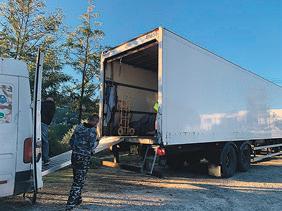














































ELECTRIC scooter riders in Spain must prepare for major regulatory changes in 2026. Under new rules from the traffic authority (DGT), scooters must be officially registered before use on public roads, and registration will be required to obtain mandatory insurance. The measure affects millions of riders and reflects a broader push to treat personal mobility vehicles like conventional vehicles in terms of identification, responsibility and road safety.
The requirement covers standard single-seat scooters with speeds of 6-25 km/h, which make up most city models. Authorities say registration will link scooters to their owners, aiding accident investigations, theft recovery and insurance claims. Riders must complete this administrative step to remain compliant and
avoid fines or legal issues.
Registration is simplest online via a recognised digital ID system such as Cl@ve Móvil, DNIe or a digital certificate. Applicants provide
personal details, confirm ownership - including for minors - and enter scooter information, including make, model and serial number. Supporting documents, like the technical sheet or a clear image of the serial number, must be uploaded. After paying €8.67, approved applicants receive a certificate with a unique ID number for the scooter. In-person registration is also possible at DGT offices, usually by appointment, with the same documentation and fee. Exceptions exist for those over 65 or with mobility issues. Early registration is advised, as insurance checks are expected to become routine, ensuring uninterrupted and legally compliant scooter use.
SPAIN’S driving theory test has been updated in 2026 with a more practical, safety-focused approach aimed at improving hazard awareness among learner drivers. Introduced by the Dirección General de Tráfico (DGT) on February 5, the reform moves the exam beyond memorising rules towards real-world understanding of road risks. The test’s core structure remains, but new evaluation methods reflect a broader European trend emphasising perception, judgement and safer driving behaviour.
The most notable change is video-based questions simulating realistic traffic scenarios. Candidates must watch a short clip and identify potential hazards, testing their ability to interpret evolving situations and apply safety principles. Authorities believe this better prepares learners for real driving,

where quick decision-making and situational awareness are vital. Similar video elements in Germany, France and Finland have been linked to improved risk perception among new drivers.
The overall exam format is familiar: 30 multiple-choice questions with three possible answers, though the duration may be slightly longer to allow for the video. Time management remains important, with candidates












advised to review uncertain responses if possible. Administrative rules are unchanged. Theory results remain valid for two years, and the official €94.05 fee (2025) covers two attempts. Local demand may affect appointment scheduling.
The 2026 reform marks a shift towards intuitive driver education, prioritising hazard perception, practical understanding and safer behaviour - skills extending beyond the test itself.




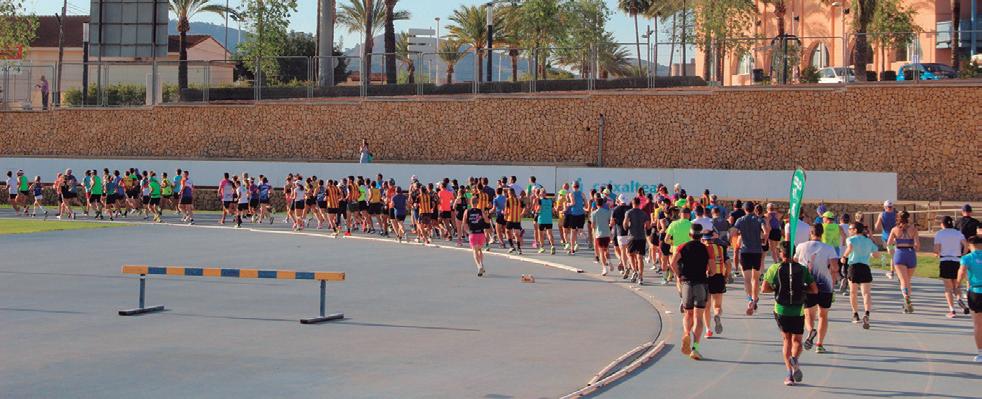
THE 16th edition of the Las X Millas Costa Blanca is already drawing strong interest, with more than 120 participants registered shortly after entries opened. Paco Soliveres, president of the Club de Atletismo el Faro de l’Alfas del Pi, confirmed the registrations as the event continues to grow each year.
Set for April 19, the race will follow a revised course, taking runners along the full stretch of Albir beach, including the 800-metre Paseo de las Estrellas. Unlike last year, this section is free of construction, allowing for a smoother and more striking passage. The 16-kilometre route begins and ends at the municipal sports centre in l’Alfas del Pi and passes through
the Parc Natural de Serra Gelada, giving competitors the chance to experience one of the province’s most celebrated landscapes during the challenge.
In addition to the X Millas, the club has reinstated the V Millas, aimed at runners seeking a shorter distance. The route starts at the same sports centre, turns at the Albir anchor, and climbs towards the lighthouse, the iconic symbol of the club.
The X Millas is known for its demanding course. After 15 kilometres of varied inclines and declines, participants face a final steep kilometre that tests even experienced runners. Full registration details and the race rules are available at www.xmi llascostablanca.es.
THE town of Calpe is set to unveil a new outdoor gym at the municipal sports complex, next to the Pista Azul, on the south side facing Avenida del País Valencia. With an investment of €125,719, this facility is only the second of its kind in Spain, joining a similar installation previously available in Barcelona.
The gym is designed for people of all ages and fitness levels. It will include professional-grade machines with adjustable weights, such as chest press, back pulldown, leg press, shoulder press, horizontal row, a three-zone cross-training station, and a pull-up station. Each machine is certified for outdoor use, with protective housings for moving parts and safety systems to prevent accidents or damage.
Installation work is in its final stage. Before ope-
ning, the gym must pass safety certification under the UNE-EN 16630 standard for outdoor fitness equipment. Authorities expect the facility to be ready for public use during the first week of March, subject to completion of technical and administrative procedures.
Technology is also a key feature. Every machine links to a mobile app via QR codes on infor-








mation panels. Users can watch exercise demonstrations, follow customised workout plans for different goals, and track their sessions to manage their progress.
The project is part of Calpe Council’s wider programme to encourage healthier lifestyles by providing modern, accessible, and free sporting facilities for residents all year round.