




LARGE crowds and a lively carnival atmosphere marked this year’s Baixada del riu Bullent, the traditional event that opens Carnestoltes in Pego and is widely regarded as one of the town’s most entertaining and irreverent festivities.



The riverbanks filled with spectators enjoying music, colour and laughter, while a small but enthusiastic group of participants braved the fresh waters of the Bullent aboard four handcrafted rafts.














CALPE has launched the campaign ‘Love is in the air… and in Calpe’s shops!’ to encourage shopping in local businesses this Valentine’s Day. Until February 15, the streets of Calpe will be decorated with themed lights and Valentine’s Day ornaments, creating a festive atmosphere in Plaza Miguel Roselló, Plaza Constitución, Calle de los Almendros, Plaza Colón, Plaza Mosquit, the park on Calle Isla Formentera, and La Calalga. The initiative, organised by the Department of Economic Promotion un-

der Álex Coca, also features a raffle for a romantic dinner. Anyone spending a minimum of €10 in a retail, hospitality, or service business in
Once again, the event showcased creativity, humour and the strong community spirit that defines this much-loved local tradition.
The Baixada stands out for its originality and environmental awareness. The rafts are built using recycled and ecological ma-
Calpe during the campaign can enter to win one of five €100 vouchers for a dinner at Umami, El Escorial, Me da igual, Calentura Bistro, or
terials, and participants also help collect plastics and remove waste found along the route, combining celebration with respect for nature. All this takes place in a spectacular setting, as the Bullent river runs through the Marjal de Pego-Oliva Natural Park, one of
Lapsus Bistro. Participants must photograph their receipt and upload it to the campaign website with their contact details. A QR code on posters throughout shops, the old town, and Calpe’s beaches provides easy access to the site.
Posters are available in English, Spanish, and Valencian. Multiple receipts can be uploaded, but each person may only win one prize. Winners will be contacted by phone or email, and their names published online and on official social media.
the most important wetlands in the Valencian Community. After a rainy winter, the river was at its best, surrounded by rice fields, irrigation channels and rich wildlife.
Carnestoltes in Pego is also inseparable from gastronomy, with many people settling along the riverbank to enjoy crosta and baked rice.










































MANY homeowners in Spain are missing out on a valuable tax saving because they believe it no longer exists. In fact, a housing tax deduction worth up to €1,356 a year remains in force, yet thousands fail to claim it.
The confusion stems from 2013, when Spain abolished the home-purchase deduction for new buyers. What was less clearly communicated is that the change was not retroactive. Anyone who bought their main residence before January 1, 2013, and is still paying the mortgage retains the right to deduct part of those payments from their income tax.
Under current rules, eligible homeowners can deduct 15 per cent of annual payments related to the purchase of their main residence, up to a maximum base
of €9,040. This produces a tax saving of up to €1,356 each year. The deduction is automatic if the conditions are met and is not temporary or subject to special approval.
A persistent misconception is that the deduction ends at retirement. It does not - pensioners who bought their main home before 2013 and continue to make mortgage-related payments can still apply it.
The opportunity may also not be lost if it was missed in previous years. Taxpayers can amend income tax returns for up to the past four years.
As tax season approaches, checking the purchase date of a main residence could uncover a saving still available.
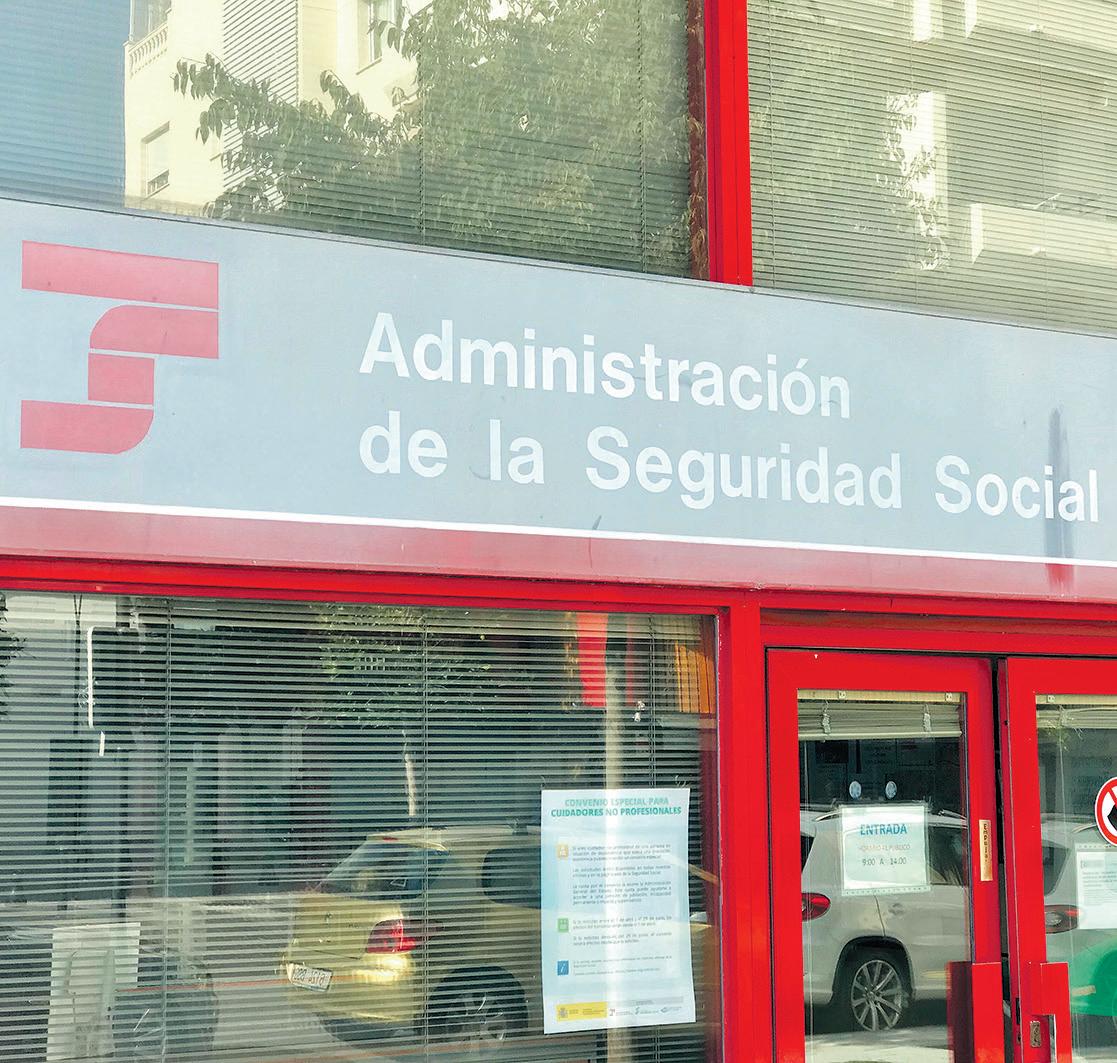
SPAIN’S Social Security system has confirmed that young adults aged 23 and over living with their parents may now be eligible for the Ingreso Mínimo Vital (IMV), the government’s income support programme addressing poverty and social exclusion. The scheme, first introduced in 2020, guarantees a minimum income to households with insufficient resources. In 2026, the benefit has been revalued by 11.4 per cent, with the average monthly payment rising to around €540. Previously, IMV eligibility focused on independent households.
The updated guidelines clarify that applicants aged 23–30 who live with parents can be considered separate economic units if they do not share finances or form a household for legal purposes. Those aged 31 and above must have lived independently for at least a year unless exceptional circumstances apply. Applicants must also meet income, asset, and residency thresholds.
The government states that the change is intended to support economically vulnerable young adults who cannot afford independent living due to high rents and stagnant
wages. Approximately 2.44 million people now benefit from IMV, including children and young adults, with an average recipient age of 28. The policy provides immediate financial support for necessities like food, utilities, and transport while facilitating access to education and employment. The expansion reflects an adaptation of Spain’s social safety net to contemporary economic challenges, ensuring more inclusive coverage for vulnerable populations. Applications can be made online or in person, with periodic eligibility reviews to maintain support.
PUBLIC transport users in Spain will benefit from extended discounts throughout 2026. Congress has approved the continuation of reduced fares until December 31, covering state, regional and local networks, while introducing a new nationwide travel pass for frequent users.
The national monthly pass costs €60, offering unlimited travel on state-run buses, Cercanías commuter trains and medium-distance rail. For under-26s, the price is €30. The pass aims to simplify travel across multiple networks while keeping costs predictable amid rising household expenses.
Existing discounts remain. Children up to 14 travel free on state buses. Ten-journey tickets are 40 per cent cheaper, while monthly passes retain a 50 per cent discount, rising to 70 per cent for under-26s. Regional and local services follow a similar model, with under-14s travelling free, 50 per cent off for young people up to 26, and 20 per cent off for others.
Certain regions maintain their special arrangements. The Canary Islands and Balearics continue free land-based transport for frequent users. Asturias and Cantabria offer free Cercanías services, while Renfe commuter passes remain capped at €20 a month (€10 for under-26s), with children under 14 travelling free.
Medium-distance and Avant rail services also maintain 40 per cent discounts, with a new quarterly ‘Pase Vía’ for Avant routes offering up to 72 per cent off.
For commuters, students and families, Spain’s public transport discounts will provide stability in an otherwise expensive year.




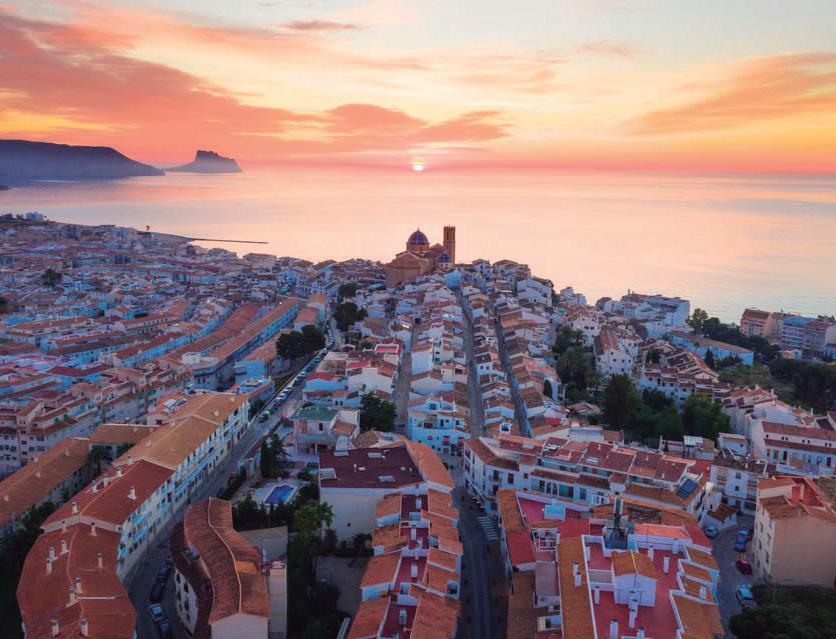
ALTEA has launched a new awareness campaign against gender-based violence, aimed at all citizens to emphasise the importance of reporting or seeking help in any case of abuse. The initiative also seeks to support victims who, due to fear, emotional dependence, or other circumstances, cannot take the step to report.
Anna Lanuza, Equality councillor, highlighted the collective responsibility in addressing gender violence and the urgent need to break the silence. “Silence in the face of abuse makes us complicit. We cannot ignore signs that a woman is suffering,” she said. She stressed that many victims lack the strength or support to act alone, making social assistance essential to protect and guide them.
The campaign will run through social media,






press, and urban signage, providing clear messages on acting against abuse and supporting victims.
It also promotes resources from the Equality and Social Welfare
departments, including psychological care, legal advice, social support, and coordination with police and health services.
Lanuza highlighted the AlertCops mobile app as
a key tool for emergencies. “Reporting, asking for help, or supporting a victim can save lives,” she concluded, underlining that ending gender violence requires a united societal effort.
3,000
JAVEA plans to lift the ban on holiday rentals, allowing new licences as long as they do not exceed set limits: 7 per cent in the historic centre, 15 per cent in Duanes, and 25 per cent in Tossalet. The proposal
was defended by Urban Planning councillor Pere Sapena but faces strong opposition from the PSOE, who warn the town cannot sustain the current number of holiday homes, let alone reach 5,000.




If the plan goes ahead, Javea could see an increase from 4,000 to over 5,000 holiday homes, adding around 3,000 new tourist beds. PSOE councillor Vicent Miralles said the growth is unacceptable given the shortage of year-round rentals and rising conflicts each season. He called for a total moratorium on new licences, citing concerns over overcrowding, infrastructure pressure, and environmental impact.
The figure does not include illegal rentals, new hotel beds, or properties that have deregistered as holiday homes but remain on the tourist market. The Socialist group insists the municipal plenary must debate the proposal and take responsibility, criticising the government’s ‘arbitrary limits’ and lack of supporting reports, calling the approach inconsistent and unsustainable for residents.
POLOP has taken a decisive step to regulate tourist accommodation by restricting it in its historic centre. The Costa Blanca municipality aims to safeguard the quality of life for residents while ensuring tourism develops in an orderly manner.
The town hall of Polop de la Marina has initially approved a municipal ordinance specifically governing tourist-use housing. The initiative seeks to balance tourism growth with the preservation of residential character, heritage, and community coexistence, providing a structured and fair framework.
The ordinance was passed in full council with support from the Popular Party and Ángela Fuster, while the PSOE abstained. Mayor José Luis Susmozas explained that the measure is designed to manage tou-
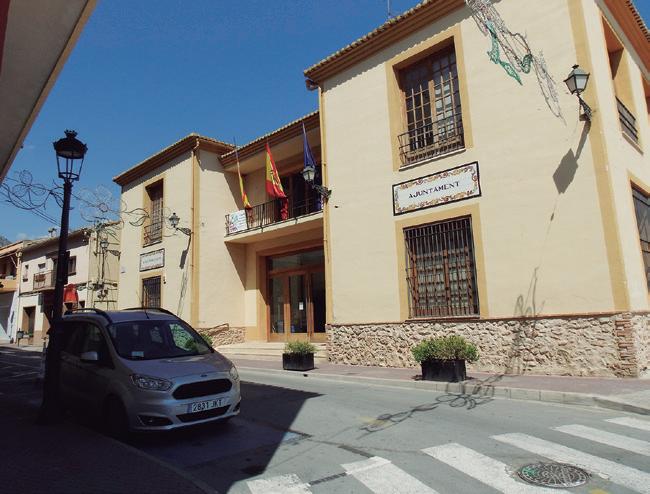
rism without banning it entirely, protecting both residents and property owners from potential conflicts.
Under the new rules, tourist accommodation is prohibited in the historic centre and areas surrounding the Cultural Interest Site (BIC). In urban expansion zones, permission is highly restricted, while outer residential estates may allow tourist housing under
strict limits, capped at 15 per cent of total homes and subject to homeowners’ approval.
The Urban Planning Department, supported by a University of Alicante study, carefully identified which areas require protection. The ordinance will now undergo a 30-day public consultation, with a six-month transition for existing tourist homes to comply.

LA NUCIA is set to make history with the arrival of Spain’s first ‘NBA School of Basketball’, an official youth development centre and part of the NBA’s global network across four continents. The project was unveiled on Wednesday February 4, at NBA Spain’s headquarters in Madrid, reinforcing the town’s brand as ‘La Nucia, City of Sport’ on the international stage.
The academy will be based at Colegio Vallemar, where a new sports hall themed around the NBA will be built. It will cater to boys and girls aged six to 18, offering both boarding and day options and combining top-level basketball training with bilingual academic education. The launch event featured NBA ambassadors Víctor Claver and
Salah Mejri, alongside league officials and local authorities, including mayor Bernabé Cano, highlighting the strong institutional and educational support for the project. Mayor Cano described the initiative as a ‘giant step’ for La Nucia, attracting young basketball talent from around the world. The academy will follow the NBA’s official player development model, promoting values such as integrity, teamwork, respect and determination. Programmes will run from September to June, with additional camps at Easter, Christmas and during summer. Starting Easter 2026, La Nucia becomes the first Spanish city to join the NBA’s international network of 17 academies worldwide.

BENISSA is moving forward with the deve lopment of a new Padel City, a strategic project aimed at expanding and improving the existing Ciutat Esportiva.
After months of plan ning and coordination, the initiative responds to growing demand for modern sports facilities and enhanced services for residents.
The Padel City will be delivered through a pu blic‑private partners hip, allowing private in vestment while keeping public interest central. The plan includes 12 courts, three of them in door, with an estimated investment of €1.5 mi llion and scope for futu re expansion to meet in creasing demand. Once approved, construc tion is expected to take around five months.

The Costa Blanca al ready hosts a vibrant padel scene, with towns like Calpe, Altea, Be nidorm, Denia and Ja vea offering indoor and outdoor courts, tour naments and coaching sessions. Alicante featu res clubs that combine padel with fitness ame nities and social spaces, while local leagues fur ther encourage commu nity participation.
Projects like Benissa’s Padel City are part of a regional trend to mo dernise sporting infras tructure and promote active lifestyles.


GUARDIA CIVIL is investigating an alleged fraud scheme involving six employees from the vehicle inspection station (ITV) in Onda ra, in the province of Alicante, and a Guardia Civil officer who was arrested a couple of months ago.
The ITV (Inspección Técnica de Vehículos) is Spain’s mandatory roadworthiness test, similar to the MOT in the UK. Vehicles must pass this inspection to be legally allowed on the road.
According to sources close to the investigation, the suspects alle gedly accepted money in exchange for approving vehicles that were in poor condition and should not have passed the inspection. Inves tigators reportedly uncovered the possible connection after analy sing audio recordings extrac ted from the mobile phone of the arrested Guardia Civil officer late last year, in which the ITV wor kers were allegedly mentioned.

As a result, on Monday February 2 Guardia Civil officers attended the Ondara ITV station and detai ned six of its eight employees. The operation caused long queues and significant delays at the facility throughout the day. After giving statements, all six were released and remain under investigation.
The employees are being inves tigated for alleged offences inclu ding falsification of documents and crimes against road safety. Investigators have not ruled out additional charges, such as belon ging to a criminal group and on going private sector corruption, depending on the outcome of fur ther enquiries.
THEIR next demons tration is on Thursday February 26, when they look forward to welco ming Melanie Harris with ‘Dig Beneath The Surface’.
Melanie Harris is a hi ghly accomplished floral artist, AOIFA (Associa tion of Irish Floral Ar tists) demonstrator, and judge originally from Hamilton, New Zealand, and now based in Coun ty Cork, Ireland. Melanie has been a keen and acti ve flower arranger since childhood. She enjoys church flower arranging,

exhibiting in flower fes tivals and competitive


work. A member of the Ballincollig Flower and Garden Club in Cork, she has established a signi ficant presence in the international floral art community.
The doors open at 2pm and everyone is asked to be seated by 2.45pm. En trance €10 if you registe red in January and €15 if you still have to register (€10 entrance fee and €5 yearly admin fee).
They meet at The Salon de Actos, La Senieta, Mo raira.

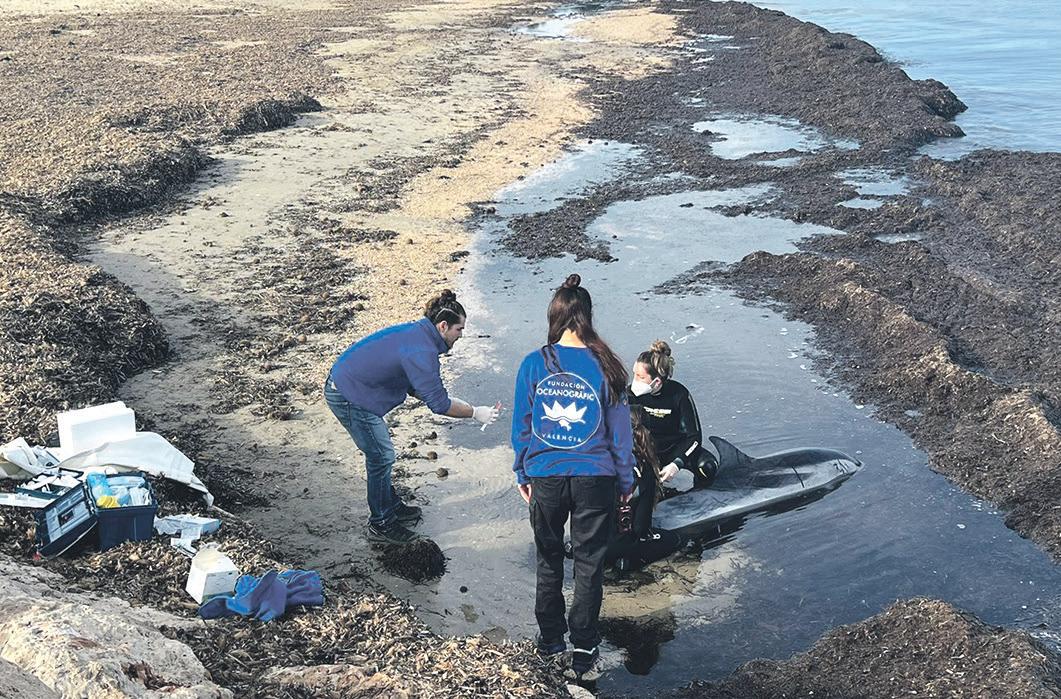
POLICE in Denia reported an intervention after a dolphin was found stranded on Les Marines beach on February 4, following an alert from a local resident who noticed the animal close to the shoreline. Officers attended the scene immediately and secured the area while assessing the situation.
According to information shared on social media, the discovery was promptly reported to the Marine Rescue Unit of the Oceanografic in Valencia. Local Police worked in coordination with the specialist team to assist with the assessment and care of the cetacean, highlighting the importance of cooperation between emergency services and marine experts.
Police praised the swift action of the member of the public, stressing that early alerts are essential when dealing with stranded marine animals. They also noted that the recent spell of rough seas affecting the Denia coastline may
have contributed to the dolphin being washed ashore, as strong waves and currents can disorient marine mammals.
Authorities have reminded residents and visitors that stranded marine animals should never be touched or returned to the water, as this can cause further harm. Instead, the emergency services should be contacted immediately by calling 112
THE beginning of February got off to a great start when a group from U3A Calpe visited the Bouquet Bodega in Jalon for a wine tasting session. Their host, Robert, was very entertaining as well as being


UNTIL Monday February 9, Wetherspoon was a name synonymous with airport stops, London streets, and bargain breakfasts – known only across the English Channel. That changed this week as Spain welcomed its very first Wetherspoon pub, not on a high street or classic tourist hotspot, but inside Alicante-Elche Miguel Hernández Airport.
It is the chain’s first venture in Spain and the first outside the UK and Ireland, marking an unprecedented step for a brand long known for selective expansion.
Named ‘Castell de Santa Bàrbara’, the pub opened beyond security in the non-Schengen international departures area, meaning only passengers with boarding passes can access it. Covering over 200 square metres with a 30-squa-

re-metre terrace, the space mirrors the classic British Wetherspoon experience with high tables, a wide bar, warm lighting, and a layout designed for constant footfall. The menu features full English breakfasts, fish and chips, burgers, pizzas, draught beer, craft options, and wine, alongside Spanish tou -


ches such as tortilla and gambas al ajillo. Alicante was chosen deliberately, with millions of British travellers passing through the airport each year. Operated by Lagardère Travel Retail, the pub allows Wetherspoon to test its first international venture in a controlled setting.
extremely knowledgeable about the wines. A vermouth and six wines were consumed together with delicious tapas to complement the drinks. Much laughter and chatter was heard and the participants learned a lot. Another trip there is being planned for the autumn.
New Members of U3A are always welcome - details on www.u3acalpe.org.








TRAM facilitated the mobility of 19,015,836 passengers in 2025 across its four tram lines, one TRAM-train line, and a suburban rail line.
Across the entire Ferrocarrils de la Generalitat Valenciana (FGV) network, journeys on TRAM d’Alacant and Metrovalencia reached a total of 110,655,975 trips. This represents a 6.5 per cent decrease compared to 2024, when over 20 million passengers travelled across the network.
FGV managing director Alfonso Novo highlighted that 2025 was still the second-best year in TRAM d’Alacant’s history, despite temporary service interruptions on the Hospital-Benidorm section due to construction works.
He also noted that line 9, connecting Benidorm and Denia, grew by over 19 per cent after fully opening in January 2025.

The peak month was June, during the Fogueres festival, with nearly two million passengers, while the busiest day was June 21, with 107,258 travellers.
Line 2, linking Luceros and Sant Vicent del Raspeig, was the most used with 7.5 million journeys, followed by line 1 to Benidorm. Luceros station
remained the main hub with over 3.3 million passengers, ahead of Mercado and Sant Vicent del Raspeig.
Overall, TRAM d’Alacant continues to play a vital role in regional mobility, maintaining high passenger numbers even amid infrastructure works and seasonal fluctuations.

CITIZENS from across the Costa Blanca took part in a peaceful public walk in Javea to defend the coastline and the area’s natural heritage, amid growing concern over increasing urban development pressure. The initiative brought together residents, associations and local groups who warned that the territory, coastline and protected natural spaces are at a decisive moment, with mounting development threatening landscapes that many believe must be preserved for future generations.
The walk took place on Sunday February 8 and attracted participants from Denia, Javea, Benissa, Moraira and other parts of the Costa Blanca. Public representatives, neighbourhood movements and members of the media also
joined the event, underlining that the defence of the territory is a shared cause that affects the entire community, not a single organisation or group.
Organisers stressed that protecting the coastline is not an ideological issue, but one of responsibility, respect and love for the land, as well as a duty to future generations. They highlighted that every voice matters and every step taken helps to defend what belongs to everyone.
Cultura Sostenible Denia, the group behind the initiative, described the walk as a peaceful, democratic act of unity and dignity, concluding that only through collective action can injustices be halted and the Costa Blanca coastline safeguarded for generations to come.


A FATHER from Javea has launched a crowdfunding campaign to cover the costs of life-saving cancer treatment for his 12-year-old son, Roman, who was diagnosed last September with mucoepidermoid carcinoma, a rare and aggressive cancer of the salivary glands. After weeks of tests and hospital visits, Roman underwent surgery in November at San Juan Hospital in Alicante, where doctors successfully removed the tumour.

In January, concerns over a possible recurrence led to his transfer to La Fe Hospital in Valencia. Following a multidisciplinary review involving oncologists, radiologists and maxillofacial specialists, doctors con rmed there were no remaining signs of cancer. However, Roman still needs proton therapy in Madrid to

jardo impressed








EXTRA virgin olive oil has taken centre stage in the world of desserts thanks to the remarkable achievement of Denia student Sofía Guajardo, who won first prize at the sixth International AOVE Forum, held during the Fira de Tots Sants in Cocentaina. Guajardo impressed the jury with an innovative dessert in the Cooking applied to Extra Virgin Olive Oil competition, demonstrating how this traditional Spanish ingredient can cross seamlessly from savoury dishes into the realm of pastry.






reduce the risk of relapse. The treatment is expected to last six to seven weeks, with costs for travel, accommodation and living expenses placing a heavy nancial burden on the family. The family has launched a crowdfunding appeal with a target of €12,000, and so far nearly €8,770 has been raised from over 100 donations, re ecting strong community support. Any unused funds will be donated to local charity Cancer Care Javea, which provides support and resources to people a ected by cancer.

The event highlighted Denia’s commitment to excellence in Vocational Education and Training (FP), reflecting the coordinated efforts of the school’s Skills department to encourage students to take part in prestigious professional competitions. The contest, held on January 30, featured a jury of leading figures






from Spain’s culinary scene, inthe Valencian Academy of Gastro-
from Spain’s culinary scene, including Sergio Terol, president of the Valencian Academy of Gastronomy; Kiko Moya, chef at two-Michelin-starred La Escaleta; food critic Santos Ruiz; Arturo Roig, chef at A Roig Viu; and Juan Moll, academic member of the Valencian Academy of Gastronomy.
CIPFP Denia school emphasises that such experiences allow students to engage with professionals, strengthening their skills, creativity and professional pride.

TOURISM has strengthened its economic impact in l’Alfas del Pi in 2025, thanks to higher spending by visitors and a steady international clientele. The municipality welcomed approximately 375,000 tourists in the first half of the year, reflecting sustained activity despite more measured growth and increasingly planned travel patterns.
Luis Miguel Morant, the town’s Tourism councillor, said: “Our first objective, to retain our target visitors, has been achieved, and the average spend per visitor has risen significantly. This is the path to position l’Alfas del Pi as a key destination.”
One of the most notable trends this year is the rise in tourism expenditure. The average booking price grew by around 9 per cent, indicating visitors with hi -
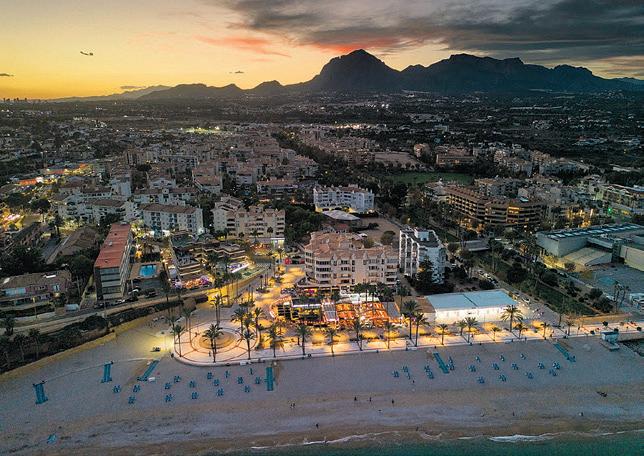
gher spending capacity. This has reinforced the contribution of tourism to local commerce and hospitality, particularly during the summer months.
International visitors remain the backbone of the sector. About 90 per cent of arrivals come from abroad, with the UK, Norway, the Netherlands, and Belgium accounting for roughly 80 per cent of these. Their consistent return
supports l’Alfas del Pi’s reputation as a place offering good climate, a calm environment, and overall well-being.
Looking ahead, the focus is shifting from visitor numbers to managing demand efficiently. Strategies aim to balance tourism with daily life, ensuring organised visitor flows throughout the year and promoting a healthy, active lifestyle for both residents and tourists.

BENIDORM Council will cover the recent rise in school bus fares to secondary schools so pupils continue paying the same amount until the end of the academic year. The decision follows changes to urban transport tariffs set by the regional authority, which increased the ticket price by almost 40 cents.
Education councillor Maite Moreno said the council decided not to pass the increase on to
families. Instead, the local authority will pay the difference between the previous fare and the new rate. Each student will continue to pay €0.54 per journey, while the council will contribute the remaining €1.31. This means the council now funds more than 70 per cent of the full ticket price, compared with 66 per cent before the increase.
The measure is expected to require additional
spending of more than €20,000, on top of the amount already allocated for the period from January to June. The final figure will not be known until the end of term, as costs depend on the number of journeys made each month.
Around 540 students in secondary education, sixth form and vocational training currently use the council-funded school transport service.


AS we have pointed out in previous articles, buying a property is probably one of the most important decisions a person can make. Signing the deed before a Notary is only the final step. Before that, it is necessary to carry out a series of checks to ensure there are no legal or administrative problems. This includes reviewing the property’s status in the Land Registry, Cadastre, and town hall, among others. One often-overlooked essential aspect is utility contracts.
This week, we look at the importance of property purchases and utility contracts such as water, electricity, gas, and other basic services.
Types of utility contracts
In practice, utility contracts are usually divided by service: Electricity and gas: contracts
with the relevant distributor and retailer, including the corresponding meter.
Water: usually with the town council or municipal company, where it is key to verify that the supply is active and registered to the owner.
Telecommunications (internet, phone, TV): these contracts can be transferred or cancelled depending on the provider’s policies, and the agreement of the parties.
Some properties may have special community or central heating contracts, which should also be reviewed before the purchase.
What to check in property purchases and utility contracts
It is important to ensure that contracts and supplies meet
several requirements. Among others:
Definitive and active contract: The contract must be in force and must be definitive - not provisional or for construction purposes. Also, there must be no pending debts, etc.
• Property address: The supply address must correspond exactly to the property being purchased.
• Correct ownership: The current owner must appear as the contract holder. In some situations, such as when a property is inherited and sold immediately, there may not be enough time to change the contract ownership.
Precautions in property purchases and utility contracts. Occupation licence
When a supply is already active, many companies do not

THE Generalitat Valenciana has launched an emergency plan in Alicante to control the wild boar population and prevent African swine fever. Four new collection routes have been introduced, along with a second phase using cage traps in priority areas. The initiative involves €6 million and aims to reduce health, economic, and environmental risks linked to overpopulation. Hunters are being offered €40 for each wild boar removed, with a logistical system in place for collecting and disposing of carcasses. The network now includes 85 collection points, reinforced at two fixed locations on Sunday afternoons. Priority areas in Alicante include Javea-Denia, Marina Alta, Marina Baixa, Cocentaina-Font
Roja, and El Hondo Natural Park. Camera traps are being used to monitor wild boar activity before cage installation, and operations are managed by the public company VAERSA.
The plan also covers areas where hunting is not allowed, including wildlife refuges, peri-urban zones, and regions where hunting alone is insufficient.
Since the plan began, 384 wild boars have been removed in the Valencian Community. The measure aims to protect the pork sector, preserve animal health, and reinforce environmental safety, with emergency funding raised to €9 million to support biosecurity and population control measures.
require any special documents for transferring ownership or to direct debit the payments to the account of the new owner. However, there are cases where suppliers may request a valid occupation licence. This also applies when the property has no active supplies and a new connection must be arranged. In these cases, it would be necessary to apply for the occupation licence to the town hall.
This presents an additional risk. If the property has issues unknown to the buyer (urban planning irregularities, lack of sewer connection, or other problems), the supply may not be activated. And this would leave you, as the buyer, with a property legally owned by you, but without essential services.

Conclusion
At White & Baos Lawyers, we are experts in real estate law, property purchases and utility contracts. If you are thinking of buying a property in Spain, do not take risks. A legal review of the property (Land Registry, Cadaster, town hall, utility contracts, etc) will allow you to identify potential issues and understand the property’s legal status. Contact us today, and we will assist you throughout the purchase process.
The information provided in this article is not intended to be legal advice but merely conveys information relating to legal issues.
THE Valencian Employment Service has launched a new round of grants to encourage permanent employment of young people under 30 in the Valencian Community. The initiative is aimed at private companies and self-employed workers offering full-time permanent contracts to young job seekers registered with LABORA and the National Youth Guarantee System.
Eligible candidates must be under 30, hold a recognised professional qualification, and be registered in the National Youth Guarantee System. Acceptable qualifications include university degrees, engineering or architecture diplomas, postgraduate studies, doctorates, vocational training (excluding basic FP), and professional certificates. Applicants must also have been unemployed and registe -

red with LABORA for at least three months prior to hiring.
Each employer may apply for grants for a maximum of two hires. The grant amount varies depending on the employee’s profile: €10,000 per hire, €12,500 if the worker is a woman or has a recognised disability, €20,000 for victims of gender-based violence,
and €25,000 for individuals with a severe disability. Partial contracts of at least 15 hours per week are eligible, with a proportional reduction in the grant. Beneficiaries must commit to maintaining employment for at least 24 months and demonstrate a net increase in staff. Applications must be submitted online via LABORA by June 2.
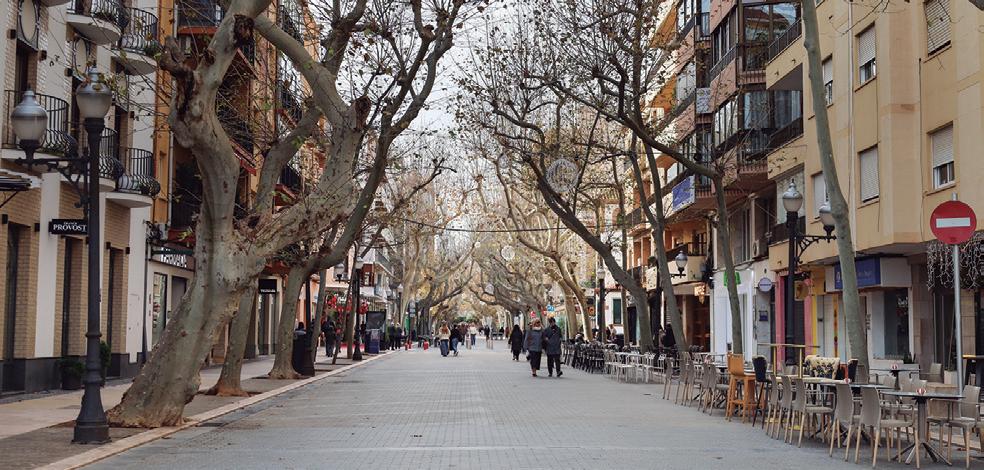
DENIA is set to celebrate Valentine’s Day with a new campaign promoting local shops. Organised by the town council’s Commerce Department, in collaboration with AFIC in Creama and the traders’ association Acade, the initiative runs until Saturday February 14.
Under the slogan ‘Comercio de barrio, amor a diario’, 59 shops are taking part, contributing 74 prizes to be drawn among shoppers who spend more than €10 in participating stores during the campaign.
Maria José García, the councillor for Economic Promotion, said the campaign aims to show the value of everyday trust and personal service in local commerce. She added that shopping locally is a way to support those who open their doors each morning and help maintain the
town’s streets.
To enter the prize draw, shoppers must write their name and phone number on their receipts and place them in heart-shaped boxes installed across the town. Locations include Calle Marqués de Campo, Paseo del Saladar, Plaza del Arxiduc Carles, the Municipal Market, Plaza María Hervás, and Calle Cop.
Participants can also take part in a photo experience at a dedicated photocall on Glorieta del País Valencia and share images on social media, tagging Comercio Denia.
The draw will take place the week after the campaign ends, with winners contacted by phone. Prizes must be collected from the shops that donated them within 15 days of notification. More details are available at www.denia.es.
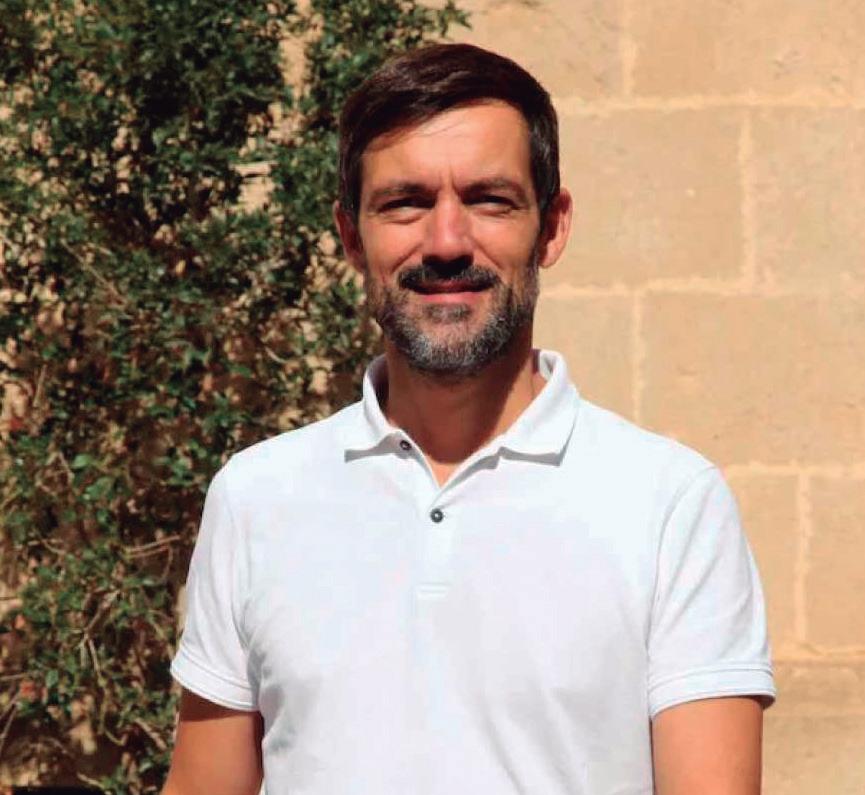
BENITACHELL Town Hall has opened new dates for its citizen participation initiative, ‘Toma un café con tu alcalde’, which brings residents face to face with the mayor for open conversation about local issues.
The sessions allow neighbours to speak directly with Mayor Miguel Ángel García in an informal setting designed to encourage trust and honest dialogue. Any topic linked to municipal life can be raised, from day-to-day concerns to wider projects.
This new round introduces a change in format. Instead of separating meetings by language, as in previous years, the council has organised them by areas of the municipality. Residents are grouped by neighbourhoods and urbanisations so that discussions can focus more clearly on each zone.
All meetings will take place on Fridays at 10am
in the council chamber at the town hall, C/ Mayor, 5. The schedule is as follows: February 20 for Cumbre del Sol, Valle del Portet, Vista Ifach and Golden Valley; February 27 for Barranc Roig, La Joya, Terra Moraira, Vista Montaña, Pueblo Alcassar, Villotel and Calistros; March 6 for Les Fonts, Los Molinos and Racó de Nadal; and March 13 for
the town centre and surrounding rural areas. Places are limited and advance registration is required by emailing al caldia@elpoblenoudebeni tatxell.com.
More than 20 such meetings have taken place since 2021, forming part of the council’s wider commitment to direct communication with residents.

FOR many expats living in Spain, community matters. We build new lives, form lasting friendships, and often look for meaningful ways to give something back to the country we now call home. At Elysium Funeral Plans , that belief in community is at the heart of everything we do.
We are proud to be The Only Funeral Plan Provider to support DEBRA Spain (ANDEB), the only national, registered charity dedicated to helping children and families affected by Epidermolysis Bullosa (EB) - a rare and painful genetic condition often referred to as Butterfly Skin due to the extreme fragility of the skin.





Spain. For every plan created, Elysium donates up to €50, ensuring that practical planning today helps vulnerable children and families tomorrow.
alongside volunteers and collaborators across Spain.
As part of this commitment, clients arranging an Elysium Funeral Plan can choose to support DEBRA




DEBRA Spain was founded in 1993 by Nieves Montero and Iñigo Ibarrondo following the birth of their son with EB. At a time when little information or support was available, they created the charity so that no family would have to face this life-changing diagnosis alone. What began as a small support network has grown into a professional organisation, now supported by a dedicated team of 38 specialists,
The charity’s vision is clear: a world free from EB. Its mission is equally powerful - to improve the quality of life for everyone living with the condition. Guided by values of humanity, professionalism, transparency, and social justice, DEBRA Spain continues to make a profound difference every day.
By choosing Elysium, expats are not only protecting their own wishes and easing the burden on their loved ones - they are also helping to create a kinder, more compassionate future for some of Spain’s most vulnerable children.






FARMERS across southern and western Spain are reeling from ‘catastrophic’ crop damage after Storm Marta battered the Iberian Peninsula with torrential rain and gale-force winds.
Andalucia has emerged as the hardest-hit region, with early assessments from regional authorities suggesting that roughly 20 percent of agricultural output has been impacted. The destruction was concentrated in the provinces of Cadiz, Sevilla, and Almeria, where low-lying river basins became submerged. In Almeria’s critical greenhouse sector, fierce winds shredded plastic structures, destroying high-value vegetable crops. The timing proved particularly cruel, striking winter vegetables and citrus groves at a vital harvest stage. Unlike isolated weather events, Marta
followed a succession of Atlantic systems that left soils saturated; this saturation forced heavy runoff, turning farmland into vast lakes and triggering the risk of widespread root rot and disease.
Agricultural unions warn that the full scale of the economic fallout remains unknown as many fields remain inaccessible. Beyond the immediate loss of crops, rural infrastructure has been decimated, with damaged roads stalling emergency repairs and distribution.
As regional leaders move to declare a formal natural disaster, the agricultural insurance system is bracing for a surge in claims. With more unsettled weather forecast, Spanish producers now face a desperate race to stabilise their livelihoods and protect European supply chains.
AGE in Spain has launched the #LoveInACall / #AmorEnUnaLlamada campaign to ensure no senior faces Valentine’s Day alone. The non-profit, which supports English-speaking seniors across Spain, encourages people to view love not just as romance but as genuine companionship and support. Under the slogan, ‘This Valentine’s Day, gift a call that fights loneliness: true love is companionship, not just romance’, the campaign raises funds for the Friendline programme. Through Friendline, trained volunteers make calls to seniors, offering conversation, attentive listening, and guidance on everyday life in Spain.
For many older residents living far from home, special dates such as Valentine’s Day can be difficult. Friendline provides regular calls that offer stability, social contact, and a sense of belonging.
Age in Spain explains, “Flowers fade, but a warm

Fighting loneliness this Valentine’s Day.
conversation can change someone’s week. #LoveInACall invites citizens, businesses, and embassies to gift their time and attention to those who need it most.”
Those who wish to help can make donations (for instance, €10 funds around 20 calls), spread the campaign on social media using #Lo-
In a recent survey of our customers after using Línea Directa’s Roadside Assistance and breakdown services, over 90 per cent said they would happily recommend our insurance services to a friend or colleague. Línea Directa would like to thank everyone who has taken the time to answer the questions in our survey as it has given us valuable feedback on our services and enabled us to integrate positive changes and continue to provide expert solutions for overseas residents in Spain.
Car, bike and home insurance, with absolutely everything in English. The emergency and claims hotline is fast and efficient, with quick no obligation quo tes over the pho ne. The customer service team will help you decide on the best policy and there are easy payment options so you can spread the cost of your premiums.
Person’s Night-time Assistance. And their car insurance includes helpful services such as Legal Assistance that can provide help when applying for or renewing your driving licence in Spain.
When an existing Línea Directa customer recommends a new customer, they both receive €30. Línea Directa’s Expat2Expat programme is free and open to all existing customers. You can recommend up to 10 people and earn up to €300 in cash per year. Simply ask your friend to call 917 002 006 and quote your full name. Then once their application for car, bike or home insurance has been approved, Línea Directa will pay the reward straight into the bank account following payment of next or first premium. For more information, see terms and conditions at lineadirecta.com.

All Línea Directa insurance policies offer additional features specifically designed for expatriates living in Spain. Their home insurance includes Pet Assistance, IT Assistance, and Home Maintenance. All motorbike policies come with Replacement Motorbike, Technical Equipment cover and even Young
Change to Línea Directa and they will lower the price of your insurance. Línea Directa has been providing comprehensive car, motorbike and home insurance to British expatriates and residents in Spain for over 25 years. With over three million customers nationwide, Línea Directa makes sure you get the best possible price for the kind of insurance you really need.
veInACall or #AmorEnUnaLlamada, or take part in small local initiatives such as coffee meetups or talks. All contributions go directly to supporting Friendline, from volunteer training to reaching more seniors. More information and donations can be found at ageinspain. org/friendline.


ALICANTE and Benidorm, just 45 minutes apart on the Costa Blanca, are emerging as two of Spain’s leading relocation choices for 2026. Long associated with retirees and second-home buyers, both cities are now attracting remote workers, young families and long-term expatriates drawn by affordability, climate and lifestyle.
The wider Costa Blanca offers practical advantages - mild winters, outdoor living, reliable public healthcare and strong transport links reduce many of the pressures of moving abroad. Alicante’s international airport is well connected, and the region’s long experience with foreign residents makes administration, medical access and daily logistics straightforward.
Alicante is often described as offering au-
thentic Spanish city life with international comfort. It is walkable, lively year-round and functions beyond the tourist season. Universities, hospitals and offices support the local economy through winter. Demand for housing has increased, however, with rising rents and limited coastal availability, while inland neighbourhoods offer better long-term value.
Benidorm, frequently misunderstood, is defined by efficiency and ease. Services are streamlined, English is widely spoken and social integration is relatively simple. The main compromise is seasonality, with crowded summers and quieter, cheaper winters.
Both cities are linked by the TRAM network, supporting car-free living. While affordability remains strong compared with northern Europe, rental markets require careful research.
MOVING to Spain in 2026 remains possible for English speakers, but only with a clear strategy. The appeal of sunshine and quality of life is undiminished, yet the job market is competitive, housing costs are rising, and English-only roles are concentrated in specific sectors and locations.
Working without fluent Spanish is achievable, but opportunities are largely confined to international environments. Barcelona and Madrid remain the strongest centres for English-speaking jobs. Barcelona leads in tech start-ups, SaaS, digital marketing and multilingual customer support, while Madrid attracts corporate headquarters, finance, consulting and international sales roles.
Malaga is expanding as a tech and remote-work hub, and Valencia offers lower living costs but fewer English-only positions. Smaller towns rarely provide local English-speaking employment unless individuals are

self-employed or working remotely.
Key hiring sectors include technology, AI and product management, as well as multilingual customer support, digital marketing and international sales. Teaching English remains an entry point, although salaries are modest. Candidates with additional languages have a clear advantage.
Salaries vary widely. Entry-level support roles typically pay €24,000 to
€32,000 gross per year, while tech professionals can earn €45,000 to €85,000 or more. Housing is the main financial pressure, making net income more important than headline salary. Many expatriates now choose hybrid roles or live outside city centres. For EU citizens, legal employment is straightforward. For non-EU nationals, the digital nomad visa has become the most practical option, while traditional employer sponsorship remains limited.


IN a world of fast fashion and mass-produced accessories, true craftsmanship still shines through - and nowhere is this more evident than at Montenegro Jewellers in Denia. For residents and visitors along the Costa Blanca, this family-run jewellers has become a trusted name for quality, elegance and personal service.
Located in the vibrant centre of Denia, Montenegro Jewellers combines traditional jewellery-making values with contemporary design. Their carefully curated collection includes fine gold and silver jewellery, engagement and wedding rings, bespoke pieces, and beautifully crafted watches, all selected with an eye for detail and durability. Each piece reflects a commitment to excellence that has earned the loyalty of generations of customers.
What truly sets Montenegro Jewellers apart is their personalised approach. Purchasing jewellery is often linked to life’s most meaningful moments - celebrations,

milestones and memories. The experienced team understands this and takes the time to guide customers through their choices, offering expert advice in a relaxed and welcoming environment. Whether selecting a timeless diamond ring or commissioning a custom design, clients are assured of transparency, professionalism and care. The jewellers also specialise in bespoke creations and repairs, breathing new life into treasured heirlooms. From resizing rings and restoring antique pieces to creating one-of-a-kind designs,
Montenegro Jewellers blends traditional craftsmanship with modern techniques, ensuring every item meets the highest standards. For the international community living in and around Denia, trust is essential. Montenegro Jewellers prides itself on clear communication, honest pricing and long-standing relationships with reputable suppliers. This commitment to integrity offers peace of mind, particularly for customers investing in fine jewellery or commemorating important occasions.
Beyond retail, Montenegro Jewellers
plays an active role in the local community. Supporting a local business means supporting local expertise, accountability and heritage - values that resonate strongly on the Costa Blanca. In an era where online shopping dominates, the reassurance of face-to-face service and expert guidance remains invaluable.
As styles evolve and trends come and go, Montenegro Jewellers continues to focus on what truly matters: quality materials, skilled craftsmanship and enduring design. Their collections are chosen not just to follow fashion, but to stand the test of time.
For those seeking a meaningful gift, a personal statement piece or a lasting symbol of love, Montenegro Jewellers in Denia offers more than jewellery - it offers confidence, tradition and timeless elegance. When quality and trust matter, Montenegro Jewellers remains a shining example of local excellence on the Costa Blanca.



















































MADRID is preparing to say goodbye to a shop that has served the city for generations.
Pescadería Alofer, at Calle de la Esgrima 8 in Lavapiés, will close on March 31 as its owner, Fernando Alonso, retires after more than 50 years in the trade.
The fishmonger’s was famous not only for the freshness of its seafood but also for its unusual service: fish were often tossed through the air before landing in customers’ baskets. Locals have long praised the shop for its reliability and the friendliness of its staff.
Alofer’s history stretches back to before the Spanish Civil War. Alonso’s great-uncle bought the shop, and it remained in the family until now. With Alonso stepping down, the fami-
ly has decided to sell the property, including the two-storey building that houses it.
Plans were already in place to transform the premises into a capsule hotel. Demolition has been paused after the Madrid City Council intervened. Antonio Giraldo, a municipal spokesperson, lodged a complaint with the Provincial Prosecutor’s Office, citing the building’s heritage value, which could date back several centuries.
The Community of Madrid will now decide whether the building is protected. If not, demolition could resume. For Lavapiés, the closure of Alofer marks the end of an era and the departure of one of the neighbourhood’s most memorable businesses.
IN the 12 months since Spain introduced the Ventanilla Única Digital, or Single Digital Window, nearly 300,000 short-term rentals have been registered, while 84,250 listings failing to meet standards have been removed. The system was launched to regulate short-term rentals, combat fraud, and protect local communities from illegal lets and disruptive visitors.
The Single Digital Window is a European regulatory system requiring all short- and long-term properties to have an official ID number to be legally advertised online. Spain was among the first countries to implement it. Registration was voluntary for the first six months of 2025 but became mandatory in July.
Since January, 400,362 applications have been submitted, with 74.8 per cent approved and issued a Unique Rental Registration Number (NRUA). An-

dalucia, Catalonia, and the Valencian Community account for 60.3 per cent of registered short-term lets, with 66,643, 58,446, and 55,467 approvals respectively, followed by the Canary Islands with 38,655. These four regions hosted 64.3 per cent of all foreign tourists in 2025, according to the Spanish National
Institute of Statistics.
However, 21 per cent of applications have been revoked, mainly in Madrid, Barcelona, and Marbella, leading to their removal from platforms including Airbnb, Booking, and Idealista. One common reason for rejection is local homeowners’ association bans on tourist rentals.

A BARCELONA court has ruled that a teleoperator’s dismissal for missing work to attend her critically ill dog was unjustified, recognising ethical and humanitarian considerations in employment law. The Social Court No. 25 found that the worker, dismissed by Majorel SP Solutions, SAU, should either be reinstated or compensated €4,116.42.

One absence in November 2024 occurred when the dog required urgent veterinary attention and euthanasia, which the court determined justified prioritising the animal’s welfare over work obligations.
While other absences were partly unjustified, they were insufficient to justify dismissal under the collective labour agreement. The judge referenced Spain’s 2023 law protecting animal welfare and emphasised that ethical duty to dependent beings, including pets, can outweigh strict work requirements. The ruling reflects a broader societal recognition of pets as sentient beings with intrinsic value, rather than objects, and considers unforeseen emergency circumstances in employment decisions.
Legal experts suggest the judgment could influence future disputes over emergency care obligations, highlighting the need for leave policies that accommodate extraordinary situations involving human or animal dependents. The decision has drawn attention from animal welfare advocates and the legal community, as it demonstrates how ethical and social responsibilities are increasingly integrated into labour law. The company must now decide whether to reinstate the employee or provide compensation, and the ruling may be appealed. Regardless, the case signals a potential shift in how urgent care responsibilities intersect with employment rights in Spain.

TELEGRAM founder Pavel Durov publicly criticised the Spanish government’s proposed social media regulations, warning that they represent ‘steps towards total control’ and could threaten freedom of expression.
In a mass message sent to Telegram users in Spain, he argued that the measures, including age and identity verification for under-16s, mandatory executive accountability for content removal, criminalising algorithm amplification, and monitoring ‘hate and polarisation footprints’, could undermine privacy and anonymity, expose users to surveillance, and discourage political dissent.
Sánchez responded on social media, quoting a modified line from a 19th-century poem: ‘Let the techno-oligarchs bark, Sancho; it is a sign that we are riding,’ dis-
missing claims that the propo sals amounted to censorship or mass survei llance.
Government sources em phasised that any content removal would follow court orders, and the measures were framed as consistent with broader EU efforts, including the Digital Services Act.

Critics including digital rights organisations and opposition parties argue that mandatory verification and executive liability could weaken encryption and chill free speech. The clash highlights Telegram’s growing influence in Spain, where the platform is widely used by journalists, poli-


tical parties, and activist groups.
With the legal text yet to be finalised and parliamentary debate pending, the dispute underscores the broader European challenge of balancing online safety, corporate accountability, and fundamental digital freedoms in the evolving regulatory landscape.


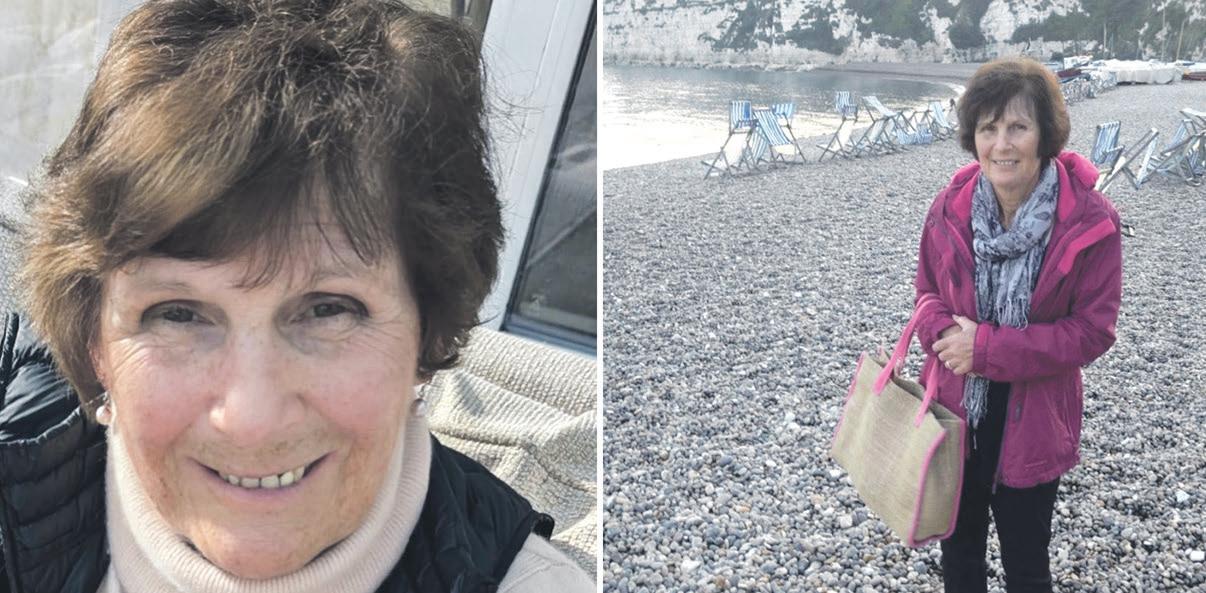
A 76-YEAR-OLD British tourist was airlifted to hospital after surviving 30 hours stranded in a remote Tenerife ravine. Susan Hornsby, from Dorset, went missing during a solo hike on Friday, February 6.
Mrs Hornsby set off at 10am for a routine threehour walk near Benijo Beach in the Anaga Rural Park. When she failed to return or answer messages, her family grew concerned. Her sister-in-law, Louise Bakewell, launched an ur-
gent social media appeal, noting that a language barrier made initial contact with Local Police difficult.
The breakthrough came on Saturday, February 7, after Mrs Hornsby managed to send an email requesting medical assistance. Using the device’s IMEI number and ‘Find My iPhone’ service, rescuers narrowed down her location. She was discovered at 2pm, suffering from severe dehydration and exhaustion.
The rugged volcanic
terrain of the Anaga Rural Park is popular with walkers but poses significant risks due to its steep ravines and unpredictable conditions. Mrs Hornsby, who reportedly feared for her life while stranded, was winched from the site by helicopter and taken for urgent treatment.
Following the rescue, her family urged all travellers, particularly solo hikers, to ensure location tracking services are enabled on their mobile devices.



SPAIN’S tourism sector reached a new high in 2025, welcoming nearly 96.8 million foreign visitors and generating a record €134.7 billion in spending, confirming the country’s position as one of the world’s leading travel destinations. While visitor growth slowed compared with the immediate post-pandemic rebound, the economic value of tourism continued to rise at a faster pace.
International arrivals increased by 3.2 per cent compared with 2024, marking the third consecutive year Spain has broken its own tourism record. Tourist spending rose by 6.8 per cent, nearly double the growth rate of arrivals, reflecting longer stays and higher per-trip expenditure across accommodation, dining, transport and cultural activities.
The United Kingdom remained Spain’s lar-
gest source market, accounting for around 19.1 million visitors in 2025. British tourists contributed approximately €23.65 billion in spending, making them the single biggest driver of tourism revenue. UK travellers continued to favour coastal resorts, island destinations and major cities, with strong demand for the Canary Islands, Balearic Islands, Costa del Sol, Barcelona, Madrid and Sevilla. While some traditional European markets such as France and Germany experienced slower growth, UK travel to Spain proved resilient amid wider economic uncertainty. Spanish authorities said the results support a shift toward higher-value, more sustainable tourism, with British visitors remaining central to the sector as Spain looks ahead to further growth in 2026.








MADRID has been confirmed as one of the cities where Uber plans to introduce robotaxis, placing the Spanish capital firmly on the map for the next phase of autonomous transport.
Uber has included Madrid in its plan to deploy robotaxi services in more than 10 markets before the end of 2026, with a long-term target of operating in 15 cities worldwide. The company considers Madrid a key location due to its population density, the volume of daily journeys, and its economic and tourism significance.
The Spanish capital now sits alongside cities



such as London, Hong Kong, Zurich and Houston in Uber’s global strategy. However, residents
should not expect an immediate launch. Uber has not announced when the service could begin ope-
rating in Madrid, nor has it identified the technology company that would supply the autonomous vehicles. The firm has only confirmed that it will work with partners already used in other countries.
Despite growing competition in the sector, including services run with Waymo in the United States, Uber’s chief executive has said robotaxis will represent only a small share of trips in the short term. For Madrid, the announcement signals intent rather than imminent change.
SENDING money across Europe is about to become much easier for millions of people in Spain. In 2026, Bizum will begin allowing personal payments to users in several European countries, making international transfers almost as simple as sending money within Spain.
Bizum has signed an agreement with other national payment systems, including Italy’s Bancomat, Portugal’s MB Way, Vipps MobilePay in the Nordic countries, and the EPI network covering France, Germany and Belgium. Together, they are building a shared platform that allows these systems to work seamlessly. For users, little will change: Bizum will still be used through a bank app, but the

recipient may be based in another participating country.
The first phase, due to launch in 2026, will focus on person-to-per son transfers. An expansion to on line shopping and physical stores is expected in 2027. Bizum will keep its own branding, alongside a shared European logo showing where cross-border payments are accepted. Once fully opera tional, the network could reach around 130 million users across 13 countries.
Bizum’s expansion is a significant step towards a more unified European payment system, bringing greater convenience alongside new responsibilities.

Bizum on a smartphone, as the Spanish payment app prepares to expand cross-border transfers across Europe in 2026.
SPAIN’S nationwide rail strike has been officially called off following a breakthrough agreement between the Ministry of Transport and the country’s primary railway unions.
The deal, finalised on the afternoon of Monday February 9, successfully averted two additional days of major industrial action that had threatened to paralyse the nation’s transport network until Wednesday, February 11.
The dispute, which began on Monday, February 9, saw significant disruptions to Cercanías commuter lines, regional services, and high-speed AVE routes. While the first day of stoppages caused widespread delays in hubs like Madrid and Barcelona, the newly signed accord marks a decisive shift toward long-term stability. At the heart of the ‘historic’ settlement
is a robust commitment from the government to increase staffing levels at both Renfe and Adif. This includes a strategic plan to recruit thousands of new workers to address the understaffing concerns that unions argued were compromising safety and service quality.
Beyond personnel increases, the agreement secures a substantial rise in maintenance investment through 2030 and introduces more rigorous safety protocols. These reforms respond directly to worker anxieties following recent rail accidents, ensuring better risk prevention and more transparent communication between management and staff.
With the strike withdrawn, rail services across Spain began returning to their regular schedules.

AUTHORITIES in Sevilla lowered the Vega de Triana floodgates along the Guadalquivir River for only the second time in history, following heavy rainfall from Storm Leonardo. The preventive measure aimed to protect low-lying urban areas such as Triana from sudden river surges, with river levels around 1,600 cubic metres per second, below the 3,000 m³/s critical threshold. Parks and sports facilities were temporarily closed, and civil protection and police patrols intensified.
The floodgates are a vital part of Sevilla’s hydraulic defence system, creating a watertight seal to control river flow. Officials emphasised the activation was precautionary rather than a response to active flooding.
Across Andalucia, Storm Leonardo caused widespread disruption: thousands evacuated, roads and railways blocked, and rivers
reached critical levels. Controlled releases from dams and reservoirs mitigated immediate threats but ongoing risks were highlighted from saturated soils and continued rainfall.
Authorities urged residents to avoid riverbanks, monitor official advisories, and cooperate with emergency services. The proactive use of infrastructure demonstrates how early preventive measures can reduce flood risk and protect lives. While Sevilla avoided severe flooding, the wider regional impact underscores the storm’s intensity and the importance of vigilance.
The city continued to monitor water levels closely, ready to implement further measures if conditions worsened, reflecting a broader strategy of proactive flood management amid extreme weather events.
NEXT summer, an all-female scientific team will take part in a groundbreaking mission at the Flashline Mars Arctic Research Station in Canada’s remote Qikiqtaaluk region. Scheduled for 2027, the expedition marks the first time Catalan researchers will join the station, many from leading centres across Spain.
Hypatia Mars, the organisation behind the mission, explained at CosmoCaixa in Barcelona that this expedition will be more demanding than previous Mars analogues conducted in Utah’s desert. The Arctic environment adds challenges, with extreme cold, snow, and ice affecting equipment, battery life, human performance, and extravehicular operations. Isolation is also intensified by the remote location.
The crew was selected from 80 applicants, chosen for planning, flexibility, and discipline - skills highly

valued by space agencies. Over the next 18 months, they will train physically and psychologically while securing partnerships with organisations such as the Polytechnic University of Catalonia. Scientific work will include monitoring permafrost, water quality, and terrain movements using field observations and satellite radar. Cellular ageing will also be studied under
conditions that mimic space-related stresses, with dietary measures to improve resilience. Research outcomes may benefit human health on Earth and support safer infrastructure in extreme conditions.
The mission is supported by Fundación ‘la Caixa’, which will host educational sessions, including a free family event at CosmoCaixa Barcelona on Saturday February 14.









BIRMINGHAM-born entrepreneur Tom Hopcroft has found his calling in Madrid. Trading the grey skies of the UK for the lively terraces of Spain, the designer and content creator now brands himself a ‘professional guiri’, reclaiming the cheeky Spanish slang for Northern European tourists.
Through his brand, Guiris de Mierda, and an Instagram following exceeding 100,000, Hopcroft fosters a community for expats via speed dating, running clubs, and hikes on the Camino de Santiago. His message is simple: the Spanish quality of life is peerless. Having lived in Australia and the Netherlands, Hopcroft argues that Spain’s social fabric outweighs the lure of a high salary elsewhere.
“I prefer earning €30,000 a year in Spain to £100,000 in the United Kingdom or United States,” he shared on his Instagram account. He claims that while wages may be lower, the ‘free joys’ - vibrant plazas, sunny parks, and grandmothers gossiping over drinks, make life feel richer.
Hopcroft explains a fundamental cultural shift: in Spain, people prioritise post-work socialising over the ‘straight-home’ commute. This emphasis on human connection and a slower pace makes the days feel longer and more fulfilling. For this ‘professional guiri’, the trade-off is clear. As Hopcroft puts it: “All of this compensates for being paid less, because time is something you can’t buy.”
PASSENGERS flying with UK budget airlines in 2026 are being reminded to check updated rules regarding what food and drink they can bring onboard, as carriers such as easyJet, Ryanair, Jet2, and TUI all have slightly different policies. Across all four airlines, passengers are prohibited from consuming alcohol brought from outside, though duty-free alcohol purchased at the airport is permitted.
TUI offers complimentary meals and drinks on long-haul flights, while on shorter routes, a trolley service sells snacks.
Passengers may bring their own cold, low-risk items, such as pre-packaged sandwiches, but cabin crew cannot heat personal food except for baby bottles. easyJet allows passengers to bring personal snacks, with a 100ml limit on liquid foods, including soups and custards, and airport hot drinks may be
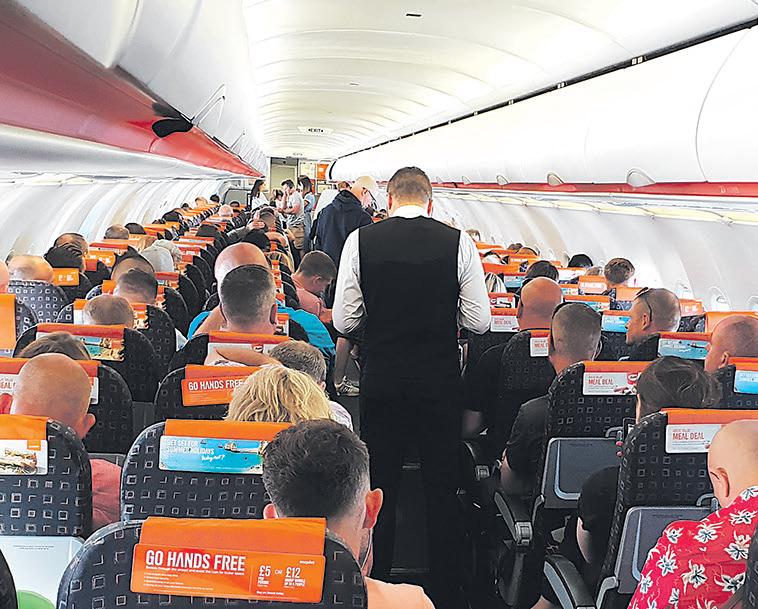
taken onboard only if sealed. Ryanair’s ‘feel free’ policy permits cold food and non-alcoholic drinks, but hot beverages and personal alcohol remain prohibited.
Jet2 does not allow hot or perishable items and advises avoiding foods that are fragile, strong-smelling, or heavy. In addition, EU customs regulations prohibit meat and dairy products in hand luggage, including
sandwiches purchased at the airport, even if sealed. These measures aim to ensure passenger safety, hygiene, and compliance with security regulations, while balancing convenience. Travellers are advised to plan ahead, particularly for families or long flights, to prevent confiscation, delays, or disruption, ensuring a safe and comfortable journey for all passengers and crew.
Danish-born and Mallorca-raised, Cece Gould’s story has come full circle. After building a life in Australia, she returned to the island to raise her three children among the languages and landscapes that shaped her own childhood.
Tell us about your background?

I was born in Copenhagen but moved to Mallorca with my family when I was 18 months old, so the island has always felt like home. After high school I moved to Australia on a working holiday visa and it became one of the best decisions I’ve ever made, as I met my husband Dan there.
What was it like growing up in Mallorca?
Why return after building a life in Australia?

It was incredibly special. Mallorca is so international that I grew up surrounded by different languages and cultures. I didn’t fully appreciate it at the time, but it gave me a wonderful sense of perspective.
We had a beautiful life in Perth. But reflecting made me realise how fortunate I was to grow up multilingual and with Europe on my doorstep. I wanted my children to have that same exposure and opportunity.
Favourite things to do with the kids in Mallorca?
Anything outdoors - beaches, markets, village festivals, and hiking around Cala Fornells. Mallorca offers outdoor adventure like Oz but without the added worry of dangerous animals you might find in the bush!

GOOGLE has introduced a new flood-risk mapping feature in Spain, designed to help identify areas vulnerable to riverine and flash flooding. The tool offers an interactive, colour-coded map showing levels of flood risk from normal to extreme, and incorporates short-term projections for sudden urban flooding based on hydrological models, meteorological forecasts and observed data.
The mapping system reflects conditions that can arise during periods of prolonged or intense rainfall, which have recently affected parts of Spain. In regions such as southern and western
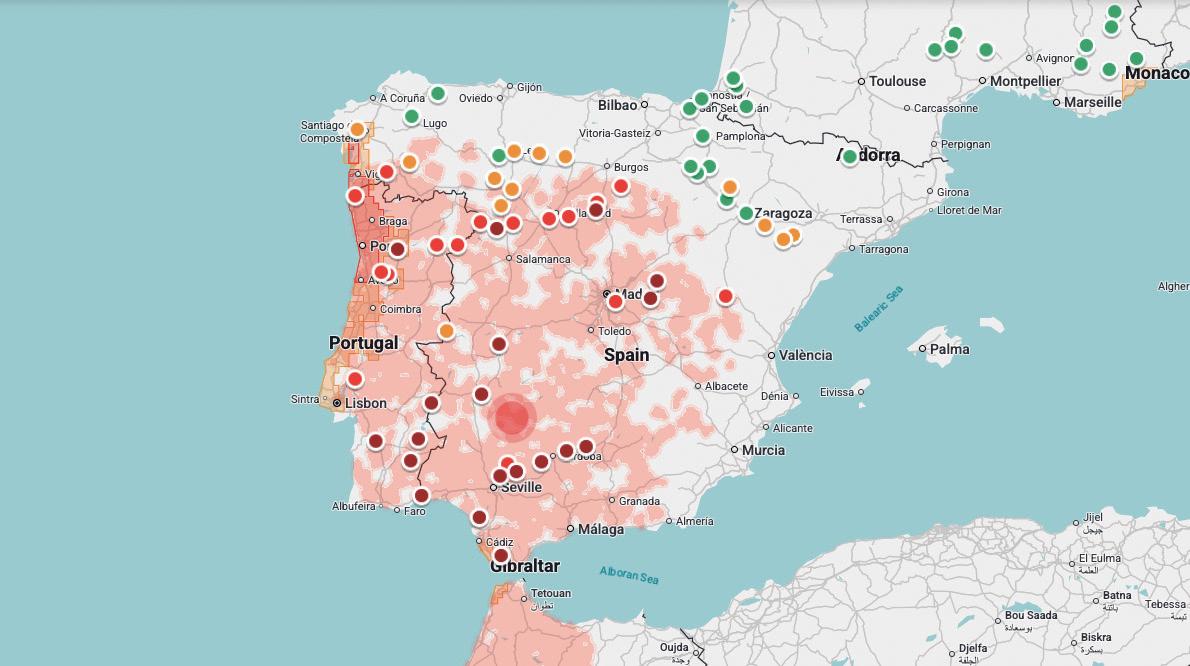


areas, including coastal and river-basin zones, heavy rain, strong winds and high seas have historically increased the risk of inland and coastal flooding.
Flood risk remains a recurring concern in several parts of the country, particularly in areas with rivers prone to overflow or urban environments susceptible to surface-water flooding. Monitoring tools such as Google’s flood map aim to provide additional situational awareness by vi-
sualising how risk levels may vary by location.
Google says the tool is intended to support public awareness and preparedness, while emphasising that it complements - rather than replaces - official information. Spanish authorities continue to stress that alerts and guidance issued by the State Meteorological Agency (AEMET), Civil Protection and regional emergency services are the primary sources for safety advice and emergency instructions.
STARGAZERS in Spain are preparing for a rare celestial event as six planets prepare to align in a ‘planetary parade’ later this month. The spectacular display will peak on Saturday, February 28, offering a unique glimpse of our so-

lar system’s architecture. During this period, Mercury, Venus, Saturn, Jupiter, Uranus, and Neptune will cluster along the ecliptic plane. To the naked eye, four of these worlds - Venus, Mercury, Saturn, and Jupiter - will be visible as bright points of light shortly after sunset. Venus will shine most intensely low in the west, while Jupiter will appear prominent higher in the sky. To spot the fainter outer planets, Uranus and Neptune, observers will require binoculars or a telescope.
The optimal viewing window begins approximately one hour after sunset on Saturday, February 28. Enthusiasts should find a location with an unobstructed western horizon, away from the light pollution of major cities. While the alignment is an optical effect rather than a literal straight line in space, the grouping provides a stunning visual for both amateur and professional astronomers.
As the night progresses, Mercury and Venus will set rapidly, leaving Saturn and the brilliant Jupiter to dominate the evening. Although a near-full moon may dim the fainter objects, the event remains a highlight of the 2026 astronomical calendar.
ITALIAN authorities prevented a violent robbery attempt targeting an armoured cash transit vehicle on the Lecce–Brindisi motorway in Puglia.
The attackers used explosives, firearms, and blocked lanes to halt the van, creating a dangerous scenario for passing motorists. Eyewitnesses reported vehicles on fire, thick smoke, and masked assailants attempting to seize valuables. The swift response of Carabinieri forces led to an exchange of gunfire, but no injuries occurred among officers, civilians, or van personnel.
Two suspects were arrested near the scene, while others fled, prompting an ongoing manhunt. Police continue to investigate, reviewing surveillance footage and examining firearms and explosives used in the attack. Authorities have not confirmed whether

any valuables were seized, but the incident underscores the risks faced by cash-in-transit operations. Motorists praised the rapid police intervention, which ensured safety and prevented theft.
The event has sparked renewed discussion on road security for high-value transport, highlighting the need for vigilance, rapid response, and coordination along major transport routes.
Italian law enforcement

emphasised professionalism in containing the situation and maintaining public safety, demonstrating preparedness against organised armed assaults on public highways. The highway reopened after several hours, with authorities pursuing leads to apprehend all suspects.
The case illustrates ongoing security challenges in protecting cash transit operations in densely trafficked areas.


IN Gladsaxe Municipality near Copenhagen, Danish planners have replaced conventional white streetlights with red LEDs along a road bordering woodland, aiming to protect nocturnal wildlife, particularly bats, while maintaining public safety. Research shows white and blue light disrupt bat navigation and feeding, while red light minimally interferes with activity, preserving both ecological function and visibility for drivers and cyclists.
The trial reflects a broader urban planning shift, prioritising biodiversity alongside infrastructure needs. Red LEDs are installed selectively, with conventional lighting maintained at junctions and crossings, balancing ecological protection with human safety.
Early public feedback has been neutral to positive, with no reported increase in traffic incidents. The project forms part of Glad
saxe’s environmental sustainability goals, integrating wildlife considerations into routine infrastructure upgrades.
Long-term monitoring will assess ecological and safety impacts, informing potential expansion of the approach near parks, forests, and wildlife corridors.
The initiative aligns with global efforts to mitigate light pollution, demonstrating a pragmatic middle ground between darkness and excessive illumination. Denmark’s experiment shows how urban design can be adapted to support both human activity and ecological resilience, highlighting the potential for responsible lighting strategies in cities worldwide. By altering light spectra rather than simply dimming or increasing brightness, planners aim to minimise wildlife disruption while maintaining functionality and safety.




A TRAGIC road traffic collision in Dublin city centre claimed one life and left three others hospitalised on Thursday, February 5. The incident occurred shortly after 12.30pm when an out-of-service Bus Éireann double-decker mounted a pavement and struck several pedestrians.
Green Line services and local power shutdowns.
The vehicle was travelling along Talbot Street but failed to negotiate a left turn onto Marlborough Street. Instead, it veered across the road into the pedestrianised zone of North Earl Street. One person was pronounced dead at the scene. Three others, including the bus driver, were taken to hospital; their conditions remain unconfirmed.
Dublin Fire Brigade deployed over

20 personnel and heavy rescue equipment to the site. An emergency medical tent was erected as Gardaí established a wide cordon, closing Talbot Street and Marlborough Street. The collision caused significant infrastructure damage, forcing the suspension of Luas
Addressing the Dáil, Minister for Justice Jim O’Callaghan expressed his condolences to the victim’s family and wished the injured a full recovery. Bus Éireann confirmed the vehicle was not in service and is assisting the ongoing Garda investigation into whether the crash was caused by mechanical failure or driver error.
EUROPE’S most visited cities are no longer quietly absorbing mass tourism. After years of overcrowding, rising rents and residents being pushed out, many destinations are taking firm action to limit visitor numbers and regain control. The shift accelerated after Covid, when tourism returned faster and heavier than before.
Venice has gone furthest. Faced with overwhelming day-trippers, it now charges an entry fee of €5–€10 for visitors not staying overnight, payable in advance and varying with demand. This follows earlier measures, including banning large cruise ships, shrinking tour groups and outlawing loudspeakers.
Ibiza is tackling congestion, capping non-resident vehicles at 20,000 per day from January to September, including

rental cars, with registration required in advance.
Dubrovnik limits cruise arrivals to two ships a day, imposes strict time limits, and requires advance booking for some attractions, controlling tour buses to protect the historic centre.
Amsterdam targets the system behind mass tourism, raising tourist tax to 12.5 per cent, freezing new hotels and restricting short-term rentals to
Credit : Dejan-Milosavljevic, Shutterstock
15 nights a year in some areas. Bruges has taken a quieter approach, limiting cruise ships, banning new hotels and holiday lets, and capping guided tour groups. For travellers, spontaneous access is ending; planning ahead is essential. For residents, these measures signal a long-overdue rebalancing and may help Europe’s most famous cities survive their own success.







IN an age when online booking platforms promise convenience at the click of a button, many travellers are rediscovering the true value of personal service, local expertise and human connection. In the heart of Calpe, Viajes Sureste (Southeast Travel) continues to prove that a trusted, independent travel agency remains an essential part of the Costa Blanca community.
With years of experience serving residents and visitors alike, Viajes Sureste has built a solid reputation for reliability, flexibility and attention to detail. Whether you are planning a long-awaited holiday, a weekend city break, a cruise, or essential travel for family or business, their team understands that every journey is personaland deserves expert care.
What sets Viajes Sureste apart is their deep knowledge of the travel industry combined with a genuine understanding of their clients’ needs. Flights, hotels, transfers, cruises, travel insurance, guided tours and tailor-made packages are all handled with professionalism and trans-

parency. Instead of navigating endless websites and confusing options, customers can rely on clear advice and carefully selected solutions that suit both budget and expectations.
For the large international community living in the Marina Alta, this local approach makes all the difference. Language barriers, changing travel regulations and last-minute disruptions can turn travel planning into a stressful experience. Viajes Sureste offers reassurance, up-to-date

information and real people who can be contacted when it matters most - before, during and after your trip.
The agency also works closely with trusted tour operators and airlines, allowing them to offer competitive prices without sacrificing service. From Mediterranean cruises and European escapes to longhaul adventures and group travel, their portfolio reflects the diverse lifestyles and interests of Costa Blanca residents.
Importantly, Viajes Sureste is not just
about selling trips; it is about building long-term relationships. Many clients return year after year, confident that their travel plans are in safe hands. This loyalty speaks volumes in a fast-changing industry where trust has never been more important.
Based in Calpe, Viajes Sureste remains firmly rooted in the local community while keeping a global outlook. Supporting a local business means supporting local jobs, expertise and accountability - something increasingly valued by both residents and visitors alike.
As travel continues to evolve, one thing remains constant: the desire for smooth, enjoyable and memorable journeys. With Viajes Sureste, travellers can look forward to exactly that - expert planning, personal service and the peace of mind that comes from dealing with professionals who truly care.
For your next journey, big or small, local or international, Viajes Sureste in Calpe is ready to take you there.

AN SAS Airbus A320neo narrowly averted disaster at Brussels Airport after attempting to take off from a taxiway instead of the assigned runway. The incident occurred on Thursday February 5, involving flight SK2590 bound for Copenhagen with 145 passengers and crew on board.
Data from Flightradar24 reveals the aircraft, registered SE-ROM, mistakenly entered taxiway E1 - a route reserved for arriving planes. The crew initiated a takeoff roll, reaching speeds of 107 knots (123mph) before realising the error and performing an emergency brake. The plane came to a halt partially on the grass with overheated brakes, stopping near the airport’s fuel storage tanks.
Emergency services, including the federal police and fire brigade, attended the scene im-
mediately. While no injuries were reported, passengers remained on the aircraft for several hours because stairs could not reach the plane’s position. They were eventually evacuated by bus and provided with psychological support and overnight accommodation.
Belgian civil aviation authorities have launched a full investigation into the ‘irregularity’.
Investigators are currently examining whether the near-miss resulted from pilot navigation errors, air traffic control miscommunication, or a combination of factors during the night operation. Brussels Airport confirmed that while the flight was cancelled, overall operations remained unaffected.
Aviation experts have described the event as highly unusual and a significant breach of safety protocols.
FOLLOWING Spanish prime minister Pedro Sánchez’s announcement of plans for stricter social media laws for children under 16, European Union regulators have released preliminary findings that TikTok’s design is overly addictive.
Published on Friday, February 6, the report claims the app’s design may harm children and breach European law, potentially exposing the company to fines of up to 6 per cent of its global revenue.
The findings stem from a European Commission investigation launched in February 2024 into the Chinese-owned app. Regulators argue TikTok is designed to place users into an ‘autopilot’ state. Features such as infinite scrolling, autoplay, push notifications and a highly personalised algorithm are cited as addictive design choices that may harm users’ physical and mental well-being, including minors and vulnerable adults.

EU regulators warn TikTok’s design harms children and may breach law.
To comply with EU law, the Commission said TikTok would need to change the basic design of its service. Suggested measures include introducing screen time breaks, including overnight, and adapting the algorithm.
European Commission vice president Henna Virkkunen said social media addiction could have detrimental effects on children and teenagers, adding that the findings aim to enforce legislation protecting citizens online.
TikTok rejected the conclusions, describing them as false and without merit. The company will be able to respond formally, but if the findings are upheld, it could face fines based on ByteDance’s global annual revenue, estimated at tens of billions of euros.
NORA JOHNSON BREAKING VIEWS

JOURNALIST.
BRACE yourselves: tomorrow is Friday the 13th. Across Britain, that’s enough to send shivers down spines! But relax - in Spain, it’s not Friday that’s feared, but Tuesday the 13th that’s considered disastrous, especially for weddings or travel. So yes, you can tie the knot on Friday in Malaga without a care… but maybe skip Tuesday...
The notion that Friday the 13th is cursed is, frankly, nonsense. Disasters happen every day, and if one lands on this date, we simply notice it more. Some ‘proof’ has even been manufactured. Remember the ‘Friday the 13th virus’ of January 1989? It wasn’t misfortune, but a deliberately written computer bug, gleefully timed to wipe IBM les across Britain.
THE Muppets have returned with a one-o special now streaming on Disney+.
History proves the point. Choose any date at random and you’ll uncover war, pestilence, greed or disaster. Friday 13th just happens to have a catchy brand. Writers, of course, have their own quirks and superstitions. (Hey, don’t look at me! As a writer, I’m not superstitious at all - touch wood!) Agatha Christie, bestselling novelist ever, plotted in a large Victorian bathtub, munching on apples as she contemplated murder.
D H Lawrence composed outdoors, scribbling against gnarly tree trunks. And James Joyce? He wrote in bed, kitted out in a white coat, wielding a blue pencil. Beat that!
If you’re still spooked by Friday 13th, you’re in for a whammy of a year. This was just the rst of three for 2026 … Help!
Nora Johnson’s 14 critically acclaimed psychological suspense crime thrillers, including the latest ‘The House of Secrets’ (www.nora-john son.net), all available online at Amazon etc. Pro ts to Cudeca cancer charity.
brought to you by Revolution Technology


DO you ever feel like a frozen meal tossed straight from the freezer into the oven? That’s how extreme weather makes me feel.
I don’t know if you agree, but my friends and I have noticed the same thing: in the past three years, it’s never been this humid, windy, rainy, cold, or downright freezing. Sure, people always say, ‘That already happened last year’. But some things aren’t remembered by the mindthey’re remembered by the skin (and the electricity bill). Honestly, the weather isn’t the same anymore. It’s like Mother Nature opened the fridge, stepped into an oven, checked her TikTok, shrugged, and said, ‘Yep, this feels about right. Let’s add a hurricane for seasoning’.
What used to be a mild winter or a pleasant summer is now the opposite. Summer? A full-on oven with extra garlic. Winter? A freezer with leftover lasagna from 2017. No middle ground. Fridge to oven, like a ready-made meal. The extremes skipped the intermission, just like I skip my diet on weekends.
Rain is called a blessing - and it is, but only when the ground can drink it. Not when the soil is deserti ed, like in many parts of the world, where water has turned into destruction. That’s when oods arrive. Floods. Leaving behind loss, death, despair… and puddles that make your shoes oat like tiny canoes.
And yet, when I see trees toppled by a storm, one word comes to mind: windfall.
Excess became sustenance. Chaos into hope. They were the original in uencers: everything they touched became useful. I can almost hear them posting, ‘Just a casual storm… turning disaster intorewood. #Blessed #TreeTok’.
Thinking of that brings me to today’s windfalls.
Spain is debating the legalisation of over half a million undocumented people. Some speak of collapse, of a ‘magnet e ect’. I, coming from a country of emigrants, see it di erently: immigration has always been a blessing.
It’s a blessing for those nally gaining basic rights: a legal identity, a bank account, a utility contract, the chance to exist without fear. And it’s a blessing for the country receiving them, because these people can fully contribute - Social Security, local economies, work, talent, initiative. A political party doesn’t de ne a human being. Being human de nes the best of humanity. Extremes aren’t just climate-related - they’re political too. Honestly… do you really think conquering Mars is more important than helping people and improving our humanity here on Earth? Mars sounds impressive, but can it give someone a legal identity or keep a family safe?
From black to white, the beauty of the shades in between is lost. True beauty lies in the middle, in the rainbow’s colours. And maybe in the slightly o beat shades - the ones that make life spicy, like accidentally sending a text meant for your crush to your boss.
That’s why, when I see a fallen tree - well, as long as it’s not on my car - I don’t just see the storm. I feel a little joy. I think windfall. Something wonderful that happens suddenly, or seemingly out of nowhere.

The show has all the classic attributes of The Muppets that fans have come to love. Classic characters, silly slapstick comedy and earnest musical numbers invoke nostalgia, as the Muppets are introduced to a new generation of viewers. Celebrity guests join the cast, including Sabrina Carpenter who performed her hit song Manchild, backed up on vocals by a ock of felt chickens. Another highlight included her duet with Kermit, before Miss Piggy predictably stole the show.

WITH the Winter Olympics around the corner, Net ix’s new gure skating show, Finding Her Edge feels like mandatory viewing. The story follows teenager Adriana who hung up her skates to instead focus on helping run the family ice-rink following her mother’s passing. With the rink haemorrhaging money, and her elder sister unable to compete, Adriana must step


back on the ice, competing against her ex ice dance partner and the girl who replaced her. Pretty costumes and petty con icts make this an easy, if not all that engrossing watch.
In medieval times, windfall didn’t mean disaster. For the poorest - the ones paying tithes to feudal lords - those wind-thrown trees were an unexpected gift: wood to build, to heat, to survive.
Like nding free Wi-Fi in the middle of nowhere… or discovering your frozen meal somehow tastes better than expected… especially with hot sauce and a prayer.

LEAPY LEE SAYS IT
OTHERS THINK IT

I’VE been having one of those unsettling thoughts lately - and no, it’s not about my age, my cholesterol, or why the golf ball never went where I told it to! It’s AI. Artificial Intelligence. Or, as I prefer to call it, ‘the thing that’s coming for all our jobs while we’re busy looking for highlights on our phones’.
For all I know, AI could already be writing this very column. It might even be editing the whole paper, (hi ya ed!) choosing the headlines and quietly removing my better jokes! Give it time and every publication on the planet could be entirely AI produced - no journalists, no editors, no arguments in the office and nobody complaining about the coffee. And music? Oh dear.
AI is already releasing records, inventing songs and creating artists who don’t exist. It’s quietly helping itself to around 5 per cent of the entire music industry’s royal -
ties already. Five per cent! At this rate, the next big star won’t need a tour bus, a dressing room or even a heartbeat. Be assured that in the extremely disturbing future only one individual human will need to have an experience. AI can grab it, polish it, and release it to the entire planet in seconds. The rest of us won’t need to experience anything at all.
Why go on holiday when a machine can tell you how relaxing it was - and probably recommend better restaurants than you found? From there, the list grows alarmingly.
Newscasters? Replaced. Presenters and reporters? Gone. Doctors and surgeons? Eventually replaced by machines that never get tired, never panic and never ask you if you really need that second glass of wine. Lawyers and Politicians? Well, with reference to recent events, let’s just say some of us may feel that ship has already sailed.
And what about us? Humans could become completely unnecessary. A whole race of leisure hunters - endlessly entertained, permanently distracted and very busy
doing nothing at all. We’ll be staring at screens while being told what to think, what to buy and when to clap, with our Stone Age instincts bubbling away nicely underneath.
The trouble is, technology was meant to serve us, not replace us. Sometimes I wonder if the future might force us backwards rather than forwards. A time when the internet finally collapses under its own weight and we all return to pen and paper, a diary and proper face-to-face contact.
Imagine that - real conversations, real opinions and arguments conducted in cafés instead of comment sections. AI may be clever. It may be fast. It may even be frighteningly impressive. But it has no soul, no sense of humour and no idea what it means to be human.
Until it can laugh at itself, fall in love and make a complete mess of things like the rest of us - I’ll be keeping hold of the pen. So there.
Keep the faith Love Leapy leapylee2002@gmail.com
Lee’s opinions are his own and are not necessarily representative of those of the publishers, advertisers or sponsors.

IN an era of high-tech travel, the breakout trend of 2026 is unexpectedly grounded: grocery store tourism.
From Japanese convenience stores to Spanish hypermarkets, globetrotters are swapping overcrowded landmarks for the authentic charm of local food aisles.

Driven by the rising costs of traditional attractions, such as the Louvre’s recent 45 per cent price hike, budget-conscious explorers are seeking free, immersive alternatives. This shift is further fuelled by the dominance of shortterm property lets. Since platforms like Airbnb provide kitchens, visitors increasingly prefer stocking up on regional delicacies to cook ‘at home’ rather than dining out.
The phenomenon has become a social media sensation. TikTok and Instagram continue to be flooded with ‘snack grabs’, where tourists compare foreign crisps and ready meals to staples back home. Beyond the viral ‘likes’, the data supports this shift; Hilton research reveals that 77 per cent of modern travellers now engage in supermarket tourism, with 35 per cent specifically planning grocery stops on future trips.
Whether it is hunting for artisanal cheeses in France or exotic KitKat flavours in Tokyo, supermarkets offer a cultural microcosm without the tourist traps. In an increasingly globalised world, these aisles provide a rare, unfiltered glimpse into the daily habits and soul of a destination.










Credit: Shutterstock, Utoimage

ACROSS Spain this winter, rainfall, strong winds and coastal warnings have been persistent, a stark contrast to Spain’s typically mild, sunny winters. The conditions have been so extreme, that many residents are questioning whether they have ever seen conditions quite like it.
For many long-term residents, the weather has felt unprecedented.
Peter Lardner wrote: “Been here 25 years, had a few floods during that time. However, these constant storms are a first.” Johnny Wilson agreed: “13 years in Portugal and six in Spain, can never remember such sustained rain and storms.” New arrival Belinda Griffiths is shocked, commenting: “First winter here, l am beginning to think l am back in the UK.”
Others, however, recall difficult winters in previous decades. Mark Shurey remembered: “2001/2002. We had two months of solid rain and the dams filled up in one winter.” Doris Flint said: “Yes in the winter of 2009/10 it rained non-stop for weeks and weeks quite heavily
too!” Karen Joy Harley compared the seasons, writing: “No, the last bout of prolonged winter rain was 2009/10, but not in the same quantity as we have received this winter.”
Some contributors linked the weather to wider climatic patterns.
Simon Cornwell observed: “No but the sea temperature is warming while the higher atmosphere is cooling creating the weather.” Sandie Beames offered a broader perspective: “Climate change as climate changes all the time definitely not new.”
Despite disruption, a number of residents highlighted the benefits. John Bell noted: “Reservoirs will be full - bonus!” Hilary Roxburgh welcomed the change: “Worse? I’m loving it. Not having to screw my eyes up all day. Not sweating at work. The streets smelling clean and knowing we don’t have to worry about droughts this year. And thanks to the rain, the best snowfall on record.”
Overall, while memories of earlier harsh winters remain, the majority of respondents said they could not recall a season quite like this one.

UNICAJA posted a 10.3 per cent rise in 2025 profit to €632 million, beating market guidance after executing its strategic plan. The bank plans to distribute 70 per cent of net earnings, lifting dividends by 29 per cent, while maintaining strong capital and liquidity levels.
BRITAIN’S Financial Conduct Authority says insurance customers paying monthly are saving around £157 million a year after firms cut premium finance charges. The regulator ruled out price caps, warning they could limit access to cover for lower-income customers.
SWISS insurer Zurich has agreed in principle to buy London-listed Lloyd’s specialist Beazley in an £8bn deal - another potential loss for the London Stock Exchange. Beazley shareholders would get 1,310p a share in cash plus up to 25p dividend (1,335p total), a near-60 per cent premium.
HUNGARIAN-OWNED Gestor Investment has bought a hotel-style tourist accommodation in Salou on Catalonia’s Costa Dorada, strengthening its Spain footprint at the end of 2025. The off-market deal targets a resort near PortAventura World. Local operator IBERSOL will run it, financed by BBVA.
ORSERO GROUP plans around €5 million investment across Spain and Italy in the next 12 months, focusing on higher-margin lines like fresh-cut fruit, avocados, and berries. In Spain, funding will upgrade facilities in Sevilla and northern hubs, within overall 2026 capex guidance of €14-16 million.
STREAMING services have become a routine part of daily life for many households in Spain, but the steady rise in subscription prices is beginning to draw attention. This trend, increasingly referred to as ‘streamflation’, reflects the growing cost of digital subscriptions despite continued high demand.
Streaming is now a multi-platform habit. Sixty-five per cent of Spanish households with subscriptions pay for more than one service, according to Spain’s competition watchdog, the CNMC, while an estimated 20 per cent subscribe to four or more platforms at the same time. These typically include a mix of video, music, audiobooks, and live sports services.
At current prices, households can spend between €70 and €110 a month on digital subscriptions alone, excluding internet or mobile contracts.

Subscription prices have risen significantly faster than inflation. Costs have increased by 81.7 per cent since 2015, according to research by EAE Business School, cited by El Economista – around four times the rate of general inflation over the same period. Despite this, demand continues to grow quarter by quarter, according to CNMC market analyses.
UK businesses that believe their business rates valuation is incorrect have until March 31 to challenge it, the government has warned. Anyone paying business rates in England or Wales must act before the deadline, as challenges to current valuations will no longer be accepted once a new rating list takes effect on April 1.
To request a change, ratepayers must check the property details held by the Valuation Office Agency (VOA) and formally notify it of any errors through a business rates valuation account. Businesses without an account are urged to register immediately, as verification and property claims can take up to 15 working days.
Recent pricing changes highlight the trend. Netflix confirmed the removal of its €9.99 basic ad-free plan in Spain, pushing users towards either an ad-supported option at €6.99 or a standard ad-free plan at €13.99.
Spotify has also raised prices, increasing its individual plan to €11.99 and its family plan to €20.99 - the second rise in two years.

The deadline applies to valuations set in 2023. Any adjustment could result in a property’s rateable value rising or falling and may affect future bills. From April, challenges will apply only to the new valuation following the latest revaluation cycle.
US delivery platform Instacart has launched Costco Spain’s first-ever same-day delivery service, expanding its long-running partnership with Costco Wholesale into Europe. Costco members in Spain can now order online and receive same-day delivery from all Spanish Costco locations, including Madrid, Sevilla, Bilbao and Zaragoza. Orders are fulfilled from local warehouses at in-store prices, with delivery handled by local European partners.
UK grandparents looking to build a financial cushion for their grandchildren are being urged to start early and diversify. A new investment guide by Money Magpie highlights Junior ISAs as the best foundation, offering tax-free growth until age 18. Other options include low-cost index funds, Premium Bonds for safer savings, property-linked investments such as REITs, and small, high-risk exposure to cryptocurrencies. Experts say spreading money across assets and allowing time for compound growth can significantly boost a child’s future finances.
ANDALUCIA has launched one of Spain’s largest public healthcare investments with the new Virgen de la Esperanza Hospital in Malaga. Regional president Juanma Moreno said total spending will approach €1 billion, combining hospital construction, transport links, and urban redevelopment. The main build carries a €543 million price tag and will deliver 815 rooms, 48 high-tech operating theatres and major teaching and research facilities. A further €245 million will extend Malaga Metro Line 2 to the site. For residents and expatriates, the project aims to ease hospital pressure, improve access to specialist care and strengthen long-term public health capacity in a fast-growing city.
BANCO SANTANDER will allow shops to accept purchases made by ‘AI agents’ later this year, marking a major shift in how payments are triggered online. Through its payments arm Getnet, retailers can integrate product catalogues so AI tools can search, compare and complete purchases automatically on a customer’s behalf. The system is designed to work with conversational platforms such as ChatGPT and will run on Santander’s global Single Entry Point platform, backed by card-network security from Visa and Mastercard. For shoppers in Spain, it could soon mean AI booking travel, tickets or retail purchases automatically, within pre-set budgets and preferences.
US crayon maker Crayola has pledged a multimillion-pound investment in the UK and Ireland as part of plans to double its regional business by 2028. The 120-year-old company, a subsidiary of Hallmark Cards, has opened a new office in Woking, England. The three-year expansion includes new products and campaigns aimed at boosting creativity among families, alongside further investment planned through 2026 to 2028.
SPANISH art galleries took part in a strike from February 2 to 7, closing their doors to protest the lack of a VAT cut on art sales. Despite an EU directive allowing reduced cultural VAT from January 2025, Spain continued to apply a 21 per cent rate, far higher than elsewhere in Europe. Galleries said the situation left them at a serious competitive disadvantage and put both businesses and artists at risk.

3I Group 3.347,00 3.386,00 3.333,00 81,63K
Admiral Group 2.834,0 2.856,0 2.818,0 55,68K
Airtel Africa 331,35 333,80 328,00 112,35K
Anglo American 3.441,4 3.481,0 3.431,0 137,38K
Antofagasta 3.690,00 3.716,00 3.641,00 65,08K
Ashtead Group 4.957,0 4.984,0 4.930,0 45,86K
Associated British Foods 1.914,5 1.952,0 1.914,5 29,96K
AstraZeneca 14.184,0 14.254,0 14.154,0 64,91K
Auto Trader Group Plc 486,80 489,70 483,20 257,27K
Aviva 645,76 650,80 644,20 250,98K
B&M European Value Retail SA 172,60 174,85 171,85 390,25K
BAE Systems 1.914,50 1.922,50 1.880,50 487,51K
Barclays 480,80 482,95 476,70 5,05M
Barratt Redrow 387,38 394,80 386,75 321,81K
Beazley 1.239,96 1.248,00 1.237,00 124,47K
Berkeley 4.173,0 4.212,0 4.164,0 7,02K
BP 476,05 476,85 473,90 2,14M
British American Tobacco 4.577,0 4.600,0 4.576,3 130,43K
BT Group 205,10 207,90 205,10 513,15K Bunzl 2.144,0 2.162,0 2.136,0 18,03K Centrica 193,20 193,70 191,06 712,06K
Coca Cola HBC AG 4.284,0 4.296,0 4.262,0 37,31K Compass 2.107,53 2.126,00 2.084,00 151,65K ConvaTec Group 224,80 227,40 224,80 204,62K
Intl 2.902,0 2.907,0 2.867,6 13,68K DCC 4.872,1 4.908,0 4.866,0 6,02K Diageo 1.765,0 1.786,0 1.761,5 430,39K
5.435,00 5.470,00 5.415,00 64,02K
486,80 494,80
Entertainment 11.215,0 11.340,4 11.190,0 3,38K
706,16 715,50 691,50 1,98K
3.812,00 3.842,10 3.738,00 145,44K
485,90 489,95 484,00 3,88M
plc 2.215,00 2.215,00 2.196,00 864,23K
400,00
3.576,0 3.576,0 3.534,0 45,55K
1.559,78 1.562,00 1.545,34 39,31K
1.535,00


THE UK is adding
£6.5m to the Canal & River Trust to boost resilience and safety across England and Wales’ 2,000-mile canal network, on top of £52.6m annual funding. Money will support maintenance of embankments and reservoirs, plus works including Peak Forest and Tame Valley.
BANK OF SPAIN says its gold and FX reserves hit a record nearly €94bn at end-2025, lifted by global demand for gold as a safe haven. Analysts say it revives memories of 1936 ‘Moscow gold’, when Republican Spain shipped much of its bullion abroad overseas.
SPAIN’S registered unemployment rose in January by 30,392 people (+1.26 per cent) to 2,439,062, according to Labour Ministry figures based on registrations at SEPE employment offices. Even so, the ministry said this is the lowest January level in 18 years, and unemployment is down 160,381 year-on-year (-6.17 per cent).
In plain terms, January is often a tough month after seasonal contracts endbut the longer-term trend in the official data is still poin-

AROUND 39 per cent of Spanish companies created in 2019 have already closed, according to new data from Iberinform, underlining the fragility of business survival in Spain. A similar pattern followed the last major downturn, with 73 per cent of firms founded in 2007, just before the global financial crisis, now gone. Early survival rates are high thanks
to initial capital, with 99 per cent lasting the first year and 97 per cent the second, but failure rises sharply from year three.
By year four, one in four businesses has collapsed. Long-term prospects remain tough: only 48 per cent reach 10 years and just one in four survives to 30. The study analysed 3.5 million firms.
ting down compared with last year. The ministry also reported that, once seasonal effects are stripped out, unemployment fell by 25,402 in January.
Youth unemployment (under 25) increased by 4,040 (+2.28 per cent) in the month. Despite the rise, the ministry said this was the lowest January figure on record for under-25sa detail many families will welcome.
Regionally, unemployment fell only in the Balearics (-1,260) and rose across the rest of Spain, led by Andalucia (+8,046), Madrid (+3,659) and Galicia (+3,113). On hiring, January recorded 1,163,555 contracts, including 484,295 permanent contracts (41.62 per cent).
For support, the benefit coverage rate in December stood at 79.09 per cent, with 1,783,205 recipients and total spending of €2,107.35 million.
THE UK and China have agreed closer financial services cooperation after the first UK-China Financial Working Group meeting in Beijing. Launched by City Minister Lucy Rigby, the deals support UK jobs, strengthen London’s global finance role, and include a second renminbi clearing bank to ease trade and cross-border payments.
SPAIN’S watchdog CNMC has fined Repsol €20.5 million for abusing its dominant position by discounting Diesel A, harming rival stations supplying transport firms. Several subsidiaries are banned from public fuel contracts for six months. Repsol rejects the ruling and will appeal, saying discounts protected consumers during the 2022 costof-living crisis.

POLOP DE LA MARINA
will celebrate Carnival 2026 on Friday, February 13, with a lively programme organised by the town hall through its Education and Youth departments. The event promises a colourful parade, children’s activities, and entertainment for young people, making it one of the most anticipated celebrations in the municipality.
The festivities will begin at 17.00 with the gathering of participants, and the parade will set off at 17.30 from the Ermita of Polop. Streets will be filled with music, vibrant costumes, and a festive atmosphere for locals and visitors alike.
From 18.00 to 19.30, children can enjoy a fun disco party, face painting, and games in a family-friendly setting. The programme continues at 20.00 with

enjoy fun activities and disco party.
activities for youths aged 12 and over, including an alcohol-free cocktail workshop, giant Twister, music, and surprises, running until 22.00.
The Carnival will also feature a costume contest with prizes for the best individual, group, and most original outfits, encouraging creativity and community participation. All events will take place on the first floor of the Edificio Multiusos, inviting everyone to join the celebration.
IN just a few days, the fifth edition of Benidorm Fest will begin, with 18 artists competing for the coveted Golden Mermaid trophy and the €150,000 prize.
To get things started , TapaFest kicked off on February 6 , organised by Abreca and Benidorm Town Hall, featuring 20 of the city’s top restaurants.
Until Sunday February 15, participating venues will offer tapas for €3.50, combining creativity, quality ingredients and flavour. Diners can rate the tapas they try and enter a draw for a double ticket to attend the Benidorm Fest 2026 final. The restaurants taking part include Arrocería La Marina, Baldo, Bodegón Aurrera, Cervecería L’Abadía, La Fava, La Juana, Malaspina, Marisquería El Puerto and others.
On Saturday 14 at 12.30pm, an exhibition will open at l’Espai d’Art at the town hall, exploring five ear -


ly editions of the Benidorm International Song Festival, 1960-1965, when the Golden Mermaid was first introduced. It features original documents, photos, magazines, programmes and costumes from last year’s winner, Melody.
Until Sunday February 15, the Plaza SSMM Reyes de España will host food trucks and live music, while the Palau d’Esports will implement a full security and medical plan, including police, private security and three ambulances.















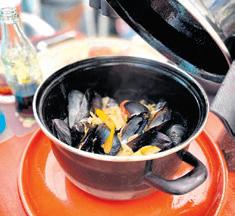













Martha Ardila, Sommelier at Martha’s Vineyard Moraira
FEW wine regions in Spain manage to feel both ancient and thrillingly modern quite like Ribera del Duero. Stretching along the Duero River in Castilla y Leon, this land of extreme temperatures and high-altitude vineyards has been producing wine since Roman times, though its real renaissance began in the late 20th century, when bold, age-worthy reds put the region firmly on the world map. At the heart of Ribera del Duero is Tinto Fino, the local expression of Tempranillo. Thicker-skinned and more intense thanks to the harsh climate, it delivers wines full of dark fruit, structure, and an unmistakable sense of place. These are wines that don’t whisper - they seduce. Iconic wineries help tell the story. Valdue-
ro, a family project rooted in tradition, crafts elegant, long-lived wines with patience and precision. Abadía Retuerta, just outside the official DO, blends monastic history with cutting-edge winemaking and breathtaking finesse. Meanwhile, Alma Carraovejas represents the new Ribera: expressive, polished, and emotionally charged wines that connect instantly with modern drinkers. And for Valentine’s Day? Ribera del Duero is a perfect match. Think silky Tinto Fino, candlelight, and a wine powerful enough to impress, yet refined enough to sharebecause romance, like great wine, should always have depth. Cheers and happy Valentine’s!
martha@marthasvineyard.es marthasvineyard.es





SET just steps from Benidorm’s old town and directly facing the Mediterranean, Baldo Restaurant & Cocktail Bar is far more than a place to eat and drink. It has established itself as a lively social meeting point on the Levante seafront, combining international cuisine, creative cocktails and a relaxed, design-led atmosphere. Open all day, Baldo welcomes guests from their first morning coffee through to lunch, sunset drinks and late-night cocktails, creating a space that adapts naturally to the rhythm of the day.
The restaurant is built on a strong family legacy that dates back to the 1950s, honouring Baldo, a man who loved good food and, above all, sharing it with others.



MUSIC fans on the Costa Blanca can look forward to a lively run of events this February, with Overdrive Rock Cafe in La Nucia and The Irish Tavern in Albir offering a varied programme of live performances and Valentine’s Day entertainment.
Overdrive Rock Cafe kicks things off on Thursday February 12 with an evening of soul, jazz, blues and more from 7.00pm to 8.30pm. The venue on Calle Guadalest 19 has built a strong reputation for quality live music in an intimate setting, attracting both locals and international residents.
That spirit of hospitality continues today and is also reflected in the Mara Boutique Apartments located above the restaurant, named after his wife Mara, remembered as the heart of the family.
Baldo stands out for its varied dining options, including a popular bottomless tapas and drinks


experience and a wide selection of set menus designed for groups and celebrations, with prices to suit different budgets. Customer reviews consistently place it among Benidorm’s top-rated venues, praising the food quality, welcoming service and unbeatable location.
With its blend of history, atmosphere and good energy, Baldo remains a firm favourite by the sea.
Pje Tugar 2, 03501
Benidorm
Tel: 615 817 272

The pace continues on Friday February 13, when Joe Dylan takes to the stage from 7.00pm to 8.30pm as part of the popular Overdrive Fridays series. Later that night, from 10.30pm, Cafe 80s delivers a late show packed with retro favourites. Both performances are free to attend. Valentine’s Day on Saturday February 14 brings even more choice. The Irish Tavern in Albir hosts a disco night with DJ Martin King from 6.00pm until 11.00pm, welcoming singles, couples and groups of friends. Back at Overdrive Rock Cafe, Alex Escribano performs early in the evening, followed by The Jack late at night, rounding off a weekend that highlights the area’s vibrant live music scene.

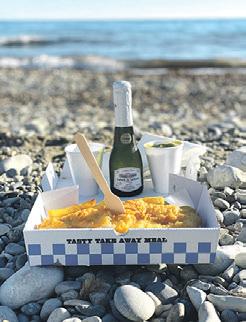








RECENT breakthroughs in brain-computer interface (BCI) technology are offering unprecedented hope for millions living with blindness, paralysis, and chronic pain. Leading the charge, Neuralink’s ‘Telepathy’ implant is currently transforming the lives of individuals with tetraplegia by translating neural signals into digital commands.
One recipient, Noland Arbaugh, who received his implant on Wednesday, July 10, 2024, has already demonstrated the ability to control video games and computer cursors through thought alone. Neuralink plans to roll out an upgraded version
While initial results may yield low-resolution imagery, the goal is to eventually achieve high-definition sight for those with congenital conditions or macular degeneration.
Simultaneously, Chinese startup Gestala is pioneering a non-invasive alternative. Using focused ultrasound rather than surgery, their technology modulates neural activity via blood flow. A tabletop device targeting the anterior cingulate cortex has already shown success in treating chronic pain, with relief lasting up to a week.
Future portable helmets are being designed to treat depression, Alzheimer’s, and stroke recovery at home. These rapid advancements suggest that once-permanent disabilities may be treatable through


SOCIAL media shares a life-changing wellness trick every week, but one that seems to be sticking is drinking hot water. What started as the wellness hack of the week has become a core daily habit for many, as people have noticed the obvious benefits the hot beverage provides.
Of course, drinking hot water didn’t originate on social media, thought up from the mind of an LA influencer. Drinking hot water is a prevalent practice in many cultures across history, especially in the east.
Drinking hot water was a big part of Ayurveda, Indians’ traditional medical system, and it’s a time-honoured tradition in China.
Both cultures believe drinking hot water has medicinal properties that
would help create balance in the body.
A lot of the ancient beliefs were correct in their theories of hot water’s bodily benefits. Drinking hot water aids digestion, helping to relax the digestive tract, it also improves circulation, as the hot water opens up arteries and veins, allowing for more effective blood flow. It is also true that drinking hot water will help regulate body temperature.
Additionally, hot water is just as effective for hydration, leading to clear skin, improved cognitive function, better joint movements, etc.
Many experts recommend having a cup of hot water in the morning as it prepares your body for the day ahead.

BELIEVE it or not, red wine has quite a lot of health benefits. It sounds like a little white lie made up to justify another glass of the good stuff, but in fact there’s scientific evidence to back it up.
In small amounts, red wine is good for the heart. The antioxidants found in your favourite bottle of merlot may help prevent coronary artery disease, a condition that can lead to heart attacks. The antioxidants protect the lining of blood vessels around the heart, essentially fortifying it against cardiovascular disease.
Small amounts of resveratrol can also be found in red wine. Resveratrol is a natural polyphenol found in berries and grapes, which researchers believe to have numerous medicinal benefits. Chief amongst the benefits is raising levels of ‘good’ cholesterol, which helps remove the negative cholesterol blood.

Other potential benefits include: preventing blood clots, slowing cognitive decline, and easing joint pain due to anti-inflammatory properties. Some studies even suggest it has anti-tumour qualities, meaning it could combat cancer cells, stopping them from replicating and mutating. As with everything, moderation

‘BEAUTY sleep’ is so named, not because the hours we’re asleep are so blissful, but because quality sleep is crucial to our overall health. Quality sleep is essential for maintaining glowing skin and healthy hair, two qualities that make people beautiful, or at least feel beautiful.
During sleep, the body goes into repair mode. Skin cells regenerate, collagen production increases, and circulation improves. This all helps repair damage accrued during the day by UV rays and other environmental stressors.

is key. Drinking wine in excess is going to cause more harm than good. Plus, the wine might be good for the heart, but it will still cause a splitting headache the next day.

Many people disregard sleep as a vital part of skin-care. However, poor sleep can lead to dull skin, dark circles and premature fine lines. Chronic sleep deprivation also affects hormone levels, which can trigger breakouts or exacerbate existing skin conditions.
Hair health is similarly affected by sleep. Growth cycles slow down when the body is under stress, and lack of rest can lead to increased hair shedding or brittle strands. Stress hormones released during sleepless nights can also impact scalp health, making hair more prone to thinning.
Experts recommend seven to nine hours of uninterrupted sleep per night, alongside a calming bedtime routine.
Prioritising sleep is not just about looking fresh, it’s an investment in long-term skin and hair vitality.
IN the United Kingdom alone, almost eight women are affected by female pattern hair loss. Thankfully, there are plenty of medical treatments currently available on the market.
However, for anyone looking for a natural approach to revitalising their hair, there is one herb that might be able to save the day.
Polygonum multiflorum (PMT) is a root that has been used in traditional Chinese medicine for centuries. The root was used to encourage hair growth and, according to ancient texts ‘blacken hair and nourish essence’.
All modern biological research seemingly supports these ancient beliefs. PMT seems to tackle multiple problem areas at once, unlike modern medicine. PMT prevents further destruction, blocking cell

death by eliminating a hormone that shrinks the hair follicles. Simultaneously, it nourishes the hair by turning on regrowth signals and supporting blood flow to the scalp. This carries more nutrients to hair, allowing it to grow. There are a variety of
ways to apply PMT to the scalp. Given that it is a root, it is commonly crushed into a power. Additionally, it can also be found infused into facial creams and cosmetics, including hair serums that can be applied directly to the roots of the hair.

LOW-STIM LIVING is becoming a defining wellness trend for 2026, as more people try to reduce the daily ‘noise’ of modern life - from constant pings on the phone and late meetings to traffic sound and home clutter. The idea is simple: lower the level of sti-
mulation your brain has to process, so stress is easier to manage, and recovery (sleep, focus, good mood) comes faster.



Low-stim living (short for low-stimulation living) is a lifestyle approach built around limiting unnecessary sen sory and cogni tive input - es pecially the kind that arrives in sma ll hits, all day, every day:
• Digital stimulation (notifications, always-on messaging, doomscro lling)
• Time pressure (backto-back commitments, multitasking)

• Environmental load (noise, crowds, harsh lighting, blue light)
UK scientists have just identified fresh evidence suggesting that regular vitamin D supplementation during winter may help reduce the risk of flu and other respiratory infections. The findings have renewed interest in the so-called ‘sunshine vitamin’ - and prompted a key question for people living in Spain: if you live somewhere sunny, do you still need supplements?









• Decision fatigue (too many options, too much clutter)
Microsoft’s Work Trend Index research documented how work is spilling further into personal time. In the ‘infinite workday’ Microsoft found meetings starting after 8pm were up 16 per cent year-on-year, and
30 per cent of meetings span multiple time zones - remote work probably has a lot to answer for that. The report also flagged that chats outside the 9-to-5 workday were up 15 per cent year-onyear, with 58 messages now arriving before or after work hours. The outcome is obvious. When work creeps into evenings and across time zones, the nervous sys-
tem rarely gets a clean ‘off’ switch - this is where low-stim living aims to reduce that overload. This matters because low-stim living isn’t about perfection. It’s a practical response to a world where continuous stress is becoming the norm. Most people adopt low-stim living through small, cumulative changes rather than drastic lifestyle overhauls.
For many expatriates, there’s a long-held belief that Spain’s climate makes vitamin D deficiency unlikely. With blue skies, outdoor living and mild winters, it feels logical. But health experts increasingly say this is more myth than medical fact.








IT’S only February, but when the sun comes out, you feel it immediately.
The light is stronger. The air is softer and for a moment, the sun actually warms your skin.
That’s when you know: spring is coming.
Living in the south of Spain, we’re lucky. Our spring starts earlier than in most of Europe. Jackets open, we spend more time outside, and heavy winter clothes slowly begin to feel unnecessary and with that comes a familiar thought: how do I feel in my body right now?
In Mediterranean cultures, this moment has always marked a natural shift. Winter food, stews and heavy meals, slowly make room for grilled vegetables, fresh fish, salads and

lighter suppers. Not because of rules, but because the body no longer needs winter fuel.
Movement changes too. More walking. More time outdoors. Less forcing, more flow.
This isn’t the time for diets or pressure. It’s the moment to gently adjust your rhythm, so when spring fully arrives, your body is already moving with it.
You don’t prepare for spring.
You feel it and you move with it.
Vitamin D is produced when UVB rays from sunlight hit the skin, helping to regulate immune function. In theory, Spain’s sun should make this easy. In reality, studies show vitamin D insufficiency is common even in southern Europe. Modern lifestyles play a big role: many people work indoors during peak daylight hours, avoid the midday sun, or wear sunscreen and covering clothing, all of which reduce vitamin D production. Winter adds another complication. From late autumn to early spring, UVB rays are weaker, days are shorter and skin exposure drops - just as flu season begins. Research suggests regular, low-dose vitamin D supplements may help reduce the risk of respiratory infections, particularly in people who start with low levels.
The takeaway? Sunshine helps, but it’s not a guarantee.




























MIJAS has been selected by the Junta de Andalucia as the flagship location for Malaga’s new Municipal Justice Offices (OJM). This initiative replaces traditional peace courts with expanded facilities, aiming to decentralise legal services across the region.
On Monday, February 9, Justice Minister José Antonio Nieto visited Mijas to meet Mayor Ana Mata and confirm the town’s leading role in the project. The upgrade ensures that Mijas’s 90,000 residents no longer need to travel to Fuengirola for routine legal matters. The municipality currently accounts for half of the judicial district’s population and 40 per cent of its total cases.
The new office, situated in the former Acosol premises in Las Lagunas, will offer services including civil registration, legal aid applications, victim assistance, and mediation. Residents will also be able to testify in court hearings via videoconference.
ALMUÑECAR Aquarium has reopened with a bold new identity, transforming its corridors into a fully immersive ‘underwater stage’ that blends Mediterranean marine life with contemporary urban art.
The transformation has already captured the attention of the local community, including arts students from IES Al-Ándalus, who have been studying the site’s evolution. The project aims to turn the entire visitor route into a singular work of art, enhancing the venue’s appeal beyond its traditional biological exhibits.
Visitors are greeted at the entrance by a striking installation by renowned Granada artist Raúl Ruiz, known as ‘El Niño de las Pinturas’. This is followed by an expansive mural by acclaimed Belgian artist Kevin of Kiwi Wall Art. On Tuesday, February 10, the facility confirmed that Kevin is currently completing a final, large-scale piece expected to be finished within days.
Beyond the visuals, the venue is set to host a series of educational events and leisure activities.
Kids carnival celebrations
DESPITE a spell of morning rain, Palma’s streets were bursting with colour on Sunday February 8 as families gathered for the children’s carnival, Sa Rueta. The grey skies did little to dampen spirits; instead, youngsters in imaginative costumes transformed the city centre into a lively celebration of creativity and fun.
A family dressed as strawberries passed by, complete with a tiny fresa just a few months old tucked up in a pram. Nearby, a towering dinosaur delighted onlookers, while a stealthy ninja and the ever-popular Pikachu drew smiles from children and parents alike.
Plaza Mayor quickly emerged as a hub of excitement, with a swinging fairground ride attracting long queues of eager riders. Circus entertainers kept crowds captivated, while two performers on stilts wandered through the square waving at children and stopping for photos.
COME rain or shine, the Costa Blanca will not let anything dampen its blowout Carnaval celebrations, and when it comes to music, events and entertainment on the coastline, few municipalities are going so big as Torrevieja.
On Sunday, February 8, Torrevieja celebrated one of the biggest festivities in the Carnaval 2026 programme, the Grand Carnaval Parade and Competition, which included the participation of more than 1,500 people in an event characterised by colour, creativity and culture.
The parade kicked off from the Virgen del Carmen Cultural Centre with a grand celebration accompanied by music, performers and live entertainment throughout the entire route. One of the leading comparsas, or groups of costumed musicians, singers and dancers, were La Sal de Torrevieja, adorned in gold and turquoise feathers. Finally, the parade closed off with the appearance of the Queen of the Carnaval 2026.
DAVID BISBAL is returning to his hometown stage as the singer is set to join the star-studded line-up for Almeria’s Cooltural Fest 2026 in August. Stepping away from production on his 10th studio album, Bisbal is determined to return to his musical roots, performing in front of a hometown crowd on one of Almeria’s biggest stages. Mayor of Almeria, Maria del Mar Vazquez, spoke on Bisbal’s upcoming Cooltural Fest 2026 appearance with pride and admiration, “our most internationally renowned artist will be coming, a true Almerian, who always carries Almeria in his heart and in his songs when he goes out to sing around the rest of the world, as is David Bisbal.” Vazquez’s comments echo the sentiments of many Almerians, who see Bisbal as a local hero. The world-famous singer is said to use his festival set as a way to take the audience on a musical journey, revisiting the classic hits that turned him into a global star and a hometown hero.
Sa Rueta offers a family-friendly counterpart to the island’s larger parades. Costa Calida
CARNAVAL celebrations are lighting up all over Spain, and the Costa Calida is no exception to the spectacular rule. The shining hub of the coastline, Cartagena, has been one of the main attractions for the 2026 edition of the Carnaval, and its celebrations are already in full swing. In fact, the city has already chosen its Queens for 2026, two locals that will be figureheads for the celebrations and signal the beginning of the most exciting Carnaval festivities.
Cartagena’s Carnaval kicked off on Friday, February 6 with an enormous and colourful parade, full of over-the-top costumes, feathers, glitter, make-up and music. The event has been a huge draw for visitors to the municipality.
The two Queens were chosen at the massive Gala held at the Wssell de Guimbarda Municipal Sports Hall in Cartagena on Saturday, February 7. The selection of the Queens signals Cartagena’s entry into the biggest and most exciting days of its Carnaval festive programme.
House-sitters who save you money
Planning a holiday but worried about expensive pet care costs?
House-sitting could be your answer. HouseSitMatch connects you with experienced house and pet-sitters who don’t charge for their services - they care for your property and pets in exchange for free accommodation. No money changes hands for the actual pet-sitting.
These passionate animal lovers enjoy travelling across Europe while providing homeowners with significant savings on pet care and complete peace of mind. Your pets stay comfortable at home while your property remains secure.
How it works
1. Register at HouseSitMatch. com as a homeowner
2. Create your profile with photos of your home and pets
3. Review applications and vi-

Meet Thomas - a friendly cat who loves a cuddle and hates kennels. Like thousands of pets across Europe, Thomas would rather stay home with a trusted housesitter than spend time in unfamiliar surroundings.
deo chat with potential house-sitters
4. Match with the perfect petsitter and enjoy your holiday worry-free
Real savings, real peace of mind
Every house-sit benefits everyone. Your pets receive one-onone attention at home, your property stays protected, and you avoid expensive kennel fees. Take Lucy - she saves over €1,500 annually using house-sitters instead of boarding kennels.
For a small annual registration fee, you can connect with verified house-sitters willing to provide free pet care and home security. Your pets deserve the comfort of their own home, and you deserve an affordable holiday.
Join today Register at HouseSitMatch. com and use code WELCOME50 for 50 per cent off your first year.
Lamia Walker, Founder. Call: +44 (0)7772 142742 Rated Excellent on Trustpilot - 4.9/5
EMOTIONAL support
pets help calm anxious humans. But what about when an anxious dog needs an emotional support pet? It might sound silly, but actually many animal experts suggest companionship can be a powerful tool in helping stressed dogs feel safe.
Pets support each other. Dogs, in particular, are social animals that struggle being alone for long periods. Introducing a companion can provide comfort, routine and a reassuring presence.
Many pet owners report noticeable changes after bringing home a second dog, or a new feline friend. Dogs who once barked or howled when left alone became much calmer. They were too preoccupied with playing with their new four-legged friend

Does your dog need an emotional support pet?
to notice the human’s absence, or simply felt comforted by not being alone.
Of course, getting a second dog isn’t a simple fix.
There are underlying issues to why a dog might be anxious: not stimulated enough, lack of training, past trauma, medical issues.
Addressing anxiety re-
quires patience and consistency rather than another dog.
What’s more, your dog won’t be responsible for caring for the new pet. You will.
While welcoming in a new friend might sound like a good idea, the day to day practicalities and financial cost must be considered.
In the right circumstances, however, companionship can be incredibly beneficial. Even dogs need an emotional support buddy of their own.













































































ELECTRIC scooters in Spain are entering a new era. From 2026, they will no longer be informal personal devices but fully regulated vehicles, requiring registration, identification and insurance. The change comes under Royal Decree 52/2026, which establishes a national register for electric scooters and other personal mobility vehicles, managed by the DGT, Spain’s traffic authority.
Under the reform, a scooter can only be used on public roads, streets or cycle lanes if it has a circulation certificate showing it meets Spain’s technical standards, is registered in the DGT system, and displays an official DGT identification badge on the rear. Missing any of these makes the scooter illegal for public use.
The badge, already appearing on

streets, is a small white reflective sticker with a large ‘M’ and unique number. Linked to the DGT register, it allows police to check insurance, certification, and trace stolen or modified scooters. Owners must report any change of ownership wi-
thin 30 days, and liability insurance is mandatory. Manufacturers must certify every model through approved laboratories to meet safety requirements, including dual brakes, lights, reflectors, a 25 km/h speed limit and suitable tyres.
RECENT storms have done more than disrupt travel across Spain. They have exposed serious doubts about the effectiveness of the country’s new V16 emergency warning beacons, designed to save lives in hazardous conditions.
miss, and falling snow could quickly cover the beacon, rendering it ineffective within minutes - precisely the situations where warnings are most needed.



Mandatory since January 1, the beacons replaced traditional warning triangles. They emit a flashing amber light visible up to one kilometre, allowing drivers to signal a breakdown without leaving their vehicles. But as accidents mounted on snow-covered roads recently, many drivers reported the lights were barely visible or not visible at all.
In heavy snow, fog or poor light, visibility dropped sharply. On bends or in mountainous areas, the flashing light was easy to
Cold weather also exposed battery weaknesses. Regulations require V16s to operate for at least 30 minutes and last 18 months, but freezing temperatures reduce battery efficiency. Some drivers said their beacons lasted only 15 minutes. Although manufacturers claim operation from -10°C to 50°C, temperatures below that are common in inland and mountainous Spain. Since their introduction, V16s have faced confusion over fines, deadlines and whether they fully replace triangles. Police associations have questioned their effectiveness, and privacy concerns remain.





By Mark Slack
IT began life as a sketch on a British £5 note over a drink at the Grenadier pub in London, INEOS Founder and Chairman, Sir Jim Ratcliffe, miffed that Land Rover had decided to cease production of the original Defender decided to build his own version and the Grenadier was born. You can find that note stapled to the ceiling inside the very pub in which the Grenadier was conceived.
As it enters its third full year of production, INEOS has enhanced the Grenadier for the

2026 model year. The com pany’s engineers have signifi cantly upgraded the steering setup that results in a more positive on-road feel. A new steering box features a variable ratio for the first time and a lower ratio around the central steering position results in a tighter, firmer feel to deliver more precision and greater responsiveness.
These changes increase confidence in high-speed straight-line driving, lane changing and overtaking, as well as more assured handling on sweeping A- and B-roads.
The ratio at each end of the steering gear remains unchanged, ensuring the Gre-
and Quartermaster pick-up guises - retains its off-road capability and performance.
Further steering improvements have resulted in a reduction in the turning circle by around 5 per cent. Extending the steering stops means the 2026 vehicle is more manoeuvrable on- and off-road, and easier to use in town and on tight off-road trails.
The 2026 Grenadier also benefits from upgraded climate control components to improve the performance and predictability of heating and cooling within the cabin. A new homescreen shortcut
one-touch deactivation of the audible alert for the now compulsory Intelligent Speed Assist, helping drivers to minimise unwanted distractions.
The Black Edition is a new addition to the Grenadier line-up for 2026 and is based on the Fieldmaster trim, and is available as both a station wagon and Quartermaster pickup. It’s identifiable by new and exclusive all-black aesthetic body and trim finishes the sole Inky Black paint option. Gloss black 18-inch alloys, a dark exterior pack, privacy glass and lockable spare
storage box complete the look, while dark interior headlining and carpet set the interior scene.
Prices for the Black Edition start from €83,063/£71,995 and while there is no limit to volume, it will have a limited production window. For all other 2026 models, pricing is unchanged, starting from €59,913/£51,930 exVAT for the Grenadier Commercial, €72,103/£62,495 for the Quartermaster pick-up and the base model Grenadier and €80,756/£69,995 for the Trialmaster and Fieldmaster editions.


THE 2026 UCI XCM Marathon World Cup season will begin on the Costa Blanca on February 21, with the HERO Costa Blanca hosting the opening round. Although new to the UCI calendar this year, the event arrives with a reputation built over many seasons and is set across Calpe and Benissa, areas long linked to elite-level cycling.
Calpe will act as the main hub, with racing unfolding across terrain widely used by professional mountain bike riders. From the streets below the Peñón de Ifach, the course heads inland towards Benissa, crossing vineyards, almond groves and steep limestone slopes rising into the Sierra de Bèrnia.
Riders can expect technical trails, fast descents and long climbs, with winter temperatures typically ranging from 10

to 18 degrees.
The AR Diamante Beach Hotel will serve as race headquarters and official accommodation, providing early breakfast, secure bike storage, team spaces and start and finish access nearby.
Two routes open the season. The World Cup course covers 82 kilometres with 2,722 metres of climbing and includes the timed Solana - Benissa








Challenge, a 2.35-kilometre segment with an average gradient of 8.5 per cent. A 50-kilometre option with 1,400 metres of ascent is available for amateur riders.
Children aged four to 12 will also take part in a non-competitive HERO Kids event on the Saturday morning, adding a family element to a weekend that launches the international marathon calendar.
