

Easter travel boom
Mar de Javea festival spikes Easter tourism
MORE than 16,000 visitors are expected to descend on Javea this Easter, as the coastal town cements its reputation as one of the Costa Blanca’s fastest-growing music destinations. The surge is being driven by a major live music festival scheduled over the holiday weekend on Friday April 3 and Saturday April 4, transforming the usually relaxed seaside spot into a buzzing hub of concerts, nightlife and international crowds.
The event is set to bring a mix of well-known artists, DJs and live performers to the area, attracting both Spanish visitors and a growing number of expatriates and tourists looking for something beyond traditional Semana Santa celebrations. Hotels and holiday rentals are already seeing increased demand, with local businesses preparing for one of the busiest Easter periods in recent years.

For residents, it marks a shift in how Javea is positioning itself. Long known for its beaches and laid-back charm, the town is now tapping into the rising popularity of music-led tourism, a trend that’s reshaping destinations across Spain. Events like this not only boost visitor numbers but also extend the season, bringing energy to what was once a quie-
TEULADA and Moraira are set to be linked by a new bike lane backed by the local council, aiming to improve mobility while encouraging more sustainable travel. The route has been carefully planned to avoid heavy traffic, prioritising cyclist safety and making everyday journeys easier for residents.
With an investment of around €427,000, the project includes road improvements, clear signage, and designated



ter time of year.
While the influx will undoubtedly bring crowds, it also signals opportunity. Restaurants, bars and local services are set to benefit from the spike in footfall, while visitors get to experience Javea at its most vibrant.
Bike route unites towns Connecting Teulada and Moraira
rest areas along the way. The design focuses on creating a comfortable and accessible
experience for users of all levels. Connecting key roads and pathways across the mu-

nicipality, the lane will feature manageable gradients, making it suitable for both locals and visitors seeking a healthier, eco-friendly way to explore the area.



Benitachell Easter school
FAMILIES in the Marina Alta can once again benefit from extra childcare support this spring as El Poble Nou de Benitachell launches its 2026 ‘Escoleta de Pasqua’ for the Easter holidays. The programme will run from April 7 to April 17 on weekdays at CEIP Santa María Magdalena, offering a safe and structured environment for primary school-aged children during morning hours. Organised by the local council, it combines supervised care with creative and educational activities.

Registration opened on March 23. Parents can
apply online via the town hall website until Friday March 27 at 2pm. Places are limited and allocated on a first-come, first-served basis, with priority given to local residents.
The cost is €45 per child, and proof of payment is required to confirm a place.
Children attending can expect a mix of arts and crafts, group games and Easter-themed workshops designed to encourage creativity and social interaction outside the classroom.
Alongside the Easter school, a free youth sports day will take place on Wednesday April 8 from 10am to 2pm at the municipal football field, featuring activities such as Laser Tag and Bubble Soccer.
With demand expected to be high, families are encouraged to register quickly.


A fiery finale

THE San José festivities in l’Alfas del Pi came to a spectacular close recently with the traditional Cremà of the Falla, ending several days of celebration defined by culture, tradition and strong community participation. Residents and visitors gathered to watch as flames consumed the monument, symbolising renewal and the close of one of the town’s most cherished events.
This year’s falla carried an environmental message, depicting a pirate ship torn in half by a kraken to highlight marine pollution and the need to protect natural ecosystems. It was created by the ‘Majorals de Sant Josep’ committee alongside artists Juanfran Mateos and Juanfran Pérez, with contributions from
local schools and community groups since October.
San José Day saw high participation from early morning, beginning with the traditional despertà, followed by a floral offering, mass and the dansà popular. The afternoon procession, accompanied by local musicians, led into an emotional highlight as young Juan José López Martínez delivered the traditional embajada.
Festivities in the days prior included activities for all ages, reinforcing the event’s inclusive spirit. Revived just three years ago after a long hiatus, the celebrations, dating back to 1837, have returned stronger than ever, once again uniting the community.









































The traditional Cremà of the falla.
Fun Easter crafts on offer.
Family pension boost
EXTRA

FOREIGN residents working in Spain over 45 may wish to explore a lesser-known Social Security option. In 2026, authorities are highlighting the possibility of making voluntary additional contributions to strengthen the “pensión en favor de familiares” - a pension paid to certain relatives if the contributor passes away while still working.
The scheme is not new, but Spain’s Social Security system is now promoting it more clearly as a way to protect financially dependent family members. For expatriates who have built their lives and careers in Spain, it offers an extra layer of security for relatives living in the same household.
The pensión en favor de familiares supports family members reliant on a worker’s income. If an eligible contribu-
tor dies, certain dependants may receive a pension based on the contribution record. Foreign residents with a valid NIE who pay into the system - through employment or as self-employed - accumulate rights like Spanish nationals.
From age 45, contributors can make extra monthly payments to increase the contribution base used to calculate this pension. Eligible beneficiaries include children or grandchildren with little or no income, adult children with disabilities, and dependent parents or close relatives in the same household.
Authorities emphasise the option as more international families now live permanently in Spain, and not all are covered by home-country pensions.
Clocks spring forward this Sunday, March 29. At 2.00am, the time will jump directly to 3.00am.
Gas bottle prices
Costs climb steadily
SPANISH households face immediate financial pressure following a sharp increase in the price of butane canisters. Effective from Tuesday, March 17, the standard 12.5kg bottle now costs €16.35, representing a rise of 77 cents or 4.9 per cent from the January level. This adjustment, published in the Official State Gazette, hit the maximum 5 per cent cap permitted under Spanish regulated pricing rules.
Geopolitical instability from the ongoing conflict in Iran is the primary driver behind the hike. Authorities report that maritime freight costs have surged by 16.6 per cent, while the raw material prices for propane and butane rose by 3.2 per cent. A slight strengthening of the euro against the dollar was insufficient to offset these inflationary pressures on global supply chains.
Millions of residents, particularly in rural areas and older urban properties without natural gas connections, rely on these orange canisters for essential heating and cooking. While the bimonthly review system is designed to cushion consumers from extreme volatility, the current trend suggests strong upward momentum.
As of Thursday, March 19, regulated natural gas tariffs have also begun to reflect upward pressure. With the next price evaluation scheduled for mid-May, consumer groups warn that further increases are likely if political tensions continue to disrupt energy markets and logistics.
SPAIN is preparing to lose an hour of sleep as the clocks move forward on Sunday, March 29.
According to the Boletín Oficial del Estado (BOE), the official shift occurs at 02.00am, when the time jumps straight to 03.00am across the mainland and Balearics. While this signals the welcome arrival of brighter spring evenings, the 23hour day often leaves residents feeling the pinch of fatigue.
This transition follows a strictly regulated EU-wide calendar. For those living in Spain, the spring
Clock change debate euroweeklynews.com
adjustment is traditionally more disruptive than the autumn return to winter time, with studies linking the sudden loss of rest to temporary sleep disturbances.
The current schedule, formalised in a government order covering 2022 to 2026, has sparked renewed debate. Because the official decree only lists dates until October 2026, some speculate this could be among the final seasonal shifts. However, any permanent change requires a consensus across the European Union that
has proven elusive. Member sta tes remain divided on whether to adopt permanent summer or win ter time, leaving Spain in a holding pattern.
For now, residents should prepare for the ‘jet lag’ effect that usually lingers for a few days. If you have travel plans or appointments during the last weekend in March, double-check boo kings to ensure that missing hour doesn’t catch you out.

Spain will move clocks forward at the end of March 2026, meaning one hour less sleep overnight.
Spain’s new family pension option aims to strengthen financial protection for dependent relatives.
Cinema choir concert
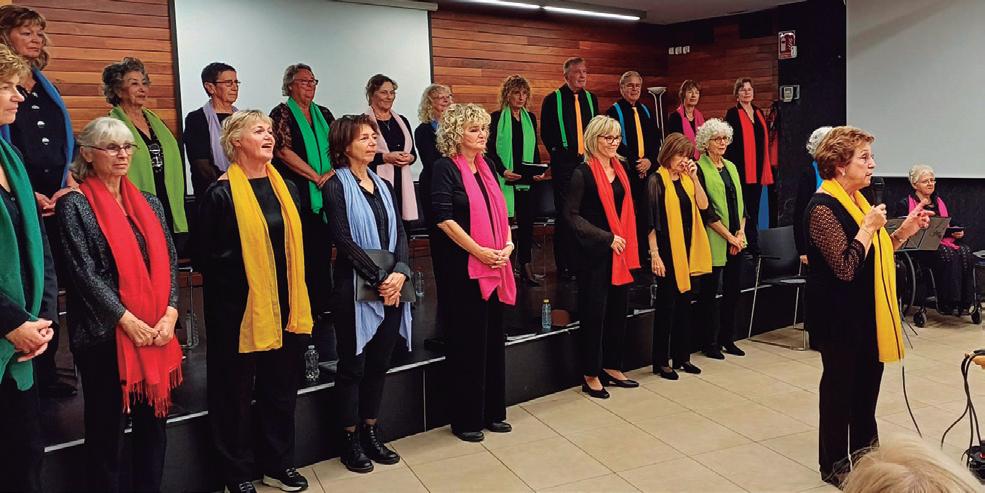
CANTO MUNDIAL, one of the Costa Blanca’s most popular international choirs, is preparing to perform its new concert, The Silver Screen. Audiences are promised an afternoon and evening of songs from the cinema, with dates set for Wednesday April 29 at 4.30pm in The Comm, Alfaz del Pi, and Thursday April 30 at 7.00pm in the Social Centre, Playa de Albir.
The choir, directed by Philip Ashley, brings together singers from seven countries and rehearses weekly in Alfaz del Pi. Their performances are recognised across the region for intricate four-part harmonies and a diverse selection of music, spanning classical, pop, musical theatre, and film themes.
The Silver Screen will feature 20 well-known tracks spanning 50 years of film history. In a playful twist, the audience is invited to join a pop quiz during the concert, testing their knowledge of the movies behind the songs.
Philip Ashley said, “The choir has been working on this programme for months. It caters to all ages and music tastes, and the quiz adds a fun element to the evening. Anyone who enjoys music or films will find something to enjoy.”
Tickets cost €10 and are expected to sell quickly. Booking is available online at www. philipashley.com or by calling 965 581 483 Seats are limited, so early reservations are recommended.

Pego plaza gets makeover
PEGO has unveiled a refreshed Plaza Mayorazgo Cendra, transforming it into a greener, more welcoming space designed with community life in mind. The project reimagines what was once a more functional area into a place where residents can relax, socialise and spend time outdoors.
A key feature of the renovation is the introduction of new landscaped areas, with plants and trees adding both shade and visual appeal. The greenery softens the square and creates a more pleasant atmosphere, especially during warmer months, making it far more inviting for everyday use.
New seating has also been installed throughout the space, encouraging people to stop rather than simply pass through. The aim is to create a natural meeting
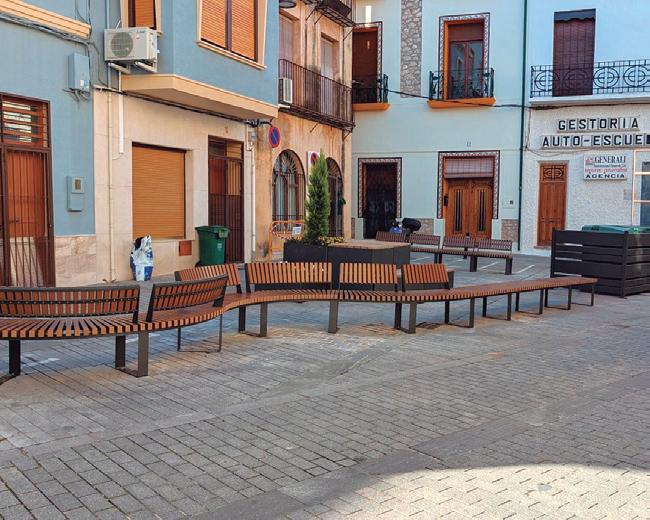
point where locals can gather, chat and enjoy their surroundings in comfort.
The redesign also prioritises pedestrians by reducing space previously occupied by vehicles. This shift has opened up the square, improving accessibility and safety while helping it feel more connected to the rest of the town centre.
Practical elements have not been overlooked, with waste containers now integrated more discreetly into the layout to maintain a cleaner visual appearance. Overall, the transformation reflects a broader move towards people-first urban design, giving Pego a revitalised public space that enhances daily life for residents.




ON a beautiful Sunday afternoon in March, 18 members of U3A Marina Baixa took advantage of the warm sunshine and enjoyed a stroll beside the beach at L’Olla de Altea. A very popular group under the new leadership of Warren Aspin-Gower.
U3A have numerous groups offering a range of activities and interests, many of which can be seen on their Facebook page or via their website u3amarina baixa.com
If you would like to join, or just to find out more, go along to one of their General Meetings held on the fourth Monday of the month at 11.00am in the
Canto Mundial brings cinema to stage.
Credit: Canto Mundial
New space for community.
Credit: Ajuntament de Pego
Casa de Cultura, Alfaz del Pi.
Javea noise demands

EXCESSIVE music volumes during Javea’s festivals are pushing decibel readings into dangerous territory, leaving residents struggling with nausea, sleeplessness, and fears of hearing damage. The recent 11th Mig Any celebrations in Duanes de la Mar underscored the issue when amplified bass from pop-rock acts rattled single-glazed windows until late evening.
Health experts warn that chronic noise exposure triggers hypertension, cardiovascular disease, and stress-related mental health issues. Local residents using decibel-tracking apps report immediate ‘danger-zone’ spikes, noting that deep bass penetrates homes and causes physical sickness. The noise also impacts local biodiversity, causing anxiety in pets and disrupting the breeding patterns of urban birds.
While traditions like Moros y Cristianos and Las Fallas involve unavoidable pyrotechnics, campaigners argue that amplified music offers clear scope for volume caps. Other Spanish municipalities have already taken action; Alicante imposes fines of up to €30,000 for persistent disturbances, while towns on the Costa del Sol have successfully restricted noisy events to protect wildlife and residents. Neighbours are being urged to document breaches via the Xabia Connecta app and request police decibel checks to build formal evidence. With local elections taking place next year, residents are also encouraged to register to vote by January 2027 to support candidates promising tighter acoustic ordinances. Affected parties can submit written complaints to the council to ensure their concerns are officially recorded.
Spring shopping returns
A POPULAR retail event is set to bring fresh activity to Denia this weekend, as Denia Stock returns on Saturday March 28.
Organised by the Department of Commerce through the AFIC office at Creama, the event will run from 10am to 9pm along Calle Marqués de Campo. A total of 41 businesses will take part, with 39 setting up stalls in the street and two trading from their own premises.
Visitors can expect a wide range of discounted goods, including clothing, footwear, jewellery, sports items, home décor and accessories. The initiative aims to bring attention to local retailers while encouraging spending in the town centre.
Alongside shopping, a full programme of free children’s activities has been arranged. The mor -
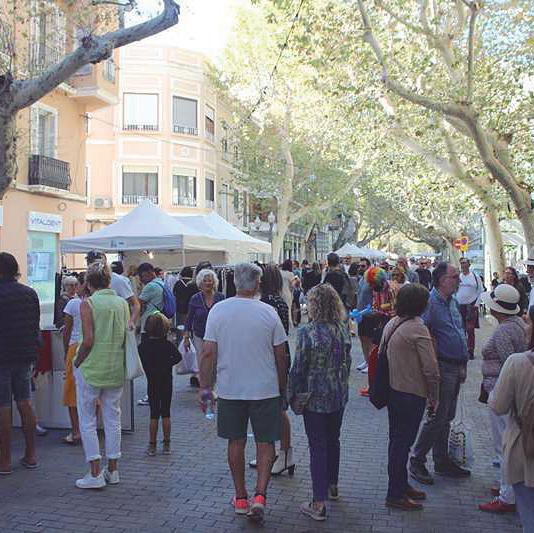
Denia event brings discounts and family activities.
ning begins with a craft workshop from 10.30am to 12.30pm, where children can design and decorate their own toy. This is followed by face painting until 2pm.
Afternoon entertainment runs from 4:30pm to 7pm with traditional games such as sack races
and ring toss. The day concludes with a storytelling session between 7pm and 8pm, inspired by the town.
Councillor Maria José Garcia described the event as a key date in the calendar and a chance to support local businesses while enjoying a day out.

Mig Any festival in Javea.
Credit: Festes Mare de Déu de
Credit: Ayuntamiento de Denia
Glory for local teams Training upgrade for healthcare
HEALTHCARE professionals in Denia are enhancing their skills through clinical simulation, an approach that is transforming training across hospital and primary care services.
The Department of Health has made simulation a key part of its strategy to improve patient safety, allowing staff to practise complex situations in a controlled, risk-free environment. This method enables teams to repeat scenarios, refine techniques and build confidence without involving real patients.

Training sessions recreate realistic clinical situations, bringing together doctors, nurses and support staff to work as a team. Alongside technical skills, the focus also includes communication,

decision-making and coordination in high-pressure moments.
In 2025, the Emergency Department at Denia Hospital integrated simulation into its core training, with dozens of professionals taking part in sessions covering resuscitation and critical care. The success of the programme has led to its expansion beyond the hospital.
Through a dedicated initiative, training has now reached primary care centres, where staff are also benefiting from hands-on simulation exercises. The response from participants has been highly positive.
Looking ahead, the programme is expected to grow further, with plans to include more specialties and develop advanced training facilities, reinforcing Dénia’s commitment to safer, higher-quality patient care.
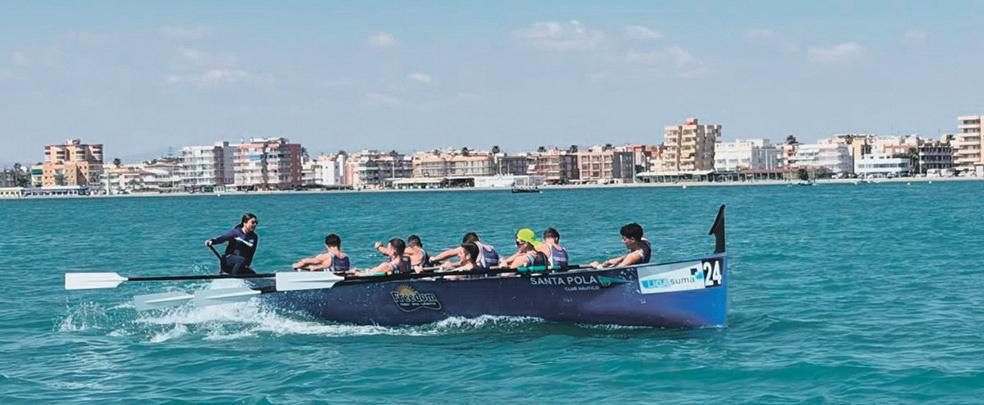
DENIA, Calpe and Javea delivered standout performances at the eighth Regatta of the Liga Suma Banco Fijo del Mediterráneo in Santa Pola, securing multiple podium finishes at a crucial stage of the season.
Held at Playa Lisa, the event brought together around 600 rowers from across the Valencian Community, highlighting the growing competitiveness of the league. Against a strong field of clubs, the Marina Alta teams proved their strength, consistently finishing among the top crews in several categories.
Denia once again underlined its reputation as one of the region’s leading rowing clubs, while Calpe and Javea continued to build momentum with confident and composed racing. Their
THE most expensive contract ever approved by the city council has ignited political tension in Teulada-Moraira after officials approved a €42.7 million deal to outsource waste collection, street cleaning and beach maintenance services for the next decade.

results reflect months of disciplined training and consistency throughout the season.
Competing in traditional Mediterranean llaüts over distances of up to 1,400 metres, crews were tested on both power and precision, with strategy playing a key role during tight turns and final sprints. The Marina Alta teams handled the demands impressively, translating strong performances into valuable points in the overall standings. With only a handful of regattas remaining, the Liga Suma season is entering its decisive phase. The competition remains tight, but after their success in Santa Pola, Denia, Calpe and Javea have firmly positioned themselves as serious contenders for a strong finish.
Teulada’s record
contract
The agreement marks a major shift away from the current publicly managed system run by municipal company Teumo, handing control to a private operator. The ruling Partido Popular argues the move will modernise services and improve efficiency across the municipality.
However, opposition parties including Compromís and PSPV have strongly criticised the decision, warning it will

increase long-term costs and reduce public control over essential services.
Under the new contract, the council will pay more than €4.27 million per year, compared to an estimated €2.8 million annually under the existing system. Critics say this could mean an additional €15 million in spending over 10 years.
Concerns have also been raised about a clause allowing price increases of up to 20 per cent after the first two years, potentially pushing costs even higher.
The debate follows ongoing complaints about waste and street cleaning services in recent years. While supporters say change is needed, opponents argue the issues stem from underinvestment rather than the public model itself.
Despite the backlash, the contract has now been approved and will define local services for years to come.
Standout performances at the eighth Regatta.
Transforming training.
Credit: Facebook Department de Salud

Backing cooperative housing
A NEW housing initiative in Pedreguer is gaining momentum as the town moves forward with its rst cooperative living project, aimed at helping younger residents access a ordable homes.
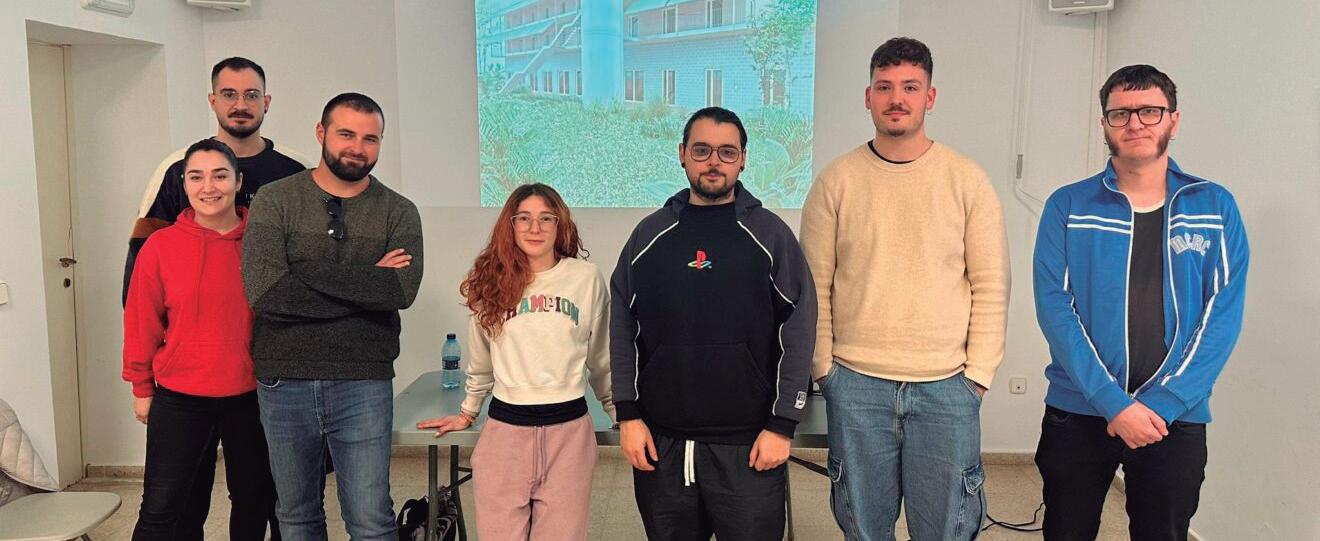
The scheme, known as ‘El Formiguer’, has taken a key step forward following a recent working session where a core group of young promoters was formally established. This group will lead the development of the project, shaping both its structure and long-term vision.
Designed as an alternative to traditional property ownership, the model is based
on a cooperative system in which the building is collectively owned. Residents become members and gain the right to live in the homes at cost price, avoiding the pressures of the private housing market. Plans currently outline around 12 compact homes of approximately 55 square metres, with a exible layout that can adapt to residents’ changing needs. One of the project’s standout features is its modular design, allowing spaces to be recon gured or even shared between neighbours over time.
Financially, the initiative is supported by the local
council, which is providing public land under a low-cost agreement. This is expected to reduce overall housing costs by roughly 30 per cent compared to market prices, making it a more accessible option for younger buyers.
The project remains open to new participants, with several places already taken by residents aged between 30 and 40.
As housing a ordability continues to challenge many across the region, Pedreguer’s cooperative approach is emerging as a potential blueprint for future community-led living solutions.
Els Poblets sparks debate
A SMALL coastal town on the Costa Blanca is stepping into the cultural spotlight with the launch of a new initiative designed to spark conversation, creativity and critical thinking. Els Poblets, traditionally known for its quiet charm, is now positioning itself as an unexpected hub for ideas and debate.
The project, titled ‘Diàlegs’, brings together writers, thinkers and cultural voices for a series of talks and discussions aimed at exploring contemporary issues. Rather than focusing on large-scale events, the initiative is rooted in intimate, accessible gatherings that encourage participation and exchange between speakers and audiences.
Organisers hope to create a space where culture goes beyond passive consumption, inviting residents and visitors alike to engage with topics ranging from literature and philosophy to society and current a airs. The goal is not only to attract notable contributors, but also to foster a sense of community through shared dialogue.
Set against the backdrop of a small Mediterranean town, the project o ers a contrast to the fast pace of larger cultural centres. Here, the emphasis is on slowing down, listening and re ecting: something the organisers believe is increasingly valuable.
By launching ‘Diàlegs’, Els Poblets is rede ning its identity, showing that meaningful cultural experiences don’t have to be con ned to major cities. Instead, this initiative highlights how smaller communities can play a powerful role in shaping conversations and bringing people together through ideas.

Aimed at helping younger residents.
Credit: Ajuntament de Pedreguer
Stepping into cultural spotlight.
Credit:
Shellfish showdown
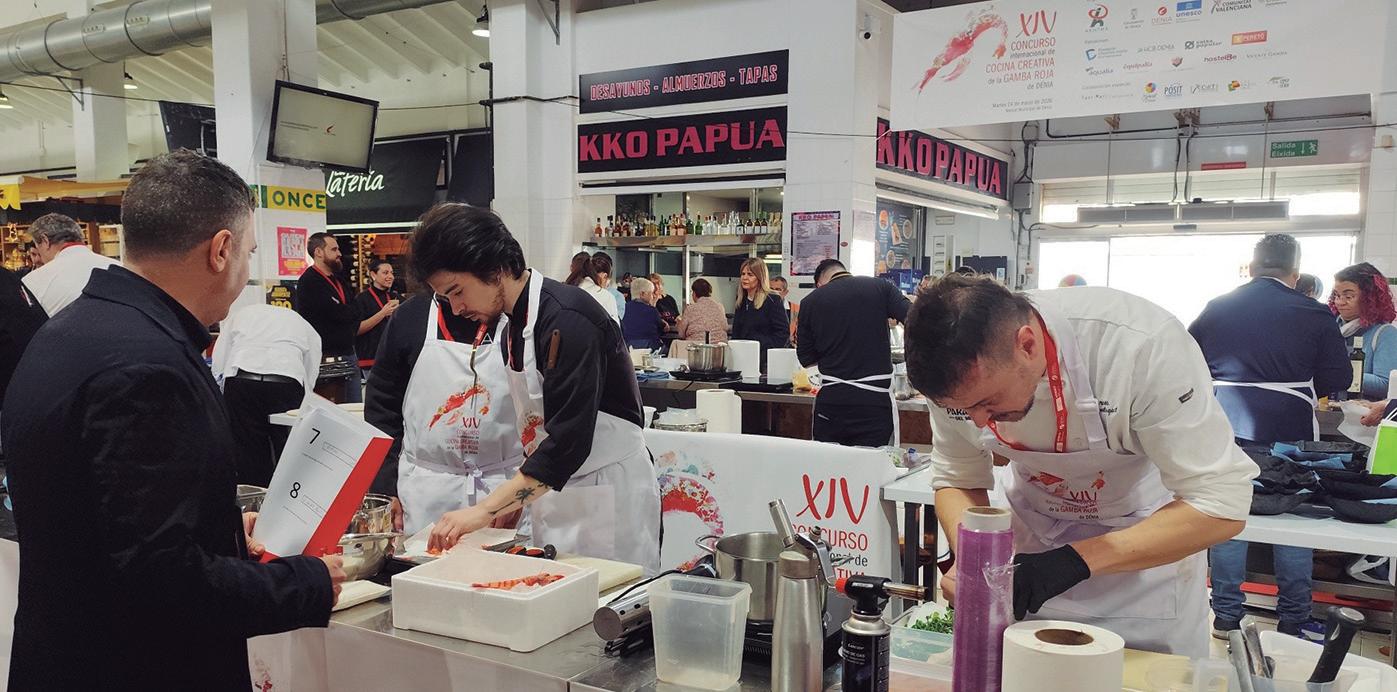
DENIA’S Municipal Market came to life on Tuesday, March 24, when the market hosted the 14th International Red Prawn Cooking Competition. An electric atmosphere and a delicious array of smells filled the air, as eight talented chefs battled it out.
The challenge of the competition was to make sure the region’s star product - the humble red prawn - was on full display. Chefs were expected to extract every ounce of flavour from the local product, cooking it to perfection while also adding a creative flair that would set their dish apart from the rest.
A jury of renowned culinary figures were convened to judge the dishes, with a total of 11 Michelin stars sitting on the panel.
After a heated, high-stakes competition, Jesus Ivan Anaya Gomez, chef at El Mirador de la Mancha was crowned the winner. During the preparation of his dish, the chef from Ciudad Real used three different preparation and cooking methods. Not only did this demonstrate his impressive technical ability, but it also surprised the judges, clinching him the victory.
Sharing the podium in second and third place was Arnau Casadevall Lloveras, and Sara Ortiz, the only female finalist in the competition.
Along with gastronomical glory, the top three chefs won a cash prize of €1,000 for third place, €1,500 for second and €3,000 for the reigning champion.
Traffic flow changes direction
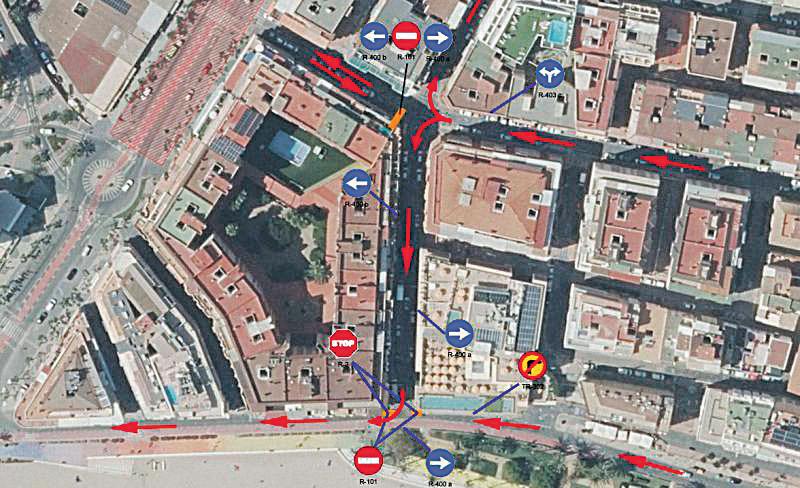
DRIVERS in Benidorm should be aware of a key change in effect from Wednesday March 25, as roadworks linked to a new underground car park alter circulation in the town centre.
The lower stretch of Calle Maravall, between San Pedro and Marqués de Comillas, flow in the reverse direction, switching from uphill to downhill traffic. The
adjustment forms part of wider measures around Avenida Jaime I, which remains closed between Ricardo Bayona-Limones and Avenida Nicaragua due to construction works.
Under the new layout, vehicles arriving via Marqués de Comillas can turn right towards Tomás Ortuño or left to head down towards the seafront. However, motorists travelling along Paseo
de San Pedro will no longer be able to turn into Maravall and must continue straight on towards either Avenida Jaime I or Avenida Armada Española. The council’s Mobility Department confirmed that the changes will remain in place until the project is completed.
The underground car park, currently under construction, will have two levels and space for 406 vehicles.

Chefs compete to cook the best red prawn dish.
Credit: Mercat de Denia / Facebook
Traffic rerouted.
Credit: Ayuntamiento de Benidorm












Suárez claims win




ASTURIAN driver José Antonio ‘Cohete’ Suárez and co-driver Alberto Iglesias took victory at the 32nd Rallye La Nucia, completing 10 demanding stages in 1:16:28.1. Their consistent pace kept rivals at bay throughout the twoday event. Iván Ares and Borja Hernández finished just three seconds behind in second place, while Diego Ruiloba claimed third.
The rally, which opened the 2026 Supercampeonato de España de Rallyes, covered 124 competitive kilometres across the Alicante mountains.
Friday March 20 and Saturday March 21 saw 63 teams compete, including 18 Rally2 category cars, as thousands of spectators followed the action across 30 municipalities. Weather played a key role, with rain affecting the second day.
Saturday began with Jorge Cagiao in the lead under wet conditions. As







the day progressed, the track dried and Suárez, Ruiloba and Ares pressed hard. A puncture for Cagiao on the ninth stage handed Suárez the overall lead, a position he maintained to the finish.
Promotional cups saw Miguel García take the Desafío Peugeot, Nicolás Cabanes the Clio Trophy
Spain, and Adrián Vázquez the Copa Hyundai i20. In the Valencian regional championship, Miguel Fuster won Friday’s stage, and Carlos Moreno triumphed on Saturday.
The final podium ceremony was held at La Nucía’s Pabellón Muixara, attended by José Vicente Medina (RFEDA), Vicente Cabanes (AIA) and the town’s mayor, Bernabé Cano.
ALTEA Council, through its Environment Department, has announced a tree-planting event to mark Tree Day on Saturday March 28. The activity will take place at the Pont de Sogai along the Río Algar, with participants gathering at 10.00am. Organisers expect the session to last around three hours.
Council Environment Officer Jose Orozco explained that the event will involve residents planting trees in the area. “The aim is to raise awareness of environmental issues and improve the town’s surroundings,” he said. Participants are advised to wear comfortable footwear and bring water.
After the planting, a light refreshment will be served to those taking part.
Calpe empowers its residents Trees for Altea
town hall and the public.




CALPE has unveiled an ambitious plan to reshape how residents interact with local government, setting out a strategy through to 2029 focused on transparency, participation and accountability.
The initiative, the first of its kind for the municipality, aims to put citizens at the centre of decision-making. Officials say the plan represents a shift towards a more open model of governance, where residents play an active role in shaping policies rather than simply observing them.
Developed following months of consultation with local groups and residents, the strategy reflects real community concerns and priorities.
At its core are measures to increase participation, improve access to public information and strengthen trust between the
Key proposals include participatory budgeting, giving residents a direct say in how certain funds are spent, alongside improved digital tools designed to make engagement easier and more accessible. Surveys and guidance will also be introduced to help people better understand how to get involved.
The council has acknowledged existing challenges, including low participation rates and barriers to accessing information. By addressing these issues, local leaders hope to create a more inclusive and responsive system.
Ultimately, the plan signals a broader effort to modernise governance in Calpe and ensure decisions better reflect the needs of its community.
Mr Orozco emphasised that the initiative forms part of Altea’s ongoing commitment to sustainability and action against climate change. “We are encouraging collective efforts that support the environment,” he stated.
The Environment Department hopes local residents will join the event, which is expected to attract families and community members keen to contribute to the municipality’s green spaces.
The council underlined that this type of hands-on participation is an opportunity to engage with nature, learn about planting techniques, and make a practical contribution to environmental care. Community involvement is seen as a key part of maintaining and enhancing Altea’s outdoor areas for both current and future residents.
Suarez secures first victory of 2026 at Rallye La Nucia.
Credit: Ayuntamiento de La Nucia
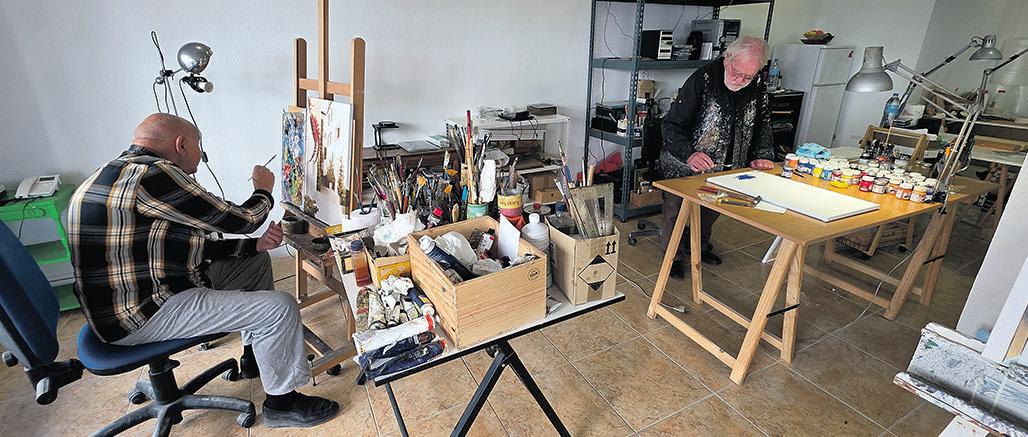
Creativity has no age limit.
Altea’s inspiring artists
IN the heart of Altea’s old town, two painters in their late 70s are proving that creativityand commercial success - has no age limit. Rico and Nuño, aged 77 and 78, have become a standout story on the Costa Blanca after selling more than 1,000 original paintings in 2025 alone. Working side by side every day, the duo continue to attract a steady stream of visitors curious to see their process firsthand.
In February 2026, they opened a larger workshop-gallery on Calle Alcoy, just minutes from the town’s iconic church square. Unlike traditional galleries, the space is fully open to the public, allowing visitors to watch each piece being created in real time - often completed in under an hour and sold the
same day.
Their approach has struck a chord, particularly with British residents and tourists. Many discover the studio while exploring Altea’s winding streets, returning later with friends or purchasing artwork to take home as a unique reminder of Spain.
Beyond the numbers, their story resonates for a different reason. At an age when most have long retired, Rico and Nuño maintain an extraordinary pace, driven by discipline, passion and years of collaboration.
It’s a powerful example of how creativity can thrive at any stage of life - and how some of the most inspiring stories are found where you least expect them.
Benidorm’s bottle caps
BENIDORM residents have once again shown strong support for the annual ‘Tapones para una nueva vida’ campaign. Organised by the Fundación SEUR in collaboration with the local council, the initiative collects plastic bottle caps to help children access medical treatments or equipment not covered by public healthcare.
The 2025 campaign saw a total of 1,730,000 caps deposited in six collection points around the city. According to Mónica Gómez, the councillor for the Environment, this volume weighed 3.46 tonnes, generating €629.72 for children in need.
Gómez emphasised the dual impact of the cam-
paign. “Recycling these caps not only supports young people with medical requirements, but also reduces our environmental footprint,” she said. The recycling process prevented 5.19 tonnes of CO2 from entering the atmosphere, equivalent to the absorption of 865 trees over a year. The city’s collection containers are located in La Cala (Calle Secretario Juan Baldoví), Rincón de Loix (Calle Juan Fuster Zaragoza), Els Tolls (Avenida Bélgica), Colonia Madrid (Centro Social Llorca Linares), and two central locations: Calle Maravall near Plaza Neptuno and Avenida de l’Aigüera near the Town Hall.
Gómez thanked resi-
dents for their involvement. If lined up, all caps collected in 2025 would stretch 51.9 kilometres, a tangible measure of the community’s commitment. The campaign demonstrates how small contributions can deliver meaningful results for children and the environment alike.
Torrija contest thrills
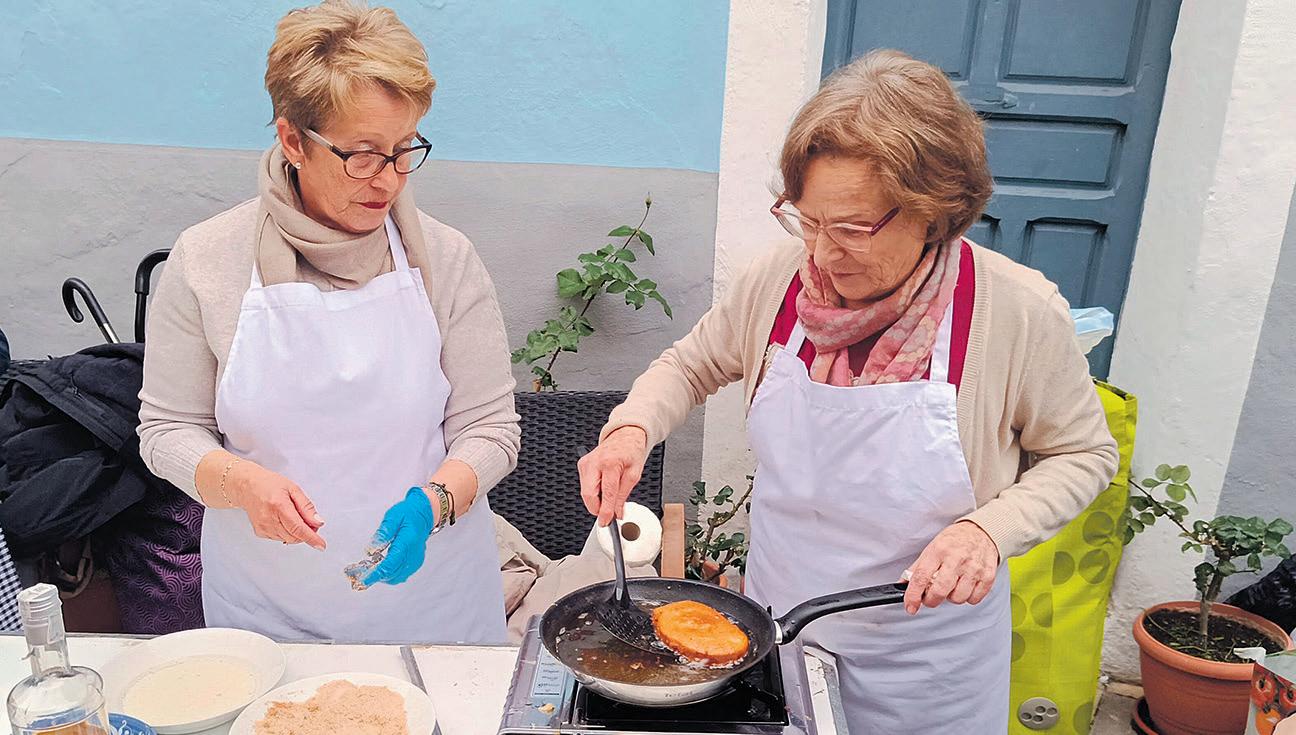
VILLAJOYOSA hosted its fourth annual Torrija Competition on Saturday, March 21, drawing 21 contestants eager to claim the title of best torrija. Organised by the Junta de Cofradías y Hermandades de Semana Santa in collaboration with the town hall, the event took place in the Plaza de la Iglesia, in the town’s historic district.
Participants had to prepare their torrijas using ingredients supplied by the organisers. Once cooked, each creation was judged in a blind tasting by a panel that included Jaime Santamaría, councillor for Fiestas; Nancy G. Beltrán Roslan, president of the Semana Santa associations; the 2026 town herald Pedro Juan Sanjuan Blanco; chef Marta Devesa; and members of

the cofradías.
The competition proved to be fiercely contested. After careful deliberation, the jury awarded first prize to the cofradía Nuestra Señora de la Caridad. The second place went to the cofradía Virgen de los Dolores, while the cofradía Jesús Triunfante secured third place.
The event, staged shortly before Semana Santa, attracted both locals and visitors keen to experien-
ce the annual sweet-making contest. Spectators enjoyed watching the competitors as they prepared the traditional dessert, with the aroma of freshly fried torrijas filling the square. With its growing popularity, the contest has become a notable highlight of Villajoyosa’s pre-Easter calendar, offering a chance for the community to celebrate local culinary skills in a lively setting.



Villajoyosa’s Torrija Contest draws crowds.
Unity and universality of succession in international inheritance. Spain. One single law for the entire estate. Legal advice.
WHEN a person dies leaving assets in different countries, one of the first questions that arises is: which law governs the inheritance? The answer may seem complex. But European Regulation 650/2012 establishes a clear system, based on two fundamental principles that are not always known or respected: the unity and universality of succession. In this week’s article we examine what these principles mean and why they are so relevant in international inheritance matters. This Regulation applies in Spain, and it does for all the successions regardless of the nationality of the deceased.
What is the principle of unity of succession?
The principle of unity es-
tablishes that a succession must be governed by a single law. Not several. Not one law for assets in Spain and another for assets in France or Germany. One single law for the entire estate. Its purpose is to prevent the fragmentation of the succession and the conflicts that would inevitably arise if different legal systems were to govern different parts of the same estate.
What is the principle of universality of succession?
The principle of universality complements the former. It establishes that the applicable law covers all assets and rights forming part of the estate. Regardless of their nature and regardless of where they are located: in Spain, in another member state, or in


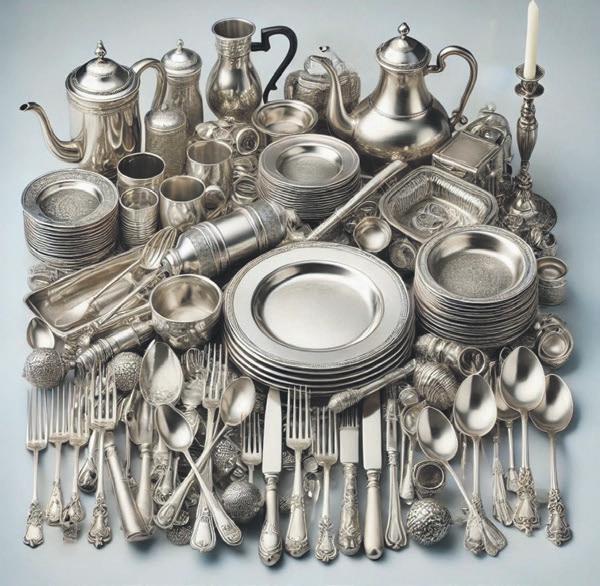
a third country. Recital 37 of the Regulation is clear on this point:
Recital 37 R. 650/2012: ‘…it is necessary that this law govern the totality of the succession, that is to say, all the assets and rights, regardless of their nature and whether they are located in another Member State or in a third State, that form part of the estate’.
Which law is that single applicable law?
As a general rule, the applicable law is that of the state in which the deceased had their habitual residence at the time of death. This is established by Article 21 of the Regulation. If the deceased was habitually resident in Spain at the time of death, Spanish law will govern the entirety of

the estate, including assets held in other countries. The Regulation also allows the deceased to choose, in their will, the law of their nationality. This choice is known as ‘professio iuris’. And it equally governs the entire estate.
What consequences can arise from failing to respect these principles?
Sometimes, through error or restrictive interpretation, the applicable law is applied only to assets in a given country, whilst those located elsewhere are disregarded. We consider this to be contrary to the Regulation.
And it can have serious consequences: difficulties in the international recognition of the ruling. Conflicts in the administration and distribu-
tion of assets abroad. And additional litigation, across different countries.
Conclusion
The unity and universality of succession are not abstract principles. They are legal tools of great practical relevance for anyone holding assets in more than one country. At White Baos Lawyers we are experts in international inheritance and private international law. If you find yourself in this situation, do not hesitate to contact us.
The information provided in this article is not intended to be legal advice but merely conveys information relating to legal issues.
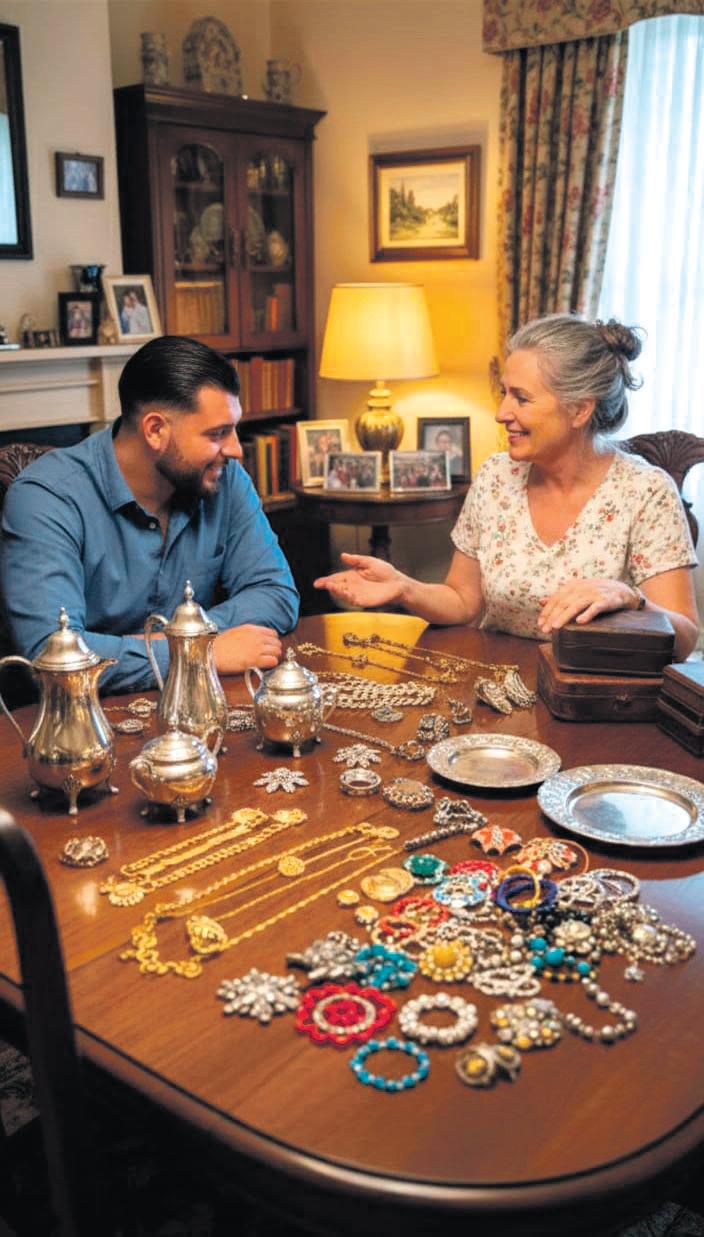


Brits still top expats
DESPITE political turbulence, the British dream of retiring to the Spanish coast remains as strong as ever.
Recent threats from Prime Minister Pedro Sánchez regarding a ‘supertax’ on nonEU homebuyers appear to have stalled.
Experts confirmed the 100 per cent property tax proposal lacked the parliamentary support required to become law, with industry leaders dismissing the rhetoric as ‘political posturing’.
Spain’s property market continues to defy European trends, reaching sales highs not seen since before the 2008 financial crisis.
Domestic transactions rose by 10 per cent in early 2025, while foreign purchases grew by 2 per cent. Affordability has been bolstered by stabilising mortgage rates, which now sit between 2 and 3 per cent for fixed terms.
British buyers remain the leading foreign investor group, closely followed by the Dutch and Germans.
While major cities like Madrid and Barcelona attract significant capital, coastal hotspots such as Alicante, Malaga, and Altea remain the primary draw for those seeking relocation.
Learning all the rules
BRITISH holidaymakers heading to Spain for Semana Santa face a sharp reminder to respect local customs or risk fines of up to €750. As celebrations run from Sunday, March 29 to Sunday, April 5, authorities in regions like Andalucia are enforcing strict by-laws to protect the solemnity of Holy Week.
The crackdown follows years of disruption caused by overtourism. In cities such as Sevilla, Malaga, and Granada, historic centres will close for processions.

Although prices have risen significantly since the 1990s, the combination of a welcoming culture and a high quality of life sustains the market’s appeal.
For many, the Mediterranean lifestyle outweighs the complexities of post-Brexit visas.


Visitors must avoid crossing through religious parades; stewards will only allow passage when floats, or pasos, have come to a complete halt.
Dress codes are equally stringent.
While coastal temperatures rise, wearing bikinis or walking shirtless in town centres is
prohibited. To enter churches or view processions, shoulders and knees should be covered.
Even footwear is regulated; driving in flip-flops remains illegal nationwide, carrying penalties of up to €200.
Anti-social behaviour is also under fire. New outdoor bans mean vaping or smoking in public spaces can trigger fines reaching €2,000, while ‘sunbed hogging’
in Valencia results in €250 penalties. Public drinking and ‘balcony antics’ may lead to immediate hotel eviction. Spanish officials stress these measures balance tourism with cultural preservation. By swapping beachwear for smart-casual attire and observing silence during parades, tourists can enjoy the festivities without an expensive legal lesson.











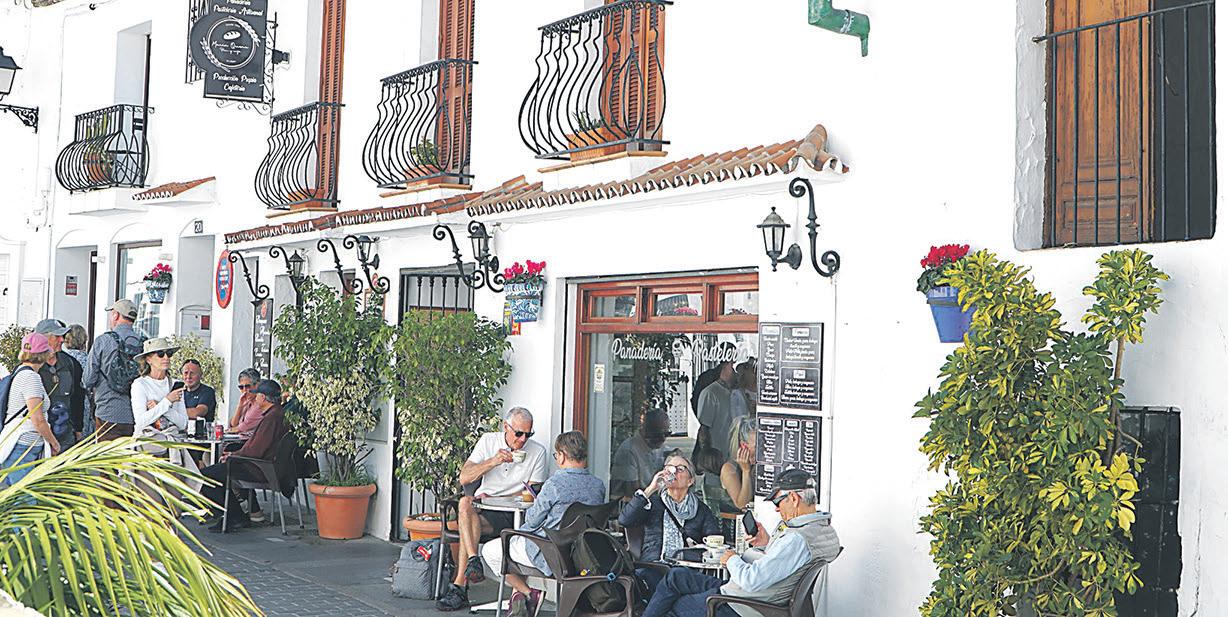
Daily life in Mijas Pueblo in Malaga Province.
Credit: Gan Jocson FB
Tens of thousands of holidaymakers expected to arrive.
300 Animal rescues yearly
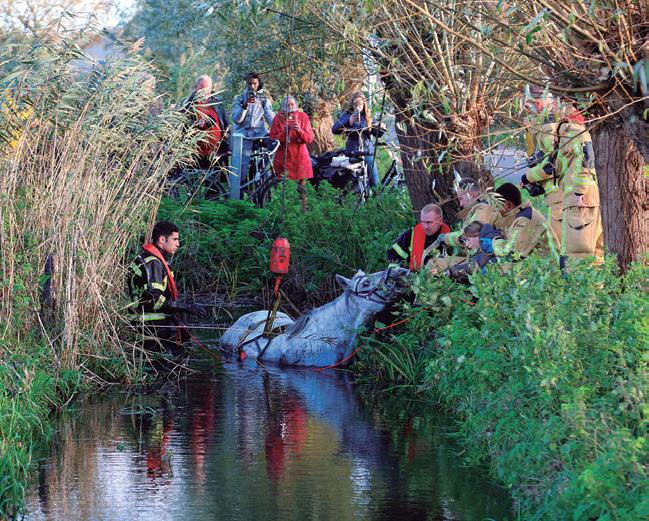
THE Comunidad de Madrid fire corps undertakes around 300 animal rescues each year, covering domestic pets and larger livestock. In 2025, out of 20,987 total interventions, 282 involved animals: 163 cats, 55 dogs, and the remainder larger animals including cows and horses. Rescues range from cats trapped in urban infrastructure to complex operations involving flooded farms and stranded livestock, often requiring specialised equipment and coordination with veterinary services.
Larger interventions, such as a March 2025 flood in Algete, involved 19 horses, two donkeys, and a cow, rescued using boats, drones, and ladders. Decisions to intervene are prioritised based on the animal’s inability to self-rescue and availability of a responsible owner. Wild ani-
mals, including storks, snakes, ducks, deer, and foxes, are occasionally assisted in collaboration with forestry or wildlife authorities.
Specialised training ensures firefighters can handle a range of species safely, with techniques including nets, harnesses, cranes, and elevated platforms.
Though animal rescues represent roughly



1 per cent of all interventions, their frequency is increasing alongside greater pet ownership and community expectations. The corps emphasises that careful planning, teamwork, and equipment are essential for the welfare of both animals and responders, reflecting an expanded role in public safety beyond traditional firefighting duties.
Stopping ghost diners
RESTAURANTS across Spain are introducing stricter reservation measures to combat ‘ghost diners’, customers who book tables but fail to turn up. Recent gures indicate around 3.3 per cent of bookings go unhonoured, translating into thousands of empty tables, particularly in busy urban areas and high-demand venues. The nancial impact extends beyond lost revenue, as costs for sta , ingredients, and preparation remain xed.
To mitigate losses, roughly 21 per cent of Spanish restaurants now require customers to provide card details when booking, allowing charges in the event of a no-show. About 7 per cent have implemented mandatory prepayments, ensuring commitment and reducing uncertainty.
Although previously common only in ne dining, these systems are spreading to mid-range establishments. Digital platforms
such as TheFork reinforce accountability by tracking repeated non-attendance and temporarily blocking habitual o enders.
UK media attention highlights the contrast between Spain’s stricter approach and more lenient practices elsewhere. Restaurants emphasise clear communication to ensure diners understand the rules while maintaining reasonable cancellation windows. The measures target habitual no-shows rather than occasional schedule changes, balancing deterrence with customer experience.
Overall, Spain’s adoption of guarantees and prepayments re ects a shift in how reservations are perceived, treating them as binding commitments. The measures aim to protect revenue, streamline operations, and improve reliability for diners, signalling a broader trend towards accountability and operational e ciency in the hospitality sector.













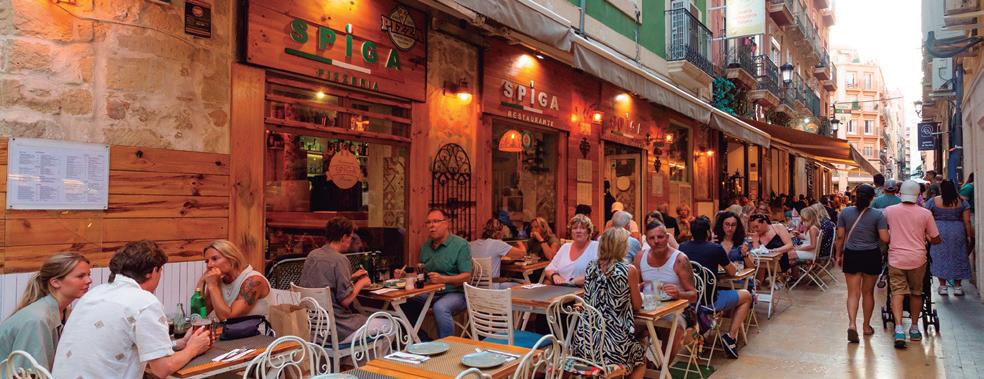
Roughly 21 per cent of Spanish restaurants require customers to provide card details when booking.
Photo credit: Olga Evans/Shutterstock
Animal rescues represent roughly 1 per cent of all intervention.
Photo credit: Nancy Beij ersbergen/Shutterstock
First days of spring

SPRING officially arrived in the Northern Hemisphere on Friday, March 20, at 2.46pm CET. As the vernal equinox passes, Europe prepares for longer days and a burst of seasonal colour, though the immediate forecast remains mixed.
The season promises several celestial highlights with three distinct full moons. The ‘Pink Moon’ arrives on Thursday, April 2, followed by the ‘Flower Moon’ on Friday, May 1. The season concludes with a rare ‘Blue Moon’ on Sunday, May 31, a phenomenon occurring only once every two and a half years when two full moons fall within a single calendar month.
Terrestrial conditions have been more turbulent. A weather trough moved from north
to south on Monday, March 23, which brought cloud and rain to the Mediterranean. Regions including Catalonia, Valencia, and the Balearics expected showers, with heavier bursts possible in the Pyrenees.
Temperatures remain modest. Coastal areas like Barcelona and Palma will see daytime highs of 15°C to 16°C, while Malaga may reach 19°C. Despite this cool start, meteorologists predict anticyclonic conditions will soon dominate, bringing settled, sunnier spells across the continent. While dramatic heat is not yet forecast, the increasing daylight and clearer skies signal a steady transition into the warmer months. Residents are encouraged to enjoy the early blossoms and astronomical displays as nature begins its annual renewal.
Bye bye shampoo sachets
HOLIDAYMAKERS across Europe must prepare for a major shift in their travel routines following new EU regulations targeting single-use plastics. Under Regulation (EU) 2025/40, the familiar free miniature shampoo bottles, lotions, and soaps sachets will be phased out to combat rising levels of packaging waste.
The crackdown, which is meant to boost recyclability and promote a circular economy, requires hotels to replace individual pods with wall-mounted dispensers or bulk refill systems. The hospitality sector’s overhaul extends beyond the bathroom; bars and restaurants must also ditch single-serve condiment sachets, including ketchup, mayonnaise, and sugar, in favour of reusable containers.
The transition begins on Tuesday, August 12,

as member states start adapting their policies.
While the initial years focus on preparation, full enforcement is slated for 2030, by which point the prohibition of miniature hygiene formats will be absolute.
Travellers are advised to check hotel amenities before booking or pack their own reusable travel containers to navigate
the change. While some critics previously raised concerns regarding the hygiene of communal dispensers, officials argue the move is essential for sustainable tourism. This legislation marks a definitive end to the era of disposable convenience, ensuring that by the next decade, European getaways are significantly more eco-friendly.

Pink moon over pink blossom.

Easter road rush
Pavements under scrutiny

SPAIN’S Directorate-General for Traffic (DGT) has launched a massive surveillance operation as millions of motorists prepare for Easter getaway journeys. With disruption to high-speed rail and international travel, authorities expect a significant surge in road traffic heading toward the Mediterranean coasts. The Operación Especial Semana Santa 2026 will deploy an extensive arsenal of enforcement tools, including fixed and mobile speed cameras, drones, and helicopters. Plain-clothes Guardia Civil officers in camouflaged vehicles will also patrol for mobile phone distractions and seatbelt violations. Roadside checkpoints will focus on vehicle roadworthiness, tyre depth, and mandatory documentation, alongside rigorous alcohol and drug testing.
Credit: Fuengirolasequeja
A LANDMARK ruling in Bilbao has reinforced the legal responsibility of Spanish local authorities to maintain safe public spaces.
On Monday, March 17, the Contencioso-Administrativo Court Number 1 ordered Bilbao Council to pay €147,170.11 in compensation to the sister of a man who died following a fall in March 2019.

Heavy congestion is anticipated on key arteries like the A-3, A-7 and AP-7, particularly affecting routes to Alicante, Murcia, and Malaga. Traffic will intensify in phases, starting with the first outbound wave from Friday, March 27 at 3.00pm until Sunday, March 29. A second, larger exodus begins on Wednesday, April 1 at midday and continues throughout Thursday, April 2. Finally, the main return operation will run from Saturday, April 4 until midnight on Sunday, April 5.
Coastal residents should expect busier local roads and a frequent police presence near popular resorts. The DGT warns that fatigued drivers arriving from long inland hauls pose an increased risk of collisions. Motorists are urged to check vehicles thoroughly and allow significant extra time for journeys.
SPAIN emerged as the leading contributor to job creation in the European Union in 2025, accounting for 41 per cent of all net new employment despite being only the bloc’s fourth most populous country. The data highlights a significant shift in Europe’s labour market, with Spain outperforming larger economies such as Germany and France. Across the EU, approximately 1.3 million jobs were created in 2025. Spain alone contributed around 526,000 of these, while some countries recorded losses, including Germany, which saw a decline of roughly 327,000 jobs. This contrast underlines Spain’s central role in sustaining overall EU employment growth.
The victim was walking in a high-traffic area when he stepped on a loose, poorly positioned irrigation manhole cover. The resulting fall caused severe injuries that ultimately proved fatal.
While the council argued the pedestrian was at fault, the judge rejected this, labelling the defective cover an ‘objective risk’ that even an attentive walker could not avoid.
The verdict sharpens
national laws, such as the Ley Reguladora de las Bases del Régimen Local, which mandates that councils keep streets and squares safe. This decision makes it harder for authorities to blame victims when clear maintenance failures exist.
Legal experts suggest this sets a vital precedent for claims involving potholes, cracked pa-
Spain leads job creations
The country’s strong performance is linked to economic expansion, with GDP growing by an estimated 2.8% per cent, alongside rising labour demand. Immigration has also played a key role, increasing the workforce and helping fill vacancies in sectors such as tourism,
ving, or unfinished roadworks.
To seek compensation, victims must obtain a medical report, secure a police statement (atestado), and photograph the hazard immediately.
While the ruling may be appealed, it sends a clear message to town halls across Spain: neglecting urban infrastructure carries a heavy financial and legal price.
construction and services. Unemployment in Spain fell to below 10 per cent during the year, its lowest level since before the financial crisis, although it remains above the EU average of around 5.8 per cent. Despite the positive headline figures, challenges remain. Much of the job growth is concentrated in lower-productivity sectors, raising concerns about wage levels and long-term sustainability.
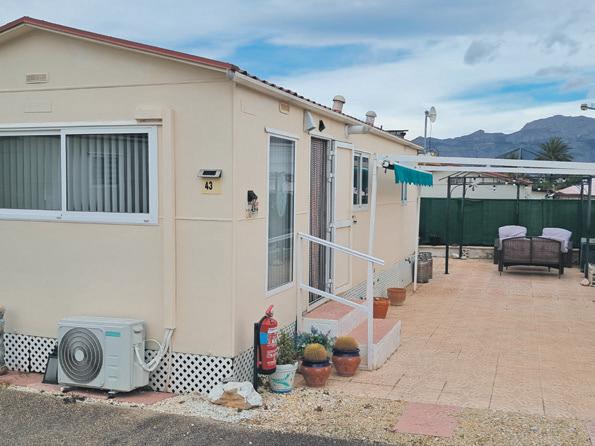






Approaching AP-7 toll.
Watch where you walk!
Your

Should governments regulate AI? VOICE
A RECENT online poll asked Euro Weekly News readers: should governments regulate artificial intelligence? The responses revealed a wide range of opinions, reflecting both concern and scepticism about the growing influence of AI in everyday life. While many participants supported stronger oversight, others questioned whether governments themselves could be trusted to take on such a powerful role.
Several contributors argued firmly in favour of regulation, emphasising the risks of misuse and misinformation. Judith Dominique Wolfenegg expressed strong concern about the reliability of AI systems, stating, “Yes, definitely. The so called artificial ‘intelligence’ is full of mistakes and way too many people believe absolutely everything, no matter how wrong the ‘information’ is.” Her view highlights a growing fear that AI-generated content may mislead people who assume it is always accurate.
Similarly, Montserrat Llois pointed to the potential for harm if AI is left unchecked: “Of course. As everything, some people will use it in a bad way if not regulated.” This perspective reflects a broader belief that, like other powerful technologies, AI requires rules to prevent abuse and protect the public.
Brian Francis drew a comparison
with the early days of the internet, warning of the consequences of inaction: “Yes. Otherwise it will get out of hand in the same way as the internet.” His comment suggests that failing to regulate AI early could lead to widespread problems that become difficult to control later.
However, not all respondents were convinced that government regulation is the solution. Angela Edgley raised concerns about the role of authorities, arguing, “Social media was full of lies before AI, now no one really knows the truth. People need to go back to basics. The Gov’t will be lazier, brainless and dangerous with AI.” Her criticism reflects a lack of trust in governments’ ability to manage AI responsibly.
Delia Lambert offered a more direct challenge to the idea of regulation, asking, “And who is going to regulate the government?” This question underlines a key issue in the debate: accountability. If governments are given control over AI, who ensures that they use it fairly and transparently?
Overall, the poll suggests that while concerns about AI are widespread, opinions differ on how best to address them. Nevertheless, most people said that governments should regulate artificial intelligence, reflecting a general desire for safeguards in an increasingly digital world.



There is a general desire for safeguards.
Credit: Shutterstock, DC Studio
FINANCE
BUSINESS EXTRA
Audi’s resilience
TARIFFS have knocked automotive profits, yet despite the difficulties Audi closed the fiscal year with a €4.6 billion net profit, a 10.2 per cent increase. However, operating profit and margins declined. Electric vehicle sales helped maintain revenue, prompting Audi to further focus on developing its electric division.
Big pay day
WARNER BROS. Discovery
CEO David Zaslav is set for a big pay day, receiving more than €600m if Paramount Skydance’s full acquisition succeeds. The deal, valued at about €101 billion (around €26 per share), would trigger one of the largest executive compensation packages in media history.
Energy deal
THE UK Chancellor secured a £240 million investment from Spanish firm Exolum to boost UK energy resilience and jobs, and deepened economic cooperation with Spain. Agreements included easier travel for British service professionals and mutual recognition of professional qualifications, part of efforts to strengthen ties with Europe and support trade growth.
Illegal bets
AS one of the biggest horse racing events, Cheltenham festival typically attracts £1 billion annually. However, according to the BGC, approximately £60 million was illegally staked during the 2026 edition. An estimated £2 million per race was bet with illegal operators, representing 6 per cent of all wagers.
Meta lay-offs
AS Meta continues to invest in AI, pledging more than €500 billion to building data centres, the tech giant is preparing to lay off upwards of 16,000 employees. Department heads have reportedly been told to prepare cost-cutting plans as the company looks to reduce its workforce by 20 per cent.
77.8 %
of European internet users made online purchases in 2025, according to Eurostat.
War metal’s surge
HOUSEHOLDS worldwide are feeling the strain of rising prices amidst conflict in the Middle East. In addition to everyday household items doubling in price, critical military materials are also experiencing a price hike, including tungsten.
Tungsten is a highly valued heavy metal, its properties especially well-suited for the defence sector. In addition to having the highest tensile strength and lowest vapour pressure of any material on the periodic table, tungsten also has a high melting point and radiation shielding properties. With a diverse range of possible applications, tungsten is a valuable tool to any army.
As sought after as tungsten is, it is becoming increasingly difficult and expensive to acquire. Its complex extraction process limits production, with China and

Russia being the primary producers. China controls 80 per cent of the tungsten market, but restricted trade in February 2025, causing a massive shortage. China’s dominance plus high demand amongst a worldwide shortage has caused prices to rise by more than 520 per cent. European prices, for example, reached €2,250 per metric ton, an extraordinary 115 per cent in-
Generational strain
A RECENT report by Centre for Social Justice found current British primary schoolchildren won’t be eligible for a pension until age 75. A collapsing birth rate and rising life expectancy means the government won’t be able to maintain the current worker to pensioner ratio.
The current UK birth rate is at an all-time low with the UK’s total fertility rate falling to 1.41 children per woman in 2024. This drop is not due to family sizes shrinking, but rather many women who want children not being able to do so due to economic and social challenges.
There are currently 13 million people over 65-years-old. That number is expected to rise to 17 million by 2043. The British population must grow by an additional 250,000 babies per year to bridge the ‘birth gap’. Without this, experts believe
Food sector thrives
SPAIN’S agri-food sector has overcome significant challenges - international instability, tariffs, rising production coststo reach €78 billion in revenue. This marks a 2.6 per cent increase from 2024, and a 73 per cent rise over the past decade. Fruit exports climbed from €11 billion to €11.9 billion and vegetable exports totalled €9.4 billion. Meanwhile, international meat sales reached €10.5 billion despite African Swine Fever disruption. Notably, Spain’s most prominent exports, olive oil and wine, declined.
crease compared to the €345 price point of the previous year. Spain produces only 700 tons of tungsten per year, far below China’s 67,000. However, many experts suggest there’s potential for Spain to supply up to 13 per cent of the world’s tungsten supply outside of China. As one of the few tungsten-producing regions in the world Spain could be in a prime position.

the younger generation will be burdened with the financial cost of an ageing population.
Every day debt
OWING debt on essential bills is expected to become the ‘new normal’ in the UK, as the average person struggles to stay afloat. According to the charity organisation StepChange, arrears for housing, utilities and council tax are all expected to increase in 2026.
In 2025, the average rent arrear rose to £2,372, while average mortgage arrears grew from £10,239 in 2024 to £12,534 in 2025, representing a 22 per cent increase. What’s more, StepChange’s data shows that the average debt to energy companies grew to £2,560. People’s budgets can only stretch so far when prices skyrocket but wages stagnate.
Strong Spanish market
ALLIANZ is strengthening its non-life insurance business in Spain, which has become its fastest-growing region.Premiums increased by 8.3 per cent to €3.37 billion, supported by solid performance across multiple segments, including motor and property insurance. Despite inflation and rising claims, Allianz improved profitability in motor insurance.
The combined ratio remained stable at 96.4 per cent, above the group’s 92.2 per cent average. Operating profit held steady at €168 million. Its BBVA partnership grew strongly, with premiums rising 16 per cent to €614 million. Spain’s growth outpaces other key regions for the group, highlighting its strategic importance
WHILE the conflict continues in the Middle East, US President Donald Trump jumps up Forbe’s World Billionaires list from 700th in 2025 to 645th. Forbes estimates President Trump’s fortune has increased by €1.2 billion in just one year. Such a jump is largely due to cryptocurrency transactions which yielded €502 million in profits. Real estate holdings also make up the bulk of his fortune, including the €512 million-dollar Mar-a-Lago club and 10 golf courses across the USA.
AS cost of living pressures mount, charitable giving has plummeted. According to analysis by the Charities Aid Foundation (CAF), public donations are down by £1.4 billion as average donations fall from £72 to £65. CAF estimates six million fewer people gave to charity in 2025 compared to a decade prior. In recent years, food banks received the largest share of donations. They raised £610 million in 2025, more than arts and science (£575m), education (£508m), homelessness (£442m).
SINCE enforcing taxation in 2013, the Spanish Tax Agency has collected €5.1 billion from lottery wins. Lottery winnings are currently taxed at a 20 per cent rate, although the first €40,000 has been awarded tax free since 2018. In 2025, €318 million was collected, not including the Christmas lottery draw, a beloved Spanish tradition, as those figures haven’t yet been released. The most recent complete data comes from 2024, when €370 million was collected from prize pots nationwide.
Younger generation face financial burden.
Tungsten prices soar.
Credit: Shutterstock, Intothelight Photography

3I Group 2.819,00 2.833,00 2.795,00 52,64K
Admiral Group 3.264,0 3.284,0 3.256,0 8,9K
Airtel Africa 360,07 364,80 359,81 49,59K
Anglo American 2.981,0 3.024,0 2.980,0 154,94K
Antofagasta 3.317,00 3.334,00 3.296,00 33,94K
Associated British Foods 1.818,0 1.821,5 1.810,5 12,6K
AstraZeneca 14.124,0 14.220,0 14.054,1 60,41K
Auto Trader Group Plc 477,10 484,30 477,10 155,33K
Aviva 628,00 629,20 623,00 307,26K
B&M European Value Retail SA 168,50 169,00 167,50 190,12K
BAE Systems 2.294,00 2.303,63 2.284,00 153,82K
Barclays 389,75 390,75 388,20 1,66M
Barratt Redrow 268,10 269,63 266,80 192,27K
Beazley 1.265,00 1.266,00 1.265,00 251,74K
Berkeley 3.600,0 3.606,0 3.584,0 4,01K
BP 568,41 573,00 568,20 4,09M
British American Tobacco 4.376,0 4.379,0 4.357,0 65,37K
BT Group 217,40 218,80 216,60 354,96K
Bunzl 2.190,0 2.210,0 2.182,0 13,44K Centrica 210,40 211,10 208,10 369,46K Coca Cola HBC AG 4.276,0 4.326,0 4.260,0 20,05K Compass 2.123,00 2.123,00 2.106,00 66,15K
ConvaTec Group 223,60 225,60 223,20 208,35K Croda Intl 2.536,0 2.541,0 2.529,0 4,67K DCC 4.552,0 4.588,0 4.542,0 12,35K Diageo 1.400,5 1.404,0 1.397,0 241,62K Diploma 5.850,00 5.880,00 5.795,00 11,88K
361,40 357,00 464,75K
551,40 552,60 546,32 83,98K
2.665,0 2.671,0 2.654,0 103,56K
Entertainment 8.000,0 8.018,0 7.932,0 1,05K
633,99 644,00 632,50 4,76K


BUSINESS EXTRA
Gymshark hit
UK brand Gymshark continues its upwards trajectory, ending 2025 with record sales of £646 million, up 6.4 per cent on 2025’s £607.3 million. Despite the success, pretax profit took a hit, falling from £11.9 million to £7 million. Gymshark currently remains focused on expanding, most recently opening locations in Manchester, New York and Dubai.
Wage raise
MAJOR UK chains are raising minimum wage salaries. Primark’s UK workforce will now earn £13 (£13.71 in London), corresponding to a 4.1 per cent increase in hourly rates. Marks & Spencer also announced plans to invest £70 million to increase pay. The hourly M&S wage will rise by 6.4 per cent to £13.41.
Recruitment regulations
AS of June 2026, all companies in the EU will be required to disclose the expected salary before the first job interview has taken place.
This marks a significant change to established recruitment procedure as a way to ensure equality in the labour market. By clearly listing the starting salary on job listings, it eliminates discrepancies attributed to basing salaries on experience or leaving it up to negotiation further in the recruitment process.

Gifting homes
AS house prices soar, the younger generation are being left out in the cold. However, grandparents and parents are coming to the rescue. There is a growing phenomenon of elderly family members gifting their homes to the younger generation, keeping the property in the family rather than selling it. Real estate donations increa-
sed by 23 per cent since 2020, reaching 52,463 total transactions by 2025. Families who aren’t able to donate a property are helping in other ways. A total of 225,317 donations were made in 2025, many donating funds to help young people save the 30 per cent mortgage deposit needed to get on the property ladder.
Additionally, the EU has passed this new regulation as a way to shrink the gender pay gap. According to data, women earn between 12 - 12.7 per cent less than their male counterparts for every hour worked. Implementing salary transparency requirements limits discrimination and gives greater negotiating power to potential candidates.
While this directive is essential to maintaining transparency, companies are not required to disclose salaries of individual employees which remain classified as personal protected data. It is, however, illegal to penalise employees for discussing their salary with one another. Employees who choose to disclose such information are protected by the law.
Each EU member state must implement the necessary changes to its legal system before the June 7 deadline.
Bank note revamp
IT was reported recently that the enduring figure, Winston Churchill, would be removed from the £5 note. Jane Austin, JMW Turner and Alan Turing will also be phased out. In a shift away from prominent historical figures, the next series of British banknotes will feature animals native to the UK.
BRITISH data centre developer Ark has acquired land in Barcelona with plans to build a data centre with a maximum capacity of 45 megawatts. They purchased the 30,000 square metre plot for €600 million and represents Ark’s second international acquisition. Once operational, the facility could generate 150 jobs in Catalonia.

Stranded in Denmark

A 16-YEAR-OLD British girl from Sussex has been left stranded in Denmark after being refused boarding on a return flight to the UK due to updated border rules affecting dual nationals. She had travelled with her Norwegian-born mother to visit family but was unable to meet the new documentation requirements, which require dual nationals to present a valid British passport or a certificate of entitlement to the right of abode.
Although she was initia-
lly able to check in using the airline’s app, she was denied boarding at Copenhagen Airport after checks were carried out in person.
Under current rules, airlines are responsible for verifying that passengers have the correct documents before travel and may refuse boarding if requirements are not met, including in the case of minors.
The teenager was separated from her mother and siblings, who returned to the UK as planned, and has remained in Denmark sta-
ying with family friends. The situation has disrupted her education, with reported absences from school ahead of upcoming GCSE exams.
Compounding the issue, her passport application was cancelled while she was abroad, meaning she must begin the process again. This could take several weeks to resolve.
A local MP has called for government intervention, raising concerns about the impact of the rules on children and families.
A sobering reality
EUROPE’S traditional drinking culture is undergoing a profound change as beer production continues its steady decline. New data reveals continental volumes fell from 367 million hectolitres in 2019 to just 345 million in 2024, with further drops recorded in early 2025.
Germany has faced the sharpest decline, with sales plunging 6 per cent in 2025, to record lows. This trend is echoed across Belgium and the UK, where brewery numbers fell from 1,715 to 1,578 over the last year.
On-trade venues, such as pubs and bars, have seen their market share shrink from one-third pre-pandemic to roughly one-quarter today.
This ‘sobering’ reality is driven by health-conscious younger demographics and economic pressures. High inflation and
soaring costs have pushed consumers toward cheaper home drinking or ‘low and no’ alternatives. Non-alcoholic beer is now the industry’s fastest-growing segment, rising 25 per cent over five years and accounting for 7.5 per cent of total EU consumption.
To survive, hospitality venues are diversifying. Many are pivoting toward premium expe -
riences, food pairings, and mocktails to replace lost lager volumes.
Brewers of Europe President Christian Weber notes that while the industry faces significant margin pressure, innovation remains the only path forward.
Without rapid adaptation, more iconic high-street locals and village squares risk disappearing forever.
Chased, chewed, charged

A DUTCH man has been sentenced to six months in prison after a police chase that ended with him biting an officer in the buttocks. The Den Bosch court also imposed a one-year driving ban and ordered him to compensate four officers for injuries and emotional stress.

The incident began when officers spotted the 35-yearold man man driving erratically on the N264 near Uden, North Brabant. Authorities attempted to pull him over close to his ex-partner’s residence. Tests after his arrest revealed a blood alcohol level of 1.69, more than three times the legal limit.
The man fled from the police and deliberately steered to the left when the police car tried to overtake him, colliding with the vehicle at high speed, and sending it off the road and into a tree. Once stopped, he resisted arrest, kicking and biting one of the officers in the buttock.
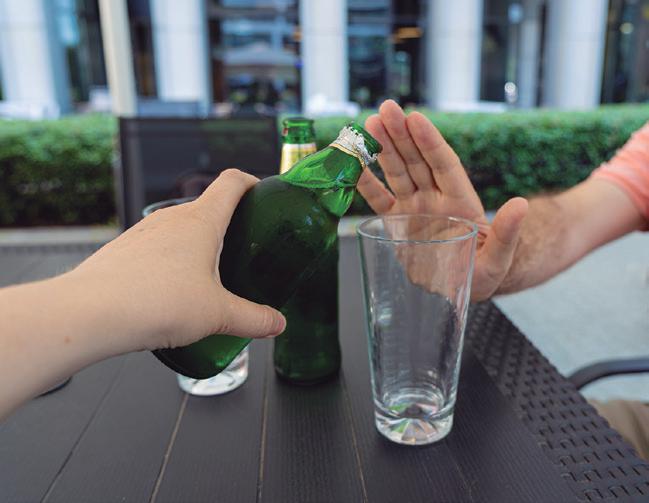
More and more people turning down a beer.
The teenager was separated from her mother and siblings.
Photo credit: 1000 words/Shutterstock
KNOWN as the go-to place for piercings and bright, colourful fashion accessories, Claire’s Accessories has been an enduring figure in shopping centres around the world. Now however, the US brand is shuttering a large number of its stores as efforts to revive the franchise have failed.
Staff in Ireland have come forward to share their outrage at being laid off without pay. Many were told that, while their jobs no longer exist, they would not receive a formal notice of redundancy until the second week of April, making an already stressful time even more difficult. Some have been offered the chance to be relocated if there are available vacancies, but few opportunities exist.
Claire’s closure

Sales have fallen drastically in recent years. Its target demographic has aged out of its products and the brand has failed to evolve with the next generation of consumers.
While the closures were
inevitable, a lack of transparency and forewarning has contributed to rising anxieties. At one Dublin location, staff were told in the morning at the start of the shift that the store would close for good that
Storm hits care hub
A PARISH care centre in central Portugal has issued an urgent appeal for support after severe damage from Storm Kristen in January.
The Parish Social Centre of Além da Ribeira, near Tomar, was directly hit by the storm at around 4am on January 28, resulting in roughly €300,000 of repairs. The centre supports up to 70 users with day services and home-based care for people aged 55 to 101, helped by 10 staff.
Storm damage includes the roof and critical infrastructure such as solar panels, windows, ceilings, chimneys, doors, gates and transport vehicles, leaving the building unsafe.
Father Tiago Alberto said the centre has been “a staple for the ageing community”
since 2005. He added: “All donations will not go to waste as we work to restore the centre, transportation, and the services we provide out in the community.”
With indoor services halted, many older residents have lost daily social contact. Staff warn that isolation is increasing and affecting well-being. Jorge Graça, president of the parish council, described the parish-wide impact, noting electricity and communications were down for days. He said the centre is “a lifeline for many of our elderly residents”, providing care, meals and companionship.
Donations are now being gathered through a GoFundMe page: https://go fund.me/a1cc 1b9b.


same evening. With 14 stores left in Ireland, over 100 jobs could be at risk due to closure.











Claire’s Accessories closes its doors.
Credit: Shutterstock, James Copeland
It’s all about respect
LEAPY LEE SAYS IT
OTHERS THINK IT

WHAT on earth is going on with the British police force? They continually gripe about being undermanned and ill equipped. They moan about being so weighed down with work they have been forced to downgrade ‘risk assessment’ of crimes to a ridiculous level and are constantly moaning that they simply ‘can’t cope’ with the latest crime gures. As legitimate as these claims may be, the precious plod does seem to nd the time to dance around maypoles, thread their boots with rainbow laces and appear in a whole host of police reality programmes!
Well, whereas laces and prancing about may not be very time consuming, I can assure you reality programmes most certainly are. There are a dozen di erent cop shows running at the moment, from cops in the sky to the most recent which concerns endeavouring to seize criminal’s assets.
Well, I’ve done a number of reality programmes (including a few I would
rather forget!) and I can assure you they take forever. Every ve minutes you see on the screen can take hours to shoot. The retakes alone can be unbelievably time consuming. How can these ‘overworked,’ rushed o their feet ocers of the law, possibly nd the time to be ‘reality stars’?
Another thing these shows are inclined to do is eat into the respect the public should hold for its upholders of law and order. Any aura of mystique or invincibility is stripped away by these programmes, which often show the utter contempt a small number of individuals have for the upholders of law and order. With the wide publicity television creates, public disorder and criminal acts are then copied by other members of toe rag society, who would normally be wary of the unknown consequences their actions could bring. Respect for the law is obtained by solving crime and putting away the bad guys, not strutting around like the jumped-up, ego-tripping American TV robo cops.
Let’s all get back to the true reality. The fact is that glamourising the police doesn’t do one iota toward rooting out criminals. Posing on telly and signing
autographs simply doesn’t hack it. It’s time the powers that be put a complete ban on all cop reality shows. Let’s restrict their TV appearances to announcements of successful conclusions to crime investigations. Now that’s the way to earn respect.
‘Oh, to be in England now that Aprils here’. Those immortal words from the pen of Robert Browning have never been more evident than my last few days of yet another quick sojourn to the ol’ country. My previous visit dumped me in the middle of the coldest spell for years, with people shu ing around liked iced up Eskimos. Not this time however. The beast from the East has been replaced by the shimmering sunshine of the south. The embankment of the Thames was quite magni cent, with sunlight bouncing o the water and terraces abounding with the blossoms of late magnolias and lightly clad Londoners, all celebrating the fact that spring has most de nitely arrived. Will it last? Probably not - your Spanish vacation will be waiting! Keep the faith Love Leapy leapylee2002@gmail.com
Leapy Lee’s opinions are his own and are not necessarily representative of those of the publishers, advertisers or sponsors.

‘Mañana’ mindset

AFTER two years of living in Spain, British expatriate TikTok inuencer Susie has become a viral sensation by documenting the profound cultural shift from UK urgency to chilled-out Spanish. Her insights o er a vital roadmap for the growing number of Britons relocating to regions such as the Costa del Sol.
According to Susie, the most striking di erence remains the approach to time. In the UK, swiftness is king; in Spain, human connection takes precedence. Susie notes that queues at banks or supermarkets move slowly because conversations are never sacriced for speed. Unlike the frustrated sighs common in British queues, Spanish locals embrace the wait as a social opportunity.
The concept of mañana, used for ‘tomorrow’, is often misunderstood by newcomers. Rather than a strict deadline, it means a philosophy where tasks happen ‘when the moment feels right’. This exibility extends to the sacred siesta; Susie warns against DIY or loud chores between 2pm and 5pm.
She says integrate, visitors should adopt local rhythms: lunch at 2pm, dinner after 9pm, and lingering at tables long after the meal ends. While the transition from high-speed British productivity to Spanish ‘calm over speed’ can be jarring, Susie reports that the change signi cantly reduces stress and encourages a healthier work-life balance.
TOPTrending
War Machine
WAR MACHINE is an action film like no other.
What you think is going to be a simple but gritty film about wannabe army rangers turns into an intergalactic thriller when an alien War Machine invades.


For nearly two hours, the film follows an elite group of military trainees who are mercifully hunted through the wilderness by the extra-terrestrial and seemingly indestructible threat. Brutal killings and an eerie score make for an anxiety inducing spectacle.

The Secret Lives of Mormon Wives - Disney+
EYE-ROLL worthy drama set against the backdrop of the Mormon church is just what you want from reality TV.

The Secret Lives of Mormon Wives returns for its fourth season, cementing itself as everybody’s favourite guilty pleasure show.
The women of Momtok are back picking petty fights, sharing juicy

Susie in Salamanca.
Protection programme
POLAND has introduced a €3.7 million, four-year programme aimed at protecting its brown bear population while reducing risks to people living in a ected regions. The initiative is being coordinated by the State Forests agency and focuses on non-lethal methods to manage increasing human–bear interactions, particularly in the Carpathian Mountains where most of the country’s bears are located.

The scheme includes the use of GPS collars to monitor bear movements in real time, allowing authorities to respond quickly when animals approach populated areas. Specialised intervention teams will be deployed to deter bears using noise devices or relocation within their natural habitat where necessary, avoiding culling. O cials have stressed that lethal measures will not form part of the strategy. In addition to monitoring, the programme places strong emphasis on prevention. Local residents will receive guidance on securing waste, protecting livestock, and avoiding behaviours that attract bears.
Educational campaigns are expected to target rural communities, tourists, and forestry workers, all of whom may encounter wildlife. The initiative follows a steady recovery in Poland’s bear population, which has led to more frequent sightings near villages and farms. Authorities say the goal is long-term coexistence, balancing conservation obligations with public safety. Scienti c research funded through the programme will also assess bear behaviour and migration patterns to improve future wildlife management policies.
Morning school bus
A 15-YEAR-OLD boy in Germany stunned authorities after stealing a city bus and driving it 150km to collect his girlfriend for school. The daring heist, which began in Wiesbaden, went unnoticed by transport staff for several hours.
Security footage captured the teenager entering the depot around 6am on Friday, March 13. Using a master key, he started the vehicle and drove away. Colleagues at the transport company initially assumed a fellow driver had taken the bus by mistake. It was only after a full staff check later that day that the company realised the vehicle was missing and alerted the police.
Using the bus’s onboard geolocation system, investigators tracked the vehicle to Karlsruhe, across federal state lines. Patrols in-

tercepted the bus shortly after the teenager had picked up his 14-yearold girlfriend near her home.
Police expressed astonishment at the boy’s ability to navigate morning traffic in such a large vehicle. While the boy, from nearby Mainz, handled the bus with ‘remarkable confidence’, he now faces serious
charges including vehicle theft and driving without a licence.
The bus was returned to the depot in pristine condition with no injuries reported. While the romantic gesture sparked amusement online, authorities are still investigating how the minor obtained a master key and acquired his proficient driving skills.








The scheme includes the use of GPS collars to monitor bear movements in real time.
Romantic rogue bus ride.
Credit: Mainz Mobility
Molecular myths meet matriarchs in Catalonia!
NORA JOHNSON BREAKING VIEWS

CATALONIA’S culinary wizardsthink foams, spheres and theatrical wafts of liquid nitrogen - have long insisted their inspiration lies not in the laboratory, but at Grandma’s kitchen table. Now, thanks to a Catalan government initiative called Gastrosàvies, the grannies are nally having their say.
A neat play on the Catalan for ‘wise’ and ‘grandmother’, Gastrosàvies showcases more than 100 senior women preparing traditional dishes on camera, with the aim of preserving and passing on authentic Catalan cooking. No spheri cation here: just sharp knives, sturdy pans and ingredients that know their place.
So far, the project’s gathered over 300 recipes from across the region. Twelve have already been lmed and posted online, with more to follow. Expect rice with cabbage and peas, thyme
soup, chicken with apple, duck with turnips and pork chops with chestnuts - dishes born of thrift, seasonality and inherited know-how.
In rural Catalonia they survive; in Barcelona they compete with pizza, kebabs, ramen, sushi and the omnipresent Argentinian empanada.
In Santa Margarida i els Monjos, 76-year-old Maria Antònia Udina prepares Penedès cockerel with dried fruit, nuts and cognac. She champions local produce, slow-reared and grape-fed, and the holy trinity of Catalan cooking: sofregit, fragrant herbs and picada (Catalan ‘pesto’).
She admires temples of gastronomy such as El Celler de Can Roca (twice voted the world’s best restaurant) yet doubts wild mushroom ice cream ever graced her mother’s stove. Her hope? Her grandchildren swap Pot Noodles for picada!
Nora Johnson’s 14 critically acclaimed psychological suspense crime thrillers, including the latest ‘The House of Secrets’ (www.nora-johnson.net), all available online at Amazon etc. Pro ts to Cudeca cancer charity.

Zorba unplugged: Silence in the alley - Part III Previously on Zorba…
FROM COAST TO COAST

LAST week, Zorba’s tail got trapped in a car door - an unexpected moment that had everyone holding their breath. Calm, clever, and utterly unbothered, he left us wondering what would happen next…
The good news: thankfully, after the incident, Zorba’s tail returned to its rightful glory. As if by magic, it stretched, gave a couple of heroic shakes, and then - stand back! - stood tall and proud, like a miniature telecommunications antenna broadcasting his supremacy over the urban jungle. Endurance? These street-savvy, black-furred monarchs practically invented it while sipping invisible espresso and glaring at pigeons.
And us humans? Ha! We must summon mountains of patience, oceans of self-restraint, and lifetimes of sighs just to resist grabbing the nearest o ender by the collar.
Parents who buy pets like toys, only to abandon them when reality interrupts the fantasy… abandoned donkeys, horses, greyhounds - left in the campo or on gas station corners, silent testimony to human sel shness… such cruelty!
And yet, we endure. We grab our paper bag and breathe - 10 times, slow and steady - like survivors of some grand experiment in human absurdity. We restrain. We refrain from collapsing onto the nearest bench. Luckily, there’s always a bar at hand, and we wine ourselves through life’s oddities.
On the street, Zorba and his gang watch us, ba ed at how we’ve survived as a spe-
cies - humans, I mean. Zorba, tail fully recharged and antenna-like, leads the band; Marifé, the self-appointed speaker; Félix, the aesthetic intellectual in his tuxedo coat; and the rest, poised and alert… waiting, of course, for Deliveroo on another unforgettable night.
That evening, everyone lined up for dinner, looking impeccable - but Zorba did not descend from his throne. I handed out the takeout, thinking: he’ll come when he pleases, proud as a peacock, antenna upright. Bowls checked: water - full; dry foodfull, thanks to a neighbour - God bless him! - who feeds this colony and another 20 cats. Top-tier love. Ritual complete. Sleep awaited… though we hoped Zorba might appear that night for his share of the feast.
The following morning, I checked if Zorba was nearby. I walked toward the wall. Still nothing. ‘Where is he? A little late today, maybe…’
I fed Marifé and Félix, who ate - but without Zorba’s usual spark, his tiny, furry kingly presence that dictated dinner with air. That night, I repeated the ritual: bowls checked, everyone fed, alley scanned. I even asked a neighbour: ‘Seen Zorba?’ ‘No’, they said. ‘Haven’t seen him in days’.
Strange. Zorba always appearedalways. Now, nothing. Marifé and Félix were ne, but something was missing: a tail wag, a commanding meow, a spark in the alley.
I couldn’t stop asking everyone, ‘Have you seen Zorba?’ The reply was always the same: ‘No… I wonder if he’s okay’. For nights on end, he wasn’t there. And suddenly it hit me: I missed someone who was always happy to see me.

LUCCA MOVALDI PRESIDENT: AMERICAN INTERNATIONAL CLUB MARBELLA
Build strength this spring
A NEW fitness-focused event is coming to the Costa Blanca, offering a fresh approach to getting in shape ahead of summer. Strong Foundations lands in Calpe on Saturday March 28 , bringing together expert guidance, practical training and a motivating group environment designed to help participants build sustainable fitness habits.
COSTA BLANCA NORTH A bingo bonanza

Taking place at Neo Fit Gym, the session is aimed at all levels, from beginners looking to kickstart a routine to more experienced gymgoers wanting to refine their technique. Rather than focusing on quick fixes, the workshop centres on long-term results, teaching the fundamentals of strength, movement and consistency.
The concept is simple but effective: strip fitness back to basics and focus on what actually works. Attendees can expect hands-on coaching, structured exercises and practical advice that can
be applied beyond the session itself.
With tickets starting from around €11, it’s an accessible way to tap into expert knowledge without committing to a full programme.
Events like this are becoming increasingly popular across Spain, particularly among expatriates looking for community-driven ways to stay active. Combining social energy with structured training, Strong Foundations offers more than just a workout: it’s a chance to reset, refocus and build a routine that lasts well beyond the gym.

A HIGH-ENERGY twist on a classic game is set to take over Benidorm this spring, as Bananas Bingo returns with a series of lively weekly events designed for party lovers. Hosted at Jokers Nightclub, the experience blends traditional bingo with music, dancing and interactive entertainment, creating a night out that’s anything but ordinary.
Running on selected Saturdays from March 28 through the summer season, the event kicks off at around 6pm and typically runs for three hours, drawing in groups celebrating birthdays, hen and stag parties, or simply looking for something different on the Costa Blanca nightlife scene.
Far from a quiet numbers game, Bananas Bingo leans fully into its party atmosphe-

re. Expect upbeat music, energetic hosts and a crowd that’s encouraged to get involved from the start. Alongside bingo rounds, there are games, dance-offs and challenges designed to keep the energy high throughout the evening.
The event is known for its unpredictable edge, with quirky prizes and spontaneous moments adding to
the fun. It’s this mix of humour, chaos and classic gameplay that has made it a popular addition to Benidorm’s already famous nightlife offering. Located in the heart of the resort, the venue places guests within easy reach of bars and clubs once the event wraps up, making it an ideal starting point for a full night out.



























Kicks off in Calpe on Saturday March 28.
Credit:
Pexels Shuraeva
Bananas Bingo returns at Jokers.
Credit: Pexels

Easter theatre with purpose

IF you’ve got friends or family visiting Spain this Easter and want to show them something beyond the usual beach bars and brunch spots, a unique charity theatre tour in the Costa Blanca could be the perfect plan.
The inspiring theatre group Valentes i Positives is launching its eighth season in April, bringing performances to towns across the Marina Alta while raising funds for cancer research. The project is particularly moving because the performers themselves are women who have experienced cancer and turned their journeys into a powerful stage production that blends humour, emotion and community spirit.
The 2026 tour begins on April 18 in Benidoleig, followed by performances
Credit: Brave and Positive Theatre Group
in Alcalali (April 19) and Benimeli (April 26). Throughout spring and early summer the show will travel to several other Marina Alta towns, including Javea, Gata de Gorgos and Pedreguer, before continuing again in autumn.
All proceeds from ticket sales go towards medical research into liver and uterine cancer, helping support important scientific work while also raising awareness. For expatriates living in the Costa Blanca, it’s a great opportunity to experience authentic local culture while supporting a meaningful cause. Many performances take place in charming village theatres or community spaces, making them perfect to combine with a relaxed lunch, a scenic inland drive or a day exploring the region’s beautiful towns.
Women’s writing competition
A MAJOR literary opportunity for women writers in the Valencian Community has opened, as a respected annual competition returns to spotlight female storytelling talent.
Now in its 27th edition, the prize aims to amplify women’s voices while encouraging narratives that challenge stereotypes and promote equality. Open to women aged 18 and over living in the region, the contest invites original, unpublished short stories written in Spanish or Valencian.
The total prize fund stands at €4,000, with €2,000 awarded to the winner and two additional prizes of €1,000 each. One of the runner-up awards is specifically reserved for a member of a women’s association, underlining the initiative’s focus on supporting female-led communities.

Submissions are currently open, with a deadline of April 17 , offering writers a limited window to take part.
Beyond the financial incentive, the award has become an important cultural platform. Entries are judged not only on literary merit, but also on their ability to reflect inclusive values and challenge traditional gender roles. With more than 100 submissions received in previous editions, the competition continues to grow in reach and relevance. For both emerging and established writers, it offers a chance to gain recognition while contributing to a more diverse and representative literary landscape.
Inspiring women.
Maying music event
COSTA BLANCA choir Cantãmus will perform ‘Tis The Month Of Maying at Ermita San Josep in La Fustera, Benissa, on Saturday May 9, with the concert starting at 4.00pm.
Under the direction of Philip Ashley, a well-known local music and theatre producer, Cantãmus will present a programme ranging from popular classics to enduring choral works. The concert takes its name from the Renaissance madrigal Now Is The Month Of Maying, reflecting the seasonal theme.
Audiences can expect a selection of widely recognised songs. Josh Groban’s You Raise Me Up and Louis Armstrong’s What A Wonderful World feature alongside Enya’s Orinoco Flow and I See The Light from Disney’s Tangled. The programme also includes

Amazing Grace (My Chains Are Gone), The Water Is Wide, and the Italian folk song Bella Ciao, which has gained global attention in recent years.
Tickets cost €12.50 and include cake and cava during the interval. A portion of each ticket will be donated to the local Caritas branch, supporting people
in need in the community.
Bookings can be made by calling 965 581 483 or online at www.philipas hley.com/boxoffice.php.
This concert combines live music with a charitable contribution, offering an afternoon of entertainment and support for the local community.
Dining above the clouds
PERCHED high in the hills of Benitachell, Restaurante La Cumbre delivers a true sense of escape. Reached via winding mountain roads, the restaurant opens up to panoramic coastal views, with a serene terrace and poolside setting that feels more like a retreat than a typical dining spot. It’s the kind of place where a quick lunch effortlessly turns into a long, sun-drenched afternoon.
The menu centres on Mediterranean and Spanish classics, offering everything from fresh seafood and grilled meats to traditional rice dishes like paella. Standout plates include grilled Dorada, prawns and generous cuts


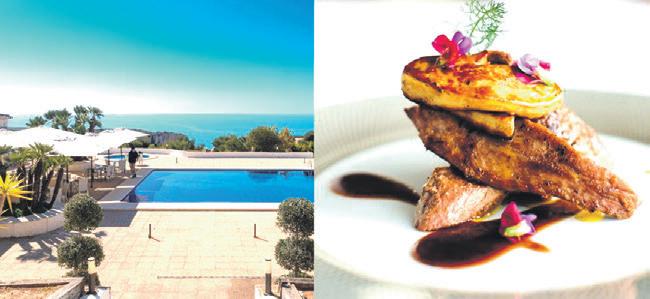
Epic views.
of steak, alongside well-executed tapas and seasonal starters. The set menu is particularly popular, guiding diners through a generous selection of dishes that feel both abundant and thoughtfully curated. Desserts lean classic and comforting, with options like lemon meringue and rich chocolate cake rounding off

the experience.
What truly defines La Cumbre is its pace. This is slow dining at its best, where attentive, friendly service and an unhurried atmosphere encourage you to linger. While the food is strong, it’s the setting that steals the show.
For those seeking a scenic, relaxed dining experience on

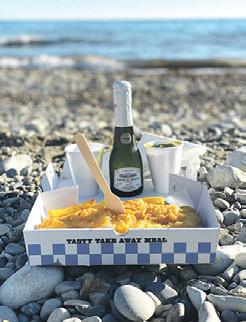








the Costa Blanca, this mountain-top restaurant more than delivers.
www.restaurantelacum bre.com
Address: Carretera de la Playa del Moraig, s/n, 03726 El Poble Nou de Benitachell Phone: 966 493 213




Credit: Cantãmus
Cantãmus brings concert to Benissa.
Semana Santa guide
SEMANA SANTA, or Holy Week, runs from March 29 to April 5, bringing a deeply traditional yet intimate atmosphere to Costa Blanca North, across Denia, Javea, Moraira, Benidorm and Altea.
Unlike Spain’s larger cities, celebrations here feel more local, unfolding against a backdrop of coastal light and historic streets.
The week begins on Palm Sunday with morning blessings and processions, typically around 11.00-12.00, before shifting into quieter evening events from Monday March 30 to Wednesday April 1. These usually start around 20.30-21.00, with small-scale processions and church services creating a more reflective tone.
By Holy Thursday, the pace intensifies. Evening masses around 20.00 are followed by later processions, often beginning at 22.00 and continuing into the night.
Good Friday is the most significant moment, with daytime observances and


Credit: Turisme de Benidorm

larger evening processions from approximately 19.00 onwards, drawing the biggest crowds. Easter Sunday returns to a lighter mood, with morning celebrations between 10.00-12.00.
Across the region, cofradías carry elaborate religious floats through old towns, accompanied by drums, incense and
candlelight. Benidorm’s Old Town offers the busiest programme, while Altea provides a striking setting with its whitewashed streets.
Denia, Javea and Moraira deliver a quieter, more authentic experience.
Chayanne to wow Benidorm crowds
BENIDORM is set to host one of the Costa Blanca’s biggest live music events this summer as Latin pop icon Chayanne brings his tour to the city. The Puerto Rican superstar will perform at SkyFest Benidorm on July 24, marking his only confirmed concert in the province and drawing fans from across Spain and beyond.
Part of his ‘Bailemos Otra Vez’ tour, the show is expected to generate major demand, with Chayanne known for selling out venues worldwide. His performances combine music, dance and largescale production, creating an energetic experience that appeals to both long-time fans and newer audiences.
Concertgoers can expect a setlist packed with iconic hits, including Torero, Salomé and Un Siglo Sin Ti, alongside newer material. His signature choreography and stage presence have cemented his reputation as one of Latin pop’s most enduring live performers.

Arrive early evening, and stay as daylight fades - this is when the atmosphere truly comes alive.













The event also highlights Benidorm’s growing status as a destination for major international concerts. With purpose-built venues and strong tourism infrastructure, the city is increasingly attracting highprofile artists and large-scale productions. Taking place at the height of the summer season, the concert is expected to draw a mix of visitors and locals. As excitement builds, it is shaping up to be one of the standout events on the Costa Blanca’s 2026 calendar.




















































What’s happening during Semana Santa across Costa Blanca North?
Puerto Rican superstar will perform at SkyFest.
Credit: Facebook Chayanne
Paid to relocate
SEVERAL countries around the world have introduced financial incentives aimed at encouraging people to relocate to rural towns and smaller communities facing long-term population decline.
According to reporting highlighted by Forbes, governments and local authorities are increasingly offering grants, tax benefits and direct payments to attract new residents and help revitalise local economies.
These initiatives are usually designed for areas that have lost population as younger residents move to cities for education and employment. Although they are often described as places that ‘pay you to move there’, most programmes involve strict conditions.
Participants may need to purchase property, renovate homes, start businesses or commit to living in

the area for several years. Italy has launched several programmes targeting depopulated villages, including one in Calabria offering up to €28,000 over three years for people willing to move to towns with fewer than 3,000 residents. Ireland has introduced renovation grants exceeding €80,000 for buyers who refurbish vacant properties on remote islands built before 1993.
Other countries have adopted different approaches. Switzerland’s Alpine village of Albinen offers
relocation payments for new residents who buy property and commit to living there for 10 years. Greece has offered housing and monthly stipends on remote islands such as Antikythera.
Similar initiatives exist in Japan, Canada and Chile, where programmes focus on rural revitalisation, labour shortages or attracting entrepreneurs. While the incentives vary widely, most aim to strengthen communities struggling to maintain population levels.
Missing diver in Greece
A SEARCH operation is underway in southern Greece after a 34-yearold diver disappeared inside the ‘Devil’s Well’, a hazardous underwater cave system near Vouliagmeni, close to Athens. The incident occurred on March 22 when the diver entered the water with a companion but failed to resurface. The second diver exited safely and alerted emergency services, prompting a large-scale rescue effort.
The ‘Devil’s Well’ is considered one of Greece’s most dangerous dive sites. It features a vertical shaft around 30 metres deep leading into a complex network of narrow underwater caves. Strong currents, poor visibility, and confined spaces make navigation extremely difficult, even for experienced divers. Parts of the cave system

remain unexplored, and previous incidents have contributed to its high-risk reputation.
Rescue teams, including specialist cave divers, are working under challenging conditions to locate the missing man. Currents may have carried him deeper into the cave network, slowing progress and increasing risks for search crews.
The incident has raised concerns about safety at unregulated dive sites in Greece. While authorities have not announced new measures, the case has prompted renewed calls for stricter guidelines.
The search continues, with teams proceeding cautiously in one of the country’s most dangerous underwater environments.

These initiatives are usually designed for areas that have lost population.
The ‘Devil’s Well’ is considered one of Greece’s most dangerous dive sites.
Photo Credit: Rich Carey/Shutterstock
Photo credit: Zoey106/Shutterstock
BLUSH is a quick and easy way to brighten up any look, but choosing between liquid or powder formulas can feel tricky. Botha the two can help you achieve the perfect glow for your complexation, skin type and style.
Liquid blush offers a dewy, natural finish. It seamlessly blends into the skin for a
Benefits in the blush battle
flushed but not frazzled look. It’s ideal for those with dry skin as it hydrates, providing a soft, radiant flow. Applied with fingertips, a sponge or a make-up brush, with liquid blush, you must act fast to blend it before it sets. Howe -
ver, its longevity is impressive, with barely any touch-ups needed throughout the day.
Sleep without sneezing
ONLY just recovered from your winter cold? Great, just in time for the spring and summer allergies to kick in. A runny nose, itchy eyes, constant sneezing. The symptoms aren’t life threatening but they are irritating, especially at night when you’re trying to sleep.
In an attempt to not let seasonal allergies keep you up at night there are certain things you can do to minimise the effects.
One of the reasons allergies are worse at night is because, during the day, pollen sticks to everything. By the time you crawl into bed, you’re essentially crawling into a pollen pit. Start placing a sheet over your bed during the day. Pollen will fall on the sheet instead, which you can then remove once it’s time to sleep.
Keeping all doors and windows shut will also help to limit how much pollen can infiltrate your bedroom too.

Don’t let hay fever disturb your sleep.
Another easy solution is simply keeping on top of the cleaning. Wipe down dusty surfaces and change the bedding frequently so as not to allow the room to collect pollen. If you’re still waking up
feeling congested, it’s time to break out the Vaseline. Apply a little around your nostrils before bed, and it’ll act like a trap, stopping you from breathing in pollen. An antihistamine before bed wouldn’t hurt either.
While it may appear dry on parched skin, powder blush is excellent for structured, classic make-up looks and helps absorb excess shine.
Some beauty enthusiasts
Alternatively, powder blush provides a matte to satin finish and is best suited for oily skin. Its buildable formula allows for controlled application and pairs well with powder-based foundations.
even combine the two, layering powder over liquid for extra longevity and dimension.
Ultimately, the choice depends on your skin type and desired effect. Choosing the right blush can transform your make-up routine, giving cheeks a healthy, luminous glow that lasts all day.
Heart healthy habits
MAINTAINING a healthy heart requires more than occasionally exercising or eating the odd salad - it’s about adopting healthy habits on a daily basis.
One of the most effective approaches is inspired by following a routine inspired by the Mediterranean lifestyle, renowned for improving cardiovascular health.
The most important part of the Mediterranean lifestyle is the diet. Rich in fresh fruits, vegetables, grain, nuts and olive oil, the Mediterranean diet provides essential nutrients and fats without sacrificing flavour. It’s a diet that will make you feel satisfied, not sluggish, while also helping to reduce cholesterol and inflammation, key factors in heart disease.

Physical activity is equally beneficial. Daily walks, cycling and swimming are beneficial for enhancing circulation, reducing stress and strengthening the heart all around.
Social connection is also a cornerstone of Mediterranean living, whether that’s joining friends for a walk or catching up over coffee. Studies suggest strong social bonds can lower blood pressure and improve physical and mental well-being.
By embracing these Mediterranean habits, individuals can significantly lower their risk of heart complications while enhancing their quality of life.

The Mediterranean lifestyle is best for maintaining heart health.
Credit: Shutterstock, Marian Weyo

Why loneliness is rising: And what Mediterranean life can teach us
WHEN people think about health, they usually think about food, exercise or weight.
But one of the biggest health problems in modern life today has nothing to do with calories or diets.
It’s loneliness.
Across many parts of the world, more people than ever report feeling isolated. Despite social media, busy cities and constant communication, genuine human connection is becoming rarer.
Research shows that chronic loneliness increases the risk of heart disease, depression, anxiety and even early death. In fact, some studies suggest that social isolation
MEDITERRANEAN

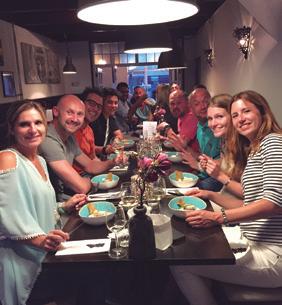
Part of everyday life.
can be as harmful to health as smoking or obesity.
And this is where Mediterranean life offers an important lesson.
Spend time in Spain, Italy or Greece and you quickly notice something different. People rarely eat alone. Cafés are full
of conversation. Families gather regularly. Friends meet for simple meals that stretch into long evenings.
Social life is not squeezed into a busy schedule, it is part of everyday life.
These regular moments of connection reduce stress, support mental well-being and create a sense of belonging that protects health over time.
The Mediterranean lifestyle reminds us that living well is not only about what we eat or how much we exercise. It’s also about who we share life with.
Go online to read the full article. You can also explore more ideas on Mediterranean living at www.casamiguel.life
THE Japanese are known for their futuristic tech and advanced way of life. But one popular practice relies on returning to simpler times.
Forest bathing, or forest therapy, is a psychological exercise developed in the 1980s. It was created as an antidote to the modern world. As technology seeped into every corner of life, forest bathing served as a way to escape, connect with nature and con -
Simple chic
MONOCHROME outfits are having a major moment in the fashion world. Intentional without looking too tryhard, there’s something effortlessly chic about dressing head-to-toe in one colour. It’s also incredibly impressive when one is able to pull it off so seamlessly, transforming you into the fashion envy of the town.
Whether it’s a classic black, crisp white or a bright, bold colour, monochrome ensembles make a statement through their simplicity. What most draws people to this trend is its versatility: an all cosy all beige look, a polished navy outfit for the office, a fiery red get up for a night out. When each item of clothing is the same colour, there’s less of an anxiety or second guessing if those pieces go together.

Forest bathing
nect with oneself. It’s essentially an ancestor of the modern day ‘mental health walk’, where people take walks purposefully to improve their mood.
With forest bathing, people don’t just go out for a leisurely stroll. They completely immerse themselves in

their surroundings, soaking in the atmosphere, paying attention to the sights, sounds and smells of the forest. It can be a real spiritual experience for some.
There are clear benefits to the practice. For one thing it reduces stress,
as it forces people to set their worries aside, if only for a short time. A prolonged exposure to nature helps strengthen the immune system, and it can also help improve cognitive function.
Those who live in big cities may notice an immediate difference as being removed from distractions and exposed to high oxygen levels helps mental clarity.





















Dress head to toe in just one colour.












































• News from Our Other 6 Newspapers •
Costa del Sol €30k for charity
MIJAS resident and local historian Alan Boardman has reached a significant milestone in his mission to support Costa del Sol charities. His popular guided walking tours of Mijas Pueblo have now raised a total of €30,000 for various local causes.
The initiative began following the 2020/21 pandemic, a period when movement restrictions decimated traditional fundraising streams. Recognising a gap in the market as lockdowns eased, Mr Boardman turned his passion for local history into a philanthropic venture.
To ensure his tours offered unique value, Mr Boardman spent a year researching the village’s heritage. Beyond official archives, he consulted elderly residents to uncover oral histories and anecdotes that are rarely found in textbooks.
This dedication to authentic storytelling has earned the tours over 200 five-star reviews on TripAdvisor.
Axarquia
Iconic coastal event returns
TORRE DEL MAR is preparing for the 32nd Triatlón de Torre del Mar, scheduled for Saturday, April 12. As one of the most established fixtures in the Malaga Province sporting calendar, the event serves as a vital qualifier for the Andalucian triathlon circuit.
Organisers recently unveiled details for this 32nd edition, introducing new features designed to increase competitiveness while ensuring the races integrate smoothly with local life. The event is a significant economic driver for Velez-Malaga, drawing large crowds that benefit the local hospitality and retail sectors.
Safety remains a priority following the resolution of previous permit hurdles. Full permissions are now confirmed, supported by a dedicated team of volunteers and security forces.
The town’s scenic streets and seaside promenade will provide the backdrop for the action, offering an engaging spectacle for both athletes and visitors.
Mallorca
Festival line-up creates buzz
MALLORCA’S summer music scene has just levelled up, with major new acts confirmed for one of the island’s hottest festivals... and music fans should prepare to be left ‘Breathless’.
Organisers of the Es Jardí festival have unveiled headline additions that instantly raise the stakes, with The Corrs and Fatboy Slim joining the 2026 line-up.
It’s a move that adds serious star power and promises a season packed with nostalgia, energy and unforgettable nights.
The Corrs are set to return to Mallorca for the first time in over two decades, bringing their signature blend of pop and Celtic sound to the stage. Expect crowds singing along to the irresistible classics!
Meanwhile, Fatboy Slim will take things in a very different direction, delivering the kind of high-octane set that turns a summer night into a full-blown party. If past performances are anything to go by, this is where the tempo will rise.
Costa Blanca South
Living the good life
LIFE on the Costa Blanca has been ranked among the happiest in Spain, according to the latest Spain Happy Index 2026, placing Alicante Province near the top for overall quality of life.
The study, which evaluates well-being across multiple indicators including climate, healthcare, cost of living and access to services, highlights the region as one of the country’s most balanced places to live. It also points to particularly strong results in towns such as Torrevieja, Guardamar del Segura and Orihuela, which scored highly across several quality of life indicators. For many residents, the result confirms a long-held feeling rather than revealing something new.
What sets the Costa Blanca apart is not a single factor but the way everyday life comes together. Long hours of sunshine, proximity to the sea, and a slower pace of living combine to create an environment where routine feels less pressured and more intentional.
Almeria Holy Albox
THE countdown to Holy Week has begun in towns and cities nationwide. In Albox, the town hall is preparing the final touches to its anticipated Holy Week programme, ensuring the celebration that is so closely tied to the town’s historical roots and national identity, is a success.
Albox’s Holy Week will begin on March 27, the Friday before Palm Sunday known as the Friday of Sorrows, with the solemn procession of Our Lady of Sorrows. At 10.00pm, women from across the municipality will lead a candlelit procession, commemorating the suffering of the Virgin Mary as she witnesses her son sentenced to death. The programme of events continues with a series of processions. Over the week, hundreds will gather, coming together in shared remembrance and reflection. Highlights include the traditional procession of La Borriquita on Palm Sunday, when young people dress as Hebrews and carry the image of Our Father Jesus of Victory through the streets as the penitents carry olive branches.
Costa Calida Floral tribute
NEARLY 2,000 people will take part in Cartagena’s traditional floral offering to the Virgen de la Caridad on Friday, March 27, marking the emotional start of Semana Santa in the city.
Participants from dozens of local groups, associations, and brotherhoods are expected to join the procession on Viernes de Dolores, one of the most important dates in Cartagena’s calendar. The event will begin in the afternoon, with participants walking through the city centre toward the Basilica of the Virgen de la Caridad, where the floral tribute will take place. Each group will carry flowers as part of a collective offering to the city’s patron, creating a colourful, and symbolic procession through the streets. Beyond the visual spectacle, the event holds strong cultural and emotional significance for residents. For many, it represents the moment when Semana Santa truly begins, bringing together tradition, faith, and community. Cartagena’s Holy Week is widely recognised as one of the most distinctive in Spain.
HouseSitMatch sitters love pets, they could care for yours for free
A LOVE of pets and travel and needing someone to help at home launched a service
Lamia Walker, founder of House SitMatch needed help at home to care for home and pets when she travelled. She travelled a lot and it’s too much to ask of neighbours over and over. So she began an online service with a friend to help people like herself find a solution if they want to travel and need help just taking care of things, and keeping pets safely in their routines at home. So HouseSitMatch was born 10 years ago!
You too can relax on holiday knowing your pets are being cared for in their own environment, at no cost to you by sitters that are recommended. The pet-sitters will offer their time and service in exchange for free accommodation. It allows the sitter to discover a new location from the comfort of your home. It’s

Lamia started HouseSitMatch because she needed help to care for her home and pets.
like old fashioned barter.
How it works
1. Register at HouseSitMatch. com as a homeowner
2. Create your profile with photos of your home and pets
3. Review applications and video
chat with potential house-sitters
4. Match with the perfect pet-sitter and enjoy your holiday worry-free Real savings, real peace of mind
Each house sit benefits both the homeowner and the house-sitter. Your pets receive one-on-one attention at home, your property stays protected, and you avoid expensive kennel fees. Take Lamia - she saves over €1,500 annually using house-sitters instead of boarding kennels for Panda and her other animals.
For a small annual registration fee, you can connect with verified house-sitters willing to provide free pet care and home security. Your pets deserve the comfort of their own home, and you deserve an affordable holiday.
Join today
Register at HouseSitMatch.com and use code WELCOME50 for 50 per cent off your first year.
Lamia Walker, Founder. Call: +44 (0)7772 142742
Rated Excellent on Trustpilot - 4.9/5
Public transport dog rules
NAVIGATING Spain with a four-legged companion can be a labyrinth of conflicting regulations. While many pet owners assume rules are uniform, the reality varies wildly by city, operator, and transport type.
Rail travel is currently the most pet-friendly option. On Renfe’s high-speed AVE and Long Distance trains, small pets under 10kg are permitted in carriers. Crucially, a ‘Big Pet’ pilot programme has expanded to major routes like Madrid-Barcelona and Madrid-Malaga, allowing dogs up to 40kg for a €35 fee. On local Cercanías trains, dogs can travel without a carrier, provided they are leashed and muzzled.





Rules for travelling with dogs on public transport in Spain vary widely depending on the operator and the city.
Mallorca illustrates this regional divide perfectly. Palma’s EMT city buses allow dogs on all lines for a small fee (around €0.30), yet interurban buses often pro-
Metro systems present more complexity. In Madrid and Barcelona, dogs are welcome except during weekday rush hours (typically 07.30-09.30 and 17.0019.00). Requirements usually include a short lead and a muzzle. Conversely, buses remain the most restrictive; long-distance carriers like ALSA generally relegate pets to the luggage compartment in carriers, though some premium fleets offer climate-controlled spaces.

hibit pets in the cabin. Before departing, travellers should verify specific operator rules, as the difference between a welcoming carriage and a refused boarding often comes down to a muzzle or a specific time of day.






















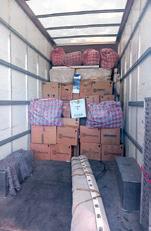
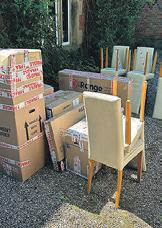

































SOLAR ENERGY
POOLS




































New motorhome laws
SPAIN’S Dirección General de Tráfico (DGT) has launched a major regulatory overhaul for motorhomes and camper vans following a massive rise in vehicle numbers.
Released on Monday, March 16, Instruction PROT 2026/04 introduces stricter enforcement on parking, technical inspections, and waste disposal to manage the 137,000 mobile units now roaming the country.

rigorous ITV (technical inspection) schedules. Category M motorhomes require annual checks after 10 years, while Category N camper vans must undergo inspections every six months once they reach a decade in age. To assist with compliance, the DGT has introduced the S-128 sign, marking official waste-disposal points for grey and black water.



The update clarifies a long-standing dispute between national and local powers. Backed by the Supreme Court, town halls now have explicit authority to limit parking durations and ban ‘camping activities’, such as extending awnings or steps, on public roads. While simple parking remains legal, overnight stays are increasingly restricted to authorised areas, particularly in coastal hotspots like Mijas and Fuengirola.

Owners must also adhere to
With the Guardia Civil preparing for a major crackdown starting this spring, travellers must verify local by-laws to avoid heavy fines or vehicle immobilisation. This shift moves Spain toward a stricter model than France or Germany, prioritising urban order over wild camping.
Easter traffic alert
DRIVERS across Spain are being warned to prepare for heavy congestion, stricter road controls and possible delays during the Easter 2026 holiday period. The country’s traffic authority, the Dirección General de Tráfico (DGT), has launched a nationwide monitoring plan, ‘Operación Especial Semana Santa 2026’, to manage what is expected to be one of the busiest travel periods of the year. Millions of journeys are expected as people leave major cities to visit family, second homes or holiday destinations during Semana Santa, one of Spain’s most important annual travel periods.
The large-scale operation will involve hundreds of traffic officers, surveillance systems, drones and control centres overseeing the national road network.
The first wave of departures begins Friday March 27 at 3pm, marking the start of

the initial ‘Operación Salida’, which runs until midnight on Sunday March 29.
The second and busiest stage begins Wednesday April 1 at midday, when another surge of vehicles is expected across Spain’s motorways. The return phase is anticipated on Saturday April 4 and Sunday April 5.
Authorities expect the worst congestion on routes leaving major metropolitan areas such as Madrid and








Barcelona. Popular destinations including the Mediterranean coast, Andalucia and mountain regions traditionally see the heaviest traffic. Several motorways regularly become bottlenecks, including the A-7 Mediterranean corridor, A-31 in Albacete, A-70 near Alicante, and the AP-4 between Cadiz and Sevilla.
Officials advise drivers to avoid peak departure times, plan routes carefully and follow live traffic updates.




Long queues of vehicles on a Spanish motorway during the busy Easter travel rush.
Credit : Jose Luis Carrascosa, Shutterstock
Street-parking motorhomes under scrutiny.
Credit: Charlesy - Shutterstock

Volleyball stars return
THE Mediterranean Volley Cup is set to hold its second edition from April 2-5 in the Comunitat Valenciana, confirming its position as a growing fixture in Spanish youth volleyball. Over four days, more than 700 players from clubs across Spain will compete in various age categories, with Altea once again hosting part of the event.
At the official launch, speakers included Altea’s Sports councillor Sara Soler, former international player and tournament ambassador Rafa Pascual, Quality Life Sport CEO Nacho Macipe, and Club Voleibol Altea president Paco Lloret. The tournament will feature around 70 teams, from alevín to juvenile levels, with matches scheduled across venues in Altea, Benissa, and La Nucia.
Soler praised the tour-

nament’s return to Altea, welcoming the participation of top volleyball figures such as Pascual and national team captain María Segura. “Last year we worked hard to ensure the first edition succeeded. Seeing the Mediterranean Volley Cup come back shows it has established itself,” she said.
Macipe confirmed 780 participants and over 200 matches this year, including the All-Star match on Sunday mor-








ning featuring players from six regions. Pascual emphasised the tournament’s focus on fostering connections among young athletes from different parts of Spain, not just competition.
Club Voleibol Altea will field five female teams, totalling 60 players, doubling its participation from the first edition. The event, run by QLSPORT and RP1, aims to promote volleyball as a platform for teamwork, respect, and fair play.

Mediterranean Volley Cup returns to Altea.
Credit: Ayuntamiento de Altea