MEDICAL MILESTONE


THE Doctor Balmis University Hospital in Alicante has participated in pioneering research worldwide that consolidates a new standard of treatment for initial lung cancer.
This means increasing the survival rate by 20 per cent and will benefit more than 6,000 patients in Spain every year.
The results of the study, Nadim II, from the Spanish Lung Cancer Group (GECP), have been published in the "New England Journal of Medicine" and endorse the great benefit of chemoimmunotherapy with nivolumab before operating on lung tumours in stage 3. Nivolumab is a type of monoclonal antibody therapy, which works by stimulating the immune system to kill cancer cells.


It consists of a new approach to the tumour in its initial stages that increases life expectancy. With this new scheme, 36.8 per cent of patients achieve complete reduction of the tumour, that is, almost four out of ten, compared


to 6.9 per cent who were treated with chemotherapy alone.
Doctor Bartomeu Massuti, secretary of the group and head of Oncology at the Doctor Balmis Hospital in Alicante, pointed out that “This Spanish study opens the door to a global change in the treatment of patients with early lung cancer. Currently only 30 per cent of these patients survive five years. With the Nadim scheme this percentage could reach 70 per cent. Thousands of patients
See our advert on page 13







can benefit from improvements in response to treatment and survival each year in Spain”.



“We are talking about a change in the therapeutic approach and strategy that involves many professionals: pathologists , surgeons, oncologists or radiotherapists. We have found a significant improvement that may put us on the path to curing a significant number of patients “ said Massuti.
The Nadim II data published in the New England Journal of Medicine opens the door to increasing the percentage of patients who achieve longterm complete remission of their tumour. In this sense, the data from the study reports that 36.8 per cent of the patients achieved a complete reduction of the tumour, compared to 6.9 per cent who did so with the traditional approach of applying the treatment after surgery.
Issue No. 1987 3 - 9 August 2023 FREE • GRATIS COSTA BLANCA SOUTH • EUROWEEKLYNEWS.COM
Survival rates may rise
Credit: Sasin Tipchai/Pixabay
BATISTE, the oldest grouper fish in Santa Pola aquarium, had barely any contact with humans for more than three years until Friday, July 28, when the aquarium reopened to the public. It was closed during the coronavirus pandemic and fell into slight disrepair.
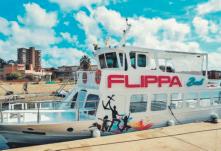
After a €70,000 renovation project, the aquarium reopened in time for Batiste to celebrate his 35th birthday, and Santa
Fishy friday
Pola council prepared a cake to celebrate the event.
With free entrance until the end of the year to boost tourism, the queues were rather long on its first day. However, it was a commemoration of the 40 year history of what was the first aquarium in



THE Association of Movers and Shakers is a registered charity offering friendship and support to their members who suffer from Ataxia, Huntington’s Disease, Motor Neurone Disease, Multiple Sclerosis and Parkinson’s Disease.

The number of Members befriended by the Association is increasing!
All their work is undertaken by volunteers and they are now looking for a volunteer to assist the Liaison Officer as the first point of contact to sufferers or carers getting in touch us.
They would like to hear from you if:
you can speak both English and Spanish, have experience in caring – either as a carer for a friend or a family member or



the Valencian Community. The renovation work has been completed and included air conditioning for the public, and filtration and water recirculation systems to ensure optimal conditions for the wellbeing of the more than one hundred specimens that inhabit it.

Can you assist
professionally,
you are able maintain an empathic approach to people and their families affected by one of the diseases mentioned above, you are willing to learn and to work within the Aims and Objectives of the Association.

If you are interested, you are welcome to contact the President Marion Smith on (+34) 711 008 250 or by email at marion.smith@amscb.org.es or visit the website www.amscb.org.es. All enquiries will be treated in strict confidence.

EWN 3 - 9 August 2023 euroweeklynews.com NEWS 2
High help
FIREFIGHTERS helped with the maintenance and felling of 2 palm trees. In Elche they assisted in the pruning of a palm tree more than 20 metres high using a platform ladder, and in Orihuela they cut down a palm tree with a serious risk of falling.
Local hero
AN offduty local police officer from Pilar de la Horadada saved the life of a sunbather on Tuesday. A woman was on the beach and seemed to be resting, but she was actually unconscious due to dizziness. The officer noticed and managed to revive her.
Anniversary statue
ELCHE city council has dedicated a public space to the Civil Protection group for its 25 years of loyal service to Elche. The monolith, complete with the shield of the local group of volunteers, already presides over the roundabout on Avenida de la Universitat.
Earthquake registered
BANYERES de Mariola, a municipality in Alicante province, experienced an earthquake of magnitude of 3.7 degrees on the Richter scale on Sunday, July 30, as reported by the National Geographic Institute. It occurred at 6.11am. Only 6 people reported it.
No crying
A TOP Spanish chef has revealed his trick to avoid tears when chopping onions. Compared to the tradition of many chefs of submerging the onion in water or vinegar before cutting it, Karlos Arguiñano opts for something more extravagant. He puts on swimming goggles before chopping.
Expensive wheels
A BMW dealership in Alicante has sold the only model of the 3.0 CSL in Spain, for a whopping €800,000.
The 3.0 CSL is an automotive jewel as it is a limited series, with only 50 units manufactured which were strictly assigned by quota to different countries, and only one was delivered to Spain.
The Móvil Begar team, located in Alicante and belonging to the Benigar group, successfully completed the import procedures and paperwork for one of its clients. As a result, this week they were able to deliver this unique
car to its new owner.
The new BMW 3.0 CSL has been built to commemorate the celebration of the 50th Anniversary of BMW M, a tribute to half

a century of success and charismatic sports cars.
The BMW 3.0 CSL is the most exclusive car BMW M has ever produced, and combines a unique design
YOUR EWN HAS
105
STORIES IN THIS WEEK’S EDITION
Bill shock
A WOMAN from Alicante was astonished to receive a bill four months after calling firefighters to the home of her neighbour, who died the next day.
with a puristic performance experience. The exceptional high performance car performs in an extremely focused manner.
Reaching out Scammers stopped

AGENTS of the National Police and Elche Local Police have arrested 17 people who they accuse of faking traffic accidents to claim compensation from insurers for injuries allegedly suffered.
The police investigation was carried out over nine months due to the complexity of the matter and the number of people involved.
The traffic police unit of the Elche local police, whoo are in charge of reconstruction of road accidents, provided the data from the forensic analysis
of the vehicles in order to prove that the accidents were not genuine, but simulated, and occurred with a clear intention to collect insurance compensation claims.
The scams involved 17 people, whose payouts for compensation amounted to more than €60,000.
The detainees, 11 men and six women, aged between 19 and 59 years of age, have appeared in Elche court accused of numerous traffic and fraud offences. The arrests were announced by Elche City Council on Friday, July 28.
ORIHUELA will receive €40,000 from the Valencian tourist board which will allow a promotional campaign to be carried out at national level, and another at international level.
Promotional activities at national level will be carried out in the north of Spain in order to attract tourists residing in that part of the country. "The objective is to attract those tourists who usually spend their holidays in towns in the province so that they come to know Orihuela and to attract new tourists
Seasons last cast
CARPRUs fished round 3 of the Summer/Autumn season, on Thursday July 27, this being the last match before the summer break. Canal del Progres was the chosen spot on the Mercadona stretch. On arrival at the venue the sky was heavily clouded and rain was forecast. Luckily, only one very light shower graced the waters. The clouds parted and the sun shone, accompanied by a variable breeze.
In first position was Roy Dainty on peg 2 who caught carp and mullet on
pole and corn to weigh in 4.04kg. second was Tony Flett on peg 1. Tony caught carp and carassio’s for 3.76kg on pole and corn.
Third was Jeremy Fardoe on peg 5, who had a mixed bag, weighing 3.38kg using pole feeder.
And fourth was Nick Bastock on peg 4 with 2.42kg on pole fished maggot.
Further information about the club can be found on its website www.carpr us.weebly.com or on the Facebook page CarpRUs Fishing Costa Blanca
through the promotion of golf, cultural tourism and the beach”, stated the town hall. Advertisement posters will be displayed on billboards and buses in Valladolid, Burgos, Bilbao, Gijón, Oviedo, Salamanca and León.
A promotional media campaign will be carried out in countries such as the United Kingdom, Belgium, Ireland and France to promote the Moors and Christians. This campaign will consist of contracting advertising space in national printed media.
In July, Alicante council sent the lady a bill for €148.72 for calling two fire crews to her apartment block. The woman called for help in March when she visited her neighbour, who was immobile, dehydrated and unable to leave his bed. She realised he would need assistance to be taken to hospital.
She called the National Police, who in turn alerted the fire department and medical services to gain access to the flat and help the person affected. The bill claimed €148.72 for the mobilisation of two fire engines and crew. The neighbour died in Alicante hospital the following day.
The lady sent an email questioning the charge to Alicante council, and received a response that the service “is not free according to the tax ordinance”.
EWN 3 - 9 August 2023 3 NEWS euroweeklynews.com
NIBS EXTRA FOR MORE NEWS STORIES euroweeklynews.com publishes more content both online at euroweeklynews.com and in its papers than any other English news publication in Spain. The Euro Weekly News Even better, our news online and in print is FREE and we promise to always keep it that way.
The BMW 3.0 CSL
Credit: BMW Spain
A POIGNANT incident at a busy restaurant prompted Michael Walsh to create a friendly and welcoming social group offering shared lunches and get togethers for the unattached.
“Whilst dining I spotted a man sitting wistful
ly on his own. Pausing to say hello, I learnt that after contracting cancer the neatly dressed gentleman’s wife had
PROVERB OF THE WEEK
passed away a year earlier; he had no family to speak of.”
This touching incident reminded the writer of
“If it ain’t broke, don’t fix it.”
the loneliest night he ever experienced. His peak period business trip included a free night in crowded Marbella. Denied a restaurant table better suited to highspending couples and groups, he couldn’t get near the bars either for bantering friends. “I was invisible, an unwanted pariah.”
As a consequence of
covid and cancer, other ailments and advancing age many people lack companionship. It is estimated that single people make up 40 per cent of the UK population. Here on the Spanish Riviera, this figure is likely higher – and growing.

What to do? Michael says: “FAB – an acronym for Free as Birds – would offer companionship
through informal lunches or dinners; barbeques and poolside parties giving an opportunity for the unattached to meet up, form new friendships; lift the spirits and give purpose to ‘life after death.”
‘A stranger’s just a friend you’ve yet to meet’. FAB focuses on towns and urbanisations within 10 km of Torrevieja. Michael can be contacted at 662 067 490 or by email at keyboardcosmetics@gmail.c om
Encounter inspires group Alicante taxi share




A NEW shared taxi (TAD) service, which began on Saturday, July 1, and designed to meet public transport needs in rural
areas of Alicante, completed its first month of activity with 244 users.
The service runs from Moralet, Alcoraya, La
Canada del Fenollar, Tangel, Fontcalent and Bacarot with the urban area.
"We are very satisfied with how the TAD has been implemented in its first month, responding to a historical demand from residents in the rural areas of Alicante who now have a personalised collective transport service, which connects them with the city centre and that we hope to continue improving with the user experience and improving the routes to meet the needs that arise", said the councilor for urban mobility, Carlos de Juan.
This service is aimed at the entire population, and users must register to be able to use the transport on demand service.


For further information and tariffs, consult https://alicante.vectalia.e s/informaciontad/

420 Micro breweries in Spain.

EWN 3 - 9 August 2023 euroweeklynews.com NEWS 4
This means that if something is working reasonably well, there is no need to change or replace it, just leave it alone. The expression originated in the USA in the 20th century, and is attributed to Thomas Bertram Lance (1931-2013), who was a close adviser to Jimmy Carter during his 1976 campaign.
The Babel, Benalúa, Central and Carolinas markets of Alicante have introduced a new gastronomic route. The 'real foodie' campaign encourages visitors to taste fresh local produce, seafood, quality tapas, traditional and Japanese or Mexican food.


Alicante city council stated on Friday, July 28, that in recent months that the variety on offer has increased with the opening

Tasty route
of new restaurants and bars.
"We positively value the resurgence of municipal markets, that in recent years have evolved and experienced a very important process of adaptation and change, and are currently experiencing their best

Very Convenient
NEW toilet blocks have been installed on eleven different beaches of Orihuela costa. As reported by the councilor for the area, Manuel Mestre, the toilets opened on Friday, July 28, and will remain operational until September 15, when the season ends.
“As there is no contract for the installation of beach bars, which were associated with the toilet service, they have been urgently set up to provide the service to bathers” said Mestre.
There are toilets for men, women and for those with reduced mobility, and they are open from 10am to 8pm. They will be cleaned three times each day.

“This summer we have covered the basic services of the beaches, such as toilets, footbaths, the rescue service and access for the disabled. With this, we hope that the residents and visitors of Orihuela costa can enjoy the beaches of the municipality while we process other important services" explained Mestre.

moment with an increase of sales and opening of new positions", said the councillor for markets and commerce, Lidia López.
“These manage to generate more employment by adding value to the markets, helped by a budget of €3 million which has improved them”, said López.
The number of stalls are increasing, and the markets are almost fully occupied.
The city council has managed to open a total of 55 new commercial units in Carolinas, Central, Benalúa and Babel.

Antena 3
EWN 3 - 9 August 2023 5 NEWS euroweeklynews.com
No 1 most watched channel in Spain.
Go ahead given
THE last piece of constructible land in Torrevieja will be built on.

La Hoya, surrounded to the north by the El Chaparral urbanisation, to the west by the CV905, to the south by the Jardín del Mar urbanisation and to the east by the La Mata lagoon, is a large piece of undeveloped land.
The plan to develop this area on the outskirts of the city dates back to the end of the last century, but the bursting of the real estate bubble put the project on hold.
It was intended to build more ground floor tourist housing with gardens and swimming pools, like those of its closest urbanisations.
Subsequent changes in regional legislation have made it necessary to modify the project on multiple occasions.
On Saturday, July 28, the governing board of the city council gave the green light to the latest changes. In addition, the land has changed hands and is currently owned by the TM real estate group from Torrevieja.
Nymph found
Diverse university

THE Governing Council of the University of Alicante has unanimously approved two protocols for the prevention and intervention in issues related to discrimination due to diversity and sexual harassment. Both regulations align the academic institution with the University Coexistence Law and place it among the first in Spain, not only in adapting its prevention and action plan, but also show its special sensitivity in this matter.
A SCULPTURE of an aquatic nymph holding a horn of plenty is the latest and most important find from the excavations carried out by researchers from the University of Alicante in June at the archaeological site of La Alcudia in Elche. This was revealed by Jaime Molina Vida, professor of Ancient History and codirector of the project team La Alcudia.
This sculpture, the second to be found in La Alcudia as part of the UA research projects, is carved in marble and dates from the 2nd century AD, according to Jaime Molina, who explains that

nymphs, the figure represented, are spirits or minor female divinities associated with nature (springs, streams, mountains, seas or forests). In this case it would be a naiad, a nymph related to a source of fresh water, well, river or stream, which in this case was taken as a producer of well being and wealth, given that she is the bearer of the horn of plenty (or cornucopia).
The first figure was found in 2017 as part of the excavation Domus La Alcudia Project. It was a statuette representing a naked woman with a cloak over her left shoulder, made of bone.
As explained by the vicechancellor for Social Responsibility, Inclusion and Equality, Eva Espina, unlike the rest of the universities, "we have opted to differentiate the two protocols based on accumulated experience because, as is the case with the internal structures of the Office of the ViceChancellor ( in which we have a specific unit for issues of diversity and another, for equality) we understand that the differentiation of actions and powers, based on the heterogeneity of the casuistry, will facilitate the resolution of the files as well as the adoption of prior awareness, training and prevention mechanisms".
University Students
EWN 3 - 9 August 2023 euroweeklynews.com NEWS 6
La Alcudia in Elche
Credit: Visit Elche
Credit: Naassomz1/Pixabay
Senior success
THE second edition of the Senior Summer School organised by Elche City Council closed its doors on Friday, July 28, with a fun day held at the Candalix civic centre.
The participants had the opportunity to exhibit their work, which they enjoyed throughout the month of July, in addition to carrying out a small demonstration of what they learned in the dance and zumba workshops.
This year, 114 places were offered in the summer school,


and the person in charge of the programme, Aurora Rodil, promised her commitment to continue with the initiative.

The summer school was

THE mayor of Elche, Pablo Ruz, the councilor for agriculture and water, Juan de Dios Navarro, and the councilor for Pedanias and Camp d'Elx, Raúl Sempere, attended the symbolic cutting of the Carrizales melon corresponding to the 2023 season.
The traditional event was held on Wednesday, July 26 at Martino restaurant.
The Carrizales melon, also known as piel de sapo, is unique internationally thanks to its particular and extremely sweet flavor due to the characteristics of the soil and the way it is irrigated.
held every morning in July, where a wide variety of leisure activities focused on active ageing were carried out, such as tai chi, laughter therapy, dance, photography and zumba.

This year, for the first time, the elderly were able to enjoy aquagym classes in the pool at the sports park.
The school is aimed at people over 60 registered in Elche, and started last year with 80 participants to offer a leisure alternative to the elderly.


Melon-less
This year however, the production was small with the harvest being lower than that of previous years, going from 500,000 to 200,000 kilos, as a consequence of excessive heat and late rains. Pablo Ruz encouraged the people of Elche to consume “close products, from our land, from our farms. When we consume local products such as Carrizales melon, we are generating wealth and supporting our neighbours”, he said.

EWN 3 - 9 August 2023 7 NEWS euroweeklynews.com
Aquagym was popular
Credit: Elche City Council
Santa Pola discovery
THE University of Alicante Applied Biochemistry research group has identified the anticancer capacity of a pigment present in the Santa Pola salt flats. This pigment is produced by certain microorgan




isms, the 'halophilic archaea', in order to protect themselves from the sun, and its antitumour capacity has been tested in several types of breast cancer.


Professor in Biology and di
True colours

rector of the group Rosa María Martínez explains that this important finding, which has been published in the prestigious journal Nature Scientific Report, began with the development of Micaela Giani's PhD thesis. There, she demonstrated through in vitro tests the antioxidant activity of the pigment and its effect on enzymes (biocatalysts) that are involved in pathologies such as diabetes or metabolic syndrome such as diabetes and metabolic syndrome.
Based on this discovery, as the researcher pointed out, there are several phases to be developed, starting with extending the study with different cell lines of other types of tumours, to continue with tests on tissue samples from biopsies or surgical specimens, in order to design possible treatment protocols using this pigment, and then move on to animal studies before reaching clinical use in patients.
AS an initiative to make the beaches of Pilar de la Horadada more inclusive and accessible, the company that provides the rescue and lifeguard service, AMBUMAR SYA, installed sea state flags on the beaches on Wednesday, July 26, with infographics adapted for users with colour blindness.


The mayor of the town, José María Pérez Sánchez, explained that it is about "incorporating the ADD Color code at the bottom of the flags, in a
way that people with colour blindness can easily differentiate one colour from another".




The code is universal and inclusive and is based on graphic symbols that refer to the three primary colors, black and white.


When bathing is prohibited, users will see a red flag with a triangle pointing to the left. In the event that swimming is allowed and the water is calm, the green flag will show a diagonal line next to a triangle pointing to the right. And






The New Flags
when there are currents, bathers will find that the yellow flag has a diagonal line.
50 Different varieties of Flamenco.

EWN 3 - 9 August 2023 euroweeklynews.com NEWS 8
Credit: Pilar de la Horadada Town Hall
Inflation update and planning ahead to protect our savings
It has been two years now since inflation began to climb and we were soon noticing the higher cost of living. Prices peaked last autumn and the situation is improving now. Spain’s Consumer Price Index has returned to normal levels, but in the UK it only dropped below 8% in June.
EU and Spain inflation
After hitting 10.6% last October, overall EU inflation fell to 5.5% in June. Prices have been largely driven, both up then down, by energy costs.
The European Central Bank expects inflation to continue to improve as energy prices fall, food inflation moderates and supply bottlenecks ease, though under current projections it will remain about the bank’s 2% target through to 2025.
Spain’s Consumer Price Index returned to ‘normal’ levels (i.e. close to the 2% target) in June, falling from May’s 3.2% to just 1.9%. Transport and housing inflation are in negative territory but food inflation, though improv-
By Jon Pemberton, Partner, Blevins Franks

ing, remains high at 10.3% .
Unless they are negative, falling inflation rates do not mean that prices are falling, they are just rising less slowly than 12 months previously.
UK inflation
The UK has endured persistently high inflation, but the Consumer Price Index finally fell below 8%, with the
June 7.9% rate beating expectation. Though the lowest since March 2022, it’s still far above the 2% target and the highest in the G7. Fuel prices are falling but food inflation remains stubbornly high at 17.4%.
Earlier in July the Bank of England governor acknowledged consumer prices inflation still unacceptably high but should fall “markedly” over the rest of the year.
Inflation and your savings and retirement income
While falling inflation is very welcome news, we can’t become complacent about the inflation risk and how the rising cost of living affects us over time, particularly when retired.
While the impact of high inflation is quickly noticeable, low inflation is insidious. It seems harmless at the time, but slowly but surely, compounded over the longer-term, erodes the spending power of your savings and income.
As a basic illustration, if you have €50,000 in a current account with no
growth, and inflation is 3% every year, after 10 years its value will have fallen to around €37,000. After 20 years it’s around €27,500 and after 30 just €20,555. That’s a 59% reduction in purchasing power.
Unless your savings grow each year, they will buy you considerably less as the years go by. You need to plan to protect our savings and future income from the rising cost of living – making sure your money lasts as long as you do should be an integral part of your financial planning for retirement.
You need to invest in assets that are usually expected to keep up with inflation over the medium to long term. While you may become more averse to investment risk in retirement, inflation is also a risk to your savings. Reduce investment risk by building a suitable welldiversified portfolio around your risk tolerance, circumstances and objectives.
Work with a wealth management adviser to follow a disciplined investment process:
• Establish your goals and time horizon and objectively calculate your attitude to risk.
• Construct a suitable, well-diversified portfolio to achieve your investment plan and objectives.

• Use quality investment managers.
• Review your portfolio annually to keep it on track.
• Be patient and stick with your plan – it is time in the market, not timing the market, that is likely to help you achieve your longer-term goals.
• Hold your investment portfolio within an arrangement that is tax efficient in Spain.
Seek advice from an advisory firm which provides holistic strategic financial planning advice to integrate your investment planning with your tax and estate planning.
CPI data as at 19 July 2023
Keep up to date on the financial issues that may affect you on the Blevins Franks news page at www.blevinsfranks.com.
EWN 3 - 9 August 2023 9 FEATURE euroweeklynews.com
Super recyclers Stepping up
ECOVIDRIO, the nonprofit entity in charge of managing the recycling of glass container waste in Spain, and alicante city council managed to recycle more than 50,000 kilogrammes of glass container waste during the last fiestas.
Of the 137 associations of ‘Hogueras and Barracas’ participating in the campaign, which represented all Alicante fire fiestas, 97 beat the challenge proposed by Ecovidrio to recycle at least 400 kilogrammes of glass container waste in the container assigned to each of them.
An awards ceremony took place on Wednesday, July 26.
Those who exceeded this figure won a mini recycling bin and entered a draw for a giant paella for 300 people.
A NEW career awaits a group of mature students in Elche, who graduated from a shoe repair course on Friday, July 28.

The course was organised by Avecal and financed by Elche City Council. It began in 2018, and each year a different course is carried out in relation to each footwear trade.
This course lasted 100 hours and a total of 12 people between the ages of 22 and 52 and of different nationalities such as Poland, Ukraine, Russia, Colombia, Morocco or Spain participated.
In all editions, the recruitment rate of

people who have completed the course has been very high.

For this reason, and due to the demand for shoe repairers, it is being repeated each year.
During the course, students were able to acquire the knowledge to carry out preparation and assembly processes by sewing pieces that make up shoes, following different techniques used.
“Young people can eliminate the stigma that the footwear profession has, and understand it as yet another decent job”, said councillor Sanuel Ruiz.
Blue flag lowered
AN Orihuela beach has lost its blue flag. The tourist quality label, Adeac, withdrew the flag following an inspection in the middle of July. The beach affected by the temporary withdrawal is Cala Mosca. Three weeks ago it was the subject of news after a spill was detected. The same one, it seems, that the Adeac inspectors detected on Friday, July 21. Once a blue flag is awarded, beaches are subject to an inspection in July, in the middle of the high season. And, in the case of Cala Mosca, Adeac would not have detected anything more than breaches to regulations for maintaining the blue flag. They pointed out that the lifeguard service on the beach does not have two elements to signal delimited bathing areas (flags or posters) and no spare flags. What was undoubtedly decisive for the decision to lower the flag was that "at the time of the inspection, the presence of a badsmelling puddle was observed on the beach, from the ravine to the seashore."
Bean thieves
THE Guardia Civil announced on Friday, July 28, that they arrested five people, three men and two women, between 26 and 48 years of age and different nationalities. They were charged with theft of carob (algarrobas) beans in the Vega Baja del Segura region, belonging to a criminal group, and three counts of theft. At the beginning of this month, the Civil Guard learned of an increase in the number of robberies in farms in Vega Baja del Segura. The specialist agricultural theft unit of the Guardia Civil of Torrevieja, along with Albatera local police, began a series of investigations and on July 6, four people were caught stealing carob beans on a farm in Albatera. The officers arrested the thieves and after charging them with the theft, the stolen beans were returned to their rightful owner.
EWN 3 - 9 August 2023 euroweeklynews.com NEWS 10
Diplomas were awarded
Credit: Elche City Council

























Boats intercepted
Sporting chance
TWO boats with 30 immigrants, including a pregnant woman with a oneandahalf year old baby, were rescued in the early hours of Sunday, July 31.

The boats were intercepted 40 miles from Alicante and near Tío Ximo cove in Benidorm.
The maritime agency took charge of transferring all the migrants to Alicante port, who received initial assistance from the Red Cross before being handed over to the National Police. One of those rescued had to be taken to the hospital for a burn, according to Red Cross sources.
The 17 occupants of the
first rescued boat, of North African and subSaharan origin, arrived shortly before midnight at the port of Alicante.
The boat in which they were travelling was only a few meters long and was equipped with a 50horsepower outboard motor. A rescue boat, the Salvamar Leo, set sail from its base in Alicante to proceed with its rescue.
With hardly any time to spare, the Salvamar Leo then had to leave at dawn to rescue another 13 immigrants intercepted by the Guardia Civil before they disembarked at the Tio Ximo cove in Benidorm.
THE repairs to the six blue sports courts in Torrevieja are advancing well, and may be completed within the expected period of 3 months. They should be back in use by the middle of September, the town hall said on Friday, July 28.

The six courts that are being fully repaired are located in the Placa d'Europa, the La Siesta development, the Los Altos development, Torreblanca (next to the Ciutat del Mar public school) and two in La Torreta III.
The work includes renovation of the walls and the perimeter fences, the repair and repainting of the floors, replacement of all the sports equipment (basketball hoops, goals and nets) and changing all of the lighting to led lights to achieve significant energy savings.
EWN 3 - 9 August 2023 euroweeklynews.com NEWS 12
Credit: Maritime Rescue
One boat had 17 passengers on board












Cooler city



TREE shade can reduce the temperature in the streets of Alicante by up to twenty degrees in summer. Maintaining leafy specimens, together with other protection systems such as building awnings and areas with water, has become a necessity to try to alleviate the sensation of heat during the few months in which temperatures soar.

“Parks or trees in the streets generate cool areas that make urban life more bearable on hot days. But trees alone are not enough. It is necessary for the streets and squares to be equipped with water points, fountains or sprinklers to improve the sensation of freshness", said the director of the climatology laboratory of the University of Alicante, Jorge Olcina, who pointed out that "in the Mediterranean area it is necessary to keep fresh in the streets by using trees and fountains".
Old Town, Alicante

Credit: Carolina Selles Milla/Pixabay
Unicef also points out that "Trees can reduce temperatures in cities by up to twelve degrees. It is largely due to the shade and also to the effect of transpiration, the process by which the water inside the tree is released as water vapour through the leaves, so revegetation is key to regulating temperatures in the cities”.


Countryside watch
THE ROCA teams that the Guardia Civil implemented in the province of Alicante 10 years ago have restored security to the countryside.



ROCA (robbery in the countryside) was formed as a direct response to the increase in theft of crops, livestock, machinery and electrical installations in rural areas, which are increasingly vulnerable due to abandonment and depopulation.









Opinions of the farmers confirmed the effectiveness demonstrated by the three Roca teams based in Alicante province. The teams are based in Ibi, Calpe and Torrevieja.



In the last decade, they have investigated more than 5,000 incidents, detained over 2,000 people and solved almost 3,000 crimes.



EWN 3 - 9 August 2023 euroweeklynews.com NEWS 14




Out-of-date food seized Police uncover match fixing
POLICE have confiscated huge quantities of food across Spain, including Almeria, Alicante and Murcia, that was unfit for human consumption.
On Thursday, July 27, the Guardia Civil, gave details of Operation Potacar in which they collaborated with the veterinary services of the Provincial Health Department of the Government of Aragon, Valencia and Andalucia, resulting in the seizure of more than 28 tonnes of foodstuffs.
The food was discovered in distribution warehouses located in the provinces of Zaragoza, Valencia and Almeria. During the operation, eight people were arrested and 81 others are being investigated for alleged offences of fraud, public health, falsification of documents and belonging to a criminal group.
The first inspection took place at the premises of a company located in Cuarte de Huerva in Zaragoza.


Investigators seized 1,222 kilos of foodstuffs that were irregular because they had been relabelled with an extension of bestbefore date.
After analysing traceability, the investi





gators confirmed that various batches had been sold to other establishments with dates that had been exceeded.

In a second inspection of another company in Zaragoza, the Guardia Civil seized 1,708 kilos of products. Investigators again found evidence of expired consumption dates, as well as food that should have been marketed as fresh produce, but which was frozen before its expiry date and subsequently put on sale with the date exceeded.

In addition to this company, 19 other establishments were inspected throughout Spain, where SEPRONA (Nature Protection Service, a division of the Guardia Civil) found irregularities.
In total, the officers seized 18,196 kilos of products unfit for human consumption.
A JOINT investigation involving the National Police, LaLiga and Europol, has uncovered a criminal organisation specialising in matchfixing.
A report from the National Police on Thursday, July 27 revealed how they investigated a criminal organisation dedicated to matchfixing within the Royal Spanish Football Federation (RFEF).
Together with LaLiga and Europol, officers of the National Police arrested a total of 17 people. In Melilla, 11 suspects were detained and six in Granada.
Among those arrested were officials and players of a third division RFEF football team, for allegedly committing the crimes of belonging to a criminal organisation, corruption between private individuals in the field of sport, fraud, money laundering and false documentation.
The investigation began last February when the Directorate General for the Regulation of Gambling, informed officers of several alerts received from different
online gambling platforms. Multiple bets had been placed from Melilla on specific results of football matches played by a team from the city.
Simultaneously, LaLiga reported an anonymous communication received through its whistleblower channel, in which they reported suspicious practices of the same football team.
Investigators soon uncovered a complex criminal network, showing that the president of the team himself, managed the rigging, by involving players he trusted. The players also used third parties to place the bets and thus avoid being linked to the bets placed and the matches played.
Police investigations also showed that the same sports club has been the beneficiary of subsidies which were used fraudulently to increase the amounts to be collected.
Seven football matches are still being investigated and further arrests have not been ruled out, and the total amount swindled from the bookmakers cannot yet be quantified.
EWN 3 - 9 August 2023 euroweeklynews.com NEWS 16
PRODUCTS SEIZED: Unfit for human consumption.
Credit-Alfonso de Tomas-Shutterstock.com




















































































Buy now
RENFE users can now purchase free tickets for Cercanías, Rodalies and Media Distancia, with tickets valid for journeys made between September 1 and December 31, 2023.
The purchase of these tickets is possible through the Cercanías Renfe application and in the case of Media Distancia tickets, this can be done through the renfe.com website and via the usual sales channels, (stations, vending machines, etc).
To do this, clients must be previously registered. For Avant rail services, the 50 per cent discount on season tickets is maintained.





This same discount is applied to other high speed routes that have been declared a Public Service Obligation (OSP), which operate under the same conditions as an Avant Pass.

In order to purchase the subscription, although it is free, it is necessary to pay a deposit of €10
in the case of Cercanías and Rodalies, and €20 for each conventional Media Distancia service.
Payment by card will allow the automatic return of the deposit, once it is verified that the condition of having made 16 trips during these four months has been met.
For children aged under 14 without ID, a recurring subscription for Media Distancia services are now being offered.

This can also be purchased at renfe.com or through the Renfe app on a mobile device.

A parent or guardian may acquire, through their NIF, NIE or passport, a maximum of four child passes for one origin and destination, during the period of validity.
Customers who have used the free commuter pass for Cercanías, Rodalies or Media Distancia in the first four month period of 2023 will have their deposit returned, provided they have met the relevant conditions.
EWN 3 - 9 August 2023 euroweeklynews.com NEWS 18









'Toxic Cloud' denounced
THE PRESENCE of a 'toxic cloud' in the Strait of Gibraltar has been denounced by Verdemar Ecologists in Action on Sunday, July 30.
According to the environmental organisation, ships passing through the corridor are responsible for these emissions. In a statement on social media, they claimed that levels are 'skyrocketing' in the Bay of Algeciras in Cadiz province. A similar problem exists in the North African enclave of Ceuta they added.
Despite the Ministry of Transport, Mobility and Urban Agenda (Mitma), deploying drones to monitor the control of air polluting emissions from ships, the situation
is still occurring they insisted.
This system of monitoring is carried out in collaboration with the European Maritime Safety Agency (EMSA) and the General Directorate of the Merchant Navy.

Verdemar pointed out that 'apparently' the EMSA drone, called 'RPAS (Remotely Piloted Aircraft Systems)', has returned to the Strait of Gibraltar for the second time to detect the level of sulphur oxide emissions, as reported by a national news outlet.

Ships can be seen emitting fumes most days claimed Verdemar

'It is easy to see the plumes of smoke coming from ships crossing the Strait of Gibraltar
without control', they stated.

These come from ships that 'pollute the air and, due to the action of the wind, this contamination spreads tens of kilometres inland, increasing local air quality problems', they added.
As a result of these emissions, the environmental organisation stressed that particles of pollutants such as soot, sulphur and nitrogen oxides 'harm human health, the environment, and the climate'.
The fumes could cause serious health problems such as cardiovascular and respiratory diseases, including strokes and cancer, which can lead to premature death'.


EWN 3 - 9 August 2023 euroweeklynews.com NEWS 20
Image of fumes from a ship in the Strait of Gibraltar.
Credit: Twitter@Verdemar_EA


The Galician Stick


UPON entering the confines of rural Galicia, one of the first things that jumps out is the use of the stick. No, it’s not a cane. This stick doesn’t sport a brass or curved, crooked handle. It’s just a long stick young or old; everyone has one.
Coming from a stickless society in the US, the need for one on a ramble down a country lane seemed off. Sure, all the pilgrims walking the Camino de Santiago through Galicia use walking poles on their epic journeys. But the Galician stick bearers weren’t pilgrims. They are women in aprons or men in pullovers and flat caps. Like something
from another century. So, what’s with the stick, I wondered.
It turns out, sticks aren’t what they seem. They are often heirlooms handed down from a parent or grandparent to an adult child. Cherished. So the stick carried by our neighbour to herd her cows from one field to another might well be over 100 years old. And I’m pretty sure these wooden rods are filled with magic. Our neighbour stopped by to deliver vegetables. She had her stick, and we exchanged pleasantries. When she left, I noticed she had left her stick. Surely, I would see her later. I
put it into the umbrella stand and forgot about it. But there was a knock shortly she was back. “This was my Mother’s stick,” she told me. She wanted to make sure our dog didn’t get it.
We woke up one morning recently to a stick standing just inside our front door. It caught my eye, and I went over to examine it. The top had a knot smoothed over with years of use by some invisible hand. But where had it come from? I asked my husband, Jeff, and he knew nothing about it.
It seems Galicia provided us with a stick, knowing we are here to stay.
Kelli Field is an American expat writer/blogger living in rural Galicia, and a volunteer for Age in Spain. Some of her other writing about moving to and living in Spain can be found at www.vivaespanamovingtospain.com. If you’d like to get in touch with Age In Spain,

EWN 3 - 9 August 2023 euroweeklynews.com FEATURE 22
we can be reached at info@ageinspain.org (+34 932 209 741).


GET ready for a night full of energy and good music with Zucchero's concert at the Plaza de Toros in Alicante on Sunday, August 6 at 10pm. Alicante is pleased to present one of Italy's most renowned and beloved artists, who will delight everyone present with his most popular hits.

Zucchero is known for his unique style and ability to fuse different genres of music, including blues, rock, pop, and Latin music . His impressive artistic career has led him to work with great music stars, such as Eric Clapton, Paul Young, Sting, Ray Charles and BB King, among others.
This concert in the Alicante Bullring will be a unique opportunity to enjoy Zucchero 's live music in a spectacular environment surrounded by a vibrant atmosphere. The artist's fans will be able to sing and dance to iconic songs
THE Castle of Santa Barbara in Alicante is hosting an exhibition on the Moors and Christians festivities. It begins on Friday, August 4. This exhibition, which will remain open until the end of the year, is organised by Alicante City Council, along with numerous other associations.
Zucchero in Alicante
such as Baila Morena, Senza una donna and Diavolo in me.
Do not miss the opportunity to enjoy an unforgettable night with one of the most important artists of
Candlelit Evening
SANT Joan d'Alacant will have more than 45 days this summer in which around 60 cultural events have been programmed, spread over different locations in the municipality. Activities and shows for all public tastes will energise the town, both at a cultural, commercial and social level, said the mayor of Sant Joan, Santiago Román.

international music.
Further information can be obtained from the website and tickets are on sale for €48 and can be purchased from www.zucchero.it/tour.
Castle on show
The exhibition is divided into two spaces. One houses a sample of costumes, weapons and helmets from the Alicante, Alcoy, Elda, La Vila and Onil festivals. In addition, in this space, attendees will be able to
enjoy a collection of promotional posters for the festivities and their evolution in the last decade.
The second space houses a photographic exhibition by the head of the photography sec
tion of Alicante News, Rafa Arjones. In the exhibition, different images of the Moors and Christians festivities will be displayed. In addition, in this same room a promotional video will be shown, with the most representative moments of the festivities of each town.
Entrance is free.

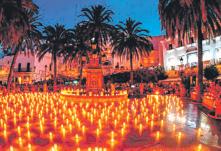
On Friday, July 28, the mayor and the councillor for culture, David Aracil, presented the details of a programme that preserves previous editions, but has now been expanded with several innovative acts. Among the main events is 'La noche en Vela' (the night of candles), the star act of the summer.
On Monday, August 14, starting at 9pm, this cultural and gastronomic evening will take place under the light of 20,000 candles. Through a tour with special lighting, which will bathe the entire historic centre in candle light, the public will be able to enjoy a multitude of activities, while enjoying local bars and restaurants.
Presentation of events
EWN 3 - 9 August 2023 euroweeklynews.com SOCIAL SCENE 24
One of Italy´s most renowned and beloved artists
Credit: Zucchero.it
Credit: Sant Joan d'Alacant Town Hall


Crafts and Magic
ON FRIDAY, August 11 and Saturday, August 12, the yearly arts and crafts fair returns to Hondon de las Nieves with many craft demonstrations and workshops. It will be the 8th edition of this fair that is already famous throughout the region for the originality of its crafts. The biggest novelty this year is that Amata, the artisan association which organises the fair celebrates its 25th anniversary with a contest of unique pieces, made by the participants. During the fair, the pieces in the contest are on display at the stalls of the corresponding artisans and you are invited to vote for the piece you like best.

Like other years, everything that is sold at this fair is made by the craftsman or craftswoman. More than twenty arti -


sans are expected, and each stall offers something different and original: pieces of silver, glass, wood, leather, ceramics, fabric, all carefully worked to satisfy the taste of the most demanding visitor. In addition, there will be demonstrations of artificial stone carving and painting socarrats, the traditional tiles from the Manises and Paterna area in Valencia. And the pot-
Celine celebrated
ter brings his wheel to offer you the chance to make your own bowl or cup.
There will be workshops for children, board games and a merry-goround. On both days a magician will walk through the fair astonishing the public with his tricks and pranks. On Friday a juggler closes the fair with a fire show and the magician will put on a great magic show on Saturday night, just before the famous correfocs, a parade with lots of fireworks and noise, which attracts many people from all over the area.
The fair is open both days from 7pm until midnight or later. The complete programme can be found at https://www.puebloartesano.es/hondondelasnieves.
EXPERIENCE the ultimate Celine Dion tribute concert as it comes to Torrevieja for one night only.
My Heart Will Go On is a stunning celebration of the music and life of one of the greatest singers of our time.
My Heart Will Go On is an outstanding concert that has been described as “a powerhouse performance that delivers on every level” It is a stunning celebration of the music and life of one of the greatest singers of our time, with an outstanding live band.
The audience are taken on a magical ride through four decades of hits that include: The Power Of Love, It's All Coming Back To Me Now, I'm Alive, All By Myself, Because You Loved Me, My Heart Will Go On and many more. Join in for an unmissable
evening as they pay homage to the queen of power ballads with a sensational cast and a stunning live band.
The concert is on Thursday, August 31 at

7.30pm. The venue is the Centro Cultural Virgen Del Carmen, Torrevieja.
Tickets are €32 and can be purchased from www.myheartwillgoon.c
Sins and Pleasure Tour
VANESSA Martin will be in concert in Alicante on Saturday, August 12.
The concert is at the Plaza de Toros and begins at 8.30pm.

Martin is an accomplished singer, poet, and songwriter. Her first appearance on an album was on the CD called El búho real. Her first album was titled Agua and was released in 2006.
In 2009, she signed with the multinational Warner Music. To date, she has released seven studio albums.
She has sold thousands of copies in Spain and Latin America and has performed a large number of concerts throughout the Spanish mainland.
She has collaborated with artists such as Pablo Alborán, India Martínez, Malú, Pastora Soler, Chenoa, David DeMaría, El Arrebato, Manuel Lombo and Diana Navarro, among others.

EWN 3 - 9 August 2023 euroweeklynews.com SOCIAL SCENE 26
Be creative at the fair
Council
Credit: Hondon Town








WHAT DO COMMUNITY FEES COVER?














Rebecca Serwotka – “We sell houses! It’s what we do, it’s ALL we do!” Certified API Associate 00493. Your favourite local resale property expert, of Inmobiliaria Estate Agents in Ciudad Quesada. 3 Time Prestige Award WINNER for Real Estate Agency Of The Year 2021/22, 2022/23 & 2023/24. Luxury Lifestyle Awards WINNER, AlicanteSpain 2023.

Buying a property in Spain that benefits from shared communal areas such as swimming pools, gardens, entrances, garages, etc. will be subject to community fees.






These fees are usually split into four payments a year. The amount payable is divided amongst all prop



erties within the community. The larger the property/plot, the higher the fee. Each property owns a percentage of the community. This percentage will be shown in your Title Deeds, (Escritura de Compraventa). Smaller communities usually incur higher charges as there are fewer homes to split the fees with. An average community charge is approximately €400 a year.
Rules and fees of individual communities can vary. Some will include exterior painting of the properties in their fees whereas others will set up a separate painting fund as and when needed. Not all properties are built within a “community”. Do not confuse this payment with the Suma bill (Council Tax).


EWN 3 - 9 August 2023 31 FEATURE euroweeklynews.com
Advertising Feature
Selling your home? We have buyers! Contact me today on 966 718 392. Ready to buy? Download “The ultimate property buying guide for 2023”: www.BuyMyHomeInSpain.com See our advert in the centre pages of this newspaper! www.homes4u.es
DENMARK
Globe trotter
DANISH man completes decade-long journey visiting every country without flying. Torbjørn Pedersen's trip started in October 2013 and lasted 3,512 days. He relied on buses, trains, boats, and walking to complete the epic journey and all with just a $20 daily budget. He arrived in the Maldives as his 203rd and final country, returning home on a container vessel.
Quran burning
DENMARK faces backlash after a Quran burning incident which lead to protests following the desecration of the holy book outside the Iraqi embassy in Copenhagen. The act triggered widespread condemnation and raised concerns about freedom of expression versus respecting religious sensitivities. Danish authorities' handling of the situation, including the arrest of a woman trying to protect the Quran, drew criticism.
THE NETHERLANDS
Litter louts
GOING green can be costly as Amsterdam Council has found out since Holland imposed a refundable fee on buying products in cans and bottles. Many simply throw these away in rubbish bags which are ripped open by those looking to reclaim the deposits from shops leaving rubbish scattered throughout the city streets.
Geothermal heat
ICELAND has learned to live with its volcanoes and geothermal heat which helps to warm 90 per cent of its houses at vastly reduced financial and environmental cost. Now a group in Friesland in the north of The Netherlands, the Stogef Foundation wants to do the same using water from an underwater dormant volcano.
ITALY
Joint arrest
A joint collaboration between the police forces of Italy and Spain has led to the arrest in Madrid of a violent fugitive on Monday, July 24.
The Spanish National Police arrested the man who is wanted in Italy for drug trafficking, violence and money laundering offences.
Famous u-turn
Alessandra Mussolini, 60, the granddaughter of Italian fascist dictator Benito Mussolini and also niece to Sophia Loren, has performed a U-turn, from her infamous far-right homophobic comments to now advocating for LGBTQ+ rights
Ms Mussolini was previously a pop singer, playboy model and film actress before she took up politics.
PRESS EURO
FRANCE
Returning home
YUAN Meng, a six-year-old giant panda, the first of his species to ever be born in captivity in France, was emotionally sent on a journey from France to Chengdu in China on Tuesday, July 25. In 2012, his parents, Yuan Zi and Huan Huan were loaned to Beauval Zoo in Saint-Aignan by the Chinese authorities, the first time such an initiative had occurred.

Singer stable
The Pogues' legendary frontman, Shane MacGowan,65, has been treated in a Dublin hospital since late June for an unknown illness. MacGowan is married to 57-year-old Victoria Mary Clarke, who said: ‘He is still in hospital but he is doing well and being looked after. He is out of the ICU and doing well.’
Unfortunate mix up
A family from Tipperary, Ireland was left traumatised when a repatriation service delivered the body of a Frenchman, instead of their father, 83- year-old Michael Curley died of a heart attack while holidaying in Lanzarote. The Spanish-based funeral service and an English-based repatriation service recognised the error and quickly rectified it, enabling the late Mr Curley’s funeral to go ahead as planned.
Sentiment index rise
According to a recent survey by the GfK Institute, the way people feel about their financial situation and the economy is improving. They believe that inflation of the rising cost of goods and services will go down soon. This positive outlook on income helped the consumer sentiment index to rise to24.4.
Far-right fortress
The German far-right party, AfD, elected Maximilian Krah as its lead candidate for the European Parliament election. They aim to challenge the EU from within and create a strong anti-migrant stance, rejecting alliances with less radical right-wing parties. Krah received over 65% of the delegates' votes and expressed the party's increasing popularity.
GERMANY BELGIUM
Tomorrow today
THE Tomorrowland festival, staged annually in the Belgian town of Boom near Antwerp, is one of the world’s most popular and spectacular live events for fans of electronic dance music. Working with sponsor BMW, Tomorrowland is this year giving music lovers the chance to generate their own dance hits with the help of artificial intelligence (AI).
Forest deadline
The Flemish Environment Minister Zuhal Demir had promised over 4,000 extra hectares of forest would be planted in Flanders by the end of 2024, although with just a year until the deadline not even a third (1,127 hectares) has been planted. The Flemish Green Party has stressed that the current efforts are not enough.
Cyber Attack
NORWAY’S government faced a significant cyber-attack on 12 ministries, raising concerns about national cybersecurity. The attack exploited a software vulnerability from a supplier, and its origin and perpetrators remain unknown. The incident highlights the need for robust cybersecurity protocols across all government entities.
Cycling Mayor
NORWEGIAN city mayor, Jonas Andersen Sayed, cycled from Sokndal to Zaliztsi in Ukraine, raising approximately US$14,500 for the needs of the Ukrainian Armed Forces. The money funded the purchase of drones, computer equipment, tablets, a thermal imager, and a power generator. This was Andersen's fourth bike trip to Ukraine since the invasion, supporting the military.
NORWAY FINLAND
Slimming swim
54-year-old Patrik Kvikant raised €10,000 after a mammoth charity swim from Estonia, across the Gulf of Finland before he arrived nearly three days later on the shore of Helsinki According to Kvikant, he burned as many calories during the three-day swim as an adult male does over two weeks.
Happiest country
For years now Finland has been named as the world’s happiest country. According to a psychology expert, it can be summed up in one sentence: ‘Make yourself meaningful to others.’ Here are Finland’s five pillars of meaningful living. Follow your heart’s desire, share your knowledge, perform random acts of kindness, be a good neighbour and stay close to your loved ones.
Junior approval
INNOVATIVE drugs used for the treatment of cystic fibrosis have been approved for use in children between 6 and 11 years old in Portugal. Infarmed extended the use of Kaftrio and Kalydeco for treatment in the National Health Service, as confirmed by the Medicines and Health Products Authority. Previously, their use was authorised only for the treatment of those aged 12 years or older.
Fishy fears
MORE than half of the freshwater fish species in Portugal's rivers are threatened with extinction. This information was revealed in the 'Red Book of Freshwater and Diadromous Fishes' which stated that six of them were critically endangered. The study looked at 43 species of fish, and confirmed the extinction of the sturgeon in Portugal.
IRELAND PORTUGAL SWEDEN
On holiday
HUNGARY'S opposition party had requested that parliament be convened last Monday, July 31, to vote through Sweden’s NATO membership and other issues. However, Prime Minister Viktor Orban's spokesman said: 'We see no reason to rush, why can't we do this according to the usual agenda?'. The implied meaning seemed to be that Fidesz does not intend to vote on NATO until the parliament's summer recess is over this autumn.
Permit increase
Swedish Prime Minister, Ulf Kristersson, revealed that the police had received multiple applications for more permits to burn religious books. He voiced his concern that more burnings could only further escalate the already high tensions among Muslim nations.
EWN 3 - 9 August 2023 32 euroweeklynews.com EUROPEAN PRESS
Giant panda Yuan Meng.
Credit: Twitter@zoobeauval








































BUSINESS EXTRA
Cleaned out
BRITISH shoppers are buying less soap, according to Reapp, the supermarket retail app. Leading chains have reported a drop in sales of these items owing to the cost of living crisis, with soap sales falling by 48 per cent in the first six months of 2023 and handwash by 23 per cent.
Up and down
ENDESA registered an €879 million firsthalf net profit, 4 per cent less than the same period last year. Revenues of €13.12 billion fell 11.6 per cent due to this year’s lower electricity prices although earnings before interest, taxes, depreciation, and amortisation improved by 27 per cent to €2.48 billion.
More jobs
EL CORTE INGLES increased its workforce by 3.69 per cent last year and now has 81,434 employees 50,674 of whom are women and 30,760 menin its stores, supermarkets and travel agencies. The increase in staff was mainly due to the chain’s acquisition of Logitravel, the company explained.

Not so bad
BRITAIN is on course to outperform Germany this year, the International Monetary Fund (IMF) said, after its gloomiest predictions for the UK economy did not materialise. The IMF foresees that the UK economy will grow by 0.4 per cent this year, confirming forecasts that were initially published last May.
Low-flying
HEATHROW AIRPORT did not return to profit in this year’s first half despite increased passenger numbers. The airport, which reported a £139 million (€162.8 million) adjusted pretax loss for the first half of 2023, blamed the Civil Aviation Authority, which capped the amount it could charge airlines for each passenger.
STAT OF WEEK €607 million
net profit for Spain’s state-owned airports management company Aena during the first six months of this year, compared with €559 million during the same period in pre-pandemic 2019.
Record half-year for bank
Linda Hall BANCO SANTANDER’S
€5.241 billion firsthalf results were the best in the bank’s history and 7.1 per cent more than the same period in 2022. This would have risen to 11.7 per cent without the impact of the €224 million windfall tax charged on 2022’s profits and paid this year.
The JanuaryJune figures exceeded analysts’ estimates who predicted a €5.151 billion profit, and the markets responded with shares rising almost 2 per cent on July 26 when the figures were announced.
Continual increases in interest rates, introduced
over the last year by the European Central Bank (BCE) to combat inflation, boosted Santander’s performance in Europe.
“We are making good progress towards our goals of simplifying business procedures and making the most of our global
PUTIN’S expropriation of Danone and Carlsberg’s Russian assets could do his ambitions more harm than good.
“He is shooting himself in the foot because this will actually help the West to push back Putin by damaging the Russian economy,” reasoned Mark Dixon, founder of the Moral Rating Agency (MRA).
“It will bring Russia closer to a desert island economy,” he said. “The forced separation of democratic and undemocratic economies is critical for democracy to survive and prevail,” he declared, adding that the expropriated companies deserved their comeuppance.
“Danone and Carlsberg continued to profit from Russia after the invasion of
Still going
LEO MESSI’S Spanish companies had a €59.77 million turnover in 2021, the year he left FC Barcelona and moved to Paris San Germain.
Limecu España 2010, which handles Messi’s companies and image rights, made a €6 million profit in 2021, €550,000 less than the previous year, according to accounts recently published in Spain’s Registro Mercantil, equivalent to Companies House in the UK.
Limecu, which deals primarily with image rights, is administered by Rodrigo Martin Messi, the footballer’s brother who manages most of his business interests.
strengths,” Santander’s executive president Ana Botin said.

The bank’s gross income rose 11.5 per cent to €28.01 billion, bolstered by growth in net interest income, which rose 13.6 per cent to €20.92 billion. Net fees and commissions rose 4.3 per
cent to €6.103 billion.
It is on these two areas that government calculates its temporary windfall tax charged on banks’ activities inside Spain, which is Santander’s principal market. During the first half of the year, the domestic market accounted for €3.161 billion in net interest income and €1.413 billion in net fees and commissions.
Europe was the group’s principal driving force during the first six months. Spain, whose customer base increased by 362,000, contributed €1.132 billion, displacing Brazil as the bank’s traditional source of nonSpanish earnings.
A desert island economy
leave Russia and ironically they have now been forced out by the very dictator they were propping up.”
Corporate watchdog MRA was created to remove Russia from Ukraine, using this momentum to help prodemocracy Russians get Putin and his regime out of the country.
NEW government procedures targeting promoters of tax avoidance schemes fall short, recruitment experts maintained.
“Holding responsible the directors of companies involved in promoting tax avoidance is something we called for and welcome,” Tania Bowers, Global Policy Director at the Association of Professional Staffing Companies (APSCo), said. Businesses knowingly involved in fraud were unlikely to be swayed by additional criminal charges. Instead, their access to recruitment should be cut off, Bowers suggested.
“Complete transparency is required to ensure no firm inadvertently partners with a noncompliant business due to lack of information,” she added.
Good figures
STELLANTIS reported recordbreaking firsthalf earnings of €10.92 billion, a 37 per cent increase on 2022.
With a €98.37 billion turnover, the global group attributed its success to increased demand and stabilised supply chains, although earnings benefited from higher vehicle prices, chief financial officer Natalie Knight said.
Ukraine and have therefore supported the Russian economy, which pays for that invasion,” he said.
“They have resisted our pressures to
Keeping afloat
THE UK government plans to boost sales of Britishmade ships with £500 million (€583.46 million) in credit guarantees.
The Department of Trade will assist borrowers who wish to buy UKbuilt vessels in a bid to boost Britain’s languishing yards.
Shipbuilders working for the defence sector are helped by longstanding orders from the Royal Navy, but the civilian industry has a hard time competing with cheaper yards overseas, including Spain.
Companies in the running to profit from the new scheme include Harland & Wolff, a name forever associated with the Belfast shipyard where the Titanic was built, and Cammell Laird, which produced the €200 million (€233.3 million) polar research vessel that a public poll wanted to call Boaty McBoatface. Wight Shipyard, which builds the Thames Clipper river buses, could also benefit.
The latest expropriations would actually help the West by damaging the Russian economy, the organisation said, describing it as a “positive” development.
“Putin’s behaviour is reprehensible, but he is unwittingly harming Russia,” Dixon added.
Package deal
A UK government scheme obliging packaging manufacturers to meet the cost of recycling their products has been deferred from October 2024 to 2025.
The decision was the result of wideranging talks with the industry and taking into account consumers and businesses’ problems in the current economic context, environment minister Rebecca Pow explained.
The additional year will be used to discuss the scheme’s design with industry, reducing the cost of implementing Extended Producer Responsibility (EPR) wherever possible.
“Producers are already beginning to use less packaging and adopt easiertorecycle formats,” Pow said.
“We expect this to continue, ensuring that costs are not passed onto households later on.”
The group, the world’s third mostimportant vehicle manufacturer which owns Peugeot, Fiat and Jeep, produces approximately 850,000 cars annually in Vigo, Zaragoza and Madrid.
Chief executive Carlos Tavares described the first six months of 2023 as “impressive” but admitted that Stellantis would have to cut costs to maintain profitability.
Moving up
THE International Monetary Fund (IMF) increased its growth outlook for Spain to 2.5 per cent.
This is one percentage point above the IMF’s original prediction and half a percentage point above the Spanish government’s own forecast.
“In general, instability is never good for the economy,” the IMF’s chief economist Pierre Gourinchas said on July 25.
“I believe that we need to wait and see how the process ends and where Spain’s population wants to go with the results of these elections,” Gourinchas said in reference to the July 23 poll.
euroweeklynews.com • 3 - 9 August 2023
ANA BOTIN: Bank making good progress, executive chairwoman announced.
CARLSBERG: Head office in Copenhagen (Denmark).
FINANCE 34
Photo credit: Ana Botin
Tougher measures call
Photo credit: carlsberggroup.com

DOW JONES
















3M 111,19 113,14 5,61M American Express 163,60 168,54 163,17 3,94M Amgen 236,05 238,48 234,31 2,42M Apple 193,22 197,20 192,55 46,89M Boeing 233,75 238,67 231,83 11,97M Caterpillar 258,30 261,10 256,82 2,28M Chevron 159,66 162,47 159,22 6,45M Cisco 53,00 53,88 52,85 15,61M Coca-Cola 62,44 63,26 62,38 11,42M Dow 54,94 55,03 53,80 8,08M Goldman Sachs 354,51 360,54 354,17 2,00M Home Depot 329,71 333,43 328,93 2,58M Honeywell 196,41 204,12 195,65 6,57M IBM 142,97 143,38 141,90 6,33M Intel 34,55 35,03 34,11 51,04M J&J 173,69 174,29 172,04 12,13M JPMorgan 156,02 158,78 155,55 10,25M McDonald’s 295,19 298,90 291,51 4,50M Merck&Co 105,27 107,62 105,17 9,78M Microsoft 330,72 341,33 329,05 39,40M Nike 107,67 110,23 107,40 6,53M Procter&Gamble 152,11 154,60 151,91 7,17M Salesforce Inc 225,15 230,14 224,01 4,26M The Travelers 174,87 175,97 173,61 1,42M UnitedHealth 505,23 510,50 503,13 3,03M Verizon 33,55 34,61 33,54 28,04M Visa A 234,44 238,66 232,96 8,16M Walgreens Boots 30,63 31,32 30,50 8,26M Walmart 159,16 160,64 159,13 4,41M Walt Disney 85,36 86,88 85,19 16,59M InterContinental 5.722,0 5.724,0 5.654,0 34,82K Intermediate Capital 1.423,00 1.450,00 1.418,00 31,34K Intertek 4.392,0 4.394,0 4.220,0 71,55K ITV 71,10 73,90 70,74 1,77M J Sainsbury 282,20 285,70 281,60 288,96K Johnson Matthey 1.824,2 1.847,0 1.809,5 35,09K Land Securities 647,40 652,80 643,60 108,45K Legal & General 235,60 238,10 235,27 1,08M Lloyds Banking 45,20 45,47 44,81 39,89M London Stock Exchange 8.532,0 8.564,0 8.454,4 56,47K Melrose Industries 522,00 524,21 518,80 371,58K Mondi 1.354,50 1.364,00 1.349,00 110,61K National Grid 1.040,50 1.046,10 1.039,00 370,28K NatWest Group 247,20 248,09 237,50 8,73M Next 7.064,0 7.096,0 7.058,8 15,39K Ocado 950,40 960,66 934,80 324,20K Persimmon 1.180,5 1.184,0 1.163,5 222,57K Phoenix 558,00 561,00 556,40 194,90K Prudential 1.094,50 1.101,00 1.084,50 659,18K Reckitt Benckiser 5.892,0 5.916,0 5.880,0 552,19K Relx 2.651,00 2.662,00 2.629,00 550,75K Rentokil 633,80 637,60 621,20 531,32K Rightmove 550,60 554,60 533,60 692,31K Rio Tinto PLC 5.150,0 5.215,0 5.137,0 933,81K Rolls-Royce Holdings 193,35 194,55 186,45 10,37M Sage 937,40 943,60 934,20 144,71K Samsung Electronics DRC 1.374,00 1.388,00 1.368,00 2,87K Schroders 461,3 465,5 459,5 265,62K Scottish Mortgage 707,40 714,60 702,60 400,90K Segro 767,20 772,80 759,20 806,09K Severn Trent 2.561,0 2.579,0 2.559,0 48,53K Shell 2.330,0 2.361,5 2.328,1 2,85M Smith & Nephew 1.186,00 1.192,50 1.182,50 261,29K Smiths Group 1.688,00 1.694,00 1.684,50 97,95K Spirax-Sarco Engineering 11.055,0 11.067,7 10.940,0 5,93K SSE 1.678,00 1.707,50 1.677,00 300,96K St. James’s Place 972,30 988,22 969,20 651,05K Standard Chartered 745,20 757,20 718,40 2,38M Taylor Wimpey 115,50 115,75 114,30 965,72K Tesco 260,80 262,50 260,00 6,92M Tui 598,00 601,50 587,00 373,80K Unilever 4.217,0 4.234,7 4.177,5 1,52M United Utilities 1.002,50 1.009,50 998,40 111,02K Vodafone Group PLC 75,67 76,25 75,55 5,37M Whitbread 3.467,0 3.481,0 3.458,0 61,22K WPP 846,60 857,60 844,20 204,44K Most Advanced View, Inc. +44.36% 1.63M Powertap Hydrogen Capital Corp. +31.19% 165,571 The St. Joe Company +18.13% 667,944 QuantumScape Corporation +14.30% 54.511M Align Technology, Inc. +13.38% 3.473M Alpha Services and Holdings S.A. +12.76% 37,732 Nextracker Inc. +12.41% 5.33M Textron Inc. +11.87% 4.514M Nippon Shinyaku Co., Ltd. +9.81% 15,956 STMicroelectronics N.V. +9.67% 22,504 Celestica Inc. +9.42% 5.2M Most Declined Perficient, Inc. -26.06% 1.473M Teleperformance SE -16.37% 149,679 NovoCure Limited -15.89% 2.705M Crocs, Inc. -14.61% 10.472M Neste Oyj -14.41% 33,002 Sunnova Energy International Inc. -11.71% 14.321M Hertz Global Holdings, Inc. -11.65% 10.304M ExlService Holdings, Inc. -11.60% 756,997 Hexagon AB (publ) -10.91% 80,708 AMC Entertainment Holdings, Inc. -10.85% 39.182M Oceaneering International, Inc. -10.83% 2.671M COMPANY PRICE(P) CHANGE(P) % CHG NET VOL
C LOSING P RICES 1 A UGUST 3I Group 1.988,50 1.998,00 1.983,00 383,14K Abrdn 235,30 237,80 234,20 740,68K Admiral Group 2.233,0 2.279,0 2.232,3 80,07K Anglo American 2.386,5 2.427,5 2.382,5 292,00K Antofagasta 1.633,50 1.650,00 1.621,00 54,85K Ashtead Group 5.646,0 5.734,0 5.638,0 51,71K Associated British Foods 2.066,0 2.085,0 2.060,0 303,30K AstraZeneca 11.123,3 11.214,0 10.796,0 462,92K Auto Trader Group Plc 638,00 638,40 628,20 239,55K Aviva 392,10 395,80 391,40 1,62M B&M European Value Retail SA551,60 559,00 549,60 205,29K BAE Systems 927,20 936,40 919,20 333,57K Barclays 155,30 156,70 153,04 14,16M Barratt Developments 460,00 463,50 457,60 96,51K Berkeley 4.359,0 4.378,0 4.343,0 8,42K BHP Group Ltd 2.403,50 2.430,00 2.398,00 159,15K BP 474,10 479,70 473,35 5,49M British American Tobacco 2.654,6 2.673,5 2.646,0 306,84K British Land Company 338,10 339,70 334,80 230,46K BT Group 124,55 125,65 123,55 9,21M Bunzl 2.882,0 2.899,4 2.864,0 47,15K Burberry Group 2.216,0 2.245,0 2.193,0 164,52K Carnival 1.286,6 1.298,5 1.282,0 76,17K Centrica 132,85 135,55 132,55 4,03M Coca Cola HBC AG 2.347,0 2.371,0 2.338,0 55,02K Compass 2.023,00 2.039,00 2.020,00 586,51K CRH 4.591,0 4.645,0 4.576,0 169,25K Croda Intl 5.924,0 5.938,0 5.826,0 32,30K DCC 4.529,0 4.631,0 4.521,0 17,48K Diageo 3.428,0 3.439,0 3.412,8 1,61M DS Smith 308,00 309,30 306,98 785,97K EasyJet 453,20 457,47 447,00 760,32K Experian 3.034,0 3.052,0 3.007,0 123,75K Ferguson 12.540,0 12.690,0 12.400,0 12,29K Flutter Entertainment 15.140,0 15.310,0 15.055,0 85,80K Fresnillo 605,60 615,28 605,00 102,36K Glencore 464,95 470,55 461,40 2,21M GSK plc 1.401,00 1.410,20 1.395,68 449,72K Halma 2.253,0 2.273,0 2.249,0 64,16K Hargreaves Lansdown 875,60 884,80 872,40 205,57K Hikma Pharma 2.098,00 2.107,00 2.078,00 24,13K HSBC 649,90 655,30 643,80 4,67M IAG 161,60 162,30 157,00 17,93M Imperial Brands 1.861,00 1.867,00 1.851,00 139,15K Informa 763,00 776,40 760,80 183,74K COMPANY PRICE(P) CHANGE(P) % CHG. NET VOL COMPANY CHANGE NET / % VOLUME US dollar (USD) ........................................1.0992 Japan yen (JPY) 153.09 Switzerland franc (CHF) 0.9558 Denmark kroner (DKK) 7.4523 Norway kroner (NOK) 11.204 MAKE THE MOST OF YOUR MONEY WITH US See our advert on previous page 0.85522 1.16797
C LOSING P RICES 1 A UGUST Units per € COMPANY PRICE CHANGE OLUME(M) NASDAQ C LOSING P RICES 1 A UGUST M - MILLION DOLLARS THE ABOVE TABLE USES THE CURRENT INTERBANK EXCHANGE RATES, WHICH AREN’T REPRESENTATIVE OF THE RATE WE OFFER EWN 3 - 9 August 2023 euroweeklynews.com FINANCE 36 currenciesdirect.com/moraira • Tel: +34 966 265 072
LONDON - FTSE 100
Euro
EUR/GBP: Up from £0.85 to £0.86
EUR/USD: Up from $1.09 to $1.11
The euro wavered in the last week of June as European Central Bank (ECB) interest rate expectations fluctuated in response to hawkish comments from ECB President Christine Lagarde and weaker-than-expected Eurozone inflation.
EUR exchange rates continued to trade sideways at the start of July amid some lacklustre Eurozone data releases.

The euro found its footing again in the middle of the month, with the single currency being bolstered by its negative correlation with the US dollar. The resulting movement even carried EUR/USD to a new 15-month high.
However, the single currency then faltered again in the second half of July, amid a lack of notable Eurozone data and a resurgent US dollar.
CURRENCY OUTLOOK: POUND ROCKED BY FLUCTUATING BOE RATE BETS, US DOLLAR STRIKES MULTI-MONTH LOWS
Unsurprisingly, the ECB’s next interest rate decision will be the primary focus for EUR investors over the next month. While a 25bps hike is widely expected, the euro could face some headwinds if the ECB appears more cautious regarding the potential for further increases.
Pound
GBP/EUR: Down from €1.16 to €1.15
GBP/USD: Up from $1.27 to $1.28
Trade in the pound was highly erratic over the past month, amid speculation regarding future Bank of England (BoE) interest rate hikes.
At the end of June, Sterling was still being pressured by fears the BoE may tighten the UK into a recession to bring inflation under control.
However, these fears began to fade as we entered July, with GBP exchange rates being buoyed by speculation the BoE may deliver another 50bps rate hike in August. Expectations for which were compounded by

a record increase in UK wage growth. Sterling subsequently plummeted as we entered the second half of the month. The publication of weakerthan-expected UK inflation figures triggered a correction in the pound as GBP investors repriced their bets for the BoE’s next rate decision.
Looking ahead, it looks unlikely the pound will be able to retest its recent highs in the near future. In addition to the BoE likely delivering a more modest 25bps rate hike next month, the bank may hail June’s CPI figures as a ‘turning point’ in its fight
against inflation.
US Dollar
USD/GBP: Down from $0.78 to $0.77
USD/EUR: Down from €0.91 to €0.89
The US dollar was supported in late June by some hawkish comments from Federal Reserve Chair Jerome Powell. In which he hinted the bank could deliver another couple of rate hikes by the end of 2023.
However, these Fed rate hike bets were quickly dampened by the publi-
cation of weaker-than-expected US payroll figures.
The US dollar then plummeted to a 15-month low against both the euro and the pound in the middle of July. The plunge came as US inflation cooled at a faster-than-expected pace and further undermined Fed rate hike bets.
The ‘greenback’ subsequently rebounded as we entered the second half of the month as demand for the safe-haven currency was strengthened by risk-off flows.
The Fed will deliver its latest interest rate decision in the last week of July. Another 25bps rate hike if expected, but if the Fed signals its hiking cycle has run its course the US dollar is likely to tumble.
Currencies Direct have helped over 425,000 customers save on their currency transfers since 1996. Just pop into your local Currencies Direct branch or give us a call to find out more about how you can save money on your currency transfers.


EWN 3 - 9 August 2023 37 FINANCE euroweeklynews.com
Visit us at our Spanish offices in Costa del Sol, Costa Almeria, North Costa Blanca and South Costa Blanca. Telephone UK +44 (0) 207 847 9400 Spain +34 950 478 914 • Email euroweekly@currenciesdirect.com • www.currenciesdirect.com.
POUND TRADING: Was highly erratic over the past month.
ASK THE EXPERT Peter Loveday Contact me at euroweekly@currenciesdirect.com

When does humour become not funny?
I have always been convinced that the British sense of humour has been one of our most commendable and enduring assets. Through the horror of two World Wars and all the disasters and conflicts that have beset us over the years, the Brits have always managed to find some way to raise a smile out of even the most tragic circumstances.
The skill of our comedians and cartoonists is such that their humour never sets out to undermine these situations, merely eases their seriousness by lightening the mood and in doing so allows those affected to hopefully surmount their problems more easily.
The British sense of humour, sometimes indefinable and unique, has always been a bit of a mystery to the rest of the world and often something that most foreigners simply can't get their heads around. Some years ago, I wrote that whatever the
terrorist or our enemies can throw at us nothing will ever rob us of our most commendable and enduring gift, our humour. Well I was wrong. At the time of writing that particular piece we weren't being strangled by the despicable, destructive, and downright traitorous yolk of the PC brigade.
Not content with changing their fellow citizens from a nation that prided and flourished through its policies of oratory freedom into a herd of sheep, watching every word they say and almost frightened to open their mouths in case they offend somebody, this utterly superfluous bunch of time and woke wasters have finally managed to turn their attack on one of the most dearly loved jewels of our culture, our purveyors of comedy.
Subsequently most comedians are simply not funny anymore. Jokes that retain reference to classism, ageism, ableism, homophobia, biphobia, transphobia, xenophobia or Islamophobia are just not allowed on public platforms.
For the new breed its ok to repeat appalling swear
words, or even undermine white culture, but step out of line against a minority and you can bid your career goodbye.
One TV channel I tune into actually presents (with a large cautionary notice) a wonderful selection of early brilliant British comedy shows. ‘Benny Hill’ ‘Till Death do Us Part’ ‘Hale and Pace’ to name but a few. Many contain racist humour but they are glaringly non contemptuous, simply frivolously humorous. What I find truly disturbing about this whole PC farce is just how far this Orwellian situation is allowed to go. Another bunch of them have now issued guidelines instructing schools that eight year olds be taught that all genders can have periods to avoid...... wait for it. ‘Offending girls who identify as boys’! Well, frankly if I had my way, I would prosecute these morons for child abuse. Unfortunately, as a member of a majority, nobody is allowed to listen to me!
Keep the faith Love Leapy leapylee2002@gmail.com expatradioscotland.com

Mon. Fri. 1pm till 4.
BUYING GOODS ONLINE OUR VIEW
DURING lockdown, few of us were able to go shopping in person and ended up buying large amounts of product online.
This activity made many large businesses upgrade their websites to offer a wider and faster range of services and many of us still buy a great deal of material online.
There has certainly been some return to personal shopping although it is telling that Amazon have recently closed two of their selfservice, cashless physical supermarkets as it would appear that they were not proving popular.It can be difficult to buy online from the UK because of Brexit and unless the store you are purchasing from has registered for European VAT and is shipping goods below a certain value, there is often a delay and the possibility of the purchaser having to pay customs duties.
Online stores situated within the Euro
pean Union can supply goods to any other EU State which means that local online sellers should in theory become more competitive.
One of Spain’s largest fashion giants has until recently used Correos for delivery and the Spanish Post Office has generally been very efficient but now they have changed and are using other couriers who presumably offer a cheaper service.
We have readers who complain that despite paying for home delivery, couriers simply state that they have tried to deliver and couldn’t so have left the goods at a central point for collection which may be several kilometres away.
If the purchaser doesn’t collect the goods, then they are returned to the seller and refund can take anything up to a month which is no good for anyone.

EWN 3 - 9 August 2023 39 FEATURE euroweeklynews.com
Leapy Lee’s opinions are his own and are not necessarily representative of those of the publishers, advertisers or sponsors.
OTHERS THINK IT LEAPY LEE SAYS IT
Plant based skincare
EMBRACE the green revolution in skincare! Plantbased products are taking the beauty world by storm, promising natural goodness without harmful

Men’s cardiovascular health





















chemicals. From aloe vera’s soothing touch to rosehip’s rejuvenating power, these natural wonders are loaded with vitamins and antioxidants to nourish your skin. Dive into the world of crueltyfree, eco conscious beauty with brands dedicated to sustainability. Whether it’s a refreshing cleanser or a luxurious moisturiser, these botanical extracts deliver results while respecting the planet.
Embrace nature’s bounty and unveil your radiant, healthy skin today!
Varicose veins



VARICOSE veins needn’t cramp your style! Take these five easy steps to prevent and protect yourself from these pesky veins:


Get Moving: Regular exercise boosts blood circulation and keeps veins healthy. Engage in activities like walking or swimming to keep those legs in top form.
Elevate and Rest: Give your legs a break by elevating them while resting, reducing vein pressure and promoting healthy blood flow.
Watch Your Weight: Maintaining a healthy weight eases pressure on veins, reducing the risk of varicose veins.










Avoid Prolonged Sitting or Standing : Take short breaks to stretch and move, preventing blood from pooling in your legs.
Rock Those Compression Stockings: These wonderwearables provide gentle support, aiding blood flow and preventing varicose veins. With these proactive measures, you can wave goodbye to varicose veins and enjoy healthy, beautiful legs for life!
GENTLEMEN over 50, it’s time to prioritise your heart health! Enjoy regular exercise, a heartfriendly diet, and stress management to reduce the risk of cardiovascular issues. Annual checkups and monitoring blood pressure are vital steps for early detection. Take charge of your heart’s wellbeing and savour life with a strong heart. Remember, small lifestyle changes can yield significant benefits for your cardiovascular system. With a proactive approach to heart health, you can enjoy a fulfilling and active life well into your golden years. Your heart deserves the utmost care so start today!
Beauty on a budget
LOOKING fabulous doesn’t have to break the bank. With a few savvy tips, you can boost your beauty budget and still achieve that radiant glow. First, consider multi purpose products that offer multiple benefits in one. Embrace DIY beauty treatments using natural ingredients from your kitchen. Explore affordable drugstore brands known for their quality. Don’t forget to shop during sales and take advantage of loyalty programmes. By making
smart choices and being resourceful, you can enhance your beauty routine without overspending.


EWN 3 - 9 August 2023 euroweeklynews.com HEALTH & BEAUTY 40
Botanical extracts deliver results and respect the planet.
HEART HEALTH: Monitoring blood pressure is important.
1% Spanish beauty sector grew in 2022.
Flamenco workout
UNLEASH your inner dancer with the vibrant Flamenco workout!

Inspired by the traditional Spanish dance, this fitness trend blends rhythmic foot work, graceful arm movements, and pas sionate expressions. Engaging your en tire body, the Fla menco workout im proves flexibility, stamina, and cardiovascular health. Say adios to monotonous rou tines and immerse in the infectious energy of Flamenco music. This dynamic workout promises to sculpt your physique while invigo rating your soul. Embrace the essence of Spain and dance your way to a healthier, fitter you.
Navigating healthcare in Spain

Dance your way to a healthier, fitter you.
FOR expats over 50 in Spain, understanding the healthcare system is crucial to ensure wellbeing in your new
Spain boasts a comprehensive public healthcare system, available to residents and contributing expats. To access public healthcare, obtain a health card (tarjeta sanitaria) from the local health centre. Private health insurance is also popular, providing faster access to specialists and Englishspeaking medical services. Pharmacies are abundant and can provide overthecounter remedies, but prescription medicines may require a doctor’s visit. Expats should familiarise themselves with local hospitals and clinics, ensuring they receive the care and support they need to enjoy their Spanish adventure with peace of mind.
Familiarise yourself with the health service.

Mature make-up
IN Spain, women over 50 are redefining beauty standards, and the cosmetics industry is taking note. Spanish brands are championing makeup that enhances natural beauty while also catering to the specific needs of mature skin. Hydrating foundations, luminous blushes and subtle eye makeup that flatter rather than cover are gaining popularity. Sunscreen, a must in sunny Spain, is seamlessly incorporated into daily makeup routines. Nourishing lip colours, fighting dryness
while adding a vibrant pop, are a favourite. Additionally, makeup lessons focusing on techniques for mature skin are offered at beauty academies and cosmetics counters alike. The emphasis is not on concealing age, but on celebrating it. After all, confidence is the best beauty secret. Women over 50 are showing the world that age is just another facet of their radiant beauty.

EWN 3 - 9 August 2023 41 HEALTH & BEAUTY euroweeklynews.com
Age is just another facet of beauty.



FOR MORE INFORMATION ABOUT THE SPONSOR GO TO WWW.LINEADIRECTA.COM







FOR MORE INFORMATION ABOUT THE SPONSOR GO TO WWW.LINEADIRECTA.COM 53
LETTERS



Spanish culture shocks
OVER the weekend we shared a funny TikTok video created by Patry Ruiz, expressing some of the main culture shocks that people endure when getting used to Spanish culture.
Amongst these are the common misconception for the afilador as the ice cream van, the late Spanish dinner time of 10 PM, and the custom to throw nap

Comments















“How time has no consequence.”
Steve
Busby
“Going all the way round a roundabout in the outside lane.”
Jill
“Car indicators lack of use.”


Fred
kins and toothpicks on the floor at certain cafes or bars. Our honorable mention went to the conundrum that is successfully handling Spanish roundabouts. We had a scroll through the comments section of this post on our Facebook page to see if our readers related to this comedic video as much as we did.
Stevens
Harding
“When boarding a ferry in Barcelona for the Canaries in 1976, even though you were first in the queue having slept half the night outside the ticket office one get's shouted at (in Spanish so not a clue!) by the ferry boarding lady for apparently boarding before all the old ladies all wearing black, hauled out and told to stand over there, again, not a clue why, until everyone had boarded, the doors closed and ferry boarding lady just walked off without saying a word!!! I was both perplexed and fuming mad!!!”
Richard J Dodds
“Throw napkins on the floor??? Not everywhere in Spain! That's weird!” I lived in Granada for a while (I'm from Galicia), and used to visit a bar before lunch, the floor was covered in peanut shells and napkins, I was in shock, they said this was done because it gave the impression that it was a busy venue I have no idea if that was the real reason, I had never seen it before”.
Blanca Hermida
“Blanca Hermida I still don’t get it and I’ve been here 20 years! Someone still has to pick them up!”
Gordon
O'Keeffe
“Roundabouts are way better than busy signaled intersections…we need more of em in the US, especially when multiple streets come together at different angles and ramps for freeways”.
Paz Arboleda
“Malaga is clean, no napkins on the floor or streets”.

Vivian Bolboreta
“no, 10 is not dinner time….”
Paulo Leitao
“Nothing ‘strange’, I’m in their country”,




Jimmy
Simmons
“Think, why the roundabouts would have many lanes if you only can use the exterior one?”, Maximiliano Solórzano (with an attached article from the DGT)


“Maximiliano Solórzano don’t need to use only the external lane, but you can only exit from this lane. So think how to do it”
Vicen Jimenez
“Vicen Jimenez of course external lane must be used for enter and exit… but here is used always…even if you need to do a U turning..”,
Maximiliano Solórzano
“Maximiliano Solórzano and? The law says everytime you can travel and the right line you must. On any Road. Roundabout or not. It’s obligatory.”

“Paulo Leitao sure it is. Have your first beer and tapa at 8 and the last at 12… that averages out ”
 Ben Merghart
“Maria Cruz I live in Granada and they do this as it shows it is busy (like you said). You are spot on.”,
 Stephen Proctor
“Steve Busby Time has a different consequence from the one you’re used to.”
Liz Read

Letters should be emailed to yoursay@euroweeklynews.com or make your comments on our website: euroweeklynews.com Views expressed and opinions given are not necessarily those of the EWN publishers. No responsibility is accepted for accuracy of information, errors, omissions or statements.
xxxxxx
EWN 3 - 9 August 2023 euroweeklynews.com HOROSCOPES/LETTERS 44
PETS
House-sitting with free pet-sitting
MANY of our pet owners in Spain choose checked petsitters from our listings. Our House sitMatch sitters are checked, they are pet lovers and they won’t charge you a cent for the house or petsitting services. Instead, they offer a fair exchange, free accommodation for free pet care. It’s a win win! The housesitters are for free when you are a member of the Housesitmatch network.
If you’re planning a trip register now as a member of our network to find an affordable home and pet care solution. Whether your trip is short or long, you’ll know that sometimes you must leave pets at home. Young and senior pets in particular benefit from staying at home, so they can follow their routines undisturbed. Join our pet and housesitting network, and the sitters come for free!
Choose Housesitmatch.com for affordable travel, home and pet care. These are the steps to take:

1. Register as a homeowner on HouseSit Match.com
2. Choose a Standard account (£69GB per year) to ensure you can help online when needed
3. Create a profile with photos of your pet and the house
4. Post an advert for the dates when you


Caring for hairless cats
Do you have pets to care for when you are away? With mulitple pets it petcare can be expensive.


want to go away. Sitters apply and you choose. How does it work?
HouseSitMatch can help you find suitable sitters. Join our network for a small annual fee. You get ID checked for safety and then build your advert saying when you are going on holiday. Housesitters see your advert, they respond and you choose the sitter who’ll care for your pets. Trustpilot Testimonials 4.9 / 5 Excellent 10 out of 10 for housesitmatch.com

I have had nothing but good and helpful service from the people who run this site, and my experience has been excellent. Tristram Cosgrave Dog and cat owner, Malaga



How do you join?
Please register online via our website www.Housesitmatch.com.
Need a pet or housesitter? Get in touch. House-sitting can be a win-win for both parties, free house and pet-sitting, and the experienced and checked sitters get free accommodation! Register as either house-sitter or homeowner with a 20% discount using coupon code 20EWN – Reader exclusive offer. To find a house or pet-sitter go to www.HouseSitMatch.com.
Tropical fish
TROPICAL fish, with their vivid colours and graceful movements, offer a unique petowning experience. They turn home aquariums into underwater kingdoms, full of activity and stunning natural beauty.

However, keeping these aquatic jewels requires particular care and a steady commitment.
Unlike more traditional pets, fish require a carefully controlled environment. The water in their tanks must be kept clean and at the right temperature and pH level. Equipment such as heaters, filters, and sometimes air pumps are crucial to maintaining these conditions.
The diet of tropical fish varies widely, with some species requiring live food and others subsisting on flakes or pellets.
Understanding each species’ dietary needs is vital to ensure their health and vitality. Tropical fish also have specific social behaviours. While some fish are peaceful and thrive in a community tank, others might be aggressive or territorial.
Thorough research before purchasing can prevent potential conflicts and stress within your
HAIRLESS cats, with their striking appearance and enchanting personalities, are increasingly catching the fancy of pet lovers across the UK. While these unusual felines share many characteristics with their furcovered counterparts, they require specific care.
Notably, without a fur coat, hairless cats, such as the Sphynx, are vulnerable to temperature changes. They seek warmth during colder months and can easily get sunburnt in the summer. It’s critical to ensure they have access to cosy spots in the house and are protected from excessive sun exposure.

Their lack of fur also means more frequent baths are needed. Dirt and oils, which would normally be absorbed by fur, can build up on their skin. However, bathing should be balanced with the risk of skin dryness. Feeding hairless cats a bal
EMERGENCY NUMBERS
anced diet is paramount.
Like all cats, they are obligate carnivores, requiring a highprotein diet. However, due to their higher metabolism, hairless cats may require more frequent feedings. Hairless cats are known for their sociability and playful nature. Plenty of interactive toys and stimu lating playtime are essen tial for their wellbeing.
Despite the extra care required, owners of hairless cats will attest to the unique bond
they share with these extraordinary pets. The joy of sharing your home with a hairless cat is truly a unique experience, filled with countless rewards.
aquarium.
One significant aspect of fish ownership often overlooked is their potential lifespan. With proper care, some tropical fish species can live for over a decade. They are a longterm commitment and should be treated as such.
In conclusion, while maintaining an aquarium may seem daunting, the rewards are manifold.
POLICE/FIRE/AMBULANCE: 112 24 HOUR PHARMACY FARMACIA ALICANTE 965 910 220 FARMACIA PLAYA DEL CURA 966 706 880 24 HOUR VETS HOSPITAL VETERINARIA SANT VICENTE 965 668 582
SPONSORED BY www.euroweeklynews.com •3 - 9 August 2023 45
Turn aquariums into underwater kingdoms.
A truly unique experience.
AIR CONDITIONING
ALARMS

AIRPORT TRANSFERS










ARTIFICIAL GRASS





AIR CONDITIONING



APPLIANCE REPAIRS











BALUSTRADES






CLEANING

BLINDS
BUILDERS

BLINDS



EWN 3 - 9 August 2023 euroweeklynews.com SERVICES 46
LOCKSMITHS


















POOL MAINTENANCE





CONSTRUCTION ENERGY
DRAINS
GRILLS EWN 3 - 9 August 2023 47 SERVICES euroweeklynews.com
BOILERS





































POOLS TV & SATELLITE EWN 3 - 9 August 2023 euroweeklynews.com SERVICES 48 PAINTERS/DECORATORS PLUMBERS REMOVALS & STORAGE REMOVALS & STORAGE


















DESIGN EWN 3 - 9 August 2023 49 SERVICES euroweeklynews.com REMOVALS & STORAGE





EWN 3 - 9 August 2023 euroweeklynews.com SERVICES 50 INSURANCE TV & SATELLITE WINDOW TINTING REPAIRS

J & J PAINTERS. Insideoutside - clean - fast - low cost. Torrevieja - Orihuela Costa and surrounding areas. Tel: 650 363 159 (1296232)
LOOKING FOR Silent Business Partner for small Private Care Home. Invest 10K and get 20K back in 14 months. 747 438 225 (304048)
PRIVATE collector will buy your Gold, Rolex & Patek Philippe Watches Tel - 678 716 693 (288662)
are treated in the strictest confidence. AA in German: 645 456 075; Spanish: 679 212 535; Flemish: 635 047 053; and Scandinavian: 659 779 222. www.aa-costablan ca.org (93323)
CAMPELLO CONTRA CANCER in conjunction with AECC Association Español Contra Cancer. Please support your local Cancer charity and if you wish to obtain literature or simply talk to someone. Please contact Mina or Trisha. Tel 650 071 278 or 610 921 413 e-mail aecc_campello@hot mail.com (95475)
CANCER SUPPORT GROUP (MABS) MURCIA/MAR MENOR
Help and support is just a phone call away, Avda Rio Nalón, Tel: 693 275 779 (95462)
CHURCH SERVICE IN ENGLISH Tel: 950 617 549 www.givinglight.com.(10006)
FREEMASONRY . Are you aware that Freemasonry is thriving on the Costa Blanca? There are various Lodges meeting up throughout the Valencia region. If you already are a Mason or simply wish to know more about Freemasonry in Spain please contact sec@glpvalencia .com Tel 600 841 064 (95477)
HELP VEGA BAJA. We are a non-profit making organisation that helps and supports anyone, without prejudice, in times of need or crisis within the Vega Baja area. Our offices are based in San Miguel at Calle Lope de Vega 46 (Tel 966 723 733), Torrevieja at Rambla Juan Mateo Garcia 4 (Tel 965 704 282). We are online at www.helpvegabaja.com and also on Facebook. You can email the San Miguel Centre at office@helpvegabaja.com. We also have a 24hour Emergency helpline which is available to both members and non-members on 966 723 733 (95456)
INTERNATIONAL CHRISTIAN ASSEMBLY, TORREVIEJA
LA SIESTA EVANGELICAL CHURCH on Urbanisation La Siesta, Torrevieja is a friendly, English-speaking church. For more information, including details of our services, see our website www.lasiestaevangeli calchurch.org (10005)
PHILIP SCOTT LODGE No 10671 of the RAOB. Please call the secretary, Colin Bird on 693 287 614 for further information. (95459)

PILAR CHRISTIAN COMMUNITY CHURCH. All welcome from any church background or none. For further information, www.pilarchurch.org Reg No: 2009-SG/A (95463)
ROYAL Air Force Association
Costa Blanca Registered Members Group: The RAFA Costa Blanca RMG replaces the RAFA Costa Blanca Branch 1359 which is now closed. The RMG is a social group of caring people and remains affiliated to the parent Association. Contact with the Royal Air Force Association and the RMG can be made via the RAFA website rafa.org.uk Tel:0044 800 018 2361. (238593)
ROYAL BRITISH LEGION -
ROYAL BRITISH LEGION
Gran Alacant & La Marina
Branch. For info, contact the branch Secretary at granalacant.secretary@rbl.community
ROYAL MARINES ASSOCIA -

TION (Costa Blanca) The aim of the Association is to bring together not just ex Royal Marines, but ex Service personnel with an affinity to the Royal Marines. For further details contact Hon Sec P S Wilkins Tel: 966 194 158 email: inkinspain@yahoo.co.uk (10004)
ROYAL NAVAL ASSOCIATION
For information please contact Chairman Anthony Jenkins +34 693 866 709, Vice Chairman Dusty Miller +34 711 006 670, Secretary Mike Cockman +34 670 224 822, Treasurer Carl Louden +34 678 518 202, email rnatorre vieja@aol.com (95455)
topics and to exchange ideas and information. The club is held at O’Briens Bar in El Raso, Guardamar del Segura (except July and August). For more details, contact Marion Smith on 711 008 250, or email: marion.smith@amscb. org.es, or you can find us on Facebook : fb@movers and shakers www.amscb.org.e s (295976)
REACH OUT EXTIENDA LA MANO need volunteers to help their charitable association. Any amount of time you can spare would be beneficial. They are especially looking for help in their warehouse to sort out all donations, assistance in the main shop and drivers. Tel +34 965 713 063 or info@reachouttorrevieja.eu. Opening Hours: 10am to 1.30pm. 1 Calle Bella Antonia, 03183 Torrevieja (302882)
BATHROOM & KITCHEN Conversions Costa Blanca, contact 698 320 434. (294098)

FED UP OF NOT BEING SENT YOUR RENEWAL? CUT YOUR INSURANCE COSTS AND STILL HAVE 100% COVER. YOU HAVE TRIED THE REST NOW TRY THE BEST WITH SOS INSURANCE. WE CAN EVEN INSURE YOU FOR UP TO A €1,000 OF WATERLOSS. CALL 686 116 297 (WHATSAPP TO) OR VISIT www.sosinsuranceinspain.com or email tracey@sosinsurancein spain.com (303525)
ALCOHOLICS ANONYMOUS IS ALCOHOL COSTING YOU MORE THAN MONEY? Drinking to excess not only affects your health it can spill over into every other aspect of your lifedamaging everything that is important to you. Englishspeaking AA meetings are held throughout the Costa Blanca from Valencia City to Murcia. Anyone wishing to attend a meeting or discuss a possible drinking problem contact Costa Blanca North: 648 169 045 or Costa Blanca South: 625 912 078 or Costa Calida 679 385 105 All calls
Calle Beniajan 16, Torrevieja 03185, Alicante Evangelical non-denominational church. Sunday morning Services at 11.00am. All nationalities welcome - Contact 966 752 543 / 966 799 273. For other church matters phone: 966 799 273 / /617 215 463 www.icatorre vieja.org (95476)
Why not make this year the year you volunteer? See how you can help either as a caseworker (with full training) or as a Telephone Buddy. We also visit beneficiaries who are housebound or in hospital. If you feel you could support us here in Spain, and you have a Spanish phone number then why not email us for more info tbuddyhhvisits@gmail.com. If you or your partner served or are serving, and you feel you need help or support then contact us using the details on the card, we are here for the small things as well as the big, sometimes talking to someone is the first step to feeling more in control. It can be a personal need or some help with your home or information on what or who to speak to on a medical issue, we help with signposting if we cannot help directly, just call and have a chat with Pam who will try to guide you to where you need to be. If you would like to go to a branch meeting then find your nearest one at, http://branches.britishlegion. org.uk/branches/orihuela-costa - covering from Punta Prima to San Javier. More info can be found on branch website www.orihuelacostarbl.co.uk. (95457
STROKE ASSOCIATION Spain (formally known as Torrevieja stroke support) Our aim is to help and support stroke survivors and their carers, with rehabilitation, speech therapy, OC therapy and a very active social group. For info please contact 653 588 475 English and 620 907 474 Spanish or email strokesupportgroup@ho tmail.com , website: torrevie jastrokesupport.org. We are always looking for volunteers who have the skills and knowledge to support. (95473)
THE ANGLICAN CHURCH, La Fustera. For more info: contact Frank Bentley on 966 495 188. (95461)
THE BAKER Foundation Spiritual Centre Playa Flamenca. Calle Luis Gordillo, 1 Playa Flamenca Alicante 03189. You can join us on Facebook, The Baker Foundation spiritual centre. Or contact Linda Schug Tel. 606 990 665 for more details (95458)
THE PATIENCE LODGE No 2177 of the R.A.O.B Please call Secretary Dave Tonge on 688 704 091 for further information. (253807)
THE SPIRITUALIST CENTRE, Benijofar meets at Hamilton’s Bake House, 62 Calle Vicente, Blasco Ibañez, Benijofar 03178. We hold a Sunday Sevrice at 11.30am. For further information: www.spiritualistcentre-benijo far.com . Telephone 711 060 171.Email martindroute66@. hotmail.com.Fiscal G54713789
MOVERS AND SHAKERS We are a non-profit organisation that supports people and their families with neurological diseases such as; HUNTINGTON’S, ATAXIA, MOTOR NEURONE, MULTIPLE SCLEROSIS and PARKINSON’S. Our MOVERS AND SHAKERS CLUB held every Friday @ 1pm –3pm, is a chance for members to meet up socially, for a drink and a chat on a full range of
MR FIXIT . For all your electrical, plumbing, general & appliance & boiler repairs. No call out charge. 698 320 434 (292158)
WANTED Gold, Silver, Rolex & Patek Philippe Watches Tel678 716 693 (288662)
BENEFICIAL INSURANCE SERVICES. Car, Home, Business, Travel, Life, Funeral, all insurances available. Policies in English. BEST rates, covers & service. Immediate quotes. Tel 961 129 215 / 622 275 561, (WhatsApp) info@benefi cialinsuranceinspain.com or visit www.beneficialinsuran ceinspain.com for online quote. (303574)
STAY SAFE! Abbeygate Insurance Call 971 277 455 For your security www.abbey gateinsure.com
PRIVATE INVESTIGATOR, Solicitor, Debt Collections, Bad Tenants. 747 438 225 (304048)
PERSONAL TRAINER, WEIGHT LOSS, TONING, RESULTS GUARANTEED. CERTIFIED WITH 30 YEARS EXPERIENCE. FORMER US KICKBOX CHAMPION. CALL 747 438 225 (301319)
PHONAK & SIGNIA from Hear Maika. English speaking professional established 23 years in Spain. 658 446 384. (302961)

FRENCH, ELÉGANTE , slim, Sophie, 3 languages spoken. Experienced in a large variety of full body massages. Villamartin apartment or can travel to all areas. 693 357 526 (302439)
EXPERIENCE the best with a 1hr unique massage with Veronica. Shaving or permanent hair removal available. For appointments call 679 292 678 (302232)
ATTRACTIVE, Girlfriend, Professional Masseuse relaxing and therapeutic Masseuse. Tel: 693 357 526 (295448)
LA ZENIA English lady for masseuse. Full body relaxing massage, in own apartment or
ARCHITECT BUYILDING SERVICES BUY & SELL CARS FOR SALE ELECTRICIAN FOR SALE / WANTED GOLD WANTED HEALTH & BEAUTY HEARING AIDS HOME IMPROVEMENTS INSURANCE LEGAL SERVICES MASSAGE BUSINESS OPP CHARITY CHARITY 3 - 9 August 2023 • euroweeklynews.com CLASSIFIEDS 52
10 kilometres from La Zenia WhatsApp 711 041330 (303620)
CLASSIC SPANISH LADY , Playa Flamenca area, private premises, all massage services from 40€. Ana 657 603 495 (303169)
GOLD & SILVER Bought & Sold, Rolex & Patek Philippe Watches Tel - 678 716 693 (288662)
MOTORHOME / Campervan wanted. Left or right hand drive. Cash waiting for right van. Tlf 650 722 905
PIANO , Keyboard, Organ, Qualified Teacher. Please call 606 984 535 (302201)
INTERNATIONAL SKIPPER LICENCE: Courses held in English and starts soon. VHF and Radar Courses. 626 245 098 (303717)
KAMAGRA Gold 100mg plus Kamagra Jellies. Collection or Delivery. ROY HAS A NEW TEL. - 613 584 915 (295447) tp
ERS. 10% off Cushions. Mazarron to Costa Blanca. RETIRING SOON DON’T MISS OUT Google: Kruger Canopies.com WhatsApp: 667 879 399 krugercanopies@ya hoo.co.uk (295796)

EASYHORSE CARE RESCUE CENTRE. We aim to rescue HORSES. If you would like to DONATE please call 965 967 033 or sales@easyhorsecare. net www.easyhorsecare.net or call Sue 652 021 980 (95706)
GATAMI ORGANISATION, to help kittens and cats, looking for good homes, also spaying wild cats in the community. Kittens require adoption, fully vaccinated, de-wormed, de-flead. volunteers to Tel Anna: 966 806 976 / 654 729 977 (95709)
website for directions. www.spama.org and view our new blog at www.spama safor.blog.com.es PLEASE HELP US TO HELP THEM (95707)
MR FIXIT. For all your electrical, plumbing, general & appliance & boiler repairs. No call out charge. 698 320 434 (292158)
POOL MAINTENANCE Repairs, Spares and Leak Testing. Call 965 725 565 / 676 945 360 www.pooltechspain.com (291452)

WE ARE currently the market leader in our country in the sale of direct car, motorbike, home and company fleet insurance. Since we started out in 1995, our philosophy has always been to offer an excellent service with the best prices in the market. For the most competitive quotes in English, call Linea Directa on 952 147 834. (200726)

Male /Female viagra, cialis, kamagra jelly, mixed trial packs available, all areas mail order. 604 385 476. viagra4you19@gmail.com
TAILOR-MADE in durable canvas, pergola covers, sails, umbrella, spa and CAR COV-
P.E.P.A. VOLUNTEERS & FOSTER HOMES URGENTLY NEEDED. By fostering an abandoned dog or spending a few hours each week on our telephone helpline, you could help save the lives of many animals. Please call: 650 304 746. For more information browse our website: www.pepaspain.com (95708)
SPAMA GANDIA SHELTER. Dog and cat rescue registered charity, La Safor area. 500 animals awaiting rehoming. Phone Gail 962 896 118. Visit our
MOTORHOMES MUSIC TUITION NAUTICAL OTHERS PERGOLAS PET CHARITY PLUMBERS POOL MAINTENANCE SPAS & JACCUZZIS MISCELLANEOUS MOTORING EWN 3 - 9 August 2023 53 CLASSIFIEDS euroweeklynews.com INSURANCE If you can read it,
can your clients. Contact us and have your business grow at + 34 951 386 161
so
Cupra Born – style and substance


ROAD TEST



 by Mark Slack
ORIGINALLY the sporting model within the SEAT lineup Cupra has become a brand in its own right and proving very popular with the Formentor but also the company’s first electric vehicle, the Born. Although it takes much from VW Group’s ID models the Born is very much its own car and stands well enough alone to be something rather different and rather good actually. Prices start from €42,490/£36,475 and there are two battery sizes –58kwh and 77kwh – with the smaller battery having a predicted maximum range is 427km/264 miles. As ever the range is dependent on many factors including the type of driving, whether it’s summer or winter and such things as wheel size. The 58kwh model has a mileage range worse scenario of
probably just sub 320km/200 miles in winter, best scenario 362km/225 miles in summer. The higher power model has a predict ed maximum range of 548km/341 miles.
firmer ride it’s far from uncomfortable and has sharp enough handling to make driving more twisting roads a bit more fun. It soaks up the bumps relatively well too.
Facts at a Glance
Standard equipment across all Born models includes LED lights, navigation, smartphone integration, rear view camera and adaptive cruise control. Inside there are terrifically comfortable, sporting and good looking front seats. As with all Cupra models the Born features copper highlights and has a rather low and sporting stance with a particularly good side profile.
• Model: Cupra Born V1 58kwh

• Engine: 58 kwh battery – 204 PS

• Gears: Automatic

• Price: €42,490/£36,475
• Performance: 0-100 kph (62 mph) 7.3 seconds/Maximum Speed 160 kph (99 mph).

• Range: 378-427 km/223-264 miles on single charge


• Charging: 120kw DC charger from 5% to 80% = 35 minutes/11kw AC charger from 5 to 80% = 6 hrs 15 mins
• Emissions: 0 g/km






On the road it’s not a fast car compared to some but is an enjoyable drive with even the lower powered model reaching the benchmark 100kph/62mph in just 7.3 seconds. You can specify an optional eBoost that lops over half a second off that time. Whilst the Born is a


There’s little whine from the Born’s electrics and only when at motorway speed do you notice some road and wind noise, but it’s far from intrusive. The quality of the Born is excellent and it feels classy and has a nice mix of materials which add to that feeling. The main central display is nice and clear and although the driver display is small it has excellent clarity. The one thing that lets everything down in an otherwise super interior is a lack of proper buttons. Otherwise it’s a stylish and, for an EV, practical choice that has lots of equipment and a sporting feel. Considering it’s essentially a VW ID under the skin it has a classier and upmarket feel with a more sporting drive.

EWN 3 - 9 August 2023 euroweeklynews.com MOTORING 54
Model
UK-specification and equipment levels and prices
in
markets
tested was
may vary
other
The quality of the Cupra Born is excellent and feels classy, An upmarket feel with a more sporting drive.
To infinity and beyond

WELL not quite, but a Dutch company Lightyear has developed an electric car which runs on solar power (SEV) and has a range of around 800 kilometres.


Similar to the growth of Tesla in the USA, they started with a very expensive (cost around €250,000) model and although there was interest, the company eventually declared bankruptcy.

It has however returned with a significant injection of funds and is looking to market a























new and much less expensive version, a saloon car, expected to cost in the region of €35,000.


It will initially be looking to predominantly deal with businesses, such as lease companies rather than individuals and has opened a waiting list for the first 40,000 cars to be produced.

For short and medium distances, Lightyear 2 can sustain itself without a socket in sight provided that there is sufficient sunlight to power


the car and even on longer journeys, the manufacturers claim that it will recharge at a socket in a third of the time of a normal electric car.
The company suggests that the electrification of vehicles goes hand in hand with positive developments toward an electricity grid powered by green energy but this could take many years to achieve.
This is why they have spent more than six years developing the technology to produce a vehicle powered by solar energy and they claim that their lat

est model, the Lightyear 2 can drive for months without charging and hold the power to drastically free up the electricity grid.
In addition, because this type of vehicles doesn’t require such a large battery, it is much lighter than the traditional EV car which means that it doesn’t use as much juice when running and of course recharges when parked if left in sunlight.
No doubt other companies will be developing their own range of SEV cars but for the time being at least, Lightyear may well be Europe’s dominant producer.
593 Cars per 100,000 inhabitants in Spain 2022.
LIMITED STOCK ON REDUCED PRICED DEMO CARS











EWN 3 - 9 August 2023 MOTORING euroweeklynews.com 55
An electric car which runs on solar power.
Moving from the blues

RIYAD Mahrez has completed his move from treblewinners Manchester City to AlAlhi in the Saudi Pro League.
The Algerian international striker and captain sealed a £30m deal last Friday, July 28, according to the respected football transfer expert, Fabrizio Romano.
He tweeted: 'Official, confirmed. Riyad Mahrez joins Al Ahli on permanent transfer from Man City for £30m fee #AlAhli Contract until June 2027, agreed days
of 236 appearances in all competitions, with 59 assists thrown in for good measure.
He accumulated a stunning array of 11 medals, including winning the Premier League four times, two FA Cups, three Carabao Cups, the Community Shield once, and the highlight, the Champions League last season.
Mahrez arrived at the Etihad Stadium in a £60m switch from Leicester City, making him the most expensive African footballer in history. He had already won the Premiership at the King Power Stadium with the
His departure comes after City captain Ilkay Gundogan left to join La Liga giants Barcelona in Spain. Pep Guardiola has a habit of allowing top players to leave the club, as he proved when Raheem Sterling joined Chelsea.

Brazilian forward Gabriel Jesus and the versatile Ukrainian Oleksandr Zinchenko both left last Summer to join Mikel Arteta at Arsenal.
Doubt still remains about the future of Portuguese star Bernardo Silva, who is being chased by several clubs. England back Kyle Walker is also known to be on the radar of Bundesliga outfit Bayern Munich.
In the meantime, Guardiola has so far only brought in the Croatian midfielder Mateo Kovacic from Chelsea in the latest transfer window.
Unstoppable Verstappen
DUTCH F1 champion Max Verstappen is simply unbeatable this season as he proved by winning the Belgian Grand Prix at Spa Francorchamps on Sunday, July 30.
As a result, he enters the summer break an astonishing 125 points ahead of his Mexican teammate Sergio Perez. Sundays victory starting from 6th on the grid was Verstappen's eighth consecutive chequered flag of the season and Red Bull's 12th out of the 12 races staged so far.
After the teams reassemble to continue the campaign, Verstappen faces what will undoubtedly be chaotic 'orange' scenes as he enters his home race in Zandvoort for the Dutch Grand Prix.
A win on home soil at the end of August will draw him level with another Red Bull legend, Sebastian Vettel, who previously racked up nine wins in a row on his way to a world title.
Sergio Perez crossed the finishing line in second to earn Red Bull yet another one two and to consolidate his place behind Verstappen in the table. The rest of this season now is really just a case of who will finish second.
Charles LeClerc restored some glory to Ferrari by claiming the remaining spot on the podium, albeit some 10 seconds distant from Perez.
Lewis Hamilton had the consolation of recording the fastest lap in his Mercedes while finishing fourth, some 17 seconds behind the Frenchman. He remains one point behind Spain's Fernando Alonso in the driver's table, who placed fifth this afternoon.
Another British driver, Lando Norris, clinched seventh in the McLaren, continuing the good form he showed in Hungary last time out.
EWN 3 - 9 August 2023 euroweeklynews.com SPORT 56
Credit: bodrumsurf/Shutterstock.com
Manchester City flag.
