
Unlocking the potential of thermoelectric materials
Thermoelectric materials could play a major role in addressing energy sustainability concerns. The UncorrelaTEd project aims to break the relationship between the Seebeck coefficient and electrical conductivity, which is key to improving the efficiency of these materials and unlocking their wider potential, as Dr Jorge García-Cañadas explains.
The development of alternative sources of energy is widely recognised as a major priority, as countries around the world seek to address sustainability concerns and reduce their dependence on fossil fuels. More than 60 percent of power generated across the world is lost as waste heat, with virtually every industry contributing to some extent. It is estimated that more than 2,100 gigawatts of wasted energy were generated in the US alone in 2020, while it is thought that around 17 percent of the energy used in European industry is lost as waste heat. Thisrepresents a huge amount of energy and a vast potential resource to be tapped into. Recovering even just 10 percent of this waste heat will exceed the sum total of most current renewable energy sources (solar, wind, geothermal, and hydro energy), while there are abundant potential sources. In addition to waste heat, heat sources such as the sun or even our own bodies can be used to generate electricity.
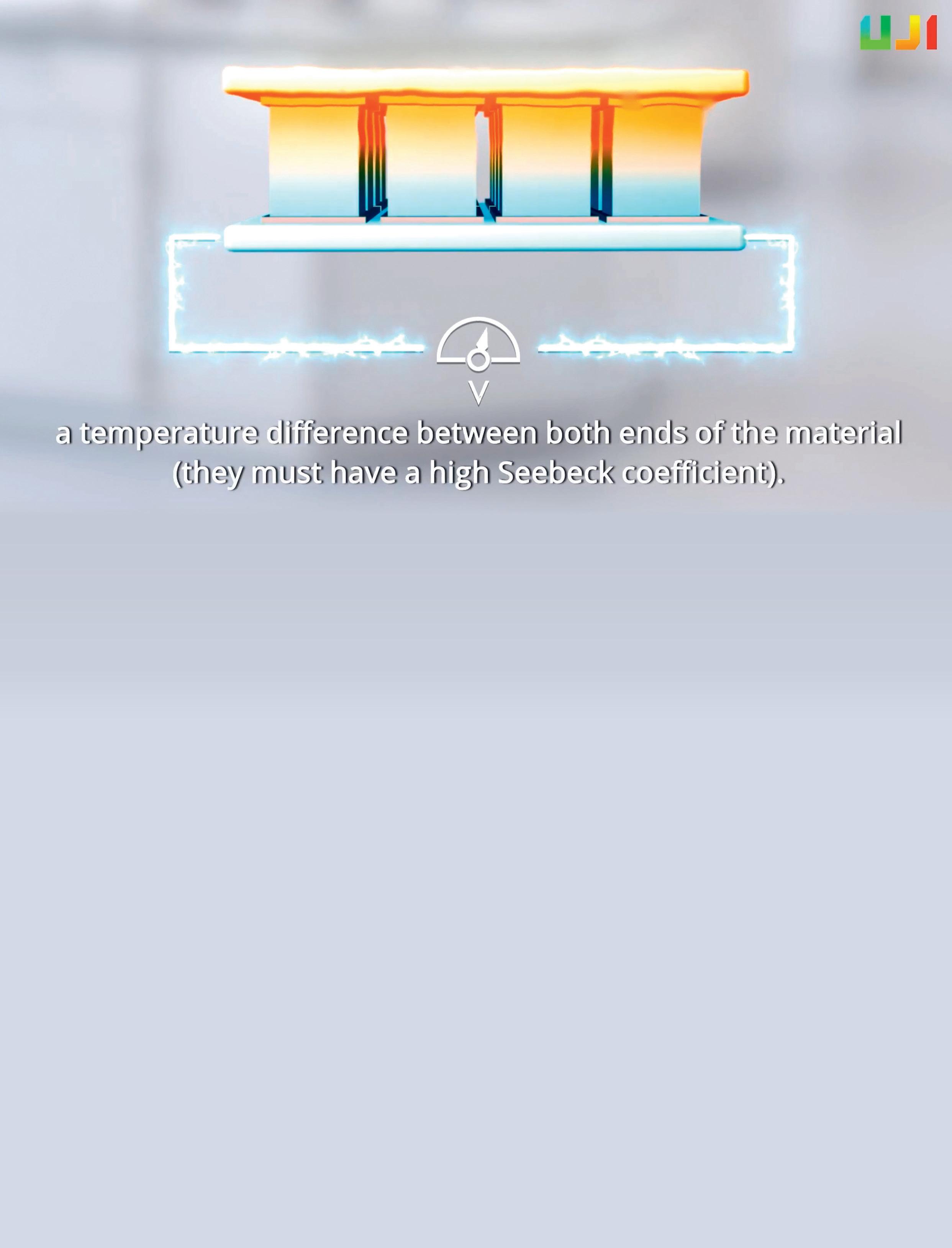
This is where thermoelectric materials come into play. Thermoelectric materials can directly convert heat into electricity under safe, clean, andenvironmentally friendly operation by using temperature differences to produce an electrical current.
electrical conductivity of thermoelectric materials limits their overall efficiency. “The Seebeck coefficient and the electrical conductivity are connected. If you increase one then the other decreases,” continues Dr García-Cañadas.
“When you have a temperature difference across a material it can be converted into a voltage, then used to generate electricity,” explains Dr Jorge García-Cañadas, Principal Investigator in the Thermal and Electrical Systems Laboratory at Universitat Jaume I. However, the adverse relationship between the Seebeck coefficient – a measurement of the voltage that can be induced in a material per each degree of temperature difference – and the
UncorrelaTEd project
This issue is central to Dr García-Cañadas’ work as the Coordinator of the UncorrelaTEd project, an initiative bringing together six partners from across Europe. The primary aim in the project is to essentially break this relationship between the Seebeck coefficient and electrical conductivity, which could open up wider possibilities in the application of thermoelectric materials, moving them beyond niche applications towards the
There is waste heat all around us, from our own bodies to geothermal energy, representing a vast source of potential energy. Improving the efficiency of thermoelectric materials is key to harnessing this potential.
mainstream. “The idea is to develop a system to increase one without affecting the other, which will allow us to increase the performance of thermoelectric materials,” says Dr GarcíaCañadas. UncorrelaTEd researchers are developing a novel solid-liquid hybrid device, where a porous thermoelectric material is impregnated by a liquid electrolyte (a salt dissolved in a solvent). They are investigating how electrolytes can be used to improve the properties of the solid material. “Our main role is in preparing the devices and optimising the electrolytes,” outlines Dr García-Cañadas. “Initially we focused on understanding earlier results, where we used electrolytes to increase both the Seebeck coefficient and electrical conductivity in a material.”
A variety of electrochemical techniques and deposition methods have been used to probe the underlying factors behind these results, and the lessons learned will then be applied on three different families of materials. One of these families is bismuth telluride alloys, which are currently the most effective thermoelectric materials at room temperature, while Dr García-Cañadas is also working with oxides and conducting
polymers, looking to build on the earlier work. “The preliminary results were gained in a material with fairly limited thermoelectric properties. So even though we achieved significant improvements, we still didn’t reach very high overall efficiencies. The idea in the project is to use materials with good initial thermoelectric properties, and then to improve them further through interactions with the electrolytes,” he explains. “We
says they and polymers have certain other beneficial properties. “For example, oxides are usually more chemically stable and less sensitive to corrosion. They also tend to be cheaper and more abundant, while polymers are usually easy to process and are fairly flexible,” he says. Solid porous films of these different materials have been prepared by partners in the project, which was a technically challenging task. “The
electrical conductivity. The starting point is the electrolytes that worked effectively in the initial experiments, then researchers plan to explore various different options. “We have a couple of interesting families of electrolytes, and we will look to assess the effectiveness of different combinations,” says Dr GarcíaCañadas. The earlier results were gained with different salts dissolved in solvents, while researchers are also investigating certain ionic liquids and modifying the electrolytes in different ways. “We can try to understand the influence of the cations and the ions for example, and to modify the concentrations. We can play around with different parameters to see which solutions are the most effective,” continues Dr García-Cañadas.
Material efficiency
This work is currently ongoing, with researchers still working to improve the efficiency of thermoelectric materials, which is ultimately key to the prospect of wider adoption. While thermoelectric materials are currently used in some areas where reliability is more of a priority than cost, for example in radioisotope thermoelectric generators to provide power in space missions, they are not yet widely applied as energy harvesters. “They are not yet widely used in energy harvesting, as efficiencies are still low. We need to get better materials with improved properties,” outlines Dr García-Cañadas. This would help make thermoelectric materials a more viable option for certain applications; Dr García-Cañadas believes they could play an important role in the Internet of Things (IoT) for example. “With the rapid growth of the IoT a lot of sensors will be required to connect different ‘things’, and these sensors will need power,” he points out.
The project’s work is still at a very early stage however, with researchers focused more on exploring these ideas and working towards a proof-of-concept than looking towards potential applications. Rather than looking for highly compact materials, researchers in the project are preparing highly porous films, which Dr García-Cañadas says is not a common approach in the field. “This is one of the project’s main contributions in terms of materials development,” he says. The aim now is to build on the earlier findings and improve thermoelectric efficiency in the three families of materials. “We expect to achieve improvements in some of these materials. We will measure efficiency and then we can move towards a proof-ofconcept,” continues Dr García-Cañadas.
“If we do identify promising families of materials, or families of electrolytes, then they could be explored further in a continuation project.”
As mentioned earlier on, there is waste heat all around us, from our own bodies to geothermal energy, representing a vast source of potential energy. Improving the efficiency of thermoelectric materials is key to harnessing this potential, a topic that Dr García-Cañadas plans to explore further in future. “We need to do more experiments and to identify the optimal electrolytes. We are hopeful that there will be some form of continuation project beyond UncorrelaTEd.” he says. Some clear results, indicating the potential of certain electrolytes and materials to improve efficiency, will provide a solid foundation for further research.
“Once we reach this point in the laboratory, we can then look to move forward,” says Dr García-Cañadas.
UncorrelaTEd
Solid-liquid thermoelectric (TE) systems with uncorrelated properties
Project Objectives
UncorrelaTEd project is aiming at developing a new device concept to efficiently convert heat into electricity. The new concept is based on the combination of a thermoelectric solid material with a tactically designed electrolyte (liquid with ions). This combination is expected to lead to a powerful technology with unprecedented efficiencies.

Project Funding
This project has received funding from the European Union’s Horizon 2020 research and innovation programme under grant agreement No 863222.


Project Partners
• Universitat Jaume I
• IREC
• KTH Royal Institute of Technology

• University of Warwick
• Solvionic

• Specific Polymers

http://uncorrelated.uji.es/partners/
Contact Details
Project Coordinator, Dr. Jorge García-Cañadas
Edificio de Investigación 1
Univeristat Jaume

Av. Vicent Sos Baynat s/n 12006 Castelló de la Plana Spain
T: (+34) 964 38 7417
E: garciaj@uji.es
W: http://uncorrelated.uji.es/
Jorge García-Cañadas leads the Thermal and Electrical Systems Laboratory at Jaume 1 University, a role in which he conducts research into thermoelectric devices and electrochemistry. He has worked on a number of research projects, and has contributed to more than 50 articles in international journals.
think that the strategy we are developing in the project can be applied widely to different materials.”
This will now be tested on these three families of materials, which all have different properties of interest in terms of their potential application as thermoelectric materials. While oxides do not have the same thermoelectric performance as bismuth telluride alloys, Dr García-Cañadas
nanoparticles were prepared, then they were combined together to make a film,” explains Dr García-Cañadas. “This is essentially like a network of nanoparticles, and they need to be robust and mechanically stable.”
The solid materials have now been prepared, with a thickness of just a few microns, and Dr García-Cañadas is now starting to test the impact of different electrolytes on the Seebeck coefficient and
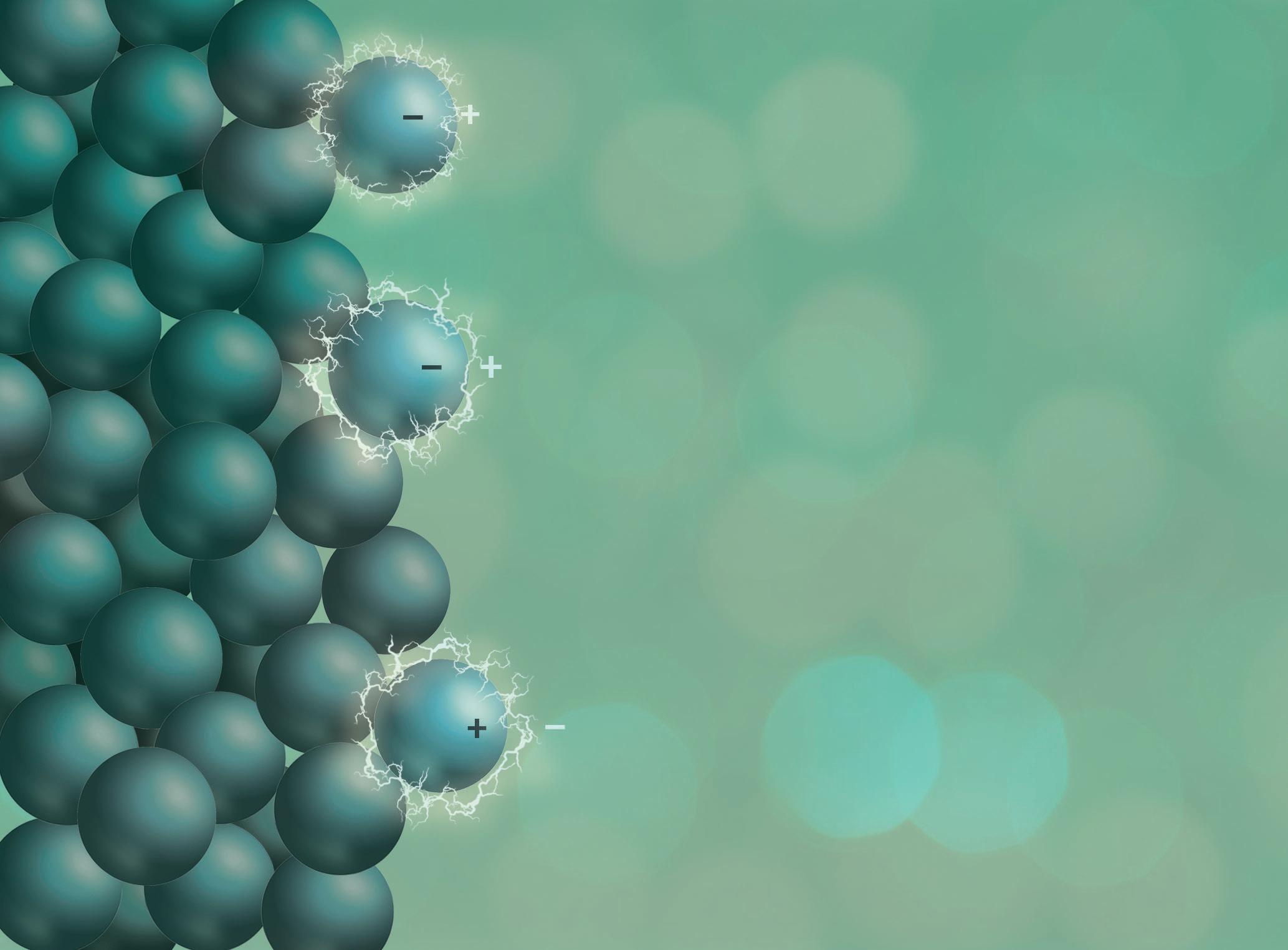
The idea in the project is to use materials with good initial thermoelectric properties, and then to improve them further through interactions with the electrolytes.