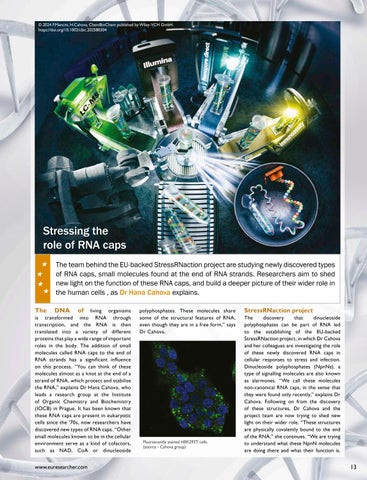
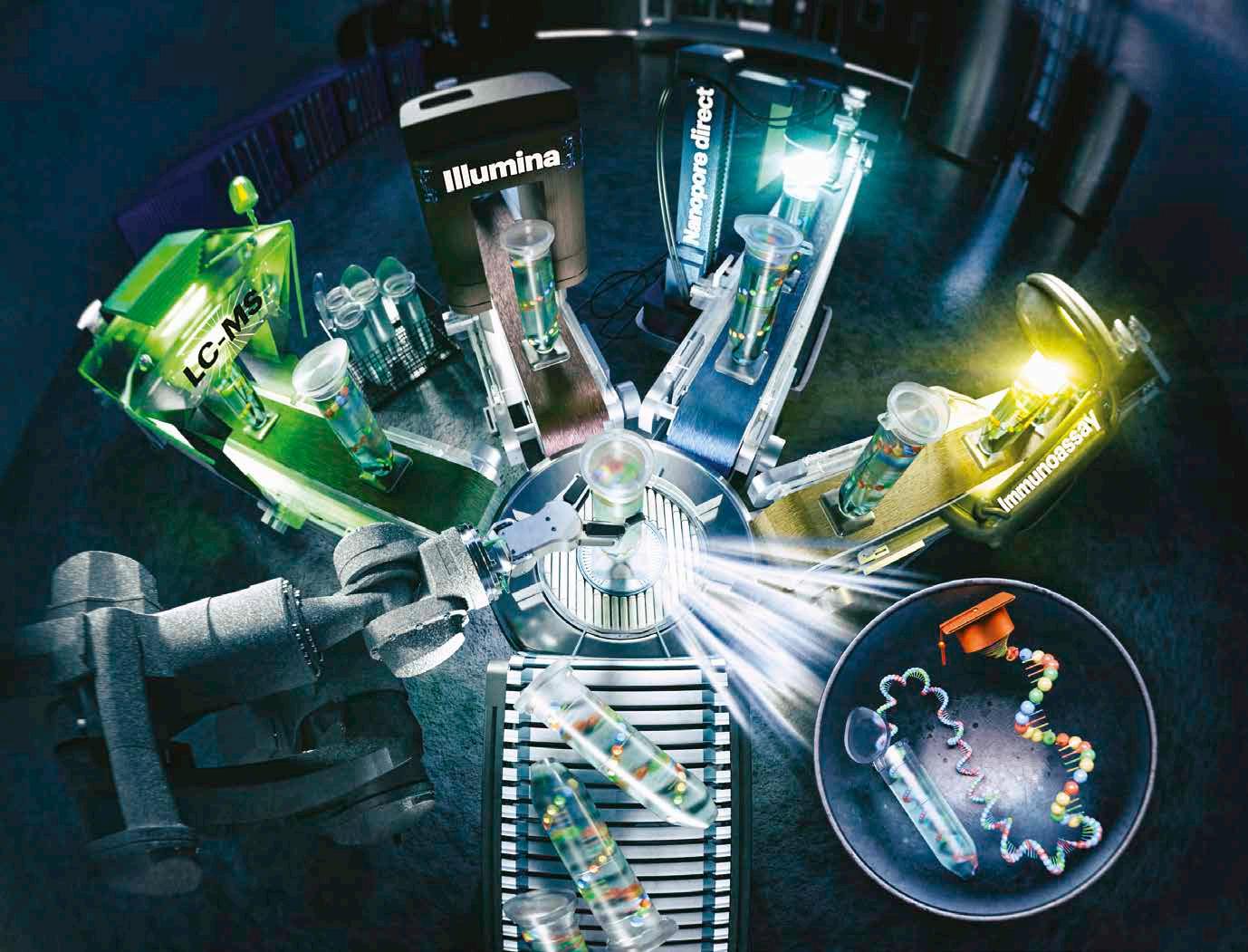
Stressing the role of RNA caps


The team behind the EU-backed StressRNaction project are studying newly discovered types of RNA caps, small molecules found at the end of RNA strands. Researchers aim to shed new light on the function of these RNA caps, and build a deeper picture of their wider role in the human cells , as Dr Hana Cahova explains.
The DNA of living organisms is transformed into RNA through transcription, and the RNA is then translated into a variety of different proteins that play a wide range of important roles in the body. The addition of small molecules called RNA caps to the end of RNA strands has a significant influence on this process. “You can think of these molecules almost as a knot at the end of a strand of RNA, which protect and stabilise the RNA,” explains Dr Hana Cahova, who leads a research group at the Institute of Organic Chemistry and Biochemistry (IOCB) in Prague. It has been known that these RNA caps are present in eukaryotic cells since the ‘70s, now researchers have discovered new types of RNA caps. “Other small molecules known to be in the cellular environment serve as a kind of cofactors, such as NAD, CoA or dinucleoside
polyphosphates. These molecules share some of the structural features of RNA, even though they are in a free form,” says Dr Cahova.
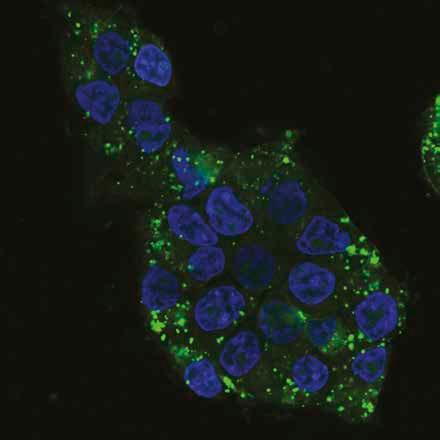
StressRNaction project
The discovery that dinucleoside polyphosphates can be part of RNA led to the establishing of the EU-backed StressRNaction project, in which Dr Cahova and her colleagues are investigating the role of these newly discovered RNA caps in cellular responses to stress and infection. Dinucleoside polyphosphates (NpnNs), a type of signalling molecules are also known as alarmones. “We call these molecules non-canonical RNA caps, in the sense that they were found only recently,” explains Dr Cahova. Following on from the discovery of these structures, Dr Cahova and the project team are now trying to shed new light on their wider role. “These structures are physically covalently bound to the end of the RNA,” she continues. “We are trying to understand what these NpnN molecules are doing there and what their function is.




Why are these structures part of the RNA? What are they doing to this RNA? Do they influence the fate of the RNA?”
Researchers are building on earlier progress here, including Dr Cahova’s previous work in developing a technique called NAD captureSeq for sequencing the RNA of Nicotinamide adenine dinucleotide (NAD), a tiny molecule which is involved in certain types of RNA capping. This stimulated further research in the field, as it opened up the possibility of studying which types of RNA have these caps, and when she established her own lab in Prague Dr Cahova started to look at alarmones and different molecular compounds. “We have been looking at both prokaryotic and eukaryotic cells. We’ve been working with the E.coli bacteria for example, which is relatively easy to study, as we can gather together a huge amount of material,” she explains. “Bacterial systems are relatively easy to deal with as they are less complex than human cells, which have different compartments and organelles,” she explains.
The main objective in StressRNAction however is to understand what’s going on in human cells, so the project team are also using more complex mammalian tissue cell cultures in their research, including human liver and kidney cells. “We are using these tissue cultures to study NpnNs, these new types of structures which are found at the end of the RNA,” continues Dr Cahova. The concentration of NpnNs is known to increase under stress, so researchers are looking to create these kinds of conditions in the lab; a variety of means are available, but Dr Cahova and her colleagues are using chemical methods, which she says are the most reproducible. “Methods like heat shock and nutrition depletion can be used, but they present certain problems, so the
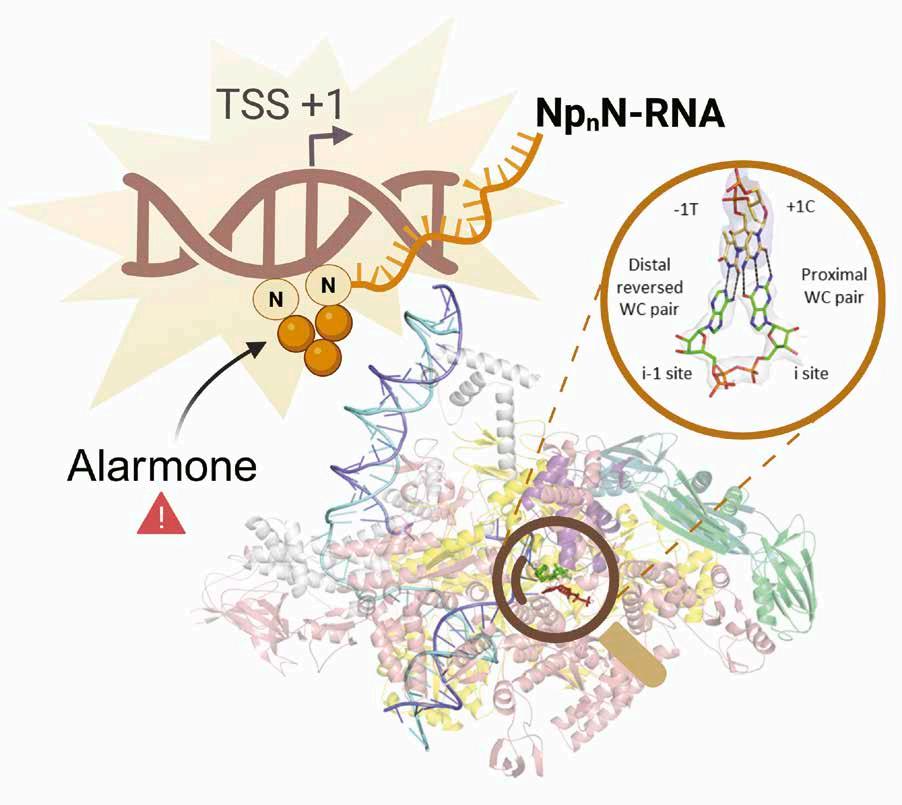
says has been found in human cells. “Ap4A is actually found on messenger RNA (mRNA), the RNA molecule which brings information for protein synthesis,” she outlines. However, when Ap4A is present on mRNA it is not translated into protein production, which Dr Cahova says is an important insight. “We know that these molecules don’t trigger a particularly heavy immune reaction, so we can see they are very natural for the cell. The cell knows them, and knows how to work with them,” she explains. “We have found that the Ap4A RNA is recognised by special proteins, which is something we are now trying to understand in more detail in my group.”
papers as part of the project. “We published a paper in the Angewandte Chemie journal for example, showcasing the discovery of Ap4A-RNA in human cells. Most recently, we published research on the mechanism of how these caps are incorporated into RNA by RNA polymerase in Nature Chemical Biology and we have several other very interesting articles in the pipeline,” she outlines.
StressRNAction
New class of RNA caps and their role in cellular response to infection and stress
Project Objectives
Mechanism of NpnNs incorporation into RNA by RNA polymerase.
Serianni,V.M., Škerlová, J., Dubánková, A.K. et al. Molecular insight into 5’ RNA capping with NpnNs by bacterial RNA polymerase. Nat Chem Biol (2026). https://doi.org/10.1038/s41589-025-02134-5
best method for us is to create stress using chemicals,” she outlines. “We are using menadione to create oxidative stress, and we’re also using bleomycin, which leads to DNA damage, causing stress.”
A key aim here is to find a kind of sweet spot in terms of the level of stress, which will then allow researchers to probe its impact on cells and the formation of NpnNs.
If there’s not enough stress, then you don’t see a strong effect, while if there’s too much stress then the cells will start to die, so Dr Cahova aims to strike a delicate balance.
“We modify the amount of chemicals over a certain range, and we are assessing the outcome in various assays,” she says. When
researchers know how much of the oxidative stress agent is required for a particular size of culture, they add the chemical, then analyse the results after a given period of time. “We harvest the cells and isolate the RNAs. We then look at the formation of different compounds typical for oxidative stress, we measure the amount of oxidative species, ” continues Dr Cahova.
By comparing these structures with those found in the control samples, which haven’t been subjected to stress, researchers can then gain new insights into the formation of different types of NpnNs. One NpnN of particular interest in the project is diadenosine tetraphosphate (Ap4A), which Dr Cahova

“We want to investigate its role in human cell structure. What’s going on? How is it formed? How is it regulated?”
Decoding signals
The formation of Ap4A RNA acts as a signal for the cell, now researchers are looking to understand that signal, identify what reads it, and investigate the subsequent effects. Ap4A is cleaved by an enzyme called NUDT2, which is thought to be a factor in the development of certain forms of cancer, pointing to the wider importance of this research. “NUDT2 is very active in hepatocellular carcinoma for example. If we can build a fuller understanding of what this enzyme is doing in cells, together with this Ap4A-capped RNA, we will be able to learn more about how hepatocellular carcinoma progresses,” says Dr Cahova. This work is very much ongoing, and Dr Cahova and her team have produced several
This is a highly active field of research, and while the StressRNaction project itself is set to conclude next year, Dr Cahova plans to pursue further investigation in this area in future. A lot of progress has been made over the course of StressRNaction, and Dr Cahova hopes to establish a successor project, building on the results so far.
“The StressRNA project has been about discovering molecules, and we have found quite a few,” she says. In future however Dr Cahova plans to focus more specifically on the role of Ap4A-RNA in humans, and to look at its relationship with disease.
“We want to investigate its role in human cell structure. What’s going on? How is it formed? How is it regulated?” she continues.
“We know how Ap4A gets into the RNA, but what regulates it? There must be some mechanism by which the cell knows to put it there or not, so there must be some level of regulation, which is something we plan to explore further in future.”
Structures of cap1 and all non-canonical RNA caps and cap-like structures known to date.
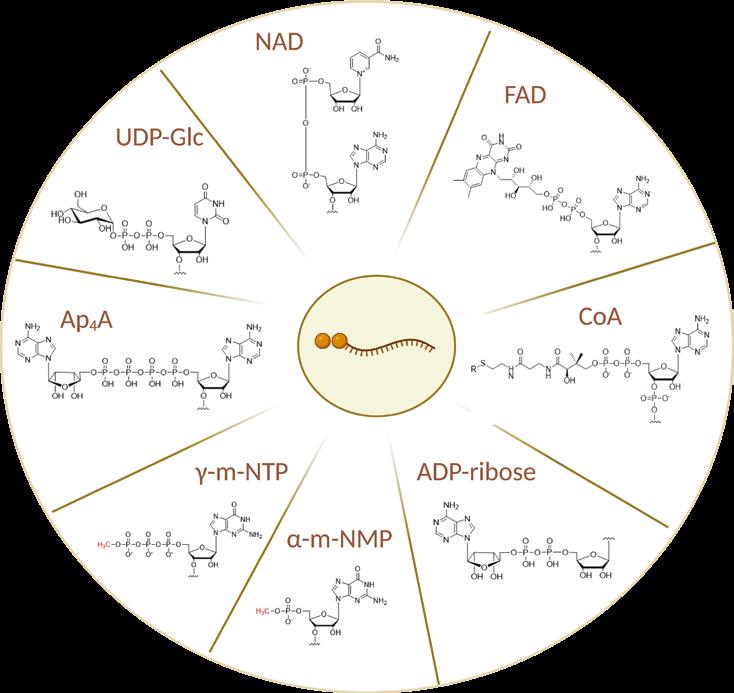
Potužník, J. F., & Cahova, H. (2024). If the 5’ cap fits (wear it) – Non-canonical RNA capping. RNA Biology, 21(1), 739–751. https://doi.org/10.1080/15476286.2024.2372138
RNA is extensively modified, yet 5’ RNA caps remain among the least understood features. We discovered a novel class of dinucleoside polyphosphate caps in bacterial and mammalian cells. Using LC-MS and high-throughput sequencing, we study how these caps are formed, degraded, and what functional roles they play in cells.
Project Funding
ERC StG: Non-canonical RNA caps –cellular reaction to environment and stress (StressRNaction) grant agreement No. 101041374
Contact Details
Dr Hana Cahova Senior Research Group Leader Institute of Organic Chemistry and Biochemistry of the CAS Flemingovo nám. 2. 166 10 Praha 6 Czech Republic T: +420 220 183 124 E: cahova@uochb.cas.cz W: https://www.cahovagroup.com/
Serianni, V.M., Škerlová, J., Dubánková, A.K. et al. Molecular insight into 5’ RNA capping with NpnNs by bacterial RNA polymerase. Nat Chem Biol (2026). https://doi.org/10.1038/s41589-025-02134-5
J.František Potužník, O.Nešuta, A.Škríba, B.Voleníková, M.-B.Mititelu, F.Mancini, V.Serianni, H.Fernandez, K.Spustová, J.Trylčová, P.Vopalensky, H.Cahová, Angew. Chem. Int. Ed.2024, 63, e202314951. https://doi. org/10.1002/anie.202314951
F. Mancini, H. Cahova, ChemBioChem2025, 26, e202400604. https://doi.org/10.1002/cbic.202400604
Potužník, J. F., & Cahova, H. (2024). If the 5’ cap fits (wear it) – Non-canonical RNA capping. RNA Biology, 21(1), 739–751. https://doi.org/10.1080/15476286.2024.2372138
Dr Hana Cahova

Dr Hana Cahova is a Senior Research Group Leader at the Institute of Organic Chemistry and Biochemistry (IOCB) in Prague. Her research focuses on investigating the chemical biology of nucleic acids.