Exploring alternatives to animal testing

Animal testing has long been used in the development of drugs and medical devices, but now the emergence of New Approach Methodologies (NAMs) offers alternatives to the established approach. The team behind the STEP4NAMs project is promoting NAMs and addressing the issues that are limiting their wider adoption.
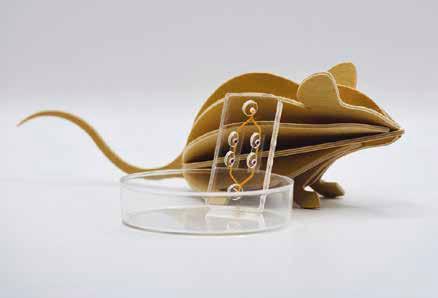
A new drug or medical device has to be rigorously assessed before it reaches the commercial market, and animal testing has long been an important part of the development process, helping ensure that healthcare products are both safe and effective before they are used to treat patients. However, the emergence of New Approach Methodologies, such as organon-chip devices, digital twins, organoids and benchtop-simulations, provides alternatives to animal testing. “NAMs play an increasingly important role in testing drugs and medical devices and in predicting their behaviour in human patients,” says Lennart Biermann, part of the team behind the EU-backed STEP4NAMs project. However, while a number of NAMs have been developed, certain obstacles still limit their use in different parts of Europe. “In some countries, NAMs have not been accepted or validated for example, and there is sometimes a general lack of knowledge about how they should be used,” explains Biermann.
STEP4NAMs project
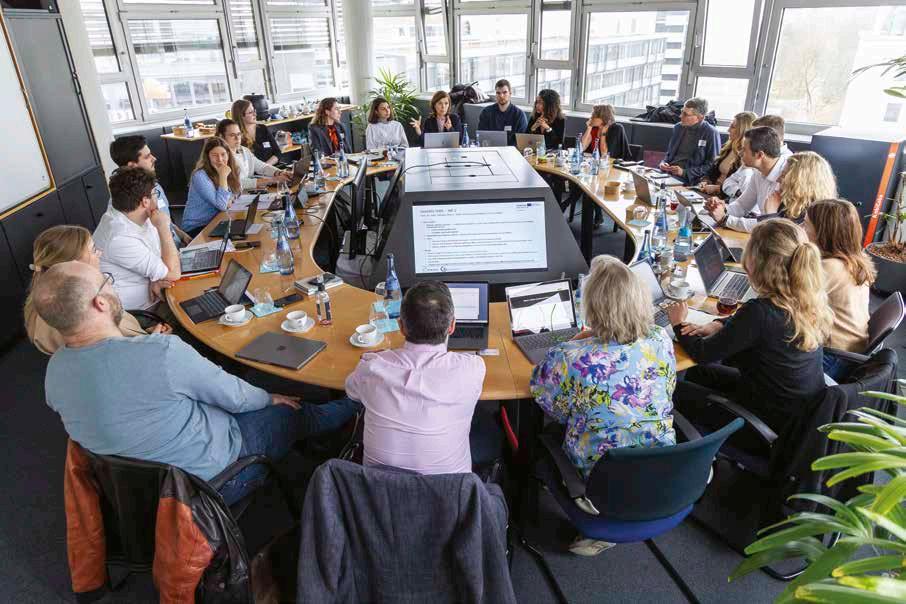
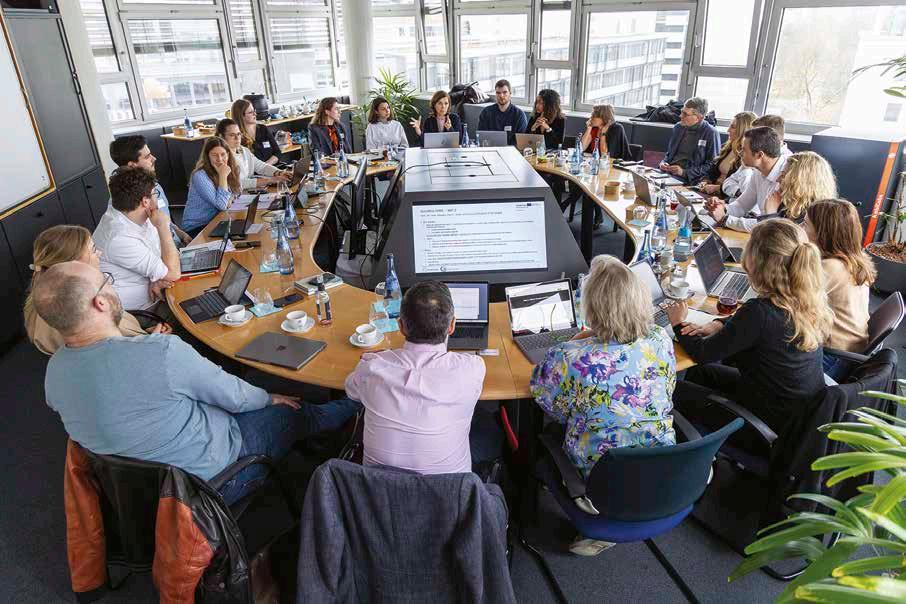
The project team is working together to address these issues through close crossborder collaboration between the partners, including business support organisations and research institutions, who each bring their own skills and expertise to the task of promoting NAMs. The STEP4NAMs consortium brings together ten project
“We are also in touch with a lot of Biopharma and MedTech companies who are interested in using New Approach Methodologies (NAMs), but don’t know how.”
partners and seven affiliate partners from across six European countries, which is a great strength of the project, providing a lot of opportunities to collaborate and share Biopharma and MedTech-related knowledge across national borders.
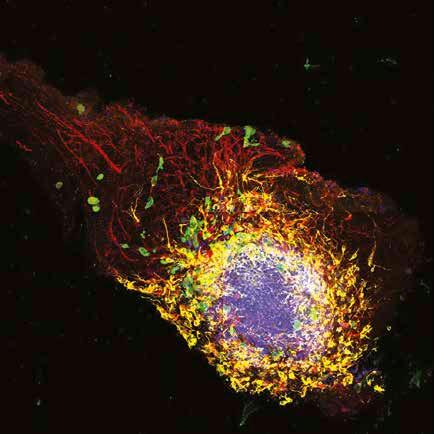
The common thread that links these partners is a commitment to sharing knowledge and improving NAMs, which will in the process help reduce the use of animal testing. There are effectively five pilot studies within the project, in which researchers are working to improve and refine different NAMs, and showcase how they can be used in pre-clinical testing of different types of drugs and medical devices. “For example, our partners at the University of Galway have developed a lung-on-a-chip model, mimicking healthy and acute injured lungs, for the purpose of testing drugs and medical devices,” outlines Biermann. In other pilots, a team at the University of Tübingen is validating organ-on-chip systems across multiple
sites to generate reproducibility data for industrial qualification. Also, researchers at the University of Luxembourg are using patient-derived midbrain organoids to investigate drug responses in Parkinson’s disease, demonstrating the value of organoids as predictive NAMs in neurodegenerative research.
This work holds the potential to greatly speed up the development of drugs and medical devices, allowing researchers to test more candidates much faster than currently possible, while at the same time reducing costs. The challenge now is to validate NAMs and enable their broader adoption.
“We want to encourage the use of these methods,” says Biermann. One key goal in the project is to develop a NAM validation manual for stakeholders in this specific field, providing practical guidance on the different applications, and push regulators to approve them where they have not yet done so. “In the Netherlands, regulators are actively working to reduce animal testing, while NAMs remain relatively unknown elsewhere. We also aim to demonstrate to regulators that these methods offer a reliable alternative,” continues Biermann. “We are also in touch with a lot of Biopharma and MedTech companies who are interested in using NAMs, but don’t know how.”
The aim in the project is to overcome these kinds of barriers, and help reduce animal testing in the Biopharma and MedTech sectors, in line with the wider goal of eventually phasing it out entirely. It’s essential here that staff at Biopharma and MedTech companies have the skills required to use NAMs “We plan to show people and companies how to use these NAMs, which will further highlight their potential,” says Biermann. The NAM validation manual will be invaluable in terms of bringing them closer to daily practice; however, this is an evolving area of research, so Biermann is mindful of the need to update guidance over time.
“Research never stands still, so the manual will need to be updated and improved,” he stresses. “The project is still at an early stage but we are already thinking about how we can proceed and do similar things with other NAMs applications. We have to keep going in order to maintain the momentum and really reduce the use of animal testing in the MedTech and Biopharma industries.”
A number of interviews have been conducted with different stakeholders, planting the seeds that could grow into similar projects. While the main focus in the project is on validating these methods and guidelines, the team also plan to produce
sector specific action plans, to encourage their practical application. “We will produce action plans on how to use NAM methods for both the Biopharma and MedTech industries,” outlines Biermann. This will help demonstrate the effectiveness of NAMs in drug and medical device testing and encourage companies to use them.
“The STEP4NAMs project will contribute to the reduction of animal testing by demonstrating, through pilot studies, that various NAMs are reliable and can achieve comparable levels of efficiency to traditional animal testing within specific application areas,” says Biermann.
Action plans
With the project approaching the halfway point of its four year funding term, researchers are now working to validate NAMs. An open call was announced
in 2025, inviting companies to apply to participate in the pilot studies, and several SMEs and enterprises are now working alongside the project partners to help further develop NAMs. “We had a lot of interest in the call,” continues Biermann. This points to a common desire to explore alternatives to animal testing, and Biermann is keen to bring the project’s work to wider attention, involve more companies and spur further progress.
STEP4NAMs
Step up the use for new approach methodologies to replace animal testing
Project Objectives
STEP4NAMs aims to accelerate the adoption of new approach methodologies by integrating organ-on-chip, organoids, bench-top simulations and digital twins into regulatory and industrial practice. The project develops validated testing strategies, strengthens cross-border collaboration and enhances innovation capacity to reduce animal testing and improve humanrelevant safety assessment across Europe.
Project Funding
STEP4NAMs is funded by Interreg North-West Europe (project reference NWE0400563). The project runs for 48 months with a total budget of €6.33 million, co-financed by the European Regional Development Fund.
Project Partners
The STEP4NAMs project brings together 10 partners from Germany, Netherlands, Belgium, France, Ireland and Luxemburg for boosting the use of New Approach Methodologies to replace Animal Testing. https://step4nams.nweurope.eu/partners
Contact Details
Lennart Biermann
Project Manager
BioRegio STERN Management GmbH Friedrichstr. 10 70174 Stuttgart
T: +49-711 870 354 31

E: step4nams@bioregio-stern.de : https://www.linkedin.com/ company/106484939
W: https://step4nams.nweurope.eu/
W: https://www.bioregio-stern.de/sites/ default/files/documents/2025-09/20250922_ STEP4NAMs_Newsletter1.pdf
W: https://www.bioregio-stern.de/ sites/default/files/documents/2025-06/ STEP4NAMs_Project_flyer_digital.pdf
Dr Margot Jehle
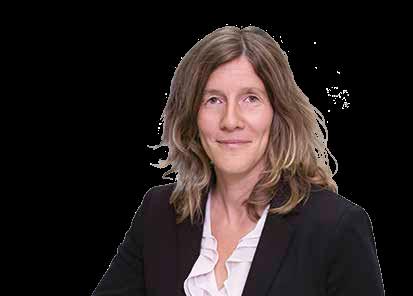
Dr Margot Jehle , a chemist specialising in biochemistry and industrial research, leverages international experience and European networks to build partnerships. As Head of European Projects at BioRegio STERN, she manages EU initiatives for transnational innovation and SME development and serves on the Council of European Bioregions board.


STEP4NAMs Pilots
There are five pilot studies within the STEP4NAMS project, with researchers looking to develop and improve NAMs to test drugs and medicinal products for a variety of conditions, including stroke and acute lung injury. We spoke to Dr Joaquin Penide and Dr Sugunapriyadharshini Sundararaman about their work on two separate pilot studies in STEP4NAMS.
EU Researcher: What topics are you addressing in the pilot at the Atlantic Technological University?
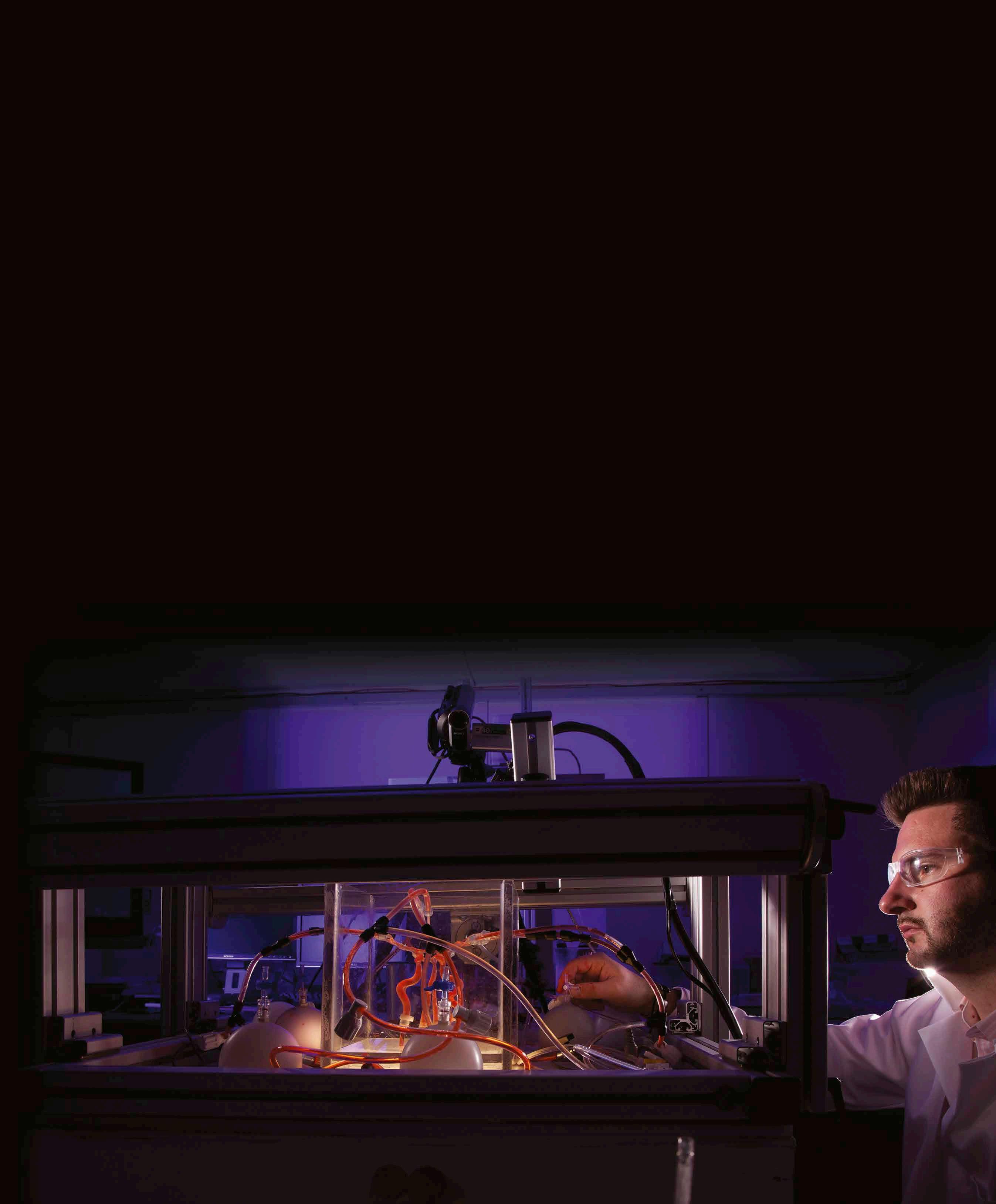
Dr Joaquin Penide: We create vascular models so companies can test thrombectomy devices, which are used to remove blood clots. We create vascular models with a blood clot, so companies can test their technology.
EUR: What materials do you use in these models?
JP: Silicon is the most commonly used material, as it’s the most durable, but it’s inert. We are looking at using 3-d bioprinting to create vascular models, which would help in terms of seeing biological responses.
EUR: Do you aim to simulate the entire vasculature?
JP: As much as possible. Our vascular models are designed using CT scans from patients that have gone through thrombectomy procedures, so we are able to simulate the geometry. The mechanical properties of the arteries and the physiological conditions are also very important.
EUR: Are you able to simulate damage within the vasculature?
JP: Yes, and that’s an aspect in which vascular models are ahead of animal models, which typically have very healthy vasculatures. They are young, they’ve been treated well, and they have had a healthy diet, whereas our models can be more compromised.
EUR: How is the pilot going?
JP: We are trying to produce a set of vascular models to replicate different challenges – for example patients may be older, and have loops and kinks in the vasculature. We are creating a set of different vascular models to replicate the challenges that companies will need to prove they can overcome.
University of Galway
EU Researcher: What is the focus of the pilot at the University of Galway?
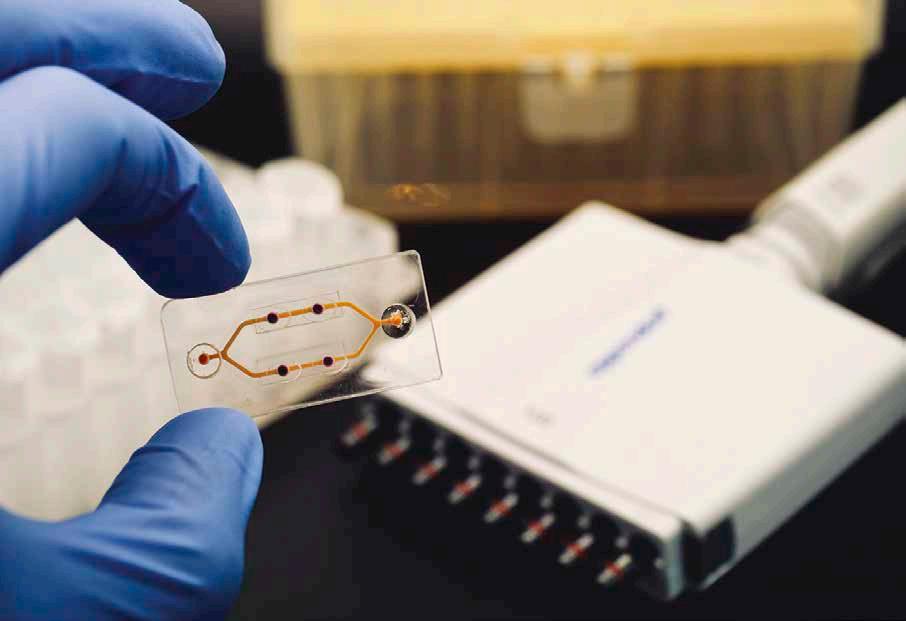
Dr Sugunapriyadharshini Sundararaman: We are developing a lung-on-a-chip model, which will be integrated with microchannels,
where we will culture cells. The outer part of the lung is separated from the inner part by a membrane, so the lung can perform the gaseous exchange, the conversion of CO2 and O2 , which is what happens in the human body.
The idea is to directly replicate human physiology, which is highly complex. We are trying to take components, then replicate and simplify them in an engineered structure, and also look at specific parts of the lung.
EUR: Are you focusing on any specific lung conditions?
SS: We are looking at acute respiratory disease syndrome and are investigating the alveoli part of the lung, where damage occurs and inflammation forms when there is a disease state. The main idea is to look at healthy cells, at their mechanical properties and their barrier integrity.
A diseased lung will have a complex mechanical state compared to a normal healthy lung. We aim to design both healthy and diseased lungs by incorporating the patients’ serum to form a diseased lung in the presence of the cells of the healthy organ.
EUR: How can you achieve this?
SS: Cytokine markers in the patients’ serum will help the cells to get into the inflammation state, which will lead to a complex mechanistic state.
The first set-up is the inflammation, which eventually leads to the involvement of other immune system and regulatory factors.
EUR: Are you collaborating with any SMEs in this work?
SS: We are working with two partners on two different strategies – one involving static systems, another with perfusion, flow systems, where we look at the flow of media, nutrients and cytokine markers between the two cell lines.
EUR: What is the benefit of this for SMEs?
SS: We are developing NAMs, simulating systems and engineering chip designs, as an alternative to animal models. With these systems we can target studies and understand the impact of drugs more precisely