Clear guidelines for handling heat pumps

There is a shift towards using natural refrigerants in heat pumps, part of efforts to reduce the environmental impact of domestic heating and cooling. With demand for heat pumps set to rise, there is a corresponding need for detailed guidelines on how they should be handled, as Nishant Karve and Francesca Tamburrini of the SKILLSAFE-EU project explain.
The domestic heating and cooling sector is a major source of carbon emissions, and many countries are looking to reduce its environmental impact by encouraging a shift towards heat pumps, which is leading to high levels of demand. The refrigerants used in heat pumps are also changing, with a general shift away from fluorinated refrigerantsin particular hydrofluorocarbons (HFCs) - towards more environmentally friendly alternatives. “HFCs are being phased down, because of their environmental impact. There is a move away from HFCs to what are called the natural refrigerants, which have a very low global warming potential in comparison to HFCs,” explains Nishant Karve, an Environment Application Research Engineer at Daikin Europe. Propane (R290) for example is considered to be a natural refrigerant and represents a more environmentally friendly option than HFCs, yet it is also highly flammable, raising safety concerns. “It has the highest flammability rating when compared to some of the existing, more common refrigerants,” acknowledges Karve.
SKILLSAFE-EU project
This issue lies at the heart of Karve’s work as coordinator of the SKILLSAFE-EU project, which brings together four partners from across Europe to develop guidelines on how to handle R290-based monobloc air-to-water heat pumps. With demand for these heat pumps set to intensify, there is a corresponding need for qualified workers to install them, yet there is currently a marked shortage in this respect. “There is a shortage of people with the skills needed to install this kind of technology, that’s a huge hole that needs to be filled. In the project we’re looking at upskilling and reskilling installers, plumbers and technical professionals in the heat pump sector,” says Francesca Tamburrini, EU Projects Manager at the European Heat Pump Association (EHPA), one of the project partners. The team are looking at how heat pumps should be handled throughout the product lifecycle, from the factory, to operational use, to their eventual disposal.“We are looking at issues around the transportation, installation and servicing of heat pumps for example,” says Karve.
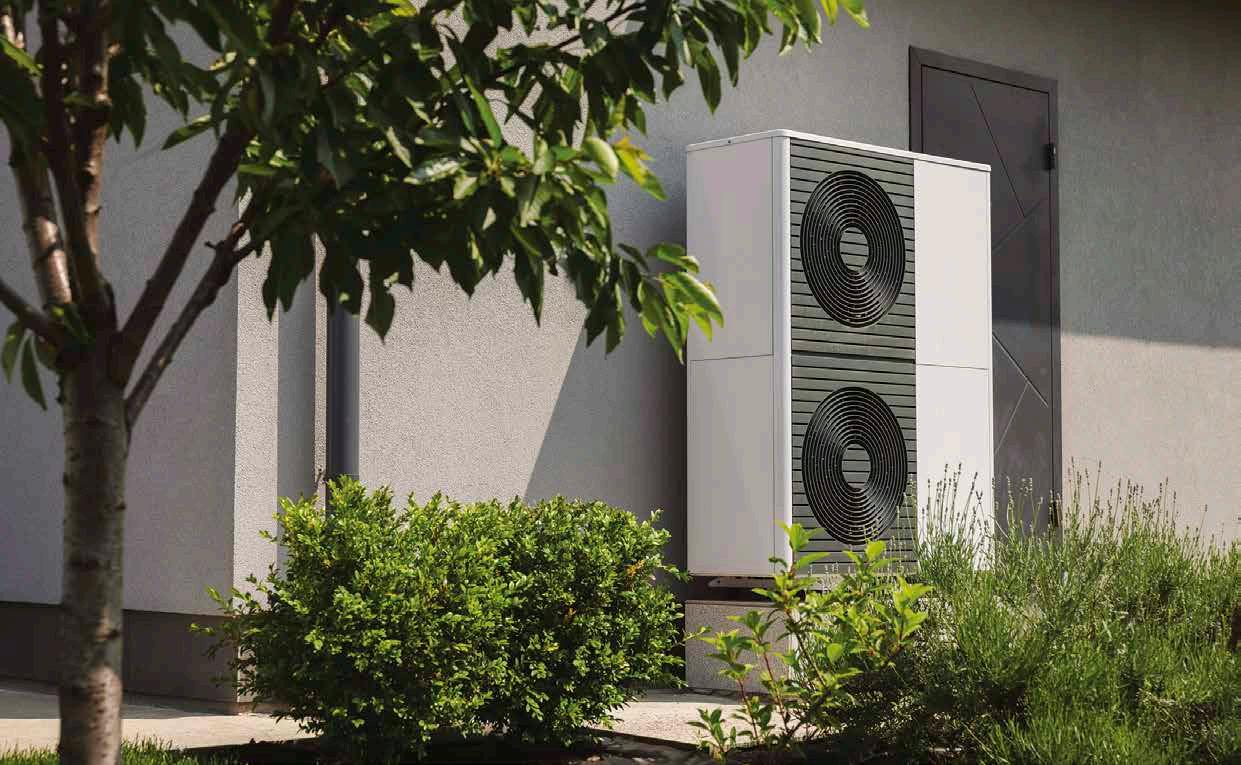
The project is focused specifically on R290-based air-to-water monobloc heat pumps, essentially self-contained systems which are relatively easy to setup and install in comparison to split systems. With split systems there may be an outdoor unit and a connected indoor unit, both containing refrigerant, whereas with monobloc units everything is contained within a single package. “All the refrigerant is within the
industry, and ensure that they reach the right people, including policy-makers.”
A set of guidelines initially developed in Germany by the German Heat Pump Association (Bundesverband Wärmepumpe - BWP) have been adapted with a general European context in consultation with experts, manufacturers and sector representatives, which will then be applied and tested in the project in 10 pilots across at least five different
“Hydrofluorocarbons are being phased down, because of their environmental impact. There is a move away from HFCs to what are called the natural refrigerants, which have a very low global warming potential in comparison.”
outdoor unit,” explains Karve. The key task in installing monobloc heat pumps is to establish the water connections, and with demand set to increase, Karve says more people are looking to join the market. “We expect that in future a lot of plumbers will come in and join the market for installing these monobloc units as well, and that more and more people will be looking to gain the skills to install them,” he continues. “We aim to develop a unified set of guidelines for the installation of heat pumps, with the participation of
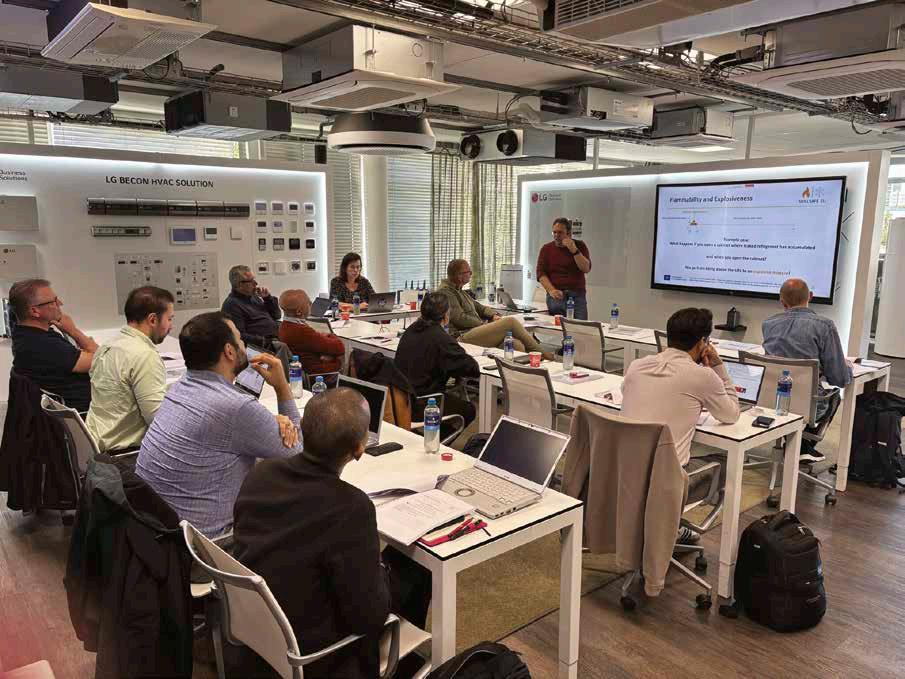
European countries. A lot of emphasis is also placed on communicating these guidelines, with Tamburrini and her colleagues looking to share knowledge with professionals, helping them work safely and effectively. “We organise joint webinars and online events together with several other EU projects, focusing on the heat pump sector. We also send out newsletters, maintain an active presence on social media, and organise and participate in different events, such as the Sigillo Sicuro event in Italy, which brought together a large network of installers,”
she outlines. This is part of the wider goal of promoting heat pumps, ensuring they are safe and reliable, and in the process encouraging their wider adoption. “We want to heighten awareness amongst installers of how to handle these heat pumps,” continues Karve. The first point of contact for a householder interested in purchasing a heat pump is typically an installer, so it’s clearly important that they should have a full picture of the steps they should follow, which will then boost consumer confidence and help accelerate the shift away from gas boilers. While subsidies are in place to encourage people to buy heat pumps, it’s also essential that they are both safe and perceived to be safe, and Karve says installers have an important part to play in this respect. “There is a lot of misinformation around on the topic of heat pumps, and it can sway some people. Installers need to be able to communicate effectively with consumers and counter any misconceptions,” he outlines. Effective training and clear guidelines are central here, and the project team are committed to providing up-to-date information to installers. “We have been translating, updating and adapting the initial German guidelines in line with the opinions and suggestions of experts. We want to develop a new set of guidelines for use across Europe,” says Tamburrini.
Reducing emissions
This will provide a common framework for the handling of heat pumps using R290, helping to boost confidence in the market. Significant progress has been made over the course of SKILLSAFE-EU, with the team working in consultation with industry and other partners to develop the guidelines, and this wide participation is a strength. “A wide range of partners, manufacturers and representatives from the sector have participated in developing the guidelines. We’ve had a lot of input from people with practical experience out in the field,” stresses Tamburrini. A detailed set of guidelines on handling heat pumps has been produced in the project, which it is hoped will encourage more people to consider R290-based heat pumps, and in the long run help meet emissions reduction targets.
“The market is moving in a clear direction, and providing clear information on how heat pumps should be handled will encourage its ongoing development,” says Karve.
SKILLSAFE-EU
Skills Enhancement for Safe Handling of Highly Flammable Refrigerants in the EU Project Objectives
The overall objective of the SKILLSAFE EU project is to adopt a holistic approach at the European level in the fragmented area of guidelines and instructions on the handling of heat pump deployment. This will be done by meeting the needs of higher safety and knowledge and skills for the propane (R290) heat pump installers through development of unified installation Guidelines and integrated approach to training and certification of the installers.
Project Funding
This project is financed by the EU- LIFE Climate Action Programme under Grant Agreement number LIFE23-CETSKILLSAFE-EU/101167753.

Project Partners
• Daikin Europe N.V. (Project Coordinator) https://www.daikin.eu
• European Heat Pump Association https://ehpa.org
• Csim Srl https://www.csimservizi.it
• Nederlandse Vereniging Van Ondernemingen Op Het Gebied Van Koudetechniek En Luchtbehandeling https://www.nvkl.nl
Contact Details
Francesca Tamburrini
EU Projects Manager
European Heat Pump Association AISBL Avenue de Cortenbergh 120, 1000 Brussels, Belgium
T: +32 490 42 32 70 E: francesca.tamburrini@ehpa.org W: www.ehpa.org
Nishant Karve Francesca Tamburrini


Nishant Karve is an environmental research engineer at Daikin Europe, where he has worked for the past five years. His work focuses on the technical feasibility of innovative, climate friendly systems solutions in HVAC.
Francesca Tamburrini is EU Projects Manager in EHPA, where she joined in February 2023. She is currently managing different EU-funded projects, under Horizon Europe and LIFE programmes.






SKILLSAFE EU project meeting.
SKILLSAFE EU training session.
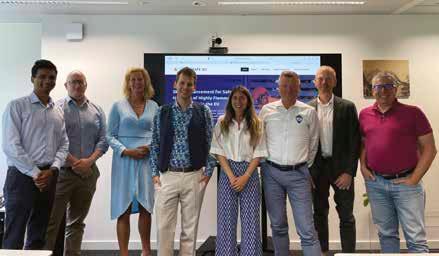
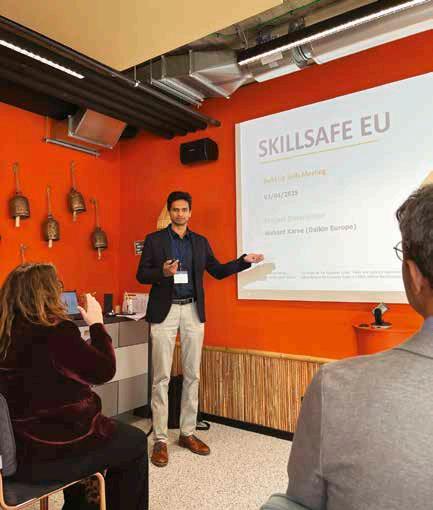
SKILLSAFE EU presentation at the BUILD UP Skills meeting.