
Reconsidering Western European Drama in the Light of Puppet and Marionette Plays
Didier Plassard and Carole Guidicelli of the PuppetPlays project are painstakingly piecing together the fragmented evidence, manuscripts and source material for puppet and marionette plays from across Western Europe, from 1600 to today, to create an open-access online platform.
Puppet shows are widespread in Europe and have been for centuries. Despite this, very little research has been carried out on this unique art form, meaning that puppet stories have become the most mysterious, misunderstood and ignored of play formats.

Didier Plassard explained: “Puppet and marionette plays have been invisible because many of the text materials are unpublished or, when they were published, very few copies were made. Puppetry itself was for a long time despised as an art form, considered as entertainment for low classes or for children. Even if there is now more academic research in this field, it is mainly focused on the visual dimension of puppet theatre and neglects its dramaturgy.”
To complicate the challenge of piecing together a collection, many of the creators of puppet plays are not authors in the traditional sense and plays can develop in different ways, through practice and passing on the story as an oral tradition. Furthermore, the manuscripts that do exist for many classic puppet shows have been scattered throughout Europe.
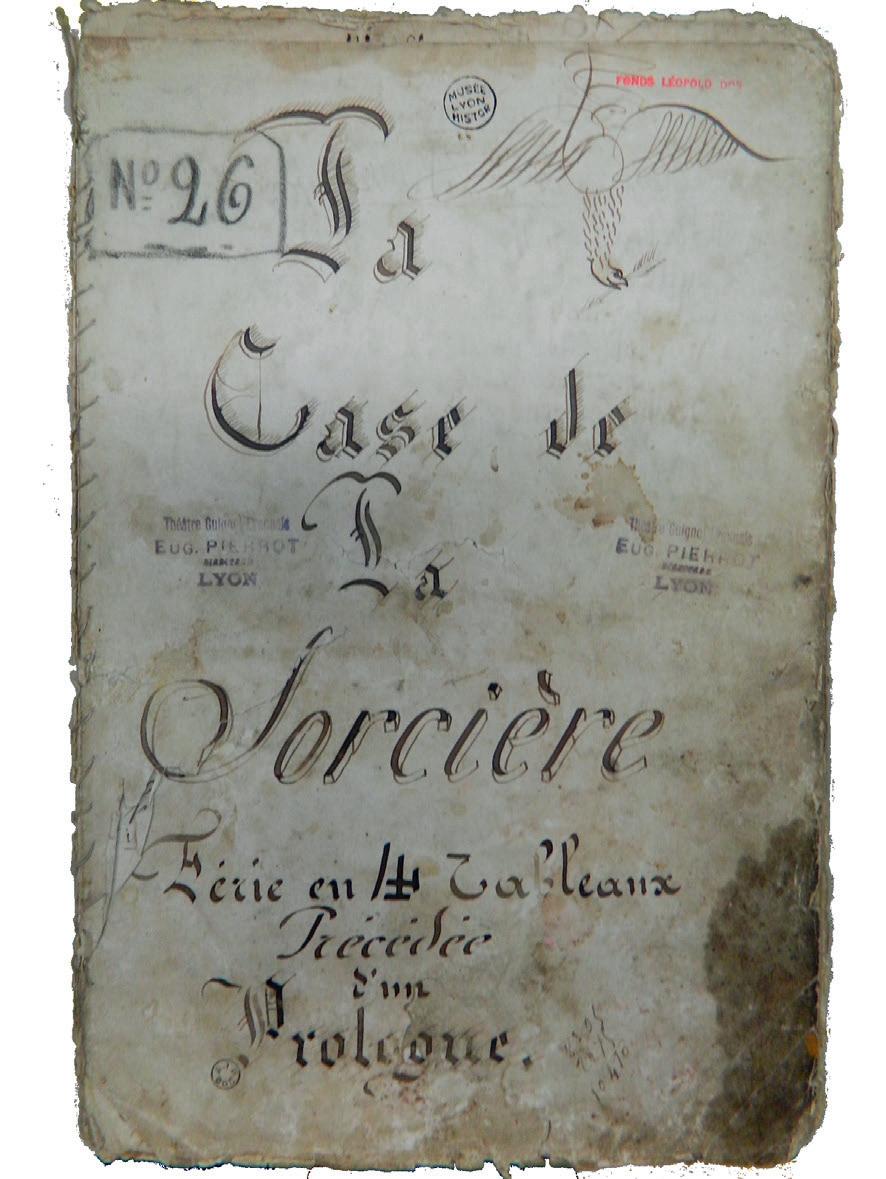
“Many manuscripts are available in museums, libraries and private collections, but with great differences between the European countries. For instance, you can easily find thousands of manuscripts from the 19th and 20th centuries in big and small Italian cities. That is because the famiglie d’arte (families of artists) collected them and passed them down from one generation of puppeteers to the next. A great deal of resources can also be found in France and Germany, where some public institutions keep large collections of printed and unpublished texts.
“But there is a gap between the quantity of resources available in these countries compared to Great Britain, Spain, or Portugal where most of the ancient puppet plays have been destroyed or forgotten,” elaborated Plassard.
Often, original plays are written on poor materials that easily degrade and are too delicate to access repeatedly, such as those kept in the Museo Internazionale delle Marionette Antonio Pasqualino in Palermo.
These manuscripts dating from the early 20th Century were written on school notebooks with poor quality paper and had become incredibly fragile to the touch.
It has not been a simple undertaking.

Plassard and his research team discovered that countries had varying degrees of information available on puppet plays and finding these plays around Western Europe and in history could prove challenging.
editions or archiving location, the context in which it was written and performed (as far as can be ascertained), genre, plot summary, characters, puppet manipulation techniques, dramatic devices and stage techniques, thematic keywords. Queries in the PuppetPlays database can be made with filters, a timeline, or an interactive map of Europe.
With perseverance and persistence, the collection now consists of around 500 pieces, with an aim to collect and describe 1,000. From studying these art forms there are many insights that reveal themselves about the nature, value and craft of this unique method of storytelling.
More Than Words
Puppet plays encompass a spectrum of techniques and styles. There are many types of puppets: glove puppets, string marionettes, rod marionettes, shadow puppets, combined puppet-and-actor, and more. The nature of puppet plays as a highly visual expression means that some plays rely on very little scripting or none. As the project collects the plays in all their formats and guises, some have to be represented in other ways than script.
The PuppetPlays project emphasises dramaturgy (pointing out dramatic devices, stage effects, running gags…) and the story cues that have evolved and changed through different interpretations and productions. Collecting the stories can mean, sometimes, gathering audio-visual elements, storyboards and elements of the production – not just manuscripts – to understand and document the play.
“Some plays are very difficult to describe and we have to invent a methodology and a new terminology to convey this visual connection,” said Guidicelli.
instruments which increase the power of theatrical performances,” enthused Plassard.
The Value of Performances
A benefit of cultivating a central hub of plays, as an online searchable portal, is giving the puppet plays prominence, and it makes them accessible both to experts and curious. It highlights to society the value they have as an art.
Puppet plays can have significance for expressing cultural identity, historical sentiments, rebellious societal tendencies, or religious narratives. Far from being childish
A number of highly comic traditional figures give free rein to their violent instincts: the Neapolitan Pulcinella beats his opponents with a stick and tricks the executioner into hanging himself instead.

The use of puppets to tell stories can steer the narrative and the characters in very different ways from traditional theatre productions with actors, which makes them a unique and intriguing medium.
“Puppets can be used with very different repertoires and social views but, in whichever form they come in, they are magical
performances, puppet plays are engrained with historical context and are highly visual expressions of the feelings of a time.
Opera dei pupi, a Sicilian and South-Italian tradition of puppet shows using rod marionettes, drew its inspiration from the adventures of Charlemagne and his paladins. These stories were told over several months, in hundreds
PuppetPlays’ first mission has been to locate manuscripts, storyboards, scripts, and rare books and pull them together as digital assets.
Then, together with his team, Plassard has described them in an accessible online database, searchable with keywords or key references. Each puppet play has a detailed description: the title of the play and the name of the author, as well as date,

spectators, as the plays were designed to appeal to certain target audiences. In many popular traditions, themes of the plays would be revenge against the rich and powerful, the elite and controlling elements of society, such as judges, policemen and institutions.
“Puppet characters became heroes struggling against all these forces, so this was very easy for ordinary people to identify with them,” said Plassard.
There is another aspect of puppets that plays a significant part in their success for storytelling: it is that they can literally represent anything.
inhabit the world,” added Guidicelli.
Bringing together the puppet play materials into one place makes it easier to appreciate the arc of the development of themes and characters over time.
The Darkness of Puppet Themes
“A number of highly comic traditional figures give free rein to their violent instincts: the Neapolitan Pulcinella beats his opponents with a stick and tricks the executioner into hanging himself instead, and even Death and the Devil cannot get rid of him; when the baby cries too much, the traditional English Punch throws him out of the window and hits Judy, because she blames him; the French Polichinelle in Louis Edmond Duranty’s plays fills his stomach, cheats, beats and kills... and often ends up being carried off by the Devil. Rather than characters, they are impulsive forces devoid of morality,” said Guidicelli.
Devils, crimes, cruelty, birthing and unrelenting beatings can be played even to child audiences, with little concern about censorship. Puppet plays can allow darker, more disturbing themes to be communicated to wider audiences due to the ‘unreality’ and lack of realism of the characters.
traditional plays from oral tradition as well as contemporary creations or group collective writing and storyboards. Some artists were also invited to present their creative process and to discuss it with us.”
By drawing together materials and experts the project illustrates and celebrates the sheer diversity of puppet performances from around Europe through the ages.
Many puppet plays are linked to very old families and steeped in tradition, whilst modern and contemporary texts have often broken away from tradition and reinvented their art. There is a growing interest for writers and performers who understand that puppetry can add a new dimension to a story on the stage.
The fact that puppetry and plays using puppets have survived the test of time is a testament to their power. Today, puppets can be used as key components to stories in mainstream theatre, in best-seller productions like War Horse for example. The future of this storytelling will see some exciting developments.

PuppetPlays
Reappraising Western European Repertoires for Puppet and Marionette Theatres
Project Objectives
The PuppetPlays project objective is to analyse Western European plays for puppets and marionettes, from 1600 to 2000, in order to examine how playwrights and puppeteers progressively developed a specific dramaturgy for this medium.

Project Funding
This project has received funding from the European Union’s Horizon 2020 research and innovation programme under grant agreement No 835193.


Project Partners https://puppetplays.www.univ-montp3.fr/ en/team
Contact Details
of daily episodes where the audience identified with the epic heroes Orlando, Rinaldo, Angelica, and many others.
Many important playwrights in history have created works for puppet plays unbeknown to most. For example, Portugal’s famous playwright of the 18th Century, António José da Silva – a Jew burned to death by the Inquisition –wrote all his comedies for marionettes.
Puppet plays have distinct styles of entertaining and telling stories, according to the animation techniques, the kind of audience and the performing spaces.
“In the 18th Century, glove-puppets were performed in streets and marketplaces, and rod and string marionettes in theatres,” said Plassard. “In the 19th Century, this began to change when local characters were invented.”
In London, a strong cultural bond developed between the Punch and Judy’s performances and the audience. In France, Germany, Italy, Belgium, and Spain, such a bond was strengthened by the characters’ use of dialect or regional language (e. g. Guignol, Kasperl, Faggiolino, Tchantchès, Tia Norica).
The versatility of puppet formats makes them accessible and robust as a performance. They may have evolved over time but, at their core, they remain visually engaging, efficient and effective as a means of theatre.
The regional identity associated with the play was not the only connection with the
“I think that one of the strengths of puppetry lies in the possibility to mingle human and non-human characters: you can have animals, objects, and also abstractions, acting together and related together. Taking into account all ‘modes of existence’, as the philosopher Bruno Latour would say, is certainly one of the reasons why puppet theatre, nowadays, is getting closer to actors’ theatre, to the point that many contemporary plays are composed for living performers and for puppets,” underlined Plassard.
“Nowadays, more and more puppeteers are interested in writing or staging plays that explore the relationship between humans and animals or nature, tackling themes linked to the environment. Moreover, puppeteers, who are now very often visible on stage alongside the puppets and materials they bring to life, are raising new anthropological and ethical questions about the way in which humans
“Because puppets have the ability to move easily from the inanimate to the animate and vice versa, they are also a remarkable instrument for depicting the limits of human experience, death or even ghosts. Puppets are incomparable to arouse what Freud called ‘the Uncanny’”, added Guidicelli. In this respect, puppet plays are a highly unusual and quite unique way of storytelling.
Sharing Expertise and Insight
As well as compiling a centralised online hub of plays, the project organised two international conferences to bring the wider, fragmented community of puppeteers, historians and authors together with researchers to share their knowledge and art.
The first PuppetPlays international conference: Literary writing for puppets and marionettes in Western Europe (17th-21st centuries) took place in October 2021 at the University Paul-Valéry Montpellier 3. The second, at the same venue, was held in May 2023 and titled: Portrait of the puppeteer as author (17th-21st centuries).
“The first one was devoted to literary authors, playwrights for puppets, and examined their dreams – whether actually performed or not – of a specific dramaturgy for these instruments,” said Plassard. “The second was the opposite focus, devoted to the plays composed by performers and artists themselves. This encompassed

“Some writers are very interested in puppets and have a strong connection with puppeteers. Some others state that their play is meant for puppet theatre, but they don’t have any precise idea about what kind of puppets to use: they want to express something about frailty or fantasy and they think that puppets might be the appropriate instrument for this,” said Guidicelli. There will no doubt be many more plays created for puppets to add to the growing database and there will be new methods, new technologies and new formats of puppet theatre.
“We already see robots being used in plays,” quipped Guidicelli.
Plassard summarised: “In the past centuries, the puppet and marionette theatres were often the only kind of performing art that some audiences could attend: lower classes, countrymen, children, etc. But progressively, puppet was
considered a specific instrument with its own expressive potential, due to its visual qualities. Nowadays, it is very much a living performance, where every little choice of material is important, as is the way the performers manipulate them, interact with them, etc. With puppets you can do anything and everything, you can make them fly, you can make them kill themselves, you can tear them to pieces... The renewal of puppetry results from the mixture of actors and puppetry together on stage. Puppetry has become a means of expression in the same vein as dance, or the circus, it is a highly visual way of communicating through a performance.”
Ingeniously, PuppetPlays will harness the collective power of the crowd by bringing together communities of users to help in the collaborative transcription of uploaded handwritten documents in order to complement the database with a multilingual anthology. The open-source, online platform will be bilingual (French and English). It consists of the database, the anthology, an a-z directory of authors, a presentation of animation techniques, and the academic productions of the project.
Principal investigator : Didier Plassard didier.plassard@univ-montp3.fr

Project officer Carole Guidicelli carole.guidicelli@univ-montp3.fr

T: +33 (0)4 11 75 71 84 E: claire-marine.parodi@univ-montp3.fr W: https://puppetplays.www.univ-montp3.fr/en
Didier PLASSARD is full professor in Theatre Studies at the Université PaulValéry Montpellier 3. His research fields include avant-garde theatre, stage direction, dramaturgy, multimedia, and puppetry. He has been the Principal Investigator of PuppetPlays since October 2019.

Main distinctions: Prix Georges Jamati d’esthétique théâtrale (1990) Sirena d’oro (Arrivano dal mare!, 2012), Chevalier des Arts et des Lettres (2015).
Carole GUIDICELLI is a Doctor in Theatre Studies (University Paris 3 Sorbonne Nouvelle). She is a teacher, a researcher, and a dramaturge. She has been working as a Research Engineer for the PuppetPlays project since October 2019.
Publication: Surmarionnettes et mannequins / Übermarionettes and mannequins (Institut International de la Marionnette / L’Entretemps, 2013).