
Patents; sources of scientific information?


The granting of a patent gives an individual or company a degree of commercial control over a new invention, in return for disclosing information about the nature of the product. This is often thought of as a way of stimulating invention and encouraging companies to invest in new ideas, yet it has also been argued that they in fact hold back innovation, and there are historical examples of countries removing patent protections. “In 1869 for example the Netherlands abolished patents, while Switzerland did not have patent protections during some parts of the 19th century,” explains Eva Hemmungs Wirtén, Professor in the Department of Culture and Society at Linköping University in Sweden. Debate around patents continues today, intensified by concerns about unequal access to vaccines against Covid-19.
Patents have typically been granted under national law, and countries may vary in terms of the specific requirements that need to be met. However, the critical factor is that a new product should be novel, often building on scientific
discoveries and cutting-edge research. “This is one of the baseline aspects of patents which connects it to scientific research,” stresses Professor Hemmungs Wirtén. Proving that an invention is new takes place through searches of what is called prior art, which includes material in journals and various other types of documents. “An enormous amount of material needs to be looked at in order to prove that an invention is new,” she continues. “With the development of evermore complex technical innovations, and the process of documenting it and proving it, the patent system becomes almost a motor of the information system.” This, however, is not a completely new development.
PASSIM Project

Professor Hemmungs Wirtén is the Principal Investigator of the ERC-funded Patents as Scientific Information 1895-2020 (PASSIM) project, which is a humanities-based, interdisciplinary project looking at the ascent and development of patents as documents during the twentieth-century. What makes
the project unique, she argues, is that its researchers look at patents from a much broader perspective than is usually the case. “Our interdisciplinary team looks at patents with fresh eyes, trying to understand their value and impact as part of the history of information and knowledge,” she outlines.
The project is focused on the history of patents between 1895-2020, with researchers studying patents over this long historical period when information really came to the fore as a key component of modern society. This was paralleled by rapid technological development which opened up new possibilities in the communication of ideas and knowledge. “There were the beginnings of a new structure for the circulation of knowledge and information in the late 19th century, and patents played a role in that,” says Professor Hemmungs Wirtén. The history of patents pre-dates this period by several centuries, but as the processes of industrialization and internationalization gathered pace, the history of patents entered into a new phase.
Patent law is often thought of as a way of stimulating innovation and encouraging companies to develop new products that boost the economy and raise our standard of living. We spoke to Professor Eva Hemmungs Wirtén about her work in investigating the patent system and its role in creating the information infrastructure that shapes our lives today.”Laboratorium Mundaneum” - the visualization of patents among other documents made by Paul Otlet in 1937.
This rapid acceleration in the number of patents has been taken by some observers as evidence of their centrality to technological progress, and illustrative of a healthy culture of research and innovation. However, patents can also be used defensively, with corporate patent attorneys wielding the power in some circumstances to halt the development of a rival’s innovation, or to protect an idea which some might consider frivolous. “There are lots of weird and wonderful innovations out there. They may be amusing, but are they really pushing the technical boundaries?” asks Professor Hemmungs Wirtén. The accumulation of patents is not necessarily qualitatively important, but it does lead to the creation of huge volumes of information, an issue that Professor Hemmungs Wirtén and her colleagues are exploring in the project. “The patent system is not only part of the ascent of the information society, think one of the central conclusions of the PASSIM project is that it’s really been a major driving force in this historical development,” she says.
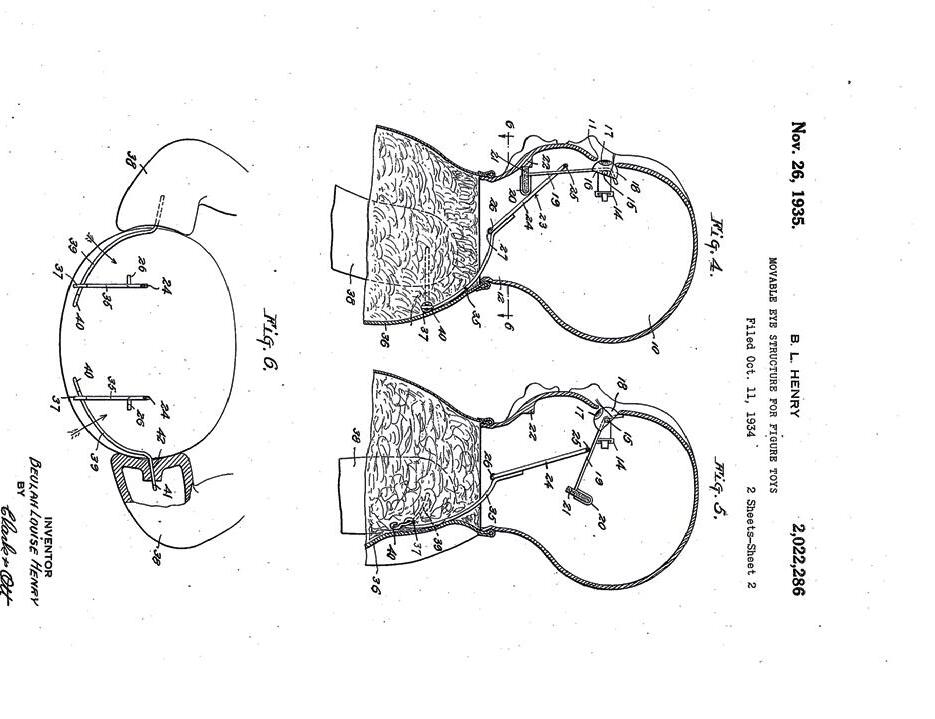
The way in which patent documents are circulated and used has of course evolved over time, with new technologies emerging throughout the course of the last 120 years, influencing the way in which we record and retrieve information. In the late 19th century patent documents were largely recorded on paper, then later microfilm was used, and nowadays patents can be searched for via databases like the European Patent Office’s (EPO) Espacenet database. “Patent history in a way is part of information history, there is this close relationship with technology and the different ways in which documents have been accessed,” says Professor Hemmungs Wirtén. Patent drawings themselves have also become attractive visual artefacts, sometimes used in public spaces, which Professor Hemmungs Wirtén says is a valuable way of highlighting the


role of the patent system. “Many people find these old patent drawings quite interesting,” she says. “The use of old patent specifications range from making fun of the system - acting as proof of the system’s importance - or being counted and accumulated in order to prove their importance in terms of technological development.”
increasingly complex, raising new questions. “Can ordinary people read a patent and understand what it is about? Many people would argue that this is impossible today, because you have to be so extremely specialised,” says Professor Hemmungs Wirtén. “From this viewpoint we can’t really think of patents as a source of information and knowledge, because they are just too specialised and complex.”
This calls into question whether the patent system still functions in the way it was initially intended, namely as a motor to spur innovation and technical progress. The patent system has also attracted more fundamental criticism, with some people arguing that it is by nature exclusionary. “The patent system initially developed from a Europe-centric perspective, then it expanded more widely,” outlines


The primary focus in the PASSIM project is on exploring these different perspectives on the patent system, and also highlighting its role in creating the information infrastructure that shapes our lives today. While her own background is in comparative literature, Professor Hemmungs Wirtén says the project brings together people from a variety of disciplines, with different perspectives on patents. “We have legal scholars working in the PASSIM project, as well as people from an inter-disciplinary background or from areas
like information science. They have focused their attention on various different periods and technologies over the timespan covered in the project,” she says. The wider aim in the project is to build a deeper understanding of how the patent system has influenced the way information is transmitted, and to develop a new narrative of patents. “We want to show just what these interdisciplinary perspectives can provide in terms of new insights into the patent system,” continues Professor Hemmungs Wirtén.
PASSIM
Patents as Scientific Information
1895-2020
Project Objectives
PASSIM’s objective is to unpack the multifaceted relationships featured in the patent bargain, recombine them in unexpected and creative ways and develop from that a new conceptualization of how patents and intellectual property has contributed to and also acted as an engine in the consolidation of the knowledge-based economy.
Project Funding
This project has received funding from the European Union’s Horizon 2020 research and innovation programme under Grant Agreement number: 741095 — PASSIM — ERC-2016-ADG.


Project Duration
October 1, 2017-June 30, 2023.
Project Partners
Mundaneum:

http://www.mundaneum.org/ Nobel Prize Museum: https://nobelprizemuseum.se/en/ The Science History Institute: https://www.sciencehistory.org/ The International Society for the History and Theory of Intellectual Property: https://www.ishtip.org/
Contact Details
Symbolic power of patents


A further topic of interest in the project is the symbolic power of patents, which Professor Hemmungs Wirtén believes has grown significantly since the end of the Second World War for a number of reasons. One major factor is the globalisation of patent and trade systems since the end of the conflict, which has helped make technical knowledge ever more valuable.
“The simple term ‘patent pending’ has always denoted a certain kind of value,” outlines Professor Hemmungs Wirtén. The value of a patent lies to a large extent in the information that will be disclosed about what’s being patented, yet over time they have become
Professor Hemmungs Wirtén. The economic landscape of the world has changed significantly since the end of the Second World War, and many nations have gained independence from their former colonial masters over the period covered by the project, another topic PASSIM researchers have explored. “For example, India and Brazil have a colonial past but have become economic and information and knowledge superpowers in their own right,” Professor Hemmungs Wirtén says. “On the one hand, they critiqued the old intellectual property system, but on the other they have also become quite adept at using it themselves. That is a very interesting dynamic.”
Principal Investigator, Eva Hemmungs Wirtén

Institutionen för kultur och samhälle (IKOS)/ Department of Culture and Society Linköpings Universitet/Linköping University 601 74 Norrköping SWEDEN

T: +46 (0) 11 36 30 65 E: eva.hemmungs.wirten@liu.se : @evahemmungswirten W: www.passim.se W: www.evahemmungswirten.se
Eva Hemmungs Wirtén is Professor of Mediated Culture at the Department of Culture and Society, Linköping University, Sweden. She has written extensively on the cultural history of international copyright, the public domain and the commons, and, more recently, on patents as documents in the history of information.
There has been a lot of debate about whether patents stand in the way of the development of new vaccines against Covid-19, or if they are necessary to create the kind of financial climate that makes pharmaceutical companies want to get involved.The PASSIM Team, 2021.