A helping hand for egg farmers

It is increasingly difficult for farmers in North West Europe to produce eggs cost-effectively, as they seek to balance concerns around sustainability, environmental impact and animal health and welfare. The OMELETTE project team aim to address the challenge by increasing hen longevity and building a more sustainable egg-producing sector in the region, as Nathalie Sleeckx explains.
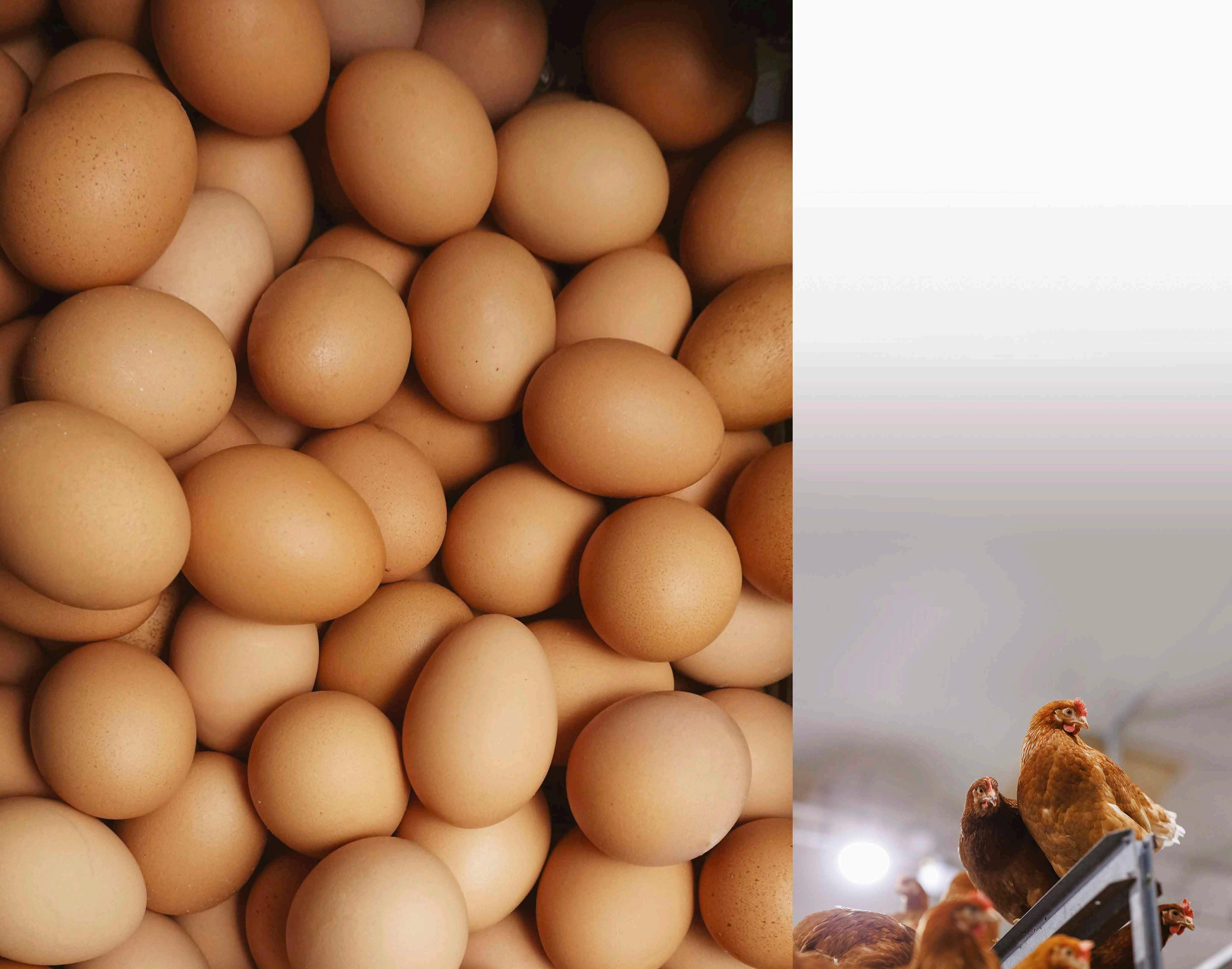
A wide variety of factors need to be taken into account in the production of eggs. Not only do farmers need to meet strict hen welfare standards, but they must also minimise the use of antibiotics, while environmental issues are also a prominent consideration. “Many countries have strict regulations around ammonia emissions for example,” points out Nathalie Sleeckx, an expert at the Experimental Poultry Centre in Antwerp. It can be difficult for farmers to balance these different demands, to meet animal health and welfare standards and minimise their environmental impact, while at the same time producing costeffective eggs for the commercial market, says Sleeckx. “This is a problem across all egg production systems in terms of getting certificates and a licence to produce,” she explains. “This combination of factors makes it very difficult to operate in the hen and egg-producing sector in North Western Europe.”
OMELETTE project
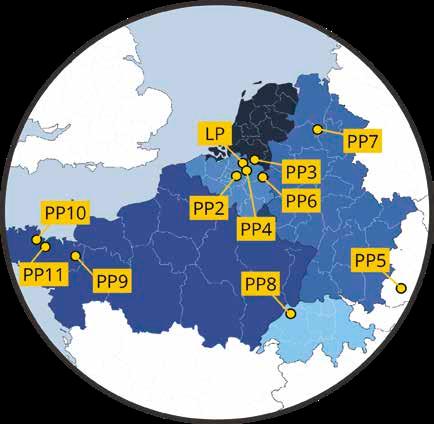
This is an issue Sleeckx is working to address in the OMELETTE project, an initiative funded under the Interreg North West Europe programme. The project brings together partners from five countries across North Western Europe to share knowledge and technical insights, looking to increase the resilience and sustainability of egg production in the region. “We are looking at how we can assist farmers. Extending hen longevity is the main goal, and is the focus of our activities in the project, so that hens can then produce eggs for longer, while at the same time meeting health and welfare standards,” says Sleeckx. The project team are gathering production and health and welfare-related data from pilot farms across the region, which Sleeckx hopes can then be used to increase hen longevity. “Can we go from curative hen management to more proactive hen management?” she outlines. “Can this support farmers, maintain hen health and welfare, and reduce the need for veterinary medicine?” This does not mean less veterinary support however, as farm vets play a crucial role in proactive hen
management, helping guide farmers towards the optimal management approach.”
The project is currently in a data gathering phase, with researchers bringing together information on the different factors that can improve hen management. These include variables like feed and water intake, production, housing, and light schedules, while researchers are also looking at using automatic monitoring techniques for animal health and welfare to build a deeper picture. “Can we use cameras to detect levels of feather cover in hens for example? We are also interested in using cameras to monitor hen behaviour,
both individually and in the flock as a whole,” says Sleeckx. Many farmers have lots of this type of data on their hens, now Sleeckx and her colleagues in the project are looking to put them together to analyse it and gain fresh insights, which can then inform more effective management strategies . “Can we have a checklist to help farm vets and advisors evaluate health and welfare indicators? Then any issues can be identified at an earlier stage,” she continues. “We are looking to use this data for preventative management of hen health. The Plan Do Check Act (PDCA)
approach, based on the available data, is important here.”
This data will inform the development of a longevity action plan, designed to extend the lifespan of hens and ultimately improve the sustainability of egg production. This is not intended as a rigid guide, but rather a flexible, custom-made plan built around a common core, from which farmers can choose the elements that are relevant to their circumstances. “The basic preventative hen management stays the same, but certain aspects may only be relevant to specific farms. Some may not have dynamic lights for example,” says Sleeckx. The longevity action plan will be applied at farms across the five countries, each of which has different types of hen populations, as well as varying consumer preferences. “In the Netherlands they mainly have white hens, which tend to lay eggs up to around 95100 weeks,” continues Sleeckx. “In France, there is more consumer demand for brown eggs, which are typically laid between the ages of 70-75 weeks, so there is a lot of scope to make gains.”
There is also room for improvement in Belgium, where hens are gradually laying eggs for longer, while there is wider interest in extending the egg production cycle in all production systems, including the organic sector. While agriculture is often thought of as a very traditional industry, Sleeckx says farmers across North West Europe are open to using innovative methods to increase hen longevity. “Farmers from all countries are interested, but the end goal for each may be different. In the Netherlands for example they are already quite advanced when it comes to hen longevity, but they are open to tools that could improve it further. In France, going from 70 to 80-85 weeks would already be a significant gain,” she outlines. The next step will be to look at the impact of the project’s work in these terms, and the longevity action plan is being tested at ten pilot farms. “How can we guide farmers, together with other advisors, towards achieving this increased longevity? How can we pick up early signals of diseases or welfare issues?” says Sleeckx.
Wider impact
A more pro-active approach could also be applied in the management of other animals, and the project team are interested in exploring the wider relevance of their research. For example breeder farms, which raise the male and female chickens that produce fertilised eggs, face similar issues to those confronting the egg production sector.
“They also have a lot of similar challenges. People from these farms have been in contact with us about different aspects of our research that have been presented, for example on the light strategy used,” says Sleeckx.
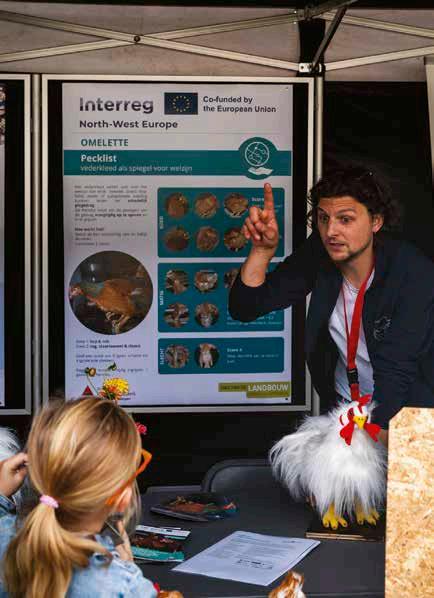
The project’s work will also contribute to the goal of producing more food locally and maintaining an egg production capacity in North West Europe, rather than needing to transport it over large distances. At the same time, Sleeckx and her colleagues aim to heighten awareness of the way food is produced and the challenges involved. “Many consumers do not have a full picture of how eggs are produced, and hear only about the downsides,” explains Sleeckx. “We want to raise awareness and be very transparent about how eggs are produced. We are organising events to inform consumers and local authorities, such as open days for example.”
concerns of modern consumers. The hope is that this will lead to greater trust between farmers and consumers, and help the sector build towards a more sustainable future. “We
“Can we go from curative hen management to more proactive hen management? Can this support farmers, maintain hen health and welfare, and reduce the need for veterinary medicine?”
OMELETTE
OptiMise and Extend hen Longevity to Expedite the Transition to susTainable Eggs
Project Objectives
Poultry farmers and sector in the NWE region take on board solutions to actively contribute to an improved hen longevity with ensured animal health and welfare, egg quality and economic viability as major premises for a future-proof resilient sector.
Project Funding
The OMELETTE project is co-funded by the European Union through the Interreg NWE programme. NWE 0200174 OMELETTE.
Project Partners
11 partners from 5 different countries are working closely on the OMELETTE project https://omelette.nweurope.eu/partners
Contact Details
Project Coordinator, Nathalie Sleeckx
Experimental Poultry Centre (Proefbedrijf Pluimveehouderij VZW), Poiel 77, 2440 Geel (Belgium)
E: nathalie.sleeckx@provincieantwerpen.be T: +3214562887
W: https://omelette.nweurope.eu/
This will highlight the strength of the local egg-producing sector in terms of hen welfare, environmental impact and food safety, all key
aim to help keep a large egg production sector in North West Europe,” says Sleeckx. A greater focus on hen longevity is an important part of this, and while the initial focus is on the ten pilot farms, Sleeckx hopes the project’s research will bring benefits to farmers across North West Europe. “We have a very large expert panel in the project and are working with a wide variety of stakeholders in countries across the region, who could help to spread this approach out more widely,” she outlines. “The information we have gathered will also be compiled in a training scheme for farmers, advisors, and people interested in working in the sector in future. The knowledge we have gained will last beyond the project and have a long-term impact.”

Sleeckx has been actively involved in applied research at the Experimental Poultry Centre in Geel since 2013. She graduated as a veterinarian from Ghent University in 2007 and obtained her PhD in 2013. Her research focuses on animal welfare and animal health. Nathalie is a project manager for national and European research project.


Nathalie
Nathalie Sleeckx (DVM, PhD)
© EuroGeographics Association for the administrative boundaries (NUTS regions)
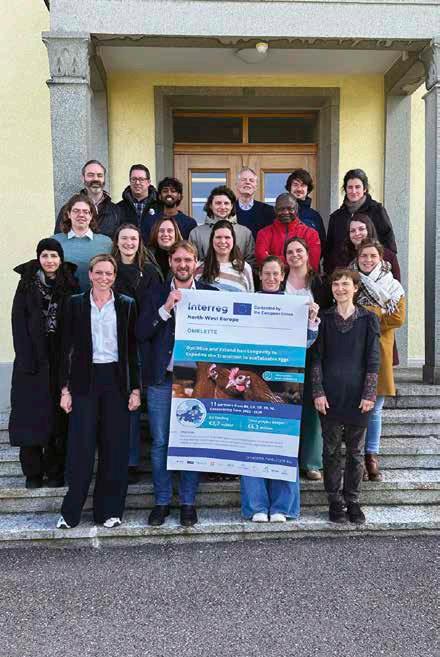
Partners collaborating across North Western Europe to strengthen sustainable egg production.
Engaging consumers and local authorities through outreach and educational events.