
The EU Research team take a look at current events in the scientific news


Esteemed researchers and scholars to join the ERC Scientific Council
The European Commission has today appointed five eminent scientists and scholars as new members of the governing body of the European Research Council (ERC), the Scientific Council. They are appointed for an initial period of four years and will replace members, whose second term of office expired or will expire. The new members will take office on 1 January 2023.
The new members are Professor Harriet Bulkeley, Durham University, Professor of Geography whose research focussed on environmental governance and the politics of climate change, energy and sustainable cities. Professor Thomas Henzinger, Institute of Science and Technology, ISTA, Austria, Professor of Computer and Communication Sciences, researcher, and Founding President of ISTA. Professor Leszek Kaczmarek, Nencki Institute of Experimental Biology, Polish Academy of Sciences, Warsaw, Professor of Neurobiology who researched the brain-mind connection. Professor Luke O’Neill, Trinity College, Dublin, Professor of Biochemistry, founder of the Trinity Biomedical Sciences Institute (TBSI), and leading immunologist. Professor Björn Ottersten, University of Luxembourg, Professor and Founding Director of Interdisciplinary Centre for Security, Reliability and Trust. His research is focused on security, trust, reliable wireless communications, and statistical signal processing.
Mariya Gabriel, Commissioner for Innovation, Research, Culture, Education and Youth, said: “The ERC Scientific Council is composed of outstanding European scientists and scholars who oversee Europe’s premier frontier research funding organisation. To name just one recent example of its success - three of this year’s Nobel Prize laureates have received substantial funding for their research from the European Research Council. Today, I am delighted to give a warm welcome to the five new members who bring to the ERC Scientific Council exceptional scientific expertise, which will complement that of the sitting members. I also want to thank the eminent members whose second term of office expired or will expire at the end of this year for their important contribution to the ERC Scientific Council’s work.”
Professor Maria Leptin, President of the ERC, said: “We very much look forward to working with the new members who come from diverse backgrounds in science and scholarship. This breadth is essential as the ERC’s independent governing body represents the entire scientific community in Europe. With these appointments, the quality and continuity of the Scientific Council is upheld, thanks to the work of the identification committee that was tasked with finding these new members.”
By the same Commission Decision, the term of office of five current members of the ERC Scientific Council is renewed:
Professor Geneviève Almouzni, Professor Ben Feringa, Professor Mercedes Garcia-Arenal, Professor Eystein Jansen, and Professor Jesper Qualmann Svejstrup
The new members have been selected by an independent Identification Committee, composed of six distinguished scientists appointed by the European Commission and chaired by Prof. Carl-Henrik Heldin. The selection process involved consultations with the scientific community.
The ERC Scientific Council, composed of 22 distinguished researchers representing the European scientific community, is the independent governing body of the ERC. Its main role is setting the ERC strategy and selecting the peer review evaluators. It is chaired by ERC President Maria Leptin since November 2021.
Introducing the new members Harriet Bulkeley gained her PhD from the University of Cambridge in 1999 where she subsequently held a Junior Research Fellowship and Leverhulme Research Fellowship before joining Durham University in 2003 where she was appointed as full professor in 2010. Since 2018 she has held a joint appointment with Utrecht University.
Her research focuses on the politics and practices of environmental governance, with particular focus on climate change. Her first book (with Michele Betsill) pioneered the field of cities and climate change and her research continues to examine the role of cities and other non-state actors in governing climate change. She has also written extensively on the politics of energy transitions, smart cities, urban sustainability, biodiversity and nature-based solutions, publishing 15 books and edited collections and over 70 papers. She has been included in the Highly Cited Researchers list of the top 1% of researchers internationally four times since 2016.
Alongside her academic research, Prof. Bulkeley works closely to enable the translation of research for policy and has provided expert advice and undertaken commissioned research for the UK Government, European Commission, NGOs, UN-Habitat, the OECD and the World Bank. In 2014, she was awarded the King Carl XVI Gustaf’s Professorship in Environmental Science and a Visiting Professorship at Lund University, Sweden and in 2018 was granted the Back Award by the Royal Geographical Society in recognition of the policy impact of her work on climate change. In 2019, she was elected as a Fellow of the UK Academy of the Social Sciences and as a Fellow of the British Academy. She has served as a member of ERC Advance Grants Panel SH2 and in 2020/21 was Chair of the SH7 panel.
Prof. Bulkeley most recently worked with EU Research with her Research Innovation Action NATURVATION which appeared in the Autumn 2020 edition.
Tom Henzinger is Professor at the Institute of Science and Technology Austria (ISTA), where he was the founding president from 2009 until 2022. He holds a Dipl.-Ing. degree in Computer Science from Johannes Kepler University in Linz, Austria, an M.S. degree in Computer and
4 EU Research
Five new members have been appointed to serve until 2027 on the European Research Council, the Scientific Council
Information Sciences from the University of Delaware, a Ph.D. degree in Computer Science from Stanford University (1991), and Dr.h.c. degrees from Fourier University in Grenoble, France, and from Masaryk University in Brno, Czech Republic. He was Assistant Professor of Computer Science at Cornell University and Professor of Electrical Engineering and Computer Sciences at the University of California, Berkeley, USA.He was also Director at the Max-Planck Institute for Computer Science in Saarbrucken, Germany, and Professor of Computer and Communication Sciences at EPFL in Lausanne, Switzerland. His research focuses on the theory of software systems, especially models, algorithms, and tools for the design and verification of reliable software systems. His HyTech tool was the first model checker for mixed discretecontinuous systems. He is a member of the US National Academy of Sciences, the American Academy of Arts and Sciences, Academia Europaea, the German Academy of Sciences (Leopoldina), and the Austrian Academy of Sciences. He is a Fellow of the AAAS, the ACM, and the IEEE. He has received the Robin Milner Award of the Royal Society, the EATCS Award of the European Association for Theoretical Computer Science, and the Wittgenstein Award of the Austrian Science Fund.
Leszek Kaczmarek is professor of neurobiology at the Nencki Institute, Warsaw, Poland. His carried postdoctoral studies in Philadelphia, USA and then was visiting professor in the University of Catania, Italy, McGill University, Montreal, Canada, University of California, Los Angeles, USA, and Institute of Photonic Sciences, ICFO, Castelldefels, Spain. Since 1986, his laboratory has been investigating brain-mind connection at all the levels of brain organisation from molecular to cellular to network to behavior in health and disease. Most of the work involves experimental animal models, however joint studies with clinicians on human neuropsychiatric disorders have also been pursued. The current major focus is on extracellular enzyme, matrix metalloproteinase, MMP-9, which his laboratory documented to play paramount role in neuronal/synaptic plasticity and then in learning and memory, development of epilepsy, schizophrenia, autism spectrum disorders and alcohol addiction.
Prof. Kaczmarek has also been very active in professional scientific organisations, serving on governing bodies of International Society for Neurochemistry, International Brain Research Organization, European Molecular Biology Organization, European Molecular Biology Conference (currently as the president), National Science Center (Polish research grant agency), Polish Academy of Sciences, Polish-US Fulbright Commission. At the European Research Council, he served seven times in evaluation panels, recently chairing the LS5 Neuroscience and Neural Disorders Consolidator grant panel. He has been engaged in multiple outreaching activities promoting science into society and he co-authored a biology textbook at middle school level.
Prof. Kaczmarek is a member of the Polish Academy of Sciences, European Molecular Biology Organization and Academia Europaea. He has been awarded several prestigious research grants and recognitions including the Foundation for Polish Science (FNP) award for his research on inducible gene expression in the brain. The FNP award is the highest recognition in Polish science. He is currently Full Professor at the Nencki Institute of Experimental Biology, Polish Academy of Sciences, Warsaw, Poland.
Luke O’Neill is Professor of Biochemistry in the School of Biochemistry and Immunology, Trinity Biomedical Sciences Institute at Trinity College Dublin, Ireland. He is a world expert on innate immunity and inflammation. He is listed by Thompson Reuters/ Clarivates in the top 1% of immunologists in the world, based on citations per paper. Profe. O’Neill is co-founder of Sitryx, which aims to develop new medicines for inflammatory diseases. Another company he co-founded, Inflazome was recently acquired by Roche.
He has won many awards for his research including the Royal Dublin Society / Irish Times Boyle Medal for scientific excellence, the Royal Irish Academy Gold Medal for Life Sciences, the European Federation of Immunology Societies Medal, and the Landsteiner Award from the Austrian Academy of Sciences. He is a member of the Royal Irish Academy, EMBO (European Molecular Biology Organisation) and a Fellow of the Royal Society.
He also has a passion for communicating science to the public. He has a weekly radio slot on Irish radio and has published several popular science books, most recently ‘Never Mind the B#ll*cks Here’s the Science’, which won the 2020 Irish non-fiction book of the year, and ‘Keep Calm and Trust the Science – an extraordinary year in the life of an immunologist’, which was his diary during the COVID19 pandemic.
Björn Ottersten is Professor at University of Luxembourg. He is founding Director of the Interdisciplinary Centre for Security, Reliability and Trust at the University of Luxembourg. He received his Ph.D. in Electrical Engineering from Stanford University, USA. Prof. Ottersten has held research positions at Linköping University, Sweden, Stanford University, USA, and the Katholieke Universiteit Leuven, Belgium. During 1996/97 he was Director of Research at ArrayComm Inc, San Jose, USA, a start-up company based on Ottersten’s patented technology introducing antenna arrays in wireless communication systems to improve coverage, capacity, and reliability of mobile communication systems. In 1991, he was appointed Professor at the Royal Institute of Technology, Stockholm, Sweden, where he was head of the department for Signals, Sensors, and Systems and later dean of the School of Electrical Engineering.
Prof. Ottersten has been Digital Champion of Luxembourg, acting as an adviser to the European Commission, member of the governing board of the Swedish Research Council, and is currently serving on the governing board of the Swedish Foundation for Strategic Research. He serves, and has served, as member of several international scientific advisory boards as well as editorial boards of scientific journals. He was a member of the board of governors of IEEE Signal Processing Society and acts on the board of directors of the European Association for Signal Processing (EURASIP), the two main international scientific organizations in his field.
Prof. Ottersten is the recipient of two ERC Advanced Grants and two ERC Proof-ofConcept Grants. He is a Fellow of the IEEE and EURASIP. His research has been recognised by numerous awards including the IEEE Signal Processing Society Technical Achievement Award.


www.euresearcher.com 5
Harriet Bulkeley
Tom Henzinger
Leszek Kaczmarek Luke O’Neill Björn Ottersten
Alcoholics to be given ketamine to see if it reduces alcohol use
The study will look at whether ketamine and therapy package reduces harmful drinking.

Researchers in Greater Manchester UK, are hoping a controversial new treatment which includes the use of the animal sedative ketamine could help people overcome severe alcoholism. It comes after initial trials of the drug combined with psychological therapies helped patients stay completely sober, with 86% abstaining from drinking in the six month follow up. Researchers are also studying how ketamine, along with MDMA and psilocybin – the active ingredient of magic mushrooms – could help people with depression and PTSD. So far medics say the experimental treatment is safe and tolerable in heavy drinkers. Greater Manchester Mental Health NHS Trust and Mersey Care NHS Trust are among several organisations recruiting for the next phase in the trials which will start mid-way through 2023.
Trial lead Professor Celia Morgan, said: “More than two million UK adults have serious alcohol problems, yet only one in five of those get treatment. “Three out of four people who quit alcohol will be back drinking heavily after a year. “Alcohol-related harm is estimated to cost the NHS around £3.5 billion each year, and wider UK society around £40 billion. “Alcohol problems affect not only the individual but families, friends and communities, and related deaths have increased still further since the pandemic.
Morgan stressed the drug alone was not thought to help people with alcohol problems, adding that the trial would be carried out
in safe, carefully controlled conditions alongside therapy. Mitul Mehta, a professor of neuroimaging and psychopharmacology at King’s College London, who is not involved in the research, welcomed the trial. “The earlier trial warrants this larger investigation. We also need a push to better understand the mechanisms of the treatment effect so that patients most likely to respond can be selected and appropriately monitored,” he said. “By carefully examining the mechanisms we can also learn about the most effective ways to refine treatment in the future.”
Emperor penguin at risk of extinction in next 80 years
Antarctica’s Ecosystem Biodiversity: Up to 97% of Antarctica’s biodiversity might go extinct by the year 2100.
A new study reveals that only US$23 million annually would be required to put ten crucial initiatives into action that would lessen threats to Antarctica’s biodiversity. Up to 84% of the terrestrial bird, animal, and plant groups would gain from this very tiny sum. Numerous microorganisms, tough invertebrates, two flowering plants, hardy moss and lichens, two flowering plants, and hundreds of thousands of nesting seabirds, including the Emperor and Adélie penguins, make up the species.
Antarctica’s ice-free regions are anticipated to grow as global warming becomes worse, drastically altering the wildlife environment. Additionally, it is projected that the vegetation and animals of Antarctica
would suffer as extreme weather events like heatwaves increase in frequency. 29 specialists in Antarctic biodiversity, conservation, logistics, tourism, and policy were consulted for our study. The specialists predicted how the animals of Antarctica would react to potential threats.
If present conservation efforts continue on their current course, the populations of 97% of Antarctic terrestrial species and breeding seabirds might potentially drop between now and 2100. 37% of the species populations would, at best, decline. By 2100, 65% of the plants and animals on the continent are expected to disappear. The Emperor penguin is the most endangered species in Antarctica because it breeds on ice. The emperor penguin is the only species in our analysis that, in the worst-case scenario, face extinction by 2100.
In short, scientists warn that other Antarctic specialties like the nematode worm Scottnema lindsayae are also predicted to suffer adverse effects from climate change. The species is threatened as soil moisture rises due to warming and ice melt since it thrives in extremely dry soils. Meanwhile, a combination of local, national, and international conservation initiatives are required since Antarctica is under increasing strain from both climate change and human activity. It is an unbelievable bargain to spend only US$23 million a year to protect Antarctica’s wildlife and ecosystems, scientists argue.

EU Research 6
Scientists discover giant wombat megafauna species fossil in central Queensland
A fossilised skull of the ancient wombat is estimated to be 80,000 years old.


Palaeontologists have found Australia’s true giant wombat. Diprotodon is an extinct megafauna species that is often referred to as Australia’s ‘giant wombat’. While Diprotodon were definitely giant, being the largest marsupials of all time, the car-sized animals were only distantly related to wombats. They were actually in a completely different family. Now Griffith University researchers have shed light on a large species that does belong to the same family as modern wombats.

The fossil skull of the animal was found in a cave in Rockhampton, Queensland. The remains are estimated to be around 80,000 years old. The species is described in a paper published in Papers in Paleontology. “The extinct megafauna of Australia never ceases to amaze and intrigue not just Australians, but people all over the world,” says lead author, Associate Professor Julien Louys. from Griffith. “Although one of the most charismatic of the giant mammals to go extinct, Diprotodon is commonly referred to as a ‘giant wombat’. But this is incorrect as Diprotodon belongs to an entirely different family – equivalent to saying a hippo is just a giant pig,” Louys explains.
But Louys explains that Ramsayia magna, which lived in Australia during the late Pleistocene (about 2,580,000 to 11,700 years ago) was a true giant wombat. “There were however, true giant wombats,” Louys says. “These have traditionally been poorly known, but the discovery of the most complete skull of one of these giants, Ramsayia, has provided us with an opportunity to reconstruct what this creature looked like, where and when it lived, and how the evolution of giant wombats took place in Australia.” While the skull and jaw bones of R. magna were found in the early 2000s, it was only later analysis that it was confirmed to be a specimen from a previously described, but very poorly understood, species.
Extinct giant wombats from the Vombatidae family are rarer than fossil diptrotodontids. But the new analysis sheds some light
on what Ramsayia was like. The study also gives an insight into broader giant wombat evolution, though the reason Ramsayia went extinct is still a mystery.
“In this paper, we show that all true giant wombats evolved large body sizes first, then individually became quite specialised to eat different types of grasses. We also dated this species as being about 80,000 years old. This is the first date for this species and is much earlier than human arrival in Australia, although we still don’t know exactly when or why this species became extinct.”
7 www.euresearcher.com
Research saved from UK budget cuts amid economic turmoil
The UK finance minister, Jeremy Hunt, has said that the economic crisis will not harm ambitious plans for research spending, much to the relief of researchers. Universities and scientists were concerned that the government might use funds promised for science to plug the multibillion-pound black hole in the country’s finances caused by interest-rate rises that resulted from budgeting decisions made by the previous prime minister, Liz Truss.
During he Autumn Statement Mr Hunt, the chancellor of the Exchequer, told parliament that he would protect the entire UK research budget because cutting it would be a “profound mistake”. He added that the government will invest £20 billion (US$24 billion) per year in science by the 2024–25 financial year — a commitment made by the government of former prime minister Boris Johnson that was left hanging in the balance when he resigned in July. Truss remained tight-lipped on science spending during her 44-day leadership.
Anne Johnson, president of the Academy of Medical Sciences in London, welcomed the decision in “challenging economic times”. But she warned that there could still be problems ahead for research. “Inflation will continue to put pressure on budgets in real terms, and we must protect collaborations between UK researchers and partners globally.” Geneticist Paul Nurse, who runs the Francis Crick Institute in London, said that the announcement was “very good, particularly in the present circumstances”.
The UK economy was plunged into turmoil in September when Truss and the then chancellor, Kwasi Kwarteng, announced a raft of controversial financial policies, which included tax cuts for the country’s highest earners. The falling value of the pound, combined with soaring inflation and energy prices, left scientists concerned
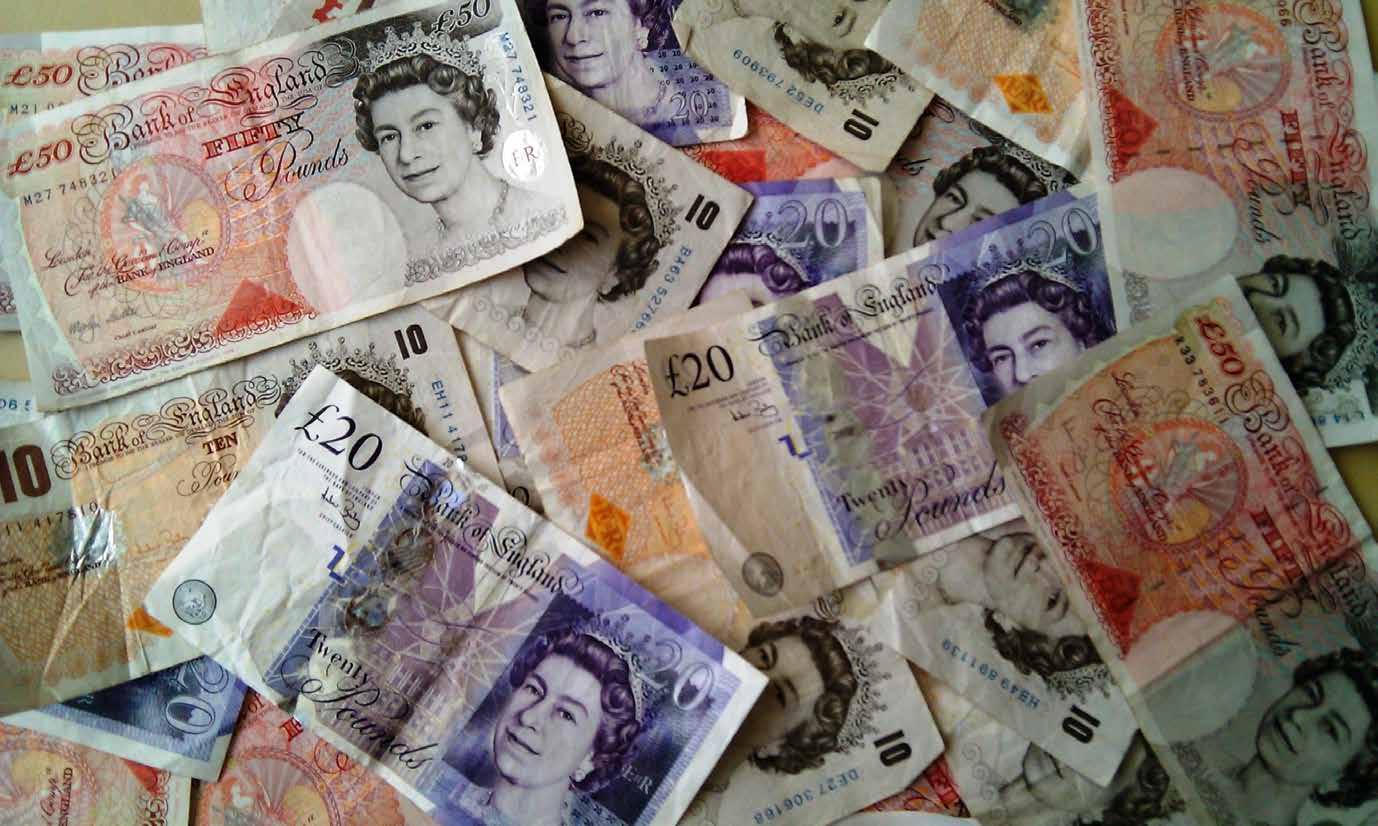
about the rising costs of running laboratories. Rishi Sunak, who served as chancellor in Johnson’s government, replaced Truss as prime minister in October. Until today, it was not clear what this change in leadership meant for the future of science spending.
The 2024–25 commitment reaffirmed by Hunt is one milestone in an earlier pledge to spend 2.4% of gross domestic product on research and development by 2027. But, according to the UK Office for National Statistics — a non-ministerial government body — the government has already met this target. This is mainly because of changes in the way that research and development spending is calculated, rather than any cash boost.
Although UK researchers have welcomed the clarity on spending, it is not clear who in Sunak’s government has ultimate responsibility for science. In October, Truss’s government announced that Nusrat Ghani would hold the post of science minister. Sunak has reaffirmed her post, but apparently also reappointed George Freeman — who quit the role earlier this year as part of a bid to force then-prime minister Johnson to resign. The website for the government department that oversees science spending, the Department for Business, Energy and Industrial Strategy (BEIS), lists both Freeman and Ghani as “minister of state”, with Ghani also listed as “minister for science and investment security”. A spokesperson for BEIS could not say who has overall responsibility for science, stating that the ministerial portfolios “are not formally confirmed”.
All though this news was welcomed, UK scientists still fear they will be locked out of €100 billion EU research programme. Some British researchers who had secured Horizon Europe funding have already been told that their grants will be cancelled.
Scientists relieved about decision to reaffirm previous spending commitments.8 EU Research
EU seeks deal on world-first carbon border tariff
The world-first scheme will protect European industries from being undercut by polluting competitors, but angers emerging economies.

After all-night negotiations, the European Union struck a political deal on Tuesday to impose a carbon tax on imports of polluting goods such as steel and cement, a world-first scheme aiming to support European industries as they decarbonise. Negotiators from EU countries and the European Parliament reached a deal at around 5am in Brussels, on the law to impose CO2 emissions costs on imports of iron and steel, cement, fertilisers, aluminium and electricity.
Companies importing those goods into the EU will be required to buy certificates to cover their embedded CO2 emissions. The scheme is designed to apply the same CO2 cost to overseas firms and domestic EU industries – the latter of which are already required to buy permits from the EU carbon market when they pollute. Mohammed Chahim, European Parliament’s lead negotiator on the law, said the border tariff would be crucial to EU efforts to fight climate change. “It is one of the only mechanisms we have to incentivise our trading partners to decarbonise their manufacturing industry,” Chahim said.
The stated aim of the levy is to prevent European industry from being undercut by cheaper goods made in countries with weaker environmental rules. It will also apply to imported hydrogen, which was not in the original EU proposal but which EU lawmakers pushed for in
the negotiations. Some details on the law will be determined later this week in related negotiations on a reform of the EU carbon market. It will apply from 1 October 2023 but with a transition period where the importers have to report but not are not yet taxed.
Currently, the EU gives domestic industry free CO2 permits to shield them from foreign competition, but plans to phase out those free permits when the carbon border tariff is phased in, to comply with World Trade Organisation rules. How quickly that phase-in happens will be decided in the carbon market talks. Brussels has said countries could be exempted if they have equivalent climate change policies to the EU, and suggested the United States could dodge the levy on this basis. The proposals will affect the EU’s neighbours in Eastern Europe and North Africa the most. Ukraine and Turkey are drawing up carbon pricing mechanisms to avoid being taxed.
Emerging economies have criticised the concept. Last April, China, India Brazil and South Africa jointly “expressed grave concern” about the “trade barriers”. They said it was “discriminatory and against the principles of equity and [common but differentiated responsibilities and respective capabilities]” – a UN term meaning that developed countries, which are historically responsible for causing the climate crisis, should do more to address it than developing ones.
EU opens up first calls for proposals under new €95 billion budget research and innovation programme

First calls for proposals under the Horizon Europe Work Programme for 2023-2024 opened as of 7 December.
On the 7th December, EU opened for the first calls for proposals under the New Work Programme. At the same time, the Union invited potential applicants to Horizon Europe Information Days between 6 December 2022 and 16 February 2023. The infomration days offers prospective applicants and other stakeholders of EU research and innovation the opportunity of asking questions about main funding instruments and the processes of Horizon Europe.
Horizon Europe, with a budget of over €95 billion, is the European Union’s ambitious research and innovation programme running until 2027 with rolling calls for proposals. Reaching key climate action objectives, finding innovative solutions to reduce greenhouse gas emissions and adapting to climate change is the main focus areas of the programme to which 42% of the total budget have been assigned. A large part of the budget has been earmarked for biodiversity. Hereafter, the programme will support the EU digital transition, including the development of core digital technologies and practical integration, while nearly €970 million will be invested to help speed up the clean energy transition, and increase Europe’s energy independence from unreliable suppliers and volatile fossil fuels.
The programme has attained a very broad scope as it also covers support to Ukraine – targeting reinforcing the access of researchers from Ukraine to European research infrastructures, and supporting the climate-neutral reconstruction of several Ukrainian cities – and actions to support and strengthen international initiatives in renewable energies, food systems, global health and environmental observations. The Horizon Europe Work
Programme, attributed a budget of around €13,5 billion, is a part of the Horizon Europe Programme – a programme for research and innovation, implemented between 2021-27, awarding research an innovation grants to eligible companies.
The Horizon Europe includes 5 mission areas – a) cancer, b) adaptation to climate change, c) healthy oceans, seas, coastal- and inland waters, d) climate-neutral and smart cities & e) soil health and food – all aiming at tackling areas that challenge our world today. The missions operate under a few actions such as research projects, policy measures and legislative initiatives – thus aiming to reach actual goals that are otherwise unreachable on the individual level.
www.euresearcher.com 9
First ever ultraviolet imaging of Sun’s middle corona
A team of researchers from Southwest Research Institute (SwRI), NASA and the Max Planck Institute for Solar System Research (MPS) have discovered web-like plasma structures in the Sun’s middle corona. The researchers describe their innovative new observation method, imaging the middled corona in ultraviolet (UV) wavelength, in a new study published in Nature Astronomy. The findings could lead to a better understanding of the solar wind’s origins and its interactions with the rest of the solar system.
Since 1995, the U.S. National Oceanic and Atmospheric Administration has observed the Sun’s corona with the Large Angle and Spectrometric Coronagraph (LASCO) stationed aboard the NASA and European Space Agency Solar and Heliospheric Observatory (SOHO) spacecraft to monitor space weather that could affect the Earth. But LASCO has a gap in observations that obscures our view of the middle solar corona, where the solar wind originates.

“We’ve known since the 1950s about the outflow of the solar wind. As the solar wind evolves, it can drive space weather and affect things like power grids, satellites and astronauts,” said SwRI Principal Scientist Dr. Dan Seaton, one of the authors of the study. “The origins of the solar wind itself and its structure remain somewhat mysterious. While we have a basic understanding of
processes, we haven’t had observations like these before, so we had to work with a gap in information.”
To find new ways to observe the Sun’s corona, Seaton suggested pointing a different instrument, the Solar Ultraviolet Imager (SUVI) on NOAA’s Geostationary Operational Environmental Satellites (GOES), at either side of the Sun instead of directly at it and making UV observations for a month. What Seaton and his colleagues saw were elongated, web-like plasma structures in the Sun’s middle corona. Interactions within these structures release stored magnetic energy propelling particles into space.

Seaton believes these observations could lead to more comprehensive insights and even more exciting discoveries from missions like PUNCH (Polarimeter to Unify the Corona and Heliosphere), an SwRI-led NASA mission that will image how the Sun’s outer corona becomes the solar wind.
“Now that we can image the Sun’s middle corona, we can connect what PUNCH sees back to its origins and have a more complete view of how the solar wind interacts with the rest of the solar system,” Seaton said. “Prior to these observations, very few people believed you could observe the middle corona to these distances in UV. These studies have opened up a whole new approach to observing the corona on a large scale.”
10 EU Research
Researchers have discovered web-like plasma structures in the Sun’s middle corona.A new study by researchers from Southwest Research Institute (SwRI), NASA and the Max Planck Institute for Solar System Research (MPS) describes the observation of web-like plasma structures in the Sun’s middle corona, which could lead to a better understanding of the solar wind and its interactions with the rest of the solar system. Courtesy of SwRI/NOAA
Raining plasticMicroplastic pollution swirling in city air

The study, published in Environmental Science & Technology, indicated that large numbers of microplastics in Auckland’s air are of extremely small sizes, raising concerns about the potential for particles to be inhaled and accumulate in the human body. Researchers around the world are likely to have dramatically undercounted airborne microplastics, says lead author Dr Joel Rindelaub, of the School of Chemical Sciences at Waipapa Taumata Rau, University of Auckland.

The levels found in Auckland’s air were many times higher than recorded in London, Hamburg and Paris in recent years because scientists in the new study used sophisticated chemical methods to find and analyse particles as small as 0.01 of a millimetre. The mean (average) number of airborne microplastics detected in a square metre in a day was 4,885. That compares with 771 in London (reported in a study published in 2020), 275 in Hamburg (2019) and 110 in Paris (2016). “Future work needs to quantify exactly how much plastic we are breathing in,” says Dr Rindelaub. “It’s becoming more and more clear that this is an important route of exposure.”
The study is the first to calculate the total mass of microplastics in a city’s air. Waves breaking in the Hauraki Gulf may play a key role in Auckland’s problem by transmitting water-borne microplastics into the air. That effect seemed to be at work when Rindelaub and his colleagues, including PhD student Wenxia Fan and Professor Jennifer Salmond, recorded increased numbers after winds from the gulf picked up speed, likely leading to bigger waves and more transmission.
The paper’s introduction says: “Over the last 70 years, 8.3 billion metric tons of plastic have been produced globally. Only nine percent have been recycled, with the rest either incinerated or released into the environment.” Fibres dispersed by washing synthetic clothes, fragments shed by car tyres and washed by rain into the ocean, and bottles floating down rivers are just some of the ways plastic is added to the environment. Weathering and aging breaks plastic down into ever smaller particles. The experiment was carried out over nine weeks during September, October and November in 2020.

11 www.euresearcher.com
Auckland researchers calculated that 74 metric tonnes of microplastics are dropping out of the atmosphere annually, the equivalent 3 million plastic bottles falling from the sky.