Improving the efficiency of last mile logistics

Large volumes of goods arrive at ports along the Adriatic coastline every day, which are then transported further inland in the ‘last mile’ of the logistics chain. The team behind the EU-backed MILEPORT project aim to help trucks and lorries get in and out of ports as efficiently as possible, which will bring wider environmental and economic benefits, as Alberto Cozzi explains.
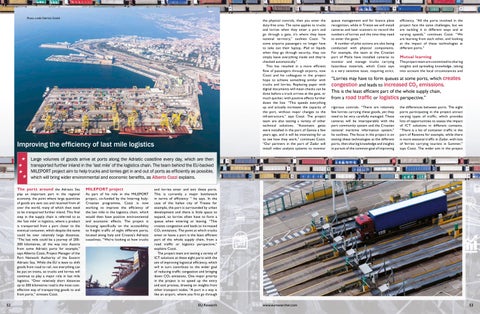
The ports around the Adriatic Sea play an important part in the regional economy, the point where large quantities of goods are sent out and received from all over the world, many of which then need to be transported further inland. This final step in the supply chain is referred to as the ‘last mile’ in logistics, where a product is transported from a port closer to the eventual consumer, which despite the name could be over relatively large distances. “The last mile could be a journey of 200300 kilometres, all the way into Austria from some Adriatic ports for example,” says Alberto Cozzi, Project Manager of the Port Network Authority of the Eastern Adriatic Sea. While the EU is keen to shift goods from road to rail, not everything can be put on trains, so trucks and lorries will continue to play a major role in last mile logistics. “Over relatively short distances up to 300 kilometres road is the most costeffective way of transporting goods to and from ports,” stresses Cozzi.
MILEPORT project
As part of his role in the MILEPORT project, co-funded by the Interreg ItalyCroatian programme, Cozzi is now working to improve the efficiency of the last mile in the logistics chain, which would then have positive environmental and economic effects. The project is focusing specifically on the accessibility to freight traffic of eight different ports, located along Italy and Croatia’s Adriatic coastlines. “We’re looking at how trucks
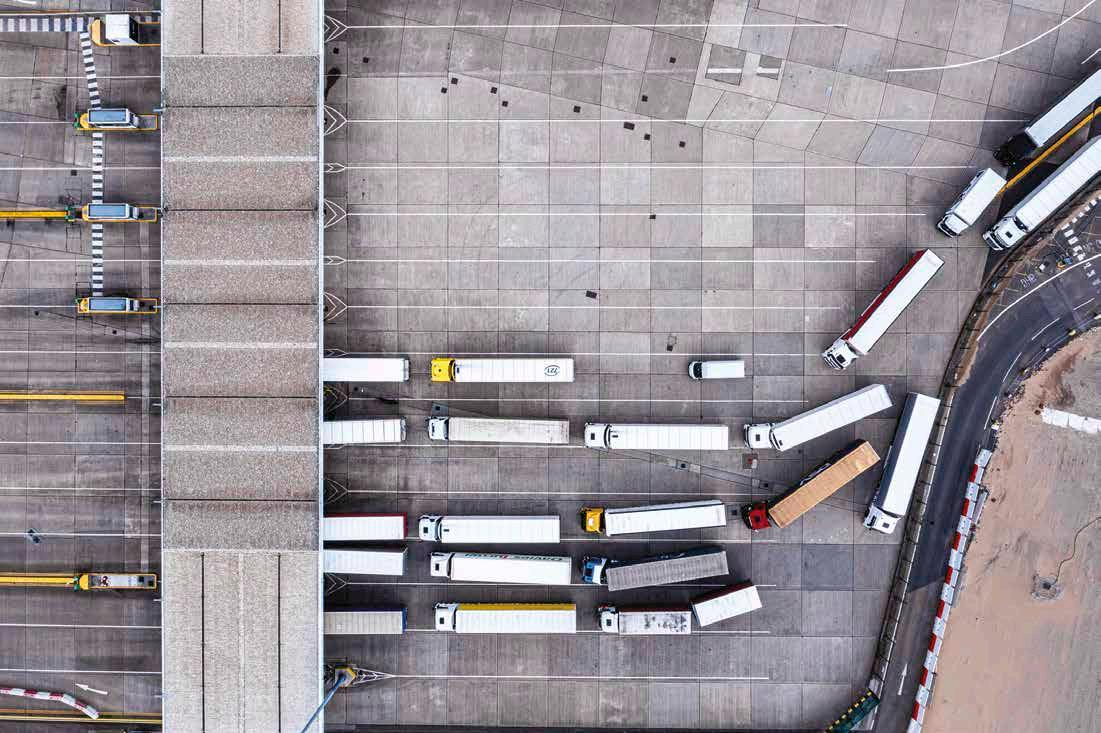
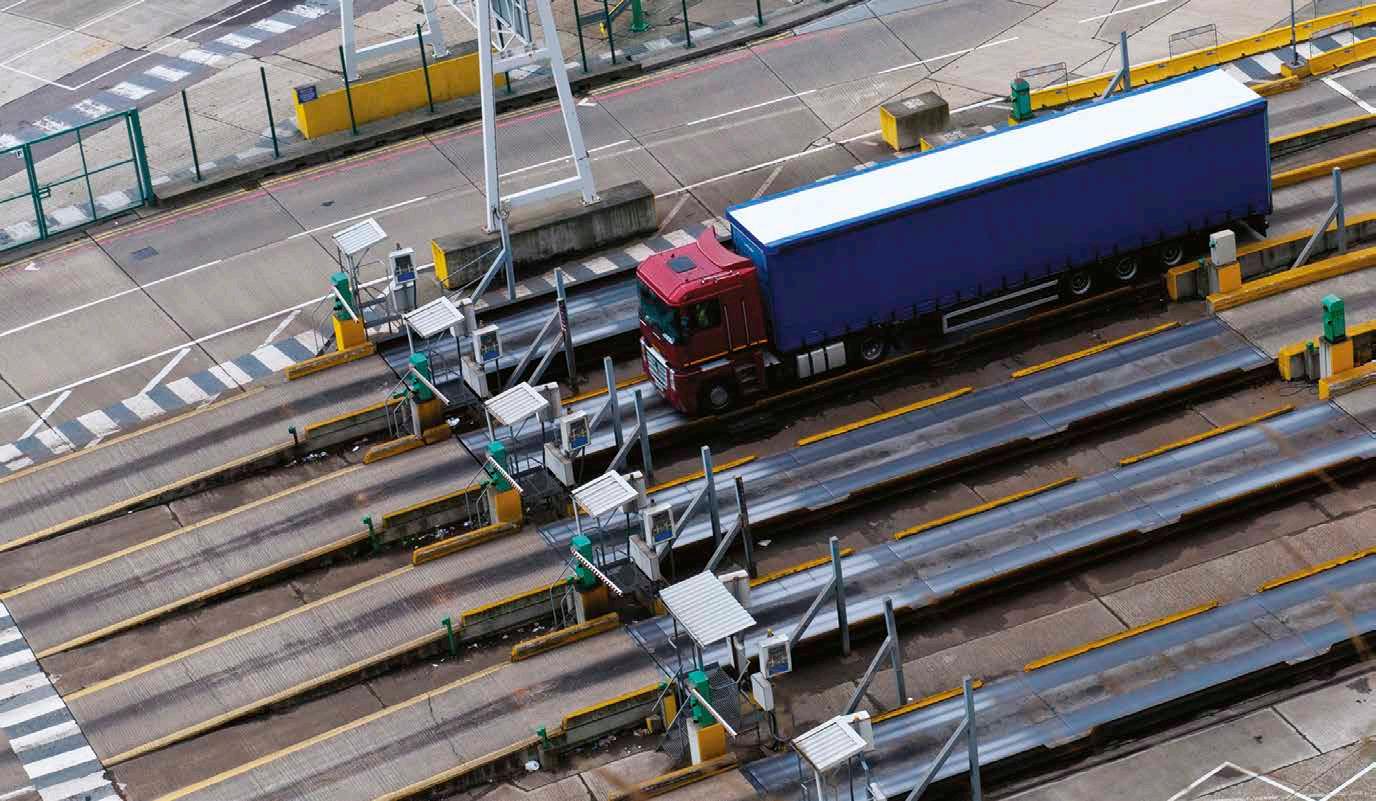
and lorries enter and exit these ports. This is currently a major bottleneck in terms of efficiency ” he says. In the case of the Italian city of Trieste for example, the port is surrounded by urban development and there is little space to expand, so lorries often have to form a queue when entering or leaving. “This creates congestion and leads to increased CO 2 emissions. The point at which trucks enter or leave a port is the least efficient part of the whole supply chain, from a road traffic or logistics perspective,” explains Cozzi.
The project team are testing a variety of ICT solutions at these eight ports with the aim of improving logistical efficiency, which will in turn contribute to the wider goal of reducing traffic congestion and bringing down CO 2 emissions. One major priority in the project is to speed up the entry and exit process, drawing on insights from other transport nodes. “A port in a way is like an airport, where you first go through
the physical controls, then you enter the duty-free area. The same applies to trucks and lorries when they enter a port and go through a gate, it’s where they leave national territory,” outlines Cozzi. “In some airports passengers no longer have to take out their laptop, iPad or liquids when they go through security, they can simply leave everything inside and they’re checked automatically.”
This has resulted in a more efficient flow of passengers through airports, now Cozzi and his colleagues in the project hope to achieve something similar with trucks and lorries. Replacing paper with digital documents will mean checks can be done before a truck arrives at the gate, or much quicker, with positive effects further down the line. “This speeds everything up and actually increases the capacity of the port, without major changes to the infrastructure,” says Cozzi. The project team are also testing a variety of other technical solutions. “Automatic gates were installed in the port of Genoa a few years ago, and it will be interesting for us to see how they work,” continues Cozzi. “Our partners in the port of Zadar will install video analysis systems to monitor
queue management and for licence plate recognition, while in Trieste we will install cameras and laser scanners to record the numbers of lorries and the time they need to enter the gates.”
A number of pilot actions are also being conducted with physical components.
For example, the team at the Croatian port of Ploče have installed cameras to monitor and manage trucks carrying hazardous materials, which Cozzi says is a very sensitive issue, requiring strict,
efficiency. “All the ports involved in the project face the same challenges, but we are tackling it in different ways and at varying speeds,” continues Cozzi. “We are learning from each other, and looking at the impact of these technologies at different ports.”
Mutual learning
The project team are committed to sharing insights and spreading knowledge, taking into account the local circumstances and
“Lorries may have to form queues at some ports, which creates congestion and leads to increased CO2 emissions.
This is the least efficient part of the whole supply chain, from a road traffic or logistics perspective.”

rigorous controls. “There are relatively few lorries carrying these goods, yet they need to be very carefully managed. These cameras will be interoperable with the port community system and the Croatian national maritime information system,” he outlines. The focus in the project is on testing these technologies at the different ports, then sharing knowledge and insights in pursuit of the common goal of improving
the differences between ports. The eight ports participating in the project attract varying types of traffic, which provides lots of opportunities to assess the impact of ICT solutions in different contexts.
“There is a lot of container traffic in the port of Ravenna for example, while there is more seasonal traffic in Zadar, with lots of ferries carrying tourists in Summer,” says Cozzi. The wider aim in the project
MILEPORT
Improving the last MILE accessibility of Adriatic
PORTs
Project Objectives
MILEPORT aims to smoothen the integration of Adriatic ports in their cities and with their hinterlands by improving their last mile accessibility, strengthening territorial cohesion, through innovative IT solutions, delivering policy makers, maritime ports, port and logistics operators new planning tools, tested through joint pilot actions and ensuring solutions in two key topics: 1) transport flow management and vehicle booking systems; 2) gates & entry/exit tools.
Project Funding
MILEPORT is co-financed by the Interreg Italy-Croatia Cross-Border Cooperation Program 2021-2027.
Project Partners
• Port Network Authority of the Eastern Adriatic Sea (LP)
• North Adriatic Sea Port Authority - Ports of Venice and Chioggia
• Port of Ravenna Authority
• Central Adriatic Ports Authority
• Southern Adriatic Sea Port Authority
• Port of Rijeka Authority
• Port of Zadar Authority
• Port of Ploče Authority
Contact Details
Project Coordinator, dott. Alberto Cozzi
Strategic Development and Innovation Department
Funded Projects Development and Management Unit
Via Karl Ludwig Von Bruck n. 3
34143 Trieste (Italy)
T: +39 040 673.26.17
E: alberto.cozzi@porto.trieste.it
: https://x.com/MILEPORT2024

: https://www.linkedin.com/company/ mileport/
W: www.adspmao.it

Alberto Cozzi works at the Port Network Authority of the Eastern Adriatic Sea (Ports of Trieste and Monfalcone) as a Project Manager for EUfunded initiatives. He graduated from the University of Trieste in 2002 and holds a Master of Arts degree in Transport and Sustainable Mobility.

is to bring down the time it takes for trucks and lorries to get through ports, and Cozzi says even seemingly small reductions can have a significant impact in this respect. “If we can reduce the time needed for trucks to get through a port from 3 minutes down to 1 minute, it means three trucks can stay instead of just one,” he points out. “These improvements can also help to reduce CO 2 emissions by a significant degree.”
A lot of progress is being made towards these goals, and the MILEPORT team

MILEPORT project will not mark the conclusion of this line of research. Our partners have a common strategy, and this project is just one piece of the puzzle,” says Cozzi. “In the long-term our hope is to minimise queues at the gates as much as possible, both through this project and also other initiatives.”
There are also a variety of other challenges facing ports, not least that of maintaining cyber-security to guard against hackers and other cybercriminals, an issue which is particularly
“If we can reduce the time needed for trucks to get through a port from 3 minutes down to 1 minute, it means three trucks can stay instead of just one. These improvements can also help to reduce CO2 emissions by a significant degree.”
are working to complete all the tasks, investments and pilots by the conclusion of the project in the Summer of 2026. While some of the partners are ahead of others, Cozzi says they are on track to achieve the project’s goals. “Our partners are implementing different solutions in each of the ports,” he outlines. This will not mark the end of work to improve efficiency at Adriatic ports however, and the MILEPORT partners plan to continue to cooperate together in future on both speeding up port operations and other emerging challenges. “The end of the
pressing given our growing reliance on digital technologies. With the pace of digitisation accelerating, Cozzi believes it is becoming increasingly important for ports to put in place and maintain a sophisticated and effective cyber-security infrastructure. “We need to think about possible IT intruders and hackers and how we can defend ports against them. We are working on another project on this topic, and recently submitted a project proposal on increasing security and cyber-security at a lot of our ports,” he outlines.