Setting out the path towards Net Zero

Significant investment is required if Europe is to meet the environmental goals set out in the REPower EU plan. Anke Brems is investigating the impact of local context on decarbonisation projects, and how new financial structures can support the transition towards a more sustainable energy model, as part of her work in the LIFE22-CET-Mastering Net Zero project.
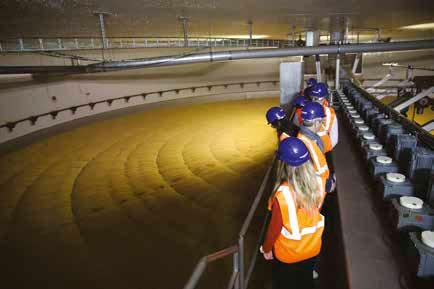
The REPowerEU plan sets the goal of Europe achieving climate neutrality by 2050, which is prompting many organisations to look at how they can make the transition to clean energy. The malting company Boortmalt aims to reduce its scope 1 and 2 greenhouse gas emissions by 42 per cent by 2030, which will require significant changes in energy provision. “In our production process we use a lot of heat, the majority of which currently comes from the burning of natural gas on site, which is our scope 1 emissions. We also have a Heat as a Service (HaaS) setup, where we essentially buy heat from another party, which is our scope 2 emissions,” outlines Anke Brems, Group Energy Transition Manager at Boortmalt, based at the company’s Antwerp headquarters. The company is committed to bringing down these emissions, but there is no one-size fits all solution across its 27 malting plants, and Brems says it’s important to take local circumstances into account. “There is general agreement that electrification is the best solution to decarbonise our process, but in the Netherlands, for example, we cannot get a higher grid connection, so we need to look for alternatives,” she explains.
Mastering Net Zero project
This issue lies at the heart of Brems’ work in the Mastering Net Zero project, an initiative funded under the EU LIFE programme, which aims to both accelerate Boortmalt’s transition towards clean energy and unlock the finance required to support it. One key aim in the project is to identify the best possible decarbonisation solutions in the local context, while also looking at the financial support available in different countries. “Is there a big biomass source available locally that could be
sustainably sourced? Are subsidies available?” outlines Brems. Decarbonisation projects often come at a cost, and Brems says that financial support from external sources is therefore essential.
“In Argentina, gas is extremely cheap, there’s no carbon tax and there are no subsidies available to support sustainable energy. Investing in decarbonisation projects is therefore not that straightforward. In Europe, even though gas prices remain relatively high, it’s often still cheaper in Europe to use gas than to rely on more sustainable sources of energy. So if there are no external subsidies available, the business case will very often simply not be viable,” she stresses.
A subsidy may come with certain conditions which may not be immediately apparent. Now the project team aim to share their knowledge and insights in this area, with the aim of finding the best possible financing solutions to suit local circumstances. To illustrate, when a CAPEX subsidy is secured and the money is invested in an asset, that asset can then not be sold within the next five years. “We’re trying to bring together these types of insights, link them to accounting rules, and provide a kind of guide so that we can learn from past experience,” says Brems. These subsidies may then be used to support different types of energy projects,
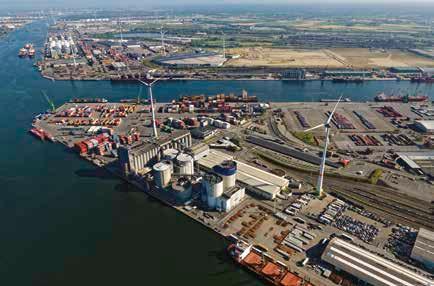
with Brems and her colleagues looking at a variety of options. “We’re looking at investing in balancing services, to reduce our dependence on the grid,” she continues. “We’re also investigating whether we can put in wind turbines at some of our sites. This is a relatively easy option here in Antwerp, where we are located in the harbour, but it’s more difficult to get permits in other more urban locations.”
As a global company, Boortmalt has malting plants on five different continents, and the locations vary in terms of their surroundings and the renewable energy options that can realistically be used there.
The company’s Antwerp headquarters, is the largest malting plant in the world, an import/export hub with a production capacity of 470,000 tonnes annually, while others are much smaller. “Some of our malting plants are in more remote, rural
locations,” says Brems. The project team aim to both identify the right technology for every site, and to build an investment plan for its implementation, with the wider aim of decarbonising malt production. “We want to really understand the local context at each site, to identify all the relevant parameters, and then decide on which technology is best suited. Then we will develop an initial business plan,” outlines Brems. “We will also
quickly,” she acknowledges. The idea is not necessarily to establish a rigid, fixed plan for each site, but rather to establish a process, a roadmap towards realising decarbonisation ambitions. In future, this may involve higher levels of investment from shareholders. “We will try to look for external finance to fund the transition towards clean energy. This could be an equity fund, it could also be from our shareholders,” says Brems. It is not only the malting industry that is looking to decarbonise of course, and companies from many different sectors are looking at how they can reduce their carbon footprint, and at the different financing options available. While the project is primarily focused on the malting industry, Brems says that companies in comparable industries could also benefit from this work, which could help them identify a path
“We want to really understand the local context at each site, to identify all the relevant parameters, and then decide on which technology is best suited. Then we will develop an initial business plan and set-up the best-suited financial structure.”
consider how the clean energy transition can be financed. Our ambition is to finance around a third of the budget for renewable energy programmes through subsidies, from national or European funds, with the remainder from a combination of on- and off-balance sheet financing.”
Decarbonisation plans
The right solution today may not necessarily be the ideal one in a few years’ time, however, as the overall picture can change fairly rapidly. New technologies may emerge that offer a better solution, or a subsidy scheme may be withdrawn or a new one introduced, so Brems says she always considers alternative options. “We always try to have a plan A and a plan B for each site, while we also closely monitor the political situation, as subsidy schemes can appear and disappear relatively
towards a cleaner, more sustainable energy model. “The guide that we are developing in the project could also help comparable industries, away from malting. This means industries with a heat demand under 100 degrees, for example agri-food processing, chemical manufacturing and other energyintensive industries.”

MASTERING
Development of a dedicated Funding & Organisational Ecosystem to accelerate industrial net-zero transformations
Project Objectives
The Mastering Net Zero project is part of Boortmalt’s global decarbonisation strategy, which aims to strengthen the company’s long-term sustainability.
A key part of the project is developing standardised decarbonisation roadmaps for multiple industrial sites, integrating energy efficiency, electrification or other decarbonisation solutions, and renewable energy sourcing.
This work is expected to significantly reduce energy consumption and emissions across Boortmalt’s European sites, contributing to the EU’s climate goals.
Project Funding
The MASTERING NET ZERO project has received funding from the European Union’s LIFE Programme under Grant Agreement No 101120993. Views and opinions expressed are however those of the author(s) only and do not necessarily reflect those of the European Union or CINEA. Neither the European Union nor the granting authority can be held responsible for them.
Contact Details
Project Coordinator, Anke Brems
Group Energy Transition Manager Boortmalt Headquarters Zandvoort 2 - Haven 350 - Bus 1 B-2030 Antwerp
Belgium
T: + 32 3 545 04 11 E: anke.brems@boortmalt.com W: https://mastering-net-zero.webflow.io/

a Senior
in Climate Change and Sustainability Services. She holds a Masters degree in Environmental Engineering and a
in Chemical Engineering.

Anke Brems is Group Energy Transition Manager at Boortmalt, where she works to accelerate the company’s transition towards clean energy. She previously worked at EY as
Manager
PhD
Anke Brems
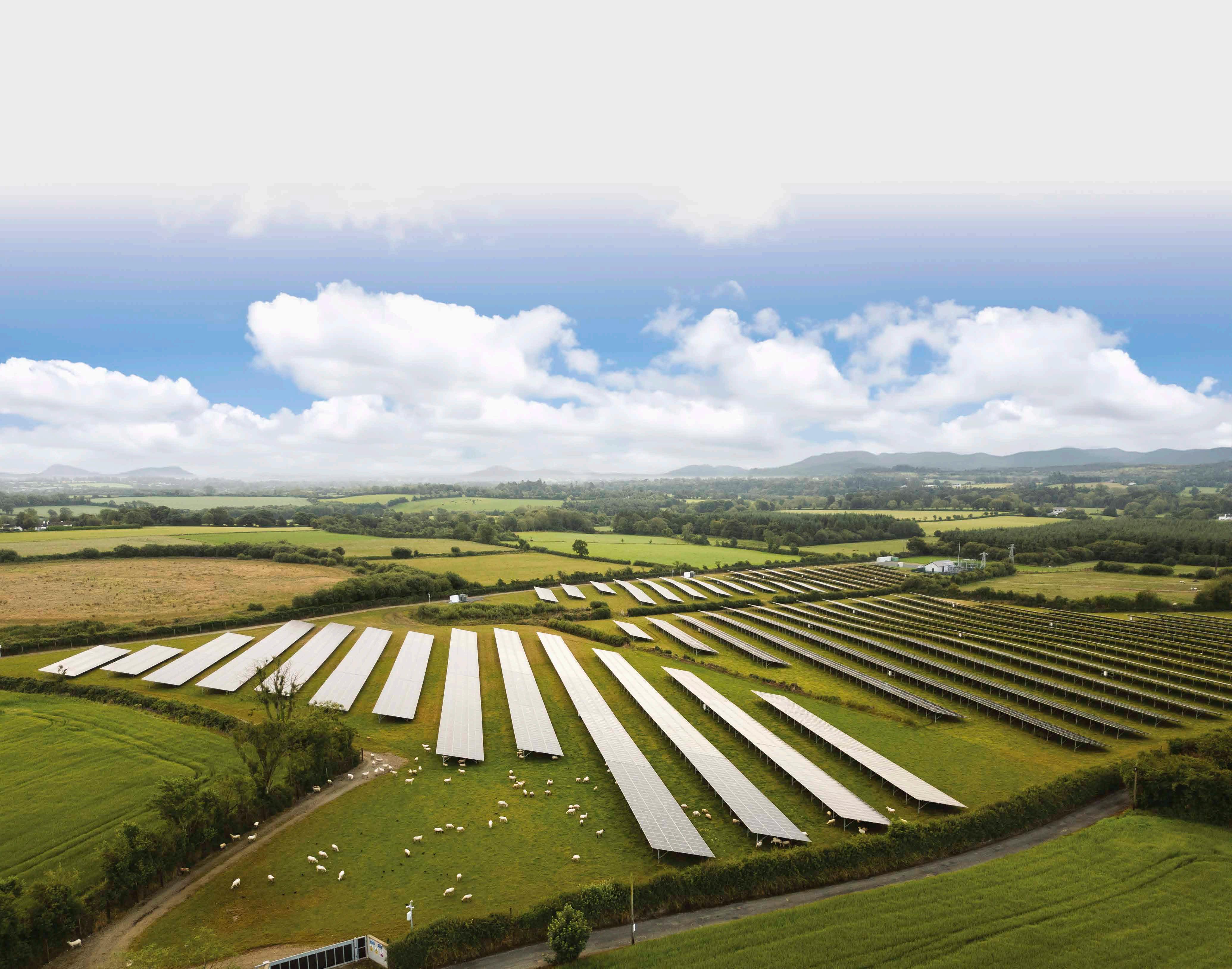
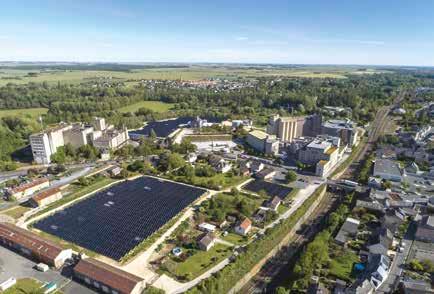
Solar Thermal Plant, Issoudun, France.
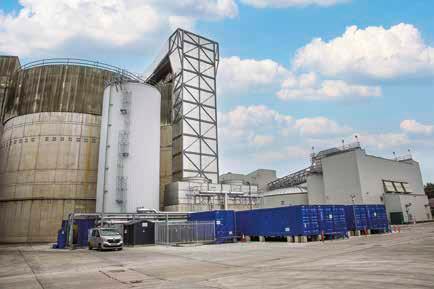
Boortmalt malting process. Heat pump in Athy, Ireland.
Boortmalt Plant and Headquarters, Port of Antwerp, Belgium.
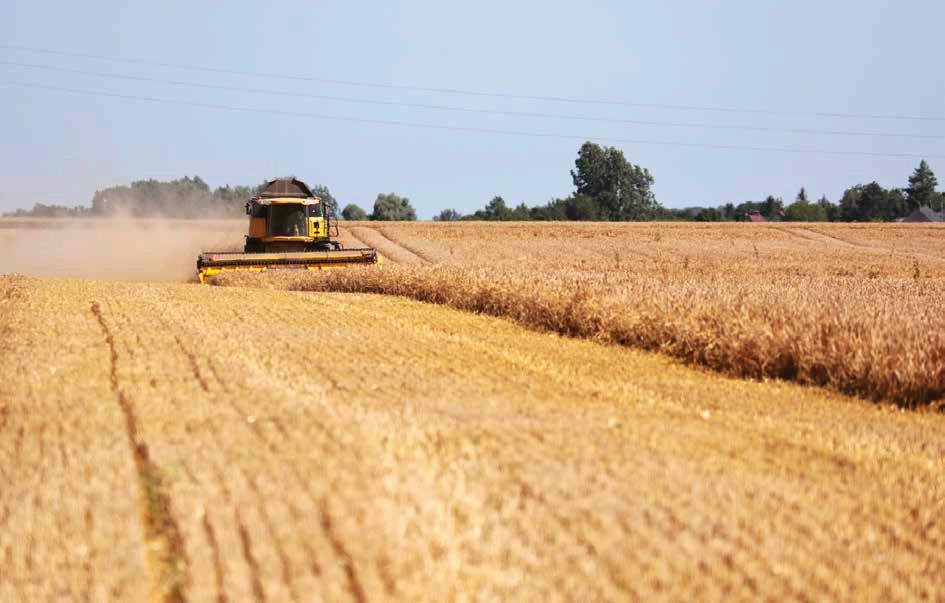
Barley field, harvesting malting resources.
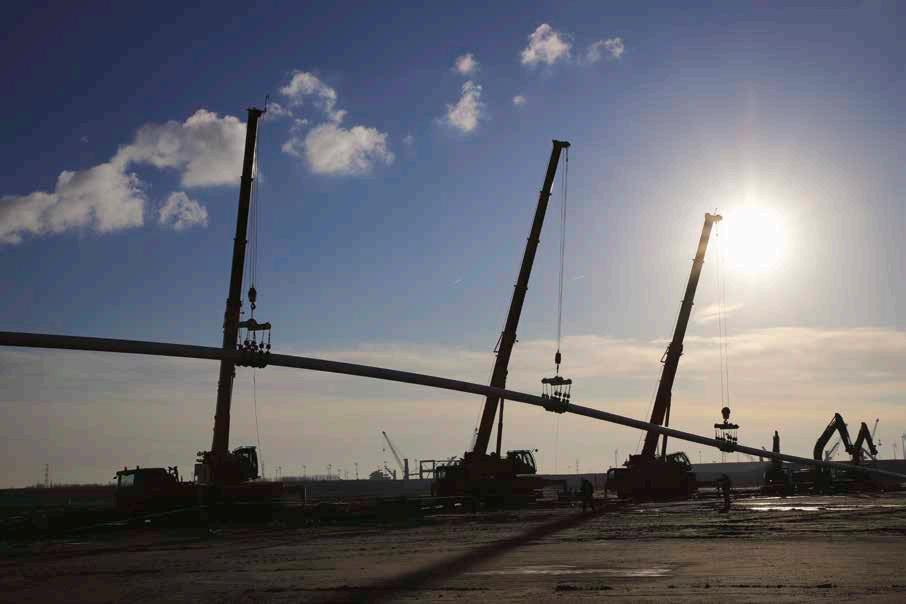
Antwerp North heat network, Belgium.