
How liquid water shaped the landscapes of Mars and made the planet habitable

Liquid water is thought to have been abundant on the surface of Mars early in its history, but today it exists only in the form of ice. The team behind the MarsFirstWater project are investigating the characteristics of water on early Mars, research which holds important implications for future space missions to the planet, as Professor Alberto Fairén explains.
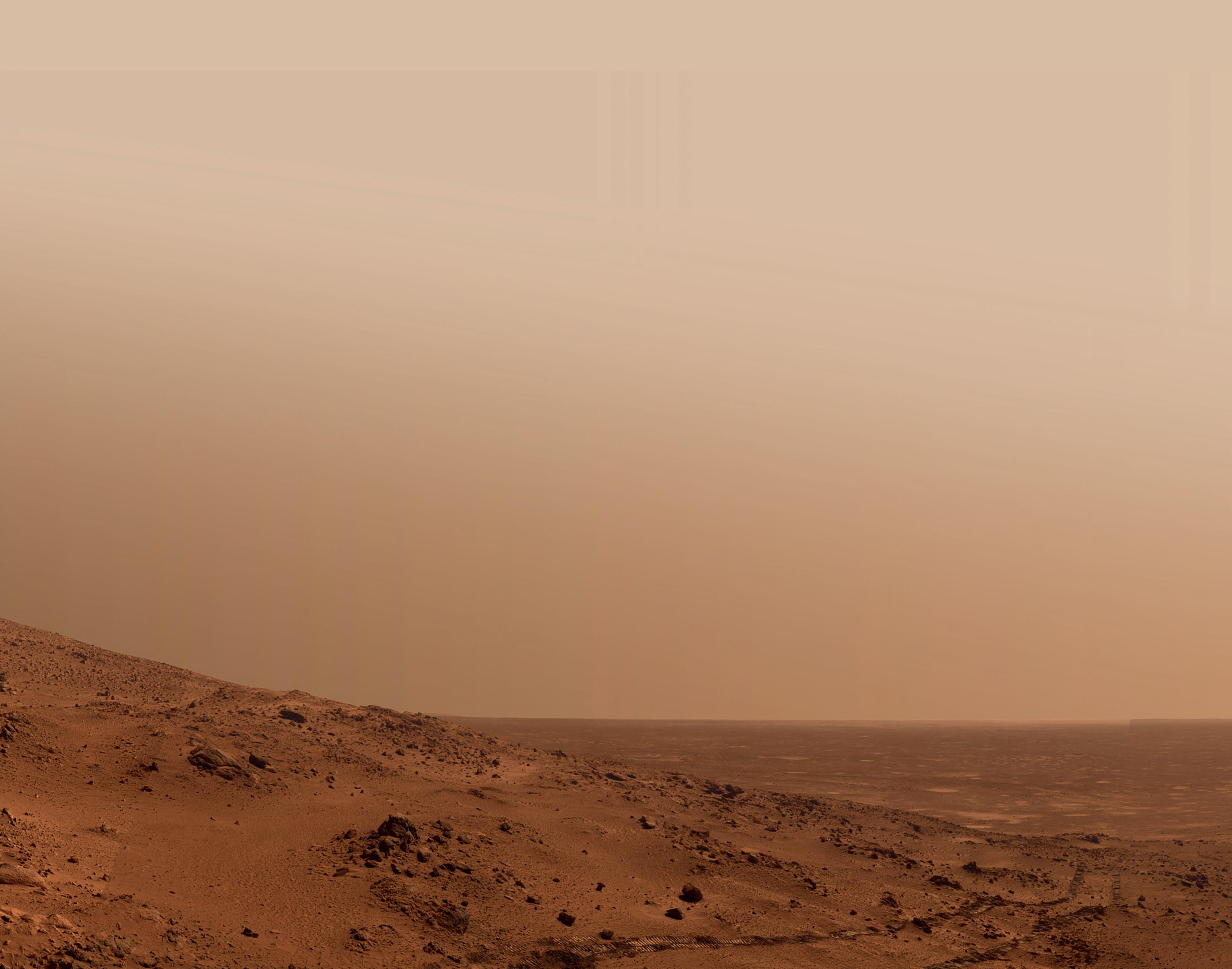
The presence of liquid water is essential to life on Earth, and it has played a central role in the evolution of the planetary surface. Beyond our own planet, water is thought to have been present on several different objects in the Solar system at certain points in history, including Mars. “There is ample evidence that liquid water was abundant on the surface of early Mars, both in the geomorphology of ancient terrains, such as lake beds, deltas and stratified sequences, and also in the presence of minerals that can only be formed in the presence of abundant and persistent liquid water,” explains Alberto Fairén, a Research Professor at the Centro de Astrobiologia
(CAB), an institute supported by the Spanish National Research Council (CSIC). While a reservoir of liquid water has recently been found kilometers deep in the crust of Mars, surface water exists today only in the form of ice, in the polar caps, permafrost, and some isolated underground ice deposits. “Liquid water is not stable on the surface of Mars today,” continues Professor Fairén.
MarsFirstWater project
As Principal Investigator of the ERC-backed MarsFirstWater project, following up on the earlier icyMARS initiative, Professor Fairén is now working to build a deeper picture of the
water that existed on the Martian surface during the early part of its geological history, using data from both past and current space missions, as well as terrestrial analogs. This work starts from the hypothesis that icerich permafrost characterised most of the Martian subsurface and the subsurfacesurface interface during the Noachian period, which is thought to have begun roughly 4 billion years ago. “We have identified key thermal, mechanical and chemical conditions that characterised ice-rich permafrost associated with hydrological processes on early Mars,” says Professor Fairén. “We are using simulation experiments combined with


numerical modelling to investigate the role of fluid dynamics on the morphology of the resulting features, with a particular emphasis on the effect of early fluid composition. We have also provided the first identification of rythmites on Mars.”
This shows that impact events from asteroids and meteorites, which occurred regularly in the Noachian period, were a major source of liquid water on early Mars. Professor Fairén and his colleagues have also documented the history of a specific aqueous episode on early Mars. “This provides the first evidence of powerful storms, torrential rains, megafloods and strong waves in a Martian palaeolake at the Gale crater,” he outlines.
The Gale crater is one of the locations on Mars where liquid water is thought to have been present in the past, and NASAs Curiosity rover is currently located there, looking for evidence of past environmental conditions and whether they could have supported life. “Life requires water, so we are sure that biosignatures on Mars will be hidden in places where water was present in the past,” continues Professor Fairén. “We’re interested in molecular biomarkers, natural products that can be assigned to particular biosynthetic origins.”

places on Earth that are characterised by one or a few environmental, mineralogical, geomorphological, or geochemical conditions that are similar to those observed on present or past Mars,” explains Professor Fairén. “Our investigations are being conducted in several analogs, as there is no single analog on Earth that perfectly reflects the conditions on early Mars. It is likely that early Mars had a diversity of environments in terms of pH, redox conditions, geochemistry, temperature, and so on.”
Terrestrial analogs

The most useful molecular biomarkers are organic compounds that are abundant in terrestrial microorganisms and have a high level of taxonomic specificity, meaning that they originate from a limited number of well-defined sources. These compounds may also be fairly well preserved, as they are resistant to geochemical changes and become concentrated upon sediment diagenesis. “This process is controlled by microbial activity and/ or chemical reactions that are catalysed by mineral surfaces,” explains Professor Fairén. Microbial lipids, in particular alkanoic acids, can help researchers reconstruct past conditions on Mars, and so are of great interest to Professor Fairén. “Alkanoic acids are optimal proxies for the reconstruction of paleoenvironmental scenarios, given their abundance (bacteria and eukaryotes contain 1 to 10 percent alkanoic acids), high taxonomic specificity and resistance against diagenesis,” he says. These attributes make lipid fraction studies a useful means of elucidating the sources and diagenesis of organic matter, and Professor Fairén is using these methods to investigate paleoenvironmental microbiology. A further strand of research involves analysing data on ancient rocks found on Mars, and comparing them with sediments from several extreme terrestrial environments in which the conditions are thought to resemble those on early Mars. “The terrestrial analogs are
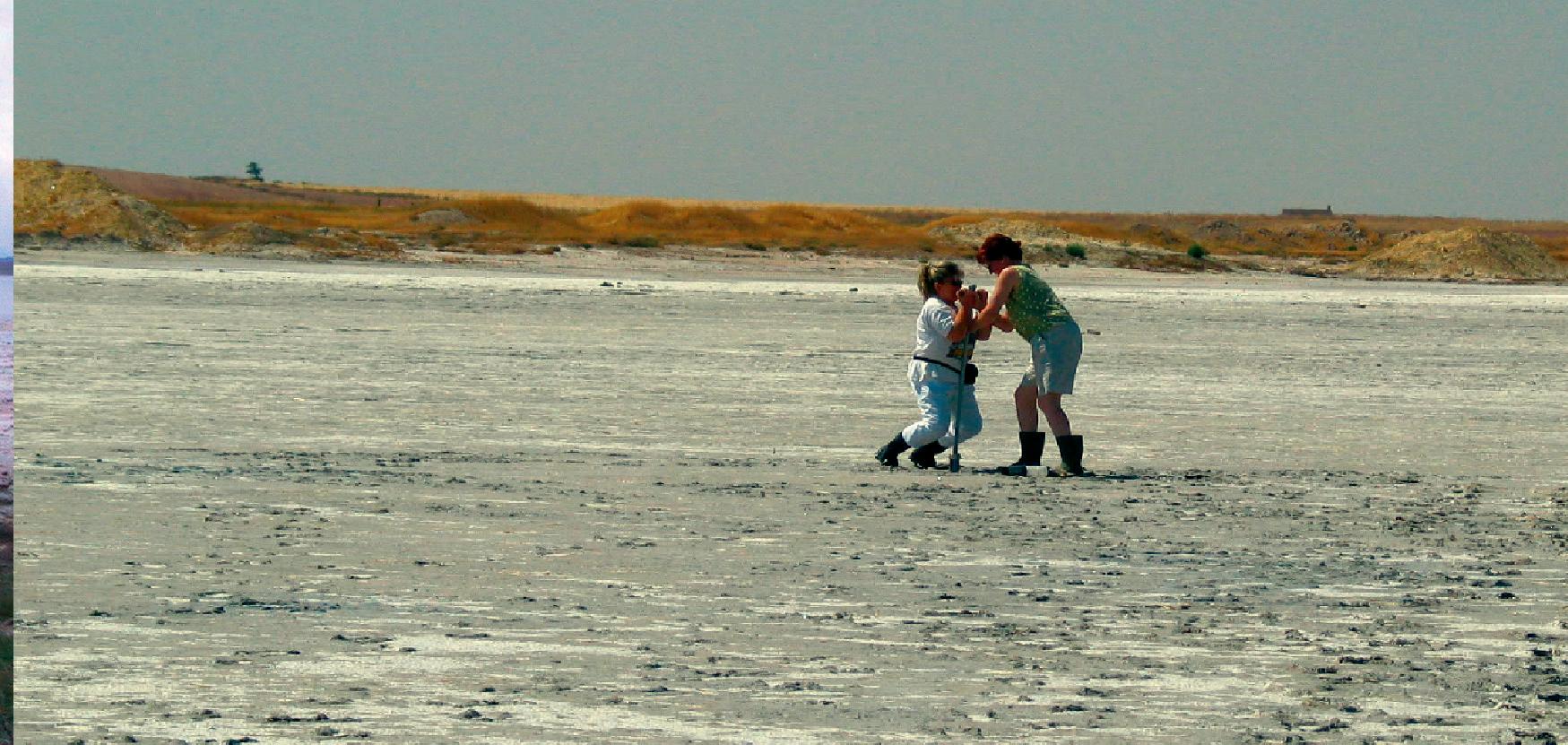
The project team is conducting research in five terrestrial environments; the High Arctic, Antarctica, the Atacama desert in Chile, Rio Tinto and the Tirez lagoon in Spain, from which Professor Fairén hopes to learn more about the conditions on early Mars. The Tirez lagoon is a suitable analog for investigating the changing paleoenvironmental conditions on Mars over the time between the Late Hesperian and the Early Amazonian (around 3 billion years ago) periods, building on data from space missions.
“A number of the paleolakes that have been identified on Mars were characterised by episodic inundation by shallow surface waters with varying salinity, evaporation, and full desiccation over time. This process occurred repeatedly until the final disappearance of most surface water after the wet-to-dry transition at the end of the Hesperian,” outlines Professor Fairén. “Similar conditions can be tested over time at the Tirez lagoon, including ecological successions.”
This lagoon saw both wet and dry periods over the course of around 20 years, before it reached a state of complete desiccation in 2015. However, this does not mean that the lagoon is completely uninhabitable. “We have demonstrated that the lagoon was habitable both before and after its complete desiccation, despite the repeated seasonal dryness,” says Professor Fairén. Researchers are using information and insights from these terrestrial field analogs in combination

with spacecraft mission-derived datasets to test certain hypotheses on the nature of water on early Mars. “We’re using a range of techniques, including paleogeomorphological reconstructions, computer modelling (geological, geochemical and microbiological models) and laboratory studies,” continues Professor Fairén. “The derived results are producing hard constraints on the physical evolution, geochemical alteration and habitability of surface and near-surface aqueous environments on early Mars.”
The project team is working to build a more comprehensive understanding of the inventory of water during the first billion years of Mars’

history, and to analyse its early evolution on both global and local scales. This understanding must encompass a precise knowledge of the nature of that water, says Professor Fairén.
“We’re looking at whether it was present in liquid or solid form, the duration of its presence, and its distribution across the planet,” he outlines.
The project’s agenda also includes research into the surrounding environment. “We are investigating the weathering rates and patterns of the host rock, as well as the physicochemical parameters defining such interactions, and the specific landforms and mineralogies generated during these periods. We are also examining the ultimate fate of all that water when the Martian surface desiccated,” continues Professor Fairén. “Our final goal is to determine the implications these processes had on the potential inception of life on Mars, as a separate genesis from that on Earth.”
Habitability of Mars
This research is being conducted against a backdrop of renewed interest in sending

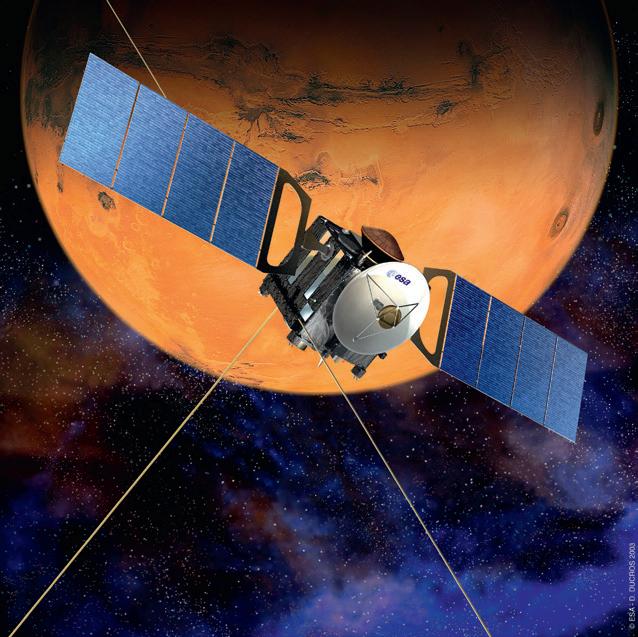
manned space missions to Mars, searching for signs of life on the planet, and even establishing human settlements there in the long-term. The project’s work represents an important contribution to this wider goal, as it will help inform the progress and development of new missions to Mars. “We aim to advance a novel perspective on the evolution of planetary habitability, which can inform the development of future missions, payload concepts and instrumentation for exploring both Mars and Earth,” says Professor Fairén. However, Professor Fairén says it’s also important to consider the Martian environment and prevent contamination when planning space missions, an issue he is keen to highlight. “Our research will elucidate the challenging constraints for planetary protection policies in current planetary exploration, both uncrewed and crewed. We are attempting to substantiate the argument for a moratorium on proposed human missions to Mars,” he outlines. The areas on Mars where life is most likely to be found are precisely those where the strictest restrictions are in place regarding exploration, as set forth by planetary protection offices.

These restrictions are there specifically to avoid disturbing any indigenous life forms that may be present, yet given the prospect of new missions to Mars, Professor Fairén believes the current guidelines need to be revisited.
“The issue is that, in light of NASA’s and other agencies’ aspiration to send human missions to Mars in the 2030s, the current planetary protection guidelines applied to today’s uncrewed robots are impractical,” he says.
A manned mission to Mars will unavoidably bring so-called microbial hitchhikers along with it, as it is not possible to conduct a bioburden reduction process on humans. “It is inevitable that a high degree of forward contamination will occur as a result of human astronaut exploration, given the impossibility of conducting all human-associated processes and operations within entirely closed systems,” acknowledges Professor Fairén.

A human presence on Mars will inevitably result in reduced cleanliness in the area, regardless of how careful those people are and what strategies they use. It is therefore unreasonable to delay further robotic astrobiological exploration of Mars on the grounds of preventing contamination of the planet by microorganisms aboard unmanned spacecraft, believes Professor Fairén. “It is surely more prudent to conclude that human contact with Special Regions is not the optimal means of an initial astrobiological
This is an essential step before the arrival of manned missions on Mars, and researchers continue to look for signs of life on the planet.
A number of locations have been identified, and Professor Fairén says exploring them with robots should be a priority, before the potential future arrival of crewed missions.
“Examples include aquifers concealed beneath ice masses, analogous to those purported to exist beneath the south polar cap but situated in regions where subsurface ice sheets have been identified at more accessible
“There is ample evidence that liquid water was abundant on the surface of early Mars, both in the geomorphology of ancient terrains, and also in the presence of minerals that can only be formed in the presence of abundant and persistent liquid water.”
exploration. It is imperative that we ascertain, prior to the arrival of humans, whether extant microbial ecosystems are present at - or near - the surface,” he argues.
It’s important in this respect that a few select locations be designated, described, and analysed as soon as possible, with the deployment of rovers and landers. “This will enable us to make significant strides in our astrobiological endeavours, particularly in determining whether there is presentday near-surface life on Mars,” continues Professor Fairén.
latitudes. Alternatively, salt crusts with low eutectic points may warrant consideration, as temperature and relative humidity fluctuations could facilitate transient deliquescence processes and solution formation,” he says. With more missions to Mars planned, Professor Fairén hopes to establish a successor project, building on the progress that has been made in icyMARS and MarsFirstWater and gaining deeper insights. “I plan to continue building my team and furthering our results about the geochemical setting of early Mars and the prospects of finding life,” he says.
MarsFirstWater
Study of the origin and water cycle on Mars during the first billion years of the planet’s geological history, and its astrobiological implications
Project Objectives
We examined the water inventory in the first billion years of Mars’ history, studying its evolution at both global and local scales, the duration and locations of water presence, the rates and patterns of hostrock weathering, the physicochemical parameters influencing such interactions, and the formation of specific landforms and mineralogies, to finally evaluate the implications of these processes for the potential emergence of life on Mars.
Project Funding
The “MarsFirstWater” project is funded by the European Research Council ERC, Consolidator Grant no 818602, following the results of the “icyMARS” project, also funded by the ERC, Starting Grant no 307496.

Project Partners
Centro de Astrobiología (CAB), a research center managed by the Spanish National Research Council (CSIC).
Contact Details
Project Coordinator,
Professor Alberto Fairén Centro de Astrobiología
Instituto Nacional de Técnica Aeroespacial M-108, km 4, 28850 Madrid, Spain
E: agfairen@cab.inta-csic.es W: https://cordis.europa.eu/project/id/818602

and


