A fresh look at protecting coastal water resources







apply, the more energy-intensive the process is. Also the quality of the resulting freshwater is affected and disposal options are limited with a more concentrated saline waste stream”, he says.
installed two extraction wells. The first is for extraction of brackish groundwater and has three separate well screens between 90 and 110 meters below ground level. The other well is for extraction of deep fresh groundwater and has two well screens between 60 and 90 meters below ground level,” he explains.
Europe’s coastal freshwater resources are under intense pressure, with overexploitation leading to salinization of coastal aquifers (groundwater bodies). The team behind the LIFE FRESHMAN project has developed an innovative technique to protect coastal aquifers from salinization, while also increasing the volume of readily available freshwater, as project leader Dr. Gertjan Zwolsman explains.
Many coastal zones around Europe rely on freshwater reserves in aquifers for drinking water production, agriculture or industry. These freshwater reserves depend on rainfall or infiltration from local rivers, and if more freshwater is extracted than is replenished on an annual basis, the aquifers will be overexploited, risking serious long-term consequences on groundwater quantity and quality.
“Aquifers (sandy or gravel layers in the soil profile) are the basis of underground freshwater storage. If coastal aquifers are overexploited, seawater will intrude into them, leading to salinization”, explains Dr. Gertjan Zwolsman, senior strategist on water resources at Dunea, a public drinking water utility which supplies drinking water across the Southwest Netherlands. “In the coastal dunes around The Hague there are four aquifers, separated by confining layers of clay and peat,” he outlines. “Based on previous drilling of groundwater wells, we know precisely what the subsurface looks like in the dunes.”
FRESHMAN project
The coastal dunes around The Hague play an important role in drinking water supply to the city. Below the surface, a freshwater lens is present of 60-90 meters depth, underlain by brackish groundwater. This brackish water could provide an additional source of drinking water after extraction and treatment. This is a topic that Zwolsman and his team are
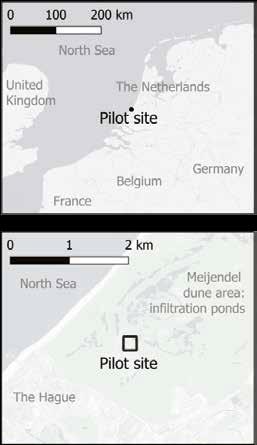
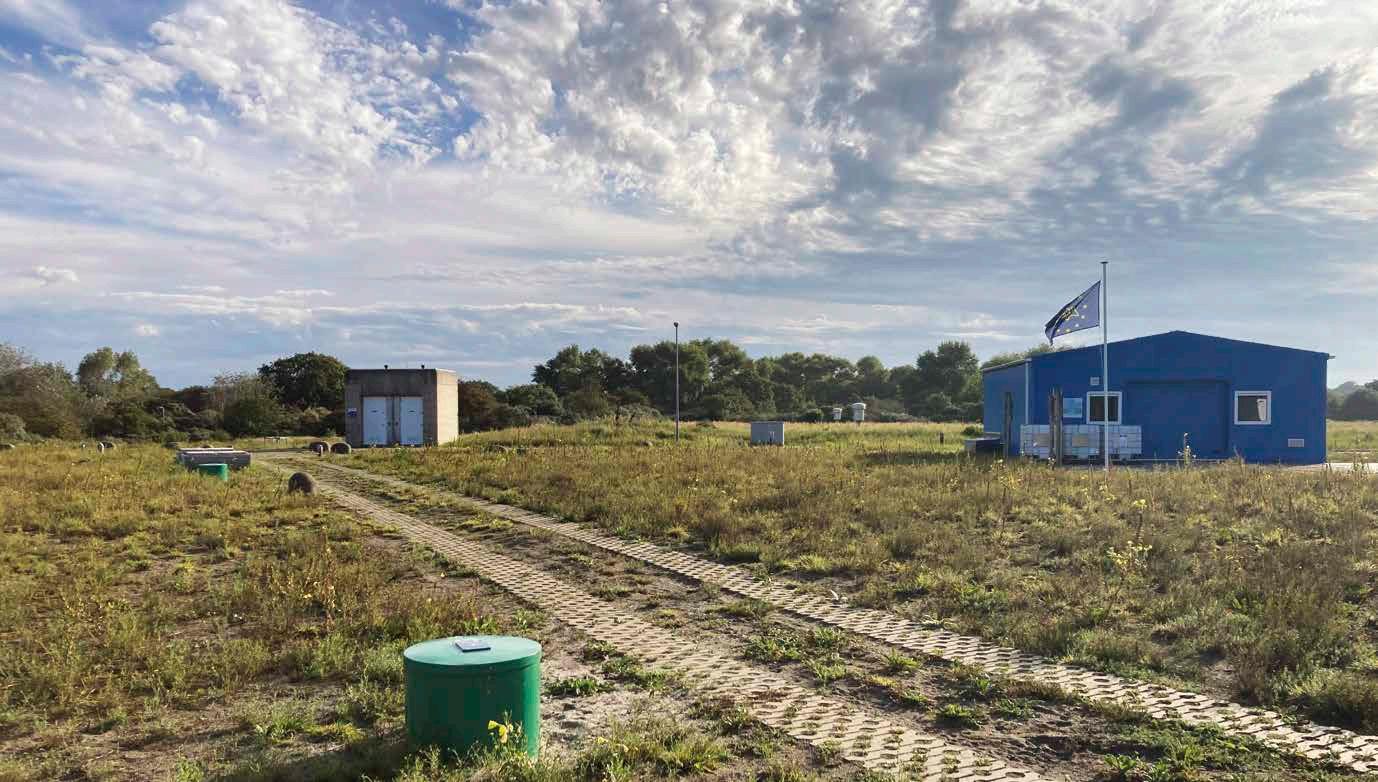
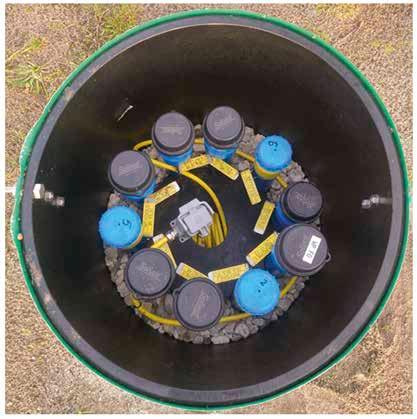
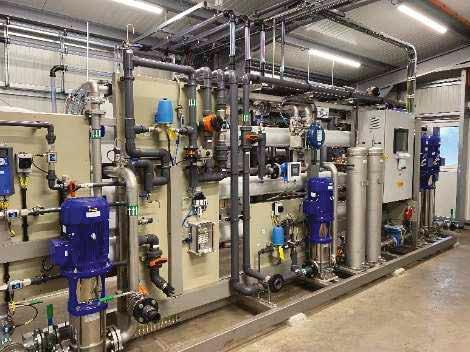
exploring in the EU-funded LIFE FRESHMAN project. “Our pilot project is being conducted at Dunea’s main drinking water production site in the coastal dunes around The Hague, where population growth is leading to increased drinking water demand, underlining the wider importance of the project’s work. The pilot consists of a well field and a water treatment facility (Figures 1 and 2). We have
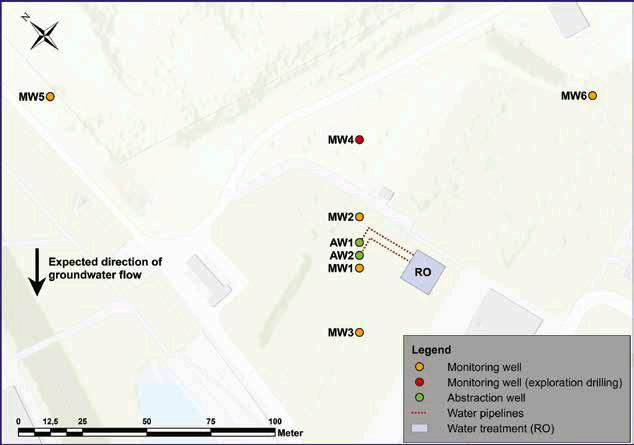
“We wanted to investigate the sensitivity of this deep freshwater well to salinization. We have installed six monitoring wells around the extraction wells (Figure 2a), to follow the impact of groundwater extraction on the salinity distribution in the aquifers.”
The project team started by exploring the geohydrological conditions at the pilot site, by drilling an exploration well of 200 meters deep. The soil profile of the exploration well and the vertical distribution of the chloride concentration (and related variables) were recorded (Figure 3). Fresh groundwater, with a chloride concentration of less than 150 milligrams per liter (mg/l), is present up to a depth of 90 meters. In the 20-meters thick brackish zone below, the chloride concentration increases to 10.000 mg/l (50% seawater).
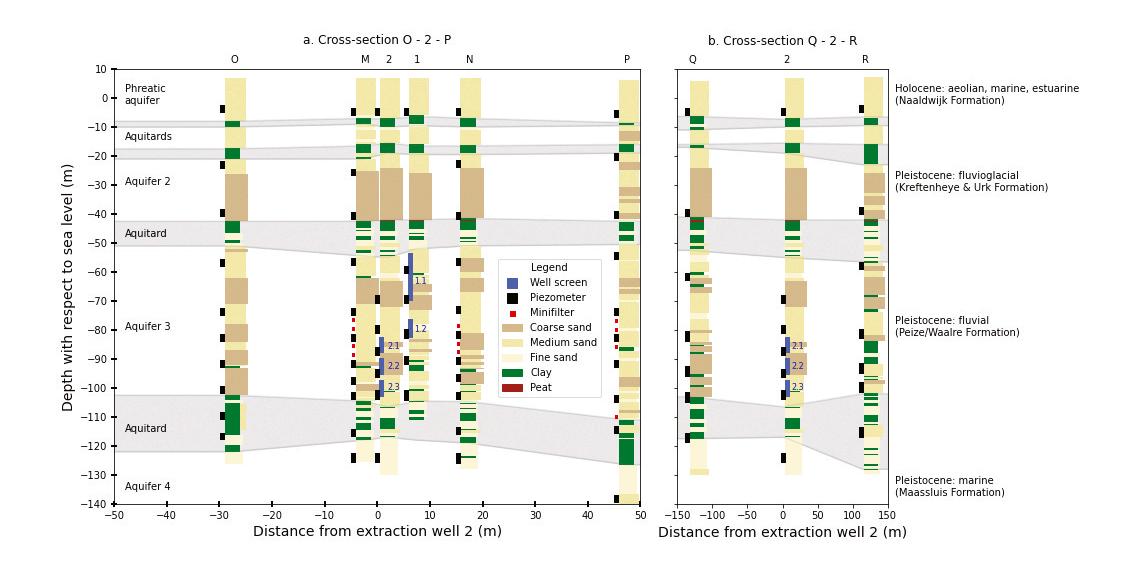
The well field was installed in the third quarter of 2021. The soil profile of the wells and the vertical salinity distribution were carefully recorded (Figure 4). “We started brackish water pumping in January 2022. Our first aim was to investigate the operational stability of the process of extracting and purifying brackish groundwater. We used a pumping rate of 50 m3/hour, divided over three well screens.”
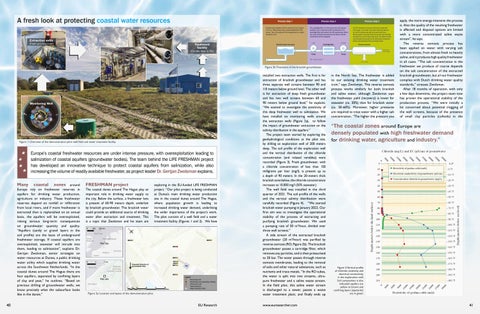
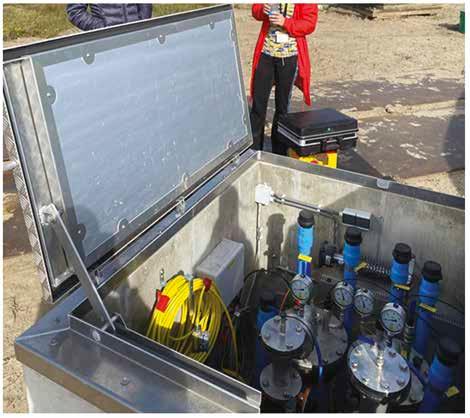
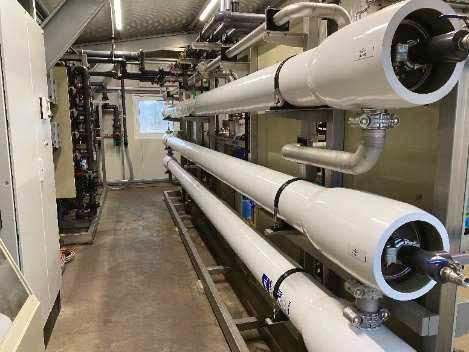
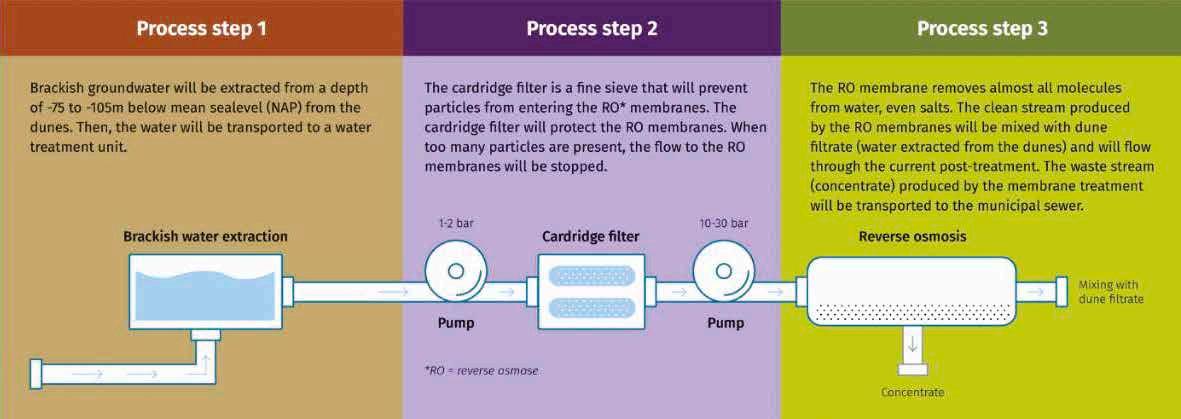
A side stream of the extracted brackish groundwater (20 m3/hour) was purified by reverse osmosis (RO; Figure 2b). The brackish groundwater passes a cartridge filter, which removes any particles, and is then pressurised to 30 bar. The water passes through reverse osmosis membranes, leading to the removal of salts and other natural substances, such as nutrients and trace metals. “In the RO tubes, the water is split into two streams, ultrapure freshwater and a saline waste stream. In the field pilot, this saline water stream is discharged to a sewer, passes a waste water treatment plant, and finally ends up
in the North Sea. The freshwater is added to our existing drinking water treatment train,” says Zwolsman. This reverse osmosis process works similarly for both brackish and saline water, although Zwolsman says the freshwater yield (recovery) is lower for seawater (ca. 30%) than for brackish water (ca. 50-60%). Moreover, higher pressures are required to treat water with a higher salt concentration. “The higher the pressure you
The reverse osmosis process has been applied on water with varying salt concentrations, from almost fresh to heavily saline, and it produces high quality freshwater in all cases. “The salt concentration in the freshwater we produce of course depends on the salt concentration of the extracted brackish groundwater, but all our freshwater complies with Dutch drinking water quality standards,” stresses Zwolsman.
After 18 months of operation, with only a few days downtime, the project team now has proven the operational stability of the production process. “We were initially a bit concerned about potential clogging of the well screens, because of the presence of small clay particles (colloids) in the
“The coastal zones around Europe are densely populated with high freshwater demand for drinking water, agriculture and industry.”
Figure 3:Vertical profile of chloride, resistivity and electrical conductivity in the exploration well. Soil composition is also indicated: aquifers are yellow to brown and confining layers (aquitards) are in green.
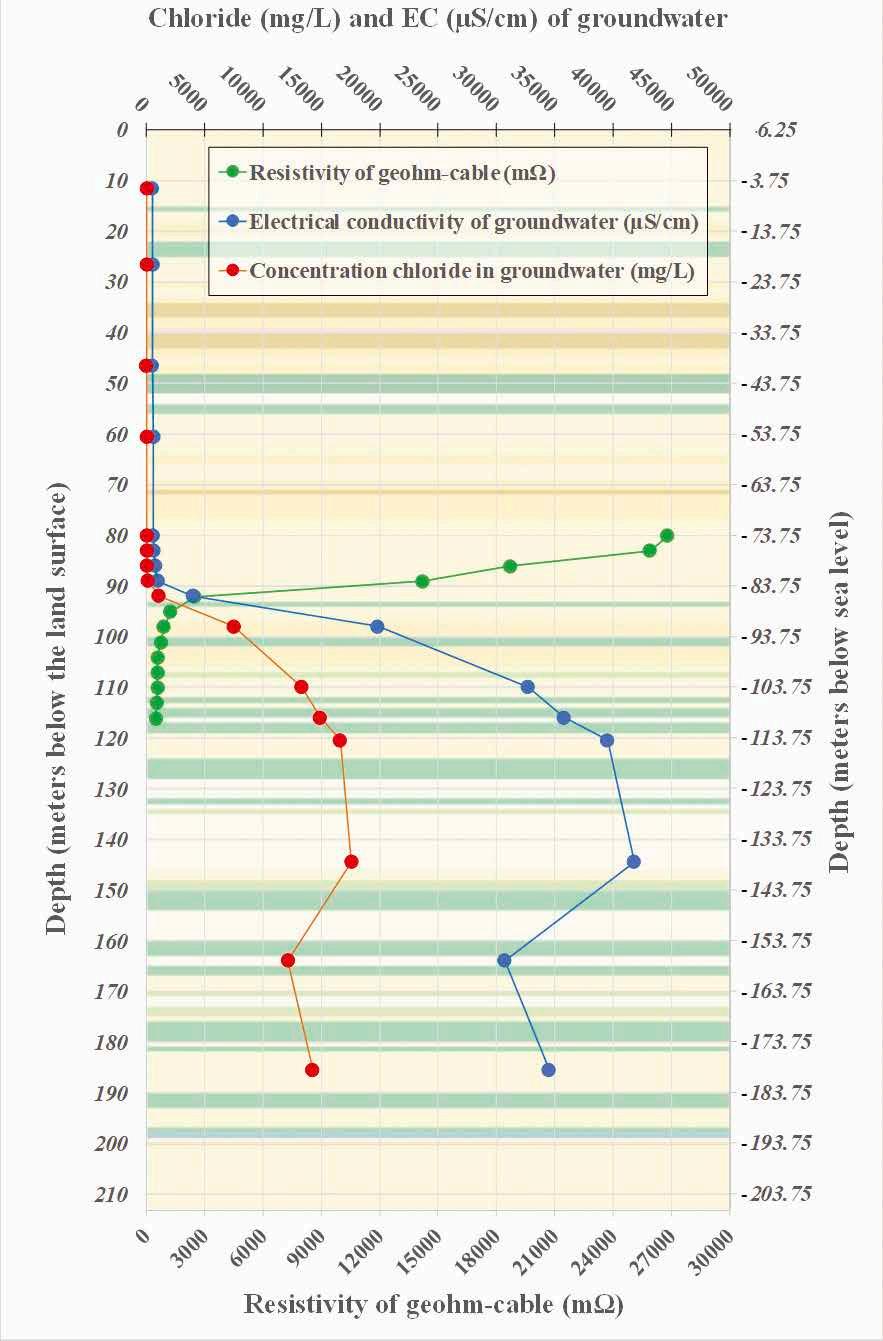
Figure 1: Overview of the demonstration pilot: well field and water treatment facility.
Figure 2a: Location and layout of the demonstration pilot.
Monitoring Well
Extraction wells (fresh and brackish) Treatment facility (Candle filter & RO)
Figure 2b: Treatment of the brackish groundwater.
Doing so, we were able to control the interface between fresh and brackish groundwater, thereby protecting our deep freshwater wells from salinization.”
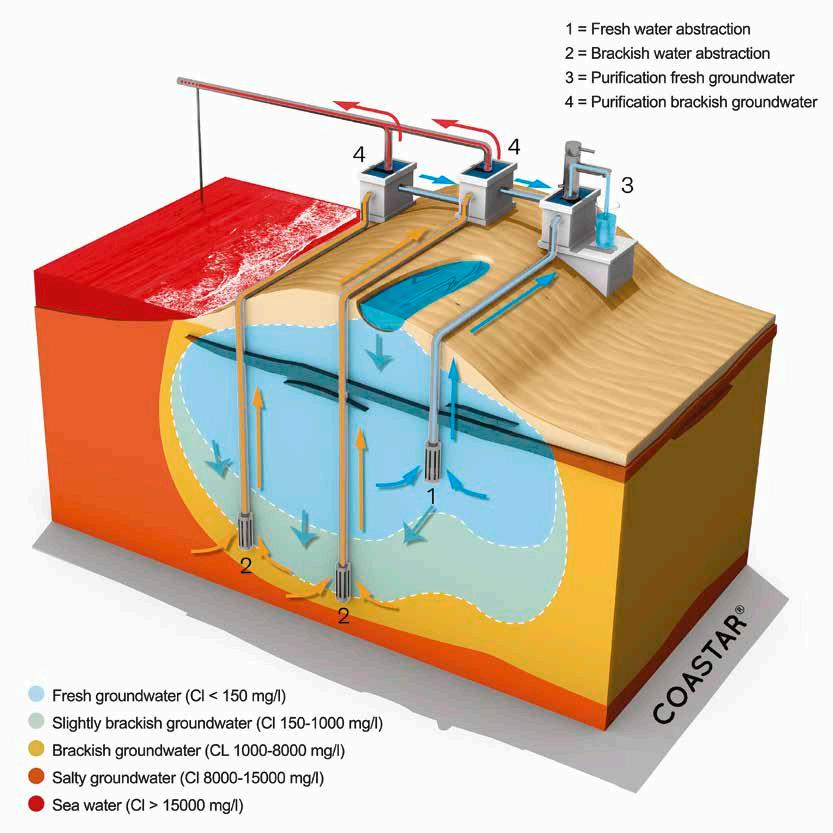
This is a very positive finding, potentially showing a way to protect existing coastal groundwater resources from salinization, while also increasing the volume of readily available freshwater (Figure 6). “The coastal zones around Europe are densely populated with a high demand for drinking water, as well as water for agriculture and industry,” stresses Zwolsman. “Our long-term aim is to apply this technology more widely in other coastal zones. A key step towards this is to demonstrate its effectiveness in other locations beyond the pilot site, so work is also ongoing at a replication site in Flanders.”
groundwater. This hasn’t happened though, so it hasn’t been necessary to clean the well screens,” he says. The RO membranes at the demonstration site needed to be cleaned twice over the three years of operation. This is because of scaling, the precipitation of minerals on the surface of the membranes, which have to be removed periodically. However, this is quite normal for the operation of RO membranes.
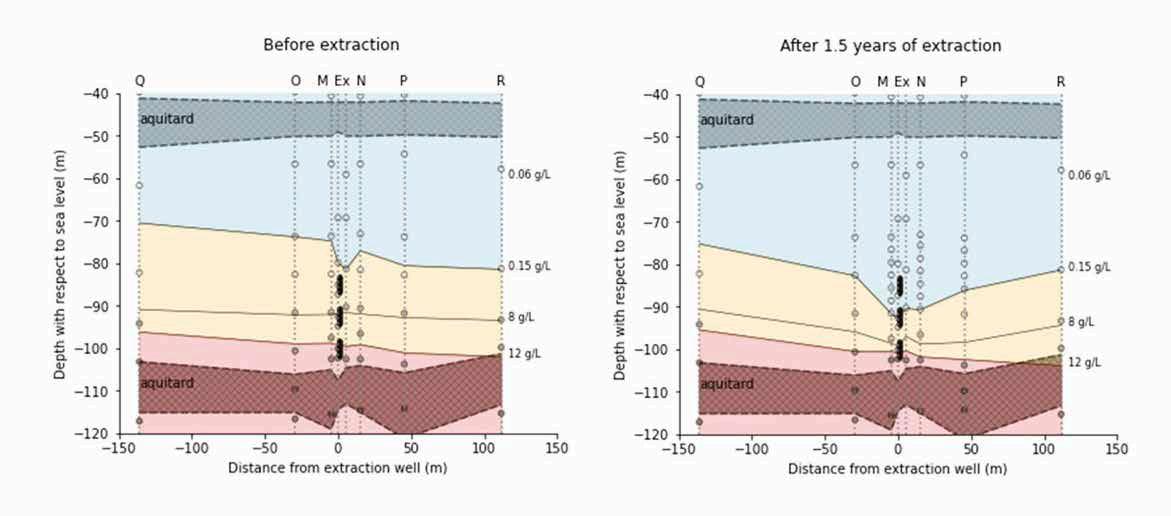
“Another important goal of the project was to demonstrate that continuous extraction of brackish groundwater would lead to an increase in the volume of the freshwater lens above,” explains Zwolsman. The team investigated this hypothesis in the first phase of the project and found that after 18 months of brackish water pumping, the transition from fresh to brackish groundwater had shifted downwards by up to 15 meters at the extraction wells, and by 5 to 10 meters in the monitoring wells MW1-MW4 (Figure 5, wells M to P). The growth of the freshwater lens was estimated to be 43.000 m3.
Protection of freshwater wells In a second phase of the pilot, the team looked at whether they could protect
Dunea’s existing deep freshwater wellswhich are positioned above the brackish water layer - from salinization. “We found that extracting fresh groundwater led to attraction of brackish groundwater to the freshwater extraction screens, leading to salinization of the well screen, a process often referred to as upconing”, he outlines. This is a situation that Dunea must prevent at all times, so the project team attempted to reverse it. “After salinization, we resumed
“Our Flemish partners are working in a low lying polder site close to the coast near the village of Koksijde, with different geological characteristics but similar challenges to our site in the Netherlands,” outlines Zwolsman. “In the replication pilot, the aquifer is relatively shallow (25 meters deep), with a freshwater lens on top and brackish water at the bottom. Just as in the demonstration pilot, freshwater extraction is threatened by salinization, due to upconing of brackish groundwater towards the extraction wells. So they also studied the extraction of brackish groundwater as a measure to protect the existing freshwater well.”
There is one freshwater extraction well and one brackish water extraction well at the Flemish site, with several surrounding monitoring wells to assess the impact of the technology on the salinity distribution within the aquifer. The team at Koksijde is also seeking to prove that there are no significant operational problems associated with the technology, such as well clogging.
“Aquifers are the basis of underground freshwater storage. If coastal aquifers are overexploited, then seawater will intrude into them, leading to salinization.”
the extraction of brackish groundwater to reverse the salinization of the freshwater extraction well, which we achieved within three months,” continues Zwolsman. “Then, we attempted to control the interface between fresh and brackish groundwater, based on continuous recording of electrical conductivity (EC) within the pumped aquifer. If significant changes in EC occurred, the pumping rates of the brackish and freshwater wells were adjusted accordingly.
Wider potential of the technology
The replication pilot in Koksijde was terminated in March 2025. The results are in keeping with the results of the demonstration pilot, demonstrating the technology’s wider potential, and opening up the possibility of applying it in other areas with comparable geohydrological settings, i.e. in coastal areas with sandy aquifers. Such aquifers are widely found among European
coasts, and many of them are overexploited, which makes them vulnerable to salinization due to seawater intrusion. “We can extract fresh groundwater from coastal aquifers, and protect the wells by simultaneously extracting brackish water from below,” explains Zwolsman. “We are actively exploring the possibility of applying the technology in other locations (Figure 6).
This autumn, we plan a study tour to Spain to visit several coastal aquifer recovery sites and investigate whether the technology can also be replicated there,” he continues. “Spain faces significant challenges with respect to freshwater availability. Many of the aquifers around the Mediterranean coast are known to be salinizing, and there is a lot of interest in remediating these aquifers by injecting freshwater, e.g. using highly purified effluent from waste water treatment plants. Simultaneous extraction of brackish or saline groundwater from below may enhance remediation of these sites.”
The expertise that the LIFE FRESHMAN project team has gained in stabilising fresh and brackish groundwater holds clear relevance , and Zwolsman is keen to share the project’s insights. At the same time, Zwolsman says he and his colleagues can also learn from the experience of their
Spanish colleagues in working on a bigger scale. “We are only working on a pilot scale, and we can learn from their practical experience,” he acknowledges. With the field pilot set to end imminently, the FRESHMAN team is now working to finalise the project, while also considering plans for a successor initiative. “Two months ago, we concluded all the experiments that were initially planned. Now we are working on the project deliverables, including writing reports and doing an economic analysis of the technology,” he continues. “We of course have to consider the overall cost and environmental sustainability of the technology, but the most important issue is to safeguard freshwater availability.” This is a prominent issue in many parts of Europe, with climate change and population growth leading to intense pressure on freshwater resources, highlighting the need to carefully manage and protect them. The project’s innovative work forms part of wider efforts to address water scarcity and ensure a sustainable, long-term supply, and Zwolsman is looking forward to continuing his work in this area, building on the progress that has already been achieved. “We want to investigate replication options in other coastal zones around Europe,” he says.
Sustainable freshwater management in coastal zones
Project Objectives
1. To demonstrate that brackish groundwater in coastal aquifers is a stable and attractive source of drinking water.
2. To demonstrate that pumping brackish groundwater can increase the storage of fresh water in coastal aquifers.
3. To demonstrate that pumping brackish groundwater can protect existing freshwater wells in coastal aquifers.
Project Funding
This project is financed by the EU-LIFE Climate Action Programme under Grant Agreement number LIFE19 CCA/NL/001222 – LIFE_FRESHMAN. Additional funding was received from the Dutch Delta Programme.
Project Team
The project team consists of Teun van Dooren (KWR), Klaasjan Raat (KWR), Franca Kramer (Dunea), Ruud Steenbeek (Dunea), Marco Kortleve (Dunea), Nicole van Veldhoven (Dunea), Sandra Zittersteijn (Dunea), Gertjan Zwolsman (Dunea), Emmanuel van Houtte (Aquaduin), Jonas van Eeghem (Aquaduin), Peter Cauwenberg (De Watergroep) and Han Vervaeren (De Watergroep).
Project Partners
• Dunea N.V., public water utility (NL)
• KWR, Water research institute (NL)
• De Watergroep, public water utility (Be)
• Aquaduin, public water utility (Be)
Contact Details
Gertjan Zwolsman, PhD Coordinator LIFE-Freshman
The Freshman-project (dunea.nl) Dunea Duin & Water | Plein van de Verenigde Naties 11 | 2719 EG Zoetermeer Postbus 756, 2700 AT Zoetermeer
T: +31 6 12 73 09 73

E: G.Zwolsman@dunea.nl : https://www.linkedin.com/in/zwolsmangertjan-a9849622/ W: https://www.dunea.nl/algemeen/life-freshman
Dr Gertjan Zwolsman is senior strategist and advisor at Dunea, a public water utility in the Netherlands. His professional interest is on protection of current drinking water sources and the development of new (unconventional) sources of drinking water. He is project leader of the EU-LIFE project Freshman (2020-2025), which focuses on increasing freshwater availability in coastal zones by extraction of brackish groundwater.





Dr Gertjan Zwolsman
Figure 5: Growth of the freshwater lens (light blue) after 18 months of brackish water extraction The X-axis shows the distance of each monitoring well to the brackish water extraction well; the Y-axis shows the chloride concentration in the monitoring wells as a function of depth. The 0,15 g/l line (chloride) indicates the transition from fresh (blue) to brackish groundwater (yellow).
Figure 4 (Above):Vertical profiles of soil composition of the extraction wells (1 and 2) and the monitoring wells (M to R). The well screens and the monitoring screens (piezometers) are also indicated.
Figure 6: The Freshman concept: brackish water extraction from coastal aquifers, to protect freshwater wells from salinization and to increase the freshwater stock in the aquifer.