Ecological gardening for climate adaptation

Villages and small settlements across Hungary are highly vulnerable to the effects of climate change. The team behind the LIFE Co-Clima project aim to help these communities adapt by establishing ecological farms and sharing knowledge on bio-intensive gardening, which will boost resilience over the long-term, as Anna Mészár explains.
The Hungarian climate is changing, with extreme weather events becoming increasingly common, prompting the authorities to look at how communities across the country can adapt to the new reality. While much of the Hungarian population lives in large towns and cities, it’s also important to consider how smaller settlements can adapt to climate change, an issue at the heart of the LIFE Co-Clima project. “The project is about boosting community resilience and the capacity of smaller villages to adapt to the effects of climate change,” explains Anna Mészár, a member of the project team. The project’s work centres on creating small-scale organic gardens in two villages in Central- Hungary - Püspökszilágy and Penc - using techniques designed to enhance resilience. “We are using a methodology called bio-intensive gardening. This is a no-till approach, avoiding chemicals, while we also use compost mulch to improve the biodiversity of the soil,” outlines Mészár. The Municipality of Püspökszilágy is the lead partner of the project. Püspökszilágy is a remote village with a population of less than 800, which is particularly vulnerable to the adverse effects of global climate change. Recognizing this, the municipality is now implementing its third project, funded directly by the European Union - a first in
Hungary. Its previous two LIFE projects focused on natural water retention, while the current one focuses on promoting organic farming. This unique approach clearly reflects the local government’s comprehensive thinking and its rare, genuine vision for creating a sustainable community.
Ecological gardening techniques
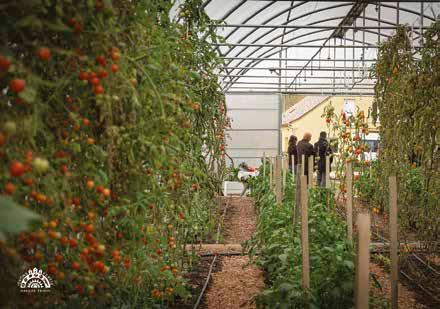
A number of ecological gardening techniques and nature-based solutions are being applied at the two gardens, with the aim of producing a reliable, sustainable supply of organically-grown vegetables for local people. The gardens will be operated by the local municipality and people from the surrounding areas can come and learn about organic farming, with staff from project partner MagosVölgy, a company which
specialises in ecological gardening, providing expert guidance. “The company supports these two municipalities to create their own vegetable gardens, where people can come and see how organic vegetable production can work at a small scale,” continues Mészár.
A sowing plan is developed at the beginning of the year, and Mészár says the aim is to maximise productivity, while at the same time maintaining soil quality. “We can harvest two or three plants per year from one raised bed, it’s a fairly productive system,” she outlines. This is not about simply imposing new gardening methods on the people of Püspökszilágy and Penc. “There is a lot of traditional gardening knowledge in these smaller communities, which is at risk of disappearing as the local population grows older and is displaced by newcomers. We want to build on this existing knowledge,” stresses Mészár. The aim in the project is to essentially merge these two schools of thought, biointensive gardening and the more traditional approach, and then to spread this knowledge out more widely. This would then help increase food production, while also engaging local communities and encouraging people to get involved in gardening. “We see it as an entirely positive thing if people in villages take care of these gardens,” says Mészár. Being part
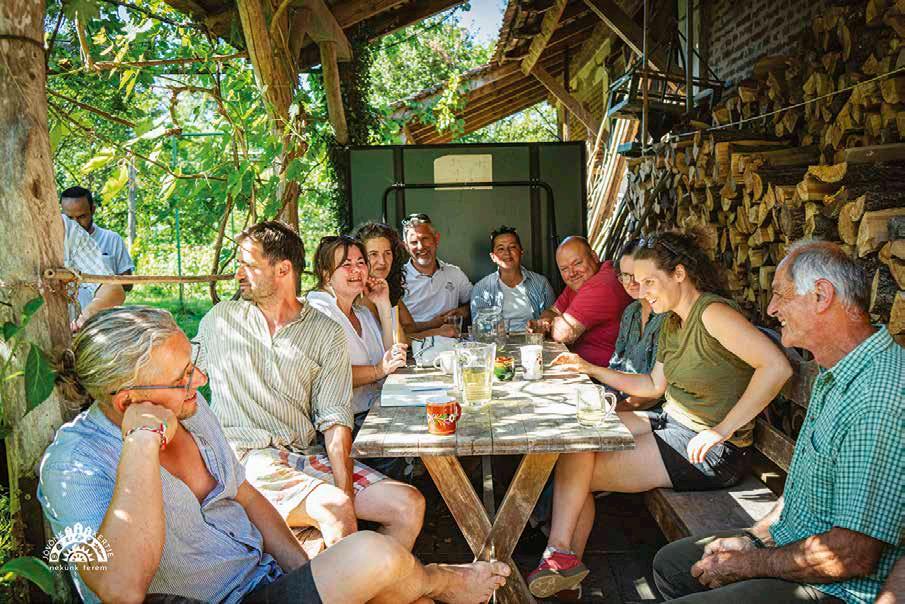
of a larger group will also give people a wider network of support to draw on, to establish bonds and share successes and failures, which Mészár says is an important consideration in the project. “Since the drought of 2022 bugs and pests have been an even bigger problem, and it’s getting more and more difficult to be successful in your own garden,” she outlines. “We want to help people feel positive about gardening, and to give them the opportunity to produce their own food.”
This of course needs to fit around modern working patterns, and many people today struggle to find time to work on their own garden, alongside other commitments. These organic gardens will give local people the flexibility to get involved when they can, rather than taking on sole responsibility, which Mészár hopes will encourage greater community involvement. “We want to encourage people to keep on with gardening,” says Mészár. This will also contribute to wider environmental and sustainability goals, as a reliable supply of locallygrown vegetables will reduce dependence on imports and bring people closer to the sources of the food that they consume. “We find that people are very happy to produce their own vegetables, which they can then use in their own cooking,” continues Mészár.
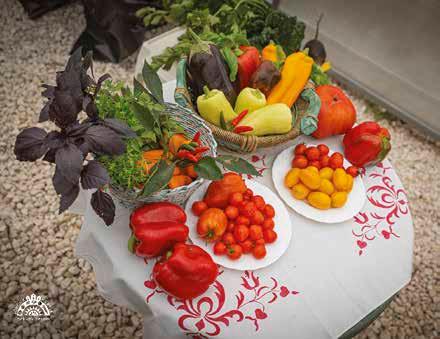
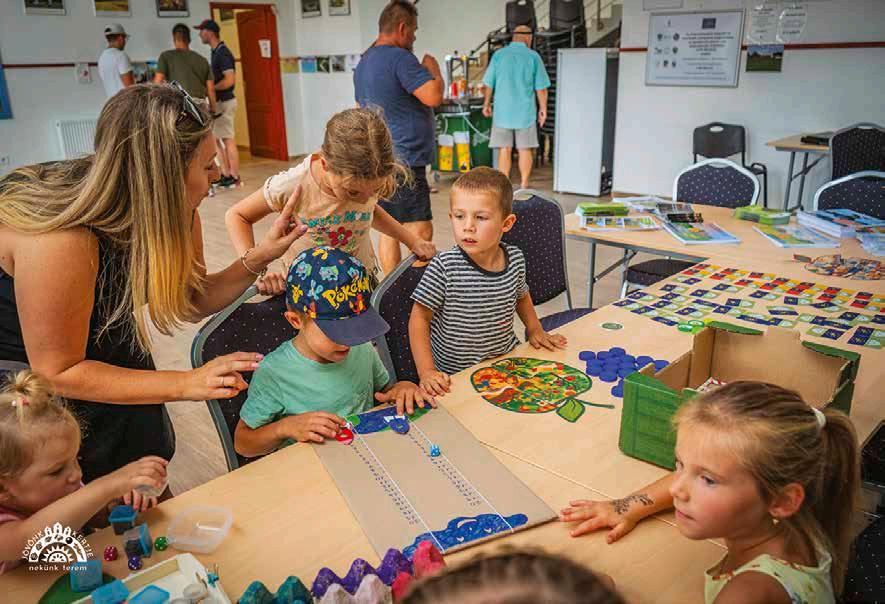
change will also be run, such as the Lecso Fest in Püspökszilágy, celebrating the traditional Hungarian stew. This is part of the project’s commitment to spreading knowledge and encouraging a more general shift in gardening practices. “This bio-intensive methodology can be applied anywhere,” stresses Mészár.
The project at this stage is focused on Püspökszilágy and Penc, but the hope is that other municipalities will follow in future, and Mészár says plans are in place to help. “Our partners at the Hungarian University of Agriculture and Life Sciences are monitoring the process, and they will create essentially a guide for municipalities on how to do this in their own villages,” she outlines. “Our aim is to see more municipalities establish organic
“We are using a methodology called bio-intensive gardening. This is a no-till approach, avoiding chemicals, while we also use compost mulch to improve the biodiversity of the soil.”
Community programme
The project team are now looking to build further on this progress, with mentoring programmes set to start in Penc this year and also in the village of Terény, where MagosVölgy is based and maintains a biointensive garden. The company’s experts are now looking to pass on the knowledge and experience that has helped the garden thrive, supporting wider change and boosting resilience. “We have introduced a community programme, where the locals are offered mentoring and support from MagosVölgy about how to increase their own household’s adaptive capacity to climate change. This means things like ecological gardening techniques, water harvesting techniques and how to mulch,” explains Mészár. Vegetables from the farms will also be made available to local people.
“In Penc they have decided to sell the vegetables at a very low price, and produce from the gardens will also be used at public events,” says Mészár.
A number of community-building programmes around gardening and climate
LIFE ‘Garden of Our Future’
Project Objectives
The main goal of the LIFE CO-CLIMA project is to boost community resilience and increase adaptive capacity of small rural villages in terms of climate change.
Project Funding
The LIFE CO-CLIMA project is funded by both the European Union and the Republic of Hungary
Project Partners
• Municipality of Püspökszilágy
• Municipality of Penc
• MagosVölgy Ltd.
• Klímabarát Települések Szövetsége ( Association of Climate-Friendly Municipalities)
• Hungarian University of Agriculture and Life Sciences
Contact Details
Anna Mészár
Project Manager of LIFE Co-Clima Püspökszilágy municipality, Coordinator of LIFE Co-Clima, also representative of MagosVölgy Ltd. in the project Municipality of Püspökszilágy Kossuth utca 9, Püspökszilágy 2166, Hungary
T: +36209760299
E: anna@magosvolgy.hu
W: https://magosvolgy.hu/fooldal/lifejovonk-kertje/
gardens. This always depends on having the resources available, but we are optimistic.”
An important pillar of the project is dissemination, coordinated by the Association of Climate-Friendly Municipalities, Hungary’s only thematic alliance of local governments dedicated specifically to climate and sustainability issues. In this role, the Association not only ensures the visibility of the project’s activities and results, but also acts as a key bridge between participating communities, local governments, and the wider public. Its communication work goes beyond routine outreach: alongside the regular sharing of short videos and photographs on social media, the team has also created a short documentary presenting the experiences of families involved in the project. The film offers a more personal and engaging insight into the initiative, helping to make its objectives tangible for a broader audience. The documentary has already been screened in Budapest, where it attracted considerable interest, further underlining the Association’s central role in amplifying the project’s social impact and public reach.
Anna Mészár
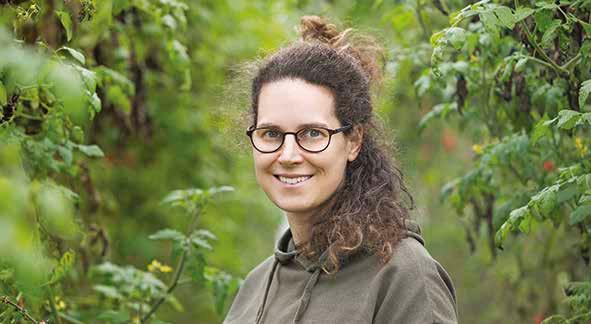
Anna Mészár is a project manager at MagosVölgy Ökológiai Gazdaság, a company which specialises in ecological gardening. She organises and manages site visits, with the aim of empowering smallscale food systems across the Hungarian countryside.