The EU Research team take a look at current events in the scientific news
New European Commission is approved by European Parliament with a focus on Research and Development
Ursula von der Leyen wants science to be ‘at the heart’ of the EU economy. Here’s a look at the commissioners who will drive that ambition.
After weeks of haggling among political groups, the European Parliament has finally approved a new team of commissioners, to be led by returning European Commission president Ursula von der Leyen. They will take office on 1 December. In a speech to the Parliament on Wednesday, von der Leyen emphasised the crucial role of research and innovation in her new mandate, announcing a plan to close the EU’s innovation gap with the US and China. Research and innovation will be placed “at the heart of our economy,” she said.
But how will her new team of commissioners achieve that?
Over the past few weeks, we have combed through official plans for each commissioner and listened to what they had to say during hearings in the Parliament. Here’s a roundup of the main ideas, plans and strategies for research and innovation and for Framework Programme 10 (FP10).
For now, the new commissioner for Start-ups, Research and Innovation has diffused fears that research funding will be merged in a mega competitiveness fund. She told MEPs the development of the next Framework Programme will be a “top priority” of her mandate. In written responses to questions from the European Parliament published ahead of her hearing on 5 November, Zaharieva laid out her preliminary vision for “a new and strengthened Framework Programme 10”, drawing on the recent Draghi report on EU competitiveness and the conclusions of the Commission’s independent FP10 advisory group.
During her hearing, Zaharieva promised to radically simplify the EU Framework Programme and make it more attractive for start-ups and SMEs to take part. Simplification was a common thread in Zaharieva’s answers. She noted that a simpler, easier to use Framework Programme would speed things up and reduce the time from application to grant agreement, which currently stands at nearly 12 months. Zaharieva said she “really like[s]” the proposal by the Heitor group on FP10, of introducing a “trust first, evaluate later” principle, to simplify and shorten the application process. She is also in favour of lump-sum funding, two concrete examples of how the application process can be simplified.
From 2025, Zaharieva wants to trial a two-stage application process to reduce application times. The first phase will be “focused on the core of the project”, with more documents to be provided if a project
progresses to stage two. Zaharieva is also in favour of double-blind evaluation, a process which would reduce the odds of evaluation bias. This was already the subject of a pilot project currently being evaluated by the Commission.
Piotr Serafin, Commissioner for budget, anti-fraud and public administration, has played down rumours circulating in Brussels and denied reports the Commission is planning a complete overhaul of the EU budget, but has said there should be fewer funds and that these should be linked to national reforms.
A leaked memo suggested all research and innovation funds managed by Brussels, could be subsumed into a single European Competitiveness Fund. But Serafin denied the existence of such a plan. “Up until now there is no proposal of the European Commission for the future multiannual financial framework. Whatever you have read in the press, it is not the proposal of the Commission for the next MFF.”
Von der Leyen has promised to propose a new Competitiveness Fund to support strategic sectors such as artificial intelligence, clean tech and biotech. The Commission is still debating the form this fund will take, Serafin said, but the Strategic Technologies for Europe Platform (STEP) launched earlier this year provides a glimpse of what could be expected.
The new commissioner for tech sovereignty, security and democracy has revealed she is drawing up a Quantum Act to pull together fragmented research efforts by member states. Henna Virkkunen argued that quantum technologies are a European strength, but that EU legislation is needed to consolidate individual member state programmes.
Virkkunen didn’t explicitly say what aspects of quantum technology she wants to boost, but talked of introducing a “quantum chips act”, suggesting that she primarily has quantum computing in her sights. The proposal for an act takes up a suggestion made in September by the European Liberal Forum, a think tank affiliated to the Alliance of Liberals and Democrats for Europe parliamentary bloc, when it warned that member states are duplicating quantum computing research, not investing enough, and need big spending on quantum computing infrastructure.
New European Commissioner for Energy commits €1.25 billion for cross-border energy infrastructure
Dan Jørgensen, the new European Commissioner for Energy pushes ‘Green Transition’ and is more open to nuclear in a bid to end Russian fuel ties for good.
The European Commission has announced nearly €1.25 billion in grants under the Connecting Europe Facility (CEF) to support 41 cross-border energy infrastructure projects. These initiatives, designated as Projects of Common Interest (PCIs) and Projects of Mutual Interest (PMIs), aim to enhance energy market integration and support the EU’s decarbonisation goals.
This funding round, the largest under the current CEF Energy programme, surpasses the initial budget of €850 million. It also marks the first call under the revised Trans-European Networks for Energy (TEN-E) Regulation, which now includes hydrogen and offshore electricity grid projects.
A significant portion of the funding—nearly €750 million—will go towards eight electricity grid projects. The largest grant, €645 million, will fund the Bornholm Energy Island project, a hybrid interconnector in the Baltic Sea linking Denmark and Germany while integrating 3 GW of offshore wind capacity. Another €33 million will support Danube InGrid, a smart electricity project between Hungary and Slovakia.
Hydrogen infrastructure will receive over €250 million for 21 development studies, supporting projects across multiple EU countries,
including the BarMar-H2med initiative between Spain and France and hydrogen corridors in the Baltic region. Meanwhile, €250 million will go towards CO2 infrastructure, with €120 million allocated to Greece’s Prinos storage facility, €55 million for the North Sea L10 storage project, and nearly €12 million for Denmark’s Norne CO2 facility.
Dan Jørgensen is making it his “main priority” to craft a plan that will finally sever all European Union energy links with Russia. In his first interview since taking office as the EU’s new energy chief, Jørgensen warned that the EU is faltering in its multiyear campaign to shun Russian fuel and needed a plan to get things back on track.
He pointed to the EU’s rising purchases of Russian liquified natural gas as a particular concern — and a reverse of the bloc’s downward trajectory. Additionally, five EU countries still rely on Russia for nuclear fuel.
Following a positive vote by Member States on January 28, 2025, formal adoption of the funding decision is expected in the coming weeks. The European Climate, Infrastructure and Environment Executive Agency (CINEA) will finalise grant agreements with beneficiaries. The next CEF Energy funding call is scheduled for 2025.
As Trump targets science, researchers share despair but resolve to fight
At the American Association for the Advancement of Science conference in Boston, attendees scrambled to keep up with barrage of cuts and policy shifts.
On a cold, snowy weekend in Boston, a few thousand scientists from around the world huddled inside a big conference hall bemoaning Trump layoffs and budget cuts. But outside, a few steps down the street, some oldfashioned resistance was underway. About 30 protesters were marching outside a Tesla dealership. “Save science, Save lives,” some placards read. “Boycott Tesla,” read another. The group chant: “It ain’t fair, it ain’t funny. President Musk is stealing your money.”
So it goes as the US, and global, science world tries to find its footing in the Trump-Musk hurricane. Many grant payments have been blocked, thousands of science-agency workers abruptly fired, datasets taken down, websites scrubbed, and all this before the administration is a month old. In response, the scientific community is starting to organise, but as yet with no clear plan. That’s true for American scientists, but also for those in Canada, Europe, Asia and elsewhere accustomed to grants and partnerships with the world’s biggest science power. “A lot of us are in a state of shock. It’s so sudden,” observed Remi Quirion, chief scientific advisor to the Quebec government and president of the International Network for Governmental Scientific Advice, a science policy organisation.
“This is a ‘hair on fire’ moment,” said Rebekah Tromble, a professor at George Washington University. She was speaking at a panel session, titled Science under Siege, at the annual gathering of the biggest US science society, the American
Association for the Advancement of Science (AAAS), which took place here in Boston on February 13-15.
Part of the problem is that most American scientists haven’t had much experience with massive political protest since the Vietnam War a generation ago. The most visible protests so far, such as the Tesla demonstration Saturday and a bigger nationwide protest Monday, involve some scientists but have been organised by broader political groups.
The AAAS conference was the first opportunity since Trump’s inauguration for a major multi-disciplinary gathering to discuss protest strategy. In the conference corridors, the Union of Concerned Scientists was gathering signatures for a petition to Congress. Conference speakers urged attendees to complain directly, and to download and save scientific datasets before Trump science appointees can block or delete any more. Panellists advised how best to present the case to politicians for saving science: focus on good story-telling, rather than dumping a blizzard of data. One session advised how best to support and comfort colleagues who are laid off or attacked on social media. But from the leaders of the US science community, the advice was often conflicting or vague on how to deal with the Washington slashers.
During a painfully polite panel discussion, first-term Trump science advisor Kelvin Droegemeier – appearing remotely by video – extolled the “values” of American science even as he
argued the need to boost its “efficiency” (aka budget cuts). In the same vein, Marcia McNutt, president of the National Academy of Sciences, said Trump presents an opportunity to take a close look at those science programmes that had grown rapidly – perhaps too rapidly – and reassess what “baseline” science funding really ought to be. While Sudip Parikh, chief executive of the AAAS, had strongly decried budget cuts in other conference sessions, with Droegemeier on the video screen he took a more pragmatic tack. He said he was “100% focused” on the next big budget bill Congress is working on, to be completed by March 14. For that, he suggested, scientists will need at least a few Republican friends, and should pick their shots carefully.
All of this was confusing to the hundreds of researchers and science policy makers attending from abroad. Since World War II, the US has been the acknowledged scientific leader for many domains, including vaccines, computers, the Internet and, today, artificial intelligence. Over the decades, millions of foreign scientists have trained at American universities, many here in Boston at Harvard, MIT, Boston University, Northeastern University, Tufts and other famous institutions. Many stayed, and have now made their lives and research careers here. So what happens next for them?
One possibility: they return home. That prospect already has science officials around the world doing some fast thinking. Many US partner countries already have some kind of repatriation awards for returning scientists, and discussions have begun about boosting funding for that, a once-in-a-century opportunity to strengthen their own science communities and reverse brain drain. Another possibility: expanding programmes to attract American scientists to work abroad. Not surprisingly, diplomats at the conference were, well, diplomatic about making any on-the-record comments on this topic.
Then there’s the more immediate worry about funding cuts to international research groups. Some European officials, for
instance, are closely monitoring existing research consortia for evidence of cuts affecting them. But given how tight EU and member state budgets already are, there isn’t any consensus yet on whether they can take up the funding slack. One possibility: forging closer relations with science administrators in those ‘blue’ American states with sizeable science programmes of their own, such as New York, Massachusetts and California.
Under the circumstances, the conference’s exhibition hall – with stalls booked long before Trump’s inauguration – was transformed into a noisy sales floor. The Technical University of Dresden, Canada Science and Innovation, the Japan Society for the Promotion of Science, the Science Diplomacy Capital for Africa and others hawked their scientific wares and opportunities alongside American institutions, hoping to attract American students, scientists or partners, though not, for the moment, US funding.
And near the front of the hall, the Chinese Academy of Sciences organised a series of lectures. The aim, one official explained: to advertise its programme offering access to a portfolio of 38 different research infrastructures – synchrotron, tokamak, research vessel, neutron source and others – all free of charge to visiting scientists. The academy has participated in AAAS meetings since at least 2009.
Still, most scientists are by nature an optimistic breed. Monica Bertagnolli, the director of the National Institutes of Health just sacked by Trump, urged some historical perspective. The agency is the world’s largest government funder of medical research, and Congressional support for it has been bipartisan throughout its history. “The dust is going to settle,” she said. “Things are in a state of disruption right now. But have an absolute belief that the value of science will not go away.”
http://www.aaas.org
Environment more important than genetics in predicting longevity
Analysis of UK BioBank data shows importance of factors including living conditions and smoking, say expects.
A new study led by researchers from Oxford Population Health has shown that a range of environmental factors, including lifestyle (smoking and physical activity) and living conditions, have a greater impact on health and premature death than our genes.
The researchers used data from nearly half a million UK Biobank participants to assess the influence of 164 environmental factors and genetic risk scores for 22 major diseases on ageing, age-related diseases, and premature death. The study is published today in Nature Medicine.
Key findings:
• environmental factors explained 17% of the variation in risk of death, compared to less than 2% explained by genetic predisposition (as we understand it at present);
• of the 25 independent environmental factors identified, smoking, socioeconomic status, physical activity, and living conditions had the most impact on mortality and biological ageing;
• smoking was associated with 21 diseases; socioeconomic factors such as household income, home ownership, and employment status, were associated with 19 diseases; and physical activity was associated with 17 diseases;
• 23 of the factors identified are modifiable;
• early life exposures, including body weight at 10 years and maternal smoking around birth, were shown to influence ageing and risk of premature death 30-80 years later;
• environmental exposures had a greater effect on diseases of the lung, heart and liver, while genetic risk dominated for dementias and breast cancer.
Professor Cornelia van Duijn, St Cross Professor of Epidemiology at Oxford Population Health and senior author of the paper, said ‘Our research demonstrates the profound health impact of exposures that can be changed either by individuals or through policies to improve socioeconomic conditions, reduce smoking, or promote physical activity ‘While genes play a key role in brain conditions and some cancers, our findings highlight opportunities to mitigate the risks of chronic diseases of the lung, heart and liver which are leading causes of disability and death globally. The early life exposures are particularly important as they show that environmental factors accelerate ageing early in life but leave ample opportunity to prevent longlasting diseases and early death.’
The authors used a unique measure of ageing (a new ‘ageing clock’) to monitor how rapidly people are ageing using blood protein levels. This enabled them to link environmental exposures that predict early mortality with biological ageing. This measure was previously shown to detect age-related changes, not only in the UK Biobank but also in two other large cohort studies from China and Finland.
Dr Austin Argentieri, lead author of the study at Oxford Population Health and Research Fellow at Massachusetts General
Hospital, said ‘Our exposome approach allowed us to quantify the relative contributions of the environment and genetics to ageing, providing the most comprehensive overview to date of the environmental and lifestyle factors driving ageing and premature death. These findings underscore the potential benefits of focusing interventions on our environments, socioeconomic contexts, and behaviours for the prevention of many age-related diseases and premature death.’
Professor Bryan Williams, Chief Scientific and Medical Officer at the British Heart Foundation, added ‘Your income, postcode and background shouldn’t determine your chances of living a long and healthy life. But this pioneering study reinforces that this is the reality for far too many people. ‘We have long known that risk factors such as smoking impact our heart and circulatory health, but this new research emphasises just how great the opportunity is to influence our chances of developing health problems, including cardiovascular disease, and dying prematurely. We urgently need bold action from Government to target the surmountable barriers to good health that too many people in the UK are facing.’
The research shows that whilst many of the individual exposures identified played a small part in premature death, the combined effect of these multiple exposures together over the life course (referred to as the exposome) explained a large proportion of premature mortality variation. The insights from this study pave the way for integrated strategies to improve the health of ageing populations by identifying key combinations of environmental factors that shape risk of premature death and many common agerelated diseases simultaneously.
Professor van Duijn said ‘Studies on environmental health have tended to focus on individual exposures based on a specific hypothesis. While this approach has seen many successes, the method has not always yielded reproducible and reliable findings. Instead, we have followed a ‘hypothesis free’ exposome approach and studied all available exposures to find the major drivers of disease and death.
‘We have made a big leap forward in understanding how to provide accurate evidence on the causes and consequences of age-related diseases by combining novel computational methods with clinical and epidemiological knowledge to explore the interplay between multiple exposures. In an ever-changing environment, it is critical that we combine these techniques with novel advances in smart technology to monitor lifestyle and environment, as well as with biological data, to understand the impact of the environment over time. There are a lot of questions still to be answered related to diet, lifestyle, and exposure to new pathogens (such as bird flu and COVID-19) and chemicals (think of pesticides and plastics), and the impact of environmental and genetic factors in different populations.’
The study was led by researchers from Oxford Population Health in collaboration with researchers from the Departments of Psychiatry and Anthropology at the University of Oxford; Massachusetts General Hospital, and the Broad Institute, Boston; the University of Amsterdam; Erasmus University, Rotterdam; and the University of Montpellier.
Astronomers capture first 3D view of an exoplanet’s atmosphere and climate
Scientists map the first 3D structure of an exoplanet’s atmosphere, revealing extreme winds and unexpected chemical patterns in a distant gas giant.
Scientists have mapped the atmosphere a planet outside of our solar system in 3D for the first ever time. They have found a world unlike anything we have ever seen: powerful winds that carry chemical elements in complicated, intricate patterns across the atmosphere. A vast jet stream reaches across half the planet, churning the atmosphere up as it crosses the side of the planet that it always facing its sun. Scientists say that the new 3D understanding of the planet represents a major breakthrough for our understanding of the atmosphere and weather of alien worlds. But it also challenges our current understanding of weather, they say, because it is so unusual.
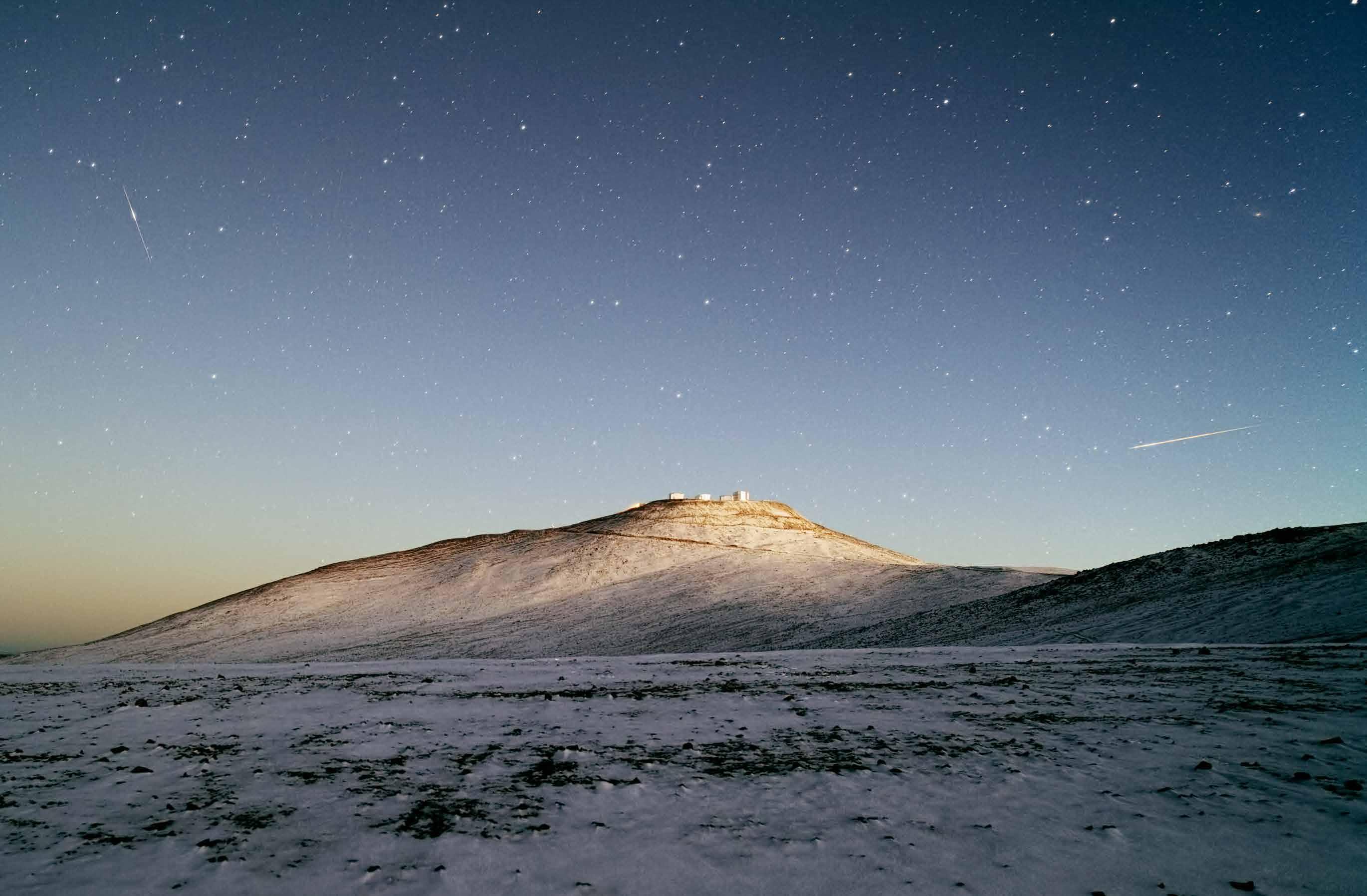
“This planet’s atmosphere behaves in ways that challenge our understanding of how weather works – not just on Earth, but on all planets. It feels like something out of science fiction,” said Julia Victoria Seidel, a researcher at the European Southern Observatory (ESO) in Chile and lead author of the study, in a statement. The planet itself is known as WASP-121b, or Tylos. It sits around 900 light years away, and is an ultra-hot Jupiter, so close to its star that each year lasts only 30 of our hours. Astronomers were able to use the European Southern Observatory’s Very Large Telescope to probe the planet’s atmosphere and were shocked by what they found.
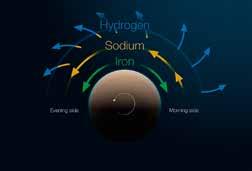
“What we found was surprising: a jet stream rotates material around the planet’s equator, while a separate flow at lower levels of the atmosphere moves gas from the hot side to the cooler side. This kind of climate has never been seen before on any planet,” Dr Seidel said.
“Even the strongest hurricanes in the Solar System seem calm in comparison.” Other surprises came in the data itself. Scientists found there was titanium in the jet stream – previous observations suggested it was absent, but it may have been hidden down in the atmosphere.
“It’s truly mind-blowing that we’re able to study details like the chemical makeup and weather patterns of a planet at such a vast distance,” says Bibiana Prinoth, a PhD student at Lund University, Sweden, and ESO, who led a companion study. The work is described in a new paper, ‘Vertical structure of an exoplanet’s atmospheric jet stream’, published in the journal Nature. A companion paper looking specifically at titanium, ‘Titanium chemistry of WASP-121 b with ESPRESSO in 4-UT mode’, is published in Astronomy & Astrophysics.
Researchers discover anti-icing properties of polar bear fur
Potential benefits of this discovery include a replacement to ‘forever chemicals.
Polar bear fur contains a cocktail of greasy compounds that make it exceptionally resistant to freezing, Bodil Holst and her colleagues reported last week in Science Advances. Nano-physicist Holst’s interest in polar bear fur began while she was watching a German quiz show. “I learned that polar bears are invisible in infrared cameras, meaning their fur has the same temperature as the surroundings,” says Holst, of the University of Bergen in Norway.
She also knew that polar bears jump into frigid water when they hunt, coming back onto land to eat their prey. Most mammalian hair can freeze when it gets wet in cold temperatures — think human beards on a frosty winter day. But, Holst noticed, polar bear fur did not freeze after getting wet. “I was very puzzled,” she says. “When they go into the water and out again, why do they not get covered in ice?” The work could eventually lead to more environmentally friendly alternatives to existing anti-ice chemicals. Hair grease is the secret, it turns out. And it’s partly what the fur has — and what it lacks.
Holst initially thought that polar bear fur might have structural properties that prevent ice from forming. She and her colleagues used high-powered microscopes to zoom in on the fur, but “we couldn’t really see anything special, they just looked normal,” Holst says. “We started to suspect, there’s more to this than structure.”
While the team was handling the fur, they noticed it was very greasy. When the team washed the hair, it largely lost its anti-icing properties.
“We realized that this was down to polar bear hair grease, effectively,” Holst says. The team then did a suite of molecular analyses to identify what specifically about hair grease might prevent ice from forming. They
found high levels of certain compounds that are especially resistant to freezing, specifically because ice has a harder time sticking to them.
Cameron Clifford and his son Cal, with help from a friend, are taking care of more than 20 tiny octopus babies, along with one named Terrance. These were the top animal stories on NPR in 2024, including a boy’s pregnant octopus. Polar bear fur also lacked a compound called squalene, the researchers found. Squalene is abundant in other marine mammals and has properties that make ice stick to it easily.
This combination makes polar bear fur highly resistant to freezing, Holst says. Lab tests showed that it performed about as well as fluorinated ski waxes, which have been banned in Norway for environmental reasons. “That was quite amazing, that polar bear fur does just as well as these very superior skiing waxes,” Holst says. To be extra sure that these anti-ice properties are unique to polar bear fur grease, as opposed to any hair grease, one of Holst’s Ph.D. students took matters into his own hands. “He didn’t wash his hair for quite some time and then shaved and made a little mat of his own greasy hair,” says Holst. “He tested the anti-icing properties and could see very clearly that human hair, whether you wash it or not, isn’t very good at anti-icing.”
Holst hopes that the research might inspire new approaches to concocting anti-icing materials that could be used for ski waxes, lubricants and even plane de-icing fluids. But she stresses that her team isn’t the first to identify that polar bear fur has such special anti-icing properties. “We didn’t discover it,” she says. “It’s been known to Arctic people for centuries.”