New perspectives on ancient migrations

The team behind the ERC-backed COREX project are building a relational database that allows researchers to analyse correlations between data. This will help researchers gain new insights into the events during prehistory that helped shape the genetic and cultural diversity of modern Europe, as Professor Kristian Kristiansen and Professor Stephen Shennan explain.
Many different sources of evidence can now be harnessed to investigate the past, including not just written materials and archaeological remains, but increasingly ancient DNA (aDNA), strontium samples and other types of data. Over the last decade or so sophisticated new techniques have been developed to analyse aDNA, opening up new insights into migratory patterns during prehistory, which have surprised many archaeologists. “Recently uncovered aDNA evidence shows that during prehistory people moved around Europe on a far wider scale than had previously been thought,” says Stephen Shennan, Professor of Theoretical Archaeology at University College London (UCL). As part of the team behind the ERCbacked COREX project, Professor Shennan is now working to link this new aDNA information about migratory patterns with other forms of evidence, and investigate the causes and effects of past population shifts.
“We are exploring whether migrations were caused by factors like climate change, and the effects these migrations may have had on material culture,” outlines Professor Shennan.
understanding of migrations and their wider effects. “We know that migrations led to some major changes in European prehistory. Farming was introduced into Europe by migrants who started in Anatolia, then moved into the Balkans,” outlines Kristian Kristiansen, Professor of Archaeology at the University of Gothenburg, one of the project’s Principal Investigators. The migrants halted for a long period south of the Baltic Sea and farming practices did not spread more widely until later on, an example of the kind of topics that can now be probed in greater depth. “Were crops not yet robust enough to go further North? Was the climate conducive?”continues Professor Kristiansen. “Other migrations have had a marked influence on the DNA profile of all Europeans. How did these migrations unfold?”
COREX project
beginning of agriculture or metallurgy for example, then look into our data and see whether we can see any correlations with changes in land use or diet,” outlines Professor Kristiansen. Once researchers have got a sense of whether there are any correlations between different datasets, they can then apply new types of modelling to test hypotheses around historical events, for example about how migrations may have occurred. “What was going on in terms of the mixture between the incoming

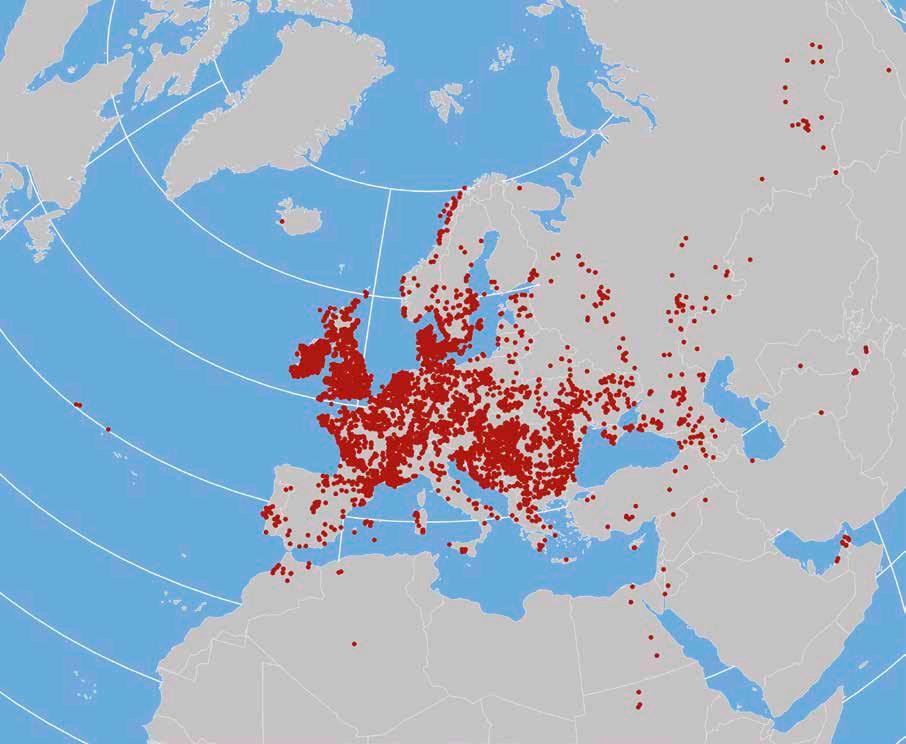
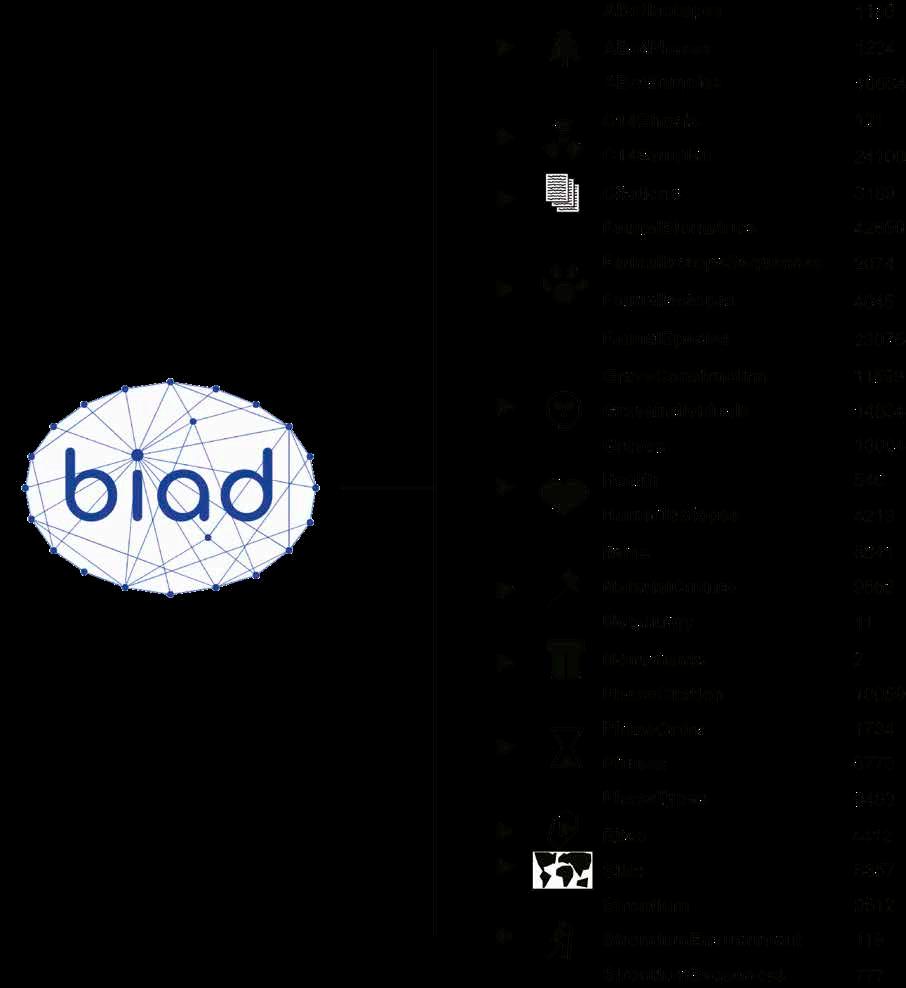
Researchers are seeking out periods in prehistory where major changes took place, with the aim of looking at the underlying factors behind them. This research is focused on the period between 6,000 BCE up to around 500 BCE, with Professor Kristiansen and his colleagues taking samples of what is called environmental DNA (eDNA) from sites across Europe. “We have been sampling sites dating from the Neolithic period to the Iron Age. We take samples from sites like historical garbage pits, then analyse the soil for DNA evidence. We can potentially get a timeslice of the DNA that was in the air when that garbage pit was used. This could be pathogens, or animal or plant DNA. We are learning more about the conditions under which DNA is best preserved,” he says. This data will be brought together in a relational database called BIAD (Big Interdisciplinary Archaeological Database). “We’ve collated a lot of data from a wide variety of sites, in particular we have large amounts of C14 (carbon-dating) evidence,” says Professor Shennan. “We’re also going to link the BIAD database to pollen data from the European Neotoma pollen database.”

There has historically been a tendency in research to attribute these migratory shifts to a single cause, for example a change in the local climate, yet it is now thought that
other factors may also have been involved.
The project brings together researchers from several different disciplines, mobilising all the available knowledge to build a fuller
The data is linked to the site from which it was sampled, providing a firm basis for the project team to tackle six main research questions, covering different topics around the social, economic and cultural changes that have helped shape modern Europe. Researchers can look at the periods when certain new practices were adopted in Europe, and investigate the wider circumstances at the time.
“We can investigate the time around the
COREX
From correlations to explanations: towards a new European prehistory
Project Objectives
The ERC Synergy project will combine prehistoric human genomic, archaeological, environmental, stable isotope and climate data to better understand the processes that shaped our biological and cultural past from the time of the first farmers to the Iron Age (between 6000 to 500 BC).
Project Funding
This project has received funding from the European Research Council (ERC) under the European Union’s Horizon 2020 research and innovation programme (grant agreement No. 949424).

Project Team
https://www.gu.se/en/historical-studies/ corex-team
Research Partners
• University of Copenhagen, Globe Institute • UCL Division of Bioscience • UCL Institute of Archaeology University of Plymouth • School of Geography, Earth and Environmental • National Museum of Denmark
Contact Details
Project Coordinator, Kristian Kristiansen
The University of Gothenburg Department of Historical Studies Renströmsgatan 6 41255 Göteborg Gothenburg
Sweden
T: +46 704-18 57 67
E: kristian.kristiansen@archaeology.gu.se W: https://www.gu.se/en/research/corexfrom-correlations-to-explanations
Stephen Shennan, Kristian Kristiansen, Mark Thomas, and Kurt H Kjær (left to right)



Stephen Shennan is Professor of Theoretical Archaeology at University College London (UCL). He holds a deep interest in the Neolithic and Bronze Age prehistory of Europe.
Kristian Kristiansen is Professor of Archaeology at the department of Historical Studies at the University of Gothenburg. His research combines grand narratives with indepth studies of local settlements.
Mark Thomas , Professor of Evolutionary Genetics, Department of Genetics Environment and Evolution, University College London
Kurt H Kjær, Professor, Globe Institute, Section for Geogenetics, University of Copenhagen.

people and the people who were already there?” asks Professor Shennan. “There are complex processes of interaction going on, which we’re beginning to model in the project.”
One important indicator of the impact of migration is any changes to long-established cultural practices, for example burial rituals, a major topic of interest in the project. Burial rituals are one of the most fundamental institutions in any society, from prehistory right through to the present, and Professor Kristiansen says they tend not to change without good cause. “Burial rituals are among the most consistent things in prehistory. When they change, it’s because new people have come in and taken over,” he says. The project team have access to thousands of records about neolithic and bronze age burials, as well as aDNA on the same burials, from which researchers can then look to draw wider insights. “We can look at how changes in aDNA relate – or not – to changing burial practices,” outlines Professor Shennan.
BIAD database
The BIAD database will provide an invaluable resource in these terms, giving researchers access to a variety of sources of data, from which they can then look to analyse correlations between time-slices and gain new insights into different periods in prehistory. The database will be operated on an open access basis, and will also incorporate work from other EU-backed projects. “We are collaborating with other projects, and we intend to expand this over time,” outlines Professor Shennan. BIAD has been designed to be more or less infinitely extendable, and Professor Shennan is interested in including new categories of data in future. “As people come up with new kinds of datasets which they want to include we can simply build a new table in the relational database. One might be metal analysis for example. There are massive volumes of data which can tell us about the changing sources of copper in pre-history,” he explains. “We don’t yet have any tables of trace element data, but we’re starting
“Recently uncovered ancient DNA evidence shows that during prehistory people moved around Europe on a far wider scale than had previously been thought.”
This research will help build a deeper picture of the background to major events in history and prehistory, the changes that helped shape the genetic and cultural diversity we see in Europe today. One example is the large migrations from the Eurasian Steppe that took place around 5,000 years ago; evidence suggests climate change did not play a major role here, and that other factors contributed. “We have found that a plague pandemic spread across Eurasia, prior to the Steppe migrations. It looks like there was a kind of collapse of these neolithic societies, that we think could have been caused by a plague pandemic,” says Professor Kristiansen. While migratory waves have often been explained with reference to a single specific event, Professor Kristiansen says there is typically a build-up of changes beforehand. “We want to look at the forces behind the event, that led up to it,” he continues. “It’s important to identify what came first, for example plague, climate change or migration.”
to work with colleagues on a metallurgical project, who will want to put in precisely that kind of data.”
The data in BIAD relates primarily to European sites, yet this could potentially be widened in future, to also include data from other parts of the world. aDNA data is available in databases like the AADR database at Harvard, now BIAD will help researchers draw links between genome information and the details around the archaeological contexts from which the samples were gathered, which Professor Kristiansen hopes can spur further progress in the field. “When new, more refined methods emerge, it’s then possible to go back and re-analyse your data,” he says. With the data collection stage nearly concluded, Professor Shennan is now starting to turn his attention towards analysis. “We’re beginning to analyse some of the data that has been collected, and the modelling work is just getting underway,” he outlines.