CE4CE Pilots
There are six pilot activities in the CE4CE project covering different topics related to the circular economy in public transport, including predictive maintenance, digital twins and the re-use of materials. We spoke to Zoltan Adam Nemeth, Agnieszka Szmelter-Jarosz and Jan Roehl about their work in the project and how it could point the way towards a more sustainable public transport sector.
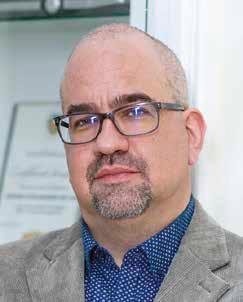
Szeged: Zoltan Adam Nemeth is Chief of Public Transport and Railway safety at Szeged Transport Company (SZKT), which operates four tram and six trolley bus lines in the Hungarian city.
EU Researcher: Why did SZKT decide to participate in the CE4CE project?
Zoltan Adam Nemeth: In Szeged we have long relied on second-hand vehicles and used infrastructure materials in our public transport network, and we are interested in exploring new ways of reusing or lengthening the lifecycle of different materials, vehicles and spare parts.
For example, our trolley buses use catenary switches on overhead wires, which have to operate reliably between 200-300 times a day. Towards the end of the lifecycle, they tend to get less reliable and need to be replaced.
We are looking to apply older switches, nearing the end of their lifecycle, in areas where there is less traffic and lower safety requirements, for example in the depots. We are trying to extend the lifecycle of the older catenary switches, in order to save money.
EUR: Are you also looking to extend the lifecycle of trams?
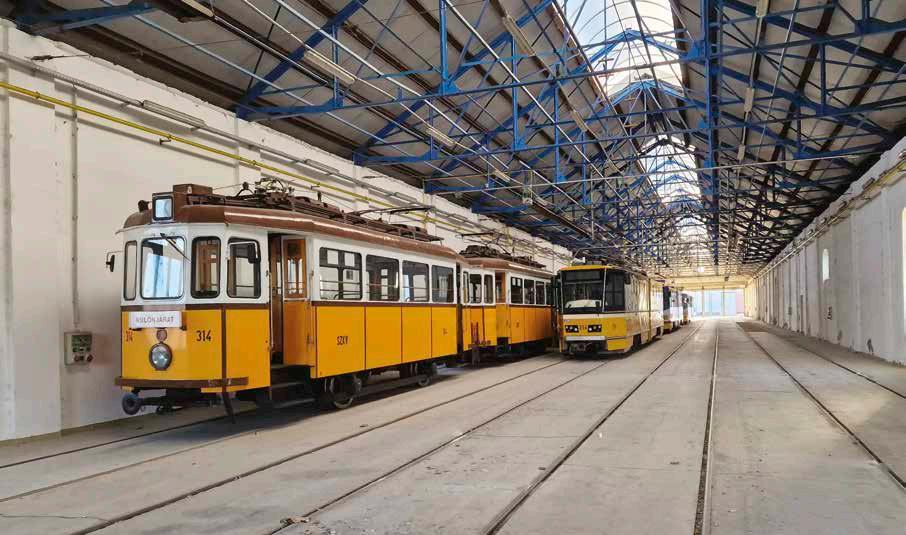
ZN: In Szeged we operate Tatra KT4 trams, some of which are close to 40 years old. We have to keep these Tatra vehicles in operation, but the original producer of the door system doesn’t exist any more, so getting spare parts is problematic.
Each door has an electronic unit which has inputs from sensors and also certain outputs. We aim to replace the previous door system with a new one with modern parts to perform the same function, and thus extend the lifecycle of the vehicle.
EUR: What is the current status of the pilot actions?
ZN: We started the replacement work on the trolley bus network in Spring, and so far six switches have been exchanged. With the door systems, there is a four-step process; we are getting towards the end and the first prototype is now in a test on a tram.
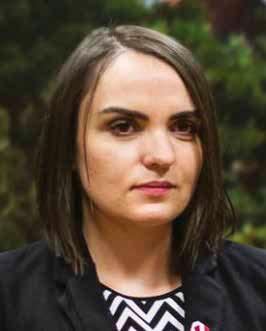
Gdynia: Agnieszka Szmelter-Jarosz is Assistant Professor in the Department of Logistics, Faculty of Economics at the University of Gdansk. She is, together with Marcin Wołek, Aleksander Jagiełło (the same university), Dominika Kowalkowska, Agnieszka Jankowska (PKA Gdynia) and Jan Roehl (KRUCH), working on a pilot project in the Polish city of Gdynia.
EUR: What is the main focus of your work in the project?
Agnieszka Szmelter-Jarosz: We have been developing a digital twin to simulate energy flow to identify the ideal parameters for the operation of e-buses or trolleybuses by PKA Gdynia, a public transport company in the city. We wanted to find out what routes should be optimised first and how this will contribute to saving energy and managing energy in an optimal way
EUR: Will this help transport companies assess what level of energy will be needed in different circumstances and then plan accordingly?
ASJ: Yes, and it will be very different in different cases. We’ve looked at large numbers of scenarios and have a lot of data, on issues such as peak demand and which routes are prone to delays. We wanted to adjust the decisions of the company about electrification of routes to real-life data and possible scenarios. We also have to consider differences in energy demand between winter and summer, with a greater need for cooling in summer, and heating in winter.
EUR: Are you also looking at the potential to include more energy from renewable sources in the overall mix?
ASJ: It’s important to also consider the wider context – for example, PKA plans to put PV panels on the roof of the depot to cover a part of energy demand, especially when they are using new software optimising the energy use. We want to know the likely amount of energy this would generate in relation to demand and how it will impact the operational costs in different scenarios prepared within the digital twin.
Bergamo: One of the partners in CE4CE is ATB Mobility, a public transport organisation in the Italian city of Bergamo, which has a strong interest in the circular economy. ATB is responsible for managing the bus fleet in the city, while TEB operates the sole tram line, with another scheduled for completion by 2026. Jan Roehl is CEO of Kruch Railway Innovations, an Austrian company involved in several of the pilots within CE4CE, including those in Bergamo, Gdynia and Leipzig, looking to help tram and trolleybus operators work more efficiently.
EUR: What is the main focus of your work in the project?
Jan Roehl: We’re looking to help public transport operators consume less energy, for example by optimising driving settings, optimising the technical settings, and reusing energy. Modern vehicles generate energy when they brake, but currently much of this energy is lost without usage. With the digital twin simulation we could find ways to optimise and recover this energy.
EUR: Are you also working with data gathered from trams during journeys?
JR: In Bergamo we added sensors and computers on vehicles to extract live data. So we receive a dataset out of an operational vehicle every second – including its position and speed, as well as data relating to energy consumption, voltage on the line, ampage and kilowatt hours consumed. With that we can track the energy consumption and compare it with the simulation.
EUR: Have you found significant variations?
JR: In Bergamo, we found a more than 60 percent difference in energy consumption between the most and least efficient rides of the day, all in the same vehicle.
Even small changes have a big impact on energy consumption, and that information can help drivers optimise their driving style to maximise energy efficiency, considering things like the acceleration phase, maximum speed, and the coasting phase. We can do this very specifically for each part of a route, telling them the optimal speed for different sections.
Zoltan Adam Nemeth Agnieszka Szmelter-Jarosz Jan Roehl
Moving transport in circles

The transport sector is highly carbon-intensive, and reducing its environmental impact is widely recognised as a priority. The team behind the CE4CE project are exploring ideas around the circular economy and looking to apply them in public transport, helping to boost sustainability and ‘green’ the sector, as Alexandra Scharzenberger and Marta Woronowicz explain.
An effective, reliable public transport network is the lifeblood of a city, helping people get to work, to sporting and cultural events, and supporting the local economy. Many transport authorities have historically invested in new vehicles and infrastructure without considering how their existing fleet could be re-used, but with the sector looking to reduce its impact on the environment, the team behind the EU-backed CE4CE project are now investigating a different approach. “We’re looking into how different components of the public transport network can be re-used. For example, the components and materials used in vehicles,” outlines Alexandra Scharzenberger of trolley:motion, one of the partners behind CE4CE. This represents an important contribution to the wider goal of establishing a circular economy in the public transport sector, where resources are re-used rather than simply disposed of. “We aim to build a
knowledge base, to influence transport operators and conduct some pilot activities around re-using materials. Are these activities economically viable? Are they really circular?” continues Scharzenberger.
CE4CE project
The project brings together 11 partners from seven countries in Central Europe, with the shared goal of improving efficiency and reducing waste in the public transport sector. Six pilot activities are planned in the project around different modes of transport, for example trolley buses, which form the backbone of the transport network in many European cities. “The pilots in Gdynia and Szeged are focused on trolley buses, while other pilots are focused on tram and e-bus networks,” says Scharzenberger. The project team is looking to develop more energy-efficient solutions for the public transport sector, which includes extending the operational life of vehicles in some cases, particularly
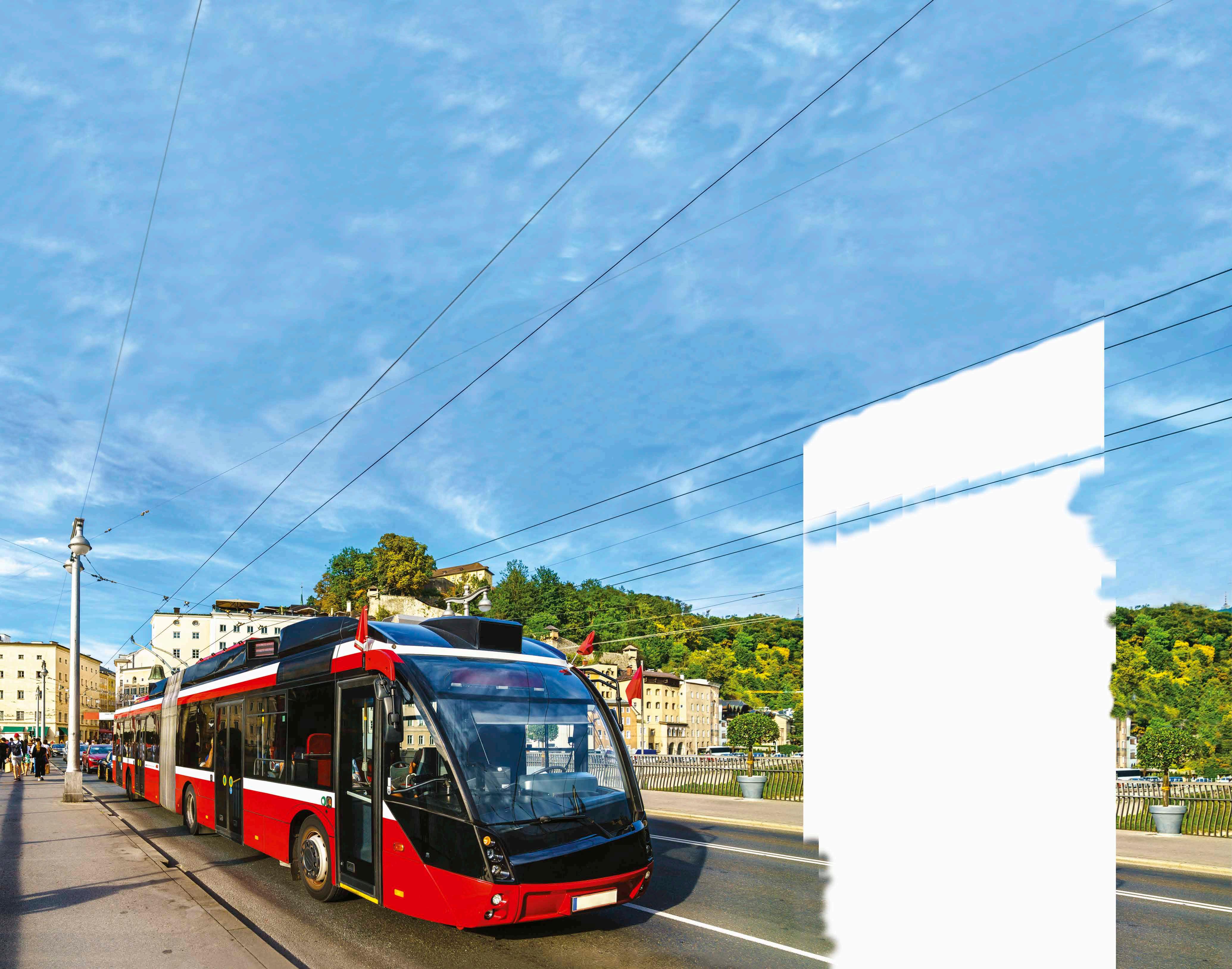
trolley buses. “We have shown that it is possible to use trolley buses for much longer than a diesel bus. While a typical diesel bus has a lifespan of around 10 years, a trolley bus can run for between 15-20 years, if they are maintained effectively,” explains Scharzenberger. “We promote the message that buses can be used for longer than might be expected, and they can also be re-used in other countries without the resources to invest in entirely new vehicles.”
A matchmaking forum, a second-hand marketplace designed for public transport companies, is being developed for this purpose. The aim is to match currently unwanted vehicles, spare parts, unused leftover stocks and infrastructure elements with potential purchasers, extending their lifespan and improving resource efficiency. “Public transport operators will be able to upload information to the forum about a motor, other types of spare parts or even the whole bus, for interested parties who may be considering
purchasing and re-using them,” outlines Marta Woronowicz, a colleague of Scharzenberger at trolley:motion. This will help extend the lifetime of vehicles, in line with the project’s overall ethos. “We aim to move away from a take-use-throw model where resources are extracted, used and then disposed of, towards a model where the use of certain materials is avoided, while others are extended and transformed at the end of their operational life, enabling their use in new ways,” explains Woronowicz. “We want to encourage public transport operators to look at alternatives to simply buying new vehicles and to try to extend the lifecycle where possible.”
“We’re
CE4CE
Advancing Circular Economy
Innovation in Public Transport Systems
Project Objectives
CE4CE aims at bringing circular economy principles into the public transport sector and thus reduce waste, increase efficiency in the sector and improve the ecological footprint of public transport.
Project Funding
The CE4CE project is co-funded by the INTERREG CENTRAL EUROPE programme, Project ID: CE0100250.
Project Partners
11 partners from 6 countries and 8 regions:
• Lead partner: Leipzig Public Transport Company
Project Coordinator Mr. Stefan Roell,
E: CE4CE.Verkehrsbetriebe@L.de
• Przedsiębiorstwo Komunikacji Autobusowej w Gdyni sp. z o.o.
• University of Gdansk
together different strands of research, which Scharzenberger hopes will prove a valuable resource for public transport operators, even beyond the conclusion of CE4CE. “The knowledge platform (https://circularity4publictransport.eu/) will be available beyond the end of the project in 2026,” she stresses. The project’s pilot activities are currently progressing well, encouraging a shift in approach across the partners. This work has attracted a lot of attention, and the project team are sharing their insights about the circular economy more widely, beyond the partners directly involved. “For
looking into how different components of the public transport network can be re-used. For example, the components used in vehicles.”
Circularity compass
These principles are central to the circularity compass, a tool developed in the project which outlines how a circular economy can be developed in the public transport sector, boosting efficiency and pointing the way towards a more sustainable future. The transport sector is still extremely carbon-intensive, accounting for around 28 percent of Europe’s overall CO 2 emissions, underlining the wider importance of the project’s work. “We are engaging with train, tram and bus companies, looking to understand how they operate now, and to identify what changes they can make in future. We have held a lot of online webinars and workshops, and we’ve found that there is a lot of interest in circular economy principles,” says Woronicz. A knowledge platform has been developed in the project, bringing
example, we’ve had a lot of interest from the International Association of Public Transport (UITP), who have invited us to contribute to different events and share our findings with companies and prominent people. We also regularly participate in events about the future of the public transport sector,” continues Woronicz.
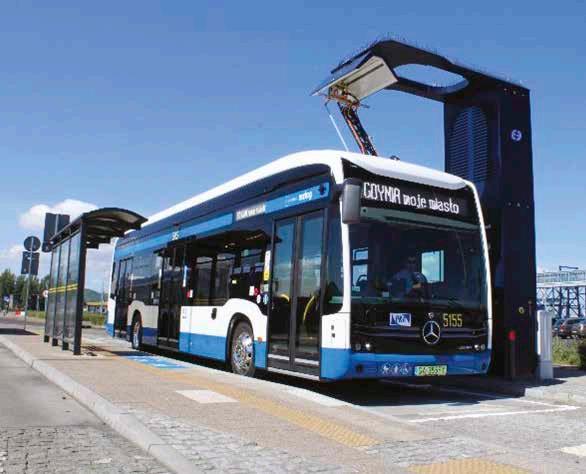
Electric bus charger in Gdynia, Poland.
• Szeged Transport Company
• KRUCH Railway Innovations GmbH & Co.KG.
• Municipality of Maribor
• University of Maribor
• ATB Mobility S.p.A.
• Redmint social enterprise
• Mobilissimus Ltd.
• trolley:motion
Contact Details
Project Lead Contact, Alexandra Scharzenberger Organisation Verein trolley:motion urban-e mobility
A-5321 Koppl, Ladaustraße 73 T: +43 664 4141 866
E: scharzenberger@trolleymotion.eu
E: CE4CE.Verkehrsbetriebe@L.de W: www.trolleymotion.eu


Charging technology.
Woronowicz is a public transport expert at trolley:motion, an international association promoting trolleybus and other sustainable transport modes. She is also chair of the UITP Trolleybus Committee Benchmark & Data Working Group.
Alexandra Scharzenberger has led trolley:motion since 2012, managing PR, international campaigns, conferences, and EU projects like eBRT2030 and CE4CE to promote electric bus systems and InMotion
Marta
Alexandra Scharzenberger Marta Woronowicz
Tatra trams in Szeged, Hungary.