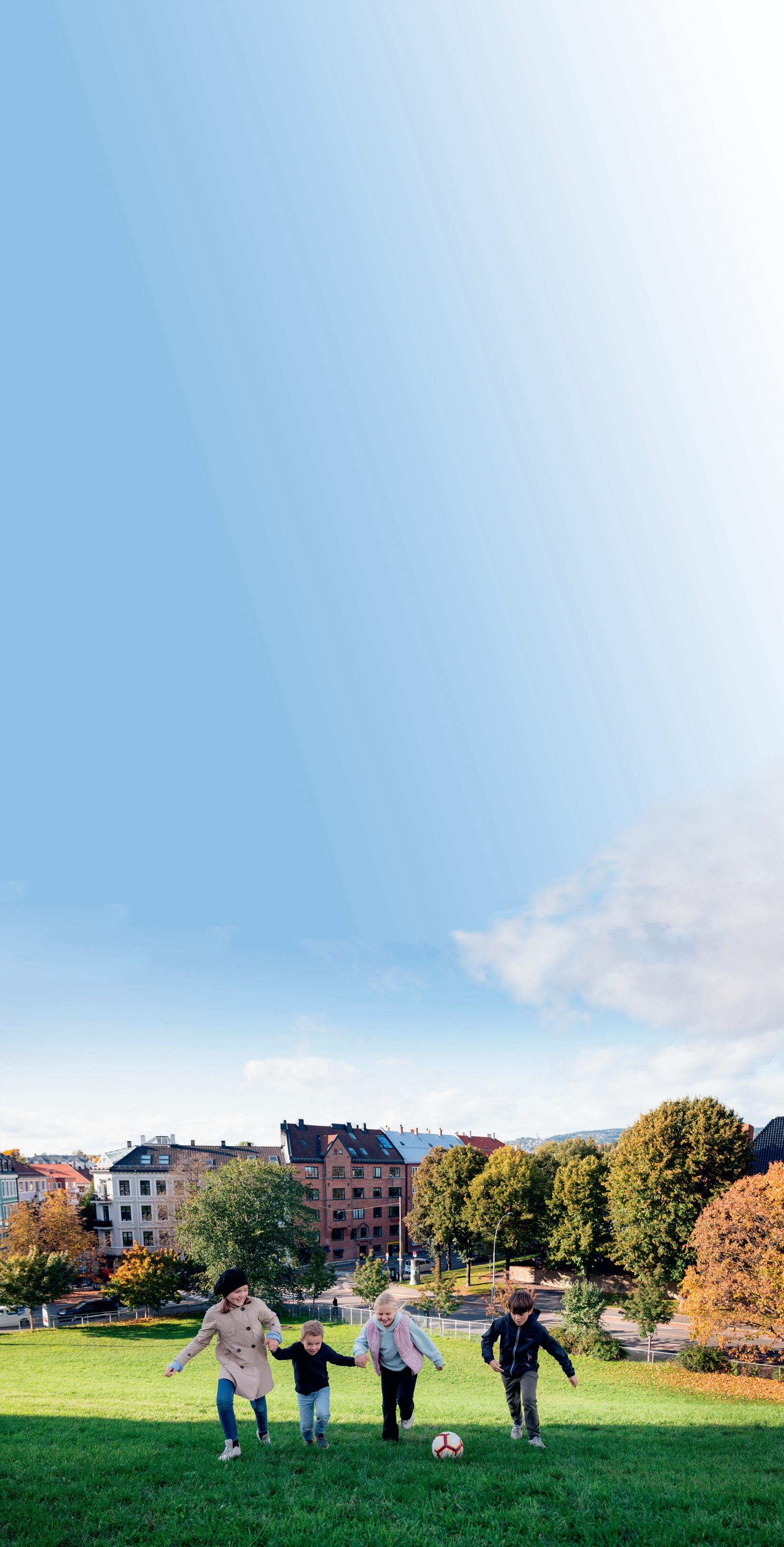

The design of a neighbourhood has a major influence on the health of the people living there. Researchers in the Building Health project are investigating how environments can be designed to promote the health of local residents, which could then reduce the strain on health and care services, as Stine Hellum Braathen and Hege Hidle Aaser explain.
There is growing demand for health and care services across Europe, with more and more of us living well into old age, and this demand is only set to intensify further over the coming years. This is likely to put great strain on already stretched health services, leading researchers to investigate new ways of promoting health and helping people maintain their independence for longer. “There is a need to design a society that helps people take care of their own health and the health of those around them in a more communal way, and in their own home environment,” says Stine Hellum Braathen, a research manager in the Department of Health Research at SINTEF, one of Europe`s largest independent research institutes. This issue is central to the Building Health project, an initiative funded by the Norwegian Research Council, which brings together the leading Norwegian real estate company, Linstow, and SINTEF to study and test how changes in the local built environment can facilitate health-promoting behaviour.
The nature of the local environment is an important factor in this respect, as the design of a neighbourhood can encourage physical activity and social engagement, both important factors in individual health. As part of the project, researchers are looking at several developments designed to promote health, including a village specifically for people living with dementia, located in the municipality of Baerum near Oslo. “Both the buildings and the external environment in the village have been built in particular ways in order to promote health,” outlines Braathen. The project team are looking both at the design of the village and also how it is being used by residents, with the aim of gaining deeper insights into the factors which affect people’s health, which can then inform future real estate projects. “What exactly has been done to promote people’s health in this village? What was the intention when it was built? Are people using the environment and buildings in the way which was originally
envisaged?” continues Braathen.
This is just one of the case studies within the project, with researchers also gathering data from several other locations designed to facilitate health-promoting behaviour, including a cancer rehabilitation centre in Denmark. From this work, Braathen and her colleagues in the project hope to identify the underlying factors that make a location enjoyable and stimulating for people, which could then have a positive impact on their health. “How can we create places where people want to go? Where people want to move around and be active? For example, we want as many people as possible to take the stairs within a building. What exactly is it that makes people take the stairs rather than the lifts?” she says. A wide variety of factors may be involved here, such as the placement of stairs, lighting on the stairs or the amount of space in the lift, with researchers in the project looking to understand which features can promote health in an urban environment, and which don’t. “A lot of different things
“We are looking at how local environments can be designed to enable people to live at home for longer, and to care for their own health and the health of those around them in a more communal way.”
can affect how people experience a place, depending on their needs,” explains Braathen. The age of the residents is an important consideration in this respect, with the project looking primarily at two groups, namely families with children and young people, as well as elderly people with and without reduced cognitive abilities. While these groups have different needs, there are some commonalities, in particular they both need space to meet and the opportunity to exercise and enjoy the natural world. “There are a lot of changes that can be made in the environment which can potentially promote health, but we still need to better understand what it takes for people to change their behaviour in a way that promotes their health in practice,” stresses Braathen. This research holds wider relevance to Linstow, a company with experience of developing and operating health centres, which provided part of the impetus for the project. “We learned a lot from healthcare service providers, and we saw the challenges they were facing,” says Hege Hidle Aaser, Director of Health at Linstow. “We saw the potential for us as a business - and also for wider society - to learn how to combine real estate development and health knowledge, from the people who were providing the services.”
Linstow Health`s aim is to contribute to enhanced public health and improved quality of life. Linstow works to enhance
health promoting behaviours throughout the lifespan. The innovation focuses on how the built environment can be designed to support physical activity and social inclusion, and how work processes for creating new spaces must change to achieve this in practice.
As a real estate company, Linstow ultimately hope to apply the insights and new knowledge gained in the project across different types of development, in particular urban developments. Cost is of course an important factor here, and while some features can be added to a project without adding significantly to the cost, others will be more expensive. “Some things will certainly cost more, and that then raises question around cooperation between stakeholders.
How can we do things in a smarter way?”
says Aaser. This is a topic of great interest in the project, with researchers looking at new ways of cooperating with local stakeholders, which could then lead to the inclusion of health-promoting features in a wider range of developments. “We have to be creative and bring together the right people and build new models of cooperation,” continues Aaser.
“This is a long process, and we don’t expect to find a solution in one single project. As part of the current project, we’re looking at Linstow’s work processes and investigating potential new partnerships.”
This could be with volunteer organisations and other local bodies for example, who could then play a role in shaping real estate and urban developments in their area. Researchers in the project are also studying
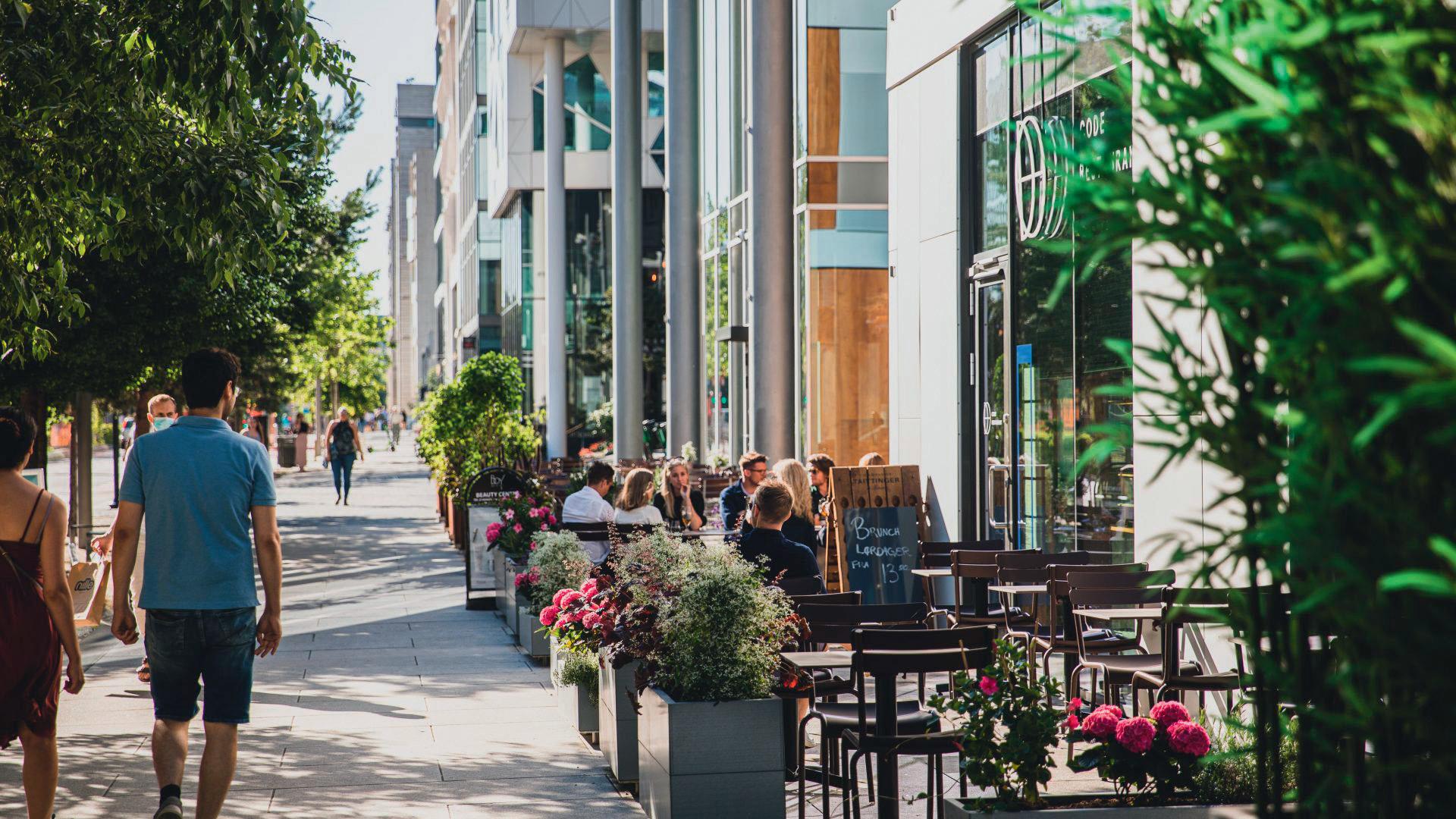
Building Health – health-promoting urban development
Project Objectives
We need more knowledge about what makes places and buildings contribute to better health for people who live, work and meet there. It is not only about what is inside the buildings, but also the area and life between them. Through the research and innovation project Building Health, we develop and systematize knowledge about what promotes health in practice. We are also looking at the need for new collaboration models to realize such places.
Project Funding
The project is financed by the Research Council of Norway under the innovation program Innovation in Business (IPN) and will run until 2026.
Project Partners
• Linstow (Project Owner)
• SINTEF (Research Partner)
Contact details
Hege Hidle Aaser
Director Linstow Health
T: +47 23 11 96 22
e: hege.aaser@linstow.no
W: www.linstow.no
Stine Hellum Braathen
Unit: SINTEF Digital Department: Health Research
Office: Oslo
T: +47 98 23 04 72
e: stine.h.braathen@sintef.no
W: www.sintef.no
Hege Hidle Aaser is Director at real estate company, Linstow`s Health Division. She holds an MBA (Norwegian School of Economics and Business Administration) and has honed her expertise through academic exchanges at renowned institutions such as the University of Saint-Louis in Senegal, the FIT in USA and the Bocconi Business University in Italy. With more than 20 years of diverse experience spanning various industries, her expertise ranging from strategic investments to business development, and management.
Stine Hellum Braathen is research manager at SINTEF Digital, Department of Health Research. She holds a BA in Anthropology (University of Western Australia), a Master of Philosophy in International Community Health (University of Oslo, Norway) and a PhD in Psychology (Stellenbosch University, South Africa). Her research experience revolves around health promotion, participation, and inclusion of vulnerable groups.

Linstow’s current working processes, as the company looks to make health promotion a core part of their working operations. “We’re looking at how Linstow can work in a different way, in order to incorporate health promotion in their projects,” explains Braathen. The next step will then be to take the project’s research and develop it into something that can be useful for Linstow in their operations, which Braathen says is a challenging task. “It’s often difficult to translate research insights into practical benefits,” she acknowledges. “We are in the process of collecting data from several different locations, and we hope that by the end of the project we will deliver results that will be useful for Linstow, in terms of increasing their ability to work with healthpromoting practices.”
These practices should ideally be invisible to residents, a natural or relatively unobtrusive part of the design of a development, which will then facilitate health promoting behaviour and help people to maintain their independence for longer. This is a goal that we all share, and Aaser believes well-designed
neighbourhoods can be an important step towards achieving it. “As a company, we want to work in that direction,” she stresses. The wider context here is the goal of promoting health across the population and in the process reducing the strain on health and care services, a goal in which all sectors of society have a role to play. “We need all sectors to participate in health promotion and in caring for health. The health- and care sector is under great strain at the moment, and the issue is growing more acute over time,” says Braathen. “This is not just an issue for health and care systems, we need to look at this from a broader perspective, and many different actors from across society need to be involved.”
Hence, the objective is to raise the knowledge of all stakeholders involved in urban planning an ddevelopment to ensure that designs genuinely inspire everyone to embrace a more active and socially engaged lifestyle. This approach has the potential to generate substantial societal savings and elevate the quality of life for all.