Contributors Abe Asher, Bill Baird, Ron Bechtol, Danny Cervantes, Amber Esparza, Brianna Espinoza, Anjali Gupta, Colin Houston, Kiko Martinez, Mike McMahan, Kevin Sanchez, M. Solis, Dean Zach
The San Antonio Current is published by Chava Communications Group
San Antonio Distribution The Current is available free of charge, limited to one copy per reader. Get listed 1. Visit sacurrent.com
2. Click “Calendar” and then “Submit an Event”
3. Follow the steps to submit your event details Please allow 48 hours for review and approval. Event submissions are not accepted by phone.
Copyright notice: The entire contents of the San Antonio Current are copyright 2023 by Chava Group LLC. Reproduction in whole or in part without written permission of the publisher is prohibited. Publisher does not assume any liability for unsolicited manuscripts, materials, or other content. Any submission must include a stamped, self-addressed envelope. All editorial, advertising, and business correspondence should be emailed to the addresses listed above.
Subscriptions: Additional copies or back issues may be purchased at the Current offices for $1. Six-month domestic subscriptions may be purchased for $75; one-year subscriptions for $125.
in this issue
Issue 26-06/// Mar 18 - 31, 2026
12 Taking Their Time
As the city hashes out a new police contract, data suggests it’s failing to rein in overtime abuse
07 News
The Opener News in Brief
Welfare for the Rich Parents in San Antonio’s wealthier school districts are applying for school vouchers at higher rates that those in their poorer counterparts. Is that by design?
Bad Takes
The GOP’s professed love of rural Texans is all hat and no cattle
19
Calendar
Our picks of things to do powerful
Verification Council
Auditor’s Certification:
23 Arts
Migration Cycle
Celebrated playwright Heather Raffo debuts production at Carver Center on why we move and the costs of survival
25 Screens
-
Pursuit of Happiness
San Antonio father fights for his transgender daughter in the documentary The Dads
27Food
Lateral Move
Tucker’s Italian, the latest eatery to occupy an East Side landmark, has the bravado to pull it off
Cooking Up Conversation
Thai Bird’s David Gilbert and Kristin Alvarez talk about community and growing their concept
33 Music Traversing Transcendence
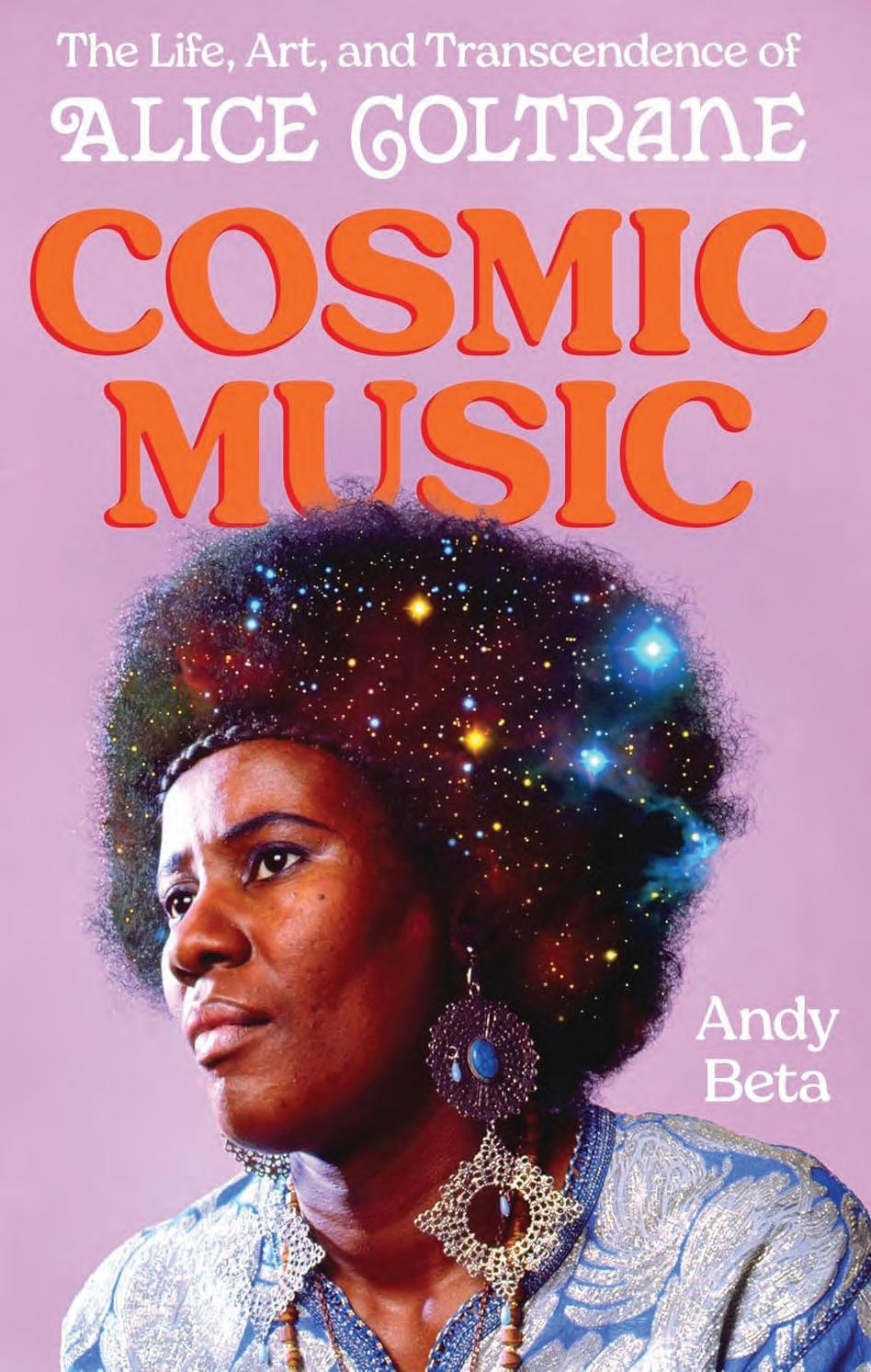
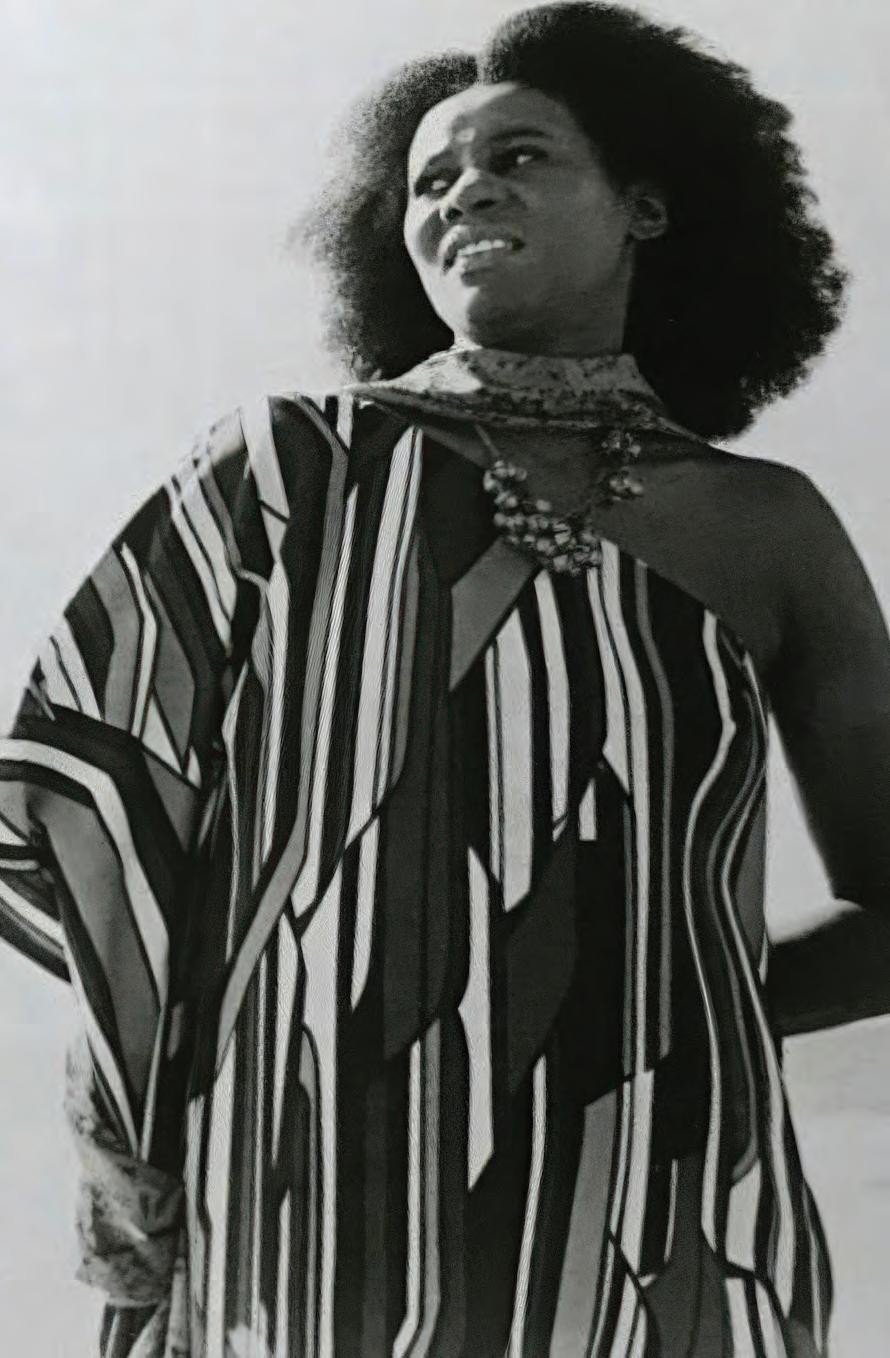
SA-raised author Andy Beta’s Cosmic Music offers an engrossing look at jazz innovator Alice Coltrane Critics’ Picks
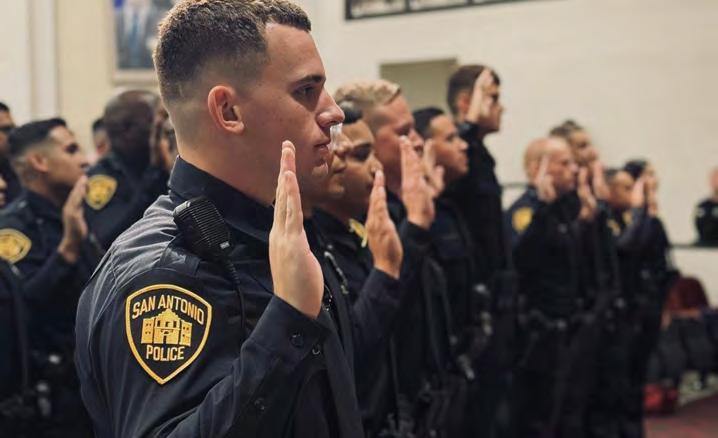
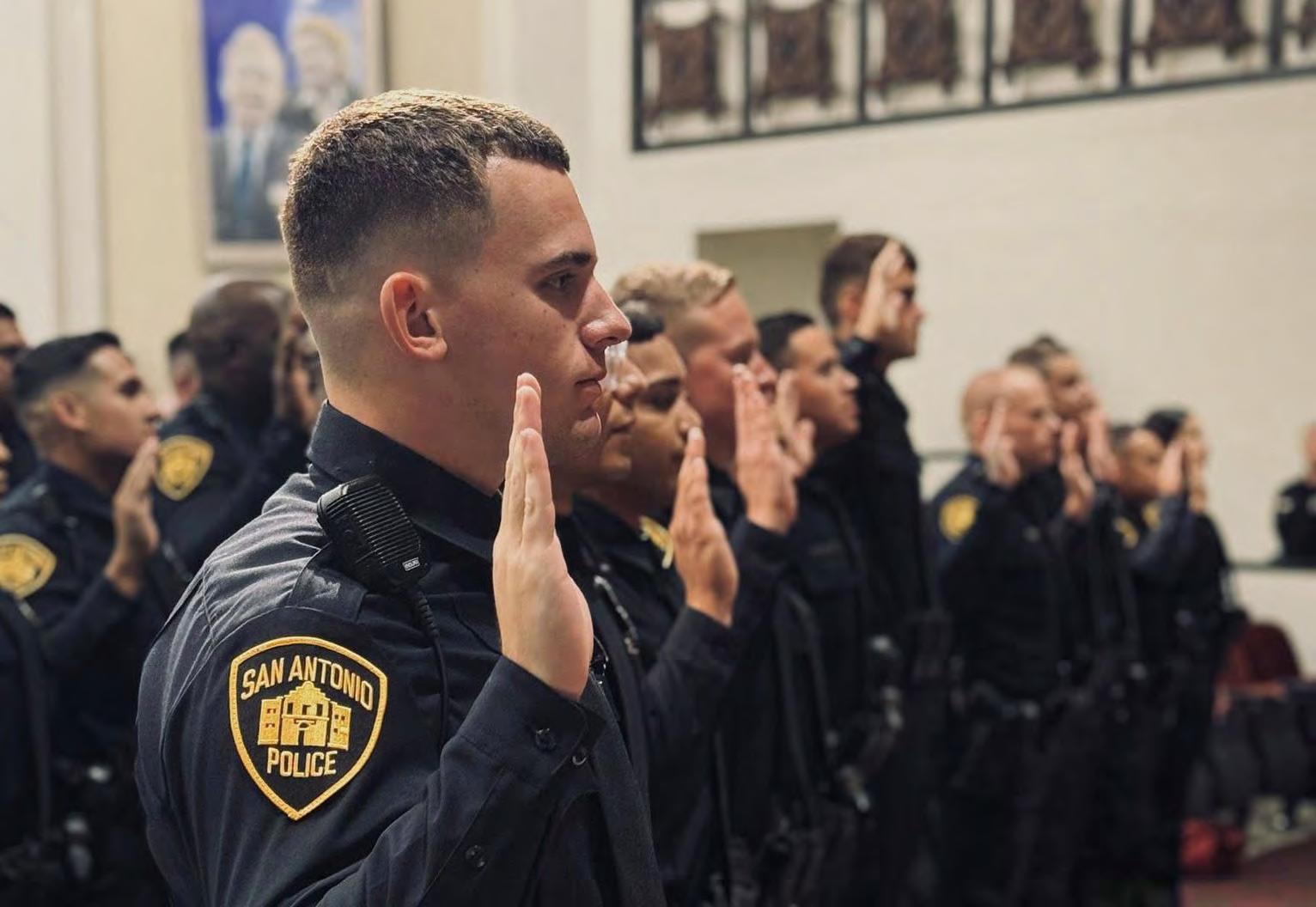
On the Cover: The City of San Antonio is negotiating a new police contract, but activists say council and staff aren’t paying enough attention to the millions of dollars in overtime officers are pulling. Cover design: Ana Paula Gutierrez.
Facebook San Antonio Police Department
CDS DVDS BLU-RAYS 4K VIDEO GAMES HARDWARE ACCESSORIES VINYL RECORDS CDS DVDS BLURAYS 4K VIDEO GAMES HARDWARE ACCESSORIES VINYL RECORDS CDS DVDS BLU-RAYS 4K VIDEO
GAMES HARDWARE ACCESSORIES VINYL RECORDS CDS DVDS BLU-RAYS 4K VIDEO GAMES
HARDWARE ACCESSORIES VINYL RECORDS CDS DVDS BLU-RAYS 4K VIDEO GAMES HARDWARE
ACCESSORIES VINYL RECORDS CDS DVDS BLU-RAYS 4K VIDEO GAMES HARDWARE ACCESSORIES
WE PAY MORE CASH FOR GAMES!
VINYL RECORDS CDS DVDS BLU-RAYS 4K VIDEO GAMES HARDWARE ACCESSORIES VINYL RECORDS
CDS DVDS BLU-RAYS 4K VIDEO GAMES HARDWARE ACCESSORIES VINYL RECORDS CDS DVDS BLURAYS 4K VIDEO GAMES HARDWARE ACCESSORIES VINYL RECORDS CDS DVDS BLU-RAYS 4K VIDEO
GAMES HARDWARE ACCESSORIES VINYL RECORDS CDS DVDS BLU-RAYS 4K VIDEO GAMES HARDWARE
ACCESSORIES VINYL RECORDS CDS DVDS BLU-RAYS 4K VIDEO GAMES HARDWARE ACCESSORIES
VINYL RECORDS CDS DVDS BLU-RAYS 4K VIDEO GAMES HARDWARE ACCESSORIES VINYL RECORDS
CDS DVDS BLU-RAYS 4K VIDEO GAMES HARDWARE ACCESSORIES VINYL RECORDS CDS DVDS BLURAYS 4K VIDEO GAMES HARDWARE ACCESSORIES VINYL RECORDS CDS DVDS BLU-RAYS 4K VIDEO
GAMES HARDWARE ACCESSORIES VINYL RECORDS CDS DVDS BLU-RAYS 4K VIDEO GAMES HARDWARE
ACCESSORIES VINYL RECORDS CDS DVDS BLU-RAYS 4K VIDEO GAMES HARDWARE ACCESSORIES
VINYL RECORDS CDS DVDS BLU-RAYS 4K VIDEO GAMES HARDWARE ACCESSORIES VINYL RECORDS
CDS DVDS BLU-RAYS 4K VIDEO GAMES HARDWARE ACCESSORIES VINYL RECORDS CDS DVDS BLURAYS 4K VIDEO GAMES HARDWARE ACCESSORIES VINYL RECORDS CDS DVDS BLU-RAYS 4K VIDEO
SELLBUY TRADE
GAMES HARDWARE ACCESSORIES VINYL RECORDS CDS DVDS BLU-RAYS 4K VIDEO GAMES HARDWARE
VIDEO GAMES | HARDWARE | ACCESSORIES | VINYL RECORDS | CDS | DVDS 6 SAN ANTONIO LOCATIONS | CDEXCHANGE-SA.COM
ACCESSORIES VINYL RECORDS CDS DVDS BLU-RAYS 4K VIDEO GAMES HARDWARE ACCESSORIES
VINYL RECORDS CDS DVDS BLU-RAYS 4K VIDEO GAMES HARD WARE ACCESSORIES VINYL RECORDS CDS DVDS BLU-RAYS 4K VIDEO GAMES HARDWARE ACCESSORIES VINYL RECORDS CDS DVDS BLU-RAYS 4K
That Rocks/That Sucks
Contrary to promises by Texas Republican leaders that the state’s new school voucher system would offer school choice for lower-income residents, the students of the vast majority of families who have so far applied for vouchers already attend private schools. Of the more than 152,000 applications to the program so far, just under a quarter came from students currently enrolled in a public school or a public pre-K program, according to an analysis of state data.
The Gámez-Cuéllar family, which includes a pair of acclaimed mariachi-playing brothers, was released from the ICE detention center in Dilley last week during a visit by Democratic lawmakers. The family, which legally crossed the U.S.-Mexico border three years ago to seek asylum, was detained at an ICE check-in appointment in late February. The brothers, Antonio Yesayahu Gámez-Cuéllar, 18, and Caleb Gámez-Cuéllar, 14, were honored last year in Washington, D.C., for winning a statewide mariachi competition.
Hemp businesses around the state told the Texas Tribune that they face increasingly frequent police raids that are damaging their bottom lines. Local and federal law enforcement officers have raided 15 Texas hemp businesses since August 2024, often seizing products and cash the businesses have struggled to get back. Attorneys argue the rise in raids, which come amid a push in the Texas Legislature to ban hemp-derived THC products, hasn’t led to a significant number of criminal charges or indictments.
SXSW is underway in Austin, and San Antonio musicians are well represented at this year’s edition. Los Juanos, Vanita Leo and mypilotis are all official SXSW artists, while hip-hop artist MexStep played a free show at Hotel Congress on Wednesday, and Grocery Bag who performed shows all week long. Other San Antonio artists who performed include Luna Tropical, Night Ritualz, Guy Vincent, Ryley Hall, Sonora Hechicera and JP McCabe. — Abe Asher
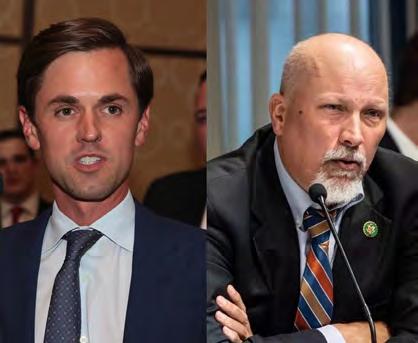
Shredding the Constitution with Texas AG candidates Mayes
Middleton and Chip Roy
Texas Republicans have managed to produce a runoff for state attorney general that should have anyone with a modicum of concern about their civil liberties shitting bricks.
On one side is State Sen. Mayes Middleton, the oil-rich heir who’s been moonlighting as a culture-war crusader after discovering that running for office is easier when your family fortune can bankroll the campaign. On the other is U.S. Rep. Chip Roy, the perpetually furious U.S. House member who treats politics like a nonstop cable-news shouting match.
Together, they’ve given GOP primary voters a choice between a spoiled rich kid with shaky legal chops and a far-right ideologue who apparently inherited all the charm and likability of his former boss, U.S. Sen. Ted Cruz, even if he hasn’t got a handle on Teddy Boy’s trademark unctuousness.
During his time in the Texas Lege, Middleton has tried to sell himself as a conservative defender of the Constitution. Unfortunately, his praise for President Donald Trump for “putting God back in government” suggests he’s a long way from actually understanding the contents of said document.
Indeed, for all the Senator’s claims about championing freedom, he spends an awful lot of time arguing that certain Texans deserve less of it. After all, this is the dick who authored the state’s current “bathroom bill,” which seeks to empower vigilante potty patrols to keep trans people from using public restrooms.
Beyond that, Middleton has precious little legal experience — a shortcoming that should be an obvious disqualification for someone seeking to be the state’s top legal authority. Though he holds a law degree, his experience is limited to running the oil and gas business Daddy founded.
But the biggest credential wielded by “MAGA Mayes” isn’t legal experience or courtroom savvy — it’s money. To date, he’s poured $11 million into his own campaign, records show. That’s the kind of generational wealth that allows a candidate to blanket the airwaves without worrying about the tedious task of persuading voters on merit.
Roy, meanwhile, brings a completely different brand of dysfunction. The congressman has built his career on theatrical outrage, delivering red-faced speeches and throwing procedural tantrums whenever the political winds fail to blow exactly his direction.
This is, after all, the bloviating douchebag who singlehandedly held up a disaster relief bill for Texas communities to make a political point, voted against reauthorizing the Violence Against Women Act and staged a phony-as-fuck border security roundtable at which far-right propaganda outlet Breitbart News was the only invited “media.”
Recently, Roy’s scaremongering about Muslims wanting to enact Sharia law in U.S. communities has veered into even uglier territory, stoking fear and suspicion toward an entire religious community.
Add to that his enthusiasm for restricting voting rights — treating democratic participation like it’s a privilege to be rationed rather than a right to be protected — and Roy begins to look less like a defender of the Constitution than someone eager to carve it up for ideological convenience.
Texas’ attorney general is supposed to be someone capable of defending the law and representing every Texan with competence and professionalism. However, Ken Paxton’s decade holding that office has certainly put that expectation through the meatgrinder — and ushered in this runoff between two utter assclowns.
If either Mayes or Roy wins the primary and takes control of the AG’s office, expect to see more of Paxton’s bottom-dealing, dysfunction and partisan rancor. The real loser won’t be the other candidate. It will be Texas.
— Sanford Nowlin
YOU SAID IT!
“Judgment Day comes for all of us eventually. This year in Texas, Ken Paxton faces the voters.”
Amid rising public criticism, the ICE family detention center in Dilley has significantly reduced its number of inmates, U.S. Rep. Joaquin Castro, D-San Antonio, said last week. The congressman told reporters around 450 people are currently incarcerated inside the facility, down from the 1,100 when he first visited in January following the incarceration of 5-year-old Minneapolis resident Liam Conejo Ramos. “I believe that the public outcry is making a difference,” Castro said.
Councilwoman Teri Castillo wants to bring City Hall to your neighborhood. Last week, the District 5 representative filed a request to rotate the city council’s Wednesday afternoon B Sessions between all 10 of the city’s council districts. The sessions, during which the council discusses policy issues, have recently considered the police department’s cooperation with ICE and the potential constitution of a new ICE detention facility. Castillo’s proposal has the support of four other council members. — Abe Asher
Wikimedia Commons Gage Skidmore (left) and Lev Radin (right)
Building Futures, Breaking Barriers: The Alamo Colleges District Story
Celebrate 80 years of expanding opportunity and strengthening workforce development across the San Antonio region.
Through powerful alumni stories and reflections from community leaders, this inspiring documentary honors the legacy and impact of the Alamo Colleges District — and the students and communities it serves.
Watch the broadcast premiere on KLRN Monday, March 23, 2026 | 9:00 PM
For more information, visit alamo.edu/80/share-your-story.
Welfare for the Rich
Parents in San Antonio’s wealthier school districts are applying for school vouchers at higher rates that those in their poorer counterparts. Is that by design?
BY MICHAEL KARLIS
Residents of San Antonio’s wealthier school districts are significantly outpacing their poorer counterparts in applying for the state’s school voucher program, data from the Texas Comptroller’s Office shows.
For Joshua Cowen, a Michigan State professor who’s studied the effects of school vouchers nationwide, those numbers show the new program is working just as its Republican champions intended.
Gov. Greg Abbott and other voucher backers argued the program would give Texans of all incomes the opportunity to send their kids to private schools.
However, critics argue that claim was a smokescreen and that vouchers were always intended to help the wealthiest families offset the cost of tuition bills they’re already paying.
“We’ve known for 20 years that this is what happens,” Cowen told the Current. “[Voucher proponents] know this now too, because it’s showing up in the data.”
Indeed, recent reporting from the Current and other outlets found that just 24% of Texas’ school voucher applicants’ kids were in public schools when they applied for the program, meaning the vast majority of applicants already enrolled their children in private schools.
“What’s undebatable is that school
vouchers aren’t saving kids from failing public schools,” Cowen added.
The new, San Antonio-specific numbers suggest that low-income families here are likely too poor to be able to participate in the program, which distributes $10,000 coupons to cover each qualifying child’s private school
tuition.
Of the 10,428 combined San Antonio public, private and home-school students who have applied for the voucher coupons, 5.9% reside in the boundaries of North East ISD. Another 4.1% are from Northside ISD. The annual median family income
in both of these districts is around $80,000.
The application percentages in those well-off districts are considerably higher than those for students living in districts with lower median income.
For example, just 1.2% of students
Scan to open your Credit Human checking account.
to receive the $300 incentive, the checking account must remain open at least 90 days from account opening, a minimum of 10 point-of-sale debit card transactions (ATM excluded) with a minimum purchase of $10 per transaction, two recurring direct deposits of a minimum of $500 each, digital banking and online statements enrollment must occur. Incentive to be deposited into your checking account within 90 days of account opening during promotion period of January 1, 2026, through June 30, 2026, is contingent upon meeting offer requirements and account must be in good standing. Incentives are considered interest and will be reported on IRS Form 1099-INT. The Annual Percentage Yield (APY), for the Credit Human savings accounts effective as of December 12, 2025, is 0.55% for balances $100 and greater. Dividend rates are variable. All Mastercard consumer debit cardholders in the US are eligible for Mastercard ID Theft Protection coverage and there is no charge for these services. You must enroll in order to receive Mastercard ID Theft Protection. Refer to the Mastercard Guide to Benefits at https:// www.credithuman.com/privacy for more details. Federally insured by NCUA.
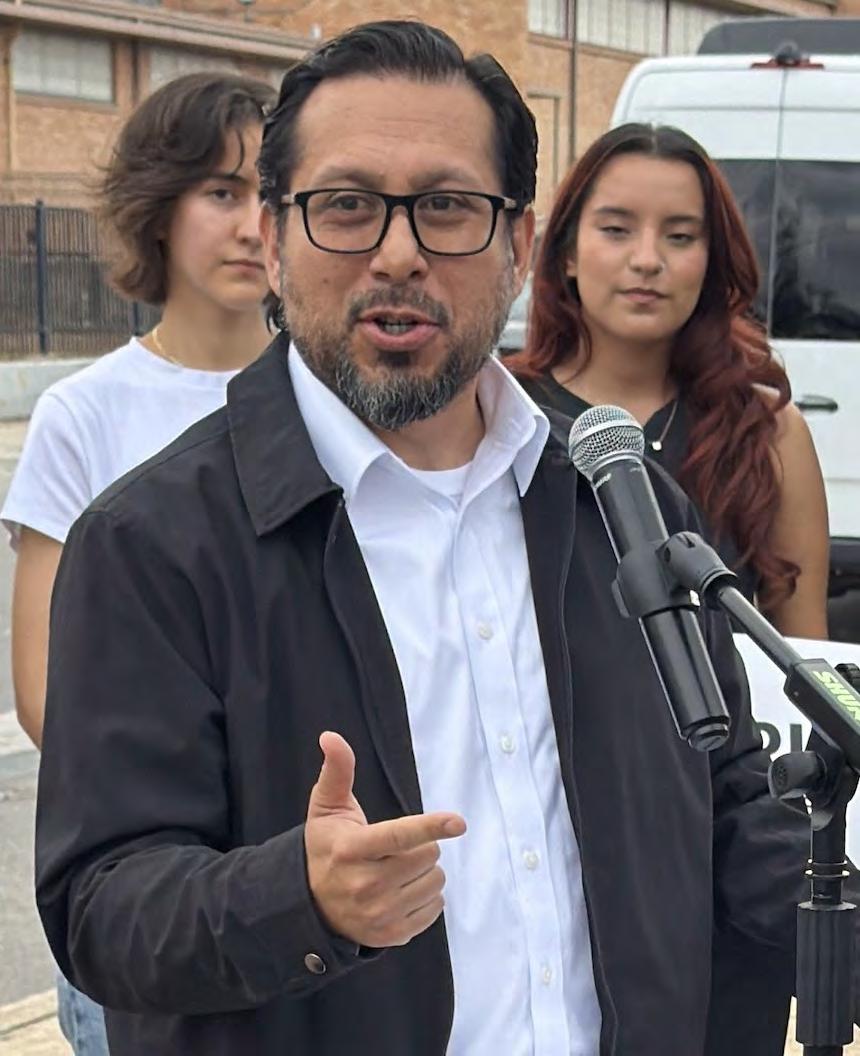
MTexas Rep. Diego Bernal says Texas’ voucher program was always intended to favor middle-class and wealthy families.
living within the Harlandale ISD school district boundaries have applied for vouchers. That ratio stands at 1.8% in Southside ISD and 2.3% in Edgewood ISD.
The median annual family incomes in those districts is below the Bexar County average, and those in Harlandale ISD and Edgewood ISD hover around $35,000.
‘Not true school choice’
State Rep. Diego Bernal, a San Antonio Democrat and a vocal opponent of Texas’ voucher program, said the numbers point out a major flaw in Texas’
recently enacted legislation.
Even if a low-income family receives a $10,000 voucher, the average private school tuition in San Antonio is about $12,000, according to Private School Review, an online comparison site.
That $2,000 difference still isn’t attainable for most low-income families, Bernal said. In other words, many of the families with kids in poorly performing schools still can’t afford to take advantage of it.
“One of the things I suggested [during the legislative session] was that if someone got a $10,000 voucher and their tuition was more than that, then the remainder of the tuition should be waived. But, [Republicans] said no,” Bernal said.
“It’s not really school choice at all,” the lawmaker added. “If the private schools can still charge whatever they want and exceed the value of the voucher and curate the student body any way they
want, it’s not true school choice.”
Welfare for the rich
Even if a state voucher covers the cost of tuition, low-income families still have to pay for school uniforms, activity fees, transportation, non-subsidized lunches and other expenses they don’t encounter in the public education system, according to experts.
So, even though pro-voucher lawmakers maintained the program would allow parents trapped in failing school districts to send their kids to better schools, it appears a majority of San Antonians simply may be too poor to afford to pay.
The numbers also support that theory statewide.
Of the Texas families who applied for vouchers, 65% are lower-middle income to upper income — or above 200% of
the federal poverty line — according to the Texas Comptroller’s Office.
Only 35% of applicants so far are low-income, or earn less than 200% of the federal poverty line, according to state data.
Bernal argues the numbers prove Texas’ voucher program is welfare for the rich — or at least, welfare those who earn a comfortable living.
“Every time we have an opportunity to expand Medicaid or do something that helps poor people, Republicans always say no because they have a fear that people who don’t need it will get it,” Bernal said.
“With the voucher scam, it is not only known, but acknowledged, that people who don’t need the help, who can fully afford private school tuition, will get it anyway. That is not only corruption, but hypocrisy of the highest fucking order.”
Chart3
Michael Karlis
Taking Their Time
As the city hashes out a new police contract, data suggests it’s failing to rein in overtime abuse
BY STEPHANIE KOITHAN
As talks heat up for a new labor contract between San Antonio and its police union, activists are sounding the alarm that the city isn’t doing enough to rein in what they call officers’ rampant abuse of overtime earnings.
Some San Antonio police personnel are raking in $100,000 to $200,000 annually in overtime pay alone, according to documents obtained by the Current. In some cases, those payments double or nearly triple their yearly salaries.
The San Antonio Police Department is also routinely shooting past its overtime budget, sometimes by tens of millions of dollars, records show. For the 2024 fiscal year, the department spent double what it originally budgeted for overtime — hitting $34 million.
The data cited in this report was compiled by local police accountability activist group Act 4 SA, which obtained the records from SAPD through an open records request and organized it according to overtime earnings. The Current hasn’t independently verified its contents.
“The fact that we as an organization have already done the research and have a list of demands … and council members don’t ... is shocking and very scary,” said Ananda Tomás, organizer with Act 4 SA.
“And I think that people need to pay attention to that and call on their elected leaders to focus on this contract because we’re going to be locked in for the next four years,” Tomás added.
SAPD officials didn’t dispute the overtime numbers the Current presented to them in the documents.
“Overtime in a major city police department is a necessary component for operations,” the department said in a statement provided in response to this story. “SAPD
overtime pay is excluded from the calculations that determine pension amounts, [so] increased overtime does not increase pension payments.”
While SAPD did provide additional data to the Current about the number of officers it’s hired over the past few years, it didn’t directly address Act 4 SA’s allegations of overtime abuse.
The San Antonio Police Officers Association (SAPOA), the union representing department employees, didn’t respond to the Current’s request for comment on concerns that workers are abusing overtime rules.
Top cops
Act 4 SA’s overtime analysis spreadsheet — which includes hire dates, job titles, fiscal 2024 salaries, overtime and other data points — shows that the top 15 overtime earners in SAPD last year collected annual salaries ranging from $72,780 to $100,092.
However, in a separate column, additional overtime earnings for that same group of personnel ranged from $91,501 to $130,495 over the same year. A separate column for additional benefits, including pay for training and other
skills, tacks on as much as $76,134 to each officer’s earnings.
This means that the highest overtime earner in SAPD, who’s also the cop with the highest salary on the spreadsheet, raked in $345,817 in total annual compensation.
To put it in perspective, that SAPD employee’s gross earnings for the year amount to that of San Antonio’s mayor and most of city council combined. The total even approached the 2024 salary of the city manager, one of the highest-paid city employees, at $374,400.
The aforementioned top-earning SAPD employee isn’t the chief or another member of the department’s highest management levels but a sergeant. The average income in Texas for police sergeants is approximately $91,000, according to ZipRecruiter.
The next two highest earners on the spreadsheet — a detective and a rank-and-file officer — each earned around $120,000 in overtime last year, amounting to total compensation of around $300,000 each.
But it doesn’t end there. The total compensation for hundreds of rankand-file cops listed on the spreadsheet was around $200,000 due to overtime,
MSAPD Chief William McManus speaks during a press conference. He’s retiring later this year.
and many exceeded that number. In the spreadsheet, 11 of the 20 cops earning the highest amounts in overtime were hired in the 1990s or before, making them force veterans and likely close to retirement. In the top 20 of the highest overtime earners, a total of 17 were hired before 2010.
Tomás said she’s waiting on a response to an open records request asking for the names and badge numbers of the supervising officer or officers who have signed off on all the overtime.
“The reason being that if it’s the same people again and again, and it’s the same supervising officer that’s being unfair and approving overtime for some but maybe not for other officers that they don’t have a relationship with, that’s also a problem within the department,” Tomás said.
Paying more, fighting less crime
In total, SAPD earmarked nearly $21
Michael Karlis
million for overtime in the 2025 fiscal year. However, it remains to be seen how much it actually spent to cover those costs.
The prior year, the department doubled its adopted overtime budget of $17.7 million, paying out a total that exceeded $34.4 million, records show.
Meanwhile, the force continues to hire more officers, even as statistics show crime declining in San Antonio.
The city’s overall crime rate dropped by 13% for the first 11 months of 2025 compared to the prior year, according to a KSAT report based on data presented by SAPD Chief William McManus to a City Council committee in December.
While SAPD reported 143,529 crimes from January through November of 2024, it tallied just 124,314 during the same period in 2025.
Violent crimes dropped by 9% over that period, while homicides decreased 17%. Human trafficking declined by 31.3% and kidnappings by 50%. Sex offenses also went down, dropping 7.6%.
“Nothing but good news, as far as the crime stats go,” McManus told council members at a December council meeting, according to the KSAT report.
So, if crime is down, why does San Antonio keep adding more officers to the force while piling overtime onto others?
District 3 Councilwoman Phyllis Viagran, who served on SAPD for seven years, told the Current it could be due, at least in part, to an outside analysis the city commissioned on its police staffing In 2023, the city hired Weiss Consulting to conduct a staffing analysis of SAPD. The study identified a shortage, which the department has since endeavored to fill.
The study determined SAPD was short 360 officers, which the department confirmed with the Current in a written statement. According to an SAPD spokesperson, the first officer was added in early 2024, and as of early 2026, the department has hired 205 new officers.
Additionally, the SAPD spokesperson said 412 employees have voluntarily left the force from fiscal 2023 to the present, though those positions are “constantly being filled by new cadet classes,” she added.
On March 12, City Council members Marina Alderete Gavito (District 7), Misty Spears (District 9), and Marc Whyte (District 10) filed a resolution asking the city manager to prioritize
the hiring of 65 additional officers in the fiscal 2027 budget, saying they’re needed to meet the needs outlined in the 2023 staffing study.
New union contract
The debate over new hires and accountability groups’ concern about excessive overtime come as the city works to hash out a new labor contract with its police union.
Those talks began in January and are expected to conclude Oct. 1, right after the late-September retirement of Chief William McManus. The plan is for the resulting labor contract to serve as an exultant bookend to a decades-long career for the chief, Act 4 SA’s Tomás said.
SAPOA wants to raise base pay for officers from $62,916, mirroring similar increases in base pay in other Texas cities. According to a press release laying out its demands, SAPOA says Austin officers earn a base pay of $70,644, whereas those in Dallas earn $75,397. Meanwhile, the SAPD employees’ Houston counterparts earn $75,000
and those in Laredo get $69,308.
In contract negotiations, the union’s key goals include seeking 3% annual wage increases and a $5 hourly wage increase over three years. SAPOA also wants an increase in city Health Savings Account contributions and monthly pay for Field Training Officers.
However, discussions about putting a cap on overtime pay haven’t yet come up in contract negotiations, Tomás said.
Public safety risks
Beyond excessive overtime pinching taxpayers, Tomás makes the case that it creates tired cops — which becomes its own problem.
“There are studies that show that officers that are working overtime — consistently working overtime — they’re more likely to be named in lawsuits, they’re more likely to damage city properties, such as crashing a vehicle,” Tomás said. “They’re more likely to have complaints against them, to have racial bias, to use excessive force. And that’s a literal safety issue — not
just for us, but those officers.”
Indeed, Washington State researchers found that inadequate sleep may heighten pre-existing implicit biases. When 80 officers in a 2017 study slept less, they demonstrated a stronger association between Black Americans and weapons, according to the analysis.
A study of the Phoenix Police Department published in Police Quarterly compared officers working 10-hour shifts with those who worked 13 or more hours. The number of complaints made against the 13-hour group was significantly higher than for the 10-hour officers.
A 2017 audit of the King County Sheriff’s Office in Washington also found an association between overtime and a litany of personnel problems. Working just one extra hour of overtime per week increased the likelihood an officer would be involved in a use-of-force incident by 2.7% the following week and increased the odds of ethics violations by 3.1%.
Further demonstrating the risks of police overtime, a 2023 report by the
Facebook San Antonio Police Department
OPENING RECEPTION
MARCH 19, 2026 | 6-9 PM
Curator Talk Begins at 6:30 PM
Houston, Texas
Mel Chin Burnsville, North Carolina
Viẹ t Lê
Ho Chi Minh City, Vietnam
Selected by Guest Curator Dr. Aleesa Pitchamarn Alexander
Violette Bule
Featured Resident Artists:
New York City Department of Investigation found that officers working the average amount of overtime one day — which amounts to four additional hours — were drastically more likely to be involved in an incident the following day.
The New York report also found that such officers were 18% more likely to suffer a workplace injury, 20% more likely to be involved in an incident where force is used either by or against an officer and 36% more likely to be the subject of a substantiated misconduct complaint.
“The first thing is to develop some policies that do limit overtime and that do address the risk of negative policing outcomes and fatigue,” New York DOI Commissioner Jocelyn Strauber said of recommendations to remedy the problem, according to a CBS News report.
‘Milking their calls’
Regardless of the public safety issues at stake, Tomás said she doubts all of the SAPD officers in her group’s spreadsheet are really putting in as many overtime hours on field and duty assignments as they’re being paid for.
“I do think that it’s a possibility that there’s fudging of numbers,” she said. “I also don’t think it’s all patrol time. You’re telling me that these officers who are getting older, physically — they’re in their 50s, they’re in their 60s — are spending all of this time patrolling the streets?”
Tomás said her organization has put in a separate open records request to SAPD asking it to provide details on the field assignments of officers raking in the most overtime. However, the SAPD officials passed that request to the office of Texas Attorney General Ken Paxton, who will make a ruling whether the department is legally required to fulfill it.
Councilwoman Viagran told the Current it was “well known” during her time on the force that officers took calls and did paperwork after their shift in an effort to rack up more overtime.
“We called it ‘milking their calls’ — so finding a reason to stay over because they hadn’t completed the report within their shift,” Viagran said. “And that’s where we need to work with the supervisors, work with the union to say that this is not acceptable, this is not appropriate, and what is their stance to address this issue?”
Viagran said technological deficiencies might also be to blame for work inefficiencies that lead certain individuals to rack up overtime. However, she noted she hasn’t worked on the force in 10 years and doesn’t know the department’s current technological limitations.
At the negotiating table
Approximately 90% of SAPD’s overtime budget comes from the union’s Collective Bargaining Agreement (CBA) with the city.
However, Tomás said, as she’s met with City Council over the ongoing contract negotiations, its members don’t appear to be aware of the extent of the overtime issue.
“I can tell you right now that every council member I have talked to literally had no idea about this,” Tomás said.
So far, she hasn’t seen councilmembers come up with their own directives or demands to bring this issue or others to the negotiating table, even though contract talks are well underway.
“And that’s a problem. That’s a serious problem,” Tomás said.
Viagran admits she’s been fairly handsoff in the negotiating process and hasn’t made any recommendations of her own. Instead, she’s relying on city staff
to navigate the discussions and keep her updated.
“We’re getting briefings, and I’m not sure what is going on there,” she said.
Tomás suggested councilmembers call for an independent audit of police overtime spending before the contract is finalized. Such a move would likely delay negotiations, but Tomás said it’s information council should have already been armed with at the onset of discussions.
Viagran told the Current that rather than an independent audit, she would like the police to conduct an internal investigation and self-report on overtime distribution. Further, she said she would rather get through contract negotiations first before looking into overtime concerns with the incoming chief.
However, Tomás said the time for transparency — and leverage to make a change — is now.
“If our City Council members, who are supposed to direct city staff, don’t have the full picture of the millions and millions of dollars that are going towards overtime or to our police department, or that are controlled by the contract, how can we negotiate in full faith?” she added.
Shutterstock Moab Republic
The GOP's professed love of rural Texans is all hat and no cattle
BY KEVIN SANCHEZ
Bad Takes is a column of opinion and analysis.
“For those who have spent time in and around rural Texas today, barbed wire is an often overlooked fact of life. Learning to navigate around it, and getting nicked by it, is part of growing up,” writes author David Griscom in his new book The Myth of Red Texas.
“But when the wire first came to Texas, it was so controversial that it led to what’s called the Fence Cutter Wars: conflicts mainly between the big ranches and rag-tag associations of the dispossessed who opposed the privatization of the land on principle.”
In his book, Griscom recounts neglected stories of grassroots defiance in the face of “arrogant capitalists and powerful corporations,” to quote from the Farmers’ Alliance’s 1886 platform, drafted in rural North Texas. Cattle drivers on strike for higher wages, sawmill workers organizing interracial unions to take on company towns, food cooperatives running an end-around on Big Agriculture and socialist orators packing schoolhouses, churches and convention halls are chapters in Texas’ past all but left out of the romantic portrayals of the Wild West handed down to us in both Hollywood movies and history textbooks. The Nueces Massacre, the Green Corn Rebellion, the Pecan Shellers Strike and the Grabow Massacre each deserve films of their own, though
the Wikipedia entries alone make for dramatic reading. And if, on some random night of bar trivia, your team were asked to name the second-largest political party in Texas from 1912 to 1914, would you correctly guess the Texas Socialist Party?
In contrast with the stereotype of the ruggedly individualistic cowboy loner, Griscom offers us a more statistically representative figure: the neighborly Texan determined to protect their community from rich land-grabbers, polluters and financial speculators. Because revisionist Westerns notwithstanding, gunslinger duels were far rarer than the brave acts of solidarity that marked the prairie populism of the late 19th and early 20th century.
Barbed wire can take many forms.
The Trump administration’s One Bill To Rule Them All, for example, may soon stick those seeking Medicare and Medicaid coverage with extra paperwork — a tangle of bureaucratic red tape the Congressional Budget Office projected will add 15 million Americans to the ranks of the
uninsured by 2034.
And no constituency stands to fall faster and nastier than the fifth of our fellow citizens who live in rural America, millions of Texans among them.
“Rural health in the United States is in crisis,” the New England Journal of Medicine (NEJM) declared in January.
“Decades of hospital closures, clinician shortages and losses of essential services have left millions of people without reliable access to care and with worsened health outcomes.”
At least 14 rural hospitals in Texas have closed their doors since 2015, according to the Center for Healthcare Quality & Payment Reform, and 83 of the remaining 154 are at risk of near-term closure.
Showing the limitations of those still operating, some 60% of Texas’ rural hospitals no longer deliver babies or provide obstetric services, reports the Texas Organization of Rural & Community Hospitals.
The nearly $1 trillion in recent cuts to federal healthcare provisions are a bitter anti-populist pill to swallow. Although the Rural Health Trans -
formation Program passed last year to sweeten the bad taste, the NEJM concluded that “the $50 billion in funding is a one-time allocation and will be insufficient to fill the gaps.” Texas received a mere $281 million of that sum. And the Kaiser Family Foundation predicts that rural Medicaid spending could plummet by $137 billion over 10 years, or $87 billion more than is appropriated for the federal program.
Hurting the heartland
In the longest-ever State of the Union speech last this month, Sweet Potato Hitler found five minutes to demand a blanket ban on gender-affirming care, but didn’t utter the word “rural” once, much less address the slow-motion train wreck facing rural hospitals.
“They’re cutting the healthcare infrastructure of the very people who attend Trump’s rallies,” political analyst Jeff Waldorf said of the irony on his February podcast. MAGA voters “bought into a culture war,” he explained, “and are now paying for it
with their own life expectancy.”
To his point, rural Americans already live a full three years less on average than their urban compatriots, and an online expose from Vox last year found that cancer care in particular has been slashed at an alarming clip. Roughly half of Texas hospitals that once provided chemotherapy discontinued the service between 2014 and 2022, Vox reported.
And that’s just healthcare. Last year DOGE’s chainsaw chewed through the Rural Development Office, charged with improving rural quality of life. The agency has lost a third of its staff since January 2025, and more than $700 million in funding cuts now hamper single-family housing programs, disaster assistance and rural small-business loans.
In September, The Intercept reported that the nation’s most-rural counties tallied firearm death rates 25% higher than those in the most-urban counties over recent decades.
“That means the archetypal ‘American heartland’ — often solid Republican territory — quietly endures a higher per-capita burden of gun
death than metropolises like Los Angeles,” the story notes. That’s primarily due to suicides, but domestic violence is a factor as well, “and, yes, the mass shootings that now regularly strike church gatherings, small-town Walmarts and school classrooms in conservative communities.”
“No corner of the country is spared,” the article concluded, “but red America is bleeding most.”
You won’t get that kind of investigative journalism from the red-baiters on AM talk radio, an omnipresent noise in rural Texas, large swaths of which still lack high-speed internet.
“It’s not a coincidence that the rise of authoritarianism in the U.S. coincides with major layoffs in newsrooms around the country,” as reformed finance attorney turned anti-ICE activist Rachel Cohen connected the dots recently.
Indeed, how many rural Texans do you wager heard about the bipartisan letter penned by former Ag Department administrators and farm advocates that warned of “a widespread collapse of American agriculture” thanks to tariff chaos, bankruptcies
limited government totally fine with Trump opening actual mega-detention camps using ICE’s bloated $85 billion budget? Hundreds of detainees at so-called Alligator Alcatraz in Florida, for instance, mysteriously disappeared from ICE’s databases, according to Project Censored.
Despite Abbott’s normalization of extremism and cruelty, his campaign dumped $1.3 million on airtime targeting rural voters before the March 3 primary to warn them about “radical Democrats.”
The governor, who’s about as rural as salsa made in New York City, has amassed a war chest exceeding $100 million. As his likely challenger come November, Texas State Rep. Gina Hinojosa, a staunch opponent of private school vouchers and voter suppression, remarked of the ad buy, “It looks like a governor who’s not very confident with his base.”
From her lips to Red Texas’ ears.
and the mass deportation of migrants?
And who will the increasingly severe droughts, wildfires and floods exacerbated by fossil fuel emissions hit hardest, if not rural America?
Misdirection at the top
Even more pathetic, perhaps, is that Gov. Greg Abbott refuses to tout what’s gone right in rural Texas, such as the Biden-era industrial policy that helped add 75% more utility-scale battery storage to our electric grid. Almost one-third of all electricity generated in Texas is from renewables, mostly wind and solar power — a dirty little secret that’s staving off future blackouts. Why not build on this success openly instead of regressing into “Drill Baby Drill” backwardness?
During the Obama administration, Abbott stoked conspiracist fears about FEMA setting up secret detention camps, which ended up being makeshift tent cities part of routine anti-terrorism drills. So why are Texas’ fiscal hawks and proponents of
“I remember being in church on Sunday, and my pastor said, ‘You know your faith has been hijacked when suddenly your God hates all the same people that you do,” Andy Beshear, Kentucky’s Democratic governor, recently told PBS NewsHour. During that same interview, Beshear said 35 rural hospitals in his own state may soon close and “about 100,000 people are going to lose their SNAP benefits.”
One wonders if modern-day Republicans would harangue Jesus Christ himself for encouraging welfare dependency when he insisted, over his disciples’ objections, on feeding the multitude.
In The Myth of Red Texas, Griscom convincingly documents generations of Lone Star State residents who “rose to fight for a better future,” from the People’s Party to the Brotherhood of Timber Workers. While “each of these movements was brutally put down, in their collapse, another emerged armed with the lessons of the past.”
One moral from cowboy movies has stayed with me in this regard: you always double-back for a friend. We ought not abide those who, ignoring radical common sense, would take the tenacity, resilience and communitarian ethic of rural Americans for granted.
That is, if we ever hope to escape the age of barbed wire.
Wikimedia Commons Texas.pics
ONGOING | 04.12
THEATRE
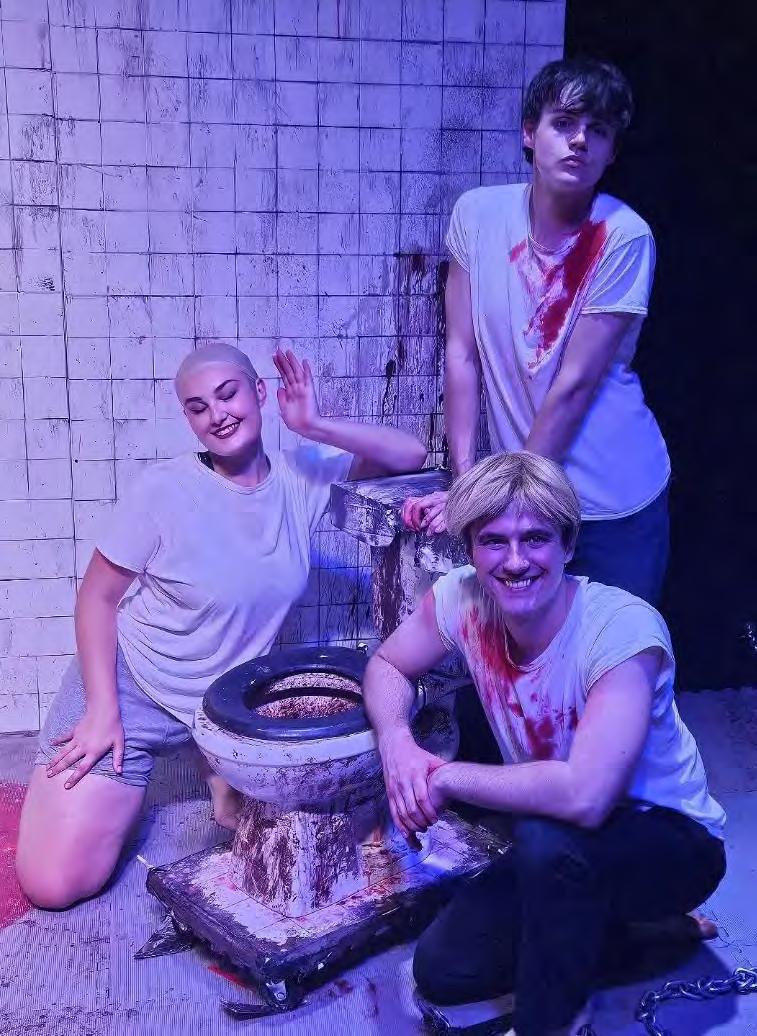
SAW THE MUSICAL: THE UNAUTHORIZED PARODY
The only thing more beguilingly dreadful than a mediocre horror franchise might be a musical — especially a movie-turned-musical. Perhaps that’s what put Saw The Musical: The Unauthorized Parody on the cultural map, with a national tour two years in the running. It’s a good guess audiences see it as a truffle-garnished shit sandwich that turns the original film into modern-day parody/triste ala Jean Genet’s Un Chant d’Amour (A Song of Love) with no separating cell walls, plenty of stage blood spatter and yes, romance: “I sawed my leg off to spray the front row GWAR-style and give you a kiss before I bleed out, dummy. Let’s play!” How could anyone resist? Those under 13 must be accompanied by an adult. $27, 5 p.m., 7:30 p.m. and 8:30 p.m. depending on date (check website), The Josephine Theatre, 339 W. Josephine St., (210) 734-4646, feverup.com. — Anjali Gupta
THU | 03.19
SPECIAL EVENT
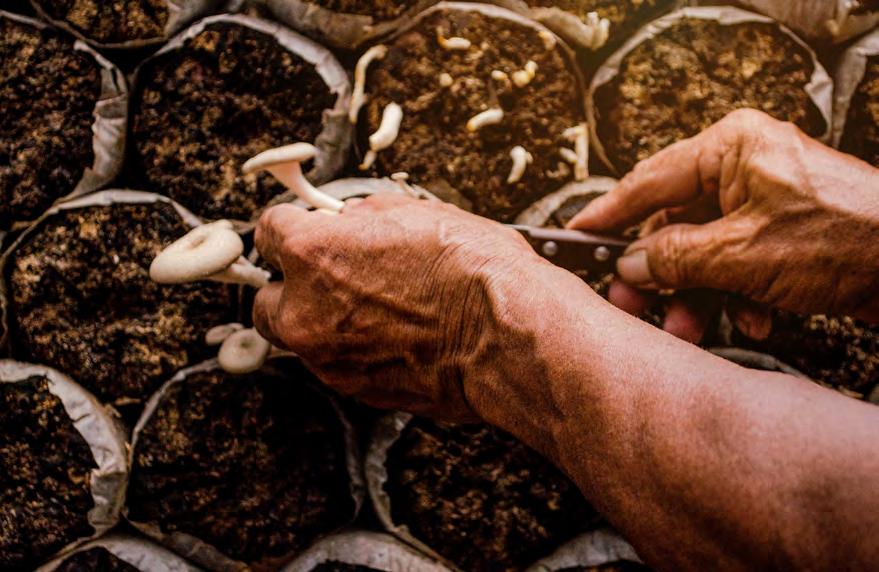
FUNGI FOR ALL: A BEGINNER’S GUIDE FOR HARVESTING THE POWER OF MUSHROOMS
Mushrooms should help us live more sustainably, but how does one get started without accidentally tripping balls or poisoning someone? Join Eco Centro for a handson, information-packed workshop that will explore the mysteries of mycology. Attendees will first be introduced to this ever more popular field, with a lecture covering its history, growing techniques and environmental benefits. Instructors then will dive into the process of long-term ecological maintenance with a hands-on demonstration on creating and maintaining a mushroom block compost pile. $10, 6-8 p.m., William R. Sinkin Eco Centro at San Antonio College, 1802 N. Main St., (210) 486-0417, alamo.edu. — AG
Instagram sawthemusical
THU | 03.19–21, 03.26-28
THEATRE
THE MIRACULOUS MIXES OF DJ SANTA CECILIA
In a peculiar twist on the trope of magical realism popularized by the likes of such visionaries as Gabriel García Márquez, award-winning poet, performer and playwright Amalia Ortiz will bring us her latest opus presented by the Guadalupe Cultural Arts Center. The play offers a quixotic tale of 1990s U.S. rave culture wherein a mute, queer undocumented immigrant’s disappearance begins their transformation from homeless outcast into a shamanic DJ who leads clandestine underground rituals — a journey from disavowed to revered among people who share the same culture and social stigmas, both illusory and practical. $15, SAY Sí Black Box Studio, 1310 S. Brazos, (210) 271-3151 ext. 250, guadalupeculturalarts.org. — AG
SAT | 03.21 SPORTS
SPURS VS. PACERS
After an unexpected run to the NBA Finals last June, it’s been a lost season for the Indiana Pacers. An unfortunate achilles injury to All-Star Tyrese Haliburton in the Finals and the departure of Center Myles Turner to the Milwaukee Bucks in free agency appear to have derailed the season before it began. When the Spurs and Pacers last matched up back in January, San Antonio’s veteran guard De’Aaron Fox led the way with 24 points in a 123-113 win. Following an 11-game winning streak that included an undefeated February, the Spurs continue to ramp up for a much-anticipated playoff run. “That can definitely build confidence, but we have guys in this locker room who don’t care,” Fox told reporters after a resounding win against the Detroit Pistons at home. “No matter who we’re playing against, you let ‘em off the leash and they go out there and do what they do. Yes, we’ve played well against the top teams in the league, but it doesn’t matter who you put out there. We have guys who are ready to go.” $63 and up, 7 p.m., Frost Bank Center, 1 Frost Bank Center Drive, (210) 444-5140, frostbankcenter.com, Fanduel Sports Network-Southwest. — M. Solis
SAT | 03.21
“HELLO FROM THE OTHER SIDE” SPIRITUALISM
WORKSHOP AND SPRING SÉANCE
The Austin Séance will lead a spiritualism workshop at King William’s Villa Finale: Museum & Gardens in its Mathis Gallery followed by a live séance in the Napoleon Parlor. Built by a wealthy merchant during the south-of-downtown historical neighborhood’s original heyday, which means before the floods of 1921, the stately home devolved into a “subdivided boarding home” — aka a hippie flophouse — by the late ’60s. Civic leader and collector Walter Nold Mathis purchased the residence and others in the failing neighborhood, selling only to like-minded people who wished to restore King William to its former glory. With such a storied location, the live séance following the workshop should be a lively affair. Ages 13 and up only. $30.00 members and $35.00 non-members, 5:30-9 pm., Villa Finale: Museum & Gardens, 401 King William St., (210) 223-9800, villafinale.org. AG
Hector Hugo Garza
Instagram villafinale
FRI | 03.27
THEATRE
SERIAL KILLER SPEAKEASY
Attention: those with an explicable interest in true crime that makes your loved ones really uneasy. Here’s your chance to dork out without judgment and knock back a few tipples with others who share the same proclivities. The touring Serial Killer Speakeasy covers four of America’s most prolific and despicable murderers — Bundy, Dahmer, Gacy and Gein — while serving up a cocktail to enjoy as you learn more about each. Mind you, this is a theatrical adaptation that unfolds live, aiming to draw the audience into the mayhem while keeping true to historical events. Dip your toes into a harmless diabolic, for a change. The event is 21-and-up, and four cocktails are included. $55, 10 p.m., The Spire Theater, 230 Center St., (210) 710-6880, feverup.com. — AG
MON | 03.30
SPORTS
SPURS VS. BULLS
The Spurs look to continue their dominance against Eastern Conference opponents when the Chicago Bulls make their only stop in San Antonio this season. League MVP candidate Victor Wembanyama was masterful on both ends of the court when the teams met in November, finishing the night with a commanding 38 points, 12 rebounds, 5 assists and 5 blocks in a 121-117 win for the Spurs. After a recent victory against the Rockets, Wembanyama turned the spotlight toward his teammates. “Maybe the best thing about this team is that these guys are trustworthy,” he told members of the media.
“I can trust them to make the right play. I can trust them to play unselfishly. Anybody here can trust that if they do the effort, my teammates will make the right choice, and we’ll capitalize on it.” Next up for the Spurs is a West Coast swing that includes matchups against a trip of potential playoff foes including the Warriors, Clippers and Nuggets. $36 and up, 7 p.m., Frost Bank Center, 1 Frost Bank Center Drive, (210) 444-5140, frostbankcenter.com, Fanduel Sports Network-Southwest, Peacock. — MS
Instagram Spurs
Facebook Serial Killer Speakeasy
Migration Cycle
Celebrated playwright Heather Raffo debuts production at Carver Center on why we move and the costs of survival
BY SANFORD NOWLIN
Acclaimed playwright Heather Raffo will stage a community-driven production this month at the Carver Community Cultural Center that examines the reasons humans move and the costs they pay as they do.
Tomorrow Will Be Sunday is part of a larger “Migration Cycle” of plays Raffo is developing across multiple cities. Roughly a third of the 90-minute play is built from material Raffo wrote after a series of listening visits to San Antonio.
The performances, scheduled for Thursday through Saturday, March 26-28, will include live music and song along with a cast of local and international artists. Raffo hopes the work sparks dialogue about relocation, survival and belonging.
Raffo, who was born in the Midwest to an Iraqi immigrant father, gained global recognition for her play 9 Parts of Desire, which examines the lives of a diverse group of Iraqi women. She also wrote the libretto to Fallujah, an opera about soldiers’ experiences in the Iraq war.
We caught up with the New York-based playwright by phone to discuss Tomorrow Will Be Sunday, what she learned about the Alamo City and common themes she’s experienced presenting new iterations of the play in other cities.
You’re doing a play where a third or more is related directly back to San Antonio, which sounds like a major undertaking. How do you make that work?
There’s lots of different ways to mount something that’s iterative like this, but I think that the San Antonio experiment feels really particularly beautiful to me because the Carver has given me such a warm welcome and introduced me to so many really interesting people and artists. And I’m very proud that the artistic team is almost entirely from San Antonio. It’s really like San Antonio’s picking up my work and interpreting it for themselves.
Could you talk about common themes you’re seeing as you travel between cities? Also, what
things have you learned about San Antonio that feel different from what you encountered elsewhere?
Something that’s common and that won’t surprise you at all is that affordability is just on everybody’s mind all the time. And the feeling that so many people can’t get out of having to just look after themselves or their family — because that’s hard enough — let alone being able to look across town, across the nation, across the world. What it takes to get through the day is a lot. …
What is particularly interesting to me about San Antonio was this mix of being the largest military city in the U.S., a city in close proximity to the border, a city that, in ’22 or ’23, had the largest incoming migration of any city in the U.S. And I don’t mean cross-border migration, I mean across the nation, like people were moving to San Antonio. And then it’s also a Latin-majority city.
So, all those things add up to being a particular way that people look at how they belong. If I say the play is about why we move and what it costs to survive, the underbelly of that is how do we find belonging? Because that’s really what’s driving so much of this.
Honestly, what surprised me the most about San Antonio, and I mean every Uber driver I was talking to, people I met at a cafe, just on-the-fly conversations — not deep conversations with historians — was how people held history here. … Because in so many places in the U.S., we might know the history of our city, we might know things, but we’re not talking about hundreds of years of history. And here, because of the [Spanish Missions], probably because of the Alamo, definitely because of where the border was — and that it’s been Mexico and it’s now the USA — people talk in hundreds of years of history. You say, “Tell me about San Antonio,” and then suddenly you’re in a 500-year story.
And so many times people mentioned the river, and the river is tens of thousands of years old, and indigenous populations lived here. So, I couldn’t quite believe that that was coming up in conversation so often. And so it made me feel like the way people hold place here is with the knowledge of just how long San Antonio has been here.
And that really resonated with me as an Iraqi American, because Iraqis do the same thing. I would tease my uncle, because I’d ask him — this was 2006 in the height of the civil strife — and I’m like, “How are you doing?”
And he’d be like, “Oh, this and this because of the invasion and this and this because of Saddam and this and this because of the British.” And then you’d get back to Nebuchadnezzar in a five-minute conversation that started with, “How are you today?”
Getting back to affordability, this is one of the poorest big cities in the United States and has been for quite some time. Did that element become apparent as you did your research?
Huge. The scene that I wrote for San Antonio is about housing. It’s about a woman renting a room to be able to afford to keep her house, and the amount of people that need a room and who she takes in. … She’s renting the room to a boy who’s having to navigate, let’s say, the tensions that our nation that any community might be going through, but it’s in the house now. It’s not outside the house. It’s come in, because we have to live together. So, yeah, affordability, particularly the housing crisis was top of mind. Also, as you know, the Carver Center’s on the East Side, and I heard so many stories about historic homes either being torn down for townhouses or houses being flipped. It’s a story that’s happening across America of just how deeply cities are changing, and who can even afford to live there or purchase a home. I heard a ton of stories here about what happened in Austin and how people don’t want that to happen here.
$30, 8 p.m. Thursday-Saturday, March 26-28, Carver Community Cultural Center, Little Carver Theatre, 226 N. Hackberry St., (210) 207-7211, thecarver.org.
arts
Find more arts coverage every day at sacurrent.com
Satya Tisman Photography
Pursuit of Happiness
San Antonio father fights for his transgender daughter in the documentary TheDads
BY KIKO MARTINEZ
When Texas Senate Bill 14 was signed into law in 2023, San Antonio contractor Ed Diaz knew his family’s life would never be the same.
The Republican-backed legislation, which the all-GOP Texas Supreme Court upheld the following year, bans gender-affirming medical care for trans youth living in the state. Diaz worried about what that meant for his own 13-year-old trans daughter, Charli.
In the documentary The Dads, which recently premiered at the SXSW Film & TV Festival, Diaz is one of the fathers of trans and nonbinary children who share their stories of fear, love and resistance as they maneuver through a political system that’s making it increasingly difficult for their kids to live openly and safely as themselves.
Since SB 14 passed, Charli and her stepmother — former San Antonio chef and restaurateur Tim McDiarmid — have officially become permanent residents of Canada. Diaz plans to reunite with them in coming weeks.
During a recent interview, Diaz, 55, a 1988 graduate of Lee High School, talked about his family’s decision to move north of the border and what it’s been like to have the support of other fathers of trans children.
How is Charli doing in Canada? She’s on her way to becoming a Canadian citizen. We got her in a great school that she loves. She is flourishing. It’s been amazing for us. Sadly, other families dealing with this don’t have the opportunity to leave. Even folks in blue states are losing access to medical care for their kids. All those things are eroding. The public still doesn’t seem to understand the magnitude of it. They think, “Well, it doesn’t affect me personally, so it’s probably not that big of a deal.”
I’m sure the decision to leave came down to the unconditional love you have for her. Yes. I felt like we had fought as much as we could here in Texas. We want to live our lives and be happy. I don’t want to have to deal with all the laws about using the wrong bathroom and the undercurrent of violence toward trans people. It felt safer for her to be somewhere else.
What made you decide to share your family’s story in this documentary?
It happened organically. I got connected with advocacy groups in Texas when [anti-trans] legislation started getting passed. I knew I wanted to do something. After they banned gender-affirming care here in Texas, there was a [Dads Foundation] retreat that provided support. It was an amazing experience. The film was born out of that. It was about being able to speak out and tell our stories. Our reality is in stark contrast to all the propaganda and hate speech that the other side presents.
How did the political climate affect your family on a day-to-day level?
We were keenly aware of everything happening in Texas. My involvement got more serious around the time [Texas legislators] were supporting a sports ban in public schools [for trans youth]. Then, in one legislative session, they banned gender-affirming medical care. That was when [Texas Attorney General] Ken Paxton and [Gov.] Greg Abbott were trying to go after parents for child abuse. People were worried that they were going to get a knock at the door and that some weird investigation would start where they would try to take your kids away. It was traumatic and stressful.
How would you describe your journey through fatherhood during this time? Everyone has their own individual journey. Some of what I experienced stemmed from fear, because you’re afraid that something bad is going to happen to your child. But then I just
started taking more of a lead from my daughter as we allowed her to express herself in a way she felt comfortable. You could see dramatic changes at school and in her happiness.
Critics say a 5-year-old kid is too young to make these kinds of decisions on their own. How do you respond to that?
That’s a trope the other side likes to use to try to instill doubt and fear and undermine the reality of the situation. Just think about your own life. How did you know you were a boy or a girl? It’s innate. My daughter was born this way. The expression was always there. It’s just a matter of whether you want to support it or not. People who don’t understand this issue think that supporting your child means you’re already getting medical treatment. None of that stuff starts until around puberty. So, for many years, it was all about supporting hairstyles, clothing choices, names and pronouns. It’s a big falsehood to say that kids don’t know who they are.
How important is the support system you have with other fathers of trans and nonbinary kids from around the country?
It’s been vital for me. It’s been an experience I didn’t really know I needed. Fundamentally, it’s been a tremendous source of support. I think it’s hard for other people to relate to the experience. But the outpouring of love and support for each other and for our kids has grown much stronger.
What do you hope other parents take away from watching The Dads?
I hope they listen to their heart. I think if you truly love your child, then you want what’s best for them. It’s important for people to support their children. The outcome for those who don’t is disheartening. It’s just a miserable way to live. Most of the kids who find support outside their family find it through community, but having a family who supports you makes a big difference. Hopefully, what they see in the film is that our kids are loved and feel supported and safe.
Carlos Salazar
Lateral Move
Tucker’s Italian, the latest eatery to occupy an East Side landmark, has the bravado to pull it off
BY RON BECHTOL
The former East Side bar Tucker’s Kozy Korner, a beacon of Black culture since 1948, has embarked on an entirely new narrative. Empty since 2023, its framed covers of Ebony magazine long gone, the space has been rebranded Tucker’s Italian.
In the United States, at least, Italian cuts across all cultures.
And it’s a cuisine the new operators are more than modestly familiar with. Michael Sohocki’s and Jason Garcia’s Italian chops spring from Il Forno, often mentioned as the best pizzeria in town. But no, before you ask, they didn’t bring pizza with them to Tucker’s. Rather, the duo has focused on pastas such as an un-ironic Italian American spaghetti and meatballs (not always available), sandwiches featuring the likes of prosciutto with arugula and ricotta and rotating evening entrées “From the Grill.”
Experience in dough-wrangling has transcended the lack of a traditional domed oven in the production of exceptional focaccias at Tucker’s. Try the at-once puffy and springy version with house pepperoni and mozzarella. The kitchen also does wonders with ciabattas and bastone, or stubby semolina baguettes.
Since these breads, especially the ciabattas, are the foundation of the sandwich offerings, they’re a good place to start.
Though the P.A.T. — prosciutto, arugula and roasted tomato — gets more than middling marks, the first a-ha moment at Tucker’s came with the smugly named Spicy Mother Tucker, a vehicle for roasted porchetta and nduja, the spready and very spicy pork sausage from Southern Italy. The two porky siblings, one mild and easygoing, the other fiery and in-your-face, come together here to form the perfect union.
Trying hard for equal attention, the SxSE sandwich, built around deftly-fried eggplant with a bright tomato-basil sauce and peppery arugula, came in a close second. My only complaint might be that it took a long time to prepare during one lunch visit in the spare, and sparsely populated, dining room.
However, antipasto might help to fill the void if you’re keen on ordering the SxSE. I can recommend the crispy rosemary potatoes as well as the golden-fried suppli, risotto enrobing stretchy cheese.
According to Garcia, the pastas have become especially popular, and one — an aptly titled The
Standard with basil and parmesan — appears to anchor the section. Other offerings may change.
After sampling the lasagna Bolognese with ricotta and mozzarella one evening, I was reluctant to return it to its owner. But I value the friendship. And to be honest, there was no new ground being tilled here—not that nuovo terreno is always required.
The same can be said for the gnocchi. But if the house-made rendition with roasted red peppers, Italian sausage rounds and a robust gravy with roasted onion is on the menu, fall upon it immediately. While gnocchi can be solemn and stodgy, these approach pillowy and, even, sprightly.
Some experimentation has been going on in the From the Grill section. Black drum with lemon orzo salad made a recent, bold appearance, for example. I suspect the rosemary-, garlic- and lemon-marinated half chicken may stick around, however. It’s dependably good and enough for two to share.
I expected more of the porchetta plate based on the success of the Spicy Mother Tucker sandwich. Turns out that the nduja may have been doing more of the heavy lifting than I first thought.
The first time I ordered the plate, a full, rolled roast had apparently just emerged from the
TUCKER’S ITALIAN
oven, and staff proudly presented it at the table in all its hog-tied and magnificently burnished glory. We were suitably impressed. But when the slices of roast made it back to the table, the skin delivered on its crackly promise but the pork itself seemed curiously bland.
I felt obliged to try it again on a later date, but little had changed the second time around, even though dabs of lemony gremolata valiantly tried to spark interest. Maybe porchetta really wants to be made of pork shoulder, as it often is, as opposed to pork belly. Maybe it also wants more seasoning in the form of garlic, rosemary and … Well, maybe it’s still a work in progress. In the meantime, I’ll stick to the sandwich.
I won’t hesitate to reorder the cannoli, their ricotta filling piped into disarmingly irregular house-made shells. But I will ask for more pistachio in that iteration. (Chocolate chip is another option.)
And I will never fail to depart through the adjoining deli dominated by a glassy (and also house-made) shrine to cured meats, its maturing sausages hanging like so many stalactites from the ceiling. A small selection of Italian wines, dried pastas, tinned provisions, cheeses and other cured meats is also on offer.
And on point in making sure that Mother Tucker becomes Nonna Tucker in time.
The lowdown: As the latest in a series of short-lived attempted revivals of the space that housed the original Tucker’s Kozy Korner, Tucker’s Italian at least has the bones and bravado to bring the East Side landmark back to life. Trading on the success of Il Forno Pizza, the new owners have taken a lateral step into other aspects of the Italian kitchen: pastas, sandwiches and items from a wood-fired grill. The pastas and the ciabatta-based sandwiches are especially to be considered, and grilled offerings, while frequently changing, are a window into the kitchen’s aspirations.
Find more food & drink news at sacurrent.com
Ron Bechtol
food Cooking Up Conversation
Thai Bird’s David Gilbert and Kristin Alvarez talk about community and growing their concept
BY KAT STINSON
San Antonio restaurant industry veteran David Gilbert has done it all.
He earned a James Beard Award nomination for Best Chef: Southwest in 2013 for his outstanding work at Sustenio at Eilan Hotel and Spa. He also headed the Thai street food-focused Tuk Tuk Taproom.
Beyond putting his stamp on the Alamo City food scene, he’s worked at multiple acclaimed restaurants across the globe.
Lately his attention has been on Thai Bird, a Thai-style chicken concept which he and fiancee Kristin Alvarez operate. After launching a first brick-and-mortar operation at 6401 Broadway, the couple is now opening a second storefront in Castle Hills at 2211 NW Military, Suite. 121.
We caught up with the pair to talk about growing smart and building a sense of community around their businesses.
How did you both get into the restaurant industry?
David: I’ve been a chef for the past three decades. I’ve worked in Michelin-starred restaurants, five-star hotels and resorts across the globe. I’ve lived in Thailand twice and spent time throughout Southeast Asia and China. That’s really where I fell in love with Thai flavors and culture. Over time, with my culinary background and that passion for Thai food, Thai Bird came together. Kristin: My background is actually very different. I spent about 20 years in the tech startup world, specifically fintech. I joined Thai Bird last October, focusing on scaling operations for growth.
But beyond the operational side, I’m also really focused on what makes Thai Bird different. We want it to be more than just a restaurant — we want it to be a place that brings community together through events and experiences.
Also, for full transparency, Dave and I are
engaged. So that’s how I joined the Thai Bird journey.
What’s it like running a business together?
David: We collaborate really well. It’s a bit of a yin-and-yang dynamic. My strengths are obviously in food and beverage operations. Kristin brings a lot of expertise in scaling organizations and building efficient systems. It takes a whole team to build something great, though. Our leadership and staff at Thai Bird play a huge role in what we’re doing.
Thai Bird is expanding. What can diners expect next?
David: Our original location was inside Make Ready Market in River North. After two years there, we outgrew the space. We’ve since closed that location and are moving it into a full brick-and-mortar restaurant in Castle Hills. We still have our Alamo Heights location, and the new Castle Hills restaurant will open in about six to eight weeks. Make Ready was a great springboard for testing the concept. Once we realized we had outgrown it, it was time for Thai Bird to stand on its own.
How did the Thai Bird concept develop?
David: It really comes from my travels in Thailand. One of my earliest memories was being in northern Thailand at a night market in Chiang Mai. Someone told me I had to try the roasted chicken there — it’s famous. That’s what inspired our rotisserie chicken.
The fried chicken on the menu comes from southern Thailand. I remember buying it from a street vendor along with green papaya salad and eating it on the beach. Those kinds of experiences stick with you.
Thai Bird is about recreating those iconic dishes and flavors in a way that’s approachable while still honoring their authenticity.
Your menu is intentionally small. Why?
David: If you try to do 40 or 50 things, you’ll never execute them perfectly. I’m a big believer in a focused menu built around dishes you’re truly passionate about. Everything at Thai Bird is built around bold flavors and textures — the elements that make Thai cuisine so compelling.
Kristin, you mentioned community being a major focus. What does that look like in practice?
Kristin: When people walk into Thai Bird, we want them to feel that sense of community. The food and wine are important, but the events are a big part of that experience. We have a wine club with monthly pick-
up parties where guests can taste unique, approachable wines. We host comedy nights about once a quarter, and they usually sell out. We’re also hosting a special Thai omelet pop-up later this month that will double as a fundraiser for a surf camp serving children with special needs. A portion of the proceeds will go toward that cause, along with a raffle for a catered dinner.
Dave, you’re also a sommelier. How does wine fit into the concept?
David: Wine is another huge passion of mine. Our wine list is curated the same way our menu is. We’re not just stocking big labels — we’re looking for wines that pair well with the food, are approachable in price and offer something unique. Guests really seem to respond to that.
What does “scaling” look like for Thai Bird?
David: We’re not trying to put one on every corner like a fast-food chain. We want to grow thoughtfully and place restaurants in communities that fit the concept. Everything on our menu is gluten-free, which is also a big part of the brand. The challenge is making gluten-free food that still delivers big flavor and great texture — especially crispy fried chicken.
What advice would you give someone trying to break into the restaurant industry?
David: You definitely need thick skin. It’s a tough industry and you’ll take some bumps along the way. But if you truly believe in your idea, follow it. There will be moments where you second-guess yourself, but if you stay committed to what you believe in, it can pay off.
What’s the biggest reward for you at this point in your careers?
David: Honestly, it’s not awards. The greatest reward is seeing our team grow and creating opportunities for them as the company expands.
Kristin: For me, it’s the community impact. I spent many years in tech, and making the jump into hospitality was a big pivot. But the stories we hear from guests and families who come into the restaurant — those moments make it all worthwhile.
After a long day, where do you usually go out in San Antonio?
David: Honestly, most nights we’re at home with our feet up, listening to music and relaxing together. San Antonio has so many great spots, though. The city’s food scene has grown tremendously over the years, and it’s exciting to see it keep evolving.
Courtesy Photo GoodFood Branding & Marketing
MAKE A GOOD IMPRESSION
Need a social media marketing solution? We elevate your brand through targeted social media strategies: expert management, custom content, datadriven paid campaigns, and strategic influencer partnerships that amplify your message to the right audience.
Traversing Transcendence
SA-raised author Andy Beta’s Cosmic Music offers an engrossing look at jazz innovator Alice Coltrane
BY BILL BAIRD
Writer Andy Beta, a San Antonio native now based in New York, threads the needle between underground musical rabbit-hole dives and broader cultural context in his work for outlets including Pitchfork, the New York Times and Rolling Stone.
This month, Beta took the leap from articles and reviews into his first book, Cosmic Music: The Life, Art, and Transcendence of Alice Coltrane . This expansive, deeply researched biography weaves in-depth analysis, cultural context and lyrical prose into something that flows like a piece of music itself.
Beta’s subject is the late wife of jazz icon John Coltrane, who’s also a brilliant musician in her own right, mostly known for her virtuosic playing and seemingly boundless creativity. Unfairly maligned by jazz critics of the time, largely due to her gender, Alice Coltrane mastered be-bop piano, jazz harp and Stravinsky-style classical composition.
Eventually she became a guru, adopting the name Swamini Turiyasangitananda — shortened to Turiya — and founding a Southern California ashram. During this later period, Coltrane shunned the music industry, solely making devotional “new age” music on synthesizers, which she produced in smallrun cassette tapes and sold at her ashram.
After being rediscovered by modern musicians such as Björk and Radiohead, re-contextualized with the popularity of ambient music and repped by her nephew, the groundbreaking DJ and musician Flying Lotus, a new generation has discovered Alice Coltrane’s pioneering work.
Indeed, the album Journey in Satchidananda is a truly groundbreaking work of experimental jazz, while her cassette Turiya Sings , is one of the most beguiling — and rewarding — new age albums ever recorded.
Beta’s Cosmic Music corrects the historical record, providing an uncluttered view of this inscrutable musician. The journey is winding and can almost overwhelm with detail, but the extra detail feels necessary to finally give Coltrane her due.
As a biographer, Beta balances in-depth analysis with a compassionate eye. Alice Coltrane deserves our attention — not because she’s a woman musician, not because she was married to John Coltrane — but because she remains a brilliant composer and musician regardless.
Before relocating to New York, Beta was
a San Antonio music scene fixture, hosting punk rock shows and performing with experimental music ensemble Tonalamotl, which featured fellow San Antonians Ryan Sawyer, Chris Branca, Jake Garcia, Sam Sanford and Troy Curry.
We caught up with Beta to discuss his new book, his process and his time in SA.
Find more music coverage every day at
Courtesy Image Da Capo
Did you study music? The musical analysis in the book is well done. Never studied music, and almost any real analysis of the music stems from things Alice said in liner notes. The exception would be an interview with composer Nadia Sirota, who shed some light on the orchestral arrangements.
Do you think Alice’s jazz training led her to deeper, richer new age music? While I know there are some parallels and I believe she was a great influence on new age music, I don’t believe what Alice was making was new age music. She knew to align it with Hearts in Space perhaps, but by that point, it really was this expression of [and] to God. If anything, I think of these ashram tapes as being a manifestation of her earliest music, the church music played in the Mt. Olive Baptist Church of her youth. That she performed every Sunday for her congregation felt like a full circle moment.
What was the most surprising connection you came across? It was amusing reading about the recording studio run-in with Guns n’ Roses. There are lots of these kinds of connections. I guess one that stood out for me is that I’ve long been a fan of [R&B singer] Syreeta’s music. I love her Motown albums and the collaborations she did with her ex-husband, Stevie Wonder. So learning that Syreeta and Alice knew one another — perhaps even back in the Detroit days — and even traveled to Ethiopia together for a meditation retreat and played together was a cool story to uncover.
Why was Alice Coltrane so underestimated for so long? Was it pure misogyny, or partially because folks worship John Coltrane so much? Some mix of the two? I would chalk it up to misogyny. And most of the critical writing that I uncovered really was caustic towards her. The one with the line about her being a “virtually talentless lady who married the right man” in particular stood out. And that was the consensus at the time. One of my goals was to show just how talented a musician she was. She knew the classical canon, played bebop, mastered the harp and learned how to do orchestral arrangements. And look at the types of musicians she had on her albums: Jack DeJohnette, Charlie Haden, Ornette Coleman, Roy Haynes. They wouldn’t have suffered
her if she couldn’t play.
Completing your first book seems very different from writing articles or a reviews. You’re maintaining a story arc over hundreds of pages. Were there any books that were touchstones for you?
at some level basically unknowable. Hermes has a way of detouring in his prose to capture these fascinating details and side stories in tight paragraphs without losing his trajectory and track. You began writing about music when
John Szwed’s Cosmic Scholar: The Life and Times of Harry Smith, Ben Ratliff’s Coltrane and Will Hermes’s Lou Reed: The King of New York come to mind. Szwed does a good job of telling a story about public figures who are
Tell me about your San Antonio roots. Who were your favorite groups you knew or saw? What venues were your favorite? Any other fond memories of SA? My roots are in SA. As a teen, I often snuck into Tacoland multiple nights a week to see all sorts of punk and hardcore bands. I even put on a bunch of punk rock shows in my living room. My favorite bands of that era were El Santo and Glorium and Worm. As a punk rocker, I was into this Dischord band Nation of Ulysses, who used this “signo de exclamación” in their graphics. One day at Apple Records on San Pedro, I saw a copy of John Coltrane’s Om and realized [Nation of Ulysses] was referencing [Impulse Records’] famous “I!” logo. So I bought it and had my mind melted by its intensity and chaos. Inspired by this open-ended approach to noisemaking, some friends and I started our own improv noise band for a few years, Tonalamotl. But while working at a health food store in SA, an older coworker who made new age music on the side suggested I check out Alice Coltrane’s Journey in Satchidananda, calling it the most beautiful music in the world. It had come out on CD … around 1997. I still wonder what led me to check it out, in that at the time I wasn’t really interested in “beauty” per se. My memory of it is that it drifted past without me really grasping it. But it must have planted a mustard seed though, because I still own the CD. And it was probably another five years before I realized she made more than one album.
What are the strengths and drawbacks of making art in a highly conservative atmosphere like Texas?
I think the conservative oppression of such a place tends to lead you to make work that is reactive, or overly concerned with pushing people away. I only did music briefly while there but I still think about the idea of that band [Tonalamotl], of having no hierarchy or predetermined course of action. It was messy and unlistenable and unfocused, perhaps better as a concept than a listening project.
Do you ever come back to town?
blogs were thriving and Pitchfork ruled the roost. How have things changed since you started?
Let’s just say I haven’t had steady work in years and am broke as hell.
I don’t get back to San Antonio as often as I’d like. But when I do, I definitely try to catch up on eating Tex-Mex. I have had the luxury of being a Spurs fan for the past 30 years or so.
critics’ picks
Wednesday, March 18
Fred Eaglesmith
Canada’s Fred Eaglesmith is a classic troubadour singer-songwriter — over a 45-year career, he’s hopped trains, trekked coast-tocoast countless times and distilled his travels into witty, precise lyrical gems. Lengthy comic monologues also figure into his sets between songs. In other words, Eaglesmith’s all about the words, and he is good at them. $61, 8 p.m., Sam’s Burger Joint, 330 E. Grayson St., (210) 223-2830, samsburgerjoint.com. — Bill Baird
Thursday, March 19
Robert Plant
Former Led Zeppelin frontman Robert Plant is one of the few elders of rock who’s gracefully transitioned from rock god into something else. Never one to endlessly churn out reunion tours, he’s moved into folk and Americana circles, even living in Austin while collaborating with
455-0233, thelonesomerosesa.com. — BB
Bad Omens, Beartooth, President
After a decade together, Richmond, Virginia’s Bad Omens have fought their way to an enviable spot in the metalcore scene. The band’s latest single, “Left for Good,” shows a continued evolution in the band’s sound, incorporating elements of electronica and R&B. Dark themes of addiction and mental health form the crux of Bad Omens’ lyrics. Beartooth, led by multi-instrumentalist Caleb Shomo, delivers a must-see opening set. $50.25-$75.70, 7 p.m., Frost Bank Center, One Frost Bank Center Drive, (210) 444-5140, frostbankcenter.com.
— Danny Cervantes
Eyehategod, Crowbar
Heads are bound to cave under the weight of pure sonic heaviness when New Orleans sludge metal legends Eyehategod and fellow Big Easy crushers Crowbar roll through town. If crushing riffs are your thing, hopefully you have already scored a ticket to this sold-out show. Sold out, 7:30 p.m., Paper Tiger, 2410 N. St. Mary’s St., papertigersatx.com. — Brianna Espinoza
Saturday, March 21
Zach Bryan, J. R. Carroll, Caamp Turns out, free speech isn’t free. At least not for country superstar Zach Bryan, who’s now facing cancel culture from the right after a snippet of his song “Bad News” was released in October with lyrics critical of the tactics ICE agents are using across the country. Fortunately, the tempest passed as Bryan released his sixth studio album, With Heaven On Top, which vaulted straight to the top of the country charts in January. $80.55andup,8p.m.,Alamodome,100Montana St.,(210)207-3663,alamodome.com. — DC
untouchable vibe — beautiful, graceful and possessing an uncanny set of pipes. $48 and up, 8 p.m., Aztec Theatre, 104 N. St. Mary’s St., (210) 812-4355, theaztectheatre.com. — BB
Thursday, March 26
Styx
Millennials rejoice! Your parents’ favorite ’70s rock band is back on the road, armed with its array of singable hard-rock radio hits and whimsical ballads. After 50 years as a band, the members of Styx appear not to have tired of playing “Come Sail Away” and “Mr. Roboto” every night. The band does make new music, so expect to hear something from its latest album, Circling From Above, in the setlist. $80 and up, 7:30 p.m., Majestic Theatre, 224 E. Houston St., (210) 226-5700, majesticempire.com. — BE
Friday, March 27
Snow Tha Product
Since her breakout in 2011, staccato bilingual rapper Snow Tha Product has made regular tour stops in San Antonio that have strengthened her local following. This time, the San Jose, California-based artist is supporting her recent album Before I Crashout, which taps into anxieties surrounding relationships, politics and social media. She unapologetically dives into these topics in her freewheeling podcast Everynightnights Sold out, 7:30 p.m., Aztec Theatre, 104 N. St. Mary’s St., (210) 812-4355, theaztectheatre.com. — DC
Saturday, March 28
Hawthorne Heights
celebrated singer Patty Griffin. While it seems hard to top his wonderful recordings with Alison Krauss, his new folk group Saving Grace once again proves that more rock gods should adapt with the times. $128, 7:30 p.m., Majestic Theatre, 224 E. Houston St., (210) 226-5700, majesticempire.com. — BB
Friday, March 20
Paisley Fields, Creekbed Carter Singer Paisley Fields is at the forefront of the “queer country” movement, redefining a once-inhospitable genre for a new generation of gender-fluid folks. They’re here touring Are U Mad At Me, out on Don Giovanni Records, an enjoyable journey through a light-hearted, effervescent take on pop-country. Having grown up in Iowa, Fields was no doubt exposed to bro-country as a youth, and theirs is an enjoyable deconstruction. $10, 8 p.m., Lonesome Rose, 2114 N. St. Mary’s St., (210)
Humbe
Rising Mexican singer-songwriter Humbe’s work encompasses a smeary mix of R&B and Latin pop. The Monterrey-born artist’s self-released efforts gained the attention of Sony, who signed him, and away he went. Rolling Stone called him one of 25 Artists That Define the Future of Music. What’s more, he recently became a spokesman for Cartier, so if you like your futuristic Latin pop with nice jewelry, Humbe has you covered. $60 and up, 8 p.m., Majestic Theater, 224 E. Houston St., (210) 226-5700, majesticempire.com. — BB
Leela James
Leela James is one of the best R&B singers out there, having collaborated with artists ranging from Wyclef Jean to Robert Randolph to Kanye West. It’s classic stuff, in the mold of Roberta Flack, Toni Braxton or even Etta James. A true diva, she projects a timeless,
Emo breakout stars Hawthorne Heights are headed back to town for another nostalgia fest, this time with support from bands LetLive and Creeper. The headliner is celebrating the 20th anniversary of its second album, If Only You Were Lonely, which was also the last effort to feature guitarist and unclean vocalist Casey Calvert before his untimely passing. It’s gonna be a night full of phone lights, memories and probably some moshing. $42.59, 7 p.m., Vibes Event Center, 1211 E. Houston St., (210) 803-2101, facebook. com/vibeseventcenter. — BE
Holy Wave
Holy Wave are one of Austin’s finest purveyors of gauzy psychedelic garage-rock, putting them in the company of The Black Angels and Allah Las, but with a pleasing organ that washes through the mix. The music is largely mellow but it takes your mind to interesting places. Locals Sunjammer and Mockingbird Express open, offering a chance to catch two of SA’s best garage bands in action as well. $17, 9 p.m., Lonesome Rose, 2114 N. St. Mary’s St., (210) 455-0233, thelonesomerosesa.com. — BB
Professional Services Sr. Delivery Architect – Rackspace US, Inc. - San Antonio, TX. As subject matter expert for 1+ products or tech to orchestrate & lead pre- & postsales & delivery efforts inclusive of holistic IT optim, consolid & transform solutions for customers inclusive of discovery, analysis, solution design & migration.
Req’d: Bach deg in IT/rltd tech fld + min 7yrs design & implementation exp w/distributed applications + min 5yrs exp in networking, infrastructure, or database architectures + Any exp w/AWS, softw dev tools, presentation skills, domain (cloud, security, DevOps), data center strategy, app architecture & infrastructure. Up to 50% domestic travel req’d. Telecommute allowed. Send resume to careersapplication@rackspace.com, Ref. 13048
23. Recede gradually
24. “The Doors” star Kilmer
29. Change form
31. “___ Brown Cooks Food” (YouTube series)
33. Only bone not attached to another bone
35. “Thank you,” in Honolulu
37. Calcium carbonate deposit that builds up in hot water appliances
39. Recoups
40. Text on tombstones
43. Paid athlete
44. Kyoto currency
45. Developed a fondness for
46. Conan who hosted the 98th Academy Awards
47. Capital of South Dakota
49. Ring decision
53. Actor Logue
55. Sneezy outburst
58. Gumbo staple
59. Jane of a BrontÎ novel
60. Chaplin of “Avatar: Fire and Ash”
64. “Anne of Green Gables” Canadian prov.
65. Millennium divs.
Answers on page 25.
STOCK AND EXCELLENT CUSTOMER SERVICE THAT VIBES WITH THE HOME FEELING...” -N.T., GOOGLE REVIEW